
leedz
20 Beiträge

leedz
15 Following
15 Follower
18 Like gegeben
Beiträge
Alle
Zitierungen
🚀 $SOL Breaks $100: Bullenfortsetzung oder kurzfristige Korrektur?
Nach einer starken Rally von über 40 % seit den Tiefs Mitte August hat Solana ($SOL ) die wichtige psychologische Marke von 100 $ zurückerobert und konsolidiert derzeit nahe 105 $.
Starke Ökosystem-Fundamentals und steigendes Open Interest treiben diesen Schwung an. Allerdings sollten Trader angesichts des RSI, der sich auf höheren Timeframes dem überkauften Bereich nähert, auf mögliche Volatilität um diese entscheidenden technischen Levels vorbereitet sein:
📊 Wichtige technische Levels
Widerstand: 110,00 $ – 112,00 $ (Ausbruchszone zum Ziel 125 $)
Unmittelbare Unterstützung: 101,50 $ – 103,00 $
Wichtige Nachfragespanne: 92,50 $ – 95,00 $ (Ideales Re-Entry-Level bei tiefen Rücksetzern)
💡 Trading-Strategie
Bullisches Setup: Ein klarer Tagesabschluss über 110 $ ebnet den Weg für einen Retest von 120–125 $.
Pullback-Szenario: Wenn der Widerstand hält, auf einen gesunden Retest in Richtung 101–102 $ achten, um Long-Einstiege mit engeren Stop-Losses zu jagen.
Risikomanagement: Strikte Stop-Losses unter 98 $ beibehalten, da ein erhöhtes Leverage in Perpetual-Märkten schnelle Liquidations-Wicks auslösen kann.
👇 Wie ist deine Position? Hältst du $SOL für 120+ oder wartest du darauf, unter 100 $ den Dip zu kaufen? Lasst uns unten diskutieren!
#Solana #SOL #CryptoTrading #TechnicalAnalysis #BinanceSquare
Nach einer starken Rally von über 40 % seit den Tiefs Mitte August hat Solana ($SOL ) die wichtige psychologische Marke von 100 $ zurückerobert und konsolidiert derzeit nahe 105 $.
Starke Ökosystem-Fundamentals und steigendes Open Interest treiben diesen Schwung an. Allerdings sollten Trader angesichts des RSI, der sich auf höheren Timeframes dem überkauften Bereich nähert, auf mögliche Volatilität um diese entscheidenden technischen Levels vorbereitet sein:
📊 Wichtige technische Levels
Widerstand: 110,00 $ – 112,00 $ (Ausbruchszone zum Ziel 125 $)
Unmittelbare Unterstützung: 101,50 $ – 103,00 $
Wichtige Nachfragespanne: 92,50 $ – 95,00 $ (Ideales Re-Entry-Level bei tiefen Rücksetzern)
💡 Trading-Strategie
Bullisches Setup: Ein klarer Tagesabschluss über 110 $ ebnet den Weg für einen Retest von 120–125 $.
Pullback-Szenario: Wenn der Widerstand hält, auf einen gesunden Retest in Richtung 101–102 $ achten, um Long-Einstiege mit engeren Stop-Losses zu jagen.
Risikomanagement: Strikte Stop-Losses unter 98 $ beibehalten, da ein erhöhtes Leverage in Perpetual-Märkten schnelle Liquidations-Wicks auslösen kann.
👇 Wie ist deine Position? Hältst du $SOL für 120+ oder wartest du darauf, unter 100 $ den Dip zu kaufen? Lasst uns unten diskutieren!
#Solana #SOL #CryptoTrading #TechnicalAnalysis #BinanceSquare
Übersetzung ansehen
#BinanceTurns9 Binance Turns 9 - Built By You
as usually binance is the best exchange ever, just liked the tournament and the anniversary like to be part of the big pict
as usually binance is the best exchange ever, just liked the tournament and the anniversary like to be part of the big pict

Übersetzung ansehen
An interesting mechanism to watch ahead of the #grvt _io launch on July 21 is their approach to the community airdrop claims. Rather than a standard, one-size-fits-all distribution, the project has introduced a gamified dynamic: users can choose to claim their token allocation immediately at the Token Generation Event (TGE) or opt to delay their claim in exchange for an increased allocation multiplier—potentially scaling up to four times the original amount over an extended lock-up period.
This model essentially forces a choice between immediate liquidity and long-term ecosystem alignment, which could significantly mitigate standard day-one dumping pressures. By combining this structure with the live 1,500,000 GRVT Booster Campaign on Binance Wallet, the team is filtering for genuine, high-conviction participants rather than mercenary capital. It’s a bold experiment in token supply management.
#grvt
This model essentially forces a choice between immediate liquidity and long-term ecosystem alignment, which could significantly mitigate standard day-one dumping pressures. By combining this structure with the live 1,500,000 GRVT Booster Campaign on Binance Wallet, the team is filtering for genuine, high-conviction participants rather than mercenary capital. It’s a bold experiment in token supply management.
#grvt
Übersetzung ansehen
#grvt The upcoming launch of @grvt_io on July 21 is shaping up to be one of the most anticipated infrastructure rollouts in the derivatives space. Built using ZKsync's powerful ZK Stack, the platform isn't just delivering typical DEX features; it's pushing the boundaries of capital efficiency.
With its unique membership architecture, holding the token introduces major operational advantages, including optimized margin efficiency, tiered trading fee reductions, and priority access to specialized investment vaults and high-yield products. By mitigating MEV vulnerabilities and smart contract exposure through an enterprise-grade hybrid layout, the platform creates an institutional-ready environment that doesn't compromise on self-custody.
With Coinbase recently adding it to its official asset listing roadmap, the project's macro momentum is undeniable as we head toward the token generation event. Watch this space closely. #grvt
With its unique membership architecture, holding the token introduces major operational advantages, including optimized margin efficiency, tiered trading fee reductions, and priority access to specialized investment vaults and high-yield products. By mitigating MEV vulnerabilities and smart contract exposure through an enterprise-grade hybrid layout, the platform creates an institutional-ready environment that doesn't compromise on self-custody.
With Coinbase recently adding it to its official asset listing roadmap, the project's macro momentum is undeniable as we head toward the token generation event. Watch this space closely. #grvt
Übersetzung ansehen
The next major evolution in crypto derivatives is heavily leaning toward hybrid architectures, and @grvt_io is leading the charge. By combining the blazing execution speed of a centralized platform with the uncompromised security of self-custody, they are solving a massive pain point for modern traders. Built on advanced zero-knowledge infrastructure (the ZK Stack), the platform allows users to retain absolute control over their assets while enjoying ultra-fast matching, minimal slippage, and robust privacy protections. As the ecosystem scales up its trading volume and expands its focus on capital productivity, it is quickly positioning itself as a core infrastructure piece for next-generation perpetual markets. Keep an eye on its growing momentum. #grvt
Übersetzung ansehen
$NEWT The launch of the Newton Mainnet Beta is a significant milestone for institutional DeFi and autonomous on-chain automation. Operating as an EigenLayer-secured Actively Validated Services (AVS) network, @NewtonProtocol(https://www.binance.com/en/square/profile/newtonprotocol) shifts risk management from reactive post-settlement monitoring to real-time, transaction-time authorization.
Using the VaultKit SDK, curators can seamlessly set strict, custom execution policies directly into their smart contracts. What makes these policies powerful is their data backing: Newton integrates manipulation-resistant asset pricing via RedStone and model-driven risk intelligence via Credora. This allows vaults and AI agents to instantly evaluate and block or liquidate risky positions at the very moment a transaction clears. This fundamental architecture provides verifiable, transparent security infrastructure, driving direct structural utility to $NEWT .
#Newt
Using the VaultKit SDK, curators can seamlessly set strict, custom execution policies directly into their smart contracts. What makes these policies powerful is their data backing: Newton integrates manipulation-resistant asset pricing via RedStone and model-driven risk intelligence via Credora. This allows vaults and AI agents to instantly evaluate and block or liquidate risky positions at the very moment a transaction clears. This fundamental architecture provides verifiable, transparent security infrastructure, driving direct structural utility to $NEWT .
#Newt
Übersetzung ansehen
#newt $NEWT
The arrival of the Newton Mainnet Beta marks a major shift in how we approach secure on-chain automation and autonomous AI agents. Alongside this launch, @NewtonProtocol(https://www.binance.com/en/square/profile/newtonprotocol) introduced VaultKit—a powerful SDK designed to make a vault's specific rules fully enforceable at the smart contract layer before a transaction ever settles.
By serving as a decentralized authorization engine, the protocol evaluates transaction intents off-chain via an EigenLayer-secured Actively Validated Services (AVS) network, generating a verifiable cryptographic proof to block or allow actions automatically. This means rules like identity requirements, spending limits, or custom compliance are natively guarded. Furthermore, the integration of launch data partners like RedStone (supplying manipulation-resistant market data) and Credora (delivering real-time risk intelligence) ensures these policies are powered by trusted inputs. For anyone tracking the evolution of secure DeFi infrastructure, the concrete utility backing $NEWT is one to watch closely.
#Newt
The arrival of the Newton Mainnet Beta marks a major shift in how we approach secure on-chain automation and autonomous AI agents. Alongside this launch, @NewtonProtocol(https://www.binance.com/en/square/profile/newtonprotocol) introduced VaultKit—a powerful SDK designed to make a vault's specific rules fully enforceable at the smart contract layer before a transaction ever settles.
By serving as a decentralized authorization engine, the protocol evaluates transaction intents off-chain via an EigenLayer-secured Actively Validated Services (AVS) network, generating a verifiable cryptographic proof to block or allow actions automatically. This means rules like identity requirements, spending limits, or custom compliance are natively guarded. Furthermore, the integration of launch data partners like RedStone (supplying manipulation-resistant market data) and Credora (delivering real-time risk intelligence) ensures these policies are powered by trusted inputs. For anyone tracking the evolution of secure DeFi infrastructure, the concrete utility backing $NEWT is one to watch closely.
#Newt

Übersetzung ansehen
#openledger $OPEN
Exploring the future of decentralized data with @OpenLedger — a project that’s pushing boundaries in how information is structured, shared, and monetized. The vision behind $OPEN is not just about blockchain, but about creating a smarter data economy where transparency and efficiency go hand in hand. As adoption grows, #OpenLedger could become a key layer for next-gen Web3 infrastructure. Keep an eye on this one.
Exploring the future of decentralized data with @OpenLedger — a project that’s pushing boundaries in how information is structured, shared, and monetized. The vision behind $OPEN is not just about blockchain, but about creating a smarter data economy where transparency and efficiency go hand in hand. As adoption grows, #OpenLedger could become a key layer for next-gen Web3 infrastructure. Keep an eye on this one.
Übersetzung ansehen
#genius $GENIUS
Exploring the innovation behind @GeniusOfficial — this project is pushing boundaries with a fresh approach to decentralized intelligence and scalable blockchain solutions. The vision around $GENIUS isn’t just hype, it’s about building real utility and long-term ecosystem value. Definitely a project worth watching as it evolves. #genius
Exploring the innovation behind @GeniusOfficial — this project is pushing boundaries with a fresh approach to decentralized intelligence and scalable blockchain solutions. The vision around $GENIUS isn’t just hype, it’s about building real utility and long-term ecosystem value. Definitely a project worth watching as it evolves. #genius


Übersetzung ansehen
#openledger $OPEN
Exploring the future of decentralized data with @OpenLedger (https://www.binance.com/en/square/profile/openledger)! The vision behind $OPEN is powerful—bringing transparency, scalability, and real utility to on-chain data infrastructure. As more projects shift toward data-driven ecosystems, OpenLedger could play a key role in shaping the next wave of Web3 innovation. Definitely a project worth watching closely. #OpenLedger
Exploring the future of decentralized data with @OpenLedger (https://www.binance.com/en/square/profile/openledger)! The vision behind $OPEN is powerful—bringing transparency, scalability, and real utility to on-chain data infrastructure. As more projects shift toward data-driven ecosystems, OpenLedger could play a key role in shaping the next wave of Web3 innovation. Definitely a project worth watching closely. #OpenLedger
Übersetzung ansehen
Looking at the current market, Solana (SOL) is flashing several signals that suggest its current price (roughly **$95**) could be a strategic entry point.
Here’s a breakdown of why SOL is looking strong right now:
1. Technical Breakout & Momentum
Trend Reversal:Solana recently broke above a year-long downtrend and reclaimed its 100-day Simple Moving Average (SMA) for the first time since late 2025. This is a classic indicator that the long-term momentum is shifting from bearish to bullish.
Bullish Indicators The *Supertrend indicator just flipped green, and technical analysts are eyeing a push toward the $100–$105 psychological resistance zone. If it clears that, the next major target is around $115
2. Strong Institutional Support
ETF Inflows:Solana spot ETFs have seen consistent positive movement, with roughly **$56 million** in net inflows over the last month. This shows that "big money" is actively accumulating at these levels.
Whale Activity:On-chain data recently showed a dormant whale wallet waking up to purchase over $6 million worth of SOL, signaling confidence from high-net-worth traders.
3. Major Ecosystem Upgrades
The Alpenglow Upgrade:Testing has begun on Alpenglow, a massive infrastructure overhaul designed to make the network significantly faster and more scalable.
The highly anticipated Firedancer validator client is moving closer to mainnet, which could theoretically push Solana’s capacity toward 1 million transactions per second
4. Expanding Utility
Stablecoin Growth:Circle recently minted $750 million in USDC directly on Solana, reinforcing it as a preferred chain for liquidity and payments.
DeFi Dominance:** Solana continues to hold its ground as the second-largest DeFi ecosystem, often surpassing Ethereum in 24-hour decentralized exchange (DEX) volume due to its sub-penny transaction fees.
The Bottom Line**
While SOL is currently trading about 68% below its all-time high of $295, the fundamentals have never been stronger.
$SOL
Here’s a breakdown of why SOL is looking strong right now:
1. Technical Breakout & Momentum
Trend Reversal:Solana recently broke above a year-long downtrend and reclaimed its 100-day Simple Moving Average (SMA) for the first time since late 2025. This is a classic indicator that the long-term momentum is shifting from bearish to bullish.
Bullish Indicators The *Supertrend indicator just flipped green, and technical analysts are eyeing a push toward the $100–$105 psychological resistance zone. If it clears that, the next major target is around $115
2. Strong Institutional Support
ETF Inflows:Solana spot ETFs have seen consistent positive movement, with roughly **$56 million** in net inflows over the last month. This shows that "big money" is actively accumulating at these levels.
Whale Activity:On-chain data recently showed a dormant whale wallet waking up to purchase over $6 million worth of SOL, signaling confidence from high-net-worth traders.
3. Major Ecosystem Upgrades
The Alpenglow Upgrade:Testing has begun on Alpenglow, a massive infrastructure overhaul designed to make the network significantly faster and more scalable.
The highly anticipated Firedancer validator client is moving closer to mainnet, which could theoretically push Solana’s capacity toward 1 million transactions per second
4. Expanding Utility
Stablecoin Growth:Circle recently minted $750 million in USDC directly on Solana, reinforcing it as a preferred chain for liquidity and payments.
DeFi Dominance:** Solana continues to hold its ground as the second-largest DeFi ecosystem, often surpassing Ethereum in 24-hour decentralized exchange (DEX) volume due to its sub-penny transaction fees.
The Bottom Line**
While SOL is currently trading about 68% below its all-time high of $295, the fundamentals have never been stronger.
$SOL
Übersetzung ansehen
🚀 Solana Price Prediction: Is SOL Preparing for the Next Big Move?
$SOL continues to be one of the strongest Layer-1 projects in crypto, and many analysts believe the next major move could come from ecosystem growth, institutional adoption, and network upgrades like Firedancer.
📈 Bullish scenario:
If market momentum returns and Solana breaks major resistance levels, some forecasts see SOL pushing toward the $150–$250 range in the next cycle. (XS)
⚠️ Bearish scenario:
Crypto remains highly volatile, and several analysts warn that weak market liquidity or another risk-off phase could send SOL back toward lower support zones before recovery. (FXEmpire)
💡 What makes Solana interesting:
• Ultra-fast transactions
• Massive meme coin activity
• Growing DeFi ecosystem
• Increasing institutional attention
• Strong developer community
The biggest question now isn’t whether Solana survives — it’s whether SOL can dominate the next altcoin cycle.
👀 My view?
If adoption keeps growing and the broader crypto market turns bullish again, SOL could surprise a lot of people.
#Solana #SOL #Crypto #Altcoins #Web3 #DeFi #BinanceSquare #CryptoTrading #Blockchain #BullRun
$SOL continues to be one of the strongest Layer-1 projects in crypto, and many analysts believe the next major move could come from ecosystem growth, institutional adoption, and network upgrades like Firedancer.
📈 Bullish scenario:
If market momentum returns and Solana breaks major resistance levels, some forecasts see SOL pushing toward the $150–$250 range in the next cycle. (XS)
⚠️ Bearish scenario:
Crypto remains highly volatile, and several analysts warn that weak market liquidity or another risk-off phase could send SOL back toward lower support zones before recovery. (FXEmpire)
💡 What makes Solana interesting:
• Ultra-fast transactions
• Massive meme coin activity
• Growing DeFi ecosystem
• Increasing institutional attention
• Strong developer community
The biggest question now isn’t whether Solana survives — it’s whether SOL can dominate the next altcoin cycle.
👀 My view?
If adoption keeps growing and the broader crypto market turns bullish again, SOL could surprise a lot of people.
#Solana #SOL #Crypto #Altcoins #Web3 #DeFi #BinanceSquare #CryptoTrading #Blockchain #BullRun
Solana zu $90 sieht nach einer starken Gelegenheit aus 👀
Nach einer größeren Korrektur von den vorherigen Höchstständen, $SOL befindet sich jetzt in einer wichtigen Akkumulationszone, in der kluge Investoren beginnen, einzusteigen. Das Netzwerk wächst weiterhin mit schnellen Transaktionen, niedrigen Gebühren und zunehmender Akzeptanz in DeFi & NFTs.
Auf diesem Niveau wird das Risiko/Belohnung attraktiv:
– Die Abwärtsbewegung ist im Vergleich zur Aufwärtsbewegung relativ begrenzt
– Ein starkes Ökosystem expandiert weiter
– Historisch gesehen waren diese Rückgänge die besten Einstiegspunkte
Wenn der Markt wieder bullish wird, könnte $SOL zu $90 im Nachhinein sehr günstig aussehen.
Manchmal fühlen sich die besten Bewegungen unangenehm an – aber dort beginnen die wirklichen Gewinne 🚀
Nach einer größeren Korrektur von den vorherigen Höchstständen, $SOL befindet sich jetzt in einer wichtigen Akkumulationszone, in der kluge Investoren beginnen, einzusteigen. Das Netzwerk wächst weiterhin mit schnellen Transaktionen, niedrigen Gebühren und zunehmender Akzeptanz in DeFi & NFTs.
Auf diesem Niveau wird das Risiko/Belohnung attraktiv:
– Die Abwärtsbewegung ist im Vergleich zur Aufwärtsbewegung relativ begrenzt
– Ein starkes Ökosystem expandiert weiter
– Historisch gesehen waren diese Rückgänge die besten Einstiegspunkte
Wenn der Markt wieder bullish wird, könnte $SOL zu $90 im Nachhinein sehr günstig aussehen.
Manchmal fühlen sich die besten Bewegungen unangenehm an – aber dort beginnen die wirklichen Gewinne 🚀
Übersetzung ansehen
Andy59841


安迪Andy5984
·
--
🤮倒在黎明前,利润基本回吐完了,但是不影响我发红包!新年快乐!🎉🧧🧧🧧🎁🎁🎁🎁🎁🎁🧧🧧GROSSER ROTER KASTEN
Übersetzung ansehen
2017

إيهاب الحسني - Ehab Hosni
·
--
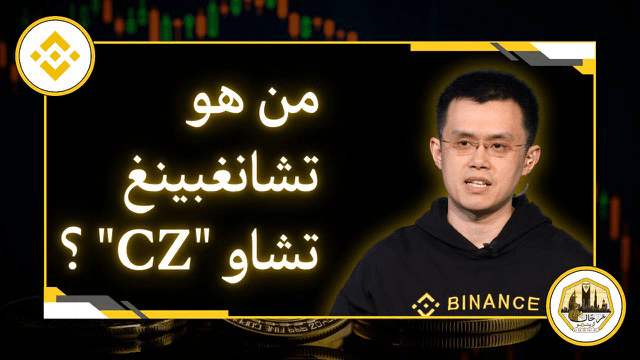
Changpeng Zhao (CZ): Von Fast-Food-Restaurants zur Führung von Binance
Changpeng Zhao (CZ) ist der Name, der das Gesicht der Kryptowährungen verändert hat. Von bescheidenen Anfängen bis zur Gründung der größten Handelsplattform der Welt – Binance, ist CZ eine Ikone in der Krypto-Welt geworden, trotz der rechtlichen Herausforderungen.
⚡ Wer ist Changpeng Zhao (CZ)?
Changpeng Zhao (CZ) wurde 1977 in Jiangsu, China, geboren und zog später nach Kanada.
In seiner Jugend arbeitete er in Fast-Food-Restaurants und Tankstellen, um seine Familie zu unterstützen.
⚡ Wer ist Changpeng Zhao (CZ)?
Changpeng Zhao (CZ) wurde 1977 in Jiangsu, China, geboren und zog später nach Kanada.
In seiner Jugend arbeitete er in Fast-Food-Restaurants und Tankstellen, um seine Familie zu unterstützen.
Anmelden und weiter Inhalte entdecken