

Ruoxi 若曦
1.2k Beiträge

Ruoxi 若曦
Melden
Nutzer blockieren
365 Following
22.1K+ Follower
1.4K+ Like gegeben
Beiträge
Alle
Zitierungen
Live
·
--
Verifiziert
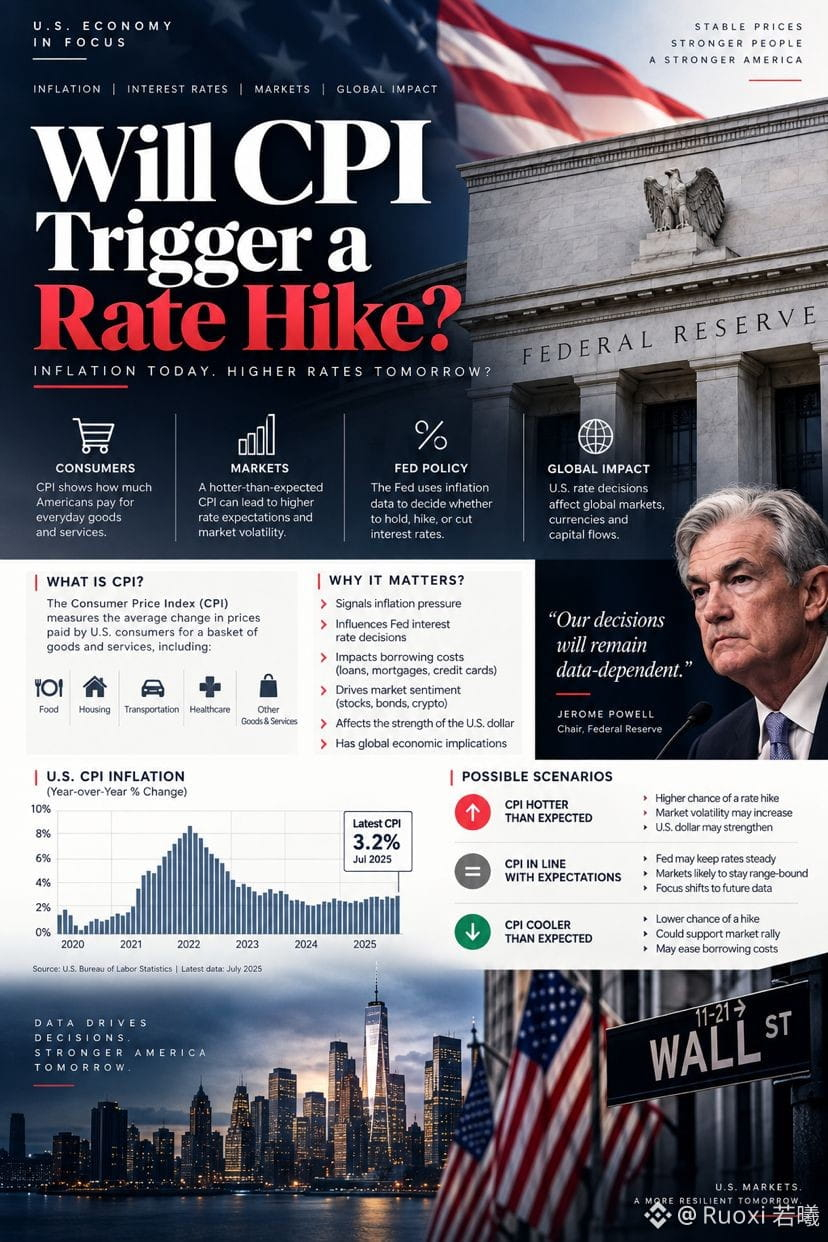
Wird CPI eine Zinserhöhung auslösen?
Ich beobachte dieses Setup seit einiger Zeit ganz genau, weil sich diesmal etwas anders anfühlt.
Die Arbeitsmarktdaten sind stärker ausgefallen als erwartet, und nun wartet im Grunde jeder darauf, dass CPI der Fed den nächsten Vorwand liefert – oder vielleicht den nächsten Grund, vorsichtig zu bleiben.
Persönlich bin ich nicht davon überzeugt, dass die Fed irgendetwas überstürzt. Ein starker Datenpunkt verändert nicht das gesamte Bild, aber eine hartnäckige Inflation könnte den Markt definitiv wieder nervös machen.
Am meisten besorgt mich die Reaktion nach dem CPI. Wir könnten sehen, wie Aktien getroffen werden, die Renditen springen und Gold innerhalb weniger Minuten stark ausschlägt. Und ganz ehrlich: Die erste Bewegung ist nicht immer die, der ich vertraue.
Im Moment halte ich mich bei Aktien zurück und beobachte Gold genau. Ich würde lieber die erste Kerze verpassen, als einer Bewegung nachzujagen, die sich fünf Minuten später wieder umkehrt.
So sehe ich das.
Was erwartest du: Zinserhöhung oder Stillhalten durch die Fed? Eher bullish oder bearish?
#CPIWatch
Wird CPI eine Zinserhöhung auslösen?
Ich beobachte dieses Setup seit einiger Zeit ganz genau, weil sich diesmal etwas anders anfühlt.
Die Arbeitsmarktdaten sind stärker ausgefallen als erwartet, und nun wartet im Grunde jeder darauf, dass CPI der Fed den nächsten Vorwand liefert – oder vielleicht den nächsten Grund, vorsichtig zu bleiben.
Persönlich bin ich nicht davon überzeugt, dass die Fed irgendetwas überstürzt. Ein starker Datenpunkt verändert nicht das gesamte Bild, aber eine hartnäckige Inflation könnte den Markt definitiv wieder nervös machen.
Am meisten besorgt mich die Reaktion nach dem CPI. Wir könnten sehen, wie Aktien getroffen werden, die Renditen springen und Gold innerhalb weniger Minuten stark ausschlägt. Und ganz ehrlich: Die erste Bewegung ist nicht immer die, der ich vertraue.
Im Moment halte ich mich bei Aktien zurück und beobachte Gold genau. Ich würde lieber die erste Kerze verpassen, als einer Bewegung nachzujagen, die sich fünf Minuten später wieder umkehrt.
So sehe ich das.
Was erwartest du: Zinserhöhung oder Stillhalten durch die Fed? Eher bullish oder bearish?
#CPIWatch
Ich beobachte dieses Setup seit einiger Zeit ganz genau, weil sich diesmal etwas anders anfühlt.
Die Arbeitsmarktdaten sind stärker ausgefallen als erwartet, und nun wartet im Grunde jeder darauf, dass CPI der Fed den nächsten Vorwand liefert – oder vielleicht den nächsten Grund, vorsichtig zu bleiben.
Persönlich bin ich nicht davon überzeugt, dass die Fed irgendetwas überstürzt. Ein starker Datenpunkt verändert nicht das gesamte Bild, aber eine hartnäckige Inflation könnte den Markt definitiv wieder nervös machen.
Am meisten besorgt mich die Reaktion nach dem CPI. Wir könnten sehen, wie Aktien getroffen werden, die Renditen springen und Gold innerhalb weniger Minuten stark ausschlägt. Und ganz ehrlich: Die erste Bewegung ist nicht immer die, der ich vertraue.
Im Moment halte ich mich bei Aktien zurück und beobachte Gold genau. Ich würde lieber die erste Kerze verpassen, als einer Bewegung nachzujagen, die sich fünf Minuten später wieder umkehrt.
So sehe ich das.
Was erwartest du: Zinserhöhung oder Stillhalten durch die Fed? Eher bullish oder bearish?
#CPIWatch
131
·
--
🎙️ Ich habe zu viele Fladen (Big Money) gemacht – steig mit ein
Beenden
03 h 04 m 32 s
5.2k
5
3
·
--
@termmax Ich schaue immer wieder auf die weniger glamouröse Seite von DeFi, weil man dort meistens am meisten lernt. TermMax hat einen Bug-Bounty-Preis, der einen echten Wert darin sieht, schwerwiegende Smart-Contract-Probleme zu finden, bevor ein Angreifer es tut.
Bei einem kritischen Bug beträgt die Belohnung 10 % der direkt betroffenen Gelder, gedeckelt auf 50.000 US-Dollar, mit einem Mindestbetrag von 10.000 US-Dollar. Ich finde, das ist ein sinnvoller Anreiz für Whitehats, frühzeitig das Wort zu ergreifen.
Was mich besonders aufmerksam gemacht hat, ist die Regel für wiederholte Angriffe. Wenn ein Vertrag angehalten oder aktualisiert werden kann, zählt nur der erste Angriff. Wenn er nicht gestoppt werden kann, kann der kumulierte Schaden durch wiederholte Ausnutzung berücksichtigt werden. Das fühlt sich viel näher an dem an, wie ein tatsächlicher Exploit ablaufen könnte.
TermMax kombiniert Festzins-Kreditaufnahme und -vergabe mit anpassbaren AMM-Preis-Kurven, daher sollte Sicherheit für mich nicht leichtgenommen werden. Der Bounty verlangt außerdem einen Proof of Concept, und das Testen ist auf lokale Forks beschränkt – nicht auf Live-Mainnet- oder öffentlichen Testnet-Code.
Trotzdem macht ein 50.000-Dollar-Bounty ein Protokoll nicht automatisch sicher. Bugs können unentdeckt bleiben, und DeFi bringt auch viele Risiken mit sich, die nicht nur Smart Contracts betreffen.
Für mich ist der Bounty daher eher ein Sicherheits-Signal – kein Garant.
Würde dich ein starker Bug-Bounty bei deiner Entscheidung beeinflussen, TermMax zu nutzen?
#TermMax
$GALA
{spot}(GALAUSDT)
$BCH
{spot}(BCHUSDT)
@TermMax Ich schaue immer wieder auf die weniger glamouröse Seite von DeFi, weil man dort meistens am meisten lernt. TermMax hat einen Bug-Bounty-Preis, der einen echten Wert darin sieht, schwerwiegende Smart-Contract-Probleme zu finden, bevor ein Angreifer es tut.
Bei einem kritischen Bug beträgt die Belohnung 10 % der direkt betroffenen Gelder, gedeckelt auf 50.000 US-Dollar, mit einem Mindestbetrag von 10.000 US-Dollar. Ich finde, das ist ein sinnvoller Anreiz für Whitehats, frühzeitig das Wort zu ergreifen.
Was mich besonders aufmerksam gemacht hat, ist die Regel für wiederholte Angriffe. Wenn ein Vertrag angehalten oder aktualisiert werden kann, zählt nur der erste Angriff. Wenn er nicht gestoppt werden kann, kann der kumulierte Schaden durch wiederholte Ausnutzung berücksichtigt werden. Das fühlt sich viel näher an dem an, wie ein tatsächlicher Exploit ablaufen könnte.
TermMax kombiniert Festzins-Kreditaufnahme und -vergabe mit anpassbaren AMM-Preis-Kurven, daher sollte Sicherheit für mich nicht leichtgenommen werden. Der Bounty verlangt außerdem einen Proof of Concept, und das Testen ist auf lokale Forks beschränkt – nicht auf Live-Mainnet- oder öffentlichen Testnet-Code.
Trotzdem macht ein 50.000-Dollar-Bounty ein Protokoll nicht automatisch sicher. Bugs können unentdeckt bleiben, und DeFi bringt auch viele Risiken mit sich, die nicht nur Smart Contracts betreffen.
Für mich ist der Bounty daher eher ein Sicherheits-Signal – kein Garant.
Würde dich ein starker Bug-Bounty bei deiner Entscheidung beeinflussen, TermMax zu nutzen?
#TermMax
$GALA
$BCH
Bei einem kritischen Bug beträgt die Belohnung 10 % der direkt betroffenen Gelder, gedeckelt auf 50.000 US-Dollar, mit einem Mindestbetrag von 10.000 US-Dollar. Ich finde, das ist ein sinnvoller Anreiz für Whitehats, frühzeitig das Wort zu ergreifen.
Was mich besonders aufmerksam gemacht hat, ist die Regel für wiederholte Angriffe. Wenn ein Vertrag angehalten oder aktualisiert werden kann, zählt nur der erste Angriff. Wenn er nicht gestoppt werden kann, kann der kumulierte Schaden durch wiederholte Ausnutzung berücksichtigt werden. Das fühlt sich viel näher an dem an, wie ein tatsächlicher Exploit ablaufen könnte.
TermMax kombiniert Festzins-Kreditaufnahme und -vergabe mit anpassbaren AMM-Preis-Kurven, daher sollte Sicherheit für mich nicht leichtgenommen werden. Der Bounty verlangt außerdem einen Proof of Concept, und das Testen ist auf lokale Forks beschränkt – nicht auf Live-Mainnet- oder öffentlichen Testnet-Code.
Trotzdem macht ein 50.000-Dollar-Bounty ein Protokoll nicht automatisch sicher. Bugs können unentdeckt bleiben, und DeFi bringt auch viele Risiken mit sich, die nicht nur Smart Contracts betreffen.
Für mich ist der Bounty daher eher ein Sicherheits-Signal – kein Garant.
Würde dich ein starker Bug-Bounty bei deiner Entscheidung beeinflussen, TermMax zu nutzen?
#TermMax
$GALA
$BCH
Bounty Hunt 🟠
100%
Treasure Hunt 🟣
0%
4 Stimmen • Abstimmung beendet
1
1
460
·
--
Teilweise korrekt
@termmax Als ich TermMaxs XP-Aufschlüsselung gelesen habe, ist mir sofort etwas aufgefallen: Der Multiplikator ist nicht für jede Position gleich.
Einzahlungen in den Vault erhalten 30x XP, FT-Positionen erhalten 15x und GT-Positionen erhalten 2x – basierend auf dem Wert des Schulden-Assets. Außerdem gibt es eine Empfehlungs-Komponente im Wert von 10% der XP der empfohlenen Nutzer, wobei der Empfehlungsbonus selbst ausgenommen ist.
Ehrlich gesagt mag ich die Logik mehr als eine simple „100 Transaktionen“-Kampagne.
So bekommt das Anreizsystem eine Verbindung zu unterschiedlichen Rollen innerhalb von TermMax.
Und diese Rollen sind tatsächlich relevant, weil TermMax Dinge wie Fixed-Rate Tokens und Gearing Tokens nutzt, um Kredite und Ausleihen rund um feste Laufzeiten zu strukturieren.
Trotzdem kann 30x auf dem Papier aufregend wirken und weniger beeindruckend werden, wenn sich zu viele Nutzer auf dieselbe Strategie stürzen.
Das wäre der Teil, den ich im Blick behalten würde.
Glaubst du, dass XP auf Basis von Multiplikatoren bessere Nutzer hervorbringt – oder nur mehr Wettbewerb um denselben Airdrop?
#TermMax
$ACE
{spot}(ACEUSDT)
$ONG
{spot}(ONGUSDT)
@TermMax Als ich TermMaxs XP-Aufschlüsselung gelesen habe, ist mir sofort etwas aufgefallen: Der Multiplikator ist nicht für jede Position gleich.
Einzahlungen in den Vault erhalten 30x XP, FT-Positionen erhalten 15x und GT-Positionen erhalten 2x – basierend auf dem Wert des Schulden-Assets. Außerdem gibt es eine Empfehlungs-Komponente im Wert von 10% der XP der empfohlenen Nutzer, wobei der Empfehlungsbonus selbst ausgenommen ist.
Ehrlich gesagt mag ich die Logik mehr als eine simple „100 Transaktionen“-Kampagne.
So bekommt das Anreizsystem eine Verbindung zu unterschiedlichen Rollen innerhalb von TermMax.
Und diese Rollen sind tatsächlich relevant, weil TermMax Dinge wie Fixed-Rate Tokens und Gearing Tokens nutzt, um Kredite und Ausleihen rund um feste Laufzeiten zu strukturieren.
Trotzdem kann 30x auf dem Papier aufregend wirken und weniger beeindruckend werden, wenn sich zu viele Nutzer auf dieselbe Strategie stürzen.
Das wäre der Teil, den ich im Blick behalten würde.
Glaubst du, dass XP auf Basis von Multiplikatoren bessere Nutzer hervorbringt – oder nur mehr Wettbewerb um denselben Airdrop?
#TermMax
$ACE
$ONG
Einzahlungen in den Vault erhalten 30x XP, FT-Positionen erhalten 15x und GT-Positionen erhalten 2x – basierend auf dem Wert des Schulden-Assets. Außerdem gibt es eine Empfehlungs-Komponente im Wert von 10% der XP der empfohlenen Nutzer, wobei der Empfehlungsbonus selbst ausgenommen ist.
Ehrlich gesagt mag ich die Logik mehr als eine simple „100 Transaktionen“-Kampagne.
So bekommt das Anreizsystem eine Verbindung zu unterschiedlichen Rollen innerhalb von TermMax.
Und diese Rollen sind tatsächlich relevant, weil TermMax Dinge wie Fixed-Rate Tokens und Gearing Tokens nutzt, um Kredite und Ausleihen rund um feste Laufzeiten zu strukturieren.
Trotzdem kann 30x auf dem Papier aufregend wirken und weniger beeindruckend werden, wenn sich zu viele Nutzer auf dieselbe Strategie stürzen.
Das wäre der Teil, den ich im Blick behalten würde.
Glaubst du, dass XP auf Basis von Multiplikatoren bessere Nutzer hervorbringt – oder nur mehr Wettbewerb um denselben Airdrop?
#TermMax
$ACE
$ONG
Bullish Token Volatility 🟢
73%
Bearish Token Volatility 🔴
27%
11 Stimmen • Abstimmung beendet
3
868
·
--
@termmax Eines, worauf ich mir DeFi-Protokolle jetzt ein wenig anders anschaue.
Ein 93%-DeFiSafety-PQR-Score bei TermMax hat meine Aufmerksamkeit erregt, aber ich sehe 93% nicht als „sicher, erledigt, weiter“. Ich sehe es als einen Grund, ehrlich gesagt tiefer zu schauen. Der Score umfasst Code, Dokumentation, Tests, Sicherheit, Admin-Steuerungen und Oracles.
TermMax erzielte 100% bei Code & Team,
94% bei Sicherheit, 97% bei Admin Controls und 100% bei Oracles. Die Tests lagen bei 89%, während die Dokumentation bei 70% lag. Diese letzte Zahl ist eigentlich der Teil, den ich besser verstehen möchte.
Ich denke, so sollten Sicherheitsbewertungen genutzt werden.
Nicht als grünes Licht, sondern als Ausgangspunkt für Recherche. TermMax beschreibt außerdem Unit Tests, Fuzzing, Mutation Testing und Integrationstests.
Trotzdem verschwindet das Risiko von Smart Contracts in DeFi nie vollständig.
Also beobachte ich die 93% mit Interesse, nicht mit blindem Vertrauen.Für ein Protokoll, das Kredite, Borrowing und strukturierte Produkte abwickelt, ist Sicherheit kein Nebenschauplatz – sie ist das ganze Spiel.
Würde ein 93%-PQR-Score Ihre Sicht auf ein DeFi-Protokoll verändern?
#TermMax
$CLO
{future}(CLOUSDT)
$ACE
{spot}(ACEUSDT)
@TermMax Eines, worauf ich mir DeFi-Protokolle jetzt ein wenig anders anschaue.
Ein 93%-DeFiSafety-PQR-Score bei TermMax hat meine Aufmerksamkeit erregt, aber ich sehe 93% nicht als „sicher, erledigt, weiter“. Ich sehe es als einen Grund, ehrlich gesagt tiefer zu schauen. Der Score umfasst Code, Dokumentation, Tests, Sicherheit, Admin-Steuerungen und Oracles.
TermMax erzielte 100% bei Code & Team,
94% bei Sicherheit, 97% bei Admin Controls und 100% bei Oracles. Die Tests lagen bei 89%, während die Dokumentation bei 70% lag. Diese letzte Zahl ist eigentlich der Teil, den ich besser verstehen möchte.
Ich denke, so sollten Sicherheitsbewertungen genutzt werden.
Nicht als grünes Licht, sondern als Ausgangspunkt für Recherche. TermMax beschreibt außerdem Unit Tests, Fuzzing, Mutation Testing und Integrationstests.
Trotzdem verschwindet das Risiko von Smart Contracts in DeFi nie vollständig.
Also beobachte ich die 93% mit Interesse, nicht mit blindem Vertrauen.Für ein Protokoll, das Kredite, Borrowing und strukturierte Produkte abwickelt, ist Sicherheit kein Nebenschauplatz – sie ist das ganze Spiel.
Würde ein 93%-PQR-Score Ihre Sicht auf ein DeFi-Protokoll verändern?
#TermMax
$CLO
$ACE
Ein 93%-DeFiSafety-PQR-Score bei TermMax hat meine Aufmerksamkeit erregt, aber ich sehe 93% nicht als „sicher, erledigt, weiter“. Ich sehe es als einen Grund, ehrlich gesagt tiefer zu schauen. Der Score umfasst Code, Dokumentation, Tests, Sicherheit, Admin-Steuerungen und Oracles.
TermMax erzielte 100% bei Code & Team,
94% bei Sicherheit, 97% bei Admin Controls und 100% bei Oracles. Die Tests lagen bei 89%, während die Dokumentation bei 70% lag. Diese letzte Zahl ist eigentlich der Teil, den ich besser verstehen möchte.
Ich denke, so sollten Sicherheitsbewertungen genutzt werden.
Nicht als grünes Licht, sondern als Ausgangspunkt für Recherche. TermMax beschreibt außerdem Unit Tests, Fuzzing, Mutation Testing und Integrationstests.
Trotzdem verschwindet das Risiko von Smart Contracts in DeFi nie vollständig.
Also beobachte ich die 93% mit Interesse, nicht mit blindem Vertrauen.Für ein Protokoll, das Kredite, Borrowing und strukturierte Produkte abwickelt, ist Sicherheit kein Nebenschauplatz – sie ist das ganze Spiel.
Würde ein 93%-PQR-Score Ihre Sicht auf ein DeFi-Protokoll verändern?
#TermMax
$CLO
$ACE
Bullish Volatile 🟢
67%
Bearish Volatile 🔴
33%
3 Stimmen • Abstimmung beendet
340
·
--
Verifiziert
@termmax Ich schaue mir immer wieder die Liquidationsseite von DeFi an, denn dort werden viele Kreditideen auf die Probe gestellt.
Ein Protokoll kann attraktive Zinsen bieten, aber was passiert, wenn sich der Markt plötzlich um 30% bewegt?
TermMax hat eine interessante Antwort: die physische Lieferung. In bestimmten Liquidationssituationen kann Sicherheiten an die Kreditgeber geliefert werden, statt sich nur darauf zu verlassen, Vermögenswerte in einem dünnen Markt zu verkaufen. Das Design soll zudem dazu beitragen, Sicherheiten wie geringer liquide Vermögenswerte und einige RWAs besser handhabbar zu machen.
Ich denke, das ist einer der weniger spektakulären Teile von TermMax, aber wahrscheinlich einer der wichtigsten.
Wenn die Liquidität während einer starken Bewegung verschwindet, garantiert allein die Aussage „liquidieren“ noch keine faire Rückzahlung für den Kreditgeber.
Doch auch die physische Lieferung ist kein magischer Schutz. Auch die Sicherheit selbst kann weiter an Wert verlieren.
Würdest du der physischen Lieferung bei extremer Volatilität mehr vertrauen als einer traditionellen Marktliquidation?
#TermMax
$GPS
{spot}(GPSUSDT)
$TUT
{spot}(TUTUSDT)
@TermMax Ich schaue mir immer wieder die Liquidationsseite von DeFi an, denn dort werden viele Kreditideen auf die Probe gestellt.
Ein Protokoll kann attraktive Zinsen bieten, aber was passiert, wenn sich der Markt plötzlich um 30% bewegt?
TermMax hat eine interessante Antwort: die physische Lieferung. In bestimmten Liquidationssituationen kann Sicherheiten an die Kreditgeber geliefert werden, statt sich nur darauf zu verlassen, Vermögenswerte in einem dünnen Markt zu verkaufen. Das Design soll zudem dazu beitragen, Sicherheiten wie geringer liquide Vermögenswerte und einige RWAs besser handhabbar zu machen.
Ich denke, das ist einer der weniger spektakulären Teile von TermMax, aber wahrscheinlich einer der wichtigsten.
Wenn die Liquidität während einer starken Bewegung verschwindet, garantiert allein die Aussage „liquidieren“ noch keine faire Rückzahlung für den Kreditgeber.
Doch auch die physische Lieferung ist kein magischer Schutz. Auch die Sicherheit selbst kann weiter an Wert verlieren.
Würdest du der physischen Lieferung bei extremer Volatilität mehr vertrauen als einer traditionellen Marktliquidation?
#TermMax
$GPS
$TUT
Ein Protokoll kann attraktive Zinsen bieten, aber was passiert, wenn sich der Markt plötzlich um 30% bewegt?
TermMax hat eine interessante Antwort: die physische Lieferung. In bestimmten Liquidationssituationen kann Sicherheiten an die Kreditgeber geliefert werden, statt sich nur darauf zu verlassen, Vermögenswerte in einem dünnen Markt zu verkaufen. Das Design soll zudem dazu beitragen, Sicherheiten wie geringer liquide Vermögenswerte und einige RWAs besser handhabbar zu machen.
Ich denke, das ist einer der weniger spektakulären Teile von TermMax, aber wahrscheinlich einer der wichtigsten.
Wenn die Liquidität während einer starken Bewegung verschwindet, garantiert allein die Aussage „liquidieren“ noch keine faire Rückzahlung für den Kreditgeber.
Doch auch die physische Lieferung ist kein magischer Schutz. Auch die Sicherheit selbst kann weiter an Wert verlieren.
Würdest du der physischen Lieferung bei extremer Volatilität mehr vertrauen als einer traditionellen Marktliquidation?
#TermMax
$GPS
$TUT
Bullish volatility 🟢
33%
Bearish volatility 🔴
67%
12 Stimmen • Abstimmung beendet
1.3k
·
--
@Dusk_Foundation Ich schaue mir die KI- und Crypto-Diskussion weiter an, und es fühlt sich an, als würde etwas fehlen. Alle reden davon, dass Agents Code generieren, Aufgaben ausführen und schneller vorankommen. Nur sehr wenige fragen, was passiert, wenn der Agent einer veralteten Spezifikation folgt, an die sich niemand mehr erinnert, dass sie veraltet ist.
Pituitary ist Dusk’ Versuch, dieses leisere Problem zu lösen. Es beobachtet die Beziehung zwischen Spezifikationen, Dokumentation, Entscheidungen und Code, statt jede Datei als isoliertes Ding zu behandeln. Es kann Spezifikationen durchsuchen, sie vergleichen, veraltete Dokumente finden und die Auswirkungen prüfen.
Ehrlich gesagt, das ist die Art von KI-Tooling, die ich spannender finde. Nicht noch ein Chatbot, der Entwicklern sagt, welchen Code sie schreiben sollen, sondern ein System, das Entwicklern hilft, zu vermeiden, dass die ursprüngliche Absicht des Projekts verloren geht. Gerade für die Finanzinfrastruktur, bei der Datenschutz und Compliance Teil der eigentlichen Anwendungslogik sein können.
Trotzdem gibt es hier auch ein Risiko. Zu viele automatisierte Warnungen könnten zu Rauschen werden, und Teams könnten sie irgendwann ignorieren. Das Tool muss beweisen, dass seine Signale nützlich sind.
Aber wenn KI künftig mehr von unserem Code schreiben soll: Sollten wir dann nicht bessere Systeme bauen, um uns die Regeln zu merken, denen der Code folgen soll?
#dusk $DUSK
$PORTAL
{spot}(PORTALUSDT)
$DOLO
{spot}(DOLOUSDT)
@Dusk Ich schaue mir die KI- und Crypto-Diskussion weiter an, und es fühlt sich an, als würde etwas fehlen. Alle reden davon, dass Agents Code generieren, Aufgaben ausführen und schneller vorankommen. Nur sehr wenige fragen, was passiert, wenn der Agent einer veralteten Spezifikation folgt, an die sich niemand mehr erinnert, dass sie veraltet ist.
Pituitary ist Dusk’ Versuch, dieses leisere Problem zu lösen. Es beobachtet die Beziehung zwischen Spezifikationen, Dokumentation, Entscheidungen und Code, statt jede Datei als isoliertes Ding zu behandeln. Es kann Spezifikationen durchsuchen, sie vergleichen, veraltete Dokumente finden und die Auswirkungen prüfen.
Ehrlich gesagt, das ist die Art von KI-Tooling, die ich spannender finde. Nicht noch ein Chatbot, der Entwicklern sagt, welchen Code sie schreiben sollen, sondern ein System, das Entwicklern hilft, zu vermeiden, dass die ursprüngliche Absicht des Projekts verloren geht. Gerade für die Finanzinfrastruktur, bei der Datenschutz und Compliance Teil der eigentlichen Anwendungslogik sein können.
Trotzdem gibt es hier auch ein Risiko. Zu viele automatisierte Warnungen könnten zu Rauschen werden, und Teams könnten sie irgendwann ignorieren. Das Tool muss beweisen, dass seine Signale nützlich sind.
Aber wenn KI künftig mehr von unserem Code schreiben soll: Sollten wir dann nicht bessere Systeme bauen, um uns die Regeln zu merken, denen der Code folgen soll?
#dusk $DUSK
$PORTAL
$DOLO
Pituitary ist Dusk’ Versuch, dieses leisere Problem zu lösen. Es beobachtet die Beziehung zwischen Spezifikationen, Dokumentation, Entscheidungen und Code, statt jede Datei als isoliertes Ding zu behandeln. Es kann Spezifikationen durchsuchen, sie vergleichen, veraltete Dokumente finden und die Auswirkungen prüfen.
Ehrlich gesagt, das ist die Art von KI-Tooling, die ich spannender finde. Nicht noch ein Chatbot, der Entwicklern sagt, welchen Code sie schreiben sollen, sondern ein System, das Entwicklern hilft, zu vermeiden, dass die ursprüngliche Absicht des Projekts verloren geht. Gerade für die Finanzinfrastruktur, bei der Datenschutz und Compliance Teil der eigentlichen Anwendungslogik sein können.
Trotzdem gibt es hier auch ein Risiko. Zu viele automatisierte Warnungen könnten zu Rauschen werden, und Teams könnten sie irgendwann ignorieren. Das Tool muss beweisen, dass seine Signale nützlich sind.
Aber wenn KI künftig mehr von unserem Code schreiben soll: Sollten wir dann nicht bessere Systeme bauen, um uns die Regeln zu merken, denen der Code folgen soll?
#dusk $DUSK
$PORTAL
$DOLO
Bullish Time 🟢
100%
Bearish Time 🔴
0%
3 Stimmen • Abstimmung beendet
297
·
--
Verifiziert
@Dusk_Foundation Eine Sache, die mir beim Lesen von Dusk’s Doku aufgefallen ist: Smart Contracts werden zu einem Bestandteil der Ökonomie des Netzwerks – nicht nur zu einem Teil seiner Anwendungen.
Das Economic Protocol von Dusk ermöglicht Smart Contracts, Gebühren zu erheben, Gas zu bezahlen und autonom zu arbeiten. Das klingt wie eine kleine technische Verbesserung, bis man darüber nachdenkt, wie Finanzanwendungen tatsächlich funktionieren. Ein Contract kann eigenes wirtschaftliches Verhalten haben, statt davon abhängig zu sein, dass jeder Nutzer jeden Schritt manuell verwaltet.
Dann kommt noch Stake Abstraction hinzu.
Ein Contract kann am Staking teilnehmen, Unstaking durchführen und Staking Rewards empfangen. So führt der Contract nicht nur finanzielle Logik aus – er kann auch einen Teil der Netzwerk-Ökonomie rund um diese Logik verwalten. Genau da finde ich, wird es ziemlich spannend.
Das könnte Staking-Infrastruktur deutlich besser kombinierbar machen. Aber Kombinierbarkeit wirft immer auch eine Frage auf: Wer kontrolliert den Contract, und was passiert, wenn im Code ein Bug steckt?
Dusk kann die Infrastruktur bereitstellen, doch das Anwendungsrisiko bleibt bei Entwicklern und Nutzern.
Würdest du einen Smart Contract verwenden, der automatisch staked und dein DUSK verwaltet?
#dusk $DUSK
$COW
{spot}(COWUSDT)
$HEMI
{spot}(HEMIUSDT)
@Dusk Eine Sache, die mir beim Lesen von Dusk’s Doku aufgefallen ist: Smart Contracts werden zu einem Bestandteil der Ökonomie des Netzwerks – nicht nur zu einem Teil seiner Anwendungen.
Das Economic Protocol von Dusk ermöglicht Smart Contracts, Gebühren zu erheben, Gas zu bezahlen und autonom zu arbeiten. Das klingt wie eine kleine technische Verbesserung, bis man darüber nachdenkt, wie Finanzanwendungen tatsächlich funktionieren. Ein Contract kann eigenes wirtschaftliches Verhalten haben, statt davon abhängig zu sein, dass jeder Nutzer jeden Schritt manuell verwaltet.
Dann kommt noch Stake Abstraction hinzu.
Ein Contract kann am Staking teilnehmen, Unstaking durchführen und Staking Rewards empfangen. So führt der Contract nicht nur finanzielle Logik aus – er kann auch einen Teil der Netzwerk-Ökonomie rund um diese Logik verwalten. Genau da finde ich, wird es ziemlich spannend.
Das könnte Staking-Infrastruktur deutlich besser kombinierbar machen. Aber Kombinierbarkeit wirft immer auch eine Frage auf: Wer kontrolliert den Contract, und was passiert, wenn im Code ein Bug steckt?
Dusk kann die Infrastruktur bereitstellen, doch das Anwendungsrisiko bleibt bei Entwicklern und Nutzern.
Würdest du einen Smart Contract verwenden, der automatisch staked und dein DUSK verwaltet?
#dusk $DUSK
$COW
$HEMI
Das Economic Protocol von Dusk ermöglicht Smart Contracts, Gebühren zu erheben, Gas zu bezahlen und autonom zu arbeiten. Das klingt wie eine kleine technische Verbesserung, bis man darüber nachdenkt, wie Finanzanwendungen tatsächlich funktionieren. Ein Contract kann eigenes wirtschaftliches Verhalten haben, statt davon abhängig zu sein, dass jeder Nutzer jeden Schritt manuell verwaltet.
Dann kommt noch Stake Abstraction hinzu.
Ein Contract kann am Staking teilnehmen, Unstaking durchführen und Staking Rewards empfangen. So führt der Contract nicht nur finanzielle Logik aus – er kann auch einen Teil der Netzwerk-Ökonomie rund um diese Logik verwalten. Genau da finde ich, wird es ziemlich spannend.
Das könnte Staking-Infrastruktur deutlich besser kombinierbar machen. Aber Kombinierbarkeit wirft immer auch eine Frage auf: Wer kontrolliert den Contract, und was passiert, wenn im Code ein Bug steckt?
Dusk kann die Infrastruktur bereitstellen, doch das Anwendungsrisiko bleibt bei Entwicklern und Nutzern.
Würdest du einen Smart Contract verwenden, der automatisch staked und dein DUSK verwaltet?
#dusk $DUSK
$COW
$HEMI
Buying Bullish 🟢
80%
Selling Bearish 🔴
20%
5 Stimmen • Abstimmung beendet
4
1
642
·
--
@Dusk_Foundation Eine Sache, auf die ich bei Dusk immer wieder schaue, ist, dass sich die Ecosystem-Story jetzt anders anfühlt.
Was meine Aufmerksamkeit geweckt hat, ist nicht einfach nur der Privacy-Aspekt. Es ist, wie Dusk mehrere Bausteine rund um reguliertes Finanzwesen aufbaut – von DuskVM und DuskEVM bis hin zu Identität, Settlement und Asset-Workflows. Das lässt das Netzwerk eher wie Infrastruktur wirken als wie ein einzelnes Produkt.
Die Dusk-Dokumentation zeigt jetzt Integrationen mit Namen wie Chainlink, NPEX, Quantoz und Cordial Systems – jeweils in einem anderen Bereich des Finanzwesens. Chainlink bringt plattformübergreifende Nachrichtenübermittlung und Daten über CCIP, während NPEX direkt mit regulierten Aktivitäten bei Real-World Assets und Wertpapieren verbunden ist.
Ich denke, hier wird Dusk interessant. Finanzinstitute brauchen normalerweise nicht noch eine weitere Blockchain nur, weil sie schnell oder günstig ist. Sie brauchen Datenschutz, Compliance, Settlement und Interoperabilität, die gemeinsam funktionieren – ohne alles in ein vollständig geschlossenes System zu zwingen.
Es gibt aber noch eine große Frage: Integrationen auf dem Papier sind nicht dasselbe wie eine nachhaltige Adoption. Dusk braucht echte Nutzer, echtes Asset-Volumen und
echte Anwendungen, um zu beweisen, dass dieses Ökosystem über Partnerschaften hinaus wachsen kann.
Trotzdem wird aus dem, was ich gesehen habe, die Richtung allmählich klarer. Dusk scheint erst die Schienen zu bauen und den Anwendungen dann folgen zu lassen.
Glaubst du, dass dieser Ansatz „Infrastructure First“ tatsächlich mehr regulierte Assets On-Chain bringen kann?
#dusk $DUSK
$ACE
{spot}(ACEUSDT)
$HEI
{spot}(HEIUSDT)
@Dusk Eine Sache, auf die ich bei Dusk immer wieder schaue, ist, dass sich die Ecosystem-Story jetzt anders anfühlt.
Was meine Aufmerksamkeit geweckt hat, ist nicht einfach nur der Privacy-Aspekt. Es ist, wie Dusk mehrere Bausteine rund um reguliertes Finanzwesen aufbaut – von DuskVM und DuskEVM bis hin zu Identität, Settlement und Asset-Workflows. Das lässt das Netzwerk eher wie Infrastruktur wirken als wie ein einzelnes Produkt.
Die Dusk-Dokumentation zeigt jetzt Integrationen mit Namen wie Chainlink, NPEX, Quantoz und Cordial Systems – jeweils in einem anderen Bereich des Finanzwesens. Chainlink bringt plattformübergreifende Nachrichtenübermittlung und Daten über CCIP, während NPEX direkt mit regulierten Aktivitäten bei Real-World Assets und Wertpapieren verbunden ist.
Ich denke, hier wird Dusk interessant. Finanzinstitute brauchen normalerweise nicht noch eine weitere Blockchain nur, weil sie schnell oder günstig ist. Sie brauchen Datenschutz, Compliance, Settlement und Interoperabilität, die gemeinsam funktionieren – ohne alles in ein vollständig geschlossenes System zu zwingen.
Es gibt aber noch eine große Frage: Integrationen auf dem Papier sind nicht dasselbe wie eine nachhaltige Adoption. Dusk braucht echte Nutzer, echtes Asset-Volumen und
echte Anwendungen, um zu beweisen, dass dieses Ökosystem über Partnerschaften hinaus wachsen kann.
Trotzdem wird aus dem, was ich gesehen habe, die Richtung allmählich klarer. Dusk scheint erst die Schienen zu bauen und den Anwendungen dann folgen zu lassen.
Glaubst du, dass dieser Ansatz „Infrastructure First“ tatsächlich mehr regulierte Assets On-Chain bringen kann?
#dusk $DUSK
$ACE
$HEI
Was meine Aufmerksamkeit geweckt hat, ist nicht einfach nur der Privacy-Aspekt. Es ist, wie Dusk mehrere Bausteine rund um reguliertes Finanzwesen aufbaut – von DuskVM und DuskEVM bis hin zu Identität, Settlement und Asset-Workflows. Das lässt das Netzwerk eher wie Infrastruktur wirken als wie ein einzelnes Produkt.
Die Dusk-Dokumentation zeigt jetzt Integrationen mit Namen wie Chainlink, NPEX, Quantoz und Cordial Systems – jeweils in einem anderen Bereich des Finanzwesens. Chainlink bringt plattformübergreifende Nachrichtenübermittlung und Daten über CCIP, während NPEX direkt mit regulierten Aktivitäten bei Real-World Assets und Wertpapieren verbunden ist.
Ich denke, hier wird Dusk interessant. Finanzinstitute brauchen normalerweise nicht noch eine weitere Blockchain nur, weil sie schnell oder günstig ist. Sie brauchen Datenschutz, Compliance, Settlement und Interoperabilität, die gemeinsam funktionieren – ohne alles in ein vollständig geschlossenes System zu zwingen.
Es gibt aber noch eine große Frage: Integrationen auf dem Papier sind nicht dasselbe wie eine nachhaltige Adoption. Dusk braucht echte Nutzer, echtes Asset-Volumen und
echte Anwendungen, um zu beweisen, dass dieses Ökosystem über Partnerschaften hinaus wachsen kann.
Trotzdem wird aus dem, was ich gesehen habe, die Richtung allmählich klarer. Dusk scheint erst die Schienen zu bauen und den Anwendungen dann folgen zu lassen.
Glaubst du, dass dieser Ansatz „Infrastructure First“ tatsächlich mehr regulierte Assets On-Chain bringen kann?
#dusk $DUSK
$ACE
$HEI
Buying Time Long 🟢
0%
Selling Time Short 🔴
0%
Hold and Wait 🟠
0%
0 Stimmen • Abstimmung beendet
1
254
·
--
@Dusk_Foundation Eine Sache, die ich immer wieder betrachte und mir frage: Kann ein kleineres L1 Aufmerksamkeit gewinnen, während Bitcoin weiterhin der wichtigste Benchmark des Marktes bleibt?
Was mir ins Auge fiel, ist die Richtung von Dusk. Dusk versucht nicht, Bitcoin zu ersetzen. Es wird rund um regulierte Finanzen, Privatsphäre, selektive Offenlegung und On-Chain-Abwicklung aufgebaut. Das ist eine sehr andere Wette.
Das Interessante ist die Kombination aus Moonlight und Phoenix. Die eine Komponente hält Transaktionen öffentlich, während die andere gestützte Transfers ermöglicht. Für mich fühlt sich das praktischer für Finanzanwendungen an, bei denen vollständige Transparenz nicht immer sinnvoll ist.
Und DuskEVM gibt Entwicklern einen vertrauten Solidity-/EVM-Weg. Ich denke, das ist wichtig, weil gute Infrastruktur immer auch Macher braucht – nicht nur eine starke Story.
Aber ich würde das noch nicht als bestätigten Trendwechsel bezeichnen. CMC zeigt DUSK bei etwa 0,06 $ mit einer Marktkapitalisierung von rund 30 Mio. $, also bleiben Liquidität und Adoption echte Risiken.
Trotzdem frage ich mich: Wenn DUSK an Stärke gewinnt, während Bitcoin langsamer wird, dann würde ich deutlich mehr Aufmerksamkeit darauf richten.
Glaubst du, dass DUSK frühe Anzeichen zeigt, sich anders als Bitcoin zu bewegen?
#dusk $DUSK
$AKE
{future}(AKEUSDT)
$ACU
{future}(ACUUSDT)
@Dusk Eine Sache, die ich immer wieder betrachte und mir frage: Kann ein kleineres L1 Aufmerksamkeit gewinnen, während Bitcoin weiterhin der wichtigste Benchmark des Marktes bleibt?
Was mir ins Auge fiel, ist die Richtung von Dusk. Dusk versucht nicht, Bitcoin zu ersetzen. Es wird rund um regulierte Finanzen, Privatsphäre, selektive Offenlegung und On-Chain-Abwicklung aufgebaut. Das ist eine sehr andere Wette.
Das Interessante ist die Kombination aus Moonlight und Phoenix. Die eine Komponente hält Transaktionen öffentlich, während die andere gestützte Transfers ermöglicht. Für mich fühlt sich das praktischer für Finanzanwendungen an, bei denen vollständige Transparenz nicht immer sinnvoll ist.
Und DuskEVM gibt Entwicklern einen vertrauten Solidity-/EVM-Weg. Ich denke, das ist wichtig, weil gute Infrastruktur immer auch Macher braucht – nicht nur eine starke Story.
Aber ich würde das noch nicht als bestätigten Trendwechsel bezeichnen. CMC zeigt DUSK bei etwa 0,06 $ mit einer Marktkapitalisierung von rund 30 Mio. $, also bleiben Liquidität und Adoption echte Risiken.
Trotzdem frage ich mich: Wenn DUSK an Stärke gewinnt, während Bitcoin langsamer wird, dann würde ich deutlich mehr Aufmerksamkeit darauf richten.
Glaubst du, dass DUSK frühe Anzeichen zeigt, sich anders als Bitcoin zu bewegen?
#dusk $DUSK
$AKE
$ACU
Was mir ins Auge fiel, ist die Richtung von Dusk. Dusk versucht nicht, Bitcoin zu ersetzen. Es wird rund um regulierte Finanzen, Privatsphäre, selektive Offenlegung und On-Chain-Abwicklung aufgebaut. Das ist eine sehr andere Wette.
Das Interessante ist die Kombination aus Moonlight und Phoenix. Die eine Komponente hält Transaktionen öffentlich, während die andere gestützte Transfers ermöglicht. Für mich fühlt sich das praktischer für Finanzanwendungen an, bei denen vollständige Transparenz nicht immer sinnvoll ist.
Und DuskEVM gibt Entwicklern einen vertrauten Solidity-/EVM-Weg. Ich denke, das ist wichtig, weil gute Infrastruktur immer auch Macher braucht – nicht nur eine starke Story.
Aber ich würde das noch nicht als bestätigten Trendwechsel bezeichnen. CMC zeigt DUSK bei etwa 0,06 $ mit einer Marktkapitalisierung von rund 30 Mio. $, also bleiben Liquidität und Adoption echte Risiken.
Trotzdem frage ich mich: Wenn DUSK an Stärke gewinnt, während Bitcoin langsamer wird, dann würde ich deutlich mehr Aufmerksamkeit darauf richten.
Glaubst du, dass DUSK frühe Anzeichen zeigt, sich anders als Bitcoin zu bewegen?
#dusk $DUSK
$AKE
$ACU
Buying Long 🟢
64%
Selling Short 🔴
36%
11 Stimmen • Abstimmung beendet
1
1
270
·
--
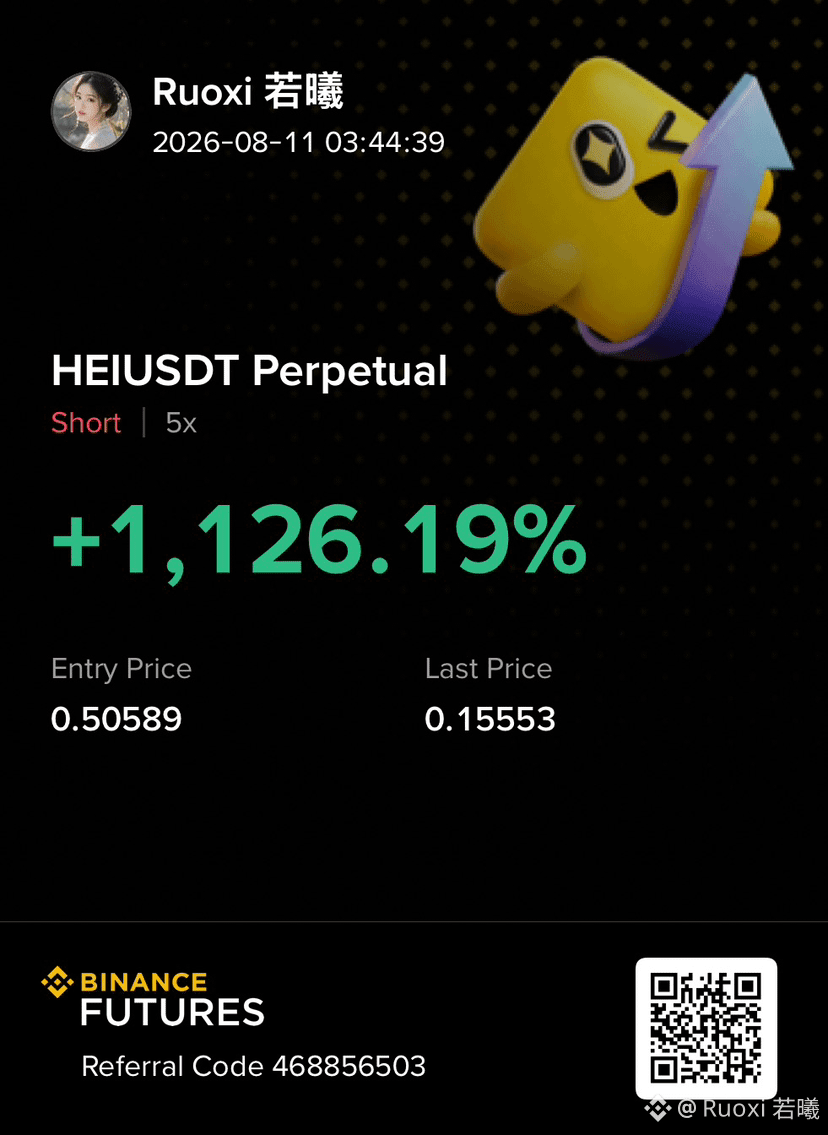
$HEI läuft großartig 🔥
Der Handel läuft schön, aber ich halte es immer noch einfach: kein Hinterherjagen, keine Überheblichkeit.
Was mir gerade am meisten gefällt, ist der Schwung. Wenn $HEI diese Stärke beibehalten und weiterhin höhere Levels aufbauen kann – mit gesundem Volumen – dann könnte das Setup interessant bleiben.
Für mich ist das Entscheidende Geduld. Lass den Chart die Bewegung bestätigen, statt einen Einstieg zu erzwingen.
Guter Handel bisher. Mal sehen, wie $HEI die nächste Bewegung meistert. 👀📈
$HEI läuft großartig 🔥
Der Handel läuft schön, aber ich halte es immer noch einfach: kein Hinterherjagen, keine Überheblichkeit.
Was mir gerade am meisten gefällt, ist der Schwung. Wenn $HEI diese Stärke beibehalten und weiterhin höhere Levels aufbauen kann – mit gesundem Volumen – dann könnte das Setup interessant bleiben.
Für mich ist das Entscheidende Geduld. Lass den Chart die Bewegung bestätigen, statt einen Einstieg zu erzwingen.
Guter Handel bisher. Mal sehen, wie $HEI die nächste Bewegung meistert. 👀📈
Der Handel läuft schön, aber ich halte es immer noch einfach: kein Hinterherjagen, keine Überheblichkeit.
Was mir gerade am meisten gefällt, ist der Schwung. Wenn $HEI diese Stärke beibehalten und weiterhin höhere Levels aufbauen kann – mit gesundem Volumen – dann könnte das Setup interessant bleiben.
Für mich ist das Entscheidende Geduld. Lass den Chart die Bewegung bestätigen, statt einen Einstieg zu erzwingen.
Guter Handel bisher. Mal sehen, wie $HEI die nächste Bewegung meistert. 👀📈
301
·
--
@babylonlabs_io Eines, das mir aufgefallen ist, nachdem ich Babylons Q4-2025-Founders-Call durchgegangen war, war, wie stark sich das Gespräch verändert hat.
Vor einem Jahr haben die meisten über Bitcoin-Staking gesprochen. Jetzt konzentriert sich das Team darauf, dass Bitcoin tatsächlich in DeFi nutzbar wird – ohne Wrapped Assets und ohne auf die Selbstverwahrung zu verzichten. Ich denke, das ist eine größere Veränderung, als viele Menschen es realisieren.
Was meine Aufmerksamkeit geweckt hat, waren Trustless Bitcoin Vaults.
Die Idee klingt überraschend einfach. Dein BTC bleibt unter deiner Kontrolle, während er als Sicherheit für Kreditvergabe und andere DeFi-Anwendungsfälle dient. Wenn Babylon das gut umsetzt, könnte das einen der größten Gründe beseitigen, warum Bitcoin-Inhaber On-Chain-Finanzierungen bisher gemieden haben.
Außerdem hat mir gefallen, dass die Gründer nicht so getan haben, als wäre alles perfekt.
Sie haben offen über BABY-Verkaufsdruck, die Verbesserung der Token-Utility und darüber gesprochen, warum echte Produkte erst dann einen echten Nutzen schaffen sollten, bevor Tokenomics versuchen, diesen zu erfassen. Ehrlich gesagt ist das der schwierigere Weg, und Erfolg wird von der Akzeptanz abhängen – nicht von Ankündigungen.
Nach dem, was ich gesehen habe, versucht Babylon, Bitcoin seiner ursprünglichen Philosophie treu zu halten, ihm aber gleichzeitig eine praktischere Nutzung zu geben.
Das ist ein ehrgeiziges Ziel, aber die Umsetzung ist alles. Wenn die Nutzererfahrung nicht einfach genug ist, kann selbst die beste Technologie Schwierigkeiten haben, an Fahrt zu gewinnen.
Glaubst du, dass Trustless Bitcoin Vaults das Feature werden könnten, das endlich mehr Bitcoin in DeFi bringt?
#baby $BABY
$HOME
{spot}(HOMEUSDT)
$BLESS
{future}(BLESSUSDT)
@BabylonLabs_io Eines, das mir aufgefallen ist, nachdem ich Babylons Q4-2025-Founders-Call durchgegangen war, war, wie stark sich das Gespräch verändert hat.
Vor einem Jahr haben die meisten über Bitcoin-Staking gesprochen. Jetzt konzentriert sich das Team darauf, dass Bitcoin tatsächlich in DeFi nutzbar wird – ohne Wrapped Assets und ohne auf die Selbstverwahrung zu verzichten. Ich denke, das ist eine größere Veränderung, als viele Menschen es realisieren.
Was meine Aufmerksamkeit geweckt hat, waren Trustless Bitcoin Vaults.
Die Idee klingt überraschend einfach. Dein BTC bleibt unter deiner Kontrolle, während er als Sicherheit für Kreditvergabe und andere DeFi-Anwendungsfälle dient. Wenn Babylon das gut umsetzt, könnte das einen der größten Gründe beseitigen, warum Bitcoin-Inhaber On-Chain-Finanzierungen bisher gemieden haben.
Außerdem hat mir gefallen, dass die Gründer nicht so getan haben, als wäre alles perfekt.
Sie haben offen über BABY-Verkaufsdruck, die Verbesserung der Token-Utility und darüber gesprochen, warum echte Produkte erst dann einen echten Nutzen schaffen sollten, bevor Tokenomics versuchen, diesen zu erfassen. Ehrlich gesagt ist das der schwierigere Weg, und Erfolg wird von der Akzeptanz abhängen – nicht von Ankündigungen.
Nach dem, was ich gesehen habe, versucht Babylon, Bitcoin seiner ursprünglichen Philosophie treu zu halten, ihm aber gleichzeitig eine praktischere Nutzung zu geben.
Das ist ein ehrgeiziges Ziel, aber die Umsetzung ist alles. Wenn die Nutzererfahrung nicht einfach genug ist, kann selbst die beste Technologie Schwierigkeiten haben, an Fahrt zu gewinnen.
Glaubst du, dass Trustless Bitcoin Vaults das Feature werden könnten, das endlich mehr Bitcoin in DeFi bringt?
#baby $BABY
$HOME
$BLESS
Vor einem Jahr haben die meisten über Bitcoin-Staking gesprochen. Jetzt konzentriert sich das Team darauf, dass Bitcoin tatsächlich in DeFi nutzbar wird – ohne Wrapped Assets und ohne auf die Selbstverwahrung zu verzichten. Ich denke, das ist eine größere Veränderung, als viele Menschen es realisieren.
Was meine Aufmerksamkeit geweckt hat, waren Trustless Bitcoin Vaults.
Die Idee klingt überraschend einfach. Dein BTC bleibt unter deiner Kontrolle, während er als Sicherheit für Kreditvergabe und andere DeFi-Anwendungsfälle dient. Wenn Babylon das gut umsetzt, könnte das einen der größten Gründe beseitigen, warum Bitcoin-Inhaber On-Chain-Finanzierungen bisher gemieden haben.
Außerdem hat mir gefallen, dass die Gründer nicht so getan haben, als wäre alles perfekt.
Sie haben offen über BABY-Verkaufsdruck, die Verbesserung der Token-Utility und darüber gesprochen, warum echte Produkte erst dann einen echten Nutzen schaffen sollten, bevor Tokenomics versuchen, diesen zu erfassen. Ehrlich gesagt ist das der schwierigere Weg, und Erfolg wird von der Akzeptanz abhängen – nicht von Ankündigungen.
Nach dem, was ich gesehen habe, versucht Babylon, Bitcoin seiner ursprünglichen Philosophie treu zu halten, ihm aber gleichzeitig eine praktischere Nutzung zu geben.
Das ist ein ehrgeiziges Ziel, aber die Umsetzung ist alles. Wenn die Nutzererfahrung nicht einfach genug ist, kann selbst die beste Technologie Schwierigkeiten haben, an Fahrt zu gewinnen.
Glaubst du, dass Trustless Bitcoin Vaults das Feature werden könnten, das endlich mehr Bitcoin in DeFi bringt?
#baby $BABY
$HOME
$BLESS
Bullish Buying 🟢
100%
Bearish Selling 🔴
0%
1 Stimmen • Abstimmung beendet
1
147
·
--
@babylonlabs_io Eine Sache, die ich immer wieder bei Bitcoin anschaue, und mich frage: Warum bedeutet die Nutzung in DeFi seit jeher, dass man etwas dafür opfert.
Die Lektüre der Doku von Babylon hat diese Perspektive ein wenig verändert. Mit dem Public Testnet kann natives BTC in einem Trustless Bitcoin Vault gesperrt werden und als Sicherheit über Aave v4 verwendet werden. Dein Bitcoin wird nicht verpackt oder an einen Custodian übergeben – und ganz ehrlich fühlt sich das viel näher an dem ursprünglichen Geist von Bitcoin an.
Ich denke, das ist ein bedeutender Schritt für BTCFi. Allerdings ist es nur ein Testnet, und der Peg-in-Prozess, die Bestätigungszeit und das Liquidationsverhalten müssen sich erst unter echtem Marktdruck bewähren, bevor ich es wirklich vollständig vertrauen würde.
Wenn Bitcoin nativen Status beibehalten kann und dabei Liquidität freischaltet, könnte das eine größere Veränderung sein, als die meisten Menschen erwarten.
Würdest du gegen natives BTC leihen, oder würdest du lieber einfach weiter halten?
#baby $BABY
$1000SATS
{spot}(1000SATSUSDT)
$IDOL
{future}(IDOLUSDT)
@BabylonLabs_io Eine Sache, die ich immer wieder bei Bitcoin anschaue, und mich frage: Warum bedeutet die Nutzung in DeFi seit jeher, dass man etwas dafür opfert.
Die Lektüre der Doku von Babylon hat diese Perspektive ein wenig verändert. Mit dem Public Testnet kann natives BTC in einem Trustless Bitcoin Vault gesperrt werden und als Sicherheit über Aave v4 verwendet werden. Dein Bitcoin wird nicht verpackt oder an einen Custodian übergeben – und ganz ehrlich fühlt sich das viel näher an dem ursprünglichen Geist von Bitcoin an.
Ich denke, das ist ein bedeutender Schritt für BTCFi. Allerdings ist es nur ein Testnet, und der Peg-in-Prozess, die Bestätigungszeit und das Liquidationsverhalten müssen sich erst unter echtem Marktdruck bewähren, bevor ich es wirklich vollständig vertrauen würde.
Wenn Bitcoin nativen Status beibehalten kann und dabei Liquidität freischaltet, könnte das eine größere Veränderung sein, als die meisten Menschen erwarten.
Würdest du gegen natives BTC leihen, oder würdest du lieber einfach weiter halten?
#baby $BABY
$1000SATS
$IDOL
Die Lektüre der Doku von Babylon hat diese Perspektive ein wenig verändert. Mit dem Public Testnet kann natives BTC in einem Trustless Bitcoin Vault gesperrt werden und als Sicherheit über Aave v4 verwendet werden. Dein Bitcoin wird nicht verpackt oder an einen Custodian übergeben – und ganz ehrlich fühlt sich das viel näher an dem ursprünglichen Geist von Bitcoin an.
Ich denke, das ist ein bedeutender Schritt für BTCFi. Allerdings ist es nur ein Testnet, und der Peg-in-Prozess, die Bestätigungszeit und das Liquidationsverhalten müssen sich erst unter echtem Marktdruck bewähren, bevor ich es wirklich vollständig vertrauen würde.
Wenn Bitcoin nativen Status beibehalten kann und dabei Liquidität freischaltet, könnte das eine größere Veränderung sein, als die meisten Menschen erwarten.
Würdest du gegen natives BTC leihen, oder würdest du lieber einfach weiter halten?
#baby $BABY
$1000SATS
$IDOL
Bullish Buying 🟢
83%
Bearish Selling 🔴
17%
6 Stimmen • Abstimmung beendet
1
244
·
--
@babylonlabs_io Beim Vergleichen von TBV mit Wrapped BTC und Bridges kam mir ein Gedanke immer wieder: Vielleicht lösen wir das falsche Problem.
Anstatt Bitcoin überallhin zu bewegen – was wäre, wenn die bessere Lösung darin besteht, ihn dort zu lassen, wo er bereits die stärkste Sicherheit hat?
Deshalb stach mir Babylons TBV besonders ins Auge. Es hängt nicht von einem zentralisierten Verwahrer ab, der die Coins hält, oder von einer Bridge-Föderation, die die Einlösung steuert. Der Bitcoin bleibt auf seiner eigenen Kette, während kryptografische Beweise ihn mit Aktivitäten auf Basis von Ethereum verknüpfen.
Ich sehe aber weiterhin Einschränkungen. Die zusätzliche Wartezeit ist nicht ideal, und die Technologie ist neuer als bei traditionellen Wrapping-Methoden, daher wird die Einführung Zeit brauchen.
Gedanke: Ich würde lieber ein wenig länger warten, als eine weitere Zugriffsebene zwischen mir und meinem BTC einzuführen.
Wenn du heute wählen müsstest: Würdest du einem Verwahrer, einer Bridge oder einem vertrauensminimierten Vault vertrauen?
#baby $BABY
$AXTIB
{spot}(AXTIBUSDT)
$SNXXB
{spot}(SNXXBUSDT)
@BabylonLabs_io Beim Vergleichen von TBV mit Wrapped BTC und Bridges kam mir ein Gedanke immer wieder: Vielleicht lösen wir das falsche Problem.
Anstatt Bitcoin überallhin zu bewegen – was wäre, wenn die bessere Lösung darin besteht, ihn dort zu lassen, wo er bereits die stärkste Sicherheit hat?
Deshalb stach mir Babylons TBV besonders ins Auge. Es hängt nicht von einem zentralisierten Verwahrer ab, der die Coins hält, oder von einer Bridge-Föderation, die die Einlösung steuert. Der Bitcoin bleibt auf seiner eigenen Kette, während kryptografische Beweise ihn mit Aktivitäten auf Basis von Ethereum verknüpfen.
Ich sehe aber weiterhin Einschränkungen. Die zusätzliche Wartezeit ist nicht ideal, und die Technologie ist neuer als bei traditionellen Wrapping-Methoden, daher wird die Einführung Zeit brauchen.
Gedanke: Ich würde lieber ein wenig länger warten, als eine weitere Zugriffsebene zwischen mir und meinem BTC einzuführen.
Wenn du heute wählen müsstest: Würdest du einem Verwahrer, einer Bridge oder einem vertrauensminimierten Vault vertrauen?
#baby $BABY
$AXTIB
$SNXXB
Anstatt Bitcoin überallhin zu bewegen – was wäre, wenn die bessere Lösung darin besteht, ihn dort zu lassen, wo er bereits die stärkste Sicherheit hat?
Deshalb stach mir Babylons TBV besonders ins Auge. Es hängt nicht von einem zentralisierten Verwahrer ab, der die Coins hält, oder von einer Bridge-Föderation, die die Einlösung steuert. Der Bitcoin bleibt auf seiner eigenen Kette, während kryptografische Beweise ihn mit Aktivitäten auf Basis von Ethereum verknüpfen.
Ich sehe aber weiterhin Einschränkungen. Die zusätzliche Wartezeit ist nicht ideal, und die Technologie ist neuer als bei traditionellen Wrapping-Methoden, daher wird die Einführung Zeit brauchen.
Gedanke: Ich würde lieber ein wenig länger warten, als eine weitere Zugriffsebene zwischen mir und meinem BTC einzuführen.
Wenn du heute wählen müsstest: Würdest du einem Verwahrer, einer Bridge oder einem vertrauensminimierten Vault vertrauen?
#baby $BABY
$AXTIB
$SNXXB
Bullish Zone 🟢
100%
Bearish Zone 🔴
0%
2 Stimmen • Abstimmung beendet
5
1
113
·
--
Verifiziert
@babylonlabs_io Ich schaue weiter auf Bitcoin DeFi, und eine Sache lässt mich nicht los.
Bitcoin ist das größte Asset in Krypto, aber nur rund 1% der BTC werden in DeFi verwendet. Das liegt nicht daran, dass die Leute keine Rendite wollen. Die meisten Holder wollen ihre Coins einfach nicht an eine Bridge, einen Custodian oder einen Wrapped Token übergeben. Aus dem, was ich gesehen habe, hat Sicherheit immer Vorrang.
Babylons Trustless Bitcoin Vaults (TBV) wirken wie ein anderer Ansatz. Anstatt BTC wegzubewegen, lässt TBV dich deine nativen BTC in einem selbstverwalteten Taproot-Vault sperren, während Ethereum-Apps ihn als Sicherheiten erkennen. Kein Wrapped BTC. Keine Bridge, die deine Gelder verwahrt. Das Vertrauen verlagert sich hin zur Kryptografie und zu den Bitcoin- und Ethereum-Netzwerken – statt auf ein Unternehmen.
Ich denke, genau das ist die eigentliche Innovation. Bitcoin hört nicht auf, Bitcoin zu sein, nur weil du dagegen leihen oder es in DeFi verwenden willst. Es bleibt auf seiner eigenen Chain, während das Protokoll mithilfe kryptografischer Verifikation beweist, was über Chains hinweg passiert ist. Das ist ein enormer Mindset-Wechsel im Vergleich zu den Modellen, die wir seit Jahren nutzen.
Dabei ist es noch früh. TBV läuft heute auf Bitcoin Signet und Ethereum Testnet, und das Design ist komplexer als nur das Wrappen von BTC. Wie bei jedem neuen Protokoll werden reale Akzeptanz, Sicherheitsreviews und die Integration durch Entwickler genauso wichtig sein wie die Technologie selbst.
Babylon hat bereits gezeigt, dass selbstverwaltetes Bitcoin-Staking funktionieren kann. Wenn TBV für Bitcoin-gestütztes DeFi die gleiche Philosophie liefert, könnte das meiner Meinung nach eine völlig andere Zukunft für BTC ermöglichen.
Würdest du der Kryptografie eher vertrauen als einem Custodian, wenn du dein Bitcoin in DeFi einsetzt?
#baby $BABY
$GRVT
{alpha}(560x46f2564e0fa8248d15125e7e54173cfbdef91be7)
$SNXXB
{spot}(SNXXBUSDT)
@BabylonLabs_io Ich schaue weiter auf Bitcoin DeFi, und eine Sache lässt mich nicht los.
Bitcoin ist das größte Asset in Krypto, aber nur rund 1% der BTC werden in DeFi verwendet. Das liegt nicht daran, dass die Leute keine Rendite wollen. Die meisten Holder wollen ihre Coins einfach nicht an eine Bridge, einen Custodian oder einen Wrapped Token übergeben. Aus dem, was ich gesehen habe, hat Sicherheit immer Vorrang.
Babylons Trustless Bitcoin Vaults (TBV) wirken wie ein anderer Ansatz. Anstatt BTC wegzubewegen, lässt TBV dich deine nativen BTC in einem selbstverwalteten Taproot-Vault sperren, während Ethereum-Apps ihn als Sicherheiten erkennen. Kein Wrapped BTC. Keine Bridge, die deine Gelder verwahrt. Das Vertrauen verlagert sich hin zur Kryptografie und zu den Bitcoin- und Ethereum-Netzwerken – statt auf ein Unternehmen.
Ich denke, genau das ist die eigentliche Innovation. Bitcoin hört nicht auf, Bitcoin zu sein, nur weil du dagegen leihen oder es in DeFi verwenden willst. Es bleibt auf seiner eigenen Chain, während das Protokoll mithilfe kryptografischer Verifikation beweist, was über Chains hinweg passiert ist. Das ist ein enormer Mindset-Wechsel im Vergleich zu den Modellen, die wir seit Jahren nutzen.
Dabei ist es noch früh. TBV läuft heute auf Bitcoin Signet und Ethereum Testnet, und das Design ist komplexer als nur das Wrappen von BTC. Wie bei jedem neuen Protokoll werden reale Akzeptanz, Sicherheitsreviews und die Integration durch Entwickler genauso wichtig sein wie die Technologie selbst.
Babylon hat bereits gezeigt, dass selbstverwaltetes Bitcoin-Staking funktionieren kann. Wenn TBV für Bitcoin-gestütztes DeFi die gleiche Philosophie liefert, könnte das meiner Meinung nach eine völlig andere Zukunft für BTC ermöglichen.
Würdest du der Kryptografie eher vertrauen als einem Custodian, wenn du dein Bitcoin in DeFi einsetzt?
#baby $BABY
$GRVT
$SNXXB
Bitcoin ist das größte Asset in Krypto, aber nur rund 1% der BTC werden in DeFi verwendet. Das liegt nicht daran, dass die Leute keine Rendite wollen. Die meisten Holder wollen ihre Coins einfach nicht an eine Bridge, einen Custodian oder einen Wrapped Token übergeben. Aus dem, was ich gesehen habe, hat Sicherheit immer Vorrang.
Babylons Trustless Bitcoin Vaults (TBV) wirken wie ein anderer Ansatz. Anstatt BTC wegzubewegen, lässt TBV dich deine nativen BTC in einem selbstverwalteten Taproot-Vault sperren, während Ethereum-Apps ihn als Sicherheiten erkennen. Kein Wrapped BTC. Keine Bridge, die deine Gelder verwahrt. Das Vertrauen verlagert sich hin zur Kryptografie und zu den Bitcoin- und Ethereum-Netzwerken – statt auf ein Unternehmen.
Ich denke, genau das ist die eigentliche Innovation. Bitcoin hört nicht auf, Bitcoin zu sein, nur weil du dagegen leihen oder es in DeFi verwenden willst. Es bleibt auf seiner eigenen Chain, während das Protokoll mithilfe kryptografischer Verifikation beweist, was über Chains hinweg passiert ist. Das ist ein enormer Mindset-Wechsel im Vergleich zu den Modellen, die wir seit Jahren nutzen.
Dabei ist es noch früh. TBV läuft heute auf Bitcoin Signet und Ethereum Testnet, und das Design ist komplexer als nur das Wrappen von BTC. Wie bei jedem neuen Protokoll werden reale Akzeptanz, Sicherheitsreviews und die Integration durch Entwickler genauso wichtig sein wie die Technologie selbst.
Babylon hat bereits gezeigt, dass selbstverwaltetes Bitcoin-Staking funktionieren kann. Wenn TBV für Bitcoin-gestütztes DeFi die gleiche Philosophie liefert, könnte das meiner Meinung nach eine völlig andere Zukunft für BTC ermöglichen.
Würdest du der Kryptografie eher vertrauen als einem Custodian, wenn du dein Bitcoin in DeFi einsetzt?
#baby $BABY
$GRVT
$SNXXB
Bullish Time Zone 🟢
50%
Bearish Time Zone 🔴
0%
Unpredictable Zone 🟠
50%
2 Stimmen • Abstimmung beendet
2
186
·
--
Verifiziert
@babylonlabs_io Eines, worauf ich immer wieder achte, sind Projekte, die versuchen, Bitcoin in den DeFi-Bereich zu bringen. Und ehrlich: Die meisten von ihnen enden damit, dass sie auf umhüllte (wrapped) Assets setzen oder dass sich jemand die Schlüssel sichert. Das hat sich für mich nie wie die richtige Antwort angefühlt.
Babylons Aave-v4-Integration wirkt da anders.
Dein BTC bleibt in einem Trustless Bitcoin Vault auf Bitcoin gesperrt, während Aave v4 das gesperrte BTC als Sicherheit über einen dedizierten Adapter erkennt. Du kannst Assets ausleihen, ohne deine Bitcoin zu brücken oder zu umhüllen – und ich finde, das ist eine ziemlich bedeutende Veränderung. Das ist ein saubereres Design, als ich erwartet hätte.
Ein Gedanke, der mir immer wieder kommt, ist: Das geht nicht darum, dass Bitcoin „in Bewegung“ kommt. Es geht darum, Bitcoin nutzbar zu machen, während es genau dort bleibt, wo es hingehört. Soweit ich es in den Dokus gesehen habe, wird der Vault speziell für die Aave-Anwendung erstellt, und ein internes Accounting-Token (vaultBTC) stellt die Sicherheit nur innerhalb des Protokolls dar – es ist kein handelbarer, umhüllter BTC-Token.
Natürlich würde ich trotzdem vorsichtig bleiben. Die Integration rollt über das öffentliche Testnetz aus, das Ausleihen ist weiterhin mit Liquidationsrisiken verbunden, und jedes neue Kreditmodell braucht Zeit, um sich unter realen Marktbedingungen zu beweisen. Selbst starke Designs sind nicht immun gegen unerwartete Sonderfälle.
Ich glaube, Babylon versucht, ein Problem zu lösen, über das viele BTC-Holder schon seit Jahren sprechen: Bitcoin in DeFi nutzen, ohne die Self-Custody aufzugeben.
Würdest du gegen natives BTC borgen, wenn es niemals das Bitcoin-Netzwerk verlassen müsste?
#baby $BABY
$COTI
{spot}(COTIUSDT)
$UAI
{future}(UAIUSDT)
@BabylonLabs_io Eines, worauf ich immer wieder achte, sind Projekte, die versuchen, Bitcoin in den DeFi-Bereich zu bringen. Und ehrlich: Die meisten von ihnen enden damit, dass sie auf umhüllte (wrapped) Assets setzen oder dass sich jemand die Schlüssel sichert. Das hat sich für mich nie wie die richtige Antwort angefühlt.
Babylons Aave-v4-Integration wirkt da anders.
Dein BTC bleibt in einem Trustless Bitcoin Vault auf Bitcoin gesperrt, während Aave v4 das gesperrte BTC als Sicherheit über einen dedizierten Adapter erkennt. Du kannst Assets ausleihen, ohne deine Bitcoin zu brücken oder zu umhüllen – und ich finde, das ist eine ziemlich bedeutende Veränderung. Das ist ein saubereres Design, als ich erwartet hätte.
Ein Gedanke, der mir immer wieder kommt, ist: Das geht nicht darum, dass Bitcoin „in Bewegung“ kommt. Es geht darum, Bitcoin nutzbar zu machen, während es genau dort bleibt, wo es hingehört. Soweit ich es in den Dokus gesehen habe, wird der Vault speziell für die Aave-Anwendung erstellt, und ein internes Accounting-Token (vaultBTC) stellt die Sicherheit nur innerhalb des Protokolls dar – es ist kein handelbarer, umhüllter BTC-Token.
Natürlich würde ich trotzdem vorsichtig bleiben. Die Integration rollt über das öffentliche Testnetz aus, das Ausleihen ist weiterhin mit Liquidationsrisiken verbunden, und jedes neue Kreditmodell braucht Zeit, um sich unter realen Marktbedingungen zu beweisen. Selbst starke Designs sind nicht immun gegen unerwartete Sonderfälle.
Ich glaube, Babylon versucht, ein Problem zu lösen, über das viele BTC-Holder schon seit Jahren sprechen: Bitcoin in DeFi nutzen, ohne die Self-Custody aufzugeben.
Würdest du gegen natives BTC borgen, wenn es niemals das Bitcoin-Netzwerk verlassen müsste?
#baby $BABY
$COTI
$UAI
Babylons Aave-v4-Integration wirkt da anders.
Dein BTC bleibt in einem Trustless Bitcoin Vault auf Bitcoin gesperrt, während Aave v4 das gesperrte BTC als Sicherheit über einen dedizierten Adapter erkennt. Du kannst Assets ausleihen, ohne deine Bitcoin zu brücken oder zu umhüllen – und ich finde, das ist eine ziemlich bedeutende Veränderung. Das ist ein saubereres Design, als ich erwartet hätte.
Ein Gedanke, der mir immer wieder kommt, ist: Das geht nicht darum, dass Bitcoin „in Bewegung“ kommt. Es geht darum, Bitcoin nutzbar zu machen, während es genau dort bleibt, wo es hingehört. Soweit ich es in den Dokus gesehen habe, wird der Vault speziell für die Aave-Anwendung erstellt, und ein internes Accounting-Token (vaultBTC) stellt die Sicherheit nur innerhalb des Protokolls dar – es ist kein handelbarer, umhüllter BTC-Token.
Natürlich würde ich trotzdem vorsichtig bleiben. Die Integration rollt über das öffentliche Testnetz aus, das Ausleihen ist weiterhin mit Liquidationsrisiken verbunden, und jedes neue Kreditmodell braucht Zeit, um sich unter realen Marktbedingungen zu beweisen. Selbst starke Designs sind nicht immun gegen unerwartete Sonderfälle.
Ich glaube, Babylon versucht, ein Problem zu lösen, über das viele BTC-Holder schon seit Jahren sprechen: Bitcoin in DeFi nutzen, ohne die Self-Custody aufzugeben.
Würdest du gegen natives BTC borgen, wenn es niemals das Bitcoin-Netzwerk verlassen müsste?
#baby $BABY
$COTI
$UAI
Bullish Buying 🟢
33%
Bearish Selling 🔴
67%
6 Stimmen • Abstimmung beendet
2
612
·
--
@babylonlabs_io In letzter Zeit sehe ich Airdrops anders.
Lange Zeit dachte ich, dass das Beantragen eines Airdrops einfach darin besteht, eine Wallet zu verbinden und auf Tokens zu warten. Dann habe ich eine Weile die Doku von Babylon gelesen, und ein kleiner Schritt ist mir aufgefallen.
Um den BABY-Airdrop zu erhalten, müssen berechtigte Nutzer die Airdrop-Bedingungen und die Datenschutzrichtlinie akzeptieren und beweisen, dass sie die Annahme bestätigen, indem sie eine kryptografische Nachricht mit ihrer BABY-Wallet signieren. Das ist keine Blockchain-Transaktion und auch keine Gaszahlung. Es ist lediglich eine Wallet-Signatur, die bestätigt, dass du die Regeln verstanden hast, bevor du den Airdrop beantragst.
Ich mag diesen Ansatz tatsächlich, weil er eine klare Aufzeichnung schafft, dass jeder Teilnehmer die gleichen Bedingungen akzeptiert hat. Babylon versucht, sicherheitsspendende Aspekte für PoS-Chains mit Bitcoin-Backed Security aufzubauen, indem es BTC- Staking in Selbstverwahrung ermöglicht. Ein transparenter Beantragungsprozess passt also zu dieser Philosophie.
Dennoch bleibt mir ein Gedanke. Die meisten Menschen klicken auf „Akzeptieren“, ohne eine einzige Zeile zu lesen. Wenn Berechtigung, regionale Einschränkungen oder die Datenverarbeitung später eine Rolle spielen, könnte diese Gewohnheit sehr schnell zu einem Problem werden. Ich finde, dass es sich lohnt, zwei Minuten damit zu verbringen, die Bedingungen zu lesen, statt eilig zu beantragen.
Würdest du die Airdrop-Bedingungen & Datenschutzrichtlinie lesen, bevor du signierst, oder vertraust du dem Prozess meistens und klickst auf „Akzeptieren“?
#baby $BABY
$ESP $BABYSHARK
{spot}(ESPUSDT)
{alpha}(560x777bf78ad4546b61607a17bf4a1977dbbea98c28)
@BabylonLabs_io In letzter Zeit sehe ich Airdrops anders.
Lange Zeit dachte ich, dass das Beantragen eines Airdrops einfach darin besteht, eine Wallet zu verbinden und auf Tokens zu warten. Dann habe ich eine Weile die Doku von Babylon gelesen, und ein kleiner Schritt ist mir aufgefallen.
Um den BABY-Airdrop zu erhalten, müssen berechtigte Nutzer die Airdrop-Bedingungen und die Datenschutzrichtlinie akzeptieren und beweisen, dass sie die Annahme bestätigen, indem sie eine kryptografische Nachricht mit ihrer BABY-Wallet signieren. Das ist keine Blockchain-Transaktion und auch keine Gaszahlung. Es ist lediglich eine Wallet-Signatur, die bestätigt, dass du die Regeln verstanden hast, bevor du den Airdrop beantragst.
Ich mag diesen Ansatz tatsächlich, weil er eine klare Aufzeichnung schafft, dass jeder Teilnehmer die gleichen Bedingungen akzeptiert hat. Babylon versucht, sicherheitsspendende Aspekte für PoS-Chains mit Bitcoin-Backed Security aufzubauen, indem es BTC- Staking in Selbstverwahrung ermöglicht. Ein transparenter Beantragungsprozess passt also zu dieser Philosophie.
Dennoch bleibt mir ein Gedanke. Die meisten Menschen klicken auf „Akzeptieren“, ohne eine einzige Zeile zu lesen. Wenn Berechtigung, regionale Einschränkungen oder die Datenverarbeitung später eine Rolle spielen, könnte diese Gewohnheit sehr schnell zu einem Problem werden. Ich finde, dass es sich lohnt, zwei Minuten damit zu verbringen, die Bedingungen zu lesen, statt eilig zu beantragen.
Würdest du die Airdrop-Bedingungen & Datenschutzrichtlinie lesen, bevor du signierst, oder vertraust du dem Prozess meistens und klickst auf „Akzeptieren“?
#baby $BABY
$ESP $BABYSHARK
Lange Zeit dachte ich, dass das Beantragen eines Airdrops einfach darin besteht, eine Wallet zu verbinden und auf Tokens zu warten. Dann habe ich eine Weile die Doku von Babylon gelesen, und ein kleiner Schritt ist mir aufgefallen.
Um den BABY-Airdrop zu erhalten, müssen berechtigte Nutzer die Airdrop-Bedingungen und die Datenschutzrichtlinie akzeptieren und beweisen, dass sie die Annahme bestätigen, indem sie eine kryptografische Nachricht mit ihrer BABY-Wallet signieren. Das ist keine Blockchain-Transaktion und auch keine Gaszahlung. Es ist lediglich eine Wallet-Signatur, die bestätigt, dass du die Regeln verstanden hast, bevor du den Airdrop beantragst.
Ich mag diesen Ansatz tatsächlich, weil er eine klare Aufzeichnung schafft, dass jeder Teilnehmer die gleichen Bedingungen akzeptiert hat. Babylon versucht, sicherheitsspendende Aspekte für PoS-Chains mit Bitcoin-Backed Security aufzubauen, indem es BTC- Staking in Selbstverwahrung ermöglicht. Ein transparenter Beantragungsprozess passt also zu dieser Philosophie.
Dennoch bleibt mir ein Gedanke. Die meisten Menschen klicken auf „Akzeptieren“, ohne eine einzige Zeile zu lesen. Wenn Berechtigung, regionale Einschränkungen oder die Datenverarbeitung später eine Rolle spielen, könnte diese Gewohnheit sehr schnell zu einem Problem werden. Ich finde, dass es sich lohnt, zwei Minuten damit zu verbringen, die Bedingungen zu lesen, statt eilig zu beantragen.
Würdest du die Airdrop-Bedingungen & Datenschutzrichtlinie lesen, bevor du signierst, oder vertraust du dem Prozess meistens und klickst auf „Akzeptieren“?
#baby $BABY
$ESP $BABYSHARK
Buying long 🟢 💯
50%
Selling Short 🔴 💯
50%
4 Stimmen • Abstimmung beendet
1
1
223
·
--
🎙️ Bitcoin steht kurz vor einer Richtungsänderung, Tony ist zurück.
Beenden
03 h 05 m 18 s
8.4k
19
34
·
--
@babylonlabs_io Eines, das ich schon eine Weile beobachte: Wie Stablecoins auf Babylon Genesis ihren echten Nutzen finden – und Noble USDC wirkt für mich deutlich nützlicher, als ich erwartet hatte.
Früher dachte ich, es sei nur eine weitere Möglichkeit, Gelder zu parken. Nach dem Lesen der Babylon-Dokumentation habe ich jedoch gemerkt, dass es dir tatsächlich hilft, dich mit wenig Reibung durch das Ökosystem zu bewegen. Du kannst Noble USDC auf der Tower DEX tauschen, über Eureka in unterstützte Chains wie Arbitrum bridgen und bei Bedarf sogar andere Bridges wie Union und Axelar nutzen.
Ein Gedanke, zu dem ich immer wieder zurückkomme: Stabile Liquidität ist oft wichtiger als auffällige Features. Wenn du Noble USDC einmal auf Babylon Genesis hast, wird es einfacher, auf BABY-Staking zuzugreifen oder Liquid-Staking-Optionen wie cBABY, eBABY und milkBABY zu erkunden – und zwar innerhalb des Ökosystems, statt ständig die Netzwerke zu wechseln.
Allerdings würde ich es nicht als perfekt bezeichnen. Babylons Ökosystem ist noch jung: Die verfügbaren Apps und die Liquidität wachsen zwar, haben aber noch nicht das Niveau etablierterer Chains erreicht. Das ist etwas, das ich immer im Hinterkopf behalte, bevor ich größere Beträge bewege.
Ich denke, das ist die Art von Infrastruktur, die die Nutzererfahrung still und leise verbessert. Es ist nicht das große Haupt-Feature, aber es macht alles rund um DeFi, das durch Bitcoin abgesichert ist, ein Stück weit stärker miteinander verbunden.
Wenn du heute Noble USDC auf Babylon Genesis hättest – würdest du zuerst tauschen, briden oder staken?
#baby $BABY
$EUL
{spot}(EULUSDT)
$DIA
{spot}(DIAUSDT)
@BabylonLabs_io Eines, das ich schon eine Weile beobachte: Wie Stablecoins auf Babylon Genesis ihren echten Nutzen finden – und Noble USDC wirkt für mich deutlich nützlicher, als ich erwartet hatte.
Früher dachte ich, es sei nur eine weitere Möglichkeit, Gelder zu parken. Nach dem Lesen der Babylon-Dokumentation habe ich jedoch gemerkt, dass es dir tatsächlich hilft, dich mit wenig Reibung durch das Ökosystem zu bewegen. Du kannst Noble USDC auf der Tower DEX tauschen, über Eureka in unterstützte Chains wie Arbitrum bridgen und bei Bedarf sogar andere Bridges wie Union und Axelar nutzen.
Ein Gedanke, zu dem ich immer wieder zurückkomme: Stabile Liquidität ist oft wichtiger als auffällige Features. Wenn du Noble USDC einmal auf Babylon Genesis hast, wird es einfacher, auf BABY-Staking zuzugreifen oder Liquid-Staking-Optionen wie cBABY, eBABY und milkBABY zu erkunden – und zwar innerhalb des Ökosystems, statt ständig die Netzwerke zu wechseln.
Allerdings würde ich es nicht als perfekt bezeichnen. Babylons Ökosystem ist noch jung: Die verfügbaren Apps und die Liquidität wachsen zwar, haben aber noch nicht das Niveau etablierterer Chains erreicht. Das ist etwas, das ich immer im Hinterkopf behalte, bevor ich größere Beträge bewege.
Ich denke, das ist die Art von Infrastruktur, die die Nutzererfahrung still und leise verbessert. Es ist nicht das große Haupt-Feature, aber es macht alles rund um DeFi, das durch Bitcoin abgesichert ist, ein Stück weit stärker miteinander verbunden.
Wenn du heute Noble USDC auf Babylon Genesis hättest – würdest du zuerst tauschen, briden oder staken?
#baby $BABY
$EUL
$DIA
Früher dachte ich, es sei nur eine weitere Möglichkeit, Gelder zu parken. Nach dem Lesen der Babylon-Dokumentation habe ich jedoch gemerkt, dass es dir tatsächlich hilft, dich mit wenig Reibung durch das Ökosystem zu bewegen. Du kannst Noble USDC auf der Tower DEX tauschen, über Eureka in unterstützte Chains wie Arbitrum bridgen und bei Bedarf sogar andere Bridges wie Union und Axelar nutzen.
Ein Gedanke, zu dem ich immer wieder zurückkomme: Stabile Liquidität ist oft wichtiger als auffällige Features. Wenn du Noble USDC einmal auf Babylon Genesis hast, wird es einfacher, auf BABY-Staking zuzugreifen oder Liquid-Staking-Optionen wie cBABY, eBABY und milkBABY zu erkunden – und zwar innerhalb des Ökosystems, statt ständig die Netzwerke zu wechseln.
Allerdings würde ich es nicht als perfekt bezeichnen. Babylons Ökosystem ist noch jung: Die verfügbaren Apps und die Liquidität wachsen zwar, haben aber noch nicht das Niveau etablierterer Chains erreicht. Das ist etwas, das ich immer im Hinterkopf behalte, bevor ich größere Beträge bewege.
Ich denke, das ist die Art von Infrastruktur, die die Nutzererfahrung still und leise verbessert. Es ist nicht das große Haupt-Feature, aber es macht alles rund um DeFi, das durch Bitcoin abgesichert ist, ein Stück weit stärker miteinander verbunden.
Wenn du heute Noble USDC auf Babylon Genesis hättest – würdest du zuerst tauschen, briden oder staken?
#baby $BABY
$EUL
$DIA
Bullish Time 🟢
67%
Bearish Time 🔴
33%
6 Stimmen • Abstimmung beendet
1
726
Anmelden und weiter Inhalte entdecken
Krypto-Nutzer weltweit auf Binance Square kennenlernen
⚡️ Bleib in Sachen Krypto stets am Puls.
💬 Die weltgrößte Kryptobörse vertraut darauf.
👍 Erhalte verlässliche Einblicke von verifizierten Creators.
E-Mail-Adresse/Telefonnummer
Trendthemen
SECHaltsCryptoETFReviewsAmidFundingLapse
90,683 Aufrufe
860 Kommentare
🚨 90+ Anträge auf börsengehandelte Fonds (ETFs) für Kryptowährungswährungen wurden vorübergehend gestoppt.
Das betrifft nicht nur Bitcoin.
$PEPE $SOL $XRP
Wegen der Finanzierungsunterbrechung in den USA hat sich der Überprüfungsprozess der US-Börsenaufsicht (SEC) für neue Krypto-ETF-Produkte faktisch bis zum Stillstand verlangsamt.
Gestern hat Canary seinen Antrag für den PEPE-ETF eingereicht.
Heute stockt die breitere ETF-Welle. 👀
Wichtig:
Das ist keine Ablehnung.
Bestehende Fonds werden weiterhin ganz normal gehandelt.
Aber neue Registrierungs- und Prüfprozesse können nicht auf die übliche Weise weiterlaufen, bis die SEC ihre regulären Abläufe wieder aufnimmt.
Das bedeutet: Eine der größten institutionellen Erzählungen in der Krypto-Welt hat ihren Zeitplan verloren.
Welche ETF-Altcoin-Story wird am stärksten von der Verzögerung betroffen sein?
PEPE · SOL · XRP
Bitte weiterlesen
#SECHaltsCryptoETFReviewsAmidFundingLapse
Shamika Metting
·3 Likes
·933 Aufrufe
ZcashETFPostsFirstWeeklyOutflow$93.6M
68,672 Aufrufe
216 Kommentare
GreekPoliceBustCryptoScamRingArrest17
238,611 Aufrufe
1,655 Kommentare