

Ahsan_ BTC
19.5k Beiträge

Ahsan_ BTC
 Square Verified
Melden
Nutzer blockieren
“Hunting entries. Protecting capital
1.3K+ Following
30.4K+ Follower
30.4K+ Like gegeben
Beiträge
Alle
Zitierungen
Live
·
--
Bullisch
🚨 $ADA KURZ-QUETSCH-ALARM! 🚨
Liquidation: 1,6512T $ Short Liquidiert bei 0,2609 $ auf Binance 💥
Was ist passiert?
Die Bären wurden gerade getroffen! Eine Short-Position wurde zwangsweise geschlossen, als ADA auf 0,2609 $ anstieg. Dieser erzwungene Kauf liefert zusätzlichen Brennstoff und signalisiert, dass Verkäufer auf diesen Niveaus die Kontrolle verlieren. 📈
Warum das wichtig ist:
• Bullishes Signal: Shorts werden beim Hochlauf liquidiert. Wenn ADA über 0,26 $ hält, werden weitere Stopps ausgelöst – mit Kaskaden-Effekt.
• **Momentum-Shift:** ADA versucht, eine wichtige psychologische Zone zurückzuerobern. 0,26 $ als Unterstützung zu halten, wäre ein großer Erfolg für die Bullen.
• Zu beobachtender Schlüsselbereich: 0,2609 $ ist die Entscheidungszone. Drüber halten = bullische Fortsetzung. Verfehlen = Seitwärtsphase.
Trade-Setup (wenn das Momentum anhält):
✅ Einstieg: 0,2580 $ – 0,2610 $ (bei Bestätigung)
🎯 TP1: 0,2680 $
🎯 TP2: 0,2750 $
🎯 TP3: 0,2850 $
🛑 SL: 0,2480 $
⚖️ R:R ~ 1:2,5
Ausblick:
⚡ Kurzfristig: Shorts sind gefangen. Wenn das Kaufvolumen nachzieht, ist 0,27 $ das nächste Ziel.
🔭 Langfristig: ADA ist ein Blue-Chip Layer-1. Die Rückeroberung von 0,26 $ ist ein Schritt hin zu einer makro-reversalen Bewegung. Wenn 0,25 $ fällt, öffnet sich die Tür zu 0,23 $.
Stimmung: Achte auf einen Volumen-Sprung. Liquidationen markieren oft lokale Tiefs oder Bestätigungen für Ausbrüche. Wichtiger Wendepunkt. 👀
⚠️ Keine finanzielle Beratung. Liquidationen können volatil sein. Informiere dich selbst (DYOR) und manage das Risiko!
Beobachtest du $ADA? Lass ein 🟢 unten!
$ADA
{spot}(ADAUSDT)
#ADA #QNTRises39%
🚨 $ADA KURZ-QUETSCH-ALARM! 🚨
Liquidation: 1,6512T $ Short Liquidiert bei 0,2609 $ auf Binance 💥
Was ist passiert?
Die Bären wurden gerade getroffen! Eine Short-Position wurde zwangsweise geschlossen, als ADA auf 0,2609 $ anstieg. Dieser erzwungene Kauf liefert zusätzlichen Brennstoff und signalisiert, dass Verkäufer auf diesen Niveaus die Kontrolle verlieren. 📈
Warum das wichtig ist:
• Bullishes Signal: Shorts werden beim Hochlauf liquidiert. Wenn ADA über 0,26 $ hält, werden weitere Stopps ausgelöst – mit Kaskaden-Effekt.
• **Momentum-Shift:** ADA versucht, eine wichtige psychologische Zone zurückzuerobern. 0,26 $ als Unterstützung zu halten, wäre ein großer Erfolg für die Bullen.
• Zu beobachtender Schlüsselbereich: 0,2609 $ ist die Entscheidungszone. Drüber halten = bullische Fortsetzung. Verfehlen = Seitwärtsphase.
Trade-Setup (wenn das Momentum anhält):
✅ Einstieg: 0,2580 $ – 0,2610 $ (bei Bestätigung)
🎯 TP1: 0,2680 $
🎯 TP2: 0,2750 $
🎯 TP3: 0,2850 $
🛑 SL: 0,2480 $
⚖️ R:R ~ 1:2,5
Ausblick:
⚡ Kurzfristig: Shorts sind gefangen. Wenn das Kaufvolumen nachzieht, ist 0,27 $ das nächste Ziel.
🔭 Langfristig: ADA ist ein Blue-Chip Layer-1. Die Rückeroberung von 0,26 $ ist ein Schritt hin zu einer makro-reversalen Bewegung. Wenn 0,25 $ fällt, öffnet sich die Tür zu 0,23 $.
Stimmung: Achte auf einen Volumen-Sprung. Liquidationen markieren oft lokale Tiefs oder Bestätigungen für Ausbrüche. Wichtiger Wendepunkt. 👀
⚠️ Keine finanzielle Beratung. Liquidationen können volatil sein. Informiere dich selbst (DYOR) und manage das Risiko!
Beobachtest du $ADA ? Lass ein 🟢 unten!
$ADA
#ADA #QNTRises39%
Liquidation: 1,6512T $ Short Liquidiert bei 0,2609 $ auf Binance 💥
Was ist passiert?
Die Bären wurden gerade getroffen! Eine Short-Position wurde zwangsweise geschlossen, als ADA auf 0,2609 $ anstieg. Dieser erzwungene Kauf liefert zusätzlichen Brennstoff und signalisiert, dass Verkäufer auf diesen Niveaus die Kontrolle verlieren. 📈
Warum das wichtig ist:
• Bullishes Signal: Shorts werden beim Hochlauf liquidiert. Wenn ADA über 0,26 $ hält, werden weitere Stopps ausgelöst – mit Kaskaden-Effekt.
• **Momentum-Shift:** ADA versucht, eine wichtige psychologische Zone zurückzuerobern. 0,26 $ als Unterstützung zu halten, wäre ein großer Erfolg für die Bullen.
• Zu beobachtender Schlüsselbereich: 0,2609 $ ist die Entscheidungszone. Drüber halten = bullische Fortsetzung. Verfehlen = Seitwärtsphase.
Trade-Setup (wenn das Momentum anhält):
✅ Einstieg: 0,2580 $ – 0,2610 $ (bei Bestätigung)
🎯 TP1: 0,2680 $
🎯 TP2: 0,2750 $
🎯 TP3: 0,2850 $
🛑 SL: 0,2480 $
⚖️ R:R ~ 1:2,5
Ausblick:
⚡ Kurzfristig: Shorts sind gefangen. Wenn das Kaufvolumen nachzieht, ist 0,27 $ das nächste Ziel.
🔭 Langfristig: ADA ist ein Blue-Chip Layer-1. Die Rückeroberung von 0,26 $ ist ein Schritt hin zu einer makro-reversalen Bewegung. Wenn 0,25 $ fällt, öffnet sich die Tür zu 0,23 $.
Stimmung: Achte auf einen Volumen-Sprung. Liquidationen markieren oft lokale Tiefs oder Bestätigungen für Ausbrüche. Wichtiger Wendepunkt. 👀
⚠️ Keine finanzielle Beratung. Liquidationen können volatil sein. Informiere dich selbst (DYOR) und manage das Risiko!
Beobachtest du $ADA ? Lass ein 🟢 unten!
$ADA
#ADA #QNTRises39%
71
·
--
Bullisch
🚨 $SEI KURZER SQUEEZE-ALARM! 🚨
Liquidation: 4.5714K USD Short vernichtet bei 0.07726 USD auf Binance 💥
Was ist passiert?
Bären wurden gerade gequetscht! Eine Short-Position wurde zwangsweise geschlossen, als SEI auf 0.07726 USD anstieg. Dieses forcierte Kaufen liefert zusätzlichen Treibstoff und signalisiert, dass Verkäufer auf diesen Kursniveaus die Kontrolle verlieren. 📈
Warum das wichtig ist:
• Bullishes Signal: Shorts werden beim Hochlaufen liquidiert. Wenn SEI über 0.077 hält, werden weitere Stops ausgelöst—mit Kaskadeneffekt.
• **Momentum-Wechsel:** SEI versucht eine Basis aufzubauen. 0.077 als Unterstützung zurückzuerobern, wäre ein großer Erfolg für die Bullen.
• Wichtiges Niveau zum Beobachten: 0.07726 ist der Schauplatz. Drüber halten = bullische Fortsetzung. Dagegen verlieren = Fakeout.
Trade-Setup (Wenn das Momentum anhält):
✅ Einstieg: 0.0765 – 0.0775 (bei Bestätigung)
🎯 TP1: 0.0800
🎯 TP2: 0.0830
🎯 TP3: 0.0870
🛑 SL: 0.0740
⚖️ R:R ~ 1:2.5
Ausblick:
⚡ Kurzfristig: Shorts sind gefangen. Wenn die Kaufvolumen folgen, ist 0.080 das nächste Ziel.
🔭 Langfristig: SEI ist eine High-Performance Layer-1. Sie muss 0.08+ zurückerobern, um eine größere Trendwende zu bestätigen.
Stimmung: Achte auf einen Volumen-Spike. Liquidationen markieren oft lokale Tiefs oder Breakout-Bestätigungen. Entscheidend ist der Wendepunkt. 👀
⚠️ Keine Finanzberatung. Liquidationen können volatil sein. Informiere dich selbst (DYOR) und steuere dein Risiko!
Beobachtest du $SEI? Hinterlass unten ein 🟢!
$SEI
{spot}(SEIUSDT)
#SECSaysBuybacksUpgradesDontMakeTokenSecurity #SEİ
🚨 $SEI KURZER SQUEEZE-ALARM! 🚨
Liquidation: 4.5714K USD Short vernichtet bei 0.07726 USD auf Binance 💥
Was ist passiert?
Bären wurden gerade gequetscht! Eine Short-Position wurde zwangsweise geschlossen, als SEI auf 0.07726 USD anstieg. Dieses forcierte Kaufen liefert zusätzlichen Treibstoff und signalisiert, dass Verkäufer auf diesen Kursniveaus die Kontrolle verlieren. 📈
Warum das wichtig ist:
• Bullishes Signal: Shorts werden beim Hochlaufen liquidiert. Wenn SEI über 0.077 hält, werden weitere Stops ausgelöst—mit Kaskadeneffekt.
• **Momentum-Wechsel:** SEI versucht eine Basis aufzubauen. 0.077 als Unterstützung zurückzuerobern, wäre ein großer Erfolg für die Bullen.
• Wichtiges Niveau zum Beobachten: 0.07726 ist der Schauplatz. Drüber halten = bullische Fortsetzung. Dagegen verlieren = Fakeout.
Trade-Setup (Wenn das Momentum anhält):
✅ Einstieg: 0.0765 – 0.0775 (bei Bestätigung)
🎯 TP1: 0.0800
🎯 TP2: 0.0830
🎯 TP3: 0.0870
🛑 SL: 0.0740
⚖️ R:R ~ 1:2.5
Ausblick:
⚡ Kurzfristig: Shorts sind gefangen. Wenn die Kaufvolumen folgen, ist 0.080 das nächste Ziel.
🔭 Langfristig: SEI ist eine High-Performance Layer-1. Sie muss 0.08+ zurückerobern, um eine größere Trendwende zu bestätigen.
Stimmung: Achte auf einen Volumen-Spike. Liquidationen markieren oft lokale Tiefs oder Breakout-Bestätigungen. Entscheidend ist der Wendepunkt. 👀
⚠️ Keine Finanzberatung. Liquidationen können volatil sein. Informiere dich selbst (DYOR) und steuere dein Risiko!
Beobachtest du $SEI ? Hinterlass unten ein 🟢!
$SEI
#SECSaysBuybacksUpgradesDontMakeTokenSecurity #SEİ
Liquidation: 4.5714K USD Short vernichtet bei 0.07726 USD auf Binance 💥
Was ist passiert?
Bären wurden gerade gequetscht! Eine Short-Position wurde zwangsweise geschlossen, als SEI auf 0.07726 USD anstieg. Dieses forcierte Kaufen liefert zusätzlichen Treibstoff und signalisiert, dass Verkäufer auf diesen Kursniveaus die Kontrolle verlieren. 📈
Warum das wichtig ist:
• Bullishes Signal: Shorts werden beim Hochlaufen liquidiert. Wenn SEI über 0.077 hält, werden weitere Stops ausgelöst—mit Kaskadeneffekt.
• **Momentum-Wechsel:** SEI versucht eine Basis aufzubauen. 0.077 als Unterstützung zurückzuerobern, wäre ein großer Erfolg für die Bullen.
• Wichtiges Niveau zum Beobachten: 0.07726 ist der Schauplatz. Drüber halten = bullische Fortsetzung. Dagegen verlieren = Fakeout.
Trade-Setup (Wenn das Momentum anhält):
✅ Einstieg: 0.0765 – 0.0775 (bei Bestätigung)
🎯 TP1: 0.0800
🎯 TP2: 0.0830
🎯 TP3: 0.0870
🛑 SL: 0.0740
⚖️ R:R ~ 1:2.5
Ausblick:
⚡ Kurzfristig: Shorts sind gefangen. Wenn die Kaufvolumen folgen, ist 0.080 das nächste Ziel.
🔭 Langfristig: SEI ist eine High-Performance Layer-1. Sie muss 0.08+ zurückerobern, um eine größere Trendwende zu bestätigen.
Stimmung: Achte auf einen Volumen-Spike. Liquidationen markieren oft lokale Tiefs oder Breakout-Bestätigungen. Entscheidend ist der Wendepunkt. 👀
⚠️ Keine Finanzberatung. Liquidationen können volatil sein. Informiere dich selbst (DYOR) und steuere dein Risiko!
Beobachtest du $SEI ? Hinterlass unten ein 🟢!
$SEI
#SECSaysBuybacksUpgradesDontMakeTokenSecurity #SEİ
36
·
--
Bullisch
$DOT KURZER SQUEEZE-WARNHINWEIS!
Liquidation: $7.8814K Short komplett geschlossen bei $1.25148 auf Binance 💥
Was ist passiert?
Bären wurden gerade abgeräumt! Eine bedeutende Short-Position wurde liquidiert, als DOT auf $1.2514 anstieg. Dieser erzwungene Kaufdruck liefert weiteren Treibstoff und signalisiert, dass Shorts auf diesen Kursniveaus die Kontrolle verlieren. 📈
Warum es wichtig ist:
• Bullen-Signal: $7.8K klingt vielleicht klein, ist aber ein klares Zeichen dafür, dass der bärische Momentum nachlässt. Wenn DOT über $1.25 hält, werden weitere Short-Stops auslösen.
• Momentum-Wechsel: DOT versucht, eine wichtige psychologische Zone zurückzuerobern. Ein sauberer Ausbruch über $1.25 könnte frische Longs anziehen.
• **Wichtige Zone zum Beobachten:** **$1.2514** ist die Grenze. Darüber halten = bullish Fortsetzung. Daran scheitern = Seitwärtsrauschen.
Trade-Setup (Wenn das Momentum anhält):
✅ Einstieg: $1.245 – $1.255 (bei Bestätigung)
🎯 TP1: $1.290
🎯 TP2: $1.330
🎯 TP3: $1.380
🛑 SL: $1.215
⚖️ R:R ~ 1:2.5
Ausblick:
⚡ Kurzfristig: Shorts sind gefangen. Wenn das Kaufvolumen nachzieht, ist $1.30 das nächste Ziel.
🔭 Langfristig: DOT (Polkadot) ist ein Blue-Chip-Layer-0-Blockchain-Projekt. Die Rückeroberung von $1.25 ist ein Schritt hin zu einer größeren Trendwende.
Stimmung: Achte auf einen Volumen-Spike. Liquidationen markieren oft lokale Tiefs oder bestätigen Ausbrüche. Wichtiger Wendepunkt. 👀
⚠️ Keine Finanzberatung. Liquidationen können sehr volatil sein. Informiere dich selbst (DYOR) und steuere das Risiko!
Beobachtest du $DOT ? Schreib 🟢 drunter!
$DOT
{spot}(DOTUSDT)
#dot #CFTCUpdatesGuidanceOnTokenizedAssets
$DOT KURZER SQUEEZE-WARNHINWEIS!
Liquidation: $7.8814K Short komplett geschlossen bei $1.25148 auf Binance 💥
Was ist passiert?
Bären wurden gerade abgeräumt! Eine bedeutende Short-Position wurde liquidiert, als DOT auf $1.2514 anstieg. Dieser erzwungene Kaufdruck liefert weiteren Treibstoff und signalisiert, dass Shorts auf diesen Kursniveaus die Kontrolle verlieren. 📈
Warum es wichtig ist:
• Bullen-Signal: $7.8K klingt vielleicht klein, ist aber ein klares Zeichen dafür, dass der bärische Momentum nachlässt. Wenn DOT über $1.25 hält, werden weitere Short-Stops auslösen.
• Momentum-Wechsel: DOT versucht, eine wichtige psychologische Zone zurückzuerobern. Ein sauberer Ausbruch über $1.25 könnte frische Longs anziehen.
• **Wichtige Zone zum Beobachten:** **$1.2514** ist die Grenze. Darüber halten = bullish Fortsetzung. Daran scheitern = Seitwärtsrauschen.
Trade-Setup (Wenn das Momentum anhält):
✅ Einstieg: $1.245 – $1.255 (bei Bestätigung)
🎯 TP1: $1.290
🎯 TP2: $1.330
🎯 TP3: $1.380
🛑 SL: $1.215
⚖️ R:R ~ 1:2.5
Ausblick:
⚡ Kurzfristig: Shorts sind gefangen. Wenn das Kaufvolumen nachzieht, ist $1.30 das nächste Ziel.
🔭 Langfristig: DOT (Polkadot) ist ein Blue-Chip-Layer-0-Blockchain-Projekt. Die Rückeroberung von $1.25 ist ein Schritt hin zu einer größeren Trendwende.
Stimmung: Achte auf einen Volumen-Spike. Liquidationen markieren oft lokale Tiefs oder bestätigen Ausbrüche. Wichtiger Wendepunkt. 👀
⚠️ Keine Finanzberatung. Liquidationen können sehr volatil sein. Informiere dich selbst (DYOR) und steuere das Risiko!
Beobachtest du $DOT ? Schreib 🟢 drunter!
$DOT
#dot #CFTCUpdatesGuidanceOnTokenizedAssets
Liquidation: $7.8814K Short komplett geschlossen bei $1.25148 auf Binance 💥
Was ist passiert?
Bären wurden gerade abgeräumt! Eine bedeutende Short-Position wurde liquidiert, als DOT auf $1.2514 anstieg. Dieser erzwungene Kaufdruck liefert weiteren Treibstoff und signalisiert, dass Shorts auf diesen Kursniveaus die Kontrolle verlieren. 📈
Warum es wichtig ist:
• Bullen-Signal: $7.8K klingt vielleicht klein, ist aber ein klares Zeichen dafür, dass der bärische Momentum nachlässt. Wenn DOT über $1.25 hält, werden weitere Short-Stops auslösen.
• Momentum-Wechsel: DOT versucht, eine wichtige psychologische Zone zurückzuerobern. Ein sauberer Ausbruch über $1.25 könnte frische Longs anziehen.
• **Wichtige Zone zum Beobachten:** **$1.2514** ist die Grenze. Darüber halten = bullish Fortsetzung. Daran scheitern = Seitwärtsrauschen.
Trade-Setup (Wenn das Momentum anhält):
✅ Einstieg: $1.245 – $1.255 (bei Bestätigung)
🎯 TP1: $1.290
🎯 TP2: $1.330
🎯 TP3: $1.380
🛑 SL: $1.215
⚖️ R:R ~ 1:2.5
Ausblick:
⚡ Kurzfristig: Shorts sind gefangen. Wenn das Kaufvolumen nachzieht, ist $1.30 das nächste Ziel.
🔭 Langfristig: DOT (Polkadot) ist ein Blue-Chip-Layer-0-Blockchain-Projekt. Die Rückeroberung von $1.25 ist ein Schritt hin zu einer größeren Trendwende.
Stimmung: Achte auf einen Volumen-Spike. Liquidationen markieren oft lokale Tiefs oder bestätigen Ausbrüche. Wichtiger Wendepunkt. 👀
⚠️ Keine Finanzberatung. Liquidationen können sehr volatil sein. Informiere dich selbst (DYOR) und steuere das Risiko!
Beobachtest du $DOT ? Schreib 🟢 drunter!
$DOT
#dot #CFTCUpdatesGuidanceOnTokenizedAssets
82
·
--
Bullisch
$QNT KURZER PRESSURE-ALERT!
Liquidation: 1,9784K $ Long/Short? Kurzschluss gelöscht bei 98,9205 $ auf Binance 💥
Was ist passiert?
Bären haben sich erwischen lassen! Eine kleine, aber bemerkenswerte Short-Position wurde gerade liquidiert, als QNT auf fast 99 $ gestiegen ist. Wenn Shorts liquidiert werden, müssen sie zu Marktpreisen zurückkaufen — und das treibt den Aufwärtsimpuls an. 📈
Warum es wichtig ist:
• Bullisches Signal: Shorts spüren den Druck. Ein Ausbruch über 99 $ könnte eine Kettenreaktion weiterer Liquidationen auslösen.
• **Momentum-Wende:** QNT zeigt Stärke. Wenn es 100 $ zurückerobert, erwarte einen schnellen Anstieg, sobald mehr Stops ausgelöst werden.
• Wichtiges Level zum Beobachten: 98,92 $ ist jetzt die Kampflinie. Darüber halten = bullische Fortsetzung. Daran verlieren = Fakeout.
Trade-Setup (Wenn der Impuls anhält):
✅ Einstieg: 98,50 $ – 99,20 $ (bei Bestätigung)
🎯 TP1: 102,00 $
🎯 TP2: 105,50 $
🎯 TP3: 110,00 $
🛑 SL: 96,00 $
⚖️ R:R ~ 1:2,5
Ausblick:
⚡ Kurzfristig: Shorts sind gefangen. Wenn die Kaufvolumina nachziehen, steht 100+ unmittelbar bevor.
🔭 Langfristig: QNT (Quant) ist ein erstklassiges Interoperabilitätsprojekt. Die Rückeroberung von 100 $ ist ein großer psychologischer Sieg für die Bullen.
Stimmungsbild: Achte auf einen Volumen-Spike. Liquidationen markieren oft lokale Tiefs oder Breakout-Bestätigungen. Das ist ein entscheidender Wendepunkt. 👀
⚠️ Keine Finanzberatung. Liquidationen können stark schwanken. Informiere dich selbst (DYOR) und steuere dein Risiko!
Beobachtest du $QNT ? Lass ein 🟢 unten!
$QNT
{spot}(QNTUSDT)
#QNT #BitcoinSpotETFsTurnNetPositiveYTD
$QNT KURZER PRESSURE-ALERT!
Liquidation: 1,9784K $ Long/Short? Kurzschluss gelöscht bei 98,9205 $ auf Binance 💥
Was ist passiert?
Bären haben sich erwischen lassen! Eine kleine, aber bemerkenswerte Short-Position wurde gerade liquidiert, als QNT auf fast 99 $ gestiegen ist. Wenn Shorts liquidiert werden, müssen sie zu Marktpreisen zurückkaufen — und das treibt den Aufwärtsimpuls an. 📈
Warum es wichtig ist:
• Bullisches Signal: Shorts spüren den Druck. Ein Ausbruch über 99 $ könnte eine Kettenreaktion weiterer Liquidationen auslösen.
• **Momentum-Wende:** QNT zeigt Stärke. Wenn es 100 $ zurückerobert, erwarte einen schnellen Anstieg, sobald mehr Stops ausgelöst werden.
• Wichtiges Level zum Beobachten: 98,92 $ ist jetzt die Kampflinie. Darüber halten = bullische Fortsetzung. Daran verlieren = Fakeout.
Trade-Setup (Wenn der Impuls anhält):
✅ Einstieg: 98,50 $ – 99,20 $ (bei Bestätigung)
🎯 TP1: 102,00 $
🎯 TP2: 105,50 $
🎯 TP3: 110,00 $
🛑 SL: 96,00 $
⚖️ R:R ~ 1:2,5
Ausblick:
⚡ Kurzfristig: Shorts sind gefangen. Wenn die Kaufvolumina nachziehen, steht 100+ unmittelbar bevor.
🔭 Langfristig: QNT (Quant) ist ein erstklassiges Interoperabilitätsprojekt. Die Rückeroberung von 100 $ ist ein großer psychologischer Sieg für die Bullen.
Stimmungsbild: Achte auf einen Volumen-Spike. Liquidationen markieren oft lokale Tiefs oder Breakout-Bestätigungen. Das ist ein entscheidender Wendepunkt. 👀
⚠️ Keine Finanzberatung. Liquidationen können stark schwanken. Informiere dich selbst (DYOR) und steuere dein Risiko!
Beobachtest du $QNT ? Lass ein 🟢 unten!
$QNT
#QNT #BitcoinSpotETFsTurnNetPositiveYTD
Liquidation: 1,9784K $ Long/Short? Kurzschluss gelöscht bei 98,9205 $ auf Binance 💥
Was ist passiert?
Bären haben sich erwischen lassen! Eine kleine, aber bemerkenswerte Short-Position wurde gerade liquidiert, als QNT auf fast 99 $ gestiegen ist. Wenn Shorts liquidiert werden, müssen sie zu Marktpreisen zurückkaufen — und das treibt den Aufwärtsimpuls an. 📈
Warum es wichtig ist:
• Bullisches Signal: Shorts spüren den Druck. Ein Ausbruch über 99 $ könnte eine Kettenreaktion weiterer Liquidationen auslösen.
• **Momentum-Wende:** QNT zeigt Stärke. Wenn es 100 $ zurückerobert, erwarte einen schnellen Anstieg, sobald mehr Stops ausgelöst werden.
• Wichtiges Level zum Beobachten: 98,92 $ ist jetzt die Kampflinie. Darüber halten = bullische Fortsetzung. Daran verlieren = Fakeout.
Trade-Setup (Wenn der Impuls anhält):
✅ Einstieg: 98,50 $ – 99,20 $ (bei Bestätigung)
🎯 TP1: 102,00 $
🎯 TP2: 105,50 $
🎯 TP3: 110,00 $
🛑 SL: 96,00 $
⚖️ R:R ~ 1:2,5
Ausblick:
⚡ Kurzfristig: Shorts sind gefangen. Wenn die Kaufvolumina nachziehen, steht 100+ unmittelbar bevor.
🔭 Langfristig: QNT (Quant) ist ein erstklassiges Interoperabilitätsprojekt. Die Rückeroberung von 100 $ ist ein großer psychologischer Sieg für die Bullen.
Stimmungsbild: Achte auf einen Volumen-Spike. Liquidationen markieren oft lokale Tiefs oder Breakout-Bestätigungen. Das ist ein entscheidender Wendepunkt. 👀
⚠️ Keine Finanzberatung. Liquidationen können stark schwanken. Informiere dich selbst (DYOR) und steuere dein Risiko!
Beobachtest du $QNT ? Lass ein 🟢 unten!
$QNT
#QNT #BitcoinSpotETFsTurnNetPositiveYTD
146
·
--
Bullisch
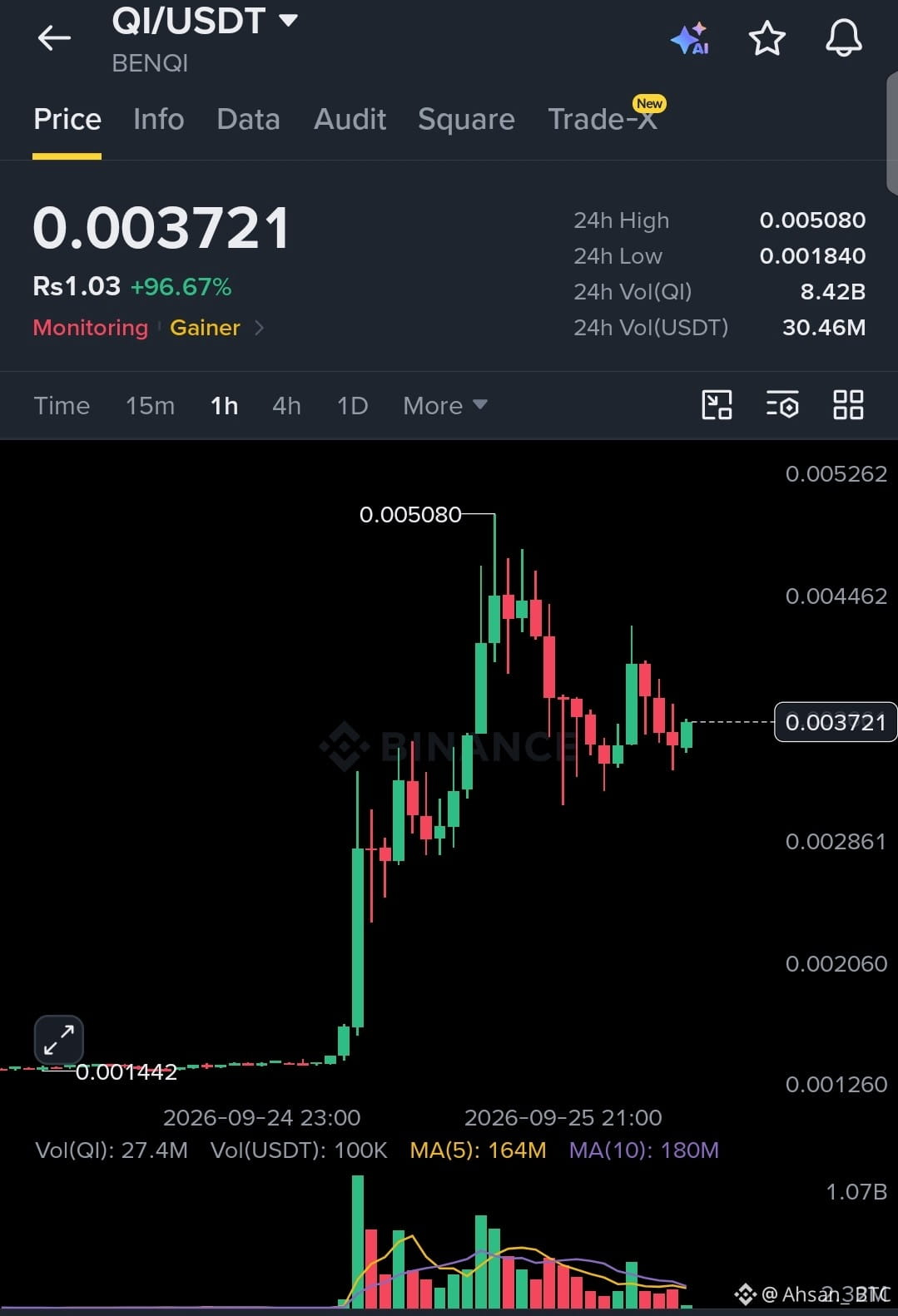
$QI /USDT — Parabolischer Ausbruch, jetzt abkühlend! 🚀🧊
Aktueller Preis: ~$0.003721 (+96.67% 24h) 💚
Überblick: BENQI ($QI) ist ein dezentrales Liquidity-Market- und Liquid-Staking-Protokoll auf dem Avalanche-Netzwerk. Aktuell als „Monitoring“-Gewinner getaggt, nachdem es zu einem massiven nahezu 100%-Pump gekommen ist. 🏔️
Technisches Setup (1H):
📈 Wahnsinniger vertikaler Pump von $0.00144 auf $0.00508.
🐻 Scharfe Zurückweisung nach oben, jetzt Retracement auf $0.0037.
📊 MA5 (164M) < MA10 (180M) = der kurzfristige Momentum hat auf bearish gedreht.
📉 Volumen bricht hart ein = der anfängliche Hype ist vorbei. Rechne mit zäher Seitwärtskonsolidierung.
Wichtige Levels:
🔴 Widerstand: $0.00446 → $0.00508 (lokales Hoch)
🟢 Support: $0.00286 → $0.00206 (wichtige Struktur)
Trade-Plan (Hohes Risiko / Dip Buy):
✅ Einstieg: $0.00340 – $0.00370 (aktueller Pullback-Bereich)
🎯 TP1: $0.00446
🎯 TP2: $0.00508
🎯 TP3: $0.00580
🛑 SL: $0.00280
⚖️ R:R ~ 1:2.5
Ausblick:
⚡ Kurzfristig: Konsolidierung zwischen $0.0028–$0.0044. Muss $0.004 zurückerobern, um den Aufwärtstrend fortzusetzen.
🔭 Langfristig: Braucht einen Avalanche/DeFi-Narrative-Katalysator, um diese Gewinne zu halten. Andernfalls wird es zurück an das Fundament abbluten.
Stimmung: 8.42B QI-Volumen = massiver Spekulationsmodus. Das ist ein extrem volatiles, niedrig kapitalisiertes Play. Rechne mit heftigen Ausschlägen. 🎢
⚠️ Keine Finanzberatung. Parabolische Pumps sind gefährlich hinterherzulaufen. Mach dir selbst ein Bild (DYOR). Verwende enge Stops!
Den $QI pump erwischt? Schreib 🚀 darunter!
$QI
{spot}(QIUSDT)
#QI
#BitcoinSpotETFsTurnNetPositiveYTD
$QI /USDT — Parabolischer Ausbruch, jetzt abkühlend! 🚀🧊
Aktueller Preis: ~$0.003721 (+96.67% 24h) 💚
Überblick: BENQI ($QI ) ist ein dezentrales Liquidity-Market- und Liquid-Staking-Protokoll auf dem Avalanche-Netzwerk. Aktuell als „Monitoring“-Gewinner getaggt, nachdem es zu einem massiven nahezu 100%-Pump gekommen ist. 🏔️
Technisches Setup (1H):
📈 Wahnsinniger vertikaler Pump von $0.00144 auf $0.00508.
🐻 Scharfe Zurückweisung nach oben, jetzt Retracement auf $0.0037.
📊 MA5 (164M) < MA10 (180M) = der kurzfristige Momentum hat auf bearish gedreht.
📉 Volumen bricht hart ein = der anfängliche Hype ist vorbei. Rechne mit zäher Seitwärtskonsolidierung.
Wichtige Levels:
🔴 Widerstand: $0.00446 → $0.00508 (lokales Hoch)
🟢 Support: $0.00286 → $0.00206 (wichtige Struktur)
Trade-Plan (Hohes Risiko / Dip Buy):
✅ Einstieg: $0.00340 – $0.00370 (aktueller Pullback-Bereich)
🎯 TP1: $0.00446
🎯 TP2: $0.00508
🎯 TP3: $0.00580
🛑 SL: $0.00280
⚖️ R:R ~ 1:2.5
Ausblick:
⚡ Kurzfristig: Konsolidierung zwischen $0.0028–$0.0044. Muss $0.004 zurückerobern, um den Aufwärtstrend fortzusetzen.
🔭 Langfristig: Braucht einen Avalanche/DeFi-Narrative-Katalysator, um diese Gewinne zu halten. Andernfalls wird es zurück an das Fundament abbluten.
Stimmung: 8.42B QI-Volumen = massiver Spekulationsmodus. Das ist ein extrem volatiles, niedrig kapitalisiertes Play. Rechne mit heftigen Ausschlägen. 🎢
⚠️ Keine Finanzberatung. Parabolische Pumps sind gefährlich hinterherzulaufen. Mach dir selbst ein Bild (DYOR). Verwende enge Stops!
Den $QI pump erwischt? Schreib 🚀 darunter!
$QI
#QI
#BitcoinSpotETFsTurnNetPositiveYTD
Aktueller Preis: ~$0.003721 (+96.67% 24h) 💚
Überblick: BENQI ($QI ) ist ein dezentrales Liquidity-Market- und Liquid-Staking-Protokoll auf dem Avalanche-Netzwerk. Aktuell als „Monitoring“-Gewinner getaggt, nachdem es zu einem massiven nahezu 100%-Pump gekommen ist. 🏔️
Technisches Setup (1H):
📈 Wahnsinniger vertikaler Pump von $0.00144 auf $0.00508.
🐻 Scharfe Zurückweisung nach oben, jetzt Retracement auf $0.0037.
📊 MA5 (164M) < MA10 (180M) = der kurzfristige Momentum hat auf bearish gedreht.
📉 Volumen bricht hart ein = der anfängliche Hype ist vorbei. Rechne mit zäher Seitwärtskonsolidierung.
Wichtige Levels:
🔴 Widerstand: $0.00446 → $0.00508 (lokales Hoch)
🟢 Support: $0.00286 → $0.00206 (wichtige Struktur)
Trade-Plan (Hohes Risiko / Dip Buy):
✅ Einstieg: $0.00340 – $0.00370 (aktueller Pullback-Bereich)
🎯 TP1: $0.00446
🎯 TP2: $0.00508
🎯 TP3: $0.00580
🛑 SL: $0.00280
⚖️ R:R ~ 1:2.5
Ausblick:
⚡ Kurzfristig: Konsolidierung zwischen $0.0028–$0.0044. Muss $0.004 zurückerobern, um den Aufwärtstrend fortzusetzen.
🔭 Langfristig: Braucht einen Avalanche/DeFi-Narrative-Katalysator, um diese Gewinne zu halten. Andernfalls wird es zurück an das Fundament abbluten.
Stimmung: 8.42B QI-Volumen = massiver Spekulationsmodus. Das ist ein extrem volatiles, niedrig kapitalisiertes Play. Rechne mit heftigen Ausschlägen. 🎢
⚠️ Keine Finanzberatung. Parabolische Pumps sind gefährlich hinterherzulaufen. Mach dir selbst ein Bild (DYOR). Verwende enge Stops!
Den $QI pump erwischt? Schreib 🚀 darunter!
$QI
#QI
#BitcoinSpotETFsTurnNetPositiveYTD
172
·
--
Bullisch
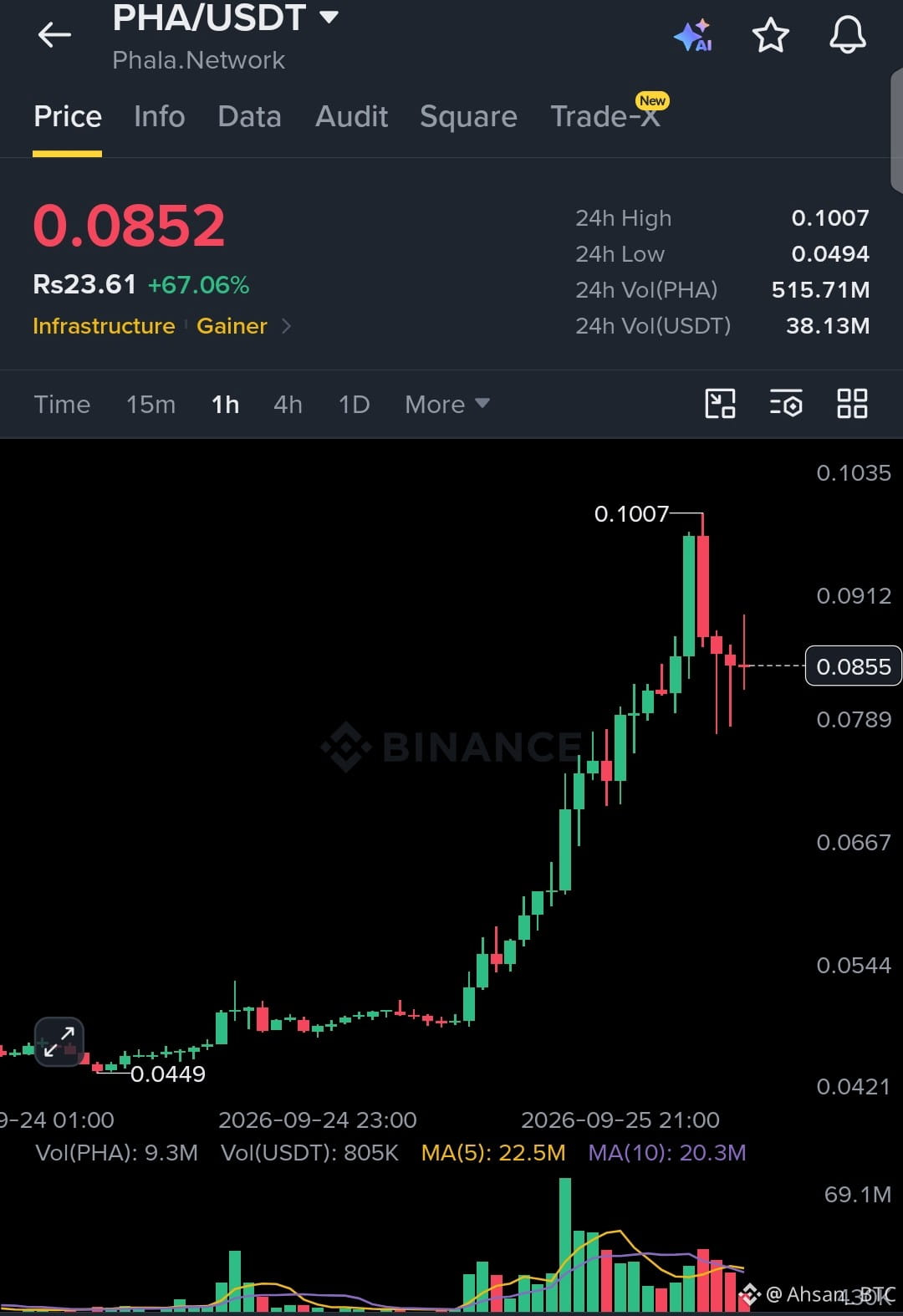
$PHA /USDT — Massive Infrastruktur-Ausbrüche! 🚀🔥
Aktueller Preis: ~$0.0852 (+67.06% 24h) 💚
Überblick: Phala Network ($PHA) ist ein dezentrales Cloud-Computing-Protokoll mit Fokus auf Datenschutz und sichere Off-Chain-Berechnungen. Ein Schwergewicht im Sektor „Infrastructure“, der aktuell richtig heiß läuft. 🖥️🔒
Technisches Setup (1H):
📈 Parabolischer vertikaler Ausbruch von $0.0449 auf $0.1007.
🐂 Retestet jetzt und findet ersten Support nahe $0.085.
📊 MA5 (22.5M) > MA10 (20.3M) = Trend klar bullisch, aber die Dynamik kühlt ab.
📉 Volumen schwächt sich vom Peak ab = Gewinnmitnahmen laufen.
Wichtige Levels:
🔴 Widerstand: $0.0912 → $0.1007 (lokales Hoch) → $0.1035
🟢 Support: $0.0789 → $0.0667 → $0.0544
Trade-Plan (Dip Buy / Momentum):
✅ Einstieg: $0.0780 – $0.0850 (bei Rücksetzer / aktueller Zone)
🎯 TP1: $0.0912
🎯 TP2: $0.1007
🎯 TP3: $0.1150
🛑 SL: $0.0680
⚖️ R:R ~ 1:2.5
Ausblick:
⚡ Kurzfristig: Konsolidierung zwischen $0.078–$0.090 erwartet. Über $0.0912 = nächster Schub.
🔭 Langfristig: Infrastruktur-Coins haben massives Upside-Potenzial. Wenn $0.10 zurückerobert wird, kommt die Preisfindung wieder auf den Tisch.
Stimmung: 515M PHA-Volumen = massives Whale-Interesse. Die Infrastructure-Story ist gerade heiß. 🐋
⚠️ Keine Finanzberatung. Massive Pumps = massive Dumps. DYOR. Nutze enge Stops!
Fährst du $PHA mit? Schreib ein 🖥️ drunter!
$PHA
{spot}(PHAUSDT)
#PHA #BitgetBreachForgedRequestsNotStolenKeys
$PHA /USDT — Massive Infrastruktur-Ausbrüche! 🚀🔥
Aktueller Preis: ~$0.0852 (+67.06% 24h) 💚
Überblick: Phala Network ($PHA ) ist ein dezentrales Cloud-Computing-Protokoll mit Fokus auf Datenschutz und sichere Off-Chain-Berechnungen. Ein Schwergewicht im Sektor „Infrastructure“, der aktuell richtig heiß läuft. 🖥️🔒
Technisches Setup (1H):
📈 Parabolischer vertikaler Ausbruch von $0.0449 auf $0.1007.
🐂 Retestet jetzt und findet ersten Support nahe $0.085.
📊 MA5 (22.5M) > MA10 (20.3M) = Trend klar bullisch, aber die Dynamik kühlt ab.
📉 Volumen schwächt sich vom Peak ab = Gewinnmitnahmen laufen.
Wichtige Levels:
🔴 Widerstand: $0.0912 → $0.1007 (lokales Hoch) → $0.1035
🟢 Support: $0.0789 → $0.0667 → $0.0544
Trade-Plan (Dip Buy / Momentum):
✅ Einstieg: $0.0780 – $0.0850 (bei Rücksetzer / aktueller Zone)
🎯 TP1: $0.0912
🎯 TP2: $0.1007
🎯 TP3: $0.1150
🛑 SL: $0.0680
⚖️ R:R ~ 1:2.5
Ausblick:
⚡ Kurzfristig: Konsolidierung zwischen $0.078–$0.090 erwartet. Über $0.0912 = nächster Schub.
🔭 Langfristig: Infrastruktur-Coins haben massives Upside-Potenzial. Wenn $0.10 zurückerobert wird, kommt die Preisfindung wieder auf den Tisch.
Stimmung: 515M PHA-Volumen = massives Whale-Interesse. Die Infrastructure-Story ist gerade heiß. 🐋
⚠️ Keine Finanzberatung. Massive Pumps = massive Dumps. DYOR. Nutze enge Stops!
Fährst du $PHA mit? Schreib ein 🖥️ drunter!
$PHA
#PHA #BitgetBreachForgedRequestsNotStolenKeys
Aktueller Preis: ~$0.0852 (+67.06% 24h) 💚
Überblick: Phala Network ($PHA ) ist ein dezentrales Cloud-Computing-Protokoll mit Fokus auf Datenschutz und sichere Off-Chain-Berechnungen. Ein Schwergewicht im Sektor „Infrastructure“, der aktuell richtig heiß läuft. 🖥️🔒
Technisches Setup (1H):
📈 Parabolischer vertikaler Ausbruch von $0.0449 auf $0.1007.
🐂 Retestet jetzt und findet ersten Support nahe $0.085.
📊 MA5 (22.5M) > MA10 (20.3M) = Trend klar bullisch, aber die Dynamik kühlt ab.
📉 Volumen schwächt sich vom Peak ab = Gewinnmitnahmen laufen.
Wichtige Levels:
🔴 Widerstand: $0.0912 → $0.1007 (lokales Hoch) → $0.1035
🟢 Support: $0.0789 → $0.0667 → $0.0544
Trade-Plan (Dip Buy / Momentum):
✅ Einstieg: $0.0780 – $0.0850 (bei Rücksetzer / aktueller Zone)
🎯 TP1: $0.0912
🎯 TP2: $0.1007
🎯 TP3: $0.1150
🛑 SL: $0.0680
⚖️ R:R ~ 1:2.5
Ausblick:
⚡ Kurzfristig: Konsolidierung zwischen $0.078–$0.090 erwartet. Über $0.0912 = nächster Schub.
🔭 Langfristig: Infrastruktur-Coins haben massives Upside-Potenzial. Wenn $0.10 zurückerobert wird, kommt die Preisfindung wieder auf den Tisch.
Stimmung: 515M PHA-Volumen = massives Whale-Interesse. Die Infrastructure-Story ist gerade heiß. 🐋
⚠️ Keine Finanzberatung. Massive Pumps = massive Dumps. DYOR. Nutze enge Stops!
Fährst du $PHA mit? Schreib ein 🖥️ drunter!
$PHA
#PHA #BitgetBreachForgedRequestsNotStolenKeys
255
·
--
Bullisch
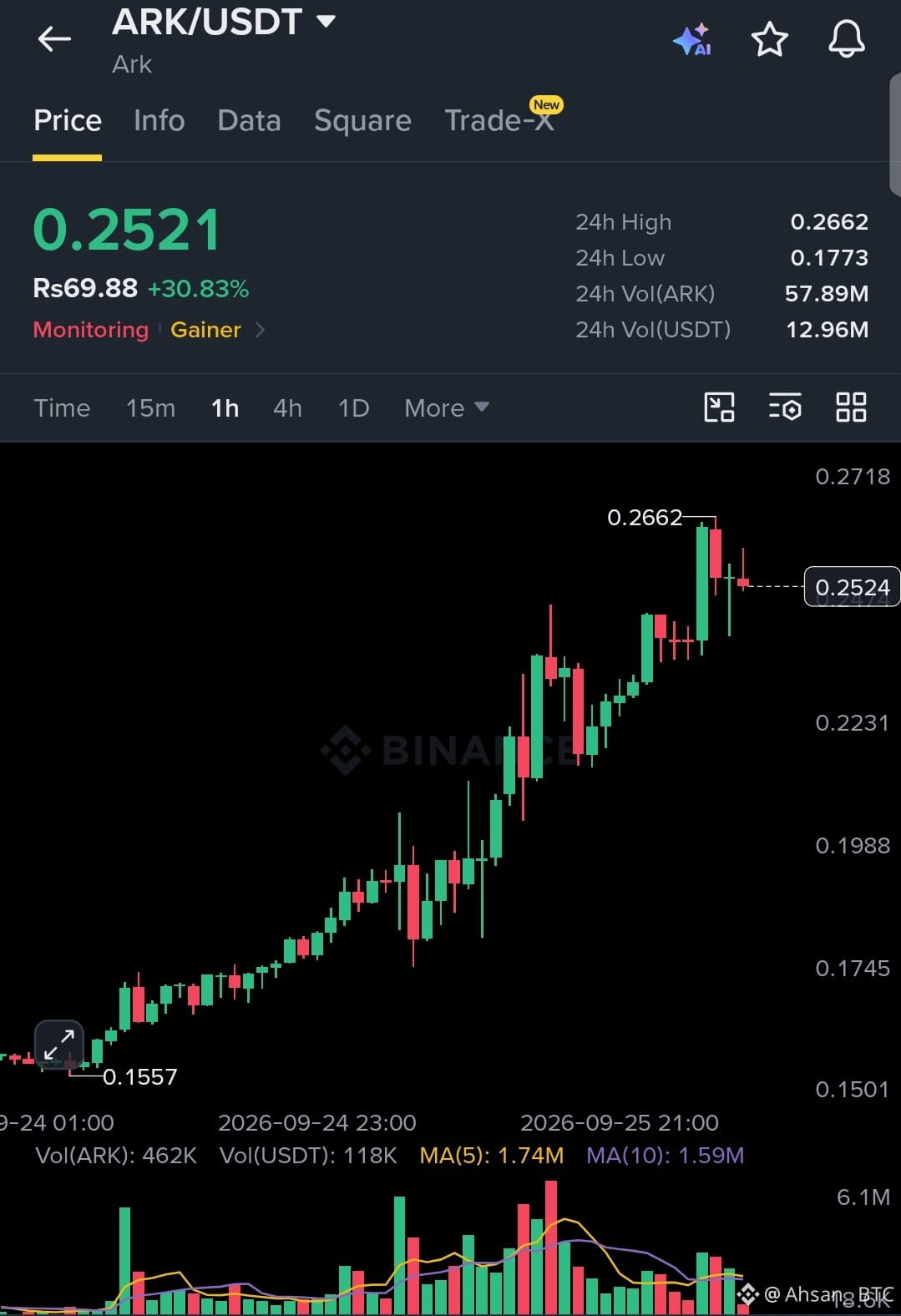
$ARK /USDT — Stabiler Aufwärtstrend, Bullen haben die Kontrolle! 📈🟢
Aktueller Kurs: ~$0.2521 (+30.83% 24h) 💚
Überblick: Ark ($ARK) ist ein etabliertes Blockchain-Projekt mit Fokus auf Interoperabilität und Unternehmenslösungen. Es ist derzeit als „Monitoring“-Gainer markiert und zeigt eine starke Erholungstendenz. 🏗️
Technisches Setup (1H):
📈 Lehrbuchmäßiger Treppenaufwärtstrend von $0.1557 bis $0.2662.
🐂 Gesunder Rücksetzer, der sich nun nahe $0.2521 konsolidiert.
📊 MA5 (1.74M) > MA10 (1.59M) = bullischer Trend ist fest intakt. 💪
📉 Volumen flacht während der Konsolidierung ab = gesundes Abkühlen, kein Dump.
Wichtige Levels:
🔴 Widerstand: $0.2662 → $0.2718
🟢 Support: $0.2231 → $0.1988 (wichtige Struktur)
Trade-Plan (Trendfortsetzung):
✅ Einstieg: $0.2450 – $0.2520 (aktuelle Konsolidierungszone)
🎯 TP1: $0.2662
🎯 TP2: $0.2800
🎯 TP3: $0.2950
🛑 SL: $0.2200
⚖️ R:R ~ 1:2.5
Ausblick:
⚡ Kurzfristig: Über $0.24 halten bringt die Bullen in Position. Ein sauberer Ausbruch über $0.266 zielt auf $0.28+.
🔭 Langfristig: $0.20 als strukturellen Support halten, um eine makro-bullische Trendwende zu sichern.
Stimmung: $12.96M Umsatz zeigen ordentliches Interesse, aber das ist weiterhin ein Mid-/Low-Cap-Beweger. Achte auf Folgevolumen beim nächsten Aufwärtsimpuls. 🐋
⚠️ Keine Finanzberatung. Mach dein eigenes Research (DYOR). Risikomanagement nicht vergessen und Stop-Losses nutzen!
Fährst du den $ARK train? Lass unten ein 🏛️!
$ARK
{spot}(ARKUSDT)
#ARK
#NYAndPolymarketSueEachOther #BinanceWillListHyperliquid(HYPE)
$ARK /USDT — Stabiler Aufwärtstrend, Bullen haben die Kontrolle! 📈🟢
Aktueller Kurs: ~$0.2521 (+30.83% 24h) 💚
Überblick: Ark ($ARK ) ist ein etabliertes Blockchain-Projekt mit Fokus auf Interoperabilität und Unternehmenslösungen. Es ist derzeit als „Monitoring“-Gainer markiert und zeigt eine starke Erholungstendenz. 🏗️
Technisches Setup (1H):
📈 Lehrbuchmäßiger Treppenaufwärtstrend von $0.1557 bis $0.2662.
🐂 Gesunder Rücksetzer, der sich nun nahe $0.2521 konsolidiert.
📊 MA5 (1.74M) > MA10 (1.59M) = bullischer Trend ist fest intakt. 💪
📉 Volumen flacht während der Konsolidierung ab = gesundes Abkühlen, kein Dump.
Wichtige Levels:
🔴 Widerstand: $0.2662 → $0.2718
🟢 Support: $0.2231 → $0.1988 (wichtige Struktur)
Trade-Plan (Trendfortsetzung):
✅ Einstieg: $0.2450 – $0.2520 (aktuelle Konsolidierungszone)
🎯 TP1: $0.2662
🎯 TP2: $0.2800
🎯 TP3: $0.2950
🛑 SL: $0.2200
⚖️ R:R ~ 1:2.5
Ausblick:
⚡ Kurzfristig: Über $0.24 halten bringt die Bullen in Position. Ein sauberer Ausbruch über $0.266 zielt auf $0.28+.
🔭 Langfristig: $0.20 als strukturellen Support halten, um eine makro-bullische Trendwende zu sichern.
Stimmung: $12.96M Umsatz zeigen ordentliches Interesse, aber das ist weiterhin ein Mid-/Low-Cap-Beweger. Achte auf Folgevolumen beim nächsten Aufwärtsimpuls. 🐋
⚠️ Keine Finanzberatung. Mach dein eigenes Research (DYOR). Risikomanagement nicht vergessen und Stop-Losses nutzen!
Fährst du den $ARK train? Lass unten ein 🏛️!
$ARK
#ARK
#NYAndPolymarketSueEachOther #BinanceWillListHyperliquid(HYPE)
Aktueller Kurs: ~$0.2521 (+30.83% 24h) 💚
Überblick: Ark ($ARK ) ist ein etabliertes Blockchain-Projekt mit Fokus auf Interoperabilität und Unternehmenslösungen. Es ist derzeit als „Monitoring“-Gainer markiert und zeigt eine starke Erholungstendenz. 🏗️
Technisches Setup (1H):
📈 Lehrbuchmäßiger Treppenaufwärtstrend von $0.1557 bis $0.2662.
🐂 Gesunder Rücksetzer, der sich nun nahe $0.2521 konsolidiert.
📊 MA5 (1.74M) > MA10 (1.59M) = bullischer Trend ist fest intakt. 💪
📉 Volumen flacht während der Konsolidierung ab = gesundes Abkühlen, kein Dump.
Wichtige Levels:
🔴 Widerstand: $0.2662 → $0.2718
🟢 Support: $0.2231 → $0.1988 (wichtige Struktur)
Trade-Plan (Trendfortsetzung):
✅ Einstieg: $0.2450 – $0.2520 (aktuelle Konsolidierungszone)
🎯 TP1: $0.2662
🎯 TP2: $0.2800
🎯 TP3: $0.2950
🛑 SL: $0.2200
⚖️ R:R ~ 1:2.5
Ausblick:
⚡ Kurzfristig: Über $0.24 halten bringt die Bullen in Position. Ein sauberer Ausbruch über $0.266 zielt auf $0.28+.
🔭 Langfristig: $0.20 als strukturellen Support halten, um eine makro-bullische Trendwende zu sichern.
Stimmung: $12.96M Umsatz zeigen ordentliches Interesse, aber das ist weiterhin ein Mid-/Low-Cap-Beweger. Achte auf Folgevolumen beim nächsten Aufwärtsimpuls. 🐋
⚠️ Keine Finanzberatung. Mach dein eigenes Research (DYOR). Risikomanagement nicht vergessen und Stop-Losses nutzen!
Fährst du den $ARK train? Lass unten ein 🏛️!
$ARK
#ARK
#NYAndPolymarketSueEachOther #BinanceWillListHyperliquid(HYPE)
174
·
--
Bullisch
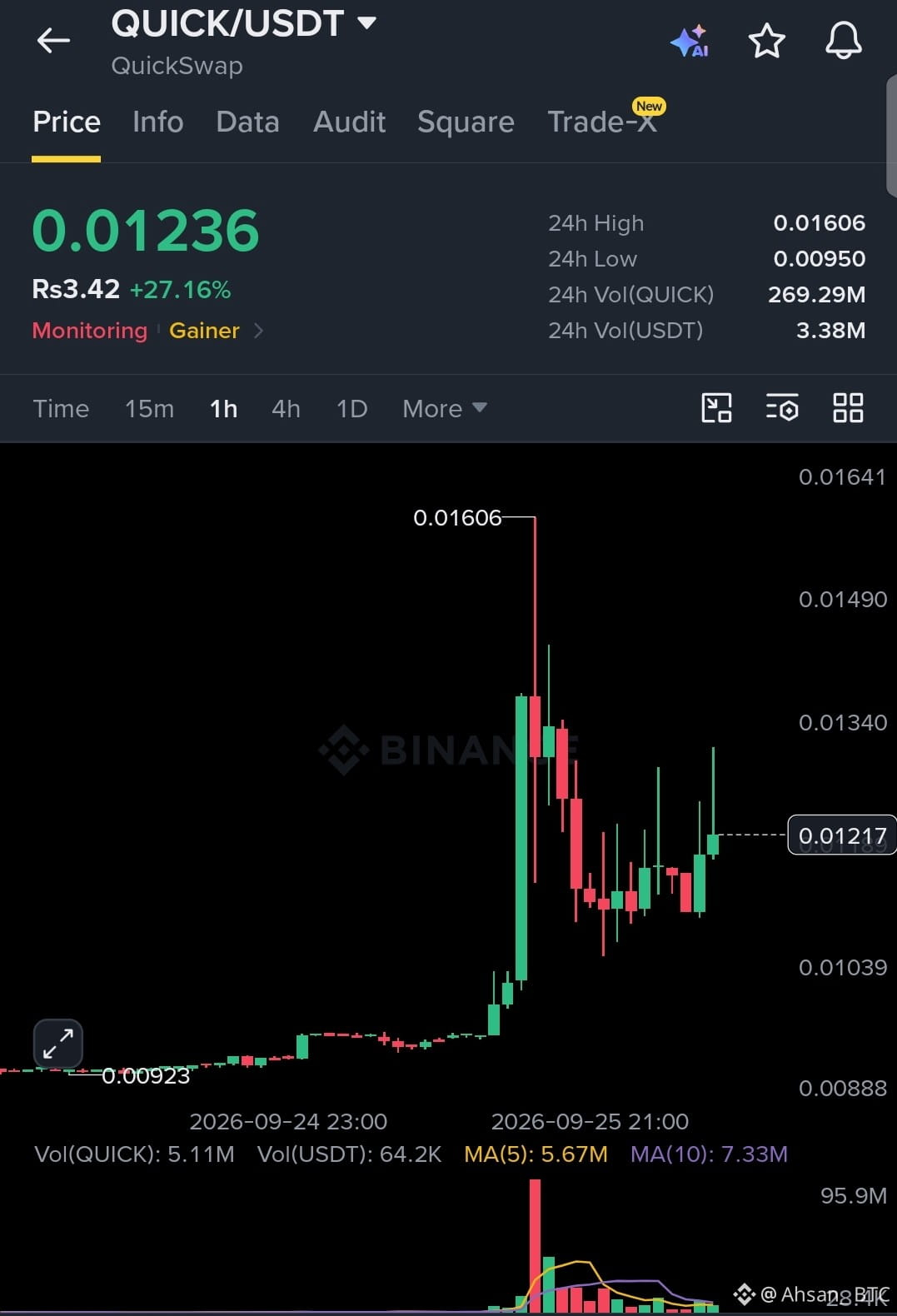
$QUICK /USDT — Massive Wick, jetzt Abkühlung! 🧊⚡
Aktueller Preis: ~$0.01236 (+27.16% 24h) 💚
Überblick: QuickSwap ($QUICK) ist eine führende DEX auf Polygon. Dieses "Monitoring"-Tag-Token hatte gerade einen heftigen Spike — klassisches Volatilitätsmuster bei geringer Liquidität. 🎢
Technisches Setup (1H):
📉 Wahnsinniger Wick bis $0.01606 — sofortige Ablehnung (Blow-off-Top).
🐻 Scharfer Dump auf $0.00950, jetzt prallt es wieder auf $0.012.
📊 MA5 (5.67M) < MA10 (7.33M) = bärisches Crossover, der Momentum lässt nach.
📉 Volumen stirbt ab = der Hype ist vorbei, es kommt eine zähe Seitwärtsrange. 😴
Wichtige Levels:
🔴 Widerstand: $0.01340 → $0.01490 → $0.01606
🟢 Support: $0.01039 → $0.00923 (kritischer Boden)
Trade-Plan (Range-Skalp):
✅ Einstieg: $0.01150 – $0.01200 (nahe der aktuellen Konsolidierung)
🎯 TP1: $0.01340
🎯 TP2: $0.01490
🎯 TP3: $0.01600
🛑 SL: $0.01000
⚖️ R:R ~ 1:2.5
Ausblick:
⚡ Kurzfristig: Muss $0.0134 zurückerobern, um den Aufwärtstrend wieder aufzunehmen. Andernfalls droht ein Chop zwischen $0.010–$0.013.
🔭 Langfristig: Braucht einen Polygon/DEX-Narrativ-Katalysator, um durchzuhalten. Sonst blutet es.
Stimmung: Die Liquidität ist gefährlich dünn ($3.38M Umsatz). Slippage-Risiko ist HOCH. Nutze nur Limit-Orders. 🐋
⚠️ Keine Finanzberatung. Geringe Liquidität = extreme Volatilität. Informiere dich selbst (DYOR). Enge Stops!
Beobachtest du $QUICK ? Lass unten ein ⚡ da!
$QUICK
{spot}(QUICKUSDT)
#QUICK
#CFTCUpdatesGuidanceOnTokenizedAssets
$QUICK /USDT — Massive Wick, jetzt Abkühlung! 🧊⚡
Aktueller Preis: ~$0.01236 (+27.16% 24h) 💚
Überblick: QuickSwap ($QUICK ) ist eine führende DEX auf Polygon. Dieses "Monitoring"-Tag-Token hatte gerade einen heftigen Spike — klassisches Volatilitätsmuster bei geringer Liquidität. 🎢
Technisches Setup (1H):
📉 Wahnsinniger Wick bis $0.01606 — sofortige Ablehnung (Blow-off-Top).
🐻 Scharfer Dump auf $0.00950, jetzt prallt es wieder auf $0.012.
📊 MA5 (5.67M) < MA10 (7.33M) = bärisches Crossover, der Momentum lässt nach.
📉 Volumen stirbt ab = der Hype ist vorbei, es kommt eine zähe Seitwärtsrange. 😴
Wichtige Levels:
🔴 Widerstand: $0.01340 → $0.01490 → $0.01606
🟢 Support: $0.01039 → $0.00923 (kritischer Boden)
Trade-Plan (Range-Skalp):
✅ Einstieg: $0.01150 – $0.01200 (nahe der aktuellen Konsolidierung)
🎯 TP1: $0.01340
🎯 TP2: $0.01490
🎯 TP3: $0.01600
🛑 SL: $0.01000
⚖️ R:R ~ 1:2.5
Ausblick:
⚡ Kurzfristig: Muss $0.0134 zurückerobern, um den Aufwärtstrend wieder aufzunehmen. Andernfalls droht ein Chop zwischen $0.010–$0.013.
🔭 Langfristig: Braucht einen Polygon/DEX-Narrativ-Katalysator, um durchzuhalten. Sonst blutet es.
Stimmung: Die Liquidität ist gefährlich dünn ($3.38M Umsatz). Slippage-Risiko ist HOCH. Nutze nur Limit-Orders. 🐋
⚠️ Keine Finanzberatung. Geringe Liquidität = extreme Volatilität. Informiere dich selbst (DYOR). Enge Stops!
Beobachtest du $QUICK ? Lass unten ein ⚡ da!
$QUICK
#QUICK
#CFTCUpdatesGuidanceOnTokenizedAssets
Aktueller Preis: ~$0.01236 (+27.16% 24h) 💚
Überblick: QuickSwap ($QUICK ) ist eine führende DEX auf Polygon. Dieses "Monitoring"-Tag-Token hatte gerade einen heftigen Spike — klassisches Volatilitätsmuster bei geringer Liquidität. 🎢
Technisches Setup (1H):
📉 Wahnsinniger Wick bis $0.01606 — sofortige Ablehnung (Blow-off-Top).
🐻 Scharfer Dump auf $0.00950, jetzt prallt es wieder auf $0.012.
📊 MA5 (5.67M) < MA10 (7.33M) = bärisches Crossover, der Momentum lässt nach.
📉 Volumen stirbt ab = der Hype ist vorbei, es kommt eine zähe Seitwärtsrange. 😴
Wichtige Levels:
🔴 Widerstand: $0.01340 → $0.01490 → $0.01606
🟢 Support: $0.01039 → $0.00923 (kritischer Boden)
Trade-Plan (Range-Skalp):
✅ Einstieg: $0.01150 – $0.01200 (nahe der aktuellen Konsolidierung)
🎯 TP1: $0.01340
🎯 TP2: $0.01490
🎯 TP3: $0.01600
🛑 SL: $0.01000
⚖️ R:R ~ 1:2.5
Ausblick:
⚡ Kurzfristig: Muss $0.0134 zurückerobern, um den Aufwärtstrend wieder aufzunehmen. Andernfalls droht ein Chop zwischen $0.010–$0.013.
🔭 Langfristig: Braucht einen Polygon/DEX-Narrativ-Katalysator, um durchzuhalten. Sonst blutet es.
Stimmung: Die Liquidität ist gefährlich dünn ($3.38M Umsatz). Slippage-Risiko ist HOCH. Nutze nur Limit-Orders. 🐋
⚠️ Keine Finanzberatung. Geringe Liquidität = extreme Volatilität. Informiere dich selbst (DYOR). Enge Stops!
Beobachtest du $QUICK ? Lass unten ein ⚡ da!
$QUICK
#QUICK
#CFTCUpdatesGuidanceOnTokenizedAssets
335
·
--
Bullisch
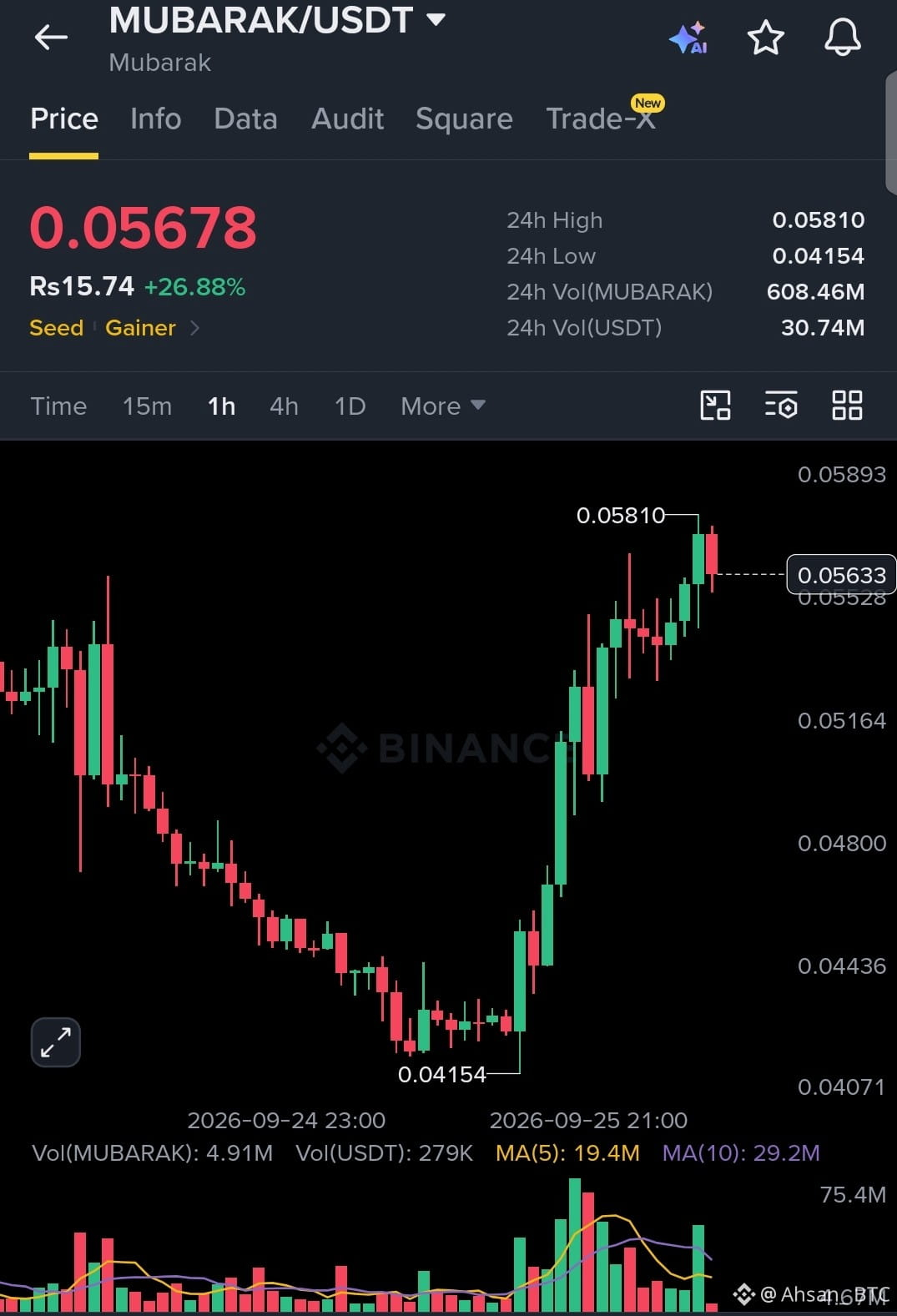
$MUBARAK /USDT — Parabolischer Meme-Pump! 🚀🔥
Aktueller Preis: ~$0.05678 (+26.88% 24h) 💚
Überblick: MUBARAK ist eine bei Binance als „Seed“ getaggte Meme-Coin, die auf dem Hype um das Nahost-Narrativ reitet. Reines Sentiment-Play — massive Volatilität, massives Volumen. 🐋
Technisches Setup (1H):
📈 Verrückter vertikaler Pump von $0.0415 auf $0.0581.
🐂 Konsolidiert derzeit knapp unter den Hochs — Bull-Flag-Stimmung.
📊 MA5 (19.4M) unter MA10 (29.2M) — kurzfristiger Momentum-Kühlung nach dem Spike.
📉 Volumen nimmt vom Peak ab = Gewinnmitnahme-Phase.
Wichtige Levels:
🔴 Widerstand: $0.0581 → $0.0589 (lokales Hoch)
🟢 Support: $0.0552 → $0.0516 → $0.0480
Trade-Plan (High-Risk Momentum):
✅ Einstieg: $0.0530 – $0.0555 (bei Dip/Retest)
🎯 TP1: $0.0581
🎯 TP2: $0.0620
🎯 TP3: $0.0680
🛑 SL: $0.0490
⚖️ R:R ~ 1:2.5
Ausblick:
⚡ Kurzfristig: Wenn $0.055 gehalten wird, bleiben die Bullen am Leben. Break über $0.0581 = neue Aufwärtswelle.
🔭 Langfristig: Meme-Coin = purer Hype. Stirbt schnell ohne frische News oder CZ-/Nahost-Katalysatoren. 🎢
Sentiment: 608M MUBARAK-Volumen = immer noch heiß, aber kühlt ab. Beobachte Whale-Exits. 🐋
⚠️ Keine Finanzberatung. Meme Coins sind extrem volatil. MACH DEINE EIGENE RECHERCHE. Nutze enge Stops!
Reitest du die $MUBARAK -Welle? Droppe eine 🚀 darunter!
$MUBARAK
{spot}(MUBARAKUSDT)
#MUBRAK
#BitgetBreachForgedRequestsNotStolenKeys
$MUBARAK /USDT — Parabolischer Meme-Pump! 🚀🔥
Aktueller Preis: ~$0.05678 (+26.88% 24h) 💚
Überblick: MUBARAK ist eine bei Binance als „Seed“ getaggte Meme-Coin, die auf dem Hype um das Nahost-Narrativ reitet. Reines Sentiment-Play — massive Volatilität, massives Volumen. 🐋
Technisches Setup (1H):
📈 Verrückter vertikaler Pump von $0.0415 auf $0.0581.
🐂 Konsolidiert derzeit knapp unter den Hochs — Bull-Flag-Stimmung.
📊 MA5 (19.4M) unter MA10 (29.2M) — kurzfristiger Momentum-Kühlung nach dem Spike.
📉 Volumen nimmt vom Peak ab = Gewinnmitnahme-Phase.
Wichtige Levels:
🔴 Widerstand: $0.0581 → $0.0589 (lokales Hoch)
🟢 Support: $0.0552 → $0.0516 → $0.0480
Trade-Plan (High-Risk Momentum):
✅ Einstieg: $0.0530 – $0.0555 (bei Dip/Retest)
🎯 TP1: $0.0581
🎯 TP2: $0.0620
🎯 TP3: $0.0680
🛑 SL: $0.0490
⚖️ R:R ~ 1:2.5
Ausblick:
⚡ Kurzfristig: Wenn $0.055 gehalten wird, bleiben die Bullen am Leben. Break über $0.0581 = neue Aufwärtswelle.
🔭 Langfristig: Meme-Coin = purer Hype. Stirbt schnell ohne frische News oder CZ-/Nahost-Katalysatoren. 🎢
Sentiment: 608M MUBARAK-Volumen = immer noch heiß, aber kühlt ab. Beobachte Whale-Exits. 🐋
⚠️ Keine Finanzberatung. Meme Coins sind extrem volatil. MACH DEINE EIGENE RECHERCHE. Nutze enge Stops!
Reitest du die $MUBARAK -Welle? Droppe eine 🚀 darunter!
$MUBARAK
#MUBRAK
#BitgetBreachForgedRequestsNotStolenKeys
Aktueller Preis: ~$0.05678 (+26.88% 24h) 💚
Überblick: MUBARAK ist eine bei Binance als „Seed“ getaggte Meme-Coin, die auf dem Hype um das Nahost-Narrativ reitet. Reines Sentiment-Play — massive Volatilität, massives Volumen. 🐋
Technisches Setup (1H):
📈 Verrückter vertikaler Pump von $0.0415 auf $0.0581.
🐂 Konsolidiert derzeit knapp unter den Hochs — Bull-Flag-Stimmung.
📊 MA5 (19.4M) unter MA10 (29.2M) — kurzfristiger Momentum-Kühlung nach dem Spike.
📉 Volumen nimmt vom Peak ab = Gewinnmitnahme-Phase.
Wichtige Levels:
🔴 Widerstand: $0.0581 → $0.0589 (lokales Hoch)
🟢 Support: $0.0552 → $0.0516 → $0.0480
Trade-Plan (High-Risk Momentum):
✅ Einstieg: $0.0530 – $0.0555 (bei Dip/Retest)
🎯 TP1: $0.0581
🎯 TP2: $0.0620
🎯 TP3: $0.0680
🛑 SL: $0.0490
⚖️ R:R ~ 1:2.5
Ausblick:
⚡ Kurzfristig: Wenn $0.055 gehalten wird, bleiben die Bullen am Leben. Break über $0.0581 = neue Aufwärtswelle.
🔭 Langfristig: Meme-Coin = purer Hype. Stirbt schnell ohne frische News oder CZ-/Nahost-Katalysatoren. 🎢
Sentiment: 608M MUBARAK-Volumen = immer noch heiß, aber kühlt ab. Beobachte Whale-Exits. 🐋
⚠️ Keine Finanzberatung. Meme Coins sind extrem volatil. MACH DEINE EIGENE RECHERCHE. Nutze enge Stops!
Reitest du die $MUBARAK -Welle? Droppe eine 🚀 darunter!
$MUBARAK
#MUBRAK
#BitgetBreachForgedRequestsNotStolenKeys
239
·
--
Bullisch
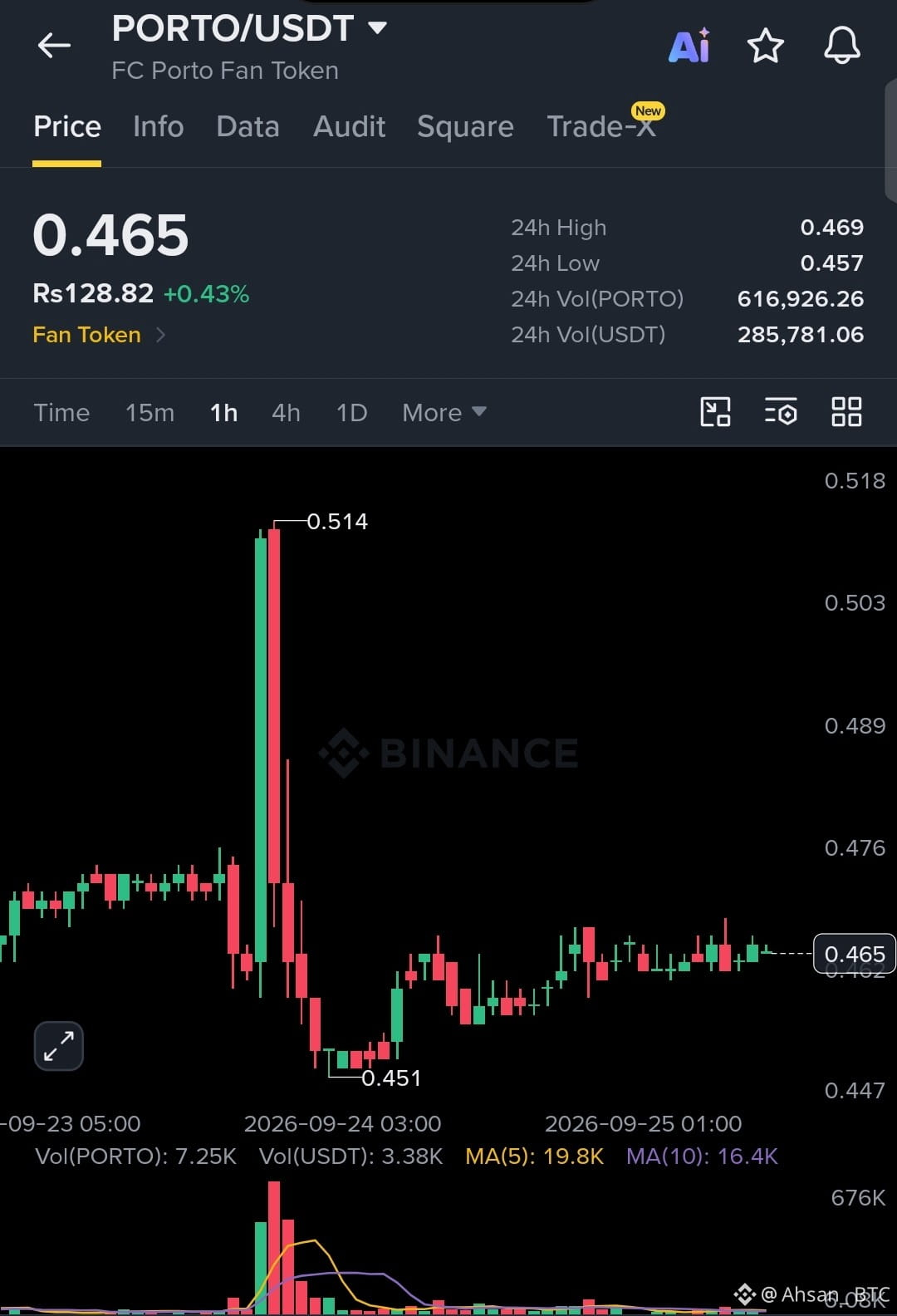
$PORTO /USDT — Fan-Token Cooling Off 🧊⚽
Aktueller Preis: ~$0.465 (+0,43% 24h) ➡️
Überblick: FC Porto Fan Token — ein Utility-Token, der Inhabern Stimmrechte, VIP-Belohnungen und Fan-Erlebnisse bietet. Sport-Fan-Token pumpen bei Spiel-Hype und fallen ab, wenn das Event vorbei ist. 🏟️
Technisches Setup (1H):
📉 Massive Dochtbildung bis $0.514 — sofortige Abweisung (klassischer Blow-off-Top).
🐻 Scharfer Dump bis $0.451, jetzt seitwärts.
📊 MA5 (19,8K) > MA10 (16,4K) = leichter bullish Curl, aber schwach.
📉 Volumen TOT — nur 285K USDT in 24h. Kein Treibstoff. 😴
Wichtige Levels:
🔴 Widerstand: $0.469 → $0.476 → $0.489
🟢 Unterstützung: $0.457 → $0.451 (kritisch)
Trade-Plan (Nur Range-Play):
✅ Einstieg: $0.4550 – $0.4600 (nahe Unterstützung)
🎯 TP1: $0.4690
🎯 TP2: $0.4760
🎯 TP3: $0.4890
🛑 SL: $0.4480
⚖️ R:R ~ 1:2
Ausblick:
⚡ Kurzfristig: In einer engen Spanne feststeckend $0.451–$0.469. Benötigt Volumen, um auszubrechen.
🔭 Langfristig: Nur Pumps bei Spiel-/News-Katalysatoren. Kein Katalysator = keine Bewegung. Nicht blind halten.
Stimmung: Sehr niedriges Volumen = aktuell wenig Interesse. Auf einen Game-Day-Pump oder eine Team-Ankündigung warten. ⚽
⚠️ Keine Finanzberatung. Fan Tokens sind hype-getrieben. Mach dir selbst ein Bild (DYOR). Niedriges Volumen = Slippage-Risiko!
$PORTO zum Spieltag halten? Poste unten ein ⚽!
$PORTO
{spot}(PORTOUSDT)
#porto
$PORTO /USDT — Fan-Token Cooling Off 🧊⚽
Aktueller Preis: ~$0.465 (+0,43% 24h) ➡️
Überblick: FC Porto Fan Token — ein Utility-Token, der Inhabern Stimmrechte, VIP-Belohnungen und Fan-Erlebnisse bietet. Sport-Fan-Token pumpen bei Spiel-Hype und fallen ab, wenn das Event vorbei ist. 🏟️
Technisches Setup (1H):
📉 Massive Dochtbildung bis $0.514 — sofortige Abweisung (klassischer Blow-off-Top).
🐻 Scharfer Dump bis $0.451, jetzt seitwärts.
📊 MA5 (19,8K) > MA10 (16,4K) = leichter bullish Curl, aber schwach.
📉 Volumen TOT — nur 285K USDT in 24h. Kein Treibstoff. 😴
Wichtige Levels:
🔴 Widerstand: $0.469 → $0.476 → $0.489
🟢 Unterstützung: $0.457 → $0.451 (kritisch)
Trade-Plan (Nur Range-Play):
✅ Einstieg: $0.4550 – $0.4600 (nahe Unterstützung)
🎯 TP1: $0.4690
🎯 TP2: $0.4760
🎯 TP3: $0.4890
🛑 SL: $0.4480
⚖️ R:R ~ 1:2
Ausblick:
⚡ Kurzfristig: In einer engen Spanne feststeckend $0.451–$0.469. Benötigt Volumen, um auszubrechen.
🔭 Langfristig: Nur Pumps bei Spiel-/News-Katalysatoren. Kein Katalysator = keine Bewegung. Nicht blind halten.
Stimmung: Sehr niedriges Volumen = aktuell wenig Interesse. Auf einen Game-Day-Pump oder eine Team-Ankündigung warten. ⚽
⚠️ Keine Finanzberatung. Fan Tokens sind hype-getrieben. Mach dir selbst ein Bild (DYOR). Niedriges Volumen = Slippage-Risiko!
$PORTO zum Spieltag halten? Poste unten ein ⚽!
$PORTO
#porto
Aktueller Preis: ~$0.465 (+0,43% 24h) ➡️
Überblick: FC Porto Fan Token — ein Utility-Token, der Inhabern Stimmrechte, VIP-Belohnungen und Fan-Erlebnisse bietet. Sport-Fan-Token pumpen bei Spiel-Hype und fallen ab, wenn das Event vorbei ist. 🏟️
Technisches Setup (1H):
📉 Massive Dochtbildung bis $0.514 — sofortige Abweisung (klassischer Blow-off-Top).
🐻 Scharfer Dump bis $0.451, jetzt seitwärts.
📊 MA5 (19,8K) > MA10 (16,4K) = leichter bullish Curl, aber schwach.
📉 Volumen TOT — nur 285K USDT in 24h. Kein Treibstoff. 😴
Wichtige Levels:
🔴 Widerstand: $0.469 → $0.476 → $0.489
🟢 Unterstützung: $0.457 → $0.451 (kritisch)
Trade-Plan (Nur Range-Play):
✅ Einstieg: $0.4550 – $0.4600 (nahe Unterstützung)
🎯 TP1: $0.4690
🎯 TP2: $0.4760
🎯 TP3: $0.4890
🛑 SL: $0.4480
⚖️ R:R ~ 1:2
Ausblick:
⚡ Kurzfristig: In einer engen Spanne feststeckend $0.451–$0.469. Benötigt Volumen, um auszubrechen.
🔭 Langfristig: Nur Pumps bei Spiel-/News-Katalysatoren. Kein Katalysator = keine Bewegung. Nicht blind halten.
Stimmung: Sehr niedriges Volumen = aktuell wenig Interesse. Auf einen Game-Day-Pump oder eine Team-Ankündigung warten. ⚽
⚠️ Keine Finanzberatung. Fan Tokens sind hype-getrieben. Mach dir selbst ein Bild (DYOR). Niedriges Volumen = Slippage-Risiko!
$PORTO zum Spieltag halten? Poste unten ein ⚽!
$PORTO
#porto
126
·
--
Bullisch
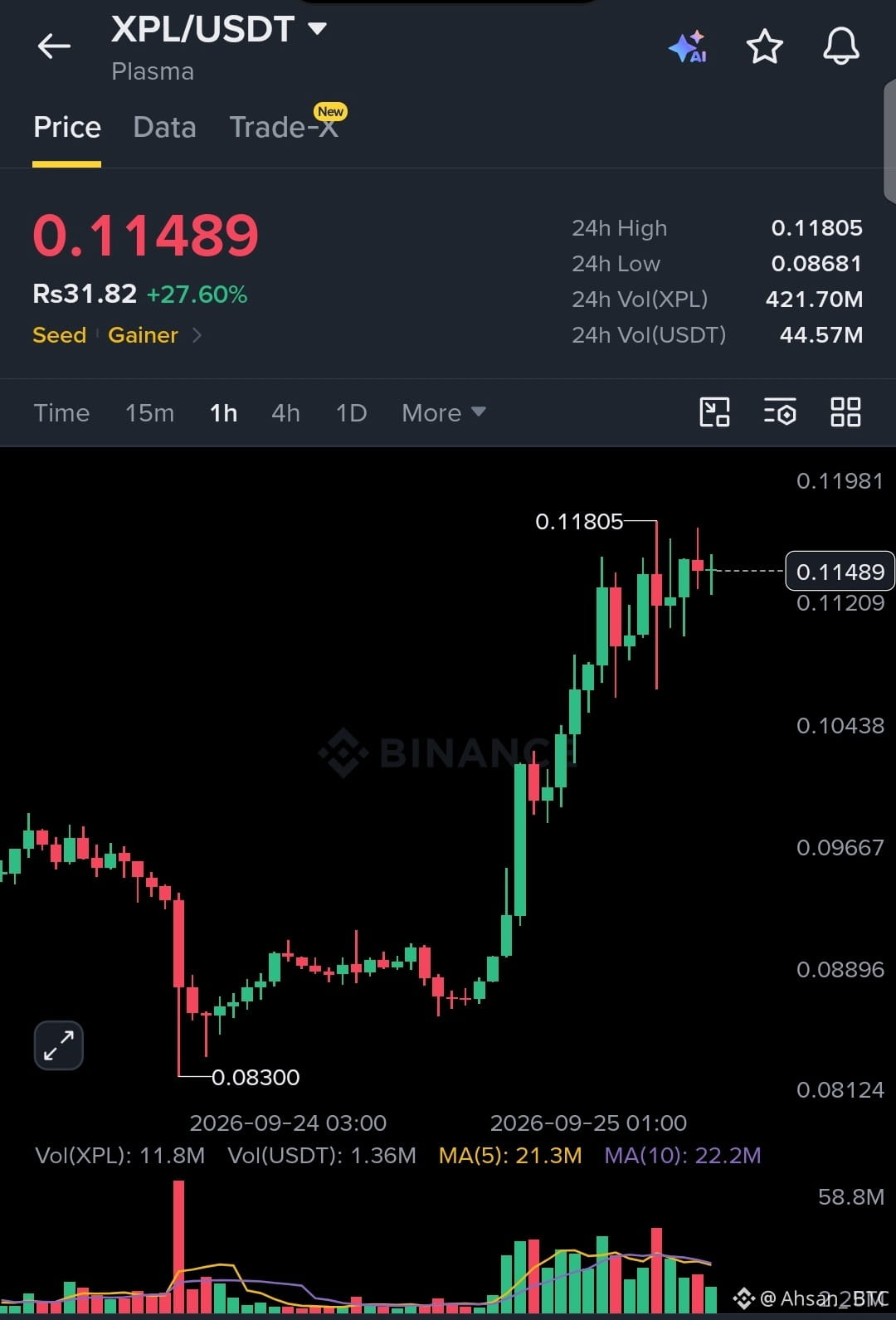
$XPL /USDT (Plasma) — Explosiver Ausbruch! ⚡📈
Aktueller Preis: ~$0.11489 (+27.60% 24h) 💚
Überblick: Plasma ($XPL) ist ein neues „Seed“-Tag-Projekt auf Binance. Hohe Volatilität, frühe Phase, frühes Setup. Starker Performer im Infrastructure/Gainer-Sektor heute. 🚀
Technisches Setup (1H):
📈 Parabolischer Pump von $0.083 auf $0.118.
🐂 Konsolidiert nahe den Hochs — bullische Flagge bildet sich.
📊 MA5 (21.3M) liegt eng an MA10 (22.2M) = Trend intakt.
📉 Volumen nimmt nach dem Spike ab = Abkühlphase.
Kernniveaus:
🔴 Widerstand: $0.1180 → $0.1198
🟢 Support: $0.1120 → $0.1043 → $0.0966
Trading-Plan:
✅ Einstieg: $0.1100 – $0.1140 (bei Retest)
🎯 TP1: $0.1180
🎯 TP2: $0.1250
🎯 TP3: $0.1350
🛑 SL: $0.1020
⚖️ R:R ~ 1:2.5
Ausblick:
⚡ Kurzfristig: Über $0.112 halten = Bullen behalten die Kontrolle. Break über $0.118 = Fortsetzung.
🔭 Langfristig: Neue Listung = hohes Risiko. Benötigt Volumen + Bestätigung der Utility, um durchzuhalten.
Stimmung: 421M XPL-Volumen = starkes Interesse. Seed-Tag = Spekulation in der frühen Phase. 🐋
⚠️ Keine Finanzberatung. Neue Listungen sind extrem volatil. DYOR. Enger Stop!
Beobachtest du $XPL? Lass unten ein ⚡ da!
$XPL
{spot}(XPLUSDT)
#XPL
#BinanceWillListHyperliquid(HYPE)
$XPL /USDT (Plasma) — Explosiver Ausbruch! ⚡📈
Aktueller Preis: ~$0.11489 (+27.60% 24h) 💚
Überblick: Plasma ($XPL ) ist ein neues „Seed“-Tag-Projekt auf Binance. Hohe Volatilität, frühe Phase, frühes Setup. Starker Performer im Infrastructure/Gainer-Sektor heute. 🚀
Technisches Setup (1H):
📈 Parabolischer Pump von $0.083 auf $0.118.
🐂 Konsolidiert nahe den Hochs — bullische Flagge bildet sich.
📊 MA5 (21.3M) liegt eng an MA10 (22.2M) = Trend intakt.
📉 Volumen nimmt nach dem Spike ab = Abkühlphase.
Kernniveaus:
🔴 Widerstand: $0.1180 → $0.1198
🟢 Support: $0.1120 → $0.1043 → $0.0966
Trading-Plan:
✅ Einstieg: $0.1100 – $0.1140 (bei Retest)
🎯 TP1: $0.1180
🎯 TP2: $0.1250
🎯 TP3: $0.1350
🛑 SL: $0.1020
⚖️ R:R ~ 1:2.5
Ausblick:
⚡ Kurzfristig: Über $0.112 halten = Bullen behalten die Kontrolle. Break über $0.118 = Fortsetzung.
🔭 Langfristig: Neue Listung = hohes Risiko. Benötigt Volumen + Bestätigung der Utility, um durchzuhalten.
Stimmung: 421M XPL-Volumen = starkes Interesse. Seed-Tag = Spekulation in der frühen Phase. 🐋
⚠️ Keine Finanzberatung. Neue Listungen sind extrem volatil. DYOR. Enger Stop!
Beobachtest du $XPL ? Lass unten ein ⚡ da!
$XPL
#XPL
#BinanceWillListHyperliquid(HYPE)
Aktueller Preis: ~$0.11489 (+27.60% 24h) 💚
Überblick: Plasma ($XPL ) ist ein neues „Seed“-Tag-Projekt auf Binance. Hohe Volatilität, frühe Phase, frühes Setup. Starker Performer im Infrastructure/Gainer-Sektor heute. 🚀
Technisches Setup (1H):
📈 Parabolischer Pump von $0.083 auf $0.118.
🐂 Konsolidiert nahe den Hochs — bullische Flagge bildet sich.
📊 MA5 (21.3M) liegt eng an MA10 (22.2M) = Trend intakt.
📉 Volumen nimmt nach dem Spike ab = Abkühlphase.
Kernniveaus:
🔴 Widerstand: $0.1180 → $0.1198
🟢 Support: $0.1120 → $0.1043 → $0.0966
Trading-Plan:
✅ Einstieg: $0.1100 – $0.1140 (bei Retest)
🎯 TP1: $0.1180
🎯 TP2: $0.1250
🎯 TP3: $0.1350
🛑 SL: $0.1020
⚖️ R:R ~ 1:2.5
Ausblick:
⚡ Kurzfristig: Über $0.112 halten = Bullen behalten die Kontrolle. Break über $0.118 = Fortsetzung.
🔭 Langfristig: Neue Listung = hohes Risiko. Benötigt Volumen + Bestätigung der Utility, um durchzuhalten.
Stimmung: 421M XPL-Volumen = starkes Interesse. Seed-Tag = Spekulation in der frühen Phase. 🐋
⚠️ Keine Finanzberatung. Neue Listungen sind extrem volatil. DYOR. Enger Stop!
Beobachtest du $XPL ? Lass unten ein ⚡ da!
$XPL
#XPL
#BinanceWillListHyperliquid(HYPE)
144
·
--
Bullisch
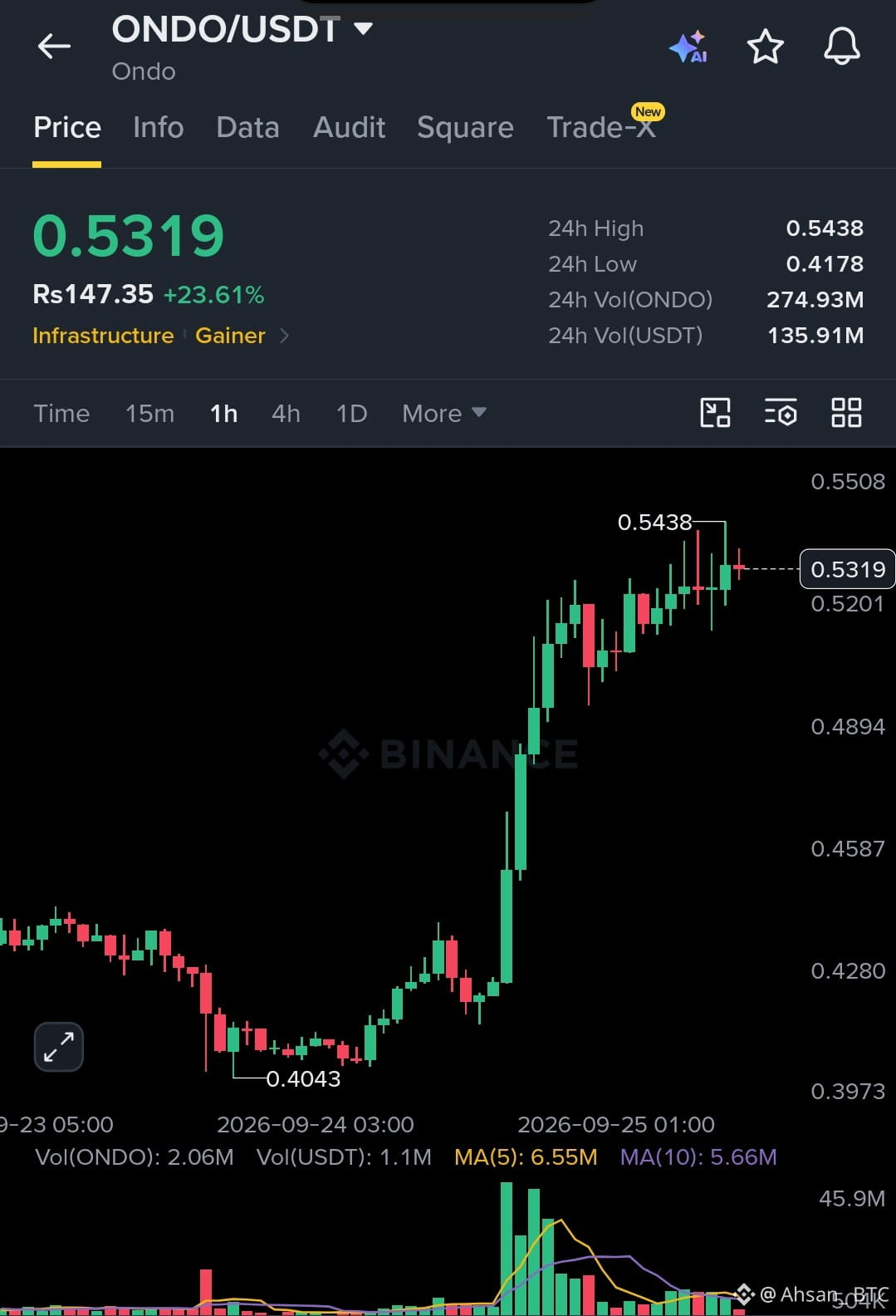
$ONDO /USDT — RWA-Gigant auf dem Vormarsch! 🏦🔥
Aktueller Preis: ca. $0.5319 (+23,61% in 24h) 💚
Überblick: ONDO ist das führende Real-World-Asset-(RWA)-Protokoll und tokenisiert traditionelles Finanzwesen (T-Bills, Geldmärkte) on-chain. Starke institutionelle Story + echte Nutzbarkeit. 🏛️
Technisches Setup (1H):
📈 Großer Ausbruch aus der $0,40-Basis — parabolischer Move.
🐂 Bull-Flag-Konsolidierung nahe den Hochs ($0,5438).
📊 MA5 > MA10 = bullischer Trend intakt.
📉 Volumen-Kühlung = gesunder Abkühlungsmodus, kein Dump.
Wichtige Levels:
🔴 Widerstand: $0,5438 → $0,5508
🟢 Support: $0,5200 → $0,4894 (kritisch)
Trading-Plan:
✅ Einstieg: $0,5200 – $0,5320
🎯 TP1: $0,5500
🎯 TP2: $0,5800
🎯 TP3: $0,6200
🛑 SL: $0,4850
⚖️ R:R ~ 1:3
Ausblick:
⚡ Kurzfristig: Konsolidierung bei $0,52–$0,54, dann vermutlich erneuter Test von $0,55.
🔭 Langfristig: RWA-Bluechip erster Klasse. $0,70+ im Spiel, falls BTC stabil bleibt.
Stimmung: 274M ONDO-Volumen = Interesse von Walen. RWA-Rotation ist real. 🐋
⚠️ Keine Finanzberatung. DYOR. Gehe verantwortungsvoll mit deinem Risiko um!
Hältst du $ONDO? Schreib 🚀 darunter!
$ONDO
{spot}(ONDOUSDT)
#ONDO
#OndoFinanceSoughtSaleAfterFoundersDeath
$ONDO /USDT — RWA-Gigant auf dem Vormarsch! 🏦🔥
Aktueller Preis: ca. $0.5319 (+23,61% in 24h) 💚
Überblick: ONDO ist das führende Real-World-Asset-(RWA)-Protokoll und tokenisiert traditionelles Finanzwesen (T-Bills, Geldmärkte) on-chain. Starke institutionelle Story + echte Nutzbarkeit. 🏛️
Technisches Setup (1H):
📈 Großer Ausbruch aus der $0,40-Basis — parabolischer Move.
🐂 Bull-Flag-Konsolidierung nahe den Hochs ($0,5438).
📊 MA5 > MA10 = bullischer Trend intakt.
📉 Volumen-Kühlung = gesunder Abkühlungsmodus, kein Dump.
Wichtige Levels:
🔴 Widerstand: $0,5438 → $0,5508
🟢 Support: $0,5200 → $0,4894 (kritisch)
Trading-Plan:
✅ Einstieg: $0,5200 – $0,5320
🎯 TP1: $0,5500
🎯 TP2: $0,5800
🎯 TP3: $0,6200
🛑 SL: $0,4850
⚖️ R:R ~ 1:3
Ausblick:
⚡ Kurzfristig: Konsolidierung bei $0,52–$0,54, dann vermutlich erneuter Test von $0,55.
🔭 Langfristig: RWA-Bluechip erster Klasse. $0,70+ im Spiel, falls BTC stabil bleibt.
Stimmung: 274M ONDO-Volumen = Interesse von Walen. RWA-Rotation ist real. 🐋
⚠️ Keine Finanzberatung. DYOR. Gehe verantwortungsvoll mit deinem Risiko um!
Hältst du $ONDO ? Schreib 🚀 darunter!
$ONDO
#ONDO
#OndoFinanceSoughtSaleAfterFoundersDeath
Aktueller Preis: ca. $0.5319 (+23,61% in 24h) 💚
Überblick: ONDO ist das führende Real-World-Asset-(RWA)-Protokoll und tokenisiert traditionelles Finanzwesen (T-Bills, Geldmärkte) on-chain. Starke institutionelle Story + echte Nutzbarkeit. 🏛️
Technisches Setup (1H):
📈 Großer Ausbruch aus der $0,40-Basis — parabolischer Move.
🐂 Bull-Flag-Konsolidierung nahe den Hochs ($0,5438).
📊 MA5 > MA10 = bullischer Trend intakt.
📉 Volumen-Kühlung = gesunder Abkühlungsmodus, kein Dump.
Wichtige Levels:
🔴 Widerstand: $0,5438 → $0,5508
🟢 Support: $0,5200 → $0,4894 (kritisch)
Trading-Plan:
✅ Einstieg: $0,5200 – $0,5320
🎯 TP1: $0,5500
🎯 TP2: $0,5800
🎯 TP3: $0,6200
🛑 SL: $0,4850
⚖️ R:R ~ 1:3
Ausblick:
⚡ Kurzfristig: Konsolidierung bei $0,52–$0,54, dann vermutlich erneuter Test von $0,55.
🔭 Langfristig: RWA-Bluechip erster Klasse. $0,70+ im Spiel, falls BTC stabil bleibt.
Stimmung: 274M ONDO-Volumen = Interesse von Walen. RWA-Rotation ist real. 🐋
⚠️ Keine Finanzberatung. DYOR. Gehe verantwortungsvoll mit deinem Risiko um!
Hältst du $ONDO ? Schreib 🚀 darunter!
$ONDO
#ONDO
#OndoFinanceSoughtSaleAfterFoundersDeath
131
·
--
Bullisch
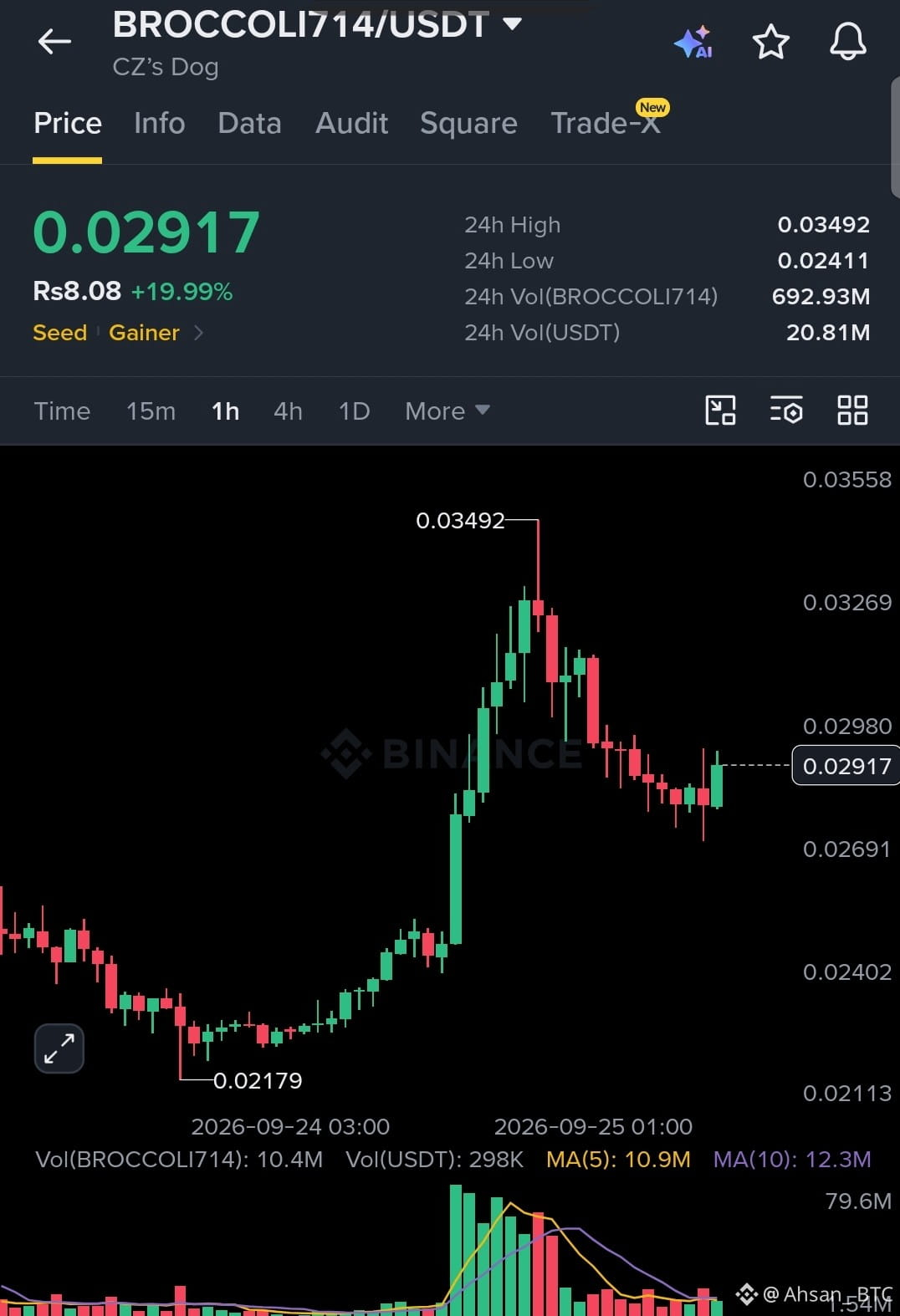
$BROCCOLI714/USDT — CZ's Dog Pumping! 🐕🥦
Aktueller Preis: ~ $0.02917 (+19.99% 24h) 💚
Überblick: Meme-Coin, der an Binances CZ (Changpeng Zhao) und seinen Hund gekoppelt ist. Reines, narrativ getriebenes Spiel — hohes Risiko, hohe Volatilität. Nicht für schwache Nerven. 🎢
Technisches Setup (1H):
📈 Riesen-grüne Kerze gepumpt von $0.0217 auf $0.0349 High.
🐻 Jetzt Rücksetzer — Gewinnmitnahmen laufen.
📉 MA5 kreuzt unter MA10 = kurzfristig bärischer Momentum.
📊 Volumen bricht hart ein = Hype kühlt ab.
Wichtige Levels:
🔴 Widerstand: $0.0349 (24h High) → $0.0355
🟢 Support: $0.0269 → $0.0240 (kritisch)
Trade-Plan:
✅ Einstieg (Dip Buy): $0.0265 – $0.0275
🎯 TP1: $0.0298
🎯 TP2: $0.0325
🎯 TP3: $0.0350
🛑 SL: $0.0235
⚖️ R:R ~ 1:2.5
Ausblick:
⚡ Kurzfristig: Bärischer Pullback. Auf das Reclaim des Supports warten, bevor du einsteigst. Kein FOMO bei grünen Kerzen!
🔭 Langfristig: Meme-Coin = reine Stimmung. Stirbt schnell ohne frische CZ-News oder Volumen.
Stimmung: 692M BROCCOLI-Volumen = immer noch heiß, aber es flacht ab. Braucht einen neuen Katalysator, um die Hochs zurückzuerobern.
⚠️ Keine Finanzberatung. Meme-Coins sind extrem volatil. Mach deine eigene Recherche (DYOR). Nutze enge Stops!
Dip gekauft oder noch am Warten? Schreib ein 🥦 drunter!
$BROCCOLI714
{spot}(BROCCOLI714USDT)
#BROCCLI714
#OndoFinanceSoughtSaleAfterFoundersDeath
$BROCCOLI714 /USDT — CZ's Dog Pumping! 🐕🥦
Aktueller Preis: ~ $0.02917 (+19.99% 24h) 💚
Überblick: Meme-Coin, der an Binances CZ (Changpeng Zhao) und seinen Hund gekoppelt ist. Reines, narrativ getriebenes Spiel — hohes Risiko, hohe Volatilität. Nicht für schwache Nerven. 🎢
Technisches Setup (1H):
📈 Riesen-grüne Kerze gepumpt von $0.0217 auf $0.0349 High.
🐻 Jetzt Rücksetzer — Gewinnmitnahmen laufen.
📉 MA5 kreuzt unter MA10 = kurzfristig bärischer Momentum.
📊 Volumen bricht hart ein = Hype kühlt ab.
Wichtige Levels:
🔴 Widerstand: $0.0349 (24h High) → $0.0355
🟢 Support: $0.0269 → $0.0240 (kritisch)
Trade-Plan:
✅ Einstieg (Dip Buy): $0.0265 – $0.0275
🎯 TP1: $0.0298
🎯 TP2: $0.0325
🎯 TP3: $0.0350
🛑 SL: $0.0235
⚖️ R:R ~ 1:2.5
Ausblick:
⚡ Kurzfristig: Bärischer Pullback. Auf das Reclaim des Supports warten, bevor du einsteigst. Kein FOMO bei grünen Kerzen!
🔭 Langfristig: Meme-Coin = reine Stimmung. Stirbt schnell ohne frische CZ-News oder Volumen.
Stimmung: 692M BROCCOLI-Volumen = immer noch heiß, aber es flacht ab. Braucht einen neuen Katalysator, um die Hochs zurückzuerobern.
⚠️ Keine Finanzberatung. Meme-Coins sind extrem volatil. Mach deine eigene Recherche (DYOR). Nutze enge Stops!
Dip gekauft oder noch am Warten? Schreib ein 🥦 drunter!
$BROCCOLI714
#BROCCLI714
#OndoFinanceSoughtSaleAfterFoundersDeath
Aktueller Preis: ~ $0.02917 (+19.99% 24h) 💚
Überblick: Meme-Coin, der an Binances CZ (Changpeng Zhao) und seinen Hund gekoppelt ist. Reines, narrativ getriebenes Spiel — hohes Risiko, hohe Volatilität. Nicht für schwache Nerven. 🎢
Technisches Setup (1H):
📈 Riesen-grüne Kerze gepumpt von $0.0217 auf $0.0349 High.
🐻 Jetzt Rücksetzer — Gewinnmitnahmen laufen.
📉 MA5 kreuzt unter MA10 = kurzfristig bärischer Momentum.
📊 Volumen bricht hart ein = Hype kühlt ab.
Wichtige Levels:
🔴 Widerstand: $0.0349 (24h High) → $0.0355
🟢 Support: $0.0269 → $0.0240 (kritisch)
Trade-Plan:
✅ Einstieg (Dip Buy): $0.0265 – $0.0275
🎯 TP1: $0.0298
🎯 TP2: $0.0325
🎯 TP3: $0.0350
🛑 SL: $0.0235
⚖️ R:R ~ 1:2.5
Ausblick:
⚡ Kurzfristig: Bärischer Pullback. Auf das Reclaim des Supports warten, bevor du einsteigst. Kein FOMO bei grünen Kerzen!
🔭 Langfristig: Meme-Coin = reine Stimmung. Stirbt schnell ohne frische CZ-News oder Volumen.
Stimmung: 692M BROCCOLI-Volumen = immer noch heiß, aber es flacht ab. Braucht einen neuen Katalysator, um die Hochs zurückzuerobern.
⚠️ Keine Finanzberatung. Meme-Coins sind extrem volatil. Mach deine eigene Recherche (DYOR). Nutze enge Stops!
Dip gekauft oder noch am Warten? Schreib ein 🥦 drunter!
$BROCCOLI714
#BROCCLI714
#OndoFinanceSoughtSaleAfterFoundersDeath
271
·
--
Bullisch
🔴 $CAKE Long Liquidation — 2.40952 $
CAKE liegt derzeit bei etwa 2,45 $. Laut den historischen Binance-Daten gab es am 18. Sep ein jüngstes Hoch bei 2,555 $ und am 19. Sep ein Tief bei 2,413 $.
Support
S1: 2,40–2,42 $
S2: 2,30–2,34 $
S3: 2,20–2,24 $
Resistance
R1: 2,48–2,52 $
R2: 2,55–2,58 $
R3: 2,65–2,70 $
EP: 2,40–2,44 $
TP1: 2,50 $
TP2: 2,56 $
TP3: 2,65–2,70 $
SL: 2,30 $
Pro-Tipp: 2,40–2,42 ist die entscheidende Reaktionszone, weil die Liquidation bei 2,4095 $ gedruckt wurde. Wenn CAKE 2,50 $ zurückerobert und hält, wird 2,55–2,58 der nächste Bereich sein, den du im Blick behalten solltest. Wenn 2,40 jedoch klar bricht, vermeide es, long zu erzwingen, und beobachte 2,30–2,34.
⚠️ Der Liquidation-Flow ist ein Signal, keine Bestätigung; verwende Positionsgröße und Hebel entsprechend.
$CAKE
{spot}(CAKEUSDT)
#Cake
🔴 $CAKE Long Liquidation — 2.40952 $
CAKE liegt derzeit bei etwa 2,45 $. Laut den historischen Binance-Daten gab es am 18. Sep ein jüngstes Hoch bei 2,555 $ und am 19. Sep ein Tief bei 2,413 $.
Support
S1: 2,40–2,42 $
S2: 2,30–2,34 $
S3: 2,20–2,24 $
Resistance
R1: 2,48–2,52 $
R2: 2,55–2,58 $
R3: 2,65–2,70 $
EP: 2,40–2,44 $
TP1: 2,50 $
TP2: 2,56 $
TP3: 2,65–2,70 $
SL: 2,30 $
Pro-Tipp: 2,40–2,42 ist die entscheidende Reaktionszone, weil die Liquidation bei 2,4095 $ gedruckt wurde. Wenn CAKE 2,50 $ zurückerobert und hält, wird 2,55–2,58 der nächste Bereich sein, den du im Blick behalten solltest. Wenn 2,40 jedoch klar bricht, vermeide es, long zu erzwingen, und beobachte 2,30–2,34.
⚠️ Der Liquidation-Flow ist ein Signal, keine Bestätigung; verwende Positionsgröße und Hebel entsprechend.
$CAKE
#Cake
CAKE liegt derzeit bei etwa 2,45 $. Laut den historischen Binance-Daten gab es am 18. Sep ein jüngstes Hoch bei 2,555 $ und am 19. Sep ein Tief bei 2,413 $.
Support
S1: 2,40–2,42 $
S2: 2,30–2,34 $
S3: 2,20–2,24 $
Resistance
R1: 2,48–2,52 $
R2: 2,55–2,58 $
R3: 2,65–2,70 $
EP: 2,40–2,44 $
TP1: 2,50 $
TP2: 2,56 $
TP3: 2,65–2,70 $
SL: 2,30 $
Pro-Tipp: 2,40–2,42 ist die entscheidende Reaktionszone, weil die Liquidation bei 2,4095 $ gedruckt wurde. Wenn CAKE 2,50 $ zurückerobert und hält, wird 2,55–2,58 der nächste Bereich sein, den du im Blick behalten solltest. Wenn 2,40 jedoch klar bricht, vermeide es, long zu erzwingen, und beobachte 2,30–2,34.
⚠️ Der Liquidation-Flow ist ein Signal, keine Bestätigung; verwende Positionsgröße und Hebel entsprechend.
$CAKE
#Cake
415
·
--
Bullisch
🔴 $ONE Long Liquidation — 0,00233 $
ONE war extrem volatil: Aktuelle Daten zeigen ein Hoch von 0,00239 $ am 17. Sep und einen Preis von ca. 0,00187–0,00212 $ am 19. Sep.
Support
S1: 0,00190–0,00198 $
S2: 0,00178–0,00185 $
S3: 0,00160–0,00170 $
Resistance
R1: 0,00215–0,00220 $
R2: 0,00230–0,00235 $
R3: 0,00238–0,00245 $
EP: 0,00192–0,00205 $
TP1: 0,00220 $
TP2: 0,00235 $
TP3: 0,00245+
SL: 0,00178 $
Profi-Tipp: Der Bereich 0,00230–0,00235 $ ist die entscheidende Reclaim-Zone, weil die Liquidation bei 0,00233 $ erfolgte. Ein klarer Break + Hold darüber kann den Weg Richtung des jüngsten 0,00239 $-Bereichs öffnen; eine Abweisung dort spricht für einen Rücksetzer Richtung 0,0020.
⚠️ ONE bewegt sich heftig, also meide es, Kerzen hinterherzulaufen, und halte den Hebel niedrig. Liquidationsdaten sind ein Signal, keine Bestätigung.
$ONE
{spot}(ONEUSDT)
#ONE
🔴 $ONE Long Liquidation — 0,00233 $
ONE war extrem volatil: Aktuelle Daten zeigen ein Hoch von 0,00239 $ am 17. Sep und einen Preis von ca. 0,00187–0,00212 $ am 19. Sep.
Support
S1: 0,00190–0,00198 $
S2: 0,00178–0,00185 $
S3: 0,00160–0,00170 $
Resistance
R1: 0,00215–0,00220 $
R2: 0,00230–0,00235 $
R3: 0,00238–0,00245 $
EP: 0,00192–0,00205 $
TP1: 0,00220 $
TP2: 0,00235 $
TP3: 0,00245+
SL: 0,00178 $
Profi-Tipp: Der Bereich 0,00230–0,00235 $ ist die entscheidende Reclaim-Zone, weil die Liquidation bei 0,00233 $ erfolgte. Ein klarer Break + Hold darüber kann den Weg Richtung des jüngsten 0,00239 $-Bereichs öffnen; eine Abweisung dort spricht für einen Rücksetzer Richtung 0,0020.
⚠️ ONE bewegt sich heftig, also meide es, Kerzen hinterherzulaufen, und halte den Hebel niedrig. Liquidationsdaten sind ein Signal, keine Bestätigung.
$ONE
#ONE
ONE war extrem volatil: Aktuelle Daten zeigen ein Hoch von 0,00239 $ am 17. Sep und einen Preis von ca. 0,00187–0,00212 $ am 19. Sep.
Support
S1: 0,00190–0,00198 $
S2: 0,00178–0,00185 $
S3: 0,00160–0,00170 $
Resistance
R1: 0,00215–0,00220 $
R2: 0,00230–0,00235 $
R3: 0,00238–0,00245 $
EP: 0,00192–0,00205 $
TP1: 0,00220 $
TP2: 0,00235 $
TP3: 0,00245+
SL: 0,00178 $
Profi-Tipp: Der Bereich 0,00230–0,00235 $ ist die entscheidende Reclaim-Zone, weil die Liquidation bei 0,00233 $ erfolgte. Ein klarer Break + Hold darüber kann den Weg Richtung des jüngsten 0,00239 $-Bereichs öffnen; eine Abweisung dort spricht für einen Rücksetzer Richtung 0,0020.
⚠️ ONE bewegt sich heftig, also meide es, Kerzen hinterherzulaufen, und halte den Hebel niedrig. Liquidationsdaten sind ein Signal, keine Bestätigung.
$ONE
#ONE
318
·
--
Bullisch
🟢 $JST Short Liquidation — $0.11674
JST liegt derzeit bei etwa $0.116, wobei Binance eine aktuelle 24h-Spanne um $0.1131–$0.1166 anzeigt.
Support
S1: $0.1140–0.1150
S2: $0.1125–0.1130
S3: $0.1100–0.1110
Resistance
R1: $0.1167–0.1172
R2: $0.1184–0.1200
R3: $0.1220–0.1240
EP: $0.1145–0.1162
TP1: $0.1172
TP2: $0.1200
TP3: $0.1230
SL: $0.1125
Profi-Tipp: Die Liquidationsmarke $0.11674 ist die entscheidende Rückeroberungszone. Wenn JST ausbricht und $0.1172 mit Volumen hält, werden die Kursziele nach oben plausibler. Wenn es dort abgewiesen wird, beobachte $0.114–0.115 als Support. Die aktuellen technischen Levels legen außerdem Widerstand bei etwa $0.1172–$0.1184 und Support bei $0.1151/$0.1125 nahe.
⚠️ Der Liquidation-Flow liefert Bestätigungskontext, kein garantiertes Reversal-Signal.
$JST
{spot}(JSTUSDT)
#jst
🟢 $JST Short Liquidation — $0.11674
JST liegt derzeit bei etwa $0.116, wobei Binance eine aktuelle 24h-Spanne um $0.1131–$0.1166 anzeigt.
Support
S1: $0.1140–0.1150
S2: $0.1125–0.1130
S3: $0.1100–0.1110
Resistance
R1: $0.1167–0.1172
R2: $0.1184–0.1200
R3: $0.1220–0.1240
EP: $0.1145–0.1162
TP1: $0.1172
TP2: $0.1200
TP3: $0.1230
SL: $0.1125
Profi-Tipp: Die Liquidationsmarke $0.11674 ist die entscheidende Rückeroberungszone. Wenn JST ausbricht und $0.1172 mit Volumen hält, werden die Kursziele nach oben plausibler. Wenn es dort abgewiesen wird, beobachte $0.114–0.115 als Support. Die aktuellen technischen Levels legen außerdem Widerstand bei etwa $0.1172–$0.1184 und Support bei $0.1151/$0.1125 nahe.
⚠️ Der Liquidation-Flow liefert Bestätigungskontext, kein garantiertes Reversal-Signal.
$JST
#jst
JST liegt derzeit bei etwa $0.116, wobei Binance eine aktuelle 24h-Spanne um $0.1131–$0.1166 anzeigt.
Support
S1: $0.1140–0.1150
S2: $0.1125–0.1130
S3: $0.1100–0.1110
Resistance
R1: $0.1167–0.1172
R2: $0.1184–0.1200
R3: $0.1220–0.1240
EP: $0.1145–0.1162
TP1: $0.1172
TP2: $0.1200
TP3: $0.1230
SL: $0.1125
Profi-Tipp: Die Liquidationsmarke $0.11674 ist die entscheidende Rückeroberungszone. Wenn JST ausbricht und $0.1172 mit Volumen hält, werden die Kursziele nach oben plausibler. Wenn es dort abgewiesen wird, beobachte $0.114–0.115 als Support. Die aktuellen technischen Levels legen außerdem Widerstand bei etwa $0.1172–$0.1184 und Support bei $0.1151/$0.1125 nahe.
⚠️ Der Liquidation-Flow liefert Bestätigungskontext, kein garantiertes Reversal-Signal.
$JST
#jst
132
·
--
Bullisch
🔴 $ONE — Long-Liquidation-Setup
Die Long-Liquidation bei $0.00156 ist nahe am aktuellen Marktbereich. ONE ist heute extrem volatil: CoinMarketCap zeigt ungefähr $0.00155, mit einer 24h-Spanne von $0.000642–$0.001632.
🟩 SUPPORT
S1: $0.00148–$0.00152
S2: $0.00140–$0.00145 ⭐
S3: $0.00125–$0.00130
🟥 WIDERSTAND
R1: $0.00160–$0.00163 ⭐
R2: $0.00170–$0.00175
R3: $0.00190–$0.00200
🎯 LONG-PLAN
EP: $0.00148–$0.00155
TP1: $0.00163
TP2: $0.00175
TP3: $0.00200
SL: $0.00140
💡 Pro-Tipp
Jage dem großen Move nicht hinterher. Der Bereich $0.00148–$0.00152 ist die entscheidende Reaktionszone. Ein sauberes Reclaim/Halten über $0.00163 würde eine stärkere Bestätigung für die nächsten Levels liefern.
Der stündliche Trend von ONE ist derzeit bullisch, aber der RSI ist bereits überkauft, während die tägliche Volatilität sehr hoch ist.
Nächste Ziele 🎯 → $0.00163 → $0.00175 → $0.00200
⚠️ Hochrisiko-Setup: Der Liquidation-Print allein garantiert keine Fortsetzung. Halte die Hebelwirkung niedrig und warte auf Bestätigung.
$ONE
{spot}(ONEUSDT)
#one
🔴 $ONE — Long-Liquidation-Setup
Die Long-Liquidation bei $0.00156 ist nahe am aktuellen Marktbereich. ONE ist heute extrem volatil: CoinMarketCap zeigt ungefähr $0.00155, mit einer 24h-Spanne von $0.000642–$0.001632.
🟩 SUPPORT
S1: $0.00148–$0.00152
S2: $0.00140–$0.00145 ⭐
S3: $0.00125–$0.00130
🟥 WIDERSTAND
R1: $0.00160–$0.00163 ⭐
R2: $0.00170–$0.00175
R3: $0.00190–$0.00200
🎯 LONG-PLAN
EP: $0.00148–$0.00155
TP1: $0.00163
TP2: $0.00175
TP3: $0.00200
SL: $0.00140
💡 Pro-Tipp
Jage dem großen Move nicht hinterher. Der Bereich $0.00148–$0.00152 ist die entscheidende Reaktionszone. Ein sauberes Reclaim/Halten über $0.00163 würde eine stärkere Bestätigung für die nächsten Levels liefern.
Der stündliche Trend von ONE ist derzeit bullisch, aber der RSI ist bereits überkauft, während die tägliche Volatilität sehr hoch ist.
Nächste Ziele 🎯 → $0.00163 → $0.00175 → $0.00200
⚠️ Hochrisiko-Setup: Der Liquidation-Print allein garantiert keine Fortsetzung. Halte die Hebelwirkung niedrig und warte auf Bestätigung.
$ONE
#one
Die Long-Liquidation bei $0.00156 ist nahe am aktuellen Marktbereich. ONE ist heute extrem volatil: CoinMarketCap zeigt ungefähr $0.00155, mit einer 24h-Spanne von $0.000642–$0.001632.
🟩 SUPPORT
S1: $0.00148–$0.00152
S2: $0.00140–$0.00145 ⭐
S3: $0.00125–$0.00130
🟥 WIDERSTAND
R1: $0.00160–$0.00163 ⭐
R2: $0.00170–$0.00175
R3: $0.00190–$0.00200
🎯 LONG-PLAN
EP: $0.00148–$0.00155
TP1: $0.00163
TP2: $0.00175
TP3: $0.00200
SL: $0.00140
💡 Pro-Tipp
Jage dem großen Move nicht hinterher. Der Bereich $0.00148–$0.00152 ist die entscheidende Reaktionszone. Ein sauberes Reclaim/Halten über $0.00163 würde eine stärkere Bestätigung für die nächsten Levels liefern.
Der stündliche Trend von ONE ist derzeit bullisch, aber der RSI ist bereits überkauft, während die tägliche Volatilität sehr hoch ist.
Nächste Ziele 🎯 → $0.00163 → $0.00175 → $0.00200
⚠️ Hochrisiko-Setup: Der Liquidation-Print allein garantiert keine Fortsetzung. Halte die Hebelwirkung niedrig und warte auf Bestätigung.
$ONE
#one
1
191
·
--
Bullisch
🟢 $AVA — Short Liquidation-Setup
Die $0.2593 Short-Liquidation findet nach einer ungewöhnlich großen Bewegung statt. Binance/Marktdaten zeigen, dass AVA zuletzt bis zu $0.329 gehandelt wurde, während der aktuelle Bereich bei etwa $0.259 liegt.
🟩 SUPPORT
S1: $0.250–$0.260 ⭐
S2: $0.235–$0.245
S3: $0.205–$0.215
🟥 WIDERSTAND
R1: $0.273–$0.281
R2: $0.289–$0.301 ⭐
R3: $0.325–$0.330
🎯 LONG-PLAN
EP: $0.250–$0.260
TP1: $0.281
TP2: $0.300
TP3: $0.325
SL: $0.238
💡 Pro-Tipp
Die entscheidende Marke ist $0.281. Eine Rückeroberung und ein Halten darüber würden das Fortsetzungs-Setup stärken; eine Abweisung kann AVA zurück in Richtung $0.25 bringen. Die aktuellen technischen Pivot-Daten setzen $0.281 als Pivot, $0.293/$0.301 als Widerstand und $0.261/$0.253 als untere Support-Zonen.
⚠️ Sehr hohe Volatilität: AVA bewegte sich im aktuellen Sitzungsbereich ungefähr von $0.156 → $0.329. Binance hat AVA außerdem unter seinem Monitoring-Tag, was auf ein erhöhtes Risiko und mögliche zusätzliche Volatilität hindeutet.
Nächste Ziele 🎯 → $0.281 → $0.300 → $0.325
Liquidationsdaten sind ein Bestätigungssignal, keine Garantie für die Richtung.
$AVA
{spot}(AVAUSDT)
#AVA
🟢 $AVA — Short Liquidation-Setup
Die $0.2593 Short-Liquidation findet nach einer ungewöhnlich großen Bewegung statt. Binance/Marktdaten zeigen, dass AVA zuletzt bis zu $0.329 gehandelt wurde, während der aktuelle Bereich bei etwa $0.259 liegt.
🟩 SUPPORT
S1: $0.250–$0.260 ⭐
S2: $0.235–$0.245
S3: $0.205–$0.215
🟥 WIDERSTAND
R1: $0.273–$0.281
R2: $0.289–$0.301 ⭐
R3: $0.325–$0.330
🎯 LONG-PLAN
EP: $0.250–$0.260
TP1: $0.281
TP2: $0.300
TP3: $0.325
SL: $0.238
💡 Pro-Tipp
Die entscheidende Marke ist $0.281. Eine Rückeroberung und ein Halten darüber würden das Fortsetzungs-Setup stärken; eine Abweisung kann AVA zurück in Richtung $0.25 bringen. Die aktuellen technischen Pivot-Daten setzen $0.281 als Pivot, $0.293/$0.301 als Widerstand und $0.261/$0.253 als untere Support-Zonen.
⚠️ Sehr hohe Volatilität: AVA bewegte sich im aktuellen Sitzungsbereich ungefähr von $0.156 → $0.329. Binance hat AVA außerdem unter seinem Monitoring-Tag, was auf ein erhöhtes Risiko und mögliche zusätzliche Volatilität hindeutet.
Nächste Ziele 🎯 → $0.281 → $0.300 → $0.325
Liquidationsdaten sind ein Bestätigungssignal, keine Garantie für die Richtung.
$AVA
#AVA
Die $0.2593 Short-Liquidation findet nach einer ungewöhnlich großen Bewegung statt. Binance/Marktdaten zeigen, dass AVA zuletzt bis zu $0.329 gehandelt wurde, während der aktuelle Bereich bei etwa $0.259 liegt.
🟩 SUPPORT
S1: $0.250–$0.260 ⭐
S2: $0.235–$0.245
S3: $0.205–$0.215
🟥 WIDERSTAND
R1: $0.273–$0.281
R2: $0.289–$0.301 ⭐
R3: $0.325–$0.330
🎯 LONG-PLAN
EP: $0.250–$0.260
TP1: $0.281
TP2: $0.300
TP3: $0.325
SL: $0.238
💡 Pro-Tipp
Die entscheidende Marke ist $0.281. Eine Rückeroberung und ein Halten darüber würden das Fortsetzungs-Setup stärken; eine Abweisung kann AVA zurück in Richtung $0.25 bringen. Die aktuellen technischen Pivot-Daten setzen $0.281 als Pivot, $0.293/$0.301 als Widerstand und $0.261/$0.253 als untere Support-Zonen.
⚠️ Sehr hohe Volatilität: AVA bewegte sich im aktuellen Sitzungsbereich ungefähr von $0.156 → $0.329. Binance hat AVA außerdem unter seinem Monitoring-Tag, was auf ein erhöhtes Risiko und mögliche zusätzliche Volatilität hindeutet.
Nächste Ziele 🎯 → $0.281 → $0.300 → $0.325
Liquidationsdaten sind ein Bestätigungssignal, keine Garantie für die Richtung.
$AVA
#AVA
61
·
--
Bullisch
🔴 $LSK — Long-Liquidation-Setup
Die $0.4125 Long-Liquidation liegt direkt in einem technisch wichtigen Bereich. Aktuelle Binance-Technikdaten zeigen $0.4125 als Fibonacci-S1-Level, während $0.4305 der Pivot ist und $0.4485 die nächste Fibonacci-Resistance.
🟩 UNTERSTÜTZUNG
S1: $0.410–$0.413 ⭐
S2: $0.400–$0.403
S3: $0.383–$0.390
🟥 WIDERSTAND
R1: $0.430–$0.432
R2: $0.447–$0.450
R3: $0.475–$0.480
🎯 LONG-PLAN
EP: $0.410–$0.420
TP1: $0.430
TP2: $0.448
TP3: $0.475
SL: $0.398
💡 Pro-Tipp
Die $0.410–$0.413-Zone ist der entscheidende Reaktionsbereich. Wenn LSK ihn hält und $0.430 zurückerobert, werden Upside-Ziele relevanter. Wenn $0.400 jedoch entscheidend bricht, vermeide es, den Long zu erzwingen.
Die jüngste Preisbewegung von LSK war außergewöhnlich volatil, und Binance ordnet LSK derzeit unter seinem Monitoring-Tag ein. Binance sagt, dass das auf höhere Volatilität/Risiko hinweist.
Nächste Ziele 🎯 → $0.430 → $0.448 → $0.475
⚠️ Angesichts der Volatilität: Halte den Hebel niedrig und warte auf Bestätigung, statt direkt beim Liquidations-Print einzusteigen.
$LSK
{spot}(LSKUSDT)
#LSK
🔴 $LSK — Long-Liquidation-Setup
Die $0.4125 Long-Liquidation liegt direkt in einem technisch wichtigen Bereich. Aktuelle Binance-Technikdaten zeigen $0.4125 als Fibonacci-S1-Level, während $0.4305 der Pivot ist und $0.4485 die nächste Fibonacci-Resistance.
🟩 UNTERSTÜTZUNG
S1: $0.410–$0.413 ⭐
S2: $0.400–$0.403
S3: $0.383–$0.390
🟥 WIDERSTAND
R1: $0.430–$0.432
R2: $0.447–$0.450
R3: $0.475–$0.480
🎯 LONG-PLAN
EP: $0.410–$0.420
TP1: $0.430
TP2: $0.448
TP3: $0.475
SL: $0.398
💡 Pro-Tipp
Die $0.410–$0.413-Zone ist der entscheidende Reaktionsbereich. Wenn LSK ihn hält und $0.430 zurückerobert, werden Upside-Ziele relevanter. Wenn $0.400 jedoch entscheidend bricht, vermeide es, den Long zu erzwingen.
Die jüngste Preisbewegung von LSK war außergewöhnlich volatil, und Binance ordnet LSK derzeit unter seinem Monitoring-Tag ein. Binance sagt, dass das auf höhere Volatilität/Risiko hinweist.
Nächste Ziele 🎯 → $0.430 → $0.448 → $0.475
⚠️ Angesichts der Volatilität: Halte den Hebel niedrig und warte auf Bestätigung, statt direkt beim Liquidations-Print einzusteigen.
$LSK
#LSK
Die $0.4125 Long-Liquidation liegt direkt in einem technisch wichtigen Bereich. Aktuelle Binance-Technikdaten zeigen $0.4125 als Fibonacci-S1-Level, während $0.4305 der Pivot ist und $0.4485 die nächste Fibonacci-Resistance.
🟩 UNTERSTÜTZUNG
S1: $0.410–$0.413 ⭐
S2: $0.400–$0.403
S3: $0.383–$0.390
🟥 WIDERSTAND
R1: $0.430–$0.432
R2: $0.447–$0.450
R3: $0.475–$0.480
🎯 LONG-PLAN
EP: $0.410–$0.420
TP1: $0.430
TP2: $0.448
TP3: $0.475
SL: $0.398
💡 Pro-Tipp
Die $0.410–$0.413-Zone ist der entscheidende Reaktionsbereich. Wenn LSK ihn hält und $0.430 zurückerobert, werden Upside-Ziele relevanter. Wenn $0.400 jedoch entscheidend bricht, vermeide es, den Long zu erzwingen.
Die jüngste Preisbewegung von LSK war außergewöhnlich volatil, und Binance ordnet LSK derzeit unter seinem Monitoring-Tag ein. Binance sagt, dass das auf höhere Volatilität/Risiko hinweist.
Nächste Ziele 🎯 → $0.430 → $0.448 → $0.475
⚠️ Angesichts der Volatilität: Halte den Hebel niedrig und warte auf Bestätigung, statt direkt beim Liquidations-Print einzusteigen.
$LSK
#LSK
359
·
--
Bullisch
🔴 $UNITREE — Long Liquidation-Setup
Die Long-Liquidation im Wert von 73,815 $ ist wichtig, weil UNITREE derzeit um die Mid-70er handelt und sehr volatil ist. Aktuelle Marktdaten zeigen ungefähr 75,67 $, mit einer +8% Bewegung in 24 Stunden.
🟩 SUPPORT
S1: 72,5–73,8 $ ⭐
S2: 69,5–70,5 $
S3: 66,0–67,5 $
🟥 WIDERSTAND
R1: 76,5–78,0 $
R2: 80–82 $
R3: 85–88 $
🎯 LONG-PLAN
EP: 72,5–75,0 $
TP1: 78 $
TP2: 82 $
TP3: 88 $
SL: 69,5 $
💡 Pro-Tipp
Da bei 73,815 $ eine Long-Liquidation stattgefunden hat, solltest du die Liquidationsmarke nicht blind kaufen. Achte darauf, dass 72,5–74 $ hält und der Kurs wieder über 76–78 $ zurückgewinnt. Ein anhaltender Bruch unter 72,5 schwächt dieses Setup.
Nächste Ziele 🎯 → 78 $ → 82 $ → 88 $
⚠️ UNITREE ist ein Binance-Perpetual, basierend auf UniTree Technology, und Binance listet bis zu 20× Leverage; die Börse kann die Kontraktparameter je nach Marktbedingungen anpassen.
$UNITREE
{future}(UNITREEUSDT)
#Unitree
🔴 $UNITREE — Long Liquidation-Setup
Die Long-Liquidation im Wert von 73,815 $ ist wichtig, weil UNITREE derzeit um die Mid-70er handelt und sehr volatil ist. Aktuelle Marktdaten zeigen ungefähr 75,67 $, mit einer +8% Bewegung in 24 Stunden.
🟩 SUPPORT
S1: 72,5–73,8 $ ⭐
S2: 69,5–70,5 $
S3: 66,0–67,5 $
🟥 WIDERSTAND
R1: 76,5–78,0 $
R2: 80–82 $
R3: 85–88 $
🎯 LONG-PLAN
EP: 72,5–75,0 $
TP1: 78 $
TP2: 82 $
TP3: 88 $
SL: 69,5 $
💡 Pro-Tipp
Da bei 73,815 $ eine Long-Liquidation stattgefunden hat, solltest du die Liquidationsmarke nicht blind kaufen. Achte darauf, dass 72,5–74 $ hält und der Kurs wieder über 76–78 $ zurückgewinnt. Ein anhaltender Bruch unter 72,5 schwächt dieses Setup.
Nächste Ziele 🎯 → 78 $ → 82 $ → 88 $
⚠️ UNITREE ist ein Binance-Perpetual, basierend auf UniTree Technology, und Binance listet bis zu 20× Leverage; die Börse kann die Kontraktparameter je nach Marktbedingungen anpassen.
$UNITREE
#Unitree
Die Long-Liquidation im Wert von 73,815 $ ist wichtig, weil UNITREE derzeit um die Mid-70er handelt und sehr volatil ist. Aktuelle Marktdaten zeigen ungefähr 75,67 $, mit einer +8% Bewegung in 24 Stunden.
🟩 SUPPORT
S1: 72,5–73,8 $ ⭐
S2: 69,5–70,5 $
S3: 66,0–67,5 $
🟥 WIDERSTAND
R1: 76,5–78,0 $
R2: 80–82 $
R3: 85–88 $
🎯 LONG-PLAN
EP: 72,5–75,0 $
TP1: 78 $
TP2: 82 $
TP3: 88 $
SL: 69,5 $
💡 Pro-Tipp
Da bei 73,815 $ eine Long-Liquidation stattgefunden hat, solltest du die Liquidationsmarke nicht blind kaufen. Achte darauf, dass 72,5–74 $ hält und der Kurs wieder über 76–78 $ zurückgewinnt. Ein anhaltender Bruch unter 72,5 schwächt dieses Setup.
Nächste Ziele 🎯 → 78 $ → 82 $ → 88 $
⚠️ UNITREE ist ein Binance-Perpetual, basierend auf UniTree Technology, und Binance listet bis zu 20× Leverage; die Börse kann die Kontraktparameter je nach Marktbedingungen anpassen.
$UNITREE
#Unitree
368
Anmelden und weiter Inhalte entdecken
Krypto-Nutzer weltweit auf Binance Square kennenlernen
⚡️ Bleib in Sachen Krypto stets am Puls.
💬 Die weltgrößte Kryptobörse vertraut darauf.
👍 Erhalte verlässliche Einblicke von verifizierten Creators.
E-Mail-Adresse/Telefonnummer
Trendthemen
EtherGains70.9%InQ3
101,691 Aufrufe
937 Kommentare
🧭🧭🧭 Analyse 🧭🧭🧭
💡 Indikator für die Saison von Altcoins 💡
🚨🚨🚨 Das dritte Quartal (T3) ist nun abgeschlossen. ETH ist um 71% gestiegen und BTC um 43%. 🚨🚨🚨
War das der Beginn der Altcoin-Saison?
Unter den besten 100:
🌐🌐🌐 57 haben BTC in 90 Tagen outperformt
Die Altcoin-Saison beginnt bei 75, also ist es
Außerdem liegt sie nur 10 Punkte unter ihrem jährlichen Hoch bei 67 🌐🌐
💥💥💥 Aber Moment… vor einem Monat lag der Index erst bei 23!
Kann Oktober ihn auf 75 pushen? 👀💥💥💥
Bitte bleiben Sie dran
#EtherGains70.9%InQ3
$GRAM
Shamika Metting
·2 Likes
·938 Aufrufe
TreasuryLetsStatesFileStablecoinCertificationsEarly
5,165 Aufrufe
61 Kommentare
US10YearYieldNears5.3%
122,787 Aufrufe
997 Kommentare