

Javeed Crypto Insights
54 Beiträge

Javeed Crypto Insights
Melden
Nutzer blockieren
Crypto Insights, Alpha & Market Signals | Breaking News | Market Analysis | Web3, DeFi & Staking | DYOR
8 Following
18 Follower
11 Like gegeben
Beiträge
Alle
Zitierungen
·
--
Bärisch
95
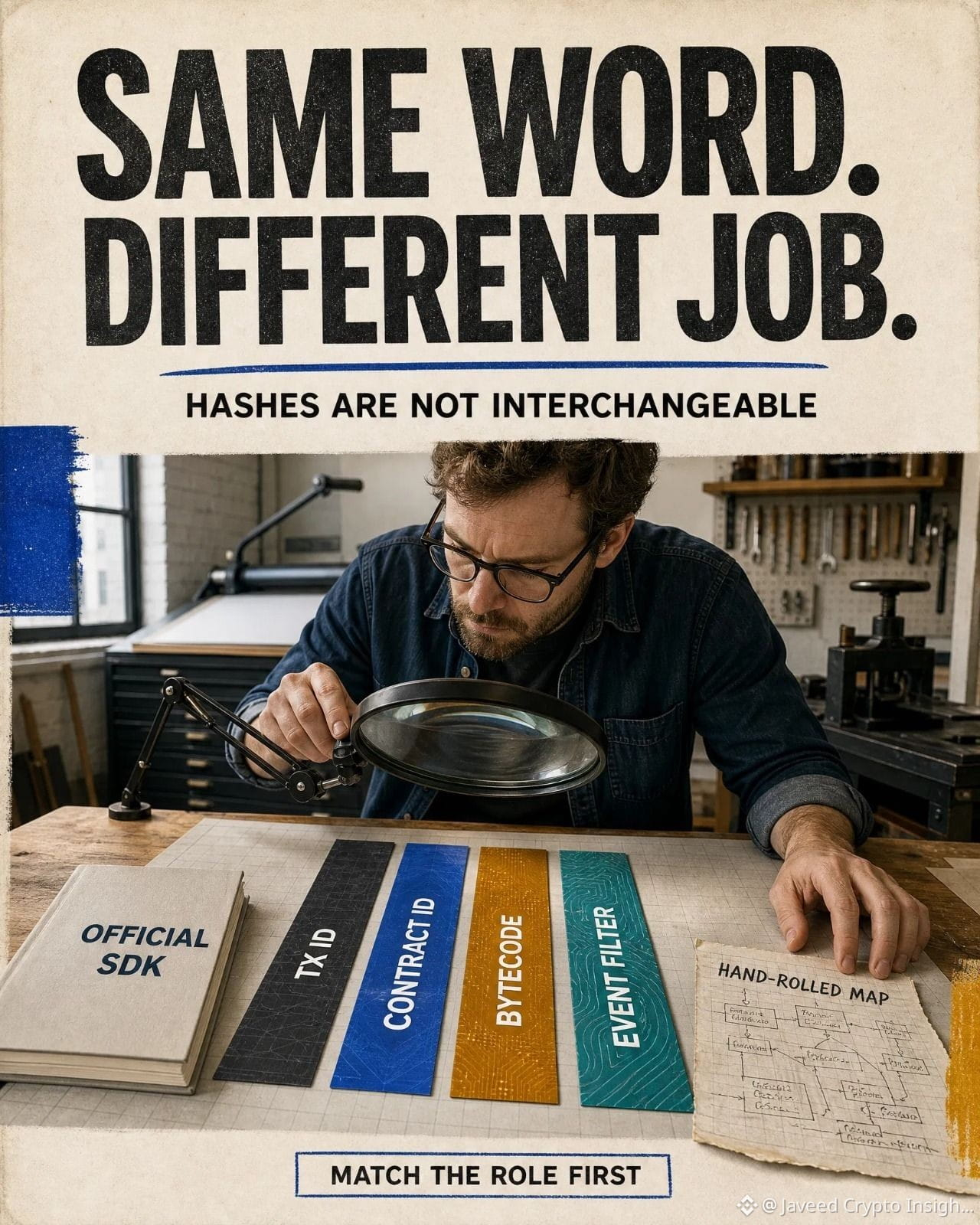
Nachdem ich die Build-Dokumentation von Dusk gelesen hatte, hörte ich auf, „EVM-kompatibel“ als die ganze Entwicklergeschichte zu betrachten. DuskVM ist Rust/WASM und läuft direkt auf Dusk L1; DuskEVM ist der Solidity/Vyper-Plus-EVM-Tooling-Weg. Was würdest du zuerst wählen: native L1-Kontrolle oder Portabilität? @Dusk_Foundation $DUSK #dusk
Nachdem ich die Build-Dokumentation von Dusk gelesen hatte, hörte ich auf, „EVM-kompatibel“ als die ganze Entwicklergeschichte zu betrachten. DuskVM ist Rust/WASM und läuft direkt auf Dusk L1; DuskEVM ist der Solidity/Vyper-Plus-EVM-Tooling-Weg. Was würdest du zuerst wählen: native L1-Kontrolle oder Portabilität? @Dusk $DUSK #dusk

1
1
73
·
--
Bullisch
78

Übersetzung ansehen
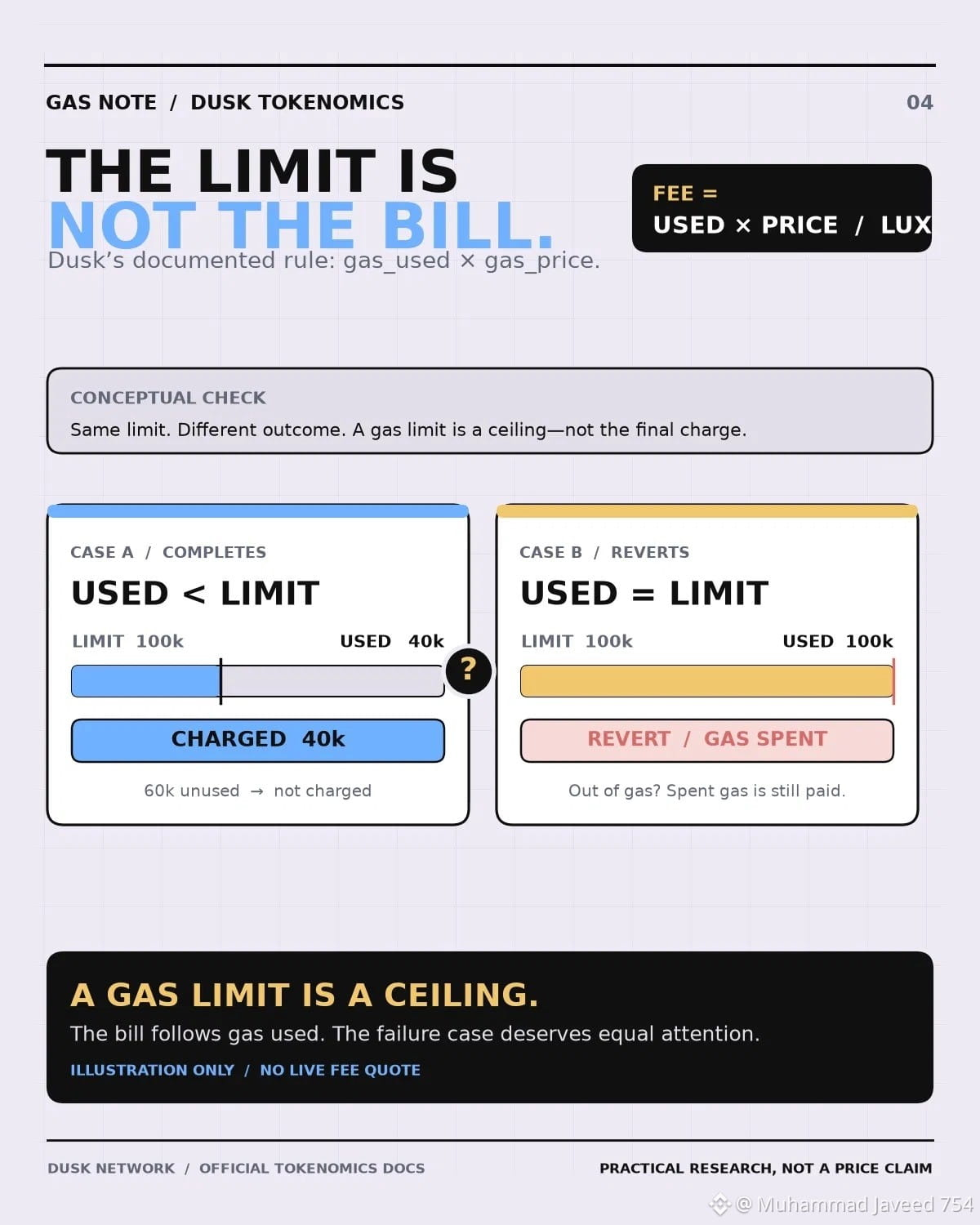
I expected EVM compatibility to make deployment plug-and-play. Then Dusk’s quickstart made me check the boring details: testnet chain ID 745, DUSK as gas, and a dedicated deployment account—not production funds. Copying the toolchain is easy; copying the wrong network is not. Do you verify chain ID + signer separation in CI? @Dusk_Foundation $DUSK #dusk
I expected EVM compatibility to make deployment plug-and-play. Then Dusk’s quickstart made me check the boring details: testnet chain ID 745, DUSK as gas, and a dedicated deployment account—not production funds. Copying the toolchain is easy; copying the wrong network is not. Do you verify chain ID + signer separation in CI? @Dusk $DUSK #dusk
68
Übersetzung ansehen
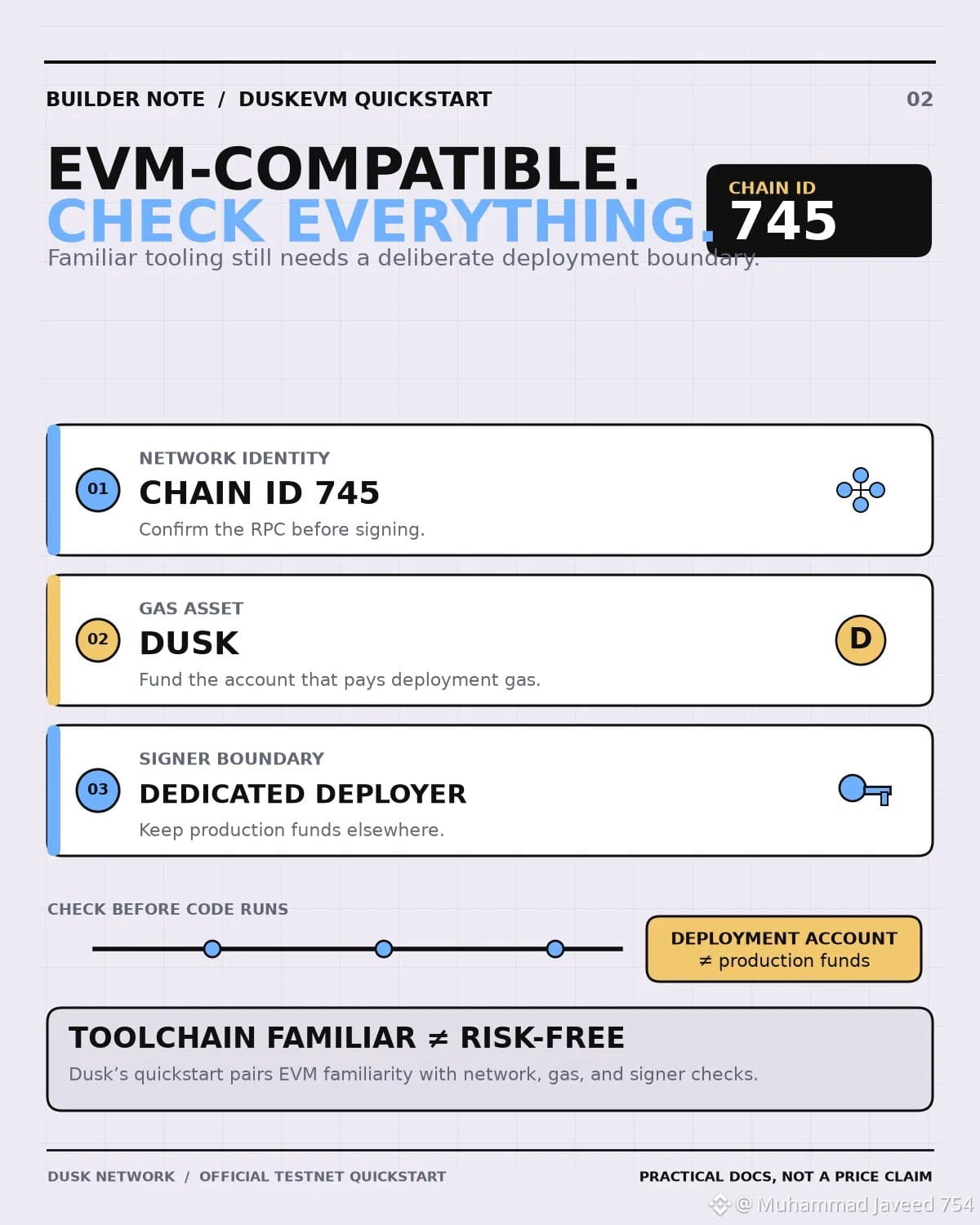
The word “fee” can make a DeFi position look more expensive than it really is—unless you follow the formula.
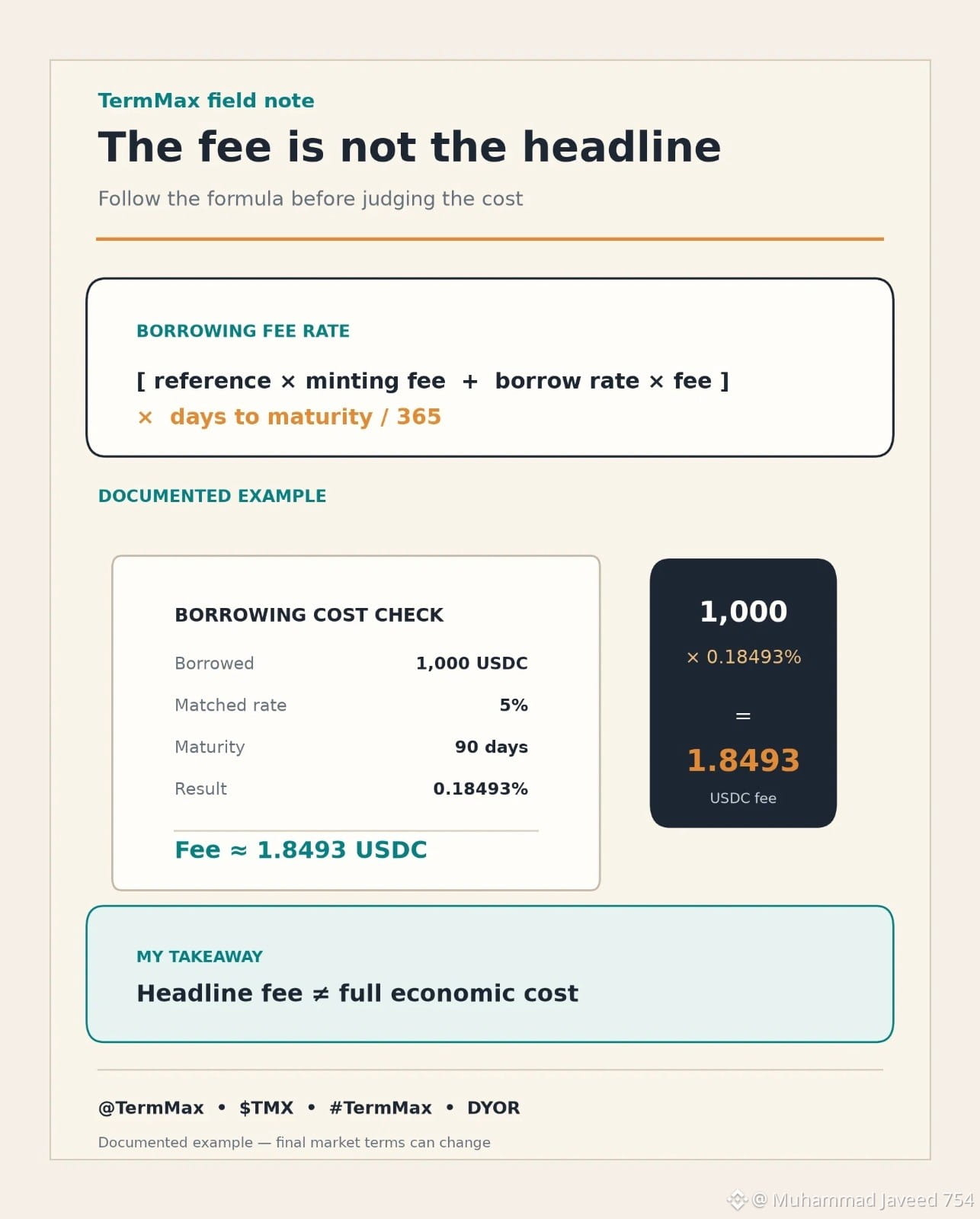
TermMax’s documentation says its borrowing transaction fee is not simply “3% of the borrowed amount.” It combines the GT minting reference rate, GT minting fee rate, matched borrow rate, borrowing fee rate, and days to maturity.
Using the documented example: a 5% matched borrow rate, 1,000 USDC borrowed, and 90 days to maturity produces a borrowing transaction fee rate of about 0.18493%. That is about 1.8493 USDC on 1,000 USDC—not 30 USDC.
The important caveat is that this is a formula example, not a guaranteed quote. The reference rate can depend on the asset and market conditions, and the final cost still has to be checked in the live market before entry. A lower transaction fee also does not remove smart-contract, collateral, liquidation, oracle or settlement risk.
My takeaway: in fixed-term DeFi, the headline fee percentage is only the beginning. I would check the formula, maturity, collateral terms and exit/liquidation mechanics together.
Do you normally calculate the full fee yourself, or trust the headline number shown by the protocol?
@termmax $TMX #TermMax #DeFi #BNBChain
The word “fee” can make a DeFi position look more expensive than it really is—unless you follow the formula.
TermMax’s documentation says its borrowing transaction fee is not simply “3% of the borrowed amount.” It combines the GT minting reference rate, GT minting fee rate, matched borrow rate, borrowing fee rate, and days to maturity.
Using the documented example: a 5% matched borrow rate, 1,000 USDC borrowed, and 90 days to maturity produces a borrowing transaction fee rate of about 0.18493%. That is about 1.8493 USDC on 1,000 USDC—not 30 USDC.
The important caveat is that this is a formula example, not a guaranteed quote. The reference rate can depend on the asset and market conditions, and the final cost still has to be checked in the live market before entry. A lower transaction fee also does not remove smart-contract, collateral, liquidation, oracle or settlement risk.
My takeaway: in fixed-term DeFi, the headline fee percentage is only the beginning. I would check the formula, maturity, collateral terms and exit/liquidation mechanics together.
Do you normally calculate the full fee yourself, or trust the headline number shown by the protocol?
@TermMax $TMX #TermMax #DeFi #BNBChain
TermMax’s documentation says its borrowing transaction fee is not simply “3% of the borrowed amount.” It combines the GT minting reference rate, GT minting fee rate, matched borrow rate, borrowing fee rate, and days to maturity.
Using the documented example: a 5% matched borrow rate, 1,000 USDC borrowed, and 90 days to maturity produces a borrowing transaction fee rate of about 0.18493%. That is about 1.8493 USDC on 1,000 USDC—not 30 USDC.
The important caveat is that this is a formula example, not a guaranteed quote. The reference rate can depend on the asset and market conditions, and the final cost still has to be checked in the live market before entry. A lower transaction fee also does not remove smart-contract, collateral, liquidation, oracle or settlement risk.
My takeaway: in fixed-term DeFi, the headline fee percentage is only the beginning. I would check the formula, maturity, collateral terms and exit/liquidation mechanics together.
Do you normally calculate the full fee yourself, or trust the headline number shown by the protocol?
@TermMax $TMX #TermMax #DeFi #BNBChain
76
·
--
Bullisch
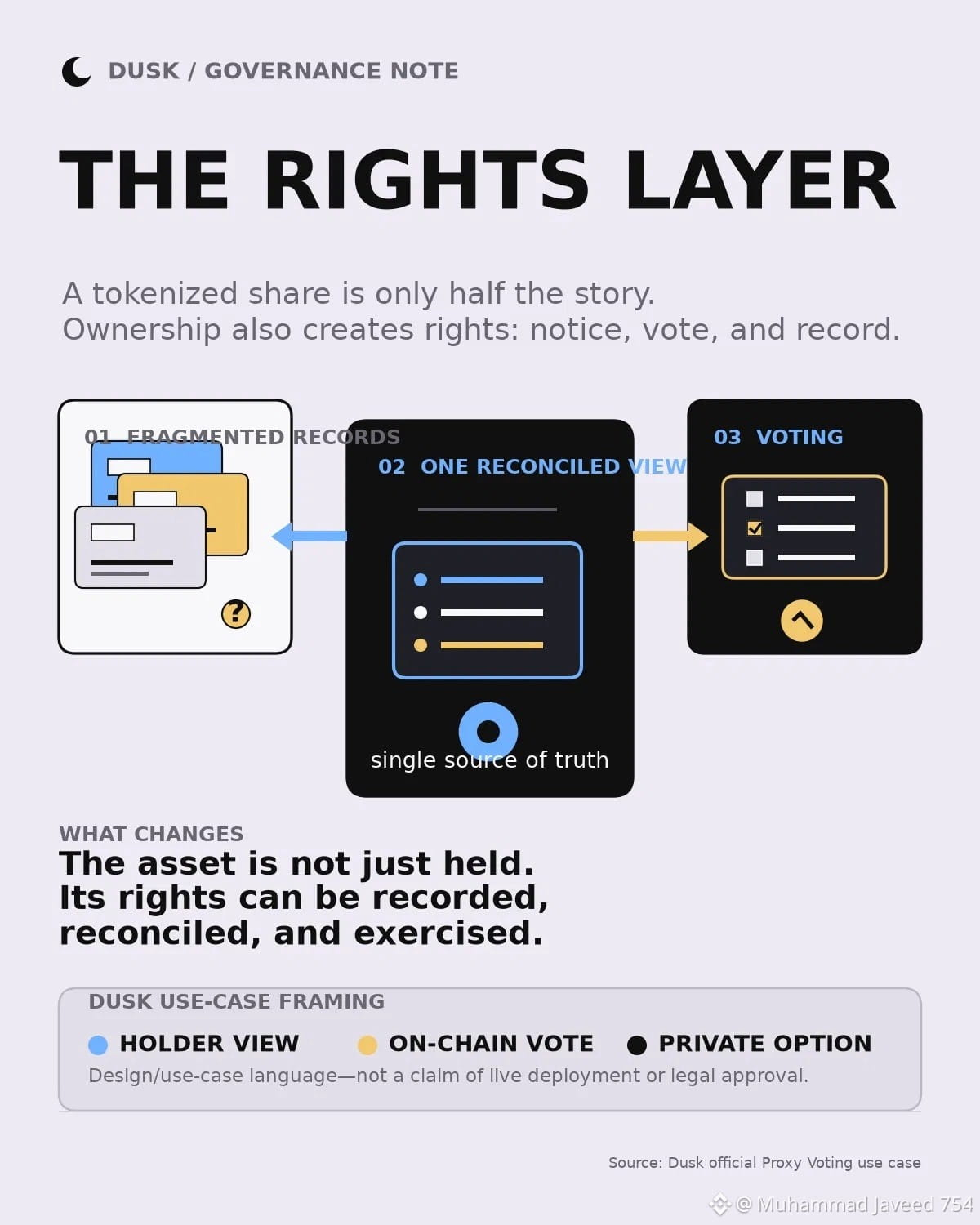
Eine tokenisierte Aktie ist nicht vollständig digital, wenn die Stimmrechtsausübung weiterhin von fragmentierten Unterlagen und Intermediären abhängt. Der Use Case von Dusk zur Stimmrechtsvertretung verbindet Tokenisierung mit einer konsolidierten Sicht auf Inhaber und On-Chain-Abstimmungen und beschreibt die Stimmabgabe als privat. Das ist eine Rechtebene – nicht nur eine Handelsfunktion. Sollten sich die Aktionärsrechte ebenfalls auf die Kette verlagern? @Dusk_Foundation $DUSK #dusk
Eine tokenisierte Aktie ist nicht vollständig digital, wenn die Stimmrechtsausübung weiterhin von fragmentierten Unterlagen und Intermediären abhängt. Der Use Case von Dusk zur Stimmrechtsvertretung verbindet Tokenisierung mit einer konsolidierten Sicht auf Inhaber und On-Chain-Abstimmungen und beschreibt die Stimmabgabe als privat. Das ist eine Rechtebene – nicht nur eine Handelsfunktion. Sollten sich die Aktionärsrechte ebenfalls auf die Kette verlagern? @Dusk $DUSK #dusk
68
Ich dachte früher, die wichtigste Frage beim Verleihen sei einfach: „Welche APR bekomme ich?“
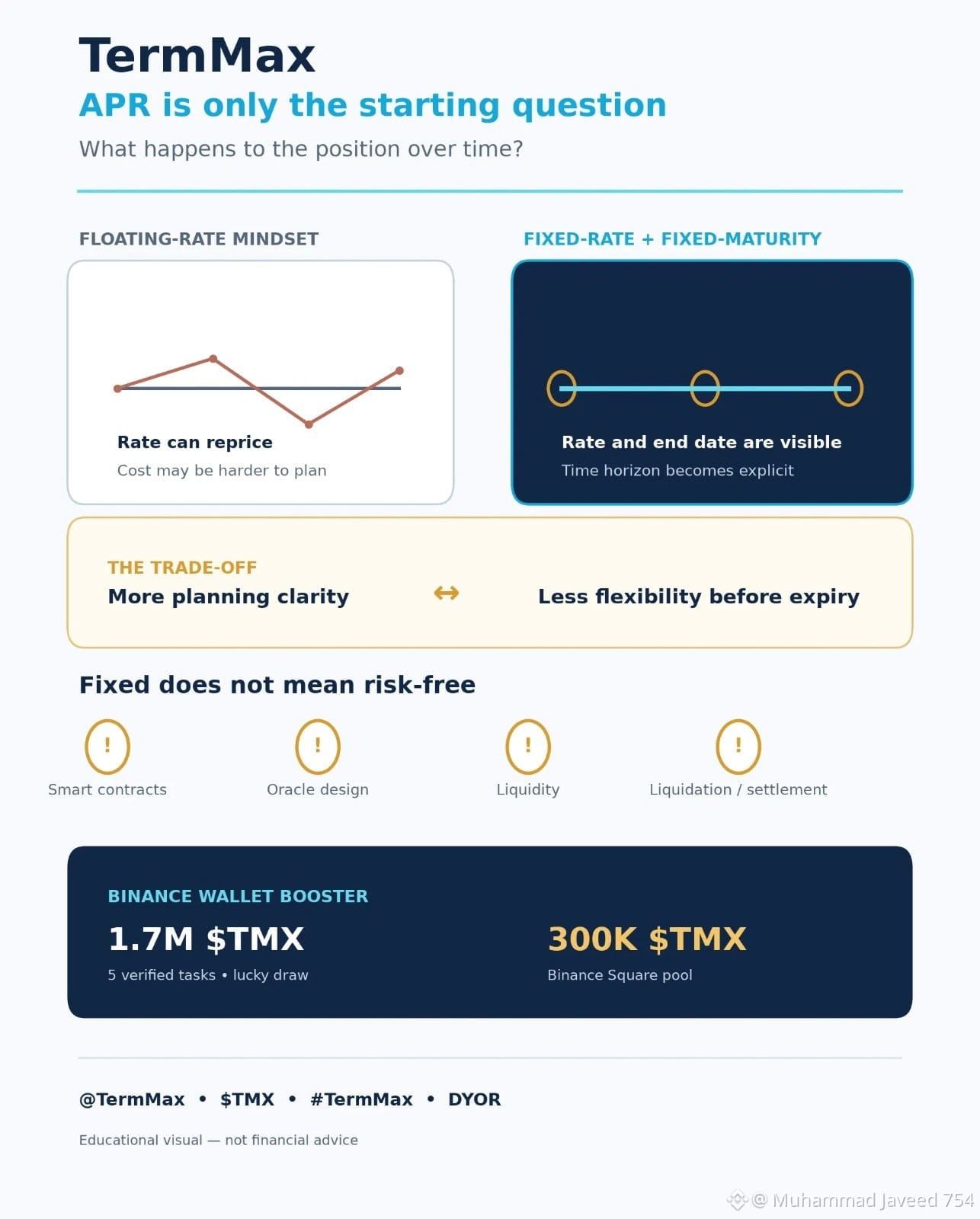
Die sinnvollere Frage ist: „Was passiert mit dieser Position im Laufe der Zeit?“
Genau diesen Blickwinkel finde ich bei @TermMax interessant. In der Doku werden Märkte mit festem Zinssatz und fester Laufzeit beschrieben, sodass der Zinssatz und das Enddatum Teil der Position sind, bevor man einsteigt. Für einen Kreditnehmer kann das die Planung der Kapitalkosten erleichtern. Für einen Kreditgeber macht es den Zeithorizont explizit.
Aber es gibt einen echten Trade-off: Eine feste Laufzeit kann die Planung verbessern, reduziert jedoch die Flexibilität, wenn sich die Liquiditätsbedürfnisse ändern, bevor die Laufzeit abläuft. Außerdem beseitigt sie nicht das Risiko bei Smart Contracts, Oracles, Liquidität, Liquidation oder Abwicklung. Ich würde mir diese Mechaniken ansehen, bevor ich auf irgendeine Schlagzeilen-Rendite schaue.
Der aktuelle Binance Wallet Booster von TermMax hat zwei separate Belohnungswege: eine 1,7M $TMX Lucky-Draw-Aktion für fünf verifizierte Aufgaben und einen 300K $TMX Binance Square-Pool, aufgeteilt zwischen Global- und chinesischen Bestenlisten. Die Square-Aufgabe erfordert originellen, relevanten Content mit dem offiziellen Account-Tag, $TMX und #TermMax in der ersten veröffentlichten Version, gefolgt von einer zeitnahen Verifizierung in der Binance Wallet.
Wenn du DeFi nutzt: Was ist dir wichtiger—ein vorhersehbarer Zinssatz, flexible Liquidität oder eine kürzere Laufzeit?
Das ist meine Zusammenfassung der Recherche, keine Finanzberatung. Informiere dich selbst (DYOR).
@termmax $TMX #TermMax #DeFi #BNBChain
Ich dachte früher, die wichtigste Frage beim Verleihen sei einfach: „Welche APR bekomme ich?“
Die sinnvollere Frage ist: „Was passiert mit dieser Position im Laufe der Zeit?“
Genau diesen Blickwinkel finde ich bei @TermMax interessant. In der Doku werden Märkte mit festem Zinssatz und fester Laufzeit beschrieben, sodass der Zinssatz und das Enddatum Teil der Position sind, bevor man einsteigt. Für einen Kreditnehmer kann das die Planung der Kapitalkosten erleichtern. Für einen Kreditgeber macht es den Zeithorizont explizit.
Aber es gibt einen echten Trade-off: Eine feste Laufzeit kann die Planung verbessern, reduziert jedoch die Flexibilität, wenn sich die Liquiditätsbedürfnisse ändern, bevor die Laufzeit abläuft. Außerdem beseitigt sie nicht das Risiko bei Smart Contracts, Oracles, Liquidität, Liquidation oder Abwicklung. Ich würde mir diese Mechaniken ansehen, bevor ich auf irgendeine Schlagzeilen-Rendite schaue.
Der aktuelle Binance Wallet Booster von TermMax hat zwei separate Belohnungswege: eine 1,7M $TMX Lucky-Draw-Aktion für fünf verifizierte Aufgaben und einen 300K $TMX Binance Square-Pool, aufgeteilt zwischen Global- und chinesischen Bestenlisten. Die Square-Aufgabe erfordert originellen, relevanten Content mit dem offiziellen Account-Tag, $TMX und #TermMax in der ersten veröffentlichten Version, gefolgt von einer zeitnahen Verifizierung in der Binance Wallet.
Wenn du DeFi nutzt: Was ist dir wichtiger—ein vorhersehbarer Zinssatz, flexible Liquidität oder eine kürzere Laufzeit?
Das ist meine Zusammenfassung der Recherche, keine Finanzberatung. Informiere dich selbst (DYOR).
@TermMax $TMX #TermMax #DeFi #BNBChain
Die sinnvollere Frage ist: „Was passiert mit dieser Position im Laufe der Zeit?“
Genau diesen Blickwinkel finde ich bei @TermMax interessant. In der Doku werden Märkte mit festem Zinssatz und fester Laufzeit beschrieben, sodass der Zinssatz und das Enddatum Teil der Position sind, bevor man einsteigt. Für einen Kreditnehmer kann das die Planung der Kapitalkosten erleichtern. Für einen Kreditgeber macht es den Zeithorizont explizit.
Aber es gibt einen echten Trade-off: Eine feste Laufzeit kann die Planung verbessern, reduziert jedoch die Flexibilität, wenn sich die Liquiditätsbedürfnisse ändern, bevor die Laufzeit abläuft. Außerdem beseitigt sie nicht das Risiko bei Smart Contracts, Oracles, Liquidität, Liquidation oder Abwicklung. Ich würde mir diese Mechaniken ansehen, bevor ich auf irgendeine Schlagzeilen-Rendite schaue.
Der aktuelle Binance Wallet Booster von TermMax hat zwei separate Belohnungswege: eine 1,7M $TMX Lucky-Draw-Aktion für fünf verifizierte Aufgaben und einen 300K $TMX Binance Square-Pool, aufgeteilt zwischen Global- und chinesischen Bestenlisten. Die Square-Aufgabe erfordert originellen, relevanten Content mit dem offiziellen Account-Tag, $TMX und #TermMax in der ersten veröffentlichten Version, gefolgt von einer zeitnahen Verifizierung in der Binance Wallet.
Wenn du DeFi nutzt: Was ist dir wichtiger—ein vorhersehbarer Zinssatz, flexible Liquidität oder eine kürzere Laufzeit?
Das ist meine Zusammenfassung der Recherche, keine Finanzberatung. Informiere dich selbst (DYOR).
@TermMax $TMX #TermMax #DeFi #BNBChain
76
Ein fester Zinssatz ist nur dann sinnvoll, wenn du die gesamte Position darum herum verstehst.
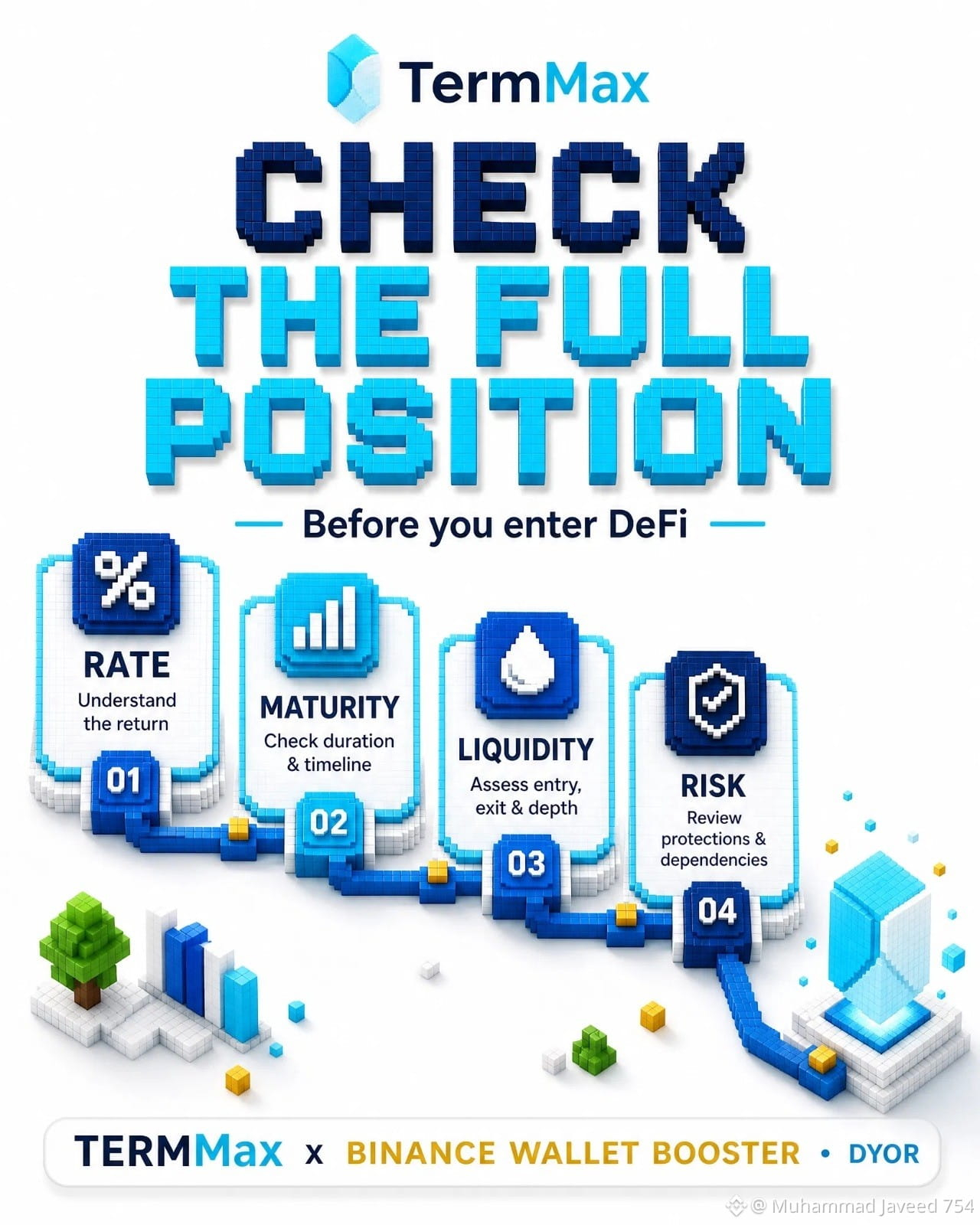
Genau das macht @termmax interessant zu erforschen: Seine Märkte mit festem Zinssatz und fester Laufzeit lenken den Fokus vor dem Einstieg auf vier Fragen:
Zinssatz: Welche Kosten oder welche Rendite sind definiert?
Laufzeit: Wann endet die Position?
Liquidität: Wie leicht lässt sich die Position verwalten?
Risiko: Welche Smart-Contract-, Oracle-, Liquidations- und Abwicklungsrisiken bleiben?
Feste Laufzeiten können die Übersicht verbessern, aber sie machen DeFi nicht risikofrei. Lies die Dokumentation, prüfe die Mechanik und triff deine eigene Entscheidung.
Der TermMax x Binance Wallet Booster enthält eine Aufgabe für den Binance Square CreatorPad mit einem 300.000 TMX-Pool, der zwischen den Global- und den chinesischen Bestenlisten aufgeteilt wird. Der Inhalt muss originell, relevant sein und in der ersten veröffentlichten Version den erforderlichen TermMax-Account-Tag sowie den Hashtag enthalten. Abschließen der Verifizierung in der Binance Wallet während des offiziellen Zeitfensters.
Was kommt zuerst in deiner DeFi-Checkliste: Zins, Laufzeit, Liquiditäts- oder Risikokontrollen?
DYOR. Bildungsinhalte, keine Finanzberatung.
#TermMax #TermMaxFi #DeFi #BNBChain
Ein fester Zinssatz ist nur dann sinnvoll, wenn du die gesamte Position darum herum verstehst.
Genau das macht @TermMax interessant zu erforschen: Seine Märkte mit festem Zinssatz und fester Laufzeit lenken den Fokus vor dem Einstieg auf vier Fragen:
Zinssatz: Welche Kosten oder welche Rendite sind definiert?
Laufzeit: Wann endet die Position?
Liquidität: Wie leicht lässt sich die Position verwalten?
Risiko: Welche Smart-Contract-, Oracle-, Liquidations- und Abwicklungsrisiken bleiben?
Feste Laufzeiten können die Übersicht verbessern, aber sie machen DeFi nicht risikofrei. Lies die Dokumentation, prüfe die Mechanik und triff deine eigene Entscheidung.
Der TermMax x Binance Wallet Booster enthält eine Aufgabe für den Binance Square CreatorPad mit einem 300.000 TMX-Pool, der zwischen den Global- und den chinesischen Bestenlisten aufgeteilt wird. Der Inhalt muss originell, relevant sein und in der ersten veröffentlichten Version den erforderlichen TermMax-Account-Tag sowie den Hashtag enthalten. Abschließen der Verifizierung in der Binance Wallet während des offiziellen Zeitfensters.
Was kommt zuerst in deiner DeFi-Checkliste: Zins, Laufzeit, Liquiditäts- oder Risikokontrollen?
DYOR. Bildungsinhalte, keine Finanzberatung.
#TermMax #TermMaxFi #DeFi #BNBChain
Genau das macht @TermMax interessant zu erforschen: Seine Märkte mit festem Zinssatz und fester Laufzeit lenken den Fokus vor dem Einstieg auf vier Fragen:
Zinssatz: Welche Kosten oder welche Rendite sind definiert?
Laufzeit: Wann endet die Position?
Liquidität: Wie leicht lässt sich die Position verwalten?
Risiko: Welche Smart-Contract-, Oracle-, Liquidations- und Abwicklungsrisiken bleiben?
Feste Laufzeiten können die Übersicht verbessern, aber sie machen DeFi nicht risikofrei. Lies die Dokumentation, prüfe die Mechanik und triff deine eigene Entscheidung.
Der TermMax x Binance Wallet Booster enthält eine Aufgabe für den Binance Square CreatorPad mit einem 300.000 TMX-Pool, der zwischen den Global- und den chinesischen Bestenlisten aufgeteilt wird. Der Inhalt muss originell, relevant sein und in der ersten veröffentlichten Version den erforderlichen TermMax-Account-Tag sowie den Hashtag enthalten. Abschließen der Verifizierung in der Binance Wallet während des offiziellen Zeitfensters.
Was kommt zuerst in deiner DeFi-Checkliste: Zins, Laufzeit, Liquiditäts- oder Risikokontrollen?
DYOR. Bildungsinhalte, keine Finanzberatung.
#TermMax #TermMaxFi #DeFi #BNBChain
61
·
--
Bärisch
Übersetzung ansehen
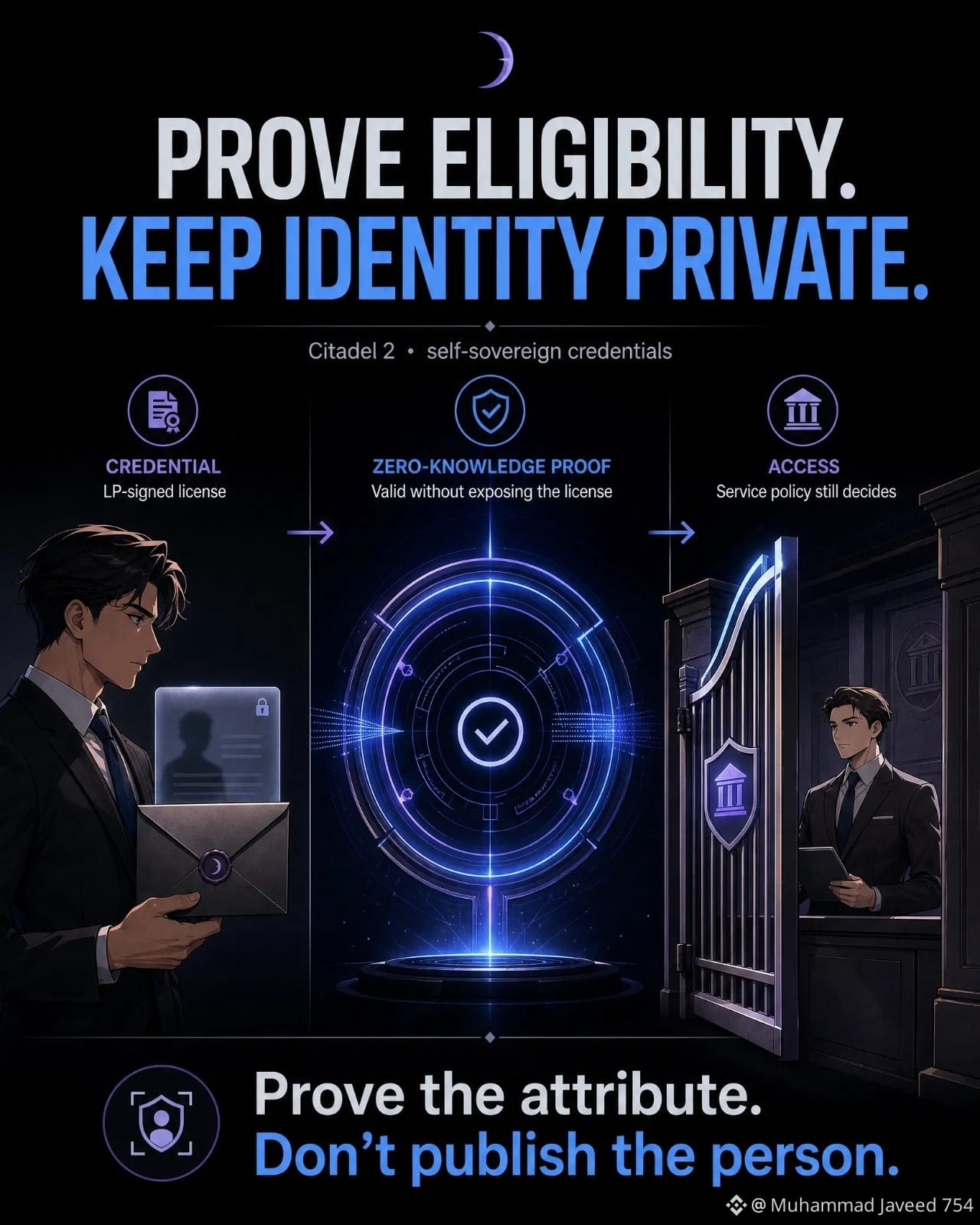
Here’s the identity problem tokenized markets rarely explain: an investor may need to prove eligibility, but that does not mean every personal detail should become public. Dusk’s Citadel 2 design uses a credential and zero-knowledge proof for that step; the service still decides what it trusts. Better access control—or just more complexity? @Dusk_Foundation $DUSK #dusk
Here’s the identity problem tokenized markets rarely explain: an investor may need to prove eligibility, but that does not mean every personal detail should become public. Dusk’s Citadel 2 design uses a credential and zero-knowledge proof for that step; the service still decides what it trusts. Better access control—or just more complexity? @Dusk $DUSK #dusk
64
Tokenisierung beginnt in der Regel mit dem Asset. Institutionen starten mit den Schlüsselfragen: Wer kontrolliert sie, wie funktionieren Berechtigungen und ob Vorgänge weiterhin nachvollziehbar/auditierbar bleiben. Dusk hat eine Partnerschaft mit Cordial Systems angekündigt—rund um die institutionelle Verwahrung und Self-Hosted-Wallet-Technologie. Diese Ebene lässt sich in RWA-Diskussionen leicht überspringen, aber sie kann darüber entscheiden, ob Institutionen die „Rails“ tatsächlich nutzen können. Was ist für dich wichtiger: Emission oder Schlüsselkontrolle? @Dusk_Foundation $DUSK #dusk
Tokenisierung beginnt in der Regel mit dem Asset. Institutionen starten mit den Schlüsselfragen: Wer kontrolliert sie, wie funktionieren Berechtigungen und ob Vorgänge weiterhin nachvollziehbar/auditierbar bleiben. Dusk hat eine Partnerschaft mit Cordial Systems angekündigt—rund um die institutionelle Verwahrung und Self-Hosted-Wallet-Technologie. Diese Ebene lässt sich in RWA-Diskussionen leicht überspringen, aber sie kann darüber entscheiden, ob Institutionen die „Rails“ tatsächlich nutzen können. Was ist für dich wichtiger: Emission oder Schlüsselkontrolle? @Dusk $DUSK #dusk

64
Übersetzung ansehen
A 2M TMX reward pool gets attention. But the more interesting question is: what is TermMax actually building?
@termmax is focused on fixed-rate, fixed-term DeFi markets. Instead of watching a floating rate reprice block by block, users can evaluate the rate, maturity and structure before entering a position.
That matters for three reasons:
Borrowers can understand the cost of capital more clearly.
Lenders can evaluate the expected term instead of relying only on a changing headline APR.
Users exploring leverage or options can discuss risk with a defined time horizon.
This is not a claim that DeFi is risk-free. Smart-contract risk, liquidity risk, oracle risk, liquidation or settlement mechanics and market conditions still need careful research.
The TermMax x Binance Wallet Booster Campaign has a 2,000,000 TMX total pool. The Binance Square CreatorPad activity has separate Global and Chinese leaderboards, with 150,000 TMX allocated to each and up to 500 eligible creators per leaderboard. Posts must be original, relevant, include the required TermMax account tag and hashtag in the first version, and be verified in Binance Wallet.
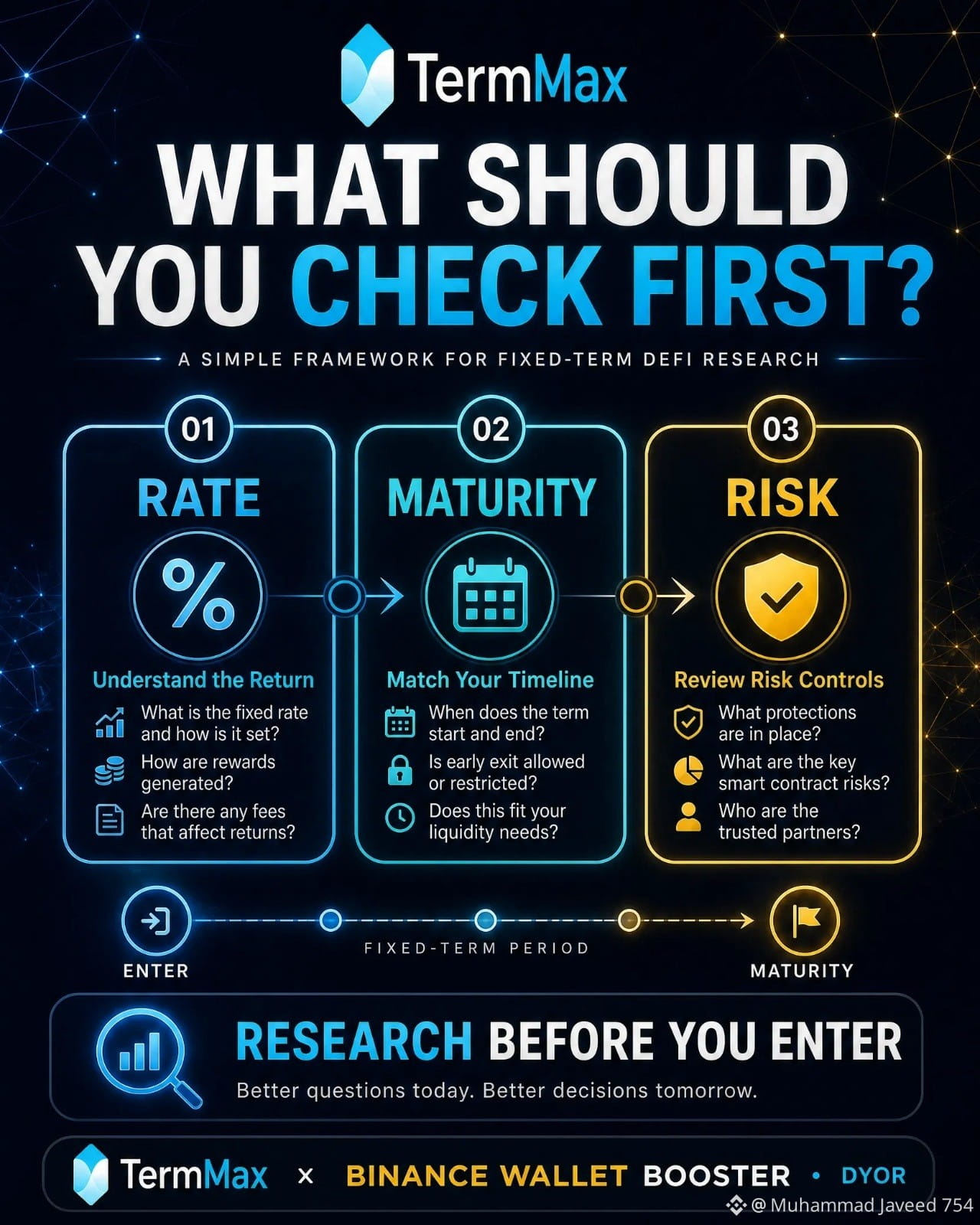
When researching a DeFi protocol, what do you check first: rate, maturity, liquidity, or risk controls?
DYOR. Educational content, not financial advice.
#TermMax #TermMaxFi #DeFi #BNBChain
A 2M TMX reward pool gets attention. But the more interesting question is: what is TermMax actually building?
@TermMax is focused on fixed-rate, fixed-term DeFi markets. Instead of watching a floating rate reprice block by block, users can evaluate the rate, maturity and structure before entering a position.
That matters for three reasons:
Borrowers can understand the cost of capital more clearly.
Lenders can evaluate the expected term instead of relying only on a changing headline APR.
Users exploring leverage or options can discuss risk with a defined time horizon.
This is not a claim that DeFi is risk-free. Smart-contract risk, liquidity risk, oracle risk, liquidation or settlement mechanics and market conditions still need careful research.
The TermMax x Binance Wallet Booster Campaign has a 2,000,000 TMX total pool. The Binance Square CreatorPad activity has separate Global and Chinese leaderboards, with 150,000 TMX allocated to each and up to 500 eligible creators per leaderboard. Posts must be original, relevant, include the required TermMax account tag and hashtag in the first version, and be verified in Binance Wallet.
When researching a DeFi protocol, what do you check first: rate, maturity, liquidity, or risk controls?
DYOR. Educational content, not financial advice.
#TermMax #TermMaxFi #DeFi #BNBChain
@TermMax is focused on fixed-rate, fixed-term DeFi markets. Instead of watching a floating rate reprice block by block, users can evaluate the rate, maturity and structure before entering a position.
That matters for three reasons:
Borrowers can understand the cost of capital more clearly.
Lenders can evaluate the expected term instead of relying only on a changing headline APR.
Users exploring leverage or options can discuss risk with a defined time horizon.
This is not a claim that DeFi is risk-free. Smart-contract risk, liquidity risk, oracle risk, liquidation or settlement mechanics and market conditions still need careful research.
The TermMax x Binance Wallet Booster Campaign has a 2,000,000 TMX total pool. The Binance Square CreatorPad activity has separate Global and Chinese leaderboards, with 150,000 TMX allocated to each and up to 500 eligible creators per leaderboard. Posts must be original, relevant, include the required TermMax account tag and hashtag in the first version, and be verified in Binance Wallet.
When researching a DeFi protocol, what do you check first: rate, maturity, liquidity, or risk controls?
DYOR. Educational content, not financial advice.
#TermMax #TermMaxFi #DeFi #BNBChain
66
Übersetzung ansehen
One thing I always check before exploring a DeFi product is not only the yield or headline APR, but also how clearly the terms are defined.
That is where @termmax has an interesting approach. Its fixed-rate and fixed-term markets are designed to make the cost, duration and structure of a position easier to understand before entering it.
For lenders, the term can be clearer. For borrowers, the rate is not simply repriced every block. For users exploring leverage and options, knowing the framework in advance can make risk discussions more concrete.
This does not mean there is no risk. Smart-contract risk, market risk, liquidity risk and liquidation or settlement mechanics still matter. The right approach is to read the documentation and do your own research before interacting.
The current Binance Wallet Booster Campaign includes a Binance Square leaderboard task. Posts must include the TermMax tag and hashtag, and the post must be verified on the campaign page. Leaderboard placement is not a guaranteed reward.
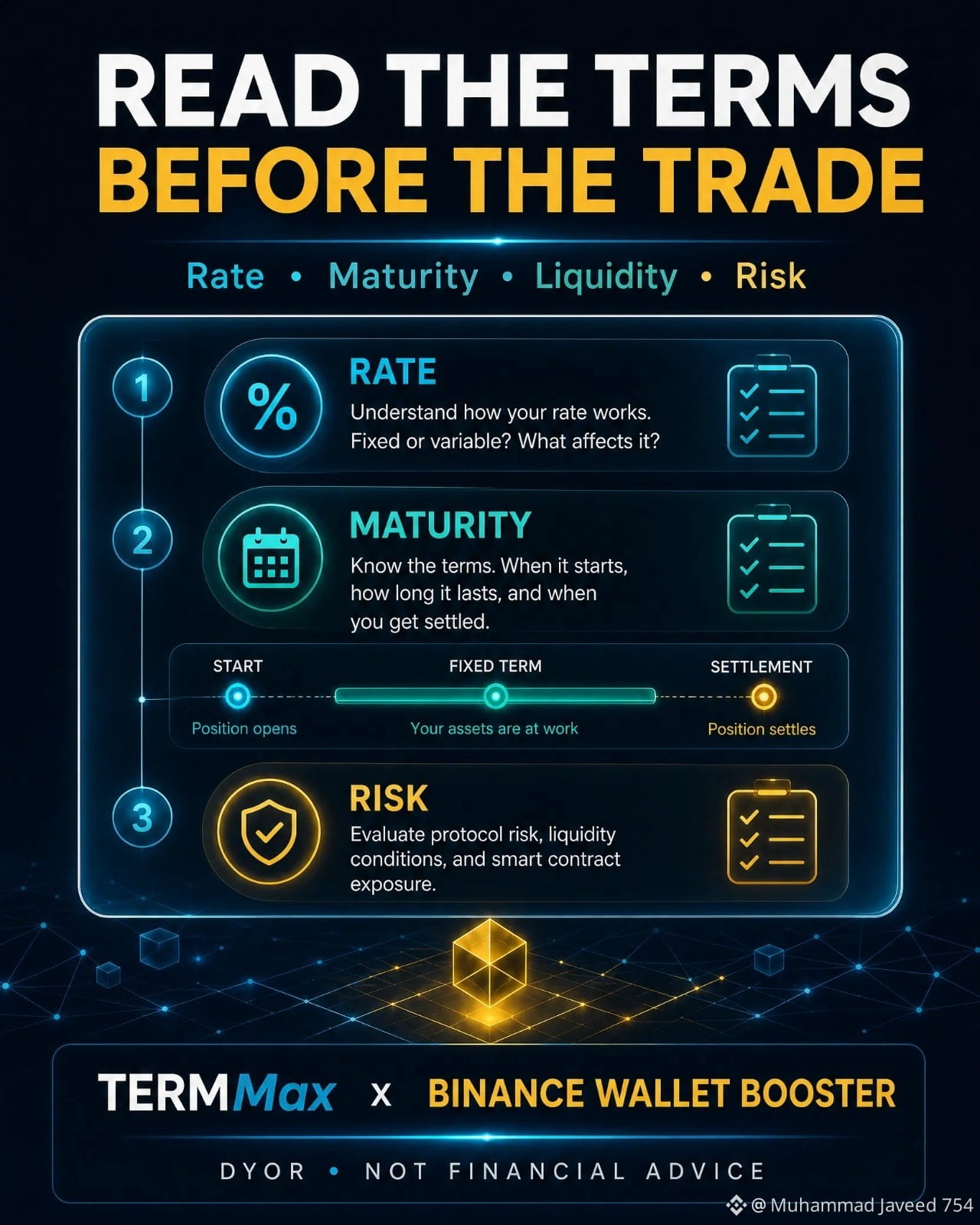
What do you check first when researching a DeFi protocol: rate, maturity, liquidity, or risk controls?
#TermMax #TermMaxFi #DeFi #BNBChain
One thing I always check before exploring a DeFi product is not only the yield or headline APR, but also how clearly the terms are defined.
That is where @TermMax has an interesting approach. Its fixed-rate and fixed-term markets are designed to make the cost, duration and structure of a position easier to understand before entering it.
For lenders, the term can be clearer. For borrowers, the rate is not simply repriced every block. For users exploring leverage and options, knowing the framework in advance can make risk discussions more concrete.
This does not mean there is no risk. Smart-contract risk, market risk, liquidity risk and liquidation or settlement mechanics still matter. The right approach is to read the documentation and do your own research before interacting.
The current Binance Wallet Booster Campaign includes a Binance Square leaderboard task. Posts must include the TermMax tag and hashtag, and the post must be verified on the campaign page. Leaderboard placement is not a guaranteed reward.
What do you check first when researching a DeFi protocol: rate, maturity, liquidity, or risk controls?
#TermMax #TermMaxFi #DeFi #BNBChain
That is where @TermMax has an interesting approach. Its fixed-rate and fixed-term markets are designed to make the cost, duration and structure of a position easier to understand before entering it.
For lenders, the term can be clearer. For borrowers, the rate is not simply repriced every block. For users exploring leverage and options, knowing the framework in advance can make risk discussions more concrete.
This does not mean there is no risk. Smart-contract risk, market risk, liquidity risk and liquidation or settlement mechanics still matter. The right approach is to read the documentation and do your own research before interacting.
The current Binance Wallet Booster Campaign includes a Binance Square leaderboard task. Posts must include the TermMax tag and hashtag, and the post must be verified on the campaign page. Leaderboard placement is not a guaranteed reward.
What do you check first when researching a DeFi protocol: rate, maturity, liquidity, or risk controls?
#TermMax #TermMaxFi #DeFi #BNBChain
57
·
--
Bullisch
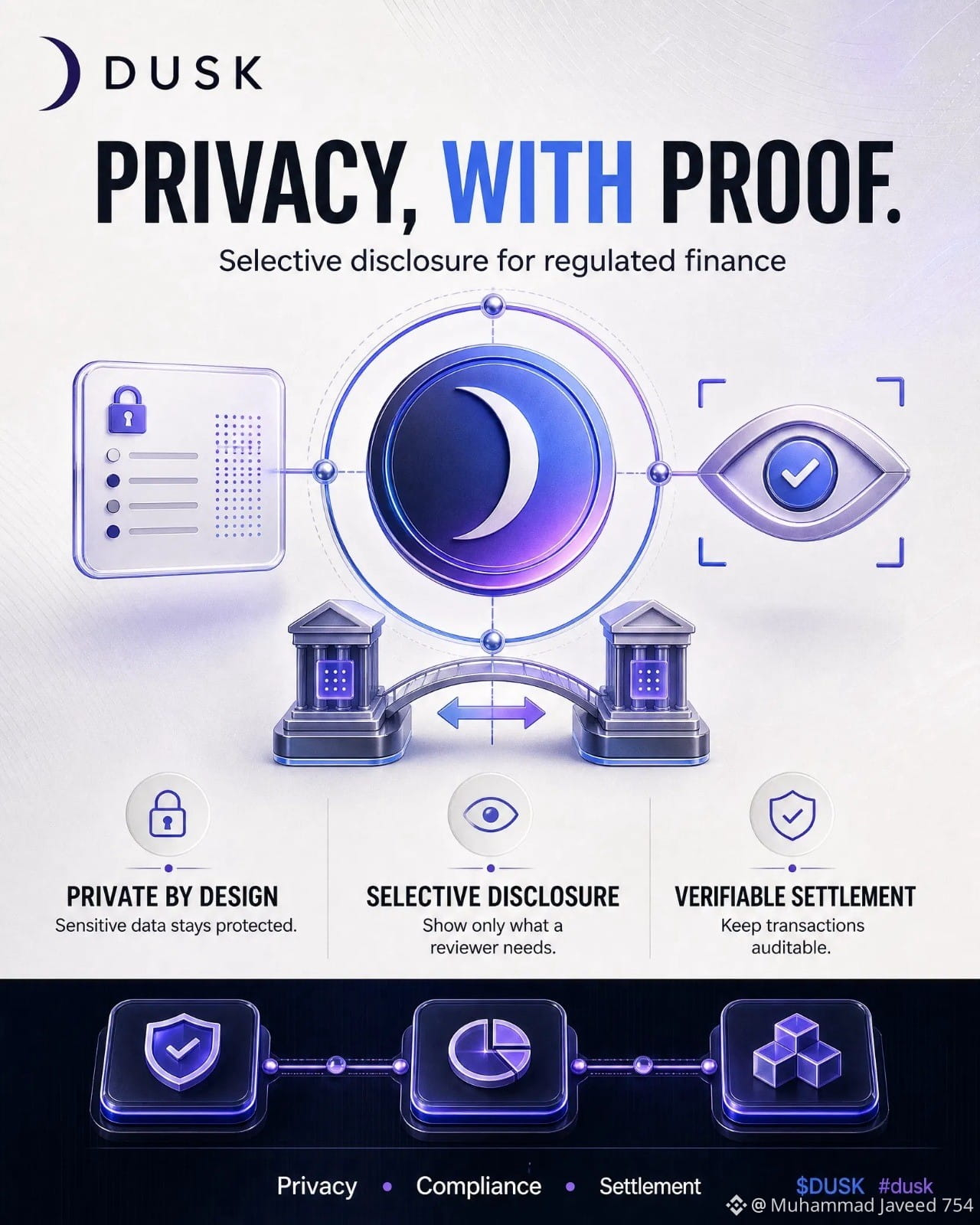
In regulierten Finanzbereichen geht es bei Datenschutz nicht darum, jede Einzelheit zu verbergen. Es geht darum, den richtigen Nachweis dem richtigen Prüfer zu zeigen. @Dusk_Foundation bringt selektive Offenlegung, Compliance-Checks und deterministische Abwicklung in einen einzigen On-Chain-Workflow – sodass sensible Daten privat bleiben können, während Eignung und Transaktionen nachprüfbar bleiben. $DUSK #dusk
In regulierten Finanzbereichen geht es bei Datenschutz nicht darum, jede Einzelheit zu verbergen. Es geht darum, den richtigen Nachweis dem richtigen Prüfer zu zeigen. @Dusk bringt selektive Offenlegung, Compliance-Checks und deterministische Abwicklung in einen einzigen On-Chain-Workflow – sodass sensible Daten privat bleiben können, während Eignung und Transaktionen nachprüfbar bleiben. $DUSK #dusk
83

Die meisten Tokenisierungen lassen die Verwahrung, Registrierung oder Abwicklung weiterhin außerhalb der Kette. @Dusk_Foundation untersucht ein tieferes Modell: Native Emission, bei dem regulierte Vermögenswerte so gestaltet werden können, dass Emission, Transfers, Verwaltung und Abwicklung direkt On-Chain erfolgen – mit integrierter Privatsphäre und selektiver Offenlegung. $DUSK #dusk
Die meisten Tokenisierungen lassen die Verwahrung, Registrierung oder Abwicklung weiterhin außerhalb der Kette. @Dusk untersucht ein tieferes Modell: Native Emission, bei dem regulierte Vermögenswerte so gestaltet werden können, dass Emission, Transfers, Verwaltung und Abwicklung direkt On-Chain erfolgen – mit integrierter Privatsphäre und selektiver Offenlegung. $DUSK #dusk

71
Übersetzung ansehen
I'm really impressed by the growth of @Plasma lately! The project is building something unique that stands out in the current market. Seeing the utility behind $XPL makes me very optimistic about where this ecosystem is headed. This is definitely a project to keep on your radar for 2026. Can't wait to see what’s next! #Plasma
#plasma $XPL
I'm really impressed by the growth of @Plasma lately! The project is building something unique that stands out in the current market. Seeing the utility behind $XPL makes me very optimistic about where this ecosystem is headed. This is definitely a project to keep on your radar for 2026. Can't wait to see what’s next! #Plasma
#plasma $XPL
#plasma $XPL
4
Übersetzung ansehen
Why Vanar Chain is Setting the Gold Standard for L1 EcosystemsThe blockchain landscape is evolving rapidly, but @Square-Creator-a16f92087a9c is distinguishing itself by focusing on what truly matters: high-speed performance, carbon neutrality, and real-world adoption. As we look toward the future of decentralized applications, Vanar Chain is positioning itself as a leader for mainstream brands and developers alike.
One of the most exciting aspects of this ecosystem is the utility of its native token, $VANRY. By providing a seamless environment for gaming, entertainment, and enterprise solutions, Vanar is proving that a layer-1 blockchain can be both powerful and environmentally conscious. The efficiency of the network ensures that transactions remain fast and cost-effective, which is a massive win for users who are tired of high gas fees on other chains.
The project's commitment to building a "green" blockchain is not just marketing—it’s a core technical philosophy. By integrating with major industry players, they are bringing millions of potential users into the Web3 space through familiar interfaces. If you are looking for a project that combines sustainability with cutting-edge technology, keeping an eye on the #Vanar ecosystem is a must.
The growth of the #vanar community and the expanding use cases for $VANRY suggest that this is only the beginning of their journey toward mass adoption.
Why Vanar Chain is Setting the Gold Standard for L1 Ecosystems
The blockchain landscape is evolving rapidly, but @Vanar is distinguishing itself by focusing on what truly matters: high-speed performance, carbon neutrality, and real-world adoption. As we look toward the future of decentralized applications, Vanar Chain is positioning itself as a leader for mainstream brands and developers alike.
One of the most exciting aspects of this ecosystem is the utility of its native token, $VANRY. By providing a seamless environment for gaming, entertainment, and enterprise solutions, Vanar is proving that a layer-1 blockchain can be both powerful and environmentally conscious. The efficiency of the network ensures that transactions remain fast and cost-effective, which is a massive win for users who are tired of high gas fees on other chains.
The project's commitment to building a "green" blockchain is not just marketing—it’s a core technical philosophy. By integrating with major industry players, they are bringing millions of potential users into the Web3 space through familiar interfaces. If you are looking for a project that combines sustainability with cutting-edge technology, keeping an eye on the #Vanar ecosystem is a must.
The growth of the #vanar community and the expanding use cases for $VANRY suggest that this is only the beginning of their journey toward mass adoption.
One of the most exciting aspects of this ecosystem is the utility of its native token, $VANRY. By providing a seamless environment for gaming, entertainment, and enterprise solutions, Vanar is proving that a layer-1 blockchain can be both powerful and environmentally conscious. The efficiency of the network ensures that transactions remain fast and cost-effective, which is a massive win for users who are tired of high gas fees on other chains.
The project's commitment to building a "green" blockchain is not just marketing—it’s a core technical philosophy. By integrating with major industry players, they are bringing millions of potential users into the Web3 space through familiar interfaces. If you are looking for a project that combines sustainability with cutting-edge technology, keeping an eye on the #Vanar ecosystem is a must.
The growth of the #vanar community and the expanding use cases for $VANRY suggest that this is only the beginning of their journey toward mass adoption.
2
Übersetzung ansehen
The growth of the Vanar Chain ecosystem is becoming hard to ignore. By providing a high-speed, carbon-neutral infrastructure, @Square-Creator-a16f92087a9c is setting a new standard for mainstream blockchain adoption. I am closely watching how $VANRY empowers developers to build scalable dApps without high costs. Truly an exciting time for the community! #vanar
#vanar $VANRY
The growth of the Vanar Chain ecosystem is becoming hard to ignore. By providing a high-speed, carbon-neutral infrastructure, @Vanar is setting a new standard for mainstream blockchain adoption. I am closely watching how $VANRY empowers developers to build scalable dApps without high costs. Truly an exciting time for the community! #vanar
#vanar $VANRY
#vanar $VANRY
2
Anmelden und weiter Inhalte entdecken
Krypto-Nutzer weltweit auf Binance Square kennenlernen
⚡️ Bleib in Sachen Krypto stets am Puls.
💬 Die weltgrößte Kryptobörse vertraut darauf.
👍 Erhalte verlässliche Einblicke von verifizierten Creators.
E-Mail-Adresse/Telefonnummer