

_Mr_Singh_
4 Beiträge

_Mr_Singh_
Melden
Nutzer blockieren
Trade eröffnen
Hochfrequenz-Trader
4.5 Jahre
1 Following
23 Follower
32 Like gegeben
Beiträge
Portfolio
·
--
Bärisch
BTC blutet, während die Wale abziehen — im Schatten eines Unternehmensgebots
Sieben Tage im Minus, und nicht Kleinanleger haben den Rückgang verursacht.
Der BTC schloss am 27. Okt. bei etwa 79.796, rund 2,6 % weniger als vor 7 Tagen und rund 5,2 % weniger als vor 30 Tagen. Der tägliche RSI(12) liegt bei 39,8. Die Spanne der Woche: Hoch bei etwa 84.377 (22. Okt.), Tief bei etwa 79.220 (24. Okt.). Keine Kapitulationskerze. Keine Rückeroberung der 84.000. Nur ein stetiges Abrutschen.
Die Angebotsseite spricht für sich. Inaktive Wallets bewegten 2.571 BTC (etwa 206,5 Mio. $) in Richtung institutioneller Börsen. Das ist Angebot, das an der Handelsplattform ankommt, nicht sie verlässt. Auch der Appetit der Treasury-Seite ließ nach — Strategy leitete 204,9 Mio. $ in Aktienrückkäufe um, statt in BTC.
Die Nachfrage im Hintergrund kommt von Unternehmen, nicht von Spekulanten. Strive erwarb 6.182 BTC (etwa 511,4 Mio. $); börsennotierte Unternehmen kauften zusammen mehr als 6.200 BTC. Das ist ein stichhaltiges Argument für einen echten Boden nahe 79.700 $ — aber ein Boden ist kein Auslöser für einen Ausbruch.
Das Momentum ist nicht auf der Seite der Bullen. Das MACD-Histogramm liegt bei −23,99, der Kurs unter dem 99-EMA. Das Aufwärtspotenzial bleibt unter etwa 80.500 $ begrenzt, bis sich diese Struktur dreht.
Die Positionierung ist leicht bullish, aber nicht euphorisch. Umfrage in der Square-Community: 2.116 bullish gegenüber 1.714 bearish bei insgesamt 3.830 Stimmen. Eine begrenzte Stichprobe — wissenswert, aber kein Grund, allein darauf zu handeln.
Meine Einschätzung: Hier wird in eine von Unternehmen getragene Nachfrage hinein verteilt. Der Boden ist real; das Momentum fehlt. Entscheidend ist diese Woche, ob die Zone zwischen 79.200 und 79.700 den Zufluss an die Börsen aufnehmen kann.
{spot}(BTCUSDT)
#BitcoinSlipsBelow$80KAgain
BTC blutet, während die Wale abziehen — im Schatten eines Unternehmensgebots
Sieben Tage im Minus, und nicht Kleinanleger haben den Rückgang verursacht.
Der BTC schloss am 27. Okt. bei etwa 79.796, rund 2,6 % weniger als vor 7 Tagen und rund 5,2 % weniger als vor 30 Tagen. Der tägliche RSI(12) liegt bei 39,8. Die Spanne der Woche: Hoch bei etwa 84.377 (22. Okt.), Tief bei etwa 79.220 (24. Okt.). Keine Kapitulationskerze. Keine Rückeroberung der 84.000. Nur ein stetiges Abrutschen.
Die Angebotsseite spricht für sich. Inaktive Wallets bewegten 2.571 BTC (etwa 206,5 Mio. $) in Richtung institutioneller Börsen. Das ist Angebot, das an der Handelsplattform ankommt, nicht sie verlässt. Auch der Appetit der Treasury-Seite ließ nach — Strategy leitete 204,9 Mio. $ in Aktienrückkäufe um, statt in BTC.
Die Nachfrage im Hintergrund kommt von Unternehmen, nicht von Spekulanten. Strive erwarb 6.182 BTC (etwa 511,4 Mio. $); börsennotierte Unternehmen kauften zusammen mehr als 6.200 BTC. Das ist ein stichhaltiges Argument für einen echten Boden nahe 79.700 $ — aber ein Boden ist kein Auslöser für einen Ausbruch.
Das Momentum ist nicht auf der Seite der Bullen. Das MACD-Histogramm liegt bei −23,99, der Kurs unter dem 99-EMA. Das Aufwärtspotenzial bleibt unter etwa 80.500 $ begrenzt, bis sich diese Struktur dreht.
Die Positionierung ist leicht bullish, aber nicht euphorisch. Umfrage in der Square-Community: 2.116 bullish gegenüber 1.714 bearish bei insgesamt 3.830 Stimmen. Eine begrenzte Stichprobe — wissenswert, aber kein Grund, allein darauf zu handeln.
Meine Einschätzung: Hier wird in eine von Unternehmen getragene Nachfrage hinein verteilt. Der Boden ist real; das Momentum fehlt. Entscheidend ist diese Woche, ob die Zone zwischen 79.200 und 79.700 den Zufluss an die Börsen aufnehmen kann.
#BitcoinSlipsBelow$80KAgain
1
1
771
·
--
Artikel
Übersetzung ansehen
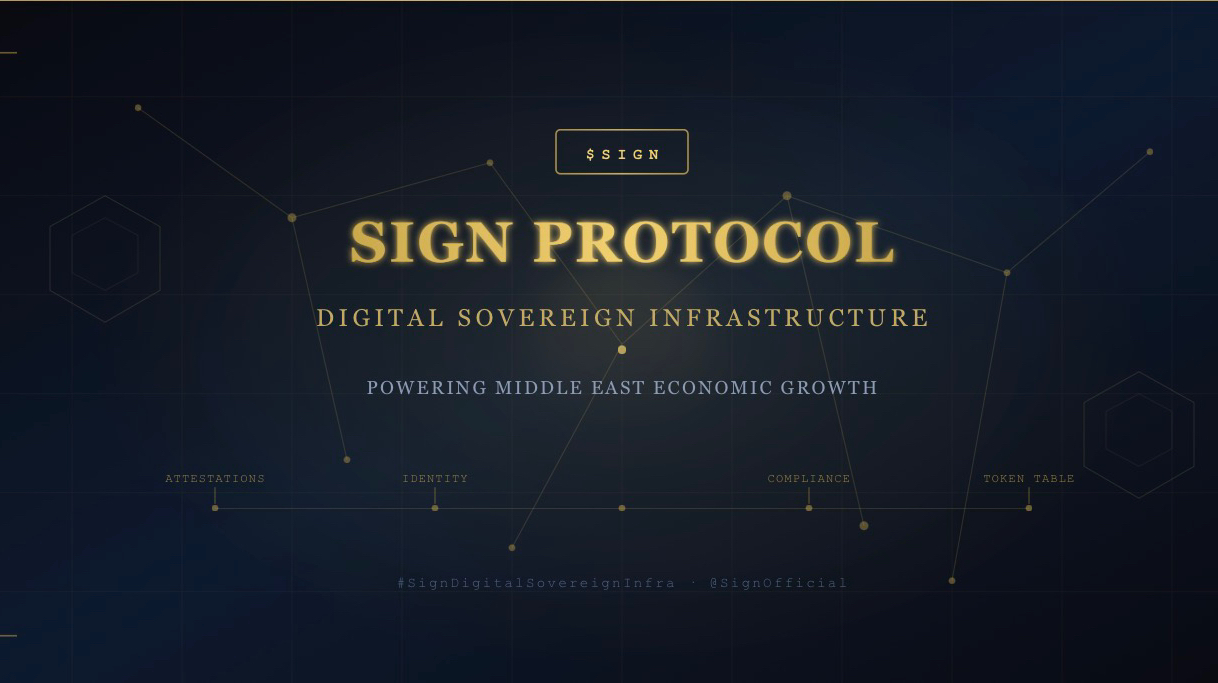
$SIGN: The Digital Sovereign Infrastructure the Middle East Has Been Waiting ForThe Middle East is in the middle of a once-in-a-generation economic transformation. Saudi Arabia’s Vision 2030, the UAE’s aggressive Web3 regulatory framework, Bahrain’s digital finance push — these aren’t experiments. They are declarations that this region intends to own a significant piece of the next global digital economy.
But there’s a foundational question every ambitious digital economy must answer first: How do you establish trust at scale, across borders, without surrendering sovereignty to a foreign intermediary?
@SignOfficial and $SIGN exist precisely to answer that question.
🔷 What Is Sign Protocol?
Sign is a decentralized attestation and digital identity protocol — the trust and verification layer for the on-chain economy. Where traditional systems rely on centralised databases, paper documents, and third-party authorities, Sign enables:
EthSign — blockchain-backed document signing with immutable proof of agreementSignPass — sovereign digital identity, portable across Web3 ecosystemsOn-chain Attestations — verifiable, tamper-proof claims about identity, credentials, and complianceTokenTable — transparent, on-chain token distribution and vesting infrastructure
Together, these products form something the market has never had before: a complete sovereign digital infrastructure stack — from identity verification to contract execution to token distribution — all on-chain, all permissionless, all borderless.
(See Diagram 1: Sign Ecosystem Architecture)
🔷 Why the Middle East Is the Perfect Market for $SIGN
The alignment between Sign’s capabilities and the Middle East’s needs is not coincidental — it is structural. Five major forces converge here:
1. Regulatory Clarity Is Creating Demand for Verifiable Compliance
The UAE, Saudi Arabia, and Bahrain are building some of the world’s most sophisticated digital asset regulatory frameworks. As these frameworks mature, the ability to prove identity, KYC status, and transaction compliance on-chain becomes a legal requirement, not a feature. Sign’s attestation layer is the infrastructure that makes on-chain compliance possible.
2. Cross-Border Commerce Needs Neutral Trust Rails
The GCC sits at the intersection of three continents. Cross-border digital commerce between the Middle East, Africa, Asia, and Europe requires trust infrastructure that no single government controls. Sign’s permissionless, decentralized design is purpose-built for exactly this role.
3. Sovereign Digital Identity Is a National Priority
Every major Gulf nation is investing in national digital identity programs. Sign’s architecture enables these initiatives to interoperate with global Web3 ecosystems — bridging traditional government ID systems with DeFi, tokenized assets, and decentralized applications.
4. Institutional DeFi Demands Verified Participants
As institutional capital moves on-chain, KYC and AML compliance become non-negotiable. Sign provides the privacy-preserving attestation layer that allows institutions to participate in DeFi with verified credentials — without exposing sensitive data to public ledgers.
5. Tokenization of Real-World Assets Is Accelerating
The Middle East holds trillions of dollars in real-world assets — real estate, commodities, sovereign wealth. As these assets move on-chain, the need for verified ownership, signed agreements, and transparent distribution (via TokenTable) will be enormous.
(See Diagram 2: $SIGN Value Flow & Middle East Opportunity)
🔷 The $SIGN Token — Structural Value, Not Speculation
$SIGN is the native utility and governance token of the Sign ecosystem. Its value is tied directly to protocol usage:
Every document signed via EthSign generates protocol fees paid in $SIGNEvery identity attestation issued via SignPass drives token demandEvery TokenTable distribution uses the SIGN infrastructureGovernance rights over protocol upgrades and treasury are held by SIGN stakers
This is not a token waiting for a use case. The use cases are live, the infrastructure is deployed, and adoption in the Middle East represents one of the largest untapped growth vectors in the entire Web3 economy.
🔷 The Bottom Line
Sign is not building a product. It is building the digital sovereign infrastructure of the next era of global commerce — and the Middle East, with its ambition, its capital, and its regulatory momentum, is the region best positioned to benefit.
The nations that build on sovereign digital infrastructure now will lead the digital economy for decades.
@SignOfficial is building the rails. $SIGN is the fuel.
#SignDigitalSovereignInfra
$SIGN: The Digital Sovereign Infrastructure the Middle East Has Been Waiting For
The Middle East is in the middle of a once-in-a-generation economic transformation. Saudi Arabia’s Vision 2030, the UAE’s aggressive Web3 regulatory framework, Bahrain’s digital finance push — these aren’t experiments. They are declarations that this region intends to own a significant piece of the next global digital economy.
But there’s a foundational question every ambitious digital economy must answer first: How do you establish trust at scale, across borders, without surrendering sovereignty to a foreign intermediary?
@SignOfficial and $SIGN exist precisely to answer that question.
🔷 What Is Sign Protocol?
Sign is a decentralized attestation and digital identity protocol — the trust and verification layer for the on-chain economy. Where traditional systems rely on centralised databases, paper documents, and third-party authorities, Sign enables:
EthSign — blockchain-backed document signing with immutable proof of agreementSignPass — sovereign digital identity, portable across Web3 ecosystemsOn-chain Attestations — verifiable, tamper-proof claims about identity, credentials, and complianceTokenTable — transparent, on-chain token distribution and vesting infrastructure
Together, these products form something the market has never had before: a complete sovereign digital infrastructure stack — from identity verification to contract execution to token distribution — all on-chain, all permissionless, all borderless.
(See Diagram 1: Sign Ecosystem Architecture)
🔷 Why the Middle East Is the Perfect Market for $SIGN
The alignment between Sign’s capabilities and the Middle East’s needs is not coincidental — it is structural. Five major forces converge here:
1. Regulatory Clarity Is Creating Demand for Verifiable Compliance
The UAE, Saudi Arabia, and Bahrain are building some of the world’s most sophisticated digital asset regulatory frameworks. As these frameworks mature, the ability to prove identity, KYC status, and transaction compliance on-chain becomes a legal requirement, not a feature. Sign’s attestation layer is the infrastructure that makes on-chain compliance possible.
2. Cross-Border Commerce Needs Neutral Trust Rails
The GCC sits at the intersection of three continents. Cross-border digital commerce between the Middle East, Africa, Asia, and Europe requires trust infrastructure that no single government controls. Sign’s permissionless, decentralized design is purpose-built for exactly this role.
3. Sovereign Digital Identity Is a National Priority
Every major Gulf nation is investing in national digital identity programs. Sign’s architecture enables these initiatives to interoperate with global Web3 ecosystems — bridging traditional government ID systems with DeFi, tokenized assets, and decentralized applications.
4. Institutional DeFi Demands Verified Participants
As institutional capital moves on-chain, KYC and AML compliance become non-negotiable. Sign provides the privacy-preserving attestation layer that allows institutions to participate in DeFi with verified credentials — without exposing sensitive data to public ledgers.
5. Tokenization of Real-World Assets Is Accelerating
The Middle East holds trillions of dollars in real-world assets — real estate, commodities, sovereign wealth. As these assets move on-chain, the need for verified ownership, signed agreements, and transparent distribution (via TokenTable) will be enormous.
(See Diagram 2: $SIGN Value Flow & Middle East Opportunity)
🔷 The $SIGN Token — Structural Value, Not Speculation
$SIGN is the native utility and governance token of the Sign ecosystem. Its value is tied directly to protocol usage:
Every document signed via EthSign generates protocol fees paid in $SIGNEvery identity attestation issued via SignPass drives token demandEvery TokenTable distribution uses the SIGN infrastructureGovernance rights over protocol upgrades and treasury are held by SIGN stakers
This is not a token waiting for a use case. The use cases are live, the infrastructure is deployed, and adoption in the Middle East represents one of the largest untapped growth vectors in the entire Web3 economy.
🔷 The Bottom Line
Sign is not building a product. It is building the digital sovereign infrastructure of the next era of global commerce — and the Middle East, with its ambition, its capital, and its regulatory momentum, is the region best positioned to benefit.
The nations that build on sovereign digital infrastructure now will lead the digital economy for decades.
@SignOfficial is building the rails. $SIGN is the fuel.
#SignDigitalSovereignInfra
11
13
·
--
Übersetzung ansehen
The Middle East is building the future — and @SignOfficial is laying the digital rails beneath it. As nations across the region race toward economic diversification, trusted identity and on-chain verification aren’t optional extras — they’re the foundation. $SIGN is positioning itself as exactly that: sovereign-grade digital infrastructure for a region that demands both innovation and trust. From cross-border commerce to institutional DeFi, Sign’s attestation layer is the missing piece that makes it all verifiable. This isn’t just a token play — it’s infrastructure for the next era of Middle Eastern economic growth. #SignDigitalSovereignInfra #SIGN
The Middle East is building the future — and @SignOfficial is laying the digital rails beneath it. As nations across the region race toward economic diversification, trusted identity and on-chain verification aren’t optional extras — they’re the foundation. $SIGN is positioning itself as exactly that: sovereign-grade digital infrastructure for a region that demands both innovation and trust. From cross-border commerce to institutional DeFi, Sign’s attestation layer is the missing piece that makes it all verifiable. This isn’t just a token play — it’s infrastructure for the next era of Middle Eastern economic growth. #SignDigitalSovereignInfra #SIGN
10
10
·
--
Bullisch
Übersetzung ansehen
#falconfinance $FF Exploring the future of decentralized finance with @falcon_finance and the innovative $FF ecosystem! 🚀
Falcon Finance continues to push boundaries with its vision of faster, more secure, and user-centric financial tools. From streamlined on-chain operations to community-driven features, the project is shaping a platform built for real utility and long-term growth.
If you’re passionate about next-generation DeFi solutions and want to stay ahead of emerging trends, this is definitely a project worth watching. #FalconFinanceIn $BTC
10
10
Anmelden und weiter Inhalte entdecken
Krypto-Nutzer weltweit auf Binance Square kennenlernen
⚡️ Bleib in Sachen Krypto stets am Puls.
💬 Die weltgrößte Kryptobörse vertraut darauf.
👍 Erhalte verlässliche Einblicke von verifizierten Creators.
E-Mail-Adresse/Telefonnummer
Trendthemen
FOMCWatch
8.9M Aufrufe
26,810 Kommentare
TradFi News | Warsh Muss Erklären, Warum Die Fed Diese Woche Stillhält, Während Eine Zinserhöhung Im Dezember Im Spiel Bleibt
Binance News
·5 Likes
·642 Aufrufe
EthereumDropsBelow$2300
3,656 Aufrufe
93 Kommentare
BitcoinSlipsBelow$80KAgain
10,858 Aufrufe
65 Kommentare