
IamHarrie
60 Beiträge

IamHarrie
Research Analyst || Driving growth through insights & strategy.
8 Following
344 Follower
225 Like gegeben
Beiträge
Alle
Zitierungen
PINNED
PINNED
Wir sehen deutlich mehr im Bereich KI-Agenten.
IamHarrie
·
--
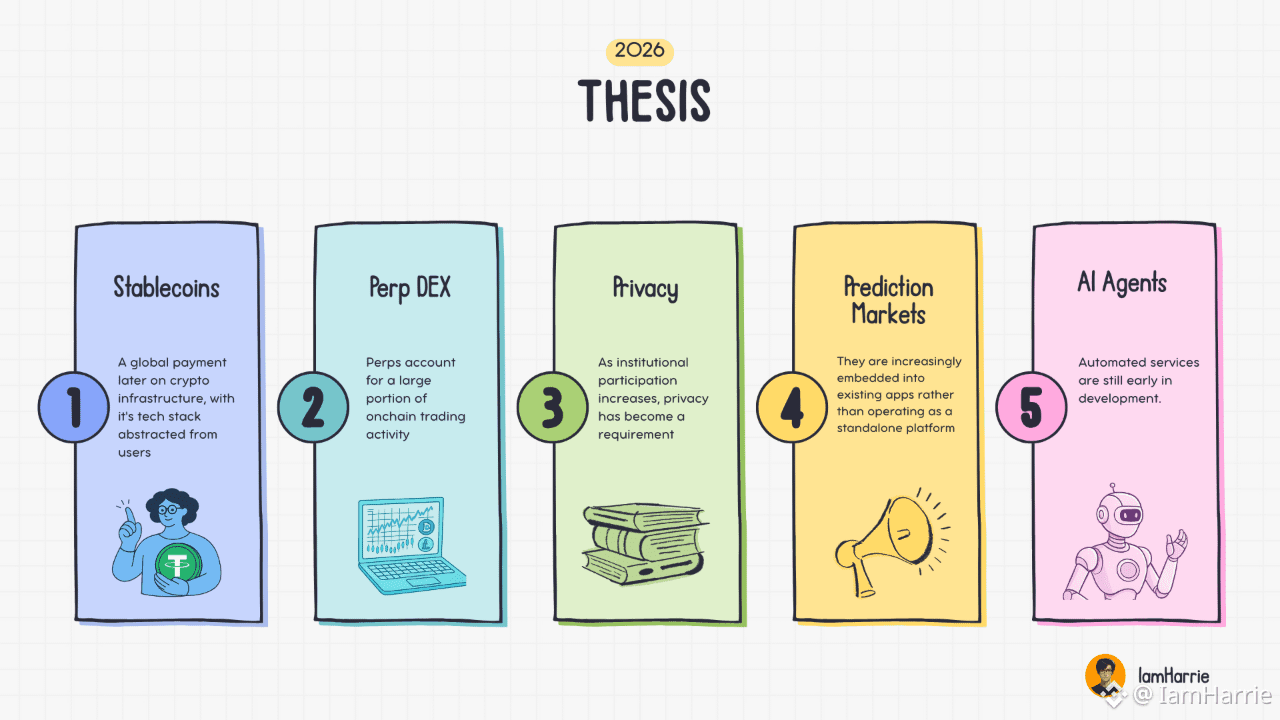
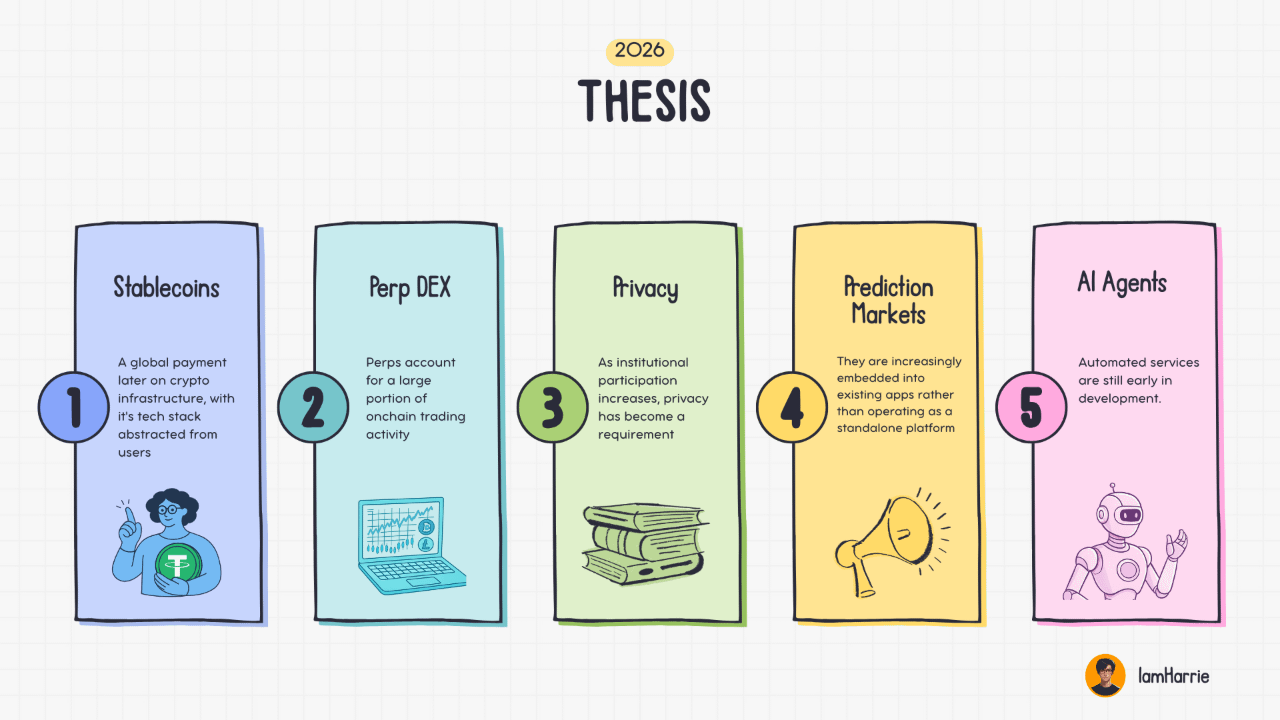
Meine 2026 Dissertation
Das letzte Jahr hatte einen politischen Wandel, der dazu beigetragen hat, eine neue Welle institutionellen Aufbaus zu bringen. Ein großer Teil dieser Arbeit hat sich darauf konzentriert, bestehende Systeme zuverlässig, konform und nutzbar für Institutionen zu machen, insbesondere in den Bereichen Stablecoins und Zahlungskoordination.
Hier sind fünf Sektoren, die wahrscheinlich mehr Fokus, Liquidität und Adoption in der Zukunft sehen werden.
1. Stablecoins als globale Zahlungsschicht
Eine der Entwicklungen wäre die Verwendung von Stablecoins als globale Zahlungsschicht, die auf Krypto-Infrastruktur basiert, während sie weitgehend von den Nutzern abstrahiert bleibt.
Hier sind fünf Sektoren, die wahrscheinlich mehr Fokus, Liquidität und Adoption in der Zukunft sehen werden.
1. Stablecoins als globale Zahlungsschicht
Eine der Entwicklungen wäre die Verwendung von Stablecoins als globale Zahlungsschicht, die auf Krypto-Infrastruktur basiert, während sie weitgehend von den Nutzern abstrahiert bleibt.
Strittig
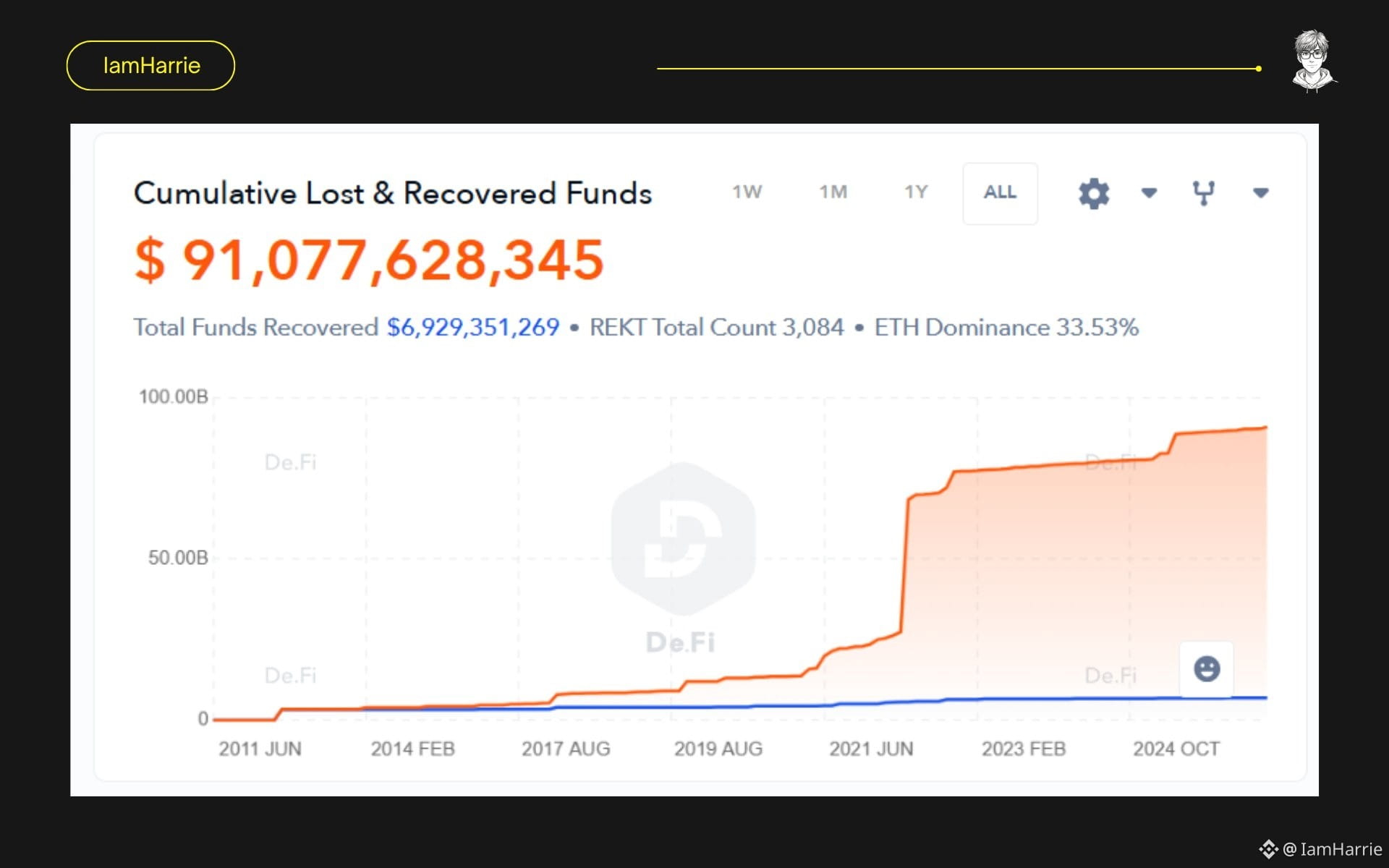
In letzter Zeit haben wir einen Anstieg von Hacks gesehen, und die meisten von ihnen lassen sich auf anonyme Gruppen zurückverfolgen, die mit einer Präzision und Koordination arbeiten.
Der Kelp DAO Exploit ist das neueste Beispiel. Ich habe ein paar Sicherheitsberichte und aktuelle Ermittlungen zu dem Hack gelesen und erfahren, dass während des zweiten Versuchs, die Gelder abzuziehen, eine Gruppe von Leuten durch Konsens zusammenkam, nicht nur um die Gelder einzufrieren, sondern sie tatsächlich zu bewegen. Und während diese schnelle Koordination das, was übrig blieb, zweifellos gerettet hat, wirft es eine Frage auf, über die man nachdenken sollte.
Spiegelt ein Rat von Menschen, die sich versammeln, um einseitig Gelder durch Konsens zu bewegen, wirklich vollständige Dezentralisierung wider?
Ehrlich gesagt, nein. Aber alles zu verlieren ist weitaus schlimmer.
Governance existiert genau aus diesem Grund. Sie soll Systeme im Gleichgewicht halten, Gesetze durchsetzen und dafür sorgen, dass Dinge weitergehen, wenn sie sonst zusammenbrechen würden. Und bis wir die Sicherheitsarchitekturen bauen, die solche Eingriffe überflüssig machen, ist es besser, diese Governance-Ebene zur Verfügung zu haben.
Aber das ist das Gespräch, das wir jetzt führen sollten. Die Sicherheitsinfrastruktur im Web3 ist im Vergleich zur Bedrohung weitgehend unterfinanziert und unterentwickelt. Der Alarm in Bezug auf Sicherheit ist bei weitem nicht so laut wie die Geräusche rund um Projektfinanzierung, Token-Starts und das Wachstum des Ökosystems.
Und diese Lücke ist genau das, was diese Gruppen weiterhin ausnutzen.
Es muss mehr Priorität auf Sicherheitsteams und auf die Menschen gelegt werden, die bereit sind, die Systeme und Architekturen zu bauen, die Protokolle tatsächlich schützen und Gelder langfristig bewahren, als Grundlage.
Der Kelp DAO Exploit ist das neueste Beispiel. Ich habe ein paar Sicherheitsberichte und aktuelle Ermittlungen zu dem Hack gelesen und erfahren, dass während des zweiten Versuchs, die Gelder abzuziehen, eine Gruppe von Leuten durch Konsens zusammenkam, nicht nur um die Gelder einzufrieren, sondern sie tatsächlich zu bewegen. Und während diese schnelle Koordination das, was übrig blieb, zweifellos gerettet hat, wirft es eine Frage auf, über die man nachdenken sollte.
Spiegelt ein Rat von Menschen, die sich versammeln, um einseitig Gelder durch Konsens zu bewegen, wirklich vollständige Dezentralisierung wider?
Ehrlich gesagt, nein. Aber alles zu verlieren ist weitaus schlimmer.
Governance existiert genau aus diesem Grund. Sie soll Systeme im Gleichgewicht halten, Gesetze durchsetzen und dafür sorgen, dass Dinge weitergehen, wenn sie sonst zusammenbrechen würden. Und bis wir die Sicherheitsarchitekturen bauen, die solche Eingriffe überflüssig machen, ist es besser, diese Governance-Ebene zur Verfügung zu haben.
Aber das ist das Gespräch, das wir jetzt führen sollten. Die Sicherheitsinfrastruktur im Web3 ist im Vergleich zur Bedrohung weitgehend unterfinanziert und unterentwickelt. Der Alarm in Bezug auf Sicherheit ist bei weitem nicht so laut wie die Geräusche rund um Projektfinanzierung, Token-Starts und das Wachstum des Ökosystems.
Und diese Lücke ist genau das, was diese Gruppen weiterhin ausnutzen.
Es muss mehr Priorität auf Sicherheitsteams und auf die Menschen gelegt werden, die bereit sind, die Systeme und Architekturen zu bauen, die Protokolle tatsächlich schützen und Gelder langfristig bewahren, als Grundlage.
💯💯


CZ
·
--
Ich habe einige Leute gesehen, die in Panik geraten oder nach den Auswirkungen der Quantencomputing auf Krypto gefragt haben.
Auf hoher Ebene muss sich alle Krypto nur auf Quantenresistente (Post-Quantum) Algorithmen umstellen. Also, keine Panik nötig. 😂
In der Praxis gibt es einige Ausführungsüberlegungen. Es ist schwierig, Upgrades in einer dezentralen Welt zu organisieren. Es wird wahrscheinlich viele Debatten darüber geben, welche Algorithmen verwendet werden sollen, was zu einigen Forks führen wird.
Und einige tote Projekte werden möglicherweise überhaupt nicht aufrüsten. Es könnte gut sein, diese Projekte sowieso zu säubern.
Neuer Code kann kurzfristig andere Fehler oder Sicherheitsprobleme einführen.
Menschen, die Selbstverwahrung praktizieren, müssen ihre Münzen auf neue Wallets migrieren.
Das führt zur Frage von Satoshis Bitcoins. Wenn sich diese Münzen bewegen, bedeutet das, dass er/sie noch da ist, was interessant zu wissen ist. Wenn sie sich nicht bewegen (in einem bestimmten Zeitraum), könnte es besser sein, diese Adressen zu sperren (oder effektiv zu verbrennen), damit sie nicht in die Hände des ersten Hackers gelangen, der sie knackt. Es gibt auch die Schwierigkeit, all seine Adressen zu identifizieren und nicht mit einigen alten Hodlern zu verwechseln. Wie auch immer, das ist ein anderes Thema für später.
Grundsätzlich:
Es ist immer einfacher zu verschlüsseln als zu entschlüsseln.
Mehr Rechenleistung ist immer gut.
Krypto wird bleiben, nach Quanten.
Auf hoher Ebene muss sich alle Krypto nur auf Quantenresistente (Post-Quantum) Algorithmen umstellen. Also, keine Panik nötig. 😂
In der Praxis gibt es einige Ausführungsüberlegungen. Es ist schwierig, Upgrades in einer dezentralen Welt zu organisieren. Es wird wahrscheinlich viele Debatten darüber geben, welche Algorithmen verwendet werden sollen, was zu einigen Forks führen wird.
Und einige tote Projekte werden möglicherweise überhaupt nicht aufrüsten. Es könnte gut sein, diese Projekte sowieso zu säubern.
Neuer Code kann kurzfristig andere Fehler oder Sicherheitsprobleme einführen.
Menschen, die Selbstverwahrung praktizieren, müssen ihre Münzen auf neue Wallets migrieren.
Das führt zur Frage von Satoshis Bitcoins. Wenn sich diese Münzen bewegen, bedeutet das, dass er/sie noch da ist, was interessant zu wissen ist. Wenn sie sich nicht bewegen (in einem bestimmten Zeitraum), könnte es besser sein, diese Adressen zu sperren (oder effektiv zu verbrennen), damit sie nicht in die Hände des ersten Hackers gelangen, der sie knackt. Es gibt auch die Schwierigkeit, all seine Adressen zu identifizieren und nicht mit einigen alten Hodlern zu verwechseln. Wie auch immer, das ist ein anderes Thema für später.
Grundsätzlich:
Es ist immer einfacher zu verschlüsseln als zu entschlüsseln.
Mehr Rechenleistung ist immer gut.
Krypto wird bleiben, nach Quanten.
Im Laufe der Zeit haben wir gesehen, dass Wallet-Adressen von reinen Endpunkten zu Identitäten einzelner Benutzer übergegangen sind.
Diese Namen sind nun zur Repräsentation von Benutzern über mehrere dApps geworden.
Das ist auch recht ähnlich zum frühen Internet.
Vor Domainnamen navigierte man mit IP-Adressen. Obwohl es funktionierte, entwickelten die Menschen keine wirklichen Gewohnheiten darum.
Das Web begann erst, sich zu skalieren, als DNS diese Schicht abstrahierte und die Navigation für Menschen lesbar machte.
Ein Namenssystem sollte lesbar, sicher und dezentralisiert sein.
Die meisten Systeme verzichten auf mindestens eine dieser Eigenschaften. Das Gute an Identitäten ist, dass sie einfacher zu referenzieren, wiederzuverwenden und darauf aufzubauen sind.
Sobald Identität portierbar wird, können neue Schichten darum gebildet werden, die die Akzeptanz direkt beeinflussen.
Diese Namen sind nun zur Repräsentation von Benutzern über mehrere dApps geworden.
Das ist auch recht ähnlich zum frühen Internet.
Vor Domainnamen navigierte man mit IP-Adressen. Obwohl es funktionierte, entwickelten die Menschen keine wirklichen Gewohnheiten darum.
Das Web begann erst, sich zu skalieren, als DNS diese Schicht abstrahierte und die Navigation für Menschen lesbar machte.
Ein Namenssystem sollte lesbar, sicher und dezentralisiert sein.
Die meisten Systeme verzichten auf mindestens eine dieser Eigenschaften. Das Gute an Identitäten ist, dass sie einfacher zu referenzieren, wiederzuverwenden und darauf aufzubauen sind.
Sobald Identität portierbar wird, können neue Schichten darum gebildet werden, die die Akzeptanz direkt beeinflussen.
Märkte sind von Natur aus spekulativ. Daher ist es wahrscheinlich, dass wir weiterhin sehen werden, wie die Preise für viele *wertlosen Vermögenswerte steigen.
Und wir könnten sehen, dass die Preise von guten Vermögenswerten ihren fundamentalen Wert weit übersteigen. Und wir werden wahrscheinlich immer noch ähnliche Ergebnisse wie zuvor mit Teams, die abladen, sehen.
Aber dann ist es möglich, dass diese nächste Welle der Digitalisierung edlere und klügere Gründer in den Raum bringen wird.
Und damit werden wir viele großartige On-Chain-Produkte sehen, die entwickelt werden.
Und wir könnten sehen, dass die Preise von guten Vermögenswerten ihren fundamentalen Wert weit übersteigen. Und wir werden wahrscheinlich immer noch ähnliche Ergebnisse wie zuvor mit Teams, die abladen, sehen.
Aber dann ist es möglich, dass diese nächste Welle der Digitalisierung edlere und klügere Gründer in den Raum bringen wird.
Und damit werden wir viele großartige On-Chain-Produkte sehen, die entwickelt werden.
Du weißt..
Je mehr du studierst, desto mehr erkennst du, wie früh wir sind.
Jede disruptive Technologie hat ihren Wendepunkt.
Je mehr du studierst, desto mehr erkennst du, wie früh wir sind.
Jede disruptive Technologie hat ihren Wendepunkt.
Gm Fam. 🙂
Ich habe darüber geschrieben, dass NFTs nicht tot sind, und habe spezifische genannt, die sowohl in guten als auch in schlechten Markttrends überlebt haben.
Ich arbeite derzeit an einem weiteren Artikel darüber, wie man nachhaltige NFT-Kollektionen aufbaut, den du auch auf deine Projekte anwenden kannst, wenn du eines aufbaust.
Halte Ausschau danach, und wenn es spezifische Themen gibt, über die du möchtest, dass ich spreche, lass es mich bitte in den Kommentaren wissen..
Ich habe darüber geschrieben, dass NFTs nicht tot sind, und habe spezifische genannt, die sowohl in guten als auch in schlechten Markttrends überlebt haben.
Ich arbeite derzeit an einem weiteren Artikel darüber, wie man nachhaltige NFT-Kollektionen aufbaut, den du auch auf deine Projekte anwenden kannst, wenn du eines aufbaust.
Halte Ausschau danach, und wenn es spezifische Themen gibt, über die du möchtest, dass ich spreche, lass es mich bitte in den Kommentaren wissen..
IamHarrie
·
--
Die Leute sagen, NFTs sind tot, ich denke nicht so
Das könnte schockierend sein, aber ich habe gerade eine Kette entdeckt, in der 99,47 % aller NFT-Kollektionen tot sind, und mit tot meine ich, dass nicht eine einzige in den letzten drei Monaten mehr als 1.000 Handelsabschlüsse hatte.
Die verbreitete Behauptung im CT ist, dass 96 % der NFTs wertlos sind. Das ist eine kalte Aussage, wenn du mich fragst.
Also habe ich beschlossen, tiefer zu graben, und was ich fand, war wild 👇🏻
→ Polygon: 31 aktive Kollektionen
→ Base: 102 aktive Kollektionen
→ Arbitrum: 10 aktive Kollektionen
→ Ethereum: die „gesündeste“, mit 111 aktiven Kollektionen, doch allein diese wenigen machen 63,17 % des gesamten ETH NFT-Handelsvolumens aus.
Die verbreitete Behauptung im CT ist, dass 96 % der NFTs wertlos sind. Das ist eine kalte Aussage, wenn du mich fragst.
Also habe ich beschlossen, tiefer zu graben, und was ich fand, war wild 👇🏻
→ Polygon: 31 aktive Kollektionen
→ Base: 102 aktive Kollektionen
→ Arbitrum: 10 aktive Kollektionen
→ Ethereum: die „gesündeste“, mit 111 aktiven Kollektionen, doch allein diese wenigen machen 63,17 % des gesamten ETH NFT-Handelsvolumens aus.
Fokus auf nachhaltige Kennzahlen
Wenn Sie versuchen, Ihr Produkt aufzubauen und zu skalieren, ist es wichtig, auf die richtigen Kennzahlen zu achten. Es gibt konventionelle Kennzahlen wie TVL und Marktkapitalisierung. Diese Kennzahlen sind nützlich, aber nur bis zu einem gewissen Punkt.
Wenn Sie Skalierbarkeit, Akzeptanz und Benutzersegmentierung nicht messen, dann verpassen Sie, was wirklich zählt. Sie müssen die Bindung verfolgen.
Es gibt Benutzer, die Ihr Produkt dreißig Tage lang nutzen und dann aufhören. Es gibt Benutzer, die es sechzig Tage lang nutzen und nie zurückkehren. Es gibt Benutzer, die nur am ersten Tag kommen, weil es einen Anreiz wie einen Airdrop gibt, und dann ghosten sie Sie danach.
Also müssen Sie die Bindung über dreißig Tage, sechzig Tage, ein Jahr, zwei Jahre und sogar drei Jahre messen.
Haben Sie eine Kernbenutzerbasis, die immer wieder zurückkommt?
Es ist auch wichtig zu verstehen, dass viele Wallets nicht viele Benutzer bedeuten. Sie müssen definieren, was ein echter Benutzer ist. Gibt es eine segmentierte Demografie, die konsequent mit Ihrem Produkt interagiert?
Sobald Sie diese Benutzersegmentierung definiert haben, können Sie Ihr Produkt priorisieren und iterieren, um es richtig an diesen spezifischen Markt und diese Demografie anzupassen.
Ich habe alles in meinem Artikel geschrieben.
Wenn Sie versuchen, Ihr Produkt aufzubauen und zu skalieren, ist es wichtig, auf die richtigen Kennzahlen zu achten. Es gibt konventionelle Kennzahlen wie TVL und Marktkapitalisierung. Diese Kennzahlen sind nützlich, aber nur bis zu einem gewissen Punkt.
Wenn Sie Skalierbarkeit, Akzeptanz und Benutzersegmentierung nicht messen, dann verpassen Sie, was wirklich zählt. Sie müssen die Bindung verfolgen.
Es gibt Benutzer, die Ihr Produkt dreißig Tage lang nutzen und dann aufhören. Es gibt Benutzer, die es sechzig Tage lang nutzen und nie zurückkehren. Es gibt Benutzer, die nur am ersten Tag kommen, weil es einen Anreiz wie einen Airdrop gibt, und dann ghosten sie Sie danach.
Also müssen Sie die Bindung über dreißig Tage, sechzig Tage, ein Jahr, zwei Jahre und sogar drei Jahre messen.
Haben Sie eine Kernbenutzerbasis, die immer wieder zurückkommt?
Es ist auch wichtig zu verstehen, dass viele Wallets nicht viele Benutzer bedeuten. Sie müssen definieren, was ein echter Benutzer ist. Gibt es eine segmentierte Demografie, die konsequent mit Ihrem Produkt interagiert?
Sobald Sie diese Benutzersegmentierung definiert haben, können Sie Ihr Produkt priorisieren und iterieren, um es richtig an diesen spezifischen Markt und diese Demografie anzupassen.
Ich habe alles in meinem Artikel geschrieben.
IamHarrie
·
--
Die Strategie hinter dem Erfolg von TRON und Lektionen zu lernen
Die größte Blockchain-Erfolgsgeschichte, die Sie wahrscheinlich übersehen haben, verarbeitet täglich mehr Transaktionen als die meisten Layer 1s zusammen. Es hatte seit der Gründung null Ausfallzeiten, hält etwa 42 % des gesamten USDT-Angebots und verarbeitet jährlich fast acht Billionen Dollar.
In dieser Größenordnung zu arbeiten und dabei die Benutzer loyal zu halten, ist beeindruckend. Aber wie wurde es aufgebaut und wie wuchs es weiter?
___________________________
Der Vorteil des ersten Movers
Der Aufstieg von Tron als dominantes Netzwerk für USDT- und Stablecoin-Zahlungen beruht größtenteils auf Timing und Ausführung. Es wurde um 2017 gegründet und wurde näher zu 2018 zu einer Mainnet Layer 1 Blockchain und integrierte USDT zur gleichen Zeit, was ihm einen mächtigen Vorteil des ersten Movers verschaffte.
In dieser Größenordnung zu arbeiten und dabei die Benutzer loyal zu halten, ist beeindruckend. Aber wie wurde es aufgebaut und wie wuchs es weiter?
___________________________
Der Vorteil des ersten Movers
Der Aufstieg von Tron als dominantes Netzwerk für USDT- und Stablecoin-Zahlungen beruht größtenteils auf Timing und Ausführung. Es wurde um 2017 gegründet und wurde näher zu 2018 zu einer Mainnet Layer 1 Blockchain und integrierte USDT zur gleichen Zeit, was ihm einen mächtigen Vorteil des ersten Movers verschaffte.

Hallo 🙂
Einhaltung und Betrieb
Die institutionelle Akzeptanz wird durch nachhaltige Anwendungsfälle definiert, und ob Institutionen der Blockchain mit echtem Kapital vertrauen können.
Institutionen verpflichten sich, wenn Systeme unter Druck funktionieren, sicher operieren und regulatorische Standards in operativen Umgebungen erfüllen.
Regulatorische Rahmenbedingungen wie MiCA bieten die rechtliche Struktur, damit Systeme konsistent über Marktzyklen hinweg funktionieren.
Protokolle, die institutionelle Akzeptanz gewinnen, werden diejenigen sein, die in drei grundlegenden Aspekten überzeugen:
1. Einhaltung
2. Sicherheit und
3. Produktionsniveau Zuverlässigkeit.
Stellen Sie sich eine Finanzinfrastruktur vor, die auf Blockchain-Stacks aufgebaut ist, mit allem, was PMF überprüft.
Implementierungen wie die Integration von @Dusk mit NPX Markets zeigen, wie die Blockchain in regulierte Finanzmärkte einzieht.
Institutionelle Krypto wird durch tatsächliche Kapitalflüsse vorankommen, und der Markt selbst wird bestimmen, was zur Infrastruktur wird.
#Dusk $DUSK
Die institutionelle Akzeptanz wird durch nachhaltige Anwendungsfälle definiert, und ob Institutionen der Blockchain mit echtem Kapital vertrauen können.
Institutionen verpflichten sich, wenn Systeme unter Druck funktionieren, sicher operieren und regulatorische Standards in operativen Umgebungen erfüllen.
Regulatorische Rahmenbedingungen wie MiCA bieten die rechtliche Struktur, damit Systeme konsistent über Marktzyklen hinweg funktionieren.
Protokolle, die institutionelle Akzeptanz gewinnen, werden diejenigen sein, die in drei grundlegenden Aspekten überzeugen:
1. Einhaltung
2. Sicherheit und
3. Produktionsniveau Zuverlässigkeit.
Stellen Sie sich eine Finanzinfrastruktur vor, die auf Blockchain-Stacks aufgebaut ist, mit allem, was PMF überprüft.
Implementierungen wie die Integration von @Dusk mit NPX Markets zeigen, wie die Blockchain in regulierte Finanzmärkte einzieht.
Institutionelle Krypto wird durch tatsächliche Kapitalflüsse vorankommen, und der Markt selbst wird bestimmen, was zur Infrastruktur wird.
#Dusk $DUSK
Anmelden und weiter Inhalte entdecken