
Sparkling Candle
157 Beiträge

Sparkling Candle
Melden
Nutzer blockieren
Breaking down crypto with clarity. No hype—just honest insights, real blockchain talk, and trusted takes. Welcome
Trade eröffnen

SOL Halter
Hochfrequenz-Trader
4.6 Jahre
48 Following
54 Follower
66 Like gegeben
Beiträge
Portfolio
Alle
Zitierungen
Übersetzung ansehen
$JUP binance lost my assest ,am leaving binance and you ???
$JUP binance lost my assest ,am leaving binance and you ???
142

Artikel
Übersetzung ansehen
Binance Hot Wallet Breach: Attacker Offloads $60M into Aave to Borrow ETH Amid Market-Wide FreezesFollowing the security incident impacting Binance hot wallets, on-chain analysts and risk contributors have published details on the exploiter's laundering pathway through decentralized finance protocols and the coordinated containment response.
Incident Background: The Hot Wallet Drain
The attack originated from transfers compromising key Binance exchange hot wallets (including accounts labeled Binance 14 and Binance 16). The exploiter moved billions in crypto assets across major tokens, including Tether (USDT), USD Coin (USDC), Ethereum (ETH), and tokenized gold (PAXG, XAUT).
Binance leadership stated that customer balances remain secure, with co-founder Yi He confirming that exchange reserves and the Secure Asset Fund for Users (SAFU) will cover all losses.
The DeFi Vector: Laundering Through Aave V3
To avoid imminent asset freezes from centralized issuers, the attacker quickly directed funds into decentralized money markets:
* Collateral Deposit: The hacker deposited $60 million USDT into the Aave V3 Ethereum Core market. * Asset Extraction: Leveraging the deposit, the address borrowed 19,762 Wrapped Ether (WETH)—valued at approximately $44.6 million at the time of execution. * The Exploit Mechanism: By converting centralized stablecoins (which have built-in blacklist/freeze functions) into native-backed WETH, the exploiter sought to acquire censorship-resistant liquidity before stablecoin contracts could be halted.
According to risk management firm LlamaRisk, the position currently holds roughly $59.9 million in USDT collateral against $43.8 million in outstanding debt. Because the loan remains over-collateralized and adheres to regular health-factor thresholds, protocol analysts confirmed it does not present an immediate bad-debt risk to Aave liquidity providers.
Protocol Response: Multi-Network Market Freeze
Within minutes of confirming the unauthorized flows, Aave Labs, TokenLogic, and Certora convened an emergency war room, taking the following risk-mitigation measures:
* Market-Wide Freezes: Aave enacted emergency market freezes across Aave V3 instances (including Ethereum Core, Arbitrum, Optimism, Avalanche, Polygon, Base, and BNB Chain) and V4 deployment spokes. * Borrow/Deposit Halts: New collateral deposits and borrowing operations have been suspended to prevent the exploiter from utilizing additional markets as exit liquidity. * Normal Repayments & Withdrawals: Existing protocol users retain the ability to repay debts and withdraw unencumbered assets. * Governance Discussion: The incident has prompted community proposals to introduce automated velocity limits and dynamic deposit delays on collateral positions exceeding $10 million to curtail rapid flash-laundering.
On-Chain Holdings & Issuer Containment
Outside the Aave collateral pool, the exploiter's primary multi-chain address (0x5227f603c1ee34ce3c06efe6477003bdfccb2f8c) continues to hold over $2 billion in centralized assets:
* 1.175 Billion USDT (Tether) * 800 Million USDC (Circle) * 12,000 Tether Gold (XAUT) * 1,900 Paxos Gold (PAXG)
Centralized stablecoin and asset issuers (Tether, Circle, Paxos) have begun blacklisting the associated addresses. As a result, the vast majority of the retained stablecoins and tokenized commodities remain immobilized on-chain, positioning Binance and law enforcement to recover the frozen portions while tracking the outflow of the borrowed ETH.
Binance Hot Wallet Breach: Attacker Offloads $60M into Aave to Borrow ETH Amid Market-Wide Freezes
Following the security incident impacting Binance hot wallets, on-chain analysts and risk contributors have published details on the exploiter's laundering pathway through decentralized finance protocols and the coordinated containment response.
Incident Background: The Hot Wallet Drain
The attack originated from transfers compromising key Binance exchange hot wallets (including accounts labeled Binance 14 and Binance 16). The exploiter moved billions in crypto assets across major tokens, including Tether (USDT), USD Coin (USDC), Ethereum (ETH), and tokenized gold (PAXG, XAUT).
Binance leadership stated that customer balances remain secure, with co-founder Yi He confirming that exchange reserves and the Secure Asset Fund for Users (SAFU) will cover all losses.
The DeFi Vector: Laundering Through Aave V3
To avoid imminent asset freezes from centralized issuers, the attacker quickly directed funds into decentralized money markets:
* Collateral Deposit: The hacker deposited $60 million USDT into the Aave V3 Ethereum Core market. * Asset Extraction: Leveraging the deposit, the address borrowed 19,762 Wrapped Ether (WETH)—valued at approximately $44.6 million at the time of execution. * The Exploit Mechanism: By converting centralized stablecoins (which have built-in blacklist/freeze functions) into native-backed WETH, the exploiter sought to acquire censorship-resistant liquidity before stablecoin contracts could be halted.
According to risk management firm LlamaRisk, the position currently holds roughly $59.9 million in USDT collateral against $43.8 million in outstanding debt. Because the loan remains over-collateralized and adheres to regular health-factor thresholds, protocol analysts confirmed it does not present an immediate bad-debt risk to Aave liquidity providers.
Protocol Response: Multi-Network Market Freeze
Within minutes of confirming the unauthorized flows, Aave Labs, TokenLogic, and Certora convened an emergency war room, taking the following risk-mitigation measures:
* Market-Wide Freezes: Aave enacted emergency market freezes across Aave V3 instances (including Ethereum Core, Arbitrum, Optimism, Avalanche, Polygon, Base, and BNB Chain) and V4 deployment spokes. * Borrow/Deposit Halts: New collateral deposits and borrowing operations have been suspended to prevent the exploiter from utilizing additional markets as exit liquidity. * Normal Repayments & Withdrawals: Existing protocol users retain the ability to repay debts and withdraw unencumbered assets. * Governance Discussion: The incident has prompted community proposals to introduce automated velocity limits and dynamic deposit delays on collateral positions exceeding $10 million to curtail rapid flash-laundering.
On-Chain Holdings & Issuer Containment
Outside the Aave collateral pool, the exploiter's primary multi-chain address (0x5227f603c1ee34ce3c06efe6477003bdfccb2f8c) continues to hold over $2 billion in centralized assets:
* 1.175 Billion USDT (Tether) * 800 Million USDC (Circle) * 12,000 Tether Gold (XAUT) * 1,900 Paxos Gold (PAXG)
Centralized stablecoin and asset issuers (Tether, Circle, Paxos) have begun blacklisting the associated addresses. As a result, the vast majority of the retained stablecoins and tokenized commodities remain immobilized on-chain, positioning Binance and law enforcement to recover the frozen portions while tracking the outflow of the borrowed ETH.
127
Übersetzung ansehen
Don't panic, it's not the fall.
Don't panic, it's not the fall.
63
$NEAR wird zurückkommen, um das Niveau 5.12 erneut zu testen. Take-Profit setzen und warten, bis es das Niveau testet.
Long-Position eingehen, wenn sich unter dem Preis bei 1,5 $ Liquidität befindet.
$NEAR wird zurückkommen, um das Niveau 5.12 erneut zu testen. Take-Profit setzen und warten, bis es das Niveau testet.
Long-Position eingehen, wenn sich unter dem Preis bei 1,5 $ Liquidität befindet.
Long-Position eingehen, wenn sich unter dem Preis bei 1,5 $ Liquidität befindet.
291
$near befindet sich in einer Korrektur.
Warte auf die Korrektur bei 5,15.
Bei 5,15 Long kaufen.
$near befindet sich in einer Korrektur.
Warte auf die Korrektur bei 5,15.
Bei 5,15 Long kaufen.
Warte auf die Korrektur bei 5,15.
Bei 5,15 Long kaufen.
143
$NEAR ist noch nicht nahe dran; es wird weiter steigen, aber kaufen Sie jetzt, wenn sein Wert nahe ist
$NEAR ist noch nicht nahe dran; es wird weiter steigen, aber kaufen Sie jetzt, wenn sein Wert nahe ist
157
$NEAR $JUP Bei kleineren Korrekturen long gehen.
Sie sind bullisch und werden steigen.
$NEAR $JUP Bei kleineren Korrekturen long gehen.
Sie sind bullisch und werden steigen.
Sie sind bullisch und werden steigen.
85
$SOLV es sind -60.95 bei einem aktuellen Preis von 0.003798 und mein Einstieg liegt bei 0.0041316. Sehen wir uns diesen Beitrag in 6 Tagen an.
$SOLV es sind -60.95 bei einem aktuellen Preis von 0.003798 und mein Einstieg liegt bei 0.0041316. Sehen wir uns diesen Beitrag in 6 Tagen an.
4
192
$SOLV Gehen wir höher und halten uns gut fest
$SOLV Gehen wir höher und halten uns gut fest
201
Artikel
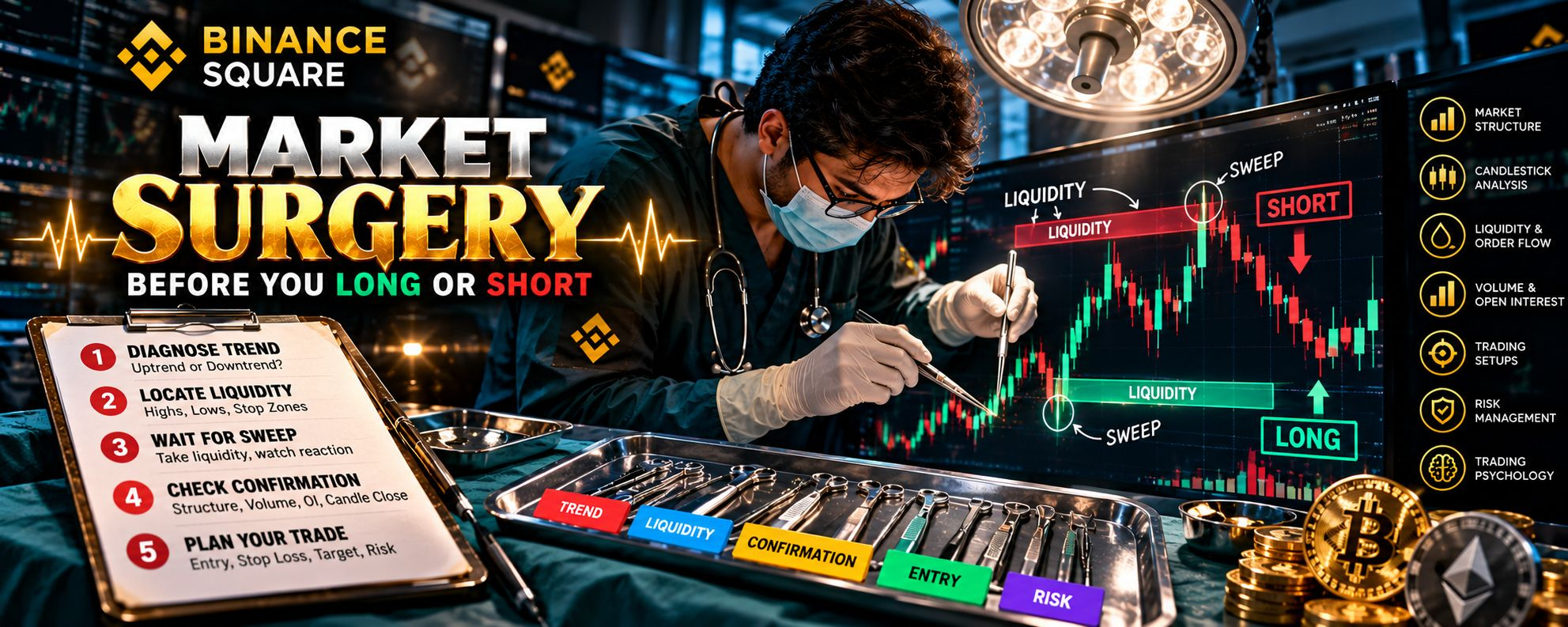
ANALYSIERE DEN MARKT GRÜNDLICH, BEVOR DU LONG ODER SHORT GEHSTBevor du irgendeinen Coin kaufst, analysiere zuerst den Chart:
1. Den Trend analysieren
Höhere Hochs + höhere Tiefs → nach LONG-Gelegenheiten Ausschau halten.
Tiefere Hochs + tiefere Tiefs → nach SHORT-Gelegenheiten Ausschau halten.
2. Liquidität lokalisieren
Markiere vorherige Hochs/Tiefs, gleiche Hochs/Tiefs und offensichtliche Stop-Zonen.
Frage dich: Wo sind Trader wahrscheinlich in der Falle?
3. Auf den Sweep warten
Jage dem Kurs nicht hinterher. Beobachte, ob Liquidität abgeholt wird und der Kurs dieses Niveau zurückweist oder akzeptiert.
4. Auf Bestätigung achten
Analysiere Marktstruktur + Volumen + Open Interest + Kerzenschluss.
ANALYSIERE DEN MARKT GRÜNDLICH, BEVOR DU LONG ODER SHORT GEHST
Bevor du irgendeinen Coin kaufst, analysiere zuerst den Chart:
1. Den Trend analysieren
Höhere Hochs + höhere Tiefs → nach LONG-Gelegenheiten Ausschau halten.
Tiefere Hochs + tiefere Tiefs → nach SHORT-Gelegenheiten Ausschau halten.
2. Liquidität lokalisieren
Markiere vorherige Hochs/Tiefs, gleiche Hochs/Tiefs und offensichtliche Stop-Zonen.
Frage dich: Wo sind Trader wahrscheinlich in der Falle?
3. Auf den Sweep warten
Jage dem Kurs nicht hinterher. Beobachte, ob Liquidität abgeholt wird und der Kurs dieses Niveau zurückweist oder akzeptiert.
4. Auf Bestätigung achten
Analysiere Marktstruktur + Volumen + Open Interest + Kerzenschluss.
109
Artikel
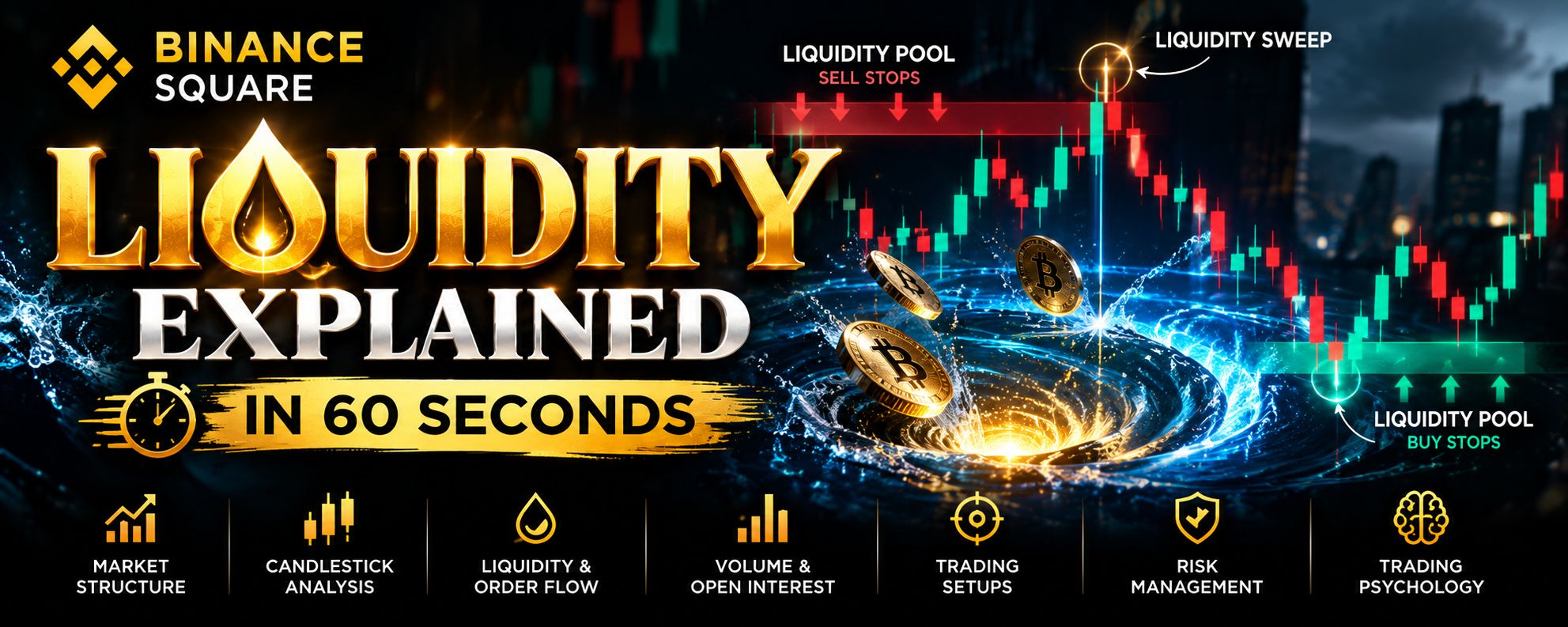
Liquidität in 60 Sekunden erklärtWenn du verstehen willst, warum Kryptokurse plötzlich steigen, fallen, Dochte bilden oder drehen, musst du ein Wort verstehen:
$AAPLB
LIQUIDITÄT.
Stell dir Liquidität als Treibstoff vor, der den Markt in Bewegung setzt.
Wo liegt Liquidität?
Liquidität sammelt sich oft in offensichtlichen Bereichen, in denen viele Trader Orders platzieren:
📍 Vorherige Hochs
📍 Vorherige Tiefs
📍 Unterstützung und Widerstand
📍 Gleiche Hochs
📍 Gleiche Tiefs
📍 Stop-Loss-Niveaus
📍 Liquidationszonen
Zum Beispiel:
Stell dir vor, Bitcoin wird bei 100.000 $ gehandelt.
Viele Trader haben Short-Positionen um 100.500 $, mit Stop-Loss-Orders bei 101.000 $.
Liquidität in 60 Sekunden erklärt
Wenn du verstehen willst, warum Kryptokurse plötzlich steigen, fallen, Dochte bilden oder drehen, musst du ein Wort verstehen:
$AAPLB
LIQUIDITÄT.
Stell dir Liquidität als Treibstoff vor, der den Markt in Bewegung setzt.
Wo liegt Liquidität?
Liquidität sammelt sich oft in offensichtlichen Bereichen, in denen viele Trader Orders platzieren:
📍 Vorherige Hochs
📍 Vorherige Tiefs
📍 Unterstützung und Widerstand
📍 Gleiche Hochs
📍 Gleiche Tiefs
📍 Stop-Loss-Niveaus
📍 Liquidationszonen
Zum Beispiel:
Stell dir vor, Bitcoin wird bei 100.000 $ gehandelt.
Viele Trader haben Short-Positionen um 100.500 $, mit Stop-Loss-Orders bei 101.000 $.
157
27
Artikel
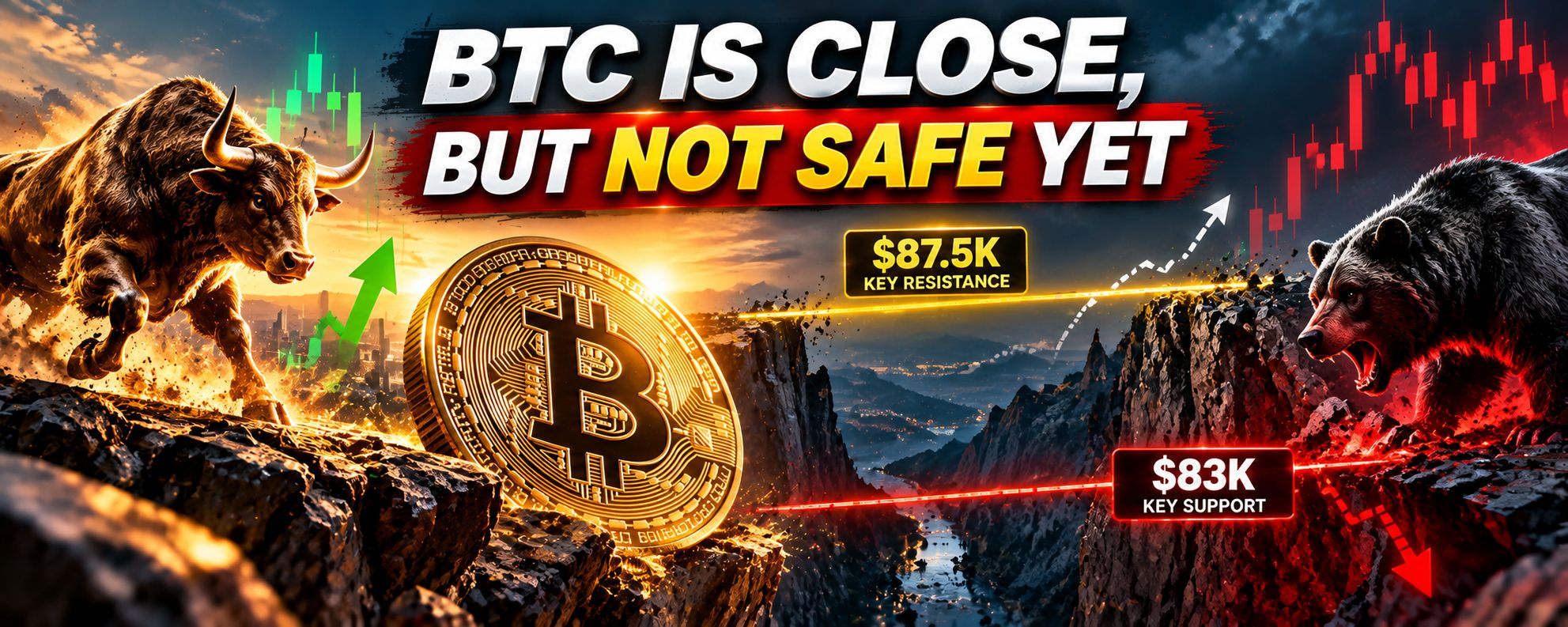
BTC hat die Woche gerade bei 86.532 $ geschlossen, liegt heute aber bei etwa 82.000 $.BTC hat die Woche gerade bei 86.532 $ geschlossen.
Das klingt bullisch. Aber es gibt ein Problem: Seit dem 21. September hat BTC bereits viermal versucht, über den Eröffnungskurs von 2026 bei etwa 87.570 $ auszubrechen – und ist jedes Mal gescheitert.
Aber aktuell liegt er bei etwa 82.000 $.
Ich würde das also noch nicht als Ausbruch bezeichnen.
Interessant ist dabei die Nachfrage, die sich darunter zeigt.
Spot-Bitcoin-ETFs verzeichneten innerhalb einer Woche Zuflüsse von rund 2,4 Mrd. $, eine ihrer stärksten Wochen seit einiger Zeit. Das ist eine Menge Kaufdruck, und trotzdem tut sich BTC weiterhin schwer, die Marke von 87.500 $ zu überwinden.
Und genau hier wird es interessant.
BTC hat die Woche gerade bei 86.532 $ geschlossen, liegt heute aber bei etwa 82.000 $.
BTC hat die Woche gerade bei 86.532 $ geschlossen.
Das klingt bullisch. Aber es gibt ein Problem: Seit dem 21. September hat BTC bereits viermal versucht, über den Eröffnungskurs von 2026 bei etwa 87.570 $ auszubrechen – und ist jedes Mal gescheitert.
Aber aktuell liegt er bei etwa 82.000 $.
Ich würde das also noch nicht als Ausbruch bezeichnen.
Interessant ist dabei die Nachfrage, die sich darunter zeigt.
Spot-Bitcoin-ETFs verzeichneten innerhalb einer Woche Zuflüsse von rund 2,4 Mrd. $, eine ihrer stärksten Wochen seit einiger Zeit. Das ist eine Menge Kaufdruck, und trotzdem tut sich BTC weiterhin schwer, die Marke von 87.500 $ zu überwinden.
Und genau hier wird es interessant.
22
Artikel
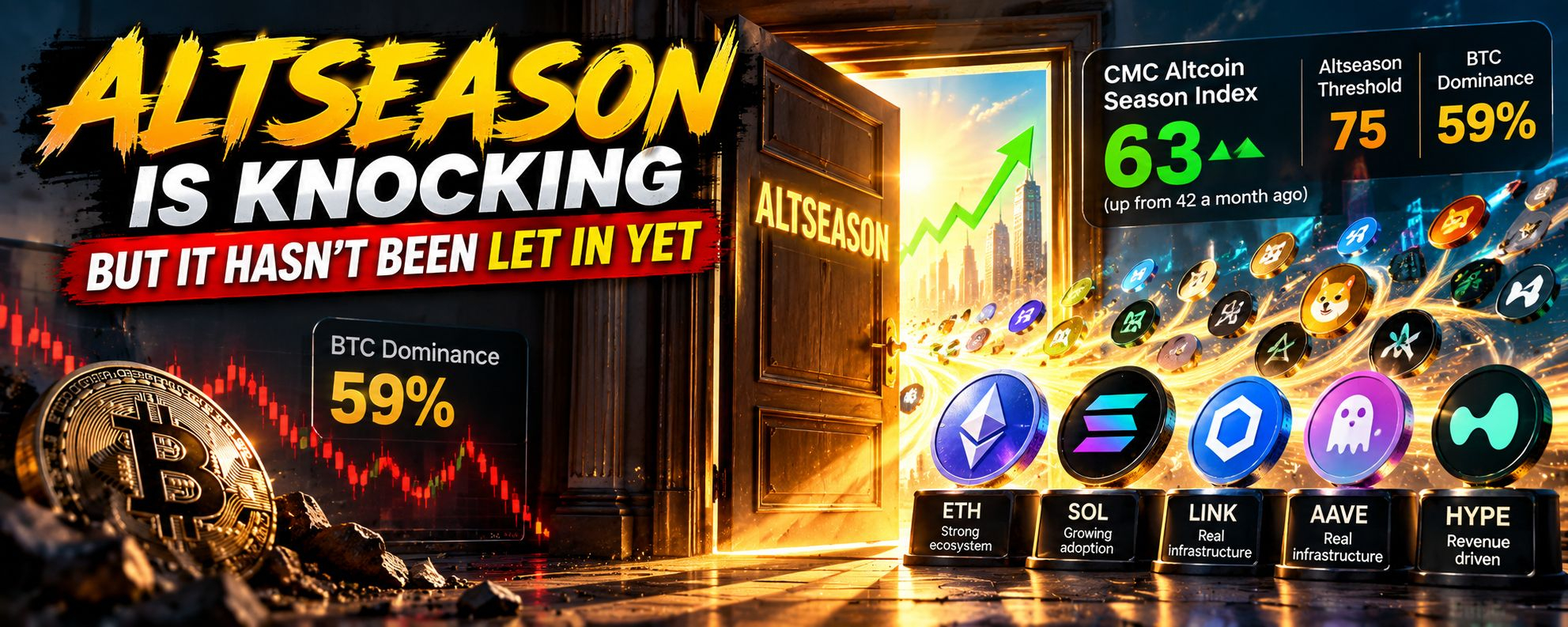
DIE ALTCOIN-SAISON KLOPFT AN — ABER DIE TÜR IST NOCH NICHT OFFENDer Kryptomarkt zeigt Anzeichen einer Kapitalrotation hin zu Altcoins. Eine ausgewachsene Altcoin-Saison auszurufen, könnte jedoch noch verfrüht sein.
CMC-Altcoin-Saison-Index: 63
Gestiegen von 42 vor einem Monat
Schwelle für die Altcoin-Saison: 75
₿ BTC-Dominanz: ~59%
Das bedeutet, dass ungefähr zwei Drittel der 100 größten Assets BTC in den vergangenen 90 Tagen übertroffen haben.
Doch hier ist der Haken: Nicht jeder Altcoin verdient die gleiche Aufmerksamkeit.
ETH & SOL → starke Ökosysteme
LINK & AAVE → echte Infrastruktur
HYPE → nähert sich dank einer durch tatsächliche Einnahmen gestützten Nachfrage seinen Allzeithochs
DIE ALTCOIN-SAISON KLOPFT AN — ABER DIE TÜR IST NOCH NICHT OFFEN
Der Kryptomarkt zeigt Anzeichen einer Kapitalrotation hin zu Altcoins. Eine ausgewachsene Altcoin-Saison auszurufen, könnte jedoch noch verfrüht sein.
CMC-Altcoin-Saison-Index: 63
Gestiegen von 42 vor einem Monat
Schwelle für die Altcoin-Saison: 75
₿ BTC-Dominanz: ~59%
Das bedeutet, dass ungefähr zwei Drittel der 100 größten Assets BTC in den vergangenen 90 Tagen übertroffen haben.
Doch hier ist der Haken: Nicht jeder Altcoin verdient die gleiche Aufmerksamkeit.
ETH & SOL → starke Ökosysteme
LINK & AAVE → echte Infrastruktur
HYPE → nähert sich dank einer durch tatsächliche Einnahmen gestützten Nachfrage seinen Allzeithochs
31
Artikel
Übersetzung ansehen
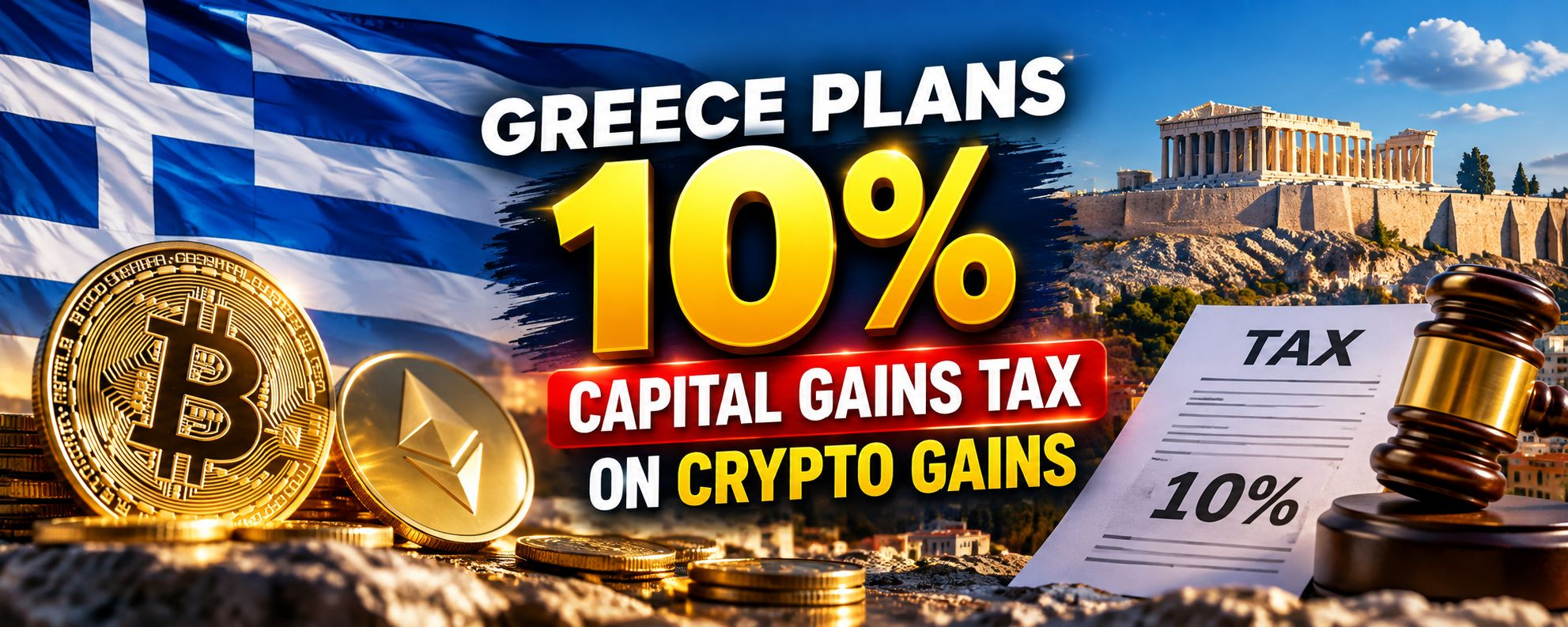
Greece Plans 10% Tax on Crypto GainsGreece is preparing to introduce a 10% capital gains tax on cryptocurrency, according to a draft bill expected to be submitted to parliament in November.
Under the proposal, annual crypto gains of up to €500 ($560) would be tax-exempt. Gains above that threshold would be subject to the 10% levy.
The proposed rate would be relatively low compared with several other major European markets. Germany, France and Italy have tax rates on certain investment gains that can exceed 25%.
Greek authorities are moving toward treating cryptocurrency more like traditional investment assets such as stocks, as crypto becomes increasingly integrated into mainstream portfolios.
However, estimating the potential revenue remains difficult because many Greek investors use crypto exchanges and platforms based outside the country.
📌 Key takeaway: Greece could become one of the more crypto-friendly European jurisdictions from a tax-rate perspective, with a 10% levy and a €500 annual exemption—if the proposal becomes law.
#CryptoNews🔒📰🚫
Source: Reuters
Greece Plans 10% Tax on Crypto Gains
Greece is preparing to introduce a 10% capital gains tax on cryptocurrency, according to a draft bill expected to be submitted to parliament in November.
Under the proposal, annual crypto gains of up to €500 ($560) would be tax-exempt. Gains above that threshold would be subject to the 10% levy.
The proposed rate would be relatively low compared with several other major European markets. Germany, France and Italy have tax rates on certain investment gains that can exceed 25%.
Greek authorities are moving toward treating cryptocurrency more like traditional investment assets such as stocks, as crypto becomes increasingly integrated into mainstream portfolios.
However, estimating the potential revenue remains difficult because many Greek investors use crypto exchanges and platforms based outside the country.
📌 Key takeaway: Greece could become one of the more crypto-friendly European jurisdictions from a tax-rate perspective, with a 10% levy and a €500 annual exemption—if the proposal becomes law.
#CryptoNews🔒📰🚫
Source: Reuters
6

Artikel
Eine Kerze kann eine Geschichte erzählen🕯️ Willkommen bei Sparkling Candle.
Jeder Kryptochart besteht aus Kerzen.
Doch eine Kerze ist mehr als nur ein grünes oder rotes Kästchen.
Sie erzählt eine kleine Geschichte über Käufer, Verkäufer, Angst, Gier, Liquidität und Momentum.
Das Ziel von Sparkling Candle ist einfach:
Betrachte nicht nur die Kerze. Verstehe, warum sie entstanden ist.
Was sagt uns eine Kerze wirklich?
Eine einzelne Kerze zeigt vier wichtige Dinge:
Eröffnung → Hoch → Tief → Schluss
Doch diese vier Zahlen können viel mehr verraten.
Eine starke bullische Kerze kann auf aggressives Kaufinteresse hindeuten.
Eine Kerze kann eine Geschichte erzählen
🕯️ Willkommen bei Sparkling Candle.
Jeder Kryptochart besteht aus Kerzen.
Doch eine Kerze ist mehr als nur ein grünes oder rotes Kästchen.
Sie erzählt eine kleine Geschichte über Käufer, Verkäufer, Angst, Gier, Liquidität und Momentum.
Das Ziel von Sparkling Candle ist einfach:
Betrachte nicht nur die Kerze. Verstehe, warum sie entstanden ist.
Was sagt uns eine Kerze wirklich?
Eine einzelne Kerze zeigt vier wichtige Dinge:
Eröffnung → Hoch → Tief → Schluss
Doch diese vier Zahlen können viel mehr verraten.
Eine starke bullische Kerze kann auf aggressives Kaufinteresse hindeuten.
1
17
🚨 Bitcoin-Wal erwacht nach über 4 Jahren! 🐋
Die Wallet bc1q4h hat gerade 4.500 BTC im Wert von etwa 375,7 Mio. $ an eine neue Adresse verschoben.
Die BTC wurden nicht an eine bekannte Börse gesendet, daher bestätigt das keinen Verkauf.
Daten mit Bezug zu Arkham zufolge ist die Wallet mit einem älteren Adresscluster verbunden. Dieselben 4.500 BTC waren 2022 etwa 187 Mio. $ wert.
Im Moment könnte es sich einfach um einen Wechsel der Verwahrung oder die Vorbereitung einer weiteren Transaktion handeln.
👀 Die große Frage: Warum hat dieser Wal plötzlich BTC im Wert von 375 Mio. $ bewegt?
$BTC #Bitcoin #Crypto #WhaleAlert
1
37
Anmelden und weiter Inhalte entdecken
Krypto-Nutzer weltweit auf Binance Square kennenlernen
⚡️ Bleib in Sachen Krypto stets am Puls.
💬 Die weltgrößte Kryptobörse vertraut darauf.
👍 Erhalte verlässliche Einblicke von verifizierten Creators.
E-Mail-Adresse/Telefonnummer
Trendthemen
BinanceWithdrawalScamWarning
45,324 Aufrufe
678 Kommentare
Binance warnt bei Wiederaufnahme der Dienste vor Auszahlungsbetrug: Das Unternehmen wird niemals Gebühren verlangen, Warteschlangenplätze verkaufen oder Sie auffordern, Ihr Geld in einen „Tresor“ zu verschieben
Binance News
·15 Likes
·8.3k Aufrufe
USMidtermElections
611,340 Aufrufe
3,251 Kommentare
USOctoberNFP-AreRateCutsStillPossible
50,736 Aufrufe
550 Kommentare