
H A R E E M
7.9k Beiträge

H A R E E M
 Square Verified
Melden
Nutzer blockieren
184 Following
30.5K+ Follower
10.6K+ Like gegeben
Beiträge
Alle
Zitierungen
Live
·
--
Übersetzung ansehen
#dusk $DUSK @Dusk_Foundation
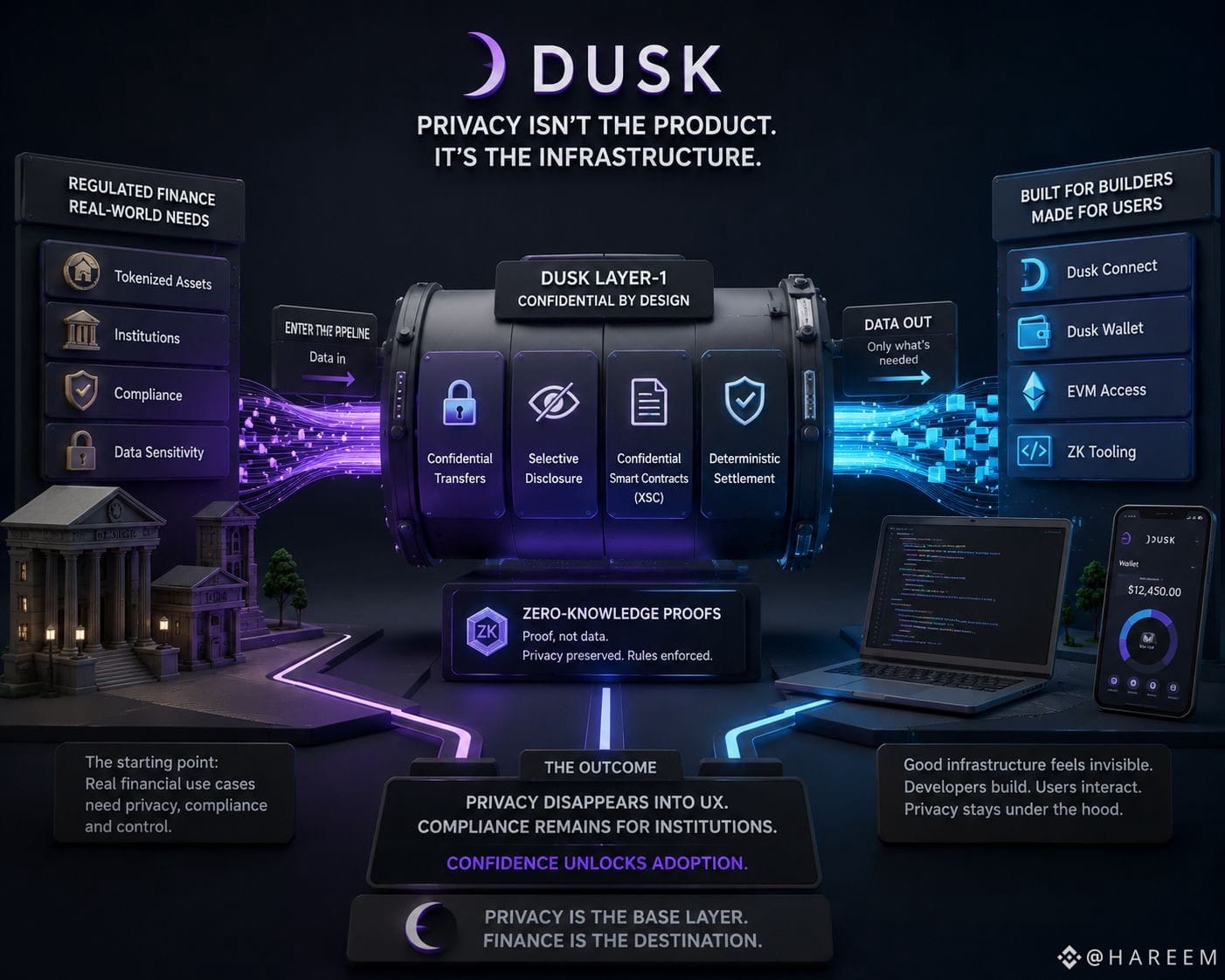
I keep coming back to one question with Dusk: is privacy really the product, or is it the condition that lets financial products exist onchain?
That distinction matters. Dusk is built around regulated assets, selective disclosure and confidential contracts, but the signal I find more interesting is happening around the edges. Dusk Connect and the new wallet are reducing dApp friction, while recent developer work has tightened zk tooling and EVM testing. To me, that looks less like a privacy showcase and more like an attempt to turn difficult cryptography into usable financial infrastructure.
I’ve seen privacy projects solve the hard technical problem, then struggle with the boring one: getting people to use it.
I’m not convinced Dusk has solved adoption. The test is whether confidentiality disappears into UX while compliance stays visible to institutions.
When that happens, privacy stops being the headline. It becomes infrastructure. That’s what I’m watching.
#dusk $DUSK @Dusk
I keep coming back to one question with Dusk: is privacy really the product, or is it the condition that lets financial products exist onchain?
That distinction matters. Dusk is built around regulated assets, selective disclosure and confidential contracts, but the signal I find more interesting is happening around the edges. Dusk Connect and the new wallet are reducing dApp friction, while recent developer work has tightened zk tooling and EVM testing. To me, that looks less like a privacy showcase and more like an attempt to turn difficult cryptography into usable financial infrastructure.
I’ve seen privacy projects solve the hard technical problem, then struggle with the boring one: getting people to use it.
I’m not convinced Dusk has solved adoption. The test is whether confidentiality disappears into UX while compliance stays visible to institutions.
When that happens, privacy stops being the headline. It becomes infrastructure. That’s what I’m watching.
I keep coming back to one question with Dusk: is privacy really the product, or is it the condition that lets financial products exist onchain?
That distinction matters. Dusk is built around regulated assets, selective disclosure and confidential contracts, but the signal I find more interesting is happening around the edges. Dusk Connect and the new wallet are reducing dApp friction, while recent developer work has tightened zk tooling and EVM testing. To me, that looks less like a privacy showcase and more like an attempt to turn difficult cryptography into usable financial infrastructure.
I’ve seen privacy projects solve the hard technical problem, then struggle with the boring one: getting people to use it.
I’m not convinced Dusk has solved adoption. The test is whether confidentiality disappears into UX while compliance stays visible to institutions.
When that happens, privacy stops being the headline. It becomes infrastructure. That’s what I’m watching.
233
·
--
Bullisch
Übersetzung ansehen
#dusk $DUSK @Dusk_Foundation
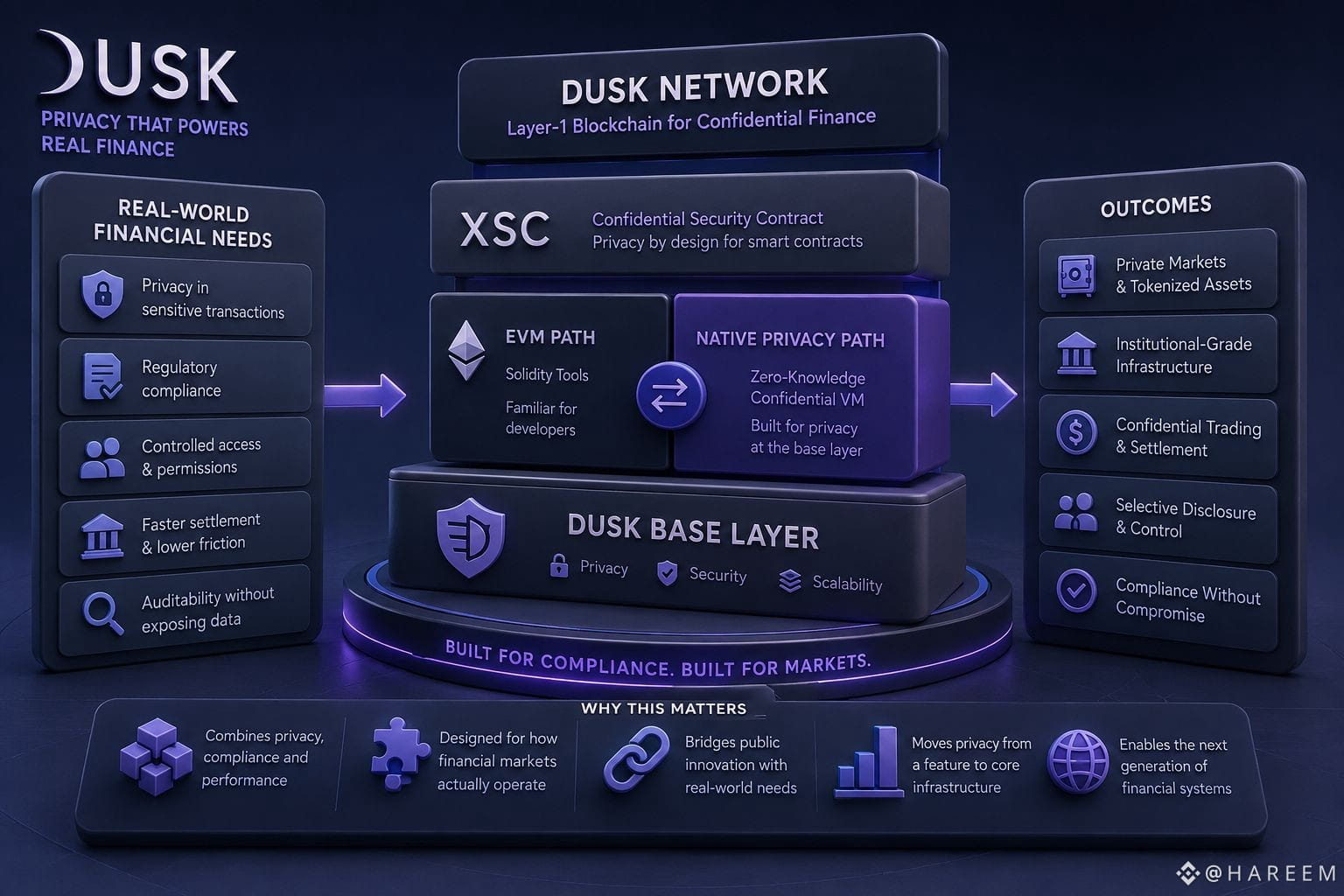
I've started looking at Dusk less as a “privacy chain” and more as a test of whether financial markets actually need a different blockchain design.
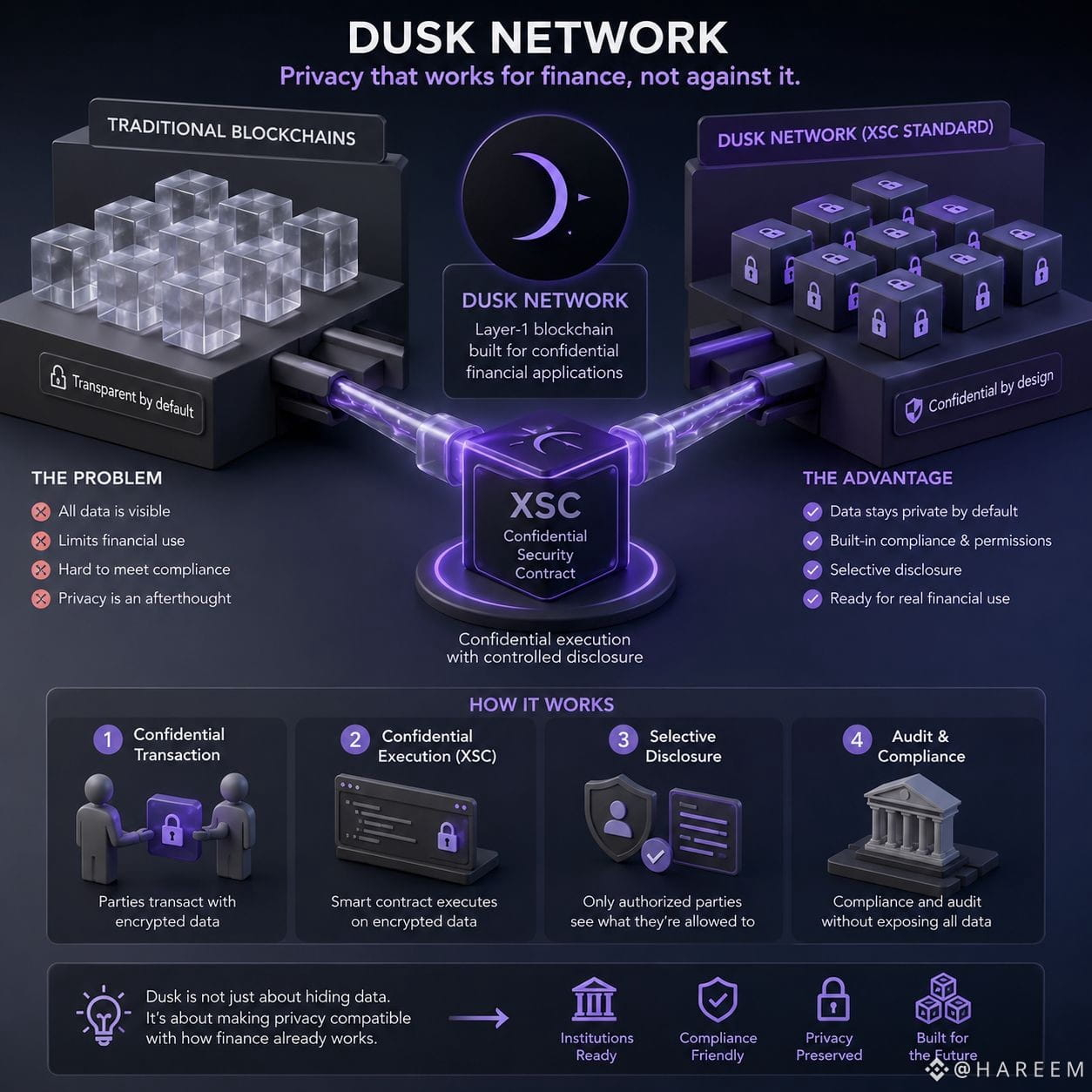
What caught my attention is the direction of the stack. Dusk now has an EVM route for familiar Solidity tooling, while its native VM handles privacy and zero-knowledge flows. At the same time, recent work is leaning harder into regulated securities, private-market financing, trading and settlement. That combination matters more to me than the privacy label itself.
I've seen plenty of chains add privacy, tokenization, or compliance narratives after the fact. The harder problem is making those pieces work together without recreating the same fragmented workflow institutions already use.
Dusk seems to be targeting that gap: eligibility, controlled transfers, selective disclosure and settlement living closer together. I'm still cautious, especially after every cycle has produced another “institutional blockchain” story.
But maybe the useful question isn't whether Dusk can make assets private. It's whether it can remove enough operational friction that financial firms prefer using it. That's the part I’ll be watching.
#dusk $DUSK @Dusk
I've started looking at Dusk less as a “privacy chain” and more as a test of whether financial markets actually need a different blockchain design.
What caught my attention is the direction of the stack. Dusk now has an EVM route for familiar Solidity tooling, while its native VM handles privacy and zero-knowledge flows. At the same time, recent work is leaning harder into regulated securities, private-market financing, trading and settlement. That combination matters more to me than the privacy label itself.
I've seen plenty of chains add privacy, tokenization, or compliance narratives after the fact. The harder problem is making those pieces work together without recreating the same fragmented workflow institutions already use.
Dusk seems to be targeting that gap: eligibility, controlled transfers, selective disclosure and settlement living closer together. I'm still cautious, especially after every cycle has produced another “institutional blockchain” story.
But maybe the useful question isn't whether Dusk can make assets private. It's whether it can remove enough operational friction that financial firms prefer using it. That's the part I’ll be watching.
I've started looking at Dusk less as a “privacy chain” and more as a test of whether financial markets actually need a different blockchain design.
What caught my attention is the direction of the stack. Dusk now has an EVM route for familiar Solidity tooling, while its native VM handles privacy and zero-knowledge flows. At the same time, recent work is leaning harder into regulated securities, private-market financing, trading and settlement. That combination matters more to me than the privacy label itself.
I've seen plenty of chains add privacy, tokenization, or compliance narratives after the fact. The harder problem is making those pieces work together without recreating the same fragmented workflow institutions already use.
Dusk seems to be targeting that gap: eligibility, controlled transfers, selective disclosure and settlement living closer together. I'm still cautious, especially after every cycle has produced another “institutional blockchain” story.
But maybe the useful question isn't whether Dusk can make assets private. It's whether it can remove enough operational friction that financial firms prefer using it. That's the part I’ll be watching.
1
2
134
·
--
Übersetzung ansehen
#dusk $DUSK @Dusk_Foundation
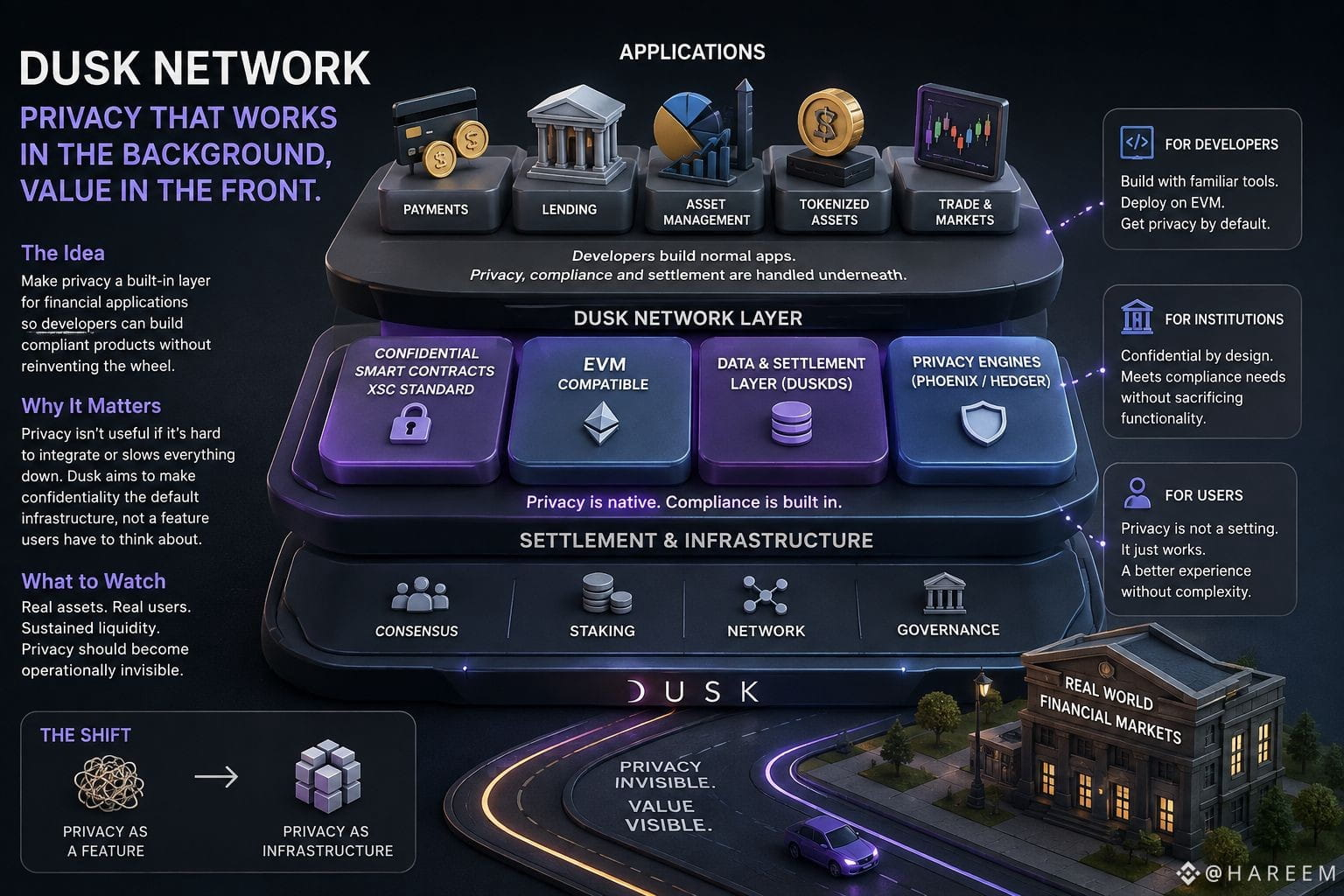
I keep coming back to one question with Dusk: does privacy actually become useful when nobody has to think about it?
That feels more important to me than the usual “privacy blockchain” label. Dusk is building around confidential smart contracts, EVM compatibility, its own settlement architecture, and infrastructure aimed at tokenized financial assets. The recent ecosystem activity around wallets, trading infrastructure and EVM tooling makes that direction easier to see.
But I’ve watched enough cycles to know that good architecture alone doesn’t create a market. The real test is whether developers can build regulated financial products without treating privacy as a separate engineering headache.
That’s where Dusk gets interesting to me. If confidentiality becomes something applications simply inherit from the underlying network, rather than a feature users have to actively choose, the value proposition changes.
I’m not ready to call that proven. Liquidity, users and sustained application activity still matter more than technical diagrams.
But I think the right thing to watch isn’t how loudly Dusk talks about privacy. It’s whether privacy quietly becomes part of the workflow.
#dusk $DUSK @Dusk
I keep coming back to one question with Dusk: does privacy actually become useful when nobody has to think about it?
That feels more important to me than the usual “privacy blockchain” label. Dusk is building around confidential smart contracts, EVM compatibility, its own settlement architecture, and infrastructure aimed at tokenized financial assets. The recent ecosystem activity around wallets, trading infrastructure and EVM tooling makes that direction easier to see.
But I’ve watched enough cycles to know that good architecture alone doesn’t create a market. The real test is whether developers can build regulated financial products without treating privacy as a separate engineering headache.
That’s where Dusk gets interesting to me. If confidentiality becomes something applications simply inherit from the underlying network, rather than a feature users have to actively choose, the value proposition changes.
I’m not ready to call that proven. Liquidity, users and sustained application activity still matter more than technical diagrams.
But I think the right thing to watch isn’t how loudly Dusk talks about privacy. It’s whether privacy quietly becomes part of the workflow.
I keep coming back to one question with Dusk: does privacy actually become useful when nobody has to think about it?
That feels more important to me than the usual “privacy blockchain” label. Dusk is building around confidential smart contracts, EVM compatibility, its own settlement architecture, and infrastructure aimed at tokenized financial assets. The recent ecosystem activity around wallets, trading infrastructure and EVM tooling makes that direction easier to see.
But I’ve watched enough cycles to know that good architecture alone doesn’t create a market. The real test is whether developers can build regulated financial products without treating privacy as a separate engineering headache.
That’s where Dusk gets interesting to me. If confidentiality becomes something applications simply inherit from the underlying network, rather than a feature users have to actively choose, the value proposition changes.
I’m not ready to call that proven. Liquidity, users and sustained application activity still matter more than technical diagrams.
But I think the right thing to watch isn’t how loudly Dusk talks about privacy. It’s whether privacy quietly becomes part of the workflow.
3
3
132
·
--
Übersetzung ansehen
#dusk $DUSK @Dusk_Foundation
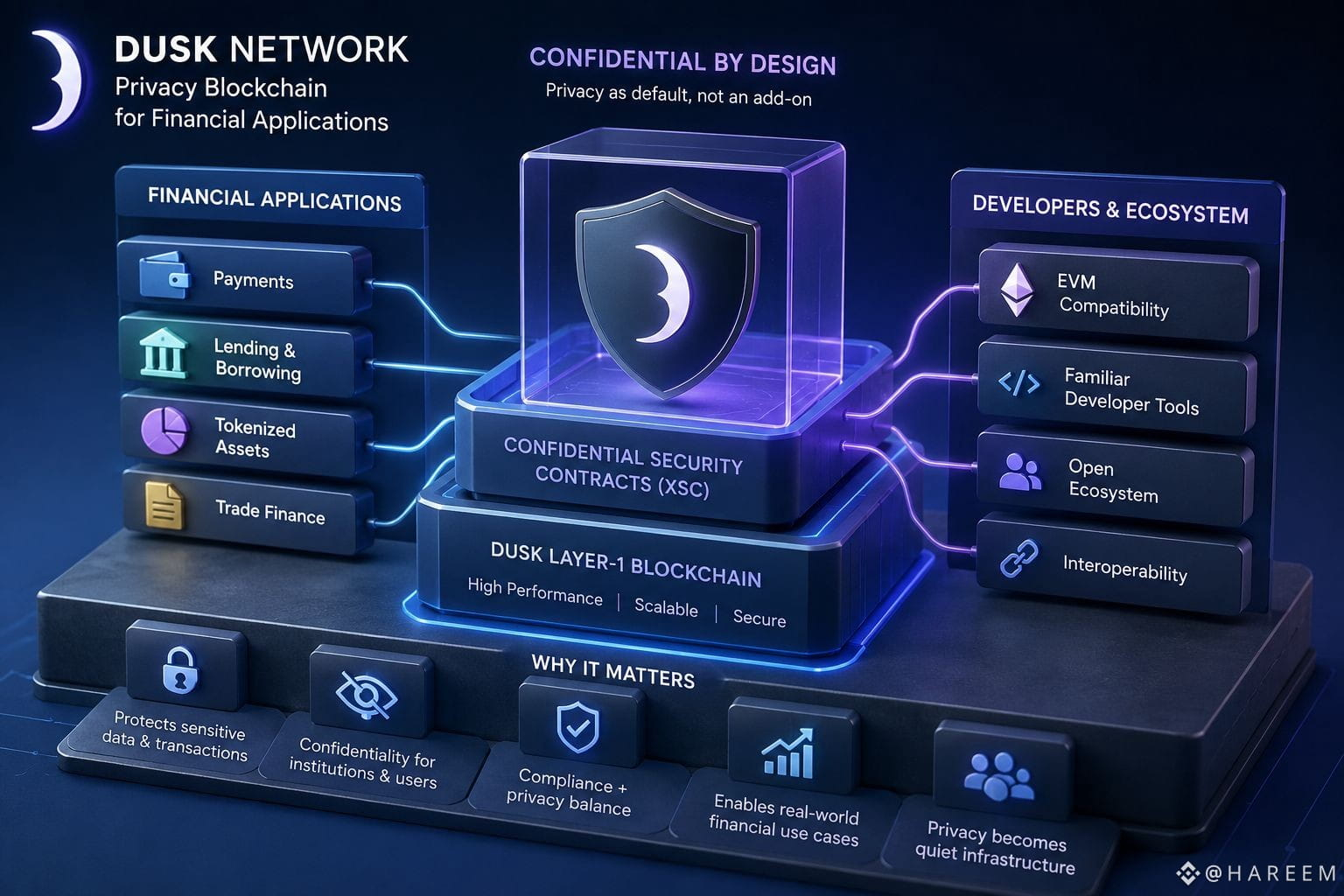
Something about Dusk feels worth watching for a reason that has little to do with the word “privacy.”
I’ve seen this cycle before: a project builds clever infrastructure, the market loves the architecture, then nobody really changes their behavior. The interesting part of Dusk is whether it can avoid that trap by making privacy feel less like a feature and more like the default plumbing for financial activity.
That distinction matters. Financial applications often need confidentiality around balances, transactions, counterparties, and sensitive business logic, but they also need predictable execution, familiar developer tools, and access to a wider ecosystem. Dusk seems to be working toward that balance rather than treating privacy as an isolated technical achievement.
I’m still skeptical. Good infrastructure doesn’t automatically create demand, and the financial market has no shortage of impressive chains that never reached meaningful usage.
What I’m watching is much simpler: do developers eventually choose Dusk because hiding sensitive information is practical, not because privacy is fashionable?
That would be the real signal to me. Privacy becomes valuable when users stop talking about it and simply expect it.
#dusk $DUSK @Dusk
Something about Dusk feels worth watching for a reason that has little to do with the word “privacy.”
I’ve seen this cycle before: a project builds clever infrastructure, the market loves the architecture, then nobody really changes their behavior. The interesting part of Dusk is whether it can avoid that trap by making privacy feel less like a feature and more like the default plumbing for financial activity.
That distinction matters. Financial applications often need confidentiality around balances, transactions, counterparties, and sensitive business logic, but they also need predictable execution, familiar developer tools, and access to a wider ecosystem. Dusk seems to be working toward that balance rather than treating privacy as an isolated technical achievement.
I’m still skeptical. Good infrastructure doesn’t automatically create demand, and the financial market has no shortage of impressive chains that never reached meaningful usage.
What I’m watching is much simpler: do developers eventually choose Dusk because hiding sensitive information is practical, not because privacy is fashionable?
That would be the real signal to me. Privacy becomes valuable when users stop talking about it and simply expect it.
Something about Dusk feels worth watching for a reason that has little to do with the word “privacy.”
I’ve seen this cycle before: a project builds clever infrastructure, the market loves the architecture, then nobody really changes their behavior. The interesting part of Dusk is whether it can avoid that trap by making privacy feel less like a feature and more like the default plumbing for financial activity.
That distinction matters. Financial applications often need confidentiality around balances, transactions, counterparties, and sensitive business logic, but they also need predictable execution, familiar developer tools, and access to a wider ecosystem. Dusk seems to be working toward that balance rather than treating privacy as an isolated technical achievement.
I’m still skeptical. Good infrastructure doesn’t automatically create demand, and the financial market has no shortage of impressive chains that never reached meaningful usage.
What I’m watching is much simpler: do developers eventually choose Dusk because hiding sensitive information is practical, not because privacy is fashionable?
That would be the real signal to me. Privacy becomes valuable when users stop talking about it and simply expect it.
9
8
173
·
--
#dusk $DUSK @Dusk_Foundation
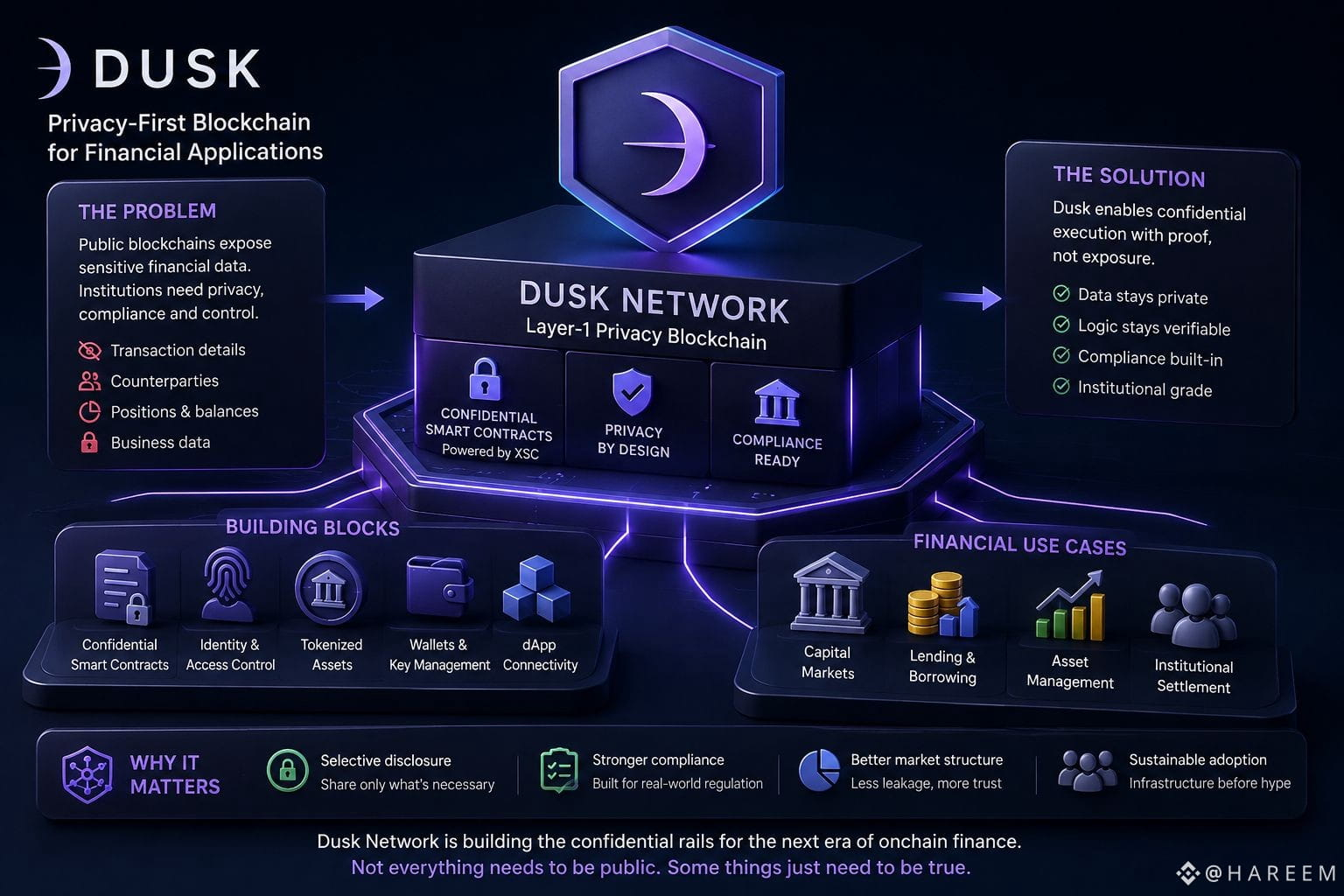
Ich bin schon durch genug Krypto-Zyklen gegangen, um zu wissen, dass „Privatsphäre“ einfach nur ein weiteres Wort werden kann, mit dem Leute um sich werfen, wenn sie eine Erzählung brauchen.
Was Dusk für mich etwas interessanter macht, ist das Problem dahinter. Wenn echte Finanzanlagen onchain bewegt werden, glaube ich nicht, dass jedes Detail automatisch für alle sichtbar sein sollte. Positionen, Identitäten, Transaktionen und sensible Geschäftsdaten können nicht immer im gläsernen Haus leben.
Mir fällt auf, dass Dusk sich auf die weniger aufregenden Teile dieses Puzzles konzentriert: vertrauliche Smart Contracts, Identität, tokenisierte Vermögenswerte, Wallets und die Infrastruktur, die Apps brauchen, um sie tatsächlich zu nutzen.
Ich sage nicht, dass das Adoption garantiert. Das tut es nicht. Ich habe schon viele technisch solide Projekte scheitern sehen, weil sich der Markt schlicht nicht dafür interessiert hat.
Aber ich denke, die bessere Frage für Dusk ist nicht: „Wie groß kann Privatsphäre werden?“ Sondern, ob die Finanzmärkte irgendwann entscheiden, dass selektive Privatsphäre notwendig ist und nicht optional.
Wenn das passiert, könnte Dusks Ansatz im Nachhinein mehr Sinn ergeben. Vorerst beobachte ich die Nutzung, nicht die Versprechen.
#dusk $DUSK @Dusk
Ich bin schon durch genug Krypto-Zyklen gegangen, um zu wissen, dass „Privatsphäre“ einfach nur ein weiteres Wort werden kann, mit dem Leute um sich werfen, wenn sie eine Erzählung brauchen.
Was Dusk für mich etwas interessanter macht, ist das Problem dahinter. Wenn echte Finanzanlagen onchain bewegt werden, glaube ich nicht, dass jedes Detail automatisch für alle sichtbar sein sollte. Positionen, Identitäten, Transaktionen und sensible Geschäftsdaten können nicht immer im gläsernen Haus leben.
Mir fällt auf, dass Dusk sich auf die weniger aufregenden Teile dieses Puzzles konzentriert: vertrauliche Smart Contracts, Identität, tokenisierte Vermögenswerte, Wallets und die Infrastruktur, die Apps brauchen, um sie tatsächlich zu nutzen.
Ich sage nicht, dass das Adoption garantiert. Das tut es nicht. Ich habe schon viele technisch solide Projekte scheitern sehen, weil sich der Markt schlicht nicht dafür interessiert hat.
Aber ich denke, die bessere Frage für Dusk ist nicht: „Wie groß kann Privatsphäre werden?“ Sondern, ob die Finanzmärkte irgendwann entscheiden, dass selektive Privatsphäre notwendig ist und nicht optional.
Wenn das passiert, könnte Dusks Ansatz im Nachhinein mehr Sinn ergeben. Vorerst beobachte ich die Nutzung, nicht die Versprechen.
Ich bin schon durch genug Krypto-Zyklen gegangen, um zu wissen, dass „Privatsphäre“ einfach nur ein weiteres Wort werden kann, mit dem Leute um sich werfen, wenn sie eine Erzählung brauchen.
Was Dusk für mich etwas interessanter macht, ist das Problem dahinter. Wenn echte Finanzanlagen onchain bewegt werden, glaube ich nicht, dass jedes Detail automatisch für alle sichtbar sein sollte. Positionen, Identitäten, Transaktionen und sensible Geschäftsdaten können nicht immer im gläsernen Haus leben.
Mir fällt auf, dass Dusk sich auf die weniger aufregenden Teile dieses Puzzles konzentriert: vertrauliche Smart Contracts, Identität, tokenisierte Vermögenswerte, Wallets und die Infrastruktur, die Apps brauchen, um sie tatsächlich zu nutzen.
Ich sage nicht, dass das Adoption garantiert. Das tut es nicht. Ich habe schon viele technisch solide Projekte scheitern sehen, weil sich der Markt schlicht nicht dafür interessiert hat.
Aber ich denke, die bessere Frage für Dusk ist nicht: „Wie groß kann Privatsphäre werden?“ Sondern, ob die Finanzmärkte irgendwann entscheiden, dass selektive Privatsphäre notwendig ist und nicht optional.
Wenn das passiert, könnte Dusks Ansatz im Nachhinein mehr Sinn ergeben. Vorerst beobachte ich die Nutzung, nicht die Versprechen.
19
15
162
·
--
Übersetzung ansehen
#dusk $DUSK @Dusk_Foundation
I’ve started thinking about Dusk a little differently.
At first, the privacy angle sounded like the usual crypto story. Then I looked closer and realized the harder problem isn’t making transactions private. It’s making them private without making the whole system impossible to verify.
That distinction matters.
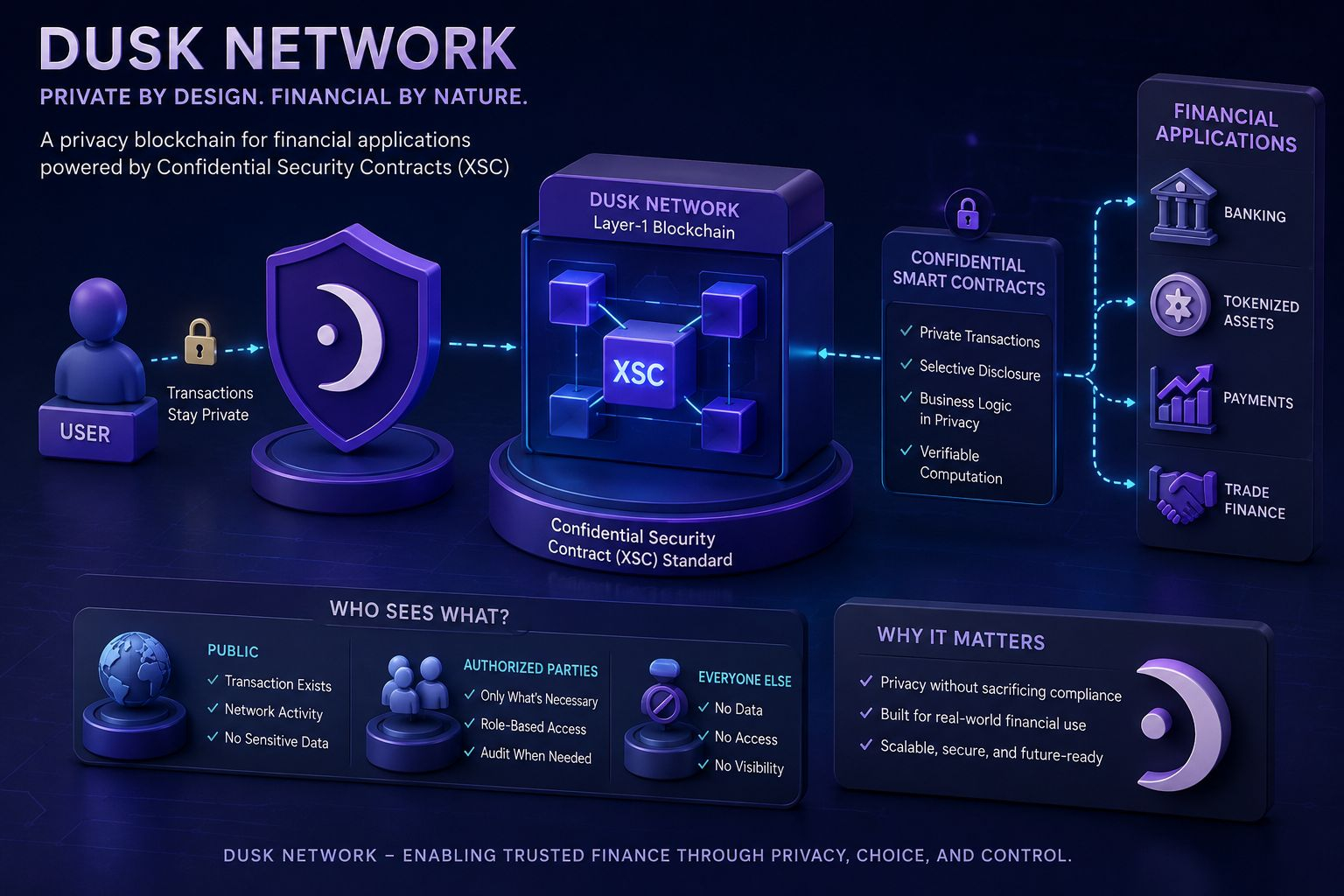
Dusk lets different kinds of activity have different visibility: public accounts, shielded transfers, and selective disclosure when someone actually needs proof. Its XSC standard pushes that idea into confidential smart contracts, while DuskEVM gives developers a more familiar route into the ecosystem.
I keep coming back to that balance because financial markets have never really been “fully transparent.” They run on controlled information.
The recent push around Dusk Connect, the new wallet, and the broader EVM direction makes me more interested in whether the infrastructure can become usable, not just technically impressive.
I’m still cautious. A good design doesn’t automatically create demand. But if Dusk can make privacy feel like a normal part of financial infrastructure rather than a special feature, that’s where I think the real thesis starts.
#dusk $DUSK @Dusk
I’ve started thinking about Dusk a little differently.
At first, the privacy angle sounded like the usual crypto story. Then I looked closer and realized the harder problem isn’t making transactions private. It’s making them private without making the whole system impossible to verify.
That distinction matters.
Dusk lets different kinds of activity have different visibility: public accounts, shielded transfers, and selective disclosure when someone actually needs proof. Its XSC standard pushes that idea into confidential smart contracts, while DuskEVM gives developers a more familiar route into the ecosystem.
I keep coming back to that balance because financial markets have never really been “fully transparent.” They run on controlled information.
The recent push around Dusk Connect, the new wallet, and the broader EVM direction makes me more interested in whether the infrastructure can become usable, not just technically impressive.
I’m still cautious. A good design doesn’t automatically create demand. But if Dusk can make privacy feel like a normal part of financial infrastructure rather than a special feature, that’s where I think the real thesis starts.
I’ve started thinking about Dusk a little differently.
At first, the privacy angle sounded like the usual crypto story. Then I looked closer and realized the harder problem isn’t making transactions private. It’s making them private without making the whole system impossible to verify.
That distinction matters.
Dusk lets different kinds of activity have different visibility: public accounts, shielded transfers, and selective disclosure when someone actually needs proof. Its XSC standard pushes that idea into confidential smart contracts, while DuskEVM gives developers a more familiar route into the ecosystem.
I keep coming back to that balance because financial markets have never really been “fully transparent.” They run on controlled information.
The recent push around Dusk Connect, the new wallet, and the broader EVM direction makes me more interested in whether the infrastructure can become usable, not just technically impressive.
I’m still cautious. A good design doesn’t automatically create demand. But if Dusk can make privacy feel like a normal part of financial infrastructure rather than a special feature, that’s where I think the real thesis starts.
5
2
124
·
--
Übersetzung ansehen
#dusk $DUSK @Dusk_Foundation
I’ve been watching Dusk for a while, and I think the interesting part isn’t simply “privacy on a blockchain.” That phrase has been used so many times that it barely tells me anything anymore.
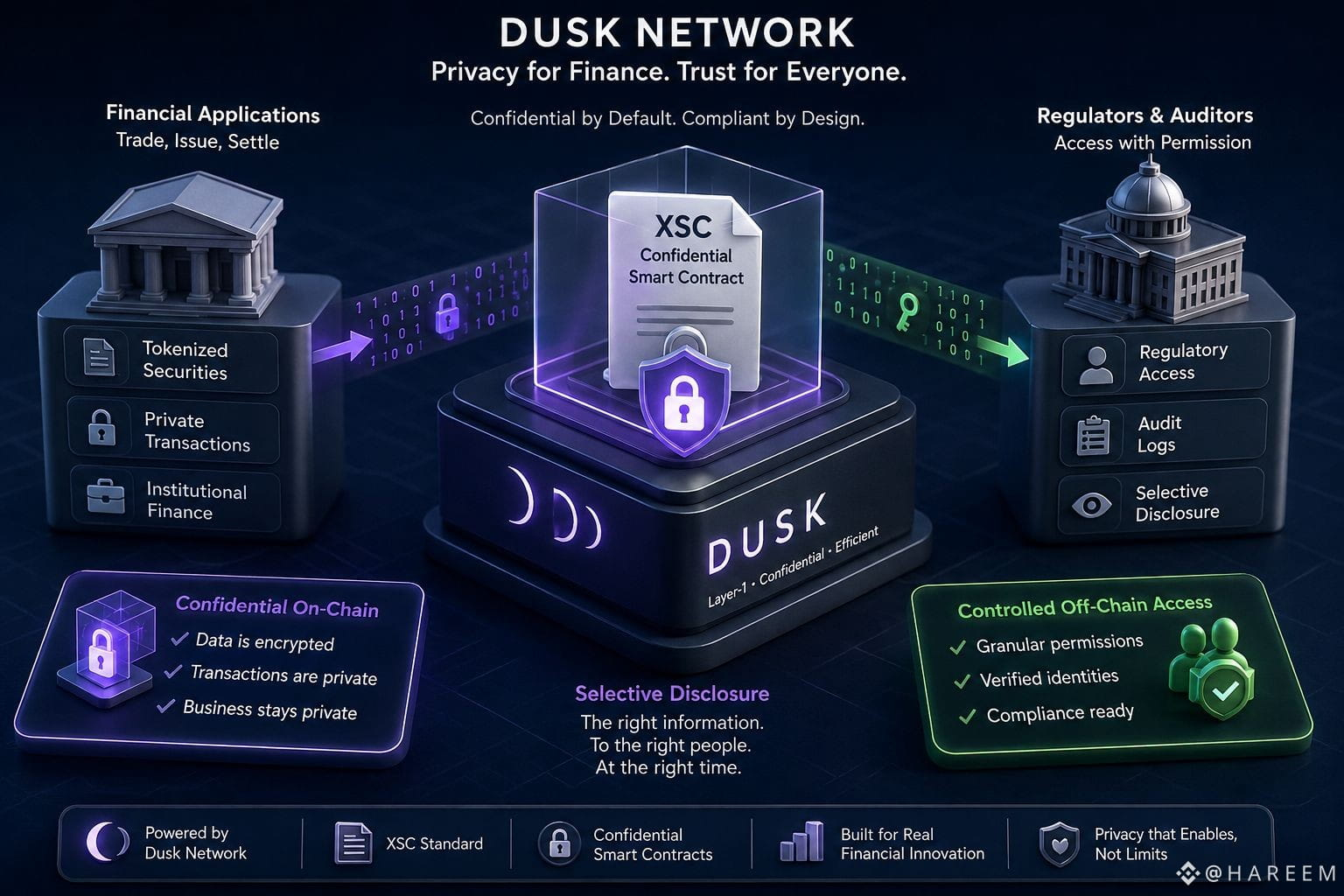
What catches my attention is the problem Dusk is trying to sit between: financial markets need confidentiality, but they also need rules, verification, and controlled access to information. You can’t realistically put every trade, balance, or business detail in full public view and expect serious financial institutions to be comfortable with it.
That’s where the XSC approach and confidential smart contracts start to make more sense to me. Recent work around Dusk’s wallet, Dusk Connect, and its growing focus on tokenized financial assets makes the idea feel less theoretical.
But I’m still not convinced. I’ve seen this cycle before: partnerships get announced, narratives get louder, and actual usage stays quiet.
So I’m not watching Dusk for hype. I’m watching to see if it can make privacy feel boring and practical. If financial applications eventually use confidential blockchain infrastructure without users even thinking about it, that would be far more meaningful than another short-lived crypto narrative.
#dusk $DUSK @Dusk
I’ve been watching Dusk for a while, and I think the interesting part isn’t simply “privacy on a blockchain.” That phrase has been used so many times that it barely tells me anything anymore.
What catches my attention is the problem Dusk is trying to sit between: financial markets need confidentiality, but they also need rules, verification, and controlled access to information. You can’t realistically put every trade, balance, or business detail in full public view and expect serious financial institutions to be comfortable with it.
That’s where the XSC approach and confidential smart contracts start to make more sense to me. Recent work around Dusk’s wallet, Dusk Connect, and its growing focus on tokenized financial assets makes the idea feel less theoretical.
But I’m still not convinced. I’ve seen this cycle before: partnerships get announced, narratives get louder, and actual usage stays quiet.
So I’m not watching Dusk for hype. I’m watching to see if it can make privacy feel boring and practical. If financial applications eventually use confidential blockchain infrastructure without users even thinking about it, that would be far more meaningful than another short-lived crypto narrative.
I’ve been watching Dusk for a while, and I think the interesting part isn’t simply “privacy on a blockchain.” That phrase has been used so many times that it barely tells me anything anymore.
What catches my attention is the problem Dusk is trying to sit between: financial markets need confidentiality, but they also need rules, verification, and controlled access to information. You can’t realistically put every trade, balance, or business detail in full public view and expect serious financial institutions to be comfortable with it.
That’s where the XSC approach and confidential smart contracts start to make more sense to me. Recent work around Dusk’s wallet, Dusk Connect, and its growing focus on tokenized financial assets makes the idea feel less theoretical.
But I’m still not convinced. I’ve seen this cycle before: partnerships get announced, narratives get louder, and actual usage stays quiet.
So I’m not watching Dusk for hype. I’m watching to see if it can make privacy feel boring and practical. If financial applications eventually use confidential blockchain infrastructure without users even thinking about it, that would be far more meaningful than another short-lived crypto narrative.
3
3
103
·
--
Übersetzung ansehen
#dusk $DUSK @Dusk_Foundation
I’ve seen the privacy narrative come around in crypto more times than I can count. Usually it starts with a strong idea, then slowly turns into another list of technical features. That’s why I’m looking at Dusk a little differently.
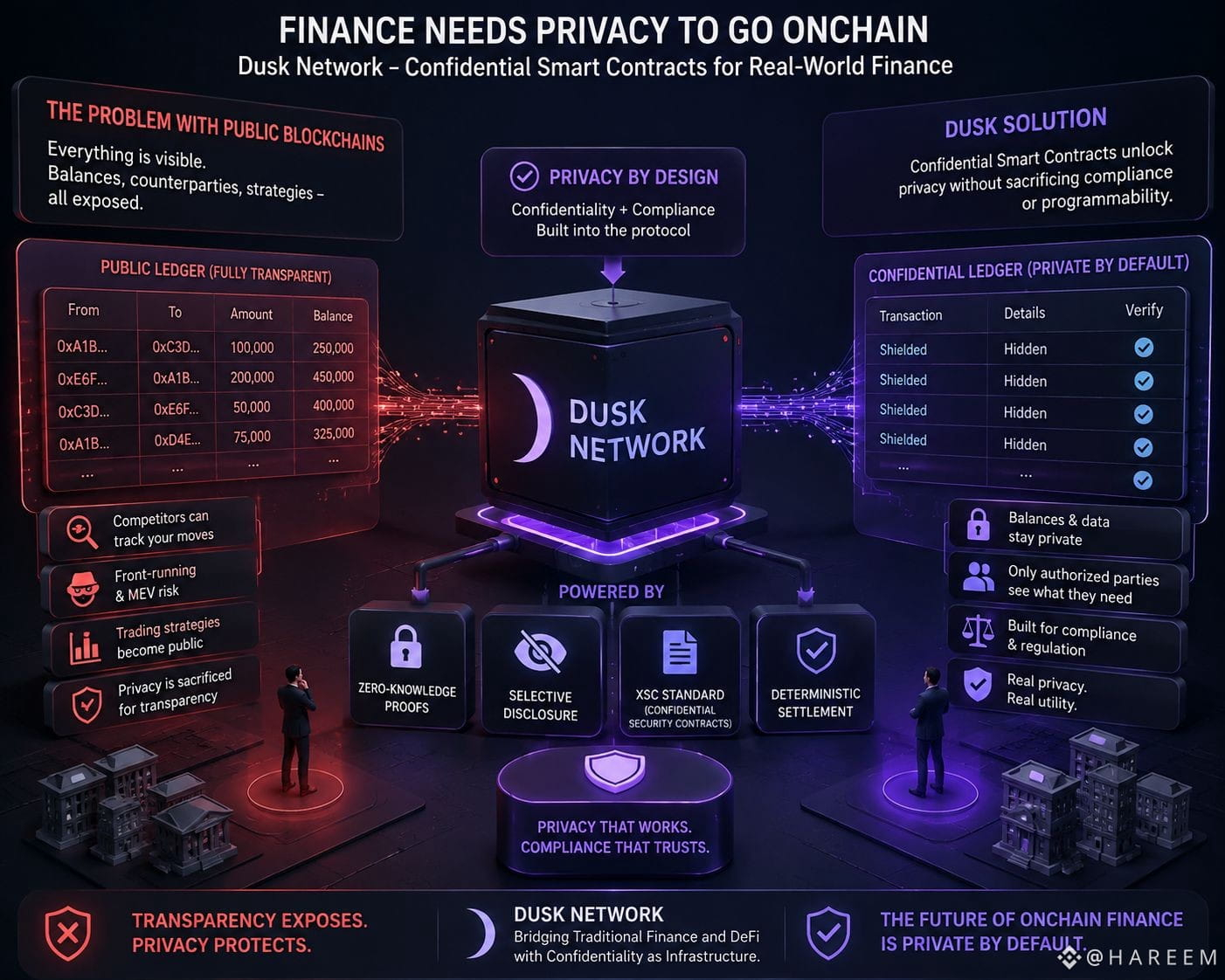
What interests me isn’t simply that Dusk wants transactions to be private. It’s the problem underneath that idea: financial markets can’t realistically put every balance, trade and business relationship on a public ledger and expect serious participants to be comfortable with that.
Dusk is trying to build around this with confidential smart contracts, zero-knowledge proofs, selective disclosure and its XSC framework for financial assets. I like the direction, but I’m not ready to call it a success. Crypto has plenty of projects with impressive architecture that never found real users.
I keep coming back to one simple question: what happens when institutions want the benefits of blockchain without turning their financial activity into public data?
If Dusk can answer that in practice, privacy stops being a narrative. It becomes part of the infrastructure people actually need.
#dusk $DUSK @Dusk
I’ve seen the privacy narrative come around in crypto more times than I can count. Usually it starts with a strong idea, then slowly turns into another list of technical features. That’s why I’m looking at Dusk a little differently.
What interests me isn’t simply that Dusk wants transactions to be private. It’s the problem underneath that idea: financial markets can’t realistically put every balance, trade and business relationship on a public ledger and expect serious participants to be comfortable with that.
Dusk is trying to build around this with confidential smart contracts, zero-knowledge proofs, selective disclosure and its XSC framework for financial assets. I like the direction, but I’m not ready to call it a success. Crypto has plenty of projects with impressive architecture that never found real users.
I keep coming back to one simple question: what happens when institutions want the benefits of blockchain without turning their financial activity into public data?
If Dusk can answer that in practice, privacy stops being a narrative. It becomes part of the infrastructure people actually need.
I’ve seen the privacy narrative come around in crypto more times than I can count. Usually it starts with a strong idea, then slowly turns into another list of technical features. That’s why I’m looking at Dusk a little differently.
What interests me isn’t simply that Dusk wants transactions to be private. It’s the problem underneath that idea: financial markets can’t realistically put every balance, trade and business relationship on a public ledger and expect serious participants to be comfortable with that.
Dusk is trying to build around this with confidential smart contracts, zero-knowledge proofs, selective disclosure and its XSC framework for financial assets. I like the direction, but I’m not ready to call it a success. Crypto has plenty of projects with impressive architecture that never found real users.
I keep coming back to one simple question: what happens when institutions want the benefits of blockchain without turning their financial activity into public data?
If Dusk can answer that in practice, privacy stops being a narrative. It becomes part of the infrastructure people actually need.
3
3
111
·
--
Übersetzung ansehen
#dusk $DUSK @Dusk_Foundation
I’ve become more skeptical of privacy-chain narratives after watching enough cycles. “Private” sounds useful, but in finance the harder question is what you can prove without exposing everything. That’s where Dusk gets my attention.
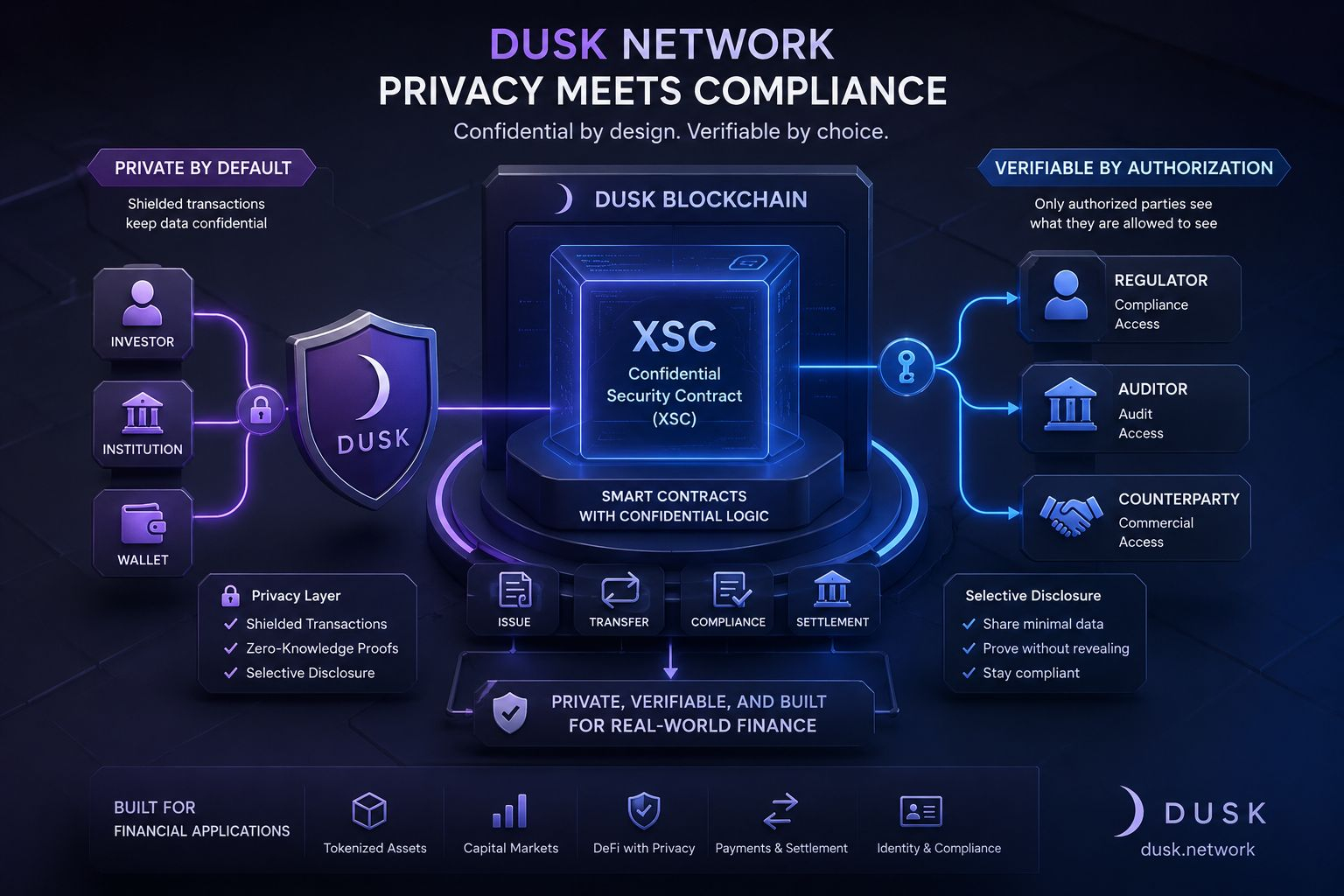
Its XSC model treats confidentiality as part of the contract, with controlled access to encrypted information. Recent work around Dusk Trade, tokenized assets, identity and settlement makes the idea more practical than simply building another chain where transactions are harder to see.
I’m not saying Dusk has solved it. We’ve all watched technically impressive networks struggle to find users. What interests me is whether privacy can become infrastructure rather than a feature.
If regulated markets move onchain, they won’t want every position exposed. But they also won’t accept a black box. Dusk is trying to sit in that middle.
That’s what I’m watching: whether privacy and verification can work together well enough for finance to care.
#dusk $DUSK @Dusk
I’ve become more skeptical of privacy-chain narratives after watching enough cycles. “Private” sounds useful, but in finance the harder question is what you can prove without exposing everything. That’s where Dusk gets my attention.
Its XSC model treats confidentiality as part of the contract, with controlled access to encrypted information. Recent work around Dusk Trade, tokenized assets, identity and settlement makes the idea more practical than simply building another chain where transactions are harder to see.
I’m not saying Dusk has solved it. We’ve all watched technically impressive networks struggle to find users. What interests me is whether privacy can become infrastructure rather than a feature.
If regulated markets move onchain, they won’t want every position exposed. But they also won’t accept a black box. Dusk is trying to sit in that middle.
That’s what I’m watching: whether privacy and verification can work together well enough for finance to care.
I’ve become more skeptical of privacy-chain narratives after watching enough cycles. “Private” sounds useful, but in finance the harder question is what you can prove without exposing everything. That’s where Dusk gets my attention.
Its XSC model treats confidentiality as part of the contract, with controlled access to encrypted information. Recent work around Dusk Trade, tokenized assets, identity and settlement makes the idea more practical than simply building another chain where transactions are harder to see.
I’m not saying Dusk has solved it. We’ve all watched technically impressive networks struggle to find users. What interests me is whether privacy can become infrastructure rather than a feature.
If regulated markets move onchain, they won’t want every position exposed. But they also won’t accept a black box. Dusk is trying to sit in that middle.
That’s what I’m watching: whether privacy and verification can work together well enough for finance to care.
7
3
137
·
--
Bullisch
Übersetzung ansehen
#dusk $DUSK @Dusk_Foundation
I’ve seen the privacy narrative come and go enough times that I don’t get excited just because a project says “confidential finance.”
What keeps me looking at Dusk is a little different.
The real problem isn’t hiding everything. Financial systems can’t work that way. Someone still needs to verify ownership, enforce rules, settle transactions and know what they’re actually allowed to see. The interesting question is whether you can do all of that without turning every user’s financial activity into public data.
That’s where Dusk’s XSC approach and confidential contracts start to make more sense to me. And the recent focus on things like Dusk Connect, wallet infrastructure and security work makes me think the team understands that the hard part isn’t just building privacy technology. It’s making the whole experience usable and trustworthy.
I’m still skeptical. I’ve watched too many projects confuse clever technology with real adoption.
But Dusk has a more interesting test ahead: can privacy become something users barely think about?
If it can, that’s when I’d start paying much closer attention.
#dusk $DUSK @Dusk
I’ve seen the privacy narrative come and go enough times that I don’t get excited just because a project says “confidential finance.”
What keeps me looking at Dusk is a little different.
The real problem isn’t hiding everything. Financial systems can’t work that way. Someone still needs to verify ownership, enforce rules, settle transactions and know what they’re actually allowed to see. The interesting question is whether you can do all of that without turning every user’s financial activity into public data.
That’s where Dusk’s XSC approach and confidential contracts start to make more sense to me. And the recent focus on things like Dusk Connect, wallet infrastructure and security work makes me think the team understands that the hard part isn’t just building privacy technology. It’s making the whole experience usable and trustworthy.
I’m still skeptical. I’ve watched too many projects confuse clever technology with real adoption.
But Dusk has a more interesting test ahead: can privacy become something users barely think about?
If it can, that’s when I’d start paying much closer attention.
I’ve seen the privacy narrative come and go enough times that I don’t get excited just because a project says “confidential finance.”
What keeps me looking at Dusk is a little different.
The real problem isn’t hiding everything. Financial systems can’t work that way. Someone still needs to verify ownership, enforce rules, settle transactions and know what they’re actually allowed to see. The interesting question is whether you can do all of that without turning every user’s financial activity into public data.
That’s where Dusk’s XSC approach and confidential contracts start to make more sense to me. And the recent focus on things like Dusk Connect, wallet infrastructure and security work makes me think the team understands that the hard part isn’t just building privacy technology. It’s making the whole experience usable and trustworthy.
I’m still skeptical. I’ve watched too many projects confuse clever technology with real adoption.
But Dusk has a more interesting test ahead: can privacy become something users barely think about?
If it can, that’s when I’d start paying much closer attention.
5
5
139
·
--
Bullisch
Übersetzung ansehen
#dusk $DUSK @Dusk_Foundation
I’ve been thinking about Dusk a little differently lately.
Privacy sounds simple until you put real financial activity into the picture. You don’t just want everything hidden. You still need rules, permissions, compliance, and some way to prove what happened without exposing everything behind it.
That’s the part I find interesting about Dusk.
The XSC approach is basically trying to make confidentiality part of how financial contracts work, instead of treating privacy like an extra layer added later. I like that direction, but I’m not ready to assume it works just because the architecture looks good on paper.
I’ve seen this before with crypto projects: strong technology gets attention, but the harder test comes when developers have to build something people actually use.
So I’m watching the ecosystem more than the narrative.
If developers eventually start using confidential execution simply because it makes financial products easier to build, that would matter to me far more than another privacy statistic.
For Dusk, the interesting question isn’t “Can blockchain be private?”
It’s whether privacy can become normal financial infrastructure.
#dusk $DUSK @Dusk
I’ve been thinking about Dusk a little differently lately.
Privacy sounds simple until you put real financial activity into the picture. You don’t just want everything hidden. You still need rules, permissions, compliance, and some way to prove what happened without exposing everything behind it.
That’s the part I find interesting about Dusk.
The XSC approach is basically trying to make confidentiality part of how financial contracts work, instead of treating privacy like an extra layer added later. I like that direction, but I’m not ready to assume it works just because the architecture looks good on paper.
I’ve seen this before with crypto projects: strong technology gets attention, but the harder test comes when developers have to build something people actually use.
So I’m watching the ecosystem more than the narrative.
If developers eventually start using confidential execution simply because it makes financial products easier to build, that would matter to me far more than another privacy statistic.
For Dusk, the interesting question isn’t “Can blockchain be private?”
It’s whether privacy can become normal financial infrastructure.
I’ve been thinking about Dusk a little differently lately.
Privacy sounds simple until you put real financial activity into the picture. You don’t just want everything hidden. You still need rules, permissions, compliance, and some way to prove what happened without exposing everything behind it.
That’s the part I find interesting about Dusk.
The XSC approach is basically trying to make confidentiality part of how financial contracts work, instead of treating privacy like an extra layer added later. I like that direction, but I’m not ready to assume it works just because the architecture looks good on paper.
I’ve seen this before with crypto projects: strong technology gets attention, but the harder test comes when developers have to build something people actually use.
So I’m watching the ecosystem more than the narrative.
If developers eventually start using confidential execution simply because it makes financial products easier to build, that would matter to me far more than another privacy statistic.
For Dusk, the interesting question isn’t “Can blockchain be private?”
It’s whether privacy can become normal financial infrastructure.
6
6
124
·
--
Bullisch
#baby $BABY @babylonlabs_io
Ich habe Babylon in letzter Zeit ein wenig anders betrachtet. Die meisten Gespräche drehen sich noch immer um TVL, Staking-Zahlen oder darum, ob Bitcoin überhaupt in die Sicherung anderer Netzwerke einbezogen werden sollte. Das sind berechtigte Fragen, aber ich bin nicht sicher, ob sie wirklich an den Kern dessen herankommen, was hier tatsächlich getestet wird.
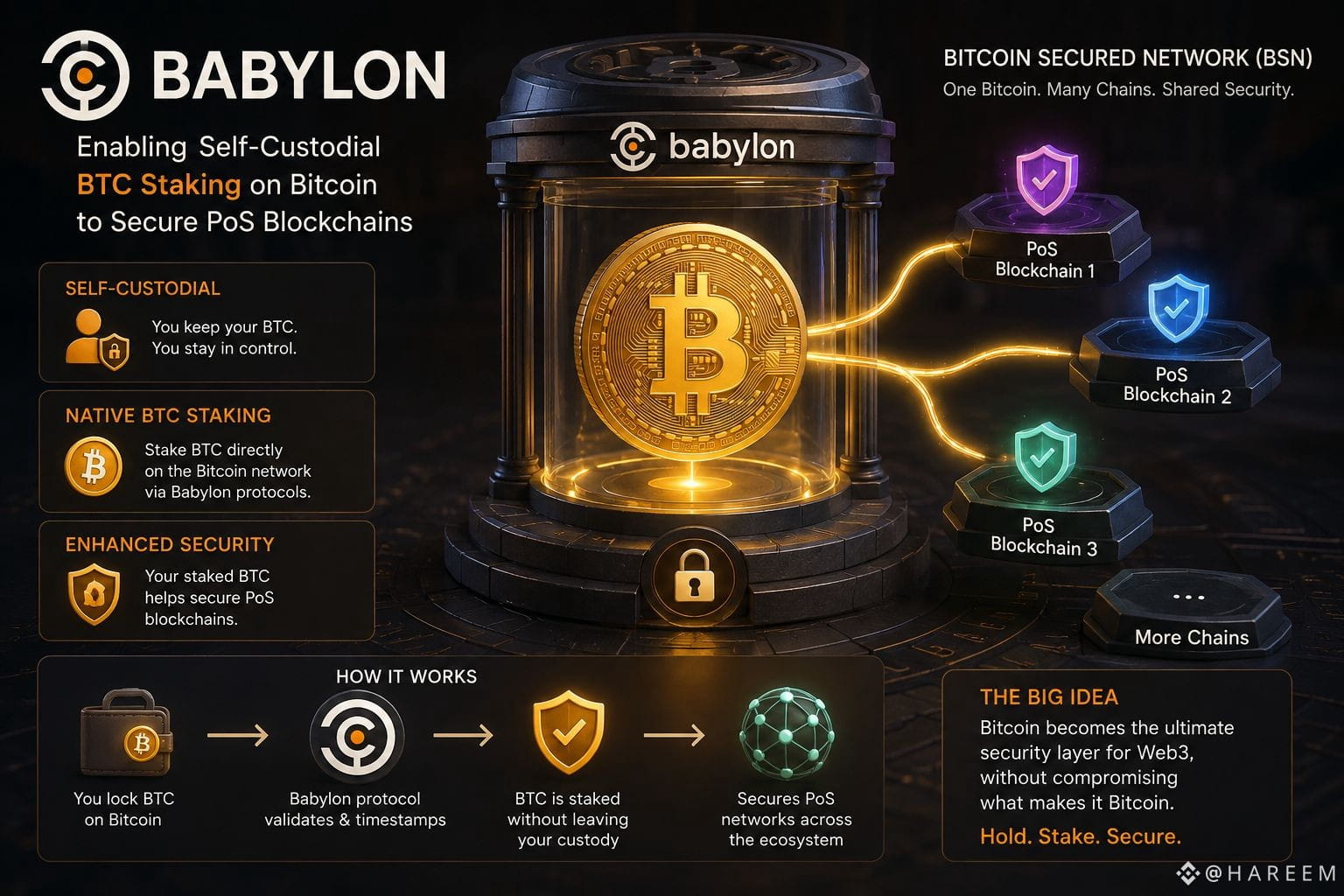
Was mich immer wieder einholt, ist menschliches Verhalten. Bitcoin-Inhaber wurden über Jahre hinweg darauf konditioniert, genau eine Sache zu tun: ihre Coins zu halten und unnötige Risiken zu vermeiden. Babylon stellt dieses Mindset still und leise infrage, indem es eine andere Frage aufwirft: Was, wenn dein BTC zur Netzwerksicherheit beitragen könnte, ohne auf das Prinzip der Selbstverwahrung zu verzichten? Das ist eine viel größere Veränderung, als es klingt, weil es dabei nicht nur um Technologie geht—sondern um Vertrauen.
Ich habe schon viele Krypto-Projekte gesehen, die beeindruckende Kennzahlen hatten und dann verschwanden, sobald die Anreize nachließen. Liquidität ist leicht anzuziehen, wenn Belohnungen hoch sind. Langfristiges Verhalten zu verändern ist viel schwieriger. Deshalb finde ich Babylon interessant. Der jüngste Fortschritt rund um BABY-Staking und die breitere Vision des Bitcoin Secured Network ist für mich weniger entscheidend als die Frage, ob Menschen weiterhin teilnehmen, nachdem die anfängliche Aufregung abgeklungen ist.
Vielleicht ist das ja das eigentliche Experiment. Wenn Bitcoin sich von einem bloßen Wertaufbewahrungsmittel hin zu einer aktiven Quelle dezentraler Sicherheit weiterentwickelt—ohne die Prinzipien zu kompromittieren, die es überhaupt so wertvoll gemacht haben—dann würde sich das wie echter Fortschritt anfühlen. Wenn nicht, wird es am Ende nur noch eine weitere Erzählung sein, die größer aussah, als sie wirklich war.
#baby $BABY @BabylonLabs_io
Ich habe Babylon in letzter Zeit ein wenig anders betrachtet. Die meisten Gespräche drehen sich noch immer um TVL, Staking-Zahlen oder darum, ob Bitcoin überhaupt in die Sicherung anderer Netzwerke einbezogen werden sollte. Das sind berechtigte Fragen, aber ich bin nicht sicher, ob sie wirklich an den Kern dessen herankommen, was hier tatsächlich getestet wird.
Was mich immer wieder einholt, ist menschliches Verhalten. Bitcoin-Inhaber wurden über Jahre hinweg darauf konditioniert, genau eine Sache zu tun: ihre Coins zu halten und unnötige Risiken zu vermeiden. Babylon stellt dieses Mindset still und leise infrage, indem es eine andere Frage aufwirft: Was, wenn dein BTC zur Netzwerksicherheit beitragen könnte, ohne auf das Prinzip der Selbstverwahrung zu verzichten? Das ist eine viel größere Veränderung, als es klingt, weil es dabei nicht nur um Technologie geht—sondern um Vertrauen.
Ich habe schon viele Krypto-Projekte gesehen, die beeindruckende Kennzahlen hatten und dann verschwanden, sobald die Anreize nachließen. Liquidität ist leicht anzuziehen, wenn Belohnungen hoch sind. Langfristiges Verhalten zu verändern ist viel schwieriger. Deshalb finde ich Babylon interessant. Der jüngste Fortschritt rund um BABY-Staking und die breitere Vision des Bitcoin Secured Network ist für mich weniger entscheidend als die Frage, ob Menschen weiterhin teilnehmen, nachdem die anfängliche Aufregung abgeklungen ist.
Vielleicht ist das ja das eigentliche Experiment. Wenn Bitcoin sich von einem bloßen Wertaufbewahrungsmittel hin zu einer aktiven Quelle dezentraler Sicherheit weiterentwickelt—ohne die Prinzipien zu kompromittieren, die es überhaupt so wertvoll gemacht haben—dann würde sich das wie echter Fortschritt anfühlen. Wenn nicht, wird es am Ende nur noch eine weitere Erzählung sein, die größer aussah, als sie wirklich war.
Ich habe Babylon in letzter Zeit ein wenig anders betrachtet. Die meisten Gespräche drehen sich noch immer um TVL, Staking-Zahlen oder darum, ob Bitcoin überhaupt in die Sicherung anderer Netzwerke einbezogen werden sollte. Das sind berechtigte Fragen, aber ich bin nicht sicher, ob sie wirklich an den Kern dessen herankommen, was hier tatsächlich getestet wird.
Was mich immer wieder einholt, ist menschliches Verhalten. Bitcoin-Inhaber wurden über Jahre hinweg darauf konditioniert, genau eine Sache zu tun: ihre Coins zu halten und unnötige Risiken zu vermeiden. Babylon stellt dieses Mindset still und leise infrage, indem es eine andere Frage aufwirft: Was, wenn dein BTC zur Netzwerksicherheit beitragen könnte, ohne auf das Prinzip der Selbstverwahrung zu verzichten? Das ist eine viel größere Veränderung, als es klingt, weil es dabei nicht nur um Technologie geht—sondern um Vertrauen.
Ich habe schon viele Krypto-Projekte gesehen, die beeindruckende Kennzahlen hatten und dann verschwanden, sobald die Anreize nachließen. Liquidität ist leicht anzuziehen, wenn Belohnungen hoch sind. Langfristiges Verhalten zu verändern ist viel schwieriger. Deshalb finde ich Babylon interessant. Der jüngste Fortschritt rund um BABY-Staking und die breitere Vision des Bitcoin Secured Network ist für mich weniger entscheidend als die Frage, ob Menschen weiterhin teilnehmen, nachdem die anfängliche Aufregung abgeklungen ist.
Vielleicht ist das ja das eigentliche Experiment. Wenn Bitcoin sich von einem bloßen Wertaufbewahrungsmittel hin zu einer aktiven Quelle dezentraler Sicherheit weiterentwickelt—ohne die Prinzipien zu kompromittieren, die es überhaupt so wertvoll gemacht haben—dann würde sich das wie echter Fortschritt anfühlen. Wenn nicht, wird es am Ende nur noch eine weitere Erzählung sein, die größer aussah, als sie wirklich war.
92
38
680
·
--
Bullisch
#baby $BABY @babylonlabs_io
Ich habe Babylon in letzter Zeit ein wenig anders betrachtet. Alle scheinen sich darauf zu konzentrieren, wie viel BTC gestaked wird oder wie schnell das Ökosystem wächst, aber ich glaube nicht, dass diese Zahlen die ganze Geschichte erzählen.
Was meine Aufmerksamkeit fesselt, ist eine viel einfachere Frage: Wenn die Belohnungen morgen weniger attraktiv würden, würden die Menschen dann immer noch einen Wert darin sehen, es zu nutzen? Ich habe genug Krypto-Zyklen gesehen, um zu wissen, dass Einzahlungen für Anreize auftauchen können, aber das Dabeibleiben erfordert normalerweise etwas Tieferes.
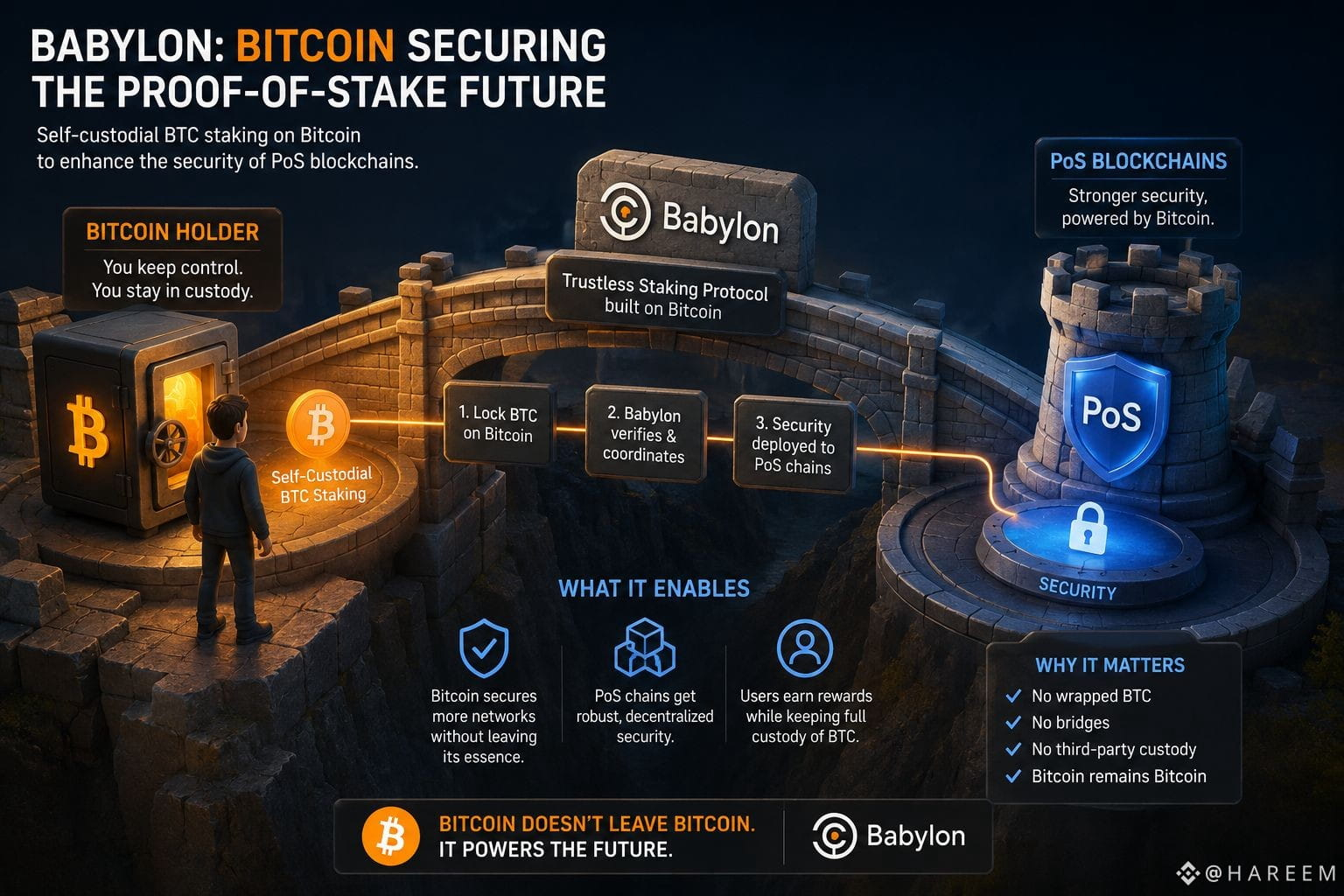
Deshalb finde ich Babylon interessant. Es versucht nicht, Bitcoin-Inhaber davon zu überzeugen, die Verwahrung aufzugeben, nur um Rendite zu erzielen. Es testet, ob Bitcoin dazu beitragen kann, andere Netzwerke abzusichern, und dabei dennoch Bitcoin bleibt. Das wirkt wie ein bedeutungsvolleres Experiment, als die meisten ihm zugestehen.
Ich bin mit dem Ausgang noch nicht überzeugt, und ich denke, das sollte auch noch niemand sein. Aber wenn Nutzer weiter mitmachen, wenn die einfachen Belohnungen nicht mehr der Hauptgrund sind, wird mir das viel mehr sagen als jede TVL-Grafik oder jede Schlagzeile jemals könnte.
#baby $BABY @BabylonLabs_io
Ich habe Babylon in letzter Zeit ein wenig anders betrachtet. Alle scheinen sich darauf zu konzentrieren, wie viel BTC gestaked wird oder wie schnell das Ökosystem wächst, aber ich glaube nicht, dass diese Zahlen die ganze Geschichte erzählen.
Was meine Aufmerksamkeit fesselt, ist eine viel einfachere Frage: Wenn die Belohnungen morgen weniger attraktiv würden, würden die Menschen dann immer noch einen Wert darin sehen, es zu nutzen? Ich habe genug Krypto-Zyklen gesehen, um zu wissen, dass Einzahlungen für Anreize auftauchen können, aber das Dabeibleiben erfordert normalerweise etwas Tieferes.
Deshalb finde ich Babylon interessant. Es versucht nicht, Bitcoin-Inhaber davon zu überzeugen, die Verwahrung aufzugeben, nur um Rendite zu erzielen. Es testet, ob Bitcoin dazu beitragen kann, andere Netzwerke abzusichern, und dabei dennoch Bitcoin bleibt. Das wirkt wie ein bedeutungsvolleres Experiment, als die meisten ihm zugestehen.
Ich bin mit dem Ausgang noch nicht überzeugt, und ich denke, das sollte auch noch niemand sein. Aber wenn Nutzer weiter mitmachen, wenn die einfachen Belohnungen nicht mehr der Hauptgrund sind, wird mir das viel mehr sagen als jede TVL-Grafik oder jede Schlagzeile jemals könnte.
Ich habe Babylon in letzter Zeit ein wenig anders betrachtet. Alle scheinen sich darauf zu konzentrieren, wie viel BTC gestaked wird oder wie schnell das Ökosystem wächst, aber ich glaube nicht, dass diese Zahlen die ganze Geschichte erzählen.
Was meine Aufmerksamkeit fesselt, ist eine viel einfachere Frage: Wenn die Belohnungen morgen weniger attraktiv würden, würden die Menschen dann immer noch einen Wert darin sehen, es zu nutzen? Ich habe genug Krypto-Zyklen gesehen, um zu wissen, dass Einzahlungen für Anreize auftauchen können, aber das Dabeibleiben erfordert normalerweise etwas Tieferes.
Deshalb finde ich Babylon interessant. Es versucht nicht, Bitcoin-Inhaber davon zu überzeugen, die Verwahrung aufzugeben, nur um Rendite zu erzielen. Es testet, ob Bitcoin dazu beitragen kann, andere Netzwerke abzusichern, und dabei dennoch Bitcoin bleibt. Das wirkt wie ein bedeutungsvolleres Experiment, als die meisten ihm zugestehen.
Ich bin mit dem Ausgang noch nicht überzeugt, und ich denke, das sollte auch noch niemand sein. Aber wenn Nutzer weiter mitmachen, wenn die einfachen Belohnungen nicht mehr der Hauptgrund sind, wird mir das viel mehr sagen als jede TVL-Grafik oder jede Schlagzeile jemals könnte.
108
48
713
·
--
#baby $BABY @babylonlabs_io
Ich komme immer wieder auf denselben Gedanken, wenn ich auf Babylon schaue: Vielleicht haben wir die falsche Frage gestellt. Jeder spricht davon, wie Bitcoin Rendite erzeugen kann, aber ich finde die spannendere Frage lautet, ob er andere Netzwerke stärken kann, ohne die Prinzipien aufzugeben, die Bitcoin überhaupt wertvoll gemacht haben.
Ich habe genug Krypto-Zyklen beobachtet, um zu wissen, dass attraktive Anreize für eine Weile fast alles erfolgreich wirken lassen können. Entscheidend ist meistens, was Menschen tun, nachdem die Aufregung verflogen ist. Deshalb achte ich mehr darauf, wie sich Babylons Ökosystem entwickelt, statt auf kurzfristige Zahlen. Wenn Entwickler, Validatoren und BTC-Inhaber weiterhin teilnehmen, auch wenn die einfachen Belohnungen nicht mehr der Hauptgrund sind, sagt mir das weitaus mehr als jede Schlagzeile.
Ich bin mir immer noch nicht sicher, wie das ausgeht, und ich glaube auch, dass noch niemand es sein sollte. Aber wenn Babylon beweist, dass selbstverwahrter Bitcoin zu einer Sicherheitsschicht für andere Ketten werden kann, ohne das Eigentum zu kompromittieren, wäre das nicht nur ein weiteres Protokoll. Es könnte still und leise umformen, wie Bitcoin in das breitere Krypto-Ökosystem passt.
#baby $BABY @BabylonLabs_io
Ich komme immer wieder auf denselben Gedanken, wenn ich auf Babylon schaue: Vielleicht haben wir die falsche Frage gestellt. Jeder spricht davon, wie Bitcoin Rendite erzeugen kann, aber ich finde die spannendere Frage lautet, ob er andere Netzwerke stärken kann, ohne die Prinzipien aufzugeben, die Bitcoin überhaupt wertvoll gemacht haben.
Ich habe genug Krypto-Zyklen beobachtet, um zu wissen, dass attraktive Anreize für eine Weile fast alles erfolgreich wirken lassen können. Entscheidend ist meistens, was Menschen tun, nachdem die Aufregung verflogen ist. Deshalb achte ich mehr darauf, wie sich Babylons Ökosystem entwickelt, statt auf kurzfristige Zahlen. Wenn Entwickler, Validatoren und BTC-Inhaber weiterhin teilnehmen, auch wenn die einfachen Belohnungen nicht mehr der Hauptgrund sind, sagt mir das weitaus mehr als jede Schlagzeile.
Ich bin mir immer noch nicht sicher, wie das ausgeht, und ich glaube auch, dass noch niemand es sein sollte. Aber wenn Babylon beweist, dass selbstverwahrter Bitcoin zu einer Sicherheitsschicht für andere Ketten werden kann, ohne das Eigentum zu kompromittieren, wäre das nicht nur ein weiteres Protokoll. Es könnte still und leise umformen, wie Bitcoin in das breitere Krypto-Ökosystem passt.
Ich komme immer wieder auf denselben Gedanken, wenn ich auf Babylon schaue: Vielleicht haben wir die falsche Frage gestellt. Jeder spricht davon, wie Bitcoin Rendite erzeugen kann, aber ich finde die spannendere Frage lautet, ob er andere Netzwerke stärken kann, ohne die Prinzipien aufzugeben, die Bitcoin überhaupt wertvoll gemacht haben.
Ich habe genug Krypto-Zyklen beobachtet, um zu wissen, dass attraktive Anreize für eine Weile fast alles erfolgreich wirken lassen können. Entscheidend ist meistens, was Menschen tun, nachdem die Aufregung verflogen ist. Deshalb achte ich mehr darauf, wie sich Babylons Ökosystem entwickelt, statt auf kurzfristige Zahlen. Wenn Entwickler, Validatoren und BTC-Inhaber weiterhin teilnehmen, auch wenn die einfachen Belohnungen nicht mehr der Hauptgrund sind, sagt mir das weitaus mehr als jede Schlagzeile.
Ich bin mir immer noch nicht sicher, wie das ausgeht, und ich glaube auch, dass noch niemand es sein sollte. Aber wenn Babylon beweist, dass selbstverwahrter Bitcoin zu einer Sicherheitsschicht für andere Ketten werden kann, ohne das Eigentum zu kompromittieren, wäre das nicht nur ein weiteres Protokoll. Es könnte still und leise umformen, wie Bitcoin in das breitere Krypto-Ökosystem passt.
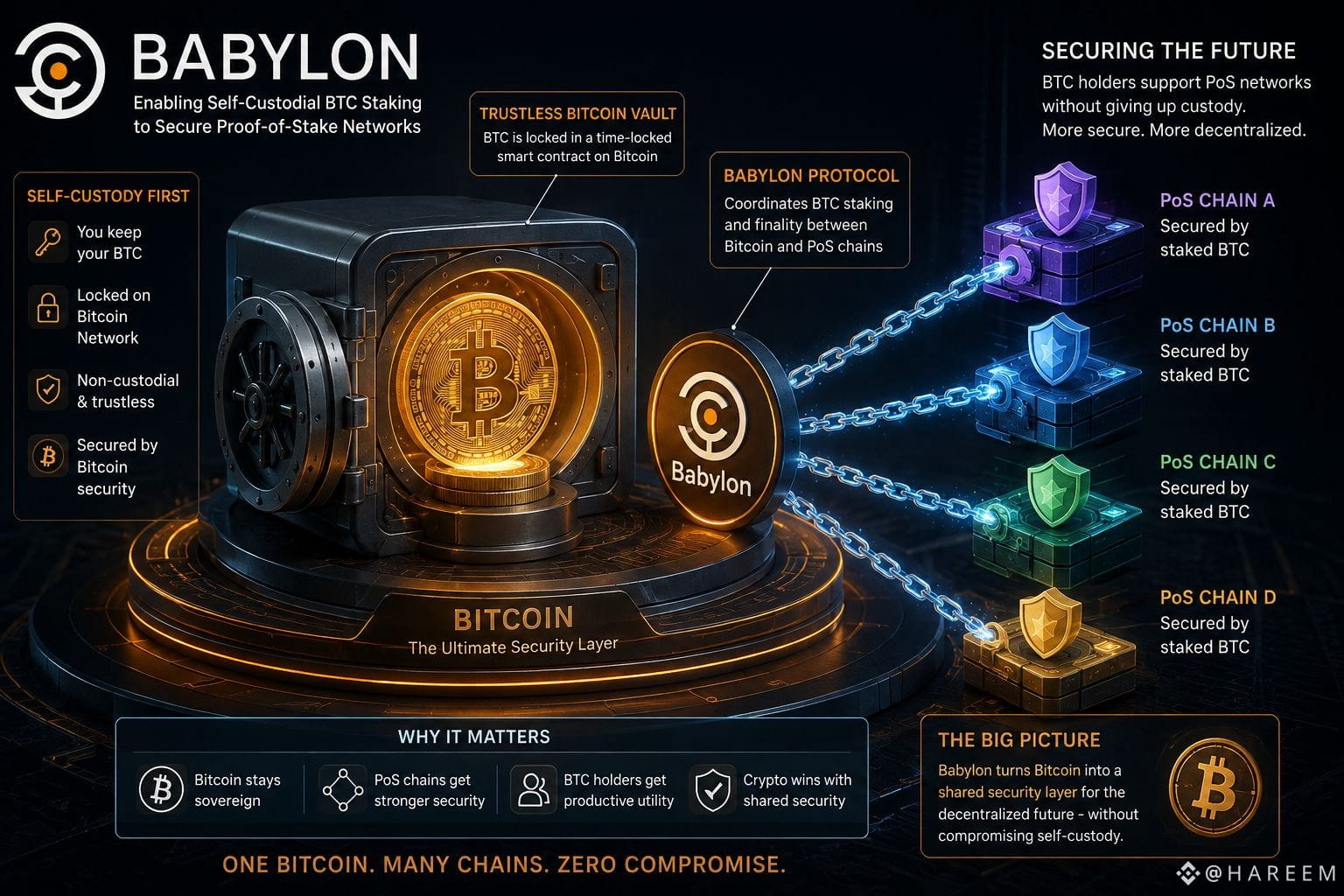
95
37
930
·
--
#baby $BABY @babylonlabs_io
Ich habe in letzter Zeit über Babylon aus einem anderen Blickwinkel nachgedacht. Die meisten Gespräche drehen sich noch immer um BTC-Staking, aber ich habe das Gefühl, dass das nur die Oberfläche ist. Was meine Aufmerksamkeit wirklich fesselt, ist die größere Frage: Kann Bitcoin zur Sicherheitsschicht für andere Netzwerke werden, ohne dabei das aufzugeben, was Bitcoin an sich wertvoll macht?
Ich habe genug Marktzyklen gesehen, um zu wissen, dass sich Narrative leicht aufbauen lassen, wenn Liquidität fließt. Der schwierige Teil kommt später, wenn die Anreize abkühlen und die Leute das Produkt weiter nutzen, weil es tatsächlich ein Problem löst. Genau diese Phase interessiert mich.
An Babylon wirkt etwas anders, weil sein Erfolg nicht daran hängt, die Menschen davon zu überzeugen, Bitcoin aufzugeben. Es versucht, zu erweitern, was Bitcoin leisten kann, und gleichzeitig die Selbstverwahrung (Self-Custody) in den Mittelpunkt zu stellen. Ich bin noch nicht bereit, das schon als bewiesenes Modell zu bezeichnen, aber ich glaube, das ist die richtige Herausforderung, auf die man sich konzentrieren sollte. Wenn sich die echte Nutzung auch fortsetzt, nachdem die anfängliche Begeisterung verflogen ist, sagt uns das viel mehr als jede kurzfristige Preisbewegung jemals könnte.
#baby $BABY @BabylonLabs_io
Ich habe in letzter Zeit über Babylon aus einem anderen Blickwinkel nachgedacht. Die meisten Gespräche drehen sich noch immer um BTC-Staking, aber ich habe das Gefühl, dass das nur die Oberfläche ist. Was meine Aufmerksamkeit wirklich fesselt, ist die größere Frage: Kann Bitcoin zur Sicherheitsschicht für andere Netzwerke werden, ohne dabei das aufzugeben, was Bitcoin an sich wertvoll macht?
Ich habe genug Marktzyklen gesehen, um zu wissen, dass sich Narrative leicht aufbauen lassen, wenn Liquidität fließt. Der schwierige Teil kommt später, wenn die Anreize abkühlen und die Leute das Produkt weiter nutzen, weil es tatsächlich ein Problem löst. Genau diese Phase interessiert mich.
An Babylon wirkt etwas anders, weil sein Erfolg nicht daran hängt, die Menschen davon zu überzeugen, Bitcoin aufzugeben. Es versucht, zu erweitern, was Bitcoin leisten kann, und gleichzeitig die Selbstverwahrung (Self-Custody) in den Mittelpunkt zu stellen. Ich bin noch nicht bereit, das schon als bewiesenes Modell zu bezeichnen, aber ich glaube, das ist die richtige Herausforderung, auf die man sich konzentrieren sollte. Wenn sich die echte Nutzung auch fortsetzt, nachdem die anfängliche Begeisterung verflogen ist, sagt uns das viel mehr als jede kurzfristige Preisbewegung jemals könnte.
Ich habe in letzter Zeit über Babylon aus einem anderen Blickwinkel nachgedacht. Die meisten Gespräche drehen sich noch immer um BTC-Staking, aber ich habe das Gefühl, dass das nur die Oberfläche ist. Was meine Aufmerksamkeit wirklich fesselt, ist die größere Frage: Kann Bitcoin zur Sicherheitsschicht für andere Netzwerke werden, ohne dabei das aufzugeben, was Bitcoin an sich wertvoll macht?
Ich habe genug Marktzyklen gesehen, um zu wissen, dass sich Narrative leicht aufbauen lassen, wenn Liquidität fließt. Der schwierige Teil kommt später, wenn die Anreize abkühlen und die Leute das Produkt weiter nutzen, weil es tatsächlich ein Problem löst. Genau diese Phase interessiert mich.
An Babylon wirkt etwas anders, weil sein Erfolg nicht daran hängt, die Menschen davon zu überzeugen, Bitcoin aufzugeben. Es versucht, zu erweitern, was Bitcoin leisten kann, und gleichzeitig die Selbstverwahrung (Self-Custody) in den Mittelpunkt zu stellen. Ich bin noch nicht bereit, das schon als bewiesenes Modell zu bezeichnen, aber ich glaube, das ist die richtige Herausforderung, auf die man sich konzentrieren sollte. Wenn sich die echte Nutzung auch fortsetzt, nachdem die anfängliche Begeisterung verflogen ist, sagt uns das viel mehr als jede kurzfristige Preisbewegung jemals könnte.
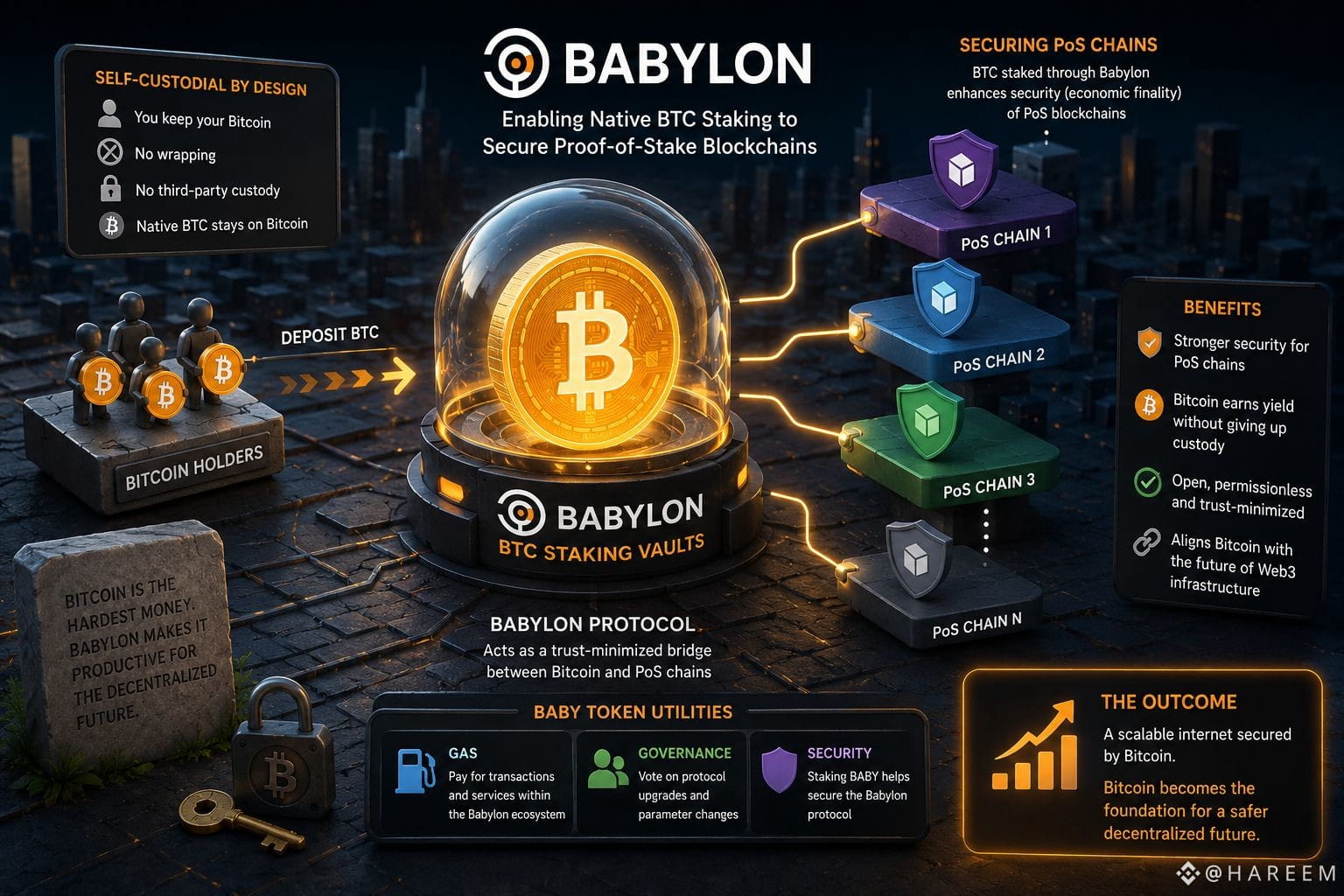
110
40
281
·
--
Bullisch
#baby $BABY @babylonlabs_io
Ich denke in letzter Zeit ein wenig anders über Babylon nach. In den meisten Gesprächen geht es immer noch um BTC-Staking, aber ich glaube nicht, dass das der Teil ist, den man im Blick behalten sollte. Was mich besonders fesselt, ist die Idee, dass Bitcoin leise zu einer Sicherheitsschicht für andere Netzwerke wird – und dabei weiterhin in Selbstverwahrung bleibt. Wenn das zuverlässig funktioniert, ist das eine viel größere Veränderung als ein weiteres Staking-Produkt.
Ich habe genug Krypto-Zyklen beobachtet, um zu wissen, dass sich gute Narrative schneller verbreiten als gute Infrastruktur. Die Projekte, die überleben, sind meist nicht die lautesten – sondern diejenigen, die man weiter nutzt, lange nachdem die Aufregung verflogen ist. Deshalb achte ich mehr auf das Wachstum des Ökosystems, die Beteiligung von Validatoren und echte Integrationen als auf kurzfristige Kursbewegungen.
Ich bleibe dennoch vorsichtig. Jedes Protokoll wirkt überzeugend, wenn die Stimmung stark ist. Der eigentliche Test kommt dann, wenn der Markt langweilig wird und die Leute es trotzdem weiter verwenden. Wenn Babylon weiterhin beweist, dass Bitcoin PoS-Ökosysteme sichern kann, ohne dass Inhaber die Kontrolle über ihre Assets abgeben müssen, dann wird sein größter Erfolg nicht die Rendite sein. Sondern die Art, wie Bitcoin Wert über seine eigene Kette hinaus schafft.
#baby $BABY @BabylonLabs_io
Ich denke in letzter Zeit ein wenig anders über Babylon nach. In den meisten Gesprächen geht es immer noch um BTC-Staking, aber ich glaube nicht, dass das der Teil ist, den man im Blick behalten sollte. Was mich besonders fesselt, ist die Idee, dass Bitcoin leise zu einer Sicherheitsschicht für andere Netzwerke wird – und dabei weiterhin in Selbstverwahrung bleibt. Wenn das zuverlässig funktioniert, ist das eine viel größere Veränderung als ein weiteres Staking-Produkt.
Ich habe genug Krypto-Zyklen beobachtet, um zu wissen, dass sich gute Narrative schneller verbreiten als gute Infrastruktur. Die Projekte, die überleben, sind meist nicht die lautesten – sondern diejenigen, die man weiter nutzt, lange nachdem die Aufregung verflogen ist. Deshalb achte ich mehr auf das Wachstum des Ökosystems, die Beteiligung von Validatoren und echte Integrationen als auf kurzfristige Kursbewegungen.
Ich bleibe dennoch vorsichtig. Jedes Protokoll wirkt überzeugend, wenn die Stimmung stark ist. Der eigentliche Test kommt dann, wenn der Markt langweilig wird und die Leute es trotzdem weiter verwenden. Wenn Babylon weiterhin beweist, dass Bitcoin PoS-Ökosysteme sichern kann, ohne dass Inhaber die Kontrolle über ihre Assets abgeben müssen, dann wird sein größter Erfolg nicht die Rendite sein. Sondern die Art, wie Bitcoin Wert über seine eigene Kette hinaus schafft.
Ich denke in letzter Zeit ein wenig anders über Babylon nach. In den meisten Gesprächen geht es immer noch um BTC-Staking, aber ich glaube nicht, dass das der Teil ist, den man im Blick behalten sollte. Was mich besonders fesselt, ist die Idee, dass Bitcoin leise zu einer Sicherheitsschicht für andere Netzwerke wird – und dabei weiterhin in Selbstverwahrung bleibt. Wenn das zuverlässig funktioniert, ist das eine viel größere Veränderung als ein weiteres Staking-Produkt.
Ich habe genug Krypto-Zyklen beobachtet, um zu wissen, dass sich gute Narrative schneller verbreiten als gute Infrastruktur. Die Projekte, die überleben, sind meist nicht die lautesten – sondern diejenigen, die man weiter nutzt, lange nachdem die Aufregung verflogen ist. Deshalb achte ich mehr auf das Wachstum des Ökosystems, die Beteiligung von Validatoren und echte Integrationen als auf kurzfristige Kursbewegungen.
Ich bleibe dennoch vorsichtig. Jedes Protokoll wirkt überzeugend, wenn die Stimmung stark ist. Der eigentliche Test kommt dann, wenn der Markt langweilig wird und die Leute es trotzdem weiter verwenden. Wenn Babylon weiterhin beweist, dass Bitcoin PoS-Ökosysteme sichern kann, ohne dass Inhaber die Kontrolle über ihre Assets abgeben müssen, dann wird sein größter Erfolg nicht die Rendite sein. Sondern die Art, wie Bitcoin Wert über seine eigene Kette hinaus schafft.
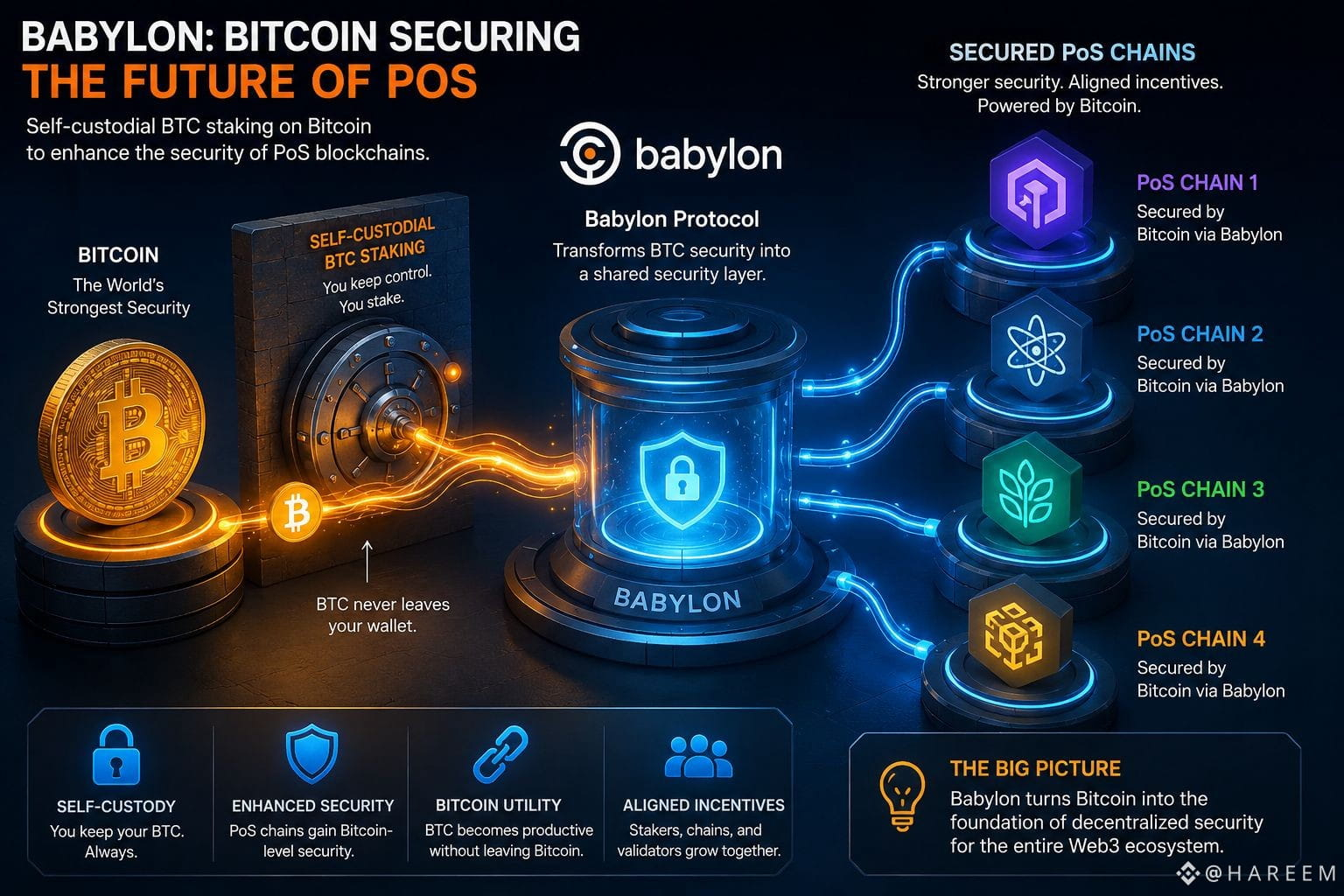
83
34
508
·
--
Bullisch
#baby $BABY @babylonlabs_io
Ich bin lange genug im Krypto-Bereich, um zu bemerken, dass jeder Zyklus versucht, Bitcoin einen neuen Job zu geben. Manche Ideen verschwinden innerhalb von Monaten, während andere still weiterentwickeln, auch wenn der Scheinwerfer anderswohin wandert. Deshalb schaue ich immer wieder auf Babylon. Was mich interessiert, ist nicht das Versprechen von Staking Rewards oder ein weiteres TVL-Meilenstein. Es ist die größere Frage, die das Protokoll stellt: Kann Bitcoin andere Netzwerke stärken, ohne dabei die Eigenschaften aufzugeben, die es von Anfang an so wertvoll gemacht haben?
Ich habe schon viele Projekte gesehen, die Finanz-Engineering mit echter Innovation verwechseln. Babylon fühlt sich anders an, weil die Kernidee überraschend simpel ist. Anstatt Bitcoin-Holder dazu aufzufordern, einem anderen Chain mit ihren Assets zu vertrauen, konzentriert es sich darauf, die Selbstverwahrung zu bewahren, während die Sicherheit von Bitcoin PoS-Ökosystemen unterstützen kann. Das klingt auf dem Papier leicht, aber dieses Gleichgewicht in der Praxis zu erreichen ist schwierig.
Ich bin weiterhin vorsichtig. Jede neue Krypto-Erzählung verdient Skepsis, bis sie in unterschiedlichen Marktbedingungen getestet wurde. Aber irgendetwas an Babylon lässt mich genauer hinschauen. Wenn sich zeigt, dass Bitcoin seine Sicherheit über das eigene Netzwerk hinaus ausdehnen kann, ohne seine Grundprinzipien zu kompromittieren, könnte die langfristige Wirkung viel bedeutender sein als jede andere kurzfristige Yield-Story. Manchmal ist die stärkste Innovation nicht, Bitcoin dazu zu bringen, mehr zu tun – sondern Bitcoin genau das zu lassen, was es ist, und gleichzeitig leise dafür zu sorgen, dass alles darum herum stärker wird.
#baby $BABY @BabylonLabs_io
Ich bin lange genug im Krypto-Bereich, um zu bemerken, dass jeder Zyklus versucht, Bitcoin einen neuen Job zu geben. Manche Ideen verschwinden innerhalb von Monaten, während andere still weiterentwickeln, auch wenn der Scheinwerfer anderswohin wandert. Deshalb schaue ich immer wieder auf Babylon. Was mich interessiert, ist nicht das Versprechen von Staking Rewards oder ein weiteres TVL-Meilenstein. Es ist die größere Frage, die das Protokoll stellt: Kann Bitcoin andere Netzwerke stärken, ohne dabei die Eigenschaften aufzugeben, die es von Anfang an so wertvoll gemacht haben?
Ich habe schon viele Projekte gesehen, die Finanz-Engineering mit echter Innovation verwechseln. Babylon fühlt sich anders an, weil die Kernidee überraschend simpel ist. Anstatt Bitcoin-Holder dazu aufzufordern, einem anderen Chain mit ihren Assets zu vertrauen, konzentriert es sich darauf, die Selbstverwahrung zu bewahren, während die Sicherheit von Bitcoin PoS-Ökosystemen unterstützen kann. Das klingt auf dem Papier leicht, aber dieses Gleichgewicht in der Praxis zu erreichen ist schwierig.
Ich bin weiterhin vorsichtig. Jede neue Krypto-Erzählung verdient Skepsis, bis sie in unterschiedlichen Marktbedingungen getestet wurde. Aber irgendetwas an Babylon lässt mich genauer hinschauen. Wenn sich zeigt, dass Bitcoin seine Sicherheit über das eigene Netzwerk hinaus ausdehnen kann, ohne seine Grundprinzipien zu kompromittieren, könnte die langfristige Wirkung viel bedeutender sein als jede andere kurzfristige Yield-Story. Manchmal ist die stärkste Innovation nicht, Bitcoin dazu zu bringen, mehr zu tun – sondern Bitcoin genau das zu lassen, was es ist, und gleichzeitig leise dafür zu sorgen, dass alles darum herum stärker wird.
Ich bin lange genug im Krypto-Bereich, um zu bemerken, dass jeder Zyklus versucht, Bitcoin einen neuen Job zu geben. Manche Ideen verschwinden innerhalb von Monaten, während andere still weiterentwickeln, auch wenn der Scheinwerfer anderswohin wandert. Deshalb schaue ich immer wieder auf Babylon. Was mich interessiert, ist nicht das Versprechen von Staking Rewards oder ein weiteres TVL-Meilenstein. Es ist die größere Frage, die das Protokoll stellt: Kann Bitcoin andere Netzwerke stärken, ohne dabei die Eigenschaften aufzugeben, die es von Anfang an so wertvoll gemacht haben?
Ich habe schon viele Projekte gesehen, die Finanz-Engineering mit echter Innovation verwechseln. Babylon fühlt sich anders an, weil die Kernidee überraschend simpel ist. Anstatt Bitcoin-Holder dazu aufzufordern, einem anderen Chain mit ihren Assets zu vertrauen, konzentriert es sich darauf, die Selbstverwahrung zu bewahren, während die Sicherheit von Bitcoin PoS-Ökosystemen unterstützen kann. Das klingt auf dem Papier leicht, aber dieses Gleichgewicht in der Praxis zu erreichen ist schwierig.
Ich bin weiterhin vorsichtig. Jede neue Krypto-Erzählung verdient Skepsis, bis sie in unterschiedlichen Marktbedingungen getestet wurde. Aber irgendetwas an Babylon lässt mich genauer hinschauen. Wenn sich zeigt, dass Bitcoin seine Sicherheit über das eigene Netzwerk hinaus ausdehnen kann, ohne seine Grundprinzipien zu kompromittieren, könnte die langfristige Wirkung viel bedeutender sein als jede andere kurzfristige Yield-Story. Manchmal ist die stärkste Innovation nicht, Bitcoin dazu zu bringen, mehr zu tun – sondern Bitcoin genau das zu lassen, was es ist, und gleichzeitig leise dafür zu sorgen, dass alles darum herum stärker wird.
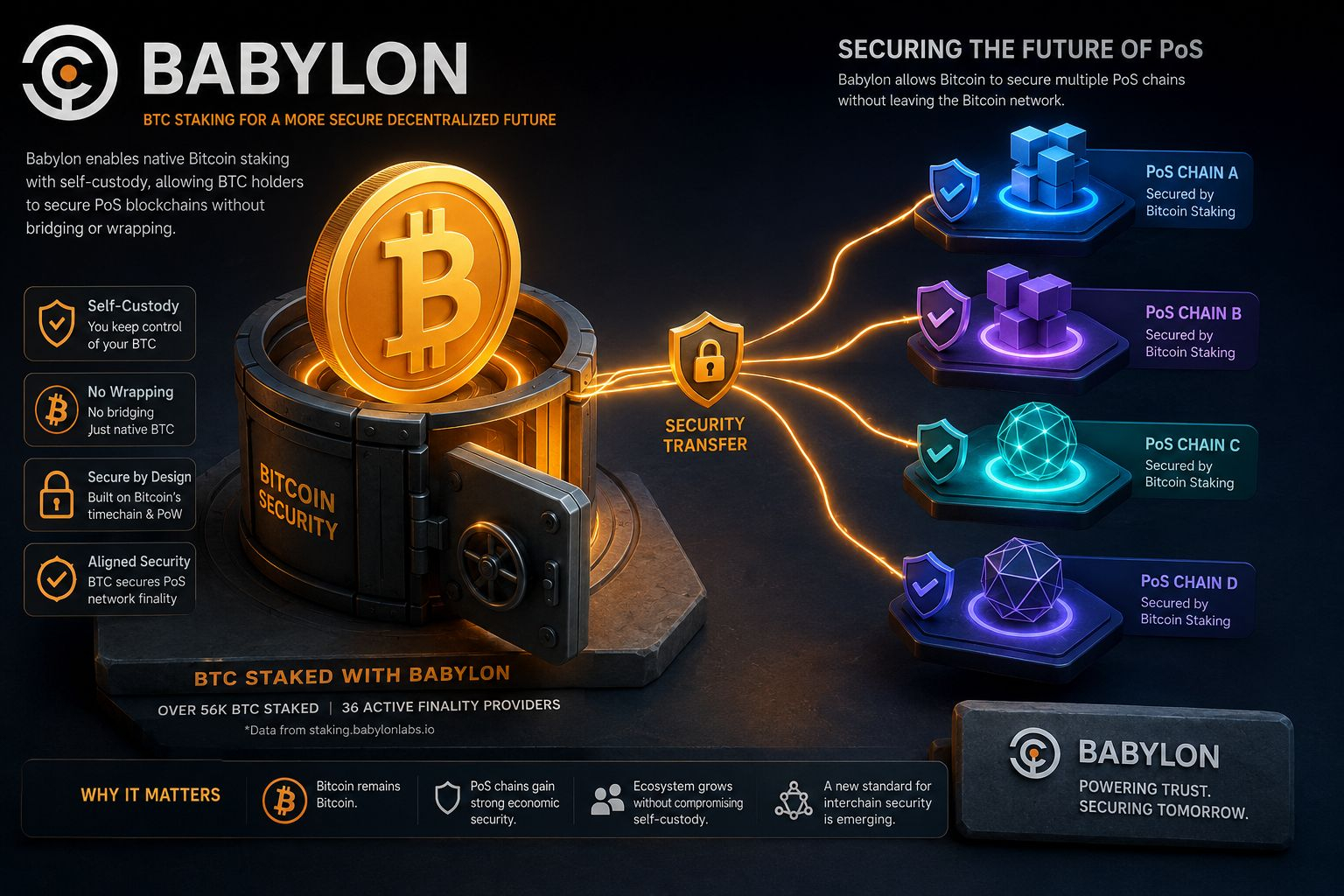
56
28
563
·
--
#FedSeptHikeOddsJumpToAbout82%
#USTreasuryYieldsRetreat
#OilExtendsDecline
$ON
{future}(ONUSDT)
$LAB
{future}(LABUSDT)
$DEXE
{spot}(DEXEUSDT)
Je mehr ich Babylon schaue, desto weniger glaube ich, dass die eigentliche Geschichte um Staking Rewards geht. Ich denke, es geht darum, wie sorgfältig sie mit Bitcoin selbst umgehen. Ich bin lange genug dabei, um zu sehen, wie viele Projekte versprechen, "BTC freizuschalten", aber am Ende fordern sie von den Nutzer:innen, einer weiteren Brücke zu vertrauen, einem anderen Custodian oder einer zusätzlichen Ebene an Komplexität. Deshalb habe ich Babylon nie nach dem Marketing beurteilt.
Was meine Aufmerksamkeit fesselt, ist die Denkweise hinter dem Design. Anstatt zu versuchen, Bitcoin zu allem zu machen, scheint es darauf ausgerichtet zu sein, dass Bitcoin andere Netzwerke stärkt, während die Selbstverwahrung im Mittelpunkt bleibt. Das fühlt sich nach einem realistischeren Ansatz an.
Ich bin trotzdem vorsichtig. Krypto hat die Angewohnheit, jede neue Idee revolutionär klingen zu lassen, bevor sie richtig getestet wurde. Aber falls Babylon gelingt, glaube ich nicht, dass es daran liegt, dass es eine weitere Möglichkeit für Renditen geschaffen hat. Es wird daran liegen, dass es gezeigt hat, dass Bitcoin zu anderen Ökosystemen beitragen kann, ohne die Prinzipien aufzugeben, die es von Anfang an wertvoll gemacht haben. Für mich ist das die Frage, der man folgen sollte – nicht der Hype.
#FedSeptHikeOddsJumpToAbout82%
#USTreasuryYieldsRetreat
#OilExtendsDecline
$ON
$LAB
$DEXE
Je mehr ich Babylon schaue, desto weniger glaube ich, dass die eigentliche Geschichte um Staking Rewards geht. Ich denke, es geht darum, wie sorgfältig sie mit Bitcoin selbst umgehen. Ich bin lange genug dabei, um zu sehen, wie viele Projekte versprechen, "BTC freizuschalten", aber am Ende fordern sie von den Nutzer:innen, einer weiteren Brücke zu vertrauen, einem anderen Custodian oder einer zusätzlichen Ebene an Komplexität. Deshalb habe ich Babylon nie nach dem Marketing beurteilt.
Was meine Aufmerksamkeit fesselt, ist die Denkweise hinter dem Design. Anstatt zu versuchen, Bitcoin zu allem zu machen, scheint es darauf ausgerichtet zu sein, dass Bitcoin andere Netzwerke stärkt, während die Selbstverwahrung im Mittelpunkt bleibt. Das fühlt sich nach einem realistischeren Ansatz an.
Ich bin trotzdem vorsichtig. Krypto hat die Angewohnheit, jede neue Idee revolutionär klingen zu lassen, bevor sie richtig getestet wurde. Aber falls Babylon gelingt, glaube ich nicht, dass es daran liegt, dass es eine weitere Möglichkeit für Renditen geschaffen hat. Es wird daran liegen, dass es gezeigt hat, dass Bitcoin zu anderen Ökosystemen beitragen kann, ohne die Prinzipien aufzugeben, die es von Anfang an wertvoll gemacht haben. Für mich ist das die Frage, der man folgen sollte – nicht der Hype.
#USTreasuryYieldsRetreat
#OilExtendsDecline
$ON
$LAB
$DEXE
Je mehr ich Babylon schaue, desto weniger glaube ich, dass die eigentliche Geschichte um Staking Rewards geht. Ich denke, es geht darum, wie sorgfältig sie mit Bitcoin selbst umgehen. Ich bin lange genug dabei, um zu sehen, wie viele Projekte versprechen, "BTC freizuschalten", aber am Ende fordern sie von den Nutzer:innen, einer weiteren Brücke zu vertrauen, einem anderen Custodian oder einer zusätzlichen Ebene an Komplexität. Deshalb habe ich Babylon nie nach dem Marketing beurteilt.
Was meine Aufmerksamkeit fesselt, ist die Denkweise hinter dem Design. Anstatt zu versuchen, Bitcoin zu allem zu machen, scheint es darauf ausgerichtet zu sein, dass Bitcoin andere Netzwerke stärkt, während die Selbstverwahrung im Mittelpunkt bleibt. Das fühlt sich nach einem realistischeren Ansatz an.
Ich bin trotzdem vorsichtig. Krypto hat die Angewohnheit, jede neue Idee revolutionär klingen zu lassen, bevor sie richtig getestet wurde. Aber falls Babylon gelingt, glaube ich nicht, dass es daran liegt, dass es eine weitere Möglichkeit für Renditen geschaffen hat. Es wird daran liegen, dass es gezeigt hat, dass Bitcoin zu anderen Ökosystemen beitragen kann, ohne die Prinzipien aufzugeben, die es von Anfang an wertvoll gemacht haben. Für mich ist das die Frage, der man folgen sollte – nicht der Hype.
🔒 Security over yield
40%
🟠 Self-custody matters most
40%
⚖️ Too early to judge
0%
👀 Watching, not convinced yet
20%
5 Stimmen • Abstimmung beendet
19
16
3.8k
·
--
#baby @babylonlabs_io $BABY
{spot}(BABYUSDT)
Ich bin schon lange genug dabei, um zu wissen, dass Krypto jede neue Idee liebt, um daraus die nächste große Erzählung zu machen. Die meisten dieser Geschichten verblassen, sobald echte Nutzer anfangen, schwierige Fragen zu stellen. Deshalb schaue ich immer wieder aus einer anderen Perspektive auf Babylon. Ich sehe es nicht als eine weitere Methode, um aus Bitcoin noch mehr Rendite herauszupressen. Ich sehe es als ein Experiment, um herauszufinden, ob das stärkste Merkmal von Bitcoins – seine Sicherheit – über das eigene Netzwerk hinaus ausgedehnt werden kann, ohne das Prinzip der Selbstverwahrung zu gefährden. Das ist eine viel bedeutungsvollere Herausforderung.
Die jüngsten Fortschritte im Ökosystem – vom Ausbau der Staking-Infrastruktur bis hin zu neuen Integrationen und Tools – zeigen mir, dass das Team darauf fokussiert ist, das System besser nutzbar zu machen, statt einfach nur Begeisterung zu erzeugen. Ich schätze diesen Ansatz, weil ich schon zu viele Projekte gesehen habe, die mehr Zeit für Marketing aufwenden als für die Verbesserung des Produkts selbst.
Ich bin weiterhin vorsichtig. Jedes Protokoll wirkt solide, bis es unter Stress gerät, wenn sich die Marktbedingungen ändern und unerwartete Anreize ins Spiel kommen. Genau dann wird das eigentliche Design auf die Probe gestellt. Wenn Babylon erfolgreich ist, dann nicht, weil es die höchsten Belohnungen angeboten hat. Sondern weil es bewiesen hat, dass Bitcoin andere Ökosysteme absichern kann und dabei dennoch seinen Grundsätzen treu bleibt, die die Menschen von Anfang an Vertrauen haben aufbauen lassen. Das ist die Frage, die ich beobachte – nicht der Preis.
#baby @BabylonLabs_io $BABY
Ich bin schon lange genug dabei, um zu wissen, dass Krypto jede neue Idee liebt, um daraus die nächste große Erzählung zu machen. Die meisten dieser Geschichten verblassen, sobald echte Nutzer anfangen, schwierige Fragen zu stellen. Deshalb schaue ich immer wieder aus einer anderen Perspektive auf Babylon. Ich sehe es nicht als eine weitere Methode, um aus Bitcoin noch mehr Rendite herauszupressen. Ich sehe es als ein Experiment, um herauszufinden, ob das stärkste Merkmal von Bitcoins – seine Sicherheit – über das eigene Netzwerk hinaus ausgedehnt werden kann, ohne das Prinzip der Selbstverwahrung zu gefährden. Das ist eine viel bedeutungsvollere Herausforderung.
Die jüngsten Fortschritte im Ökosystem – vom Ausbau der Staking-Infrastruktur bis hin zu neuen Integrationen und Tools – zeigen mir, dass das Team darauf fokussiert ist, das System besser nutzbar zu machen, statt einfach nur Begeisterung zu erzeugen. Ich schätze diesen Ansatz, weil ich schon zu viele Projekte gesehen habe, die mehr Zeit für Marketing aufwenden als für die Verbesserung des Produkts selbst.
Ich bin weiterhin vorsichtig. Jedes Protokoll wirkt solide, bis es unter Stress gerät, wenn sich die Marktbedingungen ändern und unerwartete Anreize ins Spiel kommen. Genau dann wird das eigentliche Design auf die Probe gestellt. Wenn Babylon erfolgreich ist, dann nicht, weil es die höchsten Belohnungen angeboten hat. Sondern weil es bewiesen hat, dass Bitcoin andere Ökosysteme absichern kann und dabei dennoch seinen Grundsätzen treu bleibt, die die Menschen von Anfang an Vertrauen haben aufbauen lassen. Das ist die Frage, die ich beobachte – nicht der Preis.
Ich bin schon lange genug dabei, um zu wissen, dass Krypto jede neue Idee liebt, um daraus die nächste große Erzählung zu machen. Die meisten dieser Geschichten verblassen, sobald echte Nutzer anfangen, schwierige Fragen zu stellen. Deshalb schaue ich immer wieder aus einer anderen Perspektive auf Babylon. Ich sehe es nicht als eine weitere Methode, um aus Bitcoin noch mehr Rendite herauszupressen. Ich sehe es als ein Experiment, um herauszufinden, ob das stärkste Merkmal von Bitcoins – seine Sicherheit – über das eigene Netzwerk hinaus ausgedehnt werden kann, ohne das Prinzip der Selbstverwahrung zu gefährden. Das ist eine viel bedeutungsvollere Herausforderung.
Die jüngsten Fortschritte im Ökosystem – vom Ausbau der Staking-Infrastruktur bis hin zu neuen Integrationen und Tools – zeigen mir, dass das Team darauf fokussiert ist, das System besser nutzbar zu machen, statt einfach nur Begeisterung zu erzeugen. Ich schätze diesen Ansatz, weil ich schon zu viele Projekte gesehen habe, die mehr Zeit für Marketing aufwenden als für die Verbesserung des Produkts selbst.
Ich bin weiterhin vorsichtig. Jedes Protokoll wirkt solide, bis es unter Stress gerät, wenn sich die Marktbedingungen ändern und unerwartete Anreize ins Spiel kommen. Genau dann wird das eigentliche Design auf die Probe gestellt. Wenn Babylon erfolgreich ist, dann nicht, weil es die höchsten Belohnungen angeboten hat. Sondern weil es bewiesen hat, dass Bitcoin andere Ökosysteme absichern kann und dabei dennoch seinen Grundsätzen treu bleibt, die die Menschen von Anfang an Vertrauen haben aufbauen lassen. Das ist die Frage, die ich beobachte – nicht der Preis.
49
30
848
·
--
Bullisch
#baby $BABY @babylonlabs_io
Ich habe Babylon beobachtet, und das Interessanteste daran ist für mich nicht das Label „BTC-Staking“. Es geht um den Versuch, selbst verwahrtes Bitcoin mehr machen zu lassen, ohne dass die Inhaber auf den Teil verzichten müssen, der ihnen am wichtigsten ist: die Kontrolle. Das ist ein viel schwierigeres Problem, als es klingt. Viele Krypto-Projekte sagen, sie wollten Utility rund um BTC schaffen, aber die meisten von ihnen setzen dabei stillschweigend auf zusätzliches Vertrauen, zusätzliche Wrapper oder zusätzliche Annahmen. Babylon scheint eine andere Gewohnheit zu testen: BTC nativ lassen, die Verwahrung intakt halten und schauen, ob Menschen Komplexität nur dann akzeptieren, wenn sie wirklich klaren Mehrwert bringt. Ich bin mir noch nicht sicher, wie viel echte Nachfrage es für diesen Ausgleich gibt, aber ich glaube nicht, dass der Markt das Signal verpassen sollte. Die eigentliche Geschichte ist kein Staking. Es geht darum, ob Bitcoin Bitcoin bleiben kann, während es in einem aktiveren Finanzsystem nützlich wird. Das ist ein deutlich engerer Weg – und wahrscheinlich auch ein ehrlicherer.
#baby $BABY @BabylonLabs_io
Ich habe Babylon beobachtet, und das Interessanteste daran ist für mich nicht das Label „BTC-Staking“. Es geht um den Versuch, selbst verwahrtes Bitcoin mehr machen zu lassen, ohne dass die Inhaber auf den Teil verzichten müssen, der ihnen am wichtigsten ist: die Kontrolle. Das ist ein viel schwierigeres Problem, als es klingt. Viele Krypto-Projekte sagen, sie wollten Utility rund um BTC schaffen, aber die meisten von ihnen setzen dabei stillschweigend auf zusätzliches Vertrauen, zusätzliche Wrapper oder zusätzliche Annahmen. Babylon scheint eine andere Gewohnheit zu testen: BTC nativ lassen, die Verwahrung intakt halten und schauen, ob Menschen Komplexität nur dann akzeptieren, wenn sie wirklich klaren Mehrwert bringt. Ich bin mir noch nicht sicher, wie viel echte Nachfrage es für diesen Ausgleich gibt, aber ich glaube nicht, dass der Markt das Signal verpassen sollte. Die eigentliche Geschichte ist kein Staking. Es geht darum, ob Bitcoin Bitcoin bleiben kann, während es in einem aktiveren Finanzsystem nützlich wird. Das ist ein deutlich engerer Weg – und wahrscheinlich auch ein ehrlicherer.
Ich habe Babylon beobachtet, und das Interessanteste daran ist für mich nicht das Label „BTC-Staking“. Es geht um den Versuch, selbst verwahrtes Bitcoin mehr machen zu lassen, ohne dass die Inhaber auf den Teil verzichten müssen, der ihnen am wichtigsten ist: die Kontrolle. Das ist ein viel schwierigeres Problem, als es klingt. Viele Krypto-Projekte sagen, sie wollten Utility rund um BTC schaffen, aber die meisten von ihnen setzen dabei stillschweigend auf zusätzliches Vertrauen, zusätzliche Wrapper oder zusätzliche Annahmen. Babylon scheint eine andere Gewohnheit zu testen: BTC nativ lassen, die Verwahrung intakt halten und schauen, ob Menschen Komplexität nur dann akzeptieren, wenn sie wirklich klaren Mehrwert bringt. Ich bin mir noch nicht sicher, wie viel echte Nachfrage es für diesen Ausgleich gibt, aber ich glaube nicht, dass der Markt das Signal verpassen sollte. Die eigentliche Geschichte ist kein Staking. Es geht darum, ob Bitcoin Bitcoin bleiben kann, während es in einem aktiveren Finanzsystem nützlich wird. Das ist ein deutlich engerer Weg – und wahrscheinlich auch ein ehrlicherer.
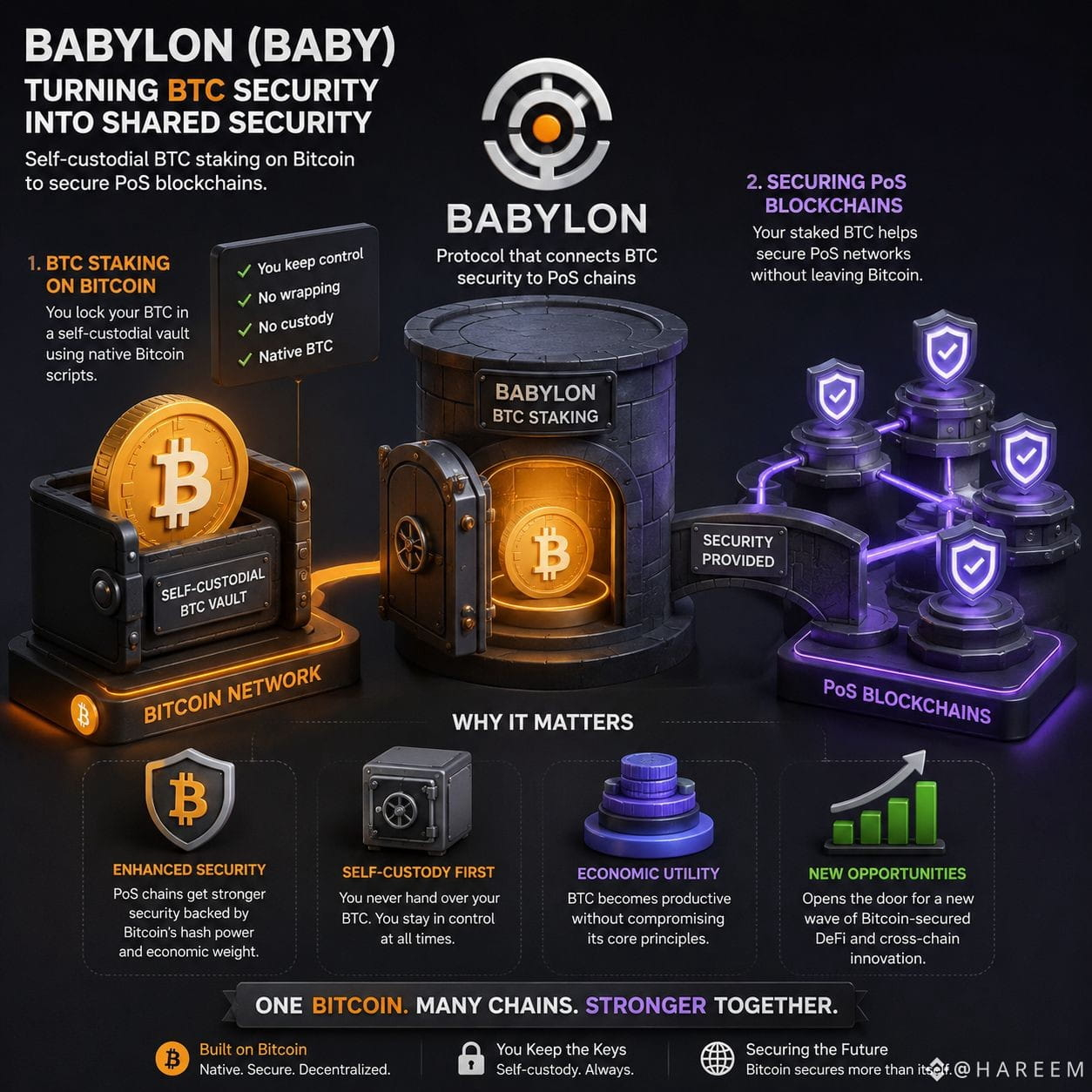
6
7
118
Anmelden und weiter Inhalte entdecken
Krypto-Nutzer weltweit auf Binance Square kennenlernen
⚡️ Bleib in Sachen Krypto stets am Puls.
💬 Die weltgrößte Kryptobörse vertraut darauf.
👍 Erhalte verlässliche Einblicke von verifizierten Creators.
E-Mail-Adresse/Telefonnummer
Trendthemen
ClarityActFacesProceduralVoteSept15
49,231 Aufrufe
732 Kommentare
Dienstag, 15. September, 14:15 Uhr ET. Markiere es. 🗓️
Der Senat stimmt darüber ab, ob überhaupt über das CLARITY Act diskutiert wird – den Gesetzentwurf, der endlich festlegen soll, welche Coins unter US-Recht als Wertpapiere bzw. als Commodities gelten.
Es werden 60 Stimmen benötigt. Die Republikaner haben 53. Einige Demokraten müssen rüberwechseln, und das ist nicht garantiert.
Scheitert diese Abstimmung = Der Gesetzentwurf ist für 2026 tot, voraussichtlich erst bis 2029 (die Midterms fressen den Kalender nach diesem Termin).
Besteht diese Abstimmung = Die Türen öffnen sich für eine echte Debatte, aber es ist noch ein weiter Weg bis zum tatsächlichen Gesetz.
Der größte Moment der Krypto-Regulierung des Jahres passiert in ein paar Tagen.
#ClarityActFacesProceduralVoteSept15
NewbieToNode
·5 Likes
·5.3k Aufrufe
US2YearYieldRisesTo4.61%
35,851 Aufrufe
683 Kommentare
US10YearTreasuryYieldNears5%
21,854 Aufrufe
403 Kommentare