

Gregory_fs
18 Beiträge

Gregory_fs
Melden
Nutzer blockieren
NOTHING is imposible.
Crypto Market can be predicted,
You just need to be persistant and patient.
Trade eröffnen
Gelegenheitstrader
5.6 Jahre
7 Following
2 Follower
12 Like gegeben
Beiträge
Portfolio
·
--

Artikel
Ethereum – Teil 2: Der Hack, der alles veränderte
#trandingtopic
Nach der Einführung von $ETH
, begann das Konzept von Smart Contracts, zunehmend Interesse zu wecken.
Wenn man Geld und Regeln direkt auf der Blockchain programmieren kann, kann man versuchen, Organisationen, Finanzanwendungen und Systeme zu bauen, die ohne zentrale Autorität funktionieren.
Im Jahr 2016 war einer der ehrgeizigsten Versuche The DAO.
Der DAO zog zu dieser Zeit eine enorme Menge Ether an.
Alles schien nach Plan zu laufen.
Bis jemand eine Schwachstelle im Code entdeckte.
#trandingtopic
Nach der Einführung von $ETH
, begann das Konzept von Smart Contracts, zunehmend Interesse zu wecken.
Wenn man Geld und Regeln direkt auf der Blockchain programmieren kann, kann man versuchen, Organisationen, Finanzanwendungen und Systeme zu bauen, die ohne zentrale Autorität funktionieren.
Im Jahr 2016 war einer der ehrgeizigsten Versuche The DAO.
Der DAO zog zu dieser Zeit eine enorme Menge Ether an.
Alles schien nach Plan zu laufen.
Bis jemand eine Schwachstelle im Code entdeckte.
Ethereum – Teil 2: Der Hack, der alles veränderte
#trandingtopic
Nach der Einführung von $ETH
, begann das Konzept von Smart Contracts, zunehmend Interesse zu wecken.
Wenn man Geld und Regeln direkt auf der Blockchain programmieren kann, kann man versuchen, Organisationen, Finanzanwendungen und Systeme zu bauen, die ohne zentrale Autorität funktionieren.
Im Jahr 2016 war einer der ehrgeizigsten Versuche The DAO.
Der DAO zog zu dieser Zeit eine enorme Menge Ether an.
Alles schien nach Plan zu laufen.
Bis jemand eine Schwachstelle im Code entdeckte.
72
·
--

Artikel
Übersetzung ansehen
Ethereum – Part 1: How It All Began #story
By 2013, Bitcoin had already demonstrated that money could exist on the internet without being controlled by a bank. For most people, that was already complex enough.
For Vitalik Buterin, however, it wasn't enough.
The young programmer began to wonder if the technology behind Bitcoin—blockchain—could be used for something more than just transferring money.
His idea was ambitious: if a blockchain can store transactions, why couldn't it also store programs that execute automatically?
That is how the concept of Ethereum emerged.
In November 2013, Vitalik published the Ethereum Whitepaper, describing a generalized blockchain platform capable of running smart contracts and decentralized applications.
In short, Bitcoin said:
"We can transfer money without a bank."
Ethereum proposed:
"Yes, but what if we also built a decentralized computer?"
And, apparently, no one told him it would be simpler to just stop there.
2014: The Project Comes to Life
In 2014, the Ethereum project began to transform from an idea into a real project.
Key team members joined, and the technical components required for the future network were developed.
Gavin Wood’s "Yellow Paper" was also published, formally describing the technical aspects of the Ethereum protocol.
The Ethereum crowdsale also took place in 2014.
Investors could purchase Ether using Bitcoin. The campaign raised approximately 31,000 BTC—equivalent to about $18 million at the time. And here comes one of the favorite jokes in crypto history.
31,000 BTC.
If someone had held onto those bitcoins until today, the math would likely have become far more interesting than any economics lesson.
2015: Ethereum enters the scene
On July 30, 2015, Ethereum officially launched its mainnet.
The first block was mined, and the network became operational.
However, Ethereum wasn't yet the giant we know today.
It was, in essence, a new, experimental infrastructure designed primarily for developers.
But the concept was revolutionary.
Ethereum offered more than just a currency.
It offered developers the ability to build programs that run on the blockchain.
And that was set to completely change the crypto industry.
The catch?
If you build a platform that is interesting enough, people will inevitably start doing very interesting things on it.
And sometimes, very, very expensive things.
Because the next chapter of Ethereum was about to begin with a project called The DAO.
And that is where the story gets much more complicated.
$ETH $USDC $USDT
{spot}(ETHUSDT)
Ethereum – Part 1: How It All Began
#story
By 2013, Bitcoin had already demonstrated that money could exist on the internet without being controlled by a bank. For most people, that was already complex enough.
For Vitalik Buterin, however, it wasn't enough.
The young programmer began to wonder if the technology behind Bitcoin—blockchain—could be used for something more than just transferring money.
His idea was ambitious: if a blockchain can store transactions, why couldn't it also store programs that execute automatically?
That is how the concept of Ethereum emerged.
In November 2013, Vitalik published the Ethereum Whitepaper, describing a generalized blockchain platform capable of running smart contracts and decentralized applications.
In short, Bitcoin said:
"We can transfer money without a bank."
Ethereum proposed:
"Yes, but what if we also built a decentralized computer?"
And, apparently, no one told him it would be simpler to just stop there.
2014: The Project Comes to Life
In 2014, the Ethereum project began to transform from an idea into a real project.
Key team members joined, and the technical components required for the future network were developed.
Gavin Wood’s "Yellow Paper" was also published, formally describing the technical aspects of the Ethereum protocol.
The Ethereum crowdsale also took place in 2014.
Investors could purchase Ether using Bitcoin. The campaign raised approximately 31,000 BTC—equivalent to about $18 million at the time. And here comes one of the favorite jokes in crypto history.
31,000 BTC.
If someone had held onto those bitcoins until today, the math would likely have become far more interesting than any economics lesson.
2015: Ethereum enters the scene
On July 30, 2015, Ethereum officially launched its mainnet.
The first block was mined, and the network became operational.
However, Ethereum wasn't yet the giant we know today.
It was, in essence, a new, experimental infrastructure designed primarily for developers.
But the concept was revolutionary.
Ethereum offered more than just a currency.
It offered developers the ability to build programs that run on the blockchain.
And that was set to completely change the crypto industry.
The catch?
If you build a platform that is interesting enough, people will inevitably start doing very interesting things on it.
And sometimes, very, very expensive things.
Because the next chapter of Ethereum was about to begin with a project called The DAO.
And that is where the story gets much more complicated.
$ETH $USDC $USDT
By 2013, Bitcoin had already demonstrated that money could exist on the internet without being controlled by a bank. For most people, that was already complex enough.
For Vitalik Buterin, however, it wasn't enough.
The young programmer began to wonder if the technology behind Bitcoin—blockchain—could be used for something more than just transferring money.
His idea was ambitious: if a blockchain can store transactions, why couldn't it also store programs that execute automatically?
That is how the concept of Ethereum emerged.
In November 2013, Vitalik published the Ethereum Whitepaper, describing a generalized blockchain platform capable of running smart contracts and decentralized applications.
In short, Bitcoin said:
"We can transfer money without a bank."
Ethereum proposed:
"Yes, but what if we also built a decentralized computer?"
And, apparently, no one told him it would be simpler to just stop there.
2014: The Project Comes to Life
In 2014, the Ethereum project began to transform from an idea into a real project.
Key team members joined, and the technical components required for the future network were developed.
Gavin Wood’s "Yellow Paper" was also published, formally describing the technical aspects of the Ethereum protocol.
The Ethereum crowdsale also took place in 2014.
Investors could purchase Ether using Bitcoin. The campaign raised approximately 31,000 BTC—equivalent to about $18 million at the time. And here comes one of the favorite jokes in crypto history.
31,000 BTC.
If someone had held onto those bitcoins until today, the math would likely have become far more interesting than any economics lesson.
2015: Ethereum enters the scene
On July 30, 2015, Ethereum officially launched its mainnet.
The first block was mined, and the network became operational.
However, Ethereum wasn't yet the giant we know today.
It was, in essence, a new, experimental infrastructure designed primarily for developers.
But the concept was revolutionary.
Ethereum offered more than just a currency.
It offered developers the ability to build programs that run on the blockchain.
And that was set to completely change the crypto industry.
The catch?
If you build a platform that is interesting enough, people will inevitably start doing very interesting things on it.
And sometimes, very, very expensive things.
Because the next chapter of Ethereum was about to begin with a project called The DAO.
And that is where the story gets much more complicated.
$ETH $USDC $USDT
76
·
--
Bullisch
Übersetzung ansehen
#TradingCommunity
$USDT The crypto market is one of the few places where you can open the app in the morning and discover you’ve become 20% richer, only to wonder by evening if you hadn't just dreamt it all.
$RAY In crypto, the only certainty is uncertainty. The rest is just charts, probabilities, and people saying "to the moon" with extraordinary conviction. 🚀🚀🚀🚀🚀🚀
$DOT
{spot}(DOTUSDT)
#TradingCommunity
$USDT The crypto market is one of the few places where you can open the app in the morning and discover you’ve become 20% richer, only to wonder by evening if you hadn't just dreamt it all.
$RAY In crypto, the only certainty is uncertainty. The rest is just charts, probabilities, and people saying "to the moon" with extraordinary conviction. 🚀🚀🚀🚀🚀🚀
$DOT
$USDT The crypto market is one of the few places where you can open the app in the morning and discover you’ve become 20% richer, only to wonder by evening if you hadn't just dreamt it all.
$RAY In crypto, the only certainty is uncertainty. The rest is just charts, probabilities, and people saying "to the moon" with extraordinary conviction. 🚀🚀🚀🚀🚀🚀
$DOT
263
·
--
Bullisch
Übersetzung ansehen
#TrendingTopic
$RAY
{spot}(RAYUSDT)
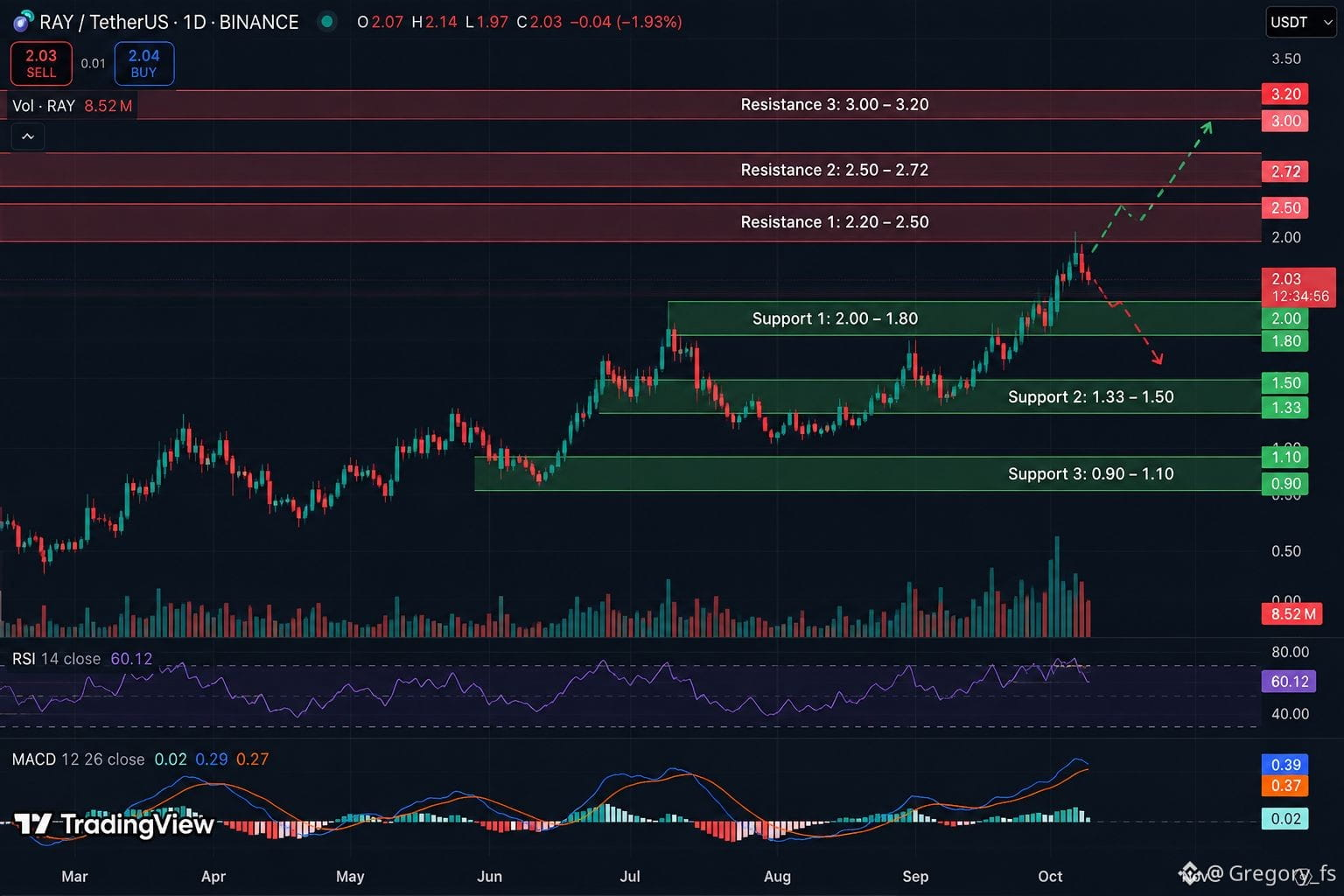
is currently trading around $2.0–2.1, showing strong momentum with significant gains over the past month. Raydium’s fundamentals remain supported by high TVL, growing trading activity, and RAY buybacks funded by protocol fees. Technically, $2.00 is an important support, while a break above $2.50 could open the way toward $3.00. For the next month, RAY could trade within a highly volatile $1.40–3.20 range, depending on overall crypto and Solana market conditions.
What do you think about it?
$USDT
#TrendingTopic
$RAY
is currently trading around $2.0–2.1, showing strong momentum with significant gains over the past month. Raydium’s fundamentals remain supported by high TVL, growing trading activity, and RAY buybacks funded by protocol fees. Technically, $2.00 is an important support, while a break above $2.50 could open the way toward $3.00. For the next month, RAY could trade within a highly volatile $1.40–3.20 range, depending on overall crypto and Solana market conditions.
What do you think about it?
$USDT
$RAY
is currently trading around $2.0–2.1, showing strong momentum with significant gains over the past month. Raydium’s fundamentals remain supported by high TVL, growing trading activity, and RAY buybacks funded by protocol fees. Technically, $2.00 is an important support, while a break above $2.50 could open the way toward $3.00. For the next month, RAY could trade within a highly volatile $1.40–3.20 range, depending on overall crypto and Solana market conditions.
What do you think about it?
$USDT
1
465
·
--
Bullisch
Übersetzung ansehen
#TrendingTopic
Now it's YOUR turn,
What do you suggest I buy for the short to medium term?
I have around 700 $USDT .
Write in the comments.
#TrendingTopic
Now it's YOUR turn,
What do you suggest I buy for the short to medium term?
I have around 700 $USDT .
Write in the comments.
Now it's YOUR turn,
What do you suggest I buy for the short to medium term?
I have around 700 $USDT .
Write in the comments.
2
2
751
·
--
Bullisch
#TradingSignals
Wie fühlen Sie sich heute?
Was habe ich Ihnen letzte Woche gesagt?
Das ist erst der Anfang—glauben Sie mir, die Zukunft sieht vielversprechend aus.
$RAY
$XRP
$DOT
#TradingSignals
Wie fühlen Sie sich heute?
Was habe ich Ihnen letzte Woche gesagt?
Das ist erst der Anfang—glauben Sie mir, die Zukunft sieht vielversprechend aus.
$RAY
$XRP
$DOT
Wie fühlen Sie sich heute?
Was habe ich Ihnen letzte Woche gesagt?
Das ist erst der Anfang—glauben Sie mir, die Zukunft sieht vielversprechend aus.
$RAY
$XRP
$DOT

3
765
·
--
Bullisch
#TrendingTopic
Stell dir eine hypothetische Situation vor.
Wer hat mehr Bedauern:
Die Person, die Krypto gekauft hat und jetzt leicht im Minus ist, oder
Die Person, die nicht gekauft hat und jetzt – da der Markt steigt – nichts zu gewinnen hat?
Kauf ein bisschen; du wirst dich später bei mir bedanken.
$APT
$DOT
$RAY
{spot}(RAYUSDT)
#TrendingTopic
Stell dir eine hypothetische Situation vor.
Wer hat mehr Bedauern:
Die Person, die Krypto gekauft hat und jetzt leicht im Minus ist, oder
Die Person, die nicht gekauft hat und jetzt – da der Markt steigt – nichts zu gewinnen hat?
Kauf ein bisschen; du wirst dich später bei mir bedanken.
$APT
$DOT
$RAY
Stell dir eine hypothetische Situation vor.
Wer hat mehr Bedauern:
Die Person, die Krypto gekauft hat und jetzt leicht im Minus ist, oder
Die Person, die nicht gekauft hat und jetzt – da der Markt steigt – nichts zu gewinnen hat?
Kauf ein bisschen; du wirst dich später bei mir bedanken.
$APT
$DOT
$RAY
Person 1
88%
Person 2
12%
8 Stimmen • Abstimmung beendet
2
2.2k
·
--
Bullisch
#TrendingTopic
Verstecken
Wie fühlst du dich???
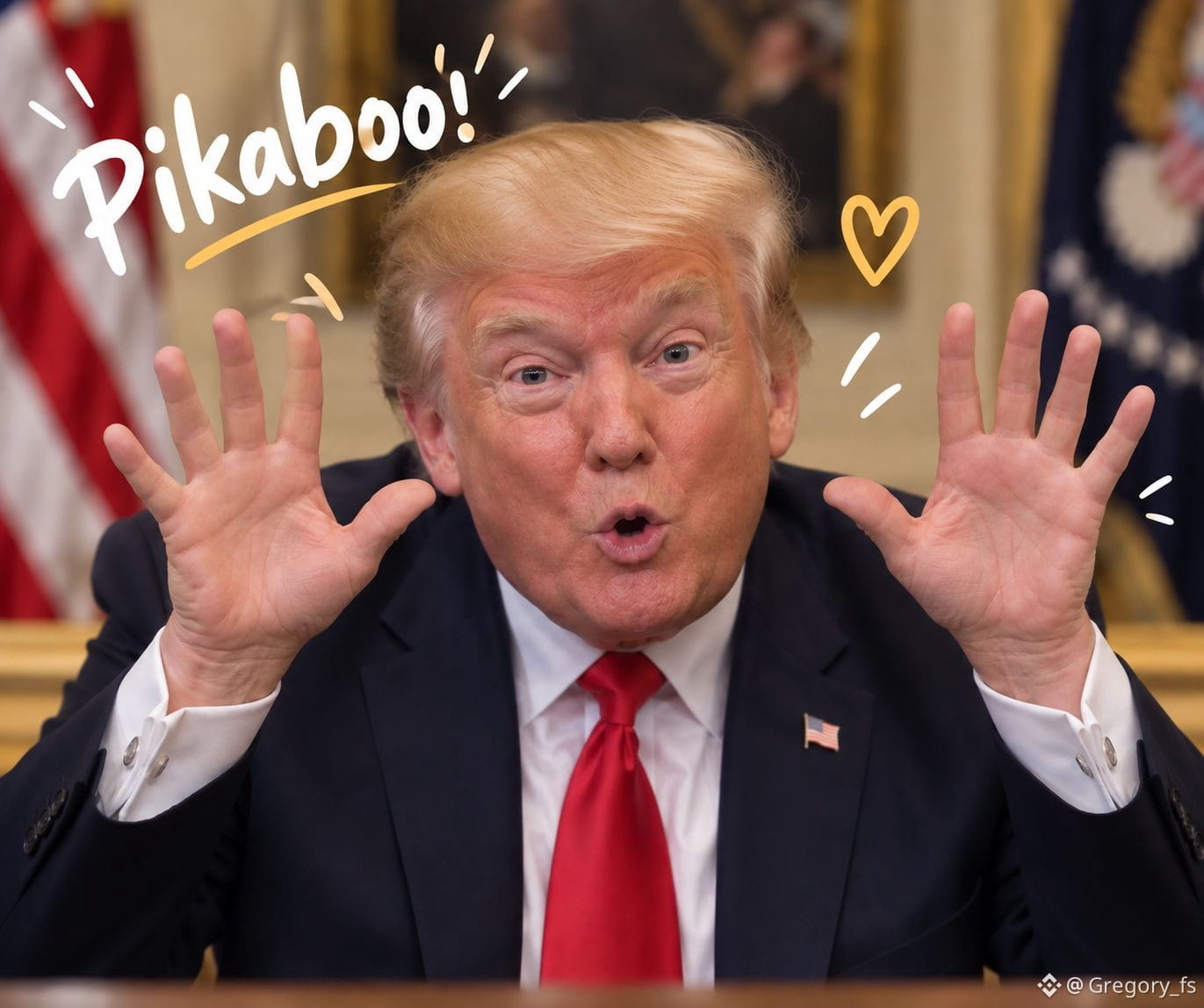
Persönlich fühle ich mich wie ein BULL. Wie könnte ich nicht, wenn ich vor mir nur Grün sehe... $RAY $DOT $INJ
#TrendingTopic
Verstecken
Wie fühlst du dich???
Persönlich fühle ich mich wie ein BULL. Wie könnte ich nicht, wenn ich vor mir nur Grün sehe... $RAY $DOT $INJ
Verstecken
Wie fühlst du dich???
Persönlich fühle ich mich wie ein BULL. Wie könnte ich nicht, wenn ich vor mir nur Grün sehe... $RAY $DOT $INJ
2
475
·
--
Bullisch
#TrendingTopic
#TradingCommunity
Bist du dir sicher?
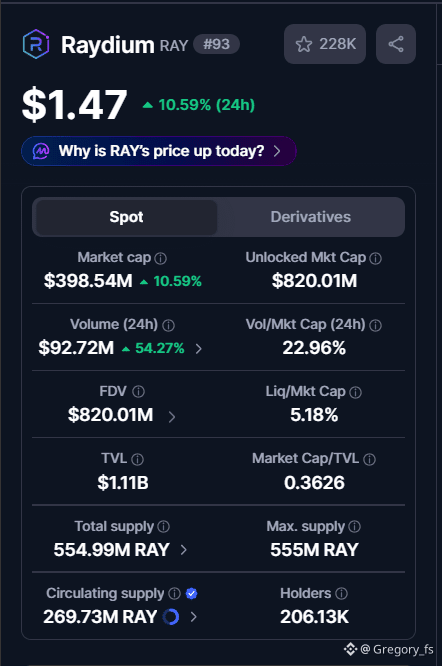
Das bin ich—ich glaube wirklich an RAY; es hat Potenzial, und die neuesten Ergebnisse geben mir noch mehr Vertrauen.
Mein Portfolio besteht größtenteils aus $RAY , zusammen mit $DOT und $INJ . Du kannst auch jetzt einsteigen, damit wir beide die Gewinne genießen können.
Bist du dabei?
#TrendingTopic
#TradingCommunity
Bist du dir sicher?
Das bin ich—ich glaube wirklich an RAY; es hat Potenzial, und die neuesten Ergebnisse geben mir noch mehr Vertrauen.
Mein Portfolio besteht größtenteils aus $RAY , zusammen mit $DOT und $INJ . Du kannst auch jetzt einsteigen, damit wir beide die Gewinne genießen können.
Bist du dabei?
#TradingCommunity
Bist du dir sicher?
Das bin ich—ich glaube wirklich an RAY; es hat Potenzial, und die neuesten Ergebnisse geben mir noch mehr Vertrauen.
Mein Portfolio besteht größtenteils aus $RAY , zusammen mit $DOT und $INJ . Du kannst auch jetzt einsteigen, damit wir beide die Gewinne genießen können.
Bist du dabei?
591
·
--
Bullisch
{spot}(TRUMPUSDT)
#TrendingTopic
Das CLARITY-Gesetz wird ändern, wie Kryptowährungen in den USA reguliert werden.
Die Aufsicht über digitale Vermögenswerte wird zwischen der SEC und der CFTC aufgeteilt und ersetzt damit das fragmentierte System, das weitgehend auf Klagen beruhte.
Donald Trump hat neue Ethikregeln in Bezug auf Kryptowährungen akzeptiert.
Bundesbeamte und ihre Ehepartner müssen bedeutende Krypto-Bestände verkaufen oder in einen Blindtrust geben, und ihnen wird untersagt, während ihrer Amtszeit digitale Vermögenswerte auszugeben oder zu sponsern.
Die Vereinbarung ist das Ergebnis eines langjährigen politischen Konflikts.
Der Gesetzentwurf war seit Monaten blockiert, weil es im Weißen Haus Widerstand gegen die Ethikbeschränkungen gab, doch der endgültige Text erlaubt nun auch, dass Generalstaatsanwälte der Bundesstaaten diese Regeln durchsetzen.
Was denkst du?
Kaboom Rico?
$USDT
{spot}(USDCUSDT)
#TrendingTopic
Das CLARITY-Gesetz wird ändern, wie Kryptowährungen in den USA reguliert werden.
Die Aufsicht über digitale Vermögenswerte wird zwischen der SEC und der CFTC aufgeteilt und ersetzt damit das fragmentierte System, das weitgehend auf Klagen beruhte.
Donald Trump hat neue Ethikregeln in Bezug auf Kryptowährungen akzeptiert.
Bundesbeamte und ihre Ehepartner müssen bedeutende Krypto-Bestände verkaufen oder in einen Blindtrust geben, und ihnen wird untersagt, während ihrer Amtszeit digitale Vermögenswerte auszugeben oder zu sponsern.
Die Vereinbarung ist das Ergebnis eines langjährigen politischen Konflikts.
Der Gesetzentwurf war seit Monaten blockiert, weil es im Weißen Haus Widerstand gegen die Ethikbeschränkungen gab, doch der endgültige Text erlaubt nun auch, dass Generalstaatsanwälte der Bundesstaaten diese Regeln durchsetzen.
Was denkst du?
Kaboom Rico?
$USDT
Das CLARITY-Gesetz wird ändern, wie Kryptowährungen in den USA reguliert werden.
Die Aufsicht über digitale Vermögenswerte wird zwischen der SEC und der CFTC aufgeteilt und ersetzt damit das fragmentierte System, das weitgehend auf Klagen beruhte.
Donald Trump hat neue Ethikregeln in Bezug auf Kryptowährungen akzeptiert.
Bundesbeamte und ihre Ehepartner müssen bedeutende Krypto-Bestände verkaufen oder in einen Blindtrust geben, und ihnen wird untersagt, während ihrer Amtszeit digitale Vermögenswerte auszugeben oder zu sponsern.
Die Vereinbarung ist das Ergebnis eines langjährigen politischen Konflikts.
Der Gesetzentwurf war seit Monaten blockiert, weil es im Weißen Haus Widerstand gegen die Ethikbeschränkungen gab, doch der endgültige Text erlaubt nun auch, dass Generalstaatsanwälte der Bundesstaaten diese Regeln durchsetzen.
Was denkst du?
Kaboom Rico?
$USDT
KABOOM
75%
NO kaboom
25%
12 Stimmen • Abstimmung beendet
3
2k
·
--
$ARB Der Auslöser wurde getroffen.
TP1--- 0.159
TP2--- 0.165
TP3--- 0.171
Zeig mir die Ergebnisse in den Kommentaren.
{spot}(ARBUSDT)
$ARB Der Auslöser wurde getroffen.
TP1--- 0.159
TP2--- 0.165
TP3--- 0.171
Zeig mir die Ergebnisse in den Kommentaren.
TP1--- 0.159
TP2--- 0.165
TP3--- 0.171
Zeig mir die Ergebnisse in den Kommentaren.
2
79
·
--
Bullisch
$SYN Der richtige Moment—jetzt kaufen.
TP1--- 0.145
TP2--- 0.149
TP3--- 0.155
{spot}(SYNUSDT)
$SYN Der richtige Moment—jetzt kaufen.
TP1--- 0.145
TP2--- 0.149
TP3--- 0.155
TP1--- 0.145
TP2--- 0.149
TP3--- 0.155
57
·
--
Bullisch
#fedratewatch
Ich bin mir nicht sicher, ob das, was als Nächstes kommt, gut oder schlecht sein wird, aber ich weiß, dass sich Risiken immer auszahlen – also könnten manche Münzen einfach „boom“ machen. Darauf wartet doch jeder.
$ETH $RAY $DOT
Guck es dir einfach an.
#fedratewatch
Ich bin mir nicht sicher, ob das, was als Nächstes kommt, gut oder schlecht sein wird, aber ich weiß, dass sich Risiken immer auszahlen – also könnten manche Münzen einfach „boom“ machen. Darauf wartet doch jeder.
$ETH $RAY $DOT
Guck es dir einfach an.
Ich bin mir nicht sicher, ob das, was als Nächstes kommt, gut oder schlecht sein wird, aber ich weiß, dass sich Risiken immer auszahlen – also könnten manche Münzen einfach „boom“ machen. Darauf wartet doch jeder.
$ETH $RAY $DOT
Guck es dir einfach an.
1
1
394

Anmelden und weiter Inhalte entdecken
Krypto-Nutzer weltweit auf Binance Square kennenlernen
⚡️ Bleib in Sachen Krypto stets am Puls.
💬 Die weltgrößte Kryptobörse vertraut darauf.
👍 Erhalte verlässliche Einblicke von verifizierten Creators.
E-Mail-Adresse/Telefonnummer