
PrinceBNB
572 Beiträge

PrinceBNB
Research & Market Insights, CryptoPrince

BTC Halter
Hochfrequenz-Trader
6.2 Monate
102 Following
2.0K+ Follower
1.2K+ Like gegeben
Beiträge
Vor einer Weile habe ich mich auf einen Bot verlassen, der externe Daten zog, um einen Trade zu eröffnen. Das Signal kam 18 Sekunden zu spät, und die Position wurde vor einer starken Kerze (candlestick) falsch gefüllt. Das Ergebnis war ein Verlust von 82 USDC, weil die Eingabe bereits veraltet war.
Nach mehreren solchen Momenten schwand mein Vertrauen in Systeme, die viel über KI reden, aber die Eingabeschicht (ingestion layer) überstürzen. In den meisten Fällen beginnt der Fehler dort, wo Daten in das System gelangen.
Es fühlt sich ähnlich an, wie wenn man die Miete, Notfallgeld und Lebenshaltungskosten an drei verschiedenen Orten aufbewahrt. Sobald der Zeitpunkt kommt, sie wieder zusammenzuführen, ist das Erste, was verloren geht, die Zeit, die benötigt wird, um zu überprüfen, ob das Geld den richtigen Weg genommen hat, dann kommen die Gebühren.
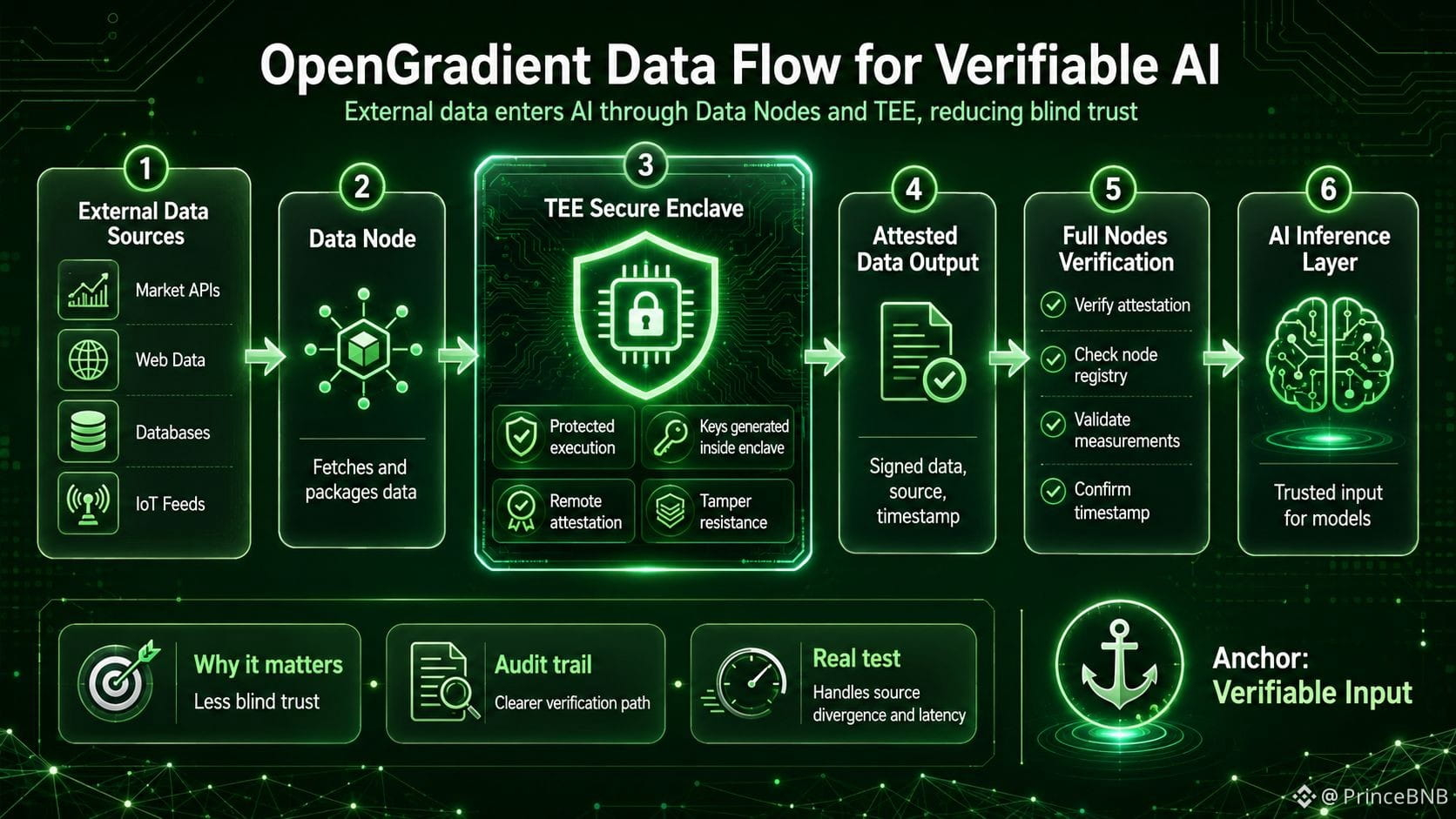
Den Teil, den ich am genauesten untersuche, ist die Datenknoten-Schicht (Data Node layer) von OpenGradient, wo externe Daten in eine Enklave (enclave) gebracht werden, bevor sie zur Inferenz (inference) gelangen. OpenGradient hält die Signaturschlüssel in einem attestierten TEE (Trusted Execution Environment) und zeigt dann den Registrierungsstatus an, damit vollständige Knoten (full nodes) überprüfen können, was passiert ist.
Ich stelle mir diese Struktur wie einen Zählraum mit einer versiegelten Glasbox vor. Mein Anker ruht auf 2 Punkten: Die Daten müssen in eine versiegelte Zone eintreten, und die Verifizierungsmarken müssen klar genug bleiben, damit das Netzwerk sie zurückverfolgen kann.
Der echte Test besteht darin, ob vollständige Knoten PCR, Attestierung, das Knotenregister und den Abrufzeitstempel (retrieval timestamp) überprüfen können und ob OpenGradient Abweichungen (divergence) zwischen zwei externen Quellen aufzeigt, anstatt lediglich zu bestätigen, dass die Daten durch eine Enklave geflossen sind. Ich würde OpenGradient auch unter 1000 aufeinanderfolgenden Aufrufen (calls) bewerten, denn ein Design, das auf dem Papier sauber aussieht, kann dennoch zerbrechen, sobald Latenz in die Verifizierung gedrückt wird.
Für mich ist dies kein Fall von frischer Rhetorik, um Vertrauen zu kleiden. OpenGradient hat nur Gewicht, wenn externe Daten, die Enklave und die Verifizierungsschicht (verification layer) so eng zusammenpassen, dass die Nutzer kein Vertrauen mehr ausstrecken müssen, bevor der Beweis erscheint.
@OpenGradient #OPG $OPG $BR $H
Nach mehreren solchen Momenten schwand mein Vertrauen in Systeme, die viel über KI reden, aber die Eingabeschicht (ingestion layer) überstürzen. In den meisten Fällen beginnt der Fehler dort, wo Daten in das System gelangen.
Es fühlt sich ähnlich an, wie wenn man die Miete, Notfallgeld und Lebenshaltungskosten an drei verschiedenen Orten aufbewahrt. Sobald der Zeitpunkt kommt, sie wieder zusammenzuführen, ist das Erste, was verloren geht, die Zeit, die benötigt wird, um zu überprüfen, ob das Geld den richtigen Weg genommen hat, dann kommen die Gebühren.
Den Teil, den ich am genauesten untersuche, ist die Datenknoten-Schicht (Data Node layer) von OpenGradient, wo externe Daten in eine Enklave (enclave) gebracht werden, bevor sie zur Inferenz (inference) gelangen. OpenGradient hält die Signaturschlüssel in einem attestierten TEE (Trusted Execution Environment) und zeigt dann den Registrierungsstatus an, damit vollständige Knoten (full nodes) überprüfen können, was passiert ist.
Ich stelle mir diese Struktur wie einen Zählraum mit einer versiegelten Glasbox vor. Mein Anker ruht auf 2 Punkten: Die Daten müssen in eine versiegelte Zone eintreten, und die Verifizierungsmarken müssen klar genug bleiben, damit das Netzwerk sie zurückverfolgen kann.
Der echte Test besteht darin, ob vollständige Knoten PCR, Attestierung, das Knotenregister und den Abrufzeitstempel (retrieval timestamp) überprüfen können und ob OpenGradient Abweichungen (divergence) zwischen zwei externen Quellen aufzeigt, anstatt lediglich zu bestätigen, dass die Daten durch eine Enklave geflossen sind. Ich würde OpenGradient auch unter 1000 aufeinanderfolgenden Aufrufen (calls) bewerten, denn ein Design, das auf dem Papier sauber aussieht, kann dennoch zerbrechen, sobald Latenz in die Verifizierung gedrückt wird.
Für mich ist dies kein Fall von frischer Rhetorik, um Vertrauen zu kleiden. OpenGradient hat nur Gewicht, wenn externe Daten, die Enklave und die Verifizierungsschicht (verification layer) so eng zusammenpassen, dass die Nutzer kein Vertrauen mehr ausstrecken müssen, bevor der Beweis erscheint.
@OpenGradient #OPG $OPG $BR $H
Ich habe einmal 8 USDC für einen Bot bezahlt, der Wallet-Daten ausliest. Das Ergebnis kam 12 Minuten später zurück, der Bildschirm sagte 'Fertig', aber das Protokoll zeigte nur eine einzige Zeile, abgeschlossen.
Nach einigen Momenten wie diesen hörte ich auf, KI-Dienste zu vertrauen, die offensichtlich Gebühren einziehen, aber die Überprüfung im Unklaren lassen. Das Geld war bereits aus der Wallet verschwunden, während der Beweis vage blieb.
Es fühlt sich an, als würde ich die Miete, Notfallfonds und Lebenshaltungskosten an drei verschiedenen Orten aufbewahren. Wenn es an der Zeit ist, sie wieder einzusammeln, ist das Erste, was verloren geht, nicht das Guthaben, sondern die Fähigkeit, nachzuvollziehen, wo jede Einheit hingegangen ist.
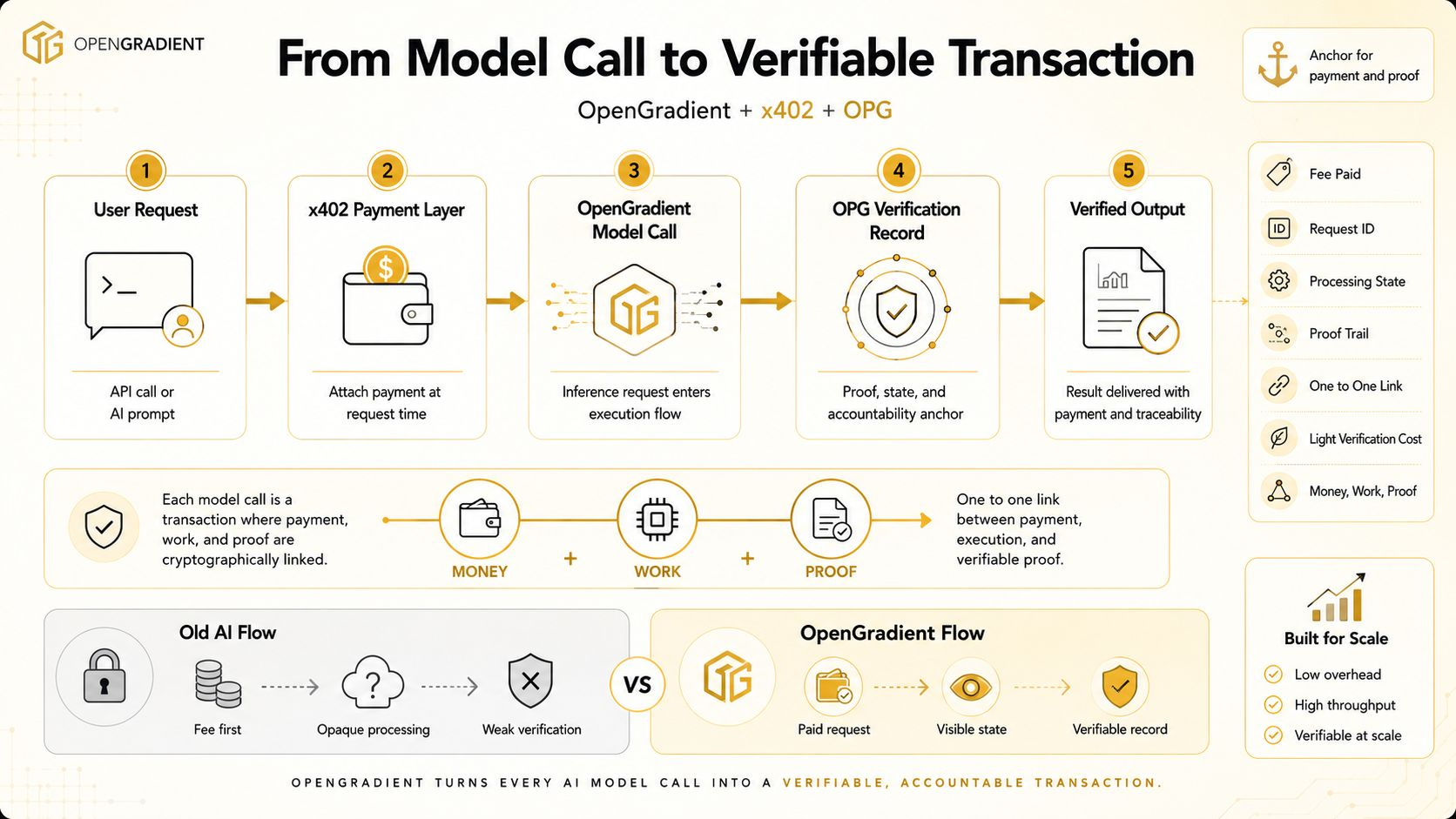
Was ich genau beobachte, ist die Art und Weise, wie OpenGradient x402 genau an dem Punkt platziert, an dem das Modell aufgerufen wird, sodass jede Anfrage mit einer Zahlung verbunden ist, anstatt auf eine separate Abrechnungsstufe außerhalb zu warten. OpenGradient bindet auch OPG in diesen gleichen Fluss ein, sodass ein einzelner Aufruf nicht nur ein Ergebnis liefert, sondern auch einen Anker für den gezahlten Preis und den Verarbeitungsstatus hinterlässt.
Eine Struktur wie diese ist nur dann vertrauenswürdig, wenn die Last steigt und das Verhältnis zwischen Gebühren, Verarbeitungszeit und dem Verifizierungsprotokoll weiterhin lesbar bleibt. Beständig bedeutet, dass jeder Modellaufruf mit einem sauberen Zahlungszeichen und einem klaren Verifizierungsweg verbunden ist.
Ich bewerte OpenGradient nur hoch, wenn x402 eine Eins-zu-eins-Verbindung zwischen der gezahlten Gebühr und der tatsächlich ausgeführten Inferenz aufrechterhält, während OPG in OpenGradient die Dienstleistungsseite in einem Protokoll sperren muss, das schwer zu verändern ist. Ich möchte auch, dass die Kosten für die Überprüfung leicht genug bleiben, denn wenn die Verifizierung zu teuer ist, werden die Leute aufhören, überhaupt zu überprüfen.
An diesem Punkt berührt OpenGradient den Teil, den KI onchain vermisst hat. Nicht eine zusätzliche Komfortschicht, sondern eine Möglichkeit, Geld, Arbeit und Beweis am selben Ort stehen zu lassen.
@OpenGradient #OPG $OPG $SYN $BSB
Nach einigen Momenten wie diesen hörte ich auf, KI-Dienste zu vertrauen, die offensichtlich Gebühren einziehen, aber die Überprüfung im Unklaren lassen. Das Geld war bereits aus der Wallet verschwunden, während der Beweis vage blieb.
Es fühlt sich an, als würde ich die Miete, Notfallfonds und Lebenshaltungskosten an drei verschiedenen Orten aufbewahren. Wenn es an der Zeit ist, sie wieder einzusammeln, ist das Erste, was verloren geht, nicht das Guthaben, sondern die Fähigkeit, nachzuvollziehen, wo jede Einheit hingegangen ist.
Was ich genau beobachte, ist die Art und Weise, wie OpenGradient x402 genau an dem Punkt platziert, an dem das Modell aufgerufen wird, sodass jede Anfrage mit einer Zahlung verbunden ist, anstatt auf eine separate Abrechnungsstufe außerhalb zu warten. OpenGradient bindet auch OPG in diesen gleichen Fluss ein, sodass ein einzelner Aufruf nicht nur ein Ergebnis liefert, sondern auch einen Anker für den gezahlten Preis und den Verarbeitungsstatus hinterlässt.
Eine Struktur wie diese ist nur dann vertrauenswürdig, wenn die Last steigt und das Verhältnis zwischen Gebühren, Verarbeitungszeit und dem Verifizierungsprotokoll weiterhin lesbar bleibt. Beständig bedeutet, dass jeder Modellaufruf mit einem sauberen Zahlungszeichen und einem klaren Verifizierungsweg verbunden ist.
Ich bewerte OpenGradient nur hoch, wenn x402 eine Eins-zu-eins-Verbindung zwischen der gezahlten Gebühr und der tatsächlich ausgeführten Inferenz aufrechterhält, während OPG in OpenGradient die Dienstleistungsseite in einem Protokoll sperren muss, das schwer zu verändern ist. Ich möchte auch, dass die Kosten für die Überprüfung leicht genug bleiben, denn wenn die Verifizierung zu teuer ist, werden die Leute aufhören, überhaupt zu überprüfen.
An diesem Punkt berührt OpenGradient den Teil, den KI onchain vermisst hat. Nicht eine zusätzliche Komfortschicht, sondern eine Möglichkeit, Geld, Arbeit und Beweis am selben Ort stehen zu lassen.
@OpenGradient #OPG $OPG $SYN $BSB
Vor einiger Zeit habe ich ein Signalfiltermodell auf eine andere Maschine verschoben, um es mit vergangenen Trades zu vergleichen. Die Datei war nach 19 Tagen immer noch da, aber die Ausgabe hatte sich verändert, da ich nicht mehr bestätigen konnte, welche Gewichte geladen wurden.
Seitdem bin ich vorsichtig gegenüber jedem System, das nur beweist, dass die Daten nicht verschwunden sind. Im Crypto-Bereich beginnen große Fehler oft mit einem Detail, das aus dem Protokoll rutscht.
Es ist wie das Halten von Lebenshaltungskosten, Notfallbar und Handelskapital in drei separaten Wallets und dann zu versuchen, sie am Ende des Monats abzugleichen. Die Salden sind noch da, aber ohne einen Anker für den Zeitrahmen wird jeder Betrag schwerer zu vertrauen.
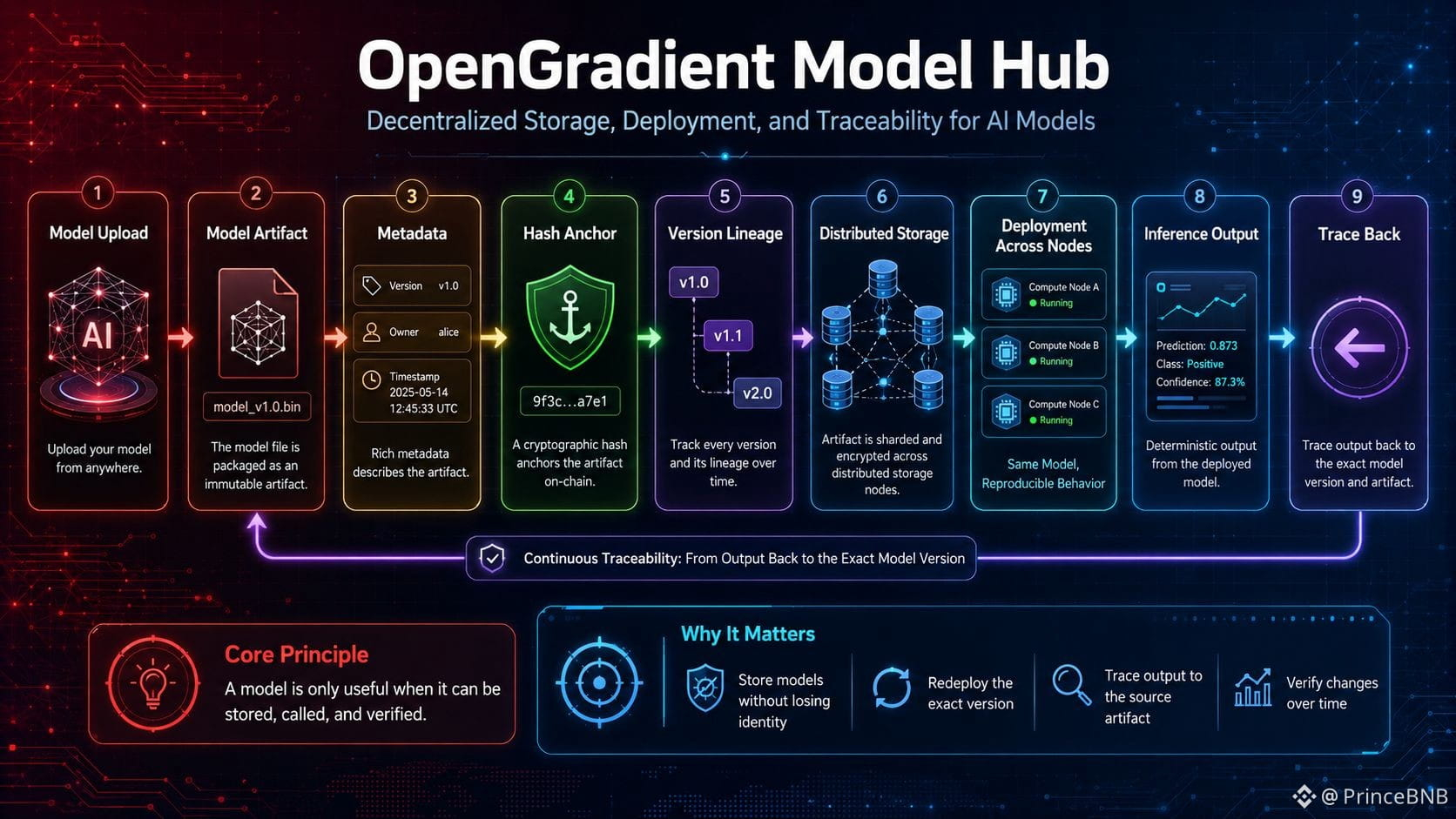
Model Hub greift genau dieses Problem auf. OpenGradient verwandelt ein Modell nicht in etwas, das gespeichert und vergessen wird, sondern verbindet die Datei, Metadaten, Herkunft und die bereitgestellte Version zu einem nachverfolgbaren Pfad, sodass die Nutzer überprüfen können, welche Version tatsächlich die Ausgabe erzeugt hat.
Das ist der kritische Teil der dezentralen KI-Infrastruktur. Ein Modell-Repository wird nur dann nützlich, wenn nach 60 Tagen jemand immer noch nachvollziehen kann, welches Artefakt geladen wurde, welche Version sich geändert hat und wo die Abweichung begann.
Der echte Test liegt darin, ob OpenGradient den Hash als stabilen Ankerpunkt sichern kann und ob es einen Rückweg vom Ergebnis zurück zur Modellversion, die tatsächlich ausgeführt wurde, aufbauen kann. OpenGradient muss auch die erneute Bereitstellung über einen anderen Knoten ermöglichen, während das Verhalten nahe an der ursprünglichen Version bleibt.
Ich lege wenig Gewicht auf Model Hub, einfach weil viele Modelle an ein Netzwerk gebunden werden können. OpenGradient steht nur wirklich fest, wenn Speicherung, Aufruf und Verifizierung in einer Schleife zusammengeführt werden, sodass ein Modell die Hände des Erstellers verlassen und trotzdem nachverfolgbar bleiben kann.
@OpenGradient #OPG $OPG $EVAA $JTO
Seitdem bin ich vorsichtig gegenüber jedem System, das nur beweist, dass die Daten nicht verschwunden sind. Im Crypto-Bereich beginnen große Fehler oft mit einem Detail, das aus dem Protokoll rutscht.
Es ist wie das Halten von Lebenshaltungskosten, Notfallbar und Handelskapital in drei separaten Wallets und dann zu versuchen, sie am Ende des Monats abzugleichen. Die Salden sind noch da, aber ohne einen Anker für den Zeitrahmen wird jeder Betrag schwerer zu vertrauen.
Model Hub greift genau dieses Problem auf. OpenGradient verwandelt ein Modell nicht in etwas, das gespeichert und vergessen wird, sondern verbindet die Datei, Metadaten, Herkunft und die bereitgestellte Version zu einem nachverfolgbaren Pfad, sodass die Nutzer überprüfen können, welche Version tatsächlich die Ausgabe erzeugt hat.
Das ist der kritische Teil der dezentralen KI-Infrastruktur. Ein Modell-Repository wird nur dann nützlich, wenn nach 60 Tagen jemand immer noch nachvollziehen kann, welches Artefakt geladen wurde, welche Version sich geändert hat und wo die Abweichung begann.
Der echte Test liegt darin, ob OpenGradient den Hash als stabilen Ankerpunkt sichern kann und ob es einen Rückweg vom Ergebnis zurück zur Modellversion, die tatsächlich ausgeführt wurde, aufbauen kann. OpenGradient muss auch die erneute Bereitstellung über einen anderen Knoten ermöglichen, während das Verhalten nahe an der ursprünglichen Version bleibt.
Ich lege wenig Gewicht auf Model Hub, einfach weil viele Modelle an ein Netzwerk gebunden werden können. OpenGradient steht nur wirklich fest, wenn Speicherung, Aufruf und Verifizierung in einer Schleife zusammengeführt werden, sodass ein Modell die Hände des Erstellers verlassen und trotzdem nachverfolgbar bleiben kann.
@OpenGradient #OPG $OPG $EVAA $JTO
Während einer überfüllten Phase des Marktes habe ich USDC aus einem Protokoll abgezogen und in eine andere Wallet verschoben, um eine Order zu platzieren, bevor der Einstieg weg war. Die Übertragung wurde nach 19 Minuten abgeschlossen, aber als ich erneut nachgesehen habe, waren 2 Genehmigungen noch offen, breiter als das, was der Trade verlangte.
Das hat meine Einschätzung der Bequemlichkeit verändert. Im Krypto-Bereich verlieren Nutzer selten die Kontrolle durch einen dramatischen Fehler. Häufiger sickert die Kontrolle durch Bestätigungen ab, die zu schnell kommen und sich zu routiniert anfühlen.
Es erinnert mich daran, den Schlüssel zu einem Laden jemandem zu überlassen, damit sie Waren für einen abholen können, und sich dann zu beruhigen, weil der Bestand noch da ist. Der wahre Anker der Sicherheit ist nicht, dass bisher nichts verschwunden ist. Es ist die Antwort auf eine einfachere Frage: Wer hat noch das Recht, die Tür zu öffnen.
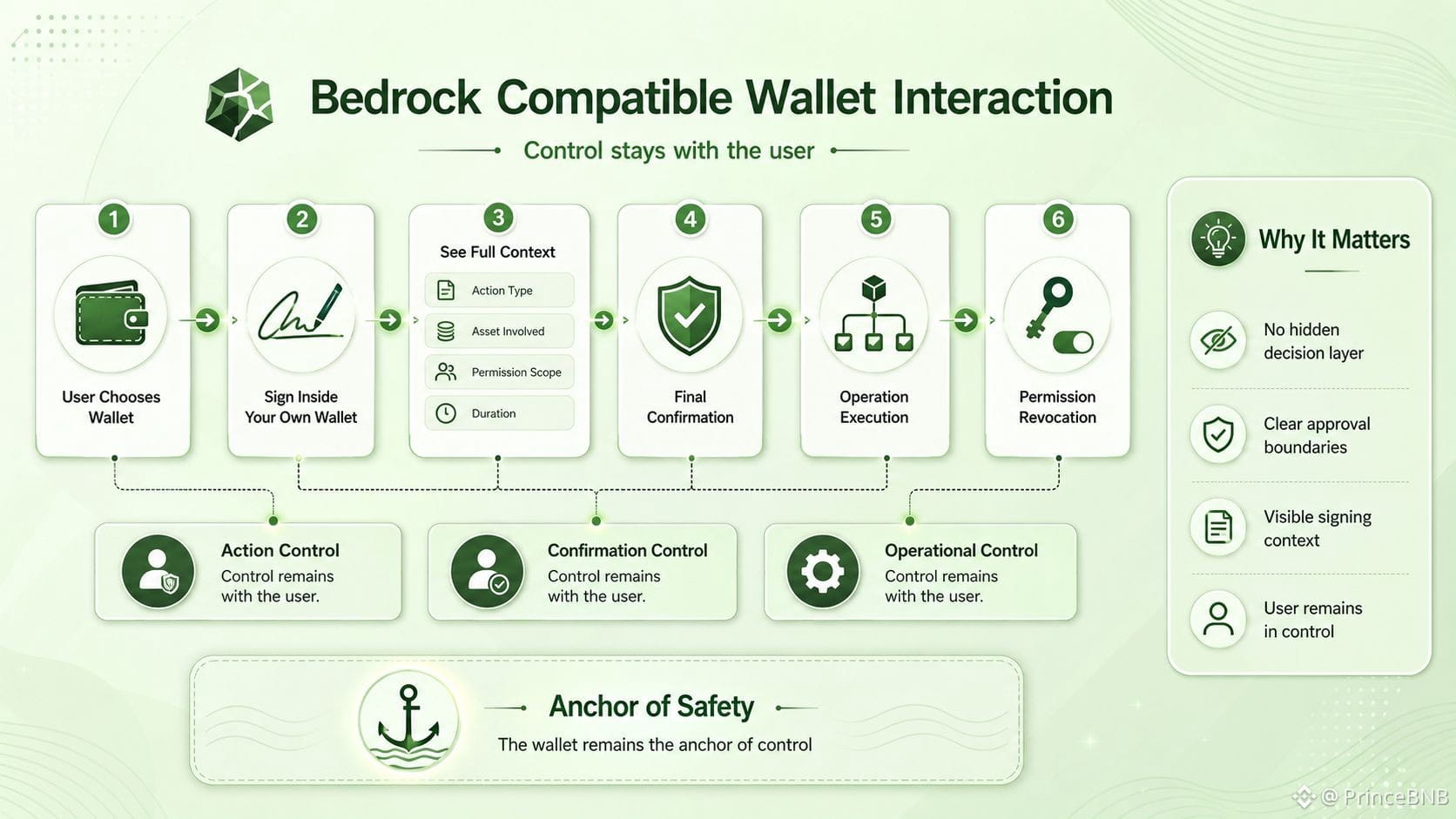
Deshalb schaue ich direkt auf die Interaktion mit der kompatiblen Wallet. Bedrock integriert den Akt des Signierens direkt in die Wallet, die der Nutzer ausgewählt hat, anstatt die endgültige Entscheidung in eine Zwischenebene zu schieben, die schwerer zu überprüfen ist. Bedrock hält auch den Kontext zum Zeitpunkt der Genehmigung sichtbar: die Aktion, die beteiligten Vermögenswerte, den Umfang der Berechtigung und die Dauer dieser Berechtigung.
Das ist wichtig, weil viele Produkte immer noch die Sprache der Selbstverwahrung sprechen, während sie den Vermögensinhaber von dem Ort trennen, an dem die endgültige Entscheidung getroffen wird. Sobald diese Trennung auftritt, hört die Wallet auf, das Zentrum der Kontrolle zu sein, und wird zu einem Bildschirm für formelle Zustimmung.
Was dieser Struktur Gewicht verleiht, ist meiner Meinung nach, dass jede Unterschrift genügend Informationen trägt, damit der Nutzer versteht, was autorisiert wird. Bedrock gibt die endgültige Bestätigung an die Person zurück, die das Risiko trägt, und macht die Widerrufung der Berechtigung zu einem Teil des normalen Weges, anstatt nachträglich zu erfolgen.
Ich suche nicht nach einem Design, das mir ein paar Sekunden bei einem Klick spart. Ich suche eine Struktur, in der Bedrock die Kontrolle über Aktionen, Bestätigungen und Operationen an die Person zurückgibt, die tatsächlich exponiert ist, wenn etwas schiefgeht.
@Bedrock #bedrock $BR $JCT $SYN
Das hat meine Einschätzung der Bequemlichkeit verändert. Im Krypto-Bereich verlieren Nutzer selten die Kontrolle durch einen dramatischen Fehler. Häufiger sickert die Kontrolle durch Bestätigungen ab, die zu schnell kommen und sich zu routiniert anfühlen.
Es erinnert mich daran, den Schlüssel zu einem Laden jemandem zu überlassen, damit sie Waren für einen abholen können, und sich dann zu beruhigen, weil der Bestand noch da ist. Der wahre Anker der Sicherheit ist nicht, dass bisher nichts verschwunden ist. Es ist die Antwort auf eine einfachere Frage: Wer hat noch das Recht, die Tür zu öffnen.
Deshalb schaue ich direkt auf die Interaktion mit der kompatiblen Wallet. Bedrock integriert den Akt des Signierens direkt in die Wallet, die der Nutzer ausgewählt hat, anstatt die endgültige Entscheidung in eine Zwischenebene zu schieben, die schwerer zu überprüfen ist. Bedrock hält auch den Kontext zum Zeitpunkt der Genehmigung sichtbar: die Aktion, die beteiligten Vermögenswerte, den Umfang der Berechtigung und die Dauer dieser Berechtigung.
Das ist wichtig, weil viele Produkte immer noch die Sprache der Selbstverwahrung sprechen, während sie den Vermögensinhaber von dem Ort trennen, an dem die endgültige Entscheidung getroffen wird. Sobald diese Trennung auftritt, hört die Wallet auf, das Zentrum der Kontrolle zu sein, und wird zu einem Bildschirm für formelle Zustimmung.
Was dieser Struktur Gewicht verleiht, ist meiner Meinung nach, dass jede Unterschrift genügend Informationen trägt, damit der Nutzer versteht, was autorisiert wird. Bedrock gibt die endgültige Bestätigung an die Person zurück, die das Risiko trägt, und macht die Widerrufung der Berechtigung zu einem Teil des normalen Weges, anstatt nachträglich zu erfolgen.
Ich suche nicht nach einem Design, das mir ein paar Sekunden bei einem Klick spart. Ich suche eine Struktur, in der Bedrock die Kontrolle über Aktionen, Bestätigungen und Operationen an die Person zurückgibt, die tatsächlich exponiert ist, wenn etwas schiefgeht.
@Bedrock #bedrock $BR $JCT $SYN
Verifiziert
Einmal habe ich Tokens gesperrt, um on-chain abzustimmen, und dann 35 Minuten gewartet, bevor die finale Transaktion gesendet wurde. Der Vorschlag war bereits angenommen, doch die Ausführungsbefugnis saß noch hinter einer weiteren Schicht von Türen.
Von diesem Moment an habe ich aufgehört, die Governance anhand der Anzahl der teilnehmenden Wallets zu bewerten. Was ich sehen muss, ist eine Struktur, die die Macht zwingt, auf einem klar definierten Pfad zu fließen.
Es fühlt sich an wie ein gemeinsamer Haushaltsfonds in einer Mietwohnung. Jeder mag sich einig sein, welche Ausgaben gedeckt werden sollten, aber die Person mit dem Schlüssel zur Schatztruhe kontrolliert immer noch den Rhythmus des Cashflows.
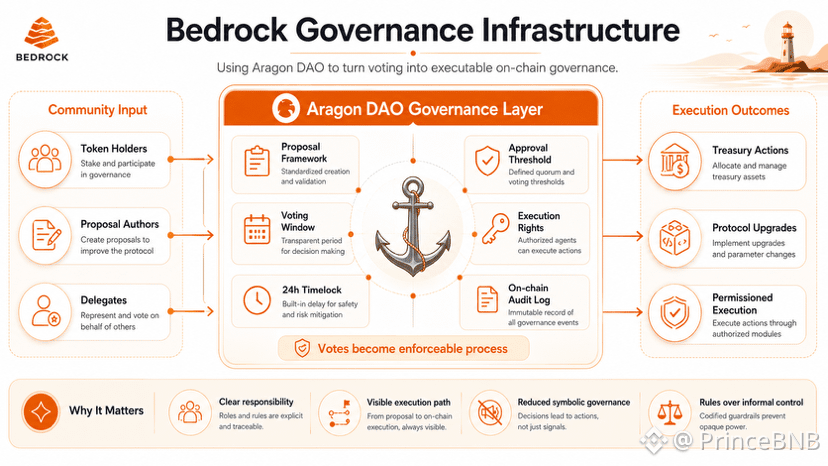
Deshalb halte ich Bedrock für die Wahl von Aragon DAO als strukturellen Schritt. Bedrock fügt nicht einfach einen weiteren Klick zum Genehmigen hinzu, sondern zieht Vorschläge, Genehmigungsschwellen, Ausführungsrechte und Wartezeiten in die gleiche Infrastruktur-Schicht, die geprüft werden kann. Was Aragon DAO Gewicht verleiht, ist die Fähigkeit, den Teil nach der Abstimmung sichtbar zu machen.
Ich stelle mir dieses Modell wie ein elektrisches Panel mit einem verkabelten Diagramm vor, das neben dem Schalter hängt. Wenn alles ruhig ist, schenken nur wenige Menschen Aufmerksamkeit, aber sobald der Strom in die falsche Richtung fließt, kann nur eine klar abgebildete Verkabelung das Haus retten.
Der echte Test liegt in den Ausführungsdetails. Bedrock muss zeigen, wer die Notfallkraft hält, ob die Protokolle nach der Abstimmung kontinuierlich bleiben und ob Bedrock tatsächlich einen 24-Stunden-Puffer einhält, bevor ein Auftrag ausgeführt wird. Ich vertraue darauf erst dann mehr, wenn die Macht an Regeln gebunden ist, anstatt an den guten Willen der Person mit dem Schlüssel.
Ich sehe dies nicht als ein Governance-Label, das hinzugefügt wurde, um das Profil stärker erscheinen zu lassen. Was Bedrock in meinem Sichtfeld hält, ist die Art und Weise, wie es Aragon DAO als Anker nutzt, sodass Governance weniger performativ wird und näher an einer echten Infrastruktur rückt.
@Bedrock $BR $ESPORTS $RIF #bedrock
Von diesem Moment an habe ich aufgehört, die Governance anhand der Anzahl der teilnehmenden Wallets zu bewerten. Was ich sehen muss, ist eine Struktur, die die Macht zwingt, auf einem klar definierten Pfad zu fließen.
Es fühlt sich an wie ein gemeinsamer Haushaltsfonds in einer Mietwohnung. Jeder mag sich einig sein, welche Ausgaben gedeckt werden sollten, aber die Person mit dem Schlüssel zur Schatztruhe kontrolliert immer noch den Rhythmus des Cashflows.
Deshalb halte ich Bedrock für die Wahl von Aragon DAO als strukturellen Schritt. Bedrock fügt nicht einfach einen weiteren Klick zum Genehmigen hinzu, sondern zieht Vorschläge, Genehmigungsschwellen, Ausführungsrechte und Wartezeiten in die gleiche Infrastruktur-Schicht, die geprüft werden kann. Was Aragon DAO Gewicht verleiht, ist die Fähigkeit, den Teil nach der Abstimmung sichtbar zu machen.
Ich stelle mir dieses Modell wie ein elektrisches Panel mit einem verkabelten Diagramm vor, das neben dem Schalter hängt. Wenn alles ruhig ist, schenken nur wenige Menschen Aufmerksamkeit, aber sobald der Strom in die falsche Richtung fließt, kann nur eine klar abgebildete Verkabelung das Haus retten.
Der echte Test liegt in den Ausführungsdetails. Bedrock muss zeigen, wer die Notfallkraft hält, ob die Protokolle nach der Abstimmung kontinuierlich bleiben und ob Bedrock tatsächlich einen 24-Stunden-Puffer einhält, bevor ein Auftrag ausgeführt wird. Ich vertraue darauf erst dann mehr, wenn die Macht an Regeln gebunden ist, anstatt an den guten Willen der Person mit dem Schlüssel.
Ich sehe dies nicht als ein Governance-Label, das hinzugefügt wurde, um das Profil stärker erscheinen zu lassen. Was Bedrock in meinem Sichtfeld hält, ist die Art und Weise, wie es Aragon DAO als Anker nutzt, sodass Governance weniger performativ wird und näher an einer echten Infrastruktur rückt.
@Bedrock $BR $ESPORTS $RIF #bedrock
Verifiziert
Vor nicht allzu langer Zeit habe ich 0.27 BTC aus einer Position abgezogen, um Kapital zu rotieren. Die Transaktion wurde frühzeitig als abgeschlossen angezeigt, aber es dauerte noch weitere 26 Minuten, bis der Teil des Kapitals, den ich sofort nutzen konnte, tatsächlich ankam.
Nach ein paar solchen Momenten habe ich aufgehört, viel Vertrauen in Salden auf einem Bildschirm zu setzen. Was dein Timing stört, ist nicht nur die Preisbewegung, sondern auch die Lücke zwischen Bestätigung und dem Moment, in dem Kapital wirklich bewegt werden kann.
Es fühlt sich an, als würde ich Mietgeld, Notfallkasse und Lebenshaltungskosten an drei verschiedenen Orten aufbewahren. Die Gesamtsumme sieht gut aus, aber wenn du sie schnell zusammenbringen musst, ist das erste, was du verlierst, die Zeit im Geldfluss, also brauche ich einen Anker, an dem ich festhalten kann.
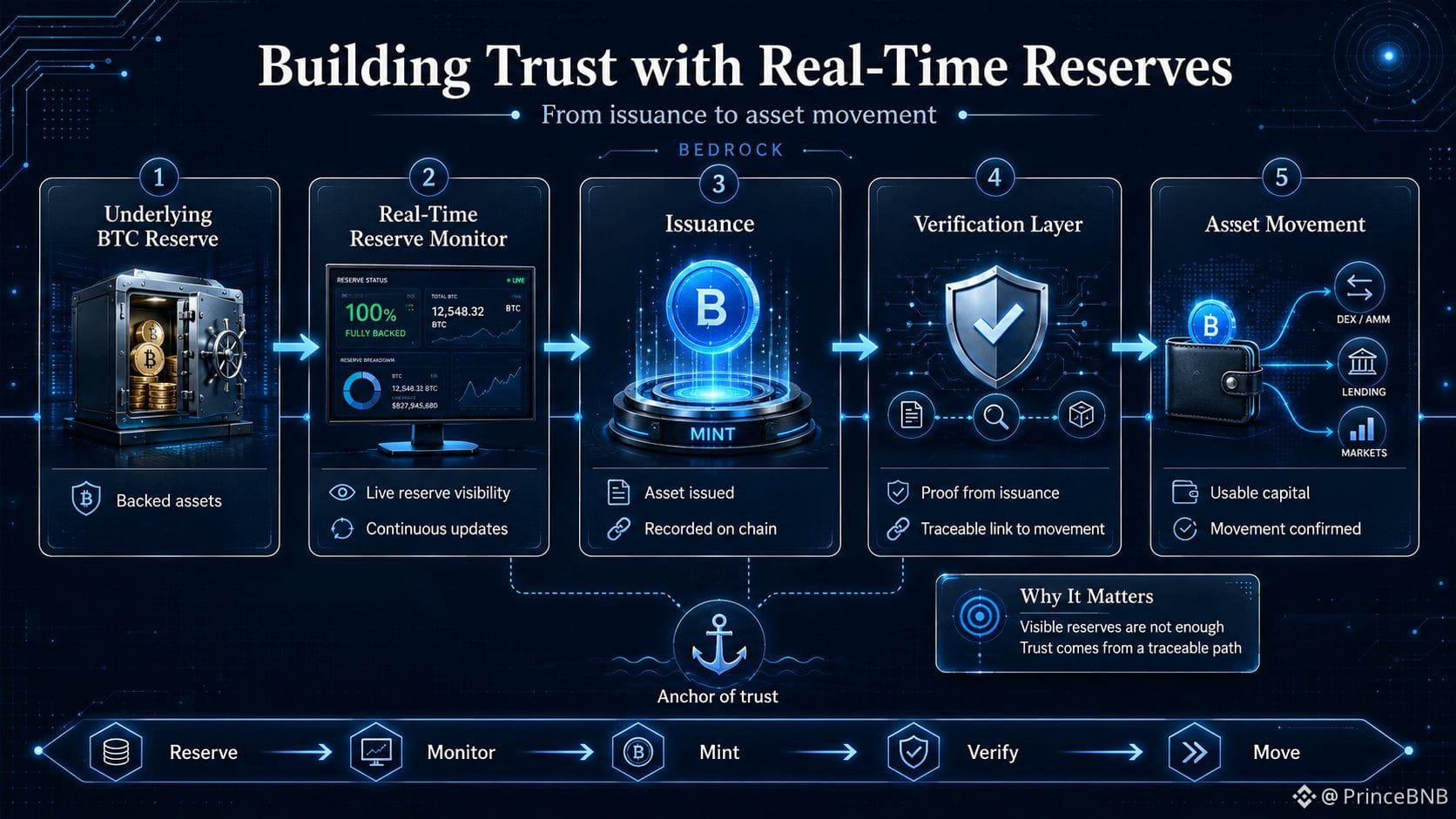
Was ich mir genauer angesehen habe, ist die Art und Weise, wie Bedrock echte Zeitreserven in den Mittelpunkt stellt, anstatt die Nutzer auf verzögerte Schnappschüsse angewiesen zu machen. Bedrock verbindet auch eine Verifizierungsschicht vom Moment der Ausgabe bis zum Moment, in dem sich das Asset zu bewegen beginnt, sodass die Beweiskette an dem sensibelsten Punkt nicht bricht.
Ich stelle mir diesen Mechanismus wie ein Lagerhaus vor, das sowohl sein Eingangsprotokoll als auch sein Versandprotokoll offen hält. Zu sehen, dass die Waren noch da sind, ist eine Sache, zu wissen, welcher Batch erfasst wurde und welcher Batch das Lager verlassen hat, schafft ein festeres Gefühl von Sicherheit.
Ein Modell verdient nur dann den Namen langlebig, wenn die Reserven sich weiterhin aktualisieren, während der Kapitalfluss sich beschleunigt, wenn die Ausgabespur weiterhin mit der Bewegung verbunden ist und wenn Bedrock weiterhin einen klaren Link zwischen dem zugrunde liegenden Asset und dem bereits im Umlauf befindlichen Teil bewahrt. Bedrock bewegt sich in die richtige Richtung, weil es Transparenz und Betrieb miteinander in Einklang bringt.
Ich sehe das nicht als dekoratives Detail. Bedrock hat nur Gewicht, wenn Nutzer den Weg der Assets selbst nachverfolgen können, anstatt einer vorgefertigten Erklärung zu vertrauen.
@Bedrock $BR #bedrock $ESPORTS $VELVET
Nach ein paar solchen Momenten habe ich aufgehört, viel Vertrauen in Salden auf einem Bildschirm zu setzen. Was dein Timing stört, ist nicht nur die Preisbewegung, sondern auch die Lücke zwischen Bestätigung und dem Moment, in dem Kapital wirklich bewegt werden kann.
Es fühlt sich an, als würde ich Mietgeld, Notfallkasse und Lebenshaltungskosten an drei verschiedenen Orten aufbewahren. Die Gesamtsumme sieht gut aus, aber wenn du sie schnell zusammenbringen musst, ist das erste, was du verlierst, die Zeit im Geldfluss, also brauche ich einen Anker, an dem ich festhalten kann.
Was ich mir genauer angesehen habe, ist die Art und Weise, wie Bedrock echte Zeitreserven in den Mittelpunkt stellt, anstatt die Nutzer auf verzögerte Schnappschüsse angewiesen zu machen. Bedrock verbindet auch eine Verifizierungsschicht vom Moment der Ausgabe bis zum Moment, in dem sich das Asset zu bewegen beginnt, sodass die Beweiskette an dem sensibelsten Punkt nicht bricht.
Ich stelle mir diesen Mechanismus wie ein Lagerhaus vor, das sowohl sein Eingangsprotokoll als auch sein Versandprotokoll offen hält. Zu sehen, dass die Waren noch da sind, ist eine Sache, zu wissen, welcher Batch erfasst wurde und welcher Batch das Lager verlassen hat, schafft ein festeres Gefühl von Sicherheit.
Ein Modell verdient nur dann den Namen langlebig, wenn die Reserven sich weiterhin aktualisieren, während der Kapitalfluss sich beschleunigt, wenn die Ausgabespur weiterhin mit der Bewegung verbunden ist und wenn Bedrock weiterhin einen klaren Link zwischen dem zugrunde liegenden Asset und dem bereits im Umlauf befindlichen Teil bewahrt. Bedrock bewegt sich in die richtige Richtung, weil es Transparenz und Betrieb miteinander in Einklang bringt.
Ich sehe das nicht als dekoratives Detail. Bedrock hat nur Gewicht, wenn Nutzer den Weg der Assets selbst nachverfolgen können, anstatt einer vorgefertigten Erklärung zu vertrauen.
@Bedrock $BR #bedrock $ESPORTS $VELVET
Einmal habe ich 2800 USDC zu einer Börse bewegt, weniger als 40 Minuten bevor der Handel öffnete. Die Brücke war nach 12 Minuten fertig, aber die Einzahlung blieb fast 5 Stunden lang stecken, und ein klarer Token-Plan wurde vage.
Da wurde mir klar, dass Nutzer nicht beim ersten Schritt aufgeben. Sie verlieren Momentum in der Phase, in der das Kapital bereits aus der Wallet verschwunden ist, während die Belohnung immer noch weit entfernt scheint.
Es ist wie das Geld von drei Konten zu sammeln, um eine einzige Rechnung zu bezahlen. Das Geld reicht immer noch, aber ein fragmentierter Cashflow verlangsamt die Entscheidung selbst.
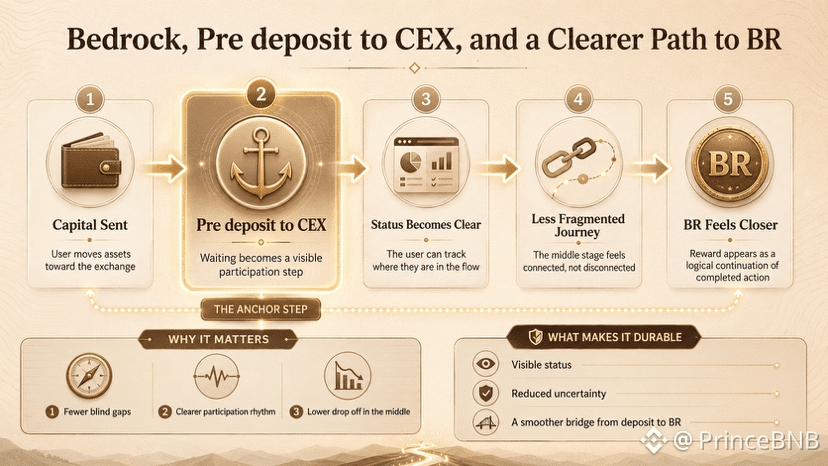
Deshalb sehe ich die Pre-Einzahlung zu CEX als Anker für den Weg zum Erhalt von BR. Bedrock zieht diesen Warteschritt nah an den Teilnahmefluss, sodass die Nutzer nicht mehr das Gefühl haben, sie hätten eingezahlt und wären dann außen vor geblieben. Bedrock verleiht dem mittleren Abschnitt eine klare Form, und BR sitzt nicht mehr getrennt von der bereits abgeschlossenen Aktion.
Was zu sehen ist, ist, ob die Wartezeit in einen sinnvollen Zustand verwandelt wird oder nicht. Die Teilnehmer müssen klar erkennen, ob sie bei Schritt 1, Schritt 2 oder immer noch in einer Grauzone gefangen sind.
Ich werde Bedrock daran messen, wie gut die Pre-Einzahlung zu CEX mit dem Rhythmus des Erhalts von BR übereinstimmt, ob die Informationen klar genug sind, sodass die Nutzer nicht raten müssen, und durch die Rücklaufquote nach einem ersten Versuch. Ich werde Bedrock auch nur dann vertrauen, wenn dieser mittlere Schritt das Gefühl eines gebrochenen Flusses verringert, sodass BR als Ergebnis erscheint, das direkt mit der bereits getätigten Aktion verbunden ist.
In einem Markt voller Anreize fehlt nicht die Belohnung, sondern ein Weg, der das Momentum der Nutzer nicht entzieht, nachdem das Kapital bereits bewegt wurde. Bedrock wird erst dann wirklich überzeugend, wenn die Pre-Einzahlung zu CEX die Wartezeit auf BR weniger fragmentiert und weniger wie leerer Raum erscheinen lässt.
@Bedrock #bedrock $BR $VELVET $H
Da wurde mir klar, dass Nutzer nicht beim ersten Schritt aufgeben. Sie verlieren Momentum in der Phase, in der das Kapital bereits aus der Wallet verschwunden ist, während die Belohnung immer noch weit entfernt scheint.
Es ist wie das Geld von drei Konten zu sammeln, um eine einzige Rechnung zu bezahlen. Das Geld reicht immer noch, aber ein fragmentierter Cashflow verlangsamt die Entscheidung selbst.
Deshalb sehe ich die Pre-Einzahlung zu CEX als Anker für den Weg zum Erhalt von BR. Bedrock zieht diesen Warteschritt nah an den Teilnahmefluss, sodass die Nutzer nicht mehr das Gefühl haben, sie hätten eingezahlt und wären dann außen vor geblieben. Bedrock verleiht dem mittleren Abschnitt eine klare Form, und BR sitzt nicht mehr getrennt von der bereits abgeschlossenen Aktion.
Was zu sehen ist, ist, ob die Wartezeit in einen sinnvollen Zustand verwandelt wird oder nicht. Die Teilnehmer müssen klar erkennen, ob sie bei Schritt 1, Schritt 2 oder immer noch in einer Grauzone gefangen sind.
Ich werde Bedrock daran messen, wie gut die Pre-Einzahlung zu CEX mit dem Rhythmus des Erhalts von BR übereinstimmt, ob die Informationen klar genug sind, sodass die Nutzer nicht raten müssen, und durch die Rücklaufquote nach einem ersten Versuch. Ich werde Bedrock auch nur dann vertrauen, wenn dieser mittlere Schritt das Gefühl eines gebrochenen Flusses verringert, sodass BR als Ergebnis erscheint, das direkt mit der bereits getätigten Aktion verbunden ist.
In einem Markt voller Anreize fehlt nicht die Belohnung, sondern ein Weg, der das Momentum der Nutzer nicht entzieht, nachdem das Kapital bereits bewegt wurde. Bedrock wird erst dann wirklich überzeugend, wenn die Pre-Einzahlung zu CEX die Wartezeit auf BR weniger fragmentiert und weniger wie leerer Raum erscheinen lässt.
@Bedrock #bedrock $BR $VELVET $H
Verifiziert
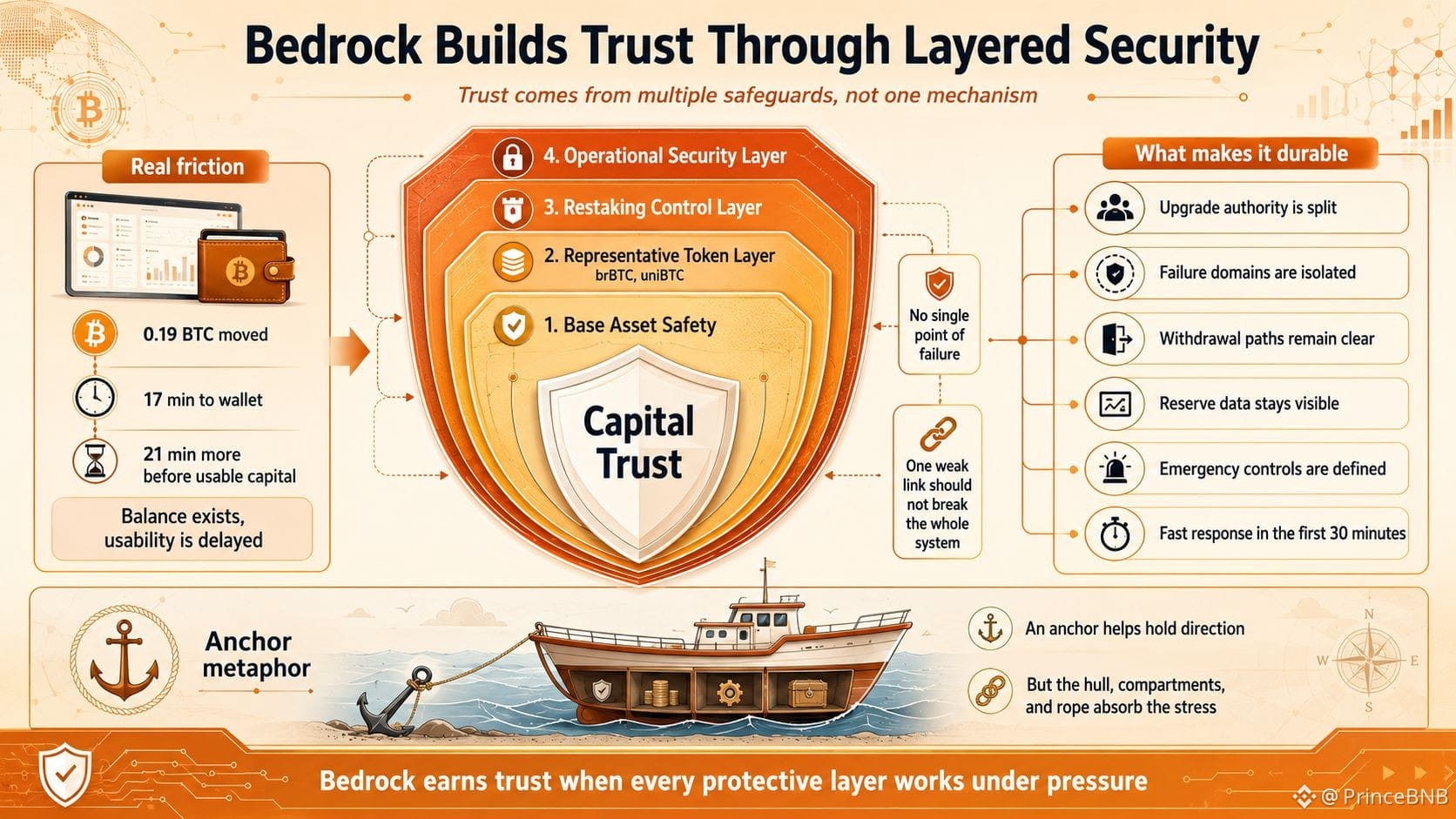
Einmal habe ich 1,7 BTC nach einem starken Flush abgehoben. Die Wallet zeigte nach 14 Minuten eine Fertigstellung, aber dieser Teil des Kapitals blieb weitere 23 Minuten ausstehend, und diese Lücke war groß genug, um mich den defensiven Zug verpassen zu lassen.
Nach ein paar solchen Reibungen habe ich aufgehört, dem Sicherheitsmechanismus zu vertrauen, der an einem einzigen Riegel hängt. In ruhigen Märkten sieht fast jeder Mechanismus gut aus, erst wenn der Druck steigt, wird klar, welche Schicht zu viel tragen musste.
Es fühlt sich an, als ob ich das Studiengeld, die Miete und einen Notfallfonds in drei separate Fächer aufteile. Ein kleiner Ausrutscher, und der gesamte Monat gerät aus der Bahn.
Was mich zum Nachdenken brachte, war die Art und Weise, wie Bedrock eine geschichtete Verteidigungslinie aufbaut, anstatt eine Schicht in eine rettende Gnade zu heben. Bedrock muss über den Basiswert, repräsentative Token wie brBTC und uniBTC, die Restaking-Schicht und das Tempo der Operationen wachen, sodass der Wert des Designs darin liegt, dass jede Schicht gegen die anderen sichert, ohne blind auf sie zu vertrauen.
Ich stelle es mir wie ein Boot vor, das durch strudelndes Wasser fährt. Der Anker hält die Richtung, aber der Rumpf, die Fächer und die Ankerleine entscheiden, ob ein Aufprall abgefangen wird.
Der echte Test für Bedrock liegt nicht in Versprechungen, sondern darin, wie Bedrock die Upgrade-Befugnisse aufteilt, die Fehlerzone isoliert und den Weg zur Datenprüfung sichtbar hält. Ich möchte Abhebungsgrenzen, Notfallbefugnisse, Reservendaten und den Reaktionsrhythmus in den ersten 30 Minuten in einen klaren Prozess umgewandelt sehen.
Ich sehe das nicht als das Hinzufügen von Schichten, nur um die Datei dicker erscheinen zu lassen. Bedrock trägt nur Gewicht, wenn jede Schutzschicht das Kapital weniger abhängig von einem einzigen Schwachpunkt macht und Vertrauen aus einer Struktur kommt, die Stress absorbieren kann.
@Bedrock #bedrock $BR $BTW $STG
Nach ein paar solchen Reibungen habe ich aufgehört, dem Sicherheitsmechanismus zu vertrauen, der an einem einzigen Riegel hängt. In ruhigen Märkten sieht fast jeder Mechanismus gut aus, erst wenn der Druck steigt, wird klar, welche Schicht zu viel tragen musste.
Es fühlt sich an, als ob ich das Studiengeld, die Miete und einen Notfallfonds in drei separate Fächer aufteile. Ein kleiner Ausrutscher, und der gesamte Monat gerät aus der Bahn.
Was mich zum Nachdenken brachte, war die Art und Weise, wie Bedrock eine geschichtete Verteidigungslinie aufbaut, anstatt eine Schicht in eine rettende Gnade zu heben. Bedrock muss über den Basiswert, repräsentative Token wie brBTC und uniBTC, die Restaking-Schicht und das Tempo der Operationen wachen, sodass der Wert des Designs darin liegt, dass jede Schicht gegen die anderen sichert, ohne blind auf sie zu vertrauen.
Ich stelle es mir wie ein Boot vor, das durch strudelndes Wasser fährt. Der Anker hält die Richtung, aber der Rumpf, die Fächer und die Ankerleine entscheiden, ob ein Aufprall abgefangen wird.
Der echte Test für Bedrock liegt nicht in Versprechungen, sondern darin, wie Bedrock die Upgrade-Befugnisse aufteilt, die Fehlerzone isoliert und den Weg zur Datenprüfung sichtbar hält. Ich möchte Abhebungsgrenzen, Notfallbefugnisse, Reservendaten und den Reaktionsrhythmus in den ersten 30 Minuten in einen klaren Prozess umgewandelt sehen.
Ich sehe das nicht als das Hinzufügen von Schichten, nur um die Datei dicker erscheinen zu lassen. Bedrock trägt nur Gewicht, wenn jede Schutzschicht das Kapital weniger abhängig von einem einzigen Schwachpunkt macht und Vertrauen aus einer Struktur kommt, die Stress absorbieren kann.
@Bedrock #bedrock $BR $BTW $STG
Verifiziert
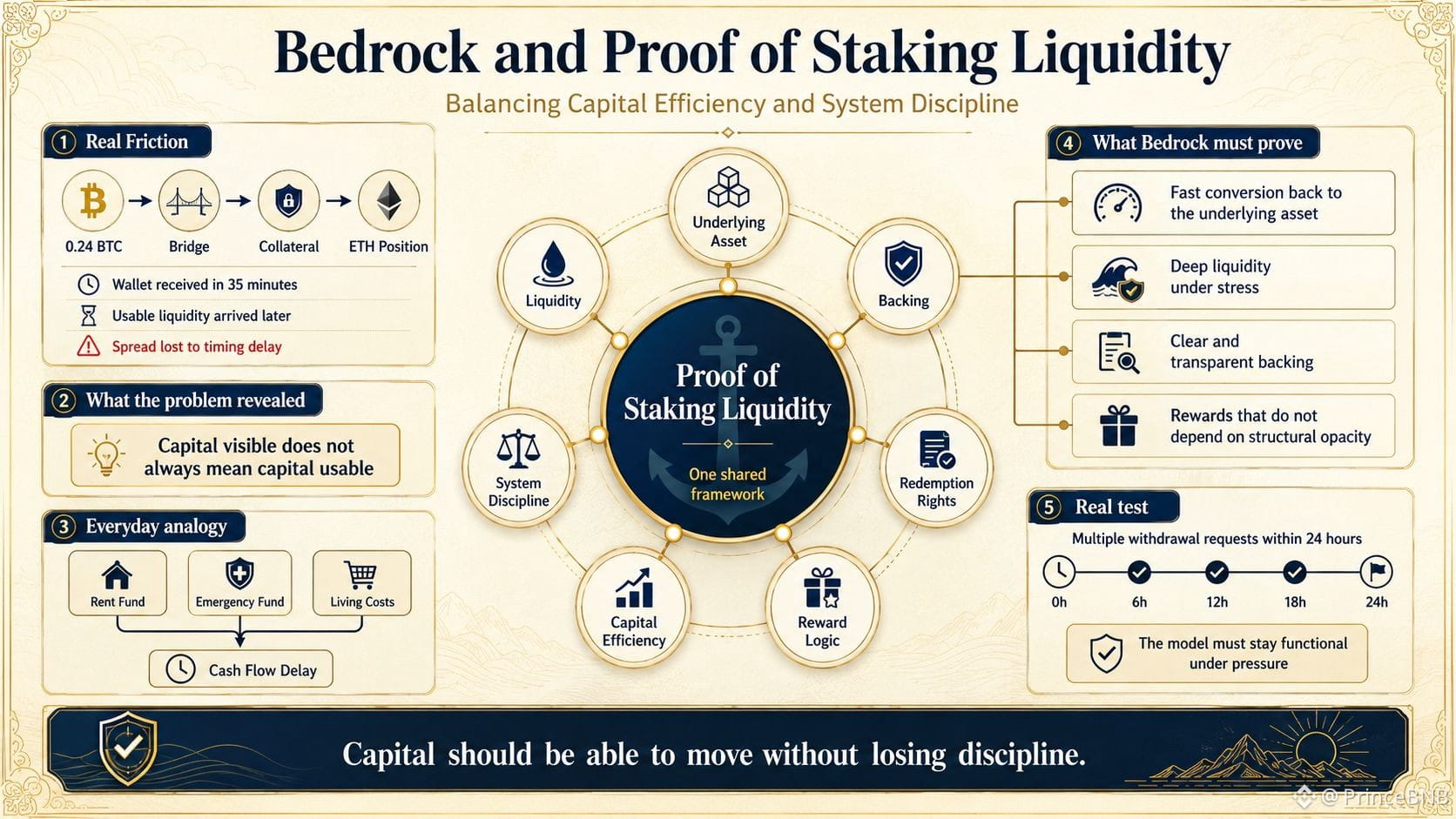
Eines Tages habe ich 0.24 BTC über eine Brücke geroutet, um Sicherheiten einzurichten, und dann eine ETH-Position aus dieser umwickelten Darstellung eröffnet. Die Wallet hat das Asset nach 35 Minuten als erhalten markiert, aber die nutzbare Liquidität zeigte sich später, und der Spread wurde einfach aufgefressen, weil das Timing nicht stimmte.
Nach ein paar solcher Episoden hörte ich auf, die Kapitaleffizienz als eine hübsche Reihe von Zahlen auf einem Bildschirm zu betrachten. Im Krypto-Bereich reicht eine einzige langsam reagierende Schicht aus, um die gesamte Struktur bewegungsunfähig zu machen.
Es fühlt sich an, als würde ich Miete, Studiengebühren und einen Notfallfonds an drei verschiedenen Orten aufbewahren. Der Gesamtbetrag ändert sich nicht, aber wenn es an der Zeit ist, alles wieder zusammenzubringen, ist das erste, was verloren geht, der Rhythmus des Cashflows.
Was ich wesentlich finde, ist die Art und Weise, wie Bedrock die Proof of Staking Liquidität an der tragenden Achse platziert. Bedrock zieht Liquidität, Rückhalt und Rückkaufsrechte in eine gemeinsame Logik, sodass die Kapitaleffizienz nicht von der Systemdisziplin abdriftet.
Ich stelle mir diese Struktur wie ein Schiff vor, das an einem Anker in Gewässern mit wechselnden Strömungen festgemacht ist. Der Anker hält den Rumpf davon ab, abzutreiben, aber die Ankerkette muss auch stabil genug sein, damit das Schiff weiter drehen kann.
Die echte Prüfung für Bedrock findet nicht an ruhigen Markttagen statt, sondern wenn viele Abhebungsanfragen innerhalb von 24 Stunden denselben Ausgang durchdrücken. Ich betrachte Bedrock nur als auf dem richtigen Weg, wenn die Zeit, die benötigt wird, um wieder in das zugrunde liegende Asset zurückzukonvertieren, messbar bleibt, die Liquidität sich nicht zu schnell verflüchtigt und die Belohnungen nicht auf struktureller Opazität überleben.
Ich lese Bedrock nicht als eine Geschichte der Expansion um mehr Schichten von Assets hinzuzufügen. Was es wert ist, beobachtet zu werden, ist, ob die Proof of Staking Liquidität als Prinzip durchgehend beibehalten wird, sodass Kapital sich bewegen kann, während die Disziplin bei Druck nicht verloren geht.
@Bedrock #bedrock $BR $ESPORTS $POWER
Nach ein paar solcher Episoden hörte ich auf, die Kapitaleffizienz als eine hübsche Reihe von Zahlen auf einem Bildschirm zu betrachten. Im Krypto-Bereich reicht eine einzige langsam reagierende Schicht aus, um die gesamte Struktur bewegungsunfähig zu machen.
Es fühlt sich an, als würde ich Miete, Studiengebühren und einen Notfallfonds an drei verschiedenen Orten aufbewahren. Der Gesamtbetrag ändert sich nicht, aber wenn es an der Zeit ist, alles wieder zusammenzubringen, ist das erste, was verloren geht, der Rhythmus des Cashflows.
Was ich wesentlich finde, ist die Art und Weise, wie Bedrock die Proof of Staking Liquidität an der tragenden Achse platziert. Bedrock zieht Liquidität, Rückhalt und Rückkaufsrechte in eine gemeinsame Logik, sodass die Kapitaleffizienz nicht von der Systemdisziplin abdriftet.
Ich stelle mir diese Struktur wie ein Schiff vor, das an einem Anker in Gewässern mit wechselnden Strömungen festgemacht ist. Der Anker hält den Rumpf davon ab, abzutreiben, aber die Ankerkette muss auch stabil genug sein, damit das Schiff weiter drehen kann.
Die echte Prüfung für Bedrock findet nicht an ruhigen Markttagen statt, sondern wenn viele Abhebungsanfragen innerhalb von 24 Stunden denselben Ausgang durchdrücken. Ich betrachte Bedrock nur als auf dem richtigen Weg, wenn die Zeit, die benötigt wird, um wieder in das zugrunde liegende Asset zurückzukonvertieren, messbar bleibt, die Liquidität sich nicht zu schnell verflüchtigt und die Belohnungen nicht auf struktureller Opazität überleben.
Ich lese Bedrock nicht als eine Geschichte der Expansion um mehr Schichten von Assets hinzuzufügen. Was es wert ist, beobachtet zu werden, ist, ob die Proof of Staking Liquidität als Prinzip durchgehend beibehalten wird, sodass Kapital sich bewegen kann, während die Disziplin bei Druck nicht verloren geht.
@Bedrock #bedrock $BR $ESPORTS $POWER
Verifiziert
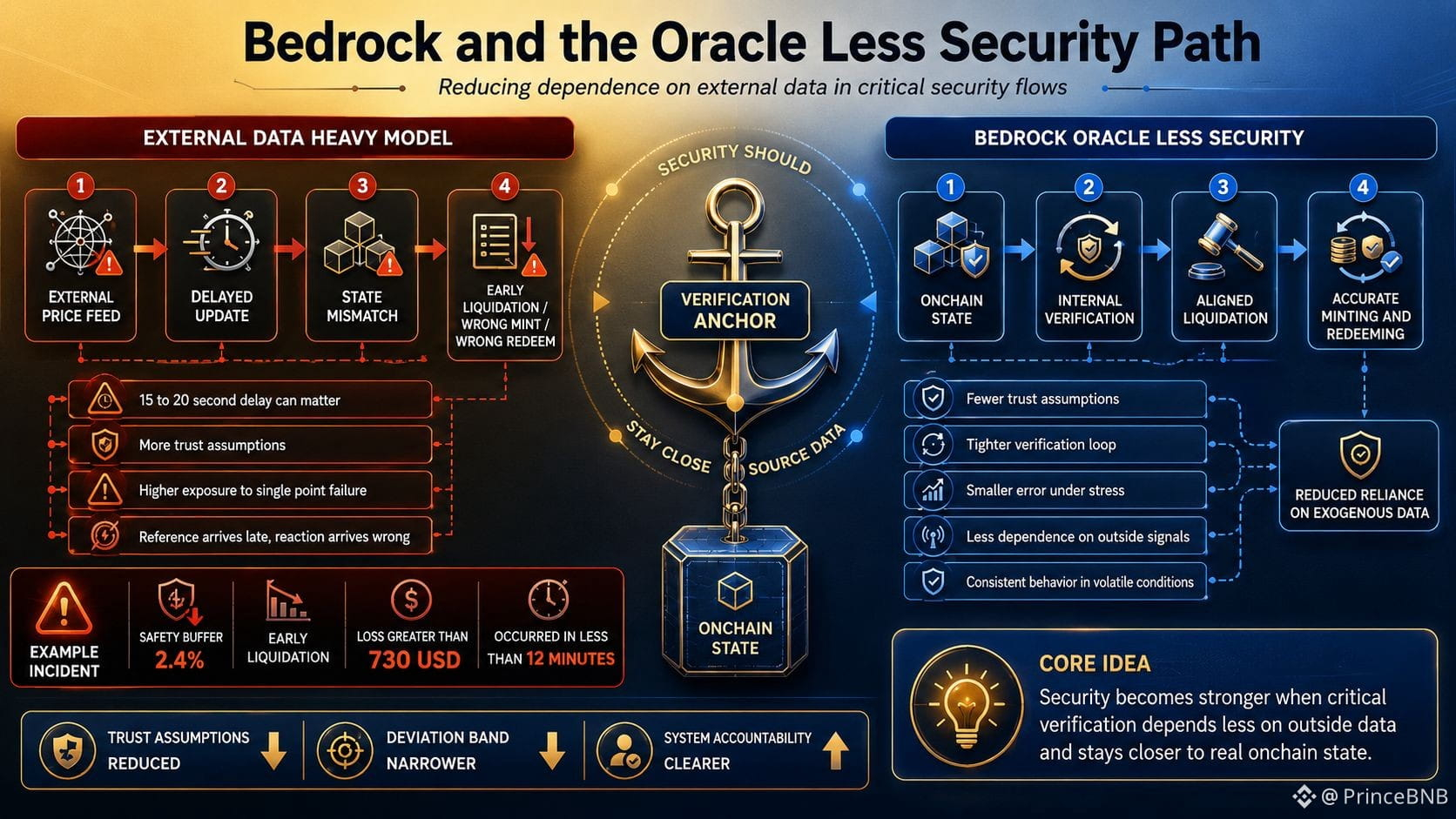
Ich erinnere mich noch daran, ETH als Sicherheit zu verwenden, wobei der angegebene Preis etwa 2,4 Prozent über der Liquidationsschwelle lag. In weniger als 12 Minuten, nachdem externe Daten aktualisiert wurden, wurde die Position vorzeitig liquidiert, und ich verlor mehr als 730 Dollar.
Nach ein paar Fehlanpassungen wie diesen hörte ich auf, Orakel als standardmäßige Sicherheitsmaßnahme zu betrachten. In der Krypto-Welt verzerrt ein Referenzpunkt, der verspätet ankommt, nicht nur den Preis, sondern auch die Reaktion.
Es fühlt sich an, als würde man Lebenshaltungskosten und Notfallgeld an zwei verschiedenen Orten aufbewahren. Wenn man sie im richtigen Moment zusammenziehen muss, ist das erste, was man verliert, die Zeit.
Ich sehe diese Sicherheitsrichtung als einen Anker, der direkt in das Flussbett getrieben ist. Bedrock wählt weniger sichere Orakel, um zu reduzieren, wie viel Arbeit an exogene Daten abgegeben wird, und Bedrock zieht die Verifizierung näher an den Onchain-Zustand, sodass Liquidation, Minting und Einlösung die zugrunde liegenden Daten enger verfolgen.
Diese Richtung verdient nur dann den Namen langlebig, wenn sie einen Tag übersteht, an dem der Markt um 8 bis 10 Prozent schwankt, ohne dass die Sicherheitsbedingungen vom tatsächlichen Zustand abweichen. Die Reduzierung des Vertrauens, das nach außen gesendet wird, ist nur dann von Bedeutung, wenn sie im Gegenzug zu kleineren Fehlern führt.
Ich werde drei Dinge betrachten: ob Bedrock die Anzahl der Vertrauensannahmen reduziert, ob Bedrock die Abweichungsbandbreite unter Stress verengt und ob der Reaktionsmechanismus klar genug ist, damit die Nutzer sehen, wo das System versagt hat.
Ich brauche kein Modell, das nur auf dem Papier sicherer klingt. Bedrock ist nur dann eine Diskussion wert, wenn es Sicherheit in etwas verwandelt, das auf Daten nahe der Quelle basieren kann, anstatt von geliehenem Vertrauen von außen zu überleben.
@Bedrock #bedrock $BR $VELVET $BEAT
Nach ein paar Fehlanpassungen wie diesen hörte ich auf, Orakel als standardmäßige Sicherheitsmaßnahme zu betrachten. In der Krypto-Welt verzerrt ein Referenzpunkt, der verspätet ankommt, nicht nur den Preis, sondern auch die Reaktion.
Es fühlt sich an, als würde man Lebenshaltungskosten und Notfallgeld an zwei verschiedenen Orten aufbewahren. Wenn man sie im richtigen Moment zusammenziehen muss, ist das erste, was man verliert, die Zeit.
Ich sehe diese Sicherheitsrichtung als einen Anker, der direkt in das Flussbett getrieben ist. Bedrock wählt weniger sichere Orakel, um zu reduzieren, wie viel Arbeit an exogene Daten abgegeben wird, und Bedrock zieht die Verifizierung näher an den Onchain-Zustand, sodass Liquidation, Minting und Einlösung die zugrunde liegenden Daten enger verfolgen.
Diese Richtung verdient nur dann den Namen langlebig, wenn sie einen Tag übersteht, an dem der Markt um 8 bis 10 Prozent schwankt, ohne dass die Sicherheitsbedingungen vom tatsächlichen Zustand abweichen. Die Reduzierung des Vertrauens, das nach außen gesendet wird, ist nur dann von Bedeutung, wenn sie im Gegenzug zu kleineren Fehlern führt.
Ich werde drei Dinge betrachten: ob Bedrock die Anzahl der Vertrauensannahmen reduziert, ob Bedrock die Abweichungsbandbreite unter Stress verengt und ob der Reaktionsmechanismus klar genug ist, damit die Nutzer sehen, wo das System versagt hat.
Ich brauche kein Modell, das nur auf dem Papier sicherer klingt. Bedrock ist nur dann eine Diskussion wert, wenn es Sicherheit in etwas verwandelt, das auf Daten nahe der Quelle basieren kann, anstatt von geliehenem Vertrauen von außen zu überleben.
@Bedrock #bedrock $BR $VELVET $BEAT
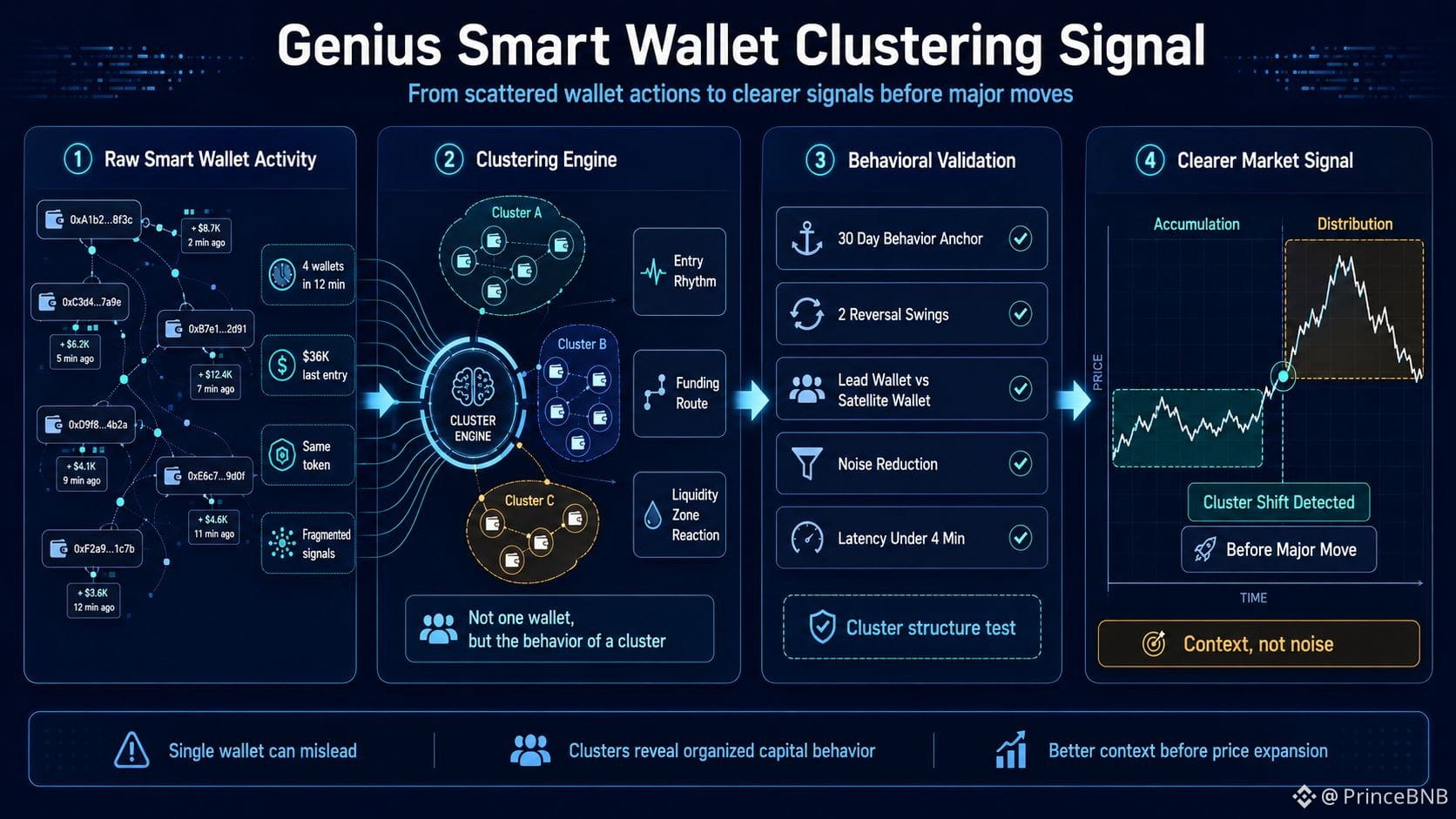
Einmal habe ich vier Adressen gesehen, die innerhalb von 12 Minuten ein kleines Token akkumulierten. Die letzte Wallet hat 36 tausend Dollar reingeschoben, also nahm ich an, dass sie das Tempo vorgibt und kaufte nach, nur um genau dort erwischt zu werden, wo die treibende Kraft abgezogen wurde.
Als ich die Historie wieder öffnete, wurde mir klar, dass der Fehler nicht in der Geschwindigkeit lag. Ich hatte einer herausragenden Wallet zu viel Bedeutung beigemessen, während der wirkliche Kapitalfluss mit einem ganzen Cluster zogen und dann anfing sich zu splitten.
Es ist wie bei einem Haushaltsbuch. Eine große Zahlung fällt immer sofort ins Auge, aber um zu wissen, ob Geld wirklich die Richtung ändert oder nur kurz driftet, musst du das wiederholte Transaktionsmuster lesen.
Was mich dazu brachte, innezuhalten und zu schauen, war die Art und Weise, wie Genius ein Signal aus der Beziehung zwischen vielen Adressen aufbaut, anstatt eine profitable Wallet zum Mittelpunkt der Geschichte zu machen. Genius gruppiert Wallets in Cluster nach Eintritts-Rhythmus, Finanzierungsweg und Reaktion auf dieselbe Liquiditätszone, sodass das Signal klarer wird als die übliche Gewohnheit, auf isolierte helle Punkte zu starren.
Der Anker dieser Datenebene liegt nicht darin, wie viele Wallets ein intelligentes Label erhalten. Der Anker muss eine dicke genug Historie sein, wie etwa 30 Tage Verhalten und zwei Umkehrschwünge, um zu sagen, ob ein Cluster eine echte Struktur hat oder nur zeitlich übereinstimmt.
Ich beurteile Genius durch ein paar enge Punkte. Genius muss die Wallets, die den Weg öffnen, von den Satelliten-Wallets trennen, Rauschen von Adressen, die nur einmal blitzen, herausfiltern, die Latenz unter 4 Minuten halten und den Moment aufzeigen, in dem ein Cluster von Akkumulation zu Verteilung wechselt.
Nach Jahren des Beobachtens von Preisboards vertraue ich nicht mehr auf eine einzige schöne Adresse. Genius ist nur wert, auf dem Bildschirm zu bleiben, wenn es das Verhalten eines ganzen Pakets intelligenter Wallets in ein Signal verwandeln kann, das scharf genug ist, um mich davon abzuhalten, Rauschen mit echtem Kapitalfluss zu verwechseln.
@GeniusOfficial #genius $GENIUS $BEAT $ALLO
Als ich die Historie wieder öffnete, wurde mir klar, dass der Fehler nicht in der Geschwindigkeit lag. Ich hatte einer herausragenden Wallet zu viel Bedeutung beigemessen, während der wirkliche Kapitalfluss mit einem ganzen Cluster zogen und dann anfing sich zu splitten.
Es ist wie bei einem Haushaltsbuch. Eine große Zahlung fällt immer sofort ins Auge, aber um zu wissen, ob Geld wirklich die Richtung ändert oder nur kurz driftet, musst du das wiederholte Transaktionsmuster lesen.
Was mich dazu brachte, innezuhalten und zu schauen, war die Art und Weise, wie Genius ein Signal aus der Beziehung zwischen vielen Adressen aufbaut, anstatt eine profitable Wallet zum Mittelpunkt der Geschichte zu machen. Genius gruppiert Wallets in Cluster nach Eintritts-Rhythmus, Finanzierungsweg und Reaktion auf dieselbe Liquiditätszone, sodass das Signal klarer wird als die übliche Gewohnheit, auf isolierte helle Punkte zu starren.
Der Anker dieser Datenebene liegt nicht darin, wie viele Wallets ein intelligentes Label erhalten. Der Anker muss eine dicke genug Historie sein, wie etwa 30 Tage Verhalten und zwei Umkehrschwünge, um zu sagen, ob ein Cluster eine echte Struktur hat oder nur zeitlich übereinstimmt.
Ich beurteile Genius durch ein paar enge Punkte. Genius muss die Wallets, die den Weg öffnen, von den Satelliten-Wallets trennen, Rauschen von Adressen, die nur einmal blitzen, herausfiltern, die Latenz unter 4 Minuten halten und den Moment aufzeigen, in dem ein Cluster von Akkumulation zu Verteilung wechselt.
Nach Jahren des Beobachtens von Preisboards vertraue ich nicht mehr auf eine einzige schöne Adresse. Genius ist nur wert, auf dem Bildschirm zu bleiben, wenn es das Verhalten eines ganzen Pakets intelligenter Wallets in ein Signal verwandeln kann, das scharf genug ist, um mich davon abzuhalten, Rauschen mit echtem Kapitalfluss zu verwechseln.
@GeniusOfficial #genius $GENIUS $BEAT $ALLO
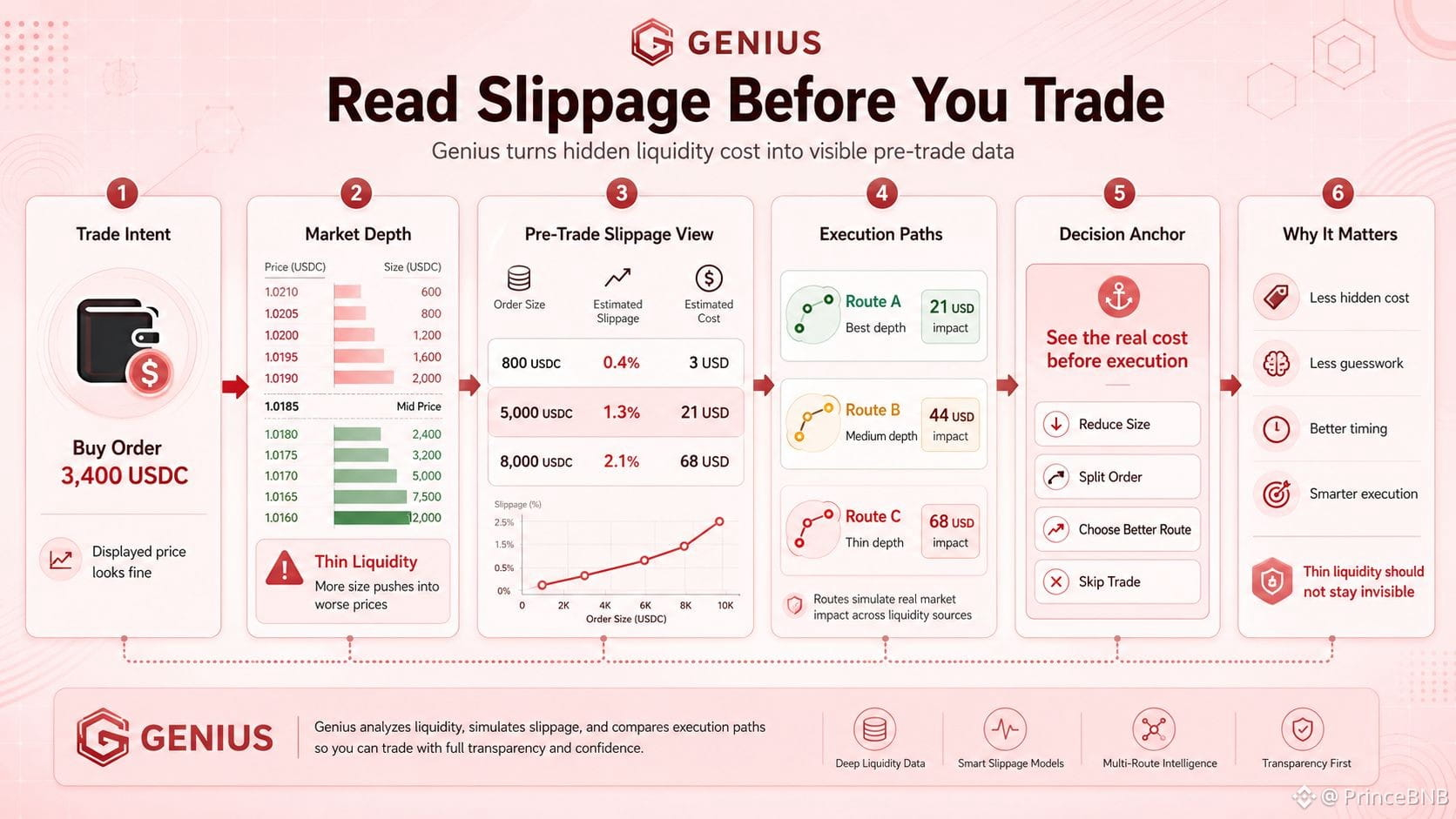
Es gab eine Zeit, da habe ich 3400 USDC in ein neu eröffnetes Paar geworfen. Die Preistafel zeigte einen Slippage von 0,6 Prozent, aber mein Wallet kam um 73 USDC kürzer zurück, und ich verstand, dass der teuerste Teil eines Trades oft nach dem Klick sitzt.
Von diesem Tag an hörte ich auf, Trades durch die sich bewegenden Preise zu lesen. Ich begann, den Weg zu betrachten, den die Größe zurücklegen muss, denn je dünner das Orderbuch ist, desto mehr wird jeder zusätzliche Dollar zu einem schlechteren Preis gefüllt.
Es ist wie das Abheben von Bargeld spät an einem Geldautomaten. Die angegebenen Gebühren sehen klein aus, aber ein paar kurze Abzüge reichen aus, um das Bargeld in der Hand sehr unterschiedlich von dem zu machen, was ich berechnet habe.
Was mir an Genius aufgefallen ist, ist, dass es Slippage nicht hinter dem endgültigen Fill verstecken lässt. Genius zieht es vor dem Trade als lesbare Daten nach Größe, nach Dicke des Orderbuchs und nach Ausführungspfad vor, sodass 800 USDC und 8000 USDC nicht mehr als das gleiche Maß an Reibung behandelt werden.
Eine einfache Möglichkeit, sich das vorzustellen, ist das Ziehen eines schweren Koffers über einen trockenen Boden und einen nassen Boden. Aus der Ferne sieht die Route gleich aus, aber der Anker der Entscheidung liegt darin, zu wissen, welcher Abschnitt mehr Kraft frisst, bevor man den Schritt macht.
Ich beurteile dieses Terminal danach, wie wahrhaftig die Daten sind, nicht nach Versprechungen von Geschmeidigkeit. Genius muss Slippage in echtes Geld umwandeln, wie 5000 USDC, die auf einem Weg 21 USDC verlieren, aber auf einem anderen 68 USDC, und Genius muss rechtzeitig aktualisieren, wenn die Liquidität schnell zurückgeht, sodass der Benutzer immer noch die Größe reduzieren oder die Order aufteilen kann.
Der Markt mangelt nicht an Orten, die hübsche Preise zeigen. Genius verdient es nur, auf meinem Bildschirm zu bleiben, wenn der stillste Teil eines Trades ins Licht gezogen wird, bevor das Geld das Wallet verlässt.
@GeniusOfficial #genius $GENIUS $FIDA $SKYAI
Von diesem Tag an hörte ich auf, Trades durch die sich bewegenden Preise zu lesen. Ich begann, den Weg zu betrachten, den die Größe zurücklegen muss, denn je dünner das Orderbuch ist, desto mehr wird jeder zusätzliche Dollar zu einem schlechteren Preis gefüllt.
Es ist wie das Abheben von Bargeld spät an einem Geldautomaten. Die angegebenen Gebühren sehen klein aus, aber ein paar kurze Abzüge reichen aus, um das Bargeld in der Hand sehr unterschiedlich von dem zu machen, was ich berechnet habe.
Was mir an Genius aufgefallen ist, ist, dass es Slippage nicht hinter dem endgültigen Fill verstecken lässt. Genius zieht es vor dem Trade als lesbare Daten nach Größe, nach Dicke des Orderbuchs und nach Ausführungspfad vor, sodass 800 USDC und 8000 USDC nicht mehr als das gleiche Maß an Reibung behandelt werden.
Eine einfache Möglichkeit, sich das vorzustellen, ist das Ziehen eines schweren Koffers über einen trockenen Boden und einen nassen Boden. Aus der Ferne sieht die Route gleich aus, aber der Anker der Entscheidung liegt darin, zu wissen, welcher Abschnitt mehr Kraft frisst, bevor man den Schritt macht.
Ich beurteile dieses Terminal danach, wie wahrhaftig die Daten sind, nicht nach Versprechungen von Geschmeidigkeit. Genius muss Slippage in echtes Geld umwandeln, wie 5000 USDC, die auf einem Weg 21 USDC verlieren, aber auf einem anderen 68 USDC, und Genius muss rechtzeitig aktualisieren, wenn die Liquidität schnell zurückgeht, sodass der Benutzer immer noch die Größe reduzieren oder die Order aufteilen kann.
Der Markt mangelt nicht an Orten, die hübsche Preise zeigen. Genius verdient es nur, auf meinem Bildschirm zu bleiben, wenn der stillste Teil eines Trades ins Licht gezogen wird, bevor das Geld das Wallet verlässt.
@GeniusOfficial #genius $GENIUS $FIDA $SKYAI
Verifiziert
Es gab eine Zeit, da habe ich 1000 USDC gegen einen repräsentativen Vermögenswert getauscht, um Kapital zu rotieren. Als ich einlösen wollte, habe ich 34 Minuten damit verbracht, nachzuvollziehen, wo die Emissionsbehörde tatsächlich saß.
Nach diesem Vorfall habe ich aufgehört, polierte Sicherheitsformulierungen zu vertrauen. Ich schaue mir drei Dinge an: wie weit die Prüfung reicht, wie das Minting eingeschränkt ist und ob die Reserven offen genug sind, damit Außenstehende sie selbst überprüfen können.
Der Unterschied liegt genau dort. Ein Protokoll kann den ganzen Tag über Prozesse reden, aber was noch bewiesen werden muss, ist, ob die Emissionsmacht innerhalb eines engen Rahmens gehalten wird oder nicht.
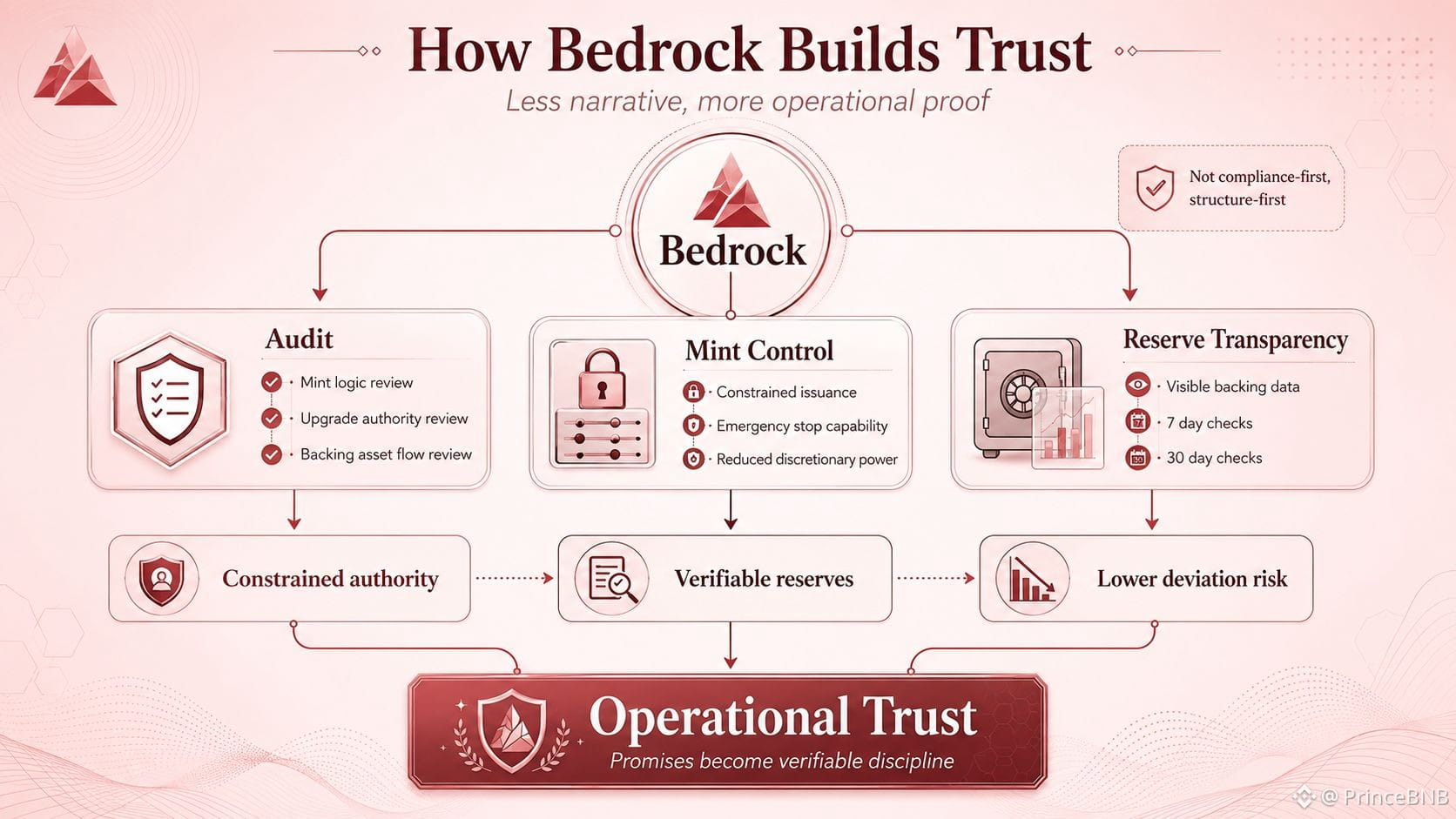
Bedrock geht einen direkteren Weg. Bedrock integriert die Prüfung in die Mint-Logik, die Upgrade-Autorität und den Fluss der Sicherheiten, was bedeutet, dass es genau die Stellen inspiziert, an denen ein repräsentativer Vermögenswert am wahrscheinlichsten von seinem Versprechen abweicht. Die Kontrolle über das Minting sollte hier nicht dekorativ sein; sie muss eine harte Barriere sein, die die Emissionsmacht daran hindert, sich frei zu bewegen.
Mein Anker sitzt in der Transparenz der Reserven. Ich möchte die Sicherungsdaten auf Basis von 7 Tagen und 30 Tagen sehen, und ich möchte die Salden selbst abgleichen, ohne durch drei Erklärungsebenen gehen zu müssen.
Worauf ich Bedrock bewerte, ist nicht die Geschichte, die es erzählt. Bedrock hat nur Gewicht, wenn Prüfung, Mint-Kontrolle und Transparenz der Reserven in einer gemeinsamen Disziplin zusammenkommen, die Prüfung an der richtigen Stelle ansetzt, das Minting nicht nach Belieben gelockert werden kann und die Reserven sichtbar genug bleiben, damit Außenstehende sie selbst überprüfen können. Wenn diese drei Ebenen zusammenpassen, haben die Nutzer weniger Rätselraten.
Deshalb lese ich Bedrock auf eine sehr nüchterne Weise. Ein Modell ist nur dann wert, im Blick behalten zu werden, wenn es Versprechen in eingeschränkte Autorität, überprüfbare Vermögenswerte und ein System verwandelt, in dem Abweichungen immer schwieriger zu produzieren sind.
@Bedrock #bedrock $BR $ALLO $SKYAI
Nach diesem Vorfall habe ich aufgehört, polierte Sicherheitsformulierungen zu vertrauen. Ich schaue mir drei Dinge an: wie weit die Prüfung reicht, wie das Minting eingeschränkt ist und ob die Reserven offen genug sind, damit Außenstehende sie selbst überprüfen können.
Der Unterschied liegt genau dort. Ein Protokoll kann den ganzen Tag über Prozesse reden, aber was noch bewiesen werden muss, ist, ob die Emissionsmacht innerhalb eines engen Rahmens gehalten wird oder nicht.
Bedrock geht einen direkteren Weg. Bedrock integriert die Prüfung in die Mint-Logik, die Upgrade-Autorität und den Fluss der Sicherheiten, was bedeutet, dass es genau die Stellen inspiziert, an denen ein repräsentativer Vermögenswert am wahrscheinlichsten von seinem Versprechen abweicht. Die Kontrolle über das Minting sollte hier nicht dekorativ sein; sie muss eine harte Barriere sein, die die Emissionsmacht daran hindert, sich frei zu bewegen.
Mein Anker sitzt in der Transparenz der Reserven. Ich möchte die Sicherungsdaten auf Basis von 7 Tagen und 30 Tagen sehen, und ich möchte die Salden selbst abgleichen, ohne durch drei Erklärungsebenen gehen zu müssen.
Worauf ich Bedrock bewerte, ist nicht die Geschichte, die es erzählt. Bedrock hat nur Gewicht, wenn Prüfung, Mint-Kontrolle und Transparenz der Reserven in einer gemeinsamen Disziplin zusammenkommen, die Prüfung an der richtigen Stelle ansetzt, das Minting nicht nach Belieben gelockert werden kann und die Reserven sichtbar genug bleiben, damit Außenstehende sie selbst überprüfen können. Wenn diese drei Ebenen zusammenpassen, haben die Nutzer weniger Rätselraten.
Deshalb lese ich Bedrock auf eine sehr nüchterne Weise. Ein Modell ist nur dann wert, im Blick behalten zu werden, wenn es Versprechen in eingeschränkte Autorität, überprüfbare Vermögenswerte und ein System verwandelt, in dem Abweichungen immer schwieriger zu produzieren sind.
@Bedrock #bedrock $BR $ALLO $SKYAI
Verifiziert
Es gab eine Zeit, da habe ich 2900 USDC über zwei Chains verschoben, um einen Eröffnungspreisanstieg zu nutzen, der weniger als 9 Minuten dauerte. Das Angebot sah sauber aus, aber die Order durchlief mehrere dünne Liquiditätspunkte, bevor sie einen tief genug Ort erreichte, und der Vorteil schloss sich sehr schnell.
Danach hörte ich auf, dem ersten Angebot zu vertrauen. Viele Trades scheitern nicht, weil die Analyse falsch ist, sie verlieren an Effizienz, weil das System die Order selbst durch fragmentierte Liquidität steuern lässt.
Es fühlt sich an, als würde ich Bargeld sammeln, um drei Zahlungen vor Tagesende zu begleichen. Das Geld ist da, aber ein falsches Zählen und ein paar verlorene Minuten, und die gesamte Undichtigkeit zeigt sich erst am Ende.
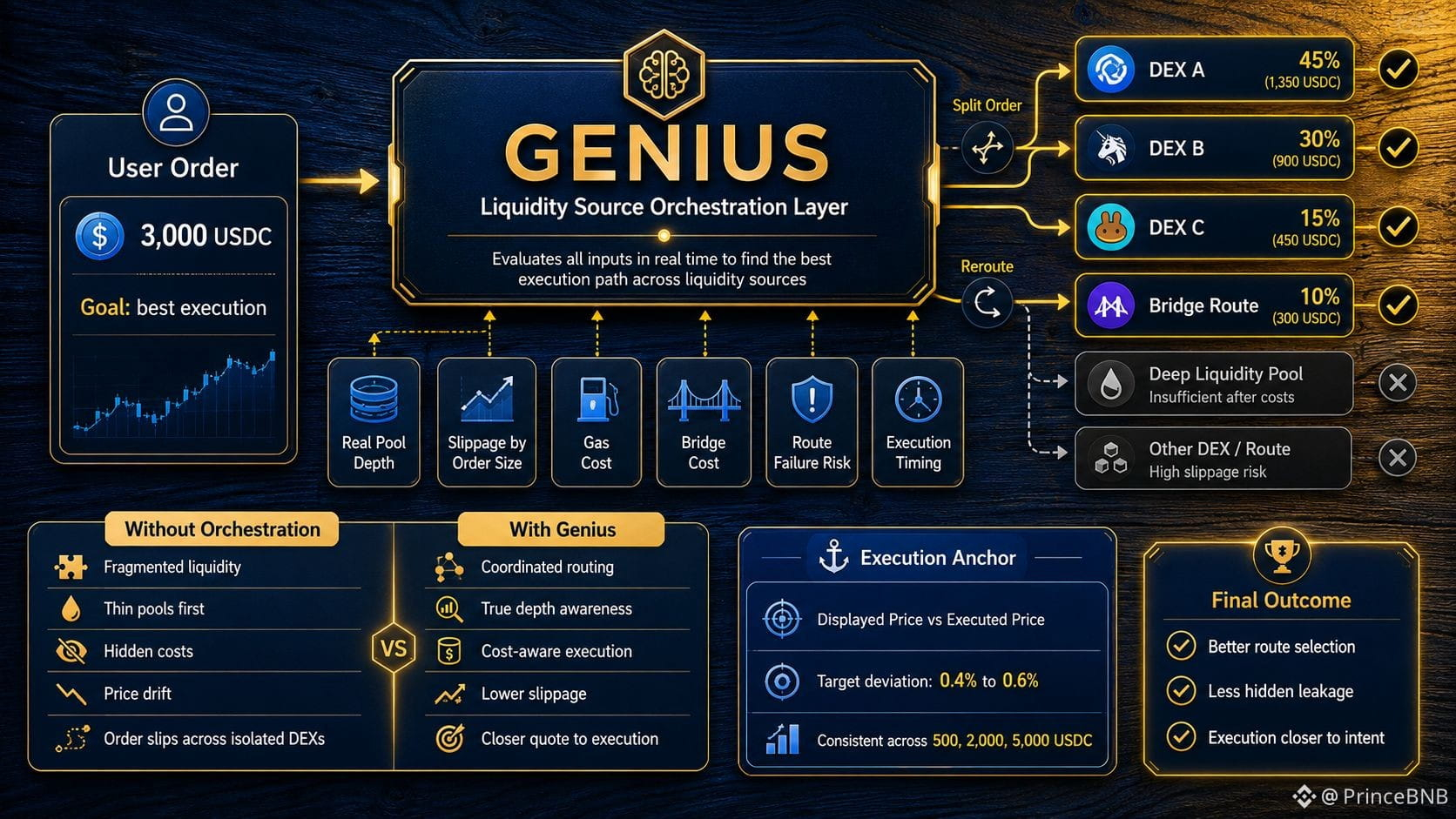
Worauf ich achte, ist, wie Genius die Koordinationsschicht aufbaut, bevor die Order die Hände des Nutzers verlässt. Genius scannt nicht nur nach dem attraktivsten Oberflächenpreis, es muss auch echte Tiefe, Slippage je nach Ordergröße, Gaskosten und das Risiko jeder Route lesen.
Der Anker dieser Technologie ist nicht die Anzahl der DEXs, mit denen es verbunden ist. Der Anker ist, ob eine 3000 USDC Order durch mehrere Quellen bewegt werden kann, während der ausgeführte Preis nahe dem angezeigten Preis bleibt, mit einer Abweichung von etwa 0,4 bis 0,6 Prozent.
Ich würde Genius anhand der Ausführungsresultate messen. Genius muss Pools erkennen, die am Rand dick aussehen, aber in den tieferen Schichten hohl sind, es muss die Brückenkosten, Gas und die Wahrscheinlichkeit eines Ausfalls in dieselbe Routing-Entscheidung einbeziehen, und dann die Erfahrung einer 500 Dollar Order, einer 2000 Dollar Order und einer 5000 Dollar Order so gestalten, dass sie nicht in drei völlig unterschiedliche Geschichten zerfallen.
Der Markt mangelt nicht an Orten, die hübsche Preise anzeigen. Genius hat nur Gewicht, wenn es die Orchestrierung der Liquiditätsquellen in eine echte Liquiditätskoordinationsschicht verwandelt und die Orders von dem alten Muster des Driftens durch isolierte DEXs abzieht.
@GeniusOfficial #genius $GENIUS $ALLO $BLUAI
Danach hörte ich auf, dem ersten Angebot zu vertrauen. Viele Trades scheitern nicht, weil die Analyse falsch ist, sie verlieren an Effizienz, weil das System die Order selbst durch fragmentierte Liquidität steuern lässt.
Es fühlt sich an, als würde ich Bargeld sammeln, um drei Zahlungen vor Tagesende zu begleichen. Das Geld ist da, aber ein falsches Zählen und ein paar verlorene Minuten, und die gesamte Undichtigkeit zeigt sich erst am Ende.
Worauf ich achte, ist, wie Genius die Koordinationsschicht aufbaut, bevor die Order die Hände des Nutzers verlässt. Genius scannt nicht nur nach dem attraktivsten Oberflächenpreis, es muss auch echte Tiefe, Slippage je nach Ordergröße, Gaskosten und das Risiko jeder Route lesen.
Der Anker dieser Technologie ist nicht die Anzahl der DEXs, mit denen es verbunden ist. Der Anker ist, ob eine 3000 USDC Order durch mehrere Quellen bewegt werden kann, während der ausgeführte Preis nahe dem angezeigten Preis bleibt, mit einer Abweichung von etwa 0,4 bis 0,6 Prozent.
Ich würde Genius anhand der Ausführungsresultate messen. Genius muss Pools erkennen, die am Rand dick aussehen, aber in den tieferen Schichten hohl sind, es muss die Brückenkosten, Gas und die Wahrscheinlichkeit eines Ausfalls in dieselbe Routing-Entscheidung einbeziehen, und dann die Erfahrung einer 500 Dollar Order, einer 2000 Dollar Order und einer 5000 Dollar Order so gestalten, dass sie nicht in drei völlig unterschiedliche Geschichten zerfallen.
Der Markt mangelt nicht an Orten, die hübsche Preise anzeigen. Genius hat nur Gewicht, wenn es die Orchestrierung der Liquiditätsquellen in eine echte Liquiditätskoordinationsschicht verwandelt und die Orders von dem alten Muster des Driftens durch isolierte DEXs abzieht.
@GeniusOfficial #genius $GENIUS $ALLO $BLUAI
Es gab eine Zeit, als ich 1.320 USDC in einer kurzfristigen Renditeposition geparkt habe. Als der Preis plötzlich sprang, blieb ein weiteres Einstiegfenster nur 10 Minuten lang offen, ich bin zu langsam ausgestiegen und habe fast 1,7 Prozent verpasst.
Dieser Moment hat mein Vertrauen in die Art von Rendite, die Benutzer zum Stillstand zwingt, erschüttert. In Krypto muss Kapital nicht nur verdienen, sondern auch die Fähigkeit behalten, sich zur richtigen Zeit in die richtige Richtung zu bewegen.
Es ist wie Notfallgeld, das irgendwo platziert ist und eine stetige Rendite generiert. Die Zahlen auf dem Bildschirm sehen immer noch gut aus, aber wenn du schnell handeln musst, zeigt sich die Verzögerung sofort, und diese kleine Rendite wird plötzlich zur Kostenstelle für das Zuspätkommen.
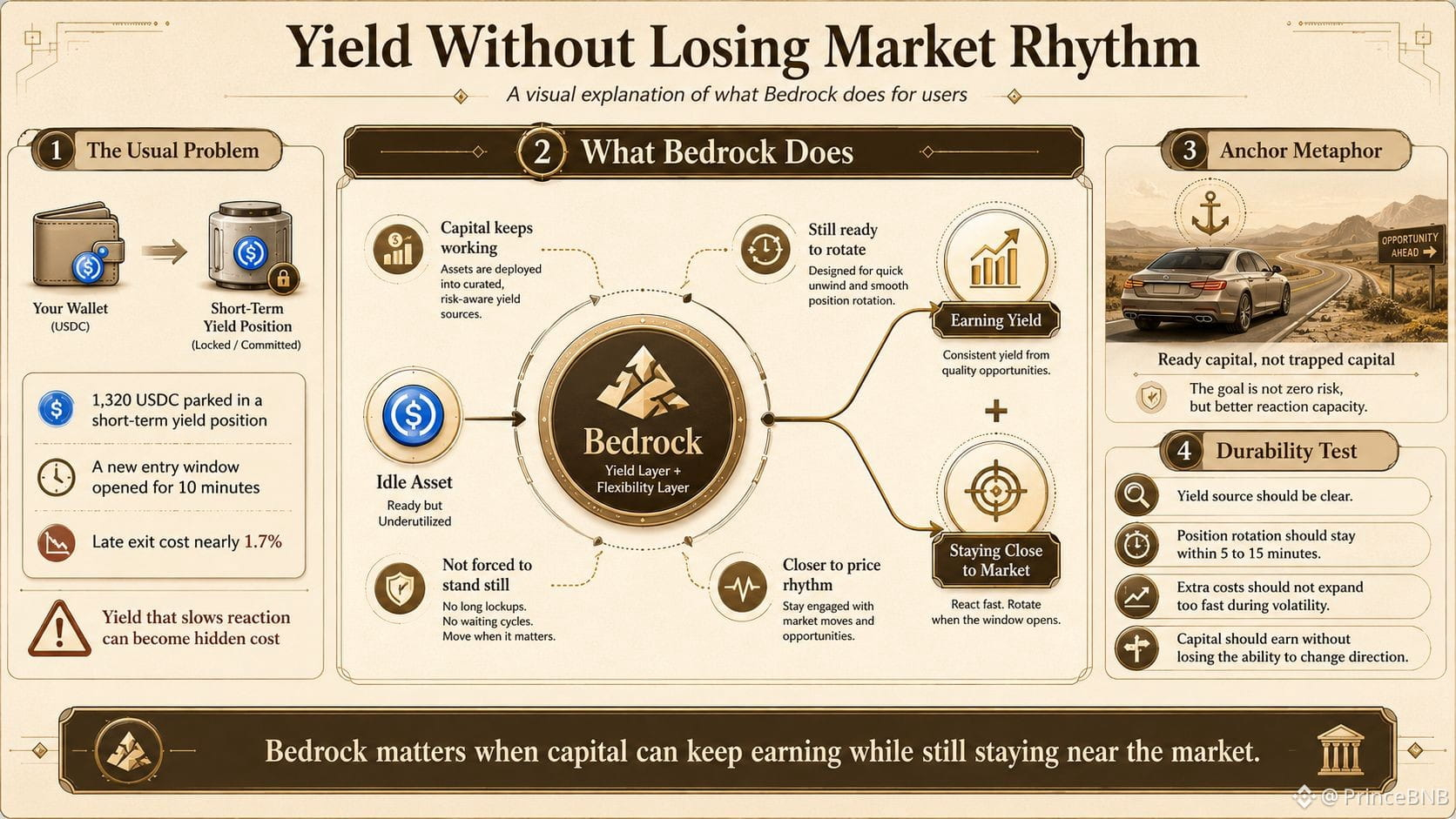
Ich schaue direkt darauf, was Bedrock macht, indem es untätige Vermögenswerte in eine Position verwandelt, die dem Markt draußen folgen kann. Bedrock verspricht nicht, das Risiko zu beseitigen, sondern versucht, Kapital weiterhin verdienen zu lassen, während es immer nah genug bleibt, damit die Benutzer die Richtung ändern können, sobald sie es brauchen.
Der Anker, den ich benutze, um dies zu lesen, ist ganz gewöhnlich. Es ist wie ein Auto, das vor der Tür geparkt ist, mit laufendem Motor; sobald die Straße frei ist, kann es direkt einfahren, nicht ein Auto, das abgedeckt und dort gelassen wurde.
Ich nenne ein Modell nur dann langlebig, wenn Bedrock klar macht, wo das Geld eingesetzt wird, aus welcher Schicht die Rendite kommt und ob die Zeit, die benötigt wird, um eine Position zu drehen, weiterhin im Bereich von 5 bis 15 Minuten bleibt. Wenn Bedrock diesen Rhythmus an Tagen halten kann, an denen die Preise stark schwanken, hört die Rendite auf, eine Ausrede für Langsamkeit zu sein.
Deshalb lese ich nicht zuerst den Prozentsatz. Ich lese, ob Bedrock Kapital weniger an einem Ort festnagelt oder ob es einfach diese Stillstand mit ein paar hübschen Zahlen abdeckt.
@Bedrock #bedrock $BR $BTW $OPN
Dieser Moment hat mein Vertrauen in die Art von Rendite, die Benutzer zum Stillstand zwingt, erschüttert. In Krypto muss Kapital nicht nur verdienen, sondern auch die Fähigkeit behalten, sich zur richtigen Zeit in die richtige Richtung zu bewegen.
Es ist wie Notfallgeld, das irgendwo platziert ist und eine stetige Rendite generiert. Die Zahlen auf dem Bildschirm sehen immer noch gut aus, aber wenn du schnell handeln musst, zeigt sich die Verzögerung sofort, und diese kleine Rendite wird plötzlich zur Kostenstelle für das Zuspätkommen.
Ich schaue direkt darauf, was Bedrock macht, indem es untätige Vermögenswerte in eine Position verwandelt, die dem Markt draußen folgen kann. Bedrock verspricht nicht, das Risiko zu beseitigen, sondern versucht, Kapital weiterhin verdienen zu lassen, während es immer nah genug bleibt, damit die Benutzer die Richtung ändern können, sobald sie es brauchen.
Der Anker, den ich benutze, um dies zu lesen, ist ganz gewöhnlich. Es ist wie ein Auto, das vor der Tür geparkt ist, mit laufendem Motor; sobald die Straße frei ist, kann es direkt einfahren, nicht ein Auto, das abgedeckt und dort gelassen wurde.
Ich nenne ein Modell nur dann langlebig, wenn Bedrock klar macht, wo das Geld eingesetzt wird, aus welcher Schicht die Rendite kommt und ob die Zeit, die benötigt wird, um eine Position zu drehen, weiterhin im Bereich von 5 bis 15 Minuten bleibt. Wenn Bedrock diesen Rhythmus an Tagen halten kann, an denen die Preise stark schwanken, hört die Rendite auf, eine Ausrede für Langsamkeit zu sein.
Deshalb lese ich nicht zuerst den Prozentsatz. Ich lese, ob Bedrock Kapital weniger an einem Ort festnagelt oder ob es einfach diese Stillstand mit ein paar hübschen Zahlen abdeckt.
@Bedrock #bedrock $BR $BTW $OPN
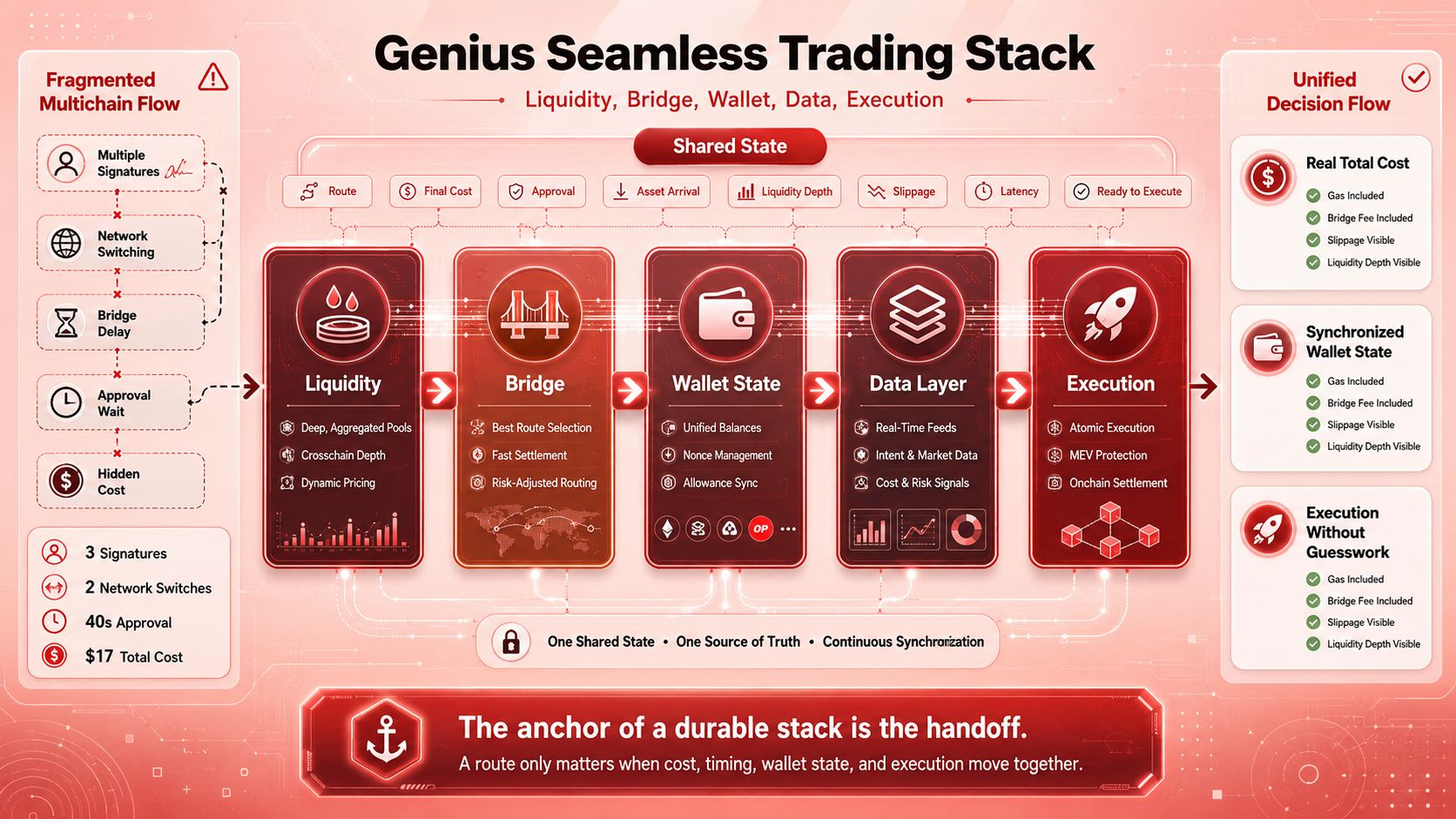
Es gab mal eine Zeit, da habe ich 1600 USDC von Arbitrum nach Base transferiert, um eine Preislücke zu nutzen, die weniger als zehn Minuten hielt. Ich habe dreimal unterschrieben, zweimal die Netzwerke gewechselt, fast 17 Dollar für Gas- und Brückengebühren ausgegeben und dann weitere 40 Sekunden beim Genehmigungsschritt gewartet.
Danach habe ich aufgehört, ein Terminal nach seiner Sauberkeit zu beurteilen. In der Krypto-Welt scheitern viele Trades nicht, weil die Idee falsch war, sondern weil die Infrastruktur-Ebenen nicht synchron bleiben können.
Es fühlt sich viel an wie Geld zu senden, um eine Zahlung vor Tagesende zu leisten. Die Gelder haben bereits eine Seite verlassen, die andere Seite hat sie jedoch noch nicht gutgeschrieben, und die Person in der Mitte bleibt ratlos, ob sie warten oder die Gelegenheit verstreichen lassen soll.
Was meine Aufmerksamkeit hielt, war die Art und Weise, wie Genius Liquidität, Brücken, Wallet-Zustand, Daten und Ausführung nicht als separate Dienstprogramme behandelt, die nebeneinander stehen. Genius verbindet diese fünf Ebenen mit einem gemeinsamen Zustand, sodass eine Route nach den tatsächlichen Gesamtkosten, der Verzögerung, bevor die Gelder ankommen, und ob die nächste Aktion tatsächlich ausgeführt werden kann, beurteilt wird.
Der Anker eines dauerhaften Stacks sitzt im Übergang. Ich vertraue einem Multichain-System nur, wenn der Benutzer nach zwei Netzwerken, drei Bestätigungen und einem Brückenschritt immer noch weiß, welche Zahl endgültig ist und welcher Schritt noch nicht gelöst ist.
So messe ich Genius, mit ein paar direkten Fragen. Genius muss die nahezu endgültigen Kosten vor der Unterschrift anzeigen, einschließlich Gas, Brückengebühr, Slippage und Liquiditätstiefe, während auch der Wallet-Zustand nicht um 12 Sekunden hinterherhinkt, bevor die Ausführung verfügbar wird.
Es mangelt dem Markt nicht an Plattformen, die einfach Werkzeuge an einem Ort sammeln. Genius ist nur dann wert, über einen längeren Zeitraum dabei zu bleiben, wenn Multichain nicht mehr wie ein Haufen verstreuter Aufgaben wirkt, sondern zu einem geschlossenen Kreislauf wird, damit die Handelsidee nicht auf halbem Weg verschwindet.
@GeniusOfficial #genius $GENIUS $BTW $OPN
Danach habe ich aufgehört, ein Terminal nach seiner Sauberkeit zu beurteilen. In der Krypto-Welt scheitern viele Trades nicht, weil die Idee falsch war, sondern weil die Infrastruktur-Ebenen nicht synchron bleiben können.
Es fühlt sich viel an wie Geld zu senden, um eine Zahlung vor Tagesende zu leisten. Die Gelder haben bereits eine Seite verlassen, die andere Seite hat sie jedoch noch nicht gutgeschrieben, und die Person in der Mitte bleibt ratlos, ob sie warten oder die Gelegenheit verstreichen lassen soll.
Was meine Aufmerksamkeit hielt, war die Art und Weise, wie Genius Liquidität, Brücken, Wallet-Zustand, Daten und Ausführung nicht als separate Dienstprogramme behandelt, die nebeneinander stehen. Genius verbindet diese fünf Ebenen mit einem gemeinsamen Zustand, sodass eine Route nach den tatsächlichen Gesamtkosten, der Verzögerung, bevor die Gelder ankommen, und ob die nächste Aktion tatsächlich ausgeführt werden kann, beurteilt wird.
Der Anker eines dauerhaften Stacks sitzt im Übergang. Ich vertraue einem Multichain-System nur, wenn der Benutzer nach zwei Netzwerken, drei Bestätigungen und einem Brückenschritt immer noch weiß, welche Zahl endgültig ist und welcher Schritt noch nicht gelöst ist.
So messe ich Genius, mit ein paar direkten Fragen. Genius muss die nahezu endgültigen Kosten vor der Unterschrift anzeigen, einschließlich Gas, Brückengebühr, Slippage und Liquiditätstiefe, während auch der Wallet-Zustand nicht um 12 Sekunden hinterherhinkt, bevor die Ausführung verfügbar wird.
Es mangelt dem Markt nicht an Plattformen, die einfach Werkzeuge an einem Ort sammeln. Genius ist nur dann wert, über einen längeren Zeitraum dabei zu bleiben, wenn Multichain nicht mehr wie ein Haufen verstreuter Aufgaben wirkt, sondern zu einem geschlossenen Kreislauf wird, damit die Handelsidee nicht auf halbem Weg verschwindet.
@GeniusOfficial #genius $GENIUS $BTW $OPN
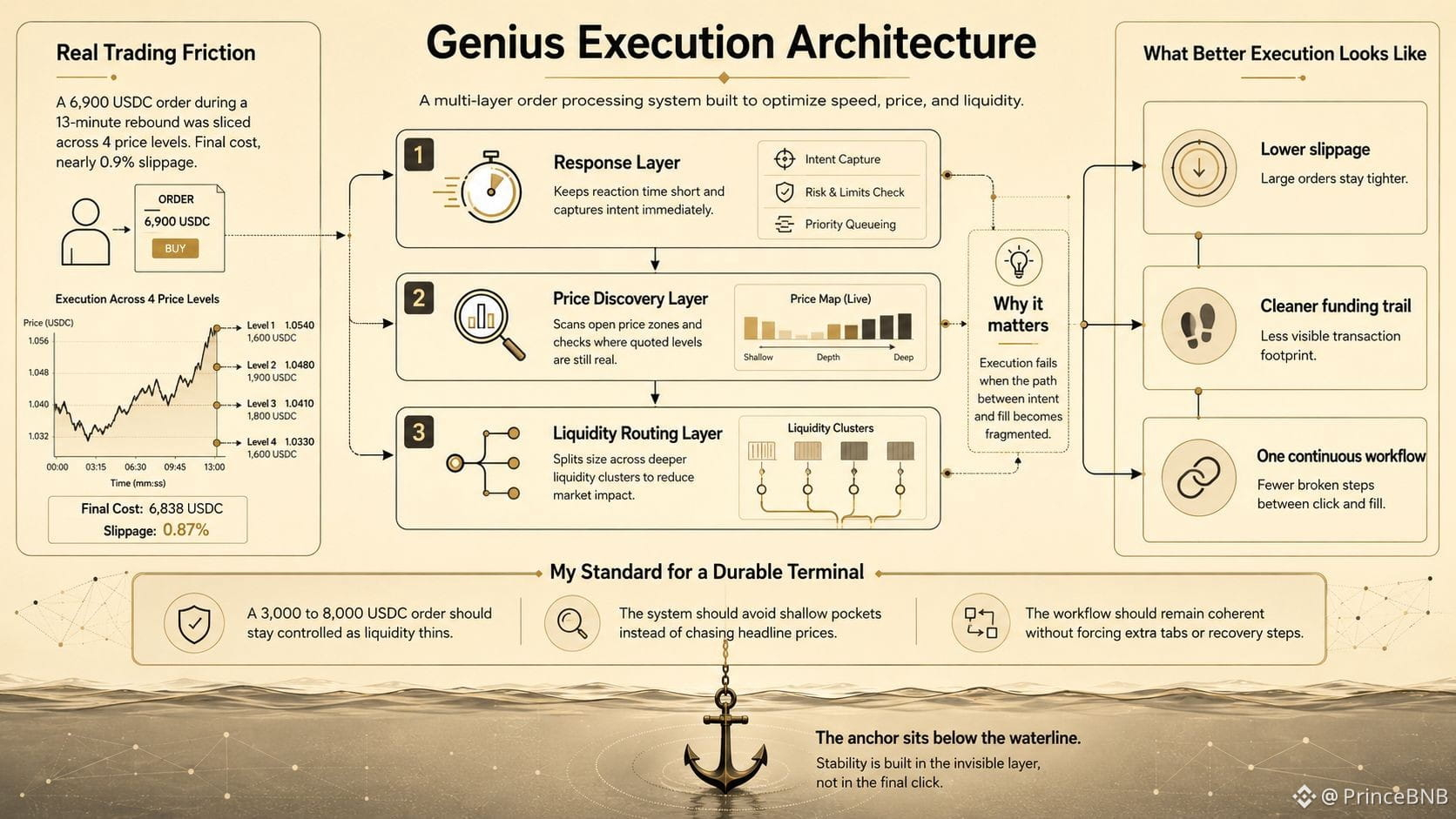
Es gab eine Zeit, da habe ich 6.900 USDC in eine Erholung investiert, die 13 Minuten gedauert hat. Die Ausführung sah auf dem Bildschirm sauber aus, aber als ich die Historie öffnete, wurde der Auftrag über vier Preislevels verteilt, und der Slippage fraß fast 0,9 Prozent.
Nach diesem Treffer habe ich aufgehört, ein Terminal nach seiner Benutzeroberfläche zu bewerten. In der Krypto-Welt sterben viele Aufträge nicht auf der Ebene der Thesis, sondern in der Übertragungsschicht zwischen Absicht und tatsächlicher Ausführung.
Es ist wie Geld zu bewegen, um eine Strafe am Ende eines Abrechnungszyklus zu vermeiden. Füge einen Warte-Schritt hinzu, einen kurzen Engpass, und eine kleine Ersparnis verwandelt sich sofort in Leckage.
Was mich dazu brachte, zurückzukommen und die Ausführungsarchitektur genauer zu betrachten, war die Tatsache, dass Genius die gesamte Größe nicht durch ein einziges Rohr schiebt. Genius unterteilt den Weg des Auftrags in mehrere Schichten, die erste hält die Reaktionszeit kurz, die mittlere scannt nach Preiszonen, die noch offen sind, und nach Tiefe, die noch real ist, und nur dann verteilt die letzte Schicht die Größe in Liquiditätscluster, die dick genug sind, um sie zu absorbieren. So hören Geschwindigkeit, Preis und Liquidität auf, sich voneinander zu entfernen.
Der Anker dieser Art von Design sitzt unter der Wasserlinie. Der Teil, der den Auftrag rettet, ist nicht der letzte Klick, sondern die Koordinationsschicht, die weiß, wann man geradeaus gehen und wann man Kraft verteilen muss.
Ich beurteile diese Art von Architektur an einigen trockenen Signalen. Genius muss den Slippage im Zaum halten, wenn die Auftraggröße von 3.000 auf 8.000 steigt, Genius muss auch die Finanzierungsspur weniger sichtbar machen und den Workflow in einer kontinuierlichen Bewegung halten.
Es mangelt nicht an Orten, die sich für ein paar Minuten schnell anfühlen. Ich lasse Genius nur auf meinem Bildschirm, wenn die Verarbeitungsschicht dahinter stark genug ist, um große Aufträge durchzulassen, ohne den ursprünglichen Vorteil abzutragen.
@GeniusOfficial #genius $GENIUS $OPN $SIREN
Nach diesem Treffer habe ich aufgehört, ein Terminal nach seiner Benutzeroberfläche zu bewerten. In der Krypto-Welt sterben viele Aufträge nicht auf der Ebene der Thesis, sondern in der Übertragungsschicht zwischen Absicht und tatsächlicher Ausführung.
Es ist wie Geld zu bewegen, um eine Strafe am Ende eines Abrechnungszyklus zu vermeiden. Füge einen Warte-Schritt hinzu, einen kurzen Engpass, und eine kleine Ersparnis verwandelt sich sofort in Leckage.
Was mich dazu brachte, zurückzukommen und die Ausführungsarchitektur genauer zu betrachten, war die Tatsache, dass Genius die gesamte Größe nicht durch ein einziges Rohr schiebt. Genius unterteilt den Weg des Auftrags in mehrere Schichten, die erste hält die Reaktionszeit kurz, die mittlere scannt nach Preiszonen, die noch offen sind, und nach Tiefe, die noch real ist, und nur dann verteilt die letzte Schicht die Größe in Liquiditätscluster, die dick genug sind, um sie zu absorbieren. So hören Geschwindigkeit, Preis und Liquidität auf, sich voneinander zu entfernen.
Der Anker dieser Art von Design sitzt unter der Wasserlinie. Der Teil, der den Auftrag rettet, ist nicht der letzte Klick, sondern die Koordinationsschicht, die weiß, wann man geradeaus gehen und wann man Kraft verteilen muss.
Ich beurteile diese Art von Architektur an einigen trockenen Signalen. Genius muss den Slippage im Zaum halten, wenn die Auftraggröße von 3.000 auf 8.000 steigt, Genius muss auch die Finanzierungsspur weniger sichtbar machen und den Workflow in einer kontinuierlichen Bewegung halten.
Es mangelt nicht an Orten, die sich für ein paar Minuten schnell anfühlen. Ich lasse Genius nur auf meinem Bildschirm, wenn die Verarbeitungsschicht dahinter stark genug ist, um große Aufträge durchzulassen, ohne den ursprünglichen Vorteil abzutragen.
@GeniusOfficial #genius $GENIUS $OPN $SIREN
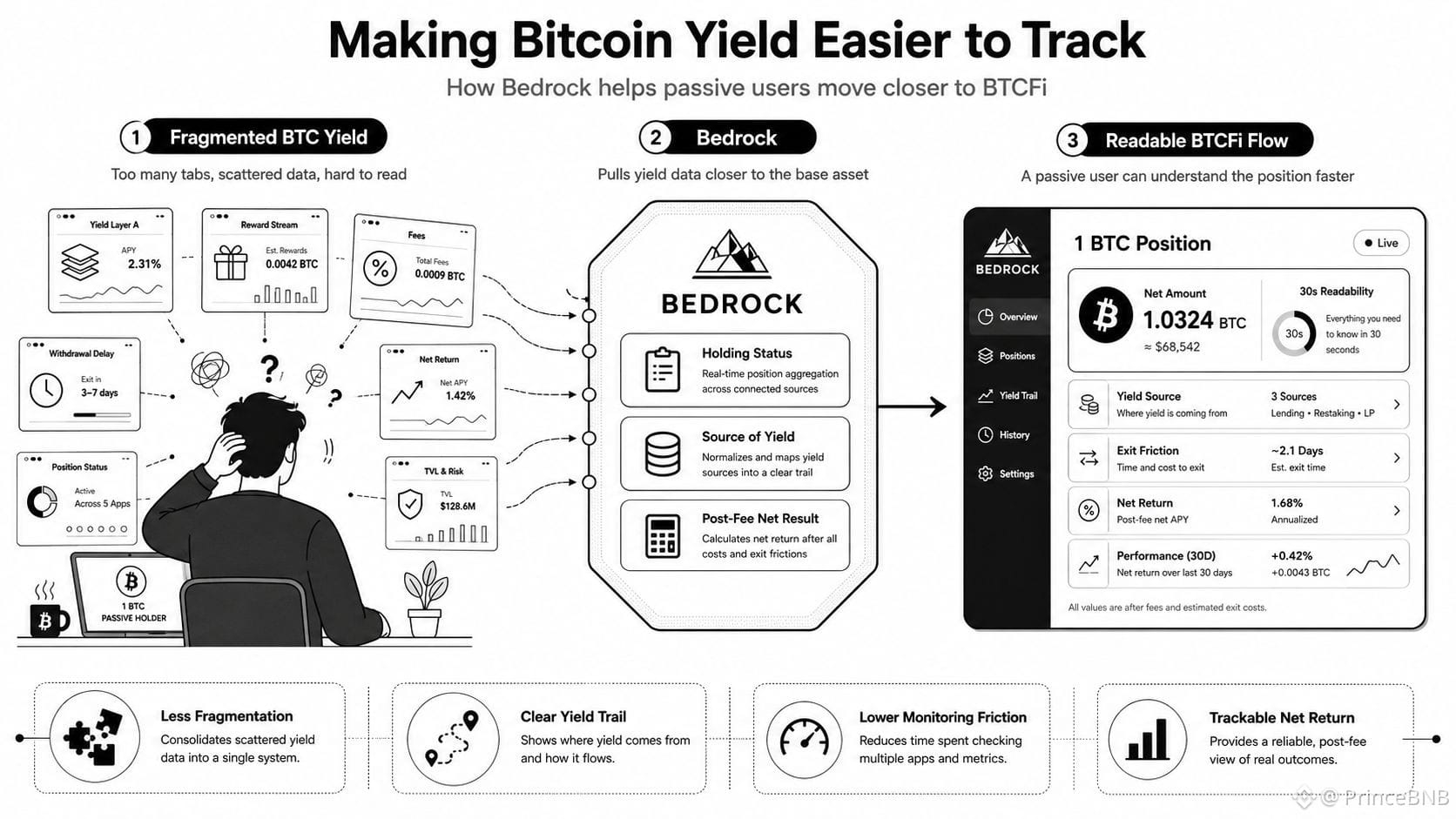
Es gab eine Zeit, da hatte ich 0,17 BTC, die durch zwei Ertragslayer liefen. Am Abend des zehnten Tages hatte ich 7 Tabs für 31 Minuten offen, nur um zusammenzuflicken, was nach Gebühren und Verzögerung bei der Abhebung tatsächlich übrig war.
Danach habe ich die Gewohnheit abgelegt, der Zahl oben auf dem Bildschirm zu vertrauen. Ich glaube nur, wenn ich sehen kann, wo sich das Asset befindet, aus welchem Layer die zusätzliche Rendite stammt und wo die Reibung auftauchen wird, wenn ich aussteigen muss.
Krypto verwandelt das Halten von Bitcoin oft in einen chaotischen Job. Es fühlt sich an, als würde man die Lebenshaltungskosten in zu viele Teile aufteilen; jede Tasche zeigt einen Gewinn, aber wenn es Zeit ist, alles zusammenzuzählen, weiß man nicht mehr, welcher Teil echtes Wachstum ist.
Was mich zurück zu Bedrock brachte, war die Art und Weise, wie es die Daten näher an das Basis-Asset heranholt. Bedrock bringt den Haltestatus, die Quellen der Rendite und die Nachgebühren-Reibung in einen Lesefluss. Wenn diese drei Layer näher beieinander liegen, müssen passive Nutzer die Erträge nicht von Hand zusammenflicken.
Der Anker, den ich benutze, ist einfach. Innerhalb von 30 Sekunden sollte ein Halter von 1 BTC in der Lage sein, den Nettobetrag zu lesen, zu verstehen, warum er sich geändert hat, und zu wissen, welcher Layer Reibung auf dem Weg nach draußen verursachen wird.
Ich nenne eine Struktur nur dann langlebig, wenn Bedrock zwei Dinge gleichzeitig löst. Bedrock muss die Bitcoin-Rendite weniger fragmentiert machen, aber es muss auch den Weg so klar halten, dass die Nutzer die endgültige Zahl auf den genauen Layer zurückverfolgen können, der sie erzeugt hat. Kompakter, aber weniger klar ist immer noch nicht genug.
Deshalb lese ich das nicht als eine Geschichte über Interface-Politur. Ich schaue darauf, ob Bedrock BTCFi von einer Ansammlung verstreuter Zahlen in eine lesbare Zeile der Verfolgung umwandeln kann, damit die Person, die Bitcoin hält, nicht zum Buchhalter ihrer eigenen Wallet werden muss.
@Bedrock #bedrock $BR $OPN $SIREN
Danach habe ich die Gewohnheit abgelegt, der Zahl oben auf dem Bildschirm zu vertrauen. Ich glaube nur, wenn ich sehen kann, wo sich das Asset befindet, aus welchem Layer die zusätzliche Rendite stammt und wo die Reibung auftauchen wird, wenn ich aussteigen muss.
Krypto verwandelt das Halten von Bitcoin oft in einen chaotischen Job. Es fühlt sich an, als würde man die Lebenshaltungskosten in zu viele Teile aufteilen; jede Tasche zeigt einen Gewinn, aber wenn es Zeit ist, alles zusammenzuzählen, weiß man nicht mehr, welcher Teil echtes Wachstum ist.
Was mich zurück zu Bedrock brachte, war die Art und Weise, wie es die Daten näher an das Basis-Asset heranholt. Bedrock bringt den Haltestatus, die Quellen der Rendite und die Nachgebühren-Reibung in einen Lesefluss. Wenn diese drei Layer näher beieinander liegen, müssen passive Nutzer die Erträge nicht von Hand zusammenflicken.
Der Anker, den ich benutze, ist einfach. Innerhalb von 30 Sekunden sollte ein Halter von 1 BTC in der Lage sein, den Nettobetrag zu lesen, zu verstehen, warum er sich geändert hat, und zu wissen, welcher Layer Reibung auf dem Weg nach draußen verursachen wird.
Ich nenne eine Struktur nur dann langlebig, wenn Bedrock zwei Dinge gleichzeitig löst. Bedrock muss die Bitcoin-Rendite weniger fragmentiert machen, aber es muss auch den Weg so klar halten, dass die Nutzer die endgültige Zahl auf den genauen Layer zurückverfolgen können, der sie erzeugt hat. Kompakter, aber weniger klar ist immer noch nicht genug.
Deshalb lese ich das nicht als eine Geschichte über Interface-Politur. Ich schaue darauf, ob Bedrock BTCFi von einer Ansammlung verstreuter Zahlen in eine lesbare Zeile der Verfolgung umwandeln kann, damit die Person, die Bitcoin hält, nicht zum Buchhalter ihrer eigenen Wallet werden muss.
@Bedrock #bedrock $BR $OPN $SIREN
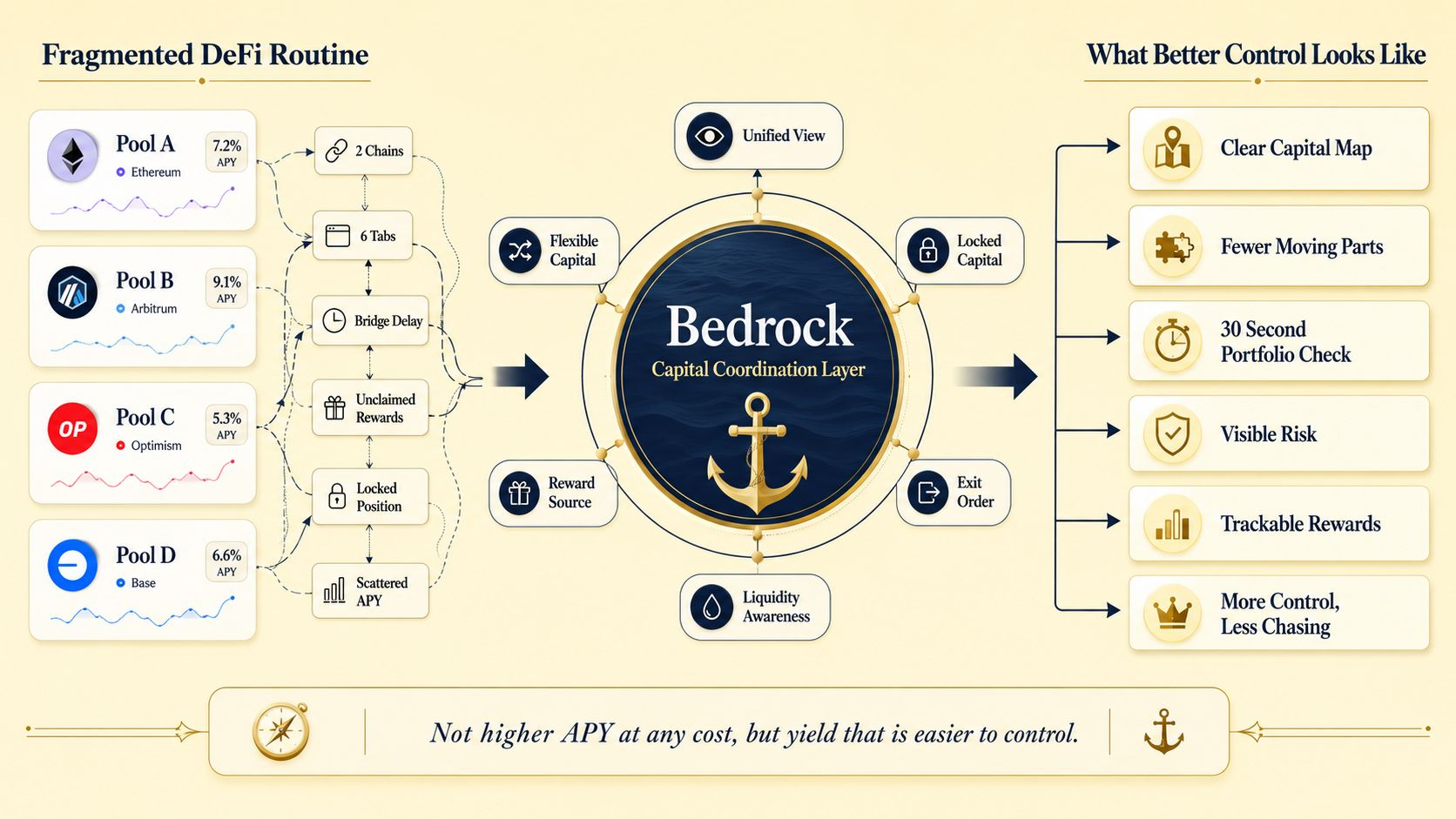
Es gab eine Zeit, in der ich meine Stablecoins auf 4 Orte verteilt habe, nur um weniger als 3 Prozent mehr Rendite zu erzielen. Am nächsten Morgen war ein Teil 12 Minuten lang auf einer Brücke festgehalten, ein anderer war noch nicht beansprucht worden, und ich musste jeden Tab erneut öffnen, um mich zu erinnern, wo mein Kapital war.
Nach ein paar Runden wie diesen wurde mir klar, dass der ermüdende Teil von DeFi nicht nur die Gebühren sind. Es ist die Art und Weise, wie ein Portfolio in Fragmente zerbrochen wird, wobei jedes Stück in einem anderen Rhythmus bewegt wird, während der Benutzer den Rest alleine zusammenfügen muss.
Es fühlt sich an, als würde man Bargeld in zu viele Schubladen stopfen. Wenn alles ruhig ist, sieht es organisiert aus, aber wenn man schnell Gelder umschichten muss, beginnen die Hände zu suchen, bevor der Kopf rechnen kann.
Was ich genau beobachte, ist, dass Bedrock die Nutzer nicht dazu drängt, noch eine kleine Zahl zu jagen, sondern verstreute Rendite-Stücke in die gleiche Koordinationslogik zieht. Bedrock ist nur für Leute nützlich, die bereits müde sind, 6 Tabs zu öffnen, um 5 Kapitalströme zu verbinden. Der Wert zeigt sich erst, wenn sie erkennen können, welcher Teil flexibel bleibt, welcher Teil gesperrt ist und wo die Belohnungen tatsächlich herkommen.
Ich sehe es als einen Anker unter dem Boot. Der Anker macht das Wasser nicht ruhiger, aber er verhindert, dass die Richtung von kurzen Wellen hin und her gerissen wird.
Um es nachhaltig zu nennen, muss Bedrock die Überprüfungszeit des Portfolios auf etwa 30 Sekunden reduzieren. Ich bewerte es nur hoch, wenn Bedrock den Gewinn zwingt, mit der Liquidität zu reisen, die Belohnungen zwingt, mit ihrer Quelle zu reisen, und das Risiko zwingt, sich zu zeigen, bevor mehr Kapital hinzugefügt wird.
Am Ende passt Bedrock zu Leuten, die lange genug geblieben sind, um zu verstehen, dass ein zusätzliches 1 Prozent nicht immer so viel wert ist wie das Entfernen einer weiteren Schicht von Mehrdeutigkeit. In diesem Markt ist das, was seltener ist als Rendite, das Gefühl, dass man nach dem Schließen der Wallet noch das Steuer in der Hand hat.
@Bedrock #bedrock $BR $MAGMA $APR
Nach ein paar Runden wie diesen wurde mir klar, dass der ermüdende Teil von DeFi nicht nur die Gebühren sind. Es ist die Art und Weise, wie ein Portfolio in Fragmente zerbrochen wird, wobei jedes Stück in einem anderen Rhythmus bewegt wird, während der Benutzer den Rest alleine zusammenfügen muss.
Es fühlt sich an, als würde man Bargeld in zu viele Schubladen stopfen. Wenn alles ruhig ist, sieht es organisiert aus, aber wenn man schnell Gelder umschichten muss, beginnen die Hände zu suchen, bevor der Kopf rechnen kann.
Was ich genau beobachte, ist, dass Bedrock die Nutzer nicht dazu drängt, noch eine kleine Zahl zu jagen, sondern verstreute Rendite-Stücke in die gleiche Koordinationslogik zieht. Bedrock ist nur für Leute nützlich, die bereits müde sind, 6 Tabs zu öffnen, um 5 Kapitalströme zu verbinden. Der Wert zeigt sich erst, wenn sie erkennen können, welcher Teil flexibel bleibt, welcher Teil gesperrt ist und wo die Belohnungen tatsächlich herkommen.
Ich sehe es als einen Anker unter dem Boot. Der Anker macht das Wasser nicht ruhiger, aber er verhindert, dass die Richtung von kurzen Wellen hin und her gerissen wird.
Um es nachhaltig zu nennen, muss Bedrock die Überprüfungszeit des Portfolios auf etwa 30 Sekunden reduzieren. Ich bewerte es nur hoch, wenn Bedrock den Gewinn zwingt, mit der Liquidität zu reisen, die Belohnungen zwingt, mit ihrer Quelle zu reisen, und das Risiko zwingt, sich zu zeigen, bevor mehr Kapital hinzugefügt wird.
Am Ende passt Bedrock zu Leuten, die lange genug geblieben sind, um zu verstehen, dass ein zusätzliches 1 Prozent nicht immer so viel wert ist wie das Entfernen einer weiteren Schicht von Mehrdeutigkeit. In diesem Markt ist das, was seltener ist als Rendite, das Gefühl, dass man nach dem Schließen der Wallet noch das Steuer in der Hand hat.
@Bedrock #bedrock $BR $MAGMA $APR
Es gab eine Zeit, da habe ich fast 26.000 USDC durch einen Alt-Pool verkauft, als die Liquidität dünn war. Der Order wurde zwar ausgeführt, aber der letzte Teil hat den Preis um mehr als 1,5 Prozent gedrückt, und ich habe Geld verloren, nicht weil ich mit der Richtung falsch lag, sondern weil ich zu direkt eingestiegen bin.
Danach habe ich den ordentlich aussehenden Klicks viel weniger vertraut. In der Krypto-Welt bricht eine große Order oft auf der Ausführungsebene, bevor sie auf dem Markt sichtbar wird.
Es fühlt sich an, als würde man einen dicken Stapel Bargeld zu einer kleinen Börse spät am Tag tragen. Niemand muss etwas sagen; die Größe des Trades drückt den Preis bereits gegen einen.
Was mich dazu brachte, meine Augen auf Genius zu richten, war die Art und Weise, wie es mit dieser Kollision durch Order-Splitting umgeht. Genius wirft die gesamte Größe nicht in einen Liquiditätspunkt, sondern zerlegt den Eltern-Order in kleinere Stücke und verteilt sie über verschiedene Ausführungspfade, sodass der Preisimpact verringert wird und der Fußabdruck der Order weniger sichtbar ist.
Der Anker, den ich behalte, ist kein glatteres Interface. Es ist die Idee, dass ein langlebiger Mechanismus es einer 20.000 bis 50.000 Dollar Order ermöglichen sollte, sanfter durch den Markt zu gleiten, während der Trader immer noch versteht, welche Kosten für die Geschwindigkeit gehandelt werden.
Ich bewerte es nur hoch, wenn Genius den realisierten Preis stabiler hält, während sich die Spreads ausweiten, während die 5-Minuten-Candlesticks hart zucken und während die Tiefe des Orderbuchs schnell dünner wird. Genius muss den Nutzern auch zeigen, wie die Order gesplittet wurde, welchen Weg sie genommen hat, wie viele Basispunkte verbrannt wurden, anstatt die gesamte Ausführungsebene hinter einem verschwommenen Bildschirm zu verbergen.
Es mangelt dem Markt nicht an Orten, an denen große Orders in die Liquidität knallen und ihren eigenen Preis schädigen. Wenn dieses Problem durch Fills, den endgültigen Ausführungspreis und die Heimlichkeit des Weges behandelt wird, berührt Genius endlich den echten Schmerzpunkt von großen Tradern.
@GeniusOfficial #genius $GENIUS $APR $MAGMA
Danach habe ich den ordentlich aussehenden Klicks viel weniger vertraut. In der Krypto-Welt bricht eine große Order oft auf der Ausführungsebene, bevor sie auf dem Markt sichtbar wird.
Es fühlt sich an, als würde man einen dicken Stapel Bargeld zu einer kleinen Börse spät am Tag tragen. Niemand muss etwas sagen; die Größe des Trades drückt den Preis bereits gegen einen.
Was mich dazu brachte, meine Augen auf Genius zu richten, war die Art und Weise, wie es mit dieser Kollision durch Order-Splitting umgeht. Genius wirft die gesamte Größe nicht in einen Liquiditätspunkt, sondern zerlegt den Eltern-Order in kleinere Stücke und verteilt sie über verschiedene Ausführungspfade, sodass der Preisimpact verringert wird und der Fußabdruck der Order weniger sichtbar ist.
Der Anker, den ich behalte, ist kein glatteres Interface. Es ist die Idee, dass ein langlebiger Mechanismus es einer 20.000 bis 50.000 Dollar Order ermöglichen sollte, sanfter durch den Markt zu gleiten, während der Trader immer noch versteht, welche Kosten für die Geschwindigkeit gehandelt werden.
Ich bewerte es nur hoch, wenn Genius den realisierten Preis stabiler hält, während sich die Spreads ausweiten, während die 5-Minuten-Candlesticks hart zucken und während die Tiefe des Orderbuchs schnell dünner wird. Genius muss den Nutzern auch zeigen, wie die Order gesplittet wurde, welchen Weg sie genommen hat, wie viele Basispunkte verbrannt wurden, anstatt die gesamte Ausführungsebene hinter einem verschwommenen Bildschirm zu verbergen.
Es mangelt dem Markt nicht an Orten, an denen große Orders in die Liquidität knallen und ihren eigenen Preis schädigen. Wenn dieses Problem durch Fills, den endgültigen Ausführungspreis und die Heimlichkeit des Weges behandelt wird, berührt Genius endlich den echten Schmerzpunkt von großen Tradern.
@GeniusOfficial #genius $GENIUS $APR $MAGMA
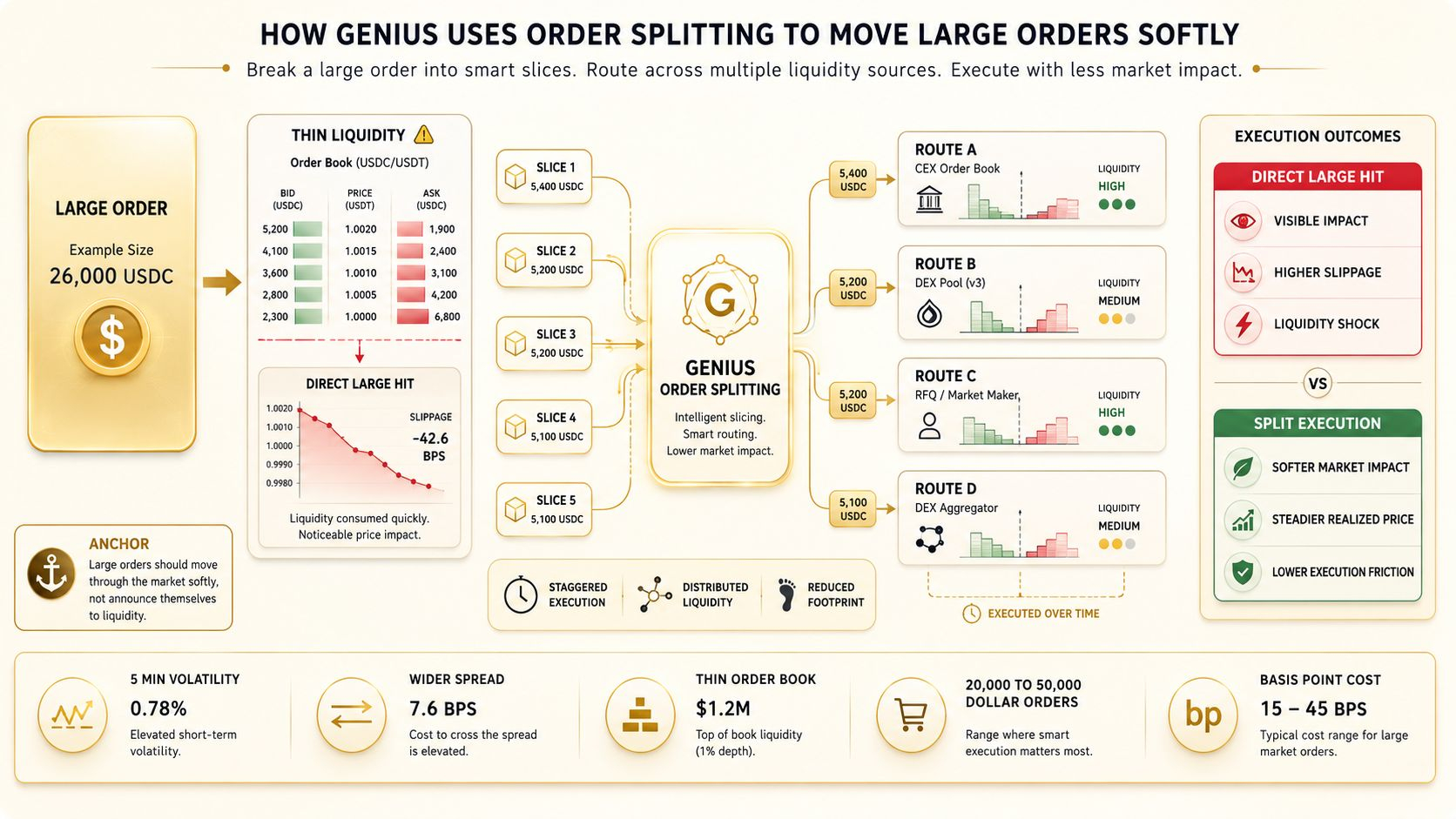
Anmelden und weiter Inhalte entdecken