

Shizuka_ 22
5.6k Beiträge

Shizuka_ 22
Melden
Nutzer blockieren
Crypto Enthusiast, Investor, KOL & Gem Holder Long term Holder of Memecoin
104 Following
20.2K+ Follower
5.6K+ Like gegeben
Beiträge
Alle
Zitierungen
Live
·
--
fantastischer Beitrag
fantastischer Beitrag

Crazy Hami
·
--
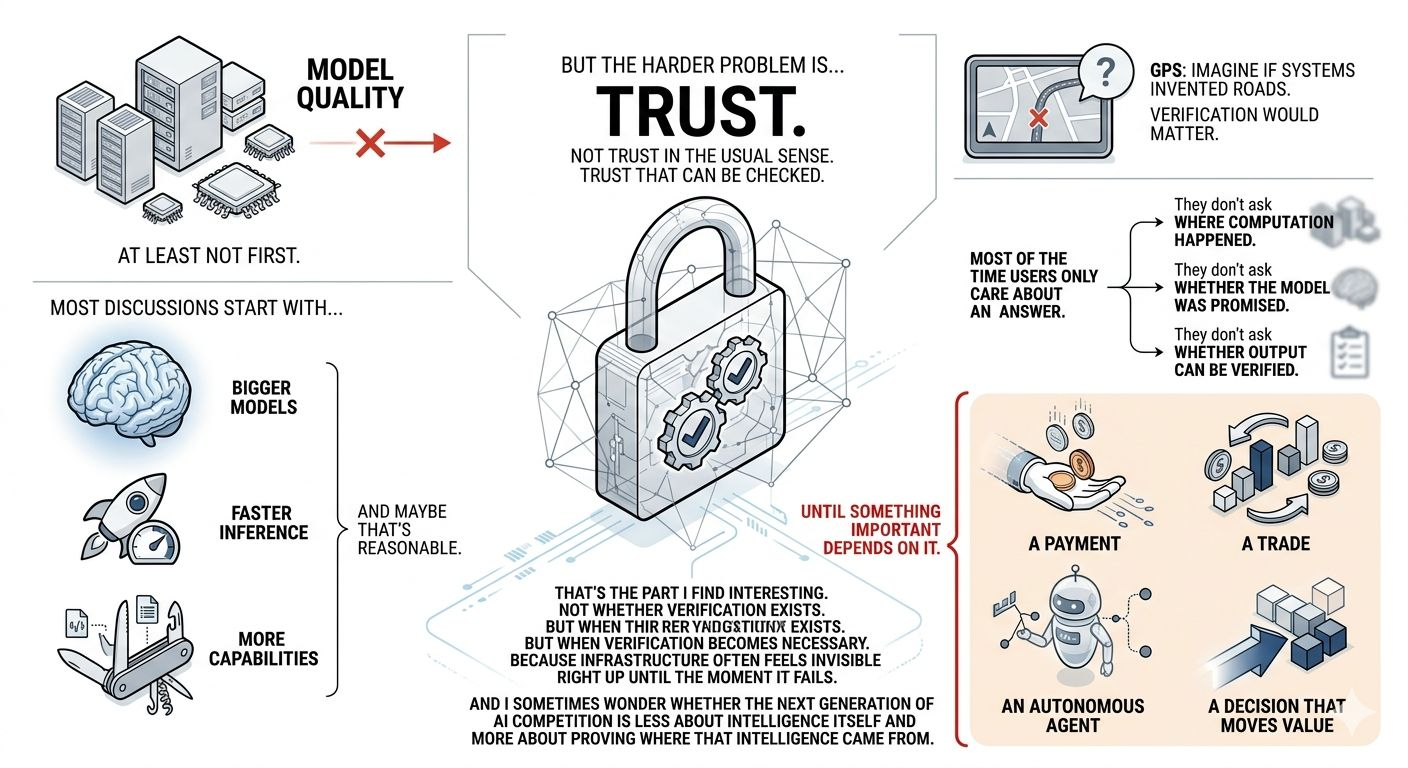
Die Sache, zu der ich immer wieder zurückkomme, wenn es um dezentrale KI geht, ist nicht die Modellqualität.
Zumindest nicht zuerst.
Die meisten Diskussionen scheinen mit größeren Modellen zu beginnen.
OpenGradient schnellere Inferenz.
Mehr Fähigkeiten.
Und vielleicht ist das vernünftig.
Aber je mehr ich darüber nachdenke, desto mehr frage ich mich, ob das größere Problem das Vertrauen ist.
Nicht Vertrauen im üblichen Sinne.
Vertrauen, das überprüft werden kann.
Ich dachte aus irgendeinem Grund an GPS.
Die meisten Menschen stellen es nie in Frage.
Die Route erscheint. #opg
Sie folgen ihr.
Fertig.
Aber stell dir vor, jedes Navigationssystem würde gelegentlich Straßen erfinden, die es nicht gibt.
Plötzlich würde die Überprüfung viel wichtiger werden.
Vielleicht funktioniert KI auf die gleiche Weise.
Die meiste Zeit interessiert es die Nutzer nur, eine Antwort zu bekommen.
Sie fragen nicht, wo die Berechnung stattgefunden hat. Der OPG-Token ist nicht einfach ein Zahlungsmittel; er fungiert als eine Form von systemischem Druck. Nodes sind verpflichtet, konstant gültige Arbeit zu demonstrieren, um weiterhin zu verdienen.
Sie fragen nicht, ob das Modell das war, was versprochen wurde.
Sie fragen nicht, ob die Ausgabe überprüft werden kann.
Bis etwas Wichtiges davon abhängt.
Eine Zahlung.
Ein Handel.
Ein autonomer Agent.
Eine Entscheidung, die Wert bewegt.
Das ist der Teil, den ich interessant finde.
OpenGradient ist ein sehr schnelles und einzigartiges Projekt, ich mag es.
Nicht, ob Überprüfung existiert.
Sondern wann Überprüfung notwendig wird.
Weil Infrastruktur oft unsichtbar erscheint, bis zu dem Moment, an dem sie ausfällt.
Und manchmal frage ich mich, ob die nächste Generation der KI-Konkurrenz weniger um Intelligenz selbst und mehr darum geht, zu beweisen, woher diese Intelligenz kommt.
@OpenGradient #OPG
$OPG
Zumindest nicht zuerst.
Die meisten Diskussionen scheinen mit größeren Modellen zu beginnen.
OpenGradient schnellere Inferenz.
Mehr Fähigkeiten.
Und vielleicht ist das vernünftig.
Aber je mehr ich darüber nachdenke, desto mehr frage ich mich, ob das größere Problem das Vertrauen ist.
Nicht Vertrauen im üblichen Sinne.
Vertrauen, das überprüft werden kann.
Ich dachte aus irgendeinem Grund an GPS.
Die meisten Menschen stellen es nie in Frage.
Die Route erscheint. #opg
Sie folgen ihr.
Fertig.
Aber stell dir vor, jedes Navigationssystem würde gelegentlich Straßen erfinden, die es nicht gibt.
Plötzlich würde die Überprüfung viel wichtiger werden.
Vielleicht funktioniert KI auf die gleiche Weise.
Die meiste Zeit interessiert es die Nutzer nur, eine Antwort zu bekommen.
Sie fragen nicht, wo die Berechnung stattgefunden hat. Der OPG-Token ist nicht einfach ein Zahlungsmittel; er fungiert als eine Form von systemischem Druck. Nodes sind verpflichtet, konstant gültige Arbeit zu demonstrieren, um weiterhin zu verdienen.
Sie fragen nicht, ob das Modell das war, was versprochen wurde.
Sie fragen nicht, ob die Ausgabe überprüft werden kann.
Bis etwas Wichtiges davon abhängt.
Eine Zahlung.
Ein Handel.
Ein autonomer Agent.
Eine Entscheidung, die Wert bewegt.
Das ist der Teil, den ich interessant finde.
OpenGradient ist ein sehr schnelles und einzigartiges Projekt, ich mag es.
Nicht, ob Überprüfung existiert.
Sondern wann Überprüfung notwendig wird.
Weil Infrastruktur oft unsichtbar erscheint, bis zu dem Moment, an dem sie ausfällt.
Und manchmal frage ich mich, ob die nächste Generation der KI-Konkurrenz weniger um Intelligenz selbst und mehr darum geht, zu beweisen, woher diese Intelligenz kommt.
@OpenGradient #OPG
$OPG
62
·
--
Verifiziert
🚨 DIE GRÖSSTE CHANCE FÜR BITCOIN WURDE NOCH NICHT VOLLSTÄNDIG ENTSCHLÜSSELT.
Bitcoin hat sich bereits als das führende digitale Asset der Welt bewiesen.
Aber es gibt eine Frage, die der Markt zu stellen beginnt:
Was wäre, wenn Bitcoin mehr als nur ein Wertspeicher wird?
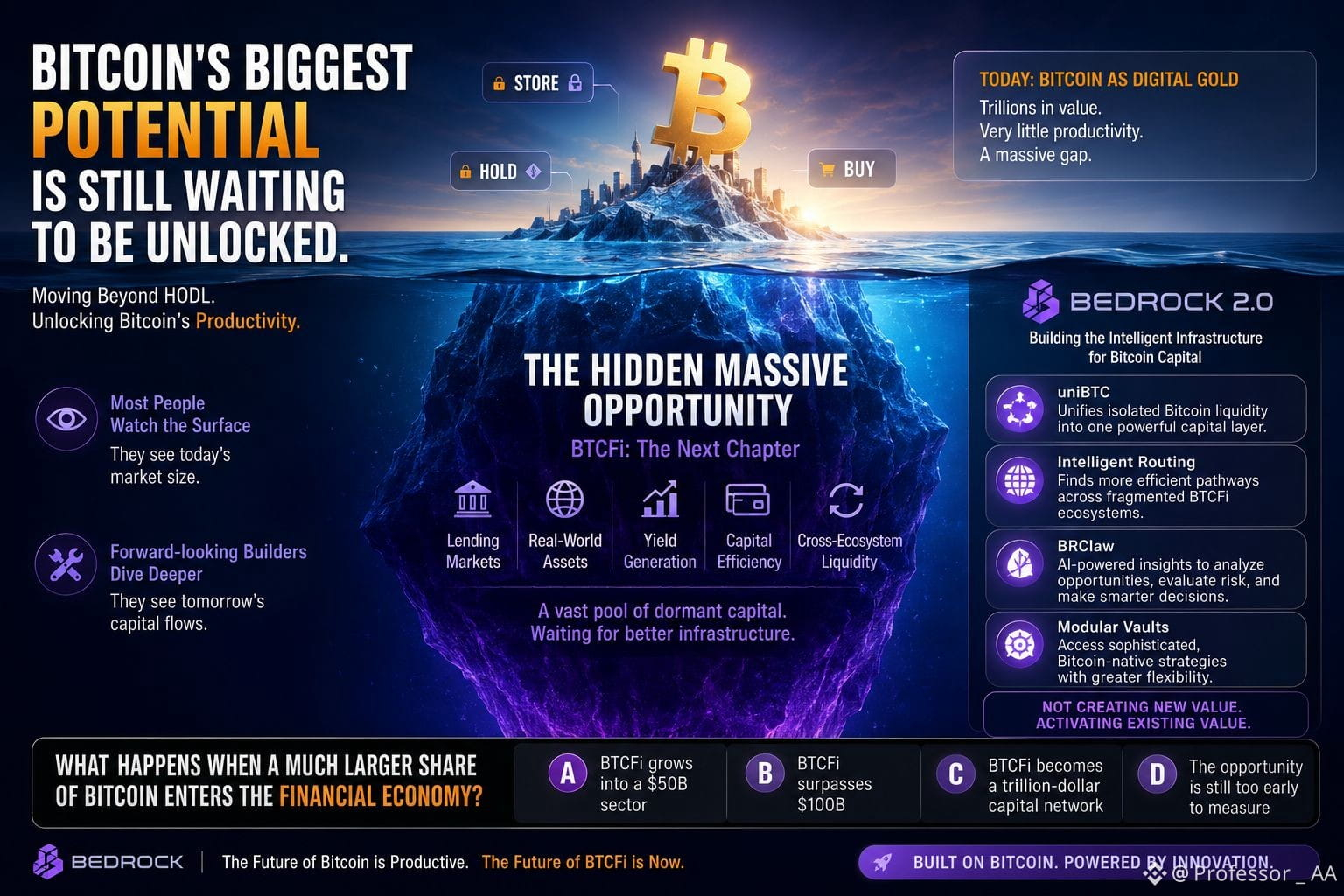
Heute sitzen Billionen von Dollar in Bitcoin, aber nur ein kleiner Prozentsatz wird aktiv in finanziellen Anwendungen genutzt.
Jahrelang war die Strategie einfach:
✔ Kaufen
✔ Halten
✔ Warten
Jetzt bringt BTCFi eine andere Möglichkeit.
🏦 Kreditmärkte
🌐 Reale Vermögenswerte
📈 Ertragsmöglichkeiten
💳 Höhere Kapitaleffizienz
🔄 Liquidität über Ökosysteme hinweg
Die Eisberg-Analogie beschreibt die aktuelle Landschaft perfekt.
Was wir heute sehen, ist nur die sichtbare Schicht.
Unter der Oberfläche liegt eine riesige Menge an ruhendem Kapital, das auf die Infrastruktur wartet, die es aktivieren kann.
Hier konzentriert sich Bedrock 2.0.
uniBTC verbindet fragmentierte Bitcoin-Liquidität.
Intelligentes Routing verbessert die Kapitalbewegung über Ökosysteme hinweg.
$BR Claw bietet KI-gestützte Einblicke für smartere Entscheidungen.
Modulare Vaults ermöglichen fortgeschrittenere Bitcoin-native Strategien.
Das Ziel ist nicht, neuen Wert zu schaffen.
Es geht darum, den Wert freizusetzen, den Bitcoin bereits hält.
👇 Wie groß kann BTCFi werden?
A) $50B
B) $100B+
C) $1T+ Kapitalnetzwerk
D) Noch zu früh, um zu schätzen
@Bedrock
#Bedrock #BTCFi $BR
🚨 DIE GRÖSSTE CHANCE FÜR BITCOIN WURDE NOCH NICHT VOLLSTÄNDIG ENTSCHLÜSSELT.
Bitcoin hat sich bereits als das führende digitale Asset der Welt bewiesen.
Aber es gibt eine Frage, die der Markt zu stellen beginnt:
Was wäre, wenn Bitcoin mehr als nur ein Wertspeicher wird?
Heute sitzen Billionen von Dollar in Bitcoin, aber nur ein kleiner Prozentsatz wird aktiv in finanziellen Anwendungen genutzt.
Jahrelang war die Strategie einfach:
✔ Kaufen
✔ Halten
✔ Warten
Jetzt bringt BTCFi eine andere Möglichkeit.
🏦 Kreditmärkte
🌐 Reale Vermögenswerte
📈 Ertragsmöglichkeiten
💳 Höhere Kapitaleffizienz
🔄 Liquidität über Ökosysteme hinweg
Die Eisberg-Analogie beschreibt die aktuelle Landschaft perfekt.
Was wir heute sehen, ist nur die sichtbare Schicht.
Unter der Oberfläche liegt eine riesige Menge an ruhendem Kapital, das auf die Infrastruktur wartet, die es aktivieren kann.
Hier konzentriert sich Bedrock 2.0.
uniBTC verbindet fragmentierte Bitcoin-Liquidität.
Intelligentes Routing verbessert die Kapitalbewegung über Ökosysteme hinweg.
$BR Claw bietet KI-gestützte Einblicke für smartere Entscheidungen.
Modulare Vaults ermöglichen fortgeschrittenere Bitcoin-native Strategien.
Das Ziel ist nicht, neuen Wert zu schaffen.
Es geht darum, den Wert freizusetzen, den Bitcoin bereits hält.
👇 Wie groß kann BTCFi werden?
A) $50B
B) $100B+
C) $1T+ Kapitalnetzwerk
D) Noch zu früh, um zu schätzen
@Bedrock
#Bedrock #BTCFi $BR
Bitcoin hat sich bereits als das führende digitale Asset der Welt bewiesen.
Aber es gibt eine Frage, die der Markt zu stellen beginnt:
Was wäre, wenn Bitcoin mehr als nur ein Wertspeicher wird?
Heute sitzen Billionen von Dollar in Bitcoin, aber nur ein kleiner Prozentsatz wird aktiv in finanziellen Anwendungen genutzt.
Jahrelang war die Strategie einfach:
✔ Kaufen
✔ Halten
✔ Warten
Jetzt bringt BTCFi eine andere Möglichkeit.
🏦 Kreditmärkte
🌐 Reale Vermögenswerte
📈 Ertragsmöglichkeiten
💳 Höhere Kapitaleffizienz
🔄 Liquidität über Ökosysteme hinweg
Die Eisberg-Analogie beschreibt die aktuelle Landschaft perfekt.
Was wir heute sehen, ist nur die sichtbare Schicht.
Unter der Oberfläche liegt eine riesige Menge an ruhendem Kapital, das auf die Infrastruktur wartet, die es aktivieren kann.
Hier konzentriert sich Bedrock 2.0.
uniBTC verbindet fragmentierte Bitcoin-Liquidität.
Intelligentes Routing verbessert die Kapitalbewegung über Ökosysteme hinweg.
$BR Claw bietet KI-gestützte Einblicke für smartere Entscheidungen.
Modulare Vaults ermöglichen fortgeschrittenere Bitcoin-native Strategien.
Das Ziel ist nicht, neuen Wert zu schaffen.
Es geht darum, den Wert freizusetzen, den Bitcoin bereits hält.
👇 Wie groß kann BTCFi werden?
A) $50B
B) $100B+
C) $1T+ Kapitalnetzwerk
D) Noch zu früh, um zu schätzen
@Bedrock
#Bedrock #BTCFi $BR
8
5
232
·
--
Verifiziert
DIE NÄCHSTE GROSSE GELEGENHEIT FÜR BITCOIN STEHT MÖGLICHERWEISE NOCH VOR UNS.
Die meisten Investoren konzentrieren sich auf das, was bereits existiert.
Die wahren Gewinner achten oft auf das, was gerade erst zu entstehen beginnt.
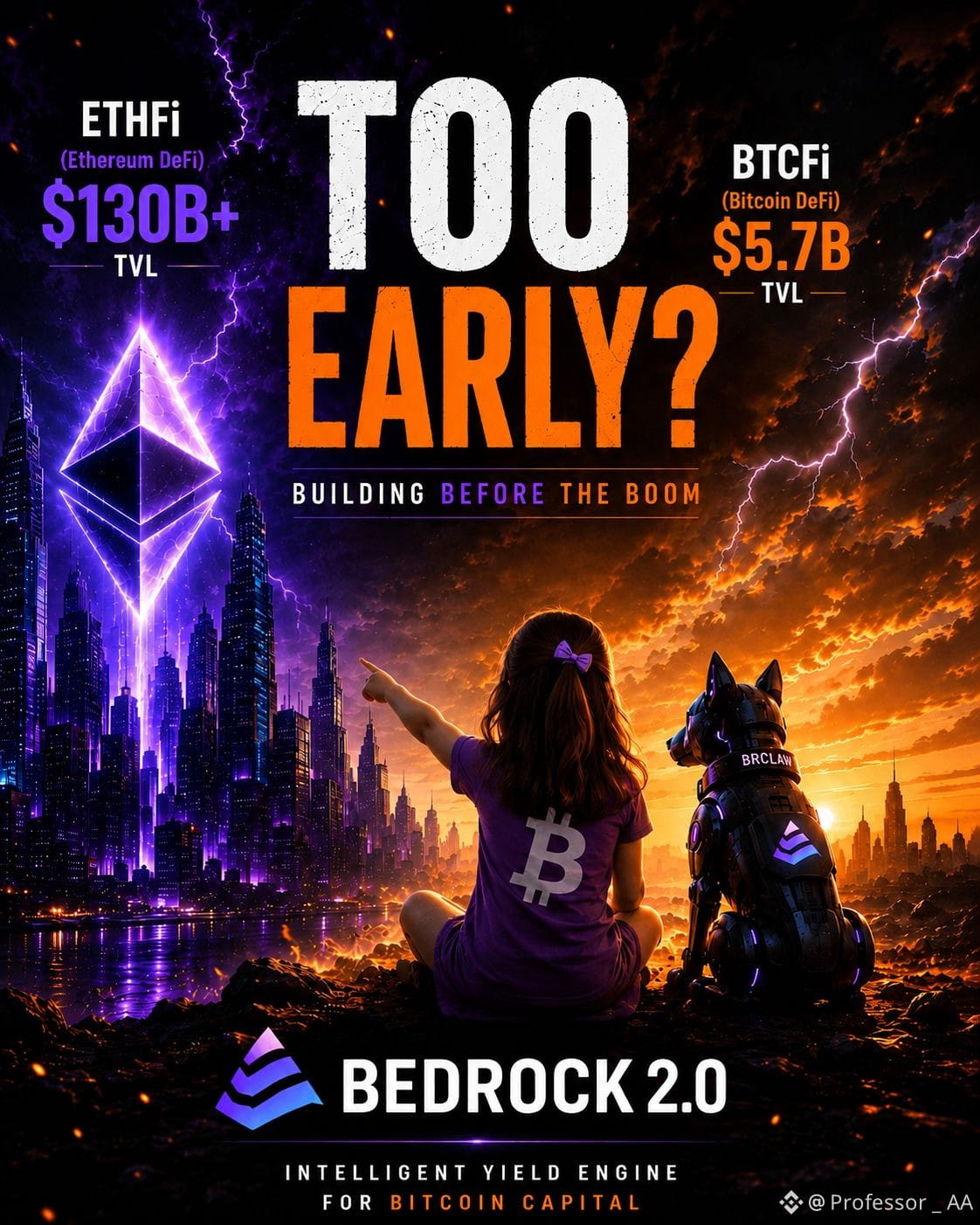
Das DeFi-Ökosystem von Ethereum hat bereits die Macht von On-Chain-Finanzierungen demonstriert, indem es Milliarden an Liquidität angezogen und völlig neue Finanzmärkte geschaffen hat.
Bitcoin Finance hingegen befindet sich noch in den frühen Phasen.
Das macht BTCFi so faszinierend.
Die Frage ist nicht, wie groß der Markt heute ist.
Die Frage ist, wie groß er werden könnte, während Bitcoin sich von einem passiven Wertspeicher in produktives Kapital verwandelt.
Wir beobachten, wie die Grundlagen für eine neue finanzielle Schicht um Bitcoin herum gelegt werden.
Während sich dieses Ökosystem erweitert, wird Kapital zunehmend über Kreditprotokolle, tokenisierte reale Vermögenswerte, Ertragsstrategien und andere aufkommende Gelegenheiten fließen.
Aber Wachstum bringt Komplexität mit sich.
Mehr Protokolle.
Mehr Optionen.
Mehr fragmentierte Liquidität.
Hier sticht Bedrock 2.0 hervor.
Seine Vision geht über die bloße Teilnahme an BTCFi hinaus - es zielt darauf ab, Bitcoin-Kapital durch folgendes zu vereinfachen und zu optimieren:
🔹 uniBTC — verbindet Bitcoin-Liquidität durch eine einheitliche Kapitalebene.
🔹 Intelligente Routing — hilft Kapital effizient über Möglichkeiten zu bewegen.
🔹 BRClaw — ein KI-gestützter On-Chain-Analyst, der entwickelt wurde, um intelligenteres Entscheiden und Risikobewertungen zu unterstützen.
Mit seinem Modular Vault Framework baut Bedrock die Infrastruktur für die nächste Phase von Bitcoin Finance.
BTCFi könnte $100B erreichen.
Es könnte es sogar völlig übertreffen.
So oder so, die größten Gelegenheiten werden oft lange bevor die Menge sie bemerkt.
@Bedrock
$BR
#Bedrock
DIE NÄCHSTE GROSSE GELEGENHEIT FÜR BITCOIN STEHT MÖGLICHERWEISE NOCH VOR UNS.
Die meisten Investoren konzentrieren sich auf das, was bereits existiert.
Die wahren Gewinner achten oft auf das, was gerade erst zu entstehen beginnt.
Das DeFi-Ökosystem von Ethereum hat bereits die Macht von On-Chain-Finanzierungen demonstriert, indem es Milliarden an Liquidität angezogen und völlig neue Finanzmärkte geschaffen hat.
Bitcoin Finance hingegen befindet sich noch in den frühen Phasen.
Das macht BTCFi so faszinierend.
Die Frage ist nicht, wie groß der Markt heute ist.
Die Frage ist, wie groß er werden könnte, während Bitcoin sich von einem passiven Wertspeicher in produktives Kapital verwandelt.
Wir beobachten, wie die Grundlagen für eine neue finanzielle Schicht um Bitcoin herum gelegt werden.
Während sich dieses Ökosystem erweitert, wird Kapital zunehmend über Kreditprotokolle, tokenisierte reale Vermögenswerte, Ertragsstrategien und andere aufkommende Gelegenheiten fließen.
Aber Wachstum bringt Komplexität mit sich.
Mehr Protokolle.
Mehr Optionen.
Mehr fragmentierte Liquidität.
Hier sticht Bedrock 2.0 hervor.
Seine Vision geht über die bloße Teilnahme an BTCFi hinaus - es zielt darauf ab, Bitcoin-Kapital durch folgendes zu vereinfachen und zu optimieren:
🔹 uniBTC — verbindet Bitcoin-Liquidität durch eine einheitliche Kapitalebene.
🔹 Intelligente Routing — hilft Kapital effizient über Möglichkeiten zu bewegen.
🔹 BRClaw — ein KI-gestützter On-Chain-Analyst, der entwickelt wurde, um intelligenteres Entscheiden und Risikobewertungen zu unterstützen.
Mit seinem Modular Vault Framework baut Bedrock die Infrastruktur für die nächste Phase von Bitcoin Finance.
BTCFi könnte $100B erreichen.
Es könnte es sogar völlig übertreffen.
So oder so, die größten Gelegenheiten werden oft lange bevor die Menge sie bemerkt.
@Bedrock
$BR
#Bedrock
Die meisten Investoren konzentrieren sich auf das, was bereits existiert.
Die wahren Gewinner achten oft auf das, was gerade erst zu entstehen beginnt.
Das DeFi-Ökosystem von Ethereum hat bereits die Macht von On-Chain-Finanzierungen demonstriert, indem es Milliarden an Liquidität angezogen und völlig neue Finanzmärkte geschaffen hat.
Bitcoin Finance hingegen befindet sich noch in den frühen Phasen.
Das macht BTCFi so faszinierend.
Die Frage ist nicht, wie groß der Markt heute ist.
Die Frage ist, wie groß er werden könnte, während Bitcoin sich von einem passiven Wertspeicher in produktives Kapital verwandelt.
Wir beobachten, wie die Grundlagen für eine neue finanzielle Schicht um Bitcoin herum gelegt werden.
Während sich dieses Ökosystem erweitert, wird Kapital zunehmend über Kreditprotokolle, tokenisierte reale Vermögenswerte, Ertragsstrategien und andere aufkommende Gelegenheiten fließen.
Aber Wachstum bringt Komplexität mit sich.
Mehr Protokolle.
Mehr Optionen.
Mehr fragmentierte Liquidität.
Hier sticht Bedrock 2.0 hervor.
Seine Vision geht über die bloße Teilnahme an BTCFi hinaus - es zielt darauf ab, Bitcoin-Kapital durch folgendes zu vereinfachen und zu optimieren:
🔹 uniBTC — verbindet Bitcoin-Liquidität durch eine einheitliche Kapitalebene.
🔹 Intelligente Routing — hilft Kapital effizient über Möglichkeiten zu bewegen.
🔹 BRClaw — ein KI-gestützter On-Chain-Analyst, der entwickelt wurde, um intelligenteres Entscheiden und Risikobewertungen zu unterstützen.
Mit seinem Modular Vault Framework baut Bedrock die Infrastruktur für die nächste Phase von Bitcoin Finance.
BTCFi könnte $100B erreichen.
Es könnte es sogar völlig übertreffen.
So oder so, die größten Gelegenheiten werden oft lange bevor die Menge sie bemerkt.
@Bedrock
$BR
#Bedrock
9
7
220
·
--
Verifiziert
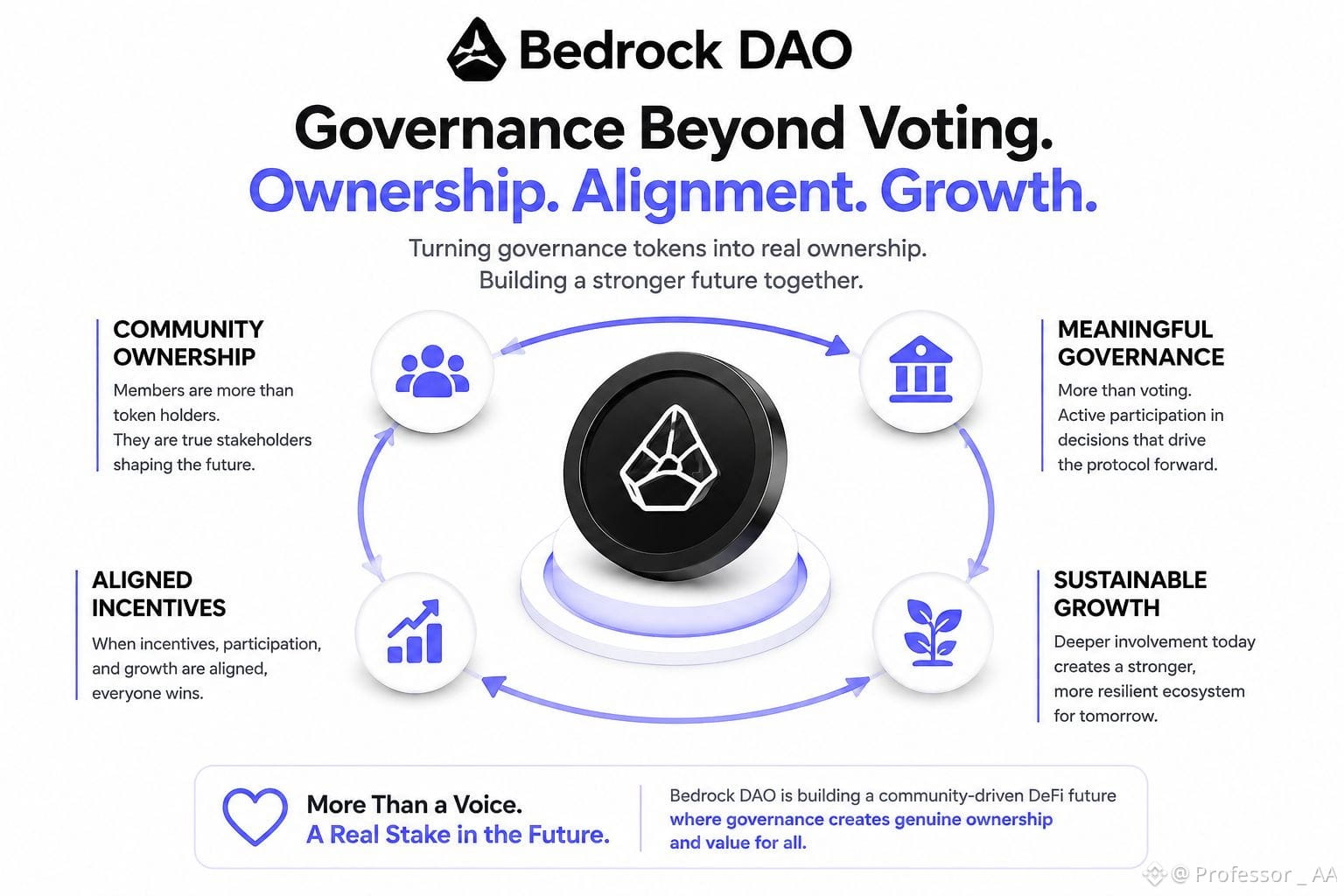
Der Governance Flywheel hinter Bedrock DAO
Einer der überzeugendsten Aspekte von Bedrock DAO ist, wie es Governance in eine Wachstumsmaschine verwandelt, anstatt sie als einfaches Abstimmungssystem zu behandeln.
Als das dezentrale Governance-Gremium dahinter gibt es der Community eine bedeutende Rolle bei der Gestaltung der Zukunft des Protokolls durch den $BR Governance-Token.
Der Governance-Flywheel basiert auf einer einfachen, aber kraftvollen Idee: Teilnahme schafft Wert, und Wert fördert eine noch größere Teilnahme.
Wenn Mitglieder der Community aktiv an der Governance teilnehmen, Ideen einbringen und über wichtige Vorschläge abstimmen, wird das Protokoll stärker und reaktionsfähiger gegenüber seinen Nutzern. Dies kann mehr Liquidität, Ecosystem-Integrationen und Adoption anziehen, was wiederum die Bedeutung und den Einfluss von Governance-Entscheidungen erhöht.
Was mir auffällt, ist die Ausrichtung der Anreize. Anstatt dass die Governance von einer kleinen Gruppe kontrolliert wird, schafft die @Bedrock DAO Möglichkeiten für Stakeholder, direkt die Richtung des Protokolls zu beeinflussen und gleichzeitig von seinem langfristigen Wachstum zu profitieren. Meiner Meinung nach ist dies eine der Schlüsselzutaten für den Aufbau eines nachhaltigen dezentralen Ökosystems.
Wenn das Protokoll wächst, wird die Governance wertvoller, das Engagement der Community vertieft sich, und der Flywheel beschleunigt weiterhin – treibt Innovation, Resilienz und langfristiges Wachstum für das gesamte Bedrock-Ökosystem voran.
@Bedrock
$BR
#Bedrock
$FTT
Der Governance Flywheel hinter Bedrock DAO
Einer der überzeugendsten Aspekte von Bedrock DAO ist, wie es Governance in eine Wachstumsmaschine verwandelt, anstatt sie als einfaches Abstimmungssystem zu behandeln.
Als das dezentrale Governance-Gremium dahinter gibt es der Community eine bedeutende Rolle bei der Gestaltung der Zukunft des Protokolls durch den $BR Governance-Token.
Der Governance-Flywheel basiert auf einer einfachen, aber kraftvollen Idee: Teilnahme schafft Wert, und Wert fördert eine noch größere Teilnahme.
Wenn Mitglieder der Community aktiv an der Governance teilnehmen, Ideen einbringen und über wichtige Vorschläge abstimmen, wird das Protokoll stärker und reaktionsfähiger gegenüber seinen Nutzern. Dies kann mehr Liquidität, Ecosystem-Integrationen und Adoption anziehen, was wiederum die Bedeutung und den Einfluss von Governance-Entscheidungen erhöht.
Was mir auffällt, ist die Ausrichtung der Anreize. Anstatt dass die Governance von einer kleinen Gruppe kontrolliert wird, schafft die @Bedrock DAO Möglichkeiten für Stakeholder, direkt die Richtung des Protokolls zu beeinflussen und gleichzeitig von seinem langfristigen Wachstum zu profitieren. Meiner Meinung nach ist dies eine der Schlüsselzutaten für den Aufbau eines nachhaltigen dezentralen Ökosystems.
Wenn das Protokoll wächst, wird die Governance wertvoller, das Engagement der Community vertieft sich, und der Flywheel beschleunigt weiterhin – treibt Innovation, Resilienz und langfristiges Wachstum für das gesamte Bedrock-Ökosystem voran.
@Bedrock
$BR
#Bedrock
$FTT
Einer der überzeugendsten Aspekte von Bedrock DAO ist, wie es Governance in eine Wachstumsmaschine verwandelt, anstatt sie als einfaches Abstimmungssystem zu behandeln.
Als das dezentrale Governance-Gremium dahinter gibt es der Community eine bedeutende Rolle bei der Gestaltung der Zukunft des Protokolls durch den $BR Governance-Token.
Der Governance-Flywheel basiert auf einer einfachen, aber kraftvollen Idee: Teilnahme schafft Wert, und Wert fördert eine noch größere Teilnahme.
Wenn Mitglieder der Community aktiv an der Governance teilnehmen, Ideen einbringen und über wichtige Vorschläge abstimmen, wird das Protokoll stärker und reaktionsfähiger gegenüber seinen Nutzern. Dies kann mehr Liquidität, Ecosystem-Integrationen und Adoption anziehen, was wiederum die Bedeutung und den Einfluss von Governance-Entscheidungen erhöht.
Was mir auffällt, ist die Ausrichtung der Anreize. Anstatt dass die Governance von einer kleinen Gruppe kontrolliert wird, schafft die @Bedrock DAO Möglichkeiten für Stakeholder, direkt die Richtung des Protokolls zu beeinflussen und gleichzeitig von seinem langfristigen Wachstum zu profitieren. Meiner Meinung nach ist dies eine der Schlüsselzutaten für den Aufbau eines nachhaltigen dezentralen Ökosystems.
Wenn das Protokoll wächst, wird die Governance wertvoller, das Engagement der Community vertieft sich, und der Flywheel beschleunigt weiterhin – treibt Innovation, Resilienz und langfristiges Wachstum für das gesamte Bedrock-Ökosystem voran.
@Bedrock
$BR
#Bedrock
$FTT
1
1
281
·
--
Verifiziert
Während ich immer mehr Zeit damit verbracht habe, verschiedene DeFi-Protokolle zu erkunden, ist mir aufgefallen, dass die Governance oft disconnected von tatsächlichem Wachstum wirkt. Token-Inhaber stimmen über Vorschläge ab, Entscheidungen werden getroffen, und das Protokoll schreitet voran, aber die wirtschaftlichen Vorteile scheinen nicht immer eng mit den Menschen verbunden zu sein, die aktiv an der Governance teilnehmen.
Beim Blick auf Bedrock war das eines der ersten Dinge, die mir aufgefallen sind.
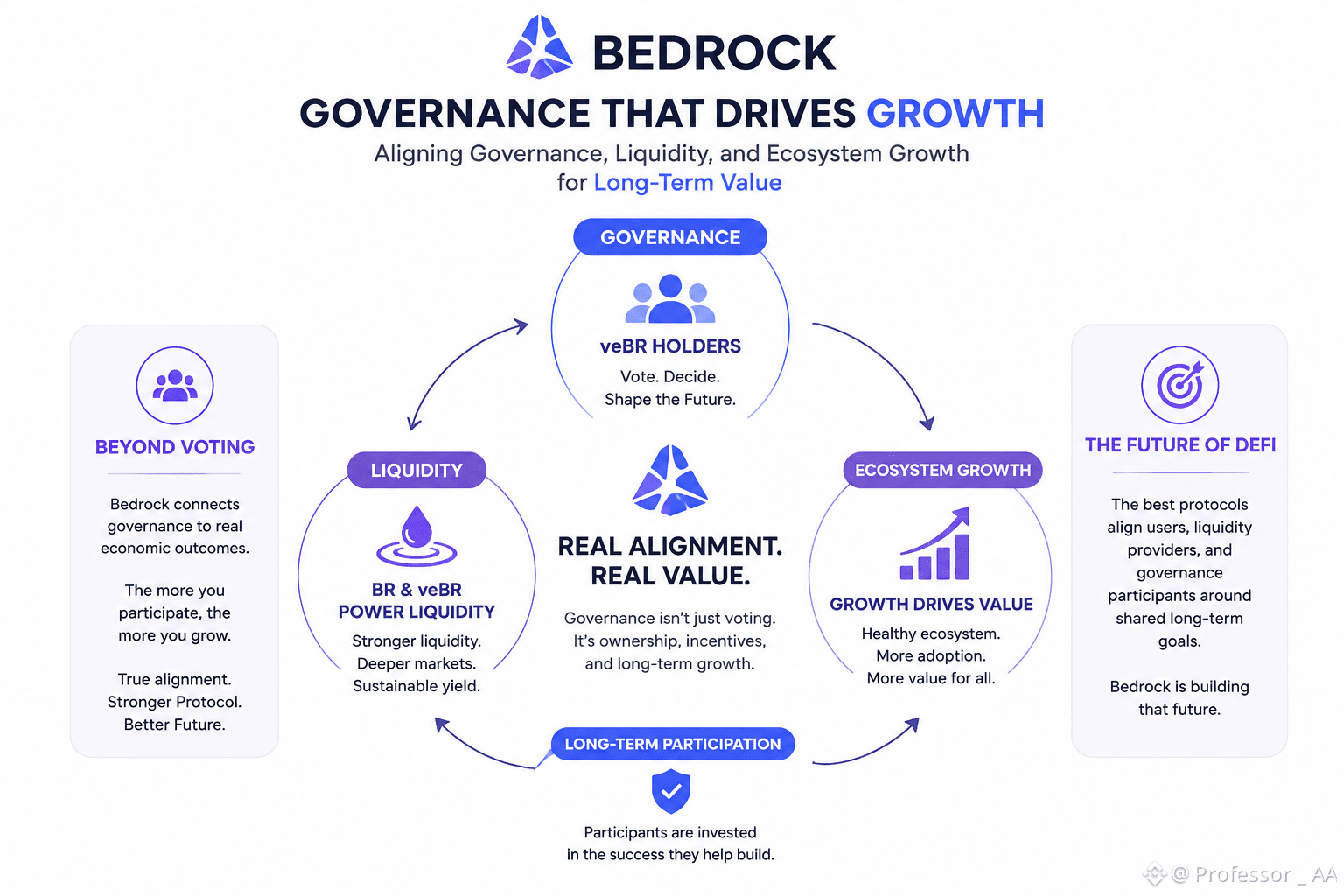
Bedrock geht die Governance anders an, indem es $BR und veBR kombiniert, um Governance, Liquidität und Ökosystemwachstum zu verbinden. Anstatt dass Governance auf Abstimmungen beschränkt ist, wird sie Teil eines umfassenderen Wirtschaftssystems, das langfristige Teilnahme und Ausrichtung fördert.
Was mir an diesem Modell persönlich gefällt, ist, dass es eine stärkere Beziehung zwischen Entscheidungsfindung und Ergebnissen schafft. Die Menschen, die das Protokoll mitgestalten, sind auch in dessen Erfolg investiert. Für mich sollte Governance so funktionieren. Wenn die Teilnehmer echtes Skin in the Game haben, werden Entscheidungen tendenziell mit einer langfristigen Perspektive getroffen, anstatt sich nur auf kurzfristige Gewinne zu konzentrieren.$FIDA
Ein weiteres, was meine Aufmerksamkeit erregte, ist, wie @Bedrock die Governance als aktiven Bestandteil des Ökosystems behandelt, anstatt als ein Feature, das im Hintergrund existiert. In vielen Protokollen kann Governance wie ein Nachgedanke erscheinen. Hier scheint sie eine zentralere Rolle bei der Steuerung von Anreizen und der Unterstützung des Wachstums zu spielen.
Natürlich ist kein Governance-Modell perfekt, und die wahre Prüfung ist, wie es sich im Laufe der Zeit bewährt. Aber aus meiner Sicht erkundet Bedrock eine Richtung, die sehr sinnvoll ist. DeFi ist über die bloße Gewährung von Stimmrechten für Token-Inhaber hinaus gereift. Der nächste Schritt besteht darin, Governance-Systeme zu schaffen, die echten wirtschaftlichen Wert generieren und sinnvolle Teilnahme fördern.
Persönlich glaube ich, dass die erfolgreichsten Protokolle in der Zukunft die sein werden, die Benutzer, Liquiditätsanbieter und Governance-Teilnehmer auf die gleichen langfristigen Ziele ausrichten. Was ich bisher gesehen habe, ist, dass Bedrocks Ansatz ein überzeugendes Beispiel dafür ist, wie das aussehen könnte.
@Bedrock
$BR
#Bedrock
Während ich immer mehr Zeit damit verbracht habe, verschiedene DeFi-Protokolle zu erkunden, ist mir aufgefallen, dass die Governance oft disconnected von tatsächlichem Wachstum wirkt. Token-Inhaber stimmen über Vorschläge ab, Entscheidungen werden getroffen, und das Protokoll schreitet voran, aber die wirtschaftlichen Vorteile scheinen nicht immer eng mit den Menschen verbunden zu sein, die aktiv an der Governance teilnehmen.
Beim Blick auf Bedrock war das eines der ersten Dinge, die mir aufgefallen sind.
Bedrock geht die Governance anders an, indem es $BR und veBR kombiniert, um Governance, Liquidität und Ökosystemwachstum zu verbinden. Anstatt dass Governance auf Abstimmungen beschränkt ist, wird sie Teil eines umfassenderen Wirtschaftssystems, das langfristige Teilnahme und Ausrichtung fördert.
Was mir an diesem Modell persönlich gefällt, ist, dass es eine stärkere Beziehung zwischen Entscheidungsfindung und Ergebnissen schafft. Die Menschen, die das Protokoll mitgestalten, sind auch in dessen Erfolg investiert. Für mich sollte Governance so funktionieren. Wenn die Teilnehmer echtes Skin in the Game haben, werden Entscheidungen tendenziell mit einer langfristigen Perspektive getroffen, anstatt sich nur auf kurzfristige Gewinne zu konzentrieren.$FIDA
Ein weiteres, was meine Aufmerksamkeit erregte, ist, wie @Bedrock die Governance als aktiven Bestandteil des Ökosystems behandelt, anstatt als ein Feature, das im Hintergrund existiert. In vielen Protokollen kann Governance wie ein Nachgedanke erscheinen. Hier scheint sie eine zentralere Rolle bei der Steuerung von Anreizen und der Unterstützung des Wachstums zu spielen.
Natürlich ist kein Governance-Modell perfekt, und die wahre Prüfung ist, wie es sich im Laufe der Zeit bewährt. Aber aus meiner Sicht erkundet Bedrock eine Richtung, die sehr sinnvoll ist. DeFi ist über die bloße Gewährung von Stimmrechten für Token-Inhaber hinaus gereift. Der nächste Schritt besteht darin, Governance-Systeme zu schaffen, die echten wirtschaftlichen Wert generieren und sinnvolle Teilnahme fördern.
Persönlich glaube ich, dass die erfolgreichsten Protokolle in der Zukunft die sein werden, die Benutzer, Liquiditätsanbieter und Governance-Teilnehmer auf die gleichen langfristigen Ziele ausrichten. Was ich bisher gesehen habe, ist, dass Bedrocks Ansatz ein überzeugendes Beispiel dafür ist, wie das aussehen könnte.
@Bedrock
$BR
#Bedrock
Beim Blick auf Bedrock war das eines der ersten Dinge, die mir aufgefallen sind.
Bedrock geht die Governance anders an, indem es $BR und veBR kombiniert, um Governance, Liquidität und Ökosystemwachstum zu verbinden. Anstatt dass Governance auf Abstimmungen beschränkt ist, wird sie Teil eines umfassenderen Wirtschaftssystems, das langfristige Teilnahme und Ausrichtung fördert.
Was mir an diesem Modell persönlich gefällt, ist, dass es eine stärkere Beziehung zwischen Entscheidungsfindung und Ergebnissen schafft. Die Menschen, die das Protokoll mitgestalten, sind auch in dessen Erfolg investiert. Für mich sollte Governance so funktionieren. Wenn die Teilnehmer echtes Skin in the Game haben, werden Entscheidungen tendenziell mit einer langfristigen Perspektive getroffen, anstatt sich nur auf kurzfristige Gewinne zu konzentrieren.$FIDA
Ein weiteres, was meine Aufmerksamkeit erregte, ist, wie @Bedrock die Governance als aktiven Bestandteil des Ökosystems behandelt, anstatt als ein Feature, das im Hintergrund existiert. In vielen Protokollen kann Governance wie ein Nachgedanke erscheinen. Hier scheint sie eine zentralere Rolle bei der Steuerung von Anreizen und der Unterstützung des Wachstums zu spielen.
Natürlich ist kein Governance-Modell perfekt, und die wahre Prüfung ist, wie es sich im Laufe der Zeit bewährt. Aber aus meiner Sicht erkundet Bedrock eine Richtung, die sehr sinnvoll ist. DeFi ist über die bloße Gewährung von Stimmrechten für Token-Inhaber hinaus gereift. Der nächste Schritt besteht darin, Governance-Systeme zu schaffen, die echten wirtschaftlichen Wert generieren und sinnvolle Teilnahme fördern.
Persönlich glaube ich, dass die erfolgreichsten Protokolle in der Zukunft die sein werden, die Benutzer, Liquiditätsanbieter und Governance-Teilnehmer auf die gleichen langfristigen Ziele ausrichten. Was ich bisher gesehen habe, ist, dass Bedrocks Ansatz ein überzeugendes Beispiel dafür ist, wie das aussehen könnte.
@Bedrock
$BR
#Bedrock
16
8
415
·
--
Verifiziert
Während ich @Bedrock DAO erkunde, habe ich begonnen, anders über Governance-Token nachzudenken. In der Geschichte von DeFi ging es bei Governance hauptsächlich um Abstimmungen, aber ich habe immer das Gefühl gehabt, dass dieses Modell viel Potenzial ungenutzt lässt. Meiner Meinung nach sollten Menschen, die aktiv an der Gestaltung der Zukunft eines Protokolls teilnehmen, eine stärkere Verbindung zu dem Wert haben, den sie helfen zu schaffen.
Was mich an Bedrock DAO interessiert, ist die Idee, Governance in etwas Sinnvolleres als gelegentliche Vorschlagsabstimmungen zu verwandeln.
Ich glaube, dass die erfolgreichsten Communities entstehen, wenn Mitglieder sich wie echte Stakeholder fühlen und nicht wie passive Token-Inhaber. Wenn Anreize, Teilnahme und Protokollwachstum aufeinander abgestimmt sind, ist die Wahrscheinlichkeit höher, dass die Leute engagiert bleiben und langfristig beitragen.$BR
Persönlich denke ich nicht, dass Governance-Token die meiste Zeit untätig in Wallets verbringen sollten.
Sie sollten eine tiefere Beteiligung fördern und den Mitgliedern der Community einen Grund geben, weiterhin in den Erfolg des Ökosystems investiert zu bleiben. Das ist einer der Gründe, warum Bedrock DAO meine Aufmerksamkeit erregt hat. Es spiegelt eine breitere Vision von gemeinschaftlich getriebenem Wachstum wider, bei der Governance nicht nur darum geht, eine Stimme zu haben, sondern echte Eigentümerschaft zu schaffen. Für mich fühlt sich das nach einer nachhaltigeren Richtung für DeFi an und ist ein Modell, dem man Aufmerksamkeit schenken sollte, während die Branche sich weiterentwickelt.
@Bedrock
$BR
#Bedrock
Während ich @Bedrock DAO erkunde, habe ich begonnen, anders über Governance-Token nachzudenken. In der Geschichte von DeFi ging es bei Governance hauptsächlich um Abstimmungen, aber ich habe immer das Gefühl gehabt, dass dieses Modell viel Potenzial ungenutzt lässt. Meiner Meinung nach sollten Menschen, die aktiv an der Gestaltung der Zukunft eines Protokolls teilnehmen, eine stärkere Verbindung zu dem Wert haben, den sie helfen zu schaffen.
Was mich an Bedrock DAO interessiert, ist die Idee, Governance in etwas Sinnvolleres als gelegentliche Vorschlagsabstimmungen zu verwandeln.
Ich glaube, dass die erfolgreichsten Communities entstehen, wenn Mitglieder sich wie echte Stakeholder fühlen und nicht wie passive Token-Inhaber. Wenn Anreize, Teilnahme und Protokollwachstum aufeinander abgestimmt sind, ist die Wahrscheinlichkeit höher, dass die Leute engagiert bleiben und langfristig beitragen.$BR
Persönlich denke ich nicht, dass Governance-Token die meiste Zeit untätig in Wallets verbringen sollten.
Sie sollten eine tiefere Beteiligung fördern und den Mitgliedern der Community einen Grund geben, weiterhin in den Erfolg des Ökosystems investiert zu bleiben. Das ist einer der Gründe, warum Bedrock DAO meine Aufmerksamkeit erregt hat. Es spiegelt eine breitere Vision von gemeinschaftlich getriebenem Wachstum wider, bei der Governance nicht nur darum geht, eine Stimme zu haben, sondern echte Eigentümerschaft zu schaffen. Für mich fühlt sich das nach einer nachhaltigeren Richtung für DeFi an und ist ein Modell, dem man Aufmerksamkeit schenken sollte, während die Branche sich weiterentwickelt.
@Bedrock
$BR
#Bedrock
Was mich an Bedrock DAO interessiert, ist die Idee, Governance in etwas Sinnvolleres als gelegentliche Vorschlagsabstimmungen zu verwandeln.
Ich glaube, dass die erfolgreichsten Communities entstehen, wenn Mitglieder sich wie echte Stakeholder fühlen und nicht wie passive Token-Inhaber. Wenn Anreize, Teilnahme und Protokollwachstum aufeinander abgestimmt sind, ist die Wahrscheinlichkeit höher, dass die Leute engagiert bleiben und langfristig beitragen.$BR
Persönlich denke ich nicht, dass Governance-Token die meiste Zeit untätig in Wallets verbringen sollten.
Sie sollten eine tiefere Beteiligung fördern und den Mitgliedern der Community einen Grund geben, weiterhin in den Erfolg des Ökosystems investiert zu bleiben. Das ist einer der Gründe, warum Bedrock DAO meine Aufmerksamkeit erregt hat. Es spiegelt eine breitere Vision von gemeinschaftlich getriebenem Wachstum wider, bei der Governance nicht nur darum geht, eine Stimme zu haben, sondern echte Eigentümerschaft zu schaffen. Für mich fühlt sich das nach einer nachhaltigeren Richtung für DeFi an und ist ein Modell, dem man Aufmerksamkeit schenken sollte, während die Branche sich weiterentwickelt.
@Bedrock
$BR
#Bedrock
12
9
196
·
--
Artikel
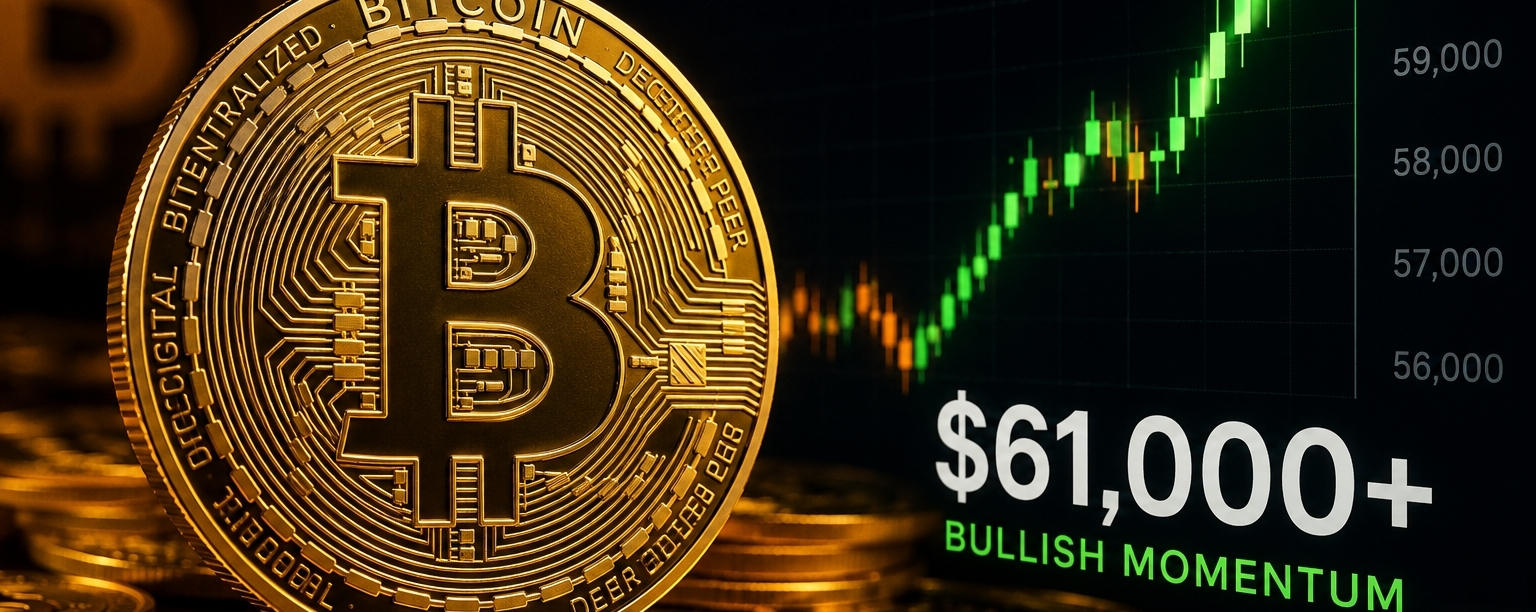
Bitcoin-Ausbruch: $61K+ Rally entfacht MarktoptimismusBitcoin hat erneut die $61.000-Marke überschritten und zieht die Aufmerksamkeit von Tradern und Investoren im Krypto-Markt auf sich. Nachdem BTC mehrere Tage innerhalb einer relativ engen Spanne gehandelt wurde, konnte es eine wichtige Widerstandszone durchbrechen, was erneute Stärke und wachsenden Optimismus unter den Marktteilnehmern signalisiert.
Einer der Hauptgründe für diesen Move scheint die Rückkehr der positiven Marktsentiments zu sein. Das Interesse an Bitcoin-bezogenen Anlageprodukten bleibt stark, und viele Investoren betrachten Bitcoin weiterhin als wertvolles langfristiges Asset. Gleichzeitig hat die Unsicherheit auf den traditionellen Finanzmärkten dazu geführt, dass Kapital in alternative Assets, einschließlich Kryptowährungen, fließt.$BTC
Bitcoin-Ausbruch: $61K+ Rally entfacht Marktoptimismus
Bitcoin hat erneut die $61.000-Marke überschritten und zieht die Aufmerksamkeit von Tradern und Investoren im Krypto-Markt auf sich. Nachdem BTC mehrere Tage innerhalb einer relativ engen Spanne gehandelt wurde, konnte es eine wichtige Widerstandszone durchbrechen, was erneute Stärke und wachsenden Optimismus unter den Marktteilnehmern signalisiert.
Einer der Hauptgründe für diesen Move scheint die Rückkehr der positiven Marktsentiments zu sein. Das Interesse an Bitcoin-bezogenen Anlageprodukten bleibt stark, und viele Investoren betrachten Bitcoin weiterhin als wertvolles langfristiges Asset. Gleichzeitig hat die Unsicherheit auf den traditionellen Finanzmärkten dazu geführt, dass Kapital in alternative Assets, einschließlich Kryptowährungen, fließt.$BTC
Einer der Hauptgründe für diesen Move scheint die Rückkehr der positiven Marktsentiments zu sein. Das Interesse an Bitcoin-bezogenen Anlageprodukten bleibt stark, und viele Investoren betrachten Bitcoin weiterhin als wertvolles langfristiges Asset. Gleichzeitig hat die Unsicherheit auf den traditionellen Finanzmärkten dazu geführt, dass Kapital in alternative Assets, einschließlich Kryptowährungen, fließt.$BTC
3
3
187
·
--
Verifiziert
Artikel
XRP HALTER: Wenn Du Geld auf einem Bankkonto hast, musst Du das hier lesenIn den letzten Monaten habe ich viel Zeit damit verbracht, die globale Wirtschaft, den Bankensektor und die Richtung, in die sich die Dinge entwickeln könnten, zu analysieren.
Je mehr ich in die Daten eintauche, desto besorgter werde ich.
Ich sage nicht, dass die Banken morgen zusammenbrechen werden. Aber es gibt definitiv Warnsignale, die nicht ignoriert werden sollten.
Eines der größten Probleme ist die Verschuldung.
Jahrelang haben Regierungen und Unternehmen stark Kredite aufgenommen, während die Zinssätze nahezu historisch niedrig waren. Jetzt, wo die Finanzierungskosten viel höher sind, ist die Refinanzierung dieser Schulden viel teurer geworden. Eine riesige Menge an Gewerbeimmobilien-Schulden steht in den nächsten Jahren zur Fälligkeit an, und die Zahlungsausfälle steigen bereits.
XRP HALTER: Wenn Du Geld auf einem Bankkonto hast, musst Du das hier lesen
In den letzten Monaten habe ich viel Zeit damit verbracht, die globale Wirtschaft, den Bankensektor und die Richtung, in die sich die Dinge entwickeln könnten, zu analysieren.
Je mehr ich in die Daten eintauche, desto besorgter werde ich.
Ich sage nicht, dass die Banken morgen zusammenbrechen werden. Aber es gibt definitiv Warnsignale, die nicht ignoriert werden sollten.
Eines der größten Probleme ist die Verschuldung.
Jahrelang haben Regierungen und Unternehmen stark Kredite aufgenommen, während die Zinssätze nahezu historisch niedrig waren. Jetzt, wo die Finanzierungskosten viel höher sind, ist die Refinanzierung dieser Schulden viel teurer geworden. Eine riesige Menge an Gewerbeimmobilien-Schulden steht in den nächsten Jahren zur Fälligkeit an, und die Zahlungsausfälle steigen bereits.
Je mehr ich in die Daten eintauche, desto besorgter werde ich.
Ich sage nicht, dass die Banken morgen zusammenbrechen werden. Aber es gibt definitiv Warnsignale, die nicht ignoriert werden sollten.
Eines der größten Probleme ist die Verschuldung.
Jahrelang haben Regierungen und Unternehmen stark Kredite aufgenommen, während die Zinssätze nahezu historisch niedrig waren. Jetzt, wo die Finanzierungskosten viel höher sind, ist die Refinanzierung dieser Schulden viel teurer geworden. Eine riesige Menge an Gewerbeimmobilien-Schulden steht in den nächsten Jahren zur Fälligkeit an, und die Zahlungsausfälle steigen bereits.
4
692
·
--
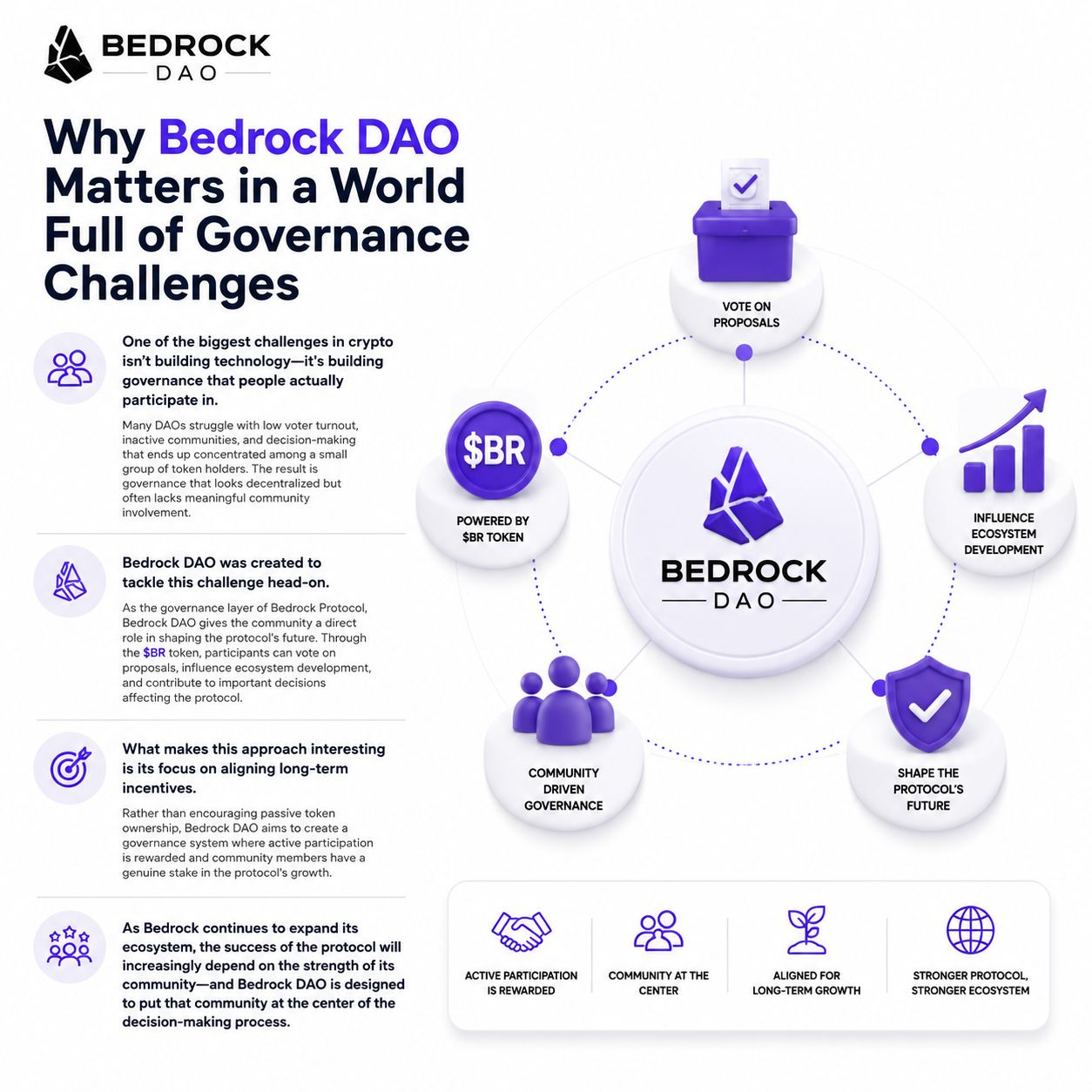
Warum Bedrock DAO in einer Welt voller Governance-Herausforderungen wichtig ist
Eine der größten Herausforderungen in der Krypto-Welt ist nicht der Aufbau von Technologien – es geht darum, eine Governance zu schaffen, an der die Leute tatsächlich teilnehmen.
Viele DAOs kämpfen mit niedriger Wahlbeteiligung, inaktiven Gemeinschaften und Entscheidungsfindungen, die oft bei einer kleinen Gruppe von Token-Inhabern konzentriert sind. Das Ergebnis ist eine Governance, die dezentralisiert aussieht, aber oft an bedeutender Beteiligung der Gemeinschaft mangelt.
Bedrock DAO wurde geschaffen, um diese Herausforderung direkt anzugehen.
Als Governance-Schicht des Bedrock Protocol gibt @Bedrock DAO der Gemeinschaft eine direkte Rolle bei der Gestaltung der Zukunft des Protokolls. Durch den $BR Token können die Teilnehmer über Vorschläge abstimmen, die Entwicklung des Ökosystems beeinflussen und zu wichtigen Entscheidungen beitragen, die das Protokoll betreffen.
Was diesen Ansatz interessant macht, ist der Fokus auf die Angleichung langfristiger Anreize.
Anstatt passives Token-Ownership zu fördern, zielt Bedrock DAO darauf ab, ein Governance-System zu schaffen, in dem aktive Teilnahme belohnt wird und die Mitglieder der Gemeinschaft einen echten Anteil am Wachstum des Protokolls haben.
Während Bedrock sein Ökosystem weiter ausbaut, wird der Erfolg des Protokolls zunehmend von der Stärke seiner Gemeinschaft abhängen – und Bedrock DAO ist darauf ausgelegt, diese Gemeinschaft ins Zentrum des Entscheidungsprozesses zu stellen.
@Bedrock
$BR
#Bedrock
Warum Bedrock DAO in einer Welt voller Governance-Herausforderungen wichtig ist
Eine der größten Herausforderungen in der Krypto-Welt ist nicht der Aufbau von Technologien – es geht darum, eine Governance zu schaffen, an der die Leute tatsächlich teilnehmen.
Viele DAOs kämpfen mit niedriger Wahlbeteiligung, inaktiven Gemeinschaften und Entscheidungsfindungen, die oft bei einer kleinen Gruppe von Token-Inhabern konzentriert sind. Das Ergebnis ist eine Governance, die dezentralisiert aussieht, aber oft an bedeutender Beteiligung der Gemeinschaft mangelt.
Bedrock DAO wurde geschaffen, um diese Herausforderung direkt anzugehen.
Als Governance-Schicht des Bedrock Protocol gibt @Bedrock DAO der Gemeinschaft eine direkte Rolle bei der Gestaltung der Zukunft des Protokolls. Durch den $BR Token können die Teilnehmer über Vorschläge abstimmen, die Entwicklung des Ökosystems beeinflussen und zu wichtigen Entscheidungen beitragen, die das Protokoll betreffen.
Was diesen Ansatz interessant macht, ist der Fokus auf die Angleichung langfristiger Anreize.
Anstatt passives Token-Ownership zu fördern, zielt Bedrock DAO darauf ab, ein Governance-System zu schaffen, in dem aktive Teilnahme belohnt wird und die Mitglieder der Gemeinschaft einen echten Anteil am Wachstum des Protokolls haben.
Während Bedrock sein Ökosystem weiter ausbaut, wird der Erfolg des Protokolls zunehmend von der Stärke seiner Gemeinschaft abhängen – und Bedrock DAO ist darauf ausgelegt, diese Gemeinschaft ins Zentrum des Entscheidungsprozesses zu stellen.
@Bedrock
$BR
#Bedrock
Eine der größten Herausforderungen in der Krypto-Welt ist nicht der Aufbau von Technologien – es geht darum, eine Governance zu schaffen, an der die Leute tatsächlich teilnehmen.
Viele DAOs kämpfen mit niedriger Wahlbeteiligung, inaktiven Gemeinschaften und Entscheidungsfindungen, die oft bei einer kleinen Gruppe von Token-Inhabern konzentriert sind. Das Ergebnis ist eine Governance, die dezentralisiert aussieht, aber oft an bedeutender Beteiligung der Gemeinschaft mangelt.
Bedrock DAO wurde geschaffen, um diese Herausforderung direkt anzugehen.
Als Governance-Schicht des Bedrock Protocol gibt @Bedrock DAO der Gemeinschaft eine direkte Rolle bei der Gestaltung der Zukunft des Protokolls. Durch den $BR Token können die Teilnehmer über Vorschläge abstimmen, die Entwicklung des Ökosystems beeinflussen und zu wichtigen Entscheidungen beitragen, die das Protokoll betreffen.
Was diesen Ansatz interessant macht, ist der Fokus auf die Angleichung langfristiger Anreize.
Anstatt passives Token-Ownership zu fördern, zielt Bedrock DAO darauf ab, ein Governance-System zu schaffen, in dem aktive Teilnahme belohnt wird und die Mitglieder der Gemeinschaft einen echten Anteil am Wachstum des Protokolls haben.
Während Bedrock sein Ökosystem weiter ausbaut, wird der Erfolg des Protokolls zunehmend von der Stärke seiner Gemeinschaft abhängen – und Bedrock DAO ist darauf ausgelegt, diese Gemeinschaft ins Zentrum des Entscheidungsprozesses zu stellen.
@Bedrock
$BR
#Bedrock
1
216
·
--
Artikel
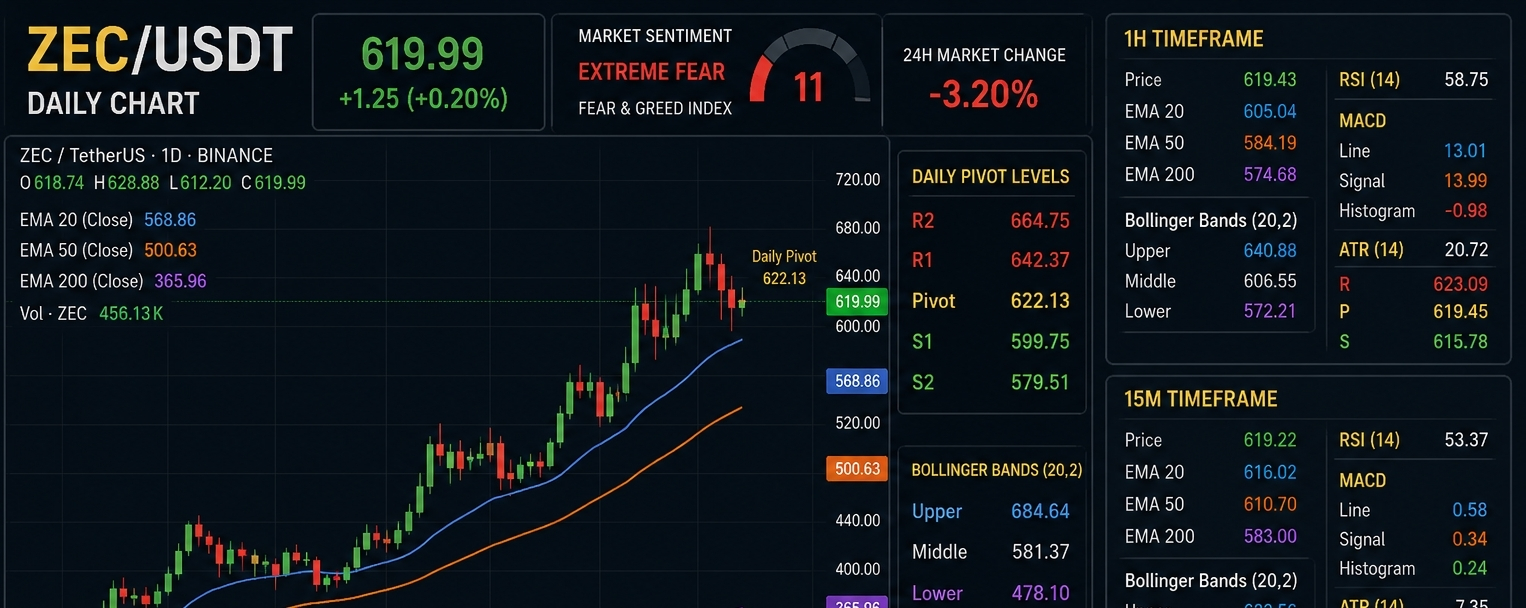
ZEC zeigt Resilienz trotz Marktunsicherheit, während Trader auf den nächsten großen Move warten$ZEC handelt derzeit in der Nähe einer wichtigen Preiszone, wo bullische Stärke und kurzfristige Vorsicht aufeinandertreffen. Obwohl der breitere Kryptomarkt kürzlich Verkaufsdruck erlebt hat, hält sich ZEC weiterhin über den wichtigen technischen Niveaus, was auf einen Markt hinweist, der strukturell gesund bleibt. Der Vermögenswert zeigt weder Anzeichen eines größeren Zusammenbruchs noch liefert er einen überzeugenden Ausbruch, was die Trader dazu bringt, auf Bestätigung zu achten, bevor sie sich auf aggressive Positionen festlegen.
Aus einer breiteren Perspektive bleibt der Trend für Käufer günstig. Der Preis handelt weiterhin über den wichtigen gleitenden Durchschnitten, was ein Zeichen dafür ist, dass die langfristige Richtung weiterhin nach oben zeigt. Diese Ausrichtung deutet typischerweise darauf hin, dass die bullische Stimmung dominant bleibt, selbst wenn vorübergehende Schwächephasen auftreten. Nach einem starken Anstieg in den letzten Wochen hat jedoch der Momentum begonnen zu schwächeln. Solches Verhalten ist nach längeren Rallys üblich, da die Märkte oft eine Pause einlegen, um Gewinne zu absorbieren, bevor sie ihre nächste Richtung wählen.
ZEC zeigt Resilienz trotz Marktunsicherheit, während Trader auf den nächsten großen Move warten
$ZEC handelt derzeit in der Nähe einer wichtigen Preiszone, wo bullische Stärke und kurzfristige Vorsicht aufeinandertreffen. Obwohl der breitere Kryptomarkt kürzlich Verkaufsdruck erlebt hat, hält sich ZEC weiterhin über den wichtigen technischen Niveaus, was auf einen Markt hinweist, der strukturell gesund bleibt. Der Vermögenswert zeigt weder Anzeichen eines größeren Zusammenbruchs noch liefert er einen überzeugenden Ausbruch, was die Trader dazu bringt, auf Bestätigung zu achten, bevor sie sich auf aggressive Positionen festlegen.
Aus einer breiteren Perspektive bleibt der Trend für Käufer günstig. Der Preis handelt weiterhin über den wichtigen gleitenden Durchschnitten, was ein Zeichen dafür ist, dass die langfristige Richtung weiterhin nach oben zeigt. Diese Ausrichtung deutet typischerweise darauf hin, dass die bullische Stimmung dominant bleibt, selbst wenn vorübergehende Schwächephasen auftreten. Nach einem starken Anstieg in den letzten Wochen hat jedoch der Momentum begonnen zu schwächeln. Solches Verhalten ist nach längeren Rallys üblich, da die Märkte oft eine Pause einlegen, um Gewinne zu absorbieren, bevor sie ihre nächste Richtung wählen.
Aus einer breiteren Perspektive bleibt der Trend für Käufer günstig. Der Preis handelt weiterhin über den wichtigen gleitenden Durchschnitten, was ein Zeichen dafür ist, dass die langfristige Richtung weiterhin nach oben zeigt. Diese Ausrichtung deutet typischerweise darauf hin, dass die bullische Stimmung dominant bleibt, selbst wenn vorübergehende Schwächephasen auftreten. Nach einem starken Anstieg in den letzten Wochen hat jedoch der Momentum begonnen zu schwächeln. Solches Verhalten ist nach längeren Rallys üblich, da die Märkte oft eine Pause einlegen, um Gewinne zu absorbieren, bevor sie ihre nächste Richtung wählen.
1
221
·
--
Bullisch
Pro Tipp: Starke Trend-Assets bieten oft die besten Einstiege bei Retests, anstatt während impulsiver Bewegungen.
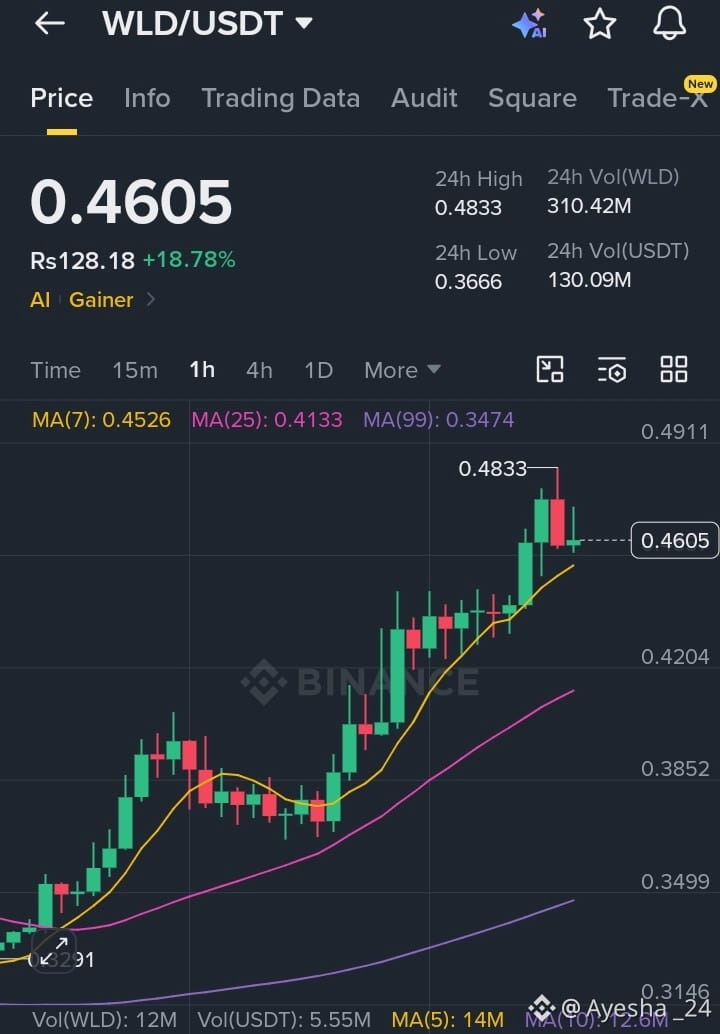
$WLD sah aggressives Kaufen, nachdem eine große Unterstützungszone verteidigt wurde, wodurch eine tiefere Korrektur verhindert wurde.
Die erfolgreiche Verteidigung hält den Momentum nach oben gerichtet und bewahrt die Trendstärke.
Einstiegspreis (EP): Rs124.00 – Rs129.00
Take Profit (TP): Rs140.00 → Rs155.00
Stop Loss (SL): Rs118.50
Trade-Ziele:
TG1: Rs140.00
TG2: Rs147.50
TG3: Rs155.00
Handelsentscheidung: Bullish über der Schlüsselunterstützung.
#BlockchainAssocBacks401kCrypto #JapanLDPBlockchainNationalStrategy
Pro Tipp: Starke Trend-Assets bieten oft die besten Einstiege bei Retests, anstatt während impulsiver Bewegungen.
$WLD sah aggressives Kaufen, nachdem eine große Unterstützungszone verteidigt wurde, wodurch eine tiefere Korrektur verhindert wurde.
Die erfolgreiche Verteidigung hält den Momentum nach oben gerichtet und bewahrt die Trendstärke.
Einstiegspreis (EP): Rs124.00 – Rs129.00
Take Profit (TP): Rs140.00 → Rs155.00
Stop Loss (SL): Rs118.50
Trade-Ziele:
TG1: Rs140.00
TG2: Rs147.50
TG3: Rs155.00
Handelsentscheidung: Bullish über der Schlüsselunterstützung.
#BlockchainAssocBacks401kCrypto #JapanLDPBlockchainNationalStrategy
$WLD sah aggressives Kaufen, nachdem eine große Unterstützungszone verteidigt wurde, wodurch eine tiefere Korrektur verhindert wurde.
Die erfolgreiche Verteidigung hält den Momentum nach oben gerichtet und bewahrt die Trendstärke.
Einstiegspreis (EP): Rs124.00 – Rs129.00
Take Profit (TP): Rs140.00 → Rs155.00
Stop Loss (SL): Rs118.50
Trade-Ziele:
TG1: Rs140.00
TG2: Rs147.50
TG3: Rs155.00
Handelsentscheidung: Bullish über der Schlüsselunterstützung.
#BlockchainAssocBacks401kCrypto #JapanLDPBlockchainNationalStrategy
1
303
·
--
Bullisch
Pro Tipp: Breakouts mit steigendem Volumen tendieren dazu, am besten abzuschneiden, wenn sie von einer kontrollierten Konsolidierung gefolgt werden.
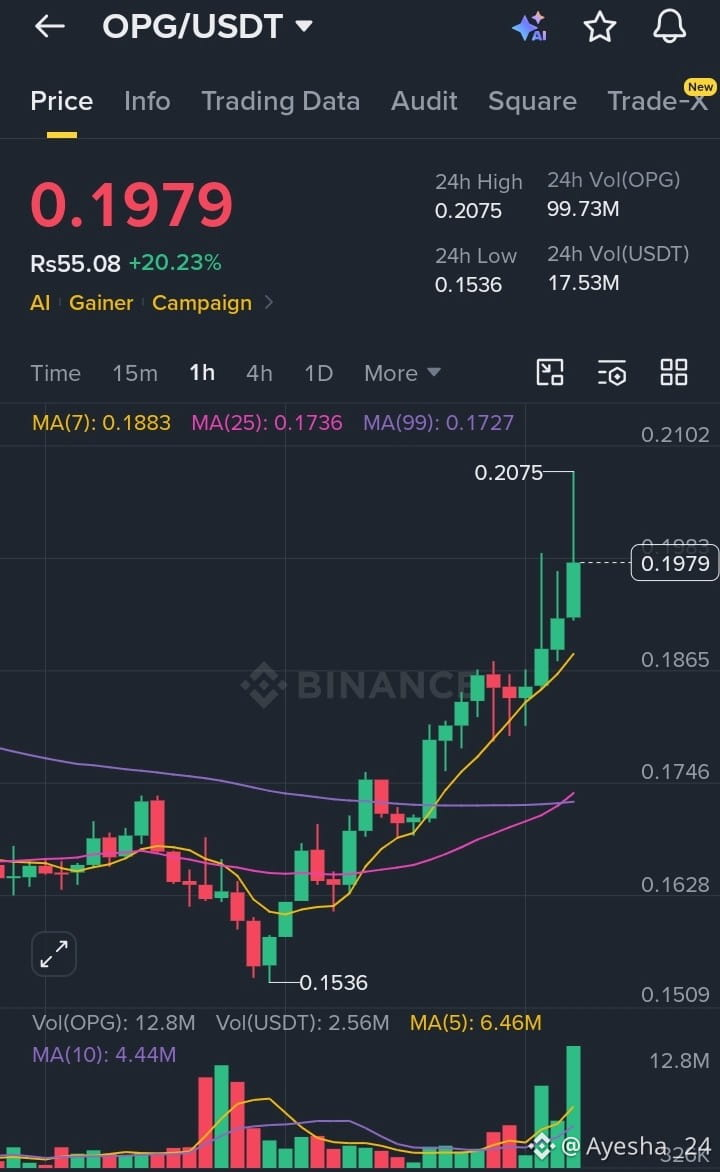
$OPG hat ein entscheidendes Breakout-Niveau verteidigt, nachdem Gewinnmitnahmen absorbiert wurden, wodurch die bullische Struktur intakt bleibt.
Die Verteidigung stärkt die Argumentation für anhaltenden Aufwärtsmomentum.
Einstiegspreis (EP): Rs53.50 – Rs55.00
Take Profit (TP): Rs61.00 → Rs67.00
Stop Loss (SL): Rs50.80
Handelsziele:
TG1: Rs61.00
TG2: Rs64.00
TG3: Rs67.00
#BlockchainAssocBacks401kCrypto #AIAgentsRecreateGoogleQuantumBreakthrough
Pro Tipp: Breakouts mit steigendem Volumen tendieren dazu, am besten abzuschneiden, wenn sie von einer kontrollierten Konsolidierung gefolgt werden.
$OPG hat ein entscheidendes Breakout-Niveau verteidigt, nachdem Gewinnmitnahmen absorbiert wurden, wodurch die bullische Struktur intakt bleibt.
Die Verteidigung stärkt die Argumentation für anhaltenden Aufwärtsmomentum.
Einstiegspreis (EP): Rs53.50 – Rs55.00
Take Profit (TP): Rs61.00 → Rs67.00
Stop Loss (SL): Rs50.80
Handelsziele:
TG1: Rs61.00
TG2: Rs64.00
TG3: Rs67.00
#BlockchainAssocBacks401kCrypto #AIAgentsRecreateGoogleQuantumBreakthrough
$OPG hat ein entscheidendes Breakout-Niveau verteidigt, nachdem Gewinnmitnahmen absorbiert wurden, wodurch die bullische Struktur intakt bleibt.
Die Verteidigung stärkt die Argumentation für anhaltenden Aufwärtsmomentum.
Einstiegspreis (EP): Rs53.50 – Rs55.00
Take Profit (TP): Rs61.00 → Rs67.00
Stop Loss (SL): Rs50.80
Handelsziele:
TG1: Rs61.00
TG2: Rs64.00
TG3: Rs67.00
#BlockchainAssocBacks401kCrypto #AIAgentsRecreateGoogleQuantumBreakthrough
1
196
·
--
Bullisch
Pro Tipp: Wenn die Liquidität unter die Unterstützung gefegt und schnell zurückgewonnen wird, signalisiert das oft gefangene Verkäufer.
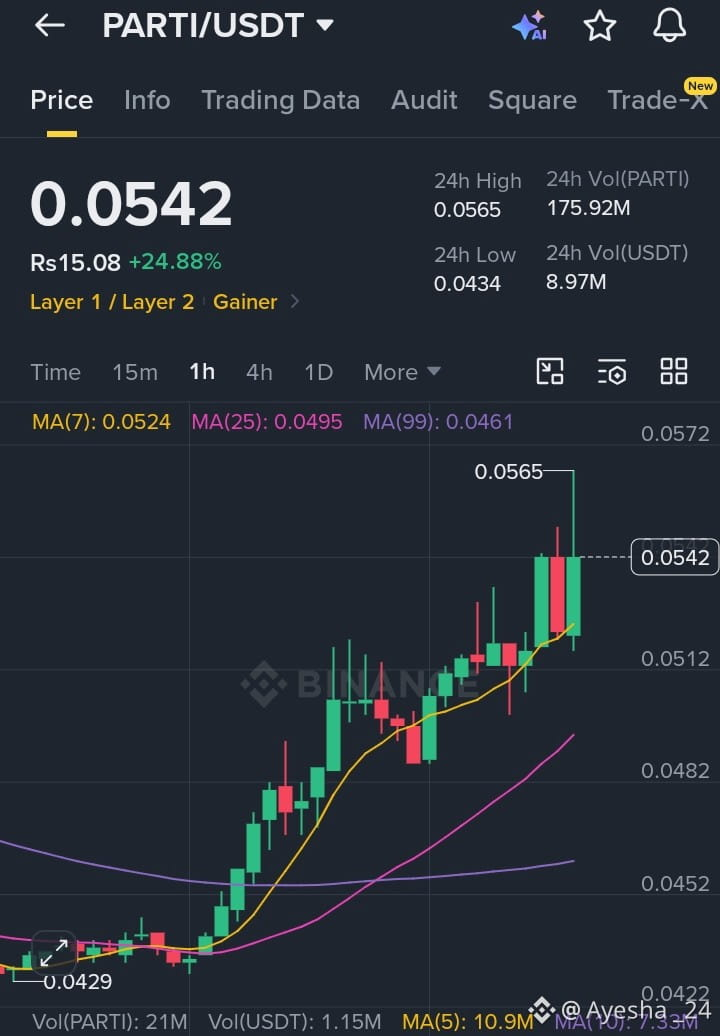
$PARTI hat einen Abwärts-Liquiditätssweep abgeschlossen, bevor er sich stark erholt hat, was darauf hindeutet, dass der Verkaufsdruck absorbiert wurde.
Diese Art von Reaktion begünstigt typischerweise die Fortsetzung des Trends, solange die Erholungszone hält.
Einstiegspreis (EP): Rs14.80 – Rs15.30
Gewinnmitnahme (TP): Rs17.20 → Rs19.00
Stop Loss (SL): Rs13.90
Handelsziele:
TG1: Rs17.20
TG2: Rs18.10
TG3: Rs19.00
Handelsentscheidung: Bullish bei Rücksetzern in die Unterstützung.
#BlockchainAssocBacks401kCrypto #JapanLDPBlockchainNationalStrategy
Pro Tipp: Wenn die Liquidität unter die Unterstützung gefegt und schnell zurückgewonnen wird, signalisiert das oft gefangene Verkäufer.
$PARTI hat einen Abwärts-Liquiditätssweep abgeschlossen, bevor er sich stark erholt hat, was darauf hindeutet, dass der Verkaufsdruck absorbiert wurde.
Diese Art von Reaktion begünstigt typischerweise die Fortsetzung des Trends, solange die Erholungszone hält.
Einstiegspreis (EP): Rs14.80 – Rs15.30
Gewinnmitnahme (TP): Rs17.20 → Rs19.00
Stop Loss (SL): Rs13.90
Handelsziele:
TG1: Rs17.20
TG2: Rs18.10
TG3: Rs19.00
Handelsentscheidung: Bullish bei Rücksetzern in die Unterstützung.
#BlockchainAssocBacks401kCrypto #JapanLDPBlockchainNationalStrategy
$PARTI hat einen Abwärts-Liquiditätssweep abgeschlossen, bevor er sich stark erholt hat, was darauf hindeutet, dass der Verkaufsdruck absorbiert wurde.
Diese Art von Reaktion begünstigt typischerweise die Fortsetzung des Trends, solange die Erholungszone hält.
Einstiegspreis (EP): Rs14.80 – Rs15.30
Gewinnmitnahme (TP): Rs17.20 → Rs19.00
Stop Loss (SL): Rs13.90
Handelsziele:
TG1: Rs17.20
TG2: Rs18.10
TG3: Rs19.00
Handelsentscheidung: Bullish bei Rücksetzern in die Unterstützung.
#BlockchainAssocBacks401kCrypto #JapanLDPBlockchainNationalStrategy
147
·
--
Bullisch
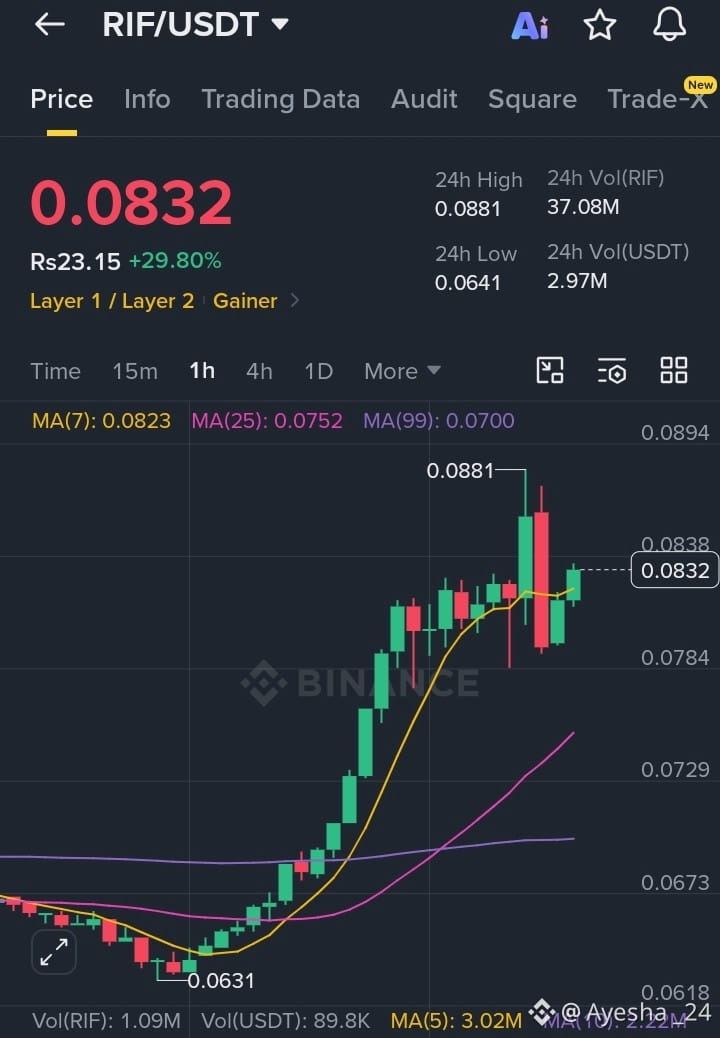
Pro Tipp: Starke prozentuale Bewegungen retracen oft zuerst; konzentriere dich auf die Verteidigung der Level, anstatt den Kerzen nachzujagen.
$RIF hat niedrigere Preise abgelehnt und Verkaufsdruck um einen wichtigen Nachfragebereich absorbiert, was auf erneutes Käuferinteresse hinweist.
Der Momentum hat sich wieder nach oben verschoben, solange die Unterstützung intakt bleibt.
Einstiegspreis (EP): Rs22.60 – Rs23.30
Gewinnmitnahme (TP): Rs25.80 → Rs28.50
Stop-Loss (SL): Rs21.40
Handelsziele:
TG1: Rs25.80
TG2: Rs27.10
TG3: Rs28.50
Handelsentscheidung: Moderat bullish über der Unterstützung.
#BlockchainAssocBacks401kCrypto #JapanLDPBlockchainNationalStrategy
Pro Tipp: Starke prozentuale Bewegungen retracen oft zuerst; konzentriere dich auf die Verteidigung der Level, anstatt den Kerzen nachzujagen.
$RIF hat niedrigere Preise abgelehnt und Verkaufsdruck um einen wichtigen Nachfragebereich absorbiert, was auf erneutes Käuferinteresse hinweist.
Der Momentum hat sich wieder nach oben verschoben, solange die Unterstützung intakt bleibt.
Einstiegspreis (EP): Rs22.60 – Rs23.30
Gewinnmitnahme (TP): Rs25.80 → Rs28.50
Stop-Loss (SL): Rs21.40
Handelsziele:
TG1: Rs25.80
TG2: Rs27.10
TG3: Rs28.50
Handelsentscheidung: Moderat bullish über der Unterstützung.
#BlockchainAssocBacks401kCrypto #JapanLDPBlockchainNationalStrategy
$RIF hat niedrigere Preise abgelehnt und Verkaufsdruck um einen wichtigen Nachfragebereich absorbiert, was auf erneutes Käuferinteresse hinweist.
Der Momentum hat sich wieder nach oben verschoben, solange die Unterstützung intakt bleibt.
Einstiegspreis (EP): Rs22.60 – Rs23.30
Gewinnmitnahme (TP): Rs25.80 → Rs28.50
Stop-Loss (SL): Rs21.40
Handelsziele:
TG1: Rs25.80
TG2: Rs27.10
TG3: Rs28.50
Handelsentscheidung: Moderat bullish über der Unterstützung.
#BlockchainAssocBacks401kCrypto #JapanLDPBlockchainNationalStrategy
153
·
--
Bullisch
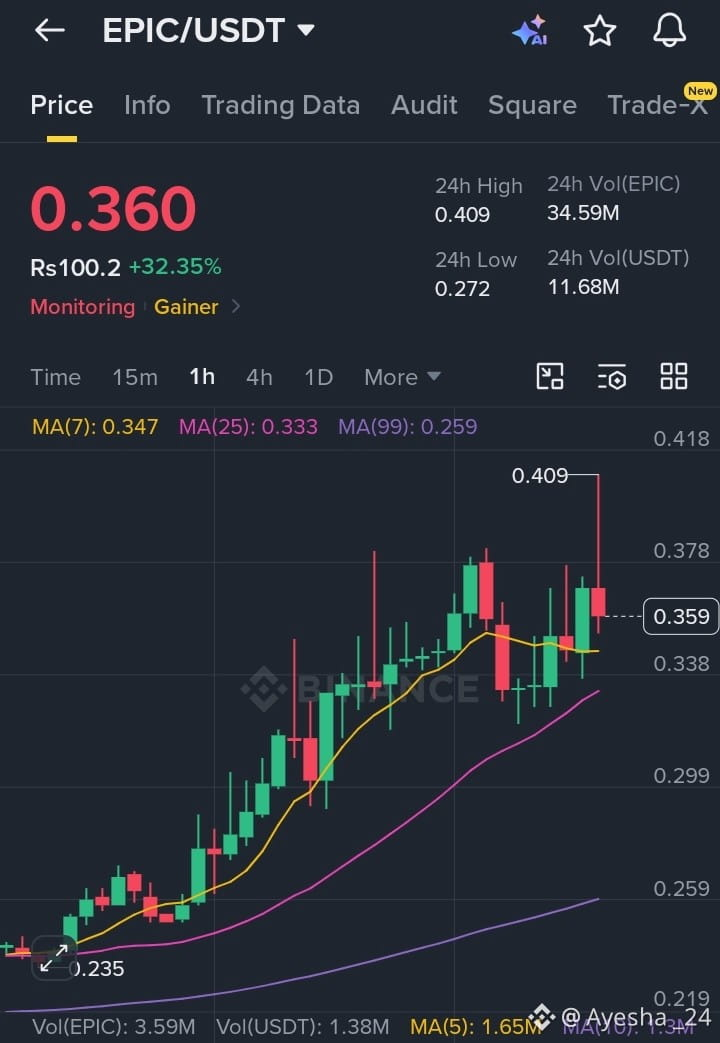
Pro Tipp: Nach einem starken Ausbruch solltest du warten, bis der Preis über dem zurückeroberten Niveau bleibt, bevor du deine Position erhöhst.
Ein Short Squeeze hat $EPIC durch den nahen Widerstand gepusht, was Verkäufer gezwungen hat, ihre Positionen zu decken und den Aufwärtsmomentum zu beschleunigen.
Die Bewegung deutet darauf hin, dass die Käufer die Kontrolle behalten, während die Liquidität weiterhin nach oben rotiert.
Einstiegspreis (EP): Rs98.50 – Rs101.00
Take Profit (TP): Rs108.00 → Rs118.00
Stop Loss (SL): Rs92.80
Handelsziele:
TG1: Rs108.00
TG2: Rs113.50
TG3: Rs118.00
Handelsentscheidung: Bullish, solange über der Ausbruchzone gehalten wird.
#BlockchainAssocBacks401kCrypto #JapanLDPBlockchainNationalStrategy
Pro Tipp: Nach einem starken Ausbruch solltest du warten, bis der Preis über dem zurückeroberten Niveau bleibt, bevor du deine Position erhöhst.
Ein Short Squeeze hat $EPIC durch den nahen Widerstand gepusht, was Verkäufer gezwungen hat, ihre Positionen zu decken und den Aufwärtsmomentum zu beschleunigen.
Die Bewegung deutet darauf hin, dass die Käufer die Kontrolle behalten, während die Liquidität weiterhin nach oben rotiert.
Einstiegspreis (EP): Rs98.50 – Rs101.00
Take Profit (TP): Rs108.00 → Rs118.00
Stop Loss (SL): Rs92.80
Handelsziele:
TG1: Rs108.00
TG2: Rs113.50
TG3: Rs118.00
Handelsentscheidung: Bullish, solange über der Ausbruchzone gehalten wird.
#BlockchainAssocBacks401kCrypto #JapanLDPBlockchainNationalStrategy
Ein Short Squeeze hat $EPIC durch den nahen Widerstand gepusht, was Verkäufer gezwungen hat, ihre Positionen zu decken und den Aufwärtsmomentum zu beschleunigen.
Die Bewegung deutet darauf hin, dass die Käufer die Kontrolle behalten, während die Liquidität weiterhin nach oben rotiert.
Einstiegspreis (EP): Rs98.50 – Rs101.00
Take Profit (TP): Rs108.00 → Rs118.00
Stop Loss (SL): Rs92.80
Handelsziele:
TG1: Rs108.00
TG2: Rs113.50
TG3: Rs118.00
Handelsentscheidung: Bullish, solange über der Ausbruchzone gehalten wird.
#BlockchainAssocBacks401kCrypto #JapanLDPBlockchainNationalStrategy
155
·
--
Artikel
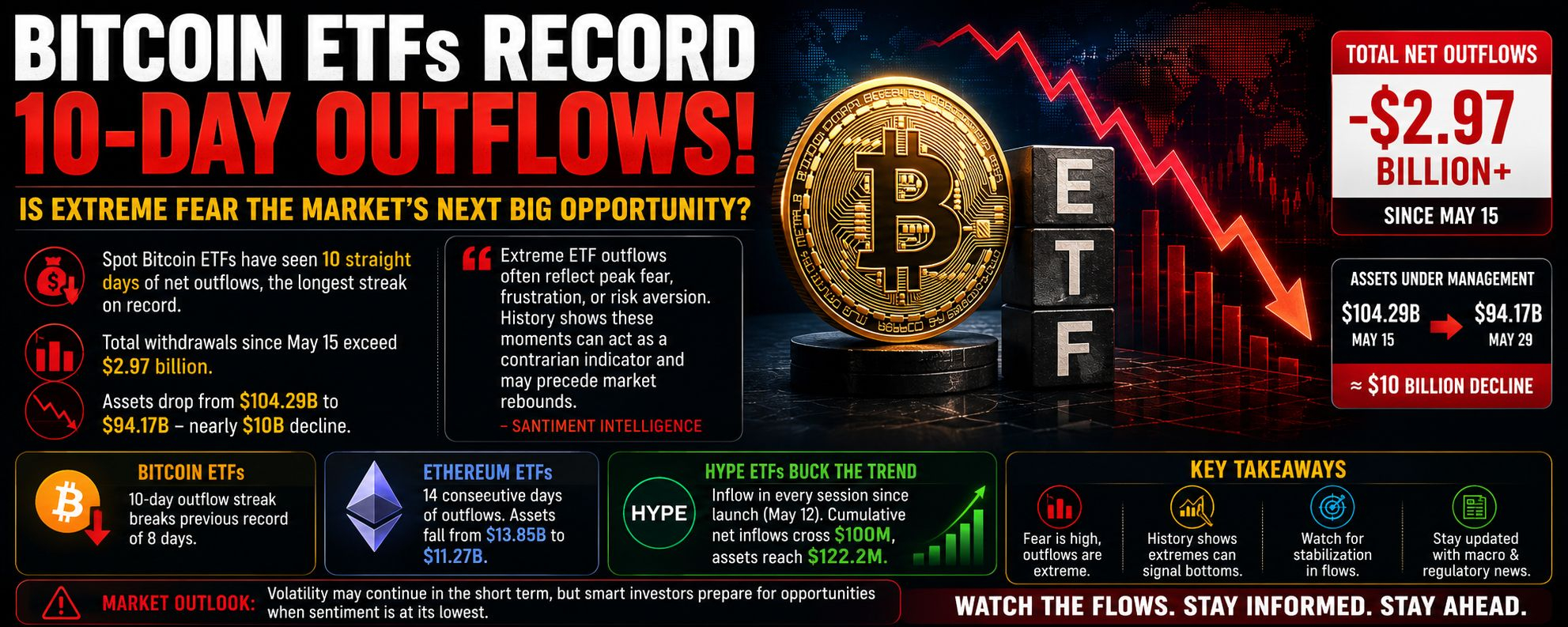
Bitcoin ETFs erleben eine beispiellose Abhebungsserie – Könnte dies einen Wendepunkt im Markt signalisieren?Mai 2026 – Spot Bitcoin Exchange-Traded Funds (ETFs) durchleben eine der herausforderndsten Phasen seit ihrem Start, da Investoren weiterhin Milliarden von Dollar aus Krypto-Investitionsprodukten abziehen. Aktuelle Marktdaten zeigen, dass Bitcoin ETFs nun zehn aufeinanderfolgende Handelssitzungen mit Nettoabflüssen verzeichnet haben, was die wachsende Vorsicht unter institutionellen Investoren verdeutlicht.
Massive Kapitalabflüsse erschüttern den Bitcoin ETF-Markt
Seit Mitte Mai haben Investoren nahezu 3 Milliarden Dollar aus Spot Bitcoin ETFs abgezogen. Die täglichen Rücknahmen haben erheblich variiert, von mehreren zehn Millionen Dollar bis hin zu mehreren hundert Millionen in einer einzigen Sitzung. Dieser anhaltende Verkaufsdruck hat die insgesamt von Bitcoin ETFs verwalteten Vermögenswerte in nur zwei Wochen um etwa 10 Milliarden Dollar reduziert.
Bitcoin ETFs erleben eine beispiellose Abhebungsserie – Könnte dies einen Wendepunkt im Markt signalisieren?
Mai 2026 – Spot Bitcoin Exchange-Traded Funds (ETFs) durchleben eine der herausforderndsten Phasen seit ihrem Start, da Investoren weiterhin Milliarden von Dollar aus Krypto-Investitionsprodukten abziehen. Aktuelle Marktdaten zeigen, dass Bitcoin ETFs nun zehn aufeinanderfolgende Handelssitzungen mit Nettoabflüssen verzeichnet haben, was die wachsende Vorsicht unter institutionellen Investoren verdeutlicht.
Massive Kapitalabflüsse erschüttern den Bitcoin ETF-Markt
Seit Mitte Mai haben Investoren nahezu 3 Milliarden Dollar aus Spot Bitcoin ETFs abgezogen. Die täglichen Rücknahmen haben erheblich variiert, von mehreren zehn Millionen Dollar bis hin zu mehreren hundert Millionen in einer einzigen Sitzung. Dieser anhaltende Verkaufsdruck hat die insgesamt von Bitcoin ETFs verwalteten Vermögenswerte in nur zwei Wochen um etwa 10 Milliarden Dollar reduziert.
Massive Kapitalabflüsse erschüttern den Bitcoin ETF-Markt
Seit Mitte Mai haben Investoren nahezu 3 Milliarden Dollar aus Spot Bitcoin ETFs abgezogen. Die täglichen Rücknahmen haben erheblich variiert, von mehreren zehn Millionen Dollar bis hin zu mehreren hundert Millionen in einer einzigen Sitzung. Dieser anhaltende Verkaufsdruck hat die insgesamt von Bitcoin ETFs verwalteten Vermögenswerte in nur zwei Wochen um etwa 10 Milliarden Dollar reduziert.
2
194
·
--
Artikel
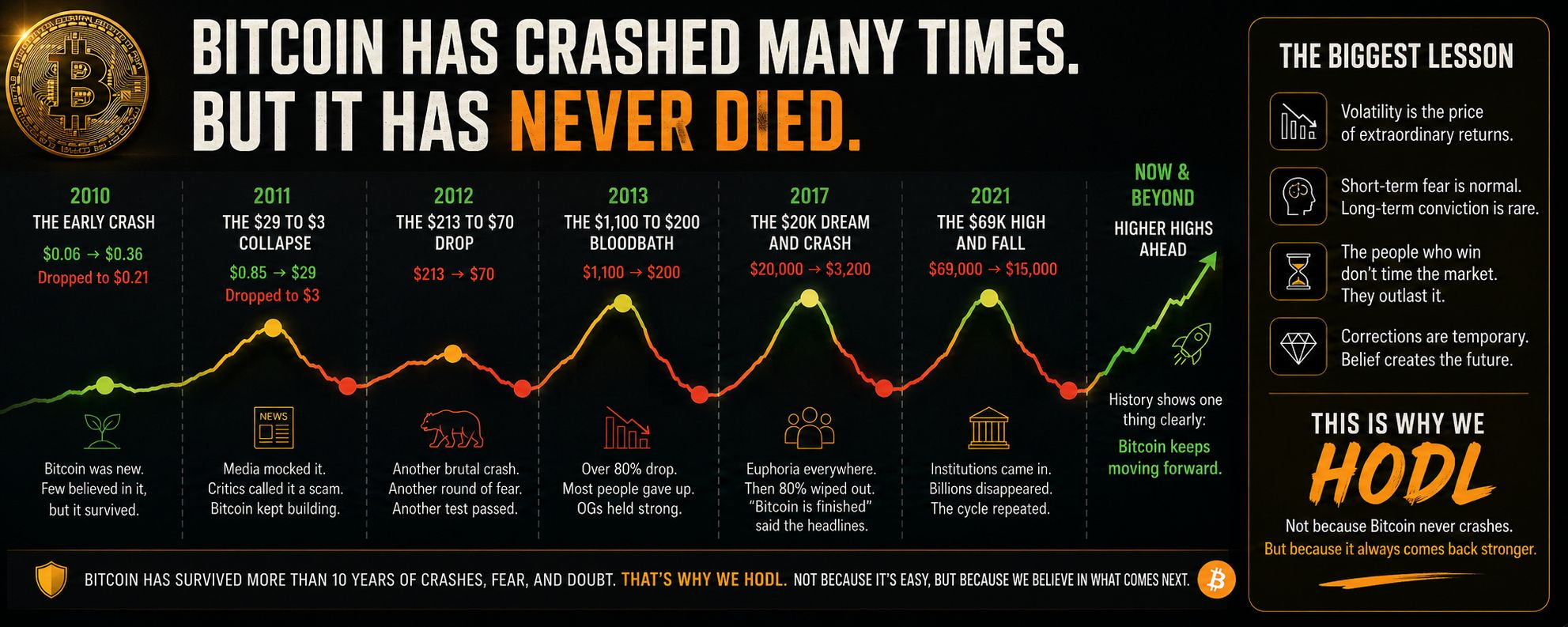
WARUM DIE GRÖSSTEN ABFÄLLE VON BITCOIN NIEMALS SEINE GESCHICHTE VERÄNDERT HABENIch habe ein Muster bemerkt, das sich in jedem Bitcoin-Zyklus wiederholt.
Wenn die Preise steigen, will jeder über Bitcoin reden. Neue Investoren strömen herein, soziale Medien sind überflutet mit bullishen Vorhersagen, und die Leute fangen an zu glauben, dass der Preis nur weiter steigen kann.
Dann korrigiert der Markt.
Angst ersetzt Aufregung. Vertrauen verwandelt sich in Zweifel. Und plötzlich fragen die gleichen Leute, die vor ein paar Wochen noch gefeiert haben, ob die Reise von Bitcoin zu Ende ist.
Was viele nicht verstehen, ist, dass scharfe Korrekturen schon immer Teil der Geschichte von Bitcoin waren.
WARUM DIE GRÖSSTEN ABFÄLLE VON BITCOIN NIEMALS SEINE GESCHICHTE VERÄNDERT HABEN
Ich habe ein Muster bemerkt, das sich in jedem Bitcoin-Zyklus wiederholt.
Wenn die Preise steigen, will jeder über Bitcoin reden. Neue Investoren strömen herein, soziale Medien sind überflutet mit bullishen Vorhersagen, und die Leute fangen an zu glauben, dass der Preis nur weiter steigen kann.
Dann korrigiert der Markt.
Angst ersetzt Aufregung. Vertrauen verwandelt sich in Zweifel. Und plötzlich fragen die gleichen Leute, die vor ein paar Wochen noch gefeiert haben, ob die Reise von Bitcoin zu Ende ist.
Was viele nicht verstehen, ist, dass scharfe Korrekturen schon immer Teil der Geschichte von Bitcoin waren.
Wenn die Preise steigen, will jeder über Bitcoin reden. Neue Investoren strömen herein, soziale Medien sind überflutet mit bullishen Vorhersagen, und die Leute fangen an zu glauben, dass der Preis nur weiter steigen kann.
Dann korrigiert der Markt.
Angst ersetzt Aufregung. Vertrauen verwandelt sich in Zweifel. Und plötzlich fragen die gleichen Leute, die vor ein paar Wochen noch gefeiert haben, ob die Reise von Bitcoin zu Ende ist.
Was viele nicht verstehen, ist, dass scharfe Korrekturen schon immer Teil der Geschichte von Bitcoin waren.
2
245
·
--
Warum Dogecoins nächste Bewegung seinen kurzfristigen Trend definieren könnte
Ich habe Dogecoin genau im Auge, und das aktuelle Setup sieht zunehmend wichtig aus.
DOGE hat einen Preisbereich erreicht, der seine nächste große Bewegung bestimmen könnte. Während der Markt relativ ruhig war, zieht der Bereich um $0.10 weiterhin erhebliches Interesse von Tradern und Investoren gleichermaßen an.
Was diese Marke so wichtig macht, ist ihre Geschichte. In den letzten Monaten hat Dogecoin immer wieder in dieser Zone reagiert und sie sowohl als Unterstützung als auch als Widerstand in verschiedenen Marktphasen genutzt. Aus diesem Grund behandeln viele Marktteilnehmer sie als einen entscheidenden Punkt.
Ich habe Dogecoin genau im Auge, und das aktuelle Setup sieht zunehmend wichtig aus.
DOGE hat einen Preisbereich erreicht, der seine nächste große Bewegung bestimmen könnte. Während der Markt relativ ruhig war, zieht der Bereich um $0.10 weiterhin erhebliches Interesse von Tradern und Investoren gleichermaßen an.
Was diese Marke so wichtig macht, ist ihre Geschichte. In den letzten Monaten hat Dogecoin immer wieder in dieser Zone reagiert und sie sowohl als Unterstützung als auch als Widerstand in verschiedenen Marktphasen genutzt. Aus diesem Grund behandeln viele Marktteilnehmer sie als einen entscheidenden Punkt.
Warum Dogecoins nächste Bewegung seinen kurzfristigen Trend definieren könnte
Ich habe Dogecoin genau im Auge, und das aktuelle Setup sieht zunehmend wichtig aus.
DOGE hat einen Preisbereich erreicht, der seine nächste große Bewegung bestimmen könnte. Während der Markt relativ ruhig war, zieht der Bereich um $0.10 weiterhin erhebliches Interesse von Tradern und Investoren gleichermaßen an.
Was diese Marke so wichtig macht, ist ihre Geschichte. In den letzten Monaten hat Dogecoin immer wieder in dieser Zone reagiert und sie sowohl als Unterstützung als auch als Widerstand in verschiedenen Marktphasen genutzt. Aus diesem Grund behandeln viele Marktteilnehmer sie als einen entscheidenden Punkt.
2
213
·
--
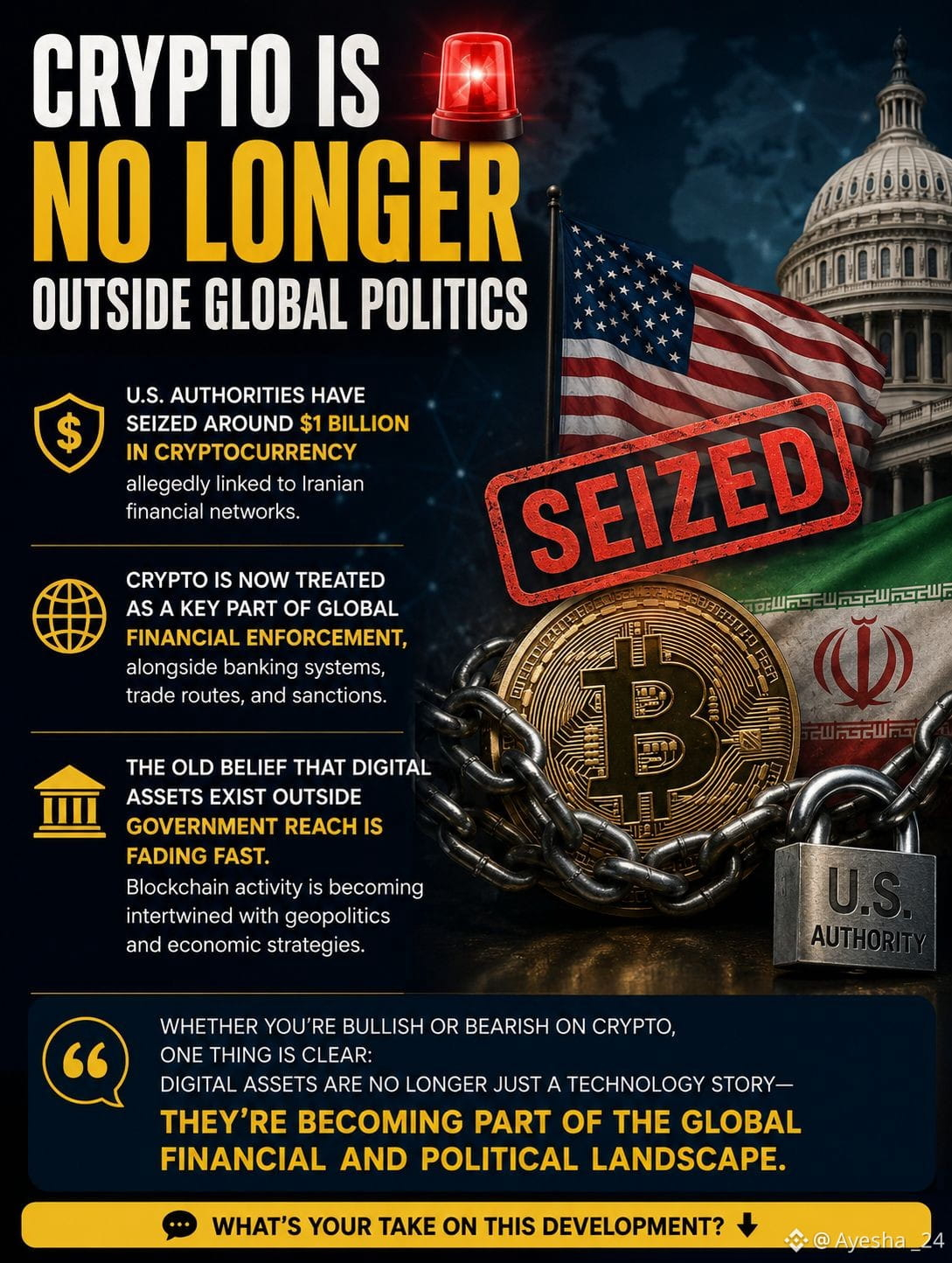
🚨 Krypto Wird Zu Einem Geopolitischen Asset 🚨
In letzter Zeit habe ich einen großen Wandel in der Wahrnehmung digitaler Vermögenswerte weltweit festgestellt.
Berichten zufolge haben die US-Behörden fast 1 Milliarde Dollar in Kryptowährung beschlagnahmt, die angeblich mit finanziellen Operationen im Zusammenhang mit dem Iran verbunden ist. Obwohl der Betrag erheblich ist, ist es das breitere Implikation, das meine Aufmerksamkeit erregt.
Krypto wird nicht mehr als separates Finanzökosystem betrachtet. Regierungen integrieren zunehmend Blockchain-Aktivitäten in ihre Strategien zur Durchsetzung von Sanktionen, wirtschaftlicher Sicherheit und internationaler Politik.
Vor nicht allzu langer Zeit glaubten viele, dass Kryptowährungen außerhalb des Einflusses traditioneller Institutionen existieren. Heute werden Blockchain-Netzwerke Teil derselben Diskussionen, die die globale Finanzen und Geopolitik prägen.
Egal, wo du in Bezug auf Krypto stehst, eines ist klar: Digitale Vermögenswerte entwickeln sich über Technologie und Investitionen hinaus – sie werden zu einem Faktor in internationalen Angelegenheiten.
Was denkst du, bedeutet das für die Zukunft von Krypto? 👇
#CryptoNews
#BlockchainNews
#BinanceSquare
#CryptoCommunity
#Web3News
🚨 Krypto Wird Zu Einem Geopolitischen Asset 🚨
In letzter Zeit habe ich einen großen Wandel in der Wahrnehmung digitaler Vermögenswerte weltweit festgestellt.
Berichten zufolge haben die US-Behörden fast 1 Milliarde Dollar in Kryptowährung beschlagnahmt, die angeblich mit finanziellen Operationen im Zusammenhang mit dem Iran verbunden ist. Obwohl der Betrag erheblich ist, ist es das breitere Implikation, das meine Aufmerksamkeit erregt.
Krypto wird nicht mehr als separates Finanzökosystem betrachtet. Regierungen integrieren zunehmend Blockchain-Aktivitäten in ihre Strategien zur Durchsetzung von Sanktionen, wirtschaftlicher Sicherheit und internationaler Politik.
Vor nicht allzu langer Zeit glaubten viele, dass Kryptowährungen außerhalb des Einflusses traditioneller Institutionen existieren. Heute werden Blockchain-Netzwerke Teil derselben Diskussionen, die die globale Finanzen und Geopolitik prägen.
Egal, wo du in Bezug auf Krypto stehst, eines ist klar: Digitale Vermögenswerte entwickeln sich über Technologie und Investitionen hinaus – sie werden zu einem Faktor in internationalen Angelegenheiten.
Was denkst du, bedeutet das für die Zukunft von Krypto? 👇
#CryptoNews
#BlockchainNews
#BinanceSquare
#CryptoCommunity
#Web3News
In letzter Zeit habe ich einen großen Wandel in der Wahrnehmung digitaler Vermögenswerte weltweit festgestellt.
Berichten zufolge haben die US-Behörden fast 1 Milliarde Dollar in Kryptowährung beschlagnahmt, die angeblich mit finanziellen Operationen im Zusammenhang mit dem Iran verbunden ist. Obwohl der Betrag erheblich ist, ist es das breitere Implikation, das meine Aufmerksamkeit erregt.
Krypto wird nicht mehr als separates Finanzökosystem betrachtet. Regierungen integrieren zunehmend Blockchain-Aktivitäten in ihre Strategien zur Durchsetzung von Sanktionen, wirtschaftlicher Sicherheit und internationaler Politik.
Vor nicht allzu langer Zeit glaubten viele, dass Kryptowährungen außerhalb des Einflusses traditioneller Institutionen existieren. Heute werden Blockchain-Netzwerke Teil derselben Diskussionen, die die globale Finanzen und Geopolitik prägen.
Egal, wo du in Bezug auf Krypto stehst, eines ist klar: Digitale Vermögenswerte entwickeln sich über Technologie und Investitionen hinaus – sie werden zu einem Faktor in internationalen Angelegenheiten.
Was denkst du, bedeutet das für die Zukunft von Krypto? 👇
#CryptoNews
#BlockchainNews
#BinanceSquare
#CryptoCommunity
#Web3News
2
3
434
·
--
Bullisch
Genius Terminal revolutioniert das On-Chain-Trading für mich als Profi.
Es ist die erste Plattform, die die Geschwindigkeit und Diskretion einer CEX mit kompletter Selbstverwahrung bietet.
Ihre Kerninnovation ist konforme Privatsphäre, die entscheidend ist. Der Gh0st-Privatsphäre-Stack, der auf der BNB-Chain gestartet wurde, trennt die Verbindung zwischen meinem Haupt-Wallet und der Ausführung von Trades, was im Grunde genommen das "Kopieren von Trades killt".
Wenn ich große Positionen eingehe, teilt die Ghost Orders-Funktion meine Orders über Hunderte von temporären Wallets auf, schützt mich vor Front-Running-Bots, ohne dabei die Auditierbarkeit für Regulierungsbehörden zu opfern.
Über die Privatsphäre hinaus vereint @GeniusOfficial alles. Ich kann Spot-Trades, Perpetuals und Pre-Launch-Token über 9+ Chains hinweg von einem einzigen, nicht verwahrenden Dashboard aus handeln, ohne Bridging-Reibungsverluste.
Die Benutzeroberfläche ist signaturfrei und chain-unsichtbar – keine lästigen Pop-up-Zustimmungen mehr. Es fühlt sich wirklich an wie ein "On-Chain-Binance", besonders mit ihren KI-gestützten Analysen, die mir helfen, den Marktlärm zu durchdringen.
Unterstützt von YZi Labs und mit CZ als Berater ist es klar, dass dies die Zukunft der DeFi-Ausführung ist.
@GeniusOfficial
$GENIUS
#genius
Genius Terminal revolutioniert das On-Chain-Trading für mich als Profi.
Es ist die erste Plattform, die die Geschwindigkeit und Diskretion einer CEX mit kompletter Selbstverwahrung bietet.
Ihre Kerninnovation ist konforme Privatsphäre, die entscheidend ist. Der Gh0st-Privatsphäre-Stack, der auf der BNB-Chain gestartet wurde, trennt die Verbindung zwischen meinem Haupt-Wallet und der Ausführung von Trades, was im Grunde genommen das "Kopieren von Trades killt".
Wenn ich große Positionen eingehe, teilt die Ghost Orders-Funktion meine Orders über Hunderte von temporären Wallets auf, schützt mich vor Front-Running-Bots, ohne dabei die Auditierbarkeit für Regulierungsbehörden zu opfern.
Über die Privatsphäre hinaus vereint @GeniusOfficial alles. Ich kann Spot-Trades, Perpetuals und Pre-Launch-Token über 9+ Chains hinweg von einem einzigen, nicht verwahrenden Dashboard aus handeln, ohne Bridging-Reibungsverluste.
Die Benutzeroberfläche ist signaturfrei und chain-unsichtbar – keine lästigen Pop-up-Zustimmungen mehr. Es fühlt sich wirklich an wie ein "On-Chain-Binance", besonders mit ihren KI-gestützten Analysen, die mir helfen, den Marktlärm zu durchdringen.
Unterstützt von YZi Labs und mit CZ als Berater ist es klar, dass dies die Zukunft der DeFi-Ausführung ist.
@GeniusOfficial
$GENIUS
#genius
Es ist die erste Plattform, die die Geschwindigkeit und Diskretion einer CEX mit kompletter Selbstverwahrung bietet.
Ihre Kerninnovation ist konforme Privatsphäre, die entscheidend ist. Der Gh0st-Privatsphäre-Stack, der auf der BNB-Chain gestartet wurde, trennt die Verbindung zwischen meinem Haupt-Wallet und der Ausführung von Trades, was im Grunde genommen das "Kopieren von Trades killt".
Wenn ich große Positionen eingehe, teilt die Ghost Orders-Funktion meine Orders über Hunderte von temporären Wallets auf, schützt mich vor Front-Running-Bots, ohne dabei die Auditierbarkeit für Regulierungsbehörden zu opfern.
Über die Privatsphäre hinaus vereint @GeniusOfficial alles. Ich kann Spot-Trades, Perpetuals und Pre-Launch-Token über 9+ Chains hinweg von einem einzigen, nicht verwahrenden Dashboard aus handeln, ohne Bridging-Reibungsverluste.
Die Benutzeroberfläche ist signaturfrei und chain-unsichtbar – keine lästigen Pop-up-Zustimmungen mehr. Es fühlt sich wirklich an wie ein "On-Chain-Binance", besonders mit ihren KI-gestützten Analysen, die mir helfen, den Marktlärm zu durchdringen.
Unterstützt von YZi Labs und mit CZ als Berater ist es klar, dass dies die Zukunft der DeFi-Ausführung ist.
@GeniusOfficial
$GENIUS
#genius

5
3
171
Anmelden und weiter Inhalte entdecken
Krypto-Nutzer weltweit auf Binance Square kennenlernen
⚡️ Bleib in Sachen Krypto stets am Puls.
💬 Die weltgrößte Kryptobörse vertraut darauf.
👍 Erhalte verlässliche Einblicke von verifizierten Creators.
E-Mail-Adresse/Telefonnummer
Trendthemen
BinanceLaunchesBinanceIntelligence
662,910 Aufrufe
4,112 Kommentare
🧠 Traden wie ein erfahrener Investmentfonds? Jetzt übernimmt die KI das kostenlos für dich! 🤖📈
Wilsontrader97
·10 Likes
·11.5k Aufrufe
BTCFallsBelow$84K
13,764 Aufrufe
59 Kommentare
DubaiVARAIssuesReserveAssetAuditCircular
586 Aufrufe
122 Kommentare