

Crypto _Mars
2k Beiträge
Crypto _Mars
 Square Verified
Melden
Nutzer blockieren
Welcome to Crypto Mars Platform ! 🚀 Join our vibrant community to explore blockchain and cryptocurrency. X : @Henrycd85
Trade eröffnen

SIGN Halter
Regelmäßiger Trader
1.9 Jahre
404 Following
32.9K+ Follower
12.9K+ Like gegeben
Beiträge
Portfolio
Alle
Zitierungen
Videos
Live
·
--
Bärisch
Übersetzung ansehen
Guys, ⚠️ Is a Major Dump Coming for the Crypto Market?
I'm watching the market closely, and I believe traders should pay attention to a few important warning signs before making their next move.
If Bitcoin loses key support levels, selling pressure could spread across altcoins, which are generally more sensitive to market volatility. Increasing selling volume and weakening buying pressure could signal that the market is losing momentum.
Another major concern is excessive leverage. If prices start falling sharply, long liquidations could trigger a chain reaction, pushing prices even lower. Meanwhile, rising Bitcoin dominance and declining altcoin strength could indicate that capital is moving away from riskier assets.
However, a major dump is not guaranteed. Bitcoin's support levels, trading volume, funding rates, open interest, and overall market liquidity will be crucial in determining the next move.
Personally, I'd rather stay cautious than make emotional decisions. Protecting capital matters just as much as finding opportunities.
What's your take, guys? Are we heading toward a major market dump, or is this just another shakeout before a strong recovery?
#CryptoMarket #bitcoin #altcoins
{spot}(BTCUSDT)
{spot}(ETHUSDT)
{spot}(SOLUSDT)
Guys, ⚠️ Is a Major Dump Coming for the Crypto Market?
I'm watching the market closely, and I believe traders should pay attention to a few important warning signs before making their next move.
If Bitcoin loses key support levels, selling pressure could spread across altcoins, which are generally more sensitive to market volatility. Increasing selling volume and weakening buying pressure could signal that the market is losing momentum.
Another major concern is excessive leverage. If prices start falling sharply, long liquidations could trigger a chain reaction, pushing prices even lower. Meanwhile, rising Bitcoin dominance and declining altcoin strength could indicate that capital is moving away from riskier assets.
However, a major dump is not guaranteed. Bitcoin's support levels, trading volume, funding rates, open interest, and overall market liquidity will be crucial in determining the next move.
Personally, I'd rather stay cautious than make emotional decisions. Protecting capital matters just as much as finding opportunities.
What's your take, guys? Are we heading toward a major market dump, or is this just another shakeout before a strong recovery?
#CryptoMarket #bitcoin #altcoins
I'm watching the market closely, and I believe traders should pay attention to a few important warning signs before making their next move.
If Bitcoin loses key support levels, selling pressure could spread across altcoins, which are generally more sensitive to market volatility. Increasing selling volume and weakening buying pressure could signal that the market is losing momentum.
Another major concern is excessive leverage. If prices start falling sharply, long liquidations could trigger a chain reaction, pushing prices even lower. Meanwhile, rising Bitcoin dominance and declining altcoin strength could indicate that capital is moving away from riskier assets.
However, a major dump is not guaranteed. Bitcoin's support levels, trading volume, funding rates, open interest, and overall market liquidity will be crucial in determining the next move.
Personally, I'd rather stay cautious than make emotional decisions. Protecting capital matters just as much as finding opportunities.
What's your take, guys? Are we heading toward a major market dump, or is this just another shakeout before a strong recovery?
#CryptoMarket #bitcoin #altcoins
230
·
--
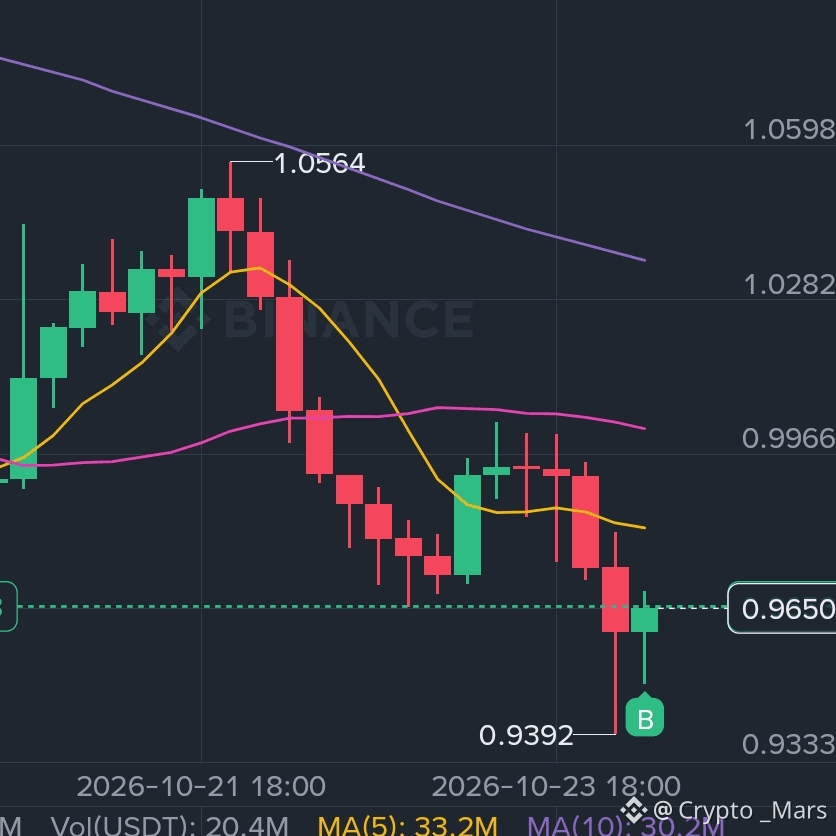
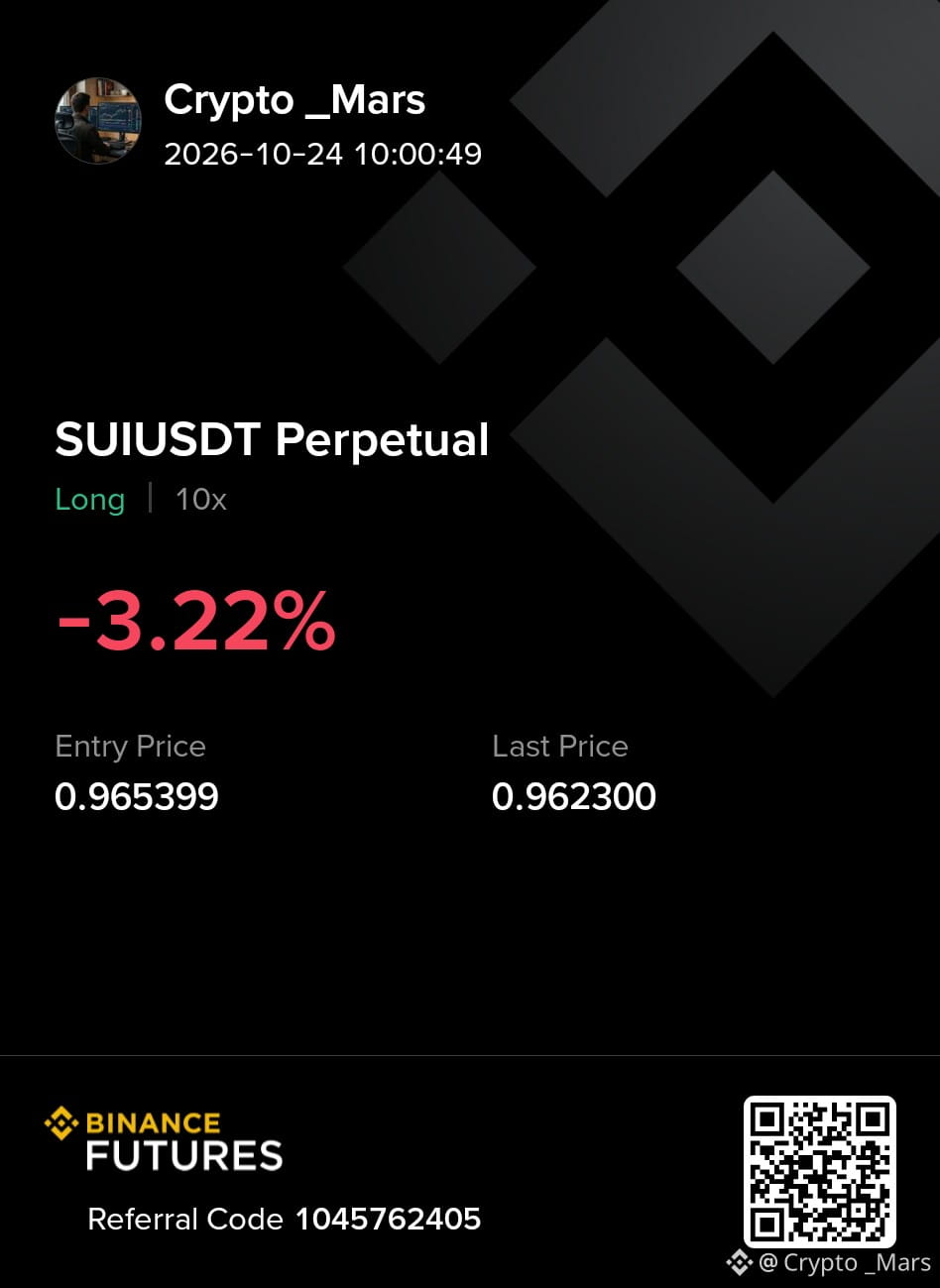
Leute, das ist eine Gelegenheit! 👀
Eröffnet eine LONG-Position und nutzt diese Bewegung optimal aus. 🚀
$SUI könnte in den nächsten Stunden die Marke von $1 erreichen.
Seid ihr bereit für diese Bewegung?
#SUI #CryptoTrading #BinanceSquare
{future}(SUIUSDT)
Leute, das ist eine Gelegenheit! 👀
Eröffnet eine LONG-Position und nutzt diese Bewegung optimal aus. 🚀
$SUI könnte in den nächsten Stunden die Marke von $1 erreichen.
Seid ihr bereit für diese Bewegung?
#SUI #CryptoTrading #BinanceSquare
Eröffnet eine LONG-Position und nutzt diese Bewegung optimal aus. 🚀
$SUI könnte in den nächsten Stunden die Marke von $1 erreichen.
Seid ihr bereit für diese Bewegung?
#SUI #CryptoTrading #BinanceSquare
310
·
--
Übersetzung ansehen
Guys,
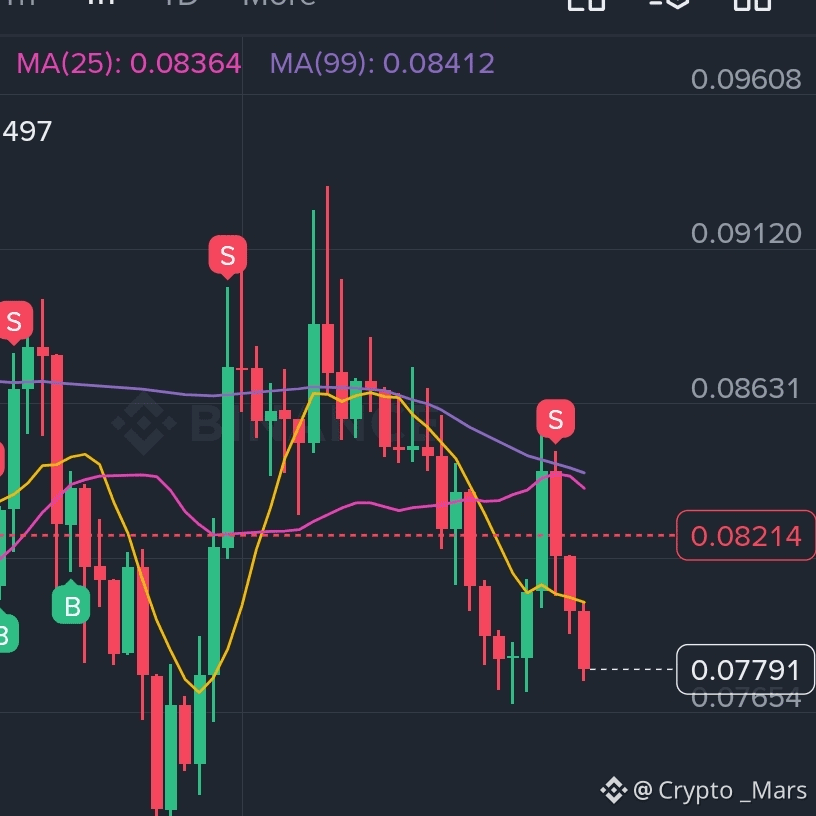
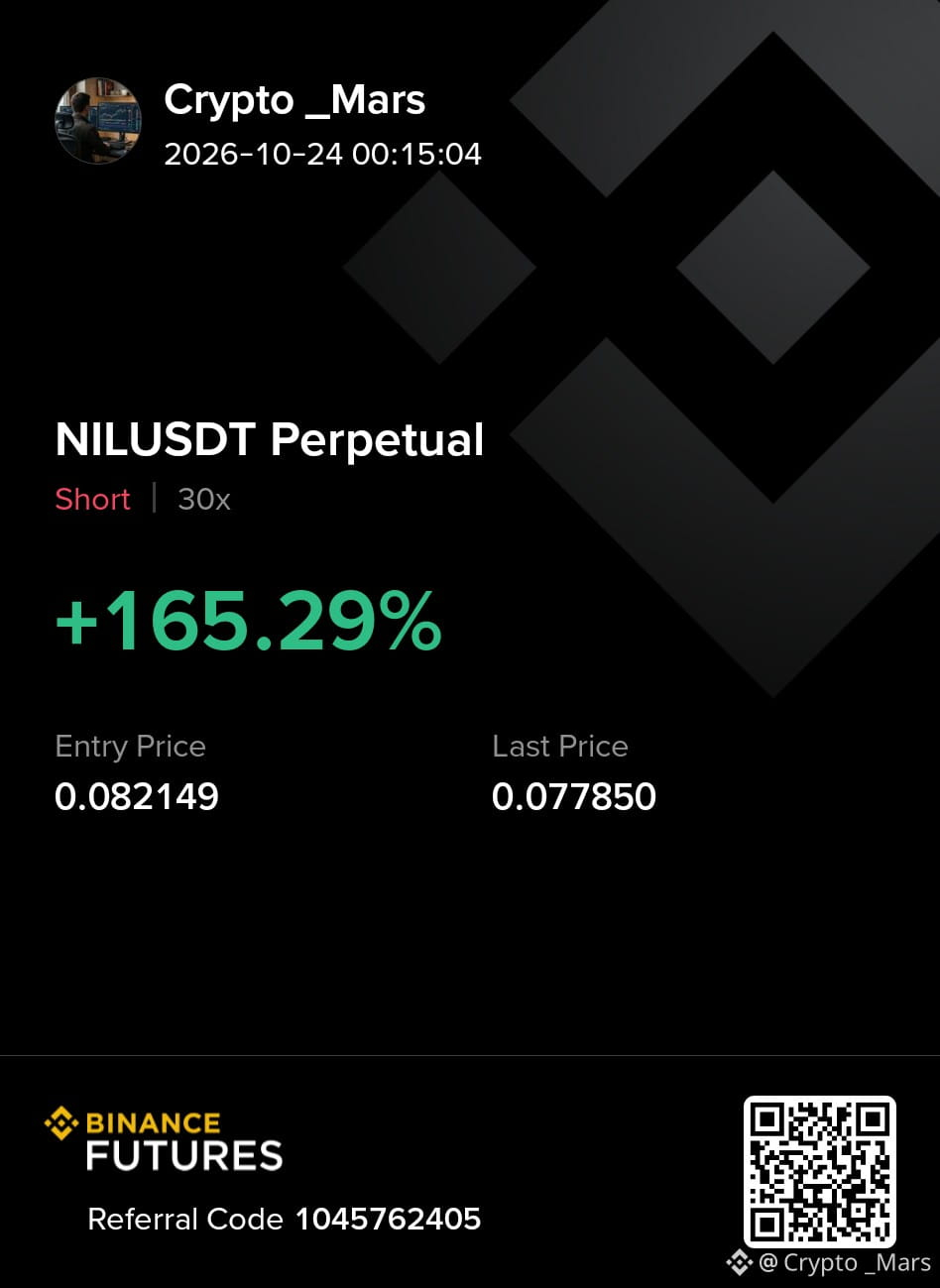
I’m looking at a potential short opportunity on $NIL. 📉
Price is struggling to recover and remains below the key moving averages. If sellers maintain control and NIL loses the $0.0768 support, we could see another move down.
Short Entry: $0.0795–$0.0805
TP1: $0.0770
TP2: $0.0750
TP3: $0.0728
SL: $0.0830
I’ll be watching the price reaction around support before making any decision. No setup is guaranteed, so manage your risk carefully, especially with leverage.
Guys, what’s your take? More downside for NIL, or are buyers preparing a comeback?
#NIL #Nillion #BinanceFutures
{future}(NILUSDT)
Guys,
I’m looking at a potential short opportunity on $NIL. 📉
Price is struggling to recover and remains below the key moving averages. If sellers maintain control and NIL loses the $0.0768 support, we could see another move down.
Short Entry: $0.0795–$0.0805
TP1: $0.0770
TP2: $0.0750
TP3: $0.0728
SL: $0.0830
I’ll be watching the price reaction around support before making any decision. No setup is guaranteed, so manage your risk carefully, especially with leverage.
Guys, what’s your take? More downside for NIL, or are buyers preparing a comeback?
#NIL #Nillion #BinanceFutures
I’m looking at a potential short opportunity on $NIL. 📉
Price is struggling to recover and remains below the key moving averages. If sellers maintain control and NIL loses the $0.0768 support, we could see another move down.
Short Entry: $0.0795–$0.0805
TP1: $0.0770
TP2: $0.0750
TP3: $0.0728
SL: $0.0830
I’ll be watching the price reaction around support before making any decision. No setup is guaranteed, so manage your risk carefully, especially with leverage.
Guys, what’s your take? More downside for NIL, or are buyers preparing a comeback?
#NIL #Nillion #BinanceFutures
243
·
--
Verifiziert
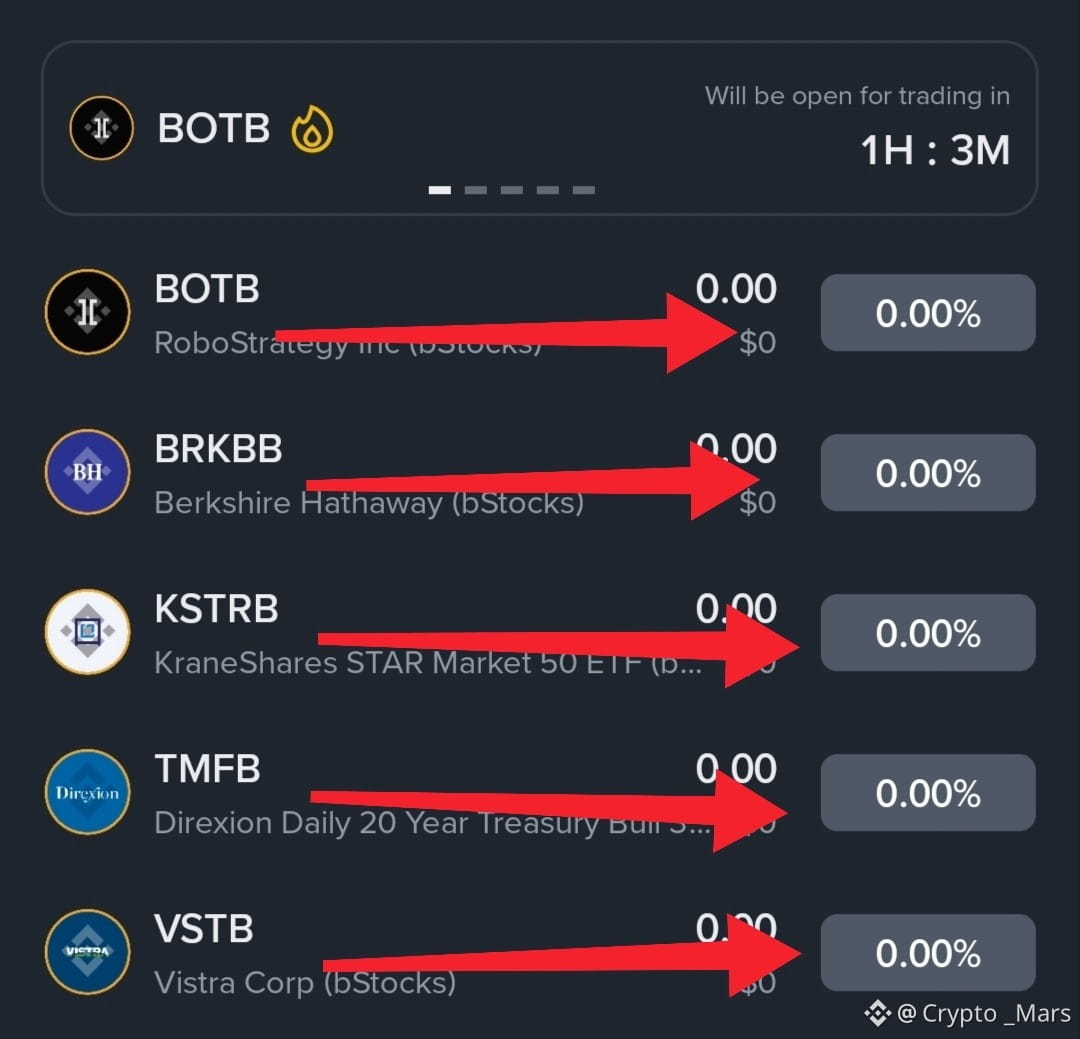
🚨 Leute, nur noch 1 Stunde, bis diese Assets gehandelt werden! 👀
BOTB, BRKBB, KSTRB, $TMFB und $VSTB stehen kurz davor, ins Rampenlicht des Handels zu treten. Doch die eigentliche Frage ist: Welche Auswirkungen auf den Markt könnten wir sehen, sobald der Handel beginnt?
Diese Token bieten ein Engagement in verschiedenen traditionellen Marktwerten, darunter Berkshire Hathaway und andere Aktien- oder ETF-Produkte. Ihr Start könnte Trader anziehen, die die Verbindung zwischen traditioneller Finanzwelt und Blockchain-basiertem Handel erkunden möchten.
Ich denke, die ersten Stunden könnten besonders interessant werden. Die anfängliche Liquidität, der Kaufdruck, die Verkaufsaktivität und die Lücke zwischen der Marktnachfrage und dem verfügbaren Angebot könnten die frühen Kursbewegungen beeinflussen. Bei starker Beteiligung könnten wir heftige Schwankungen erleben. Eine begrenzte Liquidität kann jedoch auch Kursverluste verstärken.
Ein wichtiger Punkt: Die im Screenshot angezeigten Preise von 0,00 $ bedeuten nicht unbedingt, dass diese Assets wertlos sind. Der Handel hat noch nicht begonnen, daher sind möglicherweise keine aktuellen Preise verfügbar.
Ich werde die Eröffnungskurse, das Handelsvolumen und die Liquidität genau beobachten, bevor ich irgendwelche Schlüsse ziehe.
Was denkt ihr, Leute? Werden diese Token zum Handelsstart auf starken Kaufdruck stoßen, oder wird der Markt vorsichtig vorgehen? 👇
#cryptouniverseofficial #Tokenization n #TradFi i
{spot}(BOTBUSDT)
{spot}(BRKBBUSDT)
{spot}(KSTRBUSDT)
🚨 Leute, nur noch 1 Stunde, bis diese Assets gehandelt werden! 👀
BOTB, BRKBB, KSTRB, $TMFB und $VSTB stehen kurz davor, ins Rampenlicht des Handels zu treten. Doch die eigentliche Frage ist: Welche Auswirkungen auf den Markt könnten wir sehen, sobald der Handel beginnt?
Diese Token bieten ein Engagement in verschiedenen traditionellen Marktwerten, darunter Berkshire Hathaway und andere Aktien- oder ETF-Produkte. Ihr Start könnte Trader anziehen, die die Verbindung zwischen traditioneller Finanzwelt und Blockchain-basiertem Handel erkunden möchten.
Ich denke, die ersten Stunden könnten besonders interessant werden. Die anfängliche Liquidität, der Kaufdruck, die Verkaufsaktivität und die Lücke zwischen der Marktnachfrage und dem verfügbaren Angebot könnten die frühen Kursbewegungen beeinflussen. Bei starker Beteiligung könnten wir heftige Schwankungen erleben. Eine begrenzte Liquidität kann jedoch auch Kursverluste verstärken.
Ein wichtiger Punkt: Die im Screenshot angezeigten Preise von 0,00 $ bedeuten nicht unbedingt, dass diese Assets wertlos sind. Der Handel hat noch nicht begonnen, daher sind möglicherweise keine aktuellen Preise verfügbar.
Ich werde die Eröffnungskurse, das Handelsvolumen und die Liquidität genau beobachten, bevor ich irgendwelche Schlüsse ziehe.
Was denkt ihr, Leute? Werden diese Token zum Handelsstart auf starken Kaufdruck stoßen, oder wird der Markt vorsichtig vorgehen? 👇
#cryptouniverseofficial #Tokenization n #TradFi i
BOTB, BRKBB, KSTRB, $TMFB und $VSTB stehen kurz davor, ins Rampenlicht des Handels zu treten. Doch die eigentliche Frage ist: Welche Auswirkungen auf den Markt könnten wir sehen, sobald der Handel beginnt?
Diese Token bieten ein Engagement in verschiedenen traditionellen Marktwerten, darunter Berkshire Hathaway und andere Aktien- oder ETF-Produkte. Ihr Start könnte Trader anziehen, die die Verbindung zwischen traditioneller Finanzwelt und Blockchain-basiertem Handel erkunden möchten.
Ich denke, die ersten Stunden könnten besonders interessant werden. Die anfängliche Liquidität, der Kaufdruck, die Verkaufsaktivität und die Lücke zwischen der Marktnachfrage und dem verfügbaren Angebot könnten die frühen Kursbewegungen beeinflussen. Bei starker Beteiligung könnten wir heftige Schwankungen erleben. Eine begrenzte Liquidität kann jedoch auch Kursverluste verstärken.
Ein wichtiger Punkt: Die im Screenshot angezeigten Preise von 0,00 $ bedeuten nicht unbedingt, dass diese Assets wertlos sind. Der Handel hat noch nicht begonnen, daher sind möglicherweise keine aktuellen Preise verfügbar.
Ich werde die Eröffnungskurse, das Handelsvolumen und die Liquidität genau beobachten, bevor ich irgendwelche Schlüsse ziehe.
Was denkt ihr, Leute? Werden diese Token zum Handelsstart auf starken Kaufdruck stoßen, oder wird der Markt vorsichtig vorgehen? 👇
#cryptouniverseofficial #Tokenization n #TradFi i
1k
·
--
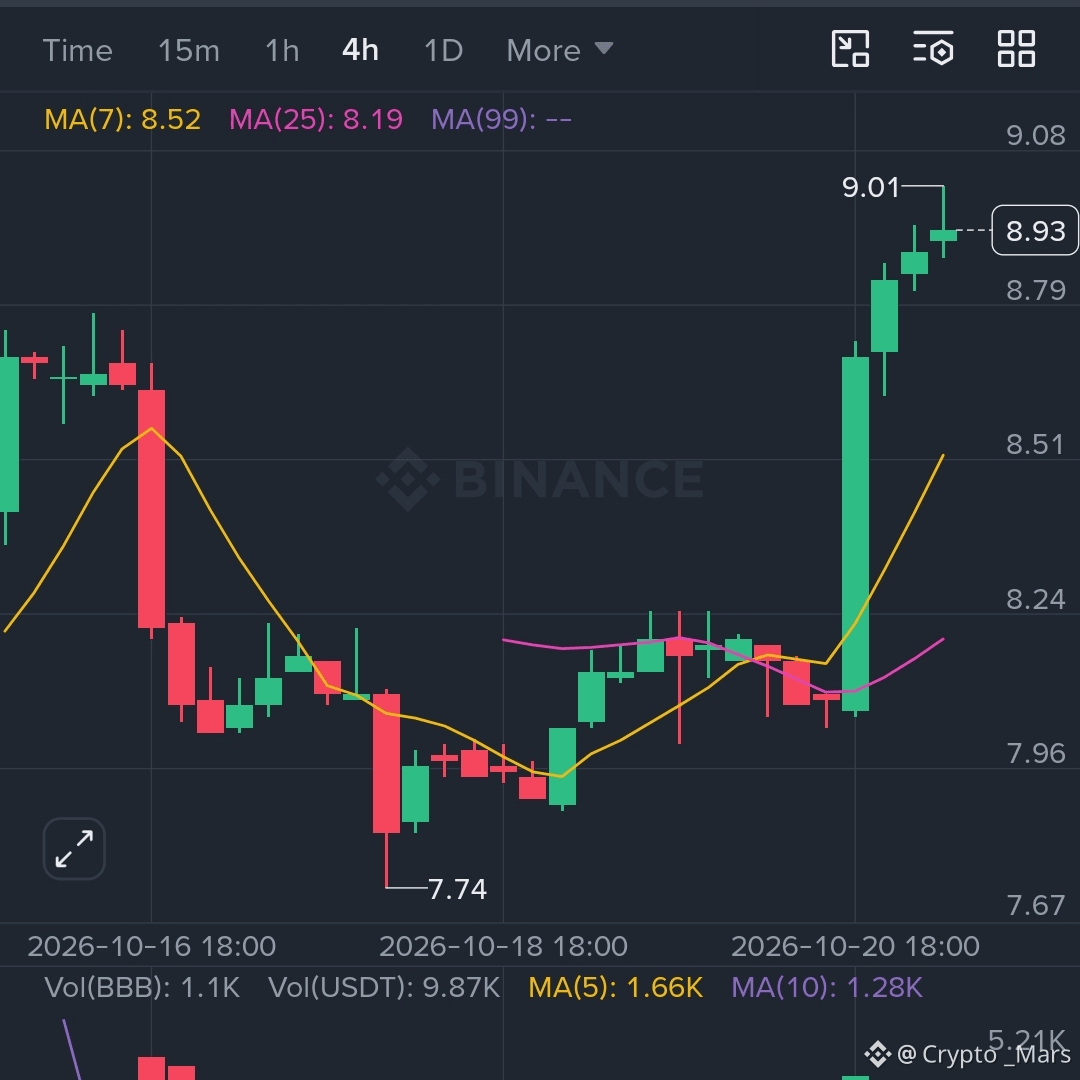
🚀 Leute, glaubt ihr, BBB kann 10 $ erreichen?
BBB zeigt eine starke Aufwärtsdynamik, nachdem sich der Kurs vom Tief bei 7,74 $ erholt hat.
Der Kurs liegt derzeit bei etwa 8,93 $, wobei 9,01 $ als wichtiger Widerstand im Blick behalten werden sollte.
📈 Mögliches LONG-Setup – Einstieg: 8,70–8,85 $
TP1: 9,01 $
TP2: 9,30 $
TP3: 9,60 $
Endziel: 10,00 $
SL: 8,48 $
Ein starker Ausbruch über 9,01 $ mit bestätigendem Volumen könnte den Weg für einen weiteren Anstieg ebnen. Eine Zurückweisung am Widerstand könnte jedoch einen Rücksetzer auslösen.
Was meint ihr, Leute? Kann BBB 10 $ erreichen, oder werden die Verkäufer vorher aktiv?
#BBB #CryptoTrading #BinanceSquare
{spot}(BBBUSDT)
🚀 Leute, glaubt ihr, BBB kann 10 $ erreichen?
BBB zeigt eine starke Aufwärtsdynamik, nachdem sich der Kurs vom Tief bei 7,74 $ erholt hat.
Der Kurs liegt derzeit bei etwa 8,93 $, wobei 9,01 $ als wichtiger Widerstand im Blick behalten werden sollte.
📈 Mögliches LONG-Setup – Einstieg: 8,70–8,85 $
TP1: 9,01 $
TP2: 9,30 $
TP3: 9,60 $
Endziel: 10,00 $
SL: 8,48 $
Ein starker Ausbruch über 9,01 $ mit bestätigendem Volumen könnte den Weg für einen weiteren Anstieg ebnen. Eine Zurückweisung am Widerstand könnte jedoch einen Rücksetzer auslösen.
Was meint ihr, Leute? Kann BBB 10 $ erreichen, oder werden die Verkäufer vorher aktiv?
#BBB #CryptoTrading #BinanceSquare
BBB zeigt eine starke Aufwärtsdynamik, nachdem sich der Kurs vom Tief bei 7,74 $ erholt hat.
Der Kurs liegt derzeit bei etwa 8,93 $, wobei 9,01 $ als wichtiger Widerstand im Blick behalten werden sollte.
📈 Mögliches LONG-Setup – Einstieg: 8,70–8,85 $
TP1: 9,01 $
TP2: 9,30 $
TP3: 9,60 $
Endziel: 10,00 $
SL: 8,48 $
Ein starker Ausbruch über 9,01 $ mit bestätigendem Volumen könnte den Weg für einen weiteren Anstieg ebnen. Eine Zurückweisung am Widerstand könnte jedoch einen Rücksetzer auslösen.
Was meint ihr, Leute? Kann BBB 10 $ erreichen, oder werden die Verkäufer vorher aktiv?
#BBB #CryptoTrading #BinanceSquare
1
1
293
·
--
Bullisch
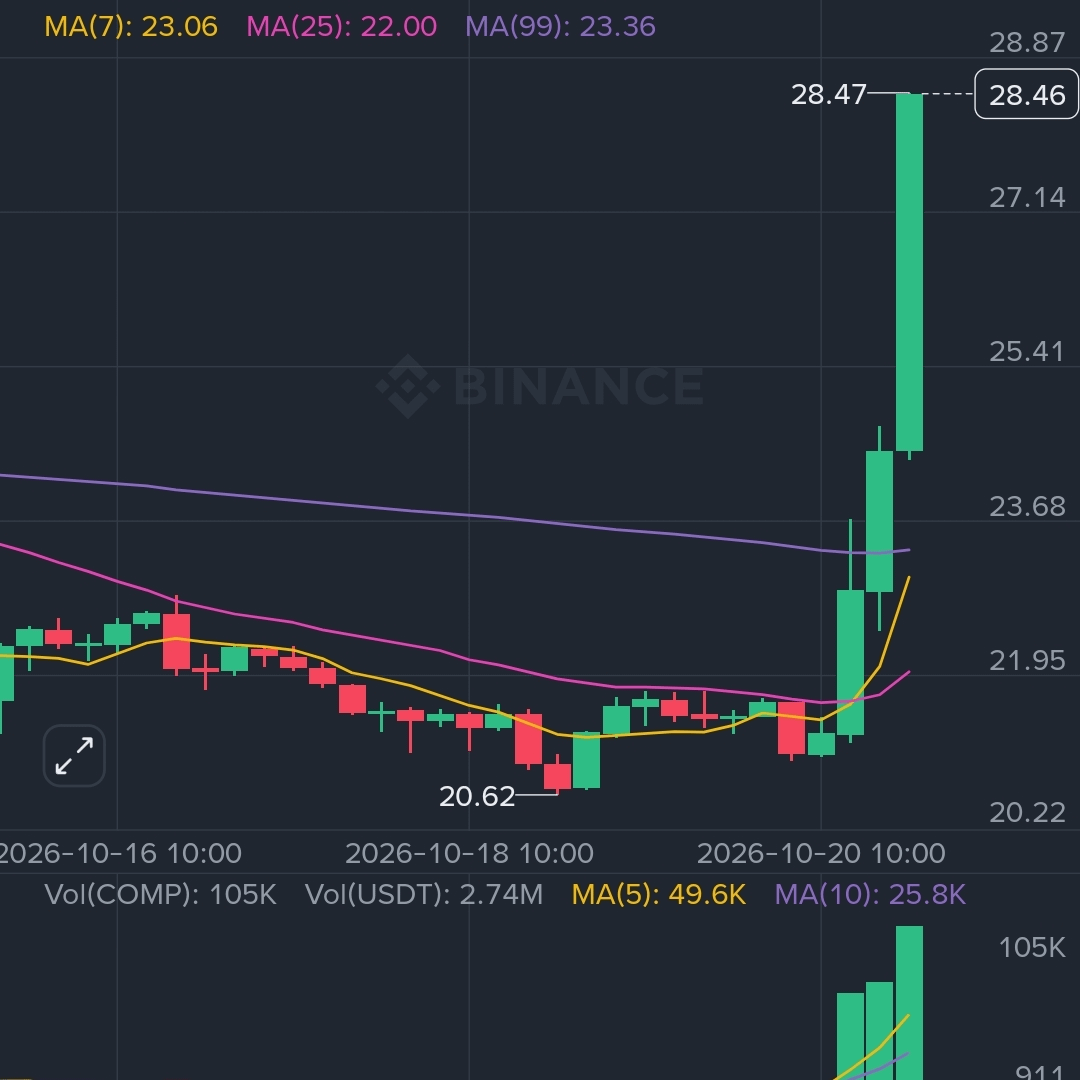
🚀 Leute,
COMP ist gerade explodiert! Als Nächstes könnten $30 drin sein! 👀
COMP zeigt starkes bullisches Momentum und wird nach einer kräftigen Rallye von 32 % bereits nahe $28.46 gehandelt. Nach einem starken Ausbruch und einem enormen Volumenanstieg übernehmen die Bullen eindeutig die Kontrolle.
📈 COMP/USDT — LONG-SETUP
🟢 Einstiegszone: $26.80–$27.50 (Pullback & Retest)
⚡ Ausbruchseinstieg: nach Bestätigung über $28.50
🎯 TP1: $29.00
🎯 TP2: $30.00
🎯 TP3: $31.00
🛑 Stop-Loss: $25.80 für das Pullback-Setup
Warum bullisch? • Starker Ausbruch mit deutlichem Volumenanstieg. • Im 4-Stunden-Chart wird der Kurs deutlich über MA(7), MA(25) und MA(99) gehandelt. • $28.47 ist der unmittelbare Widerstand; ein bestätigter Ausbruch könnte den Weg in Richtung der psychologisch wichtigen Marke von $30 freimachen.
⚠️ COMP ist bereits stark gestiegen, daher ist es riskant, der aktuellen Kerze hinterherzujagen. Ein Pullback mit erfolgreichem Retest würde einen strukturierteren Einstieg bieten. Warte auf eine Bestätigung und manage dein Risiko.
Was ist dein Kursziel für COMP — $30 oder $32?
#Comp #cryptotrading #BinanceSquare
{future}(COMPUSDT)
🚀 Leute,
COMP ist gerade explodiert! Als Nächstes könnten $30 drin sein! 👀
COMP zeigt starkes bullisches Momentum und wird nach einer kräftigen Rallye von 32 % bereits nahe $28.46 gehandelt. Nach einem starken Ausbruch und einem enormen Volumenanstieg übernehmen die Bullen eindeutig die Kontrolle.
📈 COMP/USDT — LONG-SETUP
🟢 Einstiegszone: $26.80–$27.50 (Pullback & Retest)
⚡ Ausbruchseinstieg: nach Bestätigung über $28.50
🎯 TP1: $29.00
🎯 TP2: $30.00
🎯 TP3: $31.00
🛑 Stop-Loss: $25.80 für das Pullback-Setup
Warum bullisch? • Starker Ausbruch mit deutlichem Volumenanstieg. • Im 4-Stunden-Chart wird der Kurs deutlich über MA(7), MA(25) und MA(99) gehandelt. • $28.47 ist der unmittelbare Widerstand; ein bestätigter Ausbruch könnte den Weg in Richtung der psychologisch wichtigen Marke von $30 freimachen.
⚠️ COMP ist bereits stark gestiegen, daher ist es riskant, der aktuellen Kerze hinterherzujagen. Ein Pullback mit erfolgreichem Retest würde einen strukturierteren Einstieg bieten. Warte auf eine Bestätigung und manage dein Risiko.
Was ist dein Kursziel für COMP — $30 oder $32?
#Comp #cryptotrading #BinanceSquare
COMP ist gerade explodiert! Als Nächstes könnten $30 drin sein! 👀
COMP zeigt starkes bullisches Momentum und wird nach einer kräftigen Rallye von 32 % bereits nahe $28.46 gehandelt. Nach einem starken Ausbruch und einem enormen Volumenanstieg übernehmen die Bullen eindeutig die Kontrolle.
📈 COMP/USDT — LONG-SETUP
🟢 Einstiegszone: $26.80–$27.50 (Pullback & Retest)
⚡ Ausbruchseinstieg: nach Bestätigung über $28.50
🎯 TP1: $29.00
🎯 TP2: $30.00
🎯 TP3: $31.00
🛑 Stop-Loss: $25.80 für das Pullback-Setup
Warum bullisch? • Starker Ausbruch mit deutlichem Volumenanstieg. • Im 4-Stunden-Chart wird der Kurs deutlich über MA(7), MA(25) und MA(99) gehandelt. • $28.47 ist der unmittelbare Widerstand; ein bestätigter Ausbruch könnte den Weg in Richtung der psychologisch wichtigen Marke von $30 freimachen.
⚠️ COMP ist bereits stark gestiegen, daher ist es riskant, der aktuellen Kerze hinterherzujagen. Ein Pullback mit erfolgreichem Retest würde einen strukturierteren Einstieg bieten. Warte auf eine Bestätigung und manage dein Risiko.
Was ist dein Kursziel für COMP — $30 oder $32?
#Comp #cryptotrading #BinanceSquare
408
·
--
30D-Trade $NIL 97.7 USDT
Leute, erst vor wenigen Stunden ...!
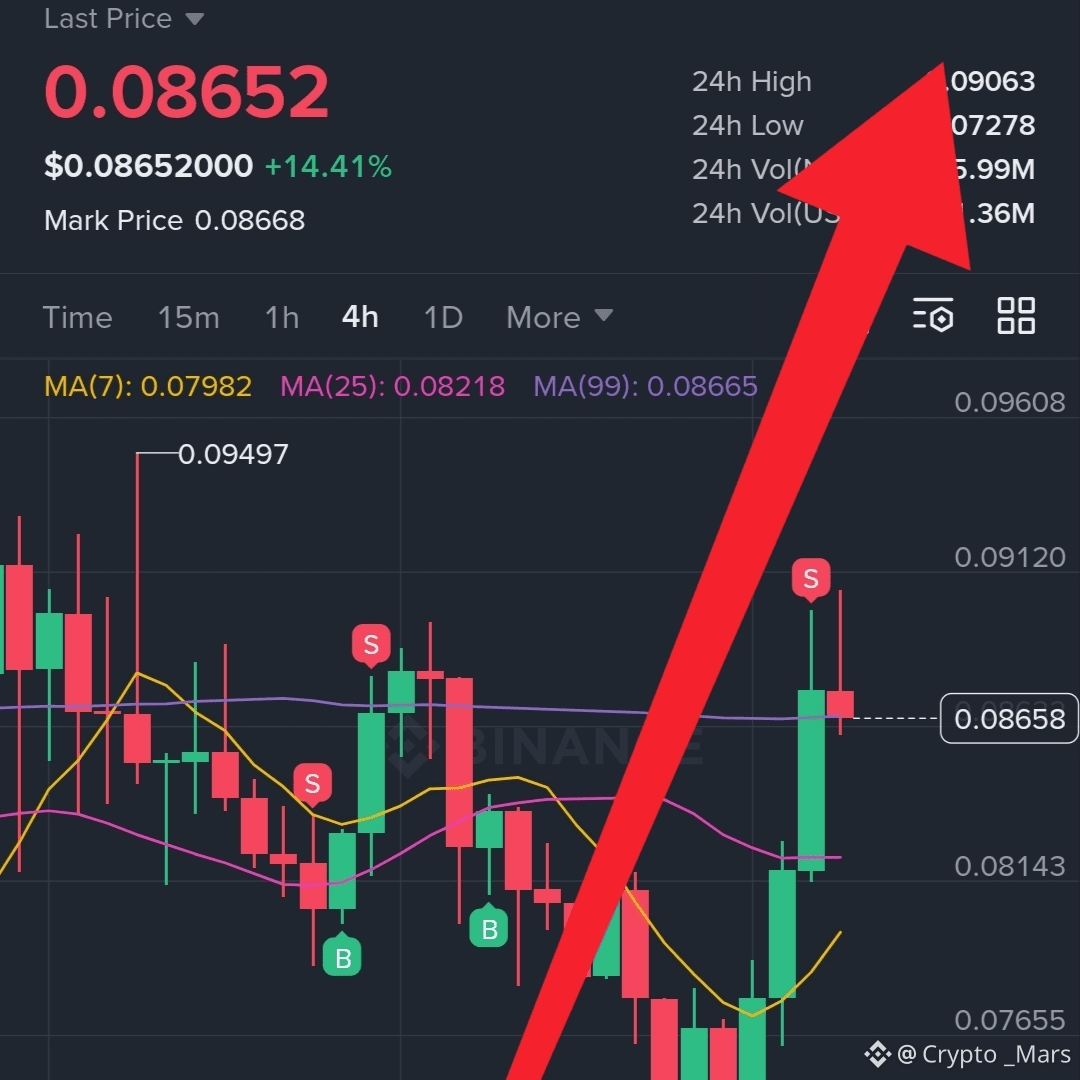
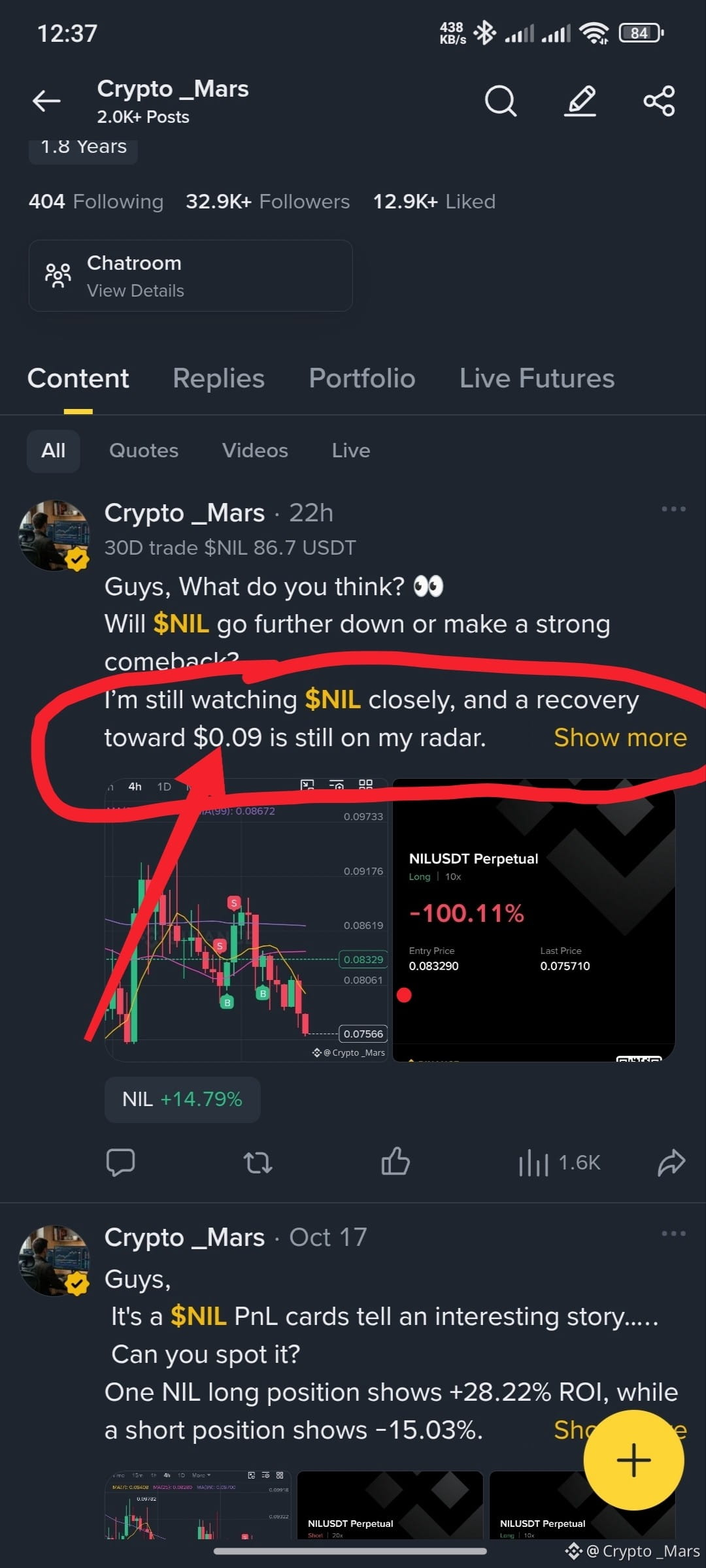
Ich sagte, $NIL könnte $0.09 erreichen – und genau das ist passiert!
Erst vor wenigen Stunden habe ich meine Analyse geteilt, und $NIL ist direkt in die Zielzone gelaufen. Genau deshalb glaube ich, dass es beim Trading nicht nur darum geht, Vorhersagen zu treffen. Es geht darum, Charts zu lesen, die Marktstruktur zu verstehen, wichtige Unterstützungs- und Widerstandsniveaus zu erkennen und auf die richtige Gelegenheit zu warten.
Natürlich ist kein Trade garantiert. Risikomanagement und Bestätigung sind immer wichtig. Wenn die Analyse jedoch mit der Kursbewegung übereinstimmt, kann das einen echten Unterschied machen.
Was ist jetzt dein nächster Schritt bei $NIL?
Hältst du noch, nimmst du Gewinne mit oder wartest du auf einen neuen Einstieg?
#NIL $NIL @nillionnetwork
Leute, erst vor wenigen Stunden ...!
Ich sagte, $NIL könnte $0.09 erreichen – und genau das ist passiert!
Erst vor wenigen Stunden habe ich meine Analyse geteilt, und $NIL ist direkt in die Zielzone gelaufen. Genau deshalb glaube ich, dass es beim Trading nicht nur darum geht, Vorhersagen zu treffen. Es geht darum, Charts zu lesen, die Marktstruktur zu verstehen, wichtige Unterstützungs- und Widerstandsniveaus zu erkennen und auf die richtige Gelegenheit zu warten.
Natürlich ist kein Trade garantiert. Risikomanagement und Bestätigung sind immer wichtig. Wenn die Analyse jedoch mit der Kursbewegung übereinstimmt, kann das einen echten Unterschied machen.
Was ist jetzt dein nächster Schritt bei $NIL ?
Hältst du noch, nimmst du Gewinne mit oder wartest du auf einen neuen Einstieg?
#NIL $NIL @Nillion
Ich sagte, $NIL könnte $0.09 erreichen – und genau das ist passiert!
Erst vor wenigen Stunden habe ich meine Analyse geteilt, und $NIL ist direkt in die Zielzone gelaufen. Genau deshalb glaube ich, dass es beim Trading nicht nur darum geht, Vorhersagen zu treffen. Es geht darum, Charts zu lesen, die Marktstruktur zu verstehen, wichtige Unterstützungs- und Widerstandsniveaus zu erkennen und auf die richtige Gelegenheit zu warten.
Natürlich ist kein Trade garantiert. Risikomanagement und Bestätigung sind immer wichtig. Wenn die Analyse jedoch mit der Kursbewegung übereinstimmt, kann das einen echten Unterschied machen.
Was ist jetzt dein nächster Schritt bei $NIL ?
Hältst du noch, nimmst du Gewinne mit oder wartest du auf einen neuen Einstieg?
#NIL $NIL @Nillion
10
20
80.9k
·
--
30D-Trade $NIL 86.7 USDT
Leute, was denkt ihr? 👀
Wird $NIL weiter fallen oder ein starkes Comeback hinlegen?
Ich beobachte $NIL weiterhin genau, und eine Erholung in Richtung 0,09 $ habe ich nach wie vor im Blick.
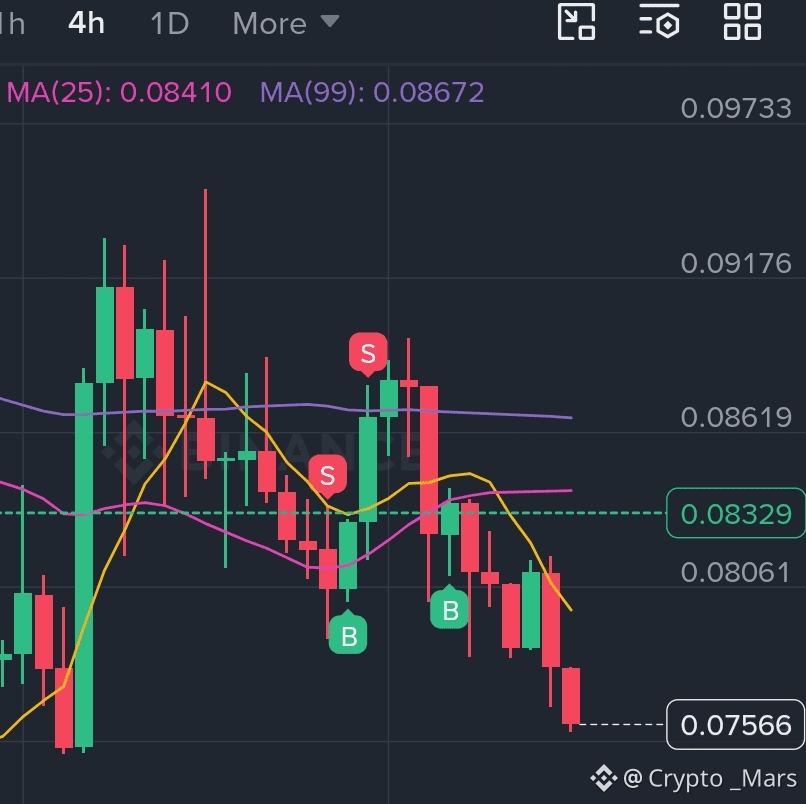
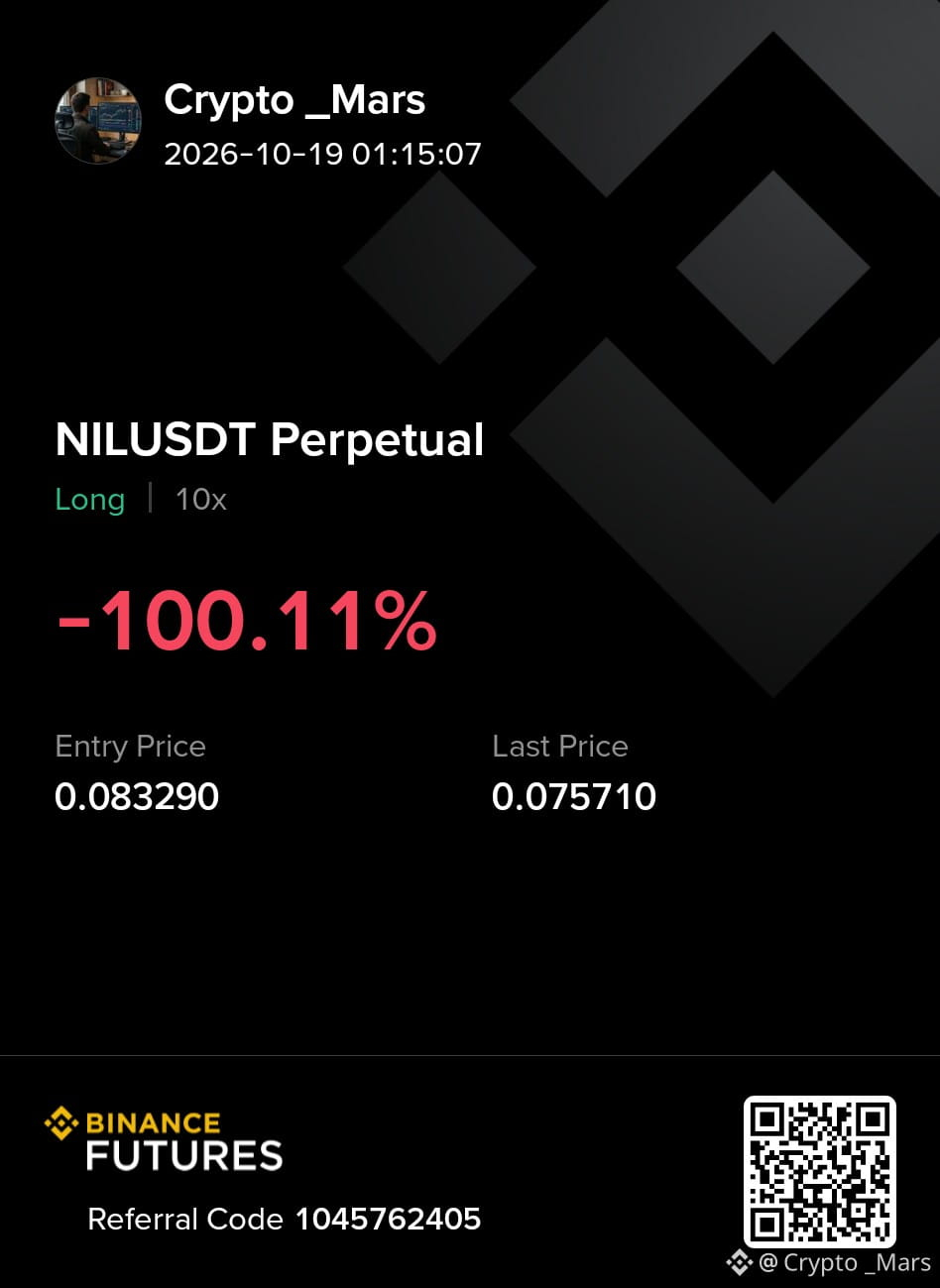
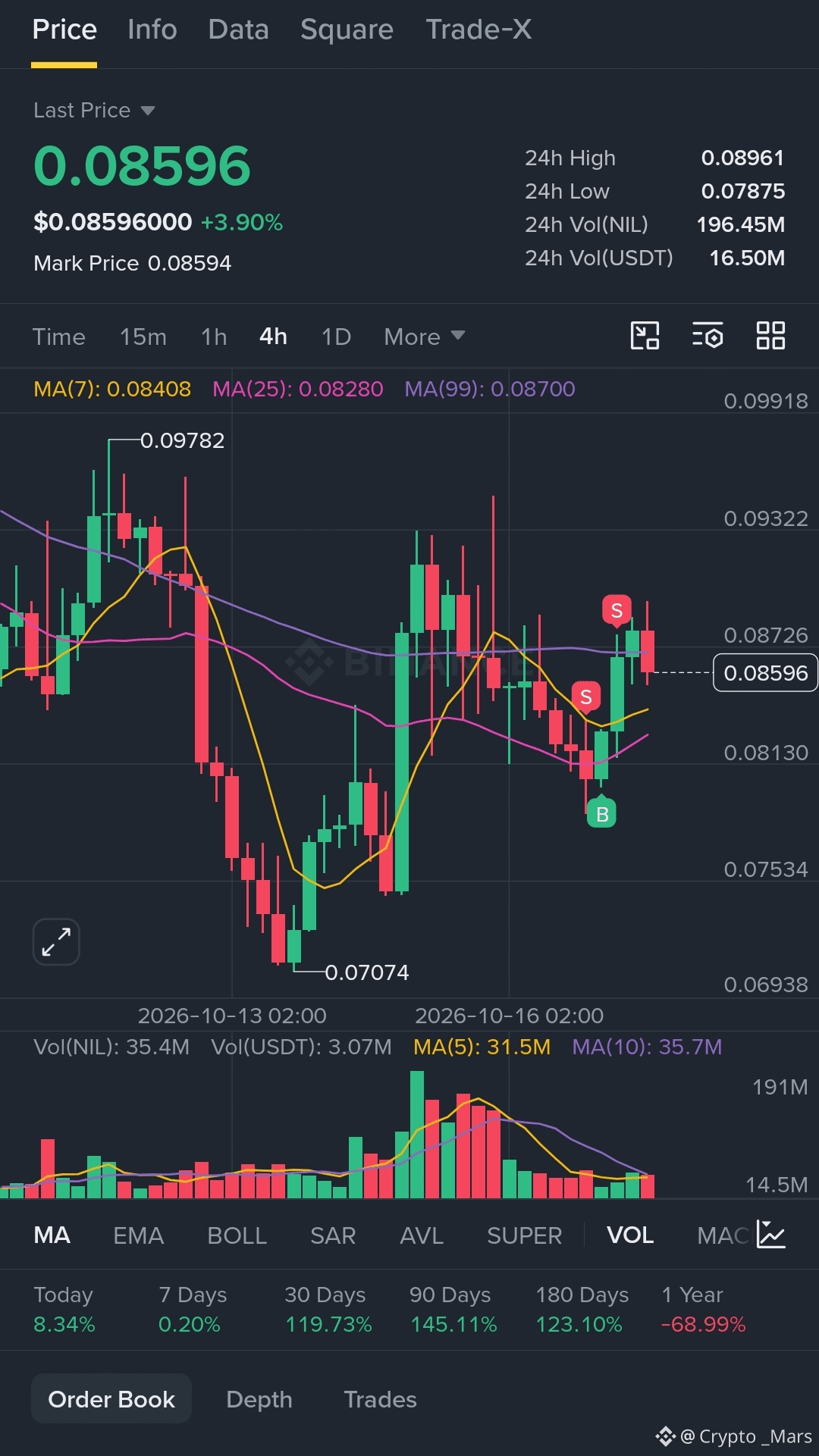
Im 4-Stunden-Chart wird NIL bei etwa 0,0756 $ gehandelt, unterhalb der MA(7), MA(25) und MA(99). Das zeigt, dass der Abwärtsdruck weiterhin stark ist.
Das jüngste Tief bei etwa 0,0707 $ ist jedoch eine wichtige Unterstützung, die man im Auge behalten sollte. Wenn die Käufer dieses Niveau verteidigen und die Widerstandszone zwischen 0,080 und 0,083 $ zurückerobern, könnte ein Anstieg in Richtung 0,09 $ möglich werden.
Fällt der Kurs jedoch unter 0,0707 $, sind weitere Verluste nicht auszuschließen. Im Moment ist eine Bestätigung wichtiger als Erwartungen.
Was ist eure Prognose?
📉 Weiter abwärts
📈 Starkes Comeback in Richtung 0,09 $
#NIL $NIL @nillionnetwork
Leute, was denkt ihr? 👀
Wird $NIL weiter fallen oder ein starkes Comeback hinlegen?
Ich beobachte $NIL weiterhin genau, und eine Erholung in Richtung 0,09 $ habe ich nach wie vor im Blick.
Im 4-Stunden-Chart wird NIL bei etwa 0,0756 $ gehandelt, unterhalb der MA(7), MA(25) und MA(99). Das zeigt, dass der Abwärtsdruck weiterhin stark ist.
Das jüngste Tief bei etwa 0,0707 $ ist jedoch eine wichtige Unterstützung, die man im Auge behalten sollte. Wenn die Käufer dieses Niveau verteidigen und die Widerstandszone zwischen 0,080 und 0,083 $ zurückerobern, könnte ein Anstieg in Richtung 0,09 $ möglich werden.
Fällt der Kurs jedoch unter 0,0707 $, sind weitere Verluste nicht auszuschließen. Im Moment ist eine Bestätigung wichtiger als Erwartungen.
Was ist eure Prognose?
📉 Weiter abwärts
📈 Starkes Comeback in Richtung 0,09 $
#NIL $NIL @Nillion
Wird $NIL weiter fallen oder ein starkes Comeback hinlegen?
Ich beobachte $NIL weiterhin genau, und eine Erholung in Richtung 0,09 $ habe ich nach wie vor im Blick.
Im 4-Stunden-Chart wird NIL bei etwa 0,0756 $ gehandelt, unterhalb der MA(7), MA(25) und MA(99). Das zeigt, dass der Abwärtsdruck weiterhin stark ist.
Das jüngste Tief bei etwa 0,0707 $ ist jedoch eine wichtige Unterstützung, die man im Auge behalten sollte. Wenn die Käufer dieses Niveau verteidigen und die Widerstandszone zwischen 0,080 und 0,083 $ zurückerobern, könnte ein Anstieg in Richtung 0,09 $ möglich werden.
Fällt der Kurs jedoch unter 0,0707 $, sind weitere Verluste nicht auszuschließen. Im Moment ist eine Bestätigung wichtiger als Erwartungen.
Was ist eure Prognose?
📉 Weiter abwärts
📈 Starkes Comeback in Richtung 0,09 $
#NIL $NIL @Nillion
2
12.5k
·
--
Leute,
Die PnL-Karten von $NIL erzählen eine interessante Geschichte…..
Könnt ihr sie erkennen?
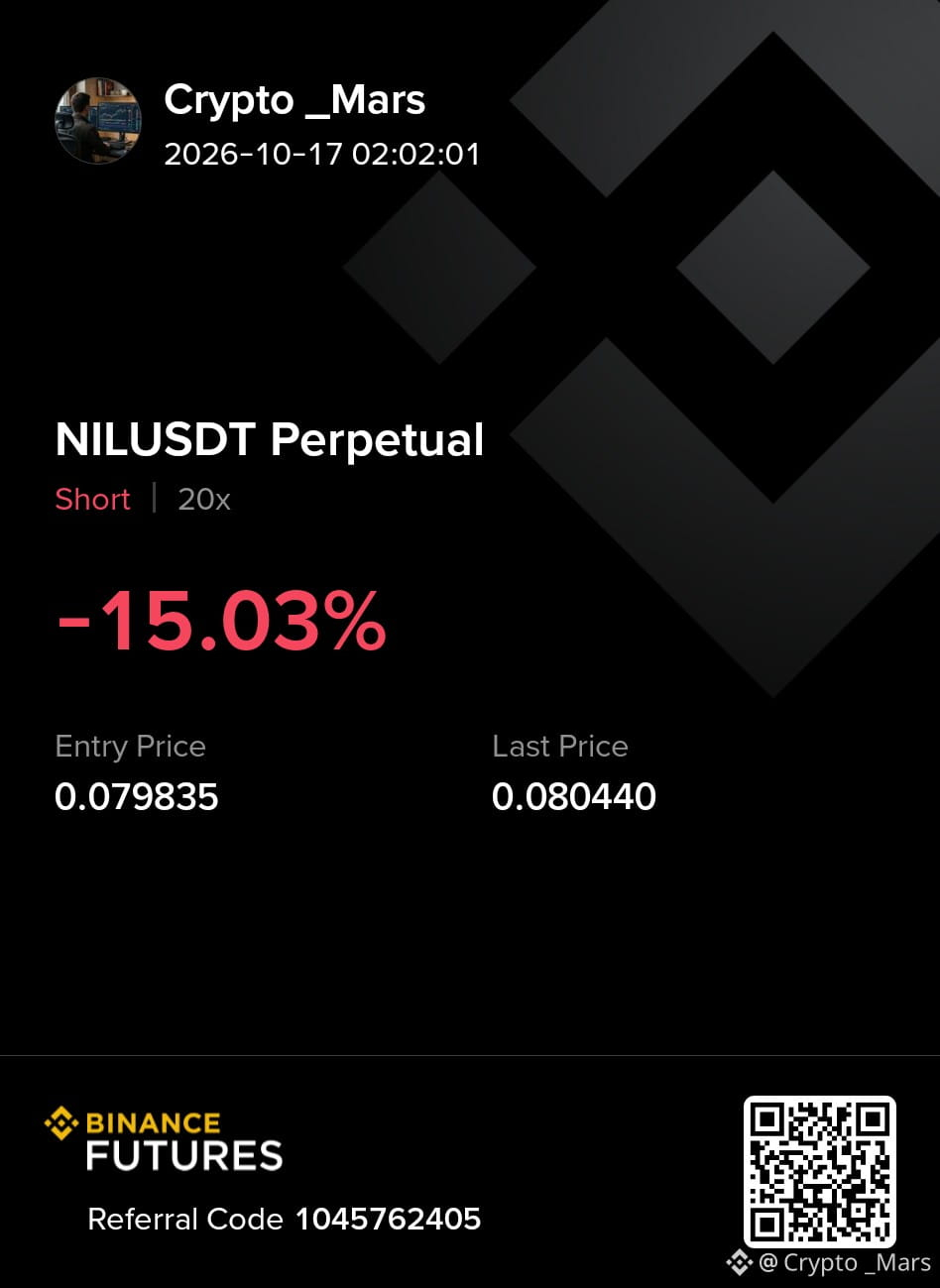
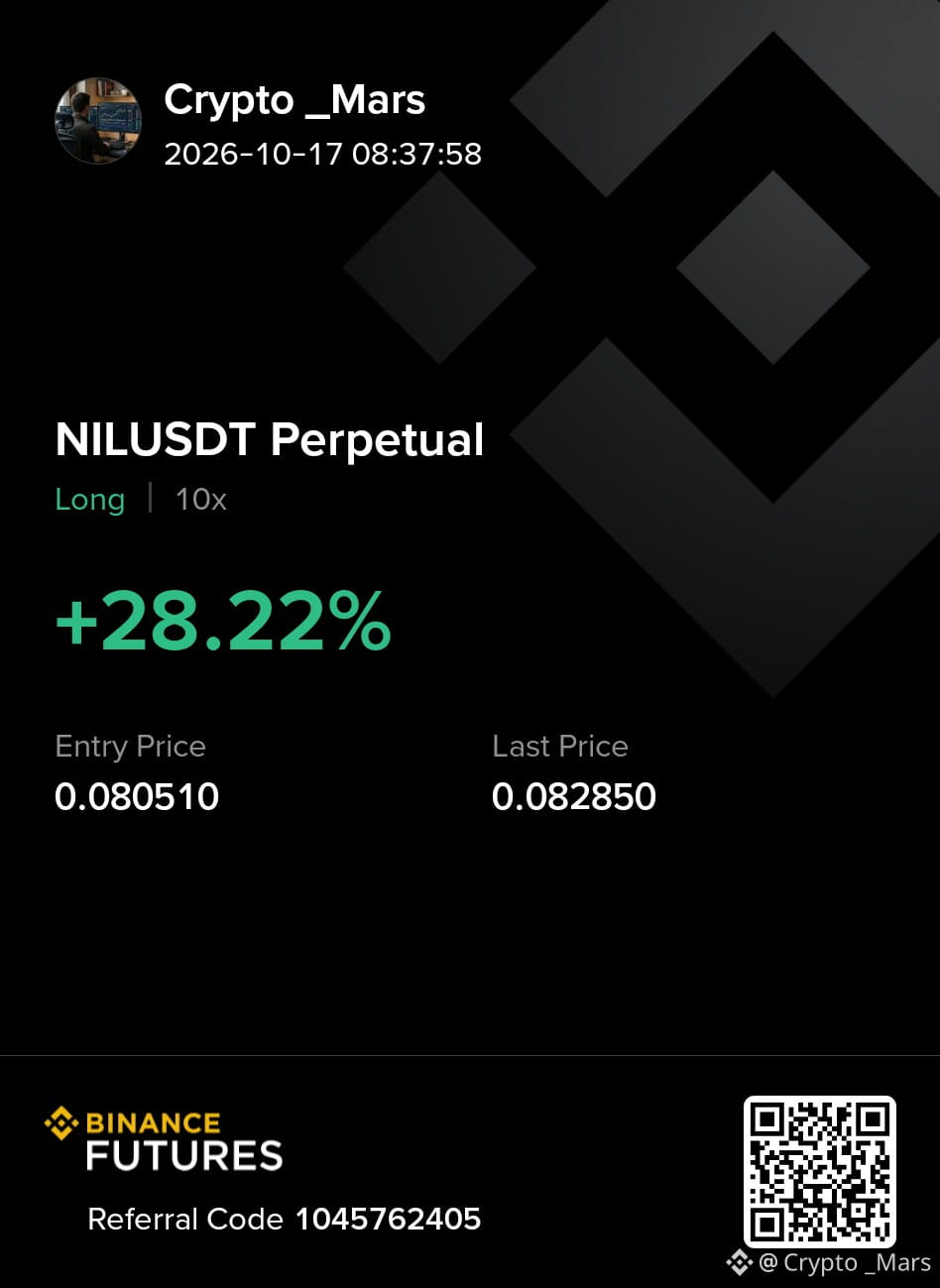
Eine NIL-Long-Position weist einen ROI von +28,22 % auf, während eine Short-Position bei -15,03 % liegt.
Was nehme ich daraus mit?
Als Trader habe ich gelernt, dass es am Markt nicht nur um Einstiege, Ausstiege oder darum geht, mit der Einschätzung der Kursrichtung richtigzuliegen. Timing, Ausführung, Risikomanagement und Informationen spielen alle eine Rolle.
Und eines ist mir persönlich wichtig: Meine Strategie geheim zu halten, bis mir der Markt einen Grund zum Handeln gibt.
Denk mal darüber nach. Wenn jeder deine Absichten sehen könnte, bevor dein Setup ausgelöst wird – würde das deine Herangehensweise an einen Trade verändern? In einem wettbewerbsintensiven Markt kann es entscheidend sein, ob Informationen offengelegt werden.
Das macht @nillionnetwork für mich interessant.
Seine Covenants ermöglichen einen anderen Ansatz für Onchain-Anweisungen: Eine Anweisung kann versiegelt und mit einer vordefinierten Bedingung verknüpft werden. Sie bleibt unlesbar, bis diese Bedingung erfüllt ist. So lässt sich eine bedingte Ausführung ermöglichen, ohne die Anweisung vorzeitig offenzulegen.
Dusk, die erste Covenant-Veröffentlichung, bringt dieses Konzept zu Ethereum.
Mich interessiert, was Entwickler auf Grundlage dieser Architektur entwickeln könnten. Könnten verschlüsselte, bedingungsbasierte Anweisungen irgendwann Trading-Anwendungen ermöglichen, die die Absichten von Tradern besser schützen? Ich sehe darin eine mögliche Entwicklungsrichtung, keine bereits vorhandene Trading-Funktion.
Für mich geht die größere Frage über NIL oder einen einzelnen Trade hinaus:
Sollte in einem Markt, in dem Informationen einen Wert haben, jede Handelsabsicht öffentlich sein – oder sollten manche Dinge bis zum richtigen Moment privat bleiben?
#NIL $NIL @nillionnetwork
Leute,
Die PnL-Karten von $NIL erzählen eine interessante Geschichte…..
Könnt ihr sie erkennen?
Eine NIL-Long-Position weist einen ROI von +28,22 % auf, während eine Short-Position bei -15,03 % liegt.
Was nehme ich daraus mit?
Als Trader habe ich gelernt, dass es am Markt nicht nur um Einstiege, Ausstiege oder darum geht, mit der Einschätzung der Kursrichtung richtigzuliegen. Timing, Ausführung, Risikomanagement und Informationen spielen alle eine Rolle.
Und eines ist mir persönlich wichtig: Meine Strategie geheim zu halten, bis mir der Markt einen Grund zum Handeln gibt.
Denk mal darüber nach. Wenn jeder deine Absichten sehen könnte, bevor dein Setup ausgelöst wird – würde das deine Herangehensweise an einen Trade verändern? In einem wettbewerbsintensiven Markt kann es entscheidend sein, ob Informationen offengelegt werden.
Das macht @Nillion für mich interessant.
Seine Covenants ermöglichen einen anderen Ansatz für Onchain-Anweisungen: Eine Anweisung kann versiegelt und mit einer vordefinierten Bedingung verknüpft werden. Sie bleibt unlesbar, bis diese Bedingung erfüllt ist. So lässt sich eine bedingte Ausführung ermöglichen, ohne die Anweisung vorzeitig offenzulegen.
Dusk, die erste Covenant-Veröffentlichung, bringt dieses Konzept zu Ethereum.
Mich interessiert, was Entwickler auf Grundlage dieser Architektur entwickeln könnten. Könnten verschlüsselte, bedingungsbasierte Anweisungen irgendwann Trading-Anwendungen ermöglichen, die die Absichten von Tradern besser schützen? Ich sehe darin eine mögliche Entwicklungsrichtung, keine bereits vorhandene Trading-Funktion.
Für mich geht die größere Frage über NIL oder einen einzelnen Trade hinaus:
Sollte in einem Markt, in dem Informationen einen Wert haben, jede Handelsabsicht öffentlich sein – oder sollten manche Dinge bis zum richtigen Moment privat bleiben?
#NIL $NIL @Nillion
Die PnL-Karten von $NIL erzählen eine interessante Geschichte…..
Könnt ihr sie erkennen?
Eine NIL-Long-Position weist einen ROI von +28,22 % auf, während eine Short-Position bei -15,03 % liegt.
Was nehme ich daraus mit?
Als Trader habe ich gelernt, dass es am Markt nicht nur um Einstiege, Ausstiege oder darum geht, mit der Einschätzung der Kursrichtung richtigzuliegen. Timing, Ausführung, Risikomanagement und Informationen spielen alle eine Rolle.
Und eines ist mir persönlich wichtig: Meine Strategie geheim zu halten, bis mir der Markt einen Grund zum Handeln gibt.
Denk mal darüber nach. Wenn jeder deine Absichten sehen könnte, bevor dein Setup ausgelöst wird – würde das deine Herangehensweise an einen Trade verändern? In einem wettbewerbsintensiven Markt kann es entscheidend sein, ob Informationen offengelegt werden.
Das macht @Nillion für mich interessant.
Seine Covenants ermöglichen einen anderen Ansatz für Onchain-Anweisungen: Eine Anweisung kann versiegelt und mit einer vordefinierten Bedingung verknüpft werden. Sie bleibt unlesbar, bis diese Bedingung erfüllt ist. So lässt sich eine bedingte Ausführung ermöglichen, ohne die Anweisung vorzeitig offenzulegen.
Dusk, die erste Covenant-Veröffentlichung, bringt dieses Konzept zu Ethereum.
Mich interessiert, was Entwickler auf Grundlage dieser Architektur entwickeln könnten. Könnten verschlüsselte, bedingungsbasierte Anweisungen irgendwann Trading-Anwendungen ermöglichen, die die Absichten von Tradern besser schützen? Ich sehe darin eine mögliche Entwicklungsrichtung, keine bereits vorhandene Trading-Funktion.
Für mich geht die größere Frage über NIL oder einen einzelnen Trade hinaus:
Sollte in einem Markt, in dem Informationen einen Wert haben, jede Handelsabsicht öffentlich sein – oder sollten manche Dinge bis zum richtigen Moment privat bleiben?
#NIL $NIL @Nillion
4
1.9k
·
--
Verifiziert
🚨💥XRP UNTER DRUCK💥🚨
XRP fiel am 7. Oktober um 5,5 % auf 1,42 $, da auch Bitcoin und Ethereum nachgaben.
Steigende Renditen US-amerikanischer Staatsanleihen, ein stärkerer Dollar und Ölpreise über 100 $ setzen die Kryptomärkte unter Druck.
Diese Abwärtsbewegung geht weit über XRP hinaus.
{future}(XRPUSDT)
🚨💥XRP UNTER DRUCK💥🚨
XRP fiel am 7. Oktober um 5,5 % auf 1,42 $, da auch Bitcoin und Ethereum nachgaben.
Steigende Renditen US-amerikanischer Staatsanleihen, ein stärkerer Dollar und Ölpreise über 100 $ setzen die Kryptomärkte unter Druck.
Diese Abwärtsbewegung geht weit über XRP hinaus.
XRP fiel am 7. Oktober um 5,5 % auf 1,42 $, da auch Bitcoin und Ethereum nachgaben.
Steigende Renditen US-amerikanischer Staatsanleihen, ein stärkerer Dollar und Ölpreise über 100 $ setzen die Kryptomärkte unter Druck.
Diese Abwärtsbewegung geht weit über XRP hinaus.
1
374
·
--
Bullisch
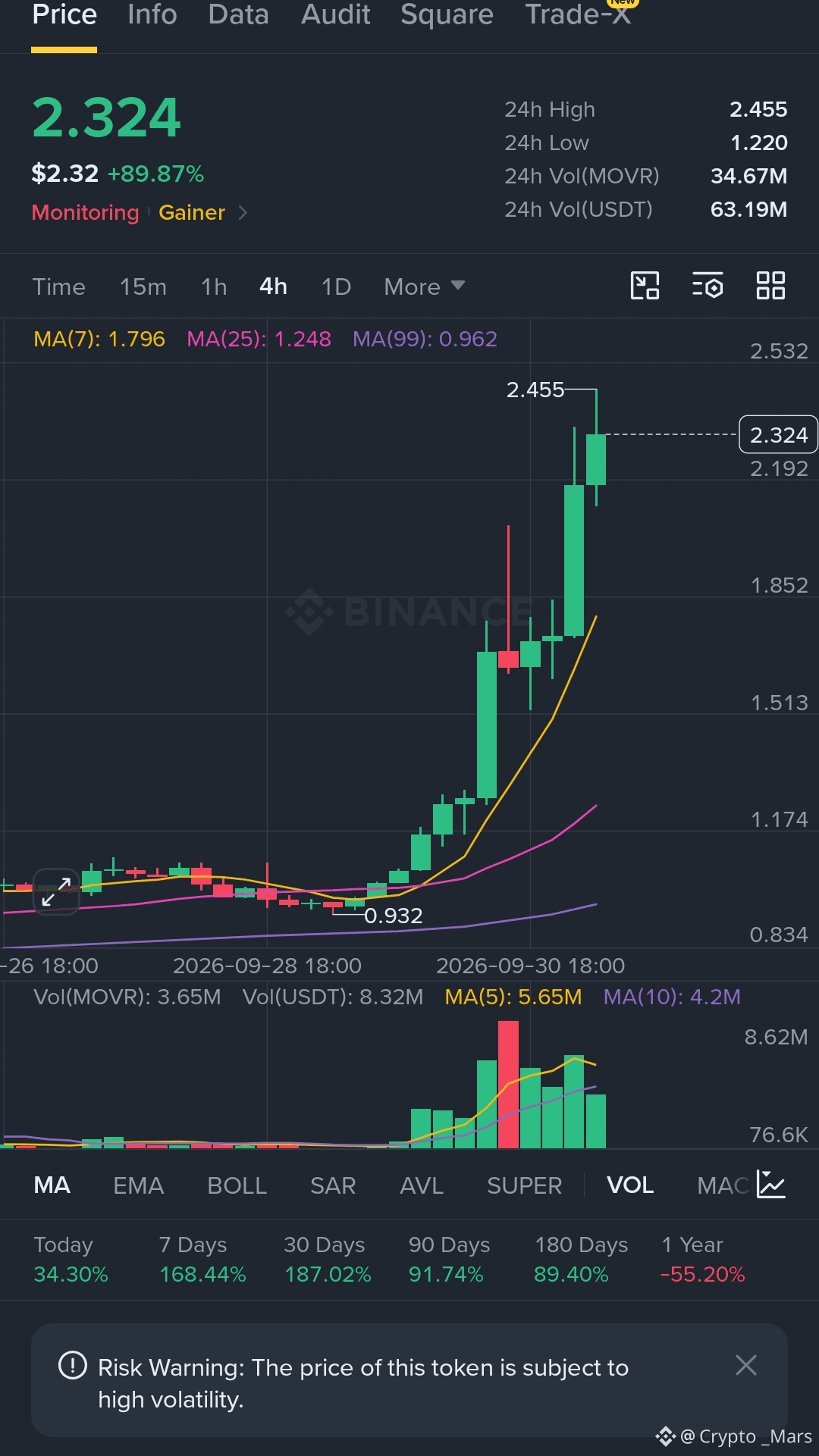
Jungs,
ich habe es vor ein paar Stunden genannt: MOVR würde $2 erreichen. 🎯
Und jetzt… $2 wurde bereits getroffen! 🚀
Der Schwung ist immer noch stark.
Nächstes Ziel: $3? 👀📈
Was denkt ihr — kann MOVR als Nächstes $3 erreichen?
$MOVR
{future}(MOVRUSDT)
Jungs,
ich habe es vor ein paar Stunden genannt: MOVR würde $2 erreichen. 🎯
Und jetzt… $2 wurde bereits getroffen! 🚀
Der Schwung ist immer noch stark.
Nächstes Ziel: $3? 👀📈
Was denkt ihr — kann MOVR als Nächstes $3 erreichen?
$MOVR
ich habe es vor ein paar Stunden genannt: MOVR würde $2 erreichen. 🎯
Und jetzt… $2 wurde bereits getroffen! 🚀
Der Schwung ist immer noch stark.
Nächstes Ziel: $3? 👀📈
Was denkt ihr — kann MOVR als Nächstes $3 erreichen?
$MOVR
2
5
3.7k
·
--
🎯 Wo denkst du, wo BTC in den nächsten 24 Stunden handeln wird?
BTC hält sich um $83,8K — jetzt lautet die entscheidende Frage: Ausbruch oder Rücksetzer? 👀
📊 🚀 $86K+
🔥 $84K–$86K
🐻 $82K–$84K
📉 Unter $82K
Wie lautet deine Prognose? 👇
$BTC
{future}(BTCUSDT)
🎯 Wo denkst du, wo BTC in den nächsten 24 Stunden handeln wird?
BTC hält sich um $83,8K — jetzt lautet die entscheidende Frage: Ausbruch oder Rücksetzer? 👀
📊 🚀 $86K+
🔥 $84K–$86K
🐻 $82K–$84K
📉 Unter $82K
Wie lautet deine Prognose? 👇
$BTC
BTC hält sich um $83,8K — jetzt lautet die entscheidende Frage: Ausbruch oder Rücksetzer? 👀
📊 🚀 $86K+
🔥 $84K–$86K
🐻 $82K–$84K
📉 Unter $82K
Wie lautet deine Prognose? 👇
$BTC
$86K+Boom🚀
37%
$84K–$86K
21%
Below $82K
42%
48 Stimmen • Abstimmung beendet
428
·
--
Bullisch
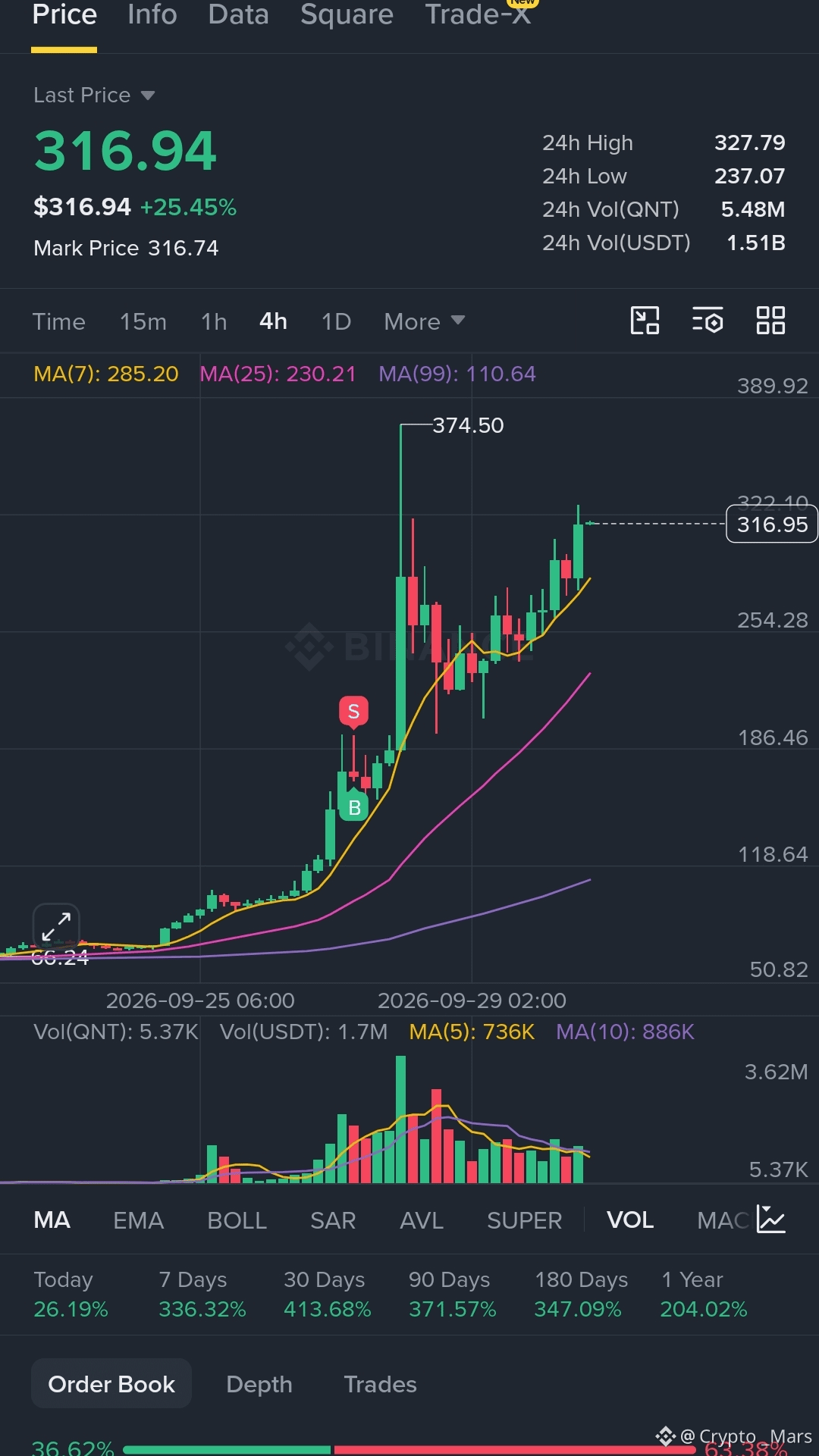
Jungs,
QNT als nächster Move: $400? 👀🔥
QNT zeigt gerade ernsthafte Stärke.
$400 könnte das nächste große Ziel sein… 🚀
Aber was denkt ihr?
$400 als nächstes — oder zuerst ein Rücksetzer? 👇
$QNT
{spot}(QNTUSDT)
Jungs,
QNT als nächster Move: $400? 👀🔥
QNT zeigt gerade ernsthafte Stärke.
$400 könnte das nächste große Ziel sein… 🚀
Aber was denkt ihr?
$400 als nächstes — oder zuerst ein Rücksetzer? 👇
$QNT
QNT als nächster Move: $400? 👀🔥
QNT zeigt gerade ernsthafte Stärke.
$400 könnte das nächste große Ziel sein… 🚀
Aber was denkt ihr?
$400 als nächstes — oder zuerst ein Rücksetzer? 👇
$QNT
1.1k
·
--
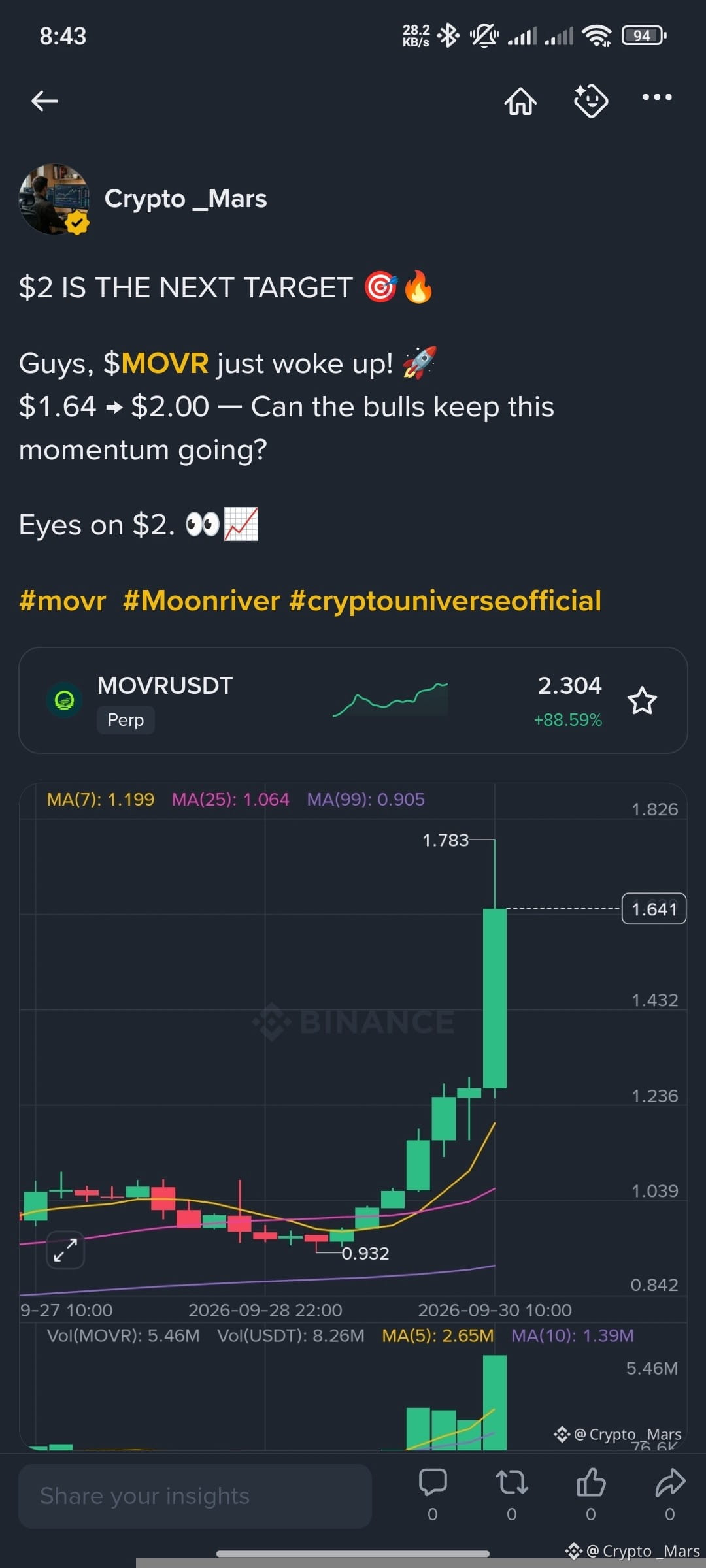
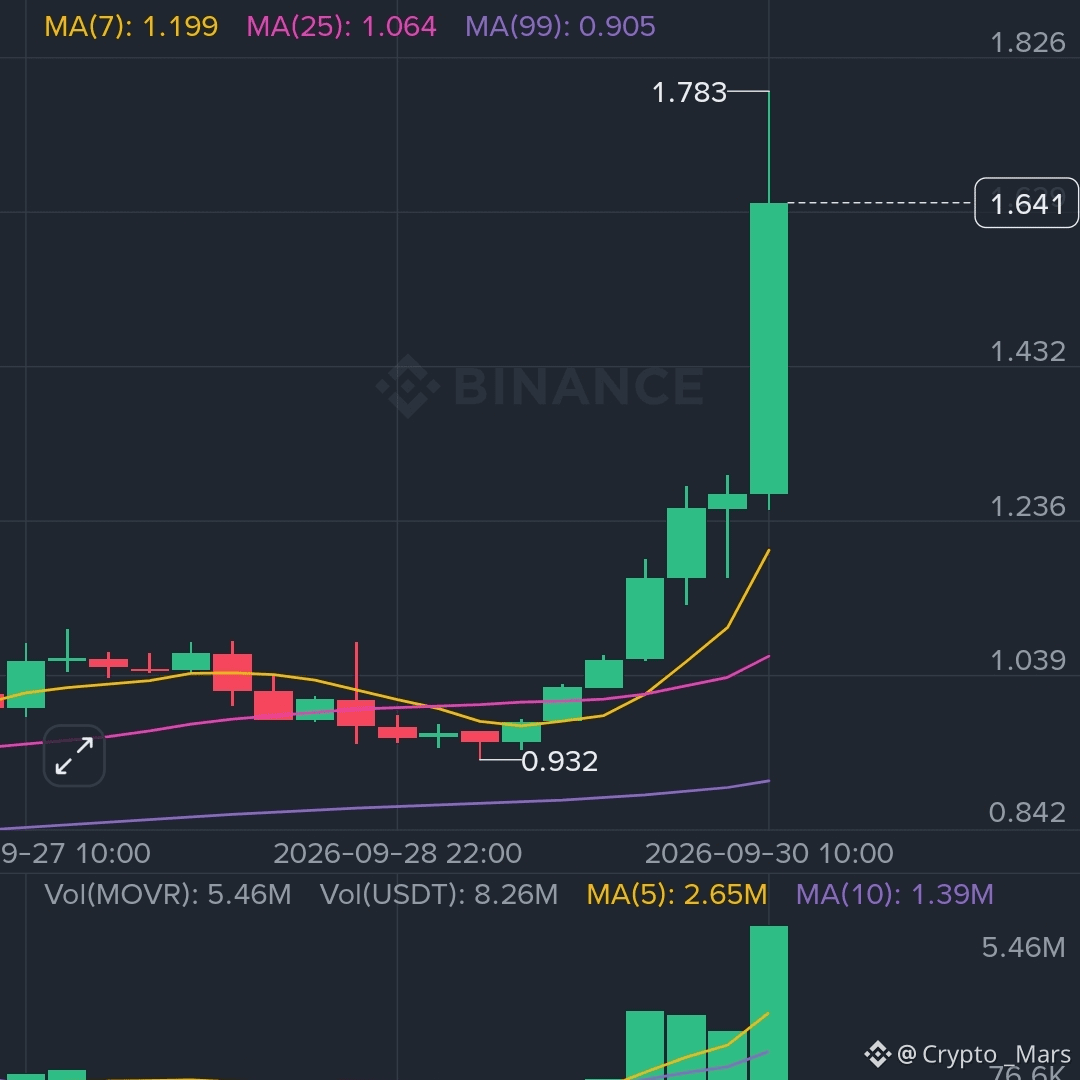
$2 IST DAS NÄCHSTE ZIEL 🎯🔥
Leute, $MOVR ist gerade aufgewacht! 🚀
$1,64 → $2,00 — Können die Bullen diese Dynamik beibehalten?
Blick auf $2. 👀📈
#movr #Moonriver #cryptouniverseofficial
{future}(MOVRUSDT)
$2 IST DAS NÄCHSTE ZIEL 🎯🔥
Leute, $MOVR ist gerade aufgewacht! 🚀
$1,64 → $2,00 — Können die Bullen diese Dynamik beibehalten?
Blick auf $2. 👀📈
#movr #Moonriver #cryptouniverseofficial
Leute, $MOVR ist gerade aufgewacht! 🚀
$1,64 → $2,00 — Können die Bullen diese Dynamik beibehalten?
Blick auf $2. 👀📈
#movr #Moonriver #cryptouniverseofficial
721
·
--
Wohin glaubst du, wo HBAR als Nächstes hingeht?
🔹 $0.13
🔹 $0.15
🔹 $0.18
🔹 $0.20+
Wähle dein Ziel unten 👇
Lass uns sehen, was die Community denkt! 🚀
#HBARUSDT R #HBARUSDT #CryptoPoll
Wohin glaubst du, wo HBAR als Nächstes hingeht?
🔹 $0.13
🔹 $0.15
🔹 $0.18
🔹 $0.20+
Wähle dein Ziel unten 👇
Lass uns sehen, was die Community denkt! 🚀
#HBARUSDT R #HBARUSDT #CryptoPoll
🔹 $0.13
🔹 $0.15
🔹 $0.18
🔹 $0.20+
Wähle dein Ziel unten 👇
Lass uns sehen, was die Community denkt! 🚀
#HBARUSDT R #HBARUSDT #CryptoPoll
$0.13
13%
$0.14
12%
$0.18
26%
0.20+ BOOM🚀
49%
65 Stimmen • Abstimmung beendet
646
·
--
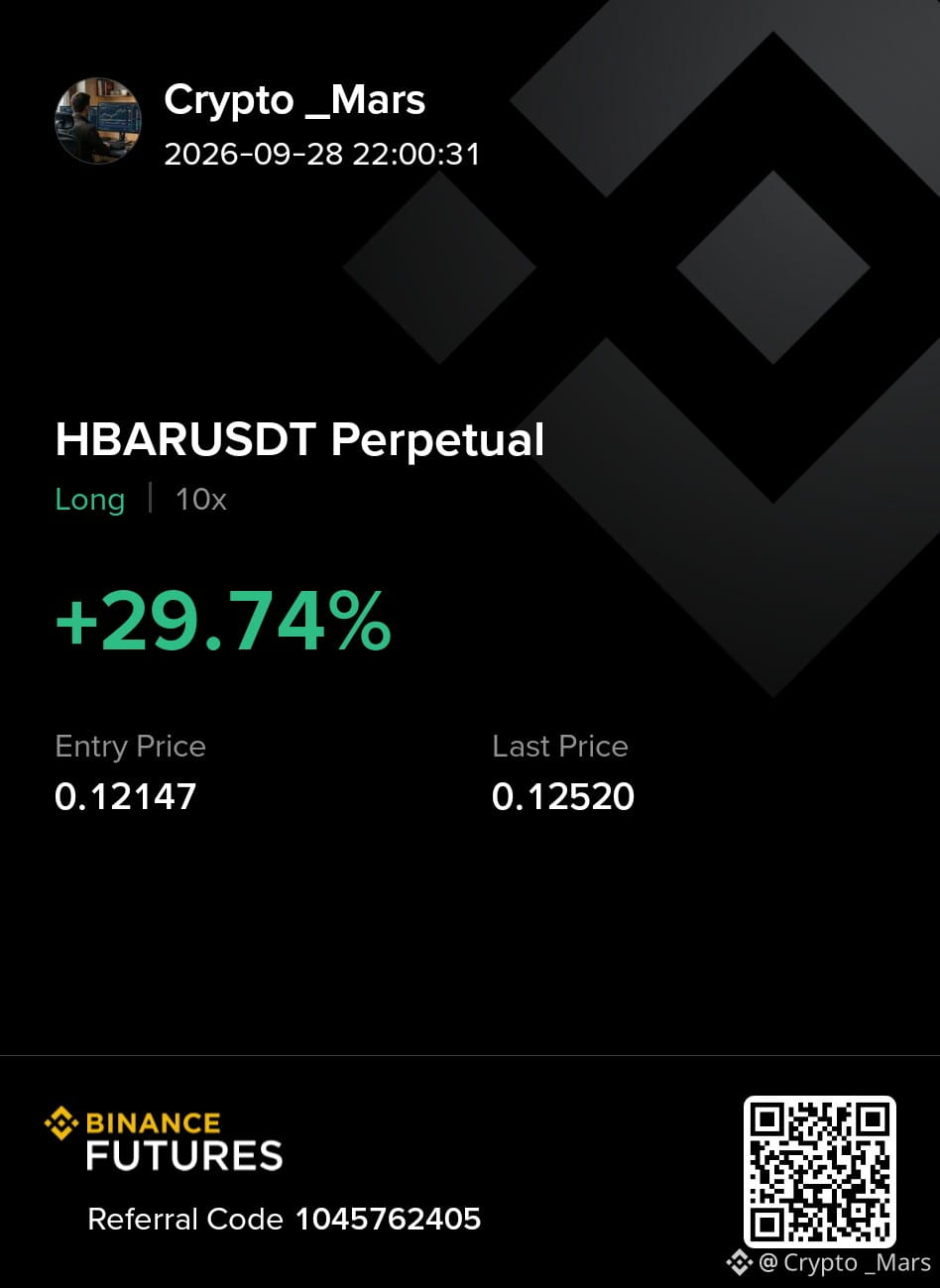
🔥 Wer ist noch in HBAR long?
HBAR bewegt sich, und mein Trade läuft noch 🚀
Aktuell liege ich bei rund +29,74% Gewinn 📈
Jetzt will ich wissen, wie es bei dir aussieht 👀
Hast du einen HBAR-Trade eröffnet? Wie ist dein Entry & aktueller PnL?
Poste deinen Gewinn-% in die Kommentare 👇
Mal sehen, wer diese Bewegung abfängt! 🔥
#HBAR #HBARUSDT #cryptotrading
{future}(HBARUSDT)
🔥 Wer ist noch in HBAR long?
HBAR bewegt sich, und mein Trade läuft noch 🚀
Aktuell liege ich bei rund +29,74% Gewinn 📈
Jetzt will ich wissen, wie es bei dir aussieht 👀
Hast du einen HBAR-Trade eröffnet? Wie ist dein Entry & aktueller PnL?
Poste deinen Gewinn-% in die Kommentare 👇
Mal sehen, wer diese Bewegung abfängt! 🔥
#HBAR #HBARUSDT #cryptotrading
HBAR bewegt sich, und mein Trade läuft noch 🚀
Aktuell liege ich bei rund +29,74% Gewinn 📈
Jetzt will ich wissen, wie es bei dir aussieht 👀
Hast du einen HBAR-Trade eröffnet? Wie ist dein Entry & aktueller PnL?
Poste deinen Gewinn-% in die Kommentare 👇
Mal sehen, wer diese Bewegung abfängt! 🔥
#HBAR #HBARUSDT #cryptotrading
1
384
·
--
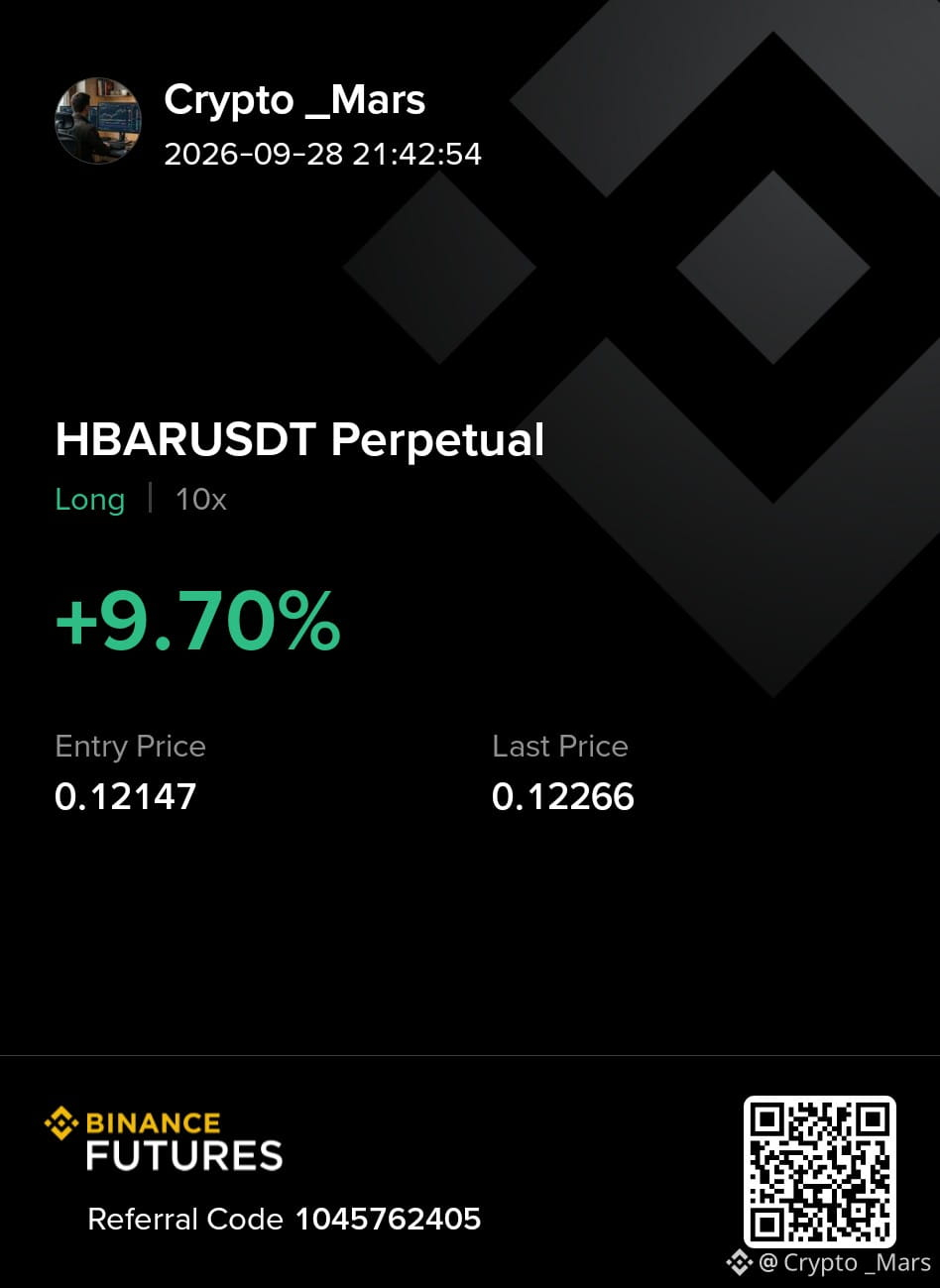
Jungs 🚀
Schneller Einstieg. Schneller Gewinn!
🔥 $HBAR USDT — LONG SETUP
📍 Einstieg: 0.12147
🎯 TP1: 0.12400
🎯 TP2: 0.12700
🎯 TP3: 0.13000
🛑 SL: 0.11850
⚡ Hebel: 10X
Warum Long?
HBAR zeigt starken bullischen Momentum und der aktuelle Preis hält sich über der Einstiegsszone. Wenn das Momentum anhält, könnten die nächsten Widerstandsniveaus zu möglichen Zielen werden.
Handle das Setup, nicht die Emotion. Manage dein Risiko.
#hbar #LongSetup #CryptoTrading.
$HBAR
{future}(HBARUSDT)
Jungs 🚀
Schneller Einstieg. Schneller Gewinn!
🔥 $HBAR USDT — LONG SETUP
📍 Einstieg: 0.12147
🎯 TP1: 0.12400
🎯 TP2: 0.12700
🎯 TP3: 0.13000
🛑 SL: 0.11850
⚡ Hebel: 10X
Warum Long?
HBAR zeigt starken bullischen Momentum und der aktuelle Preis hält sich über der Einstiegsszone. Wenn das Momentum anhält, könnten die nächsten Widerstandsniveaus zu möglichen Zielen werden.
Handle das Setup, nicht die Emotion. Manage dein Risiko.
#hbar #LongSetup #CryptoTrading.
$HBAR
Schneller Einstieg. Schneller Gewinn!
🔥 $HBAR USDT — LONG SETUP
📍 Einstieg: 0.12147
🎯 TP1: 0.12400
🎯 TP2: 0.12700
🎯 TP3: 0.13000
🛑 SL: 0.11850
⚡ Hebel: 10X
Warum Long?
HBAR zeigt starken bullischen Momentum und der aktuelle Preis hält sich über der Einstiegsszone. Wenn das Momentum anhält, könnten die nächsten Widerstandsniveaus zu möglichen Zielen werden.
Handle das Setup, nicht die Emotion. Manage dein Risiko.
#hbar #LongSetup #CryptoTrading.
$HBAR
1
238
·
--
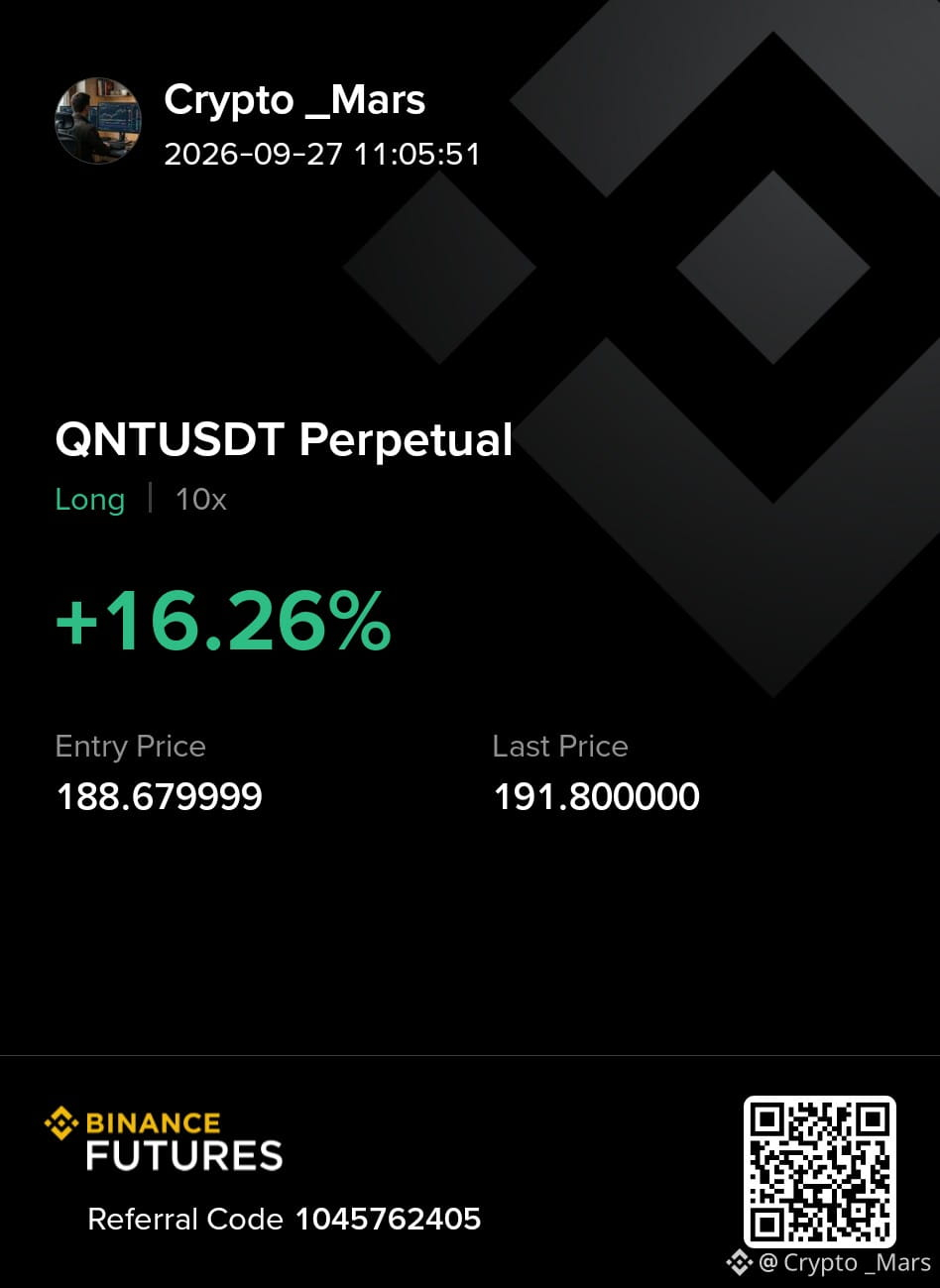
$QNT brennt 🔥 Einfach Boom!
Leute, QNT zeigt nach dem Ausbruch starkes Momentum. Wenn der Preis die aktuelle Struktur hält, könnte ein Fortsetzungsschub in Frage kommen.
📈 QNT LONG SETUP
Einstieg: $191.5–193.0
🎯 TP1: $195.0
🎯 TP2: $198.0
🎯 TP3: $202.0
🛑 SL: $188.5
Warte auf Bestätigung und manage das Risiko—jage keiner vertikalen Kerze hinterher.
Das Momentum ist stark, aber der Einstieg ist entscheidend.
#QNT #LongSetup #CryptoTrading.
{future}(QNTUSDT)
$QNT brennt 🔥 Einfach Boom!
Leute, QNT zeigt nach dem Ausbruch starkes Momentum. Wenn der Preis die aktuelle Struktur hält, könnte ein Fortsetzungsschub in Frage kommen.
📈 QNT LONG SETUP
Einstieg: $191.5–193.0
🎯 TP1: $195.0
🎯 TP2: $198.0
🎯 TP3: $202.0
🛑 SL: $188.5
Warte auf Bestätigung und manage das Risiko—jage keiner vertikalen Kerze hinterher.
Das Momentum ist stark, aber der Einstieg ist entscheidend.
#QNT #LongSetup #CryptoTrading.
Leute, QNT zeigt nach dem Ausbruch starkes Momentum. Wenn der Preis die aktuelle Struktur hält, könnte ein Fortsetzungsschub in Frage kommen.
📈 QNT LONG SETUP
Einstieg: $191.5–193.0
🎯 TP1: $195.0
🎯 TP2: $198.0
🎯 TP3: $202.0
🛑 SL: $188.5
Warte auf Bestätigung und manage das Risiko—jage keiner vertikalen Kerze hinterher.
Das Momentum ist stark, aber der Einstieg ist entscheidend.
#QNT #LongSetup #CryptoTrading.
624
·
--
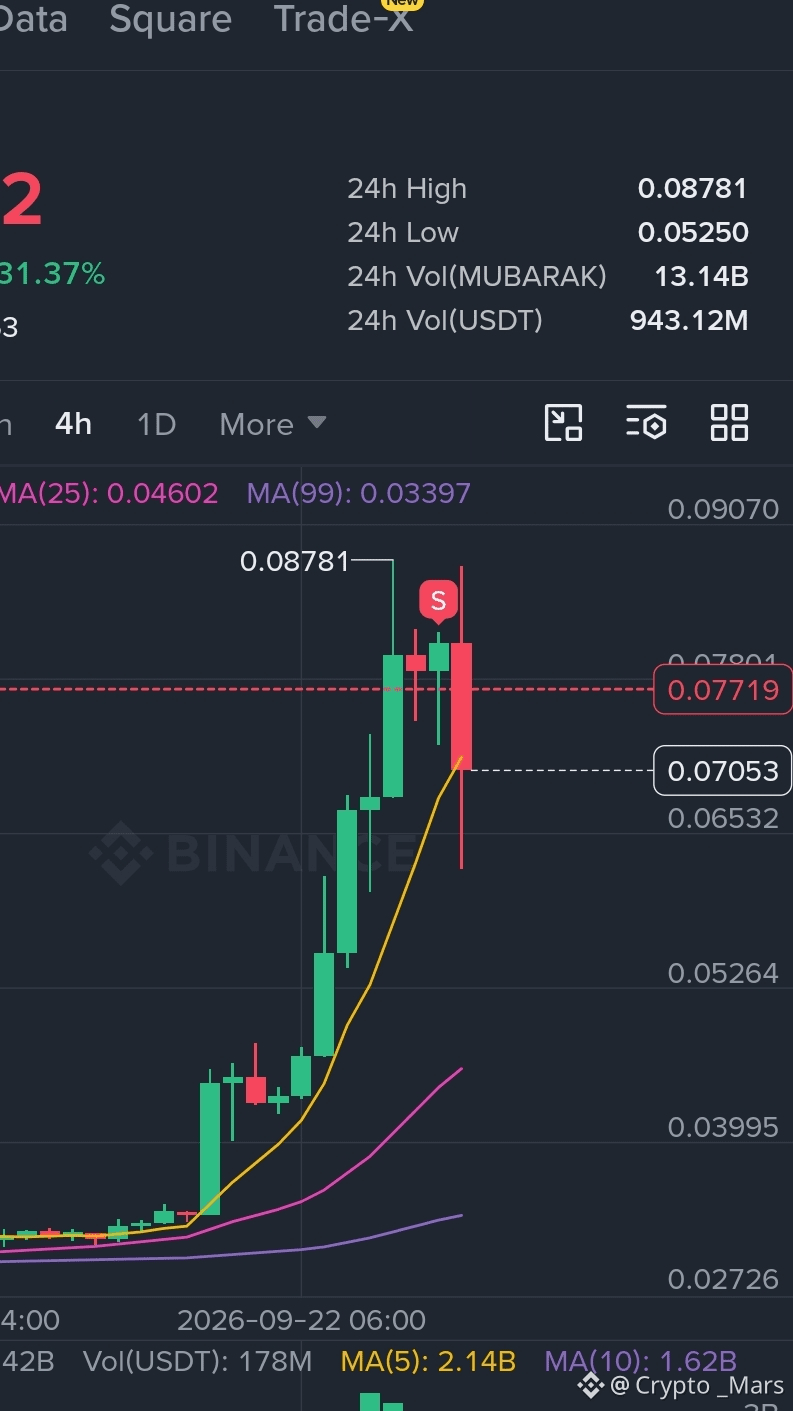
Jungs, kurze Trades eröffnen & Geld verdienen! 📉
$MUBARAK
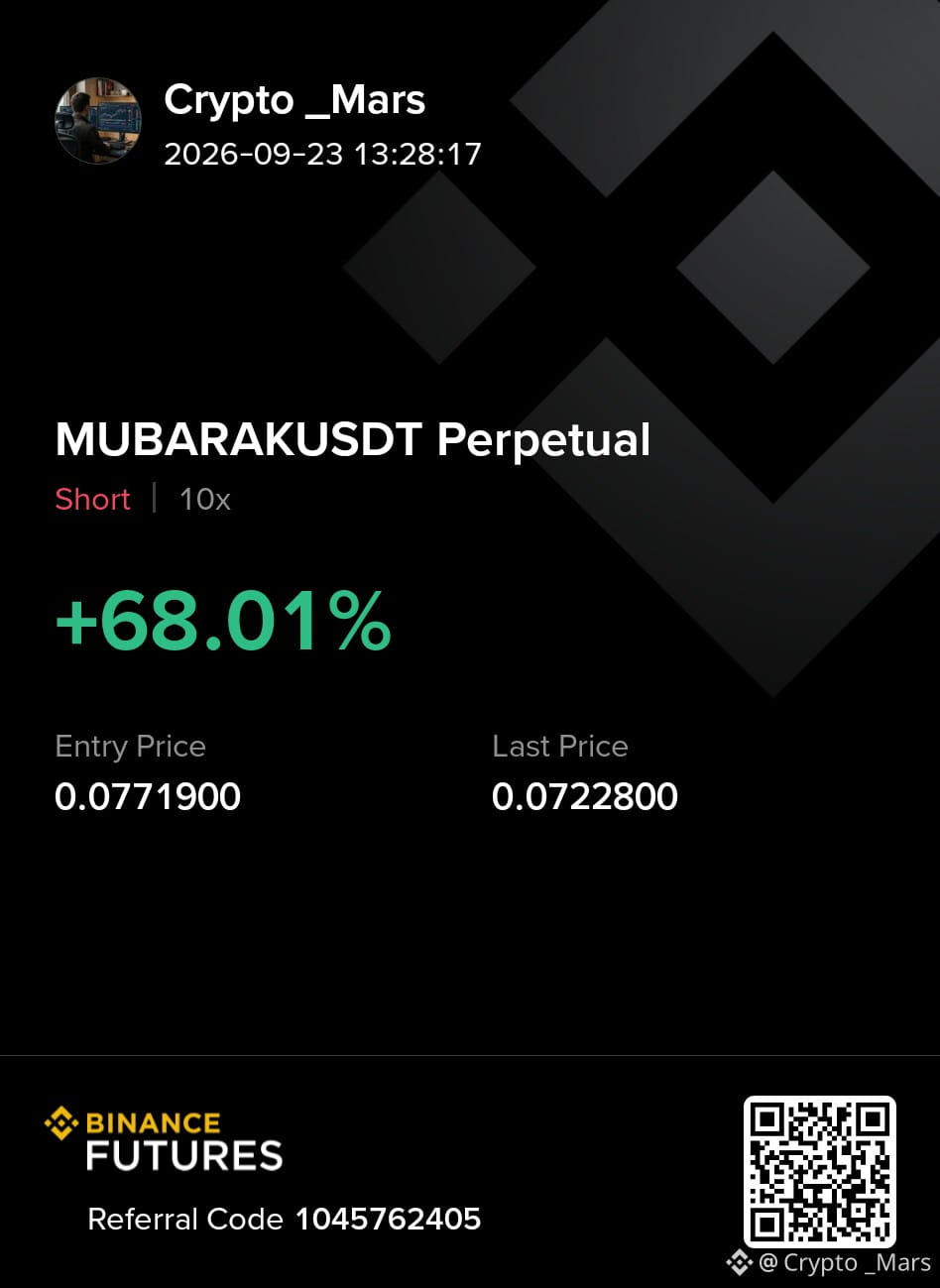
USDT zeigt eine klare Short-Seite-Momentum, während der Preis sich von 0.07719 → 0.07228 bewegt, während die Position bereits bei ca. +68% liegt.
SHORT-SETUP
Einstieg: 0.0722–0.0730
TP1: 0.0700
TP2: 0.0675
TP3: 0.0645
SL: 0.0750
Der Schlüssel ist, der Bewegung nicht hinterherzulaufen – warte auf einen schwachen Re-Test und eine Ablehnung, bevor du einsteigst. Risikomanagement ist wichtiger als der Hebel.
Handle die Struktur, nicht die Emotion.
{future}(MUBARAKUSDT)
#MUBARAK #BinanceFutures #Trading
Jungs, kurze Trades eröffnen & Geld verdienen! 📉
$MUBARAK
USDT zeigt eine klare Short-Seite-Momentum, während der Preis sich von 0.07719 → 0.07228 bewegt, während die Position bereits bei ca. +68% liegt.
SHORT-SETUP
Einstieg: 0.0722–0.0730
TP1: 0.0700
TP2: 0.0675
TP3: 0.0645
SL: 0.0750
Der Schlüssel ist, der Bewegung nicht hinterherzulaufen – warte auf einen schwachen Re-Test und eine Ablehnung, bevor du einsteigst. Risikomanagement ist wichtiger als der Hebel.
Handle die Struktur, nicht die Emotion.
#MUBARAK #BinanceFutures #Trading
$MUBARAK
USDT zeigt eine klare Short-Seite-Momentum, während der Preis sich von 0.07719 → 0.07228 bewegt, während die Position bereits bei ca. +68% liegt.
SHORT-SETUP
Einstieg: 0.0722–0.0730
TP1: 0.0700
TP2: 0.0675
TP3: 0.0645
SL: 0.0750
Der Schlüssel ist, der Bewegung nicht hinterherzulaufen – warte auf einen schwachen Re-Test und eine Ablehnung, bevor du einsteigst. Risikomanagement ist wichtiger als der Hebel.
Handle die Struktur, nicht die Emotion.
#MUBARAK #BinanceFutures #Trading
486
·
--
🚀 AVA BEREIT FÜR DEN PUMP🔥
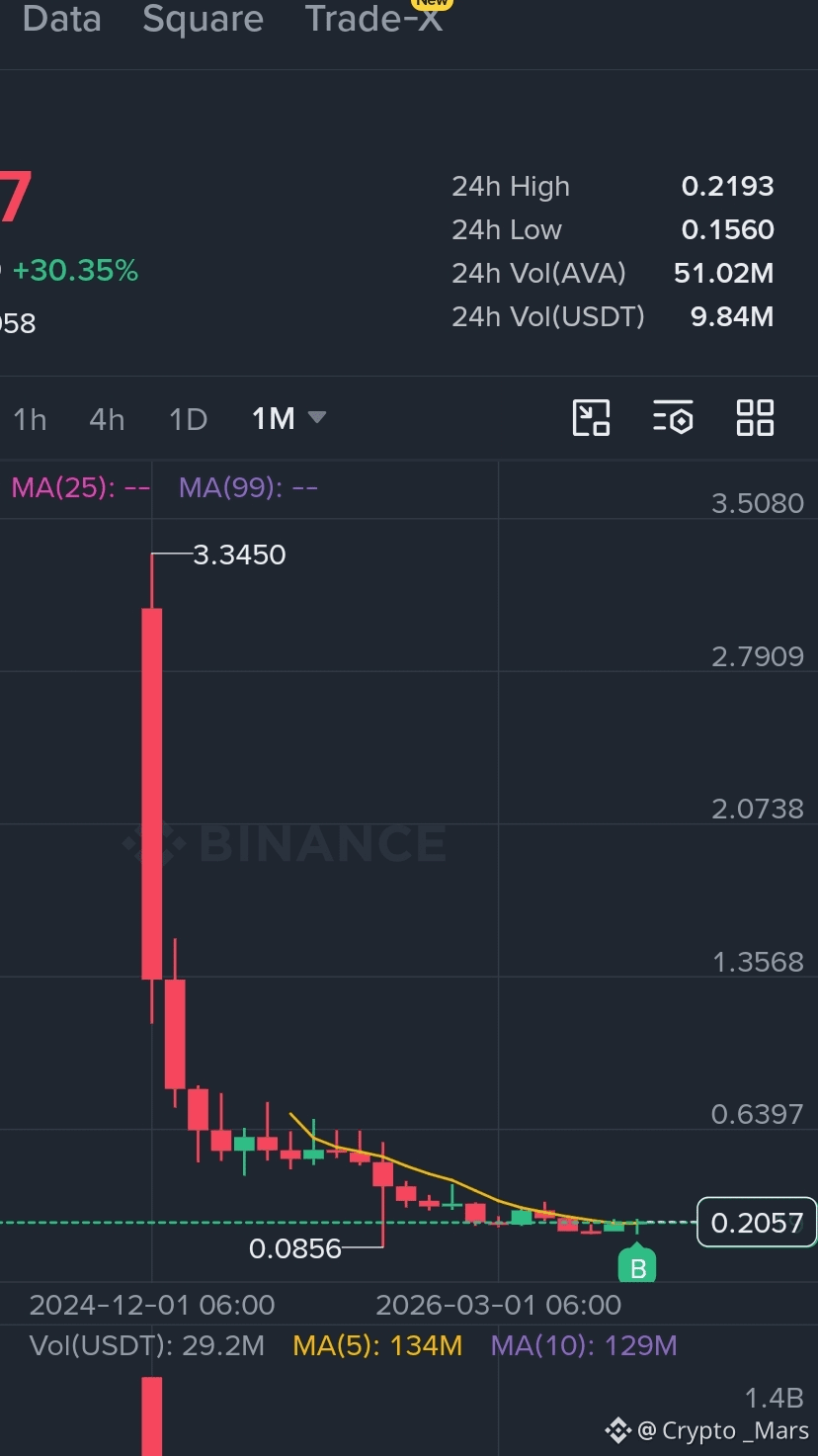
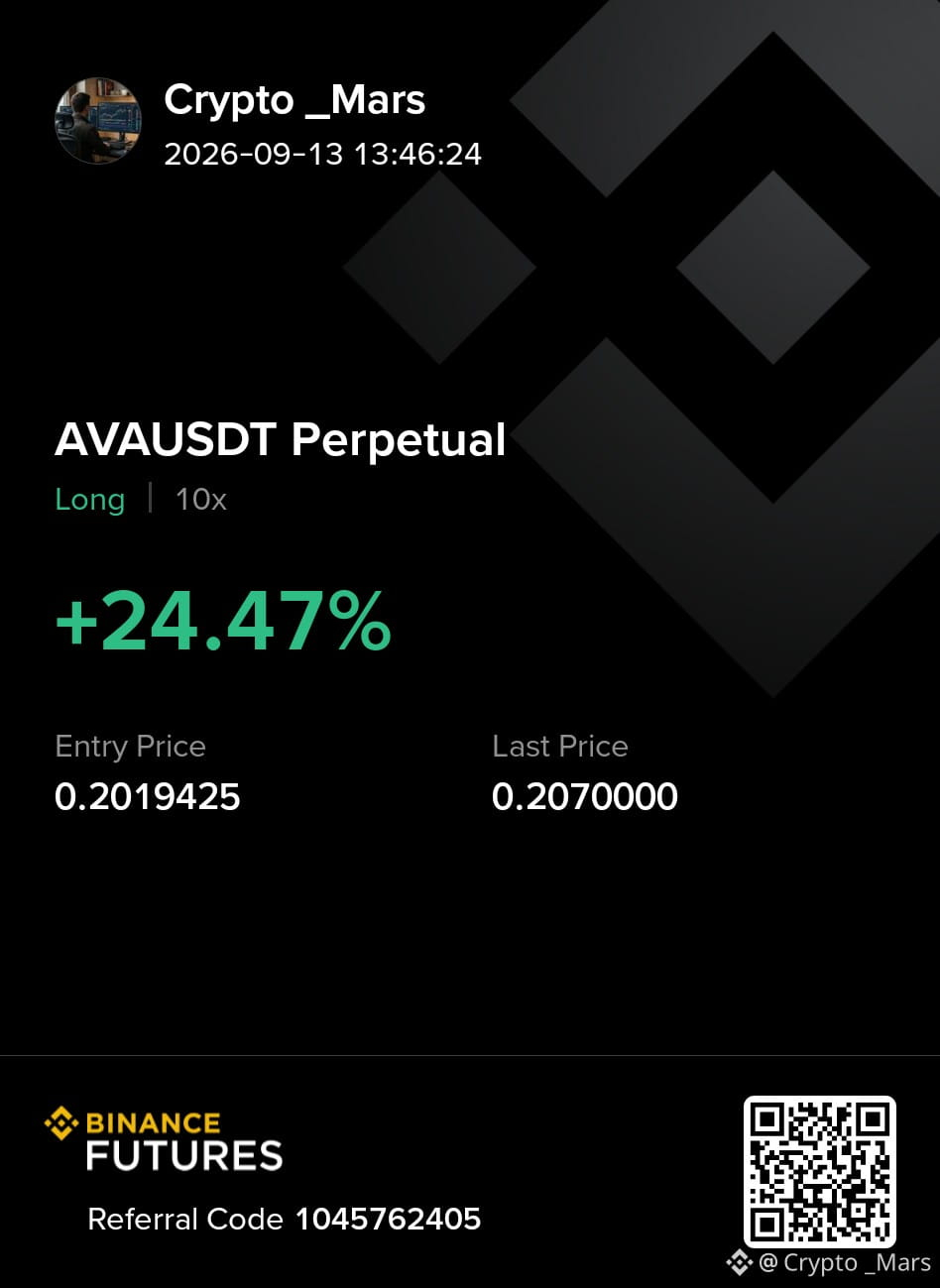
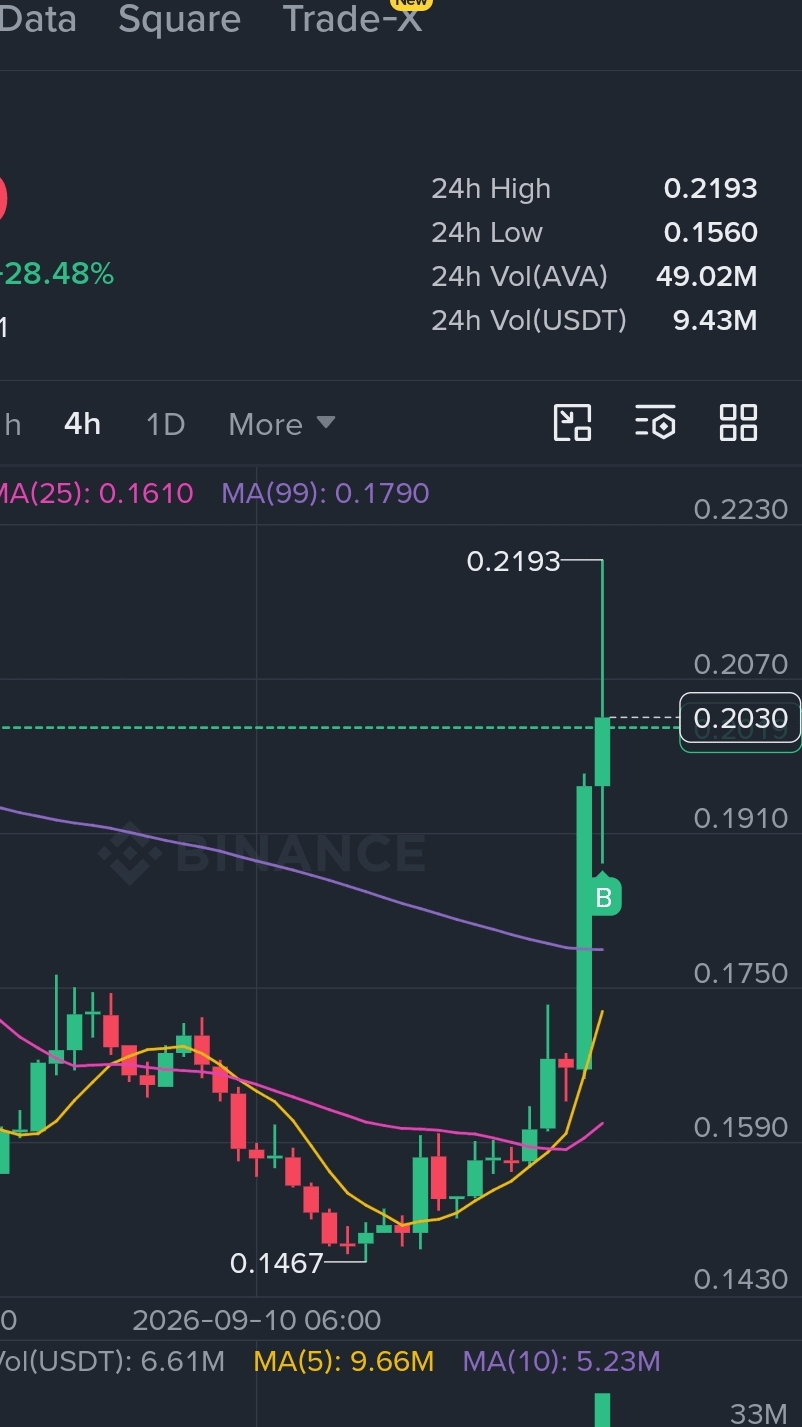
AVA zeigt Anzeichen einer Basisbildungs-Phase nach einem langen Abwärtstrend. Der Preis hält sich um $0.20, während sich der jüngste Momentum-Shift allmählich bullisch entwickelt.
📈 Long Setup
Entry: $0.198–$0.207
🎯 TP1: $0.23
🎯 TP2: $0.28
🎯 TP3: $0.35+
🛑 Stop Loss: $0.185
Meine Sicht: Ein klarer Ausbruch über $0.22–$0.23 mit Volumen könnte die Bestätigung für die nächste Aufwärtsbewegung sein. Bis dahin ist das ein Hochrisiko-Accumulation-Setup—kein garantierter Pump.
Keine Finanzberatung. MACH DEIN EIGENES RESEARCH (DYOR).
{future}(AVAUSDT)
🚀 AVA BEREIT FÜR DEN PUMP🔥
AVA zeigt Anzeichen einer Basisbildungs-Phase nach einem langen Abwärtstrend. Der Preis hält sich um $0.20, während sich der jüngste Momentum-Shift allmählich bullisch entwickelt.
📈 Long Setup
Entry: $0.198–$0.207
🎯 TP1: $0.23
🎯 TP2: $0.28
🎯 TP3: $0.35+
🛑 Stop Loss: $0.185
Meine Sicht: Ein klarer Ausbruch über $0.22–$0.23 mit Volumen könnte die Bestätigung für die nächste Aufwärtsbewegung sein. Bis dahin ist das ein Hochrisiko-Accumulation-Setup—kein garantierter Pump.
Keine Finanzberatung. MACH DEIN EIGENES RESEARCH (DYOR).
AVA zeigt Anzeichen einer Basisbildungs-Phase nach einem langen Abwärtstrend. Der Preis hält sich um $0.20, während sich der jüngste Momentum-Shift allmählich bullisch entwickelt.
📈 Long Setup
Entry: $0.198–$0.207
🎯 TP1: $0.23
🎯 TP2: $0.28
🎯 TP3: $0.35+
🛑 Stop Loss: $0.185
Meine Sicht: Ein klarer Ausbruch über $0.22–$0.23 mit Volumen könnte die Bestätigung für die nächste Aufwärtsbewegung sein. Bis dahin ist das ein Hochrisiko-Accumulation-Setup—kein garantierter Pump.
Keine Finanzberatung. MACH DEIN EIGENES RESEARCH (DYOR).
292
Anmelden und weiter Inhalte entdecken
Krypto-Nutzer weltweit auf Binance Square kennenlernen
⚡️ Bleib in Sachen Krypto stets am Puls.
💬 Die weltgrößte Kryptobörse vertraut darauf.
👍 Erhalte verlässliche Einblicke von verifizierten Creators.
E-Mail-Adresse/Telefonnummer
Trendthemen
BinancePick
3.1M Aufrufe
152,950 Kommentare
Mach bei #Gewinnsaison mit: Prognostiziere Unternehmensergebnisse auf Binance Pick und teile deine Meinung auf Binance Square!
Binance Square Official
·411 Likes
·343.2k Aufrufe
EarningsSeason
5.3M Aufrufe
26,015 Kommentare
AnthropicTTMRevenueGrewAbout1200%
30,903 Aufrufe
426 Kommentare