
AlphaBeksAsset
2.1k Beiträge
AlphaBeksAsset
Melden
Nutzer blockieren
🌐Crypto Space In One Place/📰News&Practical Tips/💬Discussions&Motivation/🤝Join The Community/🚀Navigating The Market Together/🔍No Hype Just Crypto Reality
36 Following
1.5K+ Follower
7.9K+ Like gegeben
Beiträge
Alle
Zitierungen
Videos
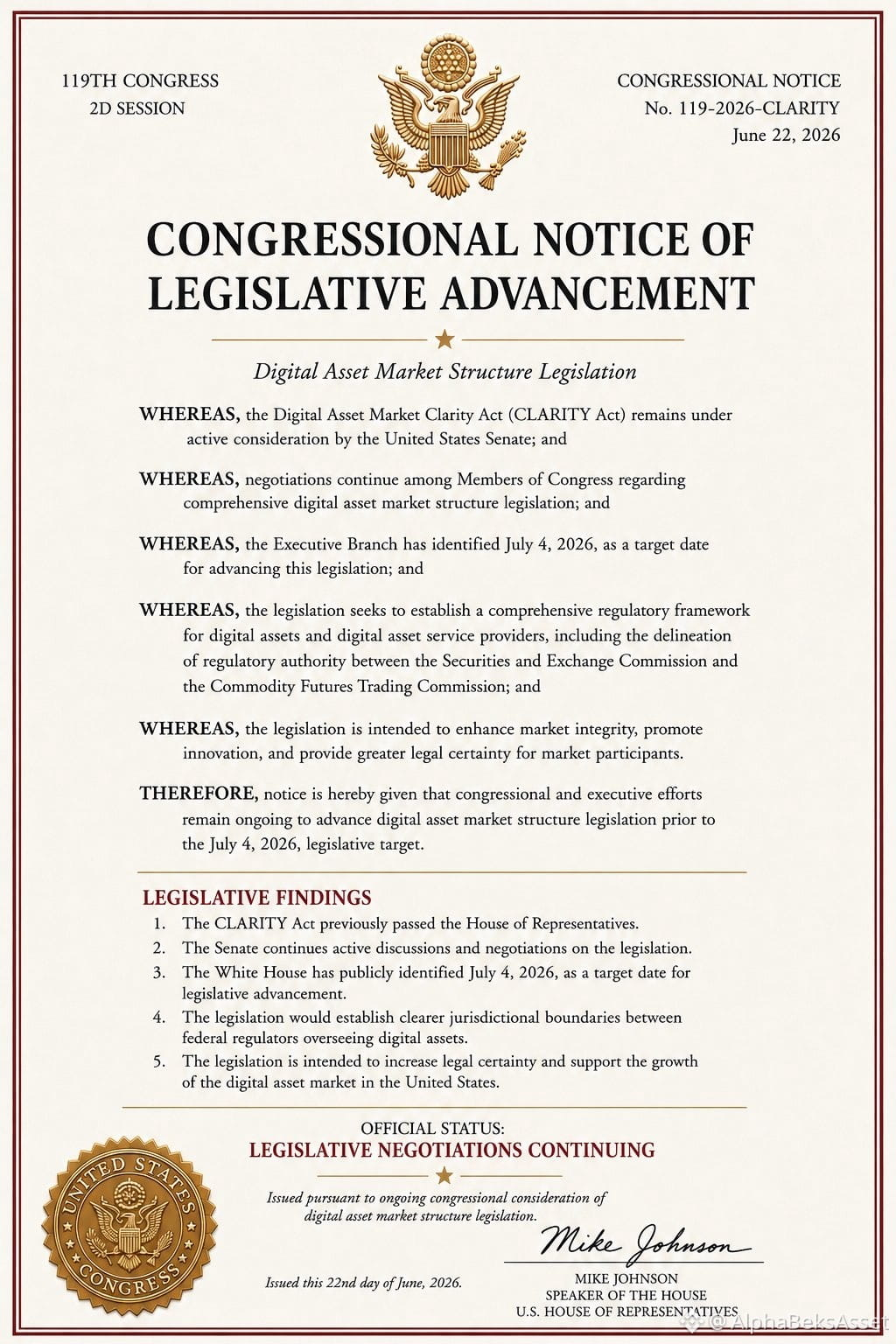
4. Juli könnte für Krypto zu einem richtungsweisenden Datum werden, da das Weiße Haus das CLARITY-Gesetz vorantreibt. 🇺🇸$BTC
{spot}(BTCUSDT)
$SPCXB
{spot}(SPCXBUSDT)
$NVDAB
{spot}(NVDABUSDT)
#CLARITYAct
4. Juli könnte für Krypto zu einem richtungsweisenden Datum werden, da das Weiße Haus das CLARITY-Gesetz vorantreibt. 🇺🇸$BTC
$SPCXB
$NVDAB
#CLARITYAct
$SPCXB
$NVDAB
#CLARITYAct
1
239
·
--
Bullisch
🇺🇸🇮🇷 Die USA setzen die Iran-Sanktionen für 60 Tage aus, da sich beide Seiten auf einen Fahrplan für einen dauerhaften Friedensvertrag einigen, wie Reuters berichtet.
Trump warnt, er werde „tun, was ich tun muss“, wenn der Iran seine Verpflichtungen im Rahmen der Vereinbarung nicht einhält.$BTC
{spot}(BTCUSDT)
$XRP
{spot}(XRPUSDT)
$MANTRA
{spot}(MANTRAUSDT)
🇺🇸🇮🇷 Die USA setzen die Iran-Sanktionen für 60 Tage aus, da sich beide Seiten auf einen Fahrplan für einen dauerhaften Friedensvertrag einigen, wie Reuters berichtet.
Trump warnt, er werde „tun, was ich tun muss“, wenn der Iran seine Verpflichtungen im Rahmen der Vereinbarung nicht einhält.$BTC
$XRP
$MANTRA
Trump warnt, er werde „tun, was ich tun muss“, wenn der Iran seine Verpflichtungen im Rahmen der Vereinbarung nicht einhält.$BTC
$XRP
$MANTRA
1
168
📢Breaking News👀🤯Kontinuierliches Bombardement hat in Iran weitreichende Zerstörung verursacht#iran #IranIsraelConflict #TRUMP $XRP $BNB $BTC #TRUMPWAR
📢Breaking News👀🤯Kontinuierliches Bombardement hat in Iran weitreichende Zerstörung verursacht#iran #IranIsraelConflict #TRUMP $XRP $BNB $BTC #TRUMPWAR
1
164
⚽🇬🇪Lass deine Landesflagge in den Kommentaren da 🤭und wenn dein Land sich nicht qualifiziert hat, für welches Land drückst du die Daumen???😉👇👇👇#FIFA #FIFAWorldCup2026 #WorldCupCrypto #worldcup_2026_post #FIFA2026 $BNB $XRP $MANTRA
⚽🇬🇪Lass deine Landesflagge in den Kommentaren da 🤭und wenn dein Land sich nicht qualifiziert hat, für welches Land drückst du die Daumen???😉👇👇👇#FIFA #FIFAWorldCup2026 #WorldCupCrypto #worldcup_2026_post #FIFA2026 $BNB $XRP $MANTRA
3
326
Die Bühne für das UFC-Event im Weißen Haus ist fertiggestellt.#UFC #iliatopuria #TopuriaGaethje Topuria💯$XRP $BNB $BTC
Die Bühne für das UFC-Event im Weißen Haus ist fertiggestellt.#UFC #iliatopuria #TopuriaGaethje Topuria💯$XRP $BNB $BTC
1
56
zu Iran: "Es wird heute Nacht mehr Bombardierungen geben. Es wird größer — mächtiger."#TRUMP #iran #IranIsraelConflict #Tehran $XRP $BNB $BTC
zu Iran: "Es wird heute Nacht mehr Bombardierungen geben. Es wird größer — mächtiger."#TRUMP #iran #IranIsraelConflict #Tehran $XRP $BNB $BTC
1
40
👀🤯Das Hauptbüro und die zentrale Zentrale der IRGC in Teheran steht Berichten zufolge in Flammen. Schwerer Rauch sichtbar.#iran #Tehran #IranIsraelConflict #TRUMP $XRP $BNB $BTC
👀🤯Das Hauptbüro und die zentrale Zentrale der IRGC in Teheran steht Berichten zufolge in Flammen. Schwerer Rauch sichtbar.#iran #Tehran #IranIsraelConflict #TRUMP $XRP $BNB $BTC
1
66
Die US-Luftwaffe hat eine neue Welle großer Luftangriffe gestartet.
Über 30 amerikanische Kampfjets bombardieren derzeit IRGC-Ziele im Iran, mit großen Explosionen, die in Teheran gemeldet werden.#IranIsraelConflict #iran #TRUMP $XRP $BNB $BTC
Die US-Luftwaffe hat eine neue Welle großer Luftangriffe gestartet.
Über 30 amerikanische Kampfjets bombardieren derzeit IRGC-Ziele im Iran, mit großen Explosionen, die in Teheran gemeldet werden.#IranIsraelConflict #iran #TRUMP $XRP $BNB $BTC
Über 30 amerikanische Kampfjets bombardieren derzeit IRGC-Ziele im Iran, mit großen Explosionen, die in Teheran gemeldet werden.#IranIsraelConflict #iran #TRUMP $XRP $BNB $BTC
1
74
Artikel
NVNM Chain kündigt bevorstehenden Launch des NVNM-Tokens und der MANTRA Community Early Access Initiative anDie NVNM Chain, die im Mai 2026 als erste Layer 2-Lösung auf der $MANTRA Chain gestartet wurde, dient als operationale Infrastruktur für Inveniams dezentrale Datenmanagementarchitektur.
Inveniam Labs, LLC (Inveniam Labs) kündigt den $NVNM-Token an, der auf einen Network Participation Token Launch (den Launch) im Q4 2026 abzielt, basierend auf der NVNM Chain – der ersten Layer 2 auf der MANTRA Chain.
Die MANTRA-Community erhält exklusiven Zugang zum NVNM-Token über die NVNM Chain Early Access Initiative.
Inveniam Labs kündigt heute den NVNM-Token an, einen Utility-Token, der mit institutionellen Funktionen im Sinn entwickelt wurde, mit einem Launch, der für Q4 2026 geplant ist. Neben dieser Ankündigung startet Inveniam Labs eine MANTRA Community Early Access Initiative – eine exklusive Gelegenheit für MANTRA-Halter, eine frühe Zuteilung von NVNM-Token vor dem Launch zu erhalten, als Anerkennung für ihre Beiträge zur Gründungsgemeinschaft des NVNM Chain-Ökosystems.
NVNM Chain kündigt bevorstehenden Launch des NVNM-Tokens und der MANTRA Community Early Access Initiative an
Die NVNM Chain, die im Mai 2026 als erste Layer 2-Lösung auf der $MANTRA Chain gestartet wurde, dient als operationale Infrastruktur für Inveniams dezentrale Datenmanagementarchitektur.
Inveniam Labs, LLC (Inveniam Labs) kündigt den $NVNM-Token an, der auf einen Network Participation Token Launch (den Launch) im Q4 2026 abzielt, basierend auf der NVNM Chain – der ersten Layer 2 auf der MANTRA Chain.
Die MANTRA-Community erhält exklusiven Zugang zum NVNM-Token über die NVNM Chain Early Access Initiative.
Inveniam Labs kündigt heute den NVNM-Token an, einen Utility-Token, der mit institutionellen Funktionen im Sinn entwickelt wurde, mit einem Launch, der für Q4 2026 geplant ist. Neben dieser Ankündigung startet Inveniam Labs eine MANTRA Community Early Access Initiative – eine exklusive Gelegenheit für MANTRA-Halter, eine frühe Zuteilung von NVNM-Token vor dem Launch zu erhalten, als Anerkennung für ihre Beiträge zur Gründungsgemeinschaft des NVNM Chain-Ökosystems.
Inveniam Labs, LLC (Inveniam Labs) kündigt den $NVNM-Token an, der auf einen Network Participation Token Launch (den Launch) im Q4 2026 abzielt, basierend auf der NVNM Chain – der ersten Layer 2 auf der MANTRA Chain.
Die MANTRA-Community erhält exklusiven Zugang zum NVNM-Token über die NVNM Chain Early Access Initiative.
Inveniam Labs kündigt heute den NVNM-Token an, einen Utility-Token, der mit institutionellen Funktionen im Sinn entwickelt wurde, mit einem Launch, der für Q4 2026 geplant ist. Neben dieser Ankündigung startet Inveniam Labs eine MANTRA Community Early Access Initiative – eine exklusive Gelegenheit für MANTRA-Halter, eine frühe Zuteilung von NVNM-Token vor dem Launch zu erhalten, als Anerkennung für ihre Beiträge zur Gründungsgemeinschaft des NVNM Chain-Ökosystems.
1
277
·
--
Bullisch
Das nächste Kapitel beginnt.
Wir kündigen den bevorstehenden Launch von #NVNM an, der für Q4 2026 geplant ist.
Aufgebaut auf der NVNM Chain, der ersten Layer 2 auf #MantraChain .
NVNM ist darauf ausgelegt, die Netzwerkteilnehmer in Bezug auf Verifizierung, Herkunft und Verantwortlichkeit abzustimmen, während KI und digitale Märkte wachsen.
Um die Community zu würdigen, die dieses Ökosystem möglich gemacht hat, starten wir die #mantra Community Early Access Initiative.
Berechtigte $MANTRA Inhaber haben die Möglichkeit, vor dem Launch teilzunehmen. KI braucht Vertrauen. Märkte brauchen Beweise. Die NVNM Chain baut beides $MANTRA {spot}(MANTRAUSDT)
Das nächste Kapitel beginnt.
Wir kündigen den bevorstehenden Launch von #NVNM an, der für Q4 2026 geplant ist.
Aufgebaut auf der NVNM Chain, der ersten Layer 2 auf #MantraChain .
NVNM ist darauf ausgelegt, die Netzwerkteilnehmer in Bezug auf Verifizierung, Herkunft und Verantwortlichkeit abzustimmen, während KI und digitale Märkte wachsen.
Um die Community zu würdigen, die dieses Ökosystem möglich gemacht hat, starten wir die #mantra Community Early Access Initiative.
Berechtigte $MANTRA Inhaber haben die Möglichkeit, vor dem Launch teilzunehmen. KI braucht Vertrauen. Märkte brauchen Beweise. Die NVNM Chain baut beides $MANTRA
Wir kündigen den bevorstehenden Launch von #NVNM an, der für Q4 2026 geplant ist.
Aufgebaut auf der NVNM Chain, der ersten Layer 2 auf #MantraChain .
NVNM ist darauf ausgelegt, die Netzwerkteilnehmer in Bezug auf Verifizierung, Herkunft und Verantwortlichkeit abzustimmen, während KI und digitale Märkte wachsen.
Um die Community zu würdigen, die dieses Ökosystem möglich gemacht hat, starten wir die #mantra Community Early Access Initiative.
Berechtigte $MANTRA Inhaber haben die Möglichkeit, vor dem Launch teilzunehmen. KI braucht Vertrauen. Märkte brauchen Beweise. Die NVNM Chain baut beides $MANTRA
2
322
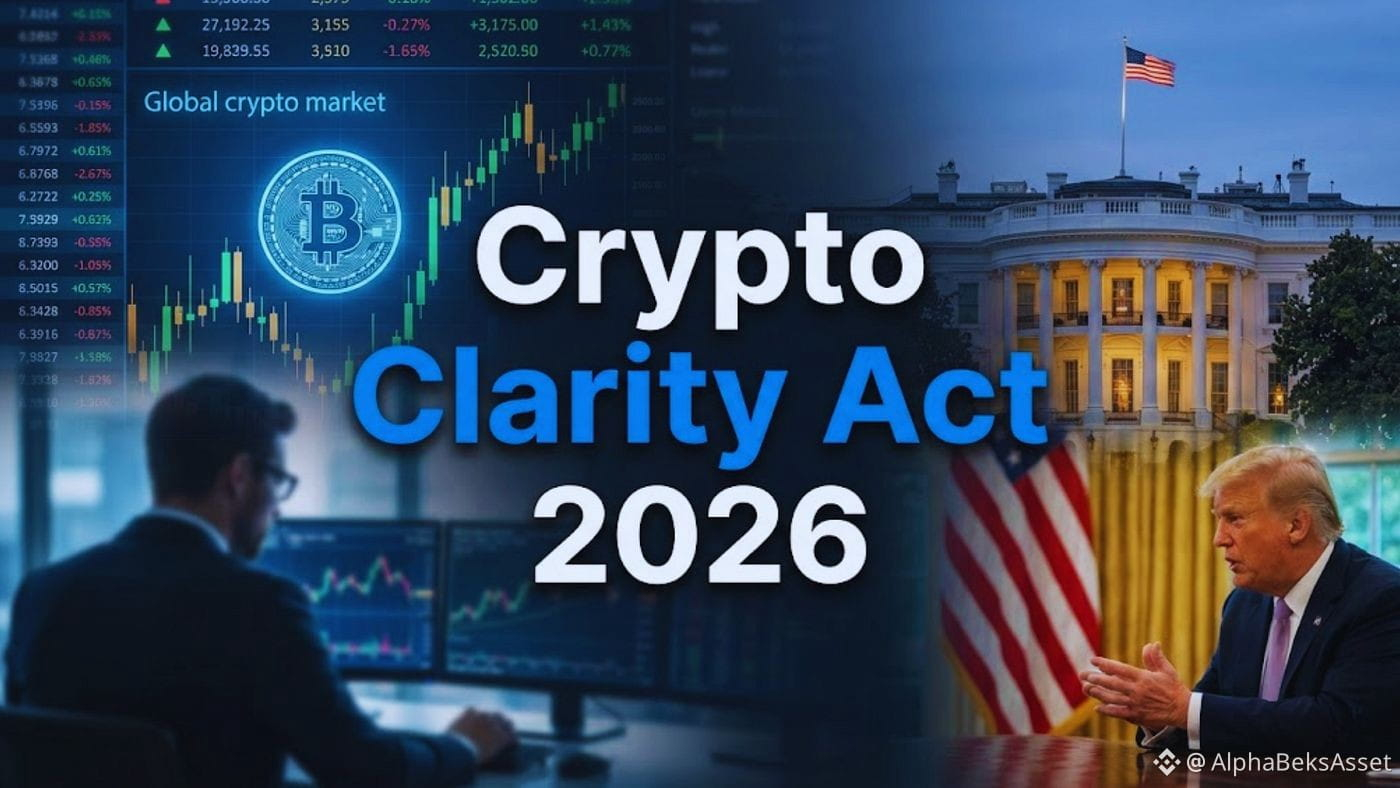
🇩🇪 Top-Krypto-Unternehmen senden gemeinsames Schreiben an den Kongress und fordern rechtliche Schutzmaßnahmen für Entwickler im Crypto Clarity Act.
• #a16z
• #AAVE
• #1inch
• #block
• #BitGo
• #Aptos
• #Zcash
• #Solana
• #Galaxy
• #Ledger
• #Kraken
• #Uniswap
• #Coinbase
• #Hyperliquid
• Viele andere
$XRP $BNB $BTC
🇩🇪 Top-Krypto-Unternehmen senden gemeinsames Schreiben an den Kongress und fordern rechtliche Schutzmaßnahmen für Entwickler im Crypto Clarity Act.
• #a16z
• #AAVE
• #1inch
• #block
• #BitGo
• #Aptos
• #Zcash
• #Solana
• #Galaxy
• #Ledger
• #Kraken
• #Uniswap
• #Coinbase
• #Hyperliquid
• Viele andere
$XRP $BNB $BTC
• #a16z
• #AAVE
• #1inch
• #block
• #BitGo
• #Aptos
• #Zcash
• #Solana
• #Galaxy
• #Ledger
• #Kraken
• #Uniswap
• #Coinbase
• #Hyperliquid
• Viele andere
$XRP $BNB $BTC
1
22
Wenn KI-Agenten anfangen zu agieren, rücken Zahlungen in den Hintergrund — mit Maschinen-Geschwindigkeit und in massivem Umfang.
Heute präsentieren wir Mastercard Agent Pay für Maschinen — ein neues Maß an Struktur, Governance und Vertrauen in diese neue Klasse von Zahlungen.
Wir starten mit über 30 Partnern, um dies von Tag eins an zum Leben zu erwecken.
Das sind nicht einfach nur mehr Zahlungen. Es ist ein neues Betriebsmodell für den Handel.#Ripple #AAVE #coinbase #solana #Polygon $XRP $AAVE $SOL
Wenn KI-Agenten anfangen zu agieren, rücken Zahlungen in den Hintergrund — mit Maschinen-Geschwindigkeit und in massivem Umfang.
Heute präsentieren wir Mastercard Agent Pay für Maschinen — ein neues Maß an Struktur, Governance und Vertrauen in diese neue Klasse von Zahlungen.
Wir starten mit über 30 Partnern, um dies von Tag eins an zum Leben zu erwecken.
Das sind nicht einfach nur mehr Zahlungen. Es ist ein neues Betriebsmodell für den Handel.#Ripple #AAVE #coinbase #solana #Polygon $XRP $AAVE $SOL
Heute präsentieren wir Mastercard Agent Pay für Maschinen — ein neues Maß an Struktur, Governance und Vertrauen in diese neue Klasse von Zahlungen.
Wir starten mit über 30 Partnern, um dies von Tag eins an zum Leben zu erwecken.
Das sind nicht einfach nur mehr Zahlungen. Es ist ein neues Betriebsmodell für den Handel.#Ripple #AAVE #coinbase #solana #Polygon $XRP $AAVE $SOL
3
203
🚨BREAKING: 🤯Anti-Migrationsunruhen eskalieren in Belfast, UK, als die Sonne untergeht
👀Die Polizei wirkt überfordert…$XRP $BNB $BTC
🚨BREAKING: 🤯Anti-Migrationsunruhen eskalieren in Belfast, UK, als die Sonne untergeht
👀Die Polizei wirkt überfordert…$XRP $BNB $BTC
👀Die Polizei wirkt überfordert…$XRP $BNB $BTC
1
65
👀🤨Unruhen in Belfast nach dem sudanesischen Angriff. Sie haben das Haus in Brand gesetzt, in dem sie Einwanderer untergebracht haben, die Asyl beantragen.$XRP $BNB $BTC
👀🤨Unruhen in Belfast nach dem sudanesischen Angriff. Sie haben das Haus in Brand gesetzt, in dem sie Einwanderer untergebracht haben, die Asyl beantragen.$XRP $BNB $BTC
1
81
Häuser wurden in Belfast in Brand gesteckt🤨$XRP $BNB $BTC
Häuser wurden in Belfast in Brand gesteckt🤨$XRP $BNB $BTC
1
100
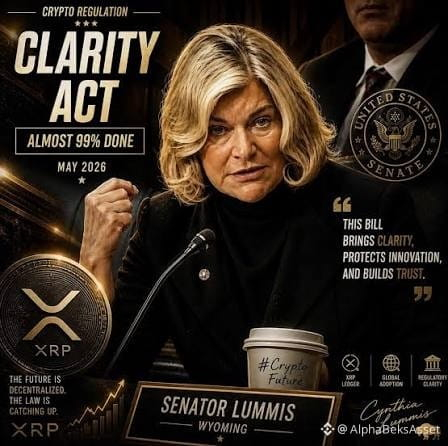
Senator Cynthia Lummis: Ich habe nicht Jahre an diesem Thema gearbeitet, um zuzusehen, wie ein anderes Land die Regeln schreibt, die die Vermögenswerte regeln, die Amerikaner erfunden haben. Lassen Sie uns das Clarity Act verabschieden.#CLARITYAct #CLARITYActProgress #HumanityProtocolHacked20M #200PlusCryptoGroupsUrgeSenateCLARITYVote $BNB $XRP $BTC
Senator Cynthia Lummis: Ich habe nicht Jahre an diesem Thema gearbeitet, um zuzusehen, wie ein anderes Land die Regeln schreibt, die die Vermögenswerte regeln, die Amerikaner erfunden haben. Lassen Sie uns das Clarity Act verabschieden.#CLARITYAct #CLARITYActProgress #HumanityProtocolHacked20M #200PlusCryptoGroupsUrgeSenateCLARITYVote $BNB $XRP $BTC
1
48
Anmelden und weiter Inhalte entdecken
Krypto-Nutzer weltweit auf Binance Square kennenlernen
⚡️ Bleib in Sachen Krypto stets am Puls.
💬 Die weltgrößte Kryptobörse vertraut darauf.
👍 Erhalte verlässliche Einblicke von verifizierten Creators.
E-Mail-Adresse/Telefonnummer
Trendthemen
FedRateWatch
294,660 Aufrufe
1,841 Kommentare
Teile & gewinne Traffic-Belohnungen in unserer Kampagne mit angesagtem Hashtag
✨Thema: FOMC September, Was ist der nächste Schritt der Fed?
👉So nimmst du teil:
Veröffentliche einen kurzen Beitrag oder Artikel mit dem Hashtag #FedRateWatch
Erstelle Inhalte basierend auf den folgenden Blickwinkeln:
- Der August-Core-CPI stieg um 0,3% im Monatsvergleich, und die Wahrscheinlichkeit für eine 25bp-Erhöhung diese Woche liegt nun bei fast 90%. Erwartest du diese Woche eine Zinserhöhung? Handelt es sich um einen einmaligen Schritt oder den Beginn eines längeren Zinserhöhungszyklus?
- Wenn die Erhöhung erfolgt: Wie entwickelt sich das für BTC, Tech-Aktien und Gold? Aufwärts- oder abwärtsgerichtet?
- Wie planst du als Nächstes zu handeln? Teile deinen BTC-, Aktien- oder Gold-Trade/Bestände mit unserem Trade-Sharing-Widget.
⏰Kampagnenzeitraum:
- 2026-09-15 11:00 - 2026-09-17 3:00 UTC
🎁Belohnung:
- Qualifizierte Beiträge, die die oben genannten Richtlinien erfüllen und mehr als 100 Wörter enthalten, werden überprüft und erhalten möglicherweise einen zufälligen Traffic-Boost von 500 bis 3.000 Aufrufen. Du erhältst eine Benachrichtigung von deiner Feed-Secretary, wenn dein Beitrag ausgewählt wird.
- Erhalte die Chance, dass dein Artikel auf Binance Square Official vorgestellt wird
Du brauchst Ideen für deinen Beitrag? Besuche die Themenseite #FedRateWatch oder die Square Guide on How to Post for Better Reach.
Binance Square Official
·315 Likes
·570.4k Aufrufe
BitcoinSlidesTo$76000
4,884 Aufrufe
64 Kommentare
BitcoinReboundsTo$79K
52,436 Aufrufe
367 Kommentare