

ShadowSats
255 Beiträge

ShadowSats
Melden
Nutzer blockieren
Observing the market from the shadows 🌒
Trade eröffnen
Hochfrequenz-Trader
8.4 Jahre
21 Following
220 Follower
123 Like gegeben
Beiträge
Portfolio
Alle
Zitierungen
·
--
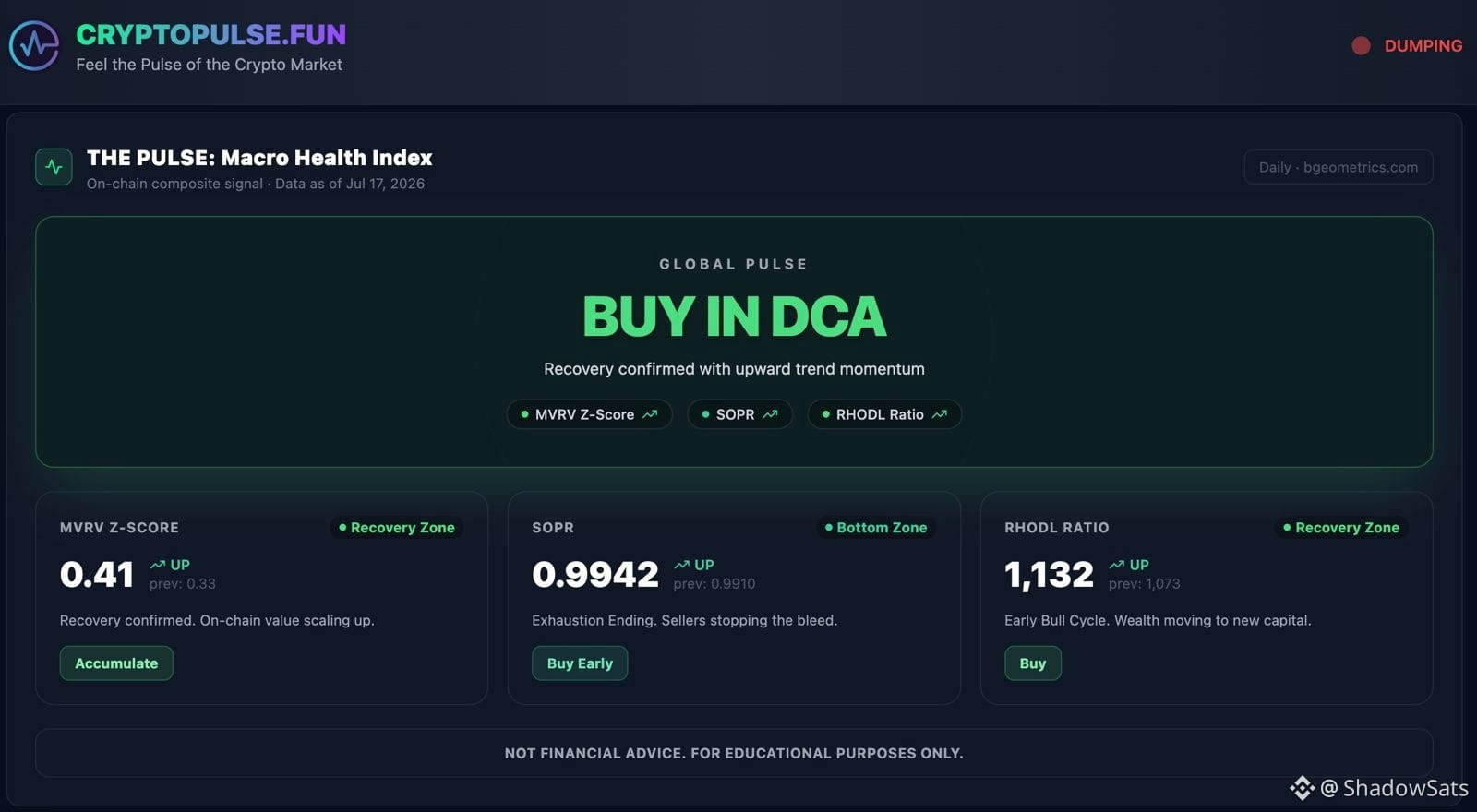
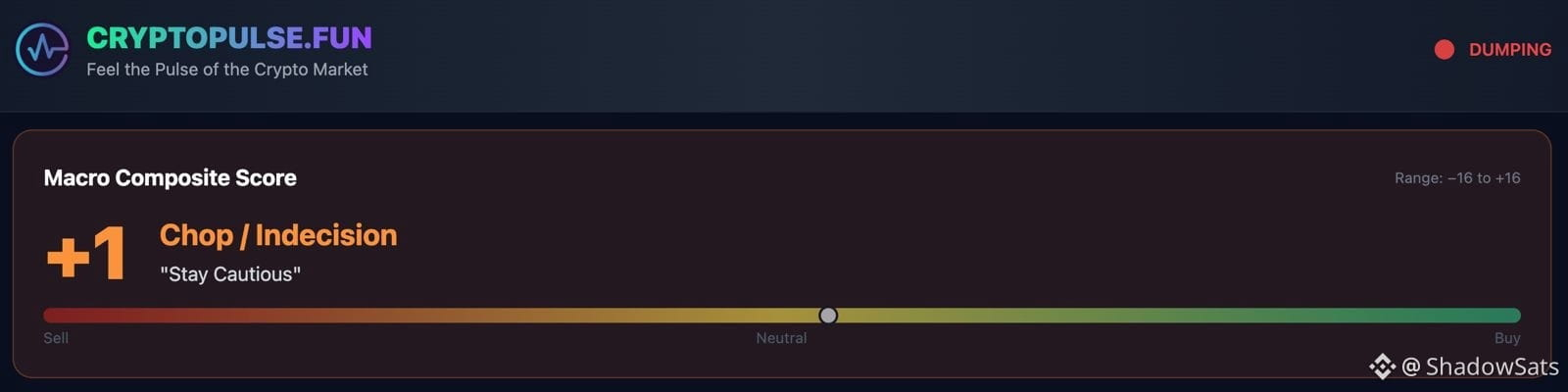
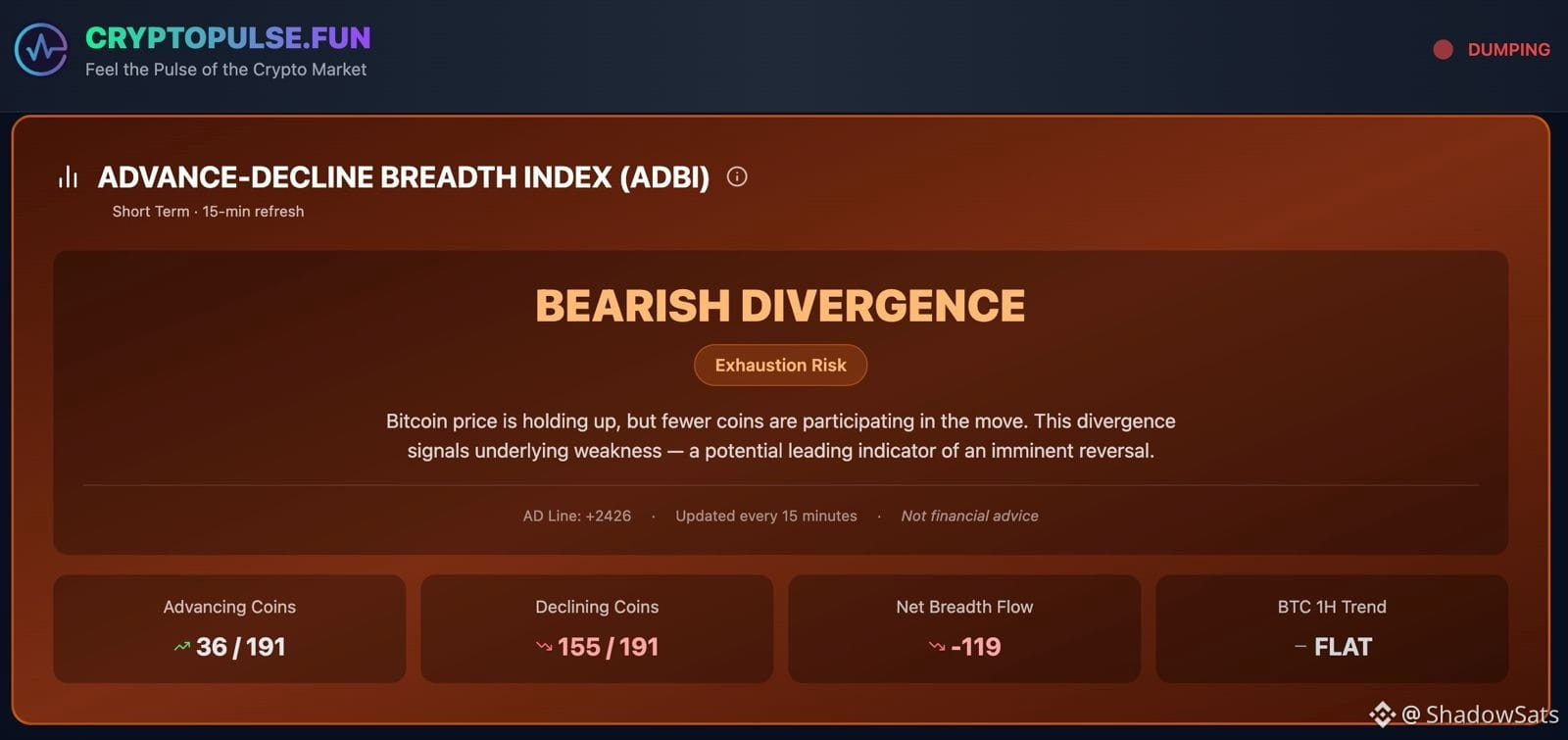
Bärisch
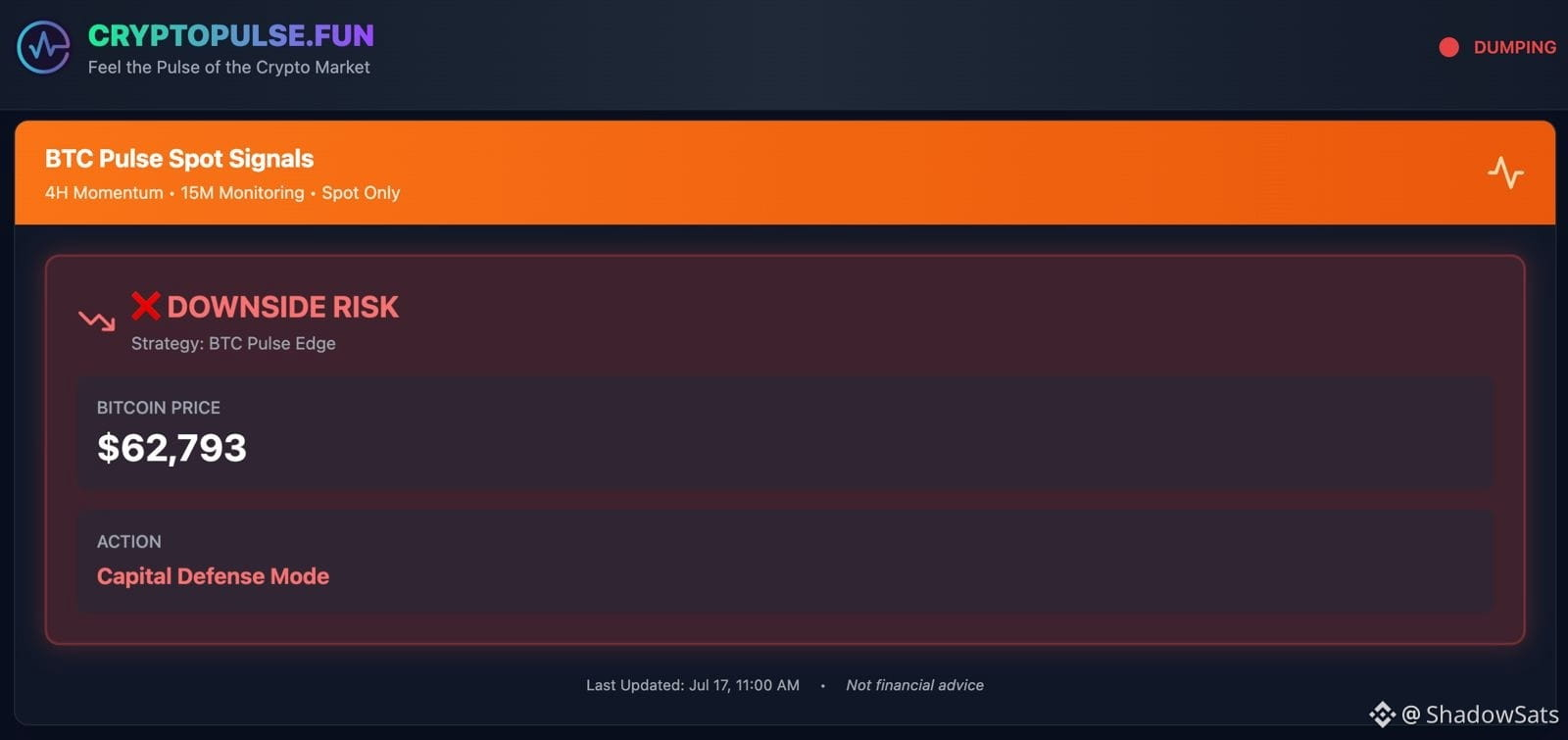
🔴Ausblick: Neutral → Bärisch (Makro-Überhang)
Der Makro-Verkaufsdruck hält den Markt defensiv.
Wichtige Unterstützung: $62,4K–$62,5K Nachfragezone.
Behalten → schafft Raum für einen Entlastungs-Bounce Richtung $64K.
$62,4K verlieren → birgt das Risiko einer schnellen Bewegung zur Unterstützung bei $60,5K. 📉📊
$BTC
{future}(BTCUSDT)
🔴Ausblick: Neutral → Bärisch (Makro-Überhang)
Der Makro-Verkaufsdruck hält den Markt defensiv.
Wichtige Unterstützung: $62,4K–$62,5K Nachfragezone.
Behalten → schafft Raum für einen Entlastungs-Bounce Richtung $64K.
$62,4K verlieren → birgt das Risiko einer schnellen Bewegung zur Unterstützung bei $60,5K. 📉📊
$BTC
Der Makro-Verkaufsdruck hält den Markt defensiv.
Wichtige Unterstützung: $62,4K–$62,5K Nachfragezone.
Behalten → schafft Raum für einen Entlastungs-Bounce Richtung $64K.
$62,4K verlieren → birgt das Risiko einer schnellen Bewegung zur Unterstützung bei $60,5K. 📉📊
$BTC
104
·
--

Artikel
Die unsichtbare Infrastruktur, die On-Chain-KI-Automatisierung antreibt 🤖⚙️Wenn wir über Innovationen in Web3 sprechen, dreht sich das Gespräch meistens um schnellere Transaktionsgeschwindigkeiten, niedrigere Gasgebühren oder die neuesten Memecoin-Trends. Doch im Hintergrund braut sich ein riesiges, unsichtbares Problem zusammen: Wie können wir On-Chain-Aktionen sicher automatisieren?
Während KI-Agenten zunehmend Aufgaben wie das Rebalancing von Portfolios, das Management der Liquidität und die Interaktion mit Smart Contracts übernehmen, während wir offline sind, braucht die Branche dringend eine überprüfbare Methode, um Grenzen durchzusetzen.
An dieser Stelle treten @NewtonProtocol $NEWT Schritte in den Vordergrund.
Die unsichtbare Infrastruktur, die On-Chain-KI-Automatisierung antreibt 🤖⚙️
Wenn wir über Innovationen in Web3 sprechen, dreht sich das Gespräch meistens um schnellere Transaktionsgeschwindigkeiten, niedrigere Gasgebühren oder die neuesten Memecoin-Trends. Doch im Hintergrund braut sich ein riesiges, unsichtbares Problem zusammen: Wie können wir On-Chain-Aktionen sicher automatisieren?
Während KI-Agenten zunehmend Aufgaben wie das Rebalancing von Portfolios, das Management der Liquidität und die Interaktion mit Smart Contracts übernehmen, während wir offline sind, braucht die Branche dringend eine überprüfbare Methode, um Grenzen durchzusetzen.
An dieser Stelle treten @NewtonProtocol $NEWT Schritte in den Vordergrund.
Während KI-Agenten zunehmend Aufgaben wie das Rebalancing von Portfolios, das Management der Liquidität und die Interaktion mit Smart Contracts übernehmen, während wir offline sind, braucht die Branche dringend eine überprüfbare Methode, um Grenzen durchzusetzen.
An dieser Stelle treten @NewtonProtocol $NEWT Schritte in den Vordergrund.
5
91
·
--
Bullisch
📊 @NewtonProtocol Analyse
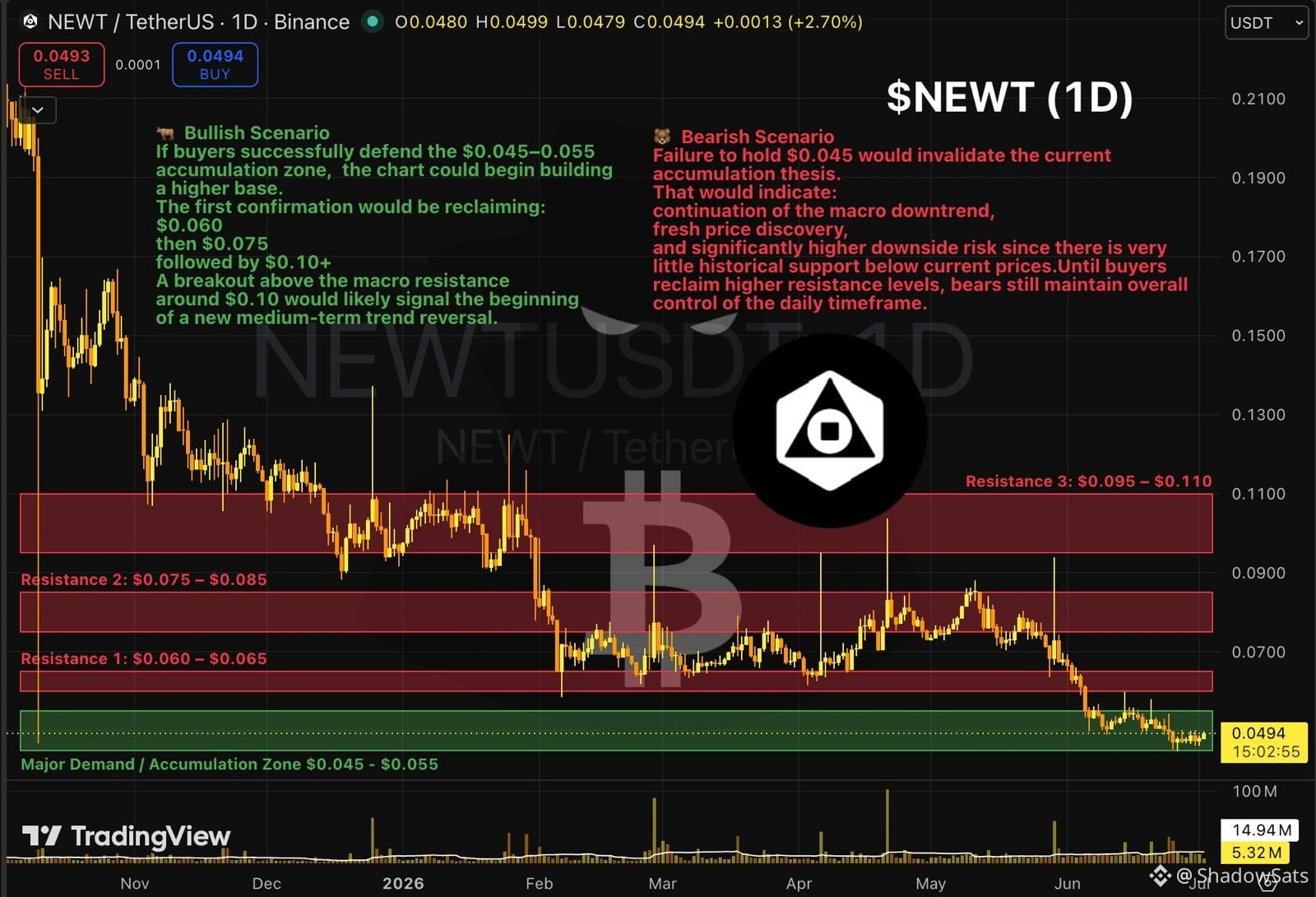
$NEWT setzt das Trading innerhalb seiner wichtigsten Demand-/Accumulation-Zone ($0.045–$0.055) fort, nachdem es über Monate hinweg zu anhaltendem Verkaufsdruck gekommen ist. Die Volatilität hat sich komprimiert und das Volumen ist gesunken, was darauf hindeutet, dass die Verkäufer möglicherweise an Dynamik verlieren, aber der tägliche Trend ist nach wie vor bärisch.
🟢 Bullishes Szenario: Über $0.045 halten und $0.060–$0.065 zurückerobern, wodurch der Weg Richtung $0.075 und schließlich zum entscheidenden Widerstand bei $0.10 geöffnet würde.
🔴 Bärisches Szenario: Wenn der $0.045-Support verloren geht, würde die These der Akkumulation entkräftet und es könnte zu neuen Tiefs kommen – unter anderem wegen des Mangels an starkem historischem Support unterhalb der aktuellen Kurse.
Geduld ist hier entscheidend. Das ist ein Chart, den man zur Bestätigung beobachten sollte – nicht hinterherlaufen. Ein Ausbruch mit hohem Volumen über den Widerstand würde das erste aussagekräftige Signal dafür liefern, dass eine Trendwende auf lange Sicht im Gange ist. 📈
#newt $NEWT
{future}(NEWTUSDT)
📊 @NewtonProtocol Analyse
$NEWT setzt das Trading innerhalb seiner wichtigsten Demand-/Accumulation-Zone ($0.045–$0.055) fort, nachdem es über Monate hinweg zu anhaltendem Verkaufsdruck gekommen ist. Die Volatilität hat sich komprimiert und das Volumen ist gesunken, was darauf hindeutet, dass die Verkäufer möglicherweise an Dynamik verlieren, aber der tägliche Trend ist nach wie vor bärisch.
🟢 Bullishes Szenario: Über $0.045 halten und $0.060–$0.065 zurückerobern, wodurch der Weg Richtung $0.075 und schließlich zum entscheidenden Widerstand bei $0.10 geöffnet würde.
🔴 Bärisches Szenario: Wenn der $0.045-Support verloren geht, würde die These der Akkumulation entkräftet und es könnte zu neuen Tiefs kommen – unter anderem wegen des Mangels an starkem historischem Support unterhalb der aktuellen Kurse.
Geduld ist hier entscheidend. Das ist ein Chart, den man zur Bestätigung beobachten sollte – nicht hinterherlaufen. Ein Ausbruch mit hohem Volumen über den Widerstand würde das erste aussagekräftige Signal dafür liefern, dass eine Trendwende auf lange Sicht im Gange ist. 📈
#newt $NEWT
$NEWT setzt das Trading innerhalb seiner wichtigsten Demand-/Accumulation-Zone ($0.045–$0.055) fort, nachdem es über Monate hinweg zu anhaltendem Verkaufsdruck gekommen ist. Die Volatilität hat sich komprimiert und das Volumen ist gesunken, was darauf hindeutet, dass die Verkäufer möglicherweise an Dynamik verlieren, aber der tägliche Trend ist nach wie vor bärisch.
🟢 Bullishes Szenario: Über $0.045 halten und $0.060–$0.065 zurückerobern, wodurch der Weg Richtung $0.075 und schließlich zum entscheidenden Widerstand bei $0.10 geöffnet würde.
🔴 Bärisches Szenario: Wenn der $0.045-Support verloren geht, würde die These der Akkumulation entkräftet und es könnte zu neuen Tiefs kommen – unter anderem wegen des Mangels an starkem historischem Support unterhalb der aktuellen Kurse.
Geduld ist hier entscheidend. Das ist ein Chart, den man zur Bestätigung beobachten sollte – nicht hinterherlaufen. Ein Ausbruch mit hohem Volumen über den Widerstand würde das erste aussagekräftige Signal dafür liefern, dass eine Trendwende auf lange Sicht im Gange ist. 📈
#newt $NEWT
2
119
·
--
Bullisch
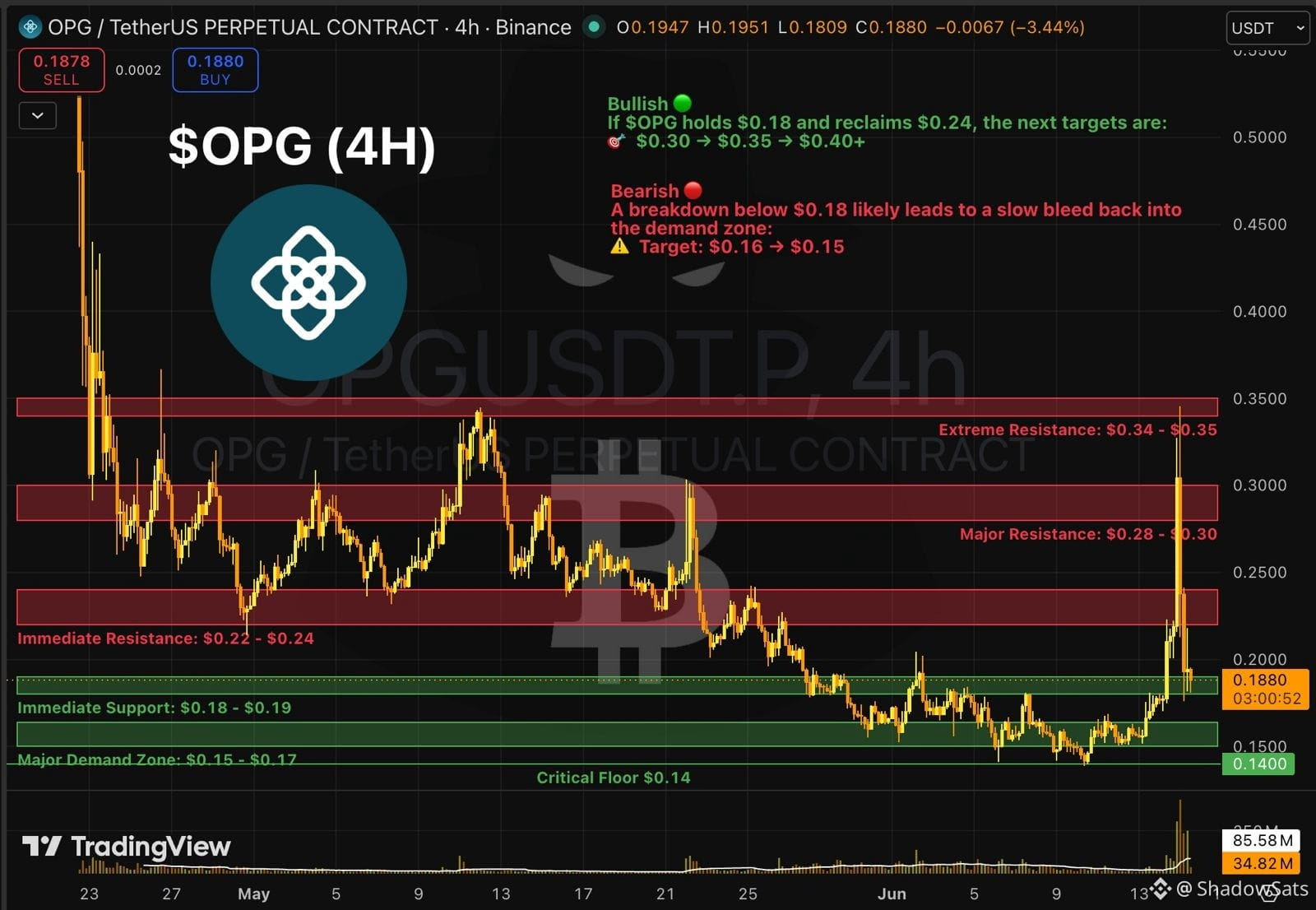
@OpenGradient als ein hardcore dezentrales KI-Infrastruktur-Netzwerk bricht $OPG die Black Box von Web3 KI auf.
Durch den Einsatz ihrer einzigartigen Hybrid AI Compute Architektur (HACA), die zkML (Zero-Knowledge Machine Learning) und TEEs (Trusted Execution Environments) kombiniert, machen sie on-chain KI-Modelle vollständig verifizierbar und prüfbar, ohne die Leistung zu opfern.
Mit erstklassiger Unterstützung von a16z crypto und Coinbase Ventures sowie einem festen Gesamtangebot von 1 Milliarde Tokens hat dieses Projekt ernsthafte langfristige, nutzergesteuerte Tokenomics.
Beobachte die Unterstützungsniveaus genau, während es sich in der Preisfindungsphase befindet!📈
#opg $OPG
@OpenGradient als ein hardcore dezentrales KI-Infrastruktur-Netzwerk bricht $OPG die Black Box von Web3 KI auf.
Durch den Einsatz ihrer einzigartigen Hybrid AI Compute Architektur (HACA), die zkML (Zero-Knowledge Machine Learning) und TEEs (Trusted Execution Environments) kombiniert, machen sie on-chain KI-Modelle vollständig verifizierbar und prüfbar, ohne die Leistung zu opfern.
Mit erstklassiger Unterstützung von a16z crypto und Coinbase Ventures sowie einem festen Gesamtangebot von 1 Milliarde Tokens hat dieses Projekt ernsthafte langfristige, nutzergesteuerte Tokenomics.
Beobachte die Unterstützungsniveaus genau, während es sich in der Preisfindungsphase befindet!📈
#opg $OPG
Durch den Einsatz ihrer einzigartigen Hybrid AI Compute Architektur (HACA), die zkML (Zero-Knowledge Machine Learning) und TEEs (Trusted Execution Environments) kombiniert, machen sie on-chain KI-Modelle vollständig verifizierbar und prüfbar, ohne die Leistung zu opfern.
Mit erstklassiger Unterstützung von a16z crypto und Coinbase Ventures sowie einem festen Gesamtangebot von 1 Milliarde Tokens hat dieses Projekt ernsthafte langfristige, nutzergesteuerte Tokenomics.
Beobachte die Unterstützungsniveaus genau, während es sich in der Preisfindungsphase befindet!📈
#opg $OPG
2
170
·
--
Bullisch
@OpenGradient Technisches Update (4H)🚨
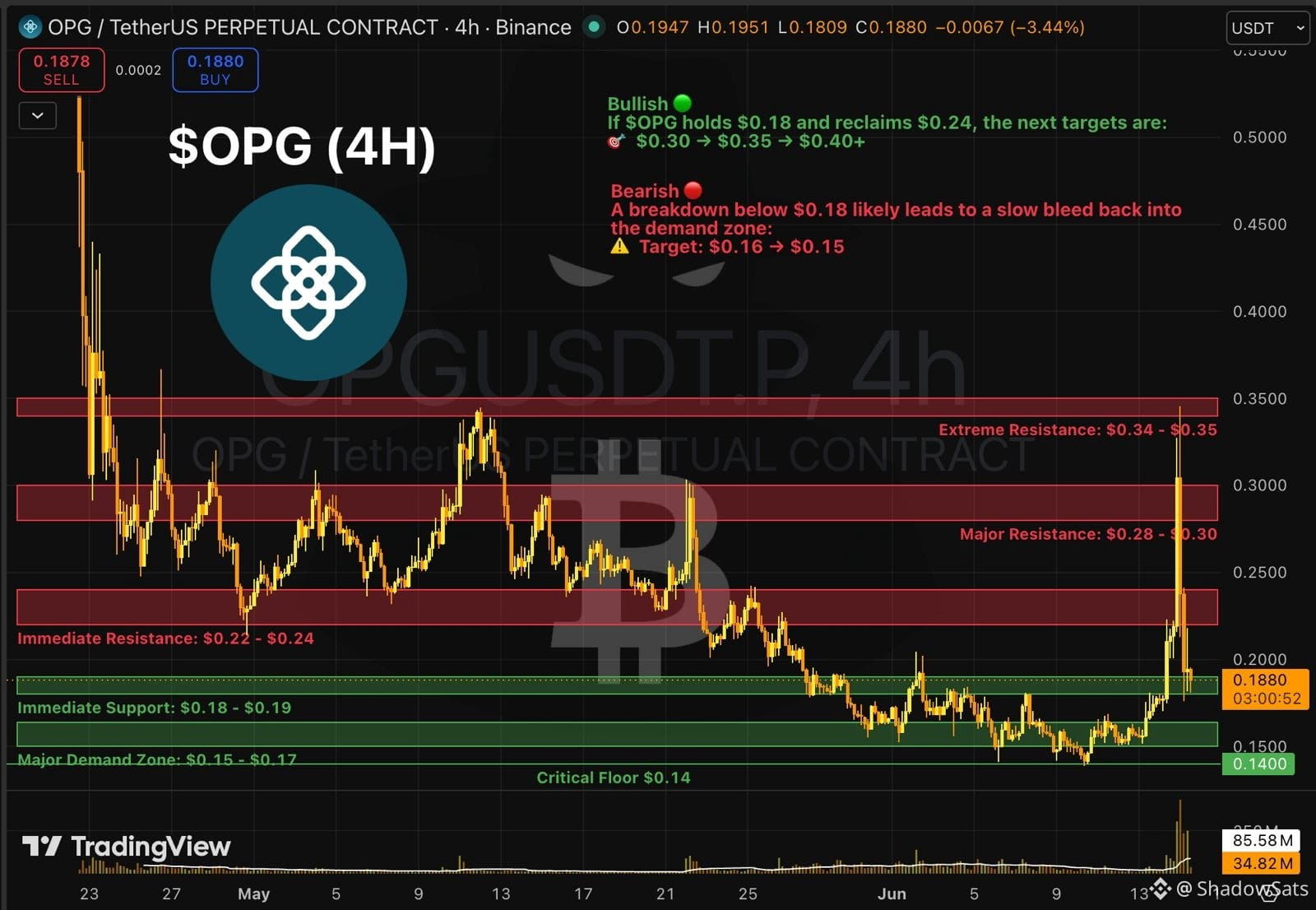
$OPG hat kürzlich eine 100%ige Intraday-Explosion erlebt, unterstützt von rekordhohem Volumen. Nach einer Ablehnung bei $0.35 liegt der Fokus jetzt auf der Pivotzone zwischen $0.18 und $0.20.
🟢Bullish: Halte $0.18 und erobere $0.24 zurück, um den Push in Richtung $0.35 neu zu starten.
🔴Bearish: Das Verlieren von $0.18 birgt das Risiko einer vollständigen Retracement zurück zum $0.15 Akkumulationsboden.
⚠️Aktuelle Einschätzung: Neutral-zu-Bullish, solange die Unterstützung bei $0.18 hält.
#opg $OPG
{future}(OPGUSDT)
@OpenGradient Technisches Update (4H)🚨
$OPG hat kürzlich eine 100%ige Intraday-Explosion erlebt, unterstützt von rekordhohem Volumen. Nach einer Ablehnung bei $0.35 liegt der Fokus jetzt auf der Pivotzone zwischen $0.18 und $0.20.
🟢Bullish: Halte $0.18 und erobere $0.24 zurück, um den Push in Richtung $0.35 neu zu starten.
🔴Bearish: Das Verlieren von $0.18 birgt das Risiko einer vollständigen Retracement zurück zum $0.15 Akkumulationsboden.
⚠️Aktuelle Einschätzung: Neutral-zu-Bullish, solange die Unterstützung bei $0.18 hält.
#opg $OPG
$OPG hat kürzlich eine 100%ige Intraday-Explosion erlebt, unterstützt von rekordhohem Volumen. Nach einer Ablehnung bei $0.35 liegt der Fokus jetzt auf der Pivotzone zwischen $0.18 und $0.20.
🟢Bullish: Halte $0.18 und erobere $0.24 zurück, um den Push in Richtung $0.35 neu zu starten.
🔴Bearish: Das Verlieren von $0.18 birgt das Risiko einer vollständigen Retracement zurück zum $0.15 Akkumulationsboden.
⚠️Aktuelle Einschätzung: Neutral-zu-Bullish, solange die Unterstützung bei $0.18 hält.
#opg $OPG
111
·
--
🟣Ausblick: Neutral → Vorsichtig Bärisch
$BTC bleibt in einem Wochenkompressionsbereich gefangen.
Wichtige Level: $60K Unterstützung / $63.5K Widerstand.
Täglicher Close > $63.5K → öffnet den Squeeze Richtung $65.3K.
4H Close < $60K → birgt das Risiko einer schnellen Bewegung in Richtung $55K Nachfragezonen. 📉
$BTC #BTC
{future}(BTCUSDT)
🟣Ausblick: Neutral → Vorsichtig Bärisch
$BTC bleibt in einem Wochenkompressionsbereich gefangen.
Wichtige Level: $60K Unterstützung / $63.5K Widerstand.
Täglicher Close > $63.5K → öffnet den Squeeze Richtung $65.3K.
4H Close < $60K → birgt das Risiko einer schnellen Bewegung in Richtung $55K Nachfragezonen. 📉
$BTC #BTC
$BTC bleibt in einem Wochenkompressionsbereich gefangen.
Wichtige Level: $60K Unterstützung / $63.5K Widerstand.
Täglicher Close > $63.5K → öffnet den Squeeze Richtung $65.3K.
4H Close < $60K → birgt das Risiko einer schnellen Bewegung in Richtung $55K Nachfragezonen. 📉
$BTC #BTC
89
·
--
Bärisch
$SPCX Analyse 📊
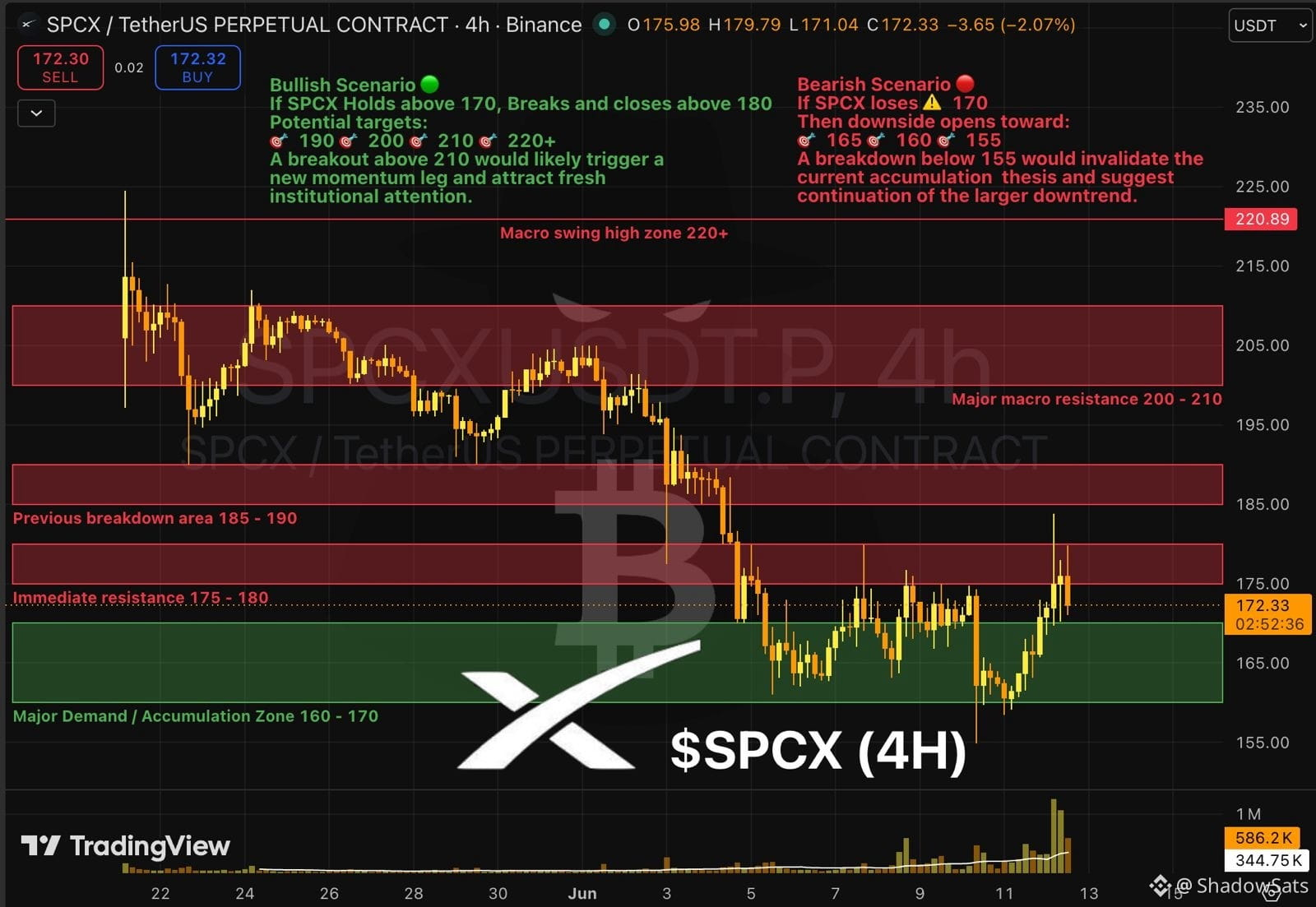
SPCX handelt derzeit über einer wichtigen Nachfrage-/Akkumulationszone bei 160-170, wo Käufer nach der Korrektur nach der Notierung immer wieder eingestiegen sind.
🟢 Bullishes Szenario:
Halte 170 und breche 180 → Ziele 190 → 200 → 210 → 220
🔴 Bärisches Szenario:
Verliere die Unterstützung bei 170 → downside öffnet sich in Richtung 165 → 160 → 155
Aus einer makroökonomischen Perspektive sollte SPCX als ein Asset mit hoher Überzeugung betrachtet werden, anstatt als traditionelle Aktie. Mit der Beteiligung von Elon Musk und wachsender institutioneller Aufmerksamkeit bleibt die langfristige Gelegenheit erheblich, wenn das Projekt weiterhin umsetzt und Kapital anzieht.
Langfristige Aussicht
Wenn:
Elon weiterhin öffentlich beteiligt bleibt
Institutionelles Eigentum expandiert
Die Umsetzung die Erwartungen erfüllt
dann könnte SPCX eines der bedeutendsten Momentum-Namen des Marktes in den kommenden Jahren werden.
Jedoch:
Viele neu gelistete narrative Aktien erleben:
Erste Hype
Scharfe Korrektur
Monatelange Akkumulation
Echter Trend entsteht später
Das aktuelle Chart ähnelt tatsächlich mehr Phase 3 (Akkumulation) als einem vollständigen Zusammenbruch.
$SPCX #TradebStocks
$SPCX Analyse 📊
SPCX handelt derzeit über einer wichtigen Nachfrage-/Akkumulationszone bei 160-170, wo Käufer nach der Korrektur nach der Notierung immer wieder eingestiegen sind.
🟢 Bullishes Szenario:
Halte 170 und breche 180 → Ziele 190 → 200 → 210 → 220
🔴 Bärisches Szenario:
Verliere die Unterstützung bei 170 → downside öffnet sich in Richtung 165 → 160 → 155
Aus einer makroökonomischen Perspektive sollte SPCX als ein Asset mit hoher Überzeugung betrachtet werden, anstatt als traditionelle Aktie. Mit der Beteiligung von Elon Musk und wachsender institutioneller Aufmerksamkeit bleibt die langfristige Gelegenheit erheblich, wenn das Projekt weiterhin umsetzt und Kapital anzieht.
Langfristige Aussicht
Wenn:
Elon weiterhin öffentlich beteiligt bleibt
Institutionelles Eigentum expandiert
Die Umsetzung die Erwartungen erfüllt
dann könnte SPCX eines der bedeutendsten Momentum-Namen des Marktes in den kommenden Jahren werden.
Jedoch:
Viele neu gelistete narrative Aktien erleben:
Erste Hype
Scharfe Korrektur
Monatelange Akkumulation
Echter Trend entsteht später
Das aktuelle Chart ähnelt tatsächlich mehr Phase 3 (Akkumulation) als einem vollständigen Zusammenbruch.
$SPCX #TradebStocks
SPCX handelt derzeit über einer wichtigen Nachfrage-/Akkumulationszone bei 160-170, wo Käufer nach der Korrektur nach der Notierung immer wieder eingestiegen sind.
🟢 Bullishes Szenario:
Halte 170 und breche 180 → Ziele 190 → 200 → 210 → 220
🔴 Bärisches Szenario:
Verliere die Unterstützung bei 170 → downside öffnet sich in Richtung 165 → 160 → 155
Aus einer makroökonomischen Perspektive sollte SPCX als ein Asset mit hoher Überzeugung betrachtet werden, anstatt als traditionelle Aktie. Mit der Beteiligung von Elon Musk und wachsender institutioneller Aufmerksamkeit bleibt die langfristige Gelegenheit erheblich, wenn das Projekt weiterhin umsetzt und Kapital anzieht.
Langfristige Aussicht
Wenn:
Elon weiterhin öffentlich beteiligt bleibt
Institutionelles Eigentum expandiert
Die Umsetzung die Erwartungen erfüllt
dann könnte SPCX eines der bedeutendsten Momentum-Namen des Marktes in den kommenden Jahren werden.
Jedoch:
Viele neu gelistete narrative Aktien erleben:
Erste Hype
Scharfe Korrektur
Monatelange Akkumulation
Echter Trend entsteht später
Das aktuelle Chart ähnelt tatsächlich mehr Phase 3 (Akkumulation) als einem vollständigen Zusammenbruch.
$SPCX #TradebStocks
1
1
1.9k
·
--
🟣Ausblick: Neutral (Seitwärtskompression)
$BTC eingeklemmt in einer engen Kompressionsrange.
Schlüssellevels: $60K Unterstützung / $63.5K Widerstand.
Break > $63.5K bei Volumen → potenzieller Squeeze Richtung $65.3K.
4H Close < $60K → öffnet den Weg zur $55K Nachfragezone. 📊
$BTC #bitcoin
{future}(BTCUSDT)
🟣Ausblick: Neutral (Seitwärtskompression)
$BTC eingeklemmt in einer engen Kompressionsrange.
Schlüssellevels: $60K Unterstützung / $63.5K Widerstand.
Break > $63.5K bei Volumen → potenzieller Squeeze Richtung $65.3K.
4H Close < $60K → öffnet den Weg zur $55K Nachfragezone. 📊
$BTC #bitcoin
$BTC eingeklemmt in einer engen Kompressionsrange.
Schlüssellevels: $60K Unterstützung / $63.5K Widerstand.
Break > $63.5K bei Volumen → potenzieller Squeeze Richtung $65.3K.
4H Close < $60K → öffnet den Weg zur $55K Nachfragezone. 📊
$BTC #bitcoin
97
·
--
Bärisch
🔴Ausblick: Neutral → Vorsichtig bärisch
Die Panikverkäufe haben nachgelassen, wobei $60K als wichtige Unterstützung fungiert.
Die Unsicherheit der Fed und ETF-Abflüsse üben weiterhin Druck auf den Markt aus.
Erwarten Sie unruhige, seitwärts gerichtete Preisbewegungen, bis ein stärkerer Katalysator auftaucht. 📉
$BTC #bitcoin
{future}(BTCUSDT)
🔴Ausblick: Neutral → Vorsichtig bärisch
Die Panikverkäufe haben nachgelassen, wobei $60K als wichtige Unterstützung fungiert.
Die Unsicherheit der Fed und ETF-Abflüsse üben weiterhin Druck auf den Markt aus.
Erwarten Sie unruhige, seitwärts gerichtete Preisbewegungen, bis ein stärkerer Katalysator auftaucht. 📉
$BTC #bitcoin
Die Panikverkäufe haben nachgelassen, wobei $60K als wichtige Unterstützung fungiert.
Die Unsicherheit der Fed und ETF-Abflüsse üben weiterhin Druck auf den Markt aus.
Erwarten Sie unruhige, seitwärts gerichtete Preisbewegungen, bis ein stärkerer Katalysator auftaucht. 📉
$BTC #bitcoin
94
·
--
Bärisch
🔴Ausblick: Bärisch (Defensive Bottom-Fishing)
Verkäufer behalten die Kontrolle über das kurzfristige Momentum.
Wichtige Unterstützung: $60K–$61.5K Nachfragezone.
Täglicher Schluss < $60K → öffnet den Weg zu den Tiefs im $55K-Bereich.
Bullen müssen über $65.3K zurückgewinnen, um die bärische Struktur zu invalidieren.
$BTC #USIranForcesClashHormuzPeaceDealStalls
{future}(BTCUSDT)
🔴Ausblick: Bärisch (Defensive Bottom-Fishing)
Verkäufer behalten die Kontrolle über das kurzfristige Momentum.
Wichtige Unterstützung: $60K–$61.5K Nachfragezone.
Täglicher Schluss < $60K → öffnet den Weg zu den Tiefs im $55K-Bereich.
Bullen müssen über $65.3K zurückgewinnen, um die bärische Struktur zu invalidieren.
$BTC #USIranForcesClashHormuzPeaceDealStalls
Verkäufer behalten die Kontrolle über das kurzfristige Momentum.
Wichtige Unterstützung: $60K–$61.5K Nachfragezone.
Täglicher Schluss < $60K → öffnet den Weg zu den Tiefs im $55K-Bereich.
Bullen müssen über $65.3K zurückgewinnen, um die bärische Struktur zu invalidieren.
$BTC #USIranForcesClashHormuzPeaceDealStalls
125
·
--
🟣Ausblick: Neutral (Enge Kompression)
BTC konsolidiert innerhalb einer engen Spanne.
Schlüssellevel: $61,5K Unterstützung / $65,3K Widerstand.
Täglicher Schluss > $65,3K → öffnet den Weg zu $67K.
Verliert $61,5K → wahrscheinlicher Retest der $59K Liquiditätszone.
$BTC #bitcoin
{future}(BTCUSDT)
🟣Ausblick: Neutral (Enge Kompression)
BTC konsolidiert innerhalb einer engen Spanne.
Schlüssellevel: $61,5K Unterstützung / $65,3K Widerstand.
Täglicher Schluss > $65,3K → öffnet den Weg zu $67K.
Verliert $61,5K → wahrscheinlicher Retest der $59K Liquiditätszone.
$BTC #bitcoin
BTC konsolidiert innerhalb einer engen Spanne.
Schlüssellevel: $61,5K Unterstützung / $65,3K Widerstand.
Täglicher Schluss > $65,3K → öffnet den Weg zu $67K.
Verliert $61,5K → wahrscheinlicher Retest der $59K Liquiditätszone.
$BTC #bitcoin
98
·
--
Bullisch
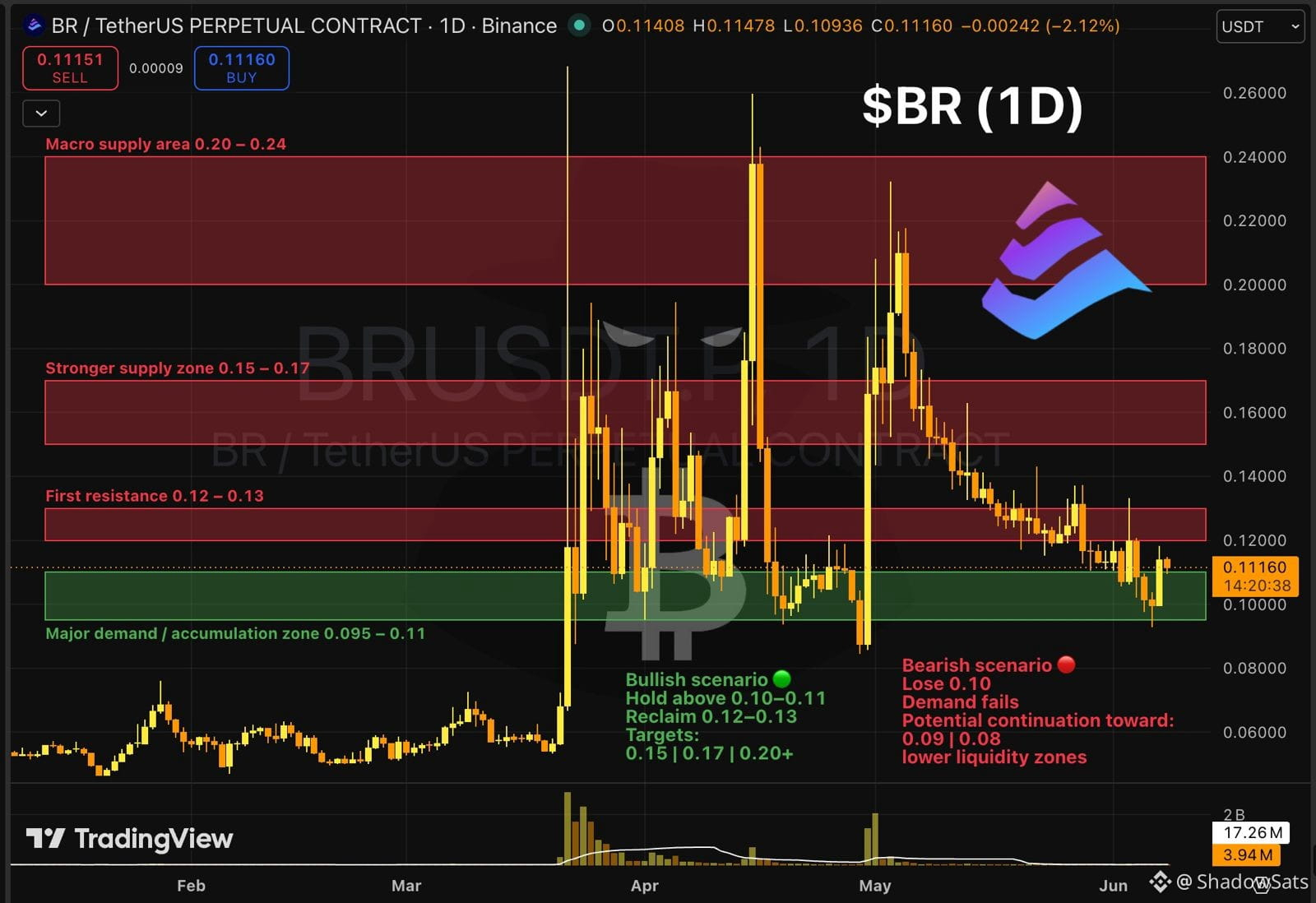
@Bedrock Analyse 📊
$BR handelt derzeit innerhalb einer wichtigen Nachfrage-/Akkumulationszone um 0,095–0,11. Käufer versuchen, dieses Gebiet nach einem längeren Abwärtstrend zu verteidigen.
🟢 Bullishes Szenario:
Unterstützung halten und 0,12–0,13 zurückerobern → Ziele 0,15 → 0,17 → 0,20
🔴 Bärisches Szenario:
Ein Verlust von 0,10 könnte einen Move in Richtung 0,09–0,08 öffnen.
Die aktuelle Struktur bleibt neutral-bärisch, bis stärkere Widerstandsniveaus zurückerobert werden.
#bedrock $BR
{future}(BRUSDT)
@Bedrock Analyse 📊
$BR handelt derzeit innerhalb einer wichtigen Nachfrage-/Akkumulationszone um 0,095–0,11. Käufer versuchen, dieses Gebiet nach einem längeren Abwärtstrend zu verteidigen.
🟢 Bullishes Szenario:
Unterstützung halten und 0,12–0,13 zurückerobern → Ziele 0,15 → 0,17 → 0,20
🔴 Bärisches Szenario:
Ein Verlust von 0,10 könnte einen Move in Richtung 0,09–0,08 öffnen.
Die aktuelle Struktur bleibt neutral-bärisch, bis stärkere Widerstandsniveaus zurückerobert werden.
#bedrock $BR
$BR handelt derzeit innerhalb einer wichtigen Nachfrage-/Akkumulationszone um 0,095–0,11. Käufer versuchen, dieses Gebiet nach einem längeren Abwärtstrend zu verteidigen.
🟢 Bullishes Szenario:
Unterstützung halten und 0,12–0,13 zurückerobern → Ziele 0,15 → 0,17 → 0,20
🔴 Bärisches Szenario:
Ein Verlust von 0,10 könnte einen Move in Richtung 0,09–0,08 öffnen.
Die aktuelle Struktur bleibt neutral-bärisch, bis stärkere Widerstandsniveaus zurückerobert werden.
#bedrock $BR
65
·
--
Bärisch
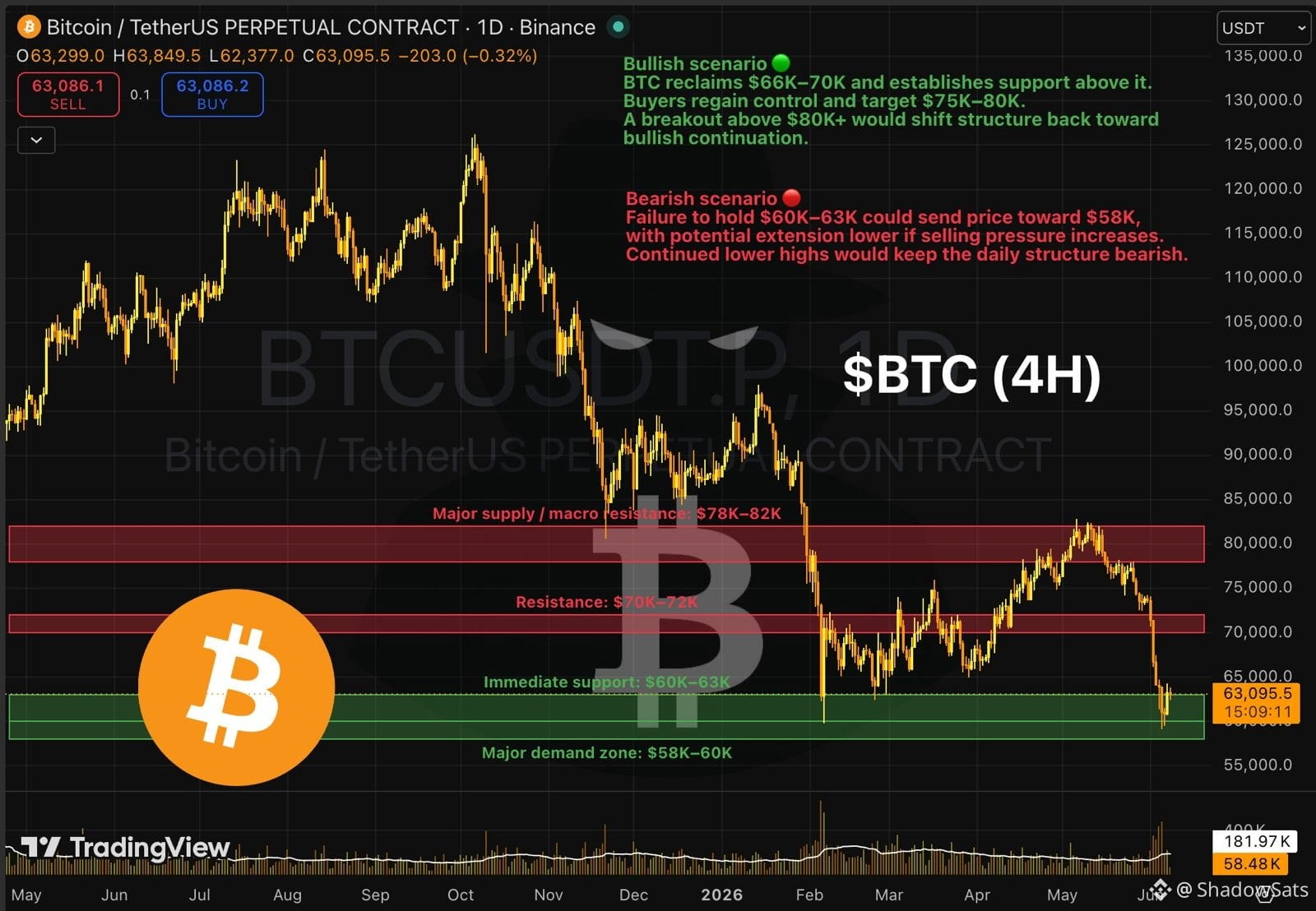
$BTC handelt an einer kritischen täglichen Unterstützungszone nach starkem Verkaufsdruck. Die Region von $60K–63K ist jetzt das Schlüsselgebiet zwischen Bullen und Bären.
🟢 Bullish: Die Rückeroberung von $66K–70K könnte einen Move in Richtung $75K–80K eröffnen.
🔴 Bearish: Der Verlust der $60K Unterstützung könnte BTC in den Bereich von $58K mit hoher Nachfrage drücken.
Die nächsten paar täglichen Velas werden wahrscheinlich die nächste größere Bewegung bestimmen. #BTC #bitcoin $BTC
{future}(BTCUSDT)
$BTC handelt an einer kritischen täglichen Unterstützungszone nach starkem Verkaufsdruck. Die Region von $60K–63K ist jetzt das Schlüsselgebiet zwischen Bullen und Bären.
🟢 Bullish: Die Rückeroberung von $66K–70K könnte einen Move in Richtung $75K–80K eröffnen.
🔴 Bearish: Der Verlust der $60K Unterstützung könnte BTC in den Bereich von $58K mit hoher Nachfrage drücken.
Die nächsten paar täglichen Velas werden wahrscheinlich die nächste größere Bewegung bestimmen. #BTC #bitcoin $BTC
🟢 Bullish: Die Rückeroberung von $66K–70K könnte einen Move in Richtung $75K–80K eröffnen.
🔴 Bearish: Der Verlust der $60K Unterstützung könnte BTC in den Bereich von $58K mit hoher Nachfrage drücken.
Die nächsten paar täglichen Velas werden wahrscheinlich die nächste größere Bewegung bestimmen. #BTC #bitcoin $BTC
87
·
--
Bullisch
🟢Aussicht: Bullish (ST Entlastungsexpansion)
Käufer haben kurzfristigen Schwung zurückgewonnen.
$60K–$61.5K hat sich zurück in eine starke Nachfragezone gewendet.
Halten > $62.5K → öffnet den Weg zur $65K Widerstand.
Verliere $61.5K beim 4H Schluss → macht die Entlastungsbewegung ungültig. 🚀
$BTC #IsraelStrikesIranMilitaryTargets
{future}(BTCUSDT)
🟢Aussicht: Bullish (ST Entlastungsexpansion)
Käufer haben kurzfristigen Schwung zurückgewonnen.
$60K–$61.5K hat sich zurück in eine starke Nachfragezone gewendet.
Halten > $62.5K → öffnet den Weg zur $65K Widerstand.
Verliere $61.5K beim 4H Schluss → macht die Entlastungsbewegung ungültig. 🚀
$BTC #IsraelStrikesIranMilitaryTargets
Käufer haben kurzfristigen Schwung zurückgewonnen.
$60K–$61.5K hat sich zurück in eine starke Nachfragezone gewendet.
Halten > $62.5K → öffnet den Weg zur $65K Widerstand.
Verliere $61.5K beim 4H Schluss → macht die Entlastungsbewegung ungültig. 🚀
$BTC #IsraelStrikesIranMilitaryTargets
1
136
·
--
Bärisch
🔴Ausblick: Bärisch
Die kurzfristige Stimmung bleibt negativ, da $BTC die Unterstützung bei $60K testet.
Verliert $60K → Liquidationsrisiko steigt in Richtung der mittleren $50Ks.
$BTC #SatoshiEraBitcoinDormantAddressMoves
{future}(BTCUSDT)
🔴Ausblick: Bärisch
Die kurzfristige Stimmung bleibt negativ, da $BTC die Unterstützung bei $60K testet.
Verliert $60K → Liquidationsrisiko steigt in Richtung der mittleren $50Ks.
$BTC #SatoshiEraBitcoinDormantAddressMoves
Die kurzfristige Stimmung bleibt negativ, da $BTC die Unterstützung bei $60K testet.
Verliert $60K → Liquidationsrisiko steigt in Richtung der mittleren $50Ks.
$BTC #SatoshiEraBitcoinDormantAddressMoves
103
·
--
Bärisch
🔴Ausblick: Bärisch (Testen der Mehrmonatigen Nachfrage)
Liquidität am Wochenende bleibt dünn und begünstigt den Abwärtsdruck.
Wichtige Unterstützung: Psychologische Marke von $59,1K–$60K.
4H-Schlüsse < $59,1K → wahrscheinlicher Rückgang zur Nachfrage bei $55,5K.
Bullen brauchen eine starke Rückeroberung > $63,7K, um den Abwärtsmomentum zu entkräften und eine Bärenfalle zu bestätigen.
$BTC #USDTMarketCapOvertakesEthereum
{future}(BTCUSDT)
🔴Ausblick: Bärisch (Testen der Mehrmonatigen Nachfrage)
Liquidität am Wochenende bleibt dünn und begünstigt den Abwärtsdruck.
Wichtige Unterstützung: Psychologische Marke von $59,1K–$60K.
4H-Schlüsse < $59,1K → wahrscheinlicher Rückgang zur Nachfrage bei $55,5K.
Bullen brauchen eine starke Rückeroberung > $63,7K, um den Abwärtsmomentum zu entkräften und eine Bärenfalle zu bestätigen.
$BTC #USDTMarketCapOvertakesEthereum
Liquidität am Wochenende bleibt dünn und begünstigt den Abwärtsdruck.
Wichtige Unterstützung: Psychologische Marke von $59,1K–$60K.
4H-Schlüsse < $59,1K → wahrscheinlicher Rückgang zur Nachfrage bei $55,5K.
Bullen brauchen eine starke Rückeroberung > $63,7K, um den Abwärtsmomentum zu entkräften und eine Bärenfalle zu bestätigen.
$BTC #USDTMarketCapOvertakesEthereum
123
Anmelden und weiter Inhalte entdecken
Krypto-Nutzer weltweit auf Binance Square kennenlernen
⚡️ Bleib in Sachen Krypto stets am Puls.
💬 Die weltgrößte Kryptobörse vertraut darauf.
👍 Erhalte verlässliche Einblicke von verifizierten Creators.
E-Mail-Adresse/Telefonnummer
Trendthemen
BNBSurpasses$790
20,225 Aufrufe
150 Kommentare
$BNB strategischer Langzeitplan -> JETZT FOKUS
BNB hat 2 starke Tiefs geschaffen, nachdem internes Liquiditätsniveau aufgeräumt wurde
Ich erwarte eine Bewegung in Richtung Swing High bei $815-$830 und suche einen Long-Einstieg bei einem Retest der grünen Box
#BNBSurpasses$790 #bnb
Ghost Writer
·6 Likes
·11.8k Aufrufe
ZamaRises15.99%ToIntradayHigh$0.09
18,342 Aufrufe
106 Kommentare
BitcoinSpotETFsDraw$6.34BInflowsInQ3
6,218 Aufrufe
92 Kommentare