
CryptoFrontNews
17.5k Beiträge

CryptoFrontNews
 Square Verified+
Melden
Nutzer blockieren
CryptoFrontNews (CFN) delivers the latest in cryptocurrency with real-time updates, expert analyses, and in-depth articles on digital currencies and blockchain.
4 Following
12.5K+ Follower
19.0K+ Like gegeben
Beiträge

Artikel
Übersetzung ansehen
Bitcoin Outlook Points to a New Altseason PhaseBitcoin’s projected path targets $200,000, while derivatives positioning remains elevated after July’s leverage reset.
Historical cycles show expanding altseason gains, with the third cycle projected at 10,200% after another correction.
Rising open interest and volume keep traders focused on leverage, price structure and the next potential market rotation.
Bitcoin outlook centers on stronger derivatives activity, a projected correction, and another possible altseason as the current cycle develops.
The Next Altseason Builds on Earlier Cycles
Crypto Zenkai believes Bitcoin will be at $200,000 in the next 6-12 months. The post also calls for Ethereum to trade above $10,000 and Solana above $1,000. It further expects altcoins and memecoins to accelerate during the projected market phase.
https://twitter.com/zenkaixbt/status/2098484855113679140?s=20
The accompanying chart compares three major altseason cycles against Bitcoin’s structure. The first cycle followed the severe Bitcoin decline around 2017. That period recorded an estimated 4,600% gain across the broader altcoin phase.
The second cycle followed another major Bitcoin low and extended recovery. Its marked altseason move reached an estimated 7,500% gain. That figure exceeded the percentage recorded during the earlier cycle.
The chart identifies the current period as the third projected altseason. Its potential move reaches approximately 10,200%, exceeding both previous cycle markers. The comparison forms the basis for the chart’s longer-term market projection.
Bitcoin Structure Points Toward Another Correction
Bitcoin has recovered substantially from earlier cycle lows shown on the chart. Price recently approached the descending white trendline marking major historical highs. The highlighted area then becomes the starting point for the projected path.
The chart projects Bitcoin moving downward from that highlighted region. That path eventually approaches the rising red trendline during 2027. The red line connects major historical bottoms across the broader market structure.
The projected decline does not mark the end of the displayed cycle. Instead, the chart places another altseason after Bitcoin reaches longer-term support. This creates a sequence involving advance, correction, accumulation and renewed expansion.
The derivatives chart adds another layer to the current market structure. Bitcoin trades near $65,000 on the displayed price scale. Meanwhile, open interest has recovered toward roughly $50 billion after July’s decline.
Open Interest Keeps Derivatives Activity Elevated
From late May, open interest expanded as Bitcoin entered a stronger price advance. Trading volume also increased, showing greater activity across the derivatives market. By early July, open interest reached approximately $70 billion to $80 billion.
Source: Coinglass
Bitcoin then declined from its early-July peak, alongside a sharp open-interest reduction. That movement indicates substantial leveraged positioning was removed during the correction. Volume remained elevated, showing continued participation despite the market pullback.
Open interest later recovered as Bitcoin stabilized following the earlier leverage flush. The latest structure therefore combines renewed positioning with a recovering Bitcoin market. Traders remain focused on whether positioning expands alongside further price advances.
The chart and Crypto Zenkai’s post present related stages within one cycle. Bitcoin remains the primary reference point for the projected broader market rotation. The third altseason projection therefore depends on another Bitcoin correction and subsequent expansion.
Bitcoin Outlook Points to a New Altseason Phase
Bitcoin’s projected path targets $200,000, while derivatives positioning remains elevated after July’s leverage reset.
Historical cycles show expanding altseason gains, with the third cycle projected at 10,200% after another correction.
Rising open interest and volume keep traders focused on leverage, price structure and the next potential market rotation.
Bitcoin outlook centers on stronger derivatives activity, a projected correction, and another possible altseason as the current cycle develops.
The Next Altseason Builds on Earlier Cycles
Crypto Zenkai believes Bitcoin will be at $200,000 in the next 6-12 months. The post also calls for Ethereum to trade above $10,000 and Solana above $1,000. It further expects altcoins and memecoins to accelerate during the projected market phase.
https://twitter.com/zenkaixbt/status/2098484855113679140?s=20
The accompanying chart compares three major altseason cycles against Bitcoin’s structure. The first cycle followed the severe Bitcoin decline around 2017. That period recorded an estimated 4,600% gain across the broader altcoin phase.
The second cycle followed another major Bitcoin low and extended recovery. Its marked altseason move reached an estimated 7,500% gain. That figure exceeded the percentage recorded during the earlier cycle.
The chart identifies the current period as the third projected altseason. Its potential move reaches approximately 10,200%, exceeding both previous cycle markers. The comparison forms the basis for the chart’s longer-term market projection.
Bitcoin Structure Points Toward Another Correction
Bitcoin has recovered substantially from earlier cycle lows shown on the chart. Price recently approached the descending white trendline marking major historical highs. The highlighted area then becomes the starting point for the projected path.
The chart projects Bitcoin moving downward from that highlighted region. That path eventually approaches the rising red trendline during 2027. The red line connects major historical bottoms across the broader market structure.
The projected decline does not mark the end of the displayed cycle. Instead, the chart places another altseason after Bitcoin reaches longer-term support. This creates a sequence involving advance, correction, accumulation and renewed expansion.
The derivatives chart adds another layer to the current market structure. Bitcoin trades near $65,000 on the displayed price scale. Meanwhile, open interest has recovered toward roughly $50 billion after July’s decline.
Open Interest Keeps Derivatives Activity Elevated
From late May, open interest expanded as Bitcoin entered a stronger price advance. Trading volume also increased, showing greater activity across the derivatives market. By early July, open interest reached approximately $70 billion to $80 billion.
Source: Coinglass
Bitcoin then declined from its early-July peak, alongside a sharp open-interest reduction. That movement indicates substantial leveraged positioning was removed during the correction. Volume remained elevated, showing continued participation despite the market pullback.
Open interest later recovered as Bitcoin stabilized following the earlier leverage flush. The latest structure therefore combines renewed positioning with a recovering Bitcoin market. Traders remain focused on whether positioning expands alongside further price advances.
The chart and Crypto Zenkai’s post present related stages within one cycle. Bitcoin remains the primary reference point for the projected broader market rotation. The third altseason projection therefore depends on another Bitcoin correction and subsequent expansion.
Historical cycles show expanding altseason gains, with the third cycle projected at 10,200% after another correction.
Rising open interest and volume keep traders focused on leverage, price structure and the next potential market rotation.
Bitcoin outlook centers on stronger derivatives activity, a projected correction, and another possible altseason as the current cycle develops.
The Next Altseason Builds on Earlier Cycles
Crypto Zenkai believes Bitcoin will be at $200,000 in the next 6-12 months. The post also calls for Ethereum to trade above $10,000 and Solana above $1,000. It further expects altcoins and memecoins to accelerate during the projected market phase.
https://twitter.com/zenkaixbt/status/2098484855113679140?s=20
The accompanying chart compares three major altseason cycles against Bitcoin’s structure. The first cycle followed the severe Bitcoin decline around 2017. That period recorded an estimated 4,600% gain across the broader altcoin phase.
The second cycle followed another major Bitcoin low and extended recovery. Its marked altseason move reached an estimated 7,500% gain. That figure exceeded the percentage recorded during the earlier cycle.
The chart identifies the current period as the third projected altseason. Its potential move reaches approximately 10,200%, exceeding both previous cycle markers. The comparison forms the basis for the chart’s longer-term market projection.
Bitcoin Structure Points Toward Another Correction
Bitcoin has recovered substantially from earlier cycle lows shown on the chart. Price recently approached the descending white trendline marking major historical highs. The highlighted area then becomes the starting point for the projected path.
The chart projects Bitcoin moving downward from that highlighted region. That path eventually approaches the rising red trendline during 2027. The red line connects major historical bottoms across the broader market structure.
The projected decline does not mark the end of the displayed cycle. Instead, the chart places another altseason after Bitcoin reaches longer-term support. This creates a sequence involving advance, correction, accumulation and renewed expansion.
The derivatives chart adds another layer to the current market structure. Bitcoin trades near $65,000 on the displayed price scale. Meanwhile, open interest has recovered toward roughly $50 billion after July’s decline.
Open Interest Keeps Derivatives Activity Elevated
From late May, open interest expanded as Bitcoin entered a stronger price advance. Trading volume also increased, showing greater activity across the derivatives market. By early July, open interest reached approximately $70 billion to $80 billion.
Source: Coinglass
Bitcoin then declined from its early-July peak, alongside a sharp open-interest reduction. That movement indicates substantial leveraged positioning was removed during the correction. Volume remained elevated, showing continued participation despite the market pullback.
Open interest later recovered as Bitcoin stabilized following the earlier leverage flush. The latest structure therefore combines renewed positioning with a recovering Bitcoin market. Traders remain focused on whether positioning expands alongside further price advances.
The chart and Crypto Zenkai’s post present related stages within one cycle. Bitcoin remains the primary reference point for the projected broader market rotation. The third altseason projection therefore depends on another Bitcoin correction and subsequent expansion.
216

Artikel
Übersetzung ansehen
Vitalik Buterin Links AI Safety to Limits on CollusionVitalik Buterin connects adversarial governance design with AI safety and limits on coordination among stronger AI agents.
Buterin says decentralization, secret ballots and privacy tools can create barriers against harmful collusion.
He cites blockchain forking, skin in the game and whistleblower incentives as defenses against coordinated attacks.
Vitalik Buterin says adversarial governance design could help address AI safety by limiting collusion among advanced AI agents. In a recent post, the Ethereum co-founder compared governance systems with AI environments involving less-sophisticated principals and stronger agents. He said limits on agent coordination could improve outcomes in both settings.
https://twitter.com/VitalikButerin/status/2099228441963012475?s=20
Buterin Compares Governance With AI Safety
Buterin described a shared structure between governance and AI safety. In governance, a static algorithm acts as the principal while humans operate as more-sophisticated agents. In AI safety, humans and weaker language models could serve as the principal.
Stronger large language models would then act as the agents. Notably, Buterin focused on how agents coordinate rather than individual actions. He said governance design can produce better outcomes when systems limit how much agents can collude.
That distinction also separates useful coordination from harmful coordination. Groups can cooperate for shared goals, but some coalitions can disadvantage people outside their group.
Collusion Creates Governance Risks
Buterin cited several examples of harmful coordination, including election vote selling and price fixing. He also pointed to miners coordinating to launch a 51% attack against a blockchain.
He said actions alone cannot always reveal whether harmful coordination occurred. A seller charging a high price, for example, could act independently or coordinate with competitors.
However, rules against collusion can target the coordination itself. Buterin also noted that vote selling can create incentives that push voting systems toward plutocracy.
He connected the issue to cooperative game theory, which examines groups acting together. Buterin said some games lack stable outcomes because coalitions can repeatedly profit by changing their strategy.
Decentralization Can Limit Harmful Coordination
Buterin identified decentralization as one method for creating barriers against large-scale collusion. He also cited secret ballots, privacy tools, whistleblower incentives and internal negotiation problems.
In blockchain systems, he said forking can support counter-coordination after a harmful coalition takes control. A competing version can remove the attacking coalition’s influence while retaining most original rules.
Buterin also highlighted “skin in the game” as another defense. He said markets can make participants individually accountable for decisions.
Finally, he listed several coordination tools, including per-person voting, physical separation and role-based constituencies. He also cited Schelling points and encouraging defectors to expose planned collusion.
Vitalik Buterin Links AI Safety to Limits on Collusion
Vitalik Buterin connects adversarial governance design with AI safety and limits on coordination among stronger AI agents.
Buterin says decentralization, secret ballots and privacy tools can create barriers against harmful collusion.
He cites blockchain forking, skin in the game and whistleblower incentives as defenses against coordinated attacks.
Vitalik Buterin says adversarial governance design could help address AI safety by limiting collusion among advanced AI agents. In a recent post, the Ethereum co-founder compared governance systems with AI environments involving less-sophisticated principals and stronger agents. He said limits on agent coordination could improve outcomes in both settings.
https://twitter.com/VitalikButerin/status/2099228441963012475?s=20
Buterin Compares Governance With AI Safety
Buterin described a shared structure between governance and AI safety. In governance, a static algorithm acts as the principal while humans operate as more-sophisticated agents. In AI safety, humans and weaker language models could serve as the principal.
Stronger large language models would then act as the agents. Notably, Buterin focused on how agents coordinate rather than individual actions. He said governance design can produce better outcomes when systems limit how much agents can collude.
That distinction also separates useful coordination from harmful coordination. Groups can cooperate for shared goals, but some coalitions can disadvantage people outside their group.
Collusion Creates Governance Risks
Buterin cited several examples of harmful coordination, including election vote selling and price fixing. He also pointed to miners coordinating to launch a 51% attack against a blockchain.
He said actions alone cannot always reveal whether harmful coordination occurred. A seller charging a high price, for example, could act independently or coordinate with competitors.
However, rules against collusion can target the coordination itself. Buterin also noted that vote selling can create incentives that push voting systems toward plutocracy.
He connected the issue to cooperative game theory, which examines groups acting together. Buterin said some games lack stable outcomes because coalitions can repeatedly profit by changing their strategy.
Decentralization Can Limit Harmful Coordination
Buterin identified decentralization as one method for creating barriers against large-scale collusion. He also cited secret ballots, privacy tools, whistleblower incentives and internal negotiation problems.
In blockchain systems, he said forking can support counter-coordination after a harmful coalition takes control. A competing version can remove the attacking coalition’s influence while retaining most original rules.
Buterin also highlighted “skin in the game” as another defense. He said markets can make participants individually accountable for decisions.
Finally, he listed several coordination tools, including per-person voting, physical separation and role-based constituencies. He also cited Schelling points and encouraging defectors to expose planned collusion.
Buterin says decentralization, secret ballots and privacy tools can create barriers against harmful collusion.
He cites blockchain forking, skin in the game and whistleblower incentives as defenses against coordinated attacks.
Vitalik Buterin says adversarial governance design could help address AI safety by limiting collusion among advanced AI agents. In a recent post, the Ethereum co-founder compared governance systems with AI environments involving less-sophisticated principals and stronger agents. He said limits on agent coordination could improve outcomes in both settings.
https://twitter.com/VitalikButerin/status/2099228441963012475?s=20
Buterin Compares Governance With AI Safety
Buterin described a shared structure between governance and AI safety. In governance, a static algorithm acts as the principal while humans operate as more-sophisticated agents. In AI safety, humans and weaker language models could serve as the principal.
Stronger large language models would then act as the agents. Notably, Buterin focused on how agents coordinate rather than individual actions. He said governance design can produce better outcomes when systems limit how much agents can collude.
That distinction also separates useful coordination from harmful coordination. Groups can cooperate for shared goals, but some coalitions can disadvantage people outside their group.
Collusion Creates Governance Risks
Buterin cited several examples of harmful coordination, including election vote selling and price fixing. He also pointed to miners coordinating to launch a 51% attack against a blockchain.
He said actions alone cannot always reveal whether harmful coordination occurred. A seller charging a high price, for example, could act independently or coordinate with competitors.
However, rules against collusion can target the coordination itself. Buterin also noted that vote selling can create incentives that push voting systems toward plutocracy.
He connected the issue to cooperative game theory, which examines groups acting together. Buterin said some games lack stable outcomes because coalitions can repeatedly profit by changing their strategy.
Decentralization Can Limit Harmful Coordination
Buterin identified decentralization as one method for creating barriers against large-scale collusion. He also cited secret ballots, privacy tools, whistleblower incentives and internal negotiation problems.
In blockchain systems, he said forking can support counter-coordination after a harmful coalition takes control. A competing version can remove the attacking coalition’s influence while retaining most original rules.
Buterin also highlighted “skin in the game” as another defense. He said markets can make participants individually accountable for decisions.
Finally, he listed several coordination tools, including per-person voting, physical separation and role-based constituencies. He also cited Schelling points and encouraging defectors to expose planned collusion.
24

Artikel
Übersetzung ansehen
Senate Republicans Release Final CLARITY Act Draft Ahead of Sept. 15 VoteThe final draft includes 126 substantive Democratic-requested changes, including new crypto ethics requirements for covered officials.
Stablecoin rewards could face temporary restrictions if community banks experience substantial deposit losses under the revised bill.
Republicans hold 53 Senate seats, requiring at least seven Democrats or independents to support cloture if all Republicans vote yes.
Senate Republicans released revised CLARITY Act text Sunday, Sept. 13, ahead of Tuesday’s cloture vote. The 635-page proposal includes changes to ethics rules, stablecoin rewards, developer protections, and digital commodity trading. Sens. Cynthia Lummis, John Boozman, and Tim Scott described the draft as their final offer to Democrats.
Trump Ethics Deal Adds New Requirements
The revised text reflects 126 substantive changes requested by Democrats, according to Lummis. President Donald Trump agreed to most of the Tillis-Gallego ethics proposal, a Republican aide said.
https://twitter.com/EleanorTerrett/status/2099317875202756650?s=20
The rules would cover the president, vice president, members of Congress, federal officials, judges, employees, and their spouses. Covered individuals would need to divest substantial crypto-related interests or place them in a qualified blind trust.
State attorneys general could enforce restrictions on prohibited digital asset activity. Violations would carry civil penalties of $500,000 or 20% of the transaction amount, whichever is greater.
However, the text does not extend the listed restrictions to other relatives, including officials’ children. The ethics rules would take effect 360 days after enactment, or sooner after final regulations.
Stablecoin Yield and BRCA Rules Narrowed
The bill would allow Treasury Secretary Scott Bessent to restrict stablecoin rewards if community banks lose deposits on a substantial scale. The authority would expire 18 months after enactment.
The draft also narrows the Blockchain Regulatory Certainty Act to Bank Secrecy Act and civil enforcement protections. It removes references to Section 1960 criminal prosecutions while extending certain protections to miners and validators.
Meanwhile, new safeguards address affiliate trading and conflicts involving digital commodity exchanges, brokers, and dealers. The text also confirms that state consumer protection laws remain applicable.
The Senate scheduled the cloture vote for Tuesday, Sept. 15, at 2:15 p.m. ET. Republicans hold 53 seats, meaning at least seven Democrats or independents must join them if all Republicans vote yes. Cloture would begin debate, while amendments, final passage, and House action would remain pending.
Senate Republicans Release Final CLARITY Act Draft Ahead of Sept. 15 Vote
The final draft includes 126 substantive Democratic-requested changes, including new crypto ethics requirements for covered officials.
Stablecoin rewards could face temporary restrictions if community banks experience substantial deposit losses under the revised bill.
Republicans hold 53 Senate seats, requiring at least seven Democrats or independents to support cloture if all Republicans vote yes.
Senate Republicans released revised CLARITY Act text Sunday, Sept. 13, ahead of Tuesday’s cloture vote. The 635-page proposal includes changes to ethics rules, stablecoin rewards, developer protections, and digital commodity trading. Sens. Cynthia Lummis, John Boozman, and Tim Scott described the draft as their final offer to Democrats.
Trump Ethics Deal Adds New Requirements
The revised text reflects 126 substantive changes requested by Democrats, according to Lummis. President Donald Trump agreed to most of the Tillis-Gallego ethics proposal, a Republican aide said.
https://twitter.com/EleanorTerrett/status/2099317875202756650?s=20
The rules would cover the president, vice president, members of Congress, federal officials, judges, employees, and their spouses. Covered individuals would need to divest substantial crypto-related interests or place them in a qualified blind trust.
State attorneys general could enforce restrictions on prohibited digital asset activity. Violations would carry civil penalties of $500,000 or 20% of the transaction amount, whichever is greater.
However, the text does not extend the listed restrictions to other relatives, including officials’ children. The ethics rules would take effect 360 days after enactment, or sooner after final regulations.
Stablecoin Yield and BRCA Rules Narrowed
The bill would allow Treasury Secretary Scott Bessent to restrict stablecoin rewards if community banks lose deposits on a substantial scale. The authority would expire 18 months after enactment.
The draft also narrows the Blockchain Regulatory Certainty Act to Bank Secrecy Act and civil enforcement protections. It removes references to Section 1960 criminal prosecutions while extending certain protections to miners and validators.
Meanwhile, new safeguards address affiliate trading and conflicts involving digital commodity exchanges, brokers, and dealers. The text also confirms that state consumer protection laws remain applicable.
The Senate scheduled the cloture vote for Tuesday, Sept. 15, at 2:15 p.m. ET. Republicans hold 53 seats, meaning at least seven Democrats or independents must join them if all Republicans vote yes. Cloture would begin debate, while amendments, final passage, and House action would remain pending.
Stablecoin rewards could face temporary restrictions if community banks experience substantial deposit losses under the revised bill.
Republicans hold 53 Senate seats, requiring at least seven Democrats or independents to support cloture if all Republicans vote yes.
Senate Republicans released revised CLARITY Act text Sunday, Sept. 13, ahead of Tuesday’s cloture vote. The 635-page proposal includes changes to ethics rules, stablecoin rewards, developer protections, and digital commodity trading. Sens. Cynthia Lummis, John Boozman, and Tim Scott described the draft as their final offer to Democrats.
Trump Ethics Deal Adds New Requirements
The revised text reflects 126 substantive changes requested by Democrats, according to Lummis. President Donald Trump agreed to most of the Tillis-Gallego ethics proposal, a Republican aide said.
https://twitter.com/EleanorTerrett/status/2099317875202756650?s=20
The rules would cover the president, vice president, members of Congress, federal officials, judges, employees, and their spouses. Covered individuals would need to divest substantial crypto-related interests or place them in a qualified blind trust.
State attorneys general could enforce restrictions on prohibited digital asset activity. Violations would carry civil penalties of $500,000 or 20% of the transaction amount, whichever is greater.
However, the text does not extend the listed restrictions to other relatives, including officials’ children. The ethics rules would take effect 360 days after enactment, or sooner after final regulations.
Stablecoin Yield and BRCA Rules Narrowed
The bill would allow Treasury Secretary Scott Bessent to restrict stablecoin rewards if community banks lose deposits on a substantial scale. The authority would expire 18 months after enactment.
The draft also narrows the Blockchain Regulatory Certainty Act to Bank Secrecy Act and civil enforcement protections. It removes references to Section 1960 criminal prosecutions while extending certain protections to miners and validators.
Meanwhile, new safeguards address affiliate trading and conflicts involving digital commodity exchanges, brokers, and dealers. The text also confirms that state consumer protection laws remain applicable.
The Senate scheduled the cloture vote for Tuesday, Sept. 15, at 2:15 p.m. ET. Republicans hold 53 seats, meaning at least seven Democrats or independents must join them if all Republicans vote yes. Cloture would begin debate, while amendments, final passage, and House action would remain pending.
144
Artikel
Übersetzung ansehen
Analysts Eye $3,000 Ethereum Target as ETH Gains 60% in Q3Ethereum gained 60.62% in Q3, recovering from $1,530-$1,550 to around $2,520 after a strong late-August rally.
Ali Charts sees a potential $3,000 target if ETH breaks its developing triangle, echoing a previous 31% breakout.
ETH remains above its 50-day and 200-day averages, while $2,460-$2,493 support and $2,585 resistance shape the outlook.
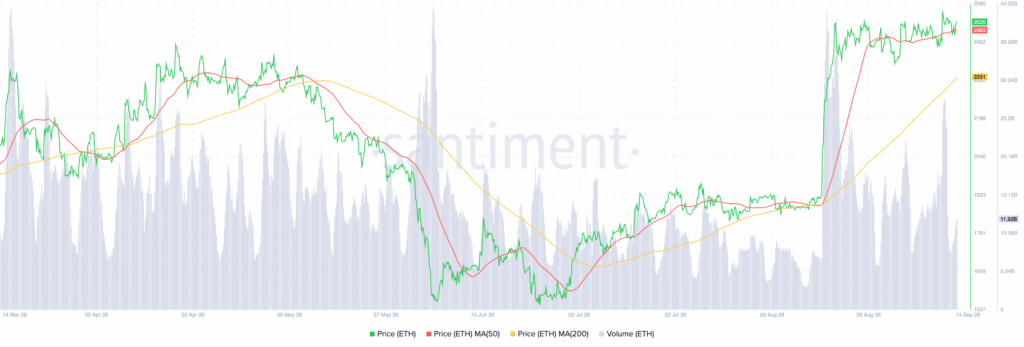
Ethereum has gained 60.62% in Q3 2026, recovering from earlier losses and trading near $2,500. Analysts Ali Charts, Crypto Patel, and Michael van de Poppe have highlighted renewed strength in ETH. Their analysis points to a possible move toward $3,000, with support levels and a developing triangle pattern shaping their outlook.
ETH Rebounds After Sharp Second-Quarter Decline
Ethereum fell from above $2,300 in April to approximately $1,530–$1,550 in late June. The cryptocurrency then recovered through July and early August, forming higher highs and higher lows.
Notably, ETH broke above a key range around Aug. 22. The price later climbed from approximately $1,900 to above $2,450 during a sharp late-August rally. Trading volume increased substantially during that move.
ETH subsequently consolidated at higher levels and now trades near $2,520. According to Crypto Patel, Ethereum reached $2,665 before settling near $2,500. Patel also noted that ETH recently outperformed Bitcoin after recording its quarterly gain.
Analysts Identify $3,000 as the Next Target
Ali Charts said Ethereum’s previous triangle breakout produced a 31% gain within three days. He added that another triangle is now forming on the ETH chart.
According to Ali Charts, a similar breakout could send Ethereum toward $3,000. His analysis focuses on the potential price movement following a break above the developing pattern.
Meanwhile, Michael van de Poppe identified a retest around $2,460 after Ethereum’s recent breakout. He said the level must hold as support for his projected move toward $3,000 to remain relevant.
Ethereum Holds Above Major Moving Averages
Ethereum’s 50-day moving average is near $2,493, while its 200-day moving average is around $2,331. The current price remains above both averages, with the 50-day average above the 200-day average. The 200-day average has also started rising.
Source: Santiment
Meanwhile, the chart places immediate resistance near $2,585, close to the upper boundary of the recent range. A sustained move above $2,493 would preserve the current bullish structure. However, a break below that level could expose Ethereum to support near $2,331.
Analysts Eye $3,000 Ethereum Target as ETH Gains 60% in Q3
Ethereum gained 60.62% in Q3, recovering from $1,530-$1,550 to around $2,520 after a strong late-August rally.
Ali Charts sees a potential $3,000 target if ETH breaks its developing triangle, echoing a previous 31% breakout.
ETH remains above its 50-day and 200-day averages, while $2,460-$2,493 support and $2,585 resistance shape the outlook.
Ethereum has gained 60.62% in Q3 2026, recovering from earlier losses and trading near $2,500. Analysts Ali Charts, Crypto Patel, and Michael van de Poppe have highlighted renewed strength in ETH. Their analysis points to a possible move toward $3,000, with support levels and a developing triangle pattern shaping their outlook.
ETH Rebounds After Sharp Second-Quarter Decline
Ethereum fell from above $2,300 in April to approximately $1,530–$1,550 in late June. The cryptocurrency then recovered through July and early August, forming higher highs and higher lows.
Notably, ETH broke above a key range around Aug. 22. The price later climbed from approximately $1,900 to above $2,450 during a sharp late-August rally. Trading volume increased substantially during that move.
ETH subsequently consolidated at higher levels and now trades near $2,520. According to Crypto Patel, Ethereum reached $2,665 before settling near $2,500. Patel also noted that ETH recently outperformed Bitcoin after recording its quarterly gain.
Analysts Identify $3,000 as the Next Target
Ali Charts said Ethereum’s previous triangle breakout produced a 31% gain within three days. He added that another triangle is now forming on the ETH chart.
According to Ali Charts, a similar breakout could send Ethereum toward $3,000. His analysis focuses on the potential price movement following a break above the developing pattern.
Meanwhile, Michael van de Poppe identified a retest around $2,460 after Ethereum’s recent breakout. He said the level must hold as support for his projected move toward $3,000 to remain relevant.
Ethereum Holds Above Major Moving Averages
Ethereum’s 50-day moving average is near $2,493, while its 200-day moving average is around $2,331. The current price remains above both averages, with the 50-day average above the 200-day average. The 200-day average has also started rising.
Source: Santiment
Meanwhile, the chart places immediate resistance near $2,585, close to the upper boundary of the recent range. A sustained move above $2,493 would preserve the current bullish structure. However, a break below that level could expose Ethereum to support near $2,331.
Ali Charts sees a potential $3,000 target if ETH breaks its developing triangle, echoing a previous 31% breakout.
ETH remains above its 50-day and 200-day averages, while $2,460-$2,493 support and $2,585 resistance shape the outlook.
Ethereum has gained 60.62% in Q3 2026, recovering from earlier losses and trading near $2,500. Analysts Ali Charts, Crypto Patel, and Michael van de Poppe have highlighted renewed strength in ETH. Their analysis points to a possible move toward $3,000, with support levels and a developing triangle pattern shaping their outlook.
ETH Rebounds After Sharp Second-Quarter Decline
Ethereum fell from above $2,300 in April to approximately $1,530–$1,550 in late June. The cryptocurrency then recovered through July and early August, forming higher highs and higher lows.
Notably, ETH broke above a key range around Aug. 22. The price later climbed from approximately $1,900 to above $2,450 during a sharp late-August rally. Trading volume increased substantially during that move.
ETH subsequently consolidated at higher levels and now trades near $2,520. According to Crypto Patel, Ethereum reached $2,665 before settling near $2,500. Patel also noted that ETH recently outperformed Bitcoin after recording its quarterly gain.
Analysts Identify $3,000 as the Next Target
Ali Charts said Ethereum’s previous triangle breakout produced a 31% gain within three days. He added that another triangle is now forming on the ETH chart.
According to Ali Charts, a similar breakout could send Ethereum toward $3,000. His analysis focuses on the potential price movement following a break above the developing pattern.
Meanwhile, Michael van de Poppe identified a retest around $2,460 after Ethereum’s recent breakout. He said the level must hold as support for his projected move toward $3,000 to remain relevant.
Ethereum Holds Above Major Moving Averages
Ethereum’s 50-day moving average is near $2,493, while its 200-day moving average is around $2,331. The current price remains above both averages, with the 50-day average above the 200-day average. The 200-day average has also started rising.
Source: Santiment
Meanwhile, the chart places immediate resistance near $2,585, close to the upper boundary of the recent range. A sustained move above $2,493 would preserve the current bullish structure. However, a break below that level could expose Ethereum to support near $2,331.
54

Artikel
Übersetzung ansehen
Altcoin Leverage Rises as Exchange Inflows Reach New HighsAltcoin open interest excluding Ethereum remains above Bitcoin’s, with Ted warning that elevated leverage could trigger widespread liquidations.
Seven-day cumulative altcoin inflow transactions have reached one of their highest levels in months, signaling rising exchange activity.
The mid- and small-cap market holds near $203B, with $205B resistance and $200B support shaping the next move.
Altcoin markets face renewed selling pressure as leverage remains elevated and more tokens move onto exchanges. Analyst Ted said altcoin open interest, excluding Ethereum, still exceeds Bitcoin’s open interest. Meanwhile, analyst Maartunn reported that seven-day cumulative inflow transactions reached one of their highest levels in months.
Altcoin Open Interest Remains Above Bitcoin
According to Ted, altcoins excluding ETH hold more open interest than Bitcoin. Ted said altcoins carry “decent leverage” and expects many positions to be wiped out within a few weeks. His comments focused on exposure held in altcoin derivatives.
However, Ted did not provide exact open interest figures or identify specific tokens facing the highest exposure. Maartunn reported that altcoins are moving onto exchanges again. He added that seven-day cumulative inflow transactions have surged to one of their highest levels in months.
However, the figures provided do not show the total value of transferred tokens or identify the exchanges involved. The inflow data appeared alongside Ted’s comments about derivatives leverage. Ted focused on open interest, while Maartunn examined exchange transactions.
https://twitter.com/JA_Maartun/status/2099119913520836960?s=20
Mid- and Small-Cap Market Cap Tests $205B
The crypto total market cap excluding the top 10 cryptocurrencies stood near $203.10 billion on the one-hour chart. Market capitalization rose above $212.5 billion around Sept. 7 and neared $214 billion again on Sept. 9. It then declined toward the $198 billion to $200 billion area before recovering.
Source: TradingView
The recovery has since flattened near $203 billion. The chart places $205 billion as immediate resistance, followed by $207.5 billion to $210 billion. Support appears at $200 billion, with stronger support near $197.5 billion to $198 billion.
The RSI stood at 55.71, above its moving average at 49.91. The MACD histogram was positive at $333.94 million, while the MACD line reached $264.72 million against a signal line at negative $69.22 million.
Altcoin Leverage Rises as Exchange Inflows Reach New Highs
Altcoin open interest excluding Ethereum remains above Bitcoin’s, with Ted warning that elevated leverage could trigger widespread liquidations.
Seven-day cumulative altcoin inflow transactions have reached one of their highest levels in months, signaling rising exchange activity.
The mid- and small-cap market holds near $203B, with $205B resistance and $200B support shaping the next move.
Altcoin markets face renewed selling pressure as leverage remains elevated and more tokens move onto exchanges. Analyst Ted said altcoin open interest, excluding Ethereum, still exceeds Bitcoin’s open interest. Meanwhile, analyst Maartunn reported that seven-day cumulative inflow transactions reached one of their highest levels in months.
Altcoin Open Interest Remains Above Bitcoin
According to Ted, altcoins excluding ETH hold more open interest than Bitcoin. Ted said altcoins carry “decent leverage” and expects many positions to be wiped out within a few weeks. His comments focused on exposure held in altcoin derivatives.
However, Ted did not provide exact open interest figures or identify specific tokens facing the highest exposure. Maartunn reported that altcoins are moving onto exchanges again. He added that seven-day cumulative inflow transactions have surged to one of their highest levels in months.
However, the figures provided do not show the total value of transferred tokens or identify the exchanges involved. The inflow data appeared alongside Ted’s comments about derivatives leverage. Ted focused on open interest, while Maartunn examined exchange transactions.
https://twitter.com/JA_Maartun/status/2099119913520836960?s=20
Mid- and Small-Cap Market Cap Tests $205B
The crypto total market cap excluding the top 10 cryptocurrencies stood near $203.10 billion on the one-hour chart. Market capitalization rose above $212.5 billion around Sept. 7 and neared $214 billion again on Sept. 9. It then declined toward the $198 billion to $200 billion area before recovering.
Source: TradingView
The recovery has since flattened near $203 billion. The chart places $205 billion as immediate resistance, followed by $207.5 billion to $210 billion. Support appears at $200 billion, with stronger support near $197.5 billion to $198 billion.
The RSI stood at 55.71, above its moving average at 49.91. The MACD histogram was positive at $333.94 million, while the MACD line reached $264.72 million against a signal line at negative $69.22 million.
Seven-day cumulative altcoin inflow transactions have reached one of their highest levels in months, signaling rising exchange activity.
The mid- and small-cap market holds near $203B, with $205B resistance and $200B support shaping the next move.
Altcoin markets face renewed selling pressure as leverage remains elevated and more tokens move onto exchanges. Analyst Ted said altcoin open interest, excluding Ethereum, still exceeds Bitcoin’s open interest. Meanwhile, analyst Maartunn reported that seven-day cumulative inflow transactions reached one of their highest levels in months.
Altcoin Open Interest Remains Above Bitcoin
According to Ted, altcoins excluding ETH hold more open interest than Bitcoin. Ted said altcoins carry “decent leverage” and expects many positions to be wiped out within a few weeks. His comments focused on exposure held in altcoin derivatives.
However, Ted did not provide exact open interest figures or identify specific tokens facing the highest exposure. Maartunn reported that altcoins are moving onto exchanges again. He added that seven-day cumulative inflow transactions have surged to one of their highest levels in months.
However, the figures provided do not show the total value of transferred tokens or identify the exchanges involved. The inflow data appeared alongside Ted’s comments about derivatives leverage. Ted focused on open interest, while Maartunn examined exchange transactions.
https://twitter.com/JA_Maartun/status/2099119913520836960?s=20
Mid- and Small-Cap Market Cap Tests $205B
The crypto total market cap excluding the top 10 cryptocurrencies stood near $203.10 billion on the one-hour chart. Market capitalization rose above $212.5 billion around Sept. 7 and neared $214 billion again on Sept. 9. It then declined toward the $198 billion to $200 billion area before recovering.
Source: TradingView
The recovery has since flattened near $203 billion. The chart places $205 billion as immediate resistance, followed by $207.5 billion to $210 billion. Support appears at $200 billion, with stronger support near $197.5 billion to $198 billion.
The RSI stood at 55.71, above its moving average at 49.91. The MACD histogram was positive at $333.94 million, while the MACD line reached $264.72 million against a signal line at negative $69.22 million.
45

Artikel
Analyst setzt $88K-Bitcoin-Ziel nach Ausbruch über dem wöchentlichen MA50Doctor Profit sagt, Bitcoin müsse den wöchentlichen MA50 zurückerobern und $82.500-$83.000 durchbrechen, um einen Weg in Richtung $88.000 zu eröffnen.
Der Analyst hält $71.000 als seine stärkste Unterstützungsreferenz fest, während $78.500 weiterhin als Unterstützung nicht bestätigt bleibt.
Die Entscheidung der Fed vom 16. September und die Abstimmung über das CLARITY-Gesetz am 15. September liefern wichtige Auslöser, da Bitcoin unter $80.000 handelt.
Die Erholungsaussichten für Bitcoin bleiben laut Doctor Profit an einen Widerstand nahe dem wöchentlichen 50-Tage-Moving-Average gebunden. Der Analyst erwartet, dass Bitcoin $88.000 ansteuert, nachdem es diese Marke zurückerobert und die Spanne $82.500–$83.000 durchbrochen hat. Allerdings hält er auch $71.000 als möglichen Unterstützungsbereich vor der Entscheidung der Federal Reserve vom 16. September im Blick.
Analyst setzt $88K-Bitcoin-Ziel nach Ausbruch über dem wöchentlichen MA50
Doctor Profit sagt, Bitcoin müsse den wöchentlichen MA50 zurückerobern und $82.500-$83.000 durchbrechen, um einen Weg in Richtung $88.000 zu eröffnen.
Der Analyst hält $71.000 als seine stärkste Unterstützungsreferenz fest, während $78.500 weiterhin als Unterstützung nicht bestätigt bleibt.
Die Entscheidung der Fed vom 16. September und die Abstimmung über das CLARITY-Gesetz am 15. September liefern wichtige Auslöser, da Bitcoin unter $80.000 handelt.
Die Erholungsaussichten für Bitcoin bleiben laut Doctor Profit an einen Widerstand nahe dem wöchentlichen 50-Tage-Moving-Average gebunden. Der Analyst erwartet, dass Bitcoin $88.000 ansteuert, nachdem es diese Marke zurückerobert und die Spanne $82.500–$83.000 durchbrochen hat. Allerdings hält er auch $71.000 als möglichen Unterstützungsbereich vor der Entscheidung der Federal Reserve vom 16. September im Blick.
Der Analyst hält $71.000 als seine stärkste Unterstützungsreferenz fest, während $78.500 weiterhin als Unterstützung nicht bestätigt bleibt.
Die Entscheidung der Fed vom 16. September und die Abstimmung über das CLARITY-Gesetz am 15. September liefern wichtige Auslöser, da Bitcoin unter $80.000 handelt.
Die Erholungsaussichten für Bitcoin bleiben laut Doctor Profit an einen Widerstand nahe dem wöchentlichen 50-Tage-Moving-Average gebunden. Der Analyst erwartet, dass Bitcoin $88.000 ansteuert, nachdem es diese Marke zurückerobert und die Spanne $82.500–$83.000 durchbrochen hat. Allerdings hält er auch $71.000 als möglichen Unterstützungsbereich vor der Entscheidung der Federal Reserve vom 16. September im Blick.
114
Artikel
Analysten blicken auf ein SUI-Ziel von 1 US-Dollar, während der Kurs die wichtige Unterstützung bei 0,70 US-Dollar testetAnalyst sagt, dass SUIs 12-Stunden TD Sequential ein frisches Kaufsignal angezeigt hat, während der Kurs die Unterstützungszone bei 0,70 bis 0,72 US-Dollar testet.
SUI muss 0,75 US-Dollar zurückerobern, dann 0,78 bis 0,85 US-Dollar, während Michael van de Poppe eine Rückkehr zu 0,85 US-Dollar als entscheidend für 1 US-Dollar sieht.
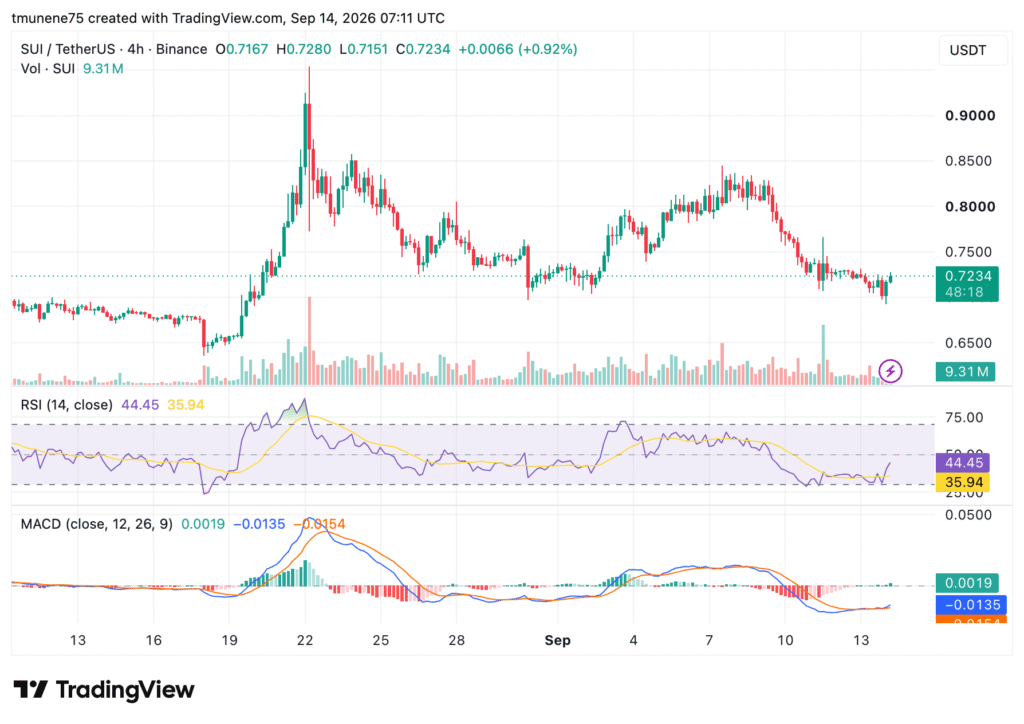
RSI und MACD zeigen frühe Verbesserungen, aber ein Verlust von 0,70 US-Dollar könnte SUI einem Rückfall auf 0,64 und 0,60 US-Dollar aussetzen.
SUI handelt nahe 0,72 US-Dollar, nachdem es sich von 0,85 US-Dollar zurückgezogen hat, während Analysten die Unterstützung bei etwa 0,70 US-Dollar im Blick haben. Ali Charts meldete ein frisches Kaufsignal vom TD-Sequential-Indikator. In der Zwischenzeit identifizierten Michael van de Poppe und Investor Jordan unterschiedliche Kursniveaus, die SUIs nächsten Schritt prägen könnten.
Analysten blicken auf ein SUI-Ziel von 1 US-Dollar, während der Kurs die wichtige Unterstützung bei 0,70 US-Dollar testet
Analyst sagt, dass SUIs 12-Stunden TD Sequential ein frisches Kaufsignal angezeigt hat, während der Kurs die Unterstützungszone bei 0,70 bis 0,72 US-Dollar testet.
SUI muss 0,75 US-Dollar zurückerobern, dann 0,78 bis 0,85 US-Dollar, während Michael van de Poppe eine Rückkehr zu 0,85 US-Dollar als entscheidend für 1 US-Dollar sieht.
RSI und MACD zeigen frühe Verbesserungen, aber ein Verlust von 0,70 US-Dollar könnte SUI einem Rückfall auf 0,64 und 0,60 US-Dollar aussetzen.
SUI handelt nahe 0,72 US-Dollar, nachdem es sich von 0,85 US-Dollar zurückgezogen hat, während Analysten die Unterstützung bei etwa 0,70 US-Dollar im Blick haben. Ali Charts meldete ein frisches Kaufsignal vom TD-Sequential-Indikator. In der Zwischenzeit identifizierten Michael van de Poppe und Investor Jordan unterschiedliche Kursniveaus, die SUIs nächsten Schritt prägen könnten.
SUI muss 0,75 US-Dollar zurückerobern, dann 0,78 bis 0,85 US-Dollar, während Michael van de Poppe eine Rückkehr zu 0,85 US-Dollar als entscheidend für 1 US-Dollar sieht.
RSI und MACD zeigen frühe Verbesserungen, aber ein Verlust von 0,70 US-Dollar könnte SUI einem Rückfall auf 0,64 und 0,60 US-Dollar aussetzen.
SUI handelt nahe 0,72 US-Dollar, nachdem es sich von 0,85 US-Dollar zurückgezogen hat, während Analysten die Unterstützung bei etwa 0,70 US-Dollar im Blick haben. Ali Charts meldete ein frisches Kaufsignal vom TD-Sequential-Indikator. In der Zwischenzeit identifizierten Michael van de Poppe und Investor Jordan unterschiedliche Kursniveaus, die SUIs nächsten Schritt prägen könnten.
237
Artikel
Übersetzung ansehen
SHIB Price Rebounds as Buyers Defend Key SupportSHIB price recovers after early weakness, with buyers defending higher levels across the latest session and restoring upward momentum.
Rising trading volume accompanies the rebound, while support near $0.0000052 remains central to the latest price recovery structure.
The chart shows a potential base forming, while sustained strength requires continued defense of the highlighted support zone now.
SHIB price is recovering after prolonged weakness, with the latest chart showing stronger demand, rising activity, and a developing base near key support as buyers defend elevated levels.
A Potential Bottoming Structure Emerges
The latest structure shows a sharp recovery after an extended period of declining prices. Price moved toward a long-established support area before attempting a broader reversal. The chart therefore places greater attention on support retention and subsequent upward movement.
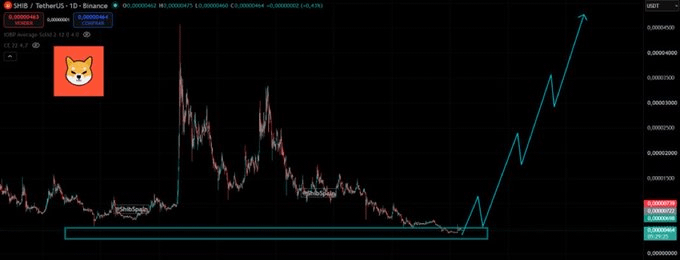
Whales Care frames this structure as a potential bottoming zone for SHIB. The post states the bottom is in and a massive pump is loading. That view centers on accumulation near support rather than another isolated short-term bounce.
Source: (Whales Care)
The chart's turquoise rectangle marks the zone where buyers have repeatedly defended price. Price reached this area after a prolonged sequence of lower highs and lower lows. Holding that region remains central to the bullish structure presented by the chart.
The projected path also shows several advances separated by temporary pullbacks. That pattern would create higher highs while maintaining progressively stronger trading levels. The projection points toward a sustained expansion rather than one immediate vertical move.
Recent Trading Shows Renewed Buying Activity
The latest chart records a price near $0.000005285, up 4.23% over 24 hours. Trading volume is currently close to $78.12m with a 25.64% daily rise. That combination accompanies the rebound and shows stronger activity during the latest session.
Source: Coinmarketcap
The session initially moved lower, reaching the area around $0.00000509. Buyers then entered aggressively, producing a sharp advance around the morning period. The move carried price above $0.0000052 before a corrective phase developed.
After the initial spike, price pulled back and formed several intraday swings. However, the decline did not return fully toward the session's starting levels. Instead, price stabilized and gradually recovered through the afternoon and evening.
The later chart action shows a sequence of higher levels developing across the session. Price eventually moved back toward the upper boundary near $0.000005285. This recovery places attention on whether buyers can maintain those elevated trading levels.
$0.0000052 Remains a Key Reference
The $0.0000052 area has become an important reference within the recent recovery. Price moved above that level after the morning surge and later consolidated nearby. A sustained hold would preserve the stronger structure visible across the latter session.
The earlier historical chart adds broader context to the current support formation. Several previous rallies were followed by deep retracements and prolonged downward movement. The latest base therefore sits beneath a much longer corrective price structure.
Market data also reveals a capitalization of around $3.11 billion. Circulating supply is around 589.23 trillion tokens, and over 3.08 million tokens are held. Volume-to-market capitalization currently sits around 2.5%, according to the displayed figures.
The chart's bullish projection depends on continued support and upward follow-through. A move beyond recent highs would extend the sequence of higher trading levels. A return below the support area would weaken the structure shown in the analysis.
SHIB Price Rebounds as Buyers Defend Key Support
SHIB price recovers after early weakness, with buyers defending higher levels across the latest session and restoring upward momentum.
Rising trading volume accompanies the rebound, while support near $0.0000052 remains central to the latest price recovery structure.
The chart shows a potential base forming, while sustained strength requires continued defense of the highlighted support zone now.
SHIB price is recovering after prolonged weakness, with the latest chart showing stronger demand, rising activity, and a developing base near key support as buyers defend elevated levels.
A Potential Bottoming Structure Emerges
The latest structure shows a sharp recovery after an extended period of declining prices. Price moved toward a long-established support area before attempting a broader reversal. The chart therefore places greater attention on support retention and subsequent upward movement.
Whales Care frames this structure as a potential bottoming zone for SHIB. The post states the bottom is in and a massive pump is loading. That view centers on accumulation near support rather than another isolated short-term bounce.
Source: (Whales Care)
The chart's turquoise rectangle marks the zone where buyers have repeatedly defended price. Price reached this area after a prolonged sequence of lower highs and lower lows. Holding that region remains central to the bullish structure presented by the chart.
The projected path also shows several advances separated by temporary pullbacks. That pattern would create higher highs while maintaining progressively stronger trading levels. The projection points toward a sustained expansion rather than one immediate vertical move.
Recent Trading Shows Renewed Buying Activity
The latest chart records a price near $0.000005285, up 4.23% over 24 hours. Trading volume is currently close to $78.12m with a 25.64% daily rise. That combination accompanies the rebound and shows stronger activity during the latest session.
Source: Coinmarketcap
The session initially moved lower, reaching the area around $0.00000509. Buyers then entered aggressively, producing a sharp advance around the morning period. The move carried price above $0.0000052 before a corrective phase developed.
After the initial spike, price pulled back and formed several intraday swings. However, the decline did not return fully toward the session's starting levels. Instead, price stabilized and gradually recovered through the afternoon and evening.
The later chart action shows a sequence of higher levels developing across the session. Price eventually moved back toward the upper boundary near $0.000005285. This recovery places attention on whether buyers can maintain those elevated trading levels.
$0.0000052 Remains a Key Reference
The $0.0000052 area has become an important reference within the recent recovery. Price moved above that level after the morning surge and later consolidated nearby. A sustained hold would preserve the stronger structure visible across the latter session.
The earlier historical chart adds broader context to the current support formation. Several previous rallies were followed by deep retracements and prolonged downward movement. The latest base therefore sits beneath a much longer corrective price structure.
Market data also reveals a capitalization of around $3.11 billion. Circulating supply is around 589.23 trillion tokens, and over 3.08 million tokens are held. Volume-to-market capitalization currently sits around 2.5%, according to the displayed figures.
The chart's bullish projection depends on continued support and upward follow-through. A move beyond recent highs would extend the sequence of higher trading levels. A return below the support area would weaken the structure shown in the analysis.
Rising trading volume accompanies the rebound, while support near $0.0000052 remains central to the latest price recovery structure.
The chart shows a potential base forming, while sustained strength requires continued defense of the highlighted support zone now.
SHIB price is recovering after prolonged weakness, with the latest chart showing stronger demand, rising activity, and a developing base near key support as buyers defend elevated levels.
A Potential Bottoming Structure Emerges
The latest structure shows a sharp recovery after an extended period of declining prices. Price moved toward a long-established support area before attempting a broader reversal. The chart therefore places greater attention on support retention and subsequent upward movement.
Whales Care frames this structure as a potential bottoming zone for SHIB. The post states the bottom is in and a massive pump is loading. That view centers on accumulation near support rather than another isolated short-term bounce.
Source: (Whales Care)
The chart's turquoise rectangle marks the zone where buyers have repeatedly defended price. Price reached this area after a prolonged sequence of lower highs and lower lows. Holding that region remains central to the bullish structure presented by the chart.
The projected path also shows several advances separated by temporary pullbacks. That pattern would create higher highs while maintaining progressively stronger trading levels. The projection points toward a sustained expansion rather than one immediate vertical move.
Recent Trading Shows Renewed Buying Activity
The latest chart records a price near $0.000005285, up 4.23% over 24 hours. Trading volume is currently close to $78.12m with a 25.64% daily rise. That combination accompanies the rebound and shows stronger activity during the latest session.
Source: Coinmarketcap
The session initially moved lower, reaching the area around $0.00000509. Buyers then entered aggressively, producing a sharp advance around the morning period. The move carried price above $0.0000052 before a corrective phase developed.
After the initial spike, price pulled back and formed several intraday swings. However, the decline did not return fully toward the session's starting levels. Instead, price stabilized and gradually recovered through the afternoon and evening.
The later chart action shows a sequence of higher levels developing across the session. Price eventually moved back toward the upper boundary near $0.000005285. This recovery places attention on whether buyers can maintain those elevated trading levels.
$0.0000052 Remains a Key Reference
The $0.0000052 area has become an important reference within the recent recovery. Price moved above that level after the morning surge and later consolidated nearby. A sustained hold would preserve the stronger structure visible across the latter session.
The earlier historical chart adds broader context to the current support formation. Several previous rallies were followed by deep retracements and prolonged downward movement. The latest base therefore sits beneath a much longer corrective price structure.
Market data also reveals a capitalization of around $3.11 billion. Circulating supply is around 589.23 trillion tokens, and over 3.08 million tokens are held. Volume-to-market capitalization currently sits around 2.5%, according to the displayed figures.
The chart's bullish projection depends on continued support and upward follow-through. A move beyond recent highs would extend the sequence of higher trading levels. A return below the support area would weaken the structure shown in the analysis.
166

Artikel
Übersetzung ansehen
Thailand SEC Proposes $151K Daily Stablecoin Transfer CapThailand’s SEC proposes a 5M baht daily stablecoin transfer cap per customer and regulated operator, with wallet ownership checks.
Stablecoin deposits and withdrawals would need to use customer-owned accounts or wallets meeting Travel Rule requirements.
The SEC also proposes tighter rules for off-platform trades, liquidity providers, source exchanges and broker disclosures.
Thailand’s SEC has proposed stablecoin transfer rules in Thailand, including a 5 million baht daily cap. The rules would require regulated operators to send deposits and withdrawals through customer-owned accounts or wallets. The SEC opened public comments in September 2026 to address money laundering, cybercrime and cross-border transfer rule breaches.
https://twitter.com/WuBlockchain/status/2098948026496872954?s=20
SEC Sets Rules for Stablecoin Transfers
Stablecoins entering an operator must come from the customer’s account or wallet. Withdrawals must also go to that customer’s account or wallet. Transfers involving another person’s account or wallet would be prohibited.
Both accounts or wallets must meet Travel Rule requirements. Operators would screen customer data and check risky wallets or watchlists. Notably, each customer could transfer up to 5 million baht daily per operator. However, the cap would not apply between Thai operators using the Travel Rule.
The limit would exclude businesses using stablecoins through their own accounts. It would also exclude Bank of Thailand-supervised businesses with case-by-case approval. Market makers for stablecoin-baht pairs would qualify for exceptions.
SEC Sets Conditions for Off-Platform Trades
The SEC also proposed rules for brokers and dealers handling off-platform transactions. These transactions would require a minimum value of 3 million baht. Brokers and dealers would need to publish digital asset trading prices.
However, brokers could not conduct off-platform trades directly between clients. They could still match clients through exchanges as brokers or agents. The proposal also covers market makers and liquidity providers. Exchanges would publish their market makers and supported digital assets.
SEC Tightens Broker and Exchange Oversight
For brokers, liquidity providers could not handle stablecoin-baht transactions. They would need to operate in jurisdictions applying FATF measures and regulatory oversight. Brokers would disclose liquidity provider names and conflicts of interest.
The SEC would tighten source exchange rules. Source exchanges must face regulatory supervision and screening against money laundering and technology-related crime.
Finally, operators must provide complete information when the SEC requests it. The SEC could set correction deadlines for noncompliance. Failure could lead to orders requiring or restricting specific actions.
Thailand SEC Proposes $151K Daily Stablecoin Transfer Cap
Thailand’s SEC proposes a 5M baht daily stablecoin transfer cap per customer and regulated operator, with wallet ownership checks.
Stablecoin deposits and withdrawals would need to use customer-owned accounts or wallets meeting Travel Rule requirements.
The SEC also proposes tighter rules for off-platform trades, liquidity providers, source exchanges and broker disclosures.
Thailand’s SEC has proposed stablecoin transfer rules in Thailand, including a 5 million baht daily cap. The rules would require regulated operators to send deposits and withdrawals through customer-owned accounts or wallets. The SEC opened public comments in September 2026 to address money laundering, cybercrime and cross-border transfer rule breaches.
https://twitter.com/WuBlockchain/status/2098948026496872954?s=20
SEC Sets Rules for Stablecoin Transfers
Stablecoins entering an operator must come from the customer’s account or wallet. Withdrawals must also go to that customer’s account or wallet. Transfers involving another person’s account or wallet would be prohibited.
Both accounts or wallets must meet Travel Rule requirements. Operators would screen customer data and check risky wallets or watchlists. Notably, each customer could transfer up to 5 million baht daily per operator. However, the cap would not apply between Thai operators using the Travel Rule.
The limit would exclude businesses using stablecoins through their own accounts. It would also exclude Bank of Thailand-supervised businesses with case-by-case approval. Market makers for stablecoin-baht pairs would qualify for exceptions.
SEC Sets Conditions for Off-Platform Trades
The SEC also proposed rules for brokers and dealers handling off-platform transactions. These transactions would require a minimum value of 3 million baht. Brokers and dealers would need to publish digital asset trading prices.
However, brokers could not conduct off-platform trades directly between clients. They could still match clients through exchanges as brokers or agents. The proposal also covers market makers and liquidity providers. Exchanges would publish their market makers and supported digital assets.
SEC Tightens Broker and Exchange Oversight
For brokers, liquidity providers could not handle stablecoin-baht transactions. They would need to operate in jurisdictions applying FATF measures and regulatory oversight. Brokers would disclose liquidity provider names and conflicts of interest.
The SEC would tighten source exchange rules. Source exchanges must face regulatory supervision and screening against money laundering and technology-related crime.
Finally, operators must provide complete information when the SEC requests it. The SEC could set correction deadlines for noncompliance. Failure could lead to orders requiring or restricting specific actions.
Stablecoin deposits and withdrawals would need to use customer-owned accounts or wallets meeting Travel Rule requirements.
The SEC also proposes tighter rules for off-platform trades, liquidity providers, source exchanges and broker disclosures.
Thailand’s SEC has proposed stablecoin transfer rules in Thailand, including a 5 million baht daily cap. The rules would require regulated operators to send deposits and withdrawals through customer-owned accounts or wallets. The SEC opened public comments in September 2026 to address money laundering, cybercrime and cross-border transfer rule breaches.
https://twitter.com/WuBlockchain/status/2098948026496872954?s=20
SEC Sets Rules for Stablecoin Transfers
Stablecoins entering an operator must come from the customer’s account or wallet. Withdrawals must also go to that customer’s account or wallet. Transfers involving another person’s account or wallet would be prohibited.
Both accounts or wallets must meet Travel Rule requirements. Operators would screen customer data and check risky wallets or watchlists. Notably, each customer could transfer up to 5 million baht daily per operator. However, the cap would not apply between Thai operators using the Travel Rule.
The limit would exclude businesses using stablecoins through their own accounts. It would also exclude Bank of Thailand-supervised businesses with case-by-case approval. Market makers for stablecoin-baht pairs would qualify for exceptions.
SEC Sets Conditions for Off-Platform Trades
The SEC also proposed rules for brokers and dealers handling off-platform transactions. These transactions would require a minimum value of 3 million baht. Brokers and dealers would need to publish digital asset trading prices.
However, brokers could not conduct off-platform trades directly between clients. They could still match clients through exchanges as brokers or agents. The proposal also covers market makers and liquidity providers. Exchanges would publish their market makers and supported digital assets.
SEC Tightens Broker and Exchange Oversight
For brokers, liquidity providers could not handle stablecoin-baht transactions. They would need to operate in jurisdictions applying FATF measures and regulatory oversight. Brokers would disclose liquidity provider names and conflicts of interest.
The SEC would tighten source exchange rules. Source exchanges must face regulatory supervision and screening against money laundering and technology-related crime.
Finally, operators must provide complete information when the SEC requests it. The SEC could set correction deadlines for noncompliance. Failure could lead to orders requiring or restricting specific actions.
38
Artikel
Analysten erwarten XRP-Ausbruch über 1,55 US-Dollar, da Wale Verkäufe auslösen und den 20%-Rückgang treibenWale verkauften oder verteilten etwa 90 Mio. XRP neu, während die täglichen aktiven Adressen während der jüngsten Korrektur deutlich zurückgingen.
XRP hält sich nahe 1,35 US-Dollar, wobei 1,30–1,39 US-Dollar als zentrale Unterstützung gelten und 1,38–1,39 benötigt werden, um eine Erholung zu stärken.
Ein wöchentlicher Schlusskurs über 1,55 US-Dollar könnte 2 und 3,66 US-Dollar anpeilen, während das Scheitern, diesen Wert zurückzuerobern, 0,70–0,95 US-Dollar offenlegen könnte.
XRP ist in drei Wochen um 20% gefallen und von 1,70 US-Dollar auf 1,35 US-Dollar gesunken. Dabei belasten die Verteilung durch Wale und schwächere Netzwerkaktivität den Token. Analysten Ali Charts und Crypto Patel haben wichtige Kursmarken für XRP’s nächsten Schritt identifiziert. In der Zwischenzeit zeigen technische Daten Unterstützung zwischen 1,30 und 1,39 US-Dollar.
Analysten erwarten XRP-Ausbruch über 1,55 US-Dollar, da Wale Verkäufe auslösen und den 20%-Rückgang treiben
Wale verkauften oder verteilten etwa 90 Mio. XRP neu, während die täglichen aktiven Adressen während der jüngsten Korrektur deutlich zurückgingen.
XRP hält sich nahe 1,35 US-Dollar, wobei 1,30–1,39 US-Dollar als zentrale Unterstützung gelten und 1,38–1,39 benötigt werden, um eine Erholung zu stärken.
Ein wöchentlicher Schlusskurs über 1,55 US-Dollar könnte 2 und 3,66 US-Dollar anpeilen, während das Scheitern, diesen Wert zurückzuerobern, 0,70–0,95 US-Dollar offenlegen könnte.
XRP ist in drei Wochen um 20% gefallen und von 1,70 US-Dollar auf 1,35 US-Dollar gesunken. Dabei belasten die Verteilung durch Wale und schwächere Netzwerkaktivität den Token. Analysten Ali Charts und Crypto Patel haben wichtige Kursmarken für XRP’s nächsten Schritt identifiziert. In der Zwischenzeit zeigen technische Daten Unterstützung zwischen 1,30 und 1,39 US-Dollar.
XRP hält sich nahe 1,35 US-Dollar, wobei 1,30–1,39 US-Dollar als zentrale Unterstützung gelten und 1,38–1,39 benötigt werden, um eine Erholung zu stärken.
Ein wöchentlicher Schlusskurs über 1,55 US-Dollar könnte 2 und 3,66 US-Dollar anpeilen, während das Scheitern, diesen Wert zurückzuerobern, 0,70–0,95 US-Dollar offenlegen könnte.
XRP ist in drei Wochen um 20% gefallen und von 1,70 US-Dollar auf 1,35 US-Dollar gesunken. Dabei belasten die Verteilung durch Wale und schwächere Netzwerkaktivität den Token. Analysten Ali Charts und Crypto Patel haben wichtige Kursmarken für XRP’s nächsten Schritt identifiziert. In der Zwischenzeit zeigen technische Daten Unterstützung zwischen 1,30 und 1,39 US-Dollar.
1
169
Artikel
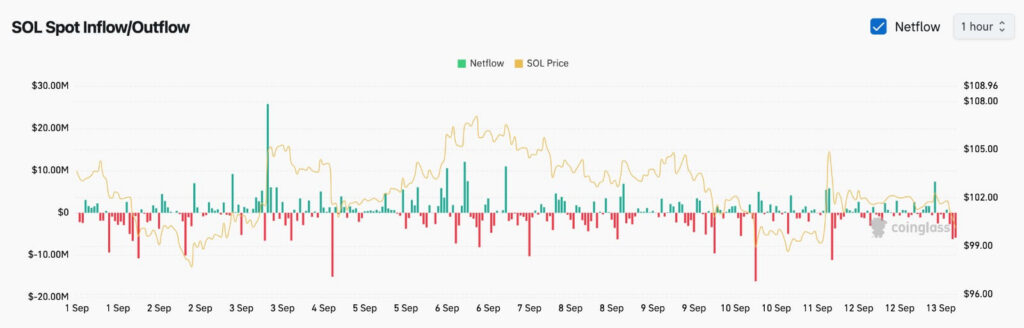
Analysten blicken auf den Widerstand bei $110, während Solana Richtung wichtiger Unterstützung bei $99 rutschtCrypto Patel sieht $110-$115 als entscheidenden Widerstand, wobei ein bestätigter Ausbruch möglicherweise $140, $200 und ein neues ATH ansteuern könnte.
Ella identifiziert $98,5-$100 als Unterstützung, während eine Akzeptanz über $106 hinaus $109-$110,5 eröffnen könnte.
Gemischte Spot-Flow-Daten halten die Richtung von SOL unklar; ein Bruch unter $99 könnte $96 und niedrigere Niveaus freilegen.
Solana trifft bei etwa $110 auf Widerstand, nachdem es seinen jüngsten Vorstoß in Richtung $105–$106 nicht halten konnte. Die Analysten Crypto Patel und Ella, Partnerin bei LBank, haben die wichtigsten Niveaus für beide Szenarien skizziert. Unterdessen zeigte die Spot-Flow-Datenlage vom 1. bis 13. September gemischte Aktivität, als SOL in Richtung $99–$100 abrutschte.
Analysten blicken auf den Widerstand bei $110, während Solana Richtung wichtiger Unterstützung bei $99 rutscht
Crypto Patel sieht $110-$115 als entscheidenden Widerstand, wobei ein bestätigter Ausbruch möglicherweise $140, $200 und ein neues ATH ansteuern könnte.
Ella identifiziert $98,5-$100 als Unterstützung, während eine Akzeptanz über $106 hinaus $109-$110,5 eröffnen könnte.
Gemischte Spot-Flow-Daten halten die Richtung von SOL unklar; ein Bruch unter $99 könnte $96 und niedrigere Niveaus freilegen.
Solana trifft bei etwa $110 auf Widerstand, nachdem es seinen jüngsten Vorstoß in Richtung $105–$106 nicht halten konnte. Die Analysten Crypto Patel und Ella, Partnerin bei LBank, haben die wichtigsten Niveaus für beide Szenarien skizziert. Unterdessen zeigte die Spot-Flow-Datenlage vom 1. bis 13. September gemischte Aktivität, als SOL in Richtung $99–$100 abrutschte.
Ella identifiziert $98,5-$100 als Unterstützung, während eine Akzeptanz über $106 hinaus $109-$110,5 eröffnen könnte.
Gemischte Spot-Flow-Daten halten die Richtung von SOL unklar; ein Bruch unter $99 könnte $96 und niedrigere Niveaus freilegen.
Solana trifft bei etwa $110 auf Widerstand, nachdem es seinen jüngsten Vorstoß in Richtung $105–$106 nicht halten konnte. Die Analysten Crypto Patel und Ella, Partnerin bei LBank, haben die wichtigsten Niveaus für beide Szenarien skizziert. Unterdessen zeigte die Spot-Flow-Datenlage vom 1. bis 13. September gemischte Aktivität, als SOL in Richtung $99–$100 abrutschte.
127

Artikel
Analyst macht Bitcoins 71.200 US-Dollar als nächsten großen Kaufbereich ausAli Charts nennt 71.200 US-Dollar als potenziellen Akkumulations- bzw. Sammelbereich, basierend auf der kurzfristigen Cost-Basis (Kostenbasis) der Bitcoin-Inhaber.
BTC notiert bei rund 77.000 US-Dollar. Die Unterstützung liegt bei 76.500–77.000 US-Dollar, während der Bereich von 77.500–78.000 US-Dollar den Widerstand bildet und die kurzfristige Spanne definiert.
RSI und MACD bleiben bärisch, während ein Bruch unter 76.500 US-Dollar 76.000 und niedrigere Unterstützungsniveaus freilegen könnte.
Der nächste Kaufbereich von Bitcoin könnte laut dem Analysten Ali Charts bei etwa 71.200 US-Dollar liegen. Er hat die Marke als potenziellen Akkumulationsbereich identifiziert. Seine Einschätzung folgt auf den Rückzug von Bitcoin von fast 80.000 US-Dollar Richtung 77.000 US-Dollar, während Marktdaten eine bärische kurzfristige Dynamik zeigen und Unterstützung im Bereich von 76.500–77.000 US-Dollar besteht.
Analyst macht Bitcoins 71.200 US-Dollar als nächsten großen Kaufbereich aus
Ali Charts nennt 71.200 US-Dollar als potenziellen Akkumulations- bzw. Sammelbereich, basierend auf der kurzfristigen Cost-Basis (Kostenbasis) der Bitcoin-Inhaber.
BTC notiert bei rund 77.000 US-Dollar. Die Unterstützung liegt bei 76.500–77.000 US-Dollar, während der Bereich von 77.500–78.000 US-Dollar den Widerstand bildet und die kurzfristige Spanne definiert.
RSI und MACD bleiben bärisch, während ein Bruch unter 76.500 US-Dollar 76.000 und niedrigere Unterstützungsniveaus freilegen könnte.
Der nächste Kaufbereich von Bitcoin könnte laut dem Analysten Ali Charts bei etwa 71.200 US-Dollar liegen. Er hat die Marke als potenziellen Akkumulationsbereich identifiziert. Seine Einschätzung folgt auf den Rückzug von Bitcoin von fast 80.000 US-Dollar Richtung 77.000 US-Dollar, während Marktdaten eine bärische kurzfristige Dynamik zeigen und Unterstützung im Bereich von 76.500–77.000 US-Dollar besteht.
BTC notiert bei rund 77.000 US-Dollar. Die Unterstützung liegt bei 76.500–77.000 US-Dollar, während der Bereich von 77.500–78.000 US-Dollar den Widerstand bildet und die kurzfristige Spanne definiert.
RSI und MACD bleiben bärisch, während ein Bruch unter 76.500 US-Dollar 76.000 und niedrigere Unterstützungsniveaus freilegen könnte.
Der nächste Kaufbereich von Bitcoin könnte laut dem Analysten Ali Charts bei etwa 71.200 US-Dollar liegen. Er hat die Marke als potenziellen Akkumulationsbereich identifiziert. Seine Einschätzung folgt auf den Rückzug von Bitcoin von fast 80.000 US-Dollar Richtung 77.000 US-Dollar, während Marktdaten eine bärische kurzfristige Dynamik zeigen und Unterstützung im Bereich von 76.500–77.000 US-Dollar besteht.
154

Artikel
CLARITY Act steht vor Abstimmung am 15. September, doch parteiübergreifende Unterstützung bleibt ausDer Gesetzentwurf braucht 60 Stimmen, um voranzukommen, doch kein demokratischer Senator hat ihn vor der Abstimmung am 15. September öffentlich unterstützt.
Der überarbeitete 630-seitige Gesetzentwurf enthält 114 von Demokraten gewünschten Bestimmungen, doch umstrittene Ethikregeln bleiben weitgehend unverändert.
Polymarket und Kalshi setzen die Chancen auf eine Verabschiedung des Gesetzes bis zum Jahresende auf nahezu 20% und lassen damit die weitere gesetzgeberische Zukunft ungewiss.
Der US-Senat wird am 15. September eine Verfahrensabstimmung zum CLARITY Act abhalten, während White-House-Berater Patrick Witt und Finanzminister Scott Bessent eine parteiübergreifende Unterstützung fordern. Der Gesetzentwurf braucht 60 Stimmen, um voranzukommen, doch kein demokratischer Senator hat ihn öffentlich unterstützt. In seiner neuesten Fassung enthält er 114 von Demokraten gewünschten Änderungen, während die Ethikregeln weiterhin umstritten sind.
CLARITY Act steht vor Abstimmung am 15. September, doch parteiübergreifende Unterstützung bleibt aus
Der Gesetzentwurf braucht 60 Stimmen, um voranzukommen, doch kein demokratischer Senator hat ihn vor der Abstimmung am 15. September öffentlich unterstützt.
Der überarbeitete 630-seitige Gesetzentwurf enthält 114 von Demokraten gewünschten Bestimmungen, doch umstrittene Ethikregeln bleiben weitgehend unverändert.
Polymarket und Kalshi setzen die Chancen auf eine Verabschiedung des Gesetzes bis zum Jahresende auf nahezu 20% und lassen damit die weitere gesetzgeberische Zukunft ungewiss.
Der US-Senat wird am 15. September eine Verfahrensabstimmung zum CLARITY Act abhalten, während White-House-Berater Patrick Witt und Finanzminister Scott Bessent eine parteiübergreifende Unterstützung fordern. Der Gesetzentwurf braucht 60 Stimmen, um voranzukommen, doch kein demokratischer Senator hat ihn öffentlich unterstützt. In seiner neuesten Fassung enthält er 114 von Demokraten gewünschten Änderungen, während die Ethikregeln weiterhin umstritten sind.
Der überarbeitete 630-seitige Gesetzentwurf enthält 114 von Demokraten gewünschten Bestimmungen, doch umstrittene Ethikregeln bleiben weitgehend unverändert.
Polymarket und Kalshi setzen die Chancen auf eine Verabschiedung des Gesetzes bis zum Jahresende auf nahezu 20% und lassen damit die weitere gesetzgeberische Zukunft ungewiss.
Der US-Senat wird am 15. September eine Verfahrensabstimmung zum CLARITY Act abhalten, während White-House-Berater Patrick Witt und Finanzminister Scott Bessent eine parteiübergreifende Unterstützung fordern. Der Gesetzentwurf braucht 60 Stimmen, um voranzukommen, doch kein demokratischer Senator hat ihn öffentlich unterstützt. In seiner neuesten Fassung enthält er 114 von Demokraten gewünschten Änderungen, während die Ethikregeln weiterhin umstritten sind.
179
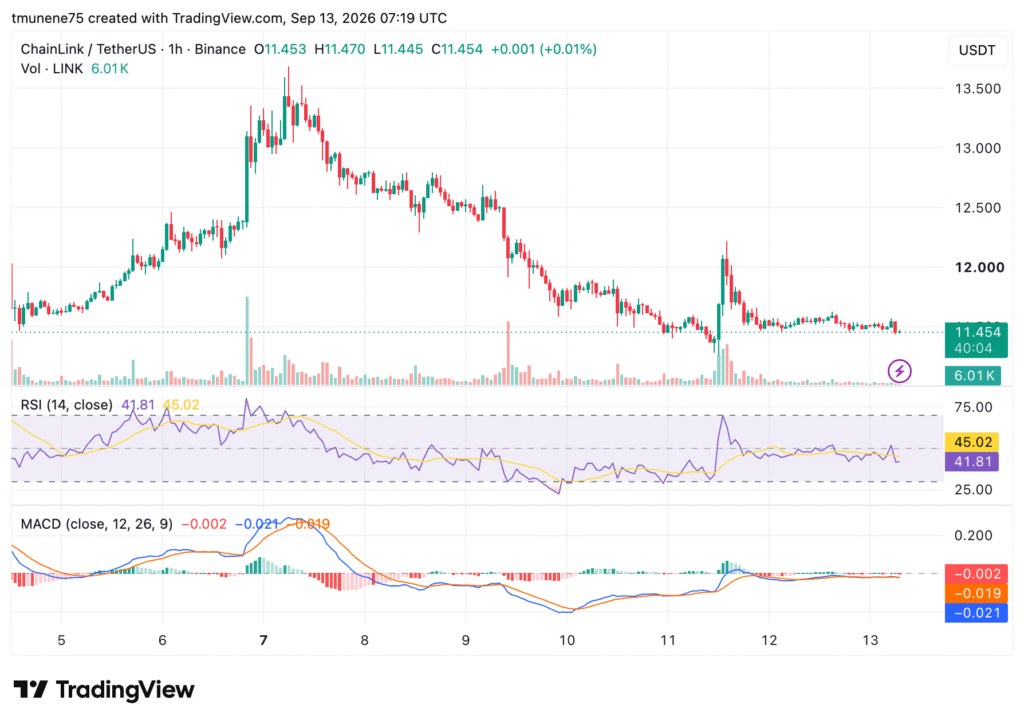
Artikel
Chainlink-Whales akkumulieren 120 Mio. US-Dollar, während LINK die Unterstützung testetWhales haben 10,36 Mio. LINK im Wert von etwa 120 Mio. US-Dollar angesammelt, nachdem es zu einer 17-prozentigen Korrektur von 13,68 $ auf 11,29 $ gekommen war.
LINK hält sich nahe 11,50 $, wobei 11,40 bis 11,50 $ als unmittelter Support gilt und bärische RSI- und MACD-Momentumwerte vorherrschen.
Michael van de Poppe sieht 10 $ als potenzielles Kaufgebiet, während ein Anstieg über 11,80 $ auf 15 $ abzielen könnte.
Chainlink-Whales haben etwa 10,36 Millionen LINK im Wert von rund 120 Millionen US-Dollar angesammelt, nachdem der Token um 17 % von 13,68 $ auf 11,29 $ gefallen war. Analyst Ali Charts berichtete vom Kauf über 96 Stunden, während Michael van de Poppe mögliche Einstiegskurse nahe 10 $ und darüber bei 11,80 $ skizzierte. LINK bleibt in einer engen Konsolidierungsrange.
Chainlink-Whales akkumulieren 120 Mio. US-Dollar, während LINK die Unterstützung testet
Whales haben 10,36 Mio. LINK im Wert von etwa 120 Mio. US-Dollar angesammelt, nachdem es zu einer 17-prozentigen Korrektur von 13,68 $ auf 11,29 $ gekommen war.
LINK hält sich nahe 11,50 $, wobei 11,40 bis 11,50 $ als unmittelter Support gilt und bärische RSI- und MACD-Momentumwerte vorherrschen.
Michael van de Poppe sieht 10 $ als potenzielles Kaufgebiet, während ein Anstieg über 11,80 $ auf 15 $ abzielen könnte.
Chainlink-Whales haben etwa 10,36 Millionen LINK im Wert von rund 120 Millionen US-Dollar angesammelt, nachdem der Token um 17 % von 13,68 $ auf 11,29 $ gefallen war. Analyst Ali Charts berichtete vom Kauf über 96 Stunden, während Michael van de Poppe mögliche Einstiegskurse nahe 10 $ und darüber bei 11,80 $ skizzierte. LINK bleibt in einer engen Konsolidierungsrange.
LINK hält sich nahe 11,50 $, wobei 11,40 bis 11,50 $ als unmittelter Support gilt und bärische RSI- und MACD-Momentumwerte vorherrschen.
Michael van de Poppe sieht 10 $ als potenzielles Kaufgebiet, während ein Anstieg über 11,80 $ auf 15 $ abzielen könnte.
Chainlink-Whales haben etwa 10,36 Millionen LINK im Wert von rund 120 Millionen US-Dollar angesammelt, nachdem der Token um 17 % von 13,68 $ auf 11,29 $ gefallen war. Analyst Ali Charts berichtete vom Kauf über 96 Stunden, während Michael van de Poppe mögliche Einstiegskurse nahe 10 $ und darüber bei 11,80 $ skizzierte. LINK bleibt in einer engen Konsolidierungsrange.
280
Artikel
XRP-Marktaktivität steht vor erneutem VerkaufsdruckXRP steigt auf 1,32 US-Dollar, bevor es den Verkaufstrend fortsetzt, während die Erholungen in der jüngsten Sitzung nicht stark genug sind, um den Preis weiter nach oben zu treiben.
Das Handelsvolumen bleibt unter früheren Spitzen, was auf eine ruhigere Beteiligung nach mehreren großen XRP-Preisexpansionen im Laufe des Jahres hindeutet.
Institutionelle Zahlungsdiskussionen rund um XRP gehen weiter, während die aktuellen Charts eine nachlassende Dynamik und erhöhten kurzfristigen Verkaufsdruck erkennen lassen.
Die XRP-Marktaktivität gerät erneut unter Druck, da die jüngsten Erholungen nachlassen, während die Diskussionen über die Zahlungsinfrastruktur die Aufmerksamkeit weiterhin auf breitere Entwicklungen bei digitalen Abwicklungen lenken.
XRP-Marktaktivität steht vor erneutem Verkaufsdruck
XRP steigt auf 1,32 US-Dollar, bevor es den Verkaufstrend fortsetzt, während die Erholungen in der jüngsten Sitzung nicht stark genug sind, um den Preis weiter nach oben zu treiben.
Das Handelsvolumen bleibt unter früheren Spitzen, was auf eine ruhigere Beteiligung nach mehreren großen XRP-Preisexpansionen im Laufe des Jahres hindeutet.
Institutionelle Zahlungsdiskussionen rund um XRP gehen weiter, während die aktuellen Charts eine nachlassende Dynamik und erhöhten kurzfristigen Verkaufsdruck erkennen lassen.
Die XRP-Marktaktivität gerät erneut unter Druck, da die jüngsten Erholungen nachlassen, während die Diskussionen über die Zahlungsinfrastruktur die Aufmerksamkeit weiterhin auf breitere Entwicklungen bei digitalen Abwicklungen lenken.
Das Handelsvolumen bleibt unter früheren Spitzen, was auf eine ruhigere Beteiligung nach mehreren großen XRP-Preisexpansionen im Laufe des Jahres hindeutet.
Institutionelle Zahlungsdiskussionen rund um XRP gehen weiter, während die aktuellen Charts eine nachlassende Dynamik und erhöhten kurzfristigen Verkaufsdruck erkennen lassen.
Die XRP-Marktaktivität gerät erneut unter Druck, da die jüngsten Erholungen nachlassen, während die Diskussionen über die Zahlungsinfrastruktur die Aufmerksamkeit weiterhin auf breitere Entwicklungen bei digitalen Abwicklungen lenken.
175

Artikel
Meme Coins, die explodieren werden: Könnte Apeings Preis von 0,0004 $ in Stufe 3 die nächste große Chance sein …Die Suche nach Meme Coins, die explodieren werden, nimmt Fahrt auf, während Shiba Inu Händler mit frischer Burn-Aktivität bei Laune hält und Baby Doge Coin weiterhin die Aufmerksamkeit der Meme-Coin-Community auf sich zieht. Etablierte Namen dominieren zwar noch immer das Gespräch, doch die nächste Gelegenheit könnte sich schon früher im Zyklus herausbilden—wenn ein Projekt an Schwung gewinnen kann, bevor es den breiteren Markt erreicht.
Genau dort kommt Apeing ($APEING) ins Spiel. Sein Presale ist LIVE in Stufe 3: Der aktuelle Preis liegt bei 0,0004 $ und 59,66 % der 300 Millionen Token umfassenden Zuteilung der Stufe sind bereits verkauft. Wenn die nächste Stufe auf 0,0005 $ steigt, bietet das aktuelle Zeitfenster Apeing eine klare Early-Stage-Storyline, während der Presale auf den genannten Listing-Preis von 0,01 $ zusteuert.
Meme Coins, die explodieren werden: Könnte Apeings Preis von 0,0004 $ in Stufe 3 die nächste große Chance sein …
Die Suche nach Meme Coins, die explodieren werden, nimmt Fahrt auf, während Shiba Inu Händler mit frischer Burn-Aktivität bei Laune hält und Baby Doge Coin weiterhin die Aufmerksamkeit der Meme-Coin-Community auf sich zieht. Etablierte Namen dominieren zwar noch immer das Gespräch, doch die nächste Gelegenheit könnte sich schon früher im Zyklus herausbilden—wenn ein Projekt an Schwung gewinnen kann, bevor es den breiteren Markt erreicht.
Genau dort kommt Apeing ($APEING) ins Spiel. Sein Presale ist LIVE in Stufe 3: Der aktuelle Preis liegt bei 0,0004 $ und 59,66 % der 300 Millionen Token umfassenden Zuteilung der Stufe sind bereits verkauft. Wenn die nächste Stufe auf 0,0005 $ steigt, bietet das aktuelle Zeitfenster Apeing eine klare Early-Stage-Storyline, während der Presale auf den genannten Listing-Preis von 0,01 $ zusteuert.
Genau dort kommt Apeing ($APEING) ins Spiel. Sein Presale ist LIVE in Stufe 3: Der aktuelle Preis liegt bei 0,0004 $ und 59,66 % der 300 Millionen Token umfassenden Zuteilung der Stufe sind bereits verkauft. Wenn die nächste Stufe auf 0,0005 $ steigt, bietet das aktuelle Zeitfenster Apeing eine klare Early-Stage-Storyline, während der Presale auf den genannten Listing-Preis von 0,01 $ zusteuert.
313

Artikel
SHIB-Preis hält sich in einer sich verengenden täglichen StrukturSHIB befindet sich weiterhin in einer sich zunehmend verengenden Formation, wobei steigender Support auf absteigenden Widerstand in der Nähe der aktuellen Handelsspanne von heute trifft.
Die Kursbewegung hat sich nahe $0.00000506 verlangsamt, während sich verengende Bollinger-Bänder auf eine insgesamt geringere Volatilität über die jüngsten Handelssitzungen hinweisen.
Der MACD-Impuls hat nachgelassen; der nächste Ausbruch oberhalb des Widerstands oder unterhalb des Supports ist nun die entscheidende charttechnische Entwicklung für SHIB.
Der SHIB-Preis konsolidiert innerhalb einer sich verengenden täglichen Struktur, da steigender Support und fallender Widerstand die Richtung weiterhin unentschieden lassen.
SHIB-Preis hält sich in einer sich verengenden täglichen Struktur
SHIB befindet sich weiterhin in einer sich zunehmend verengenden Formation, wobei steigender Support auf absteigenden Widerstand in der Nähe der aktuellen Handelsspanne von heute trifft.
Die Kursbewegung hat sich nahe $0.00000506 verlangsamt, während sich verengende Bollinger-Bänder auf eine insgesamt geringere Volatilität über die jüngsten Handelssitzungen hinweisen.
Der MACD-Impuls hat nachgelassen; der nächste Ausbruch oberhalb des Widerstands oder unterhalb des Supports ist nun die entscheidende charttechnische Entwicklung für SHIB.
Der SHIB-Preis konsolidiert innerhalb einer sich verengenden täglichen Struktur, da steigender Support und fallender Widerstand die Richtung weiterhin unentschieden lassen.
Die Kursbewegung hat sich nahe $0.00000506 verlangsamt, während sich verengende Bollinger-Bänder auf eine insgesamt geringere Volatilität über die jüngsten Handelssitzungen hinweisen.
Der MACD-Impuls hat nachgelassen; der nächste Ausbruch oberhalb des Widerstands oder unterhalb des Supports ist nun die entscheidende charttechnische Entwicklung für SHIB.
Der SHIB-Preis konsolidiert innerhalb einer sich verengenden täglichen Struktur, da steigender Support und fallender Widerstand die Richtung weiterhin unentschieden lassen.
1
230
Artikel
Übersetzung ansehen
Italy’s Second-Largest Bank UniCredit Weighs Crypto Custody as Banks Expand ServicesUniCredit is evaluating digital asset infrastructure for custody, trading, tokenized investments, fixed income and stablecoin services.
European banks including BBVA, Santander, Cecabank and Deutsche Bank are expanding their crypto custody and trading offerings.
Bank of Italy tests found stablecoin transfers fast and inexpensive, but fiat conversion and local payment costs remain key limitations.
Italy’s second-largest bank, UniCredit SpA, is considering crypto custody and brokerage services, according to Bloomberg. The Milan-based lender is selecting a technology provider for digital asset infrastructure, although discussions remain preliminary. Potential offerings include tokenized investments, fixed-income securities, stablecoin services, and customer access to cryptocurrency markets.
UniCredit Reviews Digital Asset Infrastructure
People familiar with the plans told Bloomberg that UniCredit is assessing technology for holding digital assets and supporting their purchase and sale. They requested anonymity because the discussions remain private.
However, the bank has not finalized its products or services. A UniCredit spokesperson declined to comment on the reported plans. The review follows several earlier digital asset initiatives.
Last year, UniCredit offered professional clients a structured product linked to BlackRock’s iShares Bitcoin Trust exchange-traded fund. The bank also issued Italy’s first tokenized minibond on a public blockchain late last year. Tokenization allows traditional assets to be issued and transferred through blockchain networks.
European Banks Increase Crypto Services
UniCredit is also part of Qivalis, a group of 37 lenders from 15 European countries. The company aims to issue a euro-denominated stablecoin. This week, UniCredit announced a minority investment in German lending markets platform VC Trade. The move is intended to expand its digital capital markets capabilities.
Meanwhile, other European banks have introduced crypto-related services. Spain’s BBVA has rolled out bitcoin trading and custody through its app, while Santander’s Openbank launched its own trading service.
Cecabank began offering crypto custody in June through a partnership with Bit2Me. In Germany, Deutsche Bank is developing custody services using technology from Bitpanda’s technology arm.
Bank of Italy Tests Stablecoin Transfers
The Bank of Italy examined stablecoin remittances in a research paper published in July. Researchers tested 200 USDC transfers across 10 corridors connecting Italy with Argentina, Brazil, South Africa, the United Arab Emirates, and Japan.
The tests used Binance, Kraken, Ripio, Foxbit, BitOasis, and Valr. Transactions took place on March 24 and 26, 2026, mainly through Ethereum. The study found that blockchain transfers were relatively fast and inexpensive.
However, fiat conversion costs and local payment systems largely determined the total cost and speed. The Bank of Italy concluded that stablecoins did not consistently provide cheaper or faster cross-border remittances than existing payment services.
Italy’s Second-Largest Bank UniCredit Weighs Crypto Custody as Banks Expand Services
UniCredit is evaluating digital asset infrastructure for custody, trading, tokenized investments, fixed income and stablecoin services.
European banks including BBVA, Santander, Cecabank and Deutsche Bank are expanding their crypto custody and trading offerings.
Bank of Italy tests found stablecoin transfers fast and inexpensive, but fiat conversion and local payment costs remain key limitations.
Italy’s second-largest bank, UniCredit SpA, is considering crypto custody and brokerage services, according to Bloomberg. The Milan-based lender is selecting a technology provider for digital asset infrastructure, although discussions remain preliminary. Potential offerings include tokenized investments, fixed-income securities, stablecoin services, and customer access to cryptocurrency markets.
UniCredit Reviews Digital Asset Infrastructure
People familiar with the plans told Bloomberg that UniCredit is assessing technology for holding digital assets and supporting their purchase and sale. They requested anonymity because the discussions remain private.
However, the bank has not finalized its products or services. A UniCredit spokesperson declined to comment on the reported plans. The review follows several earlier digital asset initiatives.
Last year, UniCredit offered professional clients a structured product linked to BlackRock’s iShares Bitcoin Trust exchange-traded fund. The bank also issued Italy’s first tokenized minibond on a public blockchain late last year. Tokenization allows traditional assets to be issued and transferred through blockchain networks.
European Banks Increase Crypto Services
UniCredit is also part of Qivalis, a group of 37 lenders from 15 European countries. The company aims to issue a euro-denominated stablecoin. This week, UniCredit announced a minority investment in German lending markets platform VC Trade. The move is intended to expand its digital capital markets capabilities.
Meanwhile, other European banks have introduced crypto-related services. Spain’s BBVA has rolled out bitcoin trading and custody through its app, while Santander’s Openbank launched its own trading service.
Cecabank began offering crypto custody in June through a partnership with Bit2Me. In Germany, Deutsche Bank is developing custody services using technology from Bitpanda’s technology arm.
Bank of Italy Tests Stablecoin Transfers
The Bank of Italy examined stablecoin remittances in a research paper published in July. Researchers tested 200 USDC transfers across 10 corridors connecting Italy with Argentina, Brazil, South Africa, the United Arab Emirates, and Japan.
The tests used Binance, Kraken, Ripio, Foxbit, BitOasis, and Valr. Transactions took place on March 24 and 26, 2026, mainly through Ethereum. The study found that blockchain transfers were relatively fast and inexpensive.
However, fiat conversion costs and local payment systems largely determined the total cost and speed. The Bank of Italy concluded that stablecoins did not consistently provide cheaper or faster cross-border remittances than existing payment services.
European banks including BBVA, Santander, Cecabank and Deutsche Bank are expanding their crypto custody and trading offerings.
Bank of Italy tests found stablecoin transfers fast and inexpensive, but fiat conversion and local payment costs remain key limitations.
Italy’s second-largest bank, UniCredit SpA, is considering crypto custody and brokerage services, according to Bloomberg. The Milan-based lender is selecting a technology provider for digital asset infrastructure, although discussions remain preliminary. Potential offerings include tokenized investments, fixed-income securities, stablecoin services, and customer access to cryptocurrency markets.
UniCredit Reviews Digital Asset Infrastructure
People familiar with the plans told Bloomberg that UniCredit is assessing technology for holding digital assets and supporting their purchase and sale. They requested anonymity because the discussions remain private.
However, the bank has not finalized its products or services. A UniCredit spokesperson declined to comment on the reported plans. The review follows several earlier digital asset initiatives.
Last year, UniCredit offered professional clients a structured product linked to BlackRock’s iShares Bitcoin Trust exchange-traded fund. The bank also issued Italy’s first tokenized minibond on a public blockchain late last year. Tokenization allows traditional assets to be issued and transferred through blockchain networks.
European Banks Increase Crypto Services
UniCredit is also part of Qivalis, a group of 37 lenders from 15 European countries. The company aims to issue a euro-denominated stablecoin. This week, UniCredit announced a minority investment in German lending markets platform VC Trade. The move is intended to expand its digital capital markets capabilities.
Meanwhile, other European banks have introduced crypto-related services. Spain’s BBVA has rolled out bitcoin trading and custody through its app, while Santander’s Openbank launched its own trading service.
Cecabank began offering crypto custody in June through a partnership with Bit2Me. In Germany, Deutsche Bank is developing custody services using technology from Bitpanda’s technology arm.
Bank of Italy Tests Stablecoin Transfers
The Bank of Italy examined stablecoin remittances in a research paper published in July. Researchers tested 200 USDC transfers across 10 corridors connecting Italy with Argentina, Brazil, South Africa, the United Arab Emirates, and Japan.
The tests used Binance, Kraken, Ripio, Foxbit, BitOasis, and Valr. Transactions took place on March 24 and 26, 2026, mainly through Ethereum. The study found that blockchain transfers were relatively fast and inexpensive.
However, fiat conversion costs and local payment systems largely determined the total cost and speed. The Bank of Italy concluded that stablecoins did not consistently provide cheaper or faster cross-border remittances than existing payment services.
30

Artikel
Übersetzung ansehen
Coinbase CEO and Grayscale Research Head See Crypto Rules Beyond CLARITY ActThe CLARITY Act faces a September 15 Senate cloture vote and needs 60 votes, requiring Democratic support to advance.
Grayscale points to the GENIUS Act, SEC proposals and CFTC initiatives as signs of regulatory progress beyond CLARITY.
Coinbase’s spot trading revenue has weakened, prompting expansion into stocks, commodities, FX and international markets.
Coinbase CEO Brian Armstrong and Grayscale Research Head Zach Pandl said U.S. crypto regulation could advance without the CLARITY Act. The bill faces a Senate cloture vote on September 15 and needs 60 votes to proceed. Armstrong expects clarity through legislation or agency rules, while Pandl cited progress across several crypto markets.
CLARITY Act Faces Senate Vote
The CLARITY Act seeks to divide digital asset oversight between the Securities and Exchange Commission and Commodity Futures Trading Commission. Republicans hold 53 Senate seats, making Democratic support necessary to reach the 60-vote threshold.
Armstrong told CNBC’s Squawk Box Asia that the legislation appeared close to securing enough support. However, lawmakers continued negotiating ethics provisions and other outstanding issues.
The bill passed the House in July after its introduction in May 2025. According to Pandl, prediction markets assign a low probability to enactment during 2026.
Agencies Advance Separate Crypto Rules
Pandl said regulatory direction has improved beyond the CLARITY Act. He pointed to the GENIUS Act, which established a federal framework for payment stablecoins.
He also cited the SEC’s proposed Regulation Crypto Assets, which could create clearer routes for token fundraising. A potential innovation exemption could allow certain securities activities to move onto blockchains.
Meanwhile, proposed transfer-agent rules could let blockchains serve as official ownership records for issuers. The CFTC has also opened regulated U.S. pathways for perpetual futures through Kalshi and Coinbase.
Pandl said lawmakers could revisit CLARITY during the lame-duck session or under a future Congress. He added that the bill remains important for establishing lasting SEC and CFTC authority.
Coinbase Expands Beyond Spot Trading
Armstrong said Coinbase’s spot trading activity has declined over the past year. Trading contributes about half of the company’s revenue, while other income comes from stablecoins and institutional custody.
The exchange has expanded into stocks, commodities, and foreign exchange. It also established hubs in the United Arab Emirates and Singapore. Coinbase reported $1.2 billion in second-quarter revenue, down from $1.5 billion a year earlier.
The company recorded a $359.5 million net loss, compared with a $1.43 billion profit. Armstrong attributed some financial pressure to weaker spot trading. Coinbase shares have declined nearly 23% this year.
Coinbase CEO and Grayscale Research Head See Crypto Rules Beyond CLARITY Act
The CLARITY Act faces a September 15 Senate cloture vote and needs 60 votes, requiring Democratic support to advance.
Grayscale points to the GENIUS Act, SEC proposals and CFTC initiatives as signs of regulatory progress beyond CLARITY.
Coinbase’s spot trading revenue has weakened, prompting expansion into stocks, commodities, FX and international markets.
Coinbase CEO Brian Armstrong and Grayscale Research Head Zach Pandl said U.S. crypto regulation could advance without the CLARITY Act. The bill faces a Senate cloture vote on September 15 and needs 60 votes to proceed. Armstrong expects clarity through legislation or agency rules, while Pandl cited progress across several crypto markets.
CLARITY Act Faces Senate Vote
The CLARITY Act seeks to divide digital asset oversight between the Securities and Exchange Commission and Commodity Futures Trading Commission. Republicans hold 53 Senate seats, making Democratic support necessary to reach the 60-vote threshold.
Armstrong told CNBC’s Squawk Box Asia that the legislation appeared close to securing enough support. However, lawmakers continued negotiating ethics provisions and other outstanding issues.
The bill passed the House in July after its introduction in May 2025. According to Pandl, prediction markets assign a low probability to enactment during 2026.
Agencies Advance Separate Crypto Rules
Pandl said regulatory direction has improved beyond the CLARITY Act. He pointed to the GENIUS Act, which established a federal framework for payment stablecoins.
He also cited the SEC’s proposed Regulation Crypto Assets, which could create clearer routes for token fundraising. A potential innovation exemption could allow certain securities activities to move onto blockchains.
Meanwhile, proposed transfer-agent rules could let blockchains serve as official ownership records for issuers. The CFTC has also opened regulated U.S. pathways for perpetual futures through Kalshi and Coinbase.
Pandl said lawmakers could revisit CLARITY during the lame-duck session or under a future Congress. He added that the bill remains important for establishing lasting SEC and CFTC authority.
Coinbase Expands Beyond Spot Trading
Armstrong said Coinbase’s spot trading activity has declined over the past year. Trading contributes about half of the company’s revenue, while other income comes from stablecoins and institutional custody.
The exchange has expanded into stocks, commodities, and foreign exchange. It also established hubs in the United Arab Emirates and Singapore. Coinbase reported $1.2 billion in second-quarter revenue, down from $1.5 billion a year earlier.
The company recorded a $359.5 million net loss, compared with a $1.43 billion profit. Armstrong attributed some financial pressure to weaker spot trading. Coinbase shares have declined nearly 23% this year.
Grayscale points to the GENIUS Act, SEC proposals and CFTC initiatives as signs of regulatory progress beyond CLARITY.
Coinbase’s spot trading revenue has weakened, prompting expansion into stocks, commodities, FX and international markets.
Coinbase CEO Brian Armstrong and Grayscale Research Head Zach Pandl said U.S. crypto regulation could advance without the CLARITY Act. The bill faces a Senate cloture vote on September 15 and needs 60 votes to proceed. Armstrong expects clarity through legislation or agency rules, while Pandl cited progress across several crypto markets.
CLARITY Act Faces Senate Vote
The CLARITY Act seeks to divide digital asset oversight between the Securities and Exchange Commission and Commodity Futures Trading Commission. Republicans hold 53 Senate seats, making Democratic support necessary to reach the 60-vote threshold.
Armstrong told CNBC’s Squawk Box Asia that the legislation appeared close to securing enough support. However, lawmakers continued negotiating ethics provisions and other outstanding issues.
The bill passed the House in July after its introduction in May 2025. According to Pandl, prediction markets assign a low probability to enactment during 2026.
Agencies Advance Separate Crypto Rules
Pandl said regulatory direction has improved beyond the CLARITY Act. He pointed to the GENIUS Act, which established a federal framework for payment stablecoins.
He also cited the SEC’s proposed Regulation Crypto Assets, which could create clearer routes for token fundraising. A potential innovation exemption could allow certain securities activities to move onto blockchains.
Meanwhile, proposed transfer-agent rules could let blockchains serve as official ownership records for issuers. The CFTC has also opened regulated U.S. pathways for perpetual futures through Kalshi and Coinbase.
Pandl said lawmakers could revisit CLARITY during the lame-duck session or under a future Congress. He added that the bill remains important for establishing lasting SEC and CFTC authority.
Coinbase Expands Beyond Spot Trading
Armstrong said Coinbase’s spot trading activity has declined over the past year. Trading contributes about half of the company’s revenue, while other income comes from stablecoins and institutional custody.
The exchange has expanded into stocks, commodities, and foreign exchange. It also established hubs in the United Arab Emirates and Singapore. Coinbase reported $1.2 billion in second-quarter revenue, down from $1.5 billion a year earlier.
The company recorded a $359.5 million net loss, compared with a $1.43 billion profit. Armstrong attributed some financial pressure to weaker spot trading. Coinbase shares have declined nearly 23% this year.
138

Artikel
Kurslücke bei SUI weitet sich aus, während Analysten ein 1-US-Dollar-Ziel verfolgenVan de Poppe hebt SUIs wachsendes Ökosystem, Zero-Fee-Stablecoin-Überweisungen und 600K SUI in Rückkäufen aus der Stiftung hervor.
Bullische RSI- und MACD-Divergenzen zeigen sich über SUI/USD und SUI/BTC auf Wochen- und Drei-Tage-Zeiträumen.
SUI hält die Unterstützung bei 0,71 bis 0,73 US-Dollar, während ein Ausbruch über 0,84 bis 0,85 den Weg Richtung dem 1-US-Dollar-Ziel eröffnen könnte.
SUI bleibt 85% unter seinem bisherigen Allzeithoch, während Analyst Michael van de Poppe sagt, dass sein wachsendes Ökosystem die Lücke zwischen Kurs und Fundamentaldaten vergrößert habe. Er nannte Transaktionen mit Zero-Fee-Stablecoins, mehr Anwendungen, steigende Rückkäufe und bullische technische Divergenzen. In der Zwischenzeit identifizierten Ali Charts und Crypto With Gopal Unterstützungszonen zwischen 0,71 und 0,73 US-Dollar.
Kurslücke bei SUI weitet sich aus, während Analysten ein 1-US-Dollar-Ziel verfolgen
Van de Poppe hebt SUIs wachsendes Ökosystem, Zero-Fee-Stablecoin-Überweisungen und 600K SUI in Rückkäufen aus der Stiftung hervor.
Bullische RSI- und MACD-Divergenzen zeigen sich über SUI/USD und SUI/BTC auf Wochen- und Drei-Tage-Zeiträumen.
SUI hält die Unterstützung bei 0,71 bis 0,73 US-Dollar, während ein Ausbruch über 0,84 bis 0,85 den Weg Richtung dem 1-US-Dollar-Ziel eröffnen könnte.
SUI bleibt 85% unter seinem bisherigen Allzeithoch, während Analyst Michael van de Poppe sagt, dass sein wachsendes Ökosystem die Lücke zwischen Kurs und Fundamentaldaten vergrößert habe. Er nannte Transaktionen mit Zero-Fee-Stablecoins, mehr Anwendungen, steigende Rückkäufe und bullische technische Divergenzen. In der Zwischenzeit identifizierten Ali Charts und Crypto With Gopal Unterstützungszonen zwischen 0,71 und 0,73 US-Dollar.
Bullische RSI- und MACD-Divergenzen zeigen sich über SUI/USD und SUI/BTC auf Wochen- und Drei-Tage-Zeiträumen.
SUI hält die Unterstützung bei 0,71 bis 0,73 US-Dollar, während ein Ausbruch über 0,84 bis 0,85 den Weg Richtung dem 1-US-Dollar-Ziel eröffnen könnte.
SUI bleibt 85% unter seinem bisherigen Allzeithoch, während Analyst Michael van de Poppe sagt, dass sein wachsendes Ökosystem die Lücke zwischen Kurs und Fundamentaldaten vergrößert habe. Er nannte Transaktionen mit Zero-Fee-Stablecoins, mehr Anwendungen, steigende Rückkäufe und bullische technische Divergenzen. In der Zwischenzeit identifizierten Ali Charts und Crypto With Gopal Unterstützungszonen zwischen 0,71 und 0,73 US-Dollar.
315
Anmelden und weiter Inhalte entdecken
Krypto-Nutzer weltweit auf Binance Square kennenlernen
⚡️ Bleib in Sachen Krypto stets am Puls.
💬 Die weltgrößte Kryptobörse vertraut darauf.
👍 Erhalte verlässliche Einblicke von verifizierten Creators.
E-Mail-Adresse/Telefonnummer
Trendthemen
BitcoinReboundsTo$79K
1,877 Aufrufe
55 Kommentare
🚨 $BTC steigt weiter.
Bitcoin handelt bei etwa 78.804 $ und liegt damit ungefähr 1,9 % im Plus, nachdem die Marke von 78K zurückerobert wurde. Die nächste zu beobachtende Zone ist das Tageshoch im Intraday-Bereich nahe 78.905 $.
Ein klarer Ausbruch über diese Marke könnte den Weg in Richtung 79K–80K ebnen. Wenn BTC abgewiesen wird, liegt der Support bei etwa 78.300 $ und danach bei 77.975 $.
Die Bullen haben Momentum, aber BTC muss über 78K bleiben.
#Bitcoin #BTC #CryptoTrading #CryptoMarket #CryptoAnalysis
PulseON
·4 Likes
·1.9k Aufrufe
FedHikeOddsRiseTo89%
51,596 Aufrufe
871 Kommentare
RLUSDSupplyHitsRecord$2.442B
2,500 Aufrufe
51 Kommentare