
BitNODE
830 Beiträge

BitNODE
Melden
Nutzer blockieren
Content Writer | Crypto Analyst & Trader | Sharing real-time Market Insights | Focused on Trends, Strategies & Web3 Opportunities | X: @polashx25
Trade eröffnen
Regelmäßiger Trader
1.5 Jahre
1.8K+ Following
7.0K+ Follower
1.7K+ Like gegeben
Beiträge
Portfolio
Alle
Zitierungen
Videos
Live
·
--
Bärisch
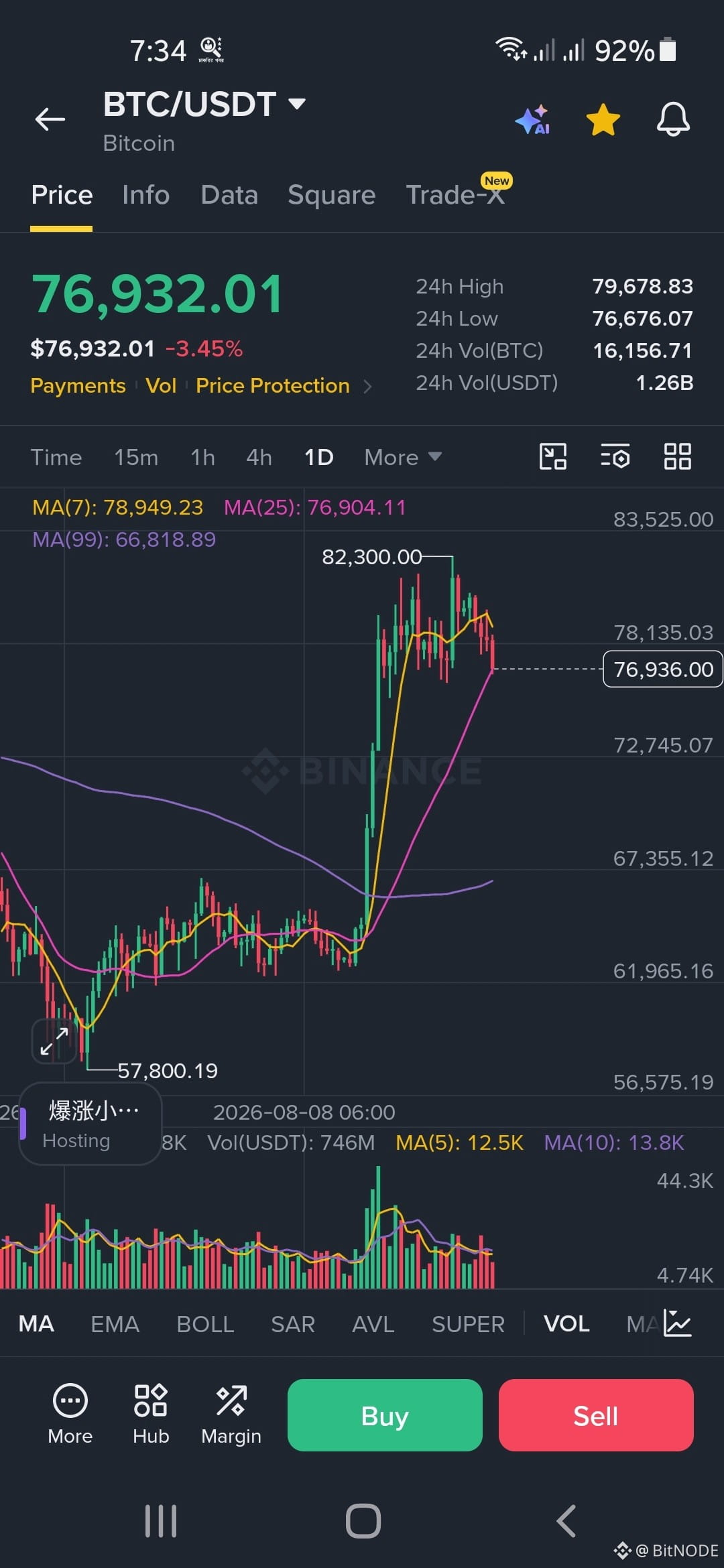
$BTC /USDT BÄRISHER DRUCK Warnung 📉
Verkäufer übernehmen die Kontrolle, während Bitcoin unter eine wichtige kurzfristige Unterstützung fällt.
Aktueller Preis: $76,932.01
Einstiegszone: $77,200 – $78,500
Ziele:
TP1: $75,500
TP2: $74,000
TP3: $72,500
Stop Loss: $79,800 (SL MUSS gesetzt werden)
Überblick:
Bitcoin ist um -3,45% gefallen und wird nun unter beiden MA(7) bei $78,949 und MA(25) bei $76,904 gehandelt. Die jüngste Abweisung vom Hoch bei $82,300 bestätigt eine Schwächung des bullischen Momentum, während Verkäufer aggressiv eingreifen. Ein nachhaltiger Bruch unter dem MA(25) könnte den Rückgang in Richtung niedrigerer Unterstützungszonen beschleunigen und macht dieses Setup daher zu einer günstigen Gelegenheit für eine Short-Position.
Haftungsausschluss: Dies ist nur eine Trading-Idee zu Ausbildungszwecken, keine Finanzberatung. Bitte gehen Sie sorgfältig mit Ihrem Risiko um, insbesondere wenn Sie mit Hebel handeln.
#BTC
#BTC☀
#BTC走势分析
#btc70k
$BTC /USDT BÄRISHER DRUCK Warnung 📉
Verkäufer übernehmen die Kontrolle, während Bitcoin unter eine wichtige kurzfristige Unterstützung fällt.
Aktueller Preis: $76,932.01
Einstiegszone: $77,200 – $78,500
Ziele:
TP1: $75,500
TP2: $74,000
TP3: $72,500
Stop Loss: $79,800 (SL MUSS gesetzt werden)
Überblick:
Bitcoin ist um -3,45% gefallen und wird nun unter beiden MA(7) bei $78,949 und MA(25) bei $76,904 gehandelt. Die jüngste Abweisung vom Hoch bei $82,300 bestätigt eine Schwächung des bullischen Momentum, während Verkäufer aggressiv eingreifen. Ein nachhaltiger Bruch unter dem MA(25) könnte den Rückgang in Richtung niedrigerer Unterstützungszonen beschleunigen und macht dieses Setup daher zu einer günstigen Gelegenheit für eine Short-Position.
Haftungsausschluss: Dies ist nur eine Trading-Idee zu Ausbildungszwecken, keine Finanzberatung. Bitte gehen Sie sorgfältig mit Ihrem Risiko um, insbesondere wenn Sie mit Hebel handeln.
#BTC
#BTC☀
#BTC走势分析
#btc70k
Verkäufer übernehmen die Kontrolle, während Bitcoin unter eine wichtige kurzfristige Unterstützung fällt.
Aktueller Preis: $76,932.01
Einstiegszone: $77,200 – $78,500
Ziele:
TP1: $75,500
TP2: $74,000
TP3: $72,500
Stop Loss: $79,800 (SL MUSS gesetzt werden)
Überblick:
Bitcoin ist um -3,45% gefallen und wird nun unter beiden MA(7) bei $78,949 und MA(25) bei $76,904 gehandelt. Die jüngste Abweisung vom Hoch bei $82,300 bestätigt eine Schwächung des bullischen Momentum, während Verkäufer aggressiv eingreifen. Ein nachhaltiger Bruch unter dem MA(25) könnte den Rückgang in Richtung niedrigerer Unterstützungszonen beschleunigen und macht dieses Setup daher zu einer günstigen Gelegenheit für eine Short-Position.
Haftungsausschluss: Dies ist nur eine Trading-Idee zu Ausbildungszwecken, keine Finanzberatung. Bitte gehen Sie sorgfältig mit Ihrem Risiko um, insbesondere wenn Sie mit Hebel handeln.
#BTC
#BTC☀
#BTC走势分析
#btc70k
89
·
--
🎙️ Über die Kursentwicklung sprechen und BNB-Spot per Sparplan kaufen!
Beenden
03 h 36 m 24 s
17.3k
36
39
·
--
Bullisch
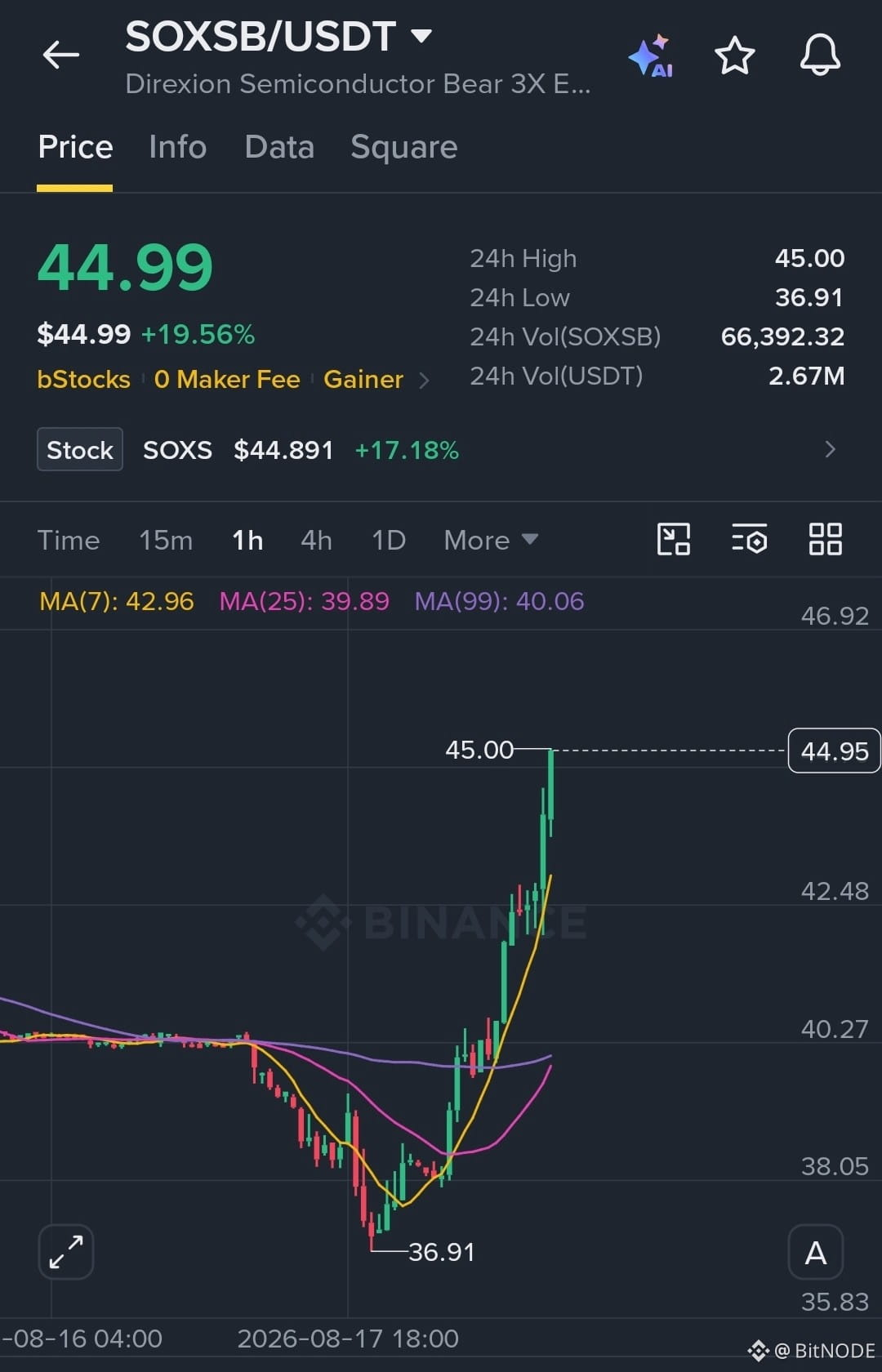
$SOXSB /USDT LONG TRADE Alert 🔥
Bärisches Semiconductor-Setup gewinnt an Dynamik—starker Ausbruch mit hohem Volumen.
Aktueller Preis: $44.99
Einstiegszone: $43.50 – $42.00
Kursziele:
TP1: $47.00
TP2: $49.50
TP3: $52.00
Stop Loss: $40.50 (SL MUSS gesetzt werden)
Haftungsausschluss: Dies ist nur eine Trading-Idee zu Bildungszwecken, keine Finanzberatung. Bitte manage dein Risiko sorgfältig, insbesondere beim Trading mit Hebelwirkung.
#SOXSB
$SOXSB /USDT LONG TRADE Alert 🔥
Bärisches Semiconductor-Setup gewinnt an Dynamik—starker Ausbruch mit hohem Volumen.
Aktueller Preis: $44.99
Einstiegszone: $43.50 – $42.00
Kursziele:
TP1: $47.00
TP2: $49.50
TP3: $52.00
Stop Loss: $40.50 (SL MUSS gesetzt werden)
Haftungsausschluss: Dies ist nur eine Trading-Idee zu Bildungszwecken, keine Finanzberatung. Bitte manage dein Risiko sorgfältig, insbesondere beim Trading mit Hebelwirkung.
#SOXSB
Bärisches Semiconductor-Setup gewinnt an Dynamik—starker Ausbruch mit hohem Volumen.
Aktueller Preis: $44.99
Einstiegszone: $43.50 – $42.00
Kursziele:
TP1: $47.00
TP2: $49.50
TP3: $52.00
Stop Loss: $40.50 (SL MUSS gesetzt werden)
Haftungsausschluss: Dies ist nur eine Trading-Idee zu Bildungszwecken, keine Finanzberatung. Bitte manage dein Risiko sorgfältig, insbesondere beim Trading mit Hebelwirkung.
#SOXSB
117
·
--
Bullisch
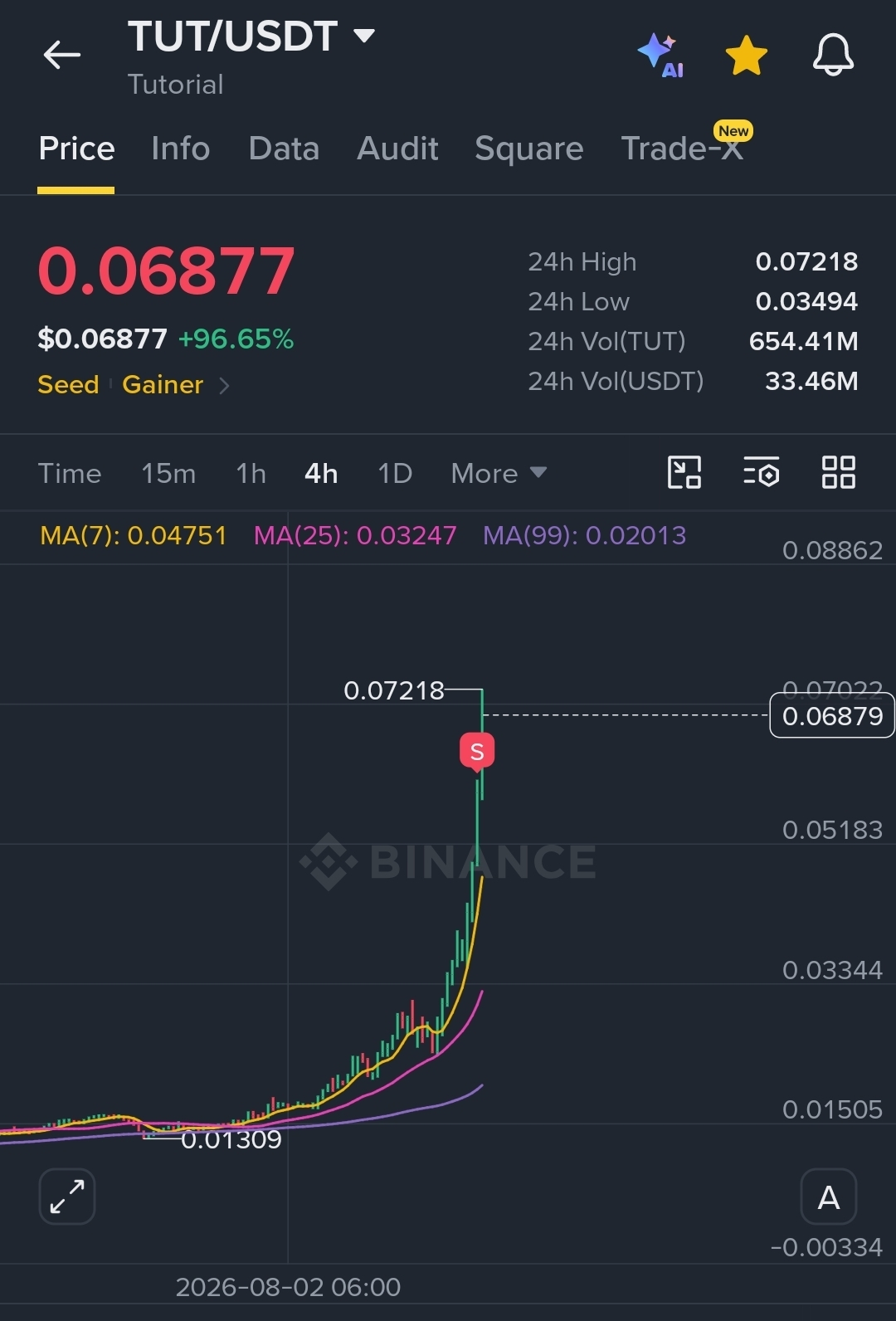
Ich hatte es gesagt. 10 wird gehen, $TUT ist jedoch über 0,30 hinausgeschossen. Glückwunsch an alle, die meinem Signal gefolgt sind. Heute ist ihr Freudentag☺️ Und gebt auch mir ein paar Tipps😅
Ich teile euch genau diese Coins, mit denen man solche guten Gewinne finden und erzielen kann.
Bleibt gesund, bleibt wohlauf.
Fröhliches Trading
#tutanalysis
Ich hatte es gesagt. 10 wird gehen, $TUT ist jedoch über 0,30 hinausgeschossen. Glückwunsch an alle, die meinem Signal gefolgt sind. Heute ist ihr Freudentag☺️ Und gebt auch mir ein paar Tipps😅
Ich teile euch genau diese Coins, mit denen man solche guten Gewinne finden und erzielen kann.
Bleibt gesund, bleibt wohlauf.
Fröhliches Trading
#tutanalysis
Ich teile euch genau diese Coins, mit denen man solche guten Gewinne finden und erzielen kann.
Bleibt gesund, bleibt wohlauf.
Fröhliches Trading
#tutanalysis
BitNODE
·
--
BullischBOOOOOM!! Warten auf die 2. Chance.
$TUT
#tutanalysis
$TUT
#tutanalysis
83
·
--
Bärisch
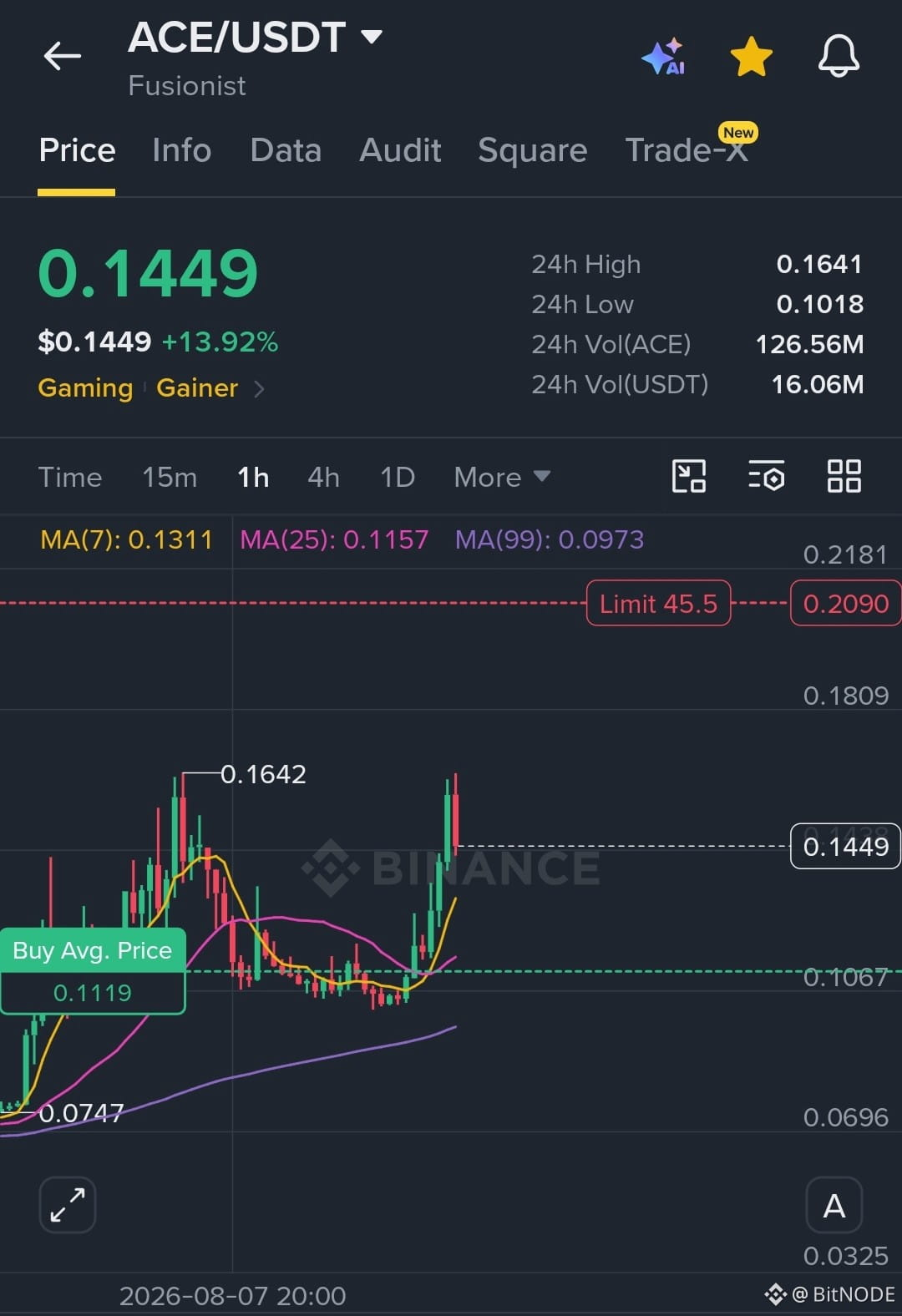
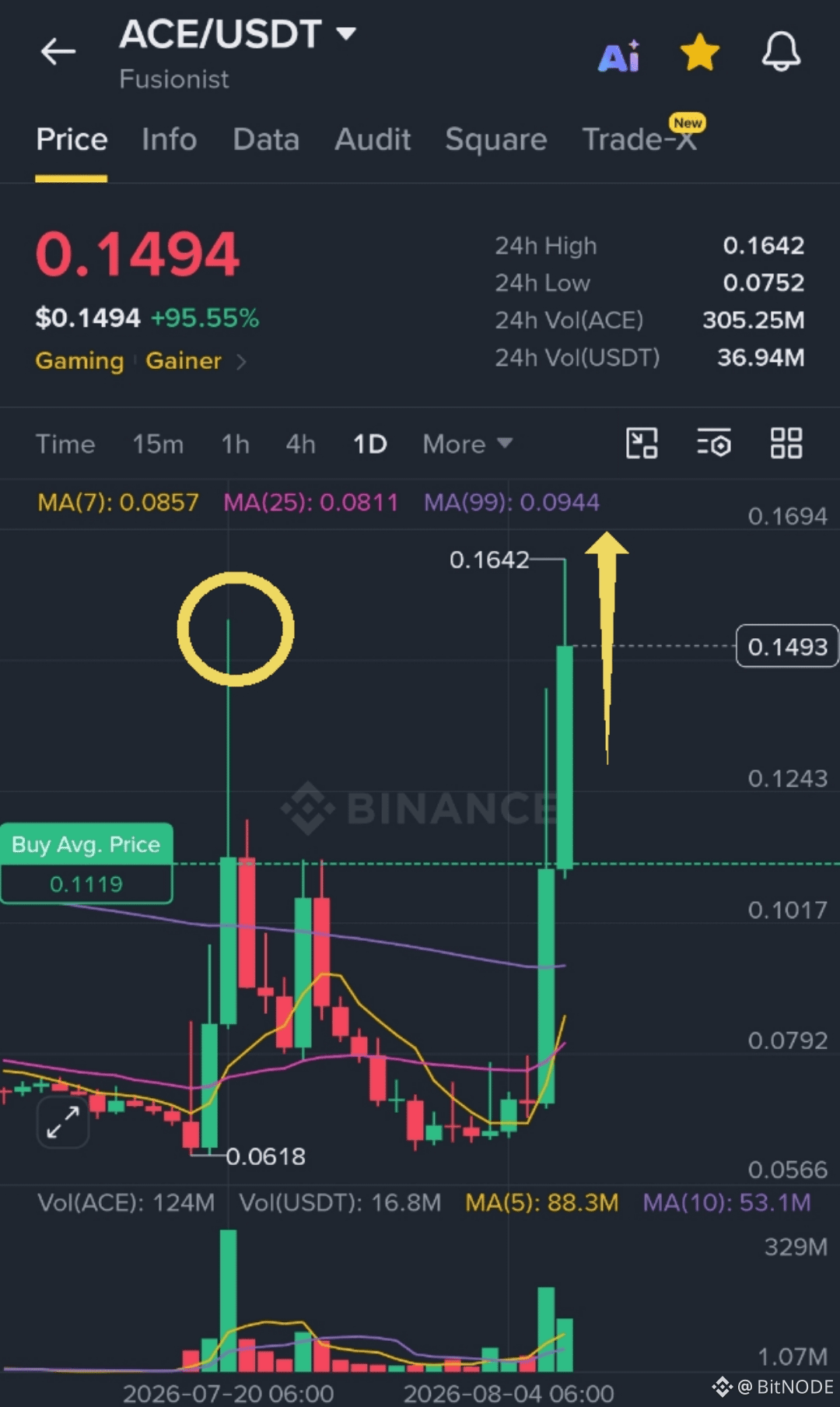
$ACE/USDT SHORT-SETUP-Alarm 🔻
Ablehnung nahe dem Widerstand mit überdehntem Momentum – Verkäufer werden voraussichtlich eingreifen.
Aktueller Preis: $0.1449
Einstiegszone: $0.1480 – $0.1550
Ziele:
TP1: $0.1350
TP2: $0.1250
TP3: $0.1150
Stop Loss: $0.1650 (Muss SL setzen)
#ACE
$ACE/USDT SHORT-SETUP-Alarm 🔻
Ablehnung nahe dem Widerstand mit überdehntem Momentum – Verkäufer werden voraussichtlich eingreifen.
Aktueller Preis: $0.1449
Einstiegszone: $0.1480 – $0.1550
Ziele:
TP1: $0.1350
TP2: $0.1250
TP3: $0.1150
Stop Loss: $0.1650 (Muss SL setzen)
#ACE
Ablehnung nahe dem Widerstand mit überdehntem Momentum – Verkäufer werden voraussichtlich eingreifen.
Aktueller Preis: $0.1449
Einstiegszone: $0.1480 – $0.1550
Ziele:
TP1: $0.1350
TP2: $0.1250
TP3: $0.1150
Stop Loss: $0.1650 (Muss SL setzen)
#ACE
246
·
--
Bullisch
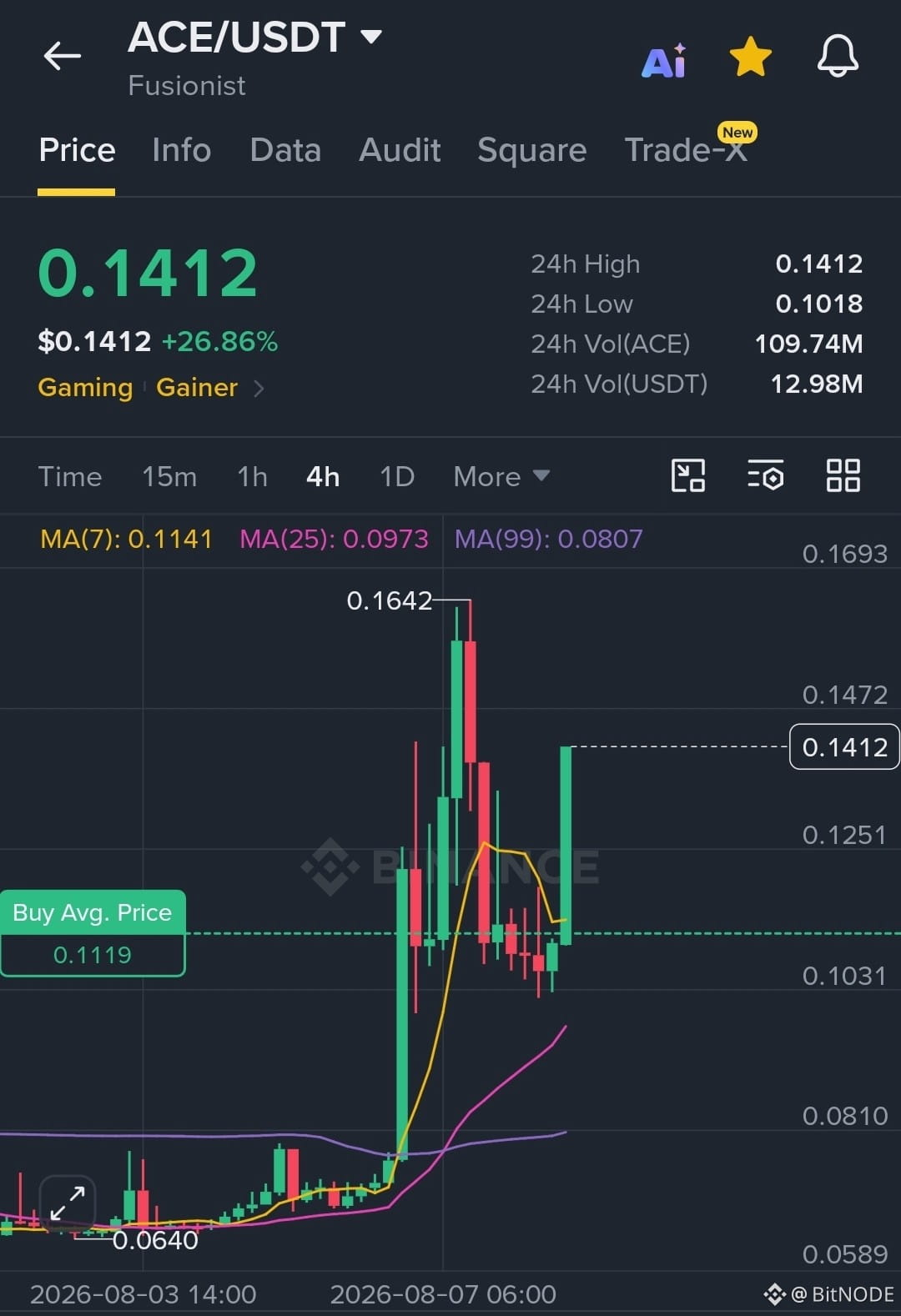
$ACE /USDT LONG TRADE Alert 🚀
Abkühlphase nach einem massiven Anstieg – das könnte die perfekte Nachlade-Zone sein. Ein starker Move ist zu sehen.
Aktueller Preis: $0.1412
Einstiegszone: $0.1360 – $0.1300
Ziele:
TP1: $0.1500
TP2: $0.1600
TP3: $0.1720
Stop Loss: $0.1240 (SL MUSS gesetzt werden)
#ACE
#ACE🔥🔥
#ACE2.0升级
#ACE/USDT
$ACE /USDT LONG TRADE Alert 🚀
Abkühlphase nach einem massiven Anstieg – das könnte die perfekte Nachlade-Zone sein. Ein starker Move ist zu sehen.
Aktueller Preis: $0.1412
Einstiegszone: $0.1360 – $0.1300
Ziele:
TP1: $0.1500
TP2: $0.1600
TP3: $0.1720
Stop Loss: $0.1240 (SL MUSS gesetzt werden)
#ACE
#ACE🔥🔥
#ACE2.0升级
#ACE/USDT
Abkühlphase nach einem massiven Anstieg – das könnte die perfekte Nachlade-Zone sein. Ein starker Move ist zu sehen.
Aktueller Preis: $0.1412
Einstiegszone: $0.1360 – $0.1300
Ziele:
TP1: $0.1500
TP2: $0.1600
TP3: $0.1720
Stop Loss: $0.1240 (SL MUSS gesetzt werden)
#ACE
#ACE🔥🔥
#ACE2.0升级
#ACE/USDT
115
·
--
Bullisch
BitNODE
·
--
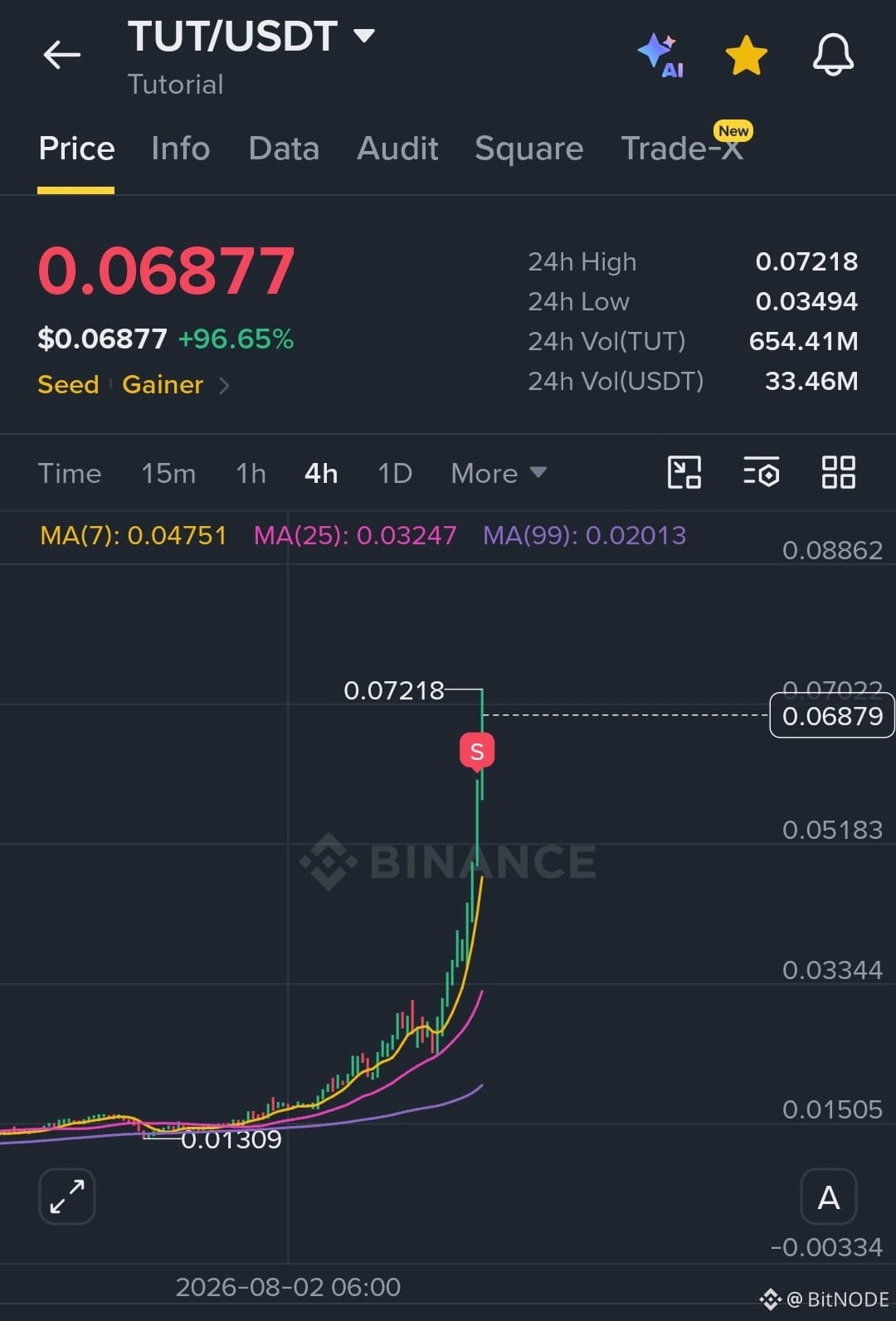
BullischDas Spiel ist an!!! 😎💰💰✌️ $TUT
#tutanalysis
#tutAnalaysis
#TUTBTC
#tutanalysis
#tutAnalaysis
#TUTBTC
1
197
·
--
Bullisch
BitNODE
·
--
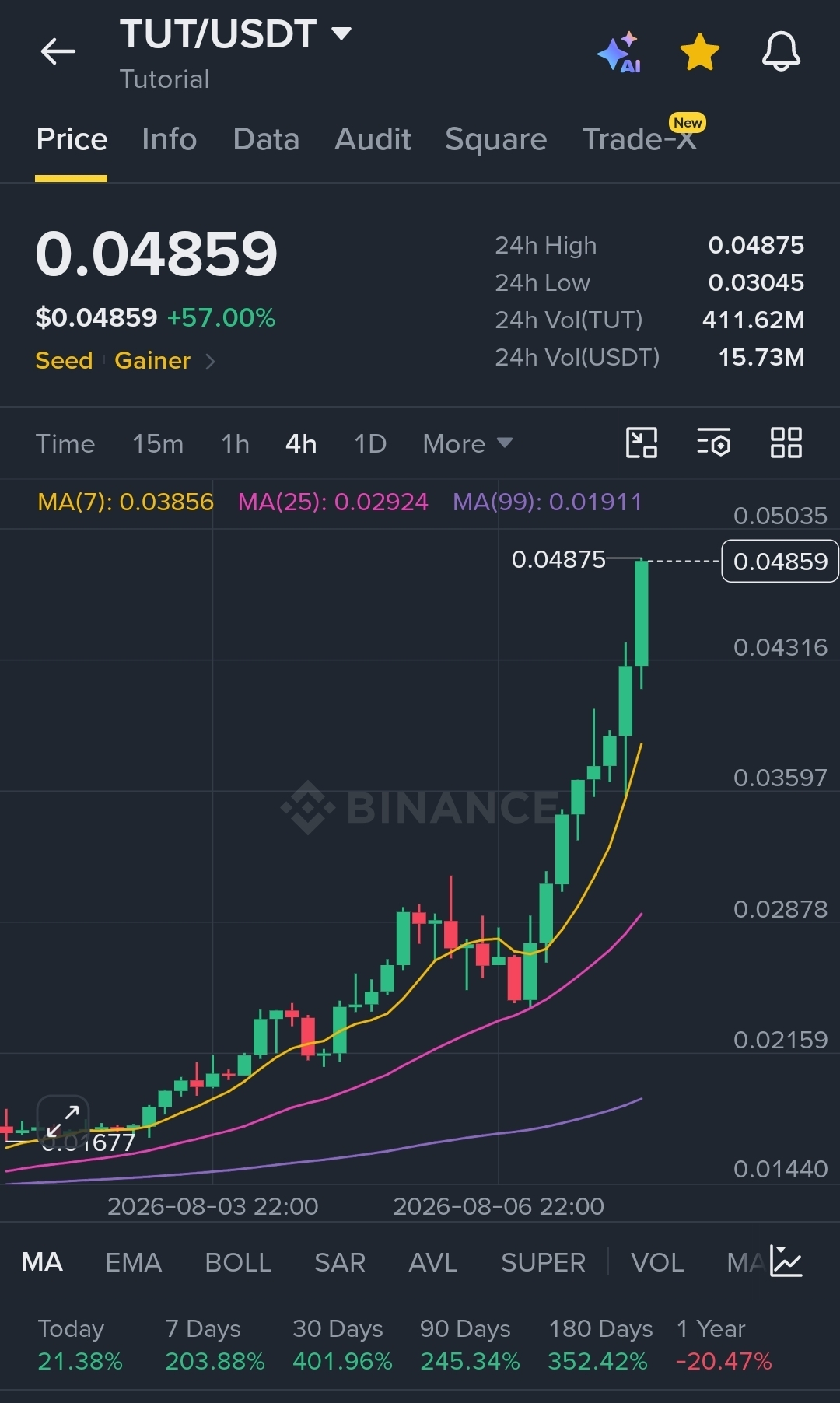
BullischErneute Erinnerung für $TUT
#tutanalysis
#tutAnalaysis
#TUTAlert
#tutanalysis
#tutAnalaysis
#TUTAlert
1
118
·
--
Bullisch
BitNODE
·
--
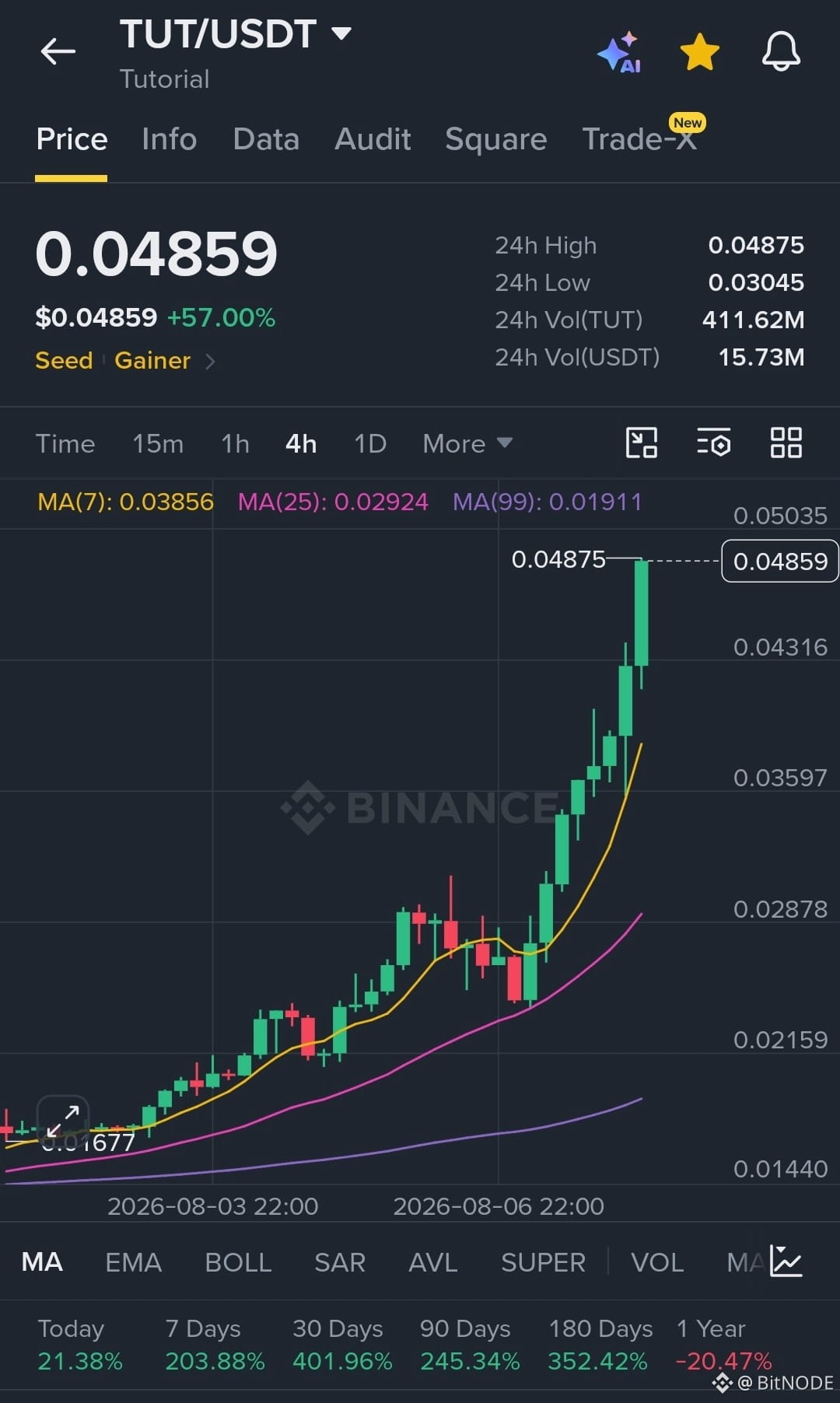
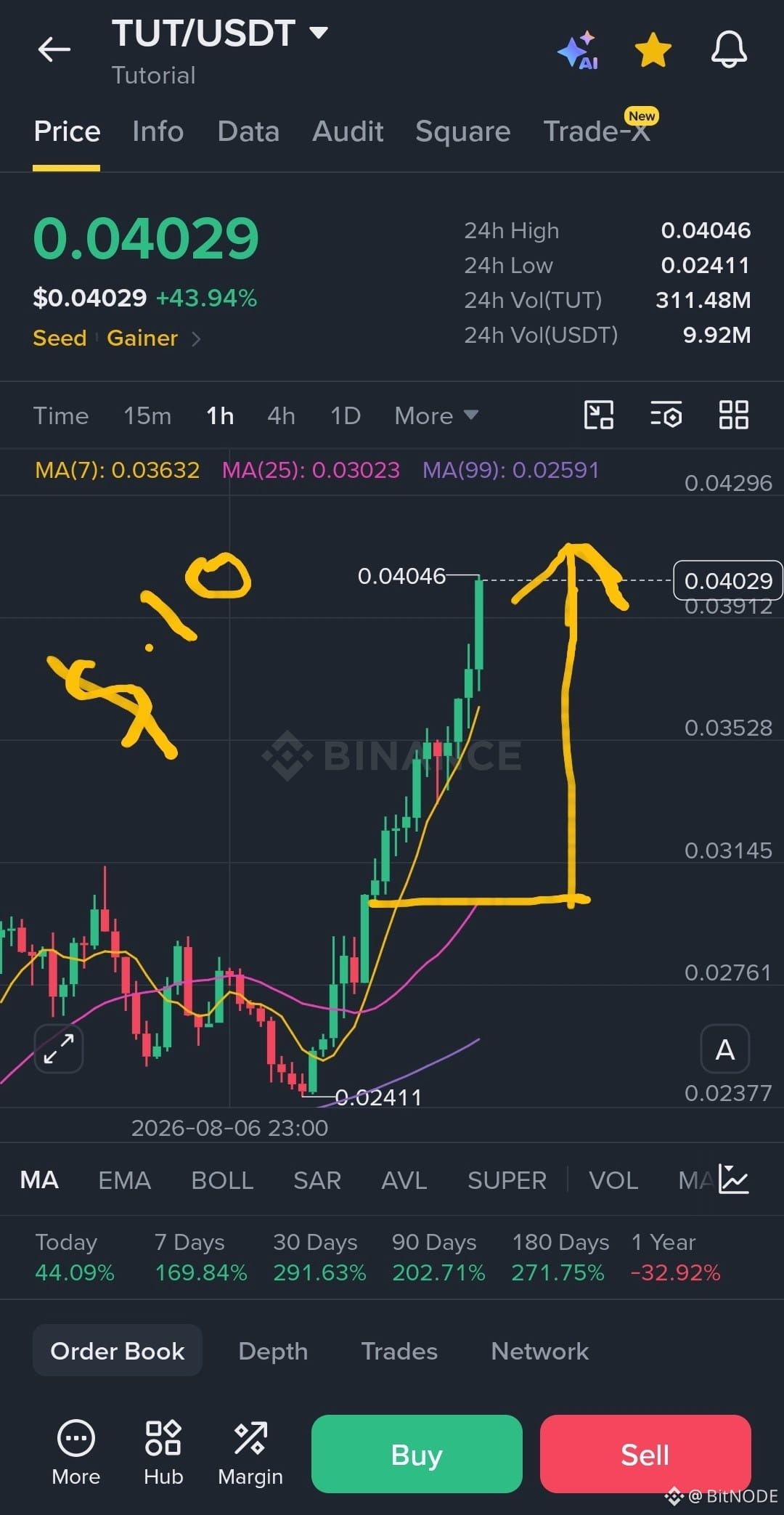
BullischWie fühlst du dich jetzt! 😎💰
Die Analyse enttäuscht nie, wenn man den richtigen Einstiegspunkt finden kann. Ich hatte euch schon früher gesagt, dass $TUT eine gute Bewegung machen wird.
Jetzt denen, die ausgewichen sind, habe ich nichts zu sagen. Denjenigen, die dem Signal gefolgt sind und Profit gemacht haben, herzlichen Glückwunsch.✌️💰 Aber bei #tut endet es nicht, das ist zumindest meine Vermutung. Es wird noch weiter nach oben gehen. Ich glaube, es wird 0.10 überschreiten.
#happy_trading #bnb
Die Analyse enttäuscht nie, wenn man den richtigen Einstiegspunkt finden kann. Ich hatte euch schon früher gesagt, dass $TUT eine gute Bewegung machen wird.
Jetzt denen, die ausgewichen sind, habe ich nichts zu sagen. Denjenigen, die dem Signal gefolgt sind und Profit gemacht haben, herzlichen Glückwunsch.✌️💰 Aber bei #tut endet es nicht, das ist zumindest meine Vermutung. Es wird noch weiter nach oben gehen. Ich glaube, es wird 0.10 überschreiten.
#happy_trading #bnb
1
166
·
--
Bullisch
Wie fühlst du dich jetzt! 😎💰
Die Analyse enttäuscht nie, wenn man den richtigen Einstiegspunkt finden kann. Ich hatte euch schon früher gesagt, dass $TUT eine gute Bewegung machen wird.
Jetzt denen, die ausgewichen sind, habe ich nichts zu sagen. Denjenigen, die dem Signal gefolgt sind und Profit gemacht haben, herzlichen Glückwunsch.✌️💰 Aber bei #tut endet es nicht, das ist zumindest meine Vermutung. Es wird noch weiter nach oben gehen. Ich glaube, es wird 0.10 überschreiten.
#happy_trading #bnb
Wie fühlst du dich jetzt! 😎💰
Die Analyse enttäuscht nie, wenn man den richtigen Einstiegspunkt finden kann. Ich hatte euch schon früher gesagt, dass $TUT eine gute Bewegung machen wird.
Jetzt denen, die ausgewichen sind, habe ich nichts zu sagen. Denjenigen, die dem Signal gefolgt sind und Profit gemacht haben, herzlichen Glückwunsch.✌️💰 Aber bei #tut endet es nicht, das ist zumindest meine Vermutung. Es wird noch weiter nach oben gehen. Ich glaube, es wird 0.10 überschreiten.
#happy_trading #bnb
Die Analyse enttäuscht nie, wenn man den richtigen Einstiegspunkt finden kann. Ich hatte euch schon früher gesagt, dass $TUT eine gute Bewegung machen wird.
Jetzt denen, die ausgewichen sind, habe ich nichts zu sagen. Denjenigen, die dem Signal gefolgt sind und Profit gemacht haben, herzlichen Glückwunsch.✌️💰 Aber bei #tut endet es nicht, das ist zumindest meine Vermutung. Es wird noch weiter nach oben gehen. Ich glaube, es wird 0.10 überschreiten.
#happy_trading #bnb
BitNODE
·
--
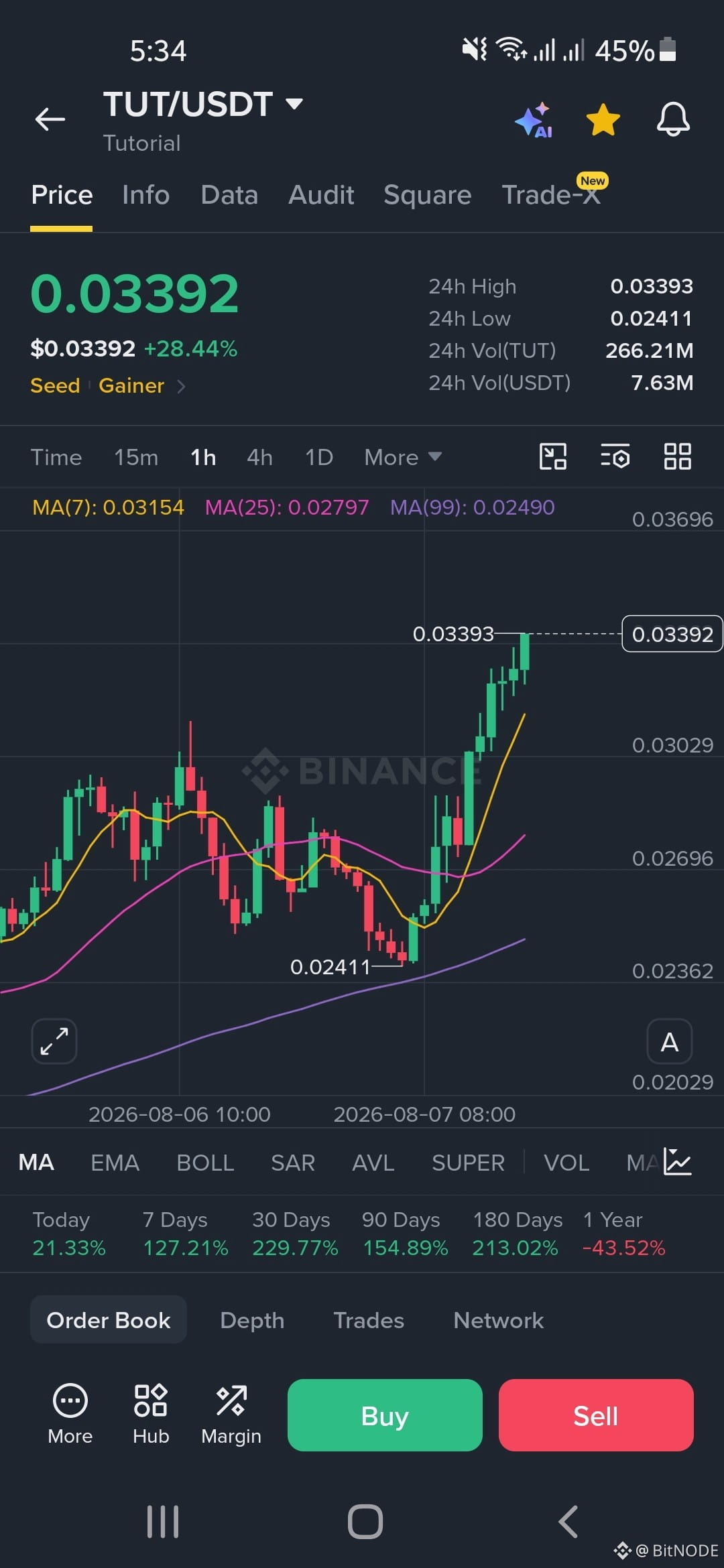
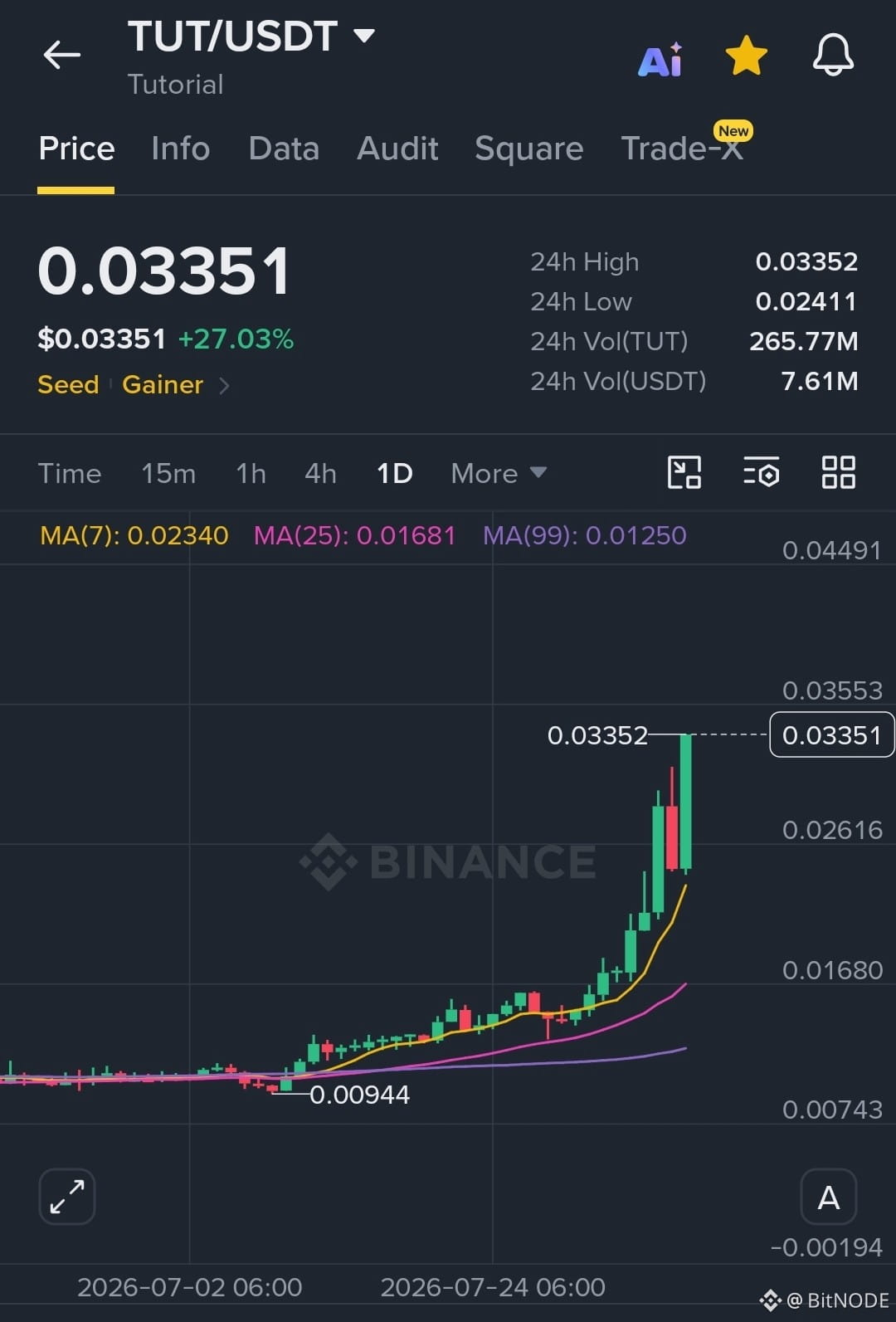
Bullisch$TUT /USDT LONG TRADE Alert 🚀
Start der Bombe mit massiven Gewinnen – das Momentum baut sich für eine weitere starke Aufwärtsbewegung auf.
Aktueller Preis: $0.03392
Einstiegszone: $0.03250 – $0.03100
Ziele:
TP1: $0.03600
TP2: $0.03850
TP3: $0.04100
Stop Loss: $0.02950 (SL MUSS gesetzt werden)
#TUTAlert
Start der Bombe mit massiven Gewinnen – das Momentum baut sich für eine weitere starke Aufwärtsbewegung auf.
Aktueller Preis: $0.03392
Einstiegszone: $0.03250 – $0.03100
Ziele:
TP1: $0.03600
TP2: $0.03850
TP3: $0.04100
Stop Loss: $0.02950 (SL MUSS gesetzt werden)
#TUTAlert
1
45
·
--
Bullisch
$TUT /USDT LONG TRADE Alert 🚀
Start der Bombe mit massiven Gewinnen – das Momentum baut sich für eine weitere starke Aufwärtsbewegung auf.
Aktueller Preis: $0.03392
Einstiegszone: $0.03250 – $0.03100
Ziele:
TP1: $0.03600
TP2: $0.03850
TP3: $0.04100
Stop Loss: $0.02950 (SL MUSS gesetzt werden)
#TUTAlert
$TUT /USDT LONG TRADE Alert 🚀
Start der Bombe mit massiven Gewinnen – das Momentum baut sich für eine weitere starke Aufwärtsbewegung auf.
Aktueller Preis: $0.03392
Einstiegszone: $0.03250 – $0.03100
Ziele:
TP1: $0.03600
TP2: $0.03850
TP3: $0.04100
Stop Loss: $0.02950 (SL MUSS gesetzt werden)
#TUTAlert
Start der Bombe mit massiven Gewinnen – das Momentum baut sich für eine weitere starke Aufwärtsbewegung auf.
Aktueller Preis: $0.03392
Einstiegszone: $0.03250 – $0.03100
Ziele:
TP1: $0.03600
TP2: $0.03850
TP3: $0.04100
Stop Loss: $0.02950 (SL MUSS gesetzt werden)
#TUTAlert
1
135
·
--
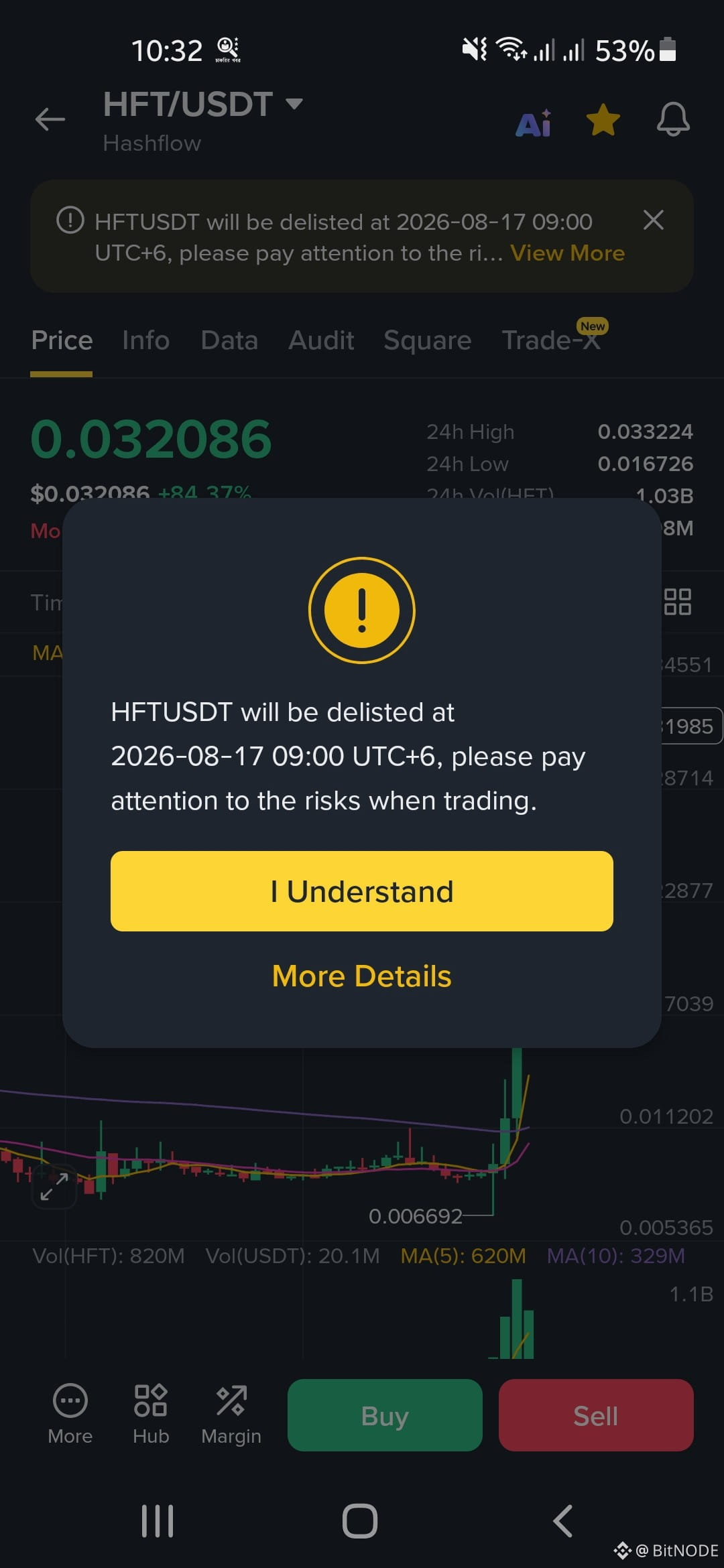
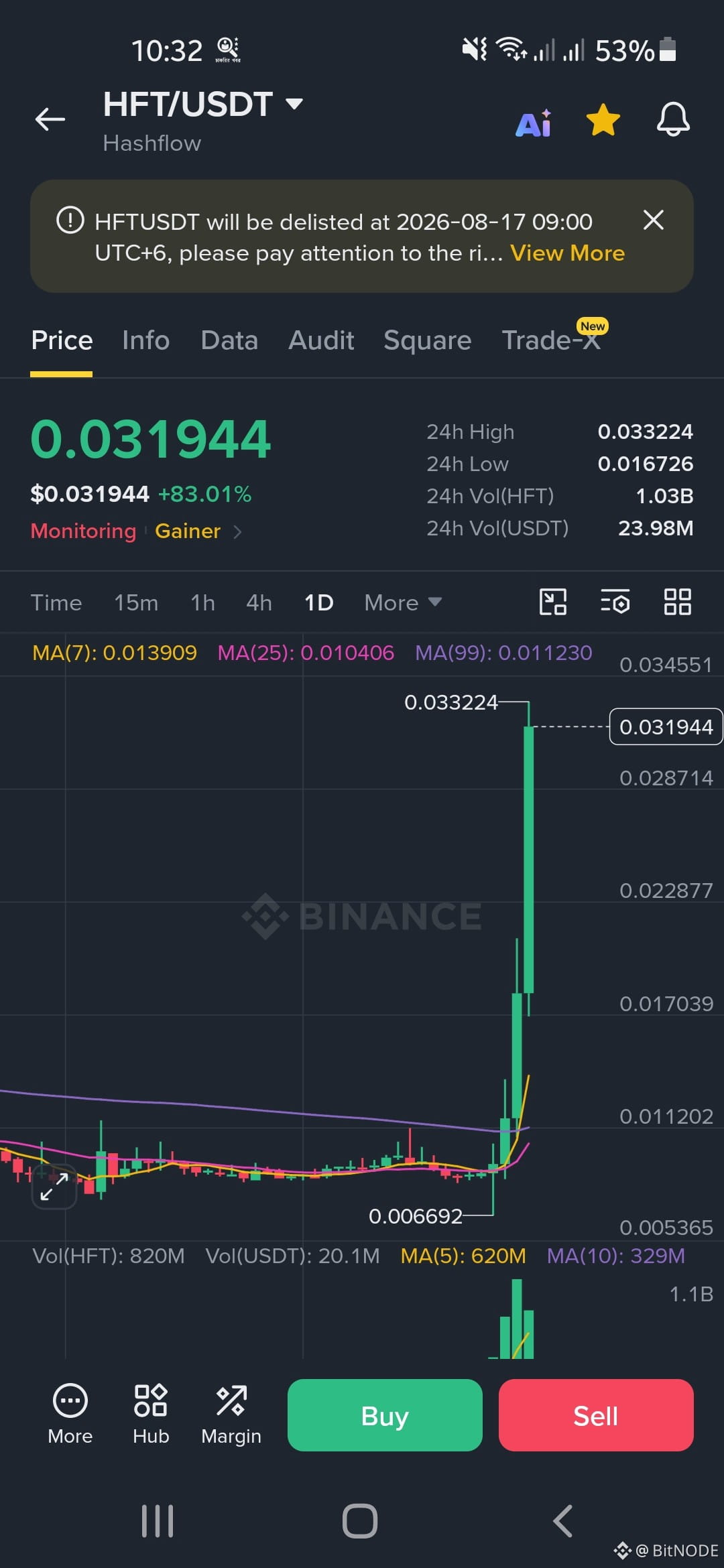
$HFT Wird aus dem Handel genommen ☠️
Schließ deinen Trade mit Gewinn ab. Andernfalls verlierst du dein Geld für immer.🙃
$HFT Wird aus dem Handel genommen ☠️
Schließ deinen Trade mit Gewinn ab. Andernfalls verlierst du dein Geld für immer.🙃
Schließ deinen Trade mit Gewinn ab. Andernfalls verlierst du dein Geld für immer.🙃
1
251
·
--
Bullisch
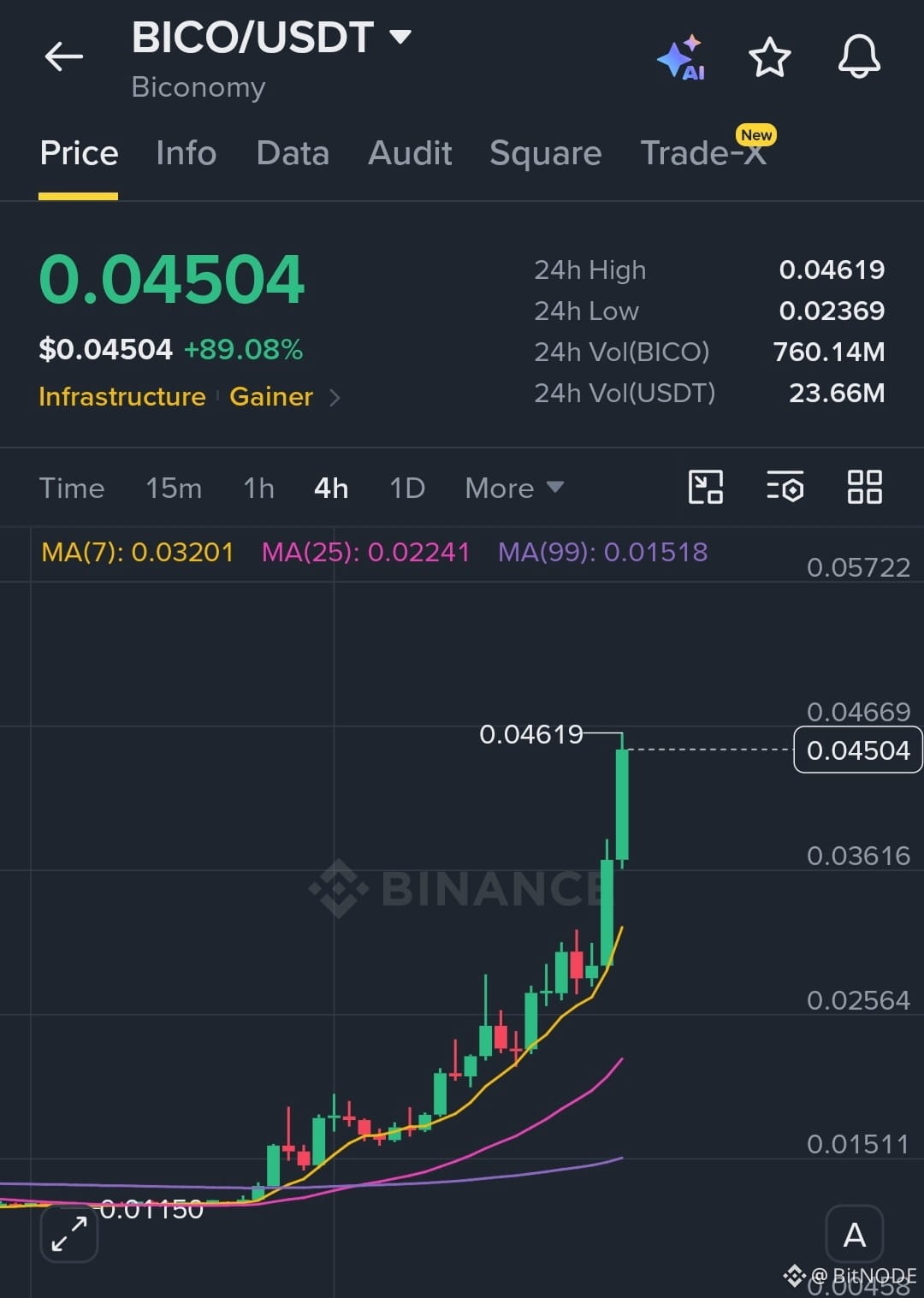
$BICO /USDT LONG TRADE Warnung 🔥
Explosiver Infrastruktur-Rallye—dieses Token durchbricht alle Barrieren mit enormem Volumen.
Aktueller Preis: 0,04504 $
Einstiegszone: 0,04300 $ – 0,04100 $
Ziele:
TP1: 0,04800 $
TP2: 0,05200 $
TP3: 0,05700 $
Stop Loss: 0,03900 $ (SL MUSS gesetzt werden)
Übersicht:
BICO zeigt eine explosive bullische Dynamik mit einem massiven Anstieg von +89,08% und ist damit ein Top-Gewinner in der Kategorie Infrastruktur. Der Preis handelt deutlich über allen wichtigen gleitenden Durchschnitten (MA7, MA25 und MA99) und bestätigt einen starken Aufwärtstrend über alle Zeitrahmen hinweg. Mit einem enormen Handelsvolumen (760,14 Mio. BICO) und einem kraftvollen Ausbruch aus dem 24h-Tief von 0,02369 $ zeigt das Token ein außergewöhnliches Aufwärtspotenzial. Eine Long-Position aus der vorgeschlagenen Einstiegszone bietet eine hervorragende Gelegenheit, um weitere Gewinne in Richtung des 24h-Hochs von 0,04619 $ und höherer Widerstandsniveaus mitzunehmen.
Haftungsausschluss: Dies ist nur eine Trading-Idee zu Bildungszwecken, keine finanzielle Beratung. Bitte verwalte dein Risiko sorgfältig, insbesondere beim Trading mit Hebel.
#BICO $BNB #bnb
#BTC
$BICO /USDT LONG TRADE Warnung 🔥
Explosiver Infrastruktur-Rallye—dieses Token durchbricht alle Barrieren mit enormem Volumen.
Aktueller Preis: 0,04504 $
Einstiegszone: 0,04300 $ – 0,04100 $
Ziele:
TP1: 0,04800 $
TP2: 0,05200 $
TP3: 0,05700 $
Stop Loss: 0,03900 $ (SL MUSS gesetzt werden)
Übersicht:
BICO zeigt eine explosive bullische Dynamik mit einem massiven Anstieg von +89,08% und ist damit ein Top-Gewinner in der Kategorie Infrastruktur. Der Preis handelt deutlich über allen wichtigen gleitenden Durchschnitten (MA7, MA25 und MA99) und bestätigt einen starken Aufwärtstrend über alle Zeitrahmen hinweg. Mit einem enormen Handelsvolumen (760,14 Mio. BICO) und einem kraftvollen Ausbruch aus dem 24h-Tief von 0,02369 $ zeigt das Token ein außergewöhnliches Aufwärtspotenzial. Eine Long-Position aus der vorgeschlagenen Einstiegszone bietet eine hervorragende Gelegenheit, um weitere Gewinne in Richtung des 24h-Hochs von 0,04619 $ und höherer Widerstandsniveaus mitzunehmen.
Haftungsausschluss: Dies ist nur eine Trading-Idee zu Bildungszwecken, keine finanzielle Beratung. Bitte verwalte dein Risiko sorgfältig, insbesondere beim Trading mit Hebel.
#BICO $BNB #bnb
#BTC
Explosiver Infrastruktur-Rallye—dieses Token durchbricht alle Barrieren mit enormem Volumen.
Aktueller Preis: 0,04504 $
Einstiegszone: 0,04300 $ – 0,04100 $
Ziele:
TP1: 0,04800 $
TP2: 0,05200 $
TP3: 0,05700 $
Stop Loss: 0,03900 $ (SL MUSS gesetzt werden)
Übersicht:
BICO zeigt eine explosive bullische Dynamik mit einem massiven Anstieg von +89,08% und ist damit ein Top-Gewinner in der Kategorie Infrastruktur. Der Preis handelt deutlich über allen wichtigen gleitenden Durchschnitten (MA7, MA25 und MA99) und bestätigt einen starken Aufwärtstrend über alle Zeitrahmen hinweg. Mit einem enormen Handelsvolumen (760,14 Mio. BICO) und einem kraftvollen Ausbruch aus dem 24h-Tief von 0,02369 $ zeigt das Token ein außergewöhnliches Aufwärtspotenzial. Eine Long-Position aus der vorgeschlagenen Einstiegszone bietet eine hervorragende Gelegenheit, um weitere Gewinne in Richtung des 24h-Hochs von 0,04619 $ und höherer Widerstandsniveaus mitzunehmen.
Haftungsausschluss: Dies ist nur eine Trading-Idee zu Bildungszwecken, keine finanzielle Beratung. Bitte verwalte dein Risiko sorgfältig, insbesondere beim Trading mit Hebel.
#BICO $BNB #bnb
#BTC
129
·
--
Bullisch
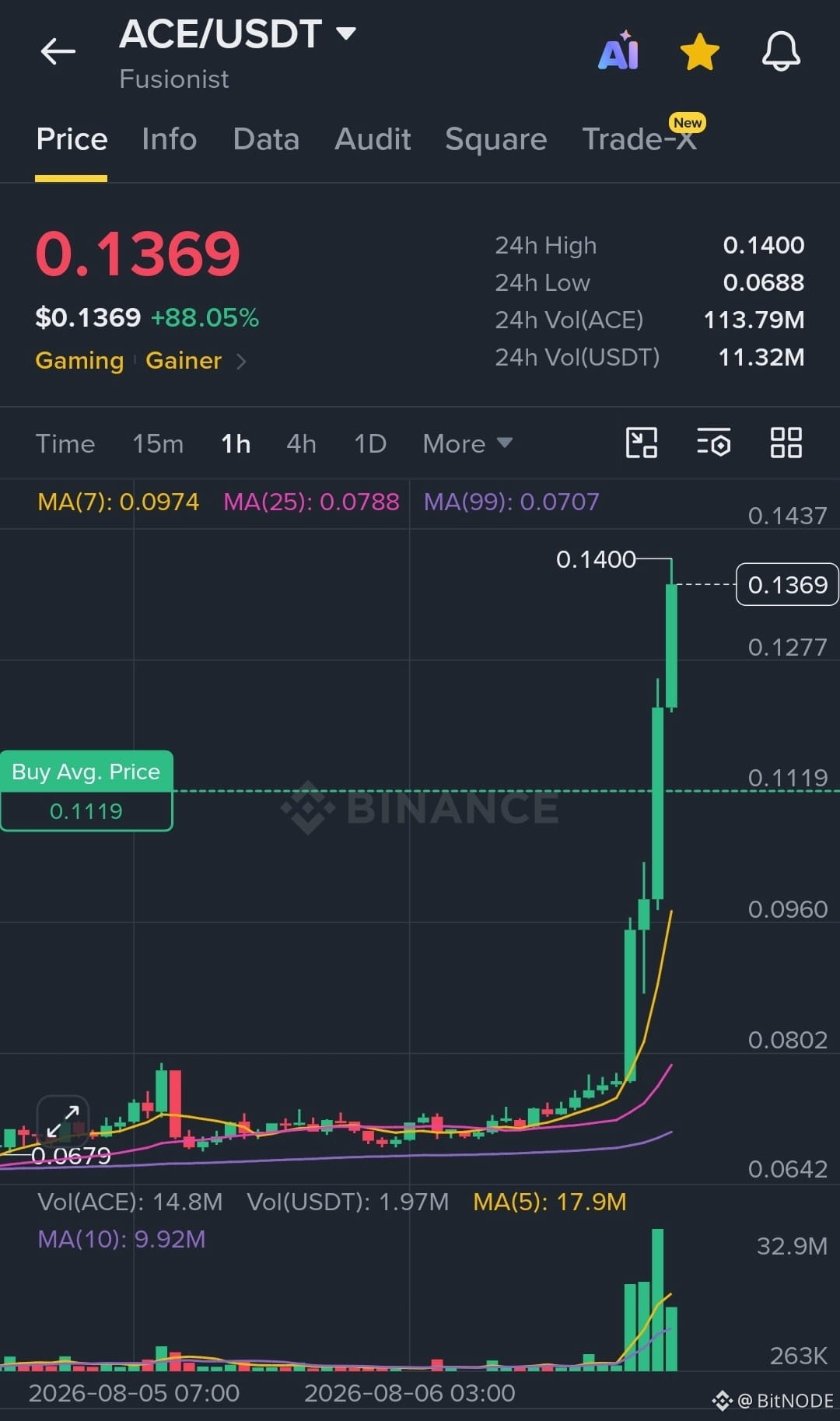
Spot $ACE 6.3 USDT
$ACE /USDT LONG TRADE Alert 🚀
Massiver Ausbruch mit 88% Anstieg—dieses Gaming-Token brennt.
Aktueller Preis: 0.1369$
Einstiegszone: 0.1300 – 0.1250$
Ziele:
TP1: 0.1450$
TP2: 0.1550$
TP3: 0.1680$
Stop Loss: 0.1180 (Unbedingt SL setzen)
#ACE
$ACE /USDT LONG TRADE Alert 🚀
Massiver Ausbruch mit 88% Anstieg—dieses Gaming-Token brennt.
Aktueller Preis: 0.1369$
Einstiegszone: 0.1300 – 0.1250$
Ziele:
TP1: 0.1450$
TP2: 0.1550$
TP3: 0.1680$
Stop Loss: 0.1180 (Unbedingt SL setzen)
#ACE
Massiver Ausbruch mit 88% Anstieg—dieses Gaming-Token brennt.
Aktueller Preis: 0.1369$
Einstiegszone: 0.1300 – 0.1250$
Ziele:
TP1: 0.1450$
TP2: 0.1550$
TP3: 0.1680$
Stop Loss: 0.1180 (Unbedingt SL setzen)
#ACE
155
·
--
Bullisch
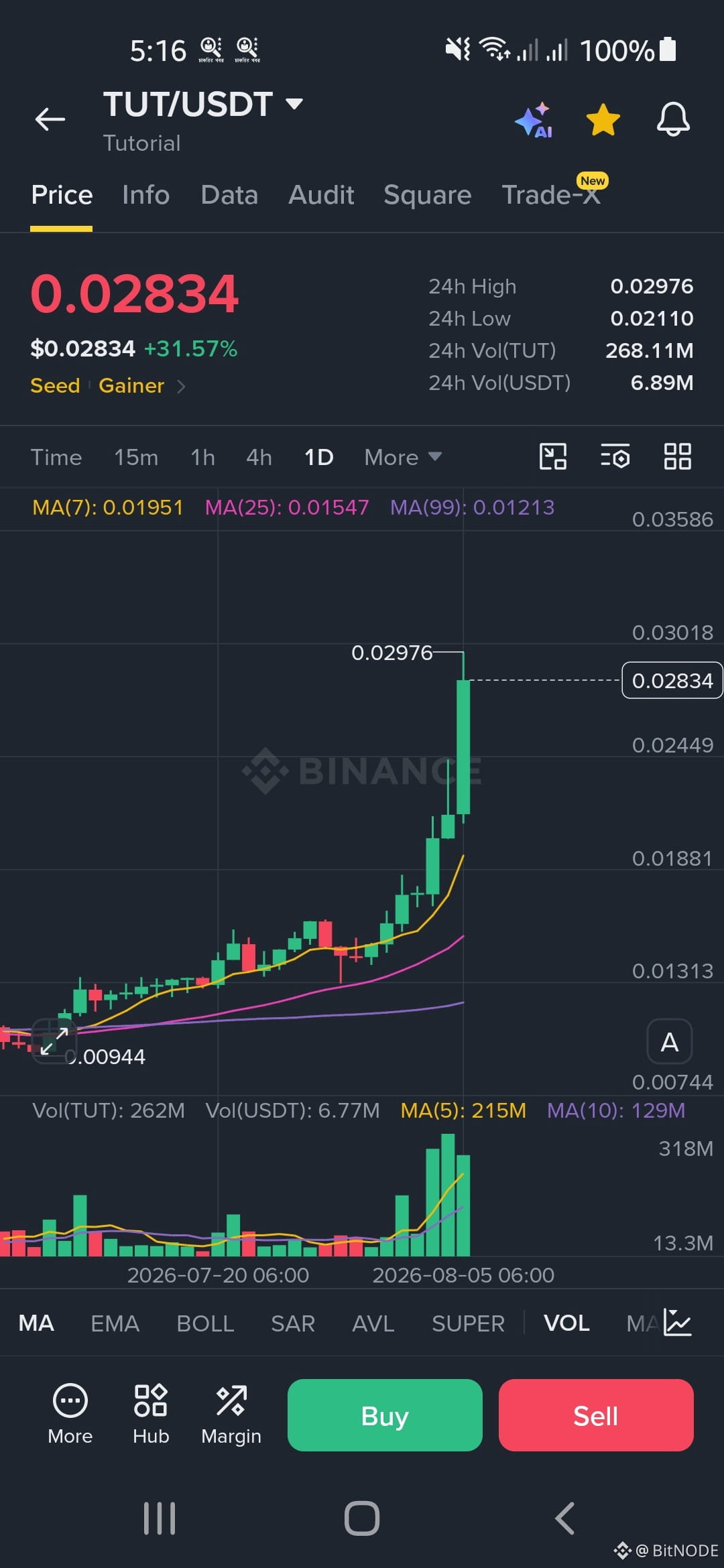
Jetzt sehen! Ich habe es mehrmals zu euch gesagt. $TUT wird es gut machen. Danke an alle, die meinen Signalen gefolgt sind. Ihr habt bereits euren Gewinn bekommen. Aber es geht noch weiter. Wartet.
Wenn ihr die Chance nicht versteht und nicht rechtzeitig einsteigt, ist das für euch kein Krypto-Markt. Nicht nur dem Krypto-Markt die Schuld geben, sondern selbst recherchieren oder jemandem folgen.
#tutanalysis $TUT
{future}(TUTUSDT)
Jetzt sehen! Ich habe es mehrmals zu euch gesagt. $TUT wird es gut machen. Danke an alle, die meinen Signalen gefolgt sind. Ihr habt bereits euren Gewinn bekommen. Aber es geht noch weiter. Wartet.
Wenn ihr die Chance nicht versteht und nicht rechtzeitig einsteigt, ist das für euch kein Krypto-Markt. Nicht nur dem Krypto-Markt die Schuld geben, sondern selbst recherchieren oder jemandem folgen.
#tutanalysis $TUT
Wenn ihr die Chance nicht versteht und nicht rechtzeitig einsteigt, ist das für euch kein Krypto-Markt. Nicht nur dem Krypto-Markt die Schuld geben, sondern selbst recherchieren oder jemandem folgen.
#tutanalysis $TUT
BitNODE
·
--
BullischErneute Erinnerung $TUT
52
·
--
Bullisch
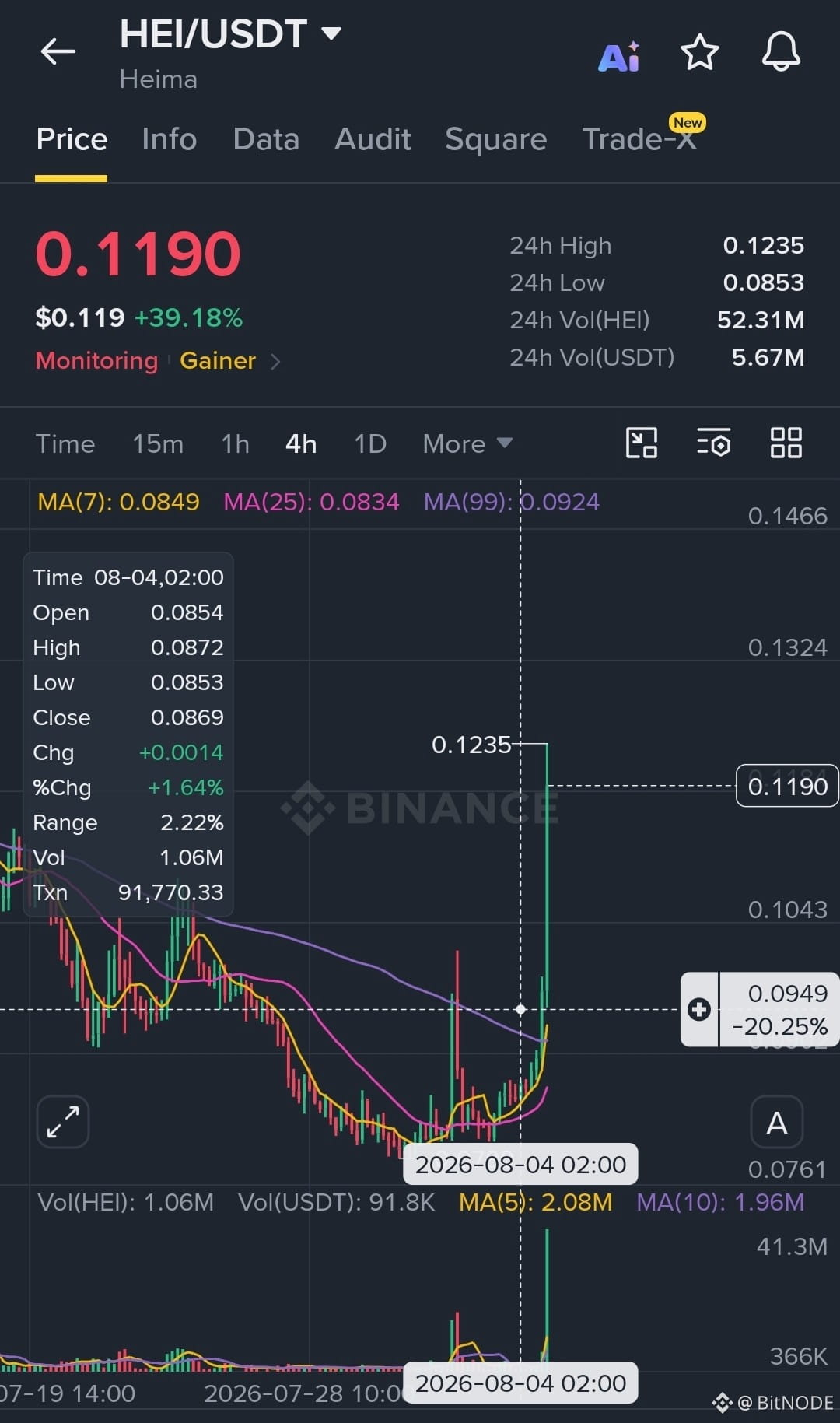
$HEI /USDT LONG TRADE Alert 🔥
Starker Aufwärtstrend mit konsistent höheren Hochs – der Momentum baut sich auf für die nächste Aufwärtsbewegung.
Aktueller Preis: $0.1190
Einstiegszone: $0.1150 – $0.1100
Ziele:
TP1: $0.1260
TP2: $0.1320
TP3: $0.1400
Stop Loss: $0.1050 (Unbedingt SL setzen)
#HEI
#USIranDealOrNoDeal
{future}(HEIUSDT)
$HEI /USDT LONG TRADE Alert 🔥
Starker Aufwärtstrend mit konsistent höheren Hochs – der Momentum baut sich auf für die nächste Aufwärtsbewegung.
Aktueller Preis: $0.1190
Einstiegszone: $0.1150 – $0.1100
Ziele:
TP1: $0.1260
TP2: $0.1320
TP3: $0.1400
Stop Loss: $0.1050 (Unbedingt SL setzen)
#HEI
#USIranDealOrNoDeal
Starker Aufwärtstrend mit konsistent höheren Hochs – der Momentum baut sich auf für die nächste Aufwärtsbewegung.
Aktueller Preis: $0.1190
Einstiegszone: $0.1150 – $0.1100
Ziele:
TP1: $0.1260
TP2: $0.1320
TP3: $0.1400
Stop Loss: $0.1050 (Unbedingt SL setzen)
#HEI
#USIranDealOrNoDeal
142
·
--
Bärisch
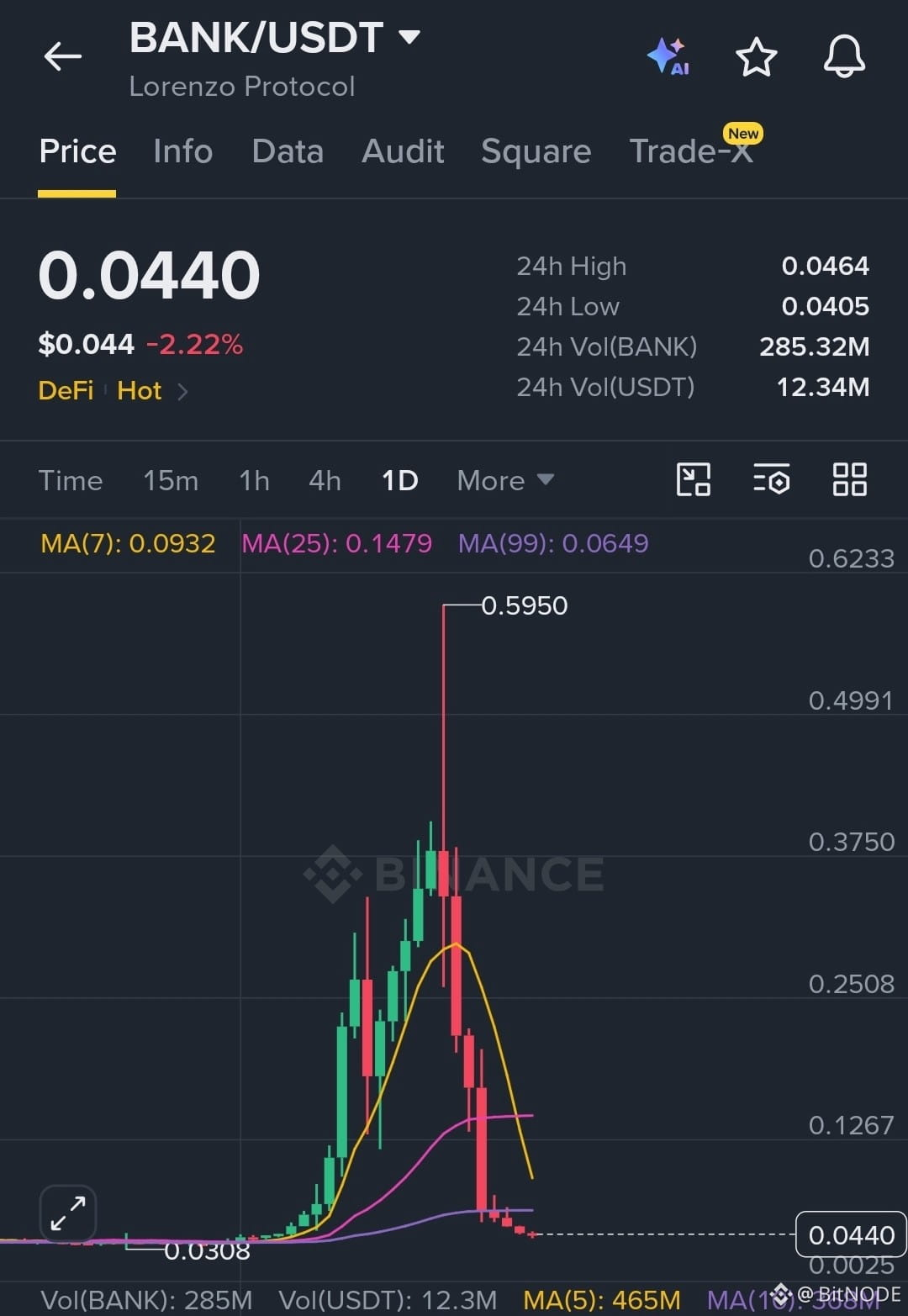
$BANK/USDT SHORT SETUP Warnung 🔻
Der Preis bricht aus einer wichtigen Widerstandszone aus – es ist eher mit weiterem Abwärtsdruck zu rechnen.
Aktueller Preis: $0.0440
Einstiegszone: $0.0450 – $0.0470
Ziele:
TP1: $0.0400
TP2: $0.0360
TP3: $0.0320
Stop Loss: $0.0520 (SL muss gesetzt werden)
#bank $BANK
{future}(BANKUSDT)
#ShortSignal
$BANK /USDT SHORT SETUP Warnung 🔻
Der Preis bricht aus einer wichtigen Widerstandszone aus – es ist eher mit weiterem Abwärtsdruck zu rechnen.
Aktueller Preis: $0.0440
Einstiegszone: $0.0450 – $0.0470
Ziele:
TP1: $0.0400
TP2: $0.0360
TP3: $0.0320
Stop Loss: $0.0520 (SL muss gesetzt werden)
#bank $BANK
#ShortSignal
Der Preis bricht aus einer wichtigen Widerstandszone aus – es ist eher mit weiterem Abwärtsdruck zu rechnen.
Aktueller Preis: $0.0440
Einstiegszone: $0.0450 – $0.0470
Ziele:
TP1: $0.0400
TP2: $0.0360
TP3: $0.0320
Stop Loss: $0.0520 (SL muss gesetzt werden)
#bank $BANK
#ShortSignal
241
Anmelden und weiter Inhalte entdecken
Krypto-Nutzer weltweit auf Binance Square kennenlernen
⚡️ Bleib in Sachen Krypto stets am Puls.
💬 Die weltgrößte Kryptobörse vertraut darauf.
👍 Erhalte verlässliche Einblicke von verifizierten Creators.
E-Mail-Adresse/Telefonnummer
Trendthemen
BitcoinHoldsAbove$77000
277 Aufrufe
40 Kommentare
#anthropicceocallsforaislowdown
🚨 $BTC HÄLT 77.000 $ WÄHREND DER MARKT SICH AUF BTC & ETH KONZENTRIERT! 🦅
Bitcoin respektiert die 4H-Trendlinie und hält das bullische Setup aktiv! 🎯
📍 Einstieg: 76.826 – 76.500
🎯 Ziele: 76.900 ➔ 77.000 ➔ 77.300
🛑 Stop-Loss: 76.400
⚠️ Strikte Regel: Das Setup ist nur gültig, solange die entscheidende Struktur hält. Das Verlassen des Stop-Bereichs macht den Trade ungültig.
⚡ Beobachtungswerte (Watchlist):
🪙 $BTC — Respektiert den wichtigen technischen Support vor makrogetriebiger Volatilität! 📈
🌐 $ETH — Konsolidiert eng um wichtige Nachfrageszonen für einen möglichen Ausbruch! 📊
Handhebel vorsichtig managen und warten, bis der Preis deine vorab definierte Jagdzone erreicht! 🛡️🧠
❓ Was ist dein nächster Schritt? Hier BTC long gehen oder auf niedrigere Einstiege warten? Poste deinen Plan unten! 👇
Haftungsausschluss: Informiere dich selbst (DYOR). Keine finanzielle Beratung.
#BitcoinHoldsAbove$77000
#AvalancheIntegratesIntoUAEPassDigitalVault
#AnthropicCEOCallsForAISlowdown
#BrazilCentralBankRaisesVASPCapitalRequirements
Hifza Rubab
·0 Likes
·26 Aufrufe
FedHikeOddsRiseTo89%
335 Aufrufe
79 Kommentare
BitcoinCrosses$78000
2,425 Aufrufe
131 Kommentare