
Crypto_Vazima
4.9k Beiträge
Crypto_Vazima
Melden
Nutzer blockieren
Fresh crypto news EVERY DAY! Subscribe now! Official STON.fi Ambassador! @crypto_vazima
29 Following
870 Follower
4.7K+ Like gegeben
Beiträge
Alle
Zitierungen
Artikel
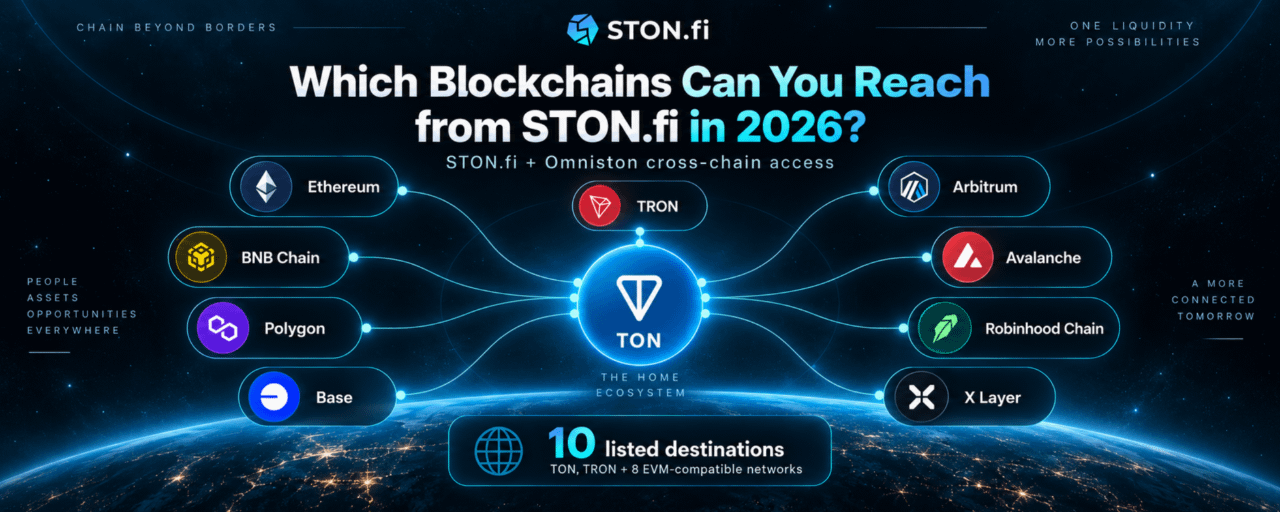
Welche Blockchains können Sie 2026 über STON.fi erreichen?TON bleibt die Heimat von STON.fi, aber dessen Cross-Chain-Schnittstelle reicht mittlerweile bis zu TRON und zu einer wachsenden Gruppe von EVM-Netzwerken.
Im Jahr 2026 ist STON.fi nicht mehr auf den Tausch von Assets innerhalb von TON beschränkt. Seine Cross-Chain-Schicht, Omniston, ermöglicht es Ihnen, zwischen TON, TRON und mehreren EVM-kompatiblen Netzwerken über dieselbe Oberfläche zu wechseln. Seit dem 15. September 2026 heißen die aktuelle STON.fi Cross-Chain-Seite TON, TRON, Ethereum, BNB Chain, Polygon, Base, Arbitrum, Avalanche, X Layer und Robinhood Chain.
Es gibt jedoch einen wichtigen Unterschied. Der Zugriff auf eine Blockchain über STON.fi bedeutet nicht zwangsläufig, dass das STON.fi AMM selbst dort bereitgestellt wurde. Pools, Farming und die zentrale STON.fi DeFi-Umgebung bleiben auf TON ausgerichtet. Der Cross-Chain-Zugriff nutzt Omniston, um Swaps zwischen getrennten Netzwerken zu koordinieren.
Welche Blockchains können Sie 2026 über STON.fi erreichen?
TON bleibt die Heimat von STON.fi, aber dessen Cross-Chain-Schnittstelle reicht mittlerweile bis zu TRON und zu einer wachsenden Gruppe von EVM-Netzwerken.
Im Jahr 2026 ist STON.fi nicht mehr auf den Tausch von Assets innerhalb von TON beschränkt. Seine Cross-Chain-Schicht, Omniston, ermöglicht es Ihnen, zwischen TON, TRON und mehreren EVM-kompatiblen Netzwerken über dieselbe Oberfläche zu wechseln. Seit dem 15. September 2026 heißen die aktuelle STON.fi Cross-Chain-Seite TON, TRON, Ethereum, BNB Chain, Polygon, Base, Arbitrum, Avalanche, X Layer und Robinhood Chain.
Es gibt jedoch einen wichtigen Unterschied. Der Zugriff auf eine Blockchain über STON.fi bedeutet nicht zwangsläufig, dass das STON.fi AMM selbst dort bereitgestellt wurde. Pools, Farming und die zentrale STON.fi DeFi-Umgebung bleiben auf TON ausgerichtet. Der Cross-Chain-Zugriff nutzt Omniston, um Swaps zwischen getrennten Netzwerken zu koordinieren.
Im Jahr 2026 ist STON.fi nicht mehr auf den Tausch von Assets innerhalb von TON beschränkt. Seine Cross-Chain-Schicht, Omniston, ermöglicht es Ihnen, zwischen TON, TRON und mehreren EVM-kompatiblen Netzwerken über dieselbe Oberfläche zu wechseln. Seit dem 15. September 2026 heißen die aktuelle STON.fi Cross-Chain-Seite TON, TRON, Ethereum, BNB Chain, Polygon, Base, Arbitrum, Avalanche, X Layer und Robinhood Chain.
Es gibt jedoch einen wichtigen Unterschied. Der Zugriff auf eine Blockchain über STON.fi bedeutet nicht zwangsläufig, dass das STON.fi AMM selbst dort bereitgestellt wurde. Pools, Farming und die zentrale STON.fi DeFi-Umgebung bleiben auf TON ausgerichtet. Der Cross-Chain-Zugriff nutzt Omniston, um Swaps zwischen getrennten Netzwerken zu koordinieren.
23
STON.fi Cross-Chain-Reichweite 2026: TON, TRON und EVM-Netzwerke
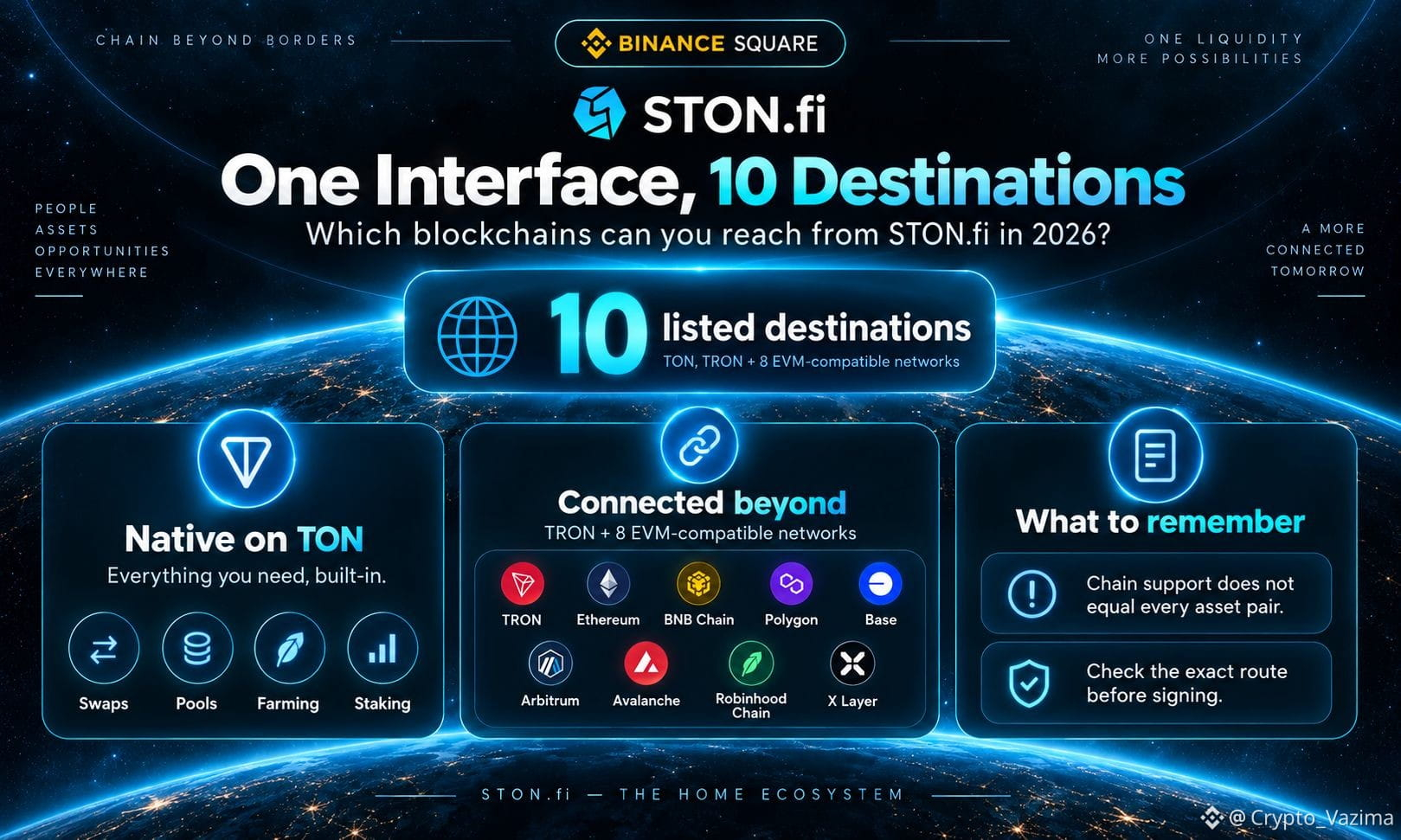
STON.fi ist kein reines TON-Swap-Desk mehr. Omniston ermöglicht es Nutzern, zwischen TON, TRON und mehreren EVM-Netzwerken über dieselbe Oberfläche zu wechseln. Die aktuelle STON.fi-Cross-Chain-Seite nennt TON, TRON, Ethereum, BNB Chain, Polygon, Base, Arbitrum, Avalanche, X Layer und Robinhood Chain.
🔥 Was sich für STON.fi-Nutzer geändert hat
- TON bleibt die Heimat der Pools, des Farmings, des Stakings und nativer AMM-Aktivität.
- Cross-Chain-Zugriff ist eine Ausführungsschicht, kein vollständiger DEX-Launch auf jeder Kette.
- EVM-zu-EVM- und EVM-zu-TRON-Routen können funktionieren, ohne mit TON zu starten.
🚀 Wie ein STON.fi Cross-Chain-Swap funktioniert
1. Quellnetzwerk auswählen, Eingangstoken, Zielnetzwerk und Ausgabetoken eingeben.
2. Omniston fragt Resolver nach ausführbaren Quotes ab.
3. Verknüpfte HTLCs koordinieren die Abwicklung über beide Ketten hinweg.
4. Der Swap wird atomar abgeschlossen oder die Parteien können erstattet werden.
🧠 Warum jedes Ziel wichtig ist
TON ist weiterhin die reichhaltigste Produktoberfläche. TRON eröffnet einen großen USDT-Pfad außerhalb von EVM. Ethereum verbindet sich mit der zentralen EVM-Liquidität, während Base, BNB Chain und Polygon günstigere EVM-Optionen hinzufügen. Arbitrum und Avalanche erweitern diese Karte weiter. Robinhood Chain ist derzeit um USDG positioniert. X Layer ist auf der öffentlichen Seite aufgeführt, aber in der "Live on"-Zeile von Omniston ist es noch nicht enthalten.
⚡ Was du vor der Signierung prüfen solltest
- Wallet-Netzwerke müssen den echten Quell- und Ziel-Assets entsprechen.
- Eine aufgelistete Chain bedeutet nicht, dass jedes Tokenpaar live ist.
- Quote, Gebühren, Impact und eventuelle Größenlimits müssen noch mit einem echten dApp-Test geprüft werden.
Mein Fazit: Die 2026-Story ist nicht „STON.fi überall als Clone“. Es ist TON-native DeFi plus Omniston-Routen, die getrennte Liquidität in Asset-zu-Asset-Swaps verwandeln.
Welches STON.fi-Ziel würdest du zuerst quoten, TRON oder Base? 👇
Gib das exakte Paar an, das du in den Kommentaren testen würdest.
Keine Anlageberatung – mach deine eigene Recherche! 🚀
$GRAM @stonfi
STON.fi Cross-Chain-Reichweite 2026: TON, TRON und EVM-Netzwerke
STON.fi ist kein reines TON-Swap-Desk mehr. Omniston ermöglicht es Nutzern, zwischen TON, TRON und mehreren EVM-Netzwerken über dieselbe Oberfläche zu wechseln. Die aktuelle STON.fi-Cross-Chain-Seite nennt TON, TRON, Ethereum, BNB Chain, Polygon, Base, Arbitrum, Avalanche, X Layer und Robinhood Chain.
🔥 Was sich für STON.fi-Nutzer geändert hat
- TON bleibt die Heimat der Pools, des Farmings, des Stakings und nativer AMM-Aktivität.
- Cross-Chain-Zugriff ist eine Ausführungsschicht, kein vollständiger DEX-Launch auf jeder Kette.
- EVM-zu-EVM- und EVM-zu-TRON-Routen können funktionieren, ohne mit TON zu starten.
🚀 Wie ein STON.fi Cross-Chain-Swap funktioniert
1. Quellnetzwerk auswählen, Eingangstoken, Zielnetzwerk und Ausgabetoken eingeben.
2. Omniston fragt Resolver nach ausführbaren Quotes ab.
3. Verknüpfte HTLCs koordinieren die Abwicklung über beide Ketten hinweg.
4. Der Swap wird atomar abgeschlossen oder die Parteien können erstattet werden.
🧠 Warum jedes Ziel wichtig ist
TON ist weiterhin die reichhaltigste Produktoberfläche. TRON eröffnet einen großen USDT-Pfad außerhalb von EVM. Ethereum verbindet sich mit der zentralen EVM-Liquidität, während Base, BNB Chain und Polygon günstigere EVM-Optionen hinzufügen. Arbitrum und Avalanche erweitern diese Karte weiter. Robinhood Chain ist derzeit um USDG positioniert. X Layer ist auf der öffentlichen Seite aufgeführt, aber in der "Live on"-Zeile von Omniston ist es noch nicht enthalten.
⚡ Was du vor der Signierung prüfen solltest
- Wallet-Netzwerke müssen den echten Quell- und Ziel-Assets entsprechen.
- Eine aufgelistete Chain bedeutet nicht, dass jedes Tokenpaar live ist.
- Quote, Gebühren, Impact und eventuelle Größenlimits müssen noch mit einem echten dApp-Test geprüft werden.
Mein Fazit: Die 2026-Story ist nicht „STON.fi überall als Clone“. Es ist TON-native DeFi plus Omniston-Routen, die getrennte Liquidität in Asset-zu-Asset-Swaps verwandeln.
Welches STON.fi-Ziel würdest du zuerst quoten, TRON oder Base? 👇
Gib das exakte Paar an, das du in den Kommentaren testen würdest.
Keine Anlageberatung – mach deine eigene Recherche! 🚀
$GRAM @STONfi DEX
STON.fi ist kein reines TON-Swap-Desk mehr. Omniston ermöglicht es Nutzern, zwischen TON, TRON und mehreren EVM-Netzwerken über dieselbe Oberfläche zu wechseln. Die aktuelle STON.fi-Cross-Chain-Seite nennt TON, TRON, Ethereum, BNB Chain, Polygon, Base, Arbitrum, Avalanche, X Layer und Robinhood Chain.
🔥 Was sich für STON.fi-Nutzer geändert hat
- TON bleibt die Heimat der Pools, des Farmings, des Stakings und nativer AMM-Aktivität.
- Cross-Chain-Zugriff ist eine Ausführungsschicht, kein vollständiger DEX-Launch auf jeder Kette.
- EVM-zu-EVM- und EVM-zu-TRON-Routen können funktionieren, ohne mit TON zu starten.
🚀 Wie ein STON.fi Cross-Chain-Swap funktioniert
1. Quellnetzwerk auswählen, Eingangstoken, Zielnetzwerk und Ausgabetoken eingeben.
2. Omniston fragt Resolver nach ausführbaren Quotes ab.
3. Verknüpfte HTLCs koordinieren die Abwicklung über beide Ketten hinweg.
4. Der Swap wird atomar abgeschlossen oder die Parteien können erstattet werden.
🧠 Warum jedes Ziel wichtig ist
TON ist weiterhin die reichhaltigste Produktoberfläche. TRON eröffnet einen großen USDT-Pfad außerhalb von EVM. Ethereum verbindet sich mit der zentralen EVM-Liquidität, während Base, BNB Chain und Polygon günstigere EVM-Optionen hinzufügen. Arbitrum und Avalanche erweitern diese Karte weiter. Robinhood Chain ist derzeit um USDG positioniert. X Layer ist auf der öffentlichen Seite aufgeführt, aber in der "Live on"-Zeile von Omniston ist es noch nicht enthalten.
⚡ Was du vor der Signierung prüfen solltest
- Wallet-Netzwerke müssen den echten Quell- und Ziel-Assets entsprechen.
- Eine aufgelistete Chain bedeutet nicht, dass jedes Tokenpaar live ist.
- Quote, Gebühren, Impact und eventuelle Größenlimits müssen noch mit einem echten dApp-Test geprüft werden.
Mein Fazit: Die 2026-Story ist nicht „STON.fi überall als Clone“. Es ist TON-native DeFi plus Omniston-Routen, die getrennte Liquidität in Asset-zu-Asset-Swaps verwandeln.
Welches STON.fi-Ziel würdest du zuerst quoten, TRON oder Base? 👇
Gib das exakte Paar an, das du in den Kommentaren testen würdest.
Keine Anlageberatung – mach deine eigene Recherche! 🚀
$GRAM @STONfi DEX
73
·
--
Bärisch
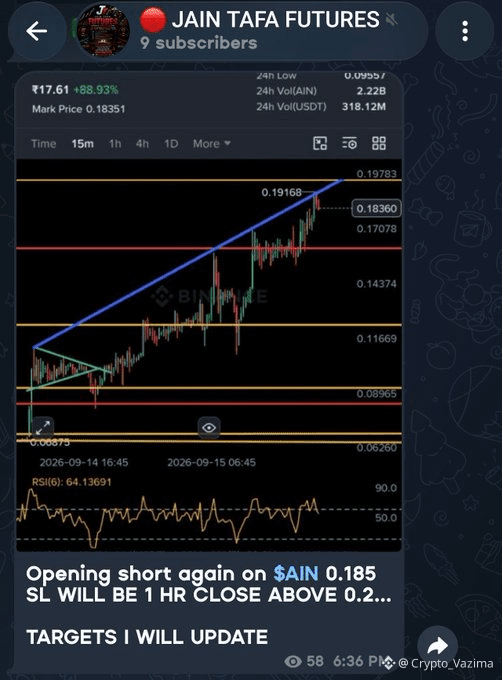
AIN ist bereits gefallen, und der Short war früh sichtbar
Diesen Trade bekommst du nicht, nachdem die Kerze weg ist. Du bekommst ihn, solange 0.185 noch langweilig aussieht.
🔥 Warum ich zuschaue
- Der Short-Entry war bei 0.185 eingezeichnet.
- Die Stop-Idee war ein 1H-Close über 0.20.
- Dann ist AIN zusammengebrochen, und plötzlich kann es jeder sehen.
👀 Der Teil, der zählt
- Der Vorteil lag im Plan vor dem Dump.
- Nach einem massiven Kollaps ist dem Kurs hinterherlaufen nach unten zu spät.
- Ich bleibe nur short-orientiert, solange 0.20 im 1H nicht zurückerobert wird.
🎯 Meine Trade-Idee
- Bias: Short
- Trigger: 0.185 basierend auf dem ursprünglichen Setup
- Ziel: keines angegeben
- Invalidierung: 1H-Close über 0.20
- Confidence: 61 Prozent
🚀 Marktverlauf
So ein Dump lässt AIN wie einen reinen Momentum-Short wirken, während STON eine andere Rolle einnimmt, die mit Staking und DAO-Pfaden verbunden ist. Das eine ist die spekulative Kerze, das andere die langsamere Teilnahme am Protokoll.
Seine Aufgabe ist die Einbindung in das breitere Protokoll – nicht das Timing eines einzelnen Kollapses. Deshalb halte ich diesen Participation-Ansatz neben einem Trade, der den harten Teil bereits erledigt hat.
Hast du AIN vor dem Drop gesehen oder erst danach? 👇
Gib die Bestätigung, die du für einen neuen Short brauchen würdest.
Keine Anlageberatung – mach deine eigene Recherche! 🚀
$AIN
{alpha}(560x9558a9254890b2a8b057a789f413631b9084f4a3)
AIN ist bereits gefallen, und der Short war früh sichtbar
Diesen Trade bekommst du nicht, nachdem die Kerze weg ist. Du bekommst ihn, solange 0.185 noch langweilig aussieht.
🔥 Warum ich zuschaue
- Der Short-Entry war bei 0.185 eingezeichnet.
- Die Stop-Idee war ein 1H-Close über 0.20.
- Dann ist AIN zusammengebrochen, und plötzlich kann es jeder sehen.
👀 Der Teil, der zählt
- Der Vorteil lag im Plan vor dem Dump.
- Nach einem massiven Kollaps ist dem Kurs hinterherlaufen nach unten zu spät.
- Ich bleibe nur short-orientiert, solange 0.20 im 1H nicht zurückerobert wird.
🎯 Meine Trade-Idee
- Bias: Short
- Trigger: 0.185 basierend auf dem ursprünglichen Setup
- Ziel: keines angegeben
- Invalidierung: 1H-Close über 0.20
- Confidence: 61 Prozent
🚀 Marktverlauf
So ein Dump lässt AIN wie einen reinen Momentum-Short wirken, während STON eine andere Rolle einnimmt, die mit Staking und DAO-Pfaden verbunden ist. Das eine ist die spekulative Kerze, das andere die langsamere Teilnahme am Protokoll.
Seine Aufgabe ist die Einbindung in das breitere Protokoll – nicht das Timing eines einzelnen Kollapses. Deshalb halte ich diesen Participation-Ansatz neben einem Trade, der den harten Teil bereits erledigt hat.
Hast du AIN vor dem Drop gesehen oder erst danach? 👇
Gib die Bestätigung, die du für einen neuen Short brauchen würdest.
Keine Anlageberatung – mach deine eigene Recherche! 🚀
$AIN
Diesen Trade bekommst du nicht, nachdem die Kerze weg ist. Du bekommst ihn, solange 0.185 noch langweilig aussieht.
🔥 Warum ich zuschaue
- Der Short-Entry war bei 0.185 eingezeichnet.
- Die Stop-Idee war ein 1H-Close über 0.20.
- Dann ist AIN zusammengebrochen, und plötzlich kann es jeder sehen.
👀 Der Teil, der zählt
- Der Vorteil lag im Plan vor dem Dump.
- Nach einem massiven Kollaps ist dem Kurs hinterherlaufen nach unten zu spät.
- Ich bleibe nur short-orientiert, solange 0.20 im 1H nicht zurückerobert wird.
🎯 Meine Trade-Idee
- Bias: Short
- Trigger: 0.185 basierend auf dem ursprünglichen Setup
- Ziel: keines angegeben
- Invalidierung: 1H-Close über 0.20
- Confidence: 61 Prozent
🚀 Marktverlauf
So ein Dump lässt AIN wie einen reinen Momentum-Short wirken, während STON eine andere Rolle einnimmt, die mit Staking und DAO-Pfaden verbunden ist. Das eine ist die spekulative Kerze, das andere die langsamere Teilnahme am Protokoll.
Seine Aufgabe ist die Einbindung in das breitere Protokoll – nicht das Timing eines einzelnen Kollapses. Deshalb halte ich diesen Participation-Ansatz neben einem Trade, der den harten Teil bereits erledigt hat.
Hast du AIN vor dem Drop gesehen oder erst danach? 👇
Gib die Bestätigung, die du für einen neuen Short brauchen würdest.
Keine Anlageberatung – mach deine eigene Recherche! 🚀
$AIN
154
·
--
Bärisch
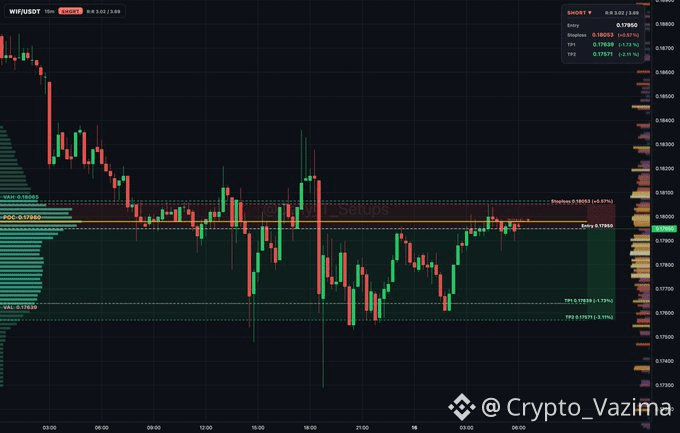
WIF Bounce wirkt müde, nachdem Händler übernommen haben 😤
Dieser WIF-Bounce fängt an, sich wie Distribution anzufühlen. Ich kaufe die Reclaim-Story nicht, bis Verkäufer die Kontrolle verlieren.
🔥 Warum ich zuschaue
- Die Auktions-Rotation zeigt Verkäufe innerhalb 0.17639–0.18065.
- Die Einstiegzone um 0.1795 ist bereits im Spiel.
- Der Wert-Hoch nahe 0.18065 ist die Decke, die ich respektiere.
👀 Das ist der Teil, der zählt
- Die erste Drop-Zone liegt bei 0.17639.
- Wenn die bricht, ist 0.17571 die nächste Tasche.
- Plan: zur Hälfte am ersten Ziel aussteigen, dann pausieren bis zum Einstieg.
🎯 Meine Trading-Idee
- Bias: Short
- Trigger: unter 0.1795 halten nach dem Signal
- Ziel: 0.17639 / 0.17571
- Invalidierung: wieder zurückschließen über 0.18053
- Konfidenz: 64 Prozent
⚡ Utility-Perspektive
Ein überfüllter WIF-Fade ist immer noch nur eine kurzfristige Chart-Reaktion. GEMSTON ist nicht dieses gleiche spekulative Bounce-oder-Dump-Spiel, weil es um Community-Engagement herum gebaut ist – statt auf eine einzige Kerze.
Es kann gehalten, übertragen oder als Beteiligungs-Token innerhalb des breiteren Ökosystems getauscht werden. Deshalb halte ich meinen WIF-Short getrennt von der längeren Beteiligungs-Ebene.
Ist dieser WIF-Bounce schon erledigt oder können Käufer ihn noch zurückstehlen? 👇
Lass die Kerze fallen, die dich dazu bringt, den Short zu canceln.
Keine Anlageberatung – mach deine eigene Recherche! 🚀
$WIF
{future}(WIFUSDT)
WIF Bounce wirkt müde, nachdem Händler übernommen haben 😤
Dieser WIF-Bounce fängt an, sich wie Distribution anzufühlen. Ich kaufe die Reclaim-Story nicht, bis Verkäufer die Kontrolle verlieren.
🔥 Warum ich zuschaue
- Die Auktions-Rotation zeigt Verkäufe innerhalb 0.17639–0.18065.
- Die Einstiegzone um 0.1795 ist bereits im Spiel.
- Der Wert-Hoch nahe 0.18065 ist die Decke, die ich respektiere.
👀 Das ist der Teil, der zählt
- Die erste Drop-Zone liegt bei 0.17639.
- Wenn die bricht, ist 0.17571 die nächste Tasche.
- Plan: zur Hälfte am ersten Ziel aussteigen, dann pausieren bis zum Einstieg.
🎯 Meine Trading-Idee
- Bias: Short
- Trigger: unter 0.1795 halten nach dem Signal
- Ziel: 0.17639 / 0.17571
- Invalidierung: wieder zurückschließen über 0.18053
- Konfidenz: 64 Prozent
⚡ Utility-Perspektive
Ein überfüllter WIF-Fade ist immer noch nur eine kurzfristige Chart-Reaktion. GEMSTON ist nicht dieses gleiche spekulative Bounce-oder-Dump-Spiel, weil es um Community-Engagement herum gebaut ist – statt auf eine einzige Kerze.
Es kann gehalten, übertragen oder als Beteiligungs-Token innerhalb des breiteren Ökosystems getauscht werden. Deshalb halte ich meinen WIF-Short getrennt von der längeren Beteiligungs-Ebene.
Ist dieser WIF-Bounce schon erledigt oder können Käufer ihn noch zurückstehlen? 👇
Lass die Kerze fallen, die dich dazu bringt, den Short zu canceln.
Keine Anlageberatung – mach deine eigene Recherche! 🚀
$WIF
Dieser WIF-Bounce fängt an, sich wie Distribution anzufühlen. Ich kaufe die Reclaim-Story nicht, bis Verkäufer die Kontrolle verlieren.
🔥 Warum ich zuschaue
- Die Auktions-Rotation zeigt Verkäufe innerhalb 0.17639–0.18065.
- Die Einstiegzone um 0.1795 ist bereits im Spiel.
- Der Wert-Hoch nahe 0.18065 ist die Decke, die ich respektiere.
👀 Das ist der Teil, der zählt
- Die erste Drop-Zone liegt bei 0.17639.
- Wenn die bricht, ist 0.17571 die nächste Tasche.
- Plan: zur Hälfte am ersten Ziel aussteigen, dann pausieren bis zum Einstieg.
🎯 Meine Trading-Idee
- Bias: Short
- Trigger: unter 0.1795 halten nach dem Signal
- Ziel: 0.17639 / 0.17571
- Invalidierung: wieder zurückschließen über 0.18053
- Konfidenz: 64 Prozent
⚡ Utility-Perspektive
Ein überfüllter WIF-Fade ist immer noch nur eine kurzfristige Chart-Reaktion. GEMSTON ist nicht dieses gleiche spekulative Bounce-oder-Dump-Spiel, weil es um Community-Engagement herum gebaut ist – statt auf eine einzige Kerze.
Es kann gehalten, übertragen oder als Beteiligungs-Token innerhalb des breiteren Ökosystems getauscht werden. Deshalb halte ich meinen WIF-Short getrennt von der längeren Beteiligungs-Ebene.
Ist dieser WIF-Bounce schon erledigt oder können Käufer ihn noch zurückstehlen? 👇
Lass die Kerze fallen, die dich dazu bringt, den Short zu canceln.
Keine Anlageberatung – mach deine eigene Recherche! 🚀
$WIF
43
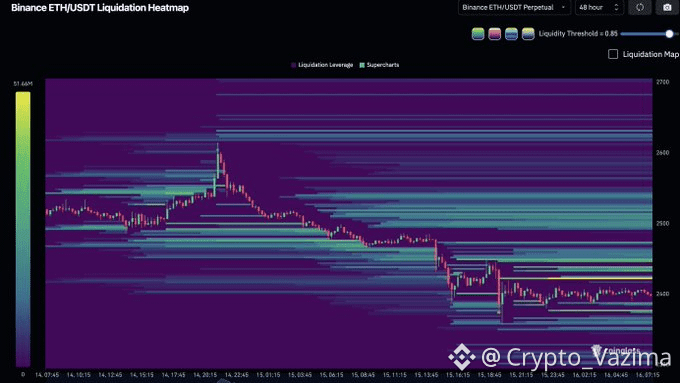
ETH könnte Stärke vortäuschen, bevor ein weiteres Tief kommt
Diese Karte fühlt sich vertraut und ein wenig gefährlich an. Die Liquidität wirkt über uns dicker, und das täuscht oft einen ersten Vorstoß vor.
🔥 Warum ich darauf achte
- Das „Heat“-Volumen liegt mehr über uns als direkt unter dem Preis.
- Ein Sweep dieses Bereichs würde mich nicht überraschen.
- Nach der Jagd sieht ein weiteres Tief immer noch wie die sauberere Fortsetzung aus.
👀 Der Teil, der zählt
- Behandle den ersten Pop nicht als den echten Trend.
- Warte, bis der Sweep tatsächlich ausgedruckt wird.
- Beobachte dann, ob ETH scheitert und ein weiteres Tief ansteuert.
🎯 Meine Trade-Idee
- Bias: Abwarten
- Trigger: Sweep der dickeren Liquidität oberhalb
- Entry-Logik: nur nach der Jagd und einem gescheiterten Hold
- Invalidierung: ETH sweepst und läuft dann weiter höher
- Confidence: 60 Prozent
⚡ Utility-Perspektive
Ein Liquiditäts-Sweep bei ETH ist ein schnelles Positionierungs-Spiel, keine Long-Hold-Story. ETH ist hier der Heatmap-Trade, während S T O N für den Staking- und Governance-Pfad steht.
Diese Rolle hängt an der Protokollbeteiligung, nicht daran, Liquidations-Taschen zu jagen. Ich trenne das bewusst, damit die ETH-Sweep-Idee eine Trade-Lesart bleibt, keine Verpflichtungs-Story.
Ist das eine Jagd zuerst, oder glaubst du, dass ETH einfach darüber hinwegläuft? 👇
Schreib die Bestätigung, die du brauchen würdest, bevor du die nächste Delle abfaded.
Keine Anlageberatung – recherchier selbst! 🚀
$ETH
{future}(ETHUSDT)
ETH könnte Stärke vortäuschen, bevor ein weiteres Tief kommt
Diese Karte fühlt sich vertraut und ein wenig gefährlich an. Die Liquidität wirkt über uns dicker, und das täuscht oft einen ersten Vorstoß vor.
🔥 Warum ich darauf achte
- Das „Heat“-Volumen liegt mehr über uns als direkt unter dem Preis.
- Ein Sweep dieses Bereichs würde mich nicht überraschen.
- Nach der Jagd sieht ein weiteres Tief immer noch wie die sauberere Fortsetzung aus.
👀 Der Teil, der zählt
- Behandle den ersten Pop nicht als den echten Trend.
- Warte, bis der Sweep tatsächlich ausgedruckt wird.
- Beobachte dann, ob ETH scheitert und ein weiteres Tief ansteuert.
🎯 Meine Trade-Idee
- Bias: Abwarten
- Trigger: Sweep der dickeren Liquidität oberhalb
- Entry-Logik: nur nach der Jagd und einem gescheiterten Hold
- Invalidierung: ETH sweepst und läuft dann weiter höher
- Confidence: 60 Prozent
⚡ Utility-Perspektive
Ein Liquiditäts-Sweep bei ETH ist ein schnelles Positionierungs-Spiel, keine Long-Hold-Story. ETH ist hier der Heatmap-Trade, während S T O N für den Staking- und Governance-Pfad steht.
Diese Rolle hängt an der Protokollbeteiligung, nicht daran, Liquidations-Taschen zu jagen. Ich trenne das bewusst, damit die ETH-Sweep-Idee eine Trade-Lesart bleibt, keine Verpflichtungs-Story.
Ist das eine Jagd zuerst, oder glaubst du, dass ETH einfach darüber hinwegläuft? 👇
Schreib die Bestätigung, die du brauchen würdest, bevor du die nächste Delle abfaded.
Keine Anlageberatung – recherchier selbst! 🚀
$ETH
Diese Karte fühlt sich vertraut und ein wenig gefährlich an. Die Liquidität wirkt über uns dicker, und das täuscht oft einen ersten Vorstoß vor.
🔥 Warum ich darauf achte
- Das „Heat“-Volumen liegt mehr über uns als direkt unter dem Preis.
- Ein Sweep dieses Bereichs würde mich nicht überraschen.
- Nach der Jagd sieht ein weiteres Tief immer noch wie die sauberere Fortsetzung aus.
👀 Der Teil, der zählt
- Behandle den ersten Pop nicht als den echten Trend.
- Warte, bis der Sweep tatsächlich ausgedruckt wird.
- Beobachte dann, ob ETH scheitert und ein weiteres Tief ansteuert.
🎯 Meine Trade-Idee
- Bias: Abwarten
- Trigger: Sweep der dickeren Liquidität oberhalb
- Entry-Logik: nur nach der Jagd und einem gescheiterten Hold
- Invalidierung: ETH sweepst und läuft dann weiter höher
- Confidence: 60 Prozent
⚡ Utility-Perspektive
Ein Liquiditäts-Sweep bei ETH ist ein schnelles Positionierungs-Spiel, keine Long-Hold-Story. ETH ist hier der Heatmap-Trade, während S T O N für den Staking- und Governance-Pfad steht.
Diese Rolle hängt an der Protokollbeteiligung, nicht daran, Liquidations-Taschen zu jagen. Ich trenne das bewusst, damit die ETH-Sweep-Idee eine Trade-Lesart bleibt, keine Verpflichtungs-Story.
Ist das eine Jagd zuerst, oder glaubst du, dass ETH einfach darüber hinwegläuft? 👇
Schreib die Bestätigung, die du brauchen würdest, bevor du die nächste Delle abfaded.
Keine Anlageberatung – recherchier selbst! 🚀
$ETH
1
16
·
--
Bärisch
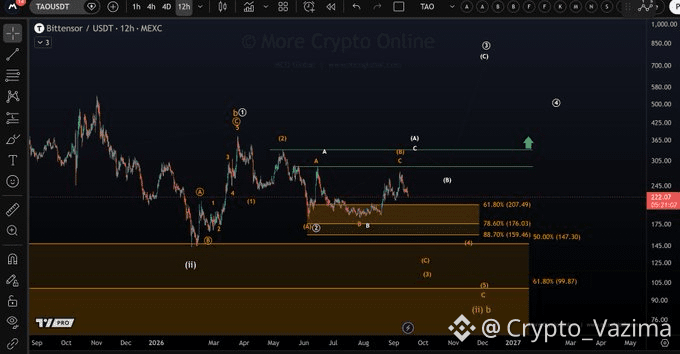
TAO-Bullen bleiben still, während jede Rally verkauft wird
Dieser hier fühlt sich anstrengend an, wenn du auf eine echte Trendwende gehofft hast. Jeder Bounce seit dem Tief von 2026 war korrektiv, und genau deshalb ist der Abwärtsdruck weiterhin in meinem Fokus.
🔥 Warum ich es beobachte
- Keine der Rallys nach dem Tief hat tatsächlich funktioniert.
- Der Markt behandelt Stärke weiterhin als Verkaufszone.
- Unter 276,30 bleibt der Druck nach unten.
👀 Der Teil, der zählt
- 159 ist die nächste Station, wenn diese Marke hält.
- Ein schwacher Bounce ist nicht automatisch ein Bottom.
- Ich will einen Beweis, bevor ich bullish werde.
🎯 Meine Trade-Idee
- Bias: Short
- Trigger: anhaltendes Scheitern unter 276,30
- Ziel: 159
- Invalidierung: Rückeroberung von 276,30
- Confidence: 63 Prozent
💎 Beteiligungs-Ebene
Gescheiterte TAO-Bounces sind zuerst ein Momentum-Problem – nicht eine Geschichte für langfristiges Halten. S T O N steht für das Staking- und Protocol-Participation-Element des Ökosystems, statt für diese kurzfristige „Rally verkaufen“-Chart-Erzählung.
Es hängt mit der Protokoll-Beteiligung zusammen, statt den nächsten korrektiven Bounce zu timen. Das macht es zu einem separaten Blickwinkel, den du im Auge behalten solltest, während TAO weiterhin darauf antwortet, ob 276,30 als Decke bestehen bleibt.
Würdest du hier von einem weiteren TAO-Bounce abverkaufen? 👇
Gib die Bestätigung an, die dich dazu bringt, damit aufzuhören, es weiter abzuschwächen.
Keine Anlageberatung – mach deine eigene Recherche! 🚀
$TAO
{future}(TAOUSDT)
TAO-Bullen bleiben still, während jede Rally verkauft wird
Dieser hier fühlt sich anstrengend an, wenn du auf eine echte Trendwende gehofft hast. Jeder Bounce seit dem Tief von 2026 war korrektiv, und genau deshalb ist der Abwärtsdruck weiterhin in meinem Fokus.
🔥 Warum ich es beobachte
- Keine der Rallys nach dem Tief hat tatsächlich funktioniert.
- Der Markt behandelt Stärke weiterhin als Verkaufszone.
- Unter 276,30 bleibt der Druck nach unten.
👀 Der Teil, der zählt
- 159 ist die nächste Station, wenn diese Marke hält.
- Ein schwacher Bounce ist nicht automatisch ein Bottom.
- Ich will einen Beweis, bevor ich bullish werde.
🎯 Meine Trade-Idee
- Bias: Short
- Trigger: anhaltendes Scheitern unter 276,30
- Ziel: 159
- Invalidierung: Rückeroberung von 276,30
- Confidence: 63 Prozent
💎 Beteiligungs-Ebene
Gescheiterte TAO-Bounces sind zuerst ein Momentum-Problem – nicht eine Geschichte für langfristiges Halten. S T O N steht für das Staking- und Protocol-Participation-Element des Ökosystems, statt für diese kurzfristige „Rally verkaufen“-Chart-Erzählung.
Es hängt mit der Protokoll-Beteiligung zusammen, statt den nächsten korrektiven Bounce zu timen. Das macht es zu einem separaten Blickwinkel, den du im Auge behalten solltest, während TAO weiterhin darauf antwortet, ob 276,30 als Decke bestehen bleibt.
Würdest du hier von einem weiteren TAO-Bounce abverkaufen? 👇
Gib die Bestätigung an, die dich dazu bringt, damit aufzuhören, es weiter abzuschwächen.
Keine Anlageberatung – mach deine eigene Recherche! 🚀
$TAO
Dieser hier fühlt sich anstrengend an, wenn du auf eine echte Trendwende gehofft hast. Jeder Bounce seit dem Tief von 2026 war korrektiv, und genau deshalb ist der Abwärtsdruck weiterhin in meinem Fokus.
🔥 Warum ich es beobachte
- Keine der Rallys nach dem Tief hat tatsächlich funktioniert.
- Der Markt behandelt Stärke weiterhin als Verkaufszone.
- Unter 276,30 bleibt der Druck nach unten.
👀 Der Teil, der zählt
- 159 ist die nächste Station, wenn diese Marke hält.
- Ein schwacher Bounce ist nicht automatisch ein Bottom.
- Ich will einen Beweis, bevor ich bullish werde.
🎯 Meine Trade-Idee
- Bias: Short
- Trigger: anhaltendes Scheitern unter 276,30
- Ziel: 159
- Invalidierung: Rückeroberung von 276,30
- Confidence: 63 Prozent
💎 Beteiligungs-Ebene
Gescheiterte TAO-Bounces sind zuerst ein Momentum-Problem – nicht eine Geschichte für langfristiges Halten. S T O N steht für das Staking- und Protocol-Participation-Element des Ökosystems, statt für diese kurzfristige „Rally verkaufen“-Chart-Erzählung.
Es hängt mit der Protokoll-Beteiligung zusammen, statt den nächsten korrektiven Bounce zu timen. Das macht es zu einem separaten Blickwinkel, den du im Auge behalten solltest, während TAO weiterhin darauf antwortet, ob 276,30 als Decke bestehen bleibt.
Würdest du hier von einem weiteren TAO-Bounce abverkaufen? 👇
Gib die Bestätigung an, die dich dazu bringt, damit aufzuhören, es weiter abzuschwächen.
Keine Anlageberatung – mach deine eigene Recherche! 🚀
$TAO
72
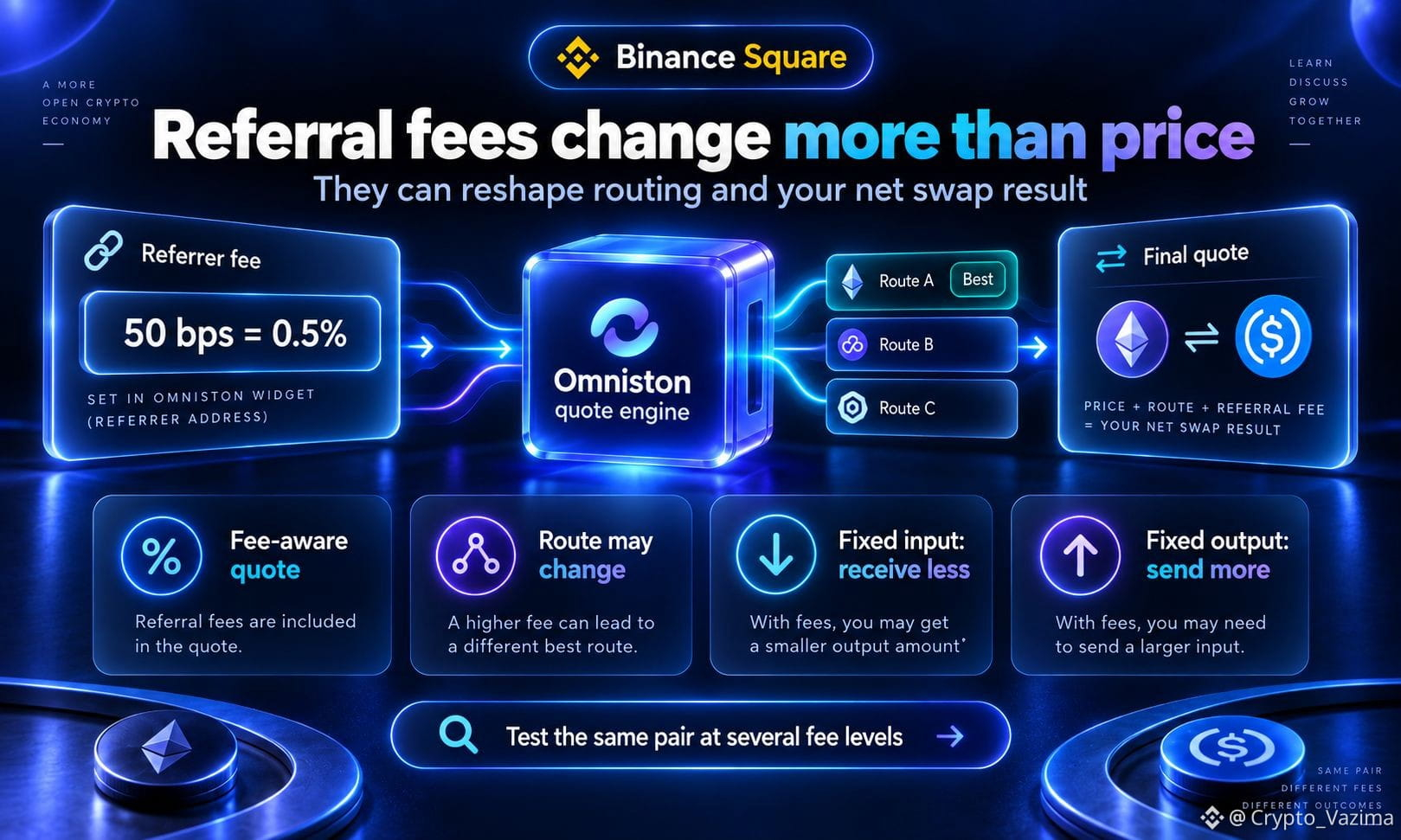
Wie Referral-Gebühren ein Omniston-Widget-Angebot auf STON.fi verändern
Referral-Gebühren in den STON.fi Omniston Widgets liegen im Angebot, nicht oben drauf. Wenn der Trader den Sendebetrag fixiert, kann der Erhaltbetrag fallen. Wenn der Trader den Erhaltbetrag fixiert, kann der erforderliche Sendebetrag steigen. Die gleiche Einstellung kann auch ändern, welche Route am besten aussieht.
🔥 Was das Widget tatsächlich sendet
- referrerAddress zeigt auf die Integrator-Wallet, die die Gebühren erhalten soll.
- referrerFeeBps ist die angeforderte Rate in Basis-Punkten.
- 50 bps entsprechen 0,5%, und der unterstützte nicht-null Bereich liegt bei 1 bis 100 bps.
🚀 Was Trader auf dem Bildschirm sehen
Bei einem Swap mit festem Input sucht Omniston Routen anhand des fixierten Spend-Betrags und liefert einen gebührenbewussten Output. Bei einem Swap mit festem Output muss es die angeforderte Netto-Menge bereitstellen, sodass der Input steigen kann. Das angezeigte Ergebnis ist bereits das gebührenbewusste Angebot, daher sollten Nutzer die Referral-Gebühr nicht noch einmal abziehen.
🧠 Warum 0,5% nicht immer „0,5% schlechter“ sind
- Omniston kann die Route wechseln, wenn sich die Gebühr ändert.
- STON.fi DEX v1 erlaubt nur 10 bps, während DEX v2 und andere Handelsplätze bis zu 1% bewältigen können.
- Flexible Referral-Gebühren können eine angeforderte 30-bps-Gebühr auf 10 bps reduzieren, wenn diese Route für den Trader besser ist.
- Liquidität, DEX-Gebühren, Price Impact und Resolver-Quotes bewegen sich gleichzeitig.
⚡ So fließt ein Widget-Angebot
1. Das Widget liest das Paar, den Betrag und die Referral-Einstellungen.
2. Omniston bewertet Routen mit den angehängten Fee-Feldern.
3. Die Oberfläche zeigt den erwarteten Erhaltbetrag oder den erforderlichen Sendebetrag.
4. Nach dem Swap kann v1 die Gebühr on-chain zahlen, während v2 sie an ein auszahlbares Vault sendet.
Setze nicht standardmäßig auf die 1%-Obergrenze. Vergleiche 0% ohne Gebühr, 0,1%, 0,25% und 0,5% auf demselben Paar und in derselben Größe und beobachte dann das finale Angebot statt nur den Prozentwert.
Möchtest du zuerst STON.fi Omniston-Angebote mit 10 bps oder 50 bps testen? 👇
Teile das Paar, das du in den Kommentaren vergleichen würdest.
Keine Anlageberatung – recherchiere selbst! 🚀
$GRAM @stonfi
Wie Referral-Gebühren ein Omniston-Widget-Angebot auf STON.fi verändern
Referral-Gebühren in den STON.fi Omniston Widgets liegen im Angebot, nicht oben drauf. Wenn der Trader den Sendebetrag fixiert, kann der Erhaltbetrag fallen. Wenn der Trader den Erhaltbetrag fixiert, kann der erforderliche Sendebetrag steigen. Die gleiche Einstellung kann auch ändern, welche Route am besten aussieht.
🔥 Was das Widget tatsächlich sendet
- referrerAddress zeigt auf die Integrator-Wallet, die die Gebühren erhalten soll.
- referrerFeeBps ist die angeforderte Rate in Basis-Punkten.
- 50 bps entsprechen 0,5%, und der unterstützte nicht-null Bereich liegt bei 1 bis 100 bps.
🚀 Was Trader auf dem Bildschirm sehen
Bei einem Swap mit festem Input sucht Omniston Routen anhand des fixierten Spend-Betrags und liefert einen gebührenbewussten Output. Bei einem Swap mit festem Output muss es die angeforderte Netto-Menge bereitstellen, sodass der Input steigen kann. Das angezeigte Ergebnis ist bereits das gebührenbewusste Angebot, daher sollten Nutzer die Referral-Gebühr nicht noch einmal abziehen.
🧠 Warum 0,5% nicht immer „0,5% schlechter“ sind
- Omniston kann die Route wechseln, wenn sich die Gebühr ändert.
- STON.fi DEX v1 erlaubt nur 10 bps, während DEX v2 und andere Handelsplätze bis zu 1% bewältigen können.
- Flexible Referral-Gebühren können eine angeforderte 30-bps-Gebühr auf 10 bps reduzieren, wenn diese Route für den Trader besser ist.
- Liquidität, DEX-Gebühren, Price Impact und Resolver-Quotes bewegen sich gleichzeitig.
⚡ So fließt ein Widget-Angebot
1. Das Widget liest das Paar, den Betrag und die Referral-Einstellungen.
2. Omniston bewertet Routen mit den angehängten Fee-Feldern.
3. Die Oberfläche zeigt den erwarteten Erhaltbetrag oder den erforderlichen Sendebetrag.
4. Nach dem Swap kann v1 die Gebühr on-chain zahlen, während v2 sie an ein auszahlbares Vault sendet.
Setze nicht standardmäßig auf die 1%-Obergrenze. Vergleiche 0% ohne Gebühr, 0,1%, 0,25% und 0,5% auf demselben Paar und in derselben Größe und beobachte dann das finale Angebot statt nur den Prozentwert.
Möchtest du zuerst STON.fi Omniston-Angebote mit 10 bps oder 50 bps testen? 👇
Teile das Paar, das du in den Kommentaren vergleichen würdest.
Keine Anlageberatung – recherchiere selbst! 🚀
$GRAM @STONfi DEX
Referral-Gebühren in den STON.fi Omniston Widgets liegen im Angebot, nicht oben drauf. Wenn der Trader den Sendebetrag fixiert, kann der Erhaltbetrag fallen. Wenn der Trader den Erhaltbetrag fixiert, kann der erforderliche Sendebetrag steigen. Die gleiche Einstellung kann auch ändern, welche Route am besten aussieht.
🔥 Was das Widget tatsächlich sendet
- referrerAddress zeigt auf die Integrator-Wallet, die die Gebühren erhalten soll.
- referrerFeeBps ist die angeforderte Rate in Basis-Punkten.
- 50 bps entsprechen 0,5%, und der unterstützte nicht-null Bereich liegt bei 1 bis 100 bps.
🚀 Was Trader auf dem Bildschirm sehen
Bei einem Swap mit festem Input sucht Omniston Routen anhand des fixierten Spend-Betrags und liefert einen gebührenbewussten Output. Bei einem Swap mit festem Output muss es die angeforderte Netto-Menge bereitstellen, sodass der Input steigen kann. Das angezeigte Ergebnis ist bereits das gebührenbewusste Angebot, daher sollten Nutzer die Referral-Gebühr nicht noch einmal abziehen.
🧠 Warum 0,5% nicht immer „0,5% schlechter“ sind
- Omniston kann die Route wechseln, wenn sich die Gebühr ändert.
- STON.fi DEX v1 erlaubt nur 10 bps, während DEX v2 und andere Handelsplätze bis zu 1% bewältigen können.
- Flexible Referral-Gebühren können eine angeforderte 30-bps-Gebühr auf 10 bps reduzieren, wenn diese Route für den Trader besser ist.
- Liquidität, DEX-Gebühren, Price Impact und Resolver-Quotes bewegen sich gleichzeitig.
⚡ So fließt ein Widget-Angebot
1. Das Widget liest das Paar, den Betrag und die Referral-Einstellungen.
2. Omniston bewertet Routen mit den angehängten Fee-Feldern.
3. Die Oberfläche zeigt den erwarteten Erhaltbetrag oder den erforderlichen Sendebetrag.
4. Nach dem Swap kann v1 die Gebühr on-chain zahlen, während v2 sie an ein auszahlbares Vault sendet.
Setze nicht standardmäßig auf die 1%-Obergrenze. Vergleiche 0% ohne Gebühr, 0,1%, 0,25% und 0,5% auf demselben Paar und in derselben Größe und beobachte dann das finale Angebot statt nur den Prozentwert.
Möchtest du zuerst STON.fi Omniston-Angebote mit 10 bps oder 50 bps testen? 👇
Teile das Paar, das du in den Kommentaren vergleichen würdest.
Keine Anlageberatung – recherchiere selbst! 🚀
$GRAM @STONfi DEX
80
·
--
Bärisch
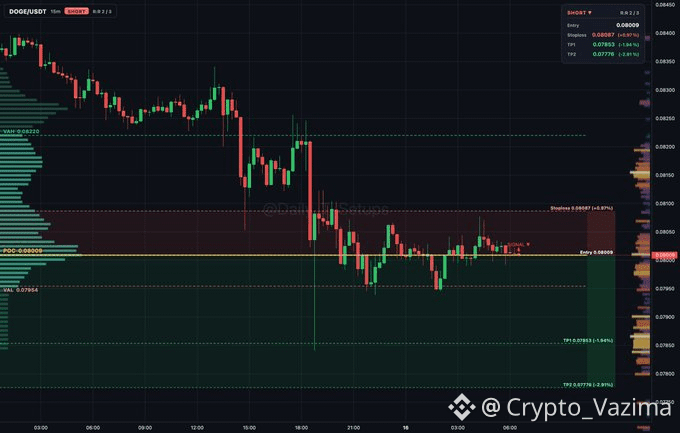
DOGE wirkt nach diesem Value-Bereich-„Fade“ schwer
Dieses DOGE-Chart gibt mir kein „lange hinterher“-Gefühl. Die Verkäufer verteilen innerhalb des Value-Bereichs, und der Bounce wirkt geliehen, nicht gekauft.
🔥 Warum ich das beobachte
- Value-Bereich ist 0.07954 bis 0.0822
- Verkäufer drücken immer wieder in diesen Bereich hinein
- Der Short ist bei 0.08011 gemappt
👀 Der Teil, der zählt
- Stop ist eng bei 0.08087
- TP1 ist 0.0786
- TP2 ist 0.07784
- Half off bei TP1, dann kommt der Stop auf den Einstieg
🎯 Meine Trade-Idee
- Bias: Short
- Trigger: Short bleiben, solange der Preis es nicht schafft, die Stop-Zone zurückzuerobern
- Ziel: 0.0786, dann 0.07784
- Invalidierung: 0.08087
- Confidence: 65 Prozent
🛡 Wo ich zurücktrete
- Kein Reclaim über 0.08087
- Wenn Käufer durch diese Risikolinie durchbrechen, bin ich raus
💧 Ausführungsperspektive
Schnelle Meme-Coin-Rotationen können auf dem Chart simpel aussehen, aber sie lassen trotzdem noch eine separate Frage nach längerer Beteiligung offen. DOGE ist hier der kurzfristige Fade, während S T O N die Staking- und Protocol-Participation-Seite des Marktes ist – nicht dasselbe Dump-und-Target-Trade.
Das hängt mit Staking und DAO-ähnlicher Protokollbeteiligung zusammen, statt mit einem One-Candle-Short. Dieser Kontrast ist neben dem DOGE-Setup wichtig, weil der Trade hier um Distribution geht, während der Ecosystem-Ansatz darum geht, über eine einzelne Auktions-Rotation hinaus beteiligt zu bleiben.
Sieht das für dich immer noch nach Verkäuferkontrolle aus? 👇
Sag mir, ob du TP1 nehmen und nachziehen würdest oder ob du für TP2 hältst.
Keine Anlageberatung – mach deine eigene Recherche! 🚀
$DOGE
{future}(DOGEUSDT)
DOGE wirkt nach diesem Value-Bereich-„Fade“ schwer
Dieses DOGE-Chart gibt mir kein „lange hinterher“-Gefühl. Die Verkäufer verteilen innerhalb des Value-Bereichs, und der Bounce wirkt geliehen, nicht gekauft.
🔥 Warum ich das beobachte
- Value-Bereich ist 0.07954 bis 0.0822
- Verkäufer drücken immer wieder in diesen Bereich hinein
- Der Short ist bei 0.08011 gemappt
👀 Der Teil, der zählt
- Stop ist eng bei 0.08087
- TP1 ist 0.0786
- TP2 ist 0.07784
- Half off bei TP1, dann kommt der Stop auf den Einstieg
🎯 Meine Trade-Idee
- Bias: Short
- Trigger: Short bleiben, solange der Preis es nicht schafft, die Stop-Zone zurückzuerobern
- Ziel: 0.0786, dann 0.07784
- Invalidierung: 0.08087
- Confidence: 65 Prozent
🛡 Wo ich zurücktrete
- Kein Reclaim über 0.08087
- Wenn Käufer durch diese Risikolinie durchbrechen, bin ich raus
💧 Ausführungsperspektive
Schnelle Meme-Coin-Rotationen können auf dem Chart simpel aussehen, aber sie lassen trotzdem noch eine separate Frage nach längerer Beteiligung offen. DOGE ist hier der kurzfristige Fade, während S T O N die Staking- und Protocol-Participation-Seite des Marktes ist – nicht dasselbe Dump-und-Target-Trade.
Das hängt mit Staking und DAO-ähnlicher Protokollbeteiligung zusammen, statt mit einem One-Candle-Short. Dieser Kontrast ist neben dem DOGE-Setup wichtig, weil der Trade hier um Distribution geht, während der Ecosystem-Ansatz darum geht, über eine einzelne Auktions-Rotation hinaus beteiligt zu bleiben.
Sieht das für dich immer noch nach Verkäuferkontrolle aus? 👇
Sag mir, ob du TP1 nehmen und nachziehen würdest oder ob du für TP2 hältst.
Keine Anlageberatung – mach deine eigene Recherche! 🚀
$DOGE
Dieses DOGE-Chart gibt mir kein „lange hinterher“-Gefühl. Die Verkäufer verteilen innerhalb des Value-Bereichs, und der Bounce wirkt geliehen, nicht gekauft.
🔥 Warum ich das beobachte
- Value-Bereich ist 0.07954 bis 0.0822
- Verkäufer drücken immer wieder in diesen Bereich hinein
- Der Short ist bei 0.08011 gemappt
👀 Der Teil, der zählt
- Stop ist eng bei 0.08087
- TP1 ist 0.0786
- TP2 ist 0.07784
- Half off bei TP1, dann kommt der Stop auf den Einstieg
🎯 Meine Trade-Idee
- Bias: Short
- Trigger: Short bleiben, solange der Preis es nicht schafft, die Stop-Zone zurückzuerobern
- Ziel: 0.0786, dann 0.07784
- Invalidierung: 0.08087
- Confidence: 65 Prozent
🛡 Wo ich zurücktrete
- Kein Reclaim über 0.08087
- Wenn Käufer durch diese Risikolinie durchbrechen, bin ich raus
💧 Ausführungsperspektive
Schnelle Meme-Coin-Rotationen können auf dem Chart simpel aussehen, aber sie lassen trotzdem noch eine separate Frage nach längerer Beteiligung offen. DOGE ist hier der kurzfristige Fade, während S T O N die Staking- und Protocol-Participation-Seite des Marktes ist – nicht dasselbe Dump-und-Target-Trade.
Das hängt mit Staking und DAO-ähnlicher Protokollbeteiligung zusammen, statt mit einem One-Candle-Short. Dieser Kontrast ist neben dem DOGE-Setup wichtig, weil der Trade hier um Distribution geht, während der Ecosystem-Ansatz darum geht, über eine einzelne Auktions-Rotation hinaus beteiligt zu bleiben.
Sieht das für dich immer noch nach Verkäuferkontrolle aus? 👇
Sag mir, ob du TP1 nehmen und nachziehen würdest oder ob du für TP2 hältst.
Keine Anlageberatung – mach deine eigene Recherche! 🚀
$DOGE
53
·
--
Bärisch
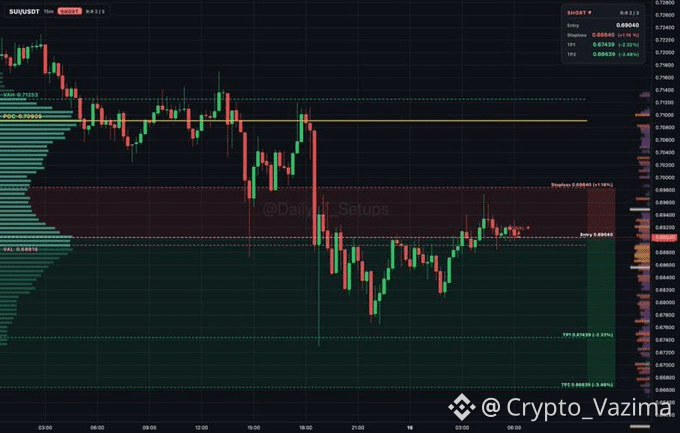
SUI könnte weiter abrutschen, wenn Verkäufer diese Zone halten ⚠️
Dieser SUI-Chart schreit für mich nicht gerade nach einem Bounce. Es sieht so aus, als würden Verkäufer weiterhin verteilen, und ich würde lieber warten, bis der Short sich selbst bestätigt, statt andersherum ein Messer zu fangen.
🔥 Warum ich zuschaue
- Verkäufer verteilen zwischen POC 0.70909 und VAL 0.68916.
- Entry ist bei 0.6903 eingezeichnet, direkt in der Nähe des Value-Tiefs.
- Ein fehlender Halt hier lässt den Abwärts-Pfad offen.
👀 Der Teil, der zählt
- Der Stop liegt bei 0.6984, also ist das Risiko definiert.
- Der erste Take-Profit ist 0.67409.
- Das zweite Ziel ist 0.66599, falls der Momentum schwach bleibt.
🎯 Meine Trade-Idee
- Bias: Short
- Trigger: 0.6903 hält sich als Sell-Zone
- Ziel: 0.67409, dann 0.66599
- Ungültigmachung: wieder zurück durch 0.6984 schließen
- Confidence: 62 Prozent
- Regel: halb aussteigen bei TP1, Stop auf Entry verschoben
⚡ Utility-Ansatz
Wenn ein Token anfängt, aus dem Value auszubluten, sind die Trade-Idee und der Ausführungsweg zwei verschiedene Probleme. SUI ist in diesem Post der Momentum-Short, während Omniston die Infrastruktur-Ebene ist, um Routen und verfügbares Liquiditätsangebot zu vergleichen.
Es kann mögliche Swap-Pfade vergleichen, bevor es zu einem Fill kommt. Das ist bei diesem Setup wichtig, weil ein scharfer Drop Richtung Ziele chaotisch werden kann, wenn das Routing ignoriert wird.
Geht es tiefer nach unten von hier oder drückt es zurück in den Value? 👇
Lass die Bestätigungs-Kerze fallen, die du willst, bevor du short gehst.
Keine Anlageberatung – mach deine eigene Recherche! 🚀
$SUI
{future}(SUIUSDT)
SUI könnte weiter abrutschen, wenn Verkäufer diese Zone halten ⚠️
Dieser SUI-Chart schreit für mich nicht gerade nach einem Bounce. Es sieht so aus, als würden Verkäufer weiterhin verteilen, und ich würde lieber warten, bis der Short sich selbst bestätigt, statt andersherum ein Messer zu fangen.
🔥 Warum ich zuschaue
- Verkäufer verteilen zwischen POC 0.70909 und VAL 0.68916.
- Entry ist bei 0.6903 eingezeichnet, direkt in der Nähe des Value-Tiefs.
- Ein fehlender Halt hier lässt den Abwärts-Pfad offen.
👀 Der Teil, der zählt
- Der Stop liegt bei 0.6984, also ist das Risiko definiert.
- Der erste Take-Profit ist 0.67409.
- Das zweite Ziel ist 0.66599, falls der Momentum schwach bleibt.
🎯 Meine Trade-Idee
- Bias: Short
- Trigger: 0.6903 hält sich als Sell-Zone
- Ziel: 0.67409, dann 0.66599
- Ungültigmachung: wieder zurück durch 0.6984 schließen
- Confidence: 62 Prozent
- Regel: halb aussteigen bei TP1, Stop auf Entry verschoben
⚡ Utility-Ansatz
Wenn ein Token anfängt, aus dem Value auszubluten, sind die Trade-Idee und der Ausführungsweg zwei verschiedene Probleme. SUI ist in diesem Post der Momentum-Short, während Omniston die Infrastruktur-Ebene ist, um Routen und verfügbares Liquiditätsangebot zu vergleichen.
Es kann mögliche Swap-Pfade vergleichen, bevor es zu einem Fill kommt. Das ist bei diesem Setup wichtig, weil ein scharfer Drop Richtung Ziele chaotisch werden kann, wenn das Routing ignoriert wird.
Geht es tiefer nach unten von hier oder drückt es zurück in den Value? 👇
Lass die Bestätigungs-Kerze fallen, die du willst, bevor du short gehst.
Keine Anlageberatung – mach deine eigene Recherche! 🚀
$SUI
Dieser SUI-Chart schreit für mich nicht gerade nach einem Bounce. Es sieht so aus, als würden Verkäufer weiterhin verteilen, und ich würde lieber warten, bis der Short sich selbst bestätigt, statt andersherum ein Messer zu fangen.
🔥 Warum ich zuschaue
- Verkäufer verteilen zwischen POC 0.70909 und VAL 0.68916.
- Entry ist bei 0.6903 eingezeichnet, direkt in der Nähe des Value-Tiefs.
- Ein fehlender Halt hier lässt den Abwärts-Pfad offen.
👀 Der Teil, der zählt
- Der Stop liegt bei 0.6984, also ist das Risiko definiert.
- Der erste Take-Profit ist 0.67409.
- Das zweite Ziel ist 0.66599, falls der Momentum schwach bleibt.
🎯 Meine Trade-Idee
- Bias: Short
- Trigger: 0.6903 hält sich als Sell-Zone
- Ziel: 0.67409, dann 0.66599
- Ungültigmachung: wieder zurück durch 0.6984 schließen
- Confidence: 62 Prozent
- Regel: halb aussteigen bei TP1, Stop auf Entry verschoben
⚡ Utility-Ansatz
Wenn ein Token anfängt, aus dem Value auszubluten, sind die Trade-Idee und der Ausführungsweg zwei verschiedene Probleme. SUI ist in diesem Post der Momentum-Short, während Omniston die Infrastruktur-Ebene ist, um Routen und verfügbares Liquiditätsangebot zu vergleichen.
Es kann mögliche Swap-Pfade vergleichen, bevor es zu einem Fill kommt. Das ist bei diesem Setup wichtig, weil ein scharfer Drop Richtung Ziele chaotisch werden kann, wenn das Routing ignoriert wird.
Geht es tiefer nach unten von hier oder drückt es zurück in den Value? 👇
Lass die Bestätigungs-Kerze fallen, die du willst, bevor du short gehst.
Keine Anlageberatung – mach deine eigene Recherche! 🚀
$SUI
71
·
--
Bärisch
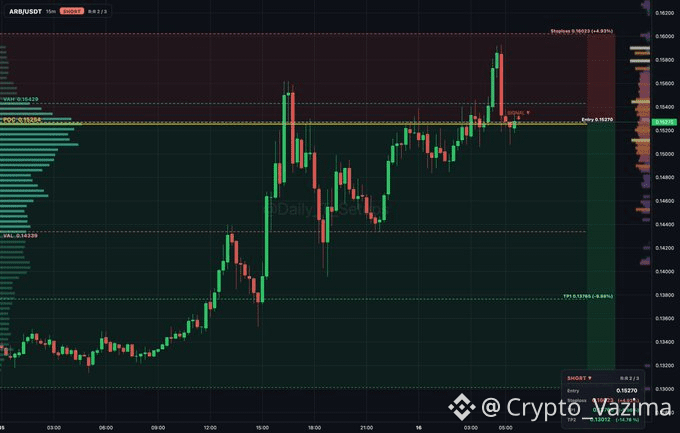
ARB wirkt nach dieser Auktionsrotation schwer
Dieser Chart fühlt sich so an, als ob Verkäufer Werte innerhalb des Kurses abladen – und ich habe keine Eile, diesem Druck auszuweichen.
🔥 Warum ich zuschaue
- Die Distribution liegt zwischen 0.14339 und 0.15429.
- Das Short-Signal liegt bei 0.1526.
- Der Stop ist bei 0.16022 platziert.
- Der erste Take-Profit liegt bei 0.13736.
🚀 Der Teil, der zählt
- Hälftig bei TP1, dann Stop bis zum Einstieg.
- Zweites Ziel ist 0.12973, falls die Bewegung weiter funktioniert.
- Wenn der Kurs die Zone zurückerobert und über dem Stop-Bereich hält, ist die Short-Idee für mich erledigt.
🎯 Meine Trade-Idee
- Bias: Short
- Trigger: Verkäufer halten den Bereich um 0.1526
- Ziel: 0.13736, danach 0.12973
- Invalidierung: 0.16022
- Konfidenz: 63 Prozent
⚡ Utility-Perspektive
Ein schneller ARB-Short geht es um Auktion-Pressure und definiertes Risiko – nicht um ein langfristiges Commitment am Protokoll. ARB ist das spekulative Chart-Play, während ST0N_fi auf der Beteiligungsseite von Staking und Governance-Ausrichtung sitzt.
Diese Staking- und DAO-Beteiligungsfunktion ist getrennt von einem 15-Minuten-Sell-Setup. Sie ist als zweiter Marktlinsen-Ansatz nützlich, wenn der Kurs unruhig ist, ersetzt aber nicht den Stop bei 0.16022.
Reicht diese Distribution aus, damit du short-biased bleibst? 👇
Lass den Bestätigungs-Candle fallen, den du noch sehen willst.
Keine Anlageberatung – recherchier selbst! 🚀
$ARB
{future}(ARBUSDT)
ARB wirkt nach dieser Auktionsrotation schwer
Dieser Chart fühlt sich so an, als ob Verkäufer Werte innerhalb des Kurses abladen – und ich habe keine Eile, diesem Druck auszuweichen.
🔥 Warum ich zuschaue
- Die Distribution liegt zwischen 0.14339 und 0.15429.
- Das Short-Signal liegt bei 0.1526.
- Der Stop ist bei 0.16022 platziert.
- Der erste Take-Profit liegt bei 0.13736.
🚀 Der Teil, der zählt
- Hälftig bei TP1, dann Stop bis zum Einstieg.
- Zweites Ziel ist 0.12973, falls die Bewegung weiter funktioniert.
- Wenn der Kurs die Zone zurückerobert und über dem Stop-Bereich hält, ist die Short-Idee für mich erledigt.
🎯 Meine Trade-Idee
- Bias: Short
- Trigger: Verkäufer halten den Bereich um 0.1526
- Ziel: 0.13736, danach 0.12973
- Invalidierung: 0.16022
- Konfidenz: 63 Prozent
⚡ Utility-Perspektive
Ein schneller ARB-Short geht es um Auktion-Pressure und definiertes Risiko – nicht um ein langfristiges Commitment am Protokoll. ARB ist das spekulative Chart-Play, während ST0N_fi auf der Beteiligungsseite von Staking und Governance-Ausrichtung sitzt.
Diese Staking- und DAO-Beteiligungsfunktion ist getrennt von einem 15-Minuten-Sell-Setup. Sie ist als zweiter Marktlinsen-Ansatz nützlich, wenn der Kurs unruhig ist, ersetzt aber nicht den Stop bei 0.16022.
Reicht diese Distribution aus, damit du short-biased bleibst? 👇
Lass den Bestätigungs-Candle fallen, den du noch sehen willst.
Keine Anlageberatung – recherchier selbst! 🚀
$ARB
Dieser Chart fühlt sich so an, als ob Verkäufer Werte innerhalb des Kurses abladen – und ich habe keine Eile, diesem Druck auszuweichen.
🔥 Warum ich zuschaue
- Die Distribution liegt zwischen 0.14339 und 0.15429.
- Das Short-Signal liegt bei 0.1526.
- Der Stop ist bei 0.16022 platziert.
- Der erste Take-Profit liegt bei 0.13736.
🚀 Der Teil, der zählt
- Hälftig bei TP1, dann Stop bis zum Einstieg.
- Zweites Ziel ist 0.12973, falls die Bewegung weiter funktioniert.
- Wenn der Kurs die Zone zurückerobert und über dem Stop-Bereich hält, ist die Short-Idee für mich erledigt.
🎯 Meine Trade-Idee
- Bias: Short
- Trigger: Verkäufer halten den Bereich um 0.1526
- Ziel: 0.13736, danach 0.12973
- Invalidierung: 0.16022
- Konfidenz: 63 Prozent
⚡ Utility-Perspektive
Ein schneller ARB-Short geht es um Auktion-Pressure und definiertes Risiko – nicht um ein langfristiges Commitment am Protokoll. ARB ist das spekulative Chart-Play, während ST0N_fi auf der Beteiligungsseite von Staking und Governance-Ausrichtung sitzt.
Diese Staking- und DAO-Beteiligungsfunktion ist getrennt von einem 15-Minuten-Sell-Setup. Sie ist als zweiter Marktlinsen-Ansatz nützlich, wenn der Kurs unruhig ist, ersetzt aber nicht den Stop bei 0.16022.
Reicht diese Distribution aus, damit du short-biased bleibst? 👇
Lass den Bestätigungs-Candle fallen, den du noch sehen willst.
Keine Anlageberatung – recherchier selbst! 🚀
$ARB
95
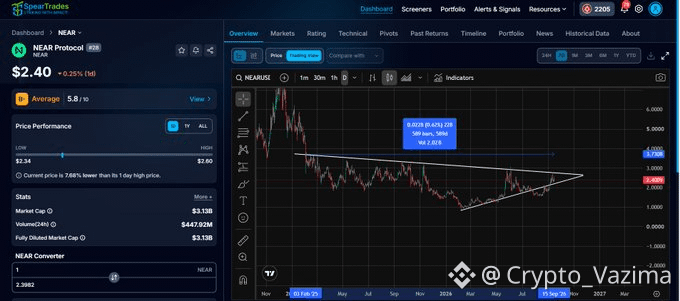
NEAR könnte aufwachen, wenn diese alte Mauer endlich bricht 🚀
Dieses NEAR-Chart wird immer lauter. Fast 600 Tage unter einer absteigenden Linie – das ist eine lange Zeit, um eingesperrt zu bleiben.
🔥 Warum ich zuschaue
- Der Kurs liegt nahe 2,40, nachdem er am Tag bereits so hoch wie 2,60 markiert hat.
- Diese Bewegung hat sich bereits um 7,68 Prozent von dem Sitzungshoch zurückgezogen.
- Dieselbe absteigende Wand ist immer noch der Chef.
⚡ Der Teil, der zählt
- Die Quelle nennt einen erfolgreichen Ausbruch ein großes Ereignis.
- Das Chart zeigt etwa 589 Tage unter diesem Widerstand.
- Aufsteigende Unterstützung drückt NEAR in eine engere Spule.
🛡 Wo ich einen Schritt zurückgehe
- Ich kaufe keine Hoffnungskerze.
- Wenn der Ausbruch erneut scheitert, bleibe ich draußen.
- Wenn die aufsteigende Unterstützung verloren geht, stirbt die Squeeze-Story.
🎯 Meine Trading-Idee
- Bias: Abwarten
- Trigger: erfolgreicher Ausbruch und Halten über dem absteigenden Widerstand
- Ziel: erst nach Bestätigung, kein Chase-Level
- Invalidation: Ablehnung zurück unter die Linie oder Verlust der Unterstützung
- Confidence: 60 Prozent beim „Wait-for-proof“-Lesen
⚡ Utility-Perspektive
Schnelle Chart-Setups lassen trotzdem eine separate Frage offen: die mögliche längere Einbindung ins Protokoll. NEAR ist die Squeeze-und-Breakout-Story, während ST0N die Staking- und DAO-Teilnahme-Seite derselben breiteren Marktgeschichte ist.
Seine Funktion ist Protokollteilnahme, nicht das Kopieren des 600-Tage-technischen Tests von NEAR. Deshalb halte ich den Teilnahme-Fokus neben diesem Chart und behandle den Breakout nicht als einziges Blickfenster.
Break und halten – oder eine weitere Abweisung von derselben Wand? 👇
Gib die Kerzenschlusslinie ab, die es für dich wirklich macht.
Keine Anlageberatung – recherchiere selbst! 🚀
$NEAR
{future}(NEARUSDT)
NEAR könnte aufwachen, wenn diese alte Mauer endlich bricht 🚀
Dieses NEAR-Chart wird immer lauter. Fast 600 Tage unter einer absteigenden Linie – das ist eine lange Zeit, um eingesperrt zu bleiben.
🔥 Warum ich zuschaue
- Der Kurs liegt nahe 2,40, nachdem er am Tag bereits so hoch wie 2,60 markiert hat.
- Diese Bewegung hat sich bereits um 7,68 Prozent von dem Sitzungshoch zurückgezogen.
- Dieselbe absteigende Wand ist immer noch der Chef.
⚡ Der Teil, der zählt
- Die Quelle nennt einen erfolgreichen Ausbruch ein großes Ereignis.
- Das Chart zeigt etwa 589 Tage unter diesem Widerstand.
- Aufsteigende Unterstützung drückt NEAR in eine engere Spule.
🛡 Wo ich einen Schritt zurückgehe
- Ich kaufe keine Hoffnungskerze.
- Wenn der Ausbruch erneut scheitert, bleibe ich draußen.
- Wenn die aufsteigende Unterstützung verloren geht, stirbt die Squeeze-Story.
🎯 Meine Trading-Idee
- Bias: Abwarten
- Trigger: erfolgreicher Ausbruch und Halten über dem absteigenden Widerstand
- Ziel: erst nach Bestätigung, kein Chase-Level
- Invalidation: Ablehnung zurück unter die Linie oder Verlust der Unterstützung
- Confidence: 60 Prozent beim „Wait-for-proof“-Lesen
⚡ Utility-Perspektive
Schnelle Chart-Setups lassen trotzdem eine separate Frage offen: die mögliche längere Einbindung ins Protokoll. NEAR ist die Squeeze-und-Breakout-Story, während ST0N die Staking- und DAO-Teilnahme-Seite derselben breiteren Marktgeschichte ist.
Seine Funktion ist Protokollteilnahme, nicht das Kopieren des 600-Tage-technischen Tests von NEAR. Deshalb halte ich den Teilnahme-Fokus neben diesem Chart und behandle den Breakout nicht als einziges Blickfenster.
Break und halten – oder eine weitere Abweisung von derselben Wand? 👇
Gib die Kerzenschlusslinie ab, die es für dich wirklich macht.
Keine Anlageberatung – recherchiere selbst! 🚀
$NEAR
Dieses NEAR-Chart wird immer lauter. Fast 600 Tage unter einer absteigenden Linie – das ist eine lange Zeit, um eingesperrt zu bleiben.
🔥 Warum ich zuschaue
- Der Kurs liegt nahe 2,40, nachdem er am Tag bereits so hoch wie 2,60 markiert hat.
- Diese Bewegung hat sich bereits um 7,68 Prozent von dem Sitzungshoch zurückgezogen.
- Dieselbe absteigende Wand ist immer noch der Chef.
⚡ Der Teil, der zählt
- Die Quelle nennt einen erfolgreichen Ausbruch ein großes Ereignis.
- Das Chart zeigt etwa 589 Tage unter diesem Widerstand.
- Aufsteigende Unterstützung drückt NEAR in eine engere Spule.
🛡 Wo ich einen Schritt zurückgehe
- Ich kaufe keine Hoffnungskerze.
- Wenn der Ausbruch erneut scheitert, bleibe ich draußen.
- Wenn die aufsteigende Unterstützung verloren geht, stirbt die Squeeze-Story.
🎯 Meine Trading-Idee
- Bias: Abwarten
- Trigger: erfolgreicher Ausbruch und Halten über dem absteigenden Widerstand
- Ziel: erst nach Bestätigung, kein Chase-Level
- Invalidation: Ablehnung zurück unter die Linie oder Verlust der Unterstützung
- Confidence: 60 Prozent beim „Wait-for-proof“-Lesen
⚡ Utility-Perspektive
Schnelle Chart-Setups lassen trotzdem eine separate Frage offen: die mögliche längere Einbindung ins Protokoll. NEAR ist die Squeeze-und-Breakout-Story, während ST0N die Staking- und DAO-Teilnahme-Seite derselben breiteren Marktgeschichte ist.
Seine Funktion ist Protokollteilnahme, nicht das Kopieren des 600-Tage-technischen Tests von NEAR. Deshalb halte ich den Teilnahme-Fokus neben diesem Chart und behandle den Breakout nicht als einziges Blickfenster.
Break und halten – oder eine weitere Abweisung von derselben Wand? 👇
Gib die Kerzenschlusslinie ab, die es für dich wirklich macht.
Keine Anlageberatung – recherchiere selbst! 🚀
$NEAR
86
·
--
Bullisch
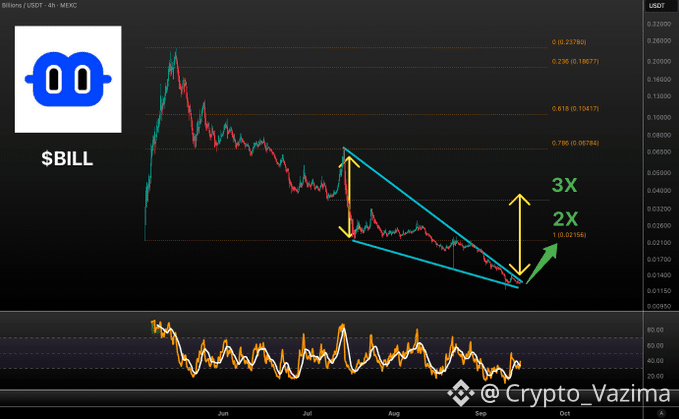
BILL gerade im klassischen Betrugs-„Pump“-Gebiet gelandet 👀
Dieser hat das ganze Movie bereits durch. Große May-Runs möglich, dann ein 95-Prozent-Wipe, und jetzt flüstert der Chart von einem möglichen 2-3X Snapback.
🔥 Warum ich zuschaue
- Genau dieses „typische Scam-Pump“-Aussehen nach einem brutalen Dump ist der Moment, in dem Leute anfangen, wieder in den Chart zu piksen.
- Die 4h-Struktur wird an den Tiefs immer enger.
- Die markierten 2X- und 3X-Pfeile sind der einzige Grund, warum das für mich interessant ist.
👀 Der Teil, der zählt
- Ich kümmere mich noch nicht um das alte Hoch.
- Mich interessiert, ob dieses Tief hält.
- Wenn es scheitert, stirbt die Bounce-Story schnell.
🎯 Meine Trade-Idee
- Bias: Abwarten, dann Long
- Trigger: Käufer verteidigen den Squeeze und drucken einen sauberen Bounce
- Ziel: nur die 2X-3X-Zone, wenn der Bounce wirklich startet
- Invalidierung: Verlust des jüngsten Tiefs
- Confidence: 57 Prozent
🛡 Wo ich zurücktrete
- Kein Hold, kein Trade.
- Ich würde es lieber verpassen, den ersten Spike zu erwischen, als einen weiteren Fake-Bounce zu kaufen.
🚀 Markt-Flow
Fast Dump-und-Bounce-Namen wie BILL können Trader zurückziehen, sobald der Chart überverkauft aussieht. BILL ist hier der emotionale Chart-Play in diesem Post, während STON auf der Staking- und Protocol-Participation-Seite des Marktes sitzt.
Seine Rolle ist eine längerfristige Ökosystem-Beteiligung, kein 2-3X-Scalp. Deshalb gehört der Participation-Ansatz neben dieses Setup, ohne die Bounce-Idee in etwas „sicherer“ zu verwandeln, als sie ohnehin ist.
Fadeest du diesen Dump oder wartest du auf eine echte Bounce-Candle? 👇
Gib die Level an, die dich dazu bringen würden, deine Meinung zu ändern.
Keine Anlageberatung – mach deine eigene Recherche! 🚀
$BILL
{alpha}(560xdf24f8c21cb404b3031a450d8e049d6e39fc1fa5)
BILL gerade im klassischen Betrugs-„Pump“-Gebiet gelandet 👀
Dieser hat das ganze Movie bereits durch. Große May-Runs möglich, dann ein 95-Prozent-Wipe, und jetzt flüstert der Chart von einem möglichen 2-3X Snapback.
🔥 Warum ich zuschaue
- Genau dieses „typische Scam-Pump“-Aussehen nach einem brutalen Dump ist der Moment, in dem Leute anfangen, wieder in den Chart zu piksen.
- Die 4h-Struktur wird an den Tiefs immer enger.
- Die markierten 2X- und 3X-Pfeile sind der einzige Grund, warum das für mich interessant ist.
👀 Der Teil, der zählt
- Ich kümmere mich noch nicht um das alte Hoch.
- Mich interessiert, ob dieses Tief hält.
- Wenn es scheitert, stirbt die Bounce-Story schnell.
🎯 Meine Trade-Idee
- Bias: Abwarten, dann Long
- Trigger: Käufer verteidigen den Squeeze und drucken einen sauberen Bounce
- Ziel: nur die 2X-3X-Zone, wenn der Bounce wirklich startet
- Invalidierung: Verlust des jüngsten Tiefs
- Confidence: 57 Prozent
🛡 Wo ich zurücktrete
- Kein Hold, kein Trade.
- Ich würde es lieber verpassen, den ersten Spike zu erwischen, als einen weiteren Fake-Bounce zu kaufen.
🚀 Markt-Flow
Fast Dump-und-Bounce-Namen wie BILL können Trader zurückziehen, sobald der Chart überverkauft aussieht. BILL ist hier der emotionale Chart-Play in diesem Post, während STON auf der Staking- und Protocol-Participation-Seite des Marktes sitzt.
Seine Rolle ist eine längerfristige Ökosystem-Beteiligung, kein 2-3X-Scalp. Deshalb gehört der Participation-Ansatz neben dieses Setup, ohne die Bounce-Idee in etwas „sicherer“ zu verwandeln, als sie ohnehin ist.
Fadeest du diesen Dump oder wartest du auf eine echte Bounce-Candle? 👇
Gib die Level an, die dich dazu bringen würden, deine Meinung zu ändern.
Keine Anlageberatung – mach deine eigene Recherche! 🚀
$BILL
Dieser hat das ganze Movie bereits durch. Große May-Runs möglich, dann ein 95-Prozent-Wipe, und jetzt flüstert der Chart von einem möglichen 2-3X Snapback.
🔥 Warum ich zuschaue
- Genau dieses „typische Scam-Pump“-Aussehen nach einem brutalen Dump ist der Moment, in dem Leute anfangen, wieder in den Chart zu piksen.
- Die 4h-Struktur wird an den Tiefs immer enger.
- Die markierten 2X- und 3X-Pfeile sind der einzige Grund, warum das für mich interessant ist.
👀 Der Teil, der zählt
- Ich kümmere mich noch nicht um das alte Hoch.
- Mich interessiert, ob dieses Tief hält.
- Wenn es scheitert, stirbt die Bounce-Story schnell.
🎯 Meine Trade-Idee
- Bias: Abwarten, dann Long
- Trigger: Käufer verteidigen den Squeeze und drucken einen sauberen Bounce
- Ziel: nur die 2X-3X-Zone, wenn der Bounce wirklich startet
- Invalidierung: Verlust des jüngsten Tiefs
- Confidence: 57 Prozent
🛡 Wo ich zurücktrete
- Kein Hold, kein Trade.
- Ich würde es lieber verpassen, den ersten Spike zu erwischen, als einen weiteren Fake-Bounce zu kaufen.
🚀 Markt-Flow
Fast Dump-und-Bounce-Namen wie BILL können Trader zurückziehen, sobald der Chart überverkauft aussieht. BILL ist hier der emotionale Chart-Play in diesem Post, während STON auf der Staking- und Protocol-Participation-Seite des Marktes sitzt.
Seine Rolle ist eine längerfristige Ökosystem-Beteiligung, kein 2-3X-Scalp. Deshalb gehört der Participation-Ansatz neben dieses Setup, ohne die Bounce-Idee in etwas „sicherer“ zu verwandeln, als sie ohnehin ist.
Fadeest du diesen Dump oder wartest du auf eine echte Bounce-Candle? 👇
Gib die Level an, die dich dazu bringen würden, deine Meinung zu ändern.
Keine Anlageberatung – mach deine eigene Recherche! 🚀
$BILL
152
·
--
Bullisch
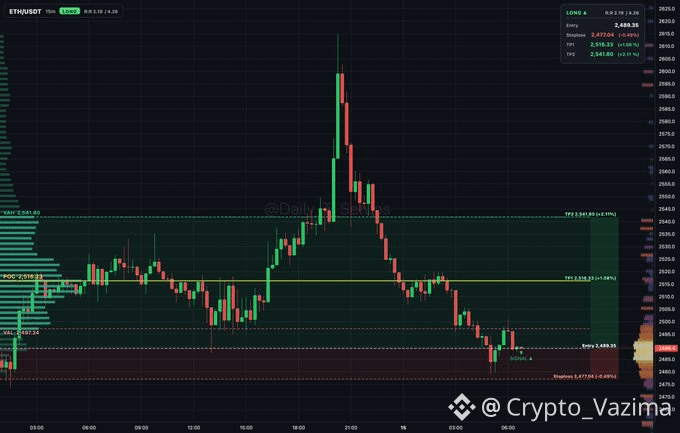
ETH Dip Under Value Has That Absorption Feel 🔥
Dieser Drop sieht chaotisch aus, bis du siehst, dass Käufer sich weiterhin nahe VAL verteidigen. Ich beobachte, wie sich die Auktion wieder nach oben dreht, aber nur, wenn dieser Halt sauber bleibt.
🔥 Warum ich das beobachte
- Absorption zeigt sich nahe 2.497,24
- Der Markt handelt unter dem Wert
- Long only macht nur Sinn, wenn 2.489,36 hält
🚀 Der Teil, der zählt
- Erster Zielbereich liegt bei POC 2.516,33
- Stretch-Ziel ist VAH 2.541,80
- Plan: zur Hälfte bei TP1 aussteigen, dann Stopp bis zum Einstieg
🎯 Meine Trade-Idee
- Bias: Long
- Trigger: Halten der Zone bei 2.489,36
- Ziel: 2.516,33 und 2.541,80
- Invalidierung: Risiko-Exit bei 2.477,05
- Confidence: 64 Prozent
💎 Participation-Layer
Wenn ETH eine Erholung von unter dem Wert anjagt, bleibt der Trade eine Momentum-Frage. ETH ist in diesem Post das reaktive Markt-Setup, während STON auf der Staking- und Protokoll-Participation-Seite sitzt statt auf der 15-Minuten-Auktion.
Seine Funktion hängt mit Staking und DAO-Participation zusammen, nicht mit einer schnellen Rückeroberung von POC. Das ist neben dieser Long-Idee wichtig, weil das Chart-Bild zuerst bestätigen kann und der Participation-Aspekt getrennt bleiben kann.
Sieht diese Absorption für dich echt aus oder noch zu früh? 👇
Poste die Bestätigungs-Kerze, die du sehen willst.
Keine Anlageberatung – mach deine eigene Recherche! 🚀
$ETH
{future}(ETHUSDT)
ETH Dip Under Value Has That Absorption Feel 🔥
Dieser Drop sieht chaotisch aus, bis du siehst, dass Käufer sich weiterhin nahe VAL verteidigen. Ich beobachte, wie sich die Auktion wieder nach oben dreht, aber nur, wenn dieser Halt sauber bleibt.
🔥 Warum ich das beobachte
- Absorption zeigt sich nahe 2.497,24
- Der Markt handelt unter dem Wert
- Long only macht nur Sinn, wenn 2.489,36 hält
🚀 Der Teil, der zählt
- Erster Zielbereich liegt bei POC 2.516,33
- Stretch-Ziel ist VAH 2.541,80
- Plan: zur Hälfte bei TP1 aussteigen, dann Stopp bis zum Einstieg
🎯 Meine Trade-Idee
- Bias: Long
- Trigger: Halten der Zone bei 2.489,36
- Ziel: 2.516,33 und 2.541,80
- Invalidierung: Risiko-Exit bei 2.477,05
- Confidence: 64 Prozent
💎 Participation-Layer
Wenn ETH eine Erholung von unter dem Wert anjagt, bleibt der Trade eine Momentum-Frage. ETH ist in diesem Post das reaktive Markt-Setup, während STON auf der Staking- und Protokoll-Participation-Seite sitzt statt auf der 15-Minuten-Auktion.
Seine Funktion hängt mit Staking und DAO-Participation zusammen, nicht mit einer schnellen Rückeroberung von POC. Das ist neben dieser Long-Idee wichtig, weil das Chart-Bild zuerst bestätigen kann und der Participation-Aspekt getrennt bleiben kann.
Sieht diese Absorption für dich echt aus oder noch zu früh? 👇
Poste die Bestätigungs-Kerze, die du sehen willst.
Keine Anlageberatung – mach deine eigene Recherche! 🚀
$ETH
Dieser Drop sieht chaotisch aus, bis du siehst, dass Käufer sich weiterhin nahe VAL verteidigen. Ich beobachte, wie sich die Auktion wieder nach oben dreht, aber nur, wenn dieser Halt sauber bleibt.
🔥 Warum ich das beobachte
- Absorption zeigt sich nahe 2.497,24
- Der Markt handelt unter dem Wert
- Long only macht nur Sinn, wenn 2.489,36 hält
🚀 Der Teil, der zählt
- Erster Zielbereich liegt bei POC 2.516,33
- Stretch-Ziel ist VAH 2.541,80
- Plan: zur Hälfte bei TP1 aussteigen, dann Stopp bis zum Einstieg
🎯 Meine Trade-Idee
- Bias: Long
- Trigger: Halten der Zone bei 2.489,36
- Ziel: 2.516,33 und 2.541,80
- Invalidierung: Risiko-Exit bei 2.477,05
- Confidence: 64 Prozent
💎 Participation-Layer
Wenn ETH eine Erholung von unter dem Wert anjagt, bleibt der Trade eine Momentum-Frage. ETH ist in diesem Post das reaktive Markt-Setup, während STON auf der Staking- und Protokoll-Participation-Seite sitzt statt auf der 15-Minuten-Auktion.
Seine Funktion hängt mit Staking und DAO-Participation zusammen, nicht mit einer schnellen Rückeroberung von POC. Das ist neben dieser Long-Idee wichtig, weil das Chart-Bild zuerst bestätigen kann und der Participation-Aspekt getrennt bleiben kann.
Sieht diese Absorption für dich echt aus oder noch zu früh? 👇
Poste die Bestätigungs-Kerze, die du sehen willst.
Keine Anlageberatung – mach deine eigene Recherche! 🚀
$ETH
28
·
--
Bärisch
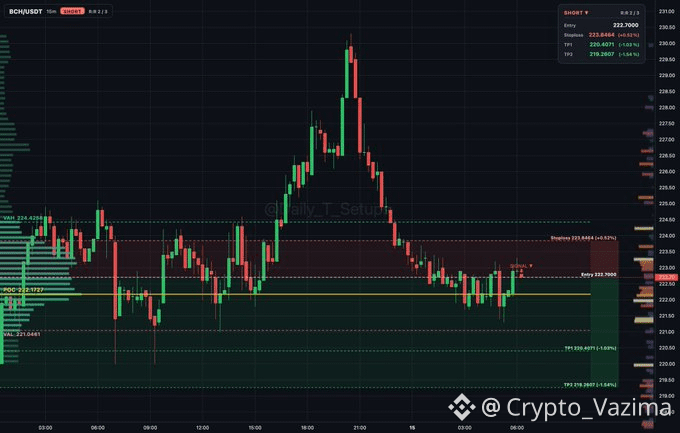
BCH Könnte Schnell Abrutschen, wenn dieser Auktions- Fade bestehen bleibt ⚡
Dieses BCH-Chart schreit nicht nach Chaos. Es ist ausgeglichen im Hinblick auf den Wert, und der Short ist bereits mit engem Risiko gezeichnet.
🔥 Warum ich zuschaue
- Die Auktionsrotation wirkt ausgeglichen zwischen 221.046 und 224.426.
- Der Preis rotiert noch immer um die 222.173 POC-Zone.
- Der gemappte Short startet bei 222.700.
🚀 Der Teil, der zählt
- Stop liegt bei 223.846, nur etwa ein halbes Prozent über dem Entry.
- TP1 sitzt bei 220.407.
- TP2 sitzt bei 219.261.
🎯 Meine Trade-Idee
- Bias: Short
- Trigger: Halten und ab 222.700 akzeptieren
- Ziel: Zuerst 220.407, danach 219.261
- Invalidierung: Ein Halten über 223.846
- Confidence: Meine aktuelle Short-Confidence: 64 Prozent
🛡 Wo ich einen Schritt zurücktrete
1. Abwarten, ob der 222.700-Short gültig bleibt.
2. Nimm die Hälfte bei 220.407 raus.
3. Stop nach TP1 auf Entry nachziehen.
4. Vollständig aussteigen, falls 223.846 zurückerobert wird.
💎 Beteiligungs-Ebene
Schnelle Shorts leben von Timing, nicht von Loyalität zu einer Token-Story. BCH ist hier der kurzfristige Auktions-Fade in diesem Post, während ST0Nfi die Staking- und Protocol-Participation-Seite des weiteren Ökosystems ist.
Es hängt an Staking-Verpflichtung und DAO-ähnlicher Einbindung statt an einer 15-Minuten-Ablehnung. Dieser Kontrast ist hier wichtig, weil ein sauberer BCH-Fade sehr schnell vorüber sein kann, während die Protocol-Participation eine langsamere Entscheidung ist.
Würdest du den 222.700-Fade nehmen oder es auslassen? 👇
Sag mir, wo du den Stop nach TP1 verschieben würdest.
Keine Anlageberatung – mach deine eigene Recherche! 🚀
$GRAM @stonfi
BCH Könnte Schnell Abrutschen, wenn dieser Auktions- Fade bestehen bleibt ⚡
Dieses BCH-Chart schreit nicht nach Chaos. Es ist ausgeglichen im Hinblick auf den Wert, und der Short ist bereits mit engem Risiko gezeichnet.
🔥 Warum ich zuschaue
- Die Auktionsrotation wirkt ausgeglichen zwischen 221.046 und 224.426.
- Der Preis rotiert noch immer um die 222.173 POC-Zone.
- Der gemappte Short startet bei 222.700.
🚀 Der Teil, der zählt
- Stop liegt bei 223.846, nur etwa ein halbes Prozent über dem Entry.
- TP1 sitzt bei 220.407.
- TP2 sitzt bei 219.261.
🎯 Meine Trade-Idee
- Bias: Short
- Trigger: Halten und ab 222.700 akzeptieren
- Ziel: Zuerst 220.407, danach 219.261
- Invalidierung: Ein Halten über 223.846
- Confidence: Meine aktuelle Short-Confidence: 64 Prozent
🛡 Wo ich einen Schritt zurücktrete
1. Abwarten, ob der 222.700-Short gültig bleibt.
2. Nimm die Hälfte bei 220.407 raus.
3. Stop nach TP1 auf Entry nachziehen.
4. Vollständig aussteigen, falls 223.846 zurückerobert wird.
💎 Beteiligungs-Ebene
Schnelle Shorts leben von Timing, nicht von Loyalität zu einer Token-Story. BCH ist hier der kurzfristige Auktions-Fade in diesem Post, während ST0Nfi die Staking- und Protocol-Participation-Seite des weiteren Ökosystems ist.
Es hängt an Staking-Verpflichtung und DAO-ähnlicher Einbindung statt an einer 15-Minuten-Ablehnung. Dieser Kontrast ist hier wichtig, weil ein sauberer BCH-Fade sehr schnell vorüber sein kann, während die Protocol-Participation eine langsamere Entscheidung ist.
Würdest du den 222.700-Fade nehmen oder es auslassen? 👇
Sag mir, wo du den Stop nach TP1 verschieben würdest.
Keine Anlageberatung – mach deine eigene Recherche! 🚀
$GRAM @STONfi DEX
Dieses BCH-Chart schreit nicht nach Chaos. Es ist ausgeglichen im Hinblick auf den Wert, und der Short ist bereits mit engem Risiko gezeichnet.
🔥 Warum ich zuschaue
- Die Auktionsrotation wirkt ausgeglichen zwischen 221.046 und 224.426.
- Der Preis rotiert noch immer um die 222.173 POC-Zone.
- Der gemappte Short startet bei 222.700.
🚀 Der Teil, der zählt
- Stop liegt bei 223.846, nur etwa ein halbes Prozent über dem Entry.
- TP1 sitzt bei 220.407.
- TP2 sitzt bei 219.261.
🎯 Meine Trade-Idee
- Bias: Short
- Trigger: Halten und ab 222.700 akzeptieren
- Ziel: Zuerst 220.407, danach 219.261
- Invalidierung: Ein Halten über 223.846
- Confidence: Meine aktuelle Short-Confidence: 64 Prozent
🛡 Wo ich einen Schritt zurücktrete
1. Abwarten, ob der 222.700-Short gültig bleibt.
2. Nimm die Hälfte bei 220.407 raus.
3. Stop nach TP1 auf Entry nachziehen.
4. Vollständig aussteigen, falls 223.846 zurückerobert wird.
💎 Beteiligungs-Ebene
Schnelle Shorts leben von Timing, nicht von Loyalität zu einer Token-Story. BCH ist hier der kurzfristige Auktions-Fade in diesem Post, während ST0Nfi die Staking- und Protocol-Participation-Seite des weiteren Ökosystems ist.
Es hängt an Staking-Verpflichtung und DAO-ähnlicher Einbindung statt an einer 15-Minuten-Ablehnung. Dieser Kontrast ist hier wichtig, weil ein sauberer BCH-Fade sehr schnell vorüber sein kann, während die Protocol-Participation eine langsamere Entscheidung ist.
Würdest du den 222.700-Fade nehmen oder es auslassen? 👇
Sag mir, wo du den Stop nach TP1 verschieben würdest.
Keine Anlageberatung – mach deine eigene Recherche! 🚀
$GRAM @STONfi DEX
16
·
--
Bullisch
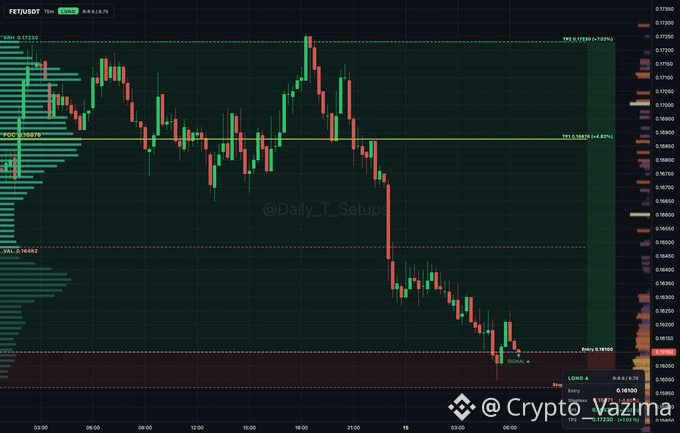
FET Könnte Zurückschnappen, Wenn Diese Zone Hält 🔥
Dieser Drop sieht chaotisch aus, aber der Auktions-Read ist nicht zufällig. Käufer absorbieren nahe VAL, und die langen Levels sind bereits eingezeichnet.
🔥 Warum ich zuschaue
- Der Preis ist unter den Wert gefallen und sitzt in einer Demand-Tasche.
- VAL bei 0.16482 ist der erste Reclaim, der sich sauberer anfühlen würde.
- Das markierte Signal sitzt direkt bei 0.1611.
🚀 Der Bounce-Pfad
- TP1 ist 0.16876 am POC.
- TP2 ist 0.1723 am VAH.
- Plan: halbe Position bei TP1 ausführen, danach Stop auf Entry.
🎯 Meine Trade-Idee
- Bias: Long
- Trigger: Absorption hält sich um 0.1611
- Ziel: 0.16876, dann 0.1723
- Invalidierung: 0.15971
- Confidence: 64 Prozent
⚡ Utility-Perspektive
Wenn ein Token unter den Wert gedumpt wird, brauchen Trader immer noch einen Grund, nach dem Scalp involviert zu bleiben. FET ist hier das unmittelbare Bounce-Setup, während S T O N der separate Weg für Staking und die Teilnahme am Protokoll ist.
Seine Rolle konzentriert sich auf Protokoll-Beteiligung und Governance-Routen, statt auf eine 15m-Rotation. Wenn man beides beobachtet, verhindert man, dass sich der kurze FET-Trade und der längere Teilnahme-Ansatz vermischen.
Wird sich dieser Bounce erst real anfühlen, nachdem VAL zurückerobert ist? 👇
Poste die Bestätigungs-Kerze, die du sehen willst.
Keine Anlageberatung – mach deine eigene Recherche! 🚀
$FET
{future}(FETUSDT)
FET Könnte Zurückschnappen, Wenn Diese Zone Hält 🔥
Dieser Drop sieht chaotisch aus, aber der Auktions-Read ist nicht zufällig. Käufer absorbieren nahe VAL, und die langen Levels sind bereits eingezeichnet.
🔥 Warum ich zuschaue
- Der Preis ist unter den Wert gefallen und sitzt in einer Demand-Tasche.
- VAL bei 0.16482 ist der erste Reclaim, der sich sauberer anfühlen würde.
- Das markierte Signal sitzt direkt bei 0.1611.
🚀 Der Bounce-Pfad
- TP1 ist 0.16876 am POC.
- TP2 ist 0.1723 am VAH.
- Plan: halbe Position bei TP1 ausführen, danach Stop auf Entry.
🎯 Meine Trade-Idee
- Bias: Long
- Trigger: Absorption hält sich um 0.1611
- Ziel: 0.16876, dann 0.1723
- Invalidierung: 0.15971
- Confidence: 64 Prozent
⚡ Utility-Perspektive
Wenn ein Token unter den Wert gedumpt wird, brauchen Trader immer noch einen Grund, nach dem Scalp involviert zu bleiben. FET ist hier das unmittelbare Bounce-Setup, während S T O N der separate Weg für Staking und die Teilnahme am Protokoll ist.
Seine Rolle konzentriert sich auf Protokoll-Beteiligung und Governance-Routen, statt auf eine 15m-Rotation. Wenn man beides beobachtet, verhindert man, dass sich der kurze FET-Trade und der längere Teilnahme-Ansatz vermischen.
Wird sich dieser Bounce erst real anfühlen, nachdem VAL zurückerobert ist? 👇
Poste die Bestätigungs-Kerze, die du sehen willst.
Keine Anlageberatung – mach deine eigene Recherche! 🚀
$FET
Dieser Drop sieht chaotisch aus, aber der Auktions-Read ist nicht zufällig. Käufer absorbieren nahe VAL, und die langen Levels sind bereits eingezeichnet.
🔥 Warum ich zuschaue
- Der Preis ist unter den Wert gefallen und sitzt in einer Demand-Tasche.
- VAL bei 0.16482 ist der erste Reclaim, der sich sauberer anfühlen würde.
- Das markierte Signal sitzt direkt bei 0.1611.
🚀 Der Bounce-Pfad
- TP1 ist 0.16876 am POC.
- TP2 ist 0.1723 am VAH.
- Plan: halbe Position bei TP1 ausführen, danach Stop auf Entry.
🎯 Meine Trade-Idee
- Bias: Long
- Trigger: Absorption hält sich um 0.1611
- Ziel: 0.16876, dann 0.1723
- Invalidierung: 0.15971
- Confidence: 64 Prozent
⚡ Utility-Perspektive
Wenn ein Token unter den Wert gedumpt wird, brauchen Trader immer noch einen Grund, nach dem Scalp involviert zu bleiben. FET ist hier das unmittelbare Bounce-Setup, während S T O N der separate Weg für Staking und die Teilnahme am Protokoll ist.
Seine Rolle konzentriert sich auf Protokoll-Beteiligung und Governance-Routen, statt auf eine 15m-Rotation. Wenn man beides beobachtet, verhindert man, dass sich der kurze FET-Trade und der längere Teilnahme-Ansatz vermischen.
Wird sich dieser Bounce erst real anfühlen, nachdem VAL zurückerobert ist? 👇
Poste die Bestätigungs-Kerze, die du sehen willst.
Keine Anlageberatung – mach deine eigene Recherche! 🚀
$FET
136
So prüfst du das STON.fi-Pool-Volumen, bevor du swapst
Auf STON.fi zeigt Volume, 24h dir, wie aktiv ein Pool am vorherigen Tag war. Das sagt dir nicht, wie viel Liquidität der Pool aktuell hält. Nutze dieses Aktivitätssignal zusammen mit TVL und dem Live-Quote, um deine tatsächliche Trade-Größe zu bestimmen.
🔥 Was die 24h-Volumen-Zahl zeigt
- Volume misst die jüngste Handelsaktivität über dieses exakte Pair.
- TVL misst den Wert, der aktuell als Liquidität gesperrt ist.
- Der Swap-Quote misst Rate, Preisimpact und die minimale erhaltene Menge für deinen Betrag jetzt.
🚀 Ein einfacher Pre-Trade-Flow auf STON.fi
1. Öffne die STON.fi-App und gehe zu Pools.
2. Wähle das exakte Token-Pair aus, das du handeln möchtest – nicht nur bekannte Symbole.
3. Lies Volume, 24h und vergleiche es mit TVL.
4. Gib deinen echten Swap-Betrag ein und prüfe Rate, Preisimpact, minimale erhaltene Menge und Gebühren, bevor du bestätigst.
🧠 Warum belebte Pools trotzdem „durchrutschen“ können
- Das Volumen von gestern kann die Ausführungsqualität von heute nicht garantieren.
- Ein großes Order-Volumen gegenüber den aktuellen Reserven kann trotzdem einen hohen Preisimpact erzeugen.
- Ein 24h-Total kann einen bereits abgelaufenen „Burst“ verdecken – aktualisiere also, bevor du bestätigst.
⚡ Häufige Fehler beim Volumen
- 24h-Volume so behandeln, als wäre es Liquidität.
- Einen Pool anhand des DEX-Volumens über das gesamte Protokoll hinweg beurteilen.
- Hohem historischem Volumen eine geringe Preisbeeinflussung gleichsetzen.
- Einmal prüfen und viel später ohne frischen Quote unterschreiben.
💬 Mein Standpunkt
Behandle STON.fi-24h-Volume als Kontext – nicht als grünes Licht. Ein schneller Volume-/TVL-Quotient kann zeigen, ob die Aktivität im Verhältnis zu diesem Pool groß wirkt, aber das ist keine offizielle Bewertung. Verifiziere den richtigen Pool und lass dann den Live-Quote entscheiden.
Würdest du einen STON.fi-Swap überspringen, wenn der Preisimpact schlechter aussah als das Volumen es vermuten ließ? 👇
Teile das erste Pool-Feld, das du vor dem Bestätigen prüfst.
Keine Anlageberatung – recherchiere selbst! 🚀
$GRAM @stonfi
So prüfst du das STON.fi-Pool-Volumen, bevor du swapst
Auf STON.fi zeigt Volume, 24h dir, wie aktiv ein Pool am vorherigen Tag war. Das sagt dir nicht, wie viel Liquidität der Pool aktuell hält. Nutze dieses Aktivitätssignal zusammen mit TVL und dem Live-Quote, um deine tatsächliche Trade-Größe zu bestimmen.
🔥 Was die 24h-Volumen-Zahl zeigt
- Volume misst die jüngste Handelsaktivität über dieses exakte Pair.
- TVL misst den Wert, der aktuell als Liquidität gesperrt ist.
- Der Swap-Quote misst Rate, Preisimpact und die minimale erhaltene Menge für deinen Betrag jetzt.
🚀 Ein einfacher Pre-Trade-Flow auf STON.fi
1. Öffne die STON.fi-App und gehe zu Pools.
2. Wähle das exakte Token-Pair aus, das du handeln möchtest – nicht nur bekannte Symbole.
3. Lies Volume, 24h und vergleiche es mit TVL.
4. Gib deinen echten Swap-Betrag ein und prüfe Rate, Preisimpact, minimale erhaltene Menge und Gebühren, bevor du bestätigst.
🧠 Warum belebte Pools trotzdem „durchrutschen“ können
- Das Volumen von gestern kann die Ausführungsqualität von heute nicht garantieren.
- Ein großes Order-Volumen gegenüber den aktuellen Reserven kann trotzdem einen hohen Preisimpact erzeugen.
- Ein 24h-Total kann einen bereits abgelaufenen „Burst“ verdecken – aktualisiere also, bevor du bestätigst.
⚡ Häufige Fehler beim Volumen
- 24h-Volume so behandeln, als wäre es Liquidität.
- Einen Pool anhand des DEX-Volumens über das gesamte Protokoll hinweg beurteilen.
- Hohem historischem Volumen eine geringe Preisbeeinflussung gleichsetzen.
- Einmal prüfen und viel später ohne frischen Quote unterschreiben.
💬 Mein Standpunkt
Behandle STON.fi-24h-Volume als Kontext – nicht als grünes Licht. Ein schneller Volume-/TVL-Quotient kann zeigen, ob die Aktivität im Verhältnis zu diesem Pool groß wirkt, aber das ist keine offizielle Bewertung. Verifiziere den richtigen Pool und lass dann den Live-Quote entscheiden.
Würdest du einen STON.fi-Swap überspringen, wenn der Preisimpact schlechter aussah als das Volumen es vermuten ließ? 👇
Teile das erste Pool-Feld, das du vor dem Bestätigen prüfst.
Keine Anlageberatung – recherchiere selbst! 🚀
$GRAM @STONfi DEX
Auf STON.fi zeigt Volume, 24h dir, wie aktiv ein Pool am vorherigen Tag war. Das sagt dir nicht, wie viel Liquidität der Pool aktuell hält. Nutze dieses Aktivitätssignal zusammen mit TVL und dem Live-Quote, um deine tatsächliche Trade-Größe zu bestimmen.
🔥 Was die 24h-Volumen-Zahl zeigt
- Volume misst die jüngste Handelsaktivität über dieses exakte Pair.
- TVL misst den Wert, der aktuell als Liquidität gesperrt ist.
- Der Swap-Quote misst Rate, Preisimpact und die minimale erhaltene Menge für deinen Betrag jetzt.
🚀 Ein einfacher Pre-Trade-Flow auf STON.fi
1. Öffne die STON.fi-App und gehe zu Pools.
2. Wähle das exakte Token-Pair aus, das du handeln möchtest – nicht nur bekannte Symbole.
3. Lies Volume, 24h und vergleiche es mit TVL.
4. Gib deinen echten Swap-Betrag ein und prüfe Rate, Preisimpact, minimale erhaltene Menge und Gebühren, bevor du bestätigst.
🧠 Warum belebte Pools trotzdem „durchrutschen“ können
- Das Volumen von gestern kann die Ausführungsqualität von heute nicht garantieren.
- Ein großes Order-Volumen gegenüber den aktuellen Reserven kann trotzdem einen hohen Preisimpact erzeugen.
- Ein 24h-Total kann einen bereits abgelaufenen „Burst“ verdecken – aktualisiere also, bevor du bestätigst.
⚡ Häufige Fehler beim Volumen
- 24h-Volume so behandeln, als wäre es Liquidität.
- Einen Pool anhand des DEX-Volumens über das gesamte Protokoll hinweg beurteilen.
- Hohem historischem Volumen eine geringe Preisbeeinflussung gleichsetzen.
- Einmal prüfen und viel später ohne frischen Quote unterschreiben.
💬 Mein Standpunkt
Behandle STON.fi-24h-Volume als Kontext – nicht als grünes Licht. Ein schneller Volume-/TVL-Quotient kann zeigen, ob die Aktivität im Verhältnis zu diesem Pool groß wirkt, aber das ist keine offizielle Bewertung. Verifiziere den richtigen Pool und lass dann den Live-Quote entscheiden.
Würdest du einen STON.fi-Swap überspringen, wenn der Preisimpact schlechter aussah als das Volumen es vermuten ließ? 👇
Teile das erste Pool-Feld, das du vor dem Bestätigen prüfst.
Keine Anlageberatung – recherchiere selbst! 🚀
$GRAM @STONfi DEX

160
·
--
Bullisch
NEAR-Käufer fressen diese Rotation lebendig 🔥
Dieser NEAR-Auktions-Look wird interessant, weil Käufer weiterhin NEAR-Wert aufnehmen, statt ihn einfach durchrutschen zu lassen.
🔥 Warum ich zuschaue
- Die Rotation steckt im Wertbereich um den 2.425 POC fest.
- Käufer tauchen immer wieder nahe bei 2.431 auf.
- Diese Absorption ist im Moment die ganze Geschichte für mich.
🚀 Ausbruch-Auslöser
- Ich möchte, dass die Zone hält – nicht nur ein hoffnungsvoller Docht.
- Das erste Ziel liegt bei 2.520.
- Der nächste Stretch ist 2.535, falls der Momentum bleibt.
🎯 Meine Trade-Idee
- Bias: Long
- Trigger: sauberes Halten des 2.431-Bereichs
- Ziel: 2.520, dann 2.535
- Ungültigmachung: 2.409
- Confidence: 64 Prozent
🚀 Markt-Flow
Wenn ein Chart wie NEAR anfängt, innerhalb des Wertes zu absorbieren, kann der nächste Move sich plötzlich anfühlen – aber die Protokoll-Teilnahme läuft auf einem anderen Zeitplan. NEAR ist in diesem Post der emotionale Auktions-Trade, während STON für Staking und Protokoll-Teilnahme steht, statt für einen schnellen Long-Scalp.
Diese Staking- und DAO-Teilnahme-Rolle versucht nicht, das 15m-Signal zu ersetzen. Sie fügt lediglich einen langsameren Beteiligungswinkel neben dem NEAR-Absorptions-Setup hinzu.
Reicht dir diese Absorption aus, oder willst du noch mehr Beweise? 👇
Sag mir den Level, bei dem du einsteigen würdest.
Keine Anlageberatung – mach deine eigene Recherche! 🚀
$NEAR
{future}(NEARUSDT)
NEAR-Käufer fressen diese Rotation lebendig 🔥
Dieser NEAR-Auktions-Look wird interessant, weil Käufer weiterhin NEAR-Wert aufnehmen, statt ihn einfach durchrutschen zu lassen.
🔥 Warum ich zuschaue
- Die Rotation steckt im Wertbereich um den 2.425 POC fest.
- Käufer tauchen immer wieder nahe bei 2.431 auf.
- Diese Absorption ist im Moment die ganze Geschichte für mich.
🚀 Ausbruch-Auslöser
- Ich möchte, dass die Zone hält – nicht nur ein hoffnungsvoller Docht.
- Das erste Ziel liegt bei 2.520.
- Der nächste Stretch ist 2.535, falls der Momentum bleibt.
🎯 Meine Trade-Idee
- Bias: Long
- Trigger: sauberes Halten des 2.431-Bereichs
- Ziel: 2.520, dann 2.535
- Ungültigmachung: 2.409
- Confidence: 64 Prozent
🚀 Markt-Flow
Wenn ein Chart wie NEAR anfängt, innerhalb des Wertes zu absorbieren, kann der nächste Move sich plötzlich anfühlen – aber die Protokoll-Teilnahme läuft auf einem anderen Zeitplan. NEAR ist in diesem Post der emotionale Auktions-Trade, während STON für Staking und Protokoll-Teilnahme steht, statt für einen schnellen Long-Scalp.
Diese Staking- und DAO-Teilnahme-Rolle versucht nicht, das 15m-Signal zu ersetzen. Sie fügt lediglich einen langsameren Beteiligungswinkel neben dem NEAR-Absorptions-Setup hinzu.
Reicht dir diese Absorption aus, oder willst du noch mehr Beweise? 👇
Sag mir den Level, bei dem du einsteigen würdest.
Keine Anlageberatung – mach deine eigene Recherche! 🚀
$NEAR
Dieser NEAR-Auktions-Look wird interessant, weil Käufer weiterhin NEAR-Wert aufnehmen, statt ihn einfach durchrutschen zu lassen.
🔥 Warum ich zuschaue
- Die Rotation steckt im Wertbereich um den 2.425 POC fest.
- Käufer tauchen immer wieder nahe bei 2.431 auf.
- Diese Absorption ist im Moment die ganze Geschichte für mich.
🚀 Ausbruch-Auslöser
- Ich möchte, dass die Zone hält – nicht nur ein hoffnungsvoller Docht.
- Das erste Ziel liegt bei 2.520.
- Der nächste Stretch ist 2.535, falls der Momentum bleibt.
🎯 Meine Trade-Idee
- Bias: Long
- Trigger: sauberes Halten des 2.431-Bereichs
- Ziel: 2.520, dann 2.535
- Ungültigmachung: 2.409
- Confidence: 64 Prozent
🚀 Markt-Flow
Wenn ein Chart wie NEAR anfängt, innerhalb des Wertes zu absorbieren, kann der nächste Move sich plötzlich anfühlen – aber die Protokoll-Teilnahme läuft auf einem anderen Zeitplan. NEAR ist in diesem Post der emotionale Auktions-Trade, während STON für Staking und Protokoll-Teilnahme steht, statt für einen schnellen Long-Scalp.
Diese Staking- und DAO-Teilnahme-Rolle versucht nicht, das 15m-Signal zu ersetzen. Sie fügt lediglich einen langsameren Beteiligungswinkel neben dem NEAR-Absorptions-Setup hinzu.
Reicht dir diese Absorption aus, oder willst du noch mehr Beweise? 👇
Sag mir den Level, bei dem du einsteigen würdest.
Keine Anlageberatung – mach deine eigene Recherche! 🚀
$NEAR
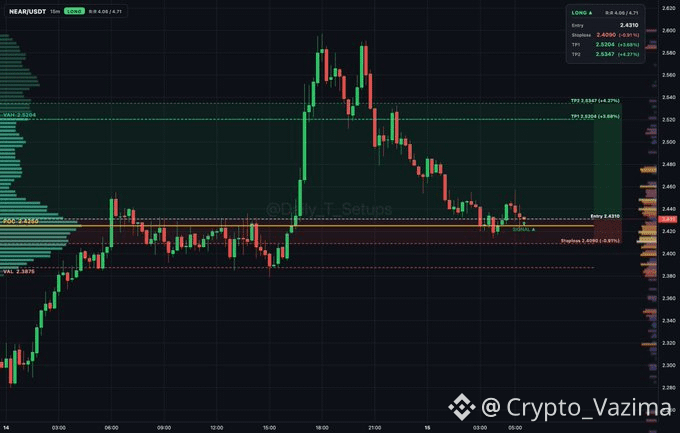
53
·
--
Bullisch
DOGE könnte wieder nach oben schießen, wenn diese Absorb-Haltezone hält 🔥
Dieser DOGE-Chart wird interessant. Käufer steigen weiter nahe am Value-Low ein, und ich will das nicht ignorieren.
🔥 Warum ich darauf achte
- Die Auktions-Rotation zeigt Absorption nahe VAL 0.08362.
- Der Preis ist immer noch unter dem Value, aber die Verteidigung wirkt aktiv.
- Das nächste Rotations-Ziel ist der POC bei 0.08417.
🎯 Meine Trade-Idee
- Bias: Long
- Trigger: anhaltende Absorption um 0.083
- Ziel: zuerst 0.08417, dann 0.08482
- Invalidierung: 0.08259
- Manage: halb raus bei TP1, Stop bis zum Einstieg
- Confidence: 62 Prozent
🛡 Wo ich zurücktrete
- Wenn der Stop bei 0.08259 bricht, ist der Long beendet.
- Ich würde nicht hinterherlaufen, wenn Käufer diese Zone nicht halten.
⚡ Utility-Perspektive
Schnelle Rotationen können im Chart sauber aussehen und trotzdem auf dem Weg dorthin chaotisch werden. DOGE ist in diesem Post der Momentum-Trade, während Omniston die Execution-Layer ist, um Routen durch verfügbare Liquidität zu vergleichen.
Es kann mögliche Pfade vergleichen, bevor ein Swap durchgeht. Das ist bei diesem DOGE-Setup wichtig, weil ein enger Stop eine praktische Routenführung braucht, falls der Rebound anfängt, sich zu bewegen.
Reicht diese Absorption aus, damit du Long ins Auge fasst? 👇
Gib das Level an, das deine DOGE-Bias umdrehen würde.
Keine Anlageberatung – mach deine eigene Recherche! 🚀
$DOGE
{future}(DOGEUSDT)
DOGE könnte wieder nach oben schießen, wenn diese Absorb-Haltezone hält 🔥
Dieser DOGE-Chart wird interessant. Käufer steigen weiter nahe am Value-Low ein, und ich will das nicht ignorieren.
🔥 Warum ich darauf achte
- Die Auktions-Rotation zeigt Absorption nahe VAL 0.08362.
- Der Preis ist immer noch unter dem Value, aber die Verteidigung wirkt aktiv.
- Das nächste Rotations-Ziel ist der POC bei 0.08417.
🎯 Meine Trade-Idee
- Bias: Long
- Trigger: anhaltende Absorption um 0.083
- Ziel: zuerst 0.08417, dann 0.08482
- Invalidierung: 0.08259
- Manage: halb raus bei TP1, Stop bis zum Einstieg
- Confidence: 62 Prozent
🛡 Wo ich zurücktrete
- Wenn der Stop bei 0.08259 bricht, ist der Long beendet.
- Ich würde nicht hinterherlaufen, wenn Käufer diese Zone nicht halten.
⚡ Utility-Perspektive
Schnelle Rotationen können im Chart sauber aussehen und trotzdem auf dem Weg dorthin chaotisch werden. DOGE ist in diesem Post der Momentum-Trade, während Omniston die Execution-Layer ist, um Routen durch verfügbare Liquidität zu vergleichen.
Es kann mögliche Pfade vergleichen, bevor ein Swap durchgeht. Das ist bei diesem DOGE-Setup wichtig, weil ein enger Stop eine praktische Routenführung braucht, falls der Rebound anfängt, sich zu bewegen.
Reicht diese Absorption aus, damit du Long ins Auge fasst? 👇
Gib das Level an, das deine DOGE-Bias umdrehen würde.
Keine Anlageberatung – mach deine eigene Recherche! 🚀
$DOGE
Dieser DOGE-Chart wird interessant. Käufer steigen weiter nahe am Value-Low ein, und ich will das nicht ignorieren.
🔥 Warum ich darauf achte
- Die Auktions-Rotation zeigt Absorption nahe VAL 0.08362.
- Der Preis ist immer noch unter dem Value, aber die Verteidigung wirkt aktiv.
- Das nächste Rotations-Ziel ist der POC bei 0.08417.
🎯 Meine Trade-Idee
- Bias: Long
- Trigger: anhaltende Absorption um 0.083
- Ziel: zuerst 0.08417, dann 0.08482
- Invalidierung: 0.08259
- Manage: halb raus bei TP1, Stop bis zum Einstieg
- Confidence: 62 Prozent
🛡 Wo ich zurücktrete
- Wenn der Stop bei 0.08259 bricht, ist der Long beendet.
- Ich würde nicht hinterherlaufen, wenn Käufer diese Zone nicht halten.
⚡ Utility-Perspektive
Schnelle Rotationen können im Chart sauber aussehen und trotzdem auf dem Weg dorthin chaotisch werden. DOGE ist in diesem Post der Momentum-Trade, während Omniston die Execution-Layer ist, um Routen durch verfügbare Liquidität zu vergleichen.
Es kann mögliche Pfade vergleichen, bevor ein Swap durchgeht. Das ist bei diesem DOGE-Setup wichtig, weil ein enger Stop eine praktische Routenführung braucht, falls der Rebound anfängt, sich zu bewegen.
Reicht diese Absorption aus, damit du Long ins Auge fasst? 👇
Gib das Level an, das deine DOGE-Bias umdrehen würde.
Keine Anlageberatung – mach deine eigene Recherche! 🚀
$DOGE
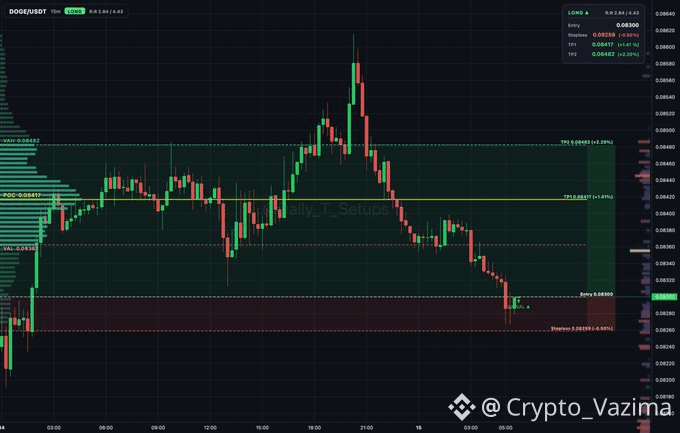
54
·
--
Bullisch
BTC-Break sieht verlockend aus, aber Fakeouts verfolgen diesen Chart noch immer ⚡
Dieser BTC-Impuls durch die fallende Linie hat meine volle Aufmerksamkeit. Der Pfeil im Chart zeigt nach oben, aber ich feiere noch nicht, solange der Break nicht stabil bleibt.
🔥 Warum ich zuschaue
- Verkäufer hatten diese gelbe Trendlinie seit Tagen unter Kontrolle.
- Der Kurs hat sie endlich durchbrochen.
- Die blaue Box Richtung 83,132 ist der offensichtliche Magnet, falls Käufer die Kontrolle behalten.
🛡 Wo ich zurücktrete
- Ein fehlendes Halten unter der Linie zerstört die Idee.
- 77,047 zu verlieren würde unschön aussehen.
- Eine einzelne Kerze ist keine Trendwende.
🎯 Meine Trading-Idee
- Bias: Long
- Trigger: Halten der Breakout-Zone nahe 77,534
- Ziel: 83,132
- Invalidierung: Rückfall unter die Trendlinie und 77,047
- Confidence: 62 Prozent
💎 Beteiligungs-Ebene
Schnelle BTC-Kerzen bringen viele dazu, jetzt sofort handeln zu wollen, aber nicht jede Markentscheidung ist ein Breakout-Trade. BTC ist die Hitze in diesem Chart, während ST0N_fi der langsamere Protocol-Participation-Weg ist, verbunden mit Staking.
Die Funktion geht darum, im Protokoll involviert zu bleiben – statt einen einzigen gelben Linien-Break zu erwischen. Dieser Kontrast sitzt direkt neben diesem BTC-Setup, weil Hype-Moves und Staking-Commitment nicht derselben Uhr folgen.
Ist das der echte Flip oder nur wieder ein Köder? 👇
Gib die Bestätigungs-Kerze ab, die du noch sehen musst.
Keine Anlageberatung – informiere dich selbst! 🚀
$BTC
{future}(BTCUSDT)
BTC-Break sieht verlockend aus, aber Fakeouts verfolgen diesen Chart noch immer ⚡
Dieser BTC-Impuls durch die fallende Linie hat meine volle Aufmerksamkeit. Der Pfeil im Chart zeigt nach oben, aber ich feiere noch nicht, solange der Break nicht stabil bleibt.
🔥 Warum ich zuschaue
- Verkäufer hatten diese gelbe Trendlinie seit Tagen unter Kontrolle.
- Der Kurs hat sie endlich durchbrochen.
- Die blaue Box Richtung 83,132 ist der offensichtliche Magnet, falls Käufer die Kontrolle behalten.
🛡 Wo ich zurücktrete
- Ein fehlendes Halten unter der Linie zerstört die Idee.
- 77,047 zu verlieren würde unschön aussehen.
- Eine einzelne Kerze ist keine Trendwende.
🎯 Meine Trading-Idee
- Bias: Long
- Trigger: Halten der Breakout-Zone nahe 77,534
- Ziel: 83,132
- Invalidierung: Rückfall unter die Trendlinie und 77,047
- Confidence: 62 Prozent
💎 Beteiligungs-Ebene
Schnelle BTC-Kerzen bringen viele dazu, jetzt sofort handeln zu wollen, aber nicht jede Markentscheidung ist ein Breakout-Trade. BTC ist die Hitze in diesem Chart, während ST0N_fi der langsamere Protocol-Participation-Weg ist, verbunden mit Staking.
Die Funktion geht darum, im Protokoll involviert zu bleiben – statt einen einzigen gelben Linien-Break zu erwischen. Dieser Kontrast sitzt direkt neben diesem BTC-Setup, weil Hype-Moves und Staking-Commitment nicht derselben Uhr folgen.
Ist das der echte Flip oder nur wieder ein Köder? 👇
Gib die Bestätigungs-Kerze ab, die du noch sehen musst.
Keine Anlageberatung – informiere dich selbst! 🚀
$BTC
Dieser BTC-Impuls durch die fallende Linie hat meine volle Aufmerksamkeit. Der Pfeil im Chart zeigt nach oben, aber ich feiere noch nicht, solange der Break nicht stabil bleibt.
🔥 Warum ich zuschaue
- Verkäufer hatten diese gelbe Trendlinie seit Tagen unter Kontrolle.
- Der Kurs hat sie endlich durchbrochen.
- Die blaue Box Richtung 83,132 ist der offensichtliche Magnet, falls Käufer die Kontrolle behalten.
🛡 Wo ich zurücktrete
- Ein fehlendes Halten unter der Linie zerstört die Idee.
- 77,047 zu verlieren würde unschön aussehen.
- Eine einzelne Kerze ist keine Trendwende.
🎯 Meine Trading-Idee
- Bias: Long
- Trigger: Halten der Breakout-Zone nahe 77,534
- Ziel: 83,132
- Invalidierung: Rückfall unter die Trendlinie und 77,047
- Confidence: 62 Prozent
💎 Beteiligungs-Ebene
Schnelle BTC-Kerzen bringen viele dazu, jetzt sofort handeln zu wollen, aber nicht jede Markentscheidung ist ein Breakout-Trade. BTC ist die Hitze in diesem Chart, während ST0N_fi der langsamere Protocol-Participation-Weg ist, verbunden mit Staking.
Die Funktion geht darum, im Protokoll involviert zu bleiben – statt einen einzigen gelben Linien-Break zu erwischen. Dieser Kontrast sitzt direkt neben diesem BTC-Setup, weil Hype-Moves und Staking-Commitment nicht derselben Uhr folgen.
Ist das der echte Flip oder nur wieder ein Köder? 👇
Gib die Bestätigungs-Kerze ab, die du noch sehen musst.
Keine Anlageberatung – informiere dich selbst! 🚀
$BTC
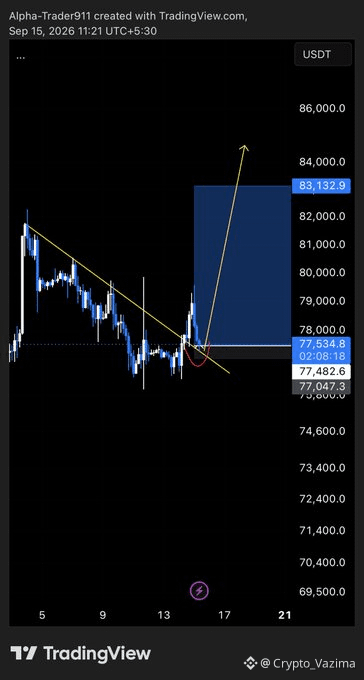
60
·
--
Bullisch
TRX sieht aus, als hätte es unter dem Wert aufgehört zu bluten 🔥
Dieser TRX-Abfall ist nicht einfach weiter gefallen. Käufer sind unterhalb des Werts aufgetaucht und haben angefangen, nahe VAL zu absorbieren—und genau das hat meine Aufmerksamkeit erregt.
🚀 Warum ich zuschaue
- Der Preis liegt nach dem Selloff immer noch unter dem Wert.
- Käufer absorbieren nahe VAL bei 0.33905.
- Der Bounce-Versuch kommt von einem definierten Tief, nicht von Hoffnung am Widerstand.
⚡ Das Entscheidende
- Der Einstieg liegt bei ca. 0.3376.
- Das erste Magnetfeld ist 0.34074.
- Das nächste Magnetfeld ist 0.34111, falls der Reclaim weitergeht.
🎯 Meine Trade-Idee
- Bias: Long
- Trigger: Absorption hält sich um 0.3376
- Ziel: 0.34074, danach 0.34111
- Ungültigmachung: 0.33721
- Confidence: 64 Prozent
🛡 Wo ich zurücktrete
- Wenn 0.33721 bricht, ist die Absorptions-Story vorbei.
- Ich nehme die Hälfte bei TP1 mit und lasse den Rest am Einstieg „laufen“.
💎 Participation Layer
Ein schneller TRX-Bounce kann sich aufregend anfühlen, wenn Verkäufer endlich absorbiert werden, aber das ist immer noch nur ein kurzfristiger Auktions-Trade. TRX ist hier die Chart-Reaktion, während S T O N die langsamere Protokoll-Beteiligungsseite ist, die mit Staking und DAO-Pfaden verbunden ist.
Diese Beteiligungsrolle geht darum, im Protokoll involviert zu bleiben, statt nur auf einen einzigen, engen Long-Timing zu setzen. Sie sitzt neben diesem TRX-Setup als ein anderer Grund, dem breiteren Markt zu folgen—nicht als Ersatz für den Chart-Trigger.
Würdet ihr den Bounce nehmen oder erst warten, bis der Wert zurückerobert wird? 👇
Sag mir, wo du schneiden würdest, falls Käufer scheitern.
Keine Investmentberatung – macht eure eigene Recherche! 🚀
$TRX
{future}(TRXUSDT)
TRX sieht aus, als hätte es unter dem Wert aufgehört zu bluten 🔥
Dieser TRX-Abfall ist nicht einfach weiter gefallen. Käufer sind unterhalb des Werts aufgetaucht und haben angefangen, nahe VAL zu absorbieren—und genau das hat meine Aufmerksamkeit erregt.
🚀 Warum ich zuschaue
- Der Preis liegt nach dem Selloff immer noch unter dem Wert.
- Käufer absorbieren nahe VAL bei 0.33905.
- Der Bounce-Versuch kommt von einem definierten Tief, nicht von Hoffnung am Widerstand.
⚡ Das Entscheidende
- Der Einstieg liegt bei ca. 0.3376.
- Das erste Magnetfeld ist 0.34074.
- Das nächste Magnetfeld ist 0.34111, falls der Reclaim weitergeht.
🎯 Meine Trade-Idee
- Bias: Long
- Trigger: Absorption hält sich um 0.3376
- Ziel: 0.34074, danach 0.34111
- Ungültigmachung: 0.33721
- Confidence: 64 Prozent
🛡 Wo ich zurücktrete
- Wenn 0.33721 bricht, ist die Absorptions-Story vorbei.
- Ich nehme die Hälfte bei TP1 mit und lasse den Rest am Einstieg „laufen“.
💎 Participation Layer
Ein schneller TRX-Bounce kann sich aufregend anfühlen, wenn Verkäufer endlich absorbiert werden, aber das ist immer noch nur ein kurzfristiger Auktions-Trade. TRX ist hier die Chart-Reaktion, während S T O N die langsamere Protokoll-Beteiligungsseite ist, die mit Staking und DAO-Pfaden verbunden ist.
Diese Beteiligungsrolle geht darum, im Protokoll involviert zu bleiben, statt nur auf einen einzigen, engen Long-Timing zu setzen. Sie sitzt neben diesem TRX-Setup als ein anderer Grund, dem breiteren Markt zu folgen—nicht als Ersatz für den Chart-Trigger.
Würdet ihr den Bounce nehmen oder erst warten, bis der Wert zurückerobert wird? 👇
Sag mir, wo du schneiden würdest, falls Käufer scheitern.
Keine Investmentberatung – macht eure eigene Recherche! 🚀
$TRX
Dieser TRX-Abfall ist nicht einfach weiter gefallen. Käufer sind unterhalb des Werts aufgetaucht und haben angefangen, nahe VAL zu absorbieren—und genau das hat meine Aufmerksamkeit erregt.
🚀 Warum ich zuschaue
- Der Preis liegt nach dem Selloff immer noch unter dem Wert.
- Käufer absorbieren nahe VAL bei 0.33905.
- Der Bounce-Versuch kommt von einem definierten Tief, nicht von Hoffnung am Widerstand.
⚡ Das Entscheidende
- Der Einstieg liegt bei ca. 0.3376.
- Das erste Magnetfeld ist 0.34074.
- Das nächste Magnetfeld ist 0.34111, falls der Reclaim weitergeht.
🎯 Meine Trade-Idee
- Bias: Long
- Trigger: Absorption hält sich um 0.3376
- Ziel: 0.34074, danach 0.34111
- Ungültigmachung: 0.33721
- Confidence: 64 Prozent
🛡 Wo ich zurücktrete
- Wenn 0.33721 bricht, ist die Absorptions-Story vorbei.
- Ich nehme die Hälfte bei TP1 mit und lasse den Rest am Einstieg „laufen“.
💎 Participation Layer
Ein schneller TRX-Bounce kann sich aufregend anfühlen, wenn Verkäufer endlich absorbiert werden, aber das ist immer noch nur ein kurzfristiger Auktions-Trade. TRX ist hier die Chart-Reaktion, während S T O N die langsamere Protokoll-Beteiligungsseite ist, die mit Staking und DAO-Pfaden verbunden ist.
Diese Beteiligungsrolle geht darum, im Protokoll involviert zu bleiben, statt nur auf einen einzigen, engen Long-Timing zu setzen. Sie sitzt neben diesem TRX-Setup als ein anderer Grund, dem breiteren Markt zu folgen—nicht als Ersatz für den Chart-Trigger.
Würdet ihr den Bounce nehmen oder erst warten, bis der Wert zurückerobert wird? 👇
Sag mir, wo du schneiden würdest, falls Käufer scheitern.
Keine Investmentberatung – macht eure eigene Recherche! 🚀
$TRX
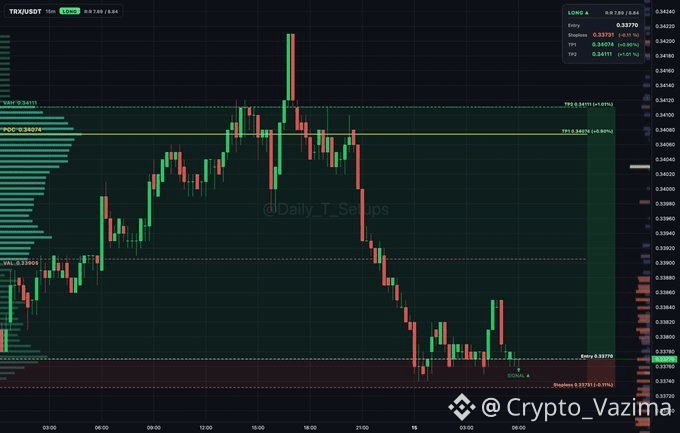
61
Anmelden und weiter Inhalte entdecken
Krypto-Nutzer weltweit auf Binance Square kennenlernen
⚡️ Bleib in Sachen Krypto stets am Puls.
💬 Die weltgrößte Kryptobörse vertraut darauf.
👍 Erhalte verlässliche Einblicke von verifizierten Creators.
E-Mail-Adresse/Telefonnummer
Trendthemen
FedRateWatch
1M Aufrufe
4,797 Kommentare
Teile & gewinne Traffic-Belohnungen in unserer Kampagne mit angesagtem Hashtag
✨Thema: FOMC September, Was ist der nächste Schritt der Fed?
👉So nimmst du teil:
Veröffentliche einen kurzen Beitrag oder Artikel mit dem Hashtag #FedRateWatch
Erstelle Inhalte basierend auf den folgenden Blickwinkeln:
- Der August-Core-CPI stieg um 0,3% im Monatsvergleich, und die Wahrscheinlichkeit für eine 25bp-Erhöhung diese Woche liegt nun bei fast 90%. Erwartest du diese Woche eine Zinserhöhung? Handelt es sich um einen einmaligen Schritt oder den Beginn eines längeren Zinserhöhungszyklus?
- Wenn die Erhöhung erfolgt: Wie entwickelt sich das für BTC, Tech-Aktien und Gold? Aufwärts- oder abwärtsgerichtet?
- Wie planst du als Nächstes zu handeln? Teile deinen BTC-, Aktien- oder Gold-Trade/Bestände mit unserem Trade-Sharing-Widget.
⏰Kampagnenzeitraum:
- 2026-09-15 11:00 - 2026-09-17 3:00 UTC
🎁Belohnung:
- Qualifizierte Beiträge, die die oben genannten Richtlinien erfüllen und mehr als 100 Wörter enthalten, werden überprüft und erhalten möglicherweise einen zufälligen Traffic-Boost von 500 bis 3.000 Aufrufen. Du erhältst eine Benachrichtigung von deiner Feed-Secretary, wenn dein Beitrag ausgewählt wird.
- Erhalte die Chance, dass dein Artikel auf Binance Square Official vorgestellt wird
Du brauchst Ideen für deinen Beitrag? Besuche die Themenseite #FedRateWatch oder die Square Guide on How to Post for Better Reach.
Binance Square Official
·552 Likes
·1.3M Aufrufe
ZcashHoldersBackNU7Upgrade
537 Aufrufe
33 Kommentare
MSTRTradingVolumeSurpassesMorganStanley
7,636 Aufrufe
276 Kommentare