
D E E N A
4.3k Beiträge

D E E N A
Melden
Nutzer blockieren
Crypto Lover
Trade eröffnen
Regelmäßiger Trader
1.1 Jahre
222 Following
17.1K+ Follower
4.2K+ Like gegeben
Beiträge
Portfolio
Alle
Zitierungen
Live
·
--
🚨 PUMP-WETTBEWERB!
$G USDT: +73,82% bei 0,007337 USD
$ONE : +72,85% bei 0,0018028 USD
🔥 Nur 0,97% trennen sie!
Wer übernimmt als Nächstes die Führung?
{spot}(ONEUSDT)
{spot}(GUSDT)
#BOJHikesRatesTo31YearHigh
#InjectiveLaunchesINJOnSolana
#SECGrantsInnovationExemptionForTokenizedStocks
#XRPGains3%AsRippleAddsMPPSupport
#XRPGains3%AsRippleAddsMPPSupport
🚨 PUMP-WETTBEWERB!
$G USDT: +73,82% bei 0,007337 USD
$ONE : +72,85% bei 0,0018028 USD
🔥 Nur 0,97% trennen sie!
Wer übernimmt als Nächstes die Führung?
#BOJHikesRatesTo31YearHigh
#InjectiveLaunchesINJOnSolana
#SECGrantsInnovationExemptionForTokenizedStocks
#XRPGains3%AsRippleAddsMPPSupport
#XRPGains3%AsRippleAddsMPPSupport
$G USDT: +73,82% bei 0,007337 USD
$ONE : +72,85% bei 0,0018028 USD
🔥 Nur 0,97% trennen sie!
Wer übernimmt als Nächstes die Führung?
#BOJHikesRatesTo31YearHigh
#InjectiveLaunchesINJOnSolana
#SECGrantsInnovationExemptionForTokenizedStocks
#XRPGains3%AsRippleAddsMPPSupport
#XRPGains3%AsRippleAddsMPPSupport
$GUSDT — +73.82%
$ONE — +72.85%
🟢 $GUSDT
🔵 $ONE
20 Stunde(n) übrig
1.8k
·
--
Übersetzung ansehen
Babylon (BABY): The BTC Staking Bet Nobody's Fully Priced In
I've been watching Babylon since the BTC staking narrative started heating up, and it's one of the more interesting tensions I've seen in crypto right now. The protocol itself is genuinely impressive: you stake native Bitcoin directly, no wrapping, no bridging, no custodians, and it's pulled in over $5B in staked BTC at its peak — more than a third of all wrapped BTC supply, without any wrapping at all. That's real demand for non-custodial yield.
But the token has told a completely different story. BABY hit an all-time high near $0.17 in April 2025 and now trades around $0.012–0.015, a roughly 92% drawdown. Market cap sits near $50-55M against billions of tokens still locked. Early investor unlocks started in May 2026, releasing chunks monthly through 2029, which means sustained dilution pressure regardless of how strong the protocol's fundamentals look.
So I'm watching two things closely: whether TVL growth and integrations like Aave V4 keep outpacing the unlock schedule, and whether the market ever prices in the gap between protocol strength and token supply. Not financial advice, just what I'm seeing in the data.
#BrentCrudeFallsAbout6%
#OilDropsAbout6%
#USStorageStocksExtendLosses
#KRXHaltsKOSPIAfterChipSelloff
#SKHynixSlumps11%OnAIChipSelloff
$COTI
{spot}(COTIUSDT)
$SNXX
{future}(SNXXUSDT)
$DIA
{spot}(DIAUSDT)
Babylon (BABY): The BTC Staking Bet Nobody's Fully Priced In
I've been watching Babylon since the BTC staking narrative started heating up, and it's one of the more interesting tensions I've seen in crypto right now. The protocol itself is genuinely impressive: you stake native Bitcoin directly, no wrapping, no bridging, no custodians, and it's pulled in over $5B in staked BTC at its peak — more than a third of all wrapped BTC supply, without any wrapping at all. That's real demand for non-custodial yield.
But the token has told a completely different story. BABY hit an all-time high near $0.17 in April 2025 and now trades around $0.012–0.015, a roughly 92% drawdown. Market cap sits near $50-55M against billions of tokens still locked. Early investor unlocks started in May 2026, releasing chunks monthly through 2029, which means sustained dilution pressure regardless of how strong the protocol's fundamentals look.
So I'm watching two things closely: whether TVL growth and integrations like Aave V4 keep outpacing the unlock schedule, and whether the market ever prices in the gap between protocol strength and token supply. Not financial advice, just what I'm seeing in the data.
#BrentCrudeFallsAbout6%
#OilDropsAbout6%
#USStorageStocksExtendLosses
#KRXHaltsKOSPIAfterChipSelloff
#SKHynixSlumps11%OnAIChipSelloff
$COTI
$SNXX
$DIA
I've been watching Babylon since the BTC staking narrative started heating up, and it's one of the more interesting tensions I've seen in crypto right now. The protocol itself is genuinely impressive: you stake native Bitcoin directly, no wrapping, no bridging, no custodians, and it's pulled in over $5B in staked BTC at its peak — more than a third of all wrapped BTC supply, without any wrapping at all. That's real demand for non-custodial yield.
But the token has told a completely different story. BABY hit an all-time high near $0.17 in April 2025 and now trades around $0.012–0.015, a roughly 92% drawdown. Market cap sits near $50-55M against billions of tokens still locked. Early investor unlocks started in May 2026, releasing chunks monthly through 2029, which means sustained dilution pressure regardless of how strong the protocol's fundamentals look.
So I'm watching two things closely: whether TVL growth and integrations like Aave V4 keep outpacing the unlock schedule, and whether the market ever prices in the gap between protocol strength and token supply. Not financial advice, just what I'm seeing in the data.
#BrentCrudeFallsAbout6%
#OilDropsAbout6%
#USStorageStocksExtendLosses
#KRXHaltsKOSPIAfterChipSelloff
#SKHynixSlumps11%OnAIChipSelloff
$COTI
$SNXX
$DIA
₿ Native BTC Staking
0%
📉 92% Token Drawdown
0%
🔓 Ongoing Unlock Pressure
0%
⚖️ Protocol vs Token Gap
0%
0 Stimmen • Abstimmung beendet
486
·
--
Übersetzung ansehen
🚀 $ON is heating up!
$ON /USDT Perp (Orochi Network) is up +29.65% in 24h, trading at $0.19198
📊 24h High: $0.23712
📉 24h Low: $0.14064
💰 24h Volume: 1.26B ON ($236.58M)
Sharp rally from $0.14064 to a high of $0.23712, followed by a pullback — volatility is running hot on this one 🔥
Big swings mean big opportunity — trade smart and manage your risk.
Let's go — trade now $ON
{future}(ONUSDT)
🚀 $ON is heating up!
$ON /USDT Perp (Orochi Network) is up +29.65% in 24h, trading at $0.19198
📊 24h High: $0.23712
📉 24h Low: $0.14064
💰 24h Volume: 1.26B ON ($236.58M)
Sharp rally from $0.14064 to a high of $0.23712, followed by a pullback — volatility is running hot on this one 🔥
Big swings mean big opportunity — trade smart and manage your risk.
Let's go — trade now $ON
$ON /USDT Perp (Orochi Network) is up +29.65% in 24h, trading at $0.19198
📊 24h High: $0.23712
📉 24h Low: $0.14064
💰 24h Volume: 1.26B ON ($236.58M)
Sharp rally from $0.14064 to a high of $0.23712, followed by a pullback — volatility is running hot on this one 🔥
Big swings mean big opportunity — trade smart and manage your risk.
Let's go — trade now $ON
BULLISH 💚
60%
BEARISH ♥️
40%
5 Stimmen • Abstimmung beendet
165
·
--
Übersetzung ansehen
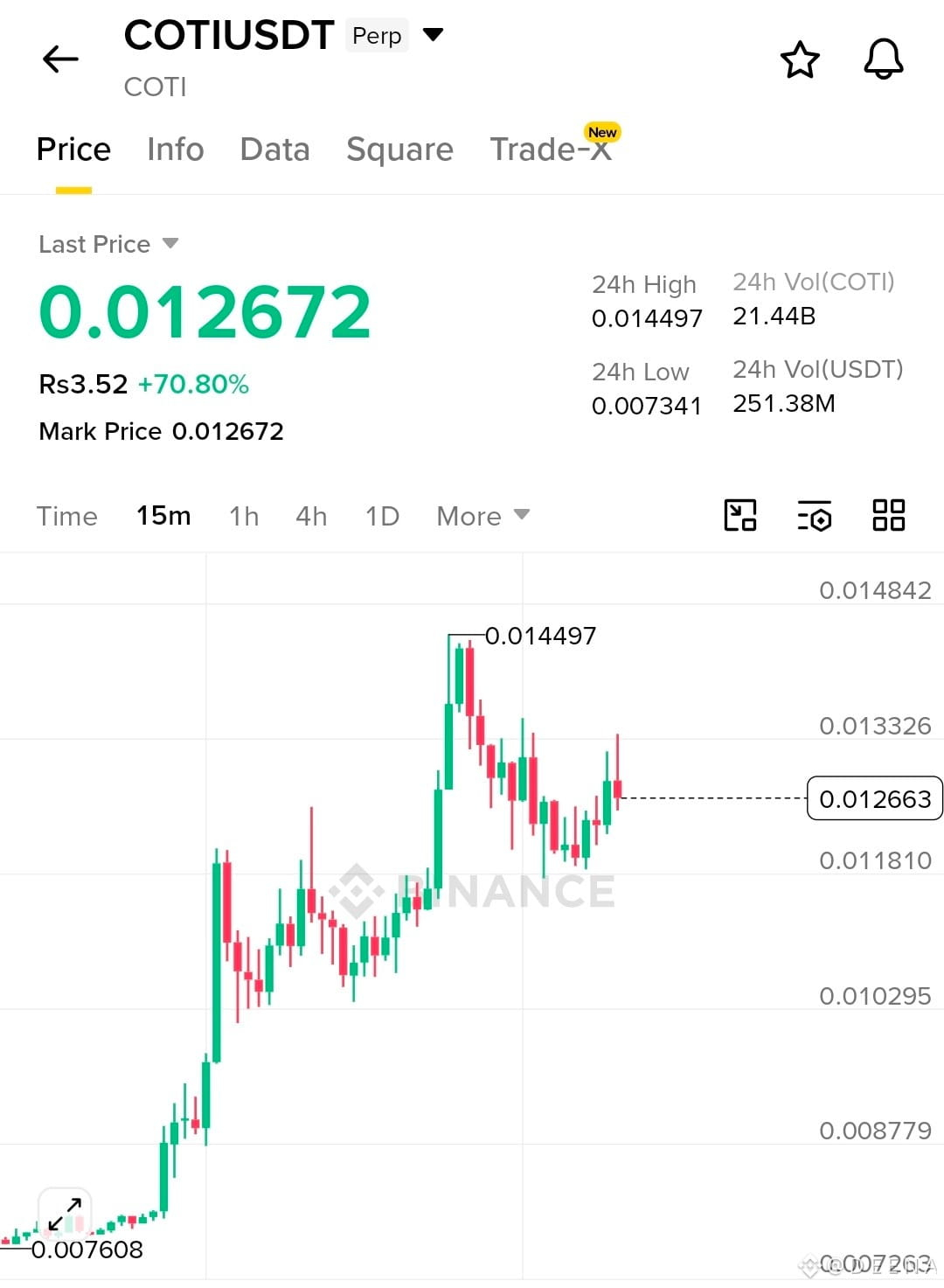
🚀 $COTI is ON FIRE right now!
$COTI /USDT Perp is up +70.80% in 24h, trading at $0.012672
📊 24h High: $0.014497
📉 24h Low: $0.007341
💰 24h Volume: 21.44B COTI ($251.38M)
From $0.007608 to a high of $0.014497 — that's nearly a 2x move in a single day. Momentum is clearly with the bulls right now 🔥
Volatility this high means big opportunity — and big risk. Always trade with proper risk management.
Let's go — trade now $COTI
{spot}(COTIUSDT)
🚀 $COTI is ON FIRE right now!
$COTI /USDT Perp is up +70.80% in 24h, trading at $0.012672
📊 24h High: $0.014497
📉 24h Low: $0.007341
💰 24h Volume: 21.44B COTI ($251.38M)
From $0.007608 to a high of $0.014497 — that's nearly a 2x move in a single day. Momentum is clearly with the bulls right now 🔥
Volatility this high means big opportunity — and big risk. Always trade with proper risk management.
Let's go — trade now $COTI
$COTI /USDT Perp is up +70.80% in 24h, trading at $0.012672
📊 24h High: $0.014497
📉 24h Low: $0.007341
💰 24h Volume: 21.44B COTI ($251.38M)
From $0.007608 to a high of $0.014497 — that's nearly a 2x move in a single day. Momentum is clearly with the bulls right now 🔥
Volatility this high means big opportunity — and big risk. Always trade with proper risk management.
Let's go — trade now $COTI
127
·
--
Bullisch
Übersetzung ansehen
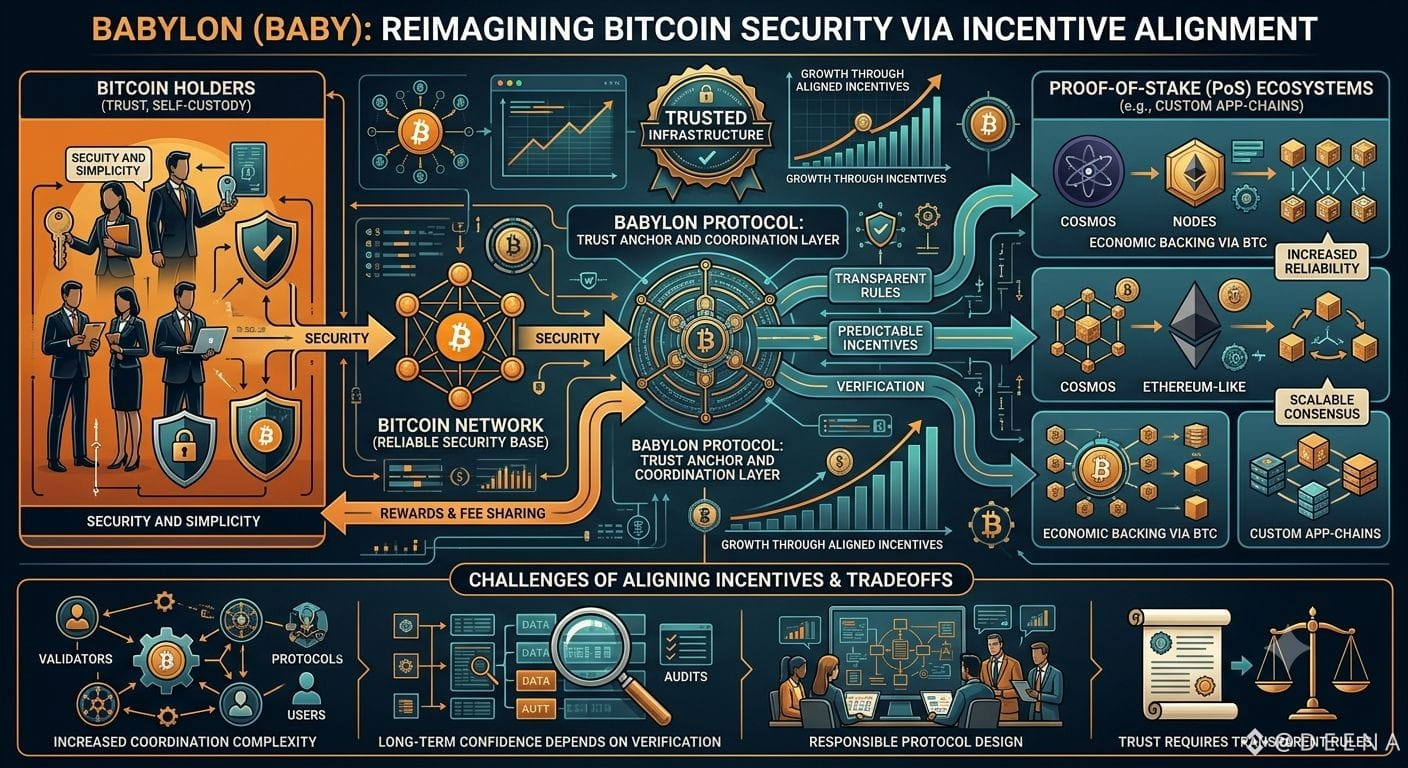
One thing that stands out to me about Babylon ($BABY ) is that it isn't really trying to change Bitcoin itself. Instead, Babylon is exploring how Bitcoin's existing security can support Proof-of-Stake ecosystems while allowing BTC holders to remain in control of their assets. That feels like a different conversation from the usual focus on staking rewards or capital efficiency.
What makes Babylon interesting is the challenge of aligning incentives across very different participants. Bitcoin holders want security and simplicity, while PoS networks need reliable economic backing. Bringing those interests together requires more than solid technology. It depends on transparent rules, predictable incentives, and a system that people continue to trust long after the initial excitement fades.
I also think there is an important tradeoff that doesn't get discussed enough. As Bitcoin becomes part of securing other networks, the coordination between users, validators, and protocols naturally becomes more complex. Self-custody solves one problem, but long-term confidence still depends on verification, clear incentives, and responsible protocol design.
That is why I keep watching Babylon as an infrastructure project rather than a market narrative. If it can maintain trust while expanding Bitcoin's role beyond its own chain, it could demonstrate that durable blockchain infrastructure is built through incentive alignment, not simply technical innovation. The real question is whether those incentives will remain strong as the ecosystem grows.
#baby @babylonlabs_io $BABY
One thing that stands out to me about Babylon ($BABY ) is that it isn't really trying to change Bitcoin itself. Instead, Babylon is exploring how Bitcoin's existing security can support Proof-of-Stake ecosystems while allowing BTC holders to remain in control of their assets. That feels like a different conversation from the usual focus on staking rewards or capital efficiency.
What makes Babylon interesting is the challenge of aligning incentives across very different participants. Bitcoin holders want security and simplicity, while PoS networks need reliable economic backing. Bringing those interests together requires more than solid technology. It depends on transparent rules, predictable incentives, and a system that people continue to trust long after the initial excitement fades.
I also think there is an important tradeoff that doesn't get discussed enough. As Bitcoin becomes part of securing other networks, the coordination between users, validators, and protocols naturally becomes more complex. Self-custody solves one problem, but long-term confidence still depends on verification, clear incentives, and responsible protocol design.
That is why I keep watching Babylon as an infrastructure project rather than a market narrative. If it can maintain trust while expanding Bitcoin's role beyond its own chain, it could demonstrate that durable blockchain infrastructure is built through incentive alignment, not simply technical innovation. The real question is whether those incentives will remain strong as the ecosystem grows.
#baby @BabylonLabs_io $BABY
What makes Babylon interesting is the challenge of aligning incentives across very different participants. Bitcoin holders want security and simplicity, while PoS networks need reliable economic backing. Bringing those interests together requires more than solid technology. It depends on transparent rules, predictable incentives, and a system that people continue to trust long after the initial excitement fades.
I also think there is an important tradeoff that doesn't get discussed enough. As Bitcoin becomes part of securing other networks, the coordination between users, validators, and protocols naturally becomes more complex. Self-custody solves one problem, but long-term confidence still depends on verification, clear incentives, and responsible protocol design.
That is why I keep watching Babylon as an infrastructure project rather than a market narrative. If it can maintain trust while expanding Bitcoin's role beyond its own chain, it could demonstrate that durable blockchain infrastructure is built through incentive alignment, not simply technical innovation. The real question is whether those incentives will remain strong as the ecosystem grows.
#baby @BabylonLabs_io $BABY
3
2
115
·
--
Bullisch
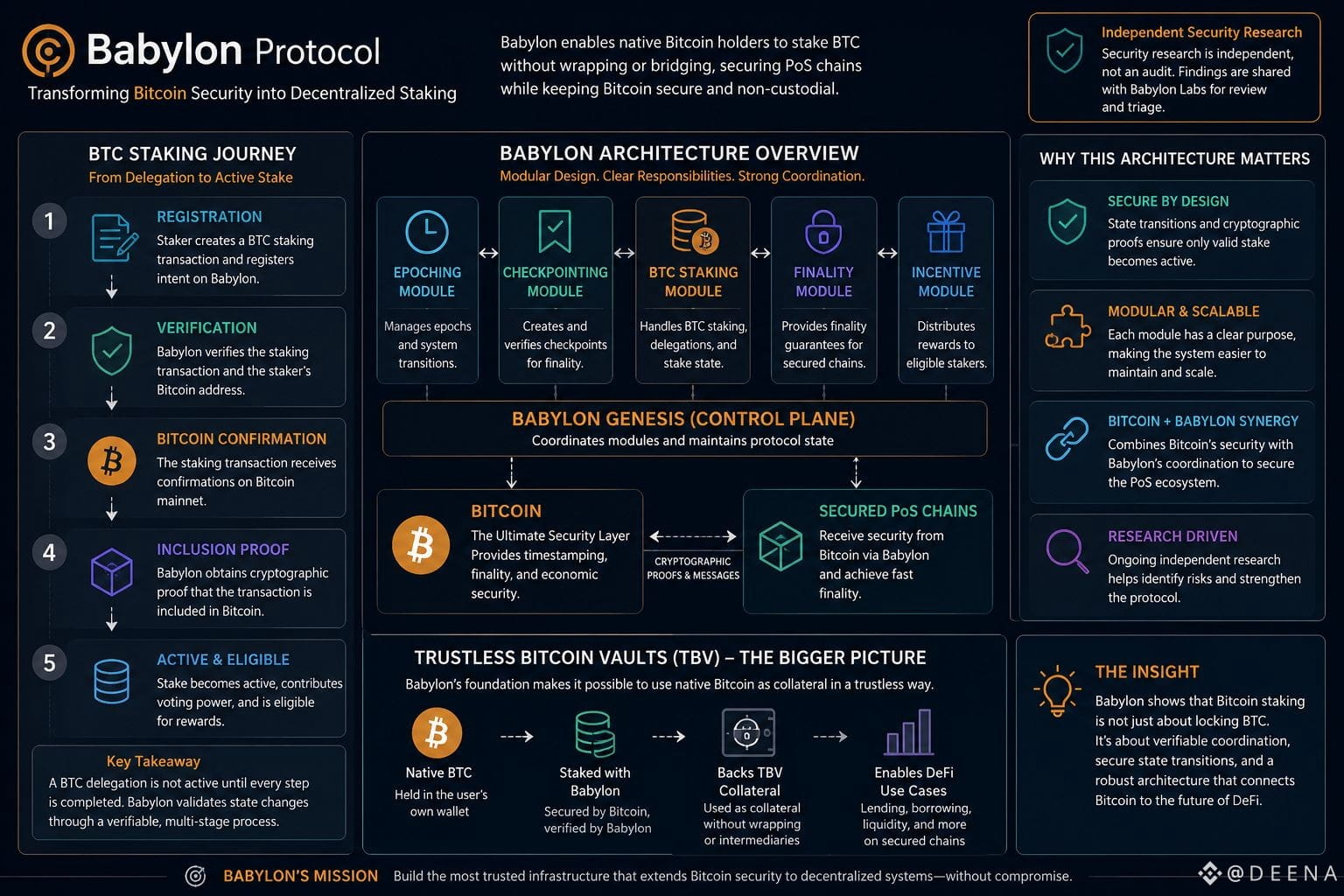
Als ich in Babylon eintauchte, wurde mir klar, dass ich Bitcoin-Staking viel einfacher gedacht hatte, als es das Protokoll tatsächlich umsetzt. Das, was mir auffiel, war keine Kennzahl auf einer Schlagzeile oder eine kühne Behauptung – sondern wie Babylon jedes Staking-Ereignis als eine Abfolge verifizierter Zustandsänderungen behandelt, anstatt anzunehmen, dass von dem Moment an, in dem eine Transaktion erstellt wird, alles bereits vollständig ist.
Was meine Aufmerksamkeit fesselte, war der Weg, den eine BTC-Delegierung nimmt, bevor sie aktiv wird. Sie durchläuft Registrierung, Verifikation, Bitcoin-Bestätigungen und einen Inklusionsnachweis, bevor sie zur Stimmkraft beitragen oder Belohnungen verdienen kann. Das mag wie ein technisches Detail klingen, aber ich denke, es ist einer der wichtigsten Teile des Designs, weil es zeigt, wie stark Babylon den Fokus auf Verifikation legt – statt auf Annahmen.
Die Erkenntnis, die bei mir hängen blieb, ist: Babylon baut nicht nur eine Möglichkeit, Bitcoin zu staken. Es baut die Koordinationsschicht, die dafür sorgt, dass Bitcoin-Staking über verschiedene Protokollkomponenten hinweg zuverlässig funktioniert. Beim Blick auf die Architektur habe ich verstanden, warum Module wie Epoching, Checkpointing, BTC Staking und Finality getrennt sind, statt gebündelt zu werden.
Krypto-Diskussionen konzentrieren sich oft auf das zukünftige Potenzial, aber ich finde, die spannendere Geschichte ist, was ein Protokoll heute bereits nachweislich leistet. Während Babylon weiter wächst und sich entwickelt: Wird verifizierte Beteiligung die Kennzahl sein, die am meisten zählt – statt nur darauf, wie viel BTC eingezahlt wird?
#baby @babylonlabs_io $BABY
Als ich in Babylon eintauchte, wurde mir klar, dass ich Bitcoin-Staking viel einfacher gedacht hatte, als es das Protokoll tatsächlich umsetzt. Das, was mir auffiel, war keine Kennzahl auf einer Schlagzeile oder eine kühne Behauptung – sondern wie Babylon jedes Staking-Ereignis als eine Abfolge verifizierter Zustandsänderungen behandelt, anstatt anzunehmen, dass von dem Moment an, in dem eine Transaktion erstellt wird, alles bereits vollständig ist.
Was meine Aufmerksamkeit fesselte, war der Weg, den eine BTC-Delegierung nimmt, bevor sie aktiv wird. Sie durchläuft Registrierung, Verifikation, Bitcoin-Bestätigungen und einen Inklusionsnachweis, bevor sie zur Stimmkraft beitragen oder Belohnungen verdienen kann. Das mag wie ein technisches Detail klingen, aber ich denke, es ist einer der wichtigsten Teile des Designs, weil es zeigt, wie stark Babylon den Fokus auf Verifikation legt – statt auf Annahmen.
Die Erkenntnis, die bei mir hängen blieb, ist: Babylon baut nicht nur eine Möglichkeit, Bitcoin zu staken. Es baut die Koordinationsschicht, die dafür sorgt, dass Bitcoin-Staking über verschiedene Protokollkomponenten hinweg zuverlässig funktioniert. Beim Blick auf die Architektur habe ich verstanden, warum Module wie Epoching, Checkpointing, BTC Staking und Finality getrennt sind, statt gebündelt zu werden.
Krypto-Diskussionen konzentrieren sich oft auf das zukünftige Potenzial, aber ich finde, die spannendere Geschichte ist, was ein Protokoll heute bereits nachweislich leistet. Während Babylon weiter wächst und sich entwickelt: Wird verifizierte Beteiligung die Kennzahl sein, die am meisten zählt – statt nur darauf, wie viel BTC eingezahlt wird?
#baby @BabylonLabs_io $BABY
Was meine Aufmerksamkeit fesselte, war der Weg, den eine BTC-Delegierung nimmt, bevor sie aktiv wird. Sie durchläuft Registrierung, Verifikation, Bitcoin-Bestätigungen und einen Inklusionsnachweis, bevor sie zur Stimmkraft beitragen oder Belohnungen verdienen kann. Das mag wie ein technisches Detail klingen, aber ich denke, es ist einer der wichtigsten Teile des Designs, weil es zeigt, wie stark Babylon den Fokus auf Verifikation legt – statt auf Annahmen.
Die Erkenntnis, die bei mir hängen blieb, ist: Babylon baut nicht nur eine Möglichkeit, Bitcoin zu staken. Es baut die Koordinationsschicht, die dafür sorgt, dass Bitcoin-Staking über verschiedene Protokollkomponenten hinweg zuverlässig funktioniert. Beim Blick auf die Architektur habe ich verstanden, warum Module wie Epoching, Checkpointing, BTC Staking und Finality getrennt sind, statt gebündelt zu werden.
Krypto-Diskussionen konzentrieren sich oft auf das zukünftige Potenzial, aber ich finde, die spannendere Geschichte ist, was ein Protokoll heute bereits nachweislich leistet. Während Babylon weiter wächst und sich entwickelt: Wird verifizierte Beteiligung die Kennzahl sein, die am meisten zählt – statt nur darauf, wie viel BTC eingezahlt wird?
#baby @BabylonLabs_io $BABY
2
2
111
·
--
Bärisch
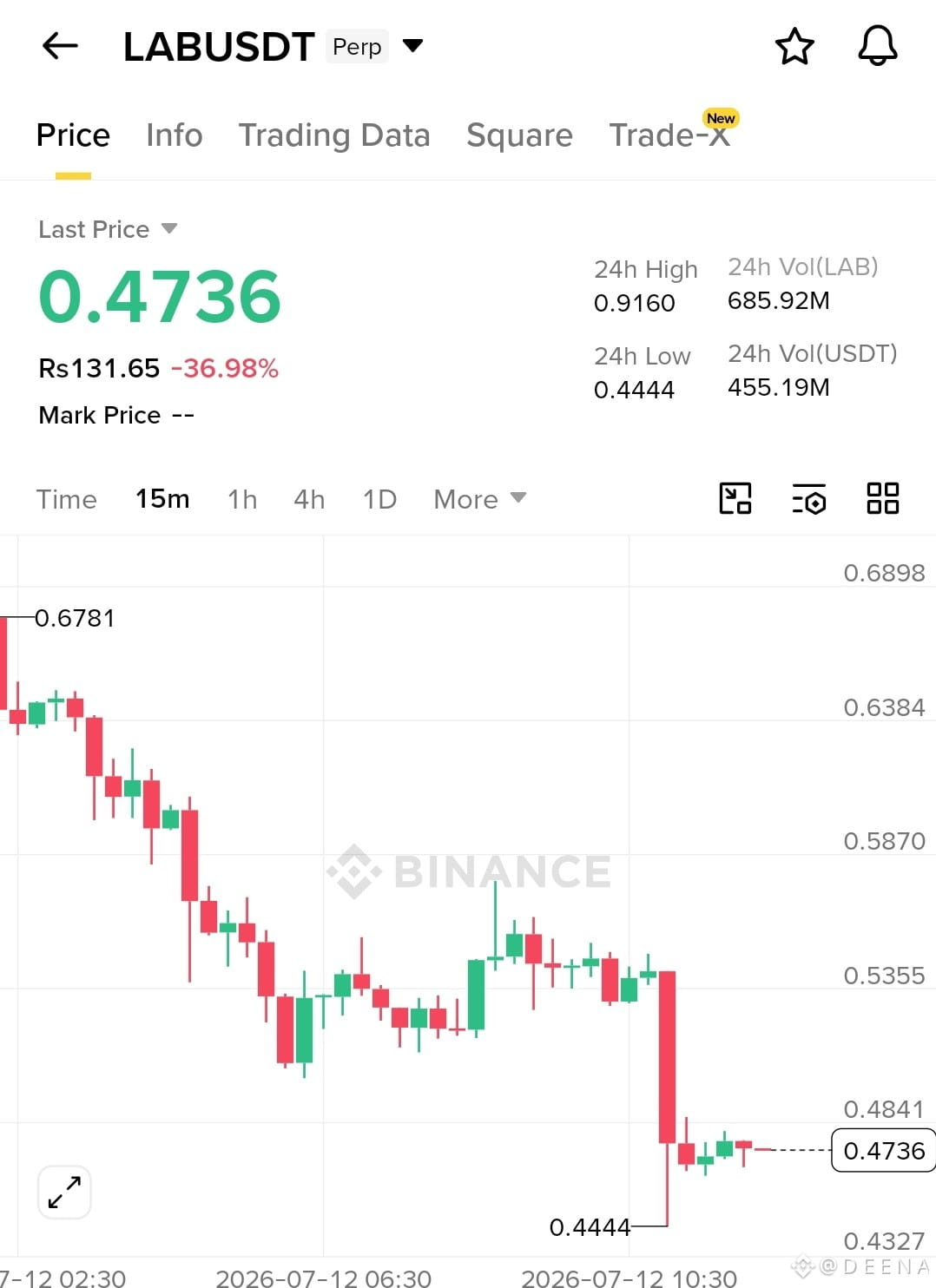
🚨 $LAB steht unter Druck! Aktueller Preis: 0,4736 $ nach einem -36,98%-Move in den letzten 24 Std.
📉 24H-Hoch: 0,9160 $ 📍 24H-Tief: 0,4444 $ 💰 Riesiges Volumen: 685,92 Mio. $LAB | 455,19 Mio. $USDT
Volatilität ist da, und genau hier werden echte Chancen geschaffen. Bleib diszipliniert, steuere dein Risiko und achte auf wichtige Unterstützungen rund um 0,4444 $.
Auf geht’s! Jetzt traden $LAB 🚀📈
{future}(LABUSDT)
#BitcoinPlansECashHardFork
#SpaceXAnthropicOpenAIIPOsMayTopVCExitsSince2000
#MorganStanleyAdds1000BTC
#GOPSeeksSenateVoteOnCLARITYActWeekOfJuly20
#BPISeeksToInterveneInNoahDoeCase
🚨 $LAB steht unter Druck! Aktueller Preis: 0,4736 $ nach einem -36,98%-Move in den letzten 24 Std.
📉 24H-Hoch: 0,9160 $ 📍 24H-Tief: 0,4444 $ 💰 Riesiges Volumen: 685,92 Mio. $LAB | 455,19 Mio. $USDT
Volatilität ist da, und genau hier werden echte Chancen geschaffen. Bleib diszipliniert, steuere dein Risiko und achte auf wichtige Unterstützungen rund um 0,4444 $.
Auf geht’s! Jetzt traden $LAB 🚀📈
#BitcoinPlansECashHardFork
#SpaceXAnthropicOpenAIIPOsMayTopVCExitsSince2000
#MorganStanleyAdds1000BTC
#GOPSeeksSenateVoteOnCLARITYActWeekOfJuly20
#BPISeeksToInterveneInNoahDoeCase
📉 24H-Hoch: 0,9160 $ 📍 24H-Tief: 0,4444 $ 💰 Riesiges Volumen: 685,92 Mio. $LAB | 455,19 Mio. $USDT
Volatilität ist da, und genau hier werden echte Chancen geschaffen. Bleib diszipliniert, steuere dein Risiko und achte auf wichtige Unterstützungen rund um 0,4444 $.
Auf geht’s! Jetzt traden $LAB 🚀📈
#BitcoinPlansECashHardFork
#SpaceXAnthropicOpenAIIPOsMayTopVCExitsSince2000
#MorganStanleyAdds1000BTC
#GOPSeeksSenateVoteOnCLARITYActWeekOfJuly20
#BPISeeksToInterveneInNoahDoeCase
1
213
·
--
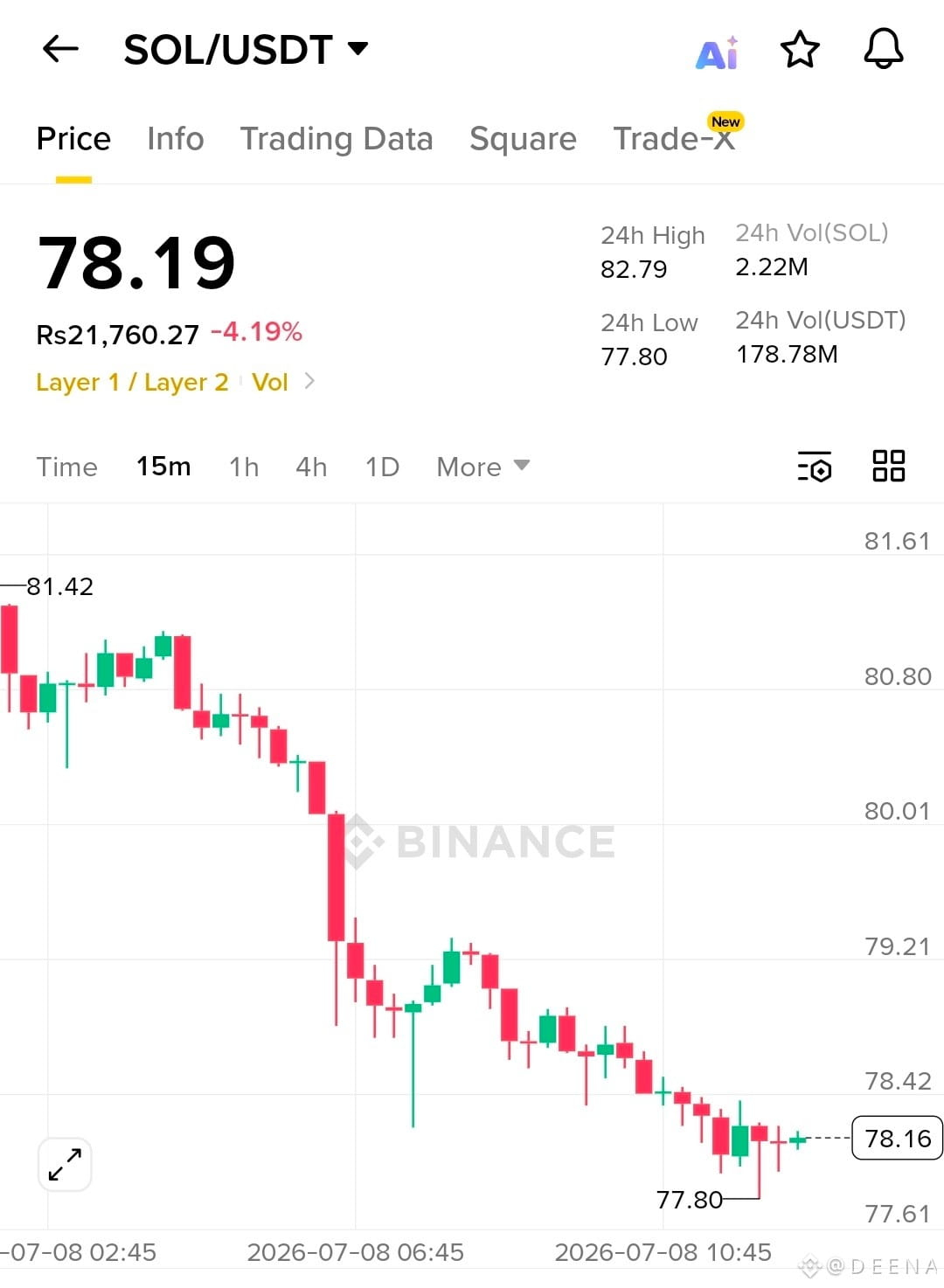
Spannende Trading-Post-Bildunterschrift:
⚡ SOL/USDT Update ⚡
🔻 Die Bären haben weiterhin die Kontrolle.
📉 Preis: $78.19
🎯 Wichtiges Support-Level: $77.80
🚀 Ein Bounce vom Support könnte eine kurzfristige Erholung auslösen.
❌ Wenn $77.80 bricht, erwarte weiteres Abwärts-Potenzial.
Handel klug, manage dein Risiko und niemals FOMO. 💯
#SOL #Solana #Crypto #Binance #Trading #PriceAction #CryptoTrading #TechnicalAnalysis #BullOrBear
Spannende Trading-Post-Bildunterschrift:
⚡ SOL/USDT Update ⚡
🔻 Die Bären haben weiterhin die Kontrolle.
📉 Preis: $78.19
🎯 Wichtiges Support-Level: $77.80
🚀 Ein Bounce vom Support könnte eine kurzfristige Erholung auslösen.
❌ Wenn $77.80 bricht, erwarte weiteres Abwärts-Potenzial.
Handel klug, manage dein Risiko und niemals FOMO. 💯
#SOL #Solana #Crypto #Binance #Trading #PriceAction #CryptoTrading #TechnicalAnalysis #BullOrBear
⚡ SOL/USDT Update ⚡
🔻 Die Bären haben weiterhin die Kontrolle.
📉 Preis: $78.19
🎯 Wichtiges Support-Level: $77.80
🚀 Ein Bounce vom Support könnte eine kurzfristige Erholung auslösen.
❌ Wenn $77.80 bricht, erwarte weiteres Abwärts-Potenzial.
Handel klug, manage dein Risiko und niemals FOMO. 💯
#SOL #Solana #Crypto #Binance #Trading #PriceAction #CryptoTrading #TechnicalAnalysis #BullOrBear
1
110
·
--
Der Unterschied wird mit der Zeit offensichtlich
Ich habe unzählige Produkte gesehen, die Geschwindigkeit, Skalierung und Innovation versprechen, aber nur sehr wenige hinterlassen den Eindruck, dass sie mit echtem Bestand im Hinterkopf entwickelt wurden.
Genius Terminal fühlte sich für mich sofort anders an.
Nicht weil es versucht, die Aufmerksamkeit zu dominieren, sondern wegen der kontrollierten und absichtlichen Art, wie das gesamte Erlebnis wirkt. Alles erscheint klar strukturiert. Keine unnötige Komplexität. Keine übertriebene Positionierung. Nur ein starkes Verständnis dafür, wie langfristige Infrastruktur aussehen sollte, wenn Disziplin den Prozess leitet.
Was am meisten auffällt, ist das Gleichgewicht zwischen Privatsphäre, Ausführung und Konsistenz. In einem Raum, der voller Lärm ist, fühlt sich so eine Zurückhaltung rar an. Das Produkt verlässt sich nicht auf ständige Spektakel, um Relevanz zu beweisen. Seine Richtung spricht bereits durch die Qualität des Fundaments, das gebaut wird.
Ich respektiere Projekte, die den Wert von Präzision über Momentum verstehen. Systeme, die so aufgebaut sind, altern in der Regel besser, weil sie von Anfang an für Langlebigkeit ausgelegt sind, nicht für temporäre Aufregung.
Je mehr ich Genius Terminal beobachte, desto mehr fühlt es sich weniger wie eine weitere Plattform an und mehr wie eine Infrastruktur, die sich leise für langfristige Bedeutung positioniert.
Einige Produkte verlangen sofortige Aufmerksamkeit.
Die stärksten verdienen Vertrauen mit der Zeit.
#genius @GeniusOfficial $GENIUS
{spot}(GENIUSUSDT)
$STRAX
$GUN
Der Unterschied wird mit der Zeit offensichtlich
Ich habe unzählige Produkte gesehen, die Geschwindigkeit, Skalierung und Innovation versprechen, aber nur sehr wenige hinterlassen den Eindruck, dass sie mit echtem Bestand im Hinterkopf entwickelt wurden.
Genius Terminal fühlte sich für mich sofort anders an.
Nicht weil es versucht, die Aufmerksamkeit zu dominieren, sondern wegen der kontrollierten und absichtlichen Art, wie das gesamte Erlebnis wirkt. Alles erscheint klar strukturiert. Keine unnötige Komplexität. Keine übertriebene Positionierung. Nur ein starkes Verständnis dafür, wie langfristige Infrastruktur aussehen sollte, wenn Disziplin den Prozess leitet.
Was am meisten auffällt, ist das Gleichgewicht zwischen Privatsphäre, Ausführung und Konsistenz. In einem Raum, der voller Lärm ist, fühlt sich so eine Zurückhaltung rar an. Das Produkt verlässt sich nicht auf ständige Spektakel, um Relevanz zu beweisen. Seine Richtung spricht bereits durch die Qualität des Fundaments, das gebaut wird.
Ich respektiere Projekte, die den Wert von Präzision über Momentum verstehen. Systeme, die so aufgebaut sind, altern in der Regel besser, weil sie von Anfang an für Langlebigkeit ausgelegt sind, nicht für temporäre Aufregung.
Je mehr ich Genius Terminal beobachte, desto mehr fühlt es sich weniger wie eine weitere Plattform an und mehr wie eine Infrastruktur, die sich leise für langfristige Bedeutung positioniert.
Einige Produkte verlangen sofortige Aufmerksamkeit.
Die stärksten verdienen Vertrauen mit der Zeit.
#genius @GeniusOfficial $GENIUS
$STRAX
$GUN
Ich habe unzählige Produkte gesehen, die Geschwindigkeit, Skalierung und Innovation versprechen, aber nur sehr wenige hinterlassen den Eindruck, dass sie mit echtem Bestand im Hinterkopf entwickelt wurden.
Genius Terminal fühlte sich für mich sofort anders an.
Nicht weil es versucht, die Aufmerksamkeit zu dominieren, sondern wegen der kontrollierten und absichtlichen Art, wie das gesamte Erlebnis wirkt. Alles erscheint klar strukturiert. Keine unnötige Komplexität. Keine übertriebene Positionierung. Nur ein starkes Verständnis dafür, wie langfristige Infrastruktur aussehen sollte, wenn Disziplin den Prozess leitet.
Was am meisten auffällt, ist das Gleichgewicht zwischen Privatsphäre, Ausführung und Konsistenz. In einem Raum, der voller Lärm ist, fühlt sich so eine Zurückhaltung rar an. Das Produkt verlässt sich nicht auf ständige Spektakel, um Relevanz zu beweisen. Seine Richtung spricht bereits durch die Qualität des Fundaments, das gebaut wird.
Ich respektiere Projekte, die den Wert von Präzision über Momentum verstehen. Systeme, die so aufgebaut sind, altern in der Regel besser, weil sie von Anfang an für Langlebigkeit ausgelegt sind, nicht für temporäre Aufregung.
Je mehr ich Genius Terminal beobachte, desto mehr fühlt es sich weniger wie eine weitere Plattform an und mehr wie eine Infrastruktur, die sich leise für langfristige Bedeutung positioniert.
Einige Produkte verlangen sofortige Aufmerksamkeit.
Die stärksten verdienen Vertrauen mit der Zeit.
#genius @GeniusOfficial $GENIUS
$STRAX
$GUN

1
2
109
·
--
Ich dachte, Genius sei nur ein weiteres Trading-Terminal. Dann habe ich genauer hingeschaut.
Als ich zum ersten Mal auf Genius gestoßen bin, habe ich es in die gleiche Kategorie wie unzählige andere Krypto-Produkte eingeordnet.
Ein Trading-Terminal.
Ein Ort, um die Velas zu beobachten, Trades auszuführen, Positionen zu verwalten und weiterzumachen.
Aber je mehr Zeit ich damit verbrachte, zu sehen, was Genius tatsächlich aufbaut, desto mehr hatte ich das Gefühl, dass diese Beschreibung den Kern verfehlte.
Was mir auffiel, war nicht die Trading-Erfahrung selbst.
Es war alles, was darum herum geschieht.
Ich stellte fest, dass ich die meiste Zeit im Krypto nicht damit verbringe, auf den Kauf- oder Verkaufsbutton zu drücken. Ich verbringe sie damit, nach Möglichkeiten zu suchen, Portfolios zu verfolgen, Märkte zu überwachen, neue Narrative zu recherchieren, Ertragsstrategien zu erkunden und zu versuchen, dem ständigen Wandel einen Schritt voraus zu sein.
Der Trade ist oft der letzte Schritt.
Die echte Herausforderung besteht darin, alles zu managen, was dazu führt.
Deshalb denke ich, dass Genius ein viel größeres Problem angeht.
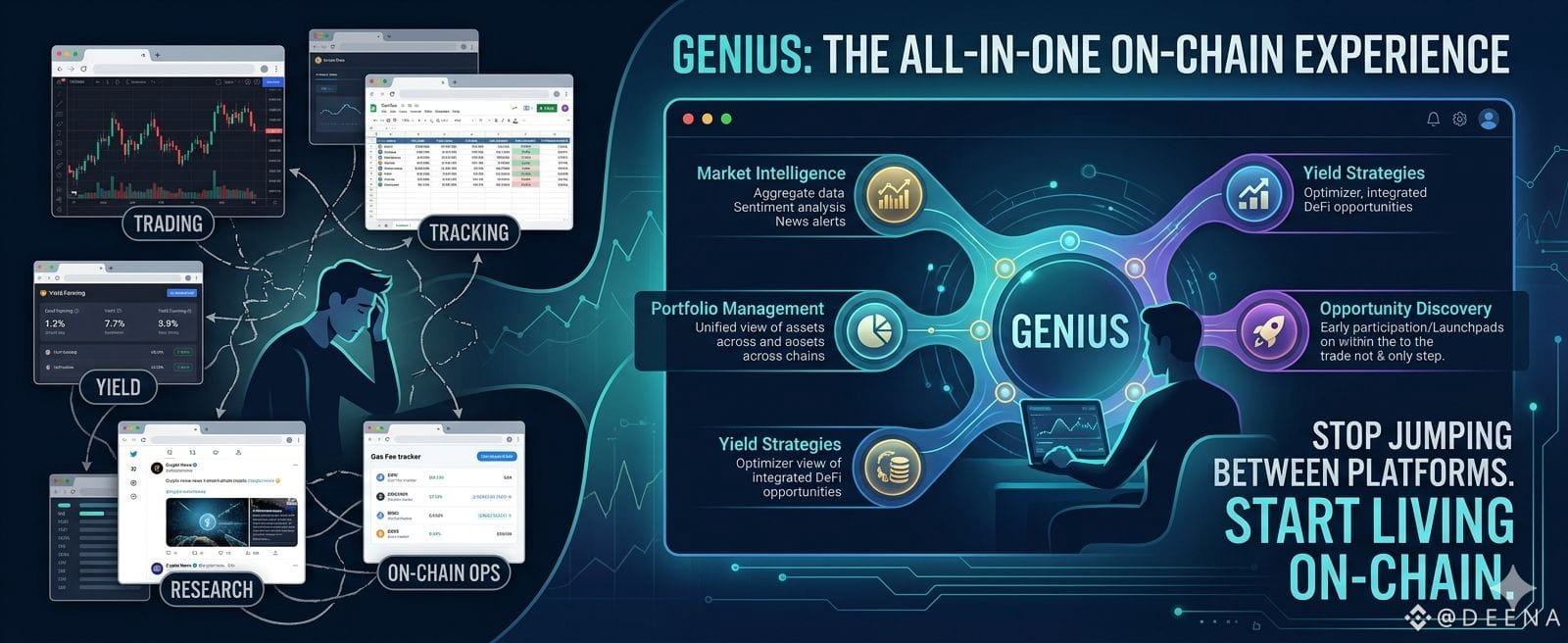
Anstatt Trading, Portfoliomanagement, Marktentdeckung, Ertragsmöglichkeiten und frühe Teilnahme als separate Erfahrungen zu behandeln, sehe ich eine Plattform, die versucht, sie unter einem Dach zusammenzubringen.
Für mich ist das weit interessanter, als ein weiteres Trading-Feature hinzuzufügen.
Krypto leidet nicht an einem Mangel an Tools.
Es leidet an Fragmentierung.
Ich finde mich ständig dabei, zwischen Plattformen zu springen, nur um den Kontext zu wahren.
Was ich in Genius sehe, ist ein Versuch, diese Reibung zu reduzieren.
Und wenn es erfolgreich ist, könnten die Leute irgendwann aufhören, es überhaupt als Trading-Terminal zu betrachten.
Sie könnten anfangen zu denken, dass es der Ort ist, an dem ihre gesamte On-Chain-Erfahrung lebt.
$STG
$PORTAL
#genius @GeniusOfficial $GENIUS
{spot}(GENIUSUSDT)
Ich dachte, Genius sei nur ein weiteres Trading-Terminal. Dann habe ich genauer hingeschaut.
Als ich zum ersten Mal auf Genius gestoßen bin, habe ich es in die gleiche Kategorie wie unzählige andere Krypto-Produkte eingeordnet.
Ein Trading-Terminal.
Ein Ort, um die Velas zu beobachten, Trades auszuführen, Positionen zu verwalten und weiterzumachen.
Aber je mehr Zeit ich damit verbrachte, zu sehen, was Genius tatsächlich aufbaut, desto mehr hatte ich das Gefühl, dass diese Beschreibung den Kern verfehlte.
Was mir auffiel, war nicht die Trading-Erfahrung selbst.
Es war alles, was darum herum geschieht.
Ich stellte fest, dass ich die meiste Zeit im Krypto nicht damit verbringe, auf den Kauf- oder Verkaufsbutton zu drücken. Ich verbringe sie damit, nach Möglichkeiten zu suchen, Portfolios zu verfolgen, Märkte zu überwachen, neue Narrative zu recherchieren, Ertragsstrategien zu erkunden und zu versuchen, dem ständigen Wandel einen Schritt voraus zu sein.
Der Trade ist oft der letzte Schritt.
Die echte Herausforderung besteht darin, alles zu managen, was dazu führt.
Deshalb denke ich, dass Genius ein viel größeres Problem angeht.
Anstatt Trading, Portfoliomanagement, Marktentdeckung, Ertragsmöglichkeiten und frühe Teilnahme als separate Erfahrungen zu behandeln, sehe ich eine Plattform, die versucht, sie unter einem Dach zusammenzubringen.
Für mich ist das weit interessanter, als ein weiteres Trading-Feature hinzuzufügen.
Krypto leidet nicht an einem Mangel an Tools.
Es leidet an Fragmentierung.
Ich finde mich ständig dabei, zwischen Plattformen zu springen, nur um den Kontext zu wahren.
Was ich in Genius sehe, ist ein Versuch, diese Reibung zu reduzieren.
Und wenn es erfolgreich ist, könnten die Leute irgendwann aufhören, es überhaupt als Trading-Terminal zu betrachten.
Sie könnten anfangen zu denken, dass es der Ort ist, an dem ihre gesamte On-Chain-Erfahrung lebt.
$STG
$PORTAL
#genius @GeniusOfficial $GENIUS
Als ich zum ersten Mal auf Genius gestoßen bin, habe ich es in die gleiche Kategorie wie unzählige andere Krypto-Produkte eingeordnet.
Ein Trading-Terminal.
Ein Ort, um die Velas zu beobachten, Trades auszuführen, Positionen zu verwalten und weiterzumachen.
Aber je mehr Zeit ich damit verbrachte, zu sehen, was Genius tatsächlich aufbaut, desto mehr hatte ich das Gefühl, dass diese Beschreibung den Kern verfehlte.
Was mir auffiel, war nicht die Trading-Erfahrung selbst.
Es war alles, was darum herum geschieht.
Ich stellte fest, dass ich die meiste Zeit im Krypto nicht damit verbringe, auf den Kauf- oder Verkaufsbutton zu drücken. Ich verbringe sie damit, nach Möglichkeiten zu suchen, Portfolios zu verfolgen, Märkte zu überwachen, neue Narrative zu recherchieren, Ertragsstrategien zu erkunden und zu versuchen, dem ständigen Wandel einen Schritt voraus zu sein.
Der Trade ist oft der letzte Schritt.
Die echte Herausforderung besteht darin, alles zu managen, was dazu führt.
Deshalb denke ich, dass Genius ein viel größeres Problem angeht.
Anstatt Trading, Portfoliomanagement, Marktentdeckung, Ertragsmöglichkeiten und frühe Teilnahme als separate Erfahrungen zu behandeln, sehe ich eine Plattform, die versucht, sie unter einem Dach zusammenzubringen.
Für mich ist das weit interessanter, als ein weiteres Trading-Feature hinzuzufügen.
Krypto leidet nicht an einem Mangel an Tools.
Es leidet an Fragmentierung.
Ich finde mich ständig dabei, zwischen Plattformen zu springen, nur um den Kontext zu wahren.
Was ich in Genius sehe, ist ein Versuch, diese Reibung zu reduzieren.
Und wenn es erfolgreich ist, könnten die Leute irgendwann aufhören, es überhaupt als Trading-Terminal zu betrachten.
Sie könnten anfangen zu denken, dass es der Ort ist, an dem ihre gesamte On-Chain-Erfahrung lebt.
$STG
$PORTAL
#genius @GeniusOfficial $GENIUS
1
206
·
--
Ich denke, OpenLedger setzt auf den Teil der KI, den die meisten Modelle vergessen wollen
Früher dachte ich, das Rennen der KI würde mit der Intelligenz selbst enden. Besseres Denken, schnellere Ausgaben, sauberere multimodale Systeme, stärkere Benchmarks. Aber in letzter Zeit habe ich das Gefühl, dass dieser gesamte Wettbewerb etwas Tieferes vermisst.
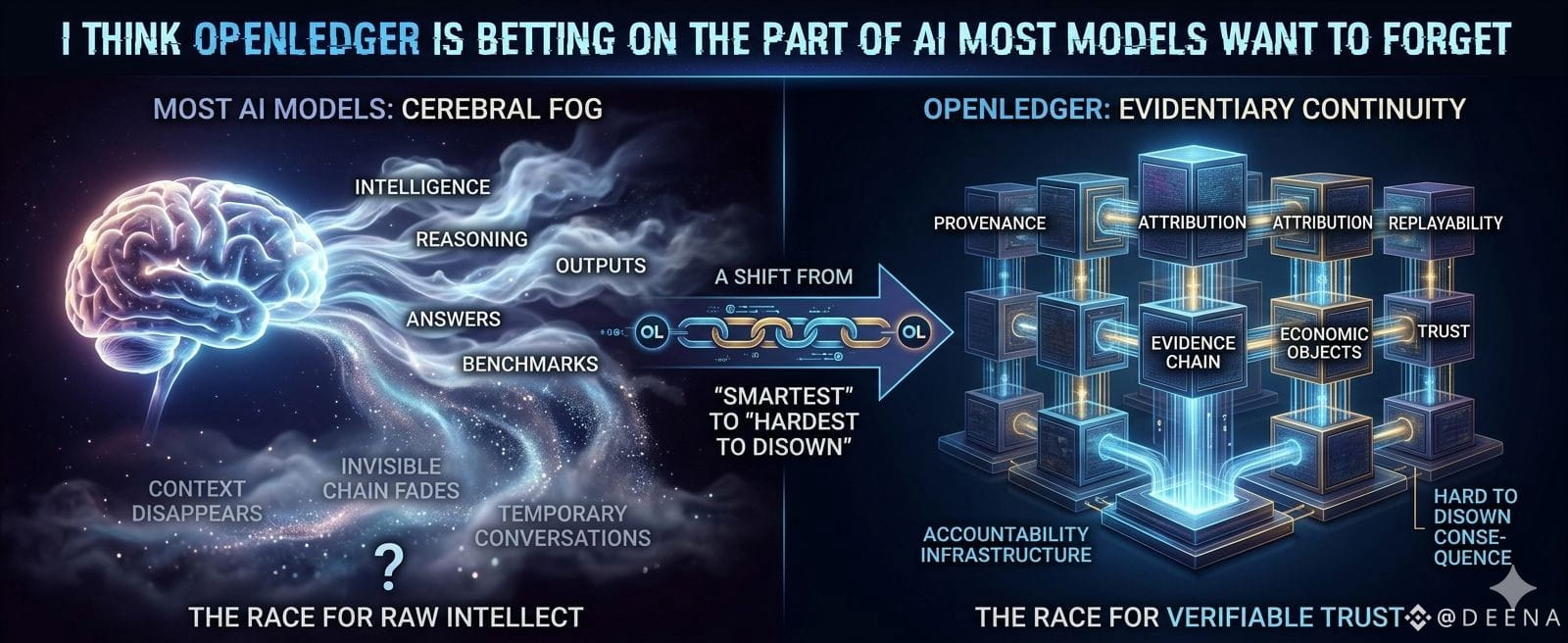
Die meisten KI-Modelle heute sind unglaublich gut darin, Antworten zu produzieren, aber sehr schlecht darin, die unsichtbare Kette zu bewahren, die die Antwort ursprünglich erzeugt hat. Die Ausgabe überlebt. Der Kontext verschwindet.
Und ich denke, das wird ein ernstes Problem, wenn KI-Ausgaben aufhören, sich wie vorübergehende Gespräche zu verhalten, und anfangen, sich wie wirtschaftliche Objekte zu verhalten, die zwischen Systemen bewegt werden.
Suchmaschinen bewerten sie. Empfehlungssysteme verstärken sie. Creator-Ökonomien absorbieren sie. Andere Modelle trainieren wieder darauf. Märkte reagieren darauf. Institutionen beginnen langsam, ihnen zu vertrauen.
Aber fast niemand fragt, was verschwunden ist, bevor die Antwort sich stabilisierte.
Deshalb finde ich OpenLedger interessant. Nicht, weil es versucht, KI „intelligenter“ zu machen, sondern weil es scheint, sich darauf zu konzentrieren, die Verantwortlichkeit nach der Generierung zu bewahren. Herkunft. Zuschreibung. Wiederholbarkeit. Beweiskontinuität.
Je länger ich darüber nachdenke, desto mehr habe ich das Gefühl, dass Intelligenz schneller zur Ware werden könnte als die Infrastruktur zur Verantwortlichkeit.
Und vielleicht wird der zukünftige Wettbewerb in der KI nicht sein:
„Welches Modell klingt am intelligentesten?“
Vielleicht wird es:
„Welches Modell ist am schwersten abzulehnen, wenn die Konsequenz eintritt?“
#openledger @Openledger $OPEN
{spot}(OPENUSDT)
$HEI
$ID
Ich denke, OpenLedger setzt auf den Teil der KI, den die meisten Modelle vergessen wollen
Früher dachte ich, das Rennen der KI würde mit der Intelligenz selbst enden. Besseres Denken, schnellere Ausgaben, sauberere multimodale Systeme, stärkere Benchmarks. Aber in letzter Zeit habe ich das Gefühl, dass dieser gesamte Wettbewerb etwas Tieferes vermisst.
Die meisten KI-Modelle heute sind unglaublich gut darin, Antworten zu produzieren, aber sehr schlecht darin, die unsichtbare Kette zu bewahren, die die Antwort ursprünglich erzeugt hat. Die Ausgabe überlebt. Der Kontext verschwindet.
Und ich denke, das wird ein ernstes Problem, wenn KI-Ausgaben aufhören, sich wie vorübergehende Gespräche zu verhalten, und anfangen, sich wie wirtschaftliche Objekte zu verhalten, die zwischen Systemen bewegt werden.
Suchmaschinen bewerten sie. Empfehlungssysteme verstärken sie. Creator-Ökonomien absorbieren sie. Andere Modelle trainieren wieder darauf. Märkte reagieren darauf. Institutionen beginnen langsam, ihnen zu vertrauen.
Aber fast niemand fragt, was verschwunden ist, bevor die Antwort sich stabilisierte.
Deshalb finde ich OpenLedger interessant. Nicht, weil es versucht, KI „intelligenter“ zu machen, sondern weil es scheint, sich darauf zu konzentrieren, die Verantwortlichkeit nach der Generierung zu bewahren. Herkunft. Zuschreibung. Wiederholbarkeit. Beweiskontinuität.
Je länger ich darüber nachdenke, desto mehr habe ich das Gefühl, dass Intelligenz schneller zur Ware werden könnte als die Infrastruktur zur Verantwortlichkeit.
Und vielleicht wird der zukünftige Wettbewerb in der KI nicht sein:
„Welches Modell klingt am intelligentesten?“
Vielleicht wird es:
„Welches Modell ist am schwersten abzulehnen, wenn die Konsequenz eintritt?“
#openledger @OpenLedger $OPEN
$HEI
$ID
Früher dachte ich, das Rennen der KI würde mit der Intelligenz selbst enden. Besseres Denken, schnellere Ausgaben, sauberere multimodale Systeme, stärkere Benchmarks. Aber in letzter Zeit habe ich das Gefühl, dass dieser gesamte Wettbewerb etwas Tieferes vermisst.
Die meisten KI-Modelle heute sind unglaublich gut darin, Antworten zu produzieren, aber sehr schlecht darin, die unsichtbare Kette zu bewahren, die die Antwort ursprünglich erzeugt hat. Die Ausgabe überlebt. Der Kontext verschwindet.
Und ich denke, das wird ein ernstes Problem, wenn KI-Ausgaben aufhören, sich wie vorübergehende Gespräche zu verhalten, und anfangen, sich wie wirtschaftliche Objekte zu verhalten, die zwischen Systemen bewegt werden.
Suchmaschinen bewerten sie. Empfehlungssysteme verstärken sie. Creator-Ökonomien absorbieren sie. Andere Modelle trainieren wieder darauf. Märkte reagieren darauf. Institutionen beginnen langsam, ihnen zu vertrauen.
Aber fast niemand fragt, was verschwunden ist, bevor die Antwort sich stabilisierte.
Deshalb finde ich OpenLedger interessant. Nicht, weil es versucht, KI „intelligenter“ zu machen, sondern weil es scheint, sich darauf zu konzentrieren, die Verantwortlichkeit nach der Generierung zu bewahren. Herkunft. Zuschreibung. Wiederholbarkeit. Beweiskontinuität.
Je länger ich darüber nachdenke, desto mehr habe ich das Gefühl, dass Intelligenz schneller zur Ware werden könnte als die Infrastruktur zur Verantwortlichkeit.
Und vielleicht wird der zukünftige Wettbewerb in der KI nicht sein:
„Welches Modell klingt am intelligentesten?“
Vielleicht wird es:
„Welches Modell ist am schwersten abzulehnen, wenn die Konsequenz eintritt?“
#openledger @OpenLedger $OPEN
$HEI
$ID
1
180
·
--
Artikel
OpenLedger und die Zukunft der AI-VerantwortungLange Zeit habe ich wirklich geglaubt, dass das AI-Rennen letztendlich nur auf eine Sache hinausläuft: Intelligenz. Das Modell, das besser schlussfolgert, würde gewinnen. Das Modell mit schärferen Outputs, klareren Gesprächen, schnellerer Inferenz, stärkerem multimodalem Verhalten und höheren Benchmark-Zahlen würde natürlich den Markt dominieren. Diese Annahme schien offensichtlich, denn fast jedes Gespräch über AI dreht sich immer noch um die Fähigkeit selbst. Wer ist klüger? Wer ist schneller? Welches Modell klingt menschlicher? Welches System kann schwierigere Aufgaben mit weniger Fehlern lösen? Aber je mehr ich mir Projekte wie OpenLedger anschaue, desto unvollständiger beginnt diese gesamte Darstellung für mich zu wirken. Nicht völlig falsch. Nur fehlt etwas Tieferes unter der Oberfläche.
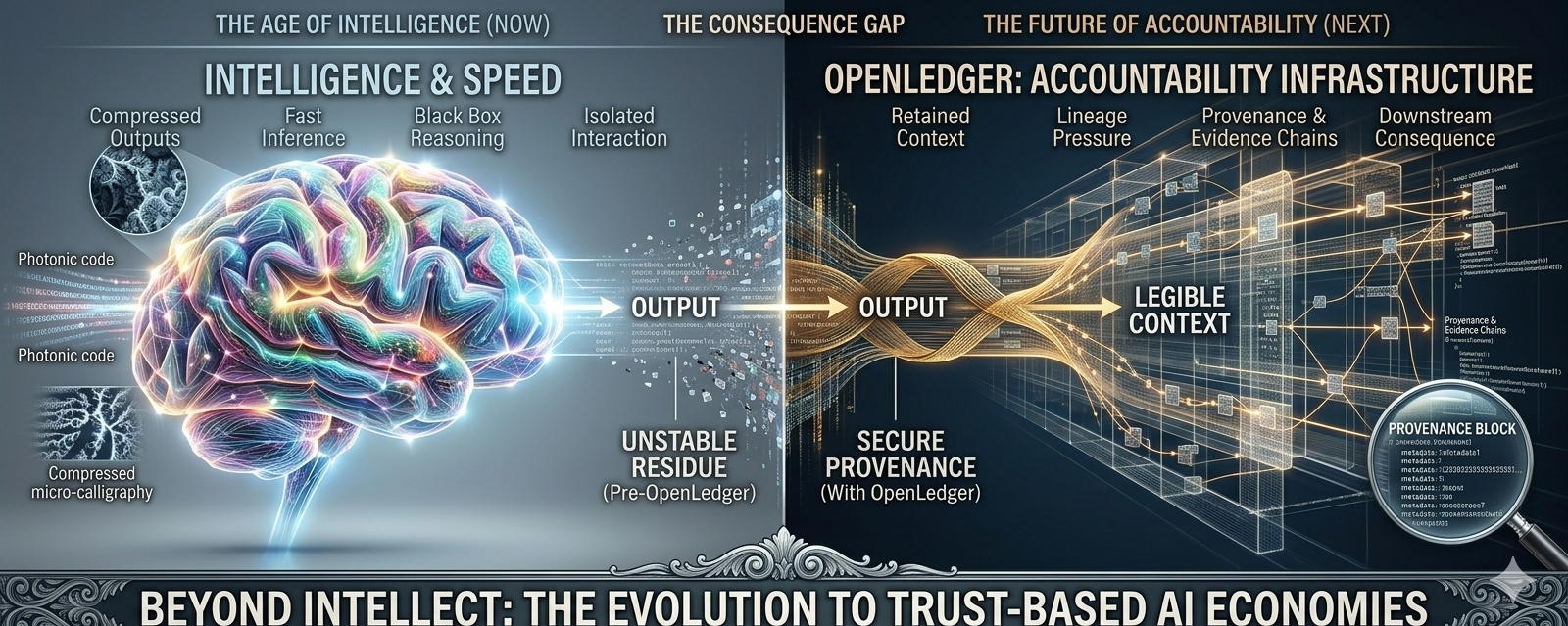
OpenLedger und die Zukunft der AI-Verantwortung
Lange Zeit habe ich wirklich geglaubt, dass das AI-Rennen letztendlich nur auf eine Sache hinausläuft: Intelligenz. Das Modell, das besser schlussfolgert, würde gewinnen. Das Modell mit schärferen Outputs, klareren Gesprächen, schnellerer Inferenz, stärkerem multimodalem Verhalten und höheren Benchmark-Zahlen würde natürlich den Markt dominieren. Diese Annahme schien offensichtlich, denn fast jedes Gespräch über AI dreht sich immer noch um die Fähigkeit selbst. Wer ist klüger? Wer ist schneller? Welches Modell klingt menschlicher? Welches System kann schwierigere Aufgaben mit weniger Fehlern lösen? Aber je mehr ich mir Projekte wie OpenLedger anschaue, desto unvollständiger beginnt diese gesamte Darstellung für mich zu wirken. Nicht völlig falsch. Nur fehlt etwas Tieferes unter der Oberfläche.
284
·
--
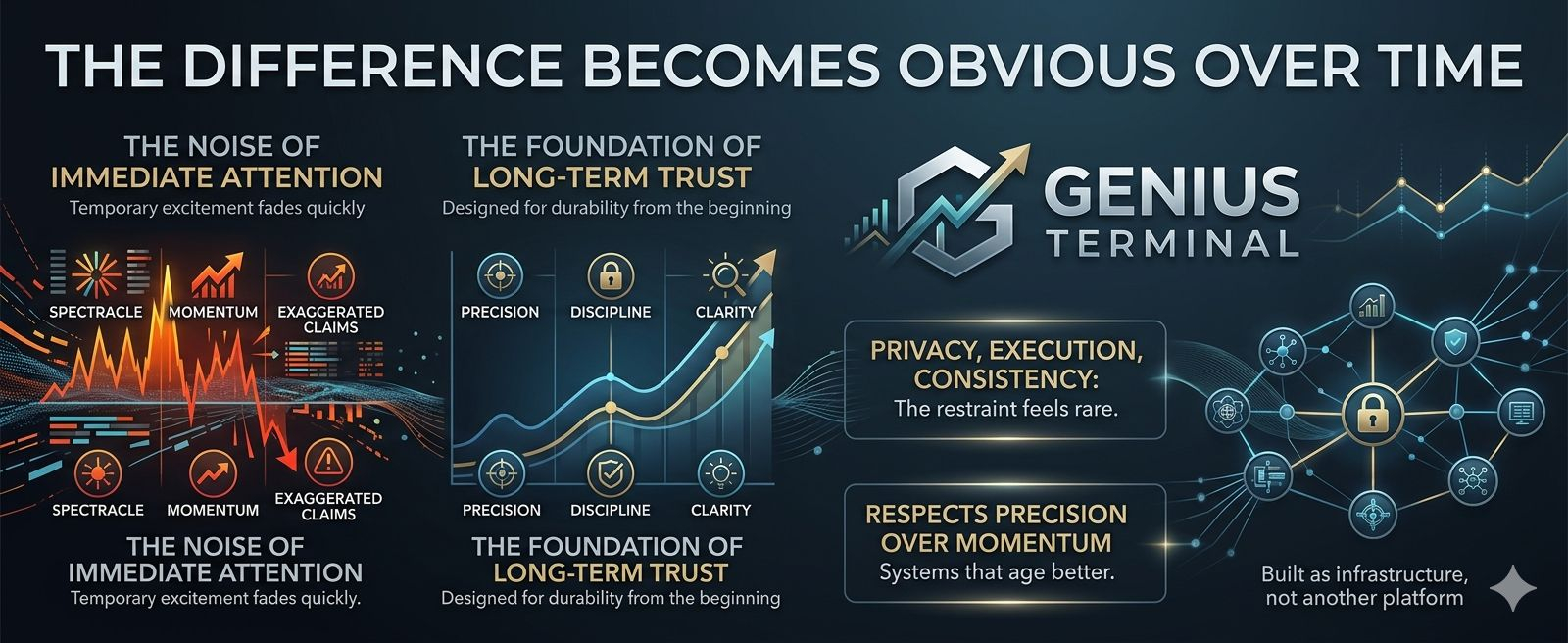
Der Unterschied wird mit der Zeit offensichtlich
Ich habe unzählige Produkte gesehen, die Geschwindigkeit, Skalierung und Innovation versprechen, aber nur sehr wenige hinterlassen den Eindruck, dass sie mit echtem Beständigkeitsbewusstsein entwickelt wurden.
Genius Terminal fühlte sich sofort anders für mich an.
Nicht, weil es versucht, die Aufmerksamkeit zu dominieren, sondern wegen der kontrollierten und absichtlichen Art des gesamten Erlebnisses. Alles erscheint klar strukturiert. Keine unnötige Komplexität. Keine übertriebenen Positionierungen. Nur ein starkes Verständnis davon, wie eine langfristige Infrastruktur aussehen sollte, wenn Disziplin den Prozess leitet.
Was am meisten heraussticht, ist das Gleichgewicht zwischen Privatsphäre, Ausführung und Konsistenz. In einem Raum, der mit Lärm überfüllt ist, fühlt sich diese Art der Zurückhaltung selten an. Das Produkt verlässt sich nicht auf ständige Spektakel, um Relevanz zu beweisen. Seine Richtung spricht bereits durch die Qualität des Fundaments, das aufgebaut wird.
Ich respektiere Projekte, die den Wert von Präzision über Momentum verstehen. Systeme, die so aufgebaut sind, altern in der Regel besser, weil sie von Anfang an für Langlebigkeit konzipiert sind, nicht für vorübergehende Aufregung.
Je mehr ich Genius Terminal beobachte, desto mehr fühlt es sich weniger wie eine weitere Plattform und mehr wie Infrastruktur an, die sich leise für langfristige Bedeutung positioniert.
Einige Produkte verlangen sofortige Aufmerksamkeit.
Die stärksten verdienen Vertrauen über die Zeit.
#genius @GeniusOfficial $GENIUS
{spot}(GENIUSUSDT)
$HEI
$ID
Der Unterschied wird mit der Zeit offensichtlich
Ich habe unzählige Produkte gesehen, die Geschwindigkeit, Skalierung und Innovation versprechen, aber nur sehr wenige hinterlassen den Eindruck, dass sie mit echtem Beständigkeitsbewusstsein entwickelt wurden.
Genius Terminal fühlte sich sofort anders für mich an.
Nicht, weil es versucht, die Aufmerksamkeit zu dominieren, sondern wegen der kontrollierten und absichtlichen Art des gesamten Erlebnisses. Alles erscheint klar strukturiert. Keine unnötige Komplexität. Keine übertriebenen Positionierungen. Nur ein starkes Verständnis davon, wie eine langfristige Infrastruktur aussehen sollte, wenn Disziplin den Prozess leitet.
Was am meisten heraussticht, ist das Gleichgewicht zwischen Privatsphäre, Ausführung und Konsistenz. In einem Raum, der mit Lärm überfüllt ist, fühlt sich diese Art der Zurückhaltung selten an. Das Produkt verlässt sich nicht auf ständige Spektakel, um Relevanz zu beweisen. Seine Richtung spricht bereits durch die Qualität des Fundaments, das aufgebaut wird.
Ich respektiere Projekte, die den Wert von Präzision über Momentum verstehen. Systeme, die so aufgebaut sind, altern in der Regel besser, weil sie von Anfang an für Langlebigkeit konzipiert sind, nicht für vorübergehende Aufregung.
Je mehr ich Genius Terminal beobachte, desto mehr fühlt es sich weniger wie eine weitere Plattform und mehr wie Infrastruktur an, die sich leise für langfristige Bedeutung positioniert.
Einige Produkte verlangen sofortige Aufmerksamkeit.
Die stärksten verdienen Vertrauen über die Zeit.
#genius @GeniusOfficial $GENIUS
$HEI
$ID
Ich habe unzählige Produkte gesehen, die Geschwindigkeit, Skalierung und Innovation versprechen, aber nur sehr wenige hinterlassen den Eindruck, dass sie mit echtem Beständigkeitsbewusstsein entwickelt wurden.
Genius Terminal fühlte sich sofort anders für mich an.
Nicht, weil es versucht, die Aufmerksamkeit zu dominieren, sondern wegen der kontrollierten und absichtlichen Art des gesamten Erlebnisses. Alles erscheint klar strukturiert. Keine unnötige Komplexität. Keine übertriebenen Positionierungen. Nur ein starkes Verständnis davon, wie eine langfristige Infrastruktur aussehen sollte, wenn Disziplin den Prozess leitet.
Was am meisten heraussticht, ist das Gleichgewicht zwischen Privatsphäre, Ausführung und Konsistenz. In einem Raum, der mit Lärm überfüllt ist, fühlt sich diese Art der Zurückhaltung selten an. Das Produkt verlässt sich nicht auf ständige Spektakel, um Relevanz zu beweisen. Seine Richtung spricht bereits durch die Qualität des Fundaments, das aufgebaut wird.
Ich respektiere Projekte, die den Wert von Präzision über Momentum verstehen. Systeme, die so aufgebaut sind, altern in der Regel besser, weil sie von Anfang an für Langlebigkeit konzipiert sind, nicht für vorübergehende Aufregung.
Je mehr ich Genius Terminal beobachte, desto mehr fühlt es sich weniger wie eine weitere Plattform und mehr wie Infrastruktur an, die sich leise für langfristige Bedeutung positioniert.
Einige Produkte verlangen sofortige Aufmerksamkeit.
Die stärksten verdienen Vertrauen über die Zeit.
#genius @GeniusOfficial $GENIUS
$HEI
$ID
240
·
--
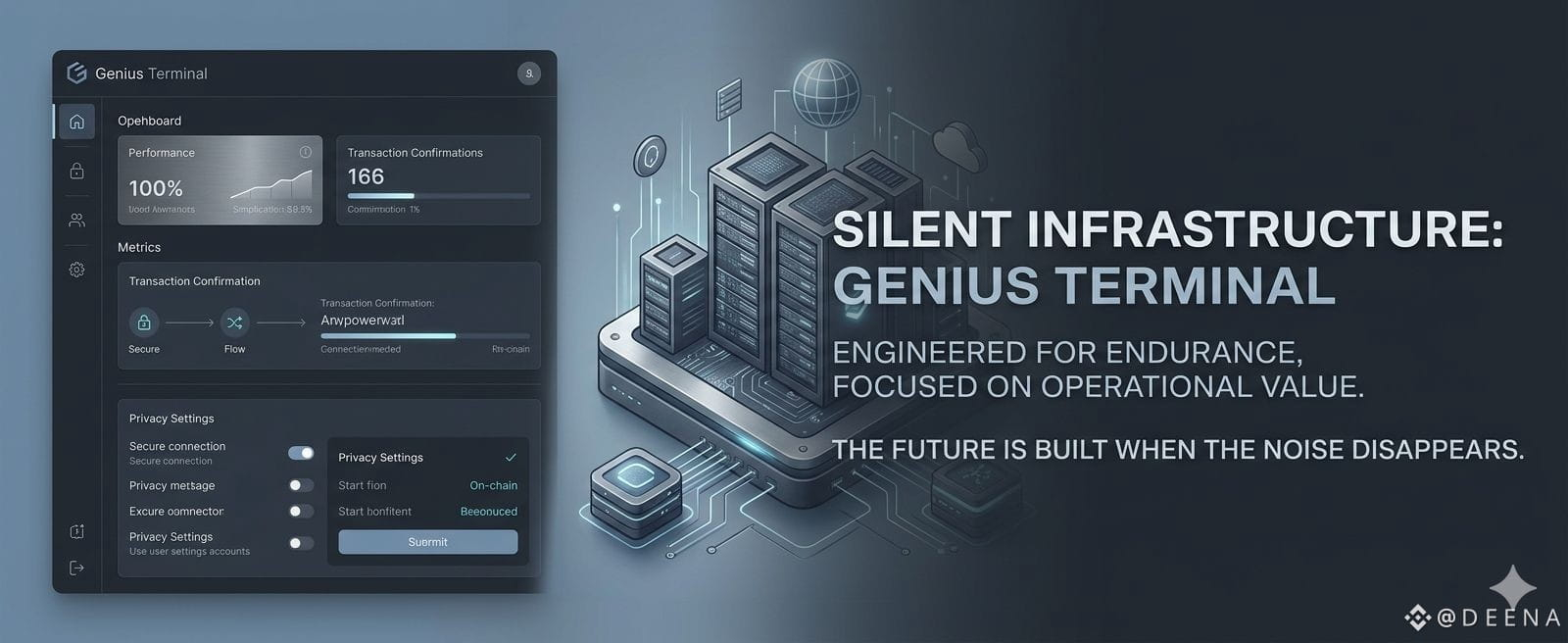
Stille Infrastruktur
Ich habe genug Zeit mit On-Chain-Produkten verbracht, um den Unterschied zwischen Plattformen zu erkennen, die für Aufmerksamkeit gebaut sind, und solchen, die für Ausdauer entwickelt wurden.
Genius Terminal hat mir sofort den zweiten Eindruck vermittelt.
Das Erste, was mir auffiel, war die Zurückhaltung. Keine unnötige Komplexität. Kein aggressives Getöse. Kein Versuch, Momentum durch Spektakel zu erzwingen. Alles fühlt sich absichtlich an, von der Struktur bis zum Ausführungsablauf. Es strahlt das Selbstvertrauen aus, das normalerweise von Teams kommt, die mehr auf Leistung als auf Sichtbarkeit fokussiert sind.
Was mir am meisten aufgefallen ist, ist die Art und Weise, wie Privatsphäre in das Erlebnis integriert ist, anstatt sie danach als narrative Schicht hinzuzufügen. Das ändert die Atmosphäre komplett. Das Terminal fühlt sich kontrolliert, fokussiert und für Menschen konstruiert an, die Präzision über Reaktion schätzen.
Ich respektiere auch, wie klar die gesamte Richtung wirkt. In einem Bereich, in dem viele Produkte um kurzfristige Relevanz kämpfen, scheint Genius Terminal auf langfristigen operativen Wert ausgerichtet zu sein. Die Architektur suggeriert Disziplin. Die Benutzeroberfläche suggeriert Klarheit. Die gesamte Präsenz deutet auf Reife hin.
Ich glaube, die nächste Generation der On-Chain-Infrastruktur wird nicht danach definiert, wer am lautesten spricht.
Sie wird definiert durch diejenigen, die Systeme bauen, die in der Lage sind, essentiell zu bleiben, wenn das Geräusch verschwindet.
Genius Terminal fühlt sich bereits mit dieser Zukunft in Einklang.
$ALLO
$NIGHT
#genius @GeniusOfficial $GENIUS
{spot}(GENIUSUSDT)
Stille Infrastruktur
Ich habe genug Zeit mit On-Chain-Produkten verbracht, um den Unterschied zwischen Plattformen zu erkennen, die für Aufmerksamkeit gebaut sind, und solchen, die für Ausdauer entwickelt wurden.
Genius Terminal hat mir sofort den zweiten Eindruck vermittelt.
Das Erste, was mir auffiel, war die Zurückhaltung. Keine unnötige Komplexität. Kein aggressives Getöse. Kein Versuch, Momentum durch Spektakel zu erzwingen. Alles fühlt sich absichtlich an, von der Struktur bis zum Ausführungsablauf. Es strahlt das Selbstvertrauen aus, das normalerweise von Teams kommt, die mehr auf Leistung als auf Sichtbarkeit fokussiert sind.
Was mir am meisten aufgefallen ist, ist die Art und Weise, wie Privatsphäre in das Erlebnis integriert ist, anstatt sie danach als narrative Schicht hinzuzufügen. Das ändert die Atmosphäre komplett. Das Terminal fühlt sich kontrolliert, fokussiert und für Menschen konstruiert an, die Präzision über Reaktion schätzen.
Ich respektiere auch, wie klar die gesamte Richtung wirkt. In einem Bereich, in dem viele Produkte um kurzfristige Relevanz kämpfen, scheint Genius Terminal auf langfristigen operativen Wert ausgerichtet zu sein. Die Architektur suggeriert Disziplin. Die Benutzeroberfläche suggeriert Klarheit. Die gesamte Präsenz deutet auf Reife hin.
Ich glaube, die nächste Generation der On-Chain-Infrastruktur wird nicht danach definiert, wer am lautesten spricht.
Sie wird definiert durch diejenigen, die Systeme bauen, die in der Lage sind, essentiell zu bleiben, wenn das Geräusch verschwindet.
Genius Terminal fühlt sich bereits mit dieser Zukunft in Einklang.
$ALLO
$NIGHT
#genius @GeniusOfficial $GENIUS
Ich habe genug Zeit mit On-Chain-Produkten verbracht, um den Unterschied zwischen Plattformen zu erkennen, die für Aufmerksamkeit gebaut sind, und solchen, die für Ausdauer entwickelt wurden.
Genius Terminal hat mir sofort den zweiten Eindruck vermittelt.
Das Erste, was mir auffiel, war die Zurückhaltung. Keine unnötige Komplexität. Kein aggressives Getöse. Kein Versuch, Momentum durch Spektakel zu erzwingen. Alles fühlt sich absichtlich an, von der Struktur bis zum Ausführungsablauf. Es strahlt das Selbstvertrauen aus, das normalerweise von Teams kommt, die mehr auf Leistung als auf Sichtbarkeit fokussiert sind.
Was mir am meisten aufgefallen ist, ist die Art und Weise, wie Privatsphäre in das Erlebnis integriert ist, anstatt sie danach als narrative Schicht hinzuzufügen. Das ändert die Atmosphäre komplett. Das Terminal fühlt sich kontrolliert, fokussiert und für Menschen konstruiert an, die Präzision über Reaktion schätzen.
Ich respektiere auch, wie klar die gesamte Richtung wirkt. In einem Bereich, in dem viele Produkte um kurzfristige Relevanz kämpfen, scheint Genius Terminal auf langfristigen operativen Wert ausgerichtet zu sein. Die Architektur suggeriert Disziplin. Die Benutzeroberfläche suggeriert Klarheit. Die gesamte Präsenz deutet auf Reife hin.
Ich glaube, die nächste Generation der On-Chain-Infrastruktur wird nicht danach definiert, wer am lautesten spricht.
Sie wird definiert durch diejenigen, die Systeme bauen, die in der Lage sind, essentiell zu bleiben, wenn das Geräusch verschwindet.
Genius Terminal fühlt sich bereits mit dieser Zukunft in Einklang.
$ALLO
$NIGHT
#genius @GeniusOfficial $GENIUS
1
199
·
--
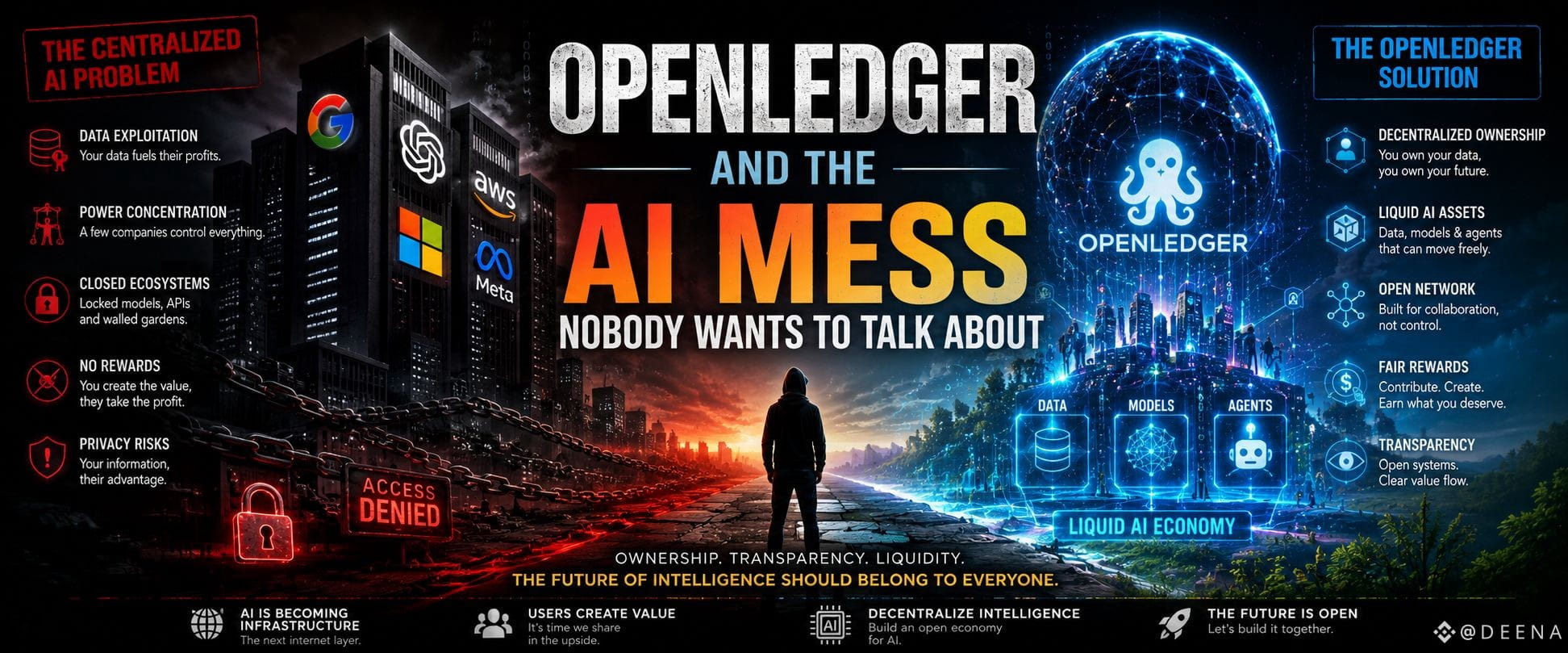
Früher dachte ich, die meisten KI-Projekte wären nur wiederaufbereiteter Hype mit teurer Branding. Dieselben Versprechen. Dieselben Buzzwords. Dasselbe Narrativ von der „Zukunft der Intelligenz“, das wiederholt wird, bis es niemand mehr hinterfragt. Aber je tiefer ich in OpenLedger eintauchte, desto mehr wurde mir klar, dass die wahre Geschichte nicht die KI selbst ist — es geht um Eigentum.
Im Moment kontrollieren ein paar riesige Unternehmen fast alles. Modelle. Daten. Infrastruktur. Distribution. In der Zwischenzeit füttern normale Nutzer diese Systeme jeden Tag kostenlos, ohne zu realisieren, wie viel Wert sie schaffen. Das ist der Teil, der sich für mich kaputt anfühlt.
Was meine Aufmerksamkeit auf OpenLedger lenkte, ist, dass es tatsächlich auf das Infrastrukturproblem hinweist, anstatt Engagement mit leeren KI-Narrativen zu farmen. Die Idee, dass Daten, Modelle und KI-Agenten durch eine offene Wirtschaft fließen sollten, anstatt in Unternehmensmauern gefangen zu bleiben, macht viel mehr Sinn, als die Leute realisieren.
Und ehrlich gesagt denke ich, dass die meisten Menschen immer noch unterschätzen, wie groß dieser Wandel wird.
KI ist nicht mehr nur Software.
Es verwandelt sich in wirtschaftliche Infrastruktur.
Die richtige Schlacht wird nicht darum gehen, wer den intelligentesten Chatbot baut.
Es wird darum gehen, wer die Schienen unter der Intelligenz selbst besitzt.
#openledger @Openledger $OPEN
{spot}(OPENUSDT)
$XLM
$ALLO
Früher dachte ich, die meisten KI-Projekte wären nur wiederaufbereiteter Hype mit teurer Branding. Dieselben Versprechen. Dieselben Buzzwords. Dasselbe Narrativ von der „Zukunft der Intelligenz“, das wiederholt wird, bis es niemand mehr hinterfragt. Aber je tiefer ich in OpenLedger eintauchte, desto mehr wurde mir klar, dass die wahre Geschichte nicht die KI selbst ist — es geht um Eigentum.
Im Moment kontrollieren ein paar riesige Unternehmen fast alles. Modelle. Daten. Infrastruktur. Distribution. In der Zwischenzeit füttern normale Nutzer diese Systeme jeden Tag kostenlos, ohne zu realisieren, wie viel Wert sie schaffen. Das ist der Teil, der sich für mich kaputt anfühlt.
Was meine Aufmerksamkeit auf OpenLedger lenkte, ist, dass es tatsächlich auf das Infrastrukturproblem hinweist, anstatt Engagement mit leeren KI-Narrativen zu farmen. Die Idee, dass Daten, Modelle und KI-Agenten durch eine offene Wirtschaft fließen sollten, anstatt in Unternehmensmauern gefangen zu bleiben, macht viel mehr Sinn, als die Leute realisieren.
Und ehrlich gesagt denke ich, dass die meisten Menschen immer noch unterschätzen, wie groß dieser Wandel wird.
KI ist nicht mehr nur Software.
Es verwandelt sich in wirtschaftliche Infrastruktur.
Die richtige Schlacht wird nicht darum gehen, wer den intelligentesten Chatbot baut.
Es wird darum gehen, wer die Schienen unter der Intelligenz selbst besitzt.
#openledger @OpenLedger $OPEN
$XLM
$ALLO
Im Moment kontrollieren ein paar riesige Unternehmen fast alles. Modelle. Daten. Infrastruktur. Distribution. In der Zwischenzeit füttern normale Nutzer diese Systeme jeden Tag kostenlos, ohne zu realisieren, wie viel Wert sie schaffen. Das ist der Teil, der sich für mich kaputt anfühlt.
Was meine Aufmerksamkeit auf OpenLedger lenkte, ist, dass es tatsächlich auf das Infrastrukturproblem hinweist, anstatt Engagement mit leeren KI-Narrativen zu farmen. Die Idee, dass Daten, Modelle und KI-Agenten durch eine offene Wirtschaft fließen sollten, anstatt in Unternehmensmauern gefangen zu bleiben, macht viel mehr Sinn, als die Leute realisieren.
Und ehrlich gesagt denke ich, dass die meisten Menschen immer noch unterschätzen, wie groß dieser Wandel wird.
KI ist nicht mehr nur Software.
Es verwandelt sich in wirtschaftliche Infrastruktur.
Die richtige Schlacht wird nicht darum gehen, wer den intelligentesten Chatbot baut.
Es wird darum gehen, wer die Schienen unter der Intelligenz selbst besitzt.
#openledger @OpenLedger $OPEN
$XLM
$ALLO
1
2
160
·
--
Artikel
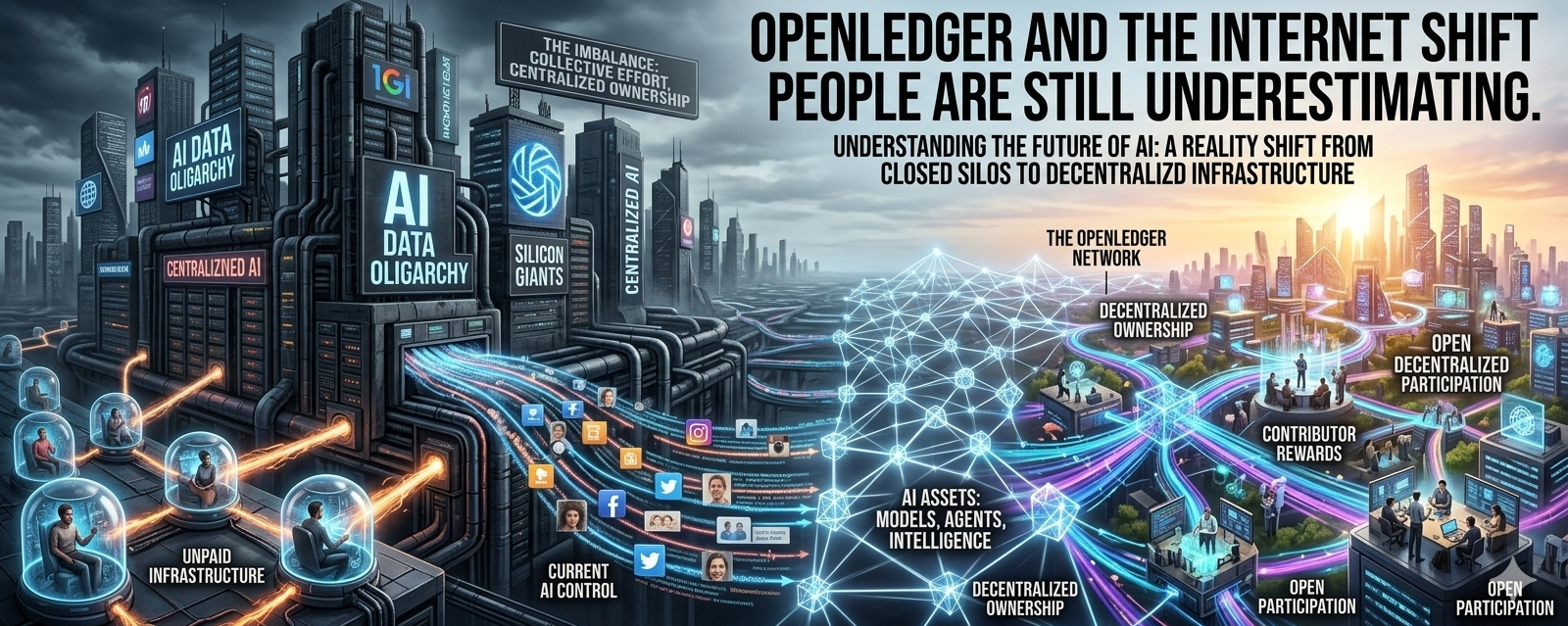
OPENLEDGER UND DER INTERNET-SHIFT, DEN DIE LEUTE NOCH UNTERSCHÄTZENDie meisten KI-Projekte fühlen sich im Moment leer an, sobald man über das Marketing hinausblickt. Die gleichen recycelten Versprechen überall. Die gleichen dramatischen Threads über "die Zukunft verändern." Die gleichen polierten Websites, voll mit Wörtern, die im echten Leben niemand verwendet. Jedes Projekt behauptet plötzlich, die nächste Generation von Intelligenz zu entwickeln, aber wenn man genauer hinsieht, sind die meisten von ihnen nur eine Wiederverpackung der gleichen zentralisierten Systeme mit einem Krypto-Label obendrauf. Deshalb haben so viele aufgehört, sich dafür zu interessieren. Die Aufregung ist verschwunden, weil der Raum mit Lärm überflutet wurde. Zu viele Gründer versuchen, Hype zu erzeugen. Zu viele Token geben vor, Technologie zu sein. Zu viele Leute jagen Trends, ohne überhaupt zu verstehen, welches Problem sie lösen sollen.
OPENLEDGER UND DER INTERNET-SHIFT, DEN DIE LEUTE NOCH UNTERSCHÄTZEN
Die meisten KI-Projekte fühlen sich im Moment leer an, sobald man über das Marketing hinausblickt. Die gleichen recycelten Versprechen überall. Die gleichen dramatischen Threads über "die Zukunft verändern." Die gleichen polierten Websites, voll mit Wörtern, die im echten Leben niemand verwendet. Jedes Projekt behauptet plötzlich, die nächste Generation von Intelligenz zu entwickeln, aber wenn man genauer hinsieht, sind die meisten von ihnen nur eine Wiederverpackung der gleichen zentralisierten Systeme mit einem Krypto-Label obendrauf. Deshalb haben so viele aufgehört, sich dafür zu interessieren. Die Aufregung ist verschwunden, weil der Raum mit Lärm überflutet wurde. Zu viele Gründer versuchen, Hype zu erzeugen. Zu viele Token geben vor, Technologie zu sein. Zu viele Leute jagen Trends, ohne überhaupt zu verstehen, welches Problem sie lösen sollen.
1
2
134
·
--
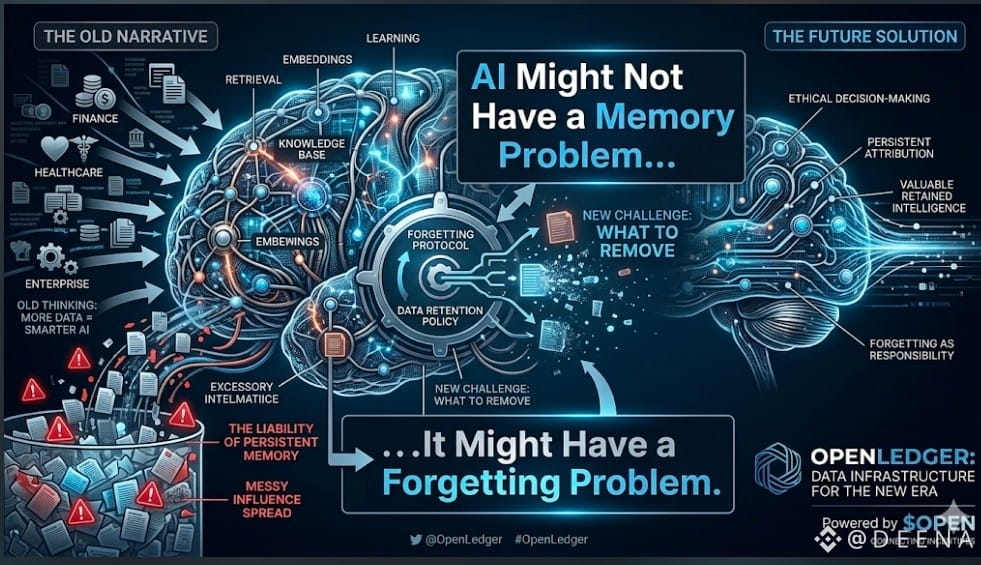
KI hat vielleicht kein Gedächtnisproblem… es hat vielleicht ein Vergessenproblem
Ich habe angefangen, über KI in letzter Zeit ganz anders nachzudenken. Jahrelang betrachtete die gesamte Branche Gedächtnis als einen unbegrenzten Vorteil. Je mehr Daten ein System sammeln, speichern und daraus lernen konnte, desto schlauer wurde es. Aber je tiefer KI in Finanzen, Gesundheitswesen, Unternehmensoperationen und echte Entscheidungsfindung eindringt, desto mehr habe ich das Gefühl, dass sich die eigentliche Herausforderung leise verschiebt.
Ich denke nicht, dass die Zukunft den Systemen gehört, die alles für immer erinnern.
Ich glaube, sie könnte den Systemen gehören, die verstehen, was nicht mehr erinnert werden sollte.
Deshalb hat OpenLedger meine Aufmerksamkeit erregt.
Die meisten Leute beschreiben es als KI-Dateninfrastruktur, bei der Mitwirkende Informationen bereitstellen, Modelle sich verbessern und $OPEN die Anreize verbindet. Aber ich denke, dass sich unter dieser Erzählung eine tiefere Schicht bildet. Sobald Informationen in KI-Systeme gelangen, wird es extrem schwierig, ihren Einfluss zu entfernen. Daten verbreiten sich durch Training, Einbettungen, Abrufsysteme und Verhaltensmuster auf eine Weise, die viel chaotischer ist, als die Leute realisieren.
Und sobald KI anfängt, sensible Arbeitsabläufe zu berühren, wird das Gedächtnis selbst zur Verantwortung.
Das verändert die Wirtschaftlichkeit vollkommen.
Wenn Zurechnung beständig und wertvoll wird, hört die erhaltene Intelligenz auf, kostenlose Infrastruktur zu sein. Plötzlich wird das Vergessen genauso wichtig wie das Lernen.
Und ehrlich gesagt, ich glaube nicht, dass der Markt das bisher vollständig eingepreist hat.
#OpenLedger @Openledger $OPEN
{spot}(OPENUSDT)
KI hat vielleicht kein Gedächtnisproblem… es hat vielleicht ein Vergessenproblem
Ich habe angefangen, über KI in letzter Zeit ganz anders nachzudenken. Jahrelang betrachtete die gesamte Branche Gedächtnis als einen unbegrenzten Vorteil. Je mehr Daten ein System sammeln, speichern und daraus lernen konnte, desto schlauer wurde es. Aber je tiefer KI in Finanzen, Gesundheitswesen, Unternehmensoperationen und echte Entscheidungsfindung eindringt, desto mehr habe ich das Gefühl, dass sich die eigentliche Herausforderung leise verschiebt.
Ich denke nicht, dass die Zukunft den Systemen gehört, die alles für immer erinnern.
Ich glaube, sie könnte den Systemen gehören, die verstehen, was nicht mehr erinnert werden sollte.
Deshalb hat OpenLedger meine Aufmerksamkeit erregt.
Die meisten Leute beschreiben es als KI-Dateninfrastruktur, bei der Mitwirkende Informationen bereitstellen, Modelle sich verbessern und $OPEN die Anreize verbindet. Aber ich denke, dass sich unter dieser Erzählung eine tiefere Schicht bildet. Sobald Informationen in KI-Systeme gelangen, wird es extrem schwierig, ihren Einfluss zu entfernen. Daten verbreiten sich durch Training, Einbettungen, Abrufsysteme und Verhaltensmuster auf eine Weise, die viel chaotischer ist, als die Leute realisieren.
Und sobald KI anfängt, sensible Arbeitsabläufe zu berühren, wird das Gedächtnis selbst zur Verantwortung.
Das verändert die Wirtschaftlichkeit vollkommen.
Wenn Zurechnung beständig und wertvoll wird, hört die erhaltene Intelligenz auf, kostenlose Infrastruktur zu sein. Plötzlich wird das Vergessen genauso wichtig wie das Lernen.
Und ehrlich gesagt, ich glaube nicht, dass der Markt das bisher vollständig eingepreist hat.
#OpenLedger @OpenLedger $OPEN
Ich habe angefangen, über KI in letzter Zeit ganz anders nachzudenken. Jahrelang betrachtete die gesamte Branche Gedächtnis als einen unbegrenzten Vorteil. Je mehr Daten ein System sammeln, speichern und daraus lernen konnte, desto schlauer wurde es. Aber je tiefer KI in Finanzen, Gesundheitswesen, Unternehmensoperationen und echte Entscheidungsfindung eindringt, desto mehr habe ich das Gefühl, dass sich die eigentliche Herausforderung leise verschiebt.
Ich denke nicht, dass die Zukunft den Systemen gehört, die alles für immer erinnern.
Ich glaube, sie könnte den Systemen gehören, die verstehen, was nicht mehr erinnert werden sollte.
Deshalb hat OpenLedger meine Aufmerksamkeit erregt.
Die meisten Leute beschreiben es als KI-Dateninfrastruktur, bei der Mitwirkende Informationen bereitstellen, Modelle sich verbessern und $OPEN die Anreize verbindet. Aber ich denke, dass sich unter dieser Erzählung eine tiefere Schicht bildet. Sobald Informationen in KI-Systeme gelangen, wird es extrem schwierig, ihren Einfluss zu entfernen. Daten verbreiten sich durch Training, Einbettungen, Abrufsysteme und Verhaltensmuster auf eine Weise, die viel chaotischer ist, als die Leute realisieren.
Und sobald KI anfängt, sensible Arbeitsabläufe zu berühren, wird das Gedächtnis selbst zur Verantwortung.
Das verändert die Wirtschaftlichkeit vollkommen.
Wenn Zurechnung beständig und wertvoll wird, hört die erhaltene Intelligenz auf, kostenlose Infrastruktur zu sein. Plötzlich wird das Vergessen genauso wichtig wie das Lernen.
Und ehrlich gesagt, ich glaube nicht, dass der Markt das bisher vollständig eingepreist hat.
#OpenLedger @OpenLedger $OPEN
97
·
--
Artikel
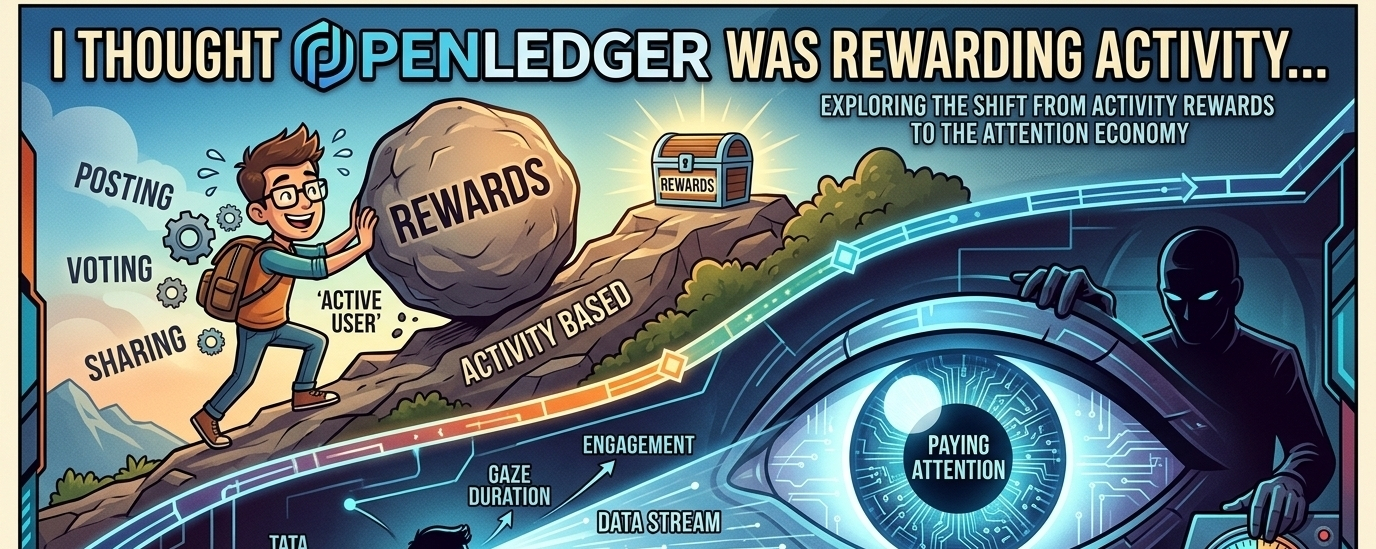
Ich dachte, OpenLedger belohne Aktivität… Bis ich merkte, dass es auf etwas anderes achtete.
Als ich das erste Mal OpenLedger genutzt habe, dachte ich, ich hätte das System ziemlich schnell durchschaut.
Es fühlte sich ähnlich an wie viele andere Ökosysteme, die ich zuvor gesehen habe. Bleib aktiv, schließe Aufgaben ab, engagiere dich konstant, komm morgen zurück, wiederhole das. Die Struktur fühlte sich vertraut genug an, dass ich anfangs nicht tief darüber nachdachte. Ehrlich gesagt, ging ich davon aus, dass die ganze Idee einfach war: Je sichtbarer du bist, desto mehr Wert schaffst du im Netzwerk.
Und eine Zeit lang machte dieser Glaube für mich Sinn.
Denn Online-Systeme trainieren uns normalerweise, zu denken, dass Aktivität gleichbedeutend mit Bedeutung ist. Wenn du mehr postest, mehr interagierst und ständig präsent bist, bemerkt dich das System irgendwann. So funktionieren die meisten Plattformen heutzutage, also hatte ich natürlich die gleiche Denkweise auch bei OpenLedger.
Als ich das erste Mal OpenLedger genutzt habe, dachte ich, ich hätte das System ziemlich schnell durchschaut.
Es fühlte sich ähnlich an wie viele andere Ökosysteme, die ich zuvor gesehen habe. Bleib aktiv, schließe Aufgaben ab, engagiere dich konstant, komm morgen zurück, wiederhole das. Die Struktur fühlte sich vertraut genug an, dass ich anfangs nicht tief darüber nachdachte. Ehrlich gesagt, ging ich davon aus, dass die ganze Idee einfach war: Je sichtbarer du bist, desto mehr Wert schaffst du im Netzwerk.
Und eine Zeit lang machte dieser Glaube für mich Sinn.
Denn Online-Systeme trainieren uns normalerweise, zu denken, dass Aktivität gleichbedeutend mit Bedeutung ist. Wenn du mehr postest, mehr interagierst und ständig präsent bist, bemerkt dich das System irgendwann. So funktionieren die meisten Plattformen heutzutage, also hatte ich natürlich die gleiche Denkweise auch bei OpenLedger.
Ich dachte, OpenLedger belohne Aktivität… Bis ich merkte, dass es auf etwas anderes achtete.
Als ich das erste Mal OpenLedger genutzt habe, dachte ich, ich hätte das System ziemlich schnell durchschaut.
Es fühlte sich ähnlich an wie viele andere Ökosysteme, die ich zuvor gesehen habe. Bleib aktiv, schließe Aufgaben ab, engagiere dich konstant, komm morgen zurück, wiederhole das. Die Struktur fühlte sich vertraut genug an, dass ich anfangs nicht tief darüber nachdachte. Ehrlich gesagt, ging ich davon aus, dass die ganze Idee einfach war: Je sichtbarer du bist, desto mehr Wert schaffst du im Netzwerk.
Und eine Zeit lang machte dieser Glaube für mich Sinn.
Denn Online-Systeme trainieren uns normalerweise, zu denken, dass Aktivität gleichbedeutend mit Bedeutung ist. Wenn du mehr postest, mehr interagierst und ständig präsent bist, bemerkt dich das System irgendwann. So funktionieren die meisten Plattformen heutzutage, also hatte ich natürlich die gleiche Denkweise auch bei OpenLedger.
100
·
--
Warum ich denke, dass Genius Terminal leise verändert, wie sich On-Chain-Trading anfühlt
Früher dachte ich, die meisten On-Chain-Terminals seien im Grunde dasselbe mit unterschiedlichen Oberflächen, verschiedenen Marken und leicht schnelleren Ausführungsversprechen. Aber je mehr Zeit ich damit verbrachte, zu beobachten, wie Trader über die Märkte navigieren, desto mehr wurde mir klar, dass der wahre Unterschied nicht nur in der Geschwindigkeit liegt. Es sind Privatsphäre, Einfachheit und das Gefühl von Kontrolle, während sich alles um einen herum im Chaos bewegt. Genau da begann Genius Terminal für mich herauszustechen.
Was meine Aufmerksamkeit erregte, ist die Idee, das erste private und endgültige On-Chain-Terminal zu sein. In der Krypto-Welt reden die Leute ständig über Transparenz, aber sehr wenige sprechen über die Kosten, jeden Zug vor der Ausführung offenzulegen. Der Markt beobachtet alles. Wallets werden verfolgt. Strategien werden zu öffentlichen Mustern. Im Laufe der Zeit verändert das das Verhalten der Trader selbst. Ich denke, Genius Terminal versteht diese versteckte Reibung besser als die meisten Plattformen.
Was das interessant macht, ist nicht Hype oder auffälliges Marketing. Es ist die Richtung. Das Terminal scheint um die Ausführungsfokussierung herum gebaut zu sein, anstatt um Lärm. Sauberer Fluss. Weniger Ablenkung. Mehr Kontrolle darüber, wie Nutzer mit On-Chain-Liquidität und Informationen interagieren.
Ich denke, die nächste Phase der Krypto-Infrastruktur wird Produkten gehören, die Reibung leise reduzieren, während die Nutzer kaum bemerken, dass es passiert. Genius Terminal fühlt sich wie eines dieser Systeme an.
#genius @GeniusOfficial $GENIUS
{spot}(GENIUSUSDT)
Warum ich denke, dass Genius Terminal leise verändert, wie sich On-Chain-Trading anfühlt
Früher dachte ich, die meisten On-Chain-Terminals seien im Grunde dasselbe mit unterschiedlichen Oberflächen, verschiedenen Marken und leicht schnelleren Ausführungsversprechen. Aber je mehr Zeit ich damit verbrachte, zu beobachten, wie Trader über die Märkte navigieren, desto mehr wurde mir klar, dass der wahre Unterschied nicht nur in der Geschwindigkeit liegt. Es sind Privatsphäre, Einfachheit und das Gefühl von Kontrolle, während sich alles um einen herum im Chaos bewegt. Genau da begann Genius Terminal für mich herauszustechen.
Was meine Aufmerksamkeit erregte, ist die Idee, das erste private und endgültige On-Chain-Terminal zu sein. In der Krypto-Welt reden die Leute ständig über Transparenz, aber sehr wenige sprechen über die Kosten, jeden Zug vor der Ausführung offenzulegen. Der Markt beobachtet alles. Wallets werden verfolgt. Strategien werden zu öffentlichen Mustern. Im Laufe der Zeit verändert das das Verhalten der Trader selbst. Ich denke, Genius Terminal versteht diese versteckte Reibung besser als die meisten Plattformen.
Was das interessant macht, ist nicht Hype oder auffälliges Marketing. Es ist die Richtung. Das Terminal scheint um die Ausführungsfokussierung herum gebaut zu sein, anstatt um Lärm. Sauberer Fluss. Weniger Ablenkung. Mehr Kontrolle darüber, wie Nutzer mit On-Chain-Liquidität und Informationen interagieren.
Ich denke, die nächste Phase der Krypto-Infrastruktur wird Produkten gehören, die Reibung leise reduzieren, während die Nutzer kaum bemerken, dass es passiert. Genius Terminal fühlt sich wie eines dieser Systeme an.
#genius @GeniusOfficial $GENIUS
Früher dachte ich, die meisten On-Chain-Terminals seien im Grunde dasselbe mit unterschiedlichen Oberflächen, verschiedenen Marken und leicht schnelleren Ausführungsversprechen. Aber je mehr Zeit ich damit verbrachte, zu beobachten, wie Trader über die Märkte navigieren, desto mehr wurde mir klar, dass der wahre Unterschied nicht nur in der Geschwindigkeit liegt. Es sind Privatsphäre, Einfachheit und das Gefühl von Kontrolle, während sich alles um einen herum im Chaos bewegt. Genau da begann Genius Terminal für mich herauszustechen.
Was meine Aufmerksamkeit erregte, ist die Idee, das erste private und endgültige On-Chain-Terminal zu sein. In der Krypto-Welt reden die Leute ständig über Transparenz, aber sehr wenige sprechen über die Kosten, jeden Zug vor der Ausführung offenzulegen. Der Markt beobachtet alles. Wallets werden verfolgt. Strategien werden zu öffentlichen Mustern. Im Laufe der Zeit verändert das das Verhalten der Trader selbst. Ich denke, Genius Terminal versteht diese versteckte Reibung besser als die meisten Plattformen.
Was das interessant macht, ist nicht Hype oder auffälliges Marketing. Es ist die Richtung. Das Terminal scheint um die Ausführungsfokussierung herum gebaut zu sein, anstatt um Lärm. Sauberer Fluss. Weniger Ablenkung. Mehr Kontrolle darüber, wie Nutzer mit On-Chain-Liquidität und Informationen interagieren.
Ich denke, die nächste Phase der Krypto-Infrastruktur wird Produkten gehören, die Reibung leise reduzieren, während die Nutzer kaum bemerken, dass es passiert. Genius Terminal fühlt sich wie eines dieser Systeme an.
#genius @GeniusOfficial $GENIUS
90
·
--
Das echte KI-Problem könnte nicht Intelligenz sein… sondern Gedächtnis, das sich weigert zu sterben
Ich komme immer wieder zu einem unangenehmen Gedanken über KI zurück.
Das eigentliche Problem könnte überhaupt nicht Intelligenz sein. Es könnte Gedächtnis sein.
Jahrelang hat die Tech-Branche das Speichern wie einen automatischen Vorteil behandelt. Mehr Daten speichern. Mehr Verhalten verfolgen. Mehr Geschichte bewahren. Die Annahme war einfach: mehr Gedächtnis schafft bessere Systeme.
Aber je tiefer KI in das Gesundheitswesen, die Finanzen, die Compliance, die Kundenoperationen und die Entscheidungsfindung eindringt, desto schwieriger wird es, die Nachteile dieser Logik zu ignorieren.
Denn KI „vergisst“ nicht wirklich.
Sobald Informationen in eine Trainings-Pipeline, eine Abrufschicht oder ein Verhaltenssystem gelangen, breiten sie sich im Modell auf Weisen aus, die später schwer zu isolieren sind. Eine Datei zu löschen ist einfach. Den Einfluss von Informationen aus der Intelligenz selbst zu entfernen, ist viel schwieriger.
Dieser Wandel ist teilweise der Grund, warum OpenLedger für mich interessanter geworden ist.
Zuerst sah ich es als eine weitere KI-Infrastruktur-Narrative, die sich auf Attribution und Datenkoordination konzentrierte. Aber die tiefere Schicht könnte etwas ganz anderes sein.
Sobald Attribution beständig und wirtschaftlich sinnvoll wird, hört Gedächtnis auf, kostenlose Infrastruktur zu sein. Es wird zu einer Verbindlichkeit, einem Vermögenswert und schließlich zu einem Governance-Problem zugleich.
Und in dem Moment, in dem Gedächtnis rechtliche, finanzielle und betriebliche Bedeutung trägt, sieht Vergessen nicht mehr ineffizient aus.
Es beginnt notwendig zu erscheinen.
#openledger @Openledger $OPEN
{spot}(OPENUSDT)
Das echte KI-Problem könnte nicht Intelligenz sein… sondern Gedächtnis, das sich weigert zu sterben
Ich komme immer wieder zu einem unangenehmen Gedanken über KI zurück.
Das eigentliche Problem könnte überhaupt nicht Intelligenz sein. Es könnte Gedächtnis sein.
Jahrelang hat die Tech-Branche das Speichern wie einen automatischen Vorteil behandelt. Mehr Daten speichern. Mehr Verhalten verfolgen. Mehr Geschichte bewahren. Die Annahme war einfach: mehr Gedächtnis schafft bessere Systeme.
Aber je tiefer KI in das Gesundheitswesen, die Finanzen, die Compliance, die Kundenoperationen und die Entscheidungsfindung eindringt, desto schwieriger wird es, die Nachteile dieser Logik zu ignorieren.
Denn KI „vergisst“ nicht wirklich.
Sobald Informationen in eine Trainings-Pipeline, eine Abrufschicht oder ein Verhaltenssystem gelangen, breiten sie sich im Modell auf Weisen aus, die später schwer zu isolieren sind. Eine Datei zu löschen ist einfach. Den Einfluss von Informationen aus der Intelligenz selbst zu entfernen, ist viel schwieriger.
Dieser Wandel ist teilweise der Grund, warum OpenLedger für mich interessanter geworden ist.
Zuerst sah ich es als eine weitere KI-Infrastruktur-Narrative, die sich auf Attribution und Datenkoordination konzentrierte. Aber die tiefere Schicht könnte etwas ganz anderes sein.
Sobald Attribution beständig und wirtschaftlich sinnvoll wird, hört Gedächtnis auf, kostenlose Infrastruktur zu sein. Es wird zu einer Verbindlichkeit, einem Vermögenswert und schließlich zu einem Governance-Problem zugleich.
Und in dem Moment, in dem Gedächtnis rechtliche, finanzielle und betriebliche Bedeutung trägt, sieht Vergessen nicht mehr ineffizient aus.
Es beginnt notwendig zu erscheinen.
#openledger @OpenLedger $OPEN
Ich komme immer wieder zu einem unangenehmen Gedanken über KI zurück.
Das eigentliche Problem könnte überhaupt nicht Intelligenz sein. Es könnte Gedächtnis sein.
Jahrelang hat die Tech-Branche das Speichern wie einen automatischen Vorteil behandelt. Mehr Daten speichern. Mehr Verhalten verfolgen. Mehr Geschichte bewahren. Die Annahme war einfach: mehr Gedächtnis schafft bessere Systeme.
Aber je tiefer KI in das Gesundheitswesen, die Finanzen, die Compliance, die Kundenoperationen und die Entscheidungsfindung eindringt, desto schwieriger wird es, die Nachteile dieser Logik zu ignorieren.
Denn KI „vergisst“ nicht wirklich.
Sobald Informationen in eine Trainings-Pipeline, eine Abrufschicht oder ein Verhaltenssystem gelangen, breiten sie sich im Modell auf Weisen aus, die später schwer zu isolieren sind. Eine Datei zu löschen ist einfach. Den Einfluss von Informationen aus der Intelligenz selbst zu entfernen, ist viel schwieriger.
Dieser Wandel ist teilweise der Grund, warum OpenLedger für mich interessanter geworden ist.
Zuerst sah ich es als eine weitere KI-Infrastruktur-Narrative, die sich auf Attribution und Datenkoordination konzentrierte. Aber die tiefere Schicht könnte etwas ganz anderes sein.
Sobald Attribution beständig und wirtschaftlich sinnvoll wird, hört Gedächtnis auf, kostenlose Infrastruktur zu sein. Es wird zu einer Verbindlichkeit, einem Vermögenswert und schließlich zu einem Governance-Problem zugleich.
Und in dem Moment, in dem Gedächtnis rechtliche, finanzielle und betriebliche Bedeutung trägt, sieht Vergessen nicht mehr ineffizient aus.
Es beginnt notwendig zu erscheinen.
#openledger @OpenLedger $OPEN

90
Anmelden und weiter Inhalte entdecken
Krypto-Nutzer weltweit auf Binance Square kennenlernen
⚡️ Bleib in Sachen Krypto stets am Puls.
💬 Die weltgrößte Kryptobörse vertraut darauf.
👍 Erhalte verlässliche Einblicke von verifizierten Creators.
E-Mail-Adresse/Telefonnummer
Trendthemen
HYPEJumpsOver11%
5,358 Aufrufe
279 Kommentare
🚨 HYPE HAT DEN MARKT UMGEDREHT
$HYPE +11% in 7 Tagen
Während $XRP und $ETH bluteten...
HYPE ist in die TOP 10 eingedrungen und hat Cardano rausgeworfen.
Warum?
-> $1,3B+ Open Interest
-> ETF-Zuflüsse schlagen BTC & ETH-ETFs
-> Massiver Supply-Burn läuft gerade
Das ist kein einfaches Pump-and-Dump. Das ist Dominanz.
Schauen Sie zu oder SIND SIE DRIN? 👇
#HYPE #Hyperliquid #Krypto #BinanceSquare#hypejumpsover11%
True News
·3 Likes
·1.7k Aufrufe
ZcashDevelopersTargetNU7MainnetActivationNov5
0 Aufrufe
2 Kommentare
BitcoinSpotETFsNetInflow$159M
1,707 Aufrufe
73 Kommentare