

CoinsProbe
3.4k Beiträge

CoinsProbe
 Square Verified+
Melden
Nutzer blockieren
Coinsprobe is the leading cryptocurrency platform that provides the latest news, breakouts, price predictions, airdrops, events, and ICO presales.
1 Following
9.8K+ Follower
12.6K+ Like gegeben
Beiträge
·
--
Artikel
Bitcoin- und Ethereum-ETFs melden Ausflüsse an einem Tag — 7-Tage-Summen bleiben jedoch positivWichtige Highlights
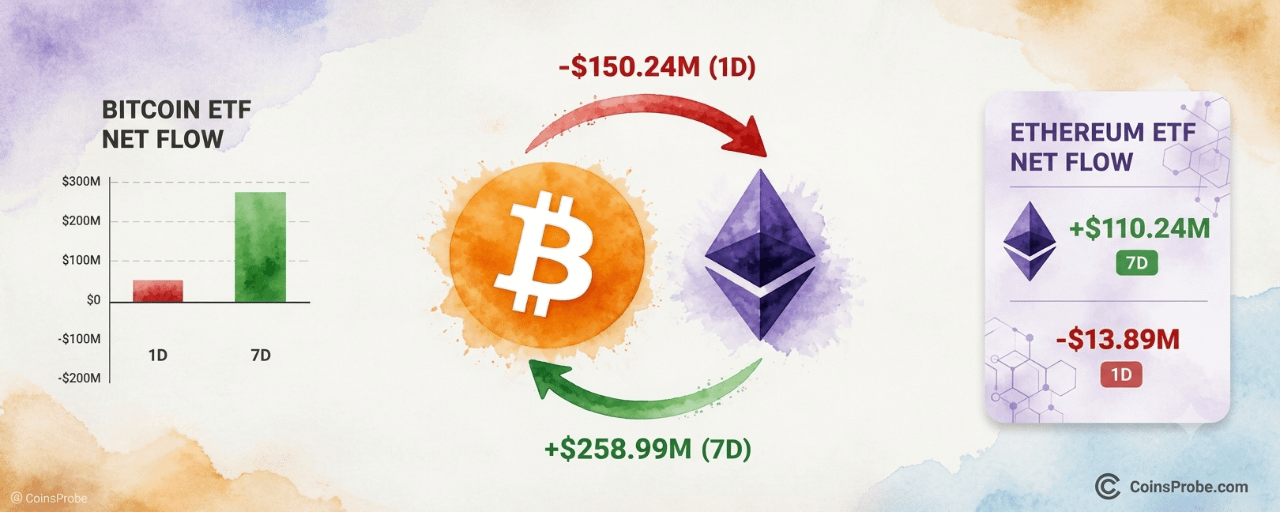
Bitcoin-ETFs: -1.796 BTC (-150,24 Mio. $) am 1. Okt.; 7-Tage-Netto bleibt +3.096 BTC (+258,99 Mio. $) laut Lookonchain
Ethereum-ETFs: -5.171 ETH (-13,89 Mio. $) am 1. Okt.; 7-Tage-Netto hält +41.041 ETH (+110,24 Mio. $)
Am 1. Okt. wurde der BTC-Abfluss zu 58,0 % des 7-Tage-Zuflusses in Dollar-Termen wieder wettgemacht; der tägliche ETH-Abfluss wurde nur zu 12,6 % umgekehrt
Kombinierte 7-Tage-Nettozuflüsse über BTC- und ETH-ETFs: ~369,23 Mio. $; Bitcoin macht 70,1 % des Gesamtwerts aus
Sowohl US-amerikanische Spot-Bitcoin- als auch -Ethereum-ETFs verzeichneten am 1. Oktober 2026 Netto-Abflüsse — doch die Ein-Tages-Rücknahmen haben laut von Lookonchain veröffentlichten Daten die positive Wochen-Dynamik, die sich in den vorangegangenen sechs Sitzungen aufgebaut hatte, nicht zunichtegemacht.
Bitcoin- und Ethereum-ETFs melden Ausflüsse an einem Tag — 7-Tage-Summen bleiben jedoch positiv
Wichtige Highlights
Bitcoin-ETFs: -1.796 BTC (-150,24 Mio. $) am 1. Okt.; 7-Tage-Netto bleibt +3.096 BTC (+258,99 Mio. $) laut Lookonchain
Ethereum-ETFs: -5.171 ETH (-13,89 Mio. $) am 1. Okt.; 7-Tage-Netto hält +41.041 ETH (+110,24 Mio. $)
Am 1. Okt. wurde der BTC-Abfluss zu 58,0 % des 7-Tage-Zuflusses in Dollar-Termen wieder wettgemacht; der tägliche ETH-Abfluss wurde nur zu 12,6 % umgekehrt
Kombinierte 7-Tage-Nettozuflüsse über BTC- und ETH-ETFs: ~369,23 Mio. $; Bitcoin macht 70,1 % des Gesamtwerts aus
Sowohl US-amerikanische Spot-Bitcoin- als auch -Ethereum-ETFs verzeichneten am 1. Oktober 2026 Netto-Abflüsse — doch die Ein-Tages-Rücknahmen haben laut von Lookonchain veröffentlichten Daten die positive Wochen-Dynamik, die sich in den vorangegangenen sechs Sitzungen aufgebaut hatte, nicht zunichtegemacht.
Bitcoin-ETFs: -1.796 BTC (-150,24 Mio. $) am 1. Okt.; 7-Tage-Netto bleibt +3.096 BTC (+258,99 Mio. $) laut Lookonchain
Ethereum-ETFs: -5.171 ETH (-13,89 Mio. $) am 1. Okt.; 7-Tage-Netto hält +41.041 ETH (+110,24 Mio. $)
Am 1. Okt. wurde der BTC-Abfluss zu 58,0 % des 7-Tage-Zuflusses in Dollar-Termen wieder wettgemacht; der tägliche ETH-Abfluss wurde nur zu 12,6 % umgekehrt
Kombinierte 7-Tage-Nettozuflüsse über BTC- und ETH-ETFs: ~369,23 Mio. $; Bitcoin macht 70,1 % des Gesamtwerts aus
Sowohl US-amerikanische Spot-Bitcoin- als auch -Ethereum-ETFs verzeichneten am 1. Oktober 2026 Netto-Abflüsse — doch die Ein-Tages-Rücknahmen haben laut von Lookonchain veröffentlichten Daten die positive Wochen-Dynamik, die sich in den vorangegangenen sechs Sitzungen aufgebaut hatte, nicht zunichtegemacht.
1
364
·
--

Artikel
Übersetzung ansehen
Bitcoin Whales Sold $2.52B While ETH Whales Bought — What It MeansKey Highlights
Bitcoin whales shed 30,000 BTC ($2.52B) between Sept 27–Oct 1 during sideways price action, per Santiment data via @alichartsEthereum whales added 60,000 ETH (~$162M) over the same period — a direct divergence from BTC's distribution signalBitcoin whale holdings floor at 5.22M BTC — a break below confirms ongoing distribution; recovery above shifts thesis to accumulationXRP whales stayed flat near 3.90 billion XRP over the past week.
Bitcoin is trading at $83,480 — up 0.57% in the past 24 hours — with a market cap of $1.676 trillion. But beneath the calm surface, a significant divergence is playing out between large holders across assets. While price moved sideways over the past week, whales were anything but idle.
Analyst Ali Martinez (@alicharts) published a five-part thread on October 1 tracking whale behavior across Bitcoin, Ethereum, and XRP during the recent lull. The headline finding: Bitcoin’s largest holders offloaded roughly 30,000 BTC — worth approximately $2.52 billion — while the market drifted sideways. Ethereum told the opposite story.
Bitcoin Whales: $2.52B in Quiet Distribution
Santiment data tracked by @alicharts shows Bitcoin whale holdings peaked at approximately 5.26 million BTC between September 27 and 28, then dropped sharply through September 29, before stabilizing near a floor of 5.22 million BTC as October began. The 30,000 BTC reduction — valued at $2.52 billion at current prices — did not occur during a price crash. It occurred during sideways consolidation.
That distinction matters. Panic selling in a downturn reflects reactive behavior. Distribution into flat price action reflects something more deliberate. When price holds steady but whale holdings decline sharply, large holders are offloading into whatever retail liquidity exists — not reacting to a move, but engineering the conditions for one. The Santiment chart shared by @alicharts shows the classic cliff-edge structure: a steep drop in holdings from Sept 27–29, followed by slight stabilization into October 1.
]
BTC Held by Whales — Analysis | Source: @alicharts (X)
The slight recovery in holdings into October bears close watching. If Bitcoin whale balances stabilize or reverse higher, it may signal accumulation resuming at lower realized prices. If holdings continue declining, the 30,000 BTC already distributed represents supply that the market must now absorb — a structural headwind that price pressure typically follows, not precedes. Bitcoin’s sideways action over the past week may already reflect this dynamic: the market absorbing supply without large buyers stepping in at scale.
This pattern is not isolated to Bitcoin. As noted in our earlier coverage, ADA futures open interest fell 9% as whales offloaded $22.5M in a single week — a sign that large-holder distribution has been a cross-asset theme in recent sessions.
Ethereum Whales: $162M in Active Accumulation
Ethereum’s whale data runs directly counter to Bitcoin’s. Over the same week, ETH large holders added approximately 60,000 ETH — worth around $162 million. Where Bitcoin whales distributed into the lull, Ethereum whales used the same flat market to accumulate. The divergence is notable precisely because the macro backdrop was identical for both assets: a sideways, low-volatility week with no major directional catalyst.
The contrast suggests asset-specific conviction rather than a macro risk-on or risk-off position. Ethereum whales were not buying because the market was bullish — they were buying during a period when Bitcoin whales were selling. For context, the scale of ETH accumulation (Ethereum whale transactions have surged in recent weeks) points to deliberate positioning rather than routine rebalancing.
ETH Held by Whales | Source: @alicharts (X)
Why Sideways Distribution Is the Bearish Signal — Not a Crash
The mechanism behind quiet distribution is straightforward. In a falling market, retail participants reduce exposure alongside whales — meaning there is less liquidity for large holders to sell into without moving price. In a sideways market, retail sentiment is neutral and passive buyers remain present. That liquidity allows whales to exit at scale without triggering the price decline that would otherwise reveal their selling. The result: holdings fall, price holds, and the structural imbalance builds until retail buying is exhausted.
This is why the Santiment data flagged by @alicharts is more consequential than a sharp single-session dump. A 30,000 BTC reduction across four days of flat price action implies that the selling was absorbed — meaning the supply overhang has already entered the market. The question now is whether demand at current levels is sufficient to prevent further drawdown once that absorption is complete.
Bullish Scenario — Whale Holdings Stabilize Above 5.22M BTC
If Santiment data shows Bitcoin whale balances recovering above 5.22 million BTC in the sessions ahead, it would indicate the distribution phase has ended and large holders are re-accumulating at current levels. A confirmed reversal in whale holdings, combined with price holding above $83,000, would shift the structural picture from distribution to accumulation — opening a path toward retesting the $88,000–$90,000 resistance zone.
Bearish Scenario — Holdings Continue Declining Below 5.22M BTC
If whale holdings break below the 5.22 million BTC floor identified on the Santiment chart, it confirms that distribution is ongoing rather than complete. The 30,000 BTC already sold represents $2.52 billion in supply that the market has absorbed — additional selling would add to that overhang. In this scenario, the sideways consolidation becomes a distribution top rather than a base, and Bitcoin’s next directional move would likely resolve to the downside. The $80,000 level becomes the immediate support to watch.
XRP Whales
@alicharts’ fourth update fills in the XRP side of the divergence. While Bitcoin whales cut about 30,000 BTC, worth roughly $2.52 billion, and Ethereum whales added about 60,000 ETH, worth around $162 million, XRP whales largely stayed put. Combined holdings hovered around 3.90 billion XRP over the past week, with no significant change.
XRP Held by Whales | Source: @alicharts (X)
That leaves a three-way split, not a clean rotation from Bitcoin into altcoins. Bitcoin’s largest holders reduced exposure during a flat week. Ethereum’s largest holders added. XRP’s largest holders waited. Ali’s own summary is the same: Bitcoin whales are reducing holdings, Ethereum whales are buying, and XRP whales are waiting.
The split is asset-specific. It does not show XRP whales following Bitcoin’s distribution or matching Ethereum’s accumulation. Santiment’s Bitcoin whale-holdings chart remains the metric to track on the BTC side: a continued decline below 5.22 million BTC confirms ongoing distribution, while a recovery above that floor would weaken the selling thesis. If Bitcoin whale selling continues, $80,000 is the level where absorption will be tested.
The full picture from @alicharts’ thread will clarify whether XRP whales are following Bitcoin’s distribution pattern or Ethereum’s accumulation signal.
The core takeaway from the data is structural. Bitcoin’s largest holders reduced exposure by $2.52 billion during a week when price gave no obvious reason to sell — which is precisely when informed selling happens. Ethereum’s largest holders added $162 million over the same period into the same flat market. The divergence points to asset-specific conviction at the institutional level. Santiment’s whale holdings chart is the metric to track in real time: a continued decline below 5.22 million BTC confirms ongoing distribution; a recovery above that floor shifts the thesis. Watch $80,000 as the level where absorption capacity will be tested if whale selling continues.
Disclaimer: The views and analysis presented in this article are for informational purposes only and reflect the author’s perspective, not financial advice. Technical patterns and indicators discussed are subject to market volatility and may or may not yield anticipated results. Investors are advised to exercise caution, conduct independent research, and make decisions aligned with their individual risk tolerance.
Bitcoin Whales Sold $2.52B While ETH Whales Bought — What It Means
Key Highlights
Bitcoin whales shed 30,000 BTC ($2.52B) between Sept 27–Oct 1 during sideways price action, per Santiment data via @alichartsEthereum whales added 60,000 ETH (~$162M) over the same period — a direct divergence from BTC's distribution signalBitcoin whale holdings floor at 5.22M BTC — a break below confirms ongoing distribution; recovery above shifts thesis to accumulationXRP whales stayed flat near 3.90 billion XRP over the past week.
Bitcoin is trading at $83,480 — up 0.57% in the past 24 hours — with a market cap of $1.676 trillion. But beneath the calm surface, a significant divergence is playing out between large holders across assets. While price moved sideways over the past week, whales were anything but idle.
Analyst Ali Martinez (@alicharts) published a five-part thread on October 1 tracking whale behavior across Bitcoin, Ethereum, and XRP during the recent lull. The headline finding: Bitcoin’s largest holders offloaded roughly 30,000 BTC — worth approximately $2.52 billion — while the market drifted sideways. Ethereum told the opposite story.
Bitcoin Whales: $2.52B in Quiet Distribution
Santiment data tracked by @alicharts shows Bitcoin whale holdings peaked at approximately 5.26 million BTC between September 27 and 28, then dropped sharply through September 29, before stabilizing near a floor of 5.22 million BTC as October began. The 30,000 BTC reduction — valued at $2.52 billion at current prices — did not occur during a price crash. It occurred during sideways consolidation.
That distinction matters. Panic selling in a downturn reflects reactive behavior. Distribution into flat price action reflects something more deliberate. When price holds steady but whale holdings decline sharply, large holders are offloading into whatever retail liquidity exists — not reacting to a move, but engineering the conditions for one. The Santiment chart shared by @alicharts shows the classic cliff-edge structure: a steep drop in holdings from Sept 27–29, followed by slight stabilization into October 1.
]
BTC Held by Whales — Analysis | Source: @alicharts (X)
The slight recovery in holdings into October bears close watching. If Bitcoin whale balances stabilize or reverse higher, it may signal accumulation resuming at lower realized prices. If holdings continue declining, the 30,000 BTC already distributed represents supply that the market must now absorb — a structural headwind that price pressure typically follows, not precedes. Bitcoin’s sideways action over the past week may already reflect this dynamic: the market absorbing supply without large buyers stepping in at scale.
This pattern is not isolated to Bitcoin. As noted in our earlier coverage, ADA futures open interest fell 9% as whales offloaded $22.5M in a single week — a sign that large-holder distribution has been a cross-asset theme in recent sessions.
Ethereum Whales: $162M in Active Accumulation
Ethereum’s whale data runs directly counter to Bitcoin’s. Over the same week, ETH large holders added approximately 60,000 ETH — worth around $162 million. Where Bitcoin whales distributed into the lull, Ethereum whales used the same flat market to accumulate. The divergence is notable precisely because the macro backdrop was identical for both assets: a sideways, low-volatility week with no major directional catalyst.
The contrast suggests asset-specific conviction rather than a macro risk-on or risk-off position. Ethereum whales were not buying because the market was bullish — they were buying during a period when Bitcoin whales were selling. For context, the scale of ETH accumulation (Ethereum whale transactions have surged in recent weeks) points to deliberate positioning rather than routine rebalancing.
ETH Held by Whales | Source: @alicharts (X)
Why Sideways Distribution Is the Bearish Signal — Not a Crash
The mechanism behind quiet distribution is straightforward. In a falling market, retail participants reduce exposure alongside whales — meaning there is less liquidity for large holders to sell into without moving price. In a sideways market, retail sentiment is neutral and passive buyers remain present. That liquidity allows whales to exit at scale without triggering the price decline that would otherwise reveal their selling. The result: holdings fall, price holds, and the structural imbalance builds until retail buying is exhausted.
This is why the Santiment data flagged by @alicharts is more consequential than a sharp single-session dump. A 30,000 BTC reduction across four days of flat price action implies that the selling was absorbed — meaning the supply overhang has already entered the market. The question now is whether demand at current levels is sufficient to prevent further drawdown once that absorption is complete.
Bullish Scenario — Whale Holdings Stabilize Above 5.22M BTC
If Santiment data shows Bitcoin whale balances recovering above 5.22 million BTC in the sessions ahead, it would indicate the distribution phase has ended and large holders are re-accumulating at current levels. A confirmed reversal in whale holdings, combined with price holding above $83,000, would shift the structural picture from distribution to accumulation — opening a path toward retesting the $88,000–$90,000 resistance zone.
Bearish Scenario — Holdings Continue Declining Below 5.22M BTC
If whale holdings break below the 5.22 million BTC floor identified on the Santiment chart, it confirms that distribution is ongoing rather than complete. The 30,000 BTC already sold represents $2.52 billion in supply that the market has absorbed — additional selling would add to that overhang. In this scenario, the sideways consolidation becomes a distribution top rather than a base, and Bitcoin’s next directional move would likely resolve to the downside. The $80,000 level becomes the immediate support to watch.
XRP Whales
@alicharts’ fourth update fills in the XRP side of the divergence. While Bitcoin whales cut about 30,000 BTC, worth roughly $2.52 billion, and Ethereum whales added about 60,000 ETH, worth around $162 million, XRP whales largely stayed put. Combined holdings hovered around 3.90 billion XRP over the past week, with no significant change.
XRP Held by Whales | Source: @alicharts (X)
That leaves a three-way split, not a clean rotation from Bitcoin into altcoins. Bitcoin’s largest holders reduced exposure during a flat week. Ethereum’s largest holders added. XRP’s largest holders waited. Ali’s own summary is the same: Bitcoin whales are reducing holdings, Ethereum whales are buying, and XRP whales are waiting.
The split is asset-specific. It does not show XRP whales following Bitcoin’s distribution or matching Ethereum’s accumulation. Santiment’s Bitcoin whale-holdings chart remains the metric to track on the BTC side: a continued decline below 5.22 million BTC confirms ongoing distribution, while a recovery above that floor would weaken the selling thesis. If Bitcoin whale selling continues, $80,000 is the level where absorption will be tested.
The full picture from @alicharts’ thread will clarify whether XRP whales are following Bitcoin’s distribution pattern or Ethereum’s accumulation signal.
The core takeaway from the data is structural. Bitcoin’s largest holders reduced exposure by $2.52 billion during a week when price gave no obvious reason to sell — which is precisely when informed selling happens. Ethereum’s largest holders added $162 million over the same period into the same flat market. The divergence points to asset-specific conviction at the institutional level. Santiment’s whale holdings chart is the metric to track in real time: a continued decline below 5.22 million BTC confirms ongoing distribution; a recovery above that floor shifts the thesis. Watch $80,000 as the level where absorption capacity will be tested if whale selling continues.
Disclaimer: The views and analysis presented in this article are for informational purposes only and reflect the author’s perspective, not financial advice. Technical patterns and indicators discussed are subject to market volatility and may or may not yield anticipated results. Investors are advised to exercise caution, conduct independent research, and make decisions aligned with their individual risk tolerance.
Bitcoin whales shed 30,000 BTC ($2.52B) between Sept 27–Oct 1 during sideways price action, per Santiment data via @alichartsEthereum whales added 60,000 ETH (~$162M) over the same period — a direct divergence from BTC's distribution signalBitcoin whale holdings floor at 5.22M BTC — a break below confirms ongoing distribution; recovery above shifts thesis to accumulationXRP whales stayed flat near 3.90 billion XRP over the past week.
Bitcoin is trading at $83,480 — up 0.57% in the past 24 hours — with a market cap of $1.676 trillion. But beneath the calm surface, a significant divergence is playing out between large holders across assets. While price moved sideways over the past week, whales were anything but idle.
Analyst Ali Martinez (@alicharts) published a five-part thread on October 1 tracking whale behavior across Bitcoin, Ethereum, and XRP during the recent lull. The headline finding: Bitcoin’s largest holders offloaded roughly 30,000 BTC — worth approximately $2.52 billion — while the market drifted sideways. Ethereum told the opposite story.
Bitcoin Whales: $2.52B in Quiet Distribution
Santiment data tracked by @alicharts shows Bitcoin whale holdings peaked at approximately 5.26 million BTC between September 27 and 28, then dropped sharply through September 29, before stabilizing near a floor of 5.22 million BTC as October began. The 30,000 BTC reduction — valued at $2.52 billion at current prices — did not occur during a price crash. It occurred during sideways consolidation.
That distinction matters. Panic selling in a downturn reflects reactive behavior. Distribution into flat price action reflects something more deliberate. When price holds steady but whale holdings decline sharply, large holders are offloading into whatever retail liquidity exists — not reacting to a move, but engineering the conditions for one. The Santiment chart shared by @alicharts shows the classic cliff-edge structure: a steep drop in holdings from Sept 27–29, followed by slight stabilization into October 1.
]
BTC Held by Whales — Analysis | Source: @alicharts (X)
The slight recovery in holdings into October bears close watching. If Bitcoin whale balances stabilize or reverse higher, it may signal accumulation resuming at lower realized prices. If holdings continue declining, the 30,000 BTC already distributed represents supply that the market must now absorb — a structural headwind that price pressure typically follows, not precedes. Bitcoin’s sideways action over the past week may already reflect this dynamic: the market absorbing supply without large buyers stepping in at scale.
This pattern is not isolated to Bitcoin. As noted in our earlier coverage, ADA futures open interest fell 9% as whales offloaded $22.5M in a single week — a sign that large-holder distribution has been a cross-asset theme in recent sessions.
Ethereum Whales: $162M in Active Accumulation
Ethereum’s whale data runs directly counter to Bitcoin’s. Over the same week, ETH large holders added approximately 60,000 ETH — worth around $162 million. Where Bitcoin whales distributed into the lull, Ethereum whales used the same flat market to accumulate. The divergence is notable precisely because the macro backdrop was identical for both assets: a sideways, low-volatility week with no major directional catalyst.
The contrast suggests asset-specific conviction rather than a macro risk-on or risk-off position. Ethereum whales were not buying because the market was bullish — they were buying during a period when Bitcoin whales were selling. For context, the scale of ETH accumulation (Ethereum whale transactions have surged in recent weeks) points to deliberate positioning rather than routine rebalancing.
ETH Held by Whales | Source: @alicharts (X)
Why Sideways Distribution Is the Bearish Signal — Not a Crash
The mechanism behind quiet distribution is straightforward. In a falling market, retail participants reduce exposure alongside whales — meaning there is less liquidity for large holders to sell into without moving price. In a sideways market, retail sentiment is neutral and passive buyers remain present. That liquidity allows whales to exit at scale without triggering the price decline that would otherwise reveal their selling. The result: holdings fall, price holds, and the structural imbalance builds until retail buying is exhausted.
This is why the Santiment data flagged by @alicharts is more consequential than a sharp single-session dump. A 30,000 BTC reduction across four days of flat price action implies that the selling was absorbed — meaning the supply overhang has already entered the market. The question now is whether demand at current levels is sufficient to prevent further drawdown once that absorption is complete.
Bullish Scenario — Whale Holdings Stabilize Above 5.22M BTC
If Santiment data shows Bitcoin whale balances recovering above 5.22 million BTC in the sessions ahead, it would indicate the distribution phase has ended and large holders are re-accumulating at current levels. A confirmed reversal in whale holdings, combined with price holding above $83,000, would shift the structural picture from distribution to accumulation — opening a path toward retesting the $88,000–$90,000 resistance zone.
Bearish Scenario — Holdings Continue Declining Below 5.22M BTC
If whale holdings break below the 5.22 million BTC floor identified on the Santiment chart, it confirms that distribution is ongoing rather than complete. The 30,000 BTC already sold represents $2.52 billion in supply that the market has absorbed — additional selling would add to that overhang. In this scenario, the sideways consolidation becomes a distribution top rather than a base, and Bitcoin’s next directional move would likely resolve to the downside. The $80,000 level becomes the immediate support to watch.
XRP Whales
@alicharts’ fourth update fills in the XRP side of the divergence. While Bitcoin whales cut about 30,000 BTC, worth roughly $2.52 billion, and Ethereum whales added about 60,000 ETH, worth around $162 million, XRP whales largely stayed put. Combined holdings hovered around 3.90 billion XRP over the past week, with no significant change.
XRP Held by Whales | Source: @alicharts (X)
That leaves a three-way split, not a clean rotation from Bitcoin into altcoins. Bitcoin’s largest holders reduced exposure during a flat week. Ethereum’s largest holders added. XRP’s largest holders waited. Ali’s own summary is the same: Bitcoin whales are reducing holdings, Ethereum whales are buying, and XRP whales are waiting.
The split is asset-specific. It does not show XRP whales following Bitcoin’s distribution or matching Ethereum’s accumulation. Santiment’s Bitcoin whale-holdings chart remains the metric to track on the BTC side: a continued decline below 5.22 million BTC confirms ongoing distribution, while a recovery above that floor would weaken the selling thesis. If Bitcoin whale selling continues, $80,000 is the level where absorption will be tested.
The full picture from @alicharts’ thread will clarify whether XRP whales are following Bitcoin’s distribution pattern or Ethereum’s accumulation signal.
The core takeaway from the data is structural. Bitcoin’s largest holders reduced exposure by $2.52 billion during a week when price gave no obvious reason to sell — which is precisely when informed selling happens. Ethereum’s largest holders added $162 million over the same period into the same flat market. The divergence points to asset-specific conviction at the institutional level. Santiment’s whale holdings chart is the metric to track in real time: a continued decline below 5.22 million BTC confirms ongoing distribution; a recovery above that floor shifts the thesis. Watch $80,000 as the level where absorption capacity will be tested if whale selling continues.
Disclaimer: The views and analysis presented in this article are for informational purposes only and reflect the author’s perspective, not financial advice. Technical patterns and indicators discussed are subject to market volatility and may or may not yield anticipated results. Investors are advised to exercise caution, conduct independent research, and make decisions aligned with their individual risk tolerance.
1
164
·
--
Artikel
Übersetzung ansehen
Bitcoin MVRV Z-Score Holds Above 365-Day Average — Structure Still Favors UpsideKey Highlights
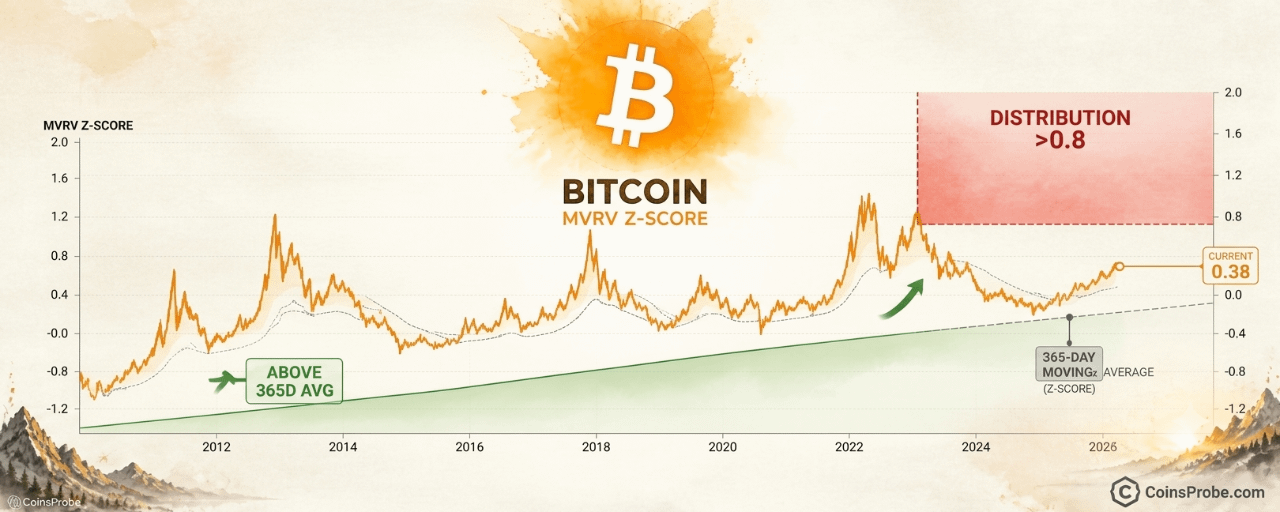
Bitcoin trades at $83,510 (+0.16%) with MVRV Z-Score holding above its 365-day average — a structural bull market signalPer @TraderGemin via CryptoQuant: 365-day MVRV average has acted as dynamic support across every prior Bitcoin bull phase since 2012Z-Score remains below the +0.8 red zone distribution threshold seen at 2017 and 2021 cycle peaks — not overheatedSustained Z-Score breakdown below the 365-day SMA is the single on-chain condition that would invalidate the bullish macro structure
Bitcoin is trading at $83,510 — up 0.16% in the past 24 hours — with a market cap of $1.678 trillion. Beneath the surface of this consolidation, one of the most reliable long-term on-chain valuation metrics is delivering a structurally bullish reading: the MVRV Z-Score is holding above its 365-day moving average, a condition that has historically defined the support floor of Bitcoin’s broader bull phases.
The observation comes from analyst @TraderGemin, published via @cryptoquant_com. His exact words: “Historically, once the MVRV Z-Score moved above its 365-day average, that average often acted as support during the broader bullish phase.” That is not a speculative call — it is a pattern documented across every major Bitcoin market cycle since 2012.
What the MVRV Z-Score Actually Measures
Before interpreting the current reading, the mechanics matter. The MVRV Z-Score is a composite on-chain metric derived from three components: Market Value (current market cap), Realized Value (the aggregate cost basis of every coin at its last on-chain movement), and a Z-Score normalization that removes cyclical extremes. The result is a single number that tells you whether Bitcoin is trading at a premium or discount relative to what the aggregate market actually paid for it.
The chart’s zones clarify the thresholds with precision: readings above approximately +0.8 have historically marked distribution and peak euphoria — the red zone seen at the 2017 and 2021 cycle tops. Readings below approximately -0.8 have marked deep undervaluation — the green accumulation zones of 2018–2019 and 2022 bear market bottoms. The zero line represents fair value equilibrium. Everything above zero, with the 365-day SMA acting as a rising floor, is the structural bull market range.
The 365-Day Average as Dynamic Support — The Historical Record
The critical insight from @TraderGemin is not the raw Z-Score level — it is the relationship between the Z-Score and its own 365-day average. Once the Z-Score crosses above that annual moving average and sustains the position, the average has historically functioned as a trailing stop line for the bull market structure. Each retest of that average from above has, in prior cycles, preceded a resumption of the uptrend rather than a breakdown.
The chart published by @cryptoquant_com shows this pattern across the 2012–2026 data set. In the 2016–2017 cycle, the Z-Score held above its 365-day average throughout the bull run until the December 2017 peak — at which point the score spiked deep into the red zone before collapsing. In the 2020–2021 cycle, the same structure held: the annual average provided support across multiple pullbacks before the score peaked in early 2021. In both cases, the danger signal was not a retest of the average — it was a spike into the red zone above +0.8.
Bitcoin MVRV Z-Score Analysis | Source: @cryptoquant_com (X)
The current reading matters for one specific reason: the Z-Score has pulled back significantly from its 2021 peak levels but remains above the 365-day SMA. That is the definition of mid-cycle positioning — elevated enough to confirm a bull market, not elevated enough to signal distribution. The chart caption is precise: this is “cautiously bullish with macro structure intact.”
What the Current Reading Confirms — and What It Doesn’t
The MVRV Z-Score holding above its 365-day average confirms one thing with precision: the long-term cost-basis structure of the market remains in a zone where aggregate holders are in profit at a level consistent with ongoing bull market dynamics. It does not confirm direction for the next 30 days. It does not guarantee any specific price target. It is a regime indicator — it tells you which macro environment you are in, not when the next leg starts.
What it explicitly does not show: the red zone. The current Z-Score is below the +0.8 distribution threshold that marked the 2017 and 2021 cycle exits. That asymmetry is structurally significant. Prior bull markets ended when the Z-Score entered the red zone — not when it pulled back toward the annual average. The current reading has done the latter, not the former.
For context on how the realized value metric has behaved in prior stress events, see Bitcoin LTH MVRV Exits Stress Zone — What History Says Happens Next.
The One Level That Changes the Thesis
@TraderGemin’s framework identifies a single invalidation condition: if the MVRV Z-Score drops below the 365-day SMA, the historical precedent shifts from bullish to neutral-to-bearish. That level is not a fixed price — it is a moving threshold on the on-chain metric itself. But the implication for price is concrete: every prior instance where the Z-Score broke below its annual average for a sustained period corresponded to macro trend reversal in Bitcoin’s price — not a temporary correction.
The secondary risk is the opposite extreme. A spike into the red zone above +0.8 — driven by rapid price appreciation without proportional growth in realized value — would signal a distribution phase, historically a sell signal for long-term holders. Neither condition is present at $83,510.
Bullish Scenario
The MVRV Z-Score continues to hold above its 365-day average as Bitcoin consolidates in the $80K–$90K range. Each retest of the annual average from above is absorbed — consistent with the 2016–2017 and 2020–2021 precedents. The next macro leg higher follows, with the red zone above +0.8 remaining the only indicator-defined exit signal for long-term structure.
Bearish Scenario
A sustained breakdown of the MVRV Z-Score below its 365-day SMA — not a brief intraday dip, but a multi-week close below — would break the structural pattern that has defined every Bitcoin bull market since 2012. That would shift the regime signal from bullish to reversal-watch. The $80,000 price level, previously identified as the critical realized-value support zone, would become the immediate focus. For broader context on where Bitcoin sits in the current market cycle, Is Crypto in the Disbelief Phase? What Market Cycle Psychology Says Now provides the sentiment overlay.
The MVRV Z-Score above its 365-day average is a macro regime signal, not a price prediction. What it confirms at $83,510 is this: Bitcoin is operating within the on-chain structure that has characterized every bull market phase since 2012 — elevated above realized value, not overheated into the distribution zone, with the annual average acting as a rising floor. The one level that changes the entire structural read is a sustained Z-Score breakdown below the 365-day SMA. Until that happens, the long-term cost-basis structure of the market still favors the upside. Watch the 365-day MVRV average as the single most important trailing indicator of macro trend health.
Disclaimer: This article is for informational purposes only. Always refer to Pi Network's official channels for the most current partnership and protocol information.
Bitcoin MVRV Z-Score Holds Above 365-Day Average — Structure Still Favors Upside
Key Highlights
Bitcoin trades at $83,510 (+0.16%) with MVRV Z-Score holding above its 365-day average — a structural bull market signalPer @TraderGemin via CryptoQuant: 365-day MVRV average has acted as dynamic support across every prior Bitcoin bull phase since 2012Z-Score remains below the +0.8 red zone distribution threshold seen at 2017 and 2021 cycle peaks — not overheatedSustained Z-Score breakdown below the 365-day SMA is the single on-chain condition that would invalidate the bullish macro structure
Bitcoin is trading at $83,510 — up 0.16% in the past 24 hours — with a market cap of $1.678 trillion. Beneath the surface of this consolidation, one of the most reliable long-term on-chain valuation metrics is delivering a structurally bullish reading: the MVRV Z-Score is holding above its 365-day moving average, a condition that has historically defined the support floor of Bitcoin’s broader bull phases.
The observation comes from analyst @TraderGemin, published via @cryptoquant_com. His exact words: “Historically, once the MVRV Z-Score moved above its 365-day average, that average often acted as support during the broader bullish phase.” That is not a speculative call — it is a pattern documented across every major Bitcoin market cycle since 2012.
What the MVRV Z-Score Actually Measures
Before interpreting the current reading, the mechanics matter. The MVRV Z-Score is a composite on-chain metric derived from three components: Market Value (current market cap), Realized Value (the aggregate cost basis of every coin at its last on-chain movement), and a Z-Score normalization that removes cyclical extremes. The result is a single number that tells you whether Bitcoin is trading at a premium or discount relative to what the aggregate market actually paid for it.
The chart’s zones clarify the thresholds with precision: readings above approximately +0.8 have historically marked distribution and peak euphoria — the red zone seen at the 2017 and 2021 cycle tops. Readings below approximately -0.8 have marked deep undervaluation — the green accumulation zones of 2018–2019 and 2022 bear market bottoms. The zero line represents fair value equilibrium. Everything above zero, with the 365-day SMA acting as a rising floor, is the structural bull market range.
The 365-Day Average as Dynamic Support — The Historical Record
The critical insight from @TraderGemin is not the raw Z-Score level — it is the relationship between the Z-Score and its own 365-day average. Once the Z-Score crosses above that annual moving average and sustains the position, the average has historically functioned as a trailing stop line for the bull market structure. Each retest of that average from above has, in prior cycles, preceded a resumption of the uptrend rather than a breakdown.
The chart published by @cryptoquant_com shows this pattern across the 2012–2026 data set. In the 2016–2017 cycle, the Z-Score held above its 365-day average throughout the bull run until the December 2017 peak — at which point the score spiked deep into the red zone before collapsing. In the 2020–2021 cycle, the same structure held: the annual average provided support across multiple pullbacks before the score peaked in early 2021. In both cases, the danger signal was not a retest of the average — it was a spike into the red zone above +0.8.
Bitcoin MVRV Z-Score Analysis | Source: @cryptoquant_com (X)
The current reading matters for one specific reason: the Z-Score has pulled back significantly from its 2021 peak levels but remains above the 365-day SMA. That is the definition of mid-cycle positioning — elevated enough to confirm a bull market, not elevated enough to signal distribution. The chart caption is precise: this is “cautiously bullish with macro structure intact.”
What the Current Reading Confirms — and What It Doesn’t
The MVRV Z-Score holding above its 365-day average confirms one thing with precision: the long-term cost-basis structure of the market remains in a zone where aggregate holders are in profit at a level consistent with ongoing bull market dynamics. It does not confirm direction for the next 30 days. It does not guarantee any specific price target. It is a regime indicator — it tells you which macro environment you are in, not when the next leg starts.
What it explicitly does not show: the red zone. The current Z-Score is below the +0.8 distribution threshold that marked the 2017 and 2021 cycle exits. That asymmetry is structurally significant. Prior bull markets ended when the Z-Score entered the red zone — not when it pulled back toward the annual average. The current reading has done the latter, not the former.
For context on how the realized value metric has behaved in prior stress events, see Bitcoin LTH MVRV Exits Stress Zone — What History Says Happens Next.
The One Level That Changes the Thesis
@TraderGemin’s framework identifies a single invalidation condition: if the MVRV Z-Score drops below the 365-day SMA, the historical precedent shifts from bullish to neutral-to-bearish. That level is not a fixed price — it is a moving threshold on the on-chain metric itself. But the implication for price is concrete: every prior instance where the Z-Score broke below its annual average for a sustained period corresponded to macro trend reversal in Bitcoin’s price — not a temporary correction.
The secondary risk is the opposite extreme. A spike into the red zone above +0.8 — driven by rapid price appreciation without proportional growth in realized value — would signal a distribution phase, historically a sell signal for long-term holders. Neither condition is present at $83,510.
Bullish Scenario
The MVRV Z-Score continues to hold above its 365-day average as Bitcoin consolidates in the $80K–$90K range. Each retest of the annual average from above is absorbed — consistent with the 2016–2017 and 2020–2021 precedents. The next macro leg higher follows, with the red zone above +0.8 remaining the only indicator-defined exit signal for long-term structure.
Bearish Scenario
A sustained breakdown of the MVRV Z-Score below its 365-day SMA — not a brief intraday dip, but a multi-week close below — would break the structural pattern that has defined every Bitcoin bull market since 2012. That would shift the regime signal from bullish to reversal-watch. The $80,000 price level, previously identified as the critical realized-value support zone, would become the immediate focus. For broader context on where Bitcoin sits in the current market cycle, Is Crypto in the Disbelief Phase? What Market Cycle Psychology Says Now provides the sentiment overlay.
The MVRV Z-Score above its 365-day average is a macro regime signal, not a price prediction. What it confirms at $83,510 is this: Bitcoin is operating within the on-chain structure that has characterized every bull market phase since 2012 — elevated above realized value, not overheated into the distribution zone, with the annual average acting as a rising floor. The one level that changes the entire structural read is a sustained Z-Score breakdown below the 365-day SMA. Until that happens, the long-term cost-basis structure of the market still favors the upside. Watch the 365-day MVRV average as the single most important trailing indicator of macro trend health.
Disclaimer: This article is for informational purposes only. Always refer to Pi Network's official channels for the most current partnership and protocol information.
Bitcoin trades at $83,510 (+0.16%) with MVRV Z-Score holding above its 365-day average — a structural bull market signalPer @TraderGemin via CryptoQuant: 365-day MVRV average has acted as dynamic support across every prior Bitcoin bull phase since 2012Z-Score remains below the +0.8 red zone distribution threshold seen at 2017 and 2021 cycle peaks — not overheatedSustained Z-Score breakdown below the 365-day SMA is the single on-chain condition that would invalidate the bullish macro structure
Bitcoin is trading at $83,510 — up 0.16% in the past 24 hours — with a market cap of $1.678 trillion. Beneath the surface of this consolidation, one of the most reliable long-term on-chain valuation metrics is delivering a structurally bullish reading: the MVRV Z-Score is holding above its 365-day moving average, a condition that has historically defined the support floor of Bitcoin’s broader bull phases.
The observation comes from analyst @TraderGemin, published via @cryptoquant_com. His exact words: “Historically, once the MVRV Z-Score moved above its 365-day average, that average often acted as support during the broader bullish phase.” That is not a speculative call — it is a pattern documented across every major Bitcoin market cycle since 2012.
What the MVRV Z-Score Actually Measures
Before interpreting the current reading, the mechanics matter. The MVRV Z-Score is a composite on-chain metric derived from three components: Market Value (current market cap), Realized Value (the aggregate cost basis of every coin at its last on-chain movement), and a Z-Score normalization that removes cyclical extremes. The result is a single number that tells you whether Bitcoin is trading at a premium or discount relative to what the aggregate market actually paid for it.
The chart’s zones clarify the thresholds with precision: readings above approximately +0.8 have historically marked distribution and peak euphoria — the red zone seen at the 2017 and 2021 cycle tops. Readings below approximately -0.8 have marked deep undervaluation — the green accumulation zones of 2018–2019 and 2022 bear market bottoms. The zero line represents fair value equilibrium. Everything above zero, with the 365-day SMA acting as a rising floor, is the structural bull market range.
The 365-Day Average as Dynamic Support — The Historical Record
The critical insight from @TraderGemin is not the raw Z-Score level — it is the relationship between the Z-Score and its own 365-day average. Once the Z-Score crosses above that annual moving average and sustains the position, the average has historically functioned as a trailing stop line for the bull market structure. Each retest of that average from above has, in prior cycles, preceded a resumption of the uptrend rather than a breakdown.
The chart published by @cryptoquant_com shows this pattern across the 2012–2026 data set. In the 2016–2017 cycle, the Z-Score held above its 365-day average throughout the bull run until the December 2017 peak — at which point the score spiked deep into the red zone before collapsing. In the 2020–2021 cycle, the same structure held: the annual average provided support across multiple pullbacks before the score peaked in early 2021. In both cases, the danger signal was not a retest of the average — it was a spike into the red zone above +0.8.
Bitcoin MVRV Z-Score Analysis | Source: @cryptoquant_com (X)
The current reading matters for one specific reason: the Z-Score has pulled back significantly from its 2021 peak levels but remains above the 365-day SMA. That is the definition of mid-cycle positioning — elevated enough to confirm a bull market, not elevated enough to signal distribution. The chart caption is precise: this is “cautiously bullish with macro structure intact.”
What the Current Reading Confirms — and What It Doesn’t
The MVRV Z-Score holding above its 365-day average confirms one thing with precision: the long-term cost-basis structure of the market remains in a zone where aggregate holders are in profit at a level consistent with ongoing bull market dynamics. It does not confirm direction for the next 30 days. It does not guarantee any specific price target. It is a regime indicator — it tells you which macro environment you are in, not when the next leg starts.
What it explicitly does not show: the red zone. The current Z-Score is below the +0.8 distribution threshold that marked the 2017 and 2021 cycle exits. That asymmetry is structurally significant. Prior bull markets ended when the Z-Score entered the red zone — not when it pulled back toward the annual average. The current reading has done the latter, not the former.
For context on how the realized value metric has behaved in prior stress events, see Bitcoin LTH MVRV Exits Stress Zone — What History Says Happens Next.
The One Level That Changes the Thesis
@TraderGemin’s framework identifies a single invalidation condition: if the MVRV Z-Score drops below the 365-day SMA, the historical precedent shifts from bullish to neutral-to-bearish. That level is not a fixed price — it is a moving threshold on the on-chain metric itself. But the implication for price is concrete: every prior instance where the Z-Score broke below its annual average for a sustained period corresponded to macro trend reversal in Bitcoin’s price — not a temporary correction.
The secondary risk is the opposite extreme. A spike into the red zone above +0.8 — driven by rapid price appreciation without proportional growth in realized value — would signal a distribution phase, historically a sell signal for long-term holders. Neither condition is present at $83,510.
Bullish Scenario
The MVRV Z-Score continues to hold above its 365-day average as Bitcoin consolidates in the $80K–$90K range. Each retest of the annual average from above is absorbed — consistent with the 2016–2017 and 2020–2021 precedents. The next macro leg higher follows, with the red zone above +0.8 remaining the only indicator-defined exit signal for long-term structure.
Bearish Scenario
A sustained breakdown of the MVRV Z-Score below its 365-day SMA — not a brief intraday dip, but a multi-week close below — would break the structural pattern that has defined every Bitcoin bull market since 2012. That would shift the regime signal from bullish to reversal-watch. The $80,000 price level, previously identified as the critical realized-value support zone, would become the immediate focus. For broader context on where Bitcoin sits in the current market cycle, Is Crypto in the Disbelief Phase? What Market Cycle Psychology Says Now provides the sentiment overlay.
The MVRV Z-Score above its 365-day average is a macro regime signal, not a price prediction. What it confirms at $83,510 is this: Bitcoin is operating within the on-chain structure that has characterized every bull market phase since 2012 — elevated above realized value, not overheated into the distribution zone, with the annual average acting as a rising floor. The one level that changes the entire structural read is a sustained Z-Score breakdown below the 365-day SMA. Until that happens, the long-term cost-basis structure of the market still favors the upside. Watch the 365-day MVRV average as the single most important trailing indicator of macro trend health.
Disclaimer: This article is for informational purposes only. Always refer to Pi Network's official channels for the most current partnership and protocol information.
85
·
--
Artikel
Übersetzung ansehen
Quant (QNT) Surges 530% in Two Weeks — Analyst Targets $2,000Key Highlights
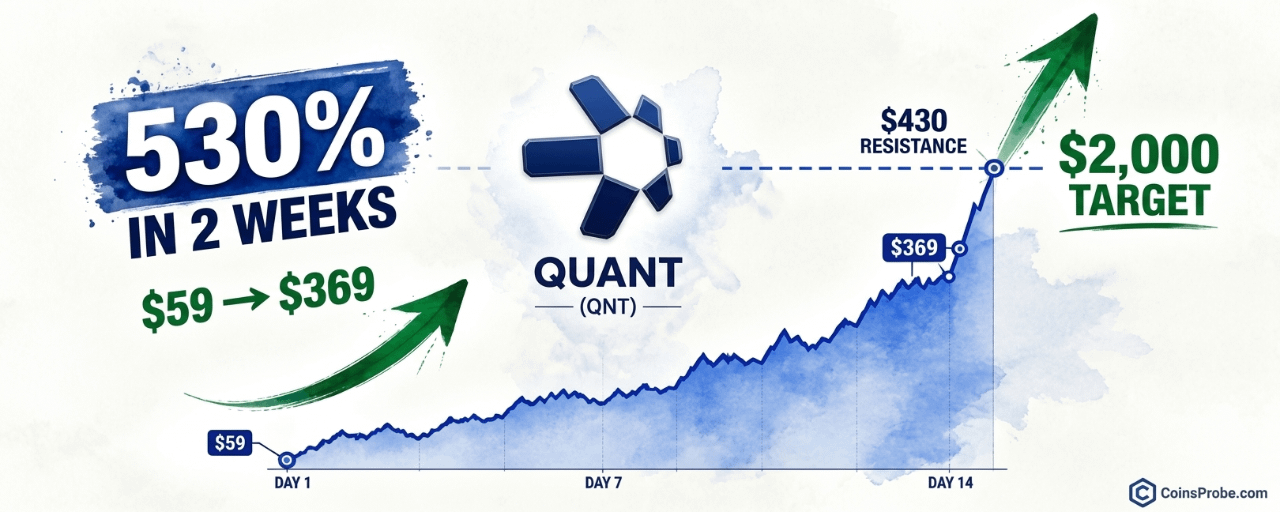
QNT surged 530% in two weeks — from $59 to $369 — one of the sharpest large-cap moves on recordAnalyst @alicharts issues unhedged call: "QUANT: BULL RUN. TARGET $2,000" contingent on $430 break$430 is the decisive gate — channel top + 2021 ATH zone — 32% above chart price of $326$2,000 target represents +500% from current levels if price discovery phase activates
Quant (QNT) has posted one of the most violent two-week rallies in its history — climbing from approximately $59 to $369, a gain of roughly 530% — placing it among the sharpest short-duration moves recorded for a large-cap protocol token. At the time of writing, QNT is trading near $293 as bulls test the next major structural ceiling.
The move has drawn immediate attention from independent analyst Ali Martinez (@alicharts), who issued a direct, unhedged declaration: “QUANT: BULL RUN. TARGET $2,000.”
Martinez identifies the top of a multi-month ascending channel near $430 as the single pivotal level separating the current rally from a full price discovery phase — one that, if breached decisively, he argues could trigger a continuation toward that four-digit target.
The 530% Move
A 530% rally in fourteen days is not noise. It is a regime change in price structure. QNT opened the two-week period near $59 — a level last seen during the broader market compression of late 2025 — and has since compressed nearly five months of expected move into a single fortnight. To place this in context: QNT’s prior all-time high was approximately $427 in September 2021, meaning the token is now within striking distance of reclaiming that historical peak for the first time in roughly five years.
The velocity of the move matters analytically. Rallies of this magnitude in compressed timeframes typically fall into one of two categories: liquidity-driven short squeezes that fully retrace, or genuine demand-side re-rating events that find support at newly established equilibrium levels. The distinction is determined by what happens at resistance — in this case, the $430 channel top that Martinez has flagged as the decisive line.
The $430 Level — Channel Resistance and the Price Discovery Gate
Martinez’s analysis places the critical resistance at approximately $430, which aligns with the top of QNT’s ascending price channel on the weekly timeframe. This is not an arbitrary technical level — it coincides with QNT’s 2021 all-time high zone, making it a convergence of both channel structure and historical supply.
QNT 3DAY Chart | Source: @alicharts (X)
The significance of a channel breakout at this juncture is specific: once an asset clears its all-time high within the context of a well-defined channel, the chart structure provides no overhead supply reference. That is the technical definition of price discovery — a state where the next resistance level must be constructed from first principles, typically measured moves and psychological round numbers.
At $430, QNT would be approximately 16.5% above current levels. A decisive close above that level — not an intraday wick, not a brief tag — is the condition Martinez sets for the $2,000 thesis to activate.
Level Type Distance from$326 $326 Current Chart Price — $430 Channel Top / ATH Zone Resistance +32% $2,000 Analyst Price Discovery Target +500%
Key levels per @alicharts (X) — October 2026
The $2,000 Target — Measured Move or Speculation?
A $2,000 target from current levels represents a further +500% move from $326. That sounds extreme until framed against the already-documented 530% two-week rally. The question is not whether QNT can produce large moves — it demonstrably can — but whether the post-$430 structure supports a continuation of that magnitude.
In prior QNT cycles, the token’s move from its 2020 base near $5 to the 2021 peak near $427 represented an approximately 8,440% rally. A $2,000 target from a $59 cycle base would represent a roughly 3,290% total move — within the historical range of QNT’s prior bull cycle amplitude, though smaller in absolute percentage terms. This is the precedent-based case Martinez is implicitly referencing when he calls this a bull run rather than a bounce.
What separates this reading from generic price optimism is the structural anchor: the $430 level must break first. Without that confirmation, the $2,000 figure is a conditional target, not a current projection. Martinez’s framing is conditional — “a decisive break above that level could send Quant into price discovery” — which is analytically honest.
What Determines Whether the Rally Sustains
The metric to track is straightforward: a sustained weekly close above $430. That single condition determines whether QNT enters price discovery or reverts into the channel for a potential retest of lower support levels. Below, the immediate structural support following a 530% rally would logically sit near the prior breakout zone — approximately $200–$220, representing the area where momentum accelerated during the initial surge phase.
Bullish Scenario
A decisive weekly close above $430 — clearing both the channel top and the 2021 all-time high zone — would constitute a price discovery breakout with no historical overhead supply. Martinez’s $2,000 target (+500% from $326) would become the operative measured move. Intermediate resistance markers to watch on the way up: $600, $900, and $1,400 as psychological and round-number reference points in an uncharted zone.
Bearish Scenario
Failure to hold above $430 on a closing basis — particularly a weekly close back below the channel midline near $250 — would invalidate the price discovery thesis and suggest the two-week surge was a liquidity event rather than a demand re-rating. In that scenario, a retest of the $200–$220 structural zone is the base case, representing a 40–46% drawdown from current levels but still well above the $59 cycle base.
The Single Number That Resolves This
QNT has already done the extraordinary — 530% in two weeks from $59 to $369. The debate now is whether that move is a precursor or the entirety of this cycle’s move. Martinez’s framework makes the answer binary and testable: $430 is the gate. A decisive break above it opens price discovery and the $2,000 thesis. A rejection at $430 means the channel holds, and buyers must defend the $200–$220 zone to keep the broader bull structure intact.
Watch the weekly close at $430 as the single level that determines whether QNT’s bull run declaration becomes a confirmed breakout or a premature call.
Disclaimer: The views and analysis presented in this article are for informational purposes only and reflect the author’s perspective, not financial advice. Technical patterns and indicators discussed are subject to market volatility and may or may not yield anticipated results. Investors are advised to exercise caution, conduct independent research, and make decisions aligned with their individual risk tolerance.
Quant (QNT) Surges 530% in Two Weeks — Analyst Targets $2,000
Key Highlights
QNT surged 530% in two weeks — from $59 to $369 — one of the sharpest large-cap moves on recordAnalyst @alicharts issues unhedged call: "QUANT: BULL RUN. TARGET $2,000" contingent on $430 break$430 is the decisive gate — channel top + 2021 ATH zone — 32% above chart price of $326$2,000 target represents +500% from current levels if price discovery phase activates
Quant (QNT) has posted one of the most violent two-week rallies in its history — climbing from approximately $59 to $369, a gain of roughly 530% — placing it among the sharpest short-duration moves recorded for a large-cap protocol token. At the time of writing, QNT is trading near $293 as bulls test the next major structural ceiling.
The move has drawn immediate attention from independent analyst Ali Martinez (@alicharts), who issued a direct, unhedged declaration: “QUANT: BULL RUN. TARGET $2,000.”
Martinez identifies the top of a multi-month ascending channel near $430 as the single pivotal level separating the current rally from a full price discovery phase — one that, if breached decisively, he argues could trigger a continuation toward that four-digit target.
The 530% Move
A 530% rally in fourteen days is not noise. It is a regime change in price structure. QNT opened the two-week period near $59 — a level last seen during the broader market compression of late 2025 — and has since compressed nearly five months of expected move into a single fortnight. To place this in context: QNT’s prior all-time high was approximately $427 in September 2021, meaning the token is now within striking distance of reclaiming that historical peak for the first time in roughly five years.
The velocity of the move matters analytically. Rallies of this magnitude in compressed timeframes typically fall into one of two categories: liquidity-driven short squeezes that fully retrace, or genuine demand-side re-rating events that find support at newly established equilibrium levels. The distinction is determined by what happens at resistance — in this case, the $430 channel top that Martinez has flagged as the decisive line.
The $430 Level — Channel Resistance and the Price Discovery Gate
Martinez’s analysis places the critical resistance at approximately $430, which aligns with the top of QNT’s ascending price channel on the weekly timeframe. This is not an arbitrary technical level — it coincides with QNT’s 2021 all-time high zone, making it a convergence of both channel structure and historical supply.
QNT 3DAY Chart | Source: @alicharts (X)
The significance of a channel breakout at this juncture is specific: once an asset clears its all-time high within the context of a well-defined channel, the chart structure provides no overhead supply reference. That is the technical definition of price discovery — a state where the next resistance level must be constructed from first principles, typically measured moves and psychological round numbers.
At $430, QNT would be approximately 16.5% above current levels. A decisive close above that level — not an intraday wick, not a brief tag — is the condition Martinez sets for the $2,000 thesis to activate.
Level Type Distance from$326 $326 Current Chart Price — $430 Channel Top / ATH Zone Resistance +32% $2,000 Analyst Price Discovery Target +500%
Key levels per @alicharts (X) — October 2026
The $2,000 Target — Measured Move or Speculation?
A $2,000 target from current levels represents a further +500% move from $326. That sounds extreme until framed against the already-documented 530% two-week rally. The question is not whether QNT can produce large moves — it demonstrably can — but whether the post-$430 structure supports a continuation of that magnitude.
In prior QNT cycles, the token’s move from its 2020 base near $5 to the 2021 peak near $427 represented an approximately 8,440% rally. A $2,000 target from a $59 cycle base would represent a roughly 3,290% total move — within the historical range of QNT’s prior bull cycle amplitude, though smaller in absolute percentage terms. This is the precedent-based case Martinez is implicitly referencing when he calls this a bull run rather than a bounce.
What separates this reading from generic price optimism is the structural anchor: the $430 level must break first. Without that confirmation, the $2,000 figure is a conditional target, not a current projection. Martinez’s framing is conditional — “a decisive break above that level could send Quant into price discovery” — which is analytically honest.
What Determines Whether the Rally Sustains
The metric to track is straightforward: a sustained weekly close above $430. That single condition determines whether QNT enters price discovery or reverts into the channel for a potential retest of lower support levels. Below, the immediate structural support following a 530% rally would logically sit near the prior breakout zone — approximately $200–$220, representing the area where momentum accelerated during the initial surge phase.
Bullish Scenario
A decisive weekly close above $430 — clearing both the channel top and the 2021 all-time high zone — would constitute a price discovery breakout with no historical overhead supply. Martinez’s $2,000 target (+500% from $326) would become the operative measured move. Intermediate resistance markers to watch on the way up: $600, $900, and $1,400 as psychological and round-number reference points in an uncharted zone.
Bearish Scenario
Failure to hold above $430 on a closing basis — particularly a weekly close back below the channel midline near $250 — would invalidate the price discovery thesis and suggest the two-week surge was a liquidity event rather than a demand re-rating. In that scenario, a retest of the $200–$220 structural zone is the base case, representing a 40–46% drawdown from current levels but still well above the $59 cycle base.
The Single Number That Resolves This
QNT has already done the extraordinary — 530% in two weeks from $59 to $369. The debate now is whether that move is a precursor or the entirety of this cycle’s move. Martinez’s framework makes the answer binary and testable: $430 is the gate. A decisive break above it opens price discovery and the $2,000 thesis. A rejection at $430 means the channel holds, and buyers must defend the $200–$220 zone to keep the broader bull structure intact.
Watch the weekly close at $430 as the single level that determines whether QNT’s bull run declaration becomes a confirmed breakout or a premature call.
Disclaimer: The views and analysis presented in this article are for informational purposes only and reflect the author’s perspective, not financial advice. Technical patterns and indicators discussed are subject to market volatility and may or may not yield anticipated results. Investors are advised to exercise caution, conduct independent research, and make decisions aligned with their individual risk tolerance.
QNT surged 530% in two weeks — from $59 to $369 — one of the sharpest large-cap moves on recordAnalyst @alicharts issues unhedged call: "QUANT: BULL RUN. TARGET $2,000" contingent on $430 break$430 is the decisive gate — channel top + 2021 ATH zone — 32% above chart price of $326$2,000 target represents +500% from current levels if price discovery phase activates
Quant (QNT) has posted one of the most violent two-week rallies in its history — climbing from approximately $59 to $369, a gain of roughly 530% — placing it among the sharpest short-duration moves recorded for a large-cap protocol token. At the time of writing, QNT is trading near $293 as bulls test the next major structural ceiling.
The move has drawn immediate attention from independent analyst Ali Martinez (@alicharts), who issued a direct, unhedged declaration: “QUANT: BULL RUN. TARGET $2,000.”
Martinez identifies the top of a multi-month ascending channel near $430 as the single pivotal level separating the current rally from a full price discovery phase — one that, if breached decisively, he argues could trigger a continuation toward that four-digit target.
The 530% Move
A 530% rally in fourteen days is not noise. It is a regime change in price structure. QNT opened the two-week period near $59 — a level last seen during the broader market compression of late 2025 — and has since compressed nearly five months of expected move into a single fortnight. To place this in context: QNT’s prior all-time high was approximately $427 in September 2021, meaning the token is now within striking distance of reclaiming that historical peak for the first time in roughly five years.
The velocity of the move matters analytically. Rallies of this magnitude in compressed timeframes typically fall into one of two categories: liquidity-driven short squeezes that fully retrace, or genuine demand-side re-rating events that find support at newly established equilibrium levels. The distinction is determined by what happens at resistance — in this case, the $430 channel top that Martinez has flagged as the decisive line.
The $430 Level — Channel Resistance and the Price Discovery Gate
Martinez’s analysis places the critical resistance at approximately $430, which aligns with the top of QNT’s ascending price channel on the weekly timeframe. This is not an arbitrary technical level — it coincides with QNT’s 2021 all-time high zone, making it a convergence of both channel structure and historical supply.
QNT 3DAY Chart | Source: @alicharts (X)
The significance of a channel breakout at this juncture is specific: once an asset clears its all-time high within the context of a well-defined channel, the chart structure provides no overhead supply reference. That is the technical definition of price discovery — a state where the next resistance level must be constructed from first principles, typically measured moves and psychological round numbers.
At $430, QNT would be approximately 16.5% above current levels. A decisive close above that level — not an intraday wick, not a brief tag — is the condition Martinez sets for the $2,000 thesis to activate.
Level Type Distance from$326 $326 Current Chart Price — $430 Channel Top / ATH Zone Resistance +32% $2,000 Analyst Price Discovery Target +500%
Key levels per @alicharts (X) — October 2026
The $2,000 Target — Measured Move or Speculation?
A $2,000 target from current levels represents a further +500% move from $326. That sounds extreme until framed against the already-documented 530% two-week rally. The question is not whether QNT can produce large moves — it demonstrably can — but whether the post-$430 structure supports a continuation of that magnitude.
In prior QNT cycles, the token’s move from its 2020 base near $5 to the 2021 peak near $427 represented an approximately 8,440% rally. A $2,000 target from a $59 cycle base would represent a roughly 3,290% total move — within the historical range of QNT’s prior bull cycle amplitude, though smaller in absolute percentage terms. This is the precedent-based case Martinez is implicitly referencing when he calls this a bull run rather than a bounce.
What separates this reading from generic price optimism is the structural anchor: the $430 level must break first. Without that confirmation, the $2,000 figure is a conditional target, not a current projection. Martinez’s framing is conditional — “a decisive break above that level could send Quant into price discovery” — which is analytically honest.
What Determines Whether the Rally Sustains
The metric to track is straightforward: a sustained weekly close above $430. That single condition determines whether QNT enters price discovery or reverts into the channel for a potential retest of lower support levels. Below, the immediate structural support following a 530% rally would logically sit near the prior breakout zone — approximately $200–$220, representing the area where momentum accelerated during the initial surge phase.
Bullish Scenario
A decisive weekly close above $430 — clearing both the channel top and the 2021 all-time high zone — would constitute a price discovery breakout with no historical overhead supply. Martinez’s $2,000 target (+500% from $326) would become the operative measured move. Intermediate resistance markers to watch on the way up: $600, $900, and $1,400 as psychological and round-number reference points in an uncharted zone.
Bearish Scenario
Failure to hold above $430 on a closing basis — particularly a weekly close back below the channel midline near $250 — would invalidate the price discovery thesis and suggest the two-week surge was a liquidity event rather than a demand re-rating. In that scenario, a retest of the $200–$220 structural zone is the base case, representing a 40–46% drawdown from current levels but still well above the $59 cycle base.
The Single Number That Resolves This
QNT has already done the extraordinary — 530% in two weeks from $59 to $369. The debate now is whether that move is a precursor or the entirety of this cycle’s move. Martinez’s framework makes the answer binary and testable: $430 is the gate. A decisive break above it opens price discovery and the $2,000 thesis. A rejection at $430 means the channel holds, and buyers must defend the $200–$220 zone to keep the broader bull structure intact.
Watch the weekly close at $430 as the single level that determines whether QNT’s bull run declaration becomes a confirmed breakout or a premature call.
Disclaimer: The views and analysis presented in this article are for informational purposes only and reflect the author’s perspective, not financial advice. Technical patterns and indicators discussed are subject to market volatility and may or may not yield anticipated results. Investors are advised to exercise caution, conduct independent research, and make decisions aligned with their individual risk tolerance.
457
·
--
Artikel
XRP bildet symmetrisches Dreieck — der stündliche Schlusskurs bei $1.54 ist der Breakout-AuslöserWichtige Highlights
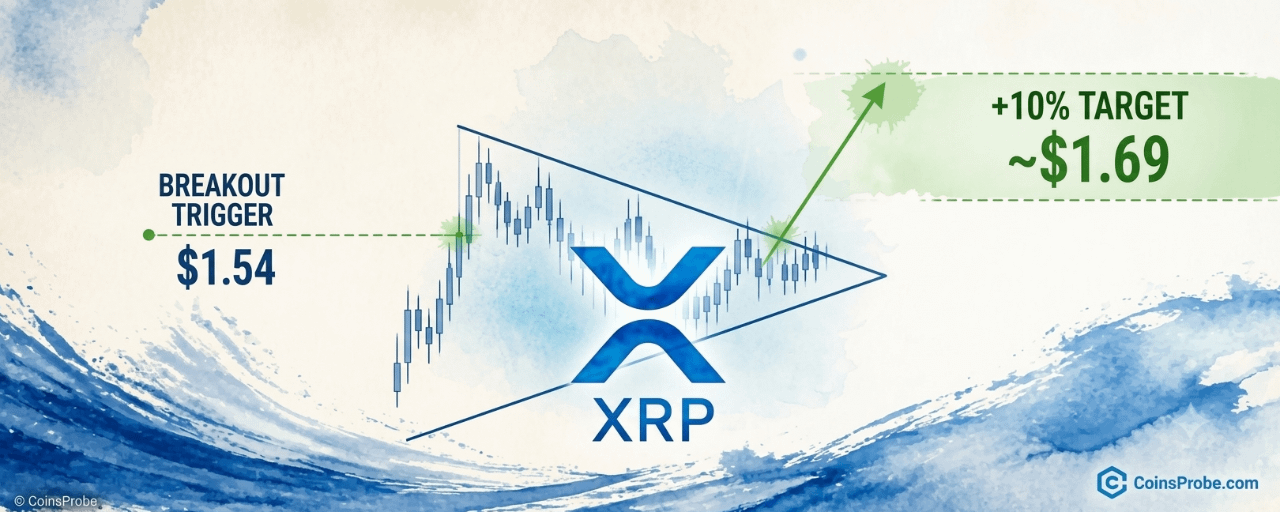
XRP wird bei $1.51 gehandelt (+0.79% in 24h) mit einer Marktkapitalisierung von $95.06B, wobei es im Stunden-Chart innerhalb eines symmetrischen Dreiecks komprimiert
Analyst @alicharts markiert $1.54 als den exakten Ausbruchsauslöser — erforderlich ist ein bestätigter stündlicher Schlusskurs über dieser Marke
Ein bestätigter Ausbruch über $1.54 projiziert eine gemessene Bewegung von etwa ~10% mit einem Ziel bei ungefähr $1.69
Der Verlust der unteren Trendlinie des Dreiecks nahe $1.46–$1.47 eröffnet Abwärts-Potenzial in die Spanne $1.37–$1.38
XRP wird bei $1.51 gehandelt — nach 0.79% in den vergangenen 24 Stunden — mit einer Marktkapitalisierung von $95.06 Milliarden, und die Struktur, die sich auf seinem Stunden-Chart herausbildet, könnte bedeutsamer sein als die gedämpfte Bewegung im Tagesverlauf vermuten lässt. Das Token komprimiert innerhalb eines symmetrischen Dreiecks, und laut einem eng verfolgten technischen Analysten hängt der gesamte kurzfristige Richtungsfall an einer einzigen Preis-Marke.
XRP bildet symmetrisches Dreieck — der stündliche Schlusskurs bei $1.54 ist der Breakout-Auslöser
Wichtige Highlights
XRP wird bei $1.51 gehandelt (+0.79% in 24h) mit einer Marktkapitalisierung von $95.06B, wobei es im Stunden-Chart innerhalb eines symmetrischen Dreiecks komprimiert
Analyst @alicharts markiert $1.54 als den exakten Ausbruchsauslöser — erforderlich ist ein bestätigter stündlicher Schlusskurs über dieser Marke
Ein bestätigter Ausbruch über $1.54 projiziert eine gemessene Bewegung von etwa ~10% mit einem Ziel bei ungefähr $1.69
Der Verlust der unteren Trendlinie des Dreiecks nahe $1.46–$1.47 eröffnet Abwärts-Potenzial in die Spanne $1.37–$1.38
XRP wird bei $1.51 gehandelt — nach 0.79% in den vergangenen 24 Stunden — mit einer Marktkapitalisierung von $95.06 Milliarden, und die Struktur, die sich auf seinem Stunden-Chart herausbildet, könnte bedeutsamer sein als die gedämpfte Bewegung im Tagesverlauf vermuten lässt. Das Token komprimiert innerhalb eines symmetrischen Dreiecks, und laut einem eng verfolgten technischen Analysten hängt der gesamte kurzfristige Richtungsfall an einer einzigen Preis-Marke.
XRP wird bei $1.51 gehandelt (+0.79% in 24h) mit einer Marktkapitalisierung von $95.06B, wobei es im Stunden-Chart innerhalb eines symmetrischen Dreiecks komprimiert
Analyst @alicharts markiert $1.54 als den exakten Ausbruchsauslöser — erforderlich ist ein bestätigter stündlicher Schlusskurs über dieser Marke
Ein bestätigter Ausbruch über $1.54 projiziert eine gemessene Bewegung von etwa ~10% mit einem Ziel bei ungefähr $1.69
Der Verlust der unteren Trendlinie des Dreiecks nahe $1.46–$1.47 eröffnet Abwärts-Potenzial in die Spanne $1.37–$1.38
XRP wird bei $1.51 gehandelt — nach 0.79% in den vergangenen 24 Stunden — mit einer Marktkapitalisierung von $95.06 Milliarden, und die Struktur, die sich auf seinem Stunden-Chart herausbildet, könnte bedeutsamer sein als die gedämpfte Bewegung im Tagesverlauf vermuten lässt. Das Token komprimiert innerhalb eines symmetrischen Dreiecks, und laut einem eng verfolgten technischen Analysten hängt der gesamte kurzfristige Richtungsfall an einer einzigen Preis-Marke.
176
·
--

Artikel
Pi Network arbeitet mit Open Standard zusammen, während OUSD live gehtWichtige Highlights
Pi Network hat mit Open Standard, dem Unternehmen hinter Open USD (OUSD), zusammengearbeitet — einer partnerverwalteten Dollar-Stablecoin, die am 30. September 2026 live ging und von Visa, Google, Stripe, BlackRock, Mastercard und mehr als 200 Partnern unterstützt wird.
Pi wird die Pioneer-Belohnungsprogramme und die breitere OUSD-Nutzung im gesamten Ökosystem untersuchen — obwohl noch keine Implementierungsdetails und kein Rollout-Datum veröffentlicht wurden.
Das Protocol-28-Mainnet-Upgrade ist für den 16. Oktober 2026 geplant — Node-Betreiber müssen bis zum 13. Oktober aktualisieren — mit Verbesserungen bei Smart-Contract-Batch-Updates, der Behandlung verzögerter Transaktionen und sichereren Änderungen an gespeicherten Daten.
Pi Network arbeitet mit Open Standard zusammen, während OUSD live geht
Wichtige Highlights
Pi Network hat mit Open Standard, dem Unternehmen hinter Open USD (OUSD), zusammengearbeitet — einer partnerverwalteten Dollar-Stablecoin, die am 30. September 2026 live ging und von Visa, Google, Stripe, BlackRock, Mastercard und mehr als 200 Partnern unterstützt wird.
Pi wird die Pioneer-Belohnungsprogramme und die breitere OUSD-Nutzung im gesamten Ökosystem untersuchen — obwohl noch keine Implementierungsdetails und kein Rollout-Datum veröffentlicht wurden.
Das Protocol-28-Mainnet-Upgrade ist für den 16. Oktober 2026 geplant — Node-Betreiber müssen bis zum 13. Oktober aktualisieren — mit Verbesserungen bei Smart-Contract-Batch-Updates, der Behandlung verzögerter Transaktionen und sichereren Änderungen an gespeicherten Daten.
Pi Network hat mit Open Standard, dem Unternehmen hinter Open USD (OUSD), zusammengearbeitet — einer partnerverwalteten Dollar-Stablecoin, die am 30. September 2026 live ging und von Visa, Google, Stripe, BlackRock, Mastercard und mehr als 200 Partnern unterstützt wird.
Pi wird die Pioneer-Belohnungsprogramme und die breitere OUSD-Nutzung im gesamten Ökosystem untersuchen — obwohl noch keine Implementierungsdetails und kein Rollout-Datum veröffentlicht wurden.
Das Protocol-28-Mainnet-Upgrade ist für den 16. Oktober 2026 geplant — Node-Betreiber müssen bis zum 13. Oktober aktualisieren — mit Verbesserungen bei Smart-Contract-Batch-Updates, der Behandlung verzögerter Transaktionen und sichereren Änderungen an gespeicherten Daten.
169
·
--
Artikel
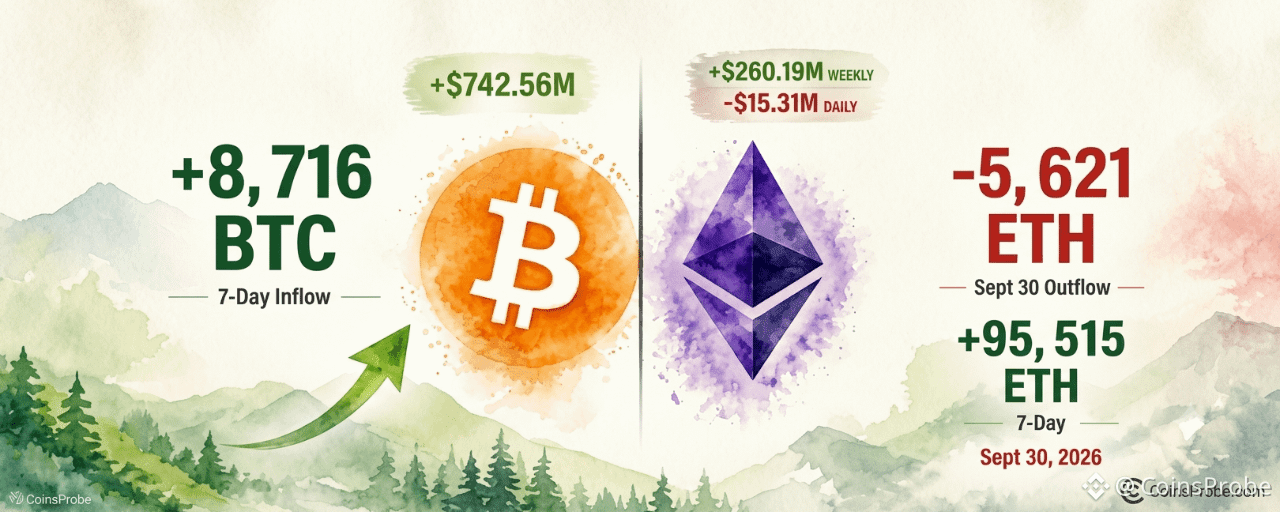
Bitcoin-ETFs ziehen in 7 Tagen 742,56 Mio. $ an, während Ethereum einen 15-Mio.-$-Abzug an einem Tag siehtWichtigste Highlights
Bitcoin-ETFs verzeichneten bis zum 30. September gemäß Lookonchain 7-Tage-Nettozuflüsse von +8.716 BTC (742,56 Mio. $)
Ethereum-ETFs drehten am Tag ins Negative — ein Abfluss in einer einzigen Sitzung von 5.621 ETH (15,31 Mio. $) trotz eines positiven Wochenwerts
Bitcoin sicherte sich 74,1% des kombinierten wöchentlichen ETF-Zuflusses von 1,0 Mrd. $ über beide Anlageklassen hinweg
Der tägliche BTC-Zufluss am 30. September von +628 BTC lag bei ~50% unter dem täglichen Durchschnitt der Woche von 1.245 BTC
BREAKING
Bitcoin-Spot-ETFs verzeichneten einen kombinierten Nettozufluss über sieben Tage von +8.716 BTC — entsprechend 742,56 Millionen US-Dollar — bis zum 30. September, so Lookonchain. In derselben Sitzung meldeten Ethereum-ETFs einen Nettoabfluss an nur einem Tag von 5.621 ETH (15,31 Millionen US-Dollar), obwohl das Bild der Ethereum-ETFs über sieben Tage hinweg weiterhin positiv blieb.
Bitcoin-ETFs ziehen in 7 Tagen 742,56 Mio. $ an, während Ethereum einen 15-Mio.-$-Abzug an einem Tag sieht
Wichtigste Highlights
Bitcoin-ETFs verzeichneten bis zum 30. September gemäß Lookonchain 7-Tage-Nettozuflüsse von +8.716 BTC (742,56 Mio. $)
Ethereum-ETFs drehten am Tag ins Negative — ein Abfluss in einer einzigen Sitzung von 5.621 ETH (15,31 Mio. $) trotz eines positiven Wochenwerts
Bitcoin sicherte sich 74,1% des kombinierten wöchentlichen ETF-Zuflusses von 1,0 Mrd. $ über beide Anlageklassen hinweg
Der tägliche BTC-Zufluss am 30. September von +628 BTC lag bei ~50% unter dem täglichen Durchschnitt der Woche von 1.245 BTC
BREAKING
Bitcoin-Spot-ETFs verzeichneten einen kombinierten Nettozufluss über sieben Tage von +8.716 BTC — entsprechend 742,56 Millionen US-Dollar — bis zum 30. September, so Lookonchain. In derselben Sitzung meldeten Ethereum-ETFs einen Nettoabfluss an nur einem Tag von 5.621 ETH (15,31 Millionen US-Dollar), obwohl das Bild der Ethereum-ETFs über sieben Tage hinweg weiterhin positiv blieb.
Bitcoin-ETFs verzeichneten bis zum 30. September gemäß Lookonchain 7-Tage-Nettozuflüsse von +8.716 BTC (742,56 Mio. $)
Ethereum-ETFs drehten am Tag ins Negative — ein Abfluss in einer einzigen Sitzung von 5.621 ETH (15,31 Mio. $) trotz eines positiven Wochenwerts
Bitcoin sicherte sich 74,1% des kombinierten wöchentlichen ETF-Zuflusses von 1,0 Mrd. $ über beide Anlageklassen hinweg
Der tägliche BTC-Zufluss am 30. September von +628 BTC lag bei ~50% unter dem täglichen Durchschnitt der Woche von 1.245 BTC
BREAKING
Bitcoin-Spot-ETFs verzeichneten einen kombinierten Nettozufluss über sieben Tage von +8.716 BTC — entsprechend 742,56 Millionen US-Dollar — bis zum 30. September, so Lookonchain. In derselben Sitzung meldeten Ethereum-ETFs einen Nettoabfluss an nur einem Tag von 5.621 ETH (15,31 Millionen US-Dollar), obwohl das Bild der Ethereum-ETFs über sieben Tage hinweg weiterhin positiv blieb.
2
3
2.8k
·
--
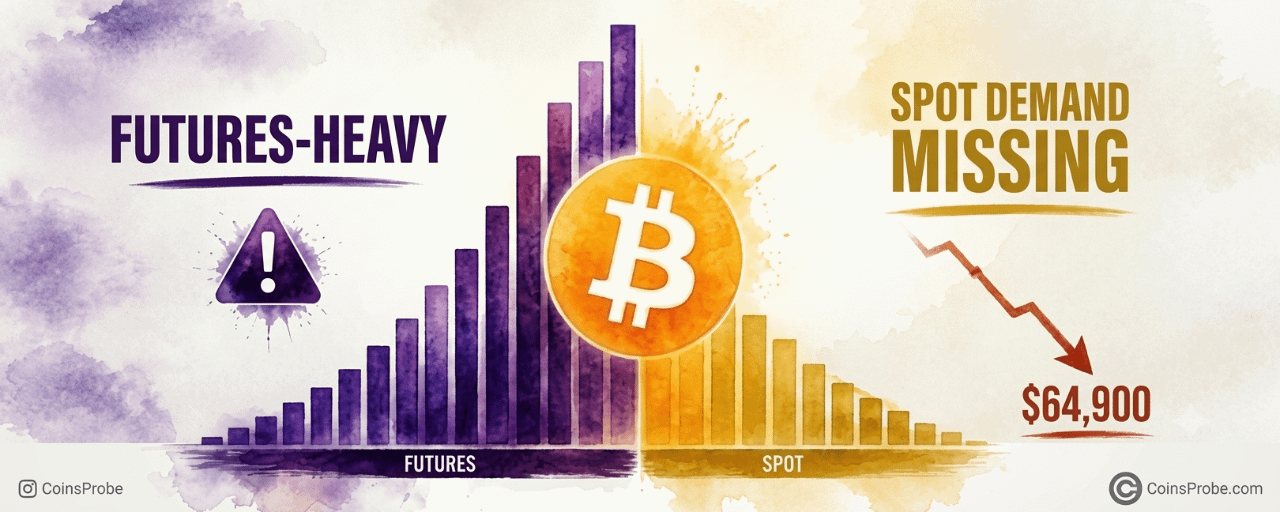
Artikel
Betriebsanstoß bei Bitcoin ist futures-getrieben — Spot-Nachfrage ist das fehlende PuzzlestückWichtige Highlights
Bitcoin handelt bei 84.456 US-Dollar (+0,31% in 24 Std.), während das Binance-Dominanz-Chart eine nahezu vollständige Futures-lastige (lila) Dominanz der Balken zeigt
CryptoQuant-Analyst Darkfost warnt: Der Spotbedarf „bleibt das fehlende Puzzlestück“ — futures-getriebene Erholungen „könnten sich schnell als instabil erweisen“
Die spot-dominante Basis liegt bei 64.900 US-Dollar — ein Futures-Rückzug ohne erneuten Spot-Einstieg birgt das Risiko eines 23%igen Rückgangs gegenüber den aktuellen Kursniveaus
Achte darauf, ob die Gold (spot-dominanten) Barren auf dem Binance-Dominanz-Chart zurückkehren — als einziges strukturelles Bestätigungssignal
Betriebsanstoß bei Bitcoin ist futures-getrieben — Spot-Nachfrage ist das fehlende Puzzlestück
Wichtige Highlights
Bitcoin handelt bei 84.456 US-Dollar (+0,31% in 24 Std.), während das Binance-Dominanz-Chart eine nahezu vollständige Futures-lastige (lila) Dominanz der Balken zeigt
CryptoQuant-Analyst Darkfost warnt: Der Spotbedarf „bleibt das fehlende Puzzlestück“ — futures-getriebene Erholungen „könnten sich schnell als instabil erweisen“
Die spot-dominante Basis liegt bei 64.900 US-Dollar — ein Futures-Rückzug ohne erneuten Spot-Einstieg birgt das Risiko eines 23%igen Rückgangs gegenüber den aktuellen Kursniveaus
Achte darauf, ob die Gold (spot-dominanten) Barren auf dem Binance-Dominanz-Chart zurückkehren — als einziges strukturelles Bestätigungssignal
Bitcoin handelt bei 84.456 US-Dollar (+0,31% in 24 Std.), während das Binance-Dominanz-Chart eine nahezu vollständige Futures-lastige (lila) Dominanz der Balken zeigt
CryptoQuant-Analyst Darkfost warnt: Der Spotbedarf „bleibt das fehlende Puzzlestück“ — futures-getriebene Erholungen „könnten sich schnell als instabil erweisen“
Die spot-dominante Basis liegt bei 64.900 US-Dollar — ein Futures-Rückzug ohne erneuten Spot-Einstieg birgt das Risiko eines 23%igen Rückgangs gegenüber den aktuellen Kursniveaus
Achte darauf, ob die Gold (spot-dominanten) Barren auf dem Binance-Dominanz-Chart zurückkehren — als einziges strukturelles Bestätigungssignal
1
1
1.2k
·
--
Teilweise korrekt
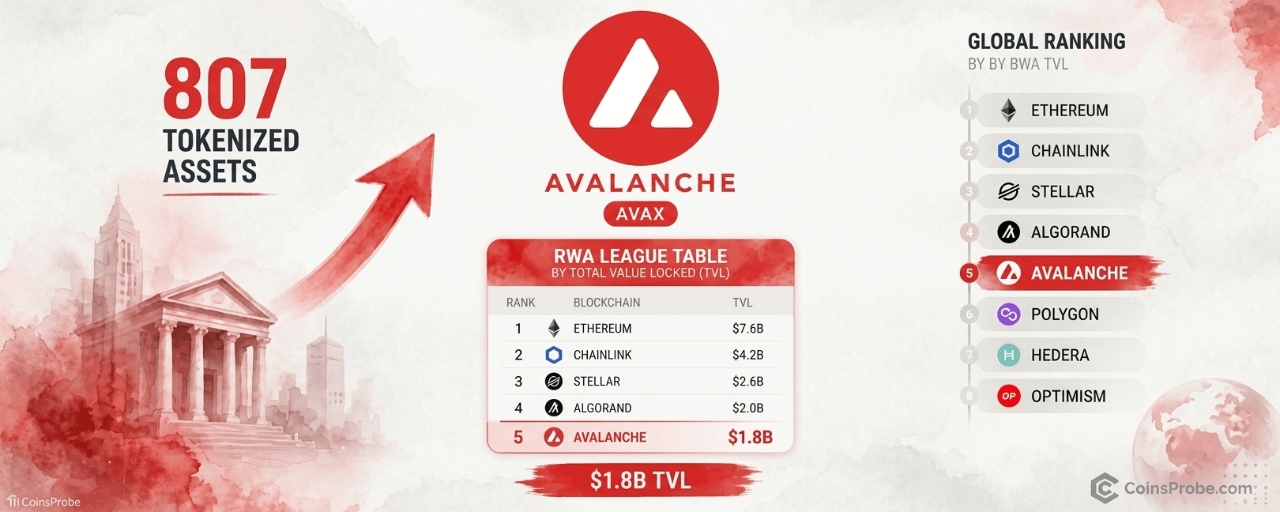
Artikel
Avalanche belegt weltweit Platz 5 bei der RWA-Tokenisierung mit 807 Assets On-ChainWichtigste Highlights
AVAX belegt weltweit Platz 5 bei der RWA-Tokenisierung mit 1,8 Mrd. USD TVL und 807 tokenisierten Assets On-Chain
807 Assets im Vergleich zu den 49 von Stellar, obwohl Stellar Platz 4 belegt — AVAX führt bei der institutionellen Breite
Analyst CryptoBullet1 nennt RWA-Positionierung als zentrale strukturelle Grundlage für anhaltende AVAX-Bullishness
Ethereum hält 21.881,1 Mrd. USD RWA-TVL — das wichtigste Wettbewerbssrisiko für die AVAX-These
Avalanche hat still und leise eines der bedeutendsten Real-World-Asset-Ökosysteme im Krypto-Bereich aufgebaut. Mit 1,8 Milliarden USD RWA-TVL und 807 tokenisierten Vermögenswerten, die in seinem Netzwerk gesichert sind, belegt AVAX weltweit Platz 5 unter allen Blockchain-Netzwerken für die Tokenisierung realer Vermögenswerte — eine strukturelle Position, die weit über kurzfristige Kursdynamiken hinausreicht.
Avalanche belegt weltweit Platz 5 bei der RWA-Tokenisierung mit 807 Assets On-Chain
Wichtigste Highlights
AVAX belegt weltweit Platz 5 bei der RWA-Tokenisierung mit 1,8 Mrd. USD TVL und 807 tokenisierten Assets On-Chain
807 Assets im Vergleich zu den 49 von Stellar, obwohl Stellar Platz 4 belegt — AVAX führt bei der institutionellen Breite
Analyst CryptoBullet1 nennt RWA-Positionierung als zentrale strukturelle Grundlage für anhaltende AVAX-Bullishness
Ethereum hält 21.881,1 Mrd. USD RWA-TVL — das wichtigste Wettbewerbssrisiko für die AVAX-These
Avalanche hat still und leise eines der bedeutendsten Real-World-Asset-Ökosysteme im Krypto-Bereich aufgebaut. Mit 1,8 Milliarden USD RWA-TVL und 807 tokenisierten Vermögenswerten, die in seinem Netzwerk gesichert sind, belegt AVAX weltweit Platz 5 unter allen Blockchain-Netzwerken für die Tokenisierung realer Vermögenswerte — eine strukturelle Position, die weit über kurzfristige Kursdynamiken hinausreicht.
AVAX belegt weltweit Platz 5 bei der RWA-Tokenisierung mit 1,8 Mrd. USD TVL und 807 tokenisierten Assets On-Chain
807 Assets im Vergleich zu den 49 von Stellar, obwohl Stellar Platz 4 belegt — AVAX führt bei der institutionellen Breite
Analyst CryptoBullet1 nennt RWA-Positionierung als zentrale strukturelle Grundlage für anhaltende AVAX-Bullishness
Ethereum hält 21.881,1 Mrd. USD RWA-TVL — das wichtigste Wettbewerbssrisiko für die AVAX-These
Avalanche hat still und leise eines der bedeutendsten Real-World-Asset-Ökosysteme im Krypto-Bereich aufgebaut. Mit 1,8 Milliarden USD RWA-TVL und 807 tokenisierten Vermögenswerten, die in seinem Netzwerk gesichert sind, belegt AVAX weltweit Platz 5 unter allen Blockchain-Netzwerken für die Tokenisierung realer Vermögenswerte — eine strukturelle Position, die weit über kurzfristige Kursdynamiken hinausreicht.
2
3
4.2k
·
--
Verifiziert
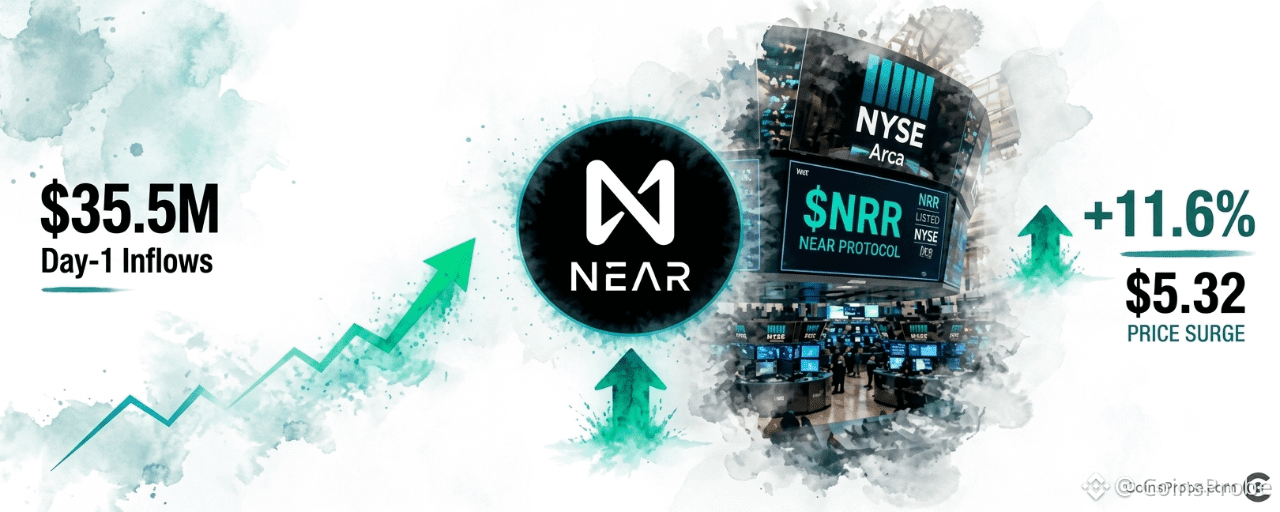
Artikel
NEAR steigt: Bitwise NEAR ETF debütiert an der NYSE Arca mit 35,5 Mio. $ Zuflüssen am ersten TagWichtige Highlights
NEAR wird bei 5,32 $ gehandelt – ein Plus von 11,61 % – nachdem der Bitwise NEAR ETF (NRR) am 29. September 2026 an der NYSE Arca zu handeln begonnen hat
Day-1-Kennzahlen: 36 Mio. $ AUM und 35,5 Mio. $ Nettozuflüsse – 98,6 % des gesamten AUM kamen am ersten Handelstag an, laut @NEARProtocol
NRR ist das erste Spot-NEAR-ETP in den USA und erfordert direkte Spot-Token-Käufe, um jede ausgegebene Aktie zu decken
Beobachte den Widerstand bei 5,50 $ sowie die täglichen NRR-Zuflussdaten – anhaltende Zuflüsse bestätigen ein strukturelles Kaufinteresse; ins Stocken geratene Zuflüsse signalisieren eine Ein-Tages- Prämie
NEAR steigt: Bitwise NEAR ETF debütiert an der NYSE Arca mit 35,5 Mio. $ Zuflüssen am ersten Tag
Wichtige Highlights
NEAR wird bei 5,32 $ gehandelt – ein Plus von 11,61 % – nachdem der Bitwise NEAR ETF (NRR) am 29. September 2026 an der NYSE Arca zu handeln begonnen hat
Day-1-Kennzahlen: 36 Mio. $ AUM und 35,5 Mio. $ Nettozuflüsse – 98,6 % des gesamten AUM kamen am ersten Handelstag an, laut @NEARProtocol
NRR ist das erste Spot-NEAR-ETP in den USA und erfordert direkte Spot-Token-Käufe, um jede ausgegebene Aktie zu decken
Beobachte den Widerstand bei 5,50 $ sowie die täglichen NRR-Zuflussdaten – anhaltende Zuflüsse bestätigen ein strukturelles Kaufinteresse; ins Stocken geratene Zuflüsse signalisieren eine Ein-Tages- Prämie
NEAR wird bei 5,32 $ gehandelt – ein Plus von 11,61 % – nachdem der Bitwise NEAR ETF (NRR) am 29. September 2026 an der NYSE Arca zu handeln begonnen hat
Day-1-Kennzahlen: 36 Mio. $ AUM und 35,5 Mio. $ Nettozuflüsse – 98,6 % des gesamten AUM kamen am ersten Handelstag an, laut @NEARProtocol
NRR ist das erste Spot-NEAR-ETP in den USA und erfordert direkte Spot-Token-Käufe, um jede ausgegebene Aktie zu decken
Beobachte den Widerstand bei 5,50 $ sowie die täglichen NRR-Zuflussdaten – anhaltende Zuflüsse bestätigen ein strukturelles Kaufinteresse; ins Stocken geratene Zuflüsse signalisieren eine Ein-Tages- Prämie
1
1.4k
·
--
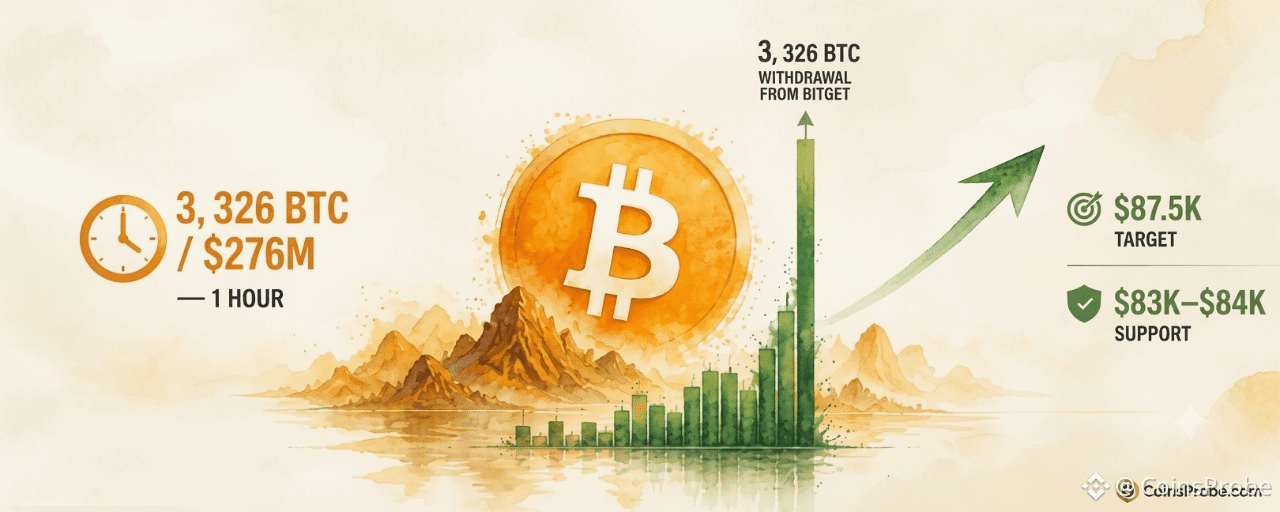
Artikel
Bitcoin absorbiert $276M Bitget-Exodus innerhalb einer Stunde — Kurs hält $83K–$84KWichtige Highlights
Bitcoin hält $83K–$84K, während in 60 Minuten nach Wiedereröffnung der Auszahlungen 3.326 BTC (~$276M) aus Bitget abfließen
Der Ein-Stunden-Abfluss entspricht ~12 Tagen der normalen Bitget-täglichen BTC-Abhebungen, laut @IT_Tech_PL über CryptoQuant
Reaktion des Preises: unverändert — die Nachfrageaufnahme im Bereich $83K–$84K absorbiert den gesamten notleidenden Verkaufsdruck, ohne dass es zu einem Zusammenbruch kommt
Wichtige Kursmarken: $82K als Invalidation (bärisch) vs. $87K–$87,5K als Widerstand (bullisches Bestätigungsziel)
Bitcoin wird bei etwa $83.203 gehandelt — ist in den letzten 24 Stunden nur um 0,10% gefallen — mit einer Marktkapitalisierung von $1,67 Billionen. Diese fast unveränderte Entwicklung ist die Geschichte. Nicht weil nichts passiert ist, sondern weil etwas Außergewöhnliches passiert ist — und der Preis kaum gezuckt hat.
Bitcoin absorbiert $276M Bitget-Exodus innerhalb einer Stunde — Kurs hält $83K–$84K
Wichtige Highlights
Bitcoin hält $83K–$84K, während in 60 Minuten nach Wiedereröffnung der Auszahlungen 3.326 BTC (~$276M) aus Bitget abfließen
Der Ein-Stunden-Abfluss entspricht ~12 Tagen der normalen Bitget-täglichen BTC-Abhebungen, laut @IT_Tech_PL über CryptoQuant
Reaktion des Preises: unverändert — die Nachfrageaufnahme im Bereich $83K–$84K absorbiert den gesamten notleidenden Verkaufsdruck, ohne dass es zu einem Zusammenbruch kommt
Wichtige Kursmarken: $82K als Invalidation (bärisch) vs. $87K–$87,5K als Widerstand (bullisches Bestätigungsziel)
Bitcoin wird bei etwa $83.203 gehandelt — ist in den letzten 24 Stunden nur um 0,10% gefallen — mit einer Marktkapitalisierung von $1,67 Billionen. Diese fast unveränderte Entwicklung ist die Geschichte. Nicht weil nichts passiert ist, sondern weil etwas Außergewöhnliches passiert ist — und der Preis kaum gezuckt hat.
Bitcoin hält $83K–$84K, während in 60 Minuten nach Wiedereröffnung der Auszahlungen 3.326 BTC (~$276M) aus Bitget abfließen
Der Ein-Stunden-Abfluss entspricht ~12 Tagen der normalen Bitget-täglichen BTC-Abhebungen, laut @IT_Tech_PL über CryptoQuant
Reaktion des Preises: unverändert — die Nachfrageaufnahme im Bereich $83K–$84K absorbiert den gesamten notleidenden Verkaufsdruck, ohne dass es zu einem Zusammenbruch kommt
Wichtige Kursmarken: $82K als Invalidation (bärisch) vs. $87K–$87,5K als Widerstand (bullisches Bestätigungsziel)
Bitcoin wird bei etwa $83.203 gehandelt — ist in den letzten 24 Stunden nur um 0,10% gefallen — mit einer Marktkapitalisierung von $1,67 Billionen. Diese fast unveränderte Entwicklung ist die Geschichte. Nicht weil nichts passiert ist, sondern weil etwas Außergewöhnliches passiert ist — und der Preis kaum gezuckt hat.
120
·
--
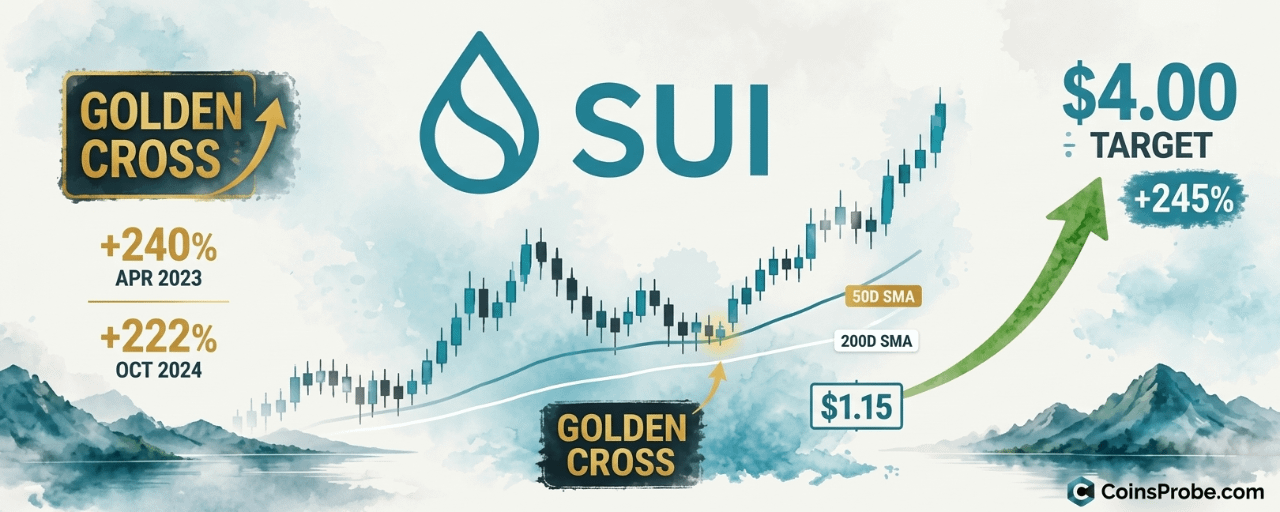
Artikel
SUI: Golden Cross entsteht — die letzten beiden Signale führten zu +220 %-Rallyes, Ziel 4 $Wichtige Highlights
SUI wird bei 1,15 $ gehandelt (+2,96 % in 24 Std., 4,72 Mrd. $ Marktkapitalisierung), während ein Golden Cross auf dem Tageschart entsteht
Analyst @alicharts weist auf ein bevorstehendes Kreuzen der 50-Tage-SMA über die 200-Tage-SMA hin – die beiden vorherigen Fälle führten zu Kursrallyes von +240,25 % und +222,45 %
Das Kursziel von 4,00 $ erfordert +245 % gegenüber dem aktuellen Kurs von 1,15 $; wichtige Widerstände bei 1,80 $ und 3,00 $
Invalidationsniveau: 0,72 $ — ein Bruch darunter entkräftet die Golden-Cross-These vollständig
SUI wird bei 1,15 $ gehandelt – 2,96 % im Plus in 24 Stunden – mit einer Marktkapitalisierung von 4,72 Milliarden US-Dollar, während eines der zuverlässigsten Trend-Umkehr-Signale der technischen Analyse auf seinem Tageschart beginnt, sich zu bilden: ein Golden Cross.
SUI: Golden Cross entsteht — die letzten beiden Signale führten zu +220 %-Rallyes, Ziel 4 $
Wichtige Highlights
SUI wird bei 1,15 $ gehandelt (+2,96 % in 24 Std., 4,72 Mrd. $ Marktkapitalisierung), während ein Golden Cross auf dem Tageschart entsteht
Analyst @alicharts weist auf ein bevorstehendes Kreuzen der 50-Tage-SMA über die 200-Tage-SMA hin – die beiden vorherigen Fälle führten zu Kursrallyes von +240,25 % und +222,45 %
Das Kursziel von 4,00 $ erfordert +245 % gegenüber dem aktuellen Kurs von 1,15 $; wichtige Widerstände bei 1,80 $ und 3,00 $
Invalidationsniveau: 0,72 $ — ein Bruch darunter entkräftet die Golden-Cross-These vollständig
SUI wird bei 1,15 $ gehandelt – 2,96 % im Plus in 24 Stunden – mit einer Marktkapitalisierung von 4,72 Milliarden US-Dollar, während eines der zuverlässigsten Trend-Umkehr-Signale der technischen Analyse auf seinem Tageschart beginnt, sich zu bilden: ein Golden Cross.
SUI wird bei 1,15 $ gehandelt (+2,96 % in 24 Std., 4,72 Mrd. $ Marktkapitalisierung), während ein Golden Cross auf dem Tageschart entsteht
Analyst @alicharts weist auf ein bevorstehendes Kreuzen der 50-Tage-SMA über die 200-Tage-SMA hin – die beiden vorherigen Fälle führten zu Kursrallyes von +240,25 % und +222,45 %
Das Kursziel von 4,00 $ erfordert +245 % gegenüber dem aktuellen Kurs von 1,15 $; wichtige Widerstände bei 1,80 $ und 3,00 $
Invalidationsniveau: 0,72 $ — ein Bruch darunter entkräftet die Golden-Cross-These vollständig
SUI wird bei 1,15 $ gehandelt – 2,96 % im Plus in 24 Stunden – mit einer Marktkapitalisierung von 4,72 Milliarden US-Dollar, während eines der zuverlässigsten Trend-Umkehr-Signale der technischen Analyse auf seinem Tageschart beginnt, sich zu bilden: ein Golden Cross.
201
·
--
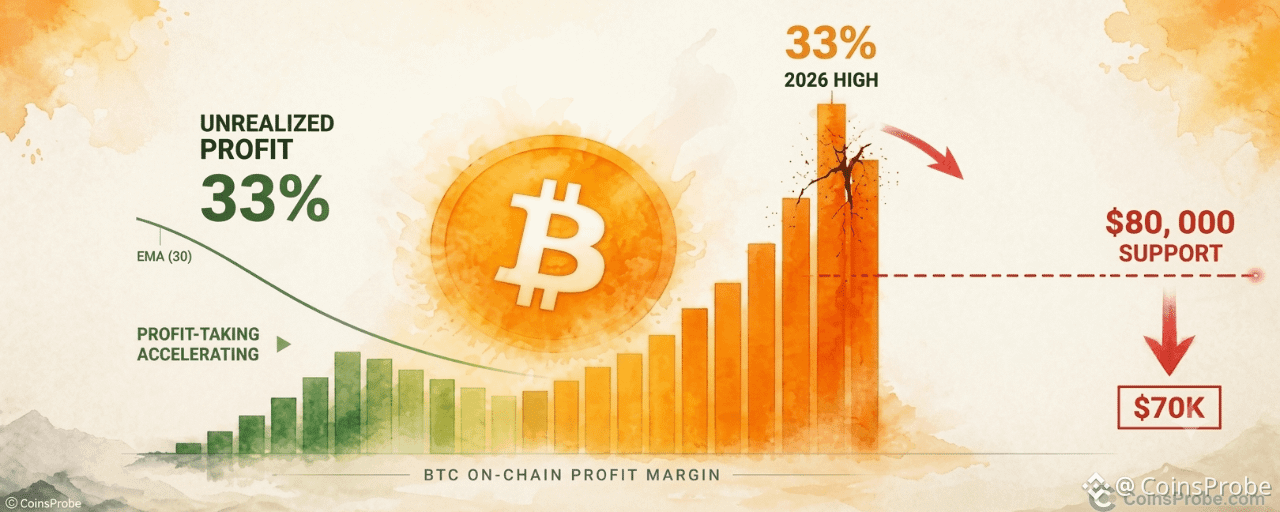
Artikel
Gewinnmitnahmen bei Bitcoin erreichen 2026er Hoch — $80K ist die entscheidende MarkeWichtigste Highlights
Der nicht realisierte Gewinnmargen-Anstieg von Bitcoin erreichte 33% — ein 2026er Hoch und der höchste Stand seit Dezember 2024, laut CryptoQuant
Das Volumen der Gewinnmitnahmen erreichte seinen höchsten Stand von 2026, während die Nachfrage-Kennzahlen gleichzeitig nachließen
$80.000 ist die erste kritische On-Chain-Unterstützung — der Verlust dieser Marke birgt das Risiko eines tieferen Rückgangs in Richtung $70.000
Die Bullenmarkt-Struktur bleibt intakt: Bitcoin handelt weiterhin oberhalb seines realisierten Preises on-chain
Bitcoin handelt nahe $82.600–$83.600, da On-Chain-Daten eine der deutlichsten Warnungen vor Distribution in diesem Jahr liefern. Händler sichern Gewinne im schnellsten Tempo seit Beginn des Zyklus ab, die nicht realisierten Gewinnmargen haben ein 2026er Hoch von 33% erreicht und die Nachfrage schwächt sich messbar ab. Die Bullenmarkt-Struktur bleibt intakt — aber die Rally zeigt echte Risse, nicht nur Sentiment-Rauschen.
Gewinnmitnahmen bei Bitcoin erreichen 2026er Hoch — $80K ist die entscheidende Marke
Wichtigste Highlights
Der nicht realisierte Gewinnmargen-Anstieg von Bitcoin erreichte 33% — ein 2026er Hoch und der höchste Stand seit Dezember 2024, laut CryptoQuant
Das Volumen der Gewinnmitnahmen erreichte seinen höchsten Stand von 2026, während die Nachfrage-Kennzahlen gleichzeitig nachließen
$80.000 ist die erste kritische On-Chain-Unterstützung — der Verlust dieser Marke birgt das Risiko eines tieferen Rückgangs in Richtung $70.000
Die Bullenmarkt-Struktur bleibt intakt: Bitcoin handelt weiterhin oberhalb seines realisierten Preises on-chain
Bitcoin handelt nahe $82.600–$83.600, da On-Chain-Daten eine der deutlichsten Warnungen vor Distribution in diesem Jahr liefern. Händler sichern Gewinne im schnellsten Tempo seit Beginn des Zyklus ab, die nicht realisierten Gewinnmargen haben ein 2026er Hoch von 33% erreicht und die Nachfrage schwächt sich messbar ab. Die Bullenmarkt-Struktur bleibt intakt — aber die Rally zeigt echte Risse, nicht nur Sentiment-Rauschen.
Der nicht realisierte Gewinnmargen-Anstieg von Bitcoin erreichte 33% — ein 2026er Hoch und der höchste Stand seit Dezember 2024, laut CryptoQuant
Das Volumen der Gewinnmitnahmen erreichte seinen höchsten Stand von 2026, während die Nachfrage-Kennzahlen gleichzeitig nachließen
$80.000 ist die erste kritische On-Chain-Unterstützung — der Verlust dieser Marke birgt das Risiko eines tieferen Rückgangs in Richtung $70.000
Die Bullenmarkt-Struktur bleibt intakt: Bitcoin handelt weiterhin oberhalb seines realisierten Preises on-chain
Bitcoin handelt nahe $82.600–$83.600, da On-Chain-Daten eine der deutlichsten Warnungen vor Distribution in diesem Jahr liefern. Händler sichern Gewinne im schnellsten Tempo seit Beginn des Zyklus ab, die nicht realisierten Gewinnmargen haben ein 2026er Hoch von 33% erreicht und die Nachfrage schwächt sich messbar ab. Die Bullenmarkt-Struktur bleibt intakt — aber die Rally zeigt echte Risse, nicht nur Sentiment-Rauschen.
108
·
--
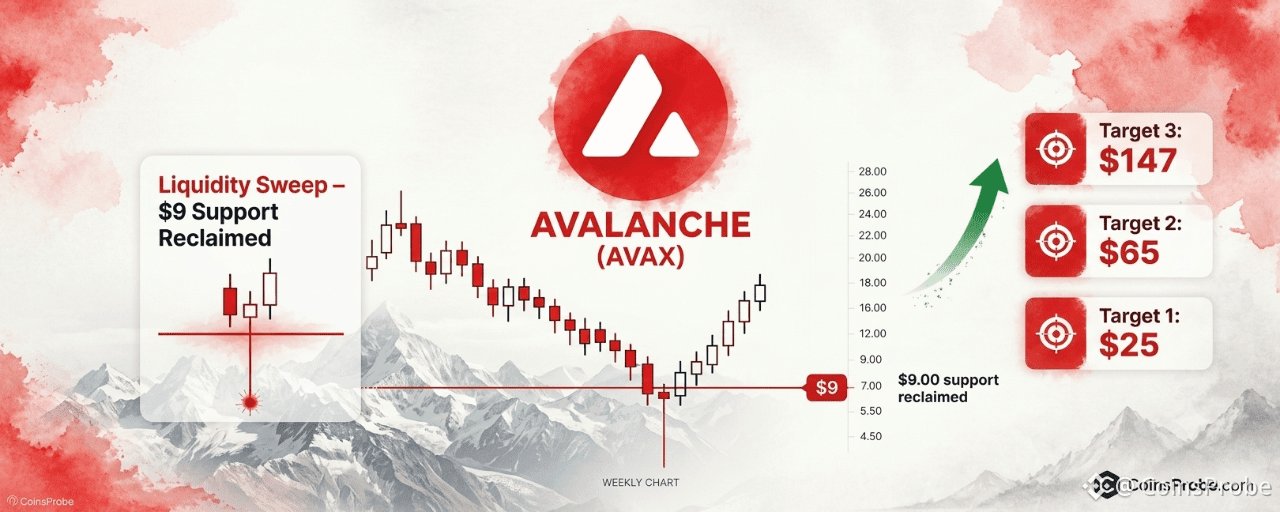
Artikel
AVAX erobert wichtigen Horizontal-Support zurück — Analyst sieht Ziele von 25, 65 und 147 US-DollarWichtige Highlights
AVAX handelt bei 11,56 US-Dollar, nachdem es sich den 9-US-Dollar-Horizontal-Support zurückerobert hat — das Jahrestief der Summer-2026-Zyklus
Analyst CryptoBullet1 setzt drei Kursziele: 25 US-Dollar (+116%), 65 US-Dollar (+462%) und 147 US-Dollar (+1.171%) gegenüber dem aktuellen Preis
9 US-Dollar ist der Thesis-Anker — ein wöchentliches Schlusskursniveau darunter entkräftet die gesamte bullische Struktur
Absteigende Trendlinie aus 2022 liegt bei 22–25 US-Dollar — ein wöchentliches Schlusskursniveau darüber ist der erste Bestätigungsauslöser
Avalanche (AVAX) wird derzeit bei etwa 11,56 US-Dollar gehandelt — und hält sich oberhalb der 9-US-Dollar-Horizontal-Supportmarke, die das Zyklustief der Summer 2026 definiert hat. Die Rückeroberung dieses Levels ist keine bloß unwichtige technische Entwicklung: Es ist das strukturelle Re-Setting, das ein Analyst zufolge das Ende von AVAX’ schlimmster Phase des Drawdowns in diesem Zyklus markiert.
AVAX erobert wichtigen Horizontal-Support zurück — Analyst sieht Ziele von 25, 65 und 147 US-Dollar
Wichtige Highlights
AVAX handelt bei 11,56 US-Dollar, nachdem es sich den 9-US-Dollar-Horizontal-Support zurückerobert hat — das Jahrestief der Summer-2026-Zyklus
Analyst CryptoBullet1 setzt drei Kursziele: 25 US-Dollar (+116%), 65 US-Dollar (+462%) und 147 US-Dollar (+1.171%) gegenüber dem aktuellen Preis
9 US-Dollar ist der Thesis-Anker — ein wöchentliches Schlusskursniveau darunter entkräftet die gesamte bullische Struktur
Absteigende Trendlinie aus 2022 liegt bei 22–25 US-Dollar — ein wöchentliches Schlusskursniveau darüber ist der erste Bestätigungsauslöser
Avalanche (AVAX) wird derzeit bei etwa 11,56 US-Dollar gehandelt — und hält sich oberhalb der 9-US-Dollar-Horizontal-Supportmarke, die das Zyklustief der Summer 2026 definiert hat. Die Rückeroberung dieses Levels ist keine bloß unwichtige technische Entwicklung: Es ist das strukturelle Re-Setting, das ein Analyst zufolge das Ende von AVAX’ schlimmster Phase des Drawdowns in diesem Zyklus markiert.
AVAX handelt bei 11,56 US-Dollar, nachdem es sich den 9-US-Dollar-Horizontal-Support zurückerobert hat — das Jahrestief der Summer-2026-Zyklus
Analyst CryptoBullet1 setzt drei Kursziele: 25 US-Dollar (+116%), 65 US-Dollar (+462%) und 147 US-Dollar (+1.171%) gegenüber dem aktuellen Preis
9 US-Dollar ist der Thesis-Anker — ein wöchentliches Schlusskursniveau darunter entkräftet die gesamte bullische Struktur
Absteigende Trendlinie aus 2022 liegt bei 22–25 US-Dollar — ein wöchentliches Schlusskursniveau darüber ist der erste Bestätigungsauslöser
Avalanche (AVAX) wird derzeit bei etwa 11,56 US-Dollar gehandelt — und hält sich oberhalb der 9-US-Dollar-Horizontal-Supportmarke, die das Zyklustief der Summer 2026 definiert hat. Die Rückeroberung dieses Levels ist keine bloß unwichtige technische Entwicklung: Es ist das strukturelle Re-Setting, das ein Analyst zufolge das Ende von AVAX’ schlimmster Phase des Drawdowns in diesem Zyklus markiert.
1
354
·
--
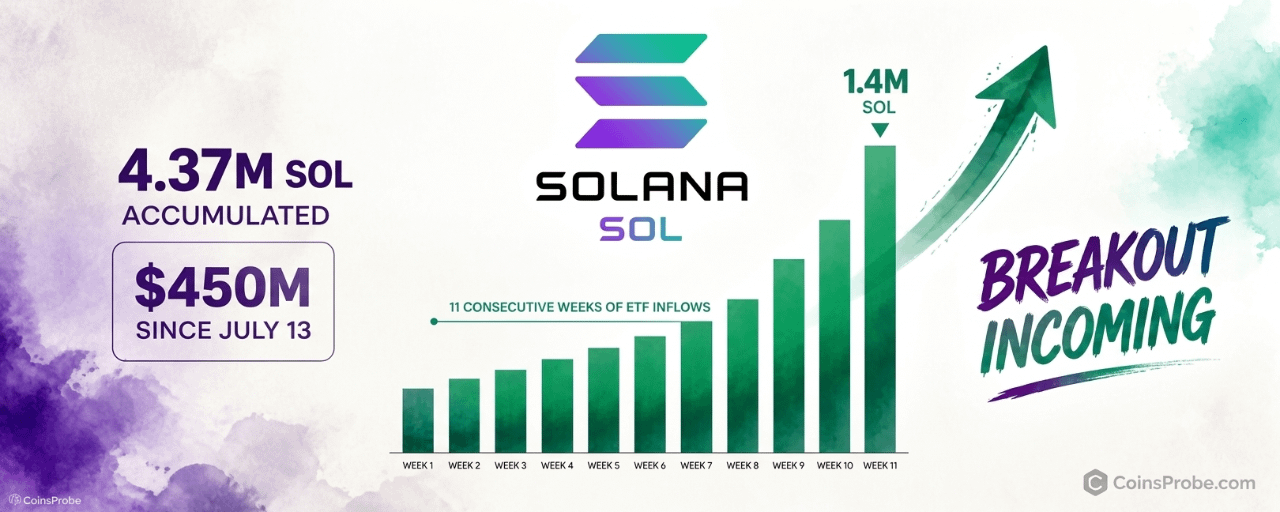
Artikel
Solana-ETF-Zuflüsse erreichen 11 direkte Wochen — steht ein Ausbruch bevor?Wichtige Highlights
US-Spot-Solana-ETFs haben seit dem 13. Juli 4,37 Mio. SOL (~450 Mio. $) angesammelt — 11 aufeinanderfolgende Wochen mit Nettozuflüssen
Am 21. September wurde der größte einzelne Wochenzufluss auf dem Chart verzeichnet: ~1,35–1,4 Mio. SOL, mit einem sich beschleunigenden Trend
Analyst @alicharts weist auf 11 durchgehende Zuflusswochen hin und beobachtet die nächste Aufwärtsbewegung in Richtung 150 $
Achte auf eine Fortsetzung der wöchentlichen ETF-Zuflüsse über 1 Mio. SOL — die erste negative Woche würde die 11-Wochen-These widerlegen
Solana baut einen Fall dafür auf, dass sich das institutionelle Geld nicht aus dem Markt herausdreht — es beschleunigt sich vielmehr in Richtung Einzahlungen. US-Spot-Solana-ETFs haben seit dem 13. Juli ungefähr 4,37 Millionen SOL im Wert von rund 450 Millionen $ absorbiert und damit 11 aufeinanderfolgende Wochen mit Nettozuflüssen ohne Unterbrechung.
Solana-ETF-Zuflüsse erreichen 11 direkte Wochen — steht ein Ausbruch bevor?
Wichtige Highlights
US-Spot-Solana-ETFs haben seit dem 13. Juli 4,37 Mio. SOL (~450 Mio. $) angesammelt — 11 aufeinanderfolgende Wochen mit Nettozuflüssen
Am 21. September wurde der größte einzelne Wochenzufluss auf dem Chart verzeichnet: ~1,35–1,4 Mio. SOL, mit einem sich beschleunigenden Trend
Analyst @alicharts weist auf 11 durchgehende Zuflusswochen hin und beobachtet die nächste Aufwärtsbewegung in Richtung 150 $
Achte auf eine Fortsetzung der wöchentlichen ETF-Zuflüsse über 1 Mio. SOL — die erste negative Woche würde die 11-Wochen-These widerlegen
Solana baut einen Fall dafür auf, dass sich das institutionelle Geld nicht aus dem Markt herausdreht — es beschleunigt sich vielmehr in Richtung Einzahlungen. US-Spot-Solana-ETFs haben seit dem 13. Juli ungefähr 4,37 Millionen SOL im Wert von rund 450 Millionen $ absorbiert und damit 11 aufeinanderfolgende Wochen mit Nettozuflüssen ohne Unterbrechung.
US-Spot-Solana-ETFs haben seit dem 13. Juli 4,37 Mio. SOL (~450 Mio. $) angesammelt — 11 aufeinanderfolgende Wochen mit Nettozuflüssen
Am 21. September wurde der größte einzelne Wochenzufluss auf dem Chart verzeichnet: ~1,35–1,4 Mio. SOL, mit einem sich beschleunigenden Trend
Analyst @alicharts weist auf 11 durchgehende Zuflusswochen hin und beobachtet die nächste Aufwärtsbewegung in Richtung 150 $
Achte auf eine Fortsetzung der wöchentlichen ETF-Zuflüsse über 1 Mio. SOL — die erste negative Woche würde die 11-Wochen-These widerlegen
Solana baut einen Fall dafür auf, dass sich das institutionelle Geld nicht aus dem Markt herausdreht — es beschleunigt sich vielmehr in Richtung Einzahlungen. US-Spot-Solana-ETFs haben seit dem 13. Juli ungefähr 4,37 Millionen SOL im Wert von rund 450 Millionen $ absorbiert und damit 11 aufeinanderfolgende Wochen mit Nettozuflüssen ohne Unterbrechung.
527
·
--
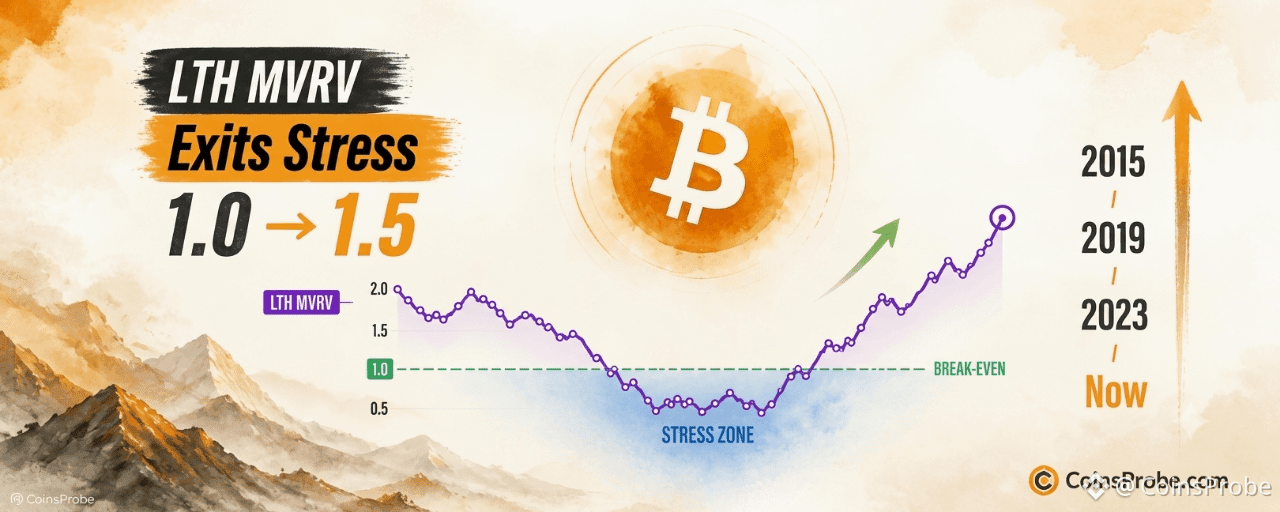
Artikel
Bitcoin LTH MVRV verlässt die Stresszone – was die Geschichte als Nächstes zeigtWichtige Highlights
Bisons 6M–10Y LTH angepasster MVRV ist zurück über 1,0 gekreuzt und hat flachen Stress verlassen – laut @_Crypto_glass über CryptoQuant
Jeder frühere Ausstieg unter 1,0 in dieser Kohorte (2012, 2015, 2019, 2023) ging einem nachhaltigen Bitcoin-Bullenlauf voraus
Aktuelle MVRV-Lesart ~1,2–1,5 gegenüber dem historischen Erschöpfungsbereich für Sell-Signale bei 8–10 — es bleibt erheblicher Puffer
Beobachte 85.000–88.000 US-Dollar als strukturellen Boden; ein anhaltender Bruch darunter bringt die Kohorte zurück in Verlustterritorium
Bitcoin handelt derzeit bei ungefähr 97.000 US-Dollar – und unterhalb dieser Marke ist gerade einer der folgenreichsten On-Chain-Reset-Prozesse dieses Zyklus abgeschlossen. Der angepasste MVRV der Long-Term Holder (für den Zeitraum 6 Monate bis 10 Jahre) ist zurück über 1,0 gekreuzt und damit aus dem herausgegangen, was CryptoQuant als flache Stresszone klassifiziert. Das ist kein spekulatives Signal. Es ist ein dokumentierter Regimewechsel, der seit 2012 jedem großen Bitcoin-Bullenlauf vorausging.
Bitcoin LTH MVRV verlässt die Stresszone – was die Geschichte als Nächstes zeigt
Wichtige Highlights
Bisons 6M–10Y LTH angepasster MVRV ist zurück über 1,0 gekreuzt und hat flachen Stress verlassen – laut @_Crypto_glass über CryptoQuant
Jeder frühere Ausstieg unter 1,0 in dieser Kohorte (2012, 2015, 2019, 2023) ging einem nachhaltigen Bitcoin-Bullenlauf voraus
Aktuelle MVRV-Lesart ~1,2–1,5 gegenüber dem historischen Erschöpfungsbereich für Sell-Signale bei 8–10 — es bleibt erheblicher Puffer
Beobachte 85.000–88.000 US-Dollar als strukturellen Boden; ein anhaltender Bruch darunter bringt die Kohorte zurück in Verlustterritorium
Bitcoin handelt derzeit bei ungefähr 97.000 US-Dollar – und unterhalb dieser Marke ist gerade einer der folgenreichsten On-Chain-Reset-Prozesse dieses Zyklus abgeschlossen. Der angepasste MVRV der Long-Term Holder (für den Zeitraum 6 Monate bis 10 Jahre) ist zurück über 1,0 gekreuzt und damit aus dem herausgegangen, was CryptoQuant als flache Stresszone klassifiziert. Das ist kein spekulatives Signal. Es ist ein dokumentierter Regimewechsel, der seit 2012 jedem großen Bitcoin-Bullenlauf vorausging.
Bisons 6M–10Y LTH angepasster MVRV ist zurück über 1,0 gekreuzt und hat flachen Stress verlassen – laut @_Crypto_glass über CryptoQuant
Jeder frühere Ausstieg unter 1,0 in dieser Kohorte (2012, 2015, 2019, 2023) ging einem nachhaltigen Bitcoin-Bullenlauf voraus
Aktuelle MVRV-Lesart ~1,2–1,5 gegenüber dem historischen Erschöpfungsbereich für Sell-Signale bei 8–10 — es bleibt erheblicher Puffer
Beobachte 85.000–88.000 US-Dollar als strukturellen Boden; ein anhaltender Bruch darunter bringt die Kohorte zurück in Verlustterritorium
Bitcoin handelt derzeit bei ungefähr 97.000 US-Dollar – und unterhalb dieser Marke ist gerade einer der folgenreichsten On-Chain-Reset-Prozesse dieses Zyklus abgeschlossen. Der angepasste MVRV der Long-Term Holder (für den Zeitraum 6 Monate bis 10 Jahre) ist zurück über 1,0 gekreuzt und damit aus dem herausgegangen, was CryptoQuant als flache Stresszone klassifiziert. Das ist kein spekulatives Signal. Es ist ein dokumentierter Regimewechsel, der seit 2012 jedem großen Bitcoin-Bullenlauf vorausging.
123
·
--
Verifiziert

Artikel
Warum steigt HBAR? Sibos-Stand, NVIDIA-Erwähnung der Safety-Plattform und IBM-CloudWichtige Highlights
HBAR legt um 35 % zu auf 0,1267 $; mit einer Marktkapitalisierung von 5,578 Milliarden $. Während Hedera live vom Sibos-2026-Stand DISM03 berichtet.
Der Hedera Council wird in der Open Agent Safety Platform von NVIDIA genannt – eine Darstellung, kein offizielierter, bezahlter NVIDIA-Vertrag.
Hashgraphs IDTrust wird im IBM Cloud Catalog gelistet und eröffnet damit einen zusätzlichen Enterprise-Kanal neben den Sibos-Demos von HashSphere, Asseto und CLPR.
Hedera (HBAR) wird bei 0,1267 $ gehandelt, ist in den vergangenen 24 Stunden um 35 % gestiegen und hat eine Marktkapitalisierung von 5,578 Milliarden $. Diese Zahlen werden sich bewegen. Die Auslöser nicht: Offizielle Hedera-Posts von Sibos und NVIDIA sind heute gelandet, und eine IBM-Cloud-Listung war bereits letzte Woche in den Meldungen.
Warum steigt HBAR? Sibos-Stand, NVIDIA-Erwähnung der Safety-Plattform und IBM-Cloud
Wichtige Highlights
HBAR legt um 35 % zu auf 0,1267 $; mit einer Marktkapitalisierung von 5,578 Milliarden $. Während Hedera live vom Sibos-2026-Stand DISM03 berichtet.
Der Hedera Council wird in der Open Agent Safety Platform von NVIDIA genannt – eine Darstellung, kein offizielierter, bezahlter NVIDIA-Vertrag.
Hashgraphs IDTrust wird im IBM Cloud Catalog gelistet und eröffnet damit einen zusätzlichen Enterprise-Kanal neben den Sibos-Demos von HashSphere, Asseto und CLPR.
Hedera (HBAR) wird bei 0,1267 $ gehandelt, ist in den vergangenen 24 Stunden um 35 % gestiegen und hat eine Marktkapitalisierung von 5,578 Milliarden $. Diese Zahlen werden sich bewegen. Die Auslöser nicht: Offizielle Hedera-Posts von Sibos und NVIDIA sind heute gelandet, und eine IBM-Cloud-Listung war bereits letzte Woche in den Meldungen.
HBAR legt um 35 % zu auf 0,1267 $; mit einer Marktkapitalisierung von 5,578 Milliarden $. Während Hedera live vom Sibos-2026-Stand DISM03 berichtet.
Der Hedera Council wird in der Open Agent Safety Platform von NVIDIA genannt – eine Darstellung, kein offizielierter, bezahlter NVIDIA-Vertrag.
Hashgraphs IDTrust wird im IBM Cloud Catalog gelistet und eröffnet damit einen zusätzlichen Enterprise-Kanal neben den Sibos-Demos von HashSphere, Asseto und CLPR.
Hedera (HBAR) wird bei 0,1267 $ gehandelt, ist in den vergangenen 24 Stunden um 35 % gestiegen und hat eine Marktkapitalisierung von 5,578 Milliarden $. Diese Zahlen werden sich bewegen. Die Auslöser nicht: Offizielle Hedera-Posts von Sibos und NVIDIA sind heute gelandet, und eine IBM-Cloud-Listung war bereits letzte Woche in den Meldungen.
1
1.3k
·
--
Verifiziert

Artikel
Warum steigt ALGO so stark? Börsen- (NYSE-)Debüt des CEO und ein 5-Jahres-Plan zur SelbstständigkeitWichtige Highlights
ALGO schießt um +16% auf 0,1359 US-Dollar nach oben — getrieben durch den bestätigten Auftritt von CEO William Herkelrath bei NYSE/FINTECHTV am 29. September
Herkelraths Community-AMA verpflichtet sich zur Selbstständigkeit innerhalb von 5 Jahren, zu keinen Gebührenerhöhungen und zu Multi-Chain-Support bis 2027
Algorand hat heute live Post-Quantum-Accounts on-chain — bestätigt von der Foundation am 25. September
Algorand (ALGO) wird nahe 0,1359 US-Dollar gehandelt, rund 16% im Plus in den letzten 24 Stunden, mit einer Marktkapitalisierung von etwa 1,2 Milliarden US-Dollar. Der Anstieg stützt sich auf zwei offizielle Foundation-Punkte: CEO William Herkelrath geht morgen live von der NYSE, und ein AMA am Wochenende hat Daten für Algorand 2.0 festgelegt.
Warum steigt ALGO so stark? Börsen- (NYSE-)Debüt des CEO und ein 5-Jahres-Plan zur Selbstständigkeit
Wichtige Highlights
ALGO schießt um +16% auf 0,1359 US-Dollar nach oben — getrieben durch den bestätigten Auftritt von CEO William Herkelrath bei NYSE/FINTECHTV am 29. September
Herkelraths Community-AMA verpflichtet sich zur Selbstständigkeit innerhalb von 5 Jahren, zu keinen Gebührenerhöhungen und zu Multi-Chain-Support bis 2027
Algorand hat heute live Post-Quantum-Accounts on-chain — bestätigt von der Foundation am 25. September
Algorand (ALGO) wird nahe 0,1359 US-Dollar gehandelt, rund 16% im Plus in den letzten 24 Stunden, mit einer Marktkapitalisierung von etwa 1,2 Milliarden US-Dollar. Der Anstieg stützt sich auf zwei offizielle Foundation-Punkte: CEO William Herkelrath geht morgen live von der NYSE, und ein AMA am Wochenende hat Daten für Algorand 2.0 festgelegt.
ALGO schießt um +16% auf 0,1359 US-Dollar nach oben — getrieben durch den bestätigten Auftritt von CEO William Herkelrath bei NYSE/FINTECHTV am 29. September
Herkelraths Community-AMA verpflichtet sich zur Selbstständigkeit innerhalb von 5 Jahren, zu keinen Gebührenerhöhungen und zu Multi-Chain-Support bis 2027
Algorand hat heute live Post-Quantum-Accounts on-chain — bestätigt von der Foundation am 25. September
Algorand (ALGO) wird nahe 0,1359 US-Dollar gehandelt, rund 16% im Plus in den letzten 24 Stunden, mit einer Marktkapitalisierung von etwa 1,2 Milliarden US-Dollar. Der Anstieg stützt sich auf zwei offizielle Foundation-Punkte: CEO William Herkelrath geht morgen live von der NYSE, und ein AMA am Wochenende hat Daten für Algorand 2.0 festgelegt.
2
357
·
--
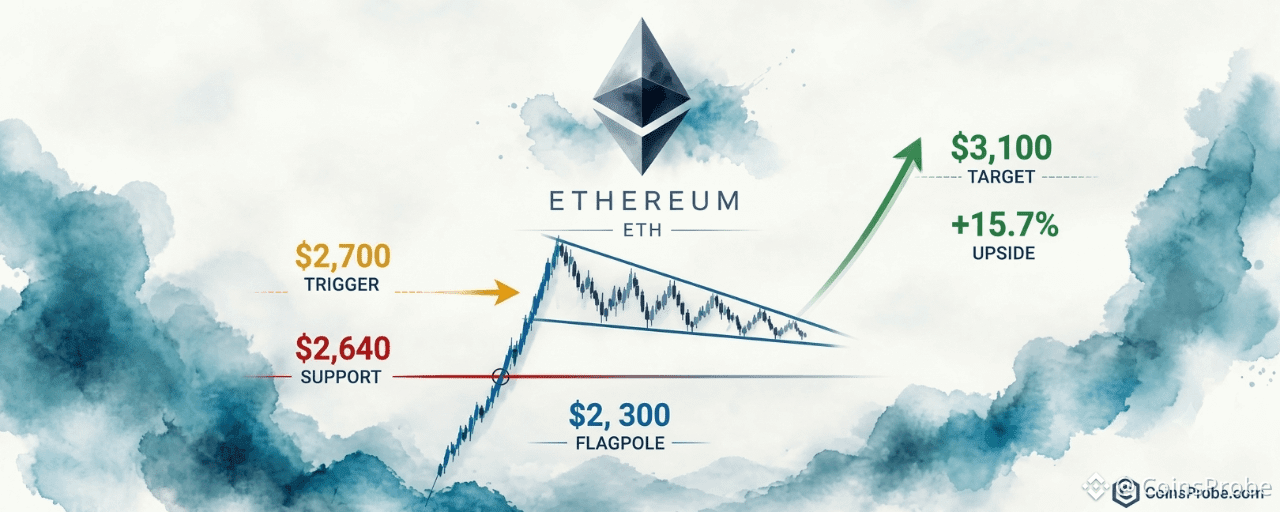
Artikel
Ethereum-Bullenflagge entsteht — 2.700-Dollar-Stundenschluss ist der Breakout-AuslöserWichtige Highlights
ETH wird bei 2.675,82 $ gehandelt (-0,46% 24h) mit einer 1-Stunden-Bullenflagge, die sich nahe dem Apex per @alicharts weiter verengt
Der 2.700-Dollar-Stundenschluss ist der bestätigte Ausbruchsauslöser — weniger als 1% vom aktuellen Kurs entfernt
Messbare Kurszielmuster: 2.800 $ → 2.950 $ → 3.100 $ (+15,7% gegenüber dem aktuellen Kurs)
2.640 $ ist die Invalidierungsuntergrenze — ein Schluss darunter birgt das Risiko eines Flushs in Richtung 2.450–2.300 $
Ethereum wird bei 2.675,82 $ gehandelt — im Vergleich zur Marktkapitalisierung von 326,7 Milliarden $ ist es in den vergangenen 24 Stunden um marginale 0,46% gefallen — während seine kurzfristige Struktur sich leise in eines der saubersten Fortsetzungs-Setups des aktuellen Zyklus verengt. Die Konsolidierung ist keine Schwäche. Es ist eine Kompression vor der Freigabe.
Ethereum-Bullenflagge entsteht — 2.700-Dollar-Stundenschluss ist der Breakout-Auslöser
Wichtige Highlights
ETH wird bei 2.675,82 $ gehandelt (-0,46% 24h) mit einer 1-Stunden-Bullenflagge, die sich nahe dem Apex per @alicharts weiter verengt
Der 2.700-Dollar-Stundenschluss ist der bestätigte Ausbruchsauslöser — weniger als 1% vom aktuellen Kurs entfernt
Messbare Kurszielmuster: 2.800 $ → 2.950 $ → 3.100 $ (+15,7% gegenüber dem aktuellen Kurs)
2.640 $ ist die Invalidierungsuntergrenze — ein Schluss darunter birgt das Risiko eines Flushs in Richtung 2.450–2.300 $
Ethereum wird bei 2.675,82 $ gehandelt — im Vergleich zur Marktkapitalisierung von 326,7 Milliarden $ ist es in den vergangenen 24 Stunden um marginale 0,46% gefallen — während seine kurzfristige Struktur sich leise in eines der saubersten Fortsetzungs-Setups des aktuellen Zyklus verengt. Die Konsolidierung ist keine Schwäche. Es ist eine Kompression vor der Freigabe.
ETH wird bei 2.675,82 $ gehandelt (-0,46% 24h) mit einer 1-Stunden-Bullenflagge, die sich nahe dem Apex per @alicharts weiter verengt
Der 2.700-Dollar-Stundenschluss ist der bestätigte Ausbruchsauslöser — weniger als 1% vom aktuellen Kurs entfernt
Messbare Kurszielmuster: 2.800 $ → 2.950 $ → 3.100 $ (+15,7% gegenüber dem aktuellen Kurs)
2.640 $ ist die Invalidierungsuntergrenze — ein Schluss darunter birgt das Risiko eines Flushs in Richtung 2.450–2.300 $
Ethereum wird bei 2.675,82 $ gehandelt — im Vergleich zur Marktkapitalisierung von 326,7 Milliarden $ ist es in den vergangenen 24 Stunden um marginale 0,46% gefallen — während seine kurzfristige Struktur sich leise in eines der saubersten Fortsetzungs-Setups des aktuellen Zyklus verengt. Die Konsolidierung ist keine Schwäche. Es ist eine Kompression vor der Freigabe.
1
1
181
·
--
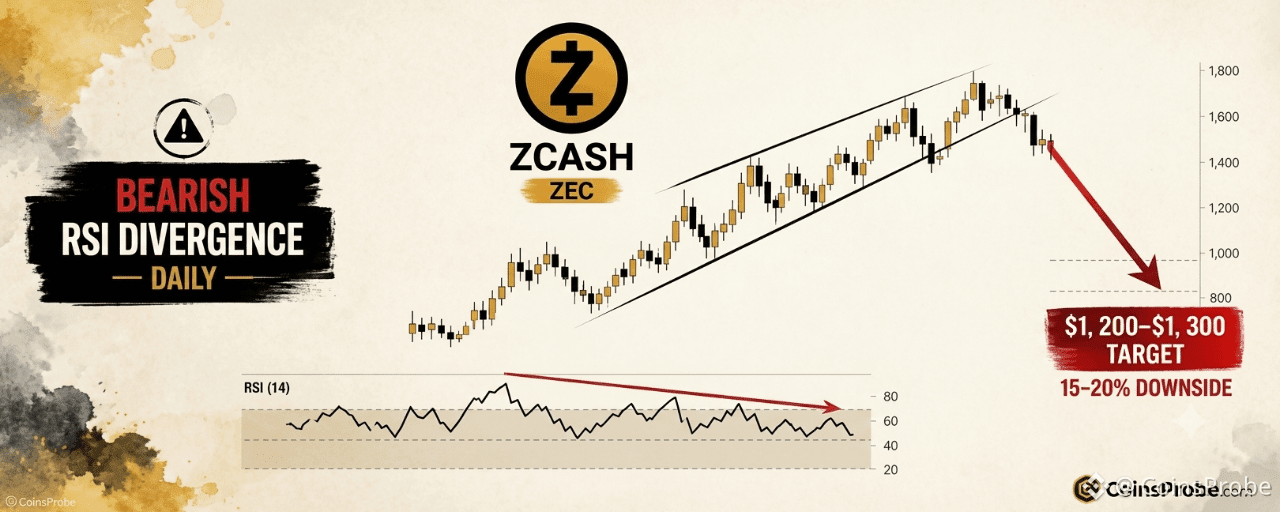
Artikel
Zcash (ZEC) Bärische RSI-Divergenz — Ist ein Rückgang von 15–20 % bereits im Gange?Wichtige Highlights
Der ZEC-Tageschart zeigt eine bärische RSI-Divergenz — der Kurs erreichte einen Peak bei etwa 1.700 $ , während der Momentum niedrigere Hochs markierte, gemäß @CryptoBullet1
Ein aufsteigendes Keilmuster verstärkt das Divergenz-Signal — die untere Keilbegrenzung bei etwa 1.500 $ ist der Bestätigungsauslöser für den Ausbruch
Analysten-Zielzone: 1.200–1.300 $, was einem Rückgang von 15–20 % gegenüber den aktuellen Kursen nahe 1.535 $ entspricht
Die Divergenz wird nur dann als ungültig betrachtet, wenn ZEC über 1.700 $ schließt und gleichzeitig der RSI ein höheres Hoch ausdruckt
Zcash (ZEC) zeigt im Tageschart ein klassisches Erschöpfungssignal — und die Struktur ist eindeutig. Der Kurs stieg auf einen jüngsten Höchststand nahe 1.700 $, während der Relative Strength Index (RSI) gleichzeitig ein niedrigeres Hoch markierte und so eine absteigende Trendlinie im Momentum bildete. Diese Diskrepanz — höherer Preis, niedrigere Dynamik — ist die klassische Definition einer bärischen Divergenz, und sie ist nun im Tageszeitrahmen bestätigt.
Zcash (ZEC) Bärische RSI-Divergenz — Ist ein Rückgang von 15–20 % bereits im Gange?
Wichtige Highlights
Der ZEC-Tageschart zeigt eine bärische RSI-Divergenz — der Kurs erreichte einen Peak bei etwa 1.700 $ , während der Momentum niedrigere Hochs markierte, gemäß @CryptoBullet1
Ein aufsteigendes Keilmuster verstärkt das Divergenz-Signal — die untere Keilbegrenzung bei etwa 1.500 $ ist der Bestätigungsauslöser für den Ausbruch
Analysten-Zielzone: 1.200–1.300 $, was einem Rückgang von 15–20 % gegenüber den aktuellen Kursen nahe 1.535 $ entspricht
Die Divergenz wird nur dann als ungültig betrachtet, wenn ZEC über 1.700 $ schließt und gleichzeitig der RSI ein höheres Hoch ausdruckt
Zcash (ZEC) zeigt im Tageschart ein klassisches Erschöpfungssignal — und die Struktur ist eindeutig. Der Kurs stieg auf einen jüngsten Höchststand nahe 1.700 $, während der Relative Strength Index (RSI) gleichzeitig ein niedrigeres Hoch markierte und so eine absteigende Trendlinie im Momentum bildete. Diese Diskrepanz — höherer Preis, niedrigere Dynamik — ist die klassische Definition einer bärischen Divergenz, und sie ist nun im Tageszeitrahmen bestätigt.
Der ZEC-Tageschart zeigt eine bärische RSI-Divergenz — der Kurs erreichte einen Peak bei etwa 1.700 $ , während der Momentum niedrigere Hochs markierte, gemäß @CryptoBullet1
Ein aufsteigendes Keilmuster verstärkt das Divergenz-Signal — die untere Keilbegrenzung bei etwa 1.500 $ ist der Bestätigungsauslöser für den Ausbruch
Analysten-Zielzone: 1.200–1.300 $, was einem Rückgang von 15–20 % gegenüber den aktuellen Kursen nahe 1.535 $ entspricht
Die Divergenz wird nur dann als ungültig betrachtet, wenn ZEC über 1.700 $ schließt und gleichzeitig der RSI ein höheres Hoch ausdruckt
Zcash (ZEC) zeigt im Tageschart ein klassisches Erschöpfungssignal — und die Struktur ist eindeutig. Der Kurs stieg auf einen jüngsten Höchststand nahe 1.700 $, während der Relative Strength Index (RSI) gleichzeitig ein niedrigeres Hoch markierte und so eine absteigende Trendlinie im Momentum bildete. Diese Diskrepanz — höherer Preis, niedrigere Dynamik — ist die klassische Definition einer bärischen Divergenz, und sie ist nun im Tageszeitrahmen bestätigt.
746
Anmelden und weiter Inhalte entdecken
Krypto-Nutzer weltweit auf Binance Square kennenlernen
⚡️ Bleib in Sachen Krypto stets am Puls.
💬 Die weltgrößte Kryptobörse vertraut darauf.
👍 Erhalte verlässliche Einblicke von verifizierten Creators.
E-Mail-Adresse/Telefonnummer