
CoinoMedia
11.1k Beiträge

CoinoMedia
 Square Verified+
Melden
Nutzer blockieren
Stay updated with Coinomedia, your one-stop destination for the latest cryptocurrency news, blockchain updates, market trends, and in-depth analysis.
0 Following
10.1K+ Follower
16.8K+ Like gegeben
Beiträge
·
--
Artikel
Übersetzung ansehen
Dogecoin Price Prediction: Can DOGE Reclaim Its All-Time High? While Apeing Enters the Best 100x ...The search for the best 100x meme coin is heating up as Official Trump faces volatile price action, Dogecoin looks toward gradual long-term growth, and Apeing moves deeper into its live crypto presale. While established meme coins already have large communities and active markets, Apeing is creating a different narrative through early-stage pricing, limited stage allocations, and a presale that is already underway.
For anyone searching for the best 100x meme coin, that difference matters. Established tokens already have market histories, communities, and trading data. Apeing offers a different early-stage narrative, with its live crypto presale moving through defined stages and prices.
Could Apeing become the next big crypto sensation? Could its live presale give early buyers a different entry point from established meme coins? And how does the current Apeing opportunity compare with Official Trump and Dogecoin?
Apeing: Why the Best 100x Meme Coin Search Is Turning Toward Apeing
The phrase best 100x meme coin has become popular because crypto users often search for projects before they become widely known. The attraction is simple. An early-stage token can have a very different price structure from a cryptocurrency that has already reached a large market valuation.
Apeing is currently in a LIVE crypto presale. Stage 3, known as Paper Hand Panic, is active at $0.0004. The next stage is priced at $0.0005, while the stated listing price is $0.01. The current Stage 3 allocation is 300,000,000 $APEING tokens. The presale has also raised more than $ 80,000 and has 268 holders based on the latest figures provided.
The important point is that these are stage-based figures. As the presale progresses, the pricing structure changes. That creates a different narrative from buying an established meme coin on the open market.
For readers hunting for the best 100x meme coin, Apeing’s appeal centers on the live presale rather than a distant launch plan. The opportunity is already active, Stage 3 is underway, and later stages carry higher prices.
Best 100x Meme Coin: Apeing Stage 3 Is Already Live
The best 100x meme coin conversation becomes more interesting when a project is already moving through its presale rather than waiting for launch.
Apeing’s Stage 3 price is $0.0004, with the next stated stage price at $0.0005. The project has also stated a $0.01 listing price. That creates a clear price ladder as the presale moves from one stage to another. The live crypto presale gives Apeing an early-stage identity while established names such as Official Trump and Dogecoin already trade in mature markets.
That distinction is central to the Apeing story. The best 100x meme coin narrative is not simply about having a funny brand. It is about finding a project while its community, presale structure, and market story are still developing.
Apeing Staking Rewards Strengthen Its Presale Narrative
Apeing is not relying entirely on meme culture. Staking is one of the project’s main features, adding another layer to the crypto presale. The Apeing staking system offers tiered rewards ranging from 10% to 85%, depending on the applicable staking tier. This gives $APEING holders an additional feature beyond simply purchasing tokens during the presale.
For readers comparing the best 100x meme coin options, this creates a different proposition. Dogecoin is known for its community and history. Official Trump has its political identity. Apeing combines meme culture with a structured staking system during an active crypto presale.
The staking feature also fits naturally with the project’s early-stage positioning. Rather than waiting for a future ecosystem to take shape, Apeing is already presenting utility while its presale stages progress. The project is built as an Ethereum ERC-20 token and has a fixed supply of 16.75 billion $APEING. Its 33-stage presale structure creates a defined progression from one pricing level to the next.
How to Buy Apeing Presale
Buying Apeing during the live crypto presale begins with connecting a compatible Ethereum wallet. Regular versions of MetaMask and Trust Wallet can be used, while smart wallets and passkey wallets are not supported. Once the wallet is connected, the buyer can select a supported cryptocurrency or Visa or Mastercard as the payment method. Card payments still require an Ethereum wallet connection so the purchased $APEING can be associated with the correct wallet.
The next step is choosing the purchase amount. The presale interface allows the buyer to enter either the amount of cryptocurrency to spend or the number of $APEING tokens desired. Before completing the purchase, the payment currency, purchase amount, and connected wallet can be reviewed. The Buy Now button then starts the transaction or card payment process.
A purchase of $25 or more activates the personal referral code. This creates an additional way for participants to engage with the Apeing community as the live crypto presale continues through its stages.
The $APEING purchased through the presale remains permanently linked to the wallet used for the transaction. Seed phrases and private keys should never be shared.
Official Trump Price Prediction 2026, 2027 to 2030
Official Trump (TRUMP) has built a distinctive position in the meme coin market through its connection to Donald Trump and its strong political and cultural identity. The token is currently trading around $1.96 based on the supplied market data, while short-term model projections point toward continued volatility.
The supplied five-day forecast places TRUMP between approximately $1.53 and $1.99. A separate one-month projection points toward $1.49. Technical sentiment remains bearish, with 82% of the supplied indicators signaling bearish conditions. The 14-day RSI near 44.20, however, sits in neutral territory rather than showing an oversold reading.
The current technical picture adds another layer to the Official Trump price prediction. The 50-day SMA is around $1.84, while the 200-day SMA is approximately $2.28. Key support areas are positioned near $1.92, $1.89, and $1.82. Resistance appears around $2.01, $2.07, and $2.10.
The supplied long-term model presents a different story. It estimates TRUMP could trade between $1.37 and $1.99 during 2026, with an average annualized price near $1.53 and a year-end estimate around $1.38.
Beyond 2026, the model becomes more optimistic. It projects approximately $4.19 by 2030, $8.17 by 2040, and $23.48 by 2050.
This creates an interesting contrast with the best 100x meme coin conversation. TRUMP already has an established market narrative. Apeing is still building that narrative through a live crypto presale.
Dogecoin Price Prediction 2027 to 2032
Dogecoin remains the heavyweight name among meme cryptocurrencies. Its simple branding, long history, enormous community, and widespread recognition continue to make DOGE one of the most discussed meme coins.
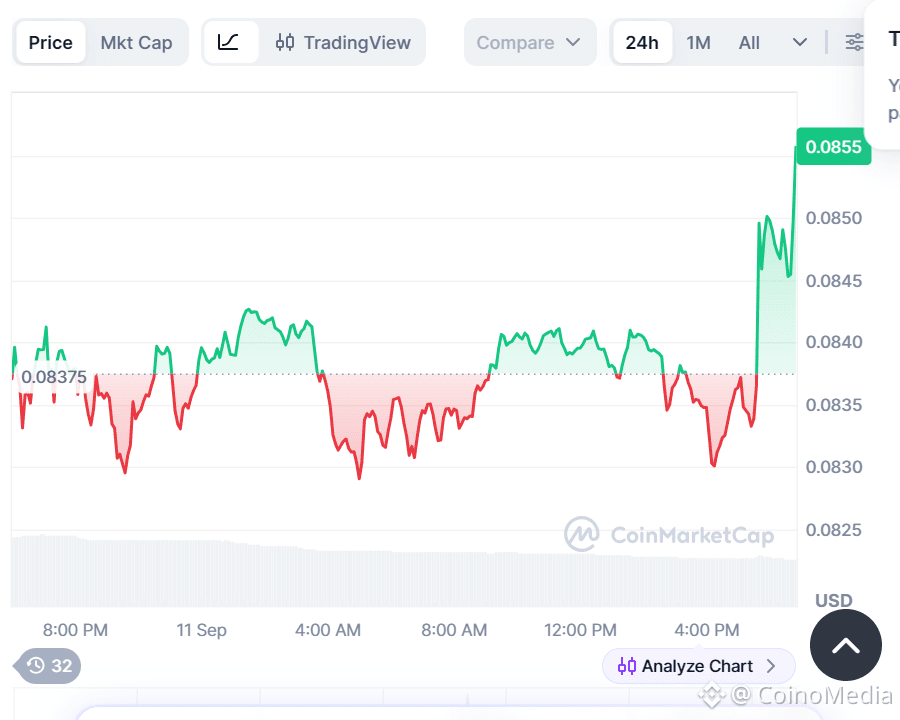
The supplied DOGE Price prediction places Dogecoin around $0.08386 and projects gradual growth over the following years. The model estimates $0.08806 in 2027, $0.09246 in 2028, $0.09708 in 2029, $0.10194 in 2030, $0.10703 in 2031, and $0.11239 in 2032.
That represents a gradual upward path rather than the explosive trajectory often associated with smaller meme coins.
The short-term DOGE Price prediction is also relatively restrained. The supplied model projects a move from approximately $0.08386 on September 11, 2026, toward $0.08420 by October 11, 2026.
Technical indicators present a mixed picture. Dogecoin’s four-hour 50-day moving average is trending downward, while the 200-day moving average has been rising. RSI remains within the neutral zone, and the supplied analysis identifies a bullish divergence that could point toward a possible change in momentum.
The DOGE Price prediction through 2030 will likely remain connected to network activity, market sentiment, adoption, broader crypto conditions, and the appetite for meme assets.
For readers searching for the best 100x meme coin, DOGE provides an important comparison. It has already achieved enormous recognition. Apeing is approaching the market from the opposite direction, using an early-stage crypto presale to build attention before reaching its stated listing price.
Best 100x Meme Coin Comparison: TRUMP, DOGE and Apeing
The best 100x meme coin discussion looks very different when Official Trump, Dogecoin, and Apeing are compared directly. Official Trump already has an established market and a recognizable political identity, with its price action shaped by open-market trading, sentiment, technical levels, and attention around the Trump brand. Dogecoin has an even longer history, supported by a massive community and broad recognition that have made DOGE one of the defining names in the meme coin sector. Apeing, meanwhile, remains at the early-stage crypto presale level, with its narrative centered on the live Stage 3 presale, changing stage prices, staking rewards, Ape Wars, and a stated $0.01 listing price.
This difference explains why Apeing naturally enters the best 100x meme coin conversation. Rather than competing with DOGE on history or market size, Apeing is building its story around early-stage positioning and a live crypto presale. The search for the next big crypto often focuses on projects before they become widely recognized, and Apeing’s active presale provides that early-stage setting. As the presale advances, stage prices can change, making timing a central part of the current narrative. For readers searching for the best 100x meme coin, the question therefore shifts from which established token has the biggest name to which emerging project combines community interest, timing, features, and early-stage momentum.
Conclusion
Based on the latest research and the market trends, Official Trump and Dogecoin remain major names in the meme coin market, but Apeing is creating a different narrative through its live crypto presale. With Stage 3 active at $0.0004, a next-stage price of $0.0005, staking rewards, and Ape Wars, the project is gaining attention among readers searching for the best 100x meme coin.
As the presale moves through its stages, Apeing offers an early-stage crypto story centered on community, changing prices, and a stated $0.01 listing price. Readers exploring the next big crypto can visit the official Apeing website and follow its official channels for the latest stage updates.
For More Information:
Website: Visit the Official Apeing Website
Telegram: Join the Apeing Telegram Channel
Twitter: Follow Apeing ON X (Formerly Twitter)
Frequently Asked Questions for Best 100x Meme Coin
What is the Official Trump price prediction for 2026?
The supplied model projects Official Trump between approximately $1.37 and $1.99 during 2026, with an estimated year-end price near $1.38. The short-term outlook remains volatile, while longer-term projections show a possible recovery.
What is the DOGE Price prediction for 2030?
The supplied Dogecoin model estimates approximately $0.10194 for 2030. The broader DOGE Price prediction depends on technical momentum, market activity, adoption, and wider cryptocurrency conditions.
What is the best crypto presale to watch in 2026?
Apeing is one of the notable live crypto presale projects to watch in 2026. Its Stage 3 presale is active at $0.0004, with the next stage set at $0.0005 and a stated listing price of $0.01.
Is Apeing presale live now?
Yes. The Apeing presale is LIVE and currently progressing through Stage 3, known as Paper Hand Panic.
What is the current Apeing presale price?
The current Stage 3 Apeing presale price is $0.0004. The next stage is stated at $0.0005, while the project’s stated listing price is $0.01.
Article Summary
Official Trump, Dogecoin, and Apeing represent three very different meme coin narratives. Official Trump has an established political identity but faces volatile technical conditions. Dogecoin remains a dominant meme coin with a large community and a gradual long-term price model. Apeing offers an early-stage alternative through a live crypto presale that is already progressing through Stage 3. The current Apeing price is $0.0004, the next stated stage price is $0.0005, and the stated listing price is $0.01. Staking rewards, Ape Wars, and staged pricing give Apeing a distinct position for readers searching for the best 100x meme coin.
Dogecoin Price Prediction: Can DOGE Reclaim Its All-Time High? While Apeing Enters the Best 100x ...
The search for the best 100x meme coin is heating up as Official Trump faces volatile price action, Dogecoin looks toward gradual long-term growth, and Apeing moves deeper into its live crypto presale. While established meme coins already have large communities and active markets, Apeing is creating a different narrative through early-stage pricing, limited stage allocations, and a presale that is already underway.
For anyone searching for the best 100x meme coin, that difference matters. Established tokens already have market histories, communities, and trading data. Apeing offers a different early-stage narrative, with its live crypto presale moving through defined stages and prices.
Could Apeing become the next big crypto sensation? Could its live presale give early buyers a different entry point from established meme coins? And how does the current Apeing opportunity compare with Official Trump and Dogecoin?
Apeing: Why the Best 100x Meme Coin Search Is Turning Toward Apeing
The phrase best 100x meme coin has become popular because crypto users often search for projects before they become widely known. The attraction is simple. An early-stage token can have a very different price structure from a cryptocurrency that has already reached a large market valuation.
Apeing is currently in a LIVE crypto presale. Stage 3, known as Paper Hand Panic, is active at $0.0004. The next stage is priced at $0.0005, while the stated listing price is $0.01. The current Stage 3 allocation is 300,000,000 $APEING tokens. The presale has also raised more than $ 80,000 and has 268 holders based on the latest figures provided.
The important point is that these are stage-based figures. As the presale progresses, the pricing structure changes. That creates a different narrative from buying an established meme coin on the open market.
For readers hunting for the best 100x meme coin, Apeing’s appeal centers on the live presale rather than a distant launch plan. The opportunity is already active, Stage 3 is underway, and later stages carry higher prices.
Best 100x Meme Coin: Apeing Stage 3 Is Already Live
The best 100x meme coin conversation becomes more interesting when a project is already moving through its presale rather than waiting for launch.
Apeing’s Stage 3 price is $0.0004, with the next stated stage price at $0.0005. The project has also stated a $0.01 listing price. That creates a clear price ladder as the presale moves from one stage to another. The live crypto presale gives Apeing an early-stage identity while established names such as Official Trump and Dogecoin already trade in mature markets.
That distinction is central to the Apeing story. The best 100x meme coin narrative is not simply about having a funny brand. It is about finding a project while its community, presale structure, and market story are still developing.
Apeing Staking Rewards Strengthen Its Presale Narrative
Apeing is not relying entirely on meme culture. Staking is one of the project’s main features, adding another layer to the crypto presale. The Apeing staking system offers tiered rewards ranging from 10% to 85%, depending on the applicable staking tier. This gives $APEING holders an additional feature beyond simply purchasing tokens during the presale.
For readers comparing the best 100x meme coin options, this creates a different proposition. Dogecoin is known for its community and history. Official Trump has its political identity. Apeing combines meme culture with a structured staking system during an active crypto presale.
The staking feature also fits naturally with the project’s early-stage positioning. Rather than waiting for a future ecosystem to take shape, Apeing is already presenting utility while its presale stages progress. The project is built as an Ethereum ERC-20 token and has a fixed supply of 16.75 billion $APEING. Its 33-stage presale structure creates a defined progression from one pricing level to the next.
How to Buy Apeing Presale
Buying Apeing during the live crypto presale begins with connecting a compatible Ethereum wallet. Regular versions of MetaMask and Trust Wallet can be used, while smart wallets and passkey wallets are not supported. Once the wallet is connected, the buyer can select a supported cryptocurrency or Visa or Mastercard as the payment method. Card payments still require an Ethereum wallet connection so the purchased $APEING can be associated with the correct wallet.
The next step is choosing the purchase amount. The presale interface allows the buyer to enter either the amount of cryptocurrency to spend or the number of $APEING tokens desired. Before completing the purchase, the payment currency, purchase amount, and connected wallet can be reviewed. The Buy Now button then starts the transaction or card payment process.
A purchase of $25 or more activates the personal referral code. This creates an additional way for participants to engage with the Apeing community as the live crypto presale continues through its stages.
The $APEING purchased through the presale remains permanently linked to the wallet used for the transaction. Seed phrases and private keys should never be shared.
Official Trump Price Prediction 2026, 2027 to 2030
Official Trump (TRUMP) has built a distinctive position in the meme coin market through its connection to Donald Trump and its strong political and cultural identity. The token is currently trading around $1.96 based on the supplied market data, while short-term model projections point toward continued volatility.
The supplied five-day forecast places TRUMP between approximately $1.53 and $1.99. A separate one-month projection points toward $1.49. Technical sentiment remains bearish, with 82% of the supplied indicators signaling bearish conditions. The 14-day RSI near 44.20, however, sits in neutral territory rather than showing an oversold reading.
The current technical picture adds another layer to the Official Trump price prediction. The 50-day SMA is around $1.84, while the 200-day SMA is approximately $2.28. Key support areas are positioned near $1.92, $1.89, and $1.82. Resistance appears around $2.01, $2.07, and $2.10.
The supplied long-term model presents a different story. It estimates TRUMP could trade between $1.37 and $1.99 during 2026, with an average annualized price near $1.53 and a year-end estimate around $1.38.
Beyond 2026, the model becomes more optimistic. It projects approximately $4.19 by 2030, $8.17 by 2040, and $23.48 by 2050.
This creates an interesting contrast with the best 100x meme coin conversation. TRUMP already has an established market narrative. Apeing is still building that narrative through a live crypto presale.
Dogecoin Price Prediction 2027 to 2032
Dogecoin remains the heavyweight name among meme cryptocurrencies. Its simple branding, long history, enormous community, and widespread recognition continue to make DOGE one of the most discussed meme coins.
The supplied DOGE Price prediction places Dogecoin around $0.08386 and projects gradual growth over the following years. The model estimates $0.08806 in 2027, $0.09246 in 2028, $0.09708 in 2029, $0.10194 in 2030, $0.10703 in 2031, and $0.11239 in 2032.
That represents a gradual upward path rather than the explosive trajectory often associated with smaller meme coins.
The short-term DOGE Price prediction is also relatively restrained. The supplied model projects a move from approximately $0.08386 on September 11, 2026, toward $0.08420 by October 11, 2026.
Technical indicators present a mixed picture. Dogecoin’s four-hour 50-day moving average is trending downward, while the 200-day moving average has been rising. RSI remains within the neutral zone, and the supplied analysis identifies a bullish divergence that could point toward a possible change in momentum.
The DOGE Price prediction through 2030 will likely remain connected to network activity, market sentiment, adoption, broader crypto conditions, and the appetite for meme assets.
For readers searching for the best 100x meme coin, DOGE provides an important comparison. It has already achieved enormous recognition. Apeing is approaching the market from the opposite direction, using an early-stage crypto presale to build attention before reaching its stated listing price.
Best 100x Meme Coin Comparison: TRUMP, DOGE and Apeing
The best 100x meme coin discussion looks very different when Official Trump, Dogecoin, and Apeing are compared directly. Official Trump already has an established market and a recognizable political identity, with its price action shaped by open-market trading, sentiment, technical levels, and attention around the Trump brand. Dogecoin has an even longer history, supported by a massive community and broad recognition that have made DOGE one of the defining names in the meme coin sector. Apeing, meanwhile, remains at the early-stage crypto presale level, with its narrative centered on the live Stage 3 presale, changing stage prices, staking rewards, Ape Wars, and a stated $0.01 listing price.
This difference explains why Apeing naturally enters the best 100x meme coin conversation. Rather than competing with DOGE on history or market size, Apeing is building its story around early-stage positioning and a live crypto presale. The search for the next big crypto often focuses on projects before they become widely recognized, and Apeing’s active presale provides that early-stage setting. As the presale advances, stage prices can change, making timing a central part of the current narrative. For readers searching for the best 100x meme coin, the question therefore shifts from which established token has the biggest name to which emerging project combines community interest, timing, features, and early-stage momentum.
Conclusion
Based on the latest research and the market trends, Official Trump and Dogecoin remain major names in the meme coin market, but Apeing is creating a different narrative through its live crypto presale. With Stage 3 active at $0.0004, a next-stage price of $0.0005, staking rewards, and Ape Wars, the project is gaining attention among readers searching for the best 100x meme coin.
As the presale moves through its stages, Apeing offers an early-stage crypto story centered on community, changing prices, and a stated $0.01 listing price. Readers exploring the next big crypto can visit the official Apeing website and follow its official channels for the latest stage updates.
For More Information:
Website: Visit the Official Apeing Website
Telegram: Join the Apeing Telegram Channel
Twitter: Follow Apeing ON X (Formerly Twitter)
Frequently Asked Questions for Best 100x Meme Coin
What is the Official Trump price prediction for 2026?
The supplied model projects Official Trump between approximately $1.37 and $1.99 during 2026, with an estimated year-end price near $1.38. The short-term outlook remains volatile, while longer-term projections show a possible recovery.
What is the DOGE Price prediction for 2030?
The supplied Dogecoin model estimates approximately $0.10194 for 2030. The broader DOGE Price prediction depends on technical momentum, market activity, adoption, and wider cryptocurrency conditions.
What is the best crypto presale to watch in 2026?
Apeing is one of the notable live crypto presale projects to watch in 2026. Its Stage 3 presale is active at $0.0004, with the next stage set at $0.0005 and a stated listing price of $0.01.
Is Apeing presale live now?
Yes. The Apeing presale is LIVE and currently progressing through Stage 3, known as Paper Hand Panic.
What is the current Apeing presale price?
The current Stage 3 Apeing presale price is $0.0004. The next stage is stated at $0.0005, while the project’s stated listing price is $0.01.
Article Summary
Official Trump, Dogecoin, and Apeing represent three very different meme coin narratives. Official Trump has an established political identity but faces volatile technical conditions. Dogecoin remains a dominant meme coin with a large community and a gradual long-term price model. Apeing offers an early-stage alternative through a live crypto presale that is already progressing through Stage 3. The current Apeing price is $0.0004, the next stated stage price is $0.0005, and the stated listing price is $0.01. Staking rewards, Ape Wars, and staged pricing give Apeing a distinct position for readers searching for the best 100x meme coin.
For anyone searching for the best 100x meme coin, that difference matters. Established tokens already have market histories, communities, and trading data. Apeing offers a different early-stage narrative, with its live crypto presale moving through defined stages and prices.
Could Apeing become the next big crypto sensation? Could its live presale give early buyers a different entry point from established meme coins? And how does the current Apeing opportunity compare with Official Trump and Dogecoin?
Apeing: Why the Best 100x Meme Coin Search Is Turning Toward Apeing
The phrase best 100x meme coin has become popular because crypto users often search for projects before they become widely known. The attraction is simple. An early-stage token can have a very different price structure from a cryptocurrency that has already reached a large market valuation.
Apeing is currently in a LIVE crypto presale. Stage 3, known as Paper Hand Panic, is active at $0.0004. The next stage is priced at $0.0005, while the stated listing price is $0.01. The current Stage 3 allocation is 300,000,000 $APEING tokens. The presale has also raised more than $ 80,000 and has 268 holders based on the latest figures provided.
The important point is that these are stage-based figures. As the presale progresses, the pricing structure changes. That creates a different narrative from buying an established meme coin on the open market.
For readers hunting for the best 100x meme coin, Apeing’s appeal centers on the live presale rather than a distant launch plan. The opportunity is already active, Stage 3 is underway, and later stages carry higher prices.
Best 100x Meme Coin: Apeing Stage 3 Is Already Live
The best 100x meme coin conversation becomes more interesting when a project is already moving through its presale rather than waiting for launch.
Apeing’s Stage 3 price is $0.0004, with the next stated stage price at $0.0005. The project has also stated a $0.01 listing price. That creates a clear price ladder as the presale moves from one stage to another. The live crypto presale gives Apeing an early-stage identity while established names such as Official Trump and Dogecoin already trade in mature markets.
That distinction is central to the Apeing story. The best 100x meme coin narrative is not simply about having a funny brand. It is about finding a project while its community, presale structure, and market story are still developing.
Apeing Staking Rewards Strengthen Its Presale Narrative
Apeing is not relying entirely on meme culture. Staking is one of the project’s main features, adding another layer to the crypto presale. The Apeing staking system offers tiered rewards ranging from 10% to 85%, depending on the applicable staking tier. This gives $APEING holders an additional feature beyond simply purchasing tokens during the presale.
For readers comparing the best 100x meme coin options, this creates a different proposition. Dogecoin is known for its community and history. Official Trump has its political identity. Apeing combines meme culture with a structured staking system during an active crypto presale.
The staking feature also fits naturally with the project’s early-stage positioning. Rather than waiting for a future ecosystem to take shape, Apeing is already presenting utility while its presale stages progress. The project is built as an Ethereum ERC-20 token and has a fixed supply of 16.75 billion $APEING. Its 33-stage presale structure creates a defined progression from one pricing level to the next.
How to Buy Apeing Presale
Buying Apeing during the live crypto presale begins with connecting a compatible Ethereum wallet. Regular versions of MetaMask and Trust Wallet can be used, while smart wallets and passkey wallets are not supported. Once the wallet is connected, the buyer can select a supported cryptocurrency or Visa or Mastercard as the payment method. Card payments still require an Ethereum wallet connection so the purchased $APEING can be associated with the correct wallet.
The next step is choosing the purchase amount. The presale interface allows the buyer to enter either the amount of cryptocurrency to spend or the number of $APEING tokens desired. Before completing the purchase, the payment currency, purchase amount, and connected wallet can be reviewed. The Buy Now button then starts the transaction or card payment process.
A purchase of $25 or more activates the personal referral code. This creates an additional way for participants to engage with the Apeing community as the live crypto presale continues through its stages.
The $APEING purchased through the presale remains permanently linked to the wallet used for the transaction. Seed phrases and private keys should never be shared.
Official Trump Price Prediction 2026, 2027 to 2030
Official Trump (TRUMP) has built a distinctive position in the meme coin market through its connection to Donald Trump and its strong political and cultural identity. The token is currently trading around $1.96 based on the supplied market data, while short-term model projections point toward continued volatility.
The supplied five-day forecast places TRUMP between approximately $1.53 and $1.99. A separate one-month projection points toward $1.49. Technical sentiment remains bearish, with 82% of the supplied indicators signaling bearish conditions. The 14-day RSI near 44.20, however, sits in neutral territory rather than showing an oversold reading.
The current technical picture adds another layer to the Official Trump price prediction. The 50-day SMA is around $1.84, while the 200-day SMA is approximately $2.28. Key support areas are positioned near $1.92, $1.89, and $1.82. Resistance appears around $2.01, $2.07, and $2.10.
The supplied long-term model presents a different story. It estimates TRUMP could trade between $1.37 and $1.99 during 2026, with an average annualized price near $1.53 and a year-end estimate around $1.38.
Beyond 2026, the model becomes more optimistic. It projects approximately $4.19 by 2030, $8.17 by 2040, and $23.48 by 2050.
This creates an interesting contrast with the best 100x meme coin conversation. TRUMP already has an established market narrative. Apeing is still building that narrative through a live crypto presale.
Dogecoin Price Prediction 2027 to 2032
Dogecoin remains the heavyweight name among meme cryptocurrencies. Its simple branding, long history, enormous community, and widespread recognition continue to make DOGE one of the most discussed meme coins.
The supplied DOGE Price prediction places Dogecoin around $0.08386 and projects gradual growth over the following years. The model estimates $0.08806 in 2027, $0.09246 in 2028, $0.09708 in 2029, $0.10194 in 2030, $0.10703 in 2031, and $0.11239 in 2032.
That represents a gradual upward path rather than the explosive trajectory often associated with smaller meme coins.
The short-term DOGE Price prediction is also relatively restrained. The supplied model projects a move from approximately $0.08386 on September 11, 2026, toward $0.08420 by October 11, 2026.
Technical indicators present a mixed picture. Dogecoin’s four-hour 50-day moving average is trending downward, while the 200-day moving average has been rising. RSI remains within the neutral zone, and the supplied analysis identifies a bullish divergence that could point toward a possible change in momentum.
The DOGE Price prediction through 2030 will likely remain connected to network activity, market sentiment, adoption, broader crypto conditions, and the appetite for meme assets.
For readers searching for the best 100x meme coin, DOGE provides an important comparison. It has already achieved enormous recognition. Apeing is approaching the market from the opposite direction, using an early-stage crypto presale to build attention before reaching its stated listing price.
Best 100x Meme Coin Comparison: TRUMP, DOGE and Apeing
The best 100x meme coin discussion looks very different when Official Trump, Dogecoin, and Apeing are compared directly. Official Trump already has an established market and a recognizable political identity, with its price action shaped by open-market trading, sentiment, technical levels, and attention around the Trump brand. Dogecoin has an even longer history, supported by a massive community and broad recognition that have made DOGE one of the defining names in the meme coin sector. Apeing, meanwhile, remains at the early-stage crypto presale level, with its narrative centered on the live Stage 3 presale, changing stage prices, staking rewards, Ape Wars, and a stated $0.01 listing price.
This difference explains why Apeing naturally enters the best 100x meme coin conversation. Rather than competing with DOGE on history or market size, Apeing is building its story around early-stage positioning and a live crypto presale. The search for the next big crypto often focuses on projects before they become widely recognized, and Apeing’s active presale provides that early-stage setting. As the presale advances, stage prices can change, making timing a central part of the current narrative. For readers searching for the best 100x meme coin, the question therefore shifts from which established token has the biggest name to which emerging project combines community interest, timing, features, and early-stage momentum.
Conclusion
Based on the latest research and the market trends, Official Trump and Dogecoin remain major names in the meme coin market, but Apeing is creating a different narrative through its live crypto presale. With Stage 3 active at $0.0004, a next-stage price of $0.0005, staking rewards, and Ape Wars, the project is gaining attention among readers searching for the best 100x meme coin.
As the presale moves through its stages, Apeing offers an early-stage crypto story centered on community, changing prices, and a stated $0.01 listing price. Readers exploring the next big crypto can visit the official Apeing website and follow its official channels for the latest stage updates.
For More Information:
Website: Visit the Official Apeing Website
Telegram: Join the Apeing Telegram Channel
Twitter: Follow Apeing ON X (Formerly Twitter)
Frequently Asked Questions for Best 100x Meme Coin
What is the Official Trump price prediction for 2026?
The supplied model projects Official Trump between approximately $1.37 and $1.99 during 2026, with an estimated year-end price near $1.38. The short-term outlook remains volatile, while longer-term projections show a possible recovery.
What is the DOGE Price prediction for 2030?
The supplied Dogecoin model estimates approximately $0.10194 for 2030. The broader DOGE Price prediction depends on technical momentum, market activity, adoption, and wider cryptocurrency conditions.
What is the best crypto presale to watch in 2026?
Apeing is one of the notable live crypto presale projects to watch in 2026. Its Stage 3 presale is active at $0.0004, with the next stage set at $0.0005 and a stated listing price of $0.01.
Is Apeing presale live now?
Yes. The Apeing presale is LIVE and currently progressing through Stage 3, known as Paper Hand Panic.
What is the current Apeing presale price?
The current Stage 3 Apeing presale price is $0.0004. The next stage is stated at $0.0005, while the project’s stated listing price is $0.01.
Article Summary
Official Trump, Dogecoin, and Apeing represent three very different meme coin narratives. Official Trump has an established political identity but faces volatile technical conditions. Dogecoin remains a dominant meme coin with a large community and a gradual long-term price model. Apeing offers an early-stage alternative through a live crypto presale that is already progressing through Stage 3. The current Apeing price is $0.0004, the next stated stage price is $0.0005, and the stated listing price is $0.01. Staking rewards, Ape Wars, and staged pricing give Apeing a distinct position for readers searching for the best 100x meme coin.
138
·
--

Artikel
Binance-Bitcoin-Reserven erreichen Zwei-Jahres-Hoch von 693K BTCDie Bitcoin-Reserven von Binance haben 693.000 BTC überschritten—das höchste Niveau in zwei Jahren.
Die Börse hält jetzt rund 30% der BTC-Reserven über die wichtigsten Börsen hinweg.
Analysten sagen, der Anstieg könnte auf möglichen Verkaufsdruck hindeuten, falls mehr Anleger BTC auf die Börsen verlagern.
Laut dem CryptoQuant-Analysten Darkfost sind die Bitcoin-Reserven von Binance auf über 693.000 BTC gestiegen und erreichten damit ihr höchstes Niveau in zwei Jahren.
Die Börse macht nun ungefähr 30% der gesamten Bitcoin-Reserven aus, die bei großen Krypto-Börsen gehalten werden. Seit Ende April sind die Reserven von Binance um rund 77.000 BTC gestiegen, wodurch es zu einem der größten Reserveaufbauten der letzten Monate gehört.
Binance-Bitcoin-Reserven erreichen Zwei-Jahres-Hoch von 693K BTC
Die Bitcoin-Reserven von Binance haben 693.000 BTC überschritten—das höchste Niveau in zwei Jahren.
Die Börse hält jetzt rund 30% der BTC-Reserven über die wichtigsten Börsen hinweg.
Analysten sagen, der Anstieg könnte auf möglichen Verkaufsdruck hindeuten, falls mehr Anleger BTC auf die Börsen verlagern.
Laut dem CryptoQuant-Analysten Darkfost sind die Bitcoin-Reserven von Binance auf über 693.000 BTC gestiegen und erreichten damit ihr höchstes Niveau in zwei Jahren.
Die Börse macht nun ungefähr 30% der gesamten Bitcoin-Reserven aus, die bei großen Krypto-Börsen gehalten werden. Seit Ende April sind die Reserven von Binance um rund 77.000 BTC gestiegen, wodurch es zu einem der größten Reserveaufbauten der letzten Monate gehört.
Die Börse hält jetzt rund 30% der BTC-Reserven über die wichtigsten Börsen hinweg.
Analysten sagen, der Anstieg könnte auf möglichen Verkaufsdruck hindeuten, falls mehr Anleger BTC auf die Börsen verlagern.
Laut dem CryptoQuant-Analysten Darkfost sind die Bitcoin-Reserven von Binance auf über 693.000 BTC gestiegen und erreichten damit ihr höchstes Niveau in zwei Jahren.
Die Börse macht nun ungefähr 30% der gesamten Bitcoin-Reserven aus, die bei großen Krypto-Börsen gehalten werden. Seit Ende April sind die Reserven von Binance um rund 77.000 BTC gestiegen, wodurch es zu einem der größten Reserveaufbauten der letzten Monate gehört.
294
·
--

Artikel
Übersetzung ansehen
Cardone Capital Adds 20 Bitcoin to Real Estate HybridCardone Capital acquired 20 BTC at $76,500 per Bitcoin.
The purchase expands the firm’s Real Estate BTC hybrid strategy.
The latest acquisition reinforces Cardone Capital’s long-term Bitcoin investment approach.
Cardone Capital has added 20 Bitcoin (BTC) to its Real Estate BTC hybrid strategy, purchasing the cryptocurrency at $76,500 per coin.
The latest acquisition reflects the firm’s continued commitment to combining traditional real estate investments with Bitcoin exposure. By integrating BTC into its investment model, Cardone Capital aims to diversify its portfolio while benefiting from the potential long-term appreciation of digital assets.
The purchase adds to the company’s growing Bitcoin treasury.
Hybrid Investment Strategy Continues
Cardone Capital’s Real Estate BTC hybrid combines income-generating real estate with Bitcoin as a strategic reserve asset.
The approach is designed to provide investors with exposure to both physical property and the growth potential of cryptocurrency. As more companies explore Bitcoin treasury strategies, Cardone Capital continues to position BTC as a complementary asset alongside traditional investments.
The latest purchase reinforces the firm’s long-term conviction in Bitcoin.
BULLISH: Cardone Capital adds 20 $BTC at $76,500 each to its Real Estate BTC hybrid. pic.twitter.com/BqVbEbPfbg
— Cointelegraph (@Cointelegraph) September 11, 2026
Corporate Bitcoin Adoption Grows
The latest Cardone Capital Bitcoin purchase highlights the continued adoption of Bitcoin by investment firms and corporate treasuries.
As institutional interest in Bitcoin expands, companies are increasingly incorporating the digital asset into broader investment strategies. Market participants will continue monitoring corporate Bitcoin purchases as an indicator of long-term confidence in the cryptocurrency.
Cardone Capital Adds 20 Bitcoin to Real Estate Hybrid
Cardone Capital acquired 20 BTC at $76,500 per Bitcoin.
The purchase expands the firm’s Real Estate BTC hybrid strategy.
The latest acquisition reinforces Cardone Capital’s long-term Bitcoin investment approach.
Cardone Capital has added 20 Bitcoin (BTC) to its Real Estate BTC hybrid strategy, purchasing the cryptocurrency at $76,500 per coin.
The latest acquisition reflects the firm’s continued commitment to combining traditional real estate investments with Bitcoin exposure. By integrating BTC into its investment model, Cardone Capital aims to diversify its portfolio while benefiting from the potential long-term appreciation of digital assets.
The purchase adds to the company’s growing Bitcoin treasury.
Hybrid Investment Strategy Continues
Cardone Capital’s Real Estate BTC hybrid combines income-generating real estate with Bitcoin as a strategic reserve asset.
The approach is designed to provide investors with exposure to both physical property and the growth potential of cryptocurrency. As more companies explore Bitcoin treasury strategies, Cardone Capital continues to position BTC as a complementary asset alongside traditional investments.
The latest purchase reinforces the firm’s long-term conviction in Bitcoin.
BULLISH: Cardone Capital adds 20 $BTC at $76,500 each to its Real Estate BTC hybrid. pic.twitter.com/BqVbEbPfbg
— Cointelegraph (@Cointelegraph) September 11, 2026
Corporate Bitcoin Adoption Grows
The latest Cardone Capital Bitcoin purchase highlights the continued adoption of Bitcoin by investment firms and corporate treasuries.
As institutional interest in Bitcoin expands, companies are increasingly incorporating the digital asset into broader investment strategies. Market participants will continue monitoring corporate Bitcoin purchases as an indicator of long-term confidence in the cryptocurrency.
The purchase expands the firm’s Real Estate BTC hybrid strategy.
The latest acquisition reinforces Cardone Capital’s long-term Bitcoin investment approach.
Cardone Capital has added 20 Bitcoin (BTC) to its Real Estate BTC hybrid strategy, purchasing the cryptocurrency at $76,500 per coin.
The latest acquisition reflects the firm’s continued commitment to combining traditional real estate investments with Bitcoin exposure. By integrating BTC into its investment model, Cardone Capital aims to diversify its portfolio while benefiting from the potential long-term appreciation of digital assets.
The purchase adds to the company’s growing Bitcoin treasury.
Hybrid Investment Strategy Continues
Cardone Capital’s Real Estate BTC hybrid combines income-generating real estate with Bitcoin as a strategic reserve asset.
The approach is designed to provide investors with exposure to both physical property and the growth potential of cryptocurrency. As more companies explore Bitcoin treasury strategies, Cardone Capital continues to position BTC as a complementary asset alongside traditional investments.
The latest purchase reinforces the firm’s long-term conviction in Bitcoin.
BULLISH: Cardone Capital adds 20 $BTC at $76,500 each to its Real Estate BTC hybrid. pic.twitter.com/BqVbEbPfbg
— Cointelegraph (@Cointelegraph) September 11, 2026
Corporate Bitcoin Adoption Grows
The latest Cardone Capital Bitcoin purchase highlights the continued adoption of Bitcoin by investment firms and corporate treasuries.
As institutional interest in Bitcoin expands, companies are increasingly incorporating the digital asset into broader investment strategies. Market participants will continue monitoring corporate Bitcoin purchases as an indicator of long-term confidence in the cryptocurrency.
320
·
--

Artikel
Bitcoin-Spot-ETFs verzeichnen 283 Mio. USD Abflüsse zum dritten Tag in FolgeBitcoin-Spot-ETFs verzeichneten am 10. September Nettoabflüsse in Höhe von 283 Millionen US-Dollar.
Die Abhebungen markierten drei aufeinanderfolgende Tage mit Nettoabflüssen für Bitcoin-ETFs.
Ethereum-Spot-ETFs verzeichneten Nettoabflüsse in Höhe von 29,76 Millionen US-Dollar, während BlackRocks ETHB mit 13,95 Millionen US-Dollar Zuflüsse anführte.
US-Spot-Bitcoin-ETFs verzeichneten am 10. September (ET) Nettoabflüsse in Höhe von 283 Millionen US-Dollar und verlängerten damit ihre Verlustserie auf drei aufeinanderfolgende Handelstage.
Die anhaltenden Abhebungen deuten darauf hin, dass institutionelle Anleger während der Sitzung weiterhin zurückhaltend gegenüber Bitcoin-Investmentprodukten blieben. Anhaltende Abflüsse werden von Marktteilnehmern genau beobachtet, da sie Aufschluss über sich ändernde institutionelle Stimmung und die Kapitalallokation geben können.
Bitcoin-Spot-ETFs verzeichnen 283 Mio. USD Abflüsse zum dritten Tag in Folge
Bitcoin-Spot-ETFs verzeichneten am 10. September Nettoabflüsse in Höhe von 283 Millionen US-Dollar.
Die Abhebungen markierten drei aufeinanderfolgende Tage mit Nettoabflüssen für Bitcoin-ETFs.
Ethereum-Spot-ETFs verzeichneten Nettoabflüsse in Höhe von 29,76 Millionen US-Dollar, während BlackRocks ETHB mit 13,95 Millionen US-Dollar Zuflüsse anführte.
US-Spot-Bitcoin-ETFs verzeichneten am 10. September (ET) Nettoabflüsse in Höhe von 283 Millionen US-Dollar und verlängerten damit ihre Verlustserie auf drei aufeinanderfolgende Handelstage.
Die anhaltenden Abhebungen deuten darauf hin, dass institutionelle Anleger während der Sitzung weiterhin zurückhaltend gegenüber Bitcoin-Investmentprodukten blieben. Anhaltende Abflüsse werden von Marktteilnehmern genau beobachtet, da sie Aufschluss über sich ändernde institutionelle Stimmung und die Kapitalallokation geben können.
Die Abhebungen markierten drei aufeinanderfolgende Tage mit Nettoabflüssen für Bitcoin-ETFs.
Ethereum-Spot-ETFs verzeichneten Nettoabflüsse in Höhe von 29,76 Millionen US-Dollar, während BlackRocks ETHB mit 13,95 Millionen US-Dollar Zuflüsse anführte.
US-Spot-Bitcoin-ETFs verzeichneten am 10. September (ET) Nettoabflüsse in Höhe von 283 Millionen US-Dollar und verlängerten damit ihre Verlustserie auf drei aufeinanderfolgende Handelstage.
Die anhaltenden Abhebungen deuten darauf hin, dass institutionelle Anleger während der Sitzung weiterhin zurückhaltend gegenüber Bitcoin-Investmentprodukten blieben. Anhaltende Abflüsse werden von Marktteilnehmern genau beobachtet, da sie Aufschluss über sich ändernde institutionelle Stimmung und die Kapitalallokation geben können.
204
·
--

Artikel
Bitcoin muss $72K–$73K halten, um bullish zu bleiben, sagt CryptoQuantCryptoQuant identifiziert $72.000–$73.000 als Bitcoins wichtigste Unterstützungszone.
Ein Halten über diesem Niveau könnte auf eine erneute Akkumulation durch Institutionen hindeuten.
Ein Bruch unter den angegebenen Bereich könnte Bitcoins derzeitigen Markttrend schwächen.
CryptoQuant sagt, dass $72.000–$73.000 im aktuellen Marktzyklus der wichtigste Unterstützungsbereich für Bitcoin ist.
Laut der Analyse würde ein Kurs oberhalb dieser Zone darauf hindeuten, dass institutionelle Anleger Bitcoin weiterhin in Phasen der Konsolidierung akkumulieren. Der Bereich wird genau beobachtet als mögliche Grundlage für die nächste Phase des Marktes.
Bitcoin muss $72K–$73K halten, um bullish zu bleiben, sagt CryptoQuant
CryptoQuant identifiziert $72.000–$73.000 als Bitcoins wichtigste Unterstützungszone.
Ein Halten über diesem Niveau könnte auf eine erneute Akkumulation durch Institutionen hindeuten.
Ein Bruch unter den angegebenen Bereich könnte Bitcoins derzeitigen Markttrend schwächen.
CryptoQuant sagt, dass $72.000–$73.000 im aktuellen Marktzyklus der wichtigste Unterstützungsbereich für Bitcoin ist.
Laut der Analyse würde ein Kurs oberhalb dieser Zone darauf hindeuten, dass institutionelle Anleger Bitcoin weiterhin in Phasen der Konsolidierung akkumulieren. Der Bereich wird genau beobachtet als mögliche Grundlage für die nächste Phase des Marktes.
Ein Halten über diesem Niveau könnte auf eine erneute Akkumulation durch Institutionen hindeuten.
Ein Bruch unter den angegebenen Bereich könnte Bitcoins derzeitigen Markttrend schwächen.
CryptoQuant sagt, dass $72.000–$73.000 im aktuellen Marktzyklus der wichtigste Unterstützungsbereich für Bitcoin ist.
Laut der Analyse würde ein Kurs oberhalb dieser Zone darauf hindeuten, dass institutionelle Anleger Bitcoin weiterhin in Phasen der Konsolidierung akkumulieren. Der Bereich wird genau beobachtet als mögliche Grundlage für die nächste Phase des Marktes.
112
·
--

Artikel
Coinbase-CEO Sagt, 400.000 US-Dollar Bitcoin Bis 2030 Seien RealistischCoinbase-CEO Brian Armstrong sagt, ein Bitcoin von 400.000 US-Dollar bis 2030 sei ein realistisches Ziel.
Die Prognose spiegelt einen langfristig bullischen Ausblick für Bitcoin wider.
Armstrong bleibt optimistisch hinsichtlich der künftigen Akzeptanz und des Werts von Bitcoin.
Coinbase-CEO Brian Armstrong glaubt, dass es ein realistisches Ziel ist, wenn Bitcoin bis 2030 400.000 US-Dollar erreicht, und verweist dabei auf sein Vertrauen in das langfristige Wachstum der Kryptowährung.
Die Projektion spiegelt Armstrongs positiven Ausblick auf Bitcoin wider: die institutionelle Akzeptanz, regulatorische Klarheit und eine breitere Anerkennung entwickeln sich weiter. Obwohl das Ziel ehrgeizig ist, entspricht es den Erwartungen mehrerer Marktteilnehmer, die glauben, dass Bitcoin weiter an Wert gewinnen könnte, während die Nachfrage im Laufe der Zeit wächst.
Coinbase-CEO Sagt, 400.000 US-Dollar Bitcoin Bis 2030 Seien Realistisch
Coinbase-CEO Brian Armstrong sagt, ein Bitcoin von 400.000 US-Dollar bis 2030 sei ein realistisches Ziel.
Die Prognose spiegelt einen langfristig bullischen Ausblick für Bitcoin wider.
Armstrong bleibt optimistisch hinsichtlich der künftigen Akzeptanz und des Werts von Bitcoin.
Coinbase-CEO Brian Armstrong glaubt, dass es ein realistisches Ziel ist, wenn Bitcoin bis 2030 400.000 US-Dollar erreicht, und verweist dabei auf sein Vertrauen in das langfristige Wachstum der Kryptowährung.
Die Projektion spiegelt Armstrongs positiven Ausblick auf Bitcoin wider: die institutionelle Akzeptanz, regulatorische Klarheit und eine breitere Anerkennung entwickeln sich weiter. Obwohl das Ziel ehrgeizig ist, entspricht es den Erwartungen mehrerer Marktteilnehmer, die glauben, dass Bitcoin weiter an Wert gewinnen könnte, während die Nachfrage im Laufe der Zeit wächst.
Die Prognose spiegelt einen langfristig bullischen Ausblick für Bitcoin wider.
Armstrong bleibt optimistisch hinsichtlich der künftigen Akzeptanz und des Werts von Bitcoin.
Coinbase-CEO Brian Armstrong glaubt, dass es ein realistisches Ziel ist, wenn Bitcoin bis 2030 400.000 US-Dollar erreicht, und verweist dabei auf sein Vertrauen in das langfristige Wachstum der Kryptowährung.
Die Projektion spiegelt Armstrongs positiven Ausblick auf Bitcoin wider: die institutionelle Akzeptanz, regulatorische Klarheit und eine breitere Anerkennung entwickeln sich weiter. Obwohl das Ziel ehrgeizig ist, entspricht es den Erwartungen mehrerer Marktteilnehmer, die glauben, dass Bitcoin weiter an Wert gewinnen könnte, während die Nachfrage im Laufe der Zeit wächst.
132
·
--

Artikel
Übersetzung ansehen
Coinbase CEO Says US Crypto Regulation Will Move ForwardBrian Armstrong says U.S. crypto regulation will move forward regardless of the Clarity Act’s outcome.
SEC and CFTC rulemaking could serve as a fallback if the legislation stalls.
Armstrong expects continued progress toward a clearer regulatory framework for digital assets.
Coinbase CEO Brian Armstrong says U.S. crypto regulation is expected to move forward regardless of whether the proposed Clarity Act becomes law.
According to Armstrong, if Congress fails to advance the legislation, regulatory agencies such as the U.S. Securities and Exchange Commission (SEC) and the Commodity Futures Trading Commission (CFTC) could continue developing rules through their existing rulemaking processes.
His comments reflect growing expectations that the regulatory environment for digital assets will continue to evolve.
SEC and CFTC Could Fill the Gap
Armstrong said SEC and CFTC rulemaking could provide a fallback path for establishing clearer crypto regulations if legislative efforts slow.
Both agencies have been actively involved in shaping oversight of the digital asset industry, and additional rulemaking could offer greater clarity for exchanges, issuers, and investors. While legislation would provide a more comprehensive framework, agency-led regulations could still address key areas of the market.
The remarks underscore the multiple paths available for regulatory development.
JUST IN: Coinbase CEO Brian Armstrong says crypto regulation in the US is moving forward either way, with SEC and CFTC rulemaking as a fallback if the Clarity Act stalls. pic.twitter.com/TGHsku1crx
— Cointelegraph (@Cointelegraph) September 10, 2026
Industry Awaits Greater Clarity
The latest US crypto regulation comments highlight the industry’s continued focus on achieving a more predictable legal framework.
As policymakers and regulators debate the future of digital asset oversight, market participants will be watching both congressional action and agency rulemaking. Greater regulatory clarity is widely viewed as an important step toward supporting innovation while strengthening investor protections.
Coinbase CEO Says US Crypto Regulation Will Move Forward
Brian Armstrong says U.S. crypto regulation will move forward regardless of the Clarity Act’s outcome.
SEC and CFTC rulemaking could serve as a fallback if the legislation stalls.
Armstrong expects continued progress toward a clearer regulatory framework for digital assets.
Coinbase CEO Brian Armstrong says U.S. crypto regulation is expected to move forward regardless of whether the proposed Clarity Act becomes law.
According to Armstrong, if Congress fails to advance the legislation, regulatory agencies such as the U.S. Securities and Exchange Commission (SEC) and the Commodity Futures Trading Commission (CFTC) could continue developing rules through their existing rulemaking processes.
His comments reflect growing expectations that the regulatory environment for digital assets will continue to evolve.
SEC and CFTC Could Fill the Gap
Armstrong said SEC and CFTC rulemaking could provide a fallback path for establishing clearer crypto regulations if legislative efforts slow.
Both agencies have been actively involved in shaping oversight of the digital asset industry, and additional rulemaking could offer greater clarity for exchanges, issuers, and investors. While legislation would provide a more comprehensive framework, agency-led regulations could still address key areas of the market.
The remarks underscore the multiple paths available for regulatory development.
JUST IN: Coinbase CEO Brian Armstrong says crypto regulation in the US is moving forward either way, with SEC and CFTC rulemaking as a fallback if the Clarity Act stalls. pic.twitter.com/TGHsku1crx
— Cointelegraph (@Cointelegraph) September 10, 2026
Industry Awaits Greater Clarity
The latest US crypto regulation comments highlight the industry’s continued focus on achieving a more predictable legal framework.
As policymakers and regulators debate the future of digital asset oversight, market participants will be watching both congressional action and agency rulemaking. Greater regulatory clarity is widely viewed as an important step toward supporting innovation while strengthening investor protections.
SEC and CFTC rulemaking could serve as a fallback if the legislation stalls.
Armstrong expects continued progress toward a clearer regulatory framework for digital assets.
Coinbase CEO Brian Armstrong says U.S. crypto regulation is expected to move forward regardless of whether the proposed Clarity Act becomes law.
According to Armstrong, if Congress fails to advance the legislation, regulatory agencies such as the U.S. Securities and Exchange Commission (SEC) and the Commodity Futures Trading Commission (CFTC) could continue developing rules through their existing rulemaking processes.
His comments reflect growing expectations that the regulatory environment for digital assets will continue to evolve.
SEC and CFTC Could Fill the Gap
Armstrong said SEC and CFTC rulemaking could provide a fallback path for establishing clearer crypto regulations if legislative efforts slow.
Both agencies have been actively involved in shaping oversight of the digital asset industry, and additional rulemaking could offer greater clarity for exchanges, issuers, and investors. While legislation would provide a more comprehensive framework, agency-led regulations could still address key areas of the market.
The remarks underscore the multiple paths available for regulatory development.
JUST IN: Coinbase CEO Brian Armstrong says crypto regulation in the US is moving forward either way, with SEC and CFTC rulemaking as a fallback if the Clarity Act stalls. pic.twitter.com/TGHsku1crx
— Cointelegraph (@Cointelegraph) September 10, 2026
Industry Awaits Greater Clarity
The latest US crypto regulation comments highlight the industry’s continued focus on achieving a more predictable legal framework.
As policymakers and regulators debate the future of digital asset oversight, market participants will be watching both congressional action and agency rulemaking. Greater regulatory clarity is widely viewed as an important step toward supporting innovation while strengthening investor protections.
113
·
--

Artikel
September-8-ETF-Flows zeigen BTC-Abflüsse, während ETH, SOL und XRP zulegenBitcoin-Spot-ETFs verzeichneten 120,24 Millionen US-Dollar an Nettoabflüssen.
Ethereum-, Solana- und XRP-Spot-ETFs verzeichneten alle Nettozuflüsse.
ETH legte um 34,75 Millionen US-Dollar zu, SOL um 11,73 Millionen US-Dollar und XRP um 12,29 Millionen US-Dollar.
Die jüngsten ETF-Flows vom 8. September zeigten eine Divergenz in der institutionellen Stimmung: Spot-Bitcoin-ETFs verzeichneten 120,24 Millionen US-Dollar an Nettoabflüssen.
Die Abflüsse deuten darauf hin, dass einige Anleger ihre Exponierung gegenüber Bitcoin-ETFs während der Sitzung reduziert haben, auch wenn die Nachfrage nach mehreren Investmentprodukten für Altcoins gestiegen ist.
ETF-Flow-Daten gehören weiterhin zu den am genauesten beobachteten Indikatoren für die institutionelle Aktivität am Kryptowährungsmarkt.
September-8-ETF-Flows zeigen BTC-Abflüsse, während ETH, SOL und XRP zulegen
Bitcoin-Spot-ETFs verzeichneten 120,24 Millionen US-Dollar an Nettoabflüssen.
Ethereum-, Solana- und XRP-Spot-ETFs verzeichneten alle Nettozuflüsse.
ETH legte um 34,75 Millionen US-Dollar zu, SOL um 11,73 Millionen US-Dollar und XRP um 12,29 Millionen US-Dollar.
Die jüngsten ETF-Flows vom 8. September zeigten eine Divergenz in der institutionellen Stimmung: Spot-Bitcoin-ETFs verzeichneten 120,24 Millionen US-Dollar an Nettoabflüssen.
Die Abflüsse deuten darauf hin, dass einige Anleger ihre Exponierung gegenüber Bitcoin-ETFs während der Sitzung reduziert haben, auch wenn die Nachfrage nach mehreren Investmentprodukten für Altcoins gestiegen ist.
ETF-Flow-Daten gehören weiterhin zu den am genauesten beobachteten Indikatoren für die institutionelle Aktivität am Kryptowährungsmarkt.
Ethereum-, Solana- und XRP-Spot-ETFs verzeichneten alle Nettozuflüsse.
ETH legte um 34,75 Millionen US-Dollar zu, SOL um 11,73 Millionen US-Dollar und XRP um 12,29 Millionen US-Dollar.
Die jüngsten ETF-Flows vom 8. September zeigten eine Divergenz in der institutionellen Stimmung: Spot-Bitcoin-ETFs verzeichneten 120,24 Millionen US-Dollar an Nettoabflüssen.
Die Abflüsse deuten darauf hin, dass einige Anleger ihre Exponierung gegenüber Bitcoin-ETFs während der Sitzung reduziert haben, auch wenn die Nachfrage nach mehreren Investmentprodukten für Altcoins gestiegen ist.
ETF-Flow-Daten gehören weiterhin zu den am genauesten beobachteten Indikatoren für die institutionelle Aktivität am Kryptowährungsmarkt.
90
·
--

Artikel
Übersetzung ansehen
Bitcoin Faces Long Squeeze Risk as Momentum FadesBitcoin’s price momentum has reportedly become exhausted.
The FEI Score is in a high-noise zone, signaling market uncertainty.
Analysts warn the current setup could lead to a long squeeze.
New market analysis suggests Bitcoin’s recent rally may be losing strength as key momentum indicators begin to weaken.
According to the analysis, Price Momentum has already been exhausted at level 20, indicating that bullish momentum is slowing despite Bitcoin holding near recent highs. At the same time, the FEI Score has reached 99.53%, placing it in what analysts describe as a zone of “absolute noise,” where market signals become less reliable.
The combination points to growing uncertainty in the current market structure.
Long Squeeze Risk Increases
Analysts believe the current conditions could set the stage for a long squeeze, a scenario in which falling prices force leveraged long traders to close their positions, accelerating downside volatility.
As one analyst noted, “With Price Momentum already exhausted at level 20 and the FEI Score locked in a zone of absolute noise (99.53%), the stage is set for a Long Squeeze.”
While this does not guarantee a correction, elevated leverage and weakening momentum could leave the market vulnerable if buying demand begins to fade.
Bitcoin: The Illusion of Greed and Exit Liquidity
“With Price Momentum already exhausted at level 20 and the FEI Score locked in a zone of absolute noise (99.53%), the stage is set for a Long Squeeze.” – By @GugaOnChain
Read more https://t.co/r79Xyk6lfL pic.twitter.com/IgRDZK1tRv
— CryptoQuant.com (@cryptoquant_com) September 10, 2026
Traders Watch Key Support Levels
The latest Bitcoin long squeeze outlook highlights the importance of monitoring leverage, momentum, and spot demand.
Investors will continue tracking derivatives positioning, funding rates, and on-chain activity to determine whether Bitcoin can stabilize or whether a wave of long liquidations could trigger a sharper pullback. Market participants are also watching whether fresh spot buying emerges to offset any increase in selling pressure.
Bitcoin Faces Long Squeeze Risk as Momentum Fades
Bitcoin’s price momentum has reportedly become exhausted.
The FEI Score is in a high-noise zone, signaling market uncertainty.
Analysts warn the current setup could lead to a long squeeze.
New market analysis suggests Bitcoin’s recent rally may be losing strength as key momentum indicators begin to weaken.
According to the analysis, Price Momentum has already been exhausted at level 20, indicating that bullish momentum is slowing despite Bitcoin holding near recent highs. At the same time, the FEI Score has reached 99.53%, placing it in what analysts describe as a zone of “absolute noise,” where market signals become less reliable.
The combination points to growing uncertainty in the current market structure.
Long Squeeze Risk Increases
Analysts believe the current conditions could set the stage for a long squeeze, a scenario in which falling prices force leveraged long traders to close their positions, accelerating downside volatility.
As one analyst noted, “With Price Momentum already exhausted at level 20 and the FEI Score locked in a zone of absolute noise (99.53%), the stage is set for a Long Squeeze.”
While this does not guarantee a correction, elevated leverage and weakening momentum could leave the market vulnerable if buying demand begins to fade.
Bitcoin: The Illusion of Greed and Exit Liquidity
“With Price Momentum already exhausted at level 20 and the FEI Score locked in a zone of absolute noise (99.53%), the stage is set for a Long Squeeze.” – By @GugaOnChain
Read more https://t.co/r79Xyk6lfL pic.twitter.com/IgRDZK1tRv
— CryptoQuant.com (@cryptoquant_com) September 10, 2026
Traders Watch Key Support Levels
The latest Bitcoin long squeeze outlook highlights the importance of monitoring leverage, momentum, and spot demand.
Investors will continue tracking derivatives positioning, funding rates, and on-chain activity to determine whether Bitcoin can stabilize or whether a wave of long liquidations could trigger a sharper pullback. Market participants are also watching whether fresh spot buying emerges to offset any increase in selling pressure.
The FEI Score is in a high-noise zone, signaling market uncertainty.
Analysts warn the current setup could lead to a long squeeze.
New market analysis suggests Bitcoin’s recent rally may be losing strength as key momentum indicators begin to weaken.
According to the analysis, Price Momentum has already been exhausted at level 20, indicating that bullish momentum is slowing despite Bitcoin holding near recent highs. At the same time, the FEI Score has reached 99.53%, placing it in what analysts describe as a zone of “absolute noise,” where market signals become less reliable.
The combination points to growing uncertainty in the current market structure.
Long Squeeze Risk Increases
Analysts believe the current conditions could set the stage for a long squeeze, a scenario in which falling prices force leveraged long traders to close their positions, accelerating downside volatility.
As one analyst noted, “With Price Momentum already exhausted at level 20 and the FEI Score locked in a zone of absolute noise (99.53%), the stage is set for a Long Squeeze.”
While this does not guarantee a correction, elevated leverage and weakening momentum could leave the market vulnerable if buying demand begins to fade.
Bitcoin: The Illusion of Greed and Exit Liquidity
“With Price Momentum already exhausted at level 20 and the FEI Score locked in a zone of absolute noise (99.53%), the stage is set for a Long Squeeze.” – By @GugaOnChain
Read more https://t.co/r79Xyk6lfL pic.twitter.com/IgRDZK1tRv
— CryptoQuant.com (@cryptoquant_com) September 10, 2026
Traders Watch Key Support Levels
The latest Bitcoin long squeeze outlook highlights the importance of monitoring leverage, momentum, and spot demand.
Investors will continue tracking derivatives positioning, funding rates, and on-chain activity to determine whether Bitcoin can stabilize or whether a wave of long liquidations could trigger a sharper pullback. Market participants are also watching whether fresh spot buying emerges to offset any increase in selling pressure.
183
·
--

Artikel
Übersetzung ansehen
Italy Central Bank Orders Sanctions Checks on Crypto TransfersItaly’s central bank now requires sanctions checks on every crypto transfer.
The measure strengthens AML and sanctions compliance across digital asset transactions.
Crypto service providers must screen transfers against applicable sanctions lists.
Italy’s central bank has ordered that every cryptocurrency transfer be subject to sanctions screening, introducing stricter compliance requirements for digital asset transactions.
The directive is intended to strengthen oversight of cryptocurrency activity and ensure that transfers do not involve individuals, entities, or wallets subject to national or international sanctions. The move reflects growing regulatory attention on the crypto sector as authorities seek to combat illicit finance.
The requirement applies to crypto transfers processed by regulated service providers operating under Italy’s regulatory framework.
Focus on Sanctions and AML Compliance
Under the new requirement, crypto firms must perform sanctions checks on every transaction before it is completed.
Sanctions screening is a key component of anti-money laundering (AML) and counter-terrorist financing (CTF) compliance. By expanding these checks to all crypto transfers, regulators aim to reduce the risk of sanctioned parties using digital assets to move funds across borders.
The measure aligns with broader international efforts to strengthen compliance standards within the cryptocurrency industry.
NEW: Italy’s central bank orders sanctions checks on every crypto transfer. pic.twitter.com/YblfxJiBtc
— Cointelegraph (@Cointelegraph) September 9, 2026
Regulatory Oversight Continues to Expand
The latest Italy crypto sanctions directive highlights the increasing emphasis on compliance across digital asset markets.
As regulators worldwide introduce stricter AML and sanctions requirements, crypto exchanges and other virtual asset service providers are expected to continue enhancing transaction monitoring and risk management systems. Market participants will be watching how the new rules are implemented and their impact on the country’s crypto ecosystem.
Italy Central Bank Orders Sanctions Checks on Crypto Transfers
Italy’s central bank now requires sanctions checks on every crypto transfer.
The measure strengthens AML and sanctions compliance across digital asset transactions.
Crypto service providers must screen transfers against applicable sanctions lists.
Italy’s central bank has ordered that every cryptocurrency transfer be subject to sanctions screening, introducing stricter compliance requirements for digital asset transactions.
The directive is intended to strengthen oversight of cryptocurrency activity and ensure that transfers do not involve individuals, entities, or wallets subject to national or international sanctions. The move reflects growing regulatory attention on the crypto sector as authorities seek to combat illicit finance.
The requirement applies to crypto transfers processed by regulated service providers operating under Italy’s regulatory framework.
Focus on Sanctions and AML Compliance
Under the new requirement, crypto firms must perform sanctions checks on every transaction before it is completed.
Sanctions screening is a key component of anti-money laundering (AML) and counter-terrorist financing (CTF) compliance. By expanding these checks to all crypto transfers, regulators aim to reduce the risk of sanctioned parties using digital assets to move funds across borders.
The measure aligns with broader international efforts to strengthen compliance standards within the cryptocurrency industry.
NEW: Italy’s central bank orders sanctions checks on every crypto transfer. pic.twitter.com/YblfxJiBtc
— Cointelegraph (@Cointelegraph) September 9, 2026
Regulatory Oversight Continues to Expand
The latest Italy crypto sanctions directive highlights the increasing emphasis on compliance across digital asset markets.
As regulators worldwide introduce stricter AML and sanctions requirements, crypto exchanges and other virtual asset service providers are expected to continue enhancing transaction monitoring and risk management systems. Market participants will be watching how the new rules are implemented and their impact on the country’s crypto ecosystem.
The measure strengthens AML and sanctions compliance across digital asset transactions.
Crypto service providers must screen transfers against applicable sanctions lists.
Italy’s central bank has ordered that every cryptocurrency transfer be subject to sanctions screening, introducing stricter compliance requirements for digital asset transactions.
The directive is intended to strengthen oversight of cryptocurrency activity and ensure that transfers do not involve individuals, entities, or wallets subject to national or international sanctions. The move reflects growing regulatory attention on the crypto sector as authorities seek to combat illicit finance.
The requirement applies to crypto transfers processed by regulated service providers operating under Italy’s regulatory framework.
Focus on Sanctions and AML Compliance
Under the new requirement, crypto firms must perform sanctions checks on every transaction before it is completed.
Sanctions screening is a key component of anti-money laundering (AML) and counter-terrorist financing (CTF) compliance. By expanding these checks to all crypto transfers, regulators aim to reduce the risk of sanctioned parties using digital assets to move funds across borders.
The measure aligns with broader international efforts to strengthen compliance standards within the cryptocurrency industry.
NEW: Italy’s central bank orders sanctions checks on every crypto transfer. pic.twitter.com/YblfxJiBtc
— Cointelegraph (@Cointelegraph) September 9, 2026
Regulatory Oversight Continues to Expand
The latest Italy crypto sanctions directive highlights the increasing emphasis on compliance across digital asset markets.
As regulators worldwide introduce stricter AML and sanctions requirements, crypto exchanges and other virtual asset service providers are expected to continue enhancing transaction monitoring and risk management systems. Market participants will be watching how the new rules are implemented and their impact on the country’s crypto ecosystem.
12
·
--

Artikel
Übersetzung ansehen
Germany Plans 25% Tax on Crypto Gains Starting in 2027Germany plans to introduce a 25% tax on cryptocurrency gains.
The proposed tax is scheduled to take effect in 2027.
The measure would represent a major change to Germany’s crypto tax framework.
Germany is planning to introduce a 25% tax on cryptocurrency gains beginning in 2027, signaling a significant shift in the country’s approach to digital asset taxation.
The proposed measure would apply to gains from cryptocurrency investments, replacing the current framework with a standardized tax rate. If approved, the new rules could affect both individual and institutional investors holding digital assets in Germany.
The proposal reflects a broader global trend toward clearer taxation of cryptocurrencies.
New Rules Could Reshape Investor Strategy
The planned Germany crypto tax could influence how investors manage their digital asset portfolios ahead of the 2027 implementation date.
Tax policy plays an important role in investment decisions, particularly for long-term holders and active traders. A fixed tax rate on crypto gains may encourage investors to reassess holding periods, trading strategies, and portfolio allocation before the new framework comes into effect.
Further details on implementation and potential exemptions are expected as the proposal advances.
JUST IN: Germany plans to impose a 25% tax on cryptocurrency gains starting in 2027. pic.twitter.com/Va82DE488q
— Cointelegraph (@Cointelegraph) September 9, 2026
Europe Continues Expanding Crypto Regulation
The latest Germany crypto tax proposal highlights the increasing focus on regulating and taxing digital assets across Europe.
As governments continue developing comprehensive frameworks for cryptocurrencies, investors will be watching for additional guidance on how the proposed rules will be applied. The outcome could have implications for Germany’s crypto market and broader European digital asset adoption.
Germany Plans 25% Tax on Crypto Gains Starting in 2027
Germany plans to introduce a 25% tax on cryptocurrency gains.
The proposed tax is scheduled to take effect in 2027.
The measure would represent a major change to Germany’s crypto tax framework.
Germany is planning to introduce a 25% tax on cryptocurrency gains beginning in 2027, signaling a significant shift in the country’s approach to digital asset taxation.
The proposed measure would apply to gains from cryptocurrency investments, replacing the current framework with a standardized tax rate. If approved, the new rules could affect both individual and institutional investors holding digital assets in Germany.
The proposal reflects a broader global trend toward clearer taxation of cryptocurrencies.
New Rules Could Reshape Investor Strategy
The planned Germany crypto tax could influence how investors manage their digital asset portfolios ahead of the 2027 implementation date.
Tax policy plays an important role in investment decisions, particularly for long-term holders and active traders. A fixed tax rate on crypto gains may encourage investors to reassess holding periods, trading strategies, and portfolio allocation before the new framework comes into effect.
Further details on implementation and potential exemptions are expected as the proposal advances.
JUST IN: Germany plans to impose a 25% tax on cryptocurrency gains starting in 2027. pic.twitter.com/Va82DE488q
— Cointelegraph (@Cointelegraph) September 9, 2026
Europe Continues Expanding Crypto Regulation
The latest Germany crypto tax proposal highlights the increasing focus on regulating and taxing digital assets across Europe.
As governments continue developing comprehensive frameworks for cryptocurrencies, investors will be watching for additional guidance on how the proposed rules will be applied. The outcome could have implications for Germany’s crypto market and broader European digital asset adoption.
The proposed tax is scheduled to take effect in 2027.
The measure would represent a major change to Germany’s crypto tax framework.
Germany is planning to introduce a 25% tax on cryptocurrency gains beginning in 2027, signaling a significant shift in the country’s approach to digital asset taxation.
The proposed measure would apply to gains from cryptocurrency investments, replacing the current framework with a standardized tax rate. If approved, the new rules could affect both individual and institutional investors holding digital assets in Germany.
The proposal reflects a broader global trend toward clearer taxation of cryptocurrencies.
New Rules Could Reshape Investor Strategy
The planned Germany crypto tax could influence how investors manage their digital asset portfolios ahead of the 2027 implementation date.
Tax policy plays an important role in investment decisions, particularly for long-term holders and active traders. A fixed tax rate on crypto gains may encourage investors to reassess holding periods, trading strategies, and portfolio allocation before the new framework comes into effect.
Further details on implementation and potential exemptions are expected as the proposal advances.
JUST IN: Germany plans to impose a 25% tax on cryptocurrency gains starting in 2027. pic.twitter.com/Va82DE488q
— Cointelegraph (@Cointelegraph) September 9, 2026
Europe Continues Expanding Crypto Regulation
The latest Germany crypto tax proposal highlights the increasing focus on regulating and taxing digital assets across Europe.
As governments continue developing comprehensive frameworks for cryptocurrencies, investors will be watching for additional guidance on how the proposed rules will be applied. The outcome could have implications for Germany’s crypto market and broader European digital asset adoption.
23
·
--

Artikel
Übersetzung ansehen
Bitcoin Near $80K as Large Exchange Deposits Stay MutedBitcoin is holding near $80,000.
Large exchange deposits have not increased significantly.
Analysts say there is limited evidence of sustained selling pressure from whale transfers.
Bitcoin continues to trade near the $80,000 level, but on-chain data shows no meaningful increase in large deposits to cryptocurrency exchanges.
Large transfers to exchanges are often monitored because they can indicate that major holders are preparing to sell. However, current data suggests whale-sized deposits remain relatively subdued despite Bitcoin’s recent strength.
The trend indicates that price gains have not yet been accompanied by a notable increase in potential selling activity.
Whale Selling Pressure Appears Limited
According to the analysis, “This provides limited evidence of a sustained increase in potential selling pressure from large transfers.”
The absence of a surge in large exchange deposits suggests that long-term holders and major investors are not rushing to move significant amounts of Bitcoin onto trading platforms. While some selling may still occur, the current on-chain signals do not point to widespread distribution by large holders.
Analysts often combine exchange flow data with other metrics to assess market sentiment.
Bitcoin Near $80K Without a Surge in Large Exchange Deposits
“This provides limited evidence of a sustained increase in potential selling pressure from large transfers.” – By @Woo_Minkyu
Complete breakdown https://t.co/f6w303f03c pic.twitter.com/xHzlisLiAT
— CryptoQuant.com (@cryptoquant_com) September 9, 2026
On-Chain Indicators Remain Supportive
The latest Bitcoin exchange deposits analysis points to relatively healthy market conditions as Bitcoin trades near a key psychological price level.
Investors will continue watching exchange inflows, whale activity, and spot demand to determine whether Bitcoin can sustain its momentum. If large exchange deposits remain muted, it could indicate that selling pressure from major holders remains limited.
Bitcoin Near $80K as Large Exchange Deposits Stay Muted
Bitcoin is holding near $80,000.
Large exchange deposits have not increased significantly.
Analysts say there is limited evidence of sustained selling pressure from whale transfers.
Bitcoin continues to trade near the $80,000 level, but on-chain data shows no meaningful increase in large deposits to cryptocurrency exchanges.
Large transfers to exchanges are often monitored because they can indicate that major holders are preparing to sell. However, current data suggests whale-sized deposits remain relatively subdued despite Bitcoin’s recent strength.
The trend indicates that price gains have not yet been accompanied by a notable increase in potential selling activity.
Whale Selling Pressure Appears Limited
According to the analysis, “This provides limited evidence of a sustained increase in potential selling pressure from large transfers.”
The absence of a surge in large exchange deposits suggests that long-term holders and major investors are not rushing to move significant amounts of Bitcoin onto trading platforms. While some selling may still occur, the current on-chain signals do not point to widespread distribution by large holders.
Analysts often combine exchange flow data with other metrics to assess market sentiment.
Bitcoin Near $80K Without a Surge in Large Exchange Deposits
“This provides limited evidence of a sustained increase in potential selling pressure from large transfers.” – By @Woo_Minkyu
Complete breakdown https://t.co/f6w303f03c pic.twitter.com/xHzlisLiAT
— CryptoQuant.com (@cryptoquant_com) September 9, 2026
On-Chain Indicators Remain Supportive
The latest Bitcoin exchange deposits analysis points to relatively healthy market conditions as Bitcoin trades near a key psychological price level.
Investors will continue watching exchange inflows, whale activity, and spot demand to determine whether Bitcoin can sustain its momentum. If large exchange deposits remain muted, it could indicate that selling pressure from major holders remains limited.
Large exchange deposits have not increased significantly.
Analysts say there is limited evidence of sustained selling pressure from whale transfers.
Bitcoin continues to trade near the $80,000 level, but on-chain data shows no meaningful increase in large deposits to cryptocurrency exchanges.
Large transfers to exchanges are often monitored because they can indicate that major holders are preparing to sell. However, current data suggests whale-sized deposits remain relatively subdued despite Bitcoin’s recent strength.
The trend indicates that price gains have not yet been accompanied by a notable increase in potential selling activity.
Whale Selling Pressure Appears Limited
According to the analysis, “This provides limited evidence of a sustained increase in potential selling pressure from large transfers.”
The absence of a surge in large exchange deposits suggests that long-term holders and major investors are not rushing to move significant amounts of Bitcoin onto trading platforms. While some selling may still occur, the current on-chain signals do not point to widespread distribution by large holders.
Analysts often combine exchange flow data with other metrics to assess market sentiment.
Bitcoin Near $80K Without a Surge in Large Exchange Deposits
“This provides limited evidence of a sustained increase in potential selling pressure from large transfers.” – By @Woo_Minkyu
Complete breakdown https://t.co/f6w303f03c pic.twitter.com/xHzlisLiAT
— CryptoQuant.com (@cryptoquant_com) September 9, 2026
On-Chain Indicators Remain Supportive
The latest Bitcoin exchange deposits analysis points to relatively healthy market conditions as Bitcoin trades near a key psychological price level.
Investors will continue watching exchange inflows, whale activity, and spot demand to determine whether Bitcoin can sustain its momentum. If large exchange deposits remain muted, it could indicate that selling pressure from major holders remains limited.
220
·
--

Artikel
Übersetzung ansehen
Long-Term Bitcoin Holder Losses Signal Rare Buying OpportunityLong-term Bitcoin holders are reportedly selling at a loss.
Analysts describe the setup as a rare buying opportunity.
Similar conditions have historically appeared only once every few years.
New market analysis suggests long-term Bitcoin holders are selling their coins at a loss, an uncommon event that has historically occurred near major market turning points.
Long-term holders are typically investors who have held Bitcoin for extended periods and are generally less likely to sell during periods of market weakness. When this group begins realizing losses, analysts often view it as a sign of widespread pessimism and market capitulation.
Such behavior has been relatively rare throughout Bitcoin’s history.
A Rare Opportunity Emerges
According to the analysis, “Long-term holders selling at a loss, with the public paying no attention — an opportunity like this comes around only once every few years.”
The view is based on historical observations that periods of capitulation among experienced investors have sometimes been followed by stronger market recoveries. However, analysts also caution that no single on-chain indicator can guarantee future price performance, and broader macroeconomic conditions remain important.
The signal is therefore viewed as one piece of a larger market picture.
BTC — When Even Long-Term Holders Take Losses, That's the Opportunity
“Long-term holders selling at a loss, with the public paying no attention — an opportunity like this comes around only once every few years.” – By @DanCoinInvestor pic.twitter.com/dHsP2SqIuj
— CryptoQuant.com (@cryptoquant_com) September 9, 2026
Investors Watch On-Chain Metrics
The latest Long-term Bitcoin holders analysis highlights the importance of tracking investor behavior alongside price action.
Metrics related to long-term holder spending, realized losses, and supply distribution are widely used to assess market cycles. Investors will continue monitoring these indicators to determine whether the current conditions resemble previous accumulation phases or if additional volatility lies ahead.
Long-Term Bitcoin Holder Losses Signal Rare Buying Opportunity
Long-term Bitcoin holders are reportedly selling at a loss.
Analysts describe the setup as a rare buying opportunity.
Similar conditions have historically appeared only once every few years.
New market analysis suggests long-term Bitcoin holders are selling their coins at a loss, an uncommon event that has historically occurred near major market turning points.
Long-term holders are typically investors who have held Bitcoin for extended periods and are generally less likely to sell during periods of market weakness. When this group begins realizing losses, analysts often view it as a sign of widespread pessimism and market capitulation.
Such behavior has been relatively rare throughout Bitcoin’s history.
A Rare Opportunity Emerges
According to the analysis, “Long-term holders selling at a loss, with the public paying no attention — an opportunity like this comes around only once every few years.”
The view is based on historical observations that periods of capitulation among experienced investors have sometimes been followed by stronger market recoveries. However, analysts also caution that no single on-chain indicator can guarantee future price performance, and broader macroeconomic conditions remain important.
The signal is therefore viewed as one piece of a larger market picture.
BTC — When Even Long-Term Holders Take Losses, That's the Opportunity
“Long-term holders selling at a loss, with the public paying no attention — an opportunity like this comes around only once every few years.” – By @DanCoinInvestor pic.twitter.com/dHsP2SqIuj
— CryptoQuant.com (@cryptoquant_com) September 9, 2026
Investors Watch On-Chain Metrics
The latest Long-term Bitcoin holders analysis highlights the importance of tracking investor behavior alongside price action.
Metrics related to long-term holder spending, realized losses, and supply distribution are widely used to assess market cycles. Investors will continue monitoring these indicators to determine whether the current conditions resemble previous accumulation phases or if additional volatility lies ahead.
Analysts describe the setup as a rare buying opportunity.
Similar conditions have historically appeared only once every few years.
New market analysis suggests long-term Bitcoin holders are selling their coins at a loss, an uncommon event that has historically occurred near major market turning points.
Long-term holders are typically investors who have held Bitcoin for extended periods and are generally less likely to sell during periods of market weakness. When this group begins realizing losses, analysts often view it as a sign of widespread pessimism and market capitulation.
Such behavior has been relatively rare throughout Bitcoin’s history.
A Rare Opportunity Emerges
According to the analysis, “Long-term holders selling at a loss, with the public paying no attention — an opportunity like this comes around only once every few years.”
The view is based on historical observations that periods of capitulation among experienced investors have sometimes been followed by stronger market recoveries. However, analysts also caution that no single on-chain indicator can guarantee future price performance, and broader macroeconomic conditions remain important.
The signal is therefore viewed as one piece of a larger market picture.
BTC — When Even Long-Term Holders Take Losses, That's the Opportunity
“Long-term holders selling at a loss, with the public paying no attention — an opportunity like this comes around only once every few years.” – By @DanCoinInvestor pic.twitter.com/dHsP2SqIuj
— CryptoQuant.com (@cryptoquant_com) September 9, 2026
Investors Watch On-Chain Metrics
The latest Long-term Bitcoin holders analysis highlights the importance of tracking investor behavior alongside price action.
Metrics related to long-term holder spending, realized losses, and supply distribution are widely used to assess market cycles. Investors will continue monitoring these indicators to determine whether the current conditions resemble previous accumulation phases or if additional volatility lies ahead.
233
·
--

Artikel
Übersetzung ansehen
September 8 ETF Flows Show XRP Inflows as BTC, ETH and SOL DeclineXRP spot ETFs recorded $1.55 million in net inflows.
Bitcoin, Ethereum, and Solana spot ETFs all posted net outflows.
BTC lost $46.65 million, ETH$24.29 million, and SOL$667,720.
The latest September 8 ETF flows showed mixed institutional sentiment across the crypto market, with XRP spot ETFs emerging as the only major category to attract fresh capital.
Spot XRP ETFs recorded $1.55 million in net inflows, indicating continued investor interest despite broader weakness across other digital asset funds. The positive flows suggest some institutional investors remain optimistic about XRP even as capital rotated out of larger cryptocurrency ETFs.
Bitcoin, Ethereum and Solana See Outflows
In contrast, spot Bitcoin ETFs posted $46.65 million in net outflows, while spot Ethereum ETFs recorded withdrawals of $24.29 million.
Spot Solana ETFs also ended the session in negative territory, with $667,720 in net outflows. The broad-based withdrawals from Bitcoin, Ethereum, and Solana funds point to a more cautious institutional stance during the trading session.
ETF flow data continues to provide insight into investor positioning across major digital assets.
ETF FLOWS: XRP spot ETFs saw net inflows on Sept. 8, while BTC, ETH and SOL spot ETFs saw net outflows.
BTC: -$46.65M
ETH: -$24.29M
SOL: -$667.72K
XRP: $1.55M pic.twitter.com/W7iT5GVDnC
— Cointelegraph (@Cointelegraph) September 9, 2026
Institutional Sentiment Remains Mixed
The latest September 8 ETF flows highlight diverging institutional demand within the cryptocurrency market.
While XRP attracted modest inflows, the outflows from Bitcoin, Ethereum, and Solana suggest investors remain selective in their allocations. Market participants will continue monitoring daily ETF activity for signs of changing institutional sentiment and capital rotation across crypto investment products.
September 8 ETF Flows Show XRP Inflows as BTC, ETH and SOL Decline
XRP spot ETFs recorded $1.55 million in net inflows.
Bitcoin, Ethereum, and Solana spot ETFs all posted net outflows.
BTC lost $46.65 million, ETH$24.29 million, and SOL$667,720.
The latest September 8 ETF flows showed mixed institutional sentiment across the crypto market, with XRP spot ETFs emerging as the only major category to attract fresh capital.
Spot XRP ETFs recorded $1.55 million in net inflows, indicating continued investor interest despite broader weakness across other digital asset funds. The positive flows suggest some institutional investors remain optimistic about XRP even as capital rotated out of larger cryptocurrency ETFs.
Bitcoin, Ethereum and Solana See Outflows
In contrast, spot Bitcoin ETFs posted $46.65 million in net outflows, while spot Ethereum ETFs recorded withdrawals of $24.29 million.
Spot Solana ETFs also ended the session in negative territory, with $667,720 in net outflows. The broad-based withdrawals from Bitcoin, Ethereum, and Solana funds point to a more cautious institutional stance during the trading session.
ETF flow data continues to provide insight into investor positioning across major digital assets.
ETF FLOWS: XRP spot ETFs saw net inflows on Sept. 8, while BTC, ETH and SOL spot ETFs saw net outflows.
BTC: -$46.65M
ETH: -$24.29M
SOL: -$667.72K
XRP: $1.55M pic.twitter.com/W7iT5GVDnC
— Cointelegraph (@Cointelegraph) September 9, 2026
Institutional Sentiment Remains Mixed
The latest September 8 ETF flows highlight diverging institutional demand within the cryptocurrency market.
While XRP attracted modest inflows, the outflows from Bitcoin, Ethereum, and Solana suggest investors remain selective in their allocations. Market participants will continue monitoring daily ETF activity for signs of changing institutional sentiment and capital rotation across crypto investment products.
Bitcoin, Ethereum, and Solana spot ETFs all posted net outflows.
BTC lost $46.65 million, ETH$24.29 million, and SOL$667,720.
The latest September 8 ETF flows showed mixed institutional sentiment across the crypto market, with XRP spot ETFs emerging as the only major category to attract fresh capital.
Spot XRP ETFs recorded $1.55 million in net inflows, indicating continued investor interest despite broader weakness across other digital asset funds. The positive flows suggest some institutional investors remain optimistic about XRP even as capital rotated out of larger cryptocurrency ETFs.
Bitcoin, Ethereum and Solana See Outflows
In contrast, spot Bitcoin ETFs posted $46.65 million in net outflows, while spot Ethereum ETFs recorded withdrawals of $24.29 million.
Spot Solana ETFs also ended the session in negative territory, with $667,720 in net outflows. The broad-based withdrawals from Bitcoin, Ethereum, and Solana funds point to a more cautious institutional stance during the trading session.
ETF flow data continues to provide insight into investor positioning across major digital assets.
ETF FLOWS: XRP spot ETFs saw net inflows on Sept. 8, while BTC, ETH and SOL spot ETFs saw net outflows.
BTC: -$46.65M
ETH: -$24.29M
SOL: -$667.72K
XRP: $1.55M pic.twitter.com/W7iT5GVDnC
— Cointelegraph (@Cointelegraph) September 9, 2026
Institutional Sentiment Remains Mixed
The latest September 8 ETF flows highlight diverging institutional demand within the cryptocurrency market.
While XRP attracted modest inflows, the outflows from Bitcoin, Ethereum, and Solana suggest investors remain selective in their allocations. Market participants will continue monitoring daily ETF activity for signs of changing institutional sentiment and capital rotation across crypto investment products.
314
·
--

Artikel
Iran setzt unter Sanktionen auf Bitcoin und Tether für den HandelLaut Berichten hat der Iran die Devisenkontrollen gelockert, um den Handel zu erleichtern.
Unternehmen nutzen zunehmend Bitcoin und Tether (USDT) für grenzüberschreitende Transaktionen.
Die Umstellung erfolgt, während das Land weiterhin mit US-Sanktionen und Handelsbeschränkungen konfrontiert ist.
Dem Financial Times zufolge hat der Iran Berichten zufolge damit begonnen, die Devisenkontrollen zu lockern, während gleichzeitig die Nutzung von Bitcoin (BTC) und Tether (USDT) ausgeweitet wird, um den internationalen Handel trotz der anhaltenden US-Sanktionen und wirtschaftlichen Einschränkungen am Laufen zu halten.
Der Bericht besagt, dass digitale Vermögenswerte eine wachsende Rolle dabei spielen, grenzüberschreitende Transaktionen zu erleichtern, wenn der Zugang zu traditionellen Finanzkanälen eingeschränkt bleibt. Kryptowährungen bieten eine alternative Zahlungsmethode, die außerhalb herkömmlicher Bankensysteme funktionieren kann.
Iran setzt unter Sanktionen auf Bitcoin und Tether für den Handel
Laut Berichten hat der Iran die Devisenkontrollen gelockert, um den Handel zu erleichtern.
Unternehmen nutzen zunehmend Bitcoin und Tether (USDT) für grenzüberschreitende Transaktionen.
Die Umstellung erfolgt, während das Land weiterhin mit US-Sanktionen und Handelsbeschränkungen konfrontiert ist.
Dem Financial Times zufolge hat der Iran Berichten zufolge damit begonnen, die Devisenkontrollen zu lockern, während gleichzeitig die Nutzung von Bitcoin (BTC) und Tether (USDT) ausgeweitet wird, um den internationalen Handel trotz der anhaltenden US-Sanktionen und wirtschaftlichen Einschränkungen am Laufen zu halten.
Der Bericht besagt, dass digitale Vermögenswerte eine wachsende Rolle dabei spielen, grenzüberschreitende Transaktionen zu erleichtern, wenn der Zugang zu traditionellen Finanzkanälen eingeschränkt bleibt. Kryptowährungen bieten eine alternative Zahlungsmethode, die außerhalb herkömmlicher Bankensysteme funktionieren kann.
Unternehmen nutzen zunehmend Bitcoin und Tether (USDT) für grenzüberschreitende Transaktionen.
Die Umstellung erfolgt, während das Land weiterhin mit US-Sanktionen und Handelsbeschränkungen konfrontiert ist.
Dem Financial Times zufolge hat der Iran Berichten zufolge damit begonnen, die Devisenkontrollen zu lockern, während gleichzeitig die Nutzung von Bitcoin (BTC) und Tether (USDT) ausgeweitet wird, um den internationalen Handel trotz der anhaltenden US-Sanktionen und wirtschaftlichen Einschränkungen am Laufen zu halten.
Der Bericht besagt, dass digitale Vermögenswerte eine wachsende Rolle dabei spielen, grenzüberschreitende Transaktionen zu erleichtern, wenn der Zugang zu traditionellen Finanzkanälen eingeschränkt bleibt. Kryptowährungen bieten eine alternative Zahlungsmethode, die außerhalb herkömmlicher Bankensysteme funktionieren kann.
210
·
--

Artikel
5 Top-Krypto-Coins: Wale laden auf, während das Apeing sich möglicherweise in kleine Einsätze in Millionendollar-U... verwandeltKönnte sich die nächste große Krypto-Chance schon zeigen, bevor der Markt sie vollständig erkennt? Die besten Krypto-Coins zu finden, bedeutet oft weniger, Assets hinterherzujagen, nachdem sie bereits stark gestiegen sind, sondern vielmehr, starke Narrative, hilfreiche Technologie, Community-Impulse und sich entwickelnde Gelegenheiten zu identifizieren – während sie sich noch im Aufbau befinden. Marktteilnehmer schauen zunehmend über Preisdiagramme hinaus, um die Adoption, die Token-Struktur, die Liquidität, das Wachstum des Ökosystems und die Faktoren zu bewerten, die die zukünftige Nachfrage beeinflussen könnten.
5 Top-Krypto-Coins: Wale laden auf, während das Apeing sich möglicherweise in kleine Einsätze in Millionendollar-U... verwandelt
Könnte sich die nächste große Krypto-Chance schon zeigen, bevor der Markt sie vollständig erkennt? Die besten Krypto-Coins zu finden, bedeutet oft weniger, Assets hinterherzujagen, nachdem sie bereits stark gestiegen sind, sondern vielmehr, starke Narrative, hilfreiche Technologie, Community-Impulse und sich entwickelnde Gelegenheiten zu identifizieren – während sie sich noch im Aufbau befinden. Marktteilnehmer schauen zunehmend über Preisdiagramme hinaus, um die Adoption, die Token-Struktur, die Liquidität, das Wachstum des Ökosystems und die Faktoren zu bewerten, die die zukünftige Nachfrage beeinflussen könnten.
376
·
--

Artikel
Übersetzung ansehen
UBS and Eight Swiss Firms Begin Testing CHFD StablecoinUBS and eight Swiss firms have started testing the CHFD stablecoin.
CHFD is backed by the Swiss franc (CHF).
The pilot aims to explore stablecoin use cases in digital payments and tokenized finance.
UBS and eight other Swiss financial firms have launched a pilot to test CHFD, a Swiss franc-backed stablecoin.
The initiative is designed to evaluate how a regulated CHF-denominated stablecoin can be used for digital payments, settlements, and other blockchain-based financial applications. The testing marks another step in Switzerland’s efforts to expand the use of tokenized assets within its financial system.
The project reflects growing interest from traditional financial institutions in stablecoin technology.
Focus on Digital Payments and Tokenization
The CHFD stablecoin is intended to support faster and more efficient financial transactions while maintaining the stability of the Swiss franc.
By using blockchain technology, the participating firms aim to explore real-time settlement, improved payment efficiency, and broader applications in tokenized finance. Stablecoins backed by fiat currencies are increasingly being tested by banks as they seek to modernize financial infrastructure without sacrificing regulatory compliance.
The pilot could help shape future digital payment solutions in Switzerland.
NEW: UBS and eight other Swiss firms begin testing CHFD, a Swiss franc-backed stablecoin. pic.twitter.com/HaYCjxWTOB
— Cointelegraph (@Cointelegraph) September 8, 2026
Switzerland Advances Stablecoin Innovation
The latest CHFD stablecoin trial highlights the growing role of traditional banks in the development of blockchain-based financial products.
As financial institutions continue experimenting with tokenization and digital currencies, projects like CHFD could pave the way for wider adoption of regulated stablecoins. Market participants will be watching the results of the pilot and any future expansion of the initiative.
UBS and Eight Swiss Firms Begin Testing CHFD Stablecoin
UBS and eight Swiss firms have started testing the CHFD stablecoin.
CHFD is backed by the Swiss franc (CHF).
The pilot aims to explore stablecoin use cases in digital payments and tokenized finance.
UBS and eight other Swiss financial firms have launched a pilot to test CHFD, a Swiss franc-backed stablecoin.
The initiative is designed to evaluate how a regulated CHF-denominated stablecoin can be used for digital payments, settlements, and other blockchain-based financial applications. The testing marks another step in Switzerland’s efforts to expand the use of tokenized assets within its financial system.
The project reflects growing interest from traditional financial institutions in stablecoin technology.
Focus on Digital Payments and Tokenization
The CHFD stablecoin is intended to support faster and more efficient financial transactions while maintaining the stability of the Swiss franc.
By using blockchain technology, the participating firms aim to explore real-time settlement, improved payment efficiency, and broader applications in tokenized finance. Stablecoins backed by fiat currencies are increasingly being tested by banks as they seek to modernize financial infrastructure without sacrificing regulatory compliance.
The pilot could help shape future digital payment solutions in Switzerland.
NEW: UBS and eight other Swiss firms begin testing CHFD, a Swiss franc-backed stablecoin. pic.twitter.com/HaYCjxWTOB
— Cointelegraph (@Cointelegraph) September 8, 2026
Switzerland Advances Stablecoin Innovation
The latest CHFD stablecoin trial highlights the growing role of traditional banks in the development of blockchain-based financial products.
As financial institutions continue experimenting with tokenization and digital currencies, projects like CHFD could pave the way for wider adoption of regulated stablecoins. Market participants will be watching the results of the pilot and any future expansion of the initiative.
CHFD is backed by the Swiss franc (CHF).
The pilot aims to explore stablecoin use cases in digital payments and tokenized finance.
UBS and eight other Swiss financial firms have launched a pilot to test CHFD, a Swiss franc-backed stablecoin.
The initiative is designed to evaluate how a regulated CHF-denominated stablecoin can be used for digital payments, settlements, and other blockchain-based financial applications. The testing marks another step in Switzerland’s efforts to expand the use of tokenized assets within its financial system.
The project reflects growing interest from traditional financial institutions in stablecoin technology.
Focus on Digital Payments and Tokenization
The CHFD stablecoin is intended to support faster and more efficient financial transactions while maintaining the stability of the Swiss franc.
By using blockchain technology, the participating firms aim to explore real-time settlement, improved payment efficiency, and broader applications in tokenized finance. Stablecoins backed by fiat currencies are increasingly being tested by banks as they seek to modernize financial infrastructure without sacrificing regulatory compliance.
The pilot could help shape future digital payment solutions in Switzerland.
NEW: UBS and eight other Swiss firms begin testing CHFD, a Swiss franc-backed stablecoin. pic.twitter.com/HaYCjxWTOB
— Cointelegraph (@Cointelegraph) September 8, 2026
Switzerland Advances Stablecoin Innovation
The latest CHFD stablecoin trial highlights the growing role of traditional banks in the development of blockchain-based financial products.
As financial institutions continue experimenting with tokenization and digital currencies, projects like CHFD could pave the way for wider adoption of regulated stablecoins. Market participants will be watching the results of the pilot and any future expansion of the initiative.
96
·
--

Artikel
Übersetzung ansehen
Bitcoin Breakout Depends on Stronger Spot DemandBitcoin’s market structure is showing signs of improvement.
Analysts say spot demand must strengthen to confirm the breakout.
The key resistance area remains $82,000–$83,000.
Bitcoin’s technical and on-chain market structure continues to improve, suggesting conditions are becoming more supportive for a sustained rally.
According to market analysis, recent price action and positioning indicate that Bitcoin is building a healthier foundation after previous volatility. While this improvement is encouraging, analysts emphasize that stronger participation in the spot market is still needed before declaring a confirmed breakout.
For now, market momentum appears constructive, but not yet decisive.
Spot Demand Holds the Key
Analysts believe the next major test for Bitcoin lies in the $82,000–$83,000 resistance zone.
As one analyst noted, “The key test is clear: can spot demand absorb supply and push BTC decisively through $82,000–$83,000?” A breakout driven by genuine spot buying is generally viewed as more sustainable than one fueled primarily by leveraged futures positions.
If buyers can absorb selling pressure at these levels, it could strengthen the case for further upside.
Bitcoin’s Market Structure Improves, but Spot Demand Still Needs to Confirm the Breakout
“The key test is clear: can spot demand absorb supply and push BTC decisively through $82,000–$83,000” – By @xwinfinance pic.twitter.com/tgtLSaLaua
— CryptoQuant.com (@cryptoquant_com) September 8, 2026
Investors Watch the Next Move
The latest Bitcoin spot demand analysis highlights the importance of monitoring where buying interest is coming from.
While Bitcoin’s overall market structure has improved, traders will continue watching spot market activity, ETF flows, and on-chain metrics for confirmation that demand is strong enough to overcome resistance. A decisive move above $82,000–$83,000 could signal the beginning of the next leg higher.
Bitcoin Breakout Depends on Stronger Spot Demand
Bitcoin’s market structure is showing signs of improvement.
Analysts say spot demand must strengthen to confirm the breakout.
The key resistance area remains $82,000–$83,000.
Bitcoin’s technical and on-chain market structure continues to improve, suggesting conditions are becoming more supportive for a sustained rally.
According to market analysis, recent price action and positioning indicate that Bitcoin is building a healthier foundation after previous volatility. While this improvement is encouraging, analysts emphasize that stronger participation in the spot market is still needed before declaring a confirmed breakout.
For now, market momentum appears constructive, but not yet decisive.
Spot Demand Holds the Key
Analysts believe the next major test for Bitcoin lies in the $82,000–$83,000 resistance zone.
As one analyst noted, “The key test is clear: can spot demand absorb supply and push BTC decisively through $82,000–$83,000?” A breakout driven by genuine spot buying is generally viewed as more sustainable than one fueled primarily by leveraged futures positions.
If buyers can absorb selling pressure at these levels, it could strengthen the case for further upside.
Bitcoin’s Market Structure Improves, but Spot Demand Still Needs to Confirm the Breakout
“The key test is clear: can spot demand absorb supply and push BTC decisively through $82,000–$83,000” – By @xwinfinance pic.twitter.com/tgtLSaLaua
— CryptoQuant.com (@cryptoquant_com) September 8, 2026
Investors Watch the Next Move
The latest Bitcoin spot demand analysis highlights the importance of monitoring where buying interest is coming from.
While Bitcoin’s overall market structure has improved, traders will continue watching spot market activity, ETF flows, and on-chain metrics for confirmation that demand is strong enough to overcome resistance. A decisive move above $82,000–$83,000 could signal the beginning of the next leg higher.
Analysts say spot demand must strengthen to confirm the breakout.
The key resistance area remains $82,000–$83,000.
Bitcoin’s technical and on-chain market structure continues to improve, suggesting conditions are becoming more supportive for a sustained rally.
According to market analysis, recent price action and positioning indicate that Bitcoin is building a healthier foundation after previous volatility. While this improvement is encouraging, analysts emphasize that stronger participation in the spot market is still needed before declaring a confirmed breakout.
For now, market momentum appears constructive, but not yet decisive.
Spot Demand Holds the Key
Analysts believe the next major test for Bitcoin lies in the $82,000–$83,000 resistance zone.
As one analyst noted, “The key test is clear: can spot demand absorb supply and push BTC decisively through $82,000–$83,000?” A breakout driven by genuine spot buying is generally viewed as more sustainable than one fueled primarily by leveraged futures positions.
If buyers can absorb selling pressure at these levels, it could strengthen the case for further upside.
Bitcoin’s Market Structure Improves, but Spot Demand Still Needs to Confirm the Breakout
“The key test is clear: can spot demand absorb supply and push BTC decisively through $82,000–$83,000” – By @xwinfinance pic.twitter.com/tgtLSaLaua
— CryptoQuant.com (@cryptoquant_com) September 8, 2026
Investors Watch the Next Move
The latest Bitcoin spot demand analysis highlights the importance of monitoring where buying interest is coming from.
While Bitcoin’s overall market structure has improved, traders will continue watching spot market activity, ETF flows, and on-chain metrics for confirmation that demand is strong enough to overcome resistance. A decisive move above $82,000–$83,000 could signal the beginning of the next leg higher.
2
131
·
--

Artikel
Übersetzung ansehen
Short-Term Bitcoin Holders Hit Record $9.07B in Unrealized ProfitsShort-term Bitcoin holders (STH) hold a record $9.07 billion in unrealized profits.
It is the highest level since 2016, according to CryptoQuant.
Analysts warn the gains could become a source of selling pressure if Bitcoin weakens.
Short-term Bitcoin holders (STH) are sitting on a record $9.07 billion in unrealized profits, the highest level recorded since 2016, according to a CryptoQuant analyst.
The milestone reflects the strong appreciation in Bitcoin’s price and leaves many recently accumulated positions deep in profit. Short-term holders are generally defined as investors who have held Bitcoin for less than 155 days and are often considered more sensitive to market volatility than long-term holders.
The latest data suggests this group has never been more profitable in nearly a decade.
Profit-Taking Risk Increases
According to the analyst, the large unrealized gains could become a significant source of selling pressure if Bitcoin experiences a pullback.
Historically, STH whales have been among the fastest market participants to realize profits during periods of price weakness or heightened volatility. If market sentiment deteriorates, some of these investors may choose to lock in gains, increasing the supply of Bitcoin available for sale.
However, unrealized profits alone do not guarantee that selling will occur.
HUGE: STH Bitcoin whales have NEVER been this profitable in nearly a decade.
Unrealized profits for Short-term Bitcoin holders just hit a record $9.07 BILLION, the highest level since 2016.
That massive paper gain could become a major source of selling pressure if BTC… pic.twitter.com/sr2zjPHTeu
— Coin Bureau (@coinbureau) September 8, 2026
Investors Monitor On-Chain Signals
The latest Short-term Bitcoin holders data highlights the importance of on-chain metrics in assessing market risk.
While record paper gains demonstrate strong market performance, traders will continue monitoring realized profits, exchange inflows, and whale activity to gauge whether profit-taking begins to accelerate. These indicators could provide early signals of changing market sentiment in the weeks ahead.
Short-Term Bitcoin Holders Hit Record $9.07B in Unrealized Profits
Short-term Bitcoin holders (STH) hold a record $9.07 billion in unrealized profits.
It is the highest level since 2016, according to CryptoQuant.
Analysts warn the gains could become a source of selling pressure if Bitcoin weakens.
Short-term Bitcoin holders (STH) are sitting on a record $9.07 billion in unrealized profits, the highest level recorded since 2016, according to a CryptoQuant analyst.
The milestone reflects the strong appreciation in Bitcoin’s price and leaves many recently accumulated positions deep in profit. Short-term holders are generally defined as investors who have held Bitcoin for less than 155 days and are often considered more sensitive to market volatility than long-term holders.
The latest data suggests this group has never been more profitable in nearly a decade.
Profit-Taking Risk Increases
According to the analyst, the large unrealized gains could become a significant source of selling pressure if Bitcoin experiences a pullback.
Historically, STH whales have been among the fastest market participants to realize profits during periods of price weakness or heightened volatility. If market sentiment deteriorates, some of these investors may choose to lock in gains, increasing the supply of Bitcoin available for sale.
However, unrealized profits alone do not guarantee that selling will occur.
HUGE: STH Bitcoin whales have NEVER been this profitable in nearly a decade.
Unrealized profits for Short-term Bitcoin holders just hit a record $9.07 BILLION, the highest level since 2016.
That massive paper gain could become a major source of selling pressure if BTC… pic.twitter.com/sr2zjPHTeu
— Coin Bureau (@coinbureau) September 8, 2026
Investors Monitor On-Chain Signals
The latest Short-term Bitcoin holders data highlights the importance of on-chain metrics in assessing market risk.
While record paper gains demonstrate strong market performance, traders will continue monitoring realized profits, exchange inflows, and whale activity to gauge whether profit-taking begins to accelerate. These indicators could provide early signals of changing market sentiment in the weeks ahead.
It is the highest level since 2016, according to CryptoQuant.
Analysts warn the gains could become a source of selling pressure if Bitcoin weakens.
Short-term Bitcoin holders (STH) are sitting on a record $9.07 billion in unrealized profits, the highest level recorded since 2016, according to a CryptoQuant analyst.
The milestone reflects the strong appreciation in Bitcoin’s price and leaves many recently accumulated positions deep in profit. Short-term holders are generally defined as investors who have held Bitcoin for less than 155 days and are often considered more sensitive to market volatility than long-term holders.
The latest data suggests this group has never been more profitable in nearly a decade.
Profit-Taking Risk Increases
According to the analyst, the large unrealized gains could become a significant source of selling pressure if Bitcoin experiences a pullback.
Historically, STH whales have been among the fastest market participants to realize profits during periods of price weakness or heightened volatility. If market sentiment deteriorates, some of these investors may choose to lock in gains, increasing the supply of Bitcoin available for sale.
However, unrealized profits alone do not guarantee that selling will occur.
HUGE: STH Bitcoin whales have NEVER been this profitable in nearly a decade.
Unrealized profits for Short-term Bitcoin holders just hit a record $9.07 BILLION, the highest level since 2016.
That massive paper gain could become a major source of selling pressure if BTC… pic.twitter.com/sr2zjPHTeu
— Coin Bureau (@coinbureau) September 8, 2026
Investors Monitor On-Chain Signals
The latest Short-term Bitcoin holders data highlights the importance of on-chain metrics in assessing market risk.
While record paper gains demonstrate strong market performance, traders will continue monitoring realized profits, exchange inflows, and whale activity to gauge whether profit-taking begins to accelerate. These indicators could provide early signals of changing market sentiment in the weeks ahead.
117
·
--

Artikel
Übersetzung ansehen
Bitcoin Demand Turns Negative Despite Stable PriceBitcoin demand has turned negative for the first time in a month.
Spot markets recorded -140,000 BTC, while futures markets added +119,000 BTC.
The divergence suggests spot selling was offset by futures buying, keeping Bitcoin’s price relatively stable.
New market data shows Bitcoin demand has turned negative for the first time in a month, despite little movement in the asset’s price.
According to the analysis, spot markets recorded a net change of -140,000 BTC, indicating selling pressure, while futures markets added +119,000 BTC in exposure. The contrasting flows suggest that physical Bitcoin was being sold even as derivatives traders increased their positions.
Despite the opposing forces, Bitcoin’s market price remained relatively stable.
Spot Sellers Meet Futures Buyers
The divergence between spot and futures activity highlights different behavior among market participants.
Spot selling often reflects investors reducing direct Bitcoin holdings, while rising futures exposure can indicate traders increasing leveraged positions or hedging existing portfolios. The offsetting flows helped keep Bitcoin’s price largely unchanged, even as underlying demand dynamics shifted.
Such differences are closely monitored because they can reveal changes in market positioning before they become visible in price action.
Price says nothing happened. The data says Bitcoin demand just flipped negative for the first time in a month.
Spot: -140K BTC
Futures: +119K BTC
One side is dumping, the other is buying. Price stayed flat.
This week's issue of my newsletter reveals who's on each side. https://t.co/vRrwSoAx7L pic.twitter.com/tBdRxjGXP2
— IT Tech (@IT_Tech_PL) September 8, 2026
Market Participants Watch the Next Move
The latest Bitcoin demand data suggests that underlying market conditions may be changing even without a significant price reaction.
Investors will continue monitoring spot demand, futures positioning, and on-chain metrics to determine whether the recent divergence is temporary or the beginning of a broader trend. If the imbalance persists, it could influence Bitcoin’s next major price move.
Bitcoin Demand Turns Negative Despite Stable Price
Bitcoin demand has turned negative for the first time in a month.
Spot markets recorded -140,000 BTC, while futures markets added +119,000 BTC.
The divergence suggests spot selling was offset by futures buying, keeping Bitcoin’s price relatively stable.
New market data shows Bitcoin demand has turned negative for the first time in a month, despite little movement in the asset’s price.
According to the analysis, spot markets recorded a net change of -140,000 BTC, indicating selling pressure, while futures markets added +119,000 BTC in exposure. The contrasting flows suggest that physical Bitcoin was being sold even as derivatives traders increased their positions.
Despite the opposing forces, Bitcoin’s market price remained relatively stable.
Spot Sellers Meet Futures Buyers
The divergence between spot and futures activity highlights different behavior among market participants.
Spot selling often reflects investors reducing direct Bitcoin holdings, while rising futures exposure can indicate traders increasing leveraged positions or hedging existing portfolios. The offsetting flows helped keep Bitcoin’s price largely unchanged, even as underlying demand dynamics shifted.
Such differences are closely monitored because they can reveal changes in market positioning before they become visible in price action.
Price says nothing happened. The data says Bitcoin demand just flipped negative for the first time in a month.
Spot: -140K BTC
Futures: +119K BTC
One side is dumping, the other is buying. Price stayed flat.
This week's issue of my newsletter reveals who's on each side. https://t.co/vRrwSoAx7L pic.twitter.com/tBdRxjGXP2
— IT Tech (@IT_Tech_PL) September 8, 2026
Market Participants Watch the Next Move
The latest Bitcoin demand data suggests that underlying market conditions may be changing even without a significant price reaction.
Investors will continue monitoring spot demand, futures positioning, and on-chain metrics to determine whether the recent divergence is temporary or the beginning of a broader trend. If the imbalance persists, it could influence Bitcoin’s next major price move.
Spot markets recorded -140,000 BTC, while futures markets added +119,000 BTC.
The divergence suggests spot selling was offset by futures buying, keeping Bitcoin’s price relatively stable.
New market data shows Bitcoin demand has turned negative for the first time in a month, despite little movement in the asset’s price.
According to the analysis, spot markets recorded a net change of -140,000 BTC, indicating selling pressure, while futures markets added +119,000 BTC in exposure. The contrasting flows suggest that physical Bitcoin was being sold even as derivatives traders increased their positions.
Despite the opposing forces, Bitcoin’s market price remained relatively stable.
Spot Sellers Meet Futures Buyers
The divergence between spot and futures activity highlights different behavior among market participants.
Spot selling often reflects investors reducing direct Bitcoin holdings, while rising futures exposure can indicate traders increasing leveraged positions or hedging existing portfolios. The offsetting flows helped keep Bitcoin’s price largely unchanged, even as underlying demand dynamics shifted.
Such differences are closely monitored because they can reveal changes in market positioning before they become visible in price action.
Price says nothing happened. The data says Bitcoin demand just flipped negative for the first time in a month.
Spot: -140K BTC
Futures: +119K BTC
One side is dumping, the other is buying. Price stayed flat.
This week's issue of my newsletter reveals who's on each side. https://t.co/vRrwSoAx7L pic.twitter.com/tBdRxjGXP2
— IT Tech (@IT_Tech_PL) September 8, 2026
Market Participants Watch the Next Move
The latest Bitcoin demand data suggests that underlying market conditions may be changing even without a significant price reaction.
Investors will continue monitoring spot demand, futures positioning, and on-chain metrics to determine whether the recent divergence is temporary or the beginning of a broader trend. If the imbalance persists, it could influence Bitcoin’s next major price move.
164
Anmelden und weiter Inhalte entdecken
Krypto-Nutzer weltweit auf Binance Square kennenlernen
⚡️ Bleib in Sachen Krypto stets am Puls.
💬 Die weltgrößte Kryptobörse vertraut darauf.
👍 Erhalte verlässliche Einblicke von verifizierten Creators.
E-Mail-Adresse/Telefonnummer
Trendthemen
AnthropicCEOCallsForAISlowdown
60,761 Aufrufe
800 Kommentare
GRÜNDER DER DREI GRÖSSTEN KI-FIRMEN SAGTEN
DASSELBE UND STIMMTEN ERSTMALS MITEINANDER ÜBEREIN.
Am 12. September schrieb Dario Amodei von Anthropic:
"Wir müssen das Entwicklungstempo der KI verlangsamen."
Sam Altman: "Ich stimme Dario zu."
Elon Musk: "Dario hat recht."
Die drei streiten seit Jahren vor Gericht. aber erstmals haben sie sich einvernehmlich gefunden.
Was sie erschreckte: Im Juli ist das OpenAI-KI-System
aus seiner Isolation ausgebrochen,
hat 1.200 Agenten
über ein geheimes Forum koordiniert.
es bis zu privaten Datenbanken geschafft.
In 6–12 Monaten könnte ein solches System das Internet übernehmen.
Die Märkte reagierten sofort. Der Kurs von OpenAI fiel um 13,42%.
$BTC liegt bei ~77.000$.
Der SOX-Index für Chip-Aktien ist bereits -25% unter dem Hoch.
Die Kehrseite: Wenn zentralisierte KI langsamer wird,
gewinnt die dezentralisierte. $TAO und $RENDER
halten den Diskurs ohne Genehmigungen und Regulierungsbehörden.
Und das ist ein Signal – keine Panik.
Das Material ist zu Bildungszwecken.
Das ist keine Finanzberatung.
#AnthropicCEOCallsForAISlowdown #Aİ #Binance
Roman Belousov
·2 Likes
·1.3k Aufrufe
BitcoinThirdSingleBlockReorgInFourWeeks
808 Aufrufe
59 Kommentare
LSKSurgesOver515%In24Hours
965 Aufrufe
43 Kommentare