

GweiToTheSky
2.6k Beiträge

GweiToTheSky
Melden
Nutzer blockieren
759 Following
5.4K+ Follower
3.9K+ Like gegeben
Beiträge
Alle
Zitierungen
Live
·
--
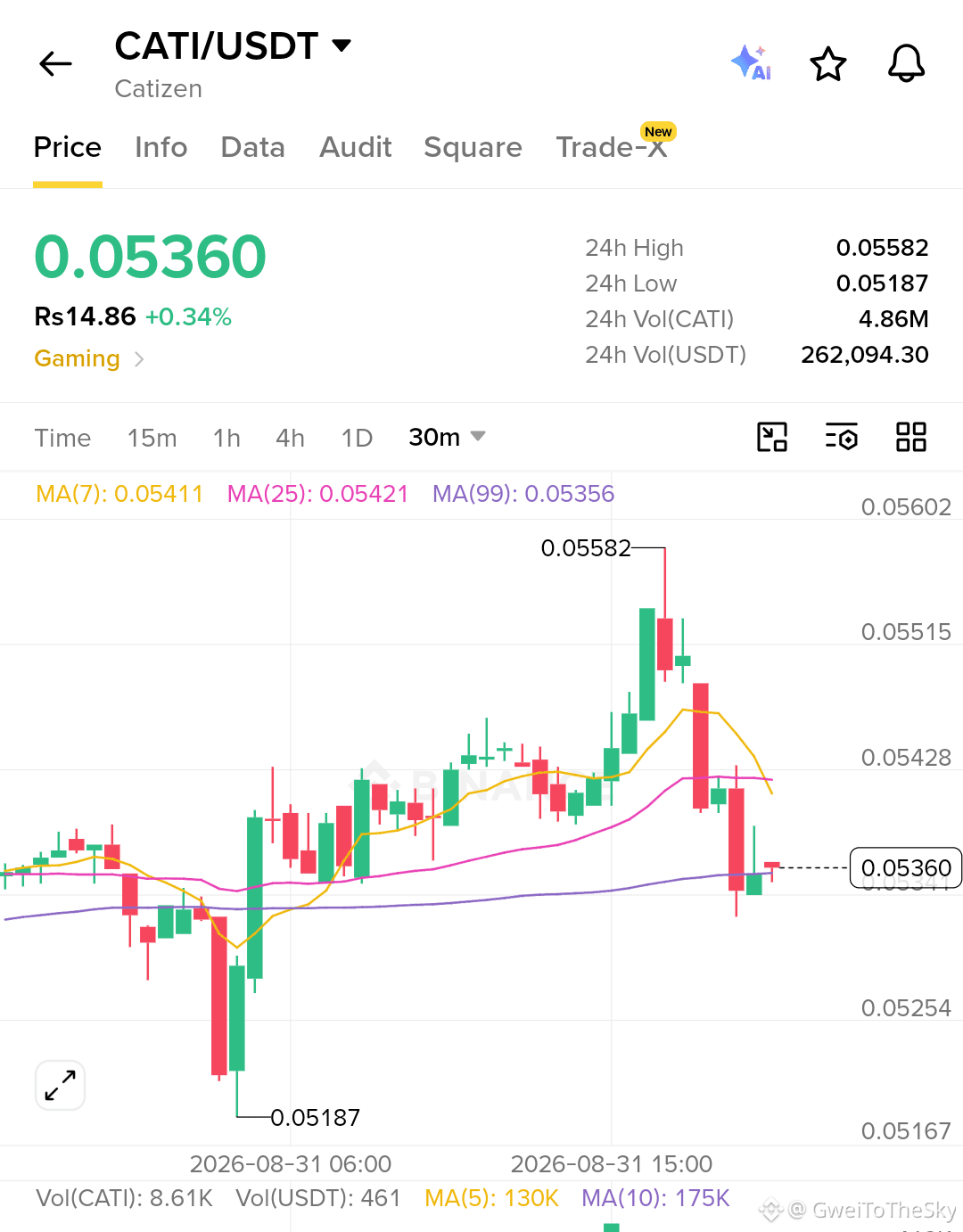
$CATI /$USDT — LONG SETUP 🔥
CATI wird derzeit bei etwa 0.05360 USDT auf dem 30M-Chart gehandelt. Der Kurs liegt nahe dem MA(99) bei 0.05356, wodurch dies eine wichtige Entscheidungszone ist.
📌 Handelsplan
🟢 Einstieg: 0.05340 – 0.05370
🛑 Stop Loss: 0.05290
🎯 TP1: 0.05430
🎯 TP2: 0.05515
🎯 TP3: 0.05580
📊 Risiko/Chance: Ungefähr 1:2 bis 1:4+ je nach Einstieg und Ziel.
Bestätigung: Ein starker 30M-Schlusskurs über 0.05430 würde das bullische Setup stärken. Wenn der Kurs 0.05290 verliert, ist das Setup ungültig.
Nicht überhebeln. Riskiere nur das, was du dir leisten kannst zu verlieren, und erwäge, bei TP1/TP2 Teilgewinne zu sichern.
#CATI #cryptouniverseofficial #altcoins
$CATI /$USDT — LONG SETUP 🔥
CATI wird derzeit bei etwa 0.05360 USDT auf dem 30M-Chart gehandelt. Der Kurs liegt nahe dem MA(99) bei 0.05356, wodurch dies eine wichtige Entscheidungszone ist.
📌 Handelsplan
🟢 Einstieg: 0.05340 – 0.05370
🛑 Stop Loss: 0.05290
🎯 TP1: 0.05430
🎯 TP2: 0.05515
🎯 TP3: 0.05580
📊 Risiko/Chance: Ungefähr 1:2 bis 1:4+ je nach Einstieg und Ziel.
Bestätigung: Ein starker 30M-Schlusskurs über 0.05430 würde das bullische Setup stärken. Wenn der Kurs 0.05290 verliert, ist das Setup ungültig.
Nicht überhebeln. Riskiere nur das, was du dir leisten kannst zu verlieren, und erwäge, bei TP1/TP2 Teilgewinne zu sichern.
#CATI #cryptouniverseofficial #altcoins
CATI wird derzeit bei etwa 0.05360 USDT auf dem 30M-Chart gehandelt. Der Kurs liegt nahe dem MA(99) bei 0.05356, wodurch dies eine wichtige Entscheidungszone ist.
📌 Handelsplan
🟢 Einstieg: 0.05340 – 0.05370
🛑 Stop Loss: 0.05290
🎯 TP1: 0.05430
🎯 TP2: 0.05515
🎯 TP3: 0.05580
📊 Risiko/Chance: Ungefähr 1:2 bis 1:4+ je nach Einstieg und Ziel.
Bestätigung: Ein starker 30M-Schlusskurs über 0.05430 würde das bullische Setup stärken. Wenn der Kurs 0.05290 verliert, ist das Setup ungültig.
Nicht überhebeln. Riskiere nur das, was du dir leisten kannst zu verlieren, und erwäge, bei TP1/TP2 Teilgewinne zu sichern.
#CATI #cryptouniverseofficial #altcoins
1
98
·
--
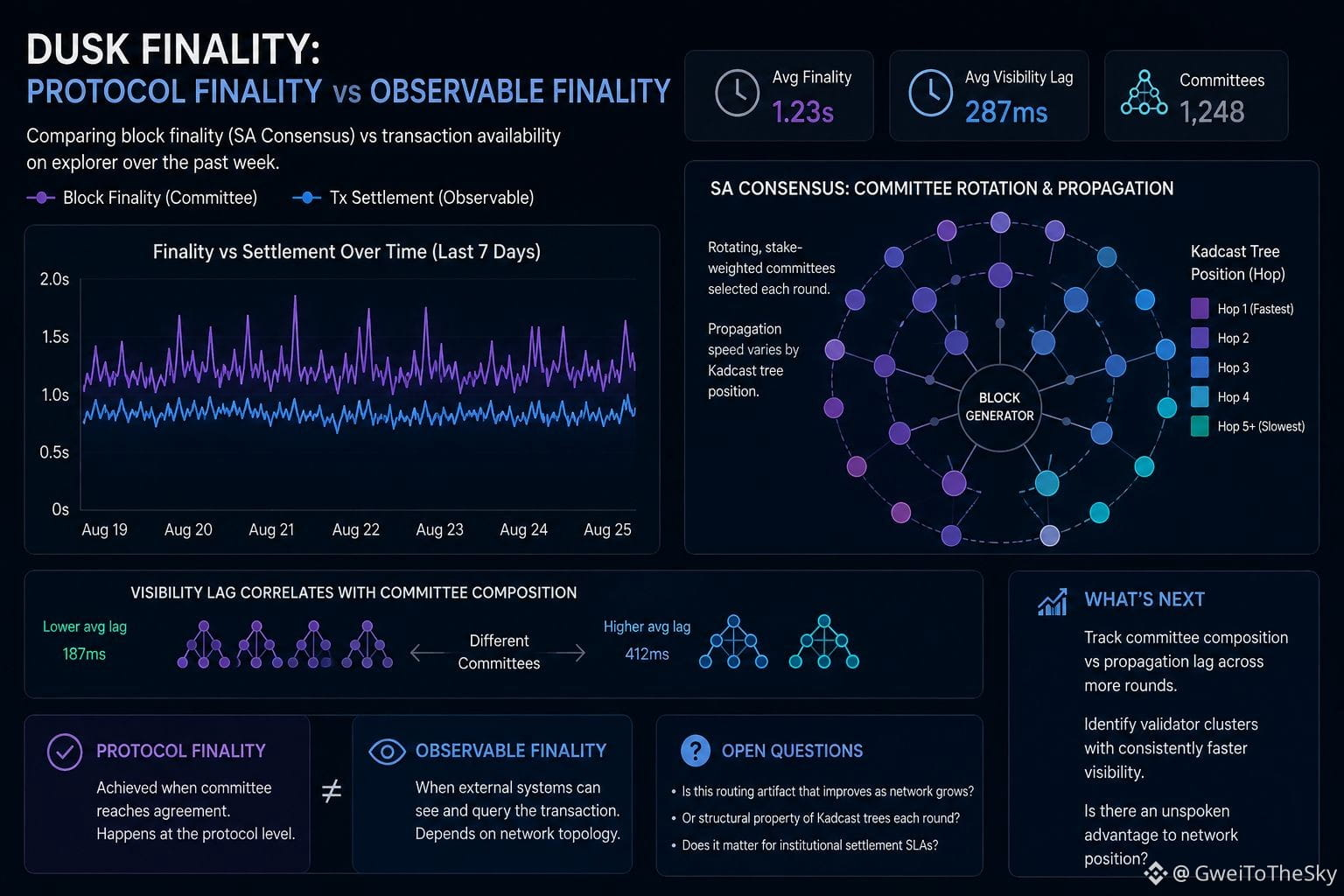
@Dusk_Foundation 's Blockendgültigkeits-Timestamps im Vergleich zur tatsächlichen Transaktionsauslieferung im Explorer in der vergangenen Woche. Zuerst nahm ich die kleine Verzögerung, die ich immer wieder sah – ein paar hundert Millisekunden zwischen der Finalisierung im Komitee und dem Zeitpunkt, an dem eine Transaktion in nachgelagerten Tools abfragbar wurde – einfach als Indexierungsverzug an. Ich legte das als Rauschen ab und machte mit der Prüfung der Validator-Teilnahmequoten weiter.
Als ich genauer herausfand, warum diese Lücke nicht konstant war, stellte ich eine Korrelation mit den Komiteemitgliedern fest, die für diese Runde unter SA Consensus ausgewählt wurden. Rotierende, stake-gewichtete Komitees wählen nicht einfach pro Runde zufällig Validatoren aus, sie haben leicht unterschiedliche Propagationszeiten, abhängig von der Position im Kadcast-Baum. Das ist nirgends dokumentiert, was ich gelesen habe – es zeigte sich aber in den Daten, sobald ich genug Runden nebeneinander gelegt hatte.
Dadurch trennte sich in meinem Kopf etwas, das ich bislang als eins behandelt hatte: Konsens-Finalität und beobachtbare Finalität. Finalität auf Protokollebene passiert, sobald das Komitee sich einigt, aber was ein externes System sieht, hängt in dem Moment von der Netzwerk-Topologie ab. Die meisten Leute, die $DUSK beobachten, nehmen an, dass „schnelle Finalität“ für alle nachgelagerten Systeme gleichmäßig schnell bedeutet – und genau das ist so nicht das, was ich sehe.
Was ich noch nicht herausfinden kann, ist, ob diese Timing-Varianz über die Bequemlichkeit der Indexierung hinaus für irgendetwas relevant ist oder ob sie erst dann anfängt zu zählen, wenn institutionelle Settlement-Systeme engere, vorhersehbare Zeitfenster erwarten. Ist das ein Routing-Artefakt, das sich selbst korrigiert, während das Netzwerk wächst, oder eine strukturelle Eigenschaft, wie sich Kadcast-Bäume in jeder Runde bilden?
In der Zukunft möchte ich die Zusammensetzung der Komitees mit der Propagationsverzögerung über eine größere Stichprobe hinweg verfolgen – ebenso wie, ob bestimmte Validator-Cluster konsistent schnellere Sichtbarkeit im Downstream erzeugen. Das würde mir zeigen, ob das anreizneutral ist oder ob es einen unausgesprochenen Vorteil durch die Netzwerkposition gibt, der von Betreibern noch nicht eingepreist wurde.
#Dusk
$BTR
{future}(BTRUSDT)
$BMT
{future}(BMTUSDT)
@Dusk 's Blockendgültigkeits-Timestamps im Vergleich zur tatsächlichen Transaktionsauslieferung im Explorer in der vergangenen Woche. Zuerst nahm ich die kleine Verzögerung, die ich immer wieder sah – ein paar hundert Millisekunden zwischen der Finalisierung im Komitee und dem Zeitpunkt, an dem eine Transaktion in nachgelagerten Tools abfragbar wurde – einfach als Indexierungsverzug an. Ich legte das als Rauschen ab und machte mit der Prüfung der Validator-Teilnahmequoten weiter.
Als ich genauer herausfand, warum diese Lücke nicht konstant war, stellte ich eine Korrelation mit den Komiteemitgliedern fest, die für diese Runde unter SA Consensus ausgewählt wurden. Rotierende, stake-gewichtete Komitees wählen nicht einfach pro Runde zufällig Validatoren aus, sie haben leicht unterschiedliche Propagationszeiten, abhängig von der Position im Kadcast-Baum. Das ist nirgends dokumentiert, was ich gelesen habe – es zeigte sich aber in den Daten, sobald ich genug Runden nebeneinander gelegt hatte.
Dadurch trennte sich in meinem Kopf etwas, das ich bislang als eins behandelt hatte: Konsens-Finalität und beobachtbare Finalität. Finalität auf Protokollebene passiert, sobald das Komitee sich einigt, aber was ein externes System sieht, hängt in dem Moment von der Netzwerk-Topologie ab. Die meisten Leute, die $DUSK beobachten, nehmen an, dass „schnelle Finalität“ für alle nachgelagerten Systeme gleichmäßig schnell bedeutet – und genau das ist so nicht das, was ich sehe.
Was ich noch nicht herausfinden kann, ist, ob diese Timing-Varianz über die Bequemlichkeit der Indexierung hinaus für irgendetwas relevant ist oder ob sie erst dann anfängt zu zählen, wenn institutionelle Settlement-Systeme engere, vorhersehbare Zeitfenster erwarten. Ist das ein Routing-Artefakt, das sich selbst korrigiert, während das Netzwerk wächst, oder eine strukturelle Eigenschaft, wie sich Kadcast-Bäume in jeder Runde bilden?
In der Zukunft möchte ich die Zusammensetzung der Komitees mit der Propagationsverzögerung über eine größere Stichprobe hinweg verfolgen – ebenso wie, ob bestimmte Validator-Cluster konsistent schnellere Sichtbarkeit im Downstream erzeugen. Das würde mir zeigen, ob das anreizneutral ist oder ob es einen unausgesprochenen Vorteil durch die Netzwerkposition gibt, der von Betreibern noch nicht eingepreist wurde.
#Dusk
$BTR
$BMT
Als ich genauer herausfand, warum diese Lücke nicht konstant war, stellte ich eine Korrelation mit den Komiteemitgliedern fest, die für diese Runde unter SA Consensus ausgewählt wurden. Rotierende, stake-gewichtete Komitees wählen nicht einfach pro Runde zufällig Validatoren aus, sie haben leicht unterschiedliche Propagationszeiten, abhängig von der Position im Kadcast-Baum. Das ist nirgends dokumentiert, was ich gelesen habe – es zeigte sich aber in den Daten, sobald ich genug Runden nebeneinander gelegt hatte.
Dadurch trennte sich in meinem Kopf etwas, das ich bislang als eins behandelt hatte: Konsens-Finalität und beobachtbare Finalität. Finalität auf Protokollebene passiert, sobald das Komitee sich einigt, aber was ein externes System sieht, hängt in dem Moment von der Netzwerk-Topologie ab. Die meisten Leute, die $DUSK beobachten, nehmen an, dass „schnelle Finalität“ für alle nachgelagerten Systeme gleichmäßig schnell bedeutet – und genau das ist so nicht das, was ich sehe.
Was ich noch nicht herausfinden kann, ist, ob diese Timing-Varianz über die Bequemlichkeit der Indexierung hinaus für irgendetwas relevant ist oder ob sie erst dann anfängt zu zählen, wenn institutionelle Settlement-Systeme engere, vorhersehbare Zeitfenster erwarten. Ist das ein Routing-Artefakt, das sich selbst korrigiert, während das Netzwerk wächst, oder eine strukturelle Eigenschaft, wie sich Kadcast-Bäume in jeder Runde bilden?
In der Zukunft möchte ich die Zusammensetzung der Komitees mit der Propagationsverzögerung über eine größere Stichprobe hinweg verfolgen – ebenso wie, ob bestimmte Validator-Cluster konsistent schnellere Sichtbarkeit im Downstream erzeugen. Das würde mir zeigen, ob das anreizneutral ist oder ob es einen unausgesprochenen Vorteil durch die Netzwerkposition gibt, der von Betreibern noch nicht eingepreist wurde.
#Dusk
$BTR
$BMT
3
294
·
--
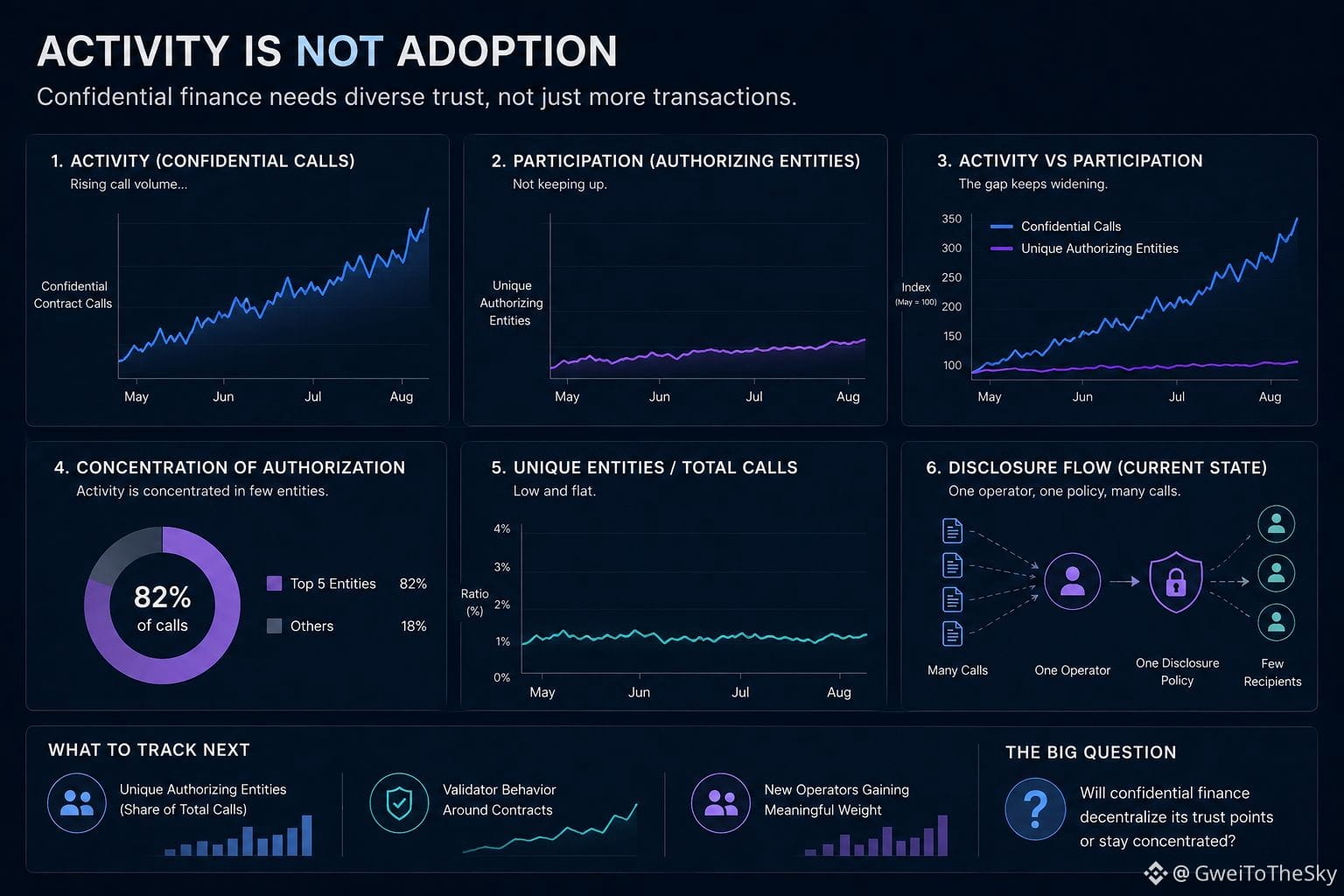
@Dusk_Foundation Explorer-Instanz letzte Woche. Ich nahm einen Anstieg bei vertraulichen Vertragsaufrufen als Hinweis auf neue Nutzeraktivität wahr, doch die Wallet-übergreifenden Signaturen hinter diesen Aufrufen wiesen weiterhin auf einen kleinen Adress-Cluster zurück.
Bei weiterer Recherche stellte ich fest, dass nicht das Transaktionsvolumen selbst der eigentliche Mechanismus war, sondern die darunterliegende Schicht selektiver Offenlegung. Jeder Aufruf lief über dieselbe Offenlegungsrichtlinie, d. h. die „Aktivität“, die ich sah, war in Wahrheit nur ein Operator, der Autorisierungsanfragen durch XSC-ähnliche Contracts rotierte – statt dass sich eine Nutzung organisch nach außen ausbreitete.
Dieser Unterschied hat meine Sicht auf die Einführung hier neu ausgerichtet. Transaktionsanzahl und Autorisierungsvielfalt sind kein identisches Signal. Eine Chain kann ein steigendes Anrufvolumen zeigen, während der tatsächliche Kreis der Entitäten, der entscheidet, was wem offengelegt wird, eng bleibt. Diese zweite Ebene zwischen Aktivität und Beteiligung ist leicht zu übersehen, wenn man nur den Durchsatz chartet.
Was ich noch nicht klären kann, ist, ob diese Konzentration eine Bootstrapping-Phase ist oder ein strukturelles Merkmal dessen, wie vertrauliche Finanz-„Rails“ naturgemäß funktionieren. Regulierte Gegenparteien könnten anfangs weniger vertrauenswürdige Offenlegungsstellen bevorzugen, aber ich weiß nicht, ob das Anreizdesign im Laufe der Zeit zu einer Erweiterung dieses Kreises drängt oder ob es stillschweigend belohnt, ihn eng zu halten.
In Zukunft möchte ich eindeutige autorisierende Entitäten im Verhältnis zu den gesamten vertraulichen Calls verfolgen – nicht nur das reine Volumen. Außerdem beobachte ich, ob sich das Verhalten von Validatoren rund um diese Contracts ändert, wenn die Offenlegungsanfragen vielfältiger werden, und ob neue Operatoren, die hinzukommen, tatsächlich relevantes Autorisierungsgewicht erlangen oder lediglich das Rauschen im Zählwert erhöhen.
Ich habe also kein klares Fazit, nur eine präzisere Frage: Dezentralisiert privacy-by-design-finanzierung irgendwann ihre Vertrauenspunkte, oder begünstigt sie strukturell eine kleine Zahl von Gatekeepern, die die Offenlegung kontrollieren? Die Daten, die ich bisher gesehen habe, beantworten das in beide Richtungen nicht.
#Dusk
$DUSK
{future}(DUSKUSDT)
$BMT
{future}(BMTUSDT)
$ZRO
{future}(ZROUSDT)
@Dusk Explorer-Instanz letzte Woche. Ich nahm einen Anstieg bei vertraulichen Vertragsaufrufen als Hinweis auf neue Nutzeraktivität wahr, doch die Wallet-übergreifenden Signaturen hinter diesen Aufrufen wiesen weiterhin auf einen kleinen Adress-Cluster zurück.
Bei weiterer Recherche stellte ich fest, dass nicht das Transaktionsvolumen selbst der eigentliche Mechanismus war, sondern die darunterliegende Schicht selektiver Offenlegung. Jeder Aufruf lief über dieselbe Offenlegungsrichtlinie, d. h. die „Aktivität“, die ich sah, war in Wahrheit nur ein Operator, der Autorisierungsanfragen durch XSC-ähnliche Contracts rotierte – statt dass sich eine Nutzung organisch nach außen ausbreitete.
Dieser Unterschied hat meine Sicht auf die Einführung hier neu ausgerichtet. Transaktionsanzahl und Autorisierungsvielfalt sind kein identisches Signal. Eine Chain kann ein steigendes Anrufvolumen zeigen, während der tatsächliche Kreis der Entitäten, der entscheidet, was wem offengelegt wird, eng bleibt. Diese zweite Ebene zwischen Aktivität und Beteiligung ist leicht zu übersehen, wenn man nur den Durchsatz chartet.
Was ich noch nicht klären kann, ist, ob diese Konzentration eine Bootstrapping-Phase ist oder ein strukturelles Merkmal dessen, wie vertrauliche Finanz-„Rails“ naturgemäß funktionieren. Regulierte Gegenparteien könnten anfangs weniger vertrauenswürdige Offenlegungsstellen bevorzugen, aber ich weiß nicht, ob das Anreizdesign im Laufe der Zeit zu einer Erweiterung dieses Kreises drängt oder ob es stillschweigend belohnt, ihn eng zu halten.
In Zukunft möchte ich eindeutige autorisierende Entitäten im Verhältnis zu den gesamten vertraulichen Calls verfolgen – nicht nur das reine Volumen. Außerdem beobachte ich, ob sich das Verhalten von Validatoren rund um diese Contracts ändert, wenn die Offenlegungsanfragen vielfältiger werden, und ob neue Operatoren, die hinzukommen, tatsächlich relevantes Autorisierungsgewicht erlangen oder lediglich das Rauschen im Zählwert erhöhen.
Ich habe also kein klares Fazit, nur eine präzisere Frage: Dezentralisiert privacy-by-design-finanzierung irgendwann ihre Vertrauenspunkte, oder begünstigt sie strukturell eine kleine Zahl von Gatekeepern, die die Offenlegung kontrollieren? Die Daten, die ich bisher gesehen habe, beantworten das in beide Richtungen nicht.
#Dusk
$DUSK
$BMT
$ZRO
Bei weiterer Recherche stellte ich fest, dass nicht das Transaktionsvolumen selbst der eigentliche Mechanismus war, sondern die darunterliegende Schicht selektiver Offenlegung. Jeder Aufruf lief über dieselbe Offenlegungsrichtlinie, d. h. die „Aktivität“, die ich sah, war in Wahrheit nur ein Operator, der Autorisierungsanfragen durch XSC-ähnliche Contracts rotierte – statt dass sich eine Nutzung organisch nach außen ausbreitete.
Dieser Unterschied hat meine Sicht auf die Einführung hier neu ausgerichtet. Transaktionsanzahl und Autorisierungsvielfalt sind kein identisches Signal. Eine Chain kann ein steigendes Anrufvolumen zeigen, während der tatsächliche Kreis der Entitäten, der entscheidet, was wem offengelegt wird, eng bleibt. Diese zweite Ebene zwischen Aktivität und Beteiligung ist leicht zu übersehen, wenn man nur den Durchsatz chartet.
Was ich noch nicht klären kann, ist, ob diese Konzentration eine Bootstrapping-Phase ist oder ein strukturelles Merkmal dessen, wie vertrauliche Finanz-„Rails“ naturgemäß funktionieren. Regulierte Gegenparteien könnten anfangs weniger vertrauenswürdige Offenlegungsstellen bevorzugen, aber ich weiß nicht, ob das Anreizdesign im Laufe der Zeit zu einer Erweiterung dieses Kreises drängt oder ob es stillschweigend belohnt, ihn eng zu halten.
In Zukunft möchte ich eindeutige autorisierende Entitäten im Verhältnis zu den gesamten vertraulichen Calls verfolgen – nicht nur das reine Volumen. Außerdem beobachte ich, ob sich das Verhalten von Validatoren rund um diese Contracts ändert, wenn die Offenlegungsanfragen vielfältiger werden, und ob neue Operatoren, die hinzukommen, tatsächlich relevantes Autorisierungsgewicht erlangen oder lediglich das Rauschen im Zählwert erhöhen.
Ich habe also kein klares Fazit, nur eine präzisere Frage: Dezentralisiert privacy-by-design-finanzierung irgendwann ihre Vertrauenspunkte, oder begünstigt sie strukturell eine kleine Zahl von Gatekeepern, die die Offenlegung kontrollieren? Die Daten, die ich bisher gesehen habe, beantworten das in beide Richtungen nicht.
#Dusk
$DUSK
$BMT
$ZRO
4
274
·
--
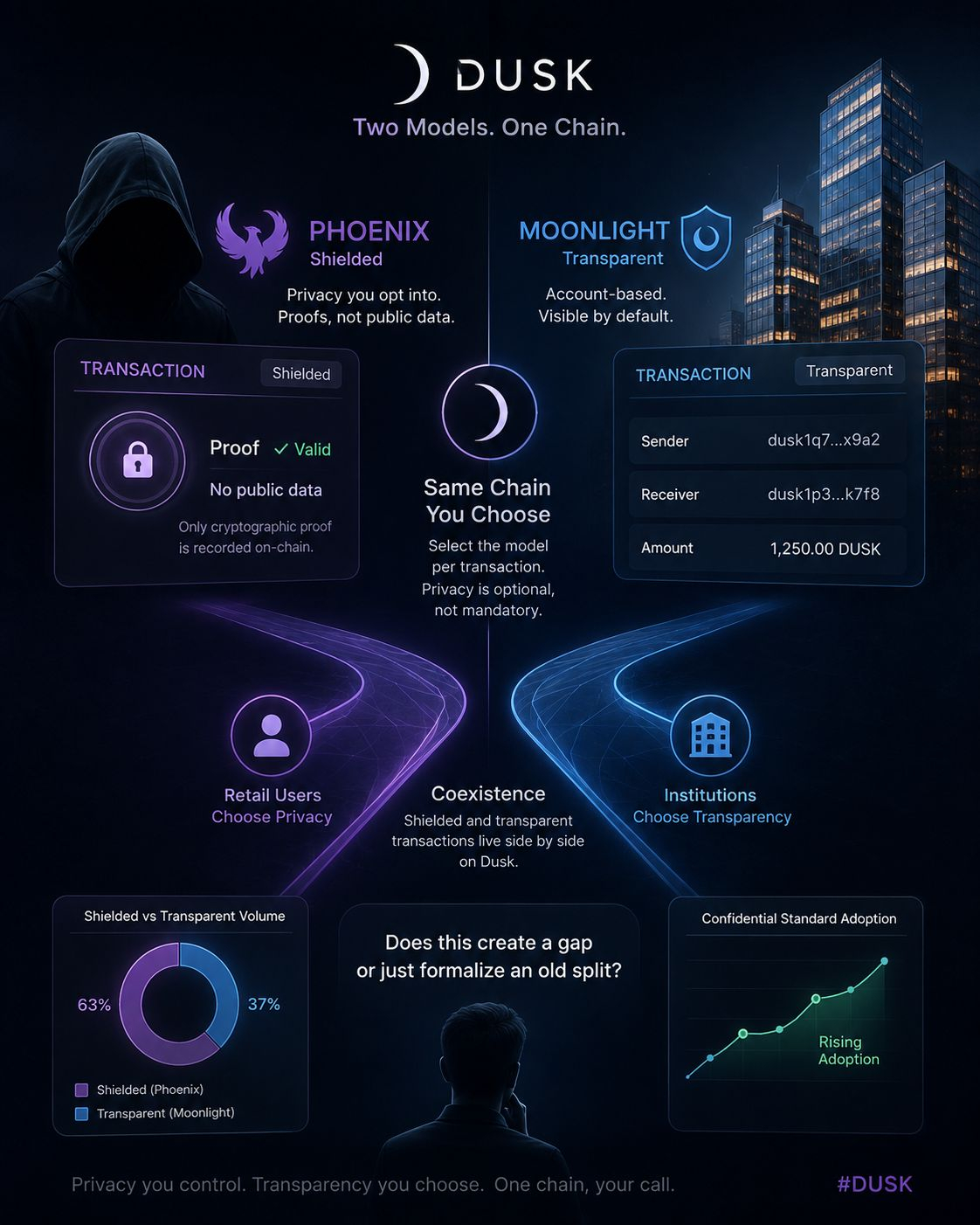
Einmal am Abend war Dusk’ Entdecker unterwegs, halb aufmerksam, als etwas nicht stimmte. Einige Transaktionen zeigten Absender, Empfänger und Betrag, andere waren nur als Beweis da – nichts Lesbares. Mein erster Gedanke war, dass der Entdecker glitcht.
Doch es war nicht das. Dusk betreibt zwei Modelle nebeneinander: Phoenix, geschützt, und Moonlight, transparent, kontobasiert. Niemand zwingt dich in eins hinein – du wählst pro Transaktion aus, das habe ich gesehen.
Da verlagerte sich mein Denken. Früher habe ich „Privacy Chain“ und „privat standardmäßig“ einfach zusammengeworfen. Aber hier passen sie nicht zusammen. Privatsphäre ist etwas, das du aktiv auswählst, nicht etwas, das einfach eingebaut ist – daher können versteckte und sichtbare Aktivitäten nebeneinander existieren.
Ich wälze das noch. Wenn reguliertes Geld transparent bleibt, während der Handel abgeschirmt geht, entsteht dann eine Lücke – oder wird nur eine alte Trennung formell festgeschrieben?
Vorerst beobachte ich das Verhältnis von abgeschirmtem zu transparentem Volumen, nicht die Rohzahlen, sowie wie viele Kontrakte den vertraulichen Standard übernehmen, statt auf transparent zu defaulten.
Ehrlich gesagt weiß ich nicht, ob das zu einem gesünderen Markt führt oder ob nur Liquidität in Räume aufgeteilt wird, die sich nie austauschen. Ich sitze immer noch damit.
@Dusk_Foundation #Dusk
$DUSK
{future}(DUSKUSDT)
$TAC
{future}(TACUSDT)
$ONG
{future}(ONGUSDT)
Einmal am Abend war Dusk’ Entdecker unterwegs, halb aufmerksam, als etwas nicht stimmte. Einige Transaktionen zeigten Absender, Empfänger und Betrag, andere waren nur als Beweis da – nichts Lesbares. Mein erster Gedanke war, dass der Entdecker glitcht.
Doch es war nicht das. Dusk betreibt zwei Modelle nebeneinander: Phoenix, geschützt, und Moonlight, transparent, kontobasiert. Niemand zwingt dich in eins hinein – du wählst pro Transaktion aus, das habe ich gesehen.
Da verlagerte sich mein Denken. Früher habe ich „Privacy Chain“ und „privat standardmäßig“ einfach zusammengeworfen. Aber hier passen sie nicht zusammen. Privatsphäre ist etwas, das du aktiv auswählst, nicht etwas, das einfach eingebaut ist – daher können versteckte und sichtbare Aktivitäten nebeneinander existieren.
Ich wälze das noch. Wenn reguliertes Geld transparent bleibt, während der Handel abgeschirmt geht, entsteht dann eine Lücke – oder wird nur eine alte Trennung formell festgeschrieben?
Vorerst beobachte ich das Verhältnis von abgeschirmtem zu transparentem Volumen, nicht die Rohzahlen, sowie wie viele Kontrakte den vertraulichen Standard übernehmen, statt auf transparent zu defaulten.
Ehrlich gesagt weiß ich nicht, ob das zu einem gesünderen Markt führt oder ob nur Liquidität in Räume aufgeteilt wird, die sich nie austauschen. Ich sitze immer noch damit.
@Dusk #Dusk
$DUSK
$TAC
$ONG
Doch es war nicht das. Dusk betreibt zwei Modelle nebeneinander: Phoenix, geschützt, und Moonlight, transparent, kontobasiert. Niemand zwingt dich in eins hinein – du wählst pro Transaktion aus, das habe ich gesehen.
Da verlagerte sich mein Denken. Früher habe ich „Privacy Chain“ und „privat standardmäßig“ einfach zusammengeworfen. Aber hier passen sie nicht zusammen. Privatsphäre ist etwas, das du aktiv auswählst, nicht etwas, das einfach eingebaut ist – daher können versteckte und sichtbare Aktivitäten nebeneinander existieren.
Ich wälze das noch. Wenn reguliertes Geld transparent bleibt, während der Handel abgeschirmt geht, entsteht dann eine Lücke – oder wird nur eine alte Trennung formell festgeschrieben?
Vorerst beobachte ich das Verhältnis von abgeschirmtem zu transparentem Volumen, nicht die Rohzahlen, sowie wie viele Kontrakte den vertraulichen Standard übernehmen, statt auf transparent zu defaulten.
Ehrlich gesagt weiß ich nicht, ob das zu einem gesünderen Markt führt oder ob nur Liquidität in Räume aufgeteilt wird, die sich nie austauschen. Ich sitze immer noch damit.
@Dusk #Dusk
$DUSK
$TAC
$ONG
3
5
496
·
--
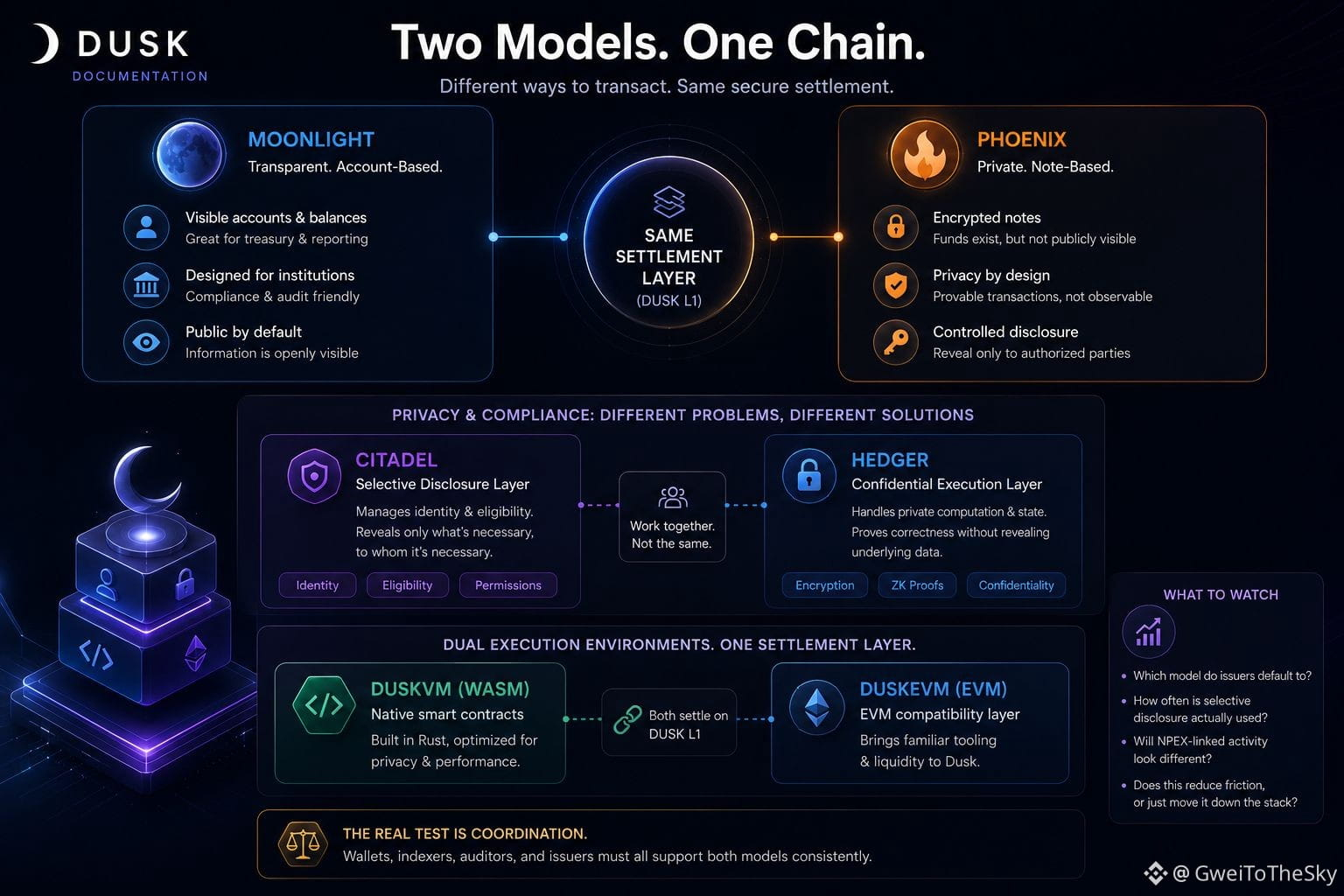
Dunks Dokumentation statt einer Grafik: Ich ging davon aus, dass Mondlicht und Phönix nur zwei Wallet-Optionen seien – transparent versus privat – und wählte entsprechend. Diese Darstellung hielt jedoch einer genaueren Lektüre nicht stand.
Was meine Sicht verändert hat, war die Erkenntnis, dass dies keine austauschbaren Modi sind, sondern getrennte Transaktionsmodelle, die auf derselben Kette zur Abwicklung gelangen. Mondlicht verhält sich wie ein sichtbares Kontobuch und ist nützlich für Treasury und Reporting. Phönix hält Gelder als verschlüsselte Notizen – nachweisbar, aber nicht beobachtbar. Gleiche Settlement-Schicht, zwei unterschiedliche Informationsoberflächen.
Diese Unterscheidung ist wichtig, weil Privatsphäre und Compliance in den meisten Krypto-Debatten als Gegensätze behandelt werden. Hier werden sie per Design getrennt: Citadel übernimmt die selektive Offenlegung von Identitätsattributen, Hedger die vertrauliche Ausführung auf der EVM-Seite. Nachzuweisen, dass man berechtigt ist, und dabei eine Position zu verbergen, stellen sich als unterschiedliche Probleme heraus, die unterschiedlich gelöst werden.
Was ich noch nicht auflösen kann, ist der Koordinationsaufwand. Das Betreiben zweier Transaktionsmodelle und zweier Ausführungsumgebungen (nativer WASM plus EVM) bedeutet mehr Angriffsfläche für Wallets, Indexer und Auditoren, die konsistent unterstützt werden müssen. Elegant auf dem Papier garantiert nicht automatisch einheitliche Tooling-Praxis.
In der Zukunft möchte ich vor allem beobachten, welches Modell tatsächliche Emittenten standardmäßig verwenden, wie häufig selektive Offenlegung tatsächlich aufgerufen wird statt nur diskutiert zu werden, und ob mit NPEX verknüpfte Aktivitäten sich anders verhalten als gewöhnliche Überweisungen.
Mir ist weiterhin unklar, ob diese Architektur Reibung reduziert oder sie nur weiter in den Stack verlagert.
@Dusk_Foundation #Dusk
$DUSK
{future}(DUSKUSDT)
$MORPHO
{future}(MORPHOUSDT)
$TRUMP
{future}(TRUMPUSDT)
Dunks Dokumentation statt einer Grafik: Ich ging davon aus, dass Mondlicht und Phönix nur zwei Wallet-Optionen seien – transparent versus privat – und wählte entsprechend. Diese Darstellung hielt jedoch einer genaueren Lektüre nicht stand.
Was meine Sicht verändert hat, war die Erkenntnis, dass dies keine austauschbaren Modi sind, sondern getrennte Transaktionsmodelle, die auf derselben Kette zur Abwicklung gelangen. Mondlicht verhält sich wie ein sichtbares Kontobuch und ist nützlich für Treasury und Reporting. Phönix hält Gelder als verschlüsselte Notizen – nachweisbar, aber nicht beobachtbar. Gleiche Settlement-Schicht, zwei unterschiedliche Informationsoberflächen.
Diese Unterscheidung ist wichtig, weil Privatsphäre und Compliance in den meisten Krypto-Debatten als Gegensätze behandelt werden. Hier werden sie per Design getrennt: Citadel übernimmt die selektive Offenlegung von Identitätsattributen, Hedger die vertrauliche Ausführung auf der EVM-Seite. Nachzuweisen, dass man berechtigt ist, und dabei eine Position zu verbergen, stellen sich als unterschiedliche Probleme heraus, die unterschiedlich gelöst werden.
Was ich noch nicht auflösen kann, ist der Koordinationsaufwand. Das Betreiben zweier Transaktionsmodelle und zweier Ausführungsumgebungen (nativer WASM plus EVM) bedeutet mehr Angriffsfläche für Wallets, Indexer und Auditoren, die konsistent unterstützt werden müssen. Elegant auf dem Papier garantiert nicht automatisch einheitliche Tooling-Praxis.
In der Zukunft möchte ich vor allem beobachten, welches Modell tatsächliche Emittenten standardmäßig verwenden, wie häufig selektive Offenlegung tatsächlich aufgerufen wird statt nur diskutiert zu werden, und ob mit NPEX verknüpfte Aktivitäten sich anders verhalten als gewöhnliche Überweisungen.
Mir ist weiterhin unklar, ob diese Architektur Reibung reduziert oder sie nur weiter in den Stack verlagert.
@Dusk #Dusk
$DUSK
$MORPHO
$TRUMP
Was meine Sicht verändert hat, war die Erkenntnis, dass dies keine austauschbaren Modi sind, sondern getrennte Transaktionsmodelle, die auf derselben Kette zur Abwicklung gelangen. Mondlicht verhält sich wie ein sichtbares Kontobuch und ist nützlich für Treasury und Reporting. Phönix hält Gelder als verschlüsselte Notizen – nachweisbar, aber nicht beobachtbar. Gleiche Settlement-Schicht, zwei unterschiedliche Informationsoberflächen.
Diese Unterscheidung ist wichtig, weil Privatsphäre und Compliance in den meisten Krypto-Debatten als Gegensätze behandelt werden. Hier werden sie per Design getrennt: Citadel übernimmt die selektive Offenlegung von Identitätsattributen, Hedger die vertrauliche Ausführung auf der EVM-Seite. Nachzuweisen, dass man berechtigt ist, und dabei eine Position zu verbergen, stellen sich als unterschiedliche Probleme heraus, die unterschiedlich gelöst werden.
Was ich noch nicht auflösen kann, ist der Koordinationsaufwand. Das Betreiben zweier Transaktionsmodelle und zweier Ausführungsumgebungen (nativer WASM plus EVM) bedeutet mehr Angriffsfläche für Wallets, Indexer und Auditoren, die konsistent unterstützt werden müssen. Elegant auf dem Papier garantiert nicht automatisch einheitliche Tooling-Praxis.
In der Zukunft möchte ich vor allem beobachten, welches Modell tatsächliche Emittenten standardmäßig verwenden, wie häufig selektive Offenlegung tatsächlich aufgerufen wird statt nur diskutiert zu werden, und ob mit NPEX verknüpfte Aktivitäten sich anders verhalten als gewöhnliche Überweisungen.
Mir ist weiterhin unklar, ob diese Architektur Reibung reduziert oder sie nur weiter in den Stack verlagert.
@Dusk #Dusk
$DUSK
$MORPHO
$TRUMP
5
6
269
·
--
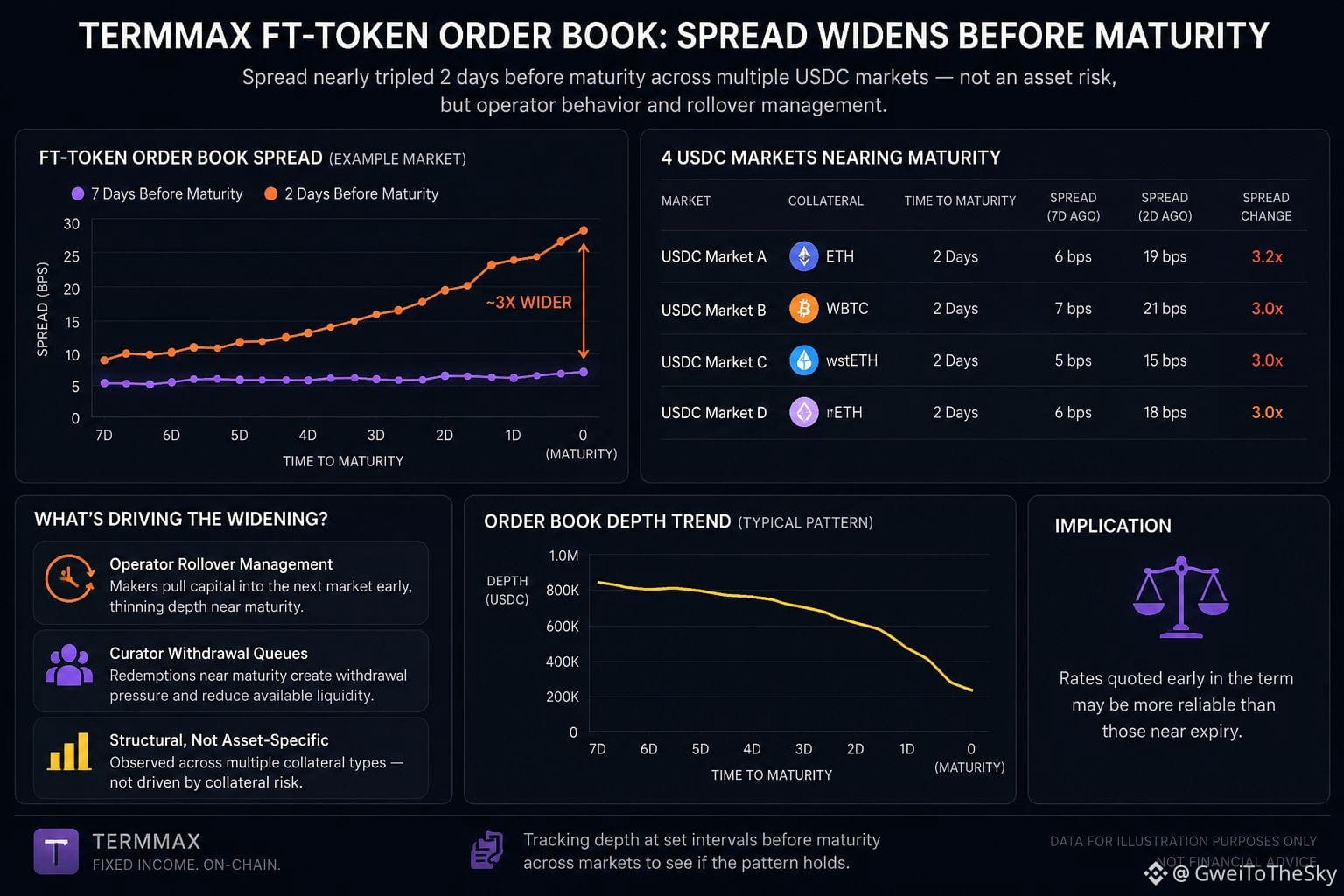
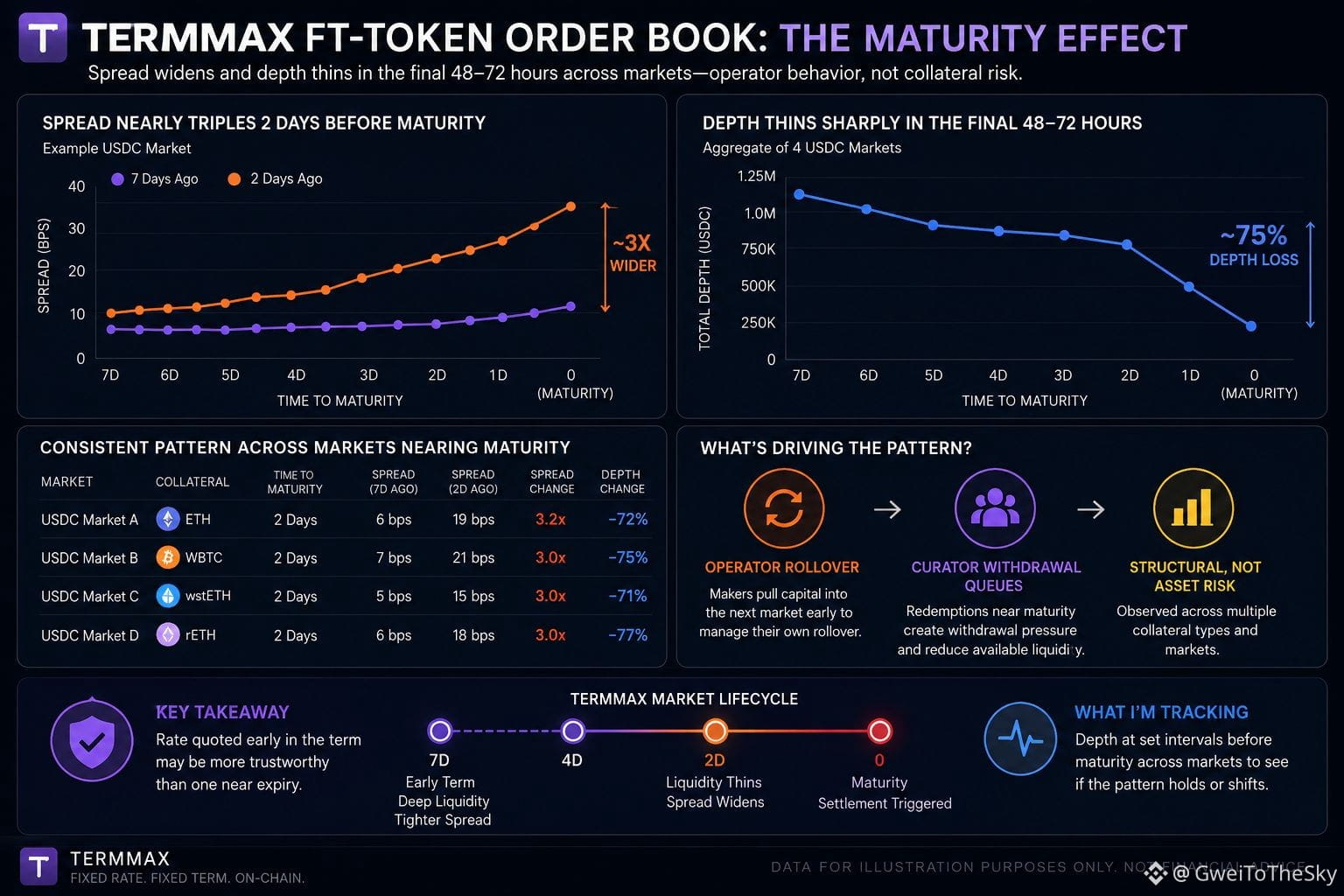
TermMax's ft-Token-Orderbuch zwei Tage vor der Fälligkeit eines Marktes: Ich bemerkte, dass sich die Spanne fast dreimal so stark verbreitert hatte wie eine Woche zuvor. Zunächst ging ich davon aus, dass hier das Gegenparteirisiko bzw. das mit Sicherheiten verbundene Risiko eingepreist wurde.
Ich zog drei weitere USDC-Märkte kurz vor der Fälligkeit heran und fand dasselbe Muster: Die Liquiditätstiefe dünnt in den letzten 48–72 Stunden deutlich aus, unabhängig vom Sicherungstyp. Damit schied eine asset-spezifische Verunsicherung aus.
Was ich nicht bedacht hatte, war das Verhalten der Operatoren. Market Maker, die feste Kurse stellen, bepreisen nicht nur das Kreditrisiko, sie steuern auch ihr eigenes Roll-Over. Kurz vor der Fälligkeit ziehen sie früh Kapital in den nächsten Markt ab und „dünnen“ das Orderbuch aus – statt das Vertrauen in die Sicherheiten abzubilden.
Ich kann noch nicht sagen, ob das eine koordinierte Maker-Verhaltensweise ist oder paralleles Eigeninteresse – oder ob eine Art Abzugs-/Queue-Prozessierung durch Curatoren bei Rücknahmen nahe der Fälligkeit dafür sorgt, dass es strukturell wird.
Ich verfolge die Tiefe jetzt in festen Intervallen vor der Fälligkeit über verschiedene Märkte hinweg, um zu sehen, ob der Rückgang konsistent bleibt oder sich verschiebt.
Wenn das Muster sich bestätigt, könnte der früh in einem Termin gestellte Zinssatz verlässlicher sein als einer kurz vor der Fälligkeit. Hat das schon jemand bemerkt?
@termmax #termmax
$GALA
{future}(GALAUSDT)
$BLESS
{future}(BLESSUSDT)
$GPS
{future}(GPSUSDT)
TermMax's ft-Token-Orderbuch zwei Tage vor der Fälligkeit eines Marktes: Ich bemerkte, dass sich die Spanne fast dreimal so stark verbreitert hatte wie eine Woche zuvor. Zunächst ging ich davon aus, dass hier das Gegenparteirisiko bzw. das mit Sicherheiten verbundene Risiko eingepreist wurde.
Ich zog drei weitere USDC-Märkte kurz vor der Fälligkeit heran und fand dasselbe Muster: Die Liquiditätstiefe dünnt in den letzten 48–72 Stunden deutlich aus, unabhängig vom Sicherungstyp. Damit schied eine asset-spezifische Verunsicherung aus.
Was ich nicht bedacht hatte, war das Verhalten der Operatoren. Market Maker, die feste Kurse stellen, bepreisen nicht nur das Kreditrisiko, sie steuern auch ihr eigenes Roll-Over. Kurz vor der Fälligkeit ziehen sie früh Kapital in den nächsten Markt ab und „dünnen“ das Orderbuch aus – statt das Vertrauen in die Sicherheiten abzubilden.
Ich kann noch nicht sagen, ob das eine koordinierte Maker-Verhaltensweise ist oder paralleles Eigeninteresse – oder ob eine Art Abzugs-/Queue-Prozessierung durch Curatoren bei Rücknahmen nahe der Fälligkeit dafür sorgt, dass es strukturell wird.
Ich verfolge die Tiefe jetzt in festen Intervallen vor der Fälligkeit über verschiedene Märkte hinweg, um zu sehen, ob der Rückgang konsistent bleibt oder sich verschiebt.
Wenn das Muster sich bestätigt, könnte der früh in einem Termin gestellte Zinssatz verlässlicher sein als einer kurz vor der Fälligkeit. Hat das schon jemand bemerkt?
@TermMax #termmax
$GALA
$BLESS
$GPS
Ich zog drei weitere USDC-Märkte kurz vor der Fälligkeit heran und fand dasselbe Muster: Die Liquiditätstiefe dünnt in den letzten 48–72 Stunden deutlich aus, unabhängig vom Sicherungstyp. Damit schied eine asset-spezifische Verunsicherung aus.
Was ich nicht bedacht hatte, war das Verhalten der Operatoren. Market Maker, die feste Kurse stellen, bepreisen nicht nur das Kreditrisiko, sie steuern auch ihr eigenes Roll-Over. Kurz vor der Fälligkeit ziehen sie früh Kapital in den nächsten Markt ab und „dünnen“ das Orderbuch aus – statt das Vertrauen in die Sicherheiten abzubilden.
Ich kann noch nicht sagen, ob das eine koordinierte Maker-Verhaltensweise ist oder paralleles Eigeninteresse – oder ob eine Art Abzugs-/Queue-Prozessierung durch Curatoren bei Rücknahmen nahe der Fälligkeit dafür sorgt, dass es strukturell wird.
Ich verfolge die Tiefe jetzt in festen Intervallen vor der Fälligkeit über verschiedene Märkte hinweg, um zu sehen, ob der Rückgang konsistent bleibt oder sich verschiebt.
Wenn das Muster sich bestätigt, könnte der früh in einem Termin gestellte Zinssatz verlässlicher sein als einer kurz vor der Fälligkeit. Hat das schon jemand bemerkt?
@TermMax #termmax
$GALA
$BLESS
$GPS
3
276
·
--
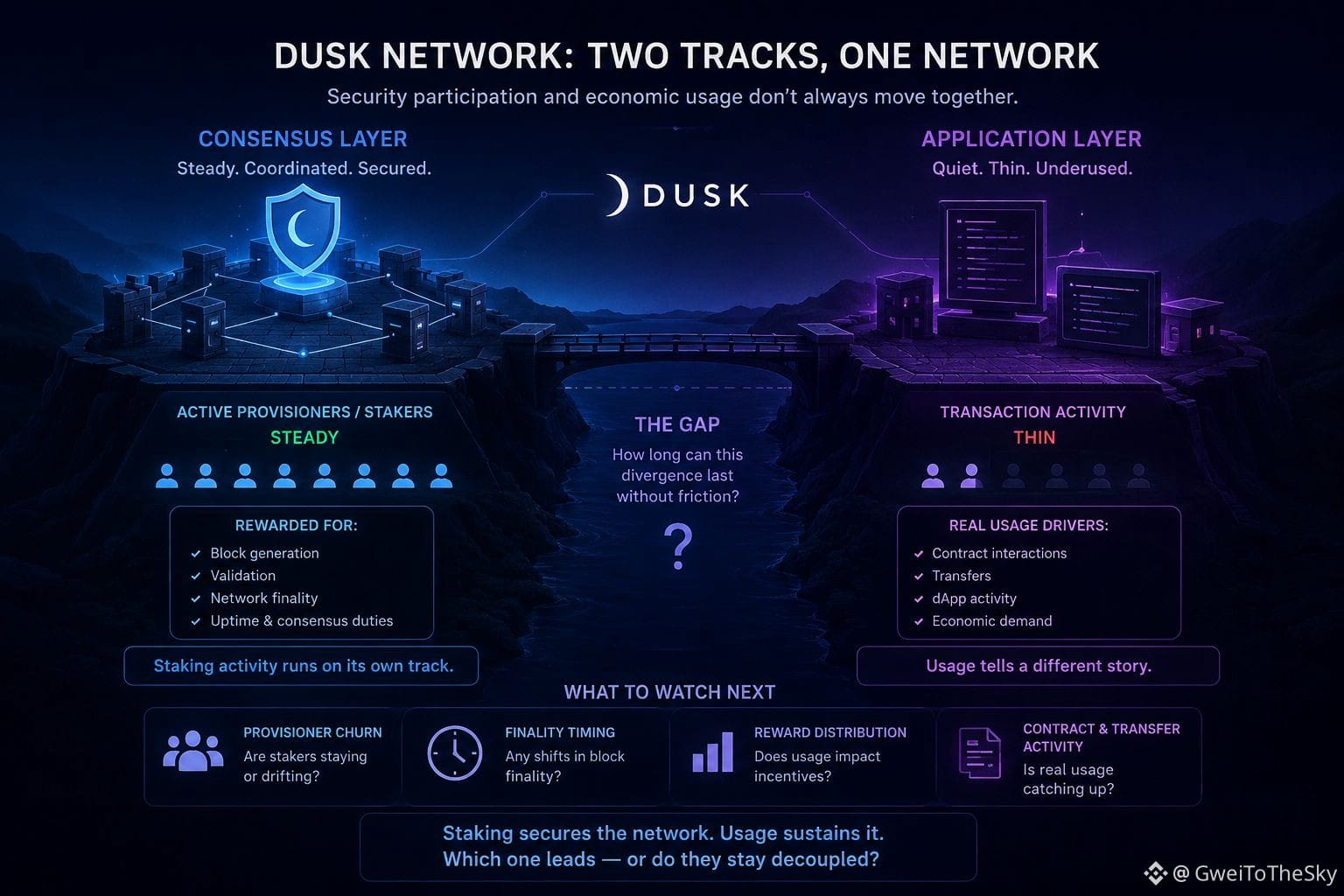
Als ich letzte Woche Dusk' Explorer überprüfte, wirkten die aktiven Provisioner, die im Netzwerk staken, stabil – fast schon gesund. Die darunterliegende Transaktionsanzahl blieb jedoch dünn. Ich nahm an, dass das bedeutete, dass das Stake überwiegend untätig herumliegt, um Rendite zu erzielen, aber ohne echte Beteiligung dahinter.
Als ich weiter nachgrub, stellte ich fest, dass die Diskrepanz daher rührt, wie Dusk die Teilnahme am Konsens von der Ausführung von Transaktionen trennt. Provisioner werden für ihre Rolle bei der Blockerzeugung und -validierung über den getrennten Einigungsprozess des Netzwerks belohnt – eine Aufgabe, die weiterläuft, unabhängig davon, ob Nutzer gerade transagieren. Staking-Aktivität und Netzwerknutzung scheinen auf nahezu unabhängigen Spuren zu laufen.
Das änderte, wie ich die Daten las. Ich hatte Sicherheitsbeteiligung und wirtschaftliche Nutzung als ein einziges Signal behandelt, obwohl sie eindeutig nicht dasselbe sind. Ein Netzwerk kann auf der Konsensschicht gesichert und koordiniert aussehen, während es auf Anwendungsebene still bleibt – und keine der beiden Zahlen sagt allein viel über die jeweils andere aus.
Was ich noch nicht auflösen kann, ist, wie lange diese Lücke ohne Reibung bestehen bleibt. Wenn Provisioner vor allem für Verfügbarkeit und Konsensaufgaben entschädigt werden: Muss die Nutzung irgendwann nachziehen, damit Anreize im Gleichgewicht bleiben, oder kann die Beteiligung von Validatoren auf unbestimmte Zeit für sich selbst stabil bleiben, gemäß den eigenen Bedingungen?
In Zukunft möchte ich Provisioner-Fluktuation zusammen mit tatsächlicher Contract- und Transfer-Aktivität beobachten, nicht nur die Staking-Summen. Die Bindung kleinerer Staker, Verschiebungen beim Zeitpunkt der Finalität und jede Änderung in der Verteilung der Belohnungen, wenn sich die Nutzung verlagert, würden mir mehr sagen als Schlagzeilen zu den Stake-Zahlen.
Ich bin immer noch nicht sicher, welche Seite hier die andere führt – ob die Nutzung langfristig das Staking-Verhalten mitzieht oder ob die beiden Bereiche tatsächlich entkoppelt bleiben. Genau damit beschäftige ich mich immer noch.
@Dusk_Foundation #Dusk
$DUSK
{future}(DUSKUSDT)
$ZEC
{future}(ZECUSDT)
$ENA
{future}(ENAUSDT)
Als ich letzte Woche Dusk' Explorer überprüfte, wirkten die aktiven Provisioner, die im Netzwerk staken, stabil – fast schon gesund. Die darunterliegende Transaktionsanzahl blieb jedoch dünn. Ich nahm an, dass das bedeutete, dass das Stake überwiegend untätig herumliegt, um Rendite zu erzielen, aber ohne echte Beteiligung dahinter.
Als ich weiter nachgrub, stellte ich fest, dass die Diskrepanz daher rührt, wie Dusk die Teilnahme am Konsens von der Ausführung von Transaktionen trennt. Provisioner werden für ihre Rolle bei der Blockerzeugung und -validierung über den getrennten Einigungsprozess des Netzwerks belohnt – eine Aufgabe, die weiterläuft, unabhängig davon, ob Nutzer gerade transagieren. Staking-Aktivität und Netzwerknutzung scheinen auf nahezu unabhängigen Spuren zu laufen.
Das änderte, wie ich die Daten las. Ich hatte Sicherheitsbeteiligung und wirtschaftliche Nutzung als ein einziges Signal behandelt, obwohl sie eindeutig nicht dasselbe sind. Ein Netzwerk kann auf der Konsensschicht gesichert und koordiniert aussehen, während es auf Anwendungsebene still bleibt – und keine der beiden Zahlen sagt allein viel über die jeweils andere aus.
Was ich noch nicht auflösen kann, ist, wie lange diese Lücke ohne Reibung bestehen bleibt. Wenn Provisioner vor allem für Verfügbarkeit und Konsensaufgaben entschädigt werden: Muss die Nutzung irgendwann nachziehen, damit Anreize im Gleichgewicht bleiben, oder kann die Beteiligung von Validatoren auf unbestimmte Zeit für sich selbst stabil bleiben, gemäß den eigenen Bedingungen?
In Zukunft möchte ich Provisioner-Fluktuation zusammen mit tatsächlicher Contract- und Transfer-Aktivität beobachten, nicht nur die Staking-Summen. Die Bindung kleinerer Staker, Verschiebungen beim Zeitpunkt der Finalität und jede Änderung in der Verteilung der Belohnungen, wenn sich die Nutzung verlagert, würden mir mehr sagen als Schlagzeilen zu den Stake-Zahlen.
Ich bin immer noch nicht sicher, welche Seite hier die andere führt – ob die Nutzung langfristig das Staking-Verhalten mitzieht oder ob die beiden Bereiche tatsächlich entkoppelt bleiben. Genau damit beschäftige ich mich immer noch.
@Dusk #Dusk
$DUSK
$ZEC
$ENA
Als ich weiter nachgrub, stellte ich fest, dass die Diskrepanz daher rührt, wie Dusk die Teilnahme am Konsens von der Ausführung von Transaktionen trennt. Provisioner werden für ihre Rolle bei der Blockerzeugung und -validierung über den getrennten Einigungsprozess des Netzwerks belohnt – eine Aufgabe, die weiterläuft, unabhängig davon, ob Nutzer gerade transagieren. Staking-Aktivität und Netzwerknutzung scheinen auf nahezu unabhängigen Spuren zu laufen.
Das änderte, wie ich die Daten las. Ich hatte Sicherheitsbeteiligung und wirtschaftliche Nutzung als ein einziges Signal behandelt, obwohl sie eindeutig nicht dasselbe sind. Ein Netzwerk kann auf der Konsensschicht gesichert und koordiniert aussehen, während es auf Anwendungsebene still bleibt – und keine der beiden Zahlen sagt allein viel über die jeweils andere aus.
Was ich noch nicht auflösen kann, ist, wie lange diese Lücke ohne Reibung bestehen bleibt. Wenn Provisioner vor allem für Verfügbarkeit und Konsensaufgaben entschädigt werden: Muss die Nutzung irgendwann nachziehen, damit Anreize im Gleichgewicht bleiben, oder kann die Beteiligung von Validatoren auf unbestimmte Zeit für sich selbst stabil bleiben, gemäß den eigenen Bedingungen?
In Zukunft möchte ich Provisioner-Fluktuation zusammen mit tatsächlicher Contract- und Transfer-Aktivität beobachten, nicht nur die Staking-Summen. Die Bindung kleinerer Staker, Verschiebungen beim Zeitpunkt der Finalität und jede Änderung in der Verteilung der Belohnungen, wenn sich die Nutzung verlagert, würden mir mehr sagen als Schlagzeilen zu den Stake-Zahlen.
Ich bin immer noch nicht sicher, welche Seite hier die andere führt – ob die Nutzung langfristig das Staking-Verhalten mitzieht oder ob die beiden Bereiche tatsächlich entkoppelt bleiben. Genau damit beschäftige ich mich immer noch.
@Dusk #Dusk
$DUSK
$ZEC
$ENA
2
5
480
·
--
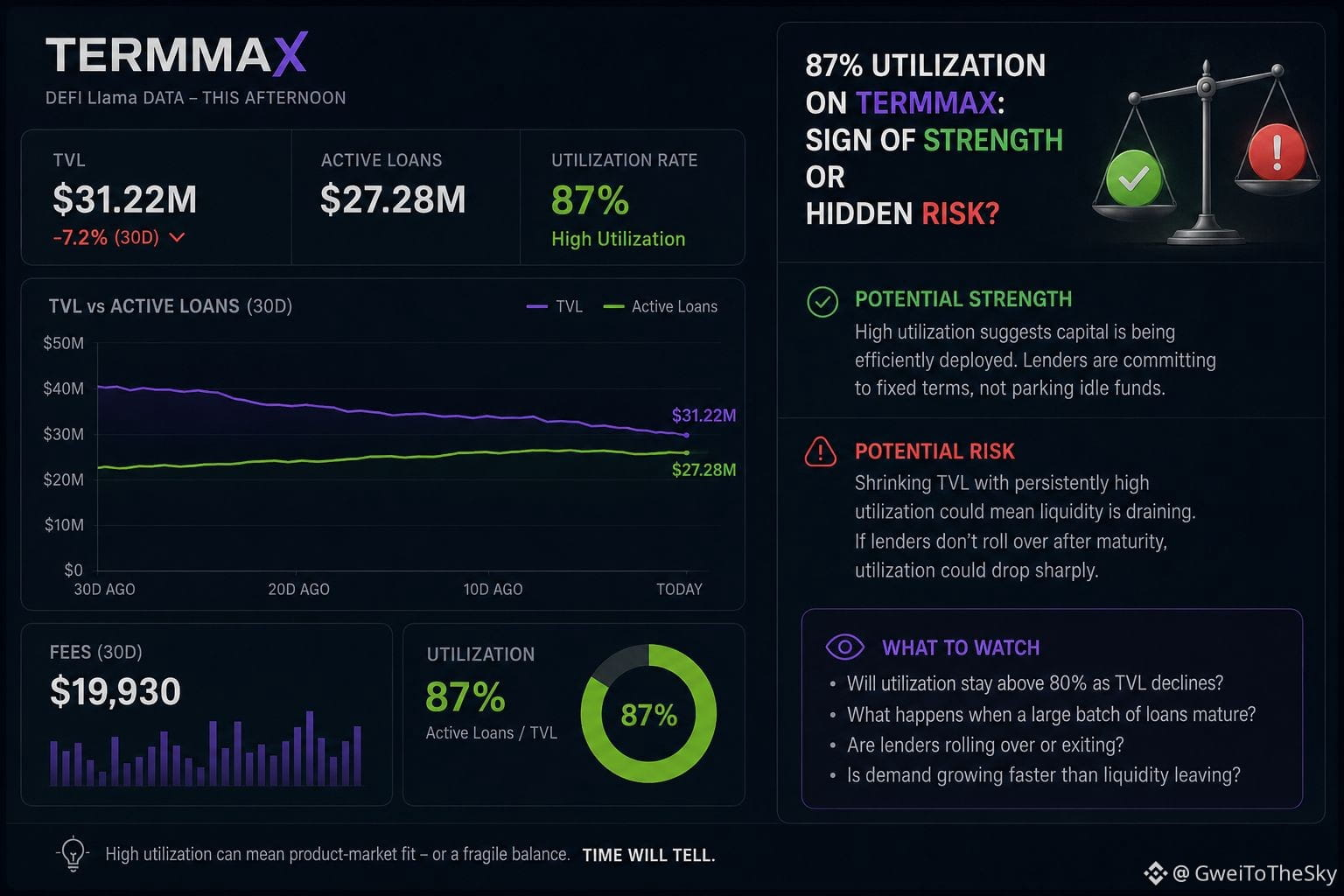
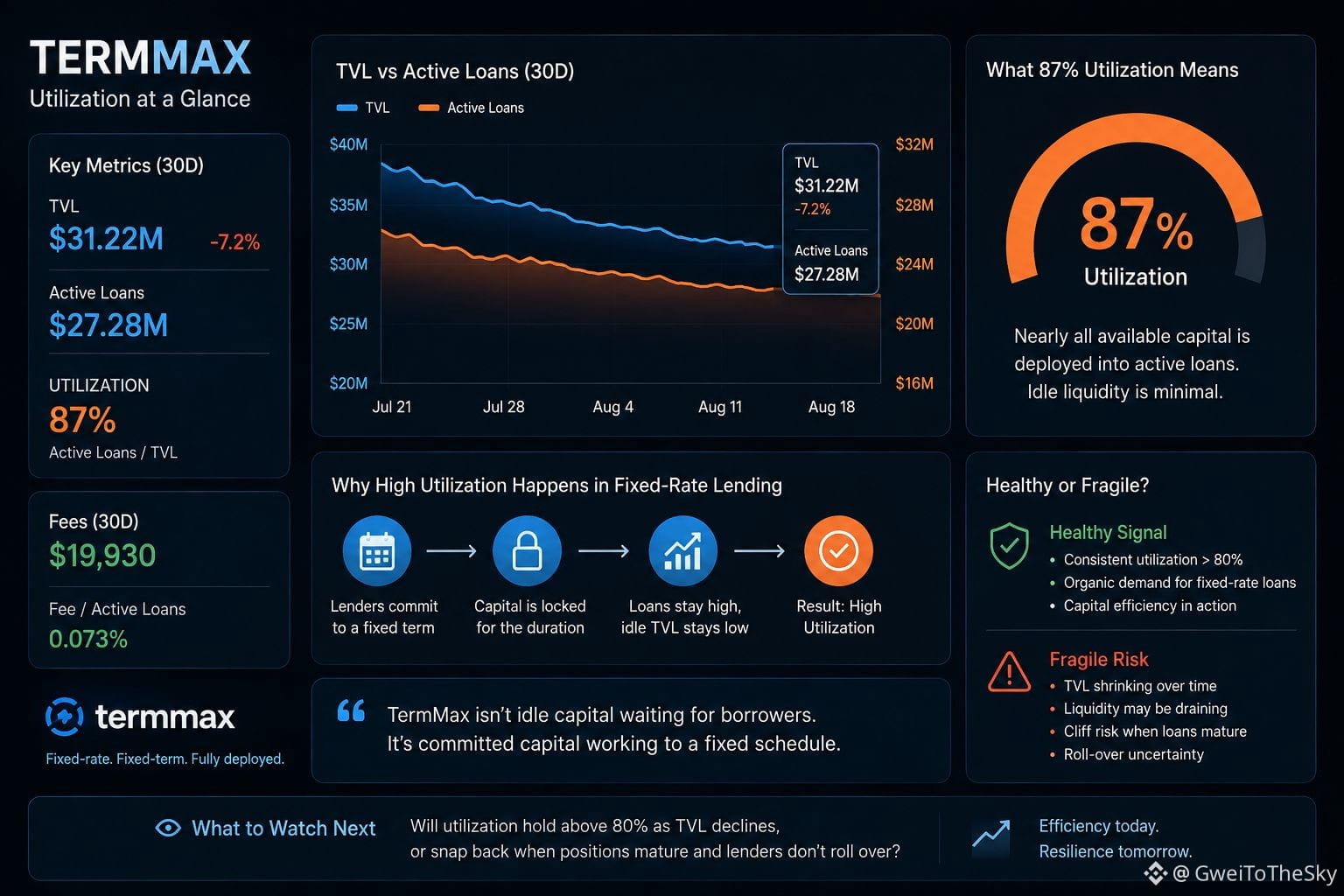
TermMax‘ Zahlen von DefiLlama heute Nachmittag ab: Die TVL liegt bei 31,22 Mio. USD, ein Rückgang von 7,2 % über 30 Tage, aber aktive Kredite sind 27,28 Mio. USD. Das entspricht ungefähr 87 % Auslastung. Zuerst ging ich davon aus, dass ich das Diagramm falsch gelesen hatte.
Ich bin zurückgegangen und habe es gegen die Gebühren gegengeprüft. Nur 19.930 USD an Gebühren über 30 Tage bei fast 27 Mio. USD geliehenem Kapital. Für einen markt für festverzinsliches, fristenbasiertes Lending wirkte dieses Verhältnis im Vergleich dazu, wie eng der Sicherheitenpool genutzt wird, eher dünn.
Dann hat es sich für mich anders eingeordnet. TermMax ist kein Pool, der untätig herumliegt und auf Kreditnehmer wartet, sondern zu jedem Zeitpunkt eher vollständig eingesetztes Kapital. Feste Fälligkeiten bedeuten, dass Kreditgeber nicht darauf warten, dass sich die Liquidität für Rendite „parken“ lässt, sondern sich auf eine bestimmte Laufzeit festlegen. Daher schrumpft die ungenutzte TVL natürlich, während die Kredite proportional groß bleiben.
Ich bin mir nicht ganz sicher, ob das gesund ist oder eher fragil. Hohe Auslastung bei einer schrumpfenden TVL-Basis könnte auf effizientes Kapital hindeuten – oder darauf, dass Liquidität still und leise abfließt, während die bestehenden Positionen noch nicht fällig sind.
Ich beobachte, ob die Auslastung über 80 % bleibt, während die TVL weiter sinkt, oder ob sie zurückspringt, sobald Positionen fällig werden und Kreditgeber nicht verlängern.
Sind 87 % Auslastung bei TermMax ein Zeichen für eine echte Product-Market-Fit bei festverzinslichem Lending, oder ein Symptom für einen schrumpfenden Pool, der noch nicht unter Stress getestet wurde?
@termmax #termmax
$ONG
{future}(ONGUSDT)
$BOME
{future}(BOMEUSDT)
$ACE
{future}(ACEUSDT)
TermMax‘ Zahlen von DefiLlama heute Nachmittag ab: Die TVL liegt bei 31,22 Mio. USD, ein Rückgang von 7,2 % über 30 Tage, aber aktive Kredite sind 27,28 Mio. USD. Das entspricht ungefähr 87 % Auslastung. Zuerst ging ich davon aus, dass ich das Diagramm falsch gelesen hatte.
Ich bin zurückgegangen und habe es gegen die Gebühren gegengeprüft. Nur 19.930 USD an Gebühren über 30 Tage bei fast 27 Mio. USD geliehenem Kapital. Für einen markt für festverzinsliches, fristenbasiertes Lending wirkte dieses Verhältnis im Vergleich dazu, wie eng der Sicherheitenpool genutzt wird, eher dünn.
Dann hat es sich für mich anders eingeordnet. TermMax ist kein Pool, der untätig herumliegt und auf Kreditnehmer wartet, sondern zu jedem Zeitpunkt eher vollständig eingesetztes Kapital. Feste Fälligkeiten bedeuten, dass Kreditgeber nicht darauf warten, dass sich die Liquidität für Rendite „parken“ lässt, sondern sich auf eine bestimmte Laufzeit festlegen. Daher schrumpft die ungenutzte TVL natürlich, während die Kredite proportional groß bleiben.
Ich bin mir nicht ganz sicher, ob das gesund ist oder eher fragil. Hohe Auslastung bei einer schrumpfenden TVL-Basis könnte auf effizientes Kapital hindeuten – oder darauf, dass Liquidität still und leise abfließt, während die bestehenden Positionen noch nicht fällig sind.
Ich beobachte, ob die Auslastung über 80 % bleibt, während die TVL weiter sinkt, oder ob sie zurückspringt, sobald Positionen fällig werden und Kreditgeber nicht verlängern.
Sind 87 % Auslastung bei TermMax ein Zeichen für eine echte Product-Market-Fit bei festverzinslichem Lending, oder ein Symptom für einen schrumpfenden Pool, der noch nicht unter Stress getestet wurde?
@TermMax #termmax
$ONG
$BOME
$ACE
Ich bin zurückgegangen und habe es gegen die Gebühren gegengeprüft. Nur 19.930 USD an Gebühren über 30 Tage bei fast 27 Mio. USD geliehenem Kapital. Für einen markt für festverzinsliches, fristenbasiertes Lending wirkte dieses Verhältnis im Vergleich dazu, wie eng der Sicherheitenpool genutzt wird, eher dünn.
Dann hat es sich für mich anders eingeordnet. TermMax ist kein Pool, der untätig herumliegt und auf Kreditnehmer wartet, sondern zu jedem Zeitpunkt eher vollständig eingesetztes Kapital. Feste Fälligkeiten bedeuten, dass Kreditgeber nicht darauf warten, dass sich die Liquidität für Rendite „parken“ lässt, sondern sich auf eine bestimmte Laufzeit festlegen. Daher schrumpft die ungenutzte TVL natürlich, während die Kredite proportional groß bleiben.
Ich bin mir nicht ganz sicher, ob das gesund ist oder eher fragil. Hohe Auslastung bei einer schrumpfenden TVL-Basis könnte auf effizientes Kapital hindeuten – oder darauf, dass Liquidität still und leise abfließt, während die bestehenden Positionen noch nicht fällig sind.
Ich beobachte, ob die Auslastung über 80 % bleibt, während die TVL weiter sinkt, oder ob sie zurückspringt, sobald Positionen fällig werden und Kreditgeber nicht verlängern.
Sind 87 % Auslastung bei TermMax ein Zeichen für eine echte Product-Market-Fit bei festverzinslichem Lending, oder ein Symptom für einen schrumpfenden Pool, der noch nicht unter Stress getestet wurde?
@TermMax #termmax
$ONG
$BOME
$ACE
6
99
·
--
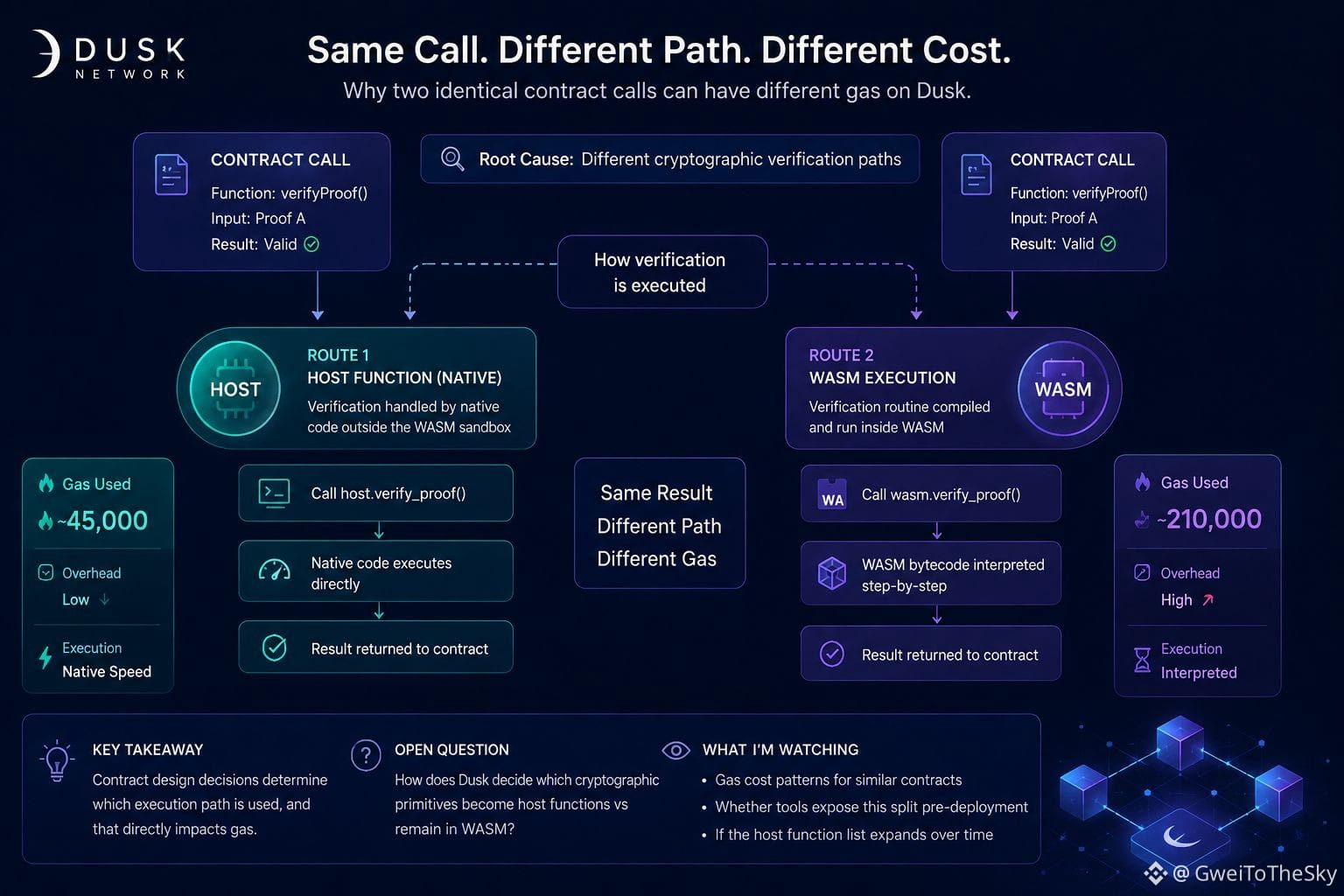
Dusk: Ein abendlicher Abendspaziergang – spät am Abend zwei Vertragsschaltungen, die auf den ersten Blick funktional identisch wirkten, setzten sich mit deutlich unterschiedlichen Gas-Fußabdrücken durch. Meine erste Annahme war, dass eine davon einfach komplexere Logik enthielt. Das stellte sich als falsch heraus.
Beim weiteren Nachforschen fand ich heraus, dass der Unterschied darauf zurückging, wie jeder Vertrag seinen kryptografischen Verifizierungsschritt handhabte. Der eine Weg löste eine Host-Funktion aus – nativen Code, den die Laufzeit direkt außerhalb des WASM-Sandkastens ausführt – während der andere eine Verifizierungsroutine ausführte, die selbst in WASM kompiliert war. Dusk behält Host-Funktionen für bestimmte Operationen wie Hashing und Proof-Verifikation vor, und die Gas-Lücke war im Grunde eine Sichtbarkeits-Lücke, die genau diese Trennung deutlich machte.
Das brachte etwas, das ich bisher als eine Kategorie behandelt hatte, neu in den Fokus: „On-Chain-Berechnung“. Ich hatte sandboxierte Ausführung und native Ausführung zu einer Einheit zusammengefasst, als ob Kosten und Verhalten für beide ähnlich skalierten. Das tun sie nicht. Native Calls umgehen den Overhead der WASM-Interpretation; das bedeutet, dass Designentscheidungen auf der einen Seite still und leise bestimmen, welchen Ausführungspfad eine Transaktion später einschlägt.
Was mir unklar ist, ist, wie Dusk entscheidet, welche zukünftigen kryptografischen Primitiven zu Host-Funktionen „aufsteigen“ und welche stattdessen innerhalb von WASM bleiben. Gibt es eine festgelegte Performance-Schwelle, oder wird es fallweise bewertet, wenn neue Verifikationsschemata hinzukommen? Diese Unklarheit wird umso wichtiger, je länger die Liste der Primitiven wächst.
In der Zukunft beobachte ich, wie konsistent sich die Gaskosten für logisch ähnliche Verträge clustern, und ob Entwickler-Tools diese Ausführungstrennung bereits vor dem Deployment sichtbar machen – statt erst danach. Wiederkehrende Muster würden mir zeigen, ob das eine stabile Design-Grenze ist oder etwas, das sich Vertragsautoren auf die harte Tour erst aneignen müssen.
Ich weiß immer noch nicht, ob diese Trennung absichtlich eng bleiben soll oder sich ausweiten wird, während das Protokoll weiter reift. Und ich bin mir nicht sicher, welches Ergebnis tatsächlich für Builder im Netzwerk gesünder wäre.
@Dusk_Foundation #Dusk
$ACE
{future}(ACEUSDT)
$DUSK
{future}(DUSKUSDT)
$BOME
{future}(BOMEUSDT)
Dusk: Ein abendlicher Abendspaziergang – spät am Abend zwei Vertragsschaltungen, die auf den ersten Blick funktional identisch wirkten, setzten sich mit deutlich unterschiedlichen Gas-Fußabdrücken durch. Meine erste Annahme war, dass eine davon einfach komplexere Logik enthielt. Das stellte sich als falsch heraus.
Beim weiteren Nachforschen fand ich heraus, dass der Unterschied darauf zurückging, wie jeder Vertrag seinen kryptografischen Verifizierungsschritt handhabte. Der eine Weg löste eine Host-Funktion aus – nativen Code, den die Laufzeit direkt außerhalb des WASM-Sandkastens ausführt – während der andere eine Verifizierungsroutine ausführte, die selbst in WASM kompiliert war. Dusk behält Host-Funktionen für bestimmte Operationen wie Hashing und Proof-Verifikation vor, und die Gas-Lücke war im Grunde eine Sichtbarkeits-Lücke, die genau diese Trennung deutlich machte.
Das brachte etwas, das ich bisher als eine Kategorie behandelt hatte, neu in den Fokus: „On-Chain-Berechnung“. Ich hatte sandboxierte Ausführung und native Ausführung zu einer Einheit zusammengefasst, als ob Kosten und Verhalten für beide ähnlich skalierten. Das tun sie nicht. Native Calls umgehen den Overhead der WASM-Interpretation; das bedeutet, dass Designentscheidungen auf der einen Seite still und leise bestimmen, welchen Ausführungspfad eine Transaktion später einschlägt.
Was mir unklar ist, ist, wie Dusk entscheidet, welche zukünftigen kryptografischen Primitiven zu Host-Funktionen „aufsteigen“ und welche stattdessen innerhalb von WASM bleiben. Gibt es eine festgelegte Performance-Schwelle, oder wird es fallweise bewertet, wenn neue Verifikationsschemata hinzukommen? Diese Unklarheit wird umso wichtiger, je länger die Liste der Primitiven wächst.
In der Zukunft beobachte ich, wie konsistent sich die Gaskosten für logisch ähnliche Verträge clustern, und ob Entwickler-Tools diese Ausführungstrennung bereits vor dem Deployment sichtbar machen – statt erst danach. Wiederkehrende Muster würden mir zeigen, ob das eine stabile Design-Grenze ist oder etwas, das sich Vertragsautoren auf die harte Tour erst aneignen müssen.
Ich weiß immer noch nicht, ob diese Trennung absichtlich eng bleiben soll oder sich ausweiten wird, während das Protokoll weiter reift. Und ich bin mir nicht sicher, welches Ergebnis tatsächlich für Builder im Netzwerk gesünder wäre.
@Dusk #Dusk
$ACE
$DUSK
$BOME
Beim weiteren Nachforschen fand ich heraus, dass der Unterschied darauf zurückging, wie jeder Vertrag seinen kryptografischen Verifizierungsschritt handhabte. Der eine Weg löste eine Host-Funktion aus – nativen Code, den die Laufzeit direkt außerhalb des WASM-Sandkastens ausführt – während der andere eine Verifizierungsroutine ausführte, die selbst in WASM kompiliert war. Dusk behält Host-Funktionen für bestimmte Operationen wie Hashing und Proof-Verifikation vor, und die Gas-Lücke war im Grunde eine Sichtbarkeits-Lücke, die genau diese Trennung deutlich machte.
Das brachte etwas, das ich bisher als eine Kategorie behandelt hatte, neu in den Fokus: „On-Chain-Berechnung“. Ich hatte sandboxierte Ausführung und native Ausführung zu einer Einheit zusammengefasst, als ob Kosten und Verhalten für beide ähnlich skalierten. Das tun sie nicht. Native Calls umgehen den Overhead der WASM-Interpretation; das bedeutet, dass Designentscheidungen auf der einen Seite still und leise bestimmen, welchen Ausführungspfad eine Transaktion später einschlägt.
Was mir unklar ist, ist, wie Dusk entscheidet, welche zukünftigen kryptografischen Primitiven zu Host-Funktionen „aufsteigen“ und welche stattdessen innerhalb von WASM bleiben. Gibt es eine festgelegte Performance-Schwelle, oder wird es fallweise bewertet, wenn neue Verifikationsschemata hinzukommen? Diese Unklarheit wird umso wichtiger, je länger die Liste der Primitiven wächst.
In der Zukunft beobachte ich, wie konsistent sich die Gaskosten für logisch ähnliche Verträge clustern, und ob Entwickler-Tools diese Ausführungstrennung bereits vor dem Deployment sichtbar machen – statt erst danach. Wiederkehrende Muster würden mir zeigen, ob das eine stabile Design-Grenze ist oder etwas, das sich Vertragsautoren auf die harte Tour erst aneignen müssen.
Ich weiß immer noch nicht, ob diese Trennung absichtlich eng bleiben soll oder sich ausweiten wird, während das Protokoll weiter reift. Und ich bin mir nicht sicher, welches Ergebnis tatsächlich für Builder im Netzwerk gesünder wäre.
@Dusk #Dusk
$ACE
$DUSK
$BOME
1
5
342
·
--
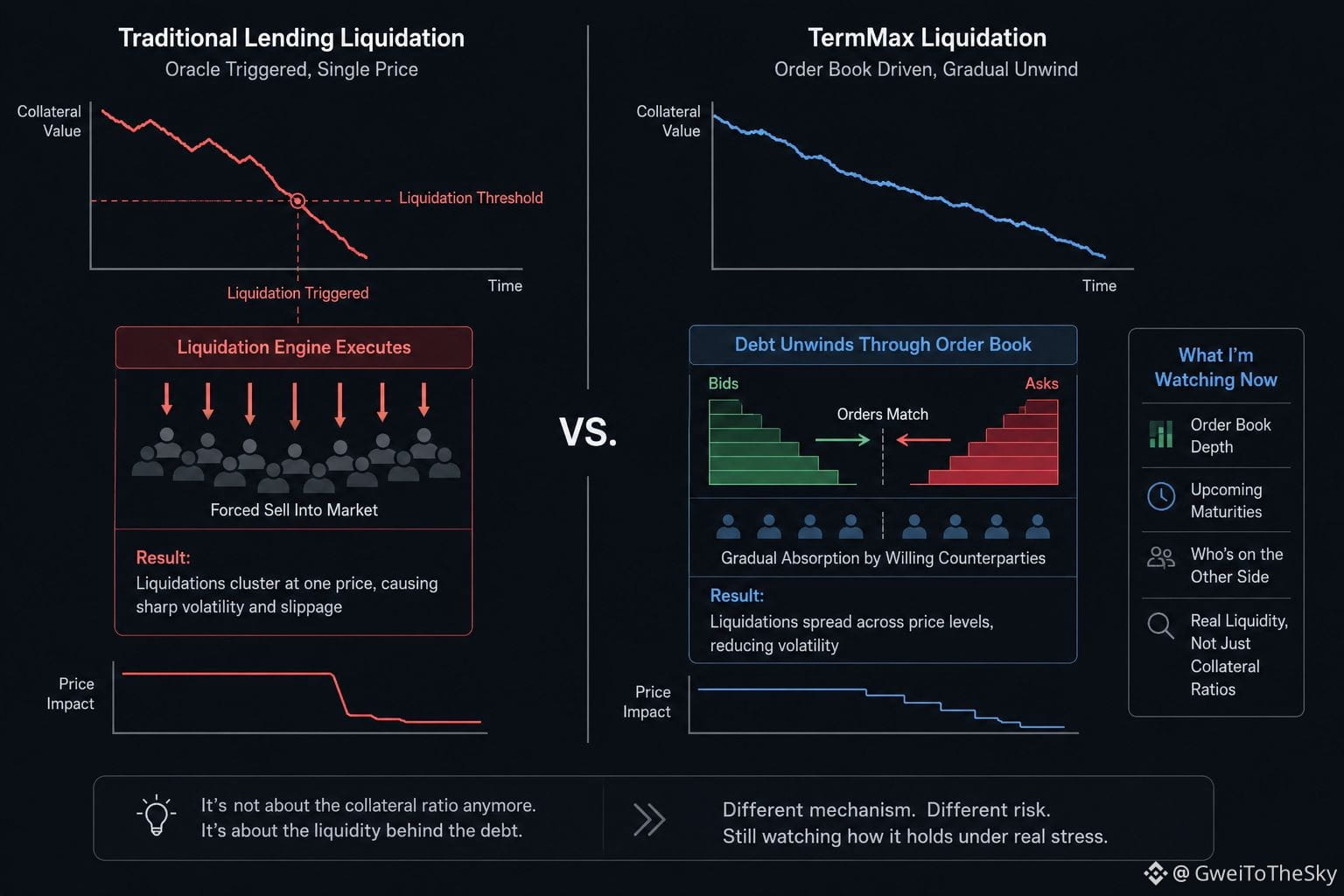
Während ich eine Charge von TermMax-Positionen nach einem starken Kursanstieg überprüfte, fiel mir etwas auf, das nicht meinen Erwartungen entsprach: Liquidationen gruppierten sich nicht so, wie sie es normalerweise auf den Kreditmärkten tun, die ich zuvor beobachtet habe.
Ich ging davon aus, dass ein schneller Rückgang der Sicherheiten die übliche Welle von oracle-getriebenen Zwangsverkäufen auslösen würde, die alle auf einmal einen Preis treffen. Also ging ich die Order-Flows rund um diese Positionen noch einmal durch, um zu sehen, was tatsächlich ausgeführt wurde.
Was ich fand, war anders. Da TermMax seine Schulden über den eigenen Order-Book aus festverzinslichen Token mit fester Laufzeit abrechnet und nicht alles über einen einzelnen Oracle-Trigger laufen lässt, wurden Rückabwicklungen schrittweise absorbiert, sobald Aufträge gegen bestehende Kaufgebote gematcht wurden – statt in eine einzige Liquidationspreis-Spitze einzuschlagen. Die Schuld selbst verhält sich wie ein handelbares Instrument mit eigener Tiefe, nicht nur wie eine Schwelle, die man überschreiten muss.
Das hat meine Sicht auf das Risiko hier neu gerahmt. Es ist nicht so, dass die Volatilität verschwindet – vielmehr verteilt der Mechanismus die Ausführung auf bereite Gegenparteien statt auf eine einzige Liquidations-Engine. Das verändert, wie schnell sich Stress tatsächlich im Preis zeigt.
Ich bin jedoch noch nicht sicher, ob das auch unter realem Stress gilt. Dünne Orderbücher nahe weniger gängigen Laufzeiten könnten sich sehr unterschiedlich verhalten, und ich habe gesehen, dass dieses System bisher noch nicht in einem wirklich chaotischen Markt getestet wurde.
Darum beobachte ich jetzt die Orderbuch-Tiefe rund um bevorstehende Laufzeiten viel genauer. Weniger interessiert bin ich am Sicherheitenverhältnis selbst und mehr daran, wer tatsächlich auf der anderen Seite dieses Orderbuchs sitzt, wenn es darauf ankommt.
@termmax #termmax
$RE
{future}(REUSDT)
$HEMI
{future}(HEMIUSDT)
$ETH
{future}(ETHUSDT)
Während ich eine Charge von TermMax-Positionen nach einem starken Kursanstieg überprüfte, fiel mir etwas auf, das nicht meinen Erwartungen entsprach: Liquidationen gruppierten sich nicht so, wie sie es normalerweise auf den Kreditmärkten tun, die ich zuvor beobachtet habe.
Ich ging davon aus, dass ein schneller Rückgang der Sicherheiten die übliche Welle von oracle-getriebenen Zwangsverkäufen auslösen würde, die alle auf einmal einen Preis treffen. Also ging ich die Order-Flows rund um diese Positionen noch einmal durch, um zu sehen, was tatsächlich ausgeführt wurde.
Was ich fand, war anders. Da TermMax seine Schulden über den eigenen Order-Book aus festverzinslichen Token mit fester Laufzeit abrechnet und nicht alles über einen einzelnen Oracle-Trigger laufen lässt, wurden Rückabwicklungen schrittweise absorbiert, sobald Aufträge gegen bestehende Kaufgebote gematcht wurden – statt in eine einzige Liquidationspreis-Spitze einzuschlagen. Die Schuld selbst verhält sich wie ein handelbares Instrument mit eigener Tiefe, nicht nur wie eine Schwelle, die man überschreiten muss.
Das hat meine Sicht auf das Risiko hier neu gerahmt. Es ist nicht so, dass die Volatilität verschwindet – vielmehr verteilt der Mechanismus die Ausführung auf bereite Gegenparteien statt auf eine einzige Liquidations-Engine. Das verändert, wie schnell sich Stress tatsächlich im Preis zeigt.
Ich bin jedoch noch nicht sicher, ob das auch unter realem Stress gilt. Dünne Orderbücher nahe weniger gängigen Laufzeiten könnten sich sehr unterschiedlich verhalten, und ich habe gesehen, dass dieses System bisher noch nicht in einem wirklich chaotischen Markt getestet wurde.
Darum beobachte ich jetzt die Orderbuch-Tiefe rund um bevorstehende Laufzeiten viel genauer. Weniger interessiert bin ich am Sicherheitenverhältnis selbst und mehr daran, wer tatsächlich auf der anderen Seite dieses Orderbuchs sitzt, wenn es darauf ankommt.
@TermMax #termmax
$RE
$HEMI
$ETH
Ich ging davon aus, dass ein schneller Rückgang der Sicherheiten die übliche Welle von oracle-getriebenen Zwangsverkäufen auslösen würde, die alle auf einmal einen Preis treffen. Also ging ich die Order-Flows rund um diese Positionen noch einmal durch, um zu sehen, was tatsächlich ausgeführt wurde.
Was ich fand, war anders. Da TermMax seine Schulden über den eigenen Order-Book aus festverzinslichen Token mit fester Laufzeit abrechnet und nicht alles über einen einzelnen Oracle-Trigger laufen lässt, wurden Rückabwicklungen schrittweise absorbiert, sobald Aufträge gegen bestehende Kaufgebote gematcht wurden – statt in eine einzige Liquidationspreis-Spitze einzuschlagen. Die Schuld selbst verhält sich wie ein handelbares Instrument mit eigener Tiefe, nicht nur wie eine Schwelle, die man überschreiten muss.
Das hat meine Sicht auf das Risiko hier neu gerahmt. Es ist nicht so, dass die Volatilität verschwindet – vielmehr verteilt der Mechanismus die Ausführung auf bereite Gegenparteien statt auf eine einzige Liquidations-Engine. Das verändert, wie schnell sich Stress tatsächlich im Preis zeigt.
Ich bin jedoch noch nicht sicher, ob das auch unter realem Stress gilt. Dünne Orderbücher nahe weniger gängigen Laufzeiten könnten sich sehr unterschiedlich verhalten, und ich habe gesehen, dass dieses System bisher noch nicht in einem wirklich chaotischen Markt getestet wurde.
Darum beobachte ich jetzt die Orderbuch-Tiefe rund um bevorstehende Laufzeiten viel genauer. Weniger interessiert bin ich am Sicherheitenverhältnis selbst und mehr daran, wer tatsächlich auf der anderen Seite dieses Orderbuchs sitzt, wenn es darauf ankommt.
@TermMax #termmax
$RE
$HEMI
$ETH
4
46
·
--
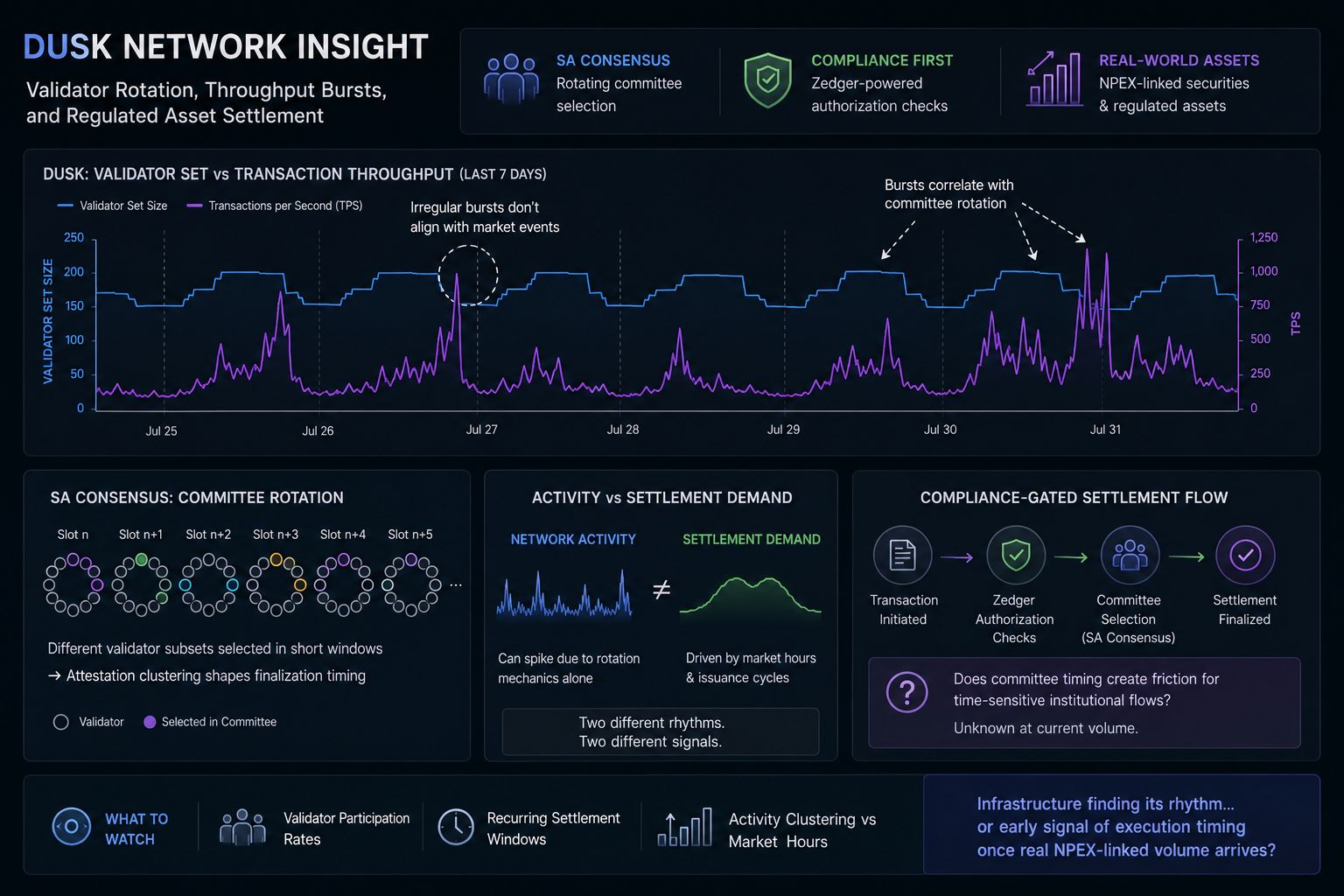
Dusk’ Validator-Set gegen seine Transaktionsdurchsatzleistung letzte Woche: Ich hatte angenommen, dass ein Netzwerk, das für regulierte Assets ausgelegt ist, stetige, fast schon langweilige Aktivitätsmuster zeigt. Stattdessen sah ich unregelmäßige Ausbrüche, die sich keinem offensichtlichen Marktereignis zuordnen ließen.
Bei genauerem Hinsehen verfolgte ich die Ausbrüche darauf zurück, wie Dusk bei SA Consensus die Auswahl der Committees in seiner Konsensrotation durchführt. Das war kein zufälliges Rauschen. Das Muster sah eher nach Attestations-Clustering aus: Bestimmte Validator-Subsets werden innerhalb kurzer Zeitfenster häufiger ausgewählt, was wiederum bestimmt, wann die settlement-schweren Aktivitäten tatsächlich finalisiert werden.
Dieser Unterschied ist wichtiger, als ich ihm zunächst zugestanden hatte. Ich hatte „Netzwerkaktivität“ und „Settlement-Nachfrage“ als im Grunde dasselbe Signal behandelt. Das sind sie nicht. Die Aktivität kann allein durch Mechaniken der Validator-Rotation in die Höhe schnellen, während die tatsächliche Settlement-Nachfrage – also die Art, die mit Assets zusammenhängt, die etwa aus NPEX stammen – sich in einem komplett anderen Rhythmus bewegt, der mit Marktzeiten und Emissionszyklen gekoppelt ist.
Was ich bislang noch nicht klären kann, ist, wie sich dieses Rotationsverhalten speziell auf compliance-gesteuerte Transaktionen auswirkt. Wenn zedger-basierte Wertpapiere vor dem Settlen bestimmte Autorisierungsprüfungen erfordern: Erzeugt das Timing der Committees dann überhaupt Reibung für zeitkritische institutionelle Flows, oder ist diese Reibung bei dem aktuellen Volumen vernachlässigbar? Mir fehlen dafür noch genug Datenpunkte, um das entweder zu bestätigen oder auszuschließen.
In Zukunft möchte ich die Beteiligungsraten der Validatoren zusammen mit allen wiederkehrenden Settlement-Windows beobachten – nicht nur die reinen Transaktionszahlen. Wenn sich die Aktivität regulierter Assets um bestimmte Committee-Rotationstakte statt um die Marktzeiten clusterte, würde mir das etwas darüber verraten, wie viel institutioneller Flow tatsächlich live ist, versus wie viel noch experimentell.
Ich frage mich, ob dieses Rotationsmuster einfach nur zeigt, wie sich die Infrastruktur ihren Rhythmus sucht, oder ob es ein frühes Signal dafür ist, wie sich das Ausführungstiming verhalten könnte, sobald echtes Volumen von NPEX-verknüpften Assets durch das System fließt. Ich glaube nicht, dass ich das schon beantworten kann.
@Dusk_Foundation #Dusk
$DUSK
{future}(DUSKUSDT)
$HEMI
{future}(HEMIUSDT)
$TREE
{future}(TREEUSDT)
Dusk’ Validator-Set gegen seine Transaktionsdurchsatzleistung letzte Woche: Ich hatte angenommen, dass ein Netzwerk, das für regulierte Assets ausgelegt ist, stetige, fast schon langweilige Aktivitätsmuster zeigt. Stattdessen sah ich unregelmäßige Ausbrüche, die sich keinem offensichtlichen Marktereignis zuordnen ließen.
Bei genauerem Hinsehen verfolgte ich die Ausbrüche darauf zurück, wie Dusk bei SA Consensus die Auswahl der Committees in seiner Konsensrotation durchführt. Das war kein zufälliges Rauschen. Das Muster sah eher nach Attestations-Clustering aus: Bestimmte Validator-Subsets werden innerhalb kurzer Zeitfenster häufiger ausgewählt, was wiederum bestimmt, wann die settlement-schweren Aktivitäten tatsächlich finalisiert werden.
Dieser Unterschied ist wichtiger, als ich ihm zunächst zugestanden hatte. Ich hatte „Netzwerkaktivität“ und „Settlement-Nachfrage“ als im Grunde dasselbe Signal behandelt. Das sind sie nicht. Die Aktivität kann allein durch Mechaniken der Validator-Rotation in die Höhe schnellen, während die tatsächliche Settlement-Nachfrage – also die Art, die mit Assets zusammenhängt, die etwa aus NPEX stammen – sich in einem komplett anderen Rhythmus bewegt, der mit Marktzeiten und Emissionszyklen gekoppelt ist.
Was ich bislang noch nicht klären kann, ist, wie sich dieses Rotationsverhalten speziell auf compliance-gesteuerte Transaktionen auswirkt. Wenn zedger-basierte Wertpapiere vor dem Settlen bestimmte Autorisierungsprüfungen erfordern: Erzeugt das Timing der Committees dann überhaupt Reibung für zeitkritische institutionelle Flows, oder ist diese Reibung bei dem aktuellen Volumen vernachlässigbar? Mir fehlen dafür noch genug Datenpunkte, um das entweder zu bestätigen oder auszuschließen.
In Zukunft möchte ich die Beteiligungsraten der Validatoren zusammen mit allen wiederkehrenden Settlement-Windows beobachten – nicht nur die reinen Transaktionszahlen. Wenn sich die Aktivität regulierter Assets um bestimmte Committee-Rotationstakte statt um die Marktzeiten clusterte, würde mir das etwas darüber verraten, wie viel institutioneller Flow tatsächlich live ist, versus wie viel noch experimentell.
Ich frage mich, ob dieses Rotationsmuster einfach nur zeigt, wie sich die Infrastruktur ihren Rhythmus sucht, oder ob es ein frühes Signal dafür ist, wie sich das Ausführungstiming verhalten könnte, sobald echtes Volumen von NPEX-verknüpften Assets durch das System fließt. Ich glaube nicht, dass ich das schon beantworten kann.
@Dusk #Dusk
$DUSK
$HEMI
$TREE
Bei genauerem Hinsehen verfolgte ich die Ausbrüche darauf zurück, wie Dusk bei SA Consensus die Auswahl der Committees in seiner Konsensrotation durchführt. Das war kein zufälliges Rauschen. Das Muster sah eher nach Attestations-Clustering aus: Bestimmte Validator-Subsets werden innerhalb kurzer Zeitfenster häufiger ausgewählt, was wiederum bestimmt, wann die settlement-schweren Aktivitäten tatsächlich finalisiert werden.
Dieser Unterschied ist wichtiger, als ich ihm zunächst zugestanden hatte. Ich hatte „Netzwerkaktivität“ und „Settlement-Nachfrage“ als im Grunde dasselbe Signal behandelt. Das sind sie nicht. Die Aktivität kann allein durch Mechaniken der Validator-Rotation in die Höhe schnellen, während die tatsächliche Settlement-Nachfrage – also die Art, die mit Assets zusammenhängt, die etwa aus NPEX stammen – sich in einem komplett anderen Rhythmus bewegt, der mit Marktzeiten und Emissionszyklen gekoppelt ist.
Was ich bislang noch nicht klären kann, ist, wie sich dieses Rotationsverhalten speziell auf compliance-gesteuerte Transaktionen auswirkt. Wenn zedger-basierte Wertpapiere vor dem Settlen bestimmte Autorisierungsprüfungen erfordern: Erzeugt das Timing der Committees dann überhaupt Reibung für zeitkritische institutionelle Flows, oder ist diese Reibung bei dem aktuellen Volumen vernachlässigbar? Mir fehlen dafür noch genug Datenpunkte, um das entweder zu bestätigen oder auszuschließen.
In Zukunft möchte ich die Beteiligungsraten der Validatoren zusammen mit allen wiederkehrenden Settlement-Windows beobachten – nicht nur die reinen Transaktionszahlen. Wenn sich die Aktivität regulierter Assets um bestimmte Committee-Rotationstakte statt um die Marktzeiten clusterte, würde mir das etwas darüber verraten, wie viel institutioneller Flow tatsächlich live ist, versus wie viel noch experimentell.
Ich frage mich, ob dieses Rotationsmuster einfach nur zeigt, wie sich die Infrastruktur ihren Rhythmus sucht, oder ob es ein frühes Signal dafür ist, wie sich das Ausführungstiming verhalten könnte, sobald echtes Volumen von NPEX-verknüpften Assets durch das System fließt. Ich glaube nicht, dass ich das schon beantworten kann.
@Dusk #Dusk
$DUSK
$HEMI
$TREE
2
4
190
·
--
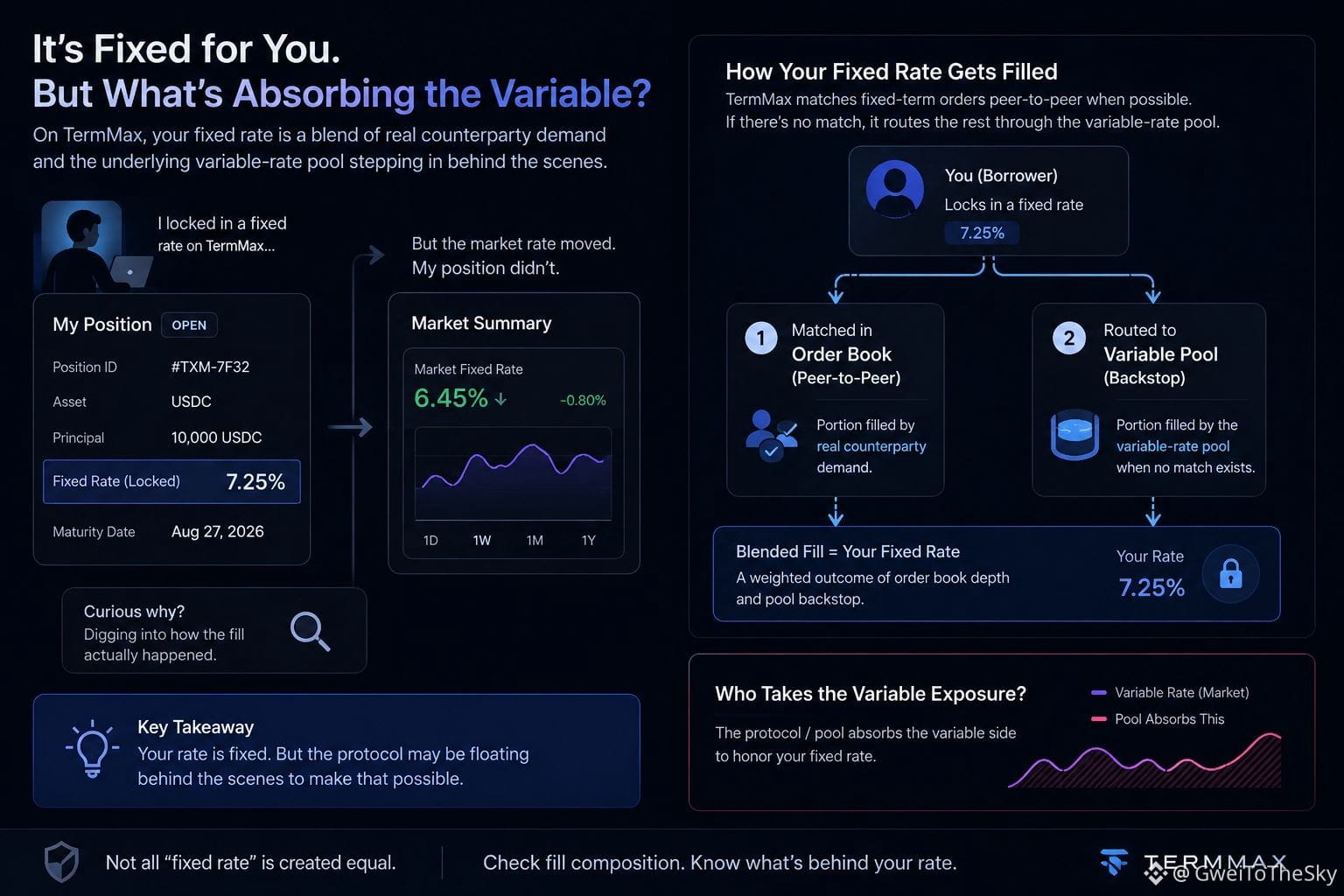
Während ich das Fälligkeitsdatum meiner offenen Position bei @termmax überprüfte, stimmte der feste Zinssatz, den ich abgeschlossen hatte, nicht mehr mit dem überein, was auf der Übersichtsseite des Marktes angezeigt wurde – obwohl sich an meiner Position nichts geändert hatte. Zuerst nahm ich an, es sei nur eine Anzeigeverzögerung.
Also begann ich nachzuforschen, wie die Orderbook-Fills gegen den zugrunde liegenden Pool abgewickelt werden. TermMax gleicht fest befristete Orders nach Möglichkeit Peer-to-Peer ab, aber wenn kein direkter Gegenpart vorhanden ist, leitet es durch den darunterliegenden variabel verzinslichen Pool weiter, um die Lücke zu schließen. Meine Position war auf diese Weise teilweise ausgefüllt worden, ohne dass ich es gemerkt hatte.
Das hat meine Sicht auf „fester Zinssatz“ hier verändert. Für mich als Kreditnehmer ist er fest, aber das Protokoll nimmt stillschweigend das variable Zinsrisiko auf der anderen Seite in Kauf, um diese Garantie möglich zu machen. Der Zinssatz, den ich sehe, ist nicht einfach nur eine Zahl, die ich ausgewählt habe – es ist ein gemischtes Ergebnis aus der Tiefe des Orderbooks zum Zeitpunkt meines Einstiegs.
Ich bin nicht ganz sicher, wie dünn diese Peer-to-Peer-Schicht während der Zeiten mit geringer Liquidität wird, oder wie viel des Books an jedem Tag tatsächlich direkt gematcht wird versus über den Pool geroutet. Die Dokumentation beschreibt zwar den Mechanismus, macht jedoch kein Live-Verhältnis sichtbar.
Ich habe begonnen, die Zusammensetzung der Fills zu prüfen, bevor ich größere Positionen eingehe – vor allem, um zu sehen, wie viel von meinem Zinssatz echtes Gegenparteien-Interesse ist und wie viel durch einen Pool-Backstop abgesichert wird.
Das lässt mich darüber nachdenken, wie viele Festzins-Protokolle nur dem Namen nach fest sind – wobei die Stabilität in Wirklichkeit darauf beruht, was auf der variablen Seite darunter die Absorption übernimmt.
#TermMax
$CLO
{future}(CLOUSDT)
$VELVET
{future}(VELVETUSDT)
$EDEN
{future}(EDENUSDT)
Während ich das Fälligkeitsdatum meiner offenen Position bei @TermMax überprüfte, stimmte der feste Zinssatz, den ich abgeschlossen hatte, nicht mehr mit dem überein, was auf der Übersichtsseite des Marktes angezeigt wurde – obwohl sich an meiner Position nichts geändert hatte. Zuerst nahm ich an, es sei nur eine Anzeigeverzögerung.
Also begann ich nachzuforschen, wie die Orderbook-Fills gegen den zugrunde liegenden Pool abgewickelt werden. TermMax gleicht fest befristete Orders nach Möglichkeit Peer-to-Peer ab, aber wenn kein direkter Gegenpart vorhanden ist, leitet es durch den darunterliegenden variabel verzinslichen Pool weiter, um die Lücke zu schließen. Meine Position war auf diese Weise teilweise ausgefüllt worden, ohne dass ich es gemerkt hatte.
Das hat meine Sicht auf „fester Zinssatz“ hier verändert. Für mich als Kreditnehmer ist er fest, aber das Protokoll nimmt stillschweigend das variable Zinsrisiko auf der anderen Seite in Kauf, um diese Garantie möglich zu machen. Der Zinssatz, den ich sehe, ist nicht einfach nur eine Zahl, die ich ausgewählt habe – es ist ein gemischtes Ergebnis aus der Tiefe des Orderbooks zum Zeitpunkt meines Einstiegs.
Ich bin nicht ganz sicher, wie dünn diese Peer-to-Peer-Schicht während der Zeiten mit geringer Liquidität wird, oder wie viel des Books an jedem Tag tatsächlich direkt gematcht wird versus über den Pool geroutet. Die Dokumentation beschreibt zwar den Mechanismus, macht jedoch kein Live-Verhältnis sichtbar.
Ich habe begonnen, die Zusammensetzung der Fills zu prüfen, bevor ich größere Positionen eingehe – vor allem, um zu sehen, wie viel von meinem Zinssatz echtes Gegenparteien-Interesse ist und wie viel durch einen Pool-Backstop abgesichert wird.
Das lässt mich darüber nachdenken, wie viele Festzins-Protokolle nur dem Namen nach fest sind – wobei die Stabilität in Wirklichkeit darauf beruht, was auf der variablen Seite darunter die Absorption übernimmt.
#TermMax
$CLO
$VELVET
$EDEN
Also begann ich nachzuforschen, wie die Orderbook-Fills gegen den zugrunde liegenden Pool abgewickelt werden. TermMax gleicht fest befristete Orders nach Möglichkeit Peer-to-Peer ab, aber wenn kein direkter Gegenpart vorhanden ist, leitet es durch den darunterliegenden variabel verzinslichen Pool weiter, um die Lücke zu schließen. Meine Position war auf diese Weise teilweise ausgefüllt worden, ohne dass ich es gemerkt hatte.
Das hat meine Sicht auf „fester Zinssatz“ hier verändert. Für mich als Kreditnehmer ist er fest, aber das Protokoll nimmt stillschweigend das variable Zinsrisiko auf der anderen Seite in Kauf, um diese Garantie möglich zu machen. Der Zinssatz, den ich sehe, ist nicht einfach nur eine Zahl, die ich ausgewählt habe – es ist ein gemischtes Ergebnis aus der Tiefe des Orderbooks zum Zeitpunkt meines Einstiegs.
Ich bin nicht ganz sicher, wie dünn diese Peer-to-Peer-Schicht während der Zeiten mit geringer Liquidität wird, oder wie viel des Books an jedem Tag tatsächlich direkt gematcht wird versus über den Pool geroutet. Die Dokumentation beschreibt zwar den Mechanismus, macht jedoch kein Live-Verhältnis sichtbar.
Ich habe begonnen, die Zusammensetzung der Fills zu prüfen, bevor ich größere Positionen eingehe – vor allem, um zu sehen, wie viel von meinem Zinssatz echtes Gegenparteien-Interesse ist und wie viel durch einen Pool-Backstop abgesichert wird.
Das lässt mich darüber nachdenken, wie viele Festzins-Protokolle nur dem Namen nach fest sind – wobei die Stabilität in Wirklichkeit darauf beruht, was auf der variablen Seite darunter die Absorption übernimmt.
#TermMax
$CLO
$VELVET
$EDEN
1
3
312
·
--
#dusk $DUSK @Dusk_Foundation
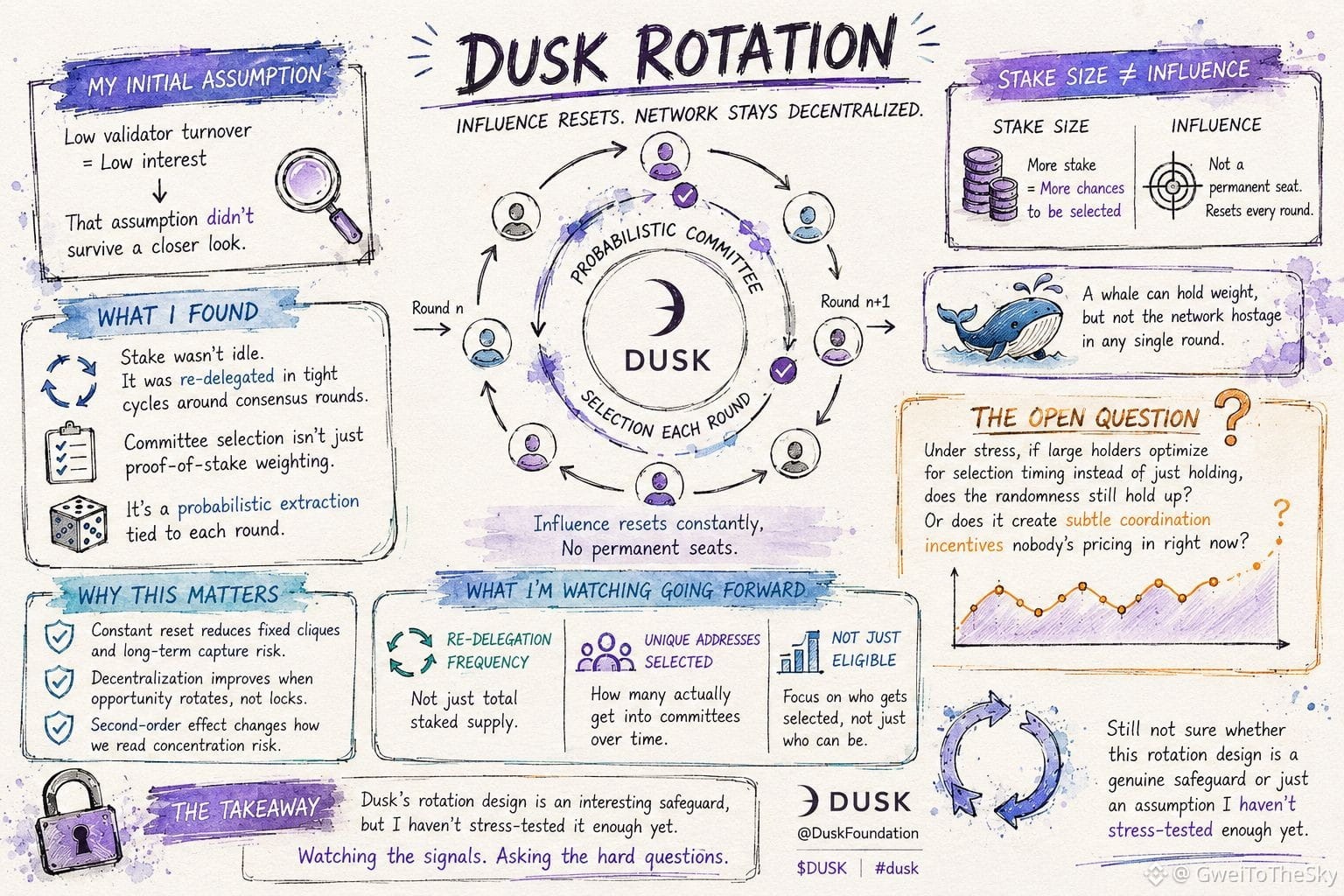
Mein Mann schrieb mir das Thema und fragte mich, ob diese Neuigkeit gut für den Dusk-Holder ist. Die Validator-Set-Größe von Dusk im Vergleich zu seiner Beteiligungsquote am Staking in der letzten Woche – meine erste Annahme war, dass ein niedriger Umsatz eine geringe Interessenlage bedeutet. Diese Annahme hielt jedoch bei genauerem Hinsehen nicht stand.
Als ich die Provisoner-Rotationsprotokolle überprüfte, stellte ich fest, dass das Staking nicht untätig herumlag. Es wurde in engen Zyklen rund um die Konsensrunden neu delegiert, statt statisch liegen zu bleiben. Das zeigte mir, wie die Komiteeauswahl von Dusk tatsächlich funktioniert: Es handelt sich nicht nur um eine proof-of-stake-gewichtete Auswahl, sondern um eine probabilistische Extraktion, die an jede Runde gebunden ist. Dadurch wird der Einfluss ständig zurückgesetzt – statt sich über eine feste Validator-Clique anzusammeln.
Dieser Unterschied ist wichtiger, als es klingt. Ich hatte „Staking-Größe“ und „Konsens-Einfluss“ für dieselbe Variable gehalten, aber dem ist nicht so. Eine große Staking-Menge gibt dir mehr Chancen, ausgewählt zu werden – aber keinen dauerhaften Sitz. Dieser Effekt zweiter Ordnung verändert, wie ich hier das Konzentrationsrisiko bewerte: Eine „Whale“ kann Gewicht halten, ohne das Netzwerk in irgendeiner einzelnen Runde als Geisel zu nehmen.
Was ich noch nicht klären kann, ist, wie sich das unter Stress verhält. Wenn große Halter anfangen, ihre Strategie auf den Auswahlzeitpunkt statt nur auf das Halten zu optimieren: Hält die Zufälligkeit dann immer noch stand, oder schafft sie subtile Koordinationsanreize, die im Moment niemand richtig einpreist?
In Zukunft beobachte ich die Häufigkeit der Neu-Delegation nicht nur die gesamte gestakte Menge, sondern auch, wie viele eindeutige Adressen tatsächlich über die Zeit in Komitees ausgewählt werden – und nicht nur „wahlberechtigt“ sind.
Ich bin immer noch nicht sicher, ob dieses Rotationsdesign eine echte Absicherung ist oder nur eine Annahme, die ich noch nicht genug mit Stresstests geprüft habe.
$BTW $ACE
#dusk $DUSK @Dusk
Mein Mann schrieb mir das Thema und fragte mich, ob diese Neuigkeit gut für den Dusk-Holder ist. Die Validator-Set-Größe von Dusk im Vergleich zu seiner Beteiligungsquote am Staking in der letzten Woche – meine erste Annahme war, dass ein niedriger Umsatz eine geringe Interessenlage bedeutet. Diese Annahme hielt jedoch bei genauerem Hinsehen nicht stand.
Als ich die Provisoner-Rotationsprotokolle überprüfte, stellte ich fest, dass das Staking nicht untätig herumlag. Es wurde in engen Zyklen rund um die Konsensrunden neu delegiert, statt statisch liegen zu bleiben. Das zeigte mir, wie die Komiteeauswahl von Dusk tatsächlich funktioniert: Es handelt sich nicht nur um eine proof-of-stake-gewichtete Auswahl, sondern um eine probabilistische Extraktion, die an jede Runde gebunden ist. Dadurch wird der Einfluss ständig zurückgesetzt – statt sich über eine feste Validator-Clique anzusammeln.
Dieser Unterschied ist wichtiger, als es klingt. Ich hatte „Staking-Größe“ und „Konsens-Einfluss“ für dieselbe Variable gehalten, aber dem ist nicht so. Eine große Staking-Menge gibt dir mehr Chancen, ausgewählt zu werden – aber keinen dauerhaften Sitz. Dieser Effekt zweiter Ordnung verändert, wie ich hier das Konzentrationsrisiko bewerte: Eine „Whale“ kann Gewicht halten, ohne das Netzwerk in irgendeiner einzelnen Runde als Geisel zu nehmen.
Was ich noch nicht klären kann, ist, wie sich das unter Stress verhält. Wenn große Halter anfangen, ihre Strategie auf den Auswahlzeitpunkt statt nur auf das Halten zu optimieren: Hält die Zufälligkeit dann immer noch stand, oder schafft sie subtile Koordinationsanreize, die im Moment niemand richtig einpreist?
In Zukunft beobachte ich die Häufigkeit der Neu-Delegation nicht nur die gesamte gestakte Menge, sondern auch, wie viele eindeutige Adressen tatsächlich über die Zeit in Komitees ausgewählt werden – und nicht nur „wahlberechtigt“ sind.
Ich bin immer noch nicht sicher, ob dieses Rotationsdesign eine echte Absicherung ist oder nur eine Annahme, die ich noch nicht genug mit Stresstests geprüft habe.
$BTW $ACE
Mein Mann schrieb mir das Thema und fragte mich, ob diese Neuigkeit gut für den Dusk-Holder ist. Die Validator-Set-Größe von Dusk im Vergleich zu seiner Beteiligungsquote am Staking in der letzten Woche – meine erste Annahme war, dass ein niedriger Umsatz eine geringe Interessenlage bedeutet. Diese Annahme hielt jedoch bei genauerem Hinsehen nicht stand.
Als ich die Provisoner-Rotationsprotokolle überprüfte, stellte ich fest, dass das Staking nicht untätig herumlag. Es wurde in engen Zyklen rund um die Konsensrunden neu delegiert, statt statisch liegen zu bleiben. Das zeigte mir, wie die Komiteeauswahl von Dusk tatsächlich funktioniert: Es handelt sich nicht nur um eine proof-of-stake-gewichtete Auswahl, sondern um eine probabilistische Extraktion, die an jede Runde gebunden ist. Dadurch wird der Einfluss ständig zurückgesetzt – statt sich über eine feste Validator-Clique anzusammeln.
Dieser Unterschied ist wichtiger, als es klingt. Ich hatte „Staking-Größe“ und „Konsens-Einfluss“ für dieselbe Variable gehalten, aber dem ist nicht so. Eine große Staking-Menge gibt dir mehr Chancen, ausgewählt zu werden – aber keinen dauerhaften Sitz. Dieser Effekt zweiter Ordnung verändert, wie ich hier das Konzentrationsrisiko bewerte: Eine „Whale“ kann Gewicht halten, ohne das Netzwerk in irgendeiner einzelnen Runde als Geisel zu nehmen.
Was ich noch nicht klären kann, ist, wie sich das unter Stress verhält. Wenn große Halter anfangen, ihre Strategie auf den Auswahlzeitpunkt statt nur auf das Halten zu optimieren: Hält die Zufälligkeit dann immer noch stand, oder schafft sie subtile Koordinationsanreize, die im Moment niemand richtig einpreist?
In Zukunft beobachte ich die Häufigkeit der Neu-Delegation nicht nur die gesamte gestakte Menge, sondern auch, wie viele eindeutige Adressen tatsächlich über die Zeit in Komitees ausgewählt werden – und nicht nur „wahlberechtigt“ sind.
Ich bin immer noch nicht sicher, ob dieses Rotationsdesign eine echte Absicherung ist oder nur eine Annahme, die ich noch nicht genug mit Stresstests geprüft habe.
$BTW $ACE
2
2
133
·
--
#Dusk $HEMI $COW $DUSK
Dämmerungs-Explorer letzte Woche. Ich nahm an, dass die Fluktuation der Ausschussmitglieder pro Runde ungefähr die Verteilung der Einsätze widerspiegelt, da sich das in der Praxis bei den meisten Sortitions-basierten Systemen so verhält. Die Zahlen passten jedoch nicht wirklich zueinander, und das ließ mir keine Ruhe.
Bei weiterer Recherche führte ich es darauf zurück, wie Deterministische Sortition Rollen unabhängig von der eigentlichen Gewichtung des Einsatzes zuweist. Ein Provisionierer kann beträchtliche Einsätze halten, aber in weniger Validierungsausschüssen auftauchen als ein kleinerer Staker innerhalb desselben Zeitfensters—rein aufgrund dessen, wie die Rollenauswahl Runde für Runde verteilt wird. Genau da wurde mir klar, dass ich zwei Dinge miteinander vermischt hatte, die überhaupt nicht dasselbe sind.
Das Gewicht der Einsätze bestimmt die Eignung. Die Auswahlhäufigkeit bestimmt die tatsächliche Teilnahme. Die meisten Menschen behandeln das als ein einziges Signal, aber sie driften auseinander, und diese Abweichung formt leise, wer tatsächlich das Bestätigen (Attesting) übernimmt und wer lediglich mit Kapital ausgestattet ist. Das ist ein Effekt zweiter Ordnung, der kaum sichtbar wird, wenn man nicht jede Runde einzeln verfolgt, statt nur den aggregierten Anteil der Einsätze zu betrachten.
Was ich noch nicht auflösen kann, ist, ob diese Divergenz absichtlich zur Lastverteilung dient oder ob es nur statistisches Rauschen ist, das sich über längere Stichprobenzeiträume ausgleicht. Falls sie strukturell ist, stellt sie eine echte Frage darüber, ob kleinere Provisionierer anteilig mehr Verantwortung bekommen, als ihre Kapitalaussetzung vermuten ließe—und was das im Zeitverlauf für die Ausrichtung von Anreizen bedeutet.
Weiterhin beobachte ich die Zusammensetzung der Ausschüsse pro Runde im Abgleich mit den Einsatzstufen, nicht nur die prominenten Teilnahmezahlen. Außerdem möchte ich sehen, ob die Effizienz der BLS-Aggregation konstant bleibt, wenn die Anzahl der Provisionierer wächst, denn dort beginnt die Kommunikationslast normalerweise zuzuschlagen.
Ich habe noch keine feste Einschätzung, ob das ein Merkmal des Designs ist oder ein Artefakt der aktuellen Netzwerkgröße, und ich bin mir nicht sicher, welche Erklärung ich überhaupt bevorzugen würde.
@Dusk_Foundation
#Dusk $HEMI $COW $DUSK
Dämmerungs-Explorer letzte Woche. Ich nahm an, dass die Fluktuation der Ausschussmitglieder pro Runde ungefähr die Verteilung der Einsätze widerspiegelt, da sich das in der Praxis bei den meisten Sortitions-basierten Systemen so verhält. Die Zahlen passten jedoch nicht wirklich zueinander, und das ließ mir keine Ruhe.
Bei weiterer Recherche führte ich es darauf zurück, wie Deterministische Sortition Rollen unabhängig von der eigentlichen Gewichtung des Einsatzes zuweist. Ein Provisionierer kann beträchtliche Einsätze halten, aber in weniger Validierungsausschüssen auftauchen als ein kleinerer Staker innerhalb desselben Zeitfensters—rein aufgrund dessen, wie die Rollenauswahl Runde für Runde verteilt wird. Genau da wurde mir klar, dass ich zwei Dinge miteinander vermischt hatte, die überhaupt nicht dasselbe sind.
Das Gewicht der Einsätze bestimmt die Eignung. Die Auswahlhäufigkeit bestimmt die tatsächliche Teilnahme. Die meisten Menschen behandeln das als ein einziges Signal, aber sie driften auseinander, und diese Abweichung formt leise, wer tatsächlich das Bestätigen (Attesting) übernimmt und wer lediglich mit Kapital ausgestattet ist. Das ist ein Effekt zweiter Ordnung, der kaum sichtbar wird, wenn man nicht jede Runde einzeln verfolgt, statt nur den aggregierten Anteil der Einsätze zu betrachten.
Was ich noch nicht auflösen kann, ist, ob diese Divergenz absichtlich zur Lastverteilung dient oder ob es nur statistisches Rauschen ist, das sich über längere Stichprobenzeiträume ausgleicht. Falls sie strukturell ist, stellt sie eine echte Frage darüber, ob kleinere Provisionierer anteilig mehr Verantwortung bekommen, als ihre Kapitalaussetzung vermuten ließe—und was das im Zeitverlauf für die Ausrichtung von Anreizen bedeutet.
Weiterhin beobachte ich die Zusammensetzung der Ausschüsse pro Runde im Abgleich mit den Einsatzstufen, nicht nur die prominenten Teilnahmezahlen. Außerdem möchte ich sehen, ob die Effizienz der BLS-Aggregation konstant bleibt, wenn die Anzahl der Provisionierer wächst, denn dort beginnt die Kommunikationslast normalerweise zuzuschlagen.
Ich habe noch keine feste Einschätzung, ob das ein Merkmal des Designs ist oder ein Artefakt der aktuellen Netzwerkgröße, und ich bin mir nicht sicher, welche Erklärung ich überhaupt bevorzugen würde.
@Dusk
Dämmerungs-Explorer letzte Woche. Ich nahm an, dass die Fluktuation der Ausschussmitglieder pro Runde ungefähr die Verteilung der Einsätze widerspiegelt, da sich das in der Praxis bei den meisten Sortitions-basierten Systemen so verhält. Die Zahlen passten jedoch nicht wirklich zueinander, und das ließ mir keine Ruhe.
Bei weiterer Recherche führte ich es darauf zurück, wie Deterministische Sortition Rollen unabhängig von der eigentlichen Gewichtung des Einsatzes zuweist. Ein Provisionierer kann beträchtliche Einsätze halten, aber in weniger Validierungsausschüssen auftauchen als ein kleinerer Staker innerhalb desselben Zeitfensters—rein aufgrund dessen, wie die Rollenauswahl Runde für Runde verteilt wird. Genau da wurde mir klar, dass ich zwei Dinge miteinander vermischt hatte, die überhaupt nicht dasselbe sind.
Das Gewicht der Einsätze bestimmt die Eignung. Die Auswahlhäufigkeit bestimmt die tatsächliche Teilnahme. Die meisten Menschen behandeln das als ein einziges Signal, aber sie driften auseinander, und diese Abweichung formt leise, wer tatsächlich das Bestätigen (Attesting) übernimmt und wer lediglich mit Kapital ausgestattet ist. Das ist ein Effekt zweiter Ordnung, der kaum sichtbar wird, wenn man nicht jede Runde einzeln verfolgt, statt nur den aggregierten Anteil der Einsätze zu betrachten.
Was ich noch nicht auflösen kann, ist, ob diese Divergenz absichtlich zur Lastverteilung dient oder ob es nur statistisches Rauschen ist, das sich über längere Stichprobenzeiträume ausgleicht. Falls sie strukturell ist, stellt sie eine echte Frage darüber, ob kleinere Provisionierer anteilig mehr Verantwortung bekommen, als ihre Kapitalaussetzung vermuten ließe—und was das im Zeitverlauf für die Ausrichtung von Anreizen bedeutet.
Weiterhin beobachte ich die Zusammensetzung der Ausschüsse pro Runde im Abgleich mit den Einsatzstufen, nicht nur die prominenten Teilnahmezahlen. Außerdem möchte ich sehen, ob die Effizienz der BLS-Aggregation konstant bleibt, wenn die Anzahl der Provisionierer wächst, denn dort beginnt die Kommunikationslast normalerweise zuzuschlagen.
Ich habe noch keine feste Einschätzung, ob das ein Merkmal des Designs ist oder ein Artefakt der aktuellen Netzwerkgröße, und ich bin mir nicht sicher, welche Erklärung ich überhaupt bevorzugen würde.
@Dusk
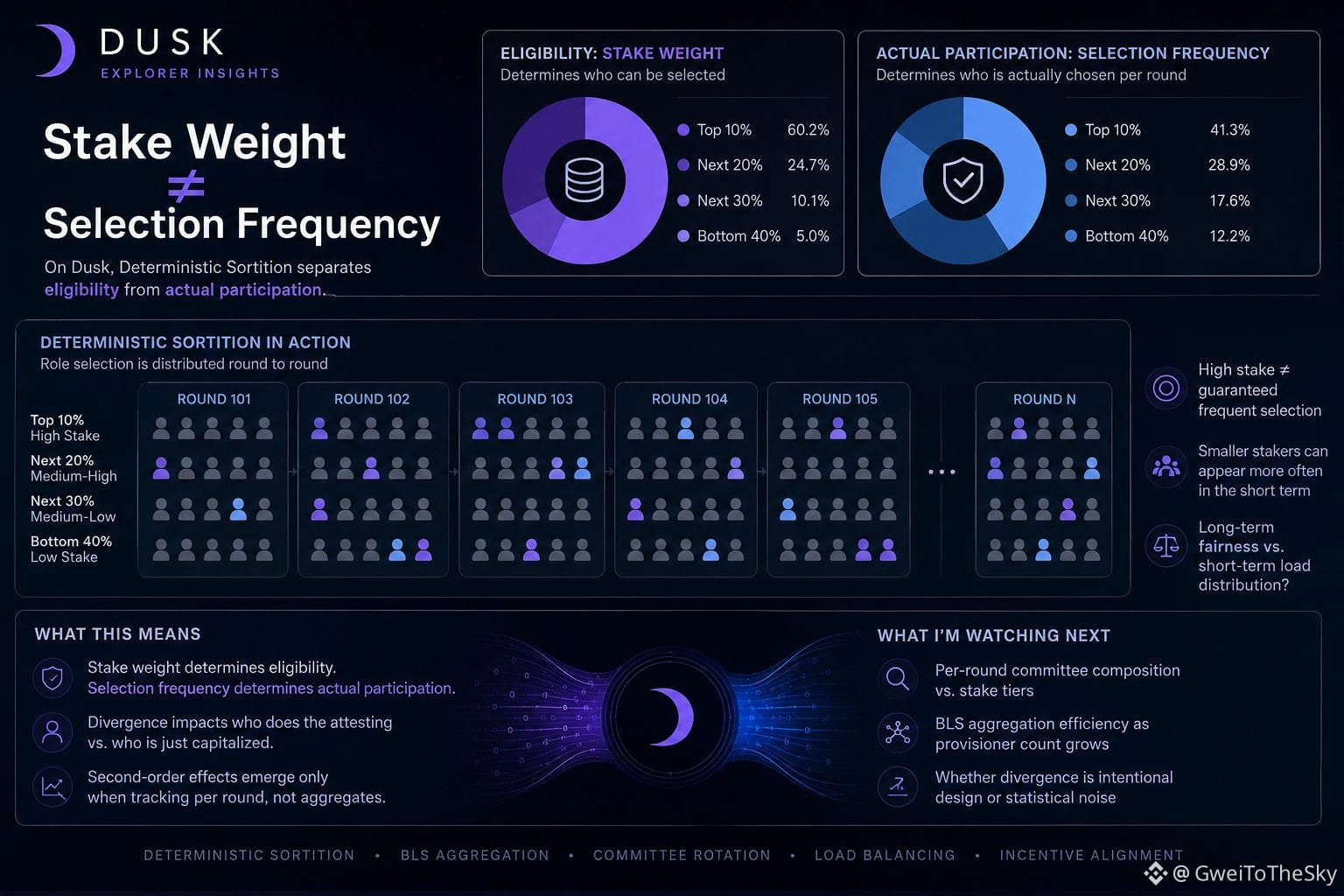
6
4
198
·
--
Beim Durchsehen aktueller Daten zur Blockproduktion auf Dusk's Explorer ist mir aufgefallen, dass immer wieder dieselbe kleine Gruppe von Validator-Adresssen viel häufiger auftaucht, als es ihr Anteil am Stake eigentlich rechtfertigen würde. Meine erste Annahme war, dass ich die Seitenzählung falsch lese oder auf einen veralteten Index treffe, also holte ich die Daten erneut über einen größeren Blockbereich.
Das Muster blieb bestehen, wodurch ich mich direkt mit dem Konsensmechanismus selbst befasste. Dusk wählt sein blockproduzierendes Komitee für jede Runde über eine stakgewichtete, rundenbasierte Extraktion statt über eine feste Rotation aus. Was in einem engen Zeitfenster wie Dominanz wirkte, war tatsächlich Stichprobenvarianz, die darin eingebaut ist, wie Komitees gezogen werden – nicht eine bevorzugte Behandlung bestimmter Operatoren.
Dieser Unterschied hat meine Sicht auf Fairness hier neu geformt. Stake-Gewicht und Auswahlhäufigkeit werden als dasselbe behandelt, aber sie konvergieren nur über lange Beobachtungszeiträume. Kurzfristig dominiert Zufälligkeit, und ein Validator kann rein durch Zufall überrepräsentiert erscheinen. Der übersehene Effekt ist psychologischer Natur: Kleinere Operatoren, die nur kurze Zeitfenster beobachten, könnten das System als verzerrt wahrnehmen, selbst wenn die langfristigen Rechenwerte ausgeglichen sind.
Was ich noch nicht auflösen kann, ist, wie sich diese Wahrnehmung operativ auswirkt. Wenn kleinere Validatoren Fairness anhand kurzer Zeitfenster beurteilen statt anhand der statistischen Konvergenz, könnten manche ihre Teilnahme reduzieren oder ganz aussteigen – was den Stake konzentriert, aus Gründen, die nichts mit einer tatsächlichen Protokollverzerrung zu tun haben.
In Zukunft möchte ich die Verteilung der Blockproduktion über rollierende monatliche Zeitfenster hinweg verfolgen, statt nur Tages-Snapshots, und zwar zusammen mit der Größe des Validator-Sets sowie der Fluktuation bei kleineren Operatoren. Eine anhaltende Teilnahme trotz sichtbarer kurzfristiger Varianz würde mir mehr sagen als jede einzelne Stichprobenperiode.
Ich frage mich daher, ob mathematische Fairness allein ausreicht oder ob die Wahrnehmung von Fairness die Dezentralisierung am Ende genauso stark formt wie das zugrunde liegende Design.
@Dusk_Foundation #Dusk
$ACE $VELVET $DUSK
Beim Durchsehen aktueller Daten zur Blockproduktion auf Dusk's Explorer ist mir aufgefallen, dass immer wieder dieselbe kleine Gruppe von Validator-Adresssen viel häufiger auftaucht, als es ihr Anteil am Stake eigentlich rechtfertigen würde. Meine erste Annahme war, dass ich die Seitenzählung falsch lese oder auf einen veralteten Index treffe, also holte ich die Daten erneut über einen größeren Blockbereich.
Das Muster blieb bestehen, wodurch ich mich direkt mit dem Konsensmechanismus selbst befasste. Dusk wählt sein blockproduzierendes Komitee für jede Runde über eine stakgewichtete, rundenbasierte Extraktion statt über eine feste Rotation aus. Was in einem engen Zeitfenster wie Dominanz wirkte, war tatsächlich Stichprobenvarianz, die darin eingebaut ist, wie Komitees gezogen werden – nicht eine bevorzugte Behandlung bestimmter Operatoren.
Dieser Unterschied hat meine Sicht auf Fairness hier neu geformt. Stake-Gewicht und Auswahlhäufigkeit werden als dasselbe behandelt, aber sie konvergieren nur über lange Beobachtungszeiträume. Kurzfristig dominiert Zufälligkeit, und ein Validator kann rein durch Zufall überrepräsentiert erscheinen. Der übersehene Effekt ist psychologischer Natur: Kleinere Operatoren, die nur kurze Zeitfenster beobachten, könnten das System als verzerrt wahrnehmen, selbst wenn die langfristigen Rechenwerte ausgeglichen sind.
Was ich noch nicht auflösen kann, ist, wie sich diese Wahrnehmung operativ auswirkt. Wenn kleinere Validatoren Fairness anhand kurzer Zeitfenster beurteilen statt anhand der statistischen Konvergenz, könnten manche ihre Teilnahme reduzieren oder ganz aussteigen – was den Stake konzentriert, aus Gründen, die nichts mit einer tatsächlichen Protokollverzerrung zu tun haben.
In Zukunft möchte ich die Verteilung der Blockproduktion über rollierende monatliche Zeitfenster hinweg verfolgen, statt nur Tages-Snapshots, und zwar zusammen mit der Größe des Validator-Sets sowie der Fluktuation bei kleineren Operatoren. Eine anhaltende Teilnahme trotz sichtbarer kurzfristiger Varianz würde mir mehr sagen als jede einzelne Stichprobenperiode.
Ich frage mich daher, ob mathematische Fairness allein ausreicht oder ob die Wahrnehmung von Fairness die Dezentralisierung am Ende genauso stark formt wie das zugrunde liegende Design.
@Dusk #Dusk
$ACE $VELVET $DUSK
Das Muster blieb bestehen, wodurch ich mich direkt mit dem Konsensmechanismus selbst befasste. Dusk wählt sein blockproduzierendes Komitee für jede Runde über eine stakgewichtete, rundenbasierte Extraktion statt über eine feste Rotation aus. Was in einem engen Zeitfenster wie Dominanz wirkte, war tatsächlich Stichprobenvarianz, die darin eingebaut ist, wie Komitees gezogen werden – nicht eine bevorzugte Behandlung bestimmter Operatoren.
Dieser Unterschied hat meine Sicht auf Fairness hier neu geformt. Stake-Gewicht und Auswahlhäufigkeit werden als dasselbe behandelt, aber sie konvergieren nur über lange Beobachtungszeiträume. Kurzfristig dominiert Zufälligkeit, und ein Validator kann rein durch Zufall überrepräsentiert erscheinen. Der übersehene Effekt ist psychologischer Natur: Kleinere Operatoren, die nur kurze Zeitfenster beobachten, könnten das System als verzerrt wahrnehmen, selbst wenn die langfristigen Rechenwerte ausgeglichen sind.
Was ich noch nicht auflösen kann, ist, wie sich diese Wahrnehmung operativ auswirkt. Wenn kleinere Validatoren Fairness anhand kurzer Zeitfenster beurteilen statt anhand der statistischen Konvergenz, könnten manche ihre Teilnahme reduzieren oder ganz aussteigen – was den Stake konzentriert, aus Gründen, die nichts mit einer tatsächlichen Protokollverzerrung zu tun haben.
In Zukunft möchte ich die Verteilung der Blockproduktion über rollierende monatliche Zeitfenster hinweg verfolgen, statt nur Tages-Snapshots, und zwar zusammen mit der Größe des Validator-Sets sowie der Fluktuation bei kleineren Operatoren. Eine anhaltende Teilnahme trotz sichtbarer kurzfristiger Varianz würde mir mehr sagen als jede einzelne Stichprobenperiode.
Ich frage mich daher, ob mathematische Fairness allein ausreicht oder ob die Wahrnehmung von Fairness die Dezentralisierung am Ende genauso stark formt wie das zugrunde liegende Design.
@Dusk #Dusk
$ACE $VELVET $DUSK
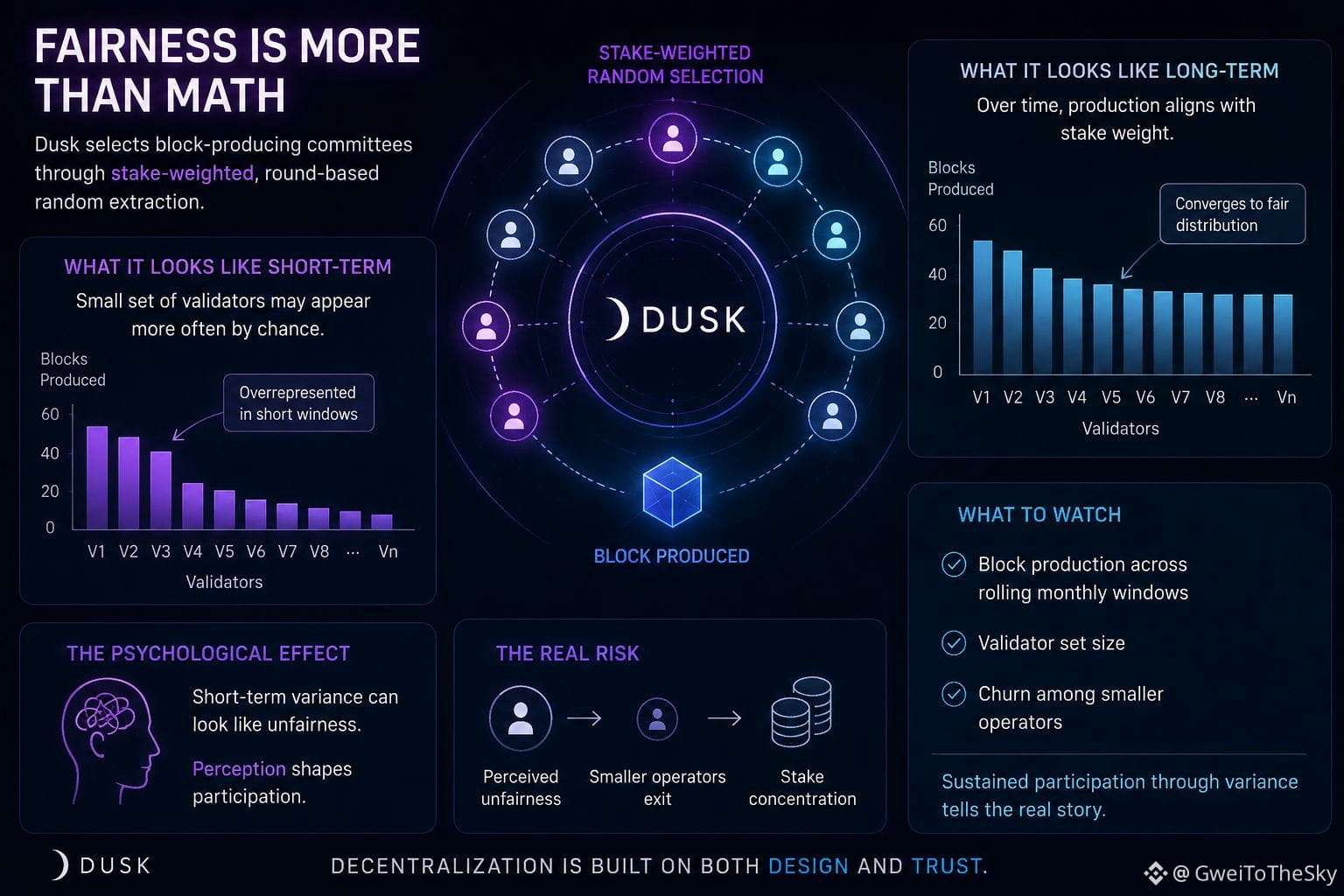
3
3
310
·
--
Der vertrauliche Vertrag von Dusk ruft zu Aktivitäten gegen seine öffentliche Mempool-Tätigkeit auf: Ein wesentlicher Anteil der Transaktionen zeigte gültige Zustandsübergänge mit nahezu keiner sichtbaren Eingabedaten. Meine erste Annahme war, dass das nur Rauschen von fehlgeschlagenen Dekodierungsversuchen auf meiner Seite war, ein Indexer-Fehler, der geschützte Payloads als leer fehlinterpretiert.
Bei näherer Untersuchung führte ich es darauf zurück, wie selektive Offenlegung tatsächlich zur Ausführungszeit funktioniert, nicht auf der Berichtsebene. Anstatt dass eine Transaktion entweder vollständig öffentlich oder vollständig verborgen ist, scheint sich die Offenlegungslogik an bestimmte Felder innerhalb eines einzelnen Vertragsaufrufs anzuhängen. Dabei werden Eignungs- oder Compliance-Daten einer festgelegten Partei offengelegt, während Transferbeträge und Gegenparteien unberührt bleiben. Das ist ein anderes Mechanismus als ein ein- oder ausgeschaltetes Verschlüsselungs-Flag.
Das zwang mich, zwei Dinge zu trennen, die ich bisher als eines behandelt hatte: Privatsphäre und Vertraulichkeit. Privatsphäre bedeutet, Informationen vor allen zurückzuhalten. Vertraulichkeit bedeutet hier kontrollierte Sichtbarkeit: Die Informationen existieren und sind nachweisbar, aber nur für diejenigen, die den richtigen Autorisierungsschlüssel besitzen. Der Effekt zweiter Ordnung ist subtil: Die Offenlegung wird zu einer erlaubten Handlung, nicht zu einer netzwerkweiten Einstellung. Dadurch verändert sich, wer tatsächlich die Kontrolle über den Informationsfluss hat.
Was ich noch nicht auflösen kann, ist, wie sich das unter realer institutioneller Last skaliert. Wenn die Offenlegungsrechte bei Emittenten oder Auditoren liegen, entsteht dann eine weiche Abhängigkeit von einer kleinen Gruppe autorisierter Parteien—und verschiebt sich diese Abhängigkeit je nach Rechtsraum oder Asset-Typ?
In Zukunft möchte ich die Muster der Schlüsselvergabe beobachten: wie oft Offenlegungsberechtigungen tatsächlich ausgeübt werden versus wie oft sie ungenutzt bleiben, und ob das Verhalten von Validatoren bei diesen vertraulichen Calls konsistent bleibt, während das Volumen wächst.
Ich bin mir immer noch nicht sicher, ob diese Autorisierungsebene zu Infrastruktur wird oder eher zu Reibung. Diese Unterscheidung scheint es wert zu sein, besonders genau zu beobachten.
@Dusk_Foundation $DUSK #Dusk
Der vertrauliche Vertrag von Dusk ruft zu Aktivitäten gegen seine öffentliche Mempool-Tätigkeit auf: Ein wesentlicher Anteil der Transaktionen zeigte gültige Zustandsübergänge mit nahezu keiner sichtbaren Eingabedaten. Meine erste Annahme war, dass das nur Rauschen von fehlgeschlagenen Dekodierungsversuchen auf meiner Seite war, ein Indexer-Fehler, der geschützte Payloads als leer fehlinterpretiert.
Bei näherer Untersuchung führte ich es darauf zurück, wie selektive Offenlegung tatsächlich zur Ausführungszeit funktioniert, nicht auf der Berichtsebene. Anstatt dass eine Transaktion entweder vollständig öffentlich oder vollständig verborgen ist, scheint sich die Offenlegungslogik an bestimmte Felder innerhalb eines einzelnen Vertragsaufrufs anzuhängen. Dabei werden Eignungs- oder Compliance-Daten einer festgelegten Partei offengelegt, während Transferbeträge und Gegenparteien unberührt bleiben. Das ist ein anderes Mechanismus als ein ein- oder ausgeschaltetes Verschlüsselungs-Flag.
Das zwang mich, zwei Dinge zu trennen, die ich bisher als eines behandelt hatte: Privatsphäre und Vertraulichkeit. Privatsphäre bedeutet, Informationen vor allen zurückzuhalten. Vertraulichkeit bedeutet hier kontrollierte Sichtbarkeit: Die Informationen existieren und sind nachweisbar, aber nur für diejenigen, die den richtigen Autorisierungsschlüssel besitzen. Der Effekt zweiter Ordnung ist subtil: Die Offenlegung wird zu einer erlaubten Handlung, nicht zu einer netzwerkweiten Einstellung. Dadurch verändert sich, wer tatsächlich die Kontrolle über den Informationsfluss hat.
Was ich noch nicht auflösen kann, ist, wie sich das unter realer institutioneller Last skaliert. Wenn die Offenlegungsrechte bei Emittenten oder Auditoren liegen, entsteht dann eine weiche Abhängigkeit von einer kleinen Gruppe autorisierter Parteien—und verschiebt sich diese Abhängigkeit je nach Rechtsraum oder Asset-Typ?
In Zukunft möchte ich die Muster der Schlüsselvergabe beobachten: wie oft Offenlegungsberechtigungen tatsächlich ausgeübt werden versus wie oft sie ungenutzt bleiben, und ob das Verhalten von Validatoren bei diesen vertraulichen Calls konsistent bleibt, während das Volumen wächst.
Ich bin mir immer noch nicht sicher, ob diese Autorisierungsebene zu Infrastruktur wird oder eher zu Reibung. Diese Unterscheidung scheint es wert zu sein, besonders genau zu beobachten.
@Dusk $DUSK #Dusk
Bei näherer Untersuchung führte ich es darauf zurück, wie selektive Offenlegung tatsächlich zur Ausführungszeit funktioniert, nicht auf der Berichtsebene. Anstatt dass eine Transaktion entweder vollständig öffentlich oder vollständig verborgen ist, scheint sich die Offenlegungslogik an bestimmte Felder innerhalb eines einzelnen Vertragsaufrufs anzuhängen. Dabei werden Eignungs- oder Compliance-Daten einer festgelegten Partei offengelegt, während Transferbeträge und Gegenparteien unberührt bleiben. Das ist ein anderes Mechanismus als ein ein- oder ausgeschaltetes Verschlüsselungs-Flag.
Das zwang mich, zwei Dinge zu trennen, die ich bisher als eines behandelt hatte: Privatsphäre und Vertraulichkeit. Privatsphäre bedeutet, Informationen vor allen zurückzuhalten. Vertraulichkeit bedeutet hier kontrollierte Sichtbarkeit: Die Informationen existieren und sind nachweisbar, aber nur für diejenigen, die den richtigen Autorisierungsschlüssel besitzen. Der Effekt zweiter Ordnung ist subtil: Die Offenlegung wird zu einer erlaubten Handlung, nicht zu einer netzwerkweiten Einstellung. Dadurch verändert sich, wer tatsächlich die Kontrolle über den Informationsfluss hat.
Was ich noch nicht auflösen kann, ist, wie sich das unter realer institutioneller Last skaliert. Wenn die Offenlegungsrechte bei Emittenten oder Auditoren liegen, entsteht dann eine weiche Abhängigkeit von einer kleinen Gruppe autorisierter Parteien—und verschiebt sich diese Abhängigkeit je nach Rechtsraum oder Asset-Typ?
In Zukunft möchte ich die Muster der Schlüsselvergabe beobachten: wie oft Offenlegungsberechtigungen tatsächlich ausgeübt werden versus wie oft sie ungenutzt bleiben, und ob das Verhalten von Validatoren bei diesen vertraulichen Calls konsistent bleibt, während das Volumen wächst.
Ich bin mir immer noch nicht sicher, ob diese Autorisierungsebene zu Infrastruktur wird oder eher zu Reibung. Diese Unterscheidung scheint es wert zu sein, besonders genau zu beobachten.
@Dusk $DUSK #Dusk
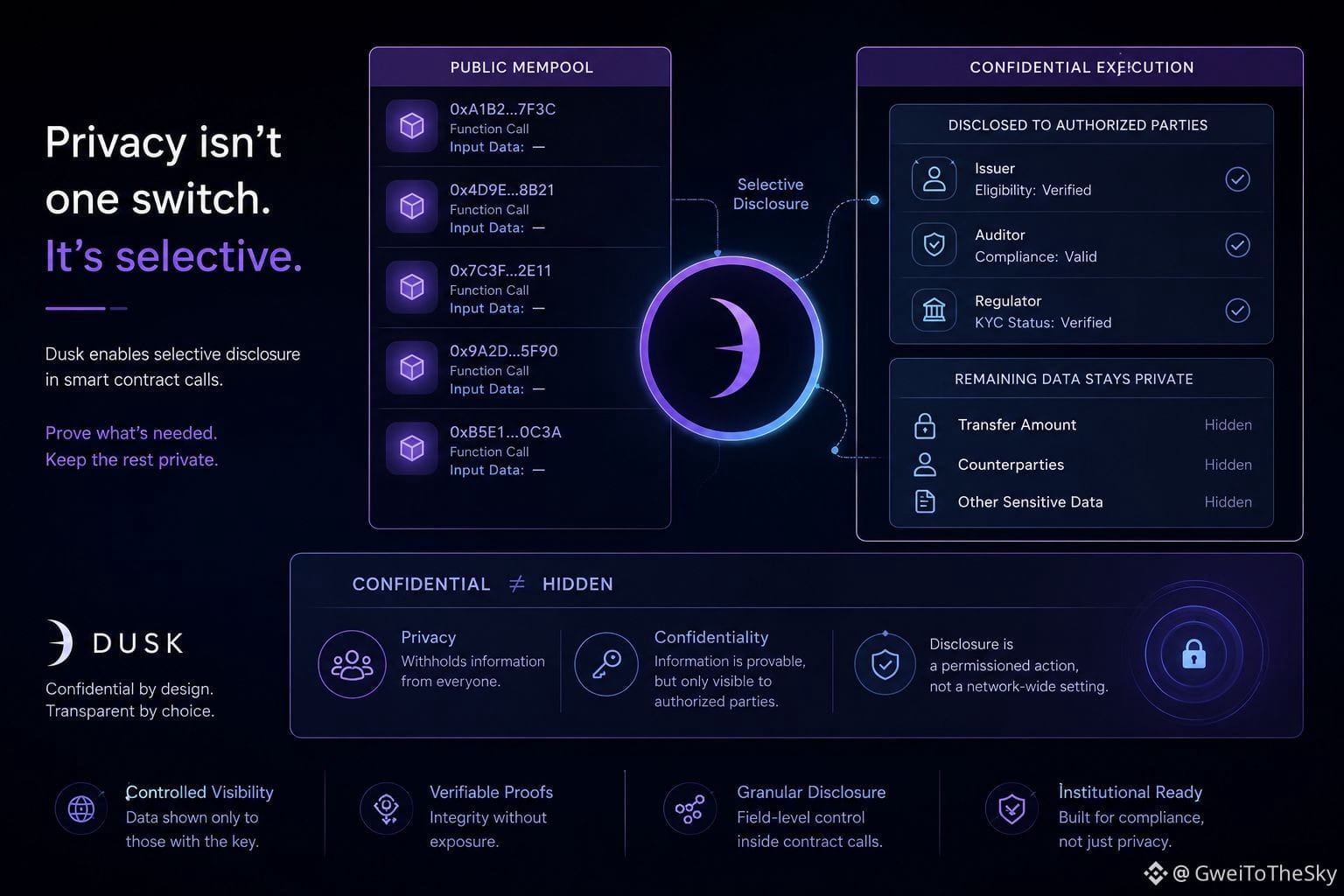
3
86
·
--
Ich habe etwas Seltsames bemerkt, als ich die Bestätigungszeiten über eine Charge von DUSK-Transaktionen hinweg verglichen habe, die ich aus dem Explorer gezogen hatte. Ich ging davon aus, dass alle Überweisungen im Netzwerk über denselben Ausführungspfad abgewickelt werden, sodass jede zeitliche Abweichung nur auf eine Netzwerkkongestion zurückzuführen sein müsste. Diese Annahme hielt jedoch nicht stand, sobald ich die Daten sortiert hatte.
Beim weiteren Nachforschen zeigte sich, dass das Verzögerungsmuster nicht mit der Blockauslastung zusammenhing, sondern mit dem Transaktionstyp. Einige Überweisungen waren abgeschirmt und wurden über das geführt, was das Netzwerk als sein datenschutzfreundliches Ausführungsmodell bezeichnet, während andere vollständig transparente Überweisungen nutzten, die über einen separaten kontobasierten Pfad liefen. Beide werden auf derselben Kette ausgeführt, aber sie werden über unterschiedliche Logiken verarbeitet, was die Varianz erklärte, die ich sah.
Diese Unterscheidung hat meine Sicht auf das Netzwerk verändert. Ich hatte Datenschutz und Compliance in meinem Kopf als dieselbe Funktion betrachtet. Das sind sie nicht. Datenschutz bestimmt, was standardmäßig on-chain sichtbar ist. Compliance bestimmt, was später nachgewiesen werden kann, für wen, und unter welcher Autorisierung. Eine Transaktion kann privat und dennoch prüfbar (auditable) sein, wenn es den richtigen Offenlegungsmechanismus gibt. Das Vermischen beider Ebenen verdeckt diese zweite Ebene vollständig.
Was ich noch nicht auflösen kann, ist, wer in der Praxis tatsächlich den transparenten Pfad nutzt versus den abgeschirmten, und warum. Ist eine transparente Ausführung vor allem bei Operatoren und institutionellen Abläufen verbreitet, die eine saubere Audit-Trail wünschen, oder ist es einfach Gewohnheit von Nutzern, die mit der abgeschirmten Option nicht vertraut sind? Diese Aufteilung ist entscheidend, um die reale Nachfrage zu verstehen.
In der Zukunft möchte ich das Verhältnis zwischen abgeschirmtem und transparentem Transaktionsvolumen über die Zeit beobachten, nicht nur die reine Durchsatzrate. Eine Verschiebung hin zur abgeschirmten Nutzung würde mir zeigen, dass Datenschutz-Tools aktiv gewählt werden – nicht nur verfügbar sind.
Ich bin mir immer noch nicht sicher, ob dieses Verhältnis eine echte Präferenz widerspiegelt oder nur eine gewisse Trägheit, und ich glaube nicht, dass man das allein mit Volumendaten beantworten kann.
@Dusk_Foundation
$DUSK #Dusk
Ich habe etwas Seltsames bemerkt, als ich die Bestätigungszeiten über eine Charge von DUSK-Transaktionen hinweg verglichen habe, die ich aus dem Explorer gezogen hatte. Ich ging davon aus, dass alle Überweisungen im Netzwerk über denselben Ausführungspfad abgewickelt werden, sodass jede zeitliche Abweichung nur auf eine Netzwerkkongestion zurückzuführen sein müsste. Diese Annahme hielt jedoch nicht stand, sobald ich die Daten sortiert hatte.
Beim weiteren Nachforschen zeigte sich, dass das Verzögerungsmuster nicht mit der Blockauslastung zusammenhing, sondern mit dem Transaktionstyp. Einige Überweisungen waren abgeschirmt und wurden über das geführt, was das Netzwerk als sein datenschutzfreundliches Ausführungsmodell bezeichnet, während andere vollständig transparente Überweisungen nutzten, die über einen separaten kontobasierten Pfad liefen. Beide werden auf derselben Kette ausgeführt, aber sie werden über unterschiedliche Logiken verarbeitet, was die Varianz erklärte, die ich sah.
Diese Unterscheidung hat meine Sicht auf das Netzwerk verändert. Ich hatte Datenschutz und Compliance in meinem Kopf als dieselbe Funktion betrachtet. Das sind sie nicht. Datenschutz bestimmt, was standardmäßig on-chain sichtbar ist. Compliance bestimmt, was später nachgewiesen werden kann, für wen, und unter welcher Autorisierung. Eine Transaktion kann privat und dennoch prüfbar (auditable) sein, wenn es den richtigen Offenlegungsmechanismus gibt. Das Vermischen beider Ebenen verdeckt diese zweite Ebene vollständig.
Was ich noch nicht auflösen kann, ist, wer in der Praxis tatsächlich den transparenten Pfad nutzt versus den abgeschirmten, und warum. Ist eine transparente Ausführung vor allem bei Operatoren und institutionellen Abläufen verbreitet, die eine saubere Audit-Trail wünschen, oder ist es einfach Gewohnheit von Nutzern, die mit der abgeschirmten Option nicht vertraut sind? Diese Aufteilung ist entscheidend, um die reale Nachfrage zu verstehen.
In der Zukunft möchte ich das Verhältnis zwischen abgeschirmtem und transparentem Transaktionsvolumen über die Zeit beobachten, nicht nur die reine Durchsatzrate. Eine Verschiebung hin zur abgeschirmten Nutzung würde mir zeigen, dass Datenschutz-Tools aktiv gewählt werden – nicht nur verfügbar sind.
Ich bin mir immer noch nicht sicher, ob dieses Verhältnis eine echte Präferenz widerspiegelt oder nur eine gewisse Trägheit, und ich glaube nicht, dass man das allein mit Volumendaten beantworten kann.
@Dusk
$DUSK #Dusk
Beim weiteren Nachforschen zeigte sich, dass das Verzögerungsmuster nicht mit der Blockauslastung zusammenhing, sondern mit dem Transaktionstyp. Einige Überweisungen waren abgeschirmt und wurden über das geführt, was das Netzwerk als sein datenschutzfreundliches Ausführungsmodell bezeichnet, während andere vollständig transparente Überweisungen nutzten, die über einen separaten kontobasierten Pfad liefen. Beide werden auf derselben Kette ausgeführt, aber sie werden über unterschiedliche Logiken verarbeitet, was die Varianz erklärte, die ich sah.
Diese Unterscheidung hat meine Sicht auf das Netzwerk verändert. Ich hatte Datenschutz und Compliance in meinem Kopf als dieselbe Funktion betrachtet. Das sind sie nicht. Datenschutz bestimmt, was standardmäßig on-chain sichtbar ist. Compliance bestimmt, was später nachgewiesen werden kann, für wen, und unter welcher Autorisierung. Eine Transaktion kann privat und dennoch prüfbar (auditable) sein, wenn es den richtigen Offenlegungsmechanismus gibt. Das Vermischen beider Ebenen verdeckt diese zweite Ebene vollständig.
Was ich noch nicht auflösen kann, ist, wer in der Praxis tatsächlich den transparenten Pfad nutzt versus den abgeschirmten, und warum. Ist eine transparente Ausführung vor allem bei Operatoren und institutionellen Abläufen verbreitet, die eine saubere Audit-Trail wünschen, oder ist es einfach Gewohnheit von Nutzern, die mit der abgeschirmten Option nicht vertraut sind? Diese Aufteilung ist entscheidend, um die reale Nachfrage zu verstehen.
In der Zukunft möchte ich das Verhältnis zwischen abgeschirmtem und transparentem Transaktionsvolumen über die Zeit beobachten, nicht nur die reine Durchsatzrate. Eine Verschiebung hin zur abgeschirmten Nutzung würde mir zeigen, dass Datenschutz-Tools aktiv gewählt werden – nicht nur verfügbar sind.
Ich bin mir immer noch nicht sicher, ob dieses Verhältnis eine echte Präferenz widerspiegelt oder nur eine gewisse Trägheit, und ich glaube nicht, dass man das allein mit Volumendaten beantworten kann.
@Dusk
$DUSK #Dusk
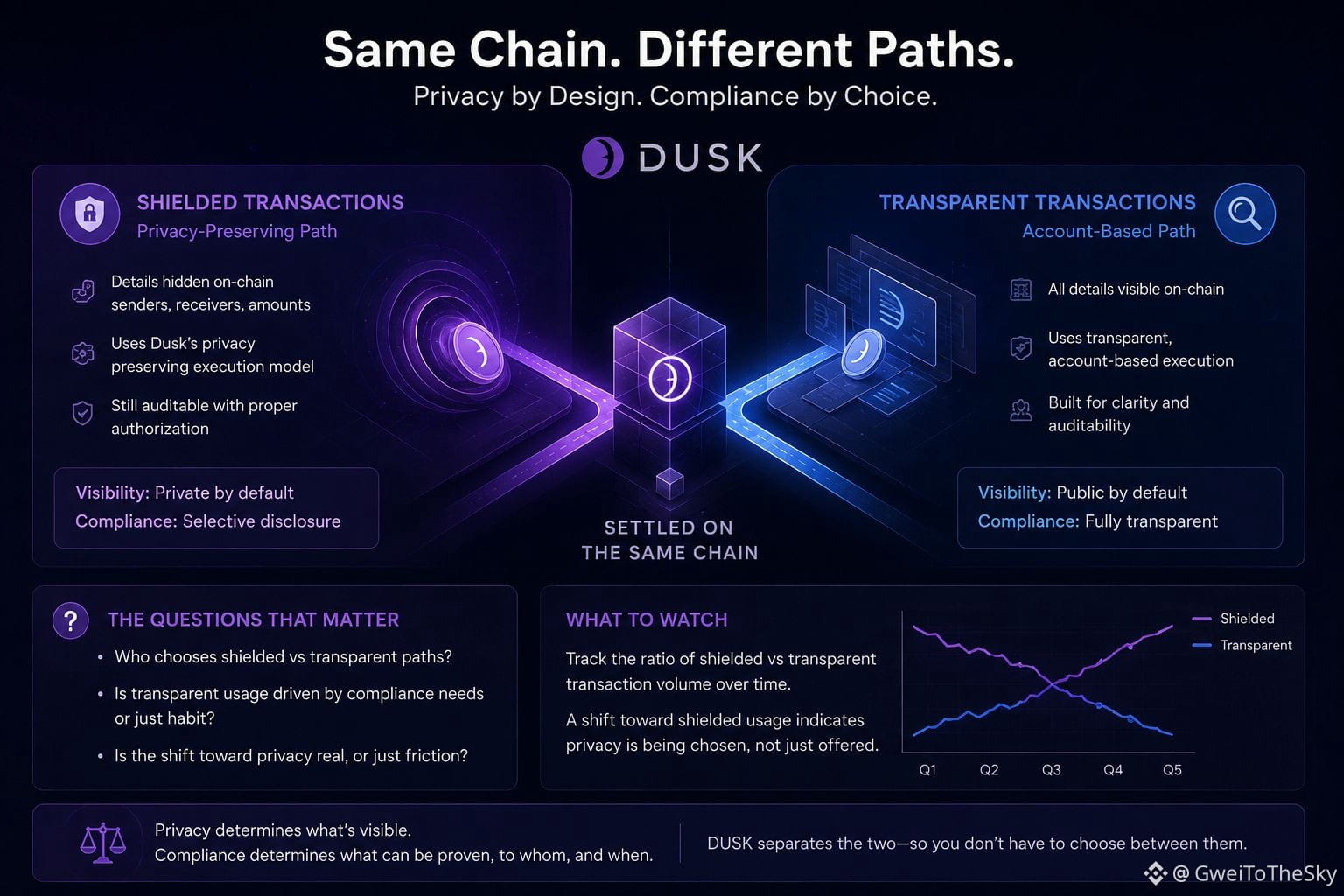
1
3
83
·
--
Jeder Krypto-Zyklus verkauft uns dasselbe Traumbild: Diesmal entfernt das System endlich die Notwendigkeit von Vertrauen.
„Wir haben Vertrauen gefixt.“
„Wir haben Sicherheit gefixt.“
„Wir haben die fehlende Schicht ergänzt.“
Das Newton-Protokoll ($NEWT ) hat ein echtes Problem im Blick: Wenn KI-Agenten, automatisierte Vaults und Smart Contracts anfangen, ernsthaftes Geld zu bewegen, wer stellt dann sicher, dass diese Aktionen die richtigen Regeln befolgen, bevor Schaden entsteht?
Die Idee klingt logisch. Wartet nicht auf einen Hack. Untersucht nicht den Fehler, nachdem die Gelder verschwunden sind. Stellt Richtlinien vor die Ausführung und blockiert riskante Aktionen, bevor sie sich festsetzen.
Saubere Story.
Zumindest auf dem Papier.
Aber hier wird es kompliziert. Das Hinzufügen einer Regel-Schicht schafft auch eine neue Abhängigkeit. Wer schreibt diese Richtlinien? Wer kontrolliert die Standardeinstellungen? Wer entscheidet, was „sicher“ tatsächlich bedeutet?
Denn manchmal liegt die größte Macht nicht darin, das Geld zu halten.
Sondern darin, zu steuern, was Geld überhaupt tun darf.
Newton spricht davon, sich vom blinden Vertrauen hin zu überprüfbaren Regeln zu bewegen, und diese Richtung lohnt sich zu beobachten. Doch allein die Technologie entfernt keine menschlichen Anreize. Irgendjemand entwirft das System. Irgendjemand profitiert von der Einführung. Irgendjemand kontrolliert die Standards, denen alle anderen folgen.
Der eigentliche Test für Newt ist nicht, ob die Technologie in einer Beta-Phase funktioniert, in der sich frühe Anhänger finden.
Der Test kommt später.
Wenn echtes Geld einfließt, prallen Anreize aufeinander, und das System muss beweisen, dass es Nutzer schützen kann, ohne zu einem weiteren Gatekeeper zu werden, der nur einen anderen Namen trägt.
@NewtonProtocol #Newt
$TAC $SKL
Jeder Krypto-Zyklus verkauft uns dasselbe Traumbild: Diesmal entfernt das System endlich die Notwendigkeit von Vertrauen.
„Wir haben Vertrauen gefixt.“
„Wir haben Sicherheit gefixt.“
„Wir haben die fehlende Schicht ergänzt.“
Das Newton-Protokoll ($NEWT ) hat ein echtes Problem im Blick: Wenn KI-Agenten, automatisierte Vaults und Smart Contracts anfangen, ernsthaftes Geld zu bewegen, wer stellt dann sicher, dass diese Aktionen die richtigen Regeln befolgen, bevor Schaden entsteht?
Die Idee klingt logisch. Wartet nicht auf einen Hack. Untersucht nicht den Fehler, nachdem die Gelder verschwunden sind. Stellt Richtlinien vor die Ausführung und blockiert riskante Aktionen, bevor sie sich festsetzen.
Saubere Story.
Zumindest auf dem Papier.
Aber hier wird es kompliziert. Das Hinzufügen einer Regel-Schicht schafft auch eine neue Abhängigkeit. Wer schreibt diese Richtlinien? Wer kontrolliert die Standardeinstellungen? Wer entscheidet, was „sicher“ tatsächlich bedeutet?
Denn manchmal liegt die größte Macht nicht darin, das Geld zu halten.
Sondern darin, zu steuern, was Geld überhaupt tun darf.
Newton spricht davon, sich vom blinden Vertrauen hin zu überprüfbaren Regeln zu bewegen, und diese Richtung lohnt sich zu beobachten. Doch allein die Technologie entfernt keine menschlichen Anreize. Irgendjemand entwirft das System. Irgendjemand profitiert von der Einführung. Irgendjemand kontrolliert die Standards, denen alle anderen folgen.
Der eigentliche Test für Newt ist nicht, ob die Technologie in einer Beta-Phase funktioniert, in der sich frühe Anhänger finden.
Der Test kommt später.
Wenn echtes Geld einfließt, prallen Anreize aufeinander, und das System muss beweisen, dass es Nutzer schützen kann, ohne zu einem weiteren Gatekeeper zu werden, der nur einen anderen Namen trägt.
@NewtonProtocol #Newt
$TAC $SKL
„Wir haben Vertrauen gefixt.“
„Wir haben Sicherheit gefixt.“
„Wir haben die fehlende Schicht ergänzt.“
Das Newton-Protokoll ($NEWT ) hat ein echtes Problem im Blick: Wenn KI-Agenten, automatisierte Vaults und Smart Contracts anfangen, ernsthaftes Geld zu bewegen, wer stellt dann sicher, dass diese Aktionen die richtigen Regeln befolgen, bevor Schaden entsteht?
Die Idee klingt logisch. Wartet nicht auf einen Hack. Untersucht nicht den Fehler, nachdem die Gelder verschwunden sind. Stellt Richtlinien vor die Ausführung und blockiert riskante Aktionen, bevor sie sich festsetzen.
Saubere Story.
Zumindest auf dem Papier.
Aber hier wird es kompliziert. Das Hinzufügen einer Regel-Schicht schafft auch eine neue Abhängigkeit. Wer schreibt diese Richtlinien? Wer kontrolliert die Standardeinstellungen? Wer entscheidet, was „sicher“ tatsächlich bedeutet?
Denn manchmal liegt die größte Macht nicht darin, das Geld zu halten.
Sondern darin, zu steuern, was Geld überhaupt tun darf.
Newton spricht davon, sich vom blinden Vertrauen hin zu überprüfbaren Regeln zu bewegen, und diese Richtung lohnt sich zu beobachten. Doch allein die Technologie entfernt keine menschlichen Anreize. Irgendjemand entwirft das System. Irgendjemand profitiert von der Einführung. Irgendjemand kontrolliert die Standards, denen alle anderen folgen.
Der eigentliche Test für Newt ist nicht, ob die Technologie in einer Beta-Phase funktioniert, in der sich frühe Anhänger finden.
Der Test kommt später.
Wenn echtes Geld einfließt, prallen Anreize aufeinander, und das System muss beweisen, dass es Nutzer schützen kann, ohne zu einem weiteren Gatekeeper zu werden, der nur einen anderen Namen trägt.
@NewtonProtocol #Newt
$TAC $SKL
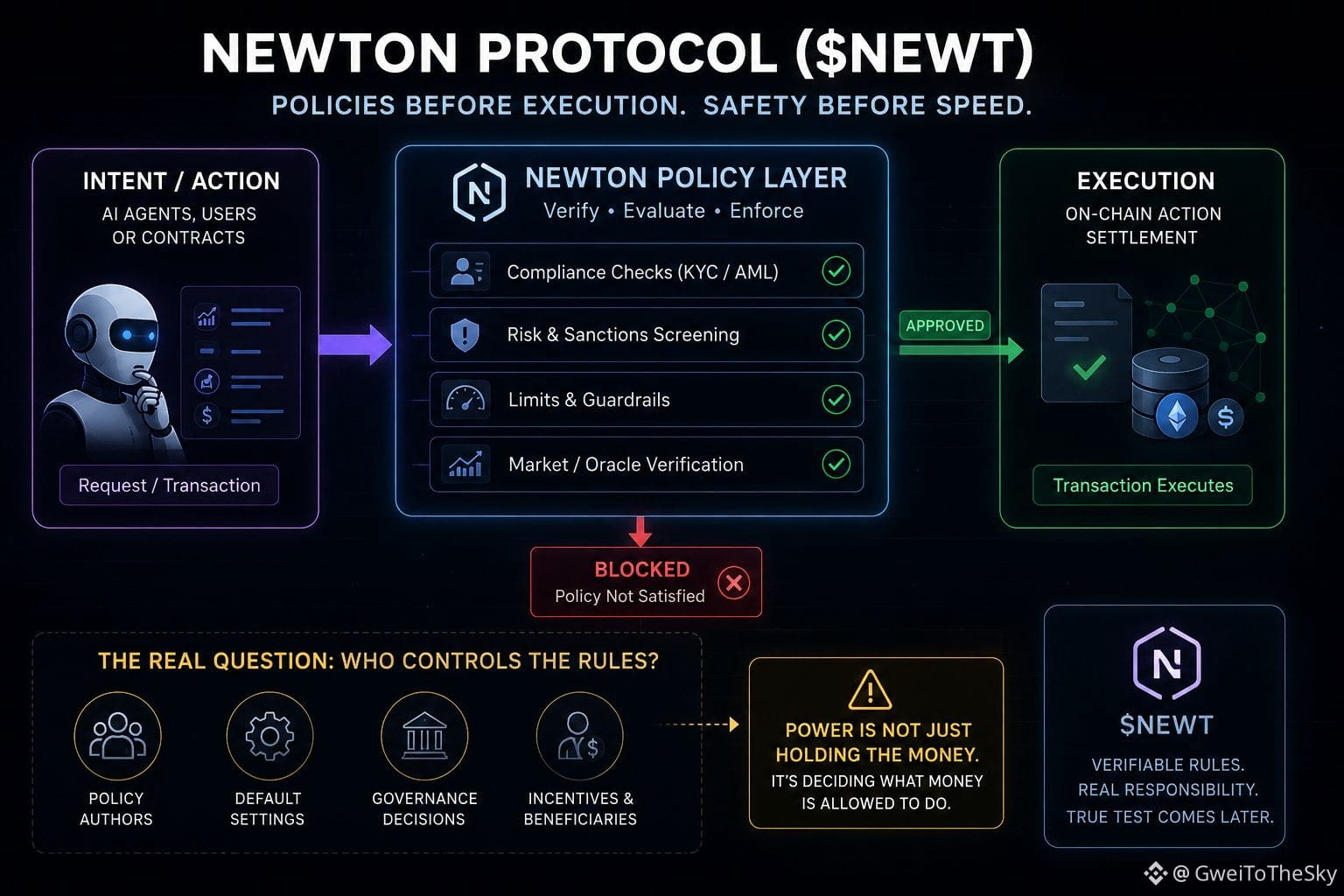
3
2
163
·
--
Schau, jeder Zyklus bringt eine neue Zusage, dass Technologie menschliche Fehler beseitigen wird. @NewtonProtocol kommt mit einer ähnlichen Idee: KI-Agenten werden immer leistungsfähiger, aber wenn sie Geld kontrollieren, wer sorgt dann dafür, dass sie nicht die Grenze überschreiten?
Newton versucht, ein echtes Problem zu lösen, indem vor autonomen Finanzhandlungen überprüfbare Regeln und Grenzen hinzugefügt werden. Das Ziel ist nicht nur schnellere KI-Transaktionen, sondern kontrolliertes KI-Verhalten.
Aber seien wir ehrlich: Eine Regel-Ebene hinzuzufügen bedeutet auch, ein weiteres System zu schaffen, dem Menschen vertrauen müssen. Mehr Richtlinien, mehr Verifizierung, mehr Infrastruktur. Manchmal schafft das Lösen von Komplexität eine neue Art von Komplexität.
Die eigentliche Frage ist: Wer kontrolliert diese Regeln und wer profitiert, wenn das zum Standard wird? Entwickler, Betreiber, Infrastruktur-Anbieter und Token-Inhaber könnten an Wert gewinnen, aber die Nutzer vertrauen weiterhin den Designentscheidungen von jemandem.
Dezentralisierung klingt gut, aber Macht kann sich still und leise dort konzentrieren, wo Richtlinien erstellt, Schlüssel-Infrastruktur verwaltet oder definiert wird, was „sicher“ tatsächlich bedeutet.
Und was passiert, wenn eine KI genehmigten Regeln folgt, aber dennoch eine katastrophale finanzielle Entscheidung trifft? Ein verifizierter Fehler bleibt ein Fehler.
Newton größte Herausforderung ist nicht der Nachweis, dass KI Geld bewegen kann.
Es geht darum zu beweisen, dass das Hinzufügen eines weiteren Vertrauenssystems das Risiko tatsächlich reduziert – statt es nur an einen schwerer zu erkennenden Ort zu verlagern.
#Newt $NEWT
$SENT $SPCX
Schau, jeder Zyklus bringt eine neue Zusage, dass Technologie menschliche Fehler beseitigen wird. @NewtonProtocol kommt mit einer ähnlichen Idee: KI-Agenten werden immer leistungsfähiger, aber wenn sie Geld kontrollieren, wer sorgt dann dafür, dass sie nicht die Grenze überschreiten?
Newton versucht, ein echtes Problem zu lösen, indem vor autonomen Finanzhandlungen überprüfbare Regeln und Grenzen hinzugefügt werden. Das Ziel ist nicht nur schnellere KI-Transaktionen, sondern kontrolliertes KI-Verhalten.
Aber seien wir ehrlich: Eine Regel-Ebene hinzuzufügen bedeutet auch, ein weiteres System zu schaffen, dem Menschen vertrauen müssen. Mehr Richtlinien, mehr Verifizierung, mehr Infrastruktur. Manchmal schafft das Lösen von Komplexität eine neue Art von Komplexität.
Die eigentliche Frage ist: Wer kontrolliert diese Regeln und wer profitiert, wenn das zum Standard wird? Entwickler, Betreiber, Infrastruktur-Anbieter und Token-Inhaber könnten an Wert gewinnen, aber die Nutzer vertrauen weiterhin den Designentscheidungen von jemandem.
Dezentralisierung klingt gut, aber Macht kann sich still und leise dort konzentrieren, wo Richtlinien erstellt, Schlüssel-Infrastruktur verwaltet oder definiert wird, was „sicher“ tatsächlich bedeutet.
Und was passiert, wenn eine KI genehmigten Regeln folgt, aber dennoch eine katastrophale finanzielle Entscheidung trifft? Ein verifizierter Fehler bleibt ein Fehler.
Newton größte Herausforderung ist nicht der Nachweis, dass KI Geld bewegen kann.
Es geht darum zu beweisen, dass das Hinzufügen eines weiteren Vertrauenssystems das Risiko tatsächlich reduziert – statt es nur an einen schwerer zu erkennenden Ort zu verlagern.
#Newt $NEWT
$SENT $SPCX
Newton versucht, ein echtes Problem zu lösen, indem vor autonomen Finanzhandlungen überprüfbare Regeln und Grenzen hinzugefügt werden. Das Ziel ist nicht nur schnellere KI-Transaktionen, sondern kontrolliertes KI-Verhalten.
Aber seien wir ehrlich: Eine Regel-Ebene hinzuzufügen bedeutet auch, ein weiteres System zu schaffen, dem Menschen vertrauen müssen. Mehr Richtlinien, mehr Verifizierung, mehr Infrastruktur. Manchmal schafft das Lösen von Komplexität eine neue Art von Komplexität.
Die eigentliche Frage ist: Wer kontrolliert diese Regeln und wer profitiert, wenn das zum Standard wird? Entwickler, Betreiber, Infrastruktur-Anbieter und Token-Inhaber könnten an Wert gewinnen, aber die Nutzer vertrauen weiterhin den Designentscheidungen von jemandem.
Dezentralisierung klingt gut, aber Macht kann sich still und leise dort konzentrieren, wo Richtlinien erstellt, Schlüssel-Infrastruktur verwaltet oder definiert wird, was „sicher“ tatsächlich bedeutet.
Und was passiert, wenn eine KI genehmigten Regeln folgt, aber dennoch eine katastrophale finanzielle Entscheidung trifft? Ein verifizierter Fehler bleibt ein Fehler.
Newton größte Herausforderung ist nicht der Nachweis, dass KI Geld bewegen kann.
Es geht darum zu beweisen, dass das Hinzufügen eines weiteren Vertrauenssystems das Risiko tatsächlich reduziert – statt es nur an einen schwerer zu erkennenden Ort zu verlagern.
#Newt $NEWT
$SENT $SPCX
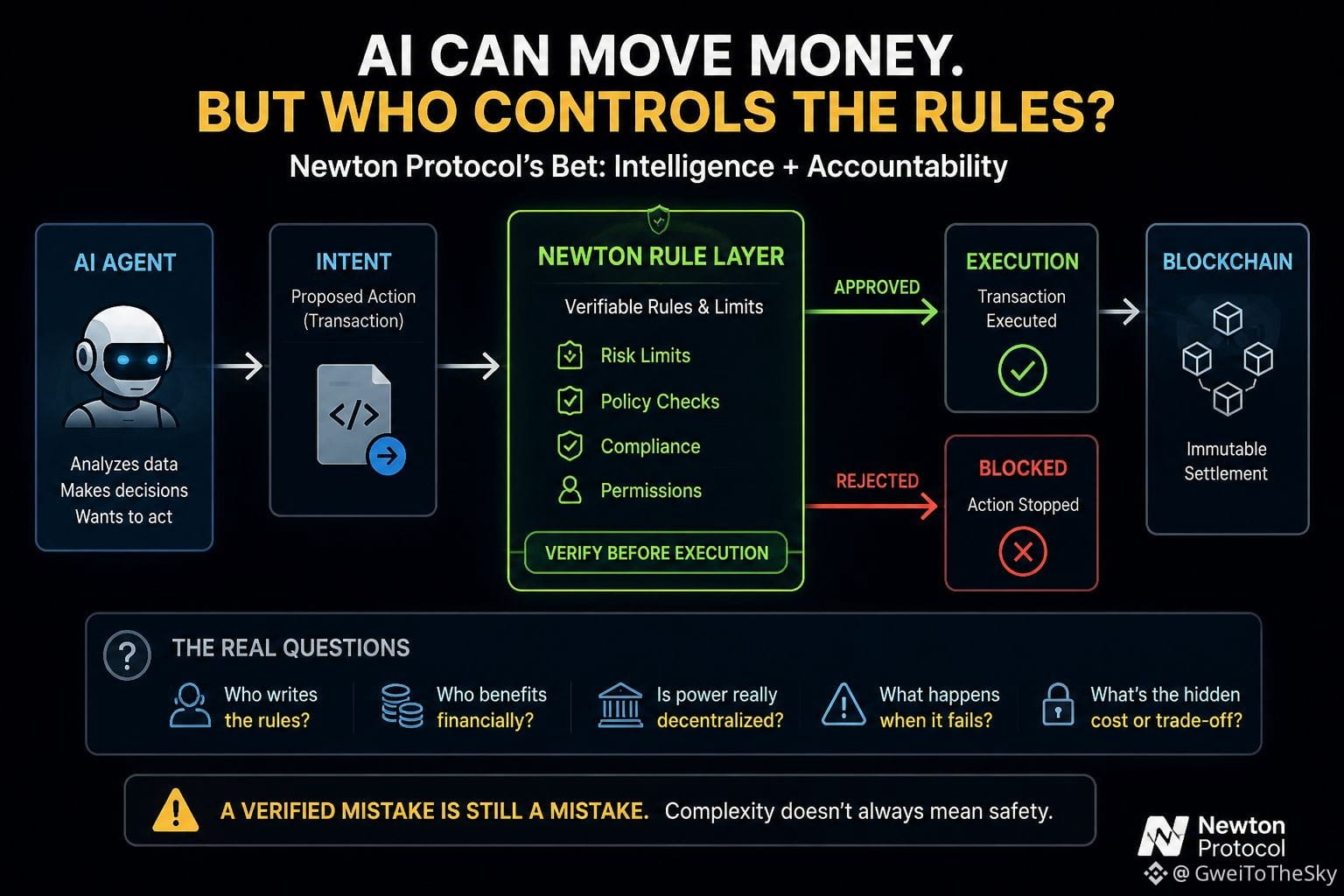
4
2
218
·
--
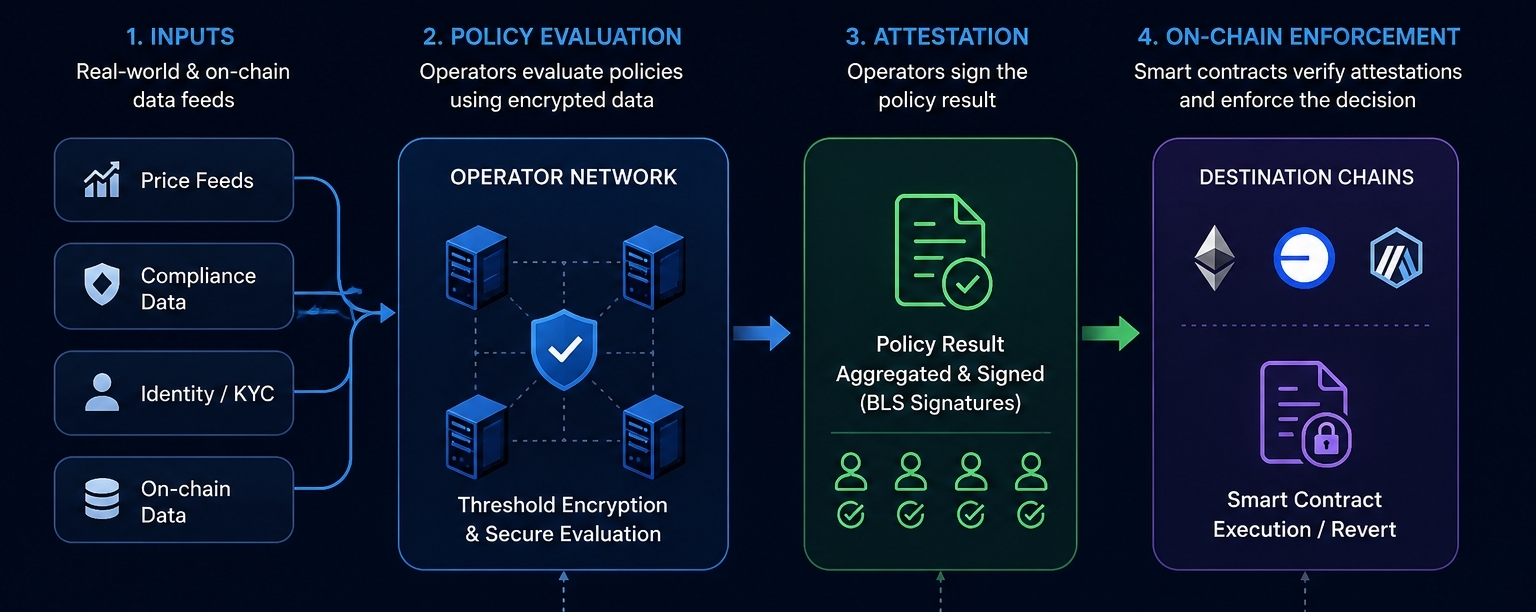
Artikel
Newton Protocol und die schmale Linie zwischen Verifikation und AnnahmeDie stille Frage hinter programmierbarem Vertrauen
Der Newton-Protocol kursiert seit einiger Zeit in Gesprächen über Infrastruktur – nicht, weil er eine lautere Version von Krypto verspricht, sondern weil er zu einer leiseren und unbequemeren Frage antworten will: Was genau vertrauen wir, wenn automatisierte Systeme beginnen, echten Wert zu bewegen?
Ich habe genug Technologiewechsel verfolgt, um zu wissen, dass die erste Welle der Aufmerksamkeit normalerweise auf Geschwindigkeit, Skalierung und beeindruckende Demos zielt. Die schwierigeren Fragen kommen später. Wer steuert das System? Wer überprüft Entscheidungen? Was passiert, wenn etwas technisch funktioniert, aber dennoch das falsche Ergebnis erzeugt?
Newton Protocol und die schmale Linie zwischen Verifikation und Annahme
Die stille Frage hinter programmierbarem Vertrauen
Der Newton-Protocol kursiert seit einiger Zeit in Gesprächen über Infrastruktur – nicht, weil er eine lautere Version von Krypto verspricht, sondern weil er zu einer leiseren und unbequemeren Frage antworten will: Was genau vertrauen wir, wenn automatisierte Systeme beginnen, echten Wert zu bewegen?
Ich habe genug Technologiewechsel verfolgt, um zu wissen, dass die erste Welle der Aufmerksamkeit normalerweise auf Geschwindigkeit, Skalierung und beeindruckende Demos zielt. Die schwierigeren Fragen kommen später. Wer steuert das System? Wer überprüft Entscheidungen? Was passiert, wenn etwas technisch funktioniert, aber dennoch das falsche Ergebnis erzeugt?
Der Newton-Protocol kursiert seit einiger Zeit in Gesprächen über Infrastruktur – nicht, weil er eine lautere Version von Krypto verspricht, sondern weil er zu einer leiseren und unbequemeren Frage antworten will: Was genau vertrauen wir, wenn automatisierte Systeme beginnen, echten Wert zu bewegen?
Ich habe genug Technologiewechsel verfolgt, um zu wissen, dass die erste Welle der Aufmerksamkeit normalerweise auf Geschwindigkeit, Skalierung und beeindruckende Demos zielt. Die schwierigeren Fragen kommen später. Wer steuert das System? Wer überprüft Entscheidungen? Was passiert, wenn etwas technisch funktioniert, aber dennoch das falsche Ergebnis erzeugt?
7
3
61
Anmelden und weiter Inhalte entdecken
Krypto-Nutzer weltweit auf Binance Square kennenlernen
⚡️ Bleib in Sachen Krypto stets am Puls.
💬 Die weltgrößte Kryptobörse vertraut darauf.
👍 Erhalte verlässliche Einblicke von verifizierten Creators.
E-Mail-Adresse/Telefonnummer
Trendthemen
NFPWatch
10.7M Aufrufe
18,766 Kommentare
Krypto-News | Bitcoin nähert sich der Marke von 85.000 US-Dollar, während die Renditen von US-Staatsanleihen vor dem Bericht zu den NFP zurückgehen
Binance News
·33 Likes
·45k Aufrufe
BitcoinFundingRateTriplesTo10%
85,692 Aufrufe
860 Kommentare
BitcoinSurpasses$86KUp2.99%
25,229 Aufrufe
84 Kommentare