
BlockScopeHQ
9 Beiträge
BlockScopeHQ
Melden
Nutzer blockieren
7 Following
1 Follower
0 Like gegeben
Beiträge
·
--
Übersetzung ansehen
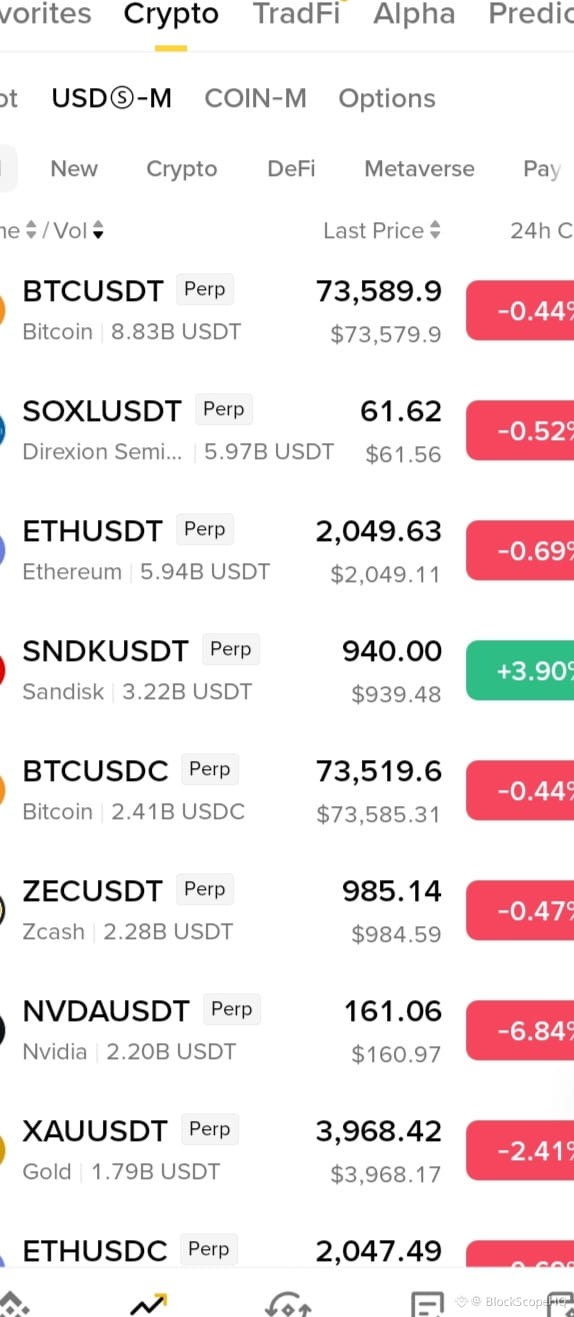
A mixed day in the market. Here's what caught my eye 👀
I was checking the Binance market today and noticed something interesting.
Bitcoin is slightly down, sitting around $73,589, and Ethereum is also in the red at around $2,049.
But not everything is moving in the same direction.
SNDK is up 3.90%, while NVDA has dropped 6.84%. Gold is also down 2.41% on this screen.
Honestly, I find these differences interesting. Even when the overall market looks weak, some assets still manage to move higher.
I'll be keeping an eye on how things develop from here.
What are you watching most closely right now — BTC, ETH, or the wider market?
Prices are from my Binance screenshot, not live updates.
#Bitcoin #Ethereum #CryptoMarket #MarketWatch
29
·
--

Artikel
Neu in der Welt der Kryptowährungen? Lies dies, bevor du deinen ersten Bitcoin kaufst (Leitfaden für Anfänger)Alle reden über Bitcoin. Manche sprechen über Ethereum, andere diskutieren über Krypto-Trading, und überall scheint jemand auf dem Kryptomarkt Geld zu verdienen.
Aber hier ist eine Frage: Verstehen die meisten Anfänger eigentlich, worauf sie sich einlassen?
Wenn du neu in der Welt der Kryptowährungen bist, hast du vielleicht dieselben Fragen wie ich, als ich anfing, mich mit diesem Bereich zu beschäftigen.
Was ist Bitcoin? Wie funktioniert die Blockchain? Warum brauchen Menschen Krypto-Wallets? Und woher stammt der Wert dieser digitalen Vermögenswerte?
Neu in der Welt der Kryptowährungen? Lies dies, bevor du deinen ersten Bitcoin kaufst (Leitfaden für Anfänger)
Alle reden über Bitcoin. Manche sprechen über Ethereum, andere diskutieren über Krypto-Trading, und überall scheint jemand auf dem Kryptomarkt Geld zu verdienen.
Aber hier ist eine Frage: Verstehen die meisten Anfänger eigentlich, worauf sie sich einlassen?
Wenn du neu in der Welt der Kryptowährungen bist, hast du vielleicht dieselben Fragen wie ich, als ich anfing, mich mit diesem Bereich zu beschäftigen.
Was ist Bitcoin? Wie funktioniert die Blockchain? Warum brauchen Menschen Krypto-Wallets? Und woher stammt der Wert dieser digitalen Vermögenswerte?
25
·
--
Übersetzung ansehen
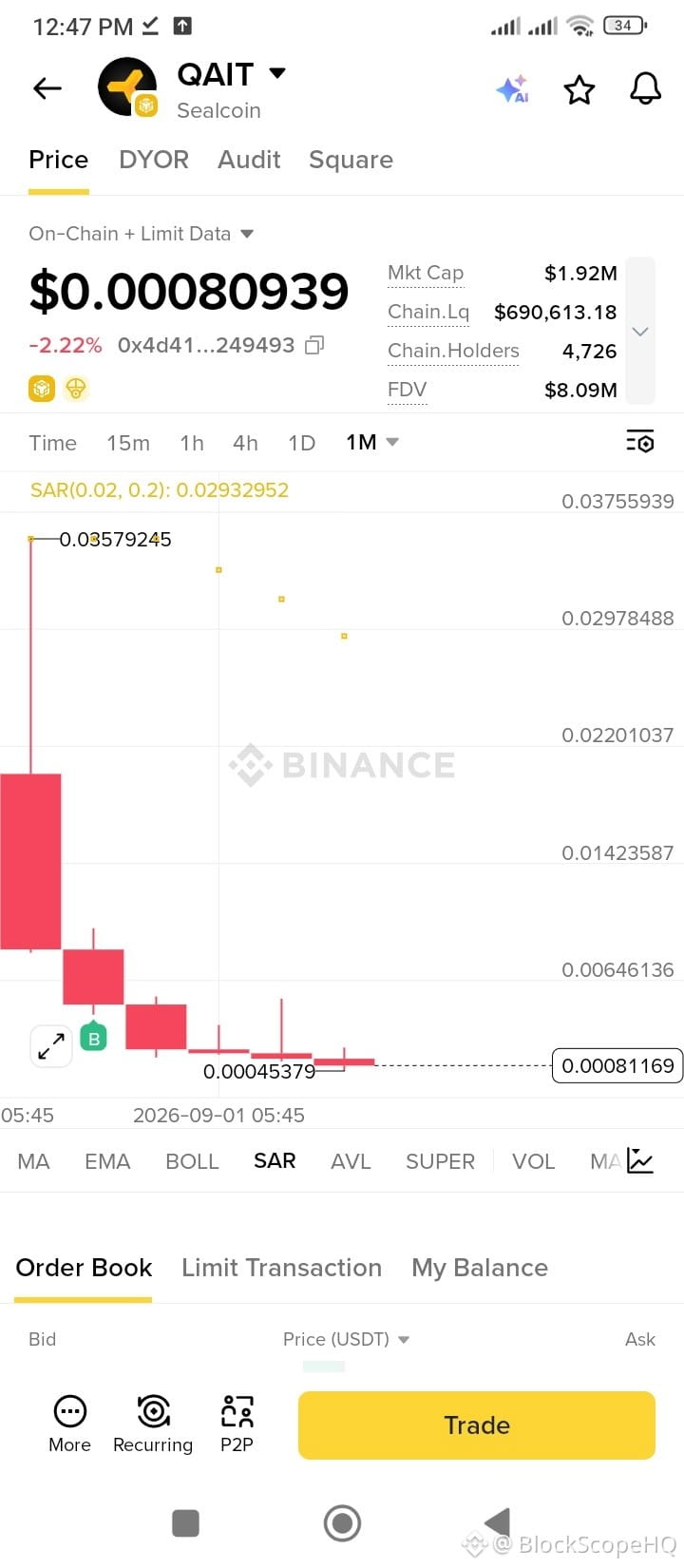
$QAIT: Is the market losing interest, or is this a potential recovery zone?
Looking at this monthly chart for QAIT (Sealcoin), one thing stands out: the token has fallen significantly from its earlier highs.
The price is currently around $0.00081, while the chart shows an earlier low near $0.00045.
A few things are worth watching:
- Can buyers defend the recent low?
- Is trading activity starting to increase?
- Can the price build a stronger base before any potential recovery?
A lower price doesn't automatically mean an asset is undervalued. Volume, liquidity and project development matter too.
What do you think about QAIT? Is it worth watching, or would you stay away for now?
#cryptooinsigts #Sealcoin #cryptouniverseofficial #Altcoins! #BinanceSquare
7
·
--
Übersetzung ansehen
Ethereum is more than just a cryptocurrency.
When I first started learning about Ethereum, I thought it was simply another coin like Bitcoin. But the more I learned, the more interesting it became.
Ethereum allows developers to build applications using smart contracts. This is one reason it's become such an important part of DeFi, NFTs and many other blockchain projects.
Of course, Ethereum still has challenges, including network fees, competition and scalability.
But I think its biggest strength is what people can actually build on top of it.
What do you think: will Ethereum remain one of the most important blockchain networks over the next five years?
#Ethereum #ETH #DeFi #BlockchainTechnology #BinanceSquare
5
·
--
Eines der Dinge, die Bitcoin von anderen Währungen unterscheiden, ist sein begrenztes Angebot.
Es wird immer nur 21 Millionen Bitcoin geben. Das ist ein Teil dessen, was $BTC für so viele Menschen interessant macht.
Im Gegensatz zu traditionellen Währungen hat Bitcoin eine festgelegte maximale Menge, die im Protokoll verankert ist.
Doch über Folgendes lohnt es sich nachzudenken: Ein begrenztes Angebot allein garantiert keinen höheren Preis. Nachfrage, Akzeptanz, Marktbedingungen und das Vertrauen der Anleger spielen weiterhin eine Rolle.
Ich denke, die Angebotsgrenze von Bitcoin ist eine seiner interessantesten Eigenschaften, aber sie ist nur ein Teil des Gesamtbildes.
Glaubst du, dass die Begrenzung auf 21 Millionen die größte Stärke von Bitcoin ist?
#Bitcoin #BTC #KryptoBildung #Blockchain #BinanceSquare
44
·
--
Übersetzung ansehen
I've noticed that stablecoins don't get nearly as much attention as Bitcoin or Ethereum, but they're actually a big part of how the crypto market works.
Think about it. Crypto prices can change very quickly. Sometimes people want to step away from that volatility without leaving the crypto ecosystem completely.
That's where stablecoins come in.
Coins like $USDT are designed to stay close to the value of the US dollar. People use them to trade, transfer funds and access different services in crypto.
Of course, stablecoins aren't completely risk-free. Their reserves, reliability and regulation still matter.
Personally, I think stablecoins are one of the most practical parts of crypto, even if they're not the most exciting.
What's your opinion? Are stablecoins underrated?
#Stablecoins #USDT #CryptoEducation #Blockchain #BinanceSquare
28
·
--
Übersetzung ansehen
I've always found Ethereum interesting for one reason: it's much more than just another cryptocurrency.
Bitcoin introduced people to decentralized money. Ethereum took things in a different direction by allowing developers to build applications directly on a blockchain.
Think about what that means.
People can create financial services, digital marketplaces and applications without relying entirely on traditional intermediaries.
That's where smart contracts come in. They automatically execute transactions when certain conditions are met.
Of course, Ethereum isn't perfect. High transaction fees, network competition and scalability remain important challenges.
But there's a reason developers and major companies continue paying attention to it.
Do you think Ethereum will remain one of the most important blockchain networks over the next five years?
I'd genuinely like to hear your thoughts.
#Ethereum #ETH #Blockchain
75
·
--
Übersetzung ansehen
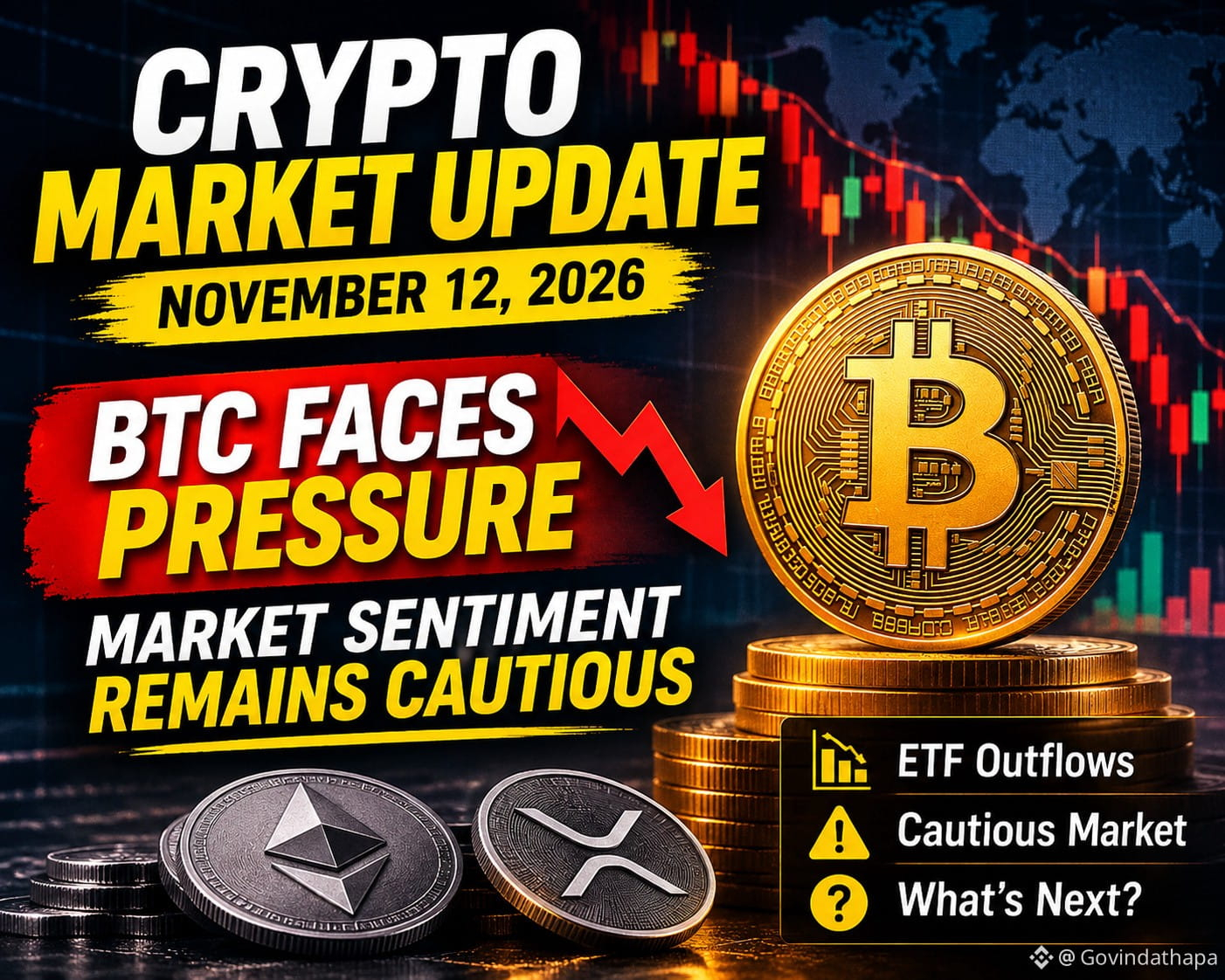
📉 CRYPTO MARKET UPDATE — NOVEMBER 12
Bitcoin is facing renewed pressure as uncertainty spreads across the cryptocurrency market.
Here are three things crypto traders are watching today:
🔸 Bitcoin (BTC): Price is hovering around the $73,000 region, with traders watching for signs of stability.
🔸 Ethereum (ETH): Bearish sentiment and recent weekly losses continue to weigh on market confidence.
🔸 Market sentiment: Bitcoin ETF outflows and negative social sentiment suggest investors remain cautious.
What happens next?
The market needs stronger buying momentum to establish a convincing recovery. Until then, volatility remains a major risk.
Are we seeing a temporary correction or the beginning of a deeper bearish trend?
Share your thoughts below.
#Bitcoin #Ethereum #CryptoMarket #BTC #Binance
81
Anmelden und weiter Inhalte entdecken
Krypto-Nutzer weltweit auf Binance Square kennenlernen
⚡️ Bleib in Sachen Krypto stets am Puls.
💬 Die weltgrößte Kryptobörse vertraut darauf.
👍 Erhalte verlässliche Einblicke von verifizierten Creators.
E-Mail-Adresse/Telefonnummer
Trendthemen
HuangRisksOusterOverReportedAffairWithSubordinate
27,624 Aufrufe
469 Kommentare
Nvidia-Vorstand berät über Jensen Huangs Zukunft, während sich die Krise verschärft
Binance News
·24 Likes
·26.6k Aufrufe
AnthropicRejectsIPODelayValuationinQuestion
470,966 Aufrufe
3,922 Kommentare
CoreWeaveJumps10%On168%RevenueGrowth
64,936 Aufrufe
881 Kommentare