

eyes of 火
11.3k Beiträge

eyes of 火
 Square Verified+
Melden
Nutzer blockieren
Trade eröffnen
Regelmäßiger Trader
10.5 Monate
5 Following
31.0K+ Follower
10.4K+ Like gegeben
Beiträge
Portfolio
Alle
Live
·
--
Bullisch
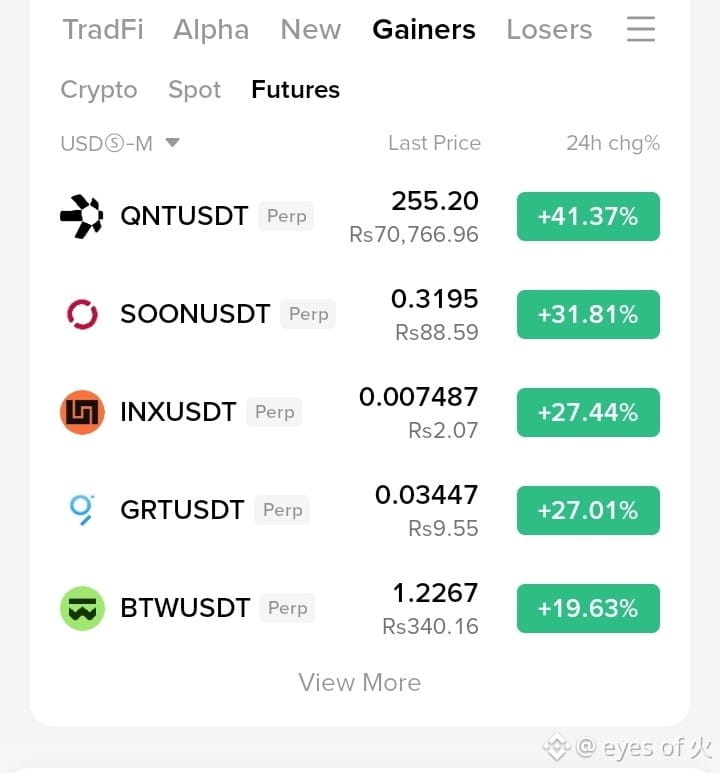
🚀 Top 3 Future-Gewinner heute! 📈🔥
🔥 $QNT USDT — +41.37%
🚀 $SOON USDT — +31.81%
⚡ $INX USDT — +27.44%
Der Futures-Markt zeigt heute eine ziemlich starke Dynamik! 💥📊
Behalte diese drei Gewinner im Blick und manage dein Risiko stets sorgfältig. 🛡️💰
#SECSaysTokenBuybacksNotAutoSecurities #RussianStrikesHitUkraineDataCenters #BitwiseFilesFinalNEARSpotETFProspectus #StrategyStriveAdd2305BitcoinThisWeek #TrumpRejectsIranHormuzReopening
🚀 Top 3 Future-Gewinner heute! 📈🔥
🔥 $QNT USDT — +41.37%
🚀 $SOON USDT — +31.81%
⚡ $INX USDT — +27.44%
Der Futures-Markt zeigt heute eine ziemlich starke Dynamik! 💥📊
Behalte diese drei Gewinner im Blick und manage dein Risiko stets sorgfältig. 🛡️💰
#SECSaysTokenBuybacksNotAutoSecurities #RussianStrikesHitUkraineDataCenters #BitwiseFilesFinalNEARSpotETFProspectus #StrategyStriveAdd2305BitcoinThisWeek #TrumpRejectsIranHormuzReopening
🔥 $QNT USDT — +41.37%
🚀 $SOON USDT — +31.81%
⚡ $INX USDT — +27.44%
Der Futures-Markt zeigt heute eine ziemlich starke Dynamik! 💥📊
Behalte diese drei Gewinner im Blick und manage dein Risiko stets sorgfältig. 🛡️💰
#SECSaysTokenBuybacksNotAutoSecurities #RussianStrikesHitUkraineDataCenters #BitwiseFilesFinalNEARSpotETFProspectus #StrategyStriveAdd2305BitcoinThisWeek #TrumpRejectsIranHormuzReopening
595
·
--
Bullisch
Übersetzung ansehen
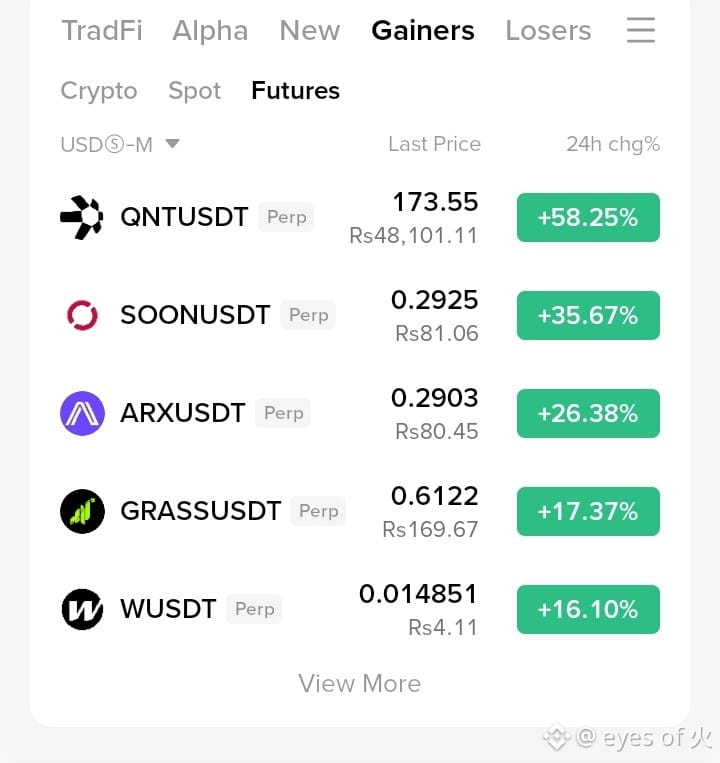
🚀 Top 3 Futures Gainers Today! 🔥
The market is showing some serious momentum! 📈💰
🥇 $QNT USDT — +58.25% 🚀
🥈 $SOON USDT — +35.67% 🔥
🥉 $ARX USDT — +26.38% ⚡
These three coins are grabbing attention with strong 24H gains! 👀📊
💡 QNT is leading the pack with an impressive +58% move!
Are you watching these coins? 👇
Bullish or waiting for a better entry? 🐂📈
⚠️ Crypto futures are highly volatile. Trade responsibly and manage your risk.
#BitwiseFilesFinalNEARSpotETFProspectus #CoinMarketCapCompletesCoinglassAcquisition #SECSaysTokenBuybacksNotAutoSecurities #CircleTetherFreezeBitgetHackerWallet #TrumpRejectsIranHormuzReopening
{future}(SOONUSDT)
{future}(ARXUSDT)
{future}(QNTUSDT)
🚀 Top 3 Futures Gainers Today! 🔥
The market is showing some serious momentum! 📈💰
🥇 $QNT USDT — +58.25% 🚀
🥈 $SOON USDT — +35.67% 🔥
🥉 $ARX USDT — +26.38% ⚡
These three coins are grabbing attention with strong 24H gains! 👀📊
💡 QNT is leading the pack with an impressive +58% move!
Are you watching these coins? 👇
Bullish or waiting for a better entry? 🐂📈
⚠️ Crypto futures are highly volatile. Trade responsibly and manage your risk.
#BitwiseFilesFinalNEARSpotETFProspectus #CoinMarketCapCompletesCoinglassAcquisition #SECSaysTokenBuybacksNotAutoSecurities #CircleTetherFreezeBitgetHackerWallet #TrumpRejectsIranHormuzReopening
The market is showing some serious momentum! 📈💰
🥇 $QNT USDT — +58.25% 🚀
🥈 $SOON USDT — +35.67% 🔥
🥉 $ARX USDT — +26.38% ⚡
These three coins are grabbing attention with strong 24H gains! 👀📊
💡 QNT is leading the pack with an impressive +58% move!
Are you watching these coins? 👇
Bullish or waiting for a better entry? 🐂📈
⚠️ Crypto futures are highly volatile. Trade responsibly and manage your risk.
#BitwiseFilesFinalNEARSpotETFProspectus #CoinMarketCapCompletesCoinglassAcquisition #SECSaysTokenBuybacksNotAutoSecurities #CircleTetherFreezeBitgetHackerWallet #TrumpRejectsIranHormuzReopening
663
·
--
Bullisch
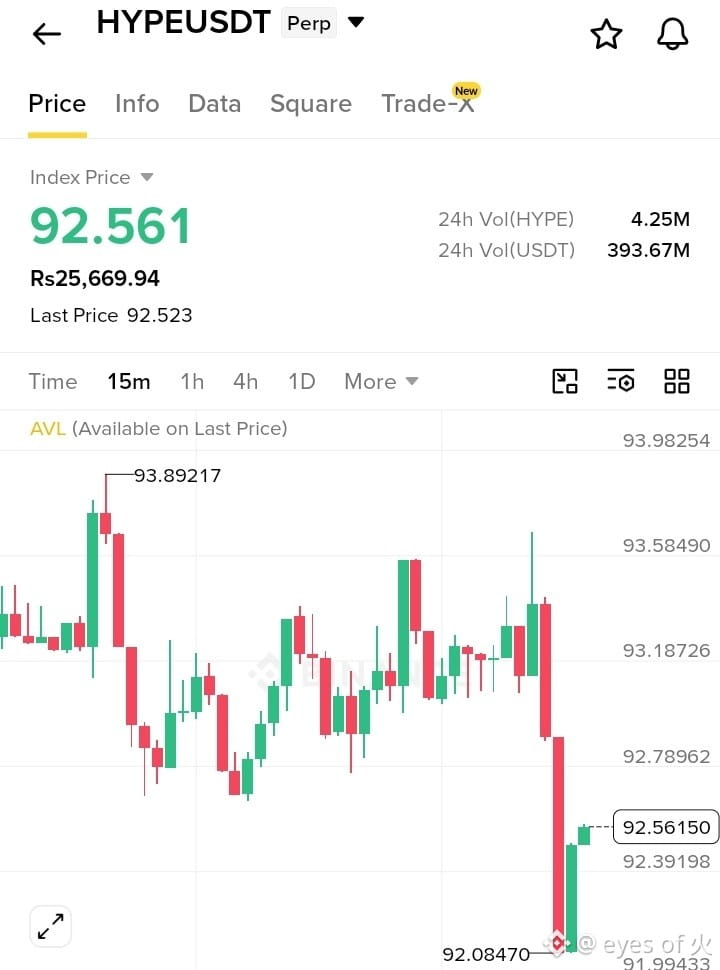
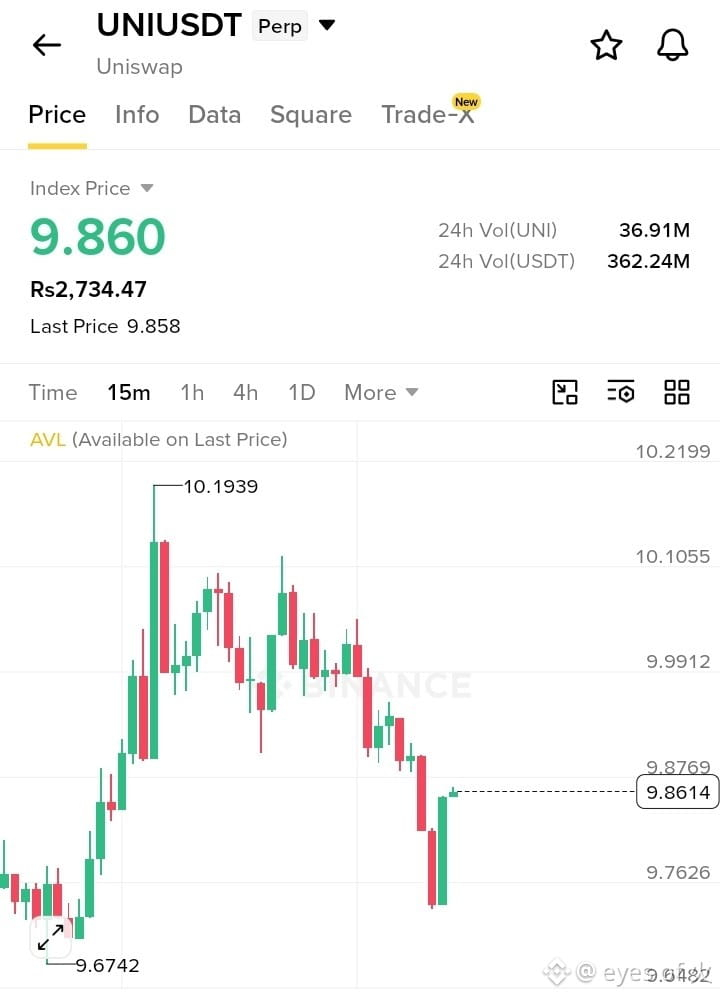
Der Markt zeigt eine deutliche Divergenz zwischen UNI und HYPE. UNI hält sich nach dem jüngsten Rückgang weiterhin im Bereich um 9,85–9,86, während HYPE eine Abweisung von höheren Niveaus erlebt hat und nahe bei 92,5 gehandelt wird. Das Setup, das ich hier beobachte, ist Long $UNI und Short $HYPE , mit der Erwartung, dass UNI wieder an Momentum gewinnt, während HYPE unter Druck bleibt. Wenn die Struktur das bestätigt, könnte das ein interessanter Trade im Bereich Relative Strength werden. Wie immer: auf Bestätigung warten und das Risiko managen, statt der Bewegung hinterherzulaufen.
#BitwiseFilesFinalNEARSpotETFProspectus #SECSaysTokenBuybacksNotAutoSecurities #CircleTetherFreezeBitgetHackerWallet #TrumpRejectsIranHormuzReopening #StrategyStriveAdd2305BitcoinThisWeek
{future}(HYPEUSDT)
{future}(UNIUSDT)
Der Markt zeigt eine deutliche Divergenz zwischen UNI und HYPE. UNI hält sich nach dem jüngsten Rückgang weiterhin im Bereich um 9,85–9,86, während HYPE eine Abweisung von höheren Niveaus erlebt hat und nahe bei 92,5 gehandelt wird. Das Setup, das ich hier beobachte, ist Long $UNI und Short $HYPE , mit der Erwartung, dass UNI wieder an Momentum gewinnt, während HYPE unter Druck bleibt. Wenn die Struktur das bestätigt, könnte das ein interessanter Trade im Bereich Relative Strength werden. Wie immer: auf Bestätigung warten und das Risiko managen, statt der Bewegung hinterherzulaufen.
#BitwiseFilesFinalNEARSpotETFProspectus #SECSaysTokenBuybacksNotAutoSecurities #CircleTetherFreezeBitgetHackerWallet #TrumpRejectsIranHormuzReopening #StrategyStriveAdd2305BitcoinThisWeek
#BitwiseFilesFinalNEARSpotETFProspectus #SECSaysTokenBuybacksNotAutoSecurities #CircleTetherFreezeBitgetHackerWallet #TrumpRejectsIranHormuzReopening #StrategyStriveAdd2305BitcoinThisWeek
176
·
--
Bärisch
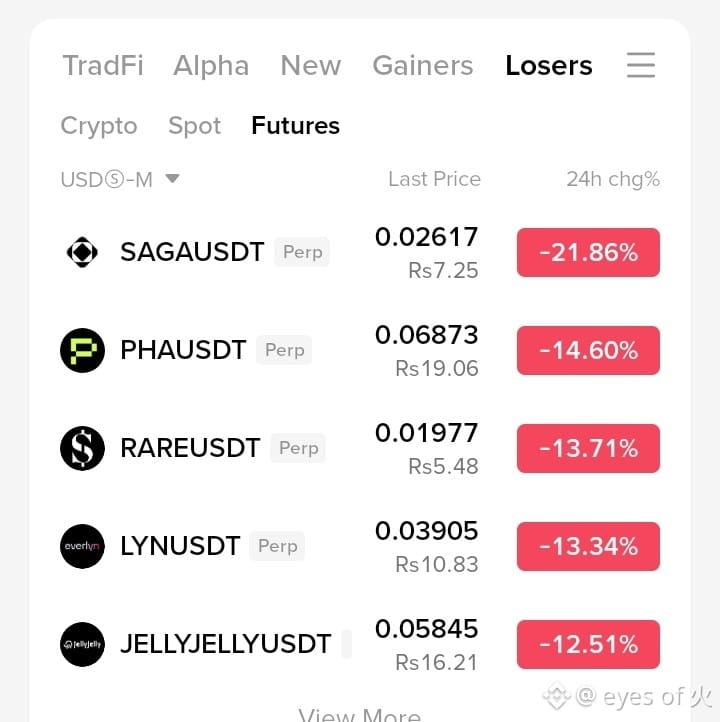
🔻 TOP 3 VERLIERER HEUTE
$SAGA — -21.86%
$PHA — -14.60%
$RARE — -13.71%
📉 Große Rückgänge. Starke Aufmerksamkeit.
Sind das nur Verlierer von heute oder potenzielle Chancen für eine Wende? 👀
Beobachte den Markt. Informiere dich selbst (DYOR).
#CircleMints500MUSDCOnSolana #DogecoinETFsPostBiggestWeekSinceLaunch #StrategyStriveAdd2305BitcoinThisWeek #CircleTetherFreezeBitgetHackerWallet #CoinMarketCapCompletesCoinglassAcquisition
{future}(RAREUSDT)
{future}(PHAUSDT)
{future}(SAGAUSDT)
🔻 TOP 3 VERLIERER HEUTE
$SAGA — -21.86%
$PHA — -14.60%
$RARE — -13.71%
📉 Große Rückgänge. Starke Aufmerksamkeit.
Sind das nur Verlierer von heute oder potenzielle Chancen für eine Wende? 👀
Beobachte den Markt. Informiere dich selbst (DYOR).
#CircleMints500MUSDCOnSolana #DogecoinETFsPostBiggestWeekSinceLaunch #StrategyStriveAdd2305BitcoinThisWeek #CircleTetherFreezeBitgetHackerWallet #CoinMarketCapCompletesCoinglassAcquisition
$SAGA — -21.86%
$PHA — -14.60%
$RARE — -13.71%
📉 Große Rückgänge. Starke Aufmerksamkeit.
Sind das nur Verlierer von heute oder potenzielle Chancen für eine Wende? 👀
Beobachte den Markt. Informiere dich selbst (DYOR).
#CircleMints500MUSDCOnSolana #DogecoinETFsPostBiggestWeekSinceLaunch #StrategyStriveAdd2305BitcoinThisWeek #CircleTetherFreezeBitgetHackerWallet #CoinMarketCapCompletesCoinglassAcquisition
2
1.3k
·
--
Bullisch
Übersetzung ansehen
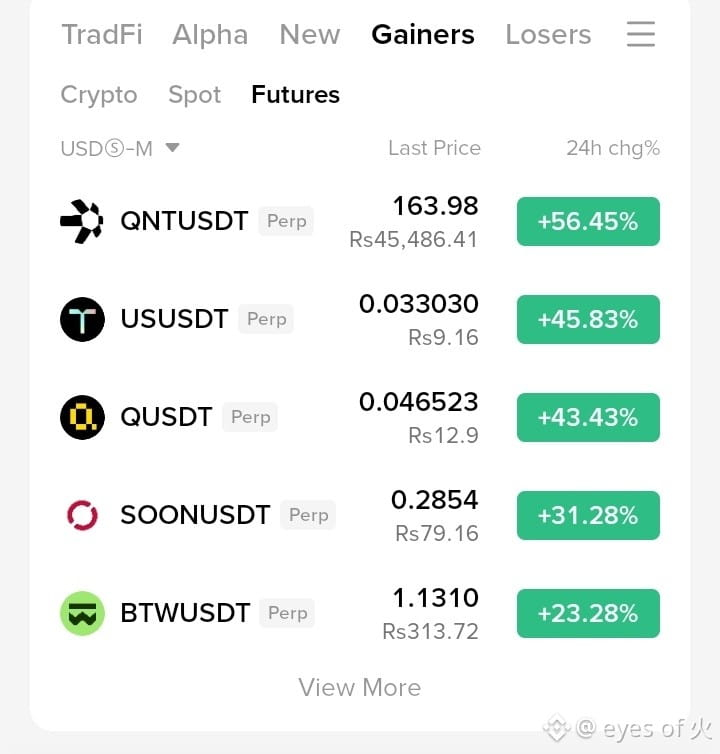
🚀 Binance Futures Gainers Are Moving Fast!
The top 3 gainers right now:
🔹 $QNT USDT — +56.45%
🔹 $US USDT — +45.83%
🔹 $Q USDT — +43.43%
Strong momentum across the board. 📈🔥
Watching these moves closely — volatility is heating up on Binance Futures. ⚡
#PolymarketBankFailureBetsDrawFDICConcern #StrategyStriveAdd2305BitcoinThisWeek #TrumpRejectsIranHormuzReopening #CoinMarketCapCompletesCoinglassAcquisition #SECSaysTokenBuybacksNotAutoSecurities
🚀 Binance Futures Gainers Are Moving Fast!
The top 3 gainers right now:
🔹 $QNT USDT — +56.45%
🔹 $US USDT — +45.83%
🔹 $Q USDT — +43.43%
Strong momentum across the board. 📈🔥
Watching these moves closely — volatility is heating up on Binance Futures. ⚡
#PolymarketBankFailureBetsDrawFDICConcern #StrategyStriveAdd2305BitcoinThisWeek #TrumpRejectsIranHormuzReopening #CoinMarketCapCompletesCoinglassAcquisition #SECSaysTokenBuybacksNotAutoSecurities
The top 3 gainers right now:
🔹 $QNT USDT — +56.45%
🔹 $US USDT — +45.83%
🔹 $Q USDT — +43.43%
Strong momentum across the board. 📈🔥
Watching these moves closely — volatility is heating up on Binance Futures. ⚡
#PolymarketBankFailureBetsDrawFDICConcern #StrategyStriveAdd2305BitcoinThisWeek #TrumpRejectsIranHormuzReopening #CoinMarketCapCompletesCoinglassAcquisition #SECSaysTokenBuybacksNotAutoSecurities
1
642
·
--
Bullisch
Übersetzung ansehen
🚨$BTC AT A CRITICAL MARKET MOMENT
Bitcoin is back in focus as volatility picks up and traders watch for the next major breakout or breakdown. 📊
The coming moves could set the tone for the broader crypto market. 👀
⚠️ Disclaimer: Market impact may vary. DYOR.
#BTC #Bitcoin #Crypto #Binance #CryptoNews
{future}(BTCUSDT)
🚨$BTC AT A CRITICAL MARKET MOMENT
Bitcoin is back in focus as volatility picks up and traders watch for the next major breakout or breakdown. 📊
The coming moves could set the tone for the broader crypto market. 👀
⚠️ Disclaimer: Market impact may vary. DYOR.
#BTC #Bitcoin #Crypto #Binance #CryptoNews
Bitcoin is back in focus as volatility picks up and traders watch for the next major breakout or breakdown. 📊
The coming moves could set the tone for the broader crypto market. 👀
⚠️ Disclaimer: Market impact may vary. DYOR.
#BTC #Bitcoin #Crypto #Binance #CryptoNews

1
56
·
--
Übersetzung ansehen
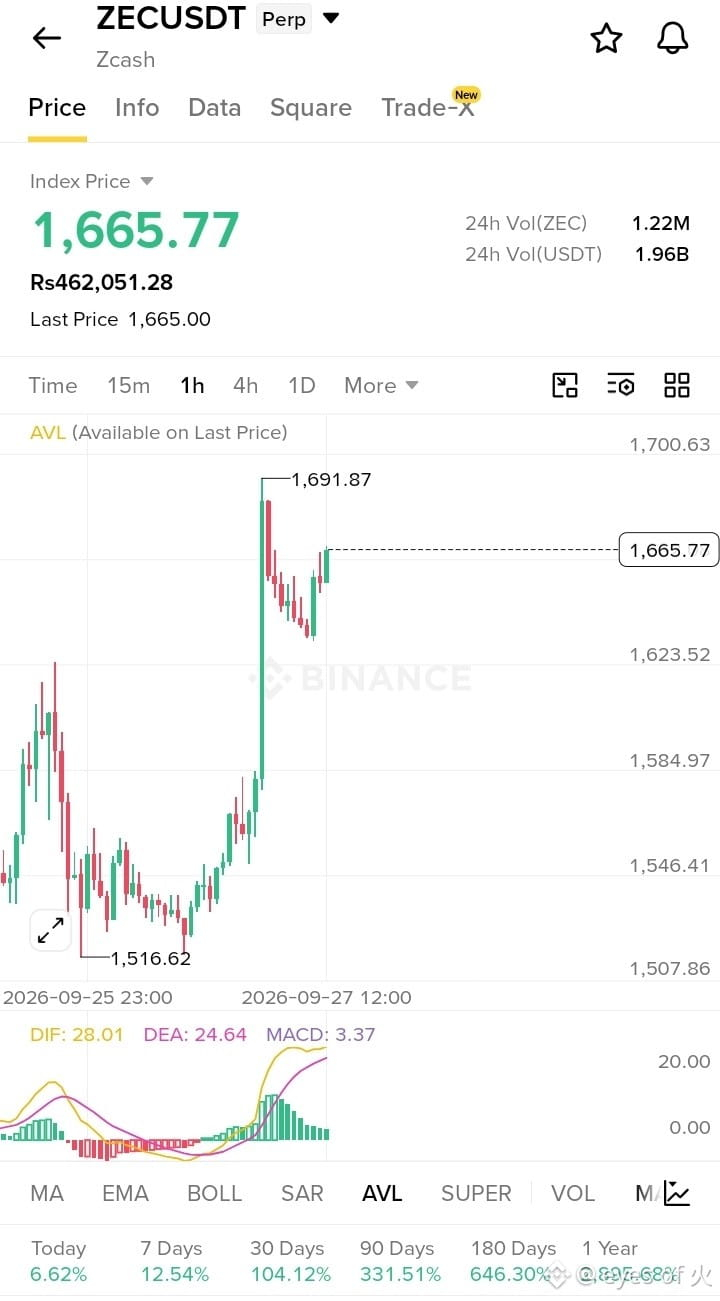
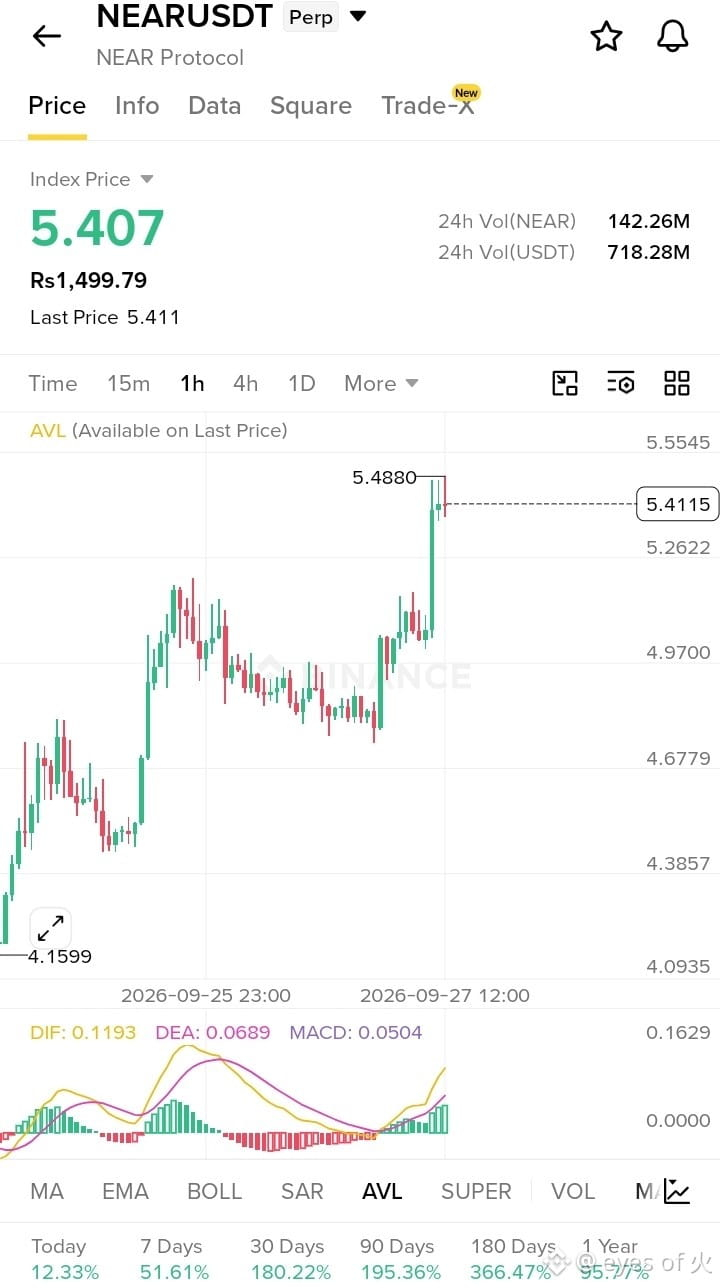
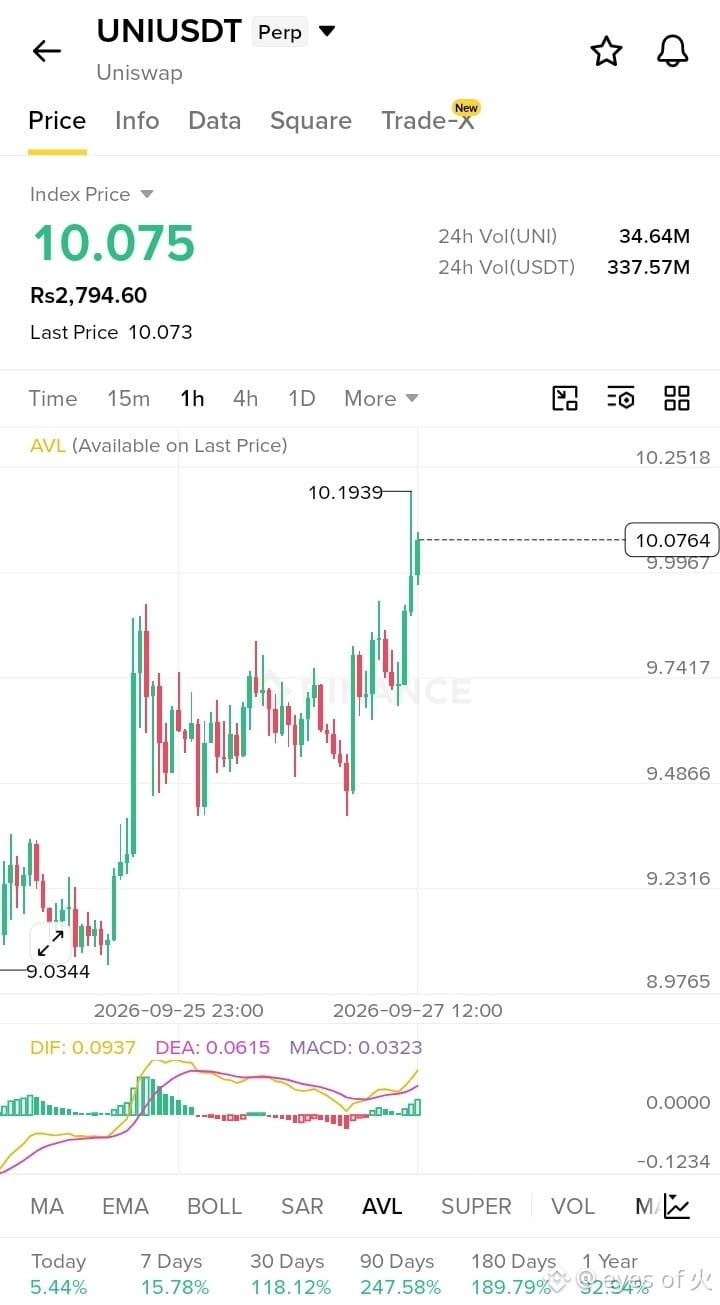
$ZEC $NEAR $UNI 🚀
Weekend vibes are here, but the market never really sleeps. 👀🔥
I’m keeping these three coins on my watchlist because each one has its own strong story and potential. The key for me is simple: stay patient, manage risk, and don’t let short-term market noise control your decisions.
If momentum continues and the market remains supportive, these assets could see strong moves over the coming weeks. 📈
No panic, no unnecessary chasing — just patience, research, and a long-term mindset.
Wishing everyone a great weekend and green candles ahead! ❤️🔥
Stay safe. Stay focused. DYOR.
$ZEC $NEAR $UNI 🚀
Weekend vibes are here, but the market never really sleeps. 👀🔥
I’m keeping these three coins on my watchlist because each one has its own strong story and potential. The key for me is simple: stay patient, manage risk, and don’t let short-term market noise control your decisions.
If momentum continues and the market remains supportive, these assets could see strong moves over the coming weeks. 📈
No panic, no unnecessary chasing — just patience, research, and a long-term mindset.
Wishing everyone a great weekend and green candles ahead! ❤️🔥
Stay safe. Stay focused. DYOR.
Weekend vibes are here, but the market never really sleeps. 👀🔥
I’m keeping these three coins on my watchlist because each one has its own strong story and potential. The key for me is simple: stay patient, manage risk, and don’t let short-term market noise control your decisions.
If momentum continues and the market remains supportive, these assets could see strong moves over the coming weeks. 📈
No panic, no unnecessary chasing — just patience, research, and a long-term mindset.
Wishing everyone a great weekend and green candles ahead! ❤️🔥
Stay safe. Stay focused. DYOR.
1
283
·
--
Bärisch
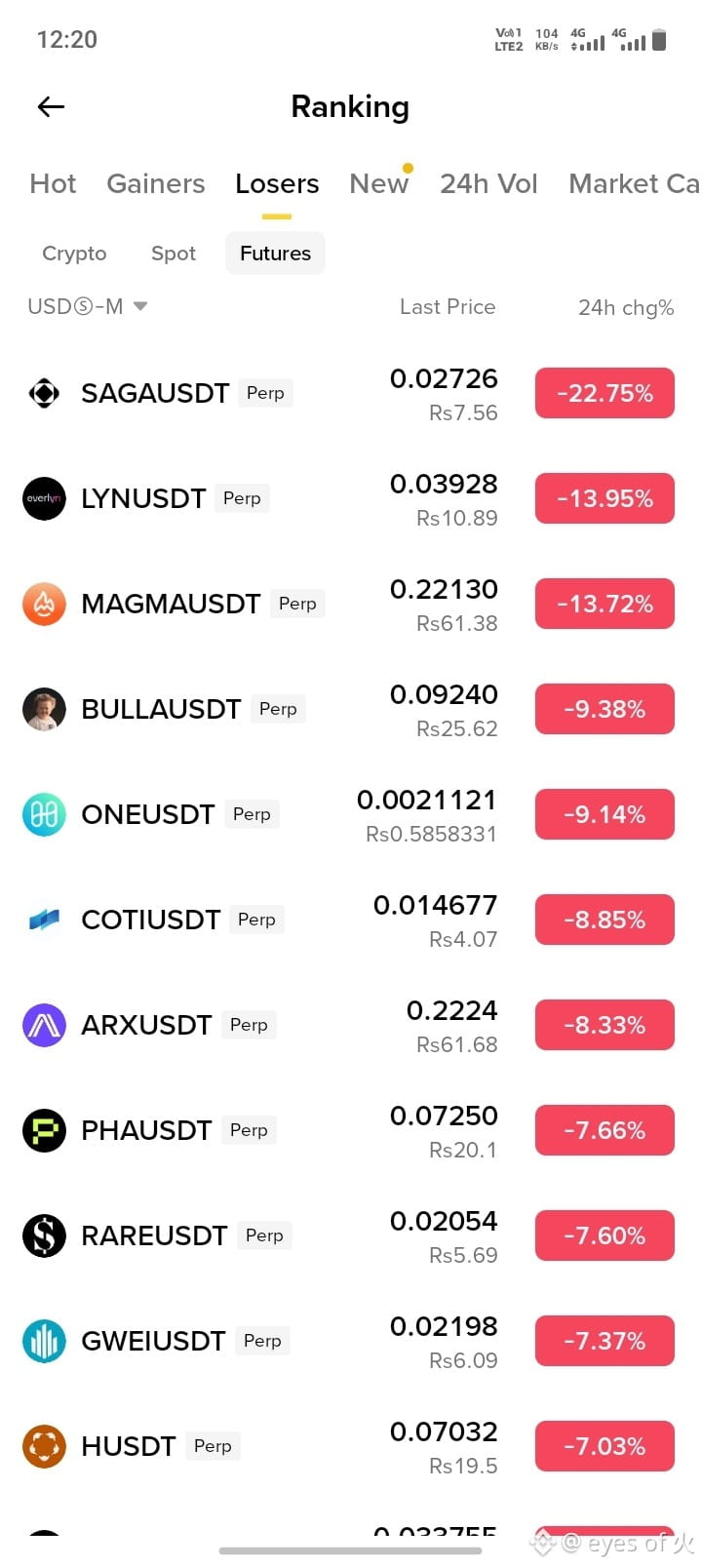
🔴 Binance Futures Daily Losers — Top 3
📉 $SAGA USDT — 0.02726 USDT
24H Change: -22.75%
SAGA führt heute die Liste der größten Verlierer bei den Binance Futures an und zeigt den stärksten Rückgang unter den im Screenshot sichtbaren Coins. Der starke Abwärtsimpuls hebt eine erhöhte Volatilität und ein gesteigertes Risiko für Trader hervor.
📉 $LYN USDT — 0.03928 USDT
24H Change: -13.95%
LYN steht ebenfalls unter starkem Verkaufsdruck und verzeichnet einen zweistelligen Rückgang innerhalb von 24 Stunden. Trader sollten das Handelsvolumen, die Unterstützungsniveaus und die Kursreaktion beobachten, bevor sie eine Position eingehen.
📉 $MAGMA USDT — 0.22130 USDT
24H Change: -13.72%
MAGMA vervollständigt die Top Drei der Verlierer. Ihre Bewegung bleibt besonders volatil, weshalb Risikomanagement besonders wichtig ist.
⚠️ Binance Futures: Diese Prozentwerte können sich schnell ändern. Prüfe vor dem Handel immer den aktuellen Kurs, das Volumen, den Funding-Rate und das Open Interest. Dies sind Marktdaten und keine Finanzberatung.
#BitwiseFilesToListNEARETFOnNYSEArca #BlackRockBuildsTokenizedPortfoliosForOndo #CircleMints500MUSDCOnSolana #CoinMarketCapCompletesCoinglassAcquisition #StrategyStriveAdd2305BitcoinThisWeek
🔴 Binance Futures Daily Losers — Top 3
📉 $SAGA USDT — 0.02726 USDT
24H Change: -22.75%
SAGA führt heute die Liste der größten Verlierer bei den Binance Futures an und zeigt den stärksten Rückgang unter den im Screenshot sichtbaren Coins. Der starke Abwärtsimpuls hebt eine erhöhte Volatilität und ein gesteigertes Risiko für Trader hervor.
📉 $LYN USDT — 0.03928 USDT
24H Change: -13.95%
LYN steht ebenfalls unter starkem Verkaufsdruck und verzeichnet einen zweistelligen Rückgang innerhalb von 24 Stunden. Trader sollten das Handelsvolumen, die Unterstützungsniveaus und die Kursreaktion beobachten, bevor sie eine Position eingehen.
📉 $MAGMA USDT — 0.22130 USDT
24H Change: -13.72%
MAGMA vervollständigt die Top Drei der Verlierer. Ihre Bewegung bleibt besonders volatil, weshalb Risikomanagement besonders wichtig ist.
⚠️ Binance Futures: Diese Prozentwerte können sich schnell ändern. Prüfe vor dem Handel immer den aktuellen Kurs, das Volumen, den Funding-Rate und das Open Interest. Dies sind Marktdaten und keine Finanzberatung.
#BitwiseFilesToListNEARETFOnNYSEArca #BlackRockBuildsTokenizedPortfoliosForOndo #CircleMints500MUSDCOnSolana #CoinMarketCapCompletesCoinglassAcquisition #StrategyStriveAdd2305BitcoinThisWeek
📉 $SAGA USDT — 0.02726 USDT
24H Change: -22.75%
SAGA führt heute die Liste der größten Verlierer bei den Binance Futures an und zeigt den stärksten Rückgang unter den im Screenshot sichtbaren Coins. Der starke Abwärtsimpuls hebt eine erhöhte Volatilität und ein gesteigertes Risiko für Trader hervor.
📉 $LYN USDT — 0.03928 USDT
24H Change: -13.95%
LYN steht ebenfalls unter starkem Verkaufsdruck und verzeichnet einen zweistelligen Rückgang innerhalb von 24 Stunden. Trader sollten das Handelsvolumen, die Unterstützungsniveaus und die Kursreaktion beobachten, bevor sie eine Position eingehen.
📉 $MAGMA USDT — 0.22130 USDT
24H Change: -13.72%
MAGMA vervollständigt die Top Drei der Verlierer. Ihre Bewegung bleibt besonders volatil, weshalb Risikomanagement besonders wichtig ist.
⚠️ Binance Futures: Diese Prozentwerte können sich schnell ändern. Prüfe vor dem Handel immer den aktuellen Kurs, das Volumen, den Funding-Rate und das Open Interest. Dies sind Marktdaten und keine Finanzberatung.
#BitwiseFilesToListNEARETFOnNYSEArca #BlackRockBuildsTokenizedPortfoliosForOndo #CircleMints500MUSDCOnSolana #CoinMarketCapCompletesCoinglassAcquisition #StrategyStriveAdd2305BitcoinThisWeek
1
1.1k
·
--
Bärisch
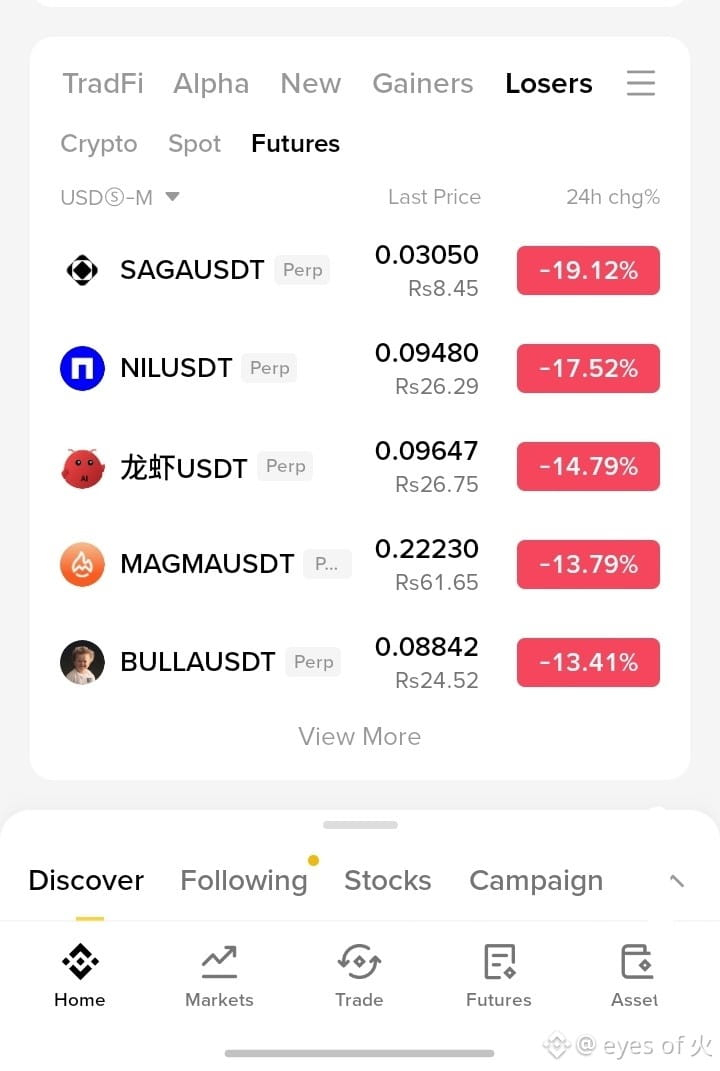
Binance Futures sieht gerade einen erheblichen Verkaufsdruck.
$SAGA USDT bekommt den größten Schlag ab, ist um 19,12% gefallen und handelt derzeit um 0.03050. $NIL USDT hat ebenfalls eine turbulente Session und fällt um 17,52% auf etwa 0.09480.
Dann gibt es noch $龙虾 USDT, das erneut um 14,79% nachgibt und aktuell bei rund 0.09647 liegt.
Das ist eine ziemlich aggressive Bewegung innerhalb von nur 24 Stunden. Wenn Coins so schnell fallen, würde ich normalerweise nicht eilig sein, um das „Dip“ aufzusammeln. Entscheidend ist vielmehr zu sehen, ob Käufer tatsächlich eingreifen und den nächsten Unterstützungsbereich halten.
Für Future-Trader können solche Bewegungen auch zu schnellen Liquidationen und größerer Volatilität führen.
#BlackRockBuildsTokenizedPortfoliosForOndo #PolymarketBankFailureBetsDrawFDICConcern #StrategyStriveAdd2305BitcoinThisWeek #TrumpRejectsIranHormuzReopening #SECSaysTokenBuybacksNotAutoSecurities
Binance Futures sieht gerade einen erheblichen Verkaufsdruck.
$SAGA USDT bekommt den größten Schlag ab, ist um 19,12% gefallen und handelt derzeit um 0.03050. $NIL USDT hat ebenfalls eine turbulente Session und fällt um 17,52% auf etwa 0.09480.
Dann gibt es noch $龙虾 USDT, das erneut um 14,79% nachgibt und aktuell bei rund 0.09647 liegt.
Das ist eine ziemlich aggressive Bewegung innerhalb von nur 24 Stunden. Wenn Coins so schnell fallen, würde ich normalerweise nicht eilig sein, um das „Dip“ aufzusammeln. Entscheidend ist vielmehr zu sehen, ob Käufer tatsächlich eingreifen und den nächsten Unterstützungsbereich halten.
Für Future-Trader können solche Bewegungen auch zu schnellen Liquidationen und größerer Volatilität führen.
#BlackRockBuildsTokenizedPortfoliosForOndo #PolymarketBankFailureBetsDrawFDICConcern #StrategyStriveAdd2305BitcoinThisWeek #TrumpRejectsIranHormuzReopening #SECSaysTokenBuybacksNotAutoSecurities
$SAGA USDT bekommt den größten Schlag ab, ist um 19,12% gefallen und handelt derzeit um 0.03050. $NIL USDT hat ebenfalls eine turbulente Session und fällt um 17,52% auf etwa 0.09480.
Dann gibt es noch $龙虾 USDT, das erneut um 14,79% nachgibt und aktuell bei rund 0.09647 liegt.
Das ist eine ziemlich aggressive Bewegung innerhalb von nur 24 Stunden. Wenn Coins so schnell fallen, würde ich normalerweise nicht eilig sein, um das „Dip“ aufzusammeln. Entscheidend ist vielmehr zu sehen, ob Käufer tatsächlich eingreifen und den nächsten Unterstützungsbereich halten.
Für Future-Trader können solche Bewegungen auch zu schnellen Liquidationen und größerer Volatilität führen.
#BlackRockBuildsTokenizedPortfoliosForOndo #PolymarketBankFailureBetsDrawFDICConcern #StrategyStriveAdd2305BitcoinThisWeek #TrumpRejectsIranHormuzReopening #SECSaysTokenBuybacksNotAutoSecurities
1
4
2.7k
·
--
Bullisch
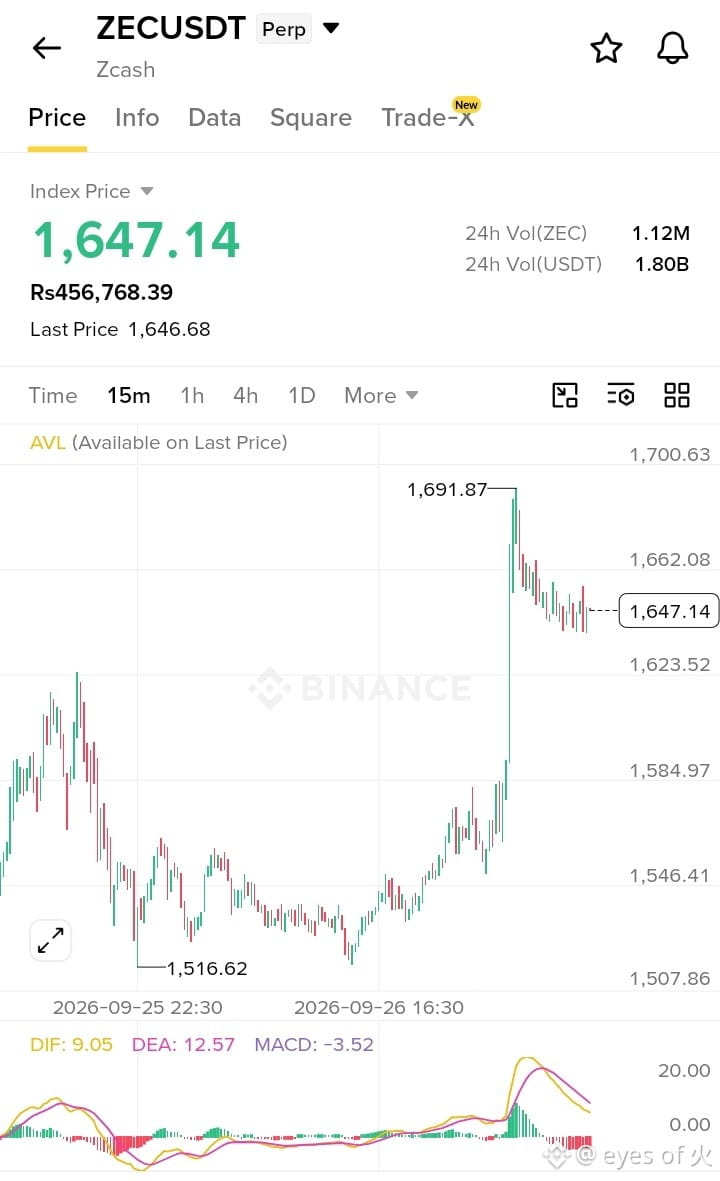
Binance $ZEC USDT Perpetual-Update: Der 15-Minuten-Chart zeigt einen scharfen Ausbruch von etwa 1.585 bis zu einem Hoch von 1.691,87, gefolgt von einer Konsolidierung nahe 1.647. Der Indexpreis liegt bei 1.647,14 und der letzte Preis bei 1.646,68. Wichtige Widerstände liegen bei 1.662 und 1.692, während der Support bei etwa 1.623 und 1.585 liegt. Das 24-Stunden-Volumen beträgt 1,12 Mio. ZEC, im Wert von rund 1,80 Mrd. USD. MACD kühlt ab: DIF 9,05, DEA 12,57, Histogramm -3,52. Der Momentum bleibt hoch, aber kurzfristige Käufer müssen den Support verteidigen, bevor sich eine weitere mögliche bullische Fortsetzung nach oben entwickelt.
#CircleTetherFreezeBitgetHackerWallet #StrategyProposesDailyDividendsForPreferreds #StrategyProposesDailyDividendsForPreferreds #CoinMarketCapCompletesCoinglassAcquisition #CircleMints500MUSDCOnSolana
{spot}(ZECUSDT)
Binance $ZEC USDT Perpetual-Update: Der 15-Minuten-Chart zeigt einen scharfen Ausbruch von etwa 1.585 bis zu einem Hoch von 1.691,87, gefolgt von einer Konsolidierung nahe 1.647. Der Indexpreis liegt bei 1.647,14 und der letzte Preis bei 1.646,68. Wichtige Widerstände liegen bei 1.662 und 1.692, während der Support bei etwa 1.623 und 1.585 liegt. Das 24-Stunden-Volumen beträgt 1,12 Mio. ZEC, im Wert von rund 1,80 Mrd. USD. MACD kühlt ab: DIF 9,05, DEA 12,57, Histogramm -3,52. Der Momentum bleibt hoch, aber kurzfristige Käufer müssen den Support verteidigen, bevor sich eine weitere mögliche bullische Fortsetzung nach oben entwickelt.
#CircleTetherFreezeBitgetHackerWallet #StrategyProposesDailyDividendsForPreferreds #StrategyProposesDailyDividendsForPreferreds #CoinMarketCapCompletesCoinglassAcquisition #CircleMints500MUSDCOnSolana
#CircleTetherFreezeBitgetHackerWallet #StrategyProposesDailyDividendsForPreferreds #StrategyProposesDailyDividendsForPreferreds #CoinMarketCapCompletesCoinglassAcquisition #CircleMints500MUSDCOnSolana
1
294
·
--
Bullisch
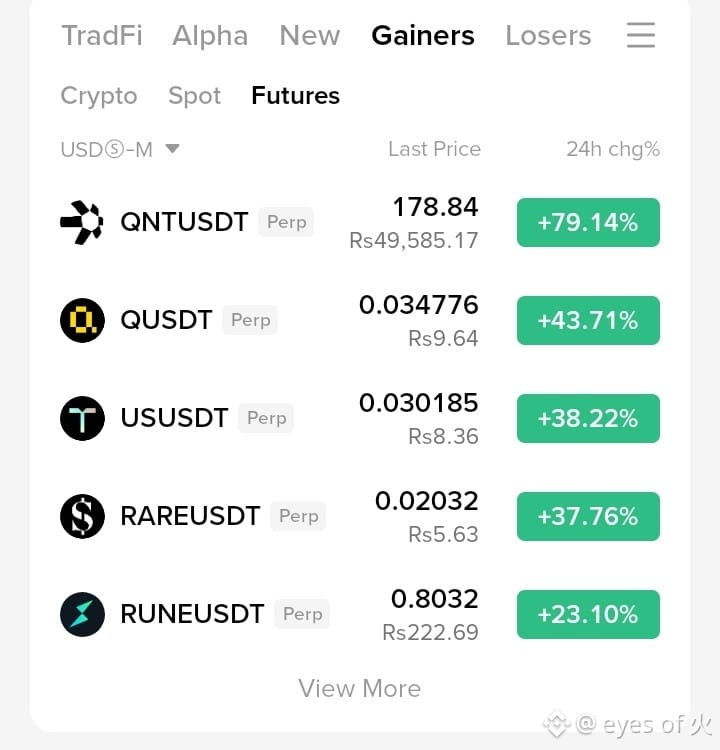
🚨Binance Futures-Gewinner bewegen sich schnell!🚨
Die Top 3 Gewinner auf dem Binance Futures-Board im Screenshot:
🔹 $QNT USDT — +79.14%
🔹 $Q USDT — +43.71%
🔹 $US USDT — +38.22%
Alle drei zeigen starke 24H-Bewegungen auf Binance Futures. 📈
⚠️ Der Handel mit Futures birgt erhebliche Risiken, insbesondere nach starken Kursanstiegen. Verwalte immer dein Risiko und betreibe deine eigene Recherche.
#StrategyProposesDailyDividendsForPreferreds #CircleTetherFreezeBitgetHackerWallet #CircleMints500MUSDCOnSolana #CoinMarketCapCompletesCoinglassAcquisition #SECSaysTokenBuybacksNotAutoSecurities
{alpha}(CT_7840xee962a61432231c2ede6946515beb02290cb516ad087bb06a731e922b2a5f57a::us::US)
{alpha}(560xc07e1300dc138601fa6b0b59f8d0fa477e690589)
{future}(QNTUSDT)
🚨Binance Futures-Gewinner bewegen sich schnell!🚨
Die Top 3 Gewinner auf dem Binance Futures-Board im Screenshot:
🔹 $QNT USDT — +79.14%
🔹 $Q USDT — +43.71%
🔹 $US USDT — +38.22%
Alle drei zeigen starke 24H-Bewegungen auf Binance Futures. 📈
⚠️ Der Handel mit Futures birgt erhebliche Risiken, insbesondere nach starken Kursanstiegen. Verwalte immer dein Risiko und betreibe deine eigene Recherche.
#StrategyProposesDailyDividendsForPreferreds #CircleTetherFreezeBitgetHackerWallet #CircleMints500MUSDCOnSolana #CoinMarketCapCompletesCoinglassAcquisition #SECSaysTokenBuybacksNotAutoSecurities
Die Top 3 Gewinner auf dem Binance Futures-Board im Screenshot:
🔹 $QNT USDT — +79.14%
🔹 $Q USDT — +43.71%
🔹 $US USDT — +38.22%
Alle drei zeigen starke 24H-Bewegungen auf Binance Futures. 📈
⚠️ Der Handel mit Futures birgt erhebliche Risiken, insbesondere nach starken Kursanstiegen. Verwalte immer dein Risiko und betreibe deine eigene Recherche.
#StrategyProposesDailyDividendsForPreferreds #CircleTetherFreezeBitgetHackerWallet #CircleMints500MUSDCOnSolana #CoinMarketCapCompletesCoinglassAcquisition #SECSaysTokenBuybacksNotAutoSecurities
1
614
·
--
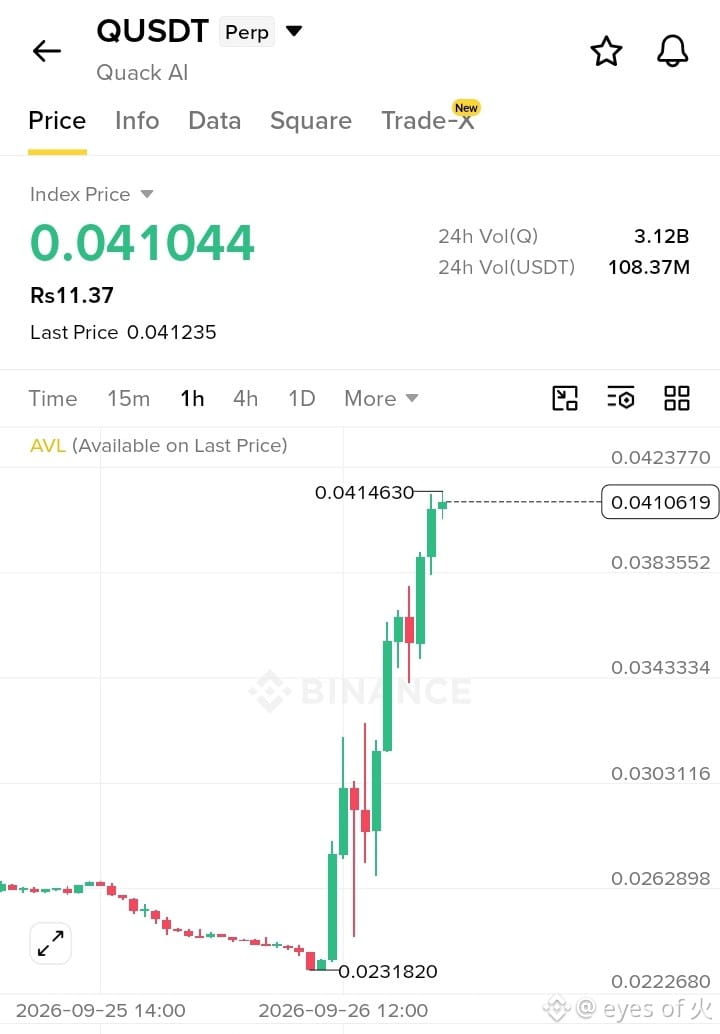
$Q USDT (Quack AI) zeigt auf Binance Futures starke Dynamik. Das 1H-Chart zeigt eine deutliche Bewegung von etwa 0.02318 auf 0.04146: Der Indexkurs liegt nahe 0.04104, der letzte Kurs bei rund 0.04124. Das 24H-Volumen beträgt ungefähr 3,12 Mrd. QUSDT, was etwa 108,37 Mio. US-Dollar entspricht. MACD ist bullisch: DIF 0.0037579, DEA 0.0022297 und MACD 0.0015282. Ausgewiesene Gewinne: Heute +68,14%, 7D +67,07%, 30D +87,14%. Die Performance der letzten 90 Tage, 180 Tage und 1 Jahr liegt bei +139,43%, +341,77% und +65,59% jeweils. Die Volatilität bleibt hoch, daher Risiken sorgfältig steuern.
#QNTRises39% #CircleMints500MUSDCOnSolana #PolymarketBankFailureBetsDrawFDICConcern #BlackRockBuildsTokenizedPortfoliosForOndo #BitwiseFilesToListNEARETFOnNYSEArca
$Q USDT (Quack AI) zeigt auf Binance Futures starke Dynamik. Das 1H-Chart zeigt eine deutliche Bewegung von etwa 0.02318 auf 0.04146: Der Indexkurs liegt nahe 0.04104, der letzte Kurs bei rund 0.04124. Das 24H-Volumen beträgt ungefähr 3,12 Mrd. QUSDT, was etwa 108,37 Mio. US-Dollar entspricht. MACD ist bullisch: DIF 0.0037579, DEA 0.0022297 und MACD 0.0015282. Ausgewiesene Gewinne: Heute +68,14%, 7D +67,07%, 30D +87,14%. Die Performance der letzten 90 Tage, 180 Tage und 1 Jahr liegt bei +139,43%, +341,77% und +65,59% jeweils. Die Volatilität bleibt hoch, daher Risiken sorgfältig steuern.
#QNTRises39% #CircleMints500MUSDCOnSolana #PolymarketBankFailureBetsDrawFDICConcern #BlackRockBuildsTokenizedPortfoliosForOndo #BitwiseFilesToListNEARETFOnNYSEArca
#QNTRises39% #CircleMints500MUSDCOnSolana #PolymarketBankFailureBetsDrawFDICConcern #BlackRockBuildsTokenizedPortfoliosForOndo #BitwiseFilesToListNEARETFOnNYSEArca
258
·
--
Bullisch
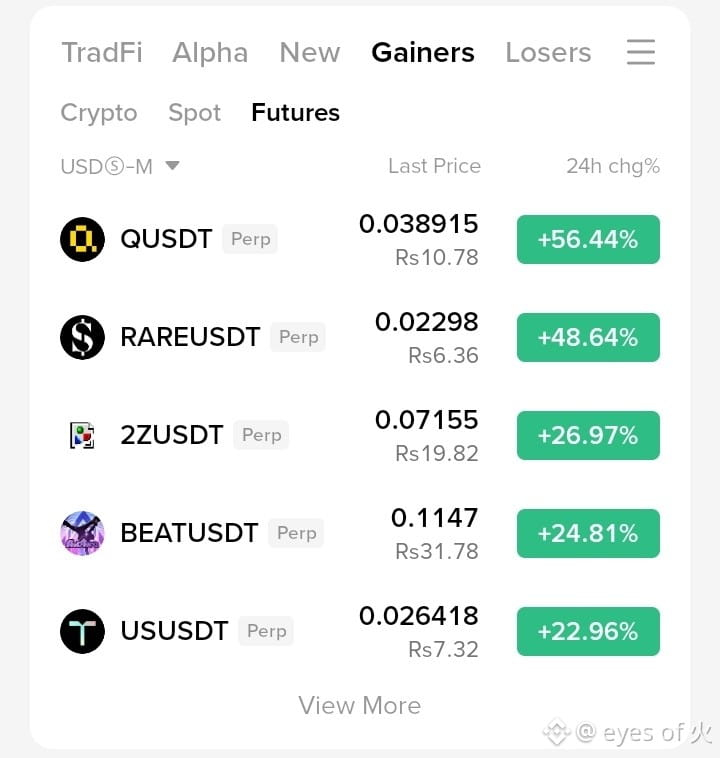
🚀 Binance Futures Watchlist 🚀
🔥 $Q USDT, $RARE USDT und $2Z USDT zeigen heute Dynamik und stehen unter den größten Gewinnern auf dem Bildschirm. Trader, die diese Paare beobachten, sollten vor dem Einstieg auf Volumen, Kursverhalten, Support und Widerstand achten. 📊
📈 Signal-Idee: Verfolge keine plötzlichen Pumps. Warte auf einen Ausbruch mit Bestätigung oder ziehe einen Einstieg nach einem Pullback in Betracht, nachdem der Support hält. ⚡
QUSDT: starke Dynamik
RAREUSDT: bullischer Druck
2ZUSDT: Aufwärtsbewegung
Trade klug, steuere das Risiko und verwende stets Stop-Loss-Niveaus. 🛡️
{future}(2ZUSDT)
{future}(RAREUSDT)
{alpha}(560xc07e1300dc138601fa6b0b59f8d0fa477e690589)
#CircleMints500MUSDCOnSolana #PolymarketBankFailureBetsDrawFDICConcern #QNTRises39% #BlackRockBuildsTokenizedPortfoliosForOndo #SECCommissionerPeirceToLeaveOct2
🚀 Binance Futures Watchlist 🚀
🔥 $Q USDT, $RARE USDT und $2Z USDT zeigen heute Dynamik und stehen unter den größten Gewinnern auf dem Bildschirm. Trader, die diese Paare beobachten, sollten vor dem Einstieg auf Volumen, Kursverhalten, Support und Widerstand achten. 📊
📈 Signal-Idee: Verfolge keine plötzlichen Pumps. Warte auf einen Ausbruch mit Bestätigung oder ziehe einen Einstieg nach einem Pullback in Betracht, nachdem der Support hält. ⚡
QUSDT: starke Dynamik
RAREUSDT: bullischer Druck
2ZUSDT: Aufwärtsbewegung
Trade klug, steuere das Risiko und verwende stets Stop-Loss-Niveaus. 🛡️
#CircleMints500MUSDCOnSolana #PolymarketBankFailureBetsDrawFDICConcern #QNTRises39% #BlackRockBuildsTokenizedPortfoliosForOndo #SECCommissionerPeirceToLeaveOct2
🔥 $Q USDT, $RARE USDT und $2Z USDT zeigen heute Dynamik und stehen unter den größten Gewinnern auf dem Bildschirm. Trader, die diese Paare beobachten, sollten vor dem Einstieg auf Volumen, Kursverhalten, Support und Widerstand achten. 📊
📈 Signal-Idee: Verfolge keine plötzlichen Pumps. Warte auf einen Ausbruch mit Bestätigung oder ziehe einen Einstieg nach einem Pullback in Betracht, nachdem der Support hält. ⚡
QUSDT: starke Dynamik
RAREUSDT: bullischer Druck
2ZUSDT: Aufwärtsbewegung
Trade klug, steuere das Risiko und verwende stets Stop-Loss-Niveaus. 🛡️
#CircleMints500MUSDCOnSolana #PolymarketBankFailureBetsDrawFDICConcern #QNTRises39% #BlackRockBuildsTokenizedPortfoliosForOndo #SECCommissionerPeirceToLeaveOct2
652
·
--
Bullisch
Übersetzung ansehen
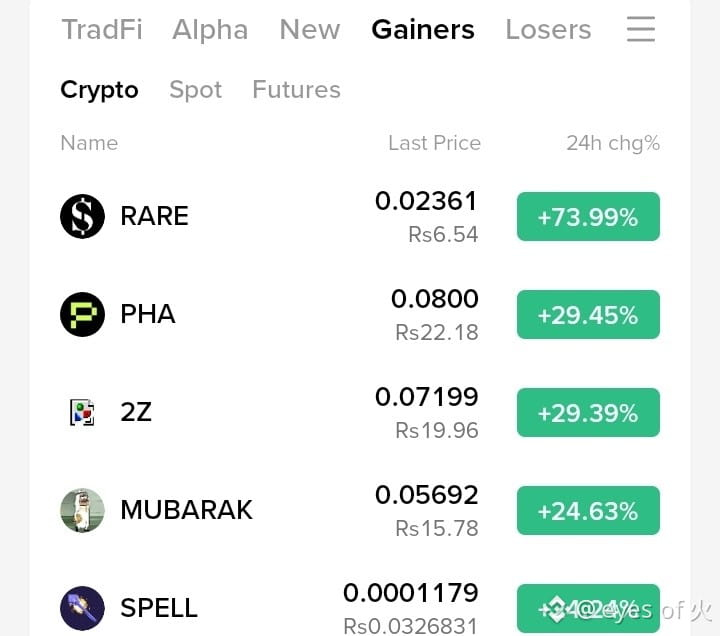
🚀 Top 3 Binance Gainers Right Now! 📈
The Gainers section is heating up, with these three coins showing strong 24H momentum:
🥇 $RARE — +73.99%
🥈 $PHA 🚀 Top 3 Binance Gainers Right Now! 📈
The Gainers section is heating up, with these three coins showing strong 24H momentum:
🥇 RARE — +73.99%
🥈 PHA — +29.45%
🥉 $2Z — +29.39%
🔥 Strong moves, strong momentum, and plenty of attention from traders. Keep an eye on these coins as the market continues to move.
⚠️ High gains can also mean high volatility. Do your own research before trading.
— +29.45%
🥉 2Z — +29.39%
🔥 Strong moves, strong momentum, and plenty of attention from traders. Keep an eye on these coins as the market continues to move.
⚠️ High gains can also mean high volatility. Do your own research before trading.
#QNTRises39% #CircleMints500MUSDCOnSolana #PolymarketBankFailureBetsDrawFDICConcern #SECCommissionerPeirceToLeaveOct2 #BlackRockBuildsTokenizedPortfoliosForOndo
{future}(2ZUSDT)
{future}(PHAUSDT)
{future}(RAREUSDT)
🚀 Top 3 Binance Gainers Right Now! 📈
The Gainers section is heating up, with these three coins showing strong 24H momentum:
🥇 $RARE — +73.99%
🥈 $PHA 🚀 Top 3 Binance Gainers Right Now! 📈
The Gainers section is heating up, with these three coins showing strong 24H momentum:
🥇 RARE — +73.99%
🥈 PHA — +29.45%
🥉 $2Z — +29.39%
🔥 Strong moves, strong momentum, and plenty of attention from traders. Keep an eye on these coins as the market continues to move.
⚠️ High gains can also mean high volatility. Do your own research before trading.
— +29.45%
🥉 2Z — +29.39%
🔥 Strong moves, strong momentum, and plenty of attention from traders. Keep an eye on these coins as the market continues to move.
⚠️ High gains can also mean high volatility. Do your own research before trading.
#QNTRises39% #CircleMints500MUSDCOnSolana #PolymarketBankFailureBetsDrawFDICConcern #SECCommissionerPeirceToLeaveOct2 #BlackRockBuildsTokenizedPortfoliosForOndo
The Gainers section is heating up, with these three coins showing strong 24H momentum:
🥇 $RARE — +73.99%
🥈 $PHA 🚀 Top 3 Binance Gainers Right Now! 📈
The Gainers section is heating up, with these three coins showing strong 24H momentum:
🥇 RARE — +73.99%
🥈 PHA — +29.45%
🥉 $2Z — +29.39%
🔥 Strong moves, strong momentum, and plenty of attention from traders. Keep an eye on these coins as the market continues to move.
⚠️ High gains can also mean high volatility. Do your own research before trading.
— +29.45%
🥉 2Z — +29.39%
🔥 Strong moves, strong momentum, and plenty of attention from traders. Keep an eye on these coins as the market continues to move.
⚠️ High gains can also mean high volatility. Do your own research before trading.
#QNTRises39% #CircleMints500MUSDCOnSolana #PolymarketBankFailureBetsDrawFDICConcern #SECCommissionerPeirceToLeaveOct2 #BlackRockBuildsTokenizedPortfoliosForOndo
1
373
·
--
Bärisch
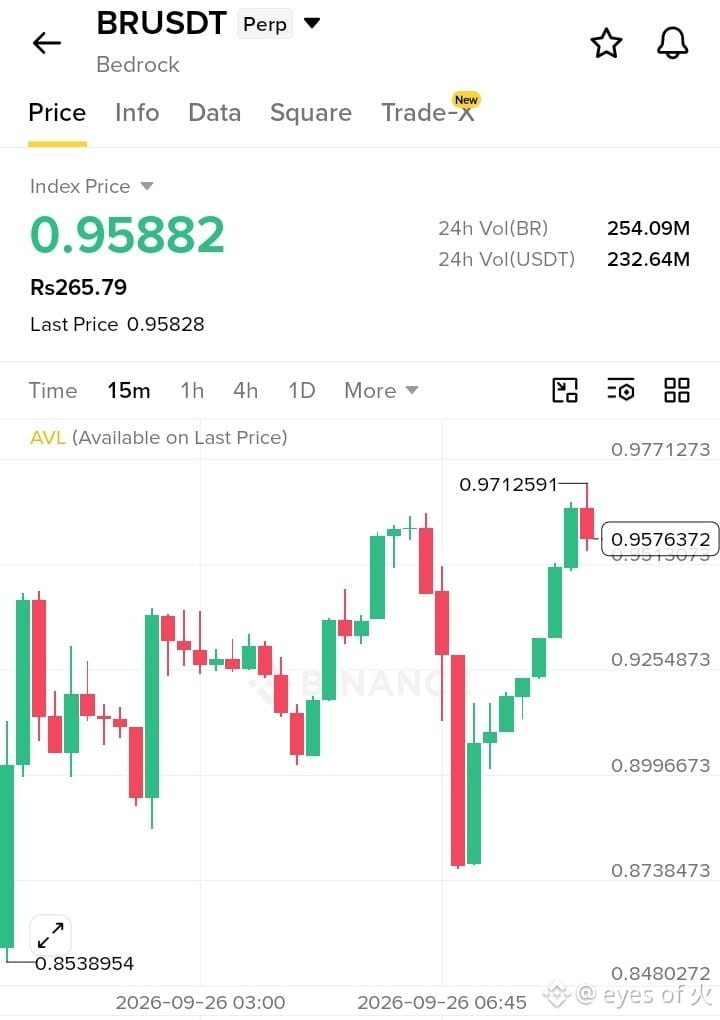
📊 $BR (Bedrock) Binance Futures Update — 15M-Chart
$BR zeigt auf dem 15-Minuten-Zeitrahmen eine starke Erholung. Laut Screenshot ist der Indexpreis 0.95882 und der Letztpreis 0.95828. Das jüngste Hoch lag bei 0.9712591, während im Chart ein unmittelbarer Widerstandsbereich bei 0.9713–0.9771 zu erkennen ist. Wenn der Kurs diesen Bereich überzeugend durchbricht, könnte der Momentum-Effekt weiter verstärkt werden. Unten liegen wichtige Unterstützungen bei 0.9255, 0.8997 und 0.8738.
Das 24H-Futures-Volumen liegt ungefähr bei 254,09M BR / 232,64M USDT, was auf eine starke Handelsaktivität hindeutet. Auch der MACD zeigt eine Erholung an: DIF 0.00803, DEA 0.00541, MACD 0.00262.
Performance: Heute +10,78%, 7T -0,73%, 30T +263,47%, 90T +481,62%, 180T +663,63%, 1Y +1.135,85%.
Binance BRUSDT-Perpetuals erlauben einen Hebel von bis zu 25x, aber Hebelvolatilität verstärkt die Schwankungen erheblich.
Wichtige Levels:
🔹 Widerstand: 0.9713 → 0.9771
🔹 Unterstützung: 0.9255 → 0.8997 → 0.8738
🔹 Aktueller Bereich: ~0.958
🔹 Volumen beobachten + 15M-Kerzen-Schluss abwarten, bevor du irgendein Setup einleitet.
Keine finanzielle Beratung. Hohe Volatilität — Risiken sorgfältig managen.
#QNTRises39% #PolymarketBankFailureBetsDrawFDICConcern #BlackRockBuildsTokenizedPortfoliosForOndo #BitwiseFilesToListNEARETFOnNYSEArca #SECCommissionerPeirceToLeaveOct2
{future}(BRUSDT)
📊 $BR (Bedrock) Binance Futures Update — 15M-Chart
$BR zeigt auf dem 15-Minuten-Zeitrahmen eine starke Erholung. Laut Screenshot ist der Indexpreis 0.95882 und der Letztpreis 0.95828. Das jüngste Hoch lag bei 0.9712591, während im Chart ein unmittelbarer Widerstandsbereich bei 0.9713–0.9771 zu erkennen ist. Wenn der Kurs diesen Bereich überzeugend durchbricht, könnte der Momentum-Effekt weiter verstärkt werden. Unten liegen wichtige Unterstützungen bei 0.9255, 0.8997 und 0.8738.
Das 24H-Futures-Volumen liegt ungefähr bei 254,09M BR / 232,64M USDT, was auf eine starke Handelsaktivität hindeutet. Auch der MACD zeigt eine Erholung an: DIF 0.00803, DEA 0.00541, MACD 0.00262.
Performance: Heute +10,78%, 7T -0,73%, 30T +263,47%, 90T +481,62%, 180T +663,63%, 1Y +1.135,85%.
Binance BRUSDT-Perpetuals erlauben einen Hebel von bis zu 25x, aber Hebelvolatilität verstärkt die Schwankungen erheblich.
Wichtige Levels:
🔹 Widerstand: 0.9713 → 0.9771
🔹 Unterstützung: 0.9255 → 0.8997 → 0.8738
🔹 Aktueller Bereich: ~0.958
🔹 Volumen beobachten + 15M-Kerzen-Schluss abwarten, bevor du irgendein Setup einleitet.
Keine finanzielle Beratung. Hohe Volatilität — Risiken sorgfältig managen.
#QNTRises39% #PolymarketBankFailureBetsDrawFDICConcern #BlackRockBuildsTokenizedPortfoliosForOndo #BitwiseFilesToListNEARETFOnNYSEArca #SECCommissionerPeirceToLeaveOct2
$BR zeigt auf dem 15-Minuten-Zeitrahmen eine starke Erholung. Laut Screenshot ist der Indexpreis 0.95882 und der Letztpreis 0.95828. Das jüngste Hoch lag bei 0.9712591, während im Chart ein unmittelbarer Widerstandsbereich bei 0.9713–0.9771 zu erkennen ist. Wenn der Kurs diesen Bereich überzeugend durchbricht, könnte der Momentum-Effekt weiter verstärkt werden. Unten liegen wichtige Unterstützungen bei 0.9255, 0.8997 und 0.8738.
Das 24H-Futures-Volumen liegt ungefähr bei 254,09M BR / 232,64M USDT, was auf eine starke Handelsaktivität hindeutet. Auch der MACD zeigt eine Erholung an: DIF 0.00803, DEA 0.00541, MACD 0.00262.
Performance: Heute +10,78%, 7T -0,73%, 30T +263,47%, 90T +481,62%, 180T +663,63%, 1Y +1.135,85%.
Binance BRUSDT-Perpetuals erlauben einen Hebel von bis zu 25x, aber Hebelvolatilität verstärkt die Schwankungen erheblich.
Wichtige Levels:
🔹 Widerstand: 0.9713 → 0.9771
🔹 Unterstützung: 0.9255 → 0.8997 → 0.8738
🔹 Aktueller Bereich: ~0.958
🔹 Volumen beobachten + 15M-Kerzen-Schluss abwarten, bevor du irgendein Setup einleitet.
Keine finanzielle Beratung. Hohe Volatilität — Risiken sorgfältig managen.
#QNTRises39% #PolymarketBankFailureBetsDrawFDICConcern #BlackRockBuildsTokenizedPortfoliosForOndo #BitwiseFilesToListNEARETFOnNYSEArca #SECCommissionerPeirceToLeaveOct2
131
·
--
Bullisch
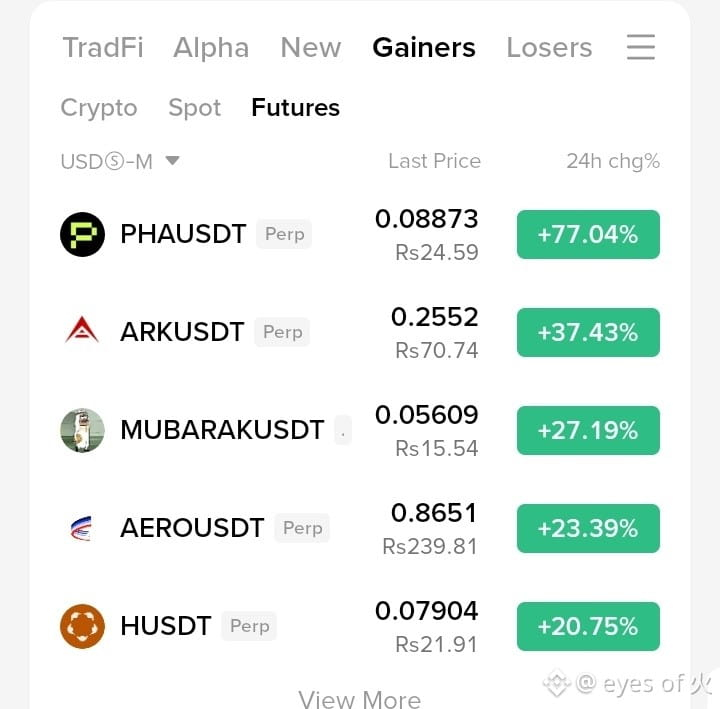
🔥 Der Altcoin-Run kommt ins Rollen!
Die Top-Gewinner auf der Futures-Tafel zeigen starke Moves: $PHA +77%, $ARK +37% und $MUBARAK +27% in den letzten 24 Stunden. In der Zwischenzeit steigen auch AERO +23% und H +20% weiter. 🚀
Diese Bewegungen zeigen, wohin sich die Aufmerksamkeit des Marktes kurzfristig gerade richtet. Starkes Volumen, Momentum und Futures-Aktivität können Chancen schaffen, aber die Volatilität ist extrem hoch. Verwalte immer dein Risiko und jage keine grünen Kerzen blind hinterher. Momentum ist mächtig, aber Timing und Disziplin sind am wichtigsten. 📈
#BitwiseFilesToListNEARETFOnNYSEArca #BitcoinSpotETFsTurnNetPositiveYTD #CircleTetherFreezeBitgetHackerWallet #QNTRises39% #SECSaysBuybacksUpgradesDontMakeTokenSecurity
{future}(MUBARAKUSDT)
{future}(ARKUSDT)
{future}(PHAUSDT)
🔥 Der Altcoin-Run kommt ins Rollen!
Die Top-Gewinner auf der Futures-Tafel zeigen starke Moves: $PHA +77%, $ARK +37% und $MUBARAK +27% in den letzten 24 Stunden. In der Zwischenzeit steigen auch AERO +23% und H +20% weiter. 🚀
Diese Bewegungen zeigen, wohin sich die Aufmerksamkeit des Marktes kurzfristig gerade richtet. Starkes Volumen, Momentum und Futures-Aktivität können Chancen schaffen, aber die Volatilität ist extrem hoch. Verwalte immer dein Risiko und jage keine grünen Kerzen blind hinterher. Momentum ist mächtig, aber Timing und Disziplin sind am wichtigsten. 📈
#BitwiseFilesToListNEARETFOnNYSEArca #BitcoinSpotETFsTurnNetPositiveYTD #CircleTetherFreezeBitgetHackerWallet #QNTRises39% #SECSaysBuybacksUpgradesDontMakeTokenSecurity
Die Top-Gewinner auf der Futures-Tafel zeigen starke Moves: $PHA +77%, $ARK +37% und $MUBARAK +27% in den letzten 24 Stunden. In der Zwischenzeit steigen auch AERO +23% und H +20% weiter. 🚀
Diese Bewegungen zeigen, wohin sich die Aufmerksamkeit des Marktes kurzfristig gerade richtet. Starkes Volumen, Momentum und Futures-Aktivität können Chancen schaffen, aber die Volatilität ist extrem hoch. Verwalte immer dein Risiko und jage keine grünen Kerzen blind hinterher. Momentum ist mächtig, aber Timing und Disziplin sind am wichtigsten. 📈
#BitwiseFilesToListNEARETFOnNYSEArca #BitcoinSpotETFsTurnNetPositiveYTD #CircleTetherFreezeBitgetHackerWallet #QNTRises39% #SECSaysBuybacksUpgradesDontMakeTokenSecurity
318
·
--
Bullisch
Übersetzung ansehen
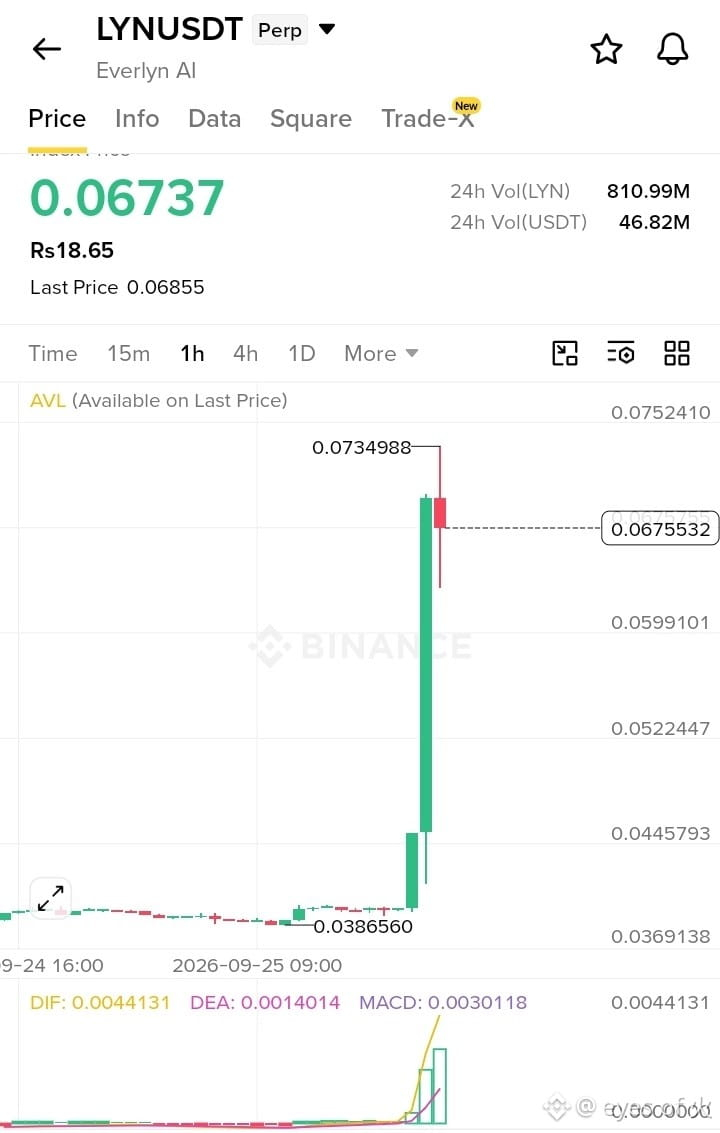
**$LYN USDT Perp (Binance) – Strong Bullish Breakout**
Everlyn AI (LYN) perpetual on Binance just printed a massive green candle on the 1H chart. Price exploded from ~0.03865 to a high of 0.0735, currently trading around **0.06737** (+strong double-digit gains).
24h Volume: **810.99M LYN / 46.82M USDT** – extremely high activity.
MACD is strongly positive (DIF 0.0044, DEA 0.0014, MACD 0.0030) with clear bullish momentum.
This is a classic volume-driven pump on the AI video narrative. Watch for pullbacks toward 0.055–0.060 as potential support. High volatility – manage risk carefully. Not financial advice.
#BinanceWillListHyperliquid(HYPE) #NYAndPolymarketSueEachOther #CFTCUpdatesGuidanceOnTokenizedAssets #QNTRises39% #BitgetBreachForgedRequestsNotStolenKeys
{future}(LYNUSDT)
**$LYN USDT Perp (Binance) – Strong Bullish Breakout**
Everlyn AI (LYN) perpetual on Binance just printed a massive green candle on the 1H chart. Price exploded from ~0.03865 to a high of 0.0735, currently trading around **0.06737** (+strong double-digit gains).
24h Volume: **810.99M LYN / 46.82M USDT** – extremely high activity.
MACD is strongly positive (DIF 0.0044, DEA 0.0014, MACD 0.0030) with clear bullish momentum.
This is a classic volume-driven pump on the AI video narrative. Watch for pullbacks toward 0.055–0.060 as potential support. High volatility – manage risk carefully. Not financial advice.
#BinanceWillListHyperliquid(HYPE) #NYAndPolymarketSueEachOther #CFTCUpdatesGuidanceOnTokenizedAssets #QNTRises39% #BitgetBreachForgedRequestsNotStolenKeys
Everlyn AI (LYN) perpetual on Binance just printed a massive green candle on the 1H chart. Price exploded from ~0.03865 to a high of 0.0735, currently trading around **0.06737** (+strong double-digit gains).
24h Volume: **810.99M LYN / 46.82M USDT** – extremely high activity.
MACD is strongly positive (DIF 0.0044, DEA 0.0014, MACD 0.0030) with clear bullish momentum.
This is a classic volume-driven pump on the AI video narrative. Watch for pullbacks toward 0.055–0.060 as potential support. High volatility – manage risk carefully. Not financial advice.
#BinanceWillListHyperliquid(HYPE) #NYAndPolymarketSueEachOther #CFTCUpdatesGuidanceOnTokenizedAssets #QNTRises39% #BitgetBreachForgedRequestsNotStolenKeys
351
·
--
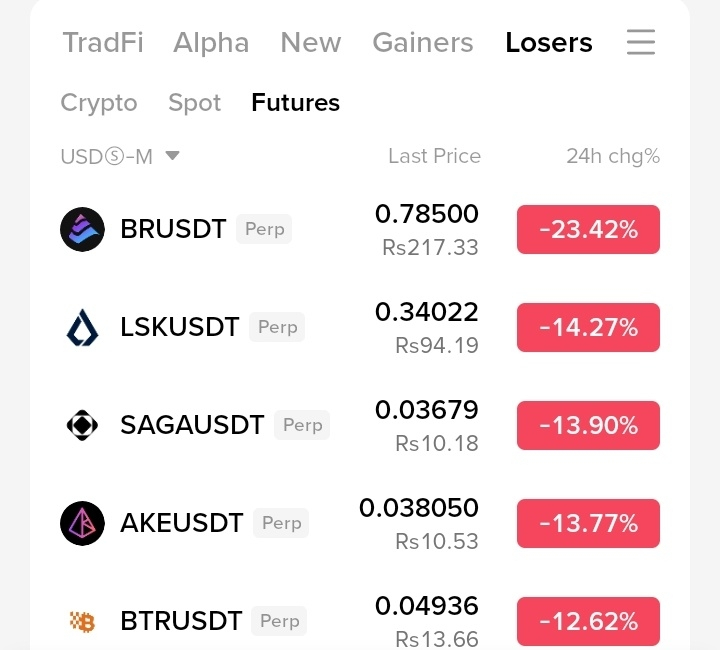
🚨 Top-Futures-Verlierer heute
Der Krypto-Futures-Markt zeigt einen starken Abwärtsdruck: Mehrere Tokens verzeichnen große Verluste innerhalb von 24 Stunden.
🔻 $BR USDT: -23.42%
🔻 $LSK USDT: -14.27%
🔻 $SAGA USDT: -13.90%
🔻 AKEUSDT: -13.77%
🔻 BTRUSDT: -12.62%
Hohe Volatilität bedeutet ein höheres Risiko. Trader sollten die Kursbewegung, das Volumen, die Unterstützungs-/Widerstandsniveaus im Blick behalten und das Risiko sorgfältig managen, bevor sie eine Position eingehen.
📊 Bleib wachsam. Trade klug.
⚠️ Keine Finanzberatung.
#BinanceWillListHyperliquid(HYPE) #NYAndPolymarketSueEachOther #QNTRises39% #BitgetBreachForgedRequestsNotStolenKeys
{future}(SAGAUSDT)
{future}(LSKUSDT)
{future}(BRUSDT)
🚨 Top-Futures-Verlierer heute
Der Krypto-Futures-Markt zeigt einen starken Abwärtsdruck: Mehrere Tokens verzeichnen große Verluste innerhalb von 24 Stunden.
🔻 $BR USDT: -23.42%
🔻 $LSK USDT: -14.27%
🔻 $SAGA USDT: -13.90%
🔻 AKEUSDT: -13.77%
🔻 BTRUSDT: -12.62%
Hohe Volatilität bedeutet ein höheres Risiko. Trader sollten die Kursbewegung, das Volumen, die Unterstützungs-/Widerstandsniveaus im Blick behalten und das Risiko sorgfältig managen, bevor sie eine Position eingehen.
📊 Bleib wachsam. Trade klug.
⚠️ Keine Finanzberatung.
#BinanceWillListHyperliquid(HYPE) #NYAndPolymarketSueEachOther #QNTRises39% #BitgetBreachForgedRequestsNotStolenKeys
Der Krypto-Futures-Markt zeigt einen starken Abwärtsdruck: Mehrere Tokens verzeichnen große Verluste innerhalb von 24 Stunden.
🔻 $BR USDT: -23.42%
🔻 $LSK USDT: -14.27%
🔻 $SAGA USDT: -13.90%
🔻 AKEUSDT: -13.77%
🔻 BTRUSDT: -12.62%
Hohe Volatilität bedeutet ein höheres Risiko. Trader sollten die Kursbewegung, das Volumen, die Unterstützungs-/Widerstandsniveaus im Blick behalten und das Risiko sorgfältig managen, bevor sie eine Position eingehen.
📊 Bleib wachsam. Trade klug.
⚠️ Keine Finanzberatung.
#BinanceWillListHyperliquid(HYPE) #NYAndPolymarketSueEachOther #QNTRises39% #BitgetBreachForgedRequestsNotStolenKeys
351
·
--
Bärisch
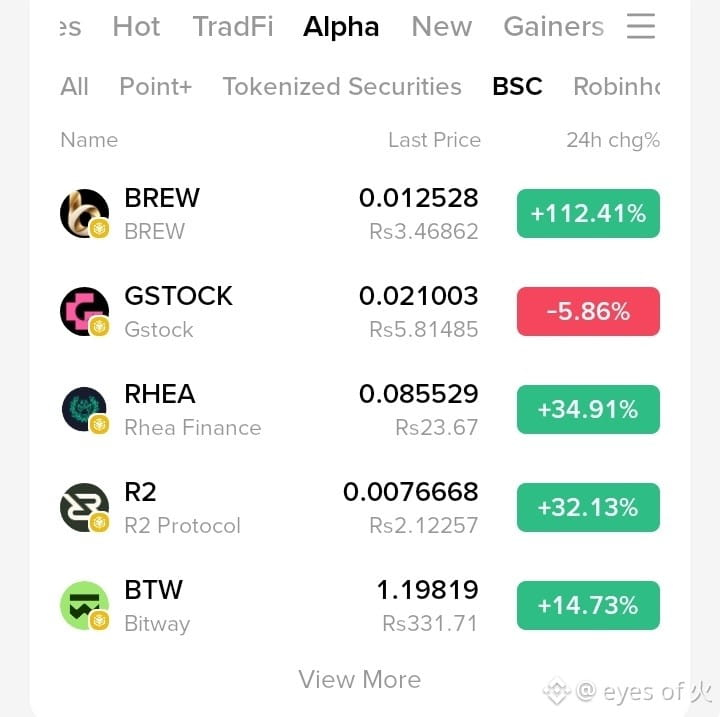
🔥 Beobachten Sie die Binance Alpha-Gewinner: BREW, GSTOCK & RHEA
Der Binance-Alpha-Bereich BSC zeigt heute einige interessante Bewegungen: BREW, GSTOCK und RHEA stechen auf der Liste besonders hervor.
🚀 BREW — zeigt die stärkste Bewegung unter diesen drei mit einem +112,41 % 24H-Change im Screenshot.
📊 GSTOCK — aktuell mit einem -5,86 % 24H-Change, was es zu einem spannenden Kandidaten macht, den man im Blick behalten sollte für Marktdynamik und mögliche Erholung.
⚡ RHEA — zeigt eine solide Dynamik mit einem +34,91 % 24H-Change.
Alpha-Märkte können sich schnell bewegen—also machen Sie immer DYOR und gehen Sie sorgfältig mit dem Risiko um.
$BREW $GSTOCK $RHEA 👀
#BinanceWillListHyperliquid(HYPE) #QNTRises39% #BitgetBreachForgedRequestsNotStolenKeys #BitcoinSpotETFsTurnNetPositiveYTD #CFTCUpdatesGuidanceOnTokenizedAssets
{alpha}(560x4c067de26475e1cefee8b8d1f6e2266b33a2372e)
{alpha}(560xcafdbce93477261db8250e42bdae6e66733f9e20)
{alpha}(560xfa6d9b504848606eb9aec04ccc161d169b3f2159)
🔥 Beobachten Sie die Binance Alpha-Gewinner: BREW, GSTOCK & RHEA
Der Binance-Alpha-Bereich BSC zeigt heute einige interessante Bewegungen: BREW, GSTOCK und RHEA stechen auf der Liste besonders hervor.
🚀 BREW — zeigt die stärkste Bewegung unter diesen drei mit einem +112,41 % 24H-Change im Screenshot.
📊 GSTOCK — aktuell mit einem -5,86 % 24H-Change, was es zu einem spannenden Kandidaten macht, den man im Blick behalten sollte für Marktdynamik und mögliche Erholung.
⚡ RHEA — zeigt eine solide Dynamik mit einem +34,91 % 24H-Change.
Alpha-Märkte können sich schnell bewegen—also machen Sie immer DYOR und gehen Sie sorgfältig mit dem Risiko um.
$BREW $GSTOCK $RHEA 👀
#BinanceWillListHyperliquid(HYPE) #QNTRises39% #BitgetBreachForgedRequestsNotStolenKeys #BitcoinSpotETFsTurnNetPositiveYTD #CFTCUpdatesGuidanceOnTokenizedAssets
Der Binance-Alpha-Bereich BSC zeigt heute einige interessante Bewegungen: BREW, GSTOCK und RHEA stechen auf der Liste besonders hervor.
🚀 BREW — zeigt die stärkste Bewegung unter diesen drei mit einem +112,41 % 24H-Change im Screenshot.
📊 GSTOCK — aktuell mit einem -5,86 % 24H-Change, was es zu einem spannenden Kandidaten macht, den man im Blick behalten sollte für Marktdynamik und mögliche Erholung.
⚡ RHEA — zeigt eine solide Dynamik mit einem +34,91 % 24H-Change.
Alpha-Märkte können sich schnell bewegen—also machen Sie immer DYOR und gehen Sie sorgfältig mit dem Risiko um.
$BREW $GSTOCK $RHEA 👀
#BinanceWillListHyperliquid(HYPE) #QNTRises39% #BitgetBreachForgedRequestsNotStolenKeys #BitcoinSpotETFsTurnNetPositiveYTD #CFTCUpdatesGuidanceOnTokenizedAssets
2
415
Anmelden und weiter Inhalte entdecken
Krypto-Nutzer weltweit auf Binance Square kennenlernen
⚡️ Bleib in Sachen Krypto stets am Puls.
💬 Die weltgrößte Kryptobörse vertraut darauf.
👍 Erhalte verlässliche Einblicke von verifizierten Creators.
E-Mail-Adresse/Telefonnummer
Trendthemen
FedProposesPaymentStablecoinRules
1,720 Aufrufe
78 Kommentare
🚨 DIE FED UND DIE SEC BAUEN STILLSCHWEIGEND DAS REGELWERK AUF, AUF DAS KRYPTO GEWARTET HAT.
Die Fed hat gerade einen formellen Rahmen für Emittenten von Zahlungs-Stablecoins im Rahmen des GENIUS Act vorgeschlagen. Dazu gehören ein 1:1-Backing mit hochwertigen, liquiden Rücklagen wie kurzfristigen Treasuries, Kapitalanforderungen, Standards für das Risikomanagement, Verwahrungsregeln sowie ein eigenes Genehmigungsverfahren für Banken, die Stablecoins ausgeben möchten.
Fast zur gleichen Zeit haben SEC-Mitarbeiter klargestellt, dass es sich bei funktionalen Krypto-Netzwerken bei Dingen wie Token-Rückkäufen nicht automatisch selbst um einen Wertpapiervertrag handelt. Die SEC betonte außerdem, dass dies eine Guidance der Mitarbeiter ist – keine verbindliche neue Regel.
Diese Kombination ist entscheidend.
Fed → klarere Regeln für digitale Dollars.
SEC → mehr Klarheit für funktionale Krypto-Assets.
Das ist keine Deregulierung.
Es ist etwas potenziell noch Wichtigeres:
Krypto wird tiefer in das regulierte Finanzsystem hineingezogen, statt aus ihm herausgedrückt zu werden.
Bei Stablecoins ist die Richtung eindeutig: mehr Rücklagen, mehr Aufsicht, mehr Bankbeteiligung.
Und wenn dieser Rahmen den Kommentierungsprozess übersteht, könnte die nächste Phase der Einführung weniger nach „Krypto vs. Banken“… aussehen.
…und eher so, als würden Banken selbst kryptonatives Geld herausgeben. 👀
$USDC $CRCL $COIN $ETH
#fedproposespaymentstablecoinrules #ChinaMayLetAlibabaByteDanceBuyNvidiaChips #USChinaRelease$30BTariffCutProductLists #SKoreaFSCConsidersVirtualAssetMarketMaker #ChinaIndustrialProfitGrowthSlowsFourthMonth
KimHotbae
·1 Likes
·1.5k Aufrufe
ChinaMayLetAlibabaByteDanceBuyNvidiaChips
4,039 Aufrufe
181 Kommentare
USChinaRelease$30BTariffCutProductLists
539 Aufrufe
21 Kommentare