

R3N 1
577 Beiträge

R3N 1
Melden
Nutzer blockieren
Web3 & crypto Analyst || Breaking down market moves || token updates daily ➪NFA!!!
0 Following
3 Follower
3 Like gegeben
Beiträge
·
--
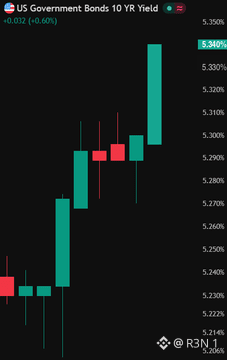
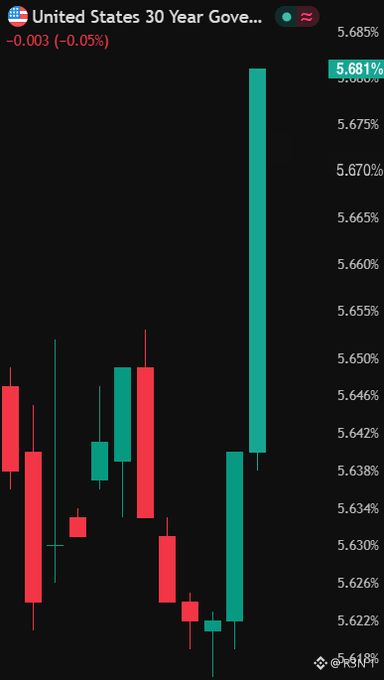
Der Zinssatz für Hypotheken mit 30 Jahren ist heute auf 8% gestiegen – keine Prognose, sondern ein tatsächlicher Wert, der höchste Stand seit über zwei Jahrzehnten. Diese Formulierung sollte man direkt richtigstellen: Das kommt nicht erst, es ist bereits da. Die Bewegungen an den Anleihemärkten dahinter sind real und eindrucksvoll. Die Rendite der 10-jährigen US-Staatsanleihe stieg im Tagesverlauf auf 5,342%, überschritt damit ihr Hoch aus dem Jahr 2007 und erreichte das höchste Niveau seit Anfang 2002 – ein 24-Jahres-Hoch. Die 30-jährige Anleihe kletterte auf 5,652% bis 5,68% je nach dem exakten Kurs, wobei auch das der höchste Stand seit Juni 2002 ist. Laut Reuters bedeutete das den größten vierteljährlichen Anstieg dieser globalen Benchmark in diesem Jahrhundert. Getrieben wurde das durch anhaltend hohe Inflation, enorme staatliche Kreditaufnahmen, eine starke wirtschaftliche Entwicklung, die die Zins-Erwartungen hochhält, und laut dem Handelsteam von AllianceBernstein verkaufen Hedgefonds und REITs hypothekenbesicherte Wertpapiere, um lange laufende Treasuries in großem Umfang zu kaufen: Steigende Zinsen dämpfen die vorzeitigen Rückzahlungen und verlängern die MBS-Duration, wodurch sie anderswo Kapital abstoßen müssen, um das auszugleichen. Es lohnt sich, festzuhalten, dass der tatsächliche Zinssatz für eine feste 30-jährige Hypothek laut der Messung von Mortgage News Daily bei 8% landete, während separate MBA-Daten für die Woche bis zum gleichen Zeitraum den durchschnittlichen Vertragszinssatz mit 7,70% auswiesen – ein Hinweis darauf, dass unterschiedliche Kreditzins-Tracker je nach Methodik und Zeitpunkt deutlich abweichende Zahlen zeigen können. Mein ehrlicher Eindruck: Das ist ein echtes, finanzmarktbezogenes Ereignis über mehrere Jahrzehnte, kein Hype – unabhängig bestätigt von Bloomberg, Reuters und CNBC. Der Mechanismus, der das mit Hypotheken verbindet, ist unkompliziert und bewährt: Die 10-jährige Rendite preist direkt die Zinssätze für 30-jährige Hypotheken, also war das kein überraschender Nebeneffekt, sondern genau der erwartete. Worauf ich achte: Ob sich dieser Renditesprung stabilisiert oder weiter in Richtung der tatsächlichen Hochs von 2007 oder 2002 klettert – und was das für die Wohnraum- bzw. Immobilienzahlbarkeit bedeutet sowie wie zinssensibel Krypto selbst in Richtung Q4 reagiert. $BTC #BTC Price Analysis# #Meme Alpha# $ETH
Der Zinssatz für Hypotheken mit 30 Jahren ist heute auf 8% gestiegen – keine Prognose, sondern ein tatsächlicher Wert, der höchste Stand seit über zwei Jahrzehnten. Diese Formulierung sollte man direkt richtigstellen: Das kommt nicht erst, es ist bereits da. Die Bewegungen an den Anleihemärkten dahinter sind real und eindrucksvoll. Die Rendite der 10-jährigen US-Staatsanleihe stieg im Tagesverlauf auf 5,342%, überschritt damit ihr Hoch aus dem Jahr 2007 und erreichte das höchste Niveau seit Anfang 2002 – ein 24-Jahres-Hoch. Die 30-jährige Anleihe kletterte auf 5,652% bis 5,68% je nach dem exakten Kurs, wobei auch das der höchste Stand seit Juni 2002 ist. Laut Reuters bedeutete das den größten vierteljährlichen Anstieg dieser globalen Benchmark in diesem Jahrhundert. Getrieben wurde das durch anhaltend hohe Inflation, enorme staatliche Kreditaufnahmen, eine starke wirtschaftliche Entwicklung, die die Zins-Erwartungen hochhält, und laut dem Handelsteam von AllianceBernstein verkaufen Hedgefonds und REITs hypothekenbesicherte Wertpapiere, um lange laufende Treasuries in großem Umfang zu kaufen: Steigende Zinsen dämpfen die vorzeitigen Rückzahlungen und verlängern die MBS-Duration, wodurch sie anderswo Kapital abstoßen müssen, um das auszugleichen. Es lohnt sich, festzuhalten, dass der tatsächliche Zinssatz für eine feste 30-jährige Hypothek laut der Messung von Mortgage News Daily bei 8% landete, während separate MBA-Daten für die Woche bis zum gleichen Zeitraum den durchschnittlichen Vertragszinssatz mit 7,70% auswiesen – ein Hinweis darauf, dass unterschiedliche Kreditzins-Tracker je nach Methodik und Zeitpunkt deutlich abweichende Zahlen zeigen können. Mein ehrlicher Eindruck: Das ist ein echtes, finanzmarktbezogenes Ereignis über mehrere Jahrzehnte, kein Hype – unabhängig bestätigt von Bloomberg, Reuters und CNBC. Der Mechanismus, der das mit Hypotheken verbindet, ist unkompliziert und bewährt: Die 10-jährige Rendite preist direkt die Zinssätze für 30-jährige Hypotheken, also war das kein überraschender Nebeneffekt, sondern genau der erwartete. Worauf ich achte: Ob sich dieser Renditesprung stabilisiert oder weiter in Richtung der tatsächlichen Hochs von 2007 oder 2002 klettert – und was das für die Wohnraum- bzw. Immobilienzahlbarkeit bedeutet sowie wie zinssensibel Krypto selbst in Richtung Q4 reagiert. $BTC #BTC Price Analysis# #Meme Alpha# $ETH
23
·
--
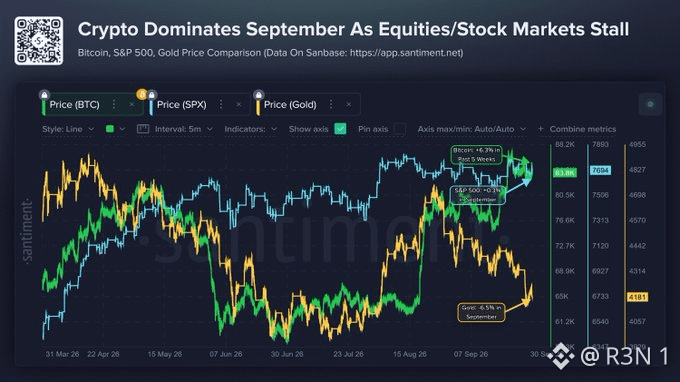
Gold hatte gerade seinen schlechtesten relativen Monat gegenüber Bitcoin seit einiger Zeit: um über 6 % gefallen, während BTC ungefähr 7 % zulegte. Der S&P bewegte sich kaum. Drei Assets, drei völlig unterschiedliche Septembers. Laut Santiment-Intelligence-Daten vom 1. Oktober ist das kein nur einmonatiger Ausreißer, sondern Teil einer längeren Entwicklung. Bitcoin gewann über die fünf Wochen vom 18. August bis zum 22. September 36 %, gegenüber 0,8 % beim S&P und einem Rückgang von 1,5 % bei Gold in diesem Zeitraum. Vor den monatlichen September-Zahlen lag der Wert bei rund 7 % für BTC, ein flacher S&P und Gold mit einem Minus von über 6 %. Besonders auffällig: Das durchbricht das übliche Muster von Bitcoin. Historisch war der September bisher sein schwächster Monat, nicht ein Rallye-Monat. Santiment verweist auf eine konkrete Mischung von Auslösern statt nur auf Momentum. US-Spot-Bitcoin-ETFs zogen im September Milliarden an, darunter mehrere große Zufluss-Tage am Monatsende, und Strategy legte in der Zeit noch einmal 1.665 BTC zu. Auch die Rückkaufaktivität im Treasury und Short-Squeezes während Durchbrüchen über Widerstände wurden als beitragende Faktoren genannt. Erwähnenswert ist außerdem der Kontext der Korrelation. Eine separate Analyse vom 26. September fand, dass die 90-Tage-Korrelation von Bitcoin mit Gold tatsächlich ein Sechs-Jahres-Hoch um die Mitte des Septembers erreichte, obwohl sich die beiden Assets in den Renditen des Septembers stark auseinanderentwickelten. Das muss nicht im Widerspruch stehen: Korrelation misst, wie zwei Assets sich im Zeitverlauf gemeinsam bewegen – nicht, ob eines in einem bestimmten Monat besser abschneidet als das andere. Mein ehrliches Fazit: Das ist eine echte, gut belegte Divergenz, nicht ein cherry-picked Vergleich. Mehrere unabhängige Medien bestätigen dieselben Santiment-Zahlen. Ob das eine dauerhafte Entkopplung von der traditionellen Korrelation signalisiert oder lediglich ein ungewöhnlich starker Monat für $BTC ist, bleibt jedoch eine offene Frage. Worauf ich achte: ob diese Outperformance in den Oktober hineinreicht, und ob sich diese hohe Gold-Korrelation wieder durchsetzt oder weiterhin gebrochen bleibt. #BTC Price Analysis# #Altcoin Season# $XAUt
Gold hatte gerade seinen schlechtesten relativen Monat gegenüber Bitcoin seit einiger Zeit: um über 6 % gefallen, während BTC ungefähr 7 % zulegte. Der S&P bewegte sich kaum. Drei Assets, drei völlig unterschiedliche Septembers. Laut Santiment-Intelligence-Daten vom 1. Oktober ist das kein nur einmonatiger Ausreißer, sondern Teil einer längeren Entwicklung. Bitcoin gewann über die fünf Wochen vom 18. August bis zum 22. September 36 %, gegenüber 0,8 % beim S&P und einem Rückgang von 1,5 % bei Gold in diesem Zeitraum. Vor den monatlichen September-Zahlen lag der Wert bei rund 7 % für BTC, ein flacher S&P und Gold mit einem Minus von über 6 %. Besonders auffällig: Das durchbricht das übliche Muster von Bitcoin. Historisch war der September bisher sein schwächster Monat, nicht ein Rallye-Monat. Santiment verweist auf eine konkrete Mischung von Auslösern statt nur auf Momentum. US-Spot-Bitcoin-ETFs zogen im September Milliarden an, darunter mehrere große Zufluss-Tage am Monatsende, und Strategy legte in der Zeit noch einmal 1.665 BTC zu. Auch die Rückkaufaktivität im Treasury und Short-Squeezes während Durchbrüchen über Widerstände wurden als beitragende Faktoren genannt. Erwähnenswert ist außerdem der Kontext der Korrelation. Eine separate Analyse vom 26. September fand, dass die 90-Tage-Korrelation von Bitcoin mit Gold tatsächlich ein Sechs-Jahres-Hoch um die Mitte des Septembers erreichte, obwohl sich die beiden Assets in den Renditen des Septembers stark auseinanderentwickelten. Das muss nicht im Widerspruch stehen: Korrelation misst, wie zwei Assets sich im Zeitverlauf gemeinsam bewegen – nicht, ob eines in einem bestimmten Monat besser abschneidet als das andere. Mein ehrliches Fazit: Das ist eine echte, gut belegte Divergenz, nicht ein cherry-picked Vergleich. Mehrere unabhängige Medien bestätigen dieselben Santiment-Zahlen. Ob das eine dauerhafte Entkopplung von der traditionellen Korrelation signalisiert oder lediglich ein ungewöhnlich starker Monat für $BTC ist, bleibt jedoch eine offene Frage. Worauf ich achte: ob diese Outperformance in den Oktober hineinreicht, und ob sich diese hohe Gold-Korrelation wieder durchsetzt oder weiterhin gebrochen bleibt. #BTC Price Analysis# #Altcoin Season# $XAUt
40
·
--
Zehn Millionen maschinell initiierte Zahlungen, abgewickelt durch Software-Agenten, die für API-Aufrufe und Daten bezahlen – ohne dass ein Mensch beim Checkout beteiligt ist. Das ist ein wirklich anderer Anwendungsfall als die Zahlungsvolumina, für die XRPL normalerweise gutgeschrieben wird. t54s x402-Facilitator ist die Infrastruktur, die die eigentliche Arbeit übernimmt: Er ermöglicht KI-Agenten, für geschützte Endpunkte direkt im Kontext normaler HTTP-Anfragen in $XRP oder RLUSD zu bezahlen, ohne API-Schlüssel, ohne Konten. Der Facilitator verifiziert und begleicht signierte (presigned) Zahlungs-Transaktionen direkt im Ledger. Das Netzwerk hat bereits im Juli die Marke von 1 Million agentischen Transaktionen überschritten, und der Engineering Lead von RippleX hatte die Entwicklung Richtung 10 Millionen zu diesem Zeitpunkt als unmittelbar bevorstehend markiert – mit 100 Millionen als plausibles Szenario innerhalb von ein paar Jahren. Es ist erwähnenswert, dass die kumulierte Anzahl selbst vom Betreiber des Facilitators gemeldet wird, anhand eines On-Chain-Fingerprints verfolgt wird und nicht unabhängig von einer dritten Partei geprüft wurde. Das Ökosystem rund um diesen Ansatz wächst parallel – nicht nur der Zahlungs-„Rail“ allein. t54s XRPL AI Hub listet jetzt 80 laufende x402-Dienste, Mastercards Verifiable-Intent-Standard wurde im Juli integriert, um nachzuweisen, wer eine Zahlung autorisiert hat und unter welchen Limits, bevor sie abgewickelt wird, und Virtuals Protocol hat sein Agent Commerce Protocol auf XRPL gebracht – für escrowed Jobs und eine evaluatorbasierte Verifikation. Mein ehrlicher Eindruck: Das ist ein echter, messbarer Anwendungsfall – keine erzählerische Behauptung. Die Agenten handeln tatsächlich on-chain in diesem Volumen. Ob es sich sinnvoll in Richtung des 100-Millionen-Ziels skaliert, hängt davon ab, ob Agenten außerhalb von Krypto-nativen Tests wirklich angenommen werden – nicht nur davon, dass die Infrastruktur existiert. Worauf ich achte: Ob das Transaktionswachstum von hier an linear bleibt oder sich zu verstärken beginnt, wenn mehr der 80 gelisteten Dienste echte Agenten-Traffic sehen – statt dass es bei konzentrierter Testaktivität bleibt. $XRP #BTC Price Analysis# #Meme Alpha#
Zehn Millionen maschinell initiierte Zahlungen, abgewickelt durch Software-Agenten, die für API-Aufrufe und Daten bezahlen – ohne dass ein Mensch beim Checkout beteiligt ist. Das ist ein wirklich anderer Anwendungsfall als die Zahlungsvolumina, für die XRPL normalerweise gutgeschrieben wird. t54s x402-Facilitator ist die Infrastruktur, die die eigentliche Arbeit übernimmt: Er ermöglicht KI-Agenten, für geschützte Endpunkte direkt im Kontext normaler HTTP-Anfragen in $XRP oder RLUSD zu bezahlen, ohne API-Schlüssel, ohne Konten. Der Facilitator verifiziert und begleicht signierte (presigned) Zahlungs-Transaktionen direkt im Ledger. Das Netzwerk hat bereits im Juli die Marke von 1 Million agentischen Transaktionen überschritten, und der Engineering Lead von RippleX hatte die Entwicklung Richtung 10 Millionen zu diesem Zeitpunkt als unmittelbar bevorstehend markiert – mit 100 Millionen als plausibles Szenario innerhalb von ein paar Jahren. Es ist erwähnenswert, dass die kumulierte Anzahl selbst vom Betreiber des Facilitators gemeldet wird, anhand eines On-Chain-Fingerprints verfolgt wird und nicht unabhängig von einer dritten Partei geprüft wurde. Das Ökosystem rund um diesen Ansatz wächst parallel – nicht nur der Zahlungs-„Rail“ allein. t54s XRPL AI Hub listet jetzt 80 laufende x402-Dienste, Mastercards Verifiable-Intent-Standard wurde im Juli integriert, um nachzuweisen, wer eine Zahlung autorisiert hat und unter welchen Limits, bevor sie abgewickelt wird, und Virtuals Protocol hat sein Agent Commerce Protocol auf XRPL gebracht – für escrowed Jobs und eine evaluatorbasierte Verifikation. Mein ehrlicher Eindruck: Das ist ein echter, messbarer Anwendungsfall – keine erzählerische Behauptung. Die Agenten handeln tatsächlich on-chain in diesem Volumen. Ob es sich sinnvoll in Richtung des 100-Millionen-Ziels skaliert, hängt davon ab, ob Agenten außerhalb von Krypto-nativen Tests wirklich angenommen werden – nicht nur davon, dass die Infrastruktur existiert. Worauf ich achte: Ob das Transaktionswachstum von hier an linear bleibt oder sich zu verstärken beginnt, wenn mehr der 80 gelisteten Dienste echte Agenten-Traffic sehen – statt dass es bei konzentrierter Testaktivität bleibt. $XRP #BTC Price Analysis# #Meme Alpha#

59
·
--
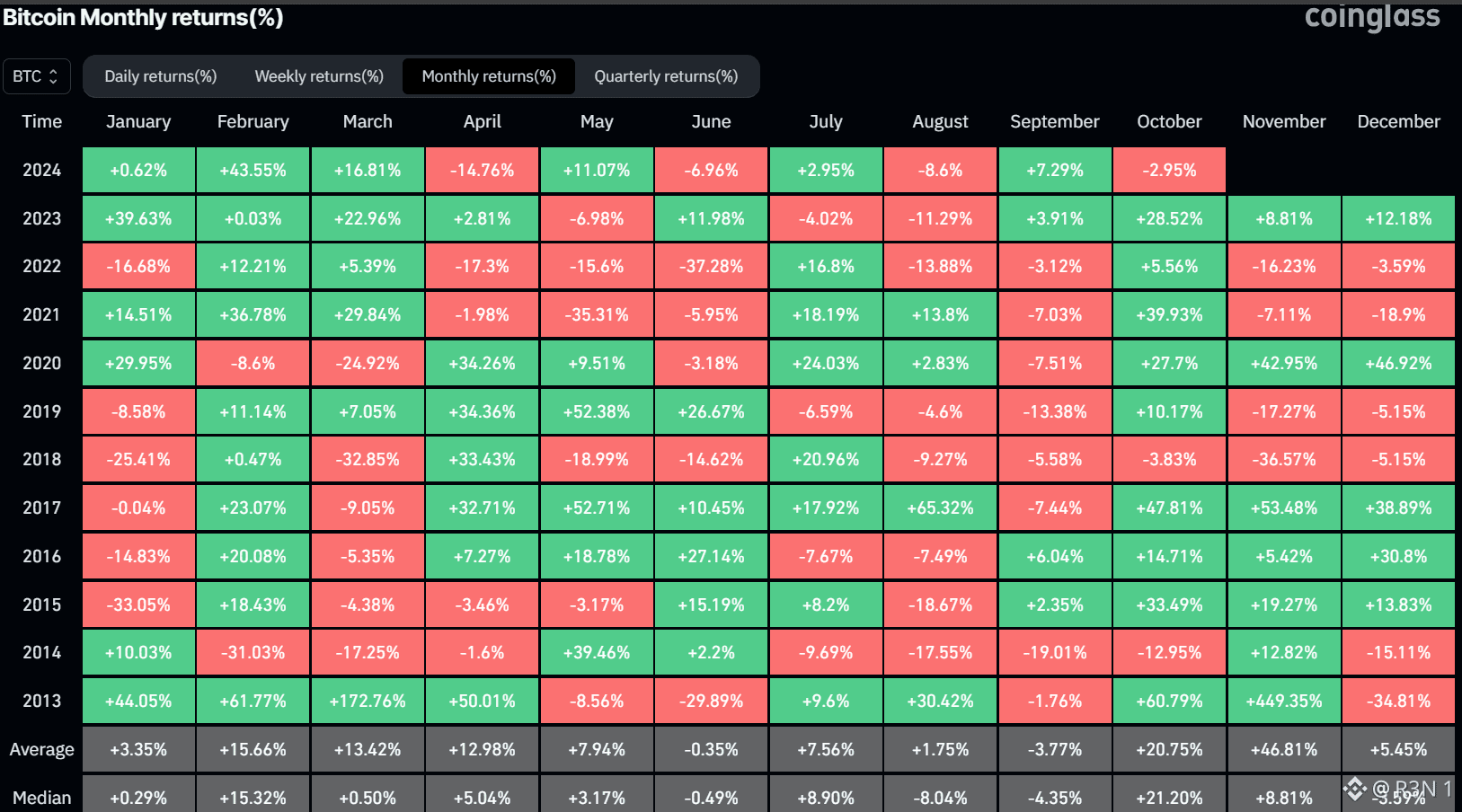
Zehn grüne Oktobers aus dreizehn seit 2013, mit einem durchschnittlichen Plus von rund 19%. Das ist die Statistik, die gerade überall wiederholt wird, und sie stimmt – aber das eine Jahr, das das Muster durchbrochen hat, ist eigentlich aufschlussreicher als die neun, die es bestätigt haben. Oktober 2025 startete mit $BTC in der Nähe von $119.000, erreichte früh im Monat ein Rekordhoch über $126.000, sah aus, als würde der „Uptober“ genau wie im Drehbuch ablaufen, und endete dann mit einem Minus von fast 4% – der erste rote Oktober seit 2018. Ein Aufflammen im US-China-Handelsstreit und Rekordliquidationen haben das verursacht, nicht ein Versagen des saisonalen Musters an sich: Ein externer Makro-Schock hat die historische Tendenz übersteuert. Die eigentliche Lektion ist, dass Saisonalität eine Wahrscheinlichkeit ist – kein Garant. Und sie wurde schon einmal gebrochen, genau dann, wenn etwas Unabhängiges vom Kalender dazwischenkam. Das Setup für diesen Oktober ist jedoch tatsächlich deutlich anders als im vergangenen Jahr: BTC hat erstmals seit 2012 drei grüne Monate in Folge gepostet – rund 25% im August und weitere 9% im September – und dabei ein Hoch von acht Monaten über $87.000 erreicht. Große Akteure haben Berichten zufolge in einem jüngsten 96-Stunden-Zeitraum etwa 30.269 BTC aufgesammelt – im Wert von rund 2,57 Milliarden US-Dollar – und Spot-ETFs haben in zehn Tagen knapp 3 Milliarden US-Dollar angezogen. Als der September selbst im Plus schloss, zeigten die fünf vorherigen Fälle die Oktober-Gewinne viermal, im Durchschnitt knapp unter 17% – eine kleinere Stichprobe, die man erwähnen sollte, ohne sie als separat wegweisend zu behandeln. Mein ehrliches Fazit: Die Basisrate ist real und gut belegt – nicht cherry-pickend –, aber 2025 hat gezeigt, dass starke saisonale Wahrscheinlichkeiten einen echten Makro-Schock nicht übersteuern können. Der Momentum-Look für dieses Jahr wirkt konstruktiver als das Setup im letzten Jahr, aber das ist eine andere Aussage als die, dass das Muster jetzt zuverlässiger geworden sei. Worauf ich achte: Ob in diesem Oktober irgendein vergleichbarer makroökonomischer Auslöser – Handelspolitik, Fed-Überraschungen, was auch immer – so auftaucht, wie es letztes Jahr der Fall war. Denn historisch war genau das die Variable, die dieses Muster gebrochen hat – nicht irgendetwas am Kalender selbst.
Zehn grüne Oktobers aus dreizehn seit 2013, mit einem durchschnittlichen Plus von rund 19%. Das ist die Statistik, die gerade überall wiederholt wird, und sie stimmt – aber das eine Jahr, das das Muster durchbrochen hat, ist eigentlich aufschlussreicher als die neun, die es bestätigt haben. Oktober 2025 startete mit $BTC in der Nähe von $119.000, erreichte früh im Monat ein Rekordhoch über $126.000, sah aus, als würde der „Uptober“ genau wie im Drehbuch ablaufen, und endete dann mit einem Minus von fast 4% – der erste rote Oktober seit 2018. Ein Aufflammen im US-China-Handelsstreit und Rekordliquidationen haben das verursacht, nicht ein Versagen des saisonalen Musters an sich: Ein externer Makro-Schock hat die historische Tendenz übersteuert. Die eigentliche Lektion ist, dass Saisonalität eine Wahrscheinlichkeit ist – kein Garant. Und sie wurde schon einmal gebrochen, genau dann, wenn etwas Unabhängiges vom Kalender dazwischenkam. Das Setup für diesen Oktober ist jedoch tatsächlich deutlich anders als im vergangenen Jahr: BTC hat erstmals seit 2012 drei grüne Monate in Folge gepostet – rund 25% im August und weitere 9% im September – und dabei ein Hoch von acht Monaten über $87.000 erreicht. Große Akteure haben Berichten zufolge in einem jüngsten 96-Stunden-Zeitraum etwa 30.269 BTC aufgesammelt – im Wert von rund 2,57 Milliarden US-Dollar – und Spot-ETFs haben in zehn Tagen knapp 3 Milliarden US-Dollar angezogen. Als der September selbst im Plus schloss, zeigten die fünf vorherigen Fälle die Oktober-Gewinne viermal, im Durchschnitt knapp unter 17% – eine kleinere Stichprobe, die man erwähnen sollte, ohne sie als separat wegweisend zu behandeln. Mein ehrliches Fazit: Die Basisrate ist real und gut belegt – nicht cherry-pickend –, aber 2025 hat gezeigt, dass starke saisonale Wahrscheinlichkeiten einen echten Makro-Schock nicht übersteuern können. Der Momentum-Look für dieses Jahr wirkt konstruktiver als das Setup im letzten Jahr, aber das ist eine andere Aussage als die, dass das Muster jetzt zuverlässiger geworden sei. Worauf ich achte: Ob in diesem Oktober irgendein vergleichbarer makroökonomischer Auslöser – Handelspolitik, Fed-Überraschungen, was auch immer – so auftaucht, wie es letztes Jahr der Fall war. Denn historisch war genau das die Variable, die dieses Muster gebrochen hat – nicht irgendetwas am Kalender selbst.
58
·
--
Übersetzung ansehen
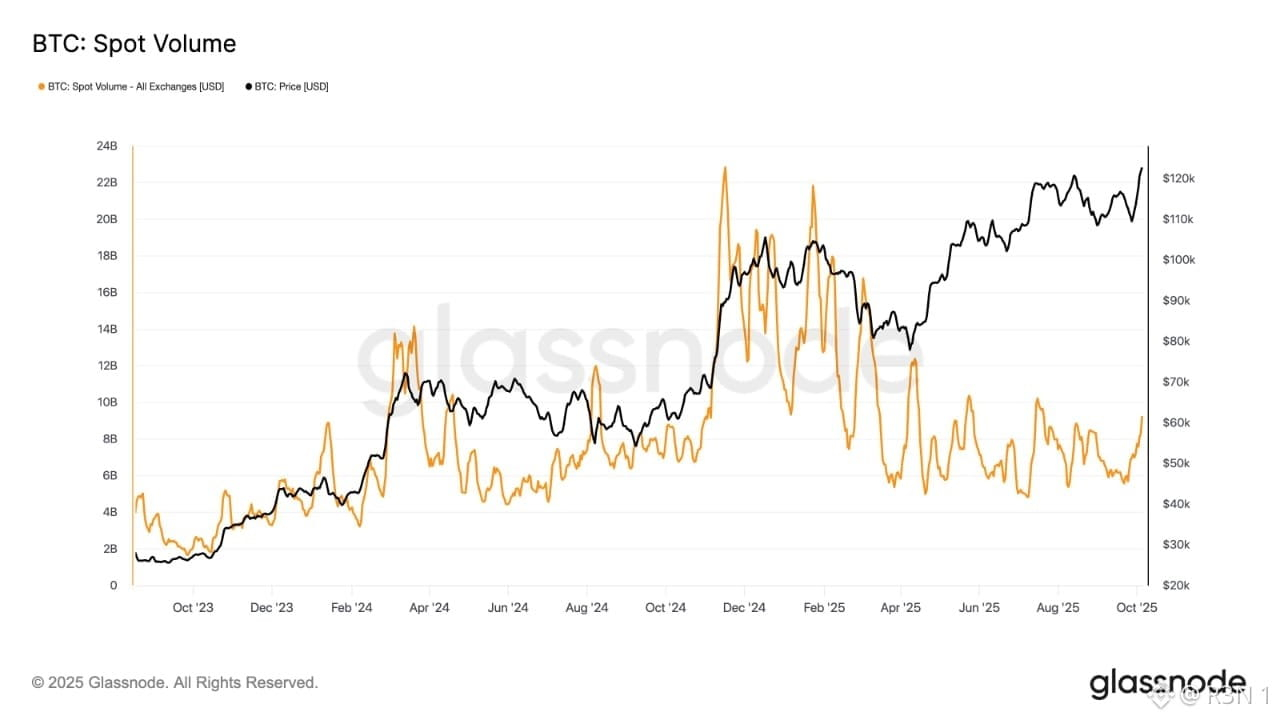
The 4x figure is turnover, not net capital inflow. The same money can get counted repeatedly as positions change hands, and volume captures both buying and selling, not a directional four times more capital rotating into alts. The more accurate read is that trading attention and liquidity have broadened beyond BTC, not that four times as much fresh money showed up.
The breadth data backs that broadening up. 72.5% of tracked altcoins outperformed Bitcoin over the seven days ending September 22, against just 39% during a similar August surge. The Altcoin Season Index climbed to 62%, up from 50% a week earlier and 33% a month prior. Zcash and Uniswap posted 295% and 248% three month gains, dwarfing BTC's own 44%. Worth noting the leverage picture looks calm, altcoin perpetual open interest has barely grown in 30 days, this rotation is showing up in spot participation, not leveraged futures.
Here's the genuine tension. Glassnode itself flagged that similar spikes in this ratio have historically coincided with local Bitcoin price tops, not confirmed altseason continuations. And September 28 specifically saw crypto's total market value fall about 3% while volume surged 125%, a pattern that reads more like forced liquidation than fresh altseason buying.
My honest read: the breadth and index data genuinely support an early altseason case, but Glassnode's own historical framing and last week's volume spike during a selloff argue the opposite just as plausibly. This is a real fork in the data, not a clean signal either way.
What I'm watching: whether altcoin exchange deposits keep climbing, since rising deposits alongside this volume would point toward selling pressure building rather than sustained rotation.
$BTC #BTC Price Analysis# #Altcoin Season# $XAUt
The 4x figure is turnover, not net capital inflow. The same money can get counted repeatedly as positions change hands, and volume captures both buying and selling, not a directional four times more capital rotating into alts. The more accurate read is that trading attention and liquidity have broadened beyond BTC, not that four times as much fresh money showed up.
The breadth data backs that broadening up. 72.5% of tracked altcoins outperformed Bitcoin over the seven days ending September 22, against just 39% during a similar August surge. The Altcoin Season Index climbed to 62%, up from 50% a week earlier and 33% a month prior. Zcash and Uniswap posted 295% and 248% three month gains, dwarfing BTC's own 44%. Worth noting the leverage picture looks calm, altcoin perpetual open interest has barely grown in 30 days, this rotation is showing up in spot participation, not leveraged futures.
Here's the genuine tension. Glassnode itself flagged that similar spikes in this ratio have historically coincided with local Bitcoin price tops, not confirmed altseason continuations. And September 28 specifically saw crypto's total market value fall about 3% while volume surged 125%, a pattern that reads more like forced liquidation than fresh altseason buying.
My honest read: the breadth and index data genuinely support an early altseason case, but Glassnode's own historical framing and last week's volume spike during a selloff argue the opposite just as plausibly. This is a real fork in the data, not a clean signal either way.
What I'm watching: whether altcoin exchange deposits keep climbing, since rising deposits alongside this volume would point toward selling pressure building rather than sustained rotation.
$BTC #BTC Price Analysis# #Altcoin Season# $XAUt
The breadth data backs that broadening up. 72.5% of tracked altcoins outperformed Bitcoin over the seven days ending September 22, against just 39% during a similar August surge. The Altcoin Season Index climbed to 62%, up from 50% a week earlier and 33% a month prior. Zcash and Uniswap posted 295% and 248% three month gains, dwarfing BTC's own 44%. Worth noting the leverage picture looks calm, altcoin perpetual open interest has barely grown in 30 days, this rotation is showing up in spot participation, not leveraged futures.
Here's the genuine tension. Glassnode itself flagged that similar spikes in this ratio have historically coincided with local Bitcoin price tops, not confirmed altseason continuations. And September 28 specifically saw crypto's total market value fall about 3% while volume surged 125%, a pattern that reads more like forced liquidation than fresh altseason buying.
My honest read: the breadth and index data genuinely support an early altseason case, but Glassnode's own historical framing and last week's volume spike during a selloff argue the opposite just as plausibly. This is a real fork in the data, not a clean signal either way.
What I'm watching: whether altcoin exchange deposits keep climbing, since rising deposits alongside this volume would point toward selling pressure building rather than sustained rotation.
$BTC #BTC Price Analysis# #Altcoin Season# $XAUt
57
·
--
Das native Token von UsePaid ist um 38% gefallen, nicht weil das Protokoll versagt hat, sondern weil die darunterliegende Zahlungs-Schiene den Erfolg nicht verarbeiten konnte. Dieser Unterschied ist wichtig, wenn man das einordnet.
Die geltend gemachten Gebühren über UsePaid stiegen am 27. September auf 1,54 Millionen US-Dollar – etwa das 26-Fache des Gesamtbetrags des Vortags und mehr als die gesamten sieben vorherigen Tage zusammen.
UsePaid routet Creator-Gebühren aus Pump.fun-Token-Starts direkt über die Payment Rails von X Money an die vorgesehenen X-Konten, und der Volumensprung hat diese Pipeline zum Bruch gebracht. Das Protokoll hat zunächst Auszahlungen auf 750 US-Dollar pro Empfänger und Tag gedeckelt, dann X-Money-Überweisungen bis Sonntagabend komplett pausiert.
Was mir daran auffällt, ist der Mechanismus, der dieses Volumen erzeugt. Jeder kann einen Pump.fun-Token starten, die Creator-Gebühren an UsePaid umleiten und nahezu jedes beliebige X-Konto als Begünstigten benennen – ohne Zustimmung erforderlich. UsePaids Dashboard soll 367 Tokens angezeigt haben, die ein prominentes Konto nannten, und 764, die Elon Musk benannten; einige Empfänger haben das als „finanziell DDoS-‘t“ bezeichnet. Der Anstieg ist eine Folge dieser dynamischen Beschleunigung.
Bis zum 28. September hat UsePaid einen Claims-Portal bereitgestellt, über das Empfänger direkt in SOL an eine Solana-Wallet auszahlen lassen können – und zwar vollständig unter Umgehung von X Money. Bestehende Guthaben bleiben intakt, und Gebühren laufen weiter an, so das Protokoll: Es handelt sich um eine Auszahlungslaststelle (Payout Bottleneck), nicht um ein Solvenzproblem.
Es lohnt sich, den Umfang genau zu fassen: X Money arbeitet weiterhin unabhängig weiter. Das ist speziell die UsePaid-Integration, die eingeschränkt wurde – nicht eine breitere X-Money-Störung.
Die offene Frage lautet nicht, ob das Claims-Portal als Übergangslösung funktioniert – es ist live und funktionsfähig. Entscheidend ist, ob das UsePaid dazu bringt, dauerhaft eher On-Chain-SOL-Claims gegenüber dem X-Money-Pfad zu priorisieren, auf den es ursprünglich ausgerichtet war, und was das für ein Produkt bedeutet, dessen gesamtes Versprechen reibungslose Fiat-Auszahlungen waren.
$SOL #BTC Price Analysis# #Altcoin Season# $HYPE
Das native Token von UsePaid ist um 38% gefallen, nicht weil das Protokoll versagt hat, sondern weil die darunterliegende Zahlungs-Schiene den Erfolg nicht verarbeiten konnte. Dieser Unterschied ist wichtig, wenn man das einordnet.
Die geltend gemachten Gebühren über UsePaid stiegen am 27. September auf 1,54 Millionen US-Dollar – etwa das 26-Fache des Gesamtbetrags des Vortags und mehr als die gesamten sieben vorherigen Tage zusammen.
UsePaid routet Creator-Gebühren aus Pump.fun-Token-Starts direkt über die Payment Rails von X Money an die vorgesehenen X-Konten, und der Volumensprung hat diese Pipeline zum Bruch gebracht. Das Protokoll hat zunächst Auszahlungen auf 750 US-Dollar pro Empfänger und Tag gedeckelt, dann X-Money-Überweisungen bis Sonntagabend komplett pausiert.
Was mir daran auffällt, ist der Mechanismus, der dieses Volumen erzeugt. Jeder kann einen Pump.fun-Token starten, die Creator-Gebühren an UsePaid umleiten und nahezu jedes beliebige X-Konto als Begünstigten benennen – ohne Zustimmung erforderlich. UsePaids Dashboard soll 367 Tokens angezeigt haben, die ein prominentes Konto nannten, und 764, die Elon Musk benannten; einige Empfänger haben das als „finanziell DDoS-‘t“ bezeichnet. Der Anstieg ist eine Folge dieser dynamischen Beschleunigung.
Bis zum 28. September hat UsePaid einen Claims-Portal bereitgestellt, über das Empfänger direkt in SOL an eine Solana-Wallet auszahlen lassen können – und zwar vollständig unter Umgehung von X Money. Bestehende Guthaben bleiben intakt, und Gebühren laufen weiter an, so das Protokoll: Es handelt sich um eine Auszahlungslaststelle (Payout Bottleneck), nicht um ein Solvenzproblem.
Es lohnt sich, den Umfang genau zu fassen: X Money arbeitet weiterhin unabhängig weiter. Das ist speziell die UsePaid-Integration, die eingeschränkt wurde – nicht eine breitere X-Money-Störung.
Die offene Frage lautet nicht, ob das Claims-Portal als Übergangslösung funktioniert – es ist live und funktionsfähig. Entscheidend ist, ob das UsePaid dazu bringt, dauerhaft eher On-Chain-SOL-Claims gegenüber dem X-Money-Pfad zu priorisieren, auf den es ursprünglich ausgerichtet war, und was das für ein Produkt bedeutet, dessen gesamtes Versprechen reibungslose Fiat-Auszahlungen waren.
$SOL #BTC Price Analysis# #Altcoin Season# $HYPE
Die geltend gemachten Gebühren über UsePaid stiegen am 27. September auf 1,54 Millionen US-Dollar – etwa das 26-Fache des Gesamtbetrags des Vortags und mehr als die gesamten sieben vorherigen Tage zusammen.
UsePaid routet Creator-Gebühren aus Pump.fun-Token-Starts direkt über die Payment Rails von X Money an die vorgesehenen X-Konten, und der Volumensprung hat diese Pipeline zum Bruch gebracht. Das Protokoll hat zunächst Auszahlungen auf 750 US-Dollar pro Empfänger und Tag gedeckelt, dann X-Money-Überweisungen bis Sonntagabend komplett pausiert.
Was mir daran auffällt, ist der Mechanismus, der dieses Volumen erzeugt. Jeder kann einen Pump.fun-Token starten, die Creator-Gebühren an UsePaid umleiten und nahezu jedes beliebige X-Konto als Begünstigten benennen – ohne Zustimmung erforderlich. UsePaids Dashboard soll 367 Tokens angezeigt haben, die ein prominentes Konto nannten, und 764, die Elon Musk benannten; einige Empfänger haben das als „finanziell DDoS-‘t“ bezeichnet. Der Anstieg ist eine Folge dieser dynamischen Beschleunigung.
Bis zum 28. September hat UsePaid einen Claims-Portal bereitgestellt, über das Empfänger direkt in SOL an eine Solana-Wallet auszahlen lassen können – und zwar vollständig unter Umgehung von X Money. Bestehende Guthaben bleiben intakt, und Gebühren laufen weiter an, so das Protokoll: Es handelt sich um eine Auszahlungslaststelle (Payout Bottleneck), nicht um ein Solvenzproblem.
Es lohnt sich, den Umfang genau zu fassen: X Money arbeitet weiterhin unabhängig weiter. Das ist speziell die UsePaid-Integration, die eingeschränkt wurde – nicht eine breitere X-Money-Störung.
Die offene Frage lautet nicht, ob das Claims-Portal als Übergangslösung funktioniert – es ist live und funktionsfähig. Entscheidend ist, ob das UsePaid dazu bringt, dauerhaft eher On-Chain-SOL-Claims gegenüber dem X-Money-Pfad zu priorisieren, auf den es ursprünglich ausgerichtet war, und was das für ein Produkt bedeutet, dessen gesamtes Versprechen reibungslose Fiat-Auszahlungen waren.
$SOL #BTC Price Analysis# #Altcoin Season# $HYPE

60
·
--
Blockchain.com hat in der letzten Zyklus-Phase einen Höchststand von 14 Milliarden US-Dollar erreicht. Jetzt peilt das Unternehmen 4 bis 6 Milliarden US-Dollar an – weniger als die Hälfte dieses Peaks – und bezeichnet es trotzdem als Comeback-Story. Es lohnt sich, diese Lücke erst einzuordnen, bevor man das Ganze rein als bullischen Momentum-Impuls liest.
Laut Bloomberg sagt das Unternehmen potenziellen Investoren, dass es in diesem Jahr bei einem US-Listing rund 500 Millionen US-Dollar einsammeln möchte; dabei wäre auch ein kleinerer Betrag möglich, falls die Marktbedingungen dies erfordern. Es hat im Mai vertraulich beim SEC eingereicht und soll außerdem eine bereinigte Profitabilität für drei Jahre in Folge ausgewiesen haben – ein echtes operatives Detail, keine bloße Narrative-Pitch.
Die zeitliche Einordnung passt zu der Erholung von BTC selbst: etwa 30 bis 33% seit Mitte August, als das Rückkaufprogramm des Treasury begann, die Liquiditätsbedingungen neu zu formen.
Es lohnt sich, ehrlich zu sein, welchen Hintergrund dieses IPO betritt. Gemini, Bullish und eToro sind letztes Jahr an die Börse gegangen, und die Folgen waren nicht gerade freundlich: Gemini liegt inzwischen mehr als 80% unter seinem Debüt, BitGo ungefähr 60%, eToro rund 50%. Das ist die tatsächliche Erfolgsbilanz, die die jüngsten Krypto-Listings bislang gesetzt haben.
Blockchain.com erweitert außerdem seine Produktlandschaft tatsächlich über die Kernbereiche Wallet und Exchange hinaus: tokenisierte Aktien und ETFs über Ondo Finance und Berichten zufolge eine neue NYSE-Vereinbarung, die letzte Woche ausgelotet wurde. Diese Diversifizierung ist ein echter Bestandteil der Ansprache an Investoren – nicht nur ein Mitlaufen am BTC-Preis.
Mein ehrlicher Eindruck: Profitables Operieren und eine echte Geschichte zur Produkt-Erweiterung machen dieses Listing substanzieller als reine Momentum-Spiele. Allerdings ist die Performance des Sektors nach dem IPO in diesem Jahr eine echte Gegenwucht – diese Bewertungsrange muss sie überwinden, nicht nur das Markt-Sentiment.
Darauf achte ich: Ob Blockchain.com tatsächlich die S-1 einreicht und eine Bewertung festzurrt – und wie es dann im Vergleich zu Gemini, BitGo und eToros grob erstem Jahr performt, falls es so kommt.
$BTC #BTC Price Analysis# $XRP #Meme Alpha#
Blockchain.com hat in der letzten Zyklus-Phase einen Höchststand von 14 Milliarden US-Dollar erreicht. Jetzt peilt das Unternehmen 4 bis 6 Milliarden US-Dollar an – weniger als die Hälfte dieses Peaks – und bezeichnet es trotzdem als Comeback-Story. Es lohnt sich, diese Lücke erst einzuordnen, bevor man das Ganze rein als bullischen Momentum-Impuls liest.
Laut Bloomberg sagt das Unternehmen potenziellen Investoren, dass es in diesem Jahr bei einem US-Listing rund 500 Millionen US-Dollar einsammeln möchte; dabei wäre auch ein kleinerer Betrag möglich, falls die Marktbedingungen dies erfordern. Es hat im Mai vertraulich beim SEC eingereicht und soll außerdem eine bereinigte Profitabilität für drei Jahre in Folge ausgewiesen haben – ein echtes operatives Detail, keine bloße Narrative-Pitch.
Die zeitliche Einordnung passt zu der Erholung von BTC selbst: etwa 30 bis 33% seit Mitte August, als das Rückkaufprogramm des Treasury begann, die Liquiditätsbedingungen neu zu formen.
Es lohnt sich, ehrlich zu sein, welchen Hintergrund dieses IPO betritt. Gemini, Bullish und eToro sind letztes Jahr an die Börse gegangen, und die Folgen waren nicht gerade freundlich: Gemini liegt inzwischen mehr als 80% unter seinem Debüt, BitGo ungefähr 60%, eToro rund 50%. Das ist die tatsächliche Erfolgsbilanz, die die jüngsten Krypto-Listings bislang gesetzt haben.
Blockchain.com erweitert außerdem seine Produktlandschaft tatsächlich über die Kernbereiche Wallet und Exchange hinaus: tokenisierte Aktien und ETFs über Ondo Finance und Berichten zufolge eine neue NYSE-Vereinbarung, die letzte Woche ausgelotet wurde. Diese Diversifizierung ist ein echter Bestandteil der Ansprache an Investoren – nicht nur ein Mitlaufen am BTC-Preis.
Mein ehrlicher Eindruck: Profitables Operieren und eine echte Geschichte zur Produkt-Erweiterung machen dieses Listing substanzieller als reine Momentum-Spiele. Allerdings ist die Performance des Sektors nach dem IPO in diesem Jahr eine echte Gegenwucht – diese Bewertungsrange muss sie überwinden, nicht nur das Markt-Sentiment.
Darauf achte ich: Ob Blockchain.com tatsächlich die S-1 einreicht und eine Bewertung festzurrt – und wie es dann im Vergleich zu Gemini, BitGo und eToros grob erstem Jahr performt, falls es so kommt.
$BTC #BTC Price Analysis# $XRP #Meme Alpha#
Laut Bloomberg sagt das Unternehmen potenziellen Investoren, dass es in diesem Jahr bei einem US-Listing rund 500 Millionen US-Dollar einsammeln möchte; dabei wäre auch ein kleinerer Betrag möglich, falls die Marktbedingungen dies erfordern. Es hat im Mai vertraulich beim SEC eingereicht und soll außerdem eine bereinigte Profitabilität für drei Jahre in Folge ausgewiesen haben – ein echtes operatives Detail, keine bloße Narrative-Pitch.
Die zeitliche Einordnung passt zu der Erholung von BTC selbst: etwa 30 bis 33% seit Mitte August, als das Rückkaufprogramm des Treasury begann, die Liquiditätsbedingungen neu zu formen.
Es lohnt sich, ehrlich zu sein, welchen Hintergrund dieses IPO betritt. Gemini, Bullish und eToro sind letztes Jahr an die Börse gegangen, und die Folgen waren nicht gerade freundlich: Gemini liegt inzwischen mehr als 80% unter seinem Debüt, BitGo ungefähr 60%, eToro rund 50%. Das ist die tatsächliche Erfolgsbilanz, die die jüngsten Krypto-Listings bislang gesetzt haben.
Blockchain.com erweitert außerdem seine Produktlandschaft tatsächlich über die Kernbereiche Wallet und Exchange hinaus: tokenisierte Aktien und ETFs über Ondo Finance und Berichten zufolge eine neue NYSE-Vereinbarung, die letzte Woche ausgelotet wurde. Diese Diversifizierung ist ein echter Bestandteil der Ansprache an Investoren – nicht nur ein Mitlaufen am BTC-Preis.
Mein ehrlicher Eindruck: Profitables Operieren und eine echte Geschichte zur Produkt-Erweiterung machen dieses Listing substanzieller als reine Momentum-Spiele. Allerdings ist die Performance des Sektors nach dem IPO in diesem Jahr eine echte Gegenwucht – diese Bewertungsrange muss sie überwinden, nicht nur das Markt-Sentiment.
Darauf achte ich: Ob Blockchain.com tatsächlich die S-1 einreicht und eine Bewertung festzurrt – und wie es dann im Vergleich zu Gemini, BitGo und eToros grob erstem Jahr performt, falls es so kommt.
$BTC #BTC Price Analysis# $XRP #Meme Alpha#


66
·
--
STONfi DAO ist der Ort, an dem STON-Holder die Richtung des Protokolls mitgestalten. Bisher wurden acht Vorschläge eingereicht, an denen 11.576 einzigartige Wähler teilgenommen haben. Hier ist der vollständige Prozess für sowohl das Abstimmen als auch das Erstellen von Vorschlägen. Um auf das DAO zuzugreifen, gehe zu dao.ston.fi oder klicke auf den DAO-Tab in der Hauptnavigation von Ston.fi unter app.ston.fi . Um Voting Power zu erhalten, musst du STON über ARKENSTON staken unter app.ston.fi/stake . Wähle einen Lock-up-Zeitraum zwischen drei und vierundzwanzig Monaten. Längere Lock-ups erzeugen eine höhere Voting Power pro gestaketem STON. Deine gestakete Position gibt dir ein ARKENSTON Soulbound-NFT aus, das dein Abstimmungsgewicht repräsentiert. Dieses NFT kann nicht übertragen oder geliehen werden. Um für einen bestehenden Vorschlag abzustimmen, verbinde deine Wallet bei dao.ston.fi , navigiere zu Proposals, finde einen aktiven Vorschlag im Tab Voting und gib deine Stimme ab. Jede gestakete STON-Position mit Voting Power kann an Abstimmungen teilnehmen. Um einen Vorschlag zu erstellen, brauchst du mindestens 273,32 Voting Power in einem einzelnen ARKENSTON-NFT. Wenn dein Stake unter dieser Schwelle liegt, kannst du keine Vorschläge erstellen, aber du kannst weiterhin abstimmen. Vorschläge benötigen einen Titel mit bis zu 80 Zeichen und eine Beschreibung, die Summary, Motivation und Details abdeckt. Das notwendige Quorum, damit ein Vorschlag angenommen wird, beträgt 25.798 Voting Power. Die Diskussionsphase vor dem Öffnen der Abstimmung beträgt sieben Tage. GEMSTON wird zusätzlich zu den STON-Staking-Rewards verdient. Governance-Beteiligung ist der praktische Output der Staking-Entscheidung, die wir im Beitrag „Staking vs. Farming“ behandelt haben. Zugriff auf STONfi DAO → https://dao.ston.fi $BTC #BTC Price Analysis# #Altcoin Season# $HYPE #Meme Alpha#
STONfi DAO ist der Ort, an dem STON-Holder die Richtung des Protokolls mitgestalten. Bisher wurden acht Vorschläge eingereicht, an denen 11.576 einzigartige Wähler teilgenommen haben. Hier ist der vollständige Prozess für sowohl das Abstimmen als auch das Erstellen von Vorschlägen. Um auf das DAO zuzugreifen, gehe zu dao.ston.fi oder klicke auf den DAO-Tab in der Hauptnavigation von Ston.fi unter app.ston.fi . Um Voting Power zu erhalten, musst du STON über ARKENSTON staken unter app.ston.fi/stake . Wähle einen Lock-up-Zeitraum zwischen drei und vierundzwanzig Monaten. Längere Lock-ups erzeugen eine höhere Voting Power pro gestaketem STON. Deine gestakete Position gibt dir ein ARKENSTON Soulbound-NFT aus, das dein Abstimmungsgewicht repräsentiert. Dieses NFT kann nicht übertragen oder geliehen werden. Um für einen bestehenden Vorschlag abzustimmen, verbinde deine Wallet bei dao.ston.fi , navigiere zu Proposals, finde einen aktiven Vorschlag im Tab Voting und gib deine Stimme ab. Jede gestakete STON-Position mit Voting Power kann an Abstimmungen teilnehmen. Um einen Vorschlag zu erstellen, brauchst du mindestens 273,32 Voting Power in einem einzelnen ARKENSTON-NFT. Wenn dein Stake unter dieser Schwelle liegt, kannst du keine Vorschläge erstellen, aber du kannst weiterhin abstimmen. Vorschläge benötigen einen Titel mit bis zu 80 Zeichen und eine Beschreibung, die Summary, Motivation und Details abdeckt. Das notwendige Quorum, damit ein Vorschlag angenommen wird, beträgt 25.798 Voting Power. Die Diskussionsphase vor dem Öffnen der Abstimmung beträgt sieben Tage. GEMSTON wird zusätzlich zu den STON-Staking-Rewards verdient. Governance-Beteiligung ist der praktische Output der Staking-Entscheidung, die wir im Beitrag „Staking vs. Farming“ behandelt haben. Zugriff auf STONfi DAO → https://dao.ston.fi $BTC #BTC Price Analysis# #Altcoin Season# $HYPE #Meme Alpha#

70
·
--
„Es ist wirklich nicht mehr nur eine Blockchain.“ Eine seltsame Aussage, die der eigene Mitbegründer von Ethereum über Ethereum macht – und der dazugehörige Essay ist konkreter, als das Zitat vermuten lässt.
Buterins neuer Beitrag „The Cryptographic World Computer“ („Der kryptografische Weltcomputer“), der am Sonntag veröffentlicht wurde, stellt Hegota, das Upgrade des kommenden Jahres, als wahrscheinlich letzten „normalen“ Fork von Ethereum dar. Danach folgt eine Verschiebung hin zu rekursiven STARKs, automatisierter formaler Verifikation und quantensicherer Kryptografie – ein hybrides Konzept, das Blockchain-Design mit kryptografischen Werkzeugen verbindet, die 2009 noch nicht ausgereift genug waren.
Was für mich heraussticht, ist der Mechanismus, den er dafür nennt, warum Ethereum nicht mehr „nur“ eine Blockchain ist. FOCIL, fork-choice enforced inclusion lists (Fork-Choice erzwungene Einschlusslisten), ist eine Hegota-Funktion, die es einem Komitee von Validatoren ermöglicht, gültige Transaktionen in Blöcke zu erzwingen – statt sich auf einen einzelnen Builder zu verlassen. Buterin verknüpft das direkt mit Privatsphäre: Es werde ZK-SNARK-basierte Transaktionen, die bereits die Annahme des Whitepapers durchbrechen, dass Transaktionen öffentlich angekündigt werden, „viel eher zu erstklassigen Bürgern“ machen.
Es lohnt sich, echte Zahlen zur Vision hinzuzufügen: Er prognostiziert 4 bis 8 Sekunden für Slot-Zeiten und 8 bis 32 Sekunden für die Finalität bis 2030. Außerdem ist er deutlich, was eine Grenze angeht: Die Basisschicht von Ethereum wird mit all dem sehr wahrscheinlich nicht an die Latenz zentralisierter Server heranreichen, obwohl die umgebende Infrastruktur einen Teil dieser Lücke schließen könnte.
Zu beachten ist auch: Der Umfang von Hegota ist nicht final. Der Roadmap von Ethereum ordnet es für 2027 ein, nach Glamsterdam. Und dieser Essay ist Buterins Einordnung dessen, was danach kommt – nicht eine festgeschriebene Spezifikation.
Die offene Frage ist nicht, ob diese Richtung real ist. FOCIL und die zugehörigen EIPs sind bereits eingeplant. Es geht vielmehr darum, ob die „hybride Architektur“ Privatsphäre und Performance gleichzeitig im großen Maßstab liefert – oder ob eines der Ziele am Ende gegen das andere abgewogen wird, sobald das Ganze vom Essay in ausgelieferten Code übergeht.
#BTC Price Analysis# $ETH #Ethereum
„Es ist wirklich nicht mehr nur eine Blockchain.“ Eine seltsame Aussage, die der eigene Mitbegründer von Ethereum über Ethereum macht – und der dazugehörige Essay ist konkreter, als das Zitat vermuten lässt.
Buterins neuer Beitrag „The Cryptographic World Computer“ („Der kryptografische Weltcomputer“), der am Sonntag veröffentlicht wurde, stellt Hegota, das Upgrade des kommenden Jahres, als wahrscheinlich letzten „normalen“ Fork von Ethereum dar. Danach folgt eine Verschiebung hin zu rekursiven STARKs, automatisierter formaler Verifikation und quantensicherer Kryptografie – ein hybrides Konzept, das Blockchain-Design mit kryptografischen Werkzeugen verbindet, die 2009 noch nicht ausgereift genug waren.
Was für mich heraussticht, ist der Mechanismus, den er dafür nennt, warum Ethereum nicht mehr „nur“ eine Blockchain ist. FOCIL, fork-choice enforced inclusion lists (Fork-Choice erzwungene Einschlusslisten), ist eine Hegota-Funktion, die es einem Komitee von Validatoren ermöglicht, gültige Transaktionen in Blöcke zu erzwingen – statt sich auf einen einzelnen Builder zu verlassen. Buterin verknüpft das direkt mit Privatsphäre: Es werde ZK-SNARK-basierte Transaktionen, die bereits die Annahme des Whitepapers durchbrechen, dass Transaktionen öffentlich angekündigt werden, „viel eher zu erstklassigen Bürgern“ machen.
Es lohnt sich, echte Zahlen zur Vision hinzuzufügen: Er prognostiziert 4 bis 8 Sekunden für Slot-Zeiten und 8 bis 32 Sekunden für die Finalität bis 2030. Außerdem ist er deutlich, was eine Grenze angeht: Die Basisschicht von Ethereum wird mit all dem sehr wahrscheinlich nicht an die Latenz zentralisierter Server heranreichen, obwohl die umgebende Infrastruktur einen Teil dieser Lücke schließen könnte.
Zu beachten ist auch: Der Umfang von Hegota ist nicht final. Der Roadmap von Ethereum ordnet es für 2027 ein, nach Glamsterdam. Und dieser Essay ist Buterins Einordnung dessen, was danach kommt – nicht eine festgeschriebene Spezifikation.
Die offene Frage ist nicht, ob diese Richtung real ist. FOCIL und die zugehörigen EIPs sind bereits eingeplant. Es geht vielmehr darum, ob die „hybride Architektur“ Privatsphäre und Performance gleichzeitig im großen Maßstab liefert – oder ob eines der Ziele am Ende gegen das andere abgewogen wird, sobald das Ganze vom Essay in ausgelieferten Code übergeht.
#BTC Price Analysis# $ETH #Ethereum
Buterins neuer Beitrag „The Cryptographic World Computer“ („Der kryptografische Weltcomputer“), der am Sonntag veröffentlicht wurde, stellt Hegota, das Upgrade des kommenden Jahres, als wahrscheinlich letzten „normalen“ Fork von Ethereum dar. Danach folgt eine Verschiebung hin zu rekursiven STARKs, automatisierter formaler Verifikation und quantensicherer Kryptografie – ein hybrides Konzept, das Blockchain-Design mit kryptografischen Werkzeugen verbindet, die 2009 noch nicht ausgereift genug waren.
Was für mich heraussticht, ist der Mechanismus, den er dafür nennt, warum Ethereum nicht mehr „nur“ eine Blockchain ist. FOCIL, fork-choice enforced inclusion lists (Fork-Choice erzwungene Einschlusslisten), ist eine Hegota-Funktion, die es einem Komitee von Validatoren ermöglicht, gültige Transaktionen in Blöcke zu erzwingen – statt sich auf einen einzelnen Builder zu verlassen. Buterin verknüpft das direkt mit Privatsphäre: Es werde ZK-SNARK-basierte Transaktionen, die bereits die Annahme des Whitepapers durchbrechen, dass Transaktionen öffentlich angekündigt werden, „viel eher zu erstklassigen Bürgern“ machen.
Es lohnt sich, echte Zahlen zur Vision hinzuzufügen: Er prognostiziert 4 bis 8 Sekunden für Slot-Zeiten und 8 bis 32 Sekunden für die Finalität bis 2030. Außerdem ist er deutlich, was eine Grenze angeht: Die Basisschicht von Ethereum wird mit all dem sehr wahrscheinlich nicht an die Latenz zentralisierter Server heranreichen, obwohl die umgebende Infrastruktur einen Teil dieser Lücke schließen könnte.
Zu beachten ist auch: Der Umfang von Hegota ist nicht final. Der Roadmap von Ethereum ordnet es für 2027 ein, nach Glamsterdam. Und dieser Essay ist Buterins Einordnung dessen, was danach kommt – nicht eine festgeschriebene Spezifikation.
Die offene Frage ist nicht, ob diese Richtung real ist. FOCIL und die zugehörigen EIPs sind bereits eingeplant. Es geht vielmehr darum, ob die „hybride Architektur“ Privatsphäre und Performance gleichzeitig im großen Maßstab liefert – oder ob eines der Ziele am Ende gegen das andere abgewogen wird, sobald das Ganze vom Essay in ausgelieferten Code übergeht.
#BTC Price Analysis# $ETH #Ethereum

2
·
--
Omniston hat gerade $7,5 Millionen an Allzeitsumme im grenzübergreifenden Cross-Chain-Swap-Volumen überschritten. Bereits diesen Monat ist es über $3 Millionen hinausgegangen. In der Zeit zwischen diesen beiden Meilensteinen hat es sich mehr als verdoppelt.
Allein in der Woche vom 17. bis 23. September kamen $1,8 Millionen hinzu – 26% mehr als in der Vorwoche. Die meistgenutzte Route war BNB Chain zu TON und machte 78% dieses wöchentlichen Volumens aus.
Diese Routenverteilung ist der spannendste Datenpunkt. BNB Chain zu TON mit 78% des wöchentlichen Volumens sagt dir, woher die Nachfrage tatsächlich kommt. Kapital auf BNB Chain will Zugang zur DeFi-Schicht von TON – zu den STONfi-Pools, den Möglichkeiten fürs Farming, xStocks und Telegram-nativen Anwendungen. Die Route ist nicht nur theoretisch. Sie ist im Netzwerk im Moment der aktivste Cross-Chain-Pfad.
Das Verdoppeln von $3M auf $7,5M innerhalb eines Monats spiegelt eines von zwei Mustern wider. Entweder gibt es beim Launch einen Volumen-Boost durch die Neuheit, der sich dann normalisiert. Oder es wächst schrittweise, wenn mehr Nutzer die Routen entdecken und mehr Produkte die Execution-Layer integrieren. Das 26%ige Wachstum von Woche zu Woche zusammen mit dem Allzeitsmeilenstein deutet auf das zweite Muster hin.
Die parallel laufende Kampagne „One Swap Across Chains“ treibt ein strukturiertes Engagement mit Cross-Chain-Routen voran. Kampagnen, die „durch Ausprobieren“ lehren, erzeugen dauerhaftes Volumenverhalten als passive Awareness-Kampagnen, weil die Teilnehmenden den Swap tatsächlich ausgeführt haben – statt nur darüber zu lesen.
$7,5 Millionen Allzeitsumme. $1,8 Millionen in einer Woche. 78% von BNB Chain zu TON. Das Netzwerk wird genutzt.
Jetzt Cross-Chain-Swaps ausprobieren →https://app.ston.fi/swap?mode=cross-chain
$ZEC #BTC Price Analysis# $NEAR #Altcoin Season#
Omniston hat gerade $7,5 Millionen an Allzeitsumme im grenzübergreifenden Cross-Chain-Swap-Volumen überschritten. Bereits diesen Monat ist es über $3 Millionen hinausgegangen. In der Zeit zwischen diesen beiden Meilensteinen hat es sich mehr als verdoppelt.
Allein in der Woche vom 17. bis 23. September kamen $1,8 Millionen hinzu – 26% mehr als in der Vorwoche. Die meistgenutzte Route war BNB Chain zu TON und machte 78% dieses wöchentlichen Volumens aus.
Diese Routenverteilung ist der spannendste Datenpunkt. BNB Chain zu TON mit 78% des wöchentlichen Volumens sagt dir, woher die Nachfrage tatsächlich kommt. Kapital auf BNB Chain will Zugang zur DeFi-Schicht von TON – zu den STONfi-Pools, den Möglichkeiten fürs Farming, xStocks und Telegram-nativen Anwendungen. Die Route ist nicht nur theoretisch. Sie ist im Netzwerk im Moment der aktivste Cross-Chain-Pfad.
Das Verdoppeln von $3M auf $7,5M innerhalb eines Monats spiegelt eines von zwei Mustern wider. Entweder gibt es beim Launch einen Volumen-Boost durch die Neuheit, der sich dann normalisiert. Oder es wächst schrittweise, wenn mehr Nutzer die Routen entdecken und mehr Produkte die Execution-Layer integrieren. Das 26%ige Wachstum von Woche zu Woche zusammen mit dem Allzeitsmeilenstein deutet auf das zweite Muster hin.
Die parallel laufende Kampagne „One Swap Across Chains“ treibt ein strukturiertes Engagement mit Cross-Chain-Routen voran. Kampagnen, die „durch Ausprobieren“ lehren, erzeugen dauerhaftes Volumenverhalten als passive Awareness-Kampagnen, weil die Teilnehmenden den Swap tatsächlich ausgeführt haben – statt nur darüber zu lesen.
$7,5 Millionen Allzeitsumme. $1,8 Millionen in einer Woche. 78% von BNB Chain zu TON. Das Netzwerk wird genutzt.
Jetzt Cross-Chain-Swaps ausprobieren →https://app.ston.fi/swap?mode=cross-chain
$ZEC #BTC Price Analysis# $NEAR #Altcoin Season#
Allein in der Woche vom 17. bis 23. September kamen $1,8 Millionen hinzu – 26% mehr als in der Vorwoche. Die meistgenutzte Route war BNB Chain zu TON und machte 78% dieses wöchentlichen Volumens aus.
Diese Routenverteilung ist der spannendste Datenpunkt. BNB Chain zu TON mit 78% des wöchentlichen Volumens sagt dir, woher die Nachfrage tatsächlich kommt. Kapital auf BNB Chain will Zugang zur DeFi-Schicht von TON – zu den STONfi-Pools, den Möglichkeiten fürs Farming, xStocks und Telegram-nativen Anwendungen. Die Route ist nicht nur theoretisch. Sie ist im Netzwerk im Moment der aktivste Cross-Chain-Pfad.
Das Verdoppeln von $3M auf $7,5M innerhalb eines Monats spiegelt eines von zwei Mustern wider. Entweder gibt es beim Launch einen Volumen-Boost durch die Neuheit, der sich dann normalisiert. Oder es wächst schrittweise, wenn mehr Nutzer die Routen entdecken und mehr Produkte die Execution-Layer integrieren. Das 26%ige Wachstum von Woche zu Woche zusammen mit dem Allzeitsmeilenstein deutet auf das zweite Muster hin.
Die parallel laufende Kampagne „One Swap Across Chains“ treibt ein strukturiertes Engagement mit Cross-Chain-Routen voran. Kampagnen, die „durch Ausprobieren“ lehren, erzeugen dauerhaftes Volumenverhalten als passive Awareness-Kampagnen, weil die Teilnehmenden den Swap tatsächlich ausgeführt haben – statt nur darüber zu lesen.
$7,5 Millionen Allzeitsumme. $1,8 Millionen in einer Woche. 78% von BNB Chain zu TON. Das Netzwerk wird genutzt.
Jetzt Cross-Chain-Swaps ausprobieren →https://app.ston.fi/swap?mode=cross-chain
$ZEC #BTC Price Analysis# $NEAR #Altcoin Season#
38
·
--
Tokenisierte Aktien sind gerade zu Sicherheiten geworden – nicht nur zu einer handelbaren Hülle – und genau diese Unterscheidung ist der eigentliche Auslöser, mehr als die Schlagzeilen-Zahl.
Aave V4s Equities Hub startete am Freitag auf Base und akzeptiert sieben von Coinbase ausgegebene tokenisierte Aktien, Apple, Amazon, Alphabet, Meta, Microsoft, Nvidia, Tesla, als Sicherheiten für USDC-Kredite. Nutzer hinterlegen Aktien-Token und leihen sich dagegen USDC; zum Start sind diese Sicherheiten-only, die Aktien können noch nicht geliehen oder leerverkauft werden. Chainlink bewertet sie über dedizierte tokenisierte Equity-Feeds, die für berechtigte Nicht-US-Nutzer in zulässigen Jurisdiktionen eingeschränkt sind und derzeit nicht für US-Einzelhändler verfügbar sind.
Was mir auffällt, ist, wie bewusst klein dieser Launch ausfällt. Die anfänglichen Limits liegen bei insgesamt 29 Millionen US-Dollar an Sicherheiten, 32 Millionen US-Dollar an USDC-angebot, 21 Millionen US-Dollar an USDC-Krediten – wirklich winzig im Vergleich zu Aaves 3,6 Billionen US-Dollar an kumulierten Einlagen und 1 Billion US-Dollar an Allzeithoch-Krediten. Die Collateral Factors liegen je Aktie bei 65–79%. Das ist ein vorsichtiger Pilot, kein groß angelegter Start – was angesichts tokenisierter Wertpapiere in einem noch nicht vollständig geklärten regulatorischen Umfeld auch Sinn ergibt.
Auch die Architektur ist entscheidend: Aave nutzt sein Hub-and-Spoke-Modell und bündelt alle sieben Aktien in einem einzigen USDC-Markt, während die Risikoparameter pro Asset isoliert bleiben – sodass ein Problem mit einer tokenisierten Aktie die anderen nicht nach sich zieht.
Bemerkenswert ist außerdem, dass es bereits eine parallele Entwicklung gab: Morpho hat sein eigenes Lending-Market für fünf der tokenisierten Aktien von Coinbase auf Base bereits am 18. September gestartet. Aave ist also nicht das Erste mit dieser Idee, sondern das zweite große Lending-Protokoll, das innerhalb von etwa einer Woche dieselbe Sicherheiten-Kategorie adaptiert.
Die offene Frage ist nicht, ob tokenisierte Aktien als DeFi-Sicherheiten funktionieren können – das beweist, dass der Mechanismus funktioniert. Die Frage ist, ob sich die 29 Millionen US-Dollar an Limits ausweiten, sobald echte Nutzungsdaten vorliegen, oder ob die regulatorische Unsicherheit das dauerhaft zu einem Nischenprodukt macht – nur für Nicht-US-Nutzer.
#BTC Price Analysis# $BTC #Meme Alpha#
Tokenisierte Aktien sind gerade zu Sicherheiten geworden – nicht nur zu einer handelbaren Hülle – und genau diese Unterscheidung ist der eigentliche Auslöser, mehr als die Schlagzeilen-Zahl.
Aave V4s Equities Hub startete am Freitag auf Base und akzeptiert sieben von Coinbase ausgegebene tokenisierte Aktien, Apple, Amazon, Alphabet, Meta, Microsoft, Nvidia, Tesla, als Sicherheiten für USDC-Kredite. Nutzer hinterlegen Aktien-Token und leihen sich dagegen USDC; zum Start sind diese Sicherheiten-only, die Aktien können noch nicht geliehen oder leerverkauft werden. Chainlink bewertet sie über dedizierte tokenisierte Equity-Feeds, die für berechtigte Nicht-US-Nutzer in zulässigen Jurisdiktionen eingeschränkt sind und derzeit nicht für US-Einzelhändler verfügbar sind.
Was mir auffällt, ist, wie bewusst klein dieser Launch ausfällt. Die anfänglichen Limits liegen bei insgesamt 29 Millionen US-Dollar an Sicherheiten, 32 Millionen US-Dollar an USDC-angebot, 21 Millionen US-Dollar an USDC-Krediten – wirklich winzig im Vergleich zu Aaves 3,6 Billionen US-Dollar an kumulierten Einlagen und 1 Billion US-Dollar an Allzeithoch-Krediten. Die Collateral Factors liegen je Aktie bei 65–79%. Das ist ein vorsichtiger Pilot, kein groß angelegter Start – was angesichts tokenisierter Wertpapiere in einem noch nicht vollständig geklärten regulatorischen Umfeld auch Sinn ergibt.
Auch die Architektur ist entscheidend: Aave nutzt sein Hub-and-Spoke-Modell und bündelt alle sieben Aktien in einem einzigen USDC-Markt, während die Risikoparameter pro Asset isoliert bleiben – sodass ein Problem mit einer tokenisierten Aktie die anderen nicht nach sich zieht.
Bemerkenswert ist außerdem, dass es bereits eine parallele Entwicklung gab: Morpho hat sein eigenes Lending-Market für fünf der tokenisierten Aktien von Coinbase auf Base bereits am 18. September gestartet. Aave ist also nicht das Erste mit dieser Idee, sondern das zweite große Lending-Protokoll, das innerhalb von etwa einer Woche dieselbe Sicherheiten-Kategorie adaptiert.
Die offene Frage ist nicht, ob tokenisierte Aktien als DeFi-Sicherheiten funktionieren können – das beweist, dass der Mechanismus funktioniert. Die Frage ist, ob sich die 29 Millionen US-Dollar an Limits ausweiten, sobald echte Nutzungsdaten vorliegen, oder ob die regulatorische Unsicherheit das dauerhaft zu einem Nischenprodukt macht – nur für Nicht-US-Nutzer.
#BTC Price Analysis# $BTC #Meme Alpha#
Aave V4s Equities Hub startete am Freitag auf Base und akzeptiert sieben von Coinbase ausgegebene tokenisierte Aktien, Apple, Amazon, Alphabet, Meta, Microsoft, Nvidia, Tesla, als Sicherheiten für USDC-Kredite. Nutzer hinterlegen Aktien-Token und leihen sich dagegen USDC; zum Start sind diese Sicherheiten-only, die Aktien können noch nicht geliehen oder leerverkauft werden. Chainlink bewertet sie über dedizierte tokenisierte Equity-Feeds, die für berechtigte Nicht-US-Nutzer in zulässigen Jurisdiktionen eingeschränkt sind und derzeit nicht für US-Einzelhändler verfügbar sind.
Was mir auffällt, ist, wie bewusst klein dieser Launch ausfällt. Die anfänglichen Limits liegen bei insgesamt 29 Millionen US-Dollar an Sicherheiten, 32 Millionen US-Dollar an USDC-angebot, 21 Millionen US-Dollar an USDC-Krediten – wirklich winzig im Vergleich zu Aaves 3,6 Billionen US-Dollar an kumulierten Einlagen und 1 Billion US-Dollar an Allzeithoch-Krediten. Die Collateral Factors liegen je Aktie bei 65–79%. Das ist ein vorsichtiger Pilot, kein groß angelegter Start – was angesichts tokenisierter Wertpapiere in einem noch nicht vollständig geklärten regulatorischen Umfeld auch Sinn ergibt.
Auch die Architektur ist entscheidend: Aave nutzt sein Hub-and-Spoke-Modell und bündelt alle sieben Aktien in einem einzigen USDC-Markt, während die Risikoparameter pro Asset isoliert bleiben – sodass ein Problem mit einer tokenisierten Aktie die anderen nicht nach sich zieht.
Bemerkenswert ist außerdem, dass es bereits eine parallele Entwicklung gab: Morpho hat sein eigenes Lending-Market für fünf der tokenisierten Aktien von Coinbase auf Base bereits am 18. September gestartet. Aave ist also nicht das Erste mit dieser Idee, sondern das zweite große Lending-Protokoll, das innerhalb von etwa einer Woche dieselbe Sicherheiten-Kategorie adaptiert.
Die offene Frage ist nicht, ob tokenisierte Aktien als DeFi-Sicherheiten funktionieren können – das beweist, dass der Mechanismus funktioniert. Die Frage ist, ob sich die 29 Millionen US-Dollar an Limits ausweiten, sobald echte Nutzungsdaten vorliegen, oder ob die regulatorische Unsicherheit das dauerhaft zu einem Nischenprodukt macht – nur für Nicht-US-Nutzer.
#BTC Price Analysis# $BTC #Meme Alpha#


31
·
--
Energiebeauftragter Chris Wright hat separat behauptet, dass die täglichen Mengen bis zu 17–18 Millionen Barrel betragen könnten, und Fortunes eigene frühere Berichterstattung habe Wrights Rechnung ausdrücklich als fragwürdig bezeichnet. TankerTrackers-Mitgründer Samir Madani schlug vor, Wright könnte dabei gewesen sein, Mehrtages-Schiffs-zu-Schiffs-Transfermengen in Einzeltages-Summen zu stapeln, und scherzte dabei über „Mathematikmagie“. Selbst unter Menschen, die das so genau verfolgen, gibt es also echten Streit über die tatsächliche Zahl – nicht nur zwischen den USA und dem Iran.
Was das Verdoppeln selbst antreibt, ist eher profaner Natur als ein militärischer Durchbruch. Tanker Trackers führt einen Teil darauf zurück, dass Saudi-Arabien Öltransporte wieder zurück durch den Persischen Golf verlagert hat, nachdem sie zuvor über die East-West Pipeline zu Häfen im Roten Meer umgeleitet worden waren. Diese Umleitung geschah, weil Huthi- und irakische Kämpfer saudische Infrastruktur angegriffen hatten. Dass diese Umgehung ausgesetzt wurde – nicht in erster Linie neue US-militärische Fähigkeiten – leistet bei dieser Zahl die eigentliche Arbeit.
Die Kostendetails sind allerdings wichtiger als die Schlagzeilen-Zahl der Barrel. Zusätzliche 30–40 US-Dollar pro Barrel allein, um es durchzuschleusen – ohne die Kosten der militärischen Präsenz selbst – ist eine strukturelle Abgabe auf jedes Barrel, das die Meerenge verlässt. Die klare Formulierung eines Analysten: Diese Rechnung „geht nicht auf, wenn die globalen Preise fallen“. WTI ist diese Woche gerade um 8 % auf 92,41 US-Dollar gefallen. Diese beiden Fakten nebeneinander betrachtet, ist die eigentliche Spannung: steigende Transportmengen bei zugleich fallenden Preisen, wodurch sich der erhöhte Durchfluss wirtschaftlich nur schwer aufrechterhalten lässt.
Dass Trump einen 7-tägigen Waffenstillstand ablehnt, obwohl die Ströme bereits bei 13 Millionen Barrel liegen – deutlich unter den rund 20 Millionen vor dem Krieg – zeigt, dass die derzeitige Strategie darauf setzt, dass Zeit und Druck in Washington für sich entscheiden, bevor die Kostenseite diese Rechnung bricht. Erwähnenswert ist auch, dass selbst US-Beamte keine vollständige Normalisierung behaupten: Das ist eine teilweise Erholung unter teuren, umkämpften Bedingungen – keine Bestätigung, dass die Blockade tatsächlich gebrochen ist.
$BTC #BTC Price Analysis# #Altcoin Season# $XAUt
Energiebeauftragter Chris Wright hat separat behauptet, dass die täglichen Mengen bis zu 17–18 Millionen Barrel betragen könnten, und Fortunes eigene frühere Berichterstattung habe Wrights Rechnung ausdrücklich als fragwürdig bezeichnet. TankerTrackers-Mitgründer Samir Madani schlug vor, Wright könnte dabei gewesen sein, Mehrtages-Schiffs-zu-Schiffs-Transfermengen in Einzeltages-Summen zu stapeln, und scherzte dabei über „Mathematikmagie“. Selbst unter Menschen, die das so genau verfolgen, gibt es also echten Streit über die tatsächliche Zahl – nicht nur zwischen den USA und dem Iran.
Was das Verdoppeln selbst antreibt, ist eher profaner Natur als ein militärischer Durchbruch. Tanker Trackers führt einen Teil darauf zurück, dass Saudi-Arabien Öltransporte wieder zurück durch den Persischen Golf verlagert hat, nachdem sie zuvor über die East-West Pipeline zu Häfen im Roten Meer umgeleitet worden waren. Diese Umleitung geschah, weil Huthi- und irakische Kämpfer saudische Infrastruktur angegriffen hatten. Dass diese Umgehung ausgesetzt wurde – nicht in erster Linie neue US-militärische Fähigkeiten – leistet bei dieser Zahl die eigentliche Arbeit.
Die Kostendetails sind allerdings wichtiger als die Schlagzeilen-Zahl der Barrel. Zusätzliche 30–40 US-Dollar pro Barrel allein, um es durchzuschleusen – ohne die Kosten der militärischen Präsenz selbst – ist eine strukturelle Abgabe auf jedes Barrel, das die Meerenge verlässt. Die klare Formulierung eines Analysten: Diese Rechnung „geht nicht auf, wenn die globalen Preise fallen“. WTI ist diese Woche gerade um 8 % auf 92,41 US-Dollar gefallen. Diese beiden Fakten nebeneinander betrachtet, ist die eigentliche Spannung: steigende Transportmengen bei zugleich fallenden Preisen, wodurch sich der erhöhte Durchfluss wirtschaftlich nur schwer aufrechterhalten lässt.
Dass Trump einen 7-tägigen Waffenstillstand ablehnt, obwohl die Ströme bereits bei 13 Millionen Barrel liegen – deutlich unter den rund 20 Millionen vor dem Krieg – zeigt, dass die derzeitige Strategie darauf setzt, dass Zeit und Druck in Washington für sich entscheiden, bevor die Kostenseite diese Rechnung bricht. Erwähnenswert ist auch, dass selbst US-Beamte keine vollständige Normalisierung behaupten: Das ist eine teilweise Erholung unter teuren, umkämpften Bedingungen – keine Bestätigung, dass die Blockade tatsächlich gebrochen ist.
$BTC #BTC Price Analysis# #Altcoin Season# $XAUt
Was das Verdoppeln selbst antreibt, ist eher profaner Natur als ein militärischer Durchbruch. Tanker Trackers führt einen Teil darauf zurück, dass Saudi-Arabien Öltransporte wieder zurück durch den Persischen Golf verlagert hat, nachdem sie zuvor über die East-West Pipeline zu Häfen im Roten Meer umgeleitet worden waren. Diese Umleitung geschah, weil Huthi- und irakische Kämpfer saudische Infrastruktur angegriffen hatten. Dass diese Umgehung ausgesetzt wurde – nicht in erster Linie neue US-militärische Fähigkeiten – leistet bei dieser Zahl die eigentliche Arbeit.
Die Kostendetails sind allerdings wichtiger als die Schlagzeilen-Zahl der Barrel. Zusätzliche 30–40 US-Dollar pro Barrel allein, um es durchzuschleusen – ohne die Kosten der militärischen Präsenz selbst – ist eine strukturelle Abgabe auf jedes Barrel, das die Meerenge verlässt. Die klare Formulierung eines Analysten: Diese Rechnung „geht nicht auf, wenn die globalen Preise fallen“. WTI ist diese Woche gerade um 8 % auf 92,41 US-Dollar gefallen. Diese beiden Fakten nebeneinander betrachtet, ist die eigentliche Spannung: steigende Transportmengen bei zugleich fallenden Preisen, wodurch sich der erhöhte Durchfluss wirtschaftlich nur schwer aufrechterhalten lässt.
Dass Trump einen 7-tägigen Waffenstillstand ablehnt, obwohl die Ströme bereits bei 13 Millionen Barrel liegen – deutlich unter den rund 20 Millionen vor dem Krieg – zeigt, dass die derzeitige Strategie darauf setzt, dass Zeit und Druck in Washington für sich entscheiden, bevor die Kostenseite diese Rechnung bricht. Erwähnenswert ist auch, dass selbst US-Beamte keine vollständige Normalisierung behaupten: Das ist eine teilweise Erholung unter teuren, umkämpften Bedingungen – keine Bestätigung, dass die Blockade tatsächlich gebrochen ist.
$BTC #BTC Price Analysis# #Altcoin Season# $XAUt


95
·
--
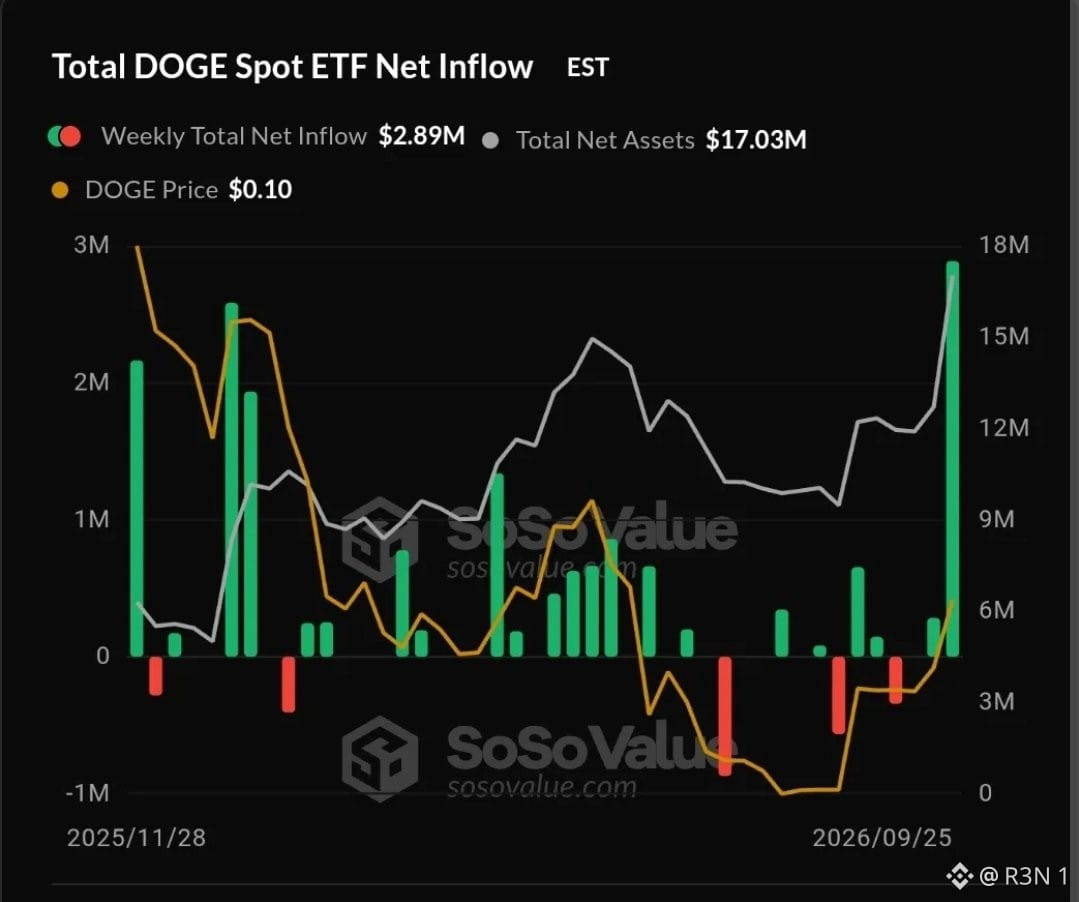
$2,89 Millionen diese Woche in DOGE-ETFs, die stärkste seit sie im November 2025 gestartet sind, aber die Zusammensetzung unter der Schlagzeile erzählt eine fragilere Geschichte, als „Rekordwoche“ es vermuten lässt.
Der Großteil des Zuflusses, $3,48 Millionen, kam allein aus dem Dogecoin Trust von Grayscale. 21Shares verzeichnete im selben Zeitraum tatsächlich Abflüsse in Höhe von $593.000, und Bitwises DOGE-ETF meldete null, weil es am 14. Oktober vollständig eingestellt wird. Ein Fonds trägt diesen Rekord, nicht eine breite Nachfrage über die Produktkategorie hinweg, und einer der vier Fonds, die DOGE verfolgen, steigt bereits aus dem Markt aus.
Was mir auffällt, ist ein Vergleich, den fast niemand neben dieser Schlagzeile im Blick hat. Die Protokoll-Emission von Dogecoin liegt bei rund 13,53 Millionen neuen Coins pro Tag, das entspricht derzeit etwa $1,32 Millionen.
Der stärkste einzelne ETF-Tag in diesem Monat, $1,17 Millionen am 22. September, lag immer noch unter dem Wert einer einzigen Tagesmenge neuen Angebots. Die Neuemission hat die bisher beste ETF-Performance an einem Tag übertroffen. Das bedeutet nicht zwangsläufig, dass der Preis fallen muss – neues Angebot, das auf den Markt trifft, überrollt die Nachfrage nicht automatisch –, aber es heißt, dass eine Rekord-Woche beim Zufluss derzeit nicht die dominierende Kraft ist, die das Angebots-Nachfrage-Gleichgewicht bei DOGE bestimmt.
Auch ein Skalierungs-Kontext lohnt sich: Die gesamten Nettovermögenswerte von DOGE-ETFs belaufen sich auf $17,03 Millionen, nur 0,11% von Dogecoins $16,6 Milliarden Marktkapitalisierung. Das ist nach wie vor in absoluten Zahlen eine wirklich winzige Produktkategorie – Rekordwoche hin oder her.
Die offene Frage ist nicht, ob das institutionelle Interesse zunimmt – der Zuflusstrend über den September hinweg, größtenteils von null bis $2,89 Millionen, ist eine echte Richtungsänderung. Entscheidend ist, ob sich dieses Interesse über Grayscale hinaus verbreitern kann und ob es die täglichen Neuemissionen spürbar ausgleichen kann, bevor eine schrumpfende Fonds-Liste bedeutet, dass „Rekordwoche“ zu einem immer kleineren Pool wird, um Rekorde aufzustellen.
$DOGE #BTC Price Analysis# #BNBChain# #BNBChain#
$2,89 Millionen diese Woche in DOGE-ETFs, die stärkste seit sie im November 2025 gestartet sind, aber die Zusammensetzung unter der Schlagzeile erzählt eine fragilere Geschichte, als „Rekordwoche“ es vermuten lässt.
Der Großteil des Zuflusses, $3,48 Millionen, kam allein aus dem Dogecoin Trust von Grayscale. 21Shares verzeichnete im selben Zeitraum tatsächlich Abflüsse in Höhe von $593.000, und Bitwises DOGE-ETF meldete null, weil es am 14. Oktober vollständig eingestellt wird. Ein Fonds trägt diesen Rekord, nicht eine breite Nachfrage über die Produktkategorie hinweg, und einer der vier Fonds, die DOGE verfolgen, steigt bereits aus dem Markt aus.
Was mir auffällt, ist ein Vergleich, den fast niemand neben dieser Schlagzeile im Blick hat. Die Protokoll-Emission von Dogecoin liegt bei rund 13,53 Millionen neuen Coins pro Tag, das entspricht derzeit etwa $1,32 Millionen.
Der stärkste einzelne ETF-Tag in diesem Monat, $1,17 Millionen am 22. September, lag immer noch unter dem Wert einer einzigen Tagesmenge neuen Angebots. Die Neuemission hat die bisher beste ETF-Performance an einem Tag übertroffen. Das bedeutet nicht zwangsläufig, dass der Preis fallen muss – neues Angebot, das auf den Markt trifft, überrollt die Nachfrage nicht automatisch –, aber es heißt, dass eine Rekord-Woche beim Zufluss derzeit nicht die dominierende Kraft ist, die das Angebots-Nachfrage-Gleichgewicht bei DOGE bestimmt.
Auch ein Skalierungs-Kontext lohnt sich: Die gesamten Nettovermögenswerte von DOGE-ETFs belaufen sich auf $17,03 Millionen, nur 0,11% von Dogecoins $16,6 Milliarden Marktkapitalisierung. Das ist nach wie vor in absoluten Zahlen eine wirklich winzige Produktkategorie – Rekordwoche hin oder her.
Die offene Frage ist nicht, ob das institutionelle Interesse zunimmt – der Zuflusstrend über den September hinweg, größtenteils von null bis $2,89 Millionen, ist eine echte Richtungsänderung. Entscheidend ist, ob sich dieses Interesse über Grayscale hinaus verbreitern kann und ob es die täglichen Neuemissionen spürbar ausgleichen kann, bevor eine schrumpfende Fonds-Liste bedeutet, dass „Rekordwoche“ zu einem immer kleineren Pool wird, um Rekorde aufzustellen.
$DOGE #BTC Price Analysis# #BNBChain# #BNBChain#
Der Großteil des Zuflusses, $3,48 Millionen, kam allein aus dem Dogecoin Trust von Grayscale. 21Shares verzeichnete im selben Zeitraum tatsächlich Abflüsse in Höhe von $593.000, und Bitwises DOGE-ETF meldete null, weil es am 14. Oktober vollständig eingestellt wird. Ein Fonds trägt diesen Rekord, nicht eine breite Nachfrage über die Produktkategorie hinweg, und einer der vier Fonds, die DOGE verfolgen, steigt bereits aus dem Markt aus.
Was mir auffällt, ist ein Vergleich, den fast niemand neben dieser Schlagzeile im Blick hat. Die Protokoll-Emission von Dogecoin liegt bei rund 13,53 Millionen neuen Coins pro Tag, das entspricht derzeit etwa $1,32 Millionen.
Der stärkste einzelne ETF-Tag in diesem Monat, $1,17 Millionen am 22. September, lag immer noch unter dem Wert einer einzigen Tagesmenge neuen Angebots. Die Neuemission hat die bisher beste ETF-Performance an einem Tag übertroffen. Das bedeutet nicht zwangsläufig, dass der Preis fallen muss – neues Angebot, das auf den Markt trifft, überrollt die Nachfrage nicht automatisch –, aber es heißt, dass eine Rekord-Woche beim Zufluss derzeit nicht die dominierende Kraft ist, die das Angebots-Nachfrage-Gleichgewicht bei DOGE bestimmt.
Auch ein Skalierungs-Kontext lohnt sich: Die gesamten Nettovermögenswerte von DOGE-ETFs belaufen sich auf $17,03 Millionen, nur 0,11% von Dogecoins $16,6 Milliarden Marktkapitalisierung. Das ist nach wie vor in absoluten Zahlen eine wirklich winzige Produktkategorie – Rekordwoche hin oder her.
Die offene Frage ist nicht, ob das institutionelle Interesse zunimmt – der Zuflusstrend über den September hinweg, größtenteils von null bis $2,89 Millionen, ist eine echte Richtungsänderung. Entscheidend ist, ob sich dieses Interesse über Grayscale hinaus verbreitern kann und ob es die täglichen Neuemissionen spürbar ausgleichen kann, bevor eine schrumpfende Fonds-Liste bedeutet, dass „Rekordwoche“ zu einem immer kleineren Pool wird, um Rekorde aufzustellen.
$DOGE #BTC Price Analysis# #BNBChain# #BNBChain#
49
·
--
Die SEC-Einreichung von Circle bestätigt, dass Binance 1.237.011 Aktien der Klasse A für jeweils 80,84 US-Dollar gekauft hat – insgesamt 100 Millionen US-Dollar – im Rahmen einer Privatplatzierung, die am 17. September abgeschlossen wurde. Das entsprach einem Abschlag von rund 5 % gegenüber dem damaligen Marktpreis von Circle. Die fünfjährige Handelsvereinbarung, die parallel dazu unterzeichnet wurde, ersetzt frühere Deals aus November 2024 und August 2025, die Berichten zufolge kürzer waren und Zahlungen anders strukturierten: damals 60,25 Millionen US-Dollar als Vorabgebühr, jetzt hingegen direkt Eigenkapital.
Auffällig ist für mich die Lockup-Struktur. Binance kann die Anteile bis zu zwei Jahre lang weder verkaufen, übertragen noch absichern, behält jedoch die vollen Stimmrechte die gesamte Zeit. Das ist eine echte Einschränkung für die Möglichkeit von Binance, die Position einfach umzudrehen – während man gleichzeitig Einfluss darauf behält, wie Circle geführt wird. Das ist eine deutlich andere Verpflichtung als eine kurzfristige kommerzielle Partnerschaft.
Der genannte Schwerpunkt liegt auf Schwellenmärkten: der Ausbau des Zugangs zu USDC, wo Circle bislang weniger präsent ist, und der stärkere Wettbewerb gegen die dortige Dominanz von Tether. Circle zahlt Binance eine monatliche Anreizgebühr, die an USDC-Salden gekoppelt ist, die über seine Modular Smart Contract Wallet-Infrastruktur verwaltet werden. Damit profitiert Binance nun in zwei getrennten Formen gleichzeitig von USDC: einmal über den Gebührenstrom und zusätzlich über die Eigenkapitalbeteiligung selbst.
Es lohnt sich jedoch, die Größenordnung präzise einzuordnen: 100 Millionen US-Dollar sind zwar echte Summe, aber es ist eine Minderheitsbeteiligung – keine Kontrolle über den Vorstand oder etwas in der Nähe davon. Circles Aktie stieg nach der Nachricht im Premarket um über 1 %, also eine eher verhaltene, nicht explosive Marktreaktion.
Die offene Frage ist nicht, ob die Beziehung vertieft wird – das tut sie strukturell eindeutig. Die Frage ist, ob Binance die Einführung von USDC tatsächlich in Schwellenmärkten vorantreibt, in denen Tether bereits starke Netzwerkeffekte aufgebaut hat, oder ob der Besitz von Eigenkapital nicht in die Vertriebsvorteile übersetzt, die beide Unternehmen beschreiben.
$BNB #BTC Price Analysis# $XRP #Macro Insights# #Macro Insights#
Die SEC-Einreichung von Circle bestätigt, dass Binance 1.237.011 Aktien der Klasse A für jeweils 80,84 US-Dollar gekauft hat – insgesamt 100 Millionen US-Dollar – im Rahmen einer Privatplatzierung, die am 17. September abgeschlossen wurde. Das entsprach einem Abschlag von rund 5 % gegenüber dem damaligen Marktpreis von Circle. Die fünfjährige Handelsvereinbarung, die parallel dazu unterzeichnet wurde, ersetzt frühere Deals aus November 2024 und August 2025, die Berichten zufolge kürzer waren und Zahlungen anders strukturierten: damals 60,25 Millionen US-Dollar als Vorabgebühr, jetzt hingegen direkt Eigenkapital.
Auffällig ist für mich die Lockup-Struktur. Binance kann die Anteile bis zu zwei Jahre lang weder verkaufen, übertragen noch absichern, behält jedoch die vollen Stimmrechte die gesamte Zeit. Das ist eine echte Einschränkung für die Möglichkeit von Binance, die Position einfach umzudrehen – während man gleichzeitig Einfluss darauf behält, wie Circle geführt wird. Das ist eine deutlich andere Verpflichtung als eine kurzfristige kommerzielle Partnerschaft.
Der genannte Schwerpunkt liegt auf Schwellenmärkten: der Ausbau des Zugangs zu USDC, wo Circle bislang weniger präsent ist, und der stärkere Wettbewerb gegen die dortige Dominanz von Tether. Circle zahlt Binance eine monatliche Anreizgebühr, die an USDC-Salden gekoppelt ist, die über seine Modular Smart Contract Wallet-Infrastruktur verwaltet werden. Damit profitiert Binance nun in zwei getrennten Formen gleichzeitig von USDC: einmal über den Gebührenstrom und zusätzlich über die Eigenkapitalbeteiligung selbst.
Es lohnt sich jedoch, die Größenordnung präzise einzuordnen: 100 Millionen US-Dollar sind zwar echte Summe, aber es ist eine Minderheitsbeteiligung – keine Kontrolle über den Vorstand oder etwas in der Nähe davon. Circles Aktie stieg nach der Nachricht im Premarket um über 1 %, also eine eher verhaltene, nicht explosive Marktreaktion.
Die offene Frage ist nicht, ob die Beziehung vertieft wird – das tut sie strukturell eindeutig. Die Frage ist, ob Binance die Einführung von USDC tatsächlich in Schwellenmärkten vorantreibt, in denen Tether bereits starke Netzwerkeffekte aufgebaut hat, oder ob der Besitz von Eigenkapital nicht in die Vertriebsvorteile übersetzt, die beide Unternehmen beschreiben.
$BNB #BTC Price Analysis# $XRP #Macro Insights# #Macro Insights#
Auffällig ist für mich die Lockup-Struktur. Binance kann die Anteile bis zu zwei Jahre lang weder verkaufen, übertragen noch absichern, behält jedoch die vollen Stimmrechte die gesamte Zeit. Das ist eine echte Einschränkung für die Möglichkeit von Binance, die Position einfach umzudrehen – während man gleichzeitig Einfluss darauf behält, wie Circle geführt wird. Das ist eine deutlich andere Verpflichtung als eine kurzfristige kommerzielle Partnerschaft.
Der genannte Schwerpunkt liegt auf Schwellenmärkten: der Ausbau des Zugangs zu USDC, wo Circle bislang weniger präsent ist, und der stärkere Wettbewerb gegen die dortige Dominanz von Tether. Circle zahlt Binance eine monatliche Anreizgebühr, die an USDC-Salden gekoppelt ist, die über seine Modular Smart Contract Wallet-Infrastruktur verwaltet werden. Damit profitiert Binance nun in zwei getrennten Formen gleichzeitig von USDC: einmal über den Gebührenstrom und zusätzlich über die Eigenkapitalbeteiligung selbst.
Es lohnt sich jedoch, die Größenordnung präzise einzuordnen: 100 Millionen US-Dollar sind zwar echte Summe, aber es ist eine Minderheitsbeteiligung – keine Kontrolle über den Vorstand oder etwas in der Nähe davon. Circles Aktie stieg nach der Nachricht im Premarket um über 1 %, also eine eher verhaltene, nicht explosive Marktreaktion.
Die offene Frage ist nicht, ob die Beziehung vertieft wird – das tut sie strukturell eindeutig. Die Frage ist, ob Binance die Einführung von USDC tatsächlich in Schwellenmärkten vorantreibt, in denen Tether bereits starke Netzwerkeffekte aufgebaut hat, oder ob der Besitz von Eigenkapital nicht in die Vertriebsvorteile übersetzt, die beide Unternehmen beschreiben.
$BNB #BTC Price Analysis# $XRP #Macro Insights# #Macro Insights#


68
·
--
Der Kauf von 950 BTC durch Strategy wirkt winzig neben Strives 1.355 BTC – bis du merkst, dass Strategy bereits das 32-Fache von Strives kompletter Position hält. Dieselbe Woche, derselbe Preisbereich, aber eine völlig andere Größenordnung. Laut den Meldungen kaufte Strategy zwischen dem 14. und 20. September 950 BTC zu einem durchschnittlichen Preis von 79.670 US-Dollar – seine erste Anschaffung seit August. Dadurch stiegen die gesamten Bestände auf 846.000 BTC bei einer durchschnittlichen Kostenbasis von 75.416 US-Dollar. Strive kaufte 1.355 BTC zu 79.475 US-Dollar über ungefähr denselben Zeitraum und erhöhte damit seinen Treasury-Bestand auf 26.355 BTC. Ich habe keine unabhängige Bestätigung für die 1,273 Millionen BTC-Zahl für alle börsennotierten Unternehmen zusammen, daher würde ich diese Gesamtsumme als angegeben behandeln, nicht als verifiziert. Was wirklich interessant ist: Wie unterschiedlich dieser identische Dollarbereich die einzelnen Unternehmen beeinflusst. Strikes 846.000 BTC entsprechen gerade etwas mehr als 4 % des festen Angebots von Bitcoins (21 Millionen). Auf diesem Niveau bewegen selbst dutzende Millionen an frischem Kauf die Nadel kaum – der Kauf dieser Woche fügte seiner Position ungefähr 0,16 % hinzu. Strives Zukauf von 1.355 BTC entsprach 5,42 % des eigenen Startbestands – deutlich schnelleres prozentuales Wachstum, allein schon aufgrund der kleineren Basis. Der ausgewiesene BTC-Wert pro effektivem Stammaktie von Strive stieg Berichten zufolge zwischen dem 21. August und dem 18. September um 14,1 %. Strategy kaufte in derselben Woche außerdem 174 Millionen US-Dollar an STRC- Vorzugsaktien zurück. Damit nahm es nach einer Pause von etwa zwei Wochen wieder den Bitcoin-Kauf auf – und managt gleichzeitig eine komplexere Bilanz: Cash, BTC, Vorzugswertpapiere und wiederkehrende Ausschüttungen, alles konkurriert um Kapital. Mein ehrlicher Eindruck: Diese beiden Käufe als gleichwertige Signale zu behandeln, verfehlt die eigentliche Geschichte. Strategy optimiert eine ausgereifte Multi-„Lever“-Bilanz, während Strive immer noch auf einer steilen, geradlinigen Akkumulationskurve unterwegs ist. Dasselbe Asset, dieselbe Woche, aber wirklich unterschiedliche Kapitalallokationsprobleme. Worauf ich achte: Ob Strategies wiederaufgenommener Kauf in diesem Tempo fortgeführt wird – oder ob es nur eine Rückkehr für eine Woche war, bevor erneut pausiert wird, um Rückkäufe zu finanzieren. #BTC Price Analysis# $BTC #Altcoin Season# #Meme Alpha#
Der Kauf von 950 BTC durch Strategy wirkt winzig neben Strives 1.355 BTC – bis du merkst, dass Strategy bereits das 32-Fache von Strives kompletter Position hält. Dieselbe Woche, derselbe Preisbereich, aber eine völlig andere Größenordnung. Laut den Meldungen kaufte Strategy zwischen dem 14. und 20. September 950 BTC zu einem durchschnittlichen Preis von 79.670 US-Dollar – seine erste Anschaffung seit August. Dadurch stiegen die gesamten Bestände auf 846.000 BTC bei einer durchschnittlichen Kostenbasis von 75.416 US-Dollar. Strive kaufte 1.355 BTC zu 79.475 US-Dollar über ungefähr denselben Zeitraum und erhöhte damit seinen Treasury-Bestand auf 26.355 BTC. Ich habe keine unabhängige Bestätigung für die 1,273 Millionen BTC-Zahl für alle börsennotierten Unternehmen zusammen, daher würde ich diese Gesamtsumme als angegeben behandeln, nicht als verifiziert. Was wirklich interessant ist: Wie unterschiedlich dieser identische Dollarbereich die einzelnen Unternehmen beeinflusst. Strikes 846.000 BTC entsprechen gerade etwas mehr als 4 % des festen Angebots von Bitcoins (21 Millionen). Auf diesem Niveau bewegen selbst dutzende Millionen an frischem Kauf die Nadel kaum – der Kauf dieser Woche fügte seiner Position ungefähr 0,16 % hinzu. Strives Zukauf von 1.355 BTC entsprach 5,42 % des eigenen Startbestands – deutlich schnelleres prozentuales Wachstum, allein schon aufgrund der kleineren Basis. Der ausgewiesene BTC-Wert pro effektivem Stammaktie von Strive stieg Berichten zufolge zwischen dem 21. August und dem 18. September um 14,1 %. Strategy kaufte in derselben Woche außerdem 174 Millionen US-Dollar an STRC- Vorzugsaktien zurück. Damit nahm es nach einer Pause von etwa zwei Wochen wieder den Bitcoin-Kauf auf – und managt gleichzeitig eine komplexere Bilanz: Cash, BTC, Vorzugswertpapiere und wiederkehrende Ausschüttungen, alles konkurriert um Kapital. Mein ehrlicher Eindruck: Diese beiden Käufe als gleichwertige Signale zu behandeln, verfehlt die eigentliche Geschichte. Strategy optimiert eine ausgereifte Multi-„Lever“-Bilanz, während Strive immer noch auf einer steilen, geradlinigen Akkumulationskurve unterwegs ist. Dasselbe Asset, dieselbe Woche, aber wirklich unterschiedliche Kapitalallokationsprobleme. Worauf ich achte: Ob Strategies wiederaufgenommener Kauf in diesem Tempo fortgeführt wird – oder ob es nur eine Rückkehr für eine Woche war, bevor erneut pausiert wird, um Rückkäufe zu finanzieren. #BTC Price Analysis# $BTC #Altcoin Season# #Meme Alpha#


10
·
--
"Dezentralisierung ist ein Gestaltungsprinzip, kein Schutzschild, um die Bewegung bekannter gestohlener Gelder zu ermöglichen." Das ist Gracy Chens tatsächliche Aussage – und eine direkte Rückverweisung auf ein Muster, das THORChain bereits zuvor einmal vorgeworfen wurde. Bitget bestätigte, dass der Angreifer ungefähr 387,5 Millionen US-Dollar auf gesteuerte Adressen verlagert hat, revidiert nach oben von den anfänglich 351,6 Millionen US-Dollar, nachdem Überweisungen auf Zcash und TRON mitgezählt wurden. Chen forderte THORChain öffentlich am 26. September auf, den markierten Adressen den Dienst zu verweigern, und der von ihr gezogene Vergleich ist treffend: Nach dem 1,46 Milliarden US-Dollar schweren Bybit-Hack im letzten Jahr sollen rund 1,2 Milliarden US-Dollar an gestohlenen Geldern während des Geldwäschens über THORChain geflossen sein. TRM Labs hat THORChain außerdem separat als „Brücke der Wahl“ für die Geldwäsche der größten nordkoreanischen Raubzüge bezeichnet und darauf hingewiesen, dass das Protokoll illegale Aktivitäten konsequent abgelehnt hat bzw. sich wiederholt geweigert habe, sie zu blockieren. Es lohnt sich, THORChains eigenen bisherigen Kurs hier zu betrachten: Es hat Transaktionen nicht eingefroren, nachdem es im Verlauf des Jahres zuvor selbst ein 10,7 Millionen US-Dollar-Vault-Exploit erlitten hatte, daher gibt es auch keinen Präzedenzfall, der darauf hindeutet, dass diese Anfrage eine andere Antwort erhält. Andere Akteure agierten schneller: Berichten zufolge haben Circle und Tether bereits am 25. September nahe 318.000 US-Dollar an Stablecoin-Bewegungen eingefroren, die mit demselben Hack in Verbindung standen. Nordkoreanische Beteiligung wird von Chen als „sehr wahrscheinlich“ beschrieben – basierend auf IP-Adressen, die mit VPN-Diensten verknüpft sind, welche wiederum mit einer bekannten nordkoreanischen Hackergruppe verbunden sind. On-Chain-Überschneidungen verbinden die Geldwäscher-Wallets mit früheren Auszahlungen bzw. Mittelflüssen aus Bybit und dem AFX-Bridge-Vorfall. Meine ehrliche Einschätzung: Das ist eine legitime Frage der Branchenverantwortung, nicht nur PR-Positionierung. Ein Protokoll, das wiederholt der bevorzugte Geldwäsche-Weg für große Hacks war und wiederholt nicht gehandelt hat, selbst wenn die Adressen öffentlich bekannt waren, ist eine echte Governance-Lücke, die einer genaueren Prüfung wert ist. Worauf ich achte: Ob THORChain diesmal tatsächlich reagiert – oder ob sich das Bybit-Vorbild einfach wiederholt. #BTC Price Analysis# $BGB #Macro Insights# $SOL
"Dezentralisierung ist ein Gestaltungsprinzip, kein Schutzschild, um die Bewegung bekannter gestohlener Gelder zu ermöglichen." Das ist Gracy Chens tatsächliche Aussage – und eine direkte Rückverweisung auf ein Muster, das THORChain bereits zuvor einmal vorgeworfen wurde. Bitget bestätigte, dass der Angreifer ungefähr 387,5 Millionen US-Dollar auf gesteuerte Adressen verlagert hat, revidiert nach oben von den anfänglich 351,6 Millionen US-Dollar, nachdem Überweisungen auf Zcash und TRON mitgezählt wurden. Chen forderte THORChain öffentlich am 26. September auf, den markierten Adressen den Dienst zu verweigern, und der von ihr gezogene Vergleich ist treffend: Nach dem 1,46 Milliarden US-Dollar schweren Bybit-Hack im letzten Jahr sollen rund 1,2 Milliarden US-Dollar an gestohlenen Geldern während des Geldwäschens über THORChain geflossen sein. TRM Labs hat THORChain außerdem separat als „Brücke der Wahl“ für die Geldwäsche der größten nordkoreanischen Raubzüge bezeichnet und darauf hingewiesen, dass das Protokoll illegale Aktivitäten konsequent abgelehnt hat bzw. sich wiederholt geweigert habe, sie zu blockieren. Es lohnt sich, THORChains eigenen bisherigen Kurs hier zu betrachten: Es hat Transaktionen nicht eingefroren, nachdem es im Verlauf des Jahres zuvor selbst ein 10,7 Millionen US-Dollar-Vault-Exploit erlitten hatte, daher gibt es auch keinen Präzedenzfall, der darauf hindeutet, dass diese Anfrage eine andere Antwort erhält. Andere Akteure agierten schneller: Berichten zufolge haben Circle und Tether bereits am 25. September nahe 318.000 US-Dollar an Stablecoin-Bewegungen eingefroren, die mit demselben Hack in Verbindung standen. Nordkoreanische Beteiligung wird von Chen als „sehr wahrscheinlich“ beschrieben – basierend auf IP-Adressen, die mit VPN-Diensten verknüpft sind, welche wiederum mit einer bekannten nordkoreanischen Hackergruppe verbunden sind. On-Chain-Überschneidungen verbinden die Geldwäscher-Wallets mit früheren Auszahlungen bzw. Mittelflüssen aus Bybit und dem AFX-Bridge-Vorfall. Meine ehrliche Einschätzung: Das ist eine legitime Frage der Branchenverantwortung, nicht nur PR-Positionierung. Ein Protokoll, das wiederholt der bevorzugte Geldwäsche-Weg für große Hacks war und wiederholt nicht gehandelt hat, selbst wenn die Adressen öffentlich bekannt waren, ist eine echte Governance-Lücke, die einer genaueren Prüfung wert ist. Worauf ich achte: Ob THORChain diesmal tatsächlich reagiert – oder ob sich das Bybit-Vorbild einfach wiederholt. #BTC Price Analysis# $BGB #Macro Insights# $SOL


31
·
--
$76,06 Millionen an insgesamt liquidierten Positionen in den vergangenen 24 Stunden, aufgeteilt in $30,92 Millionen Longs gegenüber $45,13 Millionen Shorts. Kurzfristige Liquidationen, die die Nase vorn haben, sind während eines Anstiegs nicht ungewöhnlich – das ist sogar der erwartete Mechanismus: Wenn der Preis nach oben drückt, müssen Shorts schließen, was zu Liquidationen führt. Das ist eine andere Situation als der massive Spike, der zuvor in genau diesem Chart zu sehen war. Dieser Spike – die große rote Kerze in der historischen Ansicht um Mitte September herum – passt direkt zu dem Scheitern des CLARITY Act im Senat und zu der Zinsanhebung der Fed, die in denselben Zeitraum fallen. Beides waren reale Auslöser, die echte Long-Liquidationen auslösten, als BTC gegen $75.000 fiel. Was seitdem im Chart auffällt, ist, wie die Liquidationen erhöht und volatil geblieben sind – auf beiden Seiten –, mit abwechselnden grünen und roten Spikes, statt wieder in die ruhigeren, kleineren Balken zurückzufallen, die im Juli und in weiten Teilen August dominiert haben. Die eigene Preislinie von BTC in diesem Chart zeigt jedoch den wichtigeren Teil der Geschichte: Sie fiel hart in etwa während dieses Liquidations-Spikes, stieg danach aber weiter und erreichte schließlich die jüngsten Hochs. Diese Reihenfolge ist entscheidend: Der Markt absorbierte einen echten Schock und setzte den Aufwärtstrend fort, statt dass dieses Liquidationsereignis ein nachhaltiges Top markierte. Mein ehrlicher Eindruck: Das heutige Snapshot, bei dem Short-Liquidationen Longs in moderatem Umfang übertreffen, passt zu einem Markt, der weiterhin an einem echten Aufwärtstrend arbeitet, statt eine Krise zu zeigen. Der größere historische Spike früher diesen Monat war der eigentliche Stresstest, und dass der Preis sich danach wieder erholte, sagt mehr über die zugrunde liegende Nachfrage aus als jede einzelne Aufteilung der Liquidationen an einem Tag. Worauf ich achte: Ob die Liquidationen auf diesem hohen Niveau und zweigleisig bleiben, während der Preis weiter steigt, oder ob sie sich wieder hin zu dem ruhigeren Ausgangsniveau vor September beruhigen – was darauf hindeuten würde, dass der Markt einen stabileren Trend gefunden hat, statt die Hebel wiederholt „durchzuspielen“. #BTC Price Analysis# #Altcoin Season# #BNBChain# $BTC $ETH
$76,06 Millionen an insgesamt liquidierten Positionen in den vergangenen 24 Stunden, aufgeteilt in $30,92 Millionen Longs gegenüber $45,13 Millionen Shorts. Kurzfristige Liquidationen, die die Nase vorn haben, sind während eines Anstiegs nicht ungewöhnlich – das ist sogar der erwartete Mechanismus: Wenn der Preis nach oben drückt, müssen Shorts schließen, was zu Liquidationen führt. Das ist eine andere Situation als der massive Spike, der zuvor in genau diesem Chart zu sehen war. Dieser Spike – die große rote Kerze in der historischen Ansicht um Mitte September herum – passt direkt zu dem Scheitern des CLARITY Act im Senat und zu der Zinsanhebung der Fed, die in denselben Zeitraum fallen. Beides waren reale Auslöser, die echte Long-Liquidationen auslösten, als BTC gegen $75.000 fiel. Was seitdem im Chart auffällt, ist, wie die Liquidationen erhöht und volatil geblieben sind – auf beiden Seiten –, mit abwechselnden grünen und roten Spikes, statt wieder in die ruhigeren, kleineren Balken zurückzufallen, die im Juli und in weiten Teilen August dominiert haben. Die eigene Preislinie von BTC in diesem Chart zeigt jedoch den wichtigeren Teil der Geschichte: Sie fiel hart in etwa während dieses Liquidations-Spikes, stieg danach aber weiter und erreichte schließlich die jüngsten Hochs. Diese Reihenfolge ist entscheidend: Der Markt absorbierte einen echten Schock und setzte den Aufwärtstrend fort, statt dass dieses Liquidationsereignis ein nachhaltiges Top markierte. Mein ehrlicher Eindruck: Das heutige Snapshot, bei dem Short-Liquidationen Longs in moderatem Umfang übertreffen, passt zu einem Markt, der weiterhin an einem echten Aufwärtstrend arbeitet, statt eine Krise zu zeigen. Der größere historische Spike früher diesen Monat war der eigentliche Stresstest, und dass der Preis sich danach wieder erholte, sagt mehr über die zugrunde liegende Nachfrage aus als jede einzelne Aufteilung der Liquidationen an einem Tag. Worauf ich achte: Ob die Liquidationen auf diesem hohen Niveau und zweigleisig bleiben, während der Preis weiter steigt, oder ob sie sich wieder hin zu dem ruhigeren Ausgangsniveau vor September beruhigen – was darauf hindeuten würde, dass der Markt einen stabileren Trend gefunden hat, statt die Hebel wiederholt „durchzuspielen“. #BTC Price Analysis# #Altcoin Season# #BNBChain# $BTC $ETH
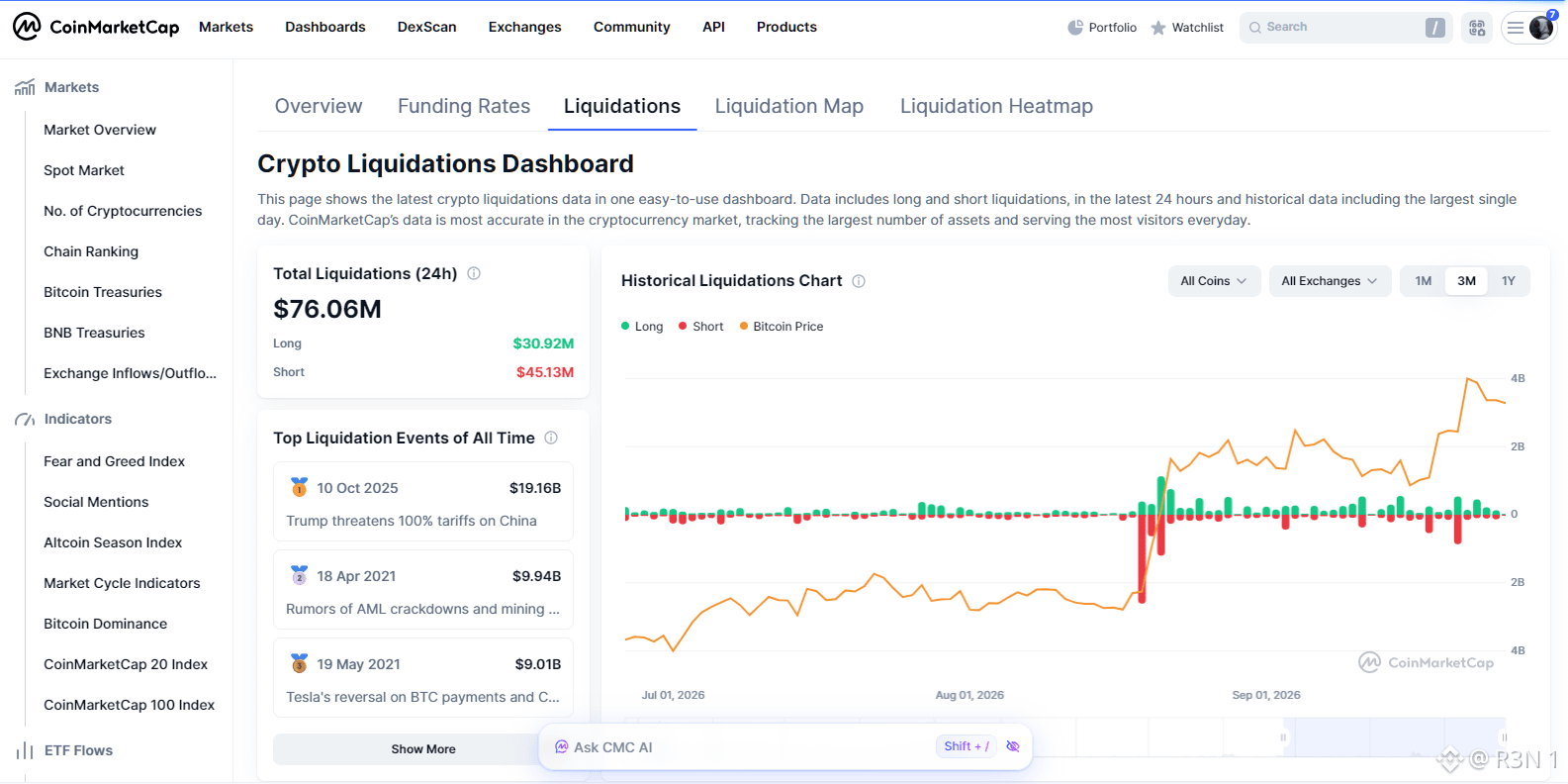
27
·
--
PUMP macht mal wieder ein bisschen Lärm.
Der Pump-Token ist in den letzten 24 Stunden um ungefähr 11% gestiegen und handelt bei etwa $0.00446, während die Marktkapitalisierung über $2B schiebt.
Aber die Zahl, die meine Aufmerksamkeit geweckt hat, ist nicht der Preis.
Es ist das Volumen.
Das 24h-Handelsvolumen liegt bei rund $280M und ist um mehr als 53% gestiegen – parallel zur Bewegung.
Das sagt mir: Das ist nicht nur ein langsames, stetiges Hochlaufen. Es gibt frisches Interesse und echte Handelsaktivität dahinter.
Und der Pump ist mittlerweile im Jahresvergleich um ungefähr 133% im Plus.
Trotzdem: Hier bremse ich kurz.
Eine $2B-Marktkapitalisierung gegenüber einem $4.46B FDV lässt eine ziemlich große Lücke zwischen dem zirkulierenden Wert und der vollständig verwässerten Bewertung. Und bei durch Launchpad-getriebene Narrativen kann sich der Momentum sehr schnell drehen.
Eine Sache, die ich beim Beobachten von DeFi gelernt habe: Der wichtigste Schlagzeilenwert erzählt selten die ganze Geschichte.
Der Preis kann sich bewegen.
Das Volumen kann stark ansteigen.
Aber ich will wissen, was unter dieser Bewegung passiert und ob die Aktivität das tatsächlich tragen kann.
Deshalb schaue ich mehr auf das Volumen als auf die grüne Kerze.
Wenn die Käufer weiter auftauchen und PUMP anfängt, oberhalb dieser Niveaus aufzubauen, wird die Bewegung deutlich interessanter.
Wenn das Volumen verschwindet und der Preis alles wieder zurückgibt, dann war das vielleicht einfach nur eine weitere Rotation der Liquidität.
Für den Moment schaue ich mir an, was unter der Bewegung passiert.
Entdecke die Infrastruktur hinter Onchain-Liquidität → https://ston.fi/omniston
$PUMP #BTC Price Analysis# $BTC #Altcoin Season#
PUMP macht mal wieder ein bisschen Lärm.
Der Pump-Token ist in den letzten 24 Stunden um ungefähr 11% gestiegen und handelt bei etwa $0.00446, während die Marktkapitalisierung über $2B schiebt.
Aber die Zahl, die meine Aufmerksamkeit geweckt hat, ist nicht der Preis.
Es ist das Volumen.
Das 24h-Handelsvolumen liegt bei rund $280M und ist um mehr als 53% gestiegen – parallel zur Bewegung.
Das sagt mir: Das ist nicht nur ein langsames, stetiges Hochlaufen. Es gibt frisches Interesse und echte Handelsaktivität dahinter.
Und der Pump ist mittlerweile im Jahresvergleich um ungefähr 133% im Plus.
Trotzdem: Hier bremse ich kurz.
Eine $2B-Marktkapitalisierung gegenüber einem $4.46B FDV lässt eine ziemlich große Lücke zwischen dem zirkulierenden Wert und der vollständig verwässerten Bewertung. Und bei durch Launchpad-getriebene Narrativen kann sich der Momentum sehr schnell drehen.
Eine Sache, die ich beim Beobachten von DeFi gelernt habe: Der wichtigste Schlagzeilenwert erzählt selten die ganze Geschichte.
Der Preis kann sich bewegen.
Das Volumen kann stark ansteigen.
Aber ich will wissen, was unter dieser Bewegung passiert und ob die Aktivität das tatsächlich tragen kann.
Deshalb schaue ich mehr auf das Volumen als auf die grüne Kerze.
Wenn die Käufer weiter auftauchen und PUMP anfängt, oberhalb dieser Niveaus aufzubauen, wird die Bewegung deutlich interessanter.
Wenn das Volumen verschwindet und der Preis alles wieder zurückgibt, dann war das vielleicht einfach nur eine weitere Rotation der Liquidität.
Für den Moment schaue ich mir an, was unter der Bewegung passiert.
Entdecke die Infrastruktur hinter Onchain-Liquidität → https://ston.fi/omniston
$PUMP #BTC Price Analysis# $BTC #Altcoin Season#
Der Pump-Token ist in den letzten 24 Stunden um ungefähr 11% gestiegen und handelt bei etwa $0.00446, während die Marktkapitalisierung über $2B schiebt.
Aber die Zahl, die meine Aufmerksamkeit geweckt hat, ist nicht der Preis.
Es ist das Volumen.
Das 24h-Handelsvolumen liegt bei rund $280M und ist um mehr als 53% gestiegen – parallel zur Bewegung.
Das sagt mir: Das ist nicht nur ein langsames, stetiges Hochlaufen. Es gibt frisches Interesse und echte Handelsaktivität dahinter.
Und der Pump ist mittlerweile im Jahresvergleich um ungefähr 133% im Plus.
Trotzdem: Hier bremse ich kurz.
Eine $2B-Marktkapitalisierung gegenüber einem $4.46B FDV lässt eine ziemlich große Lücke zwischen dem zirkulierenden Wert und der vollständig verwässerten Bewertung. Und bei durch Launchpad-getriebene Narrativen kann sich der Momentum sehr schnell drehen.
Eine Sache, die ich beim Beobachten von DeFi gelernt habe: Der wichtigste Schlagzeilenwert erzählt selten die ganze Geschichte.
Der Preis kann sich bewegen.
Das Volumen kann stark ansteigen.
Aber ich will wissen, was unter dieser Bewegung passiert und ob die Aktivität das tatsächlich tragen kann.
Deshalb schaue ich mehr auf das Volumen als auf die grüne Kerze.
Wenn die Käufer weiter auftauchen und PUMP anfängt, oberhalb dieser Niveaus aufzubauen, wird die Bewegung deutlich interessanter.
Wenn das Volumen verschwindet und der Preis alles wieder zurückgibt, dann war das vielleicht einfach nur eine weitere Rotation der Liquidität.
Für den Moment schaue ich mir an, was unter der Bewegung passiert.
Entdecke die Infrastruktur hinter Onchain-Liquidität → https://ston.fi/omniston
$PUMP #BTC Price Analysis# $BTC #Altcoin Season#
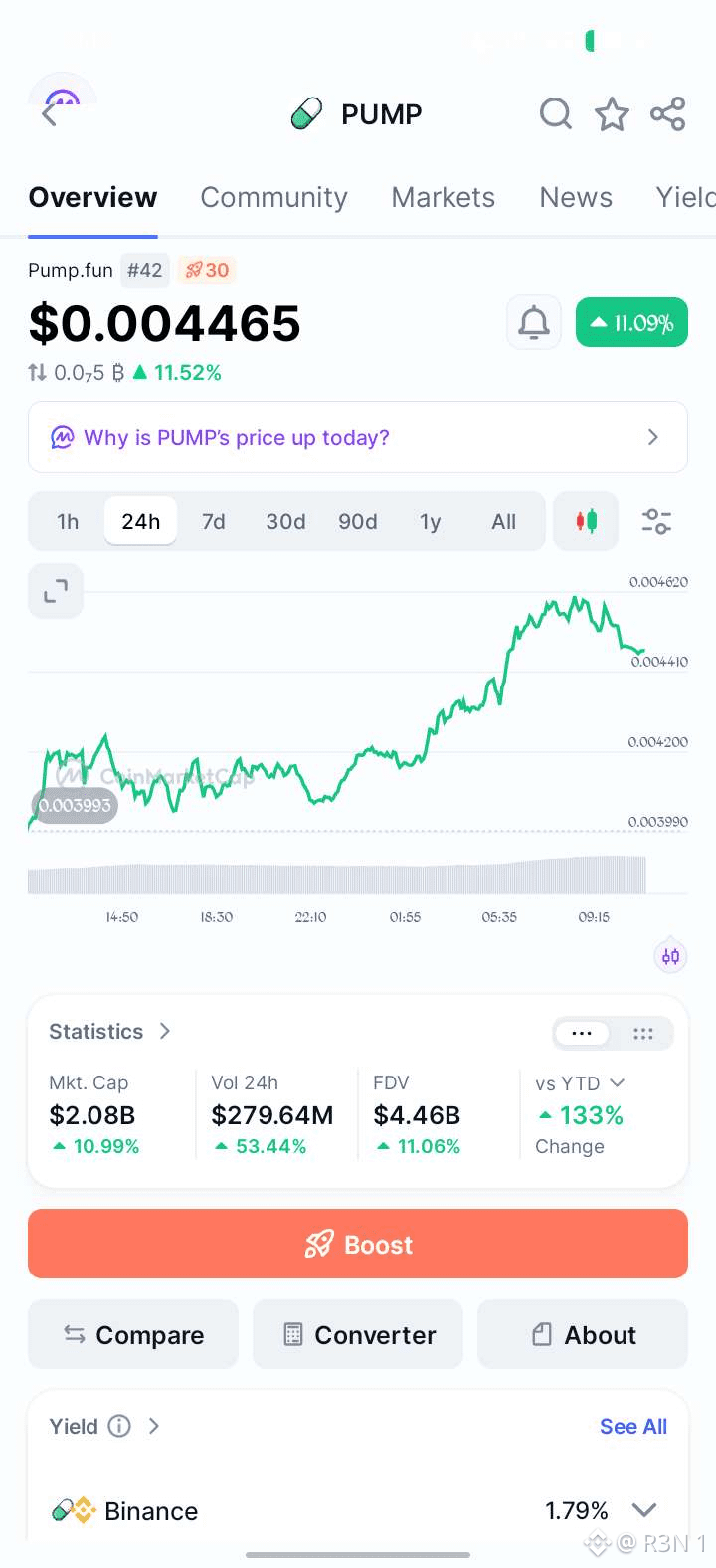
40
·
--
Slippage (Kursabweichung) und Price Impact (Kursauswirkung) sind zwei der am häufigsten verwechselten Begriffe in DeFi. Die meisten Nutzer behandeln sie als austauschbar. Sie beschreiben unterschiedliche Dinge, und wenn du beides verstehst, ändert das, wie du Swaps einrichtest.
Price Impact ist, was dein konkreter Trade mit dem Preis im Liquiditätspool macht. Wenn du ein Asset aus einem Liquiditätspool kaufst, nimmst du dieses Asset aus dem Pool heraus und fügst das Asset hinzu, das du verkaufst. Das verändert das Verhältnis der Assets im Pool, wodurch sich der Preis ändert. Ein kleiner Trade in einem tiefen Pool verursacht nur minimalen Price Impact. Ein großer Trade in einem flachen Pool verursacht einen erheblichen Price Impact—du bewegst damit effektiv den Markt gegen dich, während du ausführst.
Price Impact ist deterministisch. Ausgehend von der aktuellen Tiefe des Pools und der Größe deines Trades lässt sich die Kursauswirkung berechnen, bevor du sie einreichst. Die STONfi-Oberfläche zeigt dir diesen Wert vor der Bestätigung an. Ein Price Impact von über 1 % bei einem Stablecoin-Swap sollte man sich nochmal überlegen. Über 3 % bei jedem Swap ist in der Regel ein Hinweis darauf, dass der Pool für deine Trade-Größe zu flach ist.
Slippage ist etwas anderes. Es ist die Differenz zwischen dem Preis, den du erwartet hast, als du die Transaktion gesendet hast, und dem Preis, den du tatsächlich erhalten hast, als sie bestätigt wurde. Slippage entsteht, weil andere Transaktionen in der Zeit zwischen deiner Einreichung und deiner Bestätigung verarbeitet werden können und dadurch den Zustand des Pools verändern, bevor dein Trade ausgeführt wird.
Slippage Tolerance (Slippage-Toleranz) ist die maximale Kursabweichung, die du zu akzeptieren bereit bist. Wenn du sie zu eng setzt, schlägt deine Transaktion fehl, sobald sich der Preis zwischen Einreichung und Bestätigung auch nur geringfügig bewegt. Wenn du sie zu locker setzt, akzeptierst du mehr Abweichung als nötig. Bei Stablecoin-Swaps sind 0,5 % normalerweise angemessen. Für Swaps mit volatilen Assets sind 1 % bis 2 % in aktiven Marktphasen realistischer.
Price Impact, den du vor der Bestätigung kennst. Slippage ist das, was zwischen Einreichung und Bestätigung passieren kann. Beides ist wichtig und erfordert unterschiedliche Reaktionen.
Swap auf STONfi→ https://app.ston.fi/swap
$BTC #BTC Price Analysis# #Meme Alpha# $SOL
Slippage (Kursabweichung) und Price Impact (Kursauswirkung) sind zwei der am häufigsten verwechselten Begriffe in DeFi. Die meisten Nutzer behandeln sie als austauschbar. Sie beschreiben unterschiedliche Dinge, und wenn du beides verstehst, ändert das, wie du Swaps einrichtest.
Price Impact ist, was dein konkreter Trade mit dem Preis im Liquiditätspool macht. Wenn du ein Asset aus einem Liquiditätspool kaufst, nimmst du dieses Asset aus dem Pool heraus und fügst das Asset hinzu, das du verkaufst. Das verändert das Verhältnis der Assets im Pool, wodurch sich der Preis ändert. Ein kleiner Trade in einem tiefen Pool verursacht nur minimalen Price Impact. Ein großer Trade in einem flachen Pool verursacht einen erheblichen Price Impact—du bewegst damit effektiv den Markt gegen dich, während du ausführst.
Price Impact ist deterministisch. Ausgehend von der aktuellen Tiefe des Pools und der Größe deines Trades lässt sich die Kursauswirkung berechnen, bevor du sie einreichst. Die STONfi-Oberfläche zeigt dir diesen Wert vor der Bestätigung an. Ein Price Impact von über 1 % bei einem Stablecoin-Swap sollte man sich nochmal überlegen. Über 3 % bei jedem Swap ist in der Regel ein Hinweis darauf, dass der Pool für deine Trade-Größe zu flach ist.
Slippage ist etwas anderes. Es ist die Differenz zwischen dem Preis, den du erwartet hast, als du die Transaktion gesendet hast, und dem Preis, den du tatsächlich erhalten hast, als sie bestätigt wurde. Slippage entsteht, weil andere Transaktionen in der Zeit zwischen deiner Einreichung und deiner Bestätigung verarbeitet werden können und dadurch den Zustand des Pools verändern, bevor dein Trade ausgeführt wird.
Slippage Tolerance (Slippage-Toleranz) ist die maximale Kursabweichung, die du zu akzeptieren bereit bist. Wenn du sie zu eng setzt, schlägt deine Transaktion fehl, sobald sich der Preis zwischen Einreichung und Bestätigung auch nur geringfügig bewegt. Wenn du sie zu locker setzt, akzeptierst du mehr Abweichung als nötig. Bei Stablecoin-Swaps sind 0,5 % normalerweise angemessen. Für Swaps mit volatilen Assets sind 1 % bis 2 % in aktiven Marktphasen realistischer.
Price Impact, den du vor der Bestätigung kennst. Slippage ist das, was zwischen Einreichung und Bestätigung passieren kann. Beides ist wichtig und erfordert unterschiedliche Reaktionen.
Swap auf STONfi→ https://app.ston.fi/swap
$BTC #BTC Price Analysis# #Meme Alpha# $SOL
Price Impact ist, was dein konkreter Trade mit dem Preis im Liquiditätspool macht. Wenn du ein Asset aus einem Liquiditätspool kaufst, nimmst du dieses Asset aus dem Pool heraus und fügst das Asset hinzu, das du verkaufst. Das verändert das Verhältnis der Assets im Pool, wodurch sich der Preis ändert. Ein kleiner Trade in einem tiefen Pool verursacht nur minimalen Price Impact. Ein großer Trade in einem flachen Pool verursacht einen erheblichen Price Impact—du bewegst damit effektiv den Markt gegen dich, während du ausführst.
Price Impact ist deterministisch. Ausgehend von der aktuellen Tiefe des Pools und der Größe deines Trades lässt sich die Kursauswirkung berechnen, bevor du sie einreichst. Die STONfi-Oberfläche zeigt dir diesen Wert vor der Bestätigung an. Ein Price Impact von über 1 % bei einem Stablecoin-Swap sollte man sich nochmal überlegen. Über 3 % bei jedem Swap ist in der Regel ein Hinweis darauf, dass der Pool für deine Trade-Größe zu flach ist.
Slippage ist etwas anderes. Es ist die Differenz zwischen dem Preis, den du erwartet hast, als du die Transaktion gesendet hast, und dem Preis, den du tatsächlich erhalten hast, als sie bestätigt wurde. Slippage entsteht, weil andere Transaktionen in der Zeit zwischen deiner Einreichung und deiner Bestätigung verarbeitet werden können und dadurch den Zustand des Pools verändern, bevor dein Trade ausgeführt wird.
Slippage Tolerance (Slippage-Toleranz) ist die maximale Kursabweichung, die du zu akzeptieren bereit bist. Wenn du sie zu eng setzt, schlägt deine Transaktion fehl, sobald sich der Preis zwischen Einreichung und Bestätigung auch nur geringfügig bewegt. Wenn du sie zu locker setzt, akzeptierst du mehr Abweichung als nötig. Bei Stablecoin-Swaps sind 0,5 % normalerweise angemessen. Für Swaps mit volatilen Assets sind 1 % bis 2 % in aktiven Marktphasen realistischer.
Price Impact, den du vor der Bestätigung kennst. Slippage ist das, was zwischen Einreichung und Bestätigung passieren kann. Beides ist wichtig und erfordert unterschiedliche Reaktionen.
Swap auf STONfi→ https://app.ston.fi/swap
$BTC #BTC Price Analysis# #Meme Alpha# $SOL

44
·
--
$1,23 Millionen sind gerade über Binance geflossen und im Wallet des Bitget-Hackers gelandet – zwei Tage nach der ursprünglichen Attacke. Die Geldwäsche-Spur ist noch in Echtzeit aktiv, nicht abgeschlossen.
Laut Arkham und mehreren On-Chain-Trackern zog Wallet 0x4885 am 26. September 257,6 ETH und 545.000 USDT von Binance ab, tauschte die USDT gegen weitere 200,2 ETH und leitete dann alle 457,9 ETH an eine Adresse weiter, die mit dem Bitget-Angreifer verbunden ist. Das folgt demselben Vorgehen wie fünf frühere Binance-Abhebungen vom 25. September: Gelder aus einer großen Börse ziehen, zu ETH konsolidieren und sie an einen Ort verschieben, den keine einzelne Plattform einfrieren kann.
Es lohnt sich auch, die größeren Zahlen zu aktualisieren. Der Gesamtschaden von Bitget wurde von 351,6 Millionen US-Dollar auf 387,5 Millionen US-Dollar nach oben korrigiert, nachdem Ermittler zusätzliche betroffene Vermögenswerte auf Zcash und TRON gefunden hatten, die in der ersten Schätzung nicht enthalten waren. Nordkoreanisch verknüpfte Akteure, möglicherweise Lazarus Group, werden nun anhand von IP-Adressmustern vermutet, auch wenn diese Zuordnung von den Behörden noch nicht bestätigt wurde. Bei der Attacke selbst wurden keine gestohlenen Schlüssel verwendet: Der Angreifer hat das Backend-System von Bitget kompromittiert und Transaktionsdaten so vorgetäuscht, dass es ihm gelang, Überweisungen zu autorisieren, die intern als legitim wirkten.
Meine ehrliche Einschätzung: Diese konkrete Bewegung von 1,23 Millionen US-Dollar ist im Verhältnis zum Gesamtschaden zwar klein, aber sie ist dennoch ein Signal – die Geldwäsche-Operation ist auch zwei Tage später noch aktiv und systematisch, nicht nur ein einmaliger „Smash-and-Grab“-Ausbruch. Dass Bitget und Binance bei der öffentlichen Nachverfolgung zusammenarbeiten, ist ein echtes Plus: Transparenz ist hier besser als Stille. Aber das Nachverfolgen von Geldern und das Wiedererlangen sind unterschiedliche Ergebnisse.
Darauf achte ich: Ob irgendeines dieser getrackten Wallets tatsächlich eingefroren wird oder ob Gelder zurückgeholt werden – im Vergleich dazu, dass dies nur eine fortlaufende Berichterstattung darüber bleibt, wie Gelder weiter außer Reichweite geraten.
$BTC $ETH #Macro Insights# #BNBChain# #BTC Price Analysis#
$1,23 Millionen sind gerade über Binance geflossen und im Wallet des Bitget-Hackers gelandet – zwei Tage nach der ursprünglichen Attacke. Die Geldwäsche-Spur ist noch in Echtzeit aktiv, nicht abgeschlossen.
Laut Arkham und mehreren On-Chain-Trackern zog Wallet 0x4885 am 26. September 257,6 ETH und 545.000 USDT von Binance ab, tauschte die USDT gegen weitere 200,2 ETH und leitete dann alle 457,9 ETH an eine Adresse weiter, die mit dem Bitget-Angreifer verbunden ist. Das folgt demselben Vorgehen wie fünf frühere Binance-Abhebungen vom 25. September: Gelder aus einer großen Börse ziehen, zu ETH konsolidieren und sie an einen Ort verschieben, den keine einzelne Plattform einfrieren kann.
Es lohnt sich auch, die größeren Zahlen zu aktualisieren. Der Gesamtschaden von Bitget wurde von 351,6 Millionen US-Dollar auf 387,5 Millionen US-Dollar nach oben korrigiert, nachdem Ermittler zusätzliche betroffene Vermögenswerte auf Zcash und TRON gefunden hatten, die in der ersten Schätzung nicht enthalten waren. Nordkoreanisch verknüpfte Akteure, möglicherweise Lazarus Group, werden nun anhand von IP-Adressmustern vermutet, auch wenn diese Zuordnung von den Behörden noch nicht bestätigt wurde. Bei der Attacke selbst wurden keine gestohlenen Schlüssel verwendet: Der Angreifer hat das Backend-System von Bitget kompromittiert und Transaktionsdaten so vorgetäuscht, dass es ihm gelang, Überweisungen zu autorisieren, die intern als legitim wirkten.
Meine ehrliche Einschätzung: Diese konkrete Bewegung von 1,23 Millionen US-Dollar ist im Verhältnis zum Gesamtschaden zwar klein, aber sie ist dennoch ein Signal – die Geldwäsche-Operation ist auch zwei Tage später noch aktiv und systematisch, nicht nur ein einmaliger „Smash-and-Grab“-Ausbruch. Dass Bitget und Binance bei der öffentlichen Nachverfolgung zusammenarbeiten, ist ein echtes Plus: Transparenz ist hier besser als Stille. Aber das Nachverfolgen von Geldern und das Wiedererlangen sind unterschiedliche Ergebnisse.
Darauf achte ich: Ob irgendeines dieser getrackten Wallets tatsächlich eingefroren wird oder ob Gelder zurückgeholt werden – im Vergleich dazu, dass dies nur eine fortlaufende Berichterstattung darüber bleibt, wie Gelder weiter außer Reichweite geraten.
$BTC $ETH #Macro Insights# #BNBChain# #BTC Price Analysis#
Laut Arkham und mehreren On-Chain-Trackern zog Wallet 0x4885 am 26. September 257,6 ETH und 545.000 USDT von Binance ab, tauschte die USDT gegen weitere 200,2 ETH und leitete dann alle 457,9 ETH an eine Adresse weiter, die mit dem Bitget-Angreifer verbunden ist. Das folgt demselben Vorgehen wie fünf frühere Binance-Abhebungen vom 25. September: Gelder aus einer großen Börse ziehen, zu ETH konsolidieren und sie an einen Ort verschieben, den keine einzelne Plattform einfrieren kann.
Es lohnt sich auch, die größeren Zahlen zu aktualisieren. Der Gesamtschaden von Bitget wurde von 351,6 Millionen US-Dollar auf 387,5 Millionen US-Dollar nach oben korrigiert, nachdem Ermittler zusätzliche betroffene Vermögenswerte auf Zcash und TRON gefunden hatten, die in der ersten Schätzung nicht enthalten waren. Nordkoreanisch verknüpfte Akteure, möglicherweise Lazarus Group, werden nun anhand von IP-Adressmustern vermutet, auch wenn diese Zuordnung von den Behörden noch nicht bestätigt wurde. Bei der Attacke selbst wurden keine gestohlenen Schlüssel verwendet: Der Angreifer hat das Backend-System von Bitget kompromittiert und Transaktionsdaten so vorgetäuscht, dass es ihm gelang, Überweisungen zu autorisieren, die intern als legitim wirkten.
Meine ehrliche Einschätzung: Diese konkrete Bewegung von 1,23 Millionen US-Dollar ist im Verhältnis zum Gesamtschaden zwar klein, aber sie ist dennoch ein Signal – die Geldwäsche-Operation ist auch zwei Tage später noch aktiv und systematisch, nicht nur ein einmaliger „Smash-and-Grab“-Ausbruch. Dass Bitget und Binance bei der öffentlichen Nachverfolgung zusammenarbeiten, ist ein echtes Plus: Transparenz ist hier besser als Stille. Aber das Nachverfolgen von Geldern und das Wiedererlangen sind unterschiedliche Ergebnisse.
Darauf achte ich: Ob irgendeines dieser getrackten Wallets tatsächlich eingefroren wird oder ob Gelder zurückgeholt werden – im Vergleich dazu, dass dies nur eine fortlaufende Berichterstattung darüber bleibt, wie Gelder weiter außer Reichweite geraten.
$BTC $ETH #Macro Insights# #BNBChain# #BTC Price Analysis#

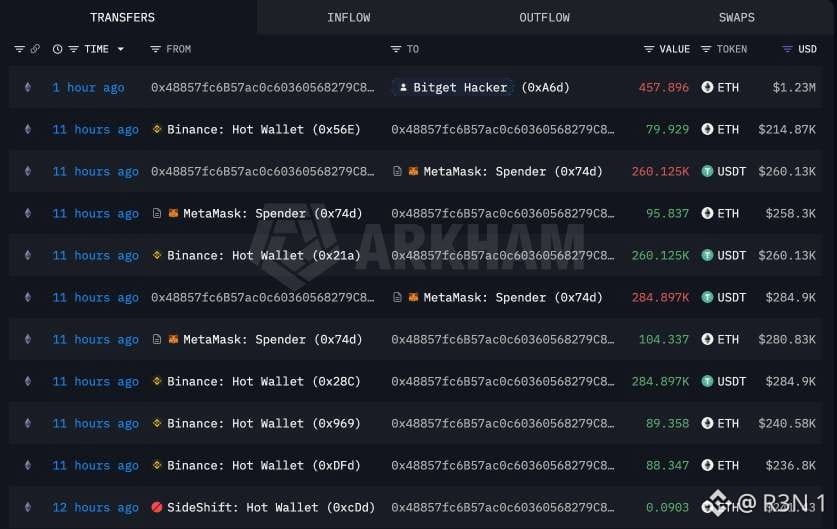
58
Anmelden und weiter Inhalte entdecken
Krypto-Nutzer weltweit auf Binance Square kennenlernen
⚡️ Bleib in Sachen Krypto stets am Puls.
💬 Die weltgrößte Kryptobörse vertraut darauf.
👍 Erhalte verlässliche Einblicke von verifizierten Creators.
E-Mail-Adresse/Telefonnummer
Trendthemen
NFPWatch
10.4M Aufrufe
16,695 Kommentare
Krypto-News | Bitcoin nähert sich der Marke von 85.000 US-Dollar, während die Renditen von US-Staatsanleihen vor dem Bericht zu den NFP zurückgehen
Binance News
·4 Likes
·3.8k Aufrufe
BitcoinRisesToward$85K
730 Aufrufe
24 Kommentare
AmazonPlansToSell$8BNvidiaChips
620 Aufrufe
28 Kommentare