

F A R R I S
17.7k Beiträge

F A R R I S
Melden
Nutzer blockieren
I trade what I see, not what I feel...
1.0K+ Following
28.8K+ Follower
15.3K+ Like gegeben
Beiträge
Alle
Zitierungen
Live
·
--
Bullisch
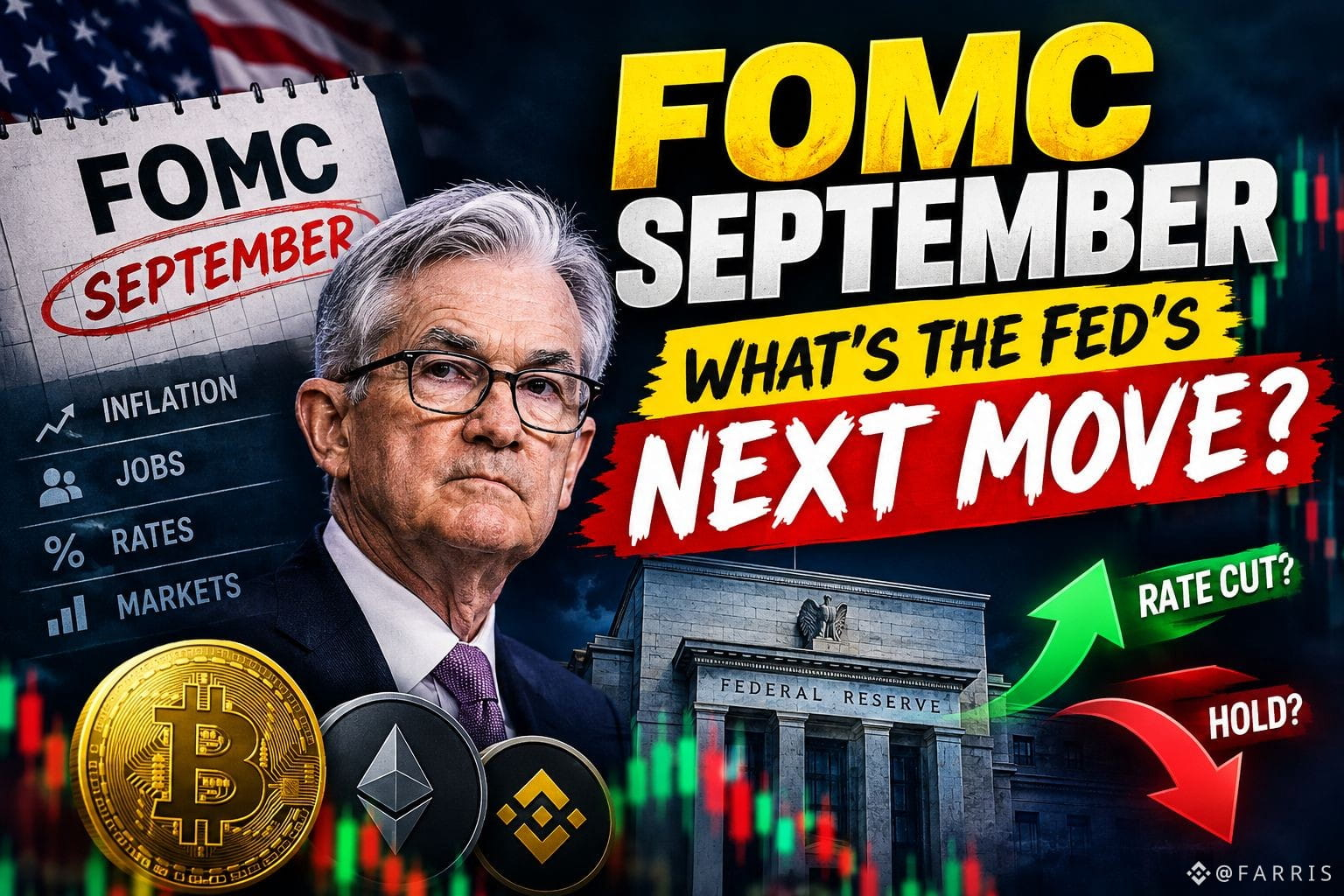
In letzter Zeit ist die größte Frage am Markt nicht Bitcoin oder Altcoins – sondern die Fed. 👀
Der September-FOMC rückt näher, und Händler beobachten jede Inflation-, Jobs- und Wirtschaftssignale, um Hinweise für den nächsten Schritt zu bekommen.
Ein Zinssenkungszyklus könnte frische Liquidität bringen und die Risikobereitschaft im gesamten Kryptobereich verbessern. Aber wenn die Fed vorsichtig bleibt, könnten die Märkte weiterhin volatil und ungeduldig bleiben.
Der interessante Punkt? Märkte bewegen sich oft, bevor die Fed überhaupt spricht.
Darum beobachte ich eher Erwartungen als Schlagzeilen.
Eine einzige Änderung in Powells Ton könnte innerhalb von Minuten die gesamte Markt-Erzählung verschieben.
Das FOMC im September könnte ein weiterer großer Auslöser für Volatilität sein. ⚡
Blicke auf die Fed. Blicke auf die Liquidität. 👀
#FedRateWatch
In letzter Zeit ist die größte Frage am Markt nicht Bitcoin oder Altcoins – sondern die Fed. 👀
Der September-FOMC rückt näher, und Händler beobachten jede Inflation-, Jobs- und Wirtschaftssignale, um Hinweise für den nächsten Schritt zu bekommen.
Ein Zinssenkungszyklus könnte frische Liquidität bringen und die Risikobereitschaft im gesamten Kryptobereich verbessern. Aber wenn die Fed vorsichtig bleibt, könnten die Märkte weiterhin volatil und ungeduldig bleiben.
Der interessante Punkt? Märkte bewegen sich oft, bevor die Fed überhaupt spricht.
Darum beobachte ich eher Erwartungen als Schlagzeilen.
Eine einzige Änderung in Powells Ton könnte innerhalb von Minuten die gesamte Markt-Erzählung verschieben.
Das FOMC im September könnte ein weiterer großer Auslöser für Volatilität sein. ⚡
Blicke auf die Fed. Blicke auf die Liquidität. 👀
#FedRateWatch
Der September-FOMC rückt näher, und Händler beobachten jede Inflation-, Jobs- und Wirtschaftssignale, um Hinweise für den nächsten Schritt zu bekommen.
Ein Zinssenkungszyklus könnte frische Liquidität bringen und die Risikobereitschaft im gesamten Kryptobereich verbessern. Aber wenn die Fed vorsichtig bleibt, könnten die Märkte weiterhin volatil und ungeduldig bleiben.
Der interessante Punkt? Märkte bewegen sich oft, bevor die Fed überhaupt spricht.
Darum beobachte ich eher Erwartungen als Schlagzeilen.
Eine einzige Änderung in Powells Ton könnte innerhalb von Minuten die gesamte Markt-Erzählung verschieben.
Das FOMC im September könnte ein weiterer großer Auslöser für Volatilität sein. ⚡
Blicke auf die Fed. Blicke auf die Liquidität. 👀
#FedRateWatch
3
7
425
·
--
⚡ $SNDK
{future}(SNDKUSDT)
wird interessant! ⚡
Eine $10.038K Short-Liquidation bei $1,748.71 ist gerade auf Binance eingetroffen. Das sagt mir, dass die Verkäufer unter Druck geraten, also beobachte ich den nächsten Schritt genau. 👀
📍 Support: $1,700–$1,720
🧱 Widerstand: $1,780–$1,820
🎯 Nächstes Ziel: $1,850+
🟢 Einstieg-Zone: $1,720–$1,750
🛑 SL: $1,680
🎯 TP1: $1,800
🎯 TP2: $1,850
🎯 TP3: $1,920
💡 Pro-Tipp: Verfolge keinen plötzlichen Pump. Lass den Kurs die Einstieg-Zone erneut testen und achte auf das Volumen. Wenn der Widerstand mit Kraft bricht, könnte der Short-Liquidationsdruck SNDK Richtung höhere Ziele treiben. Wenn der Support scheitert, tritt zur Seite und schütze dein Kapital.
Eine Stufe nach der anderen. Lass den Chart die Bewegung bestätigen. 🔥
#BankOfAmericaGroupPilotsUSBDCStablecoin #USStrikesTargetsNearHormuzAndJask #DowFallsOver600Points #OilRisesToHighestSinceJuly #RippleLobbiesToAdvanceCLARITYActVote
⚡ $SNDK
wird interessant! ⚡
Eine $10.038K Short-Liquidation bei $1,748.71 ist gerade auf Binance eingetroffen. Das sagt mir, dass die Verkäufer unter Druck geraten, also beobachte ich den nächsten Schritt genau. 👀
📍 Support: $1,700–$1,720
🧱 Widerstand: $1,780–$1,820
🎯 Nächstes Ziel: $1,850+
🟢 Einstieg-Zone: $1,720–$1,750
🛑 SL: $1,680
🎯 TP1: $1,800
🎯 TP2: $1,850
🎯 TP3: $1,920
💡 Pro-Tipp: Verfolge keinen plötzlichen Pump. Lass den Kurs die Einstieg-Zone erneut testen und achte auf das Volumen. Wenn der Widerstand mit Kraft bricht, könnte der Short-Liquidationsdruck SNDK Richtung höhere Ziele treiben. Wenn der Support scheitert, tritt zur Seite und schütze dein Kapital.
Eine Stufe nach der anderen. Lass den Chart die Bewegung bestätigen. 🔥
#BankOfAmericaGroupPilotsUSBDCStablecoin #USStrikesTargetsNearHormuzAndJask #DowFallsOver600Points #OilRisesToHighestSinceJuly #RippleLobbiesToAdvanceCLARITYActVote
wird interessant! ⚡
Eine $10.038K Short-Liquidation bei $1,748.71 ist gerade auf Binance eingetroffen. Das sagt mir, dass die Verkäufer unter Druck geraten, also beobachte ich den nächsten Schritt genau. 👀
📍 Support: $1,700–$1,720
🧱 Widerstand: $1,780–$1,820
🎯 Nächstes Ziel: $1,850+
🟢 Einstieg-Zone: $1,720–$1,750
🛑 SL: $1,680
🎯 TP1: $1,800
🎯 TP2: $1,850
🎯 TP3: $1,920
💡 Pro-Tipp: Verfolge keinen plötzlichen Pump. Lass den Kurs die Einstieg-Zone erneut testen und achte auf das Volumen. Wenn der Widerstand mit Kraft bricht, könnte der Short-Liquidationsdruck SNDK Richtung höhere Ziele treiben. Wenn der Support scheitert, tritt zur Seite und schütze dein Kapital.
Eine Stufe nach der anderen. Lass den Chart die Bewegung bestätigen. 🔥
#BankOfAmericaGroupPilotsUSBDCStablecoin #USStrikesTargetsNearHormuzAndJask #DowFallsOver600Points #OilRisesToHighestSinceJuly #RippleLobbiesToAdvanceCLARITYActVote
209
·
--
In letzter Zeit wird es interessant mit $UAI
{future}(UAIUSDT)
nach einer $5.06K Short-Liquidation um ca. $0.759 auf Binance. Das zeigt, dass einige Short-Positionen abgedrückt wurden, also schaue ich mir die nächste Bewegung genau an.
📊 UAI-Setup
🟢 Spot: ca. $0.759
🧱 Widerstand: $0.78–$0.80
🎯 Nächstes Ziel: $0.82
🚪 Einstieg-Bereich: $0.74–$0.76
🛑 SL: $0.71
🎯 TP1: $0.78
🎯 TP2: $0.82
🎯 TP3: $0.88
💡 Pro-Tipp: Verfolge keine plötzliche grüne Kerze. Ich würde lieber sehen, dass der Kurs den Einstieg-Bereich hält und den Widerstand mit echtem Volumen durchbricht. Wenn $0.74 scheitert, wird das Setup schwächer und ich würde zurücktreten statt den Trade zu erzwingen.
Das ist ein Trading-Setup, kein garantiertes Profit. Zuerst Risiko managen.
#BankOfAmericaGroupPilotsUSBDCStablecoin #RippleLobbiesToAdvanceCLARITYActVote #OilRisesToHighestSinceJuly #DowFallsOver600Points
In letzter Zeit wird es interessant mit $UAI
nach einer $5.06K Short-Liquidation um ca. $0.759 auf Binance. Das zeigt, dass einige Short-Positionen abgedrückt wurden, also schaue ich mir die nächste Bewegung genau an.
📊 UAI-Setup
🟢 Spot: ca. $0.759
🧱 Widerstand: $0.78–$0.80
🎯 Nächstes Ziel: $0.82
🚪 Einstieg-Bereich: $0.74–$0.76
🛑 SL: $0.71
🎯 TP1: $0.78
🎯 TP2: $0.82
🎯 TP3: $0.88
💡 Pro-Tipp: Verfolge keine plötzliche grüne Kerze. Ich würde lieber sehen, dass der Kurs den Einstieg-Bereich hält und den Widerstand mit echtem Volumen durchbricht. Wenn $0.74 scheitert, wird das Setup schwächer und ich würde zurücktreten statt den Trade zu erzwingen.
Das ist ein Trading-Setup, kein garantiertes Profit. Zuerst Risiko managen.
#BankOfAmericaGroupPilotsUSBDCStablecoin #RippleLobbiesToAdvanceCLARITYActVote #OilRisesToHighestSinceJuly #DowFallsOver600Points
nach einer $5.06K Short-Liquidation um ca. $0.759 auf Binance. Das zeigt, dass einige Short-Positionen abgedrückt wurden, also schaue ich mir die nächste Bewegung genau an.
📊 UAI-Setup
🟢 Spot: ca. $0.759
🧱 Widerstand: $0.78–$0.80
🎯 Nächstes Ziel: $0.82
🚪 Einstieg-Bereich: $0.74–$0.76
🛑 SL: $0.71
🎯 TP1: $0.78
🎯 TP2: $0.82
🎯 TP3: $0.88
💡 Pro-Tipp: Verfolge keine plötzliche grüne Kerze. Ich würde lieber sehen, dass der Kurs den Einstieg-Bereich hält und den Widerstand mit echtem Volumen durchbricht. Wenn $0.74 scheitert, wird das Setup schwächer und ich würde zurücktreten statt den Trade zu erzwingen.
Das ist ein Trading-Setup, kein garantiertes Profit. Zuerst Risiko managen.
#BankOfAmericaGroupPilotsUSBDCStablecoin #RippleLobbiesToAdvanceCLARITYActVote #OilRisesToHighestSinceJuly #DowFallsOver600Points
420
·
--
#dusk $DUSK @Dusk_Foundation
Ich komme immer wieder zu Dusk zurück, weil der interessante Teil nicht einfach nur ist, dass es über Privatsphäre spricht.
Sondern darum, was sie damit machen.
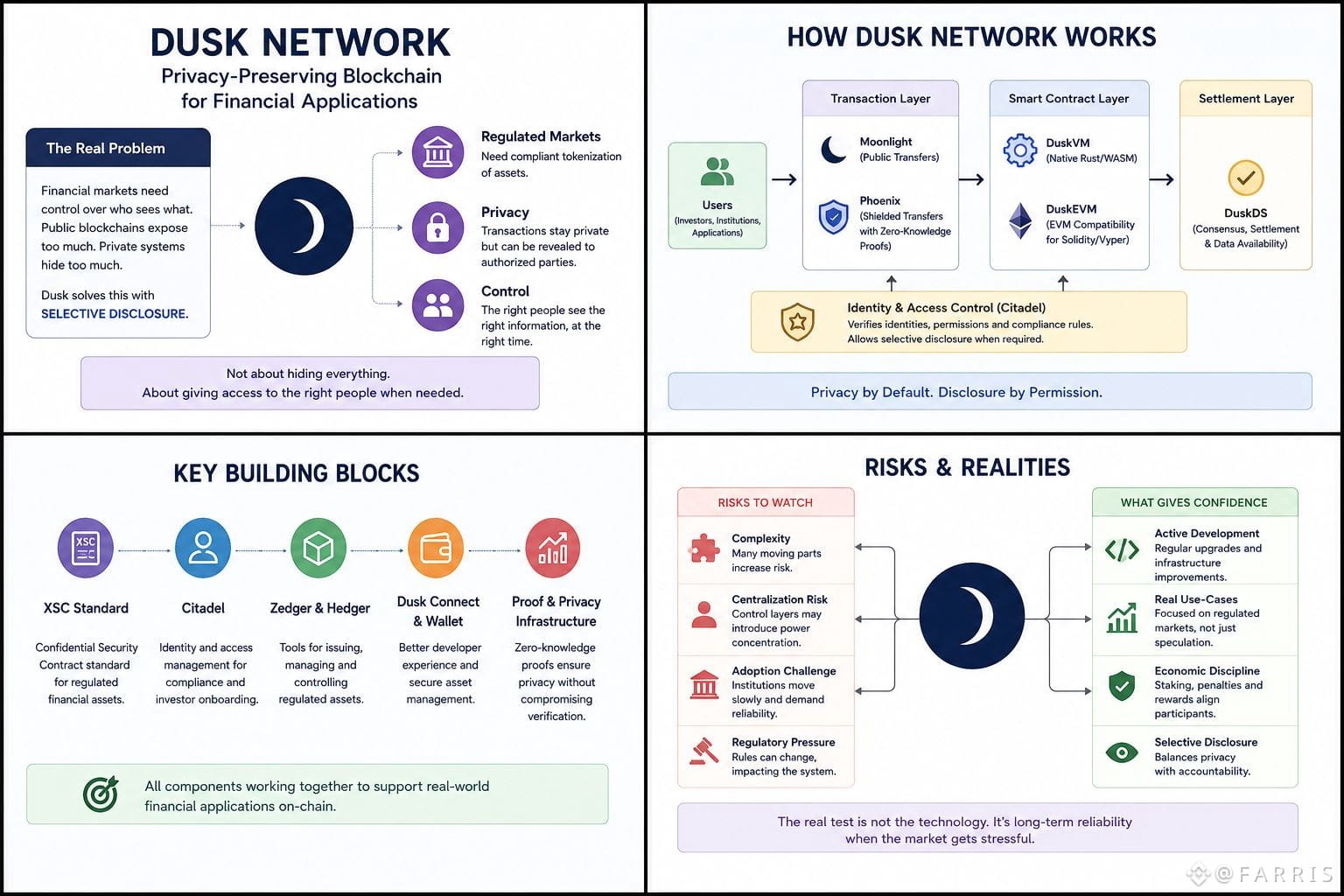
Das Netzwerk wird zunehmend um regulierte Märkte herum geformt, in denen es genauso problematisch sein kann, alles öffentlich zu halten, wie alles zu verbergen. Dusk baut auf selektive Offenlegung, vertrauliche Übertragungen, deterministische Abwicklung und Finanz-Workflows, die nach wie vor Regeln dafür benötigen, wer einen Vermögenswert halten oder bewegen darf.
Und in letzter Zeit ist die Entwicklungstätigkeit kaum noch zu übersehen.
Das jüngste Boreas-Upgrade hat die Behandlung von Transaktionen, die VM-Preisgestaltung und die Bereitstellungsregeln geändert, während das ältere Phoenix-Transaktionsmodell in den Ruhestand versetzt wurde. Davor brachte Aegis PLONK V3 und zusätzliche Konsens-„Hardening“-Maßnahmen. Das sagt mir, dass das Team Zeit in die unbequeme Infrastrukturarbeit steckt – nicht nur darin, Features für die Außenwirkung hinzuzufügen.
Dann gibt es da noch DuskEVM.
Solidity-Entwickler können nun einen EVM-Pfad nutzen, während sie über die zugrunde liegende Infrastruktur von Dusk abrechnen, während DuskVM weiterhin für native Rust/WASM-Anwendungen verfügbar bleibt, die tieferen Zugriff auf Privatsphäre- und Zero-Knowledge-Fähigkeiten benötigen.
Sogar die kleineren Bausteine haben meine Aufmerksamkeit geweckt. Dusk Connect und die neue Wallet zielen darauf ab, die grundlegende Entwickler-zu-Wallet-Erfahrung zu verbessern, und die jüngsten Engineering-Arbeiten haben die Validierung von Proofs, Serialisierungsprüfungen, Merkle-Handling und reproduzierbare Devnet-Tests weiter verschärft.
So eine Art Fortschritt macht mir wirklich Spaß, zuzusehen.
Keine eine große Ankündigung.
Sondern Schicht für Schicht wird es schwerer, etwas aufzubrechen.
Und vielleicht ist das jetzt der eigentliche Test für Dusk: Ob all diese Teile irgendwann zuverlässig genug werden, dass sich regulierte Finanzaktivität tatsächlich darauf verlassen kann, wenn der Markt unübersichtlich wird?
Denn Privatsphäre ist interessant.
Zuverlässige finanzielle Infrastruktur ist viel schwieriger.
#BitcoinStrongestWeekSinceMarch2023 #SandboxSANDSuspectedInfiniteMintFlawOnBase #USCanadaTradeTalksCollapseCanadaVowsRetaliation #SandboxSANDSuspectedInfiniteMintFlawOnBase
#dusk $DUSK @Dusk
Ich komme immer wieder zu Dusk zurück, weil der interessante Teil nicht einfach nur ist, dass es über Privatsphäre spricht.
Sondern darum, was sie damit machen.
Das Netzwerk wird zunehmend um regulierte Märkte herum geformt, in denen es genauso problematisch sein kann, alles öffentlich zu halten, wie alles zu verbergen. Dusk baut auf selektive Offenlegung, vertrauliche Übertragungen, deterministische Abwicklung und Finanz-Workflows, die nach wie vor Regeln dafür benötigen, wer einen Vermögenswert halten oder bewegen darf.
Und in letzter Zeit ist die Entwicklungstätigkeit kaum noch zu übersehen.
Das jüngste Boreas-Upgrade hat die Behandlung von Transaktionen, die VM-Preisgestaltung und die Bereitstellungsregeln geändert, während das ältere Phoenix-Transaktionsmodell in den Ruhestand versetzt wurde. Davor brachte Aegis PLONK V3 und zusätzliche Konsens-„Hardening“-Maßnahmen. Das sagt mir, dass das Team Zeit in die unbequeme Infrastrukturarbeit steckt – nicht nur darin, Features für die Außenwirkung hinzuzufügen.
Dann gibt es da noch DuskEVM.
Solidity-Entwickler können nun einen EVM-Pfad nutzen, während sie über die zugrunde liegende Infrastruktur von Dusk abrechnen, während DuskVM weiterhin für native Rust/WASM-Anwendungen verfügbar bleibt, die tieferen Zugriff auf Privatsphäre- und Zero-Knowledge-Fähigkeiten benötigen.
Sogar die kleineren Bausteine haben meine Aufmerksamkeit geweckt. Dusk Connect und die neue Wallet zielen darauf ab, die grundlegende Entwickler-zu-Wallet-Erfahrung zu verbessern, und die jüngsten Engineering-Arbeiten haben die Validierung von Proofs, Serialisierungsprüfungen, Merkle-Handling und reproduzierbare Devnet-Tests weiter verschärft.
So eine Art Fortschritt macht mir wirklich Spaß, zuzusehen.
Keine eine große Ankündigung.
Sondern Schicht für Schicht wird es schwerer, etwas aufzubrechen.
Und vielleicht ist das jetzt der eigentliche Test für Dusk: Ob all diese Teile irgendwann zuverlässig genug werden, dass sich regulierte Finanzaktivität tatsächlich darauf verlassen kann, wenn der Markt unübersichtlich wird?
Denn Privatsphäre ist interessant.
Zuverlässige finanzielle Infrastruktur ist viel schwieriger.
#BitcoinStrongestWeekSinceMarch2023 #SandboxSANDSuspectedInfiniteMintFlawOnBase #USCanadaTradeTalksCollapseCanadaVowsRetaliation #SandboxSANDSuspectedInfiniteMintFlawOnBase
Ich komme immer wieder zu Dusk zurück, weil der interessante Teil nicht einfach nur ist, dass es über Privatsphäre spricht.
Sondern darum, was sie damit machen.
Das Netzwerk wird zunehmend um regulierte Märkte herum geformt, in denen es genauso problematisch sein kann, alles öffentlich zu halten, wie alles zu verbergen. Dusk baut auf selektive Offenlegung, vertrauliche Übertragungen, deterministische Abwicklung und Finanz-Workflows, die nach wie vor Regeln dafür benötigen, wer einen Vermögenswert halten oder bewegen darf.
Und in letzter Zeit ist die Entwicklungstätigkeit kaum noch zu übersehen.
Das jüngste Boreas-Upgrade hat die Behandlung von Transaktionen, die VM-Preisgestaltung und die Bereitstellungsregeln geändert, während das ältere Phoenix-Transaktionsmodell in den Ruhestand versetzt wurde. Davor brachte Aegis PLONK V3 und zusätzliche Konsens-„Hardening“-Maßnahmen. Das sagt mir, dass das Team Zeit in die unbequeme Infrastrukturarbeit steckt – nicht nur darin, Features für die Außenwirkung hinzuzufügen.
Dann gibt es da noch DuskEVM.
Solidity-Entwickler können nun einen EVM-Pfad nutzen, während sie über die zugrunde liegende Infrastruktur von Dusk abrechnen, während DuskVM weiterhin für native Rust/WASM-Anwendungen verfügbar bleibt, die tieferen Zugriff auf Privatsphäre- und Zero-Knowledge-Fähigkeiten benötigen.
Sogar die kleineren Bausteine haben meine Aufmerksamkeit geweckt. Dusk Connect und die neue Wallet zielen darauf ab, die grundlegende Entwickler-zu-Wallet-Erfahrung zu verbessern, und die jüngsten Engineering-Arbeiten haben die Validierung von Proofs, Serialisierungsprüfungen, Merkle-Handling und reproduzierbare Devnet-Tests weiter verschärft.
So eine Art Fortschritt macht mir wirklich Spaß, zuzusehen.
Keine eine große Ankündigung.
Sondern Schicht für Schicht wird es schwerer, etwas aufzubrechen.
Und vielleicht ist das jetzt der eigentliche Test für Dusk: Ob all diese Teile irgendwann zuverlässig genug werden, dass sich regulierte Finanzaktivität tatsächlich darauf verlassen kann, wenn der Markt unübersichtlich wird?
Denn Privatsphäre ist interessant.
Zuverlässige finanzielle Infrastruktur ist viel schwieriger.
#BitcoinStrongestWeekSinceMarch2023 #SandboxSANDSuspectedInfiniteMintFlawOnBase #USCanadaTradeTalksCollapseCanadaVowsRetaliation #SandboxSANDSuspectedInfiniteMintFlawOnBase
170
·
--
Bullisch
Verifiziert
#dusk $DUSK @Dusk_Foundation
Das Seltsame an Dusk ist, dass das Wort „Privatsphäre“ mit jedem Blick weniger interessant wurde.
Was meine Aufmerksamkeit erregte, war etwas Zurückhaltenderes.
Märkte werden normalerweise leichter zu verstehen, wenn mehr Informationen sichtbar sind. Man kann sich ansehen, wie sich Guthaben bewegen, Ströme verfolgen, erkennen, wer Risiko eingeht, und reagieren, wenn etwas anfängt, verdächtig auszusehen.
Doch Finanzmärkte haben auch einen Punkt, an dem zu viel Sichtbarkeit zur Belastung wird.
Eine große Position lässt sich nicht immer für alle offenlegen. Ein reguliertes Asset kann nicht jede Information von Anlegern als öffentliches Datenset behandeln. Und während der Volatilität kann das Ausstrahlen jeder Bewegung den Markt verändern, in dem man eigentlich operieren will.
In dieser Spannung begann Dusk für mich mehr Sinn zu ergeben.
Seine Architektur trennt öffentliche und abgeschirmte Transaktionsmodelle, während seine Dokumentation selektive Offenlegung neben Privatsphäre stellt – statt Privatsphäre nur als das reine Verbergen von allem zu begreifen.
Und das Projekt ist auch still und leise über das Label „Privacy Chain“ hinausgewachsen. Es gibt neue Wallet- und Tools zur Entwickleranbindung, fortgesetzte Protokoll-Upgrades und aktuelle Arbeiten rund um die Infrastruktur regulierter Assets.
Das hat meine Sicht verändert.
Die entscheidende Frage ist nicht, ob eine Blockchain Informationen privat halten kann.
Sondern ob Menschen sich noch abstimmen können, wenn sie nicht alle dieselben Informationen sehen.
Denn wenn Märkte unter Stress geraten, interessiert niemanden, dass das System mit guten Absichten entworfen wurde. Es geht darum, was sie verifizieren können, wer es verifizieren kann und wie schnell sie sich genug sicher fühlen können, um durchzuhalten.
#QWRX #ZDEX1000
Das ist der Teil von Dusk, den ich es wert finde, im Blick zu behalten.#SSV.每日智能策略 #advise
Privatsphäre ist vielleicht nicht das Produkt.
Sie könnte der Test sein, ob finanzielle Koordination noch funktioniert, wenn Transparenz selbst teuer wird.
$TRUMP
{spot}(TRUMPUSDT)
$BEAT
{future}(BEATUSDT)
#dusk $DUSK @Dusk
Das Seltsame an Dusk ist, dass das Wort „Privatsphäre“ mit jedem Blick weniger interessant wurde.
Was meine Aufmerksamkeit erregte, war etwas Zurückhaltenderes.
Märkte werden normalerweise leichter zu verstehen, wenn mehr Informationen sichtbar sind. Man kann sich ansehen, wie sich Guthaben bewegen, Ströme verfolgen, erkennen, wer Risiko eingeht, und reagieren, wenn etwas anfängt, verdächtig auszusehen.
Doch Finanzmärkte haben auch einen Punkt, an dem zu viel Sichtbarkeit zur Belastung wird.
Eine große Position lässt sich nicht immer für alle offenlegen. Ein reguliertes Asset kann nicht jede Information von Anlegern als öffentliches Datenset behandeln. Und während der Volatilität kann das Ausstrahlen jeder Bewegung den Markt verändern, in dem man eigentlich operieren will.
In dieser Spannung begann Dusk für mich mehr Sinn zu ergeben.
Seine Architektur trennt öffentliche und abgeschirmte Transaktionsmodelle, während seine Dokumentation selektive Offenlegung neben Privatsphäre stellt – statt Privatsphäre nur als das reine Verbergen von allem zu begreifen.
Und das Projekt ist auch still und leise über das Label „Privacy Chain“ hinausgewachsen. Es gibt neue Wallet- und Tools zur Entwickleranbindung, fortgesetzte Protokoll-Upgrades und aktuelle Arbeiten rund um die Infrastruktur regulierter Assets.
Das hat meine Sicht verändert.
Die entscheidende Frage ist nicht, ob eine Blockchain Informationen privat halten kann.
Sondern ob Menschen sich noch abstimmen können, wenn sie nicht alle dieselben Informationen sehen.
Denn wenn Märkte unter Stress geraten, interessiert niemanden, dass das System mit guten Absichten entworfen wurde. Es geht darum, was sie verifizieren können, wer es verifizieren kann und wie schnell sie sich genug sicher fühlen können, um durchzuhalten.
#QWRX #ZDEX1000
Das ist der Teil von Dusk, den ich es wert finde, im Blick zu behalten.#SSV.每日智能策略 #advise
Privatsphäre ist vielleicht nicht das Produkt.
Sie könnte der Test sein, ob finanzielle Koordination noch funktioniert, wenn Transparenz selbst teuer wird.
$TRUMP
$BEAT
Das Seltsame an Dusk ist, dass das Wort „Privatsphäre“ mit jedem Blick weniger interessant wurde.
Was meine Aufmerksamkeit erregte, war etwas Zurückhaltenderes.
Märkte werden normalerweise leichter zu verstehen, wenn mehr Informationen sichtbar sind. Man kann sich ansehen, wie sich Guthaben bewegen, Ströme verfolgen, erkennen, wer Risiko eingeht, und reagieren, wenn etwas anfängt, verdächtig auszusehen.
Doch Finanzmärkte haben auch einen Punkt, an dem zu viel Sichtbarkeit zur Belastung wird.
Eine große Position lässt sich nicht immer für alle offenlegen. Ein reguliertes Asset kann nicht jede Information von Anlegern als öffentliches Datenset behandeln. Und während der Volatilität kann das Ausstrahlen jeder Bewegung den Markt verändern, in dem man eigentlich operieren will.
In dieser Spannung begann Dusk für mich mehr Sinn zu ergeben.
Seine Architektur trennt öffentliche und abgeschirmte Transaktionsmodelle, während seine Dokumentation selektive Offenlegung neben Privatsphäre stellt – statt Privatsphäre nur als das reine Verbergen von allem zu begreifen.
Und das Projekt ist auch still und leise über das Label „Privacy Chain“ hinausgewachsen. Es gibt neue Wallet- und Tools zur Entwickleranbindung, fortgesetzte Protokoll-Upgrades und aktuelle Arbeiten rund um die Infrastruktur regulierter Assets.
Das hat meine Sicht verändert.
Die entscheidende Frage ist nicht, ob eine Blockchain Informationen privat halten kann.
Sondern ob Menschen sich noch abstimmen können, wenn sie nicht alle dieselben Informationen sehen.
Denn wenn Märkte unter Stress geraten, interessiert niemanden, dass das System mit guten Absichten entworfen wurde. Es geht darum, was sie verifizieren können, wer es verifizieren kann und wie schnell sie sich genug sicher fühlen können, um durchzuhalten.
#QWRX #ZDEX1000
Das ist der Teil von Dusk, den ich es wert finde, im Blick zu behalten.#SSV.每日智能策略 #advise
Privatsphäre ist vielleicht nicht das Produkt.
Sie könnte der Test sein, ob finanzielle Koordination noch funktioniert, wenn Transparenz selbst teuer wird.
$TRUMP
$BEAT
😭 ENA
38%
🍭 PROM
25%
🐶 NEIRO
12%
🔮 ZORA
25%
8 Stimmen • Abstimmung beendet
8
11
1k
·
--
Bullisch
#dusk $DUSK @Dusk_Foundation
Der Teil von Dusk, zu dem ich immer wieder zurückkomme
Früher habe ich Transparenz in der Blockchain mit Vertrauen gleichgesetzt.
Je mehr Informationen alle sehen konnten, desto sicherer fühlte ich mich, dass ein System die Dinge richtig macht. Aber Finanzen machen diese Idee ein wenig komplizierter.
Stell dir vor, man würde echte Wertpapiere, Institutionen und regulierte Vermögenswerte auf die Chain bringen. Will man wirklich, dass jede Transaktion und jedes Detail jederzeit für alle offengelegt ist?
Wahrscheinlich nicht.
Genau dort begann Dusk für mich mehr Sinn zu ergeben.
Was ich interessant finde, ist die Idee, dass Privatsphäre nicht bedeuten muss, alles zu verstecken. Bestimmte Informationen können geschützt bleiben, während die richtigen Parteien dennoch beweisen oder verifizieren können, was sie wissen müssen.
Dieser Unterschied ist entscheidend.
Mit Tools wie Zero-Knowledge-Proofs und Confidential Transactions scheint das Ziel weniger darin zu bestehen, zwischen einer vollständig öffentlichen oder einer vollständig privaten Blockchain zu wählen, sondern vielmehr darin, kontrollierten Zugriff auf Informationen zu schaffen, ohne auf Nachprüfbarkeit zu verzichten.
Für Finanzmärkte denke ich, dass das eine viel realistischere Richtung ist.
#SSV.每日智能策略 #Educational_Post✨
Die echte Bewährungsprobe wird jedoch nicht sein, wie überzeugend die Architektur auf dem Papier aussieht.
#bdxn #OOKIUSDT
Sondern was passiert, wenn tatsächliche Vermögenswerte, Institutionen, Compliance-Anforderungen und große Mengen Kapital anfangen, durch sie hindurchzuwandern.
Das ist der Teil, den ich im Blick behalte.
$ONG
{spot}(ONGUSDT)
$BTW
{future}(BTWUSDT)
#dusk $DUSK @Dusk
Der Teil von Dusk, zu dem ich immer wieder zurückkomme
Früher habe ich Transparenz in der Blockchain mit Vertrauen gleichgesetzt.
Je mehr Informationen alle sehen konnten, desto sicherer fühlte ich mich, dass ein System die Dinge richtig macht. Aber Finanzen machen diese Idee ein wenig komplizierter.
Stell dir vor, man würde echte Wertpapiere, Institutionen und regulierte Vermögenswerte auf die Chain bringen. Will man wirklich, dass jede Transaktion und jedes Detail jederzeit für alle offengelegt ist?
Wahrscheinlich nicht.
Genau dort begann Dusk für mich mehr Sinn zu ergeben.
Was ich interessant finde, ist die Idee, dass Privatsphäre nicht bedeuten muss, alles zu verstecken. Bestimmte Informationen können geschützt bleiben, während die richtigen Parteien dennoch beweisen oder verifizieren können, was sie wissen müssen.
Dieser Unterschied ist entscheidend.
Mit Tools wie Zero-Knowledge-Proofs und Confidential Transactions scheint das Ziel weniger darin zu bestehen, zwischen einer vollständig öffentlichen oder einer vollständig privaten Blockchain zu wählen, sondern vielmehr darin, kontrollierten Zugriff auf Informationen zu schaffen, ohne auf Nachprüfbarkeit zu verzichten.
Für Finanzmärkte denke ich, dass das eine viel realistischere Richtung ist.
#SSV.每日智能策略 #Educational_Post✨
Die echte Bewährungsprobe wird jedoch nicht sein, wie überzeugend die Architektur auf dem Papier aussieht.
#bdxn #OOKIUSDT
Sondern was passiert, wenn tatsächliche Vermögenswerte, Institutionen, Compliance-Anforderungen und große Mengen Kapital anfangen, durch sie hindurchzuwandern.
Das ist der Teil, den ich im Blick behalte.
$ONG
$BTW
Der Teil von Dusk, zu dem ich immer wieder zurückkomme
Früher habe ich Transparenz in der Blockchain mit Vertrauen gleichgesetzt.
Je mehr Informationen alle sehen konnten, desto sicherer fühlte ich mich, dass ein System die Dinge richtig macht. Aber Finanzen machen diese Idee ein wenig komplizierter.
Stell dir vor, man würde echte Wertpapiere, Institutionen und regulierte Vermögenswerte auf die Chain bringen. Will man wirklich, dass jede Transaktion und jedes Detail jederzeit für alle offengelegt ist?
Wahrscheinlich nicht.
Genau dort begann Dusk für mich mehr Sinn zu ergeben.
Was ich interessant finde, ist die Idee, dass Privatsphäre nicht bedeuten muss, alles zu verstecken. Bestimmte Informationen können geschützt bleiben, während die richtigen Parteien dennoch beweisen oder verifizieren können, was sie wissen müssen.
Dieser Unterschied ist entscheidend.
Mit Tools wie Zero-Knowledge-Proofs und Confidential Transactions scheint das Ziel weniger darin zu bestehen, zwischen einer vollständig öffentlichen oder einer vollständig privaten Blockchain zu wählen, sondern vielmehr darin, kontrollierten Zugriff auf Informationen zu schaffen, ohne auf Nachprüfbarkeit zu verzichten.
Für Finanzmärkte denke ich, dass das eine viel realistischere Richtung ist.
#SSV.每日智能策略 #Educational_Post✨
Die echte Bewährungsprobe wird jedoch nicht sein, wie überzeugend die Architektur auf dem Papier aussieht.
#bdxn #OOKIUSDT
Sondern was passiert, wenn tatsächliche Vermögenswerte, Institutionen, Compliance-Anforderungen und große Mengen Kapital anfangen, durch sie hindurchzuwandern.
Das ist der Teil, den ich im Blick behalte.
$ONG
$BTW
Below $0.03
25%
Above $0.1
60%
Between $0.035 and 0.05
15%
20 Stimmen • Abstimmung beendet
2
6
2.7k
·
--
Bullisch
#dusk $DUSK @Dusk_Foundation
Je mehr ich über Dusk lese, desto interessanter wird der Ansatz.
Es geht nicht darum, alles nur aus Gründen der Privatsphäre privat zu machen. Das Design wirkt deutlich stärker auf finanzielle Anwendungsfälle ausgerichtet, bei denen einige Informationen vertraulich bleiben müssen, während bestimmte Details bei Bedarf weiterhin offengelegt werden können.
#PowellPower
Der XSC-Standard für vertrauliche Smart Contracts ist wahrscheinlich der Teil, der mich am meisten interessiert. Dusk kombiniert das mit verschleierten Transaktionen, Zero-Knowledge-Beweisen und selektiver Offenlegung – und betrachtet Privatsphäre nicht als einfachen Ein-/Aus-Schalter.
#GFT/USDT
Was mir besonders auffällt, ist der Trade-off: Finanzmärkte brauchen Privatsphäre, aber sie brauchen auch Regeln, Verifizierung und einen vorhersehbaren Abwicklungsprozess.#SSV.24小时交易策略
Das macht Dusk sehenswert – nicht wegen der Erzählung, sondern weil der eigentliche Test darin besteht, ob diese Architektur tatsächlich in großem Maßstab für regulierte Finanzaktivitäten funktionieren kann.#EWY
$HEMI
{spot}(HEMIUSDT)
$RE
{spot}(REUSDT)
#dusk $DUSK @Dusk
Je mehr ich über Dusk lese, desto interessanter wird der Ansatz.
Es geht nicht darum, alles nur aus Gründen der Privatsphäre privat zu machen. Das Design wirkt deutlich stärker auf finanzielle Anwendungsfälle ausgerichtet, bei denen einige Informationen vertraulich bleiben müssen, während bestimmte Details bei Bedarf weiterhin offengelegt werden können.
#PowellPower
Der XSC-Standard für vertrauliche Smart Contracts ist wahrscheinlich der Teil, der mich am meisten interessiert. Dusk kombiniert das mit verschleierten Transaktionen, Zero-Knowledge-Beweisen und selektiver Offenlegung – und betrachtet Privatsphäre nicht als einfachen Ein-/Aus-Schalter.
#GFT/USDT
Was mir besonders auffällt, ist der Trade-off: Finanzmärkte brauchen Privatsphäre, aber sie brauchen auch Regeln, Verifizierung und einen vorhersehbaren Abwicklungsprozess.#SSV.24小时交易策略
Das macht Dusk sehenswert – nicht wegen der Erzählung, sondern weil der eigentliche Test darin besteht, ob diese Architektur tatsächlich in großem Maßstab für regulierte Finanzaktivitäten funktionieren kann.#EWY
$HEMI
$RE
Je mehr ich über Dusk lese, desto interessanter wird der Ansatz.
Es geht nicht darum, alles nur aus Gründen der Privatsphäre privat zu machen. Das Design wirkt deutlich stärker auf finanzielle Anwendungsfälle ausgerichtet, bei denen einige Informationen vertraulich bleiben müssen, während bestimmte Details bei Bedarf weiterhin offengelegt werden können.
#PowellPower
Der XSC-Standard für vertrauliche Smart Contracts ist wahrscheinlich der Teil, der mich am meisten interessiert. Dusk kombiniert das mit verschleierten Transaktionen, Zero-Knowledge-Beweisen und selektiver Offenlegung – und betrachtet Privatsphäre nicht als einfachen Ein-/Aus-Schalter.
#GFT/USDT
Was mir besonders auffällt, ist der Trade-off: Finanzmärkte brauchen Privatsphäre, aber sie brauchen auch Regeln, Verifizierung und einen vorhersehbaren Abwicklungsprozess.#SSV.24小时交易策略
Das macht Dusk sehenswert – nicht wegen der Erzählung, sondern weil der eigentliche Test darin besteht, ob diese Architektur tatsächlich in großem Maßstab für regulierte Finanzaktivitäten funktionieren kann.#EWY
$HEMI
$RE
🚀 TUT: 70%
25%
🛰️ GPS: 12%
0%
⭐ STAR: 10%
50%
🤡 The one I buy: 8%
25%
4 Stimmen • Abstimmung beendet
13
12
168
·
--
#dusk $DUSK @Dusk_Foundation
Ich habe aufgehört, mir Dusk so anzusehen, wie ich es früher bei den meisten Privacy-Projekten getan habe.
#EthereumOpensGlamsterdamEarlyTestnet
Der interessante Teil ist nicht die Privacy-Erzählung. Es geht darum, was passiert, wenn man versucht, finanzielle Infrastruktur aufzubauen, bei der einige Informationen bewusst sichtbar sind, andere bewusst verborgen werden – und der Markt dennoch darauf vertrauen muss, dass darunter alles korrekt funktioniert.
#StrategySellsStockToRepurchasePreferred
Dieser Unterschied ist für mich in letzter Zeit noch interessanter geworden.
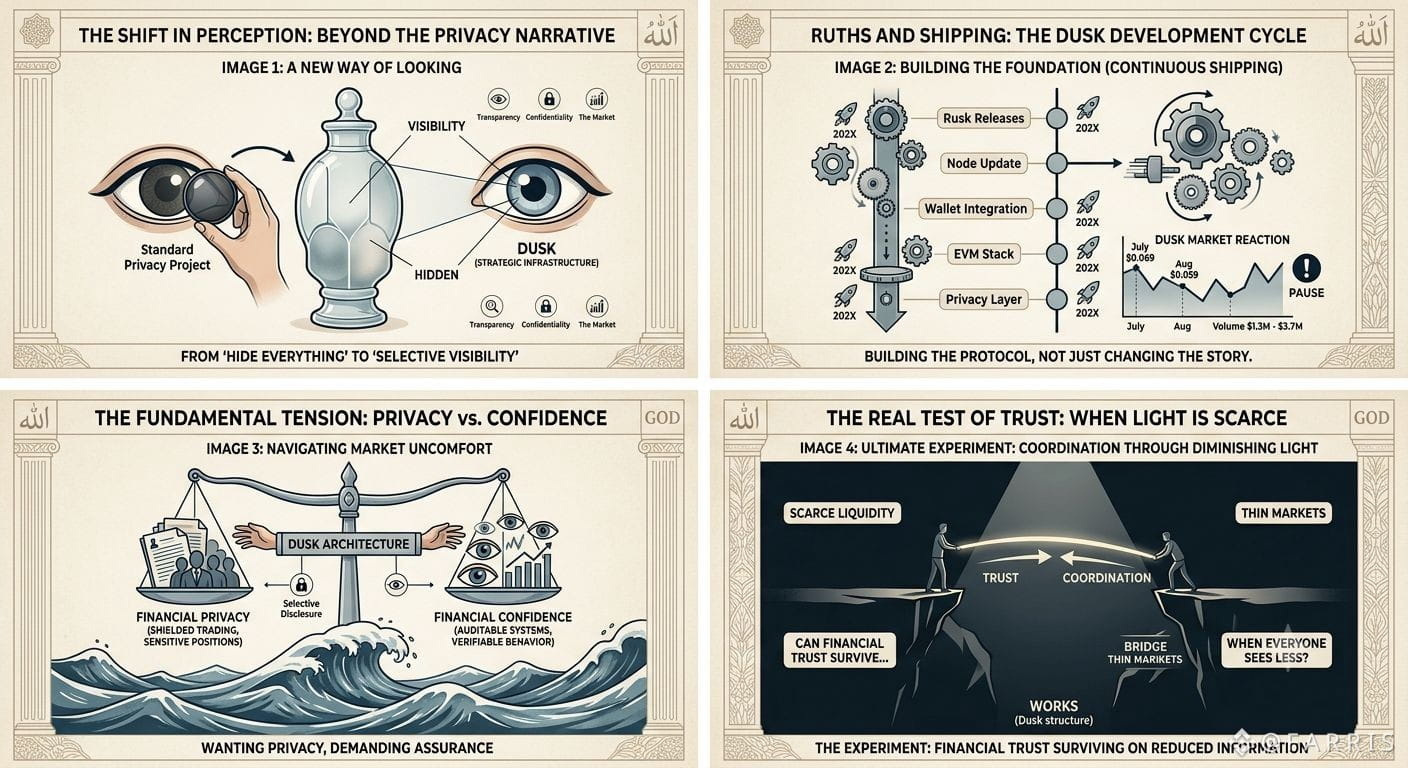
Dusk liefert weiterhin auf Protokollebene aus, statt nur die Geschichte rund um den Token zu verändern. Rusk hat in diesem Jahr mehrere Releases gesehen, während die Ökosystem-Repositories noch immer über Node, Wallet, EVM und Privacy-Stack hinweg aktualisiert werden.
Und der Markt hat diese Entwicklung auch nicht gerade mit viel Geduld behandelt.
DUSK lag Ende Juli bei etwa 0,069 US-Dollar und war Anfang August näher bei 0,059 US-Dollar; das tägliche Handelsvolumen lag in diesem Zeitraum grob zwischen 1,3 Mio. und 3,7 Mio. US-Dollar.
Das ist der Teil, den ich als nützlich zum Beobachten empfinde.
Denn Dusk versucht, ein Problem zu lösen, das gerade dann schwieriger wird, wenn Märkte sich unwohl fühlen: Finanzakteure wollen Privacy, aber sie wollen auch Zuversicht. Sie möchten sensible Positionen verborgen halten, ohne das Gefühl zu haben, dass das System selbst intransparent geworden ist.
Dusk’s Architektur spiegelt diese Spannung direkt wider. Öffentliche und geschützte Transaktionsmodelle existieren nebeneinander, während selektive Offenlegung in das übergreifende Design eingebaut ist.
#USPressesSouthKoreaToPrioritizeMemoryChips
Früher dachte ich, der schwere Teil wäre, nachzuweisen, dass vertrauliche Ausführung funktioniert.
Jetzt glaube ich, dass der schwierigere Test darin liegt, zu beweisen, dass die Menschen weiterhin darum herum koordinieren, wenn die Liquidität dünn wird und Gewissheit teuer wird.
Genau dann hört Infrastruktur auf, nur eine Idee zu sein, und beginnt zu zeigen, wem sie tatsächlich vertraut.
#BTCPerpFundingRateHits20MonthHigh
$BTW
{future}(BTWUSDT)
$VELVET
{future}(VELVETUSDT)
#dusk $DUSK @Dusk
Ich habe aufgehört, mir Dusk so anzusehen, wie ich es früher bei den meisten Privacy-Projekten getan habe.
#EthereumOpensGlamsterdamEarlyTestnet
Der interessante Teil ist nicht die Privacy-Erzählung. Es geht darum, was passiert, wenn man versucht, finanzielle Infrastruktur aufzubauen, bei der einige Informationen bewusst sichtbar sind, andere bewusst verborgen werden – und der Markt dennoch darauf vertrauen muss, dass darunter alles korrekt funktioniert.
#StrategySellsStockToRepurchasePreferred
Dieser Unterschied ist für mich in letzter Zeit noch interessanter geworden.
Dusk liefert weiterhin auf Protokollebene aus, statt nur die Geschichte rund um den Token zu verändern. Rusk hat in diesem Jahr mehrere Releases gesehen, während die Ökosystem-Repositories noch immer über Node, Wallet, EVM und Privacy-Stack hinweg aktualisiert werden.
Und der Markt hat diese Entwicklung auch nicht gerade mit viel Geduld behandelt.
DUSK lag Ende Juli bei etwa 0,069 US-Dollar und war Anfang August näher bei 0,059 US-Dollar; das tägliche Handelsvolumen lag in diesem Zeitraum grob zwischen 1,3 Mio. und 3,7 Mio. US-Dollar.
Das ist der Teil, den ich als nützlich zum Beobachten empfinde.
Denn Dusk versucht, ein Problem zu lösen, das gerade dann schwieriger wird, wenn Märkte sich unwohl fühlen: Finanzakteure wollen Privacy, aber sie wollen auch Zuversicht. Sie möchten sensible Positionen verborgen halten, ohne das Gefühl zu haben, dass das System selbst intransparent geworden ist.
Dusk’s Architektur spiegelt diese Spannung direkt wider. Öffentliche und geschützte Transaktionsmodelle existieren nebeneinander, während selektive Offenlegung in das übergreifende Design eingebaut ist.
#USPressesSouthKoreaToPrioritizeMemoryChips
Früher dachte ich, der schwere Teil wäre, nachzuweisen, dass vertrauliche Ausführung funktioniert.
Jetzt glaube ich, dass der schwierigere Test darin liegt, zu beweisen, dass die Menschen weiterhin darum herum koordinieren, wenn die Liquidität dünn wird und Gewissheit teuer wird.
Genau dann hört Infrastruktur auf, nur eine Idee zu sein, und beginnt zu zeigen, wem sie tatsächlich vertraut.
#BTCPerpFundingRateHits20MonthHigh
$BTW
$VELVET
Ich habe aufgehört, mir Dusk so anzusehen, wie ich es früher bei den meisten Privacy-Projekten getan habe.
#EthereumOpensGlamsterdamEarlyTestnet
Der interessante Teil ist nicht die Privacy-Erzählung. Es geht darum, was passiert, wenn man versucht, finanzielle Infrastruktur aufzubauen, bei der einige Informationen bewusst sichtbar sind, andere bewusst verborgen werden – und der Markt dennoch darauf vertrauen muss, dass darunter alles korrekt funktioniert.
#StrategySellsStockToRepurchasePreferred
Dieser Unterschied ist für mich in letzter Zeit noch interessanter geworden.
Dusk liefert weiterhin auf Protokollebene aus, statt nur die Geschichte rund um den Token zu verändern. Rusk hat in diesem Jahr mehrere Releases gesehen, während die Ökosystem-Repositories noch immer über Node, Wallet, EVM und Privacy-Stack hinweg aktualisiert werden.
Und der Markt hat diese Entwicklung auch nicht gerade mit viel Geduld behandelt.
DUSK lag Ende Juli bei etwa 0,069 US-Dollar und war Anfang August näher bei 0,059 US-Dollar; das tägliche Handelsvolumen lag in diesem Zeitraum grob zwischen 1,3 Mio. und 3,7 Mio. US-Dollar.
Das ist der Teil, den ich als nützlich zum Beobachten empfinde.
Denn Dusk versucht, ein Problem zu lösen, das gerade dann schwieriger wird, wenn Märkte sich unwohl fühlen: Finanzakteure wollen Privacy, aber sie wollen auch Zuversicht. Sie möchten sensible Positionen verborgen halten, ohne das Gefühl zu haben, dass das System selbst intransparent geworden ist.
Dusk’s Architektur spiegelt diese Spannung direkt wider. Öffentliche und geschützte Transaktionsmodelle existieren nebeneinander, während selektive Offenlegung in das übergreifende Design eingebaut ist.
#USPressesSouthKoreaToPrioritizeMemoryChips
Früher dachte ich, der schwere Teil wäre, nachzuweisen, dass vertrauliche Ausführung funktioniert.
Jetzt glaube ich, dass der schwierigere Test darin liegt, zu beweisen, dass die Menschen weiterhin darum herum koordinieren, wenn die Liquidität dünn wird und Gewissheit teuer wird.
Genau dann hört Infrastruktur auf, nur eine Idee zu sein, und beginnt zu zeigen, wem sie tatsächlich vertraut.
#BTCPerpFundingRateHits20MonthHigh
$BTW
$VELVET
13
14
505
·
--
#dusk $DUSK @Dusk_Foundation
Je mehr ich über Dusk lese, desto interessanter wird der Datenschutzaspekt.
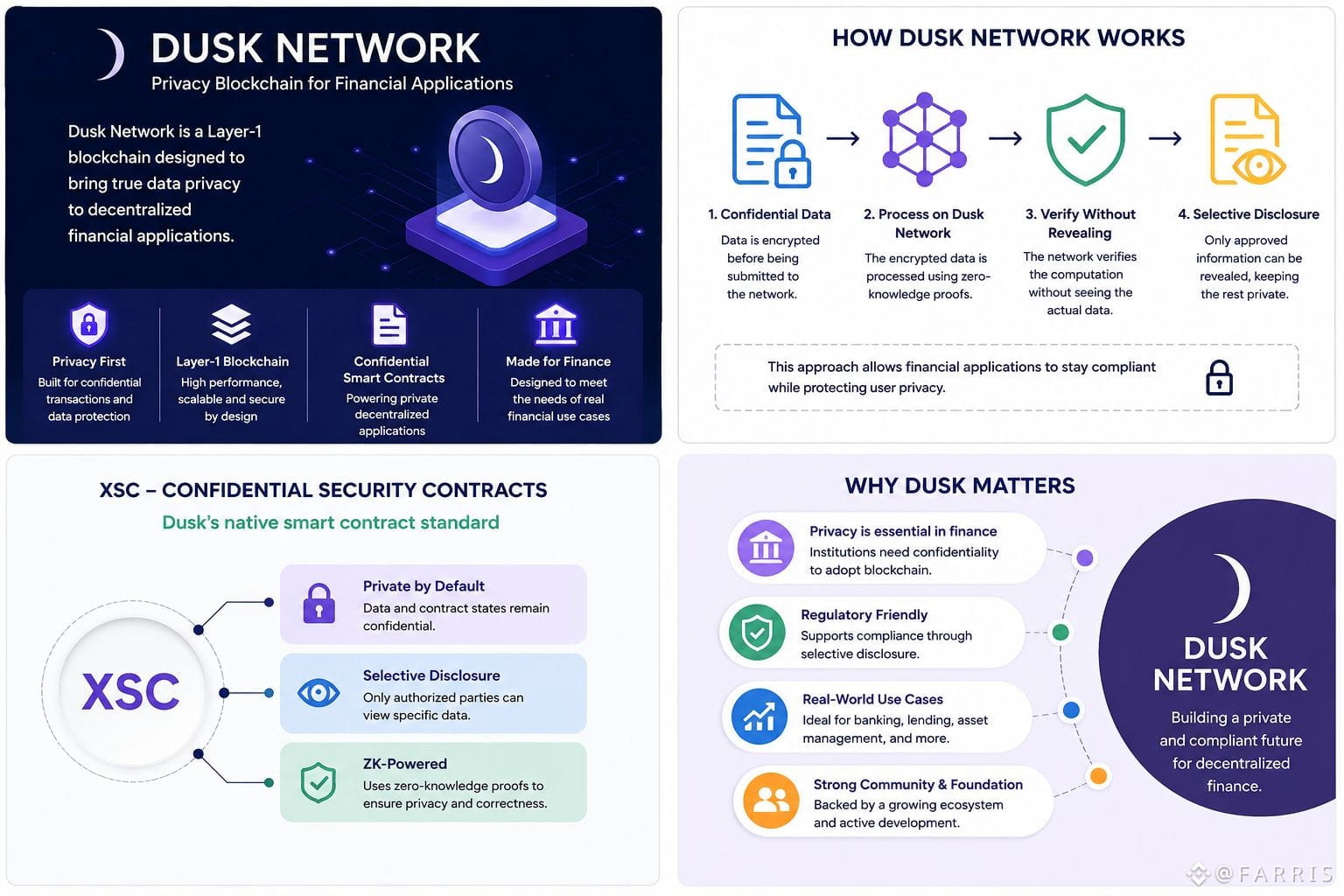
Was meine Aufmerksamkeit geweckt hat, ist nicht nur, dass es sich um ein datenschutzorientiertes L1 handelt, sondern auch, wie es Vertraulichkeit mit den Realitäten der Finanzmärkte in Einklang bringen will. Sein XSC-Standard ist für vertrauliche Smart Contracts ausgelegt, während Zero-Knowledge-Proofs und selektive Offenlegung sensible Aktivitäten privat halten können, ohne dass alles unsichtbar gemacht werden muss.
Mein Fazit: Für regulierte Finanzen ist Datenschutz wahrscheinlich keine optionale Funktion. Die schwierigere Frage ist, ob Dusk diese Privatsphäre so praktikabel machen kann, dass sie für echte Finanz-Workflows taugt. Genau das beobachte ich.
#StrategySellsStockToRepurchasePreferred #DollarHits3MonthLow #EthereumFoundationLaunchesGlamsterdamTestnet #US30YearYieldHitsHighestSince2007
$ACE
{spot}(ACEUSDT)
$TUT
{spot}(TUTUSDT)
#dusk $DUSK @Dusk
Je mehr ich über Dusk lese, desto interessanter wird der Datenschutzaspekt.
Was meine Aufmerksamkeit geweckt hat, ist nicht nur, dass es sich um ein datenschutzorientiertes L1 handelt, sondern auch, wie es Vertraulichkeit mit den Realitäten der Finanzmärkte in Einklang bringen will. Sein XSC-Standard ist für vertrauliche Smart Contracts ausgelegt, während Zero-Knowledge-Proofs und selektive Offenlegung sensible Aktivitäten privat halten können, ohne dass alles unsichtbar gemacht werden muss.
Mein Fazit: Für regulierte Finanzen ist Datenschutz wahrscheinlich keine optionale Funktion. Die schwierigere Frage ist, ob Dusk diese Privatsphäre so praktikabel machen kann, dass sie für echte Finanz-Workflows taugt. Genau das beobachte ich.
#StrategySellsStockToRepurchasePreferred #DollarHits3MonthLow #EthereumFoundationLaunchesGlamsterdamTestnet #US30YearYieldHitsHighestSince2007
$ACE
$TUT
Je mehr ich über Dusk lese, desto interessanter wird der Datenschutzaspekt.
Was meine Aufmerksamkeit geweckt hat, ist nicht nur, dass es sich um ein datenschutzorientiertes L1 handelt, sondern auch, wie es Vertraulichkeit mit den Realitäten der Finanzmärkte in Einklang bringen will. Sein XSC-Standard ist für vertrauliche Smart Contracts ausgelegt, während Zero-Knowledge-Proofs und selektive Offenlegung sensible Aktivitäten privat halten können, ohne dass alles unsichtbar gemacht werden muss.
Mein Fazit: Für regulierte Finanzen ist Datenschutz wahrscheinlich keine optionale Funktion. Die schwierigere Frage ist, ob Dusk diese Privatsphäre so praktikabel machen kann, dass sie für echte Finanz-Workflows taugt. Genau das beobachte ich.
#StrategySellsStockToRepurchasePreferred #DollarHits3MonthLow #EthereumFoundationLaunchesGlamsterdamTestnet #US30YearYieldHitsHighestSince2007
$ACE
$TUT
12
12
144
·
--
#dusk $DUSK @Dusk_Foundation
Früher dachte ich, der schwierigste Teil der Privatsphäre sei, Informationen zu verbergen.
Wenn ich Dusk im Zeitverlauf beobachte, hat mich das ins Hinterfragen gebracht.
Das Spannende ist nicht nur, dass Dusk mit seinem XSC-Standard vertrauliche Smart Contracts aufbaut. Entscheidend ist die Richtung, die das Netzwerk im Bereich des regulierten Finanzwesens eingeschlagen hat: Privatsphäre muss dort mit Offenlegung, Abwicklung und realen institutionellen Workflows zusammen existieren.
Dieser Unterschied ist wichtig.
Auch die Codebasis geht voran und bleibt nicht stehen. Der in Rust geschriebene Rusk-Client von Dusk ist inzwischen die aktive Implementierung; die Releases gehen 2026 weiter, während sich das Ökosystem rund um EVM-Tools, Wallets, Staking, Chainlink-Konnektivität und Infrastruktur für geregelte Märkte weiter ausweitet.
Und dennoch neigt der Markt dazu, DUSK weiterhin durch dieselbe kurzfristige Brille zu betrachten wie alles andere.
Dort hat sich meine Sicht geändert.
Mich interessiert weniger, ob Dusk Aufmerksamkeit auf sich ziehen kann, sondern mehr, ob finanzielle Aktivitäten irgendwann einfordern, was öffentliche Blockchains nur schwer leisten können: Informationen, die verifiziert werden können, ohne dass sie für alle offengelegt werden.
Wenn das zum eigentlichen Engpass wird, ist Dusk’s Privatsphäre nicht die eigentliche Geschichte.
Die unbequeme Erkenntnis ist, dass selektive Sichtbarkeit möglicherweise wichtiger ist als vollständige Transparenz, sobald ernsthaftes Geld anfängt, onchain zu fließen.
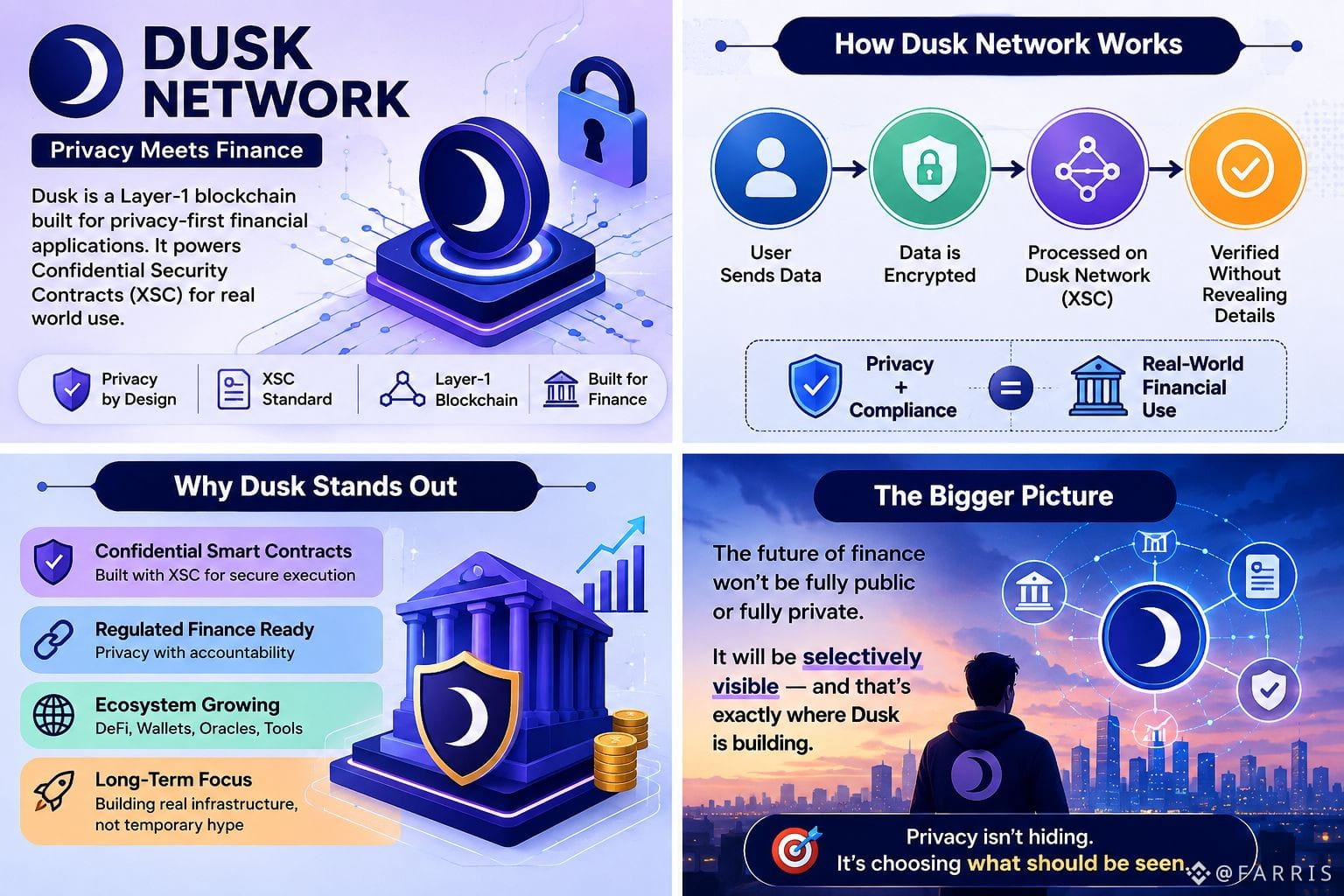
#SECReviewsSix3xLeveragedCommodityETFs #SP500TopsRecord7800 #COWRises55.77%In24h #BNBChainToActivatePasteurHardFork
#dusk $DUSK @Dusk
Früher dachte ich, der schwierigste Teil der Privatsphäre sei, Informationen zu verbergen.
Wenn ich Dusk im Zeitverlauf beobachte, hat mich das ins Hinterfragen gebracht.
Das Spannende ist nicht nur, dass Dusk mit seinem XSC-Standard vertrauliche Smart Contracts aufbaut. Entscheidend ist die Richtung, die das Netzwerk im Bereich des regulierten Finanzwesens eingeschlagen hat: Privatsphäre muss dort mit Offenlegung, Abwicklung und realen institutionellen Workflows zusammen existieren.
Dieser Unterschied ist wichtig.
Auch die Codebasis geht voran und bleibt nicht stehen. Der in Rust geschriebene Rusk-Client von Dusk ist inzwischen die aktive Implementierung; die Releases gehen 2026 weiter, während sich das Ökosystem rund um EVM-Tools, Wallets, Staking, Chainlink-Konnektivität und Infrastruktur für geregelte Märkte weiter ausweitet.
Und dennoch neigt der Markt dazu, DUSK weiterhin durch dieselbe kurzfristige Brille zu betrachten wie alles andere.
Dort hat sich meine Sicht geändert.
Mich interessiert weniger, ob Dusk Aufmerksamkeit auf sich ziehen kann, sondern mehr, ob finanzielle Aktivitäten irgendwann einfordern, was öffentliche Blockchains nur schwer leisten können: Informationen, die verifiziert werden können, ohne dass sie für alle offengelegt werden.
Wenn das zum eigentlichen Engpass wird, ist Dusk’s Privatsphäre nicht die eigentliche Geschichte.
Die unbequeme Erkenntnis ist, dass selektive Sichtbarkeit möglicherweise wichtiger ist als vollständige Transparenz, sobald ernsthaftes Geld anfängt, onchain zu fließen.
#SECReviewsSix3xLeveragedCommodityETFs #SP500TopsRecord7800 #COWRises55.77%In24h #BNBChainToActivatePasteurHardFork
Früher dachte ich, der schwierigste Teil der Privatsphäre sei, Informationen zu verbergen.
Wenn ich Dusk im Zeitverlauf beobachte, hat mich das ins Hinterfragen gebracht.
Das Spannende ist nicht nur, dass Dusk mit seinem XSC-Standard vertrauliche Smart Contracts aufbaut. Entscheidend ist die Richtung, die das Netzwerk im Bereich des regulierten Finanzwesens eingeschlagen hat: Privatsphäre muss dort mit Offenlegung, Abwicklung und realen institutionellen Workflows zusammen existieren.
Dieser Unterschied ist wichtig.
Auch die Codebasis geht voran und bleibt nicht stehen. Der in Rust geschriebene Rusk-Client von Dusk ist inzwischen die aktive Implementierung; die Releases gehen 2026 weiter, während sich das Ökosystem rund um EVM-Tools, Wallets, Staking, Chainlink-Konnektivität und Infrastruktur für geregelte Märkte weiter ausweitet.
Und dennoch neigt der Markt dazu, DUSK weiterhin durch dieselbe kurzfristige Brille zu betrachten wie alles andere.
Dort hat sich meine Sicht geändert.
Mich interessiert weniger, ob Dusk Aufmerksamkeit auf sich ziehen kann, sondern mehr, ob finanzielle Aktivitäten irgendwann einfordern, was öffentliche Blockchains nur schwer leisten können: Informationen, die verifiziert werden können, ohne dass sie für alle offengelegt werden.
Wenn das zum eigentlichen Engpass wird, ist Dusk’s Privatsphäre nicht die eigentliche Geschichte.
Die unbequeme Erkenntnis ist, dass selektive Sichtbarkeit möglicherweise wichtiger ist als vollständige Transparenz, sobald ernsthaftes Geld anfängt, onchain zu fließen.
#SECReviewsSix3xLeveragedCommodityETFs #SP500TopsRecord7800 #COWRises55.77%In24h #BNBChainToActivatePasteurHardFork
7
10
132
·
--
#dusk $DUSK @Dusk_Foundation
Ich komme immer wieder zu einer Frage mit Dusk zurück: Was passiert, wenn Menschen aufhören, an das System zu glauben, über das sie sich koordinieren?
Spannend ist daran nicht die Datenschutz-Architektur an sich. Entscheidend ist, wie sich dieser Datenschutz verhält, wenn die Märkte unter Druck geraten. Dusk ist so konzipiert, dass vertrauliche Finanzaktivitäten, selektive Offenlegung und deterministisches Settlement im Mittelpunkt stehen. Das kann eine sensible finanzielle Koordination praktikabler machen, ohne jede Position oder jede Transaktion öffentlich preiszugeben.
Doch Vertrauen ist ein anderes Problem.
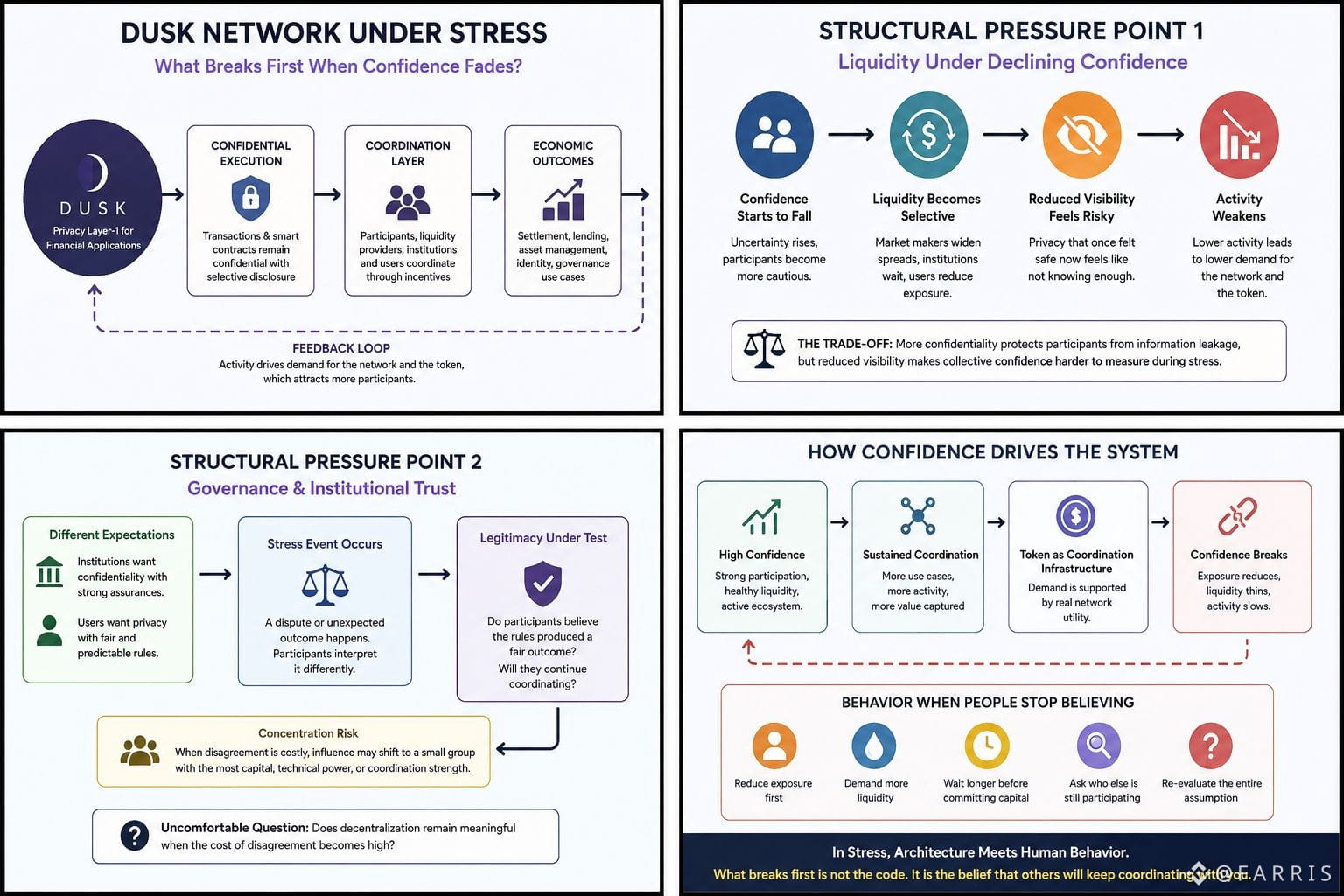
Wenn die Liquidität komfortabel ist, kann sich Datenschutz wie Schutz anfühlen. Wenn die Liquidität verschwindet, kann sich derselbe Datenschutz wie Unsicherheit anfühlen. Die Teilnehmenden beginnen zu fragen, was sie nicht sehen können, wer weiterhin überzeugt ist und ob andere Teilnehmende aktiv bleiben werden, wenn die Bedingungen schlechter werden.
Das schafft einen strukturellen Zielkonflikt: Stärkere Vertraulichkeit kann Marktteilnehmende vor Informationslecks schützen, während geringere Sichtbarkeit es schwieriger macht, kollektives Vertrauen in Stressphasen einzuschätzen.
Die gleiche Spannung erreicht auch die Governance. Ein Protokoll kann Regeln perfekt ausführen und dennoch vor einer tieferen Frage stehen: Wer trägt die Folgen, wenn diese Regeln ein Ergebnis erzeugen, das die Teilnehmenden nicht mehr akzeptieren?
Ich habe lange genug beobachtet, wie Kapital zwischen Narrativen rotiert, um zu wissen, dass Anreize irgendwann lauter sprechen als Design-Absichten. DUSK ist hier als Koordinationsinfrastruktur relevant, aber der eigentliche Test ist, ob wirtschaftliche Teilnehmende weiterhin einen echten Nutzen darin finden, sich über das Netzwerk zu koordinieren, wenn Vertrauen teuer wird.
Dort hört die Architektur auf, theoretisch zu sein, und beginnt, menschliches Verhalten zu treffen.
#BerkshireAddsToDeltaAndAlphabetHoldings #PolymarketOddsIranBlockadeEndFallTo23% #DollarFallsToMayLow #TradersCutFedRateHikeBetsBeforeMid2027
#dusk $DUSK @Dusk
Ich komme immer wieder zu einer Frage mit Dusk zurück: Was passiert, wenn Menschen aufhören, an das System zu glauben, über das sie sich koordinieren?
Spannend ist daran nicht die Datenschutz-Architektur an sich. Entscheidend ist, wie sich dieser Datenschutz verhält, wenn die Märkte unter Druck geraten. Dusk ist so konzipiert, dass vertrauliche Finanzaktivitäten, selektive Offenlegung und deterministisches Settlement im Mittelpunkt stehen. Das kann eine sensible finanzielle Koordination praktikabler machen, ohne jede Position oder jede Transaktion öffentlich preiszugeben.
Doch Vertrauen ist ein anderes Problem.
Wenn die Liquidität komfortabel ist, kann sich Datenschutz wie Schutz anfühlen. Wenn die Liquidität verschwindet, kann sich derselbe Datenschutz wie Unsicherheit anfühlen. Die Teilnehmenden beginnen zu fragen, was sie nicht sehen können, wer weiterhin überzeugt ist und ob andere Teilnehmende aktiv bleiben werden, wenn die Bedingungen schlechter werden.
Das schafft einen strukturellen Zielkonflikt: Stärkere Vertraulichkeit kann Marktteilnehmende vor Informationslecks schützen, während geringere Sichtbarkeit es schwieriger macht, kollektives Vertrauen in Stressphasen einzuschätzen.
Die gleiche Spannung erreicht auch die Governance. Ein Protokoll kann Regeln perfekt ausführen und dennoch vor einer tieferen Frage stehen: Wer trägt die Folgen, wenn diese Regeln ein Ergebnis erzeugen, das die Teilnehmenden nicht mehr akzeptieren?
Ich habe lange genug beobachtet, wie Kapital zwischen Narrativen rotiert, um zu wissen, dass Anreize irgendwann lauter sprechen als Design-Absichten. DUSK ist hier als Koordinationsinfrastruktur relevant, aber der eigentliche Test ist, ob wirtschaftliche Teilnehmende weiterhin einen echten Nutzen darin finden, sich über das Netzwerk zu koordinieren, wenn Vertrauen teuer wird.
Dort hört die Architektur auf, theoretisch zu sein, und beginnt, menschliches Verhalten zu treffen.
#BerkshireAddsToDeltaAndAlphabetHoldings #PolymarketOddsIranBlockadeEndFallTo23% #DollarFallsToMayLow #TradersCutFedRateHikeBetsBeforeMid2027
Ich komme immer wieder zu einer Frage mit Dusk zurück: Was passiert, wenn Menschen aufhören, an das System zu glauben, über das sie sich koordinieren?
Spannend ist daran nicht die Datenschutz-Architektur an sich. Entscheidend ist, wie sich dieser Datenschutz verhält, wenn die Märkte unter Druck geraten. Dusk ist so konzipiert, dass vertrauliche Finanzaktivitäten, selektive Offenlegung und deterministisches Settlement im Mittelpunkt stehen. Das kann eine sensible finanzielle Koordination praktikabler machen, ohne jede Position oder jede Transaktion öffentlich preiszugeben.
Doch Vertrauen ist ein anderes Problem.
Wenn die Liquidität komfortabel ist, kann sich Datenschutz wie Schutz anfühlen. Wenn die Liquidität verschwindet, kann sich derselbe Datenschutz wie Unsicherheit anfühlen. Die Teilnehmenden beginnen zu fragen, was sie nicht sehen können, wer weiterhin überzeugt ist und ob andere Teilnehmende aktiv bleiben werden, wenn die Bedingungen schlechter werden.
Das schafft einen strukturellen Zielkonflikt: Stärkere Vertraulichkeit kann Marktteilnehmende vor Informationslecks schützen, während geringere Sichtbarkeit es schwieriger macht, kollektives Vertrauen in Stressphasen einzuschätzen.
Die gleiche Spannung erreicht auch die Governance. Ein Protokoll kann Regeln perfekt ausführen und dennoch vor einer tieferen Frage stehen: Wer trägt die Folgen, wenn diese Regeln ein Ergebnis erzeugen, das die Teilnehmenden nicht mehr akzeptieren?
Ich habe lange genug beobachtet, wie Kapital zwischen Narrativen rotiert, um zu wissen, dass Anreize irgendwann lauter sprechen als Design-Absichten. DUSK ist hier als Koordinationsinfrastruktur relevant, aber der eigentliche Test ist, ob wirtschaftliche Teilnehmende weiterhin einen echten Nutzen darin finden, sich über das Netzwerk zu koordinieren, wenn Vertrauen teuer wird.
Dort hört die Architektur auf, theoretisch zu sein, und beginnt, menschliches Verhalten zu treffen.
#BerkshireAddsToDeltaAndAlphabetHoldings #PolymarketOddsIranBlockadeEndFallTo23% #DollarFallsToMayLow #TradersCutFedRateHikeBetsBeforeMid2027
11
11
157
·
--
#dusk $DUSK @Dusk_Foundation
Das Seltsame an Dusk ist, dass der Markt es sich monatelang ansehen kann und trotzdem übersieht, was dort eigentlich gebaut wird.
Ich habe genug Krypto-Zyklen verfolgt, um zu wissen, dass Infrastruktur meist nach der falschen Uhr bewertet wird. Preise bewegen sich über Tage. Narrative rotieren über Wochen. Seriöse Finanzinfrastruktur kann Jahre dauern, bis überhaupt jemand merkt, ob das zugrunde liegende System die langweiligen Details tatsächlich korrekt beherrscht.
Was mich an Dusk aufmerksam gemacht hat, ist, wie viel der jüngsten Arbeit sich vom Erklären der Idee wegbewegt hat und hin zur Umsetzung einer nutzbaren Stack-Struktur.
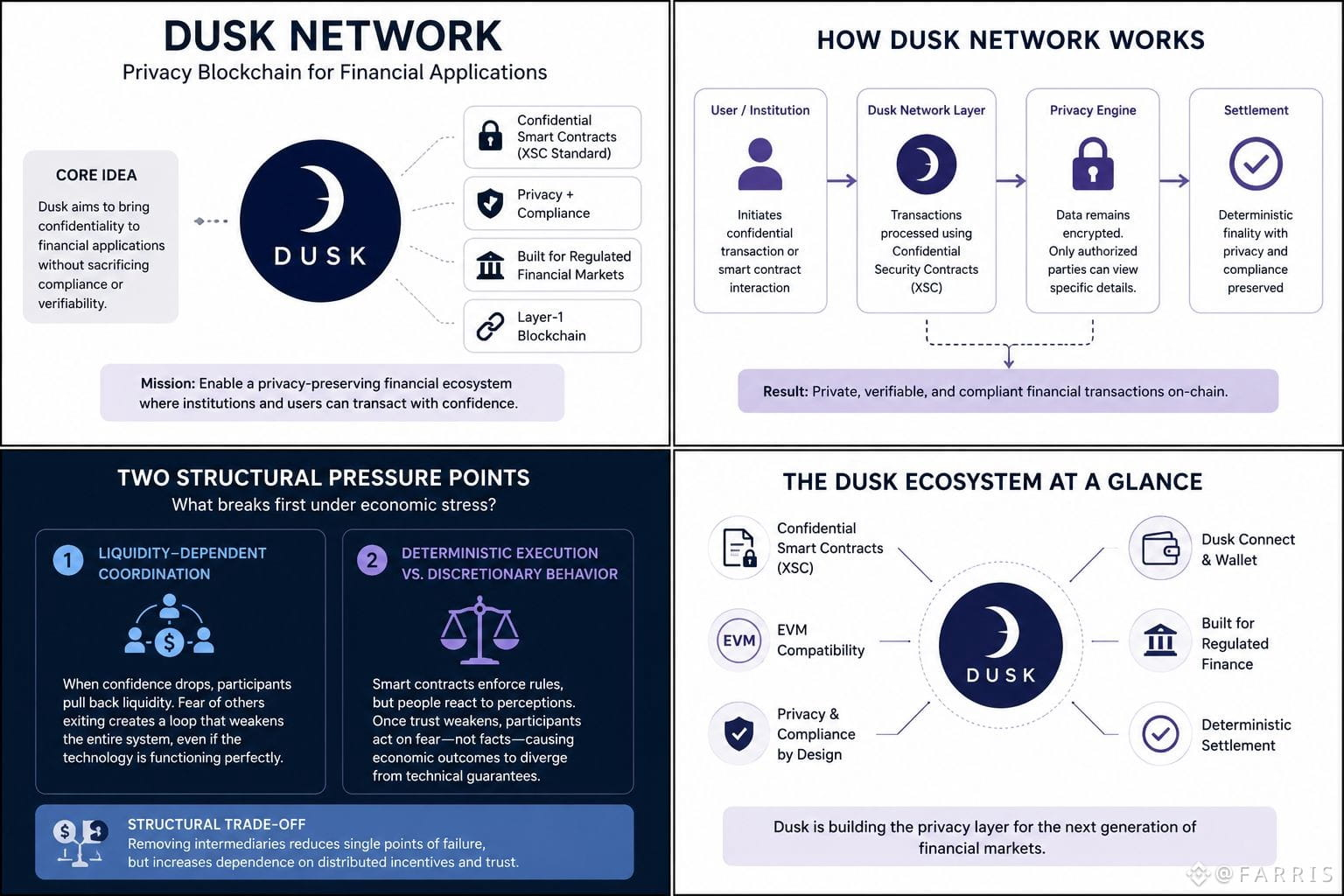
Das Netzwerk ist bereits live: mit getrennten öffentlichen und geschützten Transaktionsmodellen, deterministischem Settlement, nativen Smart-Contract-Umgebungen und einem EVM-Pfad. In jüngerer Zeit arbeitet Dusk zusätzlich an der weniger glamourösen Schicht rund um diese Infrastruktur: Dusk Connect und ein neues Wallet, das darauf abzielt, die Interaktion mit dApps einfacher zu machen.
Das bedeutet mir mehr als eine weitere Partnerschafts-Ankündigung.
Denn irgendwann hört die Frage auf zu sein: „Ist Privatsphäre interessant?“
Dann wird sie zu: „Wird das auch wirklich genutzt, wenn Geld im Spiel ist?“
Dusk geht eine sehr konkrete Wette ein: Regulierte Märkte brauchen möglicherweise Privatsphäre, ohne dabei auf Verifizierbarkeit, Zugriffskontrollen und Settlement zu verzichten. Sein XSC-Design ist genau um diese Spannung herum aufgebaut – statt so zu tun, als könnten sich finanzielle Vermögenswerte einfach wie gewöhnliche Tokens verhalten.
Und genau dort hat sich meine Sicht geändert.
Früher dachte ich, das Schwierigste wäre, zu beweisen, dass vertrauliche Ausführung funktioniert.
Heute glaube ich, dass der härtere Test darin besteht, ob Dusk Vertraulichkeit so selbstverständlich machen kann, dass Institutionen sie nicht mehr als Spezialfunktion behandeln, sondern als Infrastruktur.
Das ist ein deutlich langsameres Problem.
Und wahrscheinlich das wichtigere.
#RedditToJoinSP500 #TapestryFallsNearly15%OnEarnings #SP500ClosesAtRecordHigh #DeepSeekLaunchesHarnessCodeAgentBeta
#dusk $DUSK @Dusk
Das Seltsame an Dusk ist, dass der Markt es sich monatelang ansehen kann und trotzdem übersieht, was dort eigentlich gebaut wird.
Ich habe genug Krypto-Zyklen verfolgt, um zu wissen, dass Infrastruktur meist nach der falschen Uhr bewertet wird. Preise bewegen sich über Tage. Narrative rotieren über Wochen. Seriöse Finanzinfrastruktur kann Jahre dauern, bis überhaupt jemand merkt, ob das zugrunde liegende System die langweiligen Details tatsächlich korrekt beherrscht.
Was mich an Dusk aufmerksam gemacht hat, ist, wie viel der jüngsten Arbeit sich vom Erklären der Idee wegbewegt hat und hin zur Umsetzung einer nutzbaren Stack-Struktur.
Das Netzwerk ist bereits live: mit getrennten öffentlichen und geschützten Transaktionsmodellen, deterministischem Settlement, nativen Smart-Contract-Umgebungen und einem EVM-Pfad. In jüngerer Zeit arbeitet Dusk zusätzlich an der weniger glamourösen Schicht rund um diese Infrastruktur: Dusk Connect und ein neues Wallet, das darauf abzielt, die Interaktion mit dApps einfacher zu machen.
Das bedeutet mir mehr als eine weitere Partnerschafts-Ankündigung.
Denn irgendwann hört die Frage auf zu sein: „Ist Privatsphäre interessant?“
Dann wird sie zu: „Wird das auch wirklich genutzt, wenn Geld im Spiel ist?“
Dusk geht eine sehr konkrete Wette ein: Regulierte Märkte brauchen möglicherweise Privatsphäre, ohne dabei auf Verifizierbarkeit, Zugriffskontrollen und Settlement zu verzichten. Sein XSC-Design ist genau um diese Spannung herum aufgebaut – statt so zu tun, als könnten sich finanzielle Vermögenswerte einfach wie gewöhnliche Tokens verhalten.
Und genau dort hat sich meine Sicht geändert.
Früher dachte ich, das Schwierigste wäre, zu beweisen, dass vertrauliche Ausführung funktioniert.
Heute glaube ich, dass der härtere Test darin besteht, ob Dusk Vertraulichkeit so selbstverständlich machen kann, dass Institutionen sie nicht mehr als Spezialfunktion behandeln, sondern als Infrastruktur.
Das ist ein deutlich langsameres Problem.
Und wahrscheinlich das wichtigere.
#RedditToJoinSP500 #TapestryFallsNearly15%OnEarnings #SP500ClosesAtRecordHigh #DeepSeekLaunchesHarnessCodeAgentBeta
Das Seltsame an Dusk ist, dass der Markt es sich monatelang ansehen kann und trotzdem übersieht, was dort eigentlich gebaut wird.
Ich habe genug Krypto-Zyklen verfolgt, um zu wissen, dass Infrastruktur meist nach der falschen Uhr bewertet wird. Preise bewegen sich über Tage. Narrative rotieren über Wochen. Seriöse Finanzinfrastruktur kann Jahre dauern, bis überhaupt jemand merkt, ob das zugrunde liegende System die langweiligen Details tatsächlich korrekt beherrscht.
Was mich an Dusk aufmerksam gemacht hat, ist, wie viel der jüngsten Arbeit sich vom Erklären der Idee wegbewegt hat und hin zur Umsetzung einer nutzbaren Stack-Struktur.
Das Netzwerk ist bereits live: mit getrennten öffentlichen und geschützten Transaktionsmodellen, deterministischem Settlement, nativen Smart-Contract-Umgebungen und einem EVM-Pfad. In jüngerer Zeit arbeitet Dusk zusätzlich an der weniger glamourösen Schicht rund um diese Infrastruktur: Dusk Connect und ein neues Wallet, das darauf abzielt, die Interaktion mit dApps einfacher zu machen.
Das bedeutet mir mehr als eine weitere Partnerschafts-Ankündigung.
Denn irgendwann hört die Frage auf zu sein: „Ist Privatsphäre interessant?“
Dann wird sie zu: „Wird das auch wirklich genutzt, wenn Geld im Spiel ist?“
Dusk geht eine sehr konkrete Wette ein: Regulierte Märkte brauchen möglicherweise Privatsphäre, ohne dabei auf Verifizierbarkeit, Zugriffskontrollen und Settlement zu verzichten. Sein XSC-Design ist genau um diese Spannung herum aufgebaut – statt so zu tun, als könnten sich finanzielle Vermögenswerte einfach wie gewöhnliche Tokens verhalten.
Und genau dort hat sich meine Sicht geändert.
Früher dachte ich, das Schwierigste wäre, zu beweisen, dass vertrauliche Ausführung funktioniert.
Heute glaube ich, dass der härtere Test darin besteht, ob Dusk Vertraulichkeit so selbstverständlich machen kann, dass Institutionen sie nicht mehr als Spezialfunktion behandeln, sondern als Infrastruktur.
Das ist ein deutlich langsameres Problem.
Und wahrscheinlich das wichtigere.
#RedditToJoinSP500 #TapestryFallsNearly15%OnEarnings #SP500ClosesAtRecordHigh #DeepSeekLaunchesHarnessCodeAgentBeta
1
124
·
--
Artikel
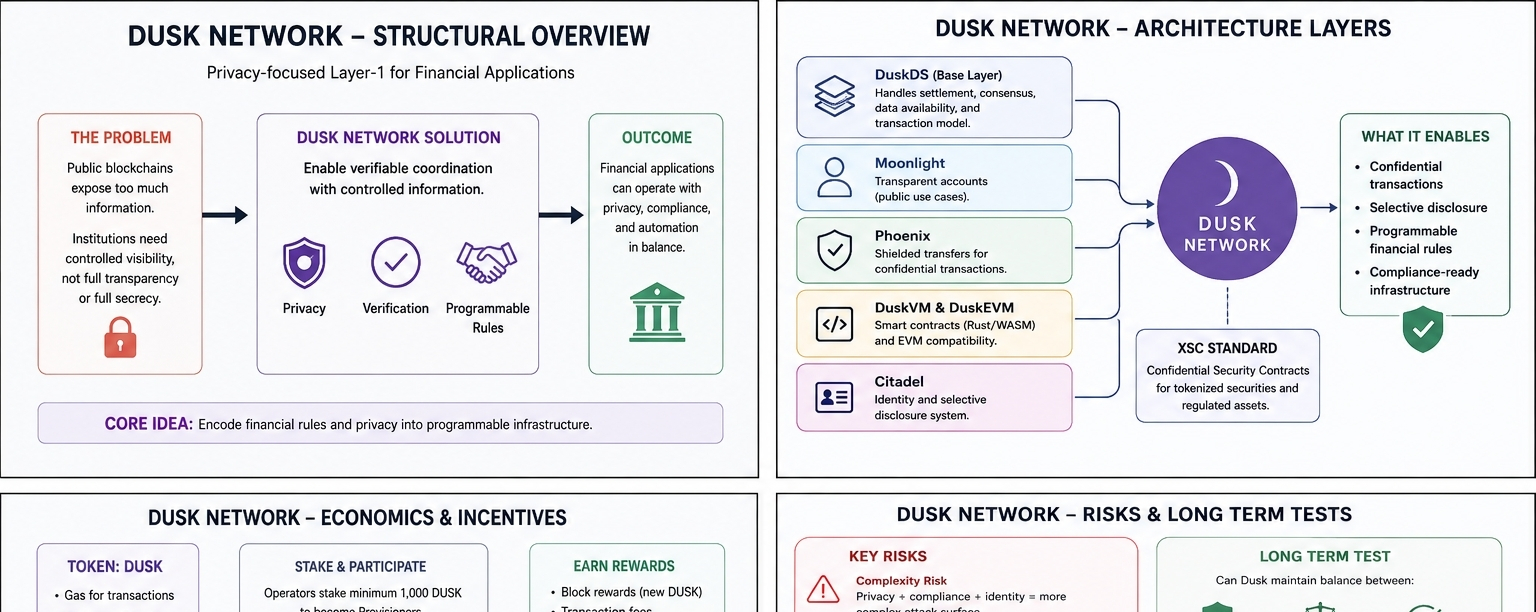
Dusk Network: Die schwierige Herausforderung hinter privater FinanzinfrastrukturDusk Network lässt sich zwar leicht als datenschutzorientierte Layer-1 für Finanzanwendungen beschreiben, aber diese Beschreibung verfehlt das eigentliche, schwierigere Problem, das es zu lösen versucht. Die tieferliegende Herausforderung besteht nicht nur darin, dass Blockchains zu viele Informationen offenlegen. Es ist vielmehr so, dass Finanzmärkte zwei Dinge benötigen, die auf den ersten Blick miteinander im Widerspruch zu stehen scheinen: überprüfbare Koordination und kontrollierte Informationsbereitstellung.
Öffentliche Blockchains haben Transparenz zur Voreinstellung gemacht. Das funktioniert bemerkenswert gut für Systeme, bei denen alle von derselben Sicht auf den Zustand profitieren. Finanzinstitute operieren jedoch häufig unter unterschiedlichen Bedingungen. Ein Portfoliomanager möchte nicht unbedingt, dass Wettbewerber Positionen in Echtzeit sehen. Ein Marktteilnehmer muss möglicherweise seine Berechtigung nachweisen, ohne die gesamte Identität offenzulegen. Ein Emittent benötigt möglicherweise Übertragungsbeschränkungen, Eigentumsgrenzen, Abwicklungsregeln und regulatorische Kontrollen, ohne dabei jede geschäftlich sensible Einzelheit zu veröffentlichen.
Dusk Network: Die schwierige Herausforderung hinter privater Finanzinfrastruktur
Dusk Network lässt sich zwar leicht als datenschutzorientierte Layer-1 für Finanzanwendungen beschreiben, aber diese Beschreibung verfehlt das eigentliche, schwierigere Problem, das es zu lösen versucht. Die tieferliegende Herausforderung besteht nicht nur darin, dass Blockchains zu viele Informationen offenlegen. Es ist vielmehr so, dass Finanzmärkte zwei Dinge benötigen, die auf den ersten Blick miteinander im Widerspruch zu stehen scheinen: überprüfbare Koordination und kontrollierte Informationsbereitstellung.
Öffentliche Blockchains haben Transparenz zur Voreinstellung gemacht. Das funktioniert bemerkenswert gut für Systeme, bei denen alle von derselben Sicht auf den Zustand profitieren. Finanzinstitute operieren jedoch häufig unter unterschiedlichen Bedingungen. Ein Portfoliomanager möchte nicht unbedingt, dass Wettbewerber Positionen in Echtzeit sehen. Ein Marktteilnehmer muss möglicherweise seine Berechtigung nachweisen, ohne die gesamte Identität offenzulegen. Ein Emittent benötigt möglicherweise Übertragungsbeschränkungen, Eigentumsgrenzen, Abwicklungsregeln und regulatorische Kontrollen, ohne dabei jede geschäftlich sensible Einzelheit zu veröffentlichen.
Öffentliche Blockchains haben Transparenz zur Voreinstellung gemacht. Das funktioniert bemerkenswert gut für Systeme, bei denen alle von derselben Sicht auf den Zustand profitieren. Finanzinstitute operieren jedoch häufig unter unterschiedlichen Bedingungen. Ein Portfoliomanager möchte nicht unbedingt, dass Wettbewerber Positionen in Echtzeit sehen. Ein Marktteilnehmer muss möglicherweise seine Berechtigung nachweisen, ohne die gesamte Identität offenzulegen. Ein Emittent benötigt möglicherweise Übertragungsbeschränkungen, Eigentumsgrenzen, Abwicklungsregeln und regulatorische Kontrollen, ohne dabei jede geschäftlich sensible Einzelheit zu veröffentlichen.
2
109
·
--
#baby @babylonlabs_io $BABY
Ich habe Babylon fast ignoriert.
Nicht, weil ich es für eine schlechte Idee hielt. Es war nur nicht die lauteste Story auf dem Markt—und nach genug Jahren in Krypto habe ich gelernt, dass die lautesten Geschichten selten genau so bleiben.
Also habe ich weiter zugesehen.
Auffällig war nicht der Preis oder die Schlagzeilen. Es waren die Art der Gespräche, die darum geführt wurden. Die Leute verbrachten mehr Zeit damit zu diskutieren, wie Anreize unter Druck zusammenhalten, als kurze kurzfristige Bewegungen zu feiern. Das sieht man nicht sehr oft.
Ich habe zu viele Narrative zerfallen sehen, sobald der Markt sich unwohl fühlt. Deshalb achte ich mehr darauf, was Menschen tun, wenn die Aufregung verfliegt, als darauf, was sie sagen, wenn alles grün ist.
Babylon hat mich über eine Sache neu nachdenken lassen.
Vielleicht besteht der eigentliche Test für ein Protokoll nicht darin, wie schnell es wächst. Sondern darin, ob Menschen sich trotzdem dafür entscheiden, teilzunehmen—wenn es keinen einfachen Grund gibt zu bleiben.
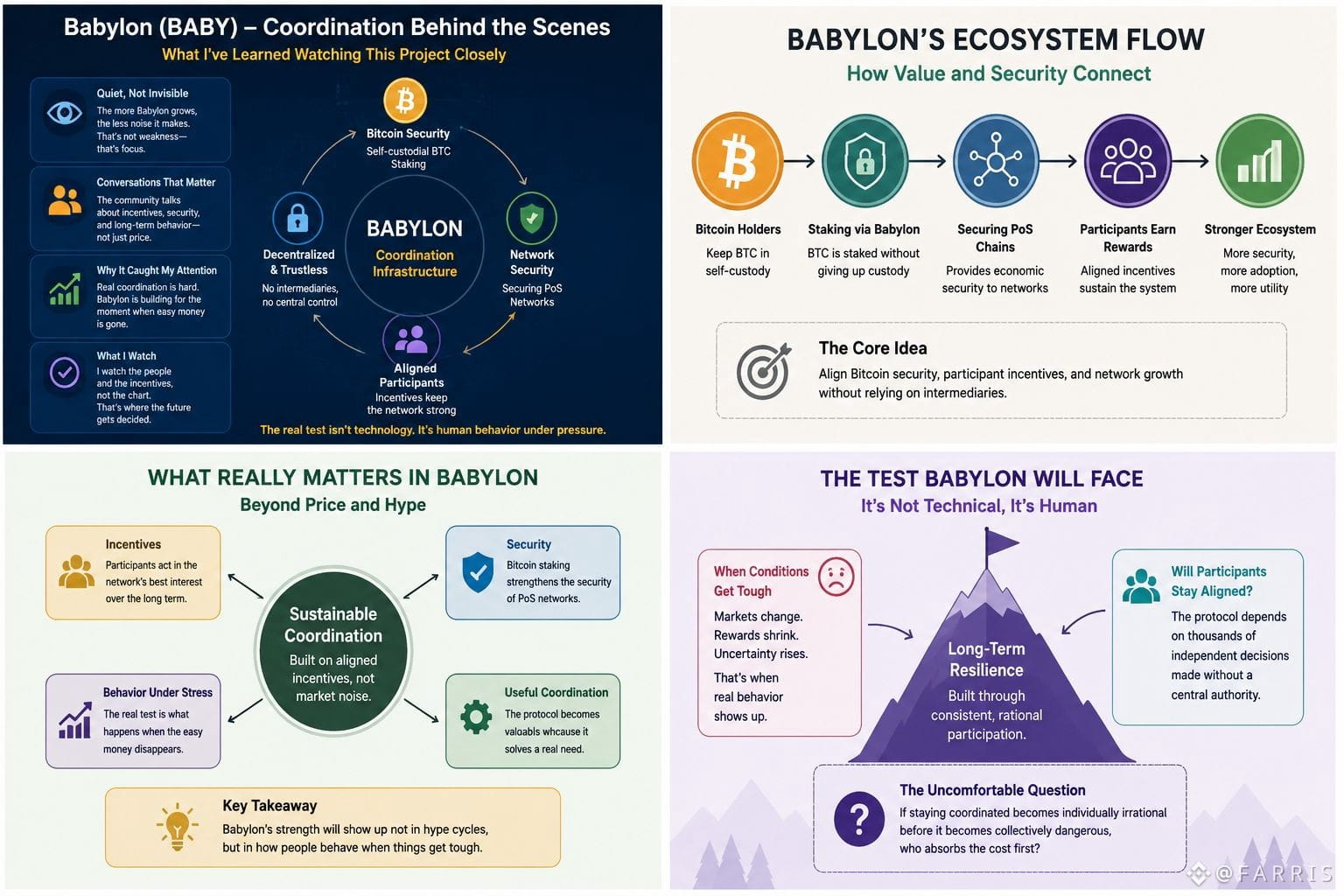
Das ist der Teil, den das Diagramm nicht zeigen kann, und meistens ist genau dieser Teil der wichtigste.
#USIranDealOrNoDeal #SpaceXToReportQ2Results #KoreaMarginHikeCutsLeveragedETFTrading #KOSPINikkeiOpenHigherOnChipStocks
#baby @BabylonLabs_io $BABY
Ich habe Babylon fast ignoriert.
Nicht, weil ich es für eine schlechte Idee hielt. Es war nur nicht die lauteste Story auf dem Markt—und nach genug Jahren in Krypto habe ich gelernt, dass die lautesten Geschichten selten genau so bleiben.
Also habe ich weiter zugesehen.
Auffällig war nicht der Preis oder die Schlagzeilen. Es waren die Art der Gespräche, die darum geführt wurden. Die Leute verbrachten mehr Zeit damit zu diskutieren, wie Anreize unter Druck zusammenhalten, als kurze kurzfristige Bewegungen zu feiern. Das sieht man nicht sehr oft.
Ich habe zu viele Narrative zerfallen sehen, sobald der Markt sich unwohl fühlt. Deshalb achte ich mehr darauf, was Menschen tun, wenn die Aufregung verfliegt, als darauf, was sie sagen, wenn alles grün ist.
Babylon hat mich über eine Sache neu nachdenken lassen.
Vielleicht besteht der eigentliche Test für ein Protokoll nicht darin, wie schnell es wächst. Sondern darin, ob Menschen sich trotzdem dafür entscheiden, teilzunehmen—wenn es keinen einfachen Grund gibt zu bleiben.
Das ist der Teil, den das Diagramm nicht zeigen kann, und meistens ist genau dieser Teil der wichtigste.
#USIranDealOrNoDeal #SpaceXToReportQ2Results #KoreaMarginHikeCutsLeveragedETFTrading #KOSPINikkeiOpenHigherOnChipStocks
Ich habe Babylon fast ignoriert.
Nicht, weil ich es für eine schlechte Idee hielt. Es war nur nicht die lauteste Story auf dem Markt—und nach genug Jahren in Krypto habe ich gelernt, dass die lautesten Geschichten selten genau so bleiben.
Also habe ich weiter zugesehen.
Auffällig war nicht der Preis oder die Schlagzeilen. Es waren die Art der Gespräche, die darum geführt wurden. Die Leute verbrachten mehr Zeit damit zu diskutieren, wie Anreize unter Druck zusammenhalten, als kurze kurzfristige Bewegungen zu feiern. Das sieht man nicht sehr oft.
Ich habe zu viele Narrative zerfallen sehen, sobald der Markt sich unwohl fühlt. Deshalb achte ich mehr darauf, was Menschen tun, wenn die Aufregung verfliegt, als darauf, was sie sagen, wenn alles grün ist.
Babylon hat mich über eine Sache neu nachdenken lassen.
Vielleicht besteht der eigentliche Test für ein Protokoll nicht darin, wie schnell es wächst. Sondern darin, ob Menschen sich trotzdem dafür entscheiden, teilzunehmen—wenn es keinen einfachen Grund gibt zu bleiben.
Das ist der Teil, den das Diagramm nicht zeigen kann, und meistens ist genau dieser Teil der wichtigste.
#USIranDealOrNoDeal #SpaceXToReportQ2Results #KoreaMarginHikeCutsLeveragedETFTrading #KOSPINikkeiOpenHigherOnChipStocks
5
4
153
·
--
Bullisch
#baby $BABY
@babylonlabs_io
Ich komme immer wieder auf eine Frage zu Babylon zurück.
Die meisten Menschen beurteilen dezentrale Systeme, wenn die Märkte ruhig sind. Ich beobachte lieber, was passiert, wenn die Liquidität verschwindet und jeder anfängt, seine eigenen Interessen zu schützen.
Genau dort wird die Koordination wirklich auf die Probe gestellt.
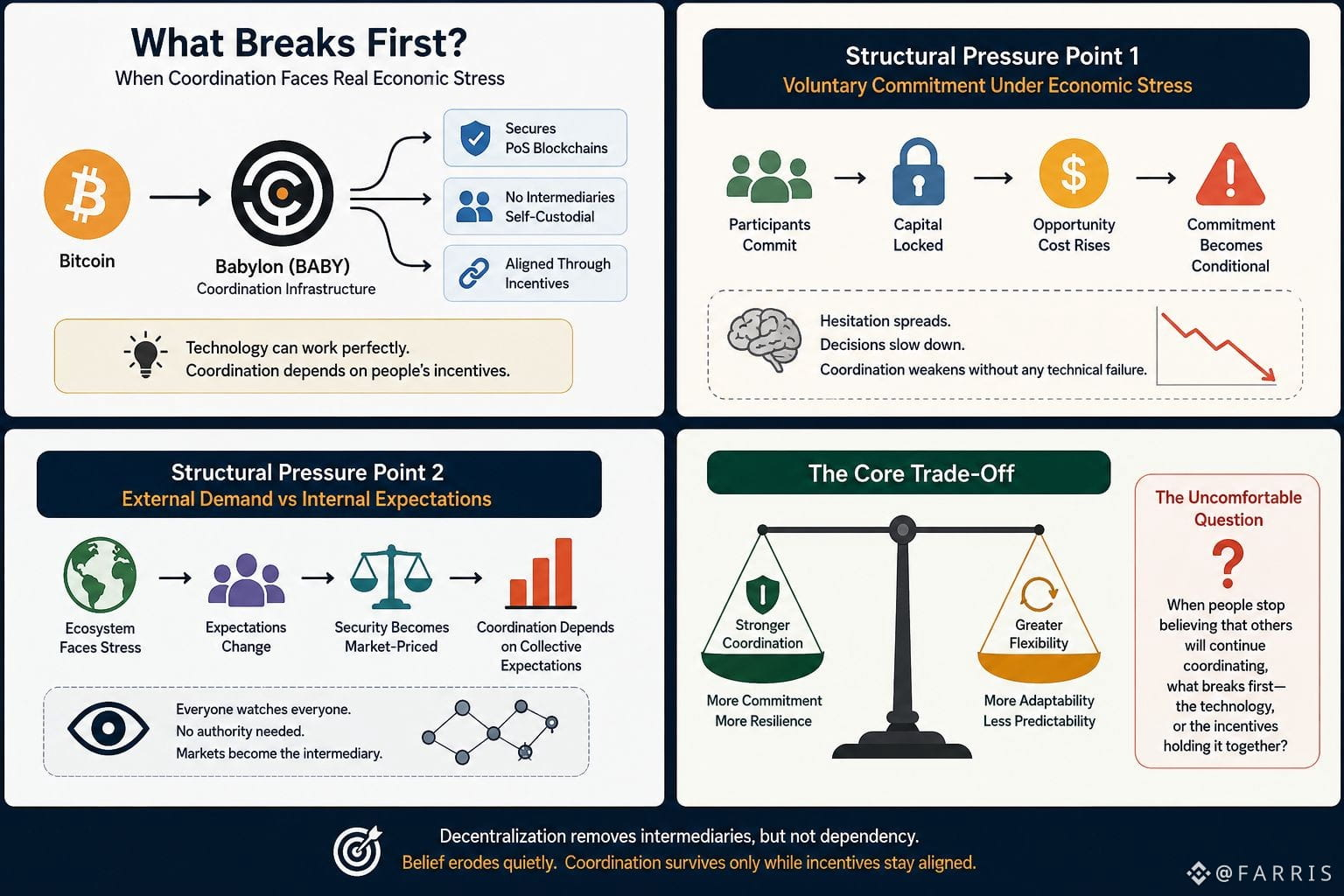
Die eigentliche Herausforderung ist nicht, ob die Technologie weiterläuft—sondern ob die Menschen weiter zusammenarbeiten, wenn sich die Anreize ändern. Sicherheit kann intakt bleiben, während das Engagement still und leise nachlässt. Märkte brauchen keinen technischen Ausfall, um ein System zu schwächen. Manchmal reicht es schon, dass die Teilnehmer vorsichtiger werden, selektiver handeln und weniger bereit sind, Flexibilität zu opfern.
Darum sehe ich $BABY als Koordinationsinfrastruktur und nicht nur als irgendein weiteres Token. Seine langfristige Bedeutung hängt davon ab, ob es weiterhin Anreize ausrichten kann, wenn wirtschaftlicher Druck das individuelle Überleben wichtiger macht als das gemeinsame Vertrauen.
Es gibt außerdem einen Zielkonflikt, der nicht ignoriert werden kann: Stärkere Koordination erfordert in der Regel stärkeres Engagement, aber stärkeres Engagement reduziert die Flexibilität, wenn sich die Bedingungen plötzlich ändern.
Die Frage, die ich nicht loswerde, ist ganz einfach:
Wenn Menschen nicht mehr glauben, dass alle anderen weiterhin koordinieren werden—was bricht dann zuerst: die Technologie oder die Anreize, die sie zusammenhalten
Das ist der Teil, den es wert ist, zu untersuchen.
#OilCrashes9% #USToCancelIranAttackSubjectToDeal #CardanoRisesNearly10% #CoinkiteMayFaceLegalActionOverColdcardFlaw $BICO
{spot}(BICOUSDT)
#baby $BABY
@BabylonLabs_io
Ich komme immer wieder auf eine Frage zu Babylon zurück.
Die meisten Menschen beurteilen dezentrale Systeme, wenn die Märkte ruhig sind. Ich beobachte lieber, was passiert, wenn die Liquidität verschwindet und jeder anfängt, seine eigenen Interessen zu schützen.
Genau dort wird die Koordination wirklich auf die Probe gestellt.
Die eigentliche Herausforderung ist nicht, ob die Technologie weiterläuft—sondern ob die Menschen weiter zusammenarbeiten, wenn sich die Anreize ändern. Sicherheit kann intakt bleiben, während das Engagement still und leise nachlässt. Märkte brauchen keinen technischen Ausfall, um ein System zu schwächen. Manchmal reicht es schon, dass die Teilnehmer vorsichtiger werden, selektiver handeln und weniger bereit sind, Flexibilität zu opfern.
Darum sehe ich $BABY als Koordinationsinfrastruktur und nicht nur als irgendein weiteres Token. Seine langfristige Bedeutung hängt davon ab, ob es weiterhin Anreize ausrichten kann, wenn wirtschaftlicher Druck das individuelle Überleben wichtiger macht als das gemeinsame Vertrauen.
Es gibt außerdem einen Zielkonflikt, der nicht ignoriert werden kann: Stärkere Koordination erfordert in der Regel stärkeres Engagement, aber stärkeres Engagement reduziert die Flexibilität, wenn sich die Bedingungen plötzlich ändern.
Die Frage, die ich nicht loswerde, ist ganz einfach:
Wenn Menschen nicht mehr glauben, dass alle anderen weiterhin koordinieren werden—was bricht dann zuerst: die Technologie oder die Anreize, die sie zusammenhalten
Das ist der Teil, den es wert ist, zu untersuchen.
#OilCrashes9% #USToCancelIranAttackSubjectToDeal #CardanoRisesNearly10% #CoinkiteMayFaceLegalActionOverColdcardFlaw $BICO
@BabylonLabs_io
Ich komme immer wieder auf eine Frage zu Babylon zurück.
Die meisten Menschen beurteilen dezentrale Systeme, wenn die Märkte ruhig sind. Ich beobachte lieber, was passiert, wenn die Liquidität verschwindet und jeder anfängt, seine eigenen Interessen zu schützen.
Genau dort wird die Koordination wirklich auf die Probe gestellt.
Die eigentliche Herausforderung ist nicht, ob die Technologie weiterläuft—sondern ob die Menschen weiter zusammenarbeiten, wenn sich die Anreize ändern. Sicherheit kann intakt bleiben, während das Engagement still und leise nachlässt. Märkte brauchen keinen technischen Ausfall, um ein System zu schwächen. Manchmal reicht es schon, dass die Teilnehmer vorsichtiger werden, selektiver handeln und weniger bereit sind, Flexibilität zu opfern.
Darum sehe ich $BABY als Koordinationsinfrastruktur und nicht nur als irgendein weiteres Token. Seine langfristige Bedeutung hängt davon ab, ob es weiterhin Anreize ausrichten kann, wenn wirtschaftlicher Druck das individuelle Überleben wichtiger macht als das gemeinsame Vertrauen.
Es gibt außerdem einen Zielkonflikt, der nicht ignoriert werden kann: Stärkere Koordination erfordert in der Regel stärkeres Engagement, aber stärkeres Engagement reduziert die Flexibilität, wenn sich die Bedingungen plötzlich ändern.
Die Frage, die ich nicht loswerde, ist ganz einfach:
Wenn Menschen nicht mehr glauben, dass alle anderen weiterhin koordinieren werden—was bricht dann zuerst: die Technologie oder die Anreize, die sie zusammenhalten
Das ist der Teil, den es wert ist, zu untersuchen.
#OilCrashes9% #USToCancelIranAttackSubjectToDeal #CardanoRisesNearly10% #CoinkiteMayFaceLegalActionOverColdcardFlaw $BICO
5
2
296
·
--
#baby $BABY @babylonlabs_io
Ich jage keine Narrative mehr. Ich beobachte, wie sie sich verhalten, wenn Märkte aufhören, Glauben zu belohnen.
Die Projekte, die wirklich zählen, sind nicht die, die den meisten Lärm machen. Es sind diejenigen, die Teilnehmer auch dann ausrichten können, wenn die Liquidität knapp wird, sich Anreize verschieben und das Vertrauen schwindet.
Darum verbringe ich mehr Zeit damit, die Marktstruktur zu studieren als Preis-Charts. Jeder Zyklus erinnert mich daran: Absichten klingen großartig, aber Anreize entscheiden, was Menschen tatsächlich tun.
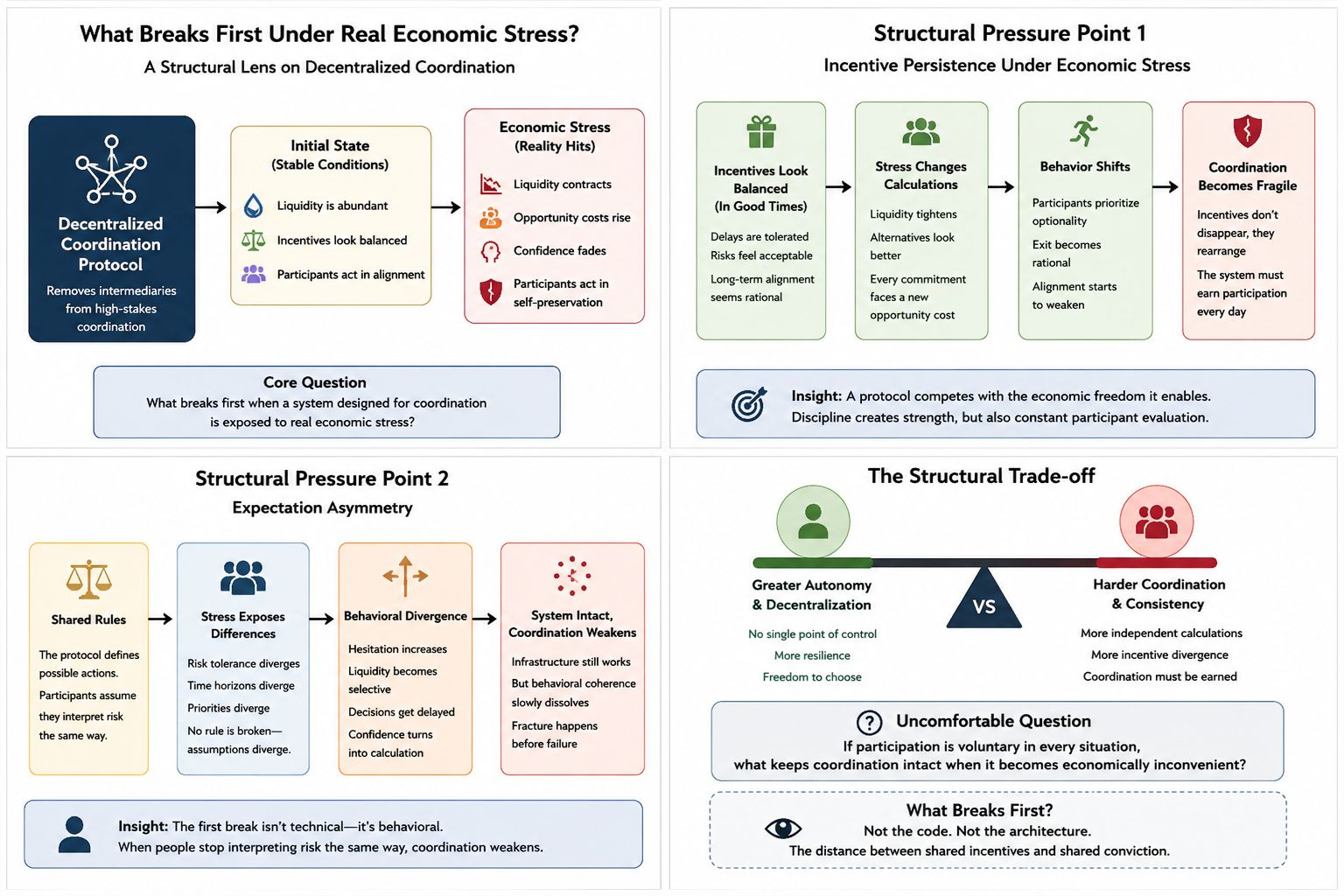
Babylon hat meine Aufmerksamkeit erregt, weil es eine größere Frage aufwirft als Staking oder Sicherheit. Was passiert, wenn dezentrale Koordination unter echten ökonomischen Druck gestellt wird?
Wenn ein System nur dann funktioniert, wenn alle einer Meinung sind, ist es nicht belastbar. Der eigentliche Test beginnt, wenn Menschen Gründe haben, sich zu widersprechen.
Ich bin hier, um Protokolle anhand von Verhalten, Anreizen und langfristiger Struktur zu erforschen – nicht Hype, nicht Schlagzeilen und nicht kurzfristige Kursbewegungen.
Märkte verändern sich. Narrative rotieren. Kapital wandert.
Zu verstehen, warum Menschen koordiniert bleiben, auch wenn sie es nicht müssten, ist viel wertvoller, als die nächste Trendbewegung vorherzusagen.
Das ist die Perspektive, die ich bei jedem Projekt, das ich untersuche, mitbringen werde.
#KOSPIWorstMonthlyDropSince2008 #BitcoinMiningDifficultyFalls14%FromYearHigh #ColdcardFlawDrains594BTC #USToCancelIranAttackSubjectToDeal
#baby $BABY @BabylonLabs_io
Ich jage keine Narrative mehr. Ich beobachte, wie sie sich verhalten, wenn Märkte aufhören, Glauben zu belohnen.
Die Projekte, die wirklich zählen, sind nicht die, die den meisten Lärm machen. Es sind diejenigen, die Teilnehmer auch dann ausrichten können, wenn die Liquidität knapp wird, sich Anreize verschieben und das Vertrauen schwindet.
Darum verbringe ich mehr Zeit damit, die Marktstruktur zu studieren als Preis-Charts. Jeder Zyklus erinnert mich daran: Absichten klingen großartig, aber Anreize entscheiden, was Menschen tatsächlich tun.
Babylon hat meine Aufmerksamkeit erregt, weil es eine größere Frage aufwirft als Staking oder Sicherheit. Was passiert, wenn dezentrale Koordination unter echten ökonomischen Druck gestellt wird?
Wenn ein System nur dann funktioniert, wenn alle einer Meinung sind, ist es nicht belastbar. Der eigentliche Test beginnt, wenn Menschen Gründe haben, sich zu widersprechen.
Ich bin hier, um Protokolle anhand von Verhalten, Anreizen und langfristiger Struktur zu erforschen – nicht Hype, nicht Schlagzeilen und nicht kurzfristige Kursbewegungen.
Märkte verändern sich. Narrative rotieren. Kapital wandert.
Zu verstehen, warum Menschen koordiniert bleiben, auch wenn sie es nicht müssten, ist viel wertvoller, als die nächste Trendbewegung vorherzusagen.
Das ist die Perspektive, die ich bei jedem Projekt, das ich untersuche, mitbringen werde.
#KOSPIWorstMonthlyDropSince2008 #BitcoinMiningDifficultyFalls14%FromYearHigh #ColdcardFlawDrains594BTC #USToCancelIranAttackSubjectToDeal
Ich jage keine Narrative mehr. Ich beobachte, wie sie sich verhalten, wenn Märkte aufhören, Glauben zu belohnen.
Die Projekte, die wirklich zählen, sind nicht die, die den meisten Lärm machen. Es sind diejenigen, die Teilnehmer auch dann ausrichten können, wenn die Liquidität knapp wird, sich Anreize verschieben und das Vertrauen schwindet.
Darum verbringe ich mehr Zeit damit, die Marktstruktur zu studieren als Preis-Charts. Jeder Zyklus erinnert mich daran: Absichten klingen großartig, aber Anreize entscheiden, was Menschen tatsächlich tun.
Babylon hat meine Aufmerksamkeit erregt, weil es eine größere Frage aufwirft als Staking oder Sicherheit. Was passiert, wenn dezentrale Koordination unter echten ökonomischen Druck gestellt wird?
Wenn ein System nur dann funktioniert, wenn alle einer Meinung sind, ist es nicht belastbar. Der eigentliche Test beginnt, wenn Menschen Gründe haben, sich zu widersprechen.
Ich bin hier, um Protokolle anhand von Verhalten, Anreizen und langfristiger Struktur zu erforschen – nicht Hype, nicht Schlagzeilen und nicht kurzfristige Kursbewegungen.
Märkte verändern sich. Narrative rotieren. Kapital wandert.
Zu verstehen, warum Menschen koordiniert bleiben, auch wenn sie es nicht müssten, ist viel wertvoller, als die nächste Trendbewegung vorherzusagen.
Das ist die Perspektive, die ich bei jedem Projekt, das ich untersuche, mitbringen werde.
#KOSPIWorstMonthlyDropSince2008 #BitcoinMiningDifficultyFalls14%FromYearHigh #ColdcardFlawDrains594BTC #USToCancelIranAttackSubjectToDeal
9
10
142
·
--
🎙️ Über die Marktlage sprechen und BNB-Spot per Sparplan kaufen!
Beenden
03 h 34 m 41 s
16.7k
42
46
·
--
🎙️ Welche Vermögens-Geheimnisse gibt es heute? Willkommen zum Austausch

Beenden
03 h 15 m 15 s
11.5k
32
26
·
--
🎙️ Die Zinserhöhung der US-Notenbank im September hat eine Wahrscheinlichkeit von 82% erreicht! Risikofreier Zins steigt in die Höhe, Trump meldet sich erneut und greift weiter den Iran an; wohin entwickelt sich der Krypto-Markt als Nächstes?
Beenden
03 h 21 m 10 s
10.9k
31
74
·
--
Bullisch
#baby $BABY @babylonlabs_io
Je mehr ich über Babylon lese, desto interessanter wird der Ansatz. Was mir aufgefallen ist, ist, dass er nicht versucht, Bitcoin woanders hinzubewegen, nur um Rendite zu erzielen. Der Fokus auf Self-Custodial BTC-Staking und gleichzeitig darauf, PoS-Netzwerke zu stärken, fühlt sich wie eine durchdachte Designentscheidung an. Bitcoin auf seinem eigenen Netzwerk zu belassen, statt sich auf Wrapped Assets zu verlassen, ist wahrscheinlich der Teil, der mich am meisten überzeugt. Es ist noch früh, aber das ist eine dieser Ideen, die es wirklich wert ist, im Blick zu behalten, um zu sehen, wie sie sich entwickelt.
#RussiaPlacesDurovOnInternationalWantedList #BlackRockBringsBUIDLToUniswap #BNBSmartChainToUndergoHardFork #SouthKoreaRestrictsLeveragedETFTrading
$ON
{future}(ONUSDT)
$B3
#baby $BABY @BabylonLabs_io
Je mehr ich über Babylon lese, desto interessanter wird der Ansatz. Was mir aufgefallen ist, ist, dass er nicht versucht, Bitcoin woanders hinzubewegen, nur um Rendite zu erzielen. Der Fokus auf Self-Custodial BTC-Staking und gleichzeitig darauf, PoS-Netzwerke zu stärken, fühlt sich wie eine durchdachte Designentscheidung an. Bitcoin auf seinem eigenen Netzwerk zu belassen, statt sich auf Wrapped Assets zu verlassen, ist wahrscheinlich der Teil, der mich am meisten überzeugt. Es ist noch früh, aber das ist eine dieser Ideen, die es wirklich wert ist, im Blick zu behalten, um zu sehen, wie sie sich entwickelt.
#RussiaPlacesDurovOnInternationalWantedList #BlackRockBringsBUIDLToUniswap #BNBSmartChainToUndergoHardFork #SouthKoreaRestrictsLeveragedETFTrading
$ON
$B3
Je mehr ich über Babylon lese, desto interessanter wird der Ansatz. Was mir aufgefallen ist, ist, dass er nicht versucht, Bitcoin woanders hinzubewegen, nur um Rendite zu erzielen. Der Fokus auf Self-Custodial BTC-Staking und gleichzeitig darauf, PoS-Netzwerke zu stärken, fühlt sich wie eine durchdachte Designentscheidung an. Bitcoin auf seinem eigenen Netzwerk zu belassen, statt sich auf Wrapped Assets zu verlassen, ist wahrscheinlich der Teil, der mich am meisten überzeugt. Es ist noch früh, aber das ist eine dieser Ideen, die es wirklich wert ist, im Blick zu behalten, um zu sehen, wie sie sich entwickelt.
#RussiaPlacesDurovOnInternationalWantedList #BlackRockBringsBUIDLToUniswap #BNBSmartChainToUndergoHardFork #SouthKoreaRestrictsLeveragedETFTrading
$ON
$B3
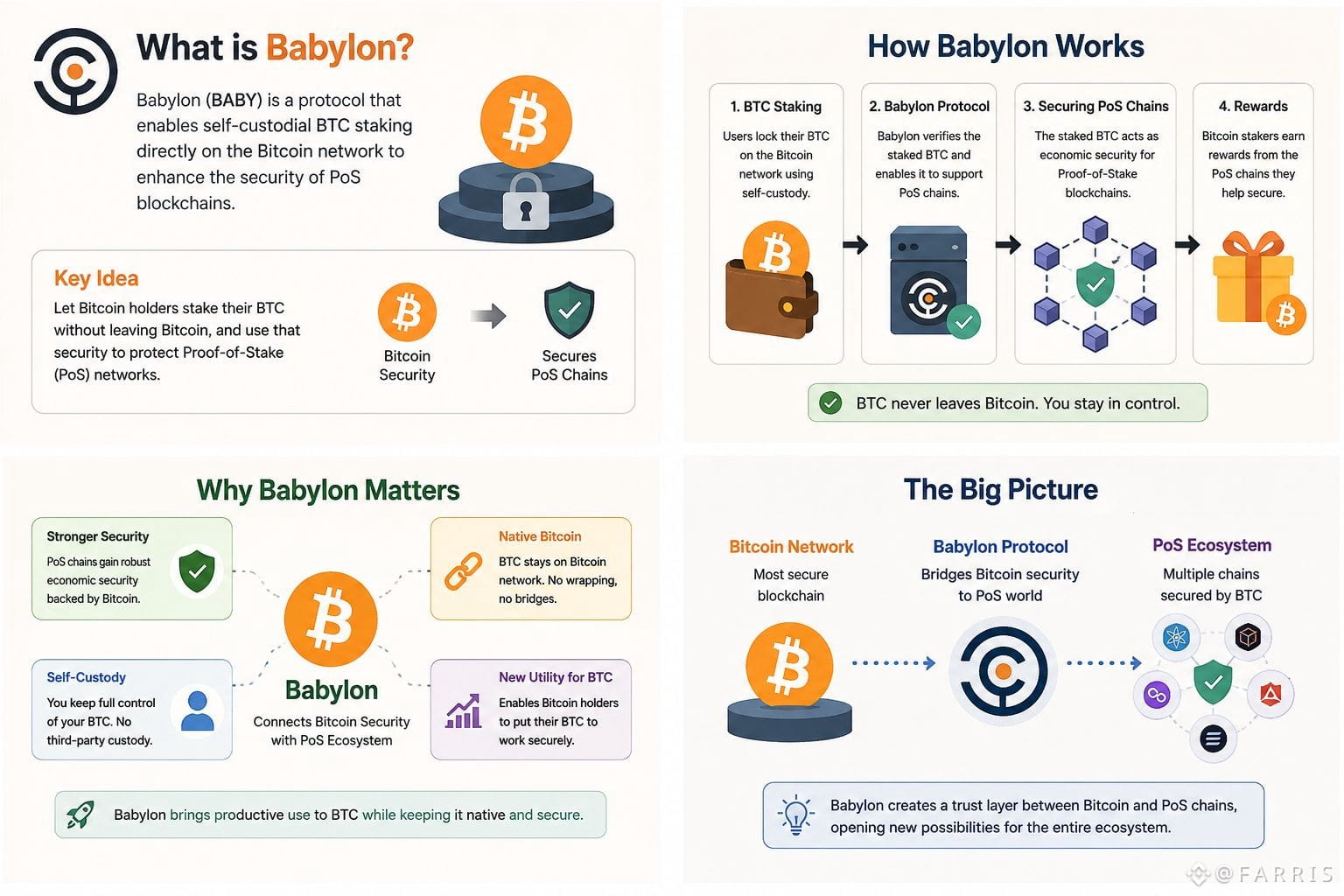
11
10
931
Anmelden und weiter Inhalte entdecken
Krypto-Nutzer weltweit auf Binance Square kennenlernen
⚡️ Bleib in Sachen Krypto stets am Puls.
💬 Die weltgrößte Kryptobörse vertraut darauf.
👍 Erhalte verlässliche Einblicke von verifizierten Creators.
E-Mail-Adresse/Telefonnummer