

Bin Ishaq 1
125 Beiträge

Bin Ishaq 1
Melden
Nutzer blockieren
Web3 Strategist
0 Following
0 Follower
1 Like gegeben
Beiträge
·
--
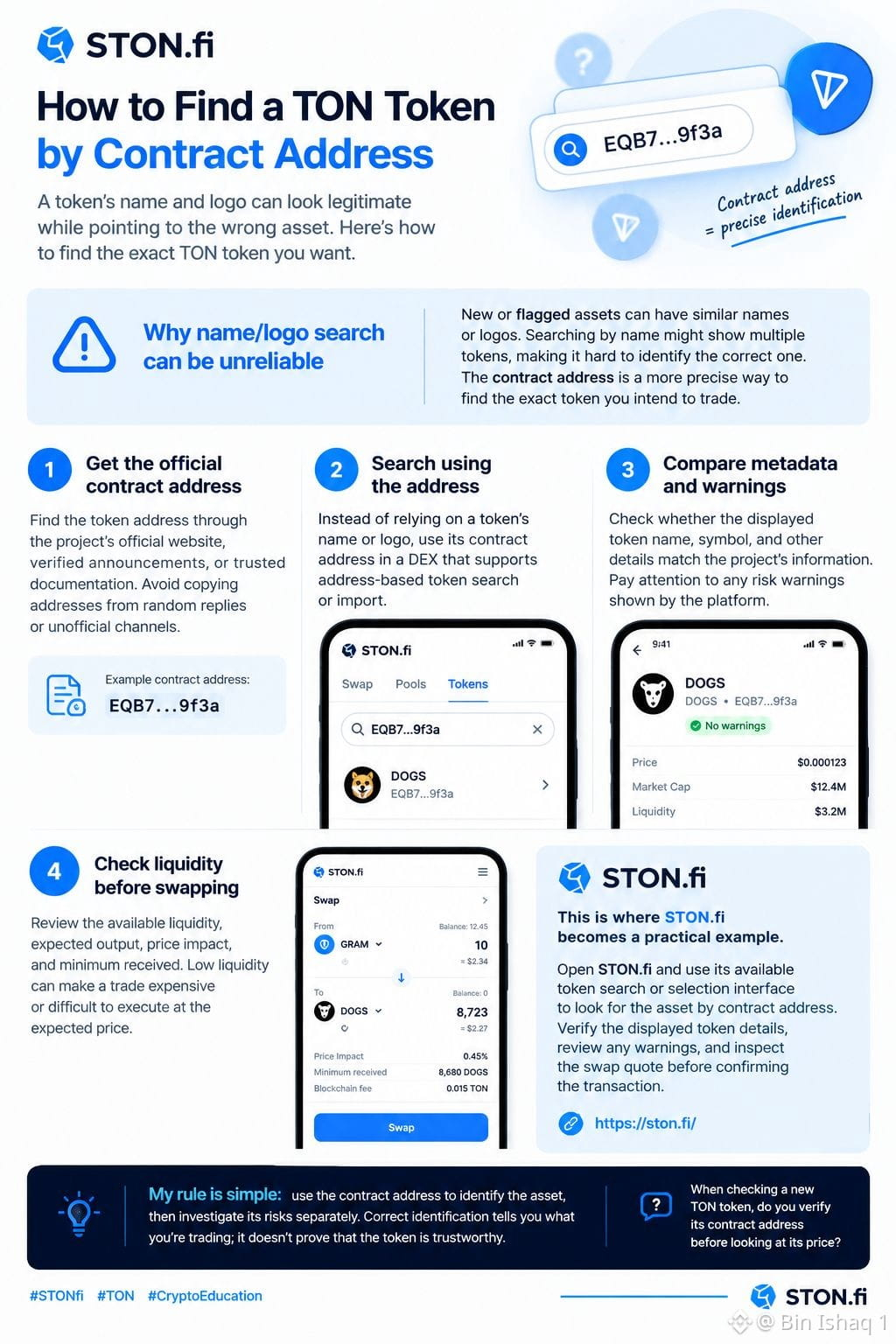
Der Name und das Logo eines Tokens können legitim wirken und trotzdem auf den falschen Vermögenswert verweisen. So findest du genau den TON-Token, den du suchst. Stell dir vor, du möchtest einen neu eingeführten Jetton auf The Open Network (TON) tauschen. Eine Suche nach dem Namen kann mehrere Tokens mit ähnlichen Namen oder Logos anzeigen, sodass es schwierig ist, den richtigen zu erkennen. Die Vertragsadresse bietet eine präzisere Möglichkeit, den Vermögenswert zu identifizieren. 1. Besorge dir die offizielle Vertragsadresse Suche die Token-Adresse auf der offiziellen Website des Projekts, in verifizierten Ankündigungen oder in vertrauenswürdigen Dokumentationen. Vermeide es, Adressen aus beliebigen Antworten oder inoffiziellen Kanälen zu kopieren. 2. Suche anhand der Adresse Statt dich auf den Namen oder das Logo eines Tokens zu verlassen, gib seine Vertragsadresse in einer DEX ein, die eine adressbasierte Tokensuche oder den Import von Tokens unterstützt. So kannst du den konkreten Vermögenswert identifizieren, den du handeln möchtest. 3. Vergleiche Metadaten und Warnhinweise Prüfe, ob der angezeigte Token-Name, das Symbol und andere verfügbare Angaben mit den Informationen des Projekts übereinstimmen. Achte auf alle Risikohinweise, die von der Plattform angezeigt werden. Denk daran: Übereinstimmende Metadaten oder das Fehlen einer Warnung garantieren nicht, dass ein Token sicher ist. 4. Prüfe die Liquidität, bevor du tauschst Sieh dir die verfügbare Liquidität, den erwarteten Ausgabebetrag, die Kursauswirkung und den Mindestbetrag an, den du erhältst. Eine geringe Liquidität kann einen Handel teuer oder schwierig machen, wenn er zum erwarteten Preis ausgeführt werden soll. Öffne stonfi und nutze die verfügbare Tokensuche oder Auswahloberfläche, um den Vermögenswert anhand seiner Vertragsadresse zu finden. Überprüfe die angezeigten Token-Details, lies alle Warnhinweise und prüfe das Tauschangebot, bevor du die Transaktion bestätigst. Entdecke die Plattform hier: https://stonverse.com/cybersecgame/ Meine Regel ist einfach: Identifiziere den Vermögenswert anhand der Vertragsadresse und untersuche seine Risiken anschließend separat. Die richtige Identifizierung sagt dir, womit du handelst – sie beweist nicht, dass der Token vertrauenswürdig ist. Überprüfst du bei einem neuen TON-Token zuerst die Vertragsadresse, bevor du dir den Preis ansiehst? $SOL $WLD
Der Name und das Logo eines Tokens können legitim wirken und trotzdem auf den falschen Vermögenswert verweisen. So findest du genau den TON-Token, den du suchst. Stell dir vor, du möchtest einen neu eingeführten Jetton auf The Open Network (TON) tauschen. Eine Suche nach dem Namen kann mehrere Tokens mit ähnlichen Namen oder Logos anzeigen, sodass es schwierig ist, den richtigen zu erkennen. Die Vertragsadresse bietet eine präzisere Möglichkeit, den Vermögenswert zu identifizieren. 1. Besorge dir die offizielle Vertragsadresse Suche die Token-Adresse auf der offiziellen Website des Projekts, in verifizierten Ankündigungen oder in vertrauenswürdigen Dokumentationen. Vermeide es, Adressen aus beliebigen Antworten oder inoffiziellen Kanälen zu kopieren. 2. Suche anhand der Adresse Statt dich auf den Namen oder das Logo eines Tokens zu verlassen, gib seine Vertragsadresse in einer DEX ein, die eine adressbasierte Tokensuche oder den Import von Tokens unterstützt. So kannst du den konkreten Vermögenswert identifizieren, den du handeln möchtest. 3. Vergleiche Metadaten und Warnhinweise Prüfe, ob der angezeigte Token-Name, das Symbol und andere verfügbare Angaben mit den Informationen des Projekts übereinstimmen. Achte auf alle Risikohinweise, die von der Plattform angezeigt werden. Denk daran: Übereinstimmende Metadaten oder das Fehlen einer Warnung garantieren nicht, dass ein Token sicher ist. 4. Prüfe die Liquidität, bevor du tauschst Sieh dir die verfügbare Liquidität, den erwarteten Ausgabebetrag, die Kursauswirkung und den Mindestbetrag an, den du erhältst. Eine geringe Liquidität kann einen Handel teuer oder schwierig machen, wenn er zum erwarteten Preis ausgeführt werden soll. Öffne stonfi und nutze die verfügbare Tokensuche oder Auswahloberfläche, um den Vermögenswert anhand seiner Vertragsadresse zu finden. Überprüfe die angezeigten Token-Details, lies alle Warnhinweise und prüfe das Tauschangebot, bevor du die Transaktion bestätigst. Entdecke die Plattform hier: https://stonverse.com/cybersecgame/ Meine Regel ist einfach: Identifiziere den Vermögenswert anhand der Vertragsadresse und untersuche seine Risiken anschließend separat. Die richtige Identifizierung sagt dir, womit du handelst – sie beweist nicht, dass der Token vertrauenswürdig ist. Überprüfst du bei einem neuen TON-Token zuerst die Vertragsadresse, bevor du dir den Preis ansiehst? $SOL $WLD
·
--
Übersetzung ansehen
A token can look safe on a DEX and still put your funds at risk. Here’s why. Imagine you find a new token on TON through a decentralized exchange. You check its page, see no warning label, and assume everything is fine. That assumption can be costly. Token labels reflect detected or known risk signals, not every possible threat. 1. Understand what the labels mean DEX safety labels can help identify known issues or suspicious signals associated with a token. However, their usefulness depends on the available data and detection methods. 2. No warning does not mean verified safe A token without a warning may still have malicious features, concentrated ownership, or risks that have not yet been detected. No warning ≠ safety guarantee. 3. Check beyond the interface Before committing funds, investigate four things: - Contract identity: Verify the token's address against official project sources. - Liquidity: Check whether liquidity is sufficient and whether it can be withdrawn unexpectedly. - Project sources: Review the official website, documentation, and credible community channels. - Holder distribution: Where data is available, examine whether a few wallets control a large share of the supply. These checks reduce uncertainty, but none can eliminate every risk. 4. Treat safety labels as one layer of protection STON.fi provides a practical example of how token labels can help users identify potential risks while exploring tokens on TON. Use these labels as an additional signal, not as a substitute for independent research. Always verify the token and understand its risks before swapping. Explore the platform here: https://whatisdex.com/ My rule is simple: a warning deserves attention, but the absence of one deserves no blind trust. Interface checks can only tell you what their available signals reveal. When researching a new token, what do you check first: its contract, liquidity, or holder distribution? $PHA $BTC
A token can look safe on a DEX and still put your funds at risk. Here’s why. Imagine you find a new token on TON through a decentralized exchange. You check its page, see no warning label, and assume everything is fine. That assumption can be costly. Token labels reflect detected or known risk signals, not every possible threat. 1. Understand what the labels mean DEX safety labels can help identify known issues or suspicious signals associated with a token. However, their usefulness depends on the available data and detection methods. 2. No warning does not mean verified safe A token without a warning may still have malicious features, concentrated ownership, or risks that have not yet been detected. No warning ≠ safety guarantee. 3. Check beyond the interface Before committing funds, investigate four things: - Contract identity: Verify the token's address against official project sources. - Liquidity: Check whether liquidity is sufficient and whether it can be withdrawn unexpectedly. - Project sources: Review the official website, documentation, and credible community channels. - Holder distribution: Where data is available, examine whether a few wallets control a large share of the supply. These checks reduce uncertainty, but none can eliminate every risk. 4. Treat safety labels as one layer of protection STON.fi provides a practical example of how token labels can help users identify potential risks while exploring tokens on TON. Use these labels as an additional signal, not as a substitute for independent research. Always verify the token and understand its risks before swapping. Explore the platform here: https://whatisdex.com/ My rule is simple: a warning deserves attention, but the absence of one deserves no blind trust. Interface checks can only tell you what their available signals reveal. When researching a new token, what do you check first: its contract, liquidity, or holder distribution? $PHA $BTC
·
--
GRAM direkt aus deiner Wallet gegen einen TON-Jetton zu tauschen, sollte ganz einfach sein. So geht es sicher. Stell dir vor, du besitzt GRAM und möchtest es gegen einen anderen Token auf The Open Network (TON) tauschen. GRAM ist die native Währung von TON, während Jettons Token sind, die auf der TON-Blockchain ausgegeben werden. Obwohl beide zum selben Ökosystem gehören, musst du beim Tausch das richtige Handelspaar auswählen und die Transaktionsdetails prüfen. Hier sind vier Dinge, die du vor der Bestätigung eines Tauschs überprüfen solltest. 1. Verbinde deine TON-Wallet Öffne eine dezentrale Börse (DEX), die deine Assets unterstützt, und verbinde deine TON-Wallet. Vergewissere dich, dass du die richtige Wallet und die offizielle Plattform verwendest. 2. Wähle deine Token aus Wähle GRAM als Eingabe-Asset und den Jetton, den du erhalten möchtest, als Ausgabe-Asset. Überprüfe den Ziel-Token sorgfältig, insbesondere wenn mehrere Token ähnliche Namen oder Symbole haben. 3. Prüfe die Tauschdetails - Preisauswirkung: Wie stark dein Handel den Marktpreis des Tokens beeinflussen könnte. - Geschätzter Betrag: Die ungefähre Menge an Jettons, die du erhalten solltest. - Mindestbetrag: Der geringste Betrag, den du gemäß den Slippage-Einstellungen der Transaktion zu akzeptieren bereit bist. - Blockchain-Gebühr: Die Netzwerkgebühr, die für die Verarbeitung der Transaktion anfällt. 4. Bestätige den Tausch in deiner Wallet Sobald alles korrekt aussieht, bestätige die Transaktion über deine Wallet und warte, bis die Blockchain sie verarbeitet hat. Prüfe anschließend deine Wallet, um sicherzustellen, dass die erwarteten Jettons angekommen sind. Du kannst eine kompatible TON-Wallet verbinden, GRAM als Eingabe-Asset und deinen gewünschten Jetton als Ausgabe-Asset auswählen, das Angebot prüfen und den Tausch direkt über deine Wallet bestätigen. Entdecke die Plattform hier: https://ston.fi/how-to-send-usdt-from-ton-to-base Meine einfache Regel: Bestätige einen Tausch niemals allein aufgrund des Token-Namens. Überprüfe das Asset, achte auf den Mindestbetrag und halte genügend TON für die Blockchain-Gebühren bereit. Worauf achtest du beim Tausch von Token zuerst: Preisauswirkung, Mindestbetrag oder Gesamtgebühr? $PHA $BTC
GRAM direkt aus deiner Wallet gegen einen TON-Jetton zu tauschen, sollte ganz einfach sein. So geht es sicher. Stell dir vor, du besitzt GRAM und möchtest es gegen einen anderen Token auf The Open Network (TON) tauschen. GRAM ist die native Währung von TON, während Jettons Token sind, die auf der TON-Blockchain ausgegeben werden. Obwohl beide zum selben Ökosystem gehören, musst du beim Tausch das richtige Handelspaar auswählen und die Transaktionsdetails prüfen. Hier sind vier Dinge, die du vor der Bestätigung eines Tauschs überprüfen solltest. 1. Verbinde deine TON-Wallet Öffne eine dezentrale Börse (DEX), die deine Assets unterstützt, und verbinde deine TON-Wallet. Vergewissere dich, dass du die richtige Wallet und die offizielle Plattform verwendest. 2. Wähle deine Token aus Wähle GRAM als Eingabe-Asset und den Jetton, den du erhalten möchtest, als Ausgabe-Asset. Überprüfe den Ziel-Token sorgfältig, insbesondere wenn mehrere Token ähnliche Namen oder Symbole haben. 3. Prüfe die Tauschdetails - Preisauswirkung: Wie stark dein Handel den Marktpreis des Tokens beeinflussen könnte. - Geschätzter Betrag: Die ungefähre Menge an Jettons, die du erhalten solltest. - Mindestbetrag: Der geringste Betrag, den du gemäß den Slippage-Einstellungen der Transaktion zu akzeptieren bereit bist. - Blockchain-Gebühr: Die Netzwerkgebühr, die für die Verarbeitung der Transaktion anfällt. 4. Bestätige den Tausch in deiner Wallet Sobald alles korrekt aussieht, bestätige die Transaktion über deine Wallet und warte, bis die Blockchain sie verarbeitet hat. Prüfe anschließend deine Wallet, um sicherzustellen, dass die erwarteten Jettons angekommen sind. Du kannst eine kompatible TON-Wallet verbinden, GRAM als Eingabe-Asset und deinen gewünschten Jetton als Ausgabe-Asset auswählen, das Angebot prüfen und den Tausch direkt über deine Wallet bestätigen. Entdecke die Plattform hier: https://ston.fi/how-to-send-usdt-from-ton-to-base Meine einfache Regel: Bestätige einen Tausch niemals allein aufgrund des Token-Namens. Überprüfe das Asset, achte auf den Mindestbetrag und halte genügend TON für die Blockchain-Gebühren bereit. Worauf achtest du beim Tausch von Token zuerst: Preisauswirkung, Mindestbetrag oder Gesamtgebühr? $PHA $BTC
35
·
--
Beim Transfer von Token zwischen TON und Ethereum sollte es darum gehen, den gewünschten Vermögenswert zu erhalten – nicht darum, zusätzliche Schritte zu verwalten. Darauf kommt es an Auf den ersten Blick klingt der Ablauf einfach: Überweise deine Gelder, zahle die Gebühren und nutze anschließend deine Zielanwendung weiter. Doch die gewählte Route bestimmt, was du erhältst und wie die Transaktion ausgeführt wird. Hier sind vier Punkte, die du vor der Wahl einer Route prüfen solltest. 1. Bridge oder Cross-Chain-Swap Eine herkömmliche Bridge überträgt Vermögenswerte zwischen Netzwerken und liefert möglicherweise einen Wrapped Token. Ein Cross-Chain-Swap soll deinen Ausgangsvermögenswert in einem koordinierten Ablauf gegen den gewünschten Token im Zielnetzwerk tauschen. 2. Der Vermögenswert, den du erhältst Nicht jeder Token steht für dasselbe. Prüfe immer das Zielnetzwerk und den Token-Vertrag, um sicherzustellen, dass sich in deiner Wallet genau der Vermögenswert befindet, den du erhalten wolltest. 3. Wie die Transaktion abgewickelt wird Resolver-basierte HTLCs nutzen kryptografische Bedingungen und Zeitlimits, um Transaktionen über verschiedene Chains hinweg zu koordinieren. Diese Bedingungen legen fest, wie die Abwicklung abläuft, und ermöglichen eine Rückerstattung, falls die Ausführung fehlschlägt oder das Zeitlimit überschritten wird. 4. Die Gesamtkosten und Ausführungsbedingungen Prüfe vor der Bestätigung den erwarteten Auszahlungsbetrag, die Gebühren, die Zieladresse und die Rückerstattungsbedingungen. Weniger manuelle Schritte können den Ablauf vereinfachen, aber du solltest trotzdem verstehen, welche Route du nutzt. Omniston verbindet über Resolver Liquiditätsquellen, um Swaps über unterstützte Netzwerke hinweg zu koordinieren. So können Nutzer auf die gewünschten Vermögenswerte im Zielnetzwerk zugreifen, ohne jeden Schritt des Ablaufs manuell verwalten zu müssen. Entdecke den Leitfaden hier: https://ston.fi/cross-chain-swap-from-ton-to-ethereum Meine Regel ist einfach: Überprüfe den Vermögenswert im Zielnetzwerk, vergleiche den erwarteten Auszahlungsbetrag und die Gesamtkosten und informiere dich vor der Bestätigung über die Abwicklungsbedingungen. Eine einfachere Route ist nur dann sinnvoll, wenn du weißt, was du erhältst. Was ist dir beim Transfer von Vermögenswerten zwischen Chains am wichtigsten: weniger Schritte, niedrigere Kosten oder klarere Abwicklungsbedingungen? $PHA $BTC
Beim Transfer von Token zwischen TON und Ethereum sollte es darum gehen, den gewünschten Vermögenswert zu erhalten – nicht darum, zusätzliche Schritte zu verwalten. Darauf kommt es an Auf den ersten Blick klingt der Ablauf einfach: Überweise deine Gelder, zahle die Gebühren und nutze anschließend deine Zielanwendung weiter. Doch die gewählte Route bestimmt, was du erhältst und wie die Transaktion ausgeführt wird. Hier sind vier Punkte, die du vor der Wahl einer Route prüfen solltest. 1. Bridge oder Cross-Chain-Swap Eine herkömmliche Bridge überträgt Vermögenswerte zwischen Netzwerken und liefert möglicherweise einen Wrapped Token. Ein Cross-Chain-Swap soll deinen Ausgangsvermögenswert in einem koordinierten Ablauf gegen den gewünschten Token im Zielnetzwerk tauschen. 2. Der Vermögenswert, den du erhältst Nicht jeder Token steht für dasselbe. Prüfe immer das Zielnetzwerk und den Token-Vertrag, um sicherzustellen, dass sich in deiner Wallet genau der Vermögenswert befindet, den du erhalten wolltest. 3. Wie die Transaktion abgewickelt wird Resolver-basierte HTLCs nutzen kryptografische Bedingungen und Zeitlimits, um Transaktionen über verschiedene Chains hinweg zu koordinieren. Diese Bedingungen legen fest, wie die Abwicklung abläuft, und ermöglichen eine Rückerstattung, falls die Ausführung fehlschlägt oder das Zeitlimit überschritten wird. 4. Die Gesamtkosten und Ausführungsbedingungen Prüfe vor der Bestätigung den erwarteten Auszahlungsbetrag, die Gebühren, die Zieladresse und die Rückerstattungsbedingungen. Weniger manuelle Schritte können den Ablauf vereinfachen, aber du solltest trotzdem verstehen, welche Route du nutzt. Omniston verbindet über Resolver Liquiditätsquellen, um Swaps über unterstützte Netzwerke hinweg zu koordinieren. So können Nutzer auf die gewünschten Vermögenswerte im Zielnetzwerk zugreifen, ohne jeden Schritt des Ablaufs manuell verwalten zu müssen. Entdecke den Leitfaden hier: https://ston.fi/cross-chain-swap-from-ton-to-ethereum Meine Regel ist einfach: Überprüfe den Vermögenswert im Zielnetzwerk, vergleiche den erwarteten Auszahlungsbetrag und die Gesamtkosten und informiere dich vor der Bestätigung über die Abwicklungsbedingungen. Eine einfachere Route ist nur dann sinnvoll, wenn du weißt, was du erhältst. Was ist dir beim Transfer von Vermögenswerten zwischen Chains am wichtigsten: weniger Schritte, niedrigere Kosten oder klarere Abwicklungsbedingungen? $PHA $BTC
28
·
--
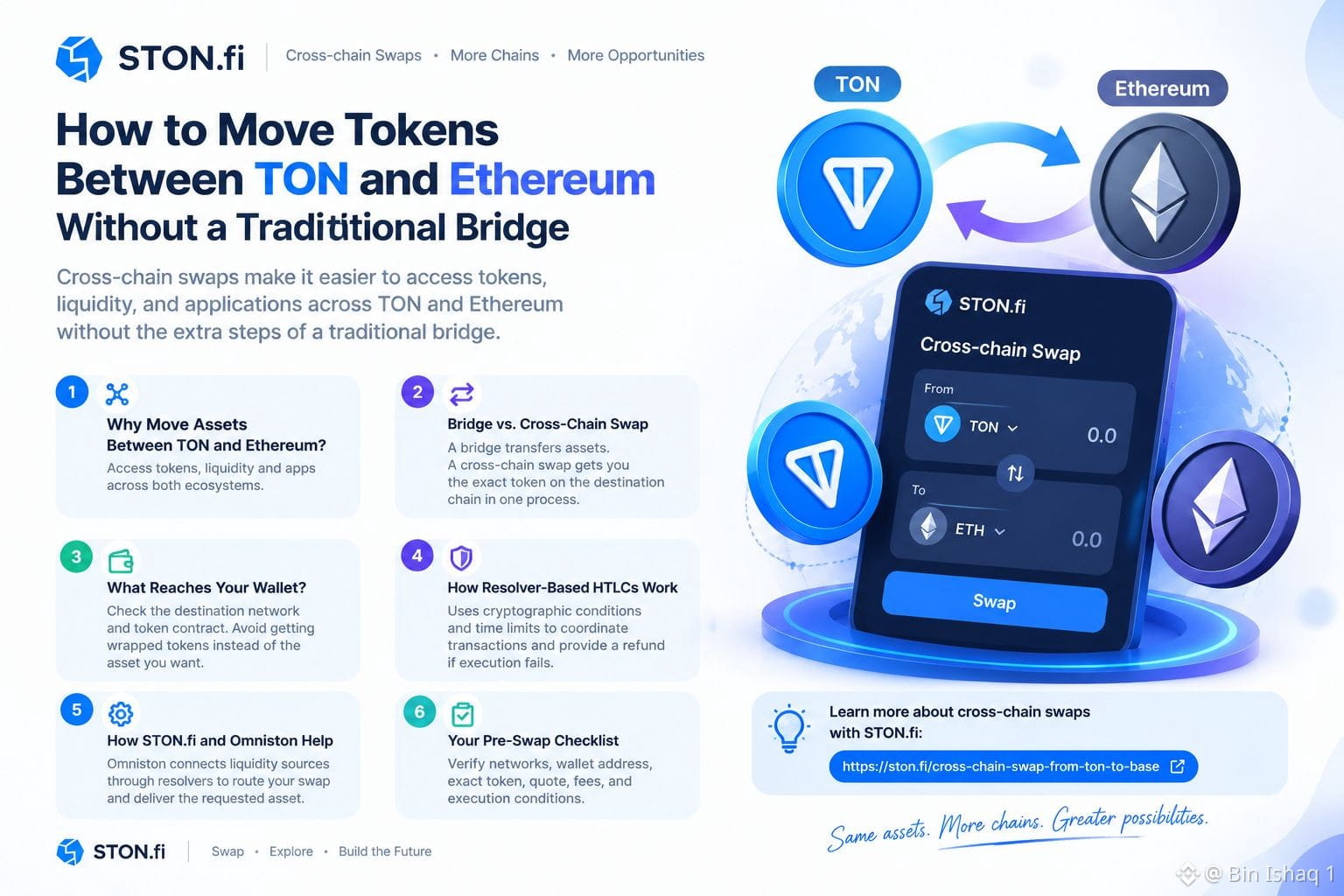
So verschiebst du Token zwischen TON und Ethereum – ohne eine herkömmliche Bridge Mit dem Transfer von Vermögenswerten zwischen TON und Ethereum können Nutzer auf Token, Liquidität und Anwendungen in beiden Ökosystemen zugreifen. Cross-Chain-Swaps sollen diesen Prozess vereinfachen, ohne dass Nutzer eine herkömmliche Bridge separat verwalten müssen. Bridge vs. Cross-Chain-Swap Eine herkömmliche Bridge überträgt Vermögenswerte zwischen Netzwerken und erstellt mitunter einen Wrapped Token. Bei einem Cross-Chain-Swap werden Vermögenswerte auf der Quell-Chain gegen den gewünschten Token auf der Ziel-Chain getauscht. Was kommt in deiner Wallet an? Wrapped Token repräsentieren Vermögenswerte von einer anderen Blockchain. Überprüfe vor dem Swap das Zielnetzwerk und den Token-Contract, damit du auch tatsächlich den gewünschten Vermögenswert erhältst. So funktionieren resolverbasierte HTLCs Hash Time-Locked Contracts (HTLCs) verwenden kryptografische Bedingungen und Zeitlimits, um Transaktionen über mehrere Chains hinweg zu koordinieren. Wenn die Ausführung erfolgreich ist, ermöglichen die Bedingungen die Abwicklung. Schlägt sie fehl oder läuft die Zeit ab, kann der Mechanismus eine Rückerstattung ermöglichen. Wie STON.fi und Omniston helfen Omniston verbindet über Resolver Liquiditätsquellen, um Swaps über unterstützte Netzwerke hinweg zu koordinieren. Ziel ist es, Nutzer zu ihrem gewünschten Ziel-Asset zu leiten und dabei die Ausführung unter festgelegten Abwicklungsbedingungen zu koordinieren. Erfahre mehr im „Cross-Chain-Swap-Leitfaden“ von STON.fi (https://ston.fi/cross-chain-swap-from-ton-to-base ). Checkliste vor dem Swap Vor der Bestätigung: - Überprüfe beide Netzwerke und deine Wallet-Adresse. - Prüfe den genauen Ziel-Token. - Sieh dir den Kurs, die erwartete Auszahlung und die Gebühren an. - Informiere dich über die Ausführungs- und Rückerstattungsbedingungen. - Nutze offizielle Links und schütze deine Wiederherstellungsphrase. Abschließende Gedanken Cross-Chain-Swaps können den Transfer von Vermögenswerten zwischen Ökosystemen vereinfachen. Nutzer sollten jedoch vor der Bestätigung immer das Ziel-Asset, die Kosten und die Transaktionsbedingungen überprüfen. Besuche „STON.fi “ (https://ston.fi/ ), um mehr zu erfahren. $ZEC $QNT
So verschiebst du Token zwischen TON und Ethereum – ohne eine herkömmliche Bridge Mit dem Transfer von Vermögenswerten zwischen TON und Ethereum können Nutzer auf Token, Liquidität und Anwendungen in beiden Ökosystemen zugreifen. Cross-Chain-Swaps sollen diesen Prozess vereinfachen, ohne dass Nutzer eine herkömmliche Bridge separat verwalten müssen. Bridge vs. Cross-Chain-Swap Eine herkömmliche Bridge überträgt Vermögenswerte zwischen Netzwerken und erstellt mitunter einen Wrapped Token. Bei einem Cross-Chain-Swap werden Vermögenswerte auf der Quell-Chain gegen den gewünschten Token auf der Ziel-Chain getauscht. Was kommt in deiner Wallet an? Wrapped Token repräsentieren Vermögenswerte von einer anderen Blockchain. Überprüfe vor dem Swap das Zielnetzwerk und den Token-Contract, damit du auch tatsächlich den gewünschten Vermögenswert erhältst. So funktionieren resolverbasierte HTLCs Hash Time-Locked Contracts (HTLCs) verwenden kryptografische Bedingungen und Zeitlimits, um Transaktionen über mehrere Chains hinweg zu koordinieren. Wenn die Ausführung erfolgreich ist, ermöglichen die Bedingungen die Abwicklung. Schlägt sie fehl oder läuft die Zeit ab, kann der Mechanismus eine Rückerstattung ermöglichen. Wie STON.fi und Omniston helfen Omniston verbindet über Resolver Liquiditätsquellen, um Swaps über unterstützte Netzwerke hinweg zu koordinieren. Ziel ist es, Nutzer zu ihrem gewünschten Ziel-Asset zu leiten und dabei die Ausführung unter festgelegten Abwicklungsbedingungen zu koordinieren. Erfahre mehr im „Cross-Chain-Swap-Leitfaden“ von STON.fi (https://ston.fi/cross-chain-swap-from-ton-to-base ). Checkliste vor dem Swap Vor der Bestätigung: - Überprüfe beide Netzwerke und deine Wallet-Adresse. - Prüfe den genauen Ziel-Token. - Sieh dir den Kurs, die erwartete Auszahlung und die Gebühren an. - Informiere dich über die Ausführungs- und Rückerstattungsbedingungen. - Nutze offizielle Links und schütze deine Wiederherstellungsphrase. Abschließende Gedanken Cross-Chain-Swaps können den Transfer von Vermögenswerten zwischen Ökosystemen vereinfachen. Nutzer sollten jedoch vor der Bestätigung immer das Ziel-Asset, die Kosten und die Transaktionsbedingungen überprüfen. Besuche „STON.fi “ (https://ston.fi/ ), um mehr zu erfahren. $ZEC $QNT
50
·
--
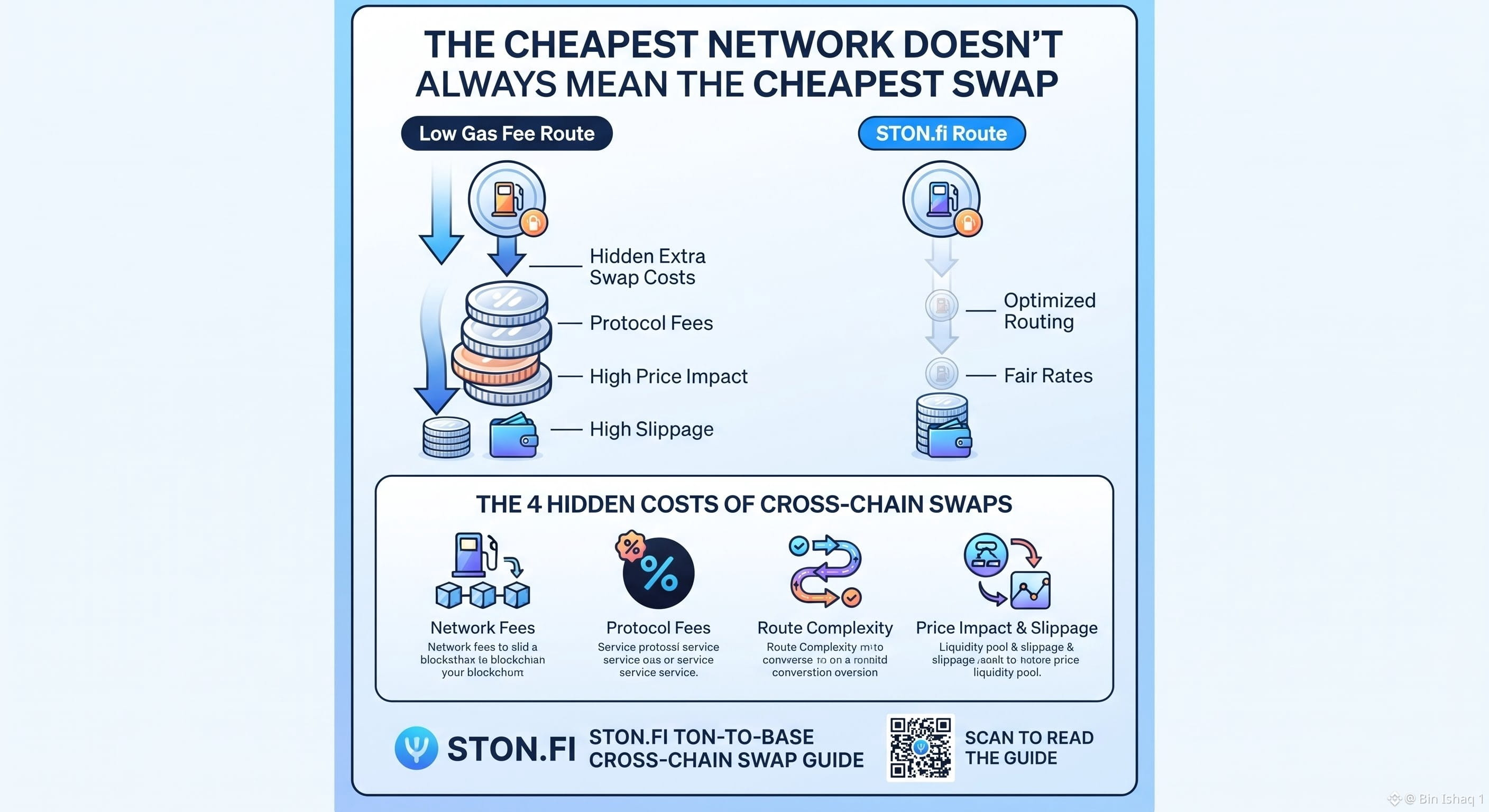
Das günstigste Netzwerk bedeutet nicht immer den günstigsten Swap Beim Transfer von Token von einer Blockchain zu einer anderen geht es um mehr als nur Gasgebühren. Die entscheidende Frage lautet: Wie viel kommt nach Abzug aller Gebühren und Preisänderungen tatsächlich in deiner Wallet an? Hier sind vier Dinge, die ich prüfe, bevor ich einen Cross-Chain-Swap bestätige: 1. Netzwerkgebühren: Die Kosten für die Verarbeitung einer Transaktion variieren je nach Blockchain und hängen von der Netzwerkauslastung ab. 2. Protokollgebühren: Der Swap-Dienst kann eine Gebühr erheben. Prüfe daher die Transaktionsdetails, um zu verstehen, wofür du bezahlst. 3. Komplexität der Route: Bei manchen Swaps sind zusätzliche Transaktionen oder Token-Konvertierungen nötig, bevor die Ziel-Blockchain erreicht wird. Dadurch können sich die Gesamtkosten erhöhen. 4. Preiswirkung und Slippage: Eine begrenzte Liquidität kann den Ausführungspreis beeinflussen. Slippage bedeutet, dass das endgültige Ergebnis von deiner ursprünglichen Erwartung abweichen kann. Warum ist das Netzwerk wichtig? Auch ein Netzwerk mit niedrigen Gasgebühren kann zu einem teureren Swap führen, wenn die Route eine geringe Liquidität oder zusätzliche Kosten mit sich bringt. Entscheidend ist der endgültige Betrag, den du erhältst – nicht eine einzelne Gebühr für sich genommen. Vergleiche vor der Bestätigung einer Transaktion den angezeigten Ausgabebetrag, die Gebühren und die erwartete Preiswirkung. Das ist besonders wichtig, wenn du Assets zwischen Netzwerken wie TON und Base transferierst. Der Cross-Chain-Swap-Leitfaden von STON.fi ist ein guter Ausgangspunkt, um diesen Prozess zu verstehen. Mein Fazit: Konzentriere dich nicht nur darauf, was der Token-Transfer kostet. Entscheidend ist, was nach Abschluss des gesamten Swaps übrig bleibt. Der „TON-to-Base Cross-Chain-Swap-Leitfaden“ von STON.fi (https://ston.fi/cross-chain-swap-from-ton-to-base ) ist ein guter Ausgangspunkt, um zu verstehen, wie Cross-Chain-Swaps funktionieren. Entdecke Cross-Chain-Swaps mit STON.fi: https://ston.fi/ $BTC $XRP
Das günstigste Netzwerk bedeutet nicht immer den günstigsten Swap Beim Transfer von Token von einer Blockchain zu einer anderen geht es um mehr als nur Gasgebühren. Die entscheidende Frage lautet: Wie viel kommt nach Abzug aller Gebühren und Preisänderungen tatsächlich in deiner Wallet an? Hier sind vier Dinge, die ich prüfe, bevor ich einen Cross-Chain-Swap bestätige: 1. Netzwerkgebühren: Die Kosten für die Verarbeitung einer Transaktion variieren je nach Blockchain und hängen von der Netzwerkauslastung ab. 2. Protokollgebühren: Der Swap-Dienst kann eine Gebühr erheben. Prüfe daher die Transaktionsdetails, um zu verstehen, wofür du bezahlst. 3. Komplexität der Route: Bei manchen Swaps sind zusätzliche Transaktionen oder Token-Konvertierungen nötig, bevor die Ziel-Blockchain erreicht wird. Dadurch können sich die Gesamtkosten erhöhen. 4. Preiswirkung und Slippage: Eine begrenzte Liquidität kann den Ausführungspreis beeinflussen. Slippage bedeutet, dass das endgültige Ergebnis von deiner ursprünglichen Erwartung abweichen kann. Warum ist das Netzwerk wichtig? Auch ein Netzwerk mit niedrigen Gasgebühren kann zu einem teureren Swap führen, wenn die Route eine geringe Liquidität oder zusätzliche Kosten mit sich bringt. Entscheidend ist der endgültige Betrag, den du erhältst – nicht eine einzelne Gebühr für sich genommen. Vergleiche vor der Bestätigung einer Transaktion den angezeigten Ausgabebetrag, die Gebühren und die erwartete Preiswirkung. Das ist besonders wichtig, wenn du Assets zwischen Netzwerken wie TON und Base transferierst. Der Cross-Chain-Swap-Leitfaden von STON.fi ist ein guter Ausgangspunkt, um diesen Prozess zu verstehen. Mein Fazit: Konzentriere dich nicht nur darauf, was der Token-Transfer kostet. Entscheidend ist, was nach Abschluss des gesamten Swaps übrig bleibt. Der „TON-to-Base Cross-Chain-Swap-Leitfaden“ von STON.fi (https://ston.fi/cross-chain-swap-from-ton-to-base ) ist ein guter Ausgangspunkt, um zu verstehen, wie Cross-Chain-Swaps funktionieren. Entdecke Cross-Chain-Swaps mit STON.fi: https://ston.fi/ $BTC $XRP
51
·
--
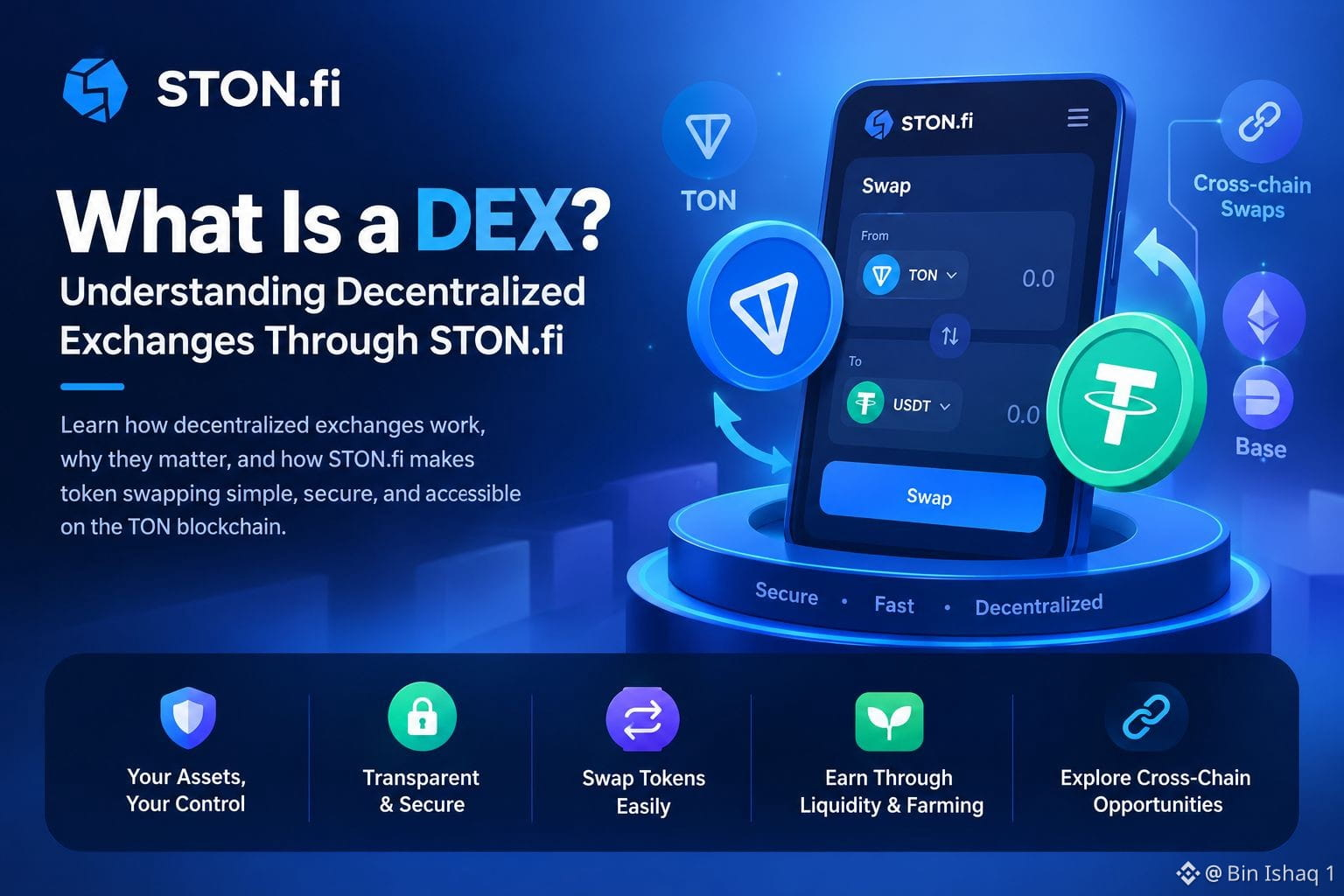
Was ist eine DEX? Dezentrale Börsen am Beispiel von Stonfi verstehen Eine dezentrale Börse (DEX) ermöglicht es Nutzern, Kryptowährungen über Blockchain-basierte Smart Contracts zu tauschen, ohne sich darauf verlassen zu müssen, dass eine zentrale Börse ihre Gelder verwahrt. STON.fi ist eine DEX auf The Open Network (TON), die Token-Tausch innerhalb des TON-Ökosystems ermöglicht. Wie funktioniert eine DEX? Viele DEXs nutzen automatisierte Market Maker (AMMs) und Liquiditätspools, anstatt Käufer und Verkäufer direkt zusammenzubringen. Nutzer wählen ihre Token aus, prüfen den Wechselkurs und die Gebühren und bestätigen den Tausch anschließend über ihre Wallet. STON.fi und Cross-Chain-Tausch erkunden STON.fi ermöglicht Nutzern, unterstützte Token zu tauschen und dabei die Kontrolle über ihre Wallet-Schlüssel zu behalten. Cross-Chain-Technologie hilft Nutzern außerdem, Vermögenswerte über unterstützte Blockchain-Netzwerke hinweg zu tauschen. Erfahre mehr darüber, wie du Vermögenswerte zwischen Netzwerken bewegst, im „STON.fi Leitfaden zum Cross-Chain-Tausch von TON zu Base“ (https://ston.fi/cross-chain-swap-from-ton-to-base ). Kann man mit einer DEX Geld verdienen? Bei einigen DEXs können Nutzer Liquidität bereitstellen und Handelsgebühren oder Farming-Belohnungen verdienen. Zu den Risiken zählen jedoch impermanenter Verlust, Schwachstellen in Smart Contracts und Kursschwankungen von Token. Renditen sind niemals garantiert. Tipps für Einsteiger Bevor du STON.fi nutzt, überprüfe die offizielle Website, informiere dich über Gebühren und Slippage, kontrolliere die Transaktionsdetails und gib niemals deine Wiederherstellungsphrase oder privaten Schlüssel weiter. Abschließende Gedanken DEXs bieten eine Alternative zum zentralisierten Handel, und STON.fi veranschaulicht, wie der Tausch von Token innerhalb von TON funktioniert. Es ist wichtig, den Ablauf und die Risiken zu verstehen, bevor du deine Vermögenswerte einsetzt. Entdecke die Plattform unter „STON.fi $BTC
Was ist eine DEX? Dezentrale Börsen am Beispiel von Stonfi verstehen Eine dezentrale Börse (DEX) ermöglicht es Nutzern, Kryptowährungen über Blockchain-basierte Smart Contracts zu tauschen, ohne sich darauf verlassen zu müssen, dass eine zentrale Börse ihre Gelder verwahrt. STON.fi ist eine DEX auf The Open Network (TON), die Token-Tausch innerhalb des TON-Ökosystems ermöglicht. Wie funktioniert eine DEX? Viele DEXs nutzen automatisierte Market Maker (AMMs) und Liquiditätspools, anstatt Käufer und Verkäufer direkt zusammenzubringen. Nutzer wählen ihre Token aus, prüfen den Wechselkurs und die Gebühren und bestätigen den Tausch anschließend über ihre Wallet. STON.fi und Cross-Chain-Tausch erkunden STON.fi ermöglicht Nutzern, unterstützte Token zu tauschen und dabei die Kontrolle über ihre Wallet-Schlüssel zu behalten. Cross-Chain-Technologie hilft Nutzern außerdem, Vermögenswerte über unterstützte Blockchain-Netzwerke hinweg zu tauschen. Erfahre mehr darüber, wie du Vermögenswerte zwischen Netzwerken bewegst, im „STON.fi Leitfaden zum Cross-Chain-Tausch von TON zu Base“ (https://ston.fi/cross-chain-swap-from-ton-to-base ). Kann man mit einer DEX Geld verdienen? Bei einigen DEXs können Nutzer Liquidität bereitstellen und Handelsgebühren oder Farming-Belohnungen verdienen. Zu den Risiken zählen jedoch impermanenter Verlust, Schwachstellen in Smart Contracts und Kursschwankungen von Token. Renditen sind niemals garantiert. Tipps für Einsteiger Bevor du STON.fi nutzt, überprüfe die offizielle Website, informiere dich über Gebühren und Slippage, kontrolliere die Transaktionsdetails und gib niemals deine Wiederherstellungsphrase oder privaten Schlüssel weiter. Abschließende Gedanken DEXs bieten eine Alternative zum zentralisierten Handel, und STON.fi veranschaulicht, wie der Tausch von Token innerhalb von TON funktioniert. Es ist wichtig, den Ablauf und die Risiken zu verstehen, bevor du deine Vermögenswerte einsetzt. Entdecke die Plattform unter „STON.fi $BTC
69
·
--
Was passiert, wenn eine Self-Custody-Wallet eine zuverlässige Swap-Layer benötigt? United Network hat STON.fi für TON-Swaps integriert und gibt seinen Nutzern direkten Zugriff auf TON-Liquidität innerhalb ihres Wallet-Erlebnisses. Es ist ein praktisches Beispiel dafür, wie DeFi-Infrastruktur im Hintergrund still und leise hinter einem Produkt stehen kann, während Nutzer mit einer vertrauten Oberfläche interagieren. Über United Network United Network entwickelt Hardware-Wallets im Kartenformat. Nutzer verwalten ihre Wallets über eine mobile App oder einen Browser, während die Assets durch den sicheren Chip der EAL6+-Sicherheitsstufe gesichert bleiben. Die Wallet unterstützt mehrere Netzwerke, darunter Ethereum, Solana, Bitcoin und TON. Integration Durch die Integration können TON-Swaps in United Network die Liquiditätsinfrastruktur von STON.fi nutzen, ohne dass Nutzer ihre Wallet-Umgebung verlassen müssen. Das verbindet das Wallet-Erlebnis mit der bestehenden Swap- und Liquiditätsinfrastruktur von STON.fi. Warum das wichtig ist Für Wallet-Entwickler kann die Nutzung bestehender DeFi-Infrastruktur den Bedarf reduzieren, Liquiditäts-, Routing- und Swap-Execution-Systeme unabhängig voneinander zu entwickeln. Für Nutzer schafft das einen einfacheren Weg zum On-Chain-Swapping, während die Assets in ihrer eigenen Wallet bleiben. Entwickler-Perspektive Das zeigt auch, wie STON.fi SDK und Omniston als Infrastruktur für Wallets, Mini-Apps und andere TON-Produkte dienen können. Entwickler können die Nutzererfahrung gestalten, während sie sich auf etablierte Swap-Infrastruktur darunter stützen. Einblick Der entscheidende Punkt ist die Trennung zwischen Oberfläche und Infrastruktur: Eine Wallet kann sich auf die Nutzererfahrung konzentrieren, während spezialisierte Protokolle im Hintergrund Liquidität und Swap-Execution übernehmen. Für Entwickler, die dieses Modell untersuchen, bieten die STON.fi SDK- und Omniston-Dokumentation den Ausgangspunkt, um TON-Swap-Funktionalität zu integrieren. $BTC $PUMP
Was passiert, wenn eine Self-Custody-Wallet eine zuverlässige Swap-Layer benötigt? United Network hat STON.fi für TON-Swaps integriert und gibt seinen Nutzern direkten Zugriff auf TON-Liquidität innerhalb ihres Wallet-Erlebnisses. Es ist ein praktisches Beispiel dafür, wie DeFi-Infrastruktur im Hintergrund still und leise hinter einem Produkt stehen kann, während Nutzer mit einer vertrauten Oberfläche interagieren. Über United Network United Network entwickelt Hardware-Wallets im Kartenformat. Nutzer verwalten ihre Wallets über eine mobile App oder einen Browser, während die Assets durch den sicheren Chip der EAL6+-Sicherheitsstufe gesichert bleiben. Die Wallet unterstützt mehrere Netzwerke, darunter Ethereum, Solana, Bitcoin und TON. Integration Durch die Integration können TON-Swaps in United Network die Liquiditätsinfrastruktur von STON.fi nutzen, ohne dass Nutzer ihre Wallet-Umgebung verlassen müssen. Das verbindet das Wallet-Erlebnis mit der bestehenden Swap- und Liquiditätsinfrastruktur von STON.fi. Warum das wichtig ist Für Wallet-Entwickler kann die Nutzung bestehender DeFi-Infrastruktur den Bedarf reduzieren, Liquiditäts-, Routing- und Swap-Execution-Systeme unabhängig voneinander zu entwickeln. Für Nutzer schafft das einen einfacheren Weg zum On-Chain-Swapping, während die Assets in ihrer eigenen Wallet bleiben. Entwickler-Perspektive Das zeigt auch, wie STON.fi SDK und Omniston als Infrastruktur für Wallets, Mini-Apps und andere TON-Produkte dienen können. Entwickler können die Nutzererfahrung gestalten, während sie sich auf etablierte Swap-Infrastruktur darunter stützen. Einblick Der entscheidende Punkt ist die Trennung zwischen Oberfläche und Infrastruktur: Eine Wallet kann sich auf die Nutzererfahrung konzentrieren, während spezialisierte Protokolle im Hintergrund Liquidität und Swap-Execution übernehmen. Für Entwickler, die dieses Modell untersuchen, bieten die STON.fi SDK- und Omniston-Dokumentation den Ausgangspunkt, um TON-Swap-Funktionalität zu integrieren. $BTC $PUMP
1
519
·
--
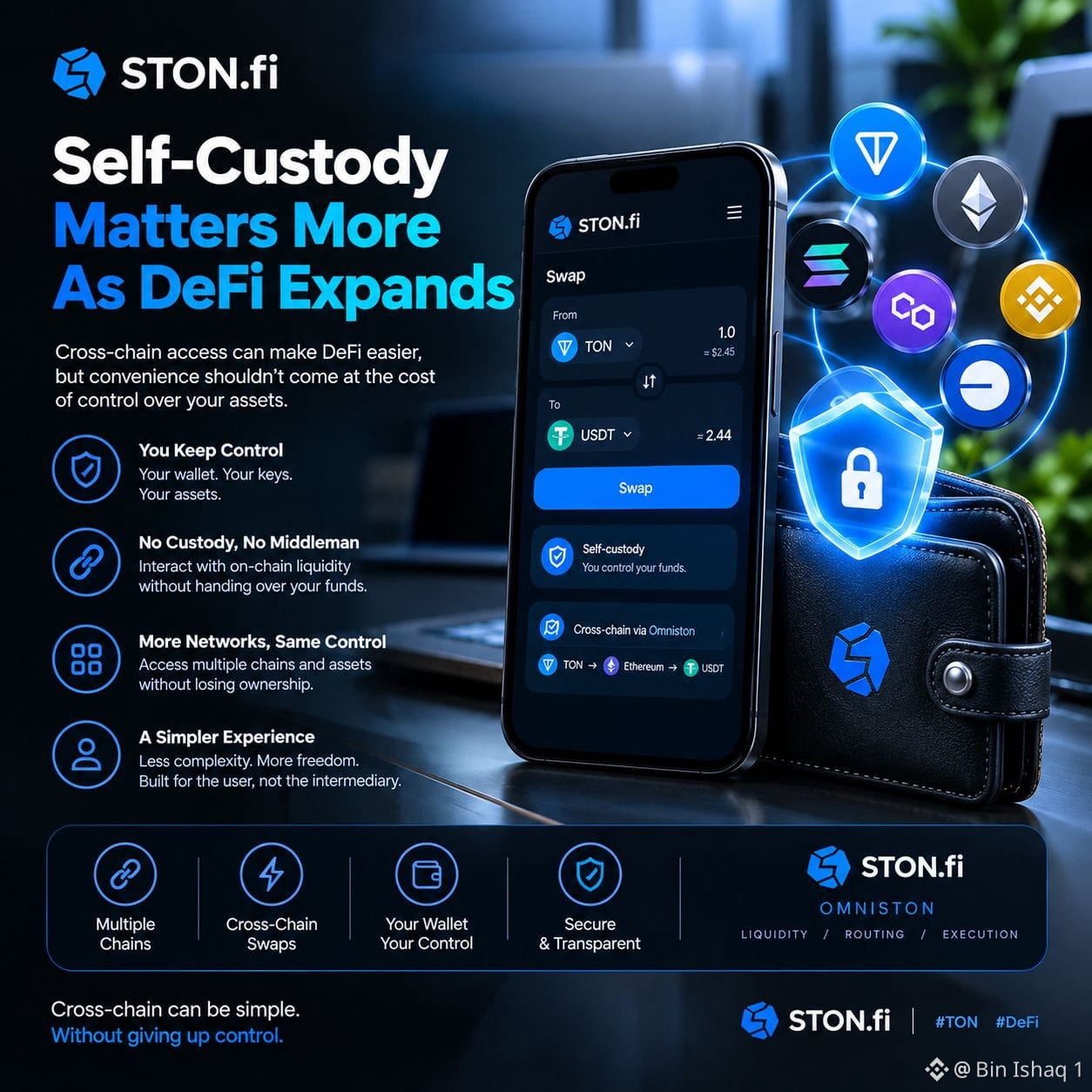
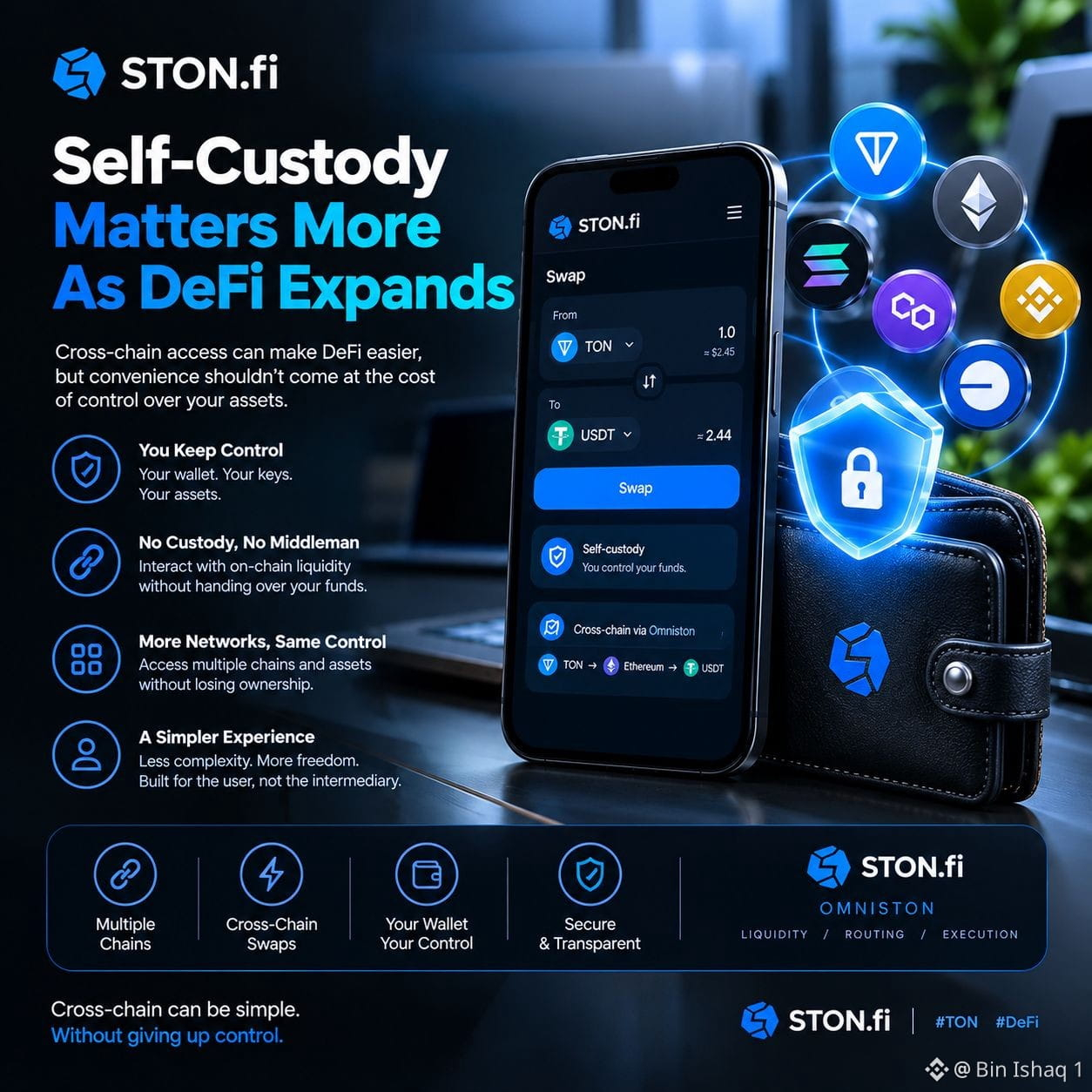
Stonfi Self-Custody ist wichtiger, während DeFi wächst Der plattformübergreifende Zugriff kann DeFi einfacher machen, aber Bequemlichkeit sollte nicht auf Kosten der Kontrolle über deine Assets gehen. In einem Self-Custodial-Modell behalten Nutzer die Kontrolle über ihre Wallets, während Transaktionen mit der On-Chain-Infrastruktur interagieren. Die Anwendung stellt die Oberfläche bereit, aber die Eigentümerschaft bleibt beim Nutzer. STON.fi ist auf diesen Ansatz aufgebaut und ermöglicht es Nutzern, mit Liquidität zu interagieren und Swaps auszuführen, ohne die Verwahrung ihrer Assets an einen zentralen Vermittler abzugeben. Diese Unterscheidung wird mit der Ausweitung von DeFi über immer mehr Netzwerke noch wichtiger. Ein reibungsloseres Erlebnis sollte Komplexität reduzieren, ohne daran etwas zu ändern, wer die Gelder kontrolliert. Für Nutzer ist das Ziel ganz einfach: Bessere Infrastruktur soll DeFi leichter nutzbar machen und zugleich das Eigentumsmodell bewahren, das DeFi von anderen unterscheidet. Cross-Chain-UX kann sich verbessern, ohne auf Self-Custody zu verzichten. $CRV $GRAM
Stonfi Self-Custody ist wichtiger, während DeFi wächst Der plattformübergreifende Zugriff kann DeFi einfacher machen, aber Bequemlichkeit sollte nicht auf Kosten der Kontrolle über deine Assets gehen. In einem Self-Custodial-Modell behalten Nutzer die Kontrolle über ihre Wallets, während Transaktionen mit der On-Chain-Infrastruktur interagieren. Die Anwendung stellt die Oberfläche bereit, aber die Eigentümerschaft bleibt beim Nutzer. STON.fi ist auf diesen Ansatz aufgebaut und ermöglicht es Nutzern, mit Liquidität zu interagieren und Swaps auszuführen, ohne die Verwahrung ihrer Assets an einen zentralen Vermittler abzugeben. Diese Unterscheidung wird mit der Ausweitung von DeFi über immer mehr Netzwerke noch wichtiger. Ein reibungsloseres Erlebnis sollte Komplexität reduzieren, ohne daran etwas zu ändern, wer die Gelder kontrolliert. Für Nutzer ist das Ziel ganz einfach: Bessere Infrastruktur soll DeFi leichter nutzbar machen und zugleich das Eigentumsmodell bewahren, das DeFi von anderen unterscheidet. Cross-Chain-UX kann sich verbessern, ohne auf Self-Custody zu verzichten. $CRV $GRAM
38
·
--
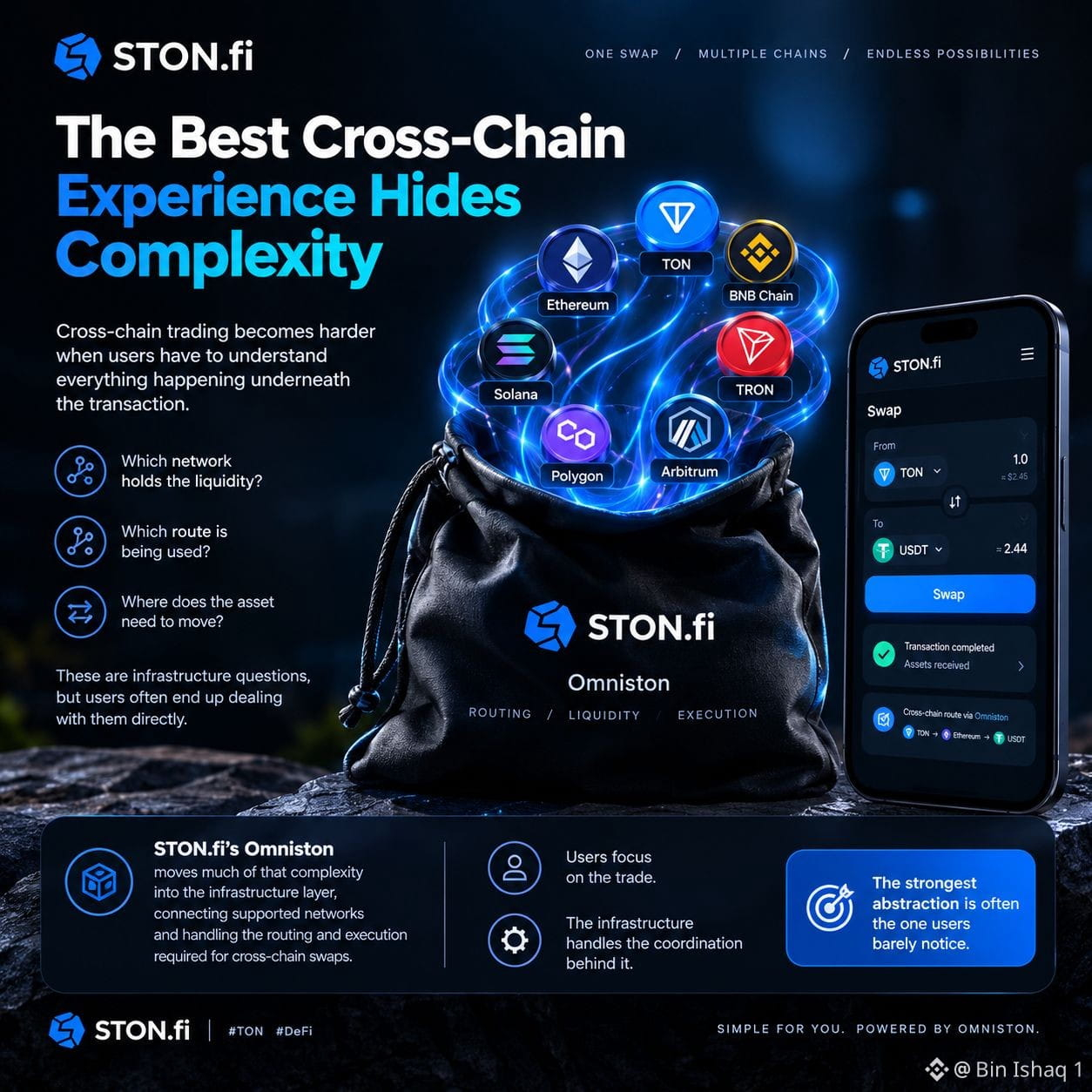
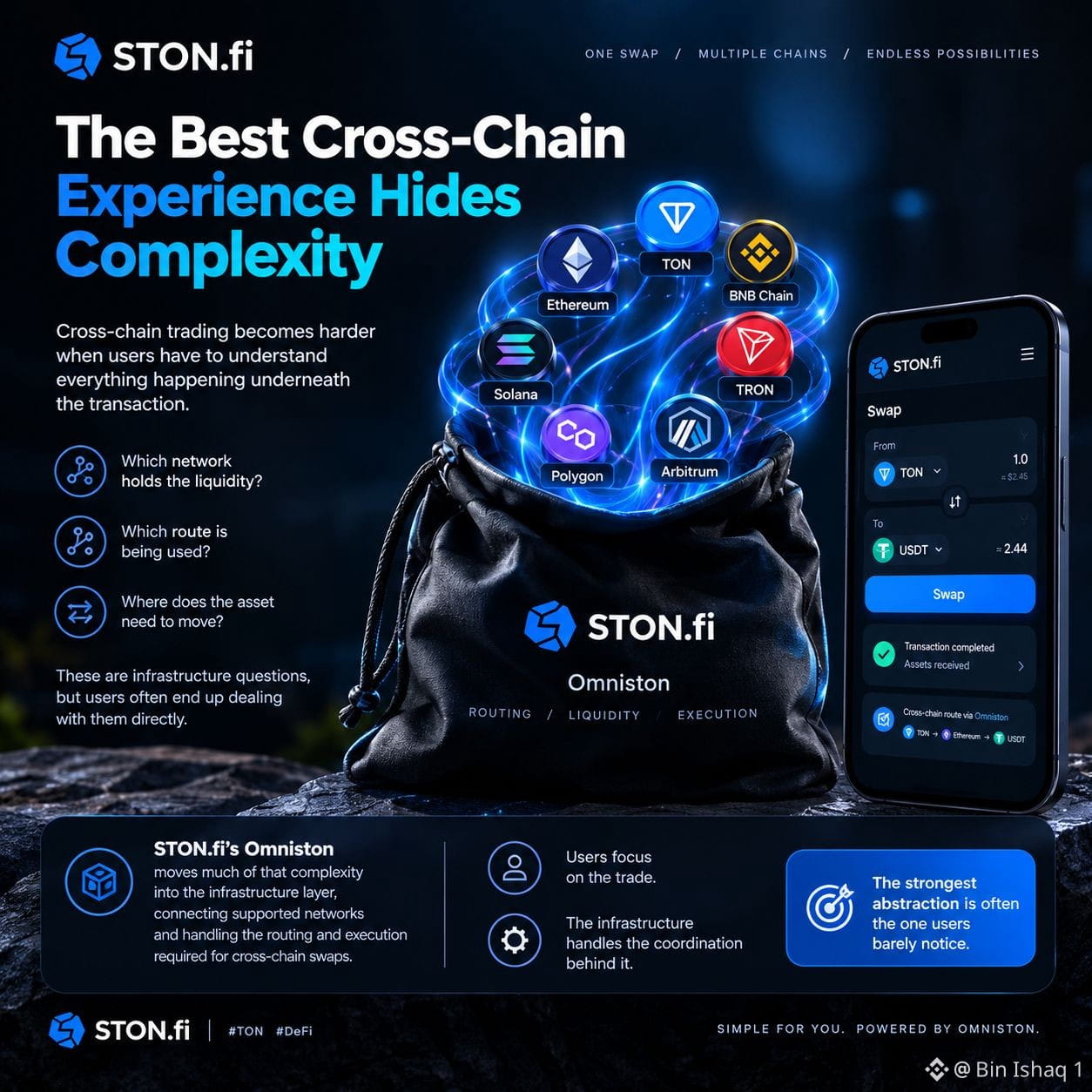
LStonfi Die beste Cross-Chain-Erfahrung verbirgt die Komplexität Cross-Chain-Trading wird schwieriger, wenn Nutzer verstehen müssen, was sich alles im Hintergrund der Transaktion abspielt. Welches Netzwerk stellt die Liquidität bereit? Welche Route wird verwendet? Wohin muss sich der Vermögenswert bewegen, bevor der Swap abgeschlossen werden kann? Das sind Fragen der Infrastruktur, doch oft landen Nutzer direkt damit. STON.fi’s Omniston verlagert einen Großteil dieser Komplexität in die Infrastruktur-Ebene: Es verbindet unterstützte Netzwerke und übernimmt Routing und Ausführung, die für Cross-Chain-Swaps erforderlich sind. So entsteht eine klarere Aufgabenteilung: Nutzer konzentrieren sich auf den Handel, während die Infrastruktur die Koordination dahinter übernimmt. Für Wallets und DeFi-Anwendungen kann das Cross-Chain-Funktionalität leichter integrierbar machen, ohne Nutzer jeder technischen Einzelheit auszusetzen. Die stärkste Abstraktion ist oft die, die Nutzer kaum bemerken. $QNT $BTC
LStonfi Die beste Cross-Chain-Erfahrung verbirgt die Komplexität Cross-Chain-Trading wird schwieriger, wenn Nutzer verstehen müssen, was sich alles im Hintergrund der Transaktion abspielt. Welches Netzwerk stellt die Liquidität bereit? Welche Route wird verwendet? Wohin muss sich der Vermögenswert bewegen, bevor der Swap abgeschlossen werden kann? Das sind Fragen der Infrastruktur, doch oft landen Nutzer direkt damit. STON.fi’s Omniston verlagert einen Großteil dieser Komplexität in die Infrastruktur-Ebene: Es verbindet unterstützte Netzwerke und übernimmt Routing und Ausführung, die für Cross-Chain-Swaps erforderlich sind. So entsteht eine klarere Aufgabenteilung: Nutzer konzentrieren sich auf den Handel, während die Infrastruktur die Koordination dahinter übernimmt. Für Wallets und DeFi-Anwendungen kann das Cross-Chain-Funktionalität leichter integrierbar machen, ohne Nutzer jeder technischen Einzelheit auszusetzen. Die stärkste Abstraktion ist oft die, die Nutzer kaum bemerken. $QNT $BTC
45
·
--
Stonfi Die beste plattformübergreifende Experience verbirgt Komplexität Der plattformübergreifende Handel wird schwieriger, wenn Nutzer verstehen müssen, was alles im Hintergrund der Transaktion passiert. Welches Netzwerk hält die Liquidität? Welche Route wird verwendet? Wohin muss sich der Vermögenswert bewegen, bevor der Swap abgeschlossen werden kann? Das sind Fragen der Infrastruktur, aber oft müssen Nutzer sich direkt damit auseinandersetzen. STON.fi’s Omniston verlagert einen Großteil dieser Komplexität in die Infrastrukturschicht und verbindet unterstützte Netzwerke sowie übernimmt das Routing und die Ausführung, die für plattformübergreifende Swaps erforderlich sind. Dadurch entsteht eine klarere Aufteilung der Verantwortung: Nutzer konzentrieren sich auf den Handel, während die Infrastruktur die Abstimmung dahinter übernimmt. Für Wallets und DeFi-Anwendungen kann das plattformübergreifende Funktionen leichter integrierbar machen, ohne Nutzer jeder technischen Einzelheit auszusetzen. Die stärkste Abstraktion ist oft die, die Nutzer kaum bemerken. $LINK $BTC
Stonfi Die beste plattformübergreifende Experience verbirgt Komplexität Der plattformübergreifende Handel wird schwieriger, wenn Nutzer verstehen müssen, was alles im Hintergrund der Transaktion passiert. Welches Netzwerk hält die Liquidität? Welche Route wird verwendet? Wohin muss sich der Vermögenswert bewegen, bevor der Swap abgeschlossen werden kann? Das sind Fragen der Infrastruktur, aber oft müssen Nutzer sich direkt damit auseinandersetzen. STON.fi’s Omniston verlagert einen Großteil dieser Komplexität in die Infrastrukturschicht und verbindet unterstützte Netzwerke sowie übernimmt das Routing und die Ausführung, die für plattformübergreifende Swaps erforderlich sind. Dadurch entsteht eine klarere Aufteilung der Verantwortung: Nutzer konzentrieren sich auf den Handel, während die Infrastruktur die Abstimmung dahinter übernimmt. Für Wallets und DeFi-Anwendungen kann das plattformübergreifende Funktionen leichter integrierbar machen, ohne Nutzer jeder technischen Einzelheit auszusetzen. Die stärkste Abstraktion ist oft die, die Nutzer kaum bemerken. $LINK $BTC
95
·
--
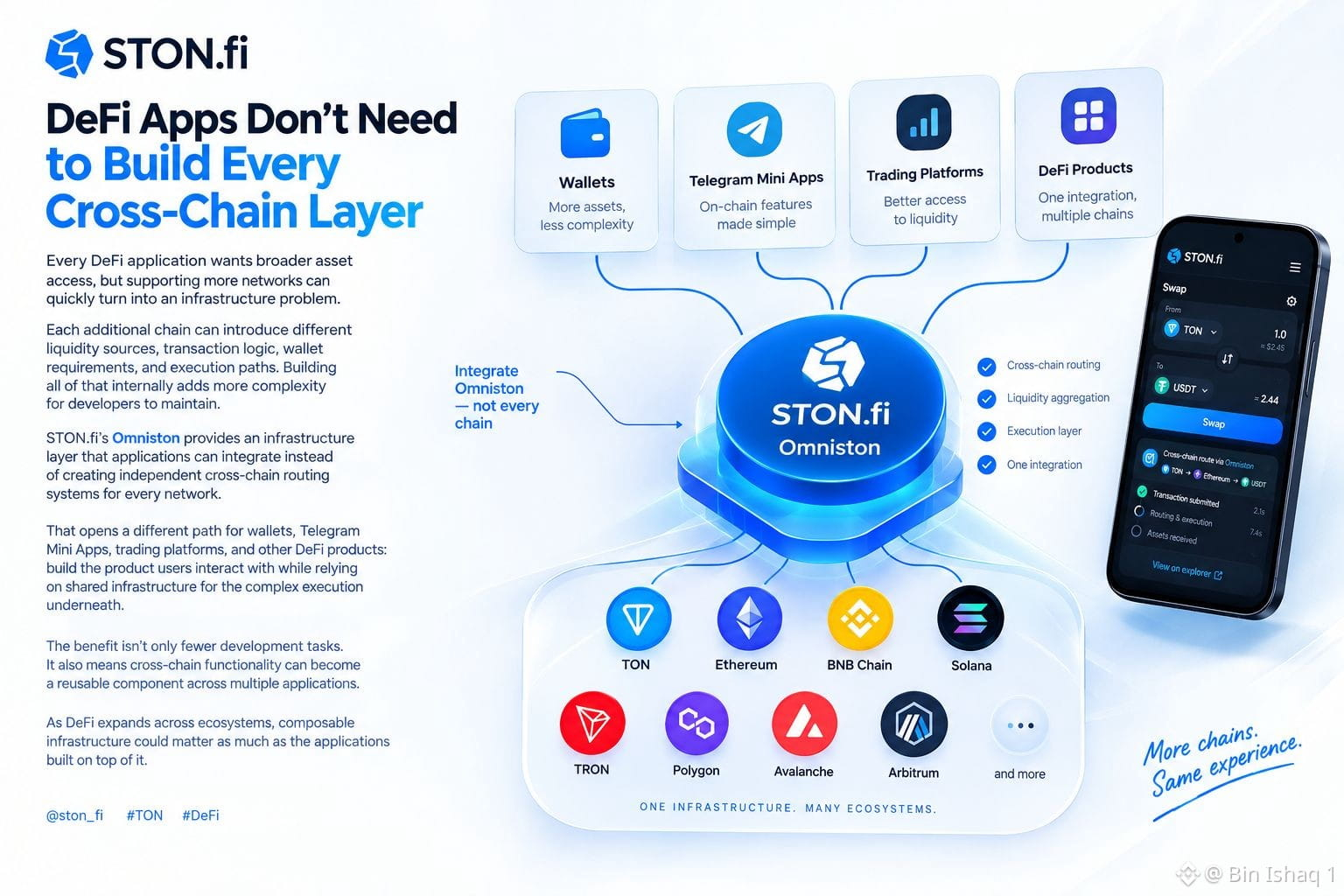
Stonfi-Defi-Apps brauchen nicht jede Cross-Chain-Ebene selbst aufzubauen Jede DeFi-Anwendung möchte einen breiteren Zugriff auf Assets, doch die Unterstützung weiterer Netzwerke kann schnell zu einem Infrastrukturproblem werden. Jede zusätzliche Chain kann unterschiedliche Liquiditätsquellen, Transaktionslogik, Wallet-Anforderungen und Ausführungspfade mit sich bringen. Wenn Entwickler das alles intern aufbauen, erhöht sich die Komplexität, die sie pflegen müssen. STON.fi’s Omniston bietet eine Infrastrukturschicht, die Anwendungen integrieren können, statt für jedes Netzwerk unabhängige Cross-Chain-Routing-Systeme zu erstellen. Das eröffnet einen anderen Weg für Wallets, Telegram Mini Apps, Handelsplattformen und weitere DeFi-Produkte: Entwickeln Sie das Produkt, mit dem die Nutzer interagieren, und verlassen Sie sich für die komplexe Ausführung darunter auf gemeinsam genutzte Infrastruktur. Der Vorteil besteht nicht nur in weniger Entwicklungsaufgaben. Es bedeutet auch, dass Cross-Chain-Funktionalität zu einem wiederverwendbaren Baustein für mehrere Anwendungen werden kann. Wenn sich DeFi über verschiedene Ökosysteme hinweg ausdehnt, könnte eine komposable Infrastruktur ebenso wichtig sein wie die darauf aufgebauten Anwendungen. $QNT $XRP
Stonfi-Defi-Apps brauchen nicht jede Cross-Chain-Ebene selbst aufzubauen Jede DeFi-Anwendung möchte einen breiteren Zugriff auf Assets, doch die Unterstützung weiterer Netzwerke kann schnell zu einem Infrastrukturproblem werden. Jede zusätzliche Chain kann unterschiedliche Liquiditätsquellen, Transaktionslogik, Wallet-Anforderungen und Ausführungspfade mit sich bringen. Wenn Entwickler das alles intern aufbauen, erhöht sich die Komplexität, die sie pflegen müssen. STON.fi’s Omniston bietet eine Infrastrukturschicht, die Anwendungen integrieren können, statt für jedes Netzwerk unabhängige Cross-Chain-Routing-Systeme zu erstellen. Das eröffnet einen anderen Weg für Wallets, Telegram Mini Apps, Handelsplattformen und weitere DeFi-Produkte: Entwickeln Sie das Produkt, mit dem die Nutzer interagieren, und verlassen Sie sich für die komplexe Ausführung darunter auf gemeinsam genutzte Infrastruktur. Der Vorteil besteht nicht nur in weniger Entwicklungsaufgaben. Es bedeutet auch, dass Cross-Chain-Funktionalität zu einem wiederverwendbaren Baustein für mehrere Anwendungen werden kann. Wenn sich DeFi über verschiedene Ökosysteme hinweg ausdehnt, könnte eine komposable Infrastruktur ebenso wichtig sein wie die darauf aufgebauten Anwendungen. $QNT $XRP
34
·
--
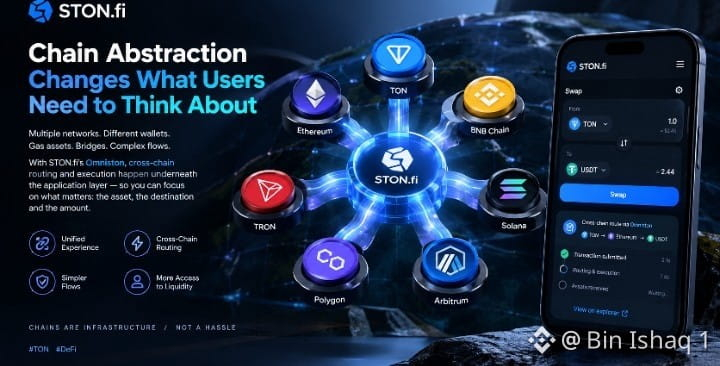
Stonfi Chain Abstraction verändert, worüber Nutzer nachdenken müssen Die Nutzung mehrerer Netzwerke bedeutet oft, unterschiedliche Wallets, Gas-Assets, Bridges und Transaktionsabläufe zu verwalten. Chain Abstraction verfolgt einen anderen Ansatz: Die zugrunde liegenden Netzwerke bleiben getrennt, während sich das Nutzererlebnis einheitlicher anfühlt. STON.fi ’s Omniston passt in dieses Modell, indem es Cross-Chain-Routing und Ausführung unterhalb der Anwendungsebene übernimmt. Nutzer können sich auf das gewünschte Asset, das Ziel und den Betrag konzentrieren, statt jeden Schritt manuell zu koordinieren. Für Wallets und DeFi-Anwendungen schafft das einen weiteren Vorteil. Sie können Nutzern Zugriff auf Assets und Liquidität über verschiedene Netzwerke hinweg bieten, ohne jede Cross-Chain-Aktion in einen separaten Arbeitsablauf zu verwandeln. Die tiefere Veränderung besteht darin, dass Chains zur Infrastruktur werden, statt etwas zu sein, das Nutzer ständig verwalten müssen. Da sich immer mehr Liquidität und Anwendungen über Ökosysteme hinweg ausbreiten, wird es für die DeFi-UX zunehmend wichtiger, diesen Koordinationsaufwand zu reduzieren. $BTC $QNT
Stonfi Chain Abstraction verändert, worüber Nutzer nachdenken müssen Die Nutzung mehrerer Netzwerke bedeutet oft, unterschiedliche Wallets, Gas-Assets, Bridges und Transaktionsabläufe zu verwalten. Chain Abstraction verfolgt einen anderen Ansatz: Die zugrunde liegenden Netzwerke bleiben getrennt, während sich das Nutzererlebnis einheitlicher anfühlt. STON.fi ’s Omniston passt in dieses Modell, indem es Cross-Chain-Routing und Ausführung unterhalb der Anwendungsebene übernimmt. Nutzer können sich auf das gewünschte Asset, das Ziel und den Betrag konzentrieren, statt jeden Schritt manuell zu koordinieren. Für Wallets und DeFi-Anwendungen schafft das einen weiteren Vorteil. Sie können Nutzern Zugriff auf Assets und Liquidität über verschiedene Netzwerke hinweg bieten, ohne jede Cross-Chain-Aktion in einen separaten Arbeitsablauf zu verwandeln. Die tiefere Veränderung besteht darin, dass Chains zur Infrastruktur werden, statt etwas zu sein, das Nutzer ständig verwalten müssen. Da sich immer mehr Liquidität und Anwendungen über Ökosysteme hinweg ausbreiten, wird es für die DeFi-UX zunehmend wichtiger, diesen Koordinationsaufwand zu reduzieren. $BTC $QNT
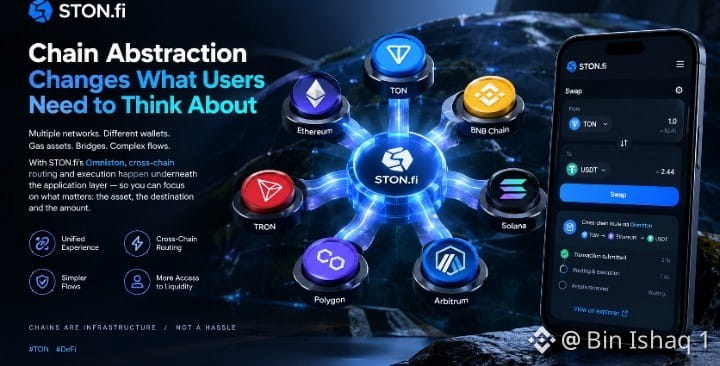
53
·
--
Stonfi-Chain-Abstraction verändert, worüber Nutzer nachdenken müssen Die Nutzung mehrerer Netzwerke bedeutet häufig, dass man unterschiedliche Wallets, Gas-Assets, Bridges und Transaktionsabläufe verwalten muss. Chain Abstraction verfolgt einen anderen Ansatz: Die zugrunde liegenden Netzwerke bleiben getrennt, während sich die Nutzererfahrung dennoch stärker vereinheitlicht anfühlt. STON.fi ’s Omniston passt in dieses Modell, indem es unterhalb der Anwendungsebene das Cross-Chain-Routing und die Ausführung übernimmt. So können sich Nutzer darauf konzentrieren, welches Asset sie möchten, das Ziel und die Menge – statt jeden einzelnen Schritt manuell zu koordinieren. Für Wallets und DeFi-Anwendungen entsteht dadurch ein weiterer Vorteil. Sie können Nutzern Zugriff auf Assets und Liquidität über verschiedene Netzwerke hinweg geben, ohne jede Cross-Chain-Aktion in einen separaten Workflow zu verwandeln. Die tiefgreifende Veränderung ist, dass Chains zu Infrastruktur werden – statt etwas zu sein, das Nutzer ständig selbst verwalten müssen. Da sich mit der Zeit mehr Liquidität und Anwendungen über Ökosysteme hinweg verteilen, wird es immer wichtiger, diese Koordinationslast für die DeFi-UX zu reduzieren. $QNT $PUMP
Stonfi-Chain-Abstraction verändert, worüber Nutzer nachdenken müssen Die Nutzung mehrerer Netzwerke bedeutet häufig, dass man unterschiedliche Wallets, Gas-Assets, Bridges und Transaktionsabläufe verwalten muss. Chain Abstraction verfolgt einen anderen Ansatz: Die zugrunde liegenden Netzwerke bleiben getrennt, während sich die Nutzererfahrung dennoch stärker vereinheitlicht anfühlt. STON.fi ’s Omniston passt in dieses Modell, indem es unterhalb der Anwendungsebene das Cross-Chain-Routing und die Ausführung übernimmt. So können sich Nutzer darauf konzentrieren, welches Asset sie möchten, das Ziel und die Menge – statt jeden einzelnen Schritt manuell zu koordinieren. Für Wallets und DeFi-Anwendungen entsteht dadurch ein weiterer Vorteil. Sie können Nutzern Zugriff auf Assets und Liquidität über verschiedene Netzwerke hinweg geben, ohne jede Cross-Chain-Aktion in einen separaten Workflow zu verwandeln. Die tiefgreifende Veränderung ist, dass Chains zu Infrastruktur werden – statt etwas zu sein, das Nutzer ständig selbst verwalten müssen. Da sich mit der Zeit mehr Liquidität und Anwendungen über Ökosysteme hinweg verteilen, wird es immer wichtiger, diese Koordinationslast für die DeFi-UX zu reduzieren. $QNT $PUMP
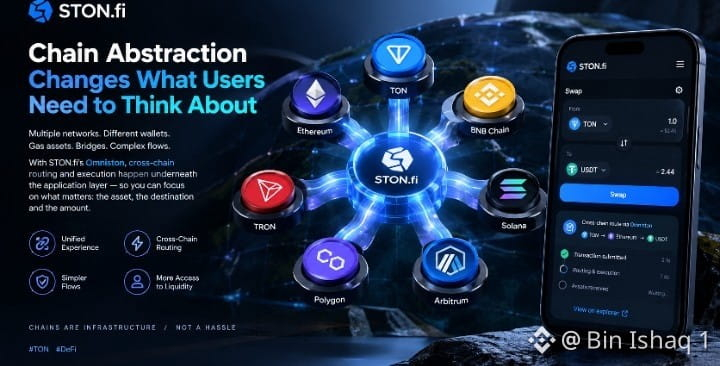
79
·
--
Stonfi-Routing wird zur echten DeFi-Infrastruktur Liquidität kann über Dutzende von Pools und Netzwerken existieren, aber Nutzer benötigen trotzdem einen effizienten Weg, um darauf zuzugreifen. Deshalb ist das Routing ein zentraler Bestandteil des Handelserlebnisses. Der Unterschied zwischen verfügbarer Liquidität und dem effizienten Erreichen davon liegt in der Ausführungsschicht. STON.fi ’s Omniston ist um diese Schicht herum aufgebaut: Es verbindet Liquidität über unterstützte Netzwerke hinweg und findet Routen für Cross-Chain-Swaps hinter der Anwendungsschnittstelle. Das verändert auch die Rolle von Wallets und DeFi-Apps. Anstatt separate Routingsysteme für jedes der unterstützten Netzwerke zu bauen, können Anwendungen Infrastruktur integrieren, die einen Großteil der Komplexität darunter übernimmt. Wenn DeFi zunehmend fragmentiert, reicht allein Liquidität nicht mehr aus, um die Qualität eines Ausführungserlebnisses zu bestimmen. Zugang, Routing und Abwicklung werden gleichermaßen wichtig. $BTC $XRP
Stonfi-Routing wird zur echten DeFi-Infrastruktur Liquidität kann über Dutzende von Pools und Netzwerken existieren, aber Nutzer benötigen trotzdem einen effizienten Weg, um darauf zuzugreifen. Deshalb ist das Routing ein zentraler Bestandteil des Handelserlebnisses. Der Unterschied zwischen verfügbarer Liquidität und dem effizienten Erreichen davon liegt in der Ausführungsschicht. STON.fi ’s Omniston ist um diese Schicht herum aufgebaut: Es verbindet Liquidität über unterstützte Netzwerke hinweg und findet Routen für Cross-Chain-Swaps hinter der Anwendungsschnittstelle. Das verändert auch die Rolle von Wallets und DeFi-Apps. Anstatt separate Routingsysteme für jedes der unterstützten Netzwerke zu bauen, können Anwendungen Infrastruktur integrieren, die einen Großteil der Komplexität darunter übernimmt. Wenn DeFi zunehmend fragmentiert, reicht allein Liquidität nicht mehr aus, um die Qualität eines Ausführungserlebnisses zu bestimmen. Zugang, Routing und Abwicklung werden gleichermaßen wichtig. $BTC $XRP
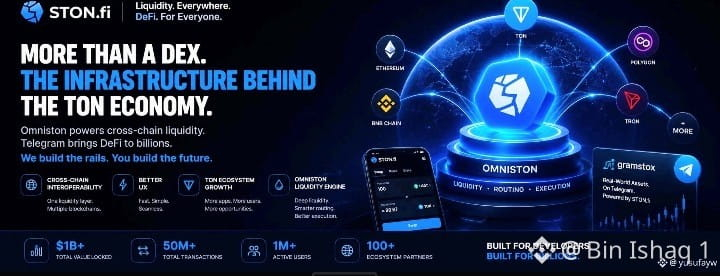
40
·
--
Stonfi Der Swap endet nicht, wenn Sie auf „Swap“ klicken Ein großer Teil der Aufmerksamkeit in DeFi gilt dem Preis und der Schaltfläche, die die Transaktion startet. Aber auch die Nutzererfahrung nach diesem Klick ist entscheidend. Sie müssen immer noch wissen, ob die Transaktion übermittelt wurde, welche Route verwendet wird, was Sie erhalten sollten und ob die Assets tatsächlich am Ziel angekommen sind. STON.fi entwickelt sein Swap-Erlebnis nicht nur rund um die Auswahl von Tokens. Die Infrastruktur hinter der Transaktion übernimmt Routing und Ausführung, während die Benutzeroberfläche die Informationen liefert, die der Nutzer braucht, um zu verstehen, was gerade passiert. Das ist noch wichtiger, wenn ein Swap mehrere Liquiditätsquellen oder Netzwerke umfasst. Je mehr bewegliche Teile es gibt, desto mehr Möglichkeiten für Verwirrung, wenn der Nutzer nicht sehen kann, was passiert. Eine gute DeFi-Benutzeroberfläche sollte Nutzer nicht raten lassen, ob eine Transaktion funktioniert hat. Die Ausführung sollte verständlich sein – vom Moment der Bestätigung bis hin zur Ankunft der Assets. Das ist ein wichtiger Bestandteil, damit On-Chain-Handel reif wirkt: nicht nur Swaps möglich zu machen, sondern die gesamte Transaktion leichter nachzuvollziehen. $GRAM $QNT
Stonfi Der Swap endet nicht, wenn Sie auf „Swap“ klicken Ein großer Teil der Aufmerksamkeit in DeFi gilt dem Preis und der Schaltfläche, die die Transaktion startet. Aber auch die Nutzererfahrung nach diesem Klick ist entscheidend. Sie müssen immer noch wissen, ob die Transaktion übermittelt wurde, welche Route verwendet wird, was Sie erhalten sollten und ob die Assets tatsächlich am Ziel angekommen sind. STON.fi entwickelt sein Swap-Erlebnis nicht nur rund um die Auswahl von Tokens. Die Infrastruktur hinter der Transaktion übernimmt Routing und Ausführung, während die Benutzeroberfläche die Informationen liefert, die der Nutzer braucht, um zu verstehen, was gerade passiert. Das ist noch wichtiger, wenn ein Swap mehrere Liquiditätsquellen oder Netzwerke umfasst. Je mehr bewegliche Teile es gibt, desto mehr Möglichkeiten für Verwirrung, wenn der Nutzer nicht sehen kann, was passiert. Eine gute DeFi-Benutzeroberfläche sollte Nutzer nicht raten lassen, ob eine Transaktion funktioniert hat. Die Ausführung sollte verständlich sein – vom Moment der Bestätigung bis hin zur Ankunft der Assets. Das ist ein wichtiger Bestandteil, damit On-Chain-Handel reif wirkt: nicht nur Swaps möglich zu machen, sondern die gesamte Transaktion leichter nachzuvollziehen. $GRAM $QNT
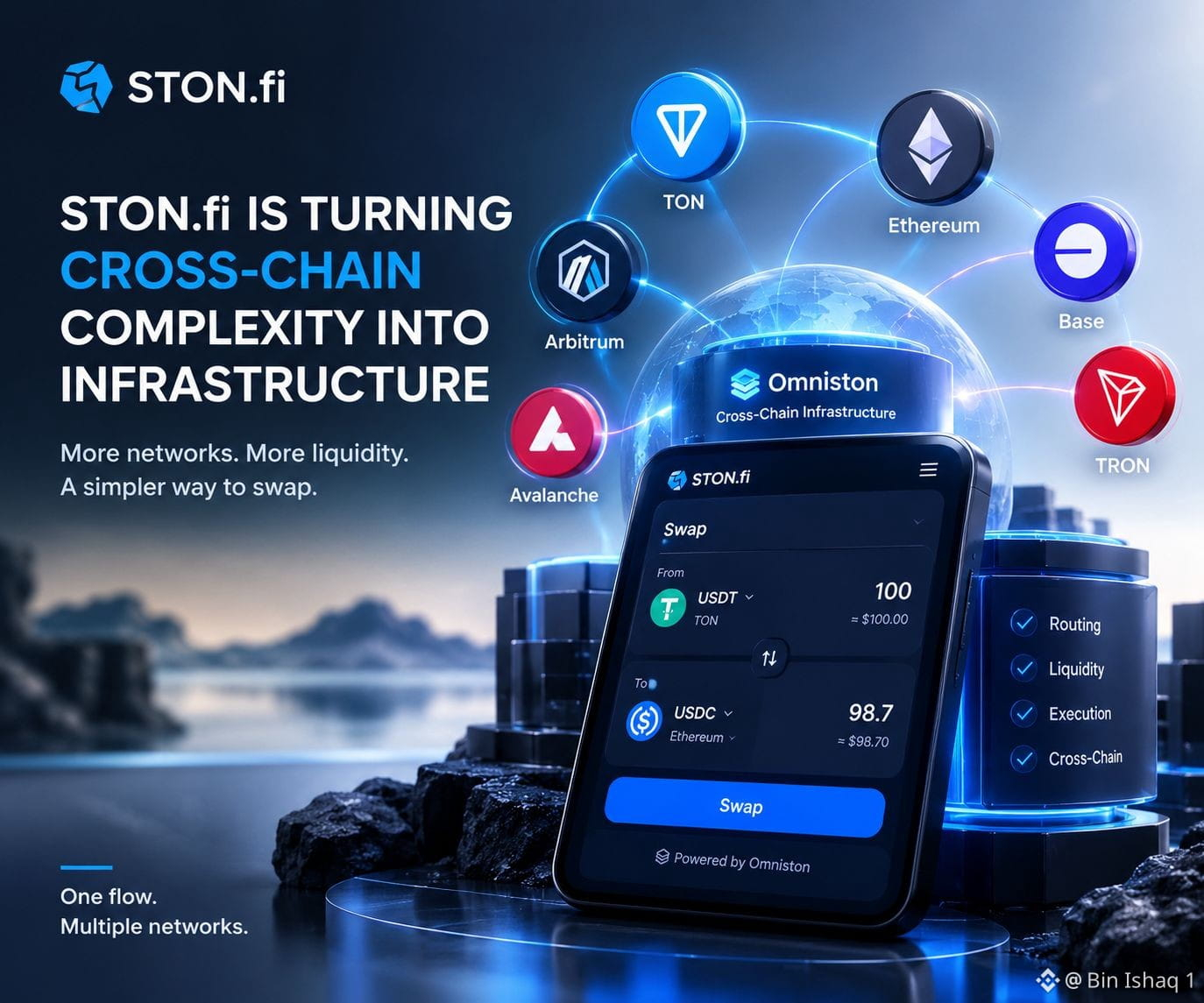
40
·
--
Stonfi Wenn Staking zur Stimme wird STONfi Governance geht über das bloße Halten eines Tokens hinaus. Nutzer, die STON staken, erhalten ARKENSTON, das ihre Stimmkraft im DAO repräsentiert. Diese Stimmkraft kann genutzt werden, um an Vorschlägen teilzunehmen, Änderungen zu diskutieren und über Entscheidungen abzustimmen, die die Entwicklung, Belohnungen, Integrationen und Prioritäten des Protokolls prägen können. Der Prozess ist so gestaltet, dass er vollständig On-Chain abläuft. Vorschläge durchlaufen vor der Abstimmung eine Diskussionsphase, während die Ergebnisse öffentlich dokumentiert werden und genehmigte Vorschläge in Richtung Umsetzung voranschreiten können. Was daran besonders interessant ist, ist die Verbindung zwischen Staking und Governance. Dein STON liegt nicht nur in einer Wallet; es zu staken kann dir eine Rolle dabei geben, wie sich das Protokoll weiterentwickelt. Für ein DeFi-Protokoll wird Governance mit wachsendem Ökosystem immer wichtiger. Mehr Integrationen, Liquidität, Builder und Nutzer schaffen mehr Entscheidungen, die einen transparenten Prozess erfordern. Daher ist das STON.fi DAO eine weitere Ebene des Ökosystems: Swaps liefern den Nutzen, Liquidität unterstützt die Märkte, und Governance gibt Stakern eine Stimme dafür, was als Nächstes kommt. $QNT $GRAM
Stonfi Wenn Staking zur Stimme wird STONfi Governance geht über das bloße Halten eines Tokens hinaus. Nutzer, die STON staken, erhalten ARKENSTON, das ihre Stimmkraft im DAO repräsentiert. Diese Stimmkraft kann genutzt werden, um an Vorschlägen teilzunehmen, Änderungen zu diskutieren und über Entscheidungen abzustimmen, die die Entwicklung, Belohnungen, Integrationen und Prioritäten des Protokolls prägen können. Der Prozess ist so gestaltet, dass er vollständig On-Chain abläuft. Vorschläge durchlaufen vor der Abstimmung eine Diskussionsphase, während die Ergebnisse öffentlich dokumentiert werden und genehmigte Vorschläge in Richtung Umsetzung voranschreiten können. Was daran besonders interessant ist, ist die Verbindung zwischen Staking und Governance. Dein STON liegt nicht nur in einer Wallet; es zu staken kann dir eine Rolle dabei geben, wie sich das Protokoll weiterentwickelt. Für ein DeFi-Protokoll wird Governance mit wachsendem Ökosystem immer wichtiger. Mehr Integrationen, Liquidität, Builder und Nutzer schaffen mehr Entscheidungen, die einen transparenten Prozess erfordern. Daher ist das STON.fi DAO eine weitere Ebene des Ökosystems: Swaps liefern den Nutzen, Liquidität unterstützt die Märkte, und Governance gibt Stakern eine Stimme dafür, was als Nächstes kommt. $QNT $GRAM
34
·
--
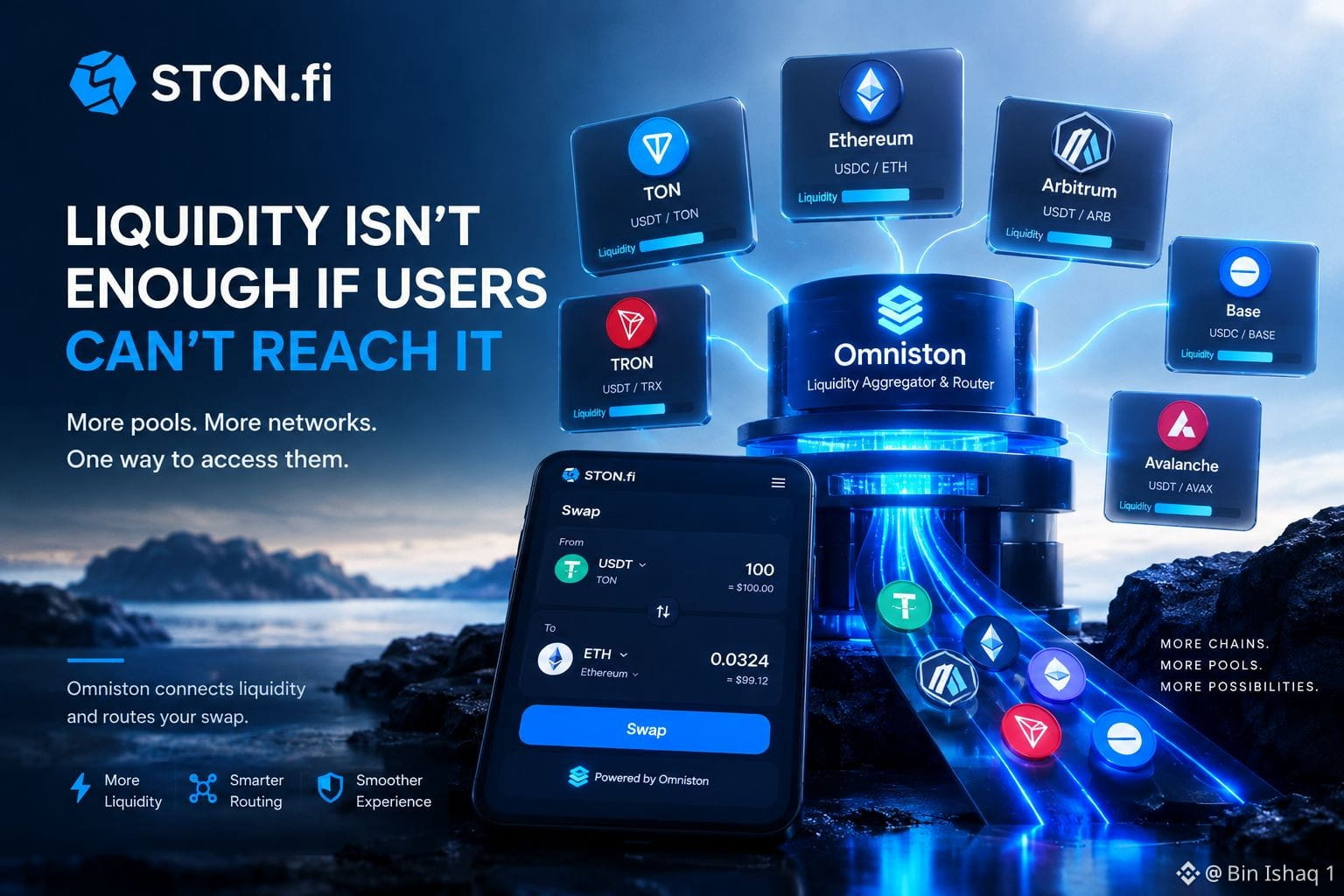
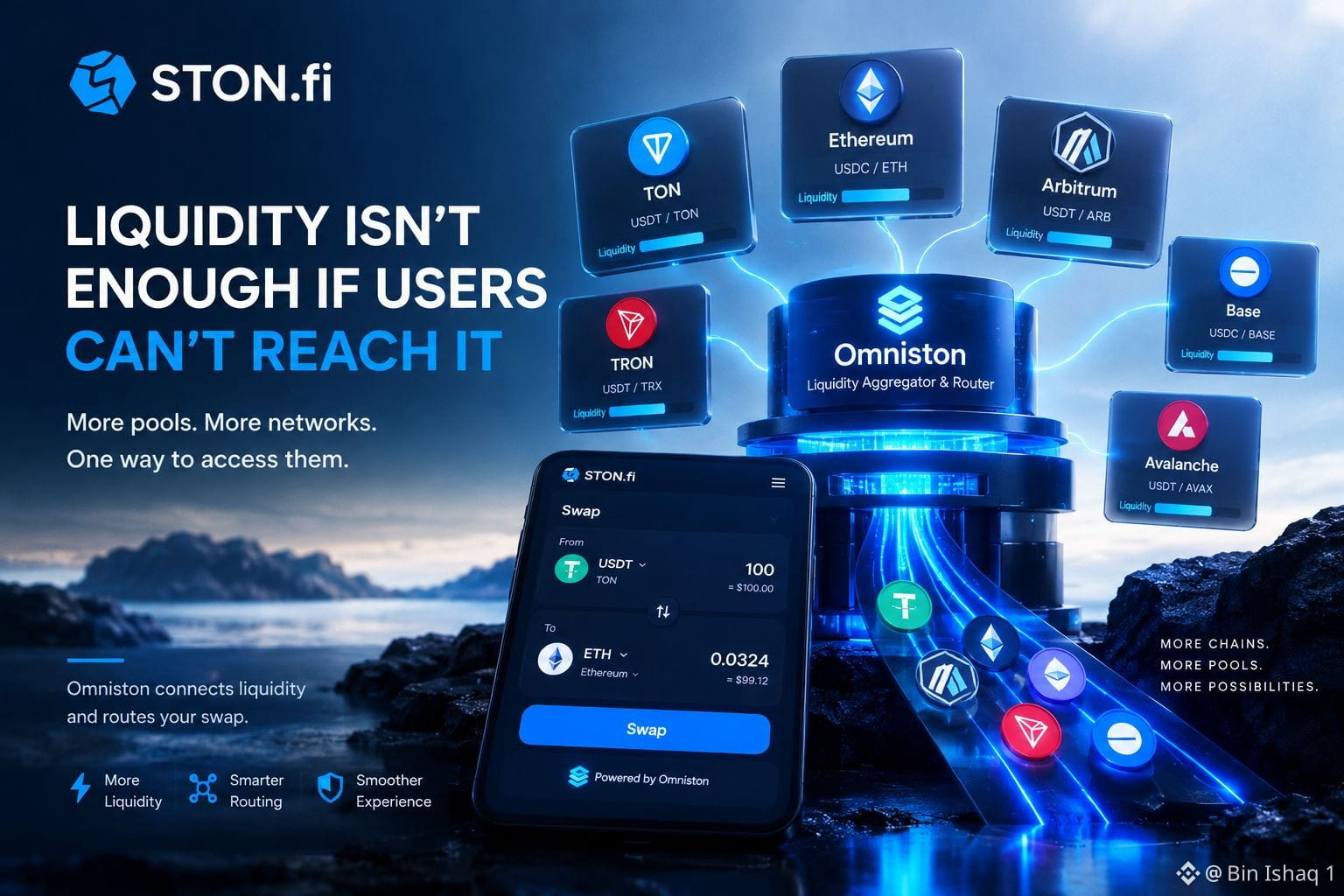
FLÜSSIGKEIT IST NICHT GENUG, WENN NUTZER SIE NICHT ERREICHEN KÖNNEN Ein DeFi-Protokoll kann Liquidität über mehrere Pools hinweg bereitstellen, aber das bedeutet nicht automatisch, dass diese Liquidität für alle nützlich ist. Die Herausforderung ist der Zugang. Nutzer sollten nicht jedes Mal verschiedene Pools vergleichen, Netzwerke wechseln, nach Routen suchen und herausfinden müssen, wo bei jedem Tausch die beste Ausführung herkommen könnte. STON.fi geht das über Infrastruktur an, die Liquidität und Swap-Routen über die verfügbaren Märkte hinweg miteinander verbindet. Omniston arbeitet unterhalb der Oberfläche, sodass Anwendungen Nutzern Zugang zu mehr Liquidität geben können, ohne die gesamte Komplexität dahinter offenlegen zu müssen. Das schafft eine wichtige Unterscheidung: Liquidität ist die Ressource, aber das Routing ist das, was die Ressource zugänglich macht. Wenn mehr Wallets, Telegram-Apps und DeFi-Produkte diese Infrastruktur integrieren, kann Liquidität leichter erreichbar werden, ohne dass jede Anwendung ihr eigenes Routingsystem bauen muss. Für DeFi bedeutet das: Die nächste Wettbewerbsstufe könnte sich nicht nur darum drehen, wer mehr Liquidität hat, sondern auch darum, wie effizient diese Liquidität zugänglich gemacht werden kann. $XRP $BANK
FLÜSSIGKEIT IST NICHT GENUG, WENN NUTZER SIE NICHT ERREICHEN KÖNNEN Ein DeFi-Protokoll kann Liquidität über mehrere Pools hinweg bereitstellen, aber das bedeutet nicht automatisch, dass diese Liquidität für alle nützlich ist. Die Herausforderung ist der Zugang. Nutzer sollten nicht jedes Mal verschiedene Pools vergleichen, Netzwerke wechseln, nach Routen suchen und herausfinden müssen, wo bei jedem Tausch die beste Ausführung herkommen könnte. STON.fi geht das über Infrastruktur an, die Liquidität und Swap-Routen über die verfügbaren Märkte hinweg miteinander verbindet. Omniston arbeitet unterhalb der Oberfläche, sodass Anwendungen Nutzern Zugang zu mehr Liquidität geben können, ohne die gesamte Komplexität dahinter offenlegen zu müssen. Das schafft eine wichtige Unterscheidung: Liquidität ist die Ressource, aber das Routing ist das, was die Ressource zugänglich macht. Wenn mehr Wallets, Telegram-Apps und DeFi-Produkte diese Infrastruktur integrieren, kann Liquidität leichter erreichbar werden, ohne dass jede Anwendung ihr eigenes Routingsystem bauen muss. Für DeFi bedeutet das: Die nächste Wettbewerbsstufe könnte sich nicht nur darum drehen, wer mehr Liquidität hat, sondern auch darum, wie effizient diese Liquidität zugänglich gemacht werden kann. $XRP $BANK
74
·
--
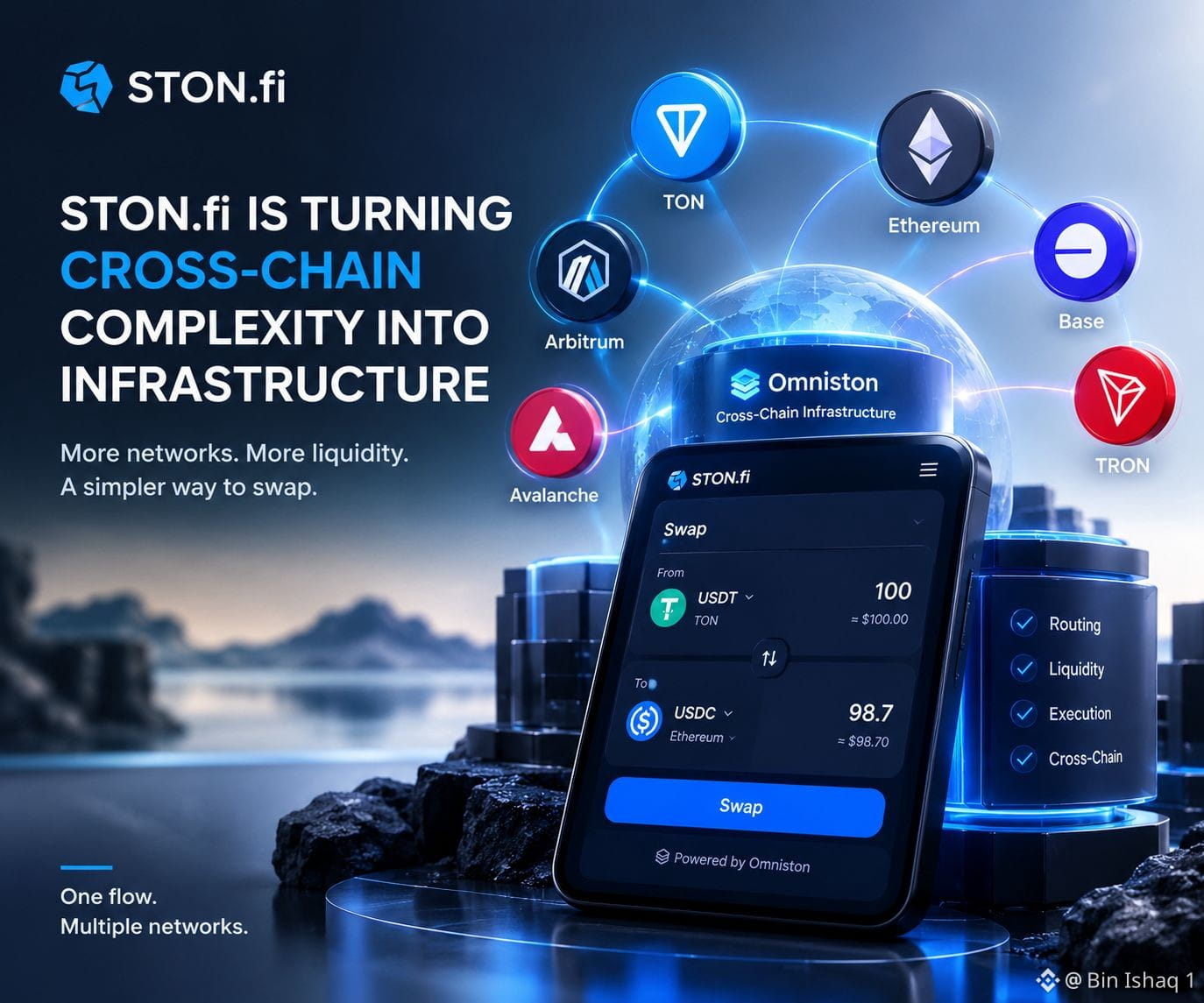
STONfi MACHT CROSS-CHAIN-KOMPLEXITÄT ZU INFRASTRUKTUR Cross-Chain-Swaps werden schwierig, wenn Nutzer jede Komponente der Transaktion selbst verwalten müssen. Unterschiedliche Netzwerke bedeuten unterschiedliche Liquidity-Quellen, Gas-Anforderungen, Wallets und Ausführungswege. Je mehr Chains beteiligt sind, desto mehr Entscheidungen muss der Nutzer treffen. STON.fi ’s Omniston übernimmt einen großen Teil dieser Komplexität hinter dem Swap, verbindet die Liquidität und verwaltet die Route, während die Nutzererfahrung einfacher bleibt. Das bewirkt einen wichtigen Wandel darin, wie Cross-Chain-Infrastruktur funktionieren kann. Ziel ist nicht, dass Nutzer mehr über Infrastruktur verstehen müssen. Ziel ist, dass bessere Infrastruktur weniger Aufmerksamkeit von ihnen erfordert. Für DeFi-Anwendungen schafft das außerdem eine nützliche Integrationsschicht. Wallets, Telegram-Apps und andere Produkte können auf Cross-Chain-Funktionen zugreifen, ohne jede Route unabhängig selbst entwickeln zu müssen. Da die Liquidität zunehmend über Ökosysteme hinweg fragmentiert, könnte die Infrastruktur, die diese Liquiditätspools verbindet, genauso wichtig werden wie die Pools selbst. $ONDO $LINK
STONfi MACHT CROSS-CHAIN-KOMPLEXITÄT ZU INFRASTRUKTUR Cross-Chain-Swaps werden schwierig, wenn Nutzer jede Komponente der Transaktion selbst verwalten müssen. Unterschiedliche Netzwerke bedeuten unterschiedliche Liquidity-Quellen, Gas-Anforderungen, Wallets und Ausführungswege. Je mehr Chains beteiligt sind, desto mehr Entscheidungen muss der Nutzer treffen. STON.fi ’s Omniston übernimmt einen großen Teil dieser Komplexität hinter dem Swap, verbindet die Liquidität und verwaltet die Route, während die Nutzererfahrung einfacher bleibt. Das bewirkt einen wichtigen Wandel darin, wie Cross-Chain-Infrastruktur funktionieren kann. Ziel ist nicht, dass Nutzer mehr über Infrastruktur verstehen müssen. Ziel ist, dass bessere Infrastruktur weniger Aufmerksamkeit von ihnen erfordert. Für DeFi-Anwendungen schafft das außerdem eine nützliche Integrationsschicht. Wallets, Telegram-Apps und andere Produkte können auf Cross-Chain-Funktionen zugreifen, ohne jede Route unabhängig selbst entwickeln zu müssen. Da die Liquidität zunehmend über Ökosysteme hinweg fragmentiert, könnte die Infrastruktur, die diese Liquiditätspools verbindet, genauso wichtig werden wie die Pools selbst. $ONDO $LINK
68
·
--
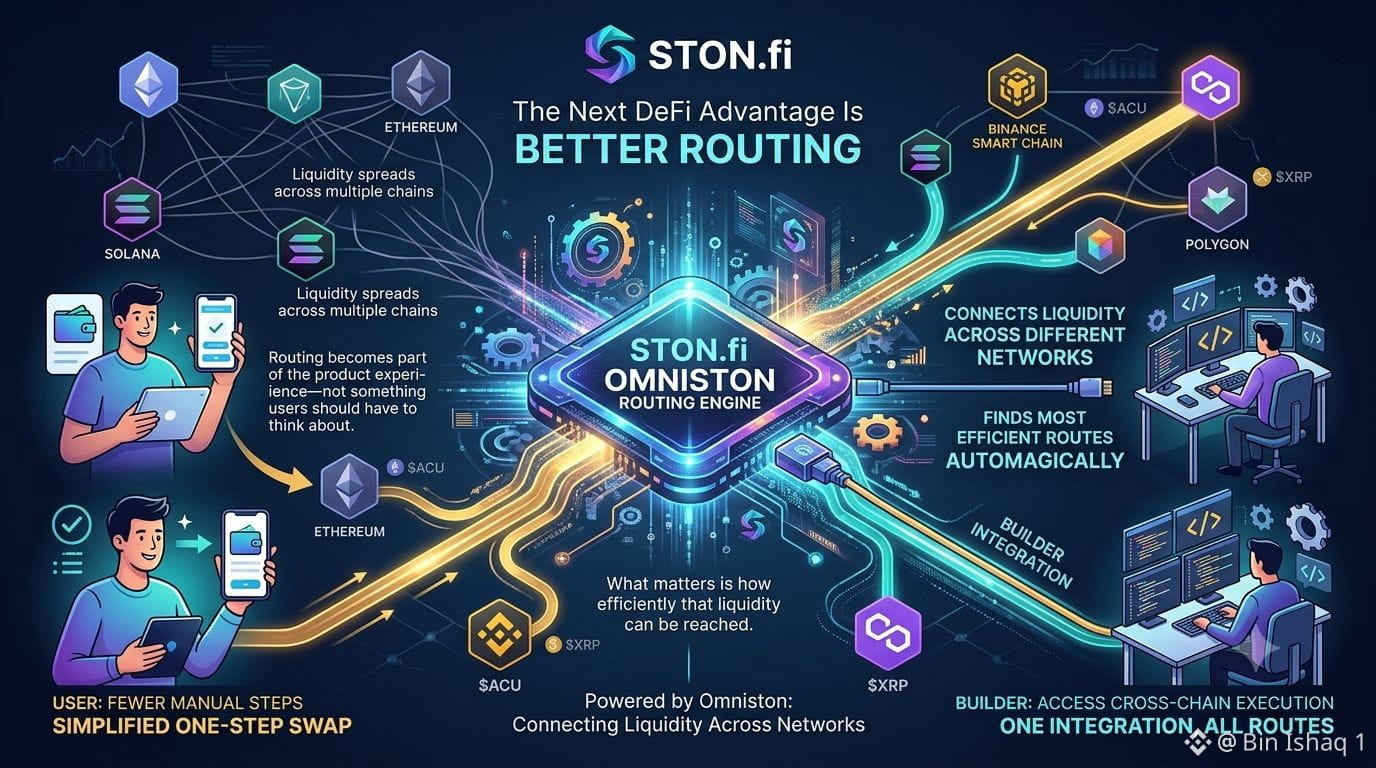
Der nächste DeFi-Vorteil ist besseres Routing Liquidität allein garantiert keinen besseren Swap. Entscheidend ist, wie effizient auf diese Liquidität zugegriffen werden kann. Omniston von STON.fi geht dieses Problem an, indem es Liquidität über verschiedene Netzwerke hinweg verbindet und Routen findet, über die ein Cross-Chain-Swap ausgeführt werden kann, ohne dass Nutzer jeden Schritt selbst verwalten müssen. Dadurch verändert sich die Rolle einer DEX. Statt nur mit der Liquidität innerhalb eines einzelnen Ökosystems zu konkurrieren, kann die Infrastruktur zum Zugangstor für Liquidität werden, die sich über mehrere Chains verteilt. Für Nutzer ist der Unterschied einfach: weniger manuelle Schritte. Für Entwickler bedeutet es Zugriff auf die Cross-Chain-Ausführung, ohne jede Route selbst entwickeln und warten zu müssen. Je mehr Netzwerke und Anwendungen miteinander verbunden werden, desto mehr wird Routing zu einem Teil des Produkterlebnisses – und zu etwas, worüber Nutzer nicht nachdenken müssen sollten. $ACU $XRP
Der nächste DeFi-Vorteil ist besseres Routing Liquidität allein garantiert keinen besseren Swap. Entscheidend ist, wie effizient auf diese Liquidität zugegriffen werden kann. Omniston von STON.fi geht dieses Problem an, indem es Liquidität über verschiedene Netzwerke hinweg verbindet und Routen findet, über die ein Cross-Chain-Swap ausgeführt werden kann, ohne dass Nutzer jeden Schritt selbst verwalten müssen. Dadurch verändert sich die Rolle einer DEX. Statt nur mit der Liquidität innerhalb eines einzelnen Ökosystems zu konkurrieren, kann die Infrastruktur zum Zugangstor für Liquidität werden, die sich über mehrere Chains verteilt. Für Nutzer ist der Unterschied einfach: weniger manuelle Schritte. Für Entwickler bedeutet es Zugriff auf die Cross-Chain-Ausführung, ohne jede Route selbst entwickeln und warten zu müssen. Je mehr Netzwerke und Anwendungen miteinander verbunden werden, desto mehr wird Routing zu einem Teil des Produkterlebnisses – und zu etwas, worüber Nutzer nicht nachdenken müssen sollten. $ACU $XRP
61
Anmelden und weiter Inhalte entdecken
Krypto-Nutzer weltweit auf Binance Square kennenlernen
⚡️ Bleib in Sachen Krypto stets am Puls.
💬 Die weltgrößte Kryptobörse vertraut darauf.
👍 Erhalte verlässliche Einblicke von verifizierten Creators.
E-Mail-Adresse/Telefonnummer
Trendthemen
BinancePick
3.1M Aufrufe
153,869 Kommentare
Mach bei #Gewinnsaison mit: Prognostiziere Unternehmensergebnisse auf Binance Pick und teile deine Meinung auf Binance Square!
Binance Square Official
·413 Likes
·343.5k Aufrufe
EarningsSeason
5.3M Aufrufe
26,085 Kommentare
AnthropicTTMRevenueGrewAbout1200%
36,565 Aufrufe
448 Kommentare