Binance data shows how leveraged trading affects Bitcoin prices despite strong spot market demand, revealing the real drivers behind recent price declines. The recent drop in Bitcoin prices, despite significant buying activity in the spot market, has caused confusion among investors. New trading data from Binance Reports helps explain why $BTC value continues to slide. The Report highlights the growing impact of leveraged trading, which has become the dominant force in price discovery, often overshadowing the influence of spot buyers. The Role of Leverage and Derivatives in Bitcoin’s Price Movement Bitcoin has a fixed supply of 21 million coins, making it a scarce asset. However, in practice, the market often trades exposure equivalent to far more than 21 million coins. This excess exposure is primarily driven by derivatives such as perpetual futures, which allow traders to control large positions using relatively small amounts of capital. As a result, derivatives markets can be significantly larger and more liquid than the spot market, where actual Bitcoin changes hands. According to Binance data, the perpetual-to-spot volume ratio has remained consistently high. On February 3, this ratio reached 7.87, with perpetual futures volume hitting $23.51 billion compared to just $2.99 billion in spot trading volume. Even as Bitcoin’s price declined from $75,770 to $69,700, derivatives markets accounted for the majority of trading activity. This highlights a paradox in which Bitcoin, despite its limited supply, behaves like an asset with effectively unlimited market exposure. The key driver behind these price movements is the speed and flexibility of derivatives trading. Unlike the spot market—where Bitcoin must actually be transferred—derivatives allow traders to rapidly adjust exposure without any physical movement of the asset. Leveraged positions can be opened or closed quickly, leading to sharp price swings that affect both short-term traders and long-term holders. Spot Buyers vs. Leveraged Traders: Who Controls Bitcoin’s Price? Spot buyers play an important role in sustaining long-term demand for Bitcoin. However, Binance data suggests that the spot market’s influence on price is often weaker than that of leveraged derivatives trading. For example, on January 31, the futures market experienced a significant liquidity increase of $297.75 million, while the spot market’s liquidity delta was considerably smaller. Even when spot buying pressure increased—such as on February 5, when the spot liquidity delta reached $36.66 million—Bitcoin’s price continued to decline. This indicates that the marginal trade setting the next price was driven more by futures activity than by spot transactions. The expansion of perpetual futures trading, which enables traders to take leveraged long or short positions, has reduced the spot market’s role as the primary driver of price action. Instead, Bitcoin’s short-term price movements are increasingly dictated by the rapid rebalancing of leveraged positions, including liquidations, hedging activity, and changes in risk exposure. The Influence of Bitcoin ETFs on Market Movements Bitcoin exchange-traded funds (ETFs) have also influenced market dynamics, though not always in the way many investors expect. Binance data shows that ETF inflows and outflows over recent weeks have not consistently correlated with Bitcoin’s price movements. For instance, on February 2, Bitcoin ETFs recorded net inflows of $561.8 million, yet Bitcoin’s price still declined afterward. This is partly because ETF flows are processed through authorized participants and do not always result in immediate buying or selling of Bitcoin in the spot market. In many cases, ETF share creation and redemption occur in cash rather than through direct Bitcoin transactions. While SEC-approved in-kind creation and redemption mechanisms do allow authorized participants to transact directly in Bitcoin, ETF activity still operates alongside—and often beneath—the influence of the much larger derivatives markets when it comes to short-term price action. The Effect of Exchange Reserves on Bitcoin Liquidity Another key factor in understanding Bitcoin’s price behavior is the level of exchange reserves. Between January 15 and February 5, Bitcoin held on exchanges increased by 29,048 BTC, or approximately 1.07%. At first glance, this could suggest increased selling pressure, as more Bitcoin becomes available on trading platforms. However, exchange reserves only serve as a proxy for Bitcoin’s tradable supply. Not all Bitcoin held on exchanges is immediately available for sale. Moreover, even when spot supply increases, leveraged activity in derivatives markets can still dominate price movements. As Binance data indicates, growth in exchange reserves does not necessarily translate into higher spot prices. This reinforces the complexity of Bitcoin’s market structure, where scarcity alone does not guarantee price stability. In today’s market, the speed and scale of leveraged derivatives trading frequently outweigh the impact of spot market demand, leading to continued price declines even amid strong buying interest.
Bitcoin slips below $70,000 after erasing post-election gains during 'sell at any price' rout
Bitcoin has recovered from a low near $60,000 to now stand around $69,000, having effectively given back the gains it made after Donald Trump’s election in November 2024 this week. The cryptocurrency’s drop was accompanied by a broader market sell-off that saw the CoinDesk 20 (CD20) index lose more than 17% of its value in a week. While bitcoin dropped around 16.5% in the last 7-day period, other cryptocurrencies fared worse. Ether lost 22.4% of its value, BNB dropped 23.4%, and solana 25.2%. Shares of crypto-linked firms registered significant declines despite a Friday rebound, as the price of $BTC briefly retook $70,000. The move followed a violent drop a day earlier that Wintermute described as the worst single-day drawdown in bitcoin since the FTX collapse. The sell-off was driven by market-wide liquidations and what “felt like a ‘sell at any price’ working order,” said Jasper De Maere, desk strategist and OTC trader at Wintermute in an emailed statement. De Maere said institutional desks reported “small but manageable liquidation,” which did not fully explain the size of the move, fueling debate over where the stress sat in the system. De Maere added that the cascade came alongside a wider cross-asset deleveraging. The Nasdaq 100 tracker QQQ fell about 500 basis points over three sessions, while silver and gold dropped roughly 38% and 12% below their cycle highs, respectively. In crypto options, implied volatility jumped into the 99th percentile, with skew tilting toward unusually expensive puts, he said. De Maere flagged ether as the “epicenter of the pain,” saying many traders rushed to buy protection against further losses using put options, which can pay out if prices fall and give the holder the right to sell at a set price. In bitcoin, he said positioning pointed to expectations of continued turbulence, with traders focused on a wide range that could run from about $55,000 to $75,000. Further hitting sentiment, this week crypto exchange Gemini said it plans to shutter operations in the U.K., European Union and Australia, and cut about 25% of staff as part of a restructuring.The firm will enter withdrawal-only mode for users in affected regions and partner with brokerage platform eToro for users to transfer their assets. Meanwhile, Bitfarms (BITF) saw its shares rise after ditching its “bitcoin company” identity to instead focus on artificial intelligence (AI) infrastructure. Market structure has added to the turbulence. Bitcoin’s average 1% market depth, a measure of how much can be traded near the current price without moving the market, has fallen to around $5 million from more than $8 million in 2025, Kaiko research analyst Thomas Probst told Reuters. Lower depth can make price moves more abrupt. Flows in spot bitcoin ETFs have also turned negative. Data from SoSoValue shows about $1.25 billion of net outflows over the past three days. Jim Bianco of Bianco Research estimated on social media that the average ETF cost basis is near $90,000, leaving holders with about $15 billion in unrealized losses. “It has been said that crypto is 'programmable money.' If so, $BTC should trade like a software stock,” Bianco said in an X post, adding that the recent decline shows it is trading alongside software stocks. Software stocks tumbled this week after Anthropic released a new automation tool for its AI models targeting legal and other knowledge-focused workflows. Shares of Salesforce (CRM), Adobe (ADBE), and ServiceNow (NOW) lost 8%, 9%, and 13% respectively over the week, to name a few. BTIG chief market technician Jonathan Krinsky also said bitcoin has been correlated with software stocks lately. “There’s some pretty compelling evidence both of those [bitcoin and software stocks] have put in tactical lows,” Krinsky said during an interview with CNBC. “[Bitcoin] bottomed last night right around $60,000 so I think that’s a pretty good level to trade against.” “On the upside you really need to see it back above $73,000, that was the key breakdown level, that would kind of confirm a tradable low is certainly in,” he added. The Trump administration has maintained a pro-crypto stance, which helped the price of bitcoin hit a new all-time high above $125,000 last year, before a correction kicked in.
Why All Investors of Stocks, Forex and Crypto keep there Eyes on US FED rates Decisions and Remarks?
Financial markets around the world are deeply interconnected, and at the center of this system stands the US Federal Reserve. Regardless of the asset class—stocks, foreign exchange, commodities, or cryptocurrencies—investors closely monitor Federal Reserve interest rate decisions and policy statements. These decisions influence global liquidity conditions, capital flows, and risk sentiment, making them a primary driver of market direction.
The Role of the US Federal Reserve and FOMC The US Federal Reserve serves as the central bank of the United States, while the Federal Open Market Committee (FOMC) is responsible for setting monetary policy, including interest rates. Through its decisions and forward guidance, the Fed determines whether financial conditions will tighten or ease. Because the US dollar functions as the world’s reserve currency, Fed policy has consequences far beyond the US economy, affecting global markets at scale.
Why Interest Rates Matter to Financial Markets Interest rates represent the cost of money. When rates are low, borrowing is cheaper, liquidity expands, and investors are more willing to allocate capital toward growth and risk-oriented assets. Conversely, higher interest rates increase financing costs, restrict liquidity, and encourage capital preservation. This dynamic explains why changes in Fed policy often trigger broad market movements across multiple asset classes.
Impact on Equity Markets Stock market valuations are highly sensitive to interest rate changes. Rising rates increase corporate borrowing costs and reduce the present value of future earnings, which often leads to downward pressure on equity prices. Sectors reliant on growth and leverage tend to be the most affected. When the Fed signals a pause or a shift toward rate cuts, equity markets typically respond positively, reflecting improved financial conditions and renewed risk appetite.
Influence on Forex Markets Foreign exchange markets respond directly and immediately to Fed policy. Interest rate differentials between economies drive currency valuations. A rate hike by the Fed often strengthens the US dollar as global capital seeks higher yields, while rate cuts typically weaken the dollar and shift flows toward other currencies. Fed remarks and guidance are therefore critical for forex traders, as even subtle changes in tone can alter currency trends.
Effect on Bitcoin and the Crypto Market Although cryptocurrencies operate outside traditional financial systems, they remain strongly influenced by macroeconomic conditions. Bitcoin and the broader crypto market are highly sensitive to liquidity cycles. Periods of monetary tightening usually result in reduced speculative activity and capital outflows from crypto assets. In contrast, rate pauses or cuts often support stronger performance as liquidity returns and investors seek alternative stores of value and higher-risk opportunities.
Relationship Between Fed Policy and Gold Gold has historically served as a hedge against inflation and currency debasement. Fed policy plays a key role in shaping gold’s performance, particularly through its impact on real interest rates and the US dollar. Dovish policy signals and rate cuts generally support gold prices, while aggressive rate hikes can create short-term pressure. However, during periods of economic uncertainty, gold often remains resilient despite tighter policy conditions.
The Importance of Fed Communication and Market Expectations Markets are forward-looking and frequently react more to expectations than to actual rate decisions. Fed statements, press conferences, and economic projections provide guidance on future policy direction. Investors analyze this communication closely, as shifts in tone or outlook can significantly influence market sentiment and pricing.
Conclusion US Federal Reserve rate decisions and remarks are among the most influential factors shaping global financial markets. By determining the cost of capital and the availability of liquidity, the Fed impacts stocks, forex, cryptocurrencies, and gold simultaneously. For professional traders and investors, understanding Fed policy is essential for interpreting market behavior, managing risk, and positioning effectively across asset classes.
Vergessen Sie einen jährlichen Höchststand für Bitcoin, der BTC-Preis könnte einen 16-jährigen zyklischen Höhepunkt erreicht haben
Der Krypto-Experte Tony Severino hat geäußert, dass Bitcoin nicht nur Anzeichen eines jährlichen Höchststands zeigt, sondern dass der BTC-Preis möglicherweise einen 16-jährigen zyklischen Höhepunkt erreicht hat. Dies geschieht vor dem Hintergrund des jüngsten Rückgangs des Flaggschiff-Kryptos auf 60.000 $, der Ängste vor einem Bärenmarkt ausgelöst hat. Bitcoin zeigt möglicherweise Anzeichen eines Höhepunkts angesichts des BTC-Preisverfalls auf 60.000 $ In einem X-Beitrag deutete Severino auf das jährliche Bitcoin-Diagramm hin, das seiner Meinung nach eher wie ein 16-jähriger zyklischer Höhepunkt aussieht als nur wie ein jährlicher Höchststand. Der Experte skizzierte auch mehrere Gründe, warum dies als ein bedeutender zyklischer Höhepunkt für den BTC-Preis erscheint. Zuerst bemerkte er, dass die weißen Kerzen im Laufe der Zeit an Größe abgenommen haben, während schwarze Kerzen mit jedem Auftreten mehr weiße Kerzen umhüllen.
US gewährt nationale Lizenz an krypto-freundliche Erebor Bank
Die Vereinigten Staaten haben ihre erste neu gegründete Nationalbank unter Präsident Donald Trumps zweiter Amtszeit genehmigt und der krypto-freundlichen Startup Erebor Bank eine bundesstaatliche Lizenz erteilt. Die Genehmigung stellt eine bemerkenswerte Entwicklung für den US-Bankensektor dar, insbesondere da er versucht, Lücken zu schließen, die durch die jüngsten Umwälzungen in der Finanzbranche entstanden sind. Laut mit der Materie vertrauten Personen hat das Amt des Währungsprüfers (OCC) die Genehmigung am Freitag bestätigt und Erebor Bank erlaubt, landesweit zu operieren. Der Schritt macht Erebor zur ersten neuen Nationalbank, die während der aktuellen Trump-Administration eine Lizenz erhält, was auf eine potenziell aufgeschlossenere Haltung gegenüber finanzieller Innovation, einschließlich krypto-bezogener Dienstleistungen, hindeutet.
Gold's 'sicherer Hafen', der wie eine Meme-Aktie gehandelt wird
Der Aktienmarkt hatte diese Woche eine große Achterbahnfahrt, wobei der S\u0026P 500 (^GSPC) um 2,6% fiel, bevor er am Freitag Gewinne zurückeroberte. Sowohl Bitcoin (\u003cc-40/\u003e) als auch Gold (\u003cc-42/\u003e), die modernen und traditionellen "Wertspeicher", hatten sogar noch wildere Fahrten und fielen um etwa 20% bzw. 7%. Beide, wie Aktien, haben einen Teil ihrer Gewinne zurückbekommen. Diese großen Zahlen, insbesondere für Gold, heben eine Wahrheit hervor, mit der Anleger lernen umzugehen: Wertspeicher sind einfach nicht mehr das, was sie einmal waren. Besonders für Gold, einen jahrtausendealten Wertspeicher, dessen klassische Rolle durch Volatilität auf den Kopf gestellt wird.
Zusammenfassung des Kryptomarktes. 07/02/2026. Alt-Saisonanzeige und Top-Performer.
Die gesamte Marktkapitalisierung des Kryptomarktes ist heute auf $2.55T gestiegen, durch den Zufluss von $189B Dollar, zum ersten Mal fiel die Marktkapitalisierung des Kryptomarktes unter $2.55T seit 2023 und bildete ein Tief von den letzten 2 Jahren.
Der Angst- und Gier-Index des Kryptomarktes bleibt bei extremer Angst bei 8, selbst nach der starken Preisrückerholung auf $71,600, was darauf hindeutet, dass die Investoren weiterhin vorsichtig sind, wenn es um Investitionen in Krypto geht.
Alt-Saisonindex: Der Bitcoin- und Altcoin-Saisonindex begünstigt weiterhin Bitcoin, was darauf hindeutet, dass das Geld weiterhin in BTC fließt, was den Bitcoin-Index begünstigt. Das letzte Mal, dass die Alt-Saison im September 2025 am höchsten war.
Trump setzt Prozess für Iran-Zölle fest, wendet sie jedoch nicht an
Laut dem BloomBerg-Newsletter "Präsident Donald Trump ermöglichte seiner Verwaltung, Zölle auf Waren aus Ländern zu erheben, die Geschäfte mit dem Iran tätigen, hielt jedoch damit inne, sofort neue Abgaben zu erheben. Eine Exekutive, die Trump am Freitag unterzeichnete, besagte, dass die Abgabe "auf Waren erhoben werden kann, die in die Vereinigten Staaten importiert werden und Produkte eines Landes sind, das direkt oder indirekt Waren oder Dienstleistungen aus dem Iran kauft, importiert oder anderweitig erwirbt." Trump drohte erstmals Mitte Januar in den sozialen Medien mit der Abgabe und sagte, sie würde sofort wirksam. Aber es wurde nie ein Papier herausgegeben, das die Politik bis Freitag kodifiziert. Die Maßnahme hat das Potenzial, wichtige Handelsbeziehungen der USA weltweit zu stören, einschließlich mit Ländern wie Indien, der Türkei und China.
Die stille Revolution: Wie Banken zu den neuen Krypto-Vermögensverwaltern werden
Seit Jahrzehnten sind Banken das Rückgrat der Finanzwelt - sie halten unsere Einlagen sicher, bieten Kredite an und halten die Zahlungen in Bewegung. Darüber hinaus sind viele Banken stillschweigend in die Welt der Vermögensverwaltung eingetreten und führen Kunden durch Investitionen in Aktien, Anleihen und ETFs. Heute sehen wir, dass sich genau dieses Modell weiterentwickelt, um Krypto und digitale Vermögenswerte einzuschließen. Banken als indirekte Vermögensverwalter Während Banken per Definition keine "Vermögensverwalter" sind, betreiben globale Riesen wie JPMorgan, Goldman Sachs und HSBC massive Abteilungen für Vermögensverwaltung. Diese Einheiten funktionieren genau wie klassische Investmentfirmen: Sie investieren Kundenfonds, verwalten Risiken und streben Renditen an. Der entscheidende Unterschied? Banken wetten normalerweise nicht mit ihren eigenen Bilanzen; stattdessen bieten sie die Infrastruktur und das Fachwissen, um den Wohlstand ihrer Kunden zu vermehren.
Der Rückgang von Ether unter 2.000 $ reißt ein 686-Millionen-Dollar-Loch in die Bilanz eines großen Handelsunternehmens
Das Unternehmen erlitt in dieser Woche einen massiven Rückschlag, als seine ETH-Long-Position zusammenbrach, was einen geschätzten Verlust von 686 Millionen $ verursachte. Was Sie wissen sollten: Trend Research, ein Handelsunternehmen, das von Liquid Capital-Gründer Jack Yi geleitet wird, hat eine 2-Milliarden-Dollar gehebelte Long-Position in Ether geschaffen, indem es Stablecoins gegen ETH-Sicherheiten geliehen hat. Als der Preis von Ether in dieser Woche auf 1.750 $ fiel, wurde die Loop-ETH-Position des Unternehmens eröffnet, was zu einem geschätzten Verlust von 686 Millionen $ führte. Yi stellte den massiven Verkauf als Risikokontrolle dar und sagte, er bleibe optimistisch in Bezug auf einen „Mega“-Krypto-Bullenmarkt und prognostizierte ETH über 10.000 $ und Bitcoin über 200.000 $, trotz des Rückschlags.
Sie haben dieses Bild vielleicht schon mehrmals gesehen, aber nie genau hingeschaut. Vielleicht ist Ihnen 2026 im unteren Hoch aufgefallen, aber ich bin mir ziemlich sicher, dass Sie nicht bemerkt haben, was dieses Bild sagt. Schauen Sie noch einmal hin. Und danken Sie mir später.
Wenn Sie es nützlich finden, vergessen Sie nicht, es zu liken.
Solana Sol Technische Analyse und Preisprognose für sowohl langfristige als auch kurzfristige Anleger.
Solana ($SOL ) ist seit langem enttäuscht über den kontinuierlichen ernsthaften Preisverfall. Der Preis von SOL ist am Freitag, den 6. Februar, unter 70 $ gefallen. Lass uns herausfinden, was die langfristige und kurzfristige Preisprognose ist. SOL Preisprognose auf 1-Stunden-Zeitrahmen. SOL konsolidiert unter einem schwachen Widerstandspreisniveau von 90 $. Es hat eine kleine Ablehnung vom wichtigen psychologischen Widerstand erfahren und versucht nun erneut, diesen Widerstand zu durchbrechen. Wenn SOL über dieses Widerstandsniveau ausbricht, könnte es den Pump auf 97 $ ausdehnen. Eine weitere Ablehnung von diesem Widerstand kann den Preis von SOL auf 81 $ drücken.
Gold steigt um über 3%, da Käufer bei schwachem USD zuschlagen.
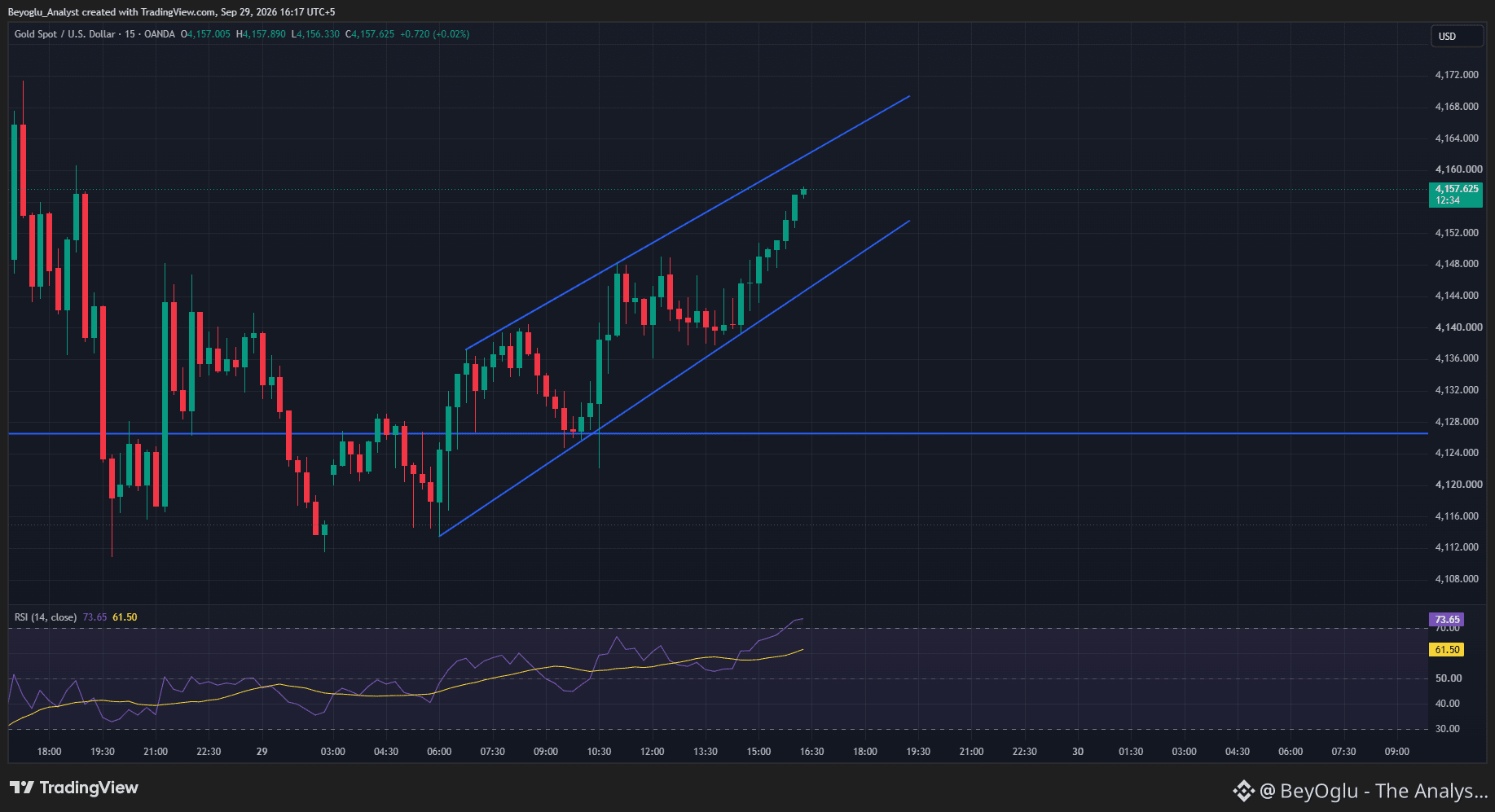
Der Goldpreis ($XAU ) rallyt am Freitag um mehr als 3% und ist auf einem soliden wöchentlichen Gewinnkurs, da Käufer nach einem Handelstag aufgetaucht sind, der das gelbe Metall unter die 4.800 $-Marke drückte. Es ist erwähnenswert, dass der Freitag eine volatile Sitzung war, in der das nicht rentierliche Metall auf ein Drei-Tages-Tief von 4.655 $ fiel, bevor es diese vorherigen Verluste wieder ausglich. Zum Zeitpunkt des Schreibens wird XAU/USD bei 4.950 $ gehandelt.
Fed’s Jefferson: Erwartet, dass die Wirtschaft wächst
Der Gouverneur des Board of Governors der Federal Reserve (Fed), Phillip Jefferson, sagte, dass zukünftige Fed-Maßnahmen durch Daten und Ansichten zur wirtschaftlichen Aussichten bestimmt werden. Er fügte am Freitag hinzu, dass sich der Arbeitsmarkt langsam stabilisiert.
Wichtige Erkenntnisse: "Die aktuelle Geldpolitik der US-Notenbank ist "gut positioniert", um mit dem umzugehen, was wahrscheinlich vor uns liegt.
Zukünftige Fed-Maßnahmen werden durch Daten und Ansichten zur Aussichten bestimmt.
Die Haltung der Fed erlaubt 'Spielraum' für die Angebotsseite der Wirtschaft, sich zu entwickeln.
Er ist 'vorsichtig optimistisch' hinsichtlich der wirtschaftlichen Aussichten.
Der Arbeitsmarkt stabilisiert sich, die Inflation sollte sich moderat verhalten.
Ein starkes Bekenntnis zur Preisstabilität verringert die Inflationsrisiken.
Zölle stellen wahrscheinlich einen einmaligen Wandel im Preisniveau dar.
Es ist möglich, dass eine höhere Produktivität den Inflationsdruck mildern könnte.
Zölle waren der Hauptantrieb der Inflation im Jahr 2025, Preisdruck sollte sich im Jahr 2026 verringern.
Der Preisindex für persönliche Konsumausgaben dürfte im Dezember im Jahresvergleich um 2,9 % steigen.
Er unterstützte die Zinssenkungen des letzten Jahres, die Politik ist ungefähr in neutraler Haltung.
Während Aufwärtsrisiken bestehen bleiben, erwartet er, dass der Inflationsdruck nachlässt.
Der Arbeitsmarkt dürfte im Gleichgewicht mit einer Umgebung niedriger Einstellungen und Entlassungen sein.
Er erwartet, dass die Wirtschaft in diesem Jahr um 2,2 % wächst.
Der Arbeitsmarkt ist aufgrund der gesunkenen Nachfrage und von Einwanderungsproblemen schwächer.
Die folgende Tabelle zeigt die prozentuale Veränderung des US-Dollars (USD) gegenüber den aufgeführten Hauptwährungen heute. Der US-Dollar war der stärkste gegenüber dem japanischen Yen.
$XAG hat den Preisstatus von 75$ nach einem Rückgang auf 64$ am Freitag beim Eröffnen des asiatischen Marktes zurückgefordert.
Um die bullische Dynamik aufrechtzuerhalten, muss XAG den Preis über der wichtigen psychologischen Unterstützung von 70$ halten.
Ein Tagesabschluss über 74$ könnte den Anstieg in Richtung 83$ verlängern. Allerdings kann ein Tagesabschluss unter 70$ den Rückgang in Richtung 60$ verlängern.