

MASAB ⁰⁰⁷-国王
4k Beiträge

MASAB ⁰⁰⁷-国王
 Square Verified+
Melden
Nutzer blockieren
Trader | 🔗 Blockchain Believer | 🌍 Exploring the Future of Finance | Turning Ideas into Assets | Always Learning, Always Growing✨ | x:@masab0077
Trade eröffnen
Regelmäßiger Trader
2.8 Jahre
1.6K+ Following
30.3K+ Follower
9.9K+ Like gegeben
Beiträge
Portfolio
Alle
Zitierungen
Live
·
--
Verifiziert
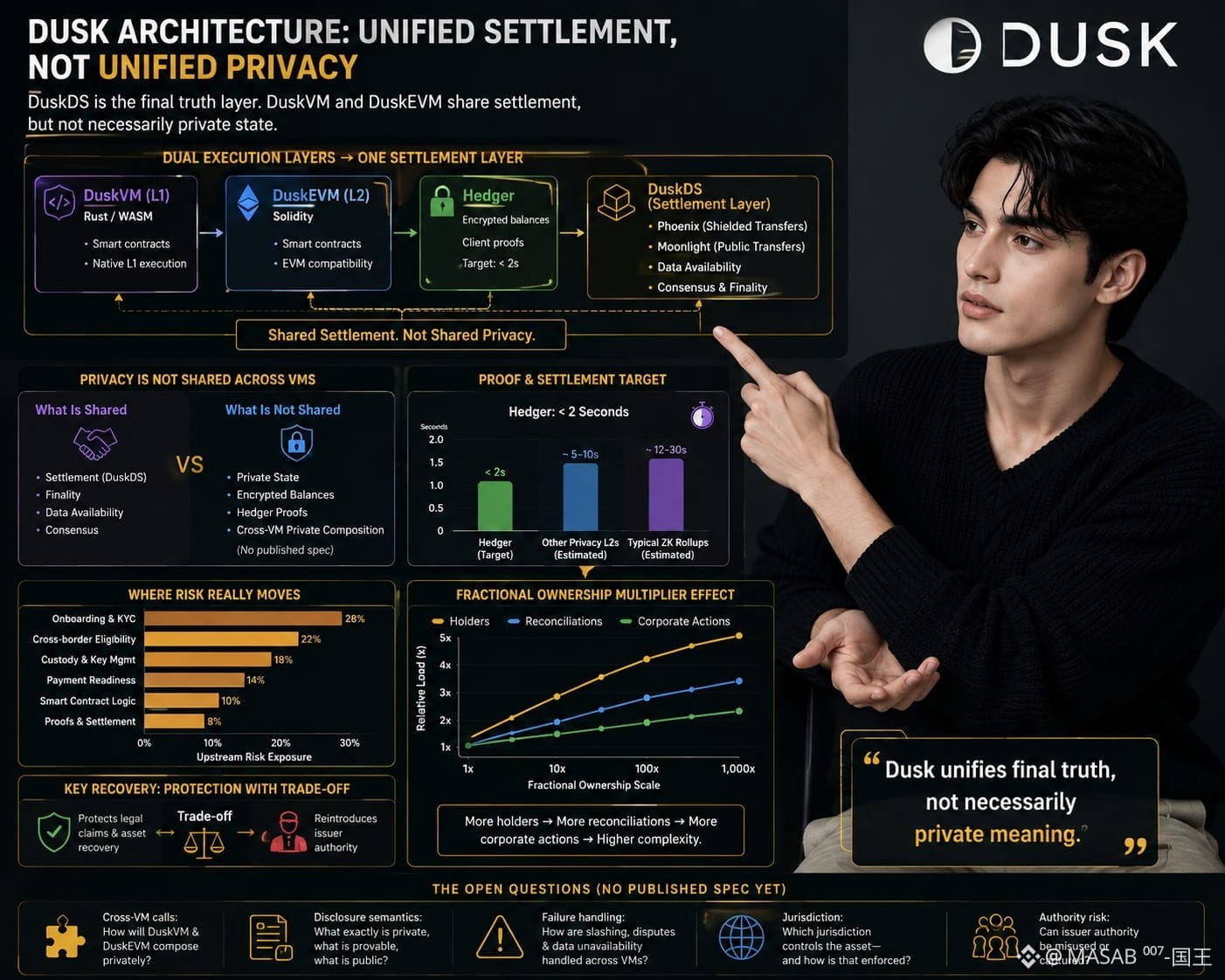
Die Diagramme waren flach, also öffnete ich Dusk’s Architektur-Notizen erneut. Ich sah immer wieder „privacy“, als würden DuskDS, DuskVM und DuskEVM einen einzigen vertraulichen Zustand teilen.
DuskVM läuft mit Rust/WASM auf L1; DuskEVM läuft mit Solidity, wobei Hedger verschlüsselte Salden und Client-Nachweise ergänzt, die auf unter zwei Sekunden ausgelegt sind. Beide werden über DuskDS abgerechnet—Phoenix liefert abgeschirmte Überweisungen, Moonlight öffentliche—zusammen mit Datenverfügbarkeit, Konsens und Finalität. Doch geteilte Abrechnung bedeutet nicht geteilte Privatsphäre: Ich fand keine veröffentlichte Spezifikation, die zeigt, dass ein DuskVM-Vertrag vertraulich einen Hedger-Zustand zusammensetzt.
Dusk vereint die finale Wahrheit, nicht unbedingt die private Bedeutung.
Für RWAs benötigen Institutionen vertrauliche Positionen und nachweisbares Eigentum; das Verbergen eines Retail-Saldos ist nicht das Verbergen eines Geschäfts-Workflows. Schnellere Nachweise und Abrechnung können das Risiko weiter nach oben in Richtung Onboarding, grenzüberschreitende Berechtigung, Verwahrung und Zahlungsbereitschaft verlagern. Entwickler müssen weiterhin Solidity, vertraulichen Zustand und Compliance-Logik zusammenführen.
Bruchteilseigentum vervielfacht Inhaber, Abstimmung und Corporate Actions. Die Wiederherstellungsfunktionen verlorener Schlüssel schützen zwar rechtliche Ansprüche, führen aber erneut die Autorität des Emittenten ein. Kryptografie kann nicht entscheiden, welche Jurisdiktion das Asset kontrolliert—oder ob diese Autorität klug handelt.
Das ist nicht einzigartig für Dusk. Solange Cross-VM-Calls, Offenlegungssemantiken und Fehlerbehandlung nicht dokumentiert sind, überholt „vereinte Privatsphäre“ die veröffentlichte Zusicherung. Die Diagramme bleiben flach; der Ausdruck nicht.
@Dusk_Foundation $DUSK #dusk
{future}(DUSKUSDT)
Die Diagramme waren flach, also öffnete ich Dusk’s Architektur-Notizen erneut. Ich sah immer wieder „privacy“, als würden DuskDS, DuskVM und DuskEVM einen einzigen vertraulichen Zustand teilen.
DuskVM läuft mit Rust/WASM auf L1; DuskEVM läuft mit Solidity, wobei Hedger verschlüsselte Salden und Client-Nachweise ergänzt, die auf unter zwei Sekunden ausgelegt sind. Beide werden über DuskDS abgerechnet—Phoenix liefert abgeschirmte Überweisungen, Moonlight öffentliche—zusammen mit Datenverfügbarkeit, Konsens und Finalität. Doch geteilte Abrechnung bedeutet nicht geteilte Privatsphäre: Ich fand keine veröffentlichte Spezifikation, die zeigt, dass ein DuskVM-Vertrag vertraulich einen Hedger-Zustand zusammensetzt.
Dusk vereint die finale Wahrheit, nicht unbedingt die private Bedeutung.
Für RWAs benötigen Institutionen vertrauliche Positionen und nachweisbares Eigentum; das Verbergen eines Retail-Saldos ist nicht das Verbergen eines Geschäfts-Workflows. Schnellere Nachweise und Abrechnung können das Risiko weiter nach oben in Richtung Onboarding, grenzüberschreitende Berechtigung, Verwahrung und Zahlungsbereitschaft verlagern. Entwickler müssen weiterhin Solidity, vertraulichen Zustand und Compliance-Logik zusammenführen.
Bruchteilseigentum vervielfacht Inhaber, Abstimmung und Corporate Actions. Die Wiederherstellungsfunktionen verlorener Schlüssel schützen zwar rechtliche Ansprüche, führen aber erneut die Autorität des Emittenten ein. Kryptografie kann nicht entscheiden, welche Jurisdiktion das Asset kontrolliert—oder ob diese Autorität klug handelt.
Das ist nicht einzigartig für Dusk. Solange Cross-VM-Calls, Offenlegungssemantiken und Fehlerbehandlung nicht dokumentiert sind, überholt „vereinte Privatsphäre“ die veröffentlichte Zusicherung. Die Diagramme bleiben flach; der Ausdruck nicht.
@Dusk $DUSK #dusk
DuskVM läuft mit Rust/WASM auf L1; DuskEVM läuft mit Solidity, wobei Hedger verschlüsselte Salden und Client-Nachweise ergänzt, die auf unter zwei Sekunden ausgelegt sind. Beide werden über DuskDS abgerechnet—Phoenix liefert abgeschirmte Überweisungen, Moonlight öffentliche—zusammen mit Datenverfügbarkeit, Konsens und Finalität. Doch geteilte Abrechnung bedeutet nicht geteilte Privatsphäre: Ich fand keine veröffentlichte Spezifikation, die zeigt, dass ein DuskVM-Vertrag vertraulich einen Hedger-Zustand zusammensetzt.
Dusk vereint die finale Wahrheit, nicht unbedingt die private Bedeutung.
Für RWAs benötigen Institutionen vertrauliche Positionen und nachweisbares Eigentum; das Verbergen eines Retail-Saldos ist nicht das Verbergen eines Geschäfts-Workflows. Schnellere Nachweise und Abrechnung können das Risiko weiter nach oben in Richtung Onboarding, grenzüberschreitende Berechtigung, Verwahrung und Zahlungsbereitschaft verlagern. Entwickler müssen weiterhin Solidity, vertraulichen Zustand und Compliance-Logik zusammenführen.
Bruchteilseigentum vervielfacht Inhaber, Abstimmung und Corporate Actions. Die Wiederherstellungsfunktionen verlorener Schlüssel schützen zwar rechtliche Ansprüche, führen aber erneut die Autorität des Emittenten ein. Kryptografie kann nicht entscheiden, welche Jurisdiktion das Asset kontrolliert—oder ob diese Autorität klug handelt.
Das ist nicht einzigartig für Dusk. Solange Cross-VM-Calls, Offenlegungssemantiken und Fehlerbehandlung nicht dokumentiert sind, überholt „vereinte Privatsphäre“ die veröffentlichte Zusicherung. Die Diagramme bleiben flach; der Ausdruck nicht.
@Dusk $DUSK #dusk
5
10
30.2k
·
--
Verifiziert
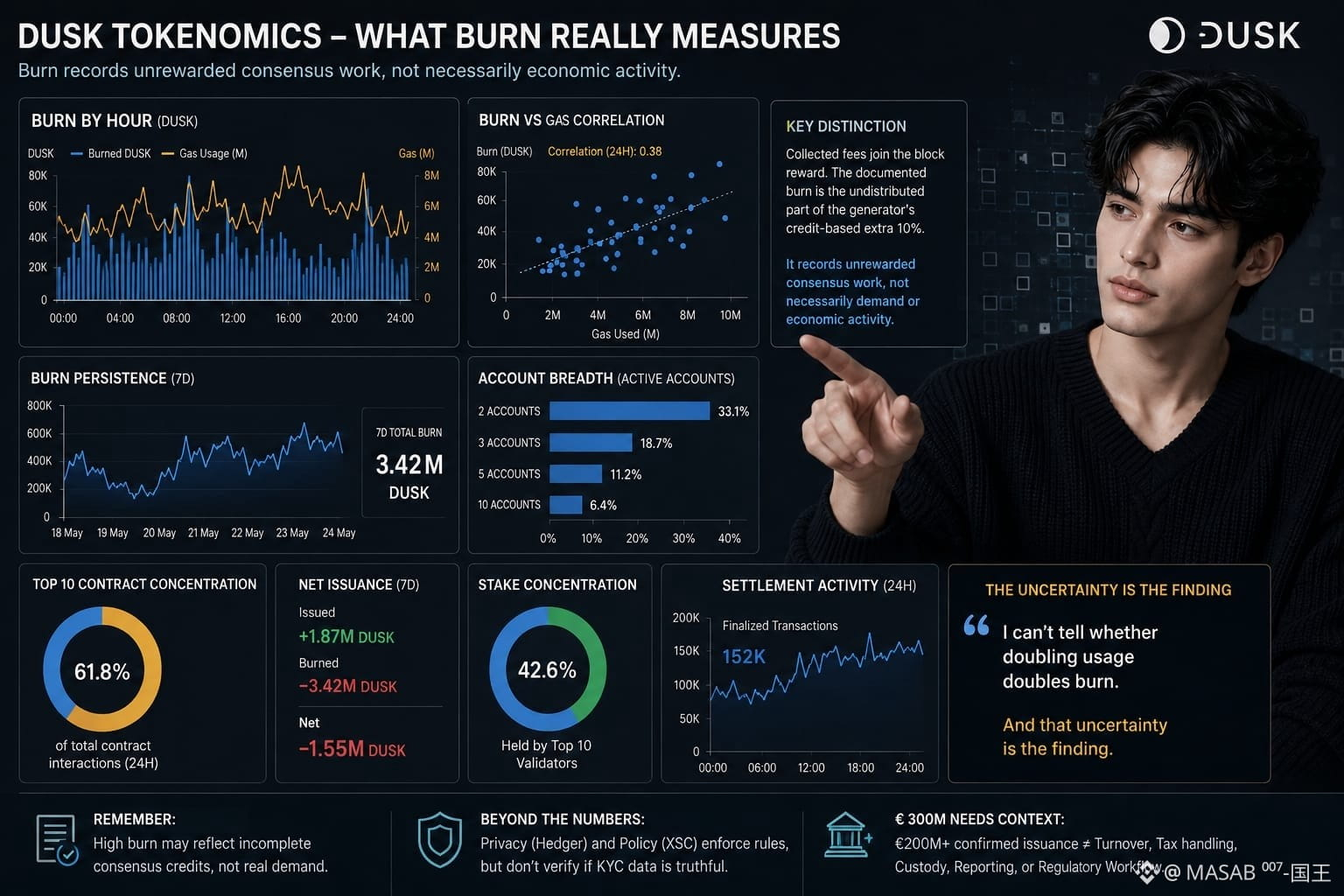
Die Charts waren flach, also habe ich die Tokenomics-Seite von Dusk geöffnet, um den Burn nach Stunde zu kartieren. Ich ging davon aus, dass stark ausgelastete Blöcke, hoher Gaspreis und mehr Nutzer mehr verbranntes DUSK bedeuten. Irgendetwas passte nicht.
Gebühren werden in DUSK bezahlt, aber die eingesammelten Gebühren fließen in die Blockbelohnung ein. Der dokumentierte Burn ist der nicht verteilte Teil der 10%igen Zusatzgutschrift des Generators. Burn pro Block, Epoch, Contract oder pro Million Gas kann die Nachfrage nicht automatisch messen; ein hoher Burn kann auch auf unvollständige Konsensus-Gutschriften hindeuten.
Er erfasst nicht belohnte Konsensarbeit, nicht notwendigerweise wirtschaftliche Aktivität.
Diese Unterscheidung ließ mich nicht los. 210M+ gestaktes Kapital kann den Konsens schützen, nicht die Genauigkeit von Berechtigungsnachweisen oder die Anwendungslogik. Hedger kann Werte verschleiern, während es Berechnungen nachweist, und XSC kann die Transferrichtlinie erzwingen, aber keiner von beiden beweist, dass KYC-Daten wahrheitsgemäß sind. Ablehnungen könnten trotzdem Hinweise auf die Zulassungsberechtigung durchstechen.
Selbst €300M brauchen eine Kennzeichnung: Dusk nannte 2025 NPEX’s €300M AUM; die aktuelle Seite zeigt jedoch €200M+ bestätigte Emissionen. Keines davon misst Umsatzumschlag, Wallet-Conversion, Steuerbehandlung, Verwahrung, Reporting, Abstimmung oder ob vier regulatorische Funktionen als ein einziger Workflow funktionieren.
Mein Dashboard braucht jetzt Burn-Persistenz, Korrelation zwischen Gas und Gebühren, die Breite der Konten über 2/3/5/10 Contracts, die Konzentration in den Top Ten, die Netto-Emission, die Stake-Konzentration sowie die Settlement-Aktivität. Die Charts sind weiterhin offen. Ich kann nicht sagen, ob eine Verdopplung der Nutzung den Burn verdoppelt, und diese Unsicherheit ist das Ergebnis.
@Dusk_Foundation $DUSK #dusk
{future}(DUSKUSDT)
Die Charts waren flach, also habe ich die Tokenomics-Seite von Dusk geöffnet, um den Burn nach Stunde zu kartieren. Ich ging davon aus, dass stark ausgelastete Blöcke, hoher Gaspreis und mehr Nutzer mehr verbranntes DUSK bedeuten. Irgendetwas passte nicht.
Gebühren werden in DUSK bezahlt, aber die eingesammelten Gebühren fließen in die Blockbelohnung ein. Der dokumentierte Burn ist der nicht verteilte Teil der 10%igen Zusatzgutschrift des Generators. Burn pro Block, Epoch, Contract oder pro Million Gas kann die Nachfrage nicht automatisch messen; ein hoher Burn kann auch auf unvollständige Konsensus-Gutschriften hindeuten.
Er erfasst nicht belohnte Konsensarbeit, nicht notwendigerweise wirtschaftliche Aktivität.
Diese Unterscheidung ließ mich nicht los. 210M+ gestaktes Kapital kann den Konsens schützen, nicht die Genauigkeit von Berechtigungsnachweisen oder die Anwendungslogik. Hedger kann Werte verschleiern, während es Berechnungen nachweist, und XSC kann die Transferrichtlinie erzwingen, aber keiner von beiden beweist, dass KYC-Daten wahrheitsgemäß sind. Ablehnungen könnten trotzdem Hinweise auf die Zulassungsberechtigung durchstechen.
Selbst €300M brauchen eine Kennzeichnung: Dusk nannte 2025 NPEX’s €300M AUM; die aktuelle Seite zeigt jedoch €200M+ bestätigte Emissionen. Keines davon misst Umsatzumschlag, Wallet-Conversion, Steuerbehandlung, Verwahrung, Reporting, Abstimmung oder ob vier regulatorische Funktionen als ein einziger Workflow funktionieren.
Mein Dashboard braucht jetzt Burn-Persistenz, Korrelation zwischen Gas und Gebühren, die Breite der Konten über 2/3/5/10 Contracts, die Konzentration in den Top Ten, die Netto-Emission, die Stake-Konzentration sowie die Settlement-Aktivität. Die Charts sind weiterhin offen. Ich kann nicht sagen, ob eine Verdopplung der Nutzung den Burn verdoppelt, und diese Unsicherheit ist das Ergebnis.
@Dusk $DUSK #dusk
Gebühren werden in DUSK bezahlt, aber die eingesammelten Gebühren fließen in die Blockbelohnung ein. Der dokumentierte Burn ist der nicht verteilte Teil der 10%igen Zusatzgutschrift des Generators. Burn pro Block, Epoch, Contract oder pro Million Gas kann die Nachfrage nicht automatisch messen; ein hoher Burn kann auch auf unvollständige Konsensus-Gutschriften hindeuten.
Er erfasst nicht belohnte Konsensarbeit, nicht notwendigerweise wirtschaftliche Aktivität.
Diese Unterscheidung ließ mich nicht los. 210M+ gestaktes Kapital kann den Konsens schützen, nicht die Genauigkeit von Berechtigungsnachweisen oder die Anwendungslogik. Hedger kann Werte verschleiern, während es Berechnungen nachweist, und XSC kann die Transferrichtlinie erzwingen, aber keiner von beiden beweist, dass KYC-Daten wahrheitsgemäß sind. Ablehnungen könnten trotzdem Hinweise auf die Zulassungsberechtigung durchstechen.
Selbst €300M brauchen eine Kennzeichnung: Dusk nannte 2025 NPEX’s €300M AUM; die aktuelle Seite zeigt jedoch €200M+ bestätigte Emissionen. Keines davon misst Umsatzumschlag, Wallet-Conversion, Steuerbehandlung, Verwahrung, Reporting, Abstimmung oder ob vier regulatorische Funktionen als ein einziger Workflow funktionieren.
Mein Dashboard braucht jetzt Burn-Persistenz, Korrelation zwischen Gas und Gebühren, die Breite der Konten über 2/3/5/10 Contracts, die Konzentration in den Top Ten, die Netto-Emission, die Stake-Konzentration sowie die Settlement-Aktivität. Die Charts sind weiterhin offen. Ich kann nicht sagen, ob eine Verdopplung der Nutzung den Burn verdoppelt, und diese Unsicherheit ist das Ergebnis.
@Dusk $DUSK #dusk
8
14
11.6k
·
--
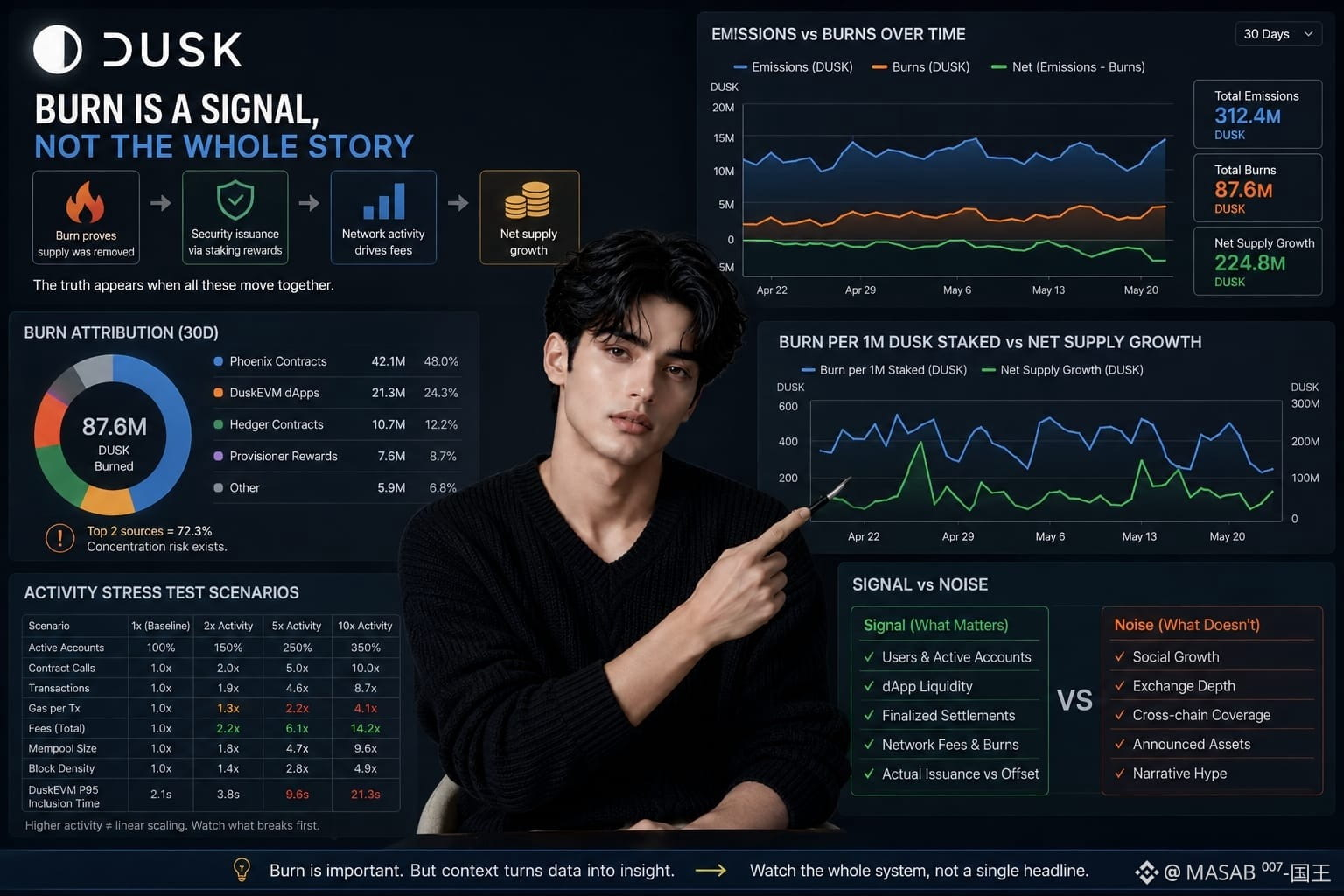
Gestern, während ein flacher Markt herrschte, sah ich DUSK-Burn immer wieder als Beweis für Deflation behandelt. Ich setzte mich mit dieser Behauptung auseinander. Irgendetwas passte nicht zusammen.
Ein Dusk-Dashboard muss tägliche, wöchentliche und monatliche Emissionen mit Burns vergleichen und dann den Burn nach Wallet, Anwendung, Epoch und Block zuordnen. Wenn ein einzelner Kontrakt oder ein paar Blöcke dominieren, bedeutet das insgesamt etwas anderes als eine breite Nachfrage.
Burn beweist, dass dem Angebot etwas entzogen wurde, nicht dass die Nachfrage verteilt oder dauerhaft war.
Sein Wert zeigt sich neben Staking Rewards, aktivem Stake, Provisioner Rewards, Epoch Fee Density und Activity Acceleration, Burn pro 1 Million gestaktem DUSK sowie dem Nettoangebot-Wachstum. Zusammen zeigen sie, ob die Sicherheitsausgabe durch Aktivität ausgeglichen wird und ob höheres Staking mehr oder weniger Angebotsdruck erzeugt.
Aber der Mechanismus braucht noch Stresstests. Wenn die aktiven Konten um 50% steigen oder die Vertragsaufrufe sich verdoppeln: verdoppeln sich dann auch Transaktionen und Gas? Bei 2×, 5× und 10× Aktivität – was bewegt sich zuerst: Gas pro Transaktion, Gebühren, Mempool-Größe, Blockdichte oder die DuskEVM-P95-Inklusionszeit?
Ich würde Social-Wachstum, Börsentiefe, Cross-Chain-Abdeckung und angekündigte Assets von Nutzern, Anwendungsliquidität, finalisierten Abwicklungen und der tatsächlichen Emission trennen.
Der Markt bleibt flach. Der Burn-Headline wirkt unvollständig.
@Dusk_Foundation $DUSK #dusk
{future}(DUSKUSDT)
Gestern, während ein flacher Markt herrschte, sah ich DUSK-Burn immer wieder als Beweis für Deflation behandelt. Ich setzte mich mit dieser Behauptung auseinander. Irgendetwas passte nicht zusammen.
Ein Dusk-Dashboard muss tägliche, wöchentliche und monatliche Emissionen mit Burns vergleichen und dann den Burn nach Wallet, Anwendung, Epoch und Block zuordnen. Wenn ein einzelner Kontrakt oder ein paar Blöcke dominieren, bedeutet das insgesamt etwas anderes als eine breite Nachfrage.
Burn beweist, dass dem Angebot etwas entzogen wurde, nicht dass die Nachfrage verteilt oder dauerhaft war.
Sein Wert zeigt sich neben Staking Rewards, aktivem Stake, Provisioner Rewards, Epoch Fee Density und Activity Acceleration, Burn pro 1 Million gestaktem DUSK sowie dem Nettoangebot-Wachstum. Zusammen zeigen sie, ob die Sicherheitsausgabe durch Aktivität ausgeglichen wird und ob höheres Staking mehr oder weniger Angebotsdruck erzeugt.
Aber der Mechanismus braucht noch Stresstests. Wenn die aktiven Konten um 50% steigen oder die Vertragsaufrufe sich verdoppeln: verdoppeln sich dann auch Transaktionen und Gas? Bei 2×, 5× und 10× Aktivität – was bewegt sich zuerst: Gas pro Transaktion, Gebühren, Mempool-Größe, Blockdichte oder die DuskEVM-P95-Inklusionszeit?
Ich würde Social-Wachstum, Börsentiefe, Cross-Chain-Abdeckung und angekündigte Assets von Nutzern, Anwendungsliquidität, finalisierten Abwicklungen und der tatsächlichen Emission trennen.
Der Markt bleibt flach. Der Burn-Headline wirkt unvollständig.
@Dusk $DUSK #dusk
Ein Dusk-Dashboard muss tägliche, wöchentliche und monatliche Emissionen mit Burns vergleichen und dann den Burn nach Wallet, Anwendung, Epoch und Block zuordnen. Wenn ein einzelner Kontrakt oder ein paar Blöcke dominieren, bedeutet das insgesamt etwas anderes als eine breite Nachfrage.
Burn beweist, dass dem Angebot etwas entzogen wurde, nicht dass die Nachfrage verteilt oder dauerhaft war.
Sein Wert zeigt sich neben Staking Rewards, aktivem Stake, Provisioner Rewards, Epoch Fee Density und Activity Acceleration, Burn pro 1 Million gestaktem DUSK sowie dem Nettoangebot-Wachstum. Zusammen zeigen sie, ob die Sicherheitsausgabe durch Aktivität ausgeglichen wird und ob höheres Staking mehr oder weniger Angebotsdruck erzeugt.
Aber der Mechanismus braucht noch Stresstests. Wenn die aktiven Konten um 50% steigen oder die Vertragsaufrufe sich verdoppeln: verdoppeln sich dann auch Transaktionen und Gas? Bei 2×, 5× und 10× Aktivität – was bewegt sich zuerst: Gas pro Transaktion, Gebühren, Mempool-Größe, Blockdichte oder die DuskEVM-P95-Inklusionszeit?
Ich würde Social-Wachstum, Börsentiefe, Cross-Chain-Abdeckung und angekündigte Assets von Nutzern, Anwendungsliquidität, finalisierten Abwicklungen und der tatsächlichen Emission trennen.
Der Markt bleibt flach. Der Burn-Headline wirkt unvollständig.
@Dusk $DUSK #dusk
15
20
10.3k
·
--
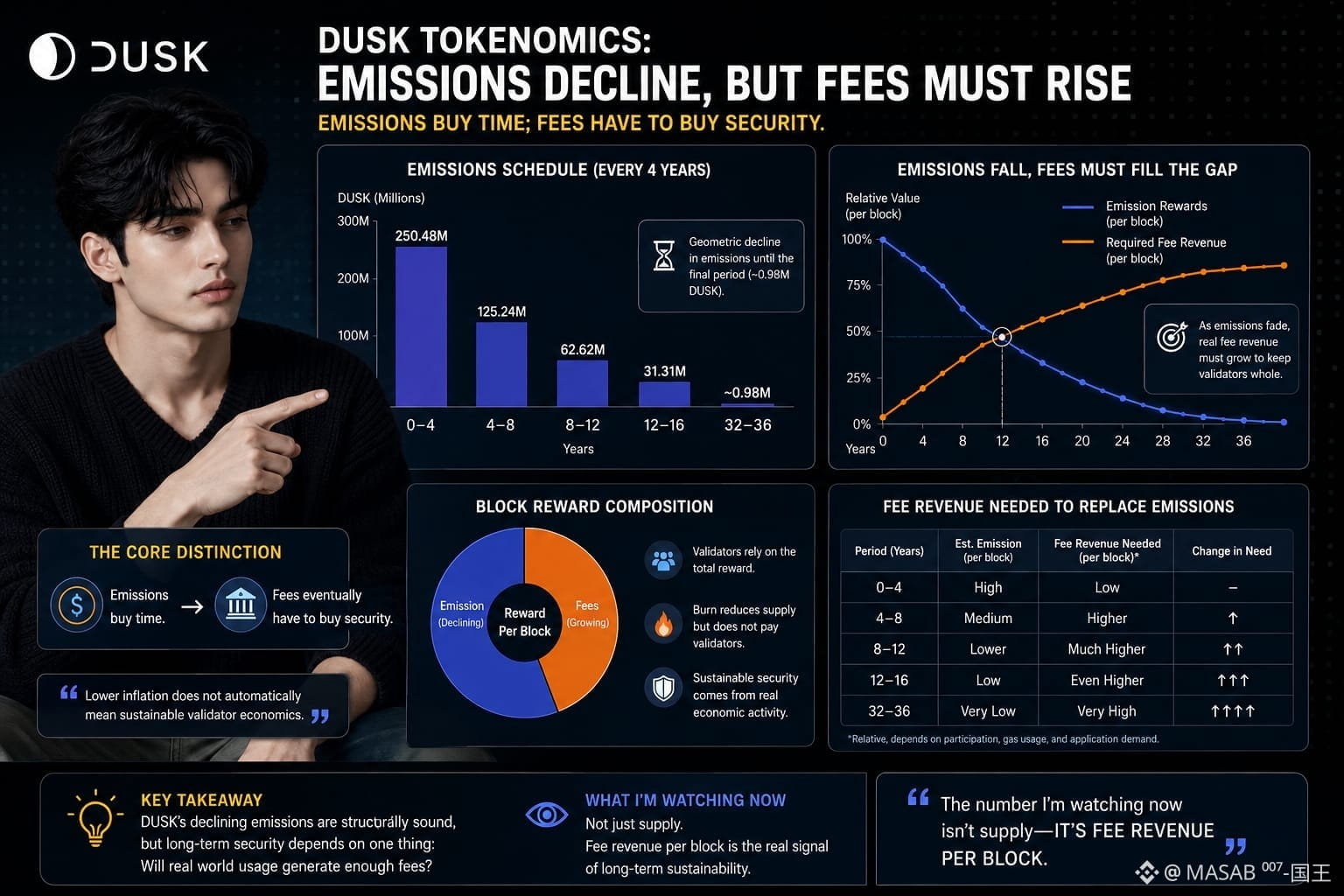
Während ich heute Abend die Tokenomics-Dokumente von Dusk erneut durchgehe, hielt mich eine Zahl immer wieder fest: 250,48 Mio. DUSK sind für die ersten vier Jahre vorgesehen, dann 125,24 Mio., 62,62 Mio., 31,31 Mio.—bis im letzten Vierjahreszeitraum ungefähr 0,98 Mio. erreicht sind.
Die wichtigste Interpretation ist einfach: Die Emissionen gehen zurück,......die Inflation sinkt, die Knappheit verbessert sich.
Aber das ist nicht die Sicherheitsfrage.
Die Blockbelohnungen von Dusk kombinieren neu emittiertes DUSK mit Transaktionsgebühren.....Während die Emissionen geometrisch abnehmen, muss das Netzwerk zunehmend echte, gebührenzahlende Aktivitäten brauchen, um den Ersatz für die Subvention zu leisten, die die Validatoren verlieren.
Emissionen kaufen Zeit; Gebühren müssen irgendwann die Sicherheit finanzieren.
Diese Unterscheidung ist wichtig, weil niedrigere Inflation nicht automatisch bedeutet, dass die Wirtschaftlichkeit der Validatoren nachhaltig ist. Ein kleinerer Belohnungstopf ist nur dann bequem, wenn Gas-, Settlement- und Anwendungsaktivität genug wachsen, um das zu kompensieren. Das Burn-Modell verkompliziert die Lage zusätzlich: Das Verbrennen nicht ausgeschütteter Belohnungen kann das Angebot zwar verringern, finanziert aber nicht die Betreiber, die den Konsens sichern.
Ich sage nicht, dass Dusk’s Zeitplan fehlerhaft ist. Ein sinkender Zuschuss ist strukturell nachvollziehbar. Ich kann nur noch nicht beurteilen, ob die zukünftige institutionelle Nutzung genügend Gebühren erzeugen wird, wenn die Emissionen winzig werden.
Der Reiter „Tokenomics“ steht noch offen. Die Zahl, die ich im Moment beobachte, ist nicht das Angebot—sondern die Gebührenerlöse pro Block.
@Dusk_Foundation $DUSK #dusk
{future}(DUSKUSDT)
Während ich heute Abend die Tokenomics-Dokumente von Dusk erneut durchgehe, hielt mich eine Zahl immer wieder fest: 250,48 Mio. DUSK sind für die ersten vier Jahre vorgesehen, dann 125,24 Mio., 62,62 Mio., 31,31 Mio.—bis im letzten Vierjahreszeitraum ungefähr 0,98 Mio. erreicht sind.
Die wichtigste Interpretation ist einfach: Die Emissionen gehen zurück,......die Inflation sinkt, die Knappheit verbessert sich.
Aber das ist nicht die Sicherheitsfrage.
Die Blockbelohnungen von Dusk kombinieren neu emittiertes DUSK mit Transaktionsgebühren.....Während die Emissionen geometrisch abnehmen, muss das Netzwerk zunehmend echte, gebührenzahlende Aktivitäten brauchen, um den Ersatz für die Subvention zu leisten, die die Validatoren verlieren.
Emissionen kaufen Zeit; Gebühren müssen irgendwann die Sicherheit finanzieren.
Diese Unterscheidung ist wichtig, weil niedrigere Inflation nicht automatisch bedeutet, dass die Wirtschaftlichkeit der Validatoren nachhaltig ist. Ein kleinerer Belohnungstopf ist nur dann bequem, wenn Gas-, Settlement- und Anwendungsaktivität genug wachsen, um das zu kompensieren. Das Burn-Modell verkompliziert die Lage zusätzlich: Das Verbrennen nicht ausgeschütteter Belohnungen kann das Angebot zwar verringern, finanziert aber nicht die Betreiber, die den Konsens sichern.
Ich sage nicht, dass Dusk’s Zeitplan fehlerhaft ist. Ein sinkender Zuschuss ist strukturell nachvollziehbar. Ich kann nur noch nicht beurteilen, ob die zukünftige institutionelle Nutzung genügend Gebühren erzeugen wird, wenn die Emissionen winzig werden.
Der Reiter „Tokenomics“ steht noch offen. Die Zahl, die ich im Moment beobachte, ist nicht das Angebot—sondern die Gebührenerlöse pro Block.
@Dusk $DUSK #dusk
Die wichtigste Interpretation ist einfach: Die Emissionen gehen zurück,......die Inflation sinkt, die Knappheit verbessert sich.
Aber das ist nicht die Sicherheitsfrage.
Die Blockbelohnungen von Dusk kombinieren neu emittiertes DUSK mit Transaktionsgebühren.....Während die Emissionen geometrisch abnehmen, muss das Netzwerk zunehmend echte, gebührenzahlende Aktivitäten brauchen, um den Ersatz für die Subvention zu leisten, die die Validatoren verlieren.
Emissionen kaufen Zeit; Gebühren müssen irgendwann die Sicherheit finanzieren.
Diese Unterscheidung ist wichtig, weil niedrigere Inflation nicht automatisch bedeutet, dass die Wirtschaftlichkeit der Validatoren nachhaltig ist. Ein kleinerer Belohnungstopf ist nur dann bequem, wenn Gas-, Settlement- und Anwendungsaktivität genug wachsen, um das zu kompensieren. Das Burn-Modell verkompliziert die Lage zusätzlich: Das Verbrennen nicht ausgeschütteter Belohnungen kann das Angebot zwar verringern, finanziert aber nicht die Betreiber, die den Konsens sichern.
Ich sage nicht, dass Dusk’s Zeitplan fehlerhaft ist. Ein sinkender Zuschuss ist strukturell nachvollziehbar. Ich kann nur noch nicht beurteilen, ob die zukünftige institutionelle Nutzung genügend Gebühren erzeugen wird, wenn die Emissionen winzig werden.
Der Reiter „Tokenomics“ steht noch offen. Die Zahl, die ich im Moment beobachte, ist nicht das Angebot—sondern die Gebührenerlöse pro Block.
@Dusk $DUSK #dusk
15
17
13.7k
·
--
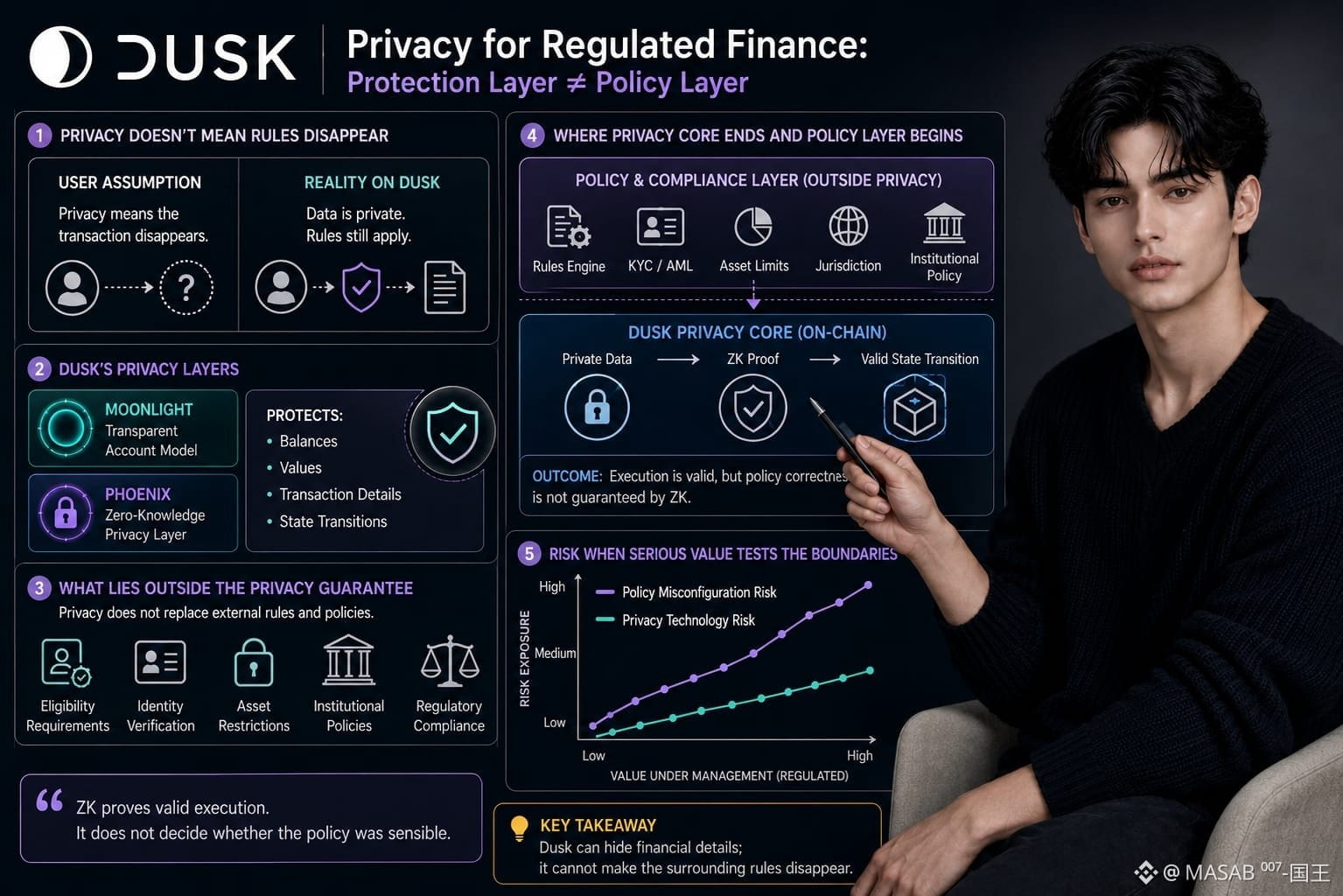
Der Handel war heute ruhig, also habe ich die Dokumentation von Dusk erneut geöffnet.... Ich sah immer wieder die Formulierung „Privacy for regulated finance“ und etwas daran brachte mich dazu, genauer hinzusehen.
Zunächst ging ich davon aus, dass „Privacy“ schlicht bedeutet, dass die Transaktion selbst aus der öffentlichen Ansicht verschwindet.
Aber Dusk ist vielschichtiger.
Moonlight stellt ein transparentes Kontomodell bereit, während Phoenix Zero-Knowledge-Technologie verwendet, um Transaktionswerte und Salden vertraulich zu halten..... Der wichtige Punkt ist: Privatsphäre entfernt nicht automatisch jede Compliance-Regel, die die Transaktion umgibt.
Dusk kann finanzielle Details verbergen; es kann die umgebenden Regeln nicht verschwinden lassen.
Diese Unterscheidung schien anfangs fast semantisch zu sein. Ist sie aber nicht.
Die kryptografische Schicht kann vertrauliche Transaktionsdaten schützen und gültige Zustandsübergänge verifizieren. Aber Berechtigungen, Identitätsanforderungen, Beschränkungen für Assets und institutionelle Richtlinien können weiterhin von Regeln abhängen, die außerhalb dieses Privatsphäre-Versprechens definiert sind.
Stell dir einen autorisierten Investor vor, der jede technische Anforderung erfüllt, aber unter einer schlecht konfigurierten pOlicy operiert. Der ZK-Beweis kann eine gültige Ausführung bestätigen. Er kann nicht entscheiden, ob die Richtlinie selbst sinnvoll war.
Das ist kein einzigartiges Dusk-Problem.
Die schwierigere Frage ist, was passiert, wenn ernsthaft regulierter Wert anfängt, diese bOundaries zu testen.
Mein Reiter „Dokumentation“ ist immer noch offen. „Privacy“ fühlt sich jetzt wie ein viel engeres Wort an als noch heute Morgen.
@Dusk_Foundation $DUSK #dusk
{future}(DUSKUSDT)
Der Handel war heute ruhig, also habe ich die Dokumentation von Dusk erneut geöffnet.... Ich sah immer wieder die Formulierung „Privacy for regulated finance“ und etwas daran brachte mich dazu, genauer hinzusehen.
Zunächst ging ich davon aus, dass „Privacy“ schlicht bedeutet, dass die Transaktion selbst aus der öffentlichen Ansicht verschwindet.
Aber Dusk ist vielschichtiger.
Moonlight stellt ein transparentes Kontomodell bereit, während Phoenix Zero-Knowledge-Technologie verwendet, um Transaktionswerte und Salden vertraulich zu halten..... Der wichtige Punkt ist: Privatsphäre entfernt nicht automatisch jede Compliance-Regel, die die Transaktion umgibt.
Dusk kann finanzielle Details verbergen; es kann die umgebenden Regeln nicht verschwinden lassen.
Diese Unterscheidung schien anfangs fast semantisch zu sein. Ist sie aber nicht.
Die kryptografische Schicht kann vertrauliche Transaktionsdaten schützen und gültige Zustandsübergänge verifizieren. Aber Berechtigungen, Identitätsanforderungen, Beschränkungen für Assets und institutionelle Richtlinien können weiterhin von Regeln abhängen, die außerhalb dieses Privatsphäre-Versprechens definiert sind.
Stell dir einen autorisierten Investor vor, der jede technische Anforderung erfüllt, aber unter einer schlecht konfigurierten pOlicy operiert. Der ZK-Beweis kann eine gültige Ausführung bestätigen. Er kann nicht entscheiden, ob die Richtlinie selbst sinnvoll war.
Das ist kein einzigartiges Dusk-Problem.
Die schwierigere Frage ist, was passiert, wenn ernsthaft regulierter Wert anfängt, diese bOundaries zu testen.
Mein Reiter „Dokumentation“ ist immer noch offen. „Privacy“ fühlt sich jetzt wie ein viel engeres Wort an als noch heute Morgen.
@Dusk $DUSK #dusk
Zunächst ging ich davon aus, dass „Privacy“ schlicht bedeutet, dass die Transaktion selbst aus der öffentlichen Ansicht verschwindet.
Aber Dusk ist vielschichtiger.
Moonlight stellt ein transparentes Kontomodell bereit, während Phoenix Zero-Knowledge-Technologie verwendet, um Transaktionswerte und Salden vertraulich zu halten..... Der wichtige Punkt ist: Privatsphäre entfernt nicht automatisch jede Compliance-Regel, die die Transaktion umgibt.
Dusk kann finanzielle Details verbergen; es kann die umgebenden Regeln nicht verschwinden lassen.
Diese Unterscheidung schien anfangs fast semantisch zu sein. Ist sie aber nicht.
Die kryptografische Schicht kann vertrauliche Transaktionsdaten schützen und gültige Zustandsübergänge verifizieren. Aber Berechtigungen, Identitätsanforderungen, Beschränkungen für Assets und institutionelle Richtlinien können weiterhin von Regeln abhängen, die außerhalb dieses Privatsphäre-Versprechens definiert sind.
Stell dir einen autorisierten Investor vor, der jede technische Anforderung erfüllt, aber unter einer schlecht konfigurierten pOlicy operiert. Der ZK-Beweis kann eine gültige Ausführung bestätigen. Er kann nicht entscheiden, ob die Richtlinie selbst sinnvoll war.
Das ist kein einzigartiges Dusk-Problem.
Die schwierigere Frage ist, was passiert, wenn ernsthaft regulierter Wert anfängt, diese bOundaries zu testen.
Mein Reiter „Dokumentation“ ist immer noch offen. „Privacy“ fühlt sich jetzt wie ein viel engeres Wort an als noch heute Morgen.
@Dusk $DUSK #dusk
26
28
13.1k
·
--
Ich habe heute Abend TermMax-Leverage-Märkte überprüft und bin immer wieder auf den Ausdruck „One-Click-Leverage“ gestoßen. Es klingt so, als sei das harte Problem entfernt worden.
Also habe ich mich tatsächlich einfach in den Flow gesetzt.
TermMax verwendet einen Flash-Loan, um mein Kapital mit geliehenen Mitteln zu kombinieren, Sicherheiten zu kaufen, sie in einem GT einzuschließen und die Leverage-Transaktion atomar abzuwickeln. Das ist sauberer als manuelles Leihen, Swappen, erneutes Einzahlen und das wiederholte Durchlaufen mehrerer Schritte.
Aber Ausführungskomfort ist nicht gleich wirtschaftliche Einfachheit.
Bei 4,8× Leverage sind ungefähr 3,8× meines Eigenkapitals geliehenes Kapital. Etwa 79% der gesamten Position sind schuldenfinanziert.... Wenn ich einen renditeerzeugenden Vermögenswert oder einen Principal Token nutze, skaliert die Vermögensrendite mit dem Exposure – aber die festen Finanzierungskosten skalieren ebenfalls.
Eine grobe Carry-Gleichung lautet:
Nettoertrag ≈ 4,8 × Asset-Rendite − 3,8 × Borrow-Rate − Gebühren/Slippage.
Hier hört „One-Click“ auf zu helfen.
Atomarer Einstieg kann Gas, Sequenzierung und das Risiko fehlgeschlagener Transaktionen reduzieren.... Er kann jedoch keine günstige Liquidität, vorteilhafte Preisgestaltung oder einen ebenso sauberen Ausstieg garantieren. Kreditnehmer erhalten eine optimierte Ausführung; Kreditgeber stellen weiterhin die Bandbreite an Liquidität darunter.
Wenn Volatilität zuschlägt und die DEX-Liquidität ausdünnt: Steigt dann die Exit-Slippage schneller als das Leverage?
TermMax vereinfacht den Einstieg. Ich bin weniger überzeugt davon, dass es das Auflösen ebenso vereinfacht.
#termmax @termmax
Ich habe heute Abend TermMax-Leverage-Märkte überprüft und bin immer wieder auf den Ausdruck „One-Click-Leverage“ gestoßen. Es klingt so, als sei das harte Problem entfernt worden.
Also habe ich mich tatsächlich einfach in den Flow gesetzt.
TermMax verwendet einen Flash-Loan, um mein Kapital mit geliehenen Mitteln zu kombinieren, Sicherheiten zu kaufen, sie in einem GT einzuschließen und die Leverage-Transaktion atomar abzuwickeln. Das ist sauberer als manuelles Leihen, Swappen, erneutes Einzahlen und das wiederholte Durchlaufen mehrerer Schritte.
Aber Ausführungskomfort ist nicht gleich wirtschaftliche Einfachheit.
Bei 4,8× Leverage sind ungefähr 3,8× meines Eigenkapitals geliehenes Kapital. Etwa 79% der gesamten Position sind schuldenfinanziert.... Wenn ich einen renditeerzeugenden Vermögenswert oder einen Principal Token nutze, skaliert die Vermögensrendite mit dem Exposure – aber die festen Finanzierungskosten skalieren ebenfalls.
Eine grobe Carry-Gleichung lautet:
Nettoertrag ≈ 4,8 × Asset-Rendite − 3,8 × Borrow-Rate − Gebühren/Slippage.
Hier hört „One-Click“ auf zu helfen.
Atomarer Einstieg kann Gas, Sequenzierung und das Risiko fehlgeschlagener Transaktionen reduzieren.... Er kann jedoch keine günstige Liquidität, vorteilhafte Preisgestaltung oder einen ebenso sauberen Ausstieg garantieren. Kreditnehmer erhalten eine optimierte Ausführung; Kreditgeber stellen weiterhin die Bandbreite an Liquidität darunter.
Wenn Volatilität zuschlägt und die DEX-Liquidität ausdünnt: Steigt dann die Exit-Slippage schneller als das Leverage?
TermMax vereinfacht den Einstieg. Ich bin weniger überzeugt davon, dass es das Auflösen ebenso vereinfacht.
#termmax @TermMax
Also habe ich mich tatsächlich einfach in den Flow gesetzt.
TermMax verwendet einen Flash-Loan, um mein Kapital mit geliehenen Mitteln zu kombinieren, Sicherheiten zu kaufen, sie in einem GT einzuschließen und die Leverage-Transaktion atomar abzuwickeln. Das ist sauberer als manuelles Leihen, Swappen, erneutes Einzahlen und das wiederholte Durchlaufen mehrerer Schritte.
Aber Ausführungskomfort ist nicht gleich wirtschaftliche Einfachheit.
Bei 4,8× Leverage sind ungefähr 3,8× meines Eigenkapitals geliehenes Kapital. Etwa 79% der gesamten Position sind schuldenfinanziert.... Wenn ich einen renditeerzeugenden Vermögenswert oder einen Principal Token nutze, skaliert die Vermögensrendite mit dem Exposure – aber die festen Finanzierungskosten skalieren ebenfalls.
Eine grobe Carry-Gleichung lautet:
Nettoertrag ≈ 4,8 × Asset-Rendite − 3,8 × Borrow-Rate − Gebühren/Slippage.
Hier hört „One-Click“ auf zu helfen.
Atomarer Einstieg kann Gas, Sequenzierung und das Risiko fehlgeschlagener Transaktionen reduzieren.... Er kann jedoch keine günstige Liquidität, vorteilhafte Preisgestaltung oder einen ebenso sauberen Ausstieg garantieren. Kreditnehmer erhalten eine optimierte Ausführung; Kreditgeber stellen weiterhin die Bandbreite an Liquidität darunter.
Wenn Volatilität zuschlägt und die DEX-Liquidität ausdünnt: Steigt dann die Exit-Slippage schneller als das Leverage?
TermMax vereinfacht den Einstieg. Ich bin weniger überzeugt davon, dass es das Auflösen ebenso vereinfacht.
#termmax @TermMax

8
11
11.6k
·
--
Teilweise korrekt
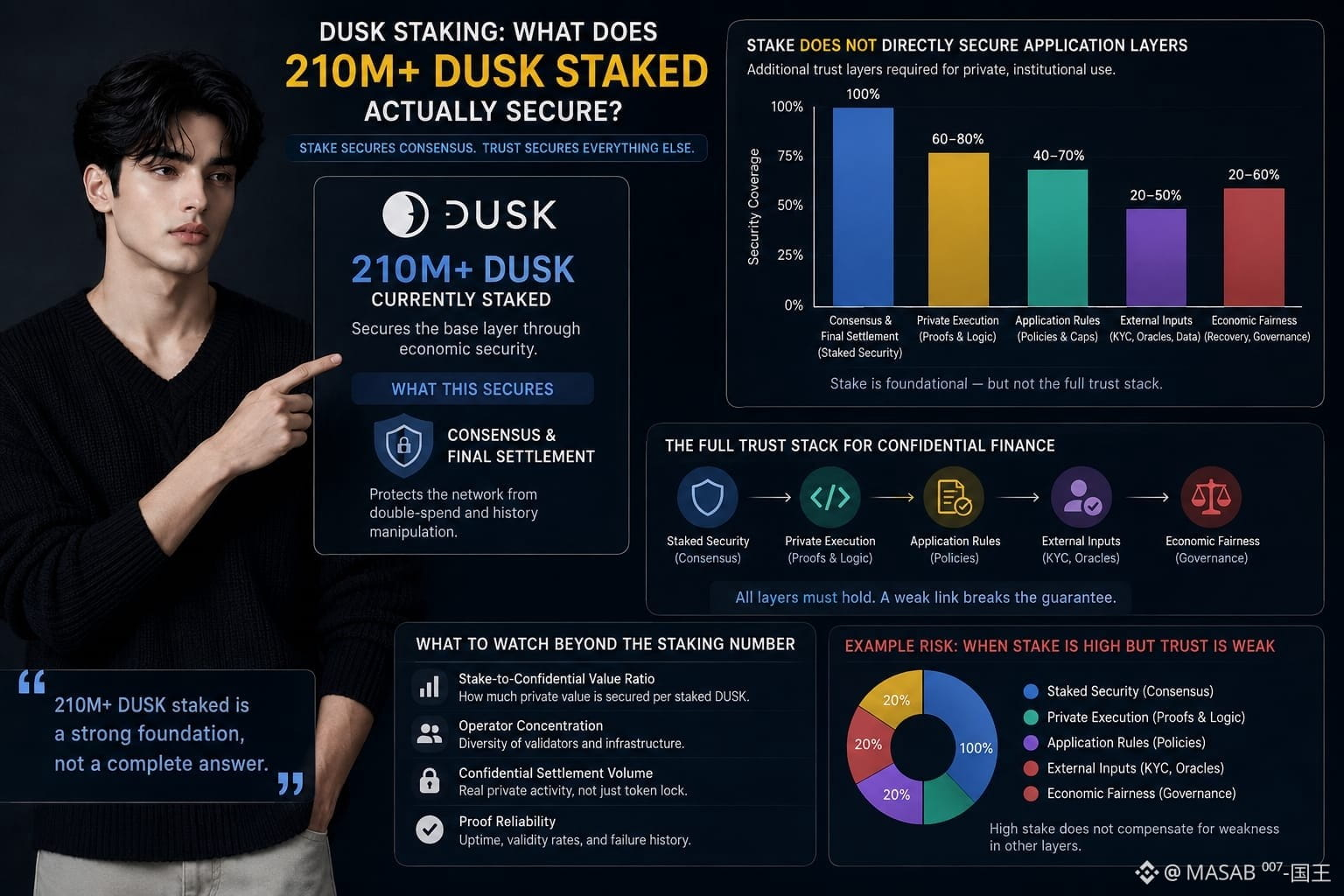
Ich habe die Staking-Zahlen von Dusk noch einmal Revue passieren lassen, während der Markt ruhig war, und 210M+ DUSK, die gestaked sind, wirkten weiterhin beruhigend. Dann fragte ich, was diese Zahl eigentlich absichert.
Die intuitive Lesart ist einfach: Mehr Stake bedeutet, dass vertrauliche Finanzanwendungen sicherer sind. Aber die Garantie ist enger gefasst. Aktiver Stake schützt Konsens und die finale Abwicklung auf der Basisschicht. Ein privater Vertrag hängt jedoch weiterhin von korrekter Proof-Logik, soliden Anwendungsregeln und – bei regulierten Assets – vertrauenswürdigen externen Inputs wie Eignungsdaten ab.
Diese Unterscheidung ist entscheidend.
Dusk kann privaten Zustand verifizierbar machen, ohne die zugrunde liegende Position zu veröffentlichen. Das ist wirklich nützlich. Aber ein gültiger Proof kann nicht erkennen, ob ein KYC-Anbieter schlechte Daten geliefert hat, ob eine Richtlinie die falsche Eigentumsobergrenze kodiert hat oder ob eine autorisierte Wiederherstellungsmaßnahme wirtschaftlich fair war.
So misst 210M staked nur eine Sicherheitsschicht – nicht den gesamten institutionellen Vertrauens-Stack.
Das fand ich anfangs etwas pedantisch. Ist es nicht. Wenn private Anwendungen ernsthaften realen Wert absichern, würde ich lieber beobachten, wie sich der Stake zum Wert der vertraulichen Abwicklung verhält, wie konzentriert die Betreiber sind und wie zuverlässig die Proofs sind.
Der Reiter „Staking“ ist immer noch offen. Die Zahl fühlt sich jetzt weniger wie eine Antwort an und mehr wie der Anfang einer solchen.
@Dusk_Foundation $DUSK #dusk
{future}(DUSKUSDT)
Ich habe die Staking-Zahlen von Dusk noch einmal Revue passieren lassen, während der Markt ruhig war, und 210M+ DUSK, die gestaked sind, wirkten weiterhin beruhigend. Dann fragte ich, was diese Zahl eigentlich absichert.
Die intuitive Lesart ist einfach: Mehr Stake bedeutet, dass vertrauliche Finanzanwendungen sicherer sind. Aber die Garantie ist enger gefasst. Aktiver Stake schützt Konsens und die finale Abwicklung auf der Basisschicht. Ein privater Vertrag hängt jedoch weiterhin von korrekter Proof-Logik, soliden Anwendungsregeln und – bei regulierten Assets – vertrauenswürdigen externen Inputs wie Eignungsdaten ab.
Diese Unterscheidung ist entscheidend.
Dusk kann privaten Zustand verifizierbar machen, ohne die zugrunde liegende Position zu veröffentlichen. Das ist wirklich nützlich. Aber ein gültiger Proof kann nicht erkennen, ob ein KYC-Anbieter schlechte Daten geliefert hat, ob eine Richtlinie die falsche Eigentumsobergrenze kodiert hat oder ob eine autorisierte Wiederherstellungsmaßnahme wirtschaftlich fair war.
So misst 210M staked nur eine Sicherheitsschicht – nicht den gesamten institutionellen Vertrauens-Stack.
Das fand ich anfangs etwas pedantisch. Ist es nicht. Wenn private Anwendungen ernsthaften realen Wert absichern, würde ich lieber beobachten, wie sich der Stake zum Wert der vertraulichen Abwicklung verhält, wie konzentriert die Betreiber sind und wie zuverlässig die Proofs sind.
Der Reiter „Staking“ ist immer noch offen. Die Zahl fühlt sich jetzt weniger wie eine Antwort an und mehr wie der Anfang einer solchen.
@Dusk $DUSK #dusk
Die intuitive Lesart ist einfach: Mehr Stake bedeutet, dass vertrauliche Finanzanwendungen sicherer sind. Aber die Garantie ist enger gefasst. Aktiver Stake schützt Konsens und die finale Abwicklung auf der Basisschicht. Ein privater Vertrag hängt jedoch weiterhin von korrekter Proof-Logik, soliden Anwendungsregeln und – bei regulierten Assets – vertrauenswürdigen externen Inputs wie Eignungsdaten ab.
Diese Unterscheidung ist entscheidend.
Dusk kann privaten Zustand verifizierbar machen, ohne die zugrunde liegende Position zu veröffentlichen. Das ist wirklich nützlich. Aber ein gültiger Proof kann nicht erkennen, ob ein KYC-Anbieter schlechte Daten geliefert hat, ob eine Richtlinie die falsche Eigentumsobergrenze kodiert hat oder ob eine autorisierte Wiederherstellungsmaßnahme wirtschaftlich fair war.
So misst 210M staked nur eine Sicherheitsschicht – nicht den gesamten institutionellen Vertrauens-Stack.
Das fand ich anfangs etwas pedantisch. Ist es nicht. Wenn private Anwendungen ernsthaften realen Wert absichern, würde ich lieber beobachten, wie sich der Stake zum Wert der vertraulichen Abwicklung verhält, wie konzentriert die Betreiber sind und wie zuverlässig die Proofs sind.
Der Reiter „Staking“ ist immer noch offen. Die Zahl fühlt sich jetzt weniger wie eine Antwort an und mehr wie der Anfang einer solchen.
@Dusk $DUSK #dusk
30
22
32k
·
--
Verifiziert
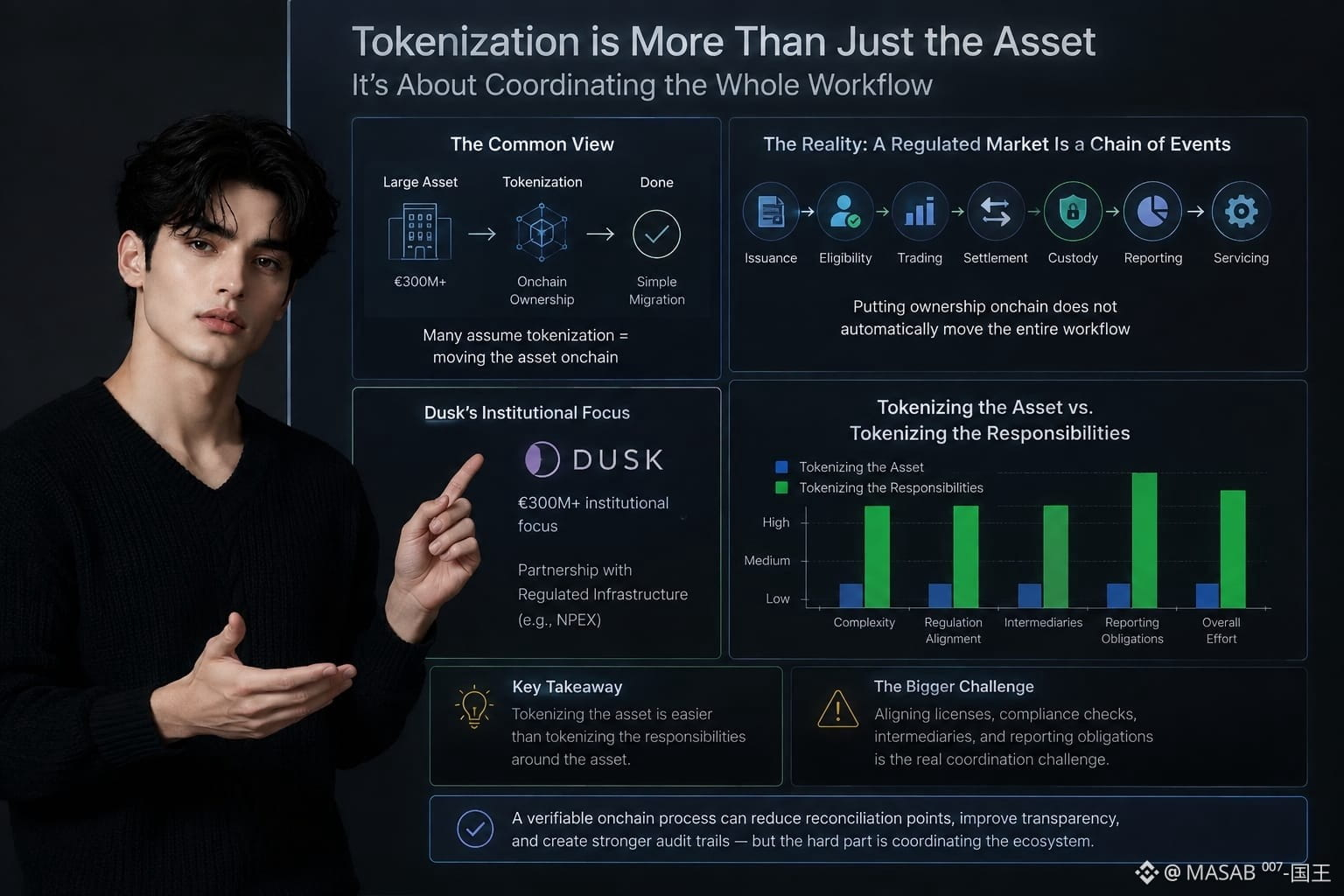
Letzte Nacht habe ich durch Diskussionen zur Tokenisierung gescrollt und immer wieder dieselbe Idee gesehen: Das Verschieben großer Assets onchain ist vor allem ein technisches Migrationsproblem. Das klang plausibel, aber als ich tiefer in den institutionellen Fokus von Dusk mit mehr als 300 Mio. € eingestiegen bin, passte etwas nicht zusammen.
Das Asset selbst ist nur ein Baustein. Ein regulierter Markt ist eine Kette von Ereignissen: Emission, Zulassung, Handel, Abwicklung, Verwahrung, Reporting und Service. Eigentumsaufzeichnungen onchain zu verlagern bedeutet nicht automatisch, dass der gesamte Workflow sich mitbewegt.
Ein gewöhnlicher Leser könnte annehmen, dass Tokenisierung heißt, das alte System durch eine Blockchain-Transaktion zu ersetzen. Doch Dusk’ Anbindung an regulierte Infrastruktur wie NPEX macht eine andere Herausforderung deutlich: die Funktionen rund um das Asset zu koordinieren.
Der Unterschied, zu dem ich immer wieder zurückkehre, ist dieser:
„Die Tokenisierung des Assets ist einfacher als die Tokenisierung der Verantwortlichkeiten rund um das Asset.“
Das schmälert nicht den Wert von Dusk. Ein verifizierbarer Onchain-Prozess kann Abgleichspunkte reduzieren, die Transparenz verbessern und stärkere Audit-Trails schaffen.
Aber ich habe mich gefragt, ob der schwierige Teil eigentlich die Blockchain-Schicht ist. Vielleicht besteht die größere Herausforderung darin, Lizenzen, Compliance-Prüfungen, Intermediäre und Meldepflichten aufeinander abzustimmen.
Ich bin mir nicht sicher, ob der Markt dieses Koordinationsproblem bislang vollständig misst. Der Reiter „Dokumentation“ ist immer noch auf meinem Bildschirm geöffnet, und jetzt schaue ich „Onchain Assets“ ein wenig anders an.
@Dusk_Foundation $DUSK #dusk
{future}(DUSKUSDT)
Letzte Nacht habe ich durch Diskussionen zur Tokenisierung gescrollt und immer wieder dieselbe Idee gesehen: Das Verschieben großer Assets onchain ist vor allem ein technisches Migrationsproblem. Das klang plausibel, aber als ich tiefer in den institutionellen Fokus von Dusk mit mehr als 300 Mio. € eingestiegen bin, passte etwas nicht zusammen.
Das Asset selbst ist nur ein Baustein. Ein regulierter Markt ist eine Kette von Ereignissen: Emission, Zulassung, Handel, Abwicklung, Verwahrung, Reporting und Service. Eigentumsaufzeichnungen onchain zu verlagern bedeutet nicht automatisch, dass der gesamte Workflow sich mitbewegt.
Ein gewöhnlicher Leser könnte annehmen, dass Tokenisierung heißt, das alte System durch eine Blockchain-Transaktion zu ersetzen. Doch Dusk’ Anbindung an regulierte Infrastruktur wie NPEX macht eine andere Herausforderung deutlich: die Funktionen rund um das Asset zu koordinieren.
Der Unterschied, zu dem ich immer wieder zurückkehre, ist dieser:
„Die Tokenisierung des Assets ist einfacher als die Tokenisierung der Verantwortlichkeiten rund um das Asset.“
Das schmälert nicht den Wert von Dusk. Ein verifizierbarer Onchain-Prozess kann Abgleichspunkte reduzieren, die Transparenz verbessern und stärkere Audit-Trails schaffen.
Aber ich habe mich gefragt, ob der schwierige Teil eigentlich die Blockchain-Schicht ist. Vielleicht besteht die größere Herausforderung darin, Lizenzen, Compliance-Prüfungen, Intermediäre und Meldepflichten aufeinander abzustimmen.
Ich bin mir nicht sicher, ob der Markt dieses Koordinationsproblem bislang vollständig misst. Der Reiter „Dokumentation“ ist immer noch auf meinem Bildschirm geöffnet, und jetzt schaue ich „Onchain Assets“ ein wenig anders an.
@Dusk $DUSK #dusk
Das Asset selbst ist nur ein Baustein. Ein regulierter Markt ist eine Kette von Ereignissen: Emission, Zulassung, Handel, Abwicklung, Verwahrung, Reporting und Service. Eigentumsaufzeichnungen onchain zu verlagern bedeutet nicht automatisch, dass der gesamte Workflow sich mitbewegt.
Ein gewöhnlicher Leser könnte annehmen, dass Tokenisierung heißt, das alte System durch eine Blockchain-Transaktion zu ersetzen. Doch Dusk’ Anbindung an regulierte Infrastruktur wie NPEX macht eine andere Herausforderung deutlich: die Funktionen rund um das Asset zu koordinieren.
Der Unterschied, zu dem ich immer wieder zurückkehre, ist dieser:
„Die Tokenisierung des Assets ist einfacher als die Tokenisierung der Verantwortlichkeiten rund um das Asset.“
Das schmälert nicht den Wert von Dusk. Ein verifizierbarer Onchain-Prozess kann Abgleichspunkte reduzieren, die Transparenz verbessern und stärkere Audit-Trails schaffen.
Aber ich habe mich gefragt, ob der schwierige Teil eigentlich die Blockchain-Schicht ist. Vielleicht besteht die größere Herausforderung darin, Lizenzen, Compliance-Prüfungen, Intermediäre und Meldepflichten aufeinander abzustimmen.
Ich bin mir nicht sicher, ob der Markt dieses Koordinationsproblem bislang vollständig misst. Der Reiter „Dokumentation“ ist immer noch auf meinem Bildschirm geöffnet, und jetzt schaue ich „Onchain Assets“ ein wenig anders an.
@Dusk $DUSK #dusk
19
16
24.4k
·
--
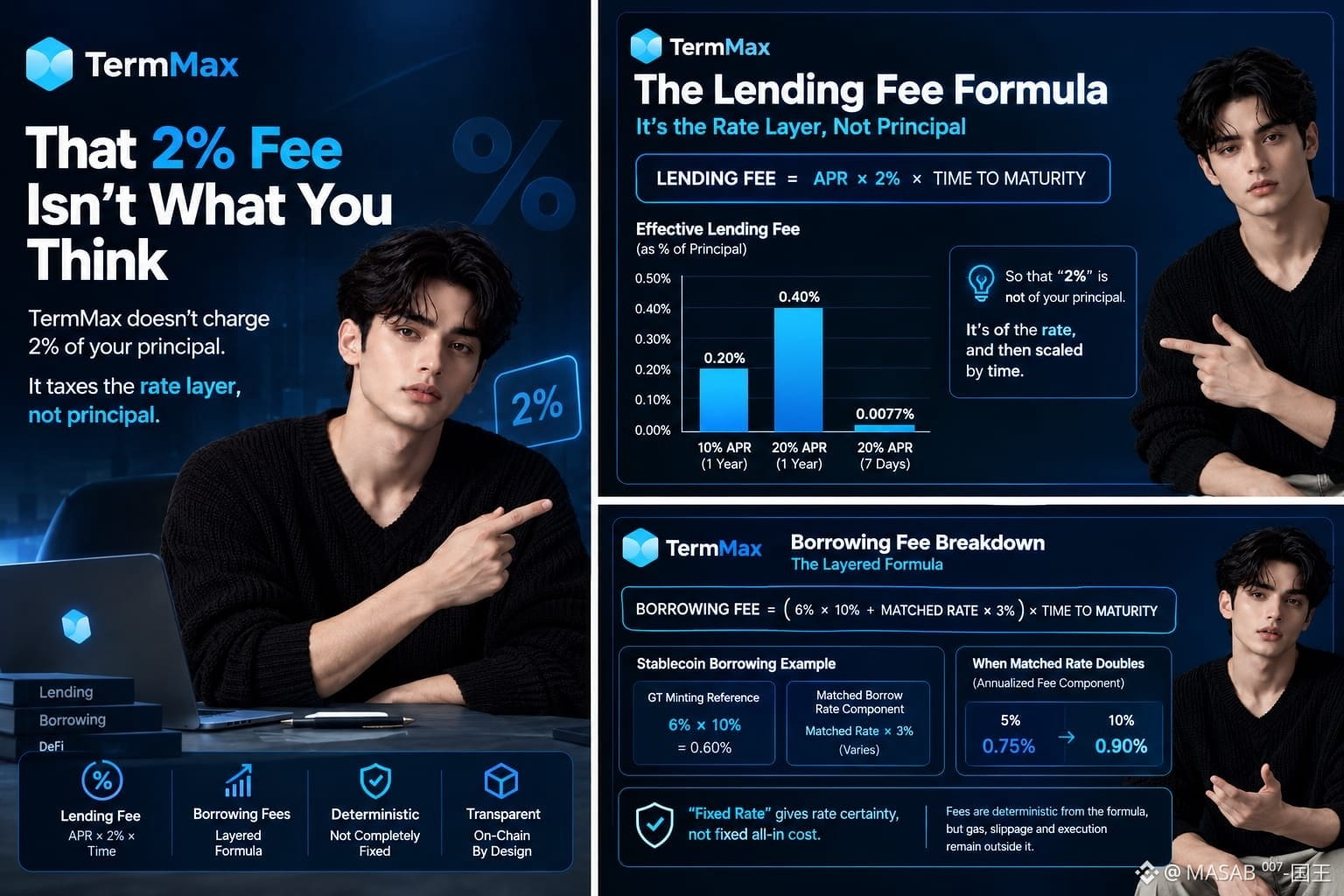
Ich habe die Gebührenseite von TermMax erneut angesehen, als der Markt ruhig war, und eine Zeile hat immer wieder meine Aufmerksamkeit auf sich gezogen: eine 2%-Kreditgebühr. Meine erste Reaktion war ganz simpel – 2% vom Kapital klingt nach teuer.
Also habe ich mich tatsächlich mit der Formel auseinandergesetzt. So erhebt TermMax aber keine Gebühren.
Der Zinssatz für die Kreditgebühr ist APR × 2% × Laufzeit bis zur Fälligkeit. Bei 10% APR für ein Jahr beträgt die effektive Gebühr 0,20% der geliehenen Summe. Bei 20% APR werden daraus 0,40%. Bei einem Darlehen über sieben Tage bei 20% APR sind es nur etwa 0,0077% des Kapitals.
Dieser Unterschied ist entscheidend.
TermMax besteuert die Zinskomponente, nicht das Kapital in dem Prozentwert, der in der Überschrift genannt wird.
Kreditaufnahme ist stärker geschichtet. Für Stablecoins kombiniert die dokumentierte Formel eine 6% GT-Referenzrate für die Prägung × 10% mit der passenden Kreditrate × 3% und skaliert dann beides mit der Laufzeit. Wenn sich die passende Rate von 5% auf 10% verdoppelt, steigt der annualisierte Gebührenanteil von 0,75% auf 0,90%, bevor noch die Zeitskalierung erfolgt.
„Fester Zinssatz“ bedeutet also Zinssicherheit, nicht feste All-in-Kosten. Die Gebühren sind anhand der Formel deterministisch, aber Gas, Slippage und Ausführung bleiben davon unberührt.
Der Tab ist immer noch offen. Diese 2% sehen jetzt ganz anders aus.
#termmax @termmax
Ich habe die Gebührenseite von TermMax erneut angesehen, als der Markt ruhig war, und eine Zeile hat immer wieder meine Aufmerksamkeit auf sich gezogen: eine 2%-Kreditgebühr. Meine erste Reaktion war ganz simpel – 2% vom Kapital klingt nach teuer.
Also habe ich mich tatsächlich mit der Formel auseinandergesetzt. So erhebt TermMax aber keine Gebühren.
Der Zinssatz für die Kreditgebühr ist APR × 2% × Laufzeit bis zur Fälligkeit. Bei 10% APR für ein Jahr beträgt die effektive Gebühr 0,20% der geliehenen Summe. Bei 20% APR werden daraus 0,40%. Bei einem Darlehen über sieben Tage bei 20% APR sind es nur etwa 0,0077% des Kapitals.
Dieser Unterschied ist entscheidend.
TermMax besteuert die Zinskomponente, nicht das Kapital in dem Prozentwert, der in der Überschrift genannt wird.
Kreditaufnahme ist stärker geschichtet. Für Stablecoins kombiniert die dokumentierte Formel eine 6% GT-Referenzrate für die Prägung × 10% mit der passenden Kreditrate × 3% und skaliert dann beides mit der Laufzeit. Wenn sich die passende Rate von 5% auf 10% verdoppelt, steigt der annualisierte Gebührenanteil von 0,75% auf 0,90%, bevor noch die Zeitskalierung erfolgt.
„Fester Zinssatz“ bedeutet also Zinssicherheit, nicht feste All-in-Kosten. Die Gebühren sind anhand der Formel deterministisch, aber Gas, Slippage und Ausführung bleiben davon unberührt.
Der Tab ist immer noch offen. Diese 2% sehen jetzt ganz anders aus.
#termmax @TermMax
Also habe ich mich tatsächlich mit der Formel auseinandergesetzt. So erhebt TermMax aber keine Gebühren.
Der Zinssatz für die Kreditgebühr ist APR × 2% × Laufzeit bis zur Fälligkeit. Bei 10% APR für ein Jahr beträgt die effektive Gebühr 0,20% der geliehenen Summe. Bei 20% APR werden daraus 0,40%. Bei einem Darlehen über sieben Tage bei 20% APR sind es nur etwa 0,0077% des Kapitals.
Dieser Unterschied ist entscheidend.
TermMax besteuert die Zinskomponente, nicht das Kapital in dem Prozentwert, der in der Überschrift genannt wird.
Kreditaufnahme ist stärker geschichtet. Für Stablecoins kombiniert die dokumentierte Formel eine 6% GT-Referenzrate für die Prägung × 10% mit der passenden Kreditrate × 3% und skaliert dann beides mit der Laufzeit. Wenn sich die passende Rate von 5% auf 10% verdoppelt, steigt der annualisierte Gebührenanteil von 0,75% auf 0,90%, bevor noch die Zeitskalierung erfolgt.
„Fester Zinssatz“ bedeutet also Zinssicherheit, nicht feste All-in-Kosten. Die Gebühren sind anhand der Formel deterministisch, aber Gas, Slippage und Ausführung bleiben davon unberührt.
Der Tab ist immer noch offen. Diese 2% sehen jetzt ganz anders aus.
#termmax @TermMax
1
8
9.4k
·
--
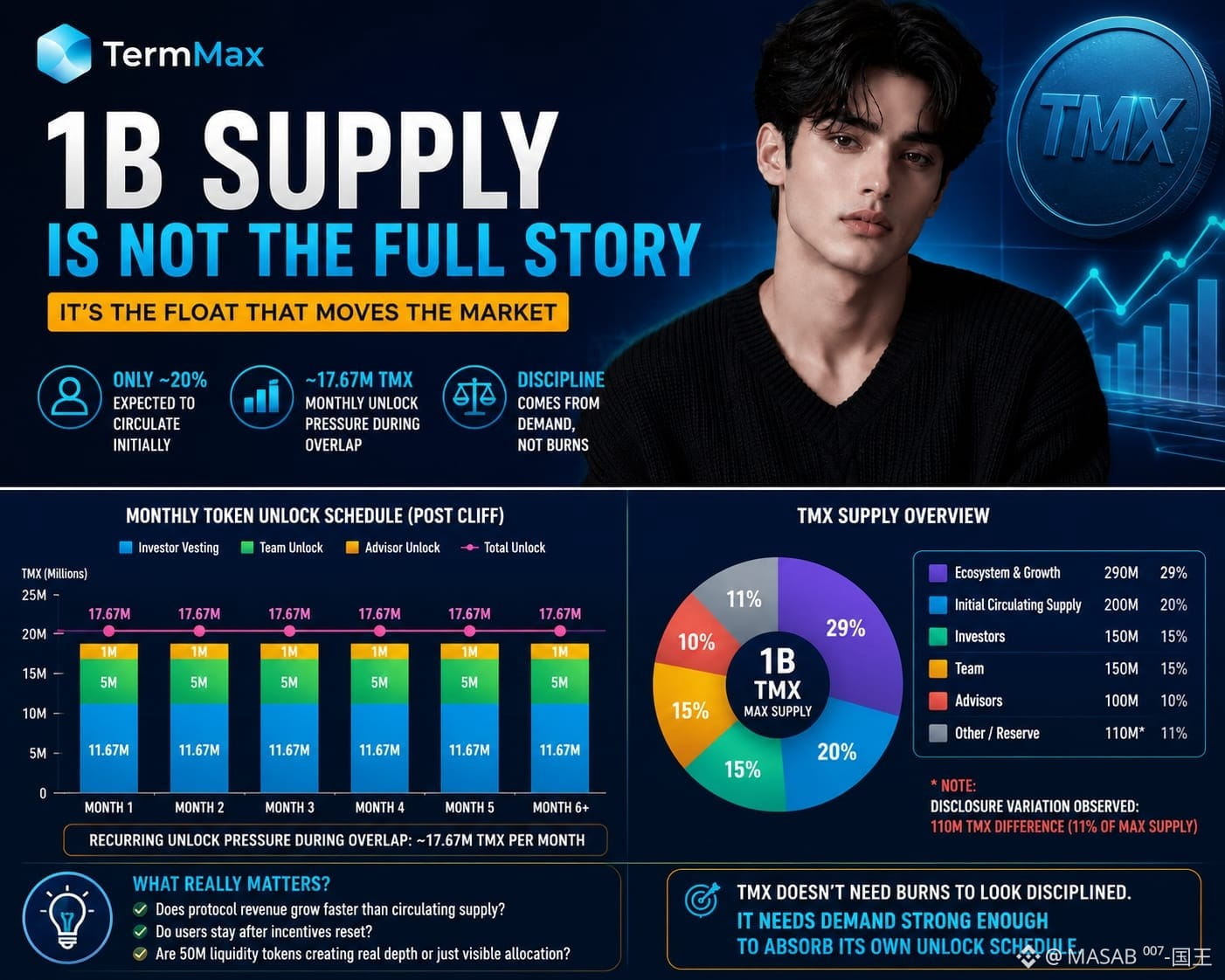
Ich habe die feste 1B-Zuteilung von TMX sofort komplett verworfen, als ich bemerkte, dass anfänglich nur etwa 20 % im Umlauf erwartet werden.
Die maximale Supply ist die saubere Zahl. Die Float ist die Verhaltensgröße.
Was als Nächstes zählt, ist, wie schnell sich dieser Float ausweitet. Investor-Vesting allein könnte nach der Cliff ungefähr 11,67 Mio. TMX pro Monat hinzufügen. Team-Unlocks fügen weitere 5 Mio. hinzu, Berater weitere 1 Mio. Während der Überschneidung entspricht das ungefähr 17,67 Mio. TMX einem wiederkehrenden monatlichen Zufluss.
Das ist nicht automatisch bärisch. Vesting ist normal. Auch die Ökosystem-Verteilung ist normal.
Aber Verteilung ist nicht Umlauf, und eine Ökosystem-Allokation von 29 % sagt mir weniger darüber, wie effizient diese Token dauerhafte Nutzer, passendes Handelsvolumen und Liquiditätstiefe erzeugen.
Hier wird TermMax meiner Meinung nach auf die Probe gestellt.
Wächst die Protokoll-Einnahme schneller als die umlaufende Supply? Bleiben eher incentive-starke Nutzer nach dem Reset der Saisons erhalten? Erzeugen 50 Mio. Liquiditäts-Token echte Markttiefe oder größtenteils nur sichtbare Allokation?
Ich achte außerdem weiter auf Dokumentenänderungen. Eine Offenlegungsdifferenz von 110 Mio. TMX entspricht 11 % der maximalen Supply. Das ist kein reines Formatierungsrauschen.
TMX braucht keine Token-Burns, um diszipliniert auszusehen.
Es braucht einen Nachfrageanstieg, der stark genug ist, um seinen eigenen Unlock-Plan zu absorbieren.
#termmax @termmax
Ich habe die feste 1B-Zuteilung von TMX sofort komplett verworfen, als ich bemerkte, dass anfänglich nur etwa 20 % im Umlauf erwartet werden.
Die maximale Supply ist die saubere Zahl. Die Float ist die Verhaltensgröße.
Was als Nächstes zählt, ist, wie schnell sich dieser Float ausweitet. Investor-Vesting allein könnte nach der Cliff ungefähr 11,67 Mio. TMX pro Monat hinzufügen. Team-Unlocks fügen weitere 5 Mio. hinzu, Berater weitere 1 Mio. Während der Überschneidung entspricht das ungefähr 17,67 Mio. TMX einem wiederkehrenden monatlichen Zufluss.
Das ist nicht automatisch bärisch. Vesting ist normal. Auch die Ökosystem-Verteilung ist normal.
Aber Verteilung ist nicht Umlauf, und eine Ökosystem-Allokation von 29 % sagt mir weniger darüber, wie effizient diese Token dauerhafte Nutzer, passendes Handelsvolumen und Liquiditätstiefe erzeugen.
Hier wird TermMax meiner Meinung nach auf die Probe gestellt.
Wächst die Protokoll-Einnahme schneller als die umlaufende Supply? Bleiben eher incentive-starke Nutzer nach dem Reset der Saisons erhalten? Erzeugen 50 Mio. Liquiditäts-Token echte Markttiefe oder größtenteils nur sichtbare Allokation?
Ich achte außerdem weiter auf Dokumentenänderungen. Eine Offenlegungsdifferenz von 110 Mio. TMX entspricht 11 % der maximalen Supply. Das ist kein reines Formatierungsrauschen.
TMX braucht keine Token-Burns, um diszipliniert auszusehen.
Es braucht einen Nachfrageanstieg, der stark genug ist, um seinen eigenen Unlock-Plan zu absorbieren.
#termmax @TermMax
Die maximale Supply ist die saubere Zahl. Die Float ist die Verhaltensgröße.
Was als Nächstes zählt, ist, wie schnell sich dieser Float ausweitet. Investor-Vesting allein könnte nach der Cliff ungefähr 11,67 Mio. TMX pro Monat hinzufügen. Team-Unlocks fügen weitere 5 Mio. hinzu, Berater weitere 1 Mio. Während der Überschneidung entspricht das ungefähr 17,67 Mio. TMX einem wiederkehrenden monatlichen Zufluss.
Das ist nicht automatisch bärisch. Vesting ist normal. Auch die Ökosystem-Verteilung ist normal.
Aber Verteilung ist nicht Umlauf, und eine Ökosystem-Allokation von 29 % sagt mir weniger darüber, wie effizient diese Token dauerhafte Nutzer, passendes Handelsvolumen und Liquiditätstiefe erzeugen.
Hier wird TermMax meiner Meinung nach auf die Probe gestellt.
Wächst die Protokoll-Einnahme schneller als die umlaufende Supply? Bleiben eher incentive-starke Nutzer nach dem Reset der Saisons erhalten? Erzeugen 50 Mio. Liquiditäts-Token echte Markttiefe oder größtenteils nur sichtbare Allokation?
Ich achte außerdem weiter auf Dokumentenänderungen. Eine Offenlegungsdifferenz von 110 Mio. TMX entspricht 11 % der maximalen Supply. Das ist kein reines Formatierungsrauschen.
TMX braucht keine Token-Burns, um diszipliniert auszusehen.
Es braucht einen Nachfrageanstieg, der stark genug ist, um seinen eigenen Unlock-Plan zu absorbieren.
#termmax @TermMax
18
20
7.9k
·
--
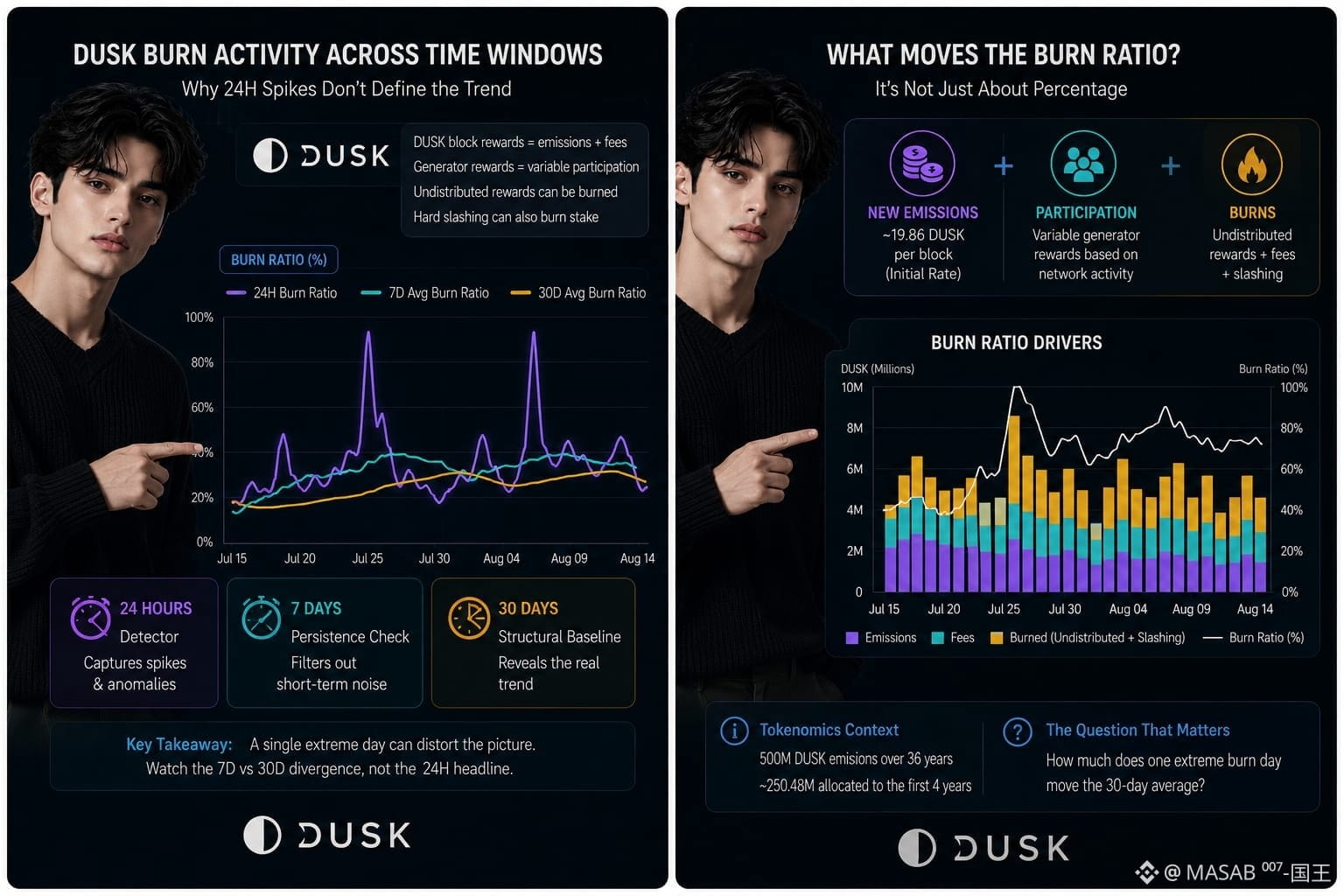
Ich habe verglichen, wie DUSKs Burn-Aktivität über verschiedene Zeitfenster hinweg aussieht, und eine Sache hat mich dabei ständig gestört: Eine dramatische 24-Stunden-Burn-Quote kann sehr wenig über die zugrunde liegende Token-Ökonomie aussagen.
Der Grund ist mechanisch.... Die DUSK-Block-Rewards setzen sich aus neu emittierten Tokens plus Transaktionsgebühren zusammen, während Generator-Rewards eine variable Beteiligungskomponente enthalten. Ein nicht ausgeschütteter Teil kann verbrannt werden. Hartes Slashing kann außerdem eingesetztes Kapital verbrennen.
Das macht die tägliche Zahl zu einem Teil ein Maß für das Netzwerkverhalten – nicht nur für „Deflation“..... Wenn sich die Beteiligung für ein paar Stunden stark ändert, kann die Burn-Quote sprunghaft steigen, ohne einen nachhaltigen Trend zu repräsentieren.
Auch die Skalierung spielt eine Rolle. Die aktuellen Tokenomics sehen 500 Millionen DUSK Emissionen über 36 Jahre vor, wobei etwa 250,48 Millionen auf die ersten vier Jahre entfallen. Die anfängliche Emissionsrate liegt bei ungefähr 19,86 DUSK pro Block.
Darum würde ich 24 Stunden als Detektor betrachten, 7 Tage als Beständigkeitscheck und 30 Tage als strukturelle Baseline.
Aber allein ein Prozentwert verschleiert, ob die Änderung durch weniger Rewards, mehr Burns oder beides zustande kam.
Die unangenehme Frage lautet: Um wie viel verschiebt ein einziger extremer Burn-Tag den 30-Tage-Durchschnitt?
Diese Abweichung zwischen 7 Tagen und 30 Tagen wäre die Kennzahl, die ich als Nächstes im Blick behalten würde.
@Dusk_Foundation $DUSK #dusk
{future}(DUSKUSDT)
Ich habe verglichen, wie DUSKs Burn-Aktivität über verschiedene Zeitfenster hinweg aussieht, und eine Sache hat mich dabei ständig gestört: Eine dramatische 24-Stunden-Burn-Quote kann sehr wenig über die zugrunde liegende Token-Ökonomie aussagen.
Der Grund ist mechanisch.... Die DUSK-Block-Rewards setzen sich aus neu emittierten Tokens plus Transaktionsgebühren zusammen, während Generator-Rewards eine variable Beteiligungskomponente enthalten. Ein nicht ausgeschütteter Teil kann verbrannt werden. Hartes Slashing kann außerdem eingesetztes Kapital verbrennen.
Das macht die tägliche Zahl zu einem Teil ein Maß für das Netzwerkverhalten – nicht nur für „Deflation“..... Wenn sich die Beteiligung für ein paar Stunden stark ändert, kann die Burn-Quote sprunghaft steigen, ohne einen nachhaltigen Trend zu repräsentieren.
Auch die Skalierung spielt eine Rolle. Die aktuellen Tokenomics sehen 500 Millionen DUSK Emissionen über 36 Jahre vor, wobei etwa 250,48 Millionen auf die ersten vier Jahre entfallen. Die anfängliche Emissionsrate liegt bei ungefähr 19,86 DUSK pro Block.
Darum würde ich 24 Stunden als Detektor betrachten, 7 Tage als Beständigkeitscheck und 30 Tage als strukturelle Baseline.
Aber allein ein Prozentwert verschleiert, ob die Änderung durch weniger Rewards, mehr Burns oder beides zustande kam.
Die unangenehme Frage lautet: Um wie viel verschiebt ein einziger extremer Burn-Tag den 30-Tage-Durchschnitt?
Diese Abweichung zwischen 7 Tagen und 30 Tagen wäre die Kennzahl, die ich als Nächstes im Blick behalten würde.
@Dusk $DUSK #dusk
Der Grund ist mechanisch.... Die DUSK-Block-Rewards setzen sich aus neu emittierten Tokens plus Transaktionsgebühren zusammen, während Generator-Rewards eine variable Beteiligungskomponente enthalten. Ein nicht ausgeschütteter Teil kann verbrannt werden. Hartes Slashing kann außerdem eingesetztes Kapital verbrennen.
Das macht die tägliche Zahl zu einem Teil ein Maß für das Netzwerkverhalten – nicht nur für „Deflation“..... Wenn sich die Beteiligung für ein paar Stunden stark ändert, kann die Burn-Quote sprunghaft steigen, ohne einen nachhaltigen Trend zu repräsentieren.
Auch die Skalierung spielt eine Rolle. Die aktuellen Tokenomics sehen 500 Millionen DUSK Emissionen über 36 Jahre vor, wobei etwa 250,48 Millionen auf die ersten vier Jahre entfallen. Die anfängliche Emissionsrate liegt bei ungefähr 19,86 DUSK pro Block.
Darum würde ich 24 Stunden als Detektor betrachten, 7 Tage als Beständigkeitscheck und 30 Tage als strukturelle Baseline.
Aber allein ein Prozentwert verschleiert, ob die Änderung durch weniger Rewards, mehr Burns oder beides zustande kam.
Die unangenehme Frage lautet: Um wie viel verschiebt ein einziger extremer Burn-Tag den 30-Tage-Durchschnitt?
Diese Abweichung zwischen 7 Tagen und 30 Tagen wäre die Kennzahl, die ich als Nächstes im Blick behalten würde.
@Dusk $DUSK #dusk
31
21
21.8k
·
--
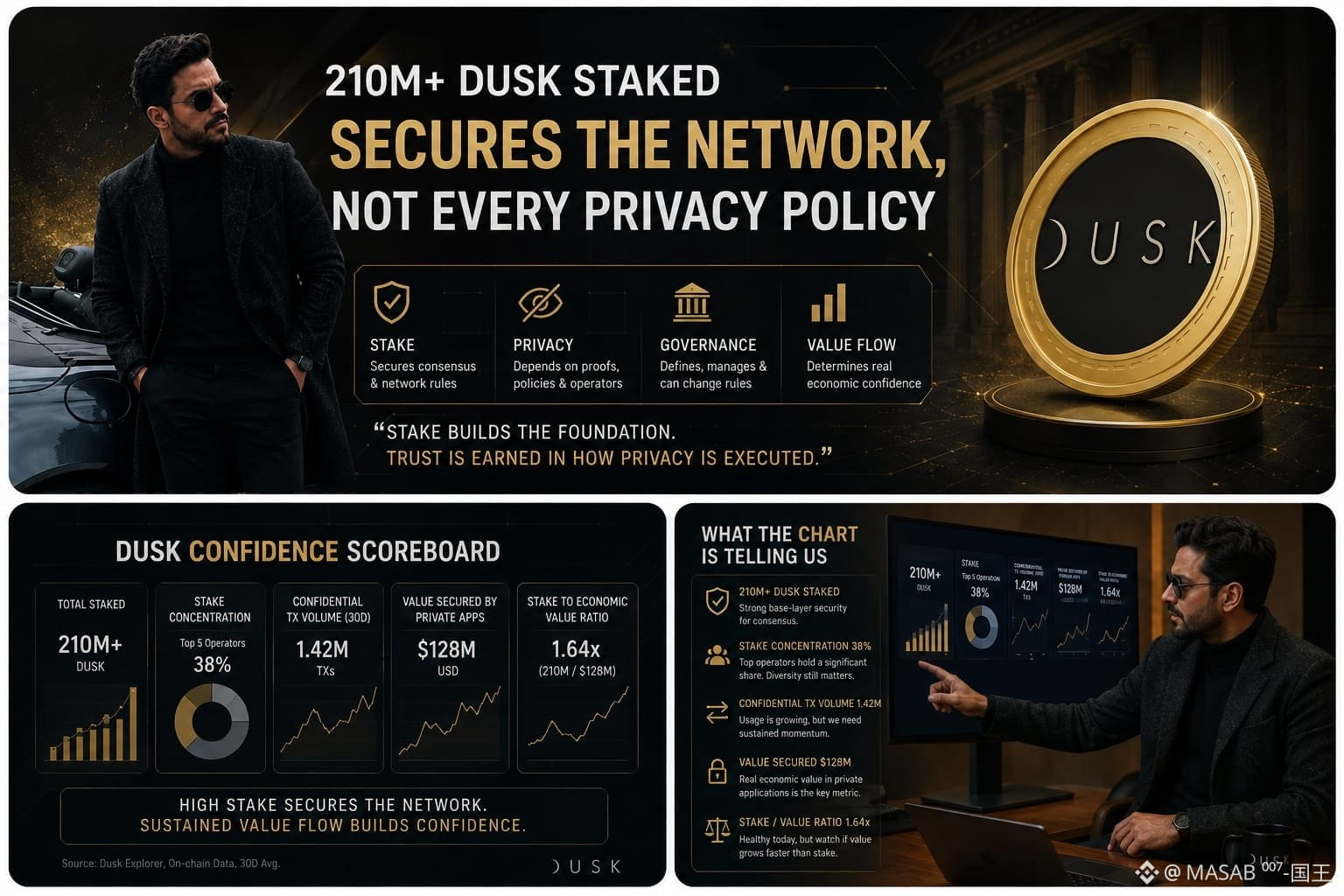
Der Markt war heute Abend still, also habe ich das Material von Dusk wieder hervorgeholt und starrte auf eine einzige Zahl: 210M+ DUSK gestaked.
Es ist verlockend, das als „vertrauliche Finanzanwendungen sind sicher“ zu lesen. Aber etwas hat nicht gestimmt. Sicherheit auf Basis der ökonomischen Grundschicht und Zuverlässigkeit bei der Umsetzung von Privatsphäre sind nicht automatisch dasselbe.
Das Staking kann den Konsens absichern, aber vertrauliche Anwendungen sind weiterhin auf Privacy-Proofs, Offenlegungsrichtlinien, Operatoren, Governance und darauf angewiesen, wie viel Wert tatsächlich durch sie fließt.
Also habe ich angefangen, an eine andere Ergebnisübersicht zu denken: Stake-Konzentration, Operator-Konzentration, Volumen vertraulicher Transaktionen, der Wert, der durch private Anwendungen abgesichert wird, und das Verhältnis von Stake zu wirtschaftlichem Wert.
Hier ist der Unterschied, zu dem ich immer wieder zurückkomme: **Stake sichert die Regeln des Netzwerks; er validiert nicht automatisch jede Datenschutzzrichtlinie, die darüber aufgebaut ist.**
Das macht Dusk’ Datenschutzmodell nicht schwach. Selektive Offenlegung kann tatsächlich sehr nützlich sein: Ein Investor könnte zum Beispiel Eigentum, die Eignung eines Handelsplatzes und die Auffassung eines Regulators nur in dem Umfang nachweisen, der durch die erforderlichen Compliance-Belege gedeckt ist.
Aber wer entscheidet über diese Offenlegungsregeln? Wer kann sie ändern? Wie schnell können autorisierte Beobachter in einem Notfall Nachweise erhalten?
Ich weiß noch nicht, ob 210M+ gestaked genug Vertrauen für hochwertige vertrauliche Märkte bietet.
Die Diagramme sind noch immer still. Ich lasse diese Frage offen.
@Dusk_Foundation $DUSK #dusk
{future}(DUSKUSDT)
Der Markt war heute Abend still, also habe ich das Material von Dusk wieder hervorgeholt und starrte auf eine einzige Zahl: 210M+ DUSK gestaked.
Es ist verlockend, das als „vertrauliche Finanzanwendungen sind sicher“ zu lesen. Aber etwas hat nicht gestimmt. Sicherheit auf Basis der ökonomischen Grundschicht und Zuverlässigkeit bei der Umsetzung von Privatsphäre sind nicht automatisch dasselbe.
Das Staking kann den Konsens absichern, aber vertrauliche Anwendungen sind weiterhin auf Privacy-Proofs, Offenlegungsrichtlinien, Operatoren, Governance und darauf angewiesen, wie viel Wert tatsächlich durch sie fließt.
Also habe ich angefangen, an eine andere Ergebnisübersicht zu denken: Stake-Konzentration, Operator-Konzentration, Volumen vertraulicher Transaktionen, der Wert, der durch private Anwendungen abgesichert wird, und das Verhältnis von Stake zu wirtschaftlichem Wert.
Hier ist der Unterschied, zu dem ich immer wieder zurückkomme: **Stake sichert die Regeln des Netzwerks; er validiert nicht automatisch jede Datenschutzzrichtlinie, die darüber aufgebaut ist.**
Das macht Dusk’ Datenschutzmodell nicht schwach. Selektive Offenlegung kann tatsächlich sehr nützlich sein: Ein Investor könnte zum Beispiel Eigentum, die Eignung eines Handelsplatzes und die Auffassung eines Regulators nur in dem Umfang nachweisen, der durch die erforderlichen Compliance-Belege gedeckt ist.
Aber wer entscheidet über diese Offenlegungsregeln? Wer kann sie ändern? Wie schnell können autorisierte Beobachter in einem Notfall Nachweise erhalten?
Ich weiß noch nicht, ob 210M+ gestaked genug Vertrauen für hochwertige vertrauliche Märkte bietet.
Die Diagramme sind noch immer still. Ich lasse diese Frage offen.
@Dusk $DUSK #dusk
Es ist verlockend, das als „vertrauliche Finanzanwendungen sind sicher“ zu lesen. Aber etwas hat nicht gestimmt. Sicherheit auf Basis der ökonomischen Grundschicht und Zuverlässigkeit bei der Umsetzung von Privatsphäre sind nicht automatisch dasselbe.
Das Staking kann den Konsens absichern, aber vertrauliche Anwendungen sind weiterhin auf Privacy-Proofs, Offenlegungsrichtlinien, Operatoren, Governance und darauf angewiesen, wie viel Wert tatsächlich durch sie fließt.
Also habe ich angefangen, an eine andere Ergebnisübersicht zu denken: Stake-Konzentration, Operator-Konzentration, Volumen vertraulicher Transaktionen, der Wert, der durch private Anwendungen abgesichert wird, und das Verhältnis von Stake zu wirtschaftlichem Wert.
Hier ist der Unterschied, zu dem ich immer wieder zurückkomme: **Stake sichert die Regeln des Netzwerks; er validiert nicht automatisch jede Datenschutzzrichtlinie, die darüber aufgebaut ist.**
Das macht Dusk’ Datenschutzmodell nicht schwach. Selektive Offenlegung kann tatsächlich sehr nützlich sein: Ein Investor könnte zum Beispiel Eigentum, die Eignung eines Handelsplatzes und die Auffassung eines Regulators nur in dem Umfang nachweisen, der durch die erforderlichen Compliance-Belege gedeckt ist.
Aber wer entscheidet über diese Offenlegungsregeln? Wer kann sie ändern? Wie schnell können autorisierte Beobachter in einem Notfall Nachweise erhalten?
Ich weiß noch nicht, ob 210M+ gestaked genug Vertrauen für hochwertige vertrauliche Märkte bietet.
Die Diagramme sind noch immer still. Ich lasse diese Frage offen.
@Dusk $DUSK #dusk
35
30
11.1k
·
--
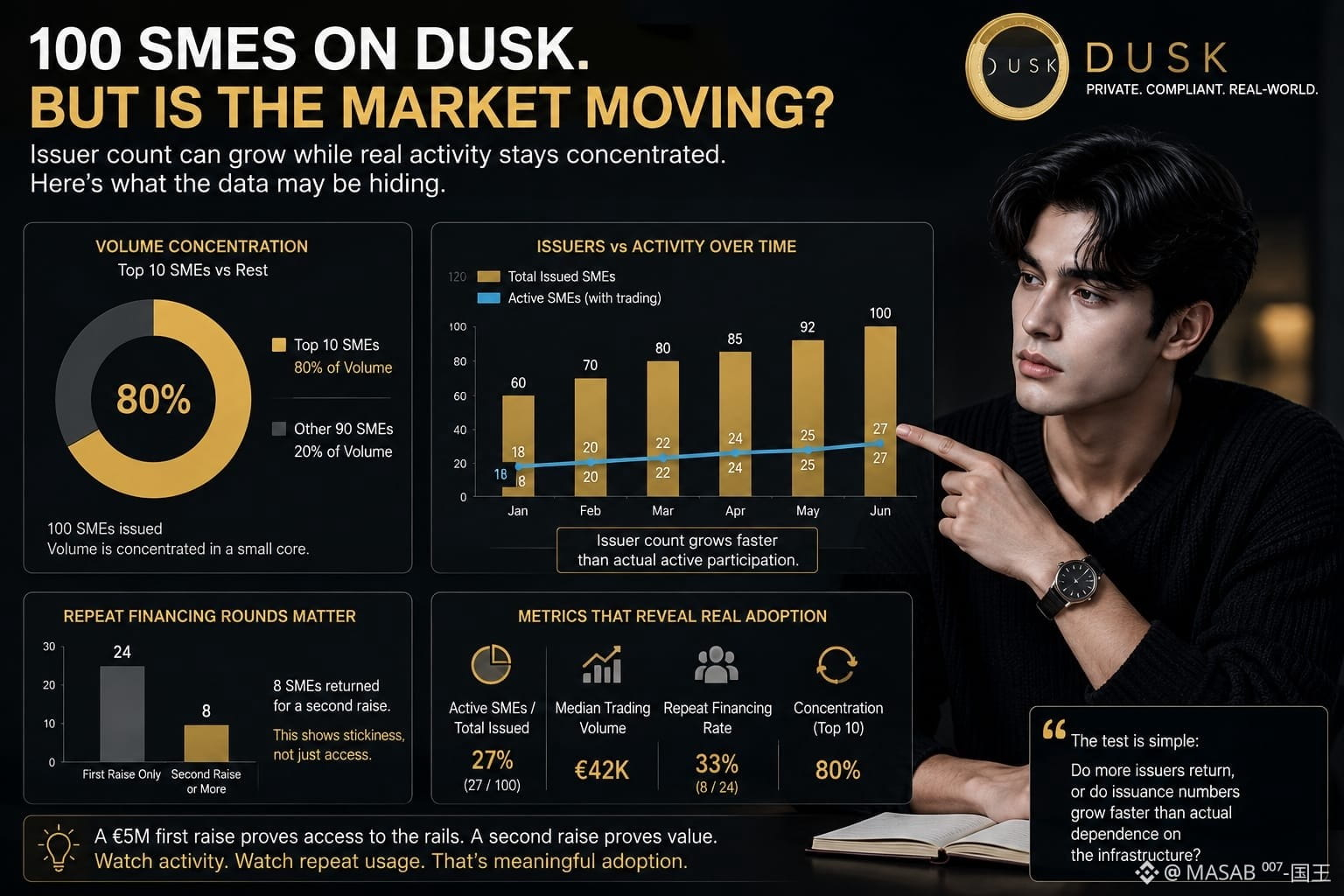
Etwas ließ mich beim Blick auf DUSKs SME-Story-Issuer-Zahl nicht los: Die Anzahl kann steigen, auch wenn sich der zugrunde liegende Markt kaum bewegt.
Stell dir vor, DUSK hat 100 tokenisierte SMEs, aber die Top-10 erzeugen 80% des gesamten Handelsvolumens. Auf dem Papier sieht es nach breiter Akzeptanz aus. In der Praxis kann das bedeuten, dass die Aufmerksamkeit von Investoren, die Liquidität und die wiederholte Aktivität sich auf einen sehr kleinen Kern konzentrieren.
Deshalb würde ich aktiver SMEs / insgesamt ausgegebene SMEs, das durchschnittliche (mediane) Handelsvolumen und wiederholte Finanzierungsrunden genauer beobachten als die Schlagzeilen zur Emissionsanzahl.
Eine erste Aufstockung in Höhe von 5 Mio. € zeigt, dass ein Unternehmen auf die Infrastruktur zugreifen kann. Eine zweite Aufstockung später ist etwas anderes. Das deutet darauf hin, dass der Emittent in der Eigentümerverwaltung, den Transfer-Controls und dem Investor-Workflow von DUSK genug Wert gefunden hat, um zurückzukommen.
Hier trennen sich Aktivität und sinnvolle Akzeptanz.
Ein SME braucht DUSK möglicherweise mehr, um eine programmierbare Aktionärsstruktur aufrechtzuerhalten, als für das tägliche Sekundärhandelsgeschäft. Das ist weiterhin wichtig. Aber wenn das On-Chain-Register ständig mit einem Off-Chain-rechtlichen Datensatz abgeglichen werden muss, kann sich der operative Vorteil schnell verringern.
Der Test, den ich weiterhin beobachte, ist einfach: Kommen mehr Emittenten zurück, oder wachsen die Emissionszahlen schneller als die tatsächliche Abhängigkeit von der Infrastruktur?
@Dusk_Foundation #dusk $DUSK
{future}(DUSKUSDT)
Etwas ließ mich beim Blick auf DUSKs SME-Story-Issuer-Zahl nicht los: Die Anzahl kann steigen, auch wenn sich der zugrunde liegende Markt kaum bewegt.
Stell dir vor, DUSK hat 100 tokenisierte SMEs, aber die Top-10 erzeugen 80% des gesamten Handelsvolumens. Auf dem Papier sieht es nach breiter Akzeptanz aus. In der Praxis kann das bedeuten, dass die Aufmerksamkeit von Investoren, die Liquidität und die wiederholte Aktivität sich auf einen sehr kleinen Kern konzentrieren.
Deshalb würde ich aktiver SMEs / insgesamt ausgegebene SMEs, das durchschnittliche (mediane) Handelsvolumen und wiederholte Finanzierungsrunden genauer beobachten als die Schlagzeilen zur Emissionsanzahl.
Eine erste Aufstockung in Höhe von 5 Mio. € zeigt, dass ein Unternehmen auf die Infrastruktur zugreifen kann. Eine zweite Aufstockung später ist etwas anderes. Das deutet darauf hin, dass der Emittent in der Eigentümerverwaltung, den Transfer-Controls und dem Investor-Workflow von DUSK genug Wert gefunden hat, um zurückzukommen.
Hier trennen sich Aktivität und sinnvolle Akzeptanz.
Ein SME braucht DUSK möglicherweise mehr, um eine programmierbare Aktionärsstruktur aufrechtzuerhalten, als für das tägliche Sekundärhandelsgeschäft. Das ist weiterhin wichtig. Aber wenn das On-Chain-Register ständig mit einem Off-Chain-rechtlichen Datensatz abgeglichen werden muss, kann sich der operative Vorteil schnell verringern.
Der Test, den ich weiterhin beobachte, ist einfach: Kommen mehr Emittenten zurück, oder wachsen die Emissionszahlen schneller als die tatsächliche Abhängigkeit von der Infrastruktur?
@Dusk #dusk $DUSK
Stell dir vor, DUSK hat 100 tokenisierte SMEs, aber die Top-10 erzeugen 80% des gesamten Handelsvolumens. Auf dem Papier sieht es nach breiter Akzeptanz aus. In der Praxis kann das bedeuten, dass die Aufmerksamkeit von Investoren, die Liquidität und die wiederholte Aktivität sich auf einen sehr kleinen Kern konzentrieren.
Deshalb würde ich aktiver SMEs / insgesamt ausgegebene SMEs, das durchschnittliche (mediane) Handelsvolumen und wiederholte Finanzierungsrunden genauer beobachten als die Schlagzeilen zur Emissionsanzahl.
Eine erste Aufstockung in Höhe von 5 Mio. € zeigt, dass ein Unternehmen auf die Infrastruktur zugreifen kann. Eine zweite Aufstockung später ist etwas anderes. Das deutet darauf hin, dass der Emittent in der Eigentümerverwaltung, den Transfer-Controls und dem Investor-Workflow von DUSK genug Wert gefunden hat, um zurückzukommen.
Hier trennen sich Aktivität und sinnvolle Akzeptanz.
Ein SME braucht DUSK möglicherweise mehr, um eine programmierbare Aktionärsstruktur aufrechtzuerhalten, als für das tägliche Sekundärhandelsgeschäft. Das ist weiterhin wichtig. Aber wenn das On-Chain-Register ständig mit einem Off-Chain-rechtlichen Datensatz abgeglichen werden muss, kann sich der operative Vorteil schnell verringern.
Der Test, den ich weiterhin beobachte, ist einfach: Kommen mehr Emittenten zurück, oder wachsen die Emissionszahlen schneller als die tatsächliche Abhängigkeit von der Infrastruktur?
@Dusk #dusk $DUSK
48
42
12.7k
·
--
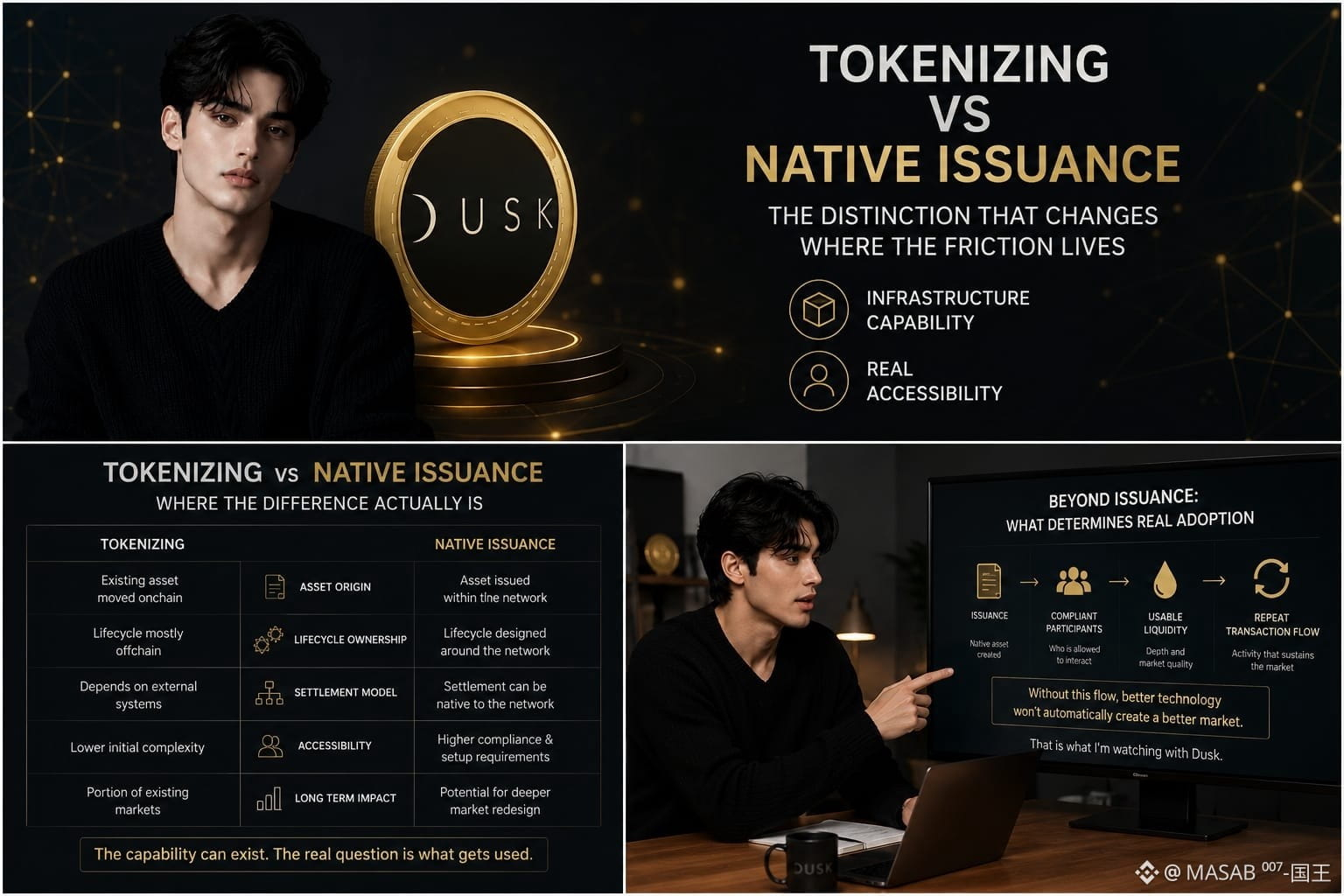
Ich habe mich wiederholt auf eine Unterscheidung in Dusk’s RWA-Design konzentriert: Ein Token kann auf der On-Chain existieren, während der reale Lebenszyklus eines Assets noch immer an ganz anderer Stelle stattfindet.
Das ist mehr wert, als es klingt. Durch Tokenisierung kann die Blockchain zwar die Verteilung oder Programmierbarkeit verbessern, aber Ausgabe, Verwahrung, Abwicklung, Service und Aufzeichnungen erfordern möglicherweise weiterhin getrennte Systeme und Abstimmung. Das native-issuance-Modell von Dusk ist im engeren Sinne ehrgeiziger: Das Asset selbst kann rund um das Ledger entstehen und verwaltet werden, sodass diese Übergaben in einer einzigen, koordinierten Umgebung stattfinden können.
Die verborgene Schicht ist jedoch nicht der Token. Sie ist die Koordination.
Dusk kombiniert Abwicklung, Zugriffskontrollen, Privatsphäre und selektive Offenlegung, weil regulierte Wertpapiere nicht einfach zu öffentlichen Blockchain-Objekten werden können. Jemand muss weiterhin die Voraussetzungen, Berechtigungen, Berichte und die rechtliche Struktur rund um das Asset definieren. Dusk kann die Infrastruktur bereitstellen; es kann keine Autorisierung, Liquidität oder institutionelle Beteiligung „herstellen“.
Darum sehe ich den eigentlichen Vergleich als technische Leistungsfähigkeit versus echte Zugänglichkeit. Ein Netzwerk, das native Issuance unterstützt, ist etwas anderes als eines, das nachweist, dass Institutionen es auch nutzen werden.
Der unangenehme Teil ist die Adoption. Wenn Emittenten und Handelsplätze kritische Schritte des Lebenszyklus weiterhin woanders abwickeln, wird native Issuance zur architektonischen Fähigkeit statt zu einer sinnvollen Marktinfrastruktur.
Das ist der Teil, den ich noch immer beobachte.
@Dusk_Foundation $DUSK #dusk
{future}(DUSKUSDT)
Ich habe mich wiederholt auf eine Unterscheidung in Dusk’s RWA-Design konzentriert: Ein Token kann auf der On-Chain existieren, während der reale Lebenszyklus eines Assets noch immer an ganz anderer Stelle stattfindet.
Das ist mehr wert, als es klingt. Durch Tokenisierung kann die Blockchain zwar die Verteilung oder Programmierbarkeit verbessern, aber Ausgabe, Verwahrung, Abwicklung, Service und Aufzeichnungen erfordern möglicherweise weiterhin getrennte Systeme und Abstimmung. Das native-issuance-Modell von Dusk ist im engeren Sinne ehrgeiziger: Das Asset selbst kann rund um das Ledger entstehen und verwaltet werden, sodass diese Übergaben in einer einzigen, koordinierten Umgebung stattfinden können.
Die verborgene Schicht ist jedoch nicht der Token. Sie ist die Koordination.
Dusk kombiniert Abwicklung, Zugriffskontrollen, Privatsphäre und selektive Offenlegung, weil regulierte Wertpapiere nicht einfach zu öffentlichen Blockchain-Objekten werden können. Jemand muss weiterhin die Voraussetzungen, Berechtigungen, Berichte und die rechtliche Struktur rund um das Asset definieren. Dusk kann die Infrastruktur bereitstellen; es kann keine Autorisierung, Liquidität oder institutionelle Beteiligung „herstellen“.
Darum sehe ich den eigentlichen Vergleich als technische Leistungsfähigkeit versus echte Zugänglichkeit. Ein Netzwerk, das native Issuance unterstützt, ist etwas anderes als eines, das nachweist, dass Institutionen es auch nutzen werden.
Der unangenehme Teil ist die Adoption. Wenn Emittenten und Handelsplätze kritische Schritte des Lebenszyklus weiterhin woanders abwickeln, wird native Issuance zur architektonischen Fähigkeit statt zu einer sinnvollen Marktinfrastruktur.
Das ist der Teil, den ich noch immer beobachte.
@Dusk $DUSK #dusk
Das ist mehr wert, als es klingt. Durch Tokenisierung kann die Blockchain zwar die Verteilung oder Programmierbarkeit verbessern, aber Ausgabe, Verwahrung, Abwicklung, Service und Aufzeichnungen erfordern möglicherweise weiterhin getrennte Systeme und Abstimmung. Das native-issuance-Modell von Dusk ist im engeren Sinne ehrgeiziger: Das Asset selbst kann rund um das Ledger entstehen und verwaltet werden, sodass diese Übergaben in einer einzigen, koordinierten Umgebung stattfinden können.
Die verborgene Schicht ist jedoch nicht der Token. Sie ist die Koordination.
Dusk kombiniert Abwicklung, Zugriffskontrollen, Privatsphäre und selektive Offenlegung, weil regulierte Wertpapiere nicht einfach zu öffentlichen Blockchain-Objekten werden können. Jemand muss weiterhin die Voraussetzungen, Berechtigungen, Berichte und die rechtliche Struktur rund um das Asset definieren. Dusk kann die Infrastruktur bereitstellen; es kann keine Autorisierung, Liquidität oder institutionelle Beteiligung „herstellen“.
Darum sehe ich den eigentlichen Vergleich als technische Leistungsfähigkeit versus echte Zugänglichkeit. Ein Netzwerk, das native Issuance unterstützt, ist etwas anderes als eines, das nachweist, dass Institutionen es auch nutzen werden.
Der unangenehme Teil ist die Adoption. Wenn Emittenten und Handelsplätze kritische Schritte des Lebenszyklus weiterhin woanders abwickeln, wird native Issuance zur architektonischen Fähigkeit statt zu einer sinnvollen Marktinfrastruktur.
Das ist der Teil, den ich noch immer beobachte.
@Dusk $DUSK #dusk
40
30
10.3k
·
--
Verifiziert
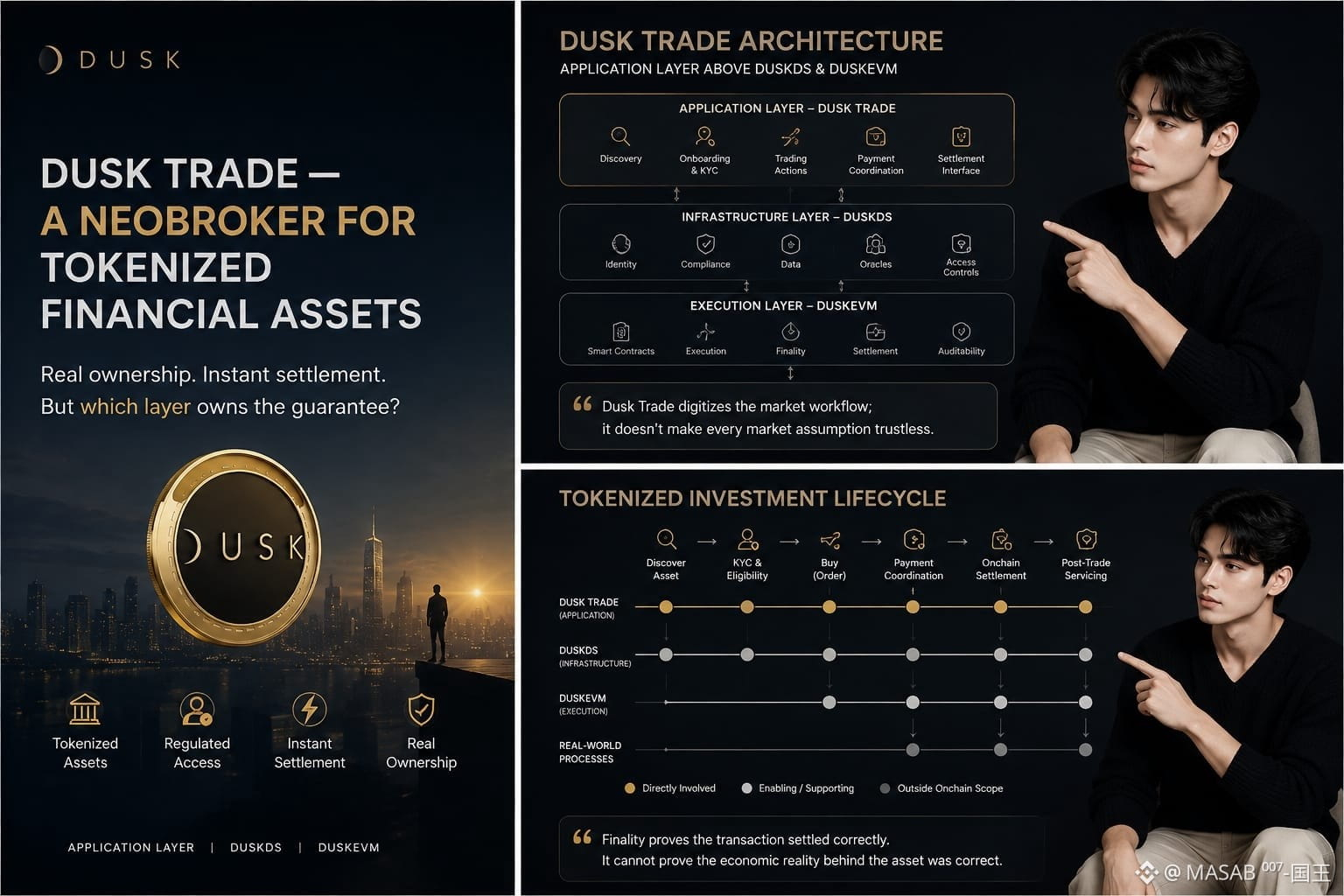
Gestern Nacht habe ich durch Dusk Trade gescrollt, während der Markt ungewöhnlich ruhig war. Immer wieder tauchten dieselben Formulierungen auf: tokenisierte Vermögenswerte, echte Eigentümerschaft, sofortige Abwicklung. Dann hat mich „neobroker“ innehalten und unter der Oberfläche des Interfaces schauen lassen.
Die naheliegende Annahme ist einfach: Man kauft über Dusk Trade einen ETF, einen Geldmarktfonds (MMF) oder eine Anleihe – und der komplette Investment-Lebenszyklus wird blockchain-nativ.
Aber irgendetwas passte nicht zusammen.
Dusk Trade ist die Anwendungsschicht auf DuskEVM. Es verbindet Nutzer mit tokenisierten Finanzanlagen und Handels-Workflows, während die darunterliegende Infrastruktur Ausführung und Abwicklung übernimmt. Das ist bedeutsam, aber es ist nicht dasselbe wie die Vorstellung, jede finanzielle Annahme vertrauenslos zu machen.
Es sichert die Transaktion – nicht jede Annahme, die dem Vermögenswert zugrunde liegt.
Dieser Unterschied ist entscheidend. Deterministische Abwicklung kann nachweisen, dass eine autorisierte Transaktion korrekt verarbeitet wurde. Sie kann jedoch für sich allein nicht beweisen, dass jedes Off-Chain-Protokoll, jede Eignungsentscheidung, jede Offenlegung, Bewertung oder jeder Serviceprozess rund um einen Vermögenswert in der realen Welt korrekt ist.
Ich dachte anfangs, dieser Unterschied sei vor allem technisch. Dem ist nicht so.
Wenn eine vorgelagerte Datenquelle falsch ist, kann die Blockchain die falsche wirtschaftliche Realität ebenso zuverlässig abwickeln.
Das ist kein exklusives Dusk-Problem; tokenisiertes Finance erbt diese Grenzen aus den traditionellen Märkten.
Der eigentliche Test kommt, wenn institutioneller Wert Anreize schafft, die schwächeren Schichten anzugreifen.
Ich frage mich immer noch, wie sich diese Grenze unter anhaltendem Druck verhält. Das ist der Teil, auf den ich achten werde.
@Dusk_Foundation $DUSK #dusk
{future}(DUSKUSDT)
Gestern Nacht habe ich durch Dusk Trade gescrollt, während der Markt ungewöhnlich ruhig war. Immer wieder tauchten dieselben Formulierungen auf: tokenisierte Vermögenswerte, echte Eigentümerschaft, sofortige Abwicklung. Dann hat mich „neobroker“ innehalten und unter der Oberfläche des Interfaces schauen lassen.
Die naheliegende Annahme ist einfach: Man kauft über Dusk Trade einen ETF, einen Geldmarktfonds (MMF) oder eine Anleihe – und der komplette Investment-Lebenszyklus wird blockchain-nativ.
Aber irgendetwas passte nicht zusammen.
Dusk Trade ist die Anwendungsschicht auf DuskEVM. Es verbindet Nutzer mit tokenisierten Finanzanlagen und Handels-Workflows, während die darunterliegende Infrastruktur Ausführung und Abwicklung übernimmt. Das ist bedeutsam, aber es ist nicht dasselbe wie die Vorstellung, jede finanzielle Annahme vertrauenslos zu machen.
Es sichert die Transaktion – nicht jede Annahme, die dem Vermögenswert zugrunde liegt.
Dieser Unterschied ist entscheidend. Deterministische Abwicklung kann nachweisen, dass eine autorisierte Transaktion korrekt verarbeitet wurde. Sie kann jedoch für sich allein nicht beweisen, dass jedes Off-Chain-Protokoll, jede Eignungsentscheidung, jede Offenlegung, Bewertung oder jeder Serviceprozess rund um einen Vermögenswert in der realen Welt korrekt ist.
Ich dachte anfangs, dieser Unterschied sei vor allem technisch. Dem ist nicht so.
Wenn eine vorgelagerte Datenquelle falsch ist, kann die Blockchain die falsche wirtschaftliche Realität ebenso zuverlässig abwickeln.
Das ist kein exklusives Dusk-Problem; tokenisiertes Finance erbt diese Grenzen aus den traditionellen Märkten.
Der eigentliche Test kommt, wenn institutioneller Wert Anreize schafft, die schwächeren Schichten anzugreifen.
Ich frage mich immer noch, wie sich diese Grenze unter anhaltendem Druck verhält. Das ist der Teil, auf den ich achten werde.
@Dusk $DUSK #dusk
Die naheliegende Annahme ist einfach: Man kauft über Dusk Trade einen ETF, einen Geldmarktfonds (MMF) oder eine Anleihe – und der komplette Investment-Lebenszyklus wird blockchain-nativ.
Aber irgendetwas passte nicht zusammen.
Dusk Trade ist die Anwendungsschicht auf DuskEVM. Es verbindet Nutzer mit tokenisierten Finanzanlagen und Handels-Workflows, während die darunterliegende Infrastruktur Ausführung und Abwicklung übernimmt. Das ist bedeutsam, aber es ist nicht dasselbe wie die Vorstellung, jede finanzielle Annahme vertrauenslos zu machen.
Es sichert die Transaktion – nicht jede Annahme, die dem Vermögenswert zugrunde liegt.
Dieser Unterschied ist entscheidend. Deterministische Abwicklung kann nachweisen, dass eine autorisierte Transaktion korrekt verarbeitet wurde. Sie kann jedoch für sich allein nicht beweisen, dass jedes Off-Chain-Protokoll, jede Eignungsentscheidung, jede Offenlegung, Bewertung oder jeder Serviceprozess rund um einen Vermögenswert in der realen Welt korrekt ist.
Ich dachte anfangs, dieser Unterschied sei vor allem technisch. Dem ist nicht so.
Wenn eine vorgelagerte Datenquelle falsch ist, kann die Blockchain die falsche wirtschaftliche Realität ebenso zuverlässig abwickeln.
Das ist kein exklusives Dusk-Problem; tokenisiertes Finance erbt diese Grenzen aus den traditionellen Märkten.
Der eigentliche Test kommt, wenn institutioneller Wert Anreize schafft, die schwächeren Schichten anzugreifen.
Ich frage mich immer noch, wie sich diese Grenze unter anhaltendem Druck verhält. Das ist der Teil, auf den ich achten werde.
@Dusk $DUSK #dusk
40
33
7.4k
·
--
Verifiziert
Ich habe spät in der Nacht die Dokumentation von Dusk geprüft und bin immer wieder bei einer Zahl gelandet: €300M+. Es klingt nach einem Problem bei der Migration von Vermögenswerten. Aber NPEX hat mich zum Nachdenken gebracht, ob die schwierigere Migration nicht eigentlich alles rund um den Vermögenswert betrifft.
Dusk und NPEX zielen auf regulierte Emission, Handel und Abwicklung Onchain ab, während Chainlink CCIP, DataLink und Data Streams für die plattformübergreifende Konnektivität und Marktdaten ergänzt.
Die intuitive Annahme ist einfach: Sobald die Wertpapiere tokenisiert sind, hat sich der Markt bereits bewegt.
Ich bin mir nicht sicher, ob das so ist.
Ein Vermögenswert kann Onchain sein, während Onboarding, Anleger-Eignung, rechtliche Prüfung, Verwahrung, Reporting, Servicing und operative Kontrollen weiterhin von institutionellen Prozessen außerhalb der Settlement-Ebene abhängen.
Die Kette kann den Vermögenswert abwickeln; sie kann nicht die Einsatzbereitschaft der Institution abwickeln.
Dieser Unterschied wirkte zunächst eher wie Haarspalterei. Dann habe ich die einzelnen beweglichen Teile gezählt: MTF, Broker, ECSP und die künftig anstehenden DLT-TSS-Funktionen, auf die rund um NPEX Bezug genommen wird.
Jetzt kommen noch Aktualität von Oracles, Compliance-Checkpoints, Abgleich sowie externe Datenabhängigkeiten hinzu.
Wenn ein Preis veraltet ankommt, kann die deterministische Abwicklung dennoch vollkommen deterministisch sein.
Das ist der unbequeme Teil: Kryptografische Finalität kann Unsicherheit aus dem Settlement entfernen, ohne die Unsicherheit aus dem Markt-Workflow zu entfernen.
Ich glaube, Dusk adressiert einen echten Engpass. Ich weiß nur noch nicht, ob €300M schneller migrieren können als die Organisationen, die für die Genehmigung, das Servicing und die Aufsicht verantwortlich sind.
Mein Diagramm ist immer noch offen. So auch die Dokumentation.
{future}(DUSKUSDT)
@Dusk_Foundation $DUSK #dusk
Ich habe spät in der Nacht die Dokumentation von Dusk geprüft und bin immer wieder bei einer Zahl gelandet: €300M+. Es klingt nach einem Problem bei der Migration von Vermögenswerten. Aber NPEX hat mich zum Nachdenken gebracht, ob die schwierigere Migration nicht eigentlich alles rund um den Vermögenswert betrifft.
Dusk und NPEX zielen auf regulierte Emission, Handel und Abwicklung Onchain ab, während Chainlink CCIP, DataLink und Data Streams für die plattformübergreifende Konnektivität und Marktdaten ergänzt.
Die intuitive Annahme ist einfach: Sobald die Wertpapiere tokenisiert sind, hat sich der Markt bereits bewegt.
Ich bin mir nicht sicher, ob das so ist.
Ein Vermögenswert kann Onchain sein, während Onboarding, Anleger-Eignung, rechtliche Prüfung, Verwahrung, Reporting, Servicing und operative Kontrollen weiterhin von institutionellen Prozessen außerhalb der Settlement-Ebene abhängen.
Die Kette kann den Vermögenswert abwickeln; sie kann nicht die Einsatzbereitschaft der Institution abwickeln.
Dieser Unterschied wirkte zunächst eher wie Haarspalterei. Dann habe ich die einzelnen beweglichen Teile gezählt: MTF, Broker, ECSP und die künftig anstehenden DLT-TSS-Funktionen, auf die rund um NPEX Bezug genommen wird.
Jetzt kommen noch Aktualität von Oracles, Compliance-Checkpoints, Abgleich sowie externe Datenabhängigkeiten hinzu.
Wenn ein Preis veraltet ankommt, kann die deterministische Abwicklung dennoch vollkommen deterministisch sein.
Das ist der unbequeme Teil: Kryptografische Finalität kann Unsicherheit aus dem Settlement entfernen, ohne die Unsicherheit aus dem Markt-Workflow zu entfernen.
Ich glaube, Dusk adressiert einen echten Engpass. Ich weiß nur noch nicht, ob €300M schneller migrieren können als die Organisationen, die für die Genehmigung, das Servicing und die Aufsicht verantwortlich sind.
Mein Diagramm ist immer noch offen. So auch die Dokumentation.
@Dusk $DUSK #dusk
Dusk und NPEX zielen auf regulierte Emission, Handel und Abwicklung Onchain ab, während Chainlink CCIP, DataLink und Data Streams für die plattformübergreifende Konnektivität und Marktdaten ergänzt.
Die intuitive Annahme ist einfach: Sobald die Wertpapiere tokenisiert sind, hat sich der Markt bereits bewegt.
Ich bin mir nicht sicher, ob das so ist.
Ein Vermögenswert kann Onchain sein, während Onboarding, Anleger-Eignung, rechtliche Prüfung, Verwahrung, Reporting, Servicing und operative Kontrollen weiterhin von institutionellen Prozessen außerhalb der Settlement-Ebene abhängen.
Die Kette kann den Vermögenswert abwickeln; sie kann nicht die Einsatzbereitschaft der Institution abwickeln.
Dieser Unterschied wirkte zunächst eher wie Haarspalterei. Dann habe ich die einzelnen beweglichen Teile gezählt: MTF, Broker, ECSP und die künftig anstehenden DLT-TSS-Funktionen, auf die rund um NPEX Bezug genommen wird.
Jetzt kommen noch Aktualität von Oracles, Compliance-Checkpoints, Abgleich sowie externe Datenabhängigkeiten hinzu.
Wenn ein Preis veraltet ankommt, kann die deterministische Abwicklung dennoch vollkommen deterministisch sein.
Das ist der unbequeme Teil: Kryptografische Finalität kann Unsicherheit aus dem Settlement entfernen, ohne die Unsicherheit aus dem Markt-Workflow zu entfernen.
Ich glaube, Dusk adressiert einen echten Engpass. Ich weiß nur noch nicht, ob €300M schneller migrieren können als die Organisationen, die für die Genehmigung, das Servicing und die Aufsicht verantwortlich sind.
Mein Diagramm ist immer noch offen. So auch die Dokumentation.
@Dusk $DUSK #dusk
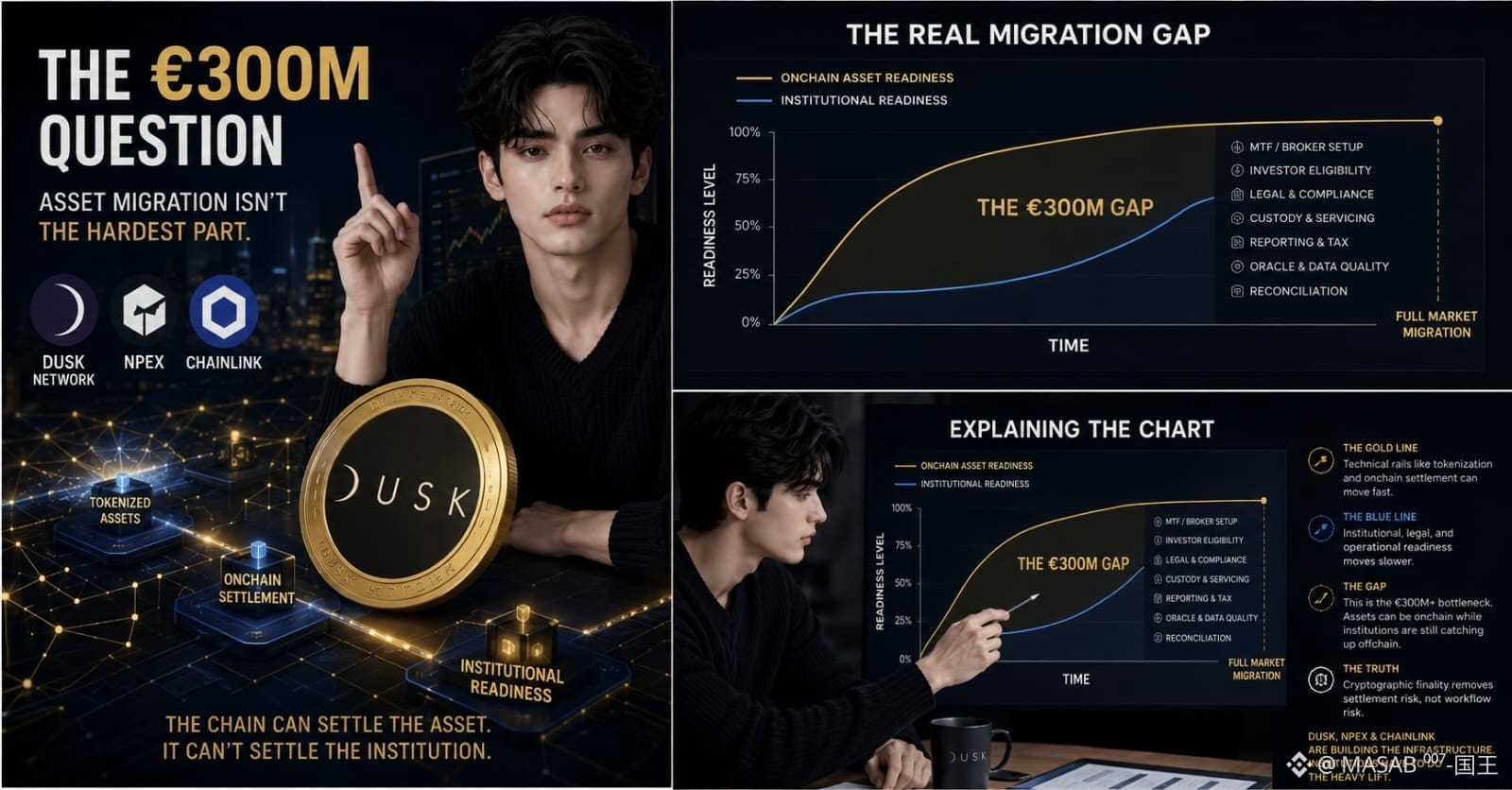
42
25
9k
·
--
Der Markt war heute Abend ruhig, also bin ich stattdessen dazu übergegangen, DuskEVM-Material erneut zu lesen, statt die Charts zu studieren. Ich habe ständig die Formulierung „vertrauliche EVM-Workflows“ gesehen, und zunächst habe ich das so verstanden, dass die EVM selbst irgendwie finanzielle Aktivitäten Ende-zu-Ende privat machen könnte.
Also habe ich mich tatsächlich mit dem Mechanismus beschäftigt.
DuskEVM ist die EVM-kompatible Anwendungsschicht und eröffnet Solidity-Entwicklern einen vertrauten Weg in Dusk. Der interessante Teil ist Hedger, das Privacy-Modul mit homomorpher Verschlüsselung und Zero-Knowledge-Proofs für überprüfbare Privatsphäre.
Hier ist die Unterscheidung, die meiner Meinung nach leicht übersehen wird: Hedger kann private Berechnungen überprüfbar machen; es macht nicht automatisch jede Eingabe, jede Abhängigkeit oder jede institutionelle Entscheidung per se zuverlässig.
Das ist trotzdem bedeutsam. Homomorphe Verschlüsselung kann ermöglichen, dass geschützte Daten verarbeitet werden, ohne die zugrunde liegenden Werte offenzulegen, während ZK-Prof s Belege darüber liefern können, dass eine Berechnung oder Gültigkeit nachgewiesen ist. Für reguliertes Finanzwesen hat diese Kombination einen klaren Wert: weniger Offenlegung, ohne die Nachvollziehbarkeit aufzugeben.
Aber anfangs dachte ich, diese Unterscheidung sei eher pedantisch.
Das ist nicht so. Kryptografische Korrektheit und institutionelle Korrektheit sind unterschiedliche Vertrauensmodelle. Ein Beweis kann zeigen, dass eine Operation definierte Regeln befolgt hat. Er kann jedoch nicht wissen, ob diese Regeln sinnvoll waren, ob eine externe Datenquelle wahrheitsgemäß war, oder ob eine autorisierte finanzielle Entscheidung wirtschaftlich klug war.
Das Branding kann diese Ebenen näher zusammenrücken lassen, als sie es tatsächlich sind.
Ich sage nicht, dass das einzigartig für DuskEVM ist. Die meisten ernsthaften Finanz-Infrastrukturen kombinieren mathematische Garantien mit Annahmen außerhalb der Beweisgrenze.
Die eigentliche Frage lautet: Was passiert, wenn die Transaktionswerte groß genug werden, dass jemand versucht, die schwächere Schicht anzugreifen?
Das kann ich aus der Architektur allein nicht ehrlich beantworten.
Der Reiter „Dokumentation“ ist immer noch offen. Ich lese ihn wahrscheinlich morgen wieder, weil „vertraulich“ mich jetzt fragen lässt: vertraulich vor wem, und bewiesen für was?
@Dusk_Foundation $DUSK #dusk
{future}(DUSKUSDT)
Der Markt war heute Abend ruhig, also bin ich stattdessen dazu übergegangen, DuskEVM-Material erneut zu lesen, statt die Charts zu studieren. Ich habe ständig die Formulierung „vertrauliche EVM-Workflows“ gesehen, und zunächst habe ich das so verstanden, dass die EVM selbst irgendwie finanzielle Aktivitäten Ende-zu-Ende privat machen könnte.
Also habe ich mich tatsächlich mit dem Mechanismus beschäftigt.
DuskEVM ist die EVM-kompatible Anwendungsschicht und eröffnet Solidity-Entwicklern einen vertrauten Weg in Dusk. Der interessante Teil ist Hedger, das Privacy-Modul mit homomorpher Verschlüsselung und Zero-Knowledge-Proofs für überprüfbare Privatsphäre.
Hier ist die Unterscheidung, die meiner Meinung nach leicht übersehen wird: Hedger kann private Berechnungen überprüfbar machen; es macht nicht automatisch jede Eingabe, jede Abhängigkeit oder jede institutionelle Entscheidung per se zuverlässig.
Das ist trotzdem bedeutsam. Homomorphe Verschlüsselung kann ermöglichen, dass geschützte Daten verarbeitet werden, ohne die zugrunde liegenden Werte offenzulegen, während ZK-Prof s Belege darüber liefern können, dass eine Berechnung oder Gültigkeit nachgewiesen ist. Für reguliertes Finanzwesen hat diese Kombination einen klaren Wert: weniger Offenlegung, ohne die Nachvollziehbarkeit aufzugeben.
Aber anfangs dachte ich, diese Unterscheidung sei eher pedantisch.
Das ist nicht so. Kryptografische Korrektheit und institutionelle Korrektheit sind unterschiedliche Vertrauensmodelle. Ein Beweis kann zeigen, dass eine Operation definierte Regeln befolgt hat. Er kann jedoch nicht wissen, ob diese Regeln sinnvoll waren, ob eine externe Datenquelle wahrheitsgemäß war, oder ob eine autorisierte finanzielle Entscheidung wirtschaftlich klug war.
Das Branding kann diese Ebenen näher zusammenrücken lassen, als sie es tatsächlich sind.
Ich sage nicht, dass das einzigartig für DuskEVM ist. Die meisten ernsthaften Finanz-Infrastrukturen kombinieren mathematische Garantien mit Annahmen außerhalb der Beweisgrenze.
Die eigentliche Frage lautet: Was passiert, wenn die Transaktionswerte groß genug werden, dass jemand versucht, die schwächere Schicht anzugreifen?
Das kann ich aus der Architektur allein nicht ehrlich beantworten.
Der Reiter „Dokumentation“ ist immer noch offen. Ich lese ihn wahrscheinlich morgen wieder, weil „vertraulich“ mich jetzt fragen lässt: vertraulich vor wem, und bewiesen für was?
@Dusk $DUSK #dusk
Also habe ich mich tatsächlich mit dem Mechanismus beschäftigt.
DuskEVM ist die EVM-kompatible Anwendungsschicht und eröffnet Solidity-Entwicklern einen vertrauten Weg in Dusk. Der interessante Teil ist Hedger, das Privacy-Modul mit homomorpher Verschlüsselung und Zero-Knowledge-Proofs für überprüfbare Privatsphäre.
Hier ist die Unterscheidung, die meiner Meinung nach leicht übersehen wird: Hedger kann private Berechnungen überprüfbar machen; es macht nicht automatisch jede Eingabe, jede Abhängigkeit oder jede institutionelle Entscheidung per se zuverlässig.
Das ist trotzdem bedeutsam. Homomorphe Verschlüsselung kann ermöglichen, dass geschützte Daten verarbeitet werden, ohne die zugrunde liegenden Werte offenzulegen, während ZK-Prof s Belege darüber liefern können, dass eine Berechnung oder Gültigkeit nachgewiesen ist. Für reguliertes Finanzwesen hat diese Kombination einen klaren Wert: weniger Offenlegung, ohne die Nachvollziehbarkeit aufzugeben.
Aber anfangs dachte ich, diese Unterscheidung sei eher pedantisch.
Das ist nicht so. Kryptografische Korrektheit und institutionelle Korrektheit sind unterschiedliche Vertrauensmodelle. Ein Beweis kann zeigen, dass eine Operation definierte Regeln befolgt hat. Er kann jedoch nicht wissen, ob diese Regeln sinnvoll waren, ob eine externe Datenquelle wahrheitsgemäß war, oder ob eine autorisierte finanzielle Entscheidung wirtschaftlich klug war.
Das Branding kann diese Ebenen näher zusammenrücken lassen, als sie es tatsächlich sind.
Ich sage nicht, dass das einzigartig für DuskEVM ist. Die meisten ernsthaften Finanz-Infrastrukturen kombinieren mathematische Garantien mit Annahmen außerhalb der Beweisgrenze.
Die eigentliche Frage lautet: Was passiert, wenn die Transaktionswerte groß genug werden, dass jemand versucht, die schwächere Schicht anzugreifen?
Das kann ich aus der Architektur allein nicht ehrlich beantworten.
Der Reiter „Dokumentation“ ist immer noch offen. Ich lese ihn wahrscheinlich morgen wieder, weil „vertraulich“ mich jetzt fragen lässt: vertraulich vor wem, und bewiesen für was?
@Dusk $DUSK #dusk
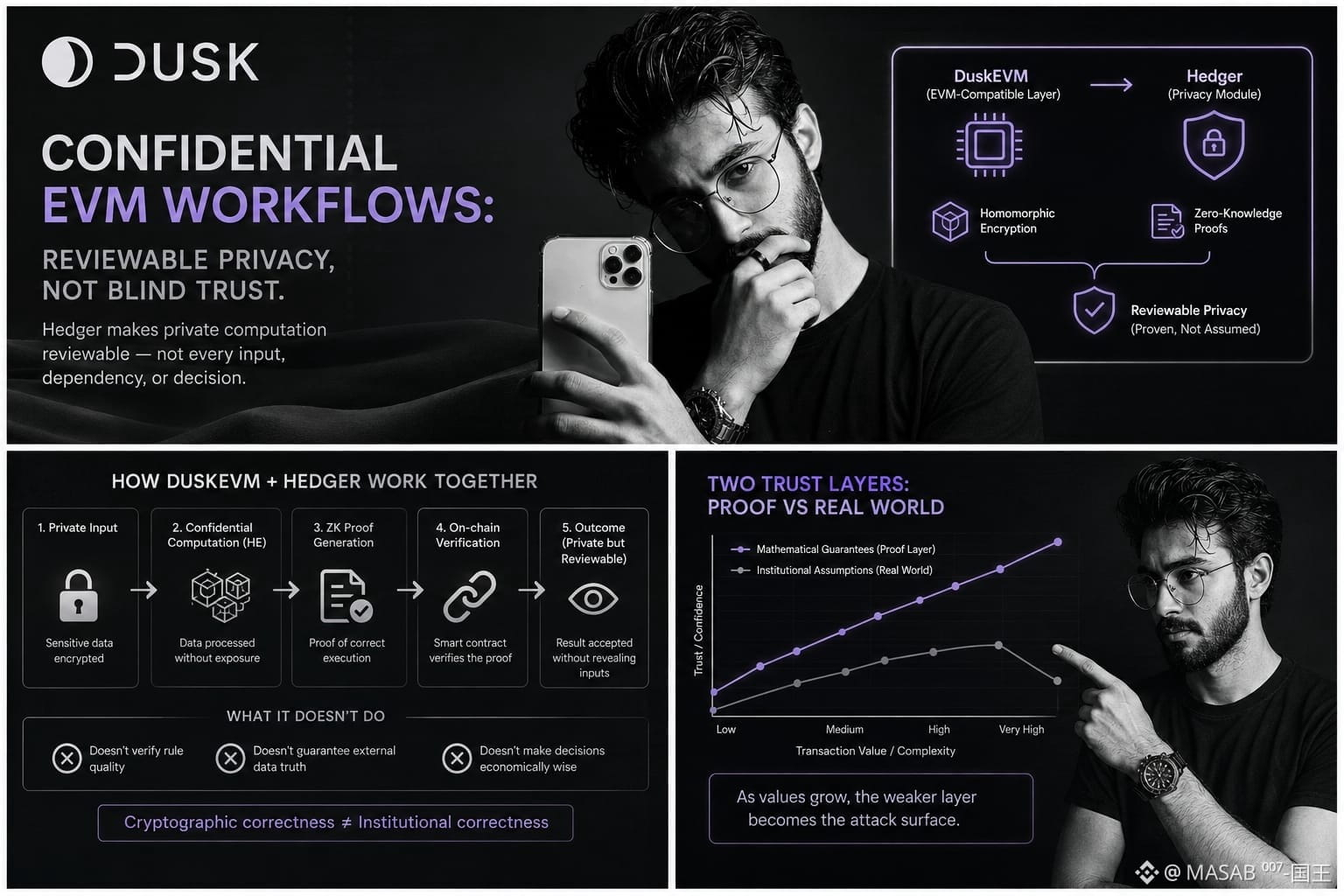
30
31
5.3k
·
--
Verifiziert
Ein Feueralarm wirkt beruhigend an der Wand. Selten denkt man darüber nach, wer überhaupt berechtigt ist, ihn zu betätigen, ob diese Personen verfügbar sind oder was passiert, wenn eine falsche Person ihn als Erste erreicht.
So begann ich darüber nachzudenken, wie Babylons 3-von-5-Notfallrat funktioniert. Die Zahl klingt vernünftig. Kein einzelnes Mitglied kann allein handeln, während drei Personen noch reagieren können, bevor ein technischer Fehler unumkehrbar wird. Auf dem Papier erhält BABY sowohl Tempo als auch Zurückhaltung.
Doch die Schwelle zählt nur Unterschriften. Sie kann keine Unabhängigkeit messen.
Drei Ratsmitglieder können getrennte Schlüssel besitzen und dennoch von demselben Cloud-Anbieter, Sicherheitsunternehmen, derselben Rechtszuständigkeit oder demselben internen Kommunikationskanal abhängen. Unter normalen Bedingungen bleibt diese Verbindung unsichtbar. Unter Druck kann sie fünf vermeintliche Entscheidungsträger in eine einzige operative Einheit verwandeln. Eine gemeinsame Störung könnte die Intervention blockieren. Ein gemeinsamer Kompromiss könnte sie autorisieren.
Die meisten Menschen beurteilen den Rat danach, ob drei Unterschriften sicherer sind als eine. Ich glaube, die schwierigere Frage ist, ob diese drei Unterschriften unabhängig voneinander ausfallen können. Hat Babylon getestet, ob Mitglieder ohne Vorwarnung offline gehen? Werden Notfallmaßnahmen danach öffentlich erklärt? Kann die Gemeinschaft erkennen, ob Babylons Krisenebene stärker wird – oder nur bequemer zu benutzen?
Ein Notfallrat sollte sich unbequem anfühlen. Langsam genug, um Nachweise zu verlangen, aber vorbereitet genug zu handeln, wenn das Warten gefährlich wird.
Ich mache mir keine Sorgen, dass Babylon einen Notfallumschalter hat. Ich beobachte, ob fünf Schlüssel fünf tatsächlich unabhängige Verteidigungen darstellen – oder eine Entscheidung, die fünf verschiedene Namen trägt.
@babylonlabs_io #baby $BABY
Ein Feueralarm wirkt beruhigend an der Wand. Selten denkt man darüber nach, wer überhaupt berechtigt ist, ihn zu betätigen, ob diese Personen verfügbar sind oder was passiert, wenn eine falsche Person ihn als Erste erreicht.
So begann ich darüber nachzudenken, wie Babylons 3-von-5-Notfallrat funktioniert. Die Zahl klingt vernünftig. Kein einzelnes Mitglied kann allein handeln, während drei Personen noch reagieren können, bevor ein technischer Fehler unumkehrbar wird. Auf dem Papier erhält BABY sowohl Tempo als auch Zurückhaltung.
Doch die Schwelle zählt nur Unterschriften. Sie kann keine Unabhängigkeit messen.
Drei Ratsmitglieder können getrennte Schlüssel besitzen und dennoch von demselben Cloud-Anbieter, Sicherheitsunternehmen, derselben Rechtszuständigkeit oder demselben internen Kommunikationskanal abhängen. Unter normalen Bedingungen bleibt diese Verbindung unsichtbar. Unter Druck kann sie fünf vermeintliche Entscheidungsträger in eine einzige operative Einheit verwandeln. Eine gemeinsame Störung könnte die Intervention blockieren. Ein gemeinsamer Kompromiss könnte sie autorisieren.
Die meisten Menschen beurteilen den Rat danach, ob drei Unterschriften sicherer sind als eine. Ich glaube, die schwierigere Frage ist, ob diese drei Unterschriften unabhängig voneinander ausfallen können. Hat Babylon getestet, ob Mitglieder ohne Vorwarnung offline gehen? Werden Notfallmaßnahmen danach öffentlich erklärt? Kann die Gemeinschaft erkennen, ob Babylons Krisenebene stärker wird – oder nur bequemer zu benutzen?
Ein Notfallrat sollte sich unbequem anfühlen. Langsam genug, um Nachweise zu verlangen, aber vorbereitet genug zu handeln, wenn das Warten gefährlich wird.
Ich mache mir keine Sorgen, dass Babylon einen Notfallumschalter hat. Ich beobachte, ob fünf Schlüssel fünf tatsächlich unabhängige Verteidigungen darstellen – oder eine Entscheidung, die fünf verschiedene Namen trägt.
@BabylonLabs_io #baby $BABY
So begann ich darüber nachzudenken, wie Babylons 3-von-5-Notfallrat funktioniert. Die Zahl klingt vernünftig. Kein einzelnes Mitglied kann allein handeln, während drei Personen noch reagieren können, bevor ein technischer Fehler unumkehrbar wird. Auf dem Papier erhält BABY sowohl Tempo als auch Zurückhaltung.
Doch die Schwelle zählt nur Unterschriften. Sie kann keine Unabhängigkeit messen.
Drei Ratsmitglieder können getrennte Schlüssel besitzen und dennoch von demselben Cloud-Anbieter, Sicherheitsunternehmen, derselben Rechtszuständigkeit oder demselben internen Kommunikationskanal abhängen. Unter normalen Bedingungen bleibt diese Verbindung unsichtbar. Unter Druck kann sie fünf vermeintliche Entscheidungsträger in eine einzige operative Einheit verwandeln. Eine gemeinsame Störung könnte die Intervention blockieren. Ein gemeinsamer Kompromiss könnte sie autorisieren.
Die meisten Menschen beurteilen den Rat danach, ob drei Unterschriften sicherer sind als eine. Ich glaube, die schwierigere Frage ist, ob diese drei Unterschriften unabhängig voneinander ausfallen können. Hat Babylon getestet, ob Mitglieder ohne Vorwarnung offline gehen? Werden Notfallmaßnahmen danach öffentlich erklärt? Kann die Gemeinschaft erkennen, ob Babylons Krisenebene stärker wird – oder nur bequemer zu benutzen?
Ein Notfallrat sollte sich unbequem anfühlen. Langsam genug, um Nachweise zu verlangen, aber vorbereitet genug zu handeln, wenn das Warten gefährlich wird.
Ich mache mir keine Sorgen, dass Babylon einen Notfallumschalter hat. Ich beobachte, ob fünf Schlüssel fünf tatsächlich unabhängige Verteidigungen darstellen – oder eine Entscheidung, die fünf verschiedene Namen trägt.
@BabylonLabs_io #baby $BABY
12
11
4.7k
Anmelden und weiter Inhalte entdecken
Krypto-Nutzer weltweit auf Binance Square kennenlernen
⚡️ Bleib in Sachen Krypto stets am Puls.
💬 Die weltgrößte Kryptobörse vertraut darauf.
👍 Erhalte verlässliche Einblicke von verifizierten Creators.
E-Mail-Adresse/Telefonnummer
Trendthemen
BinanceLaunchesBinanceIntelligence
114,463 Aufrufe
1,208 Kommentare
🚨 BINANCE HAT KI DIREKT IN DIE BÖRSE INTEGRIERT — UND DAS KÖNNTE DEN PRIVATEN HANDEL VERÄNDERN.
Binance hat offiziell Binance Intelligence eingeführt, eine neue KI-Ebene, die in das Binance-Ökosystem integriert ist. Sie vereint drei Produkte:
Binance AI für den Alltag,
Binance AI Pro für automatisierte Trading-Workflows
und Agent OS für Entwickler, die Finanzagenten entwickeln.
Was Trader interessieren sollte?
Binance AI kann Marktbriefings, intelligente Warnmeldungen, PnL-Zusammenfassungen und personalisierte Informationen bereitstellen. AI Pro wiederum soll eine Trading-Idee in einfachem Englisch in einen visuellen Strategie-Workflow verwandeln.
Das bedeutet, dass es in der nächsten Phase des Börsenwettbewerbs vielleicht nicht mehr um Folgendes geht:
niedrigste Gebühren vs. größte Liquidität.
Sondern darum:
Wer bietet Tradern die beste KI-Ausführungsebene?
Wenn Binance Intelligence tatsächlich für mehr Nutzeraktivität, automatisierte Strategien und häufigeres Trading sorgt, solltest du zuerst $BNB im Blick behalten.
KI-Nutzung ↑
→ Interaktion mit Binance ↑
→ Handelsaktivität ↑
→ Die Story rund um das Ökosystem gewinnt an Stärke.
Der Katalysator, den ich jetzt beobachten würde:
globaler Rollout + Start von AI Pro + messbare Nutzerakzeptanz.
Denn sobald KI dir nicht mehr nur sagt, was am Markt passiert …
… sondern dir hilft, den Trade selbst aufzubauen?
Dann wird das Ganze deutlich mehr als nur ein weiterer Chatbot. 👀
#binancelaunchesbinanceintelligence #EvernorthXRPTreasuryCompletesSPACMerger #ADAGains10%Above$0.27 #ETHUp70%InQ3ButLiquidityFalls #EthStakingExitQueueHits2026High
KimHotbae
·33 Likes
·39.9k Aufrufe
StriveBuys2000BTCFor$169M
3,950 Aufrufe
52 Kommentare
EvernorthXRPTreasuryCompletesSPACMerger
74,808 Aufrufe
795 Kommentare