

Ankush040490
496 Beiträge

Ankush040490
Melden
Nutzer blockieren
198 Following
3.3K+ Follower
244 Like gegeben
Beiträge
Alle
Live
PINNED
·
--
[claim red box 📦📦📦📦📦📦](https://safu.im/wjkpVnUT?utm_medium=web_share_copy)
claim red box 📦📦📦📦📦📦
49
7
129
·
--
Bullisch
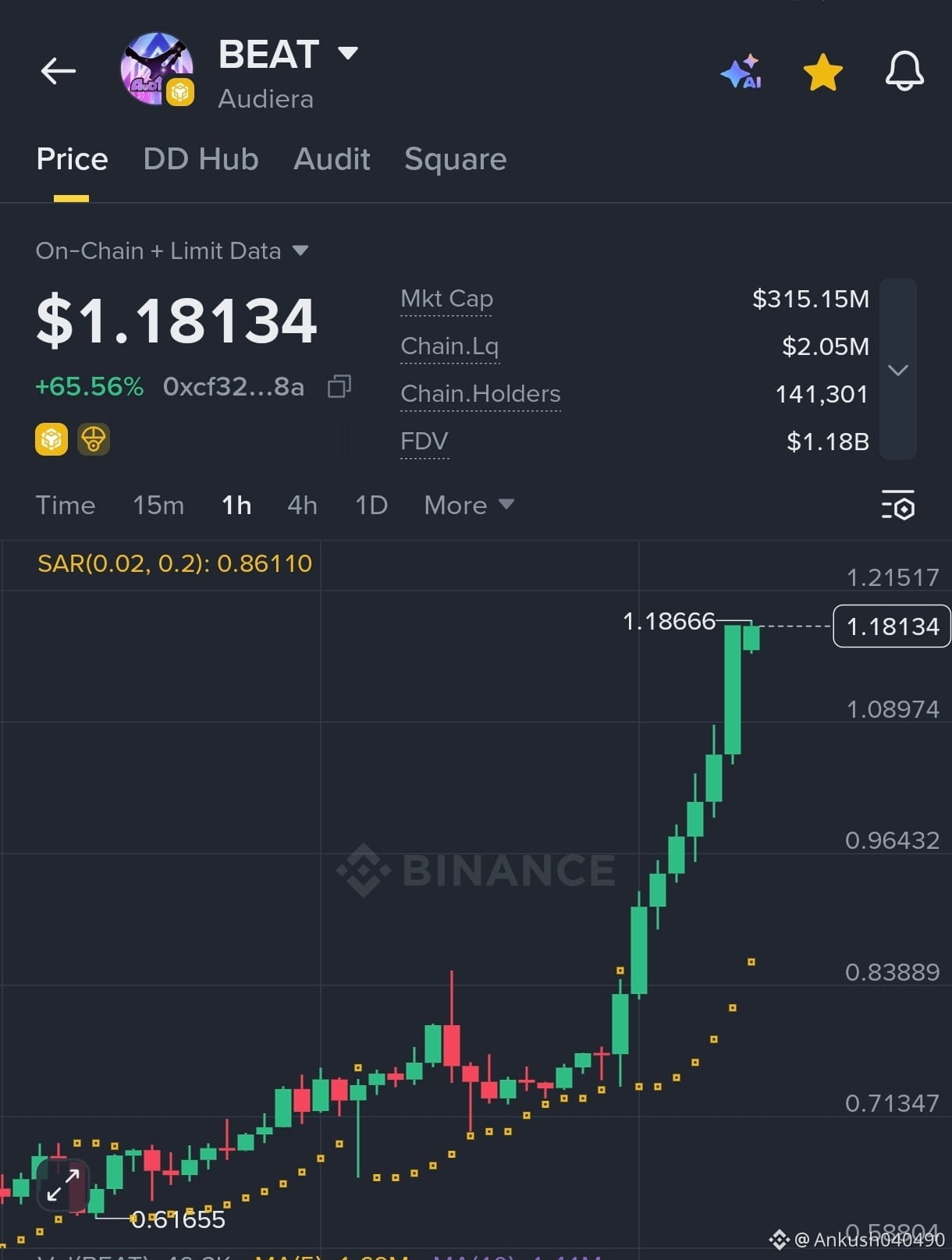
$BEAT hat wieder spekulative Aufmerksamkeit erregt, während Trader zurück zu kleineren AI- und infrastrukturellen Narrativen rotieren. Das jüngste Preisverhalten des Tokens deutet darauf hin, dass Käufer in Zeiten der Schwäche zuschlagen, anstatt schwere Rückgänge zuzulassen, was oft ein Zeichen dafür ist, dass Marktteilnehmer sich frühzeitig für eine stärkere Bewegung positionieren, falls sich der Momentum im breiteren Markt weiter verbessert.
Was $BEAT gerade interessant macht, ist die wachsende soziale Aktivität rund um das Projekt in Kombination mit steigender Volatilität. In der aktuellen Marktumgebung können Tokens mit aktiven Communities und plötzlichen Liquiditätszuflüssen in kurzen Zeiträumen aggressiv steigen, insbesondere wenn Bitcoin stabil bleibt und die Stimmung bei Altcoins sich verbessert. Trader scheinen auf eine Ausbruchszone zu achten, die eine weitere Momentum-Welle auslösen könnte.
Zur gleichen Zeit bleibt $BEAT jedoch ein hochriskantes Spiel. Wie viele Low- bis Mid-Cap-Tokens können Preisschwankungen sehr schnell extrem werden, und sentimentgetriebene Rallyes sehen oft schnelle Rückzüge, wenn das Volumen nachlässt. Die Nachhaltigkeit wird davon abhängen, ob das Projekt weiterhin Aufmerksamkeit, Partnerschaften oder Ökosystemwachstum aufbauen kann, anstatt sich nur auf Spekulation zu verlassen.
Für den Moment deutet die Chartstruktur auf vorsichtigen Optimismus hin, wobei Trader die Volumenexpansion und die Marktstimmung genau beobachten, um die Bestätigung der nächsten großen Bewegung abzuwarten.
#writetoearn #blockchain #Layer2
$BEAT hat wieder spekulative Aufmerksamkeit erregt, während Trader zurück zu kleineren AI- und infrastrukturellen Narrativen rotieren. Das jüngste Preisverhalten des Tokens deutet darauf hin, dass Käufer in Zeiten der Schwäche zuschlagen, anstatt schwere Rückgänge zuzulassen, was oft ein Zeichen dafür ist, dass Marktteilnehmer sich frühzeitig für eine stärkere Bewegung positionieren, falls sich der Momentum im breiteren Markt weiter verbessert.
Was $BEAT gerade interessant macht, ist die wachsende soziale Aktivität rund um das Projekt in Kombination mit steigender Volatilität. In der aktuellen Marktumgebung können Tokens mit aktiven Communities und plötzlichen Liquiditätszuflüssen in kurzen Zeiträumen aggressiv steigen, insbesondere wenn Bitcoin stabil bleibt und die Stimmung bei Altcoins sich verbessert. Trader scheinen auf eine Ausbruchszone zu achten, die eine weitere Momentum-Welle auslösen könnte.
Zur gleichen Zeit bleibt $BEAT jedoch ein hochriskantes Spiel. Wie viele Low- bis Mid-Cap-Tokens können Preisschwankungen sehr schnell extrem werden, und sentimentgetriebene Rallyes sehen oft schnelle Rückzüge, wenn das Volumen nachlässt. Die Nachhaltigkeit wird davon abhängen, ob das Projekt weiterhin Aufmerksamkeit, Partnerschaften oder Ökosystemwachstum aufbauen kann, anstatt sich nur auf Spekulation zu verlassen.
Für den Moment deutet die Chartstruktur auf vorsichtigen Optimismus hin, wobei Trader die Volumenexpansion und die Marktstimmung genau beobachten, um die Bestätigung der nächsten großen Bewegung abzuwarten.
#writetoearn #blockchain #Layer2
Was $BEAT gerade interessant macht, ist die wachsende soziale Aktivität rund um das Projekt in Kombination mit steigender Volatilität. In der aktuellen Marktumgebung können Tokens mit aktiven Communities und plötzlichen Liquiditätszuflüssen in kurzen Zeiträumen aggressiv steigen, insbesondere wenn Bitcoin stabil bleibt und die Stimmung bei Altcoins sich verbessert. Trader scheinen auf eine Ausbruchszone zu achten, die eine weitere Momentum-Welle auslösen könnte.
Zur gleichen Zeit bleibt $BEAT jedoch ein hochriskantes Spiel. Wie viele Low- bis Mid-Cap-Tokens können Preisschwankungen sehr schnell extrem werden, und sentimentgetriebene Rallyes sehen oft schnelle Rückzüge, wenn das Volumen nachlässt. Die Nachhaltigkeit wird davon abhängen, ob das Projekt weiterhin Aufmerksamkeit, Partnerschaften oder Ökosystemwachstum aufbauen kann, anstatt sich nur auf Spekulation zu verlassen.
Für den Moment deutet die Chartstruktur auf vorsichtigen Optimismus hin, wobei Trader die Volumenexpansion und die Marktstimmung genau beobachten, um die Bestätigung der nächsten großen Bewegung abzuwarten.
#writetoearn #blockchain #Layer2
1
270
·
--
Bullisch
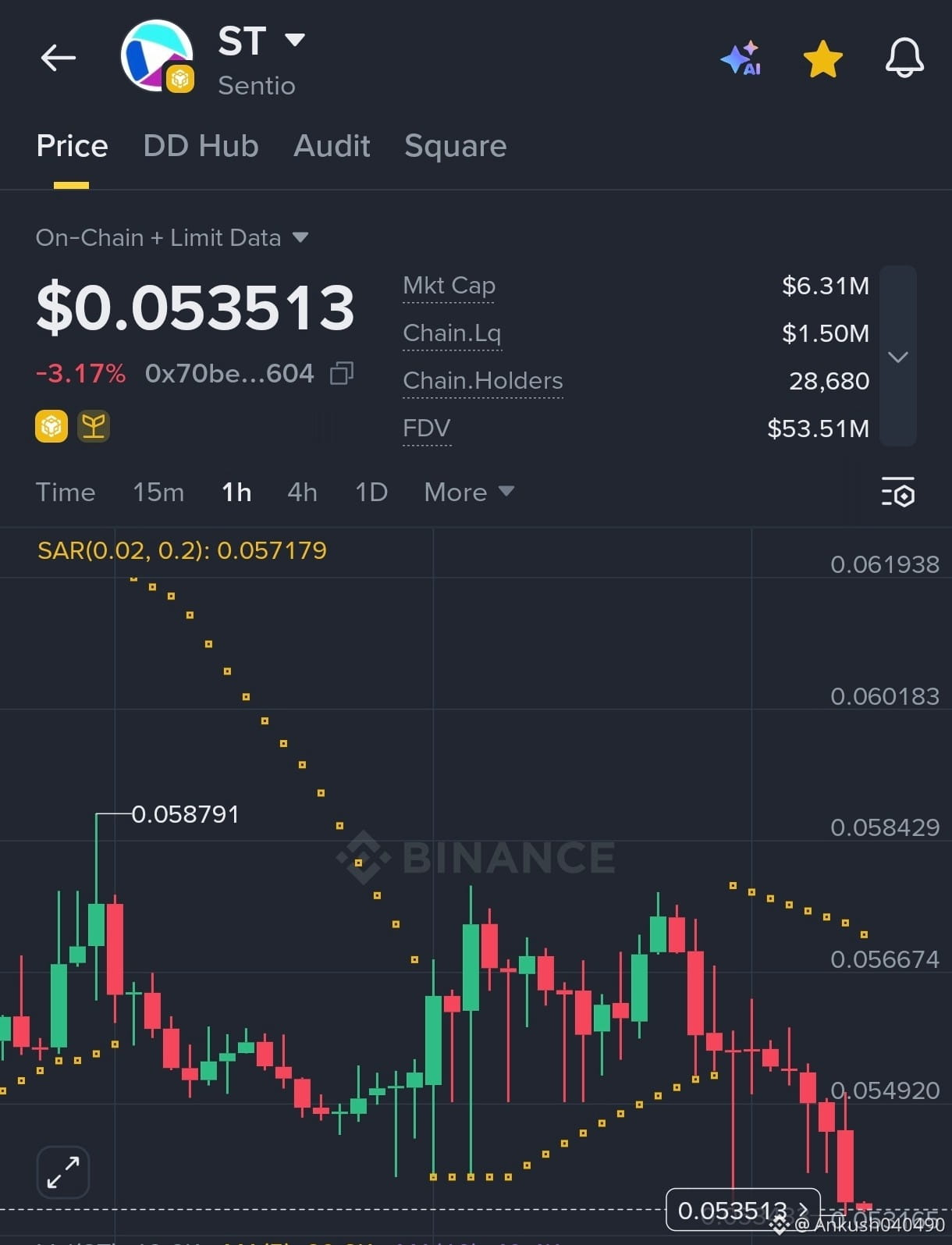
$ST zieht weiterhin die Aufmerksamkeit auf sich, während Trader sich auf Projekte konzentrieren, die mit AI-Infrastruktur, dezentralem Computing und aufkommenden On-Chain-Nutzungsnarrativen verbunden sind. Der Token hat während der jüngsten Marktvolatilität Anzeichen von Resilienz gezeigt, da Käufer wiederholt wichtige Unterstützungszonen verteidigen, anstatt ausgedehnten Rückgängen zuzulassen. Dieses Preisverhalten signalisiert oft wachsende Zuversicht von Marktteilnehmern, die mit stärkerem Aufwärtsmomentum rechnen, wenn die allgemeine Krypto-Stimmung stabil bleibt.
Ein Grund, warum $ST auf den Watchlists der Trader bleibt, ist die zunehmende Rotation zurück in Mid-Cap-Ökosysteme. Spekulatives Kapital hat begonnen, in Projekte zu fließen, die im Vergleich zu größeren, etablierten Vermögenswerten noch Spielraum für Expansion haben. Infolgedessen überwachen Momentum-Trader genau Volumenspitzen und Ausbruchsversuche rund um wichtige Widerstandsniveaus.
Das Community-Engagement rund um ST hat sich ebenfalls verbessert, was in dem aktuellen Marktzyklus, in dem die Stärke der Narrative schnelle kurzfristige Bewegungen antreiben kann, erheblich von Bedeutung ist. Wenn Bitcoin stabil bleibt und das Altcoin-Momentum weiter wächst, könnte ST von erhöhter Sichtbarkeit und erneuertem spekulativem Interesse profitieren.
Gleichzeitig bleibt die Volatilität über den Markt hinweg hoch, sodass Trader wahrscheinlich vorsichtig bezüglich scharfer intraday Schwankungen bleiben. Für den Moment deutet die gesamte Struktur darauf hin, dass ST einer der Tokens bleibt, die es wert sind, beobachtet zu werden, während sich die Stimmung in den Bereichen AI und Infrastruktur weiterentwickelt.
#writetoearn #Layer2 #blockchain
$ST zieht weiterhin die Aufmerksamkeit auf sich, während Trader sich auf Projekte konzentrieren, die mit AI-Infrastruktur, dezentralem Computing und aufkommenden On-Chain-Nutzungsnarrativen verbunden sind. Der Token hat während der jüngsten Marktvolatilität Anzeichen von Resilienz gezeigt, da Käufer wiederholt wichtige Unterstützungszonen verteidigen, anstatt ausgedehnten Rückgängen zuzulassen. Dieses Preisverhalten signalisiert oft wachsende Zuversicht von Marktteilnehmern, die mit stärkerem Aufwärtsmomentum rechnen, wenn die allgemeine Krypto-Stimmung stabil bleibt.
Ein Grund, warum $ST auf den Watchlists der Trader bleibt, ist die zunehmende Rotation zurück in Mid-Cap-Ökosysteme. Spekulatives Kapital hat begonnen, in Projekte zu fließen, die im Vergleich zu größeren, etablierten Vermögenswerten noch Spielraum für Expansion haben. Infolgedessen überwachen Momentum-Trader genau Volumenspitzen und Ausbruchsversuche rund um wichtige Widerstandsniveaus.
Das Community-Engagement rund um ST hat sich ebenfalls verbessert, was in dem aktuellen Marktzyklus, in dem die Stärke der Narrative schnelle kurzfristige Bewegungen antreiben kann, erheblich von Bedeutung ist. Wenn Bitcoin stabil bleibt und das Altcoin-Momentum weiter wächst, könnte ST von erhöhter Sichtbarkeit und erneuertem spekulativem Interesse profitieren.
Gleichzeitig bleibt die Volatilität über den Markt hinweg hoch, sodass Trader wahrscheinlich vorsichtig bezüglich scharfer intraday Schwankungen bleiben. Für den Moment deutet die gesamte Struktur darauf hin, dass ST einer der Tokens bleibt, die es wert sind, beobachtet zu werden, während sich die Stimmung in den Bereichen AI und Infrastruktur weiterentwickelt.
#writetoearn #Layer2 #blockchain
Ein Grund, warum $ST auf den Watchlists der Trader bleibt, ist die zunehmende Rotation zurück in Mid-Cap-Ökosysteme. Spekulatives Kapital hat begonnen, in Projekte zu fließen, die im Vergleich zu größeren, etablierten Vermögenswerten noch Spielraum für Expansion haben. Infolgedessen überwachen Momentum-Trader genau Volumenspitzen und Ausbruchsversuche rund um wichtige Widerstandsniveaus.
Das Community-Engagement rund um ST hat sich ebenfalls verbessert, was in dem aktuellen Marktzyklus, in dem die Stärke der Narrative schnelle kurzfristige Bewegungen antreiben kann, erheblich von Bedeutung ist. Wenn Bitcoin stabil bleibt und das Altcoin-Momentum weiter wächst, könnte ST von erhöhter Sichtbarkeit und erneuertem spekulativem Interesse profitieren.
Gleichzeitig bleibt die Volatilität über den Markt hinweg hoch, sodass Trader wahrscheinlich vorsichtig bezüglich scharfer intraday Schwankungen bleiben. Für den Moment deutet die gesamte Struktur darauf hin, dass ST einer der Tokens bleibt, die es wert sind, beobachtet zu werden, während sich die Stimmung in den Bereichen AI und Infrastruktur weiterentwickelt.
#writetoearn #Layer2 #blockchain
1
1.3k
·
--
Bullisch
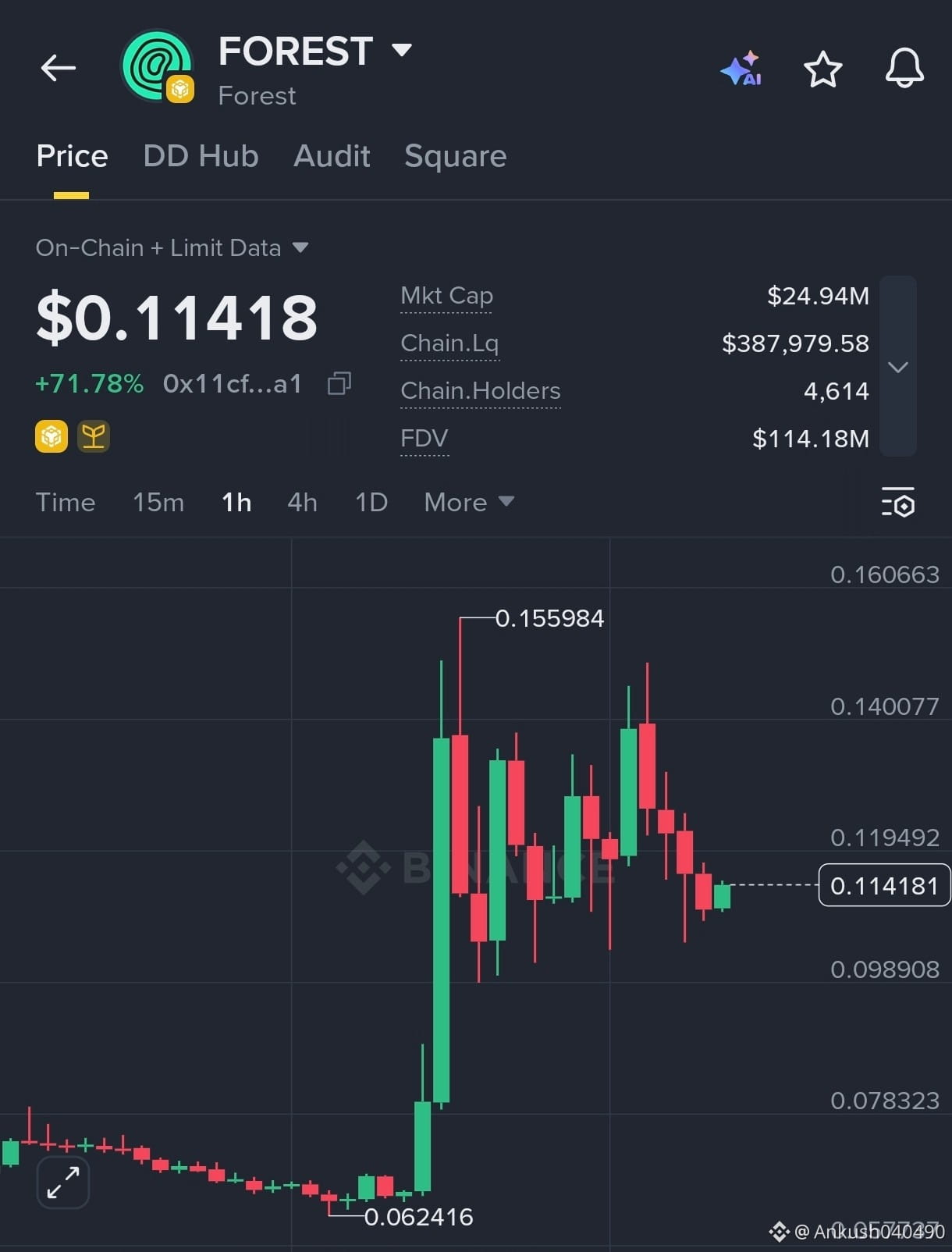
$FOREST zieht aktuell die Aufmerksamkeit auf sich, während Händler wieder in kleinere Kappen-Narrative eintauchen, die mit KI, Infrastruktur und experimentellen Ökosystemstrategien verbunden sind. Die jüngsten Aktivitäten des Tokens deuten darauf hin, dass Käufer während Rücksetzern aggressiver werden, was oft auf wachsende Zuversicht und nicht nur auf kurzfristige Spekulation hinweist. Der Momentum hat sich im Vergleich zu früheren Konsolidierungsphasen verbessert, und die Marktteilnehmer scheinen auf eine Fortsetzung des Ausbruchs zu achten, wenn die allgemeine Krypto-Stimmung unterstützend bleibt.
Eine der entscheidenden Dinge, die $FOREST momentan helfen, ist der Anstieg der sozialen Diskussion und der spekulativen Positionierung rund um aufstrebende Ökosystem-Tokens. In solchen Märkten kann Sichtbarkeit zu einem wichtigen Katalysator werden, insbesondere wenn die Liquidität in niedrigere Kappen-Assets fließt, die nach schnellerem Aufwärtspotenzial suchen. Wenn das Volumen weiterhin stetig zunimmt, könnten Händler beginnen, höhere Widerstandsbereiche ins Visier zu nehmen und nach Fortsetzungs-Setups zu suchen, anstatt schnelle Flips zu machen.
Gleichzeitig bleibt die Volatilität hoch, was bedeutet, dass scharfe Rückzüge nach schnellen Bewegungen weiterhin möglich sind. Viele Händler warten wahrscheinlich auf Bestätigung durch stärkeres Volumen und eine nachhaltige Preisstruktur, bevor sie vollständig bullish werden. Wenn Bitcoin und der breitere Altcoin-Markt stabil bleiben, könnte FOREST weiterhin von einem momentumgetriebenen Interesse über den kurzfristigen Zeitraum profitieren.
Im Moment sieht die Chartstruktur konstruktiver aus als zuvor, und die Stimmung rund um $FOREST scheint sich allmählich zu verbessern, während die spekulative Appetite zurück auf den Markt kommt.
#writetoearn #blockchain #Layer2
$FOREST zieht aktuell die Aufmerksamkeit auf sich, während Händler wieder in kleinere Kappen-Narrative eintauchen, die mit KI, Infrastruktur und experimentellen Ökosystemstrategien verbunden sind. Die jüngsten Aktivitäten des Tokens deuten darauf hin, dass Käufer während Rücksetzern aggressiver werden, was oft auf wachsende Zuversicht und nicht nur auf kurzfristige Spekulation hinweist. Der Momentum hat sich im Vergleich zu früheren Konsolidierungsphasen verbessert, und die Marktteilnehmer scheinen auf eine Fortsetzung des Ausbruchs zu achten, wenn die allgemeine Krypto-Stimmung unterstützend bleibt.
Eine der entscheidenden Dinge, die $FOREST momentan helfen, ist der Anstieg der sozialen Diskussion und der spekulativen Positionierung rund um aufstrebende Ökosystem-Tokens. In solchen Märkten kann Sichtbarkeit zu einem wichtigen Katalysator werden, insbesondere wenn die Liquidität in niedrigere Kappen-Assets fließt, die nach schnellerem Aufwärtspotenzial suchen. Wenn das Volumen weiterhin stetig zunimmt, könnten Händler beginnen, höhere Widerstandsbereiche ins Visier zu nehmen und nach Fortsetzungs-Setups zu suchen, anstatt schnelle Flips zu machen.
Gleichzeitig bleibt die Volatilität hoch, was bedeutet, dass scharfe Rückzüge nach schnellen Bewegungen weiterhin möglich sind. Viele Händler warten wahrscheinlich auf Bestätigung durch stärkeres Volumen und eine nachhaltige Preisstruktur, bevor sie vollständig bullish werden. Wenn Bitcoin und der breitere Altcoin-Markt stabil bleiben, könnte FOREST weiterhin von einem momentumgetriebenen Interesse über den kurzfristigen Zeitraum profitieren.
Im Moment sieht die Chartstruktur konstruktiver aus als zuvor, und die Stimmung rund um $FOREST scheint sich allmählich zu verbessern, während die spekulative Appetite zurück auf den Markt kommt.
#writetoearn #blockchain #Layer2
Eine der entscheidenden Dinge, die $FOREST momentan helfen, ist der Anstieg der sozialen Diskussion und der spekulativen Positionierung rund um aufstrebende Ökosystem-Tokens. In solchen Märkten kann Sichtbarkeit zu einem wichtigen Katalysator werden, insbesondere wenn die Liquidität in niedrigere Kappen-Assets fließt, die nach schnellerem Aufwärtspotenzial suchen. Wenn das Volumen weiterhin stetig zunimmt, könnten Händler beginnen, höhere Widerstandsbereiche ins Visier zu nehmen und nach Fortsetzungs-Setups zu suchen, anstatt schnelle Flips zu machen.
Gleichzeitig bleibt die Volatilität hoch, was bedeutet, dass scharfe Rückzüge nach schnellen Bewegungen weiterhin möglich sind. Viele Händler warten wahrscheinlich auf Bestätigung durch stärkeres Volumen und eine nachhaltige Preisstruktur, bevor sie vollständig bullish werden. Wenn Bitcoin und der breitere Altcoin-Markt stabil bleiben, könnte FOREST weiterhin von einem momentumgetriebenen Interesse über den kurzfristigen Zeitraum profitieren.
Im Moment sieht die Chartstruktur konstruktiver aus als zuvor, und die Stimmung rund um $FOREST scheint sich allmählich zu verbessern, während die spekulative Appetite zurück auf den Markt kommt.
#writetoearn #blockchain #Layer2
1
163
·
--
Bullisch
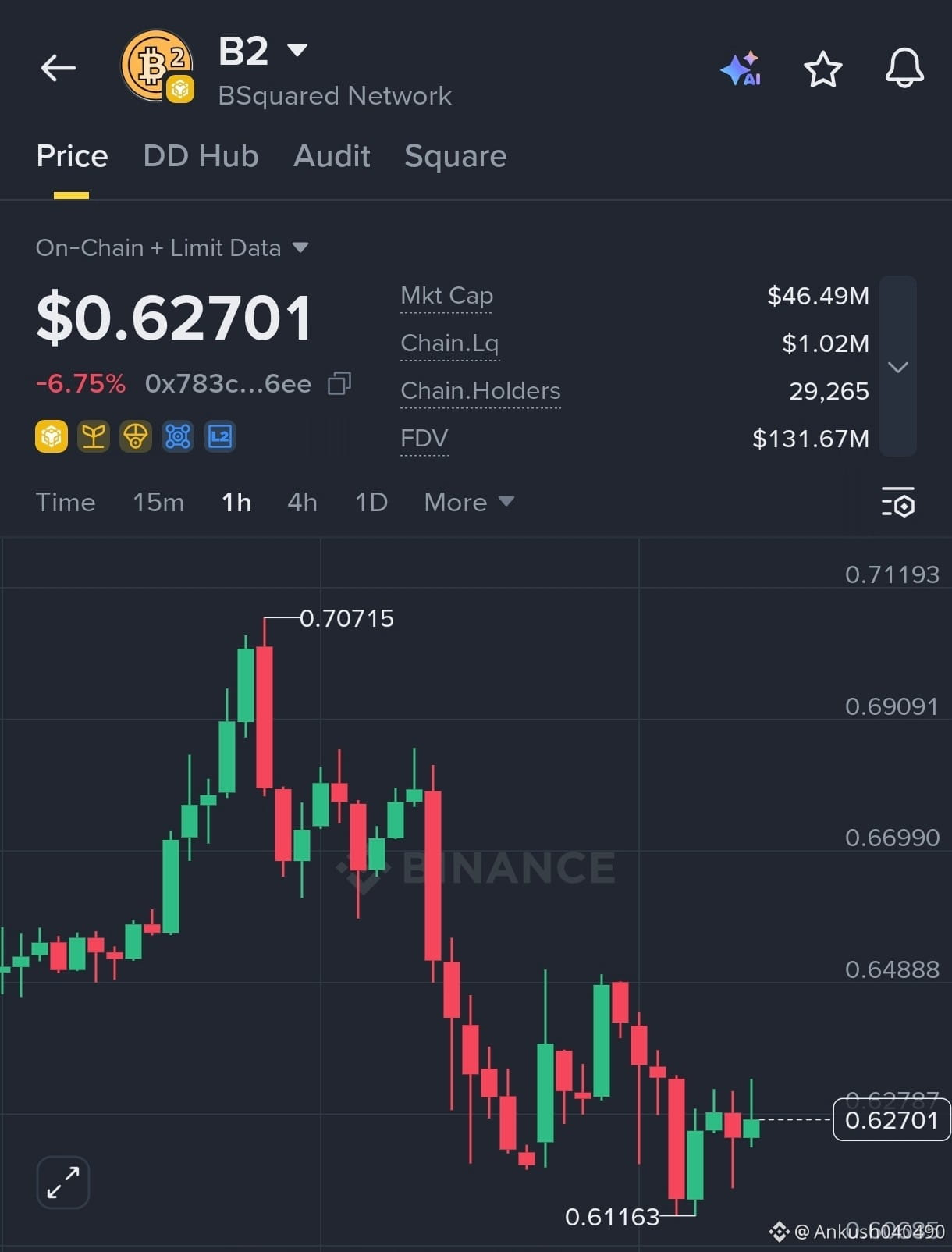
$B2 beginnt an Fahrt zu gewinnen, während Trader weiterhin in kleinere Krypto-Projekte mit starkem spekulativen Appeal und Durchbruchspotenzial rotieren. Das aktuelle Marktverhalten deutet darauf hin, dass Käufer aktiver werden während Konsolidierungsphasen, was dem Token hilft, Unterstützungsniveaus zu verteidigen, selbst während die allgemeine Marktvolatilität hoch bleibt. Solch eine Preisbewegung signalisiert oft wachsende Zuversicht von Tradern, die sich für eine stärkere Aufwärtsbewegung positionieren.
Ein Hauptgrund, warum B2 Aufmerksamkeit erregt, ist das steigende Interesse an aufstrebenden Altcoins, die schnell reagieren können, sobald Handelsvolumen und soziale Interaktionen zu steigen beginnen. Im aktuellen Marktzyklus ziehen niedrigere Marktkapitalisierungen mit sich entwickelnden Narrativen spekulatives Kapital von Tradern an, die nach höheren prozentualen Renditen suchen. Während die Sichtbarkeit von B2 zunimmt, scheinen auf Momentum fokussierte Teilnehmer genau auf einen Durchbruch über nahegelegene Widerstandsbereiche zu achten.
Das breitere Krypto-Umfeld ist derzeit auch unterstützend für risikoreichere Assets. Mit Bitcoin, das relativ stabil bleibt, und der allmählichen Verbesserung der Altcoin-Stimmung fließt Liquidität weiterhin tiefer in spekulative Sektoren des Marktes. Wenn der bullische Momentum im Krypto-Sektor intakt bleibt, könnte $B2 weiterhin von einem stärkeren Trader-Interesse und steigenden Aktivitätsniveaus profitieren. Allerdings bleibt die Volatilität ein wichtiger Faktor, was bedeutet, dass scharfe Schwankungen und schnelle, stimmungsgetriebene Umkehrungen in naher Zukunft weiterhin wahrscheinlich sind.
#writetoearn #blockchain #Layer2
$B2 beginnt an Fahrt zu gewinnen, während Trader weiterhin in kleinere Krypto-Projekte mit starkem spekulativen Appeal und Durchbruchspotenzial rotieren. Das aktuelle Marktverhalten deutet darauf hin, dass Käufer aktiver werden während Konsolidierungsphasen, was dem Token hilft, Unterstützungsniveaus zu verteidigen, selbst während die allgemeine Marktvolatilität hoch bleibt. Solch eine Preisbewegung signalisiert oft wachsende Zuversicht von Tradern, die sich für eine stärkere Aufwärtsbewegung positionieren.
Ein Hauptgrund, warum B2 Aufmerksamkeit erregt, ist das steigende Interesse an aufstrebenden Altcoins, die schnell reagieren können, sobald Handelsvolumen und soziale Interaktionen zu steigen beginnen. Im aktuellen Marktzyklus ziehen niedrigere Marktkapitalisierungen mit sich entwickelnden Narrativen spekulatives Kapital von Tradern an, die nach höheren prozentualen Renditen suchen. Während die Sichtbarkeit von B2 zunimmt, scheinen auf Momentum fokussierte Teilnehmer genau auf einen Durchbruch über nahegelegene Widerstandsbereiche zu achten.
Das breitere Krypto-Umfeld ist derzeit auch unterstützend für risikoreichere Assets. Mit Bitcoin, das relativ stabil bleibt, und der allmählichen Verbesserung der Altcoin-Stimmung fließt Liquidität weiterhin tiefer in spekulative Sektoren des Marktes. Wenn der bullische Momentum im Krypto-Sektor intakt bleibt, könnte $B2 weiterhin von einem stärkeren Trader-Interesse und steigenden Aktivitätsniveaus profitieren. Allerdings bleibt die Volatilität ein wichtiger Faktor, was bedeutet, dass scharfe Schwankungen und schnelle, stimmungsgetriebene Umkehrungen in naher Zukunft weiterhin wahrscheinlich sind.
#writetoearn #blockchain #Layer2
Ein Hauptgrund, warum B2 Aufmerksamkeit erregt, ist das steigende Interesse an aufstrebenden Altcoins, die schnell reagieren können, sobald Handelsvolumen und soziale Interaktionen zu steigen beginnen. Im aktuellen Marktzyklus ziehen niedrigere Marktkapitalisierungen mit sich entwickelnden Narrativen spekulatives Kapital von Tradern an, die nach höheren prozentualen Renditen suchen. Während die Sichtbarkeit von B2 zunimmt, scheinen auf Momentum fokussierte Teilnehmer genau auf einen Durchbruch über nahegelegene Widerstandsbereiche zu achten.
Das breitere Krypto-Umfeld ist derzeit auch unterstützend für risikoreichere Assets. Mit Bitcoin, das relativ stabil bleibt, und der allmählichen Verbesserung der Altcoin-Stimmung fließt Liquidität weiterhin tiefer in spekulative Sektoren des Marktes. Wenn der bullische Momentum im Krypto-Sektor intakt bleibt, könnte $B2 weiterhin von einem stärkeren Trader-Interesse und steigenden Aktivitätsniveaus profitieren. Allerdings bleibt die Volatilität ein wichtiger Faktor, was bedeutet, dass scharfe Schwankungen und schnelle, stimmungsgetriebene Umkehrungen in naher Zukunft weiterhin wahrscheinlich sind.
#writetoearn #blockchain #Layer2
430
·
--
Bullisch
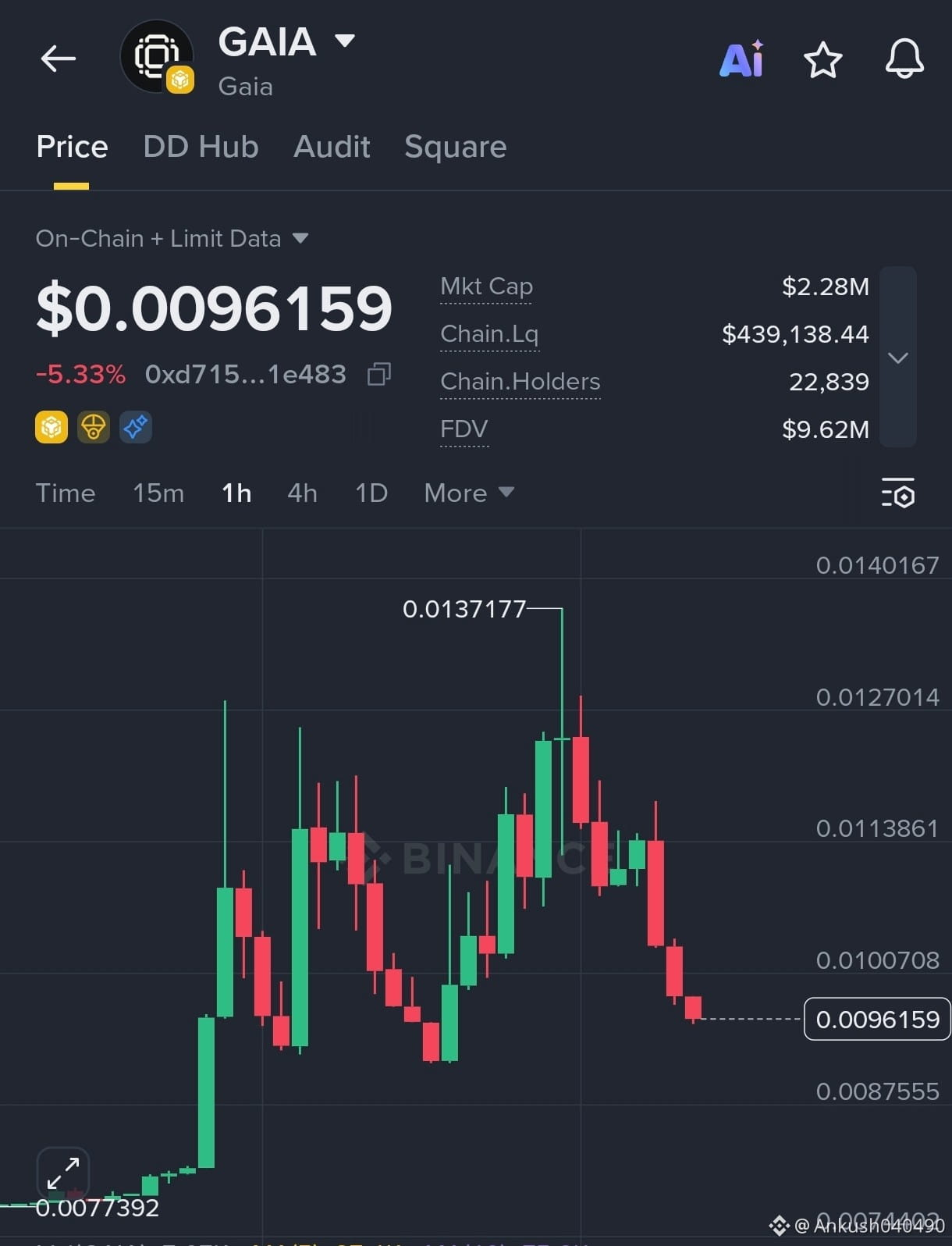
$GAIA zieht zunehmend die Aufmerksamkeit auf sich, während Trader weiterhin in kleinere AI- und infrastrukturelle Projekte rotieren, die noch Raum für Expansion haben. Das Projekt wird zunehmend in spekulativen Communities diskutiert, aufgrund seiner Positionierung rund um dezentrale Intelligenz, Automatisierung und aufkommende On-Chain-Nutzungsnarrative. In dem aktuellen Marktumfeld profitieren Token, die mit AI-Themen verbunden sind, weiterhin von starkem Momentum, und GAIA scheint diesen breiteren Trend zu reiten.
Die jüngste Preisbewegung deutet darauf hin, dass Käufer wichtige Unterstützungsbereiche verteidigen, anstatt aggressive Ausbrüche zuzulassen, was oft auf Akkumulation und nicht auf Panikverkäufe hindeutet. Diese Struktur wird normalerweise wichtig, wenn Momentum-Trader nach dem nächsten Breakout-Kandidaten suchen, nachdem größere AI-Token abgekühlt sind. Wenn das Volumen weiterhin zunimmt, könnte $GAIA stärkere Volatilität und schnellere Richtungsbewegungen auf kurze Sicht erleben.
Ein weiterer Faktor, der die Stimmung aufhellt, ist die wachsende Nachfrage nach ecosystem-getriebenen Tokens, die AI-Engagement mit Gemeinschaftsbeteiligung und spekulativem Aufwärtspotenzial kombinieren. Trader konzentrieren sich nicht mehr nur auf etablierte Namen, sie suchen aktiv nach Projekten in früheren Phasen, bei denen sich das Momentum schnell beschleunigen kann, sobald die Aufmerksamkeit in sozialen Plattformen und Krypto-Communities steigt.
Gleichzeitig bleibt die Volatilität im breiteren Markt hoch, daher ist Risikomanagement nach wie vor wichtig. Kleinere AI-Token können sich in beide Richtungen aggressiv bewegen, abhängig von Liquidität und Stimmungsschwankungen. Dennoch, solange die AI-Narrative in der Krypto aktiv bleiben, wird $GAIA wahrscheinlich auf dem Radar der auf Momentum fokussierten Trader bleiben, die nach der nächsten Expansionsphase suchen.
#writetoearn #blockchain #Layer2
$GAIA zieht zunehmend die Aufmerksamkeit auf sich, während Trader weiterhin in kleinere AI- und infrastrukturelle Projekte rotieren, die noch Raum für Expansion haben. Das Projekt wird zunehmend in spekulativen Communities diskutiert, aufgrund seiner Positionierung rund um dezentrale Intelligenz, Automatisierung und aufkommende On-Chain-Nutzungsnarrative. In dem aktuellen Marktumfeld profitieren Token, die mit AI-Themen verbunden sind, weiterhin von starkem Momentum, und GAIA scheint diesen breiteren Trend zu reiten.
Die jüngste Preisbewegung deutet darauf hin, dass Käufer wichtige Unterstützungsbereiche verteidigen, anstatt aggressive Ausbrüche zuzulassen, was oft auf Akkumulation und nicht auf Panikverkäufe hindeutet. Diese Struktur wird normalerweise wichtig, wenn Momentum-Trader nach dem nächsten Breakout-Kandidaten suchen, nachdem größere AI-Token abgekühlt sind. Wenn das Volumen weiterhin zunimmt, könnte $GAIA stärkere Volatilität und schnellere Richtungsbewegungen auf kurze Sicht erleben.
Ein weiterer Faktor, der die Stimmung aufhellt, ist die wachsende Nachfrage nach ecosystem-getriebenen Tokens, die AI-Engagement mit Gemeinschaftsbeteiligung und spekulativem Aufwärtspotenzial kombinieren. Trader konzentrieren sich nicht mehr nur auf etablierte Namen, sie suchen aktiv nach Projekten in früheren Phasen, bei denen sich das Momentum schnell beschleunigen kann, sobald die Aufmerksamkeit in sozialen Plattformen und Krypto-Communities steigt.
Gleichzeitig bleibt die Volatilität im breiteren Markt hoch, daher ist Risikomanagement nach wie vor wichtig. Kleinere AI-Token können sich in beide Richtungen aggressiv bewegen, abhängig von Liquidität und Stimmungsschwankungen. Dennoch, solange die AI-Narrative in der Krypto aktiv bleiben, wird $GAIA wahrscheinlich auf dem Radar der auf Momentum fokussierten Trader bleiben, die nach der nächsten Expansionsphase suchen.
#writetoearn #blockchain #Layer2
Die jüngste Preisbewegung deutet darauf hin, dass Käufer wichtige Unterstützungsbereiche verteidigen, anstatt aggressive Ausbrüche zuzulassen, was oft auf Akkumulation und nicht auf Panikverkäufe hindeutet. Diese Struktur wird normalerweise wichtig, wenn Momentum-Trader nach dem nächsten Breakout-Kandidaten suchen, nachdem größere AI-Token abgekühlt sind. Wenn das Volumen weiterhin zunimmt, könnte $GAIA stärkere Volatilität und schnellere Richtungsbewegungen auf kurze Sicht erleben.
Ein weiterer Faktor, der die Stimmung aufhellt, ist die wachsende Nachfrage nach ecosystem-getriebenen Tokens, die AI-Engagement mit Gemeinschaftsbeteiligung und spekulativem Aufwärtspotenzial kombinieren. Trader konzentrieren sich nicht mehr nur auf etablierte Namen, sie suchen aktiv nach Projekten in früheren Phasen, bei denen sich das Momentum schnell beschleunigen kann, sobald die Aufmerksamkeit in sozialen Plattformen und Krypto-Communities steigt.
Gleichzeitig bleibt die Volatilität im breiteren Markt hoch, daher ist Risikomanagement nach wie vor wichtig. Kleinere AI-Token können sich in beide Richtungen aggressiv bewegen, abhängig von Liquidität und Stimmungsschwankungen. Dennoch, solange die AI-Narrative in der Krypto aktiv bleiben, wird $GAIA wahrscheinlich auf dem Radar der auf Momentum fokussierten Trader bleiben, die nach der nächsten Expansionsphase suchen.
#writetoearn #blockchain #Layer2
1
2
354
·
--
Bullisch
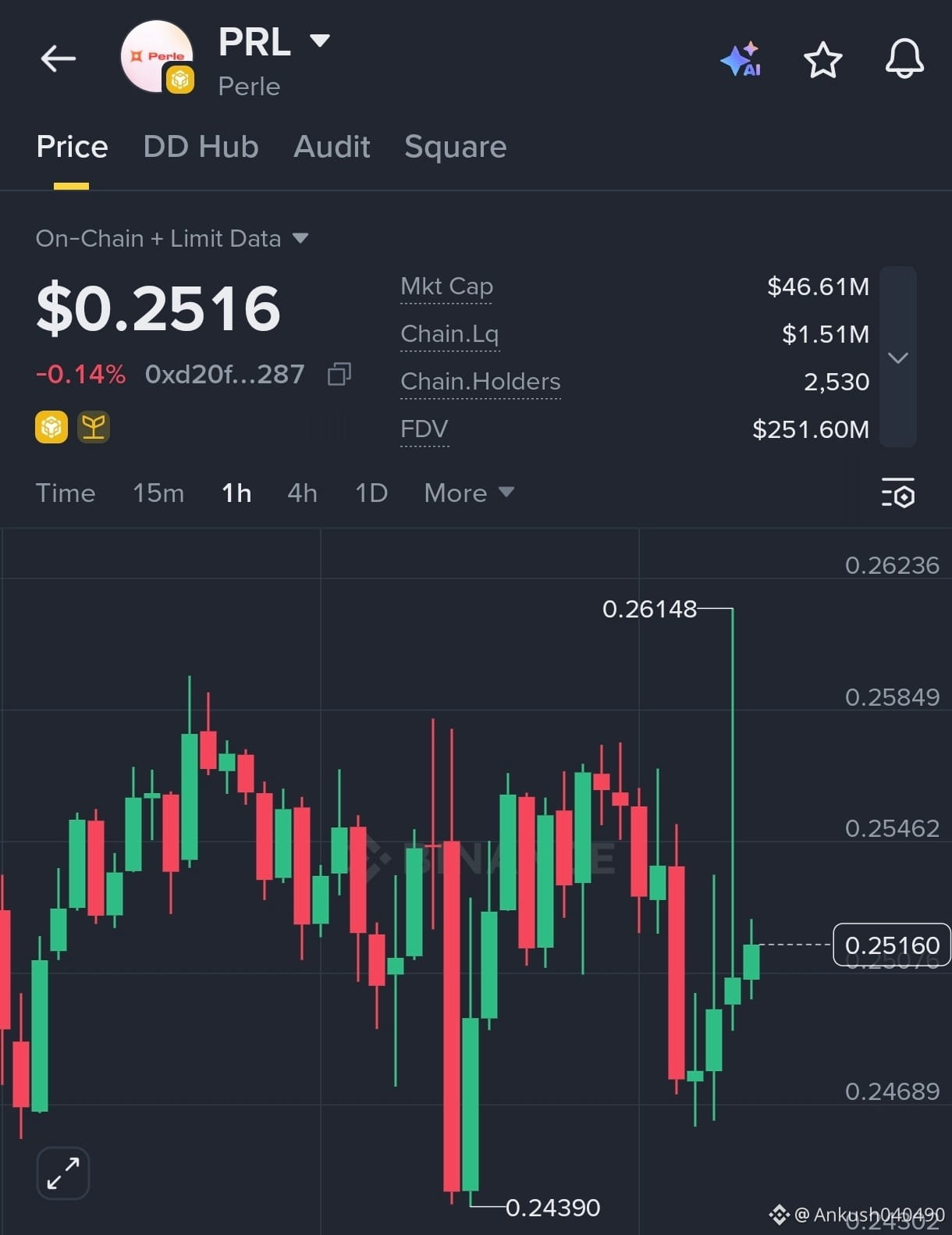
$PRL beginnt, frischen Schwung zu gewinnen, während Trader weiterhin kleinere Krypto-Assets mit starkem spekulativem Potenzial und verbesserter Marktvisibility erkunden. Die jüngste Preisbewegung deutet darauf hin, dass Käufer während der Rückgänge konsequenter eingreifen, was dem Token hilft, wichtige Unterstützungsbereiche zu halten, anstatt in tiefere Korrekturen abzurutschen. Solches Verhalten spiegelt oft das wachsende Vertrauen der Marktteilnehmer wider, die sich auf eine mögliche Fortsetzung der Rallye positionieren.
Einer der Haupttreiber hinter dem jüngsten Interesse an $PRL ist die breitere Rotation in weniger bekannte Altcoins, die aggressiv reagieren können, sobald Liquidität und Aufmerksamkeit zunehmen. In der aktuellen Marktumgebung neigen Projekte mit aktiven Communities und steigender sozialer Interaktion dazu, schnell an Fahrt zu gewinnen, besonders wenn das spekulative Sentiment im Krypto-Bereich stärker wird. Trader beobachten jetzt, ob PRL in der Lage sein kann, höhere Tiefs zu halten und gleichzeitig genügend Volumen aufzubauen, um nahe Widerstandsbereiche herauszufordern.
Die gesamte Krypto-Landschaft bleibt ebenfalls unterstützend für risikobehaftete Assets. Während Bitcoin sich stabilisiert und Kapital weiterhin in Altcoins fließt, zielen viele Trader auf Tokens mit niedrigerer Marktkapitalisierung ab, die stärkere prozentuale Gewinne liefern können als größere etablierte Projekte. Wenn der Marktimpuls weiterhin günstig bleibt, könnte PRL weiterhin von erhöhten spekulativen Zuflüssen und Trader-Aufmerksamkeit profitieren. Dennoch wird erwartet, dass die Volatilität hoch bleibt, was bedeutet, dass scharfe Rallyes und plötzliche Umkehrungen wahrscheinlich Teil der kurzfristigen Handelsstruktur des Tokens bleiben.
$PRL beginnt, frischen Schwung zu gewinnen, während Trader weiterhin kleinere Krypto-Assets mit starkem spekulativem Potenzial und verbesserter Marktvisibility erkunden. Die jüngste Preisbewegung deutet darauf hin, dass Käufer während der Rückgänge konsequenter eingreifen, was dem Token hilft, wichtige Unterstützungsbereiche zu halten, anstatt in tiefere Korrekturen abzurutschen. Solches Verhalten spiegelt oft das wachsende Vertrauen der Marktteilnehmer wider, die sich auf eine mögliche Fortsetzung der Rallye positionieren.
Einer der Haupttreiber hinter dem jüngsten Interesse an $PRL ist die breitere Rotation in weniger bekannte Altcoins, die aggressiv reagieren können, sobald Liquidität und Aufmerksamkeit zunehmen. In der aktuellen Marktumgebung neigen Projekte mit aktiven Communities und steigender sozialer Interaktion dazu, schnell an Fahrt zu gewinnen, besonders wenn das spekulative Sentiment im Krypto-Bereich stärker wird. Trader beobachten jetzt, ob PRL in der Lage sein kann, höhere Tiefs zu halten und gleichzeitig genügend Volumen aufzubauen, um nahe Widerstandsbereiche herauszufordern.
Die gesamte Krypto-Landschaft bleibt ebenfalls unterstützend für risikobehaftete Assets. Während Bitcoin sich stabilisiert und Kapital weiterhin in Altcoins fließt, zielen viele Trader auf Tokens mit niedrigerer Marktkapitalisierung ab, die stärkere prozentuale Gewinne liefern können als größere etablierte Projekte. Wenn der Marktimpuls weiterhin günstig bleibt, könnte PRL weiterhin von erhöhten spekulativen Zuflüssen und Trader-Aufmerksamkeit profitieren. Dennoch wird erwartet, dass die Volatilität hoch bleibt, was bedeutet, dass scharfe Rallyes und plötzliche Umkehrungen wahrscheinlich Teil der kurzfristigen Handelsstruktur des Tokens bleiben.
Einer der Haupttreiber hinter dem jüngsten Interesse an $PRL ist die breitere Rotation in weniger bekannte Altcoins, die aggressiv reagieren können, sobald Liquidität und Aufmerksamkeit zunehmen. In der aktuellen Marktumgebung neigen Projekte mit aktiven Communities und steigender sozialer Interaktion dazu, schnell an Fahrt zu gewinnen, besonders wenn das spekulative Sentiment im Krypto-Bereich stärker wird. Trader beobachten jetzt, ob PRL in der Lage sein kann, höhere Tiefs zu halten und gleichzeitig genügend Volumen aufzubauen, um nahe Widerstandsbereiche herauszufordern.
Die gesamte Krypto-Landschaft bleibt ebenfalls unterstützend für risikobehaftete Assets. Während Bitcoin sich stabilisiert und Kapital weiterhin in Altcoins fließt, zielen viele Trader auf Tokens mit niedrigerer Marktkapitalisierung ab, die stärkere prozentuale Gewinne liefern können als größere etablierte Projekte. Wenn der Marktimpuls weiterhin günstig bleibt, könnte PRL weiterhin von erhöhten spekulativen Zuflüssen und Trader-Aufmerksamkeit profitieren. Dennoch wird erwartet, dass die Volatilität hoch bleibt, was bedeutet, dass scharfe Rallyes und plötzliche Umkehrungen wahrscheinlich Teil der kurzfristigen Handelsstruktur des Tokens bleiben.
352
·
--
Bullisch
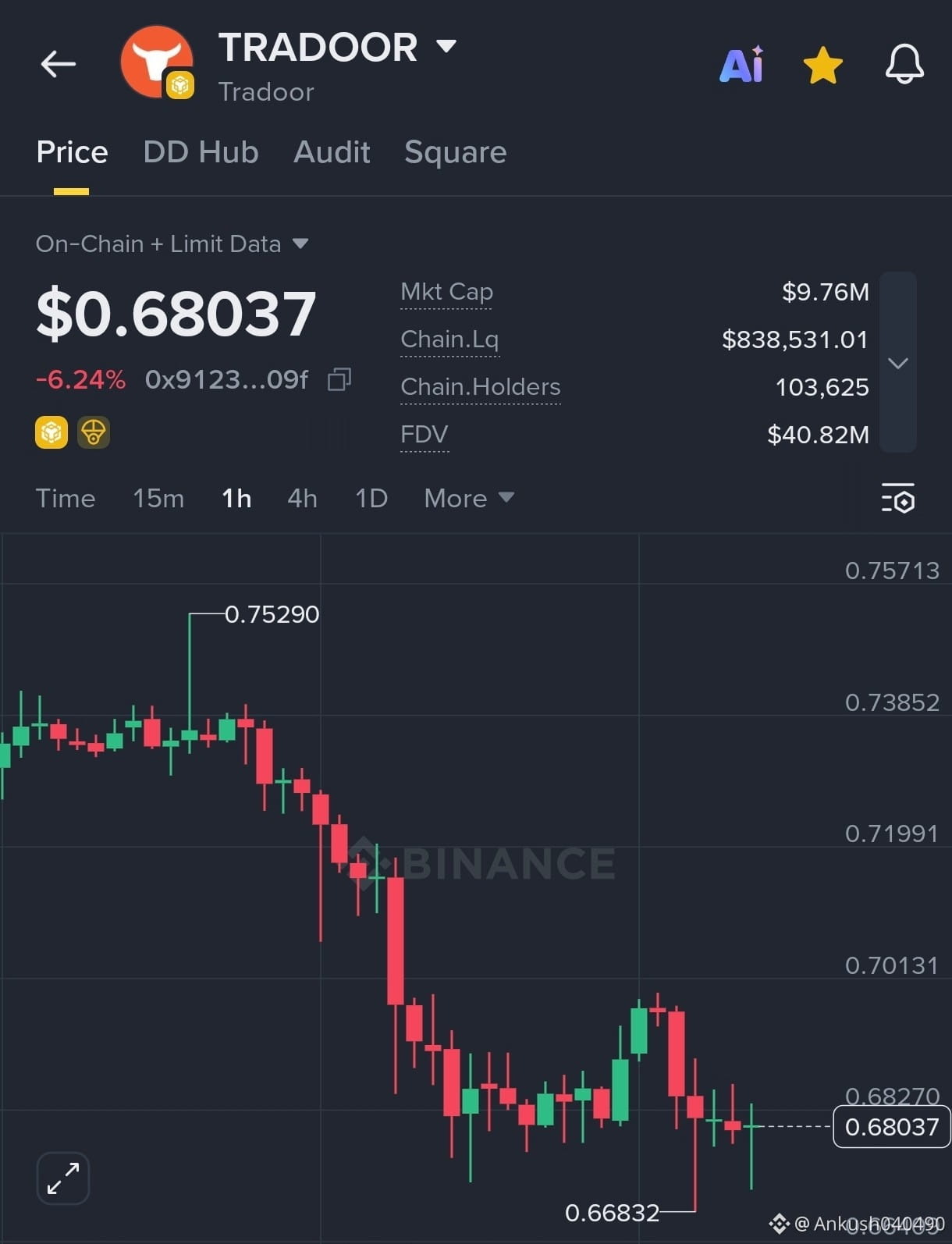
$TRADOOR beginnt, erneut Aufmerksamkeit zu gewinnen, da spekulative Trader weiterhin in kleinere Token mit starkem Momentum-Potenzial und aktiven Markt-Narrativen rotieren. Das recente Preisverhalten deutet darauf hin, dass Käufer während Rücksetzern aggressiver werden, was hilft, die Unterstützungsniveaus aufrechtzuerhalten, während das breitere Sentiment bei Altcoins sich verbessert. So eine Resilienz deutet oft auf Akkumulation und wachsendes Vertrauen von Tradern hin, die mit einem weiteren Aufwärtstrend rechnen.
Einer der Gründe, warum TRADOOR Interesse weckt, ist der zunehmende Fokus auf gemeinschaftsgetriebene und hochvolatile Assets, die schnell reagieren können, sobald Liquidität in den Markt fließt. In der aktuellen Krypto-Umgebung übertreffen Token mit steigendem sozialen Engagement und sich entwickelnden Narrativen oft in Phasen stärkerer Risikobereitschaft. Während die Handelsaktivität rund um $TRADOOR zunimmt, scheinen Momentum-Trader zu beobachten, ob der Token genug Volumen aufbauen kann, um einen nachhaltigen Ausbruchsversuch zu starten.
Der breitere Markt-Hintergrund ist auch günstig für spekulative Assets. Mit Bitcoin, der sich stabilisiert, und Kapital, das tiefer in Altcoins fließt, schauen viele Trader über die großen Coins hinaus auf aufstrebende Projekte, die in der Lage sind, größere prozentuale Gewinne zu liefern. Wenn das bullische Sentiment im Sektor intakt bleibt, könnte $TRADOOR weiterhin von zunehmender Aufmerksamkeit und Momentum-Zuflüssen profitieren. Allerdings bleibt die Volatilität in diesem Marktsegment extrem hoch, was bedeutet, dass schnelle Preisschwankungen und sentimentgetriebene Umkehrungen in naher Zukunft weiterhin wahrscheinlich sind.
#blockchain #writetoearn #Layer2
$TRADOOR beginnt, erneut Aufmerksamkeit zu gewinnen, da spekulative Trader weiterhin in kleinere Token mit starkem Momentum-Potenzial und aktiven Markt-Narrativen rotieren. Das recente Preisverhalten deutet darauf hin, dass Käufer während Rücksetzern aggressiver werden, was hilft, die Unterstützungsniveaus aufrechtzuerhalten, während das breitere Sentiment bei Altcoins sich verbessert. So eine Resilienz deutet oft auf Akkumulation und wachsendes Vertrauen von Tradern hin, die mit einem weiteren Aufwärtstrend rechnen.
Einer der Gründe, warum TRADOOR Interesse weckt, ist der zunehmende Fokus auf gemeinschaftsgetriebene und hochvolatile Assets, die schnell reagieren können, sobald Liquidität in den Markt fließt. In der aktuellen Krypto-Umgebung übertreffen Token mit steigendem sozialen Engagement und sich entwickelnden Narrativen oft in Phasen stärkerer Risikobereitschaft. Während die Handelsaktivität rund um $TRADOOR zunimmt, scheinen Momentum-Trader zu beobachten, ob der Token genug Volumen aufbauen kann, um einen nachhaltigen Ausbruchsversuch zu starten.
Der breitere Markt-Hintergrund ist auch günstig für spekulative Assets. Mit Bitcoin, der sich stabilisiert, und Kapital, das tiefer in Altcoins fließt, schauen viele Trader über die großen Coins hinaus auf aufstrebende Projekte, die in der Lage sind, größere prozentuale Gewinne zu liefern. Wenn das bullische Sentiment im Sektor intakt bleibt, könnte $TRADOOR weiterhin von zunehmender Aufmerksamkeit und Momentum-Zuflüssen profitieren. Allerdings bleibt die Volatilität in diesem Marktsegment extrem hoch, was bedeutet, dass schnelle Preisschwankungen und sentimentgetriebene Umkehrungen in naher Zukunft weiterhin wahrscheinlich sind.
#blockchain #writetoearn #Layer2
Einer der Gründe, warum TRADOOR Interesse weckt, ist der zunehmende Fokus auf gemeinschaftsgetriebene und hochvolatile Assets, die schnell reagieren können, sobald Liquidität in den Markt fließt. In der aktuellen Krypto-Umgebung übertreffen Token mit steigendem sozialen Engagement und sich entwickelnden Narrativen oft in Phasen stärkerer Risikobereitschaft. Während die Handelsaktivität rund um $TRADOOR zunimmt, scheinen Momentum-Trader zu beobachten, ob der Token genug Volumen aufbauen kann, um einen nachhaltigen Ausbruchsversuch zu starten.
Der breitere Markt-Hintergrund ist auch günstig für spekulative Assets. Mit Bitcoin, der sich stabilisiert, und Kapital, das tiefer in Altcoins fließt, schauen viele Trader über die großen Coins hinaus auf aufstrebende Projekte, die in der Lage sind, größere prozentuale Gewinne zu liefern. Wenn das bullische Sentiment im Sektor intakt bleibt, könnte $TRADOOR weiterhin von zunehmender Aufmerksamkeit und Momentum-Zuflüssen profitieren. Allerdings bleibt die Volatilität in diesem Marktsegment extrem hoch, was bedeutet, dass schnelle Preisschwankungen und sentimentgetriebene Umkehrungen in naher Zukunft weiterhin wahrscheinlich sind.
#blockchain #writetoearn #Layer2
425
·
--
Bullisch
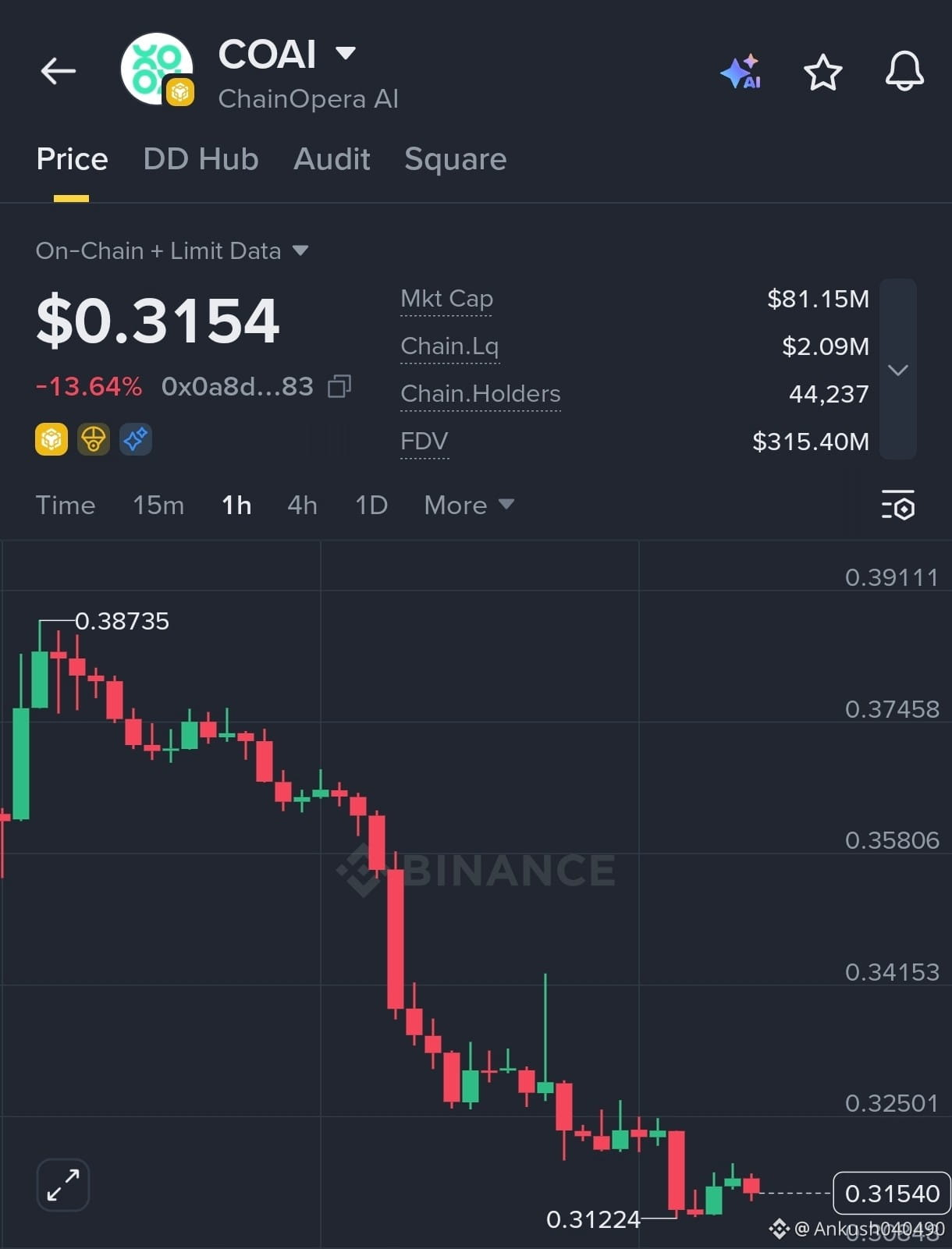
$COAI beginnt, stärkeres spekulatives Interesse zu wecken, da KI-bezogene Narrative weiterhin die Aufmerksamkeit im Kryptomarkt dominieren. Die jüngsten Preisbewegungen deuten darauf hin, dass Käufer während der Konsolidierungsphasen stetig akkumulieren, was dem Token hilft, Unterstützungsniveaus aufrechtzuerhalten, selbst wenn die Volatilität hoch bleibt. Diese Struktur spiegelt oft das wachsende Vertrauen von Tradern wider, die eine weitere momentumgetriebene Expansion erwarten, wenn die Marktsentiment günstig bleibt.
Der KI-Sektor bleibt einer der größten Katalysatoren für Tokens wie $COAI. Im gesamten Markt ziehen Projekte, die mit künstlicher Intelligenz, Automatisierung und datenzentrierten Ökosystemen verbunden sind, konstant Liquidität an, wann immer die Risikobereitschaft steigt. $COAI scheint von diesem breiteren Trend zu profitieren, insbesondere da Trader weiterhin nach kleineren KI-Assets mit höherem Aufwärtspotenzial im Vergleich zu größeren, etablierten Tokens suchen.
Ein weiterer wichtiger Faktor ist die zunehmende Sichtbarkeit des Tokens in spekulativen Handelsgemeinschaften. Vermögenswerte, die starken narrativen Schwung mit steigender sozialer Engagement kombinieren, können eine schnelle Preisbeschleunigung erfahren, sobald das Volumen zu wachsen beginnt. Wenn die allgemeinen Altcoin-Bedingungen bullish bleiben, könnte $COAI weiterhin an Bedeutung gewinnen, insbesondere unter Momentum-Tradern, die nach schnelllebigen Möglichkeiten suchen. Die Volatilität wird jedoch voraussichtlich weiterhin hoch bleiben, was bedeutet, dass scharfe Rallyes und plötzliche Korrekturen wahrscheinlich sind, da sich Sentiment und Liquidität kurzfristig schnell ändern können.
#blockchain #writetoearn #Layer2 #BREAKING
$COAI beginnt, stärkeres spekulatives Interesse zu wecken, da KI-bezogene Narrative weiterhin die Aufmerksamkeit im Kryptomarkt dominieren. Die jüngsten Preisbewegungen deuten darauf hin, dass Käufer während der Konsolidierungsphasen stetig akkumulieren, was dem Token hilft, Unterstützungsniveaus aufrechtzuerhalten, selbst wenn die Volatilität hoch bleibt. Diese Struktur spiegelt oft das wachsende Vertrauen von Tradern wider, die eine weitere momentumgetriebene Expansion erwarten, wenn die Marktsentiment günstig bleibt.
Der KI-Sektor bleibt einer der größten Katalysatoren für Tokens wie $COAI . Im gesamten Markt ziehen Projekte, die mit künstlicher Intelligenz, Automatisierung und datenzentrierten Ökosystemen verbunden sind, konstant Liquidität an, wann immer die Risikobereitschaft steigt. $COAI scheint von diesem breiteren Trend zu profitieren, insbesondere da Trader weiterhin nach kleineren KI-Assets mit höherem Aufwärtspotenzial im Vergleich zu größeren, etablierten Tokens suchen.
Ein weiterer wichtiger Faktor ist die zunehmende Sichtbarkeit des Tokens in spekulativen Handelsgemeinschaften. Vermögenswerte, die starken narrativen Schwung mit steigender sozialer Engagement kombinieren, können eine schnelle Preisbeschleunigung erfahren, sobald das Volumen zu wachsen beginnt. Wenn die allgemeinen Altcoin-Bedingungen bullish bleiben, könnte $COAI weiterhin an Bedeutung gewinnen, insbesondere unter Momentum-Tradern, die nach schnelllebigen Möglichkeiten suchen. Die Volatilität wird jedoch voraussichtlich weiterhin hoch bleiben, was bedeutet, dass scharfe Rallyes und plötzliche Korrekturen wahrscheinlich sind, da sich Sentiment und Liquidität kurzfristig schnell ändern können.
#blockchain #writetoearn #Layer2 #BREAKING
Der KI-Sektor bleibt einer der größten Katalysatoren für Tokens wie $COAI . Im gesamten Markt ziehen Projekte, die mit künstlicher Intelligenz, Automatisierung und datenzentrierten Ökosystemen verbunden sind, konstant Liquidität an, wann immer die Risikobereitschaft steigt. $COAI scheint von diesem breiteren Trend zu profitieren, insbesondere da Trader weiterhin nach kleineren KI-Assets mit höherem Aufwärtspotenzial im Vergleich zu größeren, etablierten Tokens suchen.
Ein weiterer wichtiger Faktor ist die zunehmende Sichtbarkeit des Tokens in spekulativen Handelsgemeinschaften. Vermögenswerte, die starken narrativen Schwung mit steigender sozialer Engagement kombinieren, können eine schnelle Preisbeschleunigung erfahren, sobald das Volumen zu wachsen beginnt. Wenn die allgemeinen Altcoin-Bedingungen bullish bleiben, könnte $COAI weiterhin an Bedeutung gewinnen, insbesondere unter Momentum-Tradern, die nach schnelllebigen Möglichkeiten suchen. Die Volatilität wird jedoch voraussichtlich weiterhin hoch bleiben, was bedeutet, dass scharfe Rallyes und plötzliche Korrekturen wahrscheinlich sind, da sich Sentiment und Liquidität kurzfristig schnell ändern können.
#blockchain #writetoearn #Layer2 #BREAKING
343
·
--
Bullisch
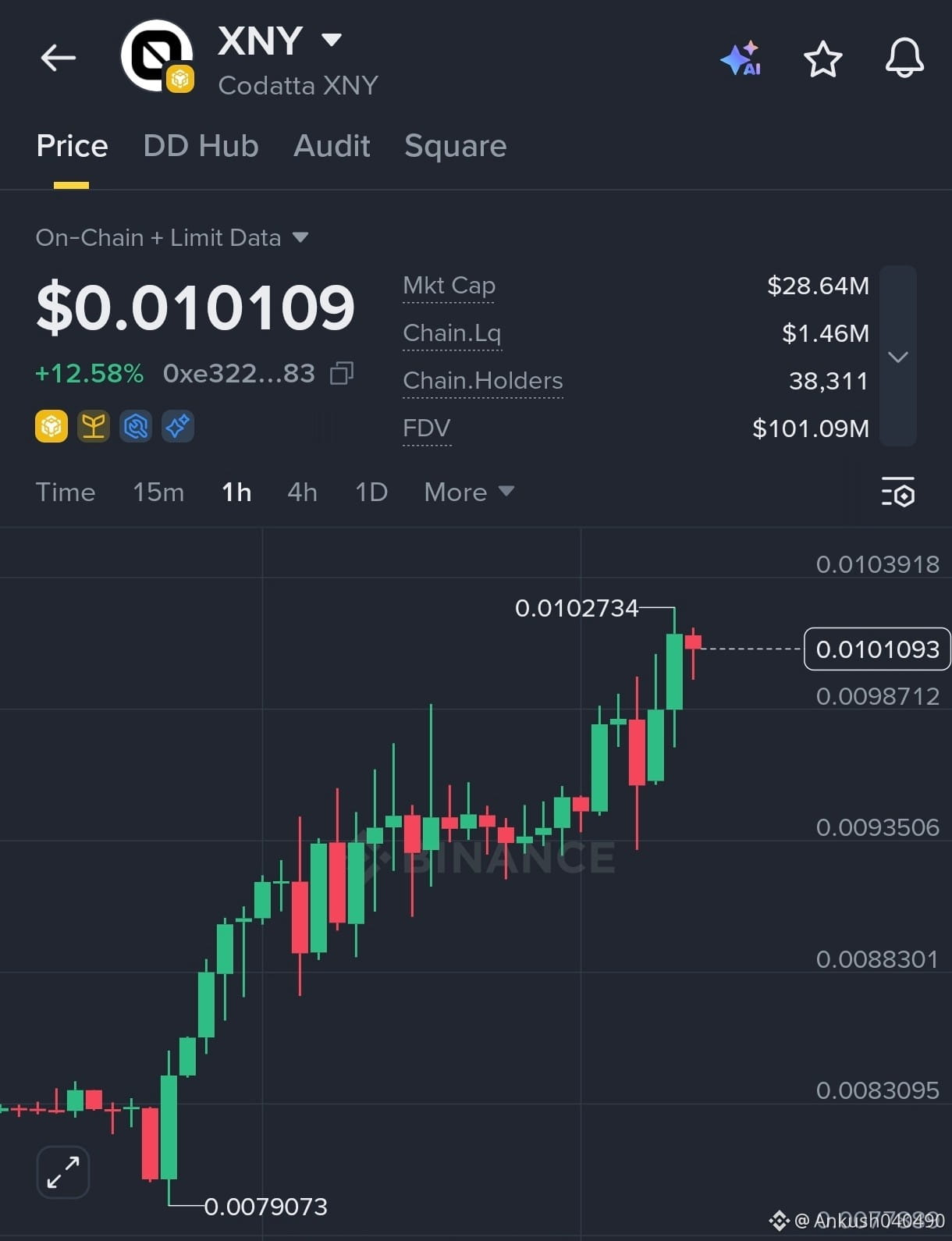
$XNY gewinnt zunehmend an Sichtbarkeit, da das spekulative Interesse an kleineren Krypto-Projekten mit aufkommenden Narrativen und starkem Volatilitätspotenzial zurückkehrt. Die jüngsten Handelsaktivitäten deuten darauf hin, dass Käufer während der Rücksetzer zunehmend aktiv werden und dem Token helfen, seine Struktur aufrechtzuerhalten, trotz der breiteren Marktschwankungen. Diese Art von Resilienz signalisiert oft, dass Trader sich für eine mögliche Fortsetzung positionieren, falls der Momentum im Altcoin-Markt weiter ansteigt.
Einer der Gründe, warum XNY Aufmerksamkeit erregt, ist der wachsende Fokus auf weniger bekannte Assets, die aggressiv reagieren können, sobald die Liquidität und das soziale Engagement zunehmen. Im aktuellen Marktzyklus suchen Trader aktiv nach Tokens, die überproportionale Gewinne im Vergleich zu größeren etablierten Coins liefern können. Während die Diskussionen und die Marktexposition rund um $XNY zunehmen, scheinen Momentum-Teilnehmer genau auf einen Ausbruch über die nahegelegenen Widerstandsniveaus zu achten.
Das breitere Krypto-Umfeld unterstützt derzeit auch spekulative Assets. Mit Bitcoin, das relativ stabil bleibt, und Kapital, das tiefer in Altcoins rotiert, beginnen Tokens mit niedrigerer Marktkapitalisierung, erneute Zuflüsse von risikobereiten Tradern zu sehen. Wenn die bullishen Sentiments weiterhin besser werden, könnte $XNY von stärkerem kurzfristigem Momentum und steigendem Handelsvolumen profitieren. Dennoch bleibt die Volatilität ein wesentlicher Faktor, was bedeutet, dass schnelle Schwankungen und sentimentgetriebene Umkehrungen wahrscheinlich weiterhin das kurzfristige Marktverhalten des Tokens prägen werden.
#writetoearn #blockchain #Layer2 #ZK
$XNY gewinnt zunehmend an Sichtbarkeit, da das spekulative Interesse an kleineren Krypto-Projekten mit aufkommenden Narrativen und starkem Volatilitätspotenzial zurückkehrt. Die jüngsten Handelsaktivitäten deuten darauf hin, dass Käufer während der Rücksetzer zunehmend aktiv werden und dem Token helfen, seine Struktur aufrechtzuerhalten, trotz der breiteren Marktschwankungen. Diese Art von Resilienz signalisiert oft, dass Trader sich für eine mögliche Fortsetzung positionieren, falls der Momentum im Altcoin-Markt weiter ansteigt.
Einer der Gründe, warum XNY Aufmerksamkeit erregt, ist der wachsende Fokus auf weniger bekannte Assets, die aggressiv reagieren können, sobald die Liquidität und das soziale Engagement zunehmen. Im aktuellen Marktzyklus suchen Trader aktiv nach Tokens, die überproportionale Gewinne im Vergleich zu größeren etablierten Coins liefern können. Während die Diskussionen und die Marktexposition rund um $XNY zunehmen, scheinen Momentum-Teilnehmer genau auf einen Ausbruch über die nahegelegenen Widerstandsniveaus zu achten.
Das breitere Krypto-Umfeld unterstützt derzeit auch spekulative Assets. Mit Bitcoin, das relativ stabil bleibt, und Kapital, das tiefer in Altcoins rotiert, beginnen Tokens mit niedrigerer Marktkapitalisierung, erneute Zuflüsse von risikobereiten Tradern zu sehen. Wenn die bullishen Sentiments weiterhin besser werden, könnte $XNY von stärkerem kurzfristigem Momentum und steigendem Handelsvolumen profitieren. Dennoch bleibt die Volatilität ein wesentlicher Faktor, was bedeutet, dass schnelle Schwankungen und sentimentgetriebene Umkehrungen wahrscheinlich weiterhin das kurzfristige Marktverhalten des Tokens prägen werden.
#writetoearn #blockchain #Layer2 #ZK
Einer der Gründe, warum XNY Aufmerksamkeit erregt, ist der wachsende Fokus auf weniger bekannte Assets, die aggressiv reagieren können, sobald die Liquidität und das soziale Engagement zunehmen. Im aktuellen Marktzyklus suchen Trader aktiv nach Tokens, die überproportionale Gewinne im Vergleich zu größeren etablierten Coins liefern können. Während die Diskussionen und die Marktexposition rund um $XNY zunehmen, scheinen Momentum-Teilnehmer genau auf einen Ausbruch über die nahegelegenen Widerstandsniveaus zu achten.
Das breitere Krypto-Umfeld unterstützt derzeit auch spekulative Assets. Mit Bitcoin, das relativ stabil bleibt, und Kapital, das tiefer in Altcoins rotiert, beginnen Tokens mit niedrigerer Marktkapitalisierung, erneute Zuflüsse von risikobereiten Tradern zu sehen. Wenn die bullishen Sentiments weiterhin besser werden, könnte $XNY von stärkerem kurzfristigem Momentum und steigendem Handelsvolumen profitieren. Dennoch bleibt die Volatilität ein wesentlicher Faktor, was bedeutet, dass schnelle Schwankungen und sentimentgetriebene Umkehrungen wahrscheinlich weiterhin das kurzfristige Marktverhalten des Tokens prägen werden.
#writetoearn #blockchain #Layer2 #ZK
102
·
--
Bullisch
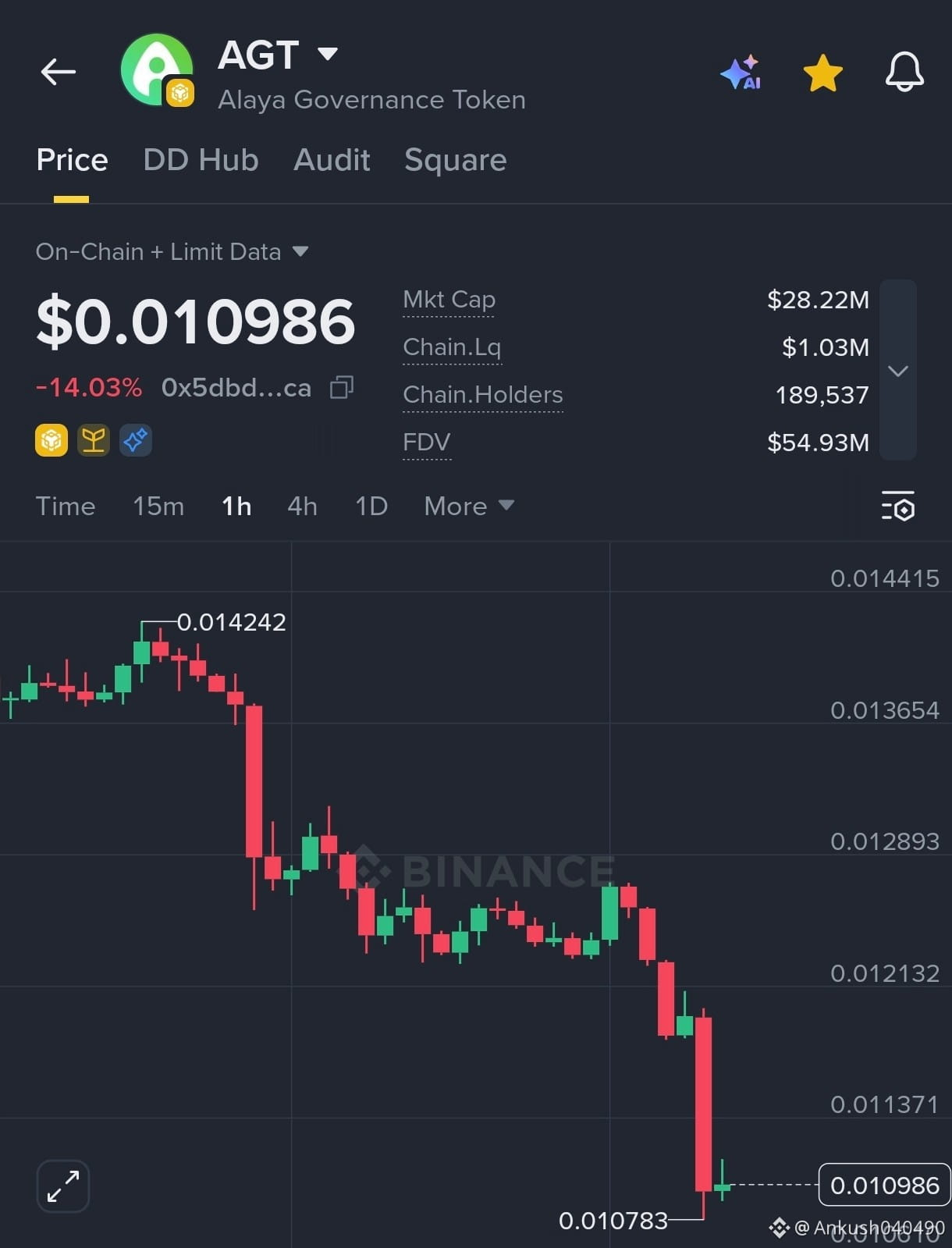
$AGT zeigt erneute Anzeichen von spekulativem Momentum, da Trader weiterhin in aufstrebende Krypto-Assets mit starkem Narrativ-Potenzial und aktiver Marktteilnahme rotieren. Die jüngsten Preisbewegungen deuten darauf hin, dass Käufer wichtige Unterstützungslevels effektiver verteidigen, was oft auf Akkumulation während Konsolidierungsphasen hinweist, anstatt auf aggressive Distribution. Diese Resilienz hilft, AGT im Fokus von momentum-orientierten Tradern zu halten, die nach der nächsten Ausbruchsmöglichkeit suchen.
Ein wesentlicher Faktor hinter dem wachsenden Interesse an AGT ist die allgemeine Marktbereitschaft für kleinere Projekte, die in der Lage sind, schnelle prozentuale Bewegungen zu erzeugen, sobald die Liquidität steigt. Token, die Sichtbarkeit in Trading-Communities und sozialen Diskussionen aufrechterhalten, ziehen oft schnell spekulative Kapitalzuflüsse an, insbesondere während bullischer Altcoin-Bedingungen. $AGT scheint von diesem Umfeld zu profitieren, da Volumen und Trader-Neugier allmählich zunehmen.
Die gesamte Krypto-Landschaft schafft ebenfalls unterstützende Bedingungen für Assets wie $AGT. Mit Bitcoin, der relativ stabil bleibt, und einer verbesserten Risikobereitschaft verlagern Trader zunehmend Kapital in Chancen mit niedrigerer Marktkapitalisierung, auf der Suche nach stärkerem Aufwärtspotenzial. Wenn das Markt-Momentum günstig bleibt, könnte $AGT kurzfristig weiter an Zugkraft gewinnen. Allerdings wird, wie bei vielen spekulativen Token, mit hoher Volatilität gerechnet, was bedeutet, dass schnelle Rallyes und ebenso scharfe Rückzüge schnell auftreten können, wenn sich die Stimmung ändert.
#blockchain #Layer2 #writetoearn
$AGT zeigt erneute Anzeichen von spekulativem Momentum, da Trader weiterhin in aufstrebende Krypto-Assets mit starkem Narrativ-Potenzial und aktiver Marktteilnahme rotieren. Die jüngsten Preisbewegungen deuten darauf hin, dass Käufer wichtige Unterstützungslevels effektiver verteidigen, was oft auf Akkumulation während Konsolidierungsphasen hinweist, anstatt auf aggressive Distribution. Diese Resilienz hilft, AGT im Fokus von momentum-orientierten Tradern zu halten, die nach der nächsten Ausbruchsmöglichkeit suchen.
Ein wesentlicher Faktor hinter dem wachsenden Interesse an AGT ist die allgemeine Marktbereitschaft für kleinere Projekte, die in der Lage sind, schnelle prozentuale Bewegungen zu erzeugen, sobald die Liquidität steigt. Token, die Sichtbarkeit in Trading-Communities und sozialen Diskussionen aufrechterhalten, ziehen oft schnell spekulative Kapitalzuflüsse an, insbesondere während bullischer Altcoin-Bedingungen. $AGT scheint von diesem Umfeld zu profitieren, da Volumen und Trader-Neugier allmählich zunehmen.
Die gesamte Krypto-Landschaft schafft ebenfalls unterstützende Bedingungen für Assets wie $AGT . Mit Bitcoin, der relativ stabil bleibt, und einer verbesserten Risikobereitschaft verlagern Trader zunehmend Kapital in Chancen mit niedrigerer Marktkapitalisierung, auf der Suche nach stärkerem Aufwärtspotenzial. Wenn das Markt-Momentum günstig bleibt, könnte $AGT kurzfristig weiter an Zugkraft gewinnen. Allerdings wird, wie bei vielen spekulativen Token, mit hoher Volatilität gerechnet, was bedeutet, dass schnelle Rallyes und ebenso scharfe Rückzüge schnell auftreten können, wenn sich die Stimmung ändert.
#blockchain #Layer2 #writetoearn
Ein wesentlicher Faktor hinter dem wachsenden Interesse an AGT ist die allgemeine Marktbereitschaft für kleinere Projekte, die in der Lage sind, schnelle prozentuale Bewegungen zu erzeugen, sobald die Liquidität steigt. Token, die Sichtbarkeit in Trading-Communities und sozialen Diskussionen aufrechterhalten, ziehen oft schnell spekulative Kapitalzuflüsse an, insbesondere während bullischer Altcoin-Bedingungen. $AGT scheint von diesem Umfeld zu profitieren, da Volumen und Trader-Neugier allmählich zunehmen.
Die gesamte Krypto-Landschaft schafft ebenfalls unterstützende Bedingungen für Assets wie $AGT . Mit Bitcoin, der relativ stabil bleibt, und einer verbesserten Risikobereitschaft verlagern Trader zunehmend Kapital in Chancen mit niedrigerer Marktkapitalisierung, auf der Suche nach stärkerem Aufwärtspotenzial. Wenn das Markt-Momentum günstig bleibt, könnte $AGT kurzfristig weiter an Zugkraft gewinnen. Allerdings wird, wie bei vielen spekulativen Token, mit hoher Volatilität gerechnet, was bedeutet, dass schnelle Rallyes und ebenso scharfe Rückzüge schnell auftreten können, wenn sich die Stimmung ändert.
#blockchain #Layer2 #writetoearn
180
·
--
Bullisch
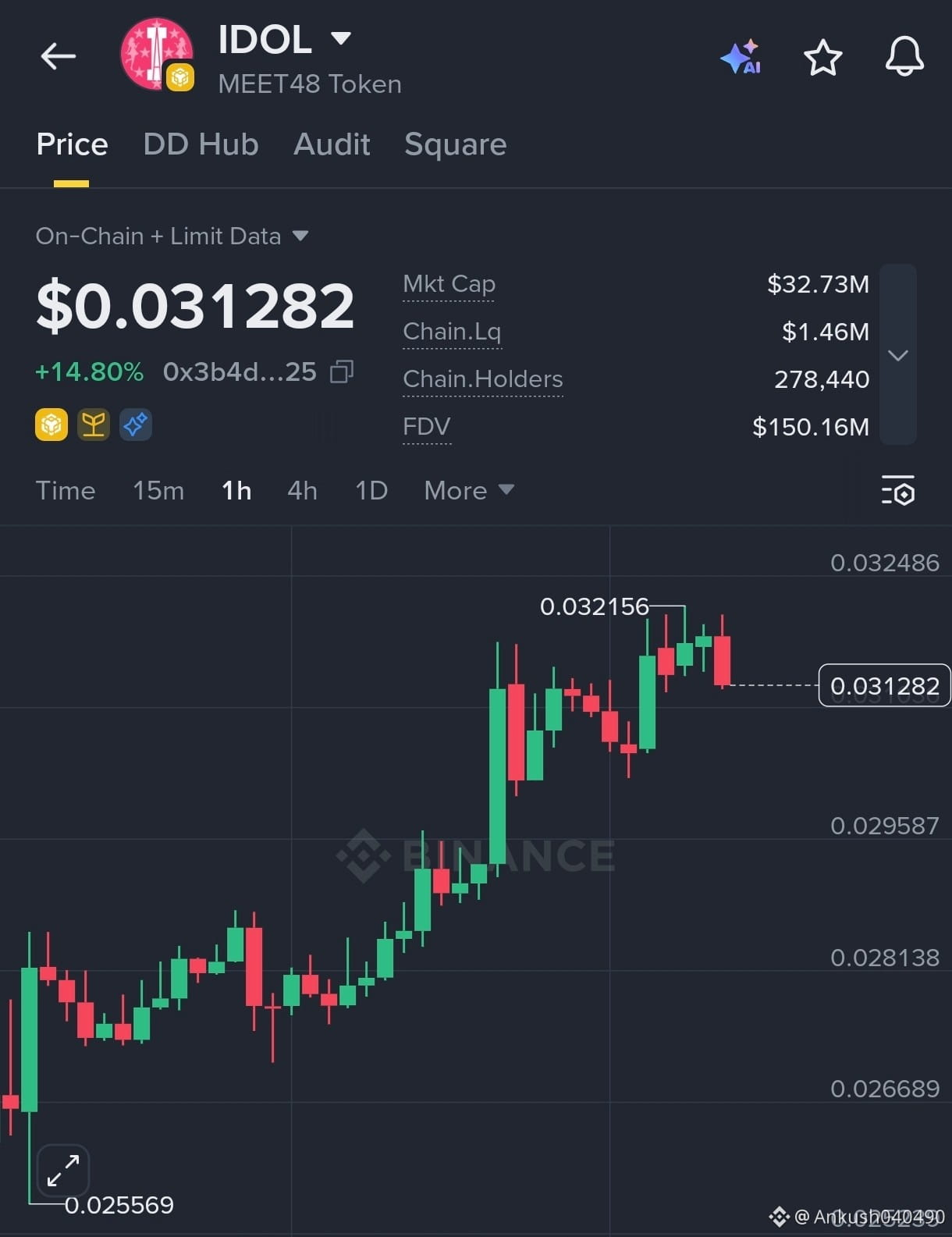
$IDOL gewinnt zunehmend an Aufmerksamkeit unter spekulativen Tradern, da das Interesse an kleineren Tokens mit aktiven Communities und momentumgetriebenen Setups zurückkehrt. Das aktuelle Marktverhalten deutet darauf hin, dass Käufer während Rücksetzern allmählich aggressiver werden, was dem Token hilft, Unterstützungszonen zu halten, während sich das breitere Altcoin-Sentiment verbessert. Diese Art von Preisstruktur weist oft auf Akkumulation und steigendes Vertrauen bei kurzfristigen Marktteilnehmern hin.
Ein Grund, warum $IDOL auffällt, ist der Anstieg der sozialen Aktivitäten und spekulativen Diskussionen rund um das Projekt. In den schnelllebigen Krypto-Zyklen können Tokens mit starker Sichtbarkeit und Community-Engagement rasche Liquiditätszuflüsse erleben, sobald sich der Momentum beschleunigt. Trader scheinen genau hinzuschauen, um ein potenzielles Ausbruchsszenario zu beobachten, falls das Handelsvolumen weiterhin steigt und das bullish Sentiment im gesamten Markt intakt bleibt.
Das breitere Krypto-Umfeld ist derzeit auch günstig für aufstrebende Hochrisiko-Assets. Während Bitcoin sich stabilisiert und Kapital tiefer in Altcoins rotiert, zielen spekulative Trader zunehmend auf Projekte mit niedrigerer Marktkapitalisierung ab, die stärkere prozentuale Bewegungen liefern können. Wenn sich das Markt-Momentum weiterhin verbessert, könnte $IDOL von zusätzlicher Aufmerksamkeit und kurzfristigem Aufwärtsdruck profitieren. Allerdings wird auch erwartet, dass die Volatilität hoch bleibt, was bedeutet, dass scharfe Ausschläge und sentimentgesteuerte Umkehrungen wahrscheinlich weiterhin Teil der kurzfristigen Handelsbedingungen des Tokens bleiben.
#writetoearn #blockchain #Layer2 #ZK
$IDOL gewinnt zunehmend an Aufmerksamkeit unter spekulativen Tradern, da das Interesse an kleineren Tokens mit aktiven Communities und momentumgetriebenen Setups zurückkehrt. Das aktuelle Marktverhalten deutet darauf hin, dass Käufer während Rücksetzern allmählich aggressiver werden, was dem Token hilft, Unterstützungszonen zu halten, während sich das breitere Altcoin-Sentiment verbessert. Diese Art von Preisstruktur weist oft auf Akkumulation und steigendes Vertrauen bei kurzfristigen Marktteilnehmern hin.
Ein Grund, warum $IDOL auffällt, ist der Anstieg der sozialen Aktivitäten und spekulativen Diskussionen rund um das Projekt. In den schnelllebigen Krypto-Zyklen können Tokens mit starker Sichtbarkeit und Community-Engagement rasche Liquiditätszuflüsse erleben, sobald sich der Momentum beschleunigt. Trader scheinen genau hinzuschauen, um ein potenzielles Ausbruchsszenario zu beobachten, falls das Handelsvolumen weiterhin steigt und das bullish Sentiment im gesamten Markt intakt bleibt.
Das breitere Krypto-Umfeld ist derzeit auch günstig für aufstrebende Hochrisiko-Assets. Während Bitcoin sich stabilisiert und Kapital tiefer in Altcoins rotiert, zielen spekulative Trader zunehmend auf Projekte mit niedrigerer Marktkapitalisierung ab, die stärkere prozentuale Bewegungen liefern können. Wenn sich das Markt-Momentum weiterhin verbessert, könnte $IDOL von zusätzlicher Aufmerksamkeit und kurzfristigem Aufwärtsdruck profitieren. Allerdings wird auch erwartet, dass die Volatilität hoch bleibt, was bedeutet, dass scharfe Ausschläge und sentimentgesteuerte Umkehrungen wahrscheinlich weiterhin Teil der kurzfristigen Handelsbedingungen des Tokens bleiben.
#writetoearn #blockchain #Layer2 #ZK
Ein Grund, warum $IDOL auffällt, ist der Anstieg der sozialen Aktivitäten und spekulativen Diskussionen rund um das Projekt. In den schnelllebigen Krypto-Zyklen können Tokens mit starker Sichtbarkeit und Community-Engagement rasche Liquiditätszuflüsse erleben, sobald sich der Momentum beschleunigt. Trader scheinen genau hinzuschauen, um ein potenzielles Ausbruchsszenario zu beobachten, falls das Handelsvolumen weiterhin steigt und das bullish Sentiment im gesamten Markt intakt bleibt.
Das breitere Krypto-Umfeld ist derzeit auch günstig für aufstrebende Hochrisiko-Assets. Während Bitcoin sich stabilisiert und Kapital tiefer in Altcoins rotiert, zielen spekulative Trader zunehmend auf Projekte mit niedrigerer Marktkapitalisierung ab, die stärkere prozentuale Bewegungen liefern können. Wenn sich das Markt-Momentum weiterhin verbessert, könnte $IDOL von zusätzlicher Aufmerksamkeit und kurzfristigem Aufwärtsdruck profitieren. Allerdings wird auch erwartet, dass die Volatilität hoch bleibt, was bedeutet, dass scharfe Ausschläge und sentimentgesteuerte Umkehrungen wahrscheinlich weiterhin Teil der kurzfristigen Handelsbedingungen des Tokens bleiben.
#writetoearn #blockchain #Layer2 #ZK
95
·
--
Bullisch
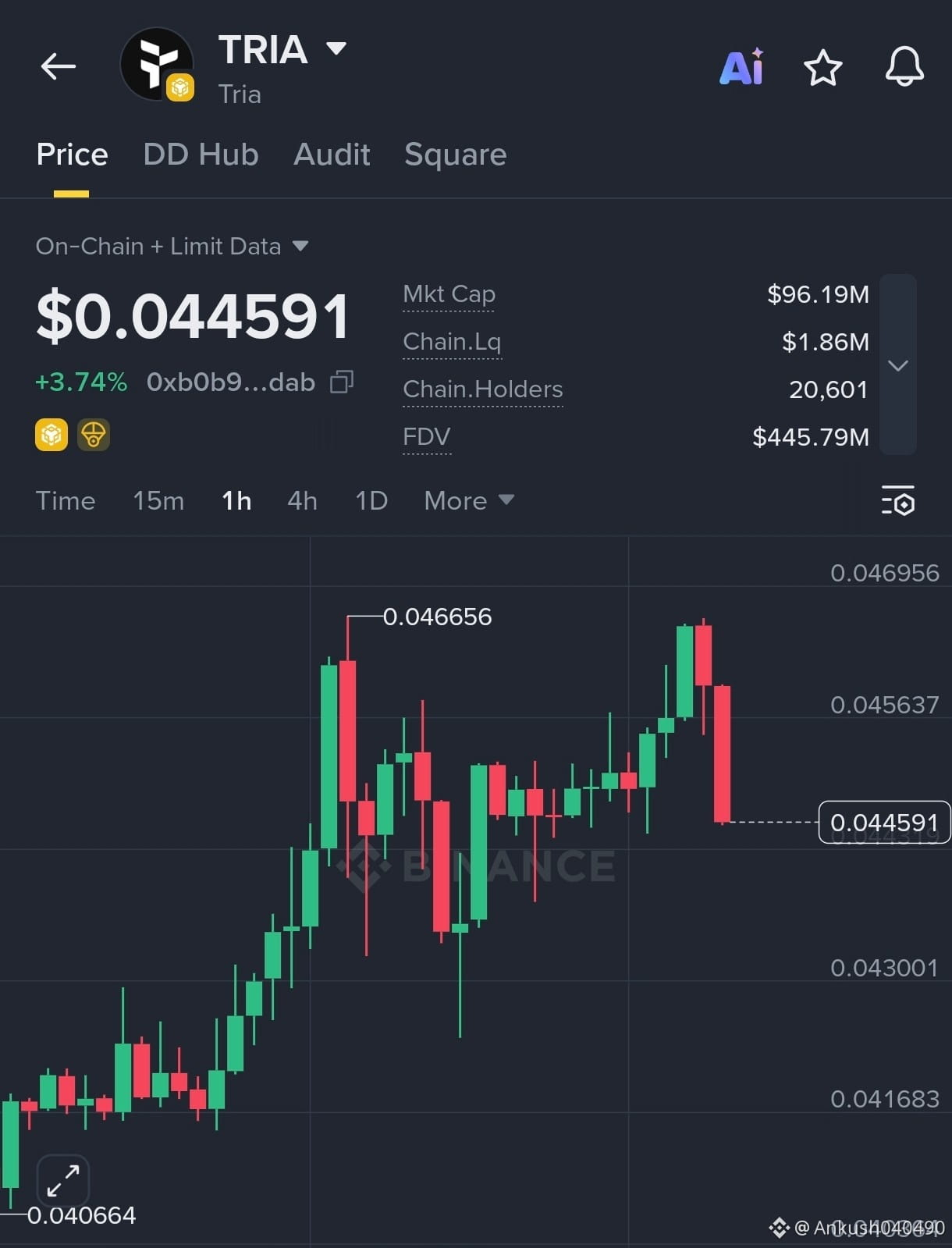
$TRIA zieht zunehmend die Aufmerksamkeit des Marktes auf sich, da Trader in kleinere Krypto-Token mit sich entwickelnden Narrativen und höherem Aufwärtspotenzial umschichten. Die jüngste Preisaktion deutet darauf hin, dass der Token wichtige Unterstützungsbereiche effektiver hält, wobei Käufer während der Rückgänge eingreifen, anstatt einen längeren Abwärtsdruck zuzulassen. Dieses Verhalten spiegelt oft ein verbessertes Sentiment und wachsendes spekulatives Vertrauen unter den kurzfristigen Marktteilnehmern wider.
Ein wichtiger Grund, warum Trader $TRIA beobachten, ist die zunehmende Sichtbarkeit rund um Infrastruktur- und utilitätsorientierte Krypto-Projekte. In diesem Marktzyklus können Vermögenswerte, die mit expandierenden Ökosystemen und aufkommender Blockchain-Aktivität verbunden sind, schnell an Dynamik gewinnen, sobald die Liquidität und das soziale Engagement zunehmen. TRIA scheint von diesem Umfeld zu profitieren, insbesondere da spekulative Trader nach Tokens suchen, die während breiterer Altcoin-Rallyes überdurchschnittlich abschneiden könnten.
Der allgemeine Krypto-Markt-Hintergrund ist ebenfalls unterstützend für Vermögenswerte wie $TRIA. Mit Bitcoin, das relativ stabil bleibt, und Kapital, das tiefer in Altcoins fließt, gehen viele Trader mehr Risiko ein, um höhere prozentuale Renditen zu erzielen. Wenn die Dynamik und das Handelsvolumen weiter zunehmen, könnte TRIA in naher Zukunft stärkere Ausbruchsversuche sehen. Die Volatilität bleibt jedoch im gesamten Markt erhöht, was bedeutet, dass scharfe Bewegungen, schnelle Umkehrungen und sentimentgesteuerte Schwankungen weiterhin das kurzfristige Verhalten des Tokens prägen könnten.
#writetoearn #blockchain #Layer2
$TRIA zieht zunehmend die Aufmerksamkeit des Marktes auf sich, da Trader in kleinere Krypto-Token mit sich entwickelnden Narrativen und höherem Aufwärtspotenzial umschichten. Die jüngste Preisaktion deutet darauf hin, dass der Token wichtige Unterstützungsbereiche effektiver hält, wobei Käufer während der Rückgänge eingreifen, anstatt einen längeren Abwärtsdruck zuzulassen. Dieses Verhalten spiegelt oft ein verbessertes Sentiment und wachsendes spekulatives Vertrauen unter den kurzfristigen Marktteilnehmern wider.
Ein wichtiger Grund, warum Trader $TRIA beobachten, ist die zunehmende Sichtbarkeit rund um Infrastruktur- und utilitätsorientierte Krypto-Projekte. In diesem Marktzyklus können Vermögenswerte, die mit expandierenden Ökosystemen und aufkommender Blockchain-Aktivität verbunden sind, schnell an Dynamik gewinnen, sobald die Liquidität und das soziale Engagement zunehmen. TRIA scheint von diesem Umfeld zu profitieren, insbesondere da spekulative Trader nach Tokens suchen, die während breiterer Altcoin-Rallyes überdurchschnittlich abschneiden könnten.
Der allgemeine Krypto-Markt-Hintergrund ist ebenfalls unterstützend für Vermögenswerte wie $TRIA . Mit Bitcoin, das relativ stabil bleibt, und Kapital, das tiefer in Altcoins fließt, gehen viele Trader mehr Risiko ein, um höhere prozentuale Renditen zu erzielen. Wenn die Dynamik und das Handelsvolumen weiter zunehmen, könnte TRIA in naher Zukunft stärkere Ausbruchsversuche sehen. Die Volatilität bleibt jedoch im gesamten Markt erhöht, was bedeutet, dass scharfe Bewegungen, schnelle Umkehrungen und sentimentgesteuerte Schwankungen weiterhin das kurzfristige Verhalten des Tokens prägen könnten.
#writetoearn #blockchain #Layer2
Ein wichtiger Grund, warum Trader $TRIA beobachten, ist die zunehmende Sichtbarkeit rund um Infrastruktur- und utilitätsorientierte Krypto-Projekte. In diesem Marktzyklus können Vermögenswerte, die mit expandierenden Ökosystemen und aufkommender Blockchain-Aktivität verbunden sind, schnell an Dynamik gewinnen, sobald die Liquidität und das soziale Engagement zunehmen. TRIA scheint von diesem Umfeld zu profitieren, insbesondere da spekulative Trader nach Tokens suchen, die während breiterer Altcoin-Rallyes überdurchschnittlich abschneiden könnten.
Der allgemeine Krypto-Markt-Hintergrund ist ebenfalls unterstützend für Vermögenswerte wie $TRIA . Mit Bitcoin, das relativ stabil bleibt, und Kapital, das tiefer in Altcoins fließt, gehen viele Trader mehr Risiko ein, um höhere prozentuale Renditen zu erzielen. Wenn die Dynamik und das Handelsvolumen weiter zunehmen, könnte TRIA in naher Zukunft stärkere Ausbruchsversuche sehen. Die Volatilität bleibt jedoch im gesamten Markt erhöht, was bedeutet, dass scharfe Bewegungen, schnelle Umkehrungen und sentimentgesteuerte Schwankungen weiterhin das kurzfristige Verhalten des Tokens prägen könnten.
#writetoearn #blockchain #Layer2
94
·
--
Bullisch
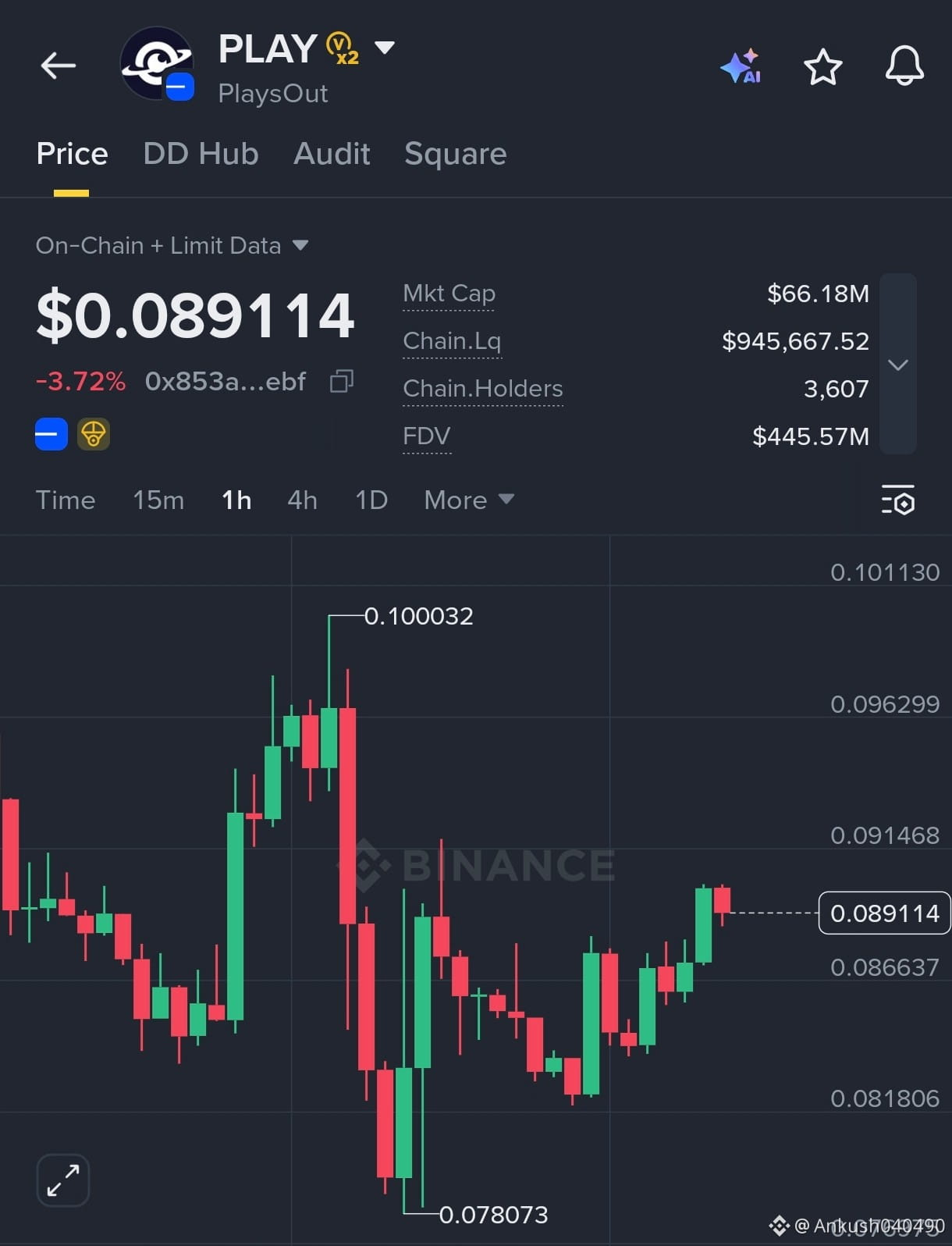
$PLAY gewinnt wieder an Aufmerksamkeit, während Trader weiterhin in die narratives von Unterhaltung, Gaming und gemeinschaftsorientierten Krypto investieren, die starken spekulativen Reiz bieten. Die jüngsten Marktbewegungen deuten darauf hin, dass Käufer bei Rücksetzern zunehmend aktiv werden, was hilft, die Token-Struktur konstruktiv zu halten, trotz der anhaltenden Volatilität im breiteren Altcoin-Markt. Diese Art von Widerstandsfähigkeit signalisiert oft ein wachsendes Vertrauen von Momentum-Tradern, die sich für einen weiteren potenziellen Aufwärtsbewegung positionieren.
Einer der Hauptkatalysatoren hinter dem wachsenden Interesse an $PLAY ist der anhaltende Appetit des Marktes auf interaktive und engagierte Ökosysteme. Gaming- und sozial orientierte Tokens tendieren dazu, in Zeiten stärkerer Risikobereitschaft gut abzuschneiden, weil sie sowohl spekulatives Kapital als auch aktive Online-Communities anziehen. Während die Sichtbarkeit von PLAY wächst, beobachten Trader genau, ob ein steigendes Volumen einen Ausbruch aus dem aktuellen Konsolidierungsbereich auslösen kann.
Das breitere Krypto-Umfeld unterstützt derzeit auch kleinere Kaptialwerte. Mit Bitcoin, das sich stabilisiert, und Liquidität, die allmählich wieder in Altcoins fließt, zielen viele Trader auf Tokens ab, die schnellere prozentuale Gewinne als größere, etablierte Projekte erzielen können. Wenn sich der Momentum im Sektor weiterhin verstärkt, könnte $PLAY einer der am genauesten beobachteten spekulativen Setups in naher Zukunft bleiben. Trotzdem wird erwartet, dass die Volatilität hoch bleibt, was bedeutet, dass schnelle Preisschwankungen und von Sentiment getriebene Umkehrungen schnell geschehen können, während sich die Marktbedingungen entwickeln.
#writetoearn #blockchain #Layer2
$PLAY gewinnt wieder an Aufmerksamkeit, während Trader weiterhin in die narratives von Unterhaltung, Gaming und gemeinschaftsorientierten Krypto investieren, die starken spekulativen Reiz bieten. Die jüngsten Marktbewegungen deuten darauf hin, dass Käufer bei Rücksetzern zunehmend aktiv werden, was hilft, die Token-Struktur konstruktiv zu halten, trotz der anhaltenden Volatilität im breiteren Altcoin-Markt. Diese Art von Widerstandsfähigkeit signalisiert oft ein wachsendes Vertrauen von Momentum-Tradern, die sich für einen weiteren potenziellen Aufwärtsbewegung positionieren.
Einer der Hauptkatalysatoren hinter dem wachsenden Interesse an $PLAY ist der anhaltende Appetit des Marktes auf interaktive und engagierte Ökosysteme. Gaming- und sozial orientierte Tokens tendieren dazu, in Zeiten stärkerer Risikobereitschaft gut abzuschneiden, weil sie sowohl spekulatives Kapital als auch aktive Online-Communities anziehen. Während die Sichtbarkeit von PLAY wächst, beobachten Trader genau, ob ein steigendes Volumen einen Ausbruch aus dem aktuellen Konsolidierungsbereich auslösen kann.
Das breitere Krypto-Umfeld unterstützt derzeit auch kleinere Kaptialwerte. Mit Bitcoin, das sich stabilisiert, und Liquidität, die allmählich wieder in Altcoins fließt, zielen viele Trader auf Tokens ab, die schnellere prozentuale Gewinne als größere, etablierte Projekte erzielen können. Wenn sich der Momentum im Sektor weiterhin verstärkt, könnte $PLAY einer der am genauesten beobachteten spekulativen Setups in naher Zukunft bleiben. Trotzdem wird erwartet, dass die Volatilität hoch bleibt, was bedeutet, dass schnelle Preisschwankungen und von Sentiment getriebene Umkehrungen schnell geschehen können, während sich die Marktbedingungen entwickeln.
#writetoearn #blockchain #Layer2
Einer der Hauptkatalysatoren hinter dem wachsenden Interesse an $PLAY ist der anhaltende Appetit des Marktes auf interaktive und engagierte Ökosysteme. Gaming- und sozial orientierte Tokens tendieren dazu, in Zeiten stärkerer Risikobereitschaft gut abzuschneiden, weil sie sowohl spekulatives Kapital als auch aktive Online-Communities anziehen. Während die Sichtbarkeit von PLAY wächst, beobachten Trader genau, ob ein steigendes Volumen einen Ausbruch aus dem aktuellen Konsolidierungsbereich auslösen kann.
Das breitere Krypto-Umfeld unterstützt derzeit auch kleinere Kaptialwerte. Mit Bitcoin, das sich stabilisiert, und Liquidität, die allmählich wieder in Altcoins fließt, zielen viele Trader auf Tokens ab, die schnellere prozentuale Gewinne als größere, etablierte Projekte erzielen können. Wenn sich der Momentum im Sektor weiterhin verstärkt, könnte $PLAY einer der am genauesten beobachteten spekulativen Setups in naher Zukunft bleiben. Trotzdem wird erwartet, dass die Volatilität hoch bleibt, was bedeutet, dass schnelle Preisschwankungen und von Sentiment getriebene Umkehrungen schnell geschehen können, während sich die Marktbedingungen entwickeln.
#writetoearn #blockchain #Layer2
89
·
--
Bullisch
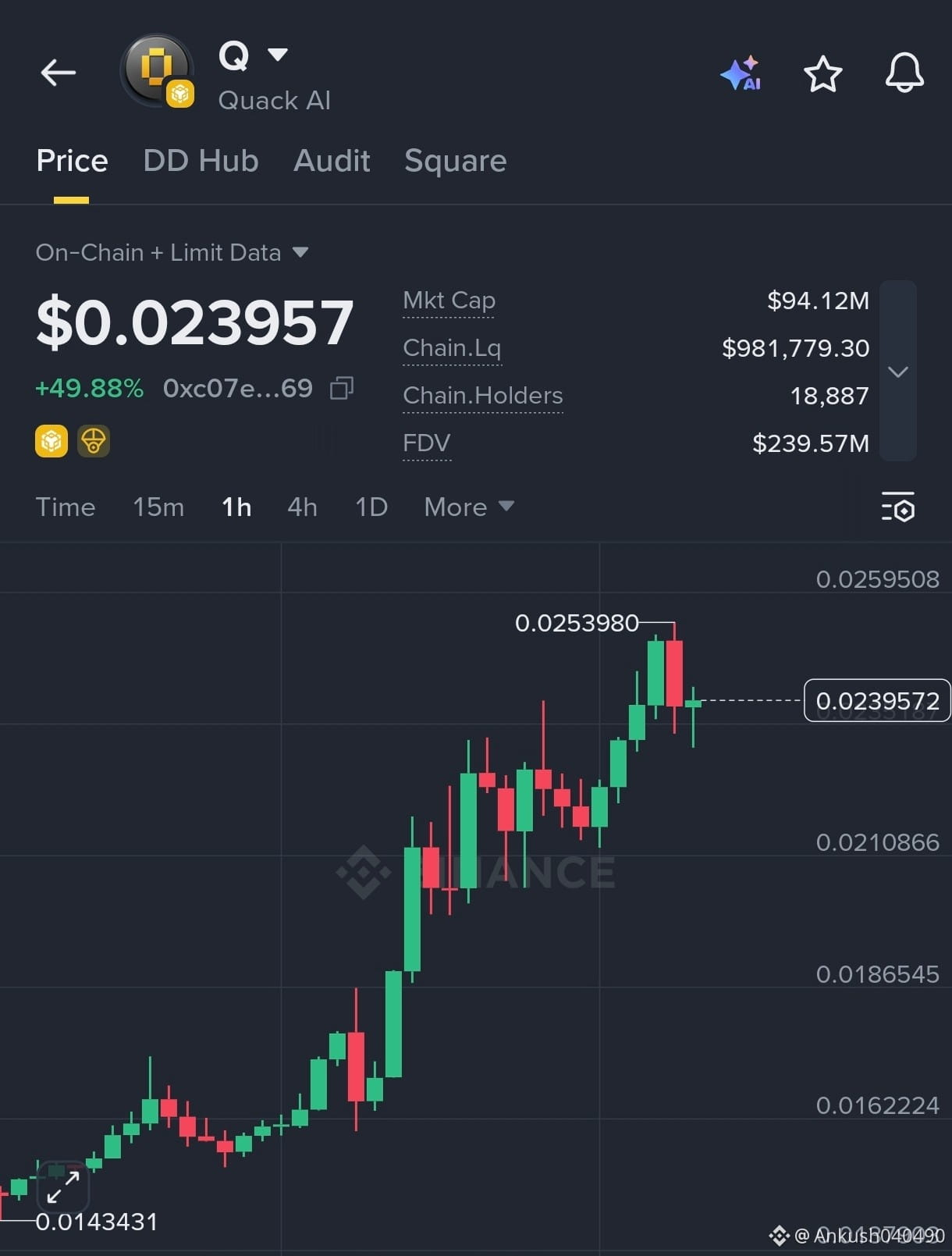
$Q hat leise Momentum aufgebaut, während Trader weiterhin in aufstrebende Altcoins mit starkem spekulativem Potenzial und aktiver Marktaufmerksamkeit rotieren. Die jüngsten Preisbewegungen deuten darauf hin, dass eine Akkumulation stattfinden könnte, wobei Käufer konsequent in Unterstützungszonen eintreten, anstatt einen längeren Abwärtsdruck zuzulassen. Diese Art von Resilienz ist oft ein ermutigendes Signal in Phasen, in denen der breitere Kryptomarkt Vertrauen zurückgewinnt.
Was $Q jetzt bemerkenswert macht, ist die zunehmende Sichtbarkeit in den Trading-Communities und Diskussionen mit Fokus auf Momentum. In schnelllebigen Marktzyklen können Token, die soziale Interaktion und plötzliche Liquiditätszuflüsse anziehen, eine rasche Preissteigerung erleben, sobald die Ausbruchsniveaus überwunden sind. Viele kurzfristige Trader scheinen zu beobachten, ob Q seine aktuelle Struktur beibehalten kann, während genug Volumen aufgebaut wird, um nahe Widerstandsbereiche herauszufordern.
Das breitere Marktumfeld schafft ebenfalls günstige Bedingungen für spekulative Vermögenswerte. Während Bitcoin sich stabilisiert und Kapital tiefer in Altcoins rotiert, beginnen kleinere Tokens mit sich entwickelnden Narrativen, erneutes Interesse sowohl von Swing-Tradern als auch von hochriskanten Investoren zu sehen. Wenn das Momentum im Sektor weiter zunimmt, könnte Q auf den Watchlists der Trader für mögliche Fortsetzungsbewegungen bleiben. Dennoch bleibt die Volatilität hoch, und scharfe Marktschwankungen sind wahrscheinlich, da sich die Stimmung ändert und die Handelsaktivität sich entwickelt.
#writetoearn #Layer2 #blockchain
$Q hat leise Momentum aufgebaut, während Trader weiterhin in aufstrebende Altcoins mit starkem spekulativem Potenzial und aktiver Marktaufmerksamkeit rotieren. Die jüngsten Preisbewegungen deuten darauf hin, dass eine Akkumulation stattfinden könnte, wobei Käufer konsequent in Unterstützungszonen eintreten, anstatt einen längeren Abwärtsdruck zuzulassen. Diese Art von Resilienz ist oft ein ermutigendes Signal in Phasen, in denen der breitere Kryptomarkt Vertrauen zurückgewinnt.
Was $Q jetzt bemerkenswert macht, ist die zunehmende Sichtbarkeit in den Trading-Communities und Diskussionen mit Fokus auf Momentum. In schnelllebigen Marktzyklen können Token, die soziale Interaktion und plötzliche Liquiditätszuflüsse anziehen, eine rasche Preissteigerung erleben, sobald die Ausbruchsniveaus überwunden sind. Viele kurzfristige Trader scheinen zu beobachten, ob Q seine aktuelle Struktur beibehalten kann, während genug Volumen aufgebaut wird, um nahe Widerstandsbereiche herauszufordern.
Das breitere Marktumfeld schafft ebenfalls günstige Bedingungen für spekulative Vermögenswerte. Während Bitcoin sich stabilisiert und Kapital tiefer in Altcoins rotiert, beginnen kleinere Tokens mit sich entwickelnden Narrativen, erneutes Interesse sowohl von Swing-Tradern als auch von hochriskanten Investoren zu sehen. Wenn das Momentum im Sektor weiter zunimmt, könnte Q auf den Watchlists der Trader für mögliche Fortsetzungsbewegungen bleiben. Dennoch bleibt die Volatilität hoch, und scharfe Marktschwankungen sind wahrscheinlich, da sich die Stimmung ändert und die Handelsaktivität sich entwickelt.
#writetoearn #Layer2 #blockchain
Was $Q jetzt bemerkenswert macht, ist die zunehmende Sichtbarkeit in den Trading-Communities und Diskussionen mit Fokus auf Momentum. In schnelllebigen Marktzyklen können Token, die soziale Interaktion und plötzliche Liquiditätszuflüsse anziehen, eine rasche Preissteigerung erleben, sobald die Ausbruchsniveaus überwunden sind. Viele kurzfristige Trader scheinen zu beobachten, ob Q seine aktuelle Struktur beibehalten kann, während genug Volumen aufgebaut wird, um nahe Widerstandsbereiche herauszufordern.
Das breitere Marktumfeld schafft ebenfalls günstige Bedingungen für spekulative Vermögenswerte. Während Bitcoin sich stabilisiert und Kapital tiefer in Altcoins rotiert, beginnen kleinere Tokens mit sich entwickelnden Narrativen, erneutes Interesse sowohl von Swing-Tradern als auch von hochriskanten Investoren zu sehen. Wenn das Momentum im Sektor weiter zunimmt, könnte Q auf den Watchlists der Trader für mögliche Fortsetzungsbewegungen bleiben. Dennoch bleibt die Volatilität hoch, und scharfe Marktschwankungen sind wahrscheinlich, da sich die Stimmung ändert und die Handelsaktivität sich entwickelt.
#writetoearn #Layer2 #blockchain
85
·
--
Bullisch
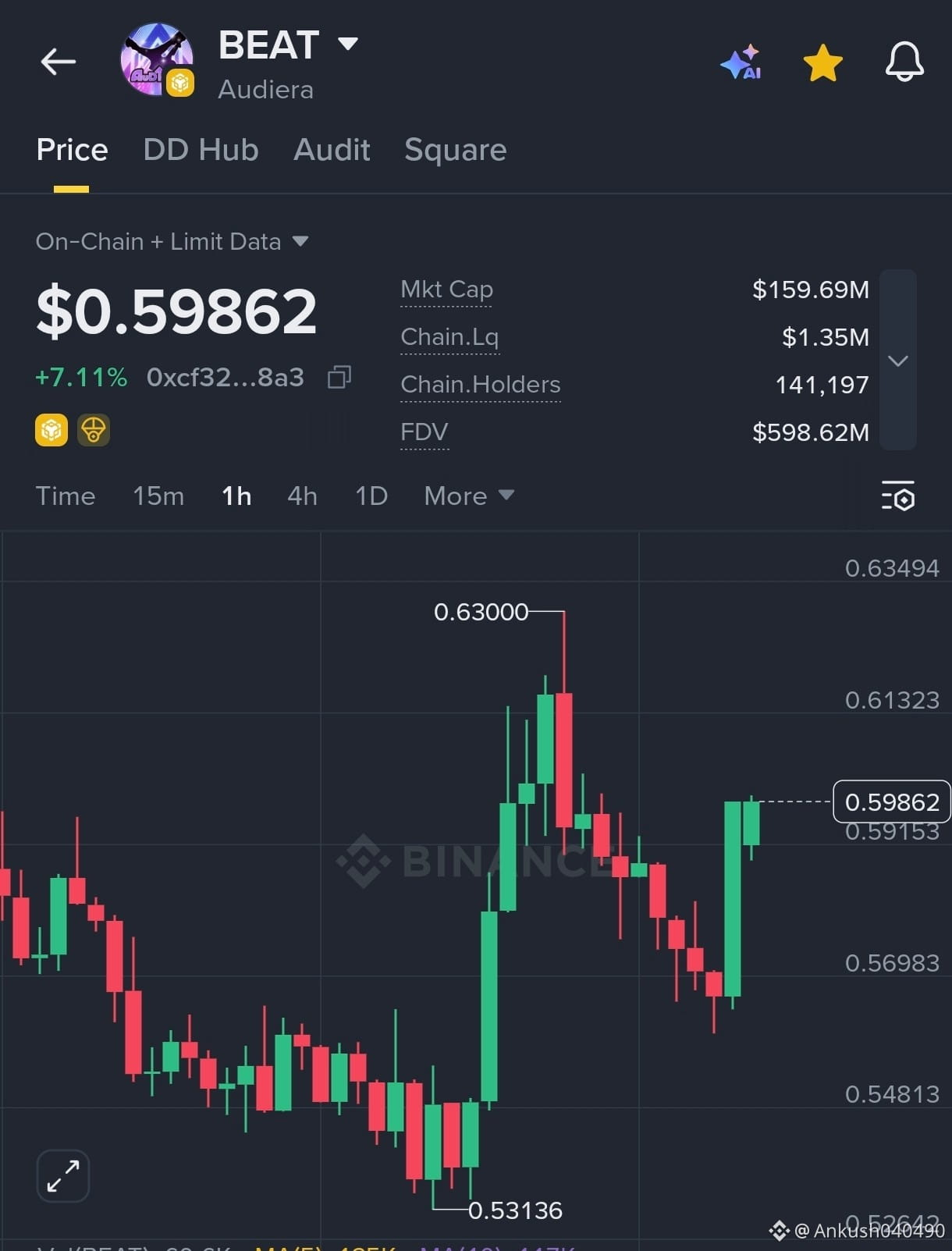
$BEAT beginnt, frische spekulative Aufmerksamkeit auf sich zu ziehen, während Momentum-Trader weiterhin kleinere Tokens mit starkem Volatilitätspotenzial und wachsender Community-Aktivität erkunden. Das jüngste Preisverhalten deutet darauf hin, dass Käufer während Konsolidierungsphasen aktiver werden und dem Token helfen, Unterstützungslevels zu halten, selbst wenn der breitere Markt Schwankungen erlebt. Diese Art von Stabilität kann oft ein frühes Zeichen für Akkumulation sein, bevor eine größere Richtungbewegung einsetzt.
Was $BEAT derzeit hervorhebt, ist der Anstieg der Marktvisibilität und die Trader-Diskussionen rund um das Projekt. Im aktuellen Krypto-Zyklus können Tokens, die starke narrative Dynamik entwickeln und aktive Engagements auf sozialen Plattformen zeigen, eine schnelle Preiserweiterung erfahren, sobald das Handelsvolumen ansteigt. Viele kurzfristige Trader scheinen zu beobachten, ob BEAT in der Lage sein kann, höhere Tiefs zu halten und genügend Liquidität zu generieren, um durch nahegelegene Widerstandsbereiche zu pushen.
Das breitere Altcoin-Umfeld ist ebenfalls unterstützend für spekulative Assets. Da Bitcoin relativ stabil bleibt und die Risikobereitschaft zunimmt, rotieren die Trader zunehmend in aufstrebende Tokens, die nach stärkeren prozentualen Gewinnen suchen. Wenn dieser Trend anhält, könnte $BEAT von zusätzlichen Momentum-Zuflüssen in den kommenden Sitzungen profitieren. Allerdings wird erwartet, dass die Volatilität weiterhin hoch bleibt, was bedeutet, dass scharfe Schwankungen, schnelles Profit-Realizing und gefühlsgetriebene Umkehrungen wahrscheinlich weiterhin Teil der kurzfristigen Handelsstruktur des Tokens sein werden.
#writetoearn #blockchain #Layer2
$BEAT beginnt, frische spekulative Aufmerksamkeit auf sich zu ziehen, während Momentum-Trader weiterhin kleinere Tokens mit starkem Volatilitätspotenzial und wachsender Community-Aktivität erkunden. Das jüngste Preisverhalten deutet darauf hin, dass Käufer während Konsolidierungsphasen aktiver werden und dem Token helfen, Unterstützungslevels zu halten, selbst wenn der breitere Markt Schwankungen erlebt. Diese Art von Stabilität kann oft ein frühes Zeichen für Akkumulation sein, bevor eine größere Richtungbewegung einsetzt.
Was $BEAT derzeit hervorhebt, ist der Anstieg der Marktvisibilität und die Trader-Diskussionen rund um das Projekt. Im aktuellen Krypto-Zyklus können Tokens, die starke narrative Dynamik entwickeln und aktive Engagements auf sozialen Plattformen zeigen, eine schnelle Preiserweiterung erfahren, sobald das Handelsvolumen ansteigt. Viele kurzfristige Trader scheinen zu beobachten, ob BEAT in der Lage sein kann, höhere Tiefs zu halten und genügend Liquidität zu generieren, um durch nahegelegene Widerstandsbereiche zu pushen.
Das breitere Altcoin-Umfeld ist ebenfalls unterstützend für spekulative Assets. Da Bitcoin relativ stabil bleibt und die Risikobereitschaft zunimmt, rotieren die Trader zunehmend in aufstrebende Tokens, die nach stärkeren prozentualen Gewinnen suchen. Wenn dieser Trend anhält, könnte $BEAT von zusätzlichen Momentum-Zuflüssen in den kommenden Sitzungen profitieren. Allerdings wird erwartet, dass die Volatilität weiterhin hoch bleibt, was bedeutet, dass scharfe Schwankungen, schnelles Profit-Realizing und gefühlsgetriebene Umkehrungen wahrscheinlich weiterhin Teil der kurzfristigen Handelsstruktur des Tokens sein werden.
#writetoearn #blockchain #Layer2
Was $BEAT derzeit hervorhebt, ist der Anstieg der Marktvisibilität und die Trader-Diskussionen rund um das Projekt. Im aktuellen Krypto-Zyklus können Tokens, die starke narrative Dynamik entwickeln und aktive Engagements auf sozialen Plattformen zeigen, eine schnelle Preiserweiterung erfahren, sobald das Handelsvolumen ansteigt. Viele kurzfristige Trader scheinen zu beobachten, ob BEAT in der Lage sein kann, höhere Tiefs zu halten und genügend Liquidität zu generieren, um durch nahegelegene Widerstandsbereiche zu pushen.
Das breitere Altcoin-Umfeld ist ebenfalls unterstützend für spekulative Assets. Da Bitcoin relativ stabil bleibt und die Risikobereitschaft zunimmt, rotieren die Trader zunehmend in aufstrebende Tokens, die nach stärkeren prozentualen Gewinnen suchen. Wenn dieser Trend anhält, könnte $BEAT von zusätzlichen Momentum-Zuflüssen in den kommenden Sitzungen profitieren. Allerdings wird erwartet, dass die Volatilität weiterhin hoch bleibt, was bedeutet, dass scharfe Schwankungen, schnelles Profit-Realizing und gefühlsgetriebene Umkehrungen wahrscheinlich weiterhin Teil der kurzfristigen Handelsstruktur des Tokens sein werden.
#writetoearn #blockchain #Layer2
58
·
--
Bullisch
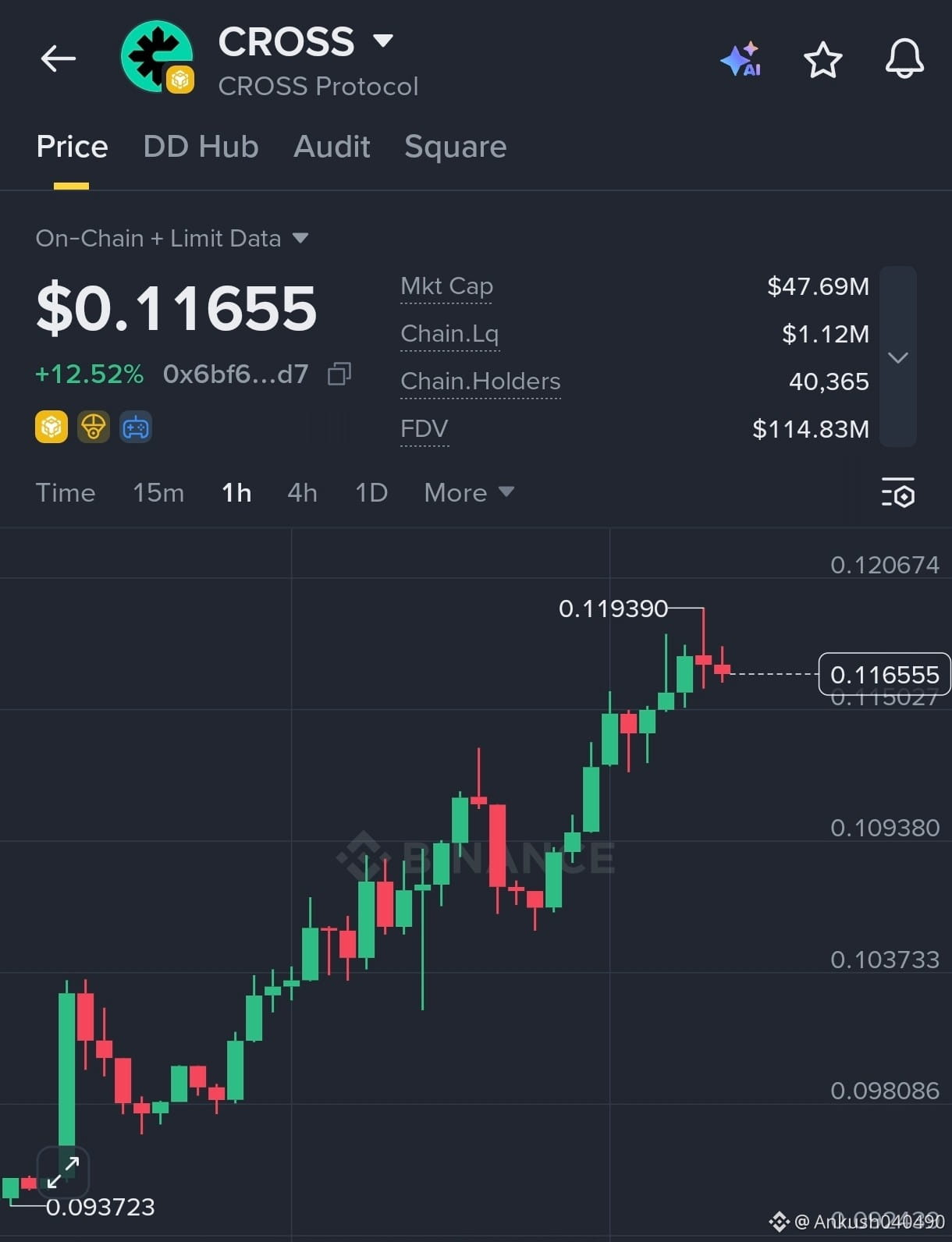
$CROSS gewinnt weiterhin an Momentum, während Trader verstärkt auf Infrastruktur- und Ökosystem-bezogene Krypto-Projekte mit starkem spekulativem Potenzial fokussieren. Die jüngste Marktentwicklung deutet darauf hin, dass Käufer in Schwächephasen aktiv werden, anstatt längeren Verkaufsdruck zuzulassen, was oft ein positives Signal während breiterer Altcoin-Erholungsphasen darstellt. Die Fähigkeit des Tokens, trotz erhöhter Marktvolatilität Struktur zu halten, hat begonnen, zusätzliche Trader-Aufmerksamkeit anzuziehen.
Ein Hauptgrund, warum CROSS an Sichtbarkeit gewinnt, ist das wachsende Interesse an Cross-Chain- und Interoperabilitätsnarrativen im Krypto-Sektor. Während sich Blockchain-Ökosysteme erweitern, profitieren Projekte, die eine nahtlose Vermögensbewegung und Netzwerk-Integration ermöglichen, tendenziell von erneuter Neugier der Investoren. Diese narrative Stärke, kombiniert mit zunehmender Handelsaktivität, hilft $CROSS , relevant zu bleiben unter den auf Momentum fokussierten Teilnehmern, die nach aufkommenden Chancen suchen.
Aus einer breiteren Marktperspektive schafft das verbesserte Sentiment bei Bitcoin und wichtigen Altcoins günstige Bedingungen für kleinere Vermögenswerte, um besser abzuschneiden. Wenn spekulatives Kapital weiterhin tiefer in Altcoins rotiert, könnte $CROSS stärkere Ausbruchversuche sehen, unterstützt durch steigende Liquidität und soziale Engagements. Dennoch bleibt der Token hochsensibel gegenüber dem allgemeinen Marktsentiment, was bedeutet, dass Volatilität und schnelle Richtungswechsel in naher Zukunft wahrscheinlich weiterhin bestehen bleiben.
#blockchain #writetoearn #Layer2
$CROSS gewinnt weiterhin an Momentum, während Trader verstärkt auf Infrastruktur- und Ökosystem-bezogene Krypto-Projekte mit starkem spekulativem Potenzial fokussieren. Die jüngste Marktentwicklung deutet darauf hin, dass Käufer in Schwächephasen aktiv werden, anstatt längeren Verkaufsdruck zuzulassen, was oft ein positives Signal während breiterer Altcoin-Erholungsphasen darstellt. Die Fähigkeit des Tokens, trotz erhöhter Marktvolatilität Struktur zu halten, hat begonnen, zusätzliche Trader-Aufmerksamkeit anzuziehen.
Ein Hauptgrund, warum CROSS an Sichtbarkeit gewinnt, ist das wachsende Interesse an Cross-Chain- und Interoperabilitätsnarrativen im Krypto-Sektor. Während sich Blockchain-Ökosysteme erweitern, profitieren Projekte, die eine nahtlose Vermögensbewegung und Netzwerk-Integration ermöglichen, tendenziell von erneuter Neugier der Investoren. Diese narrative Stärke, kombiniert mit zunehmender Handelsaktivität, hilft $CROSS , relevant zu bleiben unter den auf Momentum fokussierten Teilnehmern, die nach aufkommenden Chancen suchen.
Aus einer breiteren Marktperspektive schafft das verbesserte Sentiment bei Bitcoin und wichtigen Altcoins günstige Bedingungen für kleinere Vermögenswerte, um besser abzuschneiden. Wenn spekulatives Kapital weiterhin tiefer in Altcoins rotiert, könnte $CROSS stärkere Ausbruchversuche sehen, unterstützt durch steigende Liquidität und soziale Engagements. Dennoch bleibt der Token hochsensibel gegenüber dem allgemeinen Marktsentiment, was bedeutet, dass Volatilität und schnelle Richtungswechsel in naher Zukunft wahrscheinlich weiterhin bestehen bleiben.
#blockchain #writetoearn #Layer2
Ein Hauptgrund, warum CROSS an Sichtbarkeit gewinnt, ist das wachsende Interesse an Cross-Chain- und Interoperabilitätsnarrativen im Krypto-Sektor. Während sich Blockchain-Ökosysteme erweitern, profitieren Projekte, die eine nahtlose Vermögensbewegung und Netzwerk-Integration ermöglichen, tendenziell von erneuter Neugier der Investoren. Diese narrative Stärke, kombiniert mit zunehmender Handelsaktivität, hilft $CROSS , relevant zu bleiben unter den auf Momentum fokussierten Teilnehmern, die nach aufkommenden Chancen suchen.
Aus einer breiteren Marktperspektive schafft das verbesserte Sentiment bei Bitcoin und wichtigen Altcoins günstige Bedingungen für kleinere Vermögenswerte, um besser abzuschneiden. Wenn spekulatives Kapital weiterhin tiefer in Altcoins rotiert, könnte $CROSS stärkere Ausbruchversuche sehen, unterstützt durch steigende Liquidität und soziale Engagements. Dennoch bleibt der Token hochsensibel gegenüber dem allgemeinen Marktsentiment, was bedeutet, dass Volatilität und schnelle Richtungswechsel in naher Zukunft wahrscheinlich weiterhin bestehen bleiben.
#blockchain #writetoearn #Layer2
70
·
--
Bullisch
$BAS hat begonnen, erneute Aufmerksamkeit zu erregen, während Trader weiterhin in kleinere Krypto-Assets mit starken spekulativen Setups und wachsender Markt Sichtbarkeit rotieren. Die jüngste Preisaktion deutet darauf hin, dass Käufer allmählich die Kontrolle zurückgewinnen, wobei Unterstützungslevel während der Rücksetzer konsistenter gehalten werden. Diese Art von Struktur deutet oft auf Akkumulation hin, insbesondere wenn das allgemeine Markt Sentiment über Altcoins beginnt, sich zu stärken.
Ein Hauptgrund, warum Trader BAS beobachten, ist die zunehmende Aktivität rund um aufkommende Ökosysteme und narrative getriebene Tokens. In schnelllebigen Marktumgebungen können Projekte mit steigendem sozialen Engagement und verbesserter Liquidität rasche Momentumverschiebungen erfahren, sobald der Kaufdruck ansteigt. $BAS scheint in diese Phase einzutreten, in der spekulative Trader sich früh positionieren, in Erwartung eines stärkeren Ausbruchs.
Die breitere Krypto-Landschaft ist derzeit auch unterstützend für aggressive Risikoanlagen. Da Bitcoin relativ stabil bleibt und das Vertrauen in den Altcoin-Sektor zurückkehrt, fließt Kapital zunehmend in Gelegenheiten mit niedrigerer Marktkapitalisierung, die ein höheres Aufwärtspotenzial bieten. Wenn das Handelsvolumen rund um $BAS weiterhin wächst, könnte der Token in den kommenden Sitzungen auf dem Radar der Momentum-Trader bleiben. Allerdings wird auch weiterhin hohe Volatilität erwartet, was bedeutet, dass schnelle Bewegungen in beide Richtungen schnell geschehen können, während sich Sentiment und Liquidität ändern.
#writetoearn #Layer2 #blockchain
$BAS hat begonnen, erneute Aufmerksamkeit zu erregen, während Trader weiterhin in kleinere Krypto-Assets mit starken spekulativen Setups und wachsender Markt Sichtbarkeit rotieren. Die jüngste Preisaktion deutet darauf hin, dass Käufer allmählich die Kontrolle zurückgewinnen, wobei Unterstützungslevel während der Rücksetzer konsistenter gehalten werden. Diese Art von Struktur deutet oft auf Akkumulation hin, insbesondere wenn das allgemeine Markt Sentiment über Altcoins beginnt, sich zu stärken.
Ein Hauptgrund, warum Trader BAS beobachten, ist die zunehmende Aktivität rund um aufkommende Ökosysteme und narrative getriebene Tokens. In schnelllebigen Marktumgebungen können Projekte mit steigendem sozialen Engagement und verbesserter Liquidität rasche Momentumverschiebungen erfahren, sobald der Kaufdruck ansteigt. $BAS scheint in diese Phase einzutreten, in der spekulative Trader sich früh positionieren, in Erwartung eines stärkeren Ausbruchs.
Die breitere Krypto-Landschaft ist derzeit auch unterstützend für aggressive Risikoanlagen. Da Bitcoin relativ stabil bleibt und das Vertrauen in den Altcoin-Sektor zurückkehrt, fließt Kapital zunehmend in Gelegenheiten mit niedrigerer Marktkapitalisierung, die ein höheres Aufwärtspotenzial bieten. Wenn das Handelsvolumen rund um $BAS weiterhin wächst, könnte der Token in den kommenden Sitzungen auf dem Radar der Momentum-Trader bleiben. Allerdings wird auch weiterhin hohe Volatilität erwartet, was bedeutet, dass schnelle Bewegungen in beide Richtungen schnell geschehen können, während sich Sentiment und Liquidität ändern.
#writetoearn #Layer2 #blockchain
Ein Hauptgrund, warum Trader BAS beobachten, ist die zunehmende Aktivität rund um aufkommende Ökosysteme und narrative getriebene Tokens. In schnelllebigen Marktumgebungen können Projekte mit steigendem sozialen Engagement und verbesserter Liquidität rasche Momentumverschiebungen erfahren, sobald der Kaufdruck ansteigt. $BAS scheint in diese Phase einzutreten, in der spekulative Trader sich früh positionieren, in Erwartung eines stärkeren Ausbruchs.
Die breitere Krypto-Landschaft ist derzeit auch unterstützend für aggressive Risikoanlagen. Da Bitcoin relativ stabil bleibt und das Vertrauen in den Altcoin-Sektor zurückkehrt, fließt Kapital zunehmend in Gelegenheiten mit niedrigerer Marktkapitalisierung, die ein höheres Aufwärtspotenzial bieten. Wenn das Handelsvolumen rund um $BAS weiterhin wächst, könnte der Token in den kommenden Sitzungen auf dem Radar der Momentum-Trader bleiben. Allerdings wird auch weiterhin hohe Volatilität erwartet, was bedeutet, dass schnelle Bewegungen in beide Richtungen schnell geschehen können, während sich Sentiment und Liquidität ändern.
#writetoearn #Layer2 #blockchain
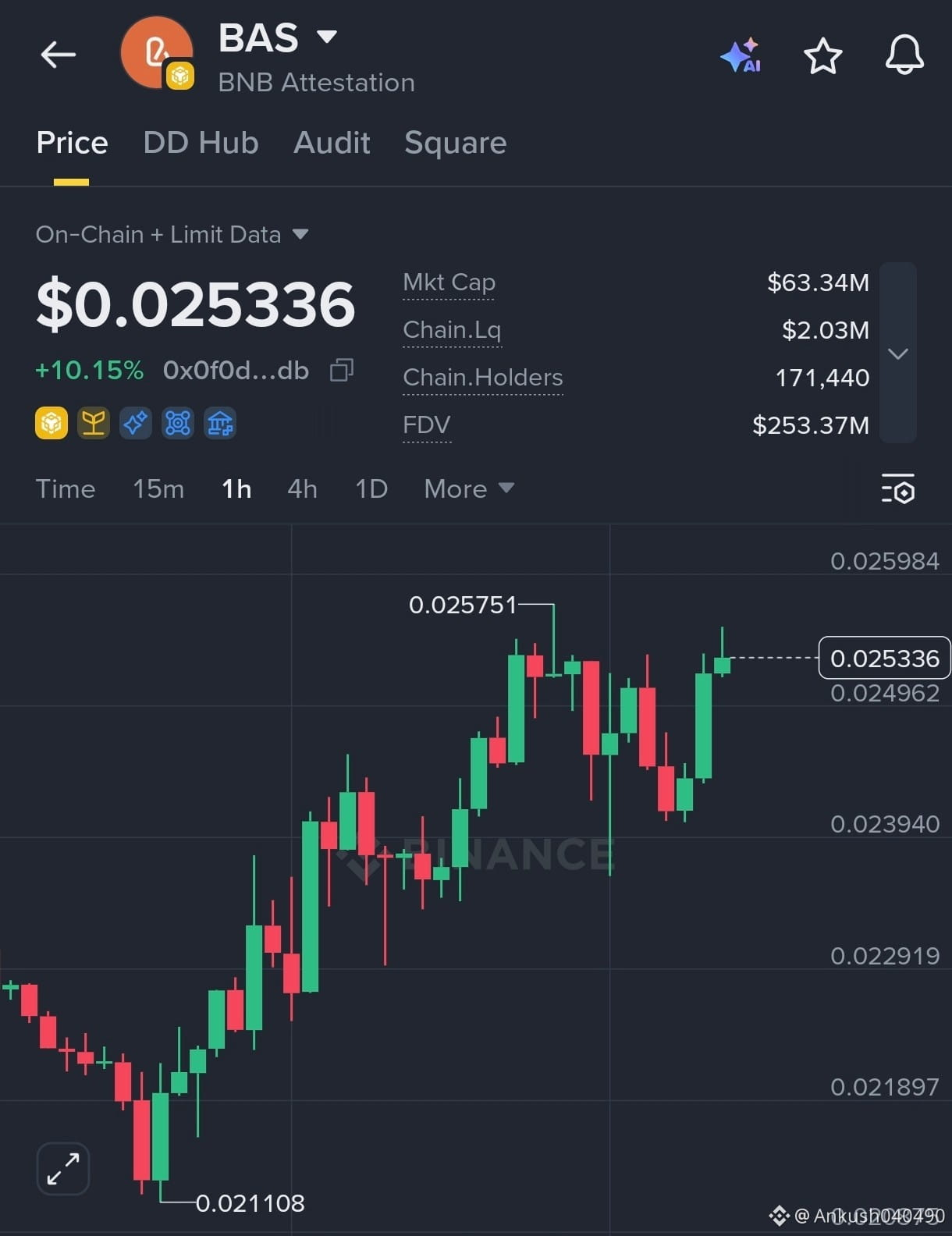
92
·
--
Bullisch
$MAIGA zieht zunehmend die Aufmerksamkeit spekulativer Trader auf sich, da sich der Momentum über kleinere Krypto-Assets mit narrativen Ansätzen ausbreitet. Das recente Handelsverhalten deutet darauf hin, dass der Token in eine Phase eintritt, in der Käufer während der Konsolidierungen aktiver werden, was hilft, die Preisstruktur stabil zu halten, trotz der breiteren Marktvolatilität. Diese Art von Resilienz signalisiert oft ein wachsendes Vertrauen von Tradern, die eine stärkere Fortsetzung des Preistrends erwarten.
Einer der Hauptgründe, warum $MAIGA Interesse weckt, ist die anhaltende Marktnachfrage nach aufstrebenden Projekten mit starkem spekulativen Potenzial und Community-Engagement. In der aktuellen Umgebung suchen Trader aggressiv nach Tokens, die schnell reagieren können, sobald die Liquidität und die soziale Aktivität zunehmen. Wenn das Volumen um $MAIGA weiter wächst, könnte der Token beschleunigten Momentum erleben, während breakout-orientierte Trader sich für kurzfristige Aufwärtschancen positionieren.
Der breitere Krypto-Markt schafft ebenfalls günstige Bedingungen für Assets wie $MAIGA. Mit Bitcoin, der sich stabilisiert, und einer Verbesserung der Altcoin-Stimmung ist die Kapitalrotation in niedrigere Marktkapitalisierungen in den letzten Sitzungen auffälliger geworden. Projekte, die Sichtbarkeit und aktive Handelsbeteiligung aufrechterhalten, übertreffen oft während dieser Zyklen, und $MAIGA scheint von diesem Trend zu profitieren. Dennoch bleibt die Volatilität hoch, sodass schnelle Preisschwankungen und sentimentgetriebene Umkehrungen wahrscheinlich Teil der kurzfristigen Marktstruktur bleiben.
#writetoearn #blockchain #Layer2
$MAIGA zieht zunehmend die Aufmerksamkeit spekulativer Trader auf sich, da sich der Momentum über kleinere Krypto-Assets mit narrativen Ansätzen ausbreitet. Das recente Handelsverhalten deutet darauf hin, dass der Token in eine Phase eintritt, in der Käufer während der Konsolidierungen aktiver werden, was hilft, die Preisstruktur stabil zu halten, trotz der breiteren Marktvolatilität. Diese Art von Resilienz signalisiert oft ein wachsendes Vertrauen von Tradern, die eine stärkere Fortsetzung des Preistrends erwarten.
Einer der Hauptgründe, warum $MAIGA Interesse weckt, ist die anhaltende Marktnachfrage nach aufstrebenden Projekten mit starkem spekulativen Potenzial und Community-Engagement. In der aktuellen Umgebung suchen Trader aggressiv nach Tokens, die schnell reagieren können, sobald die Liquidität und die soziale Aktivität zunehmen. Wenn das Volumen um $MAIGA weiter wächst, könnte der Token beschleunigten Momentum erleben, während breakout-orientierte Trader sich für kurzfristige Aufwärtschancen positionieren.
Der breitere Krypto-Markt schafft ebenfalls günstige Bedingungen für Assets wie $MAIGA. Mit Bitcoin, der sich stabilisiert, und einer Verbesserung der Altcoin-Stimmung ist die Kapitalrotation in niedrigere Marktkapitalisierungen in den letzten Sitzungen auffälliger geworden. Projekte, die Sichtbarkeit und aktive Handelsbeteiligung aufrechterhalten, übertreffen oft während dieser Zyklen, und $MAIGA scheint von diesem Trend zu profitieren. Dennoch bleibt die Volatilität hoch, sodass schnelle Preisschwankungen und sentimentgetriebene Umkehrungen wahrscheinlich Teil der kurzfristigen Marktstruktur bleiben.
#writetoearn #blockchain #Layer2
Einer der Hauptgründe, warum $MAIGA Interesse weckt, ist die anhaltende Marktnachfrage nach aufstrebenden Projekten mit starkem spekulativen Potenzial und Community-Engagement. In der aktuellen Umgebung suchen Trader aggressiv nach Tokens, die schnell reagieren können, sobald die Liquidität und die soziale Aktivität zunehmen. Wenn das Volumen um $MAIGA weiter wächst, könnte der Token beschleunigten Momentum erleben, während breakout-orientierte Trader sich für kurzfristige Aufwärtschancen positionieren.
Der breitere Krypto-Markt schafft ebenfalls günstige Bedingungen für Assets wie $MAIGA. Mit Bitcoin, der sich stabilisiert, und einer Verbesserung der Altcoin-Stimmung ist die Kapitalrotation in niedrigere Marktkapitalisierungen in den letzten Sitzungen auffälliger geworden. Projekte, die Sichtbarkeit und aktive Handelsbeteiligung aufrechterhalten, übertreffen oft während dieser Zyklen, und $MAIGA scheint von diesem Trend zu profitieren. Dennoch bleibt die Volatilität hoch, sodass schnelle Preisschwankungen und sentimentgetriebene Umkehrungen wahrscheinlich Teil der kurzfristigen Marktstruktur bleiben.
#writetoearn #blockchain #Layer2
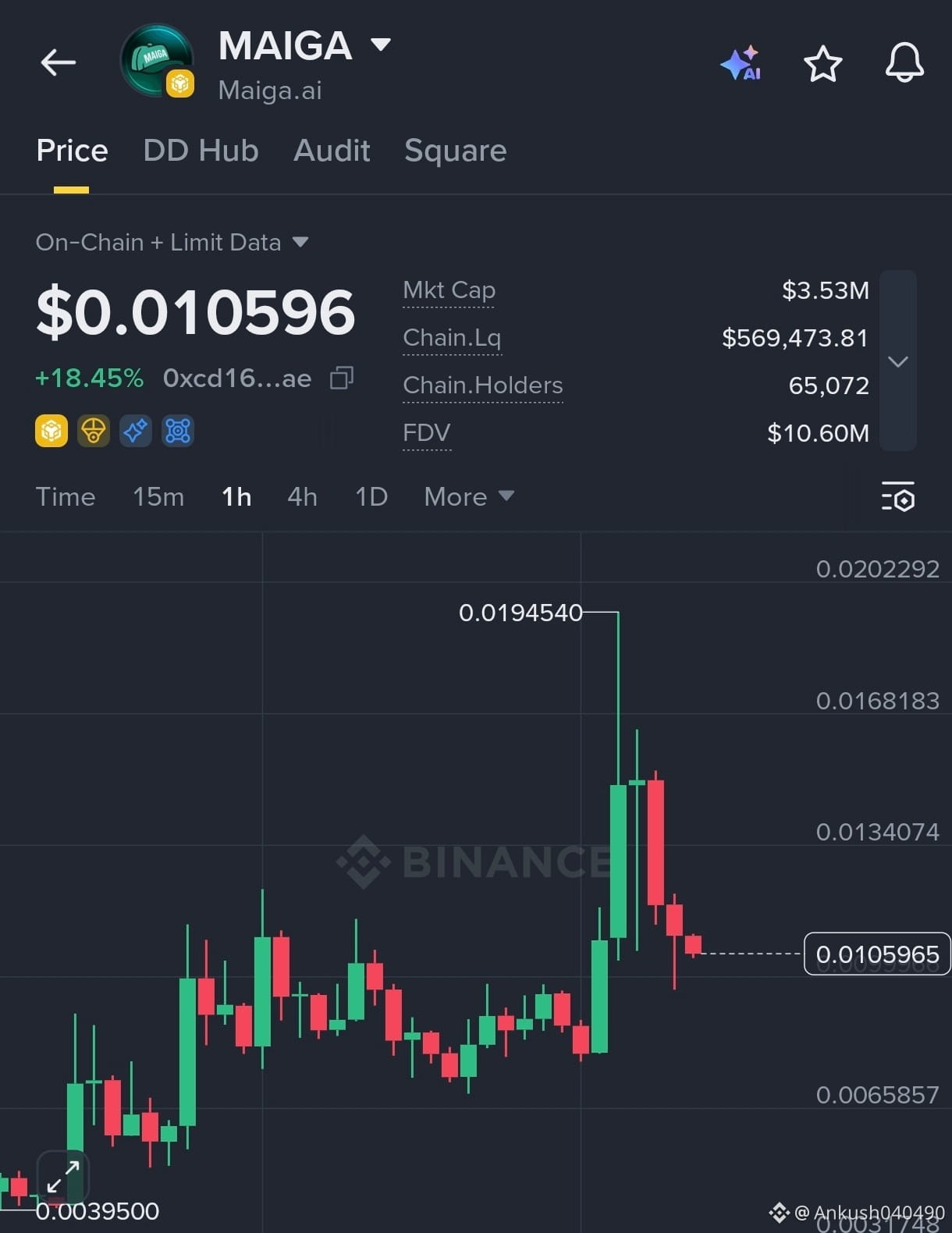
29
·
--
Bullisch
$SKYAI zieht weiterhin starkes Interesse an, da KI-bezogene Narrative eines der aktivsten Segmente im Krypto-Markt bleiben. Die jüngste Preisaktion deutet darauf hin, dass der Token auch in Zeiten allgemeiner Marktunsicherheit Momentum hält, was oft signalisiert, dass Käufer weiterhin Vertrauen in den größeren Trend haben. Statt scharfer Rückgänge wurden Rückgänge mit erneuter Akkumulation begegnet, was die Trader auf die Möglichkeit einer weiteren Expansionsbewegung fokussiert.
Das KI-Narrativ bleibt ein großer Vorteil für $SKYAI. Im gesamten Markt rotieren Trader konstant in Projekte, die mit künstlicher Intelligenz, Automatisierung und Dateninfrastruktur verbunden sind, insbesondere wenn die spekulative Stimmung stärker wird. Tokens, die an diese Themen gebunden sind, profitieren schnell von erhöhtem sozialen Engagement und Momentum-Trading, und $SKYAI scheint in dieser Kategorie mit hoher Aufmerksamkeit positioniert zu sein. Wachsende Sichtbarkeit in den Handelsgemeinschaften trägt ebenfalls dazu bei, das Interesse aufrechtzuerhalten, während das Volumen allmählich steigt.
Aus Marktperspektive beobachten viele Trader jetzt, ob $SKYAI die nahegelegene Widerstandszone durchbrechen und eine höhere Handelsaktivität aufrechterhalten kann. Wenn der breitere Altcoin-Markt bullish bleibt, könnte der Token weiterhin spekulatives Kapital anziehen, das nach hohen Aufwärtsmöglichkeiten sucht. Allerdings sind KI-bezogene Tokens auch für scharfe Volatilität bekannt, was bedeutet, dass schnelle Rallyes von aggressiven Korrekturen gefolgt werden können, wenn das Momentum schwächer wird oder Gewinnmitnahmen beschleunigt werden.
#writetoearn #Layer2 #blockchain
$SKYAI zieht weiterhin starkes Interesse an, da KI-bezogene Narrative eines der aktivsten Segmente im Krypto-Markt bleiben. Die jüngste Preisaktion deutet darauf hin, dass der Token auch in Zeiten allgemeiner Marktunsicherheit Momentum hält, was oft signalisiert, dass Käufer weiterhin Vertrauen in den größeren Trend haben. Statt scharfer Rückgänge wurden Rückgänge mit erneuter Akkumulation begegnet, was die Trader auf die Möglichkeit einer weiteren Expansionsbewegung fokussiert.
Das KI-Narrativ bleibt ein großer Vorteil für $SKYAI . Im gesamten Markt rotieren Trader konstant in Projekte, die mit künstlicher Intelligenz, Automatisierung und Dateninfrastruktur verbunden sind, insbesondere wenn die spekulative Stimmung stärker wird. Tokens, die an diese Themen gebunden sind, profitieren schnell von erhöhtem sozialen Engagement und Momentum-Trading, und $SKYAI scheint in dieser Kategorie mit hoher Aufmerksamkeit positioniert zu sein. Wachsende Sichtbarkeit in den Handelsgemeinschaften trägt ebenfalls dazu bei, das Interesse aufrechtzuerhalten, während das Volumen allmählich steigt.
Aus Marktperspektive beobachten viele Trader jetzt, ob $SKYAI die nahegelegene Widerstandszone durchbrechen und eine höhere Handelsaktivität aufrechterhalten kann. Wenn der breitere Altcoin-Markt bullish bleibt, könnte der Token weiterhin spekulatives Kapital anziehen, das nach hohen Aufwärtsmöglichkeiten sucht. Allerdings sind KI-bezogene Tokens auch für scharfe Volatilität bekannt, was bedeutet, dass schnelle Rallyes von aggressiven Korrekturen gefolgt werden können, wenn das Momentum schwächer wird oder Gewinnmitnahmen beschleunigt werden.
#writetoearn #Layer2 #blockchain
Das KI-Narrativ bleibt ein großer Vorteil für $SKYAI . Im gesamten Markt rotieren Trader konstant in Projekte, die mit künstlicher Intelligenz, Automatisierung und Dateninfrastruktur verbunden sind, insbesondere wenn die spekulative Stimmung stärker wird. Tokens, die an diese Themen gebunden sind, profitieren schnell von erhöhtem sozialen Engagement und Momentum-Trading, und $SKYAI scheint in dieser Kategorie mit hoher Aufmerksamkeit positioniert zu sein. Wachsende Sichtbarkeit in den Handelsgemeinschaften trägt ebenfalls dazu bei, das Interesse aufrechtzuerhalten, während das Volumen allmählich steigt.
Aus Marktperspektive beobachten viele Trader jetzt, ob $SKYAI die nahegelegene Widerstandszone durchbrechen und eine höhere Handelsaktivität aufrechterhalten kann. Wenn der breitere Altcoin-Markt bullish bleibt, könnte der Token weiterhin spekulatives Kapital anziehen, das nach hohen Aufwärtsmöglichkeiten sucht. Allerdings sind KI-bezogene Tokens auch für scharfe Volatilität bekannt, was bedeutet, dass schnelle Rallyes von aggressiven Korrekturen gefolgt werden können, wenn das Momentum schwächer wird oder Gewinnmitnahmen beschleunigt werden.
#writetoearn #Layer2 #blockchain
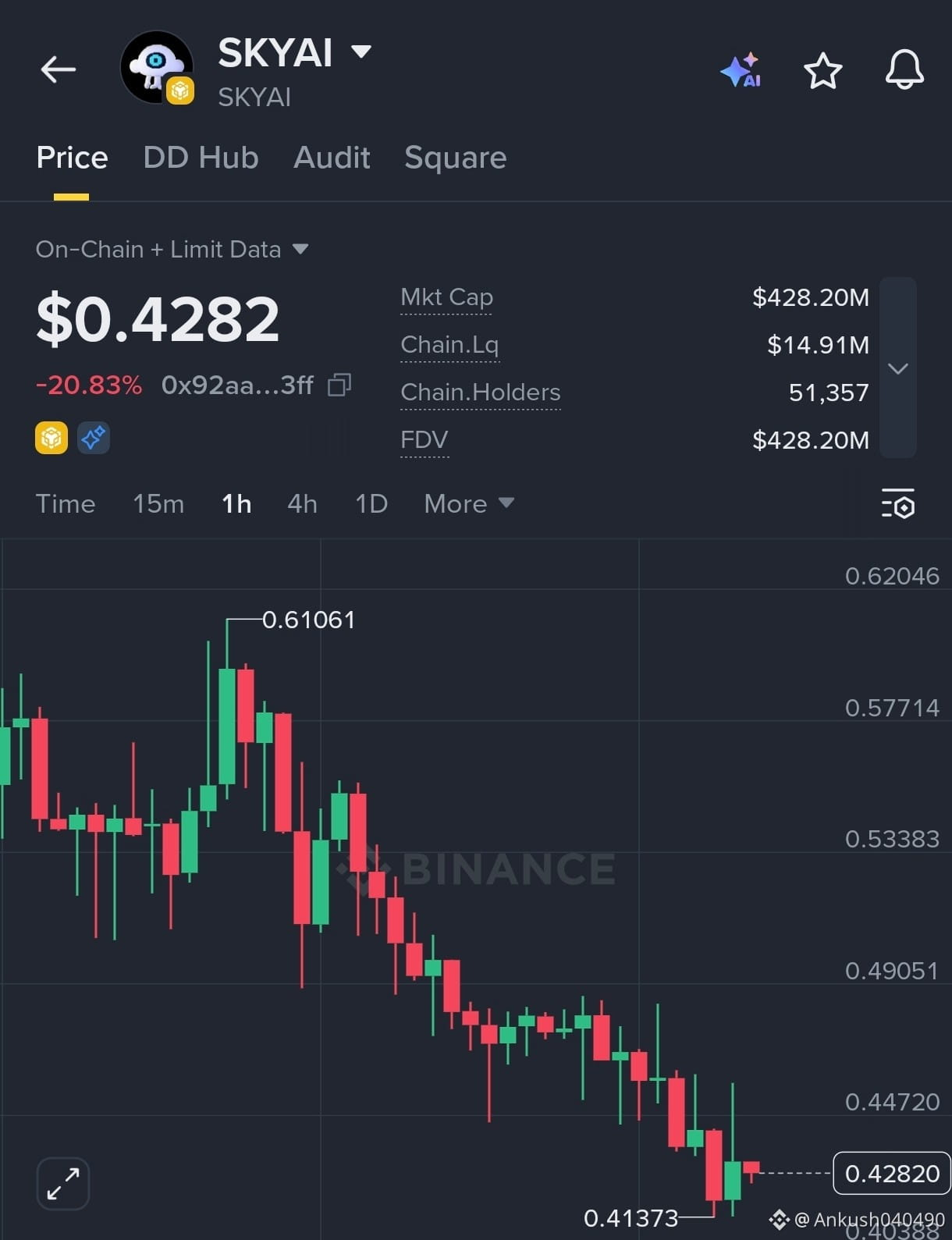
44
Anmelden und weiter Inhalte entdecken
Krypto-Nutzer weltweit auf Binance Square kennenlernen
⚡️ Bleib in Sachen Krypto stets am Puls.
💬 Die weltgrößte Kryptobörse vertraut darauf.
👍 Erhalte verlässliche Einblicke von verifizierten Creators.
E-Mail-Adresse/Telefonnummer
Trendthemen
CircleMints500MUSDCOnSolana
21,911 Aufrufe
715 Kommentare
#circlemints500musdconsolana
🚨 MASSIVER Liquiditäts-Schub! Circle prägt 500 Millionen USDC auf Solana — Ist als Nächstes eine große DeFi-Rallye dran? 🚀
💵 Was ist passiert?
Bei einem wichtigen On-Chain-Ereignis hat das USDC-Treasury 500 Millionen USDC direkt im Solana-Netzwerk ausgegeben — aufgeteilt auf zwei Transaktionen à 250 Mio.
Dieser massive Zufluss von real durch Fiat gedecktem Kapital zeigt eine wachsende Nachfrage nach Stablecoins in schnellen, kostengünstigen Ökosystemen.
🔑 Kernaussagen & Schlagzeilen
Frische On-Chain-Liquidität: Frisch geprägtes USDC stärkt Liquiditätspools über Solana-basierte DEXs, Kreditmärkte und Yield-Protokolle hinweg.
$SOL
Institutionelles Signal: Da jedes USDC 1:1 durch echte Reserven gedeckt ist, spiegeln große Prägungsereignisse tatsächliches institutionelles oder kommerzielles Kapital wider, das in das Ökosystem einfließt.
Solanas Marktanteils-Ausbau: Solana gewinnt weiter an Anteil an der gesamten USDC-Umlaufmenge und gefährdet damit traditionelle Stablecoin-Marktverteilungen.
Makro & Fed-Kontext: Während Händler globale makroökonomische Entwicklungen und die Zinsausblicke beobachten, ziehen renditestarke On-Chain-Chancen bereitstehendes Kapital zurück zu Web3.
💡 Warum das für Trader wichtig ist
Geringeres Slippage & bessere Swaps: Mehr Stablecoin-Tiefe bedeutet, dass größere Trades möglich sind, ohne dass es stark zu Marktverwerfungen kommt.
DeFi-Yield-Potenzial: Mehr USDC-Reserven fördern ein höheres TVL (Total Value Locked) in Solana-Kredit- und Farming-Protokollen.
Stimmungswende: Massive Stablecoin-Injektionen gelten historisch als bullische Signale für Ökosystem-Tokens ($SOL,$JUP, $RAY,$KMNO).
Was ist dein Plan? Hältst du Cash abseits oder reitest du die Solana-Liquiditätswelle? Schreib deine Gedanken unten! 👇
#BlackRockBuildsTokenizedPortfoliosForOndo #solana #defi
Lily星星
·5 Likes
·2.7k Aufrufe
PolymarketBankFailureBetsDrawFDICConcern
37,886 Aufrufe
889 Kommentare
BlackRockBuildsTokenizedPortfoliosForOndo
31,239 Aufrufe
607 Kommentare