

Defisteve0
239 Beiträge

Defisteve0
Melden
Nutzer blockieren
Content writer | Ambassador
0 Following
9 Follower
56 Like gegeben
Beiträge
·
--
Tesla ist wieder auf meiner Watchlist, mit mehreren potenziellen Katalysatoren vor uns,
🚗 Cybercab / Robotaxi
🤖 FSD und Autonomie
🏎️ Roadster-Enthüllung
📦 Q3-Lieferungen
📊 Ergebnisse
🧠 KI und Optimus
Ich vermeide automatische bullische Annahmen, die der Markt möglicherweise bereits einpreist.
Du kannst TSLA auch auf BingX handeln – neben Krypto und anderen Märkten.
Was treibt die nächste große Bewegung an: Cybercab, FSD, Roadster, die Ergebnisse oder etwas Unerwartetes?
$XRP
Tesla ist wieder auf meiner Watchlist, mit mehreren potenziellen Katalysatoren vor uns,
🚗 Cybercab / Robotaxi
🤖 FSD und Autonomie
🏎️ Roadster-Enthüllung
📦 Q3-Lieferungen
📊 Ergebnisse
🧠 KI und Optimus
Ich vermeide automatische bullische Annahmen, die der Markt möglicherweise bereits einpreist.
Du kannst TSLA auch auf BingX handeln – neben Krypto und anderen Märkten.
Was treibt die nächste große Bewegung an: Cybercab, FSD, Roadster, die Ergebnisse oder etwas Unerwartetes?
$XRP
🚗 Cybercab / Robotaxi
🤖 FSD und Autonomie
🏎️ Roadster-Enthüllung
📦 Q3-Lieferungen
📊 Ergebnisse
🧠 KI und Optimus
Ich vermeide automatische bullische Annahmen, die der Markt möglicherweise bereits einpreist.
Du kannst TSLA auch auf BingX handeln – neben Krypto und anderen Märkten.
Was treibt die nächste große Bewegung an: Cybercab, FSD, Roadster, die Ergebnisse oder etwas Unerwartetes?
$XRP

·
--
Die KI-Geschichte breitet sich über Chatbots hinaus aus.
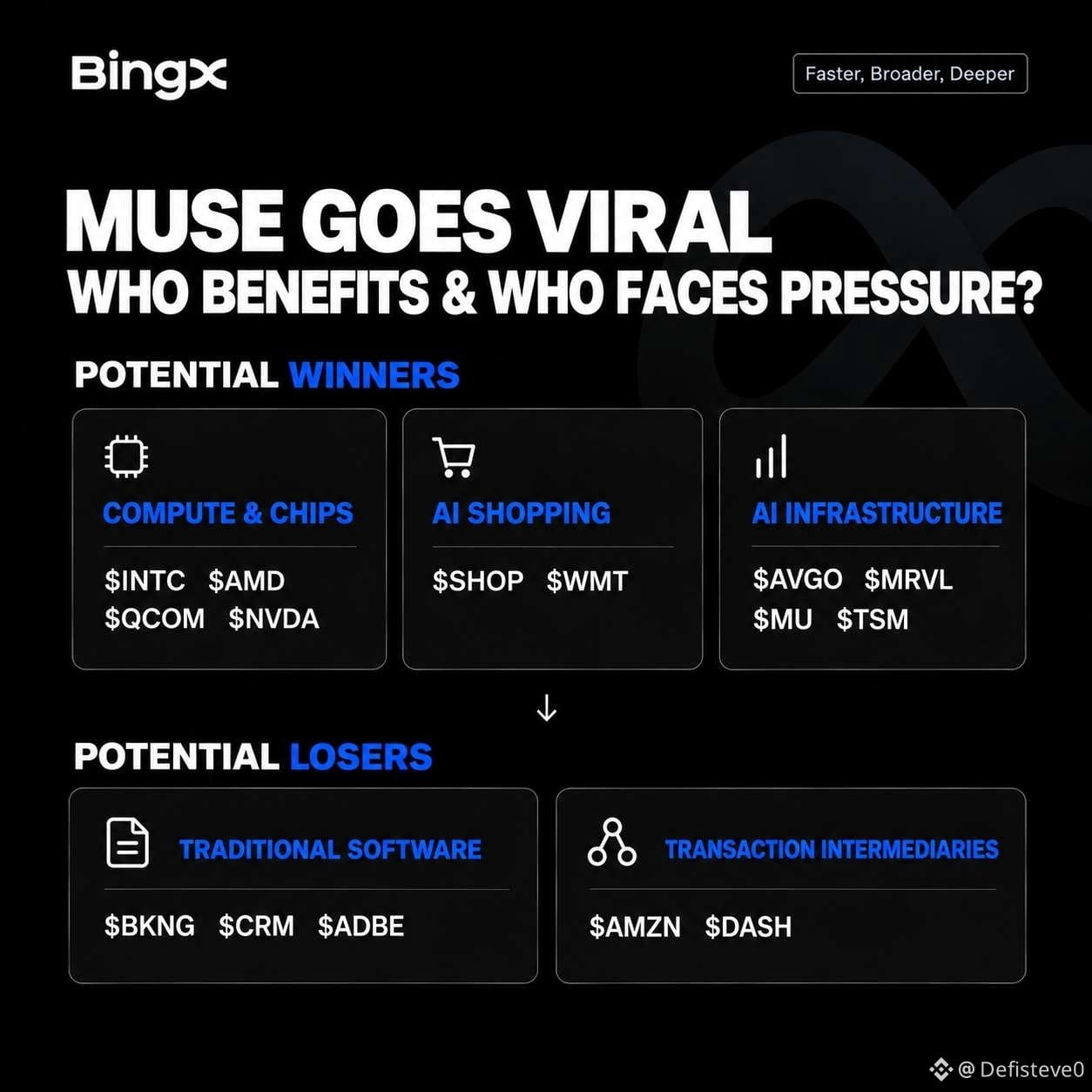
Méta’s Muse ist darauf ausgelegt, Aufgaben wie das Verwalten von E-Mails, das Buchen von Reisen, das Durchsuchen von Websites und das Einkaufen mit Genehmigung auszuführen.
Das könnte mehr bringen als nur den Modellherstellern. Eine breitere Einführung von Agenten könnte die Nachfrage nach Inferenz, Rechenleistung, Netzwerken, Speicher und Rechenzentren ankurbeln.
Agentisches Commerce ist ein weiterer Ansatz, den Shopify in KI-Erlebnisse integriert, während Amazon den Kauf von Muse auf seiner Plattform blockiert hat.
Meine Watchlist, $META, $AMD, $AVGO,
Wo sammelt sich der Wert: bei KI-Agenten, Chips, Rechenzentren oder agentischem Commerce?
Die KI-Geschichte breitet sich über Chatbots hinaus aus.
Méta’s Muse ist darauf ausgelegt, Aufgaben wie das Verwalten von E-Mails, das Buchen von Reisen, das Durchsuchen von Websites und das Einkaufen mit Genehmigung auszuführen.
Das könnte mehr bringen als nur den Modellherstellern. Eine breitere Einführung von Agenten könnte die Nachfrage nach Inferenz, Rechenleistung, Netzwerken, Speicher und Rechenzentren ankurbeln.
Agentisches Commerce ist ein weiterer Ansatz, den Shopify in KI-Erlebnisse integriert, während Amazon den Kauf von Muse auf seiner Plattform blockiert hat.
Meine Watchlist, $META, $AMD, $AVGO,
Wo sammelt sich der Wert: bei KI-Agenten, Chips, Rechenzentren oder agentischem Commerce?
Méta’s Muse ist darauf ausgelegt, Aufgaben wie das Verwalten von E-Mails, das Buchen von Reisen, das Durchsuchen von Websites und das Einkaufen mit Genehmigung auszuführen.
Das könnte mehr bringen als nur den Modellherstellern. Eine breitere Einführung von Agenten könnte die Nachfrage nach Inferenz, Rechenleistung, Netzwerken, Speicher und Rechenzentren ankurbeln.
Agentisches Commerce ist ein weiterer Ansatz, den Shopify in KI-Erlebnisse integriert, während Amazon den Kauf von Muse auf seiner Plattform blockiert hat.
Meine Watchlist, $META, $AMD, $AVGO,
Wo sammelt sich der Wert: bei KI-Agenten, Chips, Rechenzentren oder agentischem Commerce?
107
·
--
Eine Erkenntnis aus der Fed-Entscheidung dieser Woche: Höhere Zinsen verändern den Markt für Stablecoins.
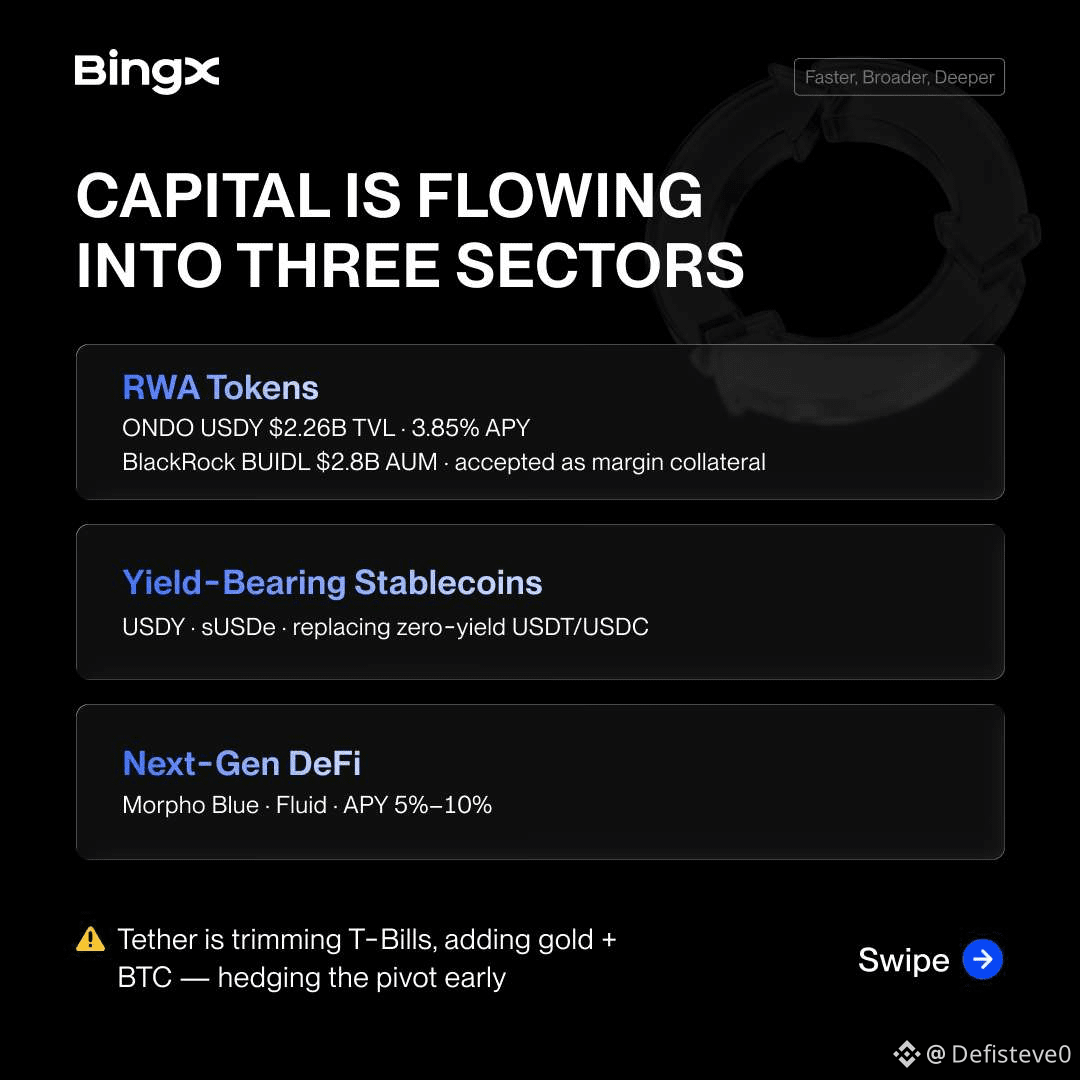
Bei 3,75 %–4,00 % profitieren Emittenten, die Reservewerte halten, von höheren Renditen auf US-Staatsanleihen, aber normale USDC- und USDT-Inhaber erhalten diese Erträge nicht automatisch.
Der größere Trend: Das wachsende Interesse an tokenisierten realen Vermögenswerten (RWAs) und renditeerzeugenden Produkten zeigt, dass Krypto engere Verbindungen zum traditionellen Finanzwesen bekommt.
Was wächst schneller: Stablecoins, mit US-Treasuries abgesicherte RWAs oder renditeerzeugende digitale Assets?
$USDC $USDT $RWA $BTC $ETH
Eine Erkenntnis aus der Fed-Entscheidung dieser Woche: Höhere Zinsen verändern den Markt für Stablecoins.
Bei 3,75 %–4,00 % profitieren Emittenten, die Reservewerte halten, von höheren Renditen auf US-Staatsanleihen, aber normale USDC- und USDT-Inhaber erhalten diese Erträge nicht automatisch.
Der größere Trend: Das wachsende Interesse an tokenisierten realen Vermögenswerten (RWAs) und renditeerzeugenden Produkten zeigt, dass Krypto engere Verbindungen zum traditionellen Finanzwesen bekommt.
Was wächst schneller: Stablecoins, mit US-Treasuries abgesicherte RWAs oder renditeerzeugende digitale Assets?
$USDC $USDT $RWA $BTC $ETH
Bei 3,75 %–4,00 % profitieren Emittenten, die Reservewerte halten, von höheren Renditen auf US-Staatsanleihen, aber normale USDC- und USDT-Inhaber erhalten diese Erträge nicht automatisch.
Der größere Trend: Das wachsende Interesse an tokenisierten realen Vermögenswerten (RWAs) und renditeerzeugenden Produkten zeigt, dass Krypto engere Verbindungen zum traditionellen Finanzwesen bekommt.
Was wächst schneller: Stablecoins, mit US-Treasuries abgesicherte RWAs oder renditeerzeugende digitale Assets?
$USDC $USDT $RWA $BTC $ETH
3
·
--
Dieser Rückprall fühlt sich anders an als die übliche Kontraktion.
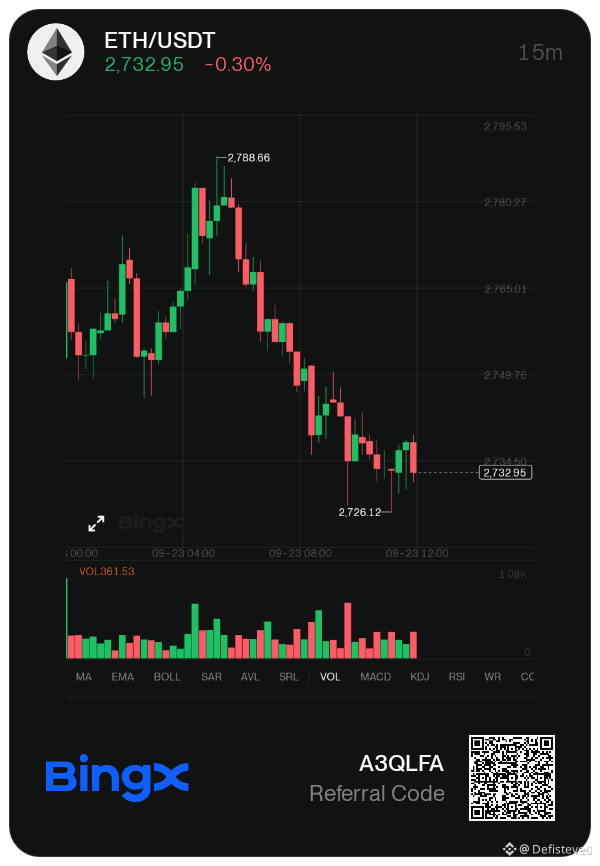
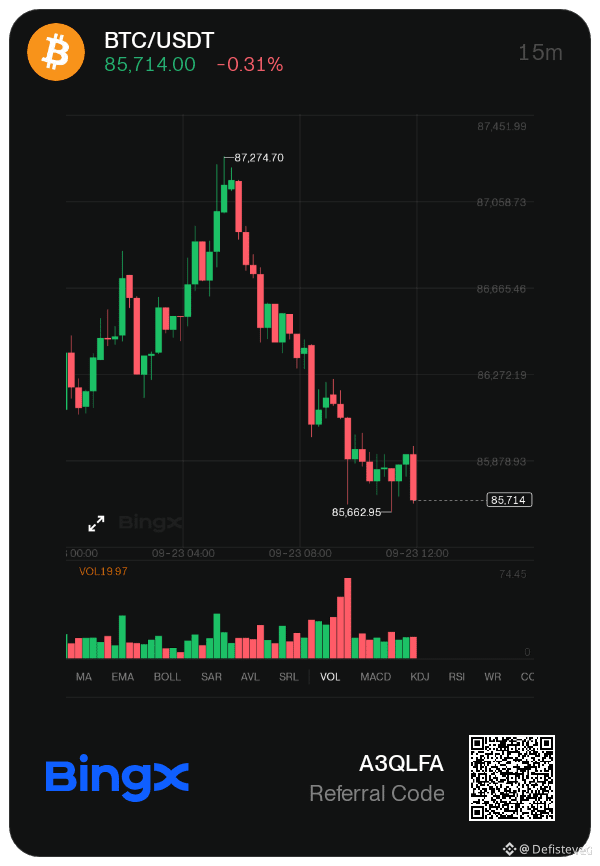
$BTC ist in Richtung $87K gestiegen, während $ETH $2.800 zurückerobert hat – begünstigt durch niedrigere Renditen, weichere Ölpreise und aggressives Short-Covering.
Was allerdings meine Aufmerksamkeit auf sich gezogen hat: Sowohl Bitcoin- als auch Ethereum-ETFs verzeichneten enorme Mittelzuflüsse im Spot-Bereich, was nahelegt, dass die Bewegung nicht nur von Derivaten getrieben wird.
Ich habe beide Paare auf meiner BingX-Watchlist, aber mich interessiert heute weniger, dass die Kerzen grün sind, sondern ob echte Nachfrage den Schwung aufrechterhalten kann.
Glaubst du, das ist der Beginn eines nachhaltigen Trends – oder nur eine starke Short-Squeeze?
Dieser Rückprall fühlt sich anders an als die übliche Kontraktion.
$BTC ist in Richtung $87K gestiegen, während $ETH $2.800 zurückerobert hat – begünstigt durch niedrigere Renditen, weichere Ölpreise und aggressives Short-Covering.
Was allerdings meine Aufmerksamkeit auf sich gezogen hat: Sowohl Bitcoin- als auch Ethereum-ETFs verzeichneten enorme Mittelzuflüsse im Spot-Bereich, was nahelegt, dass die Bewegung nicht nur von Derivaten getrieben wird.
Ich habe beide Paare auf meiner BingX-Watchlist, aber mich interessiert heute weniger, dass die Kerzen grün sind, sondern ob echte Nachfrage den Schwung aufrechterhalten kann.
Glaubst du, das ist der Beginn eines nachhaltigen Trends – oder nur eine starke Short-Squeeze?
$BTC ist in Richtung $87K gestiegen, während $ETH $2.800 zurückerobert hat – begünstigt durch niedrigere Renditen, weichere Ölpreise und aggressives Short-Covering.
Was allerdings meine Aufmerksamkeit auf sich gezogen hat: Sowohl Bitcoin- als auch Ethereum-ETFs verzeichneten enorme Mittelzuflüsse im Spot-Bereich, was nahelegt, dass die Bewegung nicht nur von Derivaten getrieben wird.
Ich habe beide Paare auf meiner BingX-Watchlist, aber mich interessiert heute weniger, dass die Kerzen grün sind, sondern ob echte Nachfrage den Schwung aufrechterhalten kann.
Glaubst du, das ist der Beginn eines nachhaltigen Trends – oder nur eine starke Short-Squeeze?
·
--
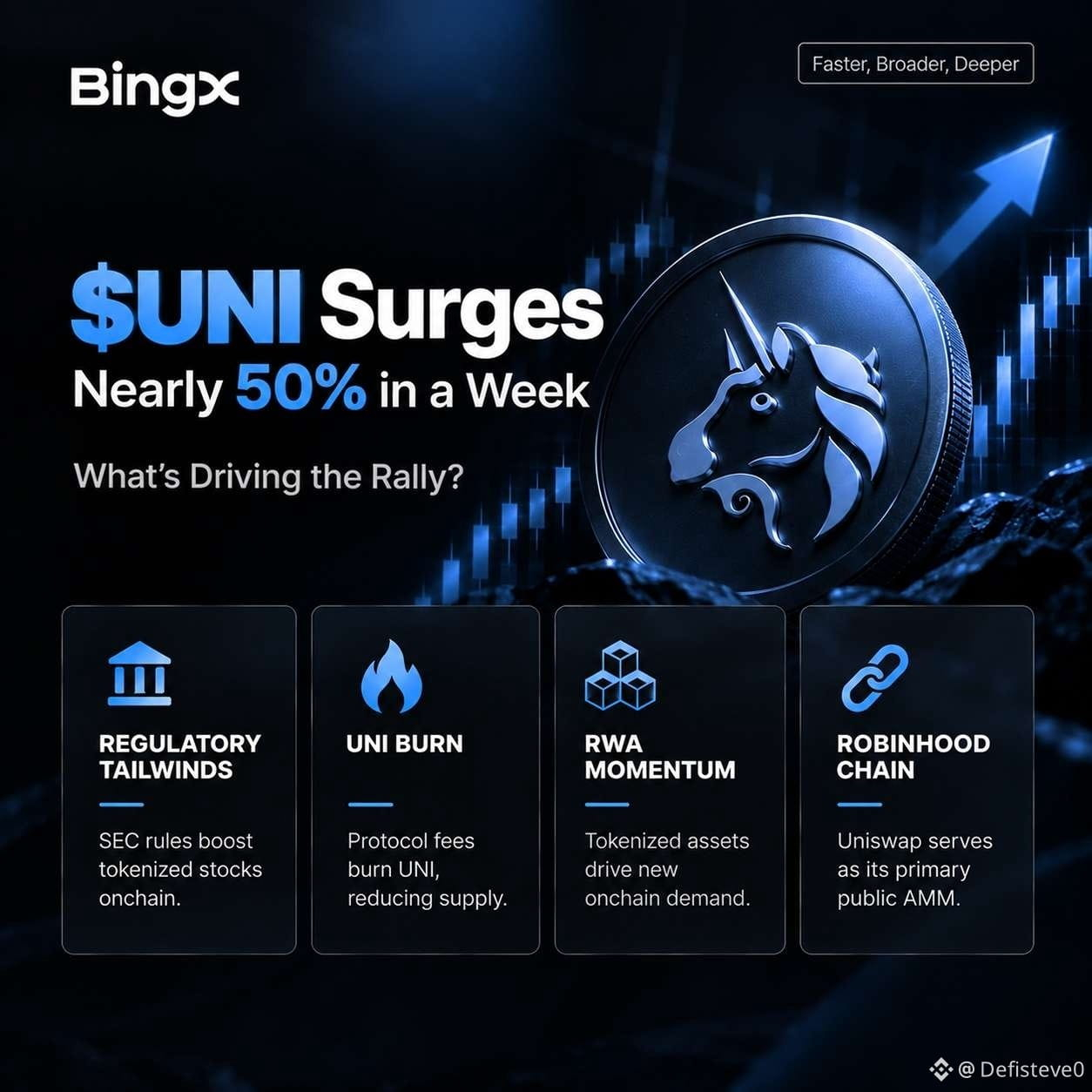
Der Auftritt von $UNI ist schwer zu ignorieren.
Fast 50 % in einer Woche, und es wirkt, als werde diese Bewegung von mehr als nur Momentum angetrieben.
Der Markt richtet seine Aufmerksamkeit auf stärkere DeFi-Aktivitäten, Unis fee-basierten Burn-Mechanismus und die Expansion von Uniswap auf die Robinhood Chain.
Die Frage lautet jetzt nicht „Kann es weiter steigen?“ Sondern, ob die Nutzung des Protokolls und das Handelsvolumen den Trend weiter stützen können.
Ich habe UNI auf meiner Watchlist über BingX behalten, aber mich interessieren die Grundlagen mehr als das Jagen grüner Kerzen.
Glaubst du, dass das ein nachhaltiger DeFi-Ausbruch ist – oder nur ein weiterer Momentum-Run?
Der Auftritt von $UNI ist schwer zu ignorieren.
Fast 50 % in einer Woche, und es wirkt, als werde diese Bewegung von mehr als nur Momentum angetrieben.
Der Markt richtet seine Aufmerksamkeit auf stärkere DeFi-Aktivitäten, Unis fee-basierten Burn-Mechanismus und die Expansion von Uniswap auf die Robinhood Chain.
Die Frage lautet jetzt nicht „Kann es weiter steigen?“ Sondern, ob die Nutzung des Protokolls und das Handelsvolumen den Trend weiter stützen können.
Ich habe UNI auf meiner Watchlist über BingX behalten, aber mich interessieren die Grundlagen mehr als das Jagen grüner Kerzen.
Glaubst du, dass das ein nachhaltiger DeFi-Ausbruch ist – oder nur ein weiterer Momentum-Run?
Fast 50 % in einer Woche, und es wirkt, als werde diese Bewegung von mehr als nur Momentum angetrieben.
Der Markt richtet seine Aufmerksamkeit auf stärkere DeFi-Aktivitäten, Unis fee-basierten Burn-Mechanismus und die Expansion von Uniswap auf die Robinhood Chain.
Die Frage lautet jetzt nicht „Kann es weiter steigen?“ Sondern, ob die Nutzung des Protokolls und das Handelsvolumen den Trend weiter stützen können.
Ich habe UNI auf meiner Watchlist über BingX behalten, aber mich interessieren die Grundlagen mehr als das Jagen grüner Kerzen.
Glaubst du, dass das ein nachhaltiger DeFi-Ausbruch ist – oder nur ein weiterer Momentum-Run?
·
--
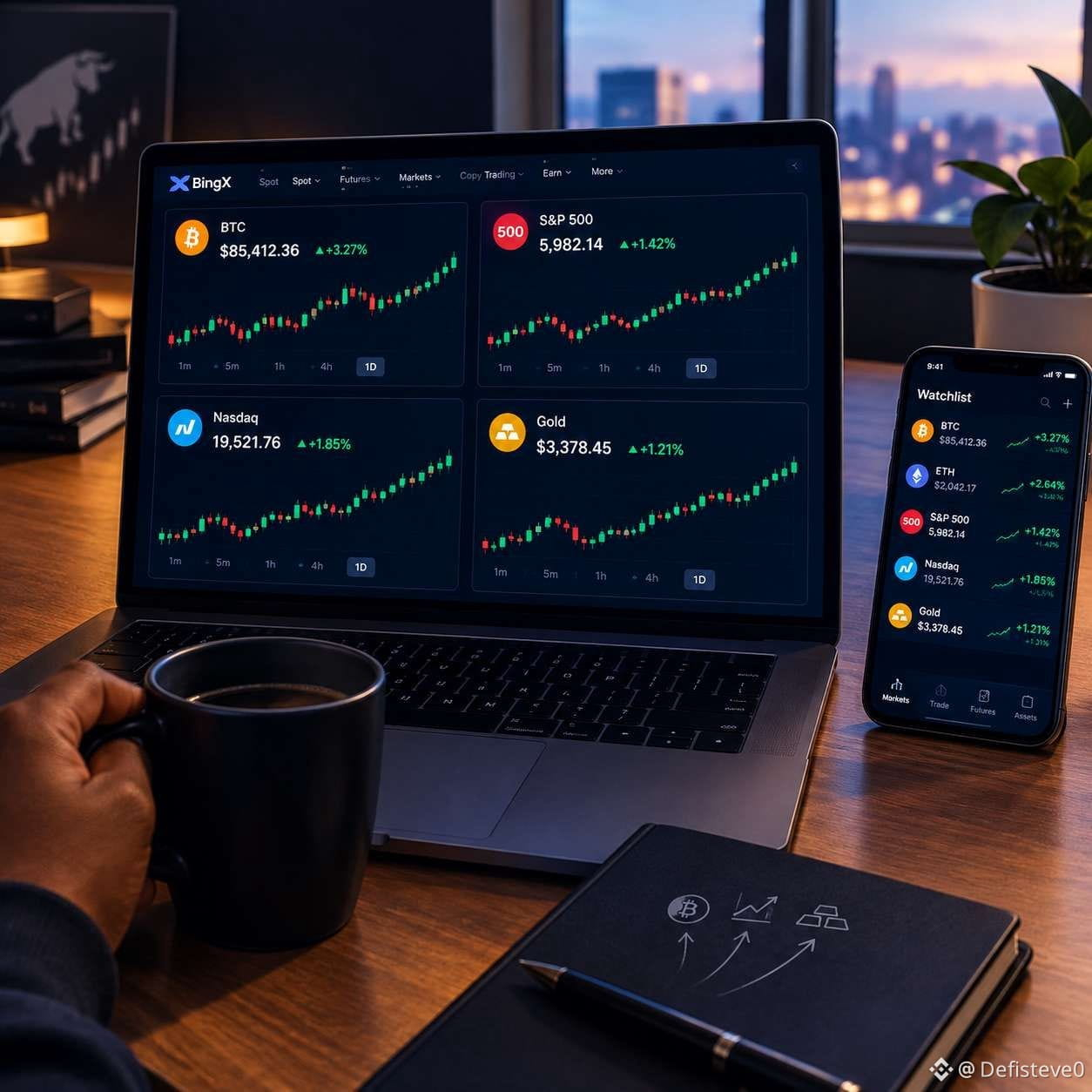
Heute fühlt es sich an wie eine Erinnerung daran, dass Chancen nicht immer aus nur einem Markt kommen.
Bitcoin handelt über 85.000 $, US-Aktien steigen, und die breitere Risikostimmung hat sich sogar verbessert – trotz des Fed-Zinsentschlusses der vergangenen Woche.
Die Lektion, die ich gelernt habe, ist ganz einfach: Bind dich nicht an nur eine Anlageklasse. Manche Tage führt Krypto, andere Tage sind es Tech-Aktien, Indizes oder sogar Gold.
Ich verfolge sie alle über dasselbe Dashboard auf BingX, und das hat das Rotieren zwischen verschiedenen Markt-Narrativen deutlich leichter gemacht.
Echte Frage: Wenn du heute nur eine handeln könntest – welche wäre es $BTC, $QQQ oder $GOLD?
Heute fühlt es sich an wie eine Erinnerung daran, dass Chancen nicht immer aus nur einem Markt kommen.
Bitcoin handelt über 85.000 $, US-Aktien steigen, und die breitere Risikostimmung hat sich sogar verbessert – trotz des Fed-Zinsentschlusses der vergangenen Woche.
Die Lektion, die ich gelernt habe, ist ganz einfach: Bind dich nicht an nur eine Anlageklasse. Manche Tage führt Krypto, andere Tage sind es Tech-Aktien, Indizes oder sogar Gold.
Ich verfolge sie alle über dasselbe Dashboard auf BingX, und das hat das Rotieren zwischen verschiedenen Markt-Narrativen deutlich leichter gemacht.
Echte Frage: Wenn du heute nur eine handeln könntest – welche wäre es $BTC, $QQQ oder $GOLD?
Bitcoin handelt über 85.000 $, US-Aktien steigen, und die breitere Risikostimmung hat sich sogar verbessert – trotz des Fed-Zinsentschlusses der vergangenen Woche.
Die Lektion, die ich gelernt habe, ist ganz einfach: Bind dich nicht an nur eine Anlageklasse. Manche Tage führt Krypto, andere Tage sind es Tech-Aktien, Indizes oder sogar Gold.
Ich verfolge sie alle über dasselbe Dashboard auf BingX, und das hat das Rotieren zwischen verschiedenen Markt-Narrativen deutlich leichter gemacht.
Echte Frage: Wenn du heute nur eine handeln könntest – welche wäre es $BTC, $QQQ oder $GOLD?
·
--
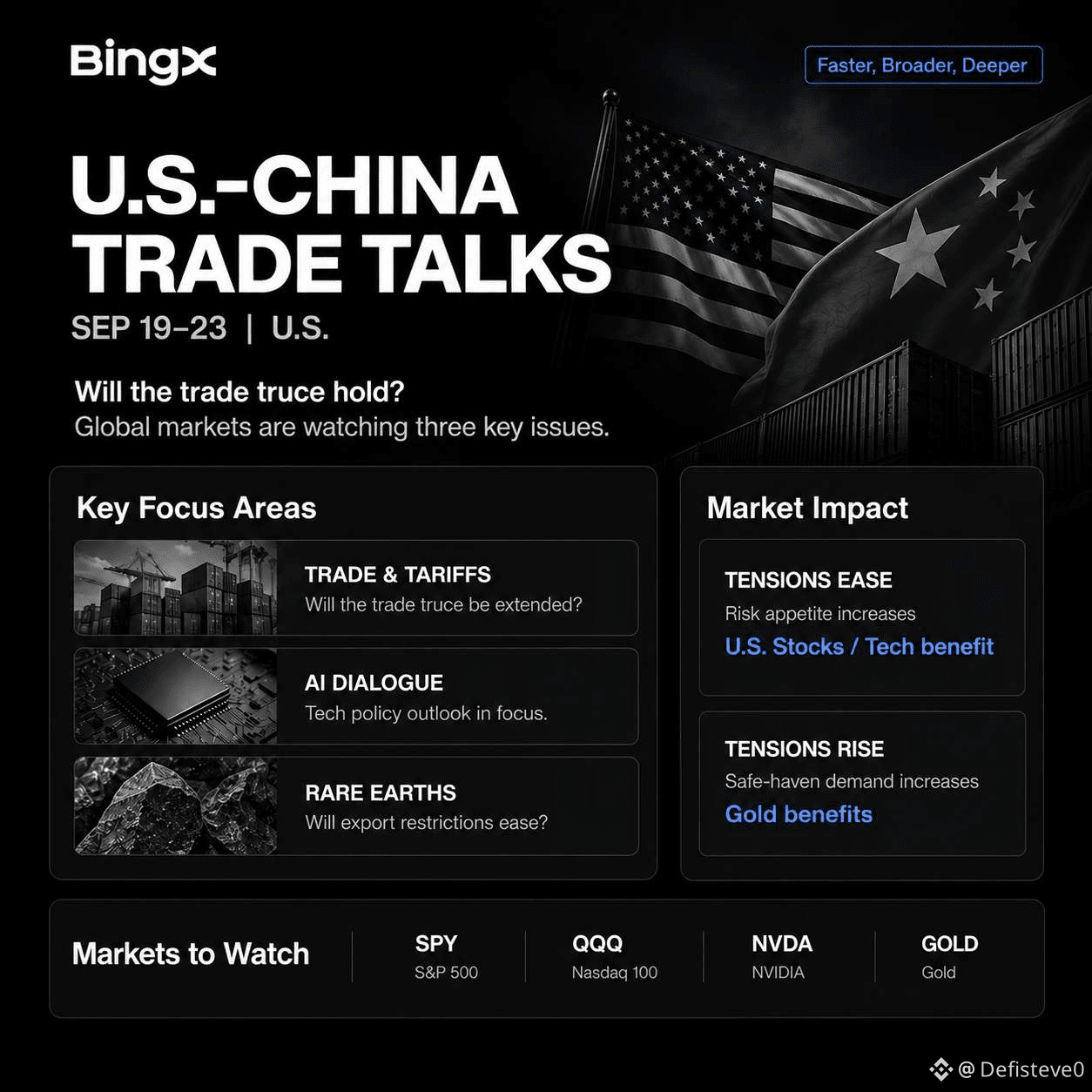
Einer der größten Marktkatalysatoren in dieser Woche sind nicht die Earnings, sondern die Konsultationen zwischen den USA und China.
Die Gespräche konzentrieren sich auf Handel, Zölle, KI und kritische Rohstoffe, und das Ergebnis könnte die Risikostimmung prägen, bevor die aktuelle Handelsruhe im November ausläuft.
Meine Beobachtungsliste ist simpel:
📈 SPY & QQQ für breitere Aktien
💻 NVDA für die KI-Story
🟡 GOLD, wenn die Spannungen steigen
Ich verfolge diese Märkte auf BingX, weil sie alle durch dieselbe Makro-Story miteinander verbunden sind.
Meinst du, dass diese Gespräche mit einer Entspannung der Lage enden oder mit mehr Unsicherheit?
$NVDA $GOLD
Einer der größten Marktkatalysatoren in dieser Woche sind nicht die Earnings, sondern die Konsultationen zwischen den USA und China.
Die Gespräche konzentrieren sich auf Handel, Zölle, KI und kritische Rohstoffe, und das Ergebnis könnte die Risikostimmung prägen, bevor die aktuelle Handelsruhe im November ausläuft.
Meine Beobachtungsliste ist simpel:
📈 SPY & QQQ für breitere Aktien
💻 NVDA für die KI-Story
🟡 GOLD, wenn die Spannungen steigen
Ich verfolge diese Märkte auf BingX, weil sie alle durch dieselbe Makro-Story miteinander verbunden sind.
Meinst du, dass diese Gespräche mit einer Entspannung der Lage enden oder mit mehr Unsicherheit?
$NVDA $GOLD
Die Gespräche konzentrieren sich auf Handel, Zölle, KI und kritische Rohstoffe, und das Ergebnis könnte die Risikostimmung prägen, bevor die aktuelle Handelsruhe im November ausläuft.
Meine Beobachtungsliste ist simpel:
📈 SPY & QQQ für breitere Aktien
💻 NVDA für die KI-Story
🟡 GOLD, wenn die Spannungen steigen
Ich verfolge diese Märkte auf BingX, weil sie alle durch dieselbe Makro-Story miteinander verbunden sind.
Meinst du, dass diese Gespräche mit einer Entspannung der Lage enden oder mit mehr Unsicherheit?
$NVDA $GOLD
·
--
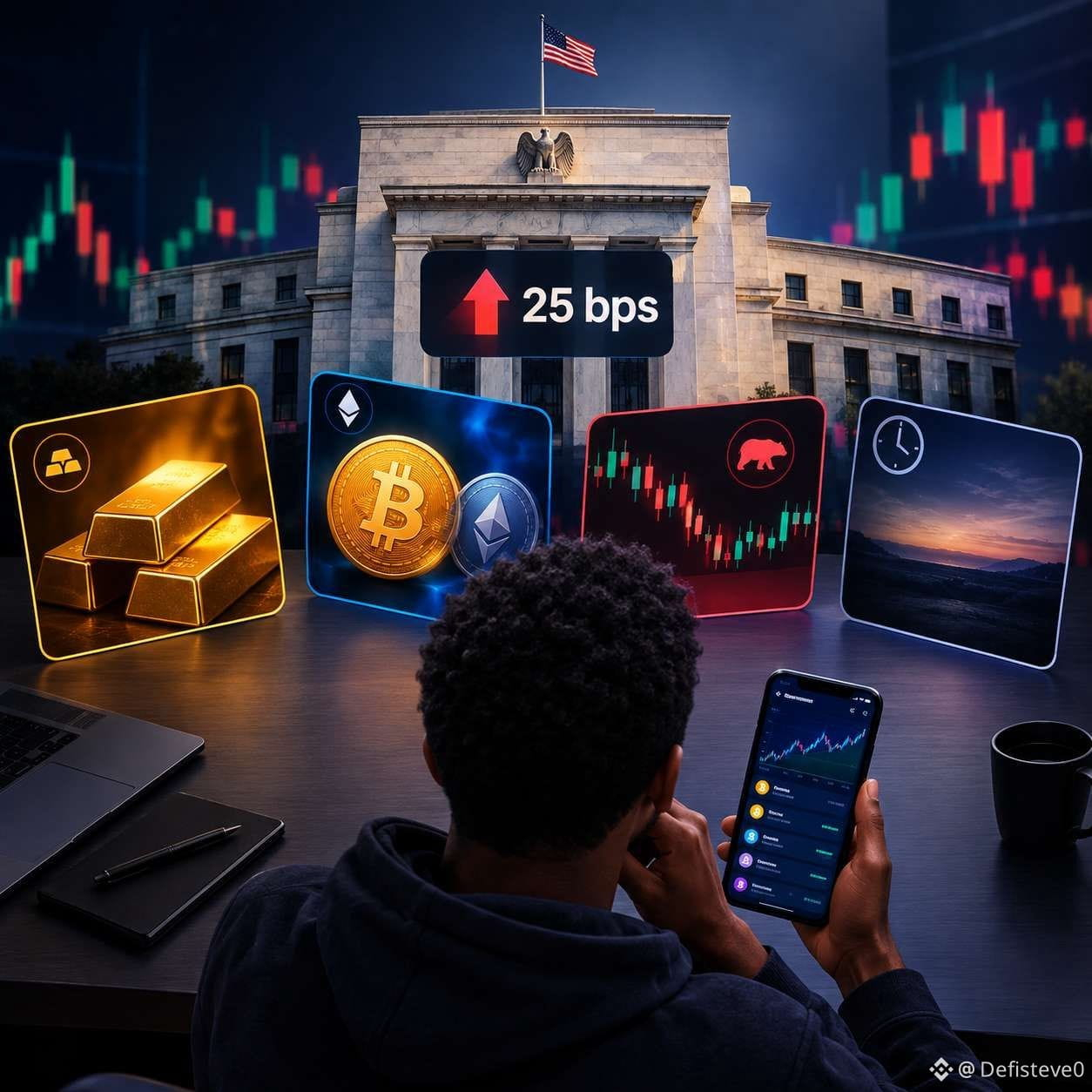
Die Fed hat gerade die Zinsen auf 3,75%–4,00% angehoben, und ich glaube, die größere Erkenntnis ist, dass man sich anpassen muss – nicht vorhersagen.
Eine straffere Geldpolitik verändert meine Sicht auf jeden Markt. Einige Händler wechseln zu Gold, andere bleiben bei Krypto, während manche nach Chancen in Aktien oder Devisen (FX) suchen.
Ich nutze vor allem BingX, weil ich zwischen verschiedenen Märkten wechseln kann, ohne zwischen mehreren Apps hin- und herzuspringen. Es macht den Strategie-wechsel viel einfacher, wenn sich das makroökonomische Bild verändert.
Wenn du dich für eine Strategie in dieser Umgebung entscheiden müsstest – welche wäre das?
🟡 Gold
₿ Krypto
📉 Short-Aktien
💵 Defensive beibehalten
$GOLD $HYPE $SOL
Die Fed hat gerade die Zinsen auf 3,75%–4,00% angehoben, und ich glaube, die größere Erkenntnis ist, dass man sich anpassen muss – nicht vorhersagen.
Eine straffere Geldpolitik verändert meine Sicht auf jeden Markt. Einige Händler wechseln zu Gold, andere bleiben bei Krypto, während manche nach Chancen in Aktien oder Devisen (FX) suchen.
Ich nutze vor allem BingX, weil ich zwischen verschiedenen Märkten wechseln kann, ohne zwischen mehreren Apps hin- und herzuspringen. Es macht den Strategie-wechsel viel einfacher, wenn sich das makroökonomische Bild verändert.
Wenn du dich für eine Strategie in dieser Umgebung entscheiden müsstest – welche wäre das?
🟡 Gold
₿ Krypto
📉 Short-Aktien
💵 Defensive beibehalten
$GOLD $HYPE $SOL
Eine straffere Geldpolitik verändert meine Sicht auf jeden Markt. Einige Händler wechseln zu Gold, andere bleiben bei Krypto, während manche nach Chancen in Aktien oder Devisen (FX) suchen.
Ich nutze vor allem BingX, weil ich zwischen verschiedenen Märkten wechseln kann, ohne zwischen mehreren Apps hin- und herzuspringen. Es macht den Strategie-wechsel viel einfacher, wenn sich das makroökonomische Bild verändert.
Wenn du dich für eine Strategie in dieser Umgebung entscheiden müsstest – welche wäre das?
🟡 Gold
₿ Krypto
📉 Short-Aktien
💵 Defensive beibehalten
$GOLD $HYPE $SOL
·
--
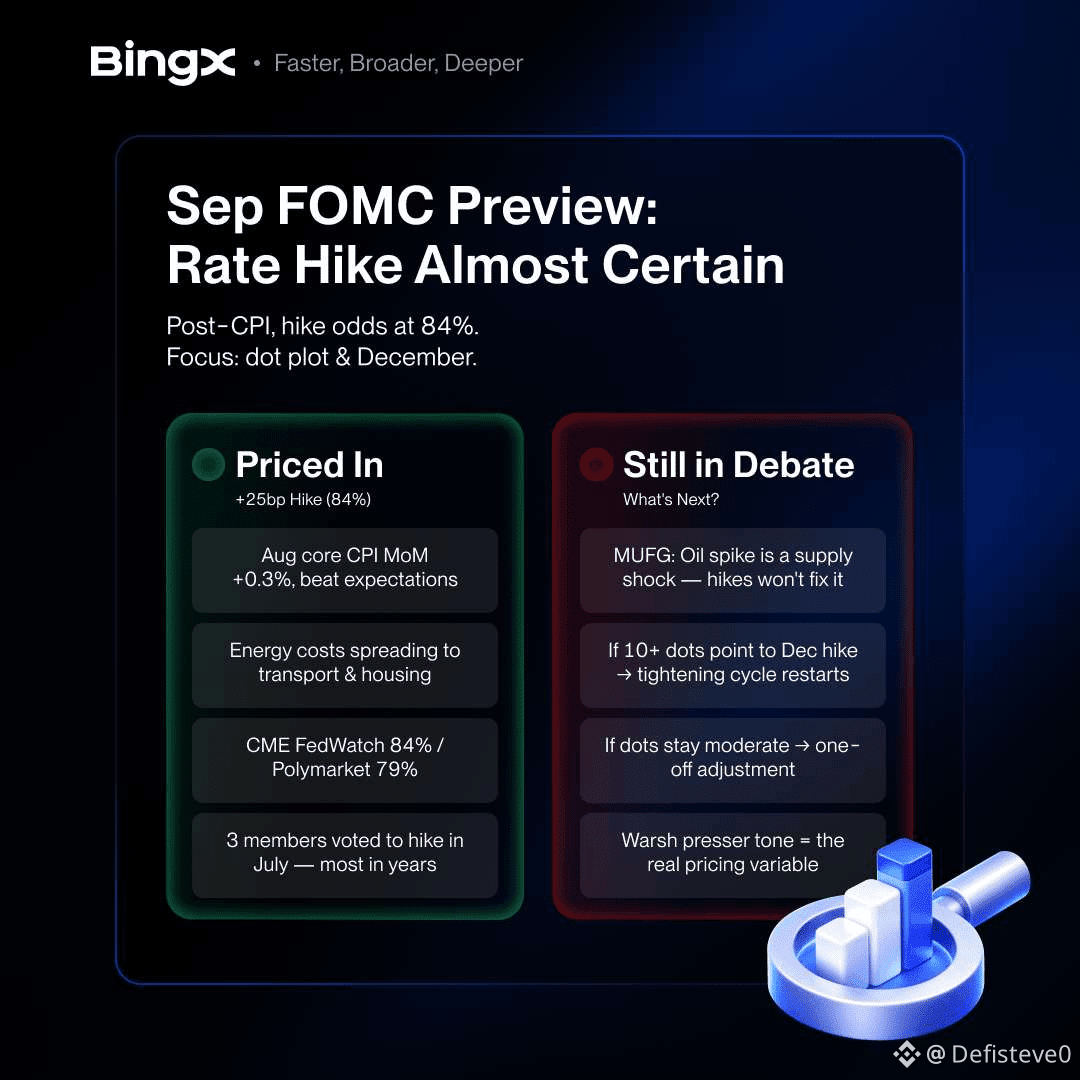
Das September-FOMC-Meeting hat mir noch einmal vor Augen geführt, dass Märkte nicht nur auf die Zinsentscheidung reagieren, sondern auch auf die Ausblick-Perspektive.
Die Fed hat die Zinsen um 25 Bp auf 3,75%–4,00% angehoben, während die Projektionen weiterhin auf die Möglichkeit einer weiteren Erhöhung vor Jahresende hindeuten.
Für Trader sind die nächsten Auslöser klar,
📊 Inflationsdaten
👷 Beschäftigungsberichte
🛢️ Ölpreise
🏛️ Fed-Kommunikation
Ich verfolge diese makroökonomischen Entwicklungen auf BingX über Krypto, Gold und Indizes hinweg, weil sie inzwischen stärker miteinander verknüpft sind als je zuvor.
Glaubst du, dass der nächste CPI-Wert den Kurs der Fed verändern wird?
$BTC $XRP
Das September-FOMC-Meeting hat mir noch einmal vor Augen geführt, dass Märkte nicht nur auf die Zinsentscheidung reagieren, sondern auch auf die Ausblick-Perspektive.
Die Fed hat die Zinsen um 25 Bp auf 3,75%–4,00% angehoben, während die Projektionen weiterhin auf die Möglichkeit einer weiteren Erhöhung vor Jahresende hindeuten.
Für Trader sind die nächsten Auslöser klar,
📊 Inflationsdaten
👷 Beschäftigungsberichte
🛢️ Ölpreise
🏛️ Fed-Kommunikation
Ich verfolge diese makroökonomischen Entwicklungen auf BingX über Krypto, Gold und Indizes hinweg, weil sie inzwischen stärker miteinander verknüpft sind als je zuvor.
Glaubst du, dass der nächste CPI-Wert den Kurs der Fed verändern wird?
$BTC $XRP
Die Fed hat die Zinsen um 25 Bp auf 3,75%–4,00% angehoben, während die Projektionen weiterhin auf die Möglichkeit einer weiteren Erhöhung vor Jahresende hindeuten.
Für Trader sind die nächsten Auslöser klar,
📊 Inflationsdaten
👷 Beschäftigungsberichte
🛢️ Ölpreise
🏛️ Fed-Kommunikation
Ich verfolge diese makroökonomischen Entwicklungen auf BingX über Krypto, Gold und Indizes hinweg, weil sie inzwischen stärker miteinander verknüpft sind als je zuvor.
Glaubst du, dass der nächste CPI-Wert den Kurs der Fed verändern wird?
$BTC $XRP
2
·
--
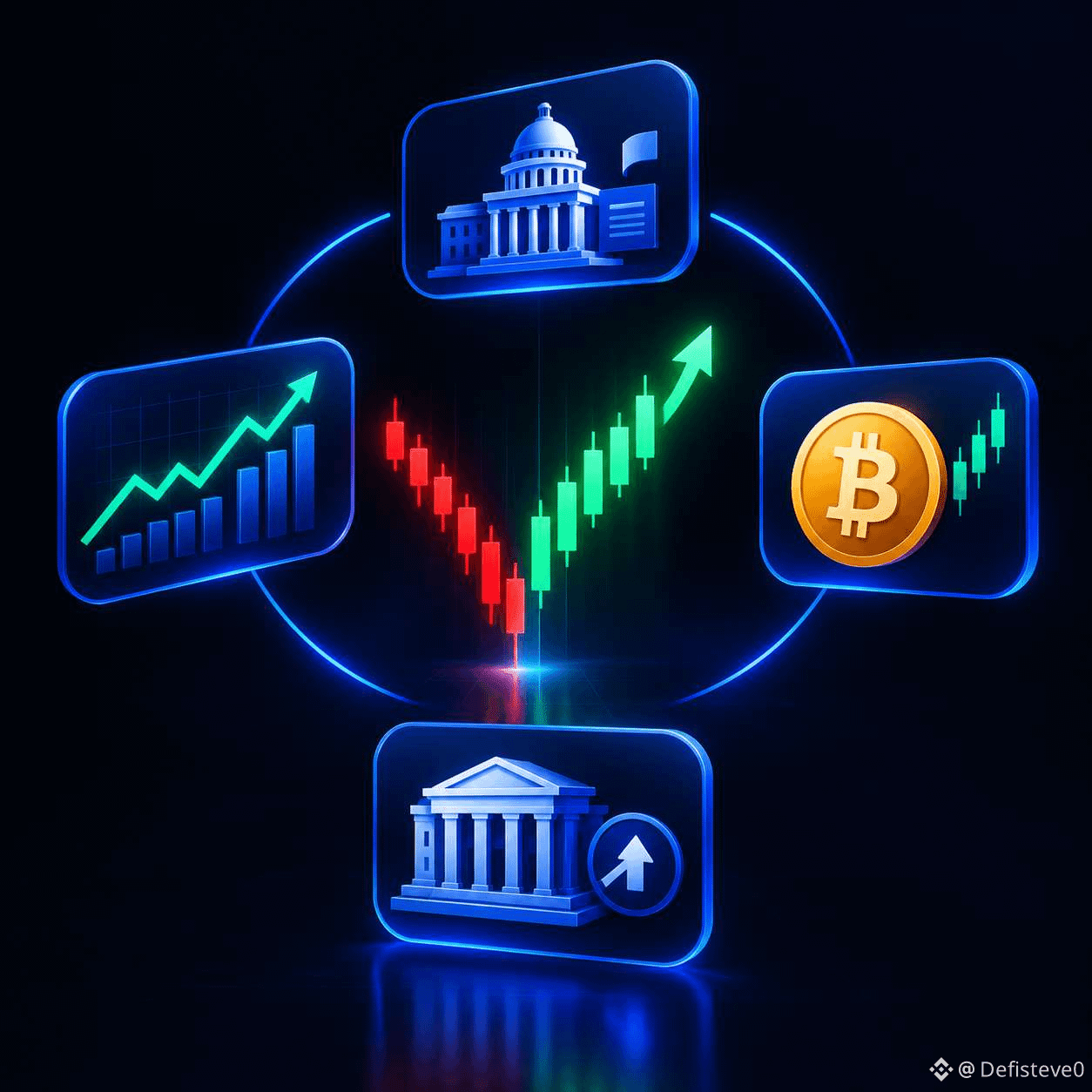
Die Kursbewegungen dieser Woche sind schwer zu erklären.
Die Verfahrensabstimmung im Senat zum CLARITY-Gesetz ist gescheitert, und die Federal Reserve hat die Zinsen um 25 Basispunkte auf 3,75%–4,00% angehoben.
Doch US-Aktien erholten sich, die Renditen von Staatsanleihen gingen zurück, und Bitcoin gewann wieder an Wert.
Möglicherweise haben die Märkte die schlechten Nachrichten bereits vorweggenommen, während die Unterstützung des SEC-Vorsitzenden Paul Atkins für eine fortgesetzte Krypto-Regelarbeit die regulatorische Unsicherheit verringert hat.
Dass Aktien, Indizes und Krypto gleichzeitig auf BingX wieder anzogen, machte die Reaktion besonders spannend.
Was meinst du: Haben die Märkte überreagiert, oder entfaltet sich eine größere makroökonomische Geschichte?
$BTC
Die Kursbewegungen dieser Woche sind schwer zu erklären.
Die Verfahrensabstimmung im Senat zum CLARITY-Gesetz ist gescheitert, und die Federal Reserve hat die Zinsen um 25 Basispunkte auf 3,75%–4,00% angehoben.
Doch US-Aktien erholten sich, die Renditen von Staatsanleihen gingen zurück, und Bitcoin gewann wieder an Wert.
Möglicherweise haben die Märkte die schlechten Nachrichten bereits vorweggenommen, während die Unterstützung des SEC-Vorsitzenden Paul Atkins für eine fortgesetzte Krypto-Regelarbeit die regulatorische Unsicherheit verringert hat.
Dass Aktien, Indizes und Krypto gleichzeitig auf BingX wieder anzogen, machte die Reaktion besonders spannend.
Was meinst du: Haben die Märkte überreagiert, oder entfaltet sich eine größere makroökonomische Geschichte?
$BTC
Die Verfahrensabstimmung im Senat zum CLARITY-Gesetz ist gescheitert, und die Federal Reserve hat die Zinsen um 25 Basispunkte auf 3,75%–4,00% angehoben.
Doch US-Aktien erholten sich, die Renditen von Staatsanleihen gingen zurück, und Bitcoin gewann wieder an Wert.
Möglicherweise haben die Märkte die schlechten Nachrichten bereits vorweggenommen, während die Unterstützung des SEC-Vorsitzenden Paul Atkins für eine fortgesetzte Krypto-Regelarbeit die regulatorische Unsicherheit verringert hat.
Dass Aktien, Indizes und Krypto gleichzeitig auf BingX wieder anzogen, machte die Reaktion besonders spannend.
Was meinst du: Haben die Märkte überreagiert, oder entfaltet sich eine größere makroökonomische Geschichte?
$BTC
77
·
--
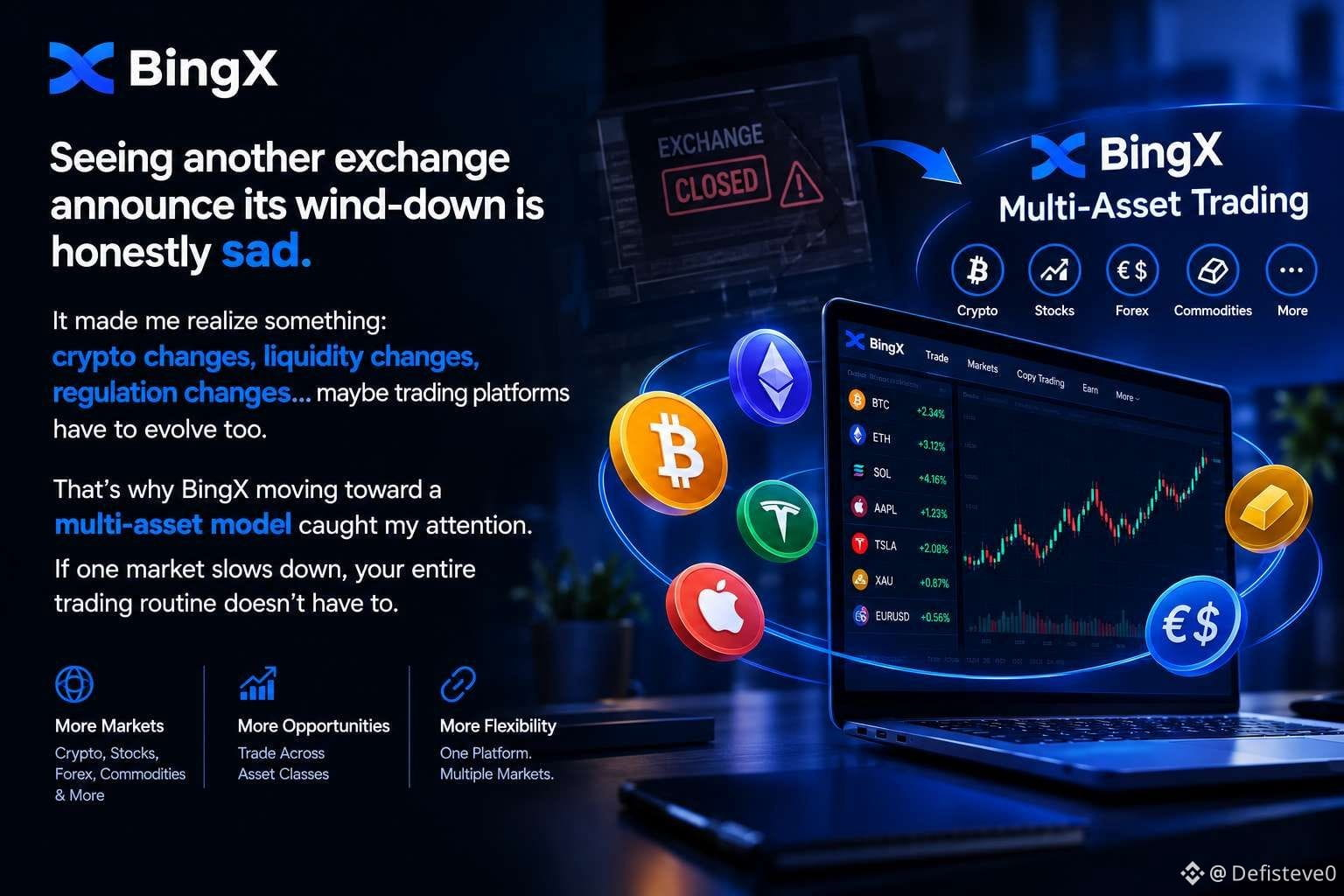
Ein weiterer Börsenausstieg, der zeigt, dass sich diese Branche immer noch weiterentwickelt.
Lange Krypto-Winter, geringere Handelsvolumina und steigende Compliance-Kosten haben die Landschaft für viele Plattformen verändert. Es ist traurig zu sehen, wie etablierte Namen verschwinden.
Die größere Erkenntnis für mich ist, dass Überleben oft durch Anpassung entsteht. Deshalb wirkt die Idee einer Multi-Asset-Plattform zunehmend relevant: Man kann zwischen Krypto, Aktien, Indizes, FX und Rohstoffen wechseln, ohne den eigenen Workflow komplett ändern zu müssen.
Spannend zu sehen, wie sich diese Entwicklung auf BingX auswirkt.
#Macro Insights# #Altcoin Season#
$SOL
Ein weiterer Börsenausstieg, der zeigt, dass sich diese Branche immer noch weiterentwickelt.
Lange Krypto-Winter, geringere Handelsvolumina und steigende Compliance-Kosten haben die Landschaft für viele Plattformen verändert. Es ist traurig zu sehen, wie etablierte Namen verschwinden.
Die größere Erkenntnis für mich ist, dass Überleben oft durch Anpassung entsteht. Deshalb wirkt die Idee einer Multi-Asset-Plattform zunehmend relevant: Man kann zwischen Krypto, Aktien, Indizes, FX und Rohstoffen wechseln, ohne den eigenen Workflow komplett ändern zu müssen.
Spannend zu sehen, wie sich diese Entwicklung auf BingX auswirkt.
#Macro Insights# #Altcoin Season#
$SOL
Lange Krypto-Winter, geringere Handelsvolumina und steigende Compliance-Kosten haben die Landschaft für viele Plattformen verändert. Es ist traurig zu sehen, wie etablierte Namen verschwinden.
Die größere Erkenntnis für mich ist, dass Überleben oft durch Anpassung entsteht. Deshalb wirkt die Idee einer Multi-Asset-Plattform zunehmend relevant: Man kann zwischen Krypto, Aktien, Indizes, FX und Rohstoffen wechseln, ohne den eigenen Workflow komplett ändern zu müssen.
Spannend zu sehen, wie sich diese Entwicklung auf BingX auswirkt.
#Macro Insights# #Altcoin Season#
$SOL
2
·
--
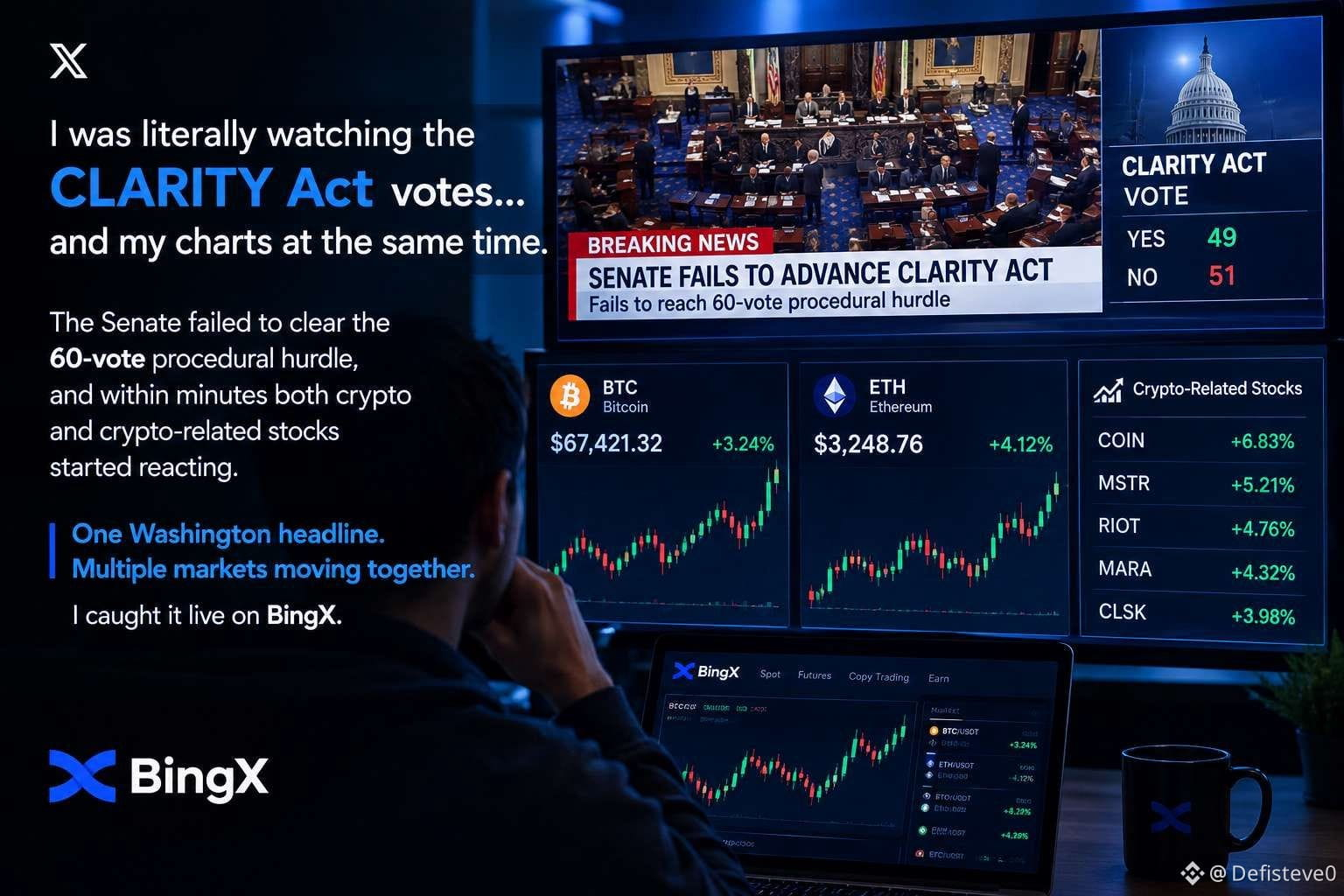
Heute war eine Erinnerung daran, dass sich Politik in Sekunden in ein Marktereignis verwandeln kann.
Der Senat scheiterte daran, das CLARITY-Gesetz mit seiner Verfahrensabstimmung voranzubringen, und Risikoassets reagierten fast unmittelbar.
BTC stand bereits unter Druck, während aktienbezogene Werte aus dem Kryptobereich zusammen mit dem breiteren Markt schwächer wurden.
Ich hatte sowohl Krypto als auch Aktien auf meinem BingX-Bildschirm und es war faszinierend zu beobachten, wie sich dieselbe Schlagzeile in Echtzeit über verschiedene Märkte hinweg ausbreitete.
Das Gesetz ist nicht tot, aber heute war ein bedeutender Rückschlag, und der Markt hat es bemerkt.
$BNB
Heute war eine Erinnerung daran, dass sich Politik in Sekunden in ein Marktereignis verwandeln kann.
Der Senat scheiterte daran, das CLARITY-Gesetz mit seiner Verfahrensabstimmung voranzubringen, und Risikoassets reagierten fast unmittelbar.
BTC stand bereits unter Druck, während aktienbezogene Werte aus dem Kryptobereich zusammen mit dem breiteren Markt schwächer wurden.
Ich hatte sowohl Krypto als auch Aktien auf meinem BingX-Bildschirm und es war faszinierend zu beobachten, wie sich dieselbe Schlagzeile in Echtzeit über verschiedene Märkte hinweg ausbreitete.
Das Gesetz ist nicht tot, aber heute war ein bedeutender Rückschlag, und der Markt hat es bemerkt.
$BNB
Der Senat scheiterte daran, das CLARITY-Gesetz mit seiner Verfahrensabstimmung voranzubringen, und Risikoassets reagierten fast unmittelbar.
BTC stand bereits unter Druck, während aktienbezogene Werte aus dem Kryptobereich zusammen mit dem breiteren Markt schwächer wurden.
Ich hatte sowohl Krypto als auch Aktien auf meinem BingX-Bildschirm und es war faszinierend zu beobachten, wie sich dieselbe Schlagzeile in Echtzeit über verschiedene Märkte hinweg ausbreitete.
Das Gesetz ist nicht tot, aber heute war ein bedeutender Rückschlag, und der Markt hat es bemerkt.
$BNB
·
--
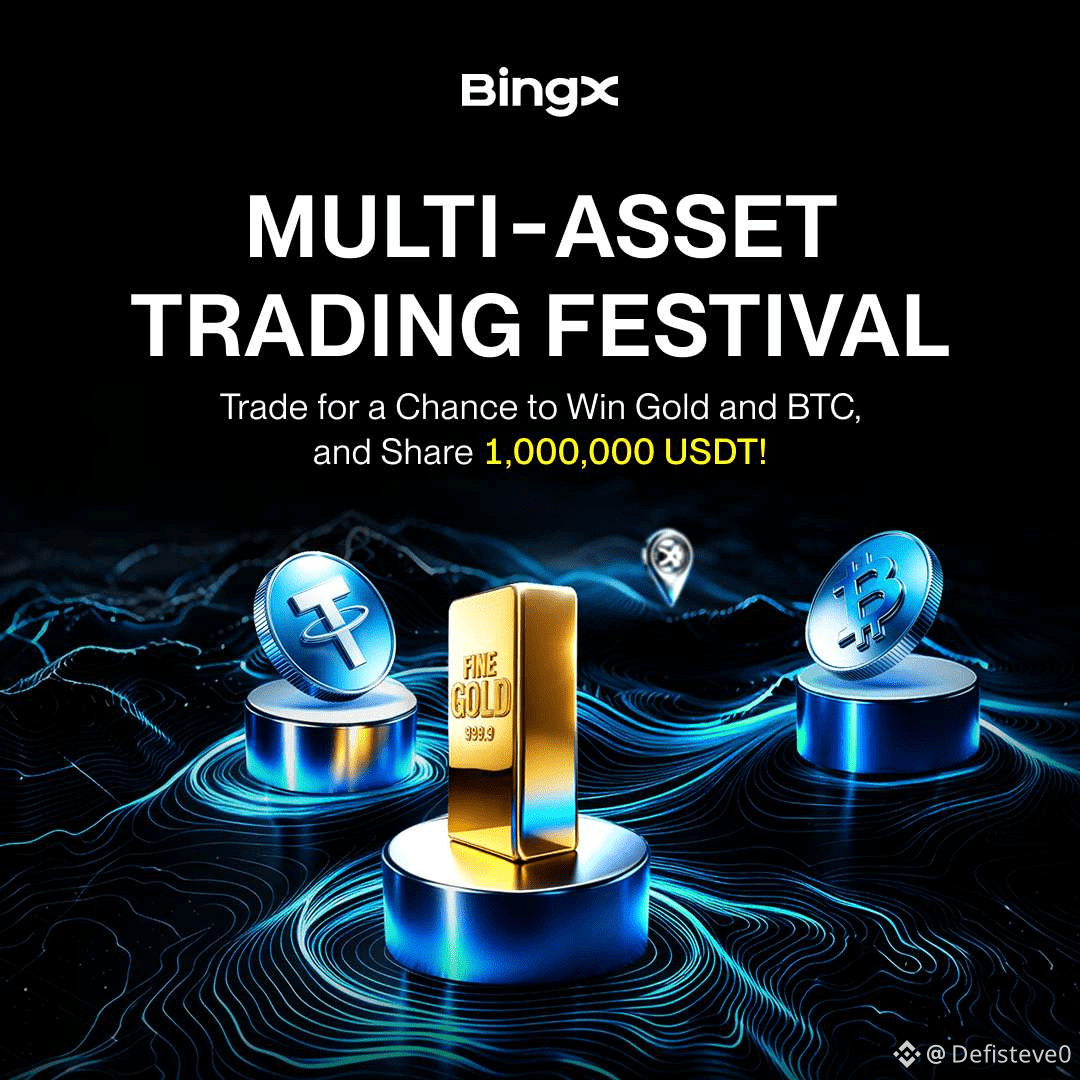
🎯 Multi-Asset-Trader haben diesen September etwas Neues zu beobachten.
Das Multi Asset Trading Festival bietet einen Preispool von 1.000.000 USDT über
• ₿ Krypto
• 📈 Aktien
• 💱 Forex
• 📊 Indizes
Ein tägliches Handelsvolumen von 1.000 USDT kann Teilnehmende für BTC- & GOLD-Belohnungen qualifizieren.
Ich finde gut, dass es um mehrere Märkte aufgebaut ist, statt nur um einen. Es lohnt sich, die Kampagnendetails auf BingX anzusehen, wenn du bereits über verschiedene Anlageklassen hinweg handelst.
$XRP
$GOLD
$XAUM
🎯 Multi-Asset-Trader haben diesen September etwas Neues zu beobachten.
Das Multi Asset Trading Festival bietet einen Preispool von 1.000.000 USDT über
• ₿ Krypto
• 📈 Aktien
• 💱 Forex
• 📊 Indizes
Ein tägliches Handelsvolumen von 1.000 USDT kann Teilnehmende für BTC- & GOLD-Belohnungen qualifizieren.
Ich finde gut, dass es um mehrere Märkte aufgebaut ist, statt nur um einen. Es lohnt sich, die Kampagnendetails auf BingX anzusehen, wenn du bereits über verschiedene Anlageklassen hinweg handelst.
$XRP
$GOLD
$XAUM
Das Multi Asset Trading Festival bietet einen Preispool von 1.000.000 USDT über
• ₿ Krypto
• 📈 Aktien
• 💱 Forex
• 📊 Indizes
Ein tägliches Handelsvolumen von 1.000 USDT kann Teilnehmende für BTC- & GOLD-Belohnungen qualifizieren.
Ich finde gut, dass es um mehrere Märkte aufgebaut ist, statt nur um einen. Es lohnt sich, die Kampagnendetails auf BingX anzusehen, wenn du bereits über verschiedene Anlageklassen hinweg handelst.
$XRP
$GOLD
$XAUM
3
·
--
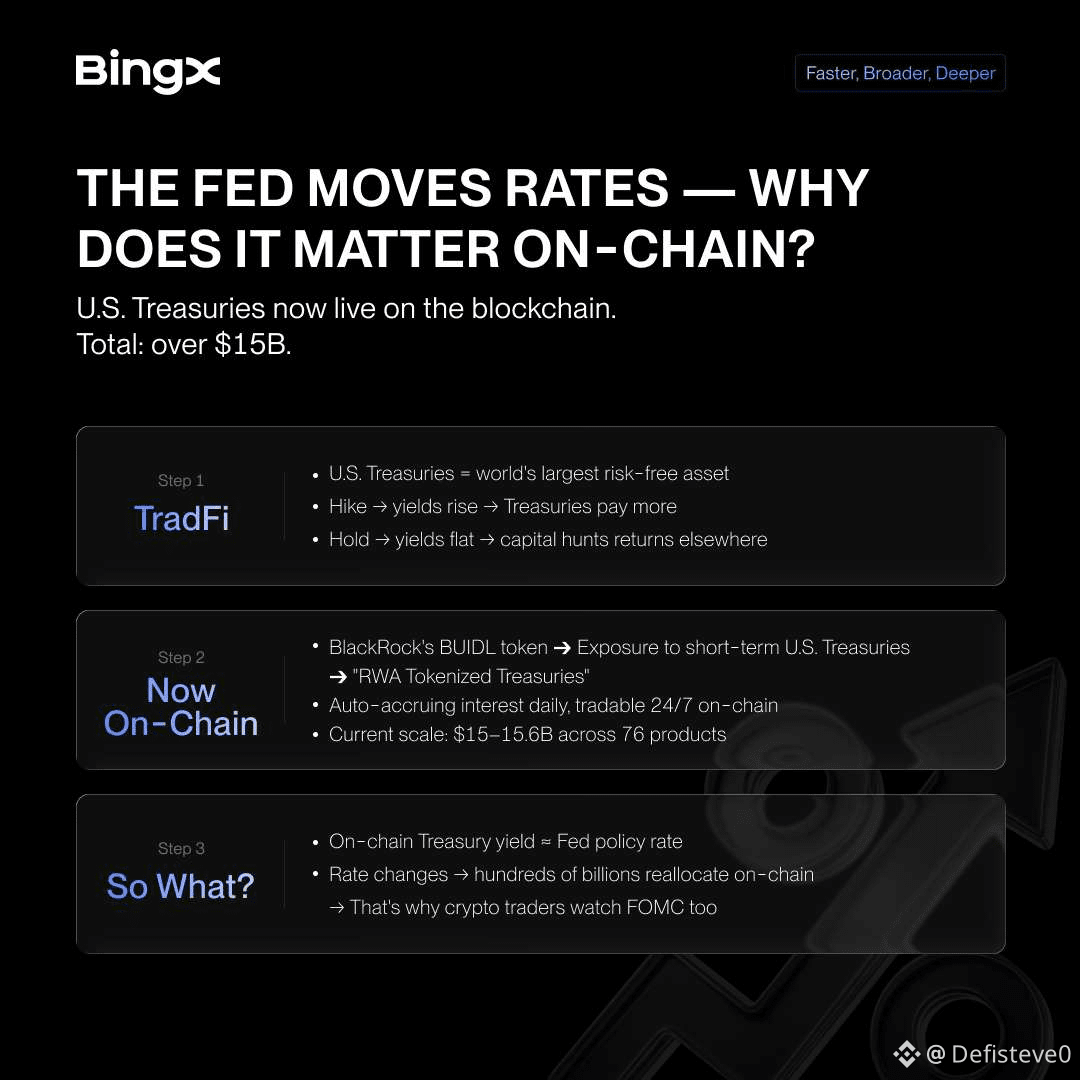
Die FOMC-Woche ist auch eine RWA-Story.
Tokenisierte US-Treasuries sind auf über 15 Mrd. USD On-Chain angewachsen und zeigen, wie schnell traditionelle Fixed-Income-Assets in die Krypto-Infrastruktur übergehen.
Höhere Zinsen können die Treasury-Renditen verändern, wodurch die Geldpolitik der Fed nicht nur für $BTC relevant ist, sondern auch für yield-fokussierte RWA-Projekte wie $ONDO.
Diesen Makro-Aufbau beobachte ich genau auf BingX.
#ONDO
Die FOMC-Woche ist auch eine RWA-Story.
Tokenisierte US-Treasuries sind auf über 15 Mrd. USD On-Chain angewachsen und zeigen, wie schnell traditionelle Fixed-Income-Assets in die Krypto-Infrastruktur übergehen.
Höhere Zinsen können die Treasury-Renditen verändern, wodurch die Geldpolitik der Fed nicht nur für $BTC relevant ist, sondern auch für yield-fokussierte RWA-Projekte wie $ONDO.
Diesen Makro-Aufbau beobachte ich genau auf BingX.
#ONDO
Tokenisierte US-Treasuries sind auf über 15 Mrd. USD On-Chain angewachsen und zeigen, wie schnell traditionelle Fixed-Income-Assets in die Krypto-Infrastruktur übergehen.
Höhere Zinsen können die Treasury-Renditen verändern, wodurch die Geldpolitik der Fed nicht nur für $BTC relevant ist, sondern auch für yield-fokussierte RWA-Projekte wie $ONDO.
Diesen Makro-Aufbau beobachte ich genau auf BingX.
#ONDO
56
·
--
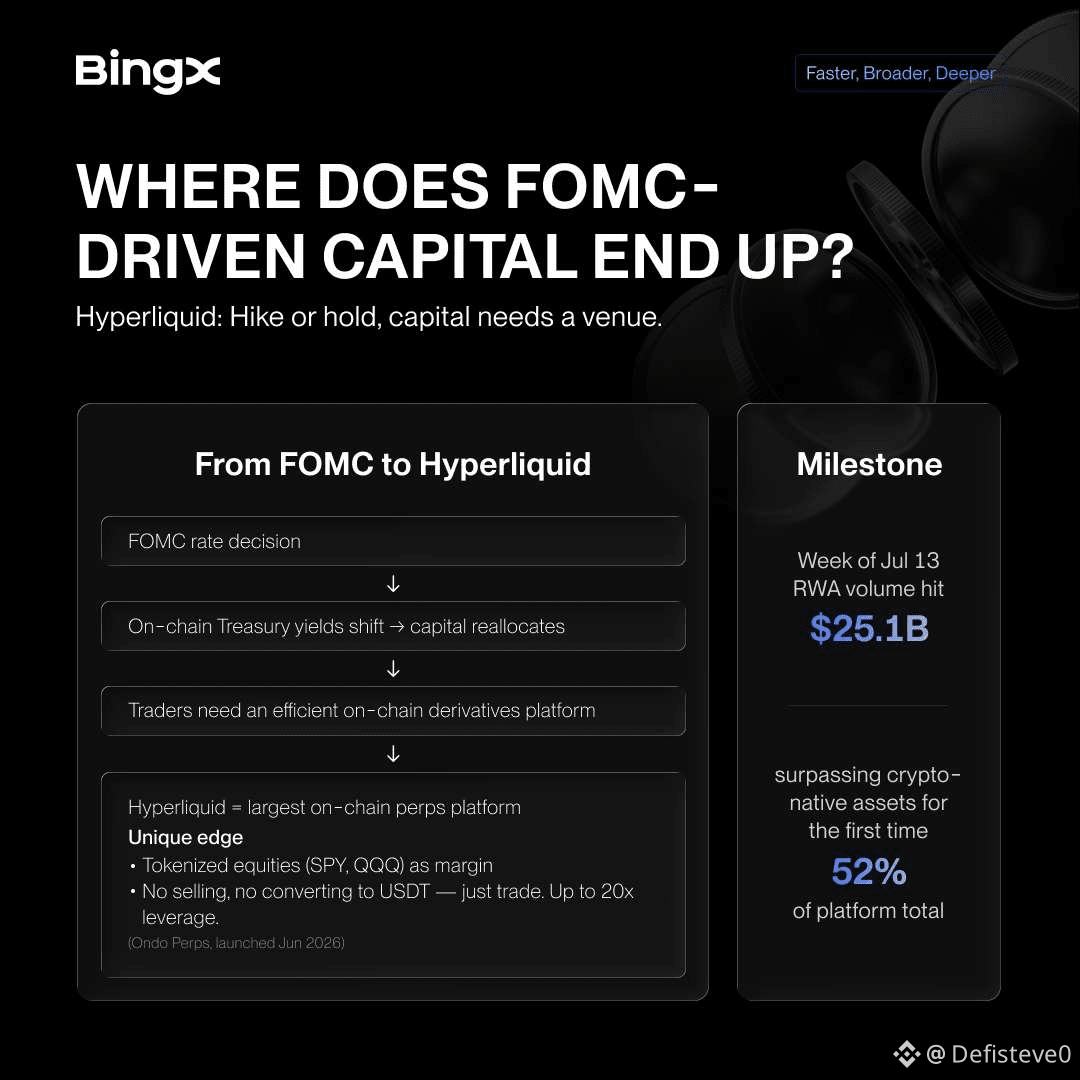
Die RWA-Story wird immer schwerer zu ignorieren.
Zwischen dem 13. und 19. Juli haben die RWA-Märkte von Hyperliquid ein wöchentliches Volumen von 25,1 Mrd. $ erzeugt – das entspricht 52 % des gesamten Volumens der Plattform von 48,2 Mrd. $.
Während der FOMC die Liquidität und die Risikobereitschaft prägt, werden tokenisierte Aktien und Rohstoffe Teil derselben Makro-Diskussion wie Krypto.
Ich halte $HYPE auf meiner BingX-Watchlist. 👀
#HYPE
Die RWA-Story wird immer schwerer zu ignorieren.
Zwischen dem 13. und 19. Juli haben die RWA-Märkte von Hyperliquid ein wöchentliches Volumen von 25,1 Mrd. $ erzeugt – das entspricht 52 % des gesamten Volumens der Plattform von 48,2 Mrd. $.
Während der FOMC die Liquidität und die Risikobereitschaft prägt, werden tokenisierte Aktien und Rohstoffe Teil derselben Makro-Diskussion wie Krypto.
Ich halte $HYPE auf meiner BingX-Watchlist. 👀
#HYPE
Zwischen dem 13. und 19. Juli haben die RWA-Märkte von Hyperliquid ein wöchentliches Volumen von 25,1 Mrd. $ erzeugt – das entspricht 52 % des gesamten Volumens der Plattform von 48,2 Mrd. $.
Während der FOMC die Liquidität und die Risikobereitschaft prägt, werden tokenisierte Aktien und Rohstoffe Teil derselben Makro-Diskussion wie Krypto.
Ich halte $HYPE auf meiner BingX-Watchlist. 👀
#HYPE
·
--
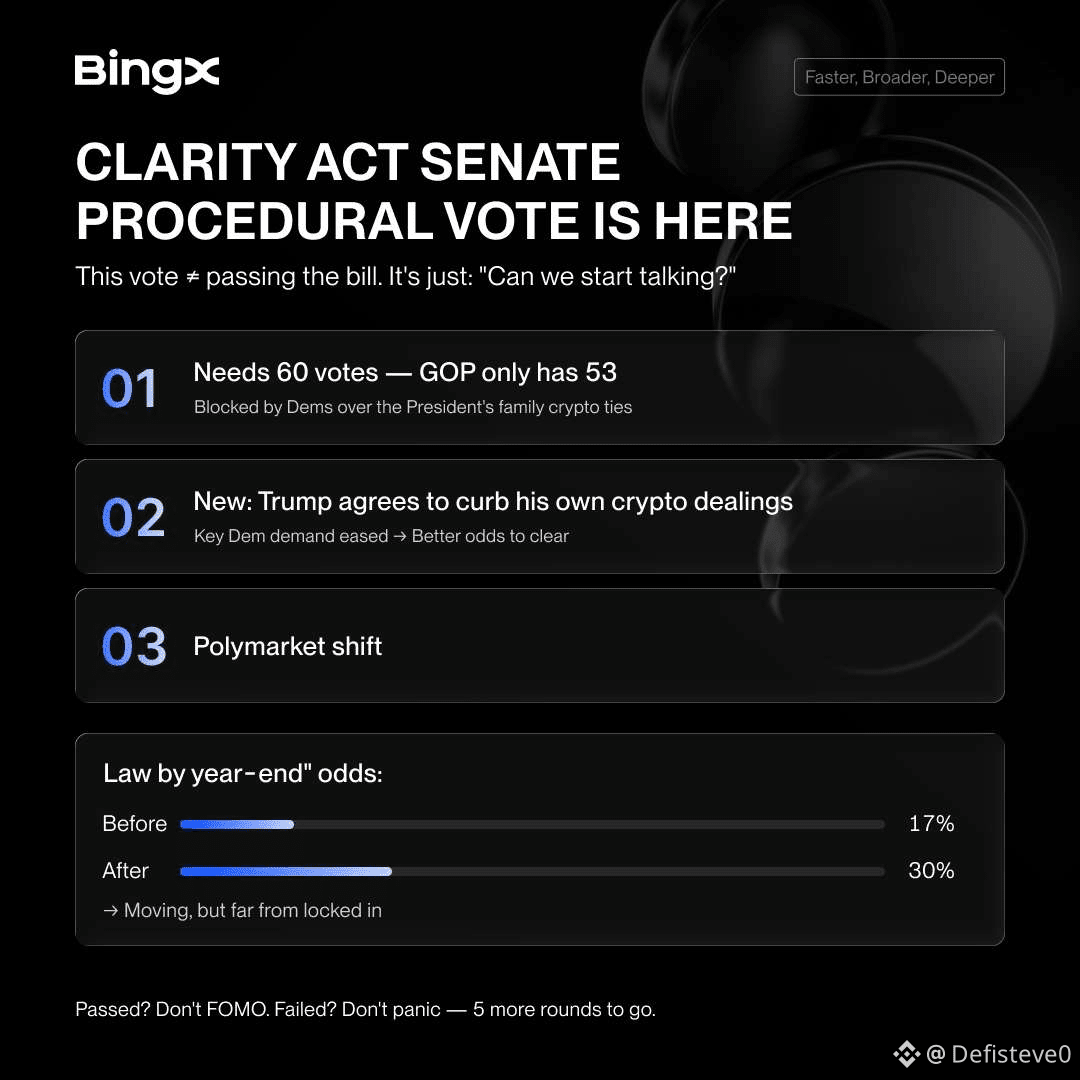
📜 Die Regulierung von Krypto rückt wieder in den Fokus.
Der CLARITY Act benötigt 60 Stimmen im Senat, um voranzukommen. Das ist ein wichtiger verfahrenstechnischer Schritt, aber noch nicht das Ziel.
Wenn der Gesetzentwurf vorankommt, könnte regulatorische Klarheit den breiteren Krypto-Markt unterstützen – möglicherweise mit größeren prozentualen Bewegungen bei $ETH und $SOL als bei $BTC.
Das größte Risiko? FOMO. Eine einzige Stimme macht daraus noch kein Gesetz.
#CLARITYAct #Bitcoin
📜 Die Regulierung von Krypto rückt wieder in den Fokus.
Der CLARITY Act benötigt 60 Stimmen im Senat, um voranzukommen. Das ist ein wichtiger verfahrenstechnischer Schritt, aber noch nicht das Ziel.
Wenn der Gesetzentwurf vorankommt, könnte regulatorische Klarheit den breiteren Krypto-Markt unterstützen – möglicherweise mit größeren prozentualen Bewegungen bei $ETH und $SOL als bei $BTC.
Das größte Risiko? FOMO. Eine einzige Stimme macht daraus noch kein Gesetz.
#CLARITYAct #Bitcoin
Der CLARITY Act benötigt 60 Stimmen im Senat, um voranzukommen. Das ist ein wichtiger verfahrenstechnischer Schritt, aber noch nicht das Ziel.
Wenn der Gesetzentwurf vorankommt, könnte regulatorische Klarheit den breiteren Krypto-Markt unterstützen – möglicherweise mit größeren prozentualen Bewegungen bei $ETH und $SOL als bei $BTC.
Das größte Risiko? FOMO. Eine einzige Stimme macht daraus noch kein Gesetz.
#CLARITYAct #Bitcoin
24
·
--
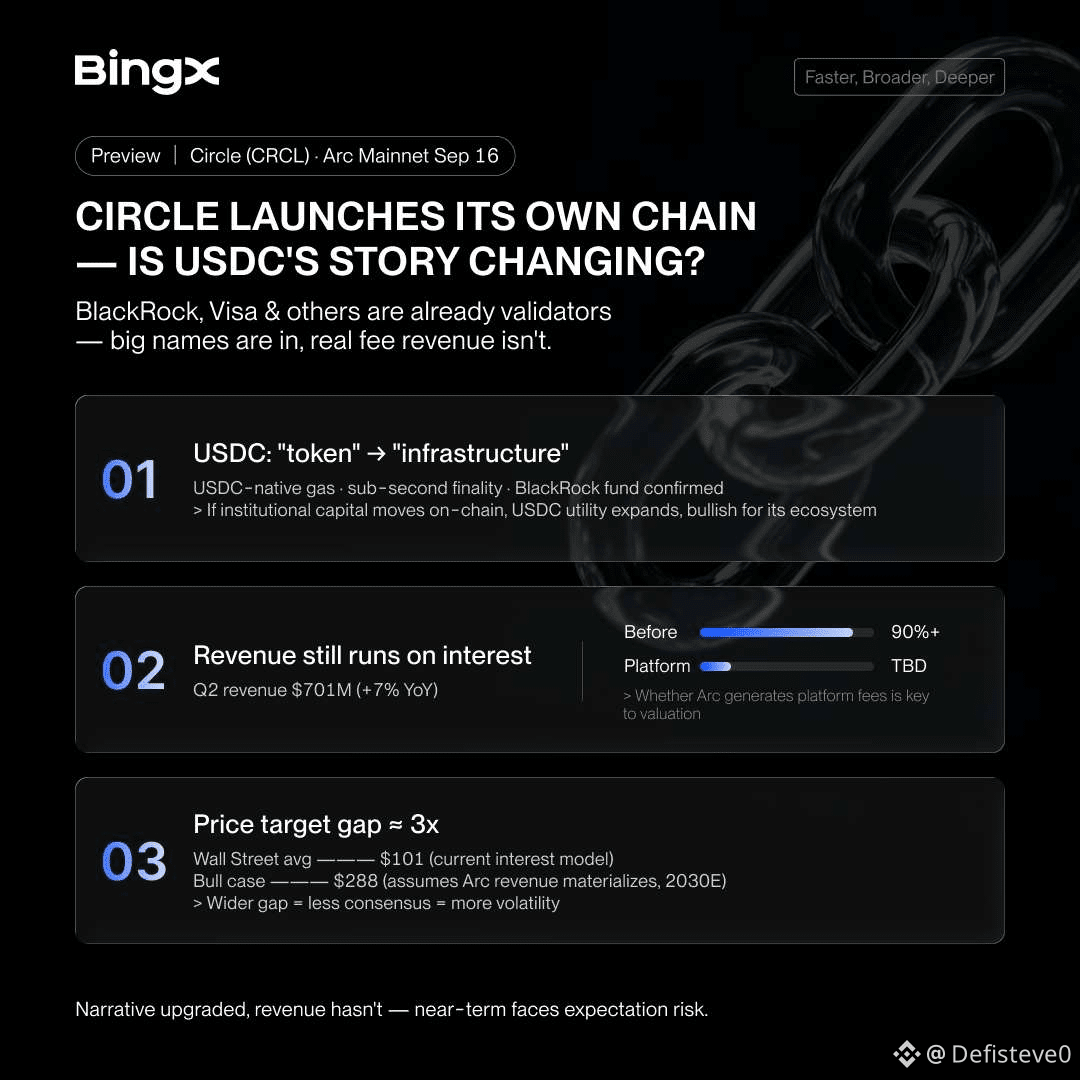
Arc Mainnet könnte der bislang größte Test für Circle sein.
$CRCL hat im Q2 $701M generiert, aber etwa 95% stammten weiterhin aus den Reserveeinnahmen. Deshalb ist der 16. September so wichtig: Es geht nicht nur darum, dass es eine neue Kette gibt – sondern darum, ob Arc echte Plattform-Umsätze schafft, etwa durch Zahlungen, Abwicklungen und tokenisierte Assets.
Die Story ist stark. Jetzt müssen die Zahlen folgen.
#CRCL #USDC
Arc Mainnet könnte der bislang größte Test für Circle sein.
$CRCL hat im Q2 $701M generiert, aber etwa 95% stammten weiterhin aus den Reserveeinnahmen. Deshalb ist der 16. September so wichtig: Es geht nicht nur darum, dass es eine neue Kette gibt – sondern darum, ob Arc echte Plattform-Umsätze schafft, etwa durch Zahlungen, Abwicklungen und tokenisierte Assets.
Die Story ist stark. Jetzt müssen die Zahlen folgen.
#CRCL #USDC
$CRCL hat im Q2 $701M generiert, aber etwa 95% stammten weiterhin aus den Reserveeinnahmen. Deshalb ist der 16. September so wichtig: Es geht nicht nur darum, dass es eine neue Kette gibt – sondern darum, ob Arc echte Plattform-Umsätze schafft, etwa durch Zahlungen, Abwicklungen und tokenisierte Assets.
Die Story ist stark. Jetzt müssen die Zahlen folgen.
#CRCL #USDC
201
·
--
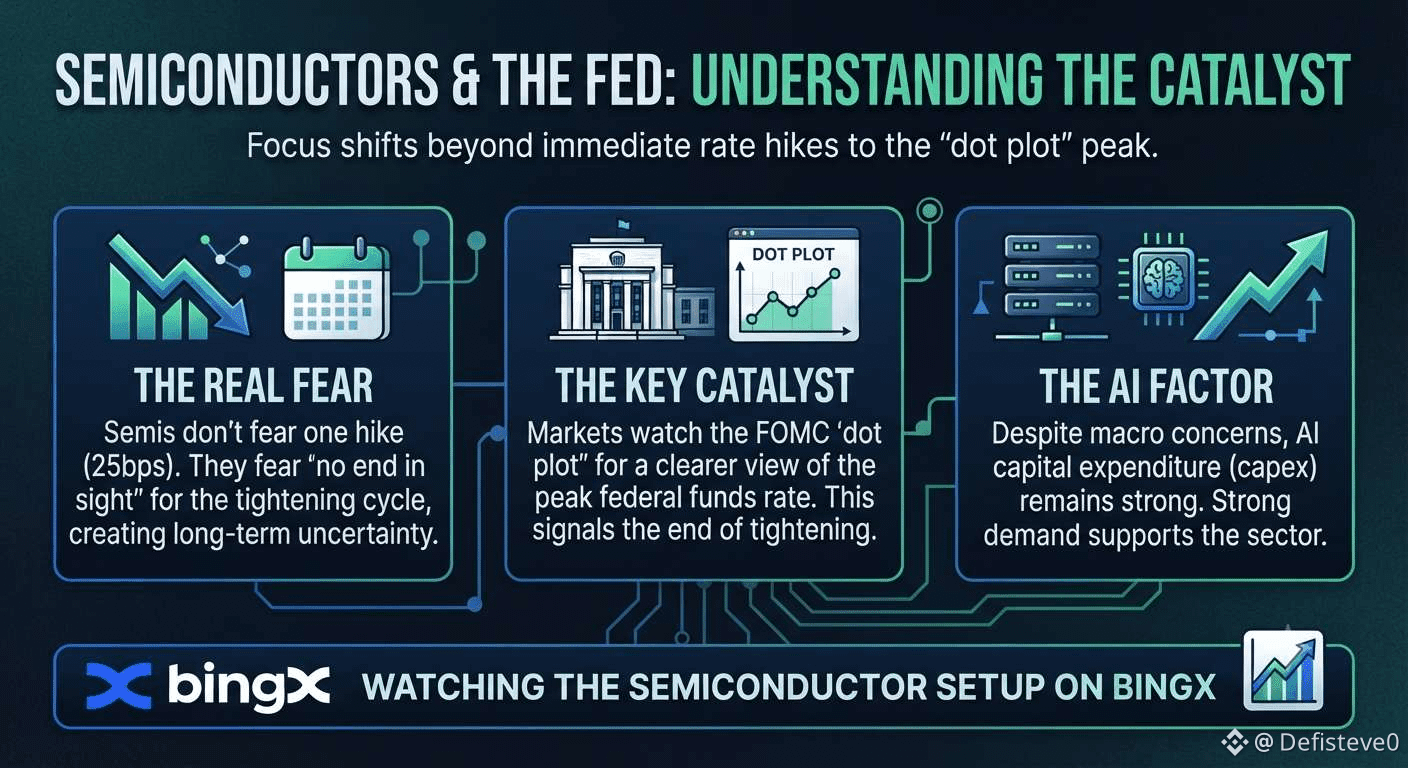
📊 Die FOMC-Story für Halbleiter ist größer als die Zinsen.
Nach der hawkischen Überraschung im Juni 2022 stieg der SOX-Index in den folgenden Monaten weiter an, während sich die Märkte über den ersten Schock hinausblickten.
Diesmal lauten die entscheidenden Fragen:
• Deutet die Fed auf einen Höhepunkt der Straffung hin?
• Kann die Ausgaben für KI-Infrastruktur weiterhin die Chip-Nachfrage stützen?
Ich behalte den Halbleitersektor über BingX TradFi im Blick. 👀
#FOMC #Halbleiter
$XRP
📊 Die FOMC-Story für Halbleiter ist größer als die Zinsen.
Nach der hawkischen Überraschung im Juni 2022 stieg der SOX-Index in den folgenden Monaten weiter an, während sich die Märkte über den ersten Schock hinausblickten.
Diesmal lauten die entscheidenden Fragen:
• Deutet die Fed auf einen Höhepunkt der Straffung hin?
• Kann die Ausgaben für KI-Infrastruktur weiterhin die Chip-Nachfrage stützen?
Ich behalte den Halbleitersektor über BingX TradFi im Blick. 👀
#FOMC #Halbleiter
$XRP
Nach der hawkischen Überraschung im Juni 2022 stieg der SOX-Index in den folgenden Monaten weiter an, während sich die Märkte über den ersten Schock hinausblickten.
Diesmal lauten die entscheidenden Fragen:
• Deutet die Fed auf einen Höhepunkt der Straffung hin?
• Kann die Ausgaben für KI-Infrastruktur weiterhin die Chip-Nachfrage stützen?
Ich behalte den Halbleitersektor über BingX TradFi im Blick. 👀
#FOMC #Halbleiter
$XRP
·
--
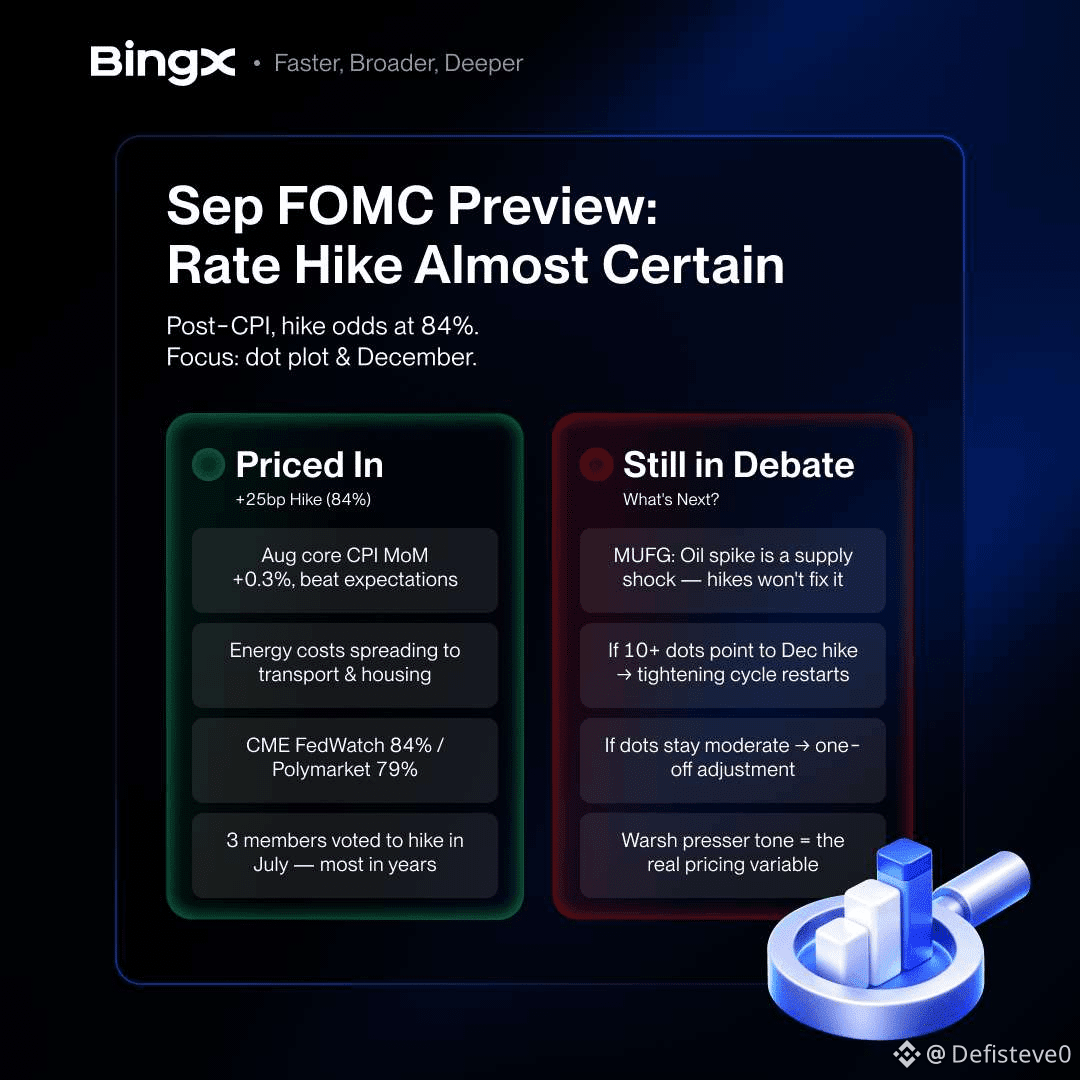
Die FOMC-Woche dreht sich alles um Erwartungen.
- 📈 Chancen auf einen September-Anstieg: 84%
- 📊 Vor einem Monat: 40%
Die Zinsbewegung wirkt weitgehend eingepreist. Was Märkte wirklich in Bewegung bringen könnte, ist das Dot-Plot-Diagramm und ob die Fed im Dezember auf einen weiteren Zinsschritt hindeutet.
Behalten Sie $BTC, $DXY und $XAU rund um die Bekanntgabe im Blick. Eine einzige Überraschung kann die gesamte Erzählung verändern.
Die FOMC-Woche dreht sich alles um Erwartungen.
- 📈 Chancen auf einen September-Anstieg: 84%
- 📊 Vor einem Monat: 40%
Die Zinsbewegung wirkt weitgehend eingepreist. Was Märkte wirklich in Bewegung bringen könnte, ist das Dot-Plot-Diagramm und ob die Fed im Dezember auf einen weiteren Zinsschritt hindeutet.
Behalten Sie $BTC, $DXY und $XAU rund um die Bekanntgabe im Blick. Eine einzige Überraschung kann die gesamte Erzählung verändern.
- 📈 Chancen auf einen September-Anstieg: 84%
- 📊 Vor einem Monat: 40%
Die Zinsbewegung wirkt weitgehend eingepreist. Was Märkte wirklich in Bewegung bringen könnte, ist das Dot-Plot-Diagramm und ob die Fed im Dezember auf einen weiteren Zinsschritt hindeutet.
Behalten Sie $BTC, $DXY und $XAU rund um die Bekanntgabe im Blick. Eine einzige Überraschung kann die gesamte Erzählung verändern.
53
·
--
Habe heute ein bisschen Recherche zu Krypto-Karten gemacht.
Die Cashback-Raten schwanken mehr, als ich erwartet hatte,
- Ether.fi: 1%
- KAST: 1.5%
- Coinbase: bis zu 4%
- BingX: bis zu 5%
Das Interessante ist nicht, welche Karte gewinnt – sondern wie groß der Unterschied von 1% gegenüber 5% sein kann, wenn du ohnehin jeden Monat schon ausgibst.
Es lohnt sich immer, die Voraussetzungen und die „bis zu“-Bedingungen zu prüfen, bevor man eine auswählt.
$XRP
Habe heute ein bisschen Recherche zu Krypto-Karten gemacht.
Die Cashback-Raten schwanken mehr, als ich erwartet hatte,
- Ether.fi: 1%
- KAST: 1.5%
- Coinbase: bis zu 4%
- BingX: bis zu 5%
Das Interessante ist nicht, welche Karte gewinnt – sondern wie groß der Unterschied von 1% gegenüber 5% sein kann, wenn du ohnehin jeden Monat schon ausgibst.
Es lohnt sich immer, die Voraussetzungen und die „bis zu“-Bedingungen zu prüfen, bevor man eine auswählt.
$XRP
Die Cashback-Raten schwanken mehr, als ich erwartet hatte,
- Ether.fi: 1%
- KAST: 1.5%
- Coinbase: bis zu 4%
- BingX: bis zu 5%
Das Interessante ist nicht, welche Karte gewinnt – sondern wie groß der Unterschied von 1% gegenüber 5% sein kann, wenn du ohnehin jeden Monat schon ausgibst.
Es lohnt sich immer, die Voraussetzungen und die „bis zu“-Bedingungen zu prüfen, bevor man eine auswählt.
$XRP

61
Anmelden und weiter Inhalte entdecken
Krypto-Nutzer weltweit auf Binance Square kennenlernen
⚡️ Bleib in Sachen Krypto stets am Puls.
💬 Die weltgrößte Kryptobörse vertraut darauf.
👍 Erhalte verlässliche Einblicke von verifizierten Creators.
E-Mail-Adresse/Telefonnummer
Trendthemen
KoreaProposesTokenizingStocksAndBonds
1,433 Aufrufe
91 Kommentare
Südkorea treibt die Tokenisierung von Aktien und Anleihen voran – ein Vorschlag, der die Art und Weise verändern könnte, wie traditionelle Finanzwerte ausgegeben, gehandelt und abgerechnet werden.
Die Idee ist, Instrumente wie Aktien, Anleihen und andere Wertpapiere in Blockchain-Infrastruktur zu überführen. Das könnte potenziell effizientere Prozesse, höhere Nachvollziehbarkeit und Zugang zu Märkten mit erweiterten Handelszeiten ermöglichen. Auch könnten in bestimmten Phasen der Abwicklung Vermittler reduziert werden, allerdings hängt der Fortschritt von klaren Regeln zu Verwahrung, Anlegerschutz, Compliance und regulatorischer Aufsicht ab.
Für das Krypto-Ökosystem stärkt diese Art von Initiativen die Diskussion über tokenisierte Real-World-Assets: Es geht nicht nur darum, neue Tokens zu schaffen, sondern traditionelle Finanzmärkte mit Blockchain-Technologie unter regulierten Rahmenbedingungen zu verbinden.
Die Tokenisierung beseitigt nicht das Marktrisiko und garantiert weder Liquidität noch Renditen, aber sie eröffnet eine neue Phase für die digitale Finanzinfrastruktur.
Glaubst du, dass tokenisierte Assets zum üblichen Bestandteil der Börse und des Anleihemarkts werden?
$AAPLB
Folge mir für mehr Kontext zu Krypto, Regulierung und tokenisierten Märkten.
#noticias
#KoreaProposesTokenizingStocksAndBonds
$MSFTB
$TSMB
ALØNDRACRYPTØ1
·1 Likes
·285 Aufrufe
MetaMaskExitsLidoValidatorsAfterSecurityIncident
60,877 Aufrufe
853 Kommentare
MicronBeatsEarningsLiftsGuidance
36,773 Aufrufe
647 Kommentare