

Altcoinna
10.4k Beiträge

Altcoinna
Melden
Nutzer blockieren
Brains, bags & blockchains | Alpha with a feminine twist | KOL | #Binance Built for Bullrun
296 Following
3.2K+ Follower
17.3K+ Like gegeben
Beiträge

·
--
Bullisch
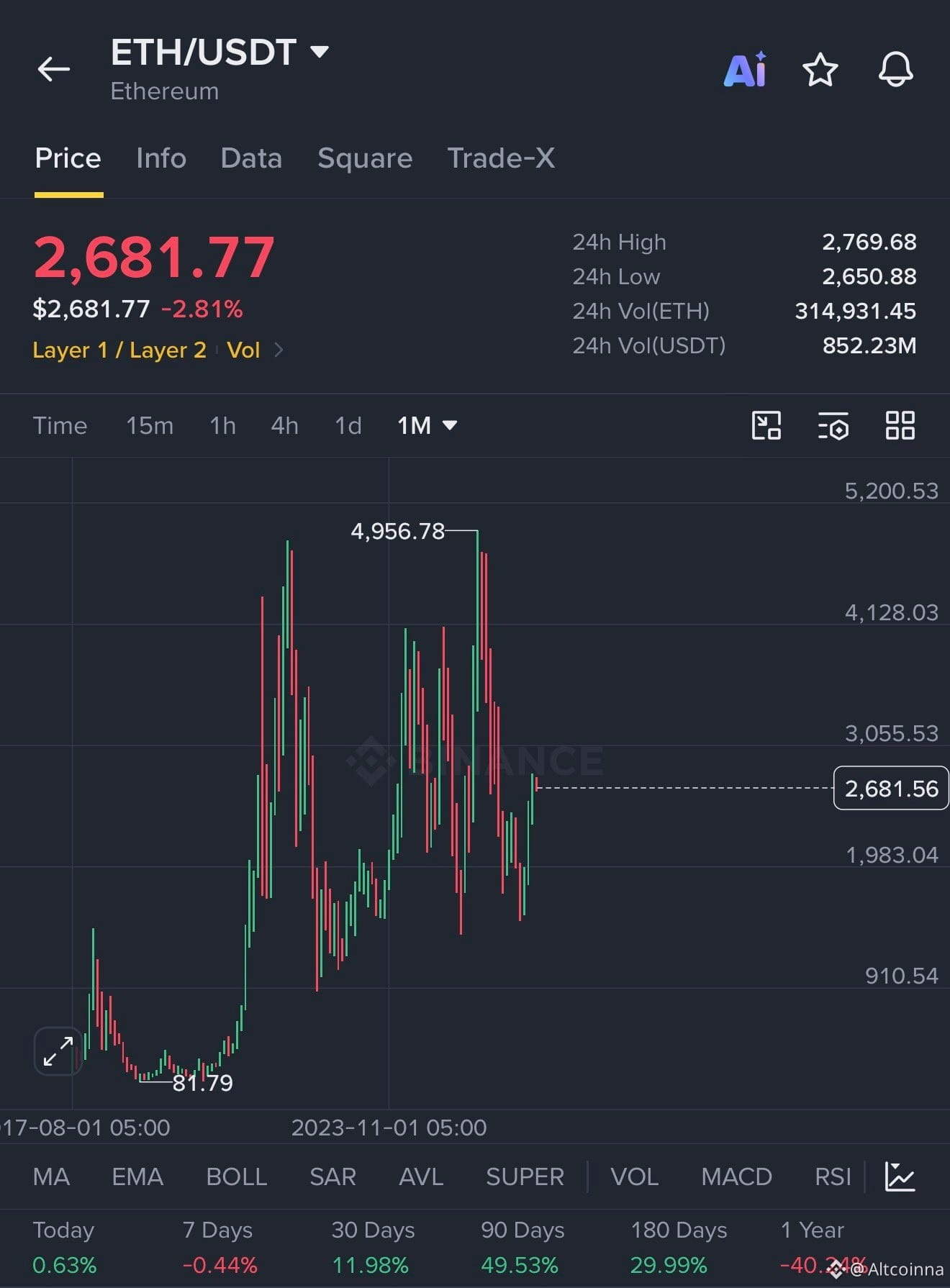
🚨 MEINE $ETH OUTLOOK: KURZFRISTIGE VORSICHT, LANGFRISTIG BULLISCH
Ich bin im Kurzfristbereich bei Ethereum vorsichtig und würde hier keine Long-Positionen hinterherjagen. Wenn der breitere Markt noch einen weiteren Ausverkauf sieht, könnte ETH um $BTC weiter nach unten folgen, wobei der 2K-Bereich möglicherweise wieder in den Fokus rückt.
Aber langfristig bleibt meine Sicht auf ETH bullisch.
Wenn es zu einem größeren Rücksetzer kommt, würde ich nach Gelegenheiten suchen, um mich einzudecken.
Wir haben bereits gesehen, dass BTC $126K erreicht hat und $SOL auf $298 kam, aber Ethereum hatte noch nicht seine wahre Saison.
Auf Basis meiner Markterfahrung glaube ich, dass ein von ETH geführter Zyklus immer noch kommen könnte – potenziell mit einer deutlich größeren Bewegung als bei früheren BTC- oder SOL-Rallyes.
Könnte ETH in den nächsten Jahren irgendwann über $20K handeln? 👀
🚨 MEINE $ETH OUTLOOK: KURZFRISTIGE VORSICHT, LANGFRISTIG BULLISCH
Ich bin im Kurzfristbereich bei Ethereum vorsichtig und würde hier keine Long-Positionen hinterherjagen. Wenn der breitere Markt noch einen weiteren Ausverkauf sieht, könnte ETH um $BTC weiter nach unten folgen, wobei der 2K-Bereich möglicherweise wieder in den Fokus rückt.
Aber langfristig bleibt meine Sicht auf ETH bullisch.
Wenn es zu einem größeren Rücksetzer kommt, würde ich nach Gelegenheiten suchen, um mich einzudecken.
Wir haben bereits gesehen, dass BTC $126K erreicht hat und $SOL auf $298 kam, aber Ethereum hatte noch nicht seine wahre Saison.
Auf Basis meiner Markterfahrung glaube ich, dass ein von ETH geführter Zyklus immer noch kommen könnte – potenziell mit einer deutlich größeren Bewegung als bei früheren BTC- oder SOL-Rallyes.
Könnte ETH in den nächsten Jahren irgendwann über $20K handeln? 👀
Ich bin im Kurzfristbereich bei Ethereum vorsichtig und würde hier keine Long-Positionen hinterherjagen. Wenn der breitere Markt noch einen weiteren Ausverkauf sieht, könnte ETH um $BTC weiter nach unten folgen, wobei der 2K-Bereich möglicherweise wieder in den Fokus rückt.
Aber langfristig bleibt meine Sicht auf ETH bullisch.
Wenn es zu einem größeren Rücksetzer kommt, würde ich nach Gelegenheiten suchen, um mich einzudecken.
Wir haben bereits gesehen, dass BTC $126K erreicht hat und $SOL auf $298 kam, aber Ethereum hatte noch nicht seine wahre Saison.
Auf Basis meiner Markterfahrung glaube ich, dass ein von ETH geführter Zyklus immer noch kommen könnte – potenziell mit einer deutlich größeren Bewegung als bei früheren BTC- oder SOL-Rallyes.
Könnte ETH in den nächsten Jahren irgendwann über $20K handeln? 👀
21
·
--
Bullisch
🚨 DER $LINK -RESERVE WÄCHST WEITER
Woche für Woche häuft die offizielle @chainlink-Reserve weiterhin $LINK an.
Bisher wurden ungefähr 6,12M $LINK erworben, wobei die Bestände derzeit bei aktuellen Preisen rund 88 Mio. $ wert sind.
Und die wöchentlichen Käufe zeigen keine klaren Anzeichen einer Verlangsamung. 👀
Könnte dieses Akkumulationsmodell zu einem größeren Trend über Krypto-Projekte hinweg werden?
🚨 DER $LINK -RESERVE WÄCHST WEITER
Woche für Woche häuft die offizielle @chainlink-Reserve weiterhin $LINK an.
Bisher wurden ungefähr 6,12M $LINK erworben, wobei die Bestände derzeit bei aktuellen Preisen rund 88 Mio. $ wert sind.
Und die wöchentlichen Käufe zeigen keine klaren Anzeichen einer Verlangsamung. 👀
Könnte dieses Akkumulationsmodell zu einem größeren Trend über Krypto-Projekte hinweg werden?
Woche für Woche häuft die offizielle @chainlink-Reserve weiterhin $LINK an.
Bisher wurden ungefähr 6,12M $LINK erworben, wobei die Bestände derzeit bei aktuellen Preisen rund 88 Mio. $ wert sind.
Und die wöchentlichen Käufe zeigen keine klaren Anzeichen einer Verlangsamung. 👀
Könnte dieses Akkumulationsmodell zu einem größeren Trend über Krypto-Projekte hinweg werden?

53
·
--
Bullisch
🚨 HAT SICH GERADE EIN WAL FÜNF METER VERSETZT $UNI ?
Laut @whale_alert hat ein unbekannter @Uniswap-Wal 5.000.000 $UNI im Wert von ungefähr 45 Mio. $ an @Coinbase Institutional übertragen.
Der genaue Zweck der Übertragung ist noch nicht bestätigt, aber eine derart große Bewegung zu einer Börse weckt natürlich Spekulationen über möglichen Verkaufsdruck. 👀
🚨 HAT SICH GERADE EIN WAL FÜNF METER VERSETZT $UNI ?
Laut @whale_alert hat ein unbekannter @Uniswap-Wal 5.000.000 $UNI im Wert von ungefähr 45 Mio. $ an @Coinbase Institutional übertragen.
Der genaue Zweck der Übertragung ist noch nicht bestätigt, aber eine derart große Bewegung zu einer Börse weckt natürlich Spekulationen über möglichen Verkaufsdruck. 👀
Laut @whale_alert hat ein unbekannter @Uniswap-Wal 5.000.000 $UNI im Wert von ungefähr 45 Mio. $ an @Coinbase Institutional übertragen.
Der genaue Zweck der Übertragung ist noch nicht bestätigt, aber eine derart große Bewegung zu einer Börse weckt natürlich Spekulationen über möglichen Verkaufsdruck. 👀

48
·
--
Bullisch
⚡ WELCHE BLOCKCHAIN IST TATSÄCHLICH DIE SCHNELLSTE?
Vergiss die theoretischen TPS-Zahlen – die reale Aktivität erzählt eine andere Geschichte.
Laut den Daten von @chainspect_app hat $SOL in der vergangenen Woche im Durchschnitt etwa 1.990 TPS erreicht, während $ICP etwa 1.458 TPS aufrechterhielt.
Bislang kommt kein anderes Netzwerk an diese realen Transaktionsgeschwindigkeiten heran. 👀
⚡ WELCHE BLOCKCHAIN IST TATSÄCHLICH DIE SCHNELLSTE?
Vergiss die theoretischen TPS-Zahlen – die reale Aktivität erzählt eine andere Geschichte.
Laut den Daten von @chainspect_app hat $SOL in der vergangenen Woche im Durchschnitt etwa 1.990 TPS erreicht, während $ICP etwa 1.458 TPS aufrechterhielt.
Bislang kommt kein anderes Netzwerk an diese realen Transaktionsgeschwindigkeiten heran. 👀
Vergiss die theoretischen TPS-Zahlen – die reale Aktivität erzählt eine andere Geschichte.
Laut den Daten von @chainspect_app hat $SOL in der vergangenen Woche im Durchschnitt etwa 1.990 TPS erreicht, während $ICP etwa 1.458 TPS aufrechterhielt.
Bislang kommt kein anderes Netzwerk an diese realen Transaktionsgeschwindigkeiten heran. 👀

64
·
--
Bullisch
🚨 ZSHIB WALLET IST JETZT LIVE
Betrieben von $ZEC : Die ZSHIB Wallet bringt Nutzer in die Kontrolle mit Self-Custody und verschlüsselten Transaktionen als Kern. 🔒
Und es gibt noch mehr 👀
🔥 Anonyme Shib Swap ist ebenfalls LIVE
Nutzer können Tokens tauschen und dabei ihren bevorzugten Datenschutzmodus auswählen – Privatsphäre ist direkt in das Erlebnis integriert.
Deine Keys. Deine Assets. Deine Privatsphäre. 🔐
🚨 ZSHIB WALLET IST JETZT LIVE
Betrieben von $ZEC : Die ZSHIB Wallet bringt Nutzer in die Kontrolle mit Self-Custody und verschlüsselten Transaktionen als Kern. 🔒
Und es gibt noch mehr 👀
🔥 Anonyme Shib Swap ist ebenfalls LIVE
Nutzer können Tokens tauschen und dabei ihren bevorzugten Datenschutzmodus auswählen – Privatsphäre ist direkt in das Erlebnis integriert.
Deine Keys. Deine Assets. Deine Privatsphäre. 🔐
Betrieben von $ZEC : Die ZSHIB Wallet bringt Nutzer in die Kontrolle mit Self-Custody und verschlüsselten Transaktionen als Kern. 🔒
Und es gibt noch mehr 👀
🔥 Anonyme Shib Swap ist ebenfalls LIVE
Nutzer können Tokens tauschen und dabei ihren bevorzugten Datenschutzmodus auswählen – Privatsphäre ist direkt in das Erlebnis integriert.
Deine Keys. Deine Assets. Deine Privatsphäre. 🔐

266
·
--
Bullisch
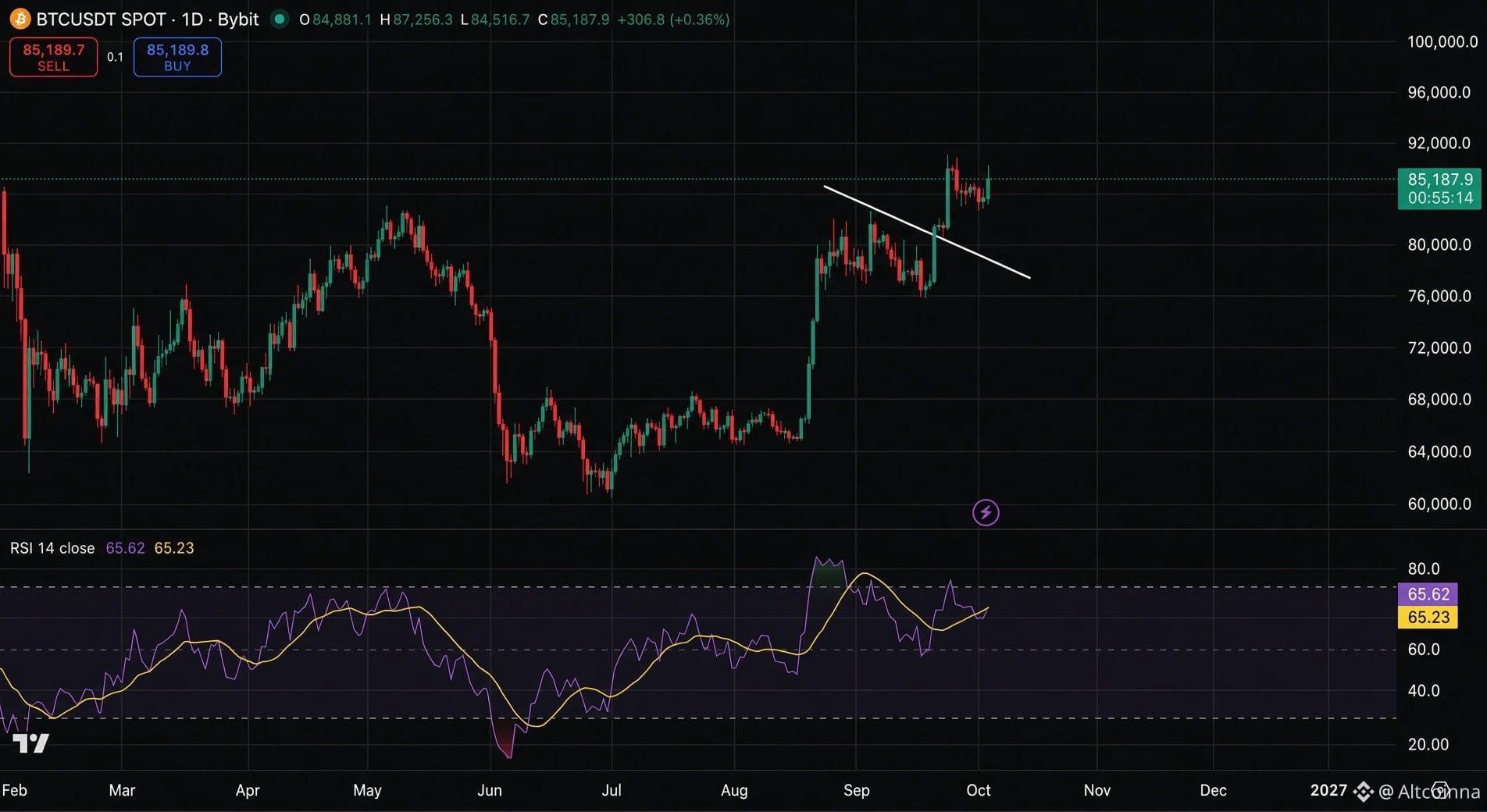
🚨 $BTC DIVERGENZ BENÖTIGT AUFMERKSAMKEIT
Bitcoin hat gerade ein höheres Hoch gedruckt, aber der tägliche RSI hat die Bestätigung nicht geliefert und stattdessen ein tieferes Hoch gebildet.
Diese bärische Divergenz könnte zu einem Rücksetzer führen, falls der Kurs die Schwäche bestätigt.
Ich jagde diesen Move hier nicht hinterher.
Ich beobachte die Kursbewegung genau, bevor ich die nächste Entscheidung treffe. 👀📊
🚨 $BTC DIVERGENZ BENÖTIGT AUFMERKSAMKEIT
Bitcoin hat gerade ein höheres Hoch gedruckt, aber der tägliche RSI hat die Bestätigung nicht geliefert und stattdessen ein tieferes Hoch gebildet.
Diese bärische Divergenz könnte zu einem Rücksetzer führen, falls der Kurs die Schwäche bestätigt.
Ich jagde diesen Move hier nicht hinterher.
Ich beobachte die Kursbewegung genau, bevor ich die nächste Entscheidung treffe. 👀📊
Bitcoin hat gerade ein höheres Hoch gedruckt, aber der tägliche RSI hat die Bestätigung nicht geliefert und stattdessen ein tieferes Hoch gebildet.
Diese bärische Divergenz könnte zu einem Rücksetzer führen, falls der Kurs die Schwäche bestätigt.
Ich jagde diesen Move hier nicht hinterher.
Ich beobachte die Kursbewegung genau, bevor ich die nächste Entscheidung treffe. 👀📊
87
·
--
Bullisch
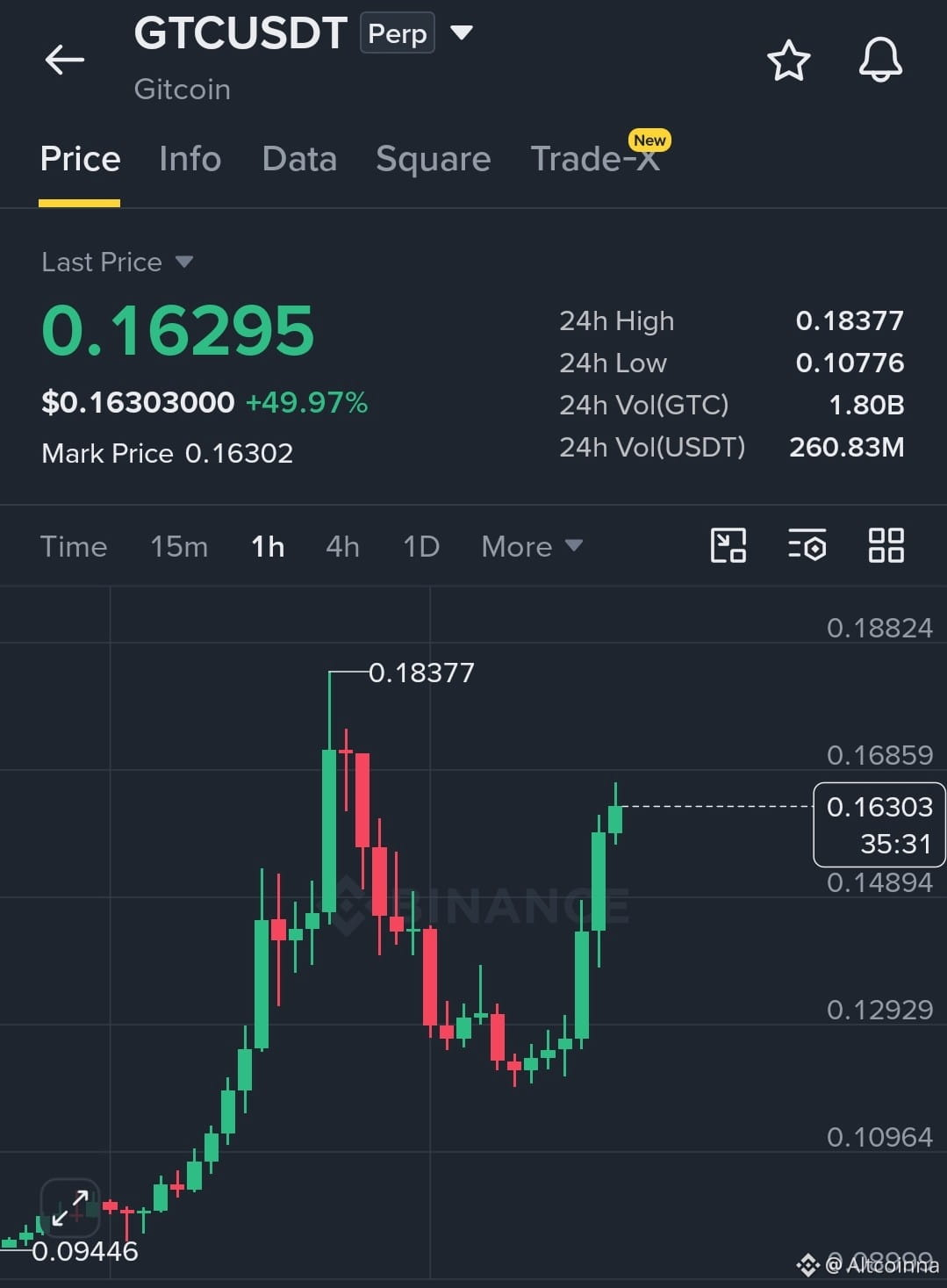
🚨 $GTC
{spot}(GTCUSDT)
MOMENTUM IST STARK — ABER JAGE DEM NICHT NACH
Glückwunsch an alle, alle TPs erfolgreich! 🔥
$GTC ist fast 50% im Plus bei hohem Volumen und testet jetzt den Bereich um $0.1630 nach einem starken Move.
Mein Ansatz: auf einen sauberen Hold und Re-Test warten, statt während des Spikes einzusteigen.
📍 Entry: $0.1490–$0.1540
🛑 SL: $0.1430
🎯 TP1: $0.1685
🎯 TP2: $0.1835
Wenn $0.1490 mit Schwäche bricht, bleibe ich draußen.
⚠️ Die Volatilität ist hier hoch, also behalte das Risiko unter Kontrolle.
#GTC
🚨 $GTC
MOMENTUM IST STARK — ABER JAGE DEM NICHT NACH
Glückwunsch an alle, alle TPs erfolgreich! 🔥
$GTC ist fast 50% im Plus bei hohem Volumen und testet jetzt den Bereich um $0.1630 nach einem starken Move.
Mein Ansatz: auf einen sauberen Hold und Re-Test warten, statt während des Spikes einzusteigen.
📍 Entry: $0.1490–$0.1540
🛑 SL: $0.1430
🎯 TP1: $0.1685
🎯 TP2: $0.1835
Wenn $0.1490 mit Schwäche bricht, bleibe ich draußen.
⚠️ Die Volatilität ist hier hoch, also behalte das Risiko unter Kontrolle.
#GTC
MOMENTUM IST STARK — ABER JAGE DEM NICHT NACH
Glückwunsch an alle, alle TPs erfolgreich! 🔥
$GTC ist fast 50% im Plus bei hohem Volumen und testet jetzt den Bereich um $0.1630 nach einem starken Move.
Mein Ansatz: auf einen sauberen Hold und Re-Test warten, statt während des Spikes einzusteigen.
📍 Entry: $0.1490–$0.1540
🛑 SL: $0.1430
🎯 TP1: $0.1685
🎯 TP2: $0.1835
Wenn $0.1490 mit Schwäche bricht, bleibe ich draußen.
⚠️ Die Volatilität ist hier hoch, also behalte das Risiko unter Kontrolle.
#GTC
75
·
--
Bullisch
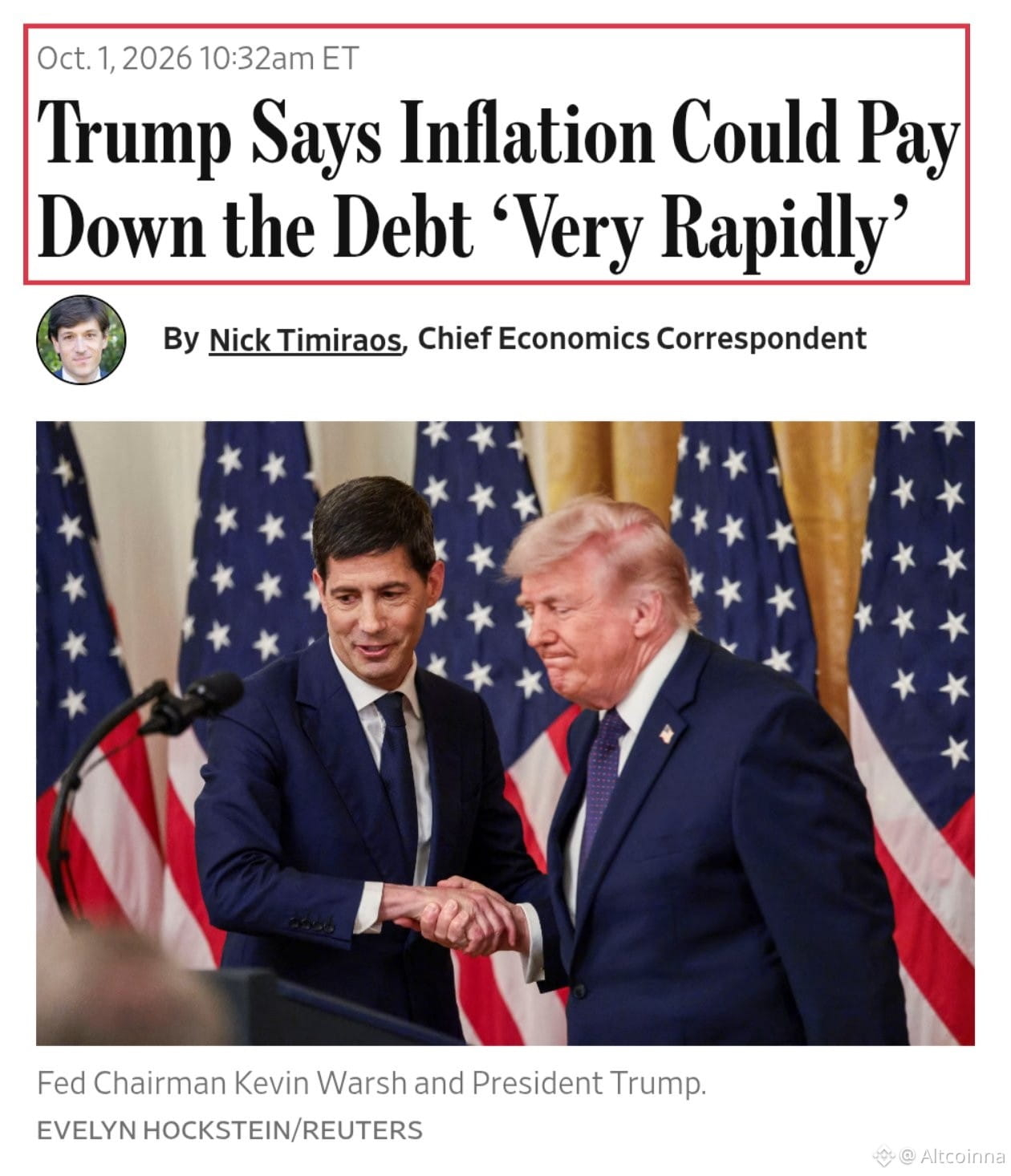
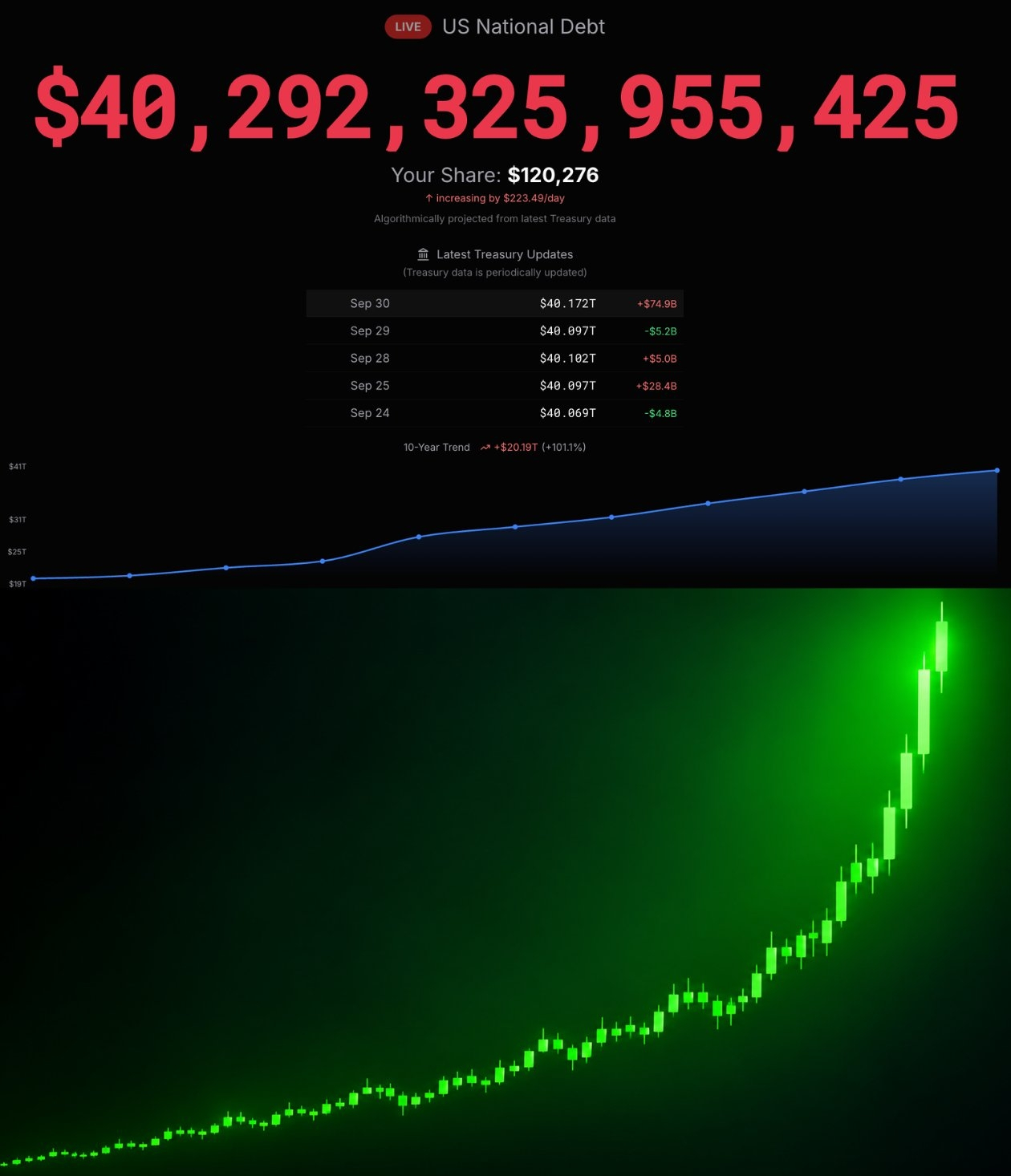
🚨 $TRUMP sagt, dass Inflation helfen könnte, Amerikas 40B-Dollar-Schuldenlast zu reduzieren
Präsident Trump sagte, dass Inflation das U.S. möglicherweise dabei helfen könnte, seine massive Schuldenlast „sehr schnell“ zu bewältigen.
Die Idee klingt extrem, aber die zugrunde liegende Ökonomie lohnt sich, genauer anzuschauen.
Wenn die USA sich stark auf Inflation verlassen würden, um den realen Wert ihrer Schulden zu verringern, könnten Vermögenswerte wie Gold, Silber und Bitcoin mehr Aufmerksamkeit auf sich ziehen. 🧵
🚨 $TRUMP sagt, dass Inflation helfen könnte, Amerikas 40B-Dollar-Schuldenlast zu reduzieren
Präsident Trump sagte, dass Inflation das U.S. möglicherweise dabei helfen könnte, seine massive Schuldenlast „sehr schnell“ zu bewältigen.
Die Idee klingt extrem, aber die zugrunde liegende Ökonomie lohnt sich, genauer anzuschauen.
Wenn die USA sich stark auf Inflation verlassen würden, um den realen Wert ihrer Schulden zu verringern, könnten Vermögenswerte wie Gold, Silber und Bitcoin mehr Aufmerksamkeit auf sich ziehen. 🧵
Präsident Trump sagte, dass Inflation das U.S. möglicherweise dabei helfen könnte, seine massive Schuldenlast „sehr schnell“ zu bewältigen.
Die Idee klingt extrem, aber die zugrunde liegende Ökonomie lohnt sich, genauer anzuschauen.
Wenn die USA sich stark auf Inflation verlassen würden, um den realen Wert ihrer Schulden zu verringern, könnten Vermögenswerte wie Gold, Silber und Bitcoin mehr Aufmerksamkeit auf sich ziehen. 🧵
188
·
--
Bullisch
🏦 WIE MACHT @plumenetwork AUS RWAs TOKENS?
Plume baut Infrastruktur, die dafür ausgelegt ist, reale Vermögenswerte wie Private Credit, Immobilien, Rohstoffe und andere Finanzprodukte auf die Blockchain zu bringen.
Aber wie funktioniert der Prozess? 👇
1️⃣ VERMÖGENSWERTE TOKENISIEREN
Plume stellt Infrastruktur für Emittenten bereit, um blockchainbasierte Abbildungen realer Vermögenswerte zu erstellen.
Die Arc-Tokenisierungsengine bietet standardisierte Vorlagen und Compliance-Prüfungen.
2️⃣ DER REALE VERMÖGENSWERT EXISTIERT WEITER
Durch die Tokenisierung verschwindet das zugrunde liegende Eigentum, der Kredit oder der Vermögenswert nicht.
Stattdessen repräsentiert der Blockchain-Token Rechte oder Ansprüche, die mit dem realen Vermögenswert verknüpft sind.
3️⃣ COMPLIANCE + ASSET-MANAGEMENT
Das Ökosystem von Plume umfasst Tools für Onboarding, Compliance, Servicing und die Verwaltung tokenisierter Vermögenswerte.
Im Oktober 2025 hat sich Plume bei der SEC als Transfer Agent registriert und unterstützt so Onchain-Eigentumsaufzeichnungen für tokenisierte Wertpapiere.
4️⃣ RWAs IN DEFI EINBINDEN
Sobald sie tokenisiert sind, können diese Vermögenswerte potenziell in Kredite, Handel, Yield-Produkte und andere Onchain-Anwendungen integriert werden.
Plume’s Nest ist ein Beispiel für seine yield-fokussierte Infrastruktur.
5️⃣ BERECHTIGTER ZUGRIFF
Wenn Vorschriften oder Einschränkungen für Anleger gelten, können Emittenten permissionierte Strukturen nutzen, um zu kontrollieren, wer auf bestimmte Vermögenswerte zugreifen darf.
Das ist die größere RWA-These: Verknüpfe traditionelle Vermögenswerte mit programmierbarer Blockchain-Infrastruktur. 🌐
🏦 WIE MACHT @plumenetwork AUS RWAs TOKENS?
Plume baut Infrastruktur, die dafür ausgelegt ist, reale Vermögenswerte wie Private Credit, Immobilien, Rohstoffe und andere Finanzprodukte auf die Blockchain zu bringen.
Aber wie funktioniert der Prozess? 👇
1️⃣ VERMÖGENSWERTE TOKENISIEREN
Plume stellt Infrastruktur für Emittenten bereit, um blockchainbasierte Abbildungen realer Vermögenswerte zu erstellen.
Die Arc-Tokenisierungsengine bietet standardisierte Vorlagen und Compliance-Prüfungen.
2️⃣ DER REALE VERMÖGENSWERT EXISTIERT WEITER
Durch die Tokenisierung verschwindet das zugrunde liegende Eigentum, der Kredit oder der Vermögenswert nicht.
Stattdessen repräsentiert der Blockchain-Token Rechte oder Ansprüche, die mit dem realen Vermögenswert verknüpft sind.
3️⃣ COMPLIANCE + ASSET-MANAGEMENT
Das Ökosystem von Plume umfasst Tools für Onboarding, Compliance, Servicing und die Verwaltung tokenisierter Vermögenswerte.
Im Oktober 2025 hat sich Plume bei der SEC als Transfer Agent registriert und unterstützt so Onchain-Eigentumsaufzeichnungen für tokenisierte Wertpapiere.
4️⃣ RWAs IN DEFI EINBINDEN
Sobald sie tokenisiert sind, können diese Vermögenswerte potenziell in Kredite, Handel, Yield-Produkte und andere Onchain-Anwendungen integriert werden.
Plume’s Nest ist ein Beispiel für seine yield-fokussierte Infrastruktur.
5️⃣ BERECHTIGTER ZUGRIFF
Wenn Vorschriften oder Einschränkungen für Anleger gelten, können Emittenten permissionierte Strukturen nutzen, um zu kontrollieren, wer auf bestimmte Vermögenswerte zugreifen darf.
Das ist die größere RWA-These: Verknüpfe traditionelle Vermögenswerte mit programmierbarer Blockchain-Infrastruktur. 🌐
Plume baut Infrastruktur, die dafür ausgelegt ist, reale Vermögenswerte wie Private Credit, Immobilien, Rohstoffe und andere Finanzprodukte auf die Blockchain zu bringen.
Aber wie funktioniert der Prozess? 👇
1️⃣ VERMÖGENSWERTE TOKENISIEREN
Plume stellt Infrastruktur für Emittenten bereit, um blockchainbasierte Abbildungen realer Vermögenswerte zu erstellen.
Die Arc-Tokenisierungsengine bietet standardisierte Vorlagen und Compliance-Prüfungen.
2️⃣ DER REALE VERMÖGENSWERT EXISTIERT WEITER
Durch die Tokenisierung verschwindet das zugrunde liegende Eigentum, der Kredit oder der Vermögenswert nicht.
Stattdessen repräsentiert der Blockchain-Token Rechte oder Ansprüche, die mit dem realen Vermögenswert verknüpft sind.
3️⃣ COMPLIANCE + ASSET-MANAGEMENT
Das Ökosystem von Plume umfasst Tools für Onboarding, Compliance, Servicing und die Verwaltung tokenisierter Vermögenswerte.
Im Oktober 2025 hat sich Plume bei der SEC als Transfer Agent registriert und unterstützt so Onchain-Eigentumsaufzeichnungen für tokenisierte Wertpapiere.
4️⃣ RWAs IN DEFI EINBINDEN
Sobald sie tokenisiert sind, können diese Vermögenswerte potenziell in Kredite, Handel, Yield-Produkte und andere Onchain-Anwendungen integriert werden.
Plume’s Nest ist ein Beispiel für seine yield-fokussierte Infrastruktur.
5️⃣ BERECHTIGTER ZUGRIFF
Wenn Vorschriften oder Einschränkungen für Anleger gelten, können Emittenten permissionierte Strukturen nutzen, um zu kontrollieren, wer auf bestimmte Vermögenswerte zugreifen darf.
Das ist die größere RWA-These: Verknüpfe traditionelle Vermögenswerte mit programmierbarer Blockchain-Infrastruktur. 🌐
1
2
377
·
--
Bullisch
🚨 $ADA NETZWERKAKTIVITÄT LÄUFT HOCH!
Cardano verarbeitete am 1. Oktober 43.181 Transaktionen und markierte damit seinen zweiten aufeinanderfolgenden täglichen Rekord in dieser Woche. 📊
Das ist ein Anstieg um 29 % gegenüber den am 30. September erfassten 33.467 Transaktionen.
🔥 30. Sept.: 33.467 Transaktionen
🔥 1. Okt.: 43.181 Transaktionen
Die steigende On-Chain-Aktivität ist definitiv etwas, das man für $ADA im Blick behalten sollte. 👀
Quelle: Chainspect
🚨 $ADA NETZWERKAKTIVITÄT LÄUFT HOCH!
Cardano verarbeitete am 1. Oktober 43.181 Transaktionen und markierte damit seinen zweiten aufeinanderfolgenden täglichen Rekord in dieser Woche. 📊
Das ist ein Anstieg um 29 % gegenüber den am 30. September erfassten 33.467 Transaktionen.
🔥 30. Sept.: 33.467 Transaktionen
🔥 1. Okt.: 43.181 Transaktionen
Die steigende On-Chain-Aktivität ist definitiv etwas, das man für $ADA im Blick behalten sollte. 👀
Quelle: Chainspect
Cardano verarbeitete am 1. Oktober 43.181 Transaktionen und markierte damit seinen zweiten aufeinanderfolgenden täglichen Rekord in dieser Woche. 📊
Das ist ein Anstieg um 29 % gegenüber den am 30. September erfassten 33.467 Transaktionen.
🔥 30. Sept.: 33.467 Transaktionen
🔥 1. Okt.: 43.181 Transaktionen
Die steigende On-Chain-Aktivität ist definitiv etwas, das man für $ADA im Blick behalten sollte. 👀
Quelle: Chainspect

43
·
--
Bullisch
🔥 $ICP ZEIGT SOLIDE MOMENTUM!
Internet Computer’s $ICP hat einen starken Monat geliefert: Laut CoinGecko-Daten verzeichnete die Kryptowährung in den letzten 30 Tagen Gewinne von mehr als 30%.
📊 Aktuelle Performance: • 30T: +30,4%
• 14T: +18,3%
• 7T: Fast +3%
Das jüngste Momentum ist bemerkenswert, obwohl $ICP über das vergangene Jahr hinweg weiterhin um nahezu 30% im Minus liegt.
Die kurzfristige Stärke zieht eindeutig an — entscheidend ist jetzt, ob dieses Momentum anhalten kann. 👀📈
🔥 $ICP ZEIGT SOLIDE MOMENTUM!
Internet Computer’s $ICP hat einen starken Monat geliefert: Laut CoinGecko-Daten verzeichnete die Kryptowährung in den letzten 30 Tagen Gewinne von mehr als 30%.
📊 Aktuelle Performance: • 30T: +30,4%
• 14T: +18,3%
• 7T: Fast +3%
Das jüngste Momentum ist bemerkenswert, obwohl $ICP über das vergangene Jahr hinweg weiterhin um nahezu 30% im Minus liegt.
Die kurzfristige Stärke zieht eindeutig an — entscheidend ist jetzt, ob dieses Momentum anhalten kann. 👀📈
Internet Computer’s $ICP hat einen starken Monat geliefert: Laut CoinGecko-Daten verzeichnete die Kryptowährung in den letzten 30 Tagen Gewinne von mehr als 30%.
📊 Aktuelle Performance: • 30T: +30,4%
• 14T: +18,3%
• 7T: Fast +3%
Das jüngste Momentum ist bemerkenswert, obwohl $ICP über das vergangene Jahr hinweg weiterhin um nahezu 30% im Minus liegt.
Die kurzfristige Stärke zieht eindeutig an — entscheidend ist jetzt, ob dieses Momentum anhalten kann. 👀📈
30
·
--
Bullisch
🔥 $BNB CHAIN HAT EINE WEITERE GROSSE INTEGRATION BEKOMMEN!
Phantom unterstützt jetzt die BNB Chain und ermöglicht Nutzern, Assets direkt im Netzwerk über die Wallet zu traden.
📱 Aktualisiere einfach auf die neueste Version von Phantom, um auf die neue Unterstützung zuzugreifen.
Noch ein Schritt in Richtung breitere Nutzung der BNB Chain. 👀🚀
🔥 $BNB CHAIN HAT EINE WEITERE GROSSE INTEGRATION BEKOMMEN!
Phantom unterstützt jetzt die BNB Chain und ermöglicht Nutzern, Assets direkt im Netzwerk über die Wallet zu traden.
📱 Aktualisiere einfach auf die neueste Version von Phantom, um auf die neue Unterstützung zuzugreifen.
Noch ein Schritt in Richtung breitere Nutzung der BNB Chain. 👀🚀
Phantom unterstützt jetzt die BNB Chain und ermöglicht Nutzern, Assets direkt im Netzwerk über die Wallet zu traden.
📱 Aktualisiere einfach auf die neueste Version von Phantom, um auf die neue Unterstützung zuzugreifen.
Noch ein Schritt in Richtung breitere Nutzung der BNB Chain. 👀🚀

68
·
--
Bullisch
🔥 $LUNC — JEDER SCHRITT ZÄHLT!
Jedes Brennen, jede Entwicklung und jeder Fortschrittsfunke trägt zum großen Ganzen bei.
Der Weg mag lang sein, aber die $LUNC community baut weiter, drängt nach vorn und bewegt sich gemeinsam vorwärts. 🌕🔥
Einen Schritt nach dem anderen. 💪
🔥 $LUNC — JEDER SCHRITT ZÄHLT!
Jedes Brennen, jede Entwicklung und jeder Fortschrittsfunke trägt zum großen Ganzen bei.
Der Weg mag lang sein, aber die $LUNC community baut weiter, drängt nach vorn und bewegt sich gemeinsam vorwärts. 🌕🔥
Einen Schritt nach dem anderen. 💪
Jedes Brennen, jede Entwicklung und jeder Fortschrittsfunke trägt zum großen Ganzen bei.
Der Weg mag lang sein, aber die $LUNC community baut weiter, drängt nach vorn und bewegt sich gemeinsam vorwärts. 🌕🔥
Einen Schritt nach dem anderen. 💪

296
·
--
Bullisch
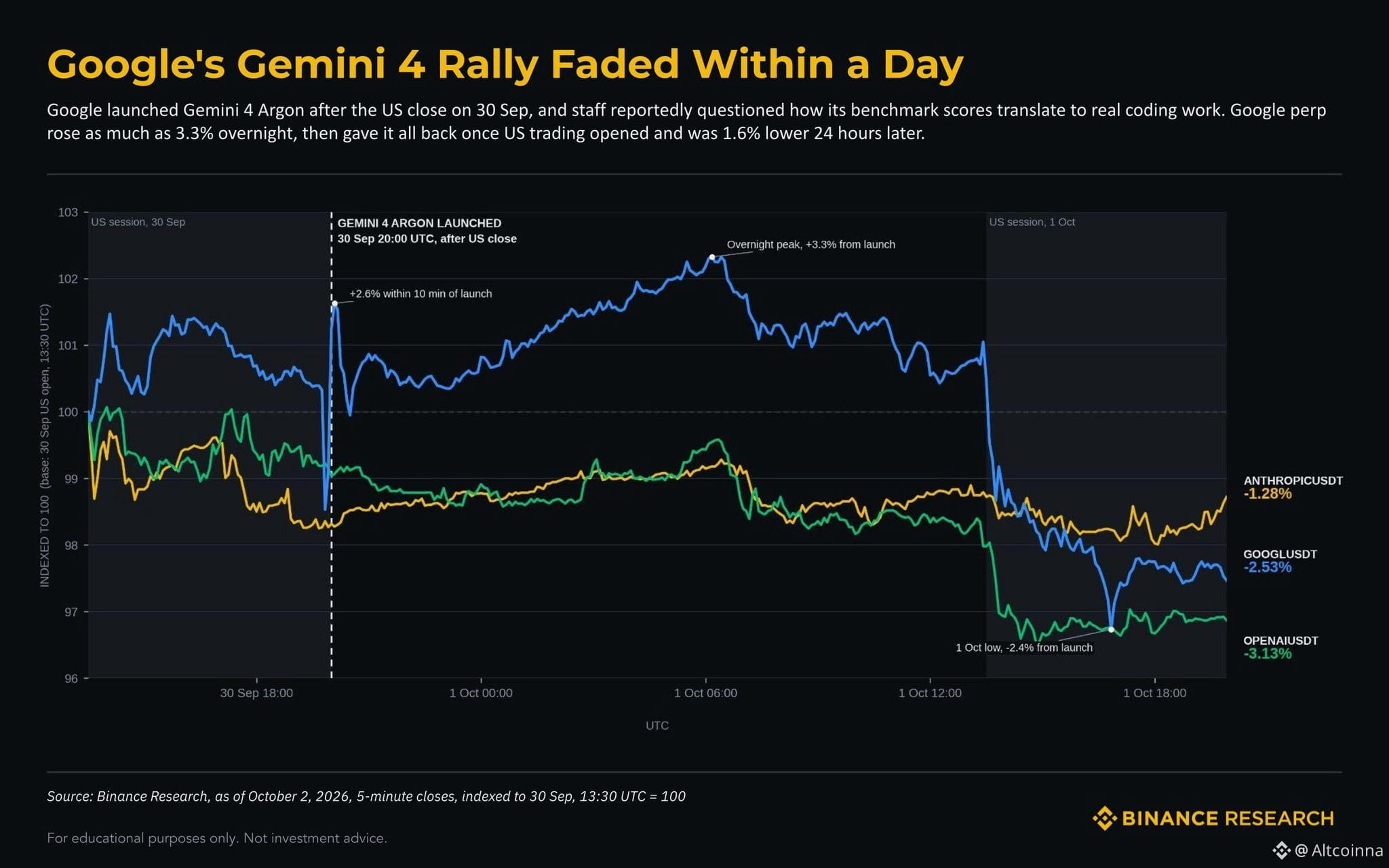
🤖 GEMINI 4 #ARGON KAM NACH SCHLUSS DES U.S.-MARKTS AM 30. SEPTEMBER AN.
Der Start erfolgte zusammen mit Berichten über interne Fragen, wie sich seine Benchmarkergebnisse im Vergleich zur Leistung bei realen Codieraufgaben einordnen.
📊 $GOOGL-Perps stiegen zunächst über Nacht zwar an, drehten sich dann aber nach Eröffnung des US-Handels und beendeten Tag eins tiefer.
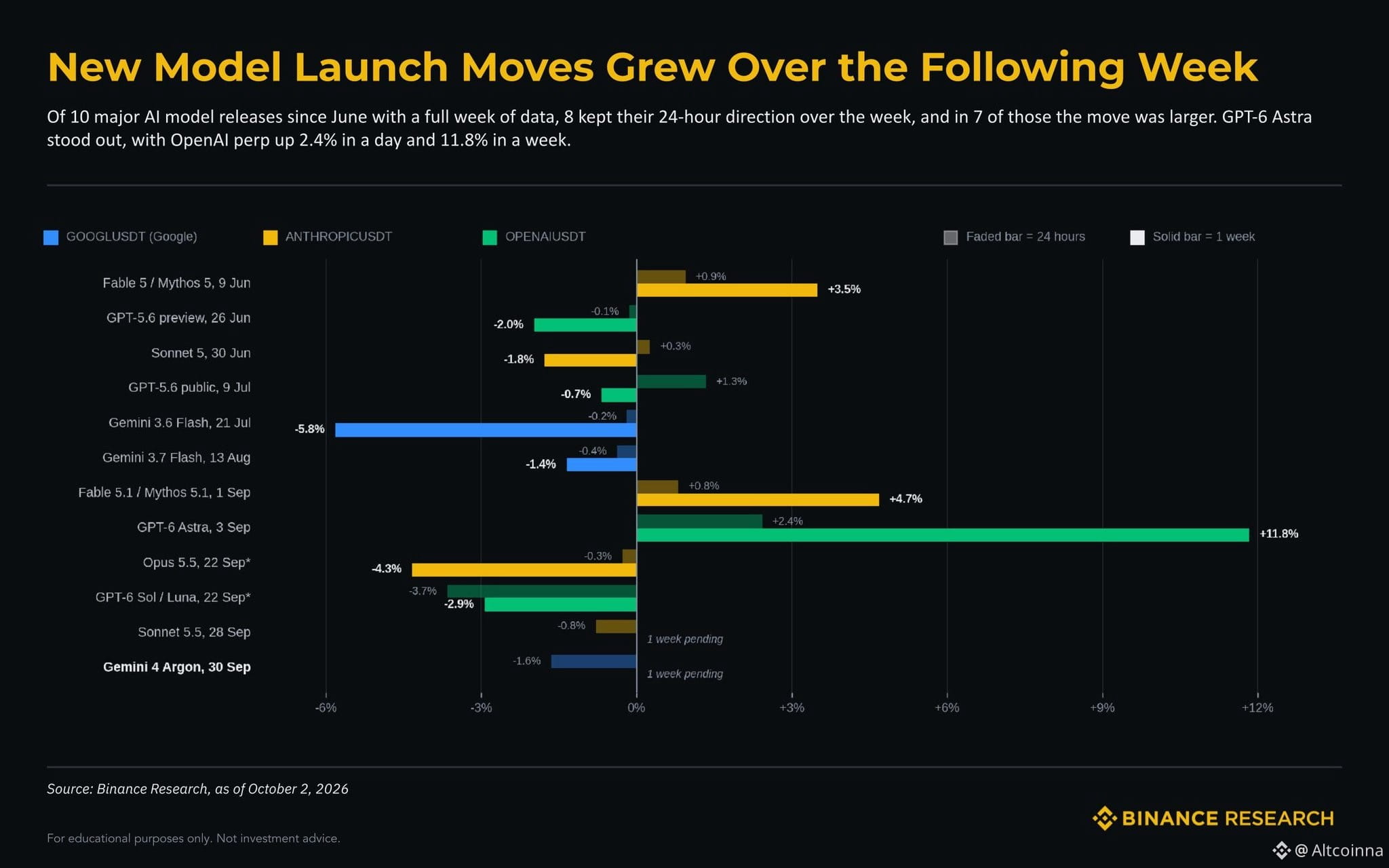
Unter den drei Google-Veröffentlichungen seit Juni verzeichnete es die schwächste Reaktion des Marktes am ersten Tag.
Unterdessen tendierten auch die @Anthropic- und @OpenAI-Perps leicht nach unten.
Auffälliges Muster: Neue Modell-Launches seit Juni zeigten am ersten Tag vergleichsweise geringe Bewegungen, aber in der darauffolgenden Woche gingen die meisten weiterhin in dieselbe Richtung.
👀 Spannend zu beobachten, wie sich dieses entwickelt.
🤖 GEMINI 4 #ARGON KAM NACH SCHLUSS DES U.S.-MARKTS AM 30. SEPTEMBER AN.
Der Start erfolgte zusammen mit Berichten über interne Fragen, wie sich seine Benchmarkergebnisse im Vergleich zur Leistung bei realen Codieraufgaben einordnen.
📊 $GOOGL-Perps stiegen zunächst über Nacht zwar an, drehten sich dann aber nach Eröffnung des US-Handels und beendeten Tag eins tiefer.
Unter den drei Google-Veröffentlichungen seit Juni verzeichnete es die schwächste Reaktion des Marktes am ersten Tag.
Unterdessen tendierten auch die @Anthropic- und @OpenAI-Perps leicht nach unten.
Auffälliges Muster: Neue Modell-Launches seit Juni zeigten am ersten Tag vergleichsweise geringe Bewegungen, aber in der darauffolgenden Woche gingen die meisten weiterhin in dieselbe Richtung.
👀 Spannend zu beobachten, wie sich dieses entwickelt.
Der Start erfolgte zusammen mit Berichten über interne Fragen, wie sich seine Benchmarkergebnisse im Vergleich zur Leistung bei realen Codieraufgaben einordnen.
📊 $GOOGL-Perps stiegen zunächst über Nacht zwar an, drehten sich dann aber nach Eröffnung des US-Handels und beendeten Tag eins tiefer.
Unter den drei Google-Veröffentlichungen seit Juni verzeichnete es die schwächste Reaktion des Marktes am ersten Tag.
Unterdessen tendierten auch die @Anthropic- und @OpenAI-Perps leicht nach unten.
Auffälliges Muster: Neue Modell-Launches seit Juni zeigten am ersten Tag vergleichsweise geringe Bewegungen, aber in der darauffolgenden Woche gingen die meisten weiterhin in dieselbe Richtung.
👀 Spannend zu beobachten, wie sich dieses entwickelt.
1
1
14
·
--
Bullisch
Übersetzung ansehen
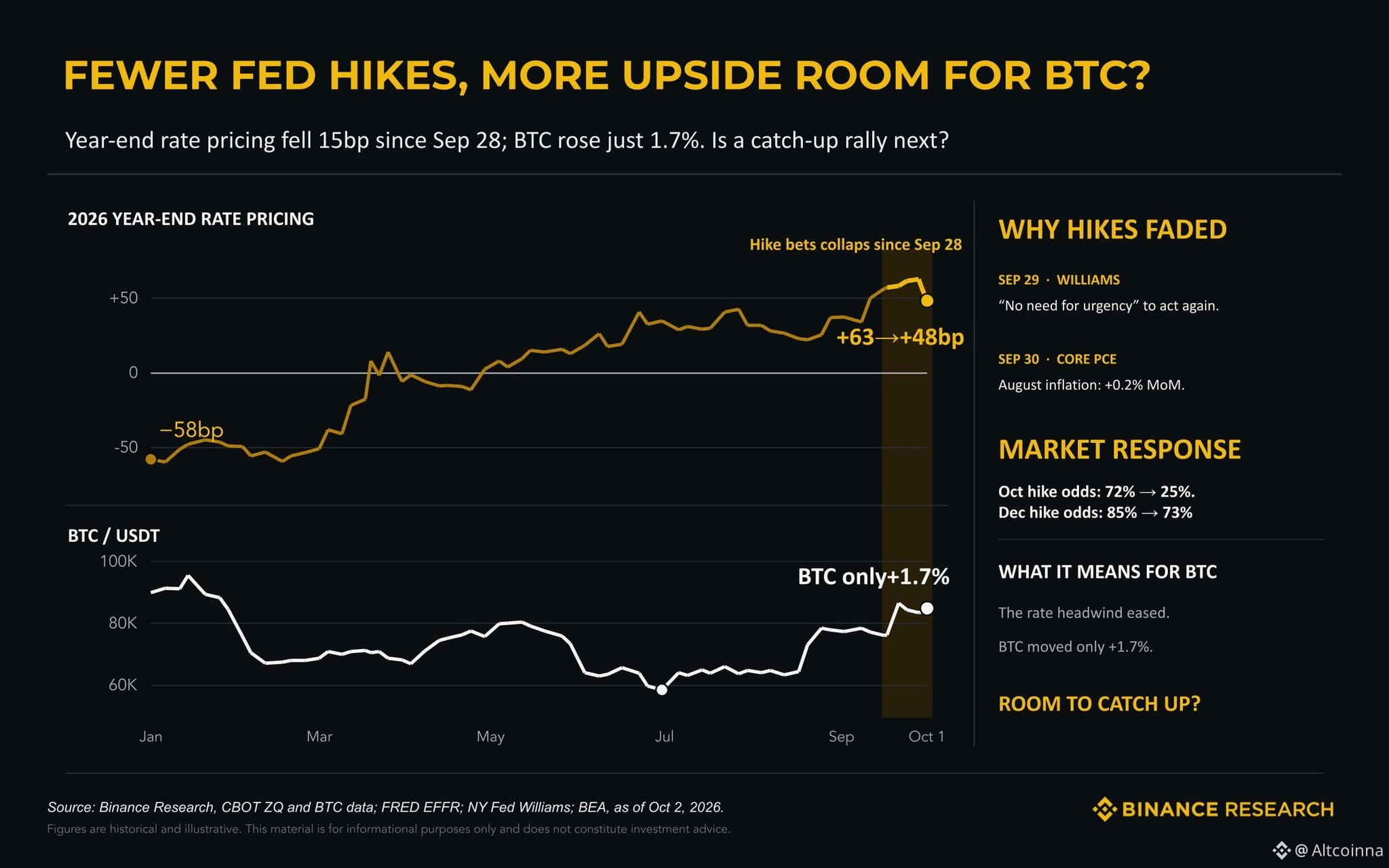
👀 RATE EXPECTATIONS ARE FALLING — BUT $BTC IS BARELY MOVING.
Futures-implied odds of a hike dropped sharply:
📉 October: 72% → 25%
📉 December: 85% → 73%
Yet over the same period, Bitcoin has gained only around 1.7%.
The divergence is getting interesting. 👀
Could $BTC eventually catch up if rate expectations keep shifting?
What’s your take? 👇
👀 RATE EXPECTATIONS ARE FALLING — BUT $BTC IS BARELY MOVING.
Futures-implied odds of a hike dropped sharply:
📉 October: 72% → 25%
📉 December: 85% → 73%
Yet over the same period, Bitcoin has gained only around 1.7%.
The divergence is getting interesting. 👀
Could $BTC eventually catch up if rate expectations keep shifting?
What’s your take? 👇
Futures-implied odds of a hike dropped sharply:
📉 October: 72% → 25%
📉 December: 85% → 73%
Yet over the same period, Bitcoin has gained only around 1.7%.
The divergence is getting interesting. 👀
Could $BTC eventually catch up if rate expectations keep shifting?
What’s your take? 👇
1
19
·
--
Bullisch
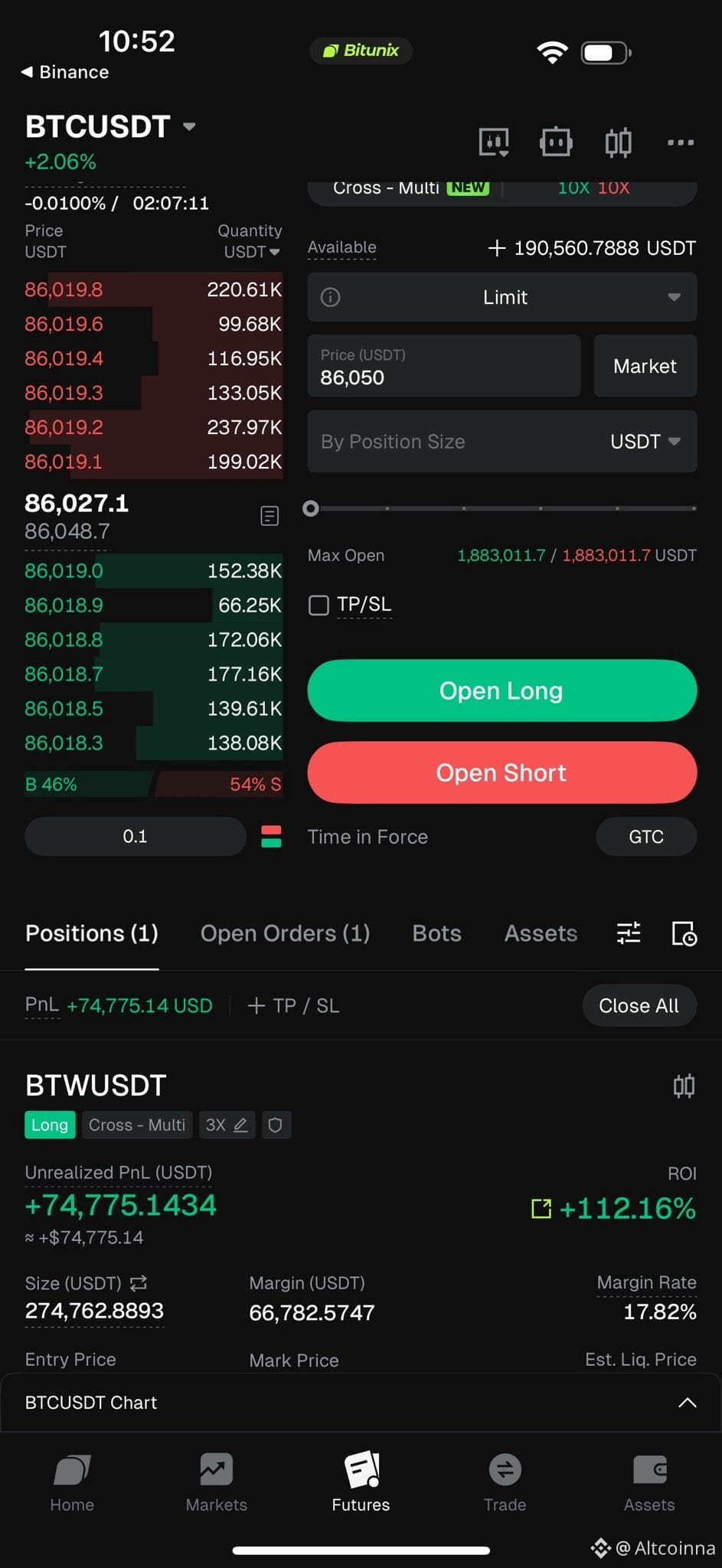
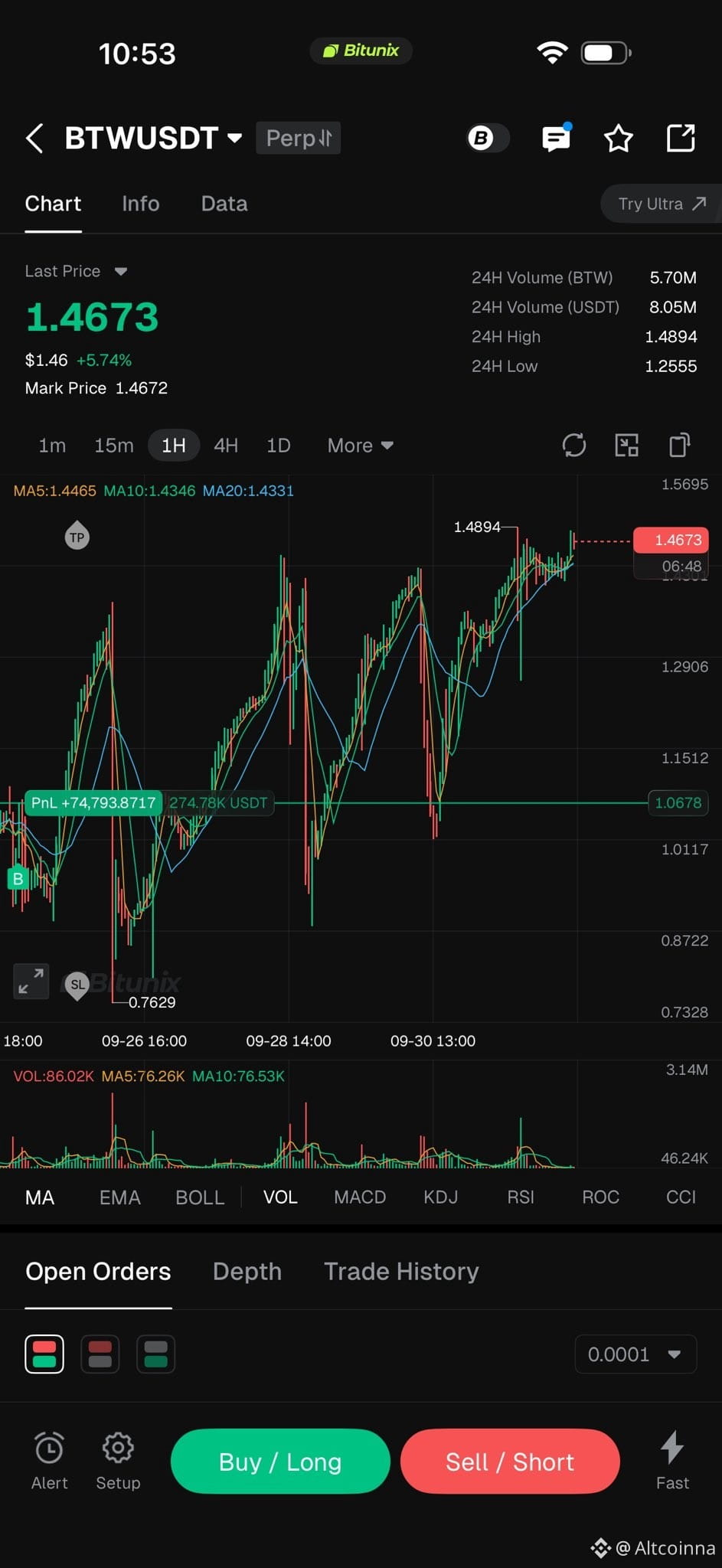
🚨 $BTW HAT HÄNDLER AUF EINE STRENGE ROLLERCOASTER-Fahrt GESCHICKT!
Die Kursbewegungen waren verrückt — 3–4 Mal ist meine Position von etwa +50.000 $ auf -5.000 $ / -10.000 $ geschwankt.
So eine Volatilität kann einen ganz leicht aus der Position schubsen oder Panikverkäufe auslösen. 😵💫
Aber ich blieb drin, weil ich glaubte, dass das Setup noch etwas zu bieten hat.
Nach 12 Jahren Trading hat mir die Erfahrung eine Sache beigebracht: Lass nicht zu, dass kurzfristige Volatilität die Entscheidung für dich trifft.
Lies die Struktur. Steuere das Risiko. Bleib diszipliniert. 📊
🚨 $BTW HAT HÄNDLER AUF EINE STRENGE ROLLERCOASTER-Fahrt GESCHICKT!
Die Kursbewegungen waren verrückt — 3–4 Mal ist meine Position von etwa +50.000 $ auf -5.000 $ / -10.000 $ geschwankt.
So eine Volatilität kann einen ganz leicht aus der Position schubsen oder Panikverkäufe auslösen. 😵💫
Aber ich blieb drin, weil ich glaubte, dass das Setup noch etwas zu bieten hat.
Nach 12 Jahren Trading hat mir die Erfahrung eine Sache beigebracht: Lass nicht zu, dass kurzfristige Volatilität die Entscheidung für dich trifft.
Lies die Struktur. Steuere das Risiko. Bleib diszipliniert. 📊
Die Kursbewegungen waren verrückt — 3–4 Mal ist meine Position von etwa +50.000 $ auf -5.000 $ / -10.000 $ geschwankt.
So eine Volatilität kann einen ganz leicht aus der Position schubsen oder Panikverkäufe auslösen. 😵💫
Aber ich blieb drin, weil ich glaubte, dass das Setup noch etwas zu bieten hat.
Nach 12 Jahren Trading hat mir die Erfahrung eine Sache beigebracht: Lass nicht zu, dass kurzfristige Volatilität die Entscheidung für dich trifft.
Lies die Struktur. Steuere das Risiko. Bleib diszipliniert. 📊
1
105
·
--
Bullisch
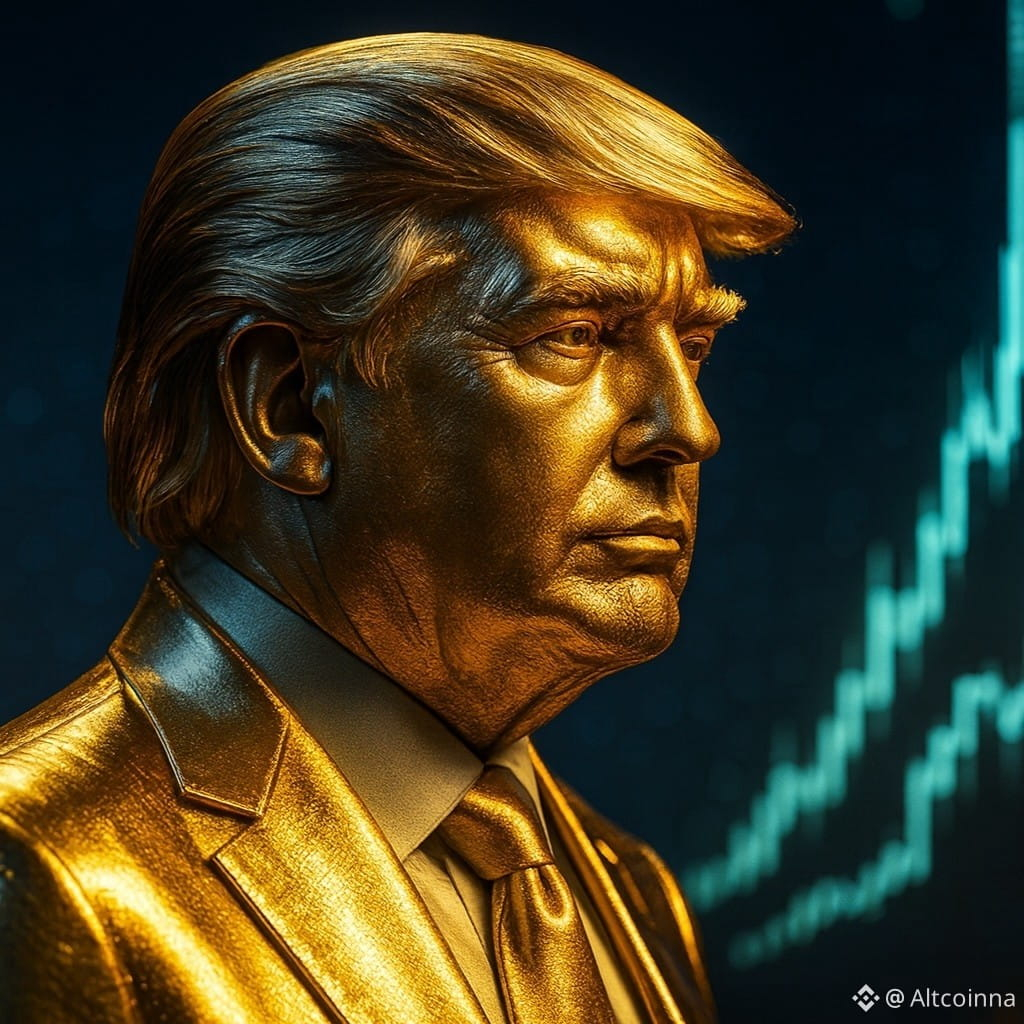
🚨 $TRUMP MEMECOIN-EVENT ANGEKÜNDIGT!
Das offizielle $TRUMP -Memecoin-Team sagt, es werde am 22. November ein privates Galadinner mit Präsident Trump veranstalten.
📍 Veranstaltungsort: Trump National, Washington, D.C.
👥 Zugang: Top 185 $TRUMP -Holder
Ein bemerkenswertes Event für die Memecoin-Community – mit exklusivem Zugang, der an die Platzierungen der Inhaber gekoppelt ist. 👀⚡️
🚨 $TRUMP MEMECOIN-EVENT ANGEKÜNDIGT!
Das offizielle $TRUMP -Memecoin-Team sagt, es werde am 22. November ein privates Galadinner mit Präsident Trump veranstalten.
📍 Veranstaltungsort: Trump National, Washington, D.C.
👥 Zugang: Top 185 $TRUMP -Holder
Ein bemerkenswertes Event für die Memecoin-Community – mit exklusivem Zugang, der an die Platzierungen der Inhaber gekoppelt ist. 👀⚡️
Das offizielle $TRUMP -Memecoin-Team sagt, es werde am 22. November ein privates Galadinner mit Präsident Trump veranstalten.
📍 Veranstaltungsort: Trump National, Washington, D.C.
👥 Zugang: Top 185 $TRUMP -Holder
Ein bemerkenswertes Event für die Memecoin-Community – mit exklusivem Zugang, der an die Platzierungen der Inhaber gekoppelt ist. 👀⚡️

1
200
·
--
Bullisch
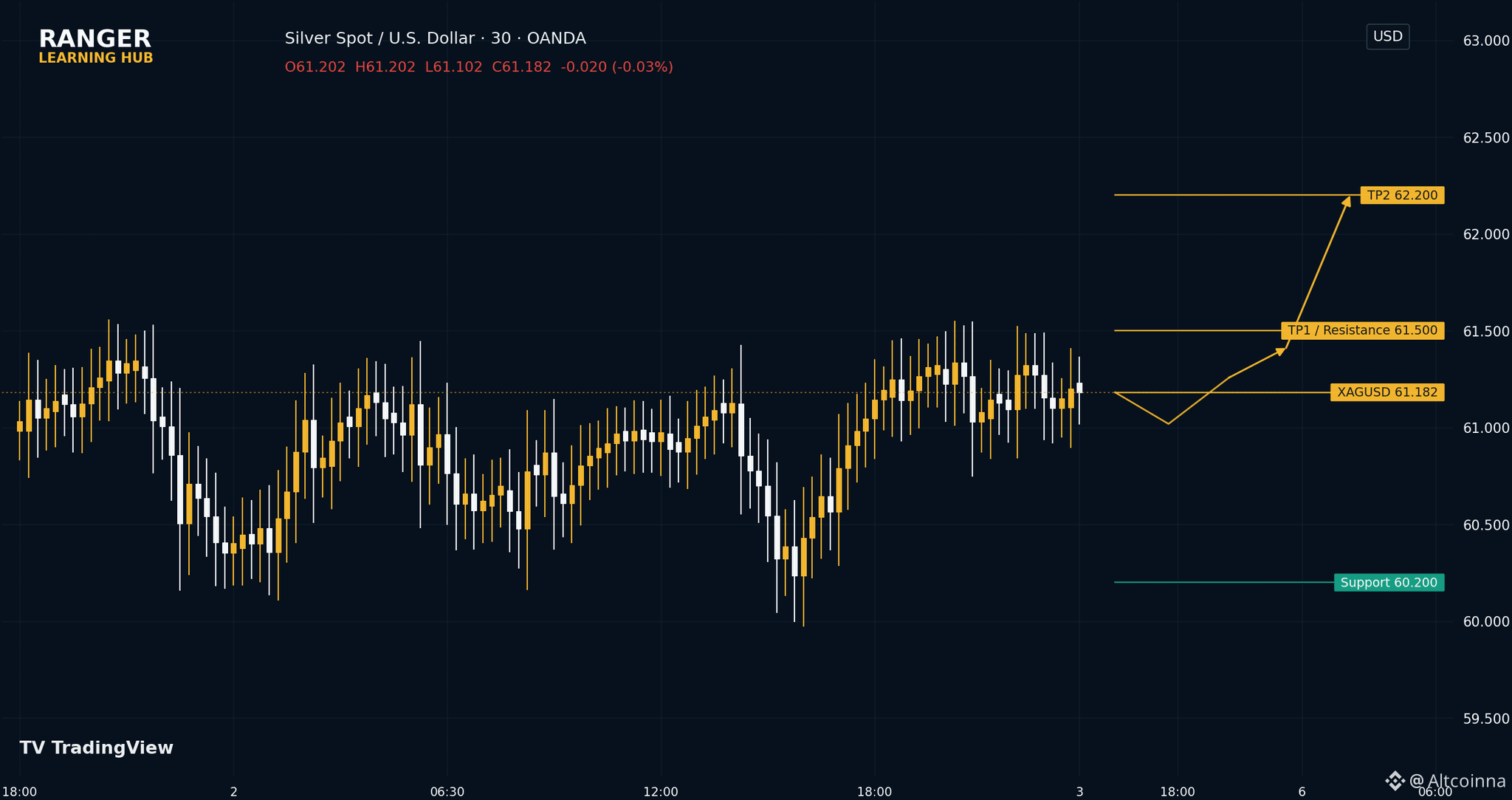
🚨 $XAG MORNING BIAS 🔥
📍 Silber wird derzeit bei etwa 61.182 gehandelt.
Die gesamte Struktur bleibt bullisch, aber die nächste Aufwärtsbewegung benötigt wahrscheinlich einen sauberen Bruch und eine Akzeptanz oberhalb des Widerstands.
📌 WICHTIGE LEVELS: • Widerstand: 61.500 • Unterstützung: 60.900 / 60.200
🟢 Bias: Bullisch 🎯 Wichtiger Auslöser: Nachhaltige Akzeptanz oberhalb von 61.500
Wenn der Preis diese Marke mit Stärke durchbricht, könnte sich der Momentum ausweiten.
Wie siehst du $XAG diese Woche — Bullish oder Bearish? 👇
Folge für Live-Updates, während sich dieses Setup entwickelt. 📊
⚠️ Nur zu Bildungszwecken. Handel birgt ein erhebliches Risiko.
#XAG #Silver #Trading #MarketAnalysis
🚨 $XAG MORNING BIAS 🔥
📍 Silber wird derzeit bei etwa 61.182 gehandelt.
Die gesamte Struktur bleibt bullisch, aber die nächste Aufwärtsbewegung benötigt wahrscheinlich einen sauberen Bruch und eine Akzeptanz oberhalb des Widerstands.
📌 WICHTIGE LEVELS: • Widerstand: 61.500 • Unterstützung: 60.900 / 60.200
🟢 Bias: Bullisch 🎯 Wichtiger Auslöser: Nachhaltige Akzeptanz oberhalb von 61.500
Wenn der Preis diese Marke mit Stärke durchbricht, könnte sich der Momentum ausweiten.
Wie siehst du $XAG diese Woche — Bullish oder Bearish? 👇
Folge für Live-Updates, während sich dieses Setup entwickelt. 📊
⚠️ Nur zu Bildungszwecken. Handel birgt ein erhebliches Risiko.
#XAG #Silver #Trading #MarketAnalysis
📍 Silber wird derzeit bei etwa 61.182 gehandelt.
Die gesamte Struktur bleibt bullisch, aber die nächste Aufwärtsbewegung benötigt wahrscheinlich einen sauberen Bruch und eine Akzeptanz oberhalb des Widerstands.
📌 WICHTIGE LEVELS: • Widerstand: 61.500 • Unterstützung: 60.900 / 60.200
🟢 Bias: Bullisch 🎯 Wichtiger Auslöser: Nachhaltige Akzeptanz oberhalb von 61.500
Wenn der Preis diese Marke mit Stärke durchbricht, könnte sich der Momentum ausweiten.
Wie siehst du $XAG diese Woche — Bullish oder Bearish? 👇
Folge für Live-Updates, während sich dieses Setup entwickelt. 📊
⚠️ Nur zu Bildungszwecken. Handel birgt ein erhebliches Risiko.
#XAG #Silver #Trading #MarketAnalysis
1
15
·
--
Bullisch
🏦 $LINK WIRD NOCH TIEFER IN DAS BANKWESEN VORDRINGEN!
Chainlink sagt, dass es daran arbeitet, Banken mit dem Blockchain-Ledger von Swift über seine Runtime-Umgebung zu verbinden.
Das Setup ist darauf ausgelegt, dass Finanzinstitute die Kontrolle über die Schlüssel behalten, die zur Autorisierung ihrer Transaktionen verwendet werden. 🔐
Wenn das im großen Maßstab funktioniert, könnte es ein weiterer Schritt sein, um traditionelles Finanzwesen mit Blockchain-Infrastruktur zu verbinden. 👀
🏦 $LINK WIRD NOCH TIEFER IN DAS BANKWESEN VORDRINGEN!
Chainlink sagt, dass es daran arbeitet, Banken mit dem Blockchain-Ledger von Swift über seine Runtime-Umgebung zu verbinden.
Das Setup ist darauf ausgelegt, dass Finanzinstitute die Kontrolle über die Schlüssel behalten, die zur Autorisierung ihrer Transaktionen verwendet werden. 🔐
Wenn das im großen Maßstab funktioniert, könnte es ein weiterer Schritt sein, um traditionelles Finanzwesen mit Blockchain-Infrastruktur zu verbinden. 👀
Chainlink sagt, dass es daran arbeitet, Banken mit dem Blockchain-Ledger von Swift über seine Runtime-Umgebung zu verbinden.
Das Setup ist darauf ausgelegt, dass Finanzinstitute die Kontrolle über die Schlüssel behalten, die zur Autorisierung ihrer Transaktionen verwendet werden. 🔐
Wenn das im großen Maßstab funktioniert, könnte es ein weiterer Schritt sein, um traditionelles Finanzwesen mit Blockchain-Infrastruktur zu verbinden. 👀

1
30
Anmelden und weiter Inhalte entdecken
Krypto-Nutzer weltweit auf Binance Square kennenlernen
⚡️ Bleib in Sachen Krypto stets am Puls.
💬 Die weltgrößte Kryptobörse vertraut darauf.
👍 Erhalte verlässliche Einblicke von verifizierten Creators.
E-Mail-Adresse/Telefonnummer
Trendthemen
ZcashETFPostsFirstWeeklyOutflow$93.6M
44,926 Aufrufe
139 Kommentare
#ZcashETFPostsFirstWeeklyOutflow$93.6M
Der erste wöchentliche Abfluss des Zcash-ETFs in Höhe von 93,6 Millionen US-Dollar signalisiert nachlassende Nachfrage bei Anlegern und möglicherweise Gewinnmitnahmen. Das könnte kurzfristig Druck auf den ZEC-Preis ausüben und die Stimmung bei kryptowährungen mit Fokus auf Privatsphäre belasten. Händler sollten die Unterstützungszonen sowie weitere Mittelzuflüsse/-abflüsse im Blick behalten, bevor sie Positionen eingehen.
Eram Trading Lab
·1 Likes
·170 Aufrufe
GreekPoliceBustCryptoScamRingArrest17
114,184 Aufrufe
848 Kommentare
BitcoinRejectedAt$87K
139,673 Aufrufe
196 Kommentare