
BLANK _
21.9k Beiträge

BLANK _
 Square Verified+
Melden
Nutzer blockieren
Binance Enthusiast 💠 Crypto Trader 💠Deciphering the Charts,One trade at a time 💠Passionate about Blockchain as Web3 💠 Hustle. Trade. Repeat 💠 👉X::@BLANK53
Trade eröffnen
Regelmäßiger Trader
2 Jahre
292 Following
46.3K+ Follower
35.4K+ Like gegeben
Beiträge
Portfolio
Alle
Zitierungen
Videos
Live
·
--
Bullisch
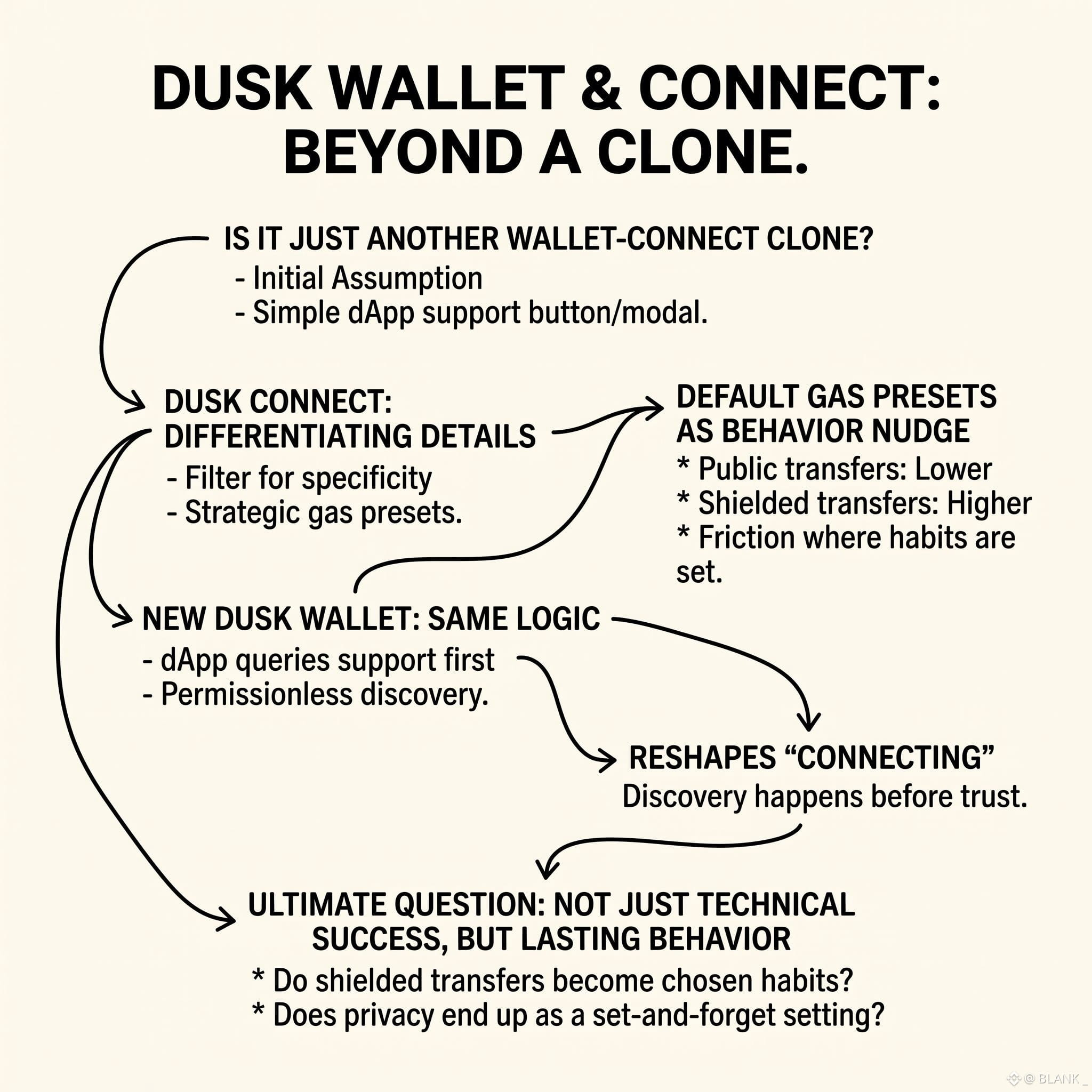
Zunächst ging ich davon aus, Dusk Connect sei nur noch ein weiteres Wallet-Connect-Clone: Eine Schaltfläche, die ein Modal öffnet und es als dApp-Support bezeichnet. Aber die Details deuten auf etwas Spezifischeres hin. Die Standard-Gasvorgaben liegen für öffentliche Übertragungen niedriger und für verschlüsselte (shielded) höher, sodass die Wallet das Verhalten anstößt, bevor ein Nutzer bewusst auswählt. Das ist keine neutrale „Verrohrung“. Das ist Reibung, genau dort platziert, wo Gewohnheiten festgelegt werden.
Die neue Dusk Wallet folgt derselben Logik. Eine dApp kann abfragen, was unterstützt wird, bevor überhaupt eine Verbindungsberechtigung existiert. So geschieht die Entdeckung noch vor dem Vertrauen – nicht gemeinsam mit ihm. Praktisch, ja, aber es verändert auch, was „Verbinden“ für den Nutzer auf der anderen Seite tatsächlich bedeutet. Nichts davon beweist eine Übernahme. Reibung zu reduzieren kann ebenso gut die Wiedererkennbarkeit senken. Die eigentliche Frage lautet nicht, ob verschlüsselte Übertragungen funktionieren. Sondern: Ob überhaupt jemand sie weiterhin auswählt, sobald der Standard nicht mehr greift – oder ob Privatsphäre am Ende zu einer Einstellung wird, die man einmal aktiviert und dann nie wieder anfasst.
@Dusk_Foundation $DUSK #dusk
Zunächst ging ich davon aus, Dusk Connect sei nur noch ein weiteres Wallet-Connect-Clone: Eine Schaltfläche, die ein Modal öffnet und es als dApp-Support bezeichnet. Aber die Details deuten auf etwas Spezifischeres hin. Die Standard-Gasvorgaben liegen für öffentliche Übertragungen niedriger und für verschlüsselte (shielded) höher, sodass die Wallet das Verhalten anstößt, bevor ein Nutzer bewusst auswählt. Das ist keine neutrale „Verrohrung“. Das ist Reibung, genau dort platziert, wo Gewohnheiten festgelegt werden.
Die neue Dusk Wallet folgt derselben Logik. Eine dApp kann abfragen, was unterstützt wird, bevor überhaupt eine Verbindungsberechtigung existiert. So geschieht die Entdeckung noch vor dem Vertrauen – nicht gemeinsam mit ihm. Praktisch, ja, aber es verändert auch, was „Verbinden“ für den Nutzer auf der anderen Seite tatsächlich bedeutet. Nichts davon beweist eine Übernahme. Reibung zu reduzieren kann ebenso gut die Wiedererkennbarkeit senken. Die eigentliche Frage lautet nicht, ob verschlüsselte Übertragungen funktionieren. Sondern: Ob überhaupt jemand sie weiterhin auswählt, sobald der Standard nicht mehr greift – oder ob Privatsphäre am Ende zu einer Einstellung wird, die man einmal aktiviert und dann nie wieder anfasst.
@Dusk $DUSK #dusk
Die neue Dusk Wallet folgt derselben Logik. Eine dApp kann abfragen, was unterstützt wird, bevor überhaupt eine Verbindungsberechtigung existiert. So geschieht die Entdeckung noch vor dem Vertrauen – nicht gemeinsam mit ihm. Praktisch, ja, aber es verändert auch, was „Verbinden“ für den Nutzer auf der anderen Seite tatsächlich bedeutet. Nichts davon beweist eine Übernahme. Reibung zu reduzieren kann ebenso gut die Wiedererkennbarkeit senken. Die eigentliche Frage lautet nicht, ob verschlüsselte Übertragungen funktionieren. Sondern: Ob überhaupt jemand sie weiterhin auswählt, sobald der Standard nicht mehr greift – oder ob Privatsphäre am Ende zu einer Einstellung wird, die man einmal aktiviert und dann nie wieder anfasst.
@Dusk $DUSK #dusk
11
1
20
2k
·
--
Bullisch
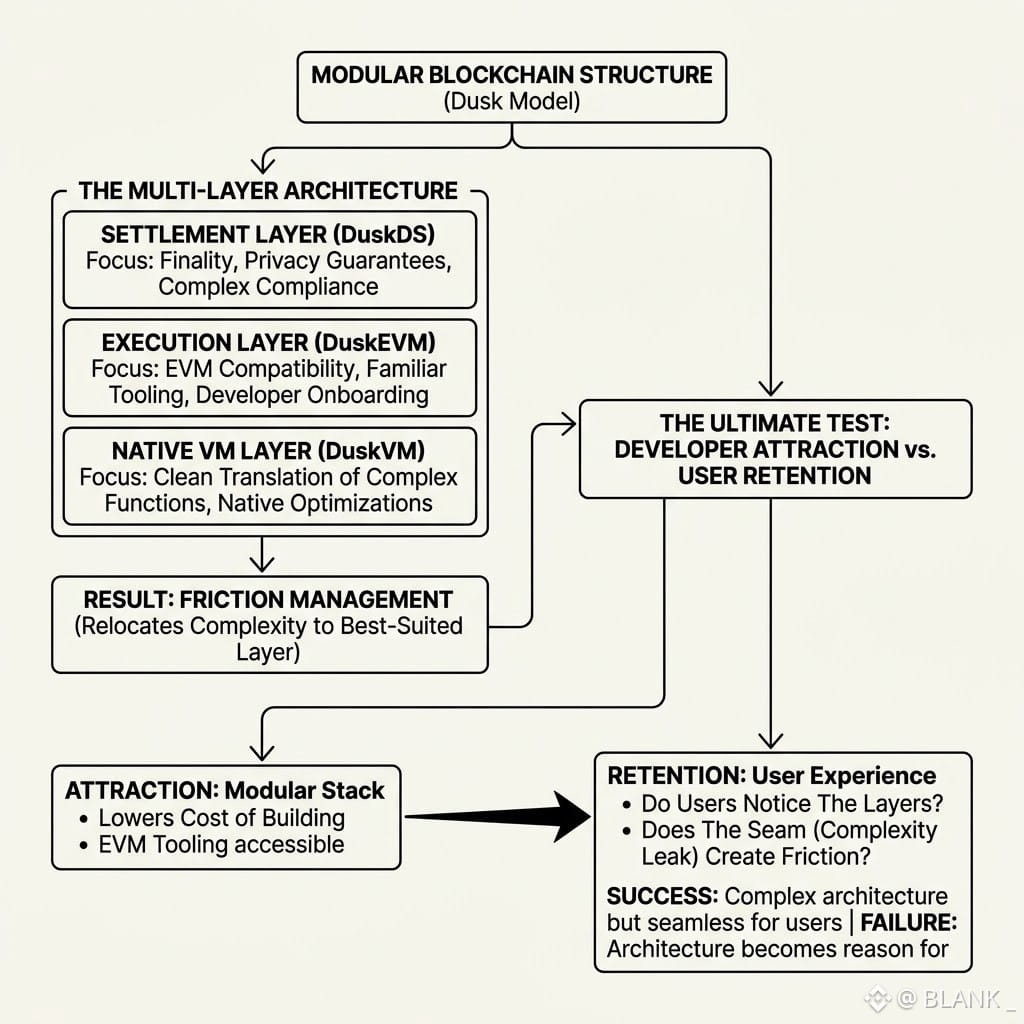
Zuerst nahm ich an, das Aufteilen einer Kette in drei Schichten sei nur Architektur um der Architektur willen – ein weiteres Diagramm, das Flexibilität versprach, die niemand angefragt hat. Doch wenn man sieht, wie DuskDS, DuskEVM und DuskVM nebeneinander sitzen, wirkt die Schichtung weniger dekorativ und mehr wie ein Management von Reibung. Das Settlement bleibt dort, wo es seine endgültige Wirkung und Garantien für Privatsphäre haben muss, die Execution zieht zu dem Ort, an dem Entwickler das Tooling ohnehin schon kennen, und die native VM übernimmt die Teile, die sich nicht sauber in die EVM-Annahmen übersetzen lassen. Hier wird keine Komplexität entfernt, sie wird lediglich dorthin verlagert, wo sie am besten aufgehoben ist, ohne in die anderen Schichten überzulaufen. Was schwerer zu erkennen ist, ist die Frage der Retention darunter. Ein modularer Stack senkt zwar die Kosten für den Aufbau, aber Aufbau ist nicht dasselbe wie Bleiben. Der eigentliche Test ist nicht, ob Entwickler über drei Schichten hinweg bereitstellen können, sondern ob Nutzer jemals bemerken, auf welcher Schicht sie sich befinden – oder ob genau diese Naht zum Grund wird, warum sie gehen.
@Dusk_Foundation $DUSK #dusk
Zuerst nahm ich an, das Aufteilen einer Kette in drei Schichten sei nur Architektur um der Architektur willen – ein weiteres Diagramm, das Flexibilität versprach, die niemand angefragt hat. Doch wenn man sieht, wie DuskDS, DuskEVM und DuskVM nebeneinander sitzen, wirkt die Schichtung weniger dekorativ und mehr wie ein Management von Reibung. Das Settlement bleibt dort, wo es seine endgültige Wirkung und Garantien für Privatsphäre haben muss, die Execution zieht zu dem Ort, an dem Entwickler das Tooling ohnehin schon kennen, und die native VM übernimmt die Teile, die sich nicht sauber in die EVM-Annahmen übersetzen lassen. Hier wird keine Komplexität entfernt, sie wird lediglich dorthin verlagert, wo sie am besten aufgehoben ist, ohne in die anderen Schichten überzulaufen. Was schwerer zu erkennen ist, ist die Frage der Retention darunter. Ein modularer Stack senkt zwar die Kosten für den Aufbau, aber Aufbau ist nicht dasselbe wie Bleiben. Der eigentliche Test ist nicht, ob Entwickler über drei Schichten hinweg bereitstellen können, sondern ob Nutzer jemals bemerken, auf welcher Schicht sie sich befinden – oder ob genau diese Naht zum Grund wird, warum sie gehen.
@Dusk $DUSK #dusk
@Dusk $DUSK #dusk
13
17
1.7k
·
--
Bullisch
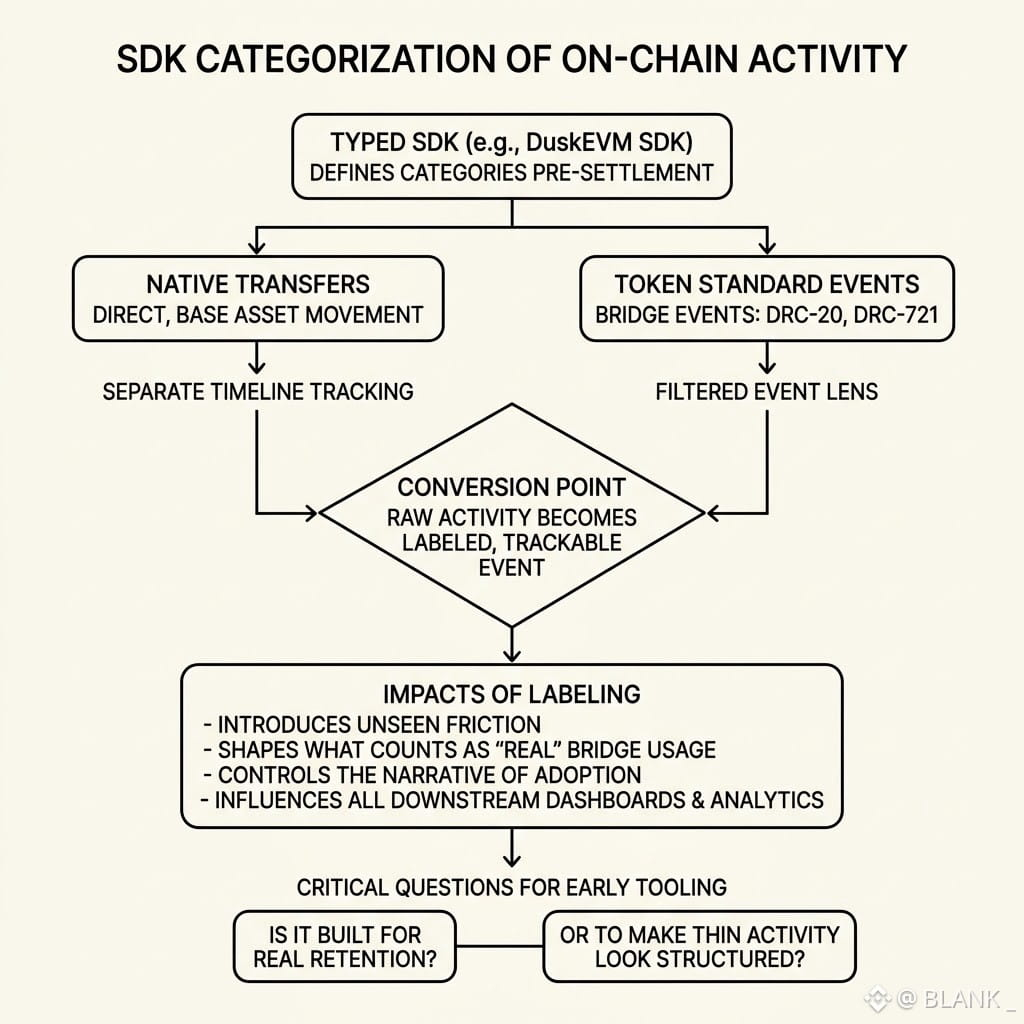
Zunächst ging ich davon aus, dass ein typisiertes SDK vor allem der Entwicklerfreundlichkeit dient: sauberere Aufrufe, weniger Bugs. Doch als ich beobachtete, wie das DuskEVM SDK native Überweisungen von DRC-20- und DRC-721-Bridge-Events trennt, fiel etwas anderes auf. Die Typisierung ist nicht neutral. Sie bestimmt, wie Aktivitäten kategorisiert werden, noch bevor eine Transaktion überhaupt abgeschlossen ist – und beeinflusst dadurch stillschweigend, was in der Folge als „echte“ Bridge-Nutzung zählt. Native Bewegungen werden auf einer eigenen Zeitleiste erfasst. Token-Standard-Events werden dagegen durch eine komplett andere Sichtweise gefiltert. Diese Aufspaltung erzeugt Reibung, die die meisten Nutzer nie sehen, aber sie setzt sich in jedem Dashboard fort, in jeder Analytics-Schicht, die darauf aufbaut.
Was mich interessiert, ist der Umwandlungspunkt: der Moment, in dem rohe Chain-Aktivität zu einem beschrifteten, nachverfolgbaren Event wird. Wer diese Beschriftung kontrolliert, kontrolliert die Erzählung über die Akzeptanz. Deshalb frage ich mich weiter: Wenn dieses so granulare Tooling schon so früh existiert, ist es für echte Retention gebaut – oder wurde es entwickelt, um dünne Aktivität strukturiert wirken zu lassen, noch bevor die Nachfrage tatsächlich eintrifft?
@Dusk_Foundation $DUSK #dusk
Zunächst ging ich davon aus, dass ein typisiertes SDK vor allem der Entwicklerfreundlichkeit dient: sauberere Aufrufe, weniger Bugs. Doch als ich beobachtete, wie das DuskEVM SDK native Überweisungen von DRC-20- und DRC-721-Bridge-Events trennt, fiel etwas anderes auf. Die Typisierung ist nicht neutral. Sie bestimmt, wie Aktivitäten kategorisiert werden, noch bevor eine Transaktion überhaupt abgeschlossen ist – und beeinflusst dadurch stillschweigend, was in der Folge als „echte“ Bridge-Nutzung zählt. Native Bewegungen werden auf einer eigenen Zeitleiste erfasst. Token-Standard-Events werden dagegen durch eine komplett andere Sichtweise gefiltert. Diese Aufspaltung erzeugt Reibung, die die meisten Nutzer nie sehen, aber sie setzt sich in jedem Dashboard fort, in jeder Analytics-Schicht, die darauf aufbaut.
Was mich interessiert, ist der Umwandlungspunkt: der Moment, in dem rohe Chain-Aktivität zu einem beschrifteten, nachverfolgbaren Event wird. Wer diese Beschriftung kontrolliert, kontrolliert die Erzählung über die Akzeptanz. Deshalb frage ich mich weiter: Wenn dieses so granulare Tooling schon so früh existiert, ist es für echte Retention gebaut – oder wurde es entwickelt, um dünne Aktivität strukturiert wirken zu lassen, noch bevor die Nachfrage tatsächlich eintrifft?
@Dusk $DUSK #dusk
Was mich interessiert, ist der Umwandlungspunkt: der Moment, in dem rohe Chain-Aktivität zu einem beschrifteten, nachverfolgbaren Event wird. Wer diese Beschriftung kontrolliert, kontrolliert die Erzählung über die Akzeptanz. Deshalb frage ich mich weiter: Wenn dieses so granulare Tooling schon so früh existiert, ist es für echte Retention gebaut – oder wurde es entwickelt, um dünne Aktivität strukturiert wirken zu lassen, noch bevor die Nachfrage tatsächlich eintrifft?
@Dusk $DUSK #dusk
10
15
2.7k
·
--
Bullisch
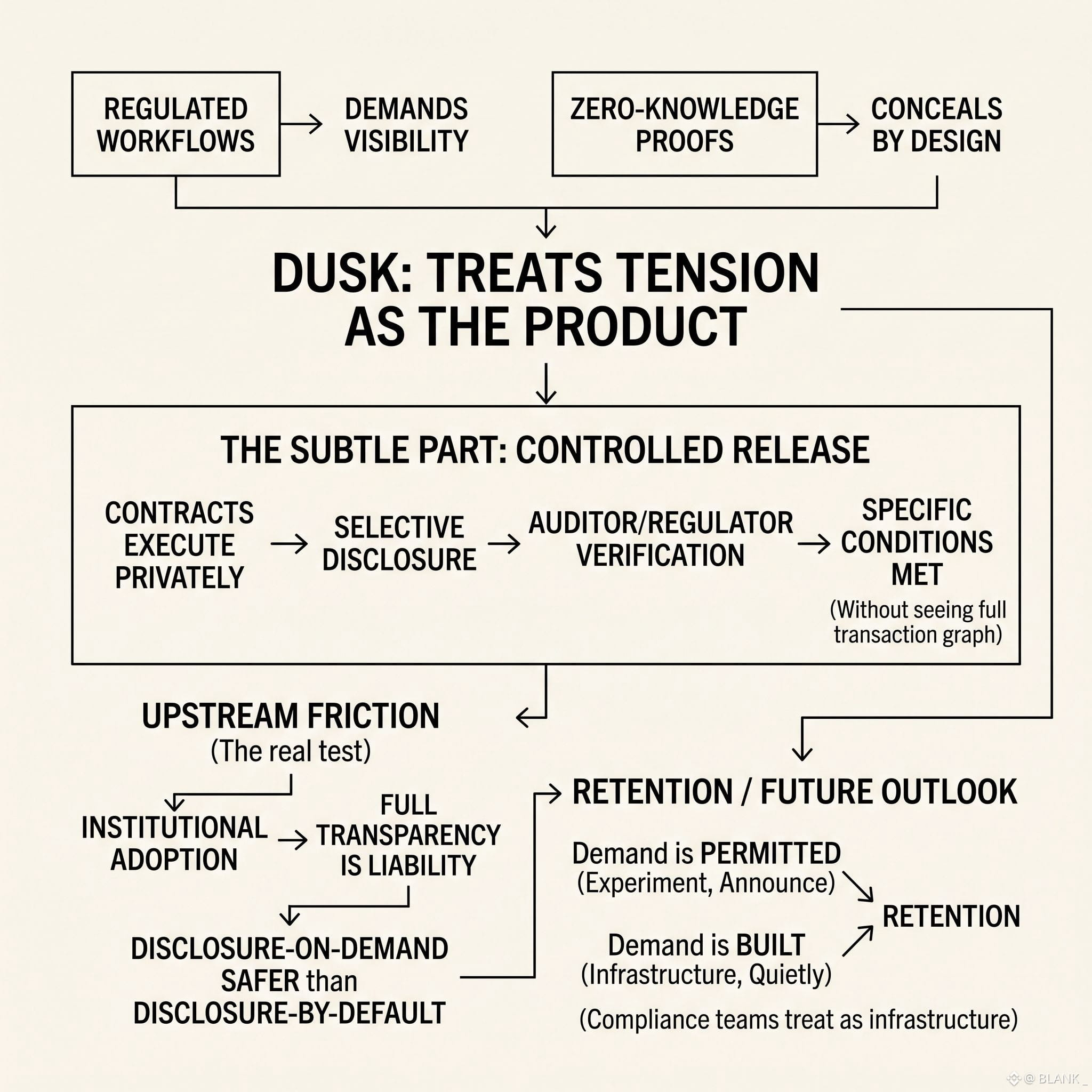
Zuerst nahm ich an, dass regulierte Workflows und Zero-Knowledge-Beweise natürliche Gegensätze seien: Der eine verlangt Sichtbarkeit, der andere verbirgt sich per Design. Dusk behandelt diese Spannung als das eigentliche Produkt statt als einen Fehler, den man umgehen muss. Verträge werden privat ausgeführt, doch selektive Offenlegung ermöglicht es einem Prüfer oder Regulierer, bestimmte Bedingungen zu verifizieren, ohne den vollständigen Transaktionsgraphen zu sehen. Das ist der subtile Punkt: nicht Privatsphäre als Abwesenheit von Daten, sondern Privatsphäre als kontrollierte Freigabe davon, getaktet für jeweils die Person, die den richtigen Schlüssel besitzt. Was mich mehr interessiert, ist die Reibung, die das vorgelagert erzeugt. Institutionen übernehmen selten Privacy-Tools nur um ihrer selbst willen; sie tun es, wenn vollständige Transparenz zur eigentlichen Haftungsfrage wird. Also ist der eigentliche Test nicht, ob die Kryptografie standhält, sondern ob genug regulierte Akteure entscheiden, dass „Offenlegung auf Abruf“ sicherer ist als „Offenlegung per Default“. Retention wird hier nicht aus Spekulation entstehen. Sie wird daraus kommen, ob Compliance-Teams anfangen, das als Infrastruktur zu behandeln – leise, ohne es anzukündigen – statt als Experiment. Und damit stellt sich die eigentliche Frage: Wird Nachfrage aufgebaut, oder wird sie nur erlaubt?
@Dusk_Foundation $DUSK #dusk
Zuerst nahm ich an, dass regulierte Workflows und Zero-Knowledge-Beweise natürliche Gegensätze seien: Der eine verlangt Sichtbarkeit, der andere verbirgt sich per Design. Dusk behandelt diese Spannung als das eigentliche Produkt statt als einen Fehler, den man umgehen muss. Verträge werden privat ausgeführt, doch selektive Offenlegung ermöglicht es einem Prüfer oder Regulierer, bestimmte Bedingungen zu verifizieren, ohne den vollständigen Transaktionsgraphen zu sehen. Das ist der subtile Punkt: nicht Privatsphäre als Abwesenheit von Daten, sondern Privatsphäre als kontrollierte Freigabe davon, getaktet für jeweils die Person, die den richtigen Schlüssel besitzt. Was mich mehr interessiert, ist die Reibung, die das vorgelagert erzeugt. Institutionen übernehmen selten Privacy-Tools nur um ihrer selbst willen; sie tun es, wenn vollständige Transparenz zur eigentlichen Haftungsfrage wird. Also ist der eigentliche Test nicht, ob die Kryptografie standhält, sondern ob genug regulierte Akteure entscheiden, dass „Offenlegung auf Abruf“ sicherer ist als „Offenlegung per Default“. Retention wird hier nicht aus Spekulation entstehen. Sie wird daraus kommen, ob Compliance-Teams anfangen, das als Infrastruktur zu behandeln – leise, ohne es anzukündigen – statt als Experiment. Und damit stellt sich die eigentliche Frage: Wird Nachfrage aufgebaut, oder wird sie nur erlaubt?
@Dusk $DUSK #dusk
@Dusk $DUSK #dusk
9
10
2.3k
·
--
Bullisch
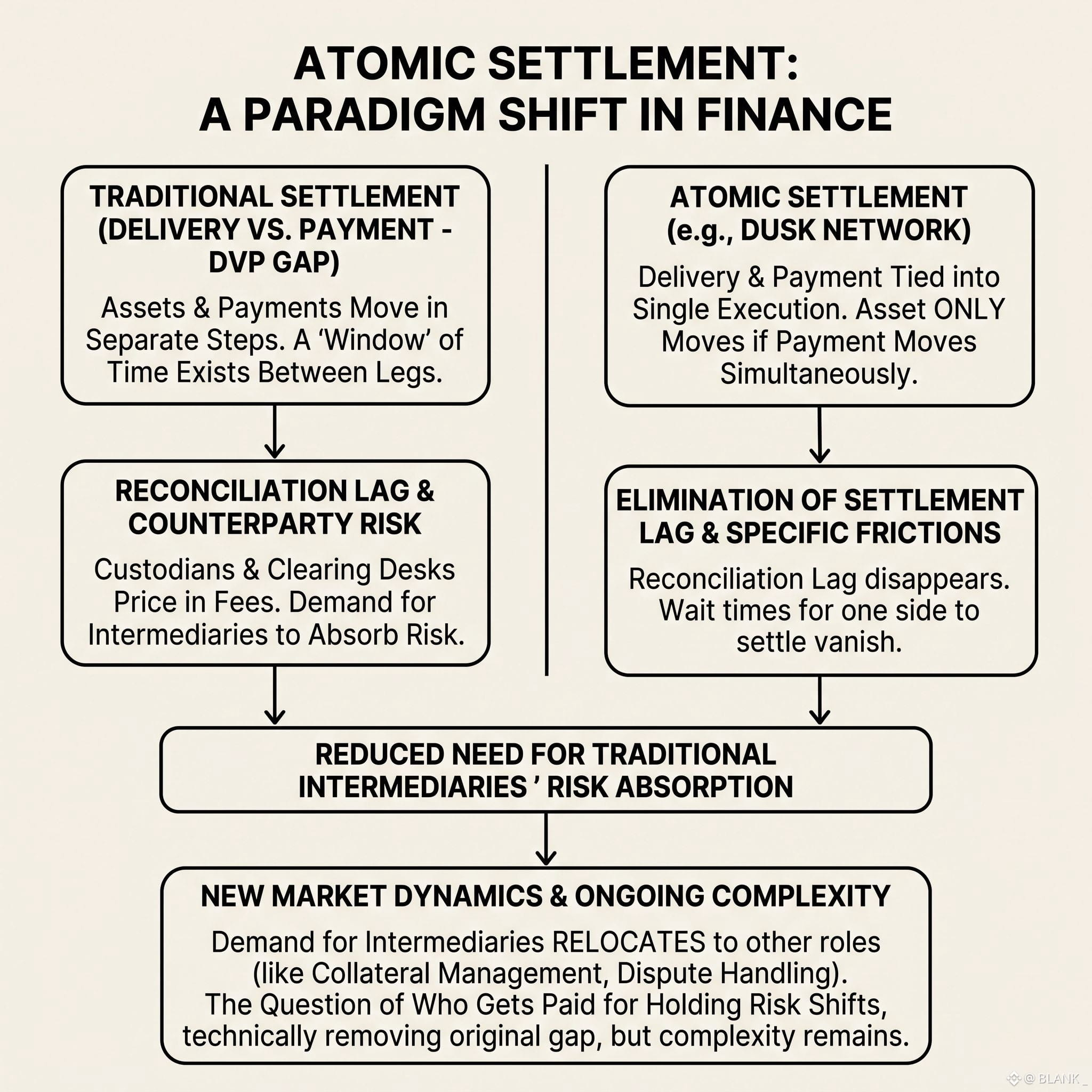
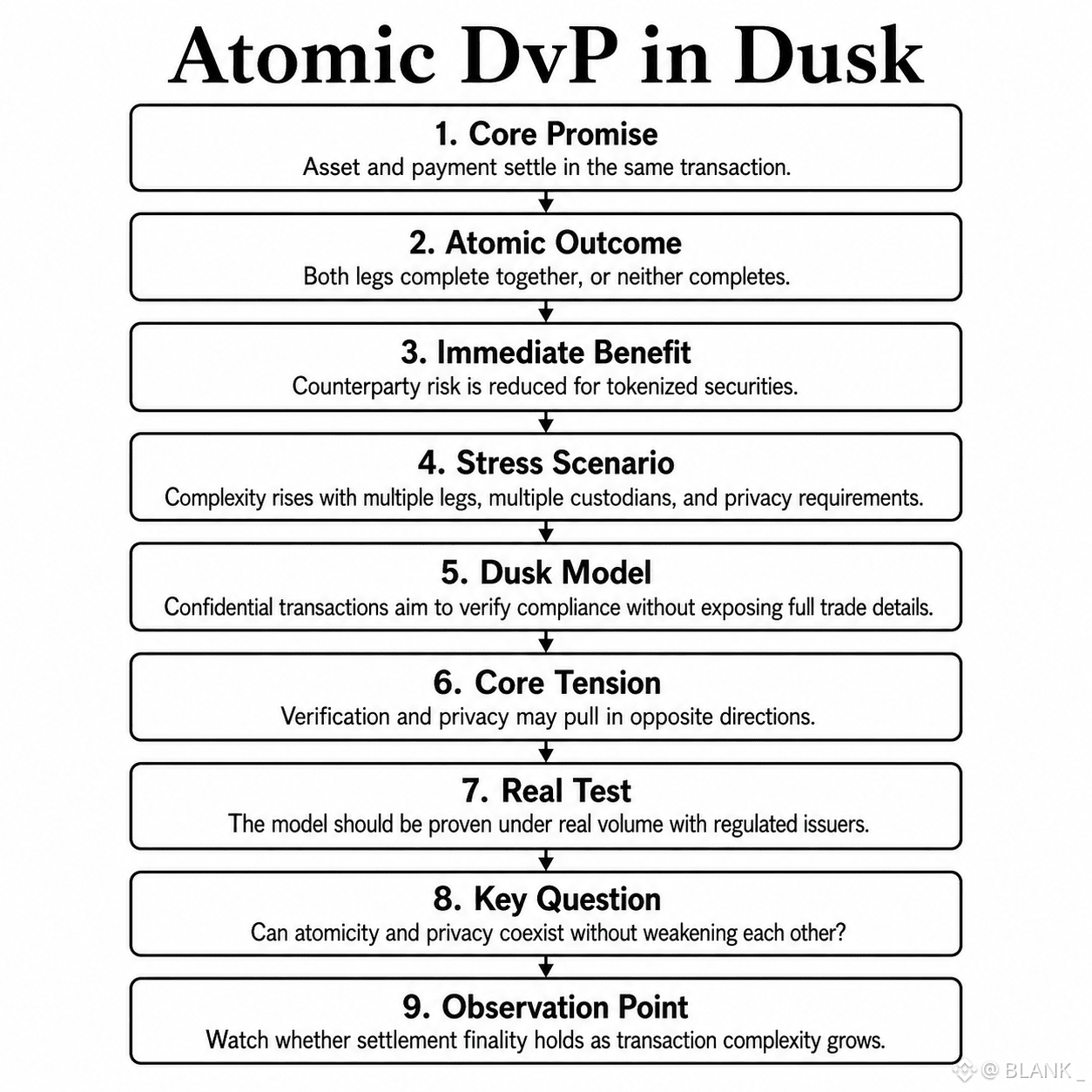
Zunächst nahm ich an, dass die atomare Abwicklung weitgehend eine technische Randnotiz sei – eine Detailfrage, die für Ingenieure zählt, aber nur selten für Märkte. Dusk verknüpft Lieferung und Zahlung in einem einzigen Ausführungsschritt, sodass sich ein Vermögenswert nur dann bewegt, wenn sich auch die Zahlung mitbewegt. Es gibt kein Zeitfenster, in dem die eine Seite abwickelt, während die andere wartet. Damit entfällt eine bestimmte Art von Reibung: die Abwicklungsverzögerung, die Verwahrer und Clearingstellen seit Jahrzehnten stillschweigend in ihre Gebühren einkalkuliert haben. Interessant ist jedoch, was zusammen mit der Verzögerung verschwindet. Treuhand- bzw. Vertrauensintermediäre gibt es teilweise deshalb, um das Risiko dieser Lücke abzufedern. Wenn also diese Lücke geschlossen wird – schließt dann auch die Nachfrage nach solchen Intermediären, oder verlagert sie sich nur an einen weniger sichtbaren Ort, etwa ins Collateral-Management oder ins Streitbeilegungs-Handling? Eine Vereinfachung der Abwicklung beseitigt keine Komplexität. Sie verlagert lediglich die Frage, wer weiterhin dafür bezahlt wird, ein Risiko zu tragen, das technisch gesehen nicht mehr existiert.
@Dusk_Foundation $DUSK #dusk
Zunächst nahm ich an, dass die atomare Abwicklung weitgehend eine technische Randnotiz sei – eine Detailfrage, die für Ingenieure zählt, aber nur selten für Märkte. Dusk verknüpft Lieferung und Zahlung in einem einzigen Ausführungsschritt, sodass sich ein Vermögenswert nur dann bewegt, wenn sich auch die Zahlung mitbewegt. Es gibt kein Zeitfenster, in dem die eine Seite abwickelt, während die andere wartet. Damit entfällt eine bestimmte Art von Reibung: die Abwicklungsverzögerung, die Verwahrer und Clearingstellen seit Jahrzehnten stillschweigend in ihre Gebühren einkalkuliert haben. Interessant ist jedoch, was zusammen mit der Verzögerung verschwindet. Treuhand- bzw. Vertrauensintermediäre gibt es teilweise deshalb, um das Risiko dieser Lücke abzufedern. Wenn also diese Lücke geschlossen wird – schließt dann auch die Nachfrage nach solchen Intermediären, oder verlagert sie sich nur an einen weniger sichtbaren Ort, etwa ins Collateral-Management oder ins Streitbeilegungs-Handling? Eine Vereinfachung der Abwicklung beseitigt keine Komplexität. Sie verlagert lediglich die Frage, wer weiterhin dafür bezahlt wird, ein Risiko zu tragen, das technisch gesehen nicht mehr existiert.
@Dusk $DUSK #dusk
@Dusk $DUSK #dusk
19
20
2.2k
·
--
Bullisch
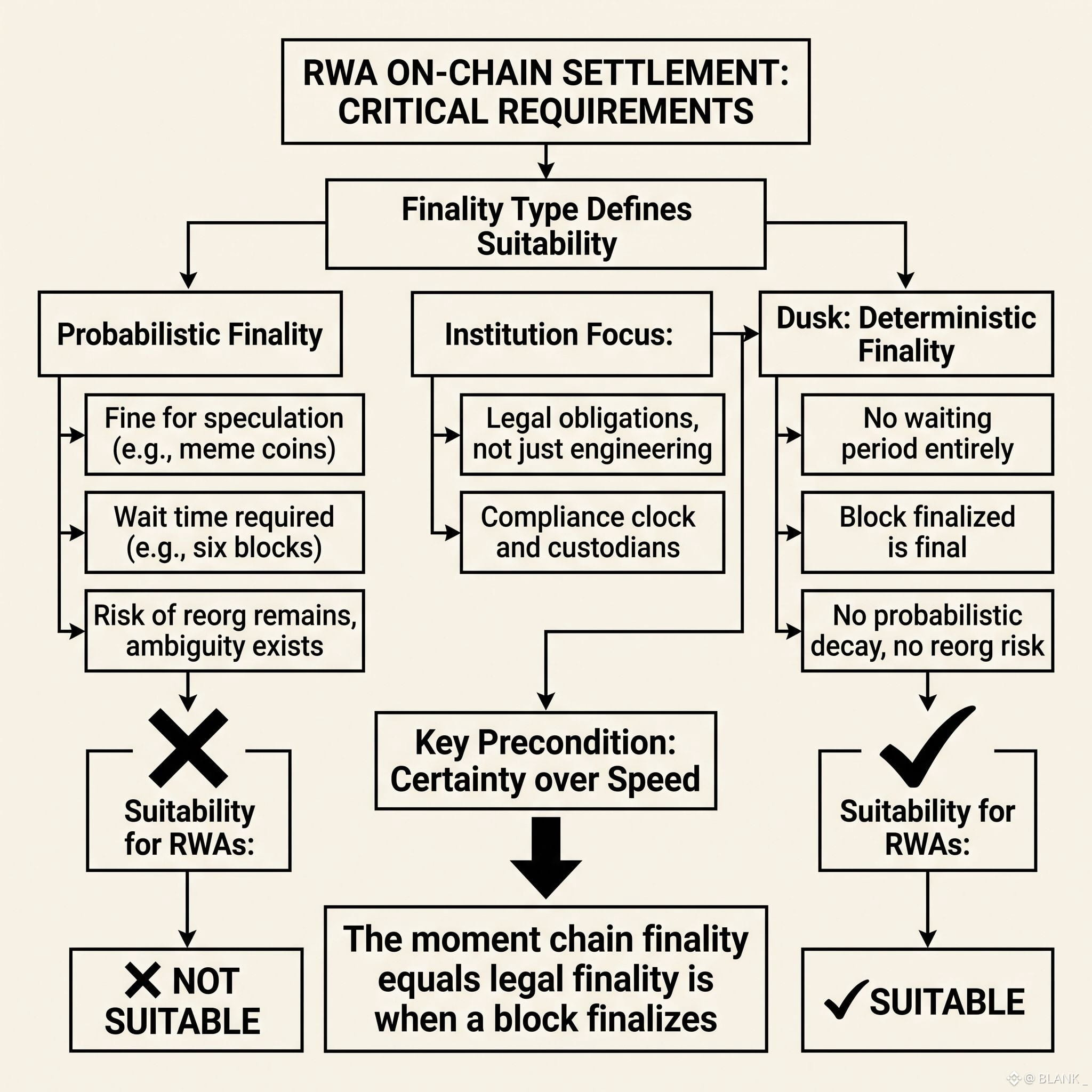
Zuerst dachte ich, dass endgültige Finalität nur eine technische Fußnote sei – etwas, das eher Settlement-Ingenieure interessierte als Nutzer. Doch wenn man beobachtet, wie RWA-Desks tatsächlich agieren, ändert sich diese Lesart. Probabilistische Finalität ist okay für Spekulationen. Niemanden stört eine Wartezeit von sechs Blöcken, wenn der Vermögenswert ein Meme-Coin ist. Immobilien-Titel, Bond-Coupons und Settlement-Fenster, die an rechtliche Verpflichtungen gekoppelt sind, vertragen jedoch diese Art von Unklarheit nicht. Ein Handel, der möglicherweise reorgt, wird nicht als final angesehen – er ist ausstehend, und ausstehend reicht nicht für die Compliance-Frist eines Custodians. Dusk’ deterministische Finalität beseitigt diese Wartezeit vollständig. Sobald ein Block finalisiert, ist er final: keine probabilistische Abnahme, kein später schleichendes Reorg-Risiko. Das ist weniger ein Feature als eine Voraussetzung. Institutionen preisen keine Geschwindigkeit ein. Sie preisen Gewissheit ein, denn Gewissheit ist das, was rechtliche Finalität und Chain-Finalität in denselben Moment zusammenfallen lässt.
Die eigentliche Frage ist nicht, ob RWAs on-chain gehen. Sondern ob sie bleiben, sobald die Settlement-Garantien unter Beweis gestellt werden.
@Dusk_Foundation $DUSK #dusk
Zuerst dachte ich, dass endgültige Finalität nur eine technische Fußnote sei – etwas, das eher Settlement-Ingenieure interessierte als Nutzer. Doch wenn man beobachtet, wie RWA-Desks tatsächlich agieren, ändert sich diese Lesart. Probabilistische Finalität ist okay für Spekulationen. Niemanden stört eine Wartezeit von sechs Blöcken, wenn der Vermögenswert ein Meme-Coin ist. Immobilien-Titel, Bond-Coupons und Settlement-Fenster, die an rechtliche Verpflichtungen gekoppelt sind, vertragen jedoch diese Art von Unklarheit nicht. Ein Handel, der möglicherweise reorgt, wird nicht als final angesehen – er ist ausstehend, und ausstehend reicht nicht für die Compliance-Frist eines Custodians. Dusk’ deterministische Finalität beseitigt diese Wartezeit vollständig. Sobald ein Block finalisiert, ist er final: keine probabilistische Abnahme, kein später schleichendes Reorg-Risiko. Das ist weniger ein Feature als eine Voraussetzung. Institutionen preisen keine Geschwindigkeit ein. Sie preisen Gewissheit ein, denn Gewissheit ist das, was rechtliche Finalität und Chain-Finalität in denselben Moment zusammenfallen lässt.
Die eigentliche Frage ist nicht, ob RWAs on-chain gehen. Sondern ob sie bleiben, sobald die Settlement-Garantien unter Beweis gestellt werden.
@Dusk $DUSK #dusk
Die eigentliche Frage ist nicht, ob RWAs on-chain gehen. Sondern ob sie bleiben, sobald die Settlement-Garantien unter Beweis gestellt werden.
@Dusk $DUSK #dusk
25
1
27
2.2k
·
--
Bullisch
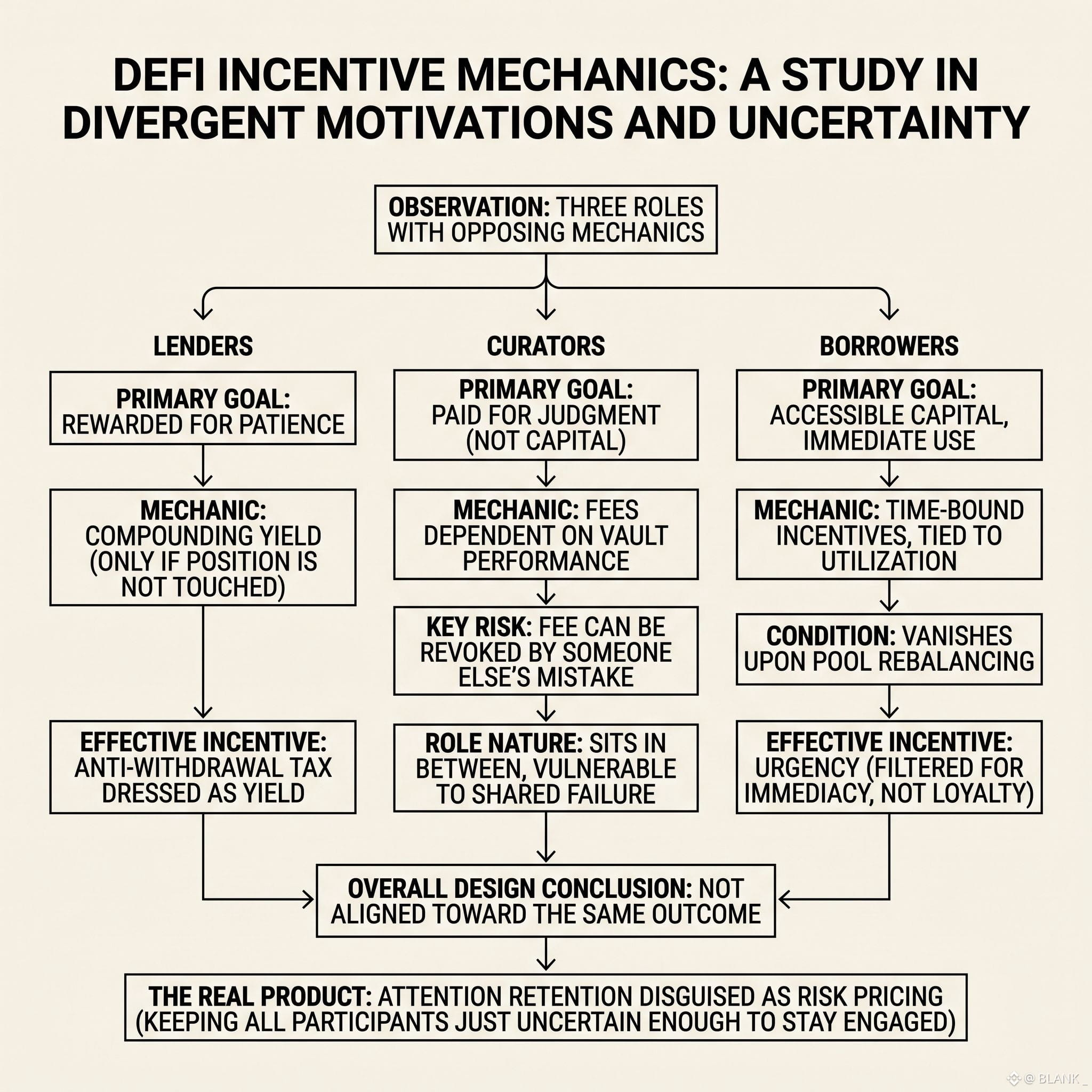
Zunächst nahm ich an, dass die drei Rollen nur unterschiedliche Einstiegspunkte in denselben Anreizpool sind, aber die Mechanik zieht in verschiedene Richtungen. Kreditgeber werden für Geduld bezahlt. Ihre Belohnung wächst leise, solange sie die Position nicht anfassen—der Anreiz ist im Grunde eine Anti-Abzugssteuer, als Rendite verkleidet. Kreditnehmer stehen unter dem gegenteiligen Druck: Jeder Anreiz ist zeitlich begrenzt, an die Auslastung gekoppelt, und verschwindet im Moment, in dem der Pool neu ausbalanciert wird. Ihr Verhalten wird auf Dringlichkeit gefiltert, nicht auf Loyalität. Kuratoren liegen dazwischen: Sie werden nicht für Kapital bezahlt, sondern für Urteilsvermögen, und diese Gebühr bleibt nur dann bestehen, wenn die Tresore, in die sie weiterleiten, weiterhin gut performen. Es ist die einzige Rolle, bei der der Anreiz durch einen Fehler von jemand anderem entzogen werden kann. Keine dieser Rollen ist auf dasselbe Ergebnis ausgerichtet. Sie sind darauf ausgerichtet, jeden Teilnehmer genau genug im Ungewissen zu halten, damit er engagiert bleibt. Vielleicht ist das das eigentliche Produkt: nicht Rendite, sondern Aufmerksamkeitsbindung, verkleidet als Risikobepreisung.
@termmax #TermMax
Zunächst nahm ich an, dass die drei Rollen nur unterschiedliche Einstiegspunkte in denselben Anreizpool sind, aber die Mechanik zieht in verschiedene Richtungen. Kreditgeber werden für Geduld bezahlt. Ihre Belohnung wächst leise, solange sie die Position nicht anfassen—der Anreiz ist im Grunde eine Anti-Abzugssteuer, als Rendite verkleidet. Kreditnehmer stehen unter dem gegenteiligen Druck: Jeder Anreiz ist zeitlich begrenzt, an die Auslastung gekoppelt, und verschwindet im Moment, in dem der Pool neu ausbalanciert wird. Ihr Verhalten wird auf Dringlichkeit gefiltert, nicht auf Loyalität. Kuratoren liegen dazwischen: Sie werden nicht für Kapital bezahlt, sondern für Urteilsvermögen, und diese Gebühr bleibt nur dann bestehen, wenn die Tresore, in die sie weiterleiten, weiterhin gut performen. Es ist die einzige Rolle, bei der der Anreiz durch einen Fehler von jemand anderem entzogen werden kann. Keine dieser Rollen ist auf dasselbe Ergebnis ausgerichtet. Sie sind darauf ausgerichtet, jeden Teilnehmer genau genug im Ungewissen zu halten, damit er engagiert bleibt. Vielleicht ist das das eigentliche Produkt: nicht Rendite, sondern Aufmerksamkeitsbindung, verkleidet als Risikobepreisung.
@TermMax #TermMax
@TermMax #TermMax
19
22
2k
·
--
Bullisch
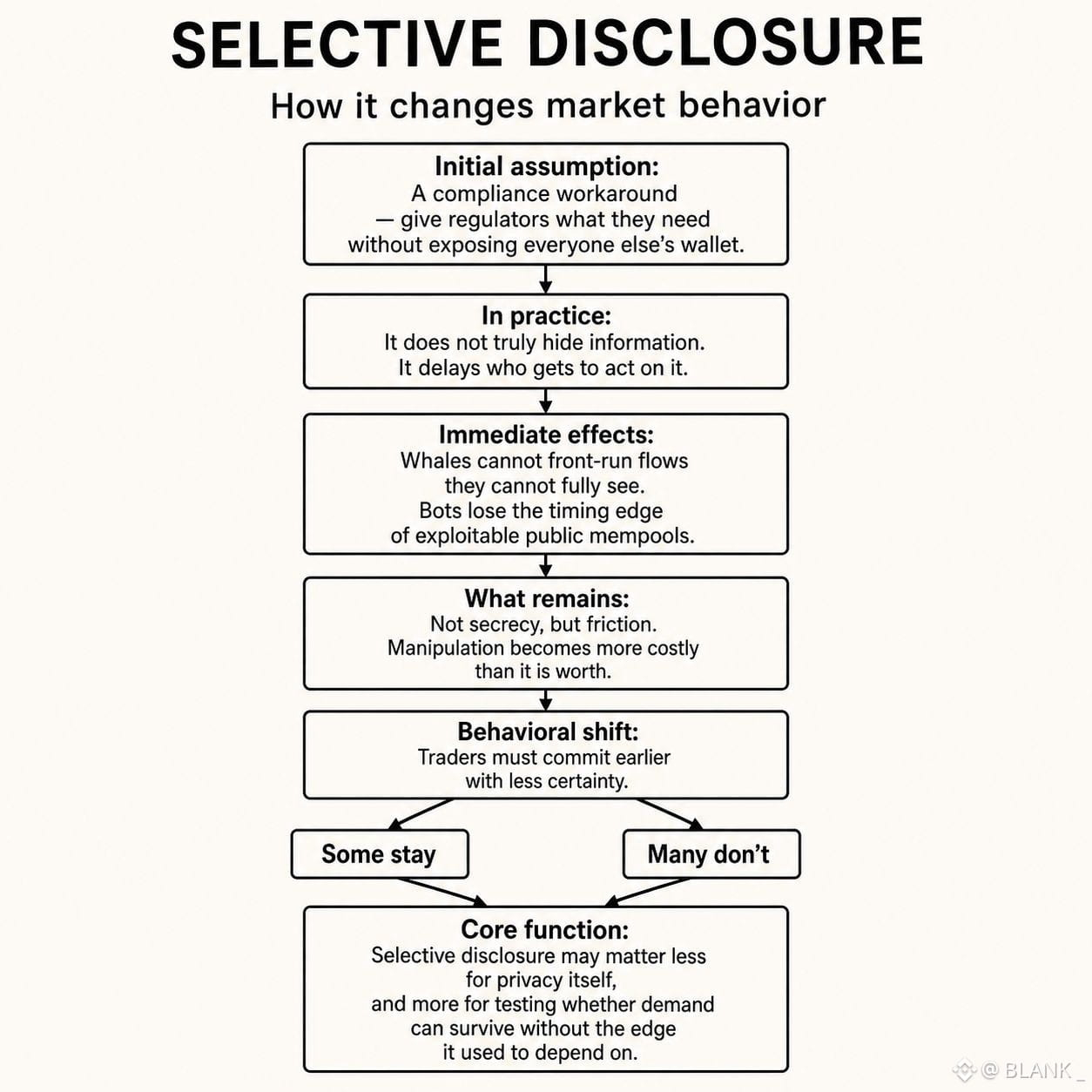
Zuerst nahm ich an, dass selektive Offenlegung nur ein Compliance-Trick sei, eine Möglichkeit, den Regulierungsbehörden zu geben, was sie brauchen, ohne die Geldbeutel anderer offen zu legen. Aber wenn man es in der Praxis sieht, ist die Wirkung leiser, als man denkt. Es versteckt Informationen nicht so sehr, sondern verschiebt, wer sie nutzen darf. Wale können keine Transaktionen vorausplanen, die sie nicht vollständig einsehen können. Bots verlieren den zeitlichen Vorteil, der öffentliche Mempools so ausbeutbar machte. Übrig bleibt nicht Geheimhaltung, sondern Reibung – genau die, durch die Manipulation mehr kostet als sie einbringt. Das Seltsame daran ist, wie das Verhalten sich dadurch verändert. Händler, die sich früher um geleakte Daten herum positionierten, müssen nun früher festlegen, mit weniger Gewissheit. Einige bleiben. Viele nicht. Vielleicht besteht die eigentliche Funktion selektiver Offenlegung nicht darin, Privatsphäre um ihrer selbst willen zu schützen, sondern die Frage zu stellen, ob die Nachfrage ohne den Vorteil überleben kann, auf den sie früher gesetzt hat.
@Dusk_Foundation $DUSK #dusk
Zuerst nahm ich an, dass selektive Offenlegung nur ein Compliance-Trick sei, eine Möglichkeit, den Regulierungsbehörden zu geben, was sie brauchen, ohne die Geldbeutel anderer offen zu legen. Aber wenn man es in der Praxis sieht, ist die Wirkung leiser, als man denkt. Es versteckt Informationen nicht so sehr, sondern verschiebt, wer sie nutzen darf. Wale können keine Transaktionen vorausplanen, die sie nicht vollständig einsehen können. Bots verlieren den zeitlichen Vorteil, der öffentliche Mempools so ausbeutbar machte. Übrig bleibt nicht Geheimhaltung, sondern Reibung – genau die, durch die Manipulation mehr kostet als sie einbringt. Das Seltsame daran ist, wie das Verhalten sich dadurch verändert. Händler, die sich früher um geleakte Daten herum positionierten, müssen nun früher festlegen, mit weniger Gewissheit. Einige bleiben. Viele nicht. Vielleicht besteht die eigentliche Funktion selektiver Offenlegung nicht darin, Privatsphäre um ihrer selbst willen zu schützen, sondern die Frage zu stellen, ob die Nachfrage ohne den Vorteil überleben kann, auf den sie früher gesetzt hat.
@Dusk $DUSK #dusk
@Dusk $DUSK #dusk
46
41
2.3k
·
--
Bullisch
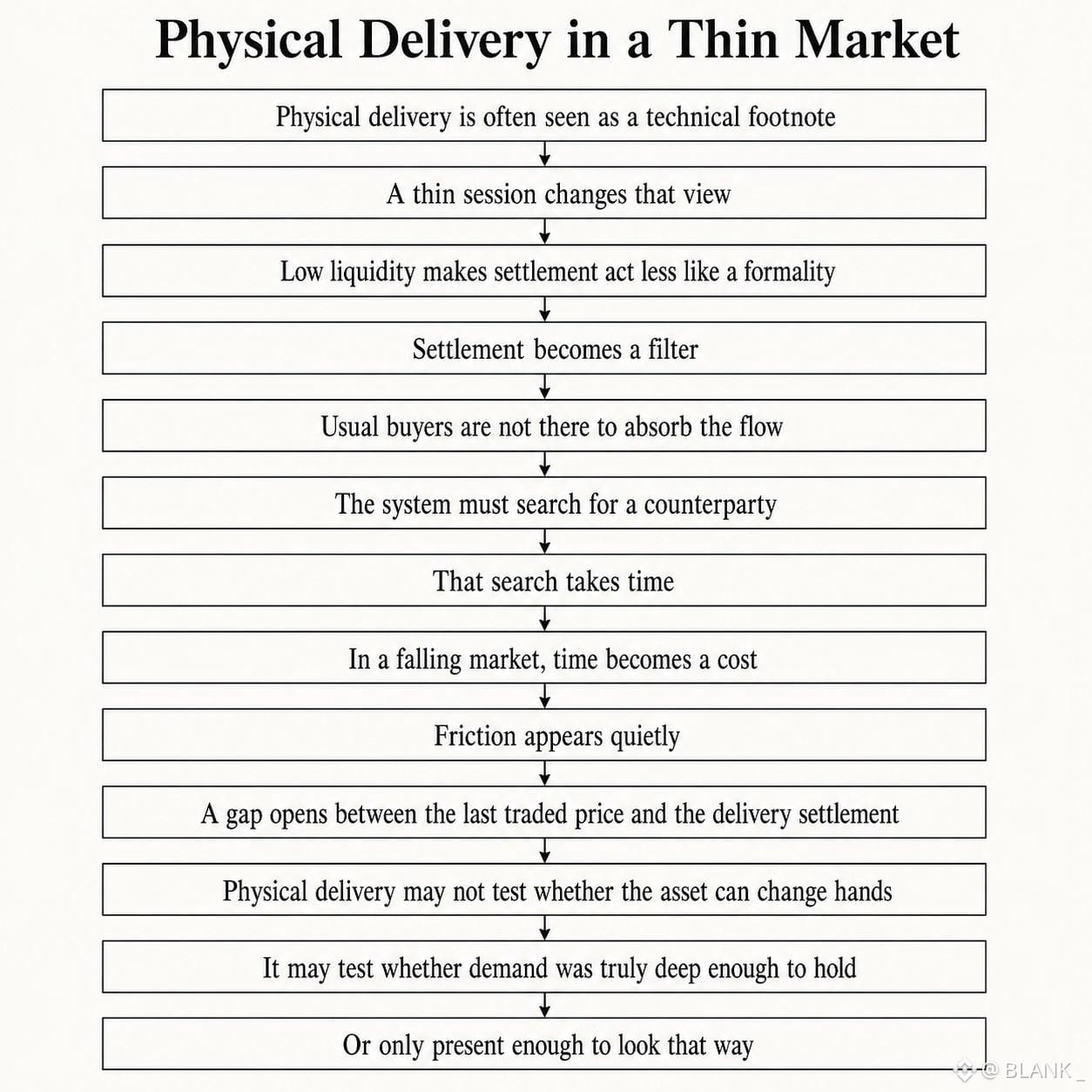
Zunächst ging ich davon aus, dass die physische Lieferung nur eine technische Randnotiz ist, etwas, das für Händler reserviert bleibt, die vor dem Verfall vergessen haben zu schließen. Als ich eine Order während einer dünnen Sitzung aufgehen sah, änderte sich das. Wenn die Liquidität niedrig ist, hört die Abwicklungsebene auf, wie eine Formalität zu wirken, und fängt an, wie ein Filter zu arbeiten. Die Käufer, die den Geldfluss normalerweise abfangen würden, sind einfach nicht da. Anstatt zu einem Preis zu clearen, muss das System einen Kontrahenten suchen, und diese Suche kostet Zeit. In einem fallenden Markt ist Zeit eine Art eigene Kosten. Am meisten hat mich überrascht, wie still sich die Reibung bemerkbar machte. Kein Alarm, keine Warnung – nur eine sich vergrößernde Lücke zwischen dem zuletzt gehandelten Preis und dem, worauf sich der Liefermechanismus schließlich einpendelt. Vielleicht testet die physische Lieferung gar nicht so sehr, ob der Vermögenswert den Besitzer wechseln kann. Vielleicht prüft sie vielmehr, ob die Nachfrage jemals tief genug war, um das auch tatsächlich zu tragen – oder ob sie nur präsent genug war, um so zu wirken.
@termmax #TermMax
Zunächst ging ich davon aus, dass die physische Lieferung nur eine technische Randnotiz ist, etwas, das für Händler reserviert bleibt, die vor dem Verfall vergessen haben zu schließen. Als ich eine Order während einer dünnen Sitzung aufgehen sah, änderte sich das. Wenn die Liquidität niedrig ist, hört die Abwicklungsebene auf, wie eine Formalität zu wirken, und fängt an, wie ein Filter zu arbeiten. Die Käufer, die den Geldfluss normalerweise abfangen würden, sind einfach nicht da. Anstatt zu einem Preis zu clearen, muss das System einen Kontrahenten suchen, und diese Suche kostet Zeit. In einem fallenden Markt ist Zeit eine Art eigene Kosten. Am meisten hat mich überrascht, wie still sich die Reibung bemerkbar machte. Kein Alarm, keine Warnung – nur eine sich vergrößernde Lücke zwischen dem zuletzt gehandelten Preis und dem, worauf sich der Liefermechanismus schließlich einpendelt. Vielleicht testet die physische Lieferung gar nicht so sehr, ob der Vermögenswert den Besitzer wechseln kann. Vielleicht prüft sie vielmehr, ob die Nachfrage jemals tief genug war, um das auch tatsächlich zu tragen – oder ob sie nur präsent genug war, um so zu wirken.
@TermMax #TermMax
@TermMax #TermMax
43
48
10.9k
·
--
Bullisch
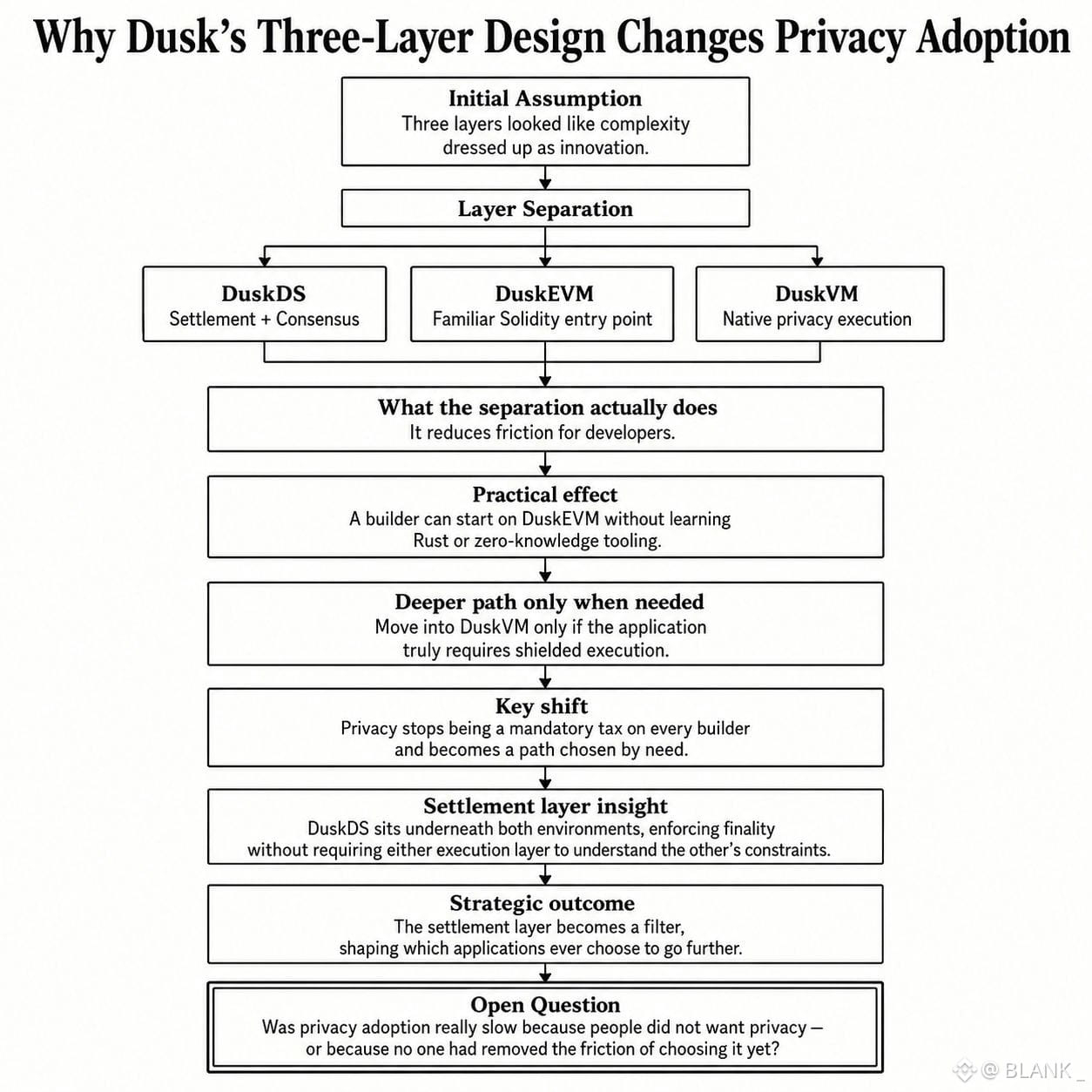
Zuerst dachte ich, das Aufteilen einer Kette in drei Schichten sei nur Komplexität, die als Innovation verkleidet wird. DuskDS übernimmt Settlement und Konsens, DuskEVM gibt Solidity-Entwicklern einen vertrauten Einstiegspunkt, und DuskVM bleibt für native Privacy-Arbeiten reserviert. Diese Trennung wirkte wie Overhead, bis mir auffiel, was sie für die Reibung bedeutet. Ein Entwickler muss nicht erst Rust und Zero-Knowledge-Tooling lernen, nur um etwas Einfaches bereitzustellen; er kann auf DuskEVM starten und nur dann tiefer gehen, wenn die Anwendung tatsächlich geschützte Ausführung braucht. Privacy hört damit auf, eine zwingende Abgabe für jeden Builder zu sein, und wird zu einem Weg, der je nach Bedarf gewählt wird. Was mich noch mehr interessiert, ist die Settlement-Schicht darunter, die beides leise miteinander verknüpft, indem sie Finalität durchsetzt, ohne von dem jeweils anderen Ausführungsumfeld zu verlangen, dessen Randbedingungen zu kennen. Es ist weniger eine Funktion als ein Filter: Er entscheidet, welche Anwendungen überhaupt so weit gehen, es nötig zu haben. Ich frage mich immer wieder, ob die Adoption von Privacy jemals wirklich langsam war, weil die Leute es nicht wollten – oder weil noch niemand die Reibung beseitigt hatte, es auszuwählen.
@Dusk_Foundation $DUSK #dusk
Zuerst dachte ich, das Aufteilen einer Kette in drei Schichten sei nur Komplexität, die als Innovation verkleidet wird. DuskDS übernimmt Settlement und Konsens, DuskEVM gibt Solidity-Entwicklern einen vertrauten Einstiegspunkt, und DuskVM bleibt für native Privacy-Arbeiten reserviert. Diese Trennung wirkte wie Overhead, bis mir auffiel, was sie für die Reibung bedeutet. Ein Entwickler muss nicht erst Rust und Zero-Knowledge-Tooling lernen, nur um etwas Einfaches bereitzustellen; er kann auf DuskEVM starten und nur dann tiefer gehen, wenn die Anwendung tatsächlich geschützte Ausführung braucht. Privacy hört damit auf, eine zwingende Abgabe für jeden Builder zu sein, und wird zu einem Weg, der je nach Bedarf gewählt wird. Was mich noch mehr interessiert, ist die Settlement-Schicht darunter, die beides leise miteinander verknüpft, indem sie Finalität durchsetzt, ohne von dem jeweils anderen Ausführungsumfeld zu verlangen, dessen Randbedingungen zu kennen. Es ist weniger eine Funktion als ein Filter: Er entscheidet, welche Anwendungen überhaupt so weit gehen, es nötig zu haben. Ich frage mich immer wieder, ob die Adoption von Privacy jemals wirklich langsam war, weil die Leute es nicht wollten – oder weil noch niemand die Reibung beseitigt hatte, es auszuwählen.
@Dusk $DUSK #dusk
@Dusk $DUSK #dusk
37
31
1.4k
·
--
Bullisch
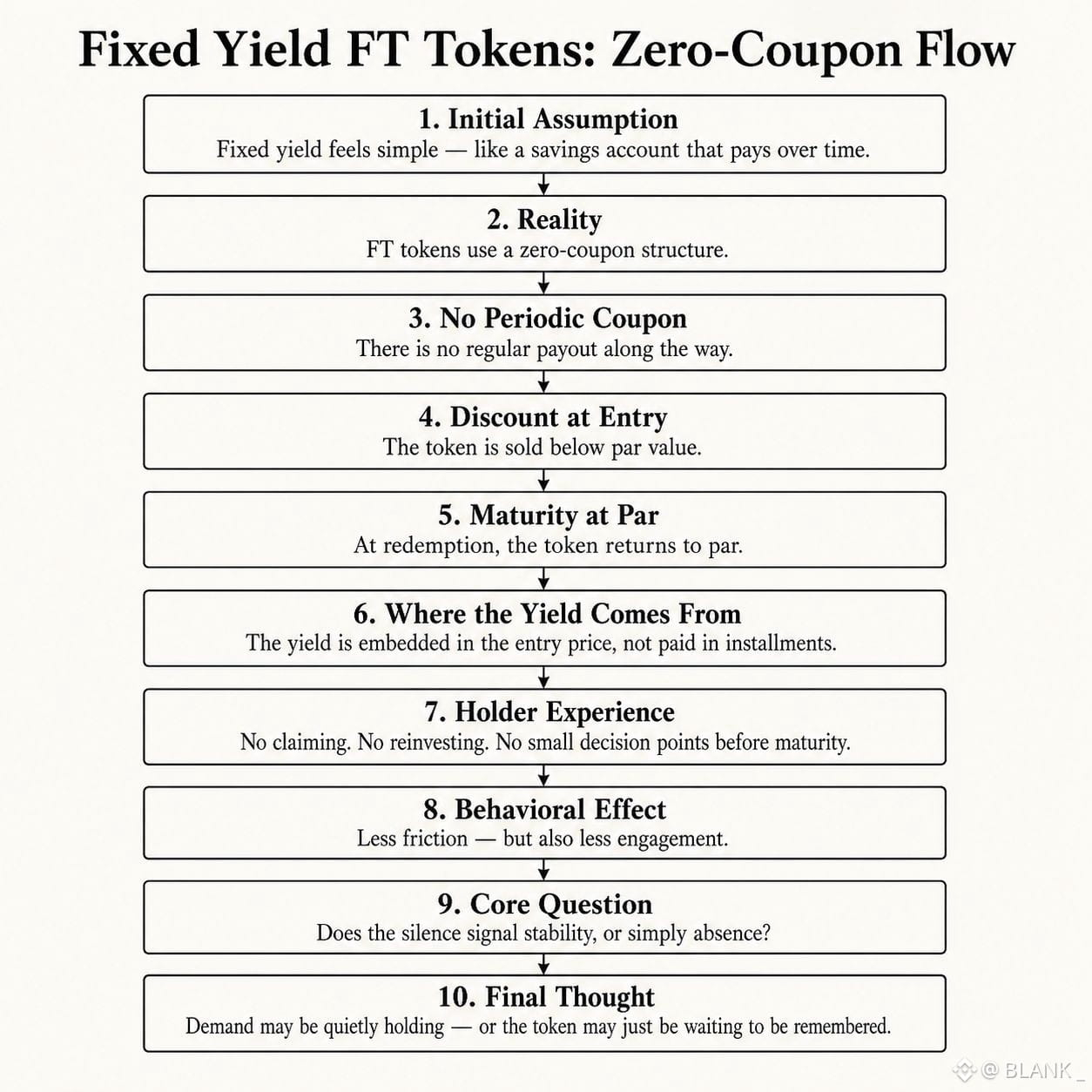
Zuerst nahm ich an, dass eine feste Rendite Einfachheit bedeute: dass FT-Tokens Investoren einfach über die Zeit auszahlen, wie es bei einem Sparkonto der Fall wäre. Aber die Nullkupon-Struktur funktioniert anders. Es gibt überhaupt keinen Kupon, keine periodischen Auszahlungen, die die Erwartungen im Laufe der Zeit verankern. Stattdessen wird der Token mit einem Abschlag verkauft und bei Fälligkeit zu pari eingelöst; die Rendite steckt also im Einstiegspreis selbst, statt in Raten verteilt zu werden. Das verändert das Verhalten stärker, als ich erwartet hatte. Inhaber prüfen nicht, ob Auszahlungen erfolgen, sie warten einfach. Kein Claiming, kein Reinvestieren, keine kleinen Entscheidungspunkte, die die Aufmerksamkeit bis zur Fälligkeit beschäftigen, wenn sie denn eintrifft. Das nimmt zwar eine Reibungsschicht heraus, aber es nimmt auch eine Schicht an Beteiligung heraus. Wenn es nichts zu tun gibt, gibt es oft auch nichts zu bemerken. Die eigentliche Frage ist, ob dieses Schweigen Stabilität signalisiert oder das Fehlen von etwas. Ein Token, der nichts von dir verlangt, bis zur Einlösung, könnte die Nachfrage still halten – oder er könnte nur darauf warten, dass man sich an ihn erinnert.
@termmax #TermMax
Zuerst nahm ich an, dass eine feste Rendite Einfachheit bedeute: dass FT-Tokens Investoren einfach über die Zeit auszahlen, wie es bei einem Sparkonto der Fall wäre. Aber die Nullkupon-Struktur funktioniert anders. Es gibt überhaupt keinen Kupon, keine periodischen Auszahlungen, die die Erwartungen im Laufe der Zeit verankern. Stattdessen wird der Token mit einem Abschlag verkauft und bei Fälligkeit zu pari eingelöst; die Rendite steckt also im Einstiegspreis selbst, statt in Raten verteilt zu werden. Das verändert das Verhalten stärker, als ich erwartet hatte. Inhaber prüfen nicht, ob Auszahlungen erfolgen, sie warten einfach. Kein Claiming, kein Reinvestieren, keine kleinen Entscheidungspunkte, die die Aufmerksamkeit bis zur Fälligkeit beschäftigen, wenn sie denn eintrifft. Das nimmt zwar eine Reibungsschicht heraus, aber es nimmt auch eine Schicht an Beteiligung heraus. Wenn es nichts zu tun gibt, gibt es oft auch nichts zu bemerken. Die eigentliche Frage ist, ob dieses Schweigen Stabilität signalisiert oder das Fehlen von etwas. Ein Token, der nichts von dir verlangt, bis zur Einlösung, könnte die Nachfrage still halten – oder er könnte nur darauf warten, dass man sich an ihn erinnert.
@TermMax #TermMax
@TermMax #TermMax
31
28
3.1k
·
--
Bullisch
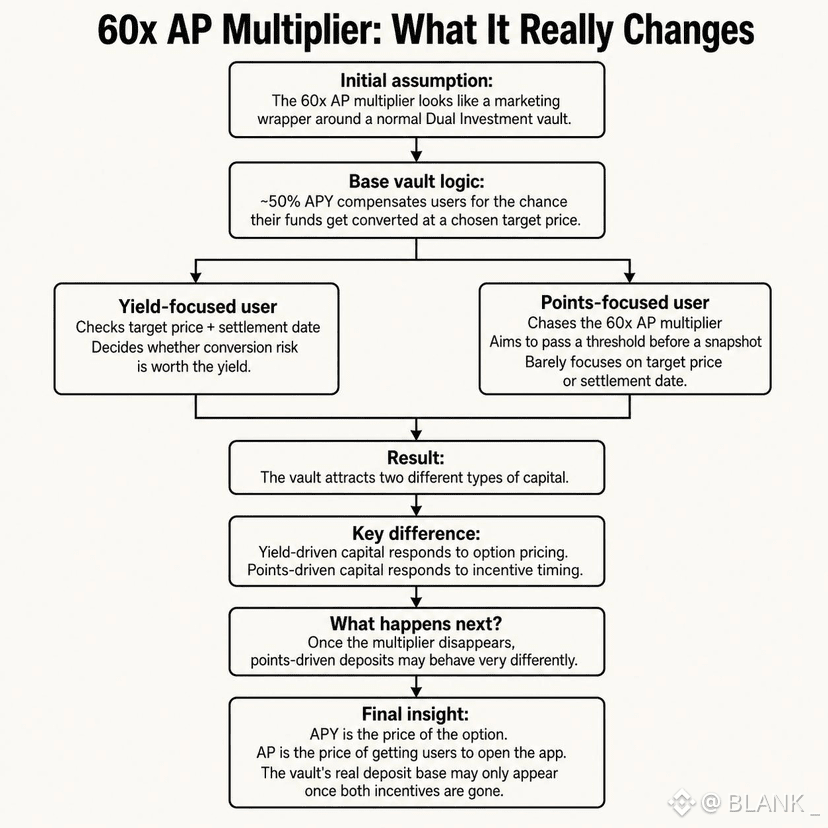
Zunächst nahm ich an, dass der 60x-AP-Multiplikator nur eine Marketing-Verpackung für ein normales Dual-Investment-Vault ist – eine Art, ein vertrautes strukturiertes Produkt wieder neu klingen zu lassen. Die APY erzählte für sich allein eine klare Geschichte: etwa 50%, bepreist für die Chance, dass deine Mittel in einen von dir selbst gewählten Zielwert umgewandelt werden. Aber die Punkte-Ebene ändert, wer überhaupt auftaucht. Wer auf Rendite optimiert, liest den Zielpreis und das Fälligkeitsdatum und entscheidet, ob sich der Trade angesichts des Umwandlungsrisikos lohnt. Wer auf Punkte optimiert, schaut kaum auf eines von beidem. Sie/er zahlt ein, weil der sechzigfache Multiplikator sie/ihn vor einem Snapshot über eine Schwelle bringt – nicht, weil sie/er eine Meinung zum Preis hat. Das ist eine andere Art von Kapital, und es verhält sich anders, sobald der Multiplikator wegfällt. Die APY ist der Preis der Option. Der AP ist der Preis dafür, Menschen überhaupt dazu zu bringen, die App zu öffnen. Ich bin mir nicht sicher, wie die reale Einzahlungsbasis des Vault erst sichtbar wird, wenn beide Anreize gleichzeitig verschwunden sind.
@termmax #TermMax
Zunächst nahm ich an, dass der 60x-AP-Multiplikator nur eine Marketing-Verpackung für ein normales Dual-Investment-Vault ist – eine Art, ein vertrautes strukturiertes Produkt wieder neu klingen zu lassen. Die APY erzählte für sich allein eine klare Geschichte: etwa 50%, bepreist für die Chance, dass deine Mittel in einen von dir selbst gewählten Zielwert umgewandelt werden. Aber die Punkte-Ebene ändert, wer überhaupt auftaucht. Wer auf Rendite optimiert, liest den Zielpreis und das Fälligkeitsdatum und entscheidet, ob sich der Trade angesichts des Umwandlungsrisikos lohnt. Wer auf Punkte optimiert, schaut kaum auf eines von beidem. Sie/er zahlt ein, weil der sechzigfache Multiplikator sie/ihn vor einem Snapshot über eine Schwelle bringt – nicht, weil sie/er eine Meinung zum Preis hat. Das ist eine andere Art von Kapital, und es verhält sich anders, sobald der Multiplikator wegfällt. Die APY ist der Preis der Option. Der AP ist der Preis dafür, Menschen überhaupt dazu zu bringen, die App zu öffnen. Ich bin mir nicht sicher, wie die reale Einzahlungsbasis des Vault erst sichtbar wird, wenn beide Anreize gleichzeitig verschwunden sind.
@TermMax #TermMax
@TermMax #TermMax
62
45
5.5k
·
--
Bullisch
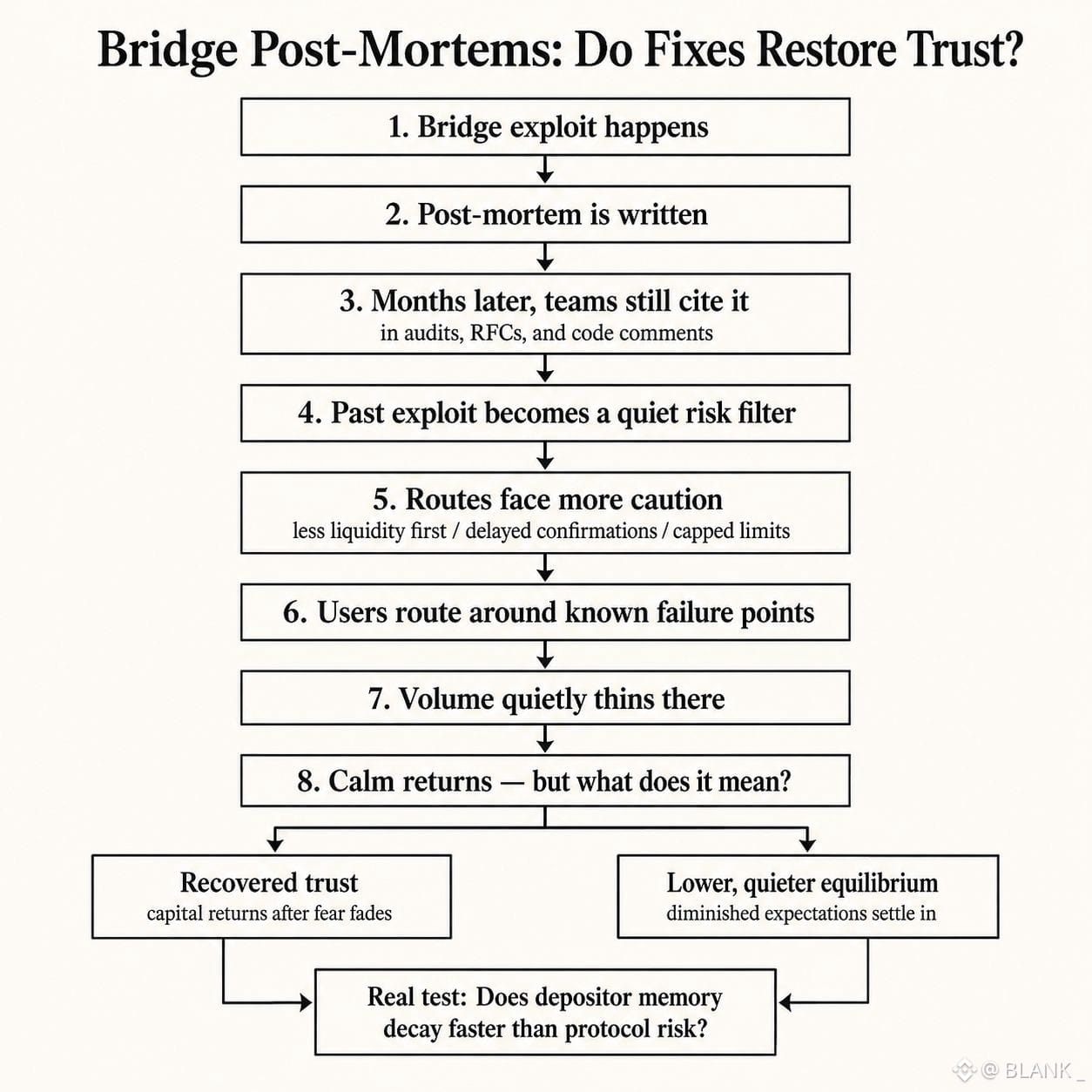
Zunächst ging ich davon aus, dass Bridge-Postmortems meistens nur einmal gelesen und dann wieder vergessen werden – abgelegt, nachdem der Incident-Thread abgeflaut ist. Doch wenn man sieht, wie Teams sie Monate später zitieren, in Audits, in RFC-Diskussionen, in stillen Code-Kommentaren, wirkt es eher wie ein schleichend wirkender Reibungsfaktor. Jeder frühere Exploit wird zu einem stillen Filter: Welche Routen erhalten zuerst Liquidität, welche bekommen verzögerte Bestätigungen, welche werden mit begrenzten Limits gedeckelt, bevor überhaupt jemand ihnen wieder vertraut. Die Mechanik ändert sich selten schnell. Was sich ändert, ist Geduld: Nutzer umkurven bekannte Schwachstellen, ohne zu erklären warum, und das Volumen wird dort einfach dünner. Verlässlichkeit wird nicht durch Uptime-Statistiken bewiesen, sondern dadurch, ob Kapital zurückkehrt, nachdem es einmal erschrocken war. Das ist der eigentliche Test, dem sich Postmortem-Lektionen stellen müssen: nicht ob der Fix technisch hält, sondern ob die Erinnerung der Einleger schneller verblasst als die Gedächtnisleistung des Protokolls. Wenn eine Bridge also wieder ruhig wirkt – ist das wiedergewonnenes Vertrauen, oder einfach gesunkene Erwartungen, die sich in ein niedrigeres, stilleres Gleichgewicht einpendeln?
@Dusk_Foundation $DUSK #dusk
Zunächst ging ich davon aus, dass Bridge-Postmortems meistens nur einmal gelesen und dann wieder vergessen werden – abgelegt, nachdem der Incident-Thread abgeflaut ist. Doch wenn man sieht, wie Teams sie Monate später zitieren, in Audits, in RFC-Diskussionen, in stillen Code-Kommentaren, wirkt es eher wie ein schleichend wirkender Reibungsfaktor. Jeder frühere Exploit wird zu einem stillen Filter: Welche Routen erhalten zuerst Liquidität, welche bekommen verzögerte Bestätigungen, welche werden mit begrenzten Limits gedeckelt, bevor überhaupt jemand ihnen wieder vertraut. Die Mechanik ändert sich selten schnell. Was sich ändert, ist Geduld: Nutzer umkurven bekannte Schwachstellen, ohne zu erklären warum, und das Volumen wird dort einfach dünner. Verlässlichkeit wird nicht durch Uptime-Statistiken bewiesen, sondern dadurch, ob Kapital zurückkehrt, nachdem es einmal erschrocken war. Das ist der eigentliche Test, dem sich Postmortem-Lektionen stellen müssen: nicht ob der Fix technisch hält, sondern ob die Erinnerung der Einleger schneller verblasst als die Gedächtnisleistung des Protokolls. Wenn eine Bridge also wieder ruhig wirkt – ist das wiedergewonnenes Vertrauen, oder einfach gesunkene Erwartungen, die sich in ein niedrigeres, stilleres Gleichgewicht einpendeln?
@Dusk $DUSK #dusk
@Dusk $DUSK #dusk
63
51
3.1k
·
--
Bullisch
Verifiziert
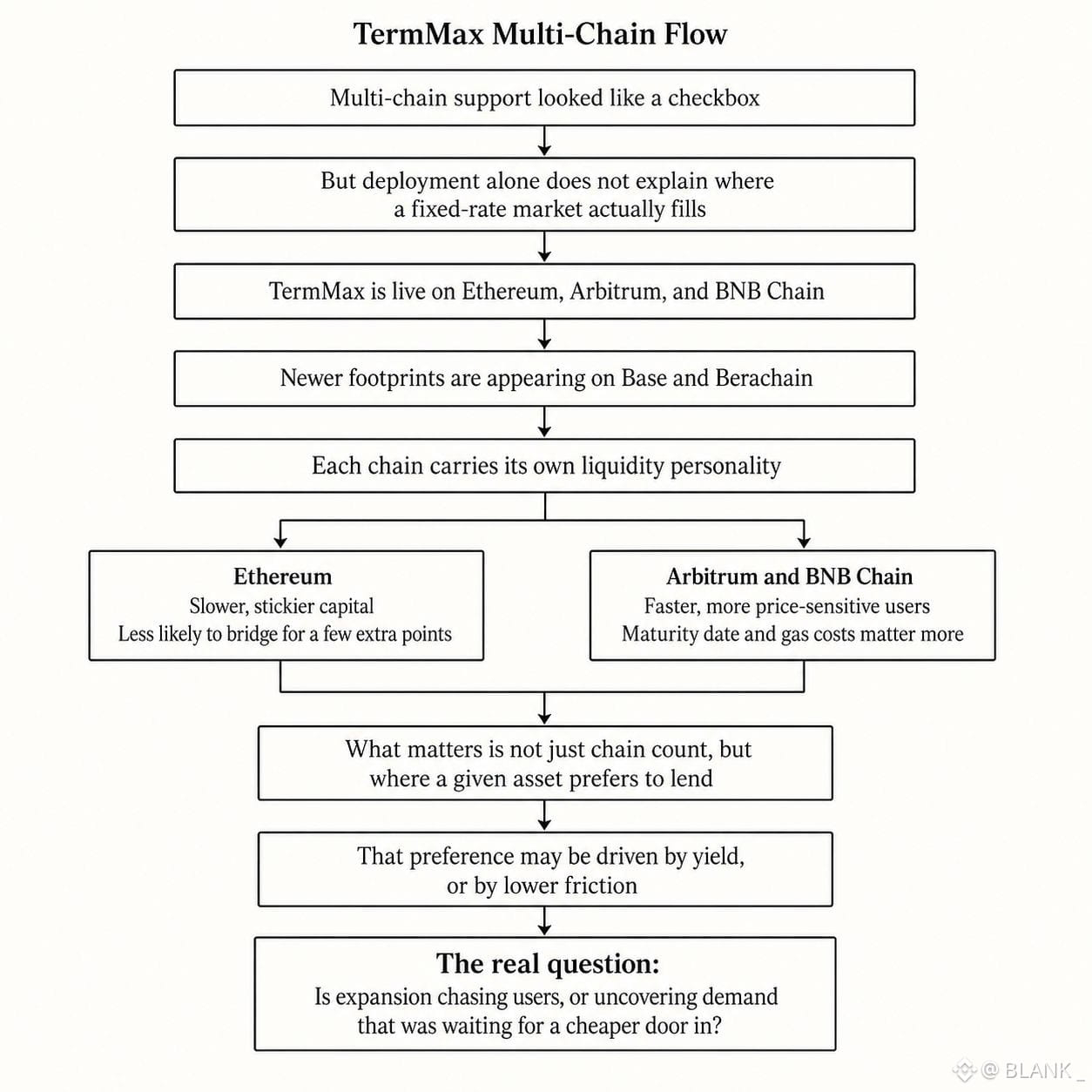
Zunächst nahm ich an, dass Multi-Chain-Support im Wesentlichen nur eine Checkbox ist – etwas, das Protokolle abhaken, um vollständig zu wirken. TermMax ist live auf Ethereum, Arbitrum und BNB Chain, mit neueren Präsenzpunkten auf Chains wie Berachain und Base. Doch wenn man beobachtet, wo ein Fixed-Rate-Markt tatsächlich befüllt wird – nicht nur, wo er bereitgestellt ist –, verändert sich die Sicht.
Jede Chain hat ihre eigene Liquiditäts-„Persönlichkeit“. Ethereum hält tendenziell langsamere, zähere Mittel – das Kapital, das für ein paar zusätzliche Punkte nicht über eine Bridge dem Yield nachjagt. Arbitrum und BNB Chain ziehen schnelleres, preissensibles Publikum an, also Nutzer, die ein Fälligkeitsdatum gegen die Gas-Kosten abwägen, bevor sie überhaupt zusagen. Spannend ist nicht die Anzahl der Chains. Entscheidend ist, welche Chain ein bestimmtes Asset stillschweigend bevorzugt, um es auszuleihen – und ob diese Präferenz wirklich etwas mit Rendite zu tun hat oder eher mit Reibung. Die tiefere Frage lautet also nicht, wie viele Chains ein Protokoll erreicht. Sondern ob Expansion Nutzer verfolgt oder lediglich Nachfrage aufdeckt, die schon darauf wartete, durch eine günstigere Tür zu gehen.
@termmax #TermMax
Zunächst nahm ich an, dass Multi-Chain-Support im Wesentlichen nur eine Checkbox ist – etwas, das Protokolle abhaken, um vollständig zu wirken. TermMax ist live auf Ethereum, Arbitrum und BNB Chain, mit neueren Präsenzpunkten auf Chains wie Berachain und Base. Doch wenn man beobachtet, wo ein Fixed-Rate-Markt tatsächlich befüllt wird – nicht nur, wo er bereitgestellt ist –, verändert sich die Sicht.
Jede Chain hat ihre eigene Liquiditäts-„Persönlichkeit“. Ethereum hält tendenziell langsamere, zähere Mittel – das Kapital, das für ein paar zusätzliche Punkte nicht über eine Bridge dem Yield nachjagt. Arbitrum und BNB Chain ziehen schnelleres, preissensibles Publikum an, also Nutzer, die ein Fälligkeitsdatum gegen die Gas-Kosten abwägen, bevor sie überhaupt zusagen. Spannend ist nicht die Anzahl der Chains. Entscheidend ist, welche Chain ein bestimmtes Asset stillschweigend bevorzugt, um es auszuleihen – und ob diese Präferenz wirklich etwas mit Rendite zu tun hat oder eher mit Reibung. Die tiefere Frage lautet also nicht, wie viele Chains ein Protokoll erreicht. Sondern ob Expansion Nutzer verfolgt oder lediglich Nachfrage aufdeckt, die schon darauf wartete, durch eine günstigere Tür zu gehen.
@TermMax #TermMax
Jede Chain hat ihre eigene Liquiditäts-„Persönlichkeit“. Ethereum hält tendenziell langsamere, zähere Mittel – das Kapital, das für ein paar zusätzliche Punkte nicht über eine Bridge dem Yield nachjagt. Arbitrum und BNB Chain ziehen schnelleres, preissensibles Publikum an, also Nutzer, die ein Fälligkeitsdatum gegen die Gas-Kosten abwägen, bevor sie überhaupt zusagen. Spannend ist nicht die Anzahl der Chains. Entscheidend ist, welche Chain ein bestimmtes Asset stillschweigend bevorzugt, um es auszuleihen – und ob diese Präferenz wirklich etwas mit Rendite zu tun hat oder eher mit Reibung. Die tiefere Frage lautet also nicht, wie viele Chains ein Protokoll erreicht. Sondern ob Expansion Nutzer verfolgt oder lediglich Nachfrage aufdeckt, die schon darauf wartete, durch eine günstigere Tür zu gehen.
@TermMax #TermMax
88
71
1.6k
·
--
Bullisch
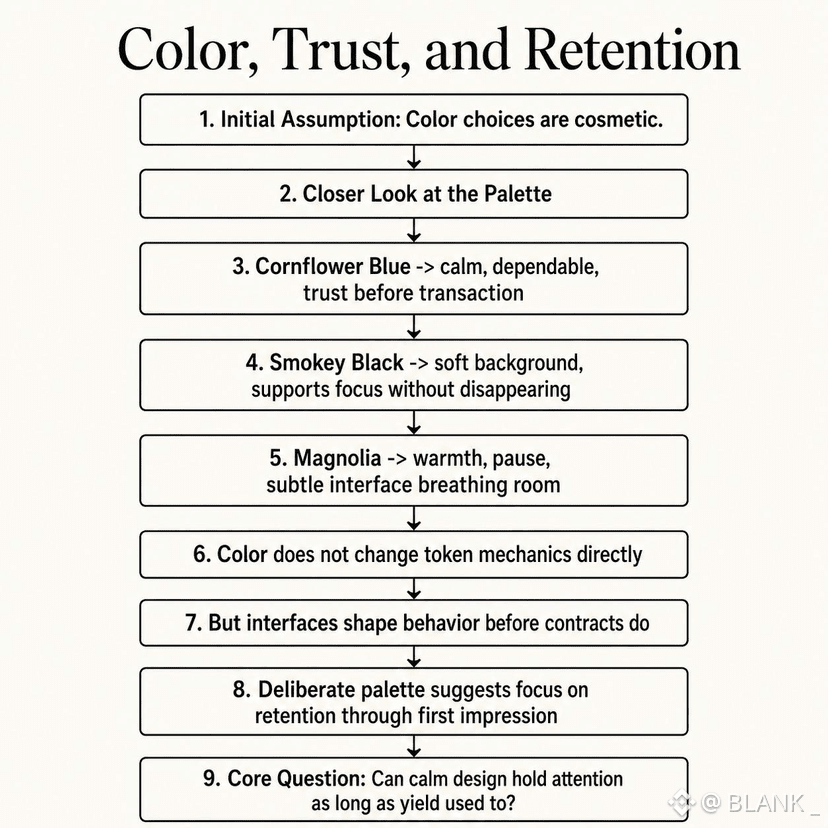
Zuerst dachte ich, die Farbauswahl sei kosmetisch – etwas, das ein Designteam ganz zuletzt trifft, nachdem die Logik des Protokolls bereits feststeht. Dann habe ich mir die Palette noch einmal angesehen. Taubenblau wirkt ruhig und verlässlich, also die Farbe, mit der man Menschen vor einer Transaktion Vertrauen assoziieren lassen möchte – nicht erst danach. Smokey Black verhält sich nicht wie ein reines Schwarz. Es ist weicher, weniger absolut, eher wie ein Hintergrund, der anderen Elementen die Aufmerksamkeit ermöglicht, ohne selbst zu verschwinden. Magnolia liegt irgendwo zwischen Weiß und Wärme: ein Akzent, der sich nicht laut ankündigt, sondern dort auftaucht, wo die Oberfläche eine Pause machen soll. Nichts davon ändert die Token-Mechanik direkt. Aber Oberflächen gestalten Verhalten, bevor Verträge es tun. Eine so durchdachte Palette deutet auf ein Team hin, das sich mit Retention auf der Ebene des ersten Eindrucks beschäftigt – nicht nur mit Anreizdesign. Die eigentliche Frage ist nicht, ob die Farben gefallen. Sondern ob ein ruhiges Design Aufmerksamkeit so lange halten kann, wie Yield früher.
@Dusk_Foundation $DUSK #dusk
Zuerst dachte ich, die Farbauswahl sei kosmetisch – etwas, das ein Designteam ganz zuletzt trifft, nachdem die Logik des Protokolls bereits feststeht. Dann habe ich mir die Palette noch einmal angesehen. Taubenblau wirkt ruhig und verlässlich, also die Farbe, mit der man Menschen vor einer Transaktion Vertrauen assoziieren lassen möchte – nicht erst danach. Smokey Black verhält sich nicht wie ein reines Schwarz. Es ist weicher, weniger absolut, eher wie ein Hintergrund, der anderen Elementen die Aufmerksamkeit ermöglicht, ohne selbst zu verschwinden. Magnolia liegt irgendwo zwischen Weiß und Wärme: ein Akzent, der sich nicht laut ankündigt, sondern dort auftaucht, wo die Oberfläche eine Pause machen soll. Nichts davon ändert die Token-Mechanik direkt. Aber Oberflächen gestalten Verhalten, bevor Verträge es tun. Eine so durchdachte Palette deutet auf ein Team hin, das sich mit Retention auf der Ebene des ersten Eindrucks beschäftigt – nicht nur mit Anreizdesign. Die eigentliche Frage ist nicht, ob die Farben gefallen. Sondern ob ein ruhiges Design Aufmerksamkeit so lange halten kann, wie Yield früher.
@Dusk $DUSK #dusk
@Dusk $DUSK #dusk
50
46
672
·
--
Bullisch
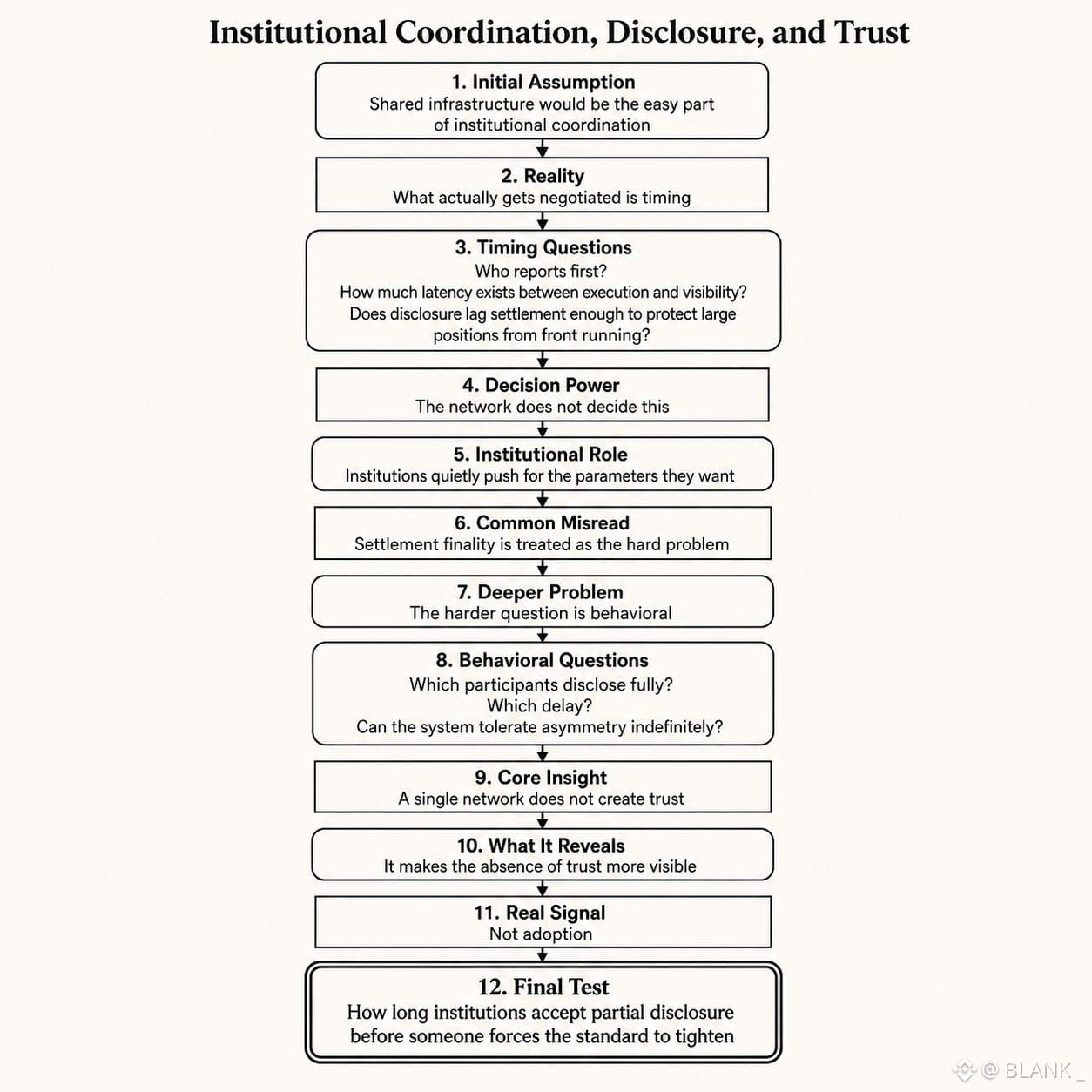
Zunächst ging ich davon aus, dass die gemeinsame Infrastruktur der einfache Teil der institutionellen Koordination sein würde: Wenn sich alle auf ein einziges Netzwerk einigen, würden sich die Offenlegungsregeln von selbst ergeben. So läuft es nicht. Tatsächlich wird vor allem über den Zeitpunkt verhandelt. Wer zuerst meldet, wie viel Latenz zwischen Ausführung und Sichtbarkeit besteht und ob die Offenlegung so spät erfolgt, dass große Positionen vor Front Running geschützt bleiben. Das Netzwerk trifft diese Entscheidungen nicht. Institutionen tun das, still und leise, indem sie die Parameter festlegen, die sie vorantreiben. Die finale Abwicklung wird als das schwierige Problem behandelt, aber sie wird in der Regel früh gelöst. Die schwierigere Frage ist jedoch eine verhaltensbezogene: Welche Teilnehmer legen vollständig offen, welche verzögern, und ob das System dauerhaft mit Asymmetrien zurechtkommt. Ein einzelnes Netzwerk schafft kein Vertrauen. Es macht lediglich das Fehlen davon sichtbarer. Das eigentliche Signal ist nicht die Akzeptanz. Entscheidend ist, wie lange Institutionen eine teilweise Offenlegung hinnehmen, bevor jemand den Standard so verschärft, dass nachgebessert werden muss.
@Dusk_Foundation $DUSK #dusk
Zunächst ging ich davon aus, dass die gemeinsame Infrastruktur der einfache Teil der institutionellen Koordination sein würde: Wenn sich alle auf ein einziges Netzwerk einigen, würden sich die Offenlegungsregeln von selbst ergeben. So läuft es nicht. Tatsächlich wird vor allem über den Zeitpunkt verhandelt. Wer zuerst meldet, wie viel Latenz zwischen Ausführung und Sichtbarkeit besteht und ob die Offenlegung so spät erfolgt, dass große Positionen vor Front Running geschützt bleiben. Das Netzwerk trifft diese Entscheidungen nicht. Institutionen tun das, still und leise, indem sie die Parameter festlegen, die sie vorantreiben. Die finale Abwicklung wird als das schwierige Problem behandelt, aber sie wird in der Regel früh gelöst. Die schwierigere Frage ist jedoch eine verhaltensbezogene: Welche Teilnehmer legen vollständig offen, welche verzögern, und ob das System dauerhaft mit Asymmetrien zurechtkommt. Ein einzelnes Netzwerk schafft kein Vertrauen. Es macht lediglich das Fehlen davon sichtbarer. Das eigentliche Signal ist nicht die Akzeptanz. Entscheidend ist, wie lange Institutionen eine teilweise Offenlegung hinnehmen, bevor jemand den Standard so verschärft, dass nachgebessert werden muss.
@Dusk $DUSK #dusk
@Dusk $DUSK #dusk
66
52
561
·
--
Bullisch
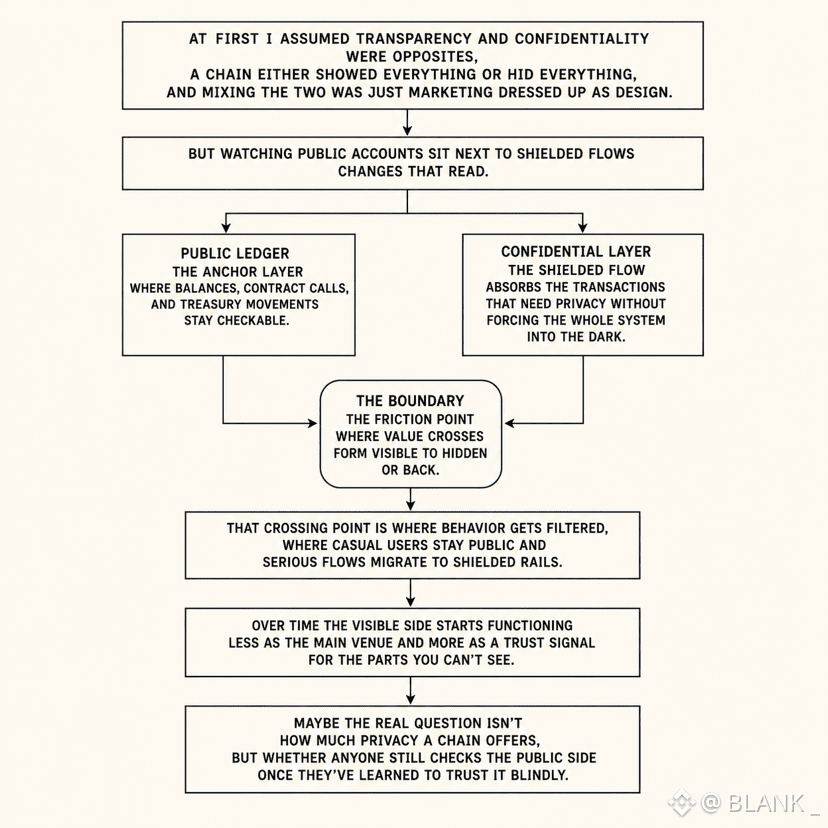
Zunächst ging ich davon aus, dass Transparenz und Vertraulichkeit Gegensätze sind: Eine Kette zeigt entweder alles oder sie verbirgt alles, und das Mischen von beidem sei lediglich Marketing, verkleidet als Design. Doch wenn man öffentliche Konten neben abgeschirmten Flows sieht – diese mitunter lesbaren, aber geschützten –, verändert das die Perspektive. Das öffentliche Ledger wird zu einer Art Anker: Ein Ort, an dem Salden, Vertragsaufrufe und Bewegungen im Treasury nachprüfbar bleiben. Während die vertrauliche Ebene die Transaktionen übernimmt, die Privatsphäre brauchen, ohne das gesamte System ins Dunkel zu zwingen. Was daran besonders interessant ist, ist die Reibung an der Grenze – der Moment, in dem der Wert von sichtbar zu verborgen wechselt oder zurück. Genau an dieser Stelle wird das Verhalten gefiltert: Gelegenheitsnutzer bleiben öffentlich, während ernsthaftere Abläufe auf abgeschirmte Schienen wechseln. Mit der Zeit fängt die sichtbare Seite an, weniger als Hauptbühne zu funktionieren und mehr als Vertrauenssignal für die Bereiche, die man nicht sehen kann. Vielleicht ist die eigentliche Frage nicht, wie viel Privatsphäre eine Kette bietet, sondern ob überhaupt noch jemand die öffentliche Seite überprüft, sobald man gelernt hat, ihr blind zu vertrauen.
@Dusk_Foundation $DUSK #dusk
Zunächst ging ich davon aus, dass Transparenz und Vertraulichkeit Gegensätze sind: Eine Kette zeigt entweder alles oder sie verbirgt alles, und das Mischen von beidem sei lediglich Marketing, verkleidet als Design. Doch wenn man öffentliche Konten neben abgeschirmten Flows sieht – diese mitunter lesbaren, aber geschützten –, verändert das die Perspektive. Das öffentliche Ledger wird zu einer Art Anker: Ein Ort, an dem Salden, Vertragsaufrufe und Bewegungen im Treasury nachprüfbar bleiben. Während die vertrauliche Ebene die Transaktionen übernimmt, die Privatsphäre brauchen, ohne das gesamte System ins Dunkel zu zwingen. Was daran besonders interessant ist, ist die Reibung an der Grenze – der Moment, in dem der Wert von sichtbar zu verborgen wechselt oder zurück. Genau an dieser Stelle wird das Verhalten gefiltert: Gelegenheitsnutzer bleiben öffentlich, während ernsthaftere Abläufe auf abgeschirmte Schienen wechseln. Mit der Zeit fängt die sichtbare Seite an, weniger als Hauptbühne zu funktionieren und mehr als Vertrauenssignal für die Bereiche, die man nicht sehen kann. Vielleicht ist die eigentliche Frage nicht, wie viel Privatsphäre eine Kette bietet, sondern ob überhaupt noch jemand die öffentliche Seite überprüft, sobald man gelernt hat, ihr blind zu vertrauen.
@Dusk $DUSK #dusk
@Dusk $DUSK #dusk
89
69
1.5k
·
--
Bullisch
Zuerst nahm ich an, dass Citadel nur eine weitere Identitätsschicht ist, die an eine Kette geschraubt wurde, eine weitere Box zum Abhaken für Compliance-Theater. Aber je mehr ich gesehen habe, wie die Berechtigungsnachweise durch sie hindurchwandern, desto mehr wirkte es wie etwas anderes: ein Filter, kein Tresor. Das System fordert dich nicht auf, deine Daten herauszugeben. Es fordert dich auf, eine Behauptung zu belegen, und vergisst die Details fast sofort wieder. Das ist eine subtile Art von Reibung: Die Last verlagert sich von der Offenlegung zur Bestätigung (Attestation). Auch der Zeitpunkt spielt hier eine Rolle. Ein einmal verifizierter Berechtigungsnachweis bleibt kein verwertbares Asset; er läuft in die Bedeutungslosigkeit aus, sofern die zugrunde liegende Behauptung nicht weiterhin gilt. Interessant ist nicht die Privatsphäre, sondern der Aufbewahrungsdruck, den das erzeugt. Nutzer werden nicht durch Bequemlichkeit gebunden, sondern durch die Kosten, anderswo erneut beweisen zu müssen. Das wirft die eigentliche Frage auf: Wird die Nachfrage nach Verifizierungssystemen wie diesem von Vertrauen angetrieben oder davon, wie teuer es wird, zu gehen?
@Dusk_Foundation $DUSK #dusk
Zuerst nahm ich an, dass Citadel nur eine weitere Identitätsschicht ist, die an eine Kette geschraubt wurde, eine weitere Box zum Abhaken für Compliance-Theater. Aber je mehr ich gesehen habe, wie die Berechtigungsnachweise durch sie hindurchwandern, desto mehr wirkte es wie etwas anderes: ein Filter, kein Tresor. Das System fordert dich nicht auf, deine Daten herauszugeben. Es fordert dich auf, eine Behauptung zu belegen, und vergisst die Details fast sofort wieder. Das ist eine subtile Art von Reibung: Die Last verlagert sich von der Offenlegung zur Bestätigung (Attestation). Auch der Zeitpunkt spielt hier eine Rolle. Ein einmal verifizierter Berechtigungsnachweis bleibt kein verwertbares Asset; er läuft in die Bedeutungslosigkeit aus, sofern die zugrunde liegende Behauptung nicht weiterhin gilt. Interessant ist nicht die Privatsphäre, sondern der Aufbewahrungsdruck, den das erzeugt. Nutzer werden nicht durch Bequemlichkeit gebunden, sondern durch die Kosten, anderswo erneut beweisen zu müssen. Das wirft die eigentliche Frage auf: Wird die Nachfrage nach Verifizierungssystemen wie diesem von Vertrauen angetrieben oder davon, wie teuer es wird, zu gehen?
@Dusk $DUSK #dusk
@Dusk $DUSK #dusk
211
98
2.7k
·
--
Bullisch
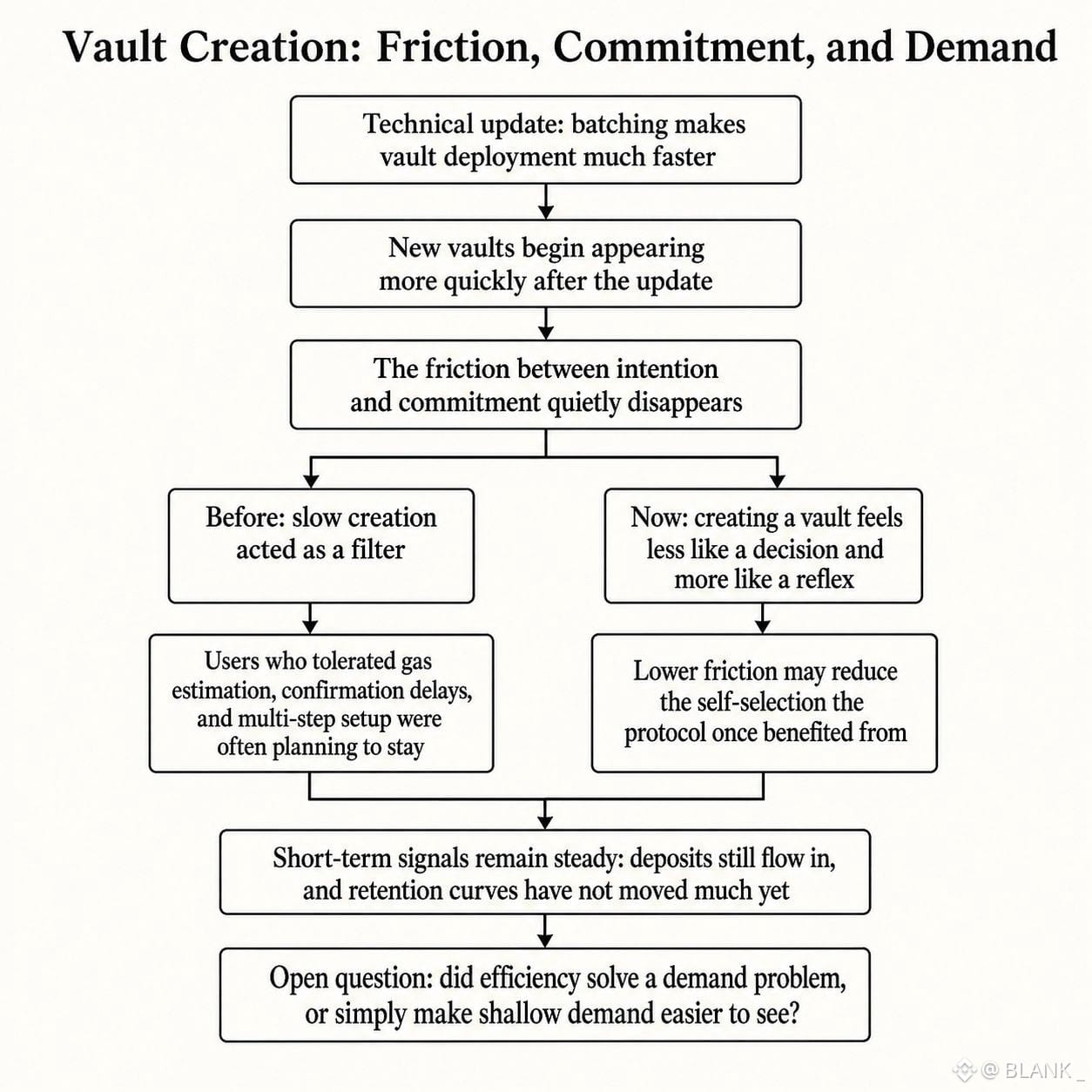
Zuerst ging ich davon aus, dass der Durchbruch rein technisch war: ein cleveres Batch-Verfahren, das Sekunden beim Deployen der Vaults sparte. Aber als ich sah, wie schnell nach dem Update neue Vaults auftauchten, bemerkte ich etwas anderes: die Reibung, die früher zwischen Absicht und Commitment lag, war still verschwunden. Langsames Erstellen wirkte wie ein Filter. Wer die Wartezeit über Gas-Schätzungen, Bestätigungs-Verzögerungen und mehrstufige Einrichtung hinweg durchhielt, waren meist diejenigen, die auch wirklich bleiben wollten. Jetzt, da der Prozess nur noch Momente dauert, fühlt sich die Vault weniger wie eine Entscheidung an und mehr wie ein Reflex. Einzahlungen fließen zwar weiterhin, die Retention-Kurven haben sich noch nicht viel bewegt, aber ich frage mich ständig, ob das Entfernen dieser Reibung auch eine Art Selbstselektion beseitigt hat, auf die das Protokoll sich verließ, ohne es zu merken. Effizienz hat ein UX-Problem gelöst. Ob sie auch ein Nachfrageproblem gelöst hat oder ob sie einfach nur flache Nachfrage leichter sichtbar gemacht hat, bleibt trotzdem ungeklärt.
@babylonlabs_io $BABY #baby
Zuerst ging ich davon aus, dass der Durchbruch rein technisch war: ein cleveres Batch-Verfahren, das Sekunden beim Deployen der Vaults sparte. Aber als ich sah, wie schnell nach dem Update neue Vaults auftauchten, bemerkte ich etwas anderes: die Reibung, die früher zwischen Absicht und Commitment lag, war still verschwunden. Langsames Erstellen wirkte wie ein Filter. Wer die Wartezeit über Gas-Schätzungen, Bestätigungs-Verzögerungen und mehrstufige Einrichtung hinweg durchhielt, waren meist diejenigen, die auch wirklich bleiben wollten. Jetzt, da der Prozess nur noch Momente dauert, fühlt sich die Vault weniger wie eine Entscheidung an und mehr wie ein Reflex. Einzahlungen fließen zwar weiterhin, die Retention-Kurven haben sich noch nicht viel bewegt, aber ich frage mich ständig, ob das Entfernen dieser Reibung auch eine Art Selbstselektion beseitigt hat, auf die das Protokoll sich verließ, ohne es zu merken. Effizienz hat ein UX-Problem gelöst. Ob sie auch ein Nachfrageproblem gelöst hat oder ob sie einfach nur flache Nachfrage leichter sichtbar gemacht hat, bleibt trotzdem ungeklärt.
@BabylonLabs_io $BABY #baby
@BabylonLabs_io $BABY #baby
176
90
15.5k
·
--
Bullisch
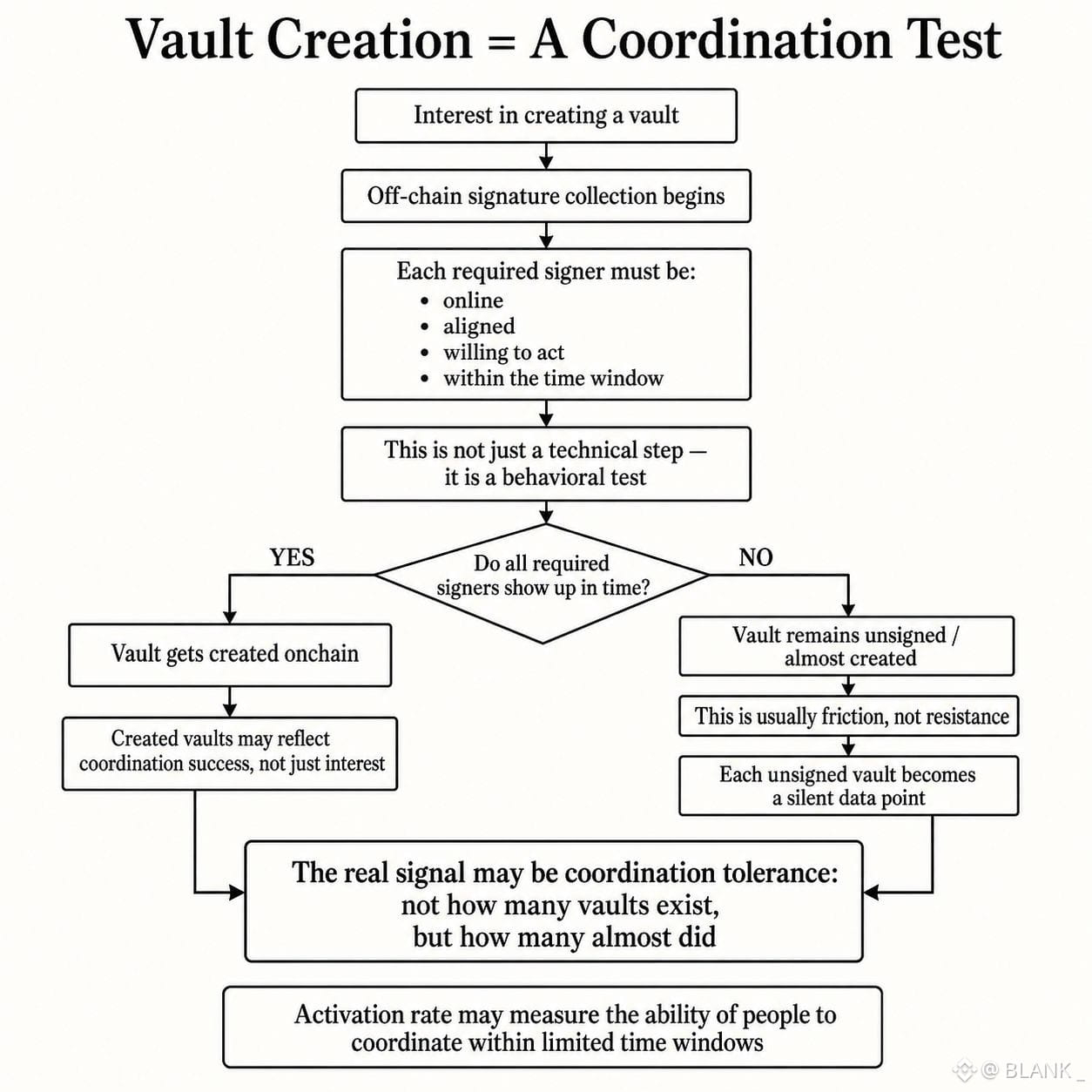
Zuerst ging ich davon aus, dass die Erstellung von Vaults nur eine Formalität ist: ein Wallet-Klick und eine Bestätigung. Doch beim Beobachten des Signatursammelprozesses, off-chain, bevor überhaupt etwas on-chain zur Ruhe kommt, passiert eine Filterwirkung, die leicht übersehen wird. Jede signierende Person muss online sein, abgestimmt und bereit sein, innerhalb eines Zeitfensters zu handeln, das nicht immer großzügig ist. Das ist kein technisches Detail. Es ist ein Verhaltenstest. Die Vaults, die tatsächlich erstellt werden, sind nicht die mit dem größten Interesse, sondern die, bei denen jede erforderliche Partei zur gleichen Zeit, mit derselben Absicht, erscheint, bevor der Moment verstrichen ist. Ich frage mich ständig, wie viel von der „Aktivierungsrate“ eines Protokolls eigentlich nur die Messung der Toleranz gegenüber Koordination ist. Jede nicht signierte Vault ist ein kleines, stilles Datenelement: nicht Widerstand, sondern Reibung, die nie ganz die richtige Antwort bekam. Vielleicht ist das das eigentliche Signal, das man verfolgen sollte: nicht, wie viele Vaults es gibt, sondern wie viele es fast geworden wären.
@babylonlabs_io $BABY #baby
Zuerst ging ich davon aus, dass die Erstellung von Vaults nur eine Formalität ist: ein Wallet-Klick und eine Bestätigung. Doch beim Beobachten des Signatursammelprozesses, off-chain, bevor überhaupt etwas on-chain zur Ruhe kommt, passiert eine Filterwirkung, die leicht übersehen wird. Jede signierende Person muss online sein, abgestimmt und bereit sein, innerhalb eines Zeitfensters zu handeln, das nicht immer großzügig ist. Das ist kein technisches Detail. Es ist ein Verhaltenstest. Die Vaults, die tatsächlich erstellt werden, sind nicht die mit dem größten Interesse, sondern die, bei denen jede erforderliche Partei zur gleichen Zeit, mit derselben Absicht, erscheint, bevor der Moment verstrichen ist. Ich frage mich ständig, wie viel von der „Aktivierungsrate“ eines Protokolls eigentlich nur die Messung der Toleranz gegenüber Koordination ist. Jede nicht signierte Vault ist ein kleines, stilles Datenelement: nicht Widerstand, sondern Reibung, die nie ganz die richtige Antwort bekam. Vielleicht ist das das eigentliche Signal, das man verfolgen sollte: nicht, wie viele Vaults es gibt, sondern wie viele es fast geworden wären.
@BabylonLabs_io $BABY #baby
@BabylonLabs_io $BABY #baby
145
66
2.3k
Anmelden und weiter Inhalte entdecken
Krypto-Nutzer weltweit auf Binance Square kennenlernen
⚡️ Bleib in Sachen Krypto stets am Puls.
💬 Die weltgrößte Kryptobörse vertraut darauf.
👍 Erhalte verlässliche Einblicke von verifizierten Creators.
E-Mail-Adresse/Telefonnummer
Trendthemen
NEARRisesNearly80%InAWeek
20,933 Aufrufe
686 Kommentare
#nearrisesnearly80%inaweek
NEAR-Protokoll in absoluter Hochstimmung diese Woche – hier ist, was den Anstieg antreibt 🔥
Was für eine Woche für NEAR! 🚀 Gewinne von fast 80 % in nur 7 Tagen sind kein reiner Zufall; das deutet auf einen großen Momentum hin, der sich um NEARs Vision formt: die Kette zu entkoppeln und KI-Integration. Wenn technische Effizienz auf die Markthoffnung der Trader trifft, bekommen wir genau diese Art von Kursbewegung.
Hältst du NEAR langfristig, oder nimmst du Gewinne in diesem Bereich mit? Nenne deine Strategie unten! 👇
Bitte folgen Sie
$NEAR
#BitcoinHits$85K #Near #SolanaCutsTargetSlotTimeTo250ms
Shamika Metting
·2 Likes
·1.7k Aufrufe
MultiversXPlansHardForkRecovery
19,303 Aufrufe
529 Kommentare
CircleLaunchesInstitutionalBTCBackedBorrowing
19,846 Aufrufe
659 Kommentare