

Crypto.Andy
552 Beiträge

Crypto.Andy
Melden
Nutzer blockieren
Top #1 Community Creator on CoinMarketCap according to CoinGape | Investor and trader | Listing & Institutional Services Partner of WhiteBIT | Affiliate & Listing Partner of BitUnix | Listing Partner of BitMart & MEXC
0 Following
4 Follower
26 Like gegeben
Beiträge
·
--
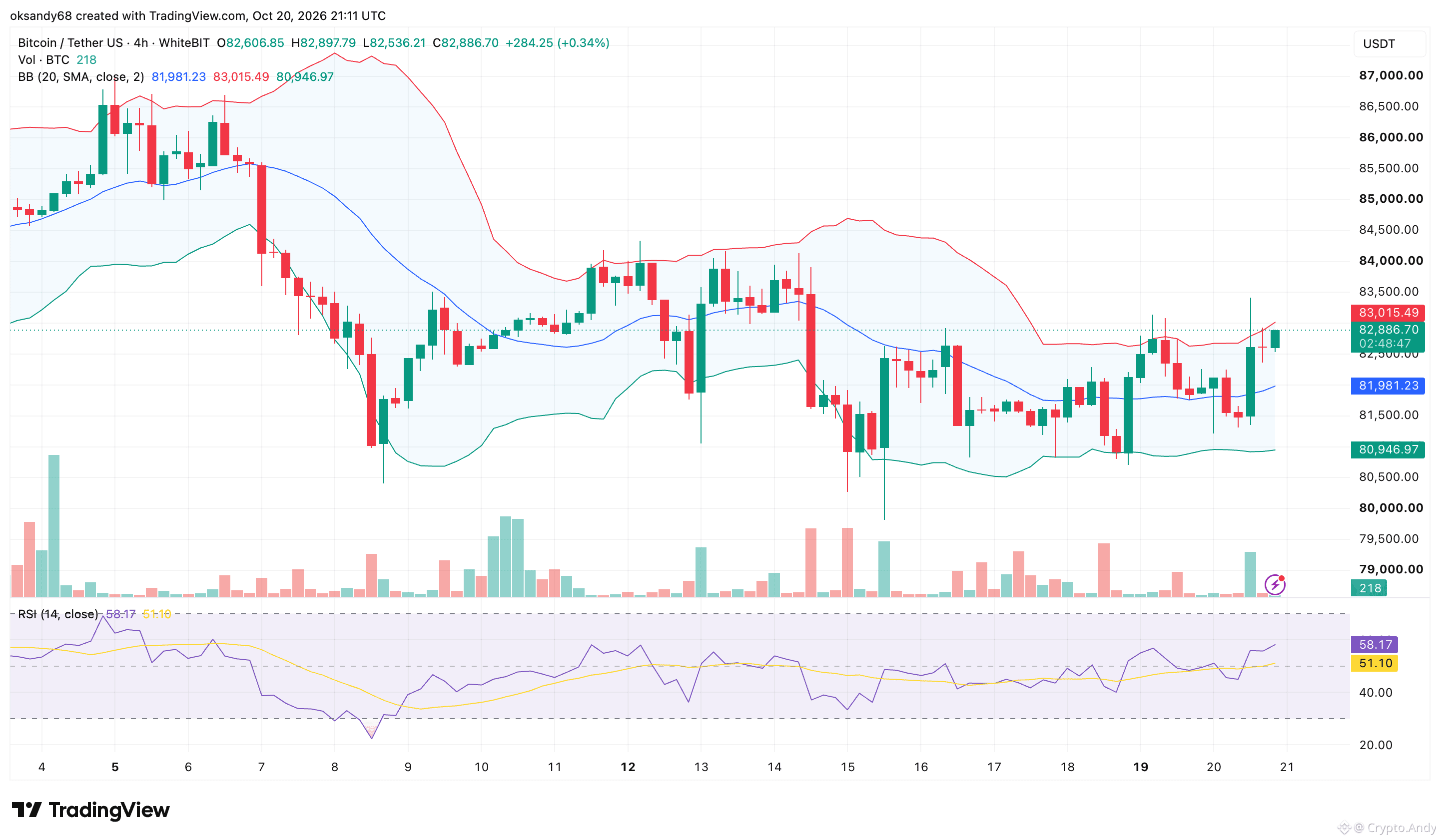
$BTC schoss nach Schlagzeilen über einen neuen US-iranischen Friedensplan über $83K. Die Euphorie hielt nicht lange an: Die Trader kamen zu dem Schluss, dass eine schnelle Einigung unwahrscheinlich ist, und BTC gab einen guten Teil des Anstiegs wieder ab. Was der Chart zeigt (4H): 🕯 Die Kerze des Kurssprungs hinterließ nahe $83,700 einen langen Docht – dort warteten also Verkäufer 📊 Der Kurs liegt jetzt bei etwa $82,900 und drückt gegen das obere Bollinger-Band bei etwa $83,000 🌡 Der RSI liegt bei 58, es ist also noch Luft, bevor der Markt überhitzt Diese Niveaus beobachte ich: 🔴 $83,000–83,700: die Dochtzone. Ein 4H-Schlusskurs darüber ebnet den Weg zu $84K+ 🟢 $82,000: das mittlere Band, die erste Unterstützung 🟢 $81,000: das untere Band und die Untergrenze der Handelsspanne Solange wir keinen klaren Schlusskurs über dem Docht sehen, betrachte ich das als einen weiteren Fehlausbruch innerhalb der Handelsspanne. Haben dich die Friedensschlagzeilen in einer Long-Position erwischt? 👇 Recherchiere selbst (DYOR)! #BTC-Kursanalyse# #Bitcoin-Kursprognose: Was kommt als Nächstes für Bitcoin?#
$BTC schoss nach Schlagzeilen über einen neuen US-iranischen Friedensplan über $83K. Die Euphorie hielt nicht lange an: Die Trader kamen zu dem Schluss, dass eine schnelle Einigung unwahrscheinlich ist, und BTC gab einen guten Teil des Anstiegs wieder ab. Was der Chart zeigt (4H): 🕯 Die Kerze des Kurssprungs hinterließ nahe $83,700 einen langen Docht – dort warteten also Verkäufer 📊 Der Kurs liegt jetzt bei etwa $82,900 und drückt gegen das obere Bollinger-Band bei etwa $83,000 🌡 Der RSI liegt bei 58, es ist also noch Luft, bevor der Markt überhitzt Diese Niveaus beobachte ich: 🔴 $83,000–83,700: die Dochtzone. Ein 4H-Schlusskurs darüber ebnet den Weg zu $84K+ 🟢 $82,000: das mittlere Band, die erste Unterstützung 🟢 $81,000: das untere Band und die Untergrenze der Handelsspanne Solange wir keinen klaren Schlusskurs über dem Docht sehen, betrachte ich das als einen weiteren Fehlausbruch innerhalb der Handelsspanne. Haben dich die Friedensschlagzeilen in einer Long-Position erwischt? 👇 Recherchiere selbst (DYOR)! #BTC-Kursanalyse# #Bitcoin-Kursprognose: Was kommt als Nächstes für Bitcoin?#
67
·
--
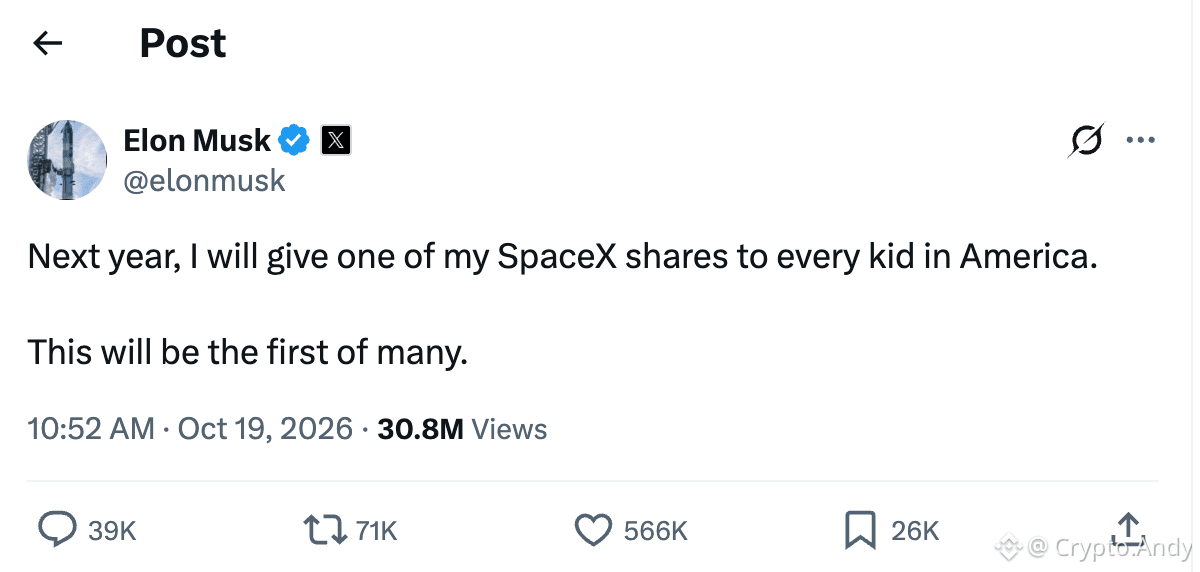
🚀 Musk schenkt jedem Kind in Amerika SpaceX-Aktien Am Montag schrieb Elon Musk auf X, dass er nächstes Jahr jedem Kind in den USA eine seiner $SPCX-Aktien schenken werde, und nannte es „die erste von vielen“. In den USA gibt es etwa 73 Millionen Kinder unter 18 Jahren. Beim aktuellen Kurs von rund 146 $ pro Aktie wäre das ein Geschenk im Wert von mehr als 10 Milliarden Dollar – ungefähr 1 % von Musks Vermögen 😳 Musk hat nicht erklärt, wie die Verteilung ablaufen soll. Wahrscheinlich wird sie über Trump Accounts erfolgen – staatliche Anlagekonten für Kinder, die bereits Aktienspenden annehmen. Mehr Kurznachrichten gibt’s in meiner Community 📲 https://bit.ly/4jdykHo Auch der Zeitpunkt ist interessant. Die Ankündigung kam einen Tag vor den Q3-Ergebnissen von SpaceX, die heute, am 20. Oktober, nach Börsenschluss veröffentlicht werden. Besseres Marketing vor einem Bericht kann man sich kaum vorstellen 😄 Im August meldete SpaceX für das zweite Quartal einen Umsatz von 7,8 Milliarden Dollar und einen Nettoverlust von 541 Millionen Dollar. Heute sehen wir, ob sich die Zahlen verbessert haben. Würdest du dich über eine SpaceX-Aktie als Geschenk freuen oder lieber $BTC haben? 👇 #BTC-Kursanalyse# #Makro-Einblicke#
🚀 Musk schenkt jedem Kind in Amerika SpaceX-Aktien Am Montag schrieb Elon Musk auf X, dass er nächstes Jahr jedem Kind in den USA eine seiner $SPCX-Aktien schenken werde, und nannte es „die erste von vielen“. In den USA gibt es etwa 73 Millionen Kinder unter 18 Jahren. Beim aktuellen Kurs von rund 146 $ pro Aktie wäre das ein Geschenk im Wert von mehr als 10 Milliarden Dollar – ungefähr 1 % von Musks Vermögen 😳 Musk hat nicht erklärt, wie die Verteilung ablaufen soll. Wahrscheinlich wird sie über Trump Accounts erfolgen – staatliche Anlagekonten für Kinder, die bereits Aktienspenden annehmen. Mehr Kurznachrichten gibt’s in meiner Community 📲 https://bit.ly/4jdykHo Auch der Zeitpunkt ist interessant. Die Ankündigung kam einen Tag vor den Q3-Ergebnissen von SpaceX, die heute, am 20. Oktober, nach Börsenschluss veröffentlicht werden. Besseres Marketing vor einem Bericht kann man sich kaum vorstellen 😄 Im August meldete SpaceX für das zweite Quartal einen Umsatz von 7,8 Milliarden Dollar und einen Nettoverlust von 541 Millionen Dollar. Heute sehen wir, ob sich die Zahlen verbessert haben. Würdest du dich über eine SpaceX-Aktie als Geschenk freuen oder lieber $BTC haben? 👇 #BTC-Kursanalyse# #Makro-Einblicke#
97
·
--
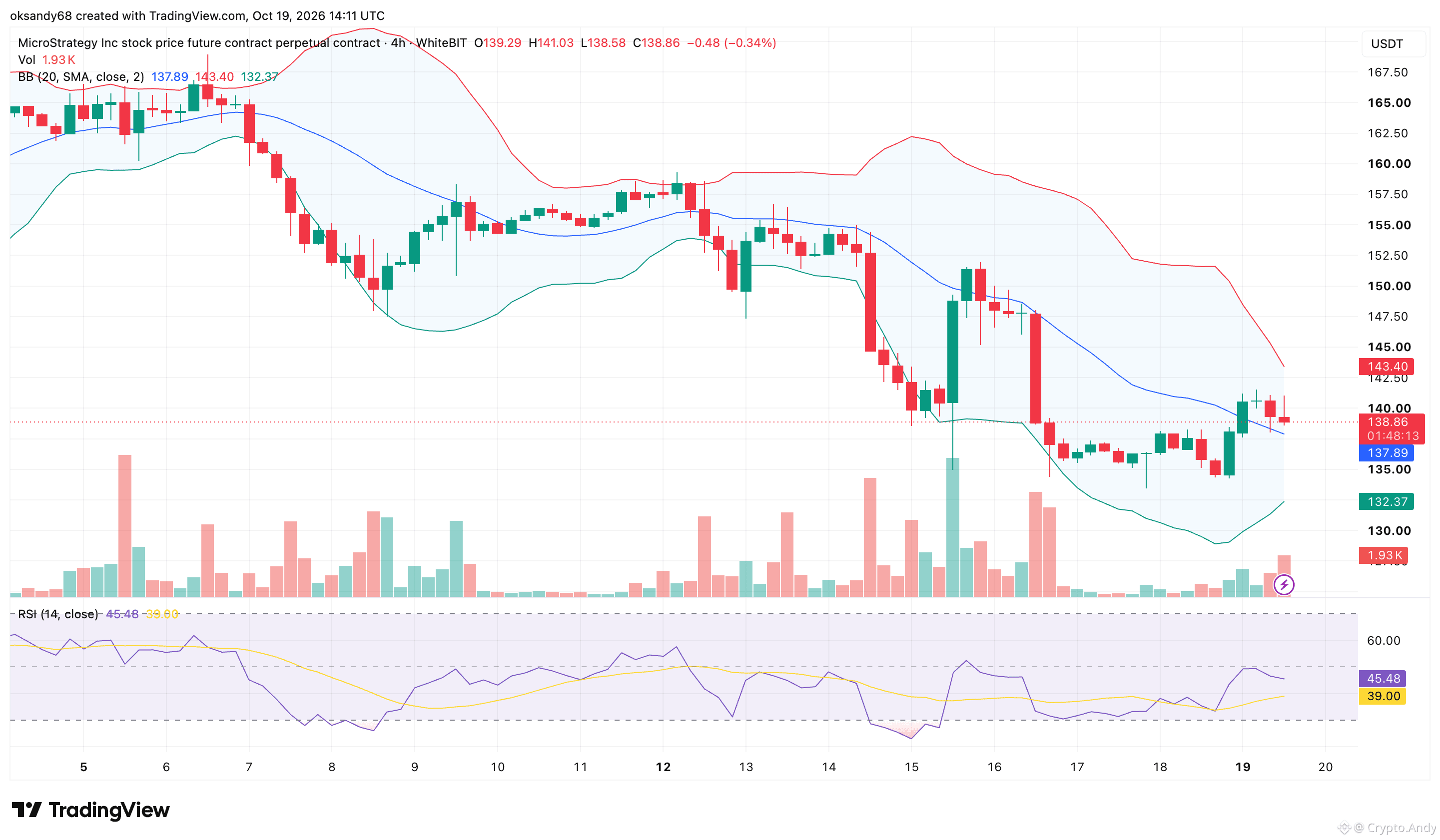
$MSTR: Ein Softwareunternehmen, das 4 % aller $BTC besitzt Ich stelle gerade einen Aktienleitfaden für Anfänger zusammen, und ein Unternehmen taucht auf jeder Liste für Krypto-Fans auf: Strategy, ehemals MicroStrategy. Im Grunde ist es die größte Unternehmenswette auf BTC weltweit. Das Unternehmen hält etwa 848.000 Bitcoin, also rund 4 % aller BTC, die jemals existieren werden. Der durchschnittliche Kaufpreis liegt bei etwa 75.000 $, sodass der Bestand bei einem BTC-Kurs nahe 82.000 $ weiterhin im Plus ist. Wusstest du das? 🤔 Strategy wurde 1989 als ganz normales Softwareunternehmen gegründet. Erst Jahre später begann das Unternehmen, Bitcoin zu kaufen, und inzwischen wird seine Aktie fast wie eine gehebelte BTC-Position gehandelt. Ein weiteres Detail, das vielen entgangen ist: Das Unternehmen, das dafür bekannt ist, „niemals zu verkaufen“, veräußerte im August tatsächlich 1.690 BTC, um eigene Vorzugsaktien zurückzukaufen. Was der Chart zeigt (MSTR-Perpetual, 4H): 📉 In den vergangenen zwei Wochen fiel der Kurs von etwa 165 $ auf ein Tief nahe 134 $ 📈 Heute erholte er sich auf etwa 141 $ und liegt nun am mittleren Bollinger-Band bei rund 138 $ 🌡 Der RSI liegt bei 45 Diese Marken beobachte ich: 🟢 132–134 $: unteres Band und jüngste Tiefs 🔴 143 $: oberes Band und der erste echte Test für die Käufer Da MSTR dem Bitcoin-Kurs so eng folgt, hängt vieles davon ab, ob $BTC sich über 80.000 $ halten kann. Falls ja, hat MSTR gute Chancen, erneut 143 $ und anschließend 150 $ zu testen. #BTC-Kursanalyse# #Makro-Einblicke#
$MSTR: Ein Softwareunternehmen, das 4 % aller $BTC besitzt Ich stelle gerade einen Aktienleitfaden für Anfänger zusammen, und ein Unternehmen taucht auf jeder Liste für Krypto-Fans auf: Strategy, ehemals MicroStrategy. Im Grunde ist es die größte Unternehmenswette auf BTC weltweit. Das Unternehmen hält etwa 848.000 Bitcoin, also rund 4 % aller BTC, die jemals existieren werden. Der durchschnittliche Kaufpreis liegt bei etwa 75.000 $, sodass der Bestand bei einem BTC-Kurs nahe 82.000 $ weiterhin im Plus ist. Wusstest du das? 🤔 Strategy wurde 1989 als ganz normales Softwareunternehmen gegründet. Erst Jahre später begann das Unternehmen, Bitcoin zu kaufen, und inzwischen wird seine Aktie fast wie eine gehebelte BTC-Position gehandelt. Ein weiteres Detail, das vielen entgangen ist: Das Unternehmen, das dafür bekannt ist, „niemals zu verkaufen“, veräußerte im August tatsächlich 1.690 BTC, um eigene Vorzugsaktien zurückzukaufen. Was der Chart zeigt (MSTR-Perpetual, 4H): 📉 In den vergangenen zwei Wochen fiel der Kurs von etwa 165 $ auf ein Tief nahe 134 $ 📈 Heute erholte er sich auf etwa 141 $ und liegt nun am mittleren Bollinger-Band bei rund 138 $ 🌡 Der RSI liegt bei 45 Diese Marken beobachte ich: 🟢 132–134 $: unteres Band und jüngste Tiefs 🔴 143 $: oberes Band und der erste echte Test für die Käufer Da MSTR dem Bitcoin-Kurs so eng folgt, hängt vieles davon ab, ob $BTC sich über 80.000 $ halten kann. Falls ja, hat MSTR gute Chancen, erneut 143 $ und anschließend 150 $ zu testen. #BTC-Kursanalyse# #Makro-Einblicke#
27
·
--
Die USA liegen weltweit auf Platz 1, wenn es darum geht, wie viel Geld in Kryptowährungen wie $BTC fließt – aber nur auf Platz 20, wenn es darum geht, wie viele Menschen sich gegenseitig Kryptowährungen senden 🤔 Das ist eines der interessantesten Details aus dem neuen Global Crypto Adoption Index 2026 von Chainalysis. In den USA ist Krypto vor allem eine Anlage: Die Menschen kaufen es über ETFs und Apps und halten es. Nigeria zeigt ein ganz anderes Bild. Das Land liegt weltweit an erster Stelle bei Überweisungen zwischen Privatpersonen und grenzüberschreitenden Transaktionen, denn dort ersetzt Krypto oft eine Bank. Und Brasilien, wo Krypto auf beide Arten genutzt wird, belegte insgesamt den ersten Platz. Ich habe alle drei Länder und die gesamten Top 10 in meiner Community genauer unter die Lupe genommen: https://bit.ly/4jdykHo Wie wird Krypto in deinem Land genutzt? 🌍 #BTC-Kursanalyse# #Bitcoin-Kursprognose: Was kommt als Nächstes für Bitcoin?#
Die USA liegen weltweit auf Platz 1, wenn es darum geht, wie viel Geld in Kryptowährungen wie $BTC fließt – aber nur auf Platz 20, wenn es darum geht, wie viele Menschen sich gegenseitig Kryptowährungen senden 🤔 Das ist eines der interessantesten Details aus dem neuen Global Crypto Adoption Index 2026 von Chainalysis. In den USA ist Krypto vor allem eine Anlage: Die Menschen kaufen es über ETFs und Apps und halten es. Nigeria zeigt ein ganz anderes Bild. Das Land liegt weltweit an erster Stelle bei Überweisungen zwischen Privatpersonen und grenzüberschreitenden Transaktionen, denn dort ersetzt Krypto oft eine Bank. Und Brasilien, wo Krypto auf beide Arten genutzt wird, belegte insgesamt den ersten Platz. Ich habe alle drei Länder und die gesamten Top 10 in meiner Community genauer unter die Lupe genommen: https://bit.ly/4jdykHo Wie wird Krypto in deinem Land genutzt? 🌍 #BTC-Kursanalyse# #Bitcoin-Kursprognose: Was kommt als Nächstes für Bitcoin?#
40
·
--
☀️ Einen schönen Montag euch allen! Hier ein kurzer Blick auf den heutigen Markt: Top 5 Kryptowährungen: 🟢 $BTC : $83,014 (+1.12%) 🟢 ETH: $2,444 (+0.87%) 🟢 BNB: $726.70 (+0.56%) 🟢 XRP: $1.32 (+1.31%) 🟢 SOL: $105.83 (+1.82%) Krypto-Aktien: 🔴 Strategy (MSTR): $136.83 (−9.56%) 🔴 Coinbase (COIN): $173.16 (−5.79%) 🔴 Circle (CRCL): $82.22 (−5.46%) 🔴 Block (XYZ): $77.89 (−2.43%) 🔴 IREN: $26.99 (−11.19%) #BTC-Kursanalyse# #Bitcoin-Kursprognose: Was ist der nächste Schritt von Bitcoin?#
☀️ Einen schönen Montag euch allen! Hier ein kurzer Blick auf den heutigen Markt: Top 5 Kryptowährungen: 🟢 $BTC : $83,014 (+1.12%) 🟢 ETH: $2,444 (+0.87%) 🟢 BNB: $726.70 (+0.56%) 🟢 XRP: $1.32 (+1.31%) 🟢 SOL: $105.83 (+1.82%) Krypto-Aktien: 🔴 Strategy (MSTR): $136.83 (−9.56%) 🔴 Coinbase (COIN): $173.16 (−5.79%) 🔴 Circle (CRCL): $82.22 (−5.46%) 🔴 Block (XYZ): $77.89 (−2.43%) 🔴 IREN: $26.99 (−11.19%) #BTC-Kursanalyse# #Bitcoin-Kursprognose: Was ist der nächste Schritt von Bitcoin?#

63
·
--
☀️ Einen schönen Montag euch allen! Das Wochenende ist vorbei, und das heißt: Zeit für $BTC-Charts, neue Levels und frische Trades 📊 Ich wünsche euch allen einen entspannten Wochenstart, saubere Einstiege und so wenige Stop-Losses wie möglich 😄 Heute arbeite ich an Folgendem: Ich möchte mich eingehender mit Aktien beschäftigen und herausfinden, welche sich am besten für ein Anfängerportfolio eignen könnten. Welche Unternehmen einen genaueren Blick wert sind, wie man das Risiko ausbalanciert und wo man anfängt, wenn man noch nie eine Aktie gekauft hat. Wäre das interessant für euch? 👇 🔥 Ja, zeig her 🤔 Bleib lieber bei Krypto #BTC-Kursanalyse# #Makro-Einblicke#
☀️ Einen schönen Montag euch allen! Das Wochenende ist vorbei, und das heißt: Zeit für $BTC-Charts, neue Levels und frische Trades 📊 Ich wünsche euch allen einen entspannten Wochenstart, saubere Einstiege und so wenige Stop-Losses wie möglich 😄 Heute arbeite ich an Folgendem: Ich möchte mich eingehender mit Aktien beschäftigen und herausfinden, welche sich am besten für ein Anfängerportfolio eignen könnten. Welche Unternehmen einen genaueren Blick wert sind, wie man das Risiko ausbalanciert und wo man anfängt, wenn man noch nie eine Aktie gekauft hat. Wäre das interessant für euch? 👇 🔥 Ja, zeig her 🤔 Bleib lieber bei Krypto #BTC-Kursanalyse# #Makro-Einblicke#

69
·
--
Ich habe einen Krypto-Einlageplan für Unternehmen ausgepackt: $BTC. Das war drin Die Krypto-Kreditvergabe erhält in diesem Jahr bei institutionellen Anlegern immer mehr Aufmerksamkeit. 📈 In einer im April veröffentlichten Umfrage von Nomura und Laser Digital gaben 65 % der institutionellen Anleger an, dass sie auf Kreditvergabe und tokenisierte Vermögenswerte setzen. Für ein Unternehmen bedeutet das in der Regel einen Einlageplan, der individuell mit einem Anbieter vereinbart wird. Ich stelle ihn mir gern wie einen Baukasten vor. 🧩 Alle bekommen dieselben fünf Teile, und jedes Unternehmen setzt sie passend zum eigenen Cashflow zusammen. Also, was ist drin? 🔹 Teil 1: der Betrag. Wie viel das Unternehmen zurücklegen kann, ohne den Tagesbetrieb zu beeinträchtigen. 🔹 Teil 2: die Vermögenswerte. Welche Coins kommen hinein – Stablecoins, BTC oder eine Mischung? 🔹 Teil 3: die Laufzeit. Wie lange das Kapital im Plan bleiben kann, basierend auf der Liquiditätsplanung. 🔹 Teil 4: der Zinssatz. Was der Anbieter für genau diesen Betrag, diese Vermögenswerte und diese Laufzeit bietet. 🔹 Teil 5: der vorzeitige Ausstieg. Was passiert, wenn das Geld früher als geplant benötigt wird? Entscheidend ist, ob der Anbieter das Modell nach deinen Vorstellungen zusammenstellen lässt oder dir nur ein bereits verklebtes Set überlässt. WhiteBIT Crypto Lending für Unternehmen kann Einlagepläne beispielsweise individuell gestalten. https://institutional.whitebit.com/crypto-lending-for-business?utm_source=coinmarketcap&utm_medium=lendb2_andy&utm_campaign=post Die Laufzeiten können von 10 Tagen bis zu mehreren Jahren reichen; es können verschiedene Kryptowährungen verfügbar sein; die Zinssätze sind flexibel; und die Bedingungen für eine vorzeitige Auflösung werden mit jedem Kunden individuell vereinbart. Die Pläne beginnen ab 600.000 USDT. Wenn du deinen ersten $BTC-Einlageplan zusammenstellen würdest, mit welchem Baustein würdest du anfangen? 🧩 Haftungsausschluss: Dies ist keine Finanz- oder Anlageberatung. Informiere dich selbst, bevor du Entscheidungen triffst. Die Nutzung erfolgt auf eigenes Risiko. #BTC-Preisanalyse# #Bitcoin-Preisprognose: Was ist der nächste Schritt von Bitcoin?#
Ich habe einen Krypto-Einlageplan für Unternehmen ausgepackt: $BTC. Das war drin Die Krypto-Kreditvergabe erhält in diesem Jahr bei institutionellen Anlegern immer mehr Aufmerksamkeit. 📈 In einer im April veröffentlichten Umfrage von Nomura und Laser Digital gaben 65 % der institutionellen Anleger an, dass sie auf Kreditvergabe und tokenisierte Vermögenswerte setzen. Für ein Unternehmen bedeutet das in der Regel einen Einlageplan, der individuell mit einem Anbieter vereinbart wird. Ich stelle ihn mir gern wie einen Baukasten vor. 🧩 Alle bekommen dieselben fünf Teile, und jedes Unternehmen setzt sie passend zum eigenen Cashflow zusammen. Also, was ist drin? 🔹 Teil 1: der Betrag. Wie viel das Unternehmen zurücklegen kann, ohne den Tagesbetrieb zu beeinträchtigen. 🔹 Teil 2: die Vermögenswerte. Welche Coins kommen hinein – Stablecoins, BTC oder eine Mischung? 🔹 Teil 3: die Laufzeit. Wie lange das Kapital im Plan bleiben kann, basierend auf der Liquiditätsplanung. 🔹 Teil 4: der Zinssatz. Was der Anbieter für genau diesen Betrag, diese Vermögenswerte und diese Laufzeit bietet. 🔹 Teil 5: der vorzeitige Ausstieg. Was passiert, wenn das Geld früher als geplant benötigt wird? Entscheidend ist, ob der Anbieter das Modell nach deinen Vorstellungen zusammenstellen lässt oder dir nur ein bereits verklebtes Set überlässt. WhiteBIT Crypto Lending für Unternehmen kann Einlagepläne beispielsweise individuell gestalten. https://institutional.whitebit.com/crypto-lending-for-business?utm_source=coinmarketcap&utm_medium=lendb2_andy&utm_campaign=post Die Laufzeiten können von 10 Tagen bis zu mehreren Jahren reichen; es können verschiedene Kryptowährungen verfügbar sein; die Zinssätze sind flexibel; und die Bedingungen für eine vorzeitige Auflösung werden mit jedem Kunden individuell vereinbart. Die Pläne beginnen ab 600.000 USDT. Wenn du deinen ersten $BTC-Einlageplan zusammenstellen würdest, mit welchem Baustein würdest du anfangen? 🧩 Haftungsausschluss: Dies ist keine Finanz- oder Anlageberatung. Informiere dich selbst, bevor du Entscheidungen triffst. Die Nutzung erfolgt auf eigenes Risiko. #BTC-Preisanalyse# #Bitcoin-Preisprognose: Was ist der nächste Schritt von Bitcoin?#

·
--
☕ Sonntagsmodus: an Heute ist ein Tag, um sich von den Charts, den Nachrichten und dem ständigen Blick auf die Kurse zu erholen 😌 Geh spazieren, verbringe Zeit mit deinen Liebsten oder genieße einfach deinen Kaffee, ohne alle fünf Minuten auf den $BTC-Kurs zu schauen. Der Markt ist morgen noch da – und wir auch. Am Montag gibt’s neue Charts, Kursmarken und frische Ideen 📊 #BTC-Kursanalyse# #Bitcoin-Kursprognose: Was ist Bitcoins nächster Schritt?#
☕ Sonntagsmodus: an Heute ist ein Tag, um sich von den Charts, den Nachrichten und dem ständigen Blick auf die Kurse zu erholen 😌 Geh spazieren, verbringe Zeit mit deinen Liebsten oder genieße einfach deinen Kaffee, ohne alle fünf Minuten auf den $BTC-Kurs zu schauen. Der Markt ist morgen noch da – und wir auch. Am Montag gibt’s neue Charts, Kursmarken und frische Ideen 📊 #BTC-Kursanalyse# #Bitcoin-Kursprognose: Was ist Bitcoins nächster Schritt?#

84
·
--
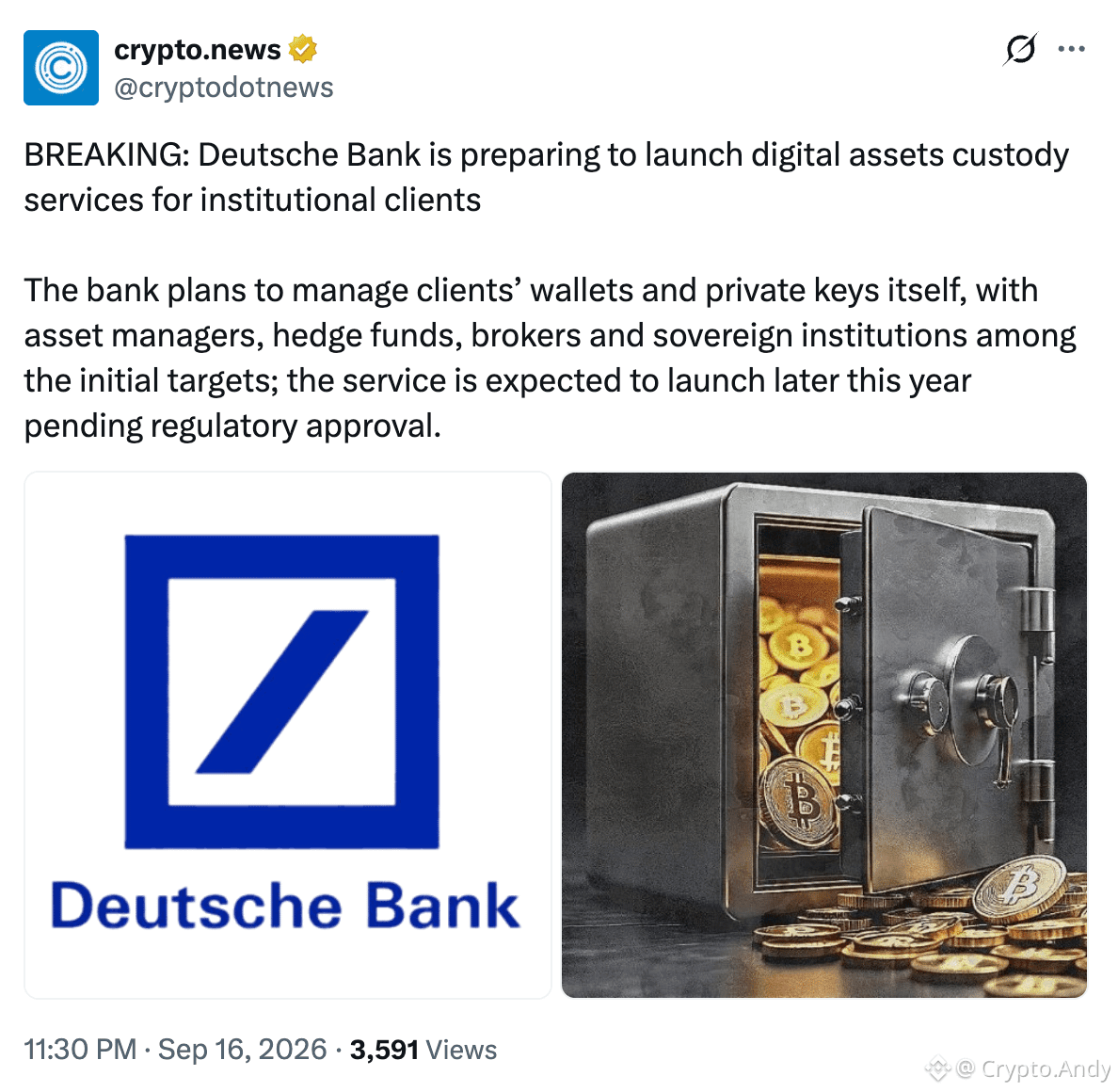
Eine der größten Banken Europas wird bald Kryptowährungen verwahren 🏦 Die Deutsche Bank sagt, dass ihr erster Verwahrungsdienst für digitale Vermögenswerte nur noch wenige Wochen vom Start entfernt ist. In einem Reuters-Interview am 16. Oktober sagte Gerald Podobnik, Co-Leiter des Firmenkundengeschäfts, dass der Dienst zunächst die Verwahrung von $BTC und Ether in Deutschland anbieten wird. Die Idee ist einfach: Die Bank verwaltet Wallets und private Schlüssel für ihre Kunden, sodass Fonds und Unternehmen keine eigenen Systeme zur Schlüsselverwaltung aufbauen müssen. Zum Schutz gehören Cold- und Warm-Storage, Freigaben durch mehrere Personen und eine Backup-Infrastruktur. Die Unterlagen der Bank führen außerdem USDC, EURC und EURAU als unterstützte Vermögenswerte auf. Stablecoin-Dienste, tokenisierte Einlagen und digitale Wertpapiere sind jedoch als nächste Schritte geplant. Daher wird sich der erste Starttag wahrscheinlich vor allem auf $BTC und ETH konzentrieren. Ein paar Dinge sollte man im Hinterkopf behalten: 🔹 Der Dienst richtet sich an Institutionen, Unternehmen und Vermögensverwalter, nicht an Privatkunden 🔹 Deutschland macht den Anfang; asiatische Finanzzentren sind für 2027 geplant 🔹 Der genaue Starttermin hängt weiterhin von der regulatorischen und technischen Bereitschaft ab. Für mich ist das ein weiteres Zeichen dafür, dass Kryptowährungen Teil der alltäglichen Bankinfrastruktur werden. Wenn eine Bank dieser Größe Bitcoin für ihre Firmenkunden verwahrt, fällt es anderen Unternehmen deutlich leichter, nachzuziehen. #BTC-Kursanalyse# #Bitcoin-Kursprognose: Was ist Bitcoins nächster Schritt?#
Eine der größten Banken Europas wird bald Kryptowährungen verwahren 🏦 Die Deutsche Bank sagt, dass ihr erster Verwahrungsdienst für digitale Vermögenswerte nur noch wenige Wochen vom Start entfernt ist. In einem Reuters-Interview am 16. Oktober sagte Gerald Podobnik, Co-Leiter des Firmenkundengeschäfts, dass der Dienst zunächst die Verwahrung von $BTC und Ether in Deutschland anbieten wird. Die Idee ist einfach: Die Bank verwaltet Wallets und private Schlüssel für ihre Kunden, sodass Fonds und Unternehmen keine eigenen Systeme zur Schlüsselverwaltung aufbauen müssen. Zum Schutz gehören Cold- und Warm-Storage, Freigaben durch mehrere Personen und eine Backup-Infrastruktur. Die Unterlagen der Bank führen außerdem USDC, EURC und EURAU als unterstützte Vermögenswerte auf. Stablecoin-Dienste, tokenisierte Einlagen und digitale Wertpapiere sind jedoch als nächste Schritte geplant. Daher wird sich der erste Starttag wahrscheinlich vor allem auf $BTC und ETH konzentrieren. Ein paar Dinge sollte man im Hinterkopf behalten: 🔹 Der Dienst richtet sich an Institutionen, Unternehmen und Vermögensverwalter, nicht an Privatkunden 🔹 Deutschland macht den Anfang; asiatische Finanzzentren sind für 2027 geplant 🔹 Der genaue Starttermin hängt weiterhin von der regulatorischen und technischen Bereitschaft ab. Für mich ist das ein weiteres Zeichen dafür, dass Kryptowährungen Teil der alltäglichen Bankinfrastruktur werden. Wenn eine Bank dieser Größe Bitcoin für ihre Firmenkunden verwahrt, fällt es anderen Unternehmen deutlich leichter, nachzuziehen. #BTC-Kursanalyse# #Bitcoin-Kursprognose: Was ist Bitcoins nächster Schritt?#
1
·
--
Ich habe einen Krypto-Einlagenplan für Unternehmen ausgepackt. Das war drin Krypto- $BTC-Kredite erhalten in diesem Jahr immer mehr Aufmerksamkeit von institutionellen Anlegern. 📈 In einer im April veröffentlichten Umfrage von Nomura und Laser Digital gaben 65 % der institutionellen Anleger an, Kredite und tokenisierte Vermögenswerte ins Visier zu nehmen. Für ein Unternehmen bedeutet das in der Regel einen individuell mit einem Anbieter vereinbarten Einlagenplan. Ich stelle mir das gern wie einen Baukasten vor. 🧩 Alle bekommen dieselben fünf Teile in der Box, und jedes Unternehmen setzt sie passend zu seinem eigenen Cashflow zusammen. Was ist also in der Box? 🔹 Teil 1: der Betrag. Wie viel das Unternehmen zurücklegen kann, ohne den Tagesbetrieb zu beeinträchtigen. 🔹 Teil 2: die Vermögenswerte. Welche Coins kommen hinein – Stablecoins, BTC oder eine Mischung? 🔹 Teil 3: die Laufzeit. Wie lange die Mittel im Plan bleiben können, basierend auf der Liquiditätsprognose. 🔹 Teil 4: der Zinssatz. Was der Anbieter für genau diesen Betrag, diese Vermögenswerte und diese Laufzeit anbietet. 🔹 Teil 5: die vorzeitige Auflösung. Was passiert, wenn das Geld früher als geplant benötigt wird? Wichtig ist zu prüfen, ob der Anbieter es Ihnen ermöglicht, das Modell nach Ihren Vorstellungen zusammenzustellen, oder ob er Ihnen nur ein bereits verklebtes Set überlässt. WhiteBIT Crypto Lending for Businesses kann beispielsweise Einlagenpläne individuell gestalten. https://institutional.whitebit.com/crypto-lending-for-business?utm_source=coinmarketcap&utm_medium=lendb2_andy&utm_campaign=post Die Laufzeiten können von 10 Tagen bis zu mehreren Jahren reichen; verschiedene Kryptowährungen können verfügbar sein; die Zinssätze sind flexibel; und die Bedingungen für eine vorzeitige Auflösung werden mit jedem Kunden vereinbart. Die Pläne beginnen bei 600.000 USDT. Wenn Sie Ihren ersten Einlagenplan zusammenstellen würden, mit welchem Baustein würden Sie anfangen? 🧩 Haftungsausschluss: Dies ist keine Finanz- oder Anlageberatung. Informieren Sie sich selbst, bevor Sie Entscheidungen treffen. Die Nutzung erfolgt auf eigenes Risiko. #BTC-Kursanalyse# #Bitcoin-Kursprognose: Was kommt als Nächstes für Bitcoin?#
Ich habe einen Krypto-Einlagenplan für Unternehmen ausgepackt. Das war drin Krypto- $BTC-Kredite erhalten in diesem Jahr immer mehr Aufmerksamkeit von institutionellen Anlegern. 📈 In einer im April veröffentlichten Umfrage von Nomura und Laser Digital gaben 65 % der institutionellen Anleger an, Kredite und tokenisierte Vermögenswerte ins Visier zu nehmen. Für ein Unternehmen bedeutet das in der Regel einen individuell mit einem Anbieter vereinbarten Einlagenplan. Ich stelle mir das gern wie einen Baukasten vor. 🧩 Alle bekommen dieselben fünf Teile in der Box, und jedes Unternehmen setzt sie passend zu seinem eigenen Cashflow zusammen. Was ist also in der Box? 🔹 Teil 1: der Betrag. Wie viel das Unternehmen zurücklegen kann, ohne den Tagesbetrieb zu beeinträchtigen. 🔹 Teil 2: die Vermögenswerte. Welche Coins kommen hinein – Stablecoins, BTC oder eine Mischung? 🔹 Teil 3: die Laufzeit. Wie lange die Mittel im Plan bleiben können, basierend auf der Liquiditätsprognose. 🔹 Teil 4: der Zinssatz. Was der Anbieter für genau diesen Betrag, diese Vermögenswerte und diese Laufzeit anbietet. 🔹 Teil 5: die vorzeitige Auflösung. Was passiert, wenn das Geld früher als geplant benötigt wird? Wichtig ist zu prüfen, ob der Anbieter es Ihnen ermöglicht, das Modell nach Ihren Vorstellungen zusammenzustellen, oder ob er Ihnen nur ein bereits verklebtes Set überlässt. WhiteBIT Crypto Lending for Businesses kann beispielsweise Einlagenpläne individuell gestalten. https://institutional.whitebit.com/crypto-lending-for-business?utm_source=coinmarketcap&utm_medium=lendb2_andy&utm_campaign=post Die Laufzeiten können von 10 Tagen bis zu mehreren Jahren reichen; verschiedene Kryptowährungen können verfügbar sein; die Zinssätze sind flexibel; und die Bedingungen für eine vorzeitige Auflösung werden mit jedem Kunden vereinbart. Die Pläne beginnen bei 600.000 USDT. Wenn Sie Ihren ersten Einlagenplan zusammenstellen würden, mit welchem Baustein würden Sie anfangen? 🧩 Haftungsausschluss: Dies ist keine Finanz- oder Anlageberatung. Informieren Sie sich selbst, bevor Sie Entscheidungen treffen. Die Nutzung erfolgt auf eigenes Risiko. #BTC-Kursanalyse# #Bitcoin-Kursprognose: Was kommt als Nächstes für Bitcoin?#

1
·
--
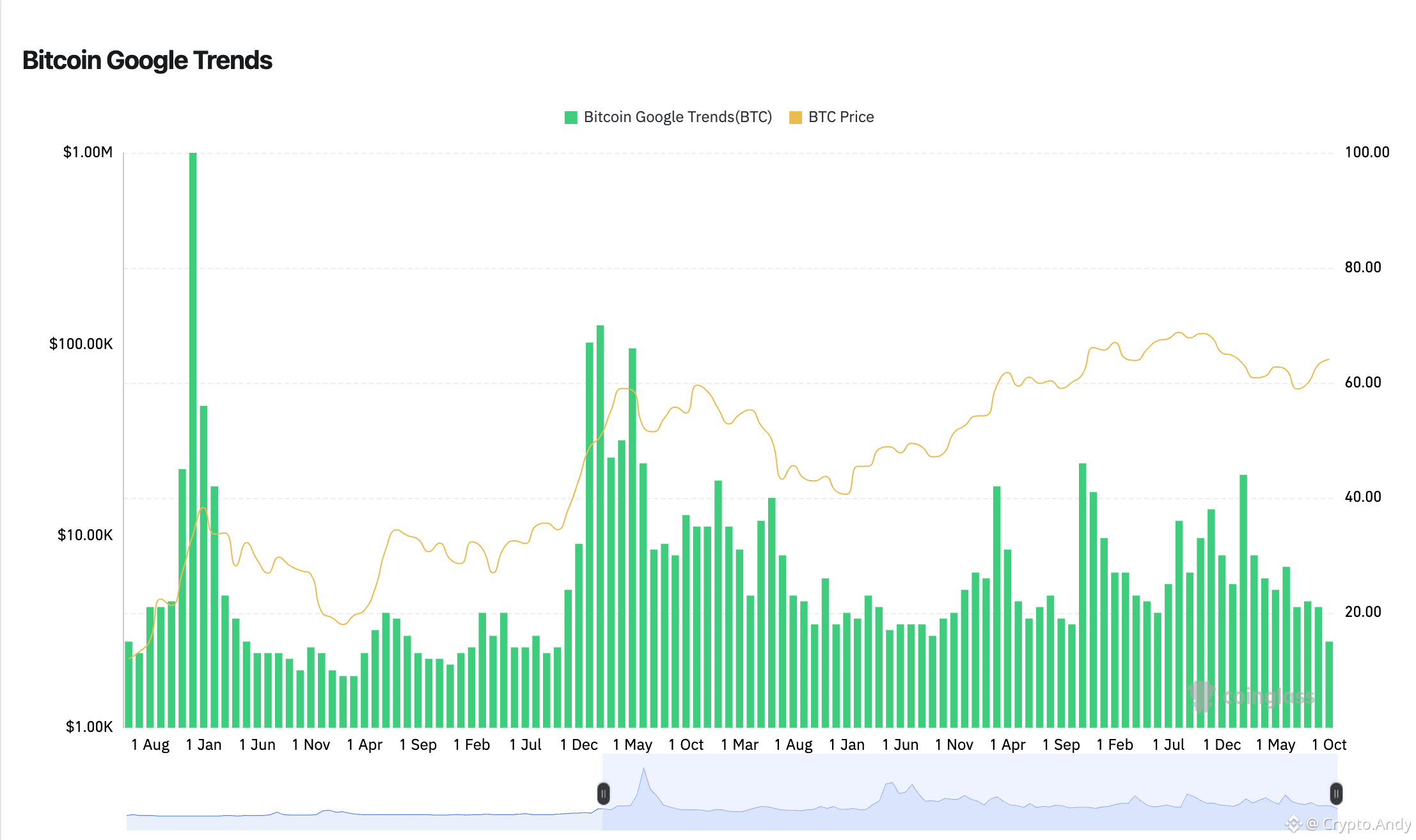
Niemand googelt mehr nach $BTC ... Die Google-Suchanfragen nach „bitcoin“ sind auf etwa 14 von 100 Punkten gesunken – der niedrigste Stand seit rund sechs Jahren. Der On-Chain-Analyst Willy Woo sieht darin ein Kaufsignal: Historisch gesehen waren die ruhigsten Phasen die besten Zeitpunkte zum Aufstocken. Die Geschichte spricht dafür. Die Suchanfragen erreichten im Dezember 2017 ihren Höhepunkt – genau zu dem Zeitpunkt, als $BTC mit knapp 20.000 $ sein damaliges Hoch erreichte. Während des Bärenmarkts 2018–2019 fielen sie auf etwa 10. Das stellte sich als günstiges Kaufzeitfenster heraus. Dieser Zyklus sieht allerdings etwas anders aus. Die Suchanfragen nach „bitcoin“ stiegen nie über etwa 45, während die Suchanfragen nach „BTCUSD“ 2025 einen Rekord erreichten – kurz vor dem Allzeithoch im Oktober. Das deutet darauf hin, dass inzwischen vor allem Trader und ETF-Anleger das Interesse bestimmen und nicht neugierige Neueinsteiger. Das Signal hat außerdem einen zeitlichen Haken. 2021 erreichte das Suchinteresse seinen Höhepunkt etwa sechs Monate vor dem Kurshoch. Daher eignet es sich eher als allgemeiner Indikator denn als genauer Einstiegszeitpunkt. Zur Einordnung: Bitcoin ist etwa 1,65 Billionen $ wert, Gold hingegen rund 29,3 Billionen $ – ungefähr 18-mal so viel. Manche sehen darin Wachstumspotenzial, andere verweisen auf Wahlen, Kriege und Energieprobleme als Gründe dafür, dass BTC noch eine Weile in einer Handelsspanne bleiben könnte. Siehst du diese ruhige Phase als Chance, deine Bestände aufzustocken? 🤔 #BTC-Kursanalyse# #Bitcoin-Kursprognose: Was ist der nächste Schritt von Bitcoin?#
Niemand googelt mehr nach $BTC ... Die Google-Suchanfragen nach „bitcoin“ sind auf etwa 14 von 100 Punkten gesunken – der niedrigste Stand seit rund sechs Jahren. Der On-Chain-Analyst Willy Woo sieht darin ein Kaufsignal: Historisch gesehen waren die ruhigsten Phasen die besten Zeitpunkte zum Aufstocken. Die Geschichte spricht dafür. Die Suchanfragen erreichten im Dezember 2017 ihren Höhepunkt – genau zu dem Zeitpunkt, als $BTC mit knapp 20.000 $ sein damaliges Hoch erreichte. Während des Bärenmarkts 2018–2019 fielen sie auf etwa 10. Das stellte sich als günstiges Kaufzeitfenster heraus. Dieser Zyklus sieht allerdings etwas anders aus. Die Suchanfragen nach „bitcoin“ stiegen nie über etwa 45, während die Suchanfragen nach „BTCUSD“ 2025 einen Rekord erreichten – kurz vor dem Allzeithoch im Oktober. Das deutet darauf hin, dass inzwischen vor allem Trader und ETF-Anleger das Interesse bestimmen und nicht neugierige Neueinsteiger. Das Signal hat außerdem einen zeitlichen Haken. 2021 erreichte das Suchinteresse seinen Höhepunkt etwa sechs Monate vor dem Kurshoch. Daher eignet es sich eher als allgemeiner Indikator denn als genauer Einstiegszeitpunkt. Zur Einordnung: Bitcoin ist etwa 1,65 Billionen $ wert, Gold hingegen rund 29,3 Billionen $ – ungefähr 18-mal so viel. Manche sehen darin Wachstumspotenzial, andere verweisen auf Wahlen, Kriege und Energieprobleme als Gründe dafür, dass BTC noch eine Weile in einer Handelsspanne bleiben könnte. Siehst du diese ruhige Phase als Chance, deine Bestände aufzustocken? 🤔 #BTC-Kursanalyse# #Bitcoin-Kursprognose: Was ist der nächste Schritt von Bitcoin?#
42
·
--
☕ Samstagsgedanken Diese Woche hat Charles Schwab den Zugang zum Kryptohandel für alle berechtigten Privatkunden freigeschaltet. Jetzt können sie $BTC und Ether direkt über ihre regulären Schwab-Konten kaufen – neben ihren Aktien und ETFs. Das klingt nach einer kleinen Neuerung, aber bedenkt einmal die Dimensionen. Schwab verwaltet rund 13 Billionen Dollar, und seine Kunden halten bereits etwa 20 % aller Vermögenswerte in Spot-Krypto-ETFs. Viele von ihnen haben noch nie ein Konto bei einer Kryptobörse eröffnet und werden das wahrscheinlich auch nie tun. Jetzt müssen sie es nicht mehr. Auch das Research-Team von Schwab ist recht optimistisch. Es verweist auf fast 60 Milliarden Dollar an Zuflüssen in Bitcoin-ETFs seit Anfang 2024 und sagt, die Volatilität von BTC sei von früheren 50–60 auf rund 40 gesunken. Für einen traditionellen Broker ist das so ziemlich gleichbedeutend mit der Aussage, dass Bitcoin erwachsen geworden ist 😄 Diese Bequemlichkeit hat allerdings ihren Preis. Jeder Handel kostet 0,75 %, was im Vergleich zu den meisten Kryptobörsen ziemlich viel ist. Trotzdem zahlen viele Anleger das gerne, nur um alles an einem vertrauten Ort zu haben. Würdet ihr Kryptowährungen über eure Bank oder euren Broker kaufen, oder bevorzugt ihr Kryptobörsen? 👇 #BTC-Kursanalyse# #Bitcoin-Kursprognose: Was ist der nächste Schritt von Bitcoin?#
☕ Samstagsgedanken Diese Woche hat Charles Schwab den Zugang zum Kryptohandel für alle berechtigten Privatkunden freigeschaltet. Jetzt können sie $BTC und Ether direkt über ihre regulären Schwab-Konten kaufen – neben ihren Aktien und ETFs. Das klingt nach einer kleinen Neuerung, aber bedenkt einmal die Dimensionen. Schwab verwaltet rund 13 Billionen Dollar, und seine Kunden halten bereits etwa 20 % aller Vermögenswerte in Spot-Krypto-ETFs. Viele von ihnen haben noch nie ein Konto bei einer Kryptobörse eröffnet und werden das wahrscheinlich auch nie tun. Jetzt müssen sie es nicht mehr. Auch das Research-Team von Schwab ist recht optimistisch. Es verweist auf fast 60 Milliarden Dollar an Zuflüssen in Bitcoin-ETFs seit Anfang 2024 und sagt, die Volatilität von BTC sei von früheren 50–60 auf rund 40 gesunken. Für einen traditionellen Broker ist das so ziemlich gleichbedeutend mit der Aussage, dass Bitcoin erwachsen geworden ist 😄 Diese Bequemlichkeit hat allerdings ihren Preis. Jeder Handel kostet 0,75 %, was im Vergleich zu den meisten Kryptobörsen ziemlich viel ist. Trotzdem zahlen viele Anleger das gerne, nur um alles an einem vertrauten Ort zu haben. Würdet ihr Kryptowährungen über eure Bank oder euren Broker kaufen, oder bevorzugt ihr Kryptobörsen? 👇 #BTC-Kursanalyse# #Bitcoin-Kursprognose: Was ist der nächste Schritt von Bitcoin?#

54
·
--
Laut Santiment hat die Zahl der Wallets mit Beständen zwischen 10 und 10.000 $BTC mit 20.338 Adressen ein neues Allzeithoch erreicht. Diese Gruppe wächst seit Mitte Juli ununterbrochen – trotz aller Kursschwankungen. Auch die Daten von CryptoQuant zeigen dasselbe Bild. Die Whale-Bestände ohne Börsen und Mining-Pools stiegen von etwa 2,94 Mio. $BTC Ende August auf fast 3 Mio. BTC. Das entspricht einem Zuwachs von rund 60.000 BTC beziehungsweise 2 % und ist der höchste Stand in diesem Jahr. Die Akkumulation verlangsamte sich im September, nahm dann aber Ende September und Anfang Oktober stark an Fahrt auf – nachdem sich der Kurs bereits zu erholen begonnen hatte. Mit anderen Worten: Die Whales versuchten nicht, den Tiefpunkt vorherzusagen. Sie kauften weiter, während sich die Erholung entfaltete. Analysten sagen, dies könne dazu beitragen, Gewinnmitnahmen aufzufangen und aus einem kurzen Aufschwung eine länger anhaltende Aufwärtsbewegung zu machen. CryptoQuant weist außerdem auf einen berechtigten Vorbehalt hin: Starke Veränderungen bei den Beständen können manchmal durch Verschiebungen zwischen Wallets entstehen. Die eigentliche Bestätigung wäre daher, wenn Whales während Kursrückgängen ihre Bestände halten oder weiter aufstocken. Beobachtest du die Aktivitäten der Whales, wenn du selbst handelst? 🤔 #BTC-Kursanalyse# #Bitcoin-Kursprognose: Was ist der nächste Schritt für Bitcoin?#
Laut Santiment hat die Zahl der Wallets mit Beständen zwischen 10 und 10.000 $BTC mit 20.338 Adressen ein neues Allzeithoch erreicht. Diese Gruppe wächst seit Mitte Juli ununterbrochen – trotz aller Kursschwankungen. Auch die Daten von CryptoQuant zeigen dasselbe Bild. Die Whale-Bestände ohne Börsen und Mining-Pools stiegen von etwa 2,94 Mio. $BTC Ende August auf fast 3 Mio. BTC. Das entspricht einem Zuwachs von rund 60.000 BTC beziehungsweise 2 % und ist der höchste Stand in diesem Jahr. Die Akkumulation verlangsamte sich im September, nahm dann aber Ende September und Anfang Oktober stark an Fahrt auf – nachdem sich der Kurs bereits zu erholen begonnen hatte. Mit anderen Worten: Die Whales versuchten nicht, den Tiefpunkt vorherzusagen. Sie kauften weiter, während sich die Erholung entfaltete. Analysten sagen, dies könne dazu beitragen, Gewinnmitnahmen aufzufangen und aus einem kurzen Aufschwung eine länger anhaltende Aufwärtsbewegung zu machen. CryptoQuant weist außerdem auf einen berechtigten Vorbehalt hin: Starke Veränderungen bei den Beständen können manchmal durch Verschiebungen zwischen Wallets entstehen. Die eigentliche Bestätigung wäre daher, wenn Whales während Kursrückgängen ihre Bestände halten oder weiter aufstocken. Beobachtest du die Aktivitäten der Whales, wenn du selbst handelst? 🤔 #BTC-Kursanalyse# #Bitcoin-Kursprognose: Was ist der nächste Schritt für Bitcoin?#

77
·
--
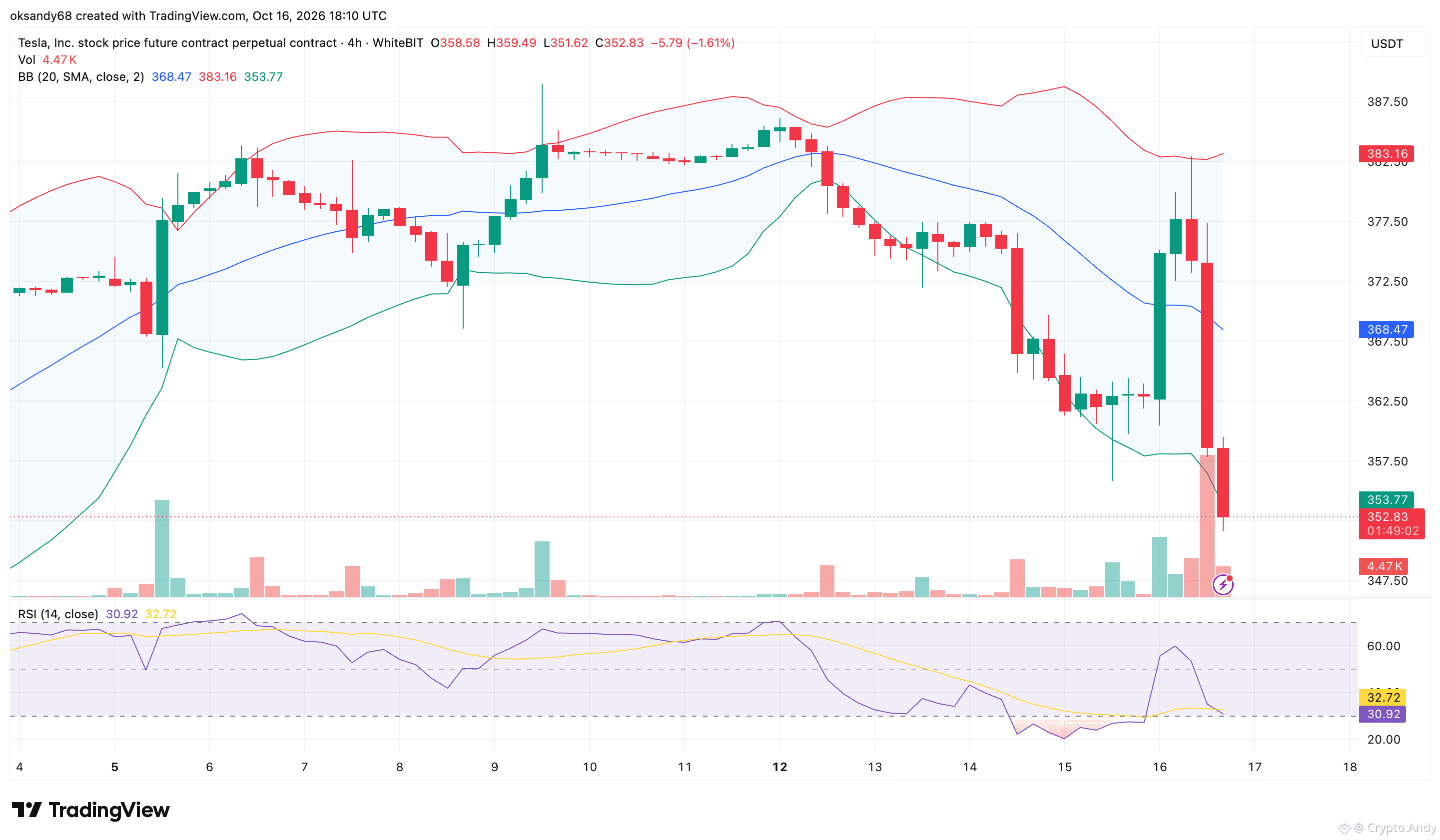
Teslas Roadster kann fliegen und sich in der Luft überschlagen. Die $TSLA-Aktie hat beschlossen, nur den Überschlag nachzuahmen 🙃 Von 382 $ auf 353 $ in weniger als einem Tag. #Makro Insights# #Tesla
Teslas Roadster kann fliegen und sich in der Luft überschlagen. Die $TSLA-Aktie hat beschlossen, nur den Überschlag nachzuahmen 🙃 Von 382 $ auf 353 $ in weniger als einem Tag. #Makro Insights# #Tesla
63
·
--
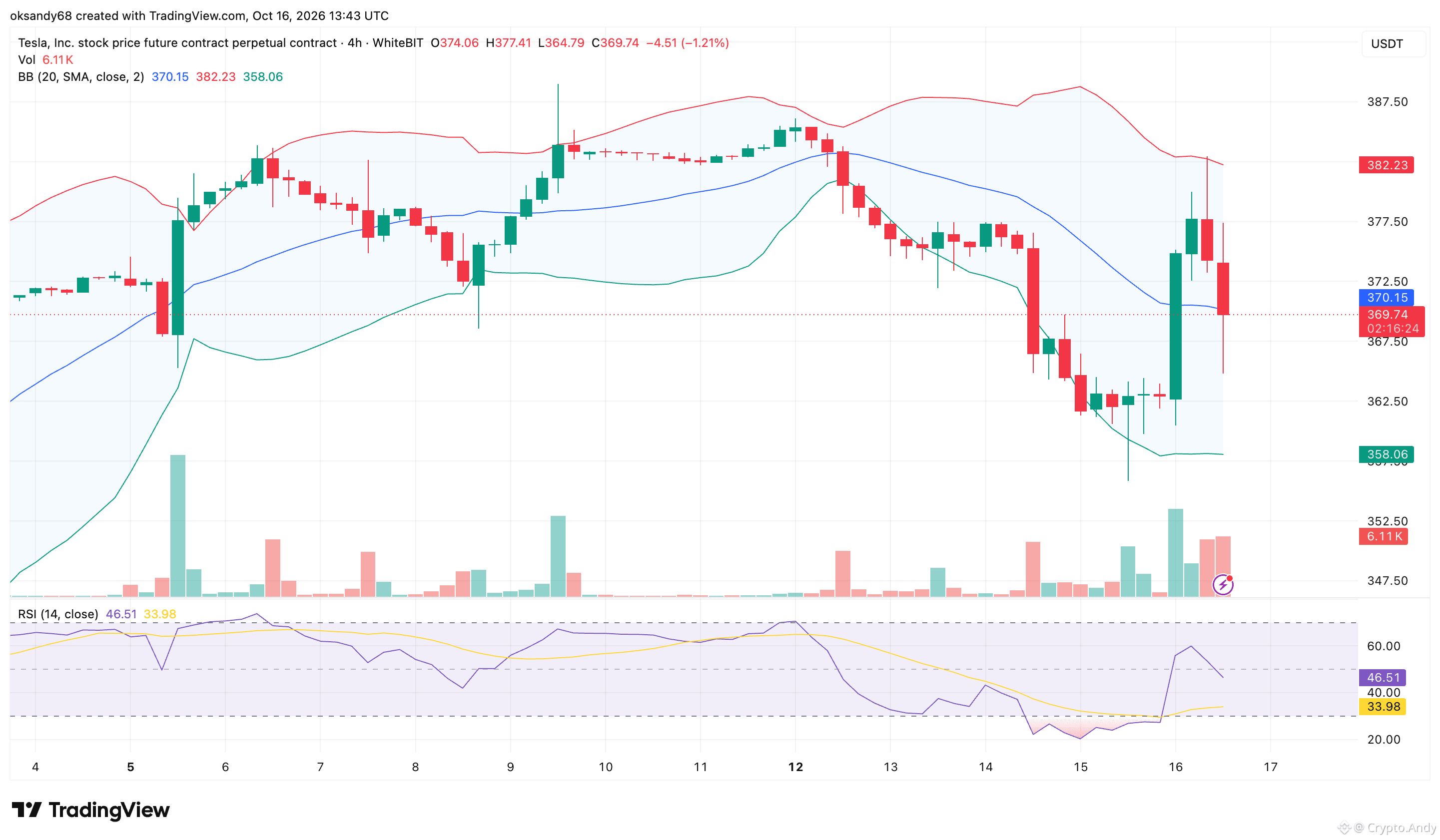
$TSLA hat gerade ein Auto fliegen lassen 🚀 Auf dem SpaceX-Testgelände in Texas hat Tesla endlich den neuen Roadster vorgestellt. Das Auto fuhr kopfüber eine Rampe hinunter, schoss in die Luft, machte einen Salto und landete wieder auf seinen Rädern. Bei der Vorführung beschleunigte es außerdem in 0,81 Sekunden von 0 auf 60 mph. Der Roadster kommt in drei Versionen: 🔹 Performance: keine Triebwerke 🔹 Thrust: Heck-Booster für zusätzliche Beschleunigung 🔹 Rocket: nur auf Einladung, einsitzig, 10 Triebwerke und ein vollständiges Flugsystem. Nur diese Version kann fliegen. Die Produktion ist für 2028 geplant. Was der Chart zeigt ($TSLA Perpetual-Kontrakt, 4H): Nach dem Event sprang der Kurs von etwa $363 auf ein Hoch nahe $382 – direkt am oberen Bollinger-Band. Die Käufer konnten dieses Niveau nicht halten, und der Kurs fiel auf $369,7 zurück, direkt auf das mittlere Band (~$370). Der RSI erholte sich am 15. Oktober von überverkauften Niveaus nahe 20 und kühlt jetzt bei etwa 46 ab. Diese Niveaus beobachte ich: 🟢 $358: unteres Band und Wochentief 🔴 $382: Hoch nach der Präsentation und oberes Band. Hält sich der Kurs über $370, ist ein erneuter Test von $382 möglich. Ein Rückgang unter $358 würde die gesamte Rally nach der Präsentation zunichtemachen. Würdest du $250K zahlen, nur um dir einen Roadster mit Raketentriebwerken zu reservieren? 🤔 #Tesla #Macro Insights#
$TSLA hat gerade ein Auto fliegen lassen 🚀 Auf dem SpaceX-Testgelände in Texas hat Tesla endlich den neuen Roadster vorgestellt. Das Auto fuhr kopfüber eine Rampe hinunter, schoss in die Luft, machte einen Salto und landete wieder auf seinen Rädern. Bei der Vorführung beschleunigte es außerdem in 0,81 Sekunden von 0 auf 60 mph. Der Roadster kommt in drei Versionen: 🔹 Performance: keine Triebwerke 🔹 Thrust: Heck-Booster für zusätzliche Beschleunigung 🔹 Rocket: nur auf Einladung, einsitzig, 10 Triebwerke und ein vollständiges Flugsystem. Nur diese Version kann fliegen. Die Produktion ist für 2028 geplant. Was der Chart zeigt ($TSLA Perpetual-Kontrakt, 4H): Nach dem Event sprang der Kurs von etwa $363 auf ein Hoch nahe $382 – direkt am oberen Bollinger-Band. Die Käufer konnten dieses Niveau nicht halten, und der Kurs fiel auf $369,7 zurück, direkt auf das mittlere Band (~$370). Der RSI erholte sich am 15. Oktober von überverkauften Niveaus nahe 20 und kühlt jetzt bei etwa 46 ab. Diese Niveaus beobachte ich: 🟢 $358: unteres Band und Wochentief 🔴 $382: Hoch nach der Präsentation und oberes Band. Hält sich der Kurs über $370, ist ein erneuter Test von $382 möglich. Ein Rückgang unter $358 würde die gesamte Rally nach der Präsentation zunichtemachen. Würdest du $250K zahlen, nur um dir einen Roadster mit Raketentriebwerken zu reservieren? 🤔 #Tesla #Macro Insights#

120
·
--
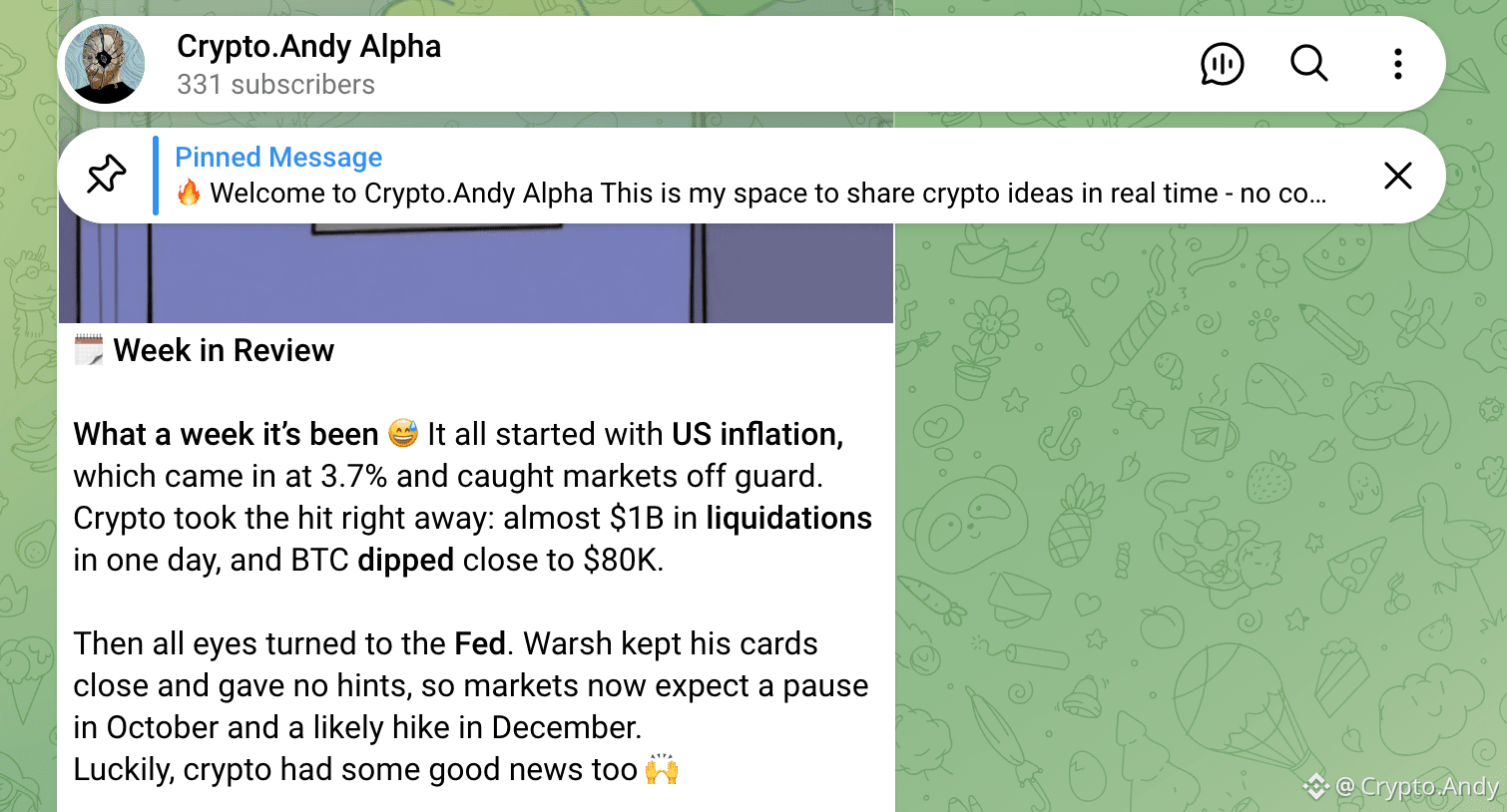
Jeden Freitag veröffentliche ich in meiner Community einen Wochenrückblick, und daraus ist schon eine kleine Tradition geworden 😄 Diese Woche war ereignisreich: Die Inflation in den USA lag bei 3,7 %, bei Kryptowährungen kam es zu Liquidationen im Wert von fast 1 Milliarde US-Dollar, und $BTC fiel kurzzeitig auf knapp 80.000 US-Dollar. Warsh ließ sich nichts entlocken, daher rechnen die Märkte nun im Oktober mit einer Pause und im Dezember wahrscheinlich mit einer Zinserhöhung. Es gab aber auch gute Nachrichten 🙌 USDC wurde zum ersten „bedeutenden“ Stablecoin der EU, Mastercard führte Stablecoin-Zahlungen ein und Kraken kauft eine Bank in Litauen. Den vollständigen Wochenrückblick mit Teslas raketenbetriebenem Roadster und den Entlassungen bei Netflix findest du schon in der Community von Crypto.Andy: https://bit.ly/4jdykHo Wir sehen uns dort jeden Freitag 👋 #BTC-Kursanalyse# #Bitcoin-Kursprognose: Was kommt als Nächstes für Bitcoin?#
Jeden Freitag veröffentliche ich in meiner Community einen Wochenrückblick, und daraus ist schon eine kleine Tradition geworden 😄 Diese Woche war ereignisreich: Die Inflation in den USA lag bei 3,7 %, bei Kryptowährungen kam es zu Liquidationen im Wert von fast 1 Milliarde US-Dollar, und $BTC fiel kurzzeitig auf knapp 80.000 US-Dollar. Warsh ließ sich nichts entlocken, daher rechnen die Märkte nun im Oktober mit einer Pause und im Dezember wahrscheinlich mit einer Zinserhöhung. Es gab aber auch gute Nachrichten 🙌 USDC wurde zum ersten „bedeutenden“ Stablecoin der EU, Mastercard führte Stablecoin-Zahlungen ein und Kraken kauft eine Bank in Litauen. Den vollständigen Wochenrückblick mit Teslas raketenbetriebenem Roadster und den Entlassungen bei Netflix findest du schon in der Community von Crypto.Andy: https://bit.ly/4jdykHo Wir sehen uns dort jeden Freitag 👋 #BTC-Kursanalyse# #Bitcoin-Kursprognose: Was kommt als Nächstes für Bitcoin?#
2
·
--
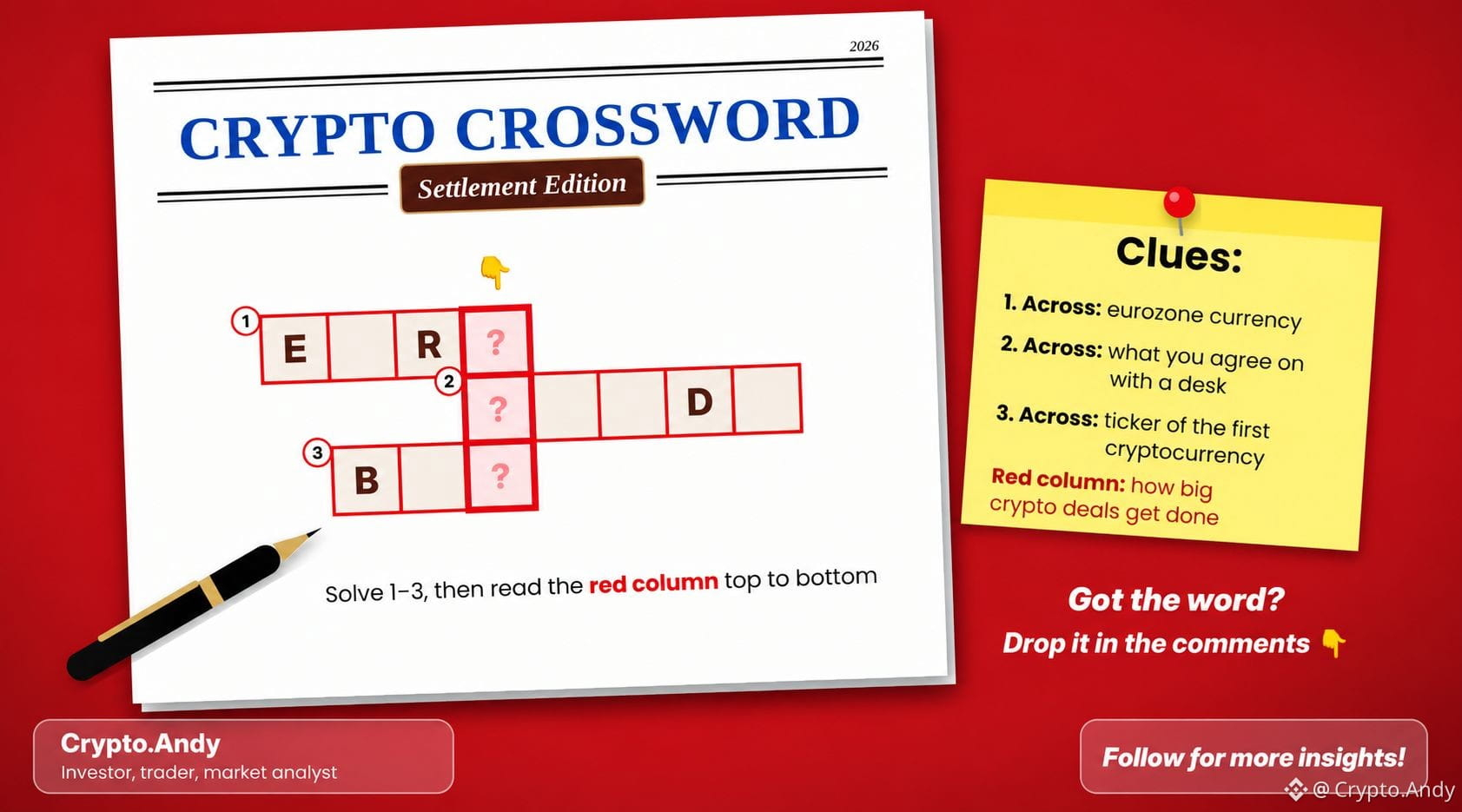
Was passiert, nachdem man sich an einem OTC-Desk auf einen $BTC-Preis geeinigt hat? Der OTC-Handel wächst auch 2026 weiter. Laut Finery Markets stieg das institutionelle OTC-Spotvolumen im ersten Quartal im Jahresvergleich um 43 %, und die Anzahl der Trades legte um 160 % zu. Bei so vielen abgewickelten Geschäften gibt es einen Moment, der mehr Aufmerksamkeit verdient, als er bekommt. 🤔 Sich auf den Preis zu einigen, fühlt sich wie die Ziellinie an. Doch wirklich abgeschlossen ist der Handel erst, wenn das Fiatgeld eingegangen ist. Und das kann kompliziert werden. Also habe ich mir einen Trade aus beiden Blickwinkeln angesehen. Wenn du der Kunde bist, möchtest du das Geld einfach schnell und ohne zufällige Gebühren, die den Betrag schmälern, über den Zahlungsweg senden, den deine Bank am besten unterstützt. Wenn du der Anbieter bist, ist der Preis bereits fixiert und du wartest auf die Überweisung ⏳ Du musst wissen, wann sie eintrifft und wie du sie dem richtigen Trade zuordnest. Im vollständigen Artikel auf Medium beleuchte ich beide Perspektiven, teile eine kurze Checkliste mit Punkten, die vor dem Trade vereinbart werden sollten, und schaue mir an, wie WhiteBIT, Gemini und BitGo die Abwicklung von Fiat-Zahlungen handhaben: https://medium.com/@oksandy68/ever-wondered-what-your-otc-provider-is-waiting-for-after-the-price-is-locked-93a1a7db4538 Was ist dir bei einem OTC-Deal wichtiger: der beste Preis oder die schnellste Abwicklung? #BTC-Kursanalyse# #Bitcoin-Kursprognose: Was ist Bitcoins nächster Schritt?#
Was passiert, nachdem man sich an einem OTC-Desk auf einen $BTC-Preis geeinigt hat? Der OTC-Handel wächst auch 2026 weiter. Laut Finery Markets stieg das institutionelle OTC-Spotvolumen im ersten Quartal im Jahresvergleich um 43 %, und die Anzahl der Trades legte um 160 % zu. Bei so vielen abgewickelten Geschäften gibt es einen Moment, der mehr Aufmerksamkeit verdient, als er bekommt. 🤔 Sich auf den Preis zu einigen, fühlt sich wie die Ziellinie an. Doch wirklich abgeschlossen ist der Handel erst, wenn das Fiatgeld eingegangen ist. Und das kann kompliziert werden. Also habe ich mir einen Trade aus beiden Blickwinkeln angesehen. Wenn du der Kunde bist, möchtest du das Geld einfach schnell und ohne zufällige Gebühren, die den Betrag schmälern, über den Zahlungsweg senden, den deine Bank am besten unterstützt. Wenn du der Anbieter bist, ist der Preis bereits fixiert und du wartest auf die Überweisung ⏳ Du musst wissen, wann sie eintrifft und wie du sie dem richtigen Trade zuordnest. Im vollständigen Artikel auf Medium beleuchte ich beide Perspektiven, teile eine kurze Checkliste mit Punkten, die vor dem Trade vereinbart werden sollten, und schaue mir an, wie WhiteBIT, Gemini und BitGo die Abwicklung von Fiat-Zahlungen handhaben: https://medium.com/@oksandy68/ever-wondered-what-your-otc-provider-is-waiting-for-after-the-price-is-locked-93a1a7db4538 Was ist dir bei einem OTC-Deal wichtiger: der beste Preis oder die schnellste Abwicklung? #BTC-Kursanalyse# #Bitcoin-Kursprognose: Was ist Bitcoins nächster Schritt?#
45
·
--
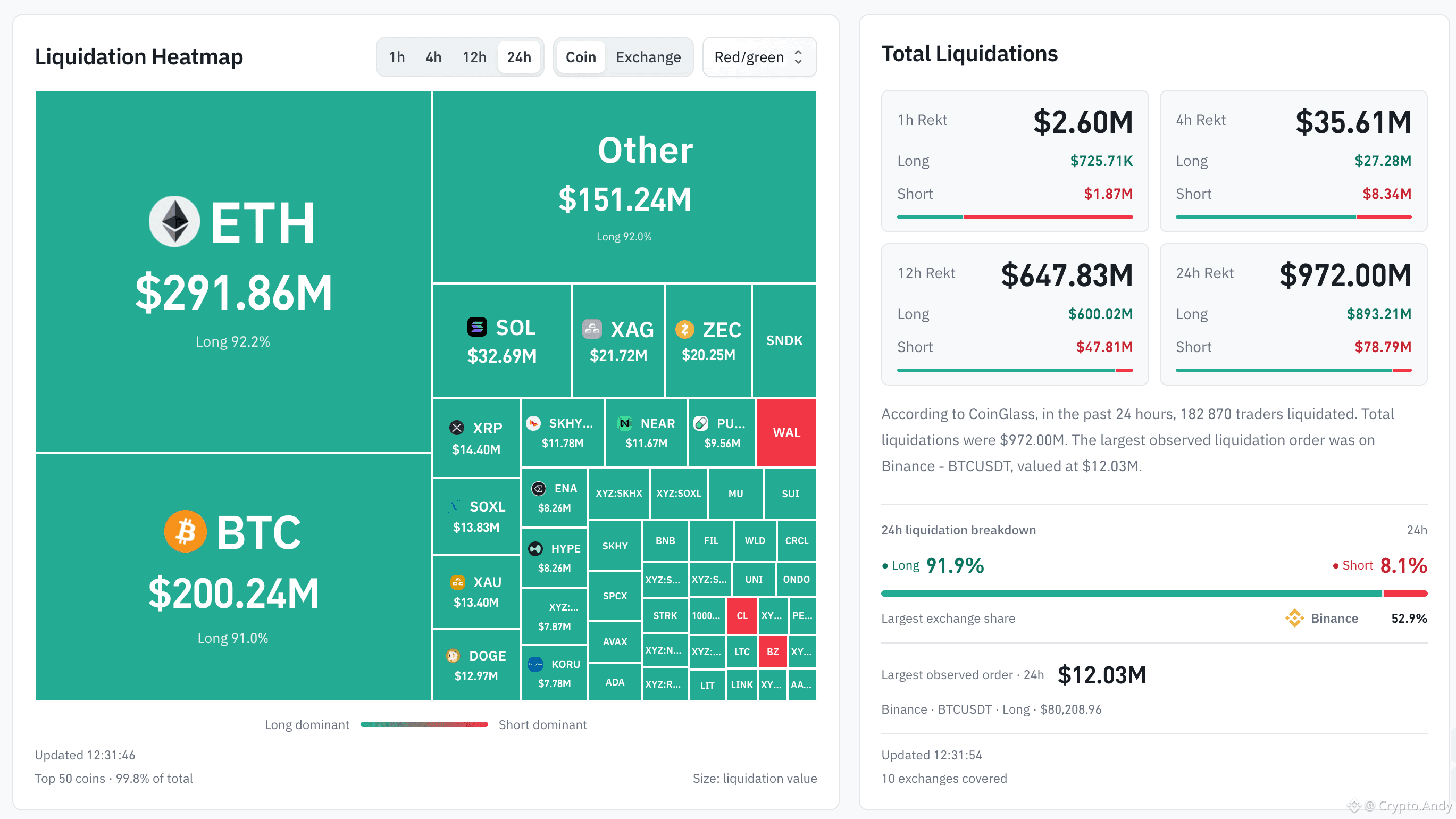
Innerhalb von 24 Stunden wurden Kryptopositionen im Wert von fast 1 Milliarde Dollar liquidiert, und der Ausverkauf ist global 📉 Laut CoinGlass wurden an einem Tag 972 Millionen Dollar ausgelöscht, etwa 92 % davon entfielen auf Long-Positionen. Mehr als 182.000 Trader wurden liquidiert. Die größte Einzelposition war ein Long auf $BTC im Wert von 12 Millionen Dollar bei Binance, der bei etwa 80.200 Dollar geschlossen wurde. Ethereum traf es mit Liquidationen im Wert von 292 Millionen Dollar am härtesten, gefolgt von Bitcoin mit 200 Millionen Dollar. Auch an den Aktienmärkten sah es nicht besser aus. Der Nasdaq fiel nach stärker als erwartet ausgefallenen US-Inflationsdaten um 1,9 %, wobei Chip-Hersteller die Verluste anführten. Am nächsten Morgen setzte sich der Verkaufsdruck in Asien fort. Südkoreas KOSPI fiel um fast 9 % und löste einen Handelsstopp aus – den zehnten in diesem Jahr. Japans Nikkei 225 verlor 5 %. Hauptauslöser ist die Fed. Nach dem Inflationsbericht stieg die Wahrscheinlichkeit, die Märkte einer weiteren Zinserhöhung bei der Sitzung am 27.–28. Oktober beimessen, auf etwa 32 %. Höhere Zinsen bedeuten normalerweise eine geringere Risikobereitschaft, und das bekommt der Kryptomarkt zuerst zu spüren. #BTC-Kursanalyse# #Makro-Einblicke#
Innerhalb von 24 Stunden wurden Kryptopositionen im Wert von fast 1 Milliarde Dollar liquidiert, und der Ausverkauf ist global 📉 Laut CoinGlass wurden an einem Tag 972 Millionen Dollar ausgelöscht, etwa 92 % davon entfielen auf Long-Positionen. Mehr als 182.000 Trader wurden liquidiert. Die größte Einzelposition war ein Long auf $BTC im Wert von 12 Millionen Dollar bei Binance, der bei etwa 80.200 Dollar geschlossen wurde. Ethereum traf es mit Liquidationen im Wert von 292 Millionen Dollar am härtesten, gefolgt von Bitcoin mit 200 Millionen Dollar. Auch an den Aktienmärkten sah es nicht besser aus. Der Nasdaq fiel nach stärker als erwartet ausgefallenen US-Inflationsdaten um 1,9 %, wobei Chip-Hersteller die Verluste anführten. Am nächsten Morgen setzte sich der Verkaufsdruck in Asien fort. Südkoreas KOSPI fiel um fast 9 % und löste einen Handelsstopp aus – den zehnten in diesem Jahr. Japans Nikkei 225 verlor 5 %. Hauptauslöser ist die Fed. Nach dem Inflationsbericht stieg die Wahrscheinlichkeit, die Märkte einer weiteren Zinserhöhung bei der Sitzung am 27.–28. Oktober beimessen, auf etwa 32 %. Höhere Zinsen bedeuten normalerweise eine geringere Risikobereitschaft, und das bekommt der Kryptomarkt zuerst zu spüren. #BTC-Kursanalyse# #Makro-Einblicke#
81
·
--
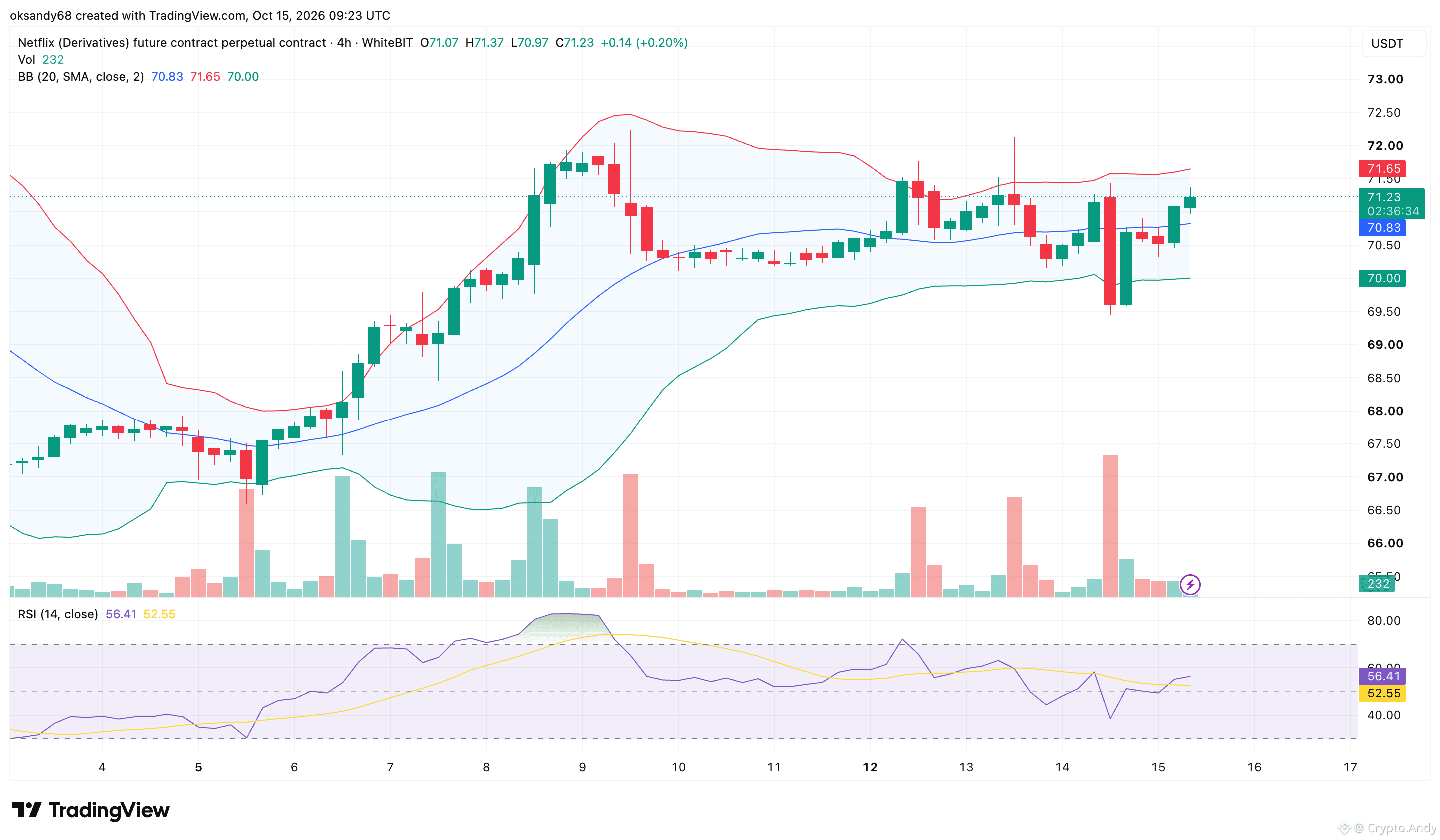
📍 Netflix kündigte die größten Entlassungen seit 2022 an. Das Unternehmen baut etwa 6 % seiner Belegschaft ab – rund 1.000 Menschen. Das Management sagt, das Geschäft wachse weiterhin und die Jahresprognose bleibe unverändert. $NFLX liegt dieses Jahr etwa 25 % im Minus. Auf dem 4-Stunden-Chart gab es am 14. Oktober eine kräftige rote Kerze von 71,6 $ auf 69,5 $ – bei den höchsten Handelsvolumina des Monats. Am selben Tag belasteten überraschend hohe US-Inflationsdaten den Markt. Die Käufer machten den Rückgang fast sofort wett, und der Kurs liegt wieder bei 71,2 $. Seit dem 9. Oktober bewegt sich der Kurs zwischen 70 $ und 72 $, und die Bollinger-Bänder ziehen sich zusammen. Ein Ausbruch über 72 $ könnte weiteres Aufwärtspotenzial eröffnen, während ein Schlusskurs unter 69,5 $ auf einen stärkeren Rücksetzer hindeuten würde. Ich beobachte, welche Seite zuerst ausbricht 👀 #Netflix #MakroEinblicke# #AltcoinSaison#
📍 Netflix kündigte die größten Entlassungen seit 2022 an. Das Unternehmen baut etwa 6 % seiner Belegschaft ab – rund 1.000 Menschen. Das Management sagt, das Geschäft wachse weiterhin und die Jahresprognose bleibe unverändert. $NFLX liegt dieses Jahr etwa 25 % im Minus. Auf dem 4-Stunden-Chart gab es am 14. Oktober eine kräftige rote Kerze von 71,6 $ auf 69,5 $ – bei den höchsten Handelsvolumina des Monats. Am selben Tag belasteten überraschend hohe US-Inflationsdaten den Markt. Die Käufer machten den Rückgang fast sofort wett, und der Kurs liegt wieder bei 71,2 $. Seit dem 9. Oktober bewegt sich der Kurs zwischen 70 $ und 72 $, und die Bollinger-Bänder ziehen sich zusammen. Ein Ausbruch über 72 $ könnte weiteres Aufwärtspotenzial eröffnen, während ein Schlusskurs unter 69,5 $ auf einen stärkeren Rücksetzer hindeuten würde. Ich beobachte, welche Seite zuerst ausbricht 👀 #Netflix #MakroEinblicke# #AltcoinSaison#
107
·
--
🧲 Standard Chartered eröffnet wohlhabenden Kunden in den VAE den Handel mit $BTC und $ETH. Standard Chartered ermöglicht professionellen Anlegern in den VAE jetzt, BTC und ETH direkt über ihre regulären Bankkonten zu kaufen. Es gibt keine separate Krypto-App und keine Überweisungen hin und her – einfach einloggen und kaufen 😎 Der Haken: Um Zugang zu erhalten, brauchst du ein Nettovermögen von mindestens 4 Mio. AED (~1,1 Mio. $). Und die Bank verliert keine Zeit. Anfang September eröffnete sie institutionellen Kunden den Kryptohandel, und kaum einen Monat später erhalten auch wohlhabende Privatpersonen Zugang. Die VAE entwickeln sich immer mehr zu einem echten Krypto-Magneten. Am Montag erhielt Payward, die Muttergesellschaft von Kraken, die Genehmigung der VARA, der Aufsichtsbehörde von Dubai. Bereits im Juli hatte Revolut eine vorläufige Genehmigung der VARA erhalten 🇦🇪 Auch WhiteBIT ist jetzt dabei und hat von der VARA eine grundsätzliche Genehmigung erhalten. Das ist eher ein grünes Licht, um zur nächsten Phase überzugehen. Wird Dubai bald zur Krypto-Hauptstadt der Welt? 🇦🇪 #BTC-Kursanalyse# #BTC-Kursanalyse#
🧲 Standard Chartered eröffnet wohlhabenden Kunden in den VAE den Handel mit $BTC und $ETH. Standard Chartered ermöglicht professionellen Anlegern in den VAE jetzt, BTC und ETH direkt über ihre regulären Bankkonten zu kaufen. Es gibt keine separate Krypto-App und keine Überweisungen hin und her – einfach einloggen und kaufen 😎 Der Haken: Um Zugang zu erhalten, brauchst du ein Nettovermögen von mindestens 4 Mio. AED (~1,1 Mio. $). Und die Bank verliert keine Zeit. Anfang September eröffnete sie institutionellen Kunden den Kryptohandel, und kaum einen Monat später erhalten auch wohlhabende Privatpersonen Zugang. Die VAE entwickeln sich immer mehr zu einem echten Krypto-Magneten. Am Montag erhielt Payward, die Muttergesellschaft von Kraken, die Genehmigung der VARA, der Aufsichtsbehörde von Dubai. Bereits im Juli hatte Revolut eine vorläufige Genehmigung der VARA erhalten 🇦🇪 Auch WhiteBIT ist jetzt dabei und hat von der VARA eine grundsätzliche Genehmigung erhalten. Das ist eher ein grünes Licht, um zur nächsten Phase überzugehen. Wird Dubai bald zur Krypto-Hauptstadt der Welt? 🇦🇪 #BTC-Kursanalyse# #BTC-Kursanalyse#
39
Anmelden und weiter Inhalte entdecken
Krypto-Nutzer weltweit auf Binance Square kennenlernen
⚡️ Bleib in Sachen Krypto stets am Puls.
💬 Die weltgrößte Kryptobörse vertraut darauf.
👍 Erhalte verlässliche Einblicke von verifizierten Creators.
E-Mail-Adresse/Telefonnummer