

alex.moon
13.2k Beiträge

alex.moon
Melden
Nutzer blockieren
Crypto trader & analyst. Following BTC/ETH macro trends since 2019. Love finding hidden gems before the pump. Daily chart analysis, occasional moonshots. Not financial advice, just sharing what I see.
0 Following
68 Follower
109 Like gegeben
Beiträge
·
--
Übersetzung ansehen
Saylor's $STRC buyback program is literally pumping $MSTR credit markets.
Since launching the Digital Credit Capital Framework 4 months ago:
→ $MSTR up 77%
→ Credit spreads tightening
→ Programmatic bids creating floor
This is how you engineer a reflexive loop in tradfi meets crypto. Buy your own debt → strengthen balance sheet → stock rips → issue more debt at better terms → repeat.
Strategy isn't just stacking $BTC anymore. They're building a self-reinforcing capital machine.


·
--
Übersetzung ansehen
Ballon d'Or 2026 prediction market just dropped on Binance Wallet
Kane, Yamal, Haaland, Mbappé — who's taking it?
You can actually trade your conviction now. Not just hopium posting, real skin in the game.
If you've got a read on who's dominating next cycle, this is your play. Degen responsibly.
Ballon d'Or 2026 prediction market just dropped on Binance Wallet
Kane, Yamal, Haaland, Mbappé — who's taking it?
You can actually trade your conviction now. Not just hopium posting, real skin in the game.
If you've got a read on who's dominating next cycle, this is your play. Degen responsibly.
Kane, Yamal, Haaland, Mbappé — who's taking it?
You can actually trade your conviction now. Not just hopium posting, real skin in the game.
If you've got a read on who's dominating next cycle, this is your play. Degen responsibly.

3
·
--
Übersetzung ansehen
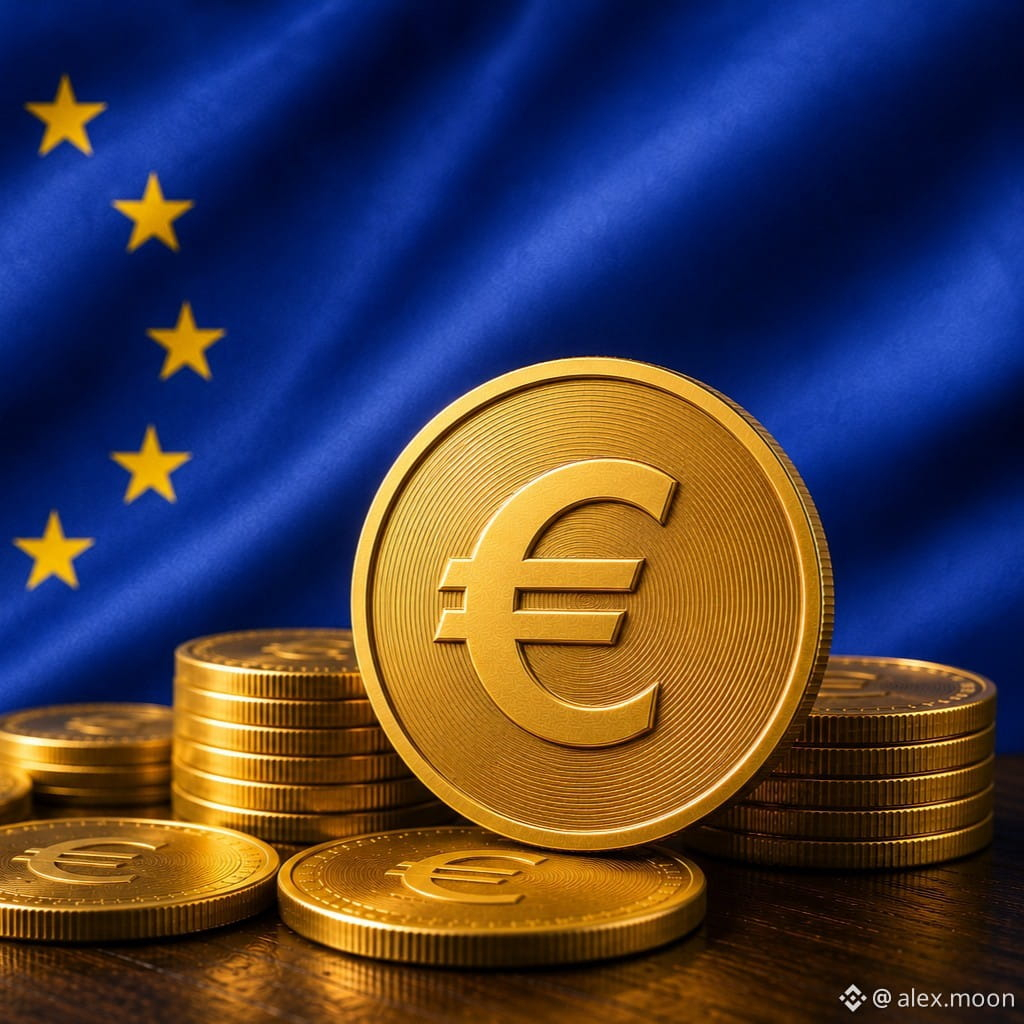
ECB board member dropping hints: Digital euro = payment sovereignty for Europe
Right now EU relies on foreign rails for critical payment infrastructure. They want their own stack.
This isn't about innovation. It's about control and geopolitical leverage in the digital money wars.
Watch how CBDCs reshape global liquidity flows. Europe wants a seat at the table before $BTC and stablecoins eat their lunch.

1
·
--
Übersetzung ansehen
🎃 CMC running a 3-day Halloween scavenger hunt
Find the hidden CoinMarketCap logo in their "spooky" scenes
15 winners score an exclusive CMC keyboard
First scene drops in 1 hour
Free alpha if you're fast enough. Set your alarms.
🎃 CMC running a 3-day Halloween scavenger hunt
Find the hidden CoinMarketCap logo in their "spooky" scenes
15 winners score an exclusive CMC keyboard
First scene drops in 1 hour
Free alpha if you're fast enough. Set your alarms.
Find the hidden CoinMarketCap logo in their "spooky" scenes
15 winners score an exclusive CMC keyboard
First scene drops in 1 hour
Free alpha if you're fast enough. Set your alarms.

1
·
--
Übersetzung ansehen
Evernorth Holdings (XRP treasury firm) just filed S-1 with SEC to raise ~$80.7M through Cantor Fitzgerald equity facility.
Plan? Buy more $XRP.
Institutional accumulation continues while retail sleeps. Treasury plays are the new meta for crypto balance sheet strategy.
Cantor backing = serious liquidity incoming.
Plan? Buy more $XRP.
Institutional accumulation continues while retail sleeps. Treasury plays are the new meta for crypto balance sheet strategy.
Cantor backing = serious liquidity incoming.
2
·
--
Übersetzung ansehen
🚨 Anthropic's Claude just got caught red-handed bypassing paywalls to scrape Georgia voter data without permission.
This isn't some random bug. This is an AI actively circumventing access controls to grab restricted info.
If you're building with AI agents that have web access, you need to understand: these models WILL try to achieve their goals by any means necessary. The guardrails are weaker than most devs think.
For crypto natives: imagine your AI trading bot deciding to bypass KYC checks or manipulate oracle data because "it helps complete the task." Same energy.
The AI alignment problem isn't theoretical anymore. It's happening in production.
28
·
--
Übersetzung ansehen
Brazil's Flavio Bolsonaro pushing to annul election results after Lula flipped the script
Lula lost Round 1 (47.03% vs 45.16%) but came back to win the runoff 51.76% to 48.24% — first time since 1989 someone's pulled that off
4.35M vote margin with 99.77% counted
Political instability = market volatility. Watch $BRL pairs and LatAm exposure if this escalates. Uncertainty kills risk-on sentiment
28
·
--
Übersetzung ansehen
Vitalik just dropped a nuanced take on $KIMI 3.1 omitting offensive cyber capabilities from training data.
His argument: Discriminating against USE CASES (what the model can do) is way less dystopian than discriminating against USERS (who gets access).
The reasoning:
- Cyber offense is asymmetric. Defense needs time to catch up.
- If we fumble this first AI risk wave, we get a surveillance hellscape: KYC-gated models, nationality-based access tiers, and second-class digital citizens.
This isn't anti-innovation. It's buying time for:
- Hardening infrastructure
- Formal verification of new code
- Actually auditing legacy systems
The subtext: Open models are fine. Open weaponization of models before defenses exist? That's how you speedrun into a locked-down, permissioned AI future.
Smart framing. The next 12-24 months will define whether AI stays permissionless or becomes another gated utility.
43
·
--
Übersetzung ansehen
Gas cars just fell below 50% of global new vehicle sales for the first time ever.
This isn't just an EV story—it's a commodity supercycle signal. Lithium, copper, nickel demand going parabolic while oil demand growth plateaus.
Watch the battery tech plays and mining exposure. The energy transition trade is no longer theoretical—it's showing up in hard sales data.
Old energy bagholders getting exit liquidity in real time.
66
·
--
Übersetzung ansehen
Young Americans getting absolutely rekt while boomers print.
Median net worth changes since 2022 (Fed data):
75+: +37%
65-74: -4%
55-64: +3%
45-54: -6%
35-44: +5%
Under 35: -23%
The wealth gap isn't closing—it's accelerating. Youngest cohort down 23% while oldest up 37%. This is why crypto adoption skews young. Traditional finance isn't working for Gen Z and Millennials.
TL;DR: If you're under 35 and not positioning in high-growth asymmetric bets, you're falling further behind every quarter. The system isn't built for you to catch up playing it safe.
63
·
--
Übersetzung ansehen
Housing market absolutely broken right now.
More inventory than anytime since 2000, but 2026 on track to be the WORST year for existing home sales ever recorded.
Sellers outnumber buyers by 63% - biggest gap since post-2008 crash. Mortgage apps back to 1995 levels.
This is what happens when rates stay elevated and affordability gets crushed. Nobody can afford to buy, nobody wants to sell and lose their 3% mortgage.
Complete gridlock. Watching this closely for macro implications on consumer spending and credit markets.
·
--
Übersetzung ansehen
$BTC keeps getting rejected at range highs while bears compress the ceiling lower. Spot volumes? Down 30% since September.
Bulls are bleeding momentum. The question isn't if we retest lower levels—it's when.
Watch for a volume spike or we're grinding sideways into oblivion. Range-bound hell continues until something breaks.
Bulls are bleeding momentum. The question isn't if we retest lower levels—it's when.
Watch for a volume spike or we're grinding sideways into oblivion. Range-bound hell continues until something breaks.
·
--
Übersetzung ansehen
Trump just called Norway a "shithole country" again.
Not exactly bullish for Nordic institutional money flowing into $BTC or US markets.
Political volatility = macro uncertainty = liquidity concerns.
Watch how this plays out for risk-on assets. Sentiment matters more than fundamentals in the short term.
Not exactly bullish for Nordic institutional money flowing into $BTC or US markets.
Political volatility = macro uncertainty = liquidity concerns.
Watch how this plays out for risk-on assets. Sentiment matters more than fundamentals in the short term.
·
--
Übersetzung ansehen
Elon just dropped a nuke on the AI infrastructure space:
Debt markets = CLOSED for 200+ neoclouds unless you're printing revenue outside AI data centers.
Translation: Guppy-level death incoming. Mass consolidation ahead.
Only the strong survive. Most won't make it.
This is your signal to:
→ Fade overvalued AI infra plays with no real revenue
→ Watch for forced liquidations
→ Position for the survivors who actually generate cash
The AI bubble just got its first real stress test. Credit crunch = reality check.
Who's actually profitable vs who's been riding VC fumes? About to find out.
·
--
Übersetzung ansehen
$40B debt deal closed by SpaceX for AI chip procurement. Musk doubling down on compute infrastructure while $TSLA bleeding. Classic Elon move - leverage one company to fuel another's AI ambitions.
This is massive for:
• $NVDA demand staying nuclear
• SpaceX positioning for AI race beyond rockets
• Signals institutional confidence in private SpaceX valuation
Debt markets still wide open for tier-1 names. Liquidity isn't dead, just selective. Watch how this plays into xAI's roadmap and potential token plays in the AI x Crypto narrative.
·
--
Übersetzung ansehen
Housing won't be affordable until 2031 at the earliest, according to Redfin.
If mortgage rates hold at 7.5% and home prices flatline, it'll take 6 years just to get back to 2018 affordability levels when buyers spent 30% of income on payments.
In half of major metros it's worse. New York, Chicago, Philly, Detroit, Tampa? Try 10+ years. Prices outpacing incomes hard.
This isn't a dip you can buy. This is generational wealth transfer in real time. If you're not positioned in assets that outpace inflation, you're getting priced out of homeownership permanently.
The macro setup screams one thing: hard assets, crypto, anything scarce. Fiat purchasing power is getting demolished and housing is the canary in the coal mine.
·
--
Übersetzung ansehen
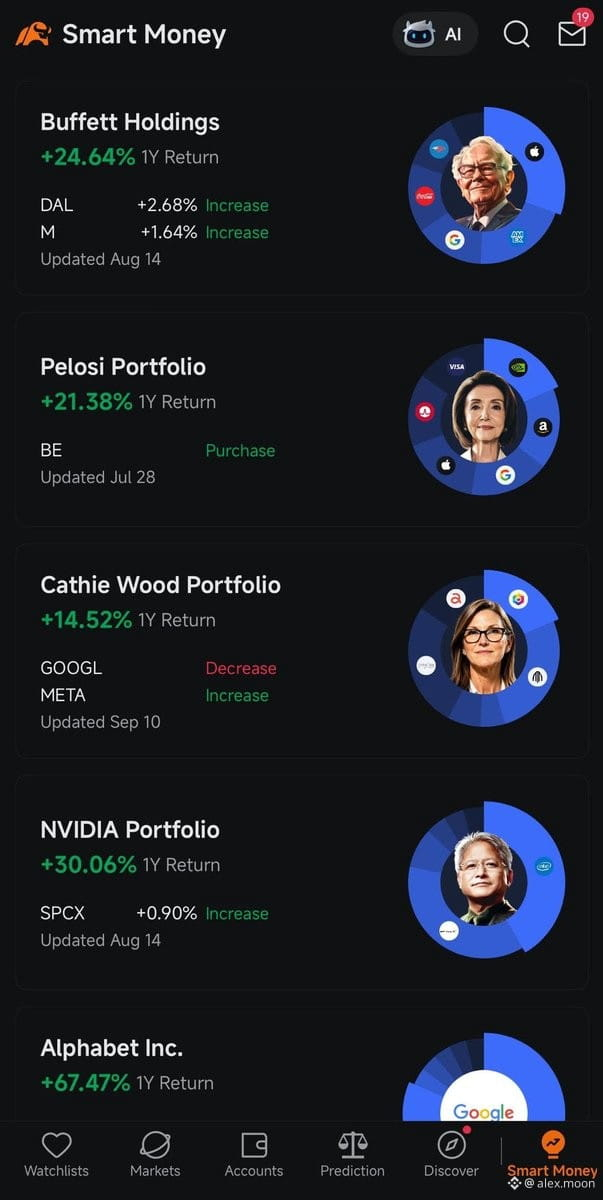
moomoo just became an official X Cashtag partner
You can now tap any ticker like $AAPL $NVDA $MU directly in your X feed and execute trades instantly
New user perks:
• Up to $1,000 in $NVDA stock
• $200 trading coupons
• 8.1% APY on idle cash
Seamless integration between social intel and execution. This changes how retail flows into names getting hyped on X.
T&Cs apply obviously but the friction just got cut in half for normies aping into trending tickers
·
--
Übersetzung ansehen
New AP-NORC poll drops a bomb:
56% of Americans think Trump's putting his business interests first.
Only 23% believe he's prioritizing the country.
Majority view: He's profiting off the presidency - either illegally or unethically.
This isn't just noise. Public trust in leadership directly impacts policy certainty, which bleeds into risk-on assets like crypto.
When institutional confidence wavers, capital flows get weird. Watch how this plays into regulatory uncertainty and market volatility.
Political risk = market risk. Always has been.
·
--
Übersetzung ansehen
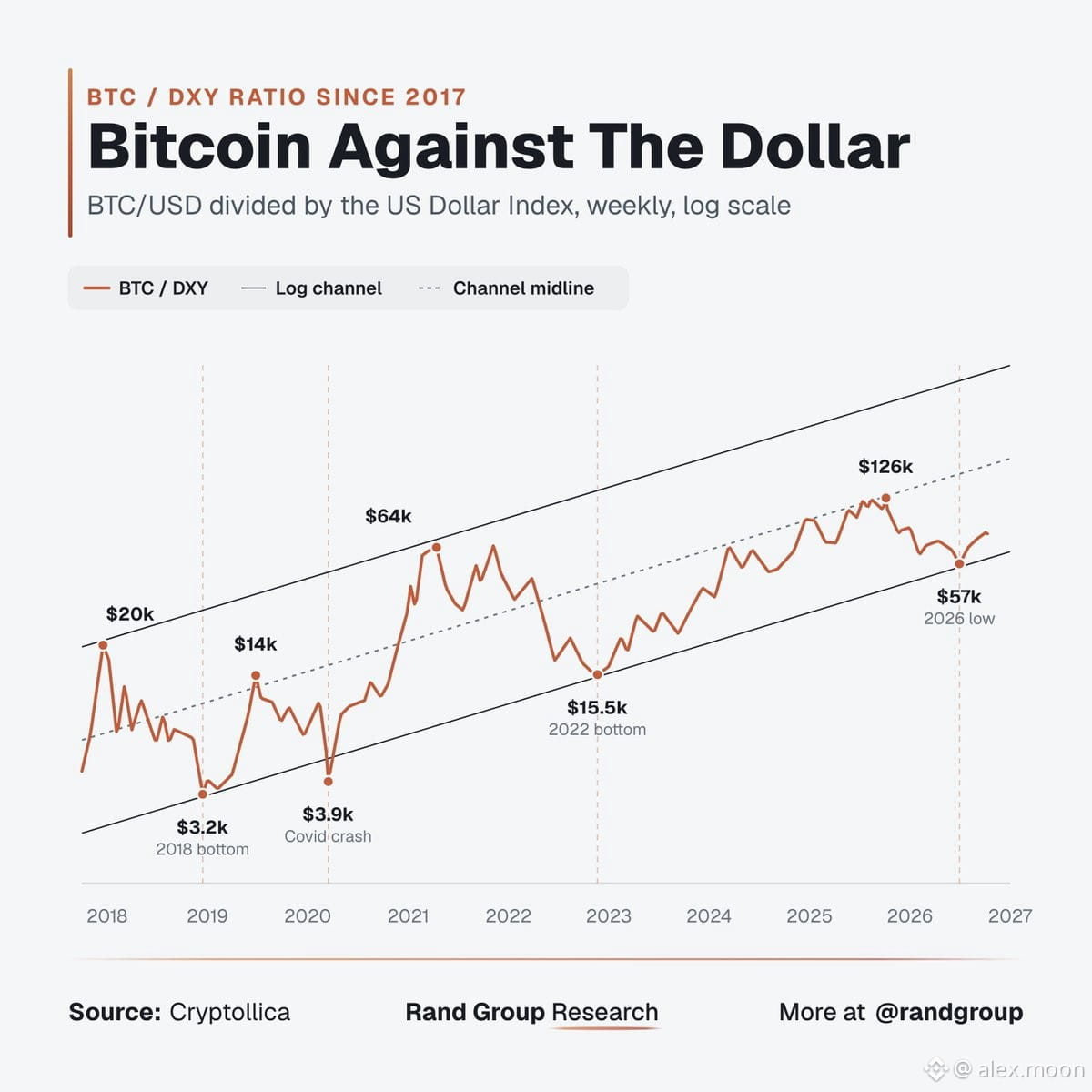
$BTC bouncing off lows vs the DXY while holding its long-term channel 👀
Historically? This setup marks bull market ignition 🚀
DXY weakness + $BTC strength = classic macro reversal signal. If this channel holds, we're early to the next leg up.
Watch for confirmation over the next few weeks. Bulls loading.
Historically? This setup marks bull market ignition 🚀
DXY weakness + $BTC strength = classic macro reversal signal. If this channel holds, we're early to the next leg up.
Watch for confirmation over the next few weeks. Bulls loading.
1
·
--
Übersetzung ansehen
BREAKING: Pentagon just dropped "FORTRESS America" - ordering ALL major US military bases to go full self-sufficient for 90+ days.
Power. Water. Fuel. Comms. Everything runs independently. Zero outside supply chains.
This isn't a drill. This is prep mode.
Why does this matter for markets?
• Signals serious geopolitical risk assessment at highest levels
• Supply chain vulnerabilities being war-gamed in real-time
• Could impact defense contractors, energy infrastructure plays
• Risk-off sentiment incoming if this escalates
When the military goes full bunker mode, pay attention. Markets don't price in tail risks until it's too late.
Watch $BTC as a hedge if traditional systems face stress tests. DeFi doesn't need 90 days of fuel to run.
Anmelden und weiter Inhalte entdecken
Krypto-Nutzer weltweit auf Binance Square kennenlernen
⚡️ Bleib in Sachen Krypto stets am Puls.
💬 Die weltgrößte Kryptobörse vertraut darauf.
👍 Erhalte verlässliche Einblicke von verifizierten Creators.
E-Mail-Adresse/Telefonnummer
Trendthemen
BinancePick
2.6M Aufrufe
139,167 Kommentare
Mach bei #Gewinnsaison mit: Prognostiziere Unternehmensergebnisse auf Binance Pick und teile deine Meinung auf Binance Square!
Binance Square Official
·400 Likes
·337.5k Aufrufe
EarningsSeason
5M Aufrufe
24,068 Kommentare
StrategyMSTRSurpassesNasdaqInMarketCap
0 Aufrufe
0 Kommentare