
BlockBreaker
8.3k Beiträge

BlockBreaker
 Square Verified+
Melden
Nutzer blockieren
Crypto Analyst 🧠 | Binance charts📊 | Tracking Market Moves Daily | X @Block_Breaker55
Trade eröffnen

BNB Halter
Regelmäßiger Trader
1.8 Jahre
170 Following
48.0K+ Follower
26.0K+ Like gegeben
Beiträge
Portfolio
Alle
Live
·
--
Übersetzung ansehen
JUST IN: Elon Musk says he has been "sounding the alarm on AI for a long time."
$LSK $ARK $STEEM
JUST IN: Elon Musk says he has been "sounding the alarm on AI for a long time."
$LSK $ARK $STEEM
$LSK $ARK $STEEM

1
266
·
--
KI & Trading: Wie verändert KI das Spiel?
Ich finde das Interessanteste an KI im Trading nicht die Idee, dass eine Maschine den „Markt vorhersagen“ kann.
Sondern das, was passiert, bevor überhaupt ein Trade in Betracht gezogen wird.
Ein Trader kann eine ganze Flut an Marktdaten an ein KI-System werfen und erhält in Sekunden Muster, Zusammenfassungen, Vergleiche, Benachrichtigungen und Strategieideen. Dinge, die früher Stunden erforderten, um durch Charts und Informationen zu scrollen, können heute fast sofort verarbeitet werden.
Das klingt nach einem riesigen Vorteil.
Aber da gibt es einen Haken.
Schnellere Informationen bedeuten nicht automatisch bessere Entscheidungen.
KI kann ein Muster erkennen, ohne zu wissen, ob dieses Muster tatsächlich eine Rolle spielt. Sie kann eine Strategie anhand historischer Daten testen, aber die Vergangenheit kann sich sehr anders verhalten als der Markt direkt vor dir. Und Automatisierung kann zwar Zögern abbauen, aber sie kann auch eine fehlerhafte Idee ohne Zögern umsetzen.
Deshalb sehe ich KI als einen zweiten Satz Augen – nicht als die Person hinter dem Steuer.
Recherche.
Analysieren.
Überwachen.
Testen.
Automatisieren.
Dann kommt der Teil, den KI noch immer nicht auslagern kann:
Urteilsvermögen.
Zu wissen, welche Informationen Aufmerksamkeit verdienen, die Annahmen hinter einem Modell zu hinterfragen, Risiken zu verstehen und zu erkennen, wann sich die Marktbedingungen verändert haben.
Vielleicht ist die größte Veränderung nicht, dass KI Trader ersetzt.
Vielleicht geht es eher darum, dass Trader KI nutzen, um weniger Zeit damit zu verbringen, Informationen zu sammeln – und mehr Zeit damit, darüber nachzudenken, was diese Informationen tatsächlich bedeuten.
Würdest du KI vertrauen, um deine Trading-Entscheidungen zu beeinflussen?
Nur zu Bildungszwecken, keine Finanzberatung. DYOR.
KI & Trading: Wie verändert KI das Spiel?
Ich finde das Interessanteste an KI im Trading nicht die Idee, dass eine Maschine den „Markt vorhersagen“ kann.
Sondern das, was passiert, bevor überhaupt ein Trade in Betracht gezogen wird.
Ein Trader kann eine ganze Flut an Marktdaten an ein KI-System werfen und erhält in Sekunden Muster, Zusammenfassungen, Vergleiche, Benachrichtigungen und Strategieideen. Dinge, die früher Stunden erforderten, um durch Charts und Informationen zu scrollen, können heute fast sofort verarbeitet werden.
Das klingt nach einem riesigen Vorteil.
Aber da gibt es einen Haken.
Schnellere Informationen bedeuten nicht automatisch bessere Entscheidungen.
KI kann ein Muster erkennen, ohne zu wissen, ob dieses Muster tatsächlich eine Rolle spielt. Sie kann eine Strategie anhand historischer Daten testen, aber die Vergangenheit kann sich sehr anders verhalten als der Markt direkt vor dir. Und Automatisierung kann zwar Zögern abbauen, aber sie kann auch eine fehlerhafte Idee ohne Zögern umsetzen.
Deshalb sehe ich KI als einen zweiten Satz Augen – nicht als die Person hinter dem Steuer.
Recherche.
Analysieren.
Überwachen.
Testen.
Automatisieren.
Dann kommt der Teil, den KI noch immer nicht auslagern kann:
Urteilsvermögen.
Zu wissen, welche Informationen Aufmerksamkeit verdienen, die Annahmen hinter einem Modell zu hinterfragen, Risiken zu verstehen und zu erkennen, wann sich die Marktbedingungen verändert haben.
Vielleicht ist die größte Veränderung nicht, dass KI Trader ersetzt.
Vielleicht geht es eher darum, dass Trader KI nutzen, um weniger Zeit damit zu verbringen, Informationen zu sammeln – und mehr Zeit damit, darüber nachzudenken, was diese Informationen tatsächlich bedeuten.
Würdest du KI vertrauen, um deine Trading-Entscheidungen zu beeinflussen?
Nur zu Bildungszwecken, keine Finanzberatung. DYOR.
Ich finde das Interessanteste an KI im Trading nicht die Idee, dass eine Maschine den „Markt vorhersagen“ kann.
Sondern das, was passiert, bevor überhaupt ein Trade in Betracht gezogen wird.
Ein Trader kann eine ganze Flut an Marktdaten an ein KI-System werfen und erhält in Sekunden Muster, Zusammenfassungen, Vergleiche, Benachrichtigungen und Strategieideen. Dinge, die früher Stunden erforderten, um durch Charts und Informationen zu scrollen, können heute fast sofort verarbeitet werden.
Das klingt nach einem riesigen Vorteil.
Aber da gibt es einen Haken.
Schnellere Informationen bedeuten nicht automatisch bessere Entscheidungen.
KI kann ein Muster erkennen, ohne zu wissen, ob dieses Muster tatsächlich eine Rolle spielt. Sie kann eine Strategie anhand historischer Daten testen, aber die Vergangenheit kann sich sehr anders verhalten als der Markt direkt vor dir. Und Automatisierung kann zwar Zögern abbauen, aber sie kann auch eine fehlerhafte Idee ohne Zögern umsetzen.
Deshalb sehe ich KI als einen zweiten Satz Augen – nicht als die Person hinter dem Steuer.
Recherche.
Analysieren.
Überwachen.
Testen.
Automatisieren.
Dann kommt der Teil, den KI noch immer nicht auslagern kann:
Urteilsvermögen.
Zu wissen, welche Informationen Aufmerksamkeit verdienen, die Annahmen hinter einem Modell zu hinterfragen, Risiken zu verstehen und zu erkennen, wann sich die Marktbedingungen verändert haben.
Vielleicht ist die größte Veränderung nicht, dass KI Trader ersetzt.
Vielleicht geht es eher darum, dass Trader KI nutzen, um weniger Zeit damit zu verbringen, Informationen zu sammeln – und mehr Zeit damit, darüber nachzudenken, was diese Informationen tatsächlich bedeuten.
Würdest du KI vertrauen, um deine Trading-Entscheidungen zu beeinflussen?
Nur zu Bildungszwecken, keine Finanzberatung. DYOR.

1
164
·
--
#dusk $DUSK @Dusk_Foundation
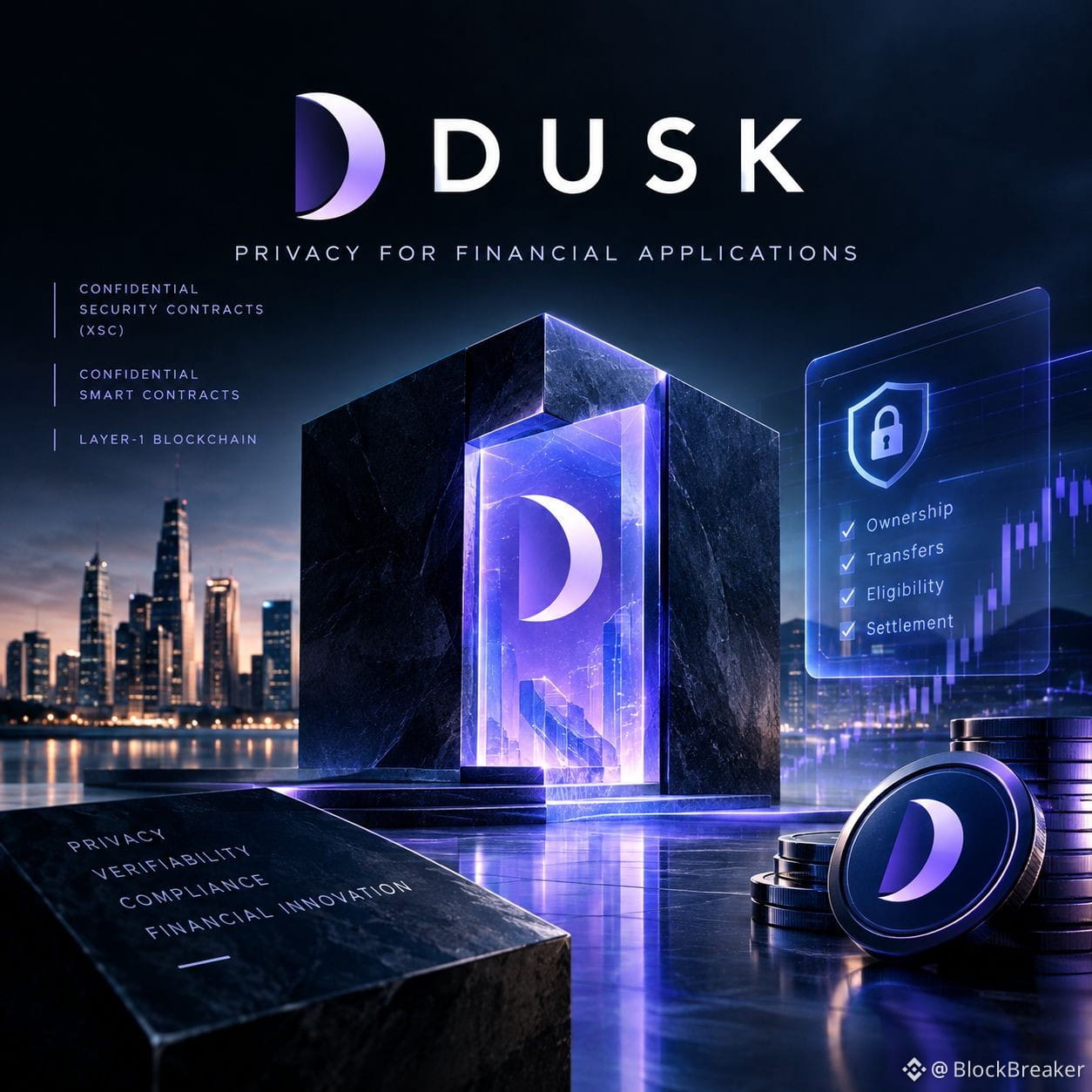
Was mich an Dusk interessiert, ist, dass seine Privacy-These zunehmend weniger darum geht, Transaktionen zu verstecken, und mehr darum, die Teile des Finanzwesens zu verbergen, die ohnehin nie öffentlich sein mussten.
Diese Unterscheidung ist entscheidend.
Finanzielle Vermögenswerte tragen sensible Informationen zu Eigentum, Berechtigung, Preisgestaltung, Übertragungen und Abwicklung. Wenn man all das in transparente Smart Contracts legt, entsteht ein seltsamer Interessenkonflikt: Man gewinnt zwar Kombinierbarkeit (Composability), setzt aber zugleich Daten offen, die regulierte Märkte seit Jahrzehnten unter Kontrolle halten.
Dusk nähert sich dem Problem von der anderen Seite. Sein Privacy-Stack nutzt Zero-Knowledge-Proofs, PLONK, JubJub, Poseidon und merklebasierte Strukturen, um zu beweisen, dass Regeln befolgt wurden, ohne jede zugrunde liegende Detailinformation zu veröffentlichen. Spannend ist nicht nur die Kryptografie selbst. Entscheidend ist, was diese Architektur für finanzielle Workflows möglich machen kann.
Und die jüngste technische Weiterentwicklung macht die These glaubwürdiger. Aegis hat die Mainnet-Verifikation auf PLONK V3 aktualisiert und stärkere Konsens- sowie Rückerstattungs-Schutzmechanismen hinzugefügt, während die Entwicklung im August daran arbeitete, die Verifikation der Proofs und die Validierung der Chiffre weiter zu verschärfen.
Jetzt ist DuskEVM im Testnet, sodass Solidity-Entwickler einen vertrauten Ausführungspfad haben – neben Duks nativer Privacy-Architektur.
Mein Fazit: Dusk konkurriert nicht wirklich darum, die „privateste Blockchain“ zu sein. Die weitaus interessantere Chance liegt darin, die Schicht zu werden, in der Finanzanwendungen überprüfbar bleiben können, ohne sensible Marktinformationen in öffentliche Metadaten zu verwandeln.
Das ist ein viel schwierigeres Problem – und ein viel nützlicheres, das man lösen muss.
#dusk $DUSK @Dusk
Was mich an Dusk interessiert, ist, dass seine Privacy-These zunehmend weniger darum geht, Transaktionen zu verstecken, und mehr darum, die Teile des Finanzwesens zu verbergen, die ohnehin nie öffentlich sein mussten.
Diese Unterscheidung ist entscheidend.
Finanzielle Vermögenswerte tragen sensible Informationen zu Eigentum, Berechtigung, Preisgestaltung, Übertragungen und Abwicklung. Wenn man all das in transparente Smart Contracts legt, entsteht ein seltsamer Interessenkonflikt: Man gewinnt zwar Kombinierbarkeit (Composability), setzt aber zugleich Daten offen, die regulierte Märkte seit Jahrzehnten unter Kontrolle halten.
Dusk nähert sich dem Problem von der anderen Seite. Sein Privacy-Stack nutzt Zero-Knowledge-Proofs, PLONK, JubJub, Poseidon und merklebasierte Strukturen, um zu beweisen, dass Regeln befolgt wurden, ohne jede zugrunde liegende Detailinformation zu veröffentlichen. Spannend ist nicht nur die Kryptografie selbst. Entscheidend ist, was diese Architektur für finanzielle Workflows möglich machen kann.
Und die jüngste technische Weiterentwicklung macht die These glaubwürdiger. Aegis hat die Mainnet-Verifikation auf PLONK V3 aktualisiert und stärkere Konsens- sowie Rückerstattungs-Schutzmechanismen hinzugefügt, während die Entwicklung im August daran arbeitete, die Verifikation der Proofs und die Validierung der Chiffre weiter zu verschärfen.
Jetzt ist DuskEVM im Testnet, sodass Solidity-Entwickler einen vertrauten Ausführungspfad haben – neben Duks nativer Privacy-Architektur.
Mein Fazit: Dusk konkurriert nicht wirklich darum, die „privateste Blockchain“ zu sein. Die weitaus interessantere Chance liegt darin, die Schicht zu werden, in der Finanzanwendungen überprüfbar bleiben können, ohne sensible Marktinformationen in öffentliche Metadaten zu verwandeln.
Das ist ein viel schwierigeres Problem – und ein viel nützlicheres, das man lösen muss.
Was mich an Dusk interessiert, ist, dass seine Privacy-These zunehmend weniger darum geht, Transaktionen zu verstecken, und mehr darum, die Teile des Finanzwesens zu verbergen, die ohnehin nie öffentlich sein mussten.
Diese Unterscheidung ist entscheidend.
Finanzielle Vermögenswerte tragen sensible Informationen zu Eigentum, Berechtigung, Preisgestaltung, Übertragungen und Abwicklung. Wenn man all das in transparente Smart Contracts legt, entsteht ein seltsamer Interessenkonflikt: Man gewinnt zwar Kombinierbarkeit (Composability), setzt aber zugleich Daten offen, die regulierte Märkte seit Jahrzehnten unter Kontrolle halten.
Dusk nähert sich dem Problem von der anderen Seite. Sein Privacy-Stack nutzt Zero-Knowledge-Proofs, PLONK, JubJub, Poseidon und merklebasierte Strukturen, um zu beweisen, dass Regeln befolgt wurden, ohne jede zugrunde liegende Detailinformation zu veröffentlichen. Spannend ist nicht nur die Kryptografie selbst. Entscheidend ist, was diese Architektur für finanzielle Workflows möglich machen kann.
Und die jüngste technische Weiterentwicklung macht die These glaubwürdiger. Aegis hat die Mainnet-Verifikation auf PLONK V3 aktualisiert und stärkere Konsens- sowie Rückerstattungs-Schutzmechanismen hinzugefügt, während die Entwicklung im August daran arbeitete, die Verifikation der Proofs und die Validierung der Chiffre weiter zu verschärfen.
Jetzt ist DuskEVM im Testnet, sodass Solidity-Entwickler einen vertrauten Ausführungspfad haben – neben Duks nativer Privacy-Architektur.
Mein Fazit: Dusk konkurriert nicht wirklich darum, die „privateste Blockchain“ zu sein. Die weitaus interessantere Chance liegt darin, die Schicht zu werden, in der Finanzanwendungen überprüfbar bleiben können, ohne sensible Marktinformationen in öffentliche Metadaten zu verwandeln.
Das ist ein viel schwierigeres Problem – und ein viel nützlicheres, das man lösen muss.
3
2
254
·
--
#dusk $DUSK @Dusk_Foundation
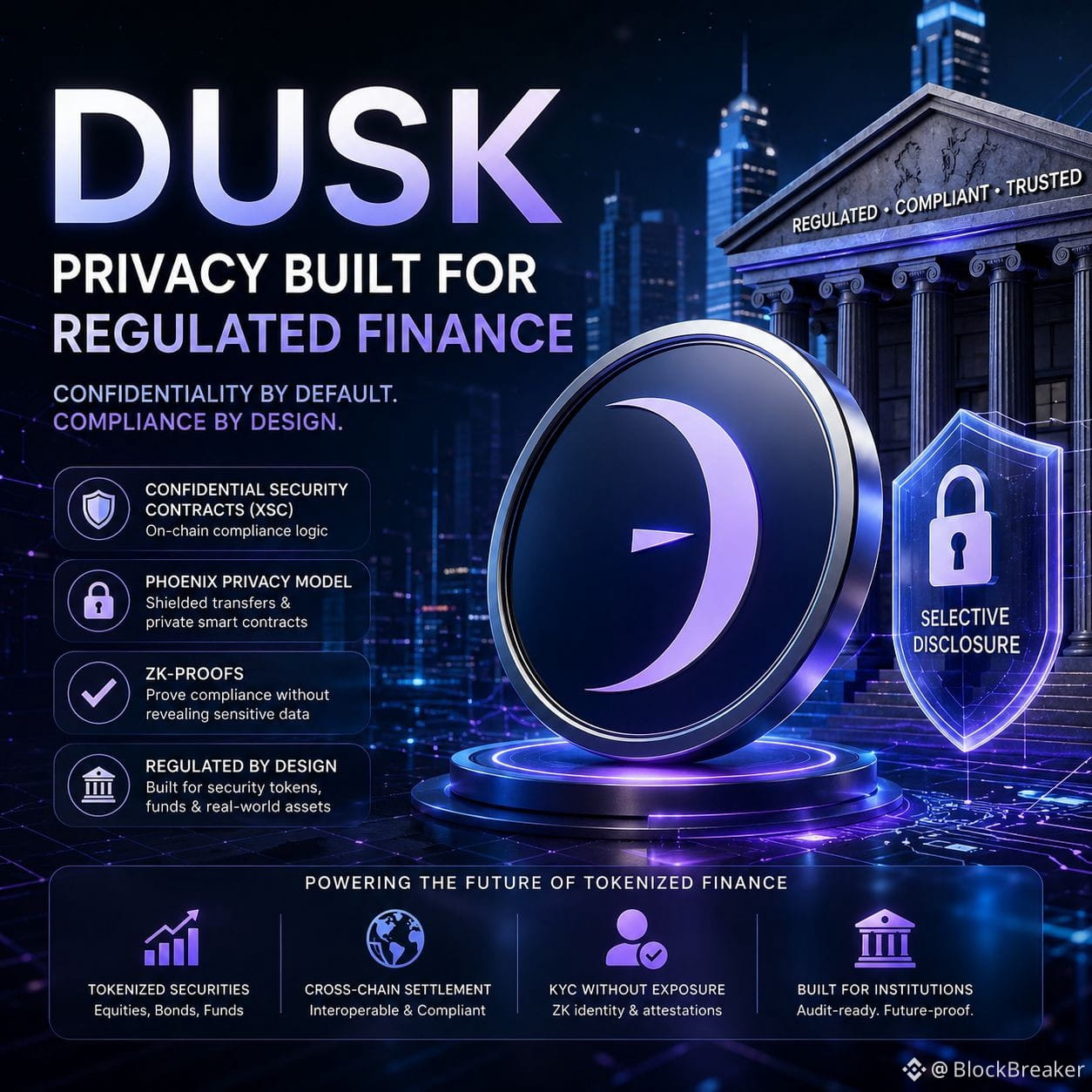
Was mir an Dusk auffällt, ist, dass es nicht wirklich versucht, Blockchains „privater“ zu machen. Es geht darum, Privatsphäre zu einem nutzbaren Markt-Baustein zu machen.
Dieser Unterschied ist im Finanzwesen entscheidend. Ein Wertpapier- Ledger, der jede Saldo-, Handels- und Anlegerbeziehung offenlegt, ist zwar transparent, aber oft unbrauchbar. Dusk geht den umgekehrten Weg: sensible Zustände privat halten, beweisen, dass die erforderlichen Regeln befolgt wurden, und nur das offenlegen, was ein Regulator, Emittent oder Gegenpartei tatsächlich benötigt. Das ist besser, als lediglich KYC zu einer transparenten Kette hinzuzufügen.
XSC ist aus demselben Grund interessant. Compliance wird als programmierbare Transaktionslogik behandelt, nicht als Formular- oder Papierkram am Rand. Zugriffsregeln, Übertragungsbeschränkungen, Eigentumsnachweise und Unternehmensmaßnahmen können direkt im Asset-Workflow verankert werden. Die Privatsphäre verhindert dann, dass diese Kontrollen zu dauerhaftem öffentlichem Überwachungsinstrument werden.
Aktuelle Entwicklungen sind wichtig, weil sie etwas Signalisieren – nicht wegen der Schlagzeilen. Dusk hat sein Protokoll mit PLONK V3 weiter verschärft und die Konsens-Absicherung gehärtet, während sein EVM-Pfad und die Entwickler-Tooling die Hürde für Builder senken. Seine Arbeit an zk-Tools im August 2026 und der Fokus auf tokenisierte private Märkte deuten auf einen größeren Wandel hin: von „Privacy-Blockchain“ hin zu Finanzinfrastruktur.
Dusk’s Stärke liegt nicht allein in der Verschwiegenheit. Es macht regulierte Assets privat, ohne sie unverifizierbar zu machen. Wenn tokenisiertes Finance zugleich Vertraulichkeit, Nachvollziehbarkeit und deterministische Abwicklung verlangt, dann wird dieses Spannungsverhältnis zum Produkt.
#dusk $DUSK @Dusk
Was mir an Dusk auffällt, ist, dass es nicht wirklich versucht, Blockchains „privater“ zu machen. Es geht darum, Privatsphäre zu einem nutzbaren Markt-Baustein zu machen.
Dieser Unterschied ist im Finanzwesen entscheidend. Ein Wertpapier- Ledger, der jede Saldo-, Handels- und Anlegerbeziehung offenlegt, ist zwar transparent, aber oft unbrauchbar. Dusk geht den umgekehrten Weg: sensible Zustände privat halten, beweisen, dass die erforderlichen Regeln befolgt wurden, und nur das offenlegen, was ein Regulator, Emittent oder Gegenpartei tatsächlich benötigt. Das ist besser, als lediglich KYC zu einer transparenten Kette hinzuzufügen.
XSC ist aus demselben Grund interessant. Compliance wird als programmierbare Transaktionslogik behandelt, nicht als Formular- oder Papierkram am Rand. Zugriffsregeln, Übertragungsbeschränkungen, Eigentumsnachweise und Unternehmensmaßnahmen können direkt im Asset-Workflow verankert werden. Die Privatsphäre verhindert dann, dass diese Kontrollen zu dauerhaftem öffentlichem Überwachungsinstrument werden.
Aktuelle Entwicklungen sind wichtig, weil sie etwas Signalisieren – nicht wegen der Schlagzeilen. Dusk hat sein Protokoll mit PLONK V3 weiter verschärft und die Konsens-Absicherung gehärtet, während sein EVM-Pfad und die Entwickler-Tooling die Hürde für Builder senken. Seine Arbeit an zk-Tools im August 2026 und der Fokus auf tokenisierte private Märkte deuten auf einen größeren Wandel hin: von „Privacy-Blockchain“ hin zu Finanzinfrastruktur.
Dusk’s Stärke liegt nicht allein in der Verschwiegenheit. Es macht regulierte Assets privat, ohne sie unverifizierbar zu machen. Wenn tokenisiertes Finance zugleich Vertraulichkeit, Nachvollziehbarkeit und deterministische Abwicklung verlangt, dann wird dieses Spannungsverhältnis zum Produkt.
Was mir an Dusk auffällt, ist, dass es nicht wirklich versucht, Blockchains „privater“ zu machen. Es geht darum, Privatsphäre zu einem nutzbaren Markt-Baustein zu machen.
Dieser Unterschied ist im Finanzwesen entscheidend. Ein Wertpapier- Ledger, der jede Saldo-, Handels- und Anlegerbeziehung offenlegt, ist zwar transparent, aber oft unbrauchbar. Dusk geht den umgekehrten Weg: sensible Zustände privat halten, beweisen, dass die erforderlichen Regeln befolgt wurden, und nur das offenlegen, was ein Regulator, Emittent oder Gegenpartei tatsächlich benötigt. Das ist besser, als lediglich KYC zu einer transparenten Kette hinzuzufügen.
XSC ist aus demselben Grund interessant. Compliance wird als programmierbare Transaktionslogik behandelt, nicht als Formular- oder Papierkram am Rand. Zugriffsregeln, Übertragungsbeschränkungen, Eigentumsnachweise und Unternehmensmaßnahmen können direkt im Asset-Workflow verankert werden. Die Privatsphäre verhindert dann, dass diese Kontrollen zu dauerhaftem öffentlichem Überwachungsinstrument werden.
Aktuelle Entwicklungen sind wichtig, weil sie etwas Signalisieren – nicht wegen der Schlagzeilen. Dusk hat sein Protokoll mit PLONK V3 weiter verschärft und die Konsens-Absicherung gehärtet, während sein EVM-Pfad und die Entwickler-Tooling die Hürde für Builder senken. Seine Arbeit an zk-Tools im August 2026 und der Fokus auf tokenisierte private Märkte deuten auf einen größeren Wandel hin: von „Privacy-Blockchain“ hin zu Finanzinfrastruktur.
Dusk’s Stärke liegt nicht allein in der Verschwiegenheit. Es macht regulierte Assets privat, ohne sie unverifizierbar zu machen. Wenn tokenisiertes Finance zugleich Vertraulichkeit, Nachvollziehbarkeit und deterministische Abwicklung verlangt, dann wird dieses Spannungsverhältnis zum Produkt.
2
5
430
·
--
#dusk $DUSK @Dusk_Foundation
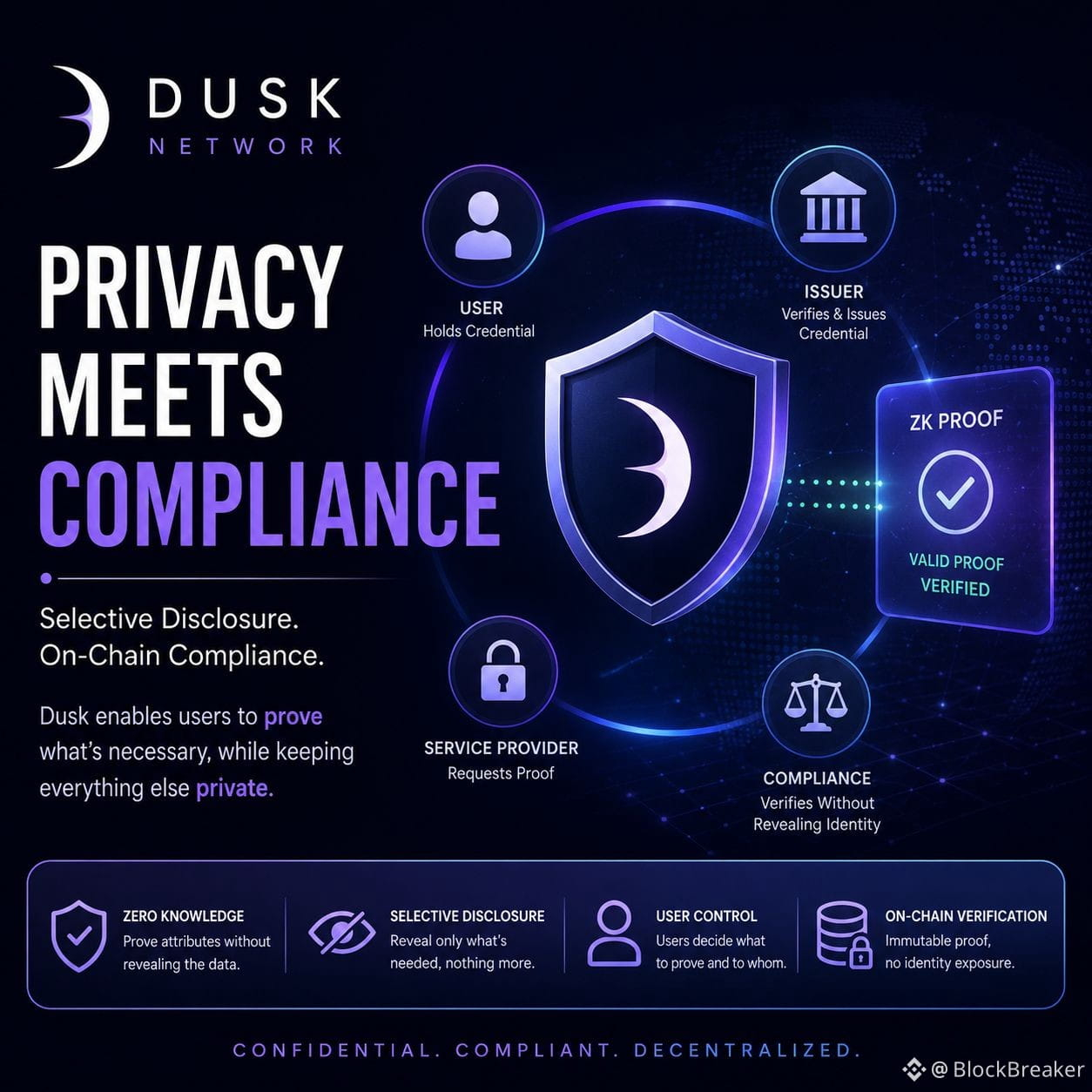
Was ich an Dusk’ Compliance-Modell interessant finde, ist, dass es Identität weniger als etwas behandelt, das man speichert, und mehr als etwas, das man nachweist.
Citadel 2 trennt die Rollen sauber. Ein Lizenzanbieter überprüft den Nutzer off-chain und signiert die relevanten Attribute. Die Berechtigung wird registriert, ohne ihre Inhalte offenzulegen, dann kann der Nutzer einen Zero-Knowledge-Beweis erzeugen, der zeigt, dass er eine gültige Berechtigung besitzt, ohne offenzulegen, welche Berechtigung, seine Identität oder die zugrunde liegenden Attribute. Der Dienstanbieter entscheidet weiterhin, was als qualifizierend gilt und ob der Zugriff gewährt werden soll.
Das ist eine subtile, aber wichtige Abgrenzung gegenüber dem Ansatz, KYC-Daten on-chain zu stellen und das als compliant zu bezeichnen. Die Chain sollte eine Aussage wie „dieser Teilnehmer ist akkreditiert“ oder „dieser Inhaber erfüllt die Jurisdiktionsregel“ verifizieren – und nicht den Pass, die Adresse oder das Geburtsdatum dauerhaft hinter dieser Aussage offenlegen.
Die breitere kryptografische Ausrichtung unterstützt diese Architektur. W3C’s Arbeit an Digital Credentials für 2026 behandelt selektive Offenlegung und unverknüpfbare Präsentationen als zentrale Datenschutz-Eigenschaften, während seine BBS-Kryptosuite abgeleitete Beweise formalisiert, bei denen Inhaber ausgewählte Ansprüche offenlegen können, ohne dass sich separate Präsentationen trivial verknüpfen lassen.
Meine Ansicht ist, dass Dusk’s schwieriges Problem nicht mehr darin besteht, ob Zero Knowledge KYC-Daten verbergen kann. Es geht darum, die Policy-Ebene darum herum zu gestalten: Ausstellervertrauen, Ablauf, Widerruf, Änderungen der Jurisdiktion, Wallet-Bindung und Anti-Korrelation.
Dort wird On-Chain-Compliance interessant: nicht Offenlegung von Identität, sondern programmierbarer Nachweis der Berechtigung.
#dusk $DUSK @Dusk
Was ich an Dusk’ Compliance-Modell interessant finde, ist, dass es Identität weniger als etwas behandelt, das man speichert, und mehr als etwas, das man nachweist.
Citadel 2 trennt die Rollen sauber. Ein Lizenzanbieter überprüft den Nutzer off-chain und signiert die relevanten Attribute. Die Berechtigung wird registriert, ohne ihre Inhalte offenzulegen, dann kann der Nutzer einen Zero-Knowledge-Beweis erzeugen, der zeigt, dass er eine gültige Berechtigung besitzt, ohne offenzulegen, welche Berechtigung, seine Identität oder die zugrunde liegenden Attribute. Der Dienstanbieter entscheidet weiterhin, was als qualifizierend gilt und ob der Zugriff gewährt werden soll.
Das ist eine subtile, aber wichtige Abgrenzung gegenüber dem Ansatz, KYC-Daten on-chain zu stellen und das als compliant zu bezeichnen. Die Chain sollte eine Aussage wie „dieser Teilnehmer ist akkreditiert“ oder „dieser Inhaber erfüllt die Jurisdiktionsregel“ verifizieren – und nicht den Pass, die Adresse oder das Geburtsdatum dauerhaft hinter dieser Aussage offenlegen.
Die breitere kryptografische Ausrichtung unterstützt diese Architektur. W3C’s Arbeit an Digital Credentials für 2026 behandelt selektive Offenlegung und unverknüpfbare Präsentationen als zentrale Datenschutz-Eigenschaften, während seine BBS-Kryptosuite abgeleitete Beweise formalisiert, bei denen Inhaber ausgewählte Ansprüche offenlegen können, ohne dass sich separate Präsentationen trivial verknüpfen lassen.
Meine Ansicht ist, dass Dusk’s schwieriges Problem nicht mehr darin besteht, ob Zero Knowledge KYC-Daten verbergen kann. Es geht darum, die Policy-Ebene darum herum zu gestalten: Ausstellervertrauen, Ablauf, Widerruf, Änderungen der Jurisdiktion, Wallet-Bindung und Anti-Korrelation.
Dort wird On-Chain-Compliance interessant: nicht Offenlegung von Identität, sondern programmierbarer Nachweis der Berechtigung.
Was ich an Dusk’ Compliance-Modell interessant finde, ist, dass es Identität weniger als etwas behandelt, das man speichert, und mehr als etwas, das man nachweist.
Citadel 2 trennt die Rollen sauber. Ein Lizenzanbieter überprüft den Nutzer off-chain und signiert die relevanten Attribute. Die Berechtigung wird registriert, ohne ihre Inhalte offenzulegen, dann kann der Nutzer einen Zero-Knowledge-Beweis erzeugen, der zeigt, dass er eine gültige Berechtigung besitzt, ohne offenzulegen, welche Berechtigung, seine Identität oder die zugrunde liegenden Attribute. Der Dienstanbieter entscheidet weiterhin, was als qualifizierend gilt und ob der Zugriff gewährt werden soll.
Das ist eine subtile, aber wichtige Abgrenzung gegenüber dem Ansatz, KYC-Daten on-chain zu stellen und das als compliant zu bezeichnen. Die Chain sollte eine Aussage wie „dieser Teilnehmer ist akkreditiert“ oder „dieser Inhaber erfüllt die Jurisdiktionsregel“ verifizieren – und nicht den Pass, die Adresse oder das Geburtsdatum dauerhaft hinter dieser Aussage offenlegen.
Die breitere kryptografische Ausrichtung unterstützt diese Architektur. W3C’s Arbeit an Digital Credentials für 2026 behandelt selektive Offenlegung und unverknüpfbare Präsentationen als zentrale Datenschutz-Eigenschaften, während seine BBS-Kryptosuite abgeleitete Beweise formalisiert, bei denen Inhaber ausgewählte Ansprüche offenlegen können, ohne dass sich separate Präsentationen trivial verknüpfen lassen.
Meine Ansicht ist, dass Dusk’s schwieriges Problem nicht mehr darin besteht, ob Zero Knowledge KYC-Daten verbergen kann. Es geht darum, die Policy-Ebene darum herum zu gestalten: Ausstellervertrauen, Ablauf, Widerruf, Änderungen der Jurisdiktion, Wallet-Bindung und Anti-Korrelation.
Dort wird On-Chain-Compliance interessant: nicht Offenlegung von Identität, sondern programmierbarer Nachweis der Berechtigung.
2
255
·
--
#termmax @termmax
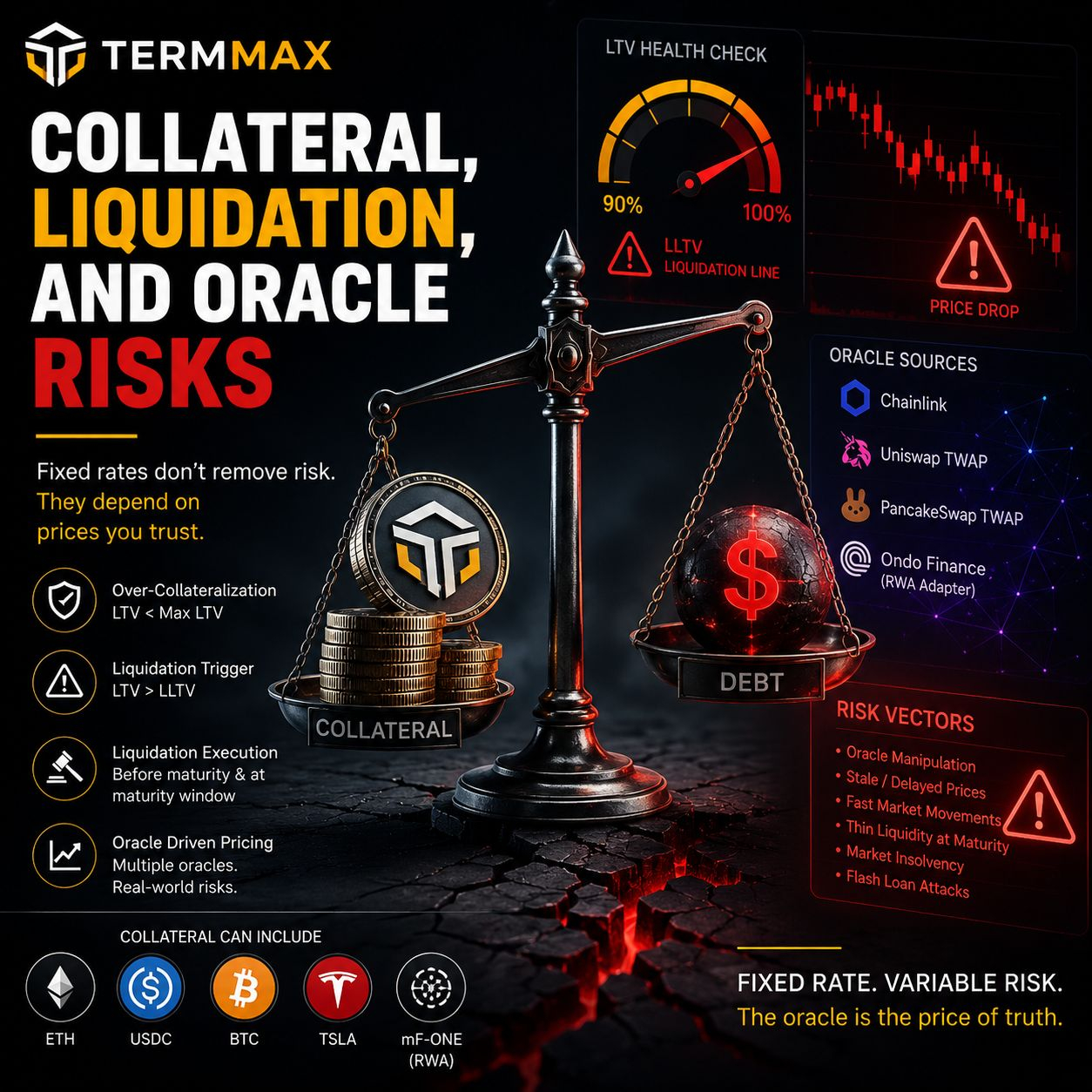
Was ich an TermMax am interessantesten finde, ist, dass ein Darlehen mit festem Zinssatz das Kollateralrisiko nicht einfach verschwinden lässt. Es verlagert das Risiko nur an einen anderen Ort.
Ich habe mir die Logik des Gearing Tokens genauer angesehen, und der wichtige Punkt ist, dass die Positionen weiterhin in einem LTV-Rahmen (Loan-to-Value) leben. Sobald das Kollateral weit genug fällt, wird die Liquidation zum Mechanismus, um Forderungsausfälle einzudämmen. Gegen Ende der Laufzeit wird dieses Risiko noch spannender, weil das Protokoll eine Position mit fester Laufzeit mit einem Markt in Einklang bringen muss, der sich heftig bewegen kann.
Darin liegt auch der Teil, dem ich standardmäßig nicht vollständig vertraue: die Orakel-Ebene.
Die Architektur von TermMax unterstützt mehrere Preisrouten und Adapter, statt sich auf einen einzigen universellen Feed zu verlassen. Das ist relevant, wenn das Kollateral etwas ist, das liquide gehandelt wird, etwa ETH. Aber die Annahmen werden deutlich schwieriger zu beurteilen, wenn es sich um tokenisierte Aktien oder andere RWA-Assets (Real-World Assets) handelt. Ein Preis kann technisch „on-chain“ sein und trotzdem veraltet, dünn, verzögert oder von ausführbarer Liquidität abgekoppelt.
Ein simples Stress-Szenario zeigt, warum. Angenommen, $100 Kollateral stützen $85 Schulden. Ein Rückgang von 10 % bringt die Position nahe an einen 94%-LTV. Eine stärkere Bewegung kann dazu führen, dass das Protokoll im Wettbewerb mit der Liquidation gegen einen Markt „rennen“ muss, der schneller neu bewertet als das Orakel.
Deshalb interessiere ich mich weniger dafür, ob TermMax Liquidationen hat.
Die bessere Frage ist: Kann die Liquidation zum richtigen Preis stattfinden – schnell genug –, wenn alle anderen gleichzeitig versuchen, auszusteigen?
Dort denke ich, lebt das eigentliche Risikomodell.
#termmax @TermMax
Was ich an TermMax am interessantesten finde, ist, dass ein Darlehen mit festem Zinssatz das Kollateralrisiko nicht einfach verschwinden lässt. Es verlagert das Risiko nur an einen anderen Ort.
Ich habe mir die Logik des Gearing Tokens genauer angesehen, und der wichtige Punkt ist, dass die Positionen weiterhin in einem LTV-Rahmen (Loan-to-Value) leben. Sobald das Kollateral weit genug fällt, wird die Liquidation zum Mechanismus, um Forderungsausfälle einzudämmen. Gegen Ende der Laufzeit wird dieses Risiko noch spannender, weil das Protokoll eine Position mit fester Laufzeit mit einem Markt in Einklang bringen muss, der sich heftig bewegen kann.
Darin liegt auch der Teil, dem ich standardmäßig nicht vollständig vertraue: die Orakel-Ebene.
Die Architektur von TermMax unterstützt mehrere Preisrouten und Adapter, statt sich auf einen einzigen universellen Feed zu verlassen. Das ist relevant, wenn das Kollateral etwas ist, das liquide gehandelt wird, etwa ETH. Aber die Annahmen werden deutlich schwieriger zu beurteilen, wenn es sich um tokenisierte Aktien oder andere RWA-Assets (Real-World Assets) handelt. Ein Preis kann technisch „on-chain“ sein und trotzdem veraltet, dünn, verzögert oder von ausführbarer Liquidität abgekoppelt.
Ein simples Stress-Szenario zeigt, warum. Angenommen, $100 Kollateral stützen $85 Schulden. Ein Rückgang von 10 % bringt die Position nahe an einen 94%-LTV. Eine stärkere Bewegung kann dazu führen, dass das Protokoll im Wettbewerb mit der Liquidation gegen einen Markt „rennen“ muss, der schneller neu bewertet als das Orakel.
Deshalb interessiere ich mich weniger dafür, ob TermMax Liquidationen hat.
Die bessere Frage ist: Kann die Liquidation zum richtigen Preis stattfinden – schnell genug –, wenn alle anderen gleichzeitig versuchen, auszusteigen?
Dort denke ich, lebt das eigentliche Risikomodell.
Was ich an TermMax am interessantesten finde, ist, dass ein Darlehen mit festem Zinssatz das Kollateralrisiko nicht einfach verschwinden lässt. Es verlagert das Risiko nur an einen anderen Ort.
Ich habe mir die Logik des Gearing Tokens genauer angesehen, und der wichtige Punkt ist, dass die Positionen weiterhin in einem LTV-Rahmen (Loan-to-Value) leben. Sobald das Kollateral weit genug fällt, wird die Liquidation zum Mechanismus, um Forderungsausfälle einzudämmen. Gegen Ende der Laufzeit wird dieses Risiko noch spannender, weil das Protokoll eine Position mit fester Laufzeit mit einem Markt in Einklang bringen muss, der sich heftig bewegen kann.
Darin liegt auch der Teil, dem ich standardmäßig nicht vollständig vertraue: die Orakel-Ebene.
Die Architektur von TermMax unterstützt mehrere Preisrouten und Adapter, statt sich auf einen einzigen universellen Feed zu verlassen. Das ist relevant, wenn das Kollateral etwas ist, das liquide gehandelt wird, etwa ETH. Aber die Annahmen werden deutlich schwieriger zu beurteilen, wenn es sich um tokenisierte Aktien oder andere RWA-Assets (Real-World Assets) handelt. Ein Preis kann technisch „on-chain“ sein und trotzdem veraltet, dünn, verzögert oder von ausführbarer Liquidität abgekoppelt.
Ein simples Stress-Szenario zeigt, warum. Angenommen, $100 Kollateral stützen $85 Schulden. Ein Rückgang von 10 % bringt die Position nahe an einen 94%-LTV. Eine stärkere Bewegung kann dazu führen, dass das Protokoll im Wettbewerb mit der Liquidation gegen einen Markt „rennen“ muss, der schneller neu bewertet als das Orakel.
Deshalb interessiere ich mich weniger dafür, ob TermMax Liquidationen hat.
Die bessere Frage ist: Kann die Liquidation zum richtigen Preis stattfinden – schnell genug –, wenn alle anderen gleichzeitig versuchen, auszusteigen?
Dort denke ich, lebt das eigentliche Risikomodell.
1
158
·
--
#dusk $DUSK @Dusk_Foundation
Ich habe erlebt, wie Blockchain-Teams das Networking wie Sanitärinstallationen behandeln. Solange die Blöcke ankommen, bekommt die Architektur meist nicht viel Aufmerksamkeit.
Kadcast lenkt meinen Blick auf diese Ebene in eine andere Richtung.
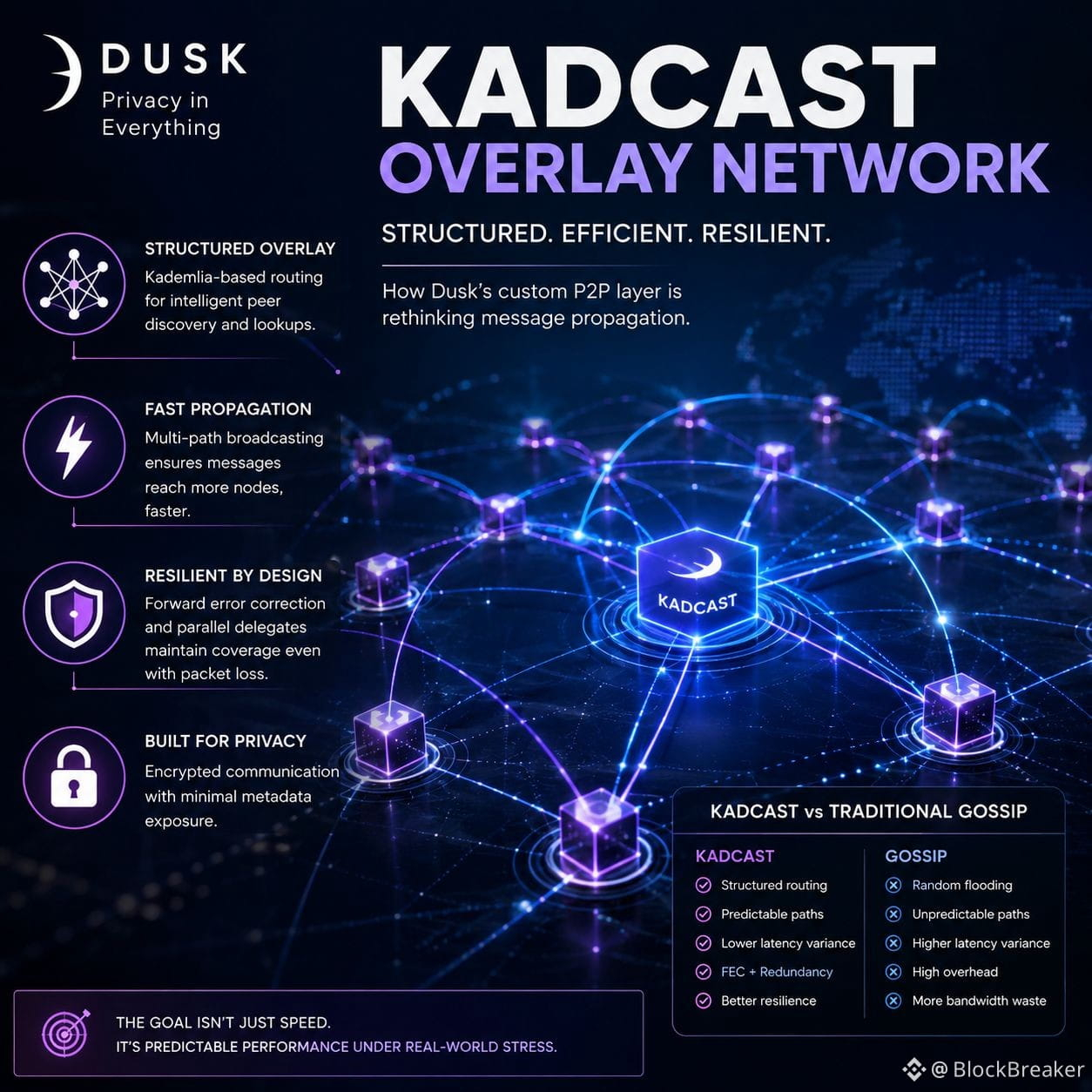
Dusk verlässt sich nicht allein auf das übliche „empfangen, weitergeben, wiederholen“-Modell. Kadcast organisiert Peers über ein strukturiertes Kademlia-ähnliches Overlay, sodass die Nachrichtenweiterleitung etwas darüber weiß, wo Knoten im Netzwerk sitzen. Das klingt wie eine kleine Implementierungsdetails, aber es verändert das Problem. Anstatt zu hoffen, dass genügend zufällige Peers eine Nachricht schnell genug verbreiten, versucht das Protokoll, die Weiterleitung zielgerichteter zu gestalten.
Am interessantesten finde ich, wie es mit unvollkommenen Netzwerken umgeht. Kadcast nutzt UDP, was einige Zustellgarantien aufgibt, und ergänzt dann Redundanz sowie Vorwärts-Fehlerkorrektur, um Paketverluste zu tolerieren. Anders gesagt: Es versucht nicht, das Netzwerk perfekt zuverlässig zu machen. Es entwirft vielmehr um die Annahme herum, dass das Netzwerk „unordentlich“ sein wird.
Das ist für mich eine viel nützlichere Perspektive.
Traditionelles Gossip gewinnt einen großen Teil seiner Robustheit aus Redundanz. Kadcast scheint einen größeren Teil dieser „Intelligenz“ in die Peer-Auswahl und das Message-Routing zu verlagern. Der Preis dafür ist die Komplexität. Ein strukturiertes Overlay muss nun seine Routing-Tabellen, die Peer-Erkennung und den Bootstrap-Prozess gegen böswillige Akteure und ungünstige Topologien absichern.
Daher interessieren mich weniger reine Benchmarks zur schnellen Weiterleitung.
Der eigentliche Test ist, ob Kadcast die Latenz vorhersagbar halten kann, wenn Knoten verschwinden, Pakete verworfen werden, Peers sich schlecht verhalten und das Netzwerk wächst.
Schnelle Weiterleitung ist nützlich.
Vorhersagbare Weiterleitung unter Belastung wäre das, was ich wirklich messen möchte.
#dusk $DUSK @Dusk
Ich habe erlebt, wie Blockchain-Teams das Networking wie Sanitärinstallationen behandeln. Solange die Blöcke ankommen, bekommt die Architektur meist nicht viel Aufmerksamkeit.
Kadcast lenkt meinen Blick auf diese Ebene in eine andere Richtung.
Dusk verlässt sich nicht allein auf das übliche „empfangen, weitergeben, wiederholen“-Modell. Kadcast organisiert Peers über ein strukturiertes Kademlia-ähnliches Overlay, sodass die Nachrichtenweiterleitung etwas darüber weiß, wo Knoten im Netzwerk sitzen. Das klingt wie eine kleine Implementierungsdetails, aber es verändert das Problem. Anstatt zu hoffen, dass genügend zufällige Peers eine Nachricht schnell genug verbreiten, versucht das Protokoll, die Weiterleitung zielgerichteter zu gestalten.
Am interessantesten finde ich, wie es mit unvollkommenen Netzwerken umgeht. Kadcast nutzt UDP, was einige Zustellgarantien aufgibt, und ergänzt dann Redundanz sowie Vorwärts-Fehlerkorrektur, um Paketverluste zu tolerieren. Anders gesagt: Es versucht nicht, das Netzwerk perfekt zuverlässig zu machen. Es entwirft vielmehr um die Annahme herum, dass das Netzwerk „unordentlich“ sein wird.
Das ist für mich eine viel nützlichere Perspektive.
Traditionelles Gossip gewinnt einen großen Teil seiner Robustheit aus Redundanz. Kadcast scheint einen größeren Teil dieser „Intelligenz“ in die Peer-Auswahl und das Message-Routing zu verlagern. Der Preis dafür ist die Komplexität. Ein strukturiertes Overlay muss nun seine Routing-Tabellen, die Peer-Erkennung und den Bootstrap-Prozess gegen böswillige Akteure und ungünstige Topologien absichern.
Daher interessieren mich weniger reine Benchmarks zur schnellen Weiterleitung.
Der eigentliche Test ist, ob Kadcast die Latenz vorhersagbar halten kann, wenn Knoten verschwinden, Pakete verworfen werden, Peers sich schlecht verhalten und das Netzwerk wächst.
Schnelle Weiterleitung ist nützlich.
Vorhersagbare Weiterleitung unter Belastung wäre das, was ich wirklich messen möchte.
Ich habe erlebt, wie Blockchain-Teams das Networking wie Sanitärinstallationen behandeln. Solange die Blöcke ankommen, bekommt die Architektur meist nicht viel Aufmerksamkeit.
Kadcast lenkt meinen Blick auf diese Ebene in eine andere Richtung.
Dusk verlässt sich nicht allein auf das übliche „empfangen, weitergeben, wiederholen“-Modell. Kadcast organisiert Peers über ein strukturiertes Kademlia-ähnliches Overlay, sodass die Nachrichtenweiterleitung etwas darüber weiß, wo Knoten im Netzwerk sitzen. Das klingt wie eine kleine Implementierungsdetails, aber es verändert das Problem. Anstatt zu hoffen, dass genügend zufällige Peers eine Nachricht schnell genug verbreiten, versucht das Protokoll, die Weiterleitung zielgerichteter zu gestalten.
Am interessantesten finde ich, wie es mit unvollkommenen Netzwerken umgeht. Kadcast nutzt UDP, was einige Zustellgarantien aufgibt, und ergänzt dann Redundanz sowie Vorwärts-Fehlerkorrektur, um Paketverluste zu tolerieren. Anders gesagt: Es versucht nicht, das Netzwerk perfekt zuverlässig zu machen. Es entwirft vielmehr um die Annahme herum, dass das Netzwerk „unordentlich“ sein wird.
Das ist für mich eine viel nützlichere Perspektive.
Traditionelles Gossip gewinnt einen großen Teil seiner Robustheit aus Redundanz. Kadcast scheint einen größeren Teil dieser „Intelligenz“ in die Peer-Auswahl und das Message-Routing zu verlagern. Der Preis dafür ist die Komplexität. Ein strukturiertes Overlay muss nun seine Routing-Tabellen, die Peer-Erkennung und den Bootstrap-Prozess gegen böswillige Akteure und ungünstige Topologien absichern.
Daher interessieren mich weniger reine Benchmarks zur schnellen Weiterleitung.
Der eigentliche Test ist, ob Kadcast die Latenz vorhersagbar halten kann, wenn Knoten verschwinden, Pakete verworfen werden, Peers sich schlecht verhalten und das Netzwerk wächst.
Schnelle Weiterleitung ist nützlich.
Vorhersagbare Weiterleitung unter Belastung wäre das, was ich wirklich messen möchte.
1
155
·
--
#dusk $DUSK @Dusk_Foundation
Was ich an Dusk’ Datenschutzkonzept interessant finde, ist nicht nur, dass Notizen verborgen werden. Es geht darum, *wo* das Verbergen passiert und wie viele Annahmen gleichzeitig erfüllt sein müssen.
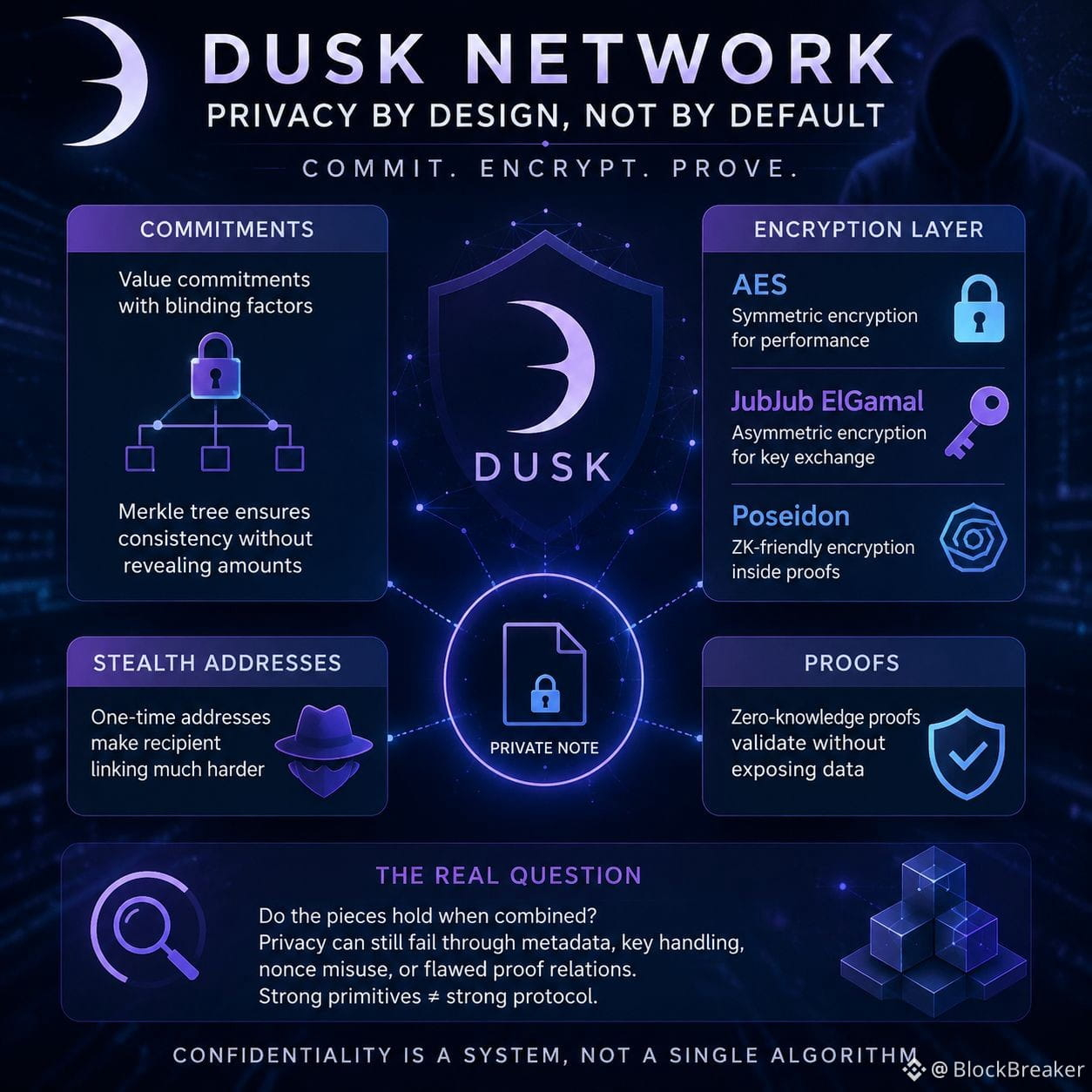
Phoenix nutzt Zusagen und einen Merkle-Baum, während Wert-Zusagen einen Verdunkelungsfaktor hinzufügen. Validatoren können die Konsistenz überprüfen, ohne den Betrag zu lernen. Versteckte Adressen erschweren außerdem das Verknüpfen von Empfängern.
Die Verschlüsselungsschicht ist der Bereich, den ich genauer betrachte. Aktuell legt Phoenix AES als symmetrischen Chiffre fest, während der Stack auch JubJub ElGamal und Poseidon umfasst. Dusk’ Poseidon-Bibliothek hat Verschlüsselungsfunktionen, aber zu sagen „Poseidon bietet Vertraulichkeit“ ist zu vereinfacht. Die Implementierung hat sich weiterentwickelt, und das ist relevant, wenn man die semantische Sicherheit beurteilt.
Meine eigentliche Frage ist, ob die Komposition als *ein* System nachgewiesen wurde. Eine Zusage kann einen Wert verbergen und Verschlüsselung kann Klartext verbergen—aber der Datenschutz kann dennoch scheitern, etwa durch Metadaten, fehlerhafte Schlüsselbehandlung, Nonce-Missbrauch, Adresskorrelation oder eine fehlerhafte Beziehungsprüfung im Beweis. Das habe ich schon einmal gesehen: Starke Bausteine machen nicht automatisch ein starkes Protokoll.
Poseidon ist für zk-freundliche Berechnungen gebaut, während AES für allgemeine Verschlüsselung ausgereift ist. Das kann die Performance verbessern, aber es macht die Abgrenzung zwischen Verschlüsseln, Zusagen und Beweisen wichtig.
Ich bin noch nicht bereit, der Konstruktion zu vertrauen, nur weil die Zutaten respektiert werden. Ich möchte ein formales Argument sehen, das zeigt, dass die Notizenverschlüsselung Werte und Identitäten verbirgt. Genau dort wird Dusk’ Datenschutzbehauptung zu etwas, das ich bewerten kann.
#dusk $DUSK @Dusk
Was ich an Dusk’ Datenschutzkonzept interessant finde, ist nicht nur, dass Notizen verborgen werden. Es geht darum, *wo* das Verbergen passiert und wie viele Annahmen gleichzeitig erfüllt sein müssen.
Phoenix nutzt Zusagen und einen Merkle-Baum, während Wert-Zusagen einen Verdunkelungsfaktor hinzufügen. Validatoren können die Konsistenz überprüfen, ohne den Betrag zu lernen. Versteckte Adressen erschweren außerdem das Verknüpfen von Empfängern.
Die Verschlüsselungsschicht ist der Bereich, den ich genauer betrachte. Aktuell legt Phoenix AES als symmetrischen Chiffre fest, während der Stack auch JubJub ElGamal und Poseidon umfasst. Dusk’ Poseidon-Bibliothek hat Verschlüsselungsfunktionen, aber zu sagen „Poseidon bietet Vertraulichkeit“ ist zu vereinfacht. Die Implementierung hat sich weiterentwickelt, und das ist relevant, wenn man die semantische Sicherheit beurteilt.
Meine eigentliche Frage ist, ob die Komposition als *ein* System nachgewiesen wurde. Eine Zusage kann einen Wert verbergen und Verschlüsselung kann Klartext verbergen—aber der Datenschutz kann dennoch scheitern, etwa durch Metadaten, fehlerhafte Schlüsselbehandlung, Nonce-Missbrauch, Adresskorrelation oder eine fehlerhafte Beziehungsprüfung im Beweis. Das habe ich schon einmal gesehen: Starke Bausteine machen nicht automatisch ein starkes Protokoll.
Poseidon ist für zk-freundliche Berechnungen gebaut, während AES für allgemeine Verschlüsselung ausgereift ist. Das kann die Performance verbessern, aber es macht die Abgrenzung zwischen Verschlüsseln, Zusagen und Beweisen wichtig.
Ich bin noch nicht bereit, der Konstruktion zu vertrauen, nur weil die Zutaten respektiert werden. Ich möchte ein formales Argument sehen, das zeigt, dass die Notizenverschlüsselung Werte und Identitäten verbirgt. Genau dort wird Dusk’ Datenschutzbehauptung zu etwas, das ich bewerten kann.
Was ich an Dusk’ Datenschutzkonzept interessant finde, ist nicht nur, dass Notizen verborgen werden. Es geht darum, *wo* das Verbergen passiert und wie viele Annahmen gleichzeitig erfüllt sein müssen.
Phoenix nutzt Zusagen und einen Merkle-Baum, während Wert-Zusagen einen Verdunkelungsfaktor hinzufügen. Validatoren können die Konsistenz überprüfen, ohne den Betrag zu lernen. Versteckte Adressen erschweren außerdem das Verknüpfen von Empfängern.
Die Verschlüsselungsschicht ist der Bereich, den ich genauer betrachte. Aktuell legt Phoenix AES als symmetrischen Chiffre fest, während der Stack auch JubJub ElGamal und Poseidon umfasst. Dusk’ Poseidon-Bibliothek hat Verschlüsselungsfunktionen, aber zu sagen „Poseidon bietet Vertraulichkeit“ ist zu vereinfacht. Die Implementierung hat sich weiterentwickelt, und das ist relevant, wenn man die semantische Sicherheit beurteilt.
Meine eigentliche Frage ist, ob die Komposition als *ein* System nachgewiesen wurde. Eine Zusage kann einen Wert verbergen und Verschlüsselung kann Klartext verbergen—aber der Datenschutz kann dennoch scheitern, etwa durch Metadaten, fehlerhafte Schlüsselbehandlung, Nonce-Missbrauch, Adresskorrelation oder eine fehlerhafte Beziehungsprüfung im Beweis. Das habe ich schon einmal gesehen: Starke Bausteine machen nicht automatisch ein starkes Protokoll.
Poseidon ist für zk-freundliche Berechnungen gebaut, während AES für allgemeine Verschlüsselung ausgereift ist. Das kann die Performance verbessern, aber es macht die Abgrenzung zwischen Verschlüsseln, Zusagen und Beweisen wichtig.
Ich bin noch nicht bereit, der Konstruktion zu vertrauen, nur weil die Zutaten respektiert werden. Ich möchte ein formales Argument sehen, das zeigt, dass die Notizenverschlüsselung Werte und Identitäten verbirgt. Genau dort wird Dusk’ Datenschutzbehauptung zu etwas, das ich bewerten kann.
164
·
--
#termmax @termmax
Was ich in TermMax schaue, ist kein TVL. Es ist der Ort, an dem die Liquidität tatsächlich eingesetzt wird.
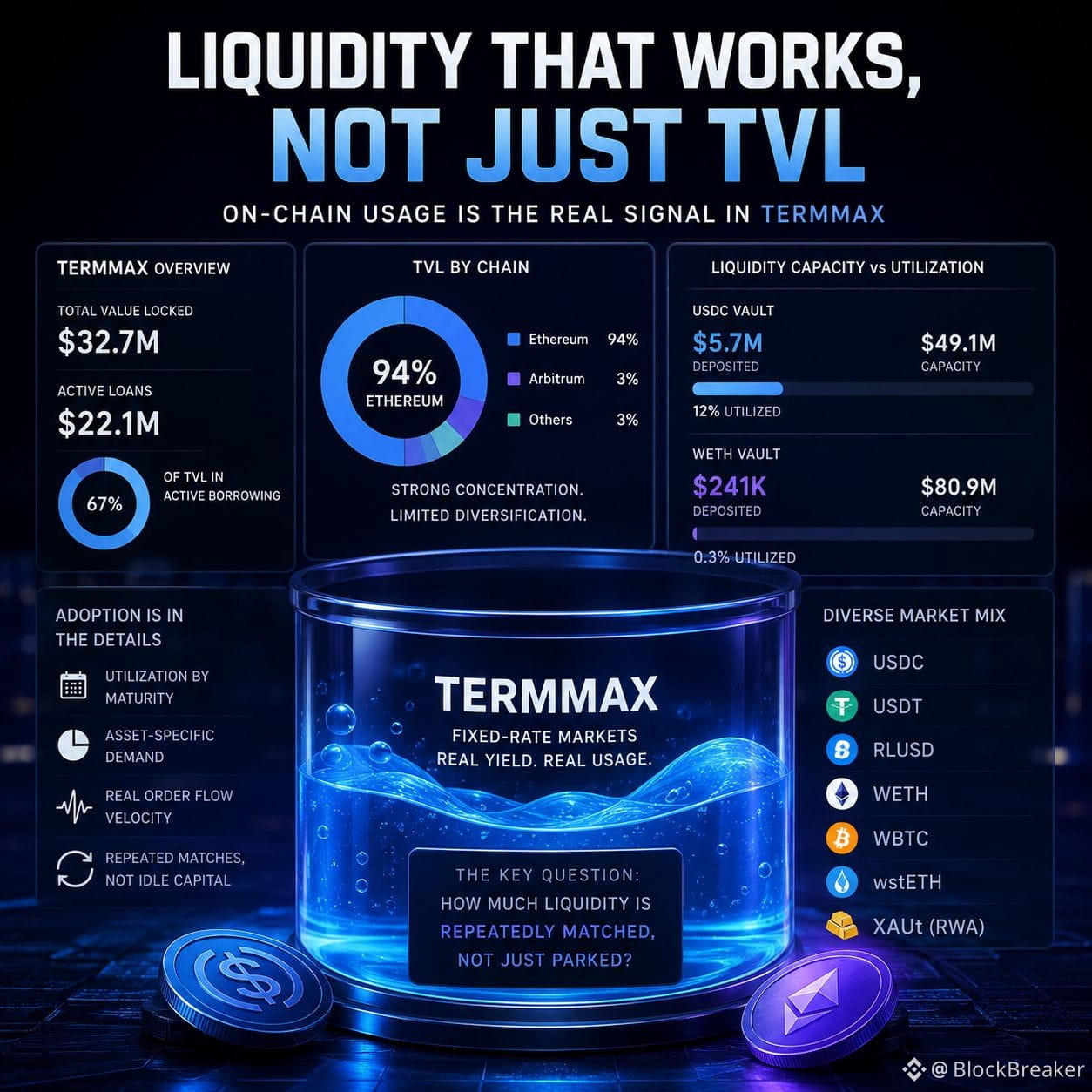
DefiLlama ordnet TermMax derzeit einem TVL von rund $32,7 Mio. zu, mit etwa $22,1 Mio. in aktiven Krediten. Das bedeutet, dass ungefähr 67 % des gemeldeten TVL an aktives Borrowing gebunden sind – und das ist für mich spannender als die Schlagzeile der Zahl selbst. Ethereum macht außerdem etwa 94 % des TVL aus, daher ist die „Multi-Chain“-Story weiterhin stark auf einen einzigen Veranstaltungsort konzentriert.
Aber es gibt noch eine zweite Ebene, der ich nicht vollständig vertraue: die Kapazität. In der eigenen Earn-Ansicht von TermMax zeigt das wichtigste USDC-Vault etwa $5,7 Mio. an Einlagen bei einer Kapazität von $49,1 Mio., während ein WETH-Vault ungefähr $241K gegenüber $80,9 Mio. hat. Das ist viel theoretische Liquidität, die niemand wirklich nutzt.
Hier habe ich immer wieder eine subtile Unterscheidung zwischen verfügbarer Liquidität und nachgefragter Liquidität bemerkt. Ein Markt kann eine tiefe Kapazität bewerben, während der aktive Order-Flow dünn bleibt. Bei Fixed-Rate-Produkten ist das noch relevanter, denn Leerlaufkapazität mit der falschen Laufzeit oder dem falschen Strike ist nicht gleichbedeutend mit nutzbarer Liquidität.
Das habe ich schon einmal in DeFi gesehen: Zuerst wächst der TVL, und dann gehen die Leute davon aus, dass Adoption folgt. Das bessere Signal ist die Auslastung nach Markt, Laufzeit und Asset. Stablecoin-Borrowing, ETH-Kollateral und RWA-verknüpfte Märkte sollten nicht einfach zusammengeworfen werden.
Der aktuelle Market-Mix von TermMax deutet bereits auf diesen Wandel hin. Die Oberfläche listet USDC, USDT, RLUSD, WETH, WBTC, wstETH sowie eine wachsende Menge an RWA-Kollateral, darunter XAUt.
Meine eigentliche Frage ist ganz einfach: Wie viel von TermMax’ Liquidität wird wiederholt eingesetzt und gematcht – nicht nur geparkt? Dieses Verhältnis sagt mir viel mehr über Adoption als der TVL allein.
#termmax @TermMax
Was ich in TermMax schaue, ist kein TVL. Es ist der Ort, an dem die Liquidität tatsächlich eingesetzt wird.
DefiLlama ordnet TermMax derzeit einem TVL von rund $32,7 Mio. zu, mit etwa $22,1 Mio. in aktiven Krediten. Das bedeutet, dass ungefähr 67 % des gemeldeten TVL an aktives Borrowing gebunden sind – und das ist für mich spannender als die Schlagzeile der Zahl selbst. Ethereum macht außerdem etwa 94 % des TVL aus, daher ist die „Multi-Chain“-Story weiterhin stark auf einen einzigen Veranstaltungsort konzentriert.
Aber es gibt noch eine zweite Ebene, der ich nicht vollständig vertraue: die Kapazität. In der eigenen Earn-Ansicht von TermMax zeigt das wichtigste USDC-Vault etwa $5,7 Mio. an Einlagen bei einer Kapazität von $49,1 Mio., während ein WETH-Vault ungefähr $241K gegenüber $80,9 Mio. hat. Das ist viel theoretische Liquidität, die niemand wirklich nutzt.
Hier habe ich immer wieder eine subtile Unterscheidung zwischen verfügbarer Liquidität und nachgefragter Liquidität bemerkt. Ein Markt kann eine tiefe Kapazität bewerben, während der aktive Order-Flow dünn bleibt. Bei Fixed-Rate-Produkten ist das noch relevanter, denn Leerlaufkapazität mit der falschen Laufzeit oder dem falschen Strike ist nicht gleichbedeutend mit nutzbarer Liquidität.
Das habe ich schon einmal in DeFi gesehen: Zuerst wächst der TVL, und dann gehen die Leute davon aus, dass Adoption folgt. Das bessere Signal ist die Auslastung nach Markt, Laufzeit und Asset. Stablecoin-Borrowing, ETH-Kollateral und RWA-verknüpfte Märkte sollten nicht einfach zusammengeworfen werden.
Der aktuelle Market-Mix von TermMax deutet bereits auf diesen Wandel hin. Die Oberfläche listet USDC, USDT, RLUSD, WETH, WBTC, wstETH sowie eine wachsende Menge an RWA-Kollateral, darunter XAUt.
Meine eigentliche Frage ist ganz einfach: Wie viel von TermMax’ Liquidität wird wiederholt eingesetzt und gematcht – nicht nur geparkt? Dieses Verhältnis sagt mir viel mehr über Adoption als der TVL allein.
Was ich in TermMax schaue, ist kein TVL. Es ist der Ort, an dem die Liquidität tatsächlich eingesetzt wird.
DefiLlama ordnet TermMax derzeit einem TVL von rund $32,7 Mio. zu, mit etwa $22,1 Mio. in aktiven Krediten. Das bedeutet, dass ungefähr 67 % des gemeldeten TVL an aktives Borrowing gebunden sind – und das ist für mich spannender als die Schlagzeile der Zahl selbst. Ethereum macht außerdem etwa 94 % des TVL aus, daher ist die „Multi-Chain“-Story weiterhin stark auf einen einzigen Veranstaltungsort konzentriert.
Aber es gibt noch eine zweite Ebene, der ich nicht vollständig vertraue: die Kapazität. In der eigenen Earn-Ansicht von TermMax zeigt das wichtigste USDC-Vault etwa $5,7 Mio. an Einlagen bei einer Kapazität von $49,1 Mio., während ein WETH-Vault ungefähr $241K gegenüber $80,9 Mio. hat. Das ist viel theoretische Liquidität, die niemand wirklich nutzt.
Hier habe ich immer wieder eine subtile Unterscheidung zwischen verfügbarer Liquidität und nachgefragter Liquidität bemerkt. Ein Markt kann eine tiefe Kapazität bewerben, während der aktive Order-Flow dünn bleibt. Bei Fixed-Rate-Produkten ist das noch relevanter, denn Leerlaufkapazität mit der falschen Laufzeit oder dem falschen Strike ist nicht gleichbedeutend mit nutzbarer Liquidität.
Das habe ich schon einmal in DeFi gesehen: Zuerst wächst der TVL, und dann gehen die Leute davon aus, dass Adoption folgt. Das bessere Signal ist die Auslastung nach Markt, Laufzeit und Asset. Stablecoin-Borrowing, ETH-Kollateral und RWA-verknüpfte Märkte sollten nicht einfach zusammengeworfen werden.
Der aktuelle Market-Mix von TermMax deutet bereits auf diesen Wandel hin. Die Oberfläche listet USDC, USDT, RLUSD, WETH, WBTC, wstETH sowie eine wachsende Menge an RWA-Kollateral, darunter XAUt.
Meine eigentliche Frage ist ganz einfach: Wie viel von TermMax’ Liquidität wird wiederholt eingesetzt und gematcht – nicht nur geparkt? Dieses Verhältnis sagt mir viel mehr über Adoption als der TVL allein.
22
13
795
·
--
#termmax @termmax
Das Spiel des Makers von TermMax geht nicht darum, dem höchsten APR hinterherzujagen. Es geht darum zu entscheiden, wo Liquidität teuer werden sollte.
OrderV2 ermöglicht es Makeern, Orders mit Kurven zu gestalten, während virtuelle Reserven die Preisbildung beeinflussen, wenn Liquidität verbraucht wird. Das V2-Repository wurde im Juli 2026 aktualisiert und bekräftigt, dass diese Order-Architektur weiterhin aktiv weiterentwickelt wird.
Meine Ansicht ist, dass starke Maker in Zonen denken sollten. Starte mit wettbewerbsfähiger Liquidität und steile dann die Kurve an, wenn die Auslastung steigt. Das letzte Segment kann als Reservationspreis fungieren, bei dem Kapital nur verfügbar ist, wenn die Entlohnung das Risiko rechtfertigt.
Zwei Maker können das gleiche Kapital bereitstellen und dennoch zu unterschiedlicher Ausführung, Auslastung und realisiertem Yield führen. Der Vorteil liegt im Kurvendesign: zu wissen, wo man flexibel bleiben sollte, wo man defensiv werden muss und wo man die Preisbildung günstig stoppen kann. Das ist besonders wichtig, wenn die Nachfrage ungleichmäßig über Laufzeiten und Marktbedingungen hinweg eintrifft. Bei TermMax ist die Kurve die Marktsicht des Makers.
#termmax @TermMax
Das Spiel des Makers von TermMax geht nicht darum, dem höchsten APR hinterherzujagen. Es geht darum zu entscheiden, wo Liquidität teuer werden sollte.
OrderV2 ermöglicht es Makeern, Orders mit Kurven zu gestalten, während virtuelle Reserven die Preisbildung beeinflussen, wenn Liquidität verbraucht wird. Das V2-Repository wurde im Juli 2026 aktualisiert und bekräftigt, dass diese Order-Architektur weiterhin aktiv weiterentwickelt wird.
Meine Ansicht ist, dass starke Maker in Zonen denken sollten. Starte mit wettbewerbsfähiger Liquidität und steile dann die Kurve an, wenn die Auslastung steigt. Das letzte Segment kann als Reservationspreis fungieren, bei dem Kapital nur verfügbar ist, wenn die Entlohnung das Risiko rechtfertigt.
Zwei Maker können das gleiche Kapital bereitstellen und dennoch zu unterschiedlicher Ausführung, Auslastung und realisiertem Yield führen. Der Vorteil liegt im Kurvendesign: zu wissen, wo man flexibel bleiben sollte, wo man defensiv werden muss und wo man die Preisbildung günstig stoppen kann. Das ist besonders wichtig, wenn die Nachfrage ungleichmäßig über Laufzeiten und Marktbedingungen hinweg eintrifft. Bei TermMax ist die Kurve die Marktsicht des Makers.
Das Spiel des Makers von TermMax geht nicht darum, dem höchsten APR hinterherzujagen. Es geht darum zu entscheiden, wo Liquidität teuer werden sollte.
OrderV2 ermöglicht es Makeern, Orders mit Kurven zu gestalten, während virtuelle Reserven die Preisbildung beeinflussen, wenn Liquidität verbraucht wird. Das V2-Repository wurde im Juli 2026 aktualisiert und bekräftigt, dass diese Order-Architektur weiterhin aktiv weiterentwickelt wird.
Meine Ansicht ist, dass starke Maker in Zonen denken sollten. Starte mit wettbewerbsfähiger Liquidität und steile dann die Kurve an, wenn die Auslastung steigt. Das letzte Segment kann als Reservationspreis fungieren, bei dem Kapital nur verfügbar ist, wenn die Entlohnung das Risiko rechtfertigt.
Zwei Maker können das gleiche Kapital bereitstellen und dennoch zu unterschiedlicher Ausführung, Auslastung und realisiertem Yield führen. Der Vorteil liegt im Kurvendesign: zu wissen, wo man flexibel bleiben sollte, wo man defensiv werden muss und wo man die Preisbildung günstig stoppen kann. Das ist besonders wichtig, wenn die Nachfrage ungleichmäßig über Laufzeiten und Marktbedingungen hinweg eintrifft. Bei TermMax ist die Kurve die Marktsicht des Makers.
1
3
212
·
--
#dusk $DUSK @Dusk_Foundation
Zero-Knowledge-Beweissysteme: Was mich an Dusk interessiert, ist nicht, dass es ZK-Beweise verwendet. Es ist, dass verschiedene Beweissysteme unterschiedliche Engpässe innerhalb einer Finanz-Blockchain lösen können.
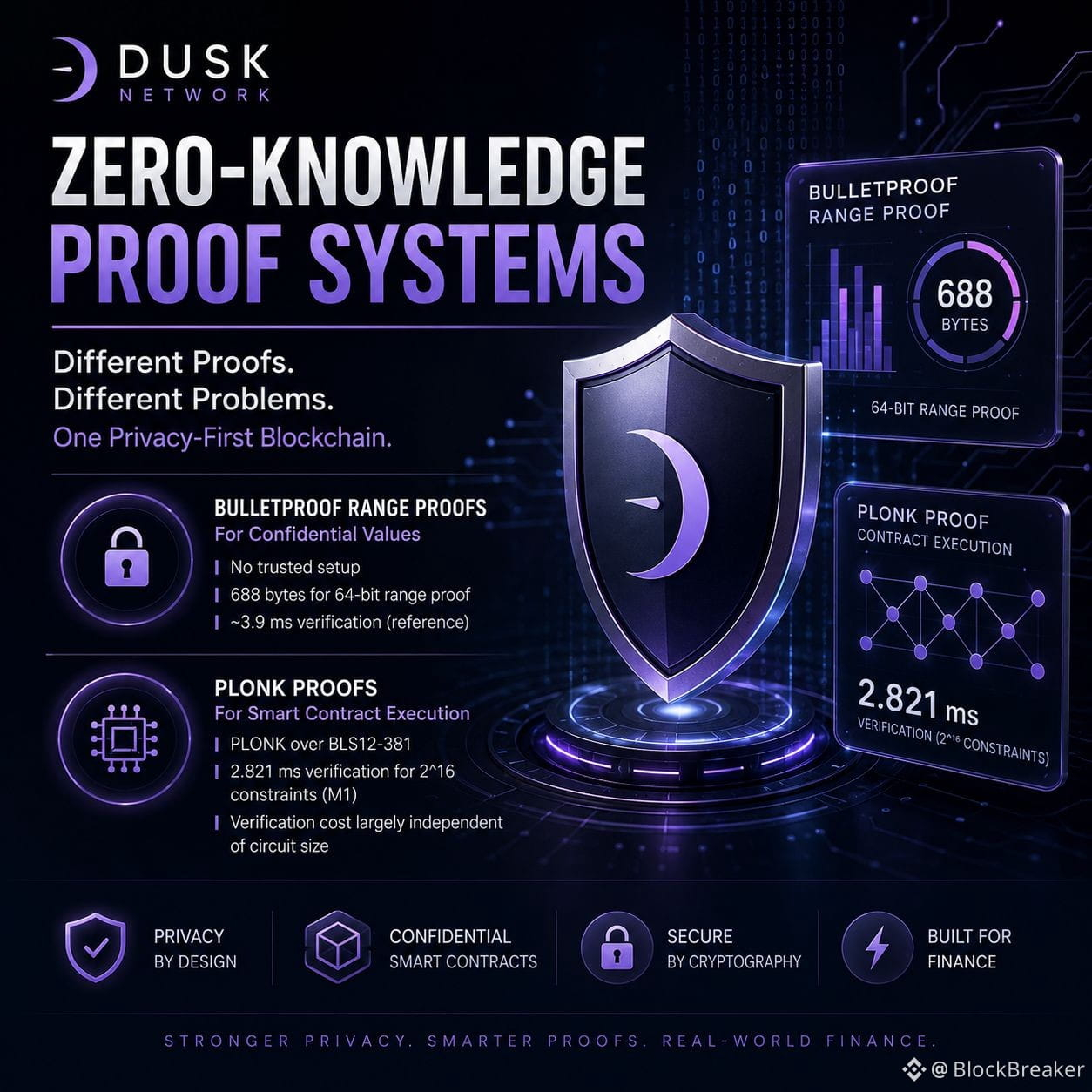
Bulletproof-ähnliche Bereichsbeweise machen für vertrauliche Werte Sinn. Sie können beweisen, dass ein versteckter Betrag in einem zulässigen Bereich liegt, ohne den Betrag selbst offenzulegen, und sie tun das ohne ein vertrauenswürdiges Setup. Der Kompromiss ist, dass die Kosten für Beweis und Verifikation mit der Aussage, die bewiesen werden soll, ansteigen.
Dusk’ neue Ausrichtung verlagert mehr von der Ausführungslast hin zu PLONK-ähnlichem Proving. Das ist eine wichtigere Unterscheidung als die übliche Formulierung „Dusk ist privat“. Sobald vertrauliche Transaktionen zu programmierbaren Verträgen werden, besteht das Problem nicht mehr nur darin, Zahlen zu verbergen; es wird zum Beweisen, dass eine ganze Menge von Zustandsübergängen den Regeln gefolgt ist.
Darin beginnt das Schaltungsdesign wichtiger zu werden als die rohe Beweisgröße. Ein Beweis, der zwar winzig ist, aber teuer zu erzeugen, schwierig zu prüfen oder unbeholfen auszudrücken ist, kann weniger nützlich sein als ein etwas größerer Beweis, der von einem flexiblen Ausführungssystem gestützt wird.
Die jüngste Dusk-Entwicklung rund um neuere PLONK-Versionen macht außerdem die Sicherheits-Engineering-Seite unmöglich zu ignorieren. ZK-Systeme sind nicht allein deshalb sicher, weil die Mathematik stimmig ist. Verifikatorlogik, Commitments-Bindung, Schaltungszwänge und Implementierungsdetails können zur eigentlichen Angriffsfläche werden.
Darum würde ich Dusk anders benchmarken: Prover-Zeit, Verifier-Zeit, Beweisgröße, Schaltungs-komplexität und Audit-Resilienz — alles zusammen.
Die interessante Frage ist nicht, ob Dusk ZK hat.
Es ist, ob seine Beweisarchitektur effizient, programmierbar und vertrauenswürdig bleiben kann, während die vertrauliche Finanzlogik immer komplizierter wird.
#dusk $DUSK @Dusk
Zero-Knowledge-Beweissysteme: Was mich an Dusk interessiert, ist nicht, dass es ZK-Beweise verwendet. Es ist, dass verschiedene Beweissysteme unterschiedliche Engpässe innerhalb einer Finanz-Blockchain lösen können.
Bulletproof-ähnliche Bereichsbeweise machen für vertrauliche Werte Sinn. Sie können beweisen, dass ein versteckter Betrag in einem zulässigen Bereich liegt, ohne den Betrag selbst offenzulegen, und sie tun das ohne ein vertrauenswürdiges Setup. Der Kompromiss ist, dass die Kosten für Beweis und Verifikation mit der Aussage, die bewiesen werden soll, ansteigen.
Dusk’ neue Ausrichtung verlagert mehr von der Ausführungslast hin zu PLONK-ähnlichem Proving. Das ist eine wichtigere Unterscheidung als die übliche Formulierung „Dusk ist privat“. Sobald vertrauliche Transaktionen zu programmierbaren Verträgen werden, besteht das Problem nicht mehr nur darin, Zahlen zu verbergen; es wird zum Beweisen, dass eine ganze Menge von Zustandsübergängen den Regeln gefolgt ist.
Darin beginnt das Schaltungsdesign wichtiger zu werden als die rohe Beweisgröße. Ein Beweis, der zwar winzig ist, aber teuer zu erzeugen, schwierig zu prüfen oder unbeholfen auszudrücken ist, kann weniger nützlich sein als ein etwas größerer Beweis, der von einem flexiblen Ausführungssystem gestützt wird.
Die jüngste Dusk-Entwicklung rund um neuere PLONK-Versionen macht außerdem die Sicherheits-Engineering-Seite unmöglich zu ignorieren. ZK-Systeme sind nicht allein deshalb sicher, weil die Mathematik stimmig ist. Verifikatorlogik, Commitments-Bindung, Schaltungszwänge und Implementierungsdetails können zur eigentlichen Angriffsfläche werden.
Darum würde ich Dusk anders benchmarken: Prover-Zeit, Verifier-Zeit, Beweisgröße, Schaltungs-komplexität und Audit-Resilienz — alles zusammen.
Die interessante Frage ist nicht, ob Dusk ZK hat.
Es ist, ob seine Beweisarchitektur effizient, programmierbar und vertrauenswürdig bleiben kann, während die vertrauliche Finanzlogik immer komplizierter wird.
Zero-Knowledge-Beweissysteme: Was mich an Dusk interessiert, ist nicht, dass es ZK-Beweise verwendet. Es ist, dass verschiedene Beweissysteme unterschiedliche Engpässe innerhalb einer Finanz-Blockchain lösen können.
Bulletproof-ähnliche Bereichsbeweise machen für vertrauliche Werte Sinn. Sie können beweisen, dass ein versteckter Betrag in einem zulässigen Bereich liegt, ohne den Betrag selbst offenzulegen, und sie tun das ohne ein vertrauenswürdiges Setup. Der Kompromiss ist, dass die Kosten für Beweis und Verifikation mit der Aussage, die bewiesen werden soll, ansteigen.
Dusk’ neue Ausrichtung verlagert mehr von der Ausführungslast hin zu PLONK-ähnlichem Proving. Das ist eine wichtigere Unterscheidung als die übliche Formulierung „Dusk ist privat“. Sobald vertrauliche Transaktionen zu programmierbaren Verträgen werden, besteht das Problem nicht mehr nur darin, Zahlen zu verbergen; es wird zum Beweisen, dass eine ganze Menge von Zustandsübergängen den Regeln gefolgt ist.
Darin beginnt das Schaltungsdesign wichtiger zu werden als die rohe Beweisgröße. Ein Beweis, der zwar winzig ist, aber teuer zu erzeugen, schwierig zu prüfen oder unbeholfen auszudrücken ist, kann weniger nützlich sein als ein etwas größerer Beweis, der von einem flexiblen Ausführungssystem gestützt wird.
Die jüngste Dusk-Entwicklung rund um neuere PLONK-Versionen macht außerdem die Sicherheits-Engineering-Seite unmöglich zu ignorieren. ZK-Systeme sind nicht allein deshalb sicher, weil die Mathematik stimmig ist. Verifikatorlogik, Commitments-Bindung, Schaltungszwänge und Implementierungsdetails können zur eigentlichen Angriffsfläche werden.
Darum würde ich Dusk anders benchmarken: Prover-Zeit, Verifier-Zeit, Beweisgröße, Schaltungs-komplexität und Audit-Resilienz — alles zusammen.
Die interessante Frage ist nicht, ob Dusk ZK hat.
Es ist, ob seine Beweisarchitektur effizient, programmierbar und vertrauenswürdig bleiben kann, während die vertrauliche Finanzlogik immer komplizierter wird.
1
5
323
·
--
#termmax @termmax
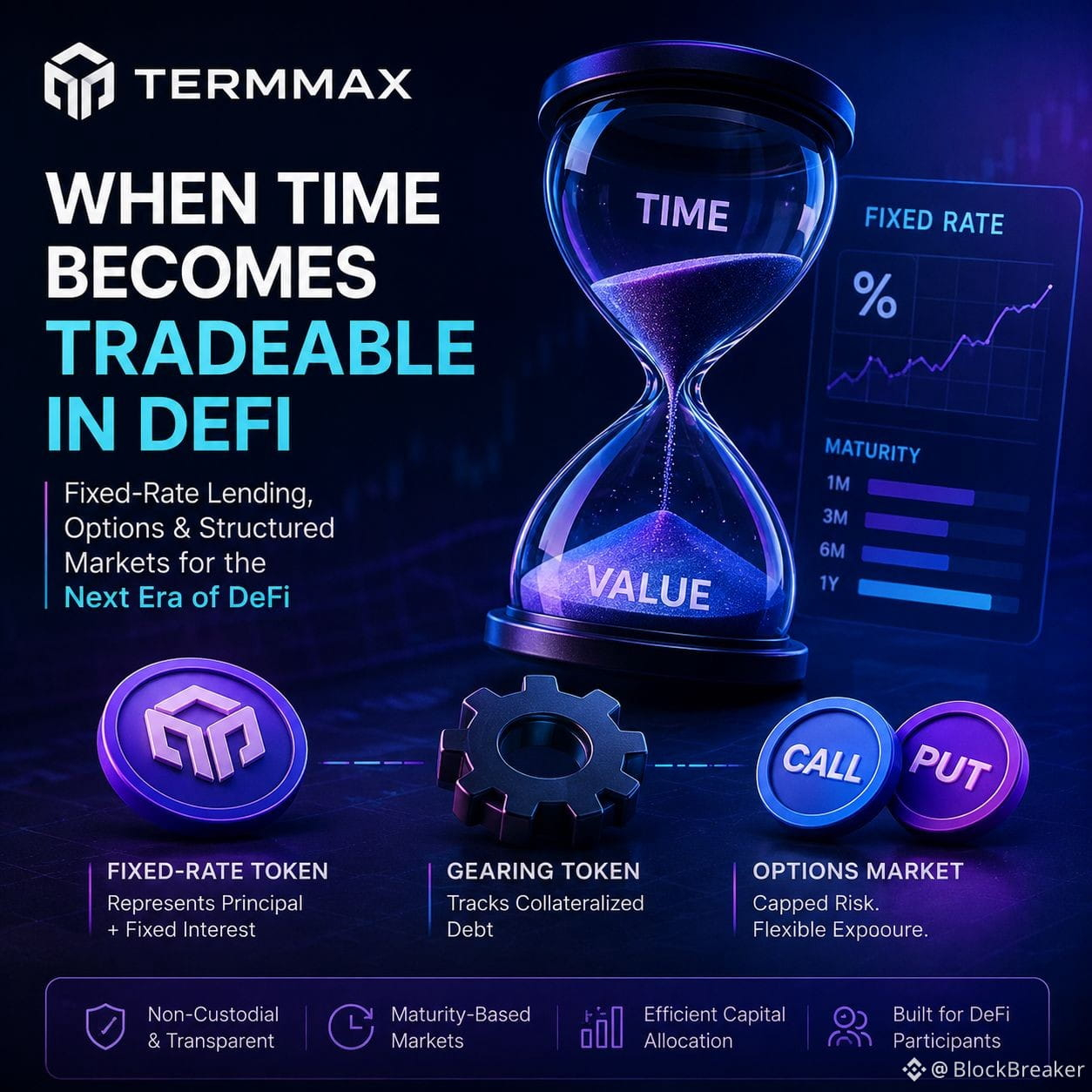
Ich sehe mir TermMax weniger als ein weiteres Kreditprotokoll an, sondern mehr als eine Wette darauf, ob DeFi die Zeit selbst handelbar machen kann.
Das klingt abstrakt, aber es verändert, wie ich über das Produkt denke.
Die meisten DeFi-Kreditmodelle sind um Floating Rates herum gebaut. Wenn der Zinssatz sich bewegt, bewegt sich deine Position, und der Markt bewertet die Kapitalkosten ständig neu. TermMax geht einen anderen Weg, indem es den Kapitalbetrag vom Zinskomponenten trennt und den Nutzern eine Möglichkeit gibt, eine feste Laufzeit auszudrücken. In der Praxis verlagert sich die Frage damit weniger von „Wie hoch ist die Rendite?“ hin zu „Was ist diese Zahlungsreihe wert bis zu einem bestimmten Datum?“
Ich stelle immer wieder fest, dass an genau dieser Stelle der interessante Teil beginnt.
Ein Markt mit festen Zinssätzen braucht mehr als nur Liquidität. Er braucht Liquidität zum richtigen Preis, für die richtige Laufzeit, unter der richtigen Sicherheit. Das ist ein deutlich engeres Problem als ein normales AMM, das versucht, einen Vermögenswert gegen einen anderen zu bepreisen.
Die Range-Order-Struktur von TermMax finde ich spannend, weil Market Maker definieren können, wo sie tatsächlich Liquidität bereitstellen wollen, statt blind in einer einzigen Preiskurve zu sitzen. Das klingt nach wenig, aber es könnte eine große Rolle spielen, wenn sich Zinsen und Sicherheitenbedingungen schnell ändern.
Dann gibt es noch die Options-Ebene.
Ich vertraue keinem Optionsmarkt vollständig nur deshalb, weil er attraktive Prämien bietet. Irgendjemand trägt immer die andere Seite des Risikos. Für mich ist die entscheidende Frage, ob TermMax dieses Risiko so transparent machen kann, dass Liquiditätsanbieter es rational bepreisen können.
Deshalb beobachte ich das Protokoll durch eine andere Brille: nicht Schlagzeilen-APY, nicht Leverage, nicht die Anzahl der Produkte, sondern ob feste Laufzeit und Risiko zu wirklich liquiditätsfähigen Grundbausteinen in DeFi werden können.
Dieser Teil ist jedoch noch nicht bewiesen. Und ehrlich gesagt ist das genau der Grund, warum es sich lohnt, TermMax im Blick zu behalten.
#termmax @TermMax
Ich sehe mir TermMax weniger als ein weiteres Kreditprotokoll an, sondern mehr als eine Wette darauf, ob DeFi die Zeit selbst handelbar machen kann.
Das klingt abstrakt, aber es verändert, wie ich über das Produkt denke.
Die meisten DeFi-Kreditmodelle sind um Floating Rates herum gebaut. Wenn der Zinssatz sich bewegt, bewegt sich deine Position, und der Markt bewertet die Kapitalkosten ständig neu. TermMax geht einen anderen Weg, indem es den Kapitalbetrag vom Zinskomponenten trennt und den Nutzern eine Möglichkeit gibt, eine feste Laufzeit auszudrücken. In der Praxis verlagert sich die Frage damit weniger von „Wie hoch ist die Rendite?“ hin zu „Was ist diese Zahlungsreihe wert bis zu einem bestimmten Datum?“
Ich stelle immer wieder fest, dass an genau dieser Stelle der interessante Teil beginnt.
Ein Markt mit festen Zinssätzen braucht mehr als nur Liquidität. Er braucht Liquidität zum richtigen Preis, für die richtige Laufzeit, unter der richtigen Sicherheit. Das ist ein deutlich engeres Problem als ein normales AMM, das versucht, einen Vermögenswert gegen einen anderen zu bepreisen.
Die Range-Order-Struktur von TermMax finde ich spannend, weil Market Maker definieren können, wo sie tatsächlich Liquidität bereitstellen wollen, statt blind in einer einzigen Preiskurve zu sitzen. Das klingt nach wenig, aber es könnte eine große Rolle spielen, wenn sich Zinsen und Sicherheitenbedingungen schnell ändern.
Dann gibt es noch die Options-Ebene.
Ich vertraue keinem Optionsmarkt vollständig nur deshalb, weil er attraktive Prämien bietet. Irgendjemand trägt immer die andere Seite des Risikos. Für mich ist die entscheidende Frage, ob TermMax dieses Risiko so transparent machen kann, dass Liquiditätsanbieter es rational bepreisen können.
Deshalb beobachte ich das Protokoll durch eine andere Brille: nicht Schlagzeilen-APY, nicht Leverage, nicht die Anzahl der Produkte, sondern ob feste Laufzeit und Risiko zu wirklich liquiditätsfähigen Grundbausteinen in DeFi werden können.
Dieser Teil ist jedoch noch nicht bewiesen. Und ehrlich gesagt ist das genau der Grund, warum es sich lohnt, TermMax im Blick zu behalten.
Ich sehe mir TermMax weniger als ein weiteres Kreditprotokoll an, sondern mehr als eine Wette darauf, ob DeFi die Zeit selbst handelbar machen kann.
Das klingt abstrakt, aber es verändert, wie ich über das Produkt denke.
Die meisten DeFi-Kreditmodelle sind um Floating Rates herum gebaut. Wenn der Zinssatz sich bewegt, bewegt sich deine Position, und der Markt bewertet die Kapitalkosten ständig neu. TermMax geht einen anderen Weg, indem es den Kapitalbetrag vom Zinskomponenten trennt und den Nutzern eine Möglichkeit gibt, eine feste Laufzeit auszudrücken. In der Praxis verlagert sich die Frage damit weniger von „Wie hoch ist die Rendite?“ hin zu „Was ist diese Zahlungsreihe wert bis zu einem bestimmten Datum?“
Ich stelle immer wieder fest, dass an genau dieser Stelle der interessante Teil beginnt.
Ein Markt mit festen Zinssätzen braucht mehr als nur Liquidität. Er braucht Liquidität zum richtigen Preis, für die richtige Laufzeit, unter der richtigen Sicherheit. Das ist ein deutlich engeres Problem als ein normales AMM, das versucht, einen Vermögenswert gegen einen anderen zu bepreisen.
Die Range-Order-Struktur von TermMax finde ich spannend, weil Market Maker definieren können, wo sie tatsächlich Liquidität bereitstellen wollen, statt blind in einer einzigen Preiskurve zu sitzen. Das klingt nach wenig, aber es könnte eine große Rolle spielen, wenn sich Zinsen und Sicherheitenbedingungen schnell ändern.
Dann gibt es noch die Options-Ebene.
Ich vertraue keinem Optionsmarkt vollständig nur deshalb, weil er attraktive Prämien bietet. Irgendjemand trägt immer die andere Seite des Risikos. Für mich ist die entscheidende Frage, ob TermMax dieses Risiko so transparent machen kann, dass Liquiditätsanbieter es rational bepreisen können.
Deshalb beobachte ich das Protokoll durch eine andere Brille: nicht Schlagzeilen-APY, nicht Leverage, nicht die Anzahl der Produkte, sondern ob feste Laufzeit und Risiko zu wirklich liquiditätsfähigen Grundbausteinen in DeFi werden können.
Dieser Teil ist jedoch noch nicht bewiesen. Und ehrlich gesagt ist das genau der Grund, warum es sich lohnt, TermMax im Blick zu behalten.
4
109
·
--
#dusk $DUSK @Dusk_Foundation
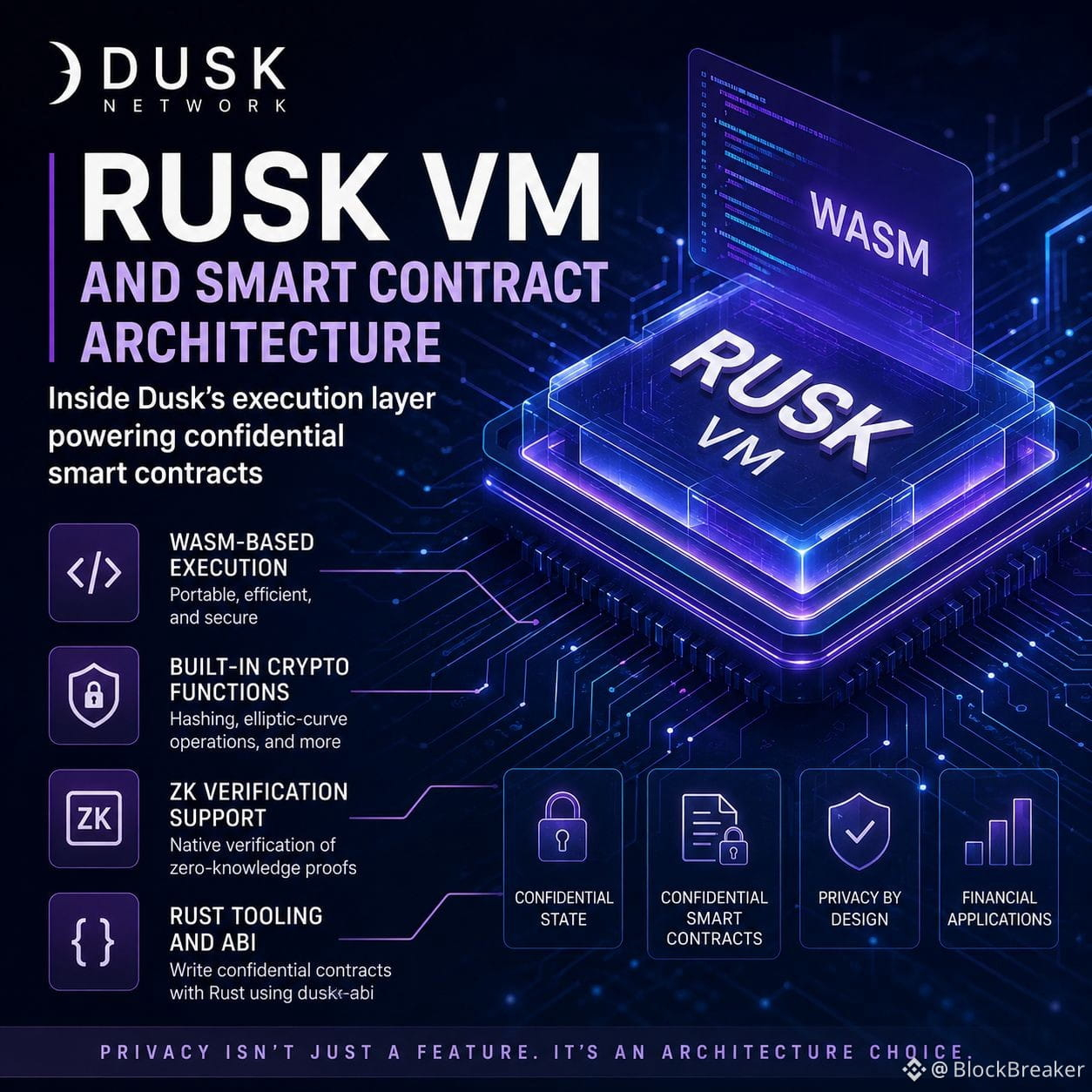
Ich habe damit begonnen, Dusk aus einem anderen Blickwinkel zu betrachten: nicht als „Privacy-Blockchain“, sondern als ein System, in dem die Ausführungsumgebung bestimmt, wie nutzbar die Privatsphäre tatsächlich wird.
Darum hat mich die Rusk-VM angesprochen. Sie nutzt WASM für die Ausführung von Contracts, aber sie bleibt nicht dabei stehen. Dusk stellt kryptografische Operationen über die Host-Ebene der VM bereit – einschließlich Hashing, elliptischer-Kurven-Operationen und Zero-Knowledge-Verifikation. In der Praxis muss der Contract nicht jede teure Primitive selbst implementieren.
Ich denke, diese Designentscheidung ist wichtiger, als sie zunächst scheint. Ein vertraulicher Contract ist nur dann sinnvoll, wenn Entwickler seine Kosten, Eingaben und Fehlerpfade nachvollziehen können. Rusk’s ABI und die Rust-Tooling schaffen eine klar definierte Schnittstelle zwischen dem Contract-Code und diesen nativen Möglichkeiten.
Das habe ich schon bei Smart-Contract-Systemen gesehen: Der interessante Teil ist selten die Sprache. Es ist die Grenze zwischen dem Anwendungscode und den darunterliegenden Low-Level-Primitives.
Worauf ich bei Rusk besonders achten würde, ist keine weitere Benchmark-Headline. Ich möchte verstehen, wie vorhersehbar Host-Aufrufe bleiben, wie sich die Gaspreisgestaltung entwickelt, wie Änderungen an der ABI gehandhabt werden und wie Entwickler Contracts debuggen, wenn der Zustand selbst absichtlich verborgen ist.
Das ist der Teil, der mich wirklich interessiert. Privatsphäre auf Protokollebene ist das eine. Privatsphäre programmierbar zu machen, ohne die Entwicklung in ein Kryptografie-Forschungsprojekt zu verwandeln, ist ein viel schwierigeres Problem.
#dusk $DUSK @Dusk
Ich habe damit begonnen, Dusk aus einem anderen Blickwinkel zu betrachten: nicht als „Privacy-Blockchain“, sondern als ein System, in dem die Ausführungsumgebung bestimmt, wie nutzbar die Privatsphäre tatsächlich wird.
Darum hat mich die Rusk-VM angesprochen. Sie nutzt WASM für die Ausführung von Contracts, aber sie bleibt nicht dabei stehen. Dusk stellt kryptografische Operationen über die Host-Ebene der VM bereit – einschließlich Hashing, elliptischer-Kurven-Operationen und Zero-Knowledge-Verifikation. In der Praxis muss der Contract nicht jede teure Primitive selbst implementieren.
Ich denke, diese Designentscheidung ist wichtiger, als sie zunächst scheint. Ein vertraulicher Contract ist nur dann sinnvoll, wenn Entwickler seine Kosten, Eingaben und Fehlerpfade nachvollziehen können. Rusk’s ABI und die Rust-Tooling schaffen eine klar definierte Schnittstelle zwischen dem Contract-Code und diesen nativen Möglichkeiten.
Das habe ich schon bei Smart-Contract-Systemen gesehen: Der interessante Teil ist selten die Sprache. Es ist die Grenze zwischen dem Anwendungscode und den darunterliegenden Low-Level-Primitives.
Worauf ich bei Rusk besonders achten würde, ist keine weitere Benchmark-Headline. Ich möchte verstehen, wie vorhersehbar Host-Aufrufe bleiben, wie sich die Gaspreisgestaltung entwickelt, wie Änderungen an der ABI gehandhabt werden und wie Entwickler Contracts debuggen, wenn der Zustand selbst absichtlich verborgen ist.
Das ist der Teil, der mich wirklich interessiert. Privatsphäre auf Protokollebene ist das eine. Privatsphäre programmierbar zu machen, ohne die Entwicklung in ein Kryptografie-Forschungsprojekt zu verwandeln, ist ein viel schwierigeres Problem.
Ich habe damit begonnen, Dusk aus einem anderen Blickwinkel zu betrachten: nicht als „Privacy-Blockchain“, sondern als ein System, in dem die Ausführungsumgebung bestimmt, wie nutzbar die Privatsphäre tatsächlich wird.
Darum hat mich die Rusk-VM angesprochen. Sie nutzt WASM für die Ausführung von Contracts, aber sie bleibt nicht dabei stehen. Dusk stellt kryptografische Operationen über die Host-Ebene der VM bereit – einschließlich Hashing, elliptischer-Kurven-Operationen und Zero-Knowledge-Verifikation. In der Praxis muss der Contract nicht jede teure Primitive selbst implementieren.
Ich denke, diese Designentscheidung ist wichtiger, als sie zunächst scheint. Ein vertraulicher Contract ist nur dann sinnvoll, wenn Entwickler seine Kosten, Eingaben und Fehlerpfade nachvollziehen können. Rusk’s ABI und die Rust-Tooling schaffen eine klar definierte Schnittstelle zwischen dem Contract-Code und diesen nativen Möglichkeiten.
Das habe ich schon bei Smart-Contract-Systemen gesehen: Der interessante Teil ist selten die Sprache. Es ist die Grenze zwischen dem Anwendungscode und den darunterliegenden Low-Level-Primitives.
Worauf ich bei Rusk besonders achten würde, ist keine weitere Benchmark-Headline. Ich möchte verstehen, wie vorhersehbar Host-Aufrufe bleiben, wie sich die Gaspreisgestaltung entwickelt, wie Änderungen an der ABI gehandhabt werden und wie Entwickler Contracts debuggen, wenn der Zustand selbst absichtlich verborgen ist.
Das ist der Teil, der mich wirklich interessiert. Privatsphäre auf Protokollebene ist das eine. Privatsphäre programmierbar zu machen, ohne die Entwicklung in ein Kryptografie-Forschungsprojekt zu verwandeln, ist ein viel schwierigeres Problem.
2
4
161
·
--
#dusk $DUSK @Dusk_Foundation
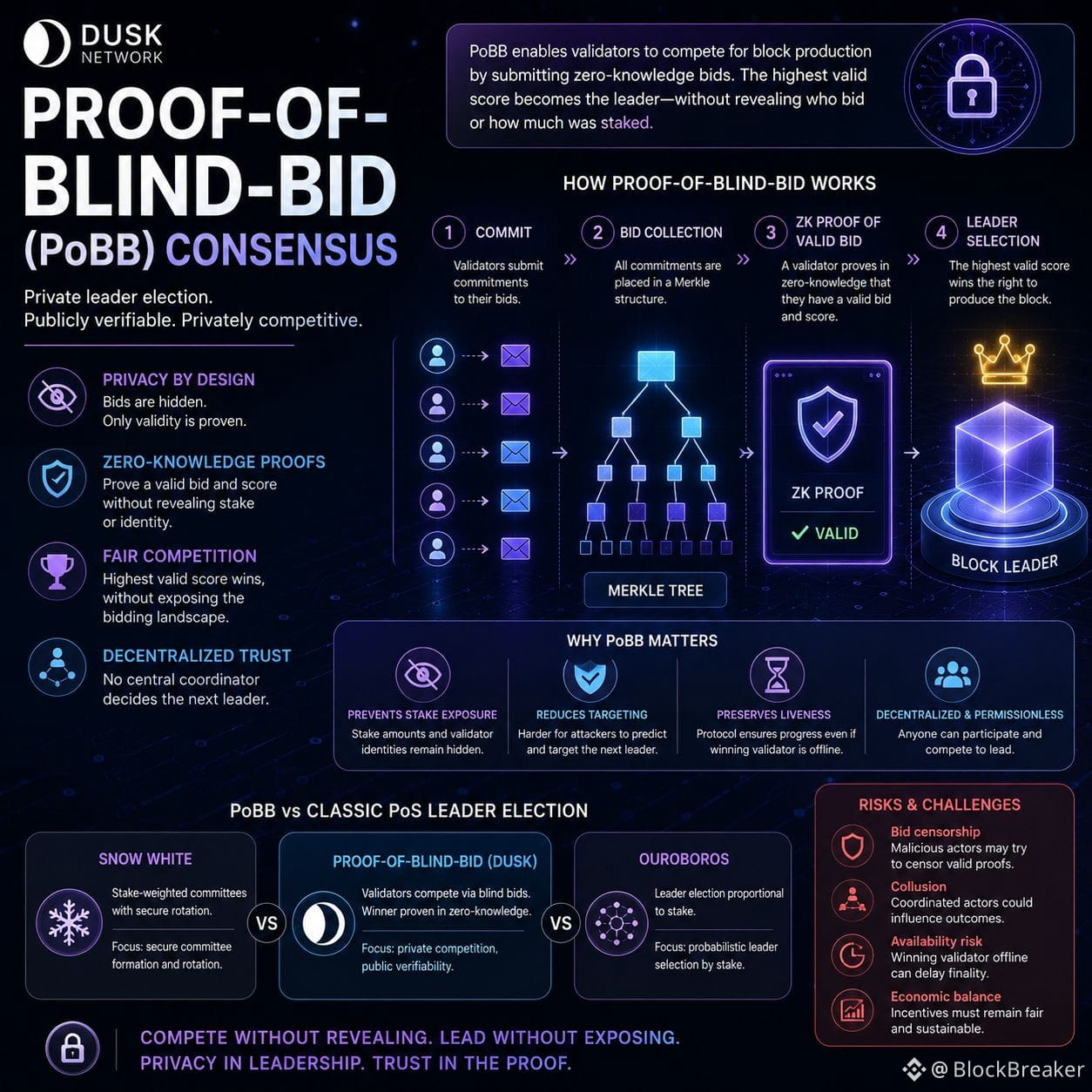
PoBB: Das geheime Spiel hinter Dusk’ Wahl der Netzwerk-Entscheider
Ich finde PoBB aus einem Grund interessant, der übersehen wird, wenn Leute es „private leader selection“ nennen.
Die tiefere Idee ist, dass ein Validator um die Blockproduktion konkurrieren kann, ohne die Informationen zu veröffentlichen, die ihn zu einem offensichtlichen Ziel machen. In Dusk’ Design werden Gebote festgeschrieben (committed) und der spätere Gewinner kann die Gültigkeit des Gebots mit Zero Knowledge nachweisen – statt einfach die gesamte Bietlandschaft offenzulegen.
Das verändert das Spiel.
In einem transparenteren PoS-System kann es nützliche Informationen sein, zu wissen, wer voraussichtlich den nächsten Block produziert. Man kann den Stake beobachten, Validatoren verfolgen und Strategien um planbare Führung aufbauen. PoBB versucht, einen Teil dieser Sichtbarkeit zu entfernen.
Aber ich bin nicht überzeugt, dass Privatsphäre das System automatisch sicherer macht.
Die Fragen, die mich interessieren, sind eher praktisch: Was passiert, wenn ein erfolgreicher Bieter verschwindet? Kann wiederholte Zensur von Bid-Proofs die Liveness beeinträchtigen? Gewinnen große Betreiber durch Koordination einen Vorteil? Und kann der Bewertungsmechanismus Manipulationen widerstehen, ohne ehrliche Teilnahme zu teuer zu machen?
Ich habe gesehen, wie Protokolldesigns ein Anreizproblem lösen und es dann an einen Ort verlagern, der weniger offensichtlich ist.
Das ist der Grund, warum PoBB es wert ist, untersucht zu werden. Sein echtes Experiment ist nicht, ob Dusk ein Bid eines Validators verbergen kann. Es ist, ob eine Blockchain faire Konkurrenz bewahren kann, wenn die Konkurrenten einander nicht ohne Weiteres sehen können.
#dusk $DUSK @Dusk
PoBB: Das geheime Spiel hinter Dusk’ Wahl der Netzwerk-Entscheider
Ich finde PoBB aus einem Grund interessant, der übersehen wird, wenn Leute es „private leader selection“ nennen.
Die tiefere Idee ist, dass ein Validator um die Blockproduktion konkurrieren kann, ohne die Informationen zu veröffentlichen, die ihn zu einem offensichtlichen Ziel machen. In Dusk’ Design werden Gebote festgeschrieben (committed) und der spätere Gewinner kann die Gültigkeit des Gebots mit Zero Knowledge nachweisen – statt einfach die gesamte Bietlandschaft offenzulegen.
Das verändert das Spiel.
In einem transparenteren PoS-System kann es nützliche Informationen sein, zu wissen, wer voraussichtlich den nächsten Block produziert. Man kann den Stake beobachten, Validatoren verfolgen und Strategien um planbare Führung aufbauen. PoBB versucht, einen Teil dieser Sichtbarkeit zu entfernen.
Aber ich bin nicht überzeugt, dass Privatsphäre das System automatisch sicherer macht.
Die Fragen, die mich interessieren, sind eher praktisch: Was passiert, wenn ein erfolgreicher Bieter verschwindet? Kann wiederholte Zensur von Bid-Proofs die Liveness beeinträchtigen? Gewinnen große Betreiber durch Koordination einen Vorteil? Und kann der Bewertungsmechanismus Manipulationen widerstehen, ohne ehrliche Teilnahme zu teuer zu machen?
Ich habe gesehen, wie Protokolldesigns ein Anreizproblem lösen und es dann an einen Ort verlagern, der weniger offensichtlich ist.
Das ist der Grund, warum PoBB es wert ist, untersucht zu werden. Sein echtes Experiment ist nicht, ob Dusk ein Bid eines Validators verbergen kann. Es ist, ob eine Blockchain faire Konkurrenz bewahren kann, wenn die Konkurrenten einander nicht ohne Weiteres sehen können.
PoBB: Das geheime Spiel hinter Dusk’ Wahl der Netzwerk-Entscheider
Ich finde PoBB aus einem Grund interessant, der übersehen wird, wenn Leute es „private leader selection“ nennen.
Die tiefere Idee ist, dass ein Validator um die Blockproduktion konkurrieren kann, ohne die Informationen zu veröffentlichen, die ihn zu einem offensichtlichen Ziel machen. In Dusk’ Design werden Gebote festgeschrieben (committed) und der spätere Gewinner kann die Gültigkeit des Gebots mit Zero Knowledge nachweisen – statt einfach die gesamte Bietlandschaft offenzulegen.
Das verändert das Spiel.
In einem transparenteren PoS-System kann es nützliche Informationen sein, zu wissen, wer voraussichtlich den nächsten Block produziert. Man kann den Stake beobachten, Validatoren verfolgen und Strategien um planbare Führung aufbauen. PoBB versucht, einen Teil dieser Sichtbarkeit zu entfernen.
Aber ich bin nicht überzeugt, dass Privatsphäre das System automatisch sicherer macht.
Die Fragen, die mich interessieren, sind eher praktisch: Was passiert, wenn ein erfolgreicher Bieter verschwindet? Kann wiederholte Zensur von Bid-Proofs die Liveness beeinträchtigen? Gewinnen große Betreiber durch Koordination einen Vorteil? Und kann der Bewertungsmechanismus Manipulationen widerstehen, ohne ehrliche Teilnahme zu teuer zu machen?
Ich habe gesehen, wie Protokolldesigns ein Anreizproblem lösen und es dann an einen Ort verlagern, der weniger offensichtlich ist.
Das ist der Grund, warum PoBB es wert ist, untersucht zu werden. Sein echtes Experiment ist nicht, ob Dusk ein Bid eines Validators verbergen kann. Es ist, ob eine Blockchain faire Konkurrenz bewahren kann, wenn die Konkurrenten einander nicht ohne Weiteres sehen können.
2
123
·
--
#dusk $DUSK @Dusk_Foundation
Zedger’s SMST: Vielleicht braucht die Geheimhaltung für Wertpapiere zuerst ein Abrechnungssystem
Ich habe mir Zedger aus einem leicht anderen Blickwinkel angesehen. Die meisten Datenschutzmodelle fragen, wie man ein Konto oder eine Transaktion verbirgt. Bei Wertpapieren gibt es ein anderes Problem: Das Eigentum ist nicht nur eine Zahl. Es verändert sich mit der Zeit, mit Übertragungsrechten, Stimmrechten, Dividenden und dem Genehmigungsstatus.
Darum hat mich das Sparse Merkle-Segment-Trie angesprochen. SMST kombiniert einen Sparse Merkle Tree mit einem Segment Tree und ermöglicht es Zedger, den Kontostand zu committen, während es unterschiedliche Kontostand-Kategorien in der Struktur verwaltet. Das Design kann maximale, übertragbare, stimmberechtigte und dividendenberechtigte Salden verfolgen, ohne die gesamte Kontogeschichte öffentlich anzuzeigen.
Ich habe andere Datenschutz-Modelle für Konten gesehen, etwa BlockMaze, die sich stark darauf konzentrieren, Salden und Absender-Empfänger-Beziehungen mit zk-SNARKs zu verbergen. Das ist nützlich für private Zahlungen, aber Unternehmenswertpapiere erzeugen ein anderes Datenproblem. Häufig müssen Sie nachweisen, dass eine Übertragung zulässig ist – und nicht nur, dass ein Wert verschoben wurde.
Hier wirkt Zedger für mich zielgerichteter. Seine Whitelist-Tree- und Kontospeicherstruktur sind mit der Zustandsmaschine verbunden, sodass die Compliance nicht wie ein externes Dashboard funktioniert, das Transaktionen nachträglich prüft.
Ich bin jedoch noch vorsichtig gegenüber der Komplexität. Jedes zusätzliche Zustandsfeld und jede Beweisregel erhöht den Engineering- und Verifizierungsaufwand.
Aber die interessante Frage lautet nicht, ob SMST Salden verbirgt. Sondern: Ob ein kryptografisches Kontomodell die verworrenen Realitäten des Wertpapier-Eigentums bewahren kann, ohne das Ledger in eine öffentliche Aktionärsdatenbank zu verwandeln.
#dusk $DUSK @Dusk
Zedger’s SMST: Vielleicht braucht die Geheimhaltung für Wertpapiere zuerst ein Abrechnungssystem
Ich habe mir Zedger aus einem leicht anderen Blickwinkel angesehen. Die meisten Datenschutzmodelle fragen, wie man ein Konto oder eine Transaktion verbirgt. Bei Wertpapieren gibt es ein anderes Problem: Das Eigentum ist nicht nur eine Zahl. Es verändert sich mit der Zeit, mit Übertragungsrechten, Stimmrechten, Dividenden und dem Genehmigungsstatus.
Darum hat mich das Sparse Merkle-Segment-Trie angesprochen. SMST kombiniert einen Sparse Merkle Tree mit einem Segment Tree und ermöglicht es Zedger, den Kontostand zu committen, während es unterschiedliche Kontostand-Kategorien in der Struktur verwaltet. Das Design kann maximale, übertragbare, stimmberechtigte und dividendenberechtigte Salden verfolgen, ohne die gesamte Kontogeschichte öffentlich anzuzeigen.
Ich habe andere Datenschutz-Modelle für Konten gesehen, etwa BlockMaze, die sich stark darauf konzentrieren, Salden und Absender-Empfänger-Beziehungen mit zk-SNARKs zu verbergen. Das ist nützlich für private Zahlungen, aber Unternehmenswertpapiere erzeugen ein anderes Datenproblem. Häufig müssen Sie nachweisen, dass eine Übertragung zulässig ist – und nicht nur, dass ein Wert verschoben wurde.
Hier wirkt Zedger für mich zielgerichteter. Seine Whitelist-Tree- und Kontospeicherstruktur sind mit der Zustandsmaschine verbunden, sodass die Compliance nicht wie ein externes Dashboard funktioniert, das Transaktionen nachträglich prüft.
Ich bin jedoch noch vorsichtig gegenüber der Komplexität. Jedes zusätzliche Zustandsfeld und jede Beweisregel erhöht den Engineering- und Verifizierungsaufwand.
Aber die interessante Frage lautet nicht, ob SMST Salden verbirgt. Sondern: Ob ein kryptografisches Kontomodell die verworrenen Realitäten des Wertpapier-Eigentums bewahren kann, ohne das Ledger in eine öffentliche Aktionärsdatenbank zu verwandeln.
Zedger’s SMST: Vielleicht braucht die Geheimhaltung für Wertpapiere zuerst ein Abrechnungssystem
Ich habe mir Zedger aus einem leicht anderen Blickwinkel angesehen. Die meisten Datenschutzmodelle fragen, wie man ein Konto oder eine Transaktion verbirgt. Bei Wertpapieren gibt es ein anderes Problem: Das Eigentum ist nicht nur eine Zahl. Es verändert sich mit der Zeit, mit Übertragungsrechten, Stimmrechten, Dividenden und dem Genehmigungsstatus.
Darum hat mich das Sparse Merkle-Segment-Trie angesprochen. SMST kombiniert einen Sparse Merkle Tree mit einem Segment Tree und ermöglicht es Zedger, den Kontostand zu committen, während es unterschiedliche Kontostand-Kategorien in der Struktur verwaltet. Das Design kann maximale, übertragbare, stimmberechtigte und dividendenberechtigte Salden verfolgen, ohne die gesamte Kontogeschichte öffentlich anzuzeigen.
Ich habe andere Datenschutz-Modelle für Konten gesehen, etwa BlockMaze, die sich stark darauf konzentrieren, Salden und Absender-Empfänger-Beziehungen mit zk-SNARKs zu verbergen. Das ist nützlich für private Zahlungen, aber Unternehmenswertpapiere erzeugen ein anderes Datenproblem. Häufig müssen Sie nachweisen, dass eine Übertragung zulässig ist – und nicht nur, dass ein Wert verschoben wurde.
Hier wirkt Zedger für mich zielgerichteter. Seine Whitelist-Tree- und Kontospeicherstruktur sind mit der Zustandsmaschine verbunden, sodass die Compliance nicht wie ein externes Dashboard funktioniert, das Transaktionen nachträglich prüft.
Ich bin jedoch noch vorsichtig gegenüber der Komplexität. Jedes zusätzliche Zustandsfeld und jede Beweisregel erhöht den Engineering- und Verifizierungsaufwand.
Aber die interessante Frage lautet nicht, ob SMST Salden verbirgt. Sondern: Ob ein kryptografisches Kontomodell die verworrenen Realitäten des Wertpapier-Eigentums bewahren kann, ohne das Ledger in eine öffentliche Aktionärsdatenbank zu verwandeln.
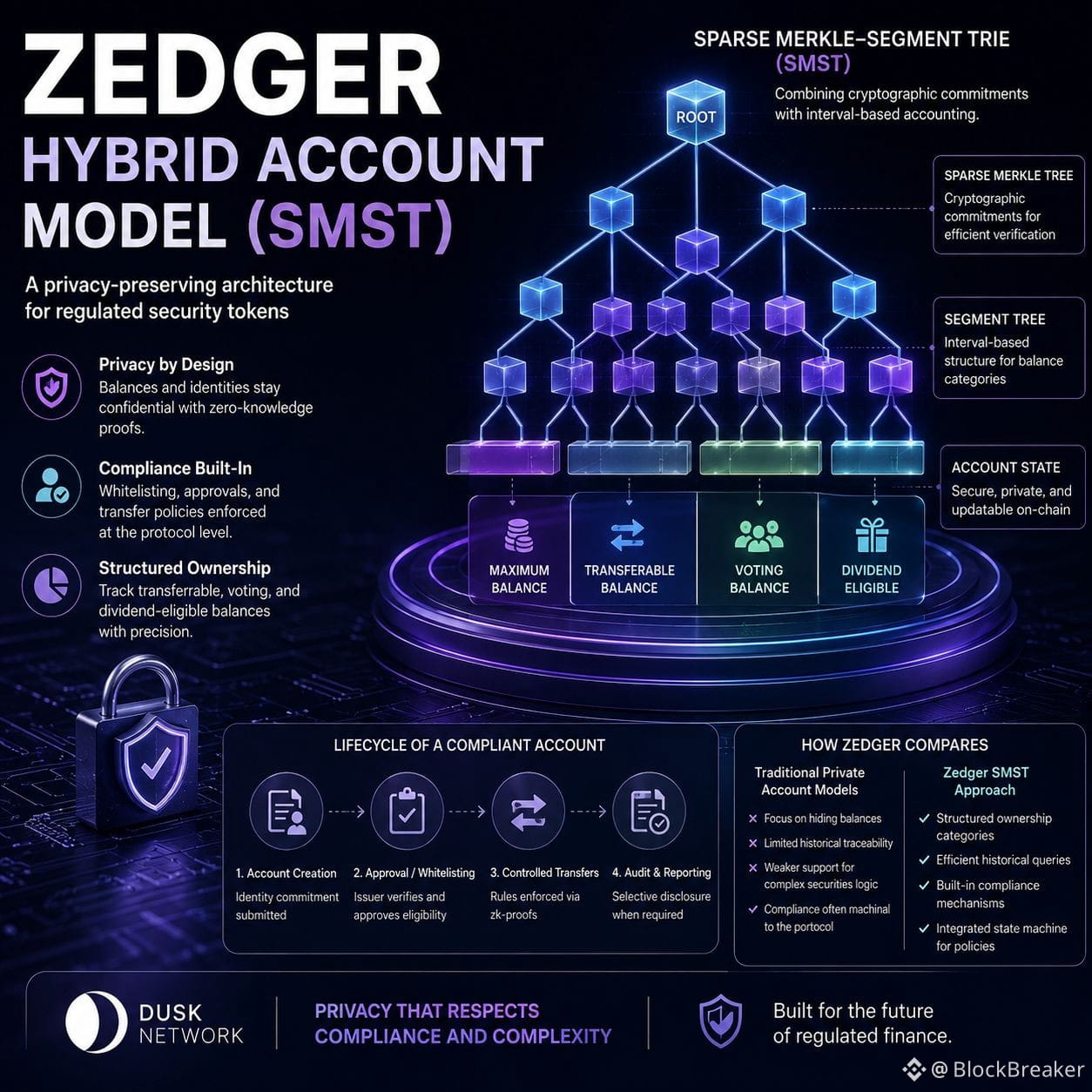
5
2
119
·
--
#dusk $DUSK @Dusk_Foundation
Phoenix hat mich Dusk anders sehen lassen.
Ich glaube, dass Privatsphäre-Systeme oft rückwärts bewertet werden. Man fragt, ob eine Transaktion ihren Absender, den Betrag und das Ziel verbergen kann. Ich möchte lieber fragen, was das System unter dieser Privatsphäre-Schicht eigentlich macht – und was passiert, wenn die echte Nutzung beginnt, sich anzusammeln.
Phoenix nutzt ein UTXO-ähnliches Modell, bei dem DUSK als private Notizen existiert. Ein Spend veröffentlicht einen Nullifier, um zu beweisen, dass die Notiz bereits verbraucht wurde, ohne offenzulegen, welche Notiz es war. Diese Trennung ist wichtig, weil die Privatsphäre-Menge aus der Historie der Notizen wachsen kann – statt von einer Handvoll Lockvögel abhängig zu sein, die zum Zeitpunkt des Spends ausgewählt werden.
Genau hier finde ich das Design spannender als den üblichen Pitch „Dusk ist privat“.
Die schwierigere Frage ist die Effizienz.
Phoenix verwendet Zero-Knowledge-Beweise, um das Ganze miteinander zu verknüpfen. Das schafft ein sehr anderes Engineering-Profil als Systeme wie Monero, die Ring Signatures plus Bulletproofs+ verwenden, oder Zcash, dessen neueres Orchard-Design Halo 2 nutzt.
Ich bin nicht überzeugt, dass am Ende gewinnt, wer auf dem Papier die stärkste Kryptografie hat.
Ich möchte wissen, welche Kosten diese Privatsphäre hat: Beweisgröße, Erstellungszeit, Verifizierungszeit – und wie sich diese Kennzahlen verhalten, wenn der Notizenbestand größer wird.
Denn Privatsphäre, die in einem Prototyp wunderschön funktioniert, ist das eine. Privatsphäre, die weiterhin nutzbar bleibt, wenn die Kette über Jahre hinweg Transaktionen trägt, ist ein viel interessanterer Test.
#dusk $DUSK @Dusk
Phoenix hat mich Dusk anders sehen lassen.
Ich glaube, dass Privatsphäre-Systeme oft rückwärts bewertet werden. Man fragt, ob eine Transaktion ihren Absender, den Betrag und das Ziel verbergen kann. Ich möchte lieber fragen, was das System unter dieser Privatsphäre-Schicht eigentlich macht – und was passiert, wenn die echte Nutzung beginnt, sich anzusammeln.
Phoenix nutzt ein UTXO-ähnliches Modell, bei dem DUSK als private Notizen existiert. Ein Spend veröffentlicht einen Nullifier, um zu beweisen, dass die Notiz bereits verbraucht wurde, ohne offenzulegen, welche Notiz es war. Diese Trennung ist wichtig, weil die Privatsphäre-Menge aus der Historie der Notizen wachsen kann – statt von einer Handvoll Lockvögel abhängig zu sein, die zum Zeitpunkt des Spends ausgewählt werden.
Genau hier finde ich das Design spannender als den üblichen Pitch „Dusk ist privat“.
Die schwierigere Frage ist die Effizienz.
Phoenix verwendet Zero-Knowledge-Beweise, um das Ganze miteinander zu verknüpfen. Das schafft ein sehr anderes Engineering-Profil als Systeme wie Monero, die Ring Signatures plus Bulletproofs+ verwenden, oder Zcash, dessen neueres Orchard-Design Halo 2 nutzt.
Ich bin nicht überzeugt, dass am Ende gewinnt, wer auf dem Papier die stärkste Kryptografie hat.
Ich möchte wissen, welche Kosten diese Privatsphäre hat: Beweisgröße, Erstellungszeit, Verifizierungszeit – und wie sich diese Kennzahlen verhalten, wenn der Notizenbestand größer wird.
Denn Privatsphäre, die in einem Prototyp wunderschön funktioniert, ist das eine. Privatsphäre, die weiterhin nutzbar bleibt, wenn die Kette über Jahre hinweg Transaktionen trägt, ist ein viel interessanterer Test.
Phoenix hat mich Dusk anders sehen lassen.
Ich glaube, dass Privatsphäre-Systeme oft rückwärts bewertet werden. Man fragt, ob eine Transaktion ihren Absender, den Betrag und das Ziel verbergen kann. Ich möchte lieber fragen, was das System unter dieser Privatsphäre-Schicht eigentlich macht – und was passiert, wenn die echte Nutzung beginnt, sich anzusammeln.
Phoenix nutzt ein UTXO-ähnliches Modell, bei dem DUSK als private Notizen existiert. Ein Spend veröffentlicht einen Nullifier, um zu beweisen, dass die Notiz bereits verbraucht wurde, ohne offenzulegen, welche Notiz es war. Diese Trennung ist wichtig, weil die Privatsphäre-Menge aus der Historie der Notizen wachsen kann – statt von einer Handvoll Lockvögel abhängig zu sein, die zum Zeitpunkt des Spends ausgewählt werden.
Genau hier finde ich das Design spannender als den üblichen Pitch „Dusk ist privat“.
Die schwierigere Frage ist die Effizienz.
Phoenix verwendet Zero-Knowledge-Beweise, um das Ganze miteinander zu verknüpfen. Das schafft ein sehr anderes Engineering-Profil als Systeme wie Monero, die Ring Signatures plus Bulletproofs+ verwenden, oder Zcash, dessen neueres Orchard-Design Halo 2 nutzt.
Ich bin nicht überzeugt, dass am Ende gewinnt, wer auf dem Papier die stärkste Kryptografie hat.
Ich möchte wissen, welche Kosten diese Privatsphäre hat: Beweisgröße, Erstellungszeit, Verifizierungszeit – und wie sich diese Kennzahlen verhalten, wenn der Notizenbestand größer wird.
Denn Privatsphäre, die in einem Prototyp wunderschön funktioniert, ist das eine. Privatsphäre, die weiterhin nutzbar bleibt, wenn die Kette über Jahre hinweg Transaktionen trägt, ist ein viel interessanterer Test.
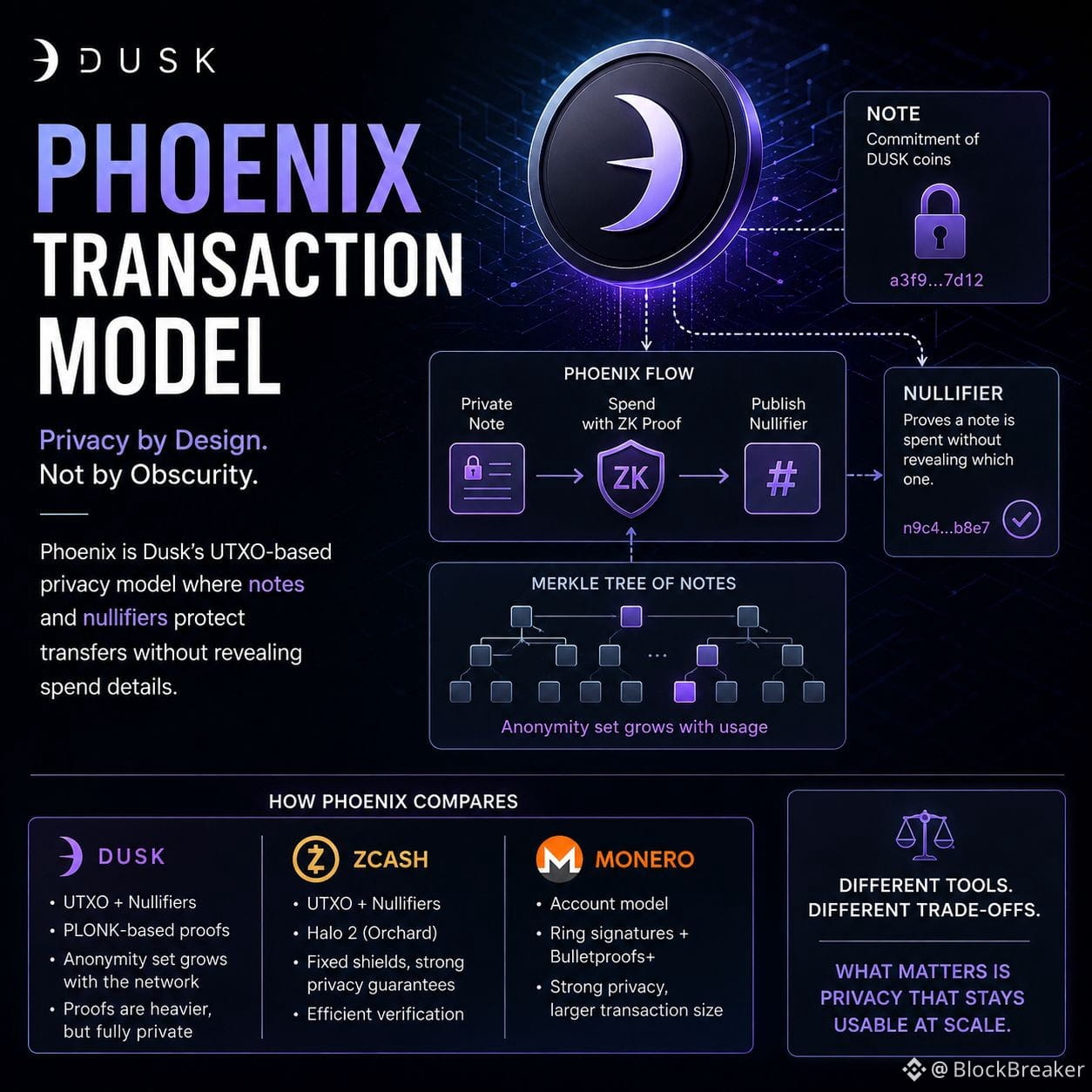
1
2
285
·
--
#dusk $DUSK @Dusk_Foundation
XSC-Standard und die Zielkonflikt zwischen Datenschutz und Compliance
Ich komme immer wieder auf eine unbequeme Frage rund um XSC zurück: Kann man eine Finanztransaktion privat machen, ohne die zugrunde liegende Compliance-Logik zu starr werden zu lassen?
Der interessante Teil von Dusk’s Design ist nicht einfach, dass Zero-Knowledge-Beweise Transaktionsdetails verbergen können. XSC ist darauf aufgebaut, zu beweisen, dass bestimmte Bedingungen erfüllt sind, ohne alles hinter dem Beweis offenzulegen. In der Spezifikation werden Beweistypen für Dinge wie Mengeneinschluss, Wissen, Gleichheit, Bereichsprüfungen und Autorisierung beschrieben, während der Vertrag selbst die Regeln definiert, die eine Wallet durchsetzen muss.
Das klingt sauber, bis man sich die juristische Seite anschaut. Regulierung ist selten eine ordentliche Boolesche Aussage. „Ist dieser Investor berechtigt?“ kann sich zu Fragen über die Zuständigkeit, sich ändernden Status, Ausnahmen, Meldepflichten und die Frage entwickeln, wer überprüfen darf, was.
Ich habe gesehen, wie Datenschutzsysteme behandelt werden, als würde Kryptografie das Compliance-Problem allein lösen. Das tut sie nicht. ZK kann eine Aussage beweisen; es kann jedoch nicht entscheiden, ob die Aussage die Absicht des Regulators trifft. Forschung zur Blockchain-Compliance macht dieselbe Unterscheidung: datenschutzfreundliche Beweise können unnötige Offenlegung reduzieren, aber Governance-, Autorisierungs- und Offenlegungsregeln bleiben dennoch relevant.
Darum finde ich XSC als Designproblem spannender als als Produkterzählung. Der eigentliche Test ist, ob regulierte Finanzprozesse als präzise, durchsetzbare Prädikate ausgedrückt werden können, ohne Privatsphäre leise in eine weitere Berechtigungsschicht zu verwandeln.
Dieser Zielkonflikt ist der Punkt, an dem die eigentliche Arbeit beginnt.
#dusk $DUSK @Dusk
XSC-Standard und die Zielkonflikt zwischen Datenschutz und Compliance
Ich komme immer wieder auf eine unbequeme Frage rund um XSC zurück: Kann man eine Finanztransaktion privat machen, ohne die zugrunde liegende Compliance-Logik zu starr werden zu lassen?
Der interessante Teil von Dusk’s Design ist nicht einfach, dass Zero-Knowledge-Beweise Transaktionsdetails verbergen können. XSC ist darauf aufgebaut, zu beweisen, dass bestimmte Bedingungen erfüllt sind, ohne alles hinter dem Beweis offenzulegen. In der Spezifikation werden Beweistypen für Dinge wie Mengeneinschluss, Wissen, Gleichheit, Bereichsprüfungen und Autorisierung beschrieben, während der Vertrag selbst die Regeln definiert, die eine Wallet durchsetzen muss.
Das klingt sauber, bis man sich die juristische Seite anschaut. Regulierung ist selten eine ordentliche Boolesche Aussage. „Ist dieser Investor berechtigt?“ kann sich zu Fragen über die Zuständigkeit, sich ändernden Status, Ausnahmen, Meldepflichten und die Frage entwickeln, wer überprüfen darf, was.
Ich habe gesehen, wie Datenschutzsysteme behandelt werden, als würde Kryptografie das Compliance-Problem allein lösen. Das tut sie nicht. ZK kann eine Aussage beweisen; es kann jedoch nicht entscheiden, ob die Aussage die Absicht des Regulators trifft. Forschung zur Blockchain-Compliance macht dieselbe Unterscheidung: datenschutzfreundliche Beweise können unnötige Offenlegung reduzieren, aber Governance-, Autorisierungs- und Offenlegungsregeln bleiben dennoch relevant.
Darum finde ich XSC als Designproblem spannender als als Produkterzählung. Der eigentliche Test ist, ob regulierte Finanzprozesse als präzise, durchsetzbare Prädikate ausgedrückt werden können, ohne Privatsphäre leise in eine weitere Berechtigungsschicht zu verwandeln.
Dieser Zielkonflikt ist der Punkt, an dem die eigentliche Arbeit beginnt.
XSC-Standard und die Zielkonflikt zwischen Datenschutz und Compliance
Ich komme immer wieder auf eine unbequeme Frage rund um XSC zurück: Kann man eine Finanztransaktion privat machen, ohne die zugrunde liegende Compliance-Logik zu starr werden zu lassen?
Der interessante Teil von Dusk’s Design ist nicht einfach, dass Zero-Knowledge-Beweise Transaktionsdetails verbergen können. XSC ist darauf aufgebaut, zu beweisen, dass bestimmte Bedingungen erfüllt sind, ohne alles hinter dem Beweis offenzulegen. In der Spezifikation werden Beweistypen für Dinge wie Mengeneinschluss, Wissen, Gleichheit, Bereichsprüfungen und Autorisierung beschrieben, während der Vertrag selbst die Regeln definiert, die eine Wallet durchsetzen muss.
Das klingt sauber, bis man sich die juristische Seite anschaut. Regulierung ist selten eine ordentliche Boolesche Aussage. „Ist dieser Investor berechtigt?“ kann sich zu Fragen über die Zuständigkeit, sich ändernden Status, Ausnahmen, Meldepflichten und die Frage entwickeln, wer überprüfen darf, was.
Ich habe gesehen, wie Datenschutzsysteme behandelt werden, als würde Kryptografie das Compliance-Problem allein lösen. Das tut sie nicht. ZK kann eine Aussage beweisen; es kann jedoch nicht entscheiden, ob die Aussage die Absicht des Regulators trifft. Forschung zur Blockchain-Compliance macht dieselbe Unterscheidung: datenschutzfreundliche Beweise können unnötige Offenlegung reduzieren, aber Governance-, Autorisierungs- und Offenlegungsregeln bleiben dennoch relevant.
Darum finde ich XSC als Designproblem spannender als als Produkterzählung. Der eigentliche Test ist, ob regulierte Finanzprozesse als präzise, durchsetzbare Prädikate ausgedrückt werden können, ohne Privatsphäre leise in eine weitere Berechtigungsschicht zu verwandeln.
Dieser Zielkonflikt ist der Punkt, an dem die eigentliche Arbeit beginnt.
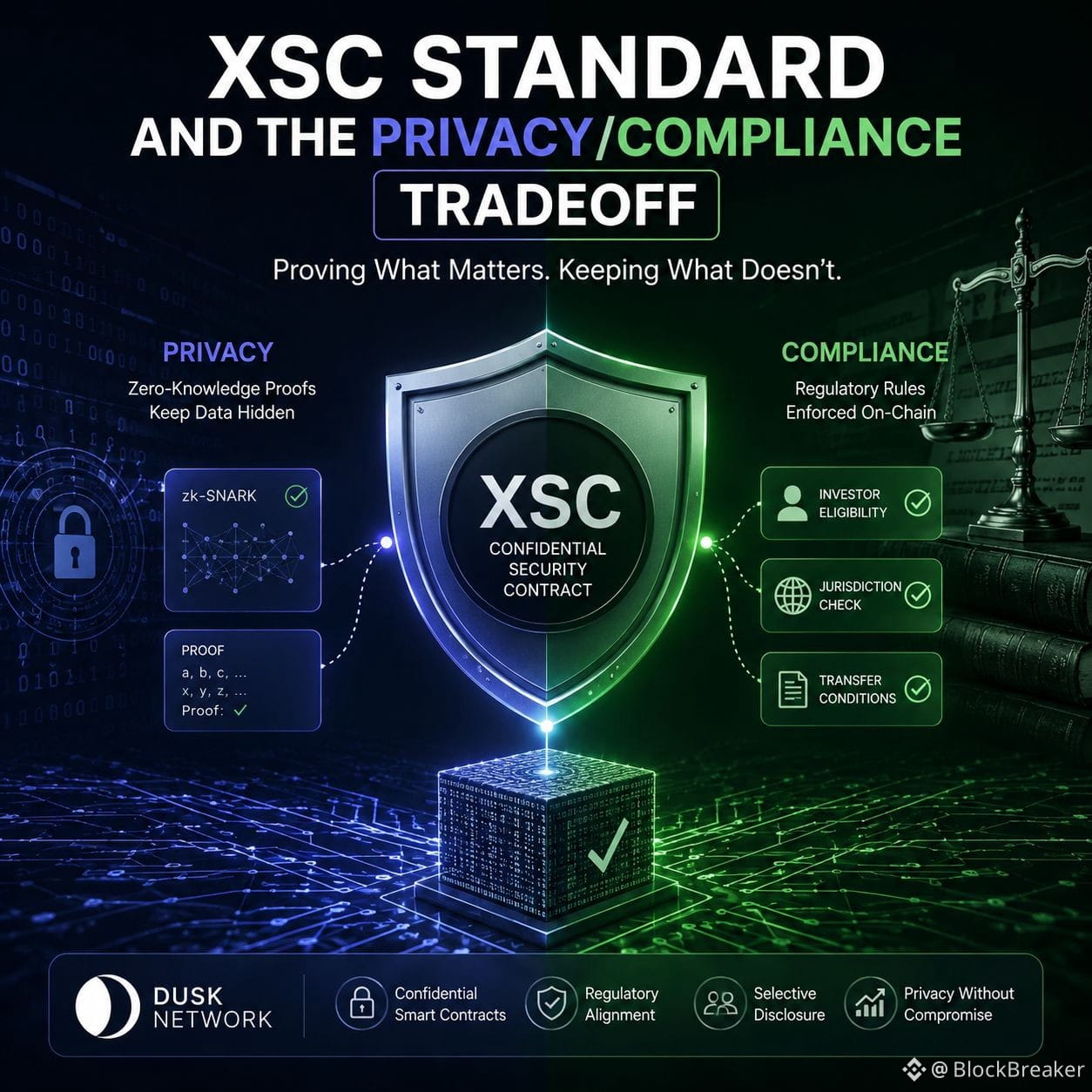
3
224
·
--
Gold steigt über 4.400 US-Dollar und erreicht Zwei-Monats-Hoch
Gold stieg über 4.400 US-Dollar je Unze und erreichte damit den höchsten Stand seit mehr als zwei Monaten; die Spotpreise berührten zeitweise rund 4.435 US-Dollar.
Der Schritt erfolgt, nachdem Händler die Erwartungen an den US-Zinssatz nach schwächeren Beschäftigungsdaten neu bewerten; der Fokus richtet sich nun auf die wichtigen US-Inflationsdaten, um Hinweise auf das nächste Vorgehen der Fed zu erhalten.
Für Gold ist die entscheidende Frage, ob Käufer den Aufwärtsimpuls über 4.400 US-Dollar halten können – oder ob steigende Ölpreise, Renditen und erneuerte Zinserhöhungs-Erwartungen einen weiteren Rücksetzer auslösen.
$RAD $BANANAS31 $MITO
Gold steigt über 4.400 US-Dollar und erreicht Zwei-Monats-Hoch
Gold stieg über 4.400 US-Dollar je Unze und erreichte damit den höchsten Stand seit mehr als zwei Monaten; die Spotpreise berührten zeitweise rund 4.435 US-Dollar.
Der Schritt erfolgt, nachdem Händler die Erwartungen an den US-Zinssatz nach schwächeren Beschäftigungsdaten neu bewerten; der Fokus richtet sich nun auf die wichtigen US-Inflationsdaten, um Hinweise auf das nächste Vorgehen der Fed zu erhalten.
Für Gold ist die entscheidende Frage, ob Käufer den Aufwärtsimpuls über 4.400 US-Dollar halten können – oder ob steigende Ölpreise, Renditen und erneuerte Zinserhöhungs-Erwartungen einen weiteren Rücksetzer auslösen.
$RAD $BANANAS31 $MITO
Gold stieg über 4.400 US-Dollar je Unze und erreichte damit den höchsten Stand seit mehr als zwei Monaten; die Spotpreise berührten zeitweise rund 4.435 US-Dollar.
Der Schritt erfolgt, nachdem Händler die Erwartungen an den US-Zinssatz nach schwächeren Beschäftigungsdaten neu bewerten; der Fokus richtet sich nun auf die wichtigen US-Inflationsdaten, um Hinweise auf das nächste Vorgehen der Fed zu erhalten.
Für Gold ist die entscheidende Frage, ob Käufer den Aufwärtsimpuls über 4.400 US-Dollar halten können – oder ob steigende Ölpreise, Renditen und erneuerte Zinserhöhungs-Erwartungen einen weiteren Rücksetzer auslösen.
$RAD $BANANAS31 $MITO

1
135
·
--
SpaceX hat gerade seine ersten öffentlichen Geschäftszahlen veröffentlicht, und die Ergebnisse waren stark: Der Umsatz stieg um 92% auf 7,8 Mrd. $ und übertraf die Erwartungen. Jetzt schaut der Markt genau auf zwei Dinge – die Sperrfrist für Aktien und die steigenden KI-Kosten.
$HEI $BICO $BANK
SpaceX hat gerade seine ersten öffentlichen Geschäftszahlen veröffentlicht, und die Ergebnisse waren stark: Der Umsatz stieg um 92% auf 7,8 Mrd. $ und übertraf die Erwartungen. Jetzt schaut der Markt genau auf zwei Dinge – die Sperrfrist für Aktien und die steigenden KI-Kosten.
$HEI $BICO $BANK
$HEI $BICO $BANK
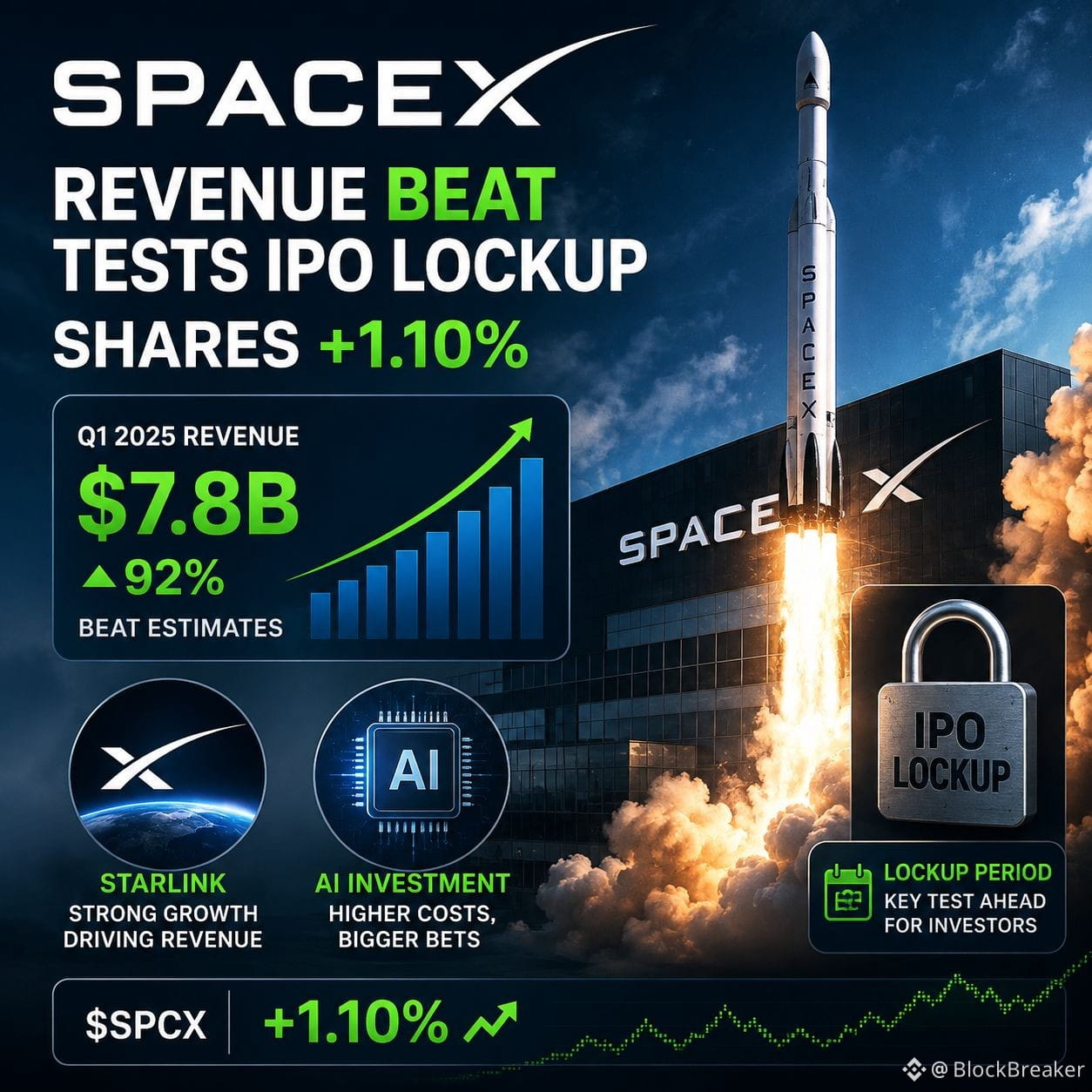
3
107
·
--
🎙️ Das ökologische Gleichgewicht wahren und den Binance-Platz bauen

Beenden
04 h 12 m 03 s
9.7k
35
89
Anmelden und weiter Inhalte entdecken
Krypto-Nutzer weltweit auf Binance Square kennenlernen
⚡️ Bleib in Sachen Krypto stets am Puls.
💬 Die weltgrößte Kryptobörse vertraut darauf.
👍 Erhalte verlässliche Einblicke von verifizierten Creators.
E-Mail-Adresse/Telefonnummer
Trendthemen
AIStocksWhatNext
793,961 Aufrufe
6,119 Kommentare
Teile & gewinne Traffic-Rewards in unserer angesagten Hashtag-Kampagne
✨Thema: Welche anderen Investitionsmöglichkeiten gibt es noch, während KI-Aktien weiter steigen?
👉So machst du mit:
Veröffentliche einen kurzen Beitrag oder Artikel mit dem Hashtag #AIStocksWhatNext
Teile, ob du bullisch oder bärisch bist, und poste deine KI-Aktienbestände oder Trades – die Nutzung des Trade-Widgets kann deine Berechtigung verbessern.
Du kannst deinen Beitrag auch stärken, indem du Daten oder Diagramme teilst und KI-generierte Bilder vermeidest.
✍️Erstelle Inhalte basierend auf den folgenden Blickwinkeln:
- Nvidia sagt, dass sich der Chip-Umsatz im nächsten Jahr verdoppeln wird, und die führenden KI-Unternehmen erreichen weiterhin Rekordumsätze – der Rechenaufwand dahinter ist ebenso beeindruckend. Verläuft die Nachfrage nach KI wirklich gerade erst so richtig, oder geht es nur noch eine Weile weiter? KI-Aktien steigen derzeit branchenweit. Ist das ein echter Ausbruch oder nur ein kurzfristiger Rückprall?
- Branchenführer fordern dazu auf, die Entwicklung von KI zu verlangsamen, während Trump plant, eine „AI Force“ aufzubauen, und behauptet, KI könne in der Zukunft 25% des US-BIP ausmachen. Auf welcher Seite stehst du? Wird staatliche Unterstützung ein langfristiger Gewinn für KI-Aktien sein?
- Kaufst du KI-Aktien? Teile deinen KI-bezogenen Trade/deine Bestände mit unserem Trade-Sharing-Widget.
⏰Kampagnenzeitraum:
- 2026-09-22 7:00 - 2026-09-24 4:00 UTC
🎁Belohnung:
- Qualifizierte Beiträge, die die oben genannten Richtlinien einhalten und mehr als 100 Wörter enthalten, werden überprüft und können möglicherweise einen zufälligen Traffic-Boost von 500 bis 3.000 Views erhalten. Du erhältst eine Benachrichtigung von deiner Feed-Sekretärin, wenn dein Beitrag ausgewählt wurde.
- Erhalte die Chance, dass dein Artikel auf Binance Square Official vorgestellt wird
Brauchst du Ideen für deinen Beitrag? Besuche die Thema-Seite #AIStocksWhatNext oder die Square Guide on How to Post for Better Reach.
Binance Square Official
·561 Likes
·1.6M Aufrufe
BitcoinRejectedAt$87,300Twice
0 Aufrufe
0 Kommentare
BCHJumps28%OnCMEFuturesListing
2,861 Aufrufe
302 Kommentare