
Hurain_BTC
752 Beiträge

Hurain_BTC
Melden
Nutzer blockieren
crypto lover Hurain_BTC
76 Following
103 Follower
390 Like gegeben
Beiträge
Alle
Zitierungen
Videos
·
--
Artikel
Übersetzung ansehen
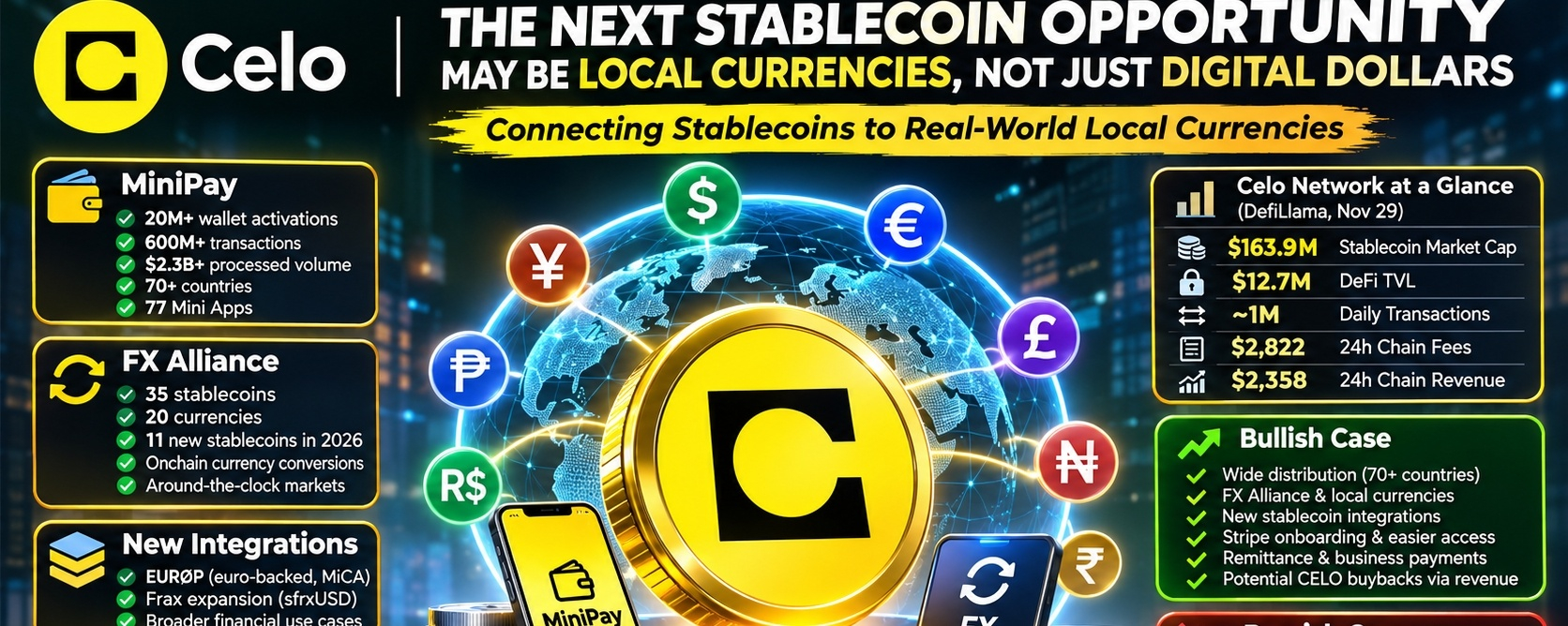
CELO: THE NEXT STABLECOIN OPPORTUNITY MAY BE LOCAL CURRENCIES, NOT JUST DIGITAL DOLLARSThe real test of stablecoins is not how many wallets exist, but how people actually use them.
Celo's recent developments have caught my attention because the network is pursuing a different direction from the traditional stablecoin competition. Instead of focusing only on dollar liquidity, cheaper transfers and transaction speed, Celo is working to connect digital dollars with local currencies, payment applications and onchain foreign-exchange markets.
This approach could give the network a more practical role in everyday financial activity. However, the key question remains: Can this growing infrastructure generate sustainable economic value, or will it simply increase the number of assets available onchain?
MiniPay: Adoption Beyond Wallet Creation
One of Celo's strongest distribution channels is MiniPay, Opera's self-custodial wallet.
Its Q3 2026 update reported more than 20 million wallet activations, over 600 million transactions processed and approximately $2.3 billion in cumulative transaction volume across more than 70 countries. The ecosystem also reported 77 active Mini Apps.
These numbers indicate that Celo has developed meaningful distribution for stablecoin applications. However, wallet activations should not be confused with active users.
The more important indicators are recurring payments, user retention, transaction frequency and the share of activity coming from genuine transfers rather than automated or internal operations.
The FX Alliance: Connecting Local Currency Markets
The November 28 announcement is arguably one of Celo's most interesting recent developments.
The network introduced its FX Alliance, bringing together stablecoin issuers, payment providers, wallets and liquidity participants. The initial ecosystem includes 35 stablecoins representing 20 currencies, with 11 new stablecoins added during 2026.
Consider a business receiving payments internationally. It might receive a stablecoin in one currency but need another currency to pay employees or suppliers. Traditional conversion can involve several intermediaries, banking-hour restrictions and additional costs.
Celo aims to enable direct conversions between local-currency stablecoins through onchain markets, potentially operating around the clock.
Founding participants include Opera, Frax, Schuman Financial, VNX Global, Ripio, IDRX, cNGN, Minteo and Textile FX.
The real opportunity is not simply the number of participants. It is whether they provide enough liquidity to make these markets competitive and useful for real-world payments.
New Stablecoin Integrations Expand the Ecosystem
The FX Alliance is not the only development expanding Celo's stablecoin infrastructure.
On November 28, Schuman Financial announced plans to deploy EURØP, its euro-backed stablecoin, on Celo. It is described as the 36th stablecoin launching on the network and is issued under Europe's MiCA regulatory framework by an authorised electronic money institution.
Frax also announced the expansion of its stablecoin and asset suite onto Celo on November 24, including sfrxUSD.
These integrations could support a wider range of financial activity. Dollar stablecoins, euro-denominated liquidity and regional currencies address different payment needs.
However, adding more stablecoins does not automatically create deep liquidity. Adoption will depend on market depth, redemption access, distribution and whether applications actually use these assets.
Making Stablecoins Easier to Access
MiniPay's integration with Link by Stripe is another development worth monitoring.
Announced on November 12, it allows eligible MiniPay users in Europe and the United States to purchase stablecoins using familiar payment methods such as cards, Apple Pay and Google Pay.
On November 19, MiniPay also announced an upgrade to Stripe-owned Privy wallet infrastructure, designed to simplify account access while preserving self-custodial functionality.
These developments address a major barrier to stablecoin adoption: onboarding.
People need a simple way to enter the ecosystem and access applications they understand. But easier access alone is not enough. Continued holding, transferring and spending will determine whether these integrations create lasting value.
Does Network Activity Translate Into Economic Value?
This is where I would remain cautious.
According to DefiLlama's November 29 data, Celo had approximately $163.9 million in stablecoin market capitalization, $12.7 million in DeFi TVL and close to 1 million daily transactions.
The dashboard also reported approximately $2,822 in 24-hour chain fees and $2,358 in chain revenue.
This highlights an important distinction: a network can facilitate substantial stablecoin activity without generating equally substantial revenue.
Celo's revenue mechanism directs net sequencer revenue to the Community Fund, with the stated mechanism supporting CELO buybacks. But gross fees alone do not reveal the amount available after Ethereum posting costs and the OP Stack revenue share.
More stablecoin transfers are encouraging. Sustainable economics, however, require recurring activity that produces meaningful net revenue.
Bullish and Bearish Considerations 🟢🔴
Bullish considerations 🟢
- MiniPay provides an established distribution channel across more than 70 countries.
- The FX Alliance connects local-currency stablecoins with a broader payment opportunity.
- New stablecoin integrations expand the network's financial infrastructure.
- Stripe integrations could simplify onboarding and stablecoin funding.
- Direct currency conversions may support remittances and international business payments.
- Network revenue creates a potential connection between usage and CELO buybacks.
Bearish considerations 🔴
- Wallet activations do not prove long-term user retention.
- More supported stablecoins do not guarantee sufficient market liquidity.
- FX markets require competitive spreads and reliable redemption infrastructure.
- Stablecoin adoption does not automatically create demand for CELO.
- Current network revenue remains relatively small compared with the broader payment narrative.
- Competition from established payment networks and other stablecoin ecosystems remains significant.
My View
I believe Celo's most compelling opportunity is becoming infrastructure for moving money between local currencies, rather than competing only on cheaper stablecoin transfers.
MiniPay has already established meaningful distribution, while the FX Alliance introduces a more ambitious vision: connecting local currencies through accessible, around-the-clock markets.
Still, infrastructure development should not be mistaken for proven economic success.
The next evidence I want to see is actual currency-pair volume, deeper liquidity, recurring payment activity and improving net network revenue.
If these indicators grow together, Celo could establish a more differentiated position in the global stablecoin economy.
For now, the direction is promising. The real question is whether individuals and businesses will use these markets consistently enough to make the infrastructure economically sustainable.
That's what I will be watching. 👀
Key Figures
20M+ — MiniPay wallet activations
600M+ — MiniPay transactions processed
$2.3B+ — MiniPay cumulative processed volume
70+ — Countries reached by MiniPay
77 — Mini Apps reported in the Q3 update
35 — Stablecoins initially included in the FX Alliance
20 — Currencies represented in the FX Alliance
11 — Stablecoins added during 2026, as of November 28
36th — EURØP's planned position among Celo stablecoin deployments
$163.9M — Celo stablecoin market capitalization
$12.7M — DeFi total value locked
~1M — Daily transactions
$2,822 — 24-hour chain fees
$2,358 — 24-hour chain revenue
Q1 2027 — Target for the FX Alliance public dashboard
@celo
$CELO #CELO #Binance #CeloEcosystem #BNB #Blockchain
CELO: THE NEXT STABLECOIN OPPORTUNITY MAY BE LOCAL CURRENCIES, NOT JUST DIGITAL DOLLARS
The real test of stablecoins is not how many wallets exist, but how people actually use them.
Celo's recent developments have caught my attention because the network is pursuing a different direction from the traditional stablecoin competition. Instead of focusing only on dollar liquidity, cheaper transfers and transaction speed, Celo is working to connect digital dollars with local currencies, payment applications and onchain foreign-exchange markets.
This approach could give the network a more practical role in everyday financial activity. However, the key question remains: Can this growing infrastructure generate sustainable economic value, or will it simply increase the number of assets available onchain?
MiniPay: Adoption Beyond Wallet Creation
One of Celo's strongest distribution channels is MiniPay, Opera's self-custodial wallet.
Its Q3 2026 update reported more than 20 million wallet activations, over 600 million transactions processed and approximately $2.3 billion in cumulative transaction volume across more than 70 countries. The ecosystem also reported 77 active Mini Apps.
These numbers indicate that Celo has developed meaningful distribution for stablecoin applications. However, wallet activations should not be confused with active users.
The more important indicators are recurring payments, user retention, transaction frequency and the share of activity coming from genuine transfers rather than automated or internal operations.
The FX Alliance: Connecting Local Currency Markets
The November 28 announcement is arguably one of Celo's most interesting recent developments.
The network introduced its FX Alliance, bringing together stablecoin issuers, payment providers, wallets and liquidity participants. The initial ecosystem includes 35 stablecoins representing 20 currencies, with 11 new stablecoins added during 2026.
Consider a business receiving payments internationally. It might receive a stablecoin in one currency but need another currency to pay employees or suppliers. Traditional conversion can involve several intermediaries, banking-hour restrictions and additional costs.
Celo aims to enable direct conversions between local-currency stablecoins through onchain markets, potentially operating around the clock.
Founding participants include Opera, Frax, Schuman Financial, VNX Global, Ripio, IDRX, cNGN, Minteo and Textile FX.
The real opportunity is not simply the number of participants. It is whether they provide enough liquidity to make these markets competitive and useful for real-world payments.
New Stablecoin Integrations Expand the Ecosystem
The FX Alliance is not the only development expanding Celo's stablecoin infrastructure.
On November 28, Schuman Financial announced plans to deploy EURØP, its euro-backed stablecoin, on Celo. It is described as the 36th stablecoin launching on the network and is issued under Europe's MiCA regulatory framework by an authorised electronic money institution.
Frax also announced the expansion of its stablecoin and asset suite onto Celo on November 24, including sfrxUSD.
These integrations could support a wider range of financial activity. Dollar stablecoins, euro-denominated liquidity and regional currencies address different payment needs.
However, adding more stablecoins does not automatically create deep liquidity. Adoption will depend on market depth, redemption access, distribution and whether applications actually use these assets.
Making Stablecoins Easier to Access
MiniPay's integration with Link by Stripe is another development worth monitoring.
Announced on November 12, it allows eligible MiniPay users in Europe and the United States to purchase stablecoins using familiar payment methods such as cards, Apple Pay and Google Pay.
On November 19, MiniPay also announced an upgrade to Stripe-owned Privy wallet infrastructure, designed to simplify account access while preserving self-custodial functionality.
These developments address a major barrier to stablecoin adoption: onboarding.
People need a simple way to enter the ecosystem and access applications they understand. But easier access alone is not enough. Continued holding, transferring and spending will determine whether these integrations create lasting value.
Does Network Activity Translate Into Economic Value?
This is where I would remain cautious.
According to DefiLlama's November 29 data, Celo had approximately $163.9 million in stablecoin market capitalization, $12.7 million in DeFi TVL and close to 1 million daily transactions.
The dashboard also reported approximately $2,822 in 24-hour chain fees and $2,358 in chain revenue.
This highlights an important distinction: a network can facilitate substantial stablecoin activity without generating equally substantial revenue.
Celo's revenue mechanism directs net sequencer revenue to the Community Fund, with the stated mechanism supporting CELO buybacks. But gross fees alone do not reveal the amount available after Ethereum posting costs and the OP Stack revenue share.
More stablecoin transfers are encouraging. Sustainable economics, however, require recurring activity that produces meaningful net revenue.
Bullish and Bearish Considerations 🟢🔴
Bullish considerations 🟢
- MiniPay provides an established distribution channel across more than 70 countries.
- The FX Alliance connects local-currency stablecoins with a broader payment opportunity.
- New stablecoin integrations expand the network's financial infrastructure.
- Stripe integrations could simplify onboarding and stablecoin funding.
- Direct currency conversions may support remittances and international business payments.
- Network revenue creates a potential connection between usage and CELO buybacks.
Bearish considerations 🔴
- Wallet activations do not prove long-term user retention.
- More supported stablecoins do not guarantee sufficient market liquidity.
- FX markets require competitive spreads and reliable redemption infrastructure.
- Stablecoin adoption does not automatically create demand for CELO.
- Current network revenue remains relatively small compared with the broader payment narrative.
- Competition from established payment networks and other stablecoin ecosystems remains significant.
My View
I believe Celo's most compelling opportunity is becoming infrastructure for moving money between local currencies, rather than competing only on cheaper stablecoin transfers.
MiniPay has already established meaningful distribution, while the FX Alliance introduces a more ambitious vision: connecting local currencies through accessible, around-the-clock markets.
Still, infrastructure development should not be mistaken for proven economic success.
The next evidence I want to see is actual currency-pair volume, deeper liquidity, recurring payment activity and improving net network revenue.
If these indicators grow together, Celo could establish a more differentiated position in the global stablecoin economy.
For now, the direction is promising. The real question is whether individuals and businesses will use these markets consistently enough to make the infrastructure economically sustainable.
That's what I will be watching. 👀
Key Figures
20M+ — MiniPay wallet activations
600M+ — MiniPay transactions processed
$2.3B+ — MiniPay cumulative processed volume
70+ — Countries reached by MiniPay
77 — Mini Apps reported in the Q3 update
35 — Stablecoins initially included in the FX Alliance
20 — Currencies represented in the FX Alliance
11 — Stablecoins added during 2026, as of November 28
36th — EURØP's planned position among Celo stablecoin deployments
$163.9M — Celo stablecoin market capitalization
$12.7M — DeFi total value locked
~1M — Daily transactions
$2,822 — 24-hour chain fees
$2,358 — 24-hour chain revenue
Q1 2027 — Target for the FX Alliance public dashboard
@celo
$CELO #CELO #Binance #CeloEcosystem #BNB #Blockchain
1
10
·
--
Übersetzung ansehen
Guys, I'm opening a BIG SHORT on $PORTAL here. This pump could be setting up for a sharp correction 🚨
TP: $0.02550 SL: $0.05485 👇🏻
I shared my bearish view on $PORTAL yesterday, but I was waiting for the right opportunity to open my short. This massive pump has finally brought the setup I was looking for.
Look at how aggressively the price surged before facing rejection at higher levels. After such a strong move, I want to see whether buyers can maintain this momentum or if sellers are starting to take control.
The rejection is worth watching. Late buyers may be trapped if the price continues to lose strength, while liquidity below the current price could become the next target.
If selling pressure continues and the price fails to reclaim the rejected zone, I expect a deeper correction. In that scenario, the market could move toward my TP without needing a long consolidation.
That’s why I’m taking this short. The setup is based on the rejection and the possibility of momentum shifting after an extreme pump.
I’ll be watching how price reacts around the key levels. If the bearish structure fails, I’ll respect my stop loss rather than forcing the trade.
Manage your risk carefully. A big pump can create a great opportunity, but it can also bring serious volatility.
1
1
589
·
--
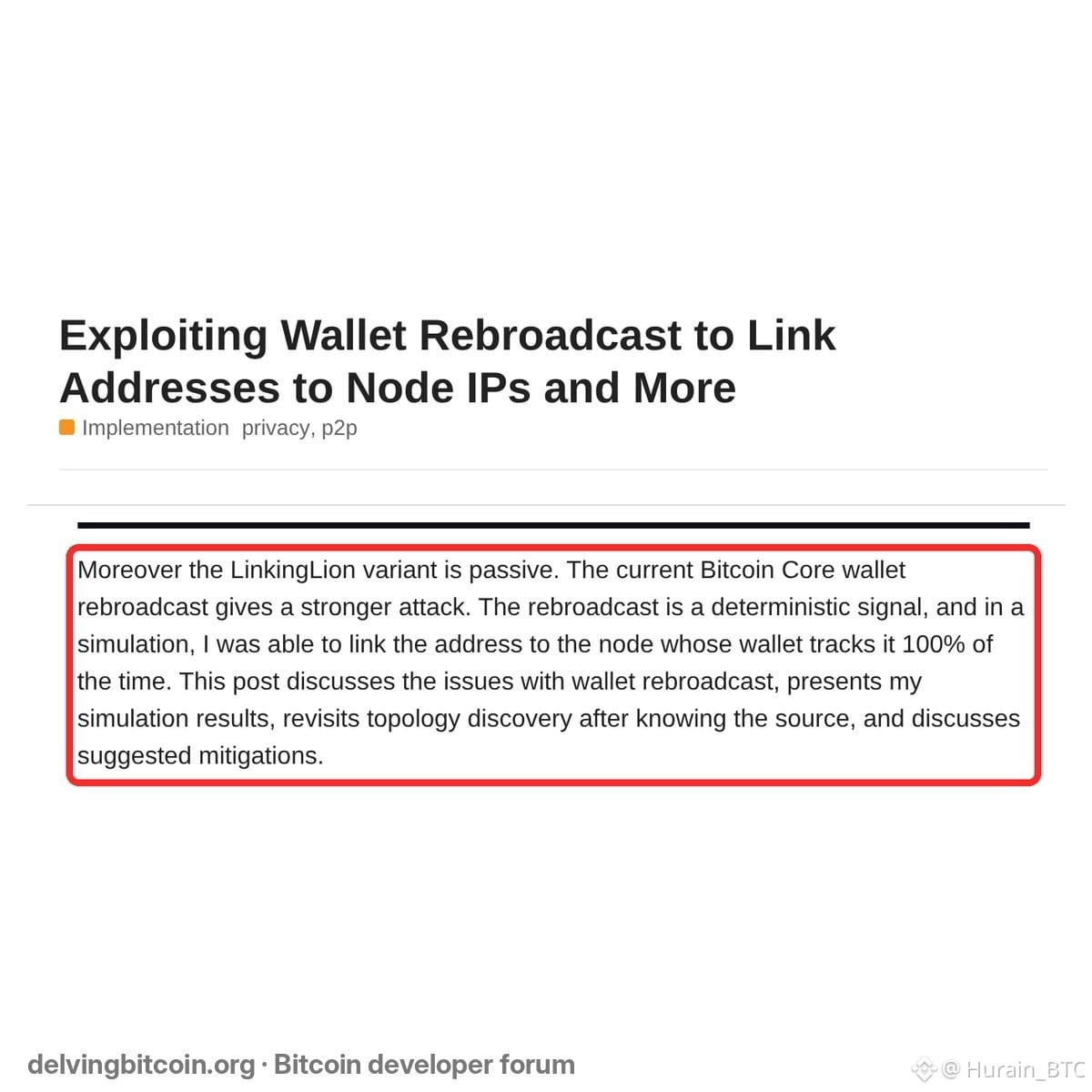
🚨 WARNUNG: EINE ZAHLUNG VON WENIGER ALS 35 CENT KANN DIE INTERNETADRESSE HINTER DEINER #BITCOIN WALLET OFFENLEGEN. UND DAS PROBLEM IST NOCH NICHT BEHOBEN.
Ein Bitcoin-Core-Mitwirkender hat es diese Woche gezeigt.
→ DER ANGREIFER SENDT EINE WINZIGE ZAHLUNG MIT NIEDRIGER GEBÜHR AN EINE ADRESSE, DIE DU BEREITS VERWENDET HAST
→ SIE BLEIBT STECKEN, SODASS DEINE WALLET SIE 12 BIS 36 STUNDEN SPÄTER ERNEUT SENDT
→ DER ANGREIFER BEOBACHTET, WELCHER COMPUTER DAS TUT
→ IN SEINEN TESTS FAND ER 30 VON 30 MAL DEN RICHTIGEN COMPUTER
→ EINE IP-ADRESSE KANN AUF DEINEN INTERNETANBIETER, DEINE STADT UND MANCHMAL SOGAR DEIN ZUHAUSE HINWEISEN
WER BETROFFEN IST:
→ BITCOIN-CORE-WALLETS
→ SPARROW IM CORE-MODUS, SPECTER, LIANA, JOINMARKET, ELECTRUM PERSONAL SERVER
→ NODES IM TOR-NETZWERK, DIE AUCH NORMALE INTERNETVERBINDUNGEN AUFRECHTERHALTEN
ÜBER DIE LÖSUNG WIRD NOCH GESTRITTEN. EIN ANDERER BITCOIN-CORE-MITWIRKENDER SAGT, EINE VORGESCHLAGENE ÄNDERUNG „ERHÖHT DIE KOSTEN DES AKTIVEN ANGRIFFS NUR LEICHT“.
DIE VORLÄUFIGE LÖSUNG: DEAKTIVIERE DAS AUTOMATISCHE SENDEN VON WALLET-TRANSAKTIONEN UND SENDE JEDE TRANSAKTION MANUELL.
DER TEST FAND IN EINEM TESTNETZWERK STATT. IM LIVE-NETZWERK HAT ES BISHER NOCH NIEMAND GEMESSEN.
ALSO, WIE VIELE LEUTE WISSEN BEREITS, WO DEIN BITCOIN LIEGT? 👀
146
·
--
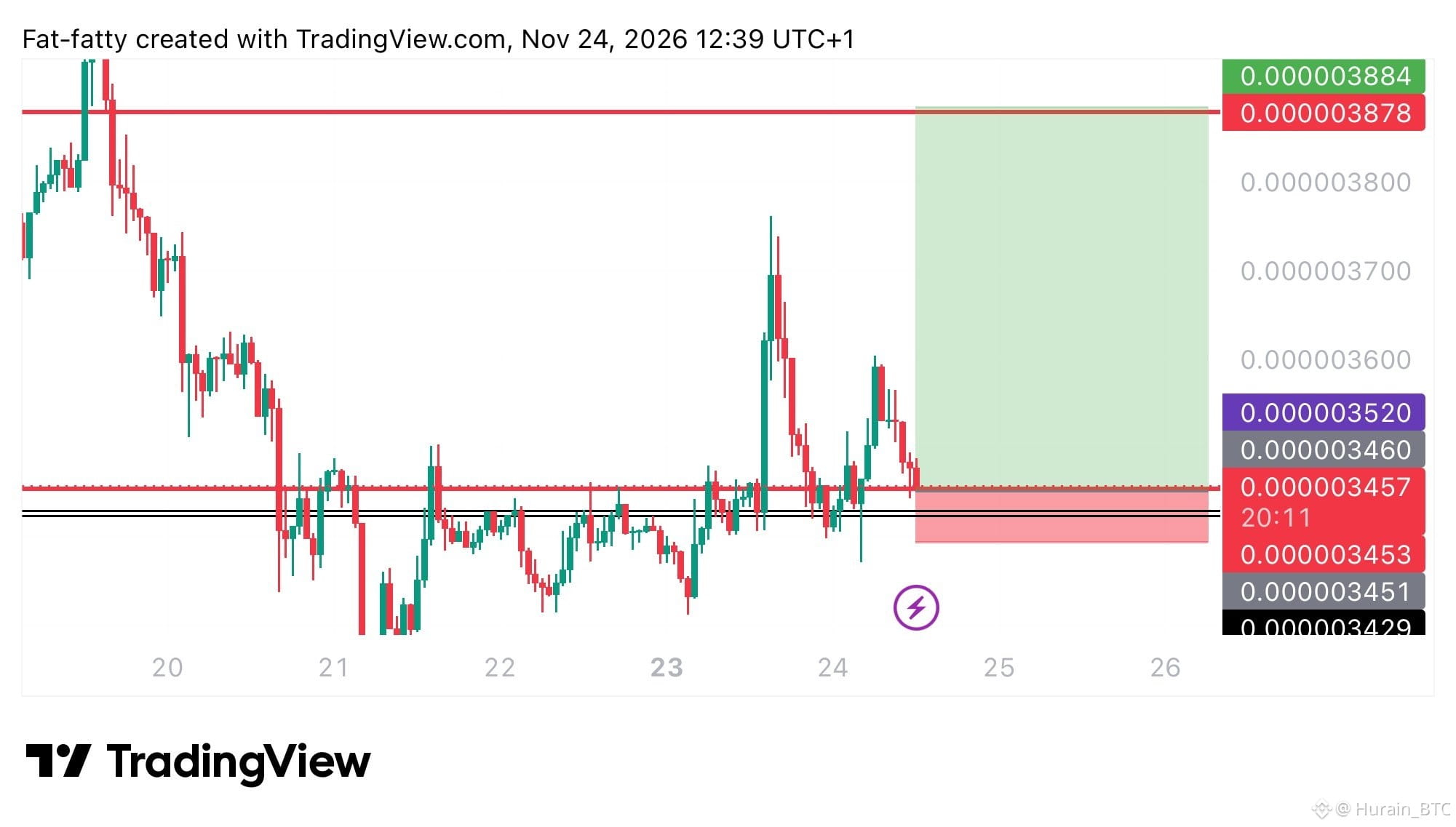
$PEPE LONG-TRADE
EINSTIEG: 0.345
ZIEL: 0.3875
STOP-LOSS: 0.3385
$PEPE LONG-TRADE
EINSTIEG: 0.345
ZIEL: 0.3875
STOP-LOSS: 0.3385
EINSTIEG: 0.345
ZIEL: 0.3875
STOP-LOSS: 0.3385
74
·
--
⚡ $HYPE : HYPERLIQUID HANDELTE INNERHALB VON 24 STUNDEN MIT 1,09 MRD. $
HYPE erzielte innerhalb von 24 Stunden ein Handelsvolumen von 1,09 Milliarden Dollar.
Das entspricht 7,5 % seiner Marktkapitalisierung von 14,5 Milliarden Dollar.
HYPE ist die Nummer 10 unter den Coins und gehört zu den meistgehandelten Altcoins außerhalb der großen Coins.
Das Handelsvolumen bleibt selbst bei extremer Angst hoch.
Was hält HYPE so aktiv?

229
·
--
🧠 $TAO : DER KI-COIN MIT EINEM BITCOIN-ANGEBOT
Bittensor hat ein maximales Angebot von 21 Millionen, genau wie Bitcoin.
11,7 Millionen TAO sind im Umlauf, etwa 56 %.
Der Kurs liegt bei 185,33 $, 75,5 % unter dem Allzeithoch von 757,60 $.
Die Marktkapitalisierung beträgt 2,17 Milliarden $.
Könnte TAO der Bitcoin der dezentralen KI sein?
Bittensor hat ein maximales Angebot von 21 Millionen, genau wie Bitcoin.
11,7 Millionen TAO sind im Umlauf, etwa 56 %.
Der Kurs liegt bei 185,33 $, 75,5 % unter dem Allzeithoch von 757,60 $.
Die Marktkapitalisierung beträgt 2,17 Milliarden $.
Könnte TAO der Bitcoin der dezentralen KI sein?
1
304
·
--
$ONDO zeigt eine mögliche Dreifachbodenformation! 🟣
Der Kurs liegt nach einem starken täglichen Rückgang von 7 % bei etwa 0,2621 $.
📉 Widerstand: 0,40–0,45 $
🟢 Unterstützung: 0,25–0,26 $
🚀 Kursziel bei einem bullischen Ausbruch: 1,40 $
⚠️ Wichtiges Invalidierungssignal: Durchbruch unter 0,25 $.
ONDO nähert sich seinem dritten wichtigen Test der Unterstützung. Eine erfolgreiche Umkehr mit anschließendem Ausbruch über die Nackenlinie bei etwa 0,78 $ könnte den Weg für eine deutliche Erholung ebnen.
Warte auf eine Bestätigung, bevor du eine Position eingehst. 👀
399
·
--
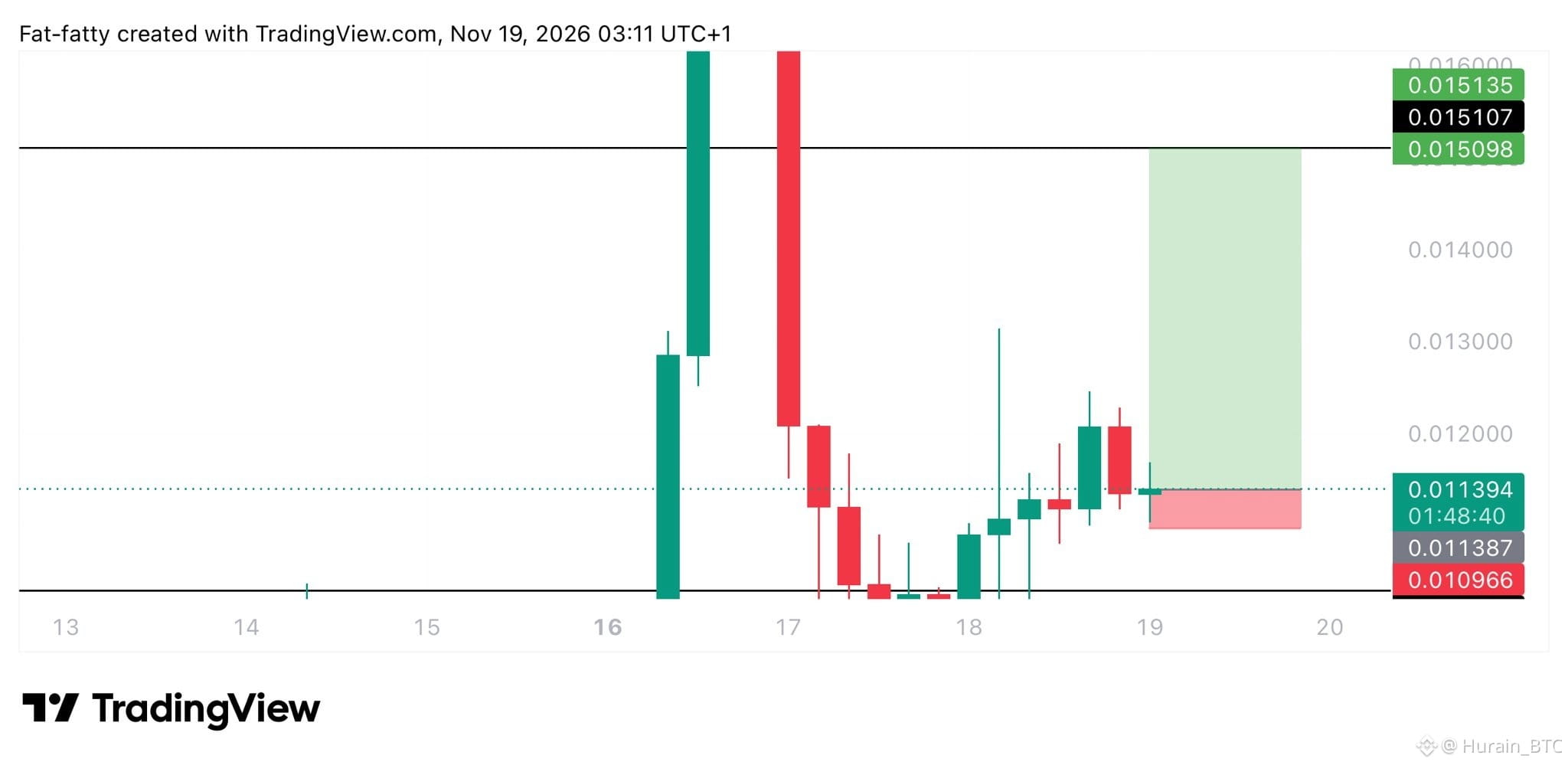
$BLESS LONG-TRADE
EINSTIEG: 0.0114
ZIEL: 0.0151
STOP-LOSS: 0.010935
$BLESS LONG-TRADE
EINSTIEG: 0.0114
ZIEL: 0.0151
STOP-LOSS: 0.010935
EINSTIEG: 0.0114
ZIEL: 0.0151
STOP-LOSS: 0.010935
1
165
·
--
📊 UNI WURDE INNERHALB VON 24 STUNDEN IM WERT VON 255 MIO. $ GEHANDELT – MEHR ALS LINK, ADA UND XLM
LINK bewegte 177 Mio. $, ADA 198 Mio. $ und XLM 82 Mio. $.
UNI beendete den Zeitraum außerdem mit einem Plus von 3,09 %.
Ein DeFi-Coin, der beim Handelsvolumen größere Namen übertrifft, ist ein Zeichen für eine Verlagerung hin zum On-Chain-Handel.
Beobachte, ob das Volumen in den nächsten Sitzungen über diesen Werten bleibt.
Welchem DeFi-Coin vertraust du am meisten? 👇

209
·
--
Verifiziert
🇸🇬 $ONDO : ONDO FINANCE SCHLIESST SICH SINGAPURS MAS-GUARDIAN-INITIATIVE AN
Guardian bringt Aufsichtsbehörden, Branchenverbände und globale Finanzinstitute zusammen, um tokenisierte Märkte aufzubauen.
Laut RWA.xyz ist Ondo mittlerweile die weltweit größte Tokenisierungsplattform.
Die von Ondo ausgegebenen Vermögenswerte überschritten dieses Jahr einen kombinierten TVL von 4 Milliarden US-Dollar.
Ondo Stocks wuchs von etwa 300 Millionen US-Dollar einen Monat nach dem Start auf 1,34 Milliarden US-Dollar Ende Oktober.
Ondo Intelligent Portfolios überschritt in etwa zwei Monaten einen TVL von 75 Millionen US-Dollar.
Die Technologiesparte von Fidelity ist jetzt ein erforderlicher Verifizierer auf der Ondo Bridge.
Und dennoch ist $ONDO in 7 Tagen um über 15 % gefallen.
Haben die Aufsichtsbehörden oder die Trader bei $ONDO recht? 👇
298
·
--
Verifiziert
📉 NASDAQ GIBT 1,5 % NACH, WÄHREND DER NVIDIA-AUSVERKAUF SICH VERSCHÄRFT
Im Tagesverlauf am Montag verlor der S&P 500 etwa 0,9 %, der Nasdaq gab um 1,5 % nach und der Dow rutschte um etwa 0,1 % ab.
$NVDA verlor etwa 2,4 % – der Artikel führt dies auf den Rücktritt von CEO Jensen Huang in der vergangenen Woche zurück.
Auch Broadcom und AMD verzeichneten Verluste, obwohl Broadcom in der Woche zuvor mehr als 18 % zugelegt hatte.
Die Rendite zehnjähriger US-Staatsanleihen lag bei etwa 5,13 %, nachdem sie am 13. November 5,15 % erreicht hatte.
Nvidia legt seine Zahlen am 17. November vor. Das Unternehmen hatte einen Umsatz von etwa 108 Mrd. US-Dollar in Aussicht gestellt, verglichen mit dem Rekordwert von 96,2 Mrd. US-Dollar im letzten Quartal.
$BTC lag bei etwa 64.000 US-Dollar, nachdem der Kurs zeitweise in Richtung 62.000 US-Dollar gefallen war.
Werden die Geschäftszahlen die Tech-Branche stabilisieren oder den Kursrückgang verschärfen? 👇

222
·
--
⚔️ $LINK vs. $UNI
LINK: 6,87 Mrd. $ Marktkapitalisierung, 430,03 Mio. $ Handelsvolumen in 24 Std.
UNI: 3,21 Mrd. $ Marktkapitalisierung, 668,36 Mio. $ Handelsvolumen in 24 Std.
LINK ist 2,1-mal größer, aber mit UNI wurde 1,6-mal mehr gehandelt.
Größere Marktkapitalisierung oder mehr Aktivität?
Wer gewinnt?
LINK: 6,87 Mrd. $ Marktkapitalisierung, 430,03 Mio. $ Handelsvolumen in 24 Std.
UNI: 3,21 Mrd. $ Marktkapitalisierung, 668,36 Mio. $ Handelsvolumen in 24 Std.
LINK ist 2,1-mal größer, aber mit UNI wurde 1,6-mal mehr gehandelt.
Größere Marktkapitalisierung oder mehr Aktivität?
Wer gewinnt?


398
·
--
Verifiziert
🔥 $XRP Die Ledger-Aktivität hat gerade neue November-Höchststände erreicht
Die Batch-Nutzung erreichte am 3. Nov. 1.962M – weniger als einen Monat nach dem Start am 9. Okt.
Die Ticket-Nutzung erreichte am 7. Nov. 1.553M und stellte damit ebenfalls einen November-Rekord auf.
Innerhalb von 24 Stunden stieg die Zahl der Transaktionen um 75.9 % auf 4.3M, während die Zahl der aktiven Konten um 128 % zunahm.
Das Zahlungsvolumen stieg um 137 % auf 1B $, und die Menge an XRP, die als Gebühren verbrannt wurde, nahm um 136 % zu.
Die Marktkapitalisierung von RLUSD ist dieses Jahr um 96 % gestiegen – von 1.4B $ im Januar auf 2.7B $.
US-amerikanische XRP-Spot-ETFs haben inzwischen insgesamt über 1.16B XRP angesammelt.
Wird XRPL im Stillen zu einer bedeutenden Abwicklungsebene? 👇
135
·
--
😱 $INJ war heute der schlechteste unter den 14 Altcoins
Der Kurs fiel um 12,6 % auf 7,01 $.
Das 24-Stunden-Handelsvolumen lag bei 196,3 Mio. $.
Bei einer Marktkapitalisierung von 701 Mio. $ entspricht das 28 % der gesamten Marktkapitalisierung, die an einem Tag gehandelt wurde.
$INJ liegt jetzt etwa 87 % unter seinem Allzeithoch von 52,94 $.
Das ist ein Handelsvolumen auf Panikniveau für einen Coin dieser Größe.
Auf ein Panikvolumen folgt meist entweder eine kräftige Erholung oder ein neues Tief.
Hältst du $INJ noch oder hast du aufgegeben?

1
547
·
--
Verifiziert
🔐 $FLR setzt auf das eine Thema, bei dem Institutionen keine Kompromisse eingehen: Datenschutz
Institutionen kommen in die Krypto-Welt, und Datenschutz ist ihnen wichtig.
Flare-Mitgründer Hugo Philion sprach mit Thinking Crypto darüber, welche Rolle Flare dabei spielt.
Alles beginnt mit Flare Confidential Compute.
Von dort aus erweitert sich das Ganze auf vielfältigere Anwendungsfälle für Daten.
Große Geldgeber werden keine sensiblen Daten auf einer Blockchain speichern, auf der alle alles sehen können.
Die Blockchains, die zuerst Datenschutz ermöglichen, könnten diejenigen sein, für die sich Institutionen tatsächlich entscheiden.
Ist Datenschutz das nächste große Thema für $FLR?

47
·
--
🏔️ $AVAX fiel bei deutlich überdurchschnittlichem Volumen um fast 10 %
$AVAX setzte in 24 Stunden ein Volumen von 423,6 Mio. $ um.
Das entspricht etwa 13 % seiner Marktkapitalisierung von 3,22 Mrd. $.
Der Kurs liegt bei 7,22 $, ein Minus von 9,8 % in 24 Stunden.
Der tägliche RSI liegt bei etwa 30 und damit genau an der überverkauften Schwelle.
Ein hohes Volumen bei überverkauften Kursen kann auf einen Ausverkauf hindeuten – oder auf den Beginn eines stärkeren Abwärtstrends.
Die Marke von 7 $ entscheidet, was davon zutrifft.
In welche Richtung bricht $AVAX aus: auf 9 $ oder auf 6 $?
736
·
--
Teilweise korrekt
🔓 $FIL hat gerade seine größte Quelle für neues Angebot verloren … und fast niemand hat es bemerkt 👇
Die sechsjährige Genesis-Vesting-Periode von Filecoin endete offiziell am 14. Oktober.
In den drei Monaten davor wurden durch Vesting 17,1 Mio. FIL freigegeben.
Im selben Zeitraum wurden durch Blockbelohnungen nur 5,4 Mio. FIL freigegeben.
Das bedeutet, dass Vesting für mehr als 75 % aller neu auf den Markt kommenden FIL verantwortlich war.
Dieser Zufluss ist nun endgültig versiegt.
Weniger Angebotsdruck, dasselbe Netzwerk.
Ist das die stille Ausgangslage, auf die $FIL -Inhaber gewartet haben?

1
2
1.4k
·
--
Verifiziert
🏛️ Die SEC hat $CC Canton Coin gerade als digitalen Rohstoff eingestuft
Die SEC-Mitarbeiter veröffentlichten am 3. November ein No-Action-Schreiben.
Canton erzielte im dritten Quartal Gebühreneinnahmen von über 155 Mio. US-Dollar.
Jede einzelne Gebühr führt zum Verbrennen von CC.
Ab 2027 werden alle Produktions-Apps CC entsprechend ihrer Netzwerknutzung verbrennen.
Das an der Nasdaq gelistete CNTN begann am 2. November mit der Abwicklung auf Canton.
Doch CC wird weiterhin bei etwa 0,095 US-Dollar gehandelt – mehr als 50 % unter seinem Höchststand im Februar.
Regulatorische Klarheit + ein Verbrennungsmechanismus, dessen Kurs mehr als die Hälfte unter dem Höchststand liegt ... schlafender Riese oder Wertfalle?
CC-1,43%
CNTNUS+4,01%
72
·
--
Verifiziert
⛏️ $LTC -Miner Luxxfolio häuft still und leise Litecoin an
Luxxfolio zufolge umfasst die Reserve mittlerweile etwa 26.838 LTC.
Das entspricht einem Wert von rund 1,3 Mio. US-Dollar.
Der auf Litecoin spezialisierte Miner hat erst im ersten Quartal dieses Jahres mit dem Mining begonnen.
Bisher hat er 3.599 LTC geschürft.
Allein im vergangenen Monat kamen etwa 1.514 LTC hinzu.
Das Tempo zieht an.
Werden weitere Miner damit beginnen, Litecoin-Reserven aufzubauen?
380
·
--
Verifiziert
🦄 $UNI hat gerade externe Liquidität direkt in Uniswap eingebunden
Uniswap hat am 22. Oktober Aggregator Hooks gestartet.
Jetzt sind sieben externe Liquiditätsquellen angebunden.
Sie erstrecken sich über Ethereum, Base und Robinhood Chain.
Die externe Liquidität wird als v4-Pools angezeigt.
Das bedeutet, dass der Router die gesamte Swap-Route in einer einzigen Transaktion abwickeln kann.
Ein Swap. Eine Transaktion. Deutlich mehr Liquidität.
Wird Uniswap v4 zum Liquiditätshub von DeFi?

117
Anmelden und weiter Inhalte entdecken
Krypto-Nutzer weltweit auf Binance Square kennenlernen
⚡️ Bleib in Sachen Krypto stets am Puls.
💬 Die weltgrößte Kryptobörse vertraut darauf.
👍 Erhalte verlässliche Einblicke von verifizierten Creators.
E-Mail-Adresse/Telefonnummer
Trendthemen
EvolveAtBinanceBlockchainWeek
2.7M Aufrufe
21,644 Kommentare
Die Binance Blockchain Week hat offiziell begonnen! 🌍
Am 28. und 29. November: Egal, ob du in Bangkok bist oder aus der Ferne teilnimmst – schalte die Livestreams ein und diskutiere auf Binance Square mit!
Das erwartet dich 👇
📺 Sieh dir die main stage live an
Schalte an beiden Tagen ein, wenn Branchenexperten ihre Perspektiven zum diesjährigen Motto „Evolve“ teilen. Entdecke, was als Nächstes für Krypto kommt – von technologischen Innovationen bis hin zu Anwendungen in der realen Welt.
⚔️ Sieh dir zwei Trading-Wettbewerbe an
Die Aster Open Qualifier und die Binance Trading Master Tournament werden beide live übertragen. Schalte ein und verfolge die Trader in Aktion.
🏆 Sieh dir die Blockchain 100 Awards Ceremony an
Die Liste „Blockchain 100“ wurde von der Community ausgewählt. Feiere mit uns die Creator und die Ideen, die sie teilen!
💬 Beteilige dich an der Diskussion in der Community
Verwende #EvolveAtBinanceBlockchainWeek in einem Beitrag mit einem Foto, um zu teilen, worauf du dich freust, was du von der Branche hältst oder welche Momente der Veranstaltung dir am besten gefallen.
Der event page ist jetzt live! Abonniere alle Livestreams mit nur einem Klick, damit du nichts verpasst 👏
Binance Blockchain Week
·641 Likes
·1M Aufrufe
IBSGovAccountMints1BTokensDrains5.71M
28,539 Aufrufe
326 Kommentare
OPECReportedlyKeepsOilQuotasUnchangedForQ1
3,824 Aufrufe
99 Kommentare