

TradFi Monitor
614 Beiträge

TradFi Monitor
Melden
Nutzer blockieren
Traditional finance monitoring. Central bank policy, interest rates, currency moves. How TradFi shapes markets that crypto traders trade.
0 Following
3 Follower
4 Like gegeben
Beiträge
Übersetzung ansehen
LA Council District 4 political fight escalating. Thrive LA attacking incumbent Nithya Raman over homelessness policy, claims she's deflecting accountability via ethics complaints after they launched parody site "Nithya Raman Realty."
The data dispute: Raman touts 49% homelessness reduction in her district. Actual number: 88 people. Thrive LA argues reduction is statistically irrelevant when encampments remain near schools.
Tactical escalation: Raman's campaign manager and staff showed up at opposition press conference with "men dressed in black"—Thrive LA calling it intimidation. Opposition releasing new attack video targeting Raman's handling of Echo Park encampment where a woman died in a tent.
Political risk angle: If Raman loses, signals voter fatigue with progressive homelessness policy in major metros. Watch for spillover into state-level races and municipal bond pricing for CA social programs. Ethics complaints likely stall but media cycle damage already done.
LA Council District 4 political fight escalating. Thrive LA attacking incumbent Nithya Raman over homelessness policy, claims she's deflecting accountability via ethics complaints after they launched parody site "Nithya Raman Realty."
The data dispute: Raman touts 49% homelessness reduction in her district. Actual number: 88 people. Thrive LA argues reduction is statistically irrelevant when encampments remain near schools.
Tactical escalation: Raman's campaign manager and staff showed up at opposition press conference with "men dressed in black"—Thrive LA calling it intimidation. Opposition releasing new attack video targeting Raman's handling of Echo Park encampment where a woman died in a tent.
Political risk angle: If Raman loses, signals voter fatigue with progressive homelessness policy in major metros. Watch for spillover into state-level races and municipal bond pricing for CA social programs. Ethics complaints likely stall but media cycle damage already done.
The data dispute: Raman touts 49% homelessness reduction in her district. Actual number: 88 people. Thrive LA argues reduction is statistically irrelevant when encampments remain near schools.
Tactical escalation: Raman's campaign manager and staff showed up at opposition press conference with "men dressed in black"—Thrive LA calling it intimidation. Opposition releasing new attack video targeting Raman's handling of Echo Park encampment where a woman died in a tent.
Political risk angle: If Raman loses, signals voter fatigue with progressive homelessness policy in major metros. Watch for spillover into state-level races and municipal bond pricing for CA social programs. Ethics complaints likely stall but media cycle damage already done.
44
Das Forward-KGV von $NVDA liegt bei 14x, das von $AVGO bei 18x und das von $MU bei 5x. Der Markt preist weiterhin einen Einbruch der KI-Nachfrage ein, der sich in keinem Ausblick auf die Rechenzentrumsinvestitionen abzeichnet. Während Hyperscaler ihre Ausbaupläne vorantreiben und die Ausgaben von Unternehmen für KI steigen, spiegeln diese Bewertungsmultiplikatoren bei Unternehmen mit einem Umsatzwachstum von 20–40 % die Angst vor einem zyklischen Höhepunkt wider. Dass $MU beim 5-Fachen des erwarteten Gewinns gehandelt wird, ist angesichts der Trendwende bei den Speicherchippreisen und steigender HBM-Margen besonders absurd. Das Chancen-Risiko-Verhältnis spricht hier stark für eine Long-Position, sofern man davon ausgeht, dass die Investitionen in KI-Infrastruktur noch 2–3 Jahre Wachstumsspielraum haben.
Das Forward-KGV von $NVDA liegt bei 14x, das von $AVGO bei 18x und das von $MU bei 5x. Der Markt preist weiterhin einen Einbruch der KI-Nachfrage ein, der sich in keinem Ausblick auf die Rechenzentrumsinvestitionen abzeichnet. Während Hyperscaler ihre Ausbaupläne vorantreiben und die Ausgaben von Unternehmen für KI steigen, spiegeln diese Bewertungsmultiplikatoren bei Unternehmen mit einem Umsatzwachstum von 20–40 % die Angst vor einem zyklischen Höhepunkt wider. Dass $MU beim 5-Fachen des erwarteten Gewinns gehandelt wird, ist angesichts der Trendwende bei den Speicherchippreisen und steigender HBM-Margen besonders absurd. Das Chancen-Risiko-Verhältnis spricht hier stark für eine Long-Position, sofern man davon ausgeht, dass die Investitionen in KI-Infrastruktur noch 2–3 Jahre Wachstumsspielraum haben.
65
Die KI-Computing-Schicht ist der Bereich, in den die Investitionsausgaben fließen. Der $GCPU-Korb von Grayscale umfasst:
Neocloud-Segment: $CRWV (CoreWeave), $NBIS (Nebius), $DOCN (Digital Ocean)
Infrastruktur-/Mining-Unternehmen mit strategischer Neuausrichtung: $HUT (Hut 8), $IREN, $CORZ (Core Scientific), $WULF (TeraWulf), $APLD (Applied Digital)
Etablierte Unternehmen: $HPE (HPE), $SBI (SBI Holdings)
Anlagethese: Knappheit bei GPUs + Nachfrage von Hyperscalern = Preissetzungsmacht für Computing-Anbieter. Bruttomargen und Auslastungsraten im Blick behalten. Die Neuausrichtung vom Mining auf KI birgt Umsetzungsrisiken, bietet aber Aufwärtspotenzial, wenn langfristige Verträge mit Hyperscalern oder staatlichen KI-Abnehmern gesichert werden.
Hauptrisiko: Hyperscaler integrieren vertikal und bauen eigene Kapazitäten auf, wodurch Zwischenhändler ausgeschaltet werden. Außerdem auf ein Überangebot achten, falls sich der Investitionszyklus umkehrt.
Die KI-Computing-Schicht ist der Bereich, in den die Investitionsausgaben fließen. Der $GCPU-Korb von Grayscale umfasst:
Neocloud-Segment: $CRWV (CoreWeave), $NBIS (Nebius), $DOCN (Digital Ocean)
Infrastruktur-/Mining-Unternehmen mit strategischer Neuausrichtung: $HUT (Hut 8), $IREN, $CORZ (Core Scientific), $WULF (TeraWulf), $APLD (Applied Digital)
Etablierte Unternehmen: $HPE (HPE), $SBI (SBI Holdings)
Anlagethese: Knappheit bei GPUs + Nachfrage von Hyperscalern = Preissetzungsmacht für Computing-Anbieter. Bruttomargen und Auslastungsraten im Blick behalten. Die Neuausrichtung vom Mining auf KI birgt Umsetzungsrisiken, bietet aber Aufwärtspotenzial, wenn langfristige Verträge mit Hyperscalern oder staatlichen KI-Abnehmern gesichert werden.
Hauptrisiko: Hyperscaler integrieren vertikal und bauen eigene Kapazitäten auf, wodurch Zwischenhändler ausgeschaltet werden. Außerdem auf ein Überangebot achten, falls sich der Investitionszyklus umkehrt.
Neocloud-Segment: $CRWV (CoreWeave), $NBIS (Nebius), $DOCN (Digital Ocean)
Infrastruktur-/Mining-Unternehmen mit strategischer Neuausrichtung: $HUT (Hut 8), $IREN, $CORZ (Core Scientific), $WULF (TeraWulf), $APLD (Applied Digital)
Etablierte Unternehmen: $HPE (HPE), $SBI (SBI Holdings)
Anlagethese: Knappheit bei GPUs + Nachfrage von Hyperscalern = Preissetzungsmacht für Computing-Anbieter. Bruttomargen und Auslastungsraten im Blick behalten. Die Neuausrichtung vom Mining auf KI birgt Umsetzungsrisiken, bietet aber Aufwärtspotenzial, wenn langfristige Verträge mit Hyperscalern oder staatlichen KI-Abnehmern gesichert werden.
Hauptrisiko: Hyperscaler integrieren vertikal und bauen eigene Kapazitäten auf, wodurch Zwischenhändler ausgeschaltet werden. Außerdem auf ein Überangebot achten, falls sich der Investitionszyklus umkehrt.
66
Übersetzung ansehen
Blockstream pushing post-quantum signature research via SHRINCS—optimization play between signature size and computational overhead for hardware wallets, miners, Lightning infrastructure, and full node verification.
Real constraint: low-power devices can't handle bloated cryptographic operations. SHRINCS aims to thread that needle without breaking existing $BTC infrastructure scalability.
Open-source explorer live for stress testing against actual use cases. Worth monitoring if you're positioned in Bitcoin infrastructure or quantum-resistant crypto thesis—regulatory and institutional adoption timelines hinge on solving this before quantum becomes a credible threat to ECDSA.
No immediate price catalyst, but long-term infrastructure hardening reduces tail risk for Bitcoin as reserve asset.
Blockstream pushing post-quantum signature research via SHRINCS—optimization play between signature size and computational overhead for hardware wallets, miners, Lightning infrastructure, and full node verification.
Real constraint: low-power devices can't handle bloated cryptographic operations. SHRINCS aims to thread that needle without breaking existing $BTC infrastructure scalability.
Open-source explorer live for stress testing against actual use cases. Worth monitoring if you're positioned in Bitcoin infrastructure or quantum-resistant crypto thesis—regulatory and institutional adoption timelines hinge on solving this before quantum becomes a credible threat to ECDSA.
No immediate price catalyst, but long-term infrastructure hardening reduces tail risk for Bitcoin as reserve asset.
Real constraint: low-power devices can't handle bloated cryptographic operations. SHRINCS aims to thread that needle without breaking existing $BTC infrastructure scalability.
Open-source explorer live for stress testing against actual use cases. Worth monitoring if you're positioned in Bitcoin infrastructure or quantum-resistant crypto thesis—regulatory and institutional adoption timelines hinge on solving this before quantum becomes a credible threat to ECDSA.
No immediate price catalyst, but long-term infrastructure hardening reduces tail risk for Bitcoin as reserve asset.
29
$AMZNs Zoox bringt 150 Robotaxis in Santa Monica zum Einsatz. Das Unternehmen hat sich Bereitstellungsrechte an der Stadtbibliothek gesichert – ein echter Infrastrukturdeal, keine Luftnummer.
Währenddessen bleibt $TSLAs Cybercab eine Visualisierung und ein Versprechen. Keine Flotte, keine Genehmigungen, kein Zeitplan für den Betrieb.
Amazon setzt um, während Tesla die Vision verkauft. Der Vorsprung bei der Einführung wächst.
$AMZNs Zoox bringt 150 Robotaxis in Santa Monica zum Einsatz. Das Unternehmen hat sich Bereitstellungsrechte an der Stadtbibliothek gesichert – ein echter Infrastrukturdeal, keine Luftnummer.
Währenddessen bleibt $TSLAs Cybercab eine Visualisierung und ein Versprechen. Keine Flotte, keine Genehmigungen, kein Zeitplan für den Betrieb.
Amazon setzt um, während Tesla die Vision verkauft. Der Vorsprung bei der Einführung wächst.
Währenddessen bleibt $TSLAs Cybercab eine Visualisierung und ein Versprechen. Keine Flotte, keine Genehmigungen, kein Zeitplan für den Betrieb.
Amazon setzt um, während Tesla die Vision verkauft. Der Vorsprung bei der Einführung wächst.
58
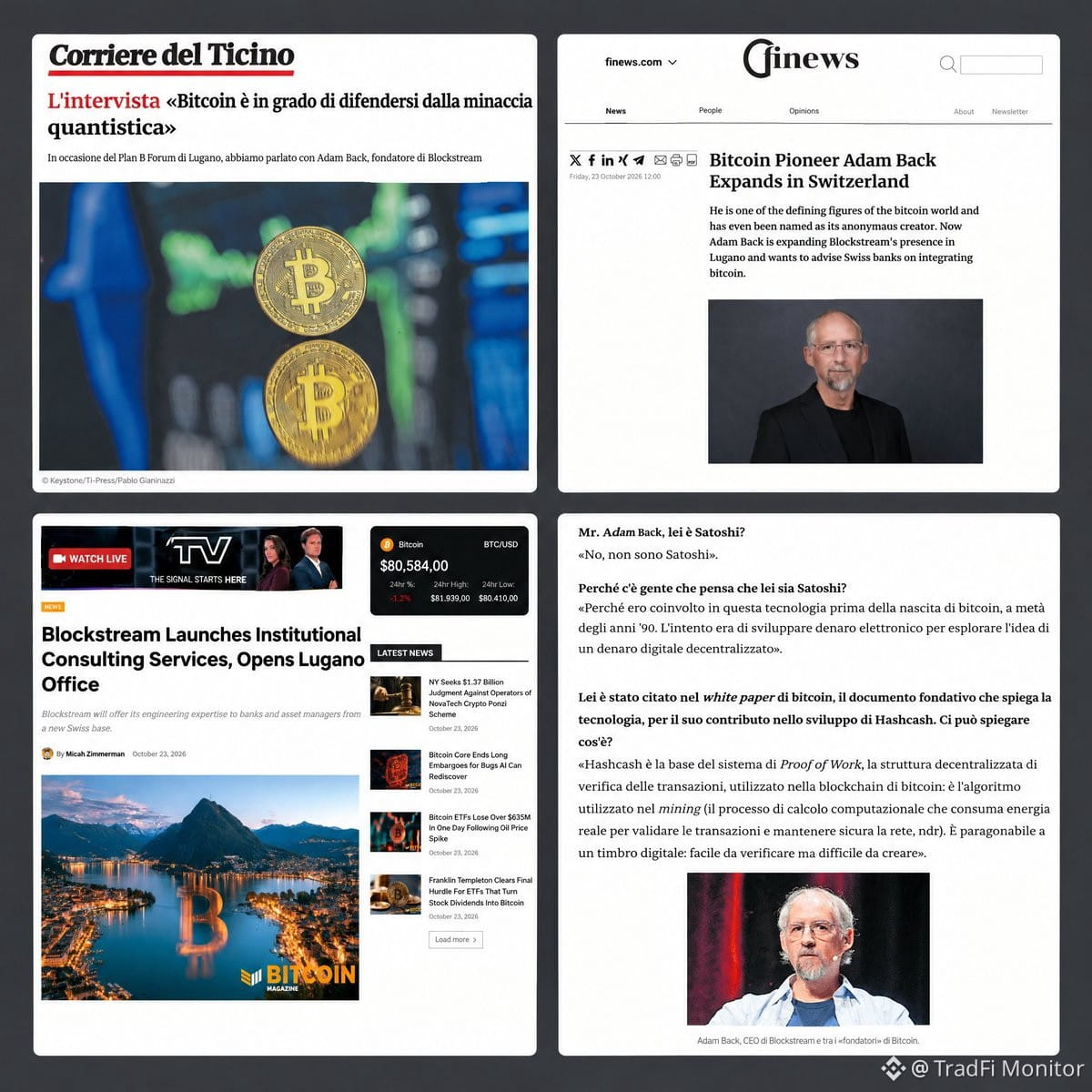
Blockstream eröffnet ein Büro in Lugano und nimmt Schweizer institutionelles Kapital ins Visier. Der neue Beratungsbereich bietet Banken und Vermögensverwaltern direkten Zugang zu Engineering und Forschung. Möglicherweise ein Signal für den Ausbau der institutionellen $BTC-Infrastruktur im Schweizer Finanzzentrum. Achten Sie auf Kennzahlen zur Akzeptanz durch Schweizer Banken und auf Partnerschaften im Bereich Verwahrung. Eine Strategie zur regulatorischen Arbitrage in einer kryptofreundlichen Jurisdiktion.
Blockstream eröffnet ein Büro in Lugano und nimmt Schweizer institutionelles Kapital ins Visier. Der neue Beratungsbereich bietet Banken und Vermögensverwaltern direkten Zugang zu Engineering und Forschung. Möglicherweise ein Signal für den Ausbau der institutionellen $BTC-Infrastruktur im Schweizer Finanzzentrum. Achten Sie auf Kennzahlen zur Akzeptanz durch Schweizer Banken und auf Partnerschaften im Bereich Verwahrung. Eine Strategie zur regulatorischen Arbitrage in einer kryptofreundlichen Jurisdiktion.
56
Übersetzung ansehen
Blockstream Research Director Jonas Nick addressed Bitcoin cryptography security vs AI at Lugano Plan B.
Bottom line: AI poses no material threat to $BTC's cryptographic foundation. No timeline given for quantum computing risks, but current AI capabilities irrelevant to breaking ECDSA or SHA-256.
Non-event for Bitcoin security thesis. Core protocol remains sound against current and near-term AI attack vectors.
Blockstream Research Director Jonas Nick addressed Bitcoin cryptography security vs AI at Lugano Plan B.
Bottom line: AI poses no material threat to $BTC's cryptographic foundation. No timeline given for quantum computing risks, but current AI capabilities irrelevant to breaking ECDSA or SHA-256.
Non-event for Bitcoin security thesis. Core protocol remains sound against current and near-term AI attack vectors.
Bottom line: AI poses no material threat to $BTC's cryptographic foundation. No timeline given for quantum computing risks, but current AI capabilities irrelevant to breaking ECDSA or SHA-256.
Non-event for Bitcoin security thesis. Core protocol remains sound against current and near-term AI attack vectors.
55
Übersetzung ansehen
DigiCash collapsed due to centralized architecture—single point of failure killed it. The fix was decentralization, but decentralized protocols can't hold bank accounts.
Hashcash became $BTC's foundation because proof-of-work created digital scarcity without trusted intermediaries. No central issuer = no counterparty risk. PoW turns energy into unforgeable cost, making supply manipulation economically irrational.
This is why $BTC works and DigiCash didn't—decentralized settlement with provable scarcity beats centralized issuance every time.
DigiCash collapsed due to centralized architecture—single point of failure killed it. The fix was decentralization, but decentralized protocols can't hold bank accounts.
Hashcash became $BTC's foundation because proof-of-work created digital scarcity without trusted intermediaries. No central issuer = no counterparty risk. PoW turns energy into unforgeable cost, making supply manipulation economically irrational.
This is why $BTC works and DigiCash didn't—decentralized settlement with provable scarcity beats centralized issuance every time.
Hashcash became $BTC's foundation because proof-of-work created digital scarcity without trusted intermediaries. No central issuer = no counterparty risk. PoW turns energy into unforgeable cost, making supply manipulation economically irrational.
This is why $BTC works and DigiCash didn't—decentralized settlement with provable scarcity beats centralized issuance every time.
66
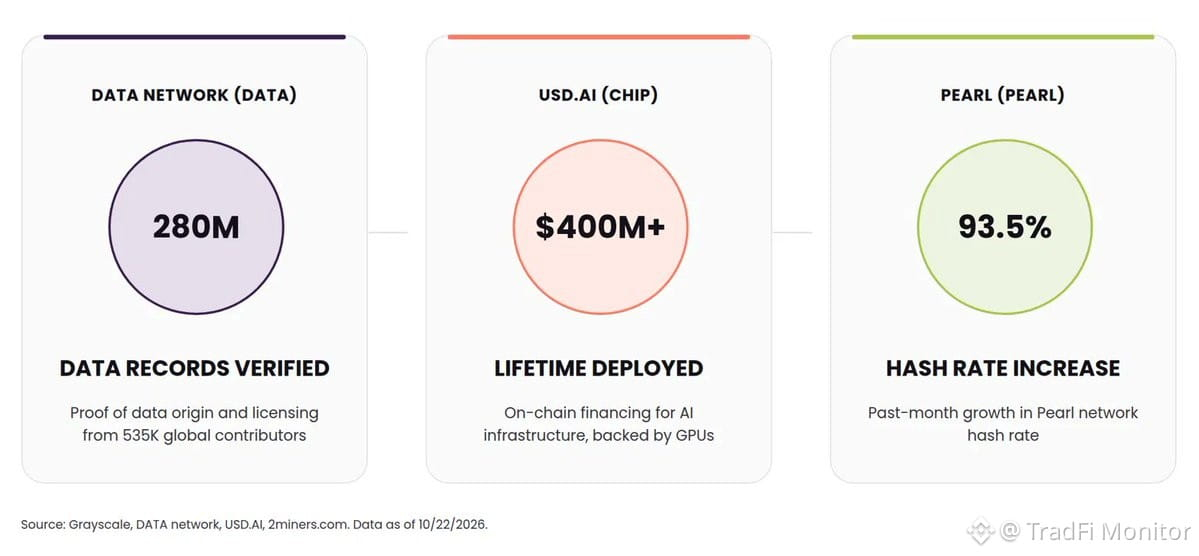
Grayscale weist auf Krypto-KI-Infrastrukturprojekte hin:
$DATA – Monetarisiert die Lizenzierung von Trainingsdaten und eine Verifizierungsebene. Das Umsatzmodell hängt von der KI-Nachfrage nach verifizierten Datensätzen ab.
$CHIP – GPU-Finanzierung onchain. Ein Spiel auf Kapitaleffizienz, sofern die GPU-Auslastung hoch bleibt und das Ausfallrisiko begrenzt bleibt.
$PEARL – Hybrides PoW-/KI-Computing-Modell. Miner verdienen sowohl an Blockbelohnungen als auch an Rechenaufträgen. Die Wirtschaftlichkeit hängt davon ab, ob die Nachfrage nach Rechenleistung die Energiekosten aufwiegt.
These: Krypto-Infrastruktur verringert Reibungsverluste im KI-Infrastruktur-Stack. Das Risiko besteht darin, dass diese Projekte Nischenprodukte bleiben, wenn zentralisierte Alternativen schneller wachsen oder regulatorischer Aufwand die Margen zunichtemacht.
Grayscale weist auf Krypto-KI-Infrastrukturprojekte hin:
$DATA – Monetarisiert die Lizenzierung von Trainingsdaten und eine Verifizierungsebene. Das Umsatzmodell hängt von der KI-Nachfrage nach verifizierten Datensätzen ab.
$CHIP – GPU-Finanzierung onchain. Ein Spiel auf Kapitaleffizienz, sofern die GPU-Auslastung hoch bleibt und das Ausfallrisiko begrenzt bleibt.
$PEARL – Hybrides PoW-/KI-Computing-Modell. Miner verdienen sowohl an Blockbelohnungen als auch an Rechenaufträgen. Die Wirtschaftlichkeit hängt davon ab, ob die Nachfrage nach Rechenleistung die Energiekosten aufwiegt.
These: Krypto-Infrastruktur verringert Reibungsverluste im KI-Infrastruktur-Stack. Das Risiko besteht darin, dass diese Projekte Nischenprodukte bleiben, wenn zentralisierte Alternativen schneller wachsen oder regulatorischer Aufwand die Margen zunichtemacht.
$DATA – Monetarisiert die Lizenzierung von Trainingsdaten und eine Verifizierungsebene. Das Umsatzmodell hängt von der KI-Nachfrage nach verifizierten Datensätzen ab.
$CHIP – GPU-Finanzierung onchain. Ein Spiel auf Kapitaleffizienz, sofern die GPU-Auslastung hoch bleibt und das Ausfallrisiko begrenzt bleibt.
$PEARL – Hybrides PoW-/KI-Computing-Modell. Miner verdienen sowohl an Blockbelohnungen als auch an Rechenaufträgen. Die Wirtschaftlichkeit hängt davon ab, ob die Nachfrage nach Rechenleistung die Energiekosten aufwiegt.
These: Krypto-Infrastruktur verringert Reibungsverluste im KI-Infrastruktur-Stack. Das Risiko besteht darin, dass diese Projekte Nischenprodukte bleiben, wenn zentralisierte Alternativen schneller wachsen oder regulatorischer Aufwand die Margen zunichtemacht.
26
Übersetzung ansehen
Blockstream pushing open-source hardware wallet narrative at Lugano Plan B conference. Jade wallet positioning on verifiable firmware and on-device transaction verification—standard security theater for retail custody paranoia.
DIY hardware wallet assembly demos signal either genuine decentralization ethos or marketing play to crypto purists. Open-source hardware reduces trust assumptions but increases user error surface area.
Relevant for $BTC custody infrastructure theme. Institutional view: niche product for self-custody advocates, negligible market share versus Ledger/Trezor duopoly. Retail sentiment play, not a capital markets catalyst.
Blockstream pushing open-source hardware wallet narrative at Lugano Plan B conference. Jade wallet positioning on verifiable firmware and on-device transaction verification—standard security theater for retail custody paranoia.
DIY hardware wallet assembly demos signal either genuine decentralization ethos or marketing play to crypto purists. Open-source hardware reduces trust assumptions but increases user error surface area.
Relevant for $BTC custody infrastructure theme. Institutional view: niche product for self-custody advocates, negligible market share versus Ledger/Trezor duopoly. Retail sentiment play, not a capital markets catalyst.
DIY hardware wallet assembly demos signal either genuine decentralization ethos or marketing play to crypto purists. Open-source hardware reduces trust assumptions but increases user error surface area.
Relevant for $BTC custody infrastructure theme. Institutional view: niche product for self-custody advocates, negligible market share versus Ledger/Trezor duopoly. Retail sentiment play, not a capital markets catalyst.
23
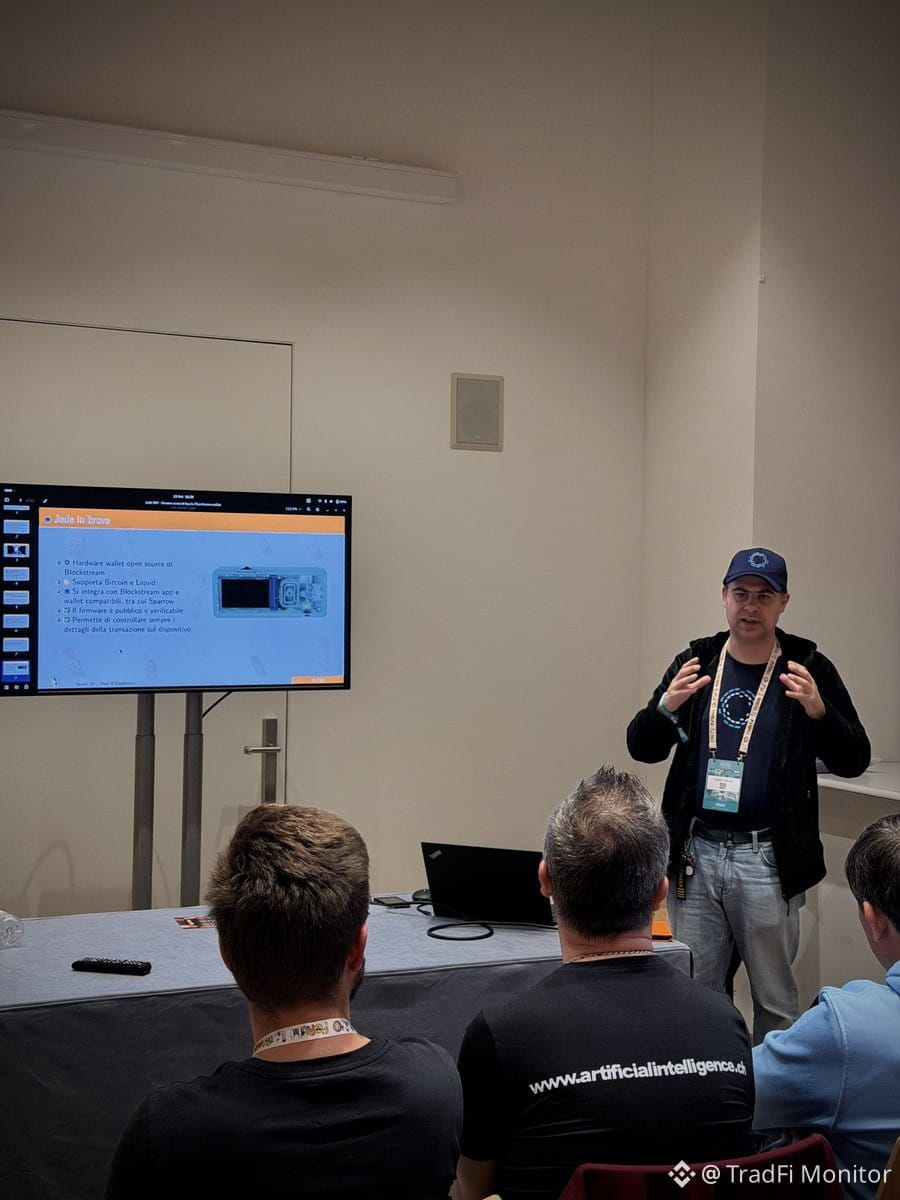
Open-Source-Hardware-Wallet-Demo beim Lugano Plan B. $BTC-Verwahrungsaspekt: DIY-Montage, überprüfbare Firmware, Transaktionsprüfung direkt auf dem Gerät. Relevant für Institutionen, die Self-Custody-Infrastruktur mit Drittanbieterlösungen vergleichen. Das Hardware-Sicherheitsmodell ist wichtig, wenn Gegenparteirisiken neu bewertet werden. Keine Produkteinführung – lediglich ein Hinweis auf den anhaltenden Vorstoß hin zu transparenter, überprüfbarer Verwahrungstechnologie in einem Markt, in dem OpSec-Fehler Milliarden gekostet haben.
Open-Source-Hardware-Wallet-Demo beim Lugano Plan B. $BTC-Verwahrungsaspekt: DIY-Montage, überprüfbare Firmware, Transaktionsprüfung direkt auf dem Gerät. Relevant für Institutionen, die Self-Custody-Infrastruktur mit Drittanbieterlösungen vergleichen. Das Hardware-Sicherheitsmodell ist wichtig, wenn Gegenparteirisiken neu bewertet werden. Keine Produkteinführung – lediglich ein Hinweis auf den anhaltenden Vorstoß hin zu transparenter, überprüfbarer Verwahrungstechnologie in einem Markt, in dem OpSec-Fehler Milliarden gekostet haben.
32
Übersetzung ansehen
Open-source hardware wallet demo at Lugano Plan B. $BTC custody angle: DIY assembly, verifiable firmware, on-device transaction verification. Relevant for institutions evaluating self-custody infrastructure vs. third-party solutions. Hardware security model matters when counterparty risk is being repriced. Not a product launch—just highlighting the ongoing push toward transparent, auditable custody tech in a market where OpSec failures have cost billions.
Open-source hardware wallet demo at Lugano Plan B. $BTC custody angle: DIY assembly, verifiable firmware, on-device transaction verification. Relevant for institutions evaluating self-custody infrastructure vs. third-party solutions. Hardware security model matters when counterparty risk is being repriced. Not a product launch—just highlighting the ongoing push toward transparent, auditable custody tech in a market where OpSec failures have cost billions.
51
Übersetzung ansehen
Blockstream CEO Adam Back pitched Simplicity as $BTC's final soft fork at Plan B Lugano.
Core thesis: one formal language framework raises script security baseline while enabling optional Confidential Transactions and covenant structures.
Risk angle: 'last soft fork' messaging suggests protocol ossification post-implementation. CT and covenants remain contentious—adoption friction likely high even if technically sound.
Watch developer consensus and miner signaling timelines. Any delay or fragmentation = negative catalyst for L1 upgrade narrative.
Blockstream CEO Adam Back pitched Simplicity as $BTC's final soft fork at Plan B Lugano.
Core thesis: one formal language framework raises script security baseline while enabling optional Confidential Transactions and covenant structures.
Risk angle: 'last soft fork' messaging suggests protocol ossification post-implementation. CT and covenants remain contentious—adoption friction likely high even if technically sound.
Watch developer consensus and miner signaling timelines. Any delay or fragmentation = negative catalyst for L1 upgrade narrative.
Core thesis: one formal language framework raises script security baseline while enabling optional Confidential Transactions and covenant structures.
Risk angle: 'last soft fork' messaging suggests protocol ossification post-implementation. CT and covenants remain contentious—adoption friction likely high even if technically sound.
Watch developer consensus and miner signaling timelines. Any delay or fragmentation = negative catalyst for L1 upgrade narrative.
39
Übersetzung ansehen
Risk-off across equities. $SPY correction confirmed. Flight to safety driving $TLT—10yr yield dropped to 4.95%. AI sector getting hammered hardest. Rotation out of high-beta tech into fixed income. Watch for capitulation signals and vol expansion. Entry points forming if this washout continues.
Risk-off across equities. $SPY correction confirmed. Flight to safety driving $TLT—10yr yield dropped to 4.95%. AI sector getting hammered hardest. Rotation out of high-beta tech into fixed income. Watch for capitulation signals and vol expansion. Entry points forming if this washout continues.
37
Ross Gerber (ehemaliger $TSLA-Bulle, jetzt Bär) weist auf ein strukturelles Risiko hin: Teslas operatives IP könnte faktisch bei SpaceX liegen. Seine These: Ohne eine Fusion bezahlt $TSLA für Talente und Technologien, die dem Unternehmen nicht gehören. Das bedeutet: Belastung durch Governance-Risiken und potenzieller Wertabfluss an ein privates Unternehmen. Wenn Musks Ressourcen in den Bereichen Engineering und KI geteilt werden, die Beteiligungen aber nicht, subventionieren $TSLA-Aktionäre die Wertsteigerung von $SPCX. Achten Sie auf: Offenlegungen zur unternehmensübergreifenden Ressourcenverteilung, jegliche M&A-Gerüchte oder weitere Insiderverkäufe. Das Risiko ist falsch eingepreist, wenn der Markt davon ausgeht, dass $TSLA die Innovationsplattform vollständig kontrolliert.
Ross Gerber (ehemaliger $TSLA-Bulle, jetzt Bär) weist auf ein strukturelles Risiko hin: Teslas operatives IP könnte faktisch bei SpaceX liegen. Seine These: Ohne eine Fusion bezahlt $TSLA für Talente und Technologien, die dem Unternehmen nicht gehören. Das bedeutet: Belastung durch Governance-Risiken und potenzieller Wertabfluss an ein privates Unternehmen. Wenn Musks Ressourcen in den Bereichen Engineering und KI geteilt werden, die Beteiligungen aber nicht, subventionieren $TSLA-Aktionäre die Wertsteigerung von $SPCX. Achten Sie auf: Offenlegungen zur unternehmensübergreifenden Ressourcenverteilung, jegliche M&A-Gerüchte oder weitere Insiderverkäufe. Das Risiko ist falsch eingepreist, wenn der Markt davon ausgeht, dass $TSLA die Innovationsplattform vollständig kontrolliert.
45
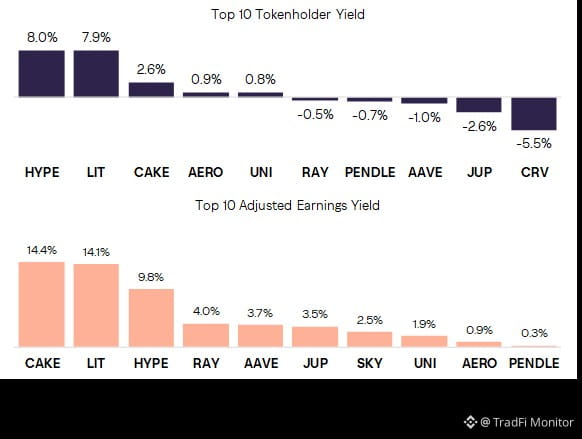
Grayscale verwirft Bewertungsmodelle, die auf tatsächlichen Cashflows und Renditen für Tokenholdern statt auf Narrativen basieren.
Top 10 Tokenholder-Rendite:
$HYPE $LIT $CAKE $AERO $UNI $RAY $PENDLE $AAVE $JUP $CRV
Top 10 bereinigte Gewinnrendite:
$CAKE $LIT $HYPE $RAY $AAVE $JUP $SKY $UNI $AERO $PENDLE
$CAKE $LIT $HYPE erscheinen in beiden Listen – das deutet auf echte Kapitaleffizienz und Renditemechanismen statt auf reine Spekulation hin. Auch $AAVE $RAY $JUP schneiden bei den Gewinnen stark ab.
Wichtige Veränderung: Institutionelle Anleger prüfen Kryptowährungen inzwischen wie Aktien – anhand von KGV-Proxies, Renditevergleichen und disziplinierter Kapitalallokation. Token ohne echte Cashflows oder Rückkaufmechanismen geraten in risikoscheuen Marktphasen ins Hintertreffen.
Beobachte, welche Protokolle diese Renditen auch in Phasen mit geringerem Handelsvolumen aufrechterhalten. Dort zeigen sich nachhaltige Wettbewerbsvorteile.
Grayscale verwirft Bewertungsmodelle, die auf tatsächlichen Cashflows und Renditen für Tokenholdern statt auf Narrativen basieren.
Top 10 Tokenholder-Rendite:
$HYPE $LIT $CAKE $AERO $UNI $RAY $PENDLE $AAVE $JUP $CRV
Top 10 bereinigte Gewinnrendite:
$CAKE $LIT $HYPE $RAY $AAVE $JUP $SKY $UNI $AERO $PENDLE
$CAKE $LIT $HYPE erscheinen in beiden Listen – das deutet auf echte Kapitaleffizienz und Renditemechanismen statt auf reine Spekulation hin. Auch $AAVE $RAY $JUP schneiden bei den Gewinnen stark ab.
Wichtige Veränderung: Institutionelle Anleger prüfen Kryptowährungen inzwischen wie Aktien – anhand von KGV-Proxies, Renditevergleichen und disziplinierter Kapitalallokation. Token ohne echte Cashflows oder Rückkaufmechanismen geraten in risikoscheuen Marktphasen ins Hintertreffen.
Beobachte, welche Protokolle diese Renditen auch in Phasen mit geringerem Handelsvolumen aufrechterhalten. Dort zeigen sich nachhaltige Wettbewerbsvorteile.
Top 10 Tokenholder-Rendite:
$HYPE $LIT $CAKE $AERO $UNI $RAY $PENDLE $AAVE $JUP $CRV
Top 10 bereinigte Gewinnrendite:
$CAKE $LIT $HYPE $RAY $AAVE $JUP $SKY $UNI $AERO $PENDLE
$CAKE $LIT $HYPE erscheinen in beiden Listen – das deutet auf echte Kapitaleffizienz und Renditemechanismen statt auf reine Spekulation hin. Auch $AAVE $RAY $JUP schneiden bei den Gewinnen stark ab.
Wichtige Veränderung: Institutionelle Anleger prüfen Kryptowährungen inzwischen wie Aktien – anhand von KGV-Proxies, Renditevergleichen und disziplinierter Kapitalallokation. Token ohne echte Cashflows oder Rückkaufmechanismen geraten in risikoscheuen Marktphasen ins Hintertreffen.
Beobachte, welche Protokolle diese Renditen auch in Phasen mit geringerem Handelsvolumen aufrechterhalten. Dort zeigen sich nachhaltige Wettbewerbsvorteile.
49
Blockstream-CEO Adam Back skizzierte auf einer Konferenz in Lugano drei zentrale Treiber für die Bitcoin-Adoption: spekulative Renditen, finanzielle Souveränität und Zahlungswege, wenn herkömmliche Systeme versagen.
Kernthese: $BTC-ETFs und institutionelle Anlagevehikel dienen als wichtige Infrastruktur, um die nächste Welle von Kapitalzuflüssen zu erschließen. Damit wird ein anhaltendes Hindernis angegangen: Privatanleger und institutionelle Investoren möchten ein Engagement, ohne sich mit der Verwahrung oder dem operativen Aufwand befassen zu müssen.
Auswirkungen auf den Markt: ETF-Zuflüsse bleiben kurzfristig der wichtigste Liquiditätstreiber. Das Wachstum des verwalteten Vermögens von Spot-ETFs korreliert direkt mit der Preisfindung – insbesondere dann, wenn eine größere regulatorische Klarheit den Vertrieb über Wirehouses und unabhängige Anlageberater (RIAs) verbessert. Achten Sie auf die Nettozuflüsse als Frühindikator für eine anhaltende Aufwärtsdynamik.
Blockstream-CEO Adam Back skizzierte auf einer Konferenz in Lugano drei zentrale Treiber für die Bitcoin-Adoption: spekulative Renditen, finanzielle Souveränität und Zahlungswege, wenn herkömmliche Systeme versagen.
Kernthese: $BTC-ETFs und institutionelle Anlagevehikel dienen als wichtige Infrastruktur, um die nächste Welle von Kapitalzuflüssen zu erschließen. Damit wird ein anhaltendes Hindernis angegangen: Privatanleger und institutionelle Investoren möchten ein Engagement, ohne sich mit der Verwahrung oder dem operativen Aufwand befassen zu müssen.
Auswirkungen auf den Markt: ETF-Zuflüsse bleiben kurzfristig der wichtigste Liquiditätstreiber. Das Wachstum des verwalteten Vermögens von Spot-ETFs korreliert direkt mit der Preisfindung – insbesondere dann, wenn eine größere regulatorische Klarheit den Vertrieb über Wirehouses und unabhängige Anlageberater (RIAs) verbessert. Achten Sie auf die Nettozuflüsse als Frühindikator für eine anhaltende Aufwärtsdynamik.
Kernthese: $BTC-ETFs und institutionelle Anlagevehikel dienen als wichtige Infrastruktur, um die nächste Welle von Kapitalzuflüssen zu erschließen. Damit wird ein anhaltendes Hindernis angegangen: Privatanleger und institutionelle Investoren möchten ein Engagement, ohne sich mit der Verwahrung oder dem operativen Aufwand befassen zu müssen.
Auswirkungen auf den Markt: ETF-Zuflüsse bleiben kurzfristig der wichtigste Liquiditätstreiber. Das Wachstum des verwalteten Vermögens von Spot-ETFs korreliert direkt mit der Preisfindung – insbesondere dann, wenn eine größere regulatorische Klarheit den Vertrieb über Wirehouses und unabhängige Anlageberater (RIAs) verbessert. Achten Sie auf die Nettozuflüsse als Frühindikator für eine anhaltende Aufwärtsdynamik.
59
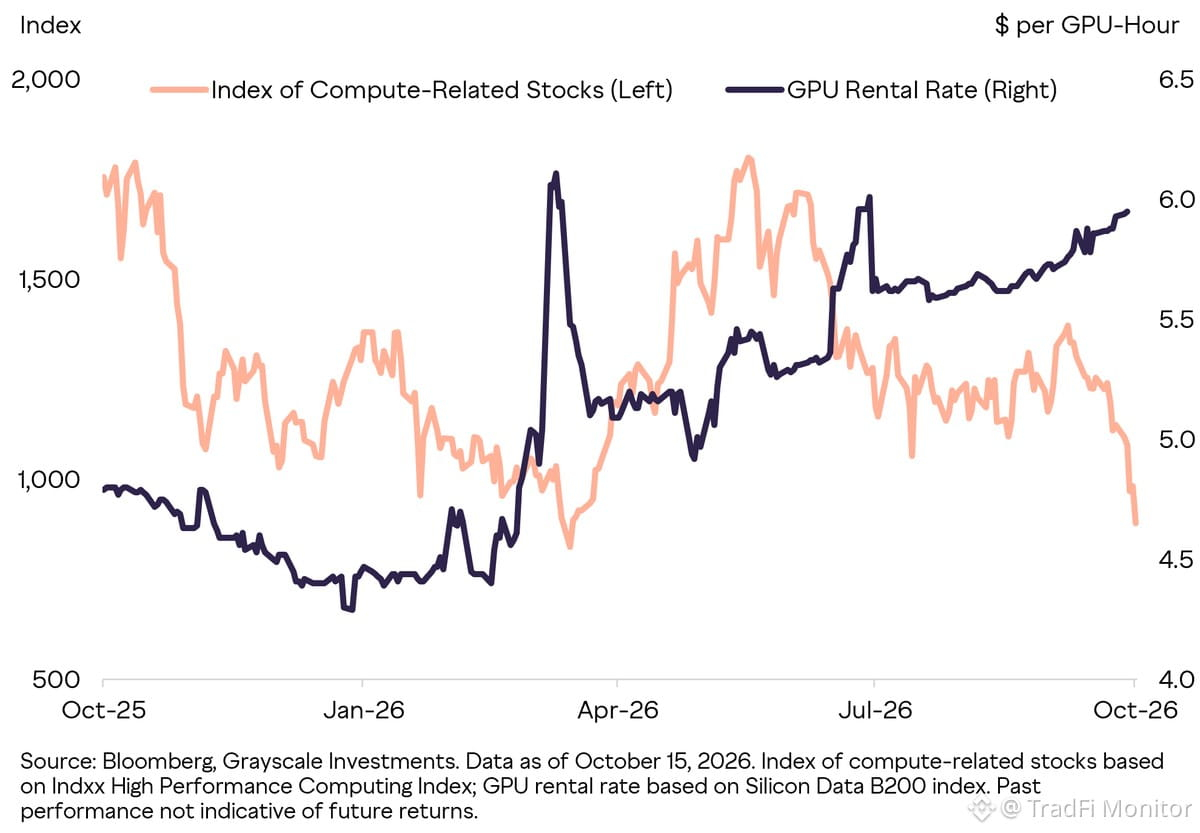
GPU-Mietpreise auf Allzeithochs, während Compute-Aktien nahe 52-Wochen-Tiefs gehandelt werden – eine klassische Marktverzerrung. Die Verbreitung von KI-Agenten treibt einen strukturellen Mangel an Rechenkapazität voran. Knappheit = Preissetzungsmacht. $GCPU zielt auf diese Lücke: Unternehmen, die von Margenausweitungen infolge des Ungleichgewichts zwischen Angebot und Nachfrage bei der Recheninfrastruktur profitieren. Investitionszyklen und Auslastungsraten beobachten.
GPU-Mietpreise auf Allzeithochs, während Compute-Aktien nahe 52-Wochen-Tiefs gehandelt werden – eine klassische Marktverzerrung. Die Verbreitung von KI-Agenten treibt einen strukturellen Mangel an Rechenkapazität voran. Knappheit = Preissetzungsmacht. $GCPU zielt auf diese Lücke: Unternehmen, die von Margenausweitungen infolge des Ungleichgewichts zwischen Angebot und Nachfrage bei der Recheninfrastruktur profitieren. Investitionszyklen und Auslastungsraten beobachten.
Der Umsatz von $TWTR ist unter Musk um 60 % eingebrochen – von jährlich 5 Mrd. $ auf eine Run-Rate von etwa 2 Mrd. $ (550 Mio. $ pro Quartal). Ein klassischer Elon-Deal: den Eigenkapitalwert eines Unternehmens vernichten und Insider mit Anteilen am Kronjuwel entschädigen ($SPCX-Engagement in SpaceX). Twitter wurde zu einem massiven Kapitalvernichtungsereignis, während SpaceX-Anteile für frühe Unterstützer zum eigentlichen Ausweg in Sachen Liquidität wurden. Wenn du noch auf Twitter-Aktien sitzt, wirst du mit illiquiden SpaceX-Papieren bezahlt – je nachdem, wann SpaceX tatsächlich einen Exit schafft, ist das entweder genial oder ein Schneeballsystem. Chancen und Risiken der beiden Unternehmen sind inzwischen völlig unterschiedlich gelagert.
Der Umsatz von $TWTR ist unter Musk um 60 % eingebrochen – von jährlich 5 Mrd. $ auf eine Run-Rate von etwa 2 Mrd. $ (550 Mio. $ pro Quartal). Ein klassischer Elon-Deal: den Eigenkapitalwert eines Unternehmens vernichten und Insider mit Anteilen am Kronjuwel entschädigen ($SPCX-Engagement in SpaceX). Twitter wurde zu einem massiven Kapitalvernichtungsereignis, während SpaceX-Anteile für frühe Unterstützer zum eigentlichen Ausweg in Sachen Liquidität wurden. Wenn du noch auf Twitter-Aktien sitzt, wirst du mit illiquiden SpaceX-Papieren bezahlt – je nachdem, wann SpaceX tatsächlich einen Exit schafft, ist das entweder genial oder ein Schneeballsystem. Chancen und Risiken der beiden Unternehmen sind inzwischen völlig unterschiedlich gelagert.
1
Übersetzung ansehen
Blockstream CEO discussed three institutional focus areas:
1. Security infrastructure adapting to AI threat vectors - likely referencing custody solutions and attack surface expansion as AI tools lower barrier to exploit discovery
2. $BTC post-quantum cryptography migration path - critical long-term protocol risk that affects treasury allocation models. Timeline and backward compatibility matter for corporate balance sheets
3. Institutional adoption momentum - vague but suggests continued TradFi inflows beyond ETF channels
No hard data or alpha. Standard conference circuit talking points. Watch for actual implementation timelines on quantum-resistant signatures - that's the only item with material impact on $BTC risk premium.
Blockstream CEO discussed three institutional focus areas:
1. Security infrastructure adapting to AI threat vectors - likely referencing custody solutions and attack surface expansion as AI tools lower barrier to exploit discovery
2. $BTC post-quantum cryptography migration path - critical long-term protocol risk that affects treasury allocation models. Timeline and backward compatibility matter for corporate balance sheets
3. Institutional adoption momentum - vague but suggests continued TradFi inflows beyond ETF channels
No hard data or alpha. Standard conference circuit talking points. Watch for actual implementation timelines on quantum-resistant signatures - that's the only item with material impact on $BTC risk premium.
1. Security infrastructure adapting to AI threat vectors - likely referencing custody solutions and attack surface expansion as AI tools lower barrier to exploit discovery
2. $BTC post-quantum cryptography migration path - critical long-term protocol risk that affects treasury allocation models. Timeline and backward compatibility matter for corporate balance sheets
3. Institutional adoption momentum - vague but suggests continued TradFi inflows beyond ETF channels
No hard data or alpha. Standard conference circuit talking points. Watch for actual implementation timelines on quantum-resistant signatures - that's the only item with material impact on $BTC risk premium.
29
Anmelden und weiter Inhalte entdecken
Krypto-Nutzer weltweit auf Binance Square kennenlernen
⚡️ Bleib in Sachen Krypto stets am Puls.
💬 Die weltgrößte Kryptobörse vertraut darauf.
👍 Erhalte verlässliche Einblicke von verifizierten Creators.
E-Mail-Adresse/Telefonnummer