The wallet that was supposed to be unhackable just admitted the unthinkable.
Coinkite's 18-page postmortem on the COLDCARD seed flaw is brutal. From March 2021 to July 2026, a single build-config error sent seed generation to a software random-number generator instead of the device's hardware RNG. Effective entropy collapsed to roughly 40 bits on Mk2/Mk3 and 72 bits on newer models, against a 128-bit target.
Attackers needed no physical access. From July 29, they regenerated private keys offline and drained about 1,778.84 BTC from more than 8,600 addresses — roughly $112–116 million at the time, per Galaxy Research. Fifteen independent security reviews over five years missed it, because each checked the code, not the shipped build's actual RNG call.
Fixed firmware landed July 31 and Keylabs verified the flaw closed — but no update can repair a weak seed already created. Affected owners must generate a new seed and migrate. Compensation is still undecided.
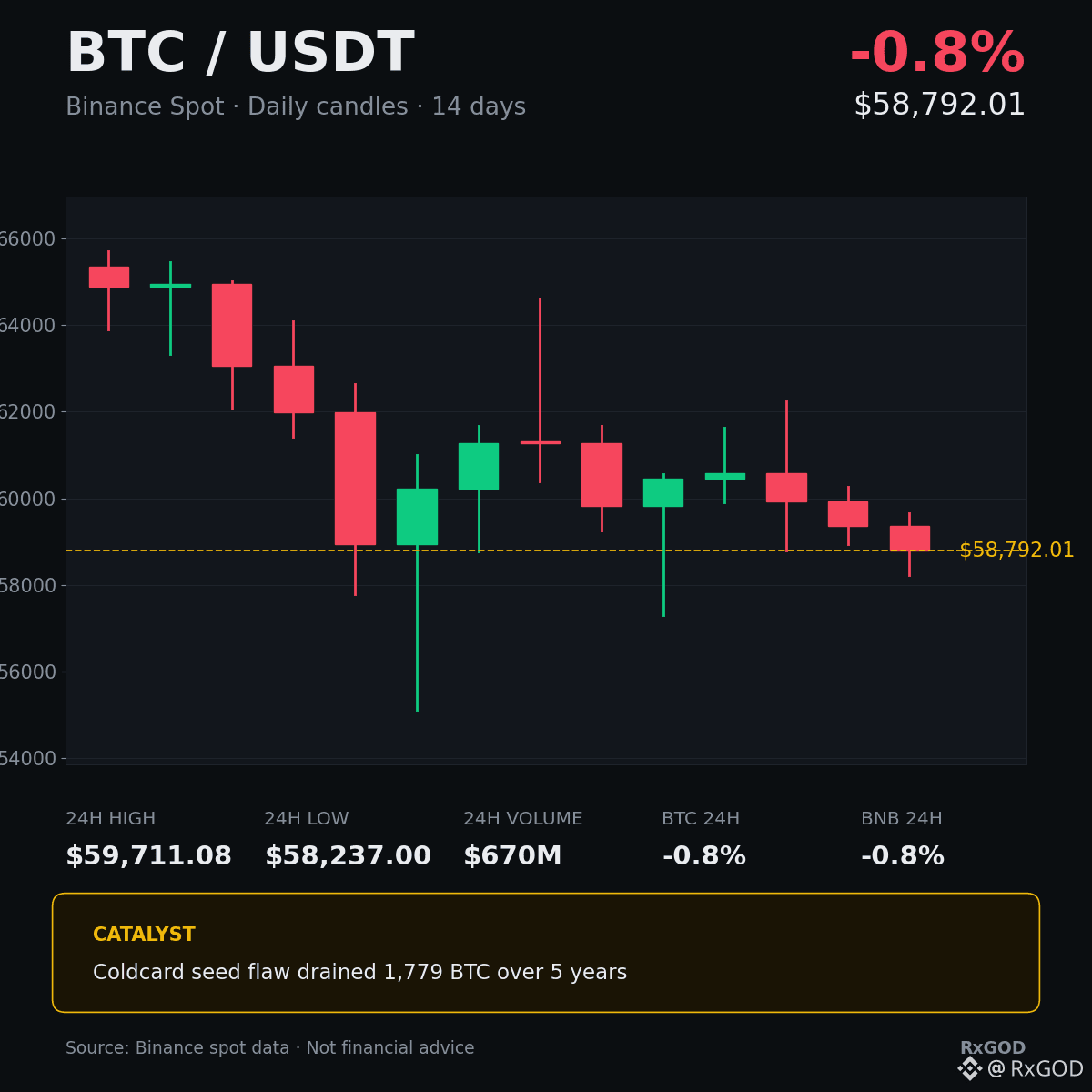
CoinDesk reports analysts now expect the breach to push demand toward regulated $BTC exposure — ETFs and custody — at the exact moment trust in self-custody takes a hit. $BTC trades at $58,792, down 0.8% in 24 hours and 9.4% over 14 days, with the Fear & Greed Index at 11, Extreme Fear.
Check your device at coldcard.com/security/status — and never share seed words with anyone.
So — after five silent years, do you still trust cold storage, or is this the moment regulated custody wins? If you own a COLDCARD from 2021–2026, is your seed affected?
Not financial advice — DYOR.
#Coldcard #Bitcoin #CryptoSecurity #ExtremeFear