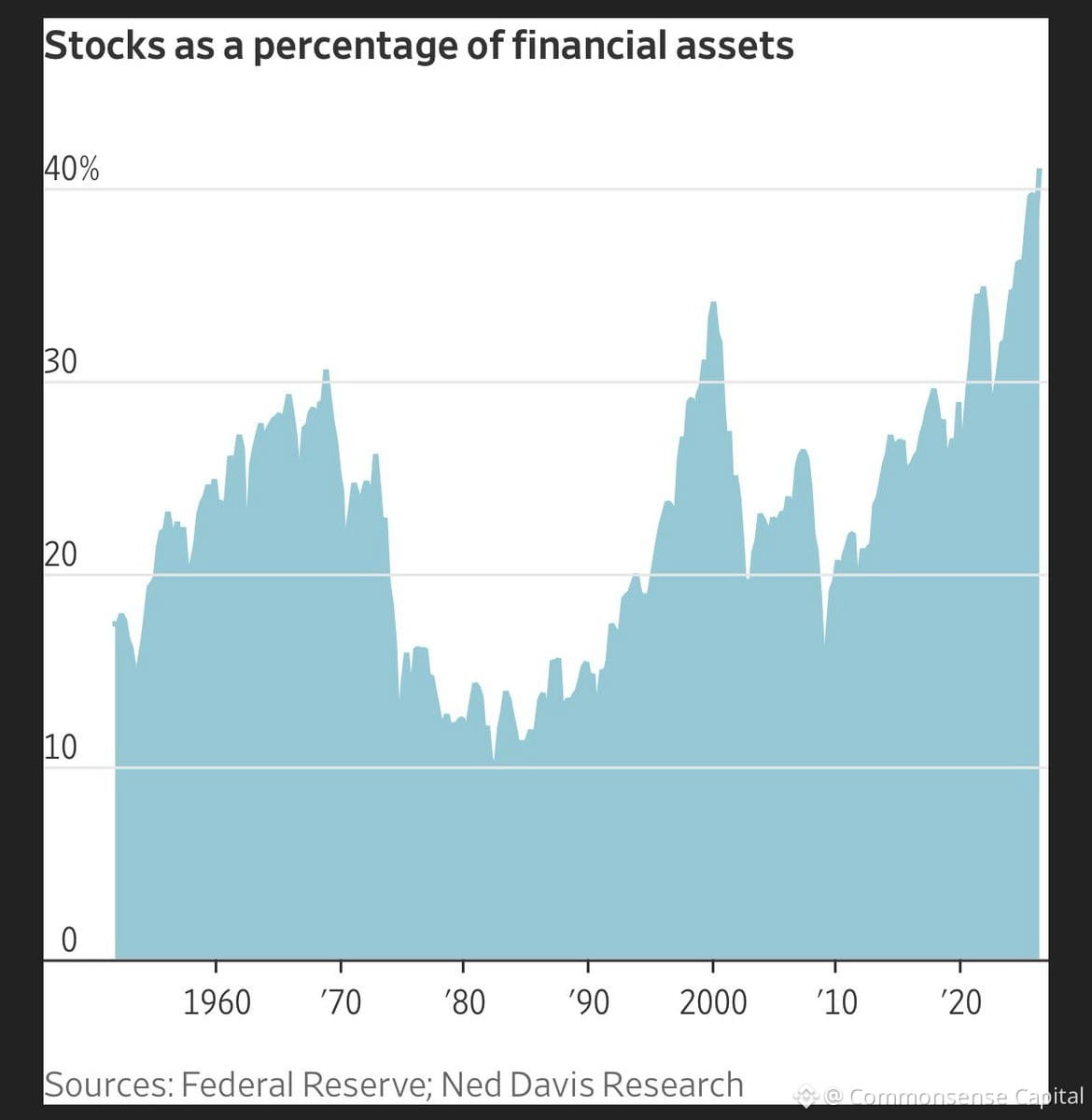
Americans are now more exposed to stocks than at any point in history — and they kept buying even as markets went haywire.
This isn't 1999 when your neighbor was day-trading Cisco. This is different. It's 401(k)s, IRAs, index funds, ETFs. It's structural, not speculative.
The good news: more people participating in long-term wealth creation through equity ownership. That's genuinely positive.
The bad news: when everyone's in the pool, drawdowns hurt more people. And if you don't understand what you own or why you own it, panic selling becomes the default.
Here's the thing — high equity exposure isn't dangerous if you:
1. Actually have a long time horizon
2. Don't need the money in the next few years
3. Can stomach 30-40% drops without losing your mind
But if you're 60, fully invested, and counting on this money for retirement in 3 years? That's not investing. That's gambling with your future.
The real test isn't whether people bought the dip. It's whether they'll stay invested through the next real bear market — the kind that lasts 18 months and cuts portfolios in half.
Most people find out their risk tolerance the hard way.