
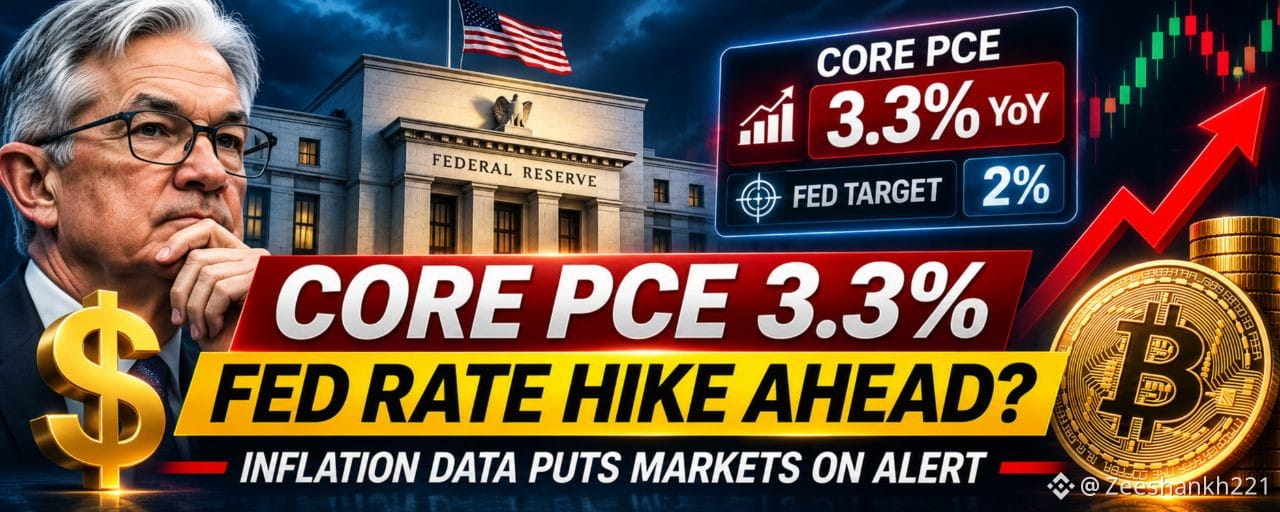

The U.S. economy is facing renewed inflation concerns after the release of October's Personal Consumption Expenditures (PCE) report on November 25, 2026.
The Core PCE index, which excludes food and energy prices, increased 3.3% year over year, exceeding economists' expectations of 3.2%. The monthly increase came in at 0.3%, matching forecasts.
The latest figures could strengthen the Federal Reserve's case for another interest rate increase in December, potentially creating fresh volatility across cryptocurrency, stocks, bonds, and foreign exchange markets.
📊 October PCE Inflation: Key Numbers
Here are the important figures investors are watching:
Indicator October 2026Headline PCE (YoY)3.8%Headline PCE (MoM)0.3%Core PCE (YoY)3.3%Core PCE (MoM)0.3%Previous Core PCE (YoY)3.1%Fed inflation target2.0%
The annual Core PCE reading increased from 3.1% in September to 3.3% in October. This suggests that underlying inflationary pressure remains persistent.
🏦 Why the Federal Reserve Could Raise Interest Rates
The Federal Reserve closely monitors Core PCE because it provides a clearer picture of underlying inflation trends.
With inflation remaining significantly above its 2% target, policymakers may consider additional monetary tightening.
Markets were already anticipating a 25-basis-point rate increase at the December 8–9 FOMC meeting. The latest inflation report adds further support to that expectation.
However, policymakers remain divided over whether inflation is being driven by temporary supply-side pressures or stronger underlying demand.
₿ What Does This Mean for Bitcoin?
Bitcoin and other cryptocurrencies are sensitive to changes in interest-rate expectations.
If the Federal Reserve raises rates, borrowing costs could increase and liquidity conditions could tighten. This may reduce investor appetite for riskier assets.
Potential market reactions include:
Bitcoin: Could face additional selling pressure if the dollar and Treasury yields strengthen.
Ethereum: May experience increased volatility alongside the broader crypto market.
Altcoins: Could face greater downside risk because of their higher volatility.
Stablecoins: Could attract more attention from investors seeking to reduce market exposure.
However, these outcomes are not guaranteed. Crypto prices also depend on institutional demand, liquidity, market positioning, and other economic developments.
📉 Could the U.S. Dollar Strengthen?
Higher interest-rate expectations generally support the U.S. dollar because they can increase the relative attractiveness of dollar-denominated assets.
Currency traders will closely monitor:
EUR/USD price movements.
USD/JPY volatility.
U.S. Treasury yields.
The Dollar Index (DXY).
Upcoming Federal Reserve statements.
A stronger dollar could create additional pressure on commodities and cryptocurrencies.
🔍 What Should Traders Watch Next?
The December 8–9 Federal Reserve meeting will be the next major event for global financial markets.
Traders should pay attention to:
Statements from Federal Reserve officials.
Upcoming inflation and employment reports.
U.S. Treasury yield movements.
Bitcoin's reaction to changing liquidity expectations.
Whether inflation begins moving closer to the Fed's target.
💡 Final Thoughts
October's Core PCE report has delivered another warning that inflation remains difficult to control.
With annual Core PCE rising to 3.3%, the Federal Reserve faces a difficult decision: maintain restrictive monetary policy or increase rates further to prevent inflation from becoming entrenched.
For cryptocurrency investors, the coming weeks could bring significant volatility as markets adjust to changing expectations.
What do you think? Will the Federal Reserve raise interest rates in December, and could Bitcoin face another correction if it does?
Share your opinion in the comments! 👇