$LSK: How Volume Can Fuel or Exhaust a Move
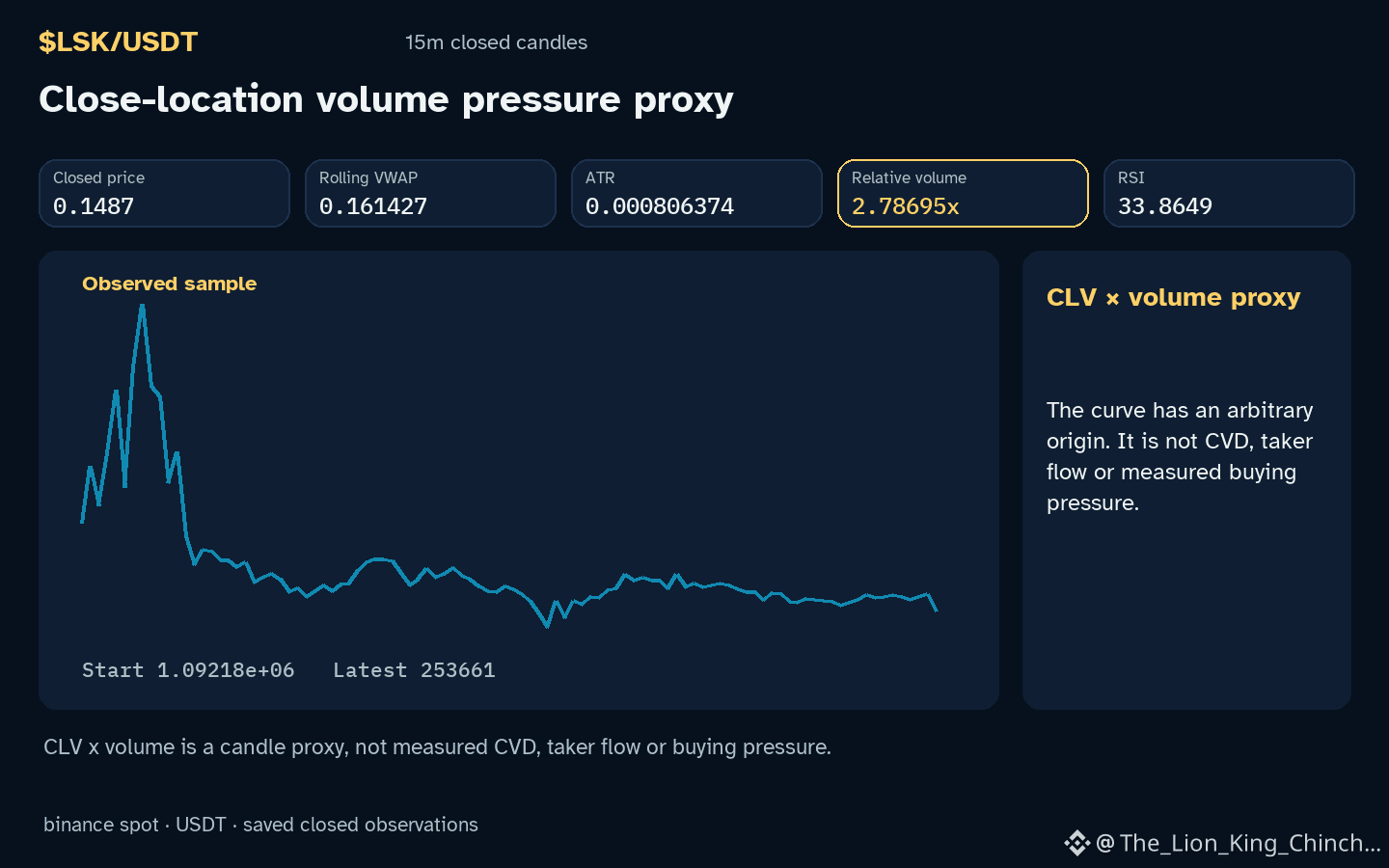
$LSK: LSK is trending down hourly while volume sits above baseline. Does the higher than normal flow indicate a final push or merely a steady supply of trades?
The observation notes a down direction on the hourly chart and a relative volume of 2.79x baseline. One way to think about this pattern is to compare the market to a campfire. When fresh wood is added at a moderate, steady rate, the fire burns longer and more predictably. In contrast, throwing a large bundle of kindling all at once can cause a brief, intense flare that quickly dwindles. Applied to crypto, a modest but consistent increase in trade activity can act as steady fuel, supporting the price trend. A sudden spike that outpaces the price move might represent an exhaustion flare, where traders test the market but the pressure fades once the supply of eager participants is spent.
A conditional explanation therefore hinges on how the volume spike aligns with price action. If the down candle is accompanied by a modest RSI of 33.9 and the price remains near the local support level 0.1476, the volume may simply reflect normal market participation – the steady fuel scenario. Conversely, if the price pierces below support while volume spikes, the flare analogy becomes more plausible.
The limits of this evidence are clear: the data captures only a single hourly window and does not reveal order‑book depth, trader intent, or subsequent candle behavior. Future closed‑candle data showing a reversal despite continued high volume would weaken the exhaustion hypothesis, while sustained down movement with repeated volume above baseline would support the steady‑fuel view.
Probabilistic market research, not a recommendation or guaranteed return.
#LSK #CryptoEducation #CryptoLearning