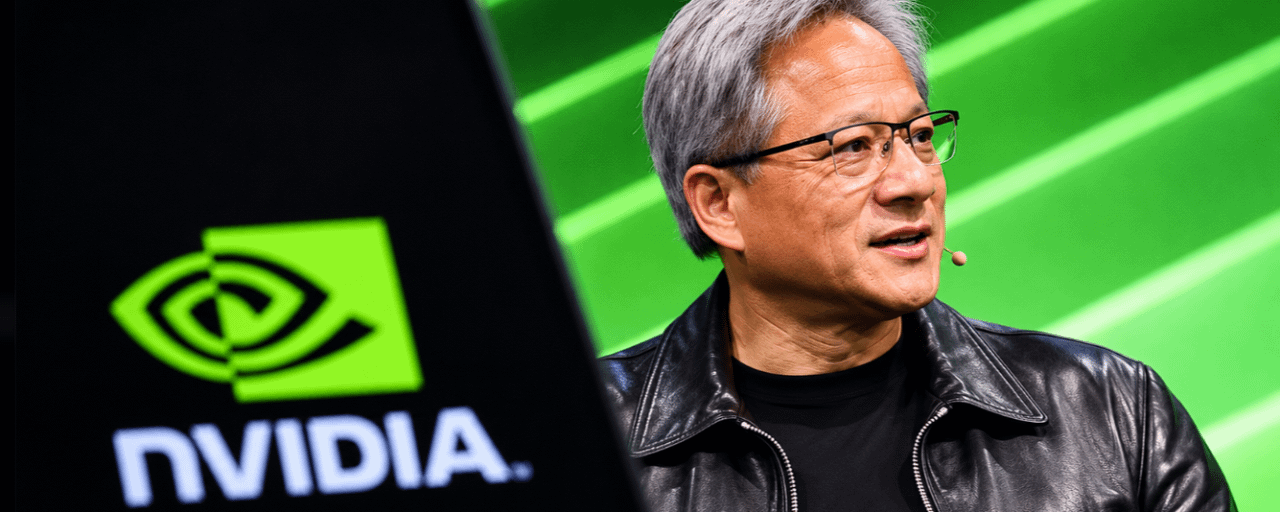

NVIDIA's dramatic leadership reversal has triggered one of the most remarkable market reactions of November 2026. The company's board of directors has unanimously voted to reinstate co-founder Jensen Huang as President, Chief Executive Officer, and a member of the Board, effective immediately. The announcement came on Monday, November 23, and immediately attracted worldwide attention from investors, technology companies, financial analysts, and the broader investment community.
Following the announcement, NVIDIA shares surged nearly 30% in premarket trading, reaching approximately $163 per share at one point. The rally represented a powerful recovery after the company's stock suffered a significant decline during the previous trading session.
The announcement also helped improve sentiment across the broader US equity market. Nasdaq futures jumped approximately 7.05%, S&P 500 futures gained 4.39%, and Dow Jones futures advanced 2.52% in the reported premarket trading. The sudden improvement in sentiment came after a difficult period for technology stocks and a major weekly sell-off.
For investors, this development represents much more than a simple executive appointment. It raises important questions about corporate leadership, investor confidence, artificial intelligence, national security, semiconductor competition, and the future direction of the global technology industry.
1. NVIDIA Board Makes a Dramatic Leadership Decision
NVIDIA officially announced that its board had unanimously approved Jensen Huang's return as President and CEO. He also resumed his position as a member of the company's Board of Directors.
The decision reversed the company's earlier position regarding his leadership future.
On November 12, NVIDIA announced that Huang had resigned from his positions, effective immediately. Following that announcement, the company appointed its Chief Financial Officer, Colette Kress, as interim CEO while the board began considering potential candidates for permanent leadership.
At that time, the sudden departure created uncertainty throughout the technology sector. NVIDIA is one of the world's most influential semiconductor companies, and Huang has played a central role in building its business and establishing its position in the artificial intelligence industry.
The situation changed dramatically on November 23.
After a series of discussions and meetings with Huang, the board concluded that he remained the right person to lead the company. According to NVIDIA's official announcement, the directors were satisfied with his candor and ability to lead the business.
The board also stated that it had received input from senior levels of the US government. Based on that input, directors said they were confident that Huang's reinstatement did not create a national security risk.
The decision immediately changed the market's expectations regarding NVIDIA's leadership and future strategy.
2. Why Jensen Huang's Return Matters So Much
Jensen Huang is not simply another corporate executive. He is one of the central figures behind NVIDIA's transformation from a graphics-processing company into a major supplier of artificial intelligence infrastructure.
NVIDIA's products are used across multiple industries, including cloud computing, advanced research, autonomous vehicles, data centers, robotics, gaming, and generative AI.
The company's graphics processing units have become important infrastructure for organizations developing and operating large artificial intelligence systems.
Over the years, Huang has been closely associated with NVIDIA's long-term product strategy, engineering culture, business partnerships, and expansion into new technology markets.
His return therefore provides investors with an important signal about leadership continuity.
Many investors may view the reinstatement as a reduction in uncertainty surrounding the company's executive structure. Instead of continuing with an uncertain leadership transition, NVIDIA can once again operate under the leadership of the executive most closely associated with its long-term development.
However, leadership continuity does not automatically guarantee stronger financial performance. NVIDIA must still demonstrate that it can maintain its competitive position, deliver successful products, meet customer demand, and navigate increasingly complicated regulatory conditions.
The market's initial reaction reflects renewed optimism, but long-term confidence will depend on business results.
3. Colette Kress Continues as CFO
Another important part of the announcement concerns Colette Kress.
Kress served as interim CEO following Huang's resignation. NVIDIA confirmed that she will continue as Executive Vice President and Chief Financial Officer.
Her continued presence provides an element of stability during the leadership transition.
Financial management is especially important for a company operating at NVIDIA's scale. The company must manage significant research and development spending, manufacturing relationships, global supply chains, customer demand, regulatory requirements, and capital allocation.
Kress has been part of NVIDIA's executive leadership for many years and has played an important role in its financial organization.
Her return to the CFO position means the company can maintain continuity in its financial leadership while Huang resumes his executive responsibilities.
Harvey Jones will also remain chairman of the board.
The leadership structure therefore returns Huang to the CEO position while maintaining Kress as CFO and Jones as chairman.
For investors, this arrangement may reduce concerns about an extended leadership search. Nevertheless, the board's decision-making process and its handling of the leadership transition are likely to receive continued attention.
4. The Investigation Into an Alleged Foreign Intelligence Operation
Although the CEO reinstatement dominated the headlines, NVIDIA also confirmed that an important investigation remains ongoing.
The company previously reported concerns involving an alleged foreign intelligence effort targeting Jensen Huang.
In response, the board established a committee consisting entirely of independent directors. The committee retained independent legal counsel to assist with its investigation.
NVIDIA confirmed that the investigation will continue until its conclusion.
Huang has expressed support for the investigation and committed to cooperating with the process.
This issue is particularly important because NVIDIA operates in an industry connected to advanced computing, national security, international trade, and strategic technology competition.
Advanced semiconductor technology is increasingly important to governments around the world. High-performance processors are used in artificial intelligence research, military-related applications, scientific computing, data centers, and other strategically important activities.
Consequently, questions involving foreign intelligence, export controls, and access to advanced chips can have consequences far beyond an individual company's executive structure.
NVIDIA also announced the formation of a National Security and Export Control Committee made up entirely of independent directors.
This committee will oversee trade compliance and national security risks. The company also plans to appoint a Chief Compliance Officer who will oversee compliance across NVIDIA and report to the Nominating and Corporate Governance Committee.
These developments suggest that NVIDIA is attempting to strengthen its internal oversight and regulatory compliance structure.
For investors, the important question is whether these measures will successfully reduce uncertainty and protect the company's long-term business relationships.
5. NVIDIA Stock Explodes Nearly 30% in Premarket Trading
The financial market reaction was immediate.
NVIDIA shares surged approximately 29.86% to $163 in the reported premarket trading following the announcement.
The rally came after the stock had fallen approximately 14% on Friday, November 20, closing at $125.53.
The previous decline had increased concerns about the company's leadership situation and the broader technology market sell-off.
The return of Huang changed the market narrative almost overnight.
Investors who had been concerned about uncertainty surrounding the company's future leadership suddenly received confirmation that its co-founder and former CEO would return.
The resulting increase in buying interest demonstrated how sensitive large technology stocks can be to leadership announcements, corporate developments, and investor expectations.
However, a sharp premarket increase should not be confused with a guaranteed long-term recovery.
Premarket trading can be affected by relatively limited liquidity, rapid changes in sentiment, and reactions to breaking news.
Investors should therefore distinguish between an immediate price reaction and a sustainable improvement in the company's fundamental outlook.
The important questions include whether NVIDIA can maintain the gains, whether institutional investors continue buying, and whether future financial results support the higher valuation.
6. US Stock Futures Also Experience a Powerful Rebound
NVIDIA's announcement arrived during an already sensitive period for the US stock market.
Technology shares had experienced significant selling pressure, and investors were questioning the sustainability of some of the market's strongest AI-related valuations.
The reported futures reaction showed a substantial improvement in sentiment.
According to the supplied premarket figures:
Nasdaq futures advanced approximately 7.05%.
S&P 500 futures increased approximately 4.39%.
Dow Jones futures gained approximately 2.52%.
These moves indicated that the optimism extended beyond NVIDIA itself.
Technology companies are an important part of the Nasdaq and S&P 500. When a major semiconductor company experiences a sharp recovery, it can influence investor expectations across related businesses.
Companies involved in semiconductor manufacturing, cloud infrastructure, data centers, software, and AI development may also experience changes in market sentiment.
However, the performance of futures does not necessarily determine the final performance of the stock market during regular trading.
Investors must continue monitoring economic data, corporate earnings, interest-rate expectations, market liquidity, and geopolitical developments.
A powerful opening rally can sometimes lose momentum if investors begin taking profits or if new information changes expectations.
7. Why NVIDIA Is So Important to the Artificial Intelligence Industry
To understand the importance of Huang's return, it is necessary to understand NVIDIA's position in the AI economy.
Artificial intelligence development requires substantial computing power.
Training large AI models involves processing enormous quantities of information using specialized hardware. Running these models for millions of users also requires powerful infrastructure.
NVIDIA supplies processors and related technologies used by many organizations developing AI systems.
Its business is connected to several major technology trends:
Artificial Intelligence Development
Companies are investing heavily in AI research and development. Advanced processors are essential for training and operating increasingly sophisticated models.
Cloud Computing
Cloud service providers require powerful computing infrastructure to support enterprise applications, AI workloads, and large-scale data processing.
Data Center Expansion
The growing demand for AI services has encouraged technology companies to invest in new data centers and specialized computing facilities.
Robotics and Automation
Robotics companies are exploring AI-powered systems that can process information, understand environments, and perform complex tasks.
Autonomous Technology
Advanced computing is also important for autonomous driving research, intelligent transportation systems, and other automated applications.
NVIDIA's role across these sectors helps explain why investors pay close attention to its leadership, product roadmap, and business strategy.
If Huang successfully restores confidence and maintains NVIDIA's competitive position, the company could remain an important beneficiary of continued AI investment.
Nevertheless, the industry is becoming increasingly competitive. Companies are developing alternative processors, designing custom AI chips, and exploring different approaches to computing efficiency.
NVIDIA must continue innovating to defend its market position.
8. What This Means for AI Stocks
The sudden increase in NVIDIA shares could influence the wider AI investment theme.
Investors frequently evaluate technology companies based on their relationships with major infrastructure providers.
When NVIDIA rallies, market participants may reassess the outlook for companies involved in the AI supply chain.
Potentially affected areas include:
Semiconductor manufacturers.
Chip-design companies.
Data-center operators.
Cloud computing providers.
AI infrastructure companies.
Advanced memory manufacturers.
Networking equipment suppliers.
Technology companies investing heavily in AI.
However, not every AI-related company will benefit equally.
Some businesses may experience stronger demand because they provide essential infrastructure. Others may face rising competition, high operating expenses, or uncertain profitability.
Investors should evaluate individual companies rather than assuming that every AI stock will follow NVIDIA's movement.
The key issue is whether AI-related spending continues to translate into sustainable revenue growth and stronger earnings.
9. Could the NVIDIA Rally Influence Bitcoin and Cryptocurrency?
One of the most interesting aspects of this development is its potential connection with the cryptocurrency market.
Bitcoin and technology stocks are different assets with different market structures. NVIDIA's stock price does not directly determine Bitcoin's value.
However, both markets can sometimes respond to similar macroeconomic conditions and changes in investor risk appetite.
When investors become more optimistic about growth-oriented assets, capital flows and market sentiment can improve across several financial markets.
NVIDIA's recovery could therefore contribute to a more positive environment for risk-sensitive assets, including cryptocurrencies.
There are several potential channels through which this could happen.
First: Improving Risk Appetite
A powerful rebound in major technology stocks could encourage investors to reconsider exposure to growth-oriented investments.
Second: Technology Sector Confidence
AI-related developments may improve sentiment toward technology and innovation more broadly.
Third: Institutional Investment Expectations
Investors monitoring equities, exchange-traded funds, and digital assets may reassess their portfolio allocations when market conditions change.
Fourth: Market Liquidity
Broader financial conditions, interest-rate expectations, and liquidity remain important factors influencing both equity and cryptocurrency markets.
However, there is no guarantee that a rally in NVIDIA will result in a Bitcoin rally.
Bitcoin has its own drivers, including ETF flows, institutional demand, derivatives positioning, global liquidity, monetary policy, regulatory developments, and on-chain activity.
Therefore, cryptocurrency traders should treat the NVIDIA announcement as a potential sentiment catalyst rather than a direct Bitcoin trading signal.
10. What Should Bitcoin Traders Watch?
For cryptocurrency investors, the important question is whether improving sentiment in technology stocks translates into stronger buying activity in digital assets.
Several indicators deserve attention:
Bitcoin Price Action
A sustained move above important resistance levels may indicate that buyers are gaining control. A temporary price increase without strong follow-through may not be sufficient to confirm a trend reversal.
Trading Volume
Increasing volume during an upward move can help confirm market participation. Low-volume rallies may be vulnerable to sudden reversals.
Bitcoin ETF Flows
Institutional inflows and outflows can provide useful information about demand from traditional financial investors.
Open Interest
A sharp increase in open interest can indicate that leverage is entering the market. However, rising leverage can increase liquidation risks.
Funding Rates
Extremely positive funding rates may indicate crowded long positioning, while extremely negative rates may suggest excessive bearish positioning.
US Dollar and Treasury Yields
Changes in the dollar and bond yields can influence global financial conditions and investor appetite for risk.
Traders should monitor these indicators together instead of relying on a single headline.
A positive stock-market announcement may improve sentiment, but confirmation from Bitcoin's own market structure is still necessary.
11. The Corporate Governance Question
Although investors welcomed Huang's return, the board's decision also raises important questions about corporate governance.
The company announced his resignation on November 12 and subsequently indicated that it did not intend to bring him back.
Less than two weeks later, the board unanimously approved his reinstatement.
Such a dramatic reversal naturally attracts attention.
Shareholders may want to understand what changed during the period between the two decisions.
Questions may include:
What information influenced the board's decision?
How did the directors evaluate the risks associated with the situation?
What role did external government input play?
How will the board maintain independent oversight?
What additional compliance measures will be introduced?
How will NVIDIA protect shareholder interests?
These questions matter because corporate governance is an important part of long-term investment confidence.
A company can have strong products, impressive revenue growth, and an influential CEO while still facing serious governance challenges.
Investors must evaluate the entire business rather than focusing exclusively on the executive who leads it.
The board's ability to maintain transparency, accountability, and independent oversight will remain important.
12. National Security and Semiconductor Competition
The NVIDIA story also highlights the growing connection between technology businesses and national security.
Advanced semiconductors are no longer viewed only as commercial products.
They are strategic resources that can influence artificial intelligence development, scientific research, military capabilities, cybersecurity, and economic competitiveness.
Governments are increasingly interested in controlling how advanced computing technologies are manufactured, distributed, and exported.
For NVIDIA, these issues are particularly important because its products are used by customers around the world.
The company must balance global business opportunities with changing export restrictions and regulatory requirements.
Any changes in government policy could affect customer access, product availability, and revenue expectations.
The formation of a dedicated National Security and Export Control Committee indicates that NVIDIA is giving these issues additional attention.
However, stronger oversight does not automatically eliminate regulatory risk.
Investors will need to monitor future government decisions, investigations, compliance developments, and international trade policies.
13. The Risk of Chasing a Sudden Stock Market Rally
A nearly 30% premarket increase can create excitement among traders.
But large price movements also create risks.
When a stock experiences a sudden upward gap, some investors may enter positions because they fear missing out on further gains.
This behavior can increase volatility.
There are several risks worth considering.
Profit-Taking
Investors who purchased shares at lower prices may decide to lock in profits after a sharp rally.
Premarket Volatility
Premarket prices can change rapidly as more participants enter the market.
Uncertainty Around Investigations
The ongoing investigations may create additional headlines and uncertainty.
Valuation Concerns
Even after a major decline, investors must consider whether the stock's valuation is supported by its expected future earnings.
Broader Market Conditions
Interest rates, inflation, economic growth, and institutional positioning can influence the direction of technology stocks.
A strong news catalyst does not remove these risks.
Long-term investors and short-term traders should also have different strategies.
Long-term investors may focus on earnings, competitive advantages, management quality, and valuation. Short-term traders may focus on price levels, volume, volatility, and risk management.
14. What Could Happen Next?
There are several possible scenarios for NVIDIA and the broader technology market.
Bullish Scenario
If investors continue supporting Huang's reinstatement, NVIDIA could maintain its recovery and attract additional buying interest.
Positive developments in AI infrastructure spending, strong demand for advanced processors, and improving financial market sentiment could support the bullish outlook.
Under this scenario, other semiconductor and AI infrastructure companies could also benefit.
Neutral Scenario
NVIDIA could experience consolidation after its initial rally.
Investors may wait for further information about the investigation, corporate governance, regulatory developments, and upcoming financial performance.
Under this scenario, the stock may fluctuate as buyers and sellers evaluate the significance of the leadership announcement.
Bearish Scenario
If new regulatory concerns emerge, investigations create uncertainty, or investors begin taking profits, the stock could experience another decline.
A broader technology sell-off could also put pressure on NVIDIA regardless of the leadership decision.
These scenarios are possibilities, not guaranteed predictions.
15. Why Investors Should Look Beyond the Headlines
The most important lesson from this event is that financial markets react not only to company earnings but also to uncertainty and expectations.
Huang's resignation created uncertainty around NVIDIA's future leadership.
His reinstatement removed one major source of that uncertainty, at least for the moment.
The market responded by rapidly repricing the company's shares.
But a successful leadership return is only one part of NVIDIA's long-term business outlook.
The company still needs to maintain product innovation, manage competition, satisfy customers, protect its global supply chain, and comply with changing regulations.
Its financial performance will ultimately depend on the strength of its business rather than the immediate excitement surrounding a single announcement.
Investors should therefore distinguish between short-term market momentum and long-term fundamental value.
Final Thoughts: A Major Turning Point for NVIDIA and the AI Market
Jensen Huang's return marks a dramatic chapter in NVIDIA's corporate history.
The board's unanimous decision reversed its earlier position and restored the company's co-founder to the leadership role he previously held.
The nearly 30% premarket share-price jump demonstrated the importance investors place on leadership stability and confidence in NVIDIA's future.
The broader market reaction also highlighted the influence that major AI companies can have on technology-sector sentiment.
For the cryptocurrency market, the announcement could provide a positive sentiment catalyst, but Bitcoin and other digital assets will continue to depend on their own market fundamentals.
The next important developments will include the progress of NVIDIA's investigations, its new compliance structure, future government decisions, investor confidence, and the company's financial performance.
My View: NVIDIA's leadership story is an important reminder that market sentiment can change quickly. The immediate rally is impressive, but investors should remain disciplined and avoid making decisions based only on headlines.
The real test will be whether NVIDIA can turn renewed confidence into sustainable business performance.
What do you think?
Will Jensen Huang's return help NVIDIA lead the next major AI rally, or will corporate governance and regulatory concerns continue to create uncertainty?
Share your thoughts below.
⚠️ This article is for informational and educational purposes only. It is not financial advice. Always conduct your own research, manage your risk, and DYOR.
#NVIDIA #JensenHuang #Aİ #StockMarket #TradFi #Bitcoin #CryptoMarket #Technology #WallStreet #Investing $NVDA