Activity Requirements in Staking: InterLink's Sleep Mode Proposal
Passive staking is common across crypto. InterLink's proposal for Human Nodes asks for ongoing activity instead.
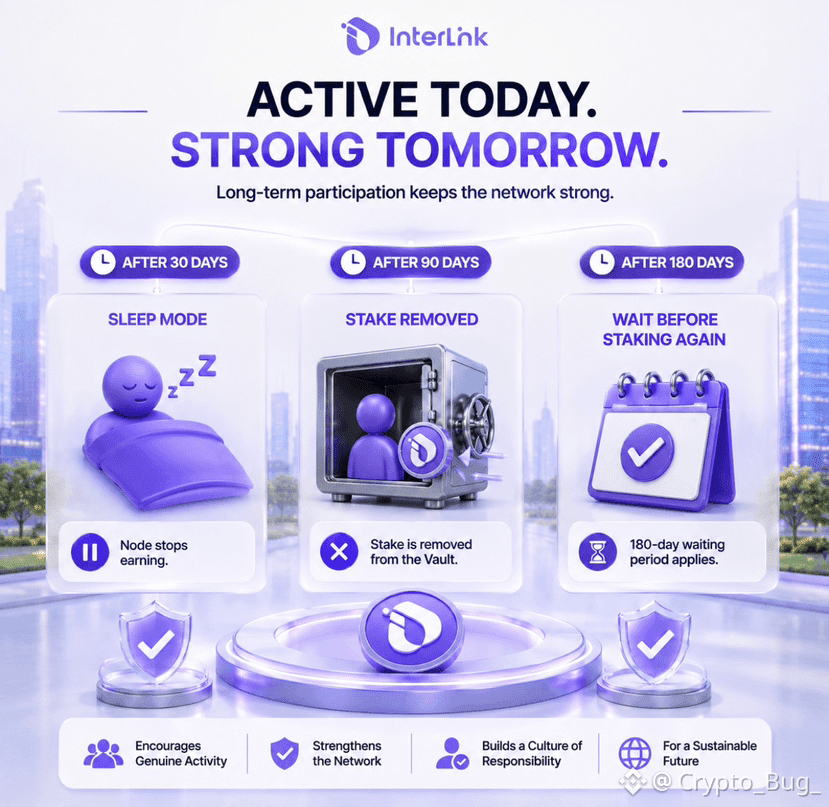
After 30 days of inactivity, a Human Node enters sleep mode and stops earning rewards. After 90 days, its stake is removed from the Vault, and a 180-day waiting period applies before staking again. The aim is to encourage genuine, long-term engagement over passive participation.
There are trade-offs. These rules may filter out inactive accounts, but they could also burden users who step away briefly. The exact activity verification process and some parameters are still being finalized.
Based on InterLink's published proposal. Disclosure: I'm an InterLink community member. Personal analysis, not investment advice.
Do activity requirements strengthen a staking network, or add too much pressure on users?
#InterLink #ITLG #ITL #BTCReboundsAbove$60KAmidWhaleDipBuying
$BTC $ETH $BNB