

#BTCBelow$62KAmidHikeFearsAndShiftToAnthropic
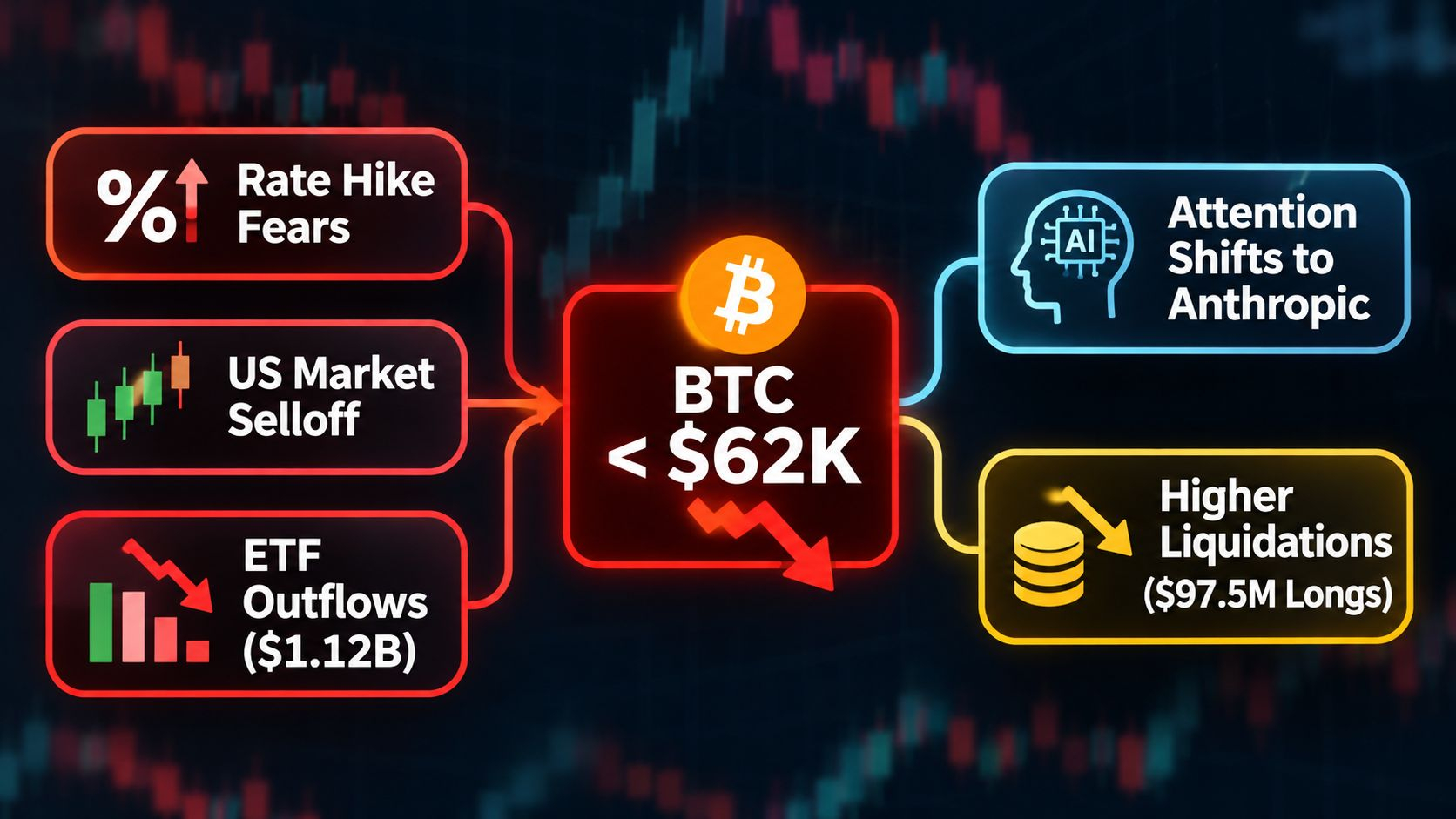
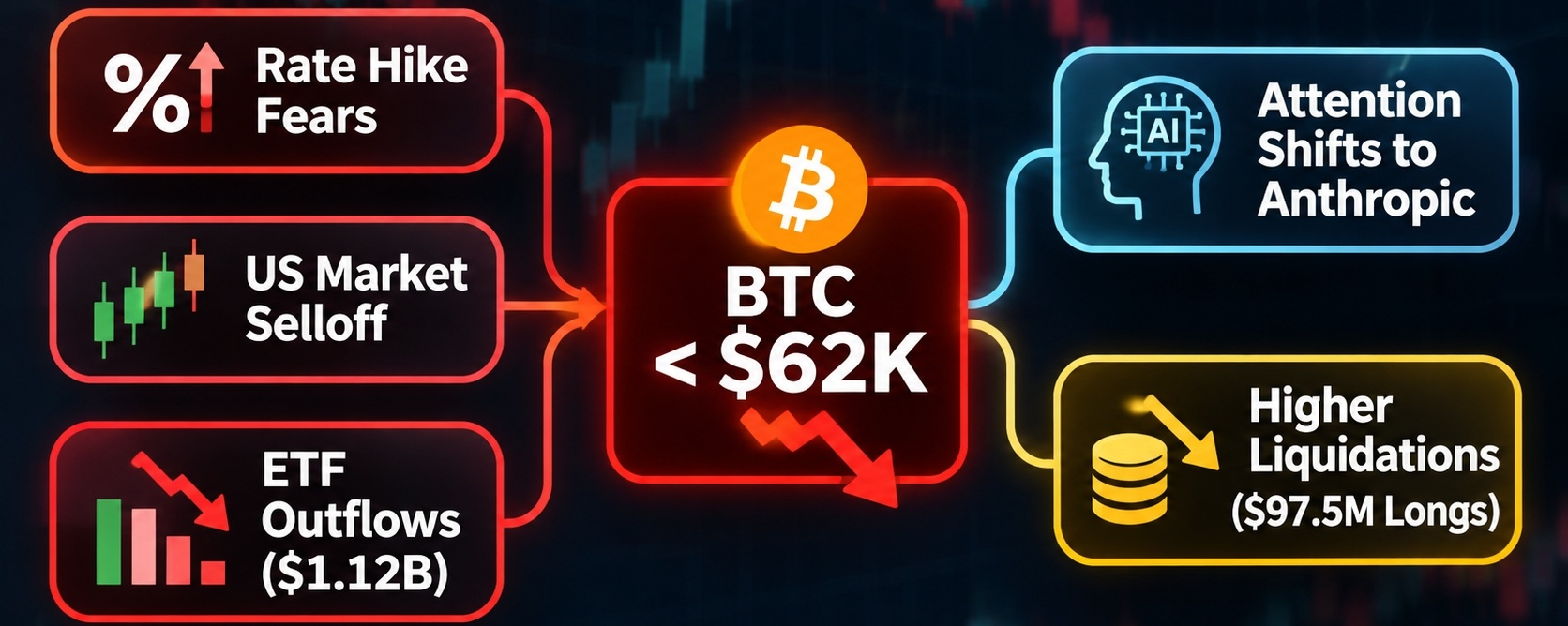
Bitcoin has lost the $62,000 level, and the latest price action isn't giving bulls much reason to feel comfortable. BTC was trading around $61,289 on November 20, down approximately 3.7% over 24 hours. Over seven days, the loss has reached roughly 12.3%. That's a fairly aggressive move, especially when buyers have repeatedly struggled to hold short-term rebounds.
I've always found that the most revealing part of a selloff isn't the first red candle. It's what happens afterwards. Do buyers step in with real volume, or does price bounce for a few hours before sellers take control again? So far, Bitcoin hasn't shown convincing buying strength. The market keeps testing lower prices, and traders who entered expecting an easy recovery are starting to feel the pressure.
The weakness extends well beyond crypto. The Nasdaq 100 dropped approximately 6%, the S&P 500 lost around 4.1%, and gold also declined more than 4% over the same 24-hour period. That's worth paying attention to because Bitcoin isn't trading in isolation anymore. Institutional participation has made macro conditions increasingly important, and when investors start reducing exposure across several asset classes, even fundamentally strong investments can face selling pressure.
Rate Concerns Are Adding Pressure to Bitcoin
Interest rates are back in the conversation, and for good reason. Higher borrowing costs generally make speculative investments less attractive, particularly when investors can find relatively safer places to put their capital. Crypto tends to feel these changes quickly because market liquidity and risk appetite play such a big role in short-term price movements.
But I'd avoid making the mistake of blaming the entire @Bitcoin decline on rate hike fears. The available market data points more directly to a broad US equity selloff as a major driver of BTC's latest move. There's no confirmed fresh rate decision that independently explains this drop.
What matters now is whether financial conditions continue tightening and whether institutional investors remain willing to hold volatile assets. Traders should also watch exchange liquidity. During sharp moves, order books can thin out, spreads can widen, and relatively ordinary market orders can produce much larger price movements than expected (particularly outside the busiest trading hours).
Why Is Anthropic Getting So Much Attention?
The growing attention around Anthropic and artificial intelligence is another part of the current investment conversation. AI companies have attracted considerable interest, and investors are constantly comparing potential returns across technology stocks, private AI businesses and digital assets.
Could this changing attention affect crypto investment sentiment? It could, particularly among investors who allocate capital across several speculative sectors. However, there's no verified evidence that Bitcoin investors are directly selling BTC to buy Anthropic exposure. Those are two different claims, and they shouldn't be treated as the same thing.
I'd rather see actual investment disclosures and capital-flow data before calling this a rotation away from Bitcoin. Social media discussions can make a narrative look much bigger than it really is. The same happens in crypto whenever a new project starts trending: suddenly everyone is talking about adoption, while nobody wants to discuss actual users, token utility, unlock schedules or whether the product has decent UX.
AI deserves attention, but headlines alone don't tell us where institutional money is going.
Bitcoin ETF Outflows Are Becoming Harder to Ignore
Institutional demand is one of the areas I'd watch particularly closely. US spot Bitcoin ETFs recorded approximately $582.3 million in net outflows on November 19. Across five reported days, cumulative outflows reached around $1.12 billion.
That's significant selling pressure.
ETF products have become an important part of Bitcoin's market structure, providing traditional investors with regulated exposure without requiring them to manage private keys, exchange accounts or wallet infrastructure. When those products experience persistent outflows, it raises questions about near-term institutional demand.
The derivatives market isn't helping either. Approximately $97.5 million in Bitcoin long positions were liquidated over the reported 24-hour period, compared with around $21.6 million in short liquidations. This suggests leveraged bullish traders took a much heavier hit during the decline.
I've seen plenty of traders get the market direction right and still lose money because they used excessive leverage. They focus on entry prices, calculate potential profit down to the last dollar, but barely consider what happens when liquidity disappears around their liquidation levels. That's a costly mistake, and it becomes even more dangerous when volatility starts increasing.
What the Bitcoin Chart Is Actually Telling Us
Bitcoin was trading near $61,289 in the latest snapshot, with its four-hour RSI around 32. That's close to oversold territory, but I wouldn't treat that reading as a guaranteed buying opportunity. An asset can remain oversold while its price continues falling, especially when sellers are still controlling the market.
The $62,018 level is worth watching as an immediate recovery reference. A convincing four-hour close above it could improve the short-term technical picture. However, simply touching that price isn't enough. I'd want to see stronger spot buying and sustained volume rather than a quick move driven mainly by short covering.
There's another issue here: Bitcoin remains considerably below its longer-term moving averages. Its reported 20-day average is around $71,935, while the 50-day average is approximately $78,145. That gap shows how much ground BTC has lost during the recent decline.
For anyone following the market, I'd pay attention to three things: ETF flows, spot trading volume and whether Bitcoin can reclaim nearby resistance. These will tell us more about genuine demand than another social media prediction about an imminent recovery.
What Comes Next for Bitcoin?
The current combination of weak equities, persistent ETF outflows, extreme fear and leveraged liquidations makes a quick recovery difficult to call. It doesn't mean Bitcoin can't bounce. Markets regularly produce sharp relief rallies during broader downtrends, and oversold conditions can attract short-term buyers.
But a bounce and a trend reversal aren't the same thing.
I'd like to see buyers defend the current area, reclaim $62,018 and maintain that recovery with meaningful spot volume. If that doesn't happen, there's little reason to assume selling pressure has disappeared. Investors should also keep an eye on broader US market performance because Bitcoin's latest decline has clearly been linked to weakness across traditional risk assets.
For now, I'm watching actual buying volume and ETF flows. Until those improve, I wouldn't rush into calling a Bitcoin bottom.