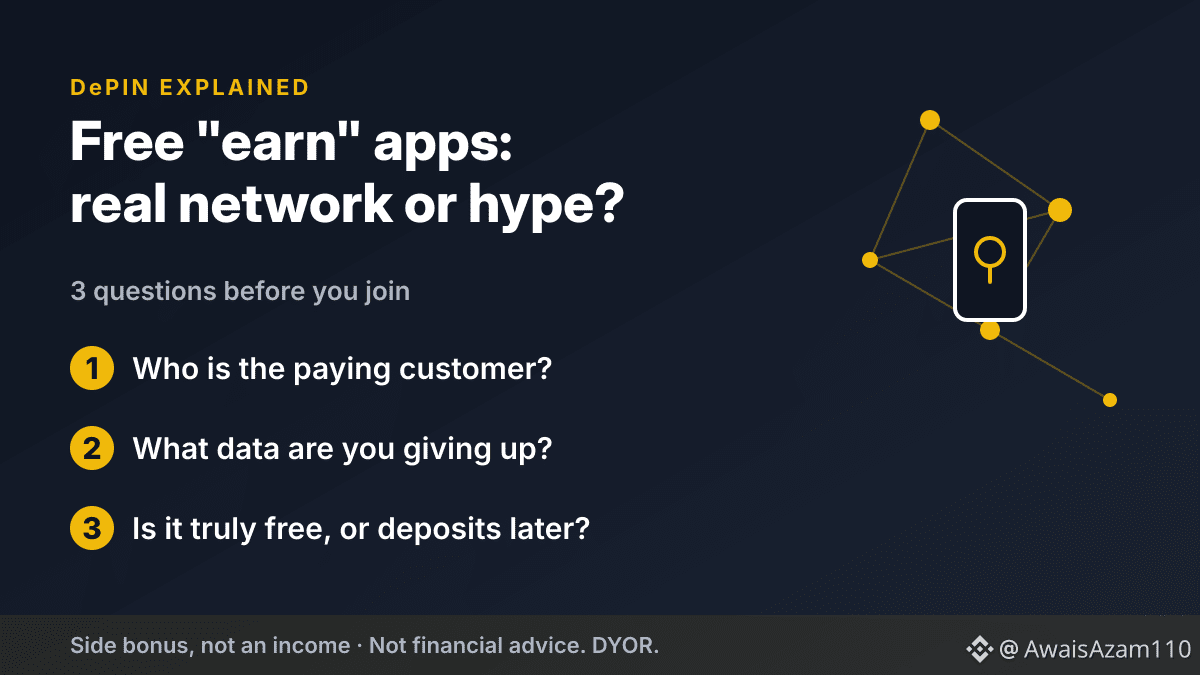
Free "earn" apps and DePIN: how to tell real data networks from hype
Many people first meet crypto through a free app that pays small rewards for doing something ordinary, like walking, sharing location, or leaving a phone charging overnight. Most of these apps fall under DePIN (Decentralized Physical Infrastructure Networks): users supply real-world data or hardware, and the network pays them in tokens.
XYO and its COIN app are one of the older examples. Users share location data and earn rewards. Its token is now traded on major exchanges including Kraken, and Revolut added support for it in December 2025. The company has also reported real revenue, around $8.8M in a year. Revenue matters more than any app download count.
Larger DePIN networks like $FIL (storage) and $RENDER (GPU computing) follow the same idea at a bigger scale. Users supply a resource, and customers pay to use it.
Three questions before you join any DePIN app:
1. Who is the paying customer? If nobody buys the data or service, rewards come only from new token emissions.
2. What are you giving up? Location, bandwidth and personal data all have value. Read the permissions.
3. Is joining truly free? Some apps quietly add deposits or "boost" purchases later.
Free apps can be a fine side bonus. Think of them as small extras, not an income.
#DePIN #CryptoEducation💡🚀 #Web3
Not financial advice. DYOR.