Extreme fear is loud. But the data behind it is quiet — and far more nuanced than the “be greedy when others are fearful” crowd admits.
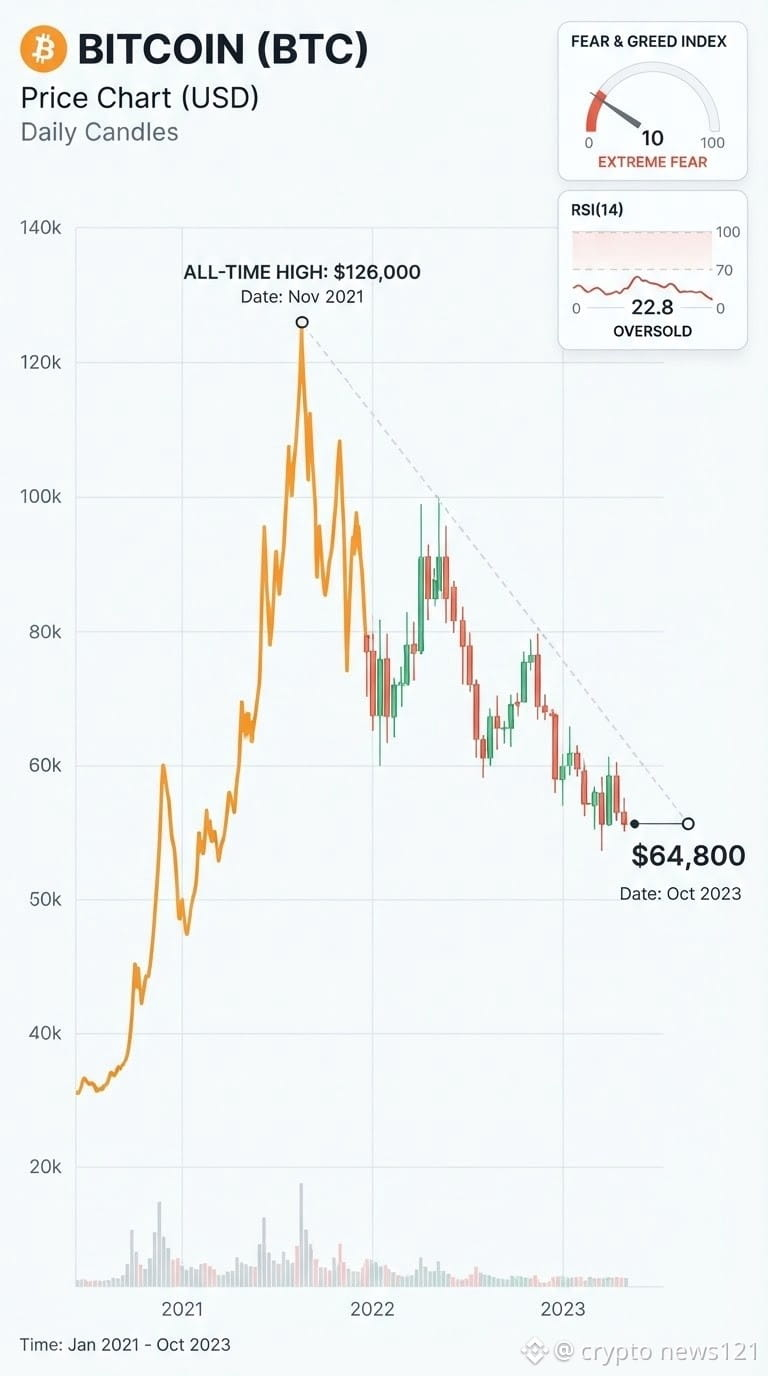
The Crypto Fear & Greed Index just printed 10 — a level seen only a handful of times since 2018. Bitcoin is hovering near $64,780, down roughly 48% from its record high. Every timeline is calling for a bottom. But here is what the historical record actually says:
📊 Hard data, not hopium:
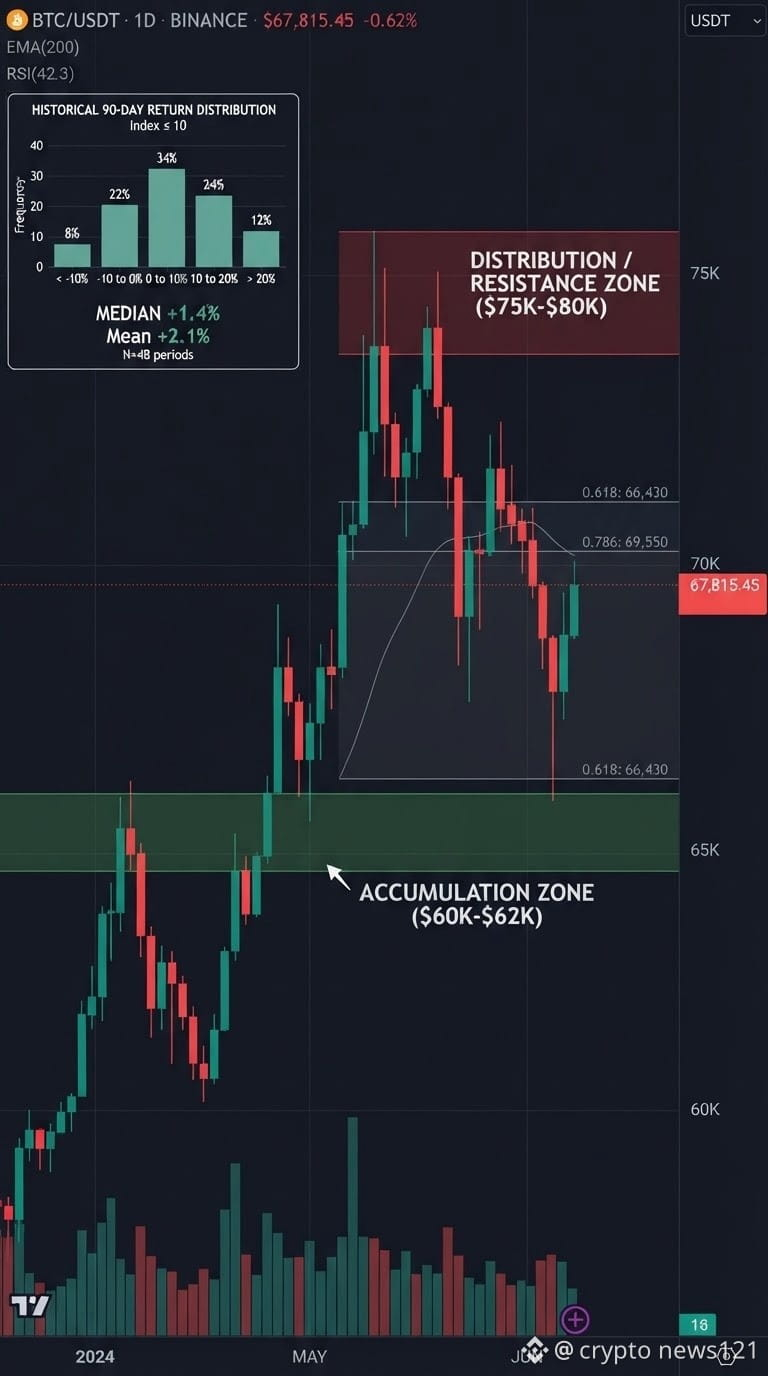
· Since 2018, the index has printed 10 or below in 71 sessions, forming 26 distinct clusters.
· Across the 25 clusters old enough to measure, the median 90-day return was just +1.4% — with outcomes ranging from -38.4% to +100%.
· The hit rate was essentially a coin flip: 14 of 25 ended higher.
This does not mean extreme fear is useless. It means extreme fear is a sentiment regime, not a timing trigger. The clusters that resolved violently higher — March 2020 (+150% in 90 days), November 2022 (+47%) — were accompanied by a secondary confirmation: capitulation volume, a major macro pivot, or a systemic risk event finally pricing in. The clusters that failed lacked that second layer.
The trader’s takeaway: Treat the index as a risk-sizing tool, not a buy button. Staged entries (DCA) near extreme fear historically outperform lump-sum “catching the knife” because the distribution of outcomes is wide, and survival matters more than precision.
⚠️ Educational content only. Not financial advice. Always DYOR.
Do you use the Fear & Greed Index as a primary signal, or just a sentiment filter? Drop your strategy below 👇
$BTC $ADA $BNB
#BTC #BinanceSquare #tradingtips #CryptoMarket #altcoins