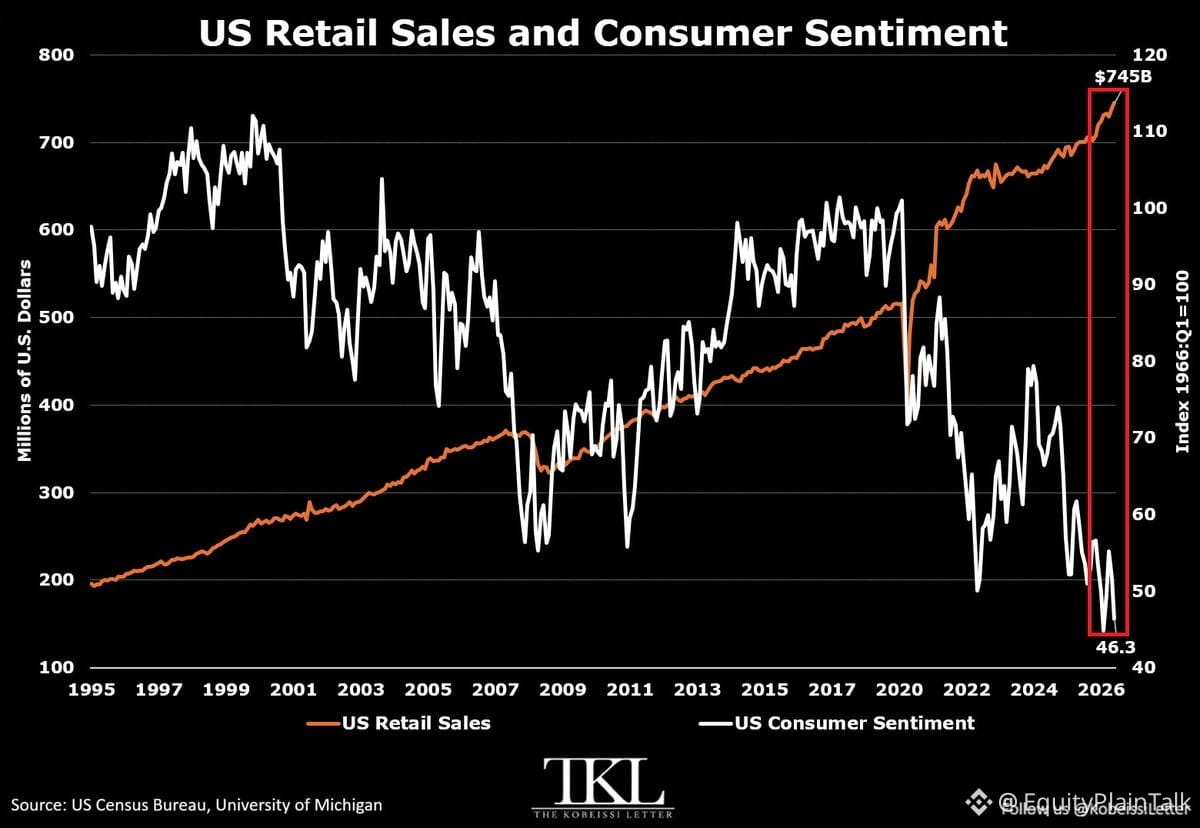
The spending vs. sentiment gap keeps getting weirder.
US retail sales hit a record $745B in September, up 0.8% month-over-month. That's after a 1.3% jump in August. Over the past 2 years, Americans have spent an extra $69B—a 10% increase.
Meanwhile, consumer sentiment just dropped to 46.3, the second-lowest reading in history. It's fallen 34% over the same 2-year period.
The breakdown matters: lower-income households and people with smaller stock portfolios feel the worst. But they're still spending.
This disconnect isn't new, but it's getting extreme. People say they feel terrible about the economy, then they go out and buy stuff anyway.
A few possible explanations:
1. Sentiment surveys capture fear and pessimism. Spending reflects actual need and access to credit.
2. Inflation has reset expectations. A $50 grocery bill feels bad even if you can afford it.
3. The wealth effect is real but uneven. If you own stocks or a home, you're fine. If you don't, you're not—but you still have to spend on essentials.
4. Credit is doing heavy lifting. Retail sales don't distinguish between cash and credit card debt.
This can't last forever. Either sentiment catches up to spending, or spending eventually catches down to sentiment. Right now, the market is betting on the former. History says be careful.