
At first I assumed SXT Chain was just another indexing layer, a cleaner way to read onchain data. That framing didn't hold up for long.
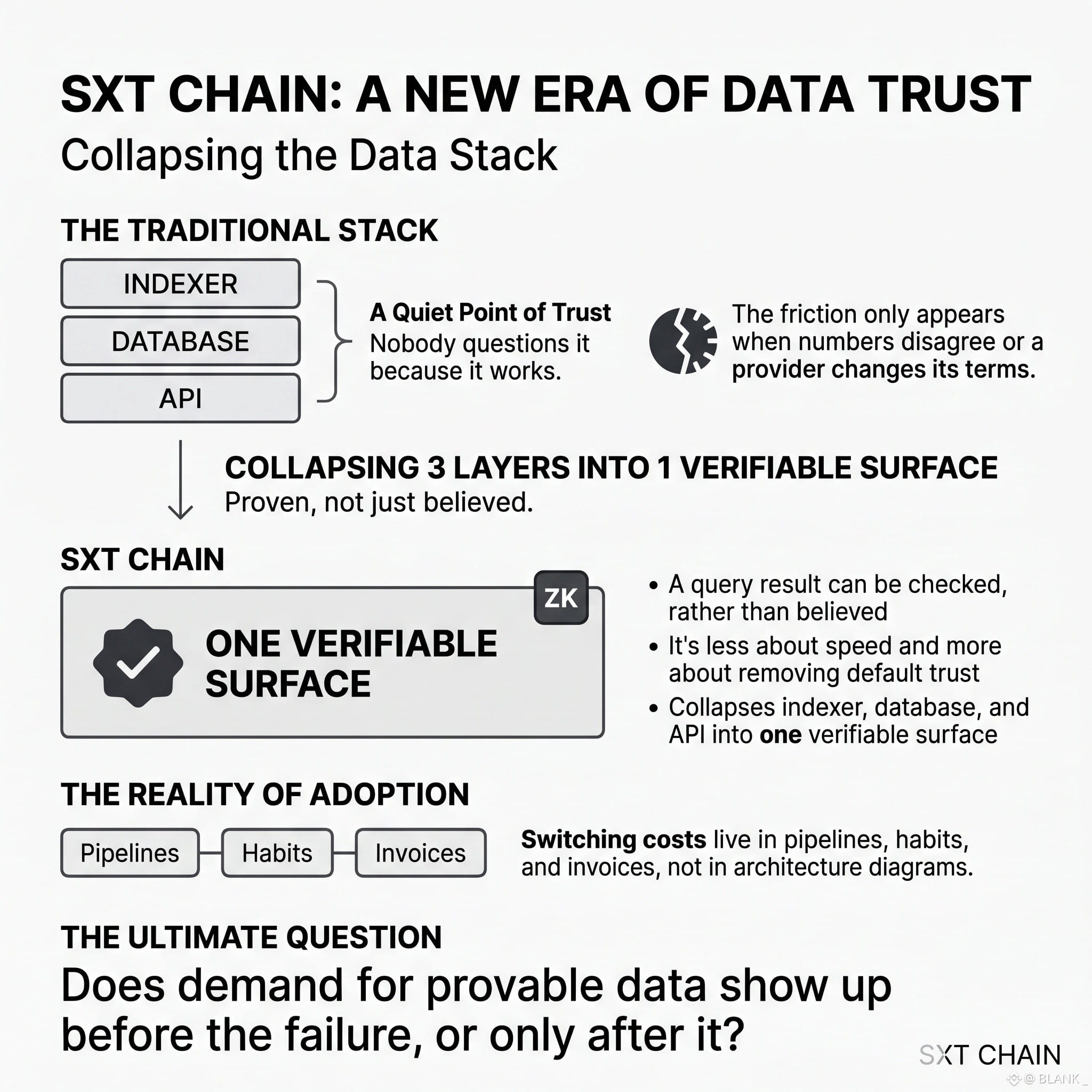
Most teams don't think about their data stack until it breaks. An indexer here, a database there, an API on top. Each one is a quiet point of trust, and because it works, nobody questions it. The friction only appears when numbers disagree or a provider changes its terms.
What SXT seems to be doing is collapsing those three layers into one verifiable surface, where a query result can be checked rather than believed. That's a different product. It's less about speed and more about removing a decision developers were already making by default.
But defaults are sticky. Switching costs live in pipelines, habits, and invoices, not in architecture diagrams. And verification is most valuable at the moment something goes wrong, which is a hard moment to sell in advance.
So the question I keep returning to: does demand for provable data show up before the failure, or only after it?
#sxt $SXT @SpaceandTime