
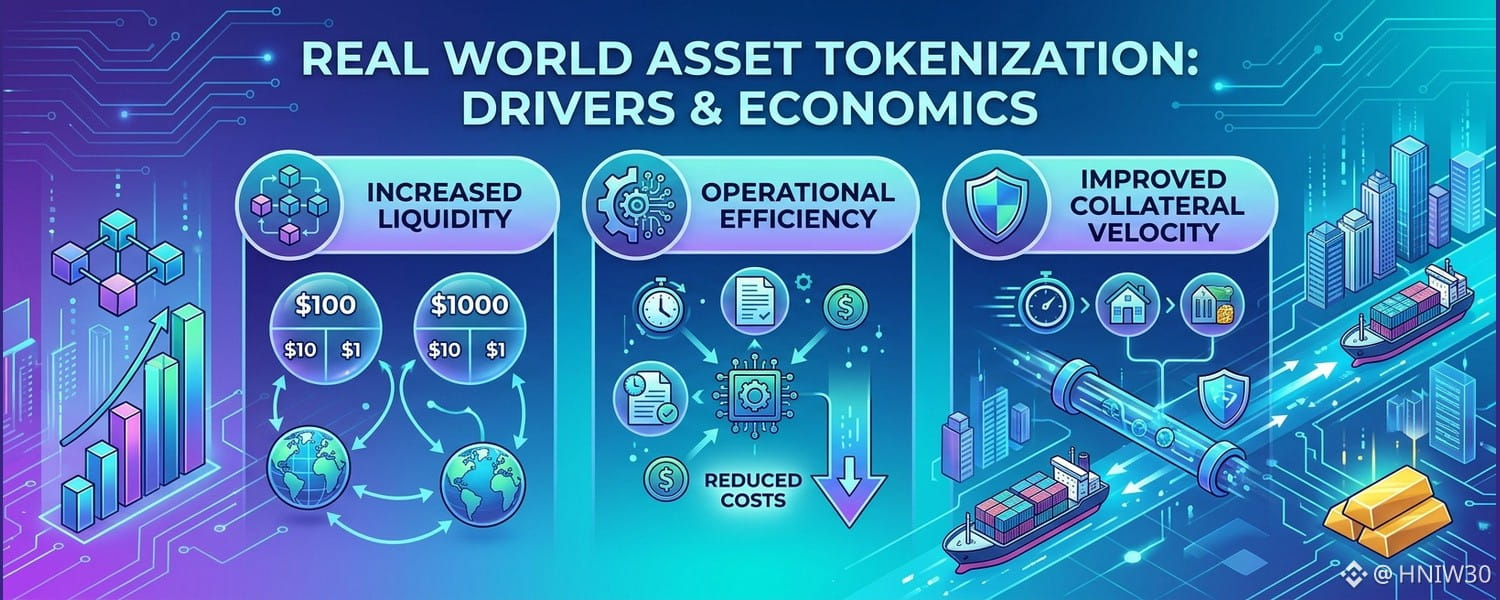

Capital allocation models evaluate the structural divergence between traditional ledger administration and on-chain asset representations. At the center of this framework sits real-world asset tokenization, which reconstructs financial mechanics rather than merely wrapping claims in new formats. Comparing distributed accounting to legacy clearing systems illustrates how distinct structural incentives alter primary issuance, administrative overhead, and secondary market liquidity.
Traditional non-liquid markets often demand liquidity discounts because transferring equity, debt, or tangible inventory requires extensive manual reconciliation. Tokenization alters this dynamic by reducing minimum ticket sizes through programmatic fractionalization. By allowing divisibility down to micro-units without compounding operational expenses, issuers can expand an addressable capital base while investors gain access to previously restricted cash flow structures.
Administrative expenditure forms another structural point of economic comparison. In legacy infrastructure, custodian networks, registrar services, and payment agents capture fixed basis points across the life of a security. When structured as programmable software logic, tokenized instruments automate coupon disbursements, maturity settlement, and corporate distributions, reducing operational drag and recurring middle-office maintenance charges.

Collateral velocity represents a key incentive mechanism within digital settlement systems. Conventional instruments often remain confined within institutional silos, immobilizing capital during extended settlement windows. Conversely, tokenized representations enable atomic, simultaneous settlement. This structural velocity permits rapid collateral reallocation across multi-party liquidity venues, freeing balance-sheet capacity that would otherwise remain dormant.
Counterparty friction also experiences substantial compression under synchronized ledgers. Multi-day clearing cycles require market participants to maintain surplus liquidity buffers to guard against default during settlement intervals. By compressing clearing and settlement into simultaneous state transitions, on-chain execution minimizes settlement window risk, allowing institutions to manage capital with narrower protective reserves.
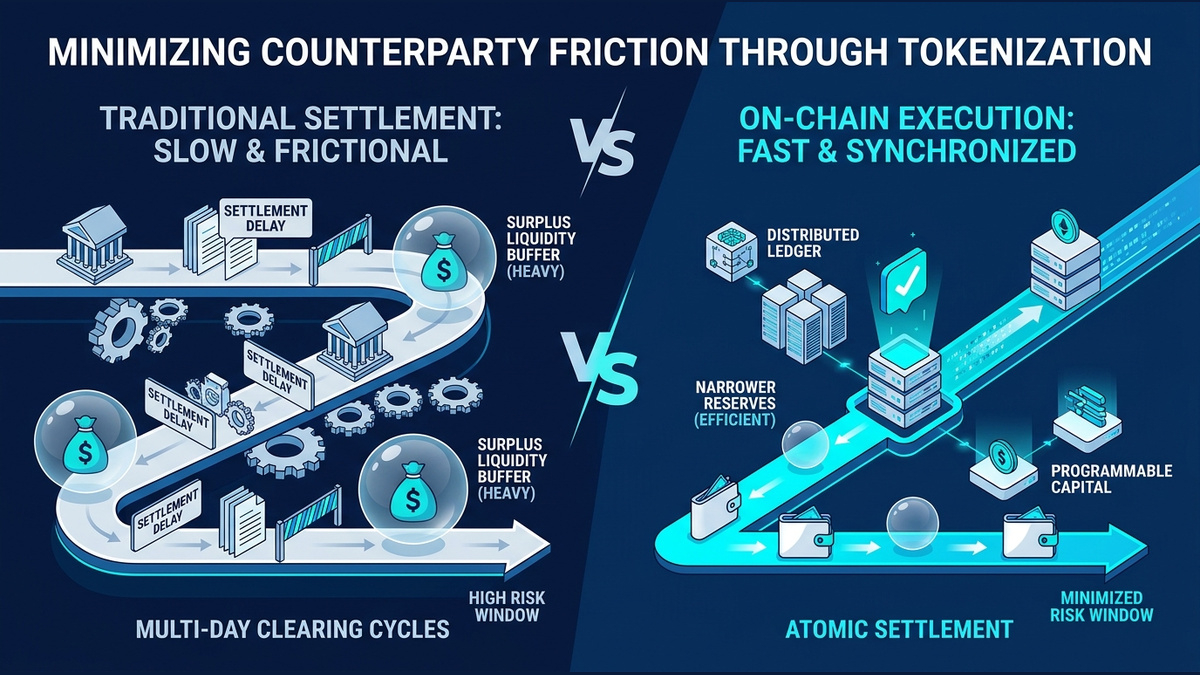
However, distributed representations introduce distinct operational expenses and trade-offs. Bridging off-chain physical or contractual claims into cryptographic software requires reliable validation networks and collateral verification. When an oracle fails or physical custody fractures, the loss of parity degrades market confidence. These off-chain dependency costs represent an ongoing expense that traditional centralized frameworks address through legal recourse.
Ultimately, the theoretical case for tokenization rests upon net capital efficiency rather than technological preference. Where administrative savings and collateral composability exceed technical carrying costs and verification risks, capital can benefit from programmable issuance. Long-term efficiency depends on architectures that enhance transfer velocity while maintaining operational certainty over the underlying legal title.