ANKR CROSS-CHAIN BRIDGE EXPLOITED FOR $292K ON ETHEREUM — IS THIS A TINY LOGIC FLAW OR A MASSIVE RED FLAG FOR CROSS-CHAIN INFRASTRUCTURE?
Security alerts are flashing red across decentralized infrastructure after Ankr’s cross-chain bridge suffered a targeted exploit on Ethereum.
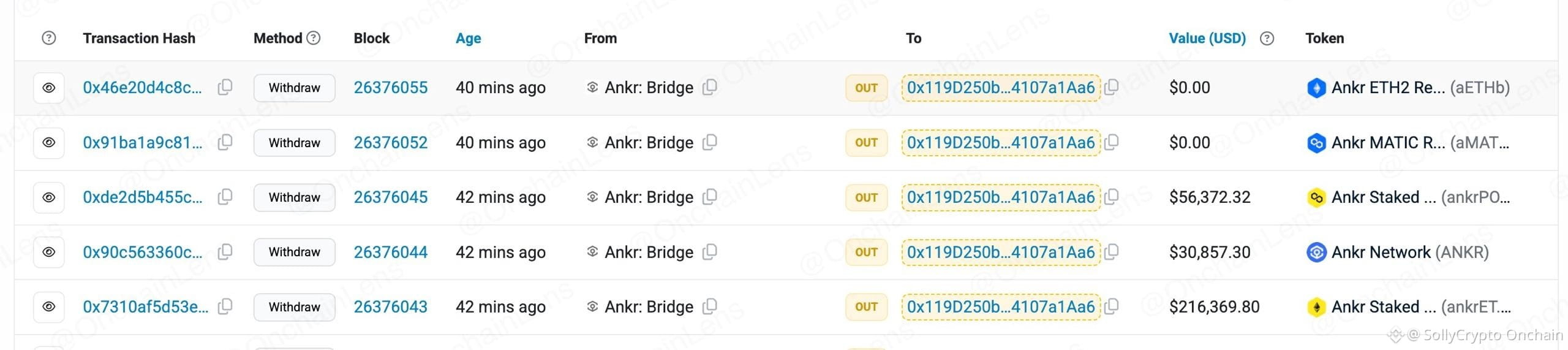
On-chain tracking confirms an attacker exploited a bridge vulnerability by utilizing a tiny, negligible deposit on Optimism to artificially trigger five separate unauthorized withdrawals from Ankr's Ethereum bridge contract (0xc437...). The exploit successfully drained approximately $292,000 in digital assets across exploiter addresses 0x119D... and 0x9A88... before security protocols could intervene. When hackers manage to milk multi-six-figure payouts using microscopic input deposits on L2 chains, it exposes critical validation logic flaws in multi-chain messaging protocols.
This looks like a dump setup for Ankr ecosystem assets short-term as market confidence takes a direct hit.
Here is the exact detail timeline traders are completely ignoring: cross-chain bridge exploits rarely stay contained to a single contract. When an attacker successfully manipulates event verification or deposit proofs between networks like Optimism and Ethereum, it forces project teams to emergency-pause bridge contracts, lock deposits, and audit historical transactions. Even though the financial loss is roughly $292K—relatively small compared to historic nine-figure exploits—the reputational damage and smart contract freeze severely impact liquidity depth.
The real structural danger for retail traders is underestimating how bridge exploits affect token sentiment. When a infrastructure provider experiences a security breach, liquidity providers often rush to pull their capital out of associated staking pools and decentralized exchange pairs. Market makers pull bids to re-evaluate smart contract risk, leaving order books paper-thin and vulnerable to sudden flash crashes.
Do you think Ankr will patch this bridge vulnerability and recover trader trust quickly?
Security alerts are flashing red across decentralized infrastructure after Ankr’s cross-chain bridge suffered a targeted exploit on Ethereum.
On-chain tracking confirms an attacker exploited a bridge vulnerability by utilizing a tiny, negligible deposit on Optimism to artificially trigger five separate unauthorized withdrawals from Ankr's Ethereum bridge contract (0xc437...). The exploit successfully drained approximately $292,000 in digital assets across exploiter addresses 0x119D... and 0x9A88... before security protocols could intervene. When hackers manage to milk multi-six-figure payouts using microscopic input deposits on L2 chains, it exposes critical validation logic flaws in multi-chain messaging protocols.
This looks like a dump setup for Ankr ecosystem assets short-term as market confidence takes a direct hit.
Here is the exact detail timeline traders are completely ignoring: cross-chain bridge exploits rarely stay contained to a single contract. When an attacker successfully manipulates event verification or deposit proofs between networks like Optimism and Ethereum, it forces project teams to emergency-pause bridge contracts, lock deposits, and audit historical transactions. Even though the financial loss is roughly $292K—relatively small compared to historic nine-figure exploits—the reputational damage and smart contract freeze severely impact liquidity depth.
The real structural danger for retail traders is underestimating how bridge exploits affect token sentiment. When a infrastructure provider experiences a security breach, liquidity providers often rush to pull their capital out of associated staking pools and decentralized exchange pairs. Market makers pull bids to re-evaluate smart contract risk, leaving order books paper-thin and vulnerable to sudden flash crashes.
Do you think Ankr will patch this bridge vulnerability and recover trader trust quickly?